EP3291118A2 - Imitation sicherer prozesse - Google Patents
Imitation sicherer prozesse Download PDFInfo
- Publication number
- EP3291118A2 EP3291118A2 EP17186830.0A EP17186830A EP3291118A2 EP 3291118 A2 EP3291118 A2 EP 3291118A2 EP 17186830 A EP17186830 A EP 17186830A EP 3291118 A2 EP3291118 A2 EP 3291118A2
- Authority
- EP
- European Patent Office
- Prior art keywords
- command
- session
- executable
- hash value
- launcher
- Prior art date
- Legal status (The legal status is an assumption and is not a legal conclusion. Google has not performed a legal analysis and makes no representation as to the accuracy of the status listed.)
- Granted
Links
Images



Classifications
-
- G—PHYSICS
- G07—CHECKING-DEVICES
- G07F—COIN-FREED OR LIKE APPARATUS
- G07F19/00—Complete banking systems; Coded card-freed arrangements adapted for dispensing or receiving monies or the like and posting such transactions to existing accounts, e.g. automatic teller machines
- G07F19/20—Automatic teller machines [ATMs]
- G07F19/211—Software architecture within ATMs or in relation to the ATM network
-
- G—PHYSICS
- G06—COMPUTING OR CALCULATING; COUNTING
- G06F—ELECTRIC DIGITAL DATA PROCESSING
- G06F21/00—Security arrangements for protecting computers, components thereof, programs or data against unauthorised activity
- G06F21/50—Monitoring users, programs or devices to maintain the integrity of platforms, e.g. of processors, firmware or operating systems
- G06F21/51—Monitoring users, programs or devices to maintain the integrity of platforms, e.g. of processors, firmware or operating systems at application loading time, e.g. accepting, rejecting, starting or inhibiting executable software based on integrity or source reliability
-
- G—PHYSICS
- G06—COMPUTING OR CALCULATING; COUNTING
- G06F—ELECTRIC DIGITAL DATA PROCESSING
- G06F21/00—Security arrangements for protecting computers, components thereof, programs or data against unauthorised activity
- G06F21/30—Authentication, i.e. establishing the identity or authorisation of security principals
- G06F21/44—Program or device authentication
-
- G—PHYSICS
- G06—COMPUTING OR CALCULATING; COUNTING
- G06F—ELECTRIC DIGITAL DATA PROCESSING
- G06F21/00—Security arrangements for protecting computers, components thereof, programs or data against unauthorised activity
- G06F21/50—Monitoring users, programs or devices to maintain the integrity of platforms, e.g. of processors, firmware or operating systems
- G06F21/57—Certifying or maintaining trusted computer platforms, e.g. secure boots or power-downs, version controls, system software checks, secure updates or assessing vulnerabilities
-
- H—ELECTRICITY
- H04—ELECTRIC COMMUNICATION TECHNIQUE
- H04L—TRANSMISSION OF DIGITAL INFORMATION, e.g. TELEGRAPHIC COMMUNICATION
- H04L63/00—Network architectures or network communication protocols for network security
- H04L63/08—Network architectures or network communication protocols for network security for authentication of entities
-
- H—ELECTRICITY
- H04—ELECTRIC COMMUNICATION TECHNIQUE
- H04L—TRANSMISSION OF DIGITAL INFORMATION, e.g. TELEGRAPHIC COMMUNICATION
- H04L63/00—Network architectures or network communication protocols for network security
- H04L63/10—Network architectures or network communication protocols for network security for controlling access to devices or network resources
-
- H—ELECTRICITY
- H04—ELECTRIC COMMUNICATION TECHNIQUE
- H04L—TRANSMISSION OF DIGITAL INFORMATION, e.g. TELEGRAPHIC COMMUNICATION
- H04L63/00—Network architectures or network communication protocols for network security
- H04L63/20—Network architectures or network communication protocols for network security for managing network security; network security policies in general
-
- H—ELECTRICITY
- H04—ELECTRIC COMMUNICATION TECHNIQUE
- H04L—TRANSMISSION OF DIGITAL INFORMATION, e.g. TELEGRAPHIC COMMUNICATION
- H04L9/00—Cryptographic mechanisms or cryptographic arrangements for secret or secure communications; Network security protocols
- H04L9/08—Key distribution or management, e.g. generation, sharing or updating, of cryptographic keys or passwords
- H04L9/0816—Key establishment, i.e. cryptographic processes or cryptographic protocols whereby a shared secret becomes available to two or more parties, for subsequent use
- H04L9/0819—Key transport or distribution, i.e. key establishment techniques where one party creates or otherwise obtains a secret value, and securely transfers it to the other(s)
- H04L9/0822—Key transport or distribution, i.e. key establishment techniques where one party creates or otherwise obtains a secret value, and securely transfers it to the other(s) using key encryption key
-
- H—ELECTRICITY
- H04—ELECTRIC COMMUNICATION TECHNIQUE
- H04W—WIRELESS COMMUNICATION NETWORKS
- H04W12/00—Security arrangements; Authentication; Protecting privacy or anonymity
- H04W12/06—Authentication
-
- H—ELECTRICITY
- H04—ELECTRIC COMMUNICATION TECHNIQUE
- H04W—WIRELESS COMMUNICATION NETWORKS
- H04W12/00—Security arrangements; Authentication; Protecting privacy or anonymity
- H04W12/08—Access security
-
- G—PHYSICS
- G06—COMPUTING OR CALCULATING; COUNTING
- G06F—ELECTRIC DIGITAL DATA PROCESSING
- G06F2221/00—Indexing scheme relating to security arrangements for protecting computers, components thereof, programs or data against unauthorised activity
- G06F2221/03—Indexing scheme relating to G06F21/50, monitoring users, programs or devices to maintain the integrity of platforms
- G06F2221/033—Test or assess software
Definitions
- ATMs are publicly believed to be relatively secure devices since they handle consumer financial transactions. However, ATMs are susceptible to malware, viruses, and eavesdropping just like any other device having memory and processor capabilities.
- SSTs Self-Service Terminals
- SSCOs Self-Service Checkouts
- publicly-accessible computing devices e.g., restaurants, hotels, public library, etc .
- MITM Man-In-The-Middle
- OS Operating System
- SST Self-Service Terminal
- a method for process isolation is presented. Specifically, a command is identified for execution during a session with an Operating System (OS). An executable for an OS command launcher is retrieved from a location that is based at least in part on the session. Finally, the executable is validated before processing the executable to launch the command for execution within the OS.
- OS Operating System
- a method including: identifying a command for execution during a session with an Operating System (OS); and retrieving an executable for an OS command launcher from a location that is based at least in part on the session; and validating the executable before processing the executable to launch the command for execution within the OS.
- OS Operating System
- the method may further include hashing the executable with a randomly generated key producing a hash value; encrypting credentials associated with the session and a path to the location with the randomly generated key producing first encrypted data; encrypting the randomly generated key with an OS-provided Key Encryption Key (KEK) producing second encrypted data; and storing the hash value, the first encrypted data, and the second encrypted data.
- KEK Key Encryption Key
- the method may further include reiterating the method processing for a second command identified for execution during the session and processing the hash value, the first encrypted data, and the second encrypted data for retrieving and validating the executable for processing to launch the second command for execution within the OS.
- retrieving may further include: decrypting a stored encrypted key with an OS-provided Key Encryption Key (KEK) obtaining a key; and decrypting stored encrypted data with the key obtaining credentials associated with the session and a path to the location.
- KEK Key Encryption Key
- validating may further include authenticating the credentials ensuring that the credentials were processed when the session was initiated within the OS.
- authenticating may further include hashing the executable retrieved from the location over the path with the key obtaining a hash value and ensuring that the hash value is equal to a stored hash value.
- authenticating may further include generating a new hash value with a new randomly generated key for the executable; producing new encrypted data for the credentials and the path using the new randomly generated key, producing a new encrypted key for the newly generated key using the KEK, and storing the new hash value, the new encrypted data, and the new encrypted key for a subsequent iteration of the method with a second command that is presented for executing within the session.
- the method may further include processing the executable to launch the command within the session when the credentials are authenticated and the hash value is equal to the stored hash value.
- the method may further include ignoring the command and preventing the OS from processing the command when either the credentials are invalid for the session or when the hash value is not equal to the stored hash value.
- validating may further include validating the executable in a manner that is specific and unique to presentation of the command for execution within the OS.
- a method including: i) authenticating a session for access to an Operating System (OS) with account credentials associated with a valid account of the OS; ii) randomly obfuscating a location for an executable of an OS command launcher and the account credentials within an OS environment of the OS; iii) validating the executable and the session when a command is presented for processing by the OS command launcher within the session; and iv) iterating ii) and iii) after the executable and the session are successfully validated.
- OS Operating System
- step ii) may further include encrypting a path to the location and the account credentials with a randomly generated Data Encryption Key (DEK) and producing a first encrypted data.
- DEK Data Encryption Key
- encrypting may further include encrypting the DEK within an OS-generated Key Encryption Key (KEK) and producing a second encrypted data.
- KEK OS-generated Key Encryption Key
- the method may further include hashing the executable with the DEK and producing a hash value.
- the method may further include storing the first encrypted data, the second encrypted data, and the hash value within the OS environment.
- step iii) may further include obtaining the first encrypted data, the second encrypted data, and the hash value from the OS environment, decrypting the second encrypted data with the KEK for obtaining the DEK, decrypting the first encrypted data with the DEK for obtaining the path and the account credentials.
- the method may further include authenticating the session with the credentials.
- authenticating may further include retrieving the executable from the location over the path, hashing the executable with the DEK for obtaining a second hash value, and ensuring that the second hash value equals the hash value.
- a Self-Service Terminal including: a processor; and a secure launcher that is configured to: i) execute on the processor, ii) determine a location for an executable to an Operating System (OS) command launcher each time any command is presented for processing within a session of an OS of the SST, iii) validate account credentials for the session each time any command is presented for processing within the session, and iv) validate the executable pulled from the location each time any command is presented for processing within the session.
- OS Operating System
- the secure launcher may be further configured to: v) uniquely hide an identifier for the location and a mechanism for validating the executable each time any command is successfully processed by the OS command launcher.
- the publicly-accessible terminal's Operating System is illustrated in the FIG. 1A .
- OS Operating System
- a user is logged into the OS with permissions set based on authentication for the user.
- the OS provides access to a variety of physical and logical resources, such as peripheral devices, memory, files, non-volatile storage, network connections, and the like. Access to specific resources are governed by the permissions set on the user identity for the user.
- the location of the OS command/program loader/launcher for process operation is obfuscated and validated each time an attempt is made by the user to launch/load any process (command or operation) within the OS session.
- any command or command activation (such as through a touch on a touch-enabled display, pressing an enter key, and/or a mouse click), which a user attempts during an authenticated session with the OS, the command loader or launcher is validated (to ensure it has not been altered).
- each iteration of a user to access the command loader or launcher entails a new encryption of the loader or launcher, such that decryption for initial access to the loader or launcher within the OS is specific to each attempt the user makes to access a command during an authenticated session with the OS.
- the decryption of the OS loader or launcher changes and is revalidated. This ensures that each command executed is secure and ensures that the entire authenticated session for the user within the OS is isolated and walled off within the OS from other processes within memory and from other resource files.
- the techniques presented herein ensures that each time a process or process command is executed during that OS session, the true and authenticate OS loader and launcher is only accessible to perform that process or command if the OS loader and launcher can be successfully decrypted and validated for that specific process or command during the OS session. This provides process isolation for each command executed during the OS session.
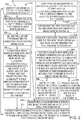
- FIG. 1B illustrates a one-time installation and setup for performing the secure process impersonation detection discussed herein. It is noted that this initialization need only be performed during installation and does not have to be repeated (except for the block of processing identified as "A,” in the FIG. 1B , which is discussed in the FIG. 1C .
- an administrator logs into a publicly-accessible terminal with account credentials (such as an identifier and password combination, a card swipe with a Personal Identification Number (PIN), and other types of credentials).
- account credentials such as an identifier and password combination, a card swipe with a Personal Identification Number (PIN), and other types of credentials.
- PIN Personal Identification Number
- a product binary (executable) for the OS loader/launcher is selected using the isolated account. That is, multiple different binaries or executables for the OS loader/launcher may exist and one is selected for the specific account credentials associated with the OS session.
- a hash value X is calculated on the OS loader/launcher binary/executable with a randomly generated Data Encryption Key (DEK). Then, the account credentials for the session, the file path to the OS loader/launcher binary/executable, and the DEK are encrypted producing encrypted first data (EncY). Second encrypted data (EncZ) is produced by encrypting: the DEK, a hardcoded obfuscated entropy Key Encryption Key (KEK) by using existing OS modules for such encryption. The hash value (X), the first encrypted data (EncY), and the second encrypted data (EncZ) are then stored.
- DEK Data Encryption Key
- the OS command/process loader or launcher is secured a first time and ready for providing secure process impersonation detection on the publicly accessible terminal.
- FIG. 1C illustrated processing of secure process impersonation detection after initial (and one time) initialization was performed as discussed in the FIG. 1B .
- the secure process impersonation detection proceeds as follows.
- the hash value X, the first encrypted data EncY, and the second encrypted data EncZ are pulled from storage.
- the DEK (as Z) is obtained by decrypting EncZ with the KEK.
- the account credentials C and the resource/file path to the OS command/process loader or launcher are obtained by decrypting EncY with the decrypted version of the DEK (Z).
- the session is then authenticated by verifying (with the authentication provider for user accounts within the OS) that the decrypted version of the account credentials can be successfully authenticated.
- the binary/executable for the decrypted path (P) to the OS command/process loader or launcher is pulled from the file system or secure storage accessible to the OS as B2.
- a has value B1 is obtained by hashing the binary retrieved B2 with the DEK (Z).
- B1 is then compared with X (hash value computed originally on the binary/executable of the OS command/process loader or launcher.
- the binary B2 is validated by hashing B2 with the DEK (Z)). If a match is made between B1 and X, then the binary/executable for the OS command/process loader or launcher is what it should be and has not be altered or changed.
- a new hash value for the binary/executable of the OS command/process loader or launcher is obtained (for a next time that the OS command/process loader or launcher is attempted to be executed within the OS for this authenticated session associated with the account credentials. This is done by iterating back to the block of processing identified as A in the FIG. 1B where a new randomly generated DEK is produced and hashed on the binary producing a new value for X.
- the DEK is then used to produce a new encrypted first data EncY by encrypting the account credentials and the path to the binary with the DEC.
- the DEC is encrypted with the KEK to produce a new encrypted second data.
- the new value for X, EncY, and EncZ are then stored for when a new command/process is attempted to loaded or launched by the OS with the OS command/process loader or launcher.
- This process occurs each time a user attempts to run or execute a command within the OS ensuring that the OS command/process loader or launcher is validated and authenticated.
- the hashing values and the encrypted data is unique for each command a user attempts to execute in the OS.
- each command involves double layer encryption some of which can be leverage through existing operating system-provided encryption (EncZ) and some of which is entirely random (EncY). This makes breaking the encryption extremely difficult for a hacker.
- the account credentials are encrypted byte by byte and the actual data for the values are never stored or retained in memory. The keys are replaced each time the OS command/process loader or launcher is executed (each iteration).
- the file path of the OS command/process loader or launcher is validated during each attempt that the OS command/process loader or launcher is attempting to execute a user process or command within the OS, which means the ability to substitute a malicious executable or file in place of the OS command/process loader or launcher is greatly diminished if not eliminated.
- the user selected command/process for execution is launched after authentication and validation of the OS command/process loader or launcher, there is no adverse impacts on performance throughput of the user selected command/process on the publicly-accessible terminal.
- FIGS. 2-4 These and other embodiments are now discussed with reference to the FIGS. 2-4 .
- FIG. 2 is a diagram of a method 200 for secure process impersonation detection, according to an example embodiment.
- the software module(s) that implements the method 200 is referred to as an "OS-session command handler."
- the OS-session command handler is implemented as executable instructions programmed and residing within memory and/or a non-transitory computer-readable (processor-readable) storage medium and executed by one or more processors of a device.
- the processor(s) of the device that executes the OS-session command handler are specifically configured and programmed to process the OS-session command handler.
- the OS-session command handler may or may not have access to one or more network connections during its processing.
- the network connections can be wired, wireless, or a combination of wired and wireless.
- the device that executes the OS-session command handler is a Point-Of-Sale (POS) terminal.
- POS Point-Of-Sale
- the device that executes the OS-session command handler a SST.
- the SST is one of: an ATM, a kiosk, and a SSCO station.
- the OS-session command handler performs the processing discussed above with the FIGS. 1A-1C .
- the OS-session command handler operates within as a kernel processing within an OS of the device that executes the OS-session command handler.
- the processing of the OS-session command handler assumes that initializing was performed at least once when the OS-session command handler is initially installed on the device that executes the OS-session command handler (processing described in the FIG. 1B above). This sets up a first iteration and subsequent iterations of the OS-session command handler as described herein and below.
- the OS-session command handler identifies a command for execution during a valid authenticated session with the OS. That is, a command or process is selected or identified for execution during the OS session.
- the existing OS command launcher or loader would be executed to process the identified command within a processing context of the OS session having the permissions set on the OS session based on the account that was used to authenticate and log into the OS account for the session. This processing is changed here, such that the OS command launcher is uniquely validated each time any command is presented for the OS command launcher to load or launch for execution within the OS session.
- the OS-session command handler retrieves an executable (binary) for the OS command launcher from a location that is based at least in part on the session.
- the OS-session command handler decrypts a stored encrypted key with an OS-provided and generated KEK for obtaining a key.
- the OS-session command handler also decrypts stored encrypted data with the key for obtaining credentials associated with the session and a path to the location of the executable for the OS command launcher. The credentials were used to initially establish the OS session and are tied to an authorized OS account.
- the OS-session command handler validates the executable for the OS command launcher before processing the executable, which launches the command for execution within the OS during the OS session.
- the OS-session command handler authenticates the credentials so as to ensure that the credentials were processed when the session was initiated within the OS. That is, the session was established with a predefined OS account using the credentials and each time any command is requested for processing within the session, the OS-session command handler re-authenticates the credentials to ensure that the requested command is in fact associated with and verified with the session where the command is being requested for execution.
- the OS-session command handler hashes the executable for the OS command launcher retrieved from the location over a path with the key for obtaining a hash value.
- the OS-session command handler ensures that the hash value is equal to a stored hash value (stored for a previous iteration of the OS-session command handler either during initialization (as discussed in the FIG. 1 B) or stored following a successful processing by the OS command launcher of a previous command).
- the OS-session command handler generates a new hash value with a new randomly generated key for the executable of the OS command launcher.
- the OS-session command handler also produces new encrypted data for the credentials and the path to the location of the OS command launcher using the new randomly generated key and, thereby, producing a new encrypted key for the newly randomly generated key using the KEK.
- the OS-session command handler stores the new hash value, the new encrypted data, and new encrypted key for a next or subsequent iteration of the OS-session command handler with a second command that is presented for execution within the OS session.
- the second command can be the same as the original identified command, at 210, where it is being presented for execution a second time during the OS session. It is also noted that the second command can be a different command from the command identified at 210. So, the second command is any command that is being requested for execution by the OS command handler following the initial identified command, at 210.
- the OS-session command handler processes the executable for the OS command launcher within the OS session when the credentials are authenticated and when the hash value is equal to the stored hash value. So, before the OS command launcher is permitted to handle and load the command (at 210) for execution within the OS session, the OS-session command handler has to re-authenticate the credentials and validate the integrity of the executable for the OS command launcher ensuring that it has not been modified in any manner since the OS command launcher was last successfully processed within the OS session.
- the OS-session command handler ignores the command and prevents the OS from processing the command when either the credentials are determined to be invalid for the session or when the hash value is not equal to the stored hash value. That is, the OS-session command handler never permits the OS command launcher to load and launch the command, at 210, within the OS when either the session scope is invalid (credentials cannot be re-authenticated) or when the integrity of the binary for the OS command launcher is invalid (has a hash value different from what is expected for the binary).
- the OS-session command handler hashes the executable with a randomly generated key producing a hash value.
- the OS-session command handler encrypts the credentials associated with the session and a path to the location of the OS command launcher with the randomly generated key producing first encrypted data.
- the OS-session command handler encrypts the randomly generated key within an OS-provided and generated KEK producing second encrypted data.
- the OS-session command handler stores the hash value, the first encrypted data, and the second encrypted data for a next iteration of the OS-session command handler where a second command is presented during the OS session for loading and launching by the OS command launcher.
- FIG. 3 is a diagram of another method 300 for secure process impersonation detection, according to an example embodiment.
- the software module(s) that implements the method 300 is referred to as an "OS-session command validator.”
- the OS-session command validator is implemented as executable instructions programmed and residing within memory and/or a non-transitory computer-readable (processor-readable) storage medium and executed by one or more processors of a device.
- the processors that execute the OS-session command validator are specifically configured and programmed to process the OS-session command validator.
- the OS-session command validator may or may not have access to one or more network connections during its processing.
- the network connections can be wired, wireless, or a combination of wired and wireless.
- the device that executes the OS-session command validator is a POS terminal.
- the device that executes the OS-session command validator is a SST.
- the SST is one of: an ATM, a kiosk, and a SSCO station.
- the OS-session command validator is the processing discussed above with the FIGS. 1B-1C .
- the OS-session command validator is the processing discussed above with the method 200.
- the OS-session command validator is all or some combination of the processing discussed in the FIGS. 1B-1C and 2 .
- the OS-session command validator assumes that a one-time initial process as described in the FIG. 1B was performed to initially set the OS-session command validator up for iterating and validating OS-issued commands during an OS session.
- the OS-session command validator authenticates a session for access to an OS with account credentials associated with a valid and authorized account on the OS.
- the OS-session command validator randomly obfuscates a location from an executable (binary) of an OS command launcher and the credentials within an OS environment of the OS. This is done with a mechanism that is unique to each iteration (iteration specific) of the OS-session command validator during the valid OS session. So, when a command is successfully launched for execution during the OS session by the OS command launcher during a first iteration the mechanism for randomly obfuscating the location of the OS command launcher and the credentials for the session is different from that which occurs during a second iteration.
- the OS-session command validator encrypts a path to the location and the credentials with a randomly generated DEK and produces first encrypted data.
- the OS-session command validator encrypts the DEK with an OS-generated KEK and produces second encrypted data.
- the OS-session command validator hashes the executable for the OS command launcher with the DEK and produces a hash value.
- the OS-session command validator stores the first encrypted data, the second encrypted data and the hash value within the OS environment or at a storage location that is accessible to the OS from the OS environment.
- the OS-session command validator validates the integrity of the executable for the OS command launcher and the session when a command is presented for processing by the OS command launcher within the session.
- the OS-session command validator obtains the first encrypted data, the second encrypted data, and the hash value from the OS environment. Next, the OS-session command validator decrypts the second encrypted data with the KEK for obtaining the DEK; then, the OS-session command validator decrypts the first encrypted data with the DEK for obtaining the path and the OS session credentials.
- the OS-session command validator authenticates the session with the credentials. That is, the authentication provider of the OS is provided the credentials for re-authentication during the session.
- the OS-session command validator retrieves the executable for the OS command launcher from the location over the path; then, the OS-session command validator hashes the retrieved executable with the DEK for obtaining a second hash value. Finally, the OS-session command validator ensures that the second hash value is equal to the hash value.
- the OS-session command validator iterates during the session back to 320 once the initially processed command is successfully loaded and launched by a validated instance of the OS command launcher.
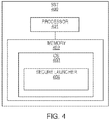
- FIG. 4 is a diagram of a SST 400 having secure process impersonation detection, according to an example embodiment.
- the SST 400 includes a variety of hard ware components and software components.
- the software components of the SST 400 are programmed and reside within memory and/or a non-transitory computer-readable medium and execute on one or more processors of the SST 400.
- the SST 400 may or may not communicate over one or more networks, which can be wired, wireless, or a combination of wired and wireless.
- the SST 400 is a POS terminal.
- the SST 400 is an ATM.
- the SST 400 is a kiosk.
- the SST 400 is a SSCO station.
- the SST 400 implements, inter alia, the processing described above with the FIGS. 1B-1B and 2-3 .
- the SST 400 includes a processor 401, memory 402, an OS 403, and a secure launcher 404.
- the processor 401 is configured to execute the OS 403 from memory 402 of the SST 400.
- the OS 403 is configured to execute the secure launcher 404 each time a command is presented within an OS session for an OS command launcher to load and process within the session-context on the SST 400.
- the secure launcher 404 is configured to: execute on the processor 401 from the memory 402, determine a location for an executable to an OS command launcher each time any command is presented for processing within a session of an OS of the SST 400, validate account credentials for the session each time any command is presented for processing within the session, and validate the executable pulled from the location each time any command is presented for processing within the session.
- the secure launcher 404 is further configured to: uniquely hide an identifier for the location and a mechanism for validating the executable each time any command is successfully processed by the OS command launcher.
- the mechanism is any of the processing discussed above with the FIGS. 1B-1C and 2-3 .
- the secure launcher 404 is any, all, or some combination of the processing discussed above with the FIGS. 1B-1C and 2-3.
- modules are illustrated as separate modules, but may be implemented as homogenous code, as individual components, some, but not all of these modules may be combined, or the functions may be implemented in software structured in any other convenient manner.
Landscapes
- Engineering & Computer Science (AREA)
- Computer Security & Cryptography (AREA)
- Computer Hardware Design (AREA)
- Theoretical Computer Science (AREA)
- General Engineering & Computer Science (AREA)
- Software Systems (AREA)
- Computer Networks & Wireless Communication (AREA)
- Signal Processing (AREA)
- General Physics & Mathematics (AREA)
- Physics & Mathematics (AREA)
- Computing Systems (AREA)
- Accounting & Taxation (AREA)
- Finance (AREA)
- Business, Economics & Management (AREA)
- Storage Device Security (AREA)
- Stored Programmes (AREA)
- Computer And Data Communications (AREA)
- Debugging And Monitoring (AREA)
Applications Claiming Priority (1)
| Application Number | Priority Date | Filing Date | Title |
|---|---|---|---|
| US15/251,172 US10503894B2 (en) | 2016-08-30 | 2016-08-30 | Secure process impersonation |
Publications (3)
| Publication Number | Publication Date |
|---|---|
| EP3291118A2 true EP3291118A2 (de) | 2018-03-07 |
| EP3291118A3 EP3291118A3 (de) | 2018-05-30 |
| EP3291118B1 EP3291118B1 (de) | 2021-04-21 |
Family
ID=59772379
Family Applications (1)
| Application Number | Title | Priority Date | Filing Date |
|---|---|---|---|
| EP17186830.0A Active EP3291118B1 (de) | 2016-08-30 | 2017-08-18 | Imitation sicherer prozesse |
Country Status (3)
| Country | Link |
|---|---|
| US (1) | US10503894B2 (de) |
| EP (1) | EP3291118B1 (de) |
| CN (2) | CN107800536B (de) |
Families Citing this family (2)
| Publication number | Priority date | Publication date | Assignee | Title |
|---|---|---|---|---|
| CN111159762B (zh) * | 2019-12-23 | 2022-08-12 | 北京工业大学 | 一种强制访问控制下的主体可信验证方法及系统 |
| US12058256B2 (en) | 2022-02-15 | 2024-08-06 | NCR Alleos Corporation | System and method for providing a secure locally-based boot disk encryption key |
Family Cites Families (35)
| Publication number | Priority date | Publication date | Assignee | Title |
|---|---|---|---|---|
| GB9626241D0 (en) | 1996-12-18 | 1997-02-05 | Ncr Int Inc | Secure data processing method and system |
| US6631422B1 (en) * | 1999-08-26 | 2003-10-07 | International Business Machines Corporation | Network adapter utilizing a hashing function for distributing packets to multiple processors for parallel processing |
| US20040034794A1 (en) * | 2000-05-28 | 2004-02-19 | Yaron Mayer | System and method for comprehensive general generic protection for computers against malicious programs that may steal information and/or cause damages |
| US6944772B2 (en) * | 2001-12-26 | 2005-09-13 | D'mitri Dozortsev | System and method of enforcing executable code identity verification over the network |
| CA2496664C (en) * | 2002-08-23 | 2015-02-17 | Exit-Cube, Inc. | Encrypting operating system |
| US7181016B2 (en) * | 2003-01-27 | 2007-02-20 | Microsoft Corporation | Deriving a symmetric key from an asymmetric key for file encryption or decryption |
| US8784195B1 (en) | 2003-03-05 | 2014-07-22 | Bally Gaming, Inc. | Authentication system for gaming machines |
| US7945958B2 (en) * | 2005-06-07 | 2011-05-17 | Vmware, Inc. | Constraint injection system for immunizing software programs against vulnerabilities and attacks |
| US7721281B1 (en) * | 2005-07-01 | 2010-05-18 | Cisco Technology, Inc. | Methods and apparatus for securing local application execution |
| US7639629B2 (en) * | 2006-07-28 | 2009-12-29 | Microsoft Corporation | Security model for application and trading partner integration |
| US7921461B1 (en) * | 2007-01-16 | 2011-04-05 | Kaspersky Lab, Zao | System and method for rootkit detection and cure |
| US20090259855A1 (en) | 2008-04-15 | 2009-10-15 | Apple Inc. | Code Image Personalization For A Computing Device |
| US8839458B2 (en) * | 2009-05-12 | 2014-09-16 | Nokia Corporation | Method, apparatus, and computer program for providing application security |
| CN101593259B (zh) * | 2009-06-29 | 2011-03-23 | 北京航空航天大学 | 软件完整性验证方法及系统 |
| CN101741842B (zh) * | 2009-12-07 | 2012-07-04 | 北京交通大学 | 一种基于可信计算实现可信ssh的方法 |
| US8499346B2 (en) * | 2009-12-18 | 2013-07-30 | Ncr Corporation | Secure authentication at a self-service terminal |
| CN101783801B (zh) * | 2010-01-29 | 2013-04-24 | 福建星网锐捷网络有限公司 | 一种基于网络的软件保护方法、客户端及服务器 |
| US9264220B2 (en) * | 2011-04-26 | 2016-02-16 | Telefonaktiebolaget L M Ericsson (Publ) | Secure virtual machine provisioning |
| US8683232B2 (en) * | 2011-05-18 | 2014-03-25 | Cpo Technologies Corporation | Secure user/host authentication |
| US8612766B2 (en) * | 2011-07-05 | 2013-12-17 | Microsoft Corporation | Secure credential unlock using trusted execution environments |
| US20130055369A1 (en) | 2011-08-24 | 2013-02-28 | Mcafee, Inc. | System and method for day-zero authentication of activex controls |
| US8667569B2 (en) * | 2011-09-29 | 2014-03-04 | Target Brands, Inc. | Credentials management |
| CN102509049B (zh) * | 2011-11-14 | 2014-11-26 | 任子行网络技术股份有限公司 | 一种程序合法性验证方法和系统 |
| US9116841B2 (en) * | 2012-11-28 | 2015-08-25 | Infineon Technologies Ag | Methods and systems for securely transferring embedded code and/or data designed for a device to a customer |
| CN103854180B (zh) * | 2012-12-05 | 2017-04-19 | 中国银联股份有限公司 | 信用凭证生成方法及其系统、应用授权方法及其系统 |
| EP2746981A1 (de) * | 2012-12-19 | 2014-06-25 | ST-Ericsson SA | Vertrauenswürdige Ausführungsumgebung mit Ableitung von Zugriffssteuerungregeln |
| WO2014154280A1 (en) * | 2013-03-28 | 2014-10-02 | Irdeto B.V. | Obfuscating access to a data store by a software application |
| CN103236931B (zh) * | 2013-05-02 | 2016-08-03 | 深圳数字电视国家工程实验室股份有限公司 | 一种基于tpm的身份验证方法及系统以及相关设备 |
| US9396359B2 (en) * | 2013-09-09 | 2016-07-19 | Whitecanyon Software, Inc. | System and method for encrypted disk drive sanitizing |
| CN103678961B (zh) * | 2013-11-07 | 2016-07-06 | 北京深思数盾科技股份有限公司 | 代码动态生成的方法 |
| TWI621942B (zh) * | 2015-01-16 | 2018-04-21 | 緯創資通股份有限公司 | 作業系統層次之工作階段容錯移轉方法以及使用該方法的系統 |
| CN105100113A (zh) * | 2015-08-26 | 2015-11-25 | 浪潮集团有限公司 | 一种基于云海os会话超时控制的方法 |
| US9710370B2 (en) * | 2015-10-13 | 2017-07-18 | Adobe Systems Incorporated | Automated testing of shell scripts |
| CN105516163B (zh) * | 2015-12-18 | 2019-02-12 | 网易(杭州)网络有限公司 | 一种登录方法及终端设备及通信系统 |
| RU2638779C1 (ru) * | 2016-08-05 | 2017-12-15 | Общество С Ограниченной Ответственностью "Яндекс" | Способ и сервер для вьполнения авторизации приложения на электронном устройстве |
-
2016
- 2016-08-30 US US15/251,172 patent/US10503894B2/en active Active
-
2017
- 2017-08-18 EP EP17186830.0A patent/EP3291118B1/de active Active
- 2017-08-29 CN CN201710754497.XA patent/CN107800536B/zh active Active
- 2017-08-29 CN CN202110603853.4A patent/CN113487811B/zh active Active
Non-Patent Citations (1)
| Title |
|---|
| None |
Also Published As
| Publication number | Publication date |
|---|---|
| US10503894B2 (en) | 2019-12-10 |
| CN113487811A (zh) | 2021-10-08 |
| CN113487811B (zh) | 2023-03-28 |
| CN107800536A (zh) | 2018-03-13 |
| EP3291118A3 (de) | 2018-05-30 |
| EP3291118B1 (de) | 2021-04-21 |
| CN107800536B (zh) | 2021-05-25 |
| US20180060565A1 (en) | 2018-03-01 |
Similar Documents
| Publication | Publication Date | Title |
|---|---|---|
| EP3830733B1 (de) | Personalisierte und kryptografisch sichere zugriffssteuerung in einer vertrauenswürdigen ausführungsumgebung | |
| KR102601356B1 (ko) | 강화된 인증을 통한 거래 검증 | |
| EP3123692B1 (de) | Verfahren zum betrieb eines dienstes mit maschinenerzeugten authentifizierungstoken | |
| US10530576B2 (en) | System and method for computing device with improved firmware service security using credential-derived encryption key | |
| US20140351951A1 (en) | Application authentication system and method | |
| EP3706363A1 (de) | Bandexterne fernauthentifizierung | |
| US20170055146A1 (en) | User authentication and/or online payment using near wireless communication with a host computer | |
| US10645077B2 (en) | System and method for securing offline usage of a certificate by OTP system | |
| JP2019192231A (ja) | コンピュータシステム及びコンピュータシステムを初期化する方法 | |
| US10771249B2 (en) | Apparatus and method for providing secure execution environment for mobile cloud | |
| CN112084472A (zh) | 一种多用户安全存储的实时动态认证方法 | |
| US12498989B2 (en) | Software containers | |
| US20170201528A1 (en) | Method for providing trusted service based on secure area and apparatus using the same | |
| Zhou et al. | KISS:“key it simple and secure” corporate key management | |
| Kim et al. | Security analysis and bypass user authentication bound to device of windows hello in the wild | |
| US10733300B2 (en) | Basic input/output system (BIOS)/unified extensible firmware interface (UEFI) hard drive authentication | |
| US11836254B2 (en) | System and method for securing a series of firmware function calls using session tokens | |
| EP3291118B1 (de) | Imitation sicherer prozesse | |
| NO340355B1 (en) | 2-factor authentication for network connected storage device | |
| US9239937B2 (en) | Targeted security policy override | |
| TWI889066B (zh) | 病毒攔截方法、系統與電腦程式產品 | |
| US20250343790A1 (en) | Seamless multi-factor authentication code transfer | |
| US10929827B2 (en) | Basic input/output system (BIOS) and unified extensible firmware interface (UEFI) one-time boot | |
| Naing Oo | E2PM: Enclosed Portable Password Manager | |
| HK40054283A (en) | Personalized and cryptographically secure access control in trusted execution environment |
Legal Events
| Date | Code | Title | Description |
|---|---|---|---|
| PUAI | Public reference made under article 153(3) epc to a published international application that has entered the european phase |
Free format text: ORIGINAL CODE: 0009012 |
|
| STAA | Information on the status of an ep patent application or granted ep patent |
Free format text: STATUS: THE APPLICATION HAS BEEN PUBLISHED |
|
| AK | Designated contracting states |
Kind code of ref document: A2 Designated state(s): AL AT BE BG CH CY CZ DE DK EE ES FI FR GB GR HR HU IE IS IT LI LT LU LV MC MK MT NL NO PL PT RO RS SE SI SK SM TR |
|
| AX | Request for extension of the european patent |
Extension state: BA ME |
|
| PUAL | Search report despatched |
Free format text: ORIGINAL CODE: 0009013 |
|
| RAP1 | Party data changed (applicant data changed or rights of an application transferred) |
Owner name: NCR CORPORATION |
|
| AK | Designated contracting states |
Kind code of ref document: A3 Designated state(s): AL AT BE BG CH CY CZ DE DK EE ES FI FR GB GR HR HU IE IS IT LI LT LU LV MC MK MT NL NO PL PT RO RS SE SI SK SM TR |
|
| AX | Request for extension of the european patent |
Extension state: BA ME |
|
| RIC1 | Information provided on ipc code assigned before grant |
Ipc: G06F 21/57 20130101ALI20180420BHEP Ipc: G06F 21/51 20130101AFI20180420BHEP |
|
| STAA | Information on the status of an ep patent application or granted ep patent |
Free format text: STATUS: REQUEST FOR EXAMINATION WAS MADE |
|
| 17P | Request for examination filed |
Effective date: 20181130 |
|
| RBV | Designated contracting states (corrected) |
Designated state(s): AL AT BE BG CH CY CZ DE DK EE ES FI FR GB GR HR HU IE IS IT LI LT LU LV MC MK MT NL NO PL PT RO RS SE SI SK SM TR |
|
| STAA | Information on the status of an ep patent application or granted ep patent |
Free format text: STATUS: EXAMINATION IS IN PROGRESS |
|
| 17Q | First examination report despatched |
Effective date: 20200217 |
|
| GRAP | Despatch of communication of intention to grant a patent |
Free format text: ORIGINAL CODE: EPIDOSNIGR1 |
|
| STAA | Information on the status of an ep patent application or granted ep patent |
Free format text: STATUS: GRANT OF PATENT IS INTENDED |
|
| RIC1 | Information provided on ipc code assigned before grant |
Ipc: H04W 12/08 20210101ALI20210127BHEP Ipc: H04W 12/06 20210101ALI20210127BHEP Ipc: G06F 21/57 20130101ALI20210127BHEP Ipc: G06F 21/51 20130101AFI20210127BHEP |
|
| GRAS | Grant fee paid |
Free format text: ORIGINAL CODE: EPIDOSNIGR3 |
|
| INTG | Intention to grant announced |
Effective date: 20210217 |
|
| GRAA | (expected) grant |
Free format text: ORIGINAL CODE: 0009210 |
|
| STAA | Information on the status of an ep patent application or granted ep patent |
Free format text: STATUS: THE PATENT HAS BEEN GRANTED |
|
| AK | Designated contracting states |
Kind code of ref document: B1 Designated state(s): AL AT BE BG CH CY CZ DE DK EE ES FI FR GB GR HR HU IE IS IT LI LT LU LV MC MK MT NL NO PL PT RO RS SE SI SK SM TR |
|
| REG | Reference to a national code |
Ref country code: GB Ref legal event code: FG4D |
|
| REG | Reference to a national code |
Ref country code: CH Ref legal event code: EP |
|
| REG | Reference to a national code |
Ref country code: DE Ref legal event code: R096 Ref document number: 602017036984 Country of ref document: DE Ref country code: IE Ref legal event code: FG4D |
|
| REG | Reference to a national code |
Ref country code: AT Ref legal event code: REF Ref document number: 1385395 Country of ref document: AT Kind code of ref document: T Effective date: 20210515 |
|
| REG | Reference to a national code |
Ref country code: GB Ref legal event code: 746 Effective date: 20210428 |
|
| REG | Reference to a national code |
Ref country code: DE Ref legal event code: R084 Ref document number: 602017036984 Country of ref document: DE |
|
| REG | Reference to a national code |
Ref country code: LT Ref legal event code: MG9D |
|
| REG | Reference to a national code |
Ref country code: AT Ref legal event code: MK05 Ref document number: 1385395 Country of ref document: AT Kind code of ref document: T Effective date: 20210421 |
|
| REG | Reference to a national code |
Ref country code: NL Ref legal event code: MP Effective date: 20210421 |
|
| PG25 | Lapsed in a contracting state [announced via postgrant information from national office to epo] |
Ref country code: NL Free format text: LAPSE BECAUSE OF FAILURE TO SUBMIT A TRANSLATION OF THE DESCRIPTION OR TO PAY THE FEE WITHIN THE PRESCRIBED TIME-LIMIT Effective date: 20210421 Ref country code: AT Free format text: LAPSE BECAUSE OF FAILURE TO SUBMIT A TRANSLATION OF THE DESCRIPTION OR TO PAY THE FEE WITHIN THE PRESCRIBED TIME-LIMIT Effective date: 20210421 Ref country code: BG Free format text: LAPSE BECAUSE OF FAILURE TO SUBMIT A TRANSLATION OF THE DESCRIPTION OR TO PAY THE FEE WITHIN THE PRESCRIBED TIME-LIMIT Effective date: 20210721 Ref country code: HR Free format text: LAPSE BECAUSE OF FAILURE TO SUBMIT A TRANSLATION OF THE DESCRIPTION OR TO PAY THE FEE WITHIN THE PRESCRIBED TIME-LIMIT Effective date: 20210421 Ref country code: FI Free format text: LAPSE BECAUSE OF FAILURE TO SUBMIT A TRANSLATION OF THE DESCRIPTION OR TO PAY THE FEE WITHIN THE PRESCRIBED TIME-LIMIT Effective date: 20210421 Ref country code: LT Free format text: LAPSE BECAUSE OF FAILURE TO SUBMIT A TRANSLATION OF THE DESCRIPTION OR TO PAY THE FEE WITHIN THE PRESCRIBED TIME-LIMIT Effective date: 20210421 |
|
| PG25 | Lapsed in a contracting state [announced via postgrant information from national office to epo] |
Ref country code: NO Free format text: LAPSE BECAUSE OF FAILURE TO SUBMIT A TRANSLATION OF THE DESCRIPTION OR TO PAY THE FEE WITHIN THE PRESCRIBED TIME-LIMIT Effective date: 20210721 Ref country code: PL Free format text: LAPSE BECAUSE OF FAILURE TO SUBMIT A TRANSLATION OF THE DESCRIPTION OR TO PAY THE FEE WITHIN THE PRESCRIBED TIME-LIMIT Effective date: 20210421 Ref country code: PT Free format text: LAPSE BECAUSE OF FAILURE TO SUBMIT A TRANSLATION OF THE DESCRIPTION OR TO PAY THE FEE WITHIN THE PRESCRIBED TIME-LIMIT Effective date: 20210823 Ref country code: RS Free format text: LAPSE BECAUSE OF FAILURE TO SUBMIT A TRANSLATION OF THE DESCRIPTION OR TO PAY THE FEE WITHIN THE PRESCRIBED TIME-LIMIT Effective date: 20210421 Ref country code: SE Free format text: LAPSE BECAUSE OF FAILURE TO SUBMIT A TRANSLATION OF THE DESCRIPTION OR TO PAY THE FEE WITHIN THE PRESCRIBED TIME-LIMIT Effective date: 20210421 Ref country code: IS Free format text: LAPSE BECAUSE OF FAILURE TO SUBMIT A TRANSLATION OF THE DESCRIPTION OR TO PAY THE FEE WITHIN THE PRESCRIBED TIME-LIMIT Effective date: 20210821 Ref country code: GR Free format text: LAPSE BECAUSE OF FAILURE TO SUBMIT A TRANSLATION OF THE DESCRIPTION OR TO PAY THE FEE WITHIN THE PRESCRIBED TIME-LIMIT Effective date: 20210722 Ref country code: LV Free format text: LAPSE BECAUSE OF FAILURE TO SUBMIT A TRANSLATION OF THE DESCRIPTION OR TO PAY THE FEE WITHIN THE PRESCRIBED TIME-LIMIT Effective date: 20210421 |
|
| REG | Reference to a national code |
Ref country code: DE Ref legal event code: R097 Ref document number: 602017036984 Country of ref document: DE |
|
| PG25 | Lapsed in a contracting state [announced via postgrant information from national office to epo] |
Ref country code: ES Free format text: LAPSE BECAUSE OF FAILURE TO SUBMIT A TRANSLATION OF THE DESCRIPTION OR TO PAY THE FEE WITHIN THE PRESCRIBED TIME-LIMIT Effective date: 20210421 Ref country code: RO Free format text: LAPSE BECAUSE OF FAILURE TO SUBMIT A TRANSLATION OF THE DESCRIPTION OR TO PAY THE FEE WITHIN THE PRESCRIBED TIME-LIMIT Effective date: 20210421 Ref country code: EE Free format text: LAPSE BECAUSE OF FAILURE TO SUBMIT A TRANSLATION OF THE DESCRIPTION OR TO PAY THE FEE WITHIN THE PRESCRIBED TIME-LIMIT Effective date: 20210421 Ref country code: DK Free format text: LAPSE BECAUSE OF FAILURE TO SUBMIT A TRANSLATION OF THE DESCRIPTION OR TO PAY THE FEE WITHIN THE PRESCRIBED TIME-LIMIT Effective date: 20210421 Ref country code: CZ Free format text: LAPSE BECAUSE OF FAILURE TO SUBMIT A TRANSLATION OF THE DESCRIPTION OR TO PAY THE FEE WITHIN THE PRESCRIBED TIME-LIMIT Effective date: 20210421 Ref country code: SK Free format text: LAPSE BECAUSE OF FAILURE TO SUBMIT A TRANSLATION OF THE DESCRIPTION OR TO PAY THE FEE WITHIN THE PRESCRIBED TIME-LIMIT Effective date: 20210421 Ref country code: SM Free format text: LAPSE BECAUSE OF FAILURE TO SUBMIT A TRANSLATION OF THE DESCRIPTION OR TO PAY THE FEE WITHIN THE PRESCRIBED TIME-LIMIT Effective date: 20210421 |
|
| PLBE | No opposition filed within time limit |
Free format text: ORIGINAL CODE: 0009261 |
|
| STAA | Information on the status of an ep patent application or granted ep patent |
Free format text: STATUS: NO OPPOSITION FILED WITHIN TIME LIMIT |
|
| 26N | No opposition filed |
Effective date: 20220124 |
|
| REG | Reference to a national code |
Ref country code: CH Ref legal event code: PL |
|
| PG25 | Lapsed in a contracting state [announced via postgrant information from national office to epo] |
Ref country code: MC Free format text: LAPSE BECAUSE OF FAILURE TO SUBMIT A TRANSLATION OF THE DESCRIPTION OR TO PAY THE FEE WITHIN THE PRESCRIBED TIME-LIMIT Effective date: 20210421 |
|
| REG | Reference to a national code |
Ref country code: BE Ref legal event code: MM Effective date: 20210831 |
|
| PG25 | Lapsed in a contracting state [announced via postgrant information from national office to epo] |
Ref country code: LI Free format text: LAPSE BECAUSE OF NON-PAYMENT OF DUE FEES Effective date: 20210831 Ref country code: CH Free format text: LAPSE BECAUSE OF NON-PAYMENT OF DUE FEES Effective date: 20210831 |
|
| PG25 | Lapsed in a contracting state [announced via postgrant information from national office to epo] |
Ref country code: IS Free format text: LAPSE BECAUSE OF FAILURE TO SUBMIT A TRANSLATION OF THE DESCRIPTION OR TO PAY THE FEE WITHIN THE PRESCRIBED TIME-LIMIT Effective date: 20210821 Ref country code: LU Free format text: LAPSE BECAUSE OF NON-PAYMENT OF DUE FEES Effective date: 20210818 Ref country code: AL Free format text: LAPSE BECAUSE OF FAILURE TO SUBMIT A TRANSLATION OF THE DESCRIPTION OR TO PAY THE FEE WITHIN THE PRESCRIBED TIME-LIMIT Effective date: 20210421 |
|
| PG25 | Lapsed in a contracting state [announced via postgrant information from national office to epo] |
Ref country code: IT Free format text: LAPSE BECAUSE OF FAILURE TO SUBMIT A TRANSLATION OF THE DESCRIPTION OR TO PAY THE FEE WITHIN THE PRESCRIBED TIME-LIMIT Effective date: 20210421 Ref country code: IE Free format text: LAPSE BECAUSE OF NON-PAYMENT OF DUE FEES Effective date: 20210818 Ref country code: BE Free format text: LAPSE BECAUSE OF NON-PAYMENT OF DUE FEES Effective date: 20210831 |
|
| PG25 | Lapsed in a contracting state [announced via postgrant information from national office to epo] |
Ref country code: HU Free format text: LAPSE BECAUSE OF FAILURE TO SUBMIT A TRANSLATION OF THE DESCRIPTION OR TO PAY THE FEE WITHIN THE PRESCRIBED TIME-LIMIT; INVALID AB INITIO Effective date: 20170818 |
|
| P01 | Opt-out of the competence of the unified patent court (upc) registered |
Effective date: 20230506 |
|
| PG25 | Lapsed in a contracting state [announced via postgrant information from national office to epo] |
Ref country code: CY Free format text: LAPSE BECAUSE OF FAILURE TO SUBMIT A TRANSLATION OF THE DESCRIPTION OR TO PAY THE FEE WITHIN THE PRESCRIBED TIME-LIMIT Effective date: 20210421 |
|
| REG | Reference to a national code |
Ref country code: DE Ref legal event code: R081 Ref document number: 602017036984 Country of ref document: DE Owner name: NCR VOYIX CORP., ATLANTA, US Free format text: FORMER OWNER: NCR CORPORATION, ATLANTA, GA, US |
|
| PG25 | Lapsed in a contracting state [announced via postgrant information from national office to epo] |
Ref country code: MK Free format text: LAPSE BECAUSE OF FAILURE TO SUBMIT A TRANSLATION OF THE DESCRIPTION OR TO PAY THE FEE WITHIN THE PRESCRIBED TIME-LIMIT Effective date: 20210421 |
|
| PG25 | Lapsed in a contracting state [announced via postgrant information from national office to epo] |
Ref country code: MT Free format text: LAPSE BECAUSE OF FAILURE TO SUBMIT A TRANSLATION OF THE DESCRIPTION OR TO PAY THE FEE WITHIN THE PRESCRIBED TIME-LIMIT Effective date: 20210421 |
|
| PGFP | Annual fee paid to national office [announced via postgrant information from national office to epo] |
Ref country code: DE Payment date: 20250827 Year of fee payment: 9 |
|
| PGFP | Annual fee paid to national office [announced via postgrant information from national office to epo] |
Ref country code: GB Payment date: 20250827 Year of fee payment: 9 |
|
| PGFP | Annual fee paid to national office [announced via postgrant information from national office to epo] |
Ref country code: FR Payment date: 20250825 Year of fee payment: 9 |
|
| PG25 | Lapsed in a contracting state [announced via postgrant information from national office to epo] |
Ref country code: TR Free format text: LAPSE BECAUSE OF FAILURE TO SUBMIT A TRANSLATION OF THE DESCRIPTION OR TO PAY THE FEE WITHIN THE PRESCRIBED TIME-LIMIT Effective date: 20210421 |