EP3291090A1 - Verfahren und system zum bilden einer digitalen schnittstelle zwischen endgerät und applikationslogik via deep learning und cloud - Google Patents
Verfahren und system zum bilden einer digitalen schnittstelle zwischen endgerät und applikationslogik via deep learning und cloud Download PDFInfo
- Publication number
- EP3291090A1 EP3291090A1 EP16187360.9A EP16187360A EP3291090A1 EP 3291090 A1 EP3291090 A1 EP 3291090A1 EP 16187360 A EP16187360 A EP 16187360A EP 3291090 A1 EP3291090 A1 EP 3291090A1
- Authority
- EP
- European Patent Office
- Prior art keywords
- request
- text
- information
- execution
- classification
- Prior art date
- Legal status (The legal status is an assumption and is not a legal conclusion. Google has not performed a legal analysis and makes no representation as to the accuracy of the status listed.)
- Granted
Links
Images


Classifications
-
- G—PHYSICS
- G06—COMPUTING OR CALCULATING; COUNTING
- G06F—ELECTRIC DIGITAL DATA PROCESSING
- G06F9/00—Arrangements for program control, e.g. control units
- G06F9/06—Arrangements for program control, e.g. control units using stored programs, i.e. using an internal store of processing equipment to receive or retain programs
- G06F9/46—Multiprogramming arrangements
- G06F9/48—Program initiating; Program switching, e.g. by interrupt
- G06F9/4806—Task transfer initiation or dispatching
- G06F9/4843—Task transfer initiation or dispatching by program, e.g. task dispatcher, supervisor, operating system
-
- G—PHYSICS
- G06—COMPUTING OR CALCULATING; COUNTING
- G06F—ELECTRIC DIGITAL DATA PROCESSING
- G06F9/00—Arrangements for program control, e.g. control units
- G06F9/06—Arrangements for program control, e.g. control units using stored programs, i.e. using an internal store of processing equipment to receive or retain programs
- G06F9/44—Arrangements for executing specific programs
- G06F9/451—Execution arrangements for user interfaces
-
- G—PHYSICS
- G06—COMPUTING OR CALCULATING; COUNTING
- G06N—COMPUTING ARRANGEMENTS BASED ON SPECIFIC COMPUTATIONAL MODELS
- G06N3/00—Computing arrangements based on biological models
- G06N3/02—Neural networks
- G06N3/08—Learning methods
-
- G—PHYSICS
- G06—COMPUTING OR CALCULATING; COUNTING
- G06N—COMPUTING ARRANGEMENTS BASED ON SPECIFIC COMPUTATIONAL MODELS
- G06N3/00—Computing arrangements based on biological models
- G06N3/02—Neural networks
- G06N3/08—Learning methods
- G06N3/09—Supervised learning
Definitions
- the invention relates to a method and system for data processing, in particular to a method and system for forming a digital interface between at least one terminal and an application logic.
- requests to the interface are uniformly converted into text form and assigned to an application function or execution using unstructured data and deep learning algorithms.
- an optimal device and / or presentation format is selected without specifying them beforehand.
- a variety of different devices are used daily to retrieve a variety of digital services.
- the respective applications must be ported to the appropriate hardware and software systems.
- different terminals have different new functionalities, such as e.g. Voice control, augmented reality (AR) or gesture control, which do not necessarily address different application functionalities.
- AR augmented reality
- New devices or applications also usually require a lot of effort, because here the technology of the new devices in the appropriate application must be ported and integrated to enable use. Often, costly interfaces or individual solutions are necessary. Next, the above processes are very time consuming.
- GUI graphical user interface
- the objective of the invention is to facilitate and speed up technically the integration and provision of innovative and complex technologies. Further, it is a goal to provide a uniform interface for invoking functions across different terminals. Also, the speed and simplicity in the change of rights, users, to improve the integration ability, the addition of additional application logic should be simplified, i. The effort should be reduced with the old applications can be integrated into the interface.
- the invention relates to a method for forming a digital interface for processing a request between at least one terminal and at least one application logic.
- the method comprises a conversion step in which a request is received from a terminal and in which the request is converted into a request-specific meta-text and the request-specific meta-text is sent to a classification unit together with further metadata.
- the method further comprises a classification step carried out in the classification unit in which the request-specific meta-text and the further metadata are received, and the request-specific meta-text is assigned to an application functionality and the request-specific meta-text is sent to an execution unit together with classification information and the further metadata ,
- the method further comprises an execution step carried out in an execution unit in which the request-specific meta-text and the further metadata are received, and depending on the classification information, an application functionality is executed and an information generated in the execution of the application functionality is sent to a Output unit is sent.
- the method further comprises an output step performed in the output unit in which the generated information is received, a destination format corresponding to the information for outputting the generated information is determined, and output corresponding to the destination format is effected on at least one terminal.
- the classification step is performed based on a deep-learning process in which the request-specific meta-text and the further metadata are evaluated.
- an application database is accessed in which at least one application functionality is managed, and wherein information required for the execution of the application functionality is stored in the application database for each application functionality.
- an administration database is accessed in which rights for the use of the interface, the application functionalities and / or the terminals are managed for at least one user and / or terminal.
- the deep learning process uses a short conversational retrieval-based deep learning model in which a first predetermined percentage of a plurality of anonymized prior requests is used to train the model and a second predetermined percentage of the plurality of anonymous prior requests is used to verify the training of the model.
- one or more of the following inputs are used to support the deep learning process: a positive or negative user input, an unsuccessful execution of the application functionality, an aborted execution or output.
- the information generated is a request and the conversion, classification and execution are carried out repeatedly in succession until an output step is possible.
- At least one comparison table is used in the conversion step, which contains specific conversion rules for the translation of a query into a meta-text language.
- the invention further relates to a system for forming a digital interface for processing a request between at least one terminal and at least one application logic.
- the system further comprises a conversion unit configured to perform the conversion step, further configured to receive a request from a terminal, to convert the request to a request-specific meta-text, to send the request-specific meta-text to a classification unit along with further metadata ,
- the system further comprises a classification unit configured to perform the classification step, further configured to receive the request-specific meta-text and the further metadata, and assign the request-specific meta-text to an application functionality and the request-specific meta-text together with classification information and the others To send metadata to an execution unit.
- the system further comprises an execution unit configured to perform the execution step, further configured to receive the request-specific meta-text and the further metadata, and, depending on the classification information, to perform an application functionality and generate a function generated in the execution of the application functionality To send information to an output unit.
- the system further includes an output unit configured to perform the outputting step, further configured to receive the generated information, to determine a destination format corresponding to the information for outputting the generated information, and to output an output corresponding to the target format on at least one terminal cause.
- the classification unit is configured to perform the classification step based on a deep learning process, wherein in the deep learning process the request specific meta-text and the further metadata are evaluated.
- the classification unit is configured to access an application database in which at least one application functionality is managed, and wherein in the application database to each Application functionality for the execution of the application functionality required information is stored.
- the execution unit is configured to access an administration database in which rights for the use of the interface, the application functionalities and / or the terminals are managed for at least one user and / or terminal.
- the deep learning process uses a short conversational retrieval-based deep learning model in which a first predetermined percentage of a plurality of anonymized prior requests is used to train the model and a second predetermined percentage of the plurality of anonymous prior requests is used to verify the training of the model.
- one or more of the following inputs is used to support the deep learning process: a positive or negative user input, an unsuccessful execution of the application functionality, an aborted execution, or display.
- the information generated is a request and the steps of conversion, classification and execution are carried out successively repeatedly until an output step is possible.
- the conversion unit is configured in the conversion step to use at least one comparison table which contains specific conversion rules for translating a request into a meta-text language.
- the invention further relates to a use of a system according to at least one of the above aspects for carrying out a method according to at least one of the aspects described above, in order to form a digital interface for processing a request between at least one terminal and at least one application logic.
- the invention differs from the prior art in that no direct communication between presentation logic and application logic is made. Instead, all requirements are translated into a text-based metalanguage, and then classified based on metadata, into one of the application functions. After Classification then takes place a call of the application logic in the execution unit and at least one information is generated to answer the request.
- An embodiment of the invention allows a cross-device and cross-platform "hooking" of functions and applications, because the classification unit learns in the deep learning process within a short time the call of the applications for processing suitable requests.
- a dynamic surface is preferably used for administering the applications, preferably a web interface which can be addressed very widely and are therefore ideal conditions for implementing the invention.
- the applications do not have to be ported for individual devices, but registration in the application database is sufficient.
- An embodiment of the invention allows the uniform processing of information also from different sources and in different input formats, e.g. Voice input, pen input, or machine input, thus ensuring a clear application landscape and avoids the development of additional interfaces.
- a meta-text is formed independently of the input format of the various inputs, thus standardizing event processing. The combination of events and inputs is thus very easy to carry out and special events for different input formats are not necessary, but can be processed uniformly.
- An embodiment of the invention has a uniform user interface and application accesses are the same across devices, since the application accesses are made with the same meta-text.
- An embodiment of the invention allows the management of rights, users, terminals and applications via a simple interface, preferably a web interface, and is therefore very quickly adaptable. Due to the low requirements the interface, preferably a web interface, the integration is simple and intuitive.
- the management information is stored in the administration database.
- Improvements over the prior art result from the possibility of use via web interface / interface, from the standardized and simplified availability of complex technologies, such as voice and gesture control, the connection to the cloud of things, the GUI and Graphengeneration , the Internet of Things, M2M and the output of AR / VR projections, using the respective technical capacities of the terminals.
- Preferred terminals are wearables, smart devices, tablets, and telephones with technical capacities such as Bluetooth, GPS, WLAN, touch and / or motion sensors.
- unit refers to a functional unit. Different units may be configured together and / or separately as hardware or software. In particular, different units may be individually designed as software and executed together on hardware or executed together as software. Other embodiments will be apparent to the skilled person from the respective functional requirements of the units.
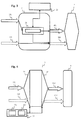
- FIG. 1 an illustration of an overview block diagram of an embodiment according to the invention is shown.
- a first terminal 1 On the basis of an information request 10 of a user, a first terminal 1 generates a request 101, this is translated in a conversion unit 2 into a meta-text 301, in an engine 3 classification step and the execution step are carried out in which the meta-text 301 is classified and executed in an application logic, to process the request.
- the generated information 302 is transferred to an output unit which determines a suitable output form and transmits output information 102 to a second terminal 5 for output.
- further metadata 201, 202, 203, 204 are transmitted and / or processed in parallel.
- the first terminal 1 and second terminal 5 are identical. In a further embodiment of the invention, the first terminal 1 and second terminals 5 are not identical. In a further embodiment, the first terminal 1 and / or the second terminal 5 are a plurality of identical or different terminals.
- a new request 103 is transmitted from the output unit 4 to the conversion unit, the conversion, classification, execution and output step is then repeated until the output unit generates and / or outputs output information the process is aborted.
- the method includes the implementation of electronic operating or communication devices and methods.
- voice and gesture control Prefer the implementation of voice and gesture control, a connection to the cloud of things, the generation of GUI and graph data, a connection to the Internet of Things.
- FIG. 2 shows a detailed representation of the request to a terminal in an embodiment of the invention.
- the information request 10 of a user 11 is a non-machine-processable information request 10a, which is converted in the terminal 1 in a processing unit 12 into a machine processable information request 10b.
- the terminal also generates further metadata 201.
- the information request 10 is already a machine-processable information request 10c that does not have to be converted.
- a human user 11 transmits his information request 10a to his terminal 1 via various communication channels, preferably voice, chat, gesture, movement, sensor technology, touch input, keystroke and / or specially defined events.
- the terminal 1 is preferably a mobile phone, a smart wearable, a smart device, a tablet, a PC, a sensor, an IoT device, a smart car and / or a smarthome.
- a machine user 11 preferably a mobile phone, a smart wearable, a smart device, a tablet, a PC, a sensor, an IoT device, a smart car, a smarthome and / or an artificial intelligence transmits either a machine-processable information request 10c or not machine processable information request 10a.
- the above-mentioned preferred communication channels are available.
- the form of the request is aware corresponding to the information request 10a or 10c is sent either in its original form 10c or in a processed form 10b as a request 101 to the conversion unit 2.
- further metadata 201a, 201b are generated in the terminal for the request, and these further metadata 201a, 201b are preferably uniquely assignable to the request 101.
- the further metadata 201a, 201b preferably comprise at least one of the following information: user information, session information, information about the terminal, time and / or date information, and an identification number of the request for unambiguously assigning the information to the latter.
- the further metadata 201a are generated in the processing unit 12 in the processing of the information request 10a.
- FIG. 3 shows a detailed representation of a conversion in a conversion unit in an embodiment according to the invention.
- the request 101 is converted by a processing unit 21 into a meta-text 301, in a preferred embodiment into a human text.
- the meta-text 301 is selected in the embodiments so that it can subsequently be further processed by the engine 3.
- the meta-text is passed to the engine 3.
- further metadata 202 is passed to the engine 3.
- the information request describes various communication paths. For each communication path, a suitable conversion of the corresponding request 101 into the meta-text 301 takes place. In one embodiment of the invention, the conversion is carried out using standardized conversion processes and / or by means of a table 22. In Table 22, the necessary conversion information about the request 101 is stored.
- speech audio is converted to human text by means of complex conversion operations, i. Metatext 301, translated.
- GPS information is assigned to a location using the map and converted to meta-text 301.
- gestures, movements of the terminal, sensor information, touch inputs, and / or a key press are converted by means of comparison tables in the meta-text 301.
- further metadata 202 are transferred from the conversion unit 2 to the engine 3.
- the additional metadata 202 is included partially or completely metadata 201 and / or supplementary metadata.
- the supplementary metadata are generated by the conversion unit 2, preferably during the conversion in the processing unit 21.
- the table 22 is executed in the conversion unit 2.
- FIG. 4 shows a detailed representation of the classification and execution in a classification unit 31 and an execution unit 32 in an embodiment according to the invention.
- a classification step 31 is carried out in a classification unit 31, in which the meta-text 301 is assigned to an application logic in an execution unit 32.
- Information about existing functions of the application logic is obtained by the classification unit 31 from an underlying system 33.
- Information about rights for using the interface, the application functionalities and / or the terminals is obtained by the execution unit from the underlying system 33.
- the underlying system includes an application database 33a and an administration database 33b.
- applications must submit their properties as well as preferably information about which meta-text points to a call.
- the access to the underlying system 33 via an easy to reach interface preferably the Web.
- the classification step an application functionality is assigned on the basis of the meta-text 301. Since the classification step is carried out very frequently, the classification unit 2 should preferably act dynamically. The classification step can not be done by hand and is a complex problem.
- methods of artificial intelligence are used in the classification step.
- a deep learning process is used.
- Particular preference is given to using retrieval-based models or methods of language translation.
- the deep learning process is designed so that the system independently learns and improves the classification.
- the deep learning process uses the information stored in the underlying system, preferably in the application database 33a.
- the model preferably 80 percent of the anonymized past requests to the system are used, which are stored in the underlying system 33, preferably in the application database 33a. Also preferably, the user is requested to rate the last request as false or correct, in addition or alternatively, the request is assessed as false if the method according to the invention is aborted. The rating is also saved and used to train the system.
- a functional training set is created which is needed to generate a classification intelligence.
- a cost function is also needed.
- the remaining 20% of the past requests are preferred.
- FIG. 5 shows a detailed representation of the output step in an output unit and a terminal in an embodiment according to the invention.
- the output unit 4 receives calls from the execution unit 32 for the purpose of providing information 102 to a user.
- This call may include a specification of the terminal 5, but must at least define and include the data 301, 202 to be submitted.
- a processing unit 41 in the output unit 4 determines a corresponding target format for the output of the information 301, and effects an output corresponding to the target format on a terminal 5.
- effecting an output involves determining a final system for processing the data in the output unit 4.
- the system for processing the data is preferably a dynamically generating graph and GUI system, a system for connecting to an augmented one and virtual reality platform for streaming objects at the end user, a translator for retrieving an M2M, cloud of things, internet of things or smart device functionality, interfaces for triggering a vibration, and systems for generating other movements and sounds of the terminal.
- a speech synthesizer for outputting a result via human speech.
- an output via text and / or list Also particularly preferred is the generation of a renewed query of further functionalities and / or information from the interface by sending a new request to the conversion unit 2.
- the output unit 4 accesses the underlying system 33 in order to query rights for using the interface, the application functionalities and / or the terminals 1 and 5 and / or to obtain information from the application database 33a.
- the generated information 302 is displayed according to the information from the underlying system 33.
- speech recognition is carried out in the system and an application logic based on the meta-text of the received speech is executed and the generated information is written as synthetic speech, GUI, graph, text, AR / VR object / simulation and / or or list output.
- the system according to the invention consists of a terminal 1 on which the voice input takes place.
- the speech input 10 is detected by machine processing, preferably as a digital audio signal.
- the terminal forwards the request 101 to the conversion unit 2.
- the conversion unit 2 is formed on a server as software.
- a mobile phone, a smart wearable, a smart device, a tablet, a PC, a sensor, an IoT device, a smart car and / or a smart home are preferred.
- pre-processing takes place in which conversion of the audio data into words is performed. Speech recognition algorithms are used. After conversion, the recognized words and / or sentences are converted into a meta-text language and passed as meta-text 301 to the classification unit 31.
- the classification unit 31 is preferably formed on a further server.
- the transfer takes place together with an ID. If the request 101 lead to multiple meta-texts 301, they are assigned a uniform ID. In the classification unit, a determination of the application logic required for answering / processing the query and the corresponding call of the application logic in the execution unit 32 take place.
- the classification unit 31 accesses an application database 33a in which the respective information required for the call of the respective application logic is stored. Preferred are, among others, API properties, formatting information, and context information stored in the stored application database 33a.
- the application logic accesses an administration database 33b in which the respective user, terminal, and application rights are managed.
- the various application logics can be configured on different servers. Subsequently, the respective application logic supplies the generated information to the output unit 4.
- the output unit 4 all information belonging to the same request 101 is compiled, preferably the ID is used. After compilation, the information is analyzed and a suitable target format is determined.
- the target format depends both on the terminals available for output as well as on the individual rights and other default settings that are stored in the underlying system 33. The output does not necessarily take place on the same terminal 1 on which the voice input was made but on the most suitable for the particular information terminal 5.
- the generated information may be incomplete and / or contain another request. In this case, a request is again sent to the system until the generated information is complete and / or no further requests are needed.
- deep learning is used to optimize the assignment of the application logic to be called to the words of the metalanguage.
- the assignment can not be made a prioi. Due to the dynamic intelligent allocation of the respective application logic, it is possible with the method and system according to the invention to easily integrate new applications.
- New applications only have to be registered in the application database 33a and the administrative entries in the administration database 33b must be updated. Due to the deep learning, the system according to the invention then allows access to the New Application Logic after a training phase, without having to integrate it in a complex manner.
- the invention also includes individual features in the figures, even though they are shown there in connection with other features and / or are not mentioned above or below. Also, the alternatives of embodiments and individual alternatives described in the figures and the description may be excluded from the subject matter of the invention or from the disclosed subject matter.
- the disclosure includes embodiments that include only the features described in the claims and in the embodiments, as well as those that include additional other features.
Landscapes
- Engineering & Computer Science (AREA)
- Theoretical Computer Science (AREA)
- Software Systems (AREA)
- Physics & Mathematics (AREA)
- General Engineering & Computer Science (AREA)
- General Physics & Mathematics (AREA)
- Biomedical Technology (AREA)
- Molecular Biology (AREA)
- Life Sciences & Earth Sciences (AREA)
- Artificial Intelligence (AREA)
- Mathematical Physics (AREA)
- Biophysics (AREA)
- Computational Linguistics (AREA)
- Data Mining & Analysis (AREA)
- Evolutionary Computation (AREA)
- General Health & Medical Sciences (AREA)
- Health & Medical Sciences (AREA)
- Computing Systems (AREA)
- Human Computer Interaction (AREA)
- Telephonic Communication Services (AREA)
- User Interface Of Digital Computer (AREA)
Abstract
Description
- Die Erfindung betrifft ein Verfahren und System zur Datenverarbeitung, insbesondere ein Verfahren und System zum Bilden einer digitalen Schnittstelle zwischen mindestens einem Endgerät und einer Applikationslogik. Dabei werden Anfragen an die Schnittstelle einheitlich in Textform umgewandelt und unter Verwendung von unstrukturierten Daten und Deep Learning Algorithmen einer Applikationsfunktion bzw. einer Ausführung zugeordnet.
- Ferner wird zur Informationsausgabe an Mensch oder Maschine unter Verwendung von unstrukturierten Echtzeitdaten, Nutzerpräferenzen und Informationsinhalt ein optimales Gerät und/oder eine optimale Darstellungsform gewählt wird, ohne diese vorher zu spezifizieren.
- Gegenwärtig werden täglich eine Vielzahl an verschiedenen Geräten genutzt, um eine Vielzahl von digitalen Services abzurufen. Um ortsunabhängig und endgerätunabhängig, z.B. auf dem Tablet und/oder auf dem Desktop PC, Zugriff auf Applikationen zu haben, müssen die jeweiligen Applikationen auf die entsprechenden Hardware- und Softwaresysteme portiert werden. Weiterhin haben verschiedene Endgeräte unterschiedliche neue Funktionalitäten, wie z.B. Sprachsteuerung, augmented Reality (AR) oder Gestensteuerung, die nicht notwendigerweise verschiedene Applikationsfunktionalitäten ansprechen.
- Neue Endgeräte oder Applikation erfordern ebenfalls in der Regel einen hohen Aufwand, denn hier muss die Technologie der neuen Endgeräte in die entsprechende Applikation portiert und integriert werden, um eine Verwendung zu ermöglichen. Oftmals sind dazu kostenintensive Schnittstellen oder Individuallösungen notwendig. Weiter sind die voranstehenden Prozesse sind sehr zeitaufwändig.
- Selbst wenn Individuallösungen, wie eine Schnittstellenprogrammiersprache zwischen verschiedenen Enderäten bzw. Betriebssystemen wie z.B. Android und iPhone existieren, die z.B. die Sprachsteuerung an verschiedenen Endgeräte ermöglichen, so fehlt hier eine Gesamtlösung. Die Gesamtlösung ermöglicht es innovative Produkte kostengünstig ohne hohen Einzelaufwand Endnutzern zur Verfügung zu stellen.
- Als aktueller Stand der Technik sind Entwicklungsumgebungen im Browser zu nennen, die sogenannten Backend-As-A-Service Angebote. Dabei wird ein Backend einer Applikation auf einem Server gehostet, somit müssen lediglich die Präsentationsebenen für die verschiedene Endgeräte entwickelt werden. Im Browser wird dabei lediglich eine graphische Oberfläche (GUI) als Schnittstelle genutzt. Weitere Schnittstellen, wie z.B. zur Spracherkennung und Sprachausgabe müssen jedoch individuell geschaffen werden.
- Mit anderen Worten ist es das Ziel der Erfindung die Integration und Zurverfügungstellung von innovativen und komplexen Technologien technisch zu erleichtern und zu beschleunigen. Weiter ist es ein Ziel eine einheitliche Oberfläche zum Aufrufen von Funktionen über verschiedene Endgeräte hinweg zu schaffen. Auch die Geschwindigkeit und Simplizität in der Veränderung von Rechten, Nutzern, Zur Verbesserung der Integrationsfähigkeit soll das Hinzufügen von zusätzlicher Applikationslogik soll vereinfacht werden, d.h. der Aufwand soll verringert werden mit dem alte Applikationen in die Schnittstelle integriert werden können.
- Die vorliegende Erfindung löst die oben genannten Probleme mit den Merkmalen der unabhängigen Patentansprüche. Die abhängigen Patentansprüche beziehen sich auf weitere Aspekte der Erfindung.
- Die Erfindung betrifft ein Verfahren zum Bilden einer digitalen Schnittstelle zur Bearbeitung einer Anfrage zwischen mindestens einem Endgerät und mindestens einer Applikationslogik. Wobei das Verfahren einen Konvertierungsschritt aufweist, in dem eine Anfrage von einem Endgerät empfangen wird und in dem die Anfrage in einen anfragespezifischen Metatext konvertiert wird und der anfragespezifische Metatext zusammen mit weiteren Metadaten an eine Klassifikationseinheit gesendet wird. Das Verfahren weist weiter einen Klassifikationsschritt auf, durchgeführt in der Klassifikationseinheit, in dem der anfragespezifische Metatext und die weiteren Metadaten empfangen werden, und der anfragespezifische Metatext einer Applikationsfunktionalität zugeordnet wird und der anfragespezifische Metatext zusammen mit einer Klassifikationsinformation und den weiteren Metadaten an eine Ausführungseinheit gesendet wird. Das Verfahren weist weiter einen Ausführungsschritt auf, durchgeführt in einer Ausführungseinheit, in dem der anfragespezifische Metatext und die weiteren Metadaten empfangen werden, und, abhängig von der Klassifikationsinformation, eine Applikationsfunktionalität ausgeführt wird und eine bei der Ausführung der Applikationsfunktionalität erzeugte Information an eine Ausgabeeinheit gesendet wird. Das Verfahren weist weiter einen Ausgabeschritt auf, durchgeführt in der Ausgabeeinheit, in dem die erzeugte Information empfangen wird, ein der Information entsprechendes Zielformat für die Ausgabe der erzeugten Information ermittelt wird und eine dem Zielformat entsprechende Ausgabe auf mindestens einem Endgerät bewirkt wird. In dem Verfahren wird der Klassifikationsschritt basierend auf einem Deep-Learning Prozess durchgeführt, bei dem der anfragespezifische Metatext und die weiteren Metadaten ausgewertet werden.
- In einem weiteren Aspekt des erfindungsgemäßen Verfahrens wird in dem Klassifikationsschritt auf eine Applikationsdatenbank zugegriffen, in der mindestens eine Applikationsfunktionalität verwaltet wird, und wobei in der Applikationsdatenbank zu jeder Applikationsfunktionalität für die Ausführung der Applikationsfunktionalität benötigte Informationen gespeichert sind.
- In einem weiteren Aspekt des erfindungsgemäßen Verfahrens wird in dem Ausführungsschritt auf eine Administrationsdatenbank zugegriffen, in der für mindestens einen Benutzer und/oder Endgerät Rechte zur Verwendung der Schnittstelle, der Applikationsfunktionalitäten und/oder der Endgeräte verwaltet werden.
- In einem weiteren Aspekt des erfindungsgemäßen Verfahrens nutzt der Deep-Learning Prozess ein short conversational retrieval based deep learning Modell, bei dem ein erster bestimmter Prozentsatz einer Vielzahl von anonymisierten früheren Anfragen genutzt wird, um das Modell zu trainieren und ein zweiter bestimmter Prozentsatz der Vielzahl von anonymisierten früheren Anfragen genutzt wird, um das Training des Modells zu verifizieren.
- In einem weiteren Aspekt des erfindungsgemäßen Verfahrens werden eine oder mehrere der folgenden Eingaben zur Unterstützung des Deep-Learning Prozess genutzt: eine positive oder negative Nutzereingabe, eine nicht erfolgreiche Ausführung der Applikationsfunktionalität, ein abgebrochene Ausführung oder Ausgabe.
- In einem weiteren Aspekt des erfindungsgemäßen Verfahrens ist die erzeugte Information eine Anfrage und die Konvertierung, Klassifikation und Ausführung werden nacheinander wiederholt durchgeführt bis ein Ausgabeschritt möglich ist.
- In einem weiteren Aspekt des erfindungsgemäßen Verfahrens wird in dem Konvertierungsschritt mindestens eine Vergleichstabelle genutzt, die bestimmte Konvertierungsregeln zur Übersetzung einer Anfrage in eine Metatextsprache enthält.
- Die Erfindung betrifft weiter ein System zum Bilden einer digitalen Schnittstelle zur Bearbeitung einer Anfrage zwischen mindestens einem Endgerät und mindestens einer Applikationslogik. Das System weist weiter eine Konvertierungseinheit auf, die dazu konfiguriert ist den Konvertierungsschritt durchzuführen, weiter dazu konfiguriert ist, eine Anfrage von einem Endgerät zu empfangen, die Anfrage in einen anfragespezifischen Metatext zu konvertieren, den anfragespezifischen Metatext zusammen mit weiteren Metadaten an eine Klassifikationseinheit zu senden. Das System weist weiter eine Klassifikationseinheit auf, die dazu konfiguriert ist, den Klassifikationsschritt durchzuführen, weiter dazu konfiguriert ist, den anfragespezifischen Metatext und die weiteren Metadaten zu empfangen, und den anfragespezifischen Metatext einer Applikationsfunktionalität zuzuordnen und den anfragespezifischen Metatext zusammen mit einer Klassifikationsinformation und den weiteren Metadaten an eine Ausführungseinheit zu senden. Das System weist weiter eine Ausführungseinheit auf, die dazu konfiguriert ist, den Ausführungsschritt durchzuführen, weiter dazu konfiguriert ist, den anfragespezifischen Metatext und die weiteren Metadaten zu empfangen, und, abhängig von der Klassifikationsinformation, eine Applikationsfunktionalität auszuführen und eine bei der Ausführung der Applikationsfunktionalität erzeugte Information an eine Ausgabeeinheit zu senden. Das System weist weiter eine Ausgabeeinheit auf, die dazu konfiguriert ist, den Ausgabeschritt durchzuführen, weiter dazu konfiguriert die erzeugte Information zu empfangen, ein der Information entsprechendes Zielformat für die Ausgabe der erzeugten Information zu ermitteln und eine dem Zielformat entsprechende Ausgabe auf mindestens einem Endgerät zu bewirken. Die Klassifikationseinheit ist dazu konfiguriert den Klassifikationsschritt basierend auf einem Deep-Learning Prozess durchzuführen, wobei in dem Deep-Learning Prozess der anfragespezifische Metatext und die weiteren Metadaten ausgewertet werden.
- In einem weiteren Aspekt des erfindungsgemäßen Systems ist die Klassifikationseinheit dazu konfiguriert, auf eine Applikationsdatenbank zuzugreifen, in der mindestens eine Applikationsfunktionalität verwaltet wird, und wobei in der Applikationsdatenbank zu jeder Applikationsfunktionalität für die Ausführung der Applikationsfunktionalität benötigte Informationen gespeichert sind.
- In einem weiteren Aspekt des erfindungsgemäßen Systems ist die Ausführungseinheit dazu konfiguriert auf eine Administrationsdatenbank zuzugreifen, in der für mindestens einen Benutzer und/oder Endgerät Rechte zur Verwendung der Schnittstelle, der Applikationsfunktionalitäten und/oder der Endgeräte verwaltet werden.
- In einem weiteren Aspekt des erfindungsgemäßen Systems nutzt der Deep-Learning Prozess ein short conversational retrieval based deep learning Modell, bei dem ein erster bestimmter Prozentsatz einer Vielzahl von anonymisierten früheren Anfragen genutzt wird, um das Modell zu trainieren und ein zweiter bestimmter Prozentsatz der Vielzahl von anonymisierten früheren Anfragen genutzt wird, um das Training des Modells zu verifizieren.
- In einem weiteren Aspekt des erfindungsgemäßen Systems wird eine oder mehrere der folgenden Eingaben zur Unterstützung des Deep-Learning Prozess genutzt: eine positive oder negative Nutzereingabe, eine nicht erfolgreiche Ausführung der Applikationsfunktionalität, ein abgebrochene Ausführung oder Anzeige.
- In einem weiteren Aspekt des erfindungsgemäßen Systems ist die erzeugte Information eine Anfrage und die Schritte Konvertierung, Klassifikation und Ausführung werden nacheinander wiederholt durchgeführt bis ein Ausgabeschritt möglich ist.
- In einem weiteren Aspekt des erfindungsgemäßen Systems ist die Konvertierungseinheit dazu konfiguriert in dem Konvertierungsschritt mindestens eine Vergleichstabelle zu nutzen, die bestimmte Konvertierungsregeln zur Übersetzung einer Anfrage in eine Metatextsprache enthält.
- Die Erfindung betrifft ferner eine Verwendung eines Systems nach mindestens einem obenstehenden Aspekte zur Durchführung eines Verfahrens nach mindestens einem oben beschriebenen Aspekte, um eine digitale Schnittstelle zur Bearbeitung einer Anfrage zwischen mindestens einem Endgerät und mindestens einer Applikationslogik zu bilden.
- Die Erfindung unterscheidet sich vom Stand der Technik darin, dass keine direkte Kommunikation zwischen Präsentationslogik und Applikationslogik hergestellt wird. Stattdessen werden alle Anforderungen in eine textbasierte Metasprache übersetzt und dann basierend auf Metadaten, zu einer der Applikationsfunktionen klassifiziert. Nach der Klassifikation erfolgt dann ein Aufruf der Applikationslogik in der Ausführungseinheit und mindestens eine Information wird erzeugt um die Anfrage zu beantworten.
- Bei der anschließenden Ausgabe der Informationen werde diese ebenfalls nicht in die entsprechende Gerätesprache portiert, sondern es wird nach einem einheitlichen Identifikator gesucht, wie z.B. Liste, Graphisch, sprachlich, VR, AR, IoT, Aufruf oder den Wunsch des Anwenders, um ein passendes Format und Endgerät zur Wiedergabe zu bestimmen.
- Eine Ausführungsform der Erfindung erlaubt ein geräte- und plattformübergreifendes "Einhängen" von Funktionen und Applikationen, denn die Klassifikationseinheit erlernt in dem Deep Learning Prozess innerhalb kurzer Zeit den Aufruf der Applikationen zur Bearbeitung passender Anfragen.
- In einer Ausführungsform der Erfindung wird zum Verwalten der Applikationen bevorzugt eine dynamische Oberfläche genutzt, bevorzugt eine Web-Oberfläche, die sehr weit verbreitet angesprochen werden kann und sind daher optimal Voraussetzungen zur Umsetzung der Erfindung bietet. Die Applikationen müssen somit nicht für einzelne Endgeräte portiert werden, stattdessen genügt eine Registrierung in der Applikationsdatenbank.
- Eine Ausführungsform der Erfindung erlaubt die einheitliche Verarbeitung von Informationen auch aus verschiedenen Quellen und in verschiedenen Eingabeformaten, z.B. Spracheingabe, Stifteingabe, oder Maschineneingabe, und sorgt somit für eine übersichtliche Anwendungslandschaft und vermeidet die Entwicklung von zusätzlichen Schnittstellen. Dabei wird ein Metatext unabhängig vom Eingabeformat der verschiedenen Inputs gebildet und damit die Eventverarbeitung standardisiert. Die Kombination von Events und Inputs ist dadurch sehr einfach durchführbar und spezielle Events für verschiedene Inputformate sind nicht notwendig, sondern können einheitlich verarbeitet werden.
- Eine Ausführungsform der Erfindung hat eine einheitliche Oberfläche und Applikationszugriffe sind endgeräteübergreifend gleich, da die Applikationszugriffe mit dem gleichen Metatext erfolgen.
- Eine Ausführungsform der Erfindung erlaubt die Verwaltung von Rechten, Nutzer, Endgeräten und Applikationen über eine einfache Oberfläche, bevorzugt eine Web-Oberfläche, und ist dadurch sehr schnell anpassbar. Aufgrund der geringen Anforderungen der Oberfläche, bevorzugt einer Web-Oberfläche, ist die Integration einfach und intuitiv. Die Informationen zur Verwaltung sind in der Administrationsdatenbank gespeichert.
- Verbesserungen gegenüber dem Stand der Technik ergeben sich aus der Möglichkeit der Nutzung via Web-Oberfläche/Schnittstelle, aus der standardisierten und vereinfachten Verfügbarkeit von komplexen Technologien, wie der Sprach- und Gestensteuerung, dem Anschluss an die Cloud der Dinge, der GUI- und Graphengeneration, dem Internet of Things, M2M sowie Ausgabe von AR / VR Projektionen, unter Nutzung der jeweiligen technischen Kapazitäten der Endgeräte. Bevorzugte Endgeräte sind Wearables, Smart Devices, Tablets, und Telefone mit technischen Kapazitäten wie Bluetooth, GPS, WLAN, Touch- und/oder Bewegungssensoren.
-
- Fig. 1
- zeigt eine Darstellung eines Überblick Blockdiagram einer erfindungsgemäßen Ausführungsform,
- Fig. 2
- zeigt eine detaillierte Darstellung einer Anfrage an einem Endgerät in einer erfindungsgemäßen Ausführungsform,
- Fig. 3
- zeigt eine detaillierte Darstellung einer Konvertierung in einer Konvertierungseinheit in einer erfindungsgemäßen Ausführungsform,
- Fig. 4
- zeigt eine detaillierte Darstellung einer Klassifikation und Ausführung in einer Klassifikationseinheit und einer Ausführungseinheit in einer erfindungsgemäßen Ausführungsform, und
- Fig. 5
- zeigt eine detaillierte Darstellung eines Ausgabeschritts in einer Ausgabeeinheit und einem Endgerät in einer erfindungsgemäßen Ausführungsform.
- In der folgenden Beschreibung schließen, sofern nicht anders gekennzeichnet, Begriffe die im Singular verwendet sind auch immer den Begriff im Plural mit ein, wenn dies dem Fachmann als übliche Praxis in der Datenverarbeitung und/oder zweckmäßig erscheint. Insbesondere trifft das auf die Begriffe Endgerät, Informationsanfrage, Anfrage, Metatext, Tabelle, Applikationslogik und Metadaten zu.
- Die Begriffe "-einheit" beziehen sich auf eine funktionale Einheit. Verschiedene Einheiten können zusammen und/oder getrennt als Hard- oder Software ausgestaltet sein. Insbesondere können verschiedene Einheiten einzeln als Software ausgebildet sein und zusammen auf einer Hardware ausgeführt werden oder zusammen als Software ausgeführt sein. Weitere Ausführungsformen ergeben sich dem Fachmann aus den jeweiligen funktionalen Anforderungen an die Einheiten.
- In
Figur 1 ist eine Darstellung eines Überblick Blockdiagram einer erfindungsgemäßen Ausführungsform gezeigt. Aufgrund einer Informationsanfrage 10 eines Nutzers erzeugt ein erstes Endgerät 1 eine Anfrage 101, diese wird in einer Konvertierungseinheit 2 in einen Metatext 301 übersetzt, in einer Engine 3 wird Klassifizierungschritt und der Ausführungsschitt durchgeführt in dem der Metatext 301 klassifiziert und in einer Applikationslogik ausgeführt wird, um die Anfrage zu verarbeiten. Die erzeugte Information 302 wird an eine Ausgabeeinheit übergeben die eine geeignete Ausgabeform festlegt und eine Ausgabeinformation 102 an ein zweites Endgerät 5 zur Ausgabe übermittelt. Bei dem Verfahren werden parallel weitere Metadaten 201, 202, 203, 204 übertragen und/oder verarbeitet. - In einer Ausführungsform der Erfindung sind das erste Endgerät 1 und zweite Endgerät 5 identisch. In einer weiteren Ausführungsform der Erfindung sind das erste Endgerät 1 und zweite Endgeräte 5 nicht identisch. In einer weiteren Ausführungsform sind das erste Endgerät 1 und/oder das zweite Endgerät 5 eine Vielzahl von identischen oder unterschiedlichen Endgeräten.
- In einer Ausführungsform der Erfindung wird ergänzend oder alternativ statt der Ausgabeinformation 102 eine erneute Anfrage 103 von der Ausgabeeinheit 4 an die Konvertierungseinheit übermittelt, der Konvertierungs-, Klassifizierungs-, Ausführungs- und Ausgabeschritt wird dann wiederholt, bis die Ausgabeeinheit eine Ausgabeinformation erzeugt und/oder das Verfahren abgebrochen wird.
- In einer bevorzugten Ausführungsform erfolgt die Klassifikation des Metatextes 301, sowie von weiteren unstrukturierten Informationen 202 in dem Deep-Learning Prozess mit einem short conversational retrieval based deep learning Modell und die Festlegung der geeigneten Ausgabeform für die Ausgabe durch eine Auswertung von Daten 203, sowie Analyse der Ergebnisinformationen 302 und unter Einbeziehung ergänzender Voreinstellungen, z.B. von Nutzerpräferenzen und Unternehmensvorgaben.
- In bevorzugten Ausführungsformen umfasst das Verfahren die Implementierung elektronischer Bedienungs- oder Kommunikationsgeräte und -methoden. Bevorzugt die Implementierung einer Sprach- und Gestensteuerung, eines Anschluss an die Cloud der Dinge, die Generation von GUI- und Graphendaten, eines Anschluss an das Internet of Things.
-
Figur 2 zeigt eine detaillierte Darstellung der Anfrage an einem Endgerät in einer erfindungsgemäßen Ausführungsform. Die Informationsanfrage 10 eines Nutzers 11 ist eine nicht maschinenverarbeitbare Informationsanfrage 10a, die im Endgerät 1 in einer Verarbeitungseinheit 12 in eine maschinenverarbeitbare Informationsanfrage 10b umgewandelt wird. In dem Endgerät werden auch weitere Metadaten 201 erzeugt. Alternativ oder ergänzend ist die Informationsanfrage 10 bereits eine maschinenverarbeitbare Informationsanfrage 10c die nicht gewandelt werden muss. - Ein menschlicher Nutzer 11 übermittelt seine Informationsanfrage 10a über verschiedene Kommunikationswege, bevorzugt Sprache, Chat, Gestik, Bewegung, Sensorik, Toucheingabe, Tastendruck und/oder eigens definierter Events, an sein Endgerät 1. Das Endgerät 1 ist bevorzugt ein Mobiltelefon, ein Smart Wearable, ein Smart Device, ein Tablet, ein PC, ein Sensor, ein IoT-Gerät, ein Smart Car und/oder ein Smarthome.
- Ein maschineller Nutzer 11, bevorzugt ein Mobiltelefon, ein Smart Wearable, ein Smart Device, ein Tablet, ein PC, ein Sensor, ein IoT Gerät, ein Smart Car ein Smarthome und/oder eine künstliche Intelligenz übermittelt entweder eine maschinenverarbeitbare Informationsanfrage 10c oder eine nicht maschinenverarbeitbare Informationsanfrage 10a. Im letzteren Fall stehen im die oben genannten bevorzugten Kommunikationswege zur Verfügung.
- In einer bevorzugten Ausführungsform der Erfindung ist sich als Endgerät 1 der Form der Anfrage bewusst entsprechend wird die Informationsanfrage 10a oder 10c entweder in ihrer ursprünglichen Form 10c oder in einer verarbeiteten Form 10b als Anfrage 101 an die Konvertierungseinheit 2 gesendet.
- In einer Ausführungsform der Erfindung werden in dem Endgerät zu der Anfrage weitere Metadaten 201a, 201b erzeugt, bevorzugt sind diese weiteren Metadaten 201a, 201b der Anfrage 101 eindeutig zuordenbar. Die weiteren Metadaten 201a, 201b umfassen bevorzugt mindestens eine der folgenden Informationen: Anwenderinformationen, Sitzungsinformationen, Informationen zum Endgerät, Uhrzeit und/oder Datumsinformationen und eine Identifikationsnummer der Anfrage, zur eindeutigen Zuordnung der Informationen zu dieser.
- In einer Ausführungsform der Erfindung werden die weiteren Metadaten 201a in der Verarbeitungseinheit 12 bei der Verarbeitung der Informationsanfrage 10a erzeugt.
-
Figur 3 zeigt eine detaillierte Darstellung einer Konvertierung in einer Konvertierungseinheit in einer erfindungsgemäßen Ausführungsform. In einem Konvertierungsschritt, der in der Konvertierungseinheit 2 durchgeführt wird, wird die Anfrage 101 von einer Verarbeitungseinheit 21 in einen Metatext 301, in einer bevorzugten Ausführungsform in einen menschlichen Text, konvertiert. Der Metatext 301 ist in den Ausführungsformen so gewählt, dass er anschließend von der Engine 3 weiter verarbeitet werden kann. Nach der Konvertierung wird der Metatext an die Engine 3 übergeben. Ferner werden weitere Metadaten 202 an die Engine 3 übergeben. - In der Informationsanfrage sind verschiedene Kommunikationswege beschrieben. Für jeden Kommunikationsweg, erfolgt eine geeignete Konvertierung der entsprechenden Anfrage 101 in den Metatext 301. In einer Ausführungsform der Erfindung wird die Konvertierung mit standardisierten Konvertierungsvorgängen und/oder mithilfe einer Tabelle 22 durchgeführt. In der Tabelle 22 sind die nötigen Konvertierungsinformationen zu der Anfrage 101 gespeichert.
- In einer Ausführungsform der Erfindung wird Sprachaudio mithilfe von komplexen Konvertierungsvorgängen in menschlichen Text, d.h. Metatext 301, übersetzt. In einer Ausführungsform der Erfindung werden GPS Informationen mithilfe der Landkarte einem Ort zugeordnet und dieser in Metatext 301 konvertiert. In einer Ausführungsform der Erfindung werden Gesten, Bewegungen des Endgeräts, Sensorinformationen, Toucheingaben und/oder eine Tastenbetätigung mithilfe von Vergleichstabellen in der Metatext 301 konvertiert.
- In einer Ausführungsform der Erfindung werden weitere Metadaten 202 von der Konvertierungseinheit 2 an die Engine 3 übergeben. Die weiteren Metadaten 202 enthalten die teilweise oder vollständig die Metadaten 201 und/oder ergänzende Metadaten. Die ergänzenden Metadaten werden von der Konvertierungseinheit 2 erzeugt, bevorzugt bei der Konvertierung in der Verarbeitungseinheit 21.
- In einer alternativen Ausführungsform ist die Tabelle 22 in der Konvertierungseinheit 2 ausgeführt.
-
Figur 4 zeigt eine detaillierte Darstellung der Klassifikation und Ausführung in einer Klassifikationseinheit 31 und einer Ausführungseinheit 32 in einer erfindungsgemäßen Ausführungsform. In der Engine 3 wird in einer Klassifikationseinheit 31 ein Klassifikationsschritt durchgeführt, in dem der Metatext 301 einer Applikationslogik in einer Ausführungseinheit 32 zugeordnet wird. Informationen über vorhandene Funktionen der Applikationlogik, bezieht die Klassifikationseinheit 31 aus einem unterliegenden System 33. Informationen über Rechte zur Verwendung der Schnittstelle, der Applikationsfunktionalitäten und/oder der Endgeräte bezieht die Ausführungseinheit von dem unterliegenden System 33. - Das unterliegende System enthält eine Applikationsdatenbank 33a und eine Administrationsdatenbank 33b. In dem unterliegenden System 33a müssen Applikationen ihre Eigenschaften sowie bevorzugt Informationen darüber welcher Metatext auf einen Aufruf hinweist einreichen.
- In einer bevorzugten Ausführungsform der Erfindung erfolgt der Zugriff auf das unterliegende System 33 über eine einfach zu erreichende Schnittstelle, bevorzugt das Web.
- Im Klassifikationsschritt erfolgt die Zuordnung einer Applikationsfunktionalität auf Basis des Metatextes 301. Da der Klassifikationsschritt sehr häufig durchgeführt wird, sollte die Klassifikationseinheit 2 bevorzugt dynamisch agieren. Der Klassifikationsschritt kann nicht von Hand getätigt werden und stellt ein komplexes Problem dar.
- In einer bevorzugten Ausführungsform der Erfindung wird im Klassifikationsschritt auf Methoden der Künstlichen Intelligenz zurückgegriffen. Bevorzugt wird ein Deep-Learning Prozess verwendet. Besonders bevorzugt werden sogenannte retrieval based Modelle oder Methoden der Sprachübersetzung genutzt.
- Der Deep-Learning Prozess ist so ausgeführt, dass das System selbständig die Klassifikation erlernt und verbessert. Der Deep-Learning Prozess greift dabei auf die im Unterliegenden System, bevorzugt in der Applikationsdatenbank 33a gespeicherten Informationen zurück.
- Zum Training des Modells werden bevorzugt 80 Prozent der anonymisierten vergangenen Anfragen an das System genutzt, welche in dem unterliegenden System 33 gespeichert werden, bevorzugt in der Appplikationsdatenbank 33a. Ebenfalls bevorzugt wird der Nutzer gebeten die letzte Anfrage als falsch oder richtig zu bewerten ergänzend oder alternativ wird die Anfrage wird als falsch bewertet, wenn das erfindungsgemäße Verfahren abgebrochen wird. Die Bewertung wird ebenfalls gespeichert und dient zum Training des Systems.
- Auf Grundlage dieser Informationen wird ein funktionales Trainings Set erstellt, welches benötigt wird, um eine Klassifikationsintelligenz zu erzeugen. Um das Lernen des Algorithmus zu ermöglichen, wird ferner eine Kostenfunktion benötigt. Beim Training liegt das System entweder richtig oder falsch. Daher wird in diesem Fall eine Kostenfunktion von

- Das Ergebnis der Klassifikation in 31 ist ein Aufruf einer Applikationslogik in der Ausführungseinheit 32. Diese wird mit allen notwendigen Informationen, die in dem unterliegenden System 33a definiert sind aufgerufen. Daraufhin wird die entsprechende Applikationslogik in der Ausführungseinheit ausgeführt.
-
Figur 5 zeigt eine detaillierte Darstellung des Ausgabeschritts in einer Ausgabeeinheit und einem Endgerät in einer erfindungsgemäßen Ausführungsform. - Die Ausgabeeinheit 4 nimmt von der Ausführungseinheit 32 Aufrufe entgegen, mit dem Ziel eine Informationen 102 an einen Nutzer zu liefern. Dieser Aufruf kann eine Spezifikation des Endgerätes 5 beinhalten, aber muss aber mindesten die zu übergebenden Daten 301, 202 definieren und beinhalten. Anhand der übergebenden Daten 301, 202 bestimmt eine Verarbeitungseinheit 41 in der Ausgabeeinheit 4 ein entsprechendes Zielformat für die Ausgabe der Informationen 301, und bewirkt eine dem Zielformat entsprechende Ausgabe auf einem Endgerät 5.
- In einer Ausführungsform der Erfindung beinhaltet das Bewirken einer Ausgabe das Bestimmen eines finalen Systems zur Verarbeitung der Daten in der Ausgabeeinheit 4. Das System zur Verarbeitung der Daten ist bevorzugt ein System zur dynamischen Erzeugung von Graphen- und GUI, ein System zur Verbindung zu einer Augmented- und Virtual Reality Plattform zum Streamen von Objekten beim Endnutzer, ein Übersetzer zum Abrufen einer M2M, Cloud der Dinge, Internet of Things oder Smart Device Funktionalität, eine Schnittstellen zur Auslösung einer Vibration, und Systeme zur Erzeugung anderer Bewegungen und Töne des Endgeräts. Besonders bevorzugt ist ein Speech Synthesizer zur Ausgabe eines Ergebnisses via menschlicher Sprache. Ebenfalls besonders bevorzugt ist eine Ausgabe via Text und/oder Liste. Ebenfalls besonders bevorzugt ist das Erzeugen einer erneuten Abfrage von weiteren Funktionalitäten und/oder Informationen von der Schnittstelle durch das Senden einer erneuten Anfrage an die Konvertierungseinheit 2.
- In einer Ausführungsform der Erfindung greift die Ausgabeeinheit 4 auf das unterliegende System 33 zu, um Rechte zur Verwendung der Schnittstelle, der Applikationsfunktionalitäten und/oder der Endgeräte 1 und 5 abzufragen und/oder Informationen aus der Applikationsdatenbank 33a zu erhalten. Auf dem Endgerät 5 wird die erzeugte Information 302 entsprechend den Informationen aus dem unterliegenden System 33 angezeigt beziehungsweise ausgeführt.
- In einer speziellen bevorzugten Ausführungsform der Erfindung wird in dem erfindungsgemäßen Verfahren im System eine Spracherkennung durchgeführt und eine Applikationslogik basierend auf dem Metatext der eingegangenen Sprache ausgeführt und die erzeugte Information als synthetische Sprache, GUI, Graph, Text, AR/VR Objekt/Simulation und/oder Liste ausgegeben.
- Dementsprechend besteht das erfindungsgemäße System aus einem Endgerät 1 an dem die Spracheingabe erfolgt. In dem Endgerät 1 wird die Spracheingabe 10 maschinenverarbeitbar erfasst, bevorzugt als digitales Audiosignal. Das Endgerät gibt die Anfrage 101 an die Konvertierungseinheit 2 weiter. Die Konvertierungseinheit 2 ist auf einem Server als Software ausgebildet. Als Endgerät 1 werden ein Mobiltelefon, ein Smart Wearable, ein Smart Device, ein Tablet, ein PC, ein Sensor, ein IoT Gerät, ein Smart Car und/oder ein Smarthome bevorzugt.
- In der Konvertierungseinheit 2 findet eine Vorverarbeitung statt, bei der eine Umwandlung der Audiodaten in Worte durchgeführt wird. Dabei werden Spracherkennungsalgorithmen benutzt. Nach Umwandlung werden die erkannten Worte und/oder Sätze in eine Metatextsprache konvertiert und als Metatext 301 an die Klassifizierungseinheit 31 weitergegeben. Die Klassifizierungseinheit 31 ist bevorzugt auf einem weiteren Server ausgebildet.
- Die Weitergabe erfolgt zusammen mit einer ID. Sollten die Anfrage 101 zu mehreren Metatexten 301 führen, ist diesen eine einheitliche ID zugeordnet. In der Klassifikationseinheit erfolgen eine Bestimmung der zur Beantwortung/Bearbeitung der Anfrage benötigten Applikationslogik und der entsprechende Aufruf der Applikationslogik in der Ausführungseinheit 32.
- Die Klassifikationseinheit 31 greift dabei auf eine Applikationsdatenbank 33a zu, in der die jeweiligen für den Aufruf der jeweiligen Applikationslogik benötigten Informationen gespeichert sind. Bevorzugt sind das unter Anderem API Eigenschaften, Formatierungsinformation, und Kontextinformationen die in der gespeichert Applikationsdatenbank 33a gespeichert sind.
- Die Applikationslogik greift auf eine Administrationsdatenbank 33b zurück in der die jeweiligen Nutzer-, Endgeräte-, und Applikationsrechte verwaltet werden. Die verschiedenen Applikationslogiken können auf verschiedenen Servern ausgebildet sein. Im Anschluss liefert die jeweilige Applikationslogik die erzeugte Information an die Ausgabeeinheit 4.
- In der Ausgabeinheit 4 werden alle Informationen die zur gleichen Anfrage 101 gehören zusammengestellt, bevorzugt wird dabei die ID verwendet. Nach dem Zusammenstellen werden die Informationen analysiert und ein geeignetes Zielformat festgelegt. Das Zielformat richtet sich sowohl nach den zur Ausgabe verfügbaren Endgeräten als auch nach den individuellen Rechten und weiteren Voreinstellungen die in dem unterliegenden System 33 hinterlegt sind. Die Ausgabe erfolgt dabei nicht notwendigerweise auf dem gleichen Endgerät 1 auf dem die Spracheingabe erfolgte sondern auf dem für die jeweilige Information am besten geeigneten Endgerät 5.
- Die erzeugte Information kann unvollständig sein und/oder eine weitere Anfrage enthalten. In diesem Fall wird erneut eine Anfrage an das System übermittelt, solange bis die erzeugte Information vollständig ist und/oder keine weiteren Anfragen mehr nötig sind.
- In dem Klassifikationsschritt wird das Deep-Learning genutzt um die Zuordnung der aufzurufenden Applikationslogik zu den Worten der Metasprache zu optimieren. Die Zuordnung kann nicht a prioi erfolgen. Durch die dynamische intelligente Zuordnung der jeweiligen Applikationslogik ist es mit dem erfindungsgemäßen Verfahren und System möglich, neue Anwendungen einfach zu integrieren.
- Neue Anwendungen müssen lediglich in der Applikationdatenbank 33a registriert werden und die administrativen Einträge in der Administrationsdatenbank 33b müssen aktualisiert werden. Aufgrund des Deep-Learnings ermöglicht das erfindungsgemäße System dann nach einer Trainingsphase den Zugriff auf die Neue Applikationslogik, ohne dass diese aufwendig integriert werden musste.
- Obwohl die Erfindung mittels der Figuren und der zugehörigen Beschreibung dargestellt und detailliert beschrieben ist, sind diese Darstellung und diese detaillierte Beschreibung illustrativ und beispielhaft zu verstehen und nicht als die Erfindung einschränkend. Es versteht sich, dass Fachleute Änderungen und Abwandlungen machen können, ohne den Umfang und der folgenden Ansprüche zu verlassen. Insbesondere umfasst die Erfindung ebenfalls Ausführungsformen mit jeglicher Kombination von Merkmalen, die vorstehend oder nachfolgend zu verschiedenen Ausführungsformen genannt oder gezeigt sind.
- Die Erfindung umfasst ebenfalls einzelne Merkmale in den Figuren auch wenn sie dort im Zusammenhang mit anderen Merkmalen gezeigt sind und/oder vorstehend oder nachfolgend nicht genannt sind. Auch können die in den Figuren und der Beschreibung beschriebenen Alternativen von Ausführungsformen und einzelne Alternativen deren Merkmale vom Erfindungsgegenstand beziehungsweise von den offenbarten Gegenständen ausgeschlossen sein. Die Offenbarung umfasst Ausführungsformen, die ausschließlich die in den Ansprüchen beziehungsweise in den Ausführungsbeispielen beschriebenen Merkmale umfasst sowie auch solche, die zusätzliche andere Merkmale umfassen.
- "Improved Deep Learning Baselines for Ubuntu Corpus Dialogs, " Rudolf Kadlec, Martin Schmid, und Jan Kleindienst, unter arXiv:1510.03753
-
- GUI
- - Graphical User Interface
- AR
- - Augmented Reality
- VR
- - Virtual Reality
- API
- - Application Programming Interface
- IoT
- - Internet of Things
Claims (15)
- Verfahren zum Bilden einer digitalen Schnittstelle zur Bearbeitung einer Anfrage zwischen mindestens einem Endgerät und mindestens einer Applikationslogik, wobei das Verfahren aufweist:a) einen Konvertierungsschritt, in dem eine Anfrage von einem Endgerät empfangen wird und in dem die Anfrage in einen anfragespezifischen Metatext konvertiert wird und der anfragespezifische Metatext zusammen mit weiteren Metadaten an eine Klassifikationseinheit gesendet wird;b) einen Klassifikationsschritt, durchgeführt in der Klassifikationseinheit, in dem der anfragespezifische Metatext und die weiteren Metadaten empfangen werden, und der anfragespezifische Metatext einer Applikationsfunktionalität zugeordnet wird und der anfragespezifische Metatext zusammen mit einer Klassifikationsinformation und den weiteren Metadaten an eine Ausführungseinheit gesendet wird;c) einen Ausführungsschritt, durchgeführt in einer Ausführungseinheit, in dem der anfragespezifische Metatext und die weiteren Metadaten empfangen werden, und, abhängig von der Klassifikationsinformation, eine Applikationsfunktionalität ausgeführt wird und eine bei der Ausführung der Applikationsfunktionalität erzeugte Information an eine Ausgabeeinheit gesendet wird;d) einem Ausgabeschritt, durchgeführt in der Ausgabeeinheit, in dem die erzeugte Information empfangen wird, ein der Information entsprechendes Zielformat für die Ausgabe der erzeugten Information ermittelt wird und eine dem Zielformat entsprechende Ausgabe auf mindestens einem Endgerät bewirkt wird; und
wobei der Klassifikationsschritt basierend auf einem Deep-Learning Prozess durchgeführt wird, bei dem der anfragespezifische Metatext und die weiteren Metadaten ausgewertet werden. - Verfahren nach Anspruch 1, wobei in dem Klassifikationsschritt auf eine Applikationsdatenbank zugegriffen wird, in der mindestens eine Applikationsfunktionalität verwaltet wird, und wobei in der Applikationsdatenbank zu jeder Applikationsfunktionalität für die Ausführung der Applikationsfunktionalität benötigte Informationen gespeichert sind.
- Verfahren nach Anspruch 1 oder 2, wobei in dem Ausführungsschritt auf eine Administrationsdatenbank zugegriffen wird, in der für mindestens einen Benutzer und/oder Endgerät Rechte zur Verwendung der Schnittstelle, der Applikationsfunktionalitäten und/oder der Endgeräte verwaltet werden.
- Verfahren nach einem der Ansprüche 1 bis 3, wobei der Deep-Learning Prozess ein short conversational retrieval based deep learning Modell nutzt, bei dem ein erster bestimmter Prozentsatz einer Vielzahl von anonymisierten früheren Anfragen genutzt wird, um das Modell zu trainieren und ein zweiter bestimmter Prozentsatz der Vielzahl von anonymisierten früheren Anfragen genutzt wird, um das Training des Modells zu verifizieren.
- Verfahren nach Anspruch 4, wobei eine oder mehrere der folgenden Eingaben zur Unterstützung des Deep-Learning Prozess genutzt wird:i) eine positive oder negative Nutzereingabe;ii) eine nicht erfolgreiche Ausführung der Applikationsfunktionalität;iii) eine abgebrochene Ausführung der Schritte c) und d).
- Verfahren nach einem der Ansprüche 1 bis 5, wobei die erzeugte Information eine Anfrage ist und die Schritte a) bis c) nacheinander wiederholt durchgeführt werden bis ein Ausgabeschritt möglich ist.
- Verfahren nach einem der Ansprüche 1 bis 6, wobei in dem Konvertierungsschritt mindestens eine Vergleichstabelle genutzt wird, die bestimmte Konvertierungsregeln zur Übersetzung einer Anfrage in eine Metatextsprache enthält.
- System zum Bilden einer digitalen Schnittstelle zur Bearbeitung einer Anfrage zwischen mindestens einem Endgerät und mindestens einer Applikationslogik, wobei das System aufweist:a) eine Konvertierungseinheit die dazu konfiguriert ist den Konvertierungsschritt durchzuführen, und weiter dazu konfiguriert ist eine Anfrage von einem Endgerät zu empfangen, die Anfrage in einen anfragespezifischen Metatext zu konvertieren, den anfragespezifischen Metatext zusammen mit weiteren Metadaten an eine Klassifikationseinheit zu senden;b) eine Klassifikationseinheit die dazu konfiguriert ist, den Klassifikationsschritt durchzuführen, den anfragespezifischen Metatext und die weiteren Metadaten zu empfangen, und den anfragespezifischen Metatext einer Applikationsfunktionalität zuzuordnen und den anfragespezifischen Metatext zusammen mit einer Klassifikationsinformation und den weiteren Metadaten an eine Ausführungseinheit zu senden;c) eine Ausführungseinheit, die dazu konfiguriert ist, den Ausführungsschritt durchzuführen, den anfragespezifischen Metatext und die weiteren Metadaten zu empfangen, und, abhängig von der Klassifikationsinformation, eine Applikationsfunktionalität auszuführen und eine bei der Ausführung der Applikationsfunktionalität erzeugte Information an eine Ausgabeeinheit zu senden;d) eine Ausgabeeinheit die dazu konfiguriert ist, den Ausgabeschritt durchzuführen, die erzeugte Information zu empfangen, ein der Information entsprechendes Zielformat für die Ausgabe der erzeugten Information zu ermitteln und eine dem Zielformat entsprechende Ausgabe auf mindestens einem Endgerät zu bewirken; und
wobei die Klassifikationseinheit dazu konfiguriert ist, den Klassifikationsschritt basierend auf einem Deep-Learning Prozess durchzuführen, wobei in dem Deep-Learning Prozess der anfragespezifische Metatext und die weiteren Metadaten ausgewertet werden. - System nach Anspruch 8, wobei die Klassifikationseinheit dazu konfiguriert ist, auf eine Applikationsdatenbank zuzugreifen, in der mindestens eine Applikationsfunktionalität verwaltet wird, und wobei in der Applikationsdatenbank zu jeder Applikationsfunktionalität für die Ausführung der Applikationsfunktionalität benötigte Informationen gespeichert sind.
- System nach Anspruch 8 oder 9, wobei die Ausführungseinheit dazu konfiguriert ist, auf eine Administrationsdatenbank zuzugreifen, in der für mindestens einen Benutzer und/oder Endgerät Rechte zur Verwendung der Schnittstelle, der Applikationsfunktionalitäten und/oder der Endgeräte verwaltet werden.
- System nach einem der Ansprüche 8 bis 10, wobei der Deep-Learning Prozess ein short conversational retrieval based deep learning Modell nutzt, bei dem ein erster bestimmter Prozentsatz einer Vielzahl von anonymisierten früheren Anfragen genutzt wird, um das Modell zu trainieren und ein zweiter bestimmter Prozentsatz der Vielzahl von anonymisierten früheren Anfragen genutzt wird, um das Training des Modells zu verifizieren.
- System nach Anspruch 11, wobei eine oder mehrere der folgenden Eingaben zur Unterstützung des Deep-Learning Prozess genutzt wird:i) eine positive oder negative Nutzereingabe;ii) eine nicht erfolgreiche Ausführung der Applikationsfunktionalität;iii) eine abgebrochene Ausführung der Schritte c) und d).
- System nach einem der Ansprüche 8 bis 12, wobei die erzeugte Information eine Anfrage ist und die Schritte a) bis c) nacheinander wiederholt durchgeführt werden bis ein Ausgabeschritt möglich ist.
- System nach einem der Ansprüche 8 bis 13, wobei die Konvertierungseinheit dazu konfiguriert ist, in dem Konvertierungsschritt mindestens eine Vergleichstabelle zu nutzen, die bestimmte Konvertierungsregeln zur Übersetzung einer Anfrage in eine Metatextsprache enthält.
- Verwendung eines Systems nach mindestens einem Ansprüchen 8 bis 14 zur Durchführung eines Verfahrens nach mindestens einem der Anspruche 1 bis 7, um eine digitale Schnittstelle zur Bearbeitung einer Anfrage zwischen mindestens einem Endgerät und mindestens einer Applikationslogik zu bilden.
Priority Applications (1)
| Application Number | Priority Date | Filing Date | Title |
|---|---|---|---|
| EP16187360.9A EP3291090B1 (de) | 2016-09-06 | 2016-09-06 | Verfahren und system zum bilden einer digitalen schnittstelle zwischen endgerät und applikationslogik via deep learning und cloud |
Applications Claiming Priority (1)
| Application Number | Priority Date | Filing Date | Title |
|---|---|---|---|
| EP16187360.9A EP3291090B1 (de) | 2016-09-06 | 2016-09-06 | Verfahren und system zum bilden einer digitalen schnittstelle zwischen endgerät und applikationslogik via deep learning und cloud |
Publications (2)
| Publication Number | Publication Date |
|---|---|
| EP3291090A1 true EP3291090A1 (de) | 2018-03-07 |
| EP3291090B1 EP3291090B1 (de) | 2021-11-03 |
Family
ID=57083053
Family Applications (1)
| Application Number | Title | Priority Date | Filing Date |
|---|---|---|---|
| EP16187360.9A Active EP3291090B1 (de) | 2016-09-06 | 2016-09-06 | Verfahren und system zum bilden einer digitalen schnittstelle zwischen endgerät und applikationslogik via deep learning und cloud |
Country Status (1)
| Country | Link |
|---|---|
| EP (1) | EP3291090B1 (de) |
Citations (4)
| Publication number | Priority date | Publication date | Assignee | Title |
|---|---|---|---|---|
| US20120295708A1 (en) * | 2006-03-06 | 2012-11-22 | Sony Computer Entertainment Inc. | Interface with Gaze Detection and Voice Input |
| US20130212501A1 (en) * | 2012-02-10 | 2013-08-15 | Glen J. Anderson | Perceptual computing with conversational agent |
| US20140122996A1 (en) * | 2012-10-26 | 2014-05-01 | Kapil Gupta | Method, system, and program for automatic generation of screens for mobile apps based on back-end services |
| EP2851830A1 (de) * | 2013-09-22 | 2015-03-25 | Ricoh Company, Ltd. | Mobiles Informations-Gateway zur Verwendung in Notsituationen oder mit Spezialausrüstung |
-
2016
- 2016-09-06 EP EP16187360.9A patent/EP3291090B1/de active Active
Patent Citations (4)
| Publication number | Priority date | Publication date | Assignee | Title |
|---|---|---|---|---|
| US20120295708A1 (en) * | 2006-03-06 | 2012-11-22 | Sony Computer Entertainment Inc. | Interface with Gaze Detection and Voice Input |
| US20130212501A1 (en) * | 2012-02-10 | 2013-08-15 | Glen J. Anderson | Perceptual computing with conversational agent |
| US20140122996A1 (en) * | 2012-10-26 | 2014-05-01 | Kapil Gupta | Method, system, and program for automatic generation of screens for mobile apps based on back-end services |
| EP2851830A1 (de) * | 2013-09-22 | 2015-03-25 | Ricoh Company, Ltd. | Mobiles Informations-Gateway zur Verwendung in Notsituationen oder mit Spezialausrüstung |
Non-Patent Citations (1)
| Title |
|---|
| RUDOLF KADLEC; MARTIN SCHMID; JAN KLEINDIENST, IMPROVED DEEP LEARNING BASELINES FOR UBUNTU CORPUS DIALOGS |
Also Published As
| Publication number | Publication date |
|---|---|
| EP3291090B1 (de) | 2021-11-03 |
Similar Documents
| Publication | Publication Date | Title |
|---|---|---|
| EP3652664A1 (de) | Verfahren zur dialogführung zwischen mensch und computer | |
| DE69906540T2 (de) | Multimodale benutzerschnittstelle | |
| CN110362667B (zh) | 智能客服方法、装置、设备及可读存储介质 | |
| DE102021000736A1 (de) | Modellbasierte semantische Textsuche | |
| DE202017105852U1 (de) | Aufgaben-Initiierung unter Verwendung von langen Sprachbefehlen | |
| DE112016004863T5 (de) | Parametersammlung und automatische Dialogerzeugung in Dialogsystemen | |
| DE202016008241U1 (de) | Bereitstellen von Vorschlägen für die Interaktion mit einem automatisierten Assistenten in einem Multi-User Nachrichtenaustausch-Thread | |
| DE102016125594A1 (de) | Automatisch augmentierende Nachrichtenaustauschthread basierend auf der Nachrichtenklassifizierung | |
| JP7788122B1 (ja) | プログラム、方法、情報処理装置、システム | |
| DE202016008243U1 (de) | Erweitern von Nachrichtenaustausch-Threads | |
| WO2021104608A1 (de) | Verfahren zum erzeugen eines engineering-vorschlags für eine vorrichtung oder anlage | |
| DE102025138459A1 (de) | Anzeigen von bildern in chatbot-antworten | |
| DE102024135213A1 (de) | Einsatz von interaktiven Systemen und Anwendungen unter Verwendung von Sprachmodellen | |
| DE112016001601T5 (de) | Anzeige von inhaltselementen basierend auf dem benutzerinteresse zum erhalt von inhalt | |
| DE102024135152A1 (de) | Ereignisgesteuerte architektur für interaktive systeme und anwendungen | |
| DE102024135224A1 (de) | Interaktionsmodellierungssprache und kategorisierungsschema für interaktive systeme und anwendungen | |
| JP2025116783A (ja) | プログラム、方法、情報処理装置、システム | |
| CN114090789B (zh) | 基于知识图谱的中医养生智能多轮交互系统 | |
| EP3291090B1 (de) | Verfahren und system zum bilden einer digitalen schnittstelle zwischen endgerät und applikationslogik via deep learning und cloud | |
| CN105630960B (zh) | 测试领域任务型对话系统的方法和装置 | |
| CN119887462A (zh) | 学习资料的学习方法及装置 | |
| CN114691837B (zh) | 一种基于大数据的保险业务数据处理方法和处理系统 | |
| DE112019005921T5 (de) | Informationsverarbeitungsvorrichtung, informationsverarbeitungsverfahren und programm | |
| DE102020200455A1 (de) | Verfahren, Computerprogramm und Vorrichtung zum Verarbeiten einer Nutzereingabe | |
| CN117032517A (zh) | 基于电力工程项目管理的信息检索方法、设备及存储介质 |
Legal Events
| Date | Code | Title | Description |
|---|---|---|---|
| PUAI | Public reference made under article 153(3) epc to a published international application that has entered the european phase |
Free format text: ORIGINAL CODE: 0009012 |
|
| STAA | Information on the status of an ep patent application or granted ep patent |
Free format text: STATUS: THE APPLICATION HAS BEEN PUBLISHED |
|
| AK | Designated contracting states |
Kind code of ref document: A1 Designated state(s): AL AT BE BG CH CY CZ DE DK EE ES FI FR GB GR HR HU IE IS IT LI LT LU LV MC MK MT NL NO PL PT RO RS SE SI SK SM TR |
|
| AX | Request for extension of the european patent |
Extension state: BA ME |
|
| STAA | Information on the status of an ep patent application or granted ep patent |
Free format text: STATUS: REQUEST FOR EXAMINATION WAS MADE |
|
| 17P | Request for examination filed |
Effective date: 20180904 |
|
| RBV | Designated contracting states (corrected) |
Designated state(s): AL AT BE BG CH CY CZ DE DK EE ES FI FR GB GR HR HU IE IS IT LI LT LU LV MC MK MT NL NO PL PT RO RS SE SI SK SM TR |
|
| REG | Reference to a national code |
Ref country code: DE Ref legal event code: R079 Ref document number: 502016014078 Country of ref document: DE Free format text: PREVIOUS MAIN CLASS: G06F0009480000 Ipc: G06F0009451000 |
|
| RIC1 | Information provided on ipc code assigned before grant |
Ipc: G06N 3/08 20060101ALI20200915BHEP Ipc: G06F 9/48 20060101ALI20200915BHEP Ipc: G06F 9/451 20180101AFI20200915BHEP |
|
| GRAP | Despatch of communication of intention to grant a patent |
Free format text: ORIGINAL CODE: EPIDOSNIGR1 |
|
| STAA | Information on the status of an ep patent application or granted ep patent |
Free format text: STATUS: GRANT OF PATENT IS INTENDED |
|
| INTG | Intention to grant announced |
Effective date: 20201029 |
|
| GRAJ | Information related to disapproval of communication of intention to grant by the applicant or resumption of examination proceedings by the epo deleted |
Free format text: ORIGINAL CODE: EPIDOSDIGR1 |
|
| STAA | Information on the status of an ep patent application or granted ep patent |
Free format text: STATUS: REQUEST FOR EXAMINATION WAS MADE |
|
| GRAP | Despatch of communication of intention to grant a patent |
Free format text: ORIGINAL CODE: EPIDOSNIGR1 |
|
| GRAS | Grant fee paid |
Free format text: ORIGINAL CODE: EPIDOSNIGR3 |
|
| STAA | Information on the status of an ep patent application or granted ep patent |
Free format text: STATUS: REQUEST FOR EXAMINATION WAS MADE |
|
| GRAJ | Information related to disapproval of communication of intention to grant by the applicant or resumption of examination proceedings by the epo deleted |
Free format text: ORIGINAL CODE: EPIDOSDIGR1 |
|
| INTC | Intention to grant announced (deleted) | ||
| GRAS | Grant fee paid |
Free format text: ORIGINAL CODE: EPIDOSNIGR3 |
|
| STAA | Information on the status of an ep patent application or granted ep patent |
Free format text: STATUS: GRANT OF PATENT IS INTENDED |
|
| GRAP | Despatch of communication of intention to grant a patent |
Free format text: ORIGINAL CODE: EPIDOSNIGR1 |
|
| INTG | Intention to grant announced |
Effective date: 20210511 |
|
| GRAA | (expected) grant |
Free format text: ORIGINAL CODE: 0009210 |
|
| STAA | Information on the status of an ep patent application or granted ep patent |
Free format text: STATUS: THE PATENT HAS BEEN GRANTED |
|
| AK | Designated contracting states |
Kind code of ref document: B1 Designated state(s): AL AT BE BG CH CY CZ DE DK EE ES FI FR GB GR HR HU IE IS IT LI LT LU LV MC MK MT NL NO PL PT RO RS SE SI SK SM TR |
|
| REG | Reference to a national code |
Ref country code: GB Ref legal event code: FG4D Free format text: NOT ENGLISH |
|
| REG | Reference to a national code |
Ref country code: AT Ref legal event code: REF Ref document number: 1444576 Country of ref document: AT Kind code of ref document: T Effective date: 20211115 Ref country code: CH Ref legal event code: EP |
|
| REG | Reference to a national code |
Ref country code: IE Ref legal event code: FG4D Free format text: LANGUAGE OF EP DOCUMENT: GERMAN |
|
| REG | Reference to a national code |
Ref country code: DE Ref legal event code: R096 Ref document number: 502016014078 Country of ref document: DE |
|
| REG | Reference to a national code |
Ref country code: LT Ref legal event code: MG9D |
|
| REG | Reference to a national code |
Ref country code: NL Ref legal event code: MP Effective date: 20211103 |
|
| PG25 | Lapsed in a contracting state [announced via postgrant information from national office to epo] |
Ref country code: RS Free format text: LAPSE BECAUSE OF FAILURE TO SUBMIT A TRANSLATION OF THE DESCRIPTION OR TO PAY THE FEE WITHIN THE PRESCRIBED TIME-LIMIT Effective date: 20211103 Ref country code: LT Free format text: LAPSE BECAUSE OF FAILURE TO SUBMIT A TRANSLATION OF THE DESCRIPTION OR TO PAY THE FEE WITHIN THE PRESCRIBED TIME-LIMIT Effective date: 20211103 Ref country code: FI Free format text: LAPSE BECAUSE OF FAILURE TO SUBMIT A TRANSLATION OF THE DESCRIPTION OR TO PAY THE FEE WITHIN THE PRESCRIBED TIME-LIMIT Effective date: 20211103 Ref country code: BG Free format text: LAPSE BECAUSE OF FAILURE TO SUBMIT A TRANSLATION OF THE DESCRIPTION OR TO PAY THE FEE WITHIN THE PRESCRIBED TIME-LIMIT Effective date: 20220203 |
|
| PG25 | Lapsed in a contracting state [announced via postgrant information from national office to epo] |
Ref country code: IS Free format text: LAPSE BECAUSE OF FAILURE TO SUBMIT A TRANSLATION OF THE DESCRIPTION OR TO PAY THE FEE WITHIN THE PRESCRIBED TIME-LIMIT Effective date: 20220303 Ref country code: SE Free format text: LAPSE BECAUSE OF FAILURE TO SUBMIT A TRANSLATION OF THE DESCRIPTION OR TO PAY THE FEE WITHIN THE PRESCRIBED TIME-LIMIT Effective date: 20211103 Ref country code: PT Free format text: LAPSE BECAUSE OF FAILURE TO SUBMIT A TRANSLATION OF THE DESCRIPTION OR TO PAY THE FEE WITHIN THE PRESCRIBED TIME-LIMIT Effective date: 20220303 Ref country code: PL Free format text: LAPSE BECAUSE OF FAILURE TO SUBMIT A TRANSLATION OF THE DESCRIPTION OR TO PAY THE FEE WITHIN THE PRESCRIBED TIME-LIMIT Effective date: 20211103 Ref country code: NO Free format text: LAPSE BECAUSE OF FAILURE TO SUBMIT A TRANSLATION OF THE DESCRIPTION OR TO PAY THE FEE WITHIN THE PRESCRIBED TIME-LIMIT Effective date: 20220203 Ref country code: NL Free format text: LAPSE BECAUSE OF FAILURE TO SUBMIT A TRANSLATION OF THE DESCRIPTION OR TO PAY THE FEE WITHIN THE PRESCRIBED TIME-LIMIT Effective date: 20211103 Ref country code: LV Free format text: LAPSE BECAUSE OF FAILURE TO SUBMIT A TRANSLATION OF THE DESCRIPTION OR TO PAY THE FEE WITHIN THE PRESCRIBED TIME-LIMIT Effective date: 20211103 Ref country code: HR Free format text: LAPSE BECAUSE OF FAILURE TO SUBMIT A TRANSLATION OF THE DESCRIPTION OR TO PAY THE FEE WITHIN THE PRESCRIBED TIME-LIMIT Effective date: 20211103 Ref country code: GR Free format text: LAPSE BECAUSE OF FAILURE TO SUBMIT A TRANSLATION OF THE DESCRIPTION OR TO PAY THE FEE WITHIN THE PRESCRIBED TIME-LIMIT Effective date: 20220204 Ref country code: ES Free format text: LAPSE BECAUSE OF FAILURE TO SUBMIT A TRANSLATION OF THE DESCRIPTION OR TO PAY THE FEE WITHIN THE PRESCRIBED TIME-LIMIT Effective date: 20211103 |
|
| PG25 | Lapsed in a contracting state [announced via postgrant information from national office to epo] |
Ref country code: SM Free format text: LAPSE BECAUSE OF FAILURE TO SUBMIT A TRANSLATION OF THE DESCRIPTION OR TO PAY THE FEE WITHIN THE PRESCRIBED TIME-LIMIT Effective date: 20211103 Ref country code: SK Free format text: LAPSE BECAUSE OF FAILURE TO SUBMIT A TRANSLATION OF THE DESCRIPTION OR TO PAY THE FEE WITHIN THE PRESCRIBED TIME-LIMIT Effective date: 20211103 Ref country code: RO Free format text: LAPSE BECAUSE OF FAILURE TO SUBMIT A TRANSLATION OF THE DESCRIPTION OR TO PAY THE FEE WITHIN THE PRESCRIBED TIME-LIMIT Effective date: 20211103 Ref country code: EE Free format text: LAPSE BECAUSE OF FAILURE TO SUBMIT A TRANSLATION OF THE DESCRIPTION OR TO PAY THE FEE WITHIN THE PRESCRIBED TIME-LIMIT Effective date: 20211103 Ref country code: DK Free format text: LAPSE BECAUSE OF FAILURE TO SUBMIT A TRANSLATION OF THE DESCRIPTION OR TO PAY THE FEE WITHIN THE PRESCRIBED TIME-LIMIT Effective date: 20211103 Ref country code: CZ Free format text: LAPSE BECAUSE OF FAILURE TO SUBMIT A TRANSLATION OF THE DESCRIPTION OR TO PAY THE FEE WITHIN THE PRESCRIBED TIME-LIMIT Effective date: 20211103 |
|
| REG | Reference to a national code |
Ref country code: DE Ref legal event code: R097 Ref document number: 502016014078 Country of ref document: DE |
|
| PLBE | No opposition filed within time limit |
Free format text: ORIGINAL CODE: 0009261 |
|
| STAA | Information on the status of an ep patent application or granted ep patent |
Free format text: STATUS: NO OPPOSITION FILED WITHIN TIME LIMIT |
|
| 26N | No opposition filed |
Effective date: 20220804 |
|
| PG25 | Lapsed in a contracting state [announced via postgrant information from national office to epo] |
Ref country code: AL Free format text: LAPSE BECAUSE OF FAILURE TO SUBMIT A TRANSLATION OF THE DESCRIPTION OR TO PAY THE FEE WITHIN THE PRESCRIBED TIME-LIMIT Effective date: 20211103 |
|
| PG25 | Lapsed in a contracting state [announced via postgrant information from national office to epo] |
Ref country code: SI Free format text: LAPSE BECAUSE OF FAILURE TO SUBMIT A TRANSLATION OF THE DESCRIPTION OR TO PAY THE FEE WITHIN THE PRESCRIBED TIME-LIMIT Effective date: 20211103 |
|
| PG25 | Lapsed in a contracting state [announced via postgrant information from national office to epo] |
Ref country code: MC Free format text: LAPSE BECAUSE OF FAILURE TO SUBMIT A TRANSLATION OF THE DESCRIPTION OR TO PAY THE FEE WITHIN THE PRESCRIBED TIME-LIMIT Effective date: 20211103 |
|
| REG | Reference to a national code |
Ref country code: CH Ref legal event code: PL |
|
| REG | Reference to a national code |
Ref country code: BE Ref legal event code: MM Effective date: 20220930 |
|
| PG25 | Lapsed in a contracting state [announced via postgrant information from national office to epo] |
Ref country code: IT Free format text: LAPSE BECAUSE OF FAILURE TO SUBMIT A TRANSLATION OF THE DESCRIPTION OR TO PAY THE FEE WITHIN THE PRESCRIBED TIME-LIMIT Effective date: 20211103 |
|
| PG25 | Lapsed in a contracting state [announced via postgrant information from national office to epo] |
Ref country code: LU Free format text: LAPSE BECAUSE OF NON-PAYMENT OF DUE FEES Effective date: 20220906 |
|
| PG25 | Lapsed in a contracting state [announced via postgrant information from national office to epo] |
Ref country code: LI Free format text: LAPSE BECAUSE OF NON-PAYMENT OF DUE FEES Effective date: 20220930 Ref country code: IE Free format text: LAPSE BECAUSE OF NON-PAYMENT OF DUE FEES Effective date: 20220906 Ref country code: CH Free format text: LAPSE BECAUSE OF NON-PAYMENT OF DUE FEES Effective date: 20220930 |
|
| PG25 | Lapsed in a contracting state [announced via postgrant information from national office to epo] |
Ref country code: BE Free format text: LAPSE BECAUSE OF NON-PAYMENT OF DUE FEES Effective date: 20220930 |
|
| REG | Reference to a national code |
Ref country code: AT Ref legal event code: MM01 Ref document number: 1444576 Country of ref document: AT Kind code of ref document: T Effective date: 20220906 |
|
| PG25 | Lapsed in a contracting state [announced via postgrant information from national office to epo] |
Ref country code: AT Free format text: LAPSE BECAUSE OF NON-PAYMENT OF DUE FEES Effective date: 20220906 |
|
| PG25 | Lapsed in a contracting state [announced via postgrant information from national office to epo] |
Ref country code: HU Free format text: LAPSE BECAUSE OF FAILURE TO SUBMIT A TRANSLATION OF THE DESCRIPTION OR TO PAY THE FEE WITHIN THE PRESCRIBED TIME-LIMIT; INVALID AB INITIO Effective date: 20160906 |
|
| PG25 | Lapsed in a contracting state [announced via postgrant information from national office to epo] |
Ref country code: CY Free format text: LAPSE BECAUSE OF FAILURE TO SUBMIT A TRANSLATION OF THE DESCRIPTION OR TO PAY THE FEE WITHIN THE PRESCRIBED TIME-LIMIT Effective date: 20211103 |
|
| PG25 | Lapsed in a contracting state [announced via postgrant information from national office to epo] |
Ref country code: MK Free format text: LAPSE BECAUSE OF FAILURE TO SUBMIT A TRANSLATION OF THE DESCRIPTION OR TO PAY THE FEE WITHIN THE PRESCRIBED TIME-LIMIT Effective date: 20211103 |
|
| PG25 | Lapsed in a contracting state [announced via postgrant information from national office to epo] |
Ref country code: TR Free format text: LAPSE BECAUSE OF FAILURE TO SUBMIT A TRANSLATION OF THE DESCRIPTION OR TO PAY THE FEE WITHIN THE PRESCRIBED TIME-LIMIT Effective date: 20211103 |
|
| PG25 | Lapsed in a contracting state [announced via postgrant information from national office to epo] |
Ref country code: MT Free format text: LAPSE BECAUSE OF FAILURE TO SUBMIT A TRANSLATION OF THE DESCRIPTION OR TO PAY THE FEE WITHIN THE PRESCRIBED TIME-LIMIT Effective date: 20211103 |
|
| PGFP | Annual fee paid to national office [announced via postgrant information from national office to epo] |
Ref country code: DE Payment date: 20250919 Year of fee payment: 10 |
|
| PGFP | Annual fee paid to national office [announced via postgrant information from national office to epo] |
Ref country code: GB Payment date: 20250923 Year of fee payment: 10 |
|
| PGFP | Annual fee paid to national office [announced via postgrant information from national office to epo] |
Ref country code: FR Payment date: 20250922 Year of fee payment: 10 |