EP3290053A1 - External agent for treating hyperhidrosis - Google Patents
External agent for treating hyperhidrosis Download PDFInfo
- Publication number
- EP3290053A1 EP3290053A1 EP16786516.1A EP16786516A EP3290053A1 EP 3290053 A1 EP3290053 A1 EP 3290053A1 EP 16786516 A EP16786516 A EP 16786516A EP 3290053 A1 EP3290053 A1 EP 3290053A1
- Authority
- EP
- European Patent Office
- Prior art keywords
- oxybutynin
- topical preparation
- anticholinergic drug
- treating hyperhidrosis
- salt
- Prior art date
- Legal status (The legal status is an assumption and is not a legal conclusion. Google has not performed a legal analysis and makes no representation as to the accuracy of the status listed.)
- Granted
Links
Images


Classifications
-
- A—HUMAN NECESSITIES
- A61—MEDICAL OR VETERINARY SCIENCE; HYGIENE
- A61K—PREPARATIONS FOR MEDICAL, DENTAL OR TOILETRY PURPOSES
- A61K47/00—Medicinal preparations characterised by the non-active ingredients used, e.g. carriers or inert additives; Targeting or modifying agents chemically bound to the active ingredient
- A61K47/06—Organic compounds, e.g. natural or synthetic hydrocarbons, polyolefins, mineral oil, petrolatum or ozokerite
- A61K47/08—Organic compounds, e.g. natural or synthetic hydrocarbons, polyolefins, mineral oil, petrolatum or ozokerite containing oxygen, e.g. ethers, acetals, ketones, quinones, aldehydes, peroxides
- A61K47/12—Carboxylic acids; Salts or anhydrides thereof
-
- A—HUMAN NECESSITIES
- A61—MEDICAL OR VETERINARY SCIENCE; HYGIENE
- A61K—PREPARATIONS FOR MEDICAL, DENTAL OR TOILETRY PURPOSES
- A61K31/00—Medicinal preparations containing organic active ingredients
- A61K31/21—Esters, e.g. nitroglycerine, selenocyanates
- A61K31/215—Esters, e.g. nitroglycerine, selenocyanates of carboxylic acids
- A61K31/216—Esters, e.g. nitroglycerine, selenocyanates of carboxylic acids of acids having aromatic rings, e.g. benactizyne, clofibrate
-
- A—HUMAN NECESSITIES
- A61—MEDICAL OR VETERINARY SCIENCE; HYGIENE
- A61K—PREPARATIONS FOR MEDICAL, DENTAL OR TOILETRY PURPOSES
- A61K9/00—Medicinal preparations characterised by special physical form
- A61K9/0012—Galenical forms characterised by the site of application
- A61K9/0014—Skin, i.e. galenical aspects of topical compositions
-
- A—HUMAN NECESSITIES
- A61—MEDICAL OR VETERINARY SCIENCE; HYGIENE
- A61K—PREPARATIONS FOR MEDICAL, DENTAL OR TOILETRY PURPOSES
- A61K9/00—Medicinal preparations characterised by special physical form
- A61K9/06—Ointments; Bases therefor; Other semi-solid forms, e.g. creams, sticks, gels
-
- A—HUMAN NECESSITIES
- A61—MEDICAL OR VETERINARY SCIENCE; HYGIENE
- A61K—PREPARATIONS FOR MEDICAL, DENTAL OR TOILETRY PURPOSES
- A61K9/00—Medicinal preparations characterised by special physical form
- A61K9/08—Solutions
-
- A—HUMAN NECESSITIES
- A61—MEDICAL OR VETERINARY SCIENCE; HYGIENE
- A61P—SPECIFIC THERAPEUTIC ACTIVITY OF CHEMICAL COMPOUNDS OR MEDICINAL PREPARATIONS
- A61P17/00—Drugs for dermatological disorders
-
- A—HUMAN NECESSITIES
- A61—MEDICAL OR VETERINARY SCIENCE; HYGIENE
- A61P—SPECIFIC THERAPEUTIC ACTIVITY OF CHEMICAL COMPOUNDS OR MEDICINAL PREPARATIONS
- A61P43/00—Drugs for specific purposes, not provided for in groups A61P1/00-A61P41/00
Definitions
- the present invention relates to a topical preparation for treating hyperhidrosis.
- Patent Literature 1 and Patent Literature 2 Methods that involve administering a topical composition comprising an anticholinergic drug such as oxybutynin have been proposed as methods for treating hyperhidrosis.
- Anticholinergic drugs are drugs that inhibit acetylcholine from binding to a muscarinic acetylcholine receptor, and suppress parasympathetic nerves. Accordingly, the administration of anticholinergic drugs may cause side effects such as dry mouth.
- the present inventors have considered that enhancing the accumulation of anticholinergic drugs in sweat glands, the skin appendages, is important for treating hyperhidrosis while suppressing the above side effects, and have intensively studied the consideration. As a result, the present inventors have discovered that certain salts enhance the accumulation of anticholinergic drugs in skin appendages, and thus have completed the present invention.
- the present invention provides a topical preparation for treating hyperhidrosis, comprising water, an anticholinergic drug, and one or more salts selected from the group consisting of lactate, tartrate, acetate and phosphate.
- the above anticholinergic drug may be oxybutynin or a pharmaceutically acceptable salt thereof.
- the above salt may be sodium lactate.
- the above topical preparation may be a liquid preparation.
- the above liquid preparation may be in a form of lotion.
- a topical preparation for treating hyperhidrosis comprises one or more salts selected from the group consisting of lactate, tartrate, acetate and phosphate. Therefore, the accumulation of the anticholinergic drug in skin appendages is high.
- One embodiment of the present invention is a topical preparation for treating hyperhidrosis comprising water, an anticholinergic drug, and one or more salts selected from the group consisting of lactate, tartrate, acetate and phosphate.
- the anticholinergic drug is not particularly limited, as long as it is a drug having anticholinergic effects, and examples thereof include oxybutynin, imidafenacin, trospium, tolterodine, glycopyrrolate, propantheline, benztropine, atropine, homatropine, tropicamide, benactyzine, biperiden, scopolamine, scopolamine butyl bromide, cyclopentolate, darifenacin, dexetimide, dicyclomine, emepronium, hexahydrosiladifenidol, octylonium, orphenadrine, oxyphenonium, pirenzepine, procyclidine, darotropium, ipratropium, tiotropium, oxitropium, quinidine, trihexyphenidyl, mivacurium, atracurium, doxacurium, cisatracurium, vecuron
- the content of the anticholinergic drug may range from, for example, 0.5 to 35 mass%, or 0.5 to 15 mass%, based on the total mass of the topical preparation.
- the topical preparation comprises one or more salts selected from the group consisting of lactate, tartrate, acetate and phosphate, thereby enhancing the accumulation of the anticholinergic drug in skin appendages.
- a salt may be anhydride or hydrate.
- Lactic acid may be either L- or D-lactic acid, or may be an arbitrary mixture thereof.
- Tartaric acid may be any one of L-, D-, and meso-tartaric acid, or may be an arbitrary mixture thereof.
- the salt examples include a salt with a monovalent metal such as sodium, potassium and lithium, a salt with a divalent metal such as calcium and magnesium, a salt with a trivalent metal such as aluminum, and a salt with an amine compound such as ammonia, ethylenediamine, triethylamine, diethanolamine, triethanolamine and meglumine.
- the salt is preferably lactate and more preferably sodium lactate.
- the content of the above salt may range from, for example, 0.1 to 10 mass% based on the total mass of the topical preparation.
- the molar ratio of the anticholinergic drug to the above salt in the topical preparation may be, for example, within the range of 1:0.5 to 1:2.
- the topical preparation for treating hyperhidrosis may be a liquid preparation, as well as a cream, a gel or an aqueous ointment, for example.
- water in the liquid preparation serves as a medium in which an anticholinergic drug and the above salt and other components are dissolved or dispersed.
- the content of water may range from, for example, 10 to 99 mass% based on the total mass of the liquid preparation.
- Such a liquid preparation may comprise, in addition to the above components, a lower alcohol, a surfactant, a preservation stabilizer, a fat and oil, a solubilizer, a filler, a moisturizer, a pH regulating agent, an osmotic pressure regulator, a thickener, a refreshing agent, an astringent and a vasoconstrictor, for example.
- the lower alcohol increases the solubility and dispersibility of the anticholinergic drug, and increases the distributivity of the anticholinergic drug into skin.
- Specific examples of the lower alcohol include methanol, ethanol and isopropanol.
- the content of the lower alcohol may range from, for example, 0 to 90 mass% based on the total mass of the liquid preparation.
- the surfactant is useful for emulsifying the anticholinergic drug in a medium such as water.
- the surfactant include a nonionic surfactant (e.g., polysorbate 20, polysorbate 80, polysorbate 60, polyoxyethylene hydrogenated castor oil 20, polyoxyethylene hydrogenated castor oil 40 and polyoxyethylene hydrogenated castor oil 60), an ionic surfactant and an amphoteric surfactant.
- the content of the surfactant may range from, for example, 0 to 10 mass% based on the total mass of the liquid preparation.
- preservation stabilizer examples include a paraben, isopropylmethylphenol, phenoxyethanol and thymol.
- the fat and oil and the solubilizer include a fatty acid, a fatty ester and a fatty alcohol.
- the filler examples include an inorganic powder (e.g., talc, montmorillonite, smectite and kaolin) and an organic powder.
- an inorganic powder e.g., talc, montmorillonite, smectite and kaolin
- an organic powder e.g., talc, montmorillonite, smectite and kaolin
- moisturizer examples include a polyhydric alcohol, saccharides, urea, a vaseline and a paraffin.
- the liquid preparation can have a pH within the range of 4.5 to 7.5. pH determination is performed using a composite glass electrode in accordance with "2.54 pH Determination" in General Tests, Processes and Apparatus, The Japanese Pharmacopoeia, Sixteenth Editi on.
- the liquid preparation may be in a form of lotion or liniment, for example, or in a form of embrocation or spray, for example, contained in appropriate containers (for example, spray containers for spraying the liquid preparation, containers for applying the liquid preparation and aerosol containers).
- the topical preparation for treating hyperhidrosis is a cream
- water, the anticholinergic drug and the above salt may be contained in a cream base.
- the cream base is not particularly limited and may be selected from those generally used, such as a vaseline or a higher alcohol.
- additives that are generally added to a cream such as an emulsifier, a preservative, an absorption enhancer and a rash-preventing agent, may be added.
- a gelling agent and a neutralizer are added to a cream to adjust the pH to 4 to 8, so that a gelatinous cream can also be obtained.
- Such a gelatinous cream has intermediate properties between cream and gel.
- the water content in the cream may range from, for example, 0.5 to 70 mass% based on the total mass of the cream.
- the topical preparation for treating hyperhidrosis is a gel
- water, the anticholinergic drug and the above salt may be contained in a gel base.
- the gel base is not particularly limited, and may be selected from those generally used, such as a higher alcohol.
- additives that are generally added to a gel such as a gelling agent, a neutralizer, a surfactant, an absorption enhancer, a solubilizer and a rash-preventing agent, may be added.
- Water content in the gel may range from, for example, 0.5 to 70 mass% based on the total mass of the gel.
- water, the anticholinergic drug and the above salt may be dissolved or dispersed in a water-soluble base.
- the water-soluble base is not particularly limited and may be selected from those generally used, such as solid polyethylene glycol.
- additives that are generally added to an aqueous ointment such as an absorption enhancer, a moisturizer and a rash-preventing agent, may be added.
- Water content in the aqueous ointment may range from, for example, 0.5 to 30 mass% based on the total mass of the aqueous ointment.
- the topical preparation for treating hyperhidrosis can be manufactured by mixing thoroughly the above components.
- the topical preparation is applied to, sprinkled on or sprayed on the areas of skin where sweating should be decreased, and is spread as needed .
- Lotions were prepared according to the compositions in Table 1, and visually confirmed for the state of dissolution. Furthermore, the lotions were applied to porcine skin, and then the amounts of oxybutynin accumulated in hair follicles were measured by the following method.
- Results are shown in Table 2 and Figure 1 .
- the lotion comprising phosphate, lactate, acetate or tartrate
- the accumulation of oxybutynin in hair follicles was high, compared to lotions comprising none of the above salts.
- Composition 1 2 3 4 5 6 7 8 9 10 State of dissolution ⁇ ⁇ ⁇ ⁇ ⁇ ⁇ ⁇ ⁇ ⁇ ⁇ ⁇ ⁇ ⁇ : Dissolved to be a clear liquid.
- ⁇ Insoluble matter was observed.
- Lotions were prepared according to the compositions in Table 3. The lotions were determined for the effect of decreasing sweating by a pilocarpine-induced sweat test. Moreover, in a manner similar to that in test example 1, the lotions were applied to porcine skin, and then oxybutynin concentrations were measured.
- the pilocarpine-induced sweat test was conducted by the following method.
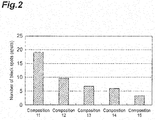
- Figure 2 shows the results of the pilocarpine-induced sweat test when the amount of each lotion applied was 10 ⁇ L
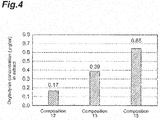
- Figure 3 shows the results of the pilocarpine-induced sweat test when the amount of each lotion applied was 15 ⁇ L. It was confirmed that the lotions' effect of decreasing sweating was oxybutynin concentration-dependent. It was also confirmed that the amounts of oxybutynin accumulated in hair follicles were oxybutynin concentration-dependent.
- Lotions were prepared according to the compositions in Table 4. The lotions were determined for the effect of decreasing sweating by the pilocarpine-induced sweat test.
- the pilocarpine-induced sweat test was conducted by the following method.
- Results are shown in Table 5.
- the lotion comprising lactate or acetate exerted a stronger effect of decreasing sweating than the salt-free lotions.
- Composition Number of black spots Mean value Standard error 16 22.0 4.4 17 4.5 1.9 18 3.2 0.9 19 10.8 1.8
Landscapes
- Health & Medical Sciences (AREA)
- Chemical & Material Sciences (AREA)
- Animal Behavior & Ethology (AREA)
- Life Sciences & Earth Sciences (AREA)
- Veterinary Medicine (AREA)
- Public Health (AREA)
- Medicinal Chemistry (AREA)
- Pharmacology & Pharmacy (AREA)
- General Health & Medical Sciences (AREA)
- Epidemiology (AREA)
- Engineering & Computer Science (AREA)
- General Chemical & Material Sciences (AREA)
- Chemical Kinetics & Catalysis (AREA)
- Oil, Petroleum & Natural Gas (AREA)
- Dermatology (AREA)
- Emergency Medicine (AREA)
- Bioinformatics & Cheminformatics (AREA)
- Nuclear Medicine, Radiotherapy & Molecular Imaging (AREA)
- Organic Chemistry (AREA)
- Acyclic And Carbocyclic Compounds In Medicinal Compositions (AREA)
- Medicinal Preparation (AREA)
- Medicines That Contain Protein Lipid Enzymes And Other Medicines (AREA)
- Cosmetics (AREA)
Abstract
Description
- The present invention relates to a topical preparation for treating hyperhidrosis.
- Methods that involve administering a topical composition comprising an anticholinergic drug such as oxybutynin have been proposed as methods for treating hyperhidrosis (Patent Literature 1 and Patent Literature 2).
-
- Patent Literature 1:
U.S. Patent Application Publication No. 2014/0037713 - Patent Literature 2: International Publication No.
WO 2007/046102 - Anticholinergic drugs are drugs that inhibit acetylcholine from binding to a muscarinic acetylcholine receptor, and suppress parasympathetic nerves. Accordingly, the administration of anticholinergic drugs may cause side effects such as dry mouth.
- The present inventors have considered that enhancing the accumulation of anticholinergic drugs in sweat glands, the skin appendages, is important for treating hyperhidrosis while suppressing the above side effects, and have intensively studied the consideration. As a result, the present inventors have discovered that certain salts enhance the accumulation of anticholinergic drugs in skin appendages, and thus have completed the present invention.
- Specifically, the present invention provides a topical preparation for treating hyperhidrosis, comprising water, an anticholinergic drug, and one or more salts selected from the group consisting of lactate, tartrate, acetate and phosphate. The above anticholinergic drug may be oxybutynin or a pharmaceutically acceptable salt thereof. The above salt may be sodium lactate. The above topical preparation may be a liquid preparation. The above liquid preparation may be in a form of lotion.
- A topical preparation for treating hyperhidrosis according to the present invention comprises one or more salts selected from the group consisting of lactate, tartrate, acetate and phosphate. Therefore, the accumulation of the anticholinergic drug in skin appendages is high.
-
-
Figure 1 is a graph showing the results of a test for examining the influence of salts in lotions on the accumulation of oxybutynin in porcine hair follicles. -
Figure 2 is a graph showing the results of a test for examining the influence of the concentrations of oxybutynin in lotions on the effect of decreasing sweating. -
Figure 3 is a graph showing the results of a test for examining the influence of the concentrations of oxybutynin in lotions on the effect of decreasing sweating. -
Figure 4 is a graph showing the results of a test for examining the influence of the concentrations of oxybutynin in lotions on the accumulation of oxybutynin in porcine hair follicles. - Hereinafter, the present invention will be described more specifically with reference to an embodiment.
- One embodiment of the present invention is a topical preparation for treating hyperhidrosis comprising water, an anticholinergic drug, and one or more salts selected from the group consisting of lactate, tartrate, acetate and phosphate.
- The anticholinergic drug is not particularly limited, as long as it is a drug having anticholinergic effects, and examples thereof include oxybutynin, imidafenacin, trospium, tolterodine, glycopyrrolate, propantheline, benztropine, atropine, homatropine, tropicamide, benactyzine, biperiden, scopolamine, scopolamine butyl bromide, cyclopentolate, darifenacin, dexetimide, dicyclomine, emepronium, hexahydrosiladifenidol, octylonium, orphenadrine, oxyphenonium, pirenzepine, procyclidine, darotropium, ipratropium, tiotropium, oxitropium, quinidine, trihexyphenidyl, mivacurium, atracurium, doxacurium, cisatracurium, vecuronium, rocuronium, pancuronium, tubocurarine, gallamine, pipecuronium, trimethaphan, succinylcholine, suxamethonium, decamethonium and hexamethonium. From the viewpoint of accumulation in skin appendages, the anticholinergic drug is preferably oxybutynin or a pharmaceutically acceptable salt thereof. An example of the pharmaceutically acceptable salt of oxybutynin is oxybutynin hydrochloride.
- The content of the anticholinergic drug may range from, for example, 0.5 to 35 mass%, or 0.5 to 15 mass%, based on the total mass of the topical preparation.
- The topical preparation comprises one or more salts selected from the group consisting of lactate, tartrate, acetate and phosphate, thereby enhancing the accumulation of the anticholinergic drug in skin appendages. Such a salt may be anhydride or hydrate. Lactic acid may be either L- or D-lactic acid, or may be an arbitrary mixture thereof. Tartaric acid may be any one of L-, D-, and meso-tartaric acid, or may be an arbitrary mixture thereof. Examples of the salt include a salt with a monovalent metal such as sodium, potassium and lithium, a salt with a divalent metal such as calcium and magnesium, a salt with a trivalent metal such as aluminum, and a salt with an amine compound such as ammonia, ethylenediamine, triethylamine, diethanolamine, triethanolamine and meglumine. From the viewpoint of improving the accumulation of an anticholinergic drug in skin appendages, the salt is preferably lactate and more preferably sodium lactate.
- The content of the above salt may range from, for example, 0.1 to 10 mass% based on the total mass of the topical preparation. The molar ratio of the anticholinergic drug to the above salt in the topical preparation may be, for example, within the range of 1:0.5 to 1:2.
- The topical preparation for treating hyperhidrosis may be a liquid preparation, as well as a cream, a gel or an aqueous ointment, for example.
- When the topical preparation for treating hyperhidrosis is a liquid preparation, water in the liquid preparation serves as a medium in which an anticholinergic drug and the above salt and other components are dissolved or dispersed. The content of water may range from, for example, 10 to 99 mass% based on the total mass of the liquid preparation.
- Such a liquid preparation may comprise, in addition to the above components, a lower alcohol, a surfactant, a preservation stabilizer, a fat and oil, a solubilizer, a filler, a moisturizer, a pH regulating agent, an osmotic pressure regulator, a thickener, a refreshing agent, an astringent and a vasoconstrictor, for example.
- The lower alcohol increases the solubility and dispersibility of the anticholinergic drug, and increases the distributivity of the anticholinergic drug into skin. Specific examples of the lower alcohol include methanol, ethanol and isopropanol. The content of the lower alcohol may range from, for example, 0 to 90 mass% based on the total mass of the liquid preparation.
- The surfactant is useful for emulsifying the anticholinergic drug in a medium such as water. Specific examples of the surfactant include a nonionic surfactant (e.g.,
polysorbate 20, polysorbate 80, polysorbate 60, polyoxyethylene hydrogenatedcastor oil 20, polyoxyethylene hydrogenated castor oil 40 and polyoxyethylene hydrogenated castor oil 60), an ionic surfactant and an amphoteric surfactant. The content of the surfactant may range from, for example, 0 to 10 mass% based on the total mass of the liquid preparation. - Specific examples of the preservation stabilizer include a paraben, isopropylmethylphenol, phenoxyethanol and thymol.
- Specific examples of the fat and oil and the solubilizer include a fatty acid, a fatty ester and a fatty alcohol.
- Specific examples of the filler include an inorganic powder (e.g., talc, montmorillonite, smectite and kaolin) and an organic powder.
- Specific examples of the moisturizer include a polyhydric alcohol, saccharides, urea, a vaseline and a paraffin.
- The liquid preparation can have a pH within the range of 4.5 to 7.5. pH determination is performed using a composite glass electrode in accordance with "2.54 pH Determination" in General Tests, Processes and Apparatus, The Japanese Pharmacopoeia, Sixteenth Edition.
- The liquid preparation may be in a form of lotion or liniment, for example, or in a form of embrocation or spray, for example, contained in appropriate containers (for example, spray containers for spraying the liquid preparation, containers for applying the liquid preparation and aerosol containers).
- When the topical preparation for treating hyperhidrosis is a cream, water, the anticholinergic drug and the above salt may be contained in a cream base. The cream base is not particularly limited and may be selected from those generally used, such as a vaseline or a higher alcohol. To the cream base, for example, additives that are generally added to a cream, such as an emulsifier, a preservative, an absorption enhancer and a rash-preventing agent, may be added. Moreover, a gelling agent and a neutralizer are added to a cream to adjust the pH to 4 to 8, so that a gelatinous cream can also be obtained. Such a gelatinous cream has intermediate properties between cream and gel. The water content in the cream may range from, for example, 0.5 to 70 mass% based on the total mass of the cream.
- When the topical preparation for treating hyperhidrosis is a gel, water, the anticholinergic drug and the above salt may be contained in a gel base. The gel base is not particularly limited, and may be selected from those generally used, such as a higher alcohol. To the gel base, for example, additives that are generally added to a gel, such as a gelling agent, a neutralizer, a surfactant, an absorption enhancer, a solubilizer and a rash-preventing agent, may be added. Water content in the gel may range from, for example, 0.5 to 70 mass% based on the total mass of the gel.
- When the topical preparation for treating hyperhidrosis is an aqueous ointment, water, the anticholinergic drug and the above salt may be dissolved or dispersed in a water-soluble base. The water-soluble base is not particularly limited and may be selected from those generally used, such as solid polyethylene glycol. To the water-soluble base, for example, additives that are generally added to an aqueous ointment, such as an absorption enhancer, a moisturizer and a rash-preventing agent, may be added. Water content in the aqueous ointment may range from, for example, 0.5 to 30 mass% based on the total mass of the aqueous ointment.
- The topical preparation for treating hyperhidrosis can be manufactured by mixing thoroughly the above components.
- After the container is shaken as necessary to thoroughly mix the components homogeneously, the topical preparation is applied to, sprinkled on or sprayed on the areas of skin where sweating should be decreased, and is spread as needed .
- Lotions were prepared according to the compositions in Table 1, and visually confirmed for the state of dissolution. Furthermore, the lotions were applied to porcine skin, and then the amounts of oxybutynin accumulated in hair follicles were measured by the following method.
- 1) 20 µL of a lotion was applied to 5 cm2 of lightly shaved porcine skin. Number of pigs: n = 3.
- 2) After 6 hours, the skin surface was cleaned with ethanol for disinfection, and washed with a stream of phosphate buffer, thereby removing oxybutynin that had adhered to the skin surface.
- 3) A hair follicle portion of 20 hairs was collected from the skin.
- 4) Oxybutynin was extracted from the hair follicles using 1 mL of an extracting liquid. As the extracting liquid, the following mobile phase was used.
- 5) Oxybutynin concentration was measured by high-performance liquid chromatography. Conditions for high-performance liquid chromatography were as follows.
- Mobile phase: 0.1 w/w% aqueous phosphoric acid solution (containing 0.5 w/v% sodium dodecyl sulfate):acetonitrile =45:55 (v/v)
- Flow rate: 1.5 mL/min
- Column: TSK gel ODS-80Ts (Tosoh Corporation)
- Retention time: 10 minutes
- Results are shown in Table 2 and
Figure 1 . With the lotion comprising phosphate, lactate, acetate or tartrate, the accumulation of oxybutynin in hair follicles was high, compared to lotions comprising none of the above salts.[Table 2] Composition 1 2 3 4 5 6 7 8 9 10 State of dissolution × × × ○ ○ ○ ○ ○ ○ ○ ○: Dissolved to be a clear liquid. ×: Insoluble matter was observed. - Lotions were prepared according to the compositions in Table 3. The lotions were determined for the effect of decreasing sweating by a pilocarpine-induced sweat test. Moreover, in a manner similar to that in test example 1, the lotions were applied to porcine skin, and then oxybutynin concentrations were measured.
- The pilocarpine-induced sweat test was conducted by the following method.
- 1) A lotion was diluted 12-fold with a 40 mass% aqueous ethanol solution.
- 2) 10 µL or 15 µL of the lotion was applied to about 0.5 cm2 of a mouse footpad. Number of mice: n = 5 to 6.
- 3) After 4 hours, iodine and a starch solution were applied to the footpad under anesthesia.
- 4) Pilocarpine was intradermally administered at 5 µg/foot.
- 5) After 5 minutes, the number of black spots resulting from the iodostarch reaction was counted.
- Results are shown in
Figure 2 to Figure 4 .Figure 2 shows the results of the pilocarpine-induced sweat test when the amount of each lotion applied was 10 µL, andFigure 3 shows the results of the pilocarpine-induced sweat test when the amount of each lotion applied was 15 µL. It was confirmed that the lotions' effect of decreasing sweating was oxybutynin concentration-dependent. It was also confirmed that the amounts of oxybutynin accumulated in hair follicles were oxybutynin concentration-dependent. - Lotions were prepared according to the compositions in Table 4. The lotions were determined for the effect of decreasing sweating by the pilocarpine-induced sweat test.
- The pilocarpine-induced sweat test was conducted by the following method.
- 1) A lotion was diluted 12-fold with a 40 mass% aqueous ethanol solution.
- 2) 10 µL of the lotion was applied to about 0.5 cm2 of a mouse footpad. Number of mice: n=6.
- 3) After 3 hours, the footpad was washed, the mouse was left to stand for 1 hour, and then iodine and a starch solution were applied to the footpad under anesthesia.
- 4) Pilocarpine was intradermally administered at 15 µg/foot.
- 5) After 5 minutes, the number of black spots resulting from the iodostarch reaction was counted.
- Results are shown in Table 5. The lotion comprising lactate or acetate exerted a stronger effect of decreasing sweating than the salt-free lotions.
[Table 5] Composition Number of black spots Mean value Standard error 16 22.0 4.4 17 4.5 1.9 18 3.2 0.9 19 10.8 1.8
| Composition | 1 | 2 | 3 | 4 | 5 | 6 | 7 | 8 | 9 | 10 |
| Oxybutynin | 4.54 | - | ||||||||
| Oxybutynin hydrochloride | - | 5 | 5 | 5 | 5 | 5 | 5 | 5 | 5 | 5 |
| Sodium hydroxide | 0.51 | |||||||||
| Disodium hydrogenphosphale | 0.9 | |||||||||
| Sodium lactate | 1.42 | |||||||||
| Sodium acetate | 1.04 | |||||||||
| Disodium fumarate | 1.02 | |||||||||
| Trisodium citrate | 1.09 | |||||||||
| Sodium benzoate | 1.83 | |||||||||
| Disodium tartrate-dihydrate | 2.92 | |||||||||
| Ethanol | 40 | 40 | 40 | 40 | 40 | 40 | 40 | 40 | 40 | 40 |
| Others | 0.2 | 0.2 | 0.2 | 0.2 | 0.2 | 0.2 | 0.2 | 0.2 | 0.2 | 0.2 |
| Purified water | 55.26 | 54.8 | 52.49 | 53.9 | 53.38 | 58.76 | 53.78 | 53.71 | 52.97 | 51.88 |
| Total | 100 | 100 | 100 | 100 | 100 | 100 | 100 | 100 | 100 | 100 |
| | 11 | 12 | 13 | 14 | 15 |
| | 0 | 1 | 2.5 | 5 | 10 |
| Lactic acid | 2.29 | ||||
| Sodium chloride | 1.48 | ||||
| Sodium lactate | 0.28 | 0.71 | 1.42 | 2.84 | |
| Ethanol | 40 | 40 | 40 | 40 | 40 |
| | 2 | 2 | 2 | 2 | 2 |
| Purified water | 54.23 | 56.72 | 54.79 | 51.58 | 45.16 |
| Total | 100 | 100 | 100 | 100 | 100 |
| Composition | 16 | 17 | 18 | 19 |
| Oxybutynin | 2.27 | |||
| Oxybutynin hydrochloride | 2.5 | 2 | ||
| Sodium lactate | 0.71 | |||
| Sodium acetate | 0.42 | |||
| Lactic acid | 0.57 | |||
| Sodium chloride | 0.37 | |||
| Ethanol | 40 | 40 | 40 | 40 |
| Purified water | 59.056 | 56.79 | 57.584 | 57.73 |
| Total | 100 | 100 | 100 | 100 |
Claims (5)
- A topical preparation for treating hyperhidrosis, comprising:water;an anticholinergic drug; andone or more salts selected from the group consisting of lactate, tartrate, acetate and phosphate.
- The topical preparation according to claim 1, wherein the anticholinergic drug is oxybutynin or a pharmaceutically acceptable salt thereof.
- The topical preparation according to claim 1 or 2, wherein the salt is sodium lactate.
- The topical preparation according to any one of claims 1 to 3, wherein the topical preparation is a liquid preparation.
- The topical preparation according to claim 4 in a form of lotion.
Applications Claiming Priority (2)
| Application Number | Priority Date | Filing Date | Title |
|---|---|---|---|
| JP2015092946 | 2015-04-30 | ||
| PCT/JP2016/063188 WO2016175240A1 (en) | 2015-04-30 | 2016-04-27 | External agent for treating hyperhidrosis |
Publications (3)
| Publication Number | Publication Date |
|---|---|
| EP3290053A1 true EP3290053A1 (en) | 2018-03-07 |
| EP3290053A4 EP3290053A4 (en) | 2019-01-09 |
| EP3290053B1 EP3290053B1 (en) | 2021-02-17 |
Family
ID=57198447
Family Applications (1)
| Application Number | Title | Priority Date | Filing Date |
|---|---|---|---|
| EP16786516.1A Active EP3290053B1 (en) | 2015-04-30 | 2016-04-27 | Topical composition comprising oxybutynin for the treatment of hyperhidrosis |
Country Status (8)
| Country | Link |
|---|---|
| US (1) | US10525132B2 (en) |
| EP (1) | EP3290053B1 (en) |
| JP (1) | JP6387458B2 (en) |
| KR (1) | KR101937072B1 (en) |
| CN (1) | CN107427582B (en) |
| ES (1) | ES2861052T3 (en) |
| TW (1) | TWI713521B (en) |
| WO (1) | WO2016175240A1 (en) |
Cited By (2)
| Publication number | Priority date | Publication date | Assignee | Title |
|---|---|---|---|---|
| NL2023160A (en) * | 2018-05-17 | 2019-11-21 | Notoxins Ip B V | Aqueous formulations comprising oxybutynin for topical treatment of skin diseases |
| EP4140476A1 (en) * | 2021-08-25 | 2023-03-01 | Health Innovation Technology Transfer, S.L. | An oil-in-water emulsion gel comprising tiotropium bromide |
Families Citing this family (2)
| Publication number | Priority date | Publication date | Assignee | Title |
|---|---|---|---|---|
| CN106137955B (en) * | 2016-08-17 | 2021-10-29 | 杭州百诚医药科技股份有限公司 | Antiperspirant application of external tiotropium bromide preparation |
| WO2019236429A1 (en) * | 2018-06-04 | 2019-12-12 | Nm Therapeutics, Llc | Method and apparatus for treatment of hyperhidrosis |
Family Cites Families (10)
| Publication number | Priority date | Publication date | Assignee | Title |
|---|---|---|---|---|
| DE69528165T2 (en) | 1994-04-21 | 2003-05-15 | Hisamitsu Pharmaceutical Co., Inc. | TRANSDERMAL ADMINISTRIBLE BASIS AND PRODUCED TRANSDERMAL ADMINISTRABLE MEDICINAL PRODUCT |
| ATE485815T1 (en) | 1999-04-13 | 2010-11-15 | Hisamitsu Pharmaceutical Co | PREPARATIONS FOR PERCUTANE ABSORPTION |
| US7029694B2 (en) * | 2000-04-26 | 2006-04-18 | Watson Laboratories, Inc. | Compositions and methods for transdermal oxybutynin therapy |
| AU2012216593B2 (en) | 2002-11-01 | 2014-09-25 | Allergan Sales, Llc | Compositions and methods for transdermal oxybutynin therapy |
| CN101340884A (en) * | 2005-10-19 | 2009-01-07 | 曼尼·马纳舍·辛格尔 | Method for treating hyperhidrosis |
| US20100137357A1 (en) * | 2008-11-26 | 2010-06-03 | Koleng John J | Compositions and methods for hyperhidrosis |
| KR101317924B1 (en) | 2011-05-17 | 2013-10-16 | 김동진 | Synthetics method of Glycopyrrolate and pharmaceutical formulations containing this active ingredient |
| US9746243B2 (en) * | 2011-12-23 | 2017-08-29 | Fives Fcb | Device for cooling the opening of a rotary kiln by means of cool air-blowing |
| US20140037713A1 (en) | 2012-08-03 | 2014-02-06 | Antares Pharma Ipl, Ag | Transdermal compositions for anti-cholinergic agents |
| CN105050596A (en) * | 2013-03-15 | 2015-11-11 | 博多尔实验仪器公司 | Anticholinergic glycopyrronium bromide for hyperhidrosis |
-
2016
- 2016-04-27 EP EP16786516.1A patent/EP3290053B1/en active Active
- 2016-04-27 WO PCT/JP2016/063188 patent/WO2016175240A1/en not_active Ceased
- 2016-04-27 JP JP2017515577A patent/JP6387458B2/en active Active
- 2016-04-27 ES ES16786516T patent/ES2861052T3/en active Active
- 2016-04-27 CN CN201680019209.XA patent/CN107427582B/en active Active
- 2016-04-27 US US15/568,432 patent/US10525132B2/en active Active
- 2016-04-27 KR KR1020177027272A patent/KR101937072B1/en active Active
- 2016-04-29 TW TW105113554A patent/TWI713521B/en active
Cited By (3)
| Publication number | Priority date | Publication date | Assignee | Title |
|---|---|---|---|---|
| NL2023160A (en) * | 2018-05-17 | 2019-11-21 | Notoxins Ip B V | Aqueous formulations comprising oxybutynin for topical treatment of skin diseases |
| EP4140476A1 (en) * | 2021-08-25 | 2023-03-01 | Health Innovation Technology Transfer, S.L. | An oil-in-water emulsion gel comprising tiotropium bromide |
| WO2023025900A1 (en) * | 2021-08-25 | 2023-03-02 | Health Innovation Technology Transfer Sl | An oil-in-water emulsion gel comprising tiotropium bromide |
Also Published As
| Publication number | Publication date |
|---|---|
| TWI713521B (en) | 2020-12-21 |
| JPWO2016175240A1 (en) | 2017-11-16 |
| CN107427582B (en) | 2021-03-05 |
| JP6387458B2 (en) | 2018-09-05 |
| EP3290053B1 (en) | 2021-02-17 |
| ES2861052T3 (en) | 2021-10-05 |
| KR101937072B1 (en) | 2019-01-09 |
| US10525132B2 (en) | 2020-01-07 |
| KR20170120168A (en) | 2017-10-30 |
| WO2016175240A1 (en) | 2016-11-03 |
| TW201703767A (en) | 2017-02-01 |
| CN107427582A (en) | 2017-12-01 |
| US20180140704A1 (en) | 2018-05-24 |
| EP3290053A4 (en) | 2019-01-09 |
Similar Documents
| Publication | Publication Date | Title |
|---|---|---|
| US10537512B2 (en) | Moisturizing composition and application thereof in preparation of moisturizing cosmetic product | |
| US5776430A (en) | Topical antimicrobial cleanser containing chlorhexidine gluconate and alcohol | |
| US5906808A (en) | Process of preparing a topical antimicrobial cleanser | |
| US10525132B2 (en) | External agent for treating hyperhidrosis | |
| JP6512599B2 (en) | External use pharmaceutical composition | |
| EP2649993B1 (en) | Stabilizer of acetaminophen | |
| JPH08507785A (en) | Topical composition for inhibiting hair growth | |
| CN112370393B (en) | Hair washing mousse composition and preparation method and application thereof | |
| EP3421049B1 (en) | Liquid external preparation | |
| KR101460777B1 (en) | Cosmetic composition for improving acne | |
| US20240115484A1 (en) | Composition comprising polymer hyaluronic acid nanoparticles | |
| HK1259992A1 (en) | Liquid external preparation | |
| US20220273603A1 (en) | Method for treating hyperhidrosis | |
| WO2007086582A1 (en) | OIL-IN-WATER TYPE EMULSION LOTION CONTAINING 22-OXA-1α,25-DIHYDROXYVITAMIN D3 AND METHOD OF TREATING SKIN DISEASE BY USING THE SAME | |
| US20260060953A1 (en) | Anesthetic healing spray capable of being sprayed upside down | |
| JP6815782B2 (en) | α-SMA production inhibitor | |
| CN116392402A (en) | Repair cream containing ergothioneine and preparation method thereof | |
| CN117017849A (en) | Cooling and soothing composition and application | |
| CN120549787A (en) | Oil-controlling and blackhead-removing cleansing gel and preparation method thereof | |
| HK1190093B (en) | Stabilizer of acetaminophen | |
| JP2001270824A (en) | Skin care preparation having promoted percutaneous absorption |
Legal Events
| Date | Code | Title | Description |
|---|---|---|---|
| STAA | Information on the status of an ep patent application or granted ep patent |
Free format text: STATUS: THE INTERNATIONAL PUBLICATION HAS BEEN MADE |
|
| PUAI | Public reference made under article 153(3) epc to a published international application that has entered the european phase |
Free format text: ORIGINAL CODE: 0009012 |
|
| STAA | Information on the status of an ep patent application or granted ep patent |
Free format text: STATUS: REQUEST FOR EXAMINATION WAS MADE |
|
| 17P | Request for examination filed |
Effective date: 20171127 |
|
| AK | Designated contracting states |
Kind code of ref document: A1 Designated state(s): AL AT BE BG CH CY CZ DE DK EE ES FI FR GB GR HR HU IE IS IT LI LT LU LV MC MK MT NL NO PL PT RO RS SE SI SK SM TR |
|
| AX | Request for extension of the european patent |
Extension state: BA ME |
|
| DAV | Request for validation of the european patent (deleted) | ||
| DAX | Request for extension of the european patent (deleted) | ||
| A4 | Supplementary search report drawn up and despatched |
Effective date: 20181207 |
|
| RIC1 | Information provided on ipc code assigned before grant |
Ipc: A61K 47/04 20060101ALI20181130BHEP Ipc: A61K 9/00 20060101ALI20181130BHEP Ipc: A61P 43/00 20060101ALI20181130BHEP Ipc: A61K 9/08 20060101ALI20181130BHEP Ipc: A61K 31/216 20060101AFI20181130BHEP Ipc: A61K 47/12 20060101ALI20181130BHEP |
|
| STAA | Information on the status of an ep patent application or granted ep patent |
Free format text: STATUS: EXAMINATION IS IN PROGRESS |
|
| 17Q | First examination report despatched |
Effective date: 20200327 |
|
| REG | Reference to a national code |
Ref country code: DE Ref legal event code: R079 Ref document number: 602016052656 Country of ref document: DE Free format text: PREVIOUS MAIN CLASS: A61K0045000000 Ipc: A61K0031216000 |
|
| GRAP | Despatch of communication of intention to grant a patent |
Free format text: ORIGINAL CODE: EPIDOSNIGR1 |
|
| STAA | Information on the status of an ep patent application or granted ep patent |
Free format text: STATUS: GRANT OF PATENT IS INTENDED |
|
| RIC1 | Information provided on ipc code assigned before grant |
Ipc: A61K 47/04 20060101ALI20201001BHEP Ipc: A61K 9/08 20060101ALI20201001BHEP Ipc: A61K 31/216 20060101AFI20201001BHEP Ipc: A61K 47/12 20060101ALI20201001BHEP Ipc: A61K 9/00 20060101ALI20201001BHEP Ipc: A61P 43/00 20060101ALI20201001BHEP |
|
| INTG | Intention to grant announced |
Effective date: 20201103 |
|
| RIN1 | Information on inventor provided before grant (corrected) |
Inventor name: SOMEKAWA, SHINGO Inventor name: MICHINAKA, YASUNARI Inventor name: IMAMURA, KANA Inventor name: SHINODA, TOMOHIRO |
|
| GRAS | Grant fee paid |
Free format text: ORIGINAL CODE: EPIDOSNIGR3 |
|
| GRAA | (expected) grant |
Free format text: ORIGINAL CODE: 0009210 |
|
| STAA | Information on the status of an ep patent application or granted ep patent |
Free format text: STATUS: THE PATENT HAS BEEN GRANTED |
|
| AK | Designated contracting states |
Kind code of ref document: B1 Designated state(s): AL AT BE BG CH CY CZ DE DK EE ES FI FR GB GR HR HU IE IS IT LI LT LU LV MC MK MT NL NO PL PT RO RS SE SI SK SM TR |
|
| REG | Reference to a national code |
Ref country code: GB Ref legal event code: FG4D |
|
| REG | Reference to a national code |
Ref country code: CH Ref legal event code: EP |
|
| REG | Reference to a national code |
Ref country code: DE Ref legal event code: R096 Ref document number: 602016052656 Country of ref document: DE |
|
| REG | Reference to a national code |
Ref country code: AT Ref legal event code: REF Ref document number: 1360550 Country of ref document: AT Kind code of ref document: T Effective date: 20210315 |
|
| REG | Reference to a national code |
Ref country code: IE Ref legal event code: FG4D |
|
| REG | Reference to a national code |
Ref country code: LT Ref legal event code: MG9D |
|
| REG | Reference to a national code |
Ref country code: NL Ref legal event code: MP Effective date: 20210217 |
|
| PG25 | Lapsed in a contracting state [announced via postgrant information from national office to epo] |
Ref country code: FI Free format text: LAPSE BECAUSE OF FAILURE TO SUBMIT A TRANSLATION OF THE DESCRIPTION OR TO PAY THE FEE WITHIN THE PRESCRIBED TIME-LIMIT Effective date: 20210217 Ref country code: HR Free format text: LAPSE BECAUSE OF FAILURE TO SUBMIT A TRANSLATION OF THE DESCRIPTION OR TO PAY THE FEE WITHIN THE PRESCRIBED TIME-LIMIT Effective date: 20210217 Ref country code: GR Free format text: LAPSE BECAUSE OF FAILURE TO SUBMIT A TRANSLATION OF THE DESCRIPTION OR TO PAY THE FEE WITHIN THE PRESCRIBED TIME-LIMIT Effective date: 20210518 Ref country code: NO Free format text: LAPSE BECAUSE OF FAILURE TO SUBMIT A TRANSLATION OF THE DESCRIPTION OR TO PAY THE FEE WITHIN THE PRESCRIBED TIME-LIMIT Effective date: 20210517 Ref country code: PT Free format text: LAPSE BECAUSE OF FAILURE TO SUBMIT A TRANSLATION OF THE DESCRIPTION OR TO PAY THE FEE WITHIN THE PRESCRIBED TIME-LIMIT Effective date: 20210617 Ref country code: LT Free format text: LAPSE BECAUSE OF FAILURE TO SUBMIT A TRANSLATION OF THE DESCRIPTION OR TO PAY THE FEE WITHIN THE PRESCRIBED TIME-LIMIT Effective date: 20210217 Ref country code: BG Free format text: LAPSE BECAUSE OF FAILURE TO SUBMIT A TRANSLATION OF THE DESCRIPTION OR TO PAY THE FEE WITHIN THE PRESCRIBED TIME-LIMIT Effective date: 20210517 |
|
| REG | Reference to a national code |
Ref country code: AT Ref legal event code: MK05 Ref document number: 1360550 Country of ref document: AT Kind code of ref document: T Effective date: 20210217 |
|
| PG25 | Lapsed in a contracting state [announced via postgrant information from national office to epo] |
Ref country code: SE Free format text: LAPSE BECAUSE OF FAILURE TO SUBMIT A TRANSLATION OF THE DESCRIPTION OR TO PAY THE FEE WITHIN THE PRESCRIBED TIME-LIMIT Effective date: 20210217 Ref country code: LV Free format text: LAPSE BECAUSE OF FAILURE TO SUBMIT A TRANSLATION OF THE DESCRIPTION OR TO PAY THE FEE WITHIN THE PRESCRIBED TIME-LIMIT Effective date: 20210217 Ref country code: PL Free format text: LAPSE BECAUSE OF FAILURE TO SUBMIT A TRANSLATION OF THE DESCRIPTION OR TO PAY THE FEE WITHIN THE PRESCRIBED TIME-LIMIT Effective date: 20210217 Ref country code: NL Free format text: LAPSE BECAUSE OF FAILURE TO SUBMIT A TRANSLATION OF THE DESCRIPTION OR TO PAY THE FEE WITHIN THE PRESCRIBED TIME-LIMIT Effective date: 20210217 Ref country code: RS Free format text: LAPSE BECAUSE OF FAILURE TO SUBMIT A TRANSLATION OF THE DESCRIPTION OR TO PAY THE FEE WITHIN THE PRESCRIBED TIME-LIMIT Effective date: 20210217 |
|
| PG25 | Lapsed in a contracting state [announced via postgrant information from national office to epo] |
Ref country code: IS Free format text: LAPSE BECAUSE OF FAILURE TO SUBMIT A TRANSLATION OF THE DESCRIPTION OR TO PAY THE FEE WITHIN THE PRESCRIBED TIME-LIMIT Effective date: 20210617 |
|
| PG25 | Lapsed in a contracting state [announced via postgrant information from national office to epo] |
Ref country code: EE Free format text: LAPSE BECAUSE OF FAILURE TO SUBMIT A TRANSLATION OF THE DESCRIPTION OR TO PAY THE FEE WITHIN THE PRESCRIBED TIME-LIMIT Effective date: 20210217 Ref country code: CZ Free format text: LAPSE BECAUSE OF FAILURE TO SUBMIT A TRANSLATION OF THE DESCRIPTION OR TO PAY THE FEE WITHIN THE PRESCRIBED TIME-LIMIT Effective date: 20210217 Ref country code: SM Free format text: LAPSE BECAUSE OF FAILURE TO SUBMIT A TRANSLATION OF THE DESCRIPTION OR TO PAY THE FEE WITHIN THE PRESCRIBED TIME-LIMIT Effective date: 20210217 Ref country code: AT Free format text: LAPSE BECAUSE OF FAILURE TO SUBMIT A TRANSLATION OF THE DESCRIPTION OR TO PAY THE FEE WITHIN THE PRESCRIBED TIME-LIMIT Effective date: 20210217 |
|
| REG | Reference to a national code |
Ref country code: DE Ref legal event code: R097 Ref document number: 602016052656 Country of ref document: DE |
|
| PG25 | Lapsed in a contracting state [announced via postgrant information from national office to epo] |
Ref country code: SK Free format text: LAPSE BECAUSE OF FAILURE TO SUBMIT A TRANSLATION OF THE DESCRIPTION OR TO PAY THE FEE WITHIN THE PRESCRIBED TIME-LIMIT Effective date: 20210217 Ref country code: RO Free format text: LAPSE BECAUSE OF FAILURE TO SUBMIT A TRANSLATION OF THE DESCRIPTION OR TO PAY THE FEE WITHIN THE PRESCRIBED TIME-LIMIT Effective date: 20210217 Ref country code: DK Free format text: LAPSE BECAUSE OF FAILURE TO SUBMIT A TRANSLATION OF THE DESCRIPTION OR TO PAY THE FEE WITHIN THE PRESCRIBED TIME-LIMIT Effective date: 20210217 Ref country code: MC Free format text: LAPSE BECAUSE OF FAILURE TO SUBMIT A TRANSLATION OF THE DESCRIPTION OR TO PAY THE FEE WITHIN THE PRESCRIBED TIME-LIMIT Effective date: 20210217 |
|
| PLBE | No opposition filed within time limit |
Free format text: ORIGINAL CODE: 0009261 |
|
| STAA | Information on the status of an ep patent application or granted ep patent |
Free format text: STATUS: NO OPPOSITION FILED WITHIN TIME LIMIT |
|
| PG25 | Lapsed in a contracting state [announced via postgrant information from national office to epo] |
Ref country code: LU Free format text: LAPSE BECAUSE OF NON-PAYMENT OF DUE FEES Effective date: 20210427 |
|
| REG | Reference to a national code |
Ref country code: BE Ref legal event code: MM Effective date: 20210430 |
|
| 26N | No opposition filed |
Effective date: 20211118 |
|
| PG25 | Lapsed in a contracting state [announced via postgrant information from national office to epo] |
Ref country code: LI Free format text: LAPSE BECAUSE OF NON-PAYMENT OF DUE FEES Effective date: 20210430 Ref country code: AL Free format text: LAPSE BECAUSE OF FAILURE TO SUBMIT A TRANSLATION OF THE DESCRIPTION OR TO PAY THE FEE WITHIN THE PRESCRIBED TIME-LIMIT Effective date: 20210217 Ref country code: CH Free format text: LAPSE BECAUSE OF NON-PAYMENT OF DUE FEES Effective date: 20210430 |
|
| PG25 | Lapsed in a contracting state [announced via postgrant information from national office to epo] |
Ref country code: SI Free format text: LAPSE BECAUSE OF FAILURE TO SUBMIT A TRANSLATION OF THE DESCRIPTION OR TO PAY THE FEE WITHIN THE PRESCRIBED TIME-LIMIT Effective date: 20210217 |
|
| PG25 | Lapsed in a contracting state [announced via postgrant information from national office to epo] |
Ref country code: IE Free format text: LAPSE BECAUSE OF NON-PAYMENT OF DUE FEES Effective date: 20210427 |
|
| PG25 | Lapsed in a contracting state [announced via postgrant information from national office to epo] |
Ref country code: IS Free format text: LAPSE BECAUSE OF FAILURE TO SUBMIT A TRANSLATION OF THE DESCRIPTION OR TO PAY THE FEE WITHIN THE PRESCRIBED TIME-LIMIT Effective date: 20210617 |
|
| PG25 | Lapsed in a contracting state [announced via postgrant information from national office to epo] |
Ref country code: BE Free format text: LAPSE BECAUSE OF NON-PAYMENT OF DUE FEES Effective date: 20210430 |
|
| PG25 | Lapsed in a contracting state [announced via postgrant information from national office to epo] |
Ref country code: HU Free format text: LAPSE BECAUSE OF FAILURE TO SUBMIT A TRANSLATION OF THE DESCRIPTION OR TO PAY THE FEE WITHIN THE PRESCRIBED TIME-LIMIT; INVALID AB INITIO Effective date: 20160427 |
|
| P01 | Opt-out of the competence of the unified patent court (upc) registered |
Effective date: 20230522 |
|
| PG25 | Lapsed in a contracting state [announced via postgrant information from national office to epo] |
Ref country code: CY Free format text: LAPSE BECAUSE OF FAILURE TO SUBMIT A TRANSLATION OF THE DESCRIPTION OR TO PAY THE FEE WITHIN THE PRESCRIBED TIME-LIMIT Effective date: 20210217 |
|
| PG25 | Lapsed in a contracting state [announced via postgrant information from national office to epo] |
Ref country code: MK Free format text: LAPSE BECAUSE OF FAILURE TO SUBMIT A TRANSLATION OF THE DESCRIPTION OR TO PAY THE FEE WITHIN THE PRESCRIBED TIME-LIMIT Effective date: 20210217 |
|
| PG25 | Lapsed in a contracting state [announced via postgrant information from national office to epo] |
Ref country code: TR Free format text: LAPSE BECAUSE OF FAILURE TO SUBMIT A TRANSLATION OF THE DESCRIPTION OR TO PAY THE FEE WITHIN THE PRESCRIBED TIME-LIMIT Effective date: 20210217 |
|
| PG25 | Lapsed in a contracting state [announced via postgrant information from national office to epo] |
Ref country code: MT Free format text: LAPSE BECAUSE OF FAILURE TO SUBMIT A TRANSLATION OF THE DESCRIPTION OR TO PAY THE FEE WITHIN THE PRESCRIBED TIME-LIMIT Effective date: 20210217 |
|
| PGFP | Annual fee paid to national office [announced via postgrant information from national office to epo] |
Ref country code: DE Payment date: 20250305 Year of fee payment: 10 |
|
| PGFP | Annual fee paid to national office [announced via postgrant information from national office to epo] |
Ref country code: ES Payment date: 20250506 Year of fee payment: 10 |
|
| PGFP | Annual fee paid to national office [announced via postgrant information from national office to epo] |
Ref country code: GB Payment date: 20260313 Year of fee payment: 11 |
|
| PGFP | Annual fee paid to national office [announced via postgrant information from national office to epo] |
Ref country code: IT Payment date: 20260320 Year of fee payment: 11 |
|
| PGFP | Annual fee paid to national office [announced via postgrant information from national office to epo] |
Ref country code: FR Payment date: 20260309 Year of fee payment: 11 |