EP3289490B1 - Mehrstufige cache-füllung - Google Patents
Mehrstufige cache-füllung Download PDFInfo
- Publication number
- EP3289490B1 EP3289490B1 EP16723868.2A EP16723868A EP3289490B1 EP 3289490 B1 EP3289490 B1 EP 3289490B1 EP 16723868 A EP16723868 A EP 16723868A EP 3289490 B1 EP3289490 B1 EP 3289490B1
- Authority
- EP
- European Patent Office
- Prior art keywords
- servers
- server
- cluster
- file
- local
- Prior art date
- Legal status (The legal status is an assumption and is not a legal conclusion. Google has not performed a legal analysis and makes no representation as to the accuracy of the status listed.)
- Active
Links
Images




Classifications
-
- H—ELECTRICITY
- H04—ELECTRIC COMMUNICATION TECHNIQUE
- H04L—TRANSMISSION OF DIGITAL INFORMATION, e.g. TELEGRAPHIC COMMUNICATION
- H04L67/00—Network arrangements or protocols for supporting network services or applications
- H04L67/01—Protocols
- H04L67/10—Protocols in which an application is distributed across nodes in the network
- H04L67/1001—Protocols in which an application is distributed across nodes in the network for accessing one among a plurality of replicated servers
- H04L67/1004—Server selection for load balancing
- H04L67/1023—Server selection for load balancing based on a hash applied to IP addresses or costs
-
- G—PHYSICS
- G06—COMPUTING OR CALCULATING; COUNTING
- G06F—ELECTRIC DIGITAL DATA PROCESSING
- G06F16/00—Information retrieval; Database structures therefor; File system structures therefor
- G06F16/10—File systems; File servers
- G06F16/13—File access structures, e.g. distributed indices
- G06F16/137—Hash-based
-
- G—PHYSICS
- G06—COMPUTING OR CALCULATING; COUNTING
- G06F—ELECTRIC DIGITAL DATA PROCESSING
- G06F16/00—Information retrieval; Database structures therefor; File system structures therefor
- G06F16/10—File systems; File servers
- G06F16/17—Details of further file system functions
- G06F16/172—Caching, prefetching or hoarding of files
-
- G—PHYSICS
- G06—COMPUTING OR CALCULATING; COUNTING
- G06F—ELECTRIC DIGITAL DATA PROCESSING
- G06F16/00—Information retrieval; Database structures therefor; File system structures therefor
- G06F16/10—File systems; File servers
- G06F16/18—File system types
- G06F16/182—Distributed file systems
- G06F16/1824—Distributed file systems implemented using Network-attached Storage [NAS] architecture
-
- G—PHYSICS
- G06—COMPUTING OR CALCULATING; COUNTING
- G06F—ELECTRIC DIGITAL DATA PROCESSING
- G06F16/00—Information retrieval; Database structures therefor; File system structures therefor
- G06F16/10—File systems; File servers
- G06F16/18—File system types
- G06F16/182—Distributed file systems
- G06F16/1824—Distributed file systems implemented using Network-attached Storage [NAS] architecture
- G06F16/183—Provision of network file services by network file servers, e.g. by using NFS, CIFS
-
- H—ELECTRICITY
- H04—ELECTRIC COMMUNICATION TECHNIQUE
- H04L—TRANSMISSION OF DIGITAL INFORMATION, e.g. TELEGRAPHIC COMMUNICATION
- H04L67/00—Network arrangements or protocols for supporting network services or applications
- H04L67/01—Protocols
- H04L67/06—Protocols specially adapted for file transfer, e.g. file transfer protocol [FTP]
-
- H—ELECTRICITY
- H04—ELECTRIC COMMUNICATION TECHNIQUE
- H04L—TRANSMISSION OF DIGITAL INFORMATION, e.g. TELEGRAPHIC COMMUNICATION
- H04L67/00—Network arrangements or protocols for supporting network services or applications
- H04L67/01—Protocols
- H04L67/10—Protocols in which an application is distributed across nodes in the network
- H04L67/1097—Protocols in which an application is distributed across nodes in the network for distributed storage of data in networks, e.g. transport arrangements for network file system [NFS], storage area networks [SAN] or network attached storage [NAS]
Definitions
- Embodiments of the present invention relate generally to data transmissions over computer networks and, more particularly, to tiered cache filling.
- Many web-based applications provide services, such as streaming audio and/or streaming video, in a distributed manner over the Internet.
- such applications operate by distributing multiple copies of each content title, such as an audio file or video file, across multiple servers situated at one or more network locations.
- each content title such as an audio file or video file
- the content can be accessed by a high-volume of users without those users incurring significant wait times.
- maintaining multiple copies of a particular content title enables the web-based application to quickly and seamlessly recover when a hardware or software failure occurs with respect to a particular server.
- the servers on which content titles are stored are typically geographical distributed throughout one or more regions that are serviced by the web-application.
- the web-application is then configured to direct each user to a particular server that is located near the user in order to serve the content title to the user more efficiently.
- US 2014/188825 discloses a region-based placement policy that can be used to achieve a better distribution of data in a clustered storage system.
- US 2008/0065704 discloses a distributed data store which employs replica placement techniques in which a number k hash functions are used to compute k potential locations for a data item.
- "Fast Cascading Replication Strategy for Data Grid” by L. Hong et al. discloses a new dynamic replication algorithm for a multi-tier Data Grid.
- Managing content titles stored on servers distributed within a large geographical area or across different geographical areas can present several challenges.
- copying a given content title to multiple servers located across a large geographical area can consume significant network resources, such as bandwidth. Consumption of network resources increases costs for the web-based application, especially if all or part of the network infrastructure is provided by third-parties.
- conventional techniques for copying a given content title to multiple servers can oftentimes cause servers that initially receive the content title to experience significant fluctuations in bandwidth usage and processing load - for example, when other network servers "flood" the servers that initially receive the content title with requests for a copy of the content title. Such fluctuations can negatively impact the performance of those "initial" servers, which decreases the quality of service provided to users that are accessing the web-based application via the initial servers and/or causing the initial servers to experience software and/or hardware failures.
- One embodiment of the present invention sets forth a method for replicating a file across geographically distributed content servers as defined by claim 1.
- control server and a non-transitory computer-readable medium configured to implement the method set forth in claim 1.
- At least one advantage of the disclosed techniques is that each file can be replicated across a network in a predictable, decentralized, and highly fault-tolerant manner via specific tiers of content servers, without requiring an entity to maintain a master index. Additionally, a predetermined delay is assigned to the local master server tier in order to prevent the local master servers from flooding regional master servers, reducing the severity of server load fluctuations when replicating new or existing files across the network infrastructure. Moreover, because the content servers included in each tier are determined based on the identifier associated with the file, each file may propagate through the network infrastructure via a different sequence of content servers. As a result, network and processing loads are more evenly distributed among the content servers, increasing the overall quality of service provided to users that are accessing a web-based application via the content servers.
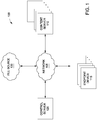
- Figure 1 illustrates a network infrastructure 100 used to distribute content to content servers 110 and endpoint devices 115, according to various embodiments of the invention.
- the network infrastructure 100 includes content servers 110, control server 120, and endpoint devices 115, each of which are connected via a communications network 105.
- Each endpoint device 115 communicates with one or more content servers 110 (also referred to as “caches” or “nodes”) via the network 105 to download content, such as textual data, graphical data, audio data, video data, and other types of data.
- content servers 110 also referred to as “caches” or “nodes”
- the downloadable content also referred to herein as a "file,” is then presented to a user of one or more endpoint devices 115.
- the endpoint devices 115 may include computer systems, set top boxes, mobile computer, smartphones, tablets, console and handheld video game systems, digital video recorders (DVRs), DVD players, connected digital TVs, dedicated media streaming devices, (e.g., the Roku® set-top box), and/or any other technically feasible computing platform that has network connectivity and is capable of presenting content, such as text, images, video, and/or audio content, to a user.
- DVRs digital video recorders
- DVD players connected digital TVs
- dedicated media streaming devices e.g., the Roku® set-top box
- any other technically feasible computing platform that has network connectivity and is capable of presenting content, such as text, images, video, and/or audio content, to a user.
- Each content server 110 may include a web-server, database, and server application 217 configured to communicate with the control server 120 to determine the location and availability of various files that are tracked and managed by the control server 120. Each content server 110 may further communicate with a fill source 130 and one or more other content servers 110 in order "fill" each content server 110 with copies of various files. In addition, content servers 110 may respond to requests for files received from endpoint devices 115. The files may then be distributed from the content server 110 or via a broader content distribution network. In some embodiments, the content servers 110 enable users to authenticate (e.g., using a username and password) in order to access files stored on the content servers 110. Although only a single control server 120 is shown in Figure 1 , in various embodiments multiple control servers 120 may be implemented to track and manage files.
- the fill source 130 may include an online storage service (e.g., Amazon® Simple Storage Service, Google® Cloud Storage, etc.) in which a catalog of files, including thousands or millions of files, is stored and accessed in order to fill the content servers 110. Although only a single fill source 130 is shown in Figure 1 , in various embodiments multiple fill sources 130 may be implemented to service requests for files.
- an online storage service e.g., Amazon® Simple Storage Service, Google® Cloud Storage, etc.
- FIG 2 is a block diagram of a content server 110 that may be implemented in conjunction with the network infrastructure 100 of Figure 1 , according to various embodiments of the present invention.
- the content server 110 includes, without limitation, a central processing unit (CPU) 204, a system disk 206, an input/output (I/O) devices interface 208, a network interface 210, an interconnect 212, and a system memory 214.
- the CPU 204 is configured to retrieve and execute programming instructions, such as server application 217, stored in the system memory 214. Similarly, the CPU 204 is configured to store application data and retrieve application data from the system memory 214.
- the interconnect 212 is configured to facilitate transmission of data, such as programming instructions and application data, between the CPU 204, the system disk 206, I/O devices interface 208, the network interface 210, and the system memory 214.
- the I/O devices interface 208 is configured to receive input data from I/O devices 216 and transmit the input data to the CPU 204 via the interconnect 212.
- I/O devices 216 may include one or more buttons, a keyboard, a mouse, and/or other input devices.
- the I/O devices interface 208 is further configured to receive output data from the CPU 204 via the interconnect 212 and transmit the output data to the I/O devices 216.
- the system disk 206 may include one or more hard disk drives, solid state storage devices, or similar storage devices.
- the system disk 206 is configured to store non-volatile data such as files 218 (e.g., audio files, video files, and/or subtitles) associated with a content catalog.
- the files 218 can then be retrieved by one or more endpoint devices 115 via the network 105.
- the network interface 210 is configured to operate in compliance with the Ethernet standard.
- the system memory 214 includes a server application 217 configured to service requests for files 218 received from endpoint device 115 and other content servers 110.
- the server application 217 receives a request for a file 218, the server application 217 retrieves the corresponding file 218 from the system disk 206 and transmits the file 218 to an endpoint device 115 or a content server 110 via the network 105.
- the server application 217 is further configured to request instructions from the control server 120, such as the location(s) from which and/or time(s) at which a particular file can be requested from the fill source 130, a specific content server 110, etc.
- FIG 3 is a block diagram of a control server 120 that may be implemented in conjunction with the network infrastructure 100 of Figure 1 , according to various embodiments of the present invention.
- the control server 120 includes, without limitation, a central processing unit (CPU) 304, a system disk 306, an input/output (I/O) devices interface 308, a network interface 310, an interconnect 312, and a system memory 314.
- CPU central processing unit
- I/O input/output
- the CPU 304 is configured to retrieve and execute programming instructions, such as control application 317, stored in the system memory 314. Similarly, the CPU 304 is configured to store application data and retrieve application data from the system memory 314 and a database 318 stored in the system disk 306.
- the interconnect 312 is configured to facilitate transmission of data between the CPU 304, the system disk 306, I/O devices interface 308, the network interface 310, and the system memory 314.
- the I/O devices interface 308 is configured to transmit input data and output data between the I/O devices 316 and the CPU 304 via the interconnect 312.
- the system disk 306 may include one or more hard disk drives, solid state storage devices, and the like.
- the system disk 206 is configured to store a database 318 of information associated with the content servers 110, the fill source(s) 130, and the files 218.
- the system memory 314 includes a control application 317 configured to access information stored in the database 318 and process the information to determine the manner in which specific files 218 will be replicated across content servers 110 included in the network infrastructure 100. For example, when content servers 110 are to be filled with copies of a new file 218, a listing of identifiers (ID) associated with the content servers 110, referred to as server IDs, are accessed from the database 318. The control application 317 then processes the server IDs in conjunction with a file ID associated with the new file 218 to determine how and when the new file 218 will be replicated across content servers 210 included in the network infrastructure 100, as described below in further detail in conjunction with Figures 4-6 .
- ID identifiers
- each content title may be encoded at multiple (e.g., 10 or more) different bitrates. Consequently, a single content title, such as a movie or television show, may be associated with multiple files 218 - each encoding the content title at a different bitrate - each of which may be stored by a content server 110 that is configured to serve the content title to endpoint devices 115.
- each file 218 is be replicated within the network infrastructure 100 via specific tiers of content servers 110 that can be precisely calculated based on the server IDs included in the network infrastructure 100 and the file ID associated with the file 218. Because the content servers 110 in which files 218 will be located can be precisely calculated based on server IDs and file IDs, file 218 access is deterministic, reducing or eliminating the incidence of cache misses.
- the number of content servers 110 included in each tier may be controlled, for example, based on the popularity of and demand for a particular file 218, by specifying a replication factor for each tier of for each file 218. As a result, the degree to which content servers 110 are locally filled can be adjusted, reducing third-party network and storage fees.
- each file 218 may be replicated across the network infrastructure 100 via a different sequence of content servers 110. Consequently, network and processing loads are more evenly distributed among the content servers 110, increasing the overall quality of service provided to users that are accessing a web-based application via the content servers 110.
- multiple files 218 are grouped by category, and a unique file ID is assigned to the files 218 associated with each category.
- files 218 associated with content title A e.g., a movie or television show
- files 218 associated with content title B are assigned a second file ID.
- a different file ID is assigned to each encoding of a content title at a different bitrate. That is, in such embodiments, the files 218 associated with content title A and a first bitrate could be assigned a first file ID, while the files 218 associated with content title A and a second bitrate could be assigned a second file ID.
- Such embodiments enable a complete set of files 218 associated with a particular category to be stored together on each of one or more content servers 110.
- a unique file ID is assigned to each file 218.
- each of the files 218 associated with content title A and a first bitrate could be assigned a different file ID.
- Such embodiments enable the files 218 associated with a particular category to be distributed across multiple content servers 110, for example, to enable the files 218 to be transmitted in parallel to a particular endpoint device 115. Further, in some embodiments, the granularity with which unique file IDs are assigned to the files 218 may vary per category.
- the file ID associated with a particular file 218 is encoded in a JavaScript Object Notation (JSON) object.
- JavaScript Object Notation (JSON) is a convention for representing data structures referred to as "objects" in a manner that is generally compatible with the JavaScript scripting language.
- Objects may include one or more elements, each of which is designated with a key. Each of the elements may be a string, a number, another object, an array, a Boolean value, or null. Arrays are ordered lists of elements delineated by square brackets "[" and "].” Elements in arrays are separated by commas.
- Table 1 Example JSON Object
- the first and last curly brackets indicate the beginning and end of an object.
- "videos” is a key for the array of videos delineated by square braces "[” and "].”
- the array includes two elements, each delineated by curly braces.
- the first such element is an object that includes an "id” field, a "title” field, a “boxart” field, and a "synopsis” field with values as shown.
- the second element in the array has the values as shown. Accordingly, in this example, file ID 23432 associated with a first file 218 ("Eternal Sunshine of the Spotless Mind") and file ID 23521 associated with a second file 218 ("The Mask”) are specified.
- a content server 110 may request download instructions (e.g., download locations, time delays, etc.) by transmitting a JSON object that includes multiple file IDs stored in an array to the control application 317.
- download instructions e.g., download locations, time delays, etc.
- An example JSON object including such an array of file IDs is presented below in Table 2. Table 2: Example JSON Array
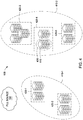
- Figure 4 illustrates how the content servers 110 of Figure 1 are geographically distributed, according to various embodiments of the present invention.
- the content servers 110 may be organized into various clusters, including regional clusters 410, local clusters 420, and manifest clusters 430.
- each regional cluster 410 may be associated with a different city, state, country, time zone, continent, and the like.
- Each regional cluster 410 includes one or more local clusters 420.
- regional cluster 410-1 includes local cluster 420-1 and local cluster 420-2
- regional cluster 410-2 includes local cluster 420-3, local cluster 420-4, and local cluster 420-5.
- Each local cluster 420 includes one or more manifest clusters 430, each of which includes one or more content servers 110.
- each of the manifest clusters 430 shown in Figure 4 includes five content servers 110. However, any number of content servers 110 may be included in each manifest cluster 430. Further, any number of regional clusters 410, local clusters 420, manifest clusters 430, and content servers 110 may be included in the network infrastructure 100.
- Figures 5A-5C illustrate a technique for replicating a file 218 across different tiers of the geographically distributed content servers 110 of Figure 1 , according to various embodiments of the present invention.
- multiple copies of each file 218 may be replicated across the content servers 110 included in each regional cluster 410.
- one or more hashing operations such as the consistent hashing operation described below, is performed by the control application 317 to evenly replicate files 218 across multiple content servers 110, without needing to pre-compute where the file 218 should be stored and without needing to store an index of content servers 110 in a centralized server.
- the control application 317 generates a hash value for each content server 110 included in a particular regional cluster 410 by performing a hashing operation (e.g., applying an MD5 message-digest algorithm) on each server ID associated with the content servers 110.
- the control application 317 sorts the resulting hash values to form a hash data structure, such as a hash ring, a hash table.
- the control application 317 then generates a hash value for the file 218 by applying the same (or a different) hashing operation to the file ID associated with the file 218.
- the control application 317 compares the hash value associated with the file 218 to the hash data structure and selects the content server 110 having a hash value closest to the hash value of the file 218 to be a regional master 510 for that particular file 218. Further, if a replication factor (RF) > 1 is specified for the file 218 and/or for the regional master 510 tier, then the control application 317 selects as regional masters 510 one or more additional content servers 110 that are next (e.g., based on hash value) in the hash data structure.
- RF replication factor
- control application 317 selects the next content servers 110 in the hash data structure by "walking" around a hash ring or down a hash table, starting at the hash value associated with the first regional master 510 selected for the regional cluster 410, until a desired number of regional masters 510 is selected.
- the regional masters 510 based on instructions received from the control application 317, immediately fetch 515 the file 218 from the fill source 130, as shown in Figure 5A .
- the regional masters 510 based on instructions received from the control application 317, immediately fetch 515 the file 218 from the fill source 130, as shown in Figure 5A .
- the regional masters 510 are selected for a particular file 218 and can immediately fetch the file 218 from the fill source 130.
- the control application 317 filters the hash data structure to include only the content servers 110 located in a particular local cluster 420.
- the control application 317 selects one or more next content servers 110 included in the filtered hash data structure to be local masters 520 for the local cluster 420.
- the control application 317 would filter the hash data structure to exclude all content servers 110 not included in local cluster 420-1.
- the control application 317 selects the next content server 110, by hash value, remaining in the filtered hash data structure to be a local master 520 for the local cluster 420-1.
- control application 317 selects one or more next content servers 110 included in the filtered hash data structure to be local masters 520 for the local cluster 420-1. The control application 317 then repeats this process for each local cluster 420 included in the regional cluster 410.
- the local masters 520 fetch 525 the file 218 from the regional masters 510, as shown in Figure 5B .
- the control application 317 further provides instructions to the local masters 520 regarding how and when the file 218 can be fetched.
- the control application 317 instructs the local masters 520 associated with each local cluster 420 to wait a first predetermined period of time (e.g., 1 to 3 hours after the regional master(s) 510 fetch 515 the file 218 from the fill source 130) before fetching 525 the file 218 from the regional master(s) 510.
- control application 317 may instruct a local master 520 to fetch the file 218 from a more expensive source, such as the fill source 130, only after a second predetermined period of time (e.g., 2 to 4 hours after the regional master(s) 510 fetch 515 the file 218 from the fill source 130) that is longer than the first predetermined period of time.
- a second predetermined period of time e.g., 2 to 4 hours after the regional master(s) 510 fetch 515 the file 218 from the fill source 130
- a second predetermined period of time e.g., 2 to 4 hours after the regional master(s) 510 fetch 515 the file 218 from the fill source 130
- a second predetermined period of time e.g., 2 to 4 hours after the regional master(s) 510 fetch 515 the file 218 from the fill source 130
- Implementing a second predetermined period of time after which a local master 520 can fetch a file from a more expensive source strikes a balance between decreasing network costs and reducing the occurrence
- control application 317 can filter the hash data structure again to include only the content servers 110 located in a particular manifest cluster 430.
- the control application 317 selects one or more next content servers 110 included in the filtered hash data structure to be manifest masters 530 for the manifest cluster 430.
- the control application 317 could filter the hash data structure to exclude all content servers 110 not included in manifest cluster 430-1.
- the control application 317 selects the next content server 110, by hash value, remaining in the filtered hash data structure to be a manifest master 530-3 for manifest cluster 430-1.
- control application 317 could select one or more next content servers 110 included in the filtered hash data structure to be manifest masters 530 for the manifest cluster 430-1.
- the control application 317 then repeats this process for each manifest cluster 430 included in the regional cluster 410.
- the control application 317 repeats the entire process of determining the regional masters 510, local masters 520, and manifest masters 530 for each regional cluster 410 included in the infrastructure network 100.
- the manifest masters 530 fetch 535 the file 218 from the local masters 520, as shown in Figure 5C .
- the control application 317 instructs the manifest masters 530 associated with each manifest cluster 430 to wait a first predetermined period of time (e.g., 1 to 3 hours after the local master(s) 520 fetch 525 the file 218 from the regional master(s) 510) before fetching 515 the file 218 from the local master(s) 520.
- control application 317 may instruct a manifest master 530 to fetch the file 218 from a more expensive source, such as the regional master(s) 510, after a second predetermined period of time (e.g., 2 to 4 hours after the local master(s) 520 fetch 525 the file 218 from the regional master(s) 510). Further, the control application 317 may instruct a manifest master 530 to fetch the file 218 from the fill source 130 after a third predetermined period of time (e.g., 4 to 6 hours after the local master(s) 520 fetch 525 the file 218 from the regional master(s) 510).
- a third predetermined period of time e.g., 4 to 6 hours after the local master(s) 520 fetch 525 the file 218 from the regional master(s) 510.
- each of the non-masters 540 included in the manifest cluster 430 can fetch the file 218 from the manifest master 530.
- fetches between non-masters 540 and manifest masters 530 within a manifest cluster 430 are typically do not incur any third-party network or storage fees.
- the control application 317 instructs the non-masters 540 to wait an optional first predetermined period of time (e.g., 1 to 3 hours after the manifest master(s) 530 fetch 535 the file 218 from the local master(s) 520) before fetching the file 218 from the manifest master 530.
- the control application 317 may instruct the non-masters 540 to wait before fetching the file 218 from more expensive sources, such as the local master(s) 520, regional master(s) 510, and fill source 130.
- control application 317 In order to avoid the "hot neighbor" problem - where content servers 110 located sequentially in the hash data structure receive multiple popular files 218 and, as a result, experience degraded performance - the control application 317 optionally combines each server ID with a plurality of values prior to generating the hash data structure. For example, the control application 317 may combine each server ID with a fixed range of 1,000 constants. The control application 317 then performs the hashing operation on each combination to generate 1,000 hash values for each content server 110. Consequently, each content server 110 will appear multiple times in the hash data structure, greatly reducing the likelihood that the same subset of content servers 110 will receive multiple popular files 218. An example is provided below.
- a particular regional cluster 410 includes 20 content servers.
- the control application 317 combines each of the 20 server IDs with a fixed range of constants (e.g., 1 to 1000), applies the hashing operation to each of the combinations, and sorts the 20,000 resulting hash values to generate a hash ring.
- the content servers 110 are named A through T
- the resulting hash ring could include the following hash values:
- the control application 317 then performs the hashing operation on the file ID associated with the file 218 and selects the first 3 content servers 110 encountered on the hash ring. For example, assuming that performing the hashing operation on the file ID results in a hash value of 00015500, the control application 317 will select Q as the primary content server 110, since 00015577 is the first content server 110 encountered after 00015500, and will select R and L as the replica content servers 110.
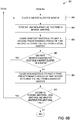
- Figures 6A and 6B illustrate a flow diagram of method steps for replicating a file 218 across geographically distributed content servers 110, according to various embodiments of the present invention. Although the method steps are described in conjunction with the systems of Figures 1-5C , persons skilled in the art will understand that any system configured to perform the method steps, in any order, falls within the scope of the present invention.
- a method 600 begins at step 605, where the control application 317 generates a hash data structure, such as a hash ring or a hash table, by performing a first hashing operation on the server identifiers (IDs) associated with each of the content servers 110 included in a particular regional cluster 410 of content servers 110.
- the control application 317 generates a hash value by performing a second hashing operation based on a file ID associated with the file 218.
- the first hashing operation and the second hashing operation are the same (e.g., an MD5 hashing operation).
- the first hashing operation and the second hashing operation may include different operations.
- the first hashing operation and/or the second hashing operation may include one or more transforms that modify the server IDs and/or file IDs.
- the control application 317 determines one or more regional masters 510 included in the regional cluster 410 by comparing the first hash value to the hash data structure.
- the one or more regional masters 510 consist of a subset of content servers 110 included in the regional cluster 410.
- the control application 317 causes each regional master 510 to fetch the file 218 from the fill source 130.
- the control application 317 may cause a regional master 510 to fetch a file 218 by issuing instructions to each regional master 510 in response to a JSON array received from the regional master 510 and specifying the file ID.
- the control application 317 selects a local cluster 420 of content servers 110 included in the regional cluster 410.
- the control application 317 filters the hash data structure to determine, based on the hash value generated for the file ID, one or more local masters 520 included in the local cluster 420.
- the one or more local masters 520 consist of a subset of content servers 110 included in the local cluster 420.
- the control application 317 then causes each local master 520 to wait a predetermined period of time before fetching the file 218 from a regional master 510.
- the predetermined time that a local master 520 is required to wait before fetching the file 218 from a regional master 510 is different for each local master 520 such that the predetermined time varies across the local masters 520.
- the control application 317 determines whether one or more local masters 520 need to be determined for an additional local cluster 420. If the control application 317 determines that one or more local masters 520 need to be determined for an additional local cluster 420, then the method 600 returns to step 625, described above. If the control application 317 determines that local master(s) 520 do not need to be determined for an additional local cluster 420, then the method 600 proceeds to step 645, shown in Figure 6B , where the control application 317 selects a manifest cluster 430 of content servers 110.
- the control application 317 filters the hash data structure to determine, based on the hash value, one or more manifest masters 530 included in the manifest cluster 430.
- the one or more manifest masters 530 consist of a subset of content servers 110 included in the manifest cluster 430.
- the regional master(s) 510, local master(s) 520, and manifest master(s) 530 are determined based on the server IDs and the file ID, the locations at which the file 218 has been replicated in the infrastructure network 100, as well as the times at which the file 218 can be fetched from each location, can be determined by any content server 110 that has a record of the server IDs and file ID. Accordingly, files 218 may be replicated through the infrastructure network 100 in a decentralized, highly fault-tolerant manner, without requiring an entity, such as the control server 217, to maintain a master index.
- the control application 317 causes each manifest master 530 to wait a predetermined period of time before fetching the file 218 from a local master 520.
- the predetermined time that a manifest master 530 is required to wait before fetching the file 218 from a local master 520 is the same for each manifest master 530, while, in other embodiments, the predetermined time may vary across the manifest masters 530.
- the control application 317 determines whether one or more manifest masters 530 need to be determined for an additional manifest cluster 430. If the control application 317 determines that one or more manifest masters 530 need to be determined for an additional manifest cluster 430, then the method 600 returns to step 645, described above. If the control application 317 determines that manifest master(s) 530 do not need to be determined for an additional manifest cluster 430, then the method 600 proceeds to step 665, where the control application 317 causes each non-master server 540 to wait a predetermined period of time before fetching the file 218 from a manifest master 530.
- the predetermined time that a non-master server 540 is required to wait before fetching the file 218 from a manifest master 530 is the same for each non-master server 540, while, in other embodiments, the predetermined time may vary across the non-master servers 540.
- the control application 317 determines whether regional master(s) 510, local master(s) 520, and/or manifest master(s) 530 need to be determined for an additional file 218. If the control application 317 determines that regional master(s) 510, local master(s) 520, and/or manifest master(s) 530 need to be determined for an additional file 218, then the method 600 returns to step 610. If the control application 317 determines that regional master(s) 510, local master(s) 520, and/or manifest master(s) 530 do not need to be determined for an additional file 218, then the method 600 terminates.
- a control application performs a hashing operation on a plurality of server IDs to generate a hash data structure.
- the control application then performs a hashing operation on a file ID and compares the hash value to the hash data structure to select one or more regional masters.
- the hash data structure is then filtered for each local cluster and manifest cluster in order to determine the local master(s) and manifest master(s), respectively, through which the file will be replicated.
- the control application further assigns a predetermined delay to each local master tier, manifest master tier, and non-master tier in order to control the rate at which the file is replicated through the infrastructure network.
- At least one advantage of the disclosed techniques is that each file can be replicated across a network in a predictable, decentralized, and highly fault-tolerant manner via specific tiers of content servers, without requiring an entity to maintain a master index. Additionally, the number of content servers included in each tier through which a file is replicated may be controlled, for example, based on the popularity of and demand for the file, by specifying a replication factor on a per-tier or per-file basis. Further, a predetermined delay may be assigned to each tier in order to prevent lower tiers from flooding content servers included in upper tiers, reducing the severity of server load fluctuations.
- each file may propagate through the network infrastructure via a different sequence of content servers.
- network and processing loads are more evenly distributed among the content servers, increasing the overall quality of service provided to users that are accessing web-based applications via the content servers.
- aspects of the present embodiments may be embodied as a system, method or computer program product. Accordingly, aspects of the present disclosure may take the form of an entirely hardware embodiment, an entirely software embodiment (including firmware, resident software, micro-code, etc.) or an embodiment combining software and hardware aspects that may all generally be referred to herein as a "circuit,” “module” or “system.” Furthermore, aspects of the present disclosure may take the form of a computer program product embodied in one or more computer readable medium(s) having computer readable program code embodied thereon.
- the computer readable medium may be a computer readable signal medium or a computer readable storage medium.
- a computer readable storage medium may be, for example, but not limited to, an electronic, magnetic, optical, electromagnetic, infrared, or semiconductor system, apparatus, or device, or any suitable combination of the foregoing.
- a computer readable storage medium may be any tangible medium that can contain, or store a program for use by or in connection with an instruction execution system, apparatus, or device.
- each block in the flowchart or block diagrams may represent a module, segment, or portion of code, which comprises one or more executable instructions for implementing the specified logical function(s).
- the functions noted in the block may occur out of the order noted in the figures. For example, two blocks shown in succession may, in fact, be executed substantially concurrently, or the blocks may sometimes be executed in the reverse order, depending upon the functionality involved.
Landscapes
- Engineering & Computer Science (AREA)
- Theoretical Computer Science (AREA)
- Data Mining & Analysis (AREA)
- Databases & Information Systems (AREA)
- Physics & Mathematics (AREA)
- General Engineering & Computer Science (AREA)
- General Physics & Mathematics (AREA)
- Computer Networks & Wireless Communication (AREA)
- Signal Processing (AREA)
- Information Retrieval, Db Structures And Fs Structures Therefor (AREA)
- Information Transfer Between Computers (AREA)
Claims (10)
- Verfahren zum Verteilen von Kopien einer Datei über geographisch verteilte Inhaltsserver, umfassend:Durchführen einer ersten Hash-Operation an mehreren Server-Kennungen, "IDs", und Sortieren der resultierenden Hash-Werte, um eine Hash-Datenstruktur zu erzeugen, wobei jede Server-ID, die in den mehreren Server-IDs enthalten ist, mit einem anderen Server verknüpft ist, der in einer regionalen Servergruppe enthalten ist, wobei die regionale Servergruppe mit einer geografischen Region verknüpft ist, und die Hash-Datenstruktur ein Hash-Ring oder eine Hash-Tabelle ist; undDurchführen einer zweiten Hash-Operation basierend auf einer mit der Datei verknüpften Datei-ID, um einen ersten Hash-Wert zu erzeugen;Bestimmen eines regionalen Master-Servers, der in der regionalen Servergruppe enthalten ist, durch Vergleichen des ersten Hash-Wertes mit der Hash-Datenstruktur und Auswählen des Inhaltsservers mit einem Hash-Wert in der Hash-Datenstruktur, der dem ersten Hash-Wert am nächsten liegt;Veranlassen des regionalen Master-Servers, die Datei von einer Füllquelle abzurufen; undfür jede lokale Servergruppe, die in der regionalen Servergruppe enthalten ist:Bestimmen eines lokalen Master-Servers, der in der lokalen Servergruppe enthalten ist, durch Ausführen einer Filteroperation an der Hash-Datenstruktur, um aus der Hash-Datenstruktur alle Server auszuschließen, die nicht in der lokalen Servergruppe enthalten sind, und Auswählen des nächsten Inhaltsservers nach einem Hash-Wert, der in der gefilterten Hash-Datenstruktur enthalten ist, als den lokalen Master-Server; undVeranlassen des lokalen Master-Servers, die Datei vom regionalen Master-Server abzurufen, nachdem er eine vorgegebene Zeitspanne gewartet hat, wobei jede lokale Servergruppe in einer regionalen Servergruppe enthalten ist und die vorgegebene Zeitspanne für jeden lokalen Master-Server unterschiedlich ist.
- Verfahren nach Anspruch 1, das ferner für jede Manifest-Servergruppe, die in der jeweiligen lokalen Servergruppe enthalten ist, umfasst:Bestimmen eines Manifest-Master-Servers, der in der Manifest-Servergruppe enthalten ist; undVeranlassen des Manifest-Masters, die Datei von dem lokalen Master-Server abzurufen, der mit der lokalen Servergruppe verknüpft ist, wobei jede Manifest-Servergruppe in einer lokalen Servergruppe enthalten ist.
- Verfahren nach Anspruch 2, ferner umfassend, den Manifest-Master-Server zu veranlassen, eine zweite vorbestimmte Zeitspanne zu warten, bevor die Datei vom lokalen Master-Server abgerufen wird.
- Verfahren nach einem der vorstehenden Ansprüche, das ferner für jede Manifest-Servergruppe, die in der jeweiligen lokalen Servergruppe enthalten ist, umfasst:Filtern der Hash-Datenstruktur basierend auf dem ersten Hash-Wert, um einen Manifest-Master-Server zu bestimmen, der in der Manifest-Servergruppe enthalten ist; undVeranlassen des Manifest-Masters, die Datei von dem lokalen Master-Server abzurufen, der mit der lokalen Servergruppe verknüpft ist.
- Verfahren nach einem der vorstehenden Ansprüche, wobei das Durchführen der ersten Hash-Operation für jede Server-ID umfasst:Kombinieren der Server-ID mit mehreren verschiedenen Werten, um mehrere verschiedene Server-ID-Instanzen zu erzeugen;Durchführen der ersten Hash-Operation an jeder der mehreren Server-ID-Instanzen, um mehrere Hash-Datenstrukturwerte zu erzeugen; undSpeichern der mehreren Hash-Datenstrukturwerte in der Hash-Datenstruktur.
- Steuerungsserver, umfassend:einen Speicher, der eine Steuerungsanwendung speichert; undeinen Prozessor, der mit dem Speicher gekoppelt ist,wobei die Steuerungsanwendung, wenn sie von dem Prozessor ausgeführt wird, den Prozessor derart konfiguriert, dass er das Verfahren nach einem der vorstehenden Ansprüche ausführt.
- Steuerungsserver nach Anspruch 6, wobei die Steuerungsanwendung den Prozessor ferner dafür konfiguriert:eine dritte Hash-Operation durchzuführen, basierend auf einer mit einer zweiten Datei verknüpften zweiten Datei-ID, um einen zweiten Hash-Wert zu erzeugen;den zweiten Hash-Wert mit der Hash-Datenstruktur zu vergleichen, um einen zweiten regionalen Master-Server zu bestimmen, der in der regionalen Servergruppe enthalten ist, wobei der zweite regionale Master-Server von dem ersten regionalen Master-Server verschieden ist;den zweiten regionalen Master-Server zu veranlassen, die zweite Datei von der Füllquelle abzurufen; undfür jede lokale Servergruppe, die in der regionalen Servergruppe enthalten ist:eine Filteroperation an der Hash-Datenstruktur durchzuführen, um aus der Hash-Datenstruktur alle Server auszuschließen, die nicht in der lokalen Servergruppe enthalten sind, und den nächsten Inhaltsserver nach einem Hash-Wert, der in der gefilterten Hash-Datenstruktur enthalten ist, als den lokalen Master-Server auszuwählen, wobei der zweite lokale Master-Server von dem ersten lokalen Master-Server verschieden ist; undden lokalen Master-Server zu veranlassen, die zweite Datei vom zweiten regionalen Master-Server abzurufen, nachdem er eine zweite vorgegebene Zeitspanne gewartet hat, wobei die zweite vorgegebene Zeitspanne für jeden lokalen Master-Server verschieden ist.
- Steuerungsserver nach Anspruch 6 oder Anspruch 7, wobei die Steuerungsanwendung den Prozessor dafür konfiguriert, die erste Hash-Operation durchzuführen und den ersten Hash-Wert mit der Hash-Datenstruktur in Reaktion darauf zu vergleichen, dass er eine Anordnung von Datei-IDs von einem Server empfängt, der in der regionalen Servergruppe enthalten ist.
- Steuerungsserver nach einem der Ansprüche 6 bis 8, wobei der regionale Master-Server einer von mehreren regionalen Master-Servern ist, wobei die Anzahl der regionalen Master-Server auf einem ersten Replikationsfaktor basiert, der mit einer regionalen Master-Server-Schicht verknüpft ist, und der lokale Master-Server einer von mehreren lokalen Master-Servern ist, wobei die Anzahl der lokalen Master-Server auf einem zweiten Replikationsfaktor basiert, der mit einer lokalen Master-Server-Schicht verknüpft ist.
- Nicht-transitorisches, computerlesbares Speichermedium mit Anweisungen, die, wenn sie von einem Prozessor ausgeführt werden, den Prozessor veranlassen, das Verfahren nach einem der Ansprüche 1 bis 5 durchzuführen.
Applications Claiming Priority (3)
| Application Number | Priority Date | Filing Date | Title |
|---|---|---|---|
| US201562155430P | 2015-04-30 | 2015-04-30 | |
| US15/067,099 US11010341B2 (en) | 2015-04-30 | 2016-03-10 | Tiered cache filling |
| PCT/US2016/029872 WO2016176499A1 (en) | 2015-04-30 | 2016-04-28 | Tiered cache filling |
Publications (2)
| Publication Number | Publication Date |
|---|---|
| EP3289490A1 EP3289490A1 (de) | 2018-03-07 |
| EP3289490B1 true EP3289490B1 (de) | 2021-03-17 |
Family
ID=56024386
Family Applications (1)
| Application Number | Title | Priority Date | Filing Date |
|---|---|---|---|
| EP16723868.2A Active EP3289490B1 (de) | 2015-04-30 | 2016-04-28 | Mehrstufige cache-füllung |
Country Status (11)
| Country | Link |
|---|---|
| US (2) | US11010341B2 (de) |
| EP (1) | EP3289490B1 (de) |
| JP (1) | JP6564471B2 (de) |
| KR (1) | KR102031476B1 (de) |
| CN (1) | CN107810501B (de) |
| AU (2) | AU2016255442B2 (de) |
| CA (1) | CA2984312C (de) |
| DK (1) | DK3289490T3 (de) |
| MX (1) | MX390206B (de) |
| SG (1) | SG11201708828UA (de) |
| WO (1) | WO2016176499A1 (de) |
Families Citing this family (6)
| Publication number | Priority date | Publication date | Assignee | Title |
|---|---|---|---|---|
| GB2570832B (en) * | 2016-12-01 | 2022-08-24 | Brightcove Inc | Optimization of encoding profiles for media streaming |
| JP6620788B2 (ja) * | 2017-06-15 | 2019-12-18 | 富士通クライアントコンピューティング株式会社 | データ提供システム、情報処理方法および情報処理プログラム |
| US11947516B1 (en) * | 2018-02-22 | 2024-04-02 | Amazon Technologies, Inc. | Multi-tier definition management for distributed data stores |
| US10880360B2 (en) * | 2019-04-05 | 2020-12-29 | International Business Machines Corporation | File transmission in a cluster |
| CN110830564B (zh) * | 2019-10-30 | 2022-11-01 | 北京金山云网络技术有限公司 | Cdn调度方法、装置、系统及计算机可读存储介质 |
| CN112015561B (zh) * | 2020-09-16 | 2024-07-30 | 支付宝(杭州)信息技术有限公司 | 用于流式计算服务的方法、装置和系统 |
Family Cites Families (37)
| Publication number | Priority date | Publication date | Assignee | Title |
|---|---|---|---|---|
| US9372870B1 (en) * | 2003-01-21 | 2016-06-21 | Peer Fusion, Inc. | Peer to peer code generator and decoder for digital systems and cluster storage system |
| JP2005031987A (ja) | 2003-07-14 | 2005-02-03 | Nec Corp | コンテンツ配信システムにおけるコンテンツ配置管理システム及びコンテンツ配置管理プログラム |
| WO2006115480A1 (en) * | 2005-04-22 | 2006-11-02 | Thomson Licensing | Network caching for hierarchical content |
| US8255420B2 (en) | 2006-05-23 | 2012-08-28 | Noryan Holding Corporation | Distributed storage |
| JP2008035337A (ja) | 2006-07-31 | 2008-02-14 | Brother Ind Ltd | ノード装置、配信装置、管理装置、情報処理プログラム、コンテンツ配信方法及びコンテンツ配信システム |
| US20080065704A1 (en) | 2006-09-12 | 2008-03-13 | Microsoft Corporation | Data and replica placement using r-out-of-k hash functions |
| JP4830889B2 (ja) | 2007-02-15 | 2011-12-07 | ブラザー工業株式会社 | 情報配信システム、情報配信方法及びノード装置等 |
| US8122006B2 (en) * | 2007-05-29 | 2012-02-21 | Oracle International Corporation | Event processing query language including retain clause |
| US8108933B2 (en) * | 2008-10-21 | 2012-01-31 | Lookout, Inc. | System and method for attack and malware prevention |
| JP5233799B2 (ja) | 2009-03-31 | 2013-07-10 | ブラザー工業株式会社 | コンテンツ配信システム、ノード装置、コンテンツ配信方法及びコンテンツ取得処理プログラム |
| US8332463B2 (en) | 2009-05-27 | 2012-12-11 | Brother Kogyo Kabushiki Kaisha | Distributed storage system, connection information notifying method, and recording medium in which distributed storage program is recorded |
| JP2011118593A (ja) | 2009-12-02 | 2011-06-16 | Nec Corp | データ転送サーバ、データ転送システム、データ転送方法およびプログラム |
| US20110191447A1 (en) * | 2010-01-29 | 2011-08-04 | Clarendon Foundation, Inc. | Content distribution system |
| US9355109B2 (en) | 2010-06-11 | 2016-05-31 | The Research Foundation For The State University Of New York | Multi-tier caching |
| US11195057B2 (en) * | 2014-03-18 | 2021-12-07 | Z Advanced Computing, Inc. | System and method for extremely efficient image and pattern recognition and artificial intelligence platform |
| KR101326242B1 (ko) * | 2012-01-20 | 2013-11-11 | 양재상 | 건물 바닥의 단열방수공법 |
| CN102855294B (zh) | 2012-08-13 | 2016-12-21 | 北京联创信安科技股份有限公司 | 一种智能哈希数据布局方法、集群存储系统及其方法 |
| KR101959970B1 (ko) | 2012-09-05 | 2019-07-04 | 에스케이텔레콤 주식회사 | 컨텐츠 전송 서비스 방법, 이를 위한 캐시 장치 |
| US9268808B2 (en) | 2012-12-31 | 2016-02-23 | Facebook, Inc. | Placement policy |
| EP3089455B1 (de) * | 2013-04-06 | 2021-03-10 | Grass Valley Canada | Systeme und verfahren zur medienverteilung und -verwaltung |
| US9495420B2 (en) * | 2013-05-22 | 2016-11-15 | International Business Machines Corporation | Distributed feature collection and correlation engine |
| KR20150011087A (ko) | 2013-07-22 | 2015-01-30 | 에스케이텔레콤 주식회사 | 컨텐츠 전송 서비스를 위한 분산 캐싱 관리 방법 및 이를 위한 중앙 관리 장치 |
| US10255188B2 (en) * | 2014-03-17 | 2019-04-09 | Vmware, Inc. | Migrating workloads across host computing systems based on cache content usage characteristics |
| US10645425B2 (en) * | 2014-06-13 | 2020-05-05 | Samsung Electronics Co., Ltd. | Method and device for managing multimedia data |
| CN104065568B (zh) | 2014-07-07 | 2017-01-18 | 电子科技大学 | 一种Web服务器集群的路由方法 |
| WO2017182679A1 (es) * | 2016-04-19 | 2017-10-26 | Telefonica Digital España, S.L.U | Método implementado por ordenador para generación de contraseñas y productos de programa de ordenador del mismo |
| WO2018024344A1 (en) * | 2016-08-05 | 2018-02-08 | Telefonaktiebolaget Lm Ericsson (Publ) | Transport protocol server relocation |
| EP3587462B1 (de) * | 2017-02-24 | 2021-08-11 | Zeon Corporation | Herstellungsverfahren für modifiziertes polymerlatex |
| US20190230156A1 (en) * | 2018-01-19 | 2019-07-25 | Nutanix, Inc. | System and method of managing cloud resources and services across two or more regions in a single view |
| US10616707B2 (en) * | 2018-01-25 | 2020-04-07 | Nutanix, Inc. | Method of showing availability zones on a map for customer-owned and cloud provider-owned datacenters |
| US11532013B2 (en) * | 2019-06-17 | 2022-12-20 | Optimizely, Inc. | Optimized simultaneous use of content experimentation and content caching |
| JP6836643B1 (ja) * | 2019-11-27 | 2021-03-03 | 株式会社スカイコム | 管理サーバ、文書ファイル管理システム、文書ファイル管理方法、および文書ファイル管理プログラム |
| US11429589B2 (en) * | 2020-05-26 | 2022-08-30 | Zscaler, Inc. | Data loss prevention via indexed document matching |
| US11372728B2 (en) * | 2020-08-06 | 2022-06-28 | EMC IP Holding Company LLC | Retention time based consistent hash ring |
| US11748303B2 (en) * | 2020-11-23 | 2023-09-05 | Ford Global Technologies, Llc | Systems and methods for remote storage of information associated with a distributed ledger network |
| US11513904B2 (en) * | 2020-12-17 | 2022-11-29 | EMC IP Holding Company LLC | Gold image library management system to reduce backup storage and bandwidth utilization |
| US12437005B2 (en) * | 2020-12-22 | 2025-10-07 | Netapp, Inc. | File metadata service |
-
2016
- 2016-03-10 US US15/067,099 patent/US11010341B2/en active Active
- 2016-04-28 KR KR1020177034257A patent/KR102031476B1/ko active Active
- 2016-04-28 CN CN201680038924.8A patent/CN107810501B/zh active Active
- 2016-04-28 JP JP2017556643A patent/JP6564471B2/ja active Active
- 2016-04-28 AU AU2016255442A patent/AU2016255442B2/en active Active
- 2016-04-28 EP EP16723868.2A patent/EP3289490B1/de active Active
- 2016-04-28 WO PCT/US2016/029872 patent/WO2016176499A1/en not_active Ceased
- 2016-04-28 MX MX2017013857A patent/MX390206B/es unknown
- 2016-04-28 CA CA2984312A patent/CA2984312C/en active Active
- 2016-04-28 SG SG11201708828UA patent/SG11201708828UA/en unknown
- 2016-04-28 DK DK16723868.2T patent/DK3289490T3/da active
-
2021
- 2021-05-17 US US17/322,714 patent/US11675740B2/en active Active
- 2021-07-14 AU AU2021205036A patent/AU2021205036A1/en not_active Abandoned
Non-Patent Citations (1)
| Title |
|---|
| LIANG HONG ET AL: "Fast Cascading Replication Strategy for Data Grid", COMPUTER SCIENCE AND SOFTWARE ENGINEERING, 2008 INTERNATIONAL CONFERENCE ON, IEEE, PISCATAWAY, NJ, USA, 12 December 2008 (2008-12-12), pages 186 - 189, XP031377437, ISBN: 978-0-7695-3336-0 * |
Also Published As
| Publication number | Publication date |
|---|---|
| JP2018524656A (ja) | 2018-08-30 |
| US20160321286A1 (en) | 2016-11-03 |
| EP3289490A1 (de) | 2018-03-07 |
| US20210271639A1 (en) | 2021-09-02 |
| CA2984312C (en) | 2021-08-10 |
| CA2984312A1 (en) | 2016-11-03 |
| AU2021205036A1 (en) | 2021-08-12 |
| AU2016255442A1 (en) | 2017-11-16 |
| MX390206B (es) | 2025-03-20 |
| US11010341B2 (en) | 2021-05-18 |
| WO2016176499A1 (en) | 2016-11-03 |
| JP6564471B2 (ja) | 2019-08-21 |
| CN107810501A (zh) | 2018-03-16 |
| DK3289490T3 (da) | 2021-04-26 |
| MX2017013857A (es) | 2018-06-13 |
| SG11201708828UA (en) | 2017-11-29 |
| AU2016255442B2 (en) | 2021-04-15 |
| KR20170139671A (ko) | 2017-12-19 |
| CN107810501B (zh) | 2022-01-11 |
| US11675740B2 (en) | 2023-06-13 |
| KR102031476B1 (ko) | 2019-10-11 |
Similar Documents
| Publication | Publication Date | Title |
|---|---|---|
| US11675740B2 (en) | Tiered cache filling | |
| AU2023241318B1 (en) | Watermark-based techniques for change-data-capture | |
| JP5976258B1 (ja) | ライトインストーラ | |
| KR102917663B1 (ko) | 구성가능한 액세스 기반 캐시 정책 제어 | |
| WO2024211284A1 (en) | Techniques for caching media content when streaming live events | |
| US11223675B2 (en) | Hash data structure biasing | |
| CN107566341B (zh) | 一种基于联邦分布式文件存储系统的数据持久化存储方法及系统 | |
| US11474948B2 (en) | Adaptive retrieval of objects from remote storage | |
| CA3095033C (en) | Techniques for scheduled anti-entropy repair design | |
| KR101523143B1 (ko) | 클라우드 컴퓨팅 환경에서의 하둡-기반의 분산 멀티미디어 스트리밍 서비스 제공 시스템 및 스트리밍 서비스의 제공 방법 | |
| US12166840B2 (en) | Configurable access-based cache policy control | |
| US20260093633A1 (en) | Techniques for invalidating cached content managed by content delivery networks | |
| CN107612990A (zh) | 一种基于云信息云计算服务的云存储终端设备 |
Legal Events
| Date | Code | Title | Description |
|---|---|---|---|
| STAA | Information on the status of an ep patent application or granted ep patent |
Free format text: STATUS: THE INTERNATIONAL PUBLICATION HAS BEEN MADE |
|
| PUAI | Public reference made under article 153(3) epc to a published international application that has entered the european phase |
Free format text: ORIGINAL CODE: 0009012 |
|
| STAA | Information on the status of an ep patent application or granted ep patent |
Free format text: STATUS: REQUEST FOR EXAMINATION WAS MADE |
|
| 17P | Request for examination filed |
Effective date: 20171130 |
|
| AK | Designated contracting states |
Kind code of ref document: A1 Designated state(s): AL AT BE BG CH CY CZ DE DK EE ES FI FR GB GR HR HU IE IS IT LI LT LU LV MC MK MT NL NO PL PT RO RS SE SI SK SM TR |
|
| AX | Request for extension of the european patent |
Extension state: BA ME |
|
| DAV | Request for validation of the european patent (deleted) | ||
| DAX | Request for extension of the european patent (deleted) | ||
| STAA | Information on the status of an ep patent application or granted ep patent |
Free format text: STATUS: EXAMINATION IS IN PROGRESS |
|
| 17Q | First examination report despatched |
Effective date: 20181120 |
|
| REG | Reference to a national code |
Ref country code: DE Ref legal event code: R079 Ref document number: 602016054395 Country of ref document: DE Free format text: PREVIOUS MAIN CLASS: G06F0017300000 Ipc: G06F0016000000 |
|
| GRAP | Despatch of communication of intention to grant a patent |
Free format text: ORIGINAL CODE: EPIDOSNIGR1 |
|
| STAA | Information on the status of an ep patent application or granted ep patent |
Free format text: STATUS: GRANT OF PATENT IS INTENDED |
|
| RIC1 | Information provided on ipc code assigned before grant |
Ipc: G06F 16/00 20190101AFI20200918BHEP |
|
| INTG | Intention to grant announced |
Effective date: 20201021 |
|
| GRAS | Grant fee paid |
Free format text: ORIGINAL CODE: EPIDOSNIGR3 |
|
| GRAA | (expected) grant |
Free format text: ORIGINAL CODE: 0009210 |
|
| STAA | Information on the status of an ep patent application or granted ep patent |
Free format text: STATUS: THE PATENT HAS BEEN GRANTED |
|
| AK | Designated contracting states |
Kind code of ref document: B1 Designated state(s): AL AT BE BG CH CY CZ DE DK EE ES FI FR GB GR HR HU IE IS IT LI LT LU LV MC MK MT NL NO PL PT RO RS SE SI SK SM TR |
|
| REG | Reference to a national code |
Ref country code: GB Ref legal event code: FG4D |
|
| REG | Reference to a national code |
Ref country code: CH Ref legal event code: EP |
|
| REG | Reference to a national code |
Ref country code: DE Ref legal event code: R096 Ref document number: 602016054395 Country of ref document: DE |
|
| REG | Reference to a national code |
Ref country code: IE Ref legal event code: FG4D |
|
| REG | Reference to a national code |
Ref country code: AT Ref legal event code: REF Ref document number: 1372888 Country of ref document: AT Kind code of ref document: T Effective date: 20210415 |
|
| REG | Reference to a national code |
Ref country code: DK Ref legal event code: T3 Effective date: 20210423 |
|
| REG | Reference to a national code |
Ref country code: SE Ref legal event code: TRGR |
|
| REG | Reference to a national code |
Ref country code: NL Ref legal event code: FP |
|
| REG | Reference to a national code |
Ref country code: NO Ref legal event code: T2 Effective date: 20210317 |
|
| REG | Reference to a national code |
Ref country code: LT Ref legal event code: MG9D |
|
| PG25 | Lapsed in a contracting state [announced via postgrant information from national office to epo] |
Ref country code: BG Free format text: LAPSE BECAUSE OF FAILURE TO SUBMIT A TRANSLATION OF THE DESCRIPTION OR TO PAY THE FEE WITHIN THE PRESCRIBED TIME-LIMIT Effective date: 20210617 Ref country code: FI Free format text: LAPSE BECAUSE OF FAILURE TO SUBMIT A TRANSLATION OF THE DESCRIPTION OR TO PAY THE FEE WITHIN THE PRESCRIBED TIME-LIMIT Effective date: 20210317 Ref country code: GR Free format text: LAPSE BECAUSE OF FAILURE TO SUBMIT A TRANSLATION OF THE DESCRIPTION OR TO PAY THE FEE WITHIN THE PRESCRIBED TIME-LIMIT Effective date: 20210618 Ref country code: HR Free format text: LAPSE BECAUSE OF FAILURE TO SUBMIT A TRANSLATION OF THE DESCRIPTION OR TO PAY THE FEE WITHIN THE PRESCRIBED TIME-LIMIT Effective date: 20210317 |
|
| REG | Reference to a national code |
Ref country code: AT Ref legal event code: MK05 Ref document number: 1372888 Country of ref document: AT Kind code of ref document: T Effective date: 20210317 |
|
| PG25 | Lapsed in a contracting state [announced via postgrant information from national office to epo] |
Ref country code: RS Free format text: LAPSE BECAUSE OF FAILURE TO SUBMIT A TRANSLATION OF THE DESCRIPTION OR TO PAY THE FEE WITHIN THE PRESCRIBED TIME-LIMIT Effective date: 20210317 Ref country code: LV Free format text: LAPSE BECAUSE OF FAILURE TO SUBMIT A TRANSLATION OF THE DESCRIPTION OR TO PAY THE FEE WITHIN THE PRESCRIBED TIME-LIMIT Effective date: 20210317 |
|
| PG25 | Lapsed in a contracting state [announced via postgrant information from national office to epo] |
Ref country code: AT Free format text: LAPSE BECAUSE OF FAILURE TO SUBMIT A TRANSLATION OF THE DESCRIPTION OR TO PAY THE FEE WITHIN THE PRESCRIBED TIME-LIMIT Effective date: 20210317 Ref country code: SM Free format text: LAPSE BECAUSE OF FAILURE TO SUBMIT A TRANSLATION OF THE DESCRIPTION OR TO PAY THE FEE WITHIN THE PRESCRIBED TIME-LIMIT Effective date: 20210317 Ref country code: EE Free format text: LAPSE BECAUSE OF FAILURE TO SUBMIT A TRANSLATION OF THE DESCRIPTION OR TO PAY THE FEE WITHIN THE PRESCRIBED TIME-LIMIT Effective date: 20210317 Ref country code: CZ Free format text: LAPSE BECAUSE OF FAILURE TO SUBMIT A TRANSLATION OF THE DESCRIPTION OR TO PAY THE FEE WITHIN THE PRESCRIBED TIME-LIMIT Effective date: 20210317 Ref country code: LT Free format text: LAPSE BECAUSE OF FAILURE TO SUBMIT A TRANSLATION OF THE DESCRIPTION OR TO PAY THE FEE WITHIN THE PRESCRIBED TIME-LIMIT Effective date: 20210317 |
|
| PG25 | Lapsed in a contracting state [announced via postgrant information from national office to epo] |
Ref country code: IS Free format text: LAPSE BECAUSE OF FAILURE TO SUBMIT A TRANSLATION OF THE DESCRIPTION OR TO PAY THE FEE WITHIN THE PRESCRIBED TIME-LIMIT Effective date: 20210717 Ref country code: RO Free format text: LAPSE BECAUSE OF FAILURE TO SUBMIT A TRANSLATION OF THE DESCRIPTION OR TO PAY THE FEE WITHIN THE PRESCRIBED TIME-LIMIT Effective date: 20210317 Ref country code: SK Free format text: LAPSE BECAUSE OF FAILURE TO SUBMIT A TRANSLATION OF THE DESCRIPTION OR TO PAY THE FEE WITHIN THE PRESCRIBED TIME-LIMIT Effective date: 20210317 Ref country code: PL Free format text: LAPSE BECAUSE OF FAILURE TO SUBMIT A TRANSLATION OF THE DESCRIPTION OR TO PAY THE FEE WITHIN THE PRESCRIBED TIME-LIMIT Effective date: 20210317 Ref country code: PT Free format text: LAPSE BECAUSE OF FAILURE TO SUBMIT A TRANSLATION OF THE DESCRIPTION OR TO PAY THE FEE WITHIN THE PRESCRIBED TIME-LIMIT Effective date: 20210719 |
|
| REG | Reference to a national code |
Ref country code: DE Ref legal event code: R097 Ref document number: 602016054395 Country of ref document: DE |
|
| PG25 | Lapsed in a contracting state [announced via postgrant information from national office to epo] |
Ref country code: LU Free format text: LAPSE BECAUSE OF NON-PAYMENT OF DUE FEES Effective date: 20210428 |
|
| REG | Reference to a national code |
Ref country code: BE Ref legal event code: MM Effective date: 20210430 |
|
| PLBE | No opposition filed within time limit |
Free format text: ORIGINAL CODE: 0009261 |
|
| STAA | Information on the status of an ep patent application or granted ep patent |
Free format text: STATUS: NO OPPOSITION FILED WITHIN TIME LIMIT |
|
| PG25 | Lapsed in a contracting state [announced via postgrant information from national office to epo] |
Ref country code: ES Free format text: LAPSE BECAUSE OF FAILURE TO SUBMIT A TRANSLATION OF THE DESCRIPTION OR TO PAY THE FEE WITHIN THE PRESCRIBED TIME-LIMIT Effective date: 20210317 Ref country code: AL Free format text: LAPSE BECAUSE OF FAILURE TO SUBMIT A TRANSLATION OF THE DESCRIPTION OR TO PAY THE FEE WITHIN THE PRESCRIBED TIME-LIMIT Effective date: 20210317 Ref country code: MC Free format text: LAPSE BECAUSE OF FAILURE TO SUBMIT A TRANSLATION OF THE DESCRIPTION OR TO PAY THE FEE WITHIN THE PRESCRIBED TIME-LIMIT Effective date: 20210317 |
|
| 26N | No opposition filed |
Effective date: 20211220 |
|
| PG25 | Lapsed in a contracting state [announced via postgrant information from national office to epo] |
Ref country code: SI Free format text: LAPSE BECAUSE OF FAILURE TO SUBMIT A TRANSLATION OF THE DESCRIPTION OR TO PAY THE FEE WITHIN THE PRESCRIBED TIME-LIMIT Effective date: 20210317 |
|
| PG25 | Lapsed in a contracting state [announced via postgrant information from national office to epo] |
Ref country code: IT Free format text: LAPSE BECAUSE OF FAILURE TO SUBMIT A TRANSLATION OF THE DESCRIPTION OR TO PAY THE FEE WITHIN THE PRESCRIBED TIME-LIMIT Effective date: 20210317 |
|
| PG25 | Lapsed in a contracting state [announced via postgrant information from national office to epo] |
Ref country code: IS Free format text: LAPSE BECAUSE OF FAILURE TO SUBMIT A TRANSLATION OF THE DESCRIPTION OR TO PAY THE FEE WITHIN THE PRESCRIBED TIME-LIMIT Effective date: 20210717 |
|
| PG25 | Lapsed in a contracting state [announced via postgrant information from national office to epo] |
Ref country code: BE Free format text: LAPSE BECAUSE OF NON-PAYMENT OF DUE FEES Effective date: 20210430 |
|
| PG25 | Lapsed in a contracting state [announced via postgrant information from national office to epo] |
Ref country code: HU Free format text: LAPSE BECAUSE OF FAILURE TO SUBMIT A TRANSLATION OF THE DESCRIPTION OR TO PAY THE FEE WITHIN THE PRESCRIBED TIME-LIMIT; INVALID AB INITIO Effective date: 20160428 |
|
| P01 | Opt-out of the competence of the unified patent court (upc) registered |
Effective date: 20230519 |
|
| PG25 | Lapsed in a contracting state [announced via postgrant information from national office to epo] |
Ref country code: CY Free format text: LAPSE BECAUSE OF FAILURE TO SUBMIT A TRANSLATION OF THE DESCRIPTION OR TO PAY THE FEE WITHIN THE PRESCRIBED TIME-LIMIT Effective date: 20210317 |
|
| PG25 | Lapsed in a contracting state [announced via postgrant information from national office to epo] |
Ref country code: MK Free format text: LAPSE BECAUSE OF FAILURE TO SUBMIT A TRANSLATION OF THE DESCRIPTION OR TO PAY THE FEE WITHIN THE PRESCRIBED TIME-LIMIT Effective date: 20210317 |
|
| PG25 | Lapsed in a contracting state [announced via postgrant information from national office to epo] |
Ref country code: MT Free format text: LAPSE BECAUSE OF FAILURE TO SUBMIT A TRANSLATION OF THE DESCRIPTION OR TO PAY THE FEE WITHIN THE PRESCRIBED TIME-LIMIT Effective date: 20210317 |
|
| PGFP | Annual fee paid to national office [announced via postgrant information from national office to epo] |
Ref country code: NL Payment date: 20250424 Year of fee payment: 10 |
|
| PGFP | Annual fee paid to national office [announced via postgrant information from national office to epo] |
Ref country code: DE Payment date: 20250428 Year of fee payment: 10 |
|
| PGFP | Annual fee paid to national office [announced via postgrant information from national office to epo] |
Ref country code: GB Payment date: 20250422 Year of fee payment: 10 Ref country code: DK Payment date: 20250424 Year of fee payment: 10 |
|
| PGFP | Annual fee paid to national office [announced via postgrant information from national office to epo] |
Ref country code: NO Payment date: 20250422 Year of fee payment: 10 |
|
| PGFP | Annual fee paid to national office [announced via postgrant information from national office to epo] |
Ref country code: FR Payment date: 20250424 Year of fee payment: 10 |
|
| PGFP | Annual fee paid to national office [announced via postgrant information from national office to epo] |
Ref country code: CH Payment date: 20250501 Year of fee payment: 10 |
|
| PGFP | Annual fee paid to national office [announced via postgrant information from national office to epo] |
Ref country code: TR Payment date: 20250415 Year of fee payment: 10 |
|
| PGFP | Annual fee paid to national office [announced via postgrant information from national office to epo] |
Ref country code: IE Payment date: 20250417 Year of fee payment: 10 |
|
| PGFP | Annual fee paid to national office [announced via postgrant information from national office to epo] |
Ref country code: SE Payment date: 20250424 Year of fee payment: 10 |
|
| REG | Reference to a national code |
Ref country code: CH Ref legal event code: U11 Free format text: ST27 STATUS EVENT CODE: U-0-0-U10-U11 (AS PROVIDED BY THE NATIONAL OFFICE) Effective date: 20260501 |