EP3289092B1 - Method of manufacturing a therapeutic protein - Google Patents
Method of manufacturing a therapeutic protein Download PDFInfo
- Publication number
- EP3289092B1 EP3289092B1 EP16787029.4A EP16787029A EP3289092B1 EP 3289092 B1 EP3289092 B1 EP 3289092B1 EP 16787029 A EP16787029 A EP 16787029A EP 3289092 B1 EP3289092 B1 EP 3289092B1
- Authority
- EP
- European Patent Office
- Prior art keywords
- cell
- nucleic acid
- glutamine
- protein
- auxotrophic
- Prior art date
- Legal status (The legal status is an assumption and is not a legal conclusion. Google has not performed a legal analysis and makes no representation as to the accuracy of the status listed.)
- Active
Links
Images






Classifications
-
- C—CHEMISTRY; METALLURGY
- C12—BIOCHEMISTRY; BEER; SPIRITS; WINE; VINEGAR; MICROBIOLOGY; ENZYMOLOGY; MUTATION OR GENETIC ENGINEERING
- C12P—FERMENTATION OR ENZYME-USING PROCESSES TO SYNTHESISE A DESIRED CHEMICAL COMPOUND OR COMPOSITION OR TO SEPARATE OPTICAL ISOMERS FROM A RACEMIC MIXTURE
- C12P21/00—Preparation of peptides or proteins
-
- A—HUMAN NECESSITIES
- A61—MEDICAL OR VETERINARY SCIENCE; HYGIENE
- A61P—SPECIFIC THERAPEUTIC ACTIVITY OF CHEMICAL COMPOUNDS OR MEDICINAL PREPARATIONS
- A61P3/00—Drugs for disorders of the metabolism
-
- C—CHEMISTRY; METALLURGY
- C07—ORGANIC CHEMISTRY
- C07K—PEPTIDES
- C07K16/00—Immunoglobulins [IG], e.g. monoclonal or polyclonal antibodies
-
- C—CHEMISTRY; METALLURGY
- C12—BIOCHEMISTRY; BEER; SPIRITS; WINE; VINEGAR; MICROBIOLOGY; ENZYMOLOGY; MUTATION OR GENETIC ENGINEERING
- C12P—FERMENTATION OR ENZYME-USING PROCESSES TO SYNTHESISE A DESIRED CHEMICAL COMPOUND OR COMPOSITION OR TO SEPARATE OPTICAL ISOMERS FROM A RACEMIC MIXTURE
- C12P21/00—Preparation of peptides or proteins
- C12P21/02—Preparation of peptides or proteins having a known sequence of two or more amino acids, e.g. glutathione
-
- C—CHEMISTRY; METALLURGY
- C12—BIOCHEMISTRY; BEER; SPIRITS; WINE; VINEGAR; MICROBIOLOGY; ENZYMOLOGY; MUTATION OR GENETIC ENGINEERING
- C12Y—ENZYMES
- C12Y101/00—Oxidoreductases acting on the CH-OH group of donors (1.1)
- C12Y101/01—Oxidoreductases acting on the CH-OH group of donors (1.1) with NAD+ or NADP+ as acceptor (1.1.1)
- C12Y101/0127—3Beta-hydroxysteroid 3-dehydrogenase (1.1.1.270)
-
- C—CHEMISTRY; METALLURGY
- C12—BIOCHEMISTRY; BEER; SPIRITS; WINE; VINEGAR; MICROBIOLOGY; ENZYMOLOGY; MUTATION OR GENETIC ENGINEERING
- C12Y—ENZYMES
- C12Y603/00—Ligases forming carbon-nitrogen bonds (6.3)
- C12Y603/01—Acid-ammonia (or amine)ligases (amide synthases)(6.3.1)
- C12Y603/01002—Glutamate-ammonia ligase (6.3.1.2)
-
- C—CHEMISTRY; METALLURGY
- C07—ORGANIC CHEMISTRY
- C07K—PEPTIDES
- C07K2317/00—Immunoglobulins specific features
- C07K2317/10—Immunoglobulins specific features characterized by their source of isolation or production
- C07K2317/14—Specific host cells or culture conditions, e.g. components, pH or temperature
Definitions
- US 2010/0028940 refers to methods for using selection marker vectors to generate stable gene expression systems. Disclosed are i.a. methods comprising transfecting cells that are auxotrophic for cholesterol with a vector encoding 3-ketosteroid reductase (KSR).
- KSR 3-ketosteroid reductase
- US 2012/0231500 refers to transient expression of heterologous polypeptides in mammalian cell lines.
- the cell line may comprise a nucleic acid encoding Epstein-Barr virus nuclear antigen 1, and a nucleic acid encoding an exogenous glutamine synthetase.
- the invention described herein is based, in part, on the discovery that the combination of cholesterol-auxotrophic and glutamine-auxotrophic cells with additional selection markers can be exploited in methods of manufacturing therapeutic proteins, to avoid unexpected manufacturing complications associated with cholesterol-auxotrophic cells (e.g., low productivity).
- the invention refers to a method of manufacturing a therapeutic protein, comprising: transfecting a cholesterol-auxotrophic and glutamine-auxotrophic cell with (i) a nucleic acid encoding a protein that restores cholesterol biosynthesis in the cell; (ii) a nucleic acid encoding a protein that restores glutamine biosynthesis in the cell; (iii) a nucleic acid comprising an aminoglycoside antibiotic resistance gene; and (iv) a nucleic acid encoding the therapeutic protein.
- the cell is an NSO cell.
- the therapeutic protein is an antibody. In some embodiments, the therapeutic protein is a fusion protein. In some embodiments, the therapeutic protein is an Fc-containing fusion protein.
- the cell in the transfecting step is transfected with nucleic acids (iii) encoding an antibody light chain and an antibody heavy chain.
- nucleic acid (i) encodes a 3-ketosteroid reductase.
- nucleic acid (ii) encodes a glutamine synthetase.
- a first expression vector comprises nucleic acids (i) and (iv), and a second expression vector comprises nucleic acids (ii).
- a first expression vector comprises nucleic acid (i)
- a second expression vector comprises nucleic acids (ii) and (iii).
- transfection of the first expression vector is performed prior to transfection of the second expression vector.
- transfection of the first expression vector is performed simultaneously with transfection of the second expression vector.
- the cell is cultured (e.g., after transfection of nucleic acid (i)) in the absence of exogenously introduced cholesterol. In some embodiments, the cell is cultured (e.g., after transfection of nucleic acid (ii)) in the absence of exogenously introduced glutamine. In some embodiments, the cell is cultured (e.g., during and/or after transfection of nucleic acid (ii)) in the presence of a glutamine synthetase inhibitor (e.g., methionine sulfoximine). In some embodiments, the cell is cultured (e.g., during and/or after transfection of nucleic acid (i)) in the presence of a 3-ketosteriod reductase inhibitor.
- a glutamine synthetase inhibitor e.g., methionine sulfoximine
- the cell is cultured in absence of exogenously introduced cholesterol and in the absence of exogenously introduced glutamine. In some embodiments, the cell is cultured in absence of exogenously introduced cholesterol, in the absence of exogenously introduced glutamine, and in the presence of a glutamine synthetase inhibitor (e.g., methionine sulfoximine). In some embodiments, the cell is cultured (e.g., after transfection of nucleic acid (i)) in the absence of exogenously introduced cholesterol and the cell is cultured (e.g., after transfection of nucleic acid (ii)) in the absence of exogenously introduced glutamine.
- a glutamine synthetase inhibitor e.g., methionine sulfoximine
- the nucleic acid (ii) encodes a glutamine synthetase, a dihydrofolate reductase (DHFR), or one or more antibiotic resistance gene (e.g., neomycin, blasticidin, hygromyocin, puromycin, zeocin, mycophenolic acid).
- DHFR dihydrofolate reductase
- antibiotic resistance gene e.g., neomycin, blasticidin, hygromyocin, puromycin, zeocin, mycophenolic acid.
- a first expression vector comprises nucleic acids (i) and (iv), and a second expression vector comprises nucleic acids (ii).
- a first expression vector comprises nucleic acid (i)
- a second expression vector comprises nucleic acids (ii) and (iv).
- transfection of the first expression vector is performed prior to transfection of the second expression vector. In some embodiments, transfection of the first expression vector is performed simultaneously with transfection of the second expression vector.
- the cell is cultured (e.g., after transfection of nucleic acid (i)) in the absence of exogenously introduced cholesterol. In some embodiments, the cell is cultured (e.g., during and/or after transfection of nucleic acid (i)) in the presence of a 3-ketosteriod reductase inhibitor. In some embodiments, the cell is cultured in absence of exogenously introduced cholesterol.
- the nucleic acid (ii) encodes the neomycin resistance gene from Tn5 encoding an aminoglycoside 3'-phosphotransferase (APH 3' II).
- both the first and second expression vector contain HC and LC, one vector contains KSR and the other vector contains GS or another antibiotic resistant gene.
- there are three separate vectors e.g., for triple selection), wherein all three vectors contains HC and LC; a first vector contains KSR, a second vector contains GS, and a third vector contains any antibiotic resistant gene, e.g. NEO.
- the cell is cultured (e.g., after transfection of nucleic acid (i)) in the absence of exogenously introduced cholesterol. In some embodiments, the cell is cultured (e.g., during and/or after transfection of nucleic acid (ii)) in the presence of an aminoglycoside antibiotic (e.g., G418). In some embodiments, the cell is cultured (e.g., during and/or after transfection of nucleic acid (i)) in the presence of a 3-ketosteriod reductase inhibitor.
- an aminoglycoside antibiotic e.g., G418
- the cell is cultured (e.g., during and/or after transfection of nucleic acid (i)) in the presence of a 3-ketosteriod reductase inhibitor.
- the cell is cultured in absence of exogenously introduced cholesterol. In some embodiments, the cell is cultured in absence of exogenously introduced cholesterol and in the presence of an aminoglycoside antibiotic (e.g., G418).
- an aminoglycoside antibiotic e.g., G418,
- the nucleic acid (ii) encodes the blasticidin resistance gene from Bacillus cereus (which codes for blasticidin-S deaminase).
- the cell is cultured in absence of exogenously introduced cholesterol and in the presence of a peptidyl nucleoside antibiotic an aminoglycoside antibiotic (e.g., blasticidin).
- a peptidyl nucleoside antibiotic an aminoglycoside antibiotic (e.g., blasticidin).
- the nucleic acid (ii) encodes a hygromycin B phosphotransferase.
- the cell is cultured (e.g., after transfection of nucleic acid (i)) in the absence of exogenously introduced cholesterol. In some embodiments, the cell is cultured (e.g., during and/or after transfection of nucleic acid (ii)) in the presence of an aminoglycoside antibiotic (e.g., hygromycin B). In some embodiments, the cell is cultured (e.g., during and/or after transfection of nucleic acid (i)) in the presence of a 3-ketosteriod reductase inhibitor.
- an aminoglycoside antibiotic e.g., hygromycin B
- the cell is cultured (e.g., during and/or after transfection of nucleic acid (i)) in the presence of a 3-ketosteriod reductase inhibitor.
- the cell is cultured in absence of exogenously introduced cholesterol and in the presence of a peptidyl nucleoside antibiotic an aminoglycoside antibiotic (e.g., hygromycin B).
- a peptidyl nucleoside antibiotic an aminoglycoside antibiotic (e.g., hygromycin B).
- the nucleic acid (ii) encodes a puromycin N-acetyl-transferase.
- the cell is cultured (e.g., during and/or after transfection of nucleic acid (ii)) in the presence of an aminonucleoside antibiotic (e.g., puromycin). In some embodiments, the cell is cultured (e.g., during and/or after transfection of nucleic acid (i)) in the presence of a 3-ketosteriod reductase inhibitor.
- an aminonucleoside antibiotic e.g., puromycin
- the cell is cultured (e.g., during and/or after transfection of nucleic acid (i)) in the presence of a 3-ketosteriod reductase inhibitor.
- the cell is cultured in absence of exogenously introduced cholesterol and in the presence of a peptidyl nucleoside antibiotic an aminonucleoside antibiotic (e.g., puromycin).
- a peptidyl nucleoside antibiotic an aminonucleoside antibiotic (e.g., puromycin).
- the nucleic acid (ii) encodes a Sh ble gene product.
- the cell is cultured (e.g., during and/or after transfection of nucleic acid (ii)) in the presence of a copper-chelated glycopeptide antibiotic (e.g., zeocin).
- a copper-chelated glycopeptide antibiotic e.g., zeocin
- the nucleic acid (ii) encodes the xanthine-guanine phosphoribosyltransferase (Ecogpt) gene.
- the cell is cultured (e.g., during and/or after transfection of nucleic acid (ii)) in the presence of MPA.
- the nucleic acid (ii) encodes the xanthine-guanine phosphoribosyltransferase (Ecogpt) gene .
- the invention features method of manufacturing a therapeutic protein, the method comprising: culturing a cholesterol-auxotrophic and glutamine-auxotrophic cell; transfecting the cell with (i) a nucleic acid encoding a protein which is capable of restoring cholesterol biosynthesis in the cell (e.g., KSR); (ii) a nucleic acid encoding a protein which is capable of restoring glutamine biosynthesis in the cell (e.g., glutathione synthetase); (iii) a nucleic comprising an aminoglycoside antibiotic resistance gene encoding a protein which is capable of providing resistance to G418 (e.g., neomycin resistance gene); and (iv) a nucleic acid encoding the therapeutic protein (e.g., an antibody, e.g., a heavy chain and light chain); culturing the cell under conditions suitable for expression of the therapeutic protein; and isolating and/or purifying the therapeutic protein.
- nucleic acid (iii) is transfected first and during and/post transfection G418 is added to the cell culture media. In some embodiments, nucleic acid (iii) is transfected first and during and/or post transfection G418 is added to the cell culture media; and nucleic acid (ii) is transfected second and during and/or post transfection cholesterol is absent from the cell culture media.
- nucleic acid (iii) is transfected first and during and/or post transfection G418 is added to the cell culture media; and nucleic acid (ii) is transfected second and during and/or post transfection cholesterol is absent from the cell culture media (e.g., exogenously added cholesterol); and nucleic acid (i) is transfected third and during/post transfection glutamine is absent from the cell culture medium (e.g., exogenously added glutamine) (optionally methionine sulphoximine (MSX) is added to the cell culture media).
- MSX methionine sulphoximine
- nucleic acid (ii) and (i) are transfected simultaneously, wherein G418 is added to the cell culture media and the cell culture media does not contain cholesterol (e.g., exogenously added cholesterol).
- nucleic acids (i), (ii), (iii), and (iv) are transfected simultaneously, wherein the G418 is added to the cell culture media and the cell culture media does not contain cholesterol (e.g., exogenously added cholesterol) and does not contain glutamine (e.g., exogenously added glutamine) (optionally methionine sulphoximine (MSX) is added to the cell culture media).
- MSX methionine sulphoximine
- nucleic acid (iv) is incorporated in the same nucleic acid sequence (e.g., vector) as each of (i), (ii), and (iii). In some embodiments, nucleic acid (iv) is incorporated in the same nucleic acid sequence (e.g., vector) as each of (i) and (ii); (i) and (iii); or (ii) and (iii). In some embodiments, nucleic acid (iv) encodes the heavy and light chain of a therapeutic antibody.
- the light chain is incorporated in the same nucleic acid sequence (e.g., vector) as each of (i) and (ii); (i) and (iii); (ii) and (iii); or (i), (ii), and (iii).
- the heavy chain is incorporated in the same nucleic acid sequence (e.g., vector) as each of (i) and (ii); (i) and (iii); (ii) and (iii); or (i), (ii), and (iii).
- the light chain and heavy chain is incorporated in the same nucleic acid sequence (e.g., vector) as each of (i) and (ii); (i) and (iii); (ii) and (iii); or (i), (ii), and (iii).
- nucleic acids (i), (ii), (iii), and (iv) are incorporated into a single nucleic acid (e.g., single vector).
- nucleic acids (i) and (ii); (i) and (iii); (i) and (iv); (i), (ii), and (iii); (i), (ii), (iii), and (iv); (ii) and (iii); or (ii) and (iv); (iii) and (iv); are incorporated on a single nucleic acid.
- nucleic acid (iv) comprises two separate nucleic acids, one encoding a heavy chain and one encoding a light chain of a therapeutic antibody.
- the heavy chain is incorporated onto another nucleic acid, e.g., (i), (ii), or (iii).
- the light chain is incorporated onto another nucleic acid, e.g., (i), (ii), or (iii).
- the cell is an NSO cell.
- the therapeutic protein is an antibody. In some embodiments, the therapeutic protein is a fusion protein. In some embodiments, the therapeutic protein is an Fc-containing fusion protein.
- the cell in the transfecting step the cell is transfected with nucleic acids (iv) encoding an antibody light chain and an antibody heavy chain.
- nucleic acid (i) encodes a 3-ketosteroid reductase.
- nucleic acid (ii) encodes a glutamine synthetase.
- nucleic acid (iii) encodes neomycin resistance gene.
- a first expression vector comprises nucleic acid (i) and (iv), and a second expression vector comprises nucleic acids (ii). In some embodiments, a first expression vector comprises nucleic acid (i), and a second expression vector comprises nucleic acids (ii) and (iv). In some embodiments, transfection of the first expression vector is performed prior to transfection of the second expression vector. In some embodiments, transfection of the first expression vector is performed simultaneously with transfection of the second expression vector.
- the cell is cultured (e.g., after transfection of nucleic acid (i)) in the absence of exogenously introduced cholesterol. In some embodiments, the cell is cultured (e.g., after transfection of nucleic acid (ii)) in the absence of exogenously introduced glutamine. In some embodiments, the cell is cultured (e.g., during and/or after transfection of nucleic acid (ii)) in the presence of a glutamine synthetase inhibitor (e.g., methionine sulfoximine). In some embodiments, the cell is cultured (e.g., during and/or after transfection of nucleic acid (i)) in the presence of a 3-ketosteriod reductase inhibitor.
- a glutamine synthetase inhibitor e.g., methionine sulfoximine
- the cell is cultured in absence of exogenously introduced cholesterol and in the absence of exogenously introduced glutamine. In some embodiments, the cell is cultured in absence of exogenously introduced cholesterol, in the absence of exogenously introduced glutamine, and in the presence of a glutamine synthetase inhibitor (e.g., methionine sulfoximine). In some embodiments, the cell is cultured (e.g., after transfection of nucleic acid (i)) in the absence of exogenously introduced cholesterol and the cell is cultured (e.g., after transfection of nucleic acid (ii)) in the absence of exogenously introduced glutamine.
- a glutamine synthetase inhibitor e.g., methionine sulfoximine
- cholesterol-auxotrophy is exploited by incorporating a 3-ketosteroid reductase (3-KSR) gene into the vector encoding the therapeutic protein, and recombinant cells selected for by removing cholesterol from the culture media ( US 2010/0028940 ).
- 3-KSR 3-ketosteroid reductase
- the inventors of the present disclosure unexpectedly found that this system can suffer from low productivity (e.g., protein product per cell per day) and low protein titers due to the difficulty of amplification in this cell line (see e.g., FIG. 8 ) .
- glutamine-auxotrophy is exploited by incorporating a glutamine synthetase (GS) gene into the vector encoding the therapeutic protein, and transfected cells are selected for by removing glutamine from the culture media.
- GS glutamine synthetase
- a GS inhibitor can be added to the culture media to drive selection towards the incorporation multiple copies of the GS gene and therefore the gene encoding the protein of interest ( Barnes et al. Cytotechnology. 2000. Advances in animal cell recombinant protein production: GS-NS0 expression system Feb; 32(2): 109-23 ).
- Each system has different limitations. Described herein are alternate methods of manufacturing therapeutic products in, e.g., an NSO host cell system.
- a "glutamine-auxotrophic" cell as used herein is defined as a cell which does not synthesize any glutamine or does not synthesize enough glutamine to be capable of survival and growth in glutamine-free cell culture medium.
- a “cholesterol-auxotrophic” cell as used herein is defined as a cell which does not synthesize any cholesterol or does not synthesize enough cholesterol to be capable of survival and growth in cholesterol-free cell culture medium.
- Restoring glutamine biosynthesis means increasing the level of glutamine biosynthesis in a cell (from the level in a glutamine-auxotrophic cell), to at least a level which enables the cell to survive and grow in glutamine-free cell culture medium.
- Restoring cholesterol biosynthesis means increasing the level of cholesterol biosynthesis in a cell (from the level in a cholesterol-auxotrophic cell), to at least a level which enables the cell to survive and grow in cholesterol-free cell culture medium.
- “Survive and grow” or “survival and growth” as used herein refers to the ability of a cell or culture of cells to maintain greater than 60% cell viability during log phase growth as measured by trypan blue exclusion.
- KSR 3-Ketosteroid Reductase
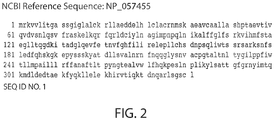
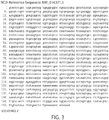
- the enzyme 3-ketosteroid reductase is encoded by the HSD17 ⁇ 7 gene, and functions as a 3-ketosteroid reductase in the biosynthesis of cholesterol ( Marijanovic et al., Mol Endocrinol. 2003 Sep;17(9):1715-25 ). See FIG. 2 (SEQ ID No.1) and FIG. 3 (SEQ ID No.2) respectively, for NCBI reference amino acid (NP_057455) and mRNA sequence (NM_016371.3).
- glutamine synthetase encoded by the glutamine synthetase gene catalyzes the synthesis of glutamine from glutamate and ammonia ( Eisenberg et al., Biochimica et Biophysica Acta, 2000, Vol 1477, 122-145 ).
- FIG. 4 SEQ ID No.3
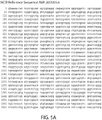
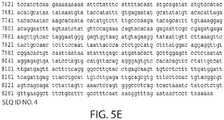
- FIG. 5 SEQ ID No.4 respectively, for NCBI reference amino acid NP_002056.2 and mRNA sequence NM_002065.6.
- DHFR Dihydrofolate Reductase
- the enzyme DHFR is encoded by the DHFR gene, and converts dihydrofolate into tetrahydrofolate, a methyl group shuttle required for the de novo synthesis of purines, thymidylic acid, and certain amino acids.
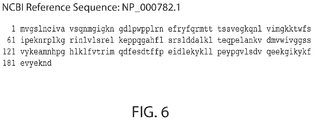
- Several alternatively spliced transcript variants have been found for this gene. See FIG. 6 (SEQ ID No.5) and FIG. 7 (SEQ ID No.6) respectively, for NCBI reference amino acid (NP_000782.1) and mRNA sequence (NM_000791.3).
- Antibiotic resistance genes are commonly used positive selection markers used in mammalian cell culture (see e.g., Antibody Expression and Production, Editor Mohamed Al-Rubeai, Springer Netherlands, Springer Science Business Media B.V., ISBN 978-94-007-1256-0 ; Cell Line Development, Mohamed Al-Rubeai August 11, 2009Springer Science & Business Media ).
- Exemplary antibiotic resistance genes include but are not limited to genes conferring resistance to neomycin resistance gene, blasticidin, hygromyocin, puromycin, zeocin, mycophenolic acid. Suitable antibiotic resistance genes and corresponding inhibitors for use in cell selection would be known to one of skill in the art.
- Hygromycin B is an aminoglycoside antibiotic produced by Streptomyces hygroscopicus. Hygromycin B inhibits protein synthesis. It has been reported to interfere with translocation and to cause mistranslation at the 70S ribosome. The hph gene. Zeocin® Zeocin® is a copper-chelated glycopeptide antibiotic produced by Streptomyces CL990. ZeocinTM causes cell death by intercalating into DNA and cleaving it. The Sh ble gene.
- Blasticidin Blasticidin is a peptidyl nucleoside antibiotic isolated from Streptomyces griseochromogenes that inhibits protein synthesis by interfering with the peptide-bond formation in the ribosomal machinery.
- the blasticidin resistance gene from Bacillus cereus (bsr), which codes for blasticidin-S deaminase.
- Puromycin Puromycin is an aminonucleoside antibiotic produced by Streptomyces alboniger. It specifically inhibits peptidyl transfer on both prokaryotic and eukaryotic ribosomes.
- the Pac gene encoding a puromycin N-acetyl-transferase (PAC) that was found in a Streptomyces producer strain.
- PAC puromycin N-acetyl-transferase
- Geneticin G418 is an aminoglycoside antibiotic similar in structure to gentamicin B1, produced by Micromonospora rhodorangea. G418 blocks polypeptide synthesis by inhibiting the elongation step in both prokaryotic and eukaryotic cells.
- the Neomycin resistance gene (neo) from Tn5 encoding an aminoglycoside 3'-phosphotransferase, APH 3' II.
- Phleomycin Phleomycin is a glycopeptide antibiotic of the bleomycin family, isolated from a mutant strain of Streptomyces verticillus. It binds and intercalates DNA thus destroying the integrity of the double helix.
- the Sh ble gene from Streptoalloteichus hindustanus which encodes a protein that binds to phleomycin, inhibiting its DNA cleavage activity.
- the therapeutic proteins for use in the invention can be produced from a host cell.
- a host cell refers to a vehicle that includes the necessary cellular components, e.g., organelles, needed to express the polypeptides and constructs described herein from their corresponding nucleic acids.
- the nucleic acids may be included in nucleic acid vectors that can be introduced into the host cell by conventional techniques known in the art (e.g., transformation, transfection, electroporation, calcium phosphate precipitation, direct microinjection, infection, etc).
- the choice of nucleic acid vectors depends in part on the host cells to be used. Generally, preferred host cells are of either prokaryotic (e.g., bacterial) or eukaryotic (e.g., mammalian) origin.
- a nucleic acid sequence encoding the amino acid sequence of a therapeutic protein for use in the invention may be prepared by a variety of methods known in the art. These methods include, but are not limited to, oligonucleotide-mediated (or site-directed) mutagenesis and PCR mutagenesis.
- a nucleic acid molecule encoding a therapeutic protein for use in the invention may be obtained using standard techniques, e.g., gene synthesis.
- a nucleic acid molecule encoding a wild-type therapeutic protein may be mutated to contain specific amino acid substitutions using standard techniques in the art, e.g., QuikChangeTM mutagenesis.
- Nucleic acid molecules can be synthesized using a nucleotide synthesizer or PCR techniques.
- Nucleic acid sequences encoding a therapeutic protein for use in the invention may be inserted into a vector capable of replicating and expressing the nucleic acid molecules in prokaryotic or eukaryotic host cells.
- Many vectors are available in the art and can be used for the purpose of the invention.
- Each vector may contain various components that may be adjusted and optimized for compatibility with the particular host cell.
- the vector components may include, but are not limited to, an origin of replication, a selection marker gene, a promoter, a ribosome binding site, a signal sequence, the nucleic acid sequence encoding protein of interest, and a transcription termination sequence.
- vectors for use in the invention include: a vector comprising a weak promoter for a selection gene (e.g., 3-ketosteroid reductase and glutamine synthetase) and a strong promoter for the gene encoding the protein of interest (e.g., an antibody, e.g., heavy and light chain of an antibody).
- a strong promoter for the gene encoding the protein of interest e.g., an antibody, e.g., heavy and light chain of an antibody.
- Vectors can be linearized or supercoiled exhibiting improved transfection efficiency.
- codon optimization of the vector is employed to minimize the use of rare codons in the coding sequence and improve protein production yields.
- Exemplary vectors for use in the invention are described in Wurm (2004) Nature Biotechnology, Vol 22; Issue 11: 1393-1398 ).
- mammalian cells are used as host cells.
- the glutamine-auxotrophic and cholesterol-auxotrophic phenotype can be induced by genetic manipulation of a non-glutamine-auxotrophic and non-cholesterol -auxotrophic cell, including for example mutation or deletion of a gene necessary for endogenous glutamine biosynthesis, such as glutamine synthetase.
- Common methods of genetic engineering are well known to those of skill in the art, e.g., site directed mutagenesis, zinc finger nucleases, shRNA, transposons, See e.g., Cytotechnology. 2007 Apr; 53(1-3): 65-73 .
- NSO The murine myeloma cells termed NSO are known glutamine-auxotrophic and cholesterol-auxotrophic cells (See e.g., Barnes et al. Cytotechnology. 2000. Advances in animal cell recombinant protein production: GS-NS0 expression system Feb;32(2):109-23 ; and US 2010/0028940 .
- mammalian cell types which may be manipulated to be used as host cells include, but are not limited to, human embryonic kidney (HEK) (e.g., HEK293, HEK 293F), Chinese hamster ovary (CHO), HeLa, COS, PC3, Vero, MC3T3, NS0, VERY, BHK, MDCK, W138, BT483, Hs578T, HTB2, BT20, T47D), CRL7030, and HsS78Bst cells.
- HEK human embryonic kidney
- CHO Chinese hamster ovary
- HeLa HeLa
- COS Chinese hamster ovary
- PC3, Vero Chinese hamster ovary
- MC3T3, NS0 VERY, BHK, MDCK, W138, BT483, Hs578T, HTB2, BT20, T47D
- CRL7030 CRL7030
- HsS78Bst cells HsS78Bst cells.
- E. coli ⁇ 1776 ATCC® 31,537, E . coli BL21 (DE3) (ATCC® BAA-1025), and E. coli RV308 (ATCC® 31,608).
- Different host cells have characteristic and specific mechanisms for the posttranslational processing and modification of protein products. Appropriate cell lines or host systems may be chosen to ensure the correct modification and processing of the therapeutic protein expressed.
- the above-described expression vectors may be introduced into appropriate host cells using conventional techniques in the art, e.g., transformation, transfection, electroporation, calcium phosphate precipitation, and direct microinjection.
- host cells are cultured in conventional nutrient media modified as appropriate for inducing promoters, selecting transformants, or amplifying the genes encoding the desired sequences.
- Methods for expression of therapeutic proteins are known in the art, see, for example, Paulina Balbas, Argelia Lorence (eds.) Recombinant Gene Expression: Reviews and Protocols (Methods in Molecular Biology), Humana Press; 2nd ed. 2004 (July 20, 2004 ) and Vladimir Voynov and Justin A. Caravella (eds.) Therapeutic Proteins: Methods and Protocols (Methods in Molecular Biology) Humana Press; 2nd ed. 2012 (June 28, 2012 ).
- Host cells used to produce a therapeutic protein for use in the invention may be grown in media known in the art and suitable for culturing of the selected host cells.
- suitable media for mammalian host cells include Minimal Essential Medium (MEM), Dulbecco's Modified Eagle's Medium (DMEM), Expi293TM Expression Medium, DMEM with supplemented fetal bovine serum (FBS), and RPMI-1640.
- suitable media for bacterial host cells include Luria broth (LB) plus necessary supplements, such as a selection agent, e.g., ampicillin.
- Host cells are cultured at suitable temperatures, such as from about 20 °C to about 39 °C, e.g., from 25 °C to about 37 °C, preferably 37 °C, and CO 2 levels, such as 5 to 10% (preferably 8%).
- the pH of the medium is generally from about 6.8 to 7.4, e.g., 7.0, depending mainly on the host organism. If an inducible promoter is used in the expression vector of the invention, protein expression is induced under conditions suitable for the activation of the promoter.
- Conventional cell culture conditions for production of a therapeutic protein are known in the art, e.g., see Butler, Cell Culture and Upstream Processing, Taylor & Francis; 1st edition (May 25, 2007 ).
- Protein recovery typically involves disrupting the host cell, generally by such means as osmotic shock, sonication, or lysis. Once the cells are disrupted, cell debris may be removed by centrifugation or filtration. The proteins may be further purified.
- An antibody for use in the invention may be purified by any method known in the art of protein purification, for example, by protein A affinity, other chromatography (e.g., ion exchange, affinity, and size-exclusion column chromatography), centrifugation, differential solubility, or by any other standard technique for the purification of proteins. (see Process Scale Purification of Antibodies, Uwe Gottschalk (ed.) John Wiley & Sons, Inc., 2009 ).
- a therapeutic protein can be conjugated to marker sequences, such as a peptide to facilitate purification.
- marker sequences such as a peptide to facilitate purification.
- An example of a marker amino acid sequence is a hexa-histidine peptide (His-tag), which binds to nickel-functionalized agarose affinity column with micromolar affinity.
- His-tag hexa-histidine peptide
- Other peptide tags useful for purification include, but are not limited to, the hemagglutinin "HA" tag, which corresponds to an epitope derived from the influenza hemagglutinin protein.
- the method of the invention can be used to manufacture pharmaceutical compositions that include one or more therapeutic protein described herein.
- the pharmaceutical compositions may contain one or more pharmaceutically acceptable carriers or excipients, which can be formulated by methods known to those skilled in the art.
- Acceptable carriers and excipients in the pharmaceutical compositions are nontoxic to recipients at the dosages and concentrations employed. Acceptable carriers and excipients may include buffers, antioxidants, preservatives, polymers, amino acids, and carbohydrates.
- Pharmaceutical compositions can be administered parenterally in the form of an injectable formulation.
- Pharmaceutical compositions for injection i.e., intravenous injection
- Pharmaceutically acceptable vehicles include, but are not limited to, sterile water, physiological saline, and cell culture media (e.g., Dulbecco's Modified Eagle Medium (DMEM), ⁇ -Modified Eagles Medium (a-MEM), F-12 medium).
- DMEM Dulbecco's Modified Eagle Medium
- a-MEM ⁇ -Modified Eagles Medium
- F-12 medium e.g., Banga (ed.) Therapeutic Peptides and Proteins: Formulation, Processing and Delivery Systems (2nd ed.) Taylor & Francis Group, CRC Press (2006 ).
- the pharmaceutical composition may be formed in a unit dose form as needed.
- the amount of active component, e.g., one or more therapeutic protein of the invention included in the pharmaceutical preparations is such that a suitable dose within the designated range is provided (e.g., a dose within the range of 0.01-500 mg/kg of body weight).
- Therapeutic proteins which may be made by the methods described herein include any recombinant therapeutic protein of interest or biosimilar thereof, including but limited to, antibodies (e.g., monoclonal antibodies, bispecific antibodies, multispecific antibodies), fusion proteins (e.g., Fc fusion), anticoagulants, blood factors, bone morphogenetic proteins, engineered protein scaffolds, enzymes, growth factors, hormones, hormone releasing factors, interferons, interleukins, and thrombolytics. Therapeutic proteins include both glycosylated (e.g., proteins having at least one oligosaccharide chain) and non-glycosylated proteins.
- Exemplary monoclonal antibodies include, but are not limited to adalimumab, infiliximab, palivizumab, cetuximab, natalizumab, eculizumab, ustekinumab, golimumab, ofatumab, canakinumab, belimumab, alirocumab, mepolizumab, necitumumab, nivolumab, dinutuximab, secukinumab, evolocumab, blinatumomab, pembrolizumab, ramucirumab, vedolizumab, siltuximab, obinutuzumab, trastuzumab, raxibacumab, pertuzumab, brentuximab, ipilimumab, denosumab, tocilizumab, ofatumumab, canakinumab, certolizumab
- Exemplary fusion proteins include, but are not limited to alefacept, entanercept, abatacept, belatacept, aflibercept, ziv-aflibercept, rilonacept, romiplostim, apocept, trebananib, blisibimod, and dulaglutide.
- the following Example describes methods of manufacturing therapeutic proteins, such as antibodies, comprising expression of the therapeutic protein of interest in a cholesterol-auxotrophic and glutamine-auxotrophic cell.
- the method desirably allows for increased amplification and copy number of the gene of interest, and production in the absence of cholesterol, which is highly insoluble in aqueous solutions and very challenging to work with.
- the exemplary method is further outlined in FIG. 1 .
- Glutamine-auxotrophic and cholesterol-auxotrophic cells are transfected with a first vector comprising a nucleic acid encoding a 3-ketosteroid reductase (3-KSR).
- a first vector comprising a nucleic acid encoding a 3-ketosteroid reductase (3-KSR).
- the cells are maintained in cholesterol-free culture media to select for cells which express the first vector, thereby producing a 3-KSR expressing glutamine-auxotrophic culture of cells.
- These cells are simultaneously or subsequently transfected with a second vector comprising a nucleic acid encoding a glutamine synthetase (GS) and the protein of interest, e.g., the heavy and light chain of a therapeutic antibody.
- GS glutamine synthetase
- the cells are maintained in glutamine-free cell culture media to select for cells which express the second vector.
- the cell culture media during and/or after the second transfection is supplemented with a glutamine synthetase inhibitor such as methionine sulfoximine (MSX).
- MSX methionine sulfoximine
- the following example describes a trypan blue assay to determine cell viability as a proxy for cells that exhibit adequate survival and growth.
- the following Example describes methods of manufacturing therapeutic proteins, such as antibodies, comprising expression of the therapeutic protein of interest in a cholesterol- and glutamine-auxotrophic cell with an additional third selection mechanism, e.g., neomycin resistance gene (e.g., using G418 for selection).
- the method desirably allows for increased amplification and copy number of the gene of interest, and production in the absence of cholesterol, which is highly insoluble in aqueous solutions and very challenging to work with, while overcoming the unexpected manufacturing challenges associated with the 3-KSR cell culture selection system, including for example low productivity.
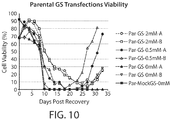
- NSO cell selection was first optimized using both a single neomycin selection ( FIG. 9 ) and a single GS selection ( FIG. 10 ) .
- neomycin optimization cells were transfected according to standard practice with a nucleic acid vector encoding a neomycin resistance gene. Neomycin was then added to the cell culture media at either (100 ⁇ g/ml or 200 ⁇ g/ml) for selection. Cell viability was measured at the denoted days post recovery.
- GS based selection cells were transfected with a nucleic acid vector encoding GS and maintained in glutamine-fee cell culture media. Cell viability was measured at the denoted days post recovery.
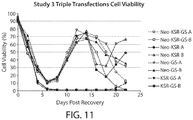
- a 3-KSR based triple selection method was optimized using neomycin, 3-KSR, and GS selection to overcome the unexpectedly low productivity associated with 3-KSR selection ( FIG. 8 ) .
- Cells were transfected according to standard practice with one or more nucleic acid vector encoding 3-KSR, GS, and neomycin resistance gene. For selection, cells were maintained in the absence of glutamine and cholesterol and in the presence of neomycin. As shown in FIG. 11 , the triple selection maintained ample cell viability post recovery.
Landscapes
- Chemical & Material Sciences (AREA)
- Organic Chemistry (AREA)
- Life Sciences & Earth Sciences (AREA)
- Health & Medical Sciences (AREA)
- Engineering & Computer Science (AREA)
- Wood Science & Technology (AREA)
- Zoology (AREA)
- General Health & Medical Sciences (AREA)
- Genetics & Genomics (AREA)
- Biochemistry (AREA)
- Bioinformatics & Cheminformatics (AREA)
- General Engineering & Computer Science (AREA)
- Molecular Biology (AREA)
- Chemical Kinetics & Catalysis (AREA)
- General Chemical & Material Sciences (AREA)
- Proteomics, Peptides & Aminoacids (AREA)
- Biotechnology (AREA)
- Microbiology (AREA)
- Medicinal Chemistry (AREA)
- Biophysics (AREA)
- Immunology (AREA)
- Pharmacology & Pharmacy (AREA)
- Hematology (AREA)
- Obesity (AREA)
- Nuclear Medicine, Radiotherapy & Molecular Imaging (AREA)
- Diabetes (AREA)
- Animal Behavior & Ethology (AREA)
- Public Health (AREA)
- Veterinary Medicine (AREA)
- Micro-Organisms Or Cultivation Processes Thereof (AREA)
- Preparation Of Compounds By Using Micro-Organisms (AREA)
- Enzymes And Modification Thereof (AREA)
- Peptides Or Proteins (AREA)
- Medicines Containing Antibodies Or Antigens For Use As Internal Diagnostic Agents (AREA)
Description
- The production of therapeutic proteins using mammalian cell expression systems is of growing importance within the biotechnology industry. Various culture and transfection systems have been described, but each has significant limitations.
-
US 2010/0028940 refers to methods for using selection marker vectors to generate stable gene expression systems. Disclosed are i.a. methods comprising transfecting cells that are auxotrophic for cholesterol with a vector encoding 3-ketosteroid reductase (KSR). -
US 2012/0231500 refers to transient expression of heterologous polypeptides in mammalian cell lines. The cell line may comprise a nucleic acid encoding Epstein-Barr virusnuclear antigen 1, and a nucleic acid encoding an exogenous glutamine synthetase. - An Abstract of a dissertation by D. Sampey, Development, characterization and optimization of a novel mammalian protein expression system is retrievable from https://rum.lib.umd.edu/handle/1903/19298; the oral defence was in December 2016.
- The invention described herein is based, in part, on the discovery that the combination of cholesterol-auxotrophic and glutamine-auxotrophic cells with additional selection markers can be exploited in methods of manufacturing therapeutic proteins, to avoid unexpected manufacturing complications associated with cholesterol-auxotrophic cells (e.g., low productivity). The invention, as claimed, refers to a method of manufacturing a therapeutic protein, comprising: transfecting a cholesterol-auxotrophic and glutamine-auxotrophic cell with (i) a nucleic acid encoding a protein that restores cholesterol biosynthesis in the cell; (ii) a nucleic acid encoding a protein that restores glutamine biosynthesis in the cell; (iii) a nucleic acid comprising an aminoglycoside antibiotic resistance gene; and (iv) a nucleic acid encoding the therapeutic protein.
- In one embodiment, the cell is an NSO cell.
- In some embodiments, the therapeutic protein is an antibody. In some embodiments, the therapeutic protein is a fusion protein. In some embodiments, the therapeutic protein is an Fc-containing fusion protein.
- In some embodiments, in the transfecting step the cell is transfected with nucleic acids (iii) encoding an antibody light chain and an antibody heavy chain. In some embodiments, nucleic acid (i) encodes a 3-ketosteroid reductase. In some embodiments, the nucleic acid (ii) encodes a glutamine synthetase.
- In some embodiments, a first expression vector comprises nucleic acids (i) and (iv), and a second expression vector comprises nucleic acids (ii). In some embodiments, a first expression vector comprises nucleic acid (i), and a second expression vector comprises nucleic acids (ii) and (iii). In some embodiments, transfection of the first expression vector is performed prior to transfection of the second expression vector. In some embodiments, transfection of the first expression vector is performed simultaneously with transfection of the second expression vector.
- In some embodiments, the cell is cultured (e.g., after transfection of nucleic acid (i)) in the absence of exogenously introduced cholesterol. In some embodiments, the cell is cultured (e.g., after transfection of nucleic acid (ii)) in the absence of exogenously introduced glutamine. In some embodiments, the cell is cultured (e.g., during and/or after transfection of nucleic acid (ii)) in the presence of a glutamine synthetase inhibitor (e.g., methionine sulfoximine). In some embodiments, the cell is cultured (e.g., during and/or after transfection of nucleic acid (i)) in the presence of a 3-ketosteriod reductase inhibitor.
- In some embodiments, the cell is cultured in absence of exogenously introduced cholesterol and in the absence of exogenously introduced glutamine. In some embodiments, the cell is cultured in absence of exogenously introduced cholesterol, in the absence of exogenously introduced glutamine, and in the presence of a glutamine synthetase inhibitor (e.g., methionine sulfoximine). In some embodiments, the cell is cultured (e.g., after transfection of nucleic acid (i)) in the absence of exogenously introduced cholesterol and the cell is cultured (e.g., after transfection of nucleic acid (ii)) in the absence of exogenously introduced glutamine.
- In some embodiments, the nucleic acid (ii) encodes a glutamine synthetase, a dihydrofolate reductase (DHFR), or one or more antibiotic resistance gene (e.g., neomycin, blasticidin, hygromyocin, puromycin, zeocin, mycophenolic acid).
- In some embodiments, a first expression vector comprises nucleic acids (i) and (iv), and a second expression vector comprises nucleic acids (ii). In some embodiments, a first expression vector comprises nucleic acid (i), and a second expression vector comprises nucleic acids (ii) and (iv). In some embodiments, transfection of the first expression vector is performed prior to transfection of the second expression vector. In some embodiments, transfection of the first expression vector is performed simultaneously with transfection of the second expression vector.
- In some embodiments, the cell is cultured (e.g., after transfection of nucleic acid (i)) in the absence of exogenously introduced cholesterol. In some embodiments, the cell is cultured (e.g., during and/or after transfection of nucleic acid (i)) in the presence of a 3-ketosteriod reductase inhibitor. In some embodiments, the cell is cultured in absence of exogenously introduced cholesterol.
- In some embodiments, the nucleic acid (ii) encodes the neomycin resistance gene from Tn5 encoding an aminoglycoside 3'-phosphotransferase (APH 3' II).
- In some embodiments, both the first and second expression vector contain HC and LC, one vector contains KSR and the other vector contains GS or another antibiotic resistant gene. In some embodiments, there are three separate vectors (e.g., for triple selection), wherein all three vectors contains HC and LC; a first vector contains KSR, a second vector contains GS, and a third vector contains any antibiotic resistant gene, e.g. NEO.
- In some embodiments, the cell is cultured (e.g., after transfection of nucleic acid (i)) in the absence of exogenously introduced cholesterol. In some embodiments, the cell is cultured (e.g., during and/or after transfection of nucleic acid (ii)) in the presence of an aminoglycoside antibiotic (e.g., G418). In some embodiments, the cell is cultured (e.g., during and/or after transfection of nucleic acid (i)) in the presence of a 3-ketosteriod reductase inhibitor.
- In some embodiments, the cell is cultured in absence of exogenously introduced cholesterol. In some embodiments, the cell is cultured in absence of exogenously introduced cholesterol and in the presence of an aminoglycoside antibiotic (e.g., G418).
- In some embodiments, the nucleic acid (ii) encodes the blasticidin resistance gene from Bacillus cereus (which codes for blasticidin-S deaminase).
- In some embodiments, the cell is cultured in absence of exogenously introduced cholesterol and in the presence of a peptidyl nucleoside antibiotic an aminoglycoside antibiotic (e.g., blasticidin).
- In some embodiments, the nucleic acid (ii) encodes a hygromycin B phosphotransferase.
- In some embodiments, the cell is cultured (e.g., after transfection of nucleic acid (i)) in the absence of exogenously introduced cholesterol. In some embodiments, the cell is cultured (e.g., during and/or after transfection of nucleic acid (ii)) in the presence of an aminoglycoside antibiotic (e.g., hygromycin B). In some embodiments, the cell is cultured (e.g., during and/or after transfection of nucleic acid (i)) in the presence of a 3-ketosteriod reductase inhibitor.
- In some embodiments, the cell is cultured in absence of exogenously introduced cholesterol and in the presence of a peptidyl nucleoside antibiotic an aminoglycoside antibiotic (e.g., hygromycin B).
- In some embodiments, the nucleic acid (ii) encodes a puromycin N-acetyl-transferase.
- In some embodiments, the cell is cultured (e.g., during and/or after transfection of nucleic acid (ii)) in the presence of an aminonucleoside antibiotic (e.g., puromycin). In some embodiments, the cell is cultured (e.g., during and/or after transfection of nucleic acid (i)) in the presence of a 3-ketosteriod reductase inhibitor.
- In some embodiments, the cell is cultured in absence of exogenously introduced cholesterol and in the presence of a peptidyl nucleoside antibiotic an aminonucleoside antibiotic (e.g., puromycin).
- In some embodiments, the nucleic acid (ii) encodes a Sh ble gene product.
- In some embodiments, the cell is cultured (e.g., during and/or after transfection of nucleic acid (ii)) in the presence of a copper-chelated glycopeptide antibiotic (e.g., zeocin).
- In some embodiments, the nucleic acid (ii) encodes the xanthine-guanine phosphoribosyltransferase (Ecogpt) gene.
- In some embodiments, the cell is cultured (e.g., during and/or after transfection of nucleic acid (ii)) in the presence of MPA.
- In some embodiments, the nucleic acid (ii) encodes the xanthine-guanine phosphoribosyltransferase (Ecogpt) gene .
- The invention features method of manufacturing a therapeutic protein, the method comprising: culturing a cholesterol-auxotrophic and glutamine-auxotrophic cell; transfecting the cell with (i) a nucleic acid encoding a protein which is capable of restoring cholesterol biosynthesis in the cell (e.g., KSR); (ii) a nucleic acid encoding a protein which is capable of restoring glutamine biosynthesis in the cell (e.g., glutathione synthetase); (iii) a nucleic comprising an aminoglycoside antibiotic resistance gene encoding a protein which is capable of providing resistance to G418 (e.g., neomycin resistance gene); and (iv) a nucleic acid encoding the therapeutic protein (e.g., an antibody, e.g., a heavy chain and light chain); culturing the cell under conditions suitable for expression of the therapeutic protein; and isolating and/or purifying the therapeutic protein.
- In some embodiments, nucleic acid (iii) is transfected first and during and/post transfection G418 is added to the cell culture media. In some embodiments, nucleic acid (iii) is transfected first and during and/or post transfection G418 is added to the cell culture media; and nucleic acid (ii) is transfected second and during and/or post transfection cholesterol is absent from the cell culture media. In some embodiments, nucleic acid (iii) is transfected first and during and/or post transfection G418 is added to the cell culture media; and nucleic acid (ii) is transfected second and during and/or post transfection cholesterol is absent from the cell culture media (e.g., exogenously added cholesterol); and nucleic acid (i) is transfected third and during/post transfection glutamine is absent from the cell culture medium (e.g., exogenously added glutamine) (optionally methionine sulphoximine (MSX) is added to the cell culture media).
- In some embodiments, nucleic acid (ii) and (i) are transfected simultaneously, wherein G418 is added to the cell culture media and the cell culture media does not contain cholesterol (e.g., exogenously added cholesterol). In some embodiments, nucleic acids (i), (ii), (iii), and (iv) are transfected simultaneously, wherein the G418 is added to the cell culture media and the cell culture media does not contain cholesterol (e.g., exogenously added cholesterol) and does not contain glutamine (e.g., exogenously added glutamine) (optionally methionine sulphoximine (MSX) is added to the cell culture media). In some embodiments, nucleic acid (iv) is incorporated in the same nucleic acid sequence (e.g., vector) as each of (i), (ii), and (iii). In some embodiments, nucleic acid (iv) is incorporated in the same nucleic acid sequence (e.g., vector) as each of (i) and (ii); (i) and (iii); or (ii) and (iii). In some embodiments, nucleic acid (iv) encodes the heavy and light chain of a therapeutic antibody. In some embodiments, the light chain is incorporated in the same nucleic acid sequence (e.g., vector) as each of (i) and (ii); (i) and (iii); (ii) and (iii); or (i), (ii), and (iii). In some embodiments, the heavy chain is incorporated in the same nucleic acid sequence (e.g., vector) as each of (i) and (ii); (i) and (iii); (ii) and (iii); or (i), (ii), and (iii). In some embodiments, the light chain and heavy chain is incorporated in the same nucleic acid sequence (e.g., vector) as each of (i) and (ii); (i) and (iii); (ii) and (iii); or (i), (ii), and (iii).
- In some embodiments, any of nucleic acids (i), (ii), (iii), and (iv) are incorporated into a single nucleic acid (e.g., single vector). For example, in some embodiments, nucleic acids (i) and (ii); (i) and (iii); (i) and (iv); (i), (ii), and (iii); (i), (ii), (iii), and (iv); (ii) and (iii); or (ii) and (iv); (iii) and (iv); are incorporated on a single nucleic acid. In some embodiments, nucleic acid (iv) comprises two separate nucleic acids, one encoding a heavy chain and one encoding a light chain of a therapeutic antibody. In some embodiments the heavy chain is incorporated onto another nucleic acid, e.g., (i), (ii), or (iii). In some embodiments the light chain is incorporated onto another nucleic acid, e.g., (i), (ii), or (iii).
- In one embodiment, the cell is an NSO cell.
- In some embodiments, the therapeutic protein is an antibody. In some embodiments, the therapeutic protein is a fusion protein. In some embodiments, the therapeutic protein is an Fc-containing fusion protein.
- In some embodiments, in the transfecting step the cell is transfected with nucleic acids (iv) encoding an antibody light chain and an antibody heavy chain. In some embodiments, nucleic acid (i) encodes a 3-ketosteroid reductase. In some embodiments, the nucleic acid (ii) encodes a glutamine synthetase. In some embodiments, the nucleic acid (iii) encodes neomycin resistance gene.
- In some embodiments, a first expression vector comprises nucleic acid (i) and (iv), and a second expression vector comprises nucleic acids (ii). In some embodiments, a first expression vector comprises nucleic acid (i), and a second expression vector comprises nucleic acids (ii) and (iv). In some embodiments, transfection of the first expression vector is performed prior to transfection of the second expression vector. In some embodiments, transfection of the first expression vector is performed simultaneously with transfection of the second expression vector.
- In some embodiments, the cell is cultured (e.g., after transfection of nucleic acid (i)) in the absence of exogenously introduced cholesterol. In some embodiments, the cell is cultured (e.g., after transfection of nucleic acid (ii)) in the absence of exogenously introduced glutamine. In some embodiments, the cell is cultured (e.g., during and/or after transfection of nucleic acid (ii)) in the presence of a glutamine synthetase inhibitor (e.g., methionine sulfoximine). In some embodiments, the cell is cultured (e.g., during and/or after transfection of nucleic acid (i)) in the presence of a 3-ketosteriod reductase inhibitor.
- In some embodiments, the cell is cultured in absence of exogenously introduced cholesterol and in the absence of exogenously introduced glutamine. In some embodiments, the cell is cultured in absence of exogenously introduced cholesterol, in the absence of exogenously introduced glutamine, and in the presence of a glutamine synthetase inhibitor (e.g., methionine sulfoximine). In some embodiments, the cell is cultured (e.g., after transfection of nucleic acid (i)) in the absence of exogenously introduced cholesterol and the cell is cultured (e.g., after transfection of nucleic acid (ii)) in the absence of exogenously introduced glutamine.
-
-
FIG. 1 depicts an exemplary protocol of the methods described herein. -
FIG. 2 depicts the NCBI reference amino acid sequence of 3-ketosteroid reductase (NP_057455) (SEQ ID No. 1). -
FIG. 3 depicts the NCBI reference mRNA sequence of HSD17β7 (NM_016371.3) (SEQ ID No. 2). -
FIG. 4 depicts the NCBI reference amino acid sequence of glutamine synthetase (NP_002056.2) (SEQ ID No. 3). -
FIG. 5A-E depicts the NCBI reference mRNA sequence of glutamine synthetase (NM_002065.6) (SEQ ID No. 4). -
FIG. 6 depicts the NCBI reference amino acid sequence of dihydrofolate reductase (DHFR) (NP_000782.1) (SEQ ID No. 5). -
FIG. 7A-B depicts the NCBI reference mRNA sequence of DHFR (NM_000791.3) (SEQ ID No. 6). -
FIG. 8 depicts the stability of proteins produced using the 3-KSR cell culture system.FIG. 8 lists the final protein titer in the supernatant of 3-KSR cells for 10 different 3-KSR cell clones. Four clones (3-261, 3-330, 3-351, 3-497) demonstrated high protein titer. However, as further shown inFIG. 8 3-KSR clone 3-351, demonstrated a decline in cell specific productivity. -
FIG. 9 is a line graph depicting cell selection using Neo (100 µg/ml or 200 µg/ml G418). The graph depicts the cell viability versus days post recovery. -
FIG. 10 is a line graph depicting cell selection using glutathione synthetase (GS) (reduce glutamine concentration from 2 mM to 0 mM or from 0.5 mM to 0 mM respectively). The graph depicts the cell viability versus days post recovery. -
FIG. 11 is a line graph depicting cell selection using 3-KSR, neo, and GS as a triple selection. The graph depicts the cell viability versus days post recovery. Resistance to G418 can be conferred by neo gene. The concentration of G418 in NSO is 100 µg/ml and 200 ug/ml; reduce glutamine concentration from 2 mM to 0 mM, or from 0.5 mM to 0 mM. An MSX inhibitor may also be used to inhibit the GS activity. - In certain recombinant protein production systems, such as NSO host cell systems, cholesterol-auxotrophy is exploited by incorporating a 3-ketosteroid reductase (3-KSR) gene into the vector encoding the therapeutic protein, and recombinant cells selected for by removing cholesterol from the culture media (
US 2010/0028940 ). However, the inventors of the present disclosure unexpectedly found that this system can suffer from low productivity (e.g., protein product per cell per day) and low protein titers due to the difficulty of amplification in this cell line (see e.g.,FIG. 8 ). In other NSO host cell systems, glutamine-auxotrophy is exploited by incorporating a glutamine synthetase (GS) gene into the vector encoding the therapeutic protein, and transfected cells are selected for by removing glutamine from the culture media. In addition, a GS inhibitor can be added to the culture media to drive selection towards the incorporation multiple copies of the GS gene and therefore the gene encoding the protein of interest (Barnes et al. Cytotechnology. 2000. Advances in animal cell recombinant protein production: GS-NS0 expression system Feb; 32(2): 109-23). Each system has different limitations. Described herein are alternate methods of manufacturing therapeutic products in, e.g., an NSO host cell system. - A "glutamine-auxotrophic" cell as used herein is defined as a cell which does not synthesize any glutamine or does not synthesize enough glutamine to be capable of survival and growth in glutamine-free cell culture medium.
- A "cholesterol-auxotrophic" cell as used herein is defined as a cell which does not synthesize any cholesterol or does not synthesize enough cholesterol to be capable of survival and growth in cholesterol-free cell culture medium.
- "Restoring glutamine biosynthesis" as used herein means increasing the level of glutamine biosynthesis in a cell (from the level in a glutamine-auxotrophic cell), to at least a level which enables the cell to survive and grow in glutamine-free cell culture medium.
- "Restoring cholesterol biosynthesis" as used herein means increasing the level of cholesterol biosynthesis in a cell (from the level in a cholesterol-auxotrophic cell), to at least a level which enables the cell to survive and grow in cholesterol-free cell culture medium.
- "Survive and grow" or "survival and growth" as used herein refers to the ability of a cell or culture of cells to maintain greater than 60% cell viability during log phase growth as measured by trypan blue exclusion.
- The enzyme 3-ketosteroid reductase is encoded by the HSD17β7 gene, and functions as a 3-ketosteroid reductase in the biosynthesis of cholesterol (Marijanovic et al., Mol Endocrinol. 2003 Sep;17(9):1715-25). See
FIG. 2 (SEQ ID No.1) andFIG. 3 (SEQ ID No.2) respectively, for NCBI reference amino acid (NP_057455) and mRNA sequence (NM_016371.3). - The enzyme glutamine synthetase encoded by the glutamine synthetase gene catalyzes the synthesis of glutamine from glutamate and ammonia (Eisenberg et al., Biochimica et Biophysica Acta, 2000, Vol 1477, 122-145). Several alternatively spliced transcript variants have been found for this gene. See
FIG. 4 (SEQ ID No.3) andFIG. 5 (SEQ ID No.4) respectively, for NCBI reference amino acid NP_002056.2 and mRNA sequence NM_002065.6. - The enzyme DHFR is encoded by the DHFR gene, and converts dihydrofolate into tetrahydrofolate, a methyl group shuttle required for the de novo synthesis of purines, thymidylic acid, and certain amino acids. Several alternatively spliced transcript variants have been found for this gene. See
FIG. 6 (SEQ ID No.5) andFIG. 7 (SEQ ID No.6) respectively, for NCBI reference amino acid (NP_000782.1) and mRNA sequence (NM_000791.3). - Antibiotic resistance genes are commonly used positive selection markers used in mammalian cell culture (see e.g., Antibody Expression and Production, Editor Mohamed Al-Rubeai, Springer Netherlands, Springer Science Business Media B.V., ISBN 978-94-007-1256-0; Cell Line Development, Mohamed Al-Rubeai August 11, 2009Springer Science & Business Media). Exemplary antibiotic resistance genes include but are not limited to genes conferring resistance to neomycin resistance gene, blasticidin, hygromyocin, puromycin, zeocin, mycophenolic acid. Suitable antibiotic resistance genes and corresponding inhibitors for use in cell selection would be known to one of skill in the art.
- In the method of the invention, an aminoglycoside antibiotic resistance gene is used.
Table 1. Exemplary Antibiotic Selection Markers Antibiotic Mechanism of Action Resistance Gene Hygromycin B Hygromycin B is an aminoglycoside antibiotic produced by Streptomyces hygroscopicus. Hygromycin B inhibits protein synthesis. It has been reported to interfere with translocation and to cause mistranslation at the 70S ribosome. The hph gene. Zeocin® Zeocin® is a copper-chelated glycopeptide antibiotic produced by Streptomyces CL990. Zeocin™ causes cell death by intercalating into DNA and cleaving it. The Sh ble gene. Blasticidin Blasticidin is a peptidyl nucleoside antibiotic isolated from Streptomyces griseochromogenes that inhibits protein synthesis by interfering with the peptide-bond formation in the ribosomal machinery. The blasticidin resistance gene from Bacillus cereus (bsr), which codes for blasticidin-S deaminase. Puromycin Puromycin is an aminonucleoside antibiotic produced by Streptomyces alboniger. It specifically inhibits peptidyl transfer on both prokaryotic and eukaryotic ribosomes. The Pac gene encoding a puromycin N-acetyl-transferase (PAC) that was found in a Streptomyces producer strain. Geneticin G418 (Geneticin) is an aminoglycoside antibiotic similar in structure to gentamicin B1, produced by Micromonospora rhodorangea. G418 blocks polypeptide synthesis by inhibiting the elongation step in both prokaryotic and eukaryotic cells. The Neomycin resistance gene (neo) from Tn5 encoding an aminoglycoside 3'-phosphotransferase, APH 3' II. Phleomycin Phleomycin is a glycopeptide antibiotic of the bleomycin family, isolated from a mutant strain of Streptomyces verticillus. It binds and intercalates DNA thus destroying the integrity of the double helix. The Sh ble gene from Streptoalloteichus hindustanus which encodes a protein that binds to phleomycin, inhibiting its DNA cleavage activity. - The therapeutic proteins for use in the invention can be produced from a host cell. A host cell refers to a vehicle that includes the necessary cellular components, e.g., organelles, needed to express the polypeptides and constructs described herein from their corresponding nucleic acids. The nucleic acids may be included in nucleic acid vectors that can be introduced into the host cell by conventional techniques known in the art (e.g., transformation, transfection, electroporation, calcium phosphate precipitation, direct microinjection, infection, etc). The choice of nucleic acid vectors depends in part on the host cells to be used. Generally, preferred host cells are of either prokaryotic (e.g., bacterial) or eukaryotic (e.g., mammalian) origin.
- A nucleic acid sequence encoding the amino acid sequence of a therapeutic protein for use in the invention may be prepared by a variety of methods known in the art. These methods include, but are not limited to, oligonucleotide-mediated (or site-directed) mutagenesis and PCR mutagenesis. A nucleic acid molecule encoding a therapeutic protein for use in the invention may be obtained using standard techniques, e.g., gene synthesis. Alternatively, a nucleic acid molecule encoding a wild-type therapeutic protein may be mutated to contain specific amino acid substitutions using standard techniques in the art, e.g., QuikChange™ mutagenesis. Nucleic acid molecules can be synthesized using a nucleotide synthesizer or PCR techniques.
- Nucleic acid sequences encoding a therapeutic protein for use in the invention may be inserted into a vector capable of replicating and expressing the nucleic acid molecules in prokaryotic or eukaryotic host cells. Many vectors are available in the art and can be used for the purpose of the invention. Each vector may contain various components that may be adjusted and optimized for compatibility with the particular host cell. For example, the vector components may include, but are not limited to, an origin of replication, a selection marker gene, a promoter, a ribosome binding site, a signal sequence, the nucleic acid sequence encoding protein of interest, and a transcription termination sequence.
- In one example, vectors for use in the invention include: a vector comprising a weak promoter for a selection gene (e.g., 3-ketosteroid reductase and glutamine synthetase) and a strong promoter for the gene encoding the protein of interest (e.g., an antibody, e.g., heavy and light chain of an antibody). Vectors can be linearized or supercoiled exhibiting improved transfection efficiency. In some embodiments, codon optimization of the vector is employed to minimize the use of rare codons in the coding sequence and improve protein production yields. Exemplary vectors for use in the invention are described in Wurm (2004) Nature Biotechnology, ).
- In some embodiments, mammalian cells are used as host cells. The glutamine-auxotrophic and cholesterol-auxotrophic phenotype can be induced by genetic manipulation of a non-glutamine-auxotrophic and non-cholesterol -auxotrophic cell, including for example mutation or deletion of a gene necessary for endogenous glutamine biosynthesis, such as glutamine synthetase. Common methods of genetic engineering are well known to those of skill in the art, e.g., site directed mutagenesis, zinc finger nucleases, shRNA, transposons, See e.g., Cytotechnology. 2007 Apr; 53(1-3): 65-73. The murine myeloma cells termed NSO are known glutamine-auxotrophic and cholesterol-auxotrophic cells (See e.g., Barnes et al. Cytotechnology. 2000. Advances in animal cell recombinant protein production: GS-NS0 expression system Feb;32(2):109-23; and
US 2010/0028940 . - Additional examples of mammalian cell types which may be manipulated to be used as host cells include, but are not limited to, human embryonic kidney (HEK) (e.g., HEK293, HEK 293F), Chinese hamster ovary (CHO), HeLa, COS, PC3, Vero, MC3T3, NS0, VERY, BHK, MDCK, W138, BT483, Hs578T, HTB2, BT20, T47D), CRL7030, and HsS78Bst cells. In other embodiments, E. coli cells are used as host cells for the invention. Examples of E. coli strains include, but are not limited to, E. coli 294 (ATCC® 31,446), E. coli λ 1776 (ATCC® 31,537, E. coli BL21 (DE3) (ATCC® BAA-1025), and E. coli RV308 (ATCC® 31,608). Different host cells have characteristic and specific mechanisms for the posttranslational processing and modification of protein products. Appropriate cell lines or host systems may be chosen to ensure the correct modification and processing of the therapeutic protein expressed. The above-described expression vectors may be introduced into appropriate host cells using conventional techniques in the art, e.g., transformation, transfection, electroporation, calcium phosphate precipitation, and direct microinjection. Once the vectors are introduced into host cells for protein production, host cells are cultured in conventional nutrient media modified as appropriate for inducing promoters, selecting transformants, or amplifying the genes encoding the desired sequences. Methods for expression of therapeutic proteins are known in the art, see, for example, Paulina Balbas, Argelia Lorence (eds.) Recombinant Gene Expression: Reviews and Protocols (Methods in Molecular Biology), Humana Press; 2nd ed. 2004 (July 20, 2004) and Vladimir Voynov and Justin A. Caravella (eds.) Therapeutic Proteins: Methods and Protocols (Methods in Molecular Biology) Humana Press; 2nd ed. 2012 (June 28, 2012).
- Host cells used to produce a therapeutic protein for use in the invention may be grown in media known in the art and suitable for culturing of the selected host cells. Examples of suitable media for mammalian host cells include Minimal Essential Medium (MEM), Dulbecco's Modified Eagle's Medium (DMEM), Expi293™ Expression Medium, DMEM with supplemented fetal bovine serum (FBS), and RPMI-1640. Examples of suitable media for bacterial host cells include Luria broth (LB) plus necessary supplements, such as a selection agent, e.g., ampicillin. Host cells are cultured at suitable temperatures, such as from about 20 °C to about 39 °C, e.g., from 25 °C to about 37 °C, preferably 37 °C, and CO2 levels, such as 5 to 10% (preferably 8%). The pH of the medium is generally from about 6.8 to 7.4, e.g., 7.0, depending mainly on the host organism. If an inducible promoter is used in the expression vector of the invention, protein expression is induced under conditions suitable for the activation of the promoter. Conventional cell culture conditions for production of a therapeutic protein are known in the art, e.g., see Butler, Cell Culture and Upstream Processing, Taylor & Francis; 1st edition (May 25, 2007).
- Protein recovery typically involves disrupting the host cell, generally by such means as osmotic shock, sonication, or lysis. Once the cells are disrupted, cell debris may be removed by centrifugation or filtration. The proteins may be further purified. An antibody for use in the invention may be purified by any method known in the art of protein purification, for example, by protein A affinity, other chromatography (e.g., ion exchange, affinity, and size-exclusion column chromatography), centrifugation, differential solubility, or by any other standard technique for the purification of proteins. (see Process Scale Purification of Antibodies, Uwe Gottschalk (ed.) John Wiley & Sons, Inc., 2009). In some instances, a therapeutic protein can be conjugated to marker sequences, such as a peptide to facilitate purification. An example of a marker amino acid sequence is a hexa-histidine peptide (His-tag), which binds to nickel-functionalized agarose affinity column with micromolar affinity. Other peptide tags useful for purification include, but are not limited to, the hemagglutinin "HA" tag, which corresponds to an epitope derived from the influenza hemagglutinin protein.
- The method of the invention can be used to manufacture pharmaceutical compositions that include one or more therapeutic protein described herein. In addition to a therapeutically effective amount of the therapeutic protein, the pharmaceutical compositions may contain one or more pharmaceutically acceptable carriers or excipients, which can be formulated by methods known to those skilled in the art.
- Acceptable carriers and excipients in the pharmaceutical compositions are nontoxic to recipients at the dosages and concentrations employed. Acceptable carriers and excipients may include buffers, antioxidants, preservatives, polymers, amino acids, and carbohydrates. Pharmaceutical compositions can be administered parenterally in the form of an injectable formulation. Pharmaceutical compositions for injection (i.e., intravenous injection) can be formulated using a sterile solution or any pharmaceutically acceptable liquid as a vehicle. Pharmaceutically acceptable vehicles include, but are not limited to, sterile water, physiological saline, and cell culture media (e.g., Dulbecco's Modified Eagle Medium (DMEM), α-Modified Eagles Medium (a-MEM), F-12 medium). Formulation methods are known in the art, see e.g., Banga (ed.) Therapeutic Peptides and Proteins: Formulation, Processing and Delivery Systems (2nd ed.) Taylor & Francis Group, CRC Press (2006).
- The pharmaceutical composition may be formed in a unit dose form as needed. The amount of active component, e.g., one or more therapeutic protein of the invention included in the pharmaceutical preparations is such that a suitable dose within the designated range is provided (e.g., a dose within the range of 0.01-500 mg/kg of body weight).
- Therapeutic proteins which may be made by the methods described herein include any recombinant therapeutic protein of interest or biosimilar thereof, including but limited to, antibodies (e.g., monoclonal antibodies, bispecific antibodies, multispecific antibodies), fusion proteins (e.g., Fc fusion), anticoagulants, blood factors, bone morphogenetic proteins, engineered protein scaffolds, enzymes, growth factors, hormones, hormone releasing factors, interferons, interleukins, and thrombolytics. Therapeutic proteins include both glycosylated (e.g., proteins having at least one oligosaccharide chain) and non-glycosylated proteins.
- Exemplary monoclonal antibodies include, but are not limited to adalimumab, infiliximab, palivizumab, cetuximab, natalizumab, eculizumab, ustekinumab, golimumab, ofatumab, canakinumab, belimumab, alirocumab, mepolizumab, necitumumab, nivolumab, dinutuximab, secukinumab, evolocumab, blinatumomab, pembrolizumab, ramucirumab, vedolizumab, siltuximab, obinutuzumab, trastuzumab, raxibacumab, pertuzumab, brentuximab, ipilimumab, denosumab, tocilizumab, ofatumumab, canakinumab, certolizumab, catumaxomab, ranibizumab, panitumumab, bevacizumab, cetuximab, efalizumab, omalizumab, tositumomab, ibritumomab, alemtuzumab, gemtuzumab, basiliximab, daclizumab, rituximab, and abciximab.
- Exemplary fusion proteins include, but are not limited to alefacept, entanercept, abatacept, belatacept, aflibercept, ziv-aflibercept, rilonacept, romiplostim, apocept, trebananib, blisibimod, and dulaglutide.
- The following Example describes methods of manufacturing therapeutic proteins, such as antibodies, comprising expression of the therapeutic protein of interest in a cholesterol-auxotrophic and glutamine-auxotrophic cell. The method desirably allows for increased amplification and copy number of the gene of interest, and production in the absence of cholesterol, which is highly insoluble in aqueous solutions and very challenging to work with. The exemplary method is further outlined in
FIG. 1 . - Glutamine-auxotrophic and cholesterol-auxotrophic cells, such as NSO cells, are transfected with a first vector comprising a nucleic acid encoding a 3-ketosteroid reductase (3-KSR). During and post this first transfection, the cells are maintained in cholesterol-free culture media to select for cells which express the first vector, thereby producing a 3-KSR expressing glutamine-auxotrophic culture of cells. These cells are simultaneously or subsequently transfected with a second vector comprising a nucleic acid encoding a glutamine synthetase (GS) and the protein of interest, e.g., the heavy and light chain of a therapeutic antibody. During and post this second transfection, the cells are maintained in glutamine-free cell culture media to select for cells which express the second vector. To further select for cells which have incorporated multiple copies of the second vector, the cell culture media during and/or after the second transfection is supplemented with a glutamine synthetase inhibitor such as methionine sulfoximine (MSX). The final 3-KSR-GS antibody producing cells can be maintained in a cholesterol-free medium, avoiding cholesterol associated manufacturing problems, and display a high level of productivity derived from the MSX selection.
- The following example describes a trypan blue assay to determine cell viability as a proxy for cells that exhibit adequate survival and growth.
- Prepare a 0.4% solution of trypan blue in buffered isotonic salt solution, pH 7.2 to 7.3 (i.e., phosphate-buffered saline). Add 0.1 mL of trypan blue stock solution to 1 mL of cells. Load a hemocytometer and examine immediately under a microscope at low magnification. Count the number of blue staining cells and the number of total cells. Cell viability is calculated as the number of viable cells divided by the total number of cells within the grids on the hemocytometer. If cells take up trypan blue, they are considered non-viable. Cell viability is at least 90% for healthy log-phase cultures.

- The cell density of the cell line suspension can be determined using a hemocytometer. To calculate the number of viable cells per mL of culture, the following formula is used, correcting for the dilution factor: Number of viable cells × 10E4 × 1.1 = cells/mL culture.
- The following Example describes methods of manufacturing therapeutic proteins, such as antibodies, comprising expression of the therapeutic protein of interest in a cholesterol- and glutamine-auxotrophic cell with an additional third selection mechanism, e.g., neomycin resistance gene (e.g., using G418 for selection). The method desirably allows for increased amplification and copy number of the gene of interest, and production in the absence of cholesterol, which is highly insoluble in aqueous solutions and very challenging to work with, while overcoming the unexpected manufacturing challenges associated with the 3-KSR cell culture selection system, including for example low productivity.
- NSO cell selection was first optimized using both a single neomycin selection (
FIG. 9 ) and a single GS selection (FIG. 10 ). For neomycin optimization, cells were transfected according to standard practice with a nucleic acid vector encoding a neomycin resistance gene. Neomycin was then added to the cell culture media at either (100µg/ml or 200µg/ml) for selection. Cell viability was measured at the denoted days post recovery. For GS based selection, cells were transfected with a nucleic acid vector encoding GS and maintained in glutamine-fee cell culture media. Cell viability was measured at the denoted days post recovery. A 3-KSR based triple selection method was optimized using neomycin, 3-KSR, and GS selection to overcome the unexpectedly low productivity associated with 3-KSR selection (FIG. 8 ). Cells were transfected according to standard practice with one or more nucleic acid vector encoding 3-KSR, GS, and neomycin resistance gene. For selection, cells were maintained in the absence of glutamine and cholesterol and in the presence of neomycin. As shown inFIG. 11 , the triple selection maintained ample cell viability post recovery. -
- <110> MOMENTA PHARMACEUTICALS, INC.
BIOFACTURA, INC. - <120> METHODS OF MANUFACTURING THERAPEUTIC PROTEINS
- <130> P104127EP51
- <140>
EP 16 787 029.4
<141> 2016-04-27 - <150>
US 62/153,178
<151> 2015-04-27 - <160> 7
- <170> PatentIn version 3.5
- <210> 1
<211> 341
<212> PRT
<213> Homo sapiens - <400> 1


- <210> 2
<211> 1537
<212> DNA
<213> Homo sapiens - <400> 2


- <210> 3
<211> 373
<212> PRT
<213> Homo sapiens - <400> 3


- <210> 4
<211> 8337
<212> DNA
<213> Homo sapiens - <400> 4


- <210> 5
<211> 187
<212> PRT
<213> Homo sapiens - <400> 5


- <210> 6
<211> 3932
<212> DNA
<213> Homo sapiens - <400> 6


- <210> 7
<211> 6
<212> PRT
<213> Artificial Sequence - <220>
<223> Description of Artificial Sequence: Synthetic 6xHis tag - <400> 7

Claims (15)
- A method of manufacturing a therapeutic protein, comprising: transfecting a cholesterol-auxotrophic and glutamine-auxotrophic cell with (i) a nucleic acid encoding a protein that restores cholesterol biosynthesis in the cell; (ii) a nucleic acid encoding a protein that restores glutamine biosynthesis in the cell; (iii) a nucleic acid comprising an aminoglycoside antibiotic resistance gene; and (iv) a nucleic acid encoding the therapeutic protein.
- The method of claim 1, comprising transfecting the cholesterol-auxotrophic and glutamine-auxotrophic cell with at least one of a first, second, and a third vector, wherein the first vector comprises the nucleic acid encoding a protein that restores cholesterol biosynthesis; the second vector comprises the nucleic acid encoding a protein that restores glutamine biosynthesis and the nucleic acid encoding the therapeutic protein; and the third vector comprises the nucleic acid comprising the aminoglycoside antibiotic resistance gene.
- The method of claim 1 or 2, further comprising culturing the cholesterol-auxotrophic and glutamine-auxotrophic cell in the absence of exogenously added cholesterol during or after the transfecting with the nucleic acid encoding the protein that restores cholesterol biosynthesis.
- The method of any one of claims 1-3, further comprising culturing the cholesterol-auxotrophic and glutamine-auxotrophic cell in the absence of exogenously added glutamine during or after the transfecting with the nucleic acid encoding a protein that restores glutamine biosynthesis.
- The method of any one of claims 1-4, further comprising culturing the cholesterol-auxotrophic and glutamine-auxotrophic cell by reducing the glutamine concentration from 2 mM to 0 mM or from 0.5 mM to 0 mM after the transfecting with the nucleic acid encoding a protein that restores glutamine biosynthesis.
- The method of claim 1, further comprising culturing the cholesterol-auxotrophic and glutamine-auxotrophic cell in the presence of a 3-ketosteroid reductase inhibitor during or after transfecting with the nucleic acid encoding a protein that restores cholesterol biosynthesis.
- The method of claim 1, further comprising culturing the cholesterol-auxotrophic and glutamine-auxotrophic cell in the presence of a glutamine synthetase inhibitor during or after transfecting with the nucleic acid encoding a protein that restores glutamine biosynthesis.
- The method of any one of claims 1-7, further comprising culturing the cholesterol-auxotrophic and glutamine-auxotrophic cell in the presence of an aminoglycoside antibiotic during or after transfecting with the nucleic acid comprising the aminoglycoside antibiotic resistance gene.
- The method of claim 8, comprising culturing the cholesterol-auxotrophic and glutamine-auxotrophic cell in the presence of G418 at a concentration of 100 µ/ml or 200 µg/ml.
- The method of claim 1, wherein the aminoglycoside resistance gene comprises a neomycin resistance gene and the method comprises transfecting the cell with a nucleic acid that codes for the neomycin resistance gene.
- The method of claim 1, wherein the method further comprises recovering the therapeutic protein from the cell and measuring viability of the cell after said recovering.
- The method of claim 1, wherein the protein that restores cholesterol biosynthesis comprises 3-ketosteroid reductase and the method comprises transfecting the cholesterol-auxotrophic and glutamine-auxotrophic cell with a nucleic acid encoding 3-ketosteroid reductase.
- The method of claim 1, wherein the protein capable of restoring glutamine biosynthesis comprises glutamine synthetase and the method comprises transfecting the cell with a nucleic acid encoding glutamine synthetase.
- The method of any one of claims 1-12, wherein the therapeutic protein comprises an antibody, a fusion protein, an anticoagulant, a blood factor, a bone morphogenic protein, an engineered protein scaffold, an enzyme, a growth factor, a hormone, a hormone releasing factor, an interleukin, or a thrombolytic protein and the method comprises transfecting the cell with a nucleic acid encoding an antibody, a fusion protein, an anticoagulant, a blood factor, a bone morphogenic protein, an engineered protein scaffold, an enzyme, a growth factor, a hormone, a hormone releasing factor, an interleukin, or a thrombolytic protein.
- The method of any one of claims 1-14, wherein the cholesterol-auxotrophic and glutamine-auxotrophic cell is an NSO cell.
Priority Applications (2)
| Application Number | Priority Date | Filing Date | Title |
|---|---|---|---|
| PL16787029T PL3289092T3 (en) | 2015-04-27 | 2016-04-27 | Method of manufacturing a therapeutic protein |
| EP19219090.8A EP3693469A1 (en) | 2015-04-27 | 2016-04-27 | Method of manufacturing a therapeutic protein |
Applications Claiming Priority (2)
| Application Number | Priority Date | Filing Date | Title |
|---|---|---|---|
| US201562153178P | 2015-04-27 | 2015-04-27 | |
| PCT/US2016/029472 WO2016176275A1 (en) | 2015-04-27 | 2016-04-27 | Methods of manufacturing therapeutic proteins |
Related Child Applications (2)
| Application Number | Title | Priority Date | Filing Date |
|---|---|---|---|
| EP19219090.8A Division EP3693469A1 (en) | 2015-04-27 | 2016-04-27 | Method of manufacturing a therapeutic protein |
| EP19219090.8A Division-Into EP3693469A1 (en) | 2015-04-27 | 2016-04-27 | Method of manufacturing a therapeutic protein |
Publications (3)
| Publication Number | Publication Date |
|---|---|
| EP3289092A1 EP3289092A1 (en) | 2018-03-07 |
| EP3289092A4 EP3289092A4 (en) | 2018-12-12 |
| EP3289092B1 true EP3289092B1 (en) | 2020-02-12 |
Family
ID=57199650
Family Applications (2)
| Application Number | Title | Priority Date | Filing Date |
|---|---|---|---|
| EP16787029.4A Active EP3289092B1 (en) | 2015-04-27 | 2016-04-27 | Method of manufacturing a therapeutic protein |
| EP19219090.8A Withdrawn EP3693469A1 (en) | 2015-04-27 | 2016-04-27 | Method of manufacturing a therapeutic protein |
Family Applications After (1)
| Application Number | Title | Priority Date | Filing Date |
|---|---|---|---|
| EP19219090.8A Withdrawn EP3693469A1 (en) | 2015-04-27 | 2016-04-27 | Method of manufacturing a therapeutic protein |
Country Status (8)
| Country | Link |
|---|---|
| US (2) | US10774353B2 (en) |
| EP (2) | EP3289092B1 (en) |
| JP (4) | JP2018518985A (en) |
| CN (2) | CN108138214B (en) |
| ES (1) | ES2789073T3 (en) |
| HU (1) | HUE050105T2 (en) |
| PL (1) | PL3289092T3 (en) |
| WO (1) | WO2016176275A1 (en) |
Families Citing this family (2)
| Publication number | Priority date | Publication date | Assignee | Title |
|---|---|---|---|---|
| EP3289092B1 (en) | 2015-04-27 | 2020-02-12 | Momenta Pharmaceuticals, Inc. | Method of manufacturing a therapeutic protein |
| WO2020243642A2 (en) * | 2019-05-31 | 2020-12-03 | The Trustees Of Columbia University In The City Of New York | Multiply auxotrophic cell line for the production of recombinant proteins and methods thereof |
Family Cites Families (11)
| Publication number | Priority date | Publication date | Assignee | Title |
|---|---|---|---|---|
| CN101016543A (en) * | 2000-11-17 | 2007-08-15 | 罗切斯特大学 | In vitro methods of producing and identifying immunoglobulin molecules in eukaryotic cells |
| GB0123098D0 (en) * | 2001-09-26 | 2001-11-14 | Lonza Biologics Plc | Use of aminoglycoside resistance gene |
| US8030071B2 (en) * | 2005-03-11 | 2011-10-04 | Gargi Seth | Restoration of cholesterol independence and its use as a selectable marker in NS0 cell culture |
| CN101193918B (en) * | 2005-05-18 | 2016-11-23 | 拜奥法克图拉公司 | Compositions and methods for metabolic selection of transfected cells |
| WO2008031873A1 (en) * | 2006-09-15 | 2008-03-20 | Boehringer Ingelheim Pharma Gmbh & Co. Kg | Methods of selecting cell clones |
| ES2695999T3 (en) * | 2007-10-12 | 2019-01-11 | Hoffmann La Roche | Expression of proteins from multiple nucleic acids |
| EP2146210A1 (en) * | 2008-04-07 | 2010-01-20 | Arena Pharmaceuticals, Inc. | Methods of using A G protein-coupled receptor to identify peptide YY (PYY) secretagogues and compounds useful in the treatment of conditions modulated by PYY |
| ES2699718T3 (en) | 2009-09-15 | 2019-02-12 | Medlmmune Ltd | Cells for transient expression and uses thereof |
| US20150150982A1 (en) * | 2012-06-12 | 2015-06-04 | Boehringer Ingelheim International Gmbh | Pharmaceutical formulation for a therapeutic antibody |
| EP2711428A1 (en) | 2012-09-21 | 2014-03-26 | Lonza Biologics plc. | Site-specific integration |
| EP3289092B1 (en) | 2015-04-27 | 2020-02-12 | Momenta Pharmaceuticals, Inc. | Method of manufacturing a therapeutic protein |
-
2016
- 2016-04-27 EP EP16787029.4A patent/EP3289092B1/en active Active
- 2016-04-27 US US15/570,178 patent/US10774353B2/en active Active
- 2016-04-27 JP JP2018508614A patent/JP2018518985A/en active Pending
- 2016-04-27 HU HUE16787029A patent/HUE050105T2/en unknown
- 2016-04-27 EP EP19219090.8A patent/EP3693469A1/en not_active Withdrawn
- 2016-04-27 CN CN201680037233.6A patent/CN108138214B/en active Active
- 2016-04-27 CN CN202111104665.3A patent/CN113981027A/en active Pending
- 2016-04-27 ES ES16787029T patent/ES2789073T3/en active Active
- 2016-04-27 PL PL16787029T patent/PL3289092T3/en unknown
- 2016-04-27 WO PCT/US2016/029472 patent/WO2016176275A1/en not_active Ceased
-
2020
- 2020-07-01 US US16/918,423 patent/US20210102230A1/en not_active Abandoned
-
2021
- 2021-05-21 JP JP2021085859A patent/JP2021137015A/en active Pending
-
2023
- 2023-06-21 JP JP2023101801A patent/JP2023112080A/en active Pending
-
2025
- 2025-05-07 JP JP2025077330A patent/JP2025105975A/en active Pending
Non-Patent Citations (1)
| Title |
|---|
| None * |
Also Published As
| Publication number | Publication date |
|---|---|
| ES2789073T3 (en) | 2020-10-23 |
| EP3289092A4 (en) | 2018-12-12 |
| EP3693469A1 (en) | 2020-08-12 |
| CN108138214B (en) | 2021-09-21 |
| JP2018518985A (en) | 2018-07-19 |
| EP3289092A1 (en) | 2018-03-07 |
| JP2025105975A (en) | 2025-07-10 |
| CN108138214A (en) | 2018-06-08 |
| PL3289092T3 (en) | 2020-07-13 |
| CN113981027A (en) | 2022-01-28 |
| WO2016176275A1 (en) | 2016-11-03 |
| US10774353B2 (en) | 2020-09-15 |
| US20210102230A1 (en) | 2021-04-08 |
| JP2021137015A (en) | 2021-09-16 |
| JP2023112080A (en) | 2023-08-10 |
| HUE050105T2 (en) | 2020-11-30 |
| US20180135090A1 (en) | 2018-05-17 |
| HK1256714A1 (en) | 2019-10-04 |
Similar Documents
| Publication | Publication Date | Title |
|---|---|---|
| JP7344949B2 (en) | Direct selection of cells expressing high levels of heteromeric proteins using glutamine synthetase intragenic complementation vectors | |
| EP2311962B1 (en) | Multigenic vectors plasmids and methods for increasing expression of recombinant polypeptides | |
| EP1137808B1 (en) | Methods for making recombinant cells | |
| CN112313336B (en) | A method for optimizing antibody expression | |
| US9657310B2 (en) | Expression vector | |
| JP6576924B2 (en) | Novel selection vectors and methods for selecting eukaryotic host cells | |
| JP2025105975A (en) | Methods for producing therapeutic proteins | |
| WO2012077128A1 (en) | A novel cell line development process to produce recombinant proteins using twin vector expression system | |
| HK1256714B (en) | Methods of manufacturing therapeutic proteins | |
| RU2561466C2 (en) | Expression plasmid for human recombinant coagulation factor viii with deleted b-domain in cho cells, cho cell producing human recombinant coagulation factor viii with deleted b-domain, and method for producing above factor | |
| HK40068105A (en) | Methods of manufacturing therapeutic proteins | |
| RU2858871C1 (en) | Plasmids for expression of recombinant human glucagon-like peptide-1 receptor agonist fused to human immunoglobulin crystallisable fragment (dulaglutide), monoclonal mammalian cell line - dulaglutide producer, method for producing dulaglutide | |
| JP2018518985A5 (en) | ||
| CN118804978A (en) | Novel markers for recombinant production systems |
Legal Events
| Date | Code | Title | Description |
|---|---|---|---|
| STAA | Information on the status of an ep patent application or granted ep patent |
Free format text: STATUS: THE INTERNATIONAL PUBLICATION HAS BEEN MADE |
|
| PUAI | Public reference made under article 153(3) epc to a published international application that has entered the european phase |
Free format text: ORIGINAL CODE: 0009012 |
|
| STAA | Information on the status of an ep patent application or granted ep patent |
Free format text: STATUS: REQUEST FOR EXAMINATION WAS MADE |
|
| 17P | Request for examination filed |
Effective date: 20171127 |
|
| AK | Designated contracting states |
Kind code of ref document: A1 Designated state(s): AL AT BE BG CH CY CZ DE DK EE ES FI FR GB GR HR HU IE IS IT LI LT LU LV MC MK MT NL NO PL PT RO RS SE SI SK SM TR |
|
| AX | Request for extension of the european patent |
Extension state: BA ME |
|
| RAP1 | Party data changed (applicant data changed or rights of an application transferred) |
Owner name: BIOFACTURA INC. Owner name: MOMENTA PHARMACEUTICALS, INC. |
|
| DAV | Request for validation of the european patent (deleted) | ||
| DAX | Request for extension of the european patent (deleted) | ||
| A4 | Supplementary search report drawn up and despatched |
Effective date: 20181113 |
|
| RIC1 | Information provided on ipc code assigned before grant |
Ipc: C12P 21/08 20060101AFI20181105BHEP Ipc: C12N 15/00 20060101ALI20181105BHEP Ipc: C12Q 1/04 20060101ALI20181105BHEP |
|
| REG | Reference to a national code |
Ref country code: DE Ref legal event code: R079 Ref document number: 602016029652 Country of ref document: DE Free format text: PREVIOUS MAIN CLASS: C12P0021060000 Ipc: C12P0021020000 |
|
| RIC1 | Information provided on ipc code assigned before grant |
Ipc: C12Q 1/04 20060101ALI20190627BHEP Ipc: C12P 21/02 20060101AFI20190627BHEP Ipc: C12P 21/08 20060101ALI20190627BHEP Ipc: C12N 15/00 20060101ALI20190627BHEP |
|
| GRAP | Despatch of communication of intention to grant a patent |
Free format text: ORIGINAL CODE: EPIDOSNIGR1 |
|
| STAA | Information on the status of an ep patent application or granted ep patent |
Free format text: STATUS: GRANT OF PATENT IS INTENDED |
|
| INTG | Intention to grant announced |
Effective date: 20190822 |
|
| GRAS | Grant fee paid |
Free format text: ORIGINAL CODE: EPIDOSNIGR3 |
|
| GRAA | (expected) grant |
Free format text: ORIGINAL CODE: 0009210 |
|
| STAA | Information on the status of an ep patent application or granted ep patent |
Free format text: STATUS: THE PATENT HAS BEEN GRANTED |
|
| REG | Reference to a national code |
Ref country code: DE Ref legal event code: R081 Ref document number: 602016029652 Country of ref document: DE Owner name: MOMENTA PHARMACEUTICALS, INC., CAMBRIDGE, US Free format text: FORMER OWNER: MOMENTA PHARMACEUTICALS, INC., CAMBRIDGE, MASS., US Ref country code: DE Ref legal event code: R081 Ref document number: 602016029652 Country of ref document: DE Owner name: BIOFACTURA INC., FREDERICK, US Free format text: FORMER OWNER: MOMENTA PHARMACEUTICALS, INC., CAMBRIDGE, MASS., US |
|
| AK | Designated contracting states |
Kind code of ref document: B1 Designated state(s): AL AT BE BG CH CY CZ DE DK EE ES FI FR GB GR HR HU IE IS IT LI LT LU LV MC MK MT NL NO PL PT RO RS SE SI SK SM TR |
|
| REG | Reference to a national code |
Ref country code: GB Ref legal event code: FG4D |
|
| REG | Reference to a national code |
Ref country code: CH Ref legal event code: EP |
|
| REG | Reference to a national code |
Ref country code: AT Ref legal event code: REF Ref document number: 1232164 Country of ref document: AT Kind code of ref document: T Effective date: 20200215 |
|
| REG | Reference to a national code |
Ref country code: DE Ref legal event code: R096 Ref document number: 602016029652 Country of ref document: DE |
|
| REG | Reference to a national code |
Ref country code: IE Ref legal event code: FG4D |
|
| REG | Reference to a national code |
Ref country code: NL Ref legal event code: FP |
|
| PG25 | Lapsed in a contracting state [announced via postgrant information from national office to epo] |
Ref country code: NO Free format text: LAPSE BECAUSE OF FAILURE TO SUBMIT A TRANSLATION OF THE DESCRIPTION OR TO PAY THE FEE WITHIN THE PRESCRIBED TIME-LIMIT Effective date: 20200512 Ref country code: FI Free format text: LAPSE BECAUSE OF FAILURE TO SUBMIT A TRANSLATION OF THE DESCRIPTION OR TO PAY THE FEE WITHIN THE PRESCRIBED TIME-LIMIT Effective date: 20200212 Ref country code: RS Free format text: LAPSE BECAUSE OF FAILURE TO SUBMIT A TRANSLATION OF THE DESCRIPTION OR TO PAY THE FEE WITHIN THE PRESCRIBED TIME-LIMIT Effective date: 20200212 |
|
| REG | Reference to a national code |
Ref country code: LT Ref legal event code: MG4D |
|
| PG25 | Lapsed in a contracting state [announced via postgrant information from national office to epo] |
Ref country code: HR Free format text: LAPSE BECAUSE OF FAILURE TO SUBMIT A TRANSLATION OF THE DESCRIPTION OR TO PAY THE FEE WITHIN THE PRESCRIBED TIME-LIMIT Effective date: 20200212 Ref country code: BG Free format text: LAPSE BECAUSE OF FAILURE TO SUBMIT A TRANSLATION OF THE DESCRIPTION OR TO PAY THE FEE WITHIN THE PRESCRIBED TIME-LIMIT Effective date: 20200512 Ref country code: LV Free format text: LAPSE BECAUSE OF FAILURE TO SUBMIT A TRANSLATION OF THE DESCRIPTION OR TO PAY THE FEE WITHIN THE PRESCRIBED TIME-LIMIT Effective date: 20200212 Ref country code: GR Free format text: LAPSE BECAUSE OF FAILURE TO SUBMIT A TRANSLATION OF THE DESCRIPTION OR TO PAY THE FEE WITHIN THE PRESCRIBED TIME-LIMIT Effective date: 20200513 Ref country code: IS Free format text: LAPSE BECAUSE OF FAILURE TO SUBMIT A TRANSLATION OF THE DESCRIPTION OR TO PAY THE FEE WITHIN THE PRESCRIBED TIME-LIMIT Effective date: 20200612 Ref country code: SE Free format text: LAPSE BECAUSE OF FAILURE TO SUBMIT A TRANSLATION OF THE DESCRIPTION OR TO PAY THE FEE WITHIN THE PRESCRIBED TIME-LIMIT Effective date: 20200212 |
|
| REG | Reference to a national code |
Ref country code: ES Ref legal event code: FG2A Ref document number: 2789073 Country of ref document: ES Kind code of ref document: T3 Effective date: 20201023 |
|
| PG25 | Lapsed in a contracting state [announced via postgrant information from national office to epo] |
Ref country code: CZ Free format text: LAPSE BECAUSE OF FAILURE TO SUBMIT A TRANSLATION OF THE DESCRIPTION OR TO PAY THE FEE WITHIN THE PRESCRIBED TIME-LIMIT Effective date: 20200212 Ref country code: RO Free format text: LAPSE BECAUSE OF FAILURE TO SUBMIT A TRANSLATION OF THE DESCRIPTION OR TO PAY THE FEE WITHIN THE PRESCRIBED TIME-LIMIT Effective date: 20200212 Ref country code: SK Free format text: LAPSE BECAUSE OF FAILURE TO SUBMIT A TRANSLATION OF THE DESCRIPTION OR TO PAY THE FEE WITHIN THE PRESCRIBED TIME-LIMIT Effective date: 20200212 Ref country code: PT Free format text: LAPSE BECAUSE OF FAILURE TO SUBMIT A TRANSLATION OF THE DESCRIPTION OR TO PAY THE FEE WITHIN THE PRESCRIBED TIME-LIMIT Effective date: 20200705 Ref country code: LT Free format text: LAPSE BECAUSE OF FAILURE TO SUBMIT A TRANSLATION OF THE DESCRIPTION OR TO PAY THE FEE WITHIN THE PRESCRIBED TIME-LIMIT Effective date: 20200212 Ref country code: EE Free format text: LAPSE BECAUSE OF FAILURE TO SUBMIT A TRANSLATION OF THE DESCRIPTION OR TO PAY THE FEE WITHIN THE PRESCRIBED TIME-LIMIT Effective date: 20200212 Ref country code: DK Free format text: LAPSE BECAUSE OF FAILURE TO SUBMIT A TRANSLATION OF THE DESCRIPTION OR TO PAY THE FEE WITHIN THE PRESCRIBED TIME-LIMIT Effective date: 20200212 Ref country code: SM Free format text: LAPSE BECAUSE OF FAILURE TO SUBMIT A TRANSLATION OF THE DESCRIPTION OR TO PAY THE FEE WITHIN THE PRESCRIBED TIME-LIMIT Effective date: 20200212 |
|
| REG | Reference to a national code |
Ref country code: DE Ref legal event code: R097 Ref document number: 602016029652 Country of ref document: DE |
|
| REG | Reference to a national code |
Ref country code: AT Ref legal event code: MK05 Ref document number: 1232164 Country of ref document: AT Kind code of ref document: T Effective date: 20200212 |
|
| PG25 | Lapsed in a contracting state [announced via postgrant information from national office to epo] |
Ref country code: MC Free format text: LAPSE BECAUSE OF FAILURE TO SUBMIT A TRANSLATION OF THE DESCRIPTION OR TO PAY THE FEE WITHIN THE PRESCRIBED TIME-LIMIT Effective date: 20200212 |
|
| REG | Reference to a national code |
Ref country code: HU Ref legal event code: AG4A Ref document number: E050105 Country of ref document: HU |
|
| PLBE | No opposition filed within time limit |
Free format text: ORIGINAL CODE: 0009261 |
|
| STAA | Information on the status of an ep patent application or granted ep patent |
Free format text: STATUS: NO OPPOSITION FILED WITHIN TIME LIMIT |
|
| 26N | No opposition filed |
Effective date: 20201113 |
|
| PG25 | Lapsed in a contracting state [announced via postgrant information from national office to epo] |
Ref country code: AT Free format text: LAPSE BECAUSE OF FAILURE TO SUBMIT A TRANSLATION OF THE DESCRIPTION OR TO PAY THE FEE WITHIN THE PRESCRIBED TIME-LIMIT Effective date: 20200212 Ref country code: LU Free format text: LAPSE BECAUSE OF NON-PAYMENT OF DUE FEES Effective date: 20200427 |
|
| PG25 | Lapsed in a contracting state [announced via postgrant information from national office to epo] |
Ref country code: SI Free format text: LAPSE BECAUSE OF FAILURE TO SUBMIT A TRANSLATION OF THE DESCRIPTION OR TO PAY THE FEE WITHIN THE PRESCRIBED TIME-LIMIT Effective date: 20200212 |
|
| PG25 | Lapsed in a contracting state [announced via postgrant information from national office to epo] |
Ref country code: TR Free format text: LAPSE BECAUSE OF FAILURE TO SUBMIT A TRANSLATION OF THE DESCRIPTION OR TO PAY THE FEE WITHIN THE PRESCRIBED TIME-LIMIT Effective date: 20200212 Ref country code: MT Free format text: LAPSE BECAUSE OF FAILURE TO SUBMIT A TRANSLATION OF THE DESCRIPTION OR TO PAY THE FEE WITHIN THE PRESCRIBED TIME-LIMIT Effective date: 20200212 Ref country code: CY Free format text: LAPSE BECAUSE OF FAILURE TO SUBMIT A TRANSLATION OF THE DESCRIPTION OR TO PAY THE FEE WITHIN THE PRESCRIBED TIME-LIMIT Effective date: 20200212 |
|
| PG25 | Lapsed in a contracting state [announced via postgrant information from national office to epo] |
Ref country code: MK Free format text: LAPSE BECAUSE OF FAILURE TO SUBMIT A TRANSLATION OF THE DESCRIPTION OR TO PAY THE FEE WITHIN THE PRESCRIBED TIME-LIMIT Effective date: 20200212 Ref country code: AL Free format text: LAPSE BECAUSE OF FAILURE TO SUBMIT A TRANSLATION OF THE DESCRIPTION OR TO PAY THE FEE WITHIN THE PRESCRIBED TIME-LIMIT Effective date: 20200212 |
|
| P01 | Opt-out of the competence of the unified patent court (upc) registered |
Effective date: 20230413 |
|
| P02 | Opt-out of the competence of the unified patent court (upc) changed |
Effective date: 20230413 |
|
| PGFP | Annual fee paid to national office [announced via postgrant information from national office to epo] |
Ref country code: PL Payment date: 20240301 Year of fee payment: 9 |
|
| PGFP | Annual fee paid to national office [announced via postgrant information from national office to epo] |
Ref country code: DE Payment date: 20250305 Year of fee payment: 10 |
|
| PGFP | Annual fee paid to national office [announced via postgrant information from national office to epo] |
Ref country code: ES Payment date: 20250509 Year of fee payment: 10 |
|
| PGFP | Annual fee paid to national office [announced via postgrant information from national office to epo] |
Ref country code: CH Payment date: 20250501 Year of fee payment: 10 |
|
| PGFP | Annual fee paid to national office [announced via postgrant information from national office to epo] |
Ref country code: HU Payment date: 20240703 Year of fee payment: 10 |
|
| PGFP | Annual fee paid to national office [announced via postgrant information from national office to epo] |
Ref country code: GB Payment date: 20260312 Year of fee payment: 11 |
|
| PGFP | Annual fee paid to national office [announced via postgrant information from national office to epo] |
Ref country code: IE Payment date: 20260310 Year of fee payment: 11 |
|
| PGFP | Annual fee paid to national office [announced via postgrant information from national office to epo] |
Ref country code: BE Payment date: 20260317 Year of fee payment: 11 Ref country code: IT Payment date: 20260320 Year of fee payment: 11 |
|
| PGFP | Annual fee paid to national office [announced via postgrant information from national office to epo] |
Ref country code: NL Payment date: 20260317 Year of fee payment: 11 |
|
| PGFP | Annual fee paid to national office [announced via postgrant information from national office to epo] |
Ref country code: FR Payment date: 20260309 Year of fee payment: 11 |
|
| REG | Reference to a national code |
Ref country code: CH Ref legal event code: U11 Free format text: ST27 STATUS EVENT CODE: U-0-0-U10-U11 (AS PROVIDED BY THE NATIONAL OFFICE) Effective date: 20260501 |