EP3288241A1 - Medium storing data conversion program, data conversion device, and data conversion method - Google Patents
Medium storing data conversion program, data conversion device, and data conversion method Download PDFInfo
- Publication number
- EP3288241A1 EP3288241A1 EP17174717.3A EP17174717A EP3288241A1 EP 3288241 A1 EP3288241 A1 EP 3288241A1 EP 17174717 A EP17174717 A EP 17174717A EP 3288241 A1 EP3288241 A1 EP 3288241A1
- Authority
- EP
- European Patent Office
- Prior art keywords
- data
- information
- predetermined number
- acquired
- computer
- Prior art date
- Legal status (The legal status is an assumption and is not a legal conclusion. Google has not performed a legal analysis and makes no representation as to the accuracy of the status listed.)
- Granted
Links
Images








Classifications
-
- H—ELECTRICITY
- H04—ELECTRIC COMMUNICATION TECHNIQUE
- H04W—WIRELESS COMMUNICATION NETWORKS
- H04W4/00—Services specially adapted for wireless communication networks; Facilities therefor
- H04W4/70—Services for machine-to-machine communication [M2M] or machine type communication [MTC]
-
- G—PHYSICS
- G06—COMPUTING OR CALCULATING; COUNTING
- G06F—ELECTRIC DIGITAL DATA PROCESSING
- G06F16/00—Information retrieval; Database structures therefor; File system structures therefor
-
- G—PHYSICS
- G06—COMPUTING OR CALCULATING; COUNTING
- G06F—ELECTRIC DIGITAL DATA PROCESSING
- G06F21/00—Security arrangements for protecting computers, components thereof, programs or data against unauthorised activity
- G06F21/60—Protecting data
- G06F21/606—Protecting data by securing the transmission between two devices or processes
-
- G—PHYSICS
- G06—COMPUTING OR CALCULATING; COUNTING
- G06F—ELECTRIC DIGITAL DATA PROCESSING
- G06F21/00—Security arrangements for protecting computers, components thereof, programs or data against unauthorised activity
- G06F21/60—Protecting data
- G06F21/62—Protecting access to data via a platform, e.g. using keys or access control rules
- G06F21/6218—Protecting access to data via a platform, e.g. using keys or access control rules to a system of files or objects, e.g. local or distributed file system or database
- G06F21/6245—Protecting personal data, e.g. for financial or medical purposes
-
- H—ELECTRICITY
- H04—ELECTRIC COMMUNICATION TECHNIQUE
- H04L—TRANSMISSION OF DIGITAL INFORMATION, e.g. TELEGRAPHIC COMMUNICATION
- H04L12/00—Data switching networks
- H04L12/28—Data switching networks characterised by path configuration, e.g. LAN [Local Area Networks] or WAN [Wide Area Networks]
- H04L12/40—Bus networks
-
- H—ELECTRICITY
- H04—ELECTRIC COMMUNICATION TECHNIQUE
- H04L—TRANSMISSION OF DIGITAL INFORMATION, e.g. TELEGRAPHIC COMMUNICATION
- H04L63/00—Network architectures or network communication protocols for network security
- H04L63/04—Network architectures or network communication protocols for network security for providing a confidential data exchange among entities communicating through data packet networks
- H04L63/0428—Network architectures or network communication protocols for network security for providing a confidential data exchange among entities communicating through data packet networks wherein the data content is protected, e.g. by encrypting or encapsulating the payload
-
- H—ELECTRICITY
- H04—ELECTRIC COMMUNICATION TECHNIQUE
- H04L—TRANSMISSION OF DIGITAL INFORMATION, e.g. TELEGRAPHIC COMMUNICATION
- H04L67/00—Network arrangements or protocols for supporting network services or applications
- H04L67/50—Network services
- H04L67/56—Provisioning of proxy services
- H04L67/565—Conversion or adaptation of application format or content
-
- H—ELECTRICITY
- H04—ELECTRIC COMMUNICATION TECHNIQUE
- H04L—TRANSMISSION OF DIGITAL INFORMATION, e.g. TELEGRAPHIC COMMUNICATION
- H04L49/00—Packet switching elements
- H04L49/90—Buffering arrangements
- H04L49/901—Buffering arrangements using storage descriptor, e.g. read or write pointers
Definitions
- the embodiment discussed herein is related to a medium storing a data conversion program, a data conversion device, and a data conversion method.
- a provider that provides users with services constructs and operates a job system (hereinafter referred to as information processing system as well) corresponding to applications in order to provide the users with various services.
- the provider constructs an information processing system functioning as the Internet of things (IoT) system in order to, for example, analyze various data in a data center (temperature, humidity, and the like in the data center).
- IoT Internet of things
- Such an information processing system includes, for example, a plurality of sensors (hereinafter referred to as sensor devices as well) that measure various data in the data center and a device (hereinafter referred to as information collection device as well) that collects and accumulates the data transmitted from the sensor devices.
- the information processing system as described above includes a device (hereinafter referred to as information analysis device as well) that acquires data accumulated in the information collection device and analyzes the acquired data.
- the sensor devices included in the information processing system encrypt data to be transmitted (the data encrypted by the sensor devices is hereinafter referred to as encrypted data as well) when the sensor devices transmit data to the information collection device.
- the information collection device included in the information processing system receives the encrypted data transmitted from the sensor devices, the information collection device decrypts the encrypted data and accumulates the decrypted data in a storing section. Consequently, the provider is capable of securing security of the data transmitted from the sensor devices to the information collection device (see, for example, Japanese Laid-open Patent Publication Nos. 2008-160520 , 2008-124824 , and 2000-138916 ).
- the sensor devices When the sensor devices encrypt data to be transmitted to the information collection device, for example, every time the sensor devices transmit the encrypted data to the information collection device, the sensor devices transmit information for decrypting the encrypted data (the information hereinafter simply referred to as keys as well). Specifically, for example, upon receipt of notification that the encrypted data are received, from the information collection device, the sensor devices transmit keys for decrypting the encrypted data received by the information collection device.
- a data conversion method performed by a computer is configured to cause the computer to; when the computer receives a plurality of data, acquire first information and second information from a storage, the first information designating any data among the plurality of data, the second information designating a predetermined number of data, data formats of which are collectively converted among the plurality of data; acquire, based on the acquired first information and the acquired second information, the predetermined number of conversion target data from the received plurality of data; extract each pieces of specific information embedded in each of the acquired predetermined number of conversion target data; and convert the data format of each of the respective predetermined number of conversion target data by using the extracted predetermined number of pieces of the specific information.
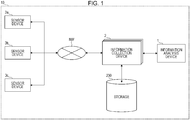
- FIG. 1 is a diagram illustrating configuration of an information processing system 10.
- the information processing system 10 illustrated in FIG. 1 includes, for example, an information analysis device 1 (may be referred to as an information processing device), an information collection device 2, and sensor devices 3a, 3b, and 3c (hereinafter collectively referred to as sensor devices 3 as well or may be referred to as information processing devices).
- the information processing system 10 illustrated in FIG. 1 may include one, two, or more than three sensor devices 3.
- the sensor devices 3 measure, for example, temperature or humidity in a data center or a factory.
- the sensor devices 3 measure, for example, operation states of devices (for example, power consumption and the number of revolutions of fans) provided in the data center or the like.
- the sensor devices 3 transmit results of the measurement to the information collection device 2.
- the information collection device 2 is configured from, for example, a plurality of physical machines.
- the information collection device 2 collects and accumulates data transmitted from the respective sensor devices 3. Specifically, as illustrated in FIG. 1 , the information collection device 2 stores data transmitted from the respective sensor devices 3 in a storage 230.
- the information analysis device 1 acquires a part of the data accumulated in the storage 230 of the information collection device 2. The information analysis device 1 analyzes the acquired data.
- FIGs. 2 to 4 are diagrams describing the specific example of the processing in the information processing system 10.
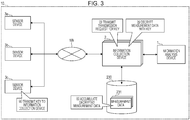
- the sensor device 3 when the sensor device 3 (in the example illustrated in FIG. 2 , the sensor device 3c) measures data in the data center, the sensor device 3 generates encrypted data (hereinafter referred to as encrypted data 231a) of the measured data (hereinafter may be referred to as measurement data 231). Thereafter, as illustrated in FIG. 2 , the sensor device 3 transmits the generated encrypted data 231a to the information collection device 2 ((1) in FIG. 2 ).
- the information collection device 2 when the information collection device 2 receives the encrypted data 231a transmitted from the sensor device 3 ((2) in FIG. 2 ), the information collection device 2 transmits, to the sensor device 3, a transmission request for a key for decrypting the received encrypted data 231a ((3) in FIG. 3 ).
- the sensor device 3 receives the transmission request for the key transmitted from the information collection device 2, the sensor device 3 transmits, to the information collection device 2, the key corresponding to the received transmission request ((4) in FIG. 3 ).
- the information collection device 2 decrypts, with the key transmitted from the sensor device 3, the encrypted data 231a transmitted from the sensor device 3 ((5) in FIG. 3 ).
- the information collection device 2 stores the decrypted measurement data 231 in the storage 230 ((6) in FIG. 3 ).
- the information processing system 10 is capable of securing security of the measurement data 231 transmitted from the sensor device 3 to the information collection device 2.
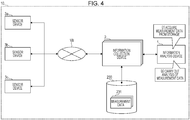
- the information analysis device 1 When analyzing the measurement data 231, for example, the information analysis device 1 accesses the storage 230 and acquires the measurement data 231 stored in the storage 230 ((7) in FIG. 4 ). The information analysis device 1 analyzes the acquired measurement data 231 ((8) in FIG. 4 ).
- the information analysis device 1 may decrypt the acquired measurement data 231 and then analyzes the measurement data 231.
- the information analysis device 1 may transmit a transmission request for the measurement data 231 to the information collection device 2 and receive the measurement data 231 transmitted by the information collection device 2.
- the encrypted data 231a is generated from the measurement data 231, for example, every time the sensor devices 3 transmit the encrypted data 231a to the information collection device 2, the sensor devices 3 have to transmit keys for decrypting the encrypted data 231a.
- the encrypted data 231a transmitted to the information collection device 2 by the sensor devices 3 may be sometimes as large as hundreds of millions of data depending on the size of the information processing system 10. Therefore, in such case, communication cost for decrypting the encrypted data 231a is enormous.
- a provider that manages the information analysis device 1 and a provider that manages the sensor devices 3 are sometimes different from a provider that manages the information collection device 2.
- the provider or the like that manages the information analysis device 1 is sometimes desirable to hide, from the provider that manages the information collection device 2, a method of decrypting the encrypted data 231a transmitted by the sensor devices 3.
- the information analysis device 1 in this embodiment shares in advance, with the sensor devices 3, information (hereinafter referred to as first information as well) designating any measurement data 231 among a series of plurality of measurement data 231 (hereinafter simply referred to as plurality of data as well).
- the information analysis device 1 in this embodiment shares in advance, with the sensor devices 3, information (hereinafter referred to as second information as well) designating the number of data when converting data formats of a series of plurality of data collectively for each predetermined number of data.
- the information collection device 2 directly stores the transmitted plurality of encrypted data 231a in the storage 230 without decrypting the encrypted data 231a.
- the information analysis device 1 When acquiring (receiving) a series of plurality of encrypted data 231a from the storage 230, the information analysis device 1 acquires, based on the first information and the second information, the predetermined number of the encrypted data 231a (hereinafter referred to as plurality of conversion target data as well), data formats of which have to be simultaneously converted. Specifically, the information analysis device 1 acquires, for example, according to content of the first information, a predetermined number of conversion target data corresponding to the number of data corresponding to the second information from the plurality of encrypted data 231a stored in the storage 230.
- the information analysis device 1 acquires a predetermined number of pieces of information (hereinafter referred to as predetermined number of pieces of specific information as well) included in the acquired respective predetermined number of conversion target data and converts data formats of the respective predetermined number of conversion target data by using the acquired predetermined number of pieces of specific information.
- predetermined number of pieces of specific information hereinafter referred to as predetermined number of pieces of specific information as well
- the information processing system 10 is capable of suppressing communication cost involved in the decryption of the encrypted data 231a transmitted by the sensor devices 3.
- the information collection device 2 stores the encrypted data 231a transmitted by the sensor device 3 in the storage 230 without decrypting the encrypted data 231a.
- the information analysis device 1 accesses the storage 230 and acquires data in an encrypted state (the encrypted data 231a). Consequently, even when the provider or the like that manages the information analysis device 1 and the provider that manages the information collection device 2 are different, the provider or the like that manages the information analysis device 1 is capable of hiding, from the provider that manages the information collection device 2, a method of decrypting encrypted data transmitted by the sensor devices 3.
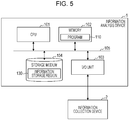
- FIG. 5 is a diagram illustrating the hardware configuration of the information analysis device 1.
- the information analysis device 1 includes a CPU 101, which is a processor, a memory 102, an external interface (an I/O unit) 103, and a storage medium 104. Such sections are connected to one another via a bus 105.
- the storage medium 104 stores, for example, in a program storage region (not illustrated in FIG. 5 ) in the storage medium 104, a computer program 110 for performing processing of converting a data format (hereinafter may be referred to as data conversion processing).
- the storage medium 104 includes, for example, an information storage region 130 (hereinafter may be referred to as storing section 130) in which information used when performing data conversion processing is stored.
- the CPU 101 when executing the computer program 110, loads the computer program 110 from the storage medium 104 to the memory 102 and performs the data conversion processing in cooperation with the computer program 110.
- the external interface 103 performs, for example, communication with the information collection device 2.
- FIG. 6 is a diagram illustrating the hardware configuration of the information collection device 2.
- the information collection device 2 includes a CPU 201, which is a processor, a memory 202, an external interface (an I/O unit) 203, and a storage medium 204. Such sections are connected to one another via a bus 205.
- the storage medium 204 stores, for example, in a program storage region (not illustrated in FIG. 6 ) in the storage medium 204, a computer program 210 for performing the data conversion processing.
- the storage medium 204 includes, for example, an information storage region 230 (hereinafter may be referred to as storing section 230) in which information used in performing the data conversion processing is stored. Note that the storage 230 described with reference to FIG. 1 and the like corresponds to the information storage region 230.
- the CPU 201 when executing the computer program 210, loads the computer program 210 from the storage medium 204 to the memory 202 and performs the data conversion processing in cooperation with the computer program 210.
- the external interface 203 performs communication with the information analysis device 1.
- the external interface 203 performs communication with the sensor devices 3 via a network NW.
- FIG. 7 is a diagram illustrating the hardware configuration of the sensor device 3.
- the sensor device 3 includes a CPU 301, which is a processor, a memory 302, an external interface (an I/O unit) 303, and a storage medium 304. Such sections are connected to one another via a bus 305.
- the storage medium 304 stores, for example, in a program storage region (not illustrated in FIG. 7 ) in the storage medium 304, a computer program 310 for performing data conversion processing.
- the storage medium 304 includes, for example, an information storage region 330 (hereinafter referred to as storing section 330 as well) in which information used in performing the data conversion processing is stored.
- the CPU 301 when executing the computer program 310, loads the computer program 310 from the storage medium 304 to the memory 302 and performs the data conversion processing in cooperation with the computer program 310.
- the external interface 303 performs communication with the information collection device 2 via the network NW.
- FIG. 8 is a functional block diagram of the information analysis device 1.
- the CPU 101 of the information analysis device 1 cooperates with the computer program 110 to thereby operate as, for example, an information managing section 111, an information receiving section 112, an information acquiring section 113, and a data converting section 114.
- an information managing section 111 for example, first information 331 (hereinafter referred to as data group information 331 as well), second information 332 (hereinafter referred to as number of data information 332 as well), and position information 333 are stored.
- the information managing section 111 stores, for example, the data group information 331, the number of data information 332, and the position information 333 transmitted from the sensor device 3 in the information storage region 130. Note that, when the sensor devices 3 transmit different pieces of data group information 331 or the like, for example, the information managing section 111 stores the data group information 331 or the like for each of the sensor devices 3.
- the data group information 331 is information referred to when a predetermined number of conversion target data (hereinafter referred to as data group as well), data formats of which have to be simultaneously converted, are designated among the encrypted data 231a acquired from the information collection device 2.
- the data group information 331 is, for example, information indicating that the encrypted data 231a is designated in descending order of times corresponding to the data (for example, acquisition times in the sensor devices 3).
- the number of data information 332 is information indicating the number of the encrypted data 231a included in the data group.
- the position information 333 is information designating positions where a plurality of pieces of specific information used when data formats are converted are respectively embedded in the respective encrypted data 231a acquired from the information storage region 230.
- the position information 333 is, for example, information indicating positions of the heads of the data.
- the position information 333 is, for example, information designating last positions of the data. Specific examples of the data group information 331, the number of data information 332, and the position information 333 are described below.
- the information receiving section 112 receives the data group information 331, the number of data information 332, and the position information 333 transmitted from the sensor device 3.
- the information receiving section 112 acquires (receives) the encrypted data 231a stored in the information storage region 230 of the information collection device 2.
- the information acquiring section 113 acquires the data group information 331 and the number of data information 332 stored in the information storage region 130.
- the information acquiring section 113 acquires, based on the acquired data group information 331 and number of data information 332, from the encrypted data 231a received by the information receiving section 112, a plurality of conversion target data corresponding to the number of data indicated by the number of data information 332. Thereafter, the information acquiring section 113 acquires the position information 333 stored in the information storage region 130.
- the information acquiring section 113 acquires (extracts) a plurality of pieces of specific information respectively from positions indicated by the position information 333 in the acquired plurality of conversion target data. A specific example in which the information acquiring section 113 acquires the plurality of pieces of specific information is described below.
- the data converting section 114 converts data formats of the plurality of conversion target data respectively using the plurality of pieces of specific information acquired by the information acquiring section 113.
- a specific example in which the data converting section 114 converts the data formats is described below.
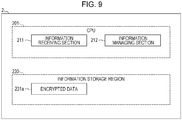
- FIG. 9 is a functional block diagram of the information collection device 2.
- the CPU 201 of the information collection device 2 cooperates with the computer program 210 to thereby operate as, for example, an information receiving section 211 and an information managing section 212.
- the encrypted data 231a transmitted from the sensor devices 3 are stored in the information storage region 230.
- the information receiving section 211 receives the encrypted data 231a transmitted from the sensor devices 3.
- the information managing section 212 stores the encrypted data 231a received by the information receiving section 211 in the information storage region 230.
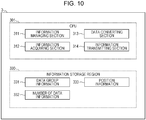
- FIG. 10 is a functional block diagram of the sensor device 3.
- the CPU 301 of the sensor device 3 cooperates with the computer program 310 to thereby operate as, for example, an information managing section 311, an information acquiring section 312, a data converting section 313, and an information transmitting section 314.
- the data group information 331, the number of data information 332, and the position information 333 are stored in the information storage region 330.
- the information managing section 311 stores the inputted information in the information storage region 330.
- the information managing section 311 may store a plurality of measurement data 231 measured by the sensor device 3 in the information storage region 330.
- the information acquiring section 312 acquires the data group information 331 and the number of data information 332 stored in the information storage region 330.
- the data converting section 313 converts, for each of data groups including the measurement data 231 as many as the number indicated by the number of data information 332, by using specific values, which are keys for converting the measurement data 231 into the encrypted data 231a, data formats of the plurality of measurement data 231 measured by the sensor device 3 and generates a plurality of encrypted data 231a.
- the specific values may be stored in advance in the information storage region 330 by the provider or may be changed under predetermined conditions or changed periodically.
- the data converting section 313 adds, for each of the data groups including the encrypted data 231a as many as the number indicated by the number of data information 332, each of values (values indicated by a plurality of pieces of specific information), a sum of which is a specific value, to positions indicated by the position information 333 in the respective encrypted data 231a. That is, the data converting section 313 adds a plurality of pieces of specific information generated by dividing the specific value to the respective encrypted data 231a.
- the specific information may be added to the encrypted data 231a one by one. However, two or more pieces of the specific information may also be added to each of the encrypted data 231a at a time. In that case, the position information has to indicate two or more positions.
- the information transmitting section 314 transmits the encrypted data 231a generated by the data converting section 313 to the information collection device 2.
- the data group information 331, the number of data information 332, the position information 333, the specific value, and the like may be changed, for example, at predetermined timing.
- the sensor devices 3 and the information analysis device 1 have to share in advance the data group information 331 and the like and information indicating timing when the data group information 331 and the like are changed.
- FIG. 11 is a flowchart describing an overview of data conversion processing in the embodiment.
- the information analysis device 1 stays on standby until data reception timing (NO in S1).
- the data reception timing is, for example, timing when the information analysis device 1 receives the encrypted data 231a from the information storage region 230 of the information collection device 2, to analyze the measurement data 231 by the provider.
- the information analysis device 1 acquires, from the information storage region 130, the data group information 331 designating any encrypted data 231a among the encrypted data 231a received in the processing in S1 (S2). In this case, the information analysis device 1 acquires, from the information storage region 130, the number of data information 332 designating the number of data, data formats of which are converted, among the encrypted data 231a received in the processing in S1 (S3).
- the provider stores information for decrypting the encrypted data 231a in the information storage region 130 in advance.
- the information analysis device 1 accesses the information storage region 130 and acquires the data group information 331 and the number of data information 332.
- the information analysis device 1 acquires, based on the data group information 331 and the number of data information 332 acquired in the processing in S2 and S3, a plurality of conversion target data corresponding to the number of data indicated by the number of data information 332 from the encrypted data 231a received in the processing in S1 (S4). Specifically, for example, the information analysis device 1 acquires, from the encrypted data 231a received in the processing in S1, as the plurality of conversion target data, the encrypted data 231a as many as the number indicated by the number of data information 332 in descending order of transmission time (time of transmission from the sensor device 3 to the information collection device 2).
- the information analysis device 1 acquires a plurality of pieces of specific information included respectively in the plurality of conversion target data acquired in the processing in S4 (S5). Specifically, the information analysis device 1 refers to the position information 333 stored in the information storage region 130 to thereby acquire a predetermined number of pieces of specific information included in the respective conversion target data.
- the information analysis device 1 converts data formats of the respective predetermined number of conversion target data using the predetermined number of pieces of specific information acquired in the processing in S5 (S6). Specifically, the information analysis device 1 substitutes, for example, a sum of values indicated by the predetermined number of pieces of specific information acquired in the processing in S5 and values indicated by the respective predetermined number of conversion target data in an expression decided in advance to thereby convert the data format of the respective predetermined number of conversion target data.
- the information analysis device 1 shares in advance, with the sensor devices 3, information for decrypting the encrypted data 231a transmitted by the sensor devices 3.
- the information analysis device 1 refers to the information shared with the sensor devices 3 and performs decryption (a change of data formats) of the encrypted data 231a.
- the information processing system 10 is capable of suppressing communication cost involved in the decryption of the encrypted data 231a transmitted by the sensor devices 3.
- FIGs. 12 and 13 are flowcharts describing the information sharing processing in the embodiment.
- FIG. 14 is a diagram describing the information sharing processing in the embodiment. The information sharing processing illustrated in FIGs. 12 and 13 is described with reference to FIG. 14 .
- the information sharing processing in the sensor devices 3 is described. As illustrated in FIG. 12 , the information managing sections 311 of the sensor devices 3 stay on standby, for example, until the data group information 331, the number of data information 332, and the position information 333 are inputted by the provider (NO in S101).
- the information managing sections 311 of the sensor devices 3 respectively store the data group information 331, the number of data information 332, and the position information 333 inputted in the processing in S101 in the information storage regions 330 (S102).
- the information transmitting sections 314 of the sensor devices 3 respectively transmit the data group information 331, the number of data information 332, and the position information 333 inputted in the processing in S101 to the information analysis device 1 (S103).
- the information sharing processing in the information analysis device 1 is described. As illustrated in FIG. 13 , the information receiving section 112 of the information analysis device 1 stays on standby until the information receiving section 112 receives the data group information 331, the number of data information 332, and the position information 333 from the sensor devices 3 (NO in S111).
- the information managing section 111 of the information analysis device 1 stores the data group information 331, the number of data information 332, and the position information 333 received in the processing in S111 in the information storage region 130 (S112).
- the information analysis device 1 and the sensor devices 3 share information for decrypting the encrypted data 231a before the information analysis device 1 acquires the encrypted data 231a from the information collection device 2. Consequently, for example, every time the sensor devices 3 transmit the encrypted data 231a to the information collection device 2, the sensor devices 3 do not have to transmit keys corresponding to the encrypted data 231a. Therefore, the information processing system 10 is capable of suppressing communication cost involved in the decryption of the encrypted data 231a transmitted by the sensor devices 3.
- the sensor devices 3 Since the information for decrypting the encrypted data 231a is shared between the information analysis device 1 and the sensor devices 3, the sensor devices 3 are capable of transmitting the encrypted data 231a to the information collection device 2 in an encrypted state. Therefore, even if the provider or the like that manages the information analysis device 1 and the provider that manages the information collection device 2 are different, the provider or the like that manages the information analysis device 1 is capable of hiding, from the provider that manages the information collection device 2, a method of decrypting encrypted data transmitted by the sensor device 3.
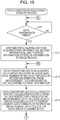
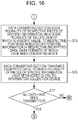
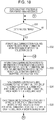
- FIGs. 15 to 19 are flowcharts describing the data conversion processing in the embodiment.
- FIGs. 20 to 25 are diagrams describing the data conversion processing in the embodiment. The data conversion processing illustrated in FIGs. 15 to 19 is described with reference to FIGs. 20 to 25 .
- the information managing section 311 of the sensor device 3 stays on standby until data transmission timing comes (NO in S11).
- the data transmission timing may be timing when the sensor device 3 acquires the measurement data 231 (for example, temperature and the like in the data center).
- a specific example of the measurement data 231 is described below.
- FIG. 22 is a diagram describing a specific example of the measurement data 231.
- the measurement data 231 illustrated in FIG. 22 includes, as items, a "data ID” for identifying data included in the measurement data 231, a "sensor ID” for identifying the sensor device 3 that acquires the measurement data 231, and a "time stamp” indicating time when the measurement data 231 is acquired.
- the measurement data 231 illustrated in FIG. 22 includes, as an item, a "content” in which content of the measurement data 231 is set.
- the measurement data 231 illustrated in FIG. 22 indicates that, in the data, the "data ID” of which is “1”, the “sensor ID” is “3c (the sensor device 3c)", the “time stamp” is "2016/07/25 14:00:00", and the "content” is "temperature: 23.5 (°C)". Concerning other data included in FIG. 22 , explanation is omitted.
- the information acquiring section 312 of the sensor device 3 acquires the data group information 331, the number of data information 332, and the position information 333 stored in the information storage region 330 (S12). In this case, the information acquiring section 312 acquires a data group including the measurement data 231 the number of which is indicated by the number of data information 332, from the measurement data 231 measured in the processing in S11, according to content of the data group information 331 (S13).
- the data converting section 313 of the sensor device 3 subtracts a specific value respectively from values indicated by the respective measurement data 231 included in the data group acquired in the processing in S13 to thereby convert data formats of the respective measurement data 231 included in the data group acquired in the processing in S13 and generate the encrypted data 231a (S14).
- the data converting section 313 may perform the processing in S14, for example, by referring to the specific values stored in the information storage region 330.
- the data converting section 313 converts the data set in the "content" in the measurement data 231 described with reference to FIG. 22 into numerical value data and calculates numerical value data obtained by subtracting specific values from the converted numerical value data to thereby generate the encrypted data 231a from the measurement data 231.
- a specific example in generating the encrypted data 231a from the measurement data 231 is described.
- FIG. 23 is a diagram describing a case in which the data set in the "content" in the measurement data 231 described with reference to FIG. 22 are converted into numerical value data.
- the data converting section 313 converts, for example, according to a conversion rule decided in advance, the data set in the "content” in the measurement data described with reference to FIG. 22 into numerical value data. Specifically, for example, as illustrated in FIG. 23 , the data converting section 313 sets, in the "content” of the data, the "data ID” of which is “1", in the measurement data 231, "00234521", which is numerical value data obtained by converting "temperature: 23.5 (°C)" set in the "content” of the data, the "data ID” of which is “1", in the measurement data 231 described with reference to FIG. 22 . Explanation is omitted concerning the other data included in FIG. 23 .
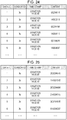
- FIG. 24 is a diagram describing a case in which the specific value is subtracted from the numerical value data set in the "content” in the measurement data 231 described with reference to FIG. 23 .
- the specific value is "5".
- the data converting section 313 sets "00234516", which is numerical value data obtained by subtracting "5" from “00234521”, in the "content” of the data, the "data ID” of which is “1”, in the measurement data 231 illustrated in FIG. 24 . Consequently, the data converting section 313 is capable of encrypting the data set in the "content” in the measurement data 231 described with reference to FIG. 22 . Explanation is omitted concerning the other data included in FIG. 24 .
- the data converting section 313 adds a plurality of pieces of specific information, which are a plurality of values, a sum of which is a specific value, respectively to positions indicated by the position information 333 in the respective encrypted data 231a, the data formats of which have been converted in the processing in S14 (S15).
- the data group information 331 is information indicating that the respective measurement data 231 are designated in descending order of times indicated by the time stamp. It is assumed that the number indicated by the number of data information 332 is "3".
- the data converting section 313 determines that the encrypted data 231a, the "data ID” of which is “1", “2", and “3", among the data included in the encrypted data 231a described with reference to FIG. 24 are included in the same data group. Furthermore, the data converting section 313 determines that the encrypted data 231a, the “data ID” of which is “4", "5", and “6", among the data included in the encrypted data 231a described with reference to FIG. 24 are included in the same data group.
- FIG. 25 is a diagram describing a case in which a plurality of pieces of specific information are added to the numerical value data set in the "content" in the encrypted data 231a described with reference to FIG. 24 .
- the position information 333 indicates positions of heads of the data.
- the data converting section 313 adds, for example, "2", “1”, and “2”, which are a plurality of pieces of specific information divided from "5", which is a specific value, respectively to heads of data set in the "content” of the data, the "data ID” of which is “1", “2", and “3".
- the data converting section 313 adds, for example, "2", “3", and “0”, which are a plurality of pieces of specific information divided from "5", which is the specific value, respectively to heads of data set in the "content” of the data, the "data ID” of which is "4", "5", and "6".
- a way of dividing the specific value may be determined randomly, or may conform to a fixed rule, and the rule may be changed according to a predetermined condition or periodically.
- Bit positions in which the divided specific information is added (inserted) are not limited to the heads of the data and may be ends of the data or any bit positions.
- the position information 333 indicating the positions may be changed according to a predetermined condition or periodically.
- the data converting section 313 generates the encrypted data 231a from the measurement data 231 using only the data group information 331, the number of data information 332, and the position information 333 shared in advance with the information analysis device 1 in the information sharing processing. Consequently, as described below, the information analysis device 1 is capable of decrypting the encrypted data 231a by using only the information shared with the sensor devices 3 in advance.
- the information transmitting section 314 of the sensor device 3 transmits the respective encrypted data 231a added with the plurality of pieces of specific information in the processing in S15 to the information collection device 2 (S16).
- the information acquiring section 312 performs the processing in S13 and subsequent steps again. On the other hand, if the encryption and the transmission to the information collection device 2 are performed concerning all of the measurement data 231 measured in the processing in S11 (NO in S17), the information acquiring section 312 stays on standby until the next data transmission timing (S11).
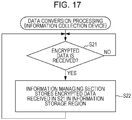
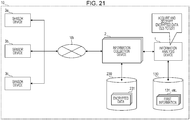
- the data conversion processing in the information collection device 2 is described. As illustrated in FIG. 17 , the information receiving section 211 of the information collection device 2 stays on standby until the information receiving section 211 receives the encrypted data 231a from the sensor devices 3 (NO in S21). If the information receiving section 211 receives the encrypted data 231a from the sensor devices 3 (YES in S21), as illustrated in FIG. 20 , the information managing section 212 of the information collection device 2 stores the encrypted data 231a received in the processing in S21 in the information storage region 230 (S22).
- the information managing section 212 stores the encrypted data 231a transmitted by the sensor device 3 in the information storage region 230 without decrypting the encrypted data 231a. Consequently, even when the provider or the like that manages the information analysis device 1 and the provider that manages the information collection device 2 are different, the provider or the like that manages the information analysis device 1 is capable of hiding, from the provider that manages the information collection device 2, a method of decrypting encrypted data transmitted by the sensor device 3.
- the data conversion processing in the information analysis device 1 is described. As illustrated in FIG. 18 , the information receiving section 112 of the information analysis device 1 stays on standby until data analysis timing (NO in S31).
- the data analysis timing may be, for example, timing when the provider inputs, to the information analysis device 1, indication that the provider starts an analysis of the measurement data 231.
- the information receiving section 112 acquires the encrypted data 231a from the information storage region 230 of the information collection device 2 (S32). Note that the information receiving section 112 may acquire only data that has to be analyzed among the encrypted data 231a stored in the information storage region 230.
- the information acquiring section 113 refers to the information storage region 130 and acquires the data group information 331, the number of data information 332, and the position information 333 corresponding to the sensor device 3 that generates the encrypted data 231a acquired in the processing in S32 (S33). That is, information such as the data group information 331 that the information analysis device 1 shares with the sensor devices 3 is sometimes different for each of the sensor devices 3. Therefore, the information acquiring section 113 refers to, for example, information set in the "sensor ID" of the encrypted data 231a acquired in the processing in S32 and acquires information concerning the sensor device 3 that generates the encrypted data 231a.
- the data converting section 114 acquires, according to the data group information 331 acquired in the processing in S33, from the encrypted data 231a acquired in the processing in S32, a data group including the encrypted data 231a corresponding to the number of data indicated by the number of data information 332 acquired in the processing in S33 (S34).
- the data converting section 114 determines that, among the data included in the encrypted data 231a described with reference to FIG. 25 , data set in the "time stamp” at the earliest time (data, the "data ID” of which is “1”, “2”, and “3") are data included in the same data group.
- the data converting section 114 determines that, among the data included in the encrypted data 231a described in FIG. 25 , three data set in the "time stamp” at the second earliest time (data, the "data ID” of which is "4", "5", and “6") are data included in the same data group. Therefore, the data converting section 114 acquires, from the data included in the encrypted data 231a described with reference to FIG. 25 , the data group including the data, the "data ID” of which is “1", “2", and “3", and the data group including the data, the "data ID” of which is “4", "5", and “6".
- the sensor devices 3 and the information analysis device 1 may share in advance, among the encrypted data 231a generated by the sensor devices 3, information indicating data serving as a start point in decrypting the encrypted data 231a (hereinafter referred to as start point information as well).
- the start point information may be, for example, time set in the "time stamp" of the data serving as the start point.
- the data converting section 114 may acquire a data group starting from the data indicated by the start point information.
- the data converting section 114 determines that, among the encrypted data 231a described with reference to FIG. 25 , information, the "data ID” of which is "3”, is the start point. In this case, the data converting section 114 determines that data, the "data ID” of which is "3", "4", and "5", are data included in the same data group.
- the data converting section 114 acquires a plurality of pieces of specific information from respective positions indicated by the position information 333 in the respective encrypted data 231a included in the data group acquired in the processing in S34 (S35).
- the data converting section 114 acquires, as the plurality of pieces of specific information, for example, "2", “1”, and “2”, which are values of heads of data set in the "content” of the data, the "data ID” of which is “1", “2”, and “3”, in the encrypted data 231a described with reference to FIG. 25 .
- the data converting section 114 acquires, as the plurality of pieces of specific information, for example, “2", “3”, and “0”, which are values of heads of data set in the "content” of data, the "data ID” of which is "4", "5", and “6", in the encrypted data 231a described with reference to FIG. 25 .
- the data converting section 114 calculates a specific value, which is a sum of values indicated respectively by the plurality of pieces of specific information acquired in the processing in S35 (S36).
- the data converting section 114 adds the specific value calculated in the processing in S36 respectively to the values indicated by the encrypted data 231a included in the data group acquired in the processing in S34 to thereby convert the respective data formats of the encrypted data 231a included in the data group acquired in the processing in S14 and generate the measurement data 231 (S37).
- the data converting section 114 calculates "5", which is a sum of "2", “1”, and “2”, which are a plurality of pieces of specific information corresponding to the data, the "data ID” of which are “1", “2”, and “3”, in the encrypted data 231a described with reference to FIG. 25 .
- the data converting section 114 deletes values added to heads of data set in the "content” in the data, the "data ID” of which is “1", “2", and “3”. That is, the data converting section 114 generates data same as the data, the "data ID” of which is “1", “2", and “3", in the encrypted data 231a described with reference to FIG. 24 .
- the data converting section 114 adds "5" to the values indicated by the data set in the "content” in the data, the "data ID” of which is “1", “2", and “3". That is, the data converting section 114 generates data same as the data, the "data ID” of which is “1", “2", and “3", in the measurement data 231 described with reference to FIG. 23 .
- the data converting section 114 calculates "5", which is a sum of "2", “3", and “0", which are a plurality of pieces of specific information corresponding to the data, the "data ID” of which are “4", "5", and “6", in the encrypted data 231a described with reference to FIG. 25 .
- the data converting section 114 deletes values added to heads of data set in the "content” in the data, the "data ID” of which is "4", "5", and “6”. That is, the data converting section 114 generates data same as the data, the "data ID” of which is "4", "5", and “6", in the encrypted data 231a described with reference to FIG. 24 .
- the data converting section 114 adds "5" to the values indicated by the data set in the "content” in the data, the "data ID” of which is “4", "5", and “6". That is, the data converting section 114 generates data same as the data, the "data ID” of which is “4", "5", and “6", in the measurement data 231 described with reference to FIG. 23 .
- the data converting section 114 converts numerical value data set in the "content" of the data into character data. That is, the data converting section 114 generates data same as the measurement data 231 described with reference to FIG. 22 .
- the information acquiring section 113 performs the processing in S33 and subsequent steps again. On the other hand, if all of the encrypted data 231a acquired from the information storage region 230 of the information collection device 2 are decrypted (NO in S38), the information acquiring section 113 stays on standby until the next data analysis timing (S31).
- the information analysis device 1 shares in advance, with the sensor devices 3, for example, the data group information 331 designating any data among the plurality of measurement data 231.
- the information collection device 2 directly stores the transmitted plurality of encrypted data 231a in the information storage region 230 without decrypting the encrypted data 231a.
- the information analysis device 1 When the information analysis device 1 acquires the plurality of encrypted data 231a from the information storage region 230, the information analysis device 1 acquires, based on the data group information 331 and the like, a plurality of conversion target data, data formats of which have to be simultaneously converted. Thereafter, the information analysis device 1 acquires a plurality of pieces of specific information included respectively in the acquired plurality of conversion target data and converts respective data formats of the plurality of conversion target data using the acquired plurality of pieces of specific information.
- the information processing system 10 is capable of suppressing communication cost involved in the decryption of the encrypted data 231a transmitted by the sensor device 3.
- the information collection device 2 stores the encrypted data 231a transmitted by the sensor device 3 in the storage 230 without decrypting the encrypted data 231a.
- the information analysis device 1 accesses the storage 230 and acquires data (the encrypted data 231a) in the encrypted state. Consequently, even when the provider or the like that manages the information analysis device 1 and the provider that manages the information collection device 2 are different, the provider or the like that manages the information analysis device 1 is capable of hiding, from the provider that manages the information collection device 2, a method of decrypting encrypted data transmitted by the sensor device 3.
- the measurement data 231 is sometimes data that has a value only when an enormous amount of data (for example, all data measured in one moth) are analyzed.
- the sensor devices 3 generate the encrypted data 231a for each one of the measurement data 231 and then transmit the encrypted data 231a to the information collection device 2 and the like, this is sometimes determined as disadvantageous in terms of communication cost with respect to the value of the measurement data 231.
- the sensor devices 3 in this embodiment encrypt each of data groups of the measurement data 231. Consequently, the information processing system 10 is capable of suppressing communication cost for the encryption of the measurement data 231 compared with when the sensor devices 3 generate the encrypted data 231a for each one of the measurement data 231.
- the sensor device 3 in this embodiment is capable of suppressing communication cost for the encryption of the measurement data 231 without causing possibility that the value of the measurement data 231 is spoiled.
- the sensor devices 3 in this embodiment transmit the data group information 331 and the like to the information analysis device 1 in advance. Therefore, the provider that manages the sensor devices 3 is capable of selecting a scheme of encryption (intensity of encryption) for the measurement data 231 after taking into account importance of the measurement data 231, communication cost, and the like.
- the specific value is subtracted from the data on the transmission side and the specific value is added to the data on the reception side.
- the specific value may be added on the transmission side and subtracted on the reception side.
- other arithmetical operations such as multiplication and division and logical operations such as EOR (Exclusive OR) may also be used.
- Confidentiality is further improved if the first information, the second information, and the position information are changed periodically or according to a predetermined condition.
Landscapes
- Engineering & Computer Science (AREA)
- Theoretical Computer Science (AREA)
- General Engineering & Computer Science (AREA)
- Computer Security & Cryptography (AREA)
- Signal Processing (AREA)
- Computer Networks & Wireless Communication (AREA)
- General Physics & Mathematics (AREA)
- Physics & Mathematics (AREA)
- Computer Hardware Design (AREA)
- Health & Medical Sciences (AREA)
- General Health & Medical Sciences (AREA)
- Bioethics (AREA)
- Software Systems (AREA)
- Databases & Information Systems (AREA)
- Data Mining & Analysis (AREA)
- Computing Systems (AREA)
- Medical Informatics (AREA)
- Arrangements For Transmission Of Measured Signals (AREA)
- Artificial Intelligence (AREA)
- Computational Linguistics (AREA)
- Evolutionary Computation (AREA)
- Mathematical Physics (AREA)
Abstract
Description
- The embodiment discussed herein is related to a medium storing a data conversion program, a data conversion device, and a data conversion method.
- For example, a provider that provides users with services (hereinafter simply referred to as a provider as well) constructs and operates a job system (hereinafter referred to as information processing system as well) corresponding to applications in order to provide the users with various services. Specifically, the provider constructs an information processing system functioning as the Internet of things (IoT) system in order to, for example, analyze various data in a data center (temperature, humidity, and the like in the data center).
- Such an information processing system includes, for example, a plurality of sensors (hereinafter referred to as sensor devices as well) that measure various data in the data center and a device (hereinafter referred to as information collection device as well) that collects and accumulates the data transmitted from the sensor devices. The information processing system as described above includes a device (hereinafter referred to as information analysis device as well) that acquires data accumulated in the information collection device and analyzes the acquired data.
- The sensor devices included in the information processing system encrypt data to be transmitted (the data encrypted by the sensor devices is hereinafter referred to as encrypted data as well) when the sensor devices transmit data to the information collection device. When the information collection device included in the information processing system receives the encrypted data transmitted from the sensor devices, the information collection device decrypts the encrypted data and accumulates the decrypted data in a storing section. Consequently, the provider is capable of securing security of the data transmitted from the sensor devices to the information collection device (see, for example, Japanese Laid-open Patent Publication Nos.
2008-160520 2008-124824 2000-138916 - When the sensor devices encrypt data to be transmitted to the information collection device, for example, every time the sensor devices transmit the encrypted data to the information collection device, the sensor devices transmit information for decrypting the encrypted data (the information hereinafter simply referred to as keys as well). Specifically, for example, upon receipt of notification that the encrypted data are received, from the information collection device, the sensor devices transmit keys for decrypting the encrypted data received by the information collection device.
- However, when a large number of encrypted data are transmitted by the sensor devices (the encrypted data are transmitted a large number of times), the number of keys to be transmitted to the information collection device increases. Accordingly, in the information processing system described above, communication cost for decrypting the encrypted data is sometimes enormous depending on, for example, the number of encrypted data transmitted by the sensor devices.
- According to an aspect of the invention, a data conversion method performed by a computer, the method is configured to cause the computer to; when the computer receives a plurality of data, acquire first information and second information from a storage, the first information designating any data among the plurality of data, the second information designating a predetermined number of data, data formats of which are collectively converted among the plurality of data; acquire, based on the acquired first information and the acquired second information, the predetermined number of conversion target data from the received plurality of data; extract each pieces of specific information embedded in each of the acquired predetermined number of conversion target data; and convert the data format of each of the respective predetermined number of conversion target data by using the extracted predetermined number of pieces of the specific information.
-
-
FIG. 1 is a diagram illustrating configuration of an information processing system; -
FIG. 2 is a diagram describing a specific example of processing in the information processing system; -
FIG. 3 is a diagram describing a specific example of the processing in the information processing system; -
FIG. 4 is a diagram describing a specific example of the processing in the information processing system; -
FIG. 5 is a diagram illustrating a hardware configuration of an information analysis device; -
FIG. 6 is a diagram illustrating a hardware configuration of an information collection device; -
FIG. 7 is a diagram illustrating a hardware configuration of a sensor device; -
FIG. 8 is a functional block diagram of the information analysis device; -
FIG. 9 is a functional block diagram of the information collection device; -
FIG. 10 is a functional block diagram of the sensor device; -
FIG. 11 is a flowchart describing an overview of data conversion processing according to an embodiment; -
FIG. 12 is a flowchart describing information sharing processing in the embodiment; -
FIG. 13 is a flowchart describing the information sharing processing in the embodiment; -
FIG. 14 is a diagram describing the information sharing processing in the embodiment; -
FIG. 15 is a flowchart describing the data conversion processing in the embodiment; -
FIG. 16 is a flowchart describing the data conversion processing in the embodiment; -
FIG. 17 is a flowchart describing the data conversion processing in the embodiment; -
FIG. 18 is a flowchart describing the data conversion processing in the embodiment; -
FIG. 19 is a flowchart describing the data conversion processing in the embodiment; -
FIG. 20 is a diagram describing the data conversion processing in the embodiment; -
FIG. 21 is a diagram describing the data conversion processing in the embodiment; -
FIG. 22 is a diagram describing a specific example of measurement data; -
FIG. 23 is a diagram describing a case in which data set in "content" in the measurement data described inFIG. 22 are converted into numerical value data; -
FIG. 24 is a diagram describing a case in which a specific value is subtracted from the numerical value data set in the "content" in the measurement data described inFIG. 23 ; and -
FIG. 25 is a diagram describing a case in which a plurality of pieces of specific information are added respectively to encrypted data set in the "content" in the measurement data described with reference toFIG. 24 . -
FIG. 1 is a diagram illustrating configuration of aninformation processing system 10. Theinformation processing system 10 illustrated inFIG. 1 includes, for example, an information analysis device 1 (may be referred to as an information processing device), aninformation collection device 2, andsensor devices sensor devices 3 as well or may be referred to as information processing devices). Note that theinformation processing system 10 illustrated inFIG. 1 may include one, two, or more than threesensor devices 3. - The
sensor devices 3 measure, for example, temperature or humidity in a data center or a factory. Thesensor devices 3 measure, for example, operation states of devices (for example, power consumption and the number of revolutions of fans) provided in the data center or the like. Thesensor devices 3 transmit results of the measurement to theinformation collection device 2. - The
information collection device 2 is configured from, for example, a plurality of physical machines. Theinformation collection device 2 collects and accumulates data transmitted from therespective sensor devices 3. Specifically, as illustrated inFIG. 1 , theinformation collection device 2 stores data transmitted from therespective sensor devices 3 in astorage 230. - For example, when there is an input from a provider, the
information analysis device 1 acquires a part of the data accumulated in thestorage 230 of theinformation collection device 2. Theinformation analysis device 1 analyzes the acquired data. - A specific example of processing in the
information processing system 10 is described.FIGs. 2 to 4 are diagrams describing the specific example of the processing in theinformation processing system 10. - For example, when the sensor device 3 (in the example illustrated in
FIG. 2 , thesensor device 3c) measures data in the data center, thesensor device 3 generates encrypted data (hereinafter referred to asencrypted data 231a) of the measured data (hereinafter may be referred to as measurement data 231). Thereafter, as illustrated inFIG. 2 , thesensor device 3 transmits the generatedencrypted data 231a to the information collection device 2 ((1) inFIG. 2 ). - On the other hand, for example, when the
information collection device 2 receives theencrypted data 231a transmitted from the sensor device 3 ((2) inFIG. 2 ), theinformation collection device 2 transmits, to thesensor device 3, a transmission request for a key for decrypting the received encrypteddata 231a ((3) inFIG. 3 ). When thesensor device 3 receives the transmission request for the key transmitted from theinformation collection device 2, thesensor device 3 transmits, to theinformation collection device 2, the key corresponding to the received transmission request ((4) inFIG. 3 ). - Thereafter, the
information collection device 2 decrypts, with the key transmitted from thesensor device 3, theencrypted data 231a transmitted from the sensor device 3 ((5) inFIG. 3 ). Theinformation collection device 2 stores thedecrypted measurement data 231 in the storage 230 ((6) inFIG. 3 ). - Consequently, the
information processing system 10 is capable of securing security of themeasurement data 231 transmitted from thesensor device 3 to theinformation collection device 2. - When analyzing the
measurement data 231, for example, theinformation analysis device 1 accesses thestorage 230 and acquires themeasurement data 231 stored in the storage 230 ((7) inFIG. 4 ). Theinformation analysis device 1 analyzes the acquired measurement data 231 ((8) inFIG. 4 ). - Note that, for example, when the
measurement data 231 is encrypted by theinformation collection device 2 and then stored in thestorage 230, theinformation analysis device 1 may decrypt the acquiredmeasurement data 231 and then analyzes themeasurement data 231. When analyzing themeasurement data 231, theinformation analysis device 1 may transmit a transmission request for themeasurement data 231 to theinformation collection device 2 and receive themeasurement data 231 transmitted by theinformation collection device 2. - When the
encrypted data 231a is generated from themeasurement data 231, for example, every time thesensor devices 3 transmit theencrypted data 231a to theinformation collection device 2, thesensor devices 3 have to transmit keys for decrypting theencrypted data 231a. However, theencrypted data 231a transmitted to theinformation collection device 2 by thesensor devices 3 may be sometimes as large as hundreds of millions of data depending on the size of theinformation processing system 10. Therefore, in such case, communication cost for decrypting theencrypted data 231a is enormous. - A provider that manages the
information analysis device 1 and a provider that manages the sensor devices 3 (hereinafter referred to as the provider or the like that manages theinformation analysis device 1 as well) are sometimes different from a provider that manages theinformation collection device 2. In such case, the provider or the like that manages theinformation analysis device 1 is sometimes desirable to hide, from the provider that manages theinformation collection device 2, a method of decrypting theencrypted data 231a transmitted by thesensor devices 3. - Therefore, the
information analysis device 1 in this embodiment shares in advance, with thesensor devices 3, information (hereinafter referred to as first information as well) designating anymeasurement data 231 among a series of plurality of measurement data 231 (hereinafter simply referred to as plurality of data as well). Theinformation analysis device 1 in this embodiment shares in advance, with thesensor devices 3, information (hereinafter referred to as second information as well) designating the number of data when converting data formats of a series of plurality of data collectively for each predetermined number of data. - On the other hand, when a plurality of
encrypted data 231a are transmitted from thesensor devices 3, theinformation collection device 2 directly stores the transmitted plurality ofencrypted data 231a in thestorage 230 without decrypting theencrypted data 231a. - When acquiring (receiving) a series of plurality of
encrypted data 231a from thestorage 230, theinformation analysis device 1 acquires, based on the first information and the second information, the predetermined number of theencrypted data 231a (hereinafter referred to as plurality of conversion target data as well), data formats of which have to be simultaneously converted. Specifically, theinformation analysis device 1 acquires, for example, according to content of the first information, a predetermined number of conversion target data corresponding to the number of data corresponding to the second information from the plurality ofencrypted data 231a stored in thestorage 230. Thereafter, theinformation analysis device 1 acquires a predetermined number of pieces of information (hereinafter referred to as predetermined number of pieces of specific information as well) included in the acquired respective predetermined number of conversion target data and converts data formats of the respective predetermined number of conversion target data by using the acquired predetermined number of pieces of specific information. - That is, since the
information analysis device 1 and thesensor devices 3 share in advance information for decrypting theencrypted data 231a, thesensor devices 3 do not have to transmit keys with transmission of encrypted data to theinformation collection device 2. Therefore, theinformation processing system 10 is capable of suppressing communication cost involved in the decryption of theencrypted data 231a transmitted by thesensor devices 3. - The
information collection device 2 stores theencrypted data 231a transmitted by thesensor device 3 in thestorage 230 without decrypting theencrypted data 231a. Theinformation analysis device 1 accesses thestorage 230 and acquires data in an encrypted state (theencrypted data 231a). Consequently, even when the provider or the like that manages theinformation analysis device 1 and the provider that manages theinformation collection device 2 are different, the provider or the like that manages theinformation analysis device 1 is capable of hiding, from the provider that manages theinformation collection device 2, a method of decrypting encrypted data transmitted by thesensor devices 3. - A hardware configuration of the
information analysis device 1 is described.FIG. 5 is a diagram illustrating the hardware configuration of theinformation analysis device 1. - The
information analysis device 1 includes aCPU 101, which is a processor, amemory 102, an external interface (an I/O unit) 103, and astorage medium 104. Such sections are connected to one another via abus 105. - The
storage medium 104 stores, for example, in a program storage region (not illustrated inFIG. 5 ) in thestorage medium 104, acomputer program 110 for performing processing of converting a data format (hereinafter may be referred to as data conversion processing). Thestorage medium 104 includes, for example, an information storage region 130 (hereinafter may be referred to as storing section 130) in which information used when performing data conversion processing is stored. - As illustrated in
FIG. 5 , when executing thecomputer program 110, theCPU 101 loads thecomputer program 110 from thestorage medium 104 to thememory 102 and performs the data conversion processing in cooperation with thecomputer program 110. Theexternal interface 103 performs, for example, communication with theinformation collection device 2. - A hardware configuration of the
information collection device 2 is described.FIG. 6 is a diagram illustrating the hardware configuration of theinformation collection device 2. - The
information collection device 2 includes aCPU 201, which is a processor, amemory 202, an external interface (an I/O unit) 203, and astorage medium 204. Such sections are connected to one another via abus 205. - The
storage medium 204 stores, for example, in a program storage region (not illustrated inFIG. 6 ) in thestorage medium 204, acomputer program 210 for performing the data conversion processing. Thestorage medium 204 includes, for example, an information storage region 230 (hereinafter may be referred to as storing section 230) in which information used in performing the data conversion processing is stored. Note that thestorage 230 described with reference toFIG. 1 and the like corresponds to theinformation storage region 230. - As illustrated in
FIG. 6 , when executing thecomputer program 210, theCPU 201 loads thecomputer program 210 from thestorage medium 204 to thememory 202 and performs the data conversion processing in cooperation with thecomputer program 210. - For example, the
external interface 203 performs communication with theinformation analysis device 1. For example, theexternal interface 203 performs communication with thesensor devices 3 via a network NW. - A hardware configuration of the
sensor device 3 is described.FIG. 7 is a diagram illustrating the hardware configuration of thesensor device 3. - The
sensor device 3 includes aCPU 301, which is a processor, amemory 302, an external interface (an I/O unit) 303, and astorage medium 304. Such sections are connected to one another via abus 305. - The
storage medium 304 stores, for example, in a program storage region (not illustrated inFIG. 7 ) in thestorage medium 304, acomputer program 310 for performing data conversion processing. Thestorage medium 304 includes, for example, an information storage region 330 (hereinafter referred to as storingsection 330 as well) in which information used in performing the data conversion processing is stored. - As illustrated in
FIG. 7 , when executing thecomputer program 310, theCPU 301 loads thecomputer program 310 from thestorage medium 304 to thememory 302 and performs the data conversion processing in cooperation with thecomputer program 310. For example, theexternal interface 303 performs communication with theinformation collection device 2 via the network NW. - Functions of the
information analysis device 1 are described.FIG. 8 is a functional block diagram of theinformation analysis device 1. - The
CPU 101 of theinformation analysis device 1 cooperates with thecomputer program 110 to thereby operate as, for example, aninformation managing section 111, aninformation receiving section 112, aninformation acquiring section 113, and adata converting section 114. In theinformation storage region 130, for example, first information 331 (hereinafter referred to asdata group information 331 as well), second information 332 (hereinafter referred to as number ofdata information 332 as well), andposition information 333 are stored. - The
information managing section 111 stores, for example, thedata group information 331, the number ofdata information 332, and theposition information 333 transmitted from thesensor device 3 in theinformation storage region 130. Note that, when thesensor devices 3 transmit different pieces ofdata group information 331 or the like, for example, theinformation managing section 111 stores thedata group information 331 or the like for each of thesensor devices 3. - The
data group information 331 is information referred to when a predetermined number of conversion target data (hereinafter referred to as data group as well), data formats of which have to be simultaneously converted, are designated among theencrypted data 231a acquired from theinformation collection device 2. Specifically, thedata group information 331 is, for example, information indicating that theencrypted data 231a is designated in descending order of times corresponding to the data (for example, acquisition times in the sensor devices 3). The number ofdata information 332 is information indicating the number of theencrypted data 231a included in the data group. - Further, the
position information 333 is information designating positions where a plurality of pieces of specific information used when data formats are converted are respectively embedded in the respectiveencrypted data 231a acquired from theinformation storage region 230. Specifically, theposition information 333 is, for example, information indicating positions of the heads of the data. Theposition information 333 is, for example, information designating last positions of the data. Specific examples of thedata group information 331, the number ofdata information 332, and theposition information 333 are described below. - The
information receiving section 112 receives thedata group information 331, the number ofdata information 332, and theposition information 333 transmitted from thesensor device 3. Theinformation receiving section 112 acquires (receives) theencrypted data 231a stored in theinformation storage region 230 of theinformation collection device 2. - The
information acquiring section 113 acquires thedata group information 331 and the number ofdata information 332 stored in theinformation storage region 130. Theinformation acquiring section 113 acquires, based on the acquireddata group information 331 and number ofdata information 332, from theencrypted data 231a received by theinformation receiving section 112, a plurality of conversion target data corresponding to the number of data indicated by the number ofdata information 332. Thereafter, theinformation acquiring section 113 acquires theposition information 333 stored in theinformation storage region 130. Theinformation acquiring section 113 acquires (extracts) a plurality of pieces of specific information respectively from positions indicated by theposition information 333 in the acquired plurality of conversion target data. A specific example in which theinformation acquiring section 113 acquires the plurality of pieces of specific information is described below. - The
data converting section 114 converts data formats of the plurality of conversion target data respectively using the plurality of pieces of specific information acquired by theinformation acquiring section 113. A specific example in which thedata converting section 114 converts the data formats is described below. - Functions of the
information collection device 2 are described.FIG. 9 is a functional block diagram of theinformation collection device 2. - The
CPU 201 of theinformation collection device 2 cooperates with thecomputer program 210 to thereby operate as, for example, aninformation receiving section 211 and aninformation managing section 212. Theencrypted data 231a transmitted from thesensor devices 3 are stored in theinformation storage region 230. - The
information receiving section 211 receives theencrypted data 231a transmitted from thesensor devices 3. Theinformation managing section 212 stores theencrypted data 231a received by theinformation receiving section 211 in theinformation storage region 230. - Functions of the
sensor device 3 are described.FIG. 10 is a functional block diagram of thesensor device 3. - The
CPU 301 of thesensor device 3 cooperates with thecomputer program 310 to thereby operate as, for example, aninformation managing section 311, aninformation acquiring section 312, adata converting section 313, and aninformation transmitting section 314. Thedata group information 331, the number ofdata information 332, and theposition information 333 are stored in theinformation storage region 330. - For example, when the provider inputs the
data group information 331, the number ofdata information 332, and theposition information 333, theinformation managing section 311 stores the inputted information in theinformation storage region 330. Note that theinformation managing section 311 may store a plurality ofmeasurement data 231 measured by thesensor device 3 in theinformation storage region 330. - The
information acquiring section 312 acquires thedata group information 331 and the number ofdata information 332 stored in theinformation storage region 330. - The
data converting section 313 converts, for each of data groups including themeasurement data 231 as many as the number indicated by the number ofdata information 332, by using specific values, which are keys for converting themeasurement data 231 into theencrypted data 231a, data formats of the plurality ofmeasurement data 231 measured by thesensor device 3 and generates a plurality ofencrypted data 231a. For example, the specific values may be stored in advance in theinformation storage region 330 by the provider or may be changed under predetermined conditions or changed periodically. - The
data converting section 313 adds, for each of the data groups including theencrypted data 231a as many as the number indicated by the number ofdata information 332, each of values (values indicated by a plurality of pieces of specific information), a sum of which is a specific value, to positions indicated by theposition information 333 in the respectiveencrypted data 231a. That is, thedata converting section 313 adds a plurality of pieces of specific information generated by dividing the specific value to the respectiveencrypted data 231a. Note that the specific information may be added to theencrypted data 231a one by one. However, two or more pieces of the specific information may also be added to each of theencrypted data 231a at a time. In that case, the position information has to indicate two or more positions. - The
information transmitting section 314 transmits theencrypted data 231a generated by thedata converting section 313 to theinformation collection device 2. - Note that the
data group information 331, the number ofdata information 332, theposition information 333, the specific value, and the like may be changed, for example, at predetermined timing. In this case, thesensor devices 3 and theinformation analysis device 1 have to share in advance thedata group information 331 and the like and information indicating timing when thedata group information 331 and the like are changed. - An embodiment is described.
FIG. 11 is a flowchart describing an overview of data conversion processing in the embodiment. - The
information analysis device 1 stays on standby until data reception timing (NO in S1). The data reception timing is, for example, timing when theinformation analysis device 1 receives theencrypted data 231a from theinformation storage region 230 of theinformation collection device 2, to analyze themeasurement data 231 by the provider. - If the data reception timing comes (YES in S1), the
information analysis device 1 acquires, from theinformation storage region 130, thedata group information 331 designating anyencrypted data 231a among theencrypted data 231a received in the processing in S1 (S2). In this case, theinformation analysis device 1 acquires, from theinformation storage region 130, the number ofdata information 332 designating the number of data, data formats of which are converted, among theencrypted data 231a received in the processing in S1 (S3). - That is, the provider stores information for decrypting the
encrypted data 231a in theinformation storage region 130 in advance. In processing in S2 and S3, theinformation analysis device 1 accesses theinformation storage region 130 and acquires thedata group information 331 and the number ofdata information 332. - Thereafter, the
information analysis device 1 acquires, based on thedata group information 331 and the number ofdata information 332 acquired in the processing in S2 and S3, a plurality of conversion target data corresponding to the number of data indicated by the number ofdata information 332 from theencrypted data 231a received in the processing in S1 (S4). Specifically, for example, theinformation analysis device 1 acquires, from theencrypted data 231a received in the processing in S1, as the plurality of conversion target data, theencrypted data 231a as many as the number indicated by the number ofdata information 332 in descending order of transmission time (time of transmission from thesensor device 3 to the information collection device 2). - Further, the
information analysis device 1 acquires a plurality of pieces of specific information included respectively in the plurality of conversion target data acquired in the processing in S4 (S5). Specifically, theinformation analysis device 1 refers to theposition information 333 stored in theinformation storage region 130 to thereby acquire a predetermined number of pieces of specific information included in the respective conversion target data. - The
information analysis device 1 converts data formats of the respective predetermined number of conversion target data using the predetermined number of pieces of specific information acquired in the processing in S5 (S6). Specifically, theinformation analysis device 1 substitutes, for example, a sum of values indicated by the predetermined number of pieces of specific information acquired in the processing in S5 and values indicated by the respective predetermined number of conversion target data in an expression decided in advance to thereby convert the data format of the respective predetermined number of conversion target data. - That is, the
information analysis device 1 shares in advance, with thesensor devices 3, information for decrypting theencrypted data 231a transmitted by thesensor devices 3. Theinformation analysis device 1 refers to the information shared with thesensor devices 3 and performs decryption (a change of data formats) of theencrypted data 231a. - Consequently, the
sensor devices 3 do not have to transmit keys, for example, every time thesensor devices 3 transmit encrypted data to theinformation collection device 2. Therefore, theinformation processing system 10 is capable of suppressing communication cost involved in the decryption of theencrypted data 231a transmitted by thesensor devices 3. - Details of the data conversion processing in the embodiment are described. First, in the data conversion processing in the embodiment, processing of sharing the
data group information 331 and the like (hereinafter referred to as information sharing processing as well) is described. -
FIGs. 12 and13 are flowcharts describing the information sharing processing in the embodiment.FIG. 14 is a diagram describing the information sharing processing in the embodiment. The information sharing processing illustrated inFIGs. 12 and13 is described with reference toFIG. 14 . - First, the information sharing processing in the
sensor devices 3 is described. As illustrated inFIG. 12 , theinformation managing sections 311 of thesensor devices 3 stay on standby, for example, until thedata group information 331, the number ofdata information 332, and theposition information 333 are inputted by the provider (NO in S101). - If the
data group information 331 and the like is inputted (YES in S101), theinformation managing sections 311 of thesensor devices 3 respectively store thedata group information 331, the number ofdata information 332, and theposition information 333 inputted in the processing in S101 in the information storage regions 330 (S102). In this case, as illustrated inFIG. 14 , theinformation transmitting sections 314 of thesensor devices 3 respectively transmit thedata group information 331, the number ofdata information 332, and theposition information 333 inputted in the processing in S101 to the information analysis device 1 (S103). - The information sharing processing in the
information analysis device 1 is described. As illustrated inFIG. 13 , theinformation receiving section 112 of theinformation analysis device 1 stays on standby until theinformation receiving section 112 receives thedata group information 331, the number ofdata information 332, and theposition information 333 from the sensor devices 3 (NO in S111). - If the
information receiving section 112 of theinformation analysis device 1 receives thedata group information 331 and the like (YES in S111), as illustrated inFIG. 14 , theinformation managing section 111 of theinformation analysis device 1 stores thedata group information 331, the number ofdata information 332, and theposition information 333 received in the processing in S111 in the information storage region 130 (S112). - That is, the
information analysis device 1 and thesensor devices 3 share information for decrypting theencrypted data 231a before theinformation analysis device 1 acquires theencrypted data 231a from theinformation collection device 2. Consequently, for example, every time thesensor devices 3 transmit theencrypted data 231a to theinformation collection device 2, thesensor devices 3 do not have to transmit keys corresponding to theencrypted data 231a. Therefore, theinformation processing system 10 is capable of suppressing communication cost involved in the decryption of theencrypted data 231a transmitted by thesensor devices 3. - Since the information for decrypting the
encrypted data 231a is shared between theinformation analysis device 1 and thesensor devices 3, thesensor devices 3 are capable of transmitting theencrypted data 231a to theinformation collection device 2 in an encrypted state. Therefore, even if the provider or the like that manages theinformation analysis device 1 and the provider that manages theinformation collection device 2 are different, the provider or the like that manages theinformation analysis device 1 is capable of hiding, from the provider that manages theinformation collection device 2, a method of decrypting encrypted data transmitted by thesensor device 3. - Details of the data conversion processing in the embodiment are described.
FIGs. 15 to 19 are flowcharts describing the data conversion processing in the embodiment.FIGs. 20 to 25 are diagrams describing the data conversion processing in the embodiment. The data conversion processing illustrated inFIGs. 15 to 19 is described with reference toFIGs. 20 to 25 . - First, the data conversion processing in the
sensor device 3 is described. Theinformation managing section 311 of thesensor device 3 stays on standby until data transmission timing comes (NO in S11). The data transmission timing may be timing when thesensor device 3 acquires the measurement data 231 (for example, temperature and the like in the data center). A specific example of themeasurement data 231 is described below. -
FIG. 22 is a diagram describing a specific example of themeasurement data 231. Themeasurement data 231 illustrated inFIG. 22 includes, as items, a "data ID" for identifying data included in themeasurement data 231, a "sensor ID" for identifying thesensor device 3 that acquires themeasurement data 231, and a "time stamp" indicating time when themeasurement data 231 is acquired. Themeasurement data 231 illustrated inFIG. 22 includes, as an item, a "content" in which content of themeasurement data 231 is set. - Specifically, the
measurement data 231 illustrated inFIG. 22 indicates that, in the data, the "data ID" of which is "1", the "sensor ID" is "3c (thesensor device 3c)", the "time stamp" is "2016/07/25 14:00:00", and the "content" is "temperature: 23.5 (°C)". Concerning other data included inFIG. 22 , explanation is omitted. - Referring back to
FIG. 15 , if the data transmission timing comes (YES in S11), theinformation acquiring section 312 of thesensor device 3 acquires thedata group information 331, the number ofdata information 332, and theposition information 333 stored in the information storage region 330 (S12). In this case, theinformation acquiring section 312 acquires a data group including themeasurement data 231 the number of which is indicated by the number ofdata information 332, from themeasurement data 231 measured in the processing in S11, according to content of the data group information 331 (S13). - The
data converting section 313 of thesensor device 3 subtracts a specific value respectively from values indicated by therespective measurement data 231 included in the data group acquired in the processing in S13 to thereby convert data formats of therespective measurement data 231 included in the data group acquired in the processing in S13 and generate theencrypted data 231a (S14). Thedata converting section 313 may perform the processing in S14, for example, by referring to the specific values stored in theinformation storage region 330. - Specifically, for example, the
data converting section 313 converts the data set in the "content" in themeasurement data 231 described with reference toFIG. 22 into numerical value data and calculates numerical value data obtained by subtracting specific values from the converted numerical value data to thereby generate theencrypted data 231a from themeasurement data 231. A specific example in generating theencrypted data 231a from themeasurement data 231 is described. -
FIG. 23 is a diagram describing a case in which the data set in the "content" in themeasurement data 231 described with reference toFIG. 22 are converted into numerical value data. - As illustrated in
FIG. 23 , thedata converting section 313 converts, for example, according to a conversion rule decided in advance, the data set in the "content" in the measurement data described with reference toFIG. 22 into numerical value data. Specifically, for example, as illustrated inFIG. 23 , thedata converting section 313 sets, in the "content" of the data, the "data ID" of which is "1", in themeasurement data 231, "00234521", which is numerical value data obtained by converting "temperature: 23.5 (°C)" set in the "content" of the data, the "data ID" of which is "1", in themeasurement data 231 described with reference toFIG. 22 . Explanation is omitted concerning the other data included inFIG. 23 . - Subsequently, the
data converting section 313 subtracts a specific value from the numerical value data set in the "content" in themeasurement data 231 described with reference toFIG. 23 .FIG. 24 is a diagram describing a case in which the specific value is subtracted from the numerical value data set in the "content" in themeasurement data 231 described with reference toFIG. 23 . In the following explanation, it is assumed that the specific value is "5". - For example, the
data converting section 313 sets "00234516", which is numerical value data obtained by subtracting "5" from "00234521", in the "content" of the data, the "data ID" of which is "1", in themeasurement data 231 illustrated inFIG. 24 . Consequently, thedata converting section 313 is capable of encrypting the data set in the "content" in themeasurement data 231 described with reference toFIG. 22 . Explanation is omitted concerning the other data included inFIG. 24 . - Referring back to
FIG. 16 , thedata converting section 313 adds a plurality of pieces of specific information, which are a plurality of values, a sum of which is a specific value, respectively to positions indicated by theposition information 333 in the respectiveencrypted data 231a, the data formats of which have been converted in the processing in S14 (S15). In the following explanation, it is assumed that thedata group information 331 is information indicating that therespective measurement data 231 are designated in descending order of times indicated by the time stamp. It is assumed that the number indicated by the number ofdata information 332 is "3". - Specifically, in the "time stamp" of the data in the
encrypted data 231a described with reference toFIG. 24 , earlier time is set as a value indicated by the "data ID" is smaller. Therefore, in this case, thedata converting section 313 determines that theencrypted data 231a, the "data ID" of which is "1", "2", and "3", among the data included in theencrypted data 231a described with reference toFIG. 24 are included in the same data group. Furthermore, thedata converting section 313 determines that theencrypted data 231a, the "data ID" of which is "4", "5", and "6", among the data included in theencrypted data 231a described with reference toFIG. 24 are included in the same data group. - In the following explanation, a plurality of pieces of specific information are added to the numerical data set in the "content" in the
encrypted data 231a described with reference toFIG. 24. FIG. 25 is a diagram describing a case in which a plurality of pieces of specific information are added to the numerical value data set in the "content" in theencrypted data 231a described with reference toFIG. 24 . Note that, in the following explanation, it is assumed that theposition information 333 indicates positions of heads of the data. - For example, as illustrated in
FIG. 25 , thedata converting section 313 adds, for example, "2", "1", and "2", which are a plurality of pieces of specific information divided from "5", which is a specific value, respectively to heads of data set in the "content" of the data, the "data ID" of which is "1", "2", and "3". For example, as illustrated inFIG. 25 , thedata converting section 313 adds, for example, "2", "3", and "0", which are a plurality of pieces of specific information divided from "5", which is the specific value, respectively to heads of data set in the "content" of the data, the "data ID" of which is "4", "5", and "6". Note that a way of dividing the specific value may be determined randomly, or may conform to a fixed rule, and the rule may be changed according to a predetermined condition or periodically. Bit positions in which the divided specific information is added (inserted) are not limited to the heads of the data and may be ends of the data or any bit positions. Theposition information 333 indicating the positions may be changed according to a predetermined condition or periodically. - That is, the
data converting section 313 generates theencrypted data 231a from themeasurement data 231 using only thedata group information 331, the number ofdata information 332, and theposition information 333 shared in advance with theinformation analysis device 1 in the information sharing processing. Consequently, as described below, theinformation analysis device 1 is capable of decrypting theencrypted data 231a by using only the information shared with thesensor devices 3 in advance. - Referring back to
FIG. 16 , theinformation transmitting section 314 of thesensor device 3 transmits the respectiveencrypted data 231a added with the plurality of pieces of specific information in the processing in S15 to the information collection device 2 (S16). - If the encryption and the transmission to the
information collection device 2 are not performed for all of themeasurement data 231 measured in the processing in S11 (YES in S17), theinformation acquiring section 312 performs the processing in S13 and subsequent steps again. On the other hand, if the encryption and the transmission to theinformation collection device 2 are performed concerning all of themeasurement data 231 measured in the processing in S11 (NO in S17), theinformation acquiring section 312 stays on standby until the next data transmission timing (S11). - The data conversion processing in the
information collection device 2 is described. As illustrated inFIG. 17 , theinformation receiving section 211 of theinformation collection device 2 stays on standby until theinformation receiving section 211 receives theencrypted data 231a from the sensor devices 3 (NO in S21). If theinformation receiving section 211 receives theencrypted data 231a from the sensor devices 3 (YES in S21), as illustrated inFIG. 20 , theinformation managing section 212 of theinformation collection device 2 stores theencrypted data 231a received in the processing in S21 in the information storage region 230 (S22). - That is, the
information managing section 212 stores theencrypted data 231a transmitted by thesensor device 3 in theinformation storage region 230 without decrypting theencrypted data 231a. Consequently, even when the provider or the like that manages theinformation analysis device 1 and the provider that manages theinformation collection device 2 are different, the provider or the like that manages theinformation analysis device 1 is capable of hiding, from the provider that manages theinformation collection device 2, a method of decrypting encrypted data transmitted by thesensor device 3. - The data conversion processing in the
information analysis device 1 is described. As illustrated inFIG. 18 , theinformation receiving section 112 of theinformation analysis device 1 stays on standby until data analysis timing (NO in S31). The data analysis timing may be, for example, timing when the provider inputs, to theinformation analysis device 1, indication that the provider starts an analysis of themeasurement data 231. - If the data analysis timing comes (YES in S31), as illustrated in
FIG. 21 , theinformation receiving section 112 acquires theencrypted data 231a from theinformation storage region 230 of the information collection device 2 (S32). Note that theinformation receiving section 112 may acquire only data that has to be analyzed among theencrypted data 231a stored in theinformation storage region 230. - Thereafter, the
information acquiring section 113 refers to theinformation storage region 130 and acquires thedata group information 331, the number ofdata information 332, and theposition information 333 corresponding to thesensor device 3 that generates theencrypted data 231a acquired in the processing in S32 (S33). That is, information such as thedata group information 331 that theinformation analysis device 1 shares with thesensor devices 3 is sometimes different for each of thesensor devices 3. Therefore, theinformation acquiring section 113 refers to, for example, information set in the "sensor ID" of theencrypted data 231a acquired in the processing in S32 and acquires information concerning thesensor device 3 that generates theencrypted data 231a. - Subsequently, the
data converting section 114 acquires, according to thedata group information 331 acquired in the processing in S33, from theencrypted data 231a acquired in the processing in S32, a data group including theencrypted data 231a corresponding to the number of data indicated by the number ofdata information 332 acquired in the processing in S33 (S34). - Specifically, the
data converting section 114 determines that, among the data included in theencrypted data 231a described with reference toFIG. 25 , data set in the "time stamp" at the earliest time (data, the "data ID" of which is "1", "2", and "3") are data included in the same data group. Thedata converting section 114 determines that, among the data included in theencrypted data 231a described inFIG. 25 , three data set in the "time stamp" at the second earliest time (data, the "data ID" of which is "4", "5", and "6") are data included in the same data group. Therefore, thedata converting section 114 acquires, from the data included in theencrypted data 231a described with reference toFIG. 25 , the data group including the data, the "data ID" of which is "1", "2", and "3", and the data group including the data, the "data ID" of which is "4", "5", and "6". - The
sensor devices 3 and theinformation analysis device 1 may share in advance, among theencrypted data 231a generated by thesensor devices 3, information indicating data serving as a start point in decrypting theencrypted data 231a (hereinafter referred to as start point information as well). The start point information may be, for example, time set in the "time stamp" of the data serving as the start point. In the processing in S34, thedata converting section 114 may acquire a data group starting from the data indicated by the start point information. - Specifically, when time indicated by the start point information is "2016/07/25 14:01:00", the
data converting section 114 determines that, among theencrypted data 231a described with reference toFIG. 25 , information, the "data ID" of which is "3", is the start point. In this case, thedata converting section 114 determines that data, the "data ID" of which is "3", "4", and "5", are data included in the same data group. - Thereafter, the
data converting section 114 acquires a plurality of pieces of specific information from respective positions indicated by theposition information 333 in the respectiveencrypted data 231a included in the data group acquired in the processing in S34 (S35). - Specifically, the
data converting section 114 acquires, as the plurality of pieces of specific information, for example, "2", "1", and "2", which are values of heads of data set in the "content" of the data, the "data ID" of which is "1", "2", and "3", in theencrypted data 231a described with reference toFIG. 25 . Thedata converting section 114 acquires, as the plurality of pieces of specific information, for example, "2", "3", and "0", which are values of heads of data set in the "content" of data, the "data ID" of which is "4", "5", and "6", in theencrypted data 231a described with reference toFIG. 25 . - Further, as illustrated in
FIG. 19 , thedata converting section 114 calculates a specific value, which is a sum of values indicated respectively by the plurality of pieces of specific information acquired in the processing in S35 (S36). Thedata converting section 114 adds the specific value calculated in the processing in S36 respectively to the values indicated by theencrypted data 231a included in the data group acquired in the processing in S34 to thereby convert the respective data formats of theencrypted data 231a included in the data group acquired in the processing in S14 and generate the measurement data 231 (S37). - Specifically, the
data converting section 114 calculates "5", which is a sum of "2", "1", and "2", which are a plurality of pieces of specific information corresponding to the data, the "data ID" of which are "1", "2", and "3", in theencrypted data 231a described with reference toFIG. 25 . Thedata converting section 114 deletes values added to heads of data set in the "content" in the data, the "data ID" of which is "1", "2", and "3". That is, thedata converting section 114 generates data same as the data, the "data ID" of which is "1", "2", and "3", in theencrypted data 231a described with reference toFIG. 24 . Thereafter, thedata converting section 114 adds "5" to the values indicated by the data set in the "content" in the data, the "data ID" of which is "1", "2", and "3". That is, thedata converting section 114 generates data same as the data, the "data ID" of which is "1", "2", and "3", in themeasurement data 231 described with reference toFIG. 23 . - Similarly, the
data converting section 114 calculates "5", which is a sum of "2", "3", and "0", which are a plurality of pieces of specific information corresponding to the data, the "data ID" of which are "4", "5", and "6", in theencrypted data 231a described with reference toFIG. 25 . Thedata converting section 114 deletes values added to heads of data set in the "content" in the data, the "data ID" of which is "4", "5", and "6". That is, thedata converting section 114 generates data same as the data, the "data ID" of which is "4", "5", and "6", in theencrypted data 231a described with reference toFIG. 24 . Thereafter, thedata converting section 114 adds "5" to the values indicated by the data set in the "content" in the data, the "data ID" of which is "4", "5", and "6". That is, thedata converting section 114 generates data same as the data, the "data ID" of which is "4", "5", and "6", in themeasurement data 231 described with reference toFIG. 23 . - Thereafter, the
data converting section 114 converts numerical value data set in the "content" of the data into character data. That is, thedata converting section 114 generates data same as themeasurement data 231 described with reference toFIG. 22 . - Referring back to
FIG. 19 , if not all of theencrypted data 231a acquired from theinformation storage region 230 of theinformation collection device 2 have been decrypted (NO in S38), theinformation acquiring section 113 performs the processing in S33 and subsequent steps again. On the other hand, if all of theencrypted data 231a acquired from theinformation storage region 230 of theinformation collection device 2 are decrypted (NO in S38), theinformation acquiring section 113 stays on standby until the next data analysis timing (S31). - In this way, the
information analysis device 1 according to this embodiment shares in advance, with thesensor devices 3, for example, thedata group information 331 designating any data among the plurality ofmeasurement data 231. When the plurality ofencrypted data 231a are transmitted from thesensor devices 3, theinformation collection device 2 directly stores the transmitted plurality ofencrypted data 231a in theinformation storage region 230 without decrypting theencrypted data 231a. - When the
information analysis device 1 acquires the plurality ofencrypted data 231a from theinformation storage region 230, theinformation analysis device 1 acquires, based on thedata group information 331 and the like, a plurality of conversion target data, data formats of which have to be simultaneously converted. Thereafter, theinformation analysis device 1 acquires a plurality of pieces of specific information included respectively in the acquired plurality of conversion target data and converts respective data formats of the plurality of conversion target data using the acquired plurality of pieces of specific information. - Consequently, the
sensor devices 3 do not have to transmit keys upon transmission of encrypted data to theinformation collection device 2. Therefore, theinformation processing system 10 is capable of suppressing communication cost involved in the decryption of theencrypted data 231a transmitted by thesensor device 3. - The
information collection device 2 stores theencrypted data 231a transmitted by thesensor device 3 in thestorage 230 without decrypting theencrypted data 231a. Theinformation analysis device 1 accesses thestorage 230 and acquires data (theencrypted data 231a) in the encrypted state. Consequently, even when the provider or the like that manages theinformation analysis device 1 and the provider that manages theinformation collection device 2 are different, the provider or the like that manages theinformation analysis device 1 is capable of hiding, from the provider that manages theinformation collection device 2, a method of decrypting encrypted data transmitted by thesensor device 3. - That is, for example, when the
sensor devices 3 measure various data in the data center, themeasurement data 231 is sometimes data that has a value only when an enormous amount of data (for example, all data measured in one moth) are analyzed. In the case ofsuch measurement data 231, if thesensor devices 3 generate theencrypted data 231a for each one of themeasurement data 231 and then transmit theencrypted data 231a to theinformation collection device 2 and the like, this is sometimes determined as disadvantageous in terms of communication cost with respect to the value of themeasurement data 231. - Therefore, the
sensor devices 3 in this embodiment encrypt each of data groups of themeasurement data 231. Consequently, theinformation processing system 10 is capable of suppressing communication cost for the encryption of themeasurement data 231 compared with when thesensor devices 3 generate theencrypted data 231a for each one of themeasurement data 231. - Further, when the number of the
measurement data 231 included in the data groups (the number indicated by the number of data information 332) is sufficiently small with respect to a number that gives the value to themeasurement data 231, even if encryption performed on one data group is decoded by a malicious person, the value of themeasurement data 231 is not spoiled. Therefore, thesensor device 3 in this embodiment is capable of suppressing communication cost for the encryption of themeasurement data 231 without causing possibility that the value of themeasurement data 231 is spoiled. - The
sensor devices 3 in this embodiment transmit thedata group information 331 and the like to theinformation analysis device 1 in advance. Therefore, the provider that manages thesensor devices 3 is capable of selecting a scheme of encryption (intensity of encryption) for themeasurement data 231 after taking into account importance of themeasurement data 231, communication cost, and the like. - Note that, in the above explanation in this embodiment, the specific value is subtracted from the data on the transmission side and the specific value is added to the data on the reception side. However, conversely, the specific value may be added on the transmission side and subtracted on the reception side. Alternatively, instead of the addition and the subtraction, other arithmetical operations such as multiplication and division and logical operations such as EOR (Exclusive OR) may also be used.
- Confidentiality is further improved if the first information, the second information, and the position information are changed periodically or according to a predetermined condition.
Claims (17)
- A computer-readable storage medium storing a data conversion program that causes a computer to execute a process, the process comprising:when receiving a plurality of data, acquiring first information and second information from a storage, the first information designating any data among the plurality of data, the second information designating a predetermined number of data, data formats of which are collectively converted, among the plurality of data;acquiring, based on the acquired first information and the acquired second information, the predetermined number of conversion target data from the received plurality of data;extracting a predetermined number of pieces of specific information embedded in each of the acquired predetermined number of conversion target data; andconverting a data format of each of the predetermined number of conversion target data by using the extracted predetermined number of pieces of the specific information.
- The computer-readable storage medium storing the data conversion program according to claim 1, the process further comprising:receiving the first information and the second information in advance, from an information processing device that transmits the plurality of data, before the acquiring the first information and the second information; andstoring the received first information and the received second information in the storage.
- The computer-readable storage medium storing the data conversion program according to claim 2, wherein
the first information is information indicating that the plurality of data are designated in descending order of times respectively corresponding to the respective data. - The computer-readable storage medium storing the data conversion program according to claim 3, wherein
the times corresponding to the respective data are times when the information processing device has acquired the respective data. - The computer-readable storage medium storing the data conversion program according to claim 2, the process further comprising:receiving, before the acquiring the first information and the second information, from the information processing device that transmits the plurality of data, position information designating positions where the specific information is embedded in each of the predetermined number of data; andstoring the received position information in the storing section,and whereinin the extracting the predetermined number of pieces of the specific information, the position information is acquired from the storage, and the respective predetermined number of pieces of the specific information are extracted from the positions indicated by the position information in the respective predetermined number of conversion target data.
- The computer-readable storage medium storing the data conversion program according to claim 1, wherein
in the converting the data formats, a specific value, which is a sum of respective values indicated by the extracted predetermined number of pieces of the specific information, is calculated, and the data formats of the acquired plurality of data are converted by respectively performing a predetermined operation using respective values indicated by the acquired predetermined number of conversion target data and the specific value. - The computer-readable storage medium storing the data conversion program according to claim 6, wherein
the predetermined operation is addition or subtraction. - The computer-readable storage medium storing the data conversion program according to claim 1, wherein
in the acquiring the first information and the second information, an information processing device that has transmitted the plurality of data is specified, and the first information and the second information corresponding to the specified information processing device are acquired. - The computer-readable storage medium storing the data conversion program according to claim 1, wherein
the acquiring the predetermined number of conversion target data, the extracting the predetermined number of pieces of the specific information, and the converting are repeatedly performed until the data formats are converted for all of the received plurality of data. - A computer-readable storage medium storing a data conversion program that causes a computer to execute a process, the process comprising:acquiring first information and second information from a storage, the first information designating any data among a plurality of data, the second information designating a predetermined number of data, data formats of which are collectively converted, among the plurality of data;acquiring, based on the acquired first information and the acquired second information, the predetermined number of conversion target data from the plurality of data;converting data formats of the plurality of conversion target data by using a specific value;embedding a predetermined number of pieces of specific information, a sum of which is the specific value, respectively to the predetermined number of conversion target data; andtransmitting each of the predetermined number of conversion target data added with each of the predetermined number of pieces of specific information to an information processing device.
- The computer-readable storage medium storing the data conversion program according to claim 10, the process further comprising
transmitting the first information and the second information to the information processing device before the transmitting the conversion target data. - The computer-readable storage medium storing the data conversion program according to claim 10, the process further comprising
before the embedding, acquiring, from the storage, position information designating positions at where the predetermined number of pieces of specific information are embedded respectively in the predetermined number of conversion target data, wherein
in the embedding, the pieces of specific information are embedded at the respective positions indicated by the position information in the predetermined number of conversion target data. - The computer-readable storage medium storing the data conversion program according to claim 12, the process further comprising
transmitting the position information to the information processing device before the transmitting the conversion target data. - The computer-readable storage medium storing the data conversion program according to claim 10, wherein
in the converting, the respective data formats of the acquired plurality of conversion target data are converted by subtracting or adding the specific value respectively from or to values indicated by the acquired predetermined number of conversion target data. - The computer-readable storage medium storing the data conversion program according to claim 10, wherein
the acquiring the predetermined number of conversion target data, the converting, the adding, and the transmitting are repeatedly performed until all of the plurality of data are transmitted. - A data conversion device comprising:an information acquiring section configured to, when receiving a plurality of data, acquire first information and second information from a storage, the first information designating any data among the plurality of data, the second information designating a predetermined number of data, data formats of which are collectively converted among the plurality of data;a data converting section configured to acquire, based on the acquired first information and the acquired second information, the predetermined number of conversion target data from the received plurality of data,to extract each of pieces of specific information embedded in each of the acquired predetermined number of conversion target data, andto convert the data format of each of the predetermined number of conversion target data by using the extracted predetermined number of pieces of the specific information.
- A data conversion method performed by a computer, the method is configured to cause the computer to,
when the computer receives a plurality of data, acquire first information and second information from a storage, the first information designating any data among the plurality of data, the second information designating a predetermined number of data, data formats of which are collectively converted among the plurality of data;
acquire, based on the acquired first information and the acquired second information, the predetermined number of conversion target data from the received plurality of data;
extract each pieces of specific information embedded in each of the acquired predetermined number of conversion target data; and
convert the data format of each of the respective predetermined number of conversion target data by using the extracted predetermined number of pieces of the specific information.
Applications Claiming Priority (1)
| Application Number | Priority Date | Filing Date | Title |
|---|---|---|---|
| JP2016163882A JP6721832B2 (en) | 2016-08-24 | 2016-08-24 | Data conversion program, data conversion device, and data conversion method |
Publications (2)
| Publication Number | Publication Date |
|---|---|
| EP3288241A1 true EP3288241A1 (en) | 2018-02-28 |
| EP3288241B1 EP3288241B1 (en) | 2021-03-24 |
Family
ID=59054999
Family Applications (1)
| Application Number | Title | Priority Date | Filing Date |
|---|---|---|---|
| EP17174717.3A Not-in-force EP3288241B1 (en) | 2016-08-24 | 2017-06-07 | Medium storing data conversion program, data conversion device, and data conversion method |
Country Status (3)
| Country | Link |
|---|---|
| US (1) | US10459878B2 (en) |
| EP (1) | EP3288241B1 (en) |
| JP (1) | JP6721832B2 (en) |
Families Citing this family (3)
| Publication number | Priority date | Publication date | Assignee | Title |
|---|---|---|---|---|
| CN105408898B (en) | 2013-03-15 | 2019-05-28 | 弗兰克公司 | Automatic recording and graph generation of measurement data |
| WO2018092734A1 (en) * | 2016-11-15 | 2018-05-24 | 日本電気株式会社 | Relay device, client device, data relay method, and program recording medium having computer-readable program recorded thereon |
| CN114257977A (en) * | 2021-11-05 | 2022-03-29 | 南方电网数字电网研究院有限公司 | Sensing data transmission method and device, computer equipment and storage medium |
Citations (4)
| Publication number | Priority date | Publication date | Assignee | Title |
|---|---|---|---|---|
| JP2000138916A (en) | 1998-11-02 | 2000-05-16 | Nec Corp | Method and system for calculating digital broadcast pay program reception time |
| JP2008124824A (en) | 2006-11-13 | 2008-05-29 | Nec Electronics Corp | Encryption method, decoding method, encryption device and decoder |
| JP2008160520A (en) | 2006-12-25 | 2008-07-10 | Toshiba Corp | Data transmitting apparatus, data receiving apparatus, and data transmitting method |
| US20150163053A1 (en) * | 2012-08-23 | 2015-06-11 | Fujitsu Limited | Relay apparatus, method, and system |
Family Cites Families (109)
| Publication number | Priority date | Publication date | Assignee | Title |
|---|---|---|---|---|
| JPS6129233A (en) * | 1984-07-20 | 1986-02-10 | Oki Electric Ind Co Ltd | Encipherment system |
| JP2887299B2 (en) * | 1990-07-31 | 1999-04-26 | 博一 岡野 | Intelligent information processing method and apparatus |
| CN1312549C (en) * | 1995-02-13 | 2007-04-25 | 英特特拉斯特技术公司 | Systems and methods for secure transaction management and electronic rights protection |
| US6154541A (en) * | 1997-01-14 | 2000-11-28 | Zhang; Jinglong F | Method and apparatus for a robust high-speed cryptosystem |
| JPH1155241A (en) * | 1997-07-30 | 1999-02-26 | Sharp Corp | Communication device using key encryption method |
| DE69906686T2 (en) * | 1998-01-08 | 2003-10-23 | Thomson Licensing S.A., Boulogne | METHOD AND INTERFACE FOR CONNECTING EXPRESSIONS IN AN ELECTRONIC MESSAGE WITH PROGRAM INFORMATION |
| JP3763702B2 (en) * | 1999-05-27 | 2006-04-05 | 富士通株式会社 | Data operation method |
| JP2001060254A (en) * | 1999-06-15 | 2001-03-06 | Matsushita Electric Ind Co Ltd | Cryptographic processing device that performs cryptographic processing on a specific area in content data |
| DE60036189T2 (en) * | 1999-11-25 | 2008-05-21 | Matsushita Electric Industrial Co., Ltd., Kadoma | Information embedding apparatus and method for detecting adulteration |
| US7200230B2 (en) * | 2000-04-06 | 2007-04-03 | Macrovision Corporation | System and method for controlling and enforcing access rights to encrypted media |
| US7111167B1 (en) * | 2000-06-30 | 2006-09-19 | Intel Corporation | Digital watermarks with values derived from remote platforms |
| US20030009694A1 (en) * | 2001-02-25 | 2003-01-09 | Storymail, Inc. | Hardware architecture, operating system and network transport neutral system, method and computer program product for secure communications and messaging |
| US20030041110A1 (en) * | 2000-07-28 | 2003-02-27 | Storymail, Inc. | System, Method and Structure for generating and using a compressed digital certificate |
| DE60239718D1 (en) * | 2001-02-09 | 2011-05-26 | Canon Kk | Information processing apparatus and its control method, computer program, and storage medium |
| US7069447B1 (en) * | 2001-05-11 | 2006-06-27 | Rodney Joe Corder | Apparatus and method for secure data storage |
| WO2003009580A1 (en) * | 2001-07-10 | 2003-01-30 | Kowa Co., Ltd. | Electronic watermark embedding method and extraction method and apparatus for them |
| US7340526B2 (en) * | 2001-10-30 | 2008-03-04 | Intel Corporation | Automated content source validation for streaming data |
| JP4664572B2 (en) * | 2001-11-27 | 2011-04-06 | 富士通株式会社 | Document distribution method and document management method |
| US7349538B2 (en) * | 2002-03-21 | 2008-03-25 | Ntt Docomo Inc. | Hierarchical identity-based encryption and signature schemes |
| CN1732683A (en) * | 2002-06-12 | 2006-02-08 | 皇家飞利浦电子股份有限公司 | Trick play of encrypted data in a conditional access signal |
| WO2003107670A1 (en) * | 2002-06-12 | 2003-12-24 | Koninklijke Philips Electronics N.V. | Conditional access apparatus and method |
| CN100396035C (en) * | 2003-01-28 | 2008-06-18 | 华为技术有限公司 | System and method for different data frame access and transmission on digital transmission network |
| TWI250759B (en) * | 2003-06-09 | 2006-03-01 | Sony Corp | Information recording medium, data processing method and computer program |
| US7580521B1 (en) * | 2003-06-25 | 2009-08-25 | Voltage Security, Inc. | Identity-based-encryption system with hidden public key attributes |
| US8121057B1 (en) * | 2003-10-31 | 2012-02-21 | Twisted Pair Solutions, Inc. | Wide area voice environment multi-channel communications system and method |
| US20060294312A1 (en) * | 2004-05-27 | 2006-12-28 | Silverbrook Research Pty Ltd | Generation sequences |
| WO2005125214A2 (en) * | 2004-06-14 | 2005-12-29 | Rok Productions Limited | Media player |
| US7506812B2 (en) * | 2004-09-07 | 2009-03-24 | Semtek Innovative Solutions Corporation | Transparently securing data for transmission on financial networks |
| JP4716357B2 (en) * | 2005-03-29 | 2011-07-06 | Kddi株式会社 | Compressed data scramble delivery device, playback device and delivery / playback device |
| JP4634201B2 (en) * | 2005-04-01 | 2011-02-16 | パナソニック株式会社 | Information network system and information device |
| JP4910324B2 (en) * | 2005-07-21 | 2012-04-04 | ソニー株式会社 | Information processing apparatus, information processing method, and computer program |
| JP4596256B2 (en) * | 2005-08-02 | 2010-12-08 | ソニー株式会社 | Transmission / reception system and method, transmission device and method, reception device and method, and program |
| CN101300775B (en) * | 2005-10-31 | 2012-12-19 | 松下电器产业株式会社 | Secure processing device, secure processing method, encrypted confidential information embedding method, program, storage medium, and integrated circuit |
| US8019329B2 (en) * | 2005-12-07 | 2011-09-13 | TOR Anumana | Wireless controller device |
| US20090316884A1 (en) * | 2006-04-07 | 2009-12-24 | Makoto Fujiwara | Data encryption method, encrypted data reproduction method, encrypted data production device, encrypted data reproduction device, and encrypted data structure |
| WO2007149977A2 (en) * | 2006-06-21 | 2007-12-27 | Rf Code, Inc. | Location-based security, privacy, access control and monitoring system |
| US8108683B2 (en) * | 2006-08-10 | 2012-01-31 | International Business Machines Corporation | Mitigating dictionary attacks on password-protected local storage |
| JP4812591B2 (en) * | 2006-10-24 | 2011-11-09 | 株式会社リコー | Information processing apparatus, information processing method, program, and recording medium |
| WO2008069125A1 (en) * | 2006-12-08 | 2008-06-12 | Nec Corporation | Data management device |
| US9015301B2 (en) * | 2007-01-05 | 2015-04-21 | Digital Doors, Inc. | Information infrastructure management tools with extractor, secure storage, content analysis and classification and method therefor |
| US8656186B2 (en) * | 2007-05-01 | 2014-02-18 | International Business Machines Corporation | Use of indirect data keys for encrypted tape cartridges |
| US8335266B2 (en) * | 2007-06-29 | 2012-12-18 | Cisco Technology, Inc. | Expedited splicing of video streams |
| US8068606B2 (en) * | 2007-08-29 | 2011-11-29 | Red Hat, Inc. | Embedding a secret in a bit string for safeguarding the secret |
| US8607329B2 (en) * | 2007-12-19 | 2013-12-10 | Icon Corp. | Server device, information providing method and information succession system |
| EP2088732A1 (en) * | 2008-02-06 | 2009-08-12 | Micronas GmbH | Apparatus and method for secure data processing |
| US7934066B2 (en) * | 2008-04-30 | 2011-04-26 | Netapp, Inc. | Extensible application backup system and method |
| US11461785B2 (en) * | 2008-07-10 | 2022-10-04 | Ron M. Redlich | System and method to identify, classify and monetize information as an intangible asset and a production model based thereon |
| US20100057586A1 (en) * | 2008-09-04 | 2010-03-04 | China Software Venture | Offer Reporting Apparatus and Method |
| US8380657B2 (en) * | 2008-09-19 | 2013-02-19 | Oracle International Corporation | Techniques for performing ETL over a WAN |
| US10104045B2 (en) * | 2009-04-20 | 2018-10-16 | International Business Machines Corporation | Verifying data security in a dispersed storage network |
| US9105027B2 (en) * | 2009-05-15 | 2015-08-11 | Visa International Service Association | Verification of portable consumer device for secure services |
| JP5493531B2 (en) * | 2009-07-17 | 2014-05-14 | 三菱電機株式会社 | Video / audio recording / reproducing apparatus and video / audio recording / reproducing method |
| JP5230572B2 (en) * | 2009-09-29 | 2013-07-10 | 京セラドキュメントソリューションズ株式会社 | Information processing apparatus, data management program, and data management system |
| US9712498B2 (en) * | 2009-10-14 | 2017-07-18 | Trice Imaging, Inc. | Systems and devices for encrypting, converting and interacting with medical images |
| US11462314B2 (en) * | 2009-10-14 | 2022-10-04 | Trice Imaging, Inc. | Systems and devices for encrypting, converting and interacting with medical images |
| US8848911B2 (en) * | 2009-12-14 | 2014-09-30 | Sumitomo Electric Networks, Inc. | Content receiving device, content reproducing device, content receiving and reproducing device, content receiving method, and program |
| JP2011198060A (en) * | 2010-03-19 | 2011-10-06 | Hitachi Ltd | Hardware and software cooperation filtering processing system |
| US20120158432A1 (en) * | 2010-12-15 | 2012-06-21 | Uday Jain | Patient Information Documentation And Management System |
| JP2012137838A (en) * | 2010-12-24 | 2012-07-19 | Ricoh Co Ltd | Information processor, layout generation method and program |
| CN102036230B (en) * | 2010-12-24 | 2013-06-05 | 华为终端有限公司 | Method for implementing local route service, base station and system |
| EP2665052B1 (en) * | 2011-01-13 | 2018-08-15 | Mitsubishi Electric Corporation | Data processing device and data archiving device |
| US9646171B2 (en) * | 2011-02-24 | 2017-05-09 | Adobe Systems Incorporated | Method and apparatus for correctly binding form objects to encrypted XML data |
| JP5698614B2 (en) * | 2011-06-22 | 2015-04-08 | インターナショナル・ビジネス・マシーンズ・コーポレーションInternational Business Machines Corporation | Context information processing system and method |
| US10129211B2 (en) * | 2011-09-15 | 2018-11-13 | Stephan HEATH | Methods and/or systems for an online and/or mobile privacy and/or security encryption technologies used in cloud computing with the combination of data mining and/or encryption of user's personal data and/or location data for marketing of internet posted promotions, social messaging or offers using multiple devices, browsers, operating systems, networks, fiber optic communications, multichannel platforms |
| JP5866728B2 (en) * | 2011-10-14 | 2016-02-17 | サイバーアイ・エンタテインメント株式会社 | Knowledge information processing server system with image recognition system |
| US8699703B2 (en) * | 2011-10-19 | 2014-04-15 | Apple Inc. | System and method for pseudo-random polymorphic tree construction |
| JP2013115592A (en) * | 2011-11-28 | 2013-06-10 | Toshiba Corp | Information processing device, information processing method, and information processing program |
| KR101718824B1 (en) * | 2012-02-22 | 2017-03-22 | 노키아 솔루션스 앤드 네트웍스 오와이 | Controlling access |
| US20130232424A1 (en) * | 2012-03-02 | 2013-09-05 | Hitachi, Ltd. | User operation detection system and user operation detection method |
| JP2013206187A (en) * | 2012-03-28 | 2013-10-07 | Fujitsu Ltd | Information conversion device, information search device, information conversion method, information search method, information conversion program and information search program |
| US8819772B2 (en) * | 2012-06-25 | 2014-08-26 | Appthority, Inc. | In-line filtering of insecure or unwanted mobile device software components or communications |
| US20150379510A1 (en) * | 2012-07-10 | 2015-12-31 | Stanley Benjamin Smith | Method and system to use a block chain infrastructure and Smart Contracts to monetize data transactions involving changes to data included into a data supply chain. |
| JP6179132B2 (en) * | 2013-03-05 | 2017-08-16 | 株式会社リコー | Image processing apparatus, image processing system, image processing method, program, and recording medium |
| US20150026462A1 (en) * | 2013-03-15 | 2015-01-22 | Dataguise, Inc. | Method and system for access-controlled decryption in big data stores |
| EP2785010A1 (en) * | 2013-03-28 | 2014-10-01 | Astrium Limited | Key distribution in a satellite system |
| US20140310536A1 (en) * | 2013-04-16 | 2014-10-16 | Qualcomm Incorporated | Storage device assisted inline encryption and decryption |
| US9992196B2 (en) * | 2013-04-30 | 2018-06-05 | Sony Corporation | Information processing device, wireless communication system, information processing method, and program |
| US10003459B2 (en) * | 2013-04-30 | 2018-06-19 | Sony Corporation | Information processing device, wireless communication system, information processing method, and program |
| EP2802152B1 (en) * | 2013-05-07 | 2017-07-05 | Nagravision S.A. | Method for secure processing a stream of encrypted digital audio / video data |
| US10339546B2 (en) * | 2013-05-13 | 2019-07-02 | Oracle International Corporation | Method and system that identify market segments and that facilitate targeted information distribution |
| US9794230B2 (en) * | 2013-07-20 | 2017-10-17 | Ittiam Systems (P) Ltd. | Method and system for encrypting multimedia streams |
| US20150046376A1 (en) * | 2013-08-06 | 2015-02-12 | Ilya Geller | Systems and methods for creating an artificial intelligence |
| EP2843605A1 (en) * | 2013-08-30 | 2015-03-04 | Gemalto SA | Method for authenticating transactions |
| US9634999B1 (en) * | 2013-11-04 | 2017-04-25 | Mobile Iron, Inc. | Mobile device key management |
| JP6192495B2 (en) * | 2013-11-07 | 2017-09-06 | 株式会社日立製作所 | Semiconductor device, information terminal, semiconductor element control method, and information terminal control method |
| KR102295661B1 (en) * | 2013-12-15 | 2021-08-30 | 삼성전자주식회사 | Method and apparatus for secured communication and multimedia device adopting the same |
| EP2890073A1 (en) * | 2013-12-31 | 2015-07-01 | Gemalto SA | System and method for securing machine-to-machine communications |
| KR102218693B1 (en) * | 2014-01-02 | 2021-02-22 | 삼성전자주식회사 | Method for processing multiple sim information and an electronic device thereof |
| US9137010B2 (en) * | 2014-01-13 | 2015-09-15 | Cisco Technology Inc. | Watermark with data integrity verification |
| US9203612B1 (en) * | 2014-06-02 | 2015-12-01 | Atlanta DTH, Inc. | Systems and methods for controlling media distribution |
| US9398330B2 (en) * | 2014-08-22 | 2016-07-19 | Sony Corporation | Information processing device, information recording medium, information processing method, and program |
| CN105447212A (en) * | 2014-08-25 | 2016-03-30 | 联发科技(新加坡)私人有限公司 | Method for generating verification platform file of integrated circuit and compiling system |
| JP6274067B2 (en) * | 2014-10-03 | 2018-02-07 | ソニー株式会社 | Information processing apparatus and information processing method |
| US9639912B2 (en) * | 2014-12-30 | 2017-05-02 | University Of Macau | Method for reversible image data hiding |
| US9798893B2 (en) * | 2015-01-29 | 2017-10-24 | International Business Machines Corporation | Secure format-preserving encryption of data fields |
| US10146806B2 (en) * | 2015-02-12 | 2018-12-04 | Oracle International Corporation | Adaptive resolution hsitogram |
| US10027637B2 (en) * | 2015-03-12 | 2018-07-17 | Vormetric, Inc. | Secure and control data migrating between enterprise and cloud services |
| KR101726619B1 (en) * | 2015-04-14 | 2017-04-26 | 삼성에스디에스 주식회사 | Encryption Data Management Method and Apparatus |
| US9836598B2 (en) * | 2015-04-20 | 2017-12-05 | Splunk Inc. | User activity monitoring |
| US10963651B2 (en) * | 2015-06-05 | 2021-03-30 | International Business Machines Corporation | Reformatting of context sensitive data |
| US10122690B2 (en) * | 2015-07-13 | 2018-11-06 | The Boeing Company | Data encryption and authentication using a mixing function in a communication system |
| US20170034248A1 (en) * | 2015-07-30 | 2017-02-02 | Bank Of America Corporation | File Movement Service Utility |
| JP6678307B2 (en) * | 2015-08-03 | 2020-04-08 | タタ コンサルタンシー サービシズ リミテッドTATA Consultancy Services Limited | Computer-based system and computer-based method for integrating and displaying (presenting) foreign information |
| US20170061093A1 (en) * | 2015-08-25 | 2017-03-02 | Rubendran Amarasingham | Clinical Dashboard User Interface System and Method |
| US10275486B2 (en) * | 2015-09-03 | 2019-04-30 | Oracle International Corporation | Multi-system segmented search processing |
| US10169147B2 (en) * | 2015-10-30 | 2019-01-01 | International Business Machines Corporation | End-to-end secure data storage in a dispersed storage network |
| US9977915B2 (en) * | 2016-04-19 | 2018-05-22 | Bank Of America Corporation | System for controlling database security and access |
| US11016932B2 (en) * | 2017-09-21 | 2021-05-25 | Alibaba Group Holding Limited | Systems, methods, and apparatuses for simplifying filesystem operations utilizing a key-value storage system |
| US11216809B2 (en) * | 2018-01-17 | 2022-01-04 | Tzero Ip, Llc | Multi-approval system using M of N keys to restore a customer wallet |
-
2016
- 2016-08-24 JP JP2016163882A patent/JP6721832B2/en not_active Expired - Fee Related
-
2017
- 2017-06-06 US US15/614,767 patent/US10459878B2/en active Active
- 2017-06-07 EP EP17174717.3A patent/EP3288241B1/en not_active Not-in-force
Patent Citations (4)
| Publication number | Priority date | Publication date | Assignee | Title |
|---|---|---|---|---|
| JP2000138916A (en) | 1998-11-02 | 2000-05-16 | Nec Corp | Method and system for calculating digital broadcast pay program reception time |
| JP2008124824A (en) | 2006-11-13 | 2008-05-29 | Nec Electronics Corp | Encryption method, decoding method, encryption device and decoder |
| JP2008160520A (en) | 2006-12-25 | 2008-07-10 | Toshiba Corp | Data transmitting apparatus, data receiving apparatus, and data transmitting method |
| US20150163053A1 (en) * | 2012-08-23 | 2015-06-11 | Fujitsu Limited | Relay apparatus, method, and system |
Non-Patent Citations (1)
| Title |
|---|
| HAYOUNI HAYTHEM ET AL: "A Survey on Encryption Schemes in Wireless Sensor Networks", 2014 7TH INTERNATIONAL CONFERENCE ON ADVANCED SOFTWARE ENGINEERING AND ITS APPLICATIONS, IEEE, 20 December 2014 (2014-12-20), pages 39 - 43, XP032730041, ISBN: 978-1-4799-7760-4, [retrieved on 20150126], DOI: 10.1109/ASEA.2014.14 * |
Also Published As
| Publication number | Publication date |
|---|---|
| US10459878B2 (en) | 2019-10-29 |
| JP6721832B2 (en) | 2020-07-15 |
| JP2018032989A (en) | 2018-03-01 |
| EP3288241B1 (en) | 2021-03-24 |
| US20180060741A1 (en) | 2018-03-01 |
Similar Documents
| Publication | Publication Date | Title |
|---|---|---|
| CN108009440B (en) | Data storage method, query method, apparatus, storage medium and computer equipment | |
| US9892211B2 (en) | Searchable code processing system and method | |
| JP6926429B2 (en) | Data processing equipment, data processing methods, and programs | |
| US9275250B2 (en) | Searchable encryption processing system | |
| CN105512027B (en) | Process status monitoring method and device | |
| KR101521616B1 (en) | Selective Encryption Apparatus and Method for Efficient Secure Data Transmission in Internet of Things | |
| CN107786331B (en) | Data processing method, device, system and computer readable storage medium | |
| US9531534B2 (en) | Generating device, re-encrypting device, method, and computer program product | |
| US20170364691A1 (en) | Method and System for Controlling Encryption of Information and Analyzing Information as well as Terminal | |
| EP3217293A1 (en) | Method for retrieving encrypted graph, system for retrieving encrypted graph, and computer | |
| CN110505066A (en) | A kind of data transmission method, device, equipment and storage medium | |
| CN108153858A (en) | Information-pushing method, device, storage medium and computer equipment | |
| EP3288241B1 (en) | Medium storing data conversion program, data conversion device, and data conversion method | |
| EP3343829A1 (en) | Searchable cryptograph processing system | |
| KR101697868B1 (en) | Method for encrypting data for sharing or searching the data and apparatus for performing the method | |
| CN111552928A (en) | Authentication method and device | |
| US20190340389A1 (en) | Search device, monitoring system, and computer readable medium | |
| CN111131282B (en) | Request encryption method and device, electronic equipment and storage medium | |
| CN112182617B (en) | Processing method, device and system for interface request | |
| CN103400063A (en) | Method and device for executing script file | |
| EP3843319B1 (en) | Apparatus and method for set intersection operation | |
| KR20200054119A (en) | Server and method for exponential function calculation of data encrypted with homomorphic encryption technique | |
| US9998433B2 (en) | Method and apparatus for managing data, and data management system using the same | |
| US20190012469A1 (en) | Data processing method and data processing system | |
| JP7375744B2 (en) | Processing devices, systems, processing methods, and computer programs |
Legal Events
| Date | Code | Title | Description |
|---|---|---|---|
| PUAI | Public reference made under article 153(3) epc to a published international application that has entered the european phase |
Free format text: ORIGINAL CODE: 0009012 |
|
| STAA | Information on the status of an ep patent application or granted ep patent |
Free format text: STATUS: REQUEST FOR EXAMINATION WAS MADE |
|
| 17P | Request for examination filed |
Effective date: 20180102 |
|
| AK | Designated contracting states |
Kind code of ref document: A1 Designated state(s): AL AT BE BG CH CY CZ DE DK EE ES FI FR GB GR HR HU IE IS IT LI LT LU LV MC MK MT NL NO PL PT RO RS SE SI SK SM TR |
|
| AX | Request for extension of the european patent |
Extension state: BA ME |
|
| STAA | Information on the status of an ep patent application or granted ep patent |
Free format text: STATUS: EXAMINATION IS IN PROGRESS |
|
| 17Q | First examination report despatched |
Effective date: 20200207 |
|
| GRAP | Despatch of communication of intention to grant a patent |
Free format text: ORIGINAL CODE: EPIDOSNIGR1 |
|
| STAA | Information on the status of an ep patent application or granted ep patent |
Free format text: STATUS: GRANT OF PATENT IS INTENDED |
|
| INTG | Intention to grant announced |
Effective date: 20201127 |
|
| GRAS | Grant fee paid |
Free format text: ORIGINAL CODE: EPIDOSNIGR3 |
|
| GRAA | (expected) grant |
Free format text: ORIGINAL CODE: 0009210 |
|
| STAA | Information on the status of an ep patent application or granted ep patent |
Free format text: STATUS: THE PATENT HAS BEEN GRANTED |
|
| AK | Designated contracting states |
Kind code of ref document: B1 Designated state(s): AL AT BE BG CH CY CZ DE DK EE ES FI FR GB GR HR HU IE IS IT LI LT LU LV MC MK MT NL NO PL PT RO RS SE SI SK SM TR |
|
| REG | Reference to a national code |
Ref country code: GB Ref legal event code: FG4D |
|
| REG | Reference to a national code |
Ref country code: CH Ref legal event code: EP |
|
| REG | Reference to a national code |
Ref country code: IE Ref legal event code: FG4D |
|
| REG | Reference to a national code |
Ref country code: AT Ref legal event code: REF Ref document number: 1375657 Country of ref document: AT Kind code of ref document: T Effective date: 20210415 Ref country code: DE Ref legal event code: R096 Ref document number: 602017035079 Country of ref document: DE |
|
| REG | Reference to a national code |
Ref country code: LT Ref legal event code: MG9D |
|
| PG25 | Lapsed in a contracting state [announced via postgrant information from national office to epo] |
Ref country code: GR Free format text: LAPSE BECAUSE OF FAILURE TO SUBMIT A TRANSLATION OF THE DESCRIPTION OR TO PAY THE FEE WITHIN THE PRESCRIBED TIME-LIMIT Effective date: 20210625 Ref country code: FI Free format text: LAPSE BECAUSE OF FAILURE TO SUBMIT A TRANSLATION OF THE DESCRIPTION OR TO PAY THE FEE WITHIN THE PRESCRIBED TIME-LIMIT Effective date: 20210324 Ref country code: HR Free format text: LAPSE BECAUSE OF FAILURE TO SUBMIT A TRANSLATION OF THE DESCRIPTION OR TO PAY THE FEE WITHIN THE PRESCRIBED TIME-LIMIT Effective date: 20210324 Ref country code: NO Free format text: LAPSE BECAUSE OF FAILURE TO SUBMIT A TRANSLATION OF THE DESCRIPTION OR TO PAY THE FEE WITHIN THE PRESCRIBED TIME-LIMIT Effective date: 20210624 Ref country code: BG Free format text: LAPSE BECAUSE OF FAILURE TO SUBMIT A TRANSLATION OF THE DESCRIPTION OR TO PAY THE FEE WITHIN THE PRESCRIBED TIME-LIMIT Effective date: 20210624 |
|
| PG25 | Lapsed in a contracting state [announced via postgrant information from national office to epo] |
Ref country code: RS Free format text: LAPSE BECAUSE OF FAILURE TO SUBMIT A TRANSLATION OF THE DESCRIPTION OR TO PAY THE FEE WITHIN THE PRESCRIBED TIME-LIMIT Effective date: 20210324 Ref country code: LV Free format text: LAPSE BECAUSE OF FAILURE TO SUBMIT A TRANSLATION OF THE DESCRIPTION OR TO PAY THE FEE WITHIN THE PRESCRIBED TIME-LIMIT Effective date: 20210324 Ref country code: SE Free format text: LAPSE BECAUSE OF FAILURE TO SUBMIT A TRANSLATION OF THE DESCRIPTION OR TO PAY THE FEE WITHIN THE PRESCRIBED TIME-LIMIT Effective date: 20210324 |
|
| REG | Reference to a national code |
Ref country code: NL Ref legal event code: MP Effective date: 20210324 |
|
| REG | Reference to a national code |
Ref country code: AT Ref legal event code: MK05 Ref document number: 1375657 Country of ref document: AT Kind code of ref document: T Effective date: 20210324 |
|
| PG25 | Lapsed in a contracting state [announced via postgrant information from national office to epo] |
Ref country code: NL Free format text: LAPSE BECAUSE OF FAILURE TO SUBMIT A TRANSLATION OF THE DESCRIPTION OR TO PAY THE FEE WITHIN THE PRESCRIBED TIME-LIMIT Effective date: 20210324 |
|
| PG25 | Lapsed in a contracting state [announced via postgrant information from national office to epo] |
Ref country code: CZ Free format text: LAPSE BECAUSE OF FAILURE TO SUBMIT A TRANSLATION OF THE DESCRIPTION OR TO PAY THE FEE WITHIN THE PRESCRIBED TIME-LIMIT Effective date: 20210324 Ref country code: EE Free format text: LAPSE BECAUSE OF FAILURE TO SUBMIT A TRANSLATION OF THE DESCRIPTION OR TO PAY THE FEE WITHIN THE PRESCRIBED TIME-LIMIT Effective date: 20210324 Ref country code: LT Free format text: LAPSE BECAUSE OF FAILURE TO SUBMIT A TRANSLATION OF THE DESCRIPTION OR TO PAY THE FEE WITHIN THE PRESCRIBED TIME-LIMIT Effective date: 20210324 Ref country code: SM Free format text: LAPSE BECAUSE OF FAILURE TO SUBMIT A TRANSLATION OF THE DESCRIPTION OR TO PAY THE FEE WITHIN THE PRESCRIBED TIME-LIMIT Effective date: 20210324 Ref country code: AT Free format text: LAPSE BECAUSE OF FAILURE TO SUBMIT A TRANSLATION OF THE DESCRIPTION OR TO PAY THE FEE WITHIN THE PRESCRIBED TIME-LIMIT Effective date: 20210324 |
|
| REG | Reference to a national code |
Ref country code: DE Ref legal event code: R079 Ref document number: 602017035079 Country of ref document: DE Free format text: PREVIOUS MAIN CLASS: H04L0029080000 Ipc: H04L0065000000 |
|
| PG25 | Lapsed in a contracting state [announced via postgrant information from national office to epo] |
Ref country code: IS Free format text: LAPSE BECAUSE OF FAILURE TO SUBMIT A TRANSLATION OF THE DESCRIPTION OR TO PAY THE FEE WITHIN THE PRESCRIBED TIME-LIMIT Effective date: 20210724 Ref country code: PL Free format text: LAPSE BECAUSE OF FAILURE TO SUBMIT A TRANSLATION OF THE DESCRIPTION OR TO PAY THE FEE WITHIN THE PRESCRIBED TIME-LIMIT Effective date: 20210324 Ref country code: PT Free format text: LAPSE BECAUSE OF FAILURE TO SUBMIT A TRANSLATION OF THE DESCRIPTION OR TO PAY THE FEE WITHIN THE PRESCRIBED TIME-LIMIT Effective date: 20210726 Ref country code: RO Free format text: LAPSE BECAUSE OF FAILURE TO SUBMIT A TRANSLATION OF THE DESCRIPTION OR TO PAY THE FEE WITHIN THE PRESCRIBED TIME-LIMIT Effective date: 20210324 Ref country code: SK Free format text: LAPSE BECAUSE OF FAILURE TO SUBMIT A TRANSLATION OF THE DESCRIPTION OR TO PAY THE FEE WITHIN THE PRESCRIBED TIME-LIMIT Effective date: 20210324 |
|
| REG | Reference to a national code |
Ref country code: DE Ref legal event code: R097 Ref document number: 602017035079 Country of ref document: DE |
|
| PG25 | Lapsed in a contracting state [announced via postgrant information from national office to epo] |
Ref country code: ES Free format text: LAPSE BECAUSE OF FAILURE TO SUBMIT A TRANSLATION OF THE DESCRIPTION OR TO PAY THE FEE WITHIN THE PRESCRIBED TIME-LIMIT Effective date: 20210324 Ref country code: DK Free format text: LAPSE BECAUSE OF FAILURE TO SUBMIT A TRANSLATION OF THE DESCRIPTION OR TO PAY THE FEE WITHIN THE PRESCRIBED TIME-LIMIT Effective date: 20210324 Ref country code: AL Free format text: LAPSE BECAUSE OF FAILURE TO SUBMIT A TRANSLATION OF THE DESCRIPTION OR TO PAY THE FEE WITHIN THE PRESCRIBED TIME-LIMIT Effective date: 20210324 Ref country code: MC Free format text: LAPSE BECAUSE OF FAILURE TO SUBMIT A TRANSLATION OF THE DESCRIPTION OR TO PAY THE FEE WITHIN THE PRESCRIBED TIME-LIMIT Effective date: 20210324 |
|
| REG | Reference to a national code |
Ref country code: CH Ref legal event code: PL |
|
| PLBE | No opposition filed within time limit |
Free format text: ORIGINAL CODE: 0009261 |
|
| STAA | Information on the status of an ep patent application or granted ep patent |
Free format text: STATUS: NO OPPOSITION FILED WITHIN TIME LIMIT |
|
| PG25 | Lapsed in a contracting state [announced via postgrant information from national office to epo] |
Ref country code: SI Free format text: LAPSE BECAUSE OF FAILURE TO SUBMIT A TRANSLATION OF THE DESCRIPTION OR TO PAY THE FEE WITHIN THE PRESCRIBED TIME-LIMIT Effective date: 20210324 |
|
| 26N | No opposition filed |
Effective date: 20220104 |
|
| REG | Reference to a national code |
Ref country code: BE Ref legal event code: MM Effective date: 20210630 |
|
| PG25 | Lapsed in a contracting state [announced via postgrant information from national office to epo] |
Ref country code: LU Free format text: LAPSE BECAUSE OF NON-PAYMENT OF DUE FEES Effective date: 20210607 |
|
| PG25 | Lapsed in a contracting state [announced via postgrant information from national office to epo] |
Ref country code: LI Free format text: LAPSE BECAUSE OF NON-PAYMENT OF DUE FEES Effective date: 20210630 Ref country code: IE Free format text: LAPSE BECAUSE OF NON-PAYMENT OF DUE FEES Effective date: 20210607 Ref country code: CH Free format text: LAPSE BECAUSE OF NON-PAYMENT OF DUE FEES Effective date: 20210630 |
|
| PG25 | Lapsed in a contracting state [announced via postgrant information from national office to epo] |
Ref country code: IS Free format text: LAPSE BECAUSE OF FAILURE TO SUBMIT A TRANSLATION OF THE DESCRIPTION OR TO PAY THE FEE WITHIN THE PRESCRIBED TIME-LIMIT Effective date: 20210724 |
|
| PG25 | Lapsed in a contracting state [announced via postgrant information from national office to epo] |
Ref country code: BE Free format text: LAPSE BECAUSE OF NON-PAYMENT OF DUE FEES Effective date: 20210630 |
|
| PG25 | Lapsed in a contracting state [announced via postgrant information from national office to epo] |
Ref country code: IT Free format text: LAPSE BECAUSE OF FAILURE TO SUBMIT A TRANSLATION OF THE DESCRIPTION OR TO PAY THE FEE WITHIN THE PRESCRIBED TIME-LIMIT Effective date: 20210324 |
|
| PG25 | Lapsed in a contracting state [announced via postgrant information from national office to epo] |
Ref country code: HU Free format text: LAPSE BECAUSE OF FAILURE TO SUBMIT A TRANSLATION OF THE DESCRIPTION OR TO PAY THE FEE WITHIN THE PRESCRIBED TIME-LIMIT; INVALID AB INITIO Effective date: 20170607 |
|
| PG25 | Lapsed in a contracting state [announced via postgrant information from national office to epo] |
Ref country code: CY Free format text: LAPSE BECAUSE OF FAILURE TO SUBMIT A TRANSLATION OF THE DESCRIPTION OR TO PAY THE FEE WITHIN THE PRESCRIBED TIME-LIMIT Effective date: 20210324 |
|
| PGFP | Annual fee paid to national office [announced via postgrant information from national office to epo] |
Ref country code: FR Payment date: 20230510 Year of fee payment: 7 Ref country code: DE Payment date: 20230502 Year of fee payment: 7 |
|
| PGFP | Annual fee paid to national office [announced via postgrant information from national office to epo] |
Ref country code: GB Payment date: 20230427 Year of fee payment: 7 |
|
| PG25 | Lapsed in a contracting state [announced via postgrant information from national office to epo] |
Ref country code: MK Free format text: LAPSE BECAUSE OF FAILURE TO SUBMIT A TRANSLATION OF THE DESCRIPTION OR TO PAY THE FEE WITHIN THE PRESCRIBED TIME-LIMIT Effective date: 20210324 |
|
| PG25 | Lapsed in a contracting state [announced via postgrant information from national office to epo] |
Ref country code: MT Free format text: LAPSE BECAUSE OF FAILURE TO SUBMIT A TRANSLATION OF THE DESCRIPTION OR TO PAY THE FEE WITHIN THE PRESCRIBED TIME-LIMIT Effective date: 20210324 |
|
| REG | Reference to a national code |
Ref country code: DE Ref legal event code: R119 Ref document number: 602017035079 Country of ref document: DE |
|
| GBPC | Gb: european patent ceased through non-payment of renewal fee |
Effective date: 20240607 |
|
| PG25 | Lapsed in a contracting state [announced via postgrant information from national office to epo] |
Ref country code: DE Free format text: LAPSE BECAUSE OF NON-PAYMENT OF DUE FEES Effective date: 20250101 |
|
| PG25 | Lapsed in a contracting state [announced via postgrant information from national office to epo] |
Ref country code: FR Free format text: LAPSE BECAUSE OF NON-PAYMENT OF DUE FEES Effective date: 20240630 |
|
| PG25 | Lapsed in a contracting state [announced via postgrant information from national office to epo] |
Ref country code: GB Free format text: LAPSE BECAUSE OF NON-PAYMENT OF DUE FEES Effective date: 20240607 |
|
| PG25 | Lapsed in a contracting state [announced via postgrant information from national office to epo] |
Ref country code: TR Free format text: LAPSE BECAUSE OF FAILURE TO SUBMIT A TRANSLATION OF THE DESCRIPTION OR TO PAY THE FEE WITHIN THE PRESCRIBED TIME-LIMIT Effective date: 20210324 |