EP3287784A1 - Electrochemical sensors with a gelatin b matrix - Google Patents
Electrochemical sensors with a gelatin b matrix Download PDFInfo
- Publication number
- EP3287784A1 EP3287784A1 EP17184772.6A EP17184772A EP3287784A1 EP 3287784 A1 EP3287784 A1 EP 3287784A1 EP 17184772 A EP17184772 A EP 17184772A EP 3287784 A1 EP3287784 A1 EP 3287784A1
- Authority
- EP
- European Patent Office
- Prior art keywords
- aptamer
- electrode
- gelatin
- target molecule
- composite electrode
- Prior art date
- Legal status (The legal status is an assumption and is not a legal conclusion. Google has not performed a legal analysis and makes no representation as to the accuracy of the status listed.)
- Withdrawn
Links
- 108010010803 Gelatin Proteins 0.000 title claims abstract description 111
- 239000008273 gelatin Substances 0.000 title claims abstract description 111
- 229920000159 gelatin Polymers 0.000 title claims abstract description 111
- 235000019322 gelatine Nutrition 0.000 title claims abstract description 111
- 235000011852 gelatine desserts Nutrition 0.000 title claims abstract description 111
- 239000011159 matrix material Substances 0.000 title abstract description 24
- 108091023037 Aptamer Proteins 0.000 claims abstract description 145
- 239000002131 composite material Substances 0.000 claims abstract description 26
- 238000001514 detection method Methods 0.000 claims abstract description 20
- 239000000463 material Substances 0.000 claims abstract description 13
- 239000002245 particle Substances 0.000 claims abstract description 8
- VYFYYTLLBUKUHU-UHFFFAOYSA-N dopamine Chemical compound NCCC1=CC=C(O)C(O)=C1 VYFYYTLLBUKUHU-UHFFFAOYSA-N 0.000 claims description 76
- 229960005091 chloramphenicol Drugs 0.000 claims description 59
- WIIZWVCIJKGZOK-RKDXNWHRSA-N chloramphenicol Chemical compound ClC(Cl)C(=O)N[C@H](CO)[C@H](O)C1=CC=C([N+]([O-])=O)C=C1 WIIZWVCIJKGZOK-RKDXNWHRSA-N 0.000 claims description 59
- 229960003638 dopamine Drugs 0.000 claims description 38
- 102000004169 proteins and genes Human genes 0.000 claims description 11
- 108090000623 proteins and genes Proteins 0.000 claims description 11
- 239000003053 toxin Substances 0.000 claims description 7
- 231100000765 toxin Toxicity 0.000 claims description 7
- 108700012359 toxins Proteins 0.000 claims description 7
- 239000003242 anti bacterial agent Substances 0.000 claims description 6
- 229940088710 antibiotic agent Drugs 0.000 claims description 6
- 150000003943 catecholamines Chemical class 0.000 claims description 6
- ZPUCINDJVBIVPJ-LJISPDSOSA-N cocaine Chemical compound O([C@H]1C[C@@H]2CC[C@@H](N2C)[C@H]1C(=O)OC)C(=O)C1=CC=CC=C1 ZPUCINDJVBIVPJ-LJISPDSOSA-N 0.000 claims description 6
- 239000003237 recreational drug Substances 0.000 claims description 6
- 229940126585 therapeutic drug Drugs 0.000 claims description 6
- OKTJSMMVPCPJKN-UHFFFAOYSA-N Carbon Chemical compound [C] OKTJSMMVPCPJKN-UHFFFAOYSA-N 0.000 claims description 5
- 239000000032 diagnostic agent Substances 0.000 claims description 5
- 229940039227 diagnostic agent Drugs 0.000 claims description 5
- 239000002207 metabolite Substances 0.000 claims description 5
- -1 therapeutic drugs Substances 0.000 claims description 5
- 229940088594 vitamin Drugs 0.000 claims description 5
- 239000011782 vitamin Substances 0.000 claims description 5
- 229930003231 vitamin Natural products 0.000 claims description 5
- 235000013343 vitamin Nutrition 0.000 claims description 5
- 229960003920 cocaine Drugs 0.000 claims description 3
- 229920012485 Plasticized Polyvinyl chloride Polymers 0.000 claims 1
- 239000012491 analyte Substances 0.000 abstract description 24
- 238000004519 manufacturing process Methods 0.000 abstract description 8
- 239000010931 gold Substances 0.000 description 51
- 230000004044 response Effects 0.000 description 26
- 229910052737 gold Inorganic materials 0.000 description 24
- 238000000034 method Methods 0.000 description 24
- PCHJSUWPFVWCPO-UHFFFAOYSA-N gold Chemical compound [Au] PCHJSUWPFVWCPO-UHFFFAOYSA-N 0.000 description 23
- 239000000499 gel Substances 0.000 description 20
- 239000000243 solution Substances 0.000 description 15
- LMDZBCPBFSXMTL-UHFFFAOYSA-N 1-ethyl-3-(3-dimethylaminopropyl)carbodiimide Chemical compound CCN=C=NCCCN(C)C LMDZBCPBFSXMTL-UHFFFAOYSA-N 0.000 description 12
- 239000000523 sample Substances 0.000 description 11
- 238000000157 electrochemical-induced impedance spectroscopy Methods 0.000 description 10
- 239000000017 hydrogel Substances 0.000 description 10
- 238000006722 reduction reaction Methods 0.000 description 10
- 238000004401 flow injection analysis Methods 0.000 description 9
- 238000002347 injection Methods 0.000 description 9
- 239000007924 injection Substances 0.000 description 9
- 230000009467 reduction Effects 0.000 description 9
- 230000035945 sensitivity Effects 0.000 description 9
- 238000001903 differential pulse voltammetry Methods 0.000 description 8
- 238000005259 measurement Methods 0.000 description 8
- 230000027756 respiratory electron transport chain Effects 0.000 description 8
- 230000001419 dependent effect Effects 0.000 description 7
- 238000001179 sorption measurement Methods 0.000 description 7
- 239000007987 MES buffer Substances 0.000 description 6
- 239000007983 Tris buffer Substances 0.000 description 6
- 238000002484 cyclic voltammetry Methods 0.000 description 6
- LENZDBCJOHFCAS-UHFFFAOYSA-N tris Chemical compound OCC(N)(CO)CO LENZDBCJOHFCAS-UHFFFAOYSA-N 0.000 description 6
- 238000009825 accumulation Methods 0.000 description 5
- 230000008878 coupling Effects 0.000 description 5
- 239000007822 coupling agent Substances 0.000 description 5
- 238000010168 coupling process Methods 0.000 description 5
- 238000005859 coupling reaction Methods 0.000 description 5
- 229940079593 drug Drugs 0.000 description 5
- 239000003814 drug Substances 0.000 description 5
- 238000010348 incorporation Methods 0.000 description 5
- 239000012528 membrane Substances 0.000 description 5
- 239000004800 polyvinyl chloride Substances 0.000 description 5
- 229920000915 polyvinyl chloride Polymers 0.000 description 5
- 239000000126 substance Substances 0.000 description 5
- 108020004414 DNA Proteins 0.000 description 4
- LFQSCWFLJHTTHZ-UHFFFAOYSA-N Ethanol Chemical compound CCO LFQSCWFLJHTTHZ-UHFFFAOYSA-N 0.000 description 4
- NNJVILVZKWQKPM-UHFFFAOYSA-N Lidocaine Chemical compound CCN(CC)CC(=O)NC1=C(C)C=CC=C1C NNJVILVZKWQKPM-UHFFFAOYSA-N 0.000 description 4
- ZGUGWUXLJSTTMA-UHFFFAOYSA-N Promazinum Chemical compound C1=CC=C2N(CCCN(C)C)C3=CC=CC=C3SC2=C1 ZGUGWUXLJSTTMA-UHFFFAOYSA-N 0.000 description 4
- 230000000694 effects Effects 0.000 description 4
- 230000003993 interaction Effects 0.000 description 4
- 150000002500 ions Chemical class 0.000 description 4
- 239000010410 layer Substances 0.000 description 4
- 229960004194 lidocaine Drugs 0.000 description 4
- 239000007788 liquid Substances 0.000 description 4
- 239000000203 mixture Substances 0.000 description 4
- 230000008569 process Effects 0.000 description 4
- 229960003598 promazine Drugs 0.000 description 4
- 230000001681 protective effect Effects 0.000 description 4
- 229960001634 ritodrine Drugs 0.000 description 4
- IOVGROKTTNBUGK-SJCJKPOMSA-N ritodrine Chemical compound N([C@@H](C)[C@H](O)C=1C=CC(O)=CC=1)CCC1=CC=C(O)C=C1 IOVGROKTTNBUGK-SJCJKPOMSA-N 0.000 description 4
- 238000004626 scanning electron microscopy Methods 0.000 description 4
- XLYOFNOQVPJJNP-UHFFFAOYSA-N water Substances O XLYOFNOQVPJJNP-UHFFFAOYSA-N 0.000 description 4
- 102000008186 Collagen Human genes 0.000 description 3
- 108010035532 Collagen Proteins 0.000 description 3
- 108091008102 DNA aptamers Proteins 0.000 description 3
- 230000000903 blocking effect Effects 0.000 description 3
- 238000011088 calibration curve Methods 0.000 description 3
- 238000009792 diffusion process Methods 0.000 description 3
- ZOMNIUBKTOKEHS-UHFFFAOYSA-L dimercury dichloride Chemical compound Cl[Hg][Hg]Cl ZOMNIUBKTOKEHS-UHFFFAOYSA-L 0.000 description 3
- 238000000835 electrochemical detection Methods 0.000 description 3
- 238000005538 encapsulation Methods 0.000 description 3
- 238000002474 experimental method Methods 0.000 description 3
- 238000011835 investigation Methods 0.000 description 3
- 230000004048 modification Effects 0.000 description 3
- 238000012986 modification Methods 0.000 description 3
- 230000004001 molecular interaction Effects 0.000 description 3
- 230000000877 morphologic effect Effects 0.000 description 3
- 125000000449 nitro group Chemical group [O-][N+](*)=O 0.000 description 3
- 238000002203 pretreatment Methods 0.000 description 3
- 238000011084 recovery Methods 0.000 description 3
- 230000000630 rising effect Effects 0.000 description 3
- 239000000758 substrate Substances 0.000 description 3
- XKRFYHLGVUSROY-UHFFFAOYSA-N Argon Chemical compound [Ar] XKRFYHLGVUSROY-UHFFFAOYSA-N 0.000 description 2
- 238000005033 Fourier transform infrared spectroscopy Methods 0.000 description 2
- TWRXJAOTZQYOKJ-UHFFFAOYSA-L Magnesium chloride Chemical compound [Mg+2].[Cl-].[Cl-] TWRXJAOTZQYOKJ-UHFFFAOYSA-L 0.000 description 2
- BQCADISMDOOEFD-UHFFFAOYSA-N Silver Chemical compound [Ag] BQCADISMDOOEFD-UHFFFAOYSA-N 0.000 description 2
- FAPWRFPIFSIZLT-UHFFFAOYSA-M Sodium chloride Chemical compound [Na+].[Cl-] FAPWRFPIFSIZLT-UHFFFAOYSA-M 0.000 description 2
- JLCPHMBAVCMARE-UHFFFAOYSA-N [3-[[3-[[3-[[3-[[3-[[3-[[3-[[3-[[3-[[3-[[3-[[5-(2-amino-6-oxo-1H-purin-9-yl)-3-[[3-[[3-[[3-[[3-[[3-[[5-(2-amino-6-oxo-1H-purin-9-yl)-3-[[5-(2-amino-6-oxo-1H-purin-9-yl)-3-hydroxyoxolan-2-yl]methoxy-hydroxyphosphoryl]oxyoxolan-2-yl]methoxy-hydroxyphosphoryl]oxy-5-(5-methyl-2,4-dioxopyrimidin-1-yl)oxolan-2-yl]methoxy-hydroxyphosphoryl]oxy-5-(6-aminopurin-9-yl)oxolan-2-yl]methoxy-hydroxyphosphoryl]oxy-5-(6-aminopurin-9-yl)oxolan-2-yl]methoxy-hydroxyphosphoryl]oxy-5-(6-aminopurin-9-yl)oxolan-2-yl]methoxy-hydroxyphosphoryl]oxy-5-(6-aminopurin-9-yl)oxolan-2-yl]methoxy-hydroxyphosphoryl]oxyoxolan-2-yl]methoxy-hydroxyphosphoryl]oxy-5-(5-methyl-2,4-dioxopyrimidin-1-yl)oxolan-2-yl]methoxy-hydroxyphosphoryl]oxy-5-(4-amino-2-oxopyrimidin-1-yl)oxolan-2-yl]methoxy-hydroxyphosphoryl]oxy-5-(5-methyl-2,4-dioxopyrimidin-1-yl)oxolan-2-yl]methoxy-hydroxyphosphoryl]oxy-5-(5-methyl-2,4-dioxopyrimidin-1-yl)oxolan-2-yl]methoxy-hydroxyphosphoryl]oxy-5-(6-aminopurin-9-yl)oxolan-2-yl]methoxy-hydroxyphosphoryl]oxy-5-(6-aminopurin-9-yl)oxolan-2-yl]methoxy-hydroxyphosphoryl]oxy-5-(4-amino-2-oxopyrimidin-1-yl)oxolan-2-yl]methoxy-hydroxyphosphoryl]oxy-5-(4-amino-2-oxopyrimidin-1-yl)oxolan-2-yl]methoxy-hydroxyphosphoryl]oxy-5-(4-amino-2-oxopyrimidin-1-yl)oxolan-2-yl]methoxy-hydroxyphosphoryl]oxy-5-(6-aminopurin-9-yl)oxolan-2-yl]methoxy-hydroxyphosphoryl]oxy-5-(4-amino-2-oxopyrimidin-1-yl)oxolan-2-yl]methyl [5-(6-aminopurin-9-yl)-2-(hydroxymethyl)oxolan-3-yl] hydrogen phosphate Chemical class Cc1cn(C2CC(OP(O)(=O)OCC3OC(CC3OP(O)(=O)OCC3OC(CC3O)n3cnc4c3nc(N)[nH]c4=O)n3cnc4c3nc(N)[nH]c4=O)C(COP(O)(=O)OC3CC(OC3COP(O)(=O)OC3CC(OC3COP(O)(=O)OC3CC(OC3COP(O)(=O)OC3CC(OC3COP(O)(=O)OC3CC(OC3COP(O)(=O)OC3CC(OC3COP(O)(=O)OC3CC(OC3COP(O)(=O)OC3CC(OC3COP(O)(=O)OC3CC(OC3COP(O)(=O)OC3CC(OC3COP(O)(=O)OC3CC(OC3COP(O)(=O)OC3CC(OC3COP(O)(=O)OC3CC(OC3COP(O)(=O)OC3CC(OC3COP(O)(=O)OC3CC(OC3COP(O)(=O)OC3CC(OC3COP(O)(=O)OC3CC(OC3CO)n3cnc4c(N)ncnc34)n3ccc(N)nc3=O)n3cnc4c(N)ncnc34)n3ccc(N)nc3=O)n3ccc(N)nc3=O)n3ccc(N)nc3=O)n3cnc4c(N)ncnc34)n3cnc4c(N)ncnc34)n3cc(C)c(=O)[nH]c3=O)n3cc(C)c(=O)[nH]c3=O)n3ccc(N)nc3=O)n3cc(C)c(=O)[nH]c3=O)n3cnc4c3nc(N)[nH]c4=O)n3cnc4c(N)ncnc34)n3cnc4c(N)ncnc34)n3cnc4c(N)ncnc34)n3cnc4c(N)ncnc34)O2)c(=O)[nH]c1=O JLCPHMBAVCMARE-UHFFFAOYSA-N 0.000 description 2
- 239000002253 acid Substances 0.000 description 2
- UCTWMZQNUQWSLP-UHFFFAOYSA-N adrenaline Chemical compound CNCC(O)C1=CC=C(O)C(O)=C1 UCTWMZQNUQWSLP-UHFFFAOYSA-N 0.000 description 2
- 239000003513 alkali Substances 0.000 description 2
- 238000003556 assay Methods 0.000 description 2
- 230000004888 barrier function Effects 0.000 description 2
- 230000008901 benefit Effects 0.000 description 2
- 230000015572 biosynthetic process Effects 0.000 description 2
- 239000000872 buffer Substances 0.000 description 2
- VHRGRCVQAFMJIZ-UHFFFAOYSA-N cadaverine Chemical compound NCCCCCN VHRGRCVQAFMJIZ-UHFFFAOYSA-N 0.000 description 2
- 229940075397 calomel Drugs 0.000 description 2
- 229910052799 carbon Inorganic materials 0.000 description 2
- 125000003178 carboxy group Chemical group [H]OC(*)=O 0.000 description 2
- 230000008859 change Effects 0.000 description 2
- 239000011248 coating agent Substances 0.000 description 2
- 238000000576 coating method Methods 0.000 description 2
- 229920001436 collagen Polymers 0.000 description 2
- 239000000084 colloidal system Substances 0.000 description 2
- 238000004624 confocal microscopy Methods 0.000 description 2
- 238000010276 construction Methods 0.000 description 2
- 235000020247 cow milk Nutrition 0.000 description 2
- 238000003795 desorption Methods 0.000 description 2
- 238000001318 differential pulse voltammogram Methods 0.000 description 2
- 239000012154 double-distilled water Substances 0.000 description 2
- 238000002848 electrochemical method Methods 0.000 description 2
- 239000003480 eluent Substances 0.000 description 2
- 238000005516 engineering process Methods 0.000 description 2
- 238000001704 evaporation Methods 0.000 description 2
- 230000008020 evaporation Effects 0.000 description 2
- 239000010439 graphite Substances 0.000 description 2
- 229910002804 graphite Inorganic materials 0.000 description 2
- 238000001453 impedance spectrum Methods 0.000 description 2
- 238000000338 in vitro Methods 0.000 description 2
- 238000001727 in vivo Methods 0.000 description 2
- 239000003446 ligand Substances 0.000 description 2
- 239000013642 negative control Substances 0.000 description 2
- 238000010606 normalization Methods 0.000 description 2
- 230000003647 oxidation Effects 0.000 description 2
- 238000007254 oxidation reaction Methods 0.000 description 2
- 238000002360 preparation method Methods 0.000 description 2
- 239000012146 running buffer Substances 0.000 description 2
- 238000001878 scanning electron micrograph Methods 0.000 description 2
- 229910052709 silver Inorganic materials 0.000 description 2
- 239000004332 silver Substances 0.000 description 2
- 238000002336 sorption--desorption measurement Methods 0.000 description 2
- 238000004365 square wave voltammetry Methods 0.000 description 2
- 230000002194 synthesizing effect Effects 0.000 description 2
- AYIRNRDRBQJXIF-NXEZZACHSA-N (-)-Florfenicol Chemical compound CS(=O)(=O)C1=CC=C([C@@H](O)[C@@H](CF)NC(=O)C(Cl)Cl)C=C1 AYIRNRDRBQJXIF-NXEZZACHSA-N 0.000 description 1
- SFLSHLFXELFNJZ-QMMMGPOBSA-N (-)-norepinephrine Chemical compound NC[C@H](O)C1=CC=C(O)C(O)=C1 SFLSHLFXELFNJZ-QMMMGPOBSA-N 0.000 description 1
- HGUFODBRKLSHSI-UHFFFAOYSA-N 2,3,7,8-tetrachloro-dibenzo-p-dioxin Chemical compound O1C2=CC(Cl)=C(Cl)C=C2OC2=C1C=C(Cl)C(Cl)=C2 HGUFODBRKLSHSI-UHFFFAOYSA-N 0.000 description 1
- SXGZJKUKBWWHRA-UHFFFAOYSA-N 2-(N-morpholiniumyl)ethanesulfonate Chemical compound [O-]S(=O)(=O)CC[NH+]1CCOCC1 SXGZJKUKBWWHRA-UHFFFAOYSA-N 0.000 description 1
- QKNYBSVHEMOAJP-UHFFFAOYSA-N 2-amino-2-(hydroxymethyl)propane-1,3-diol;hydron;chloride Chemical compound Cl.OCC(N)(CO)CO QKNYBSVHEMOAJP-UHFFFAOYSA-N 0.000 description 1
- AGJBLWCLQCKRJP-UHFFFAOYSA-N 2-cyclohexyl-2-phenylacetic acid 2-(diethylamino)ethyl ester Chemical compound C=1C=CC=CC=1C(C(=O)OCCN(CC)CC)C1CCCCC1 AGJBLWCLQCKRJP-UHFFFAOYSA-N 0.000 description 1
- 241000251468 Actinopterygii Species 0.000 description 1
- 229930003347 Atropine Natural products 0.000 description 1
- 241000283690 Bos taurus Species 0.000 description 1
- OYPRJOBELJOOCE-UHFFFAOYSA-N Calcium Chemical compound [Ca] OYPRJOBELJOOCE-UHFFFAOYSA-N 0.000 description 1
- UXVMQQNJUSDDNG-UHFFFAOYSA-L Calcium chloride Chemical compound [Cl-].[Cl-].[Ca+2] UXVMQQNJUSDDNG-UHFFFAOYSA-L 0.000 description 1
- RYGMFSIKBFXOCR-UHFFFAOYSA-N Copper Chemical compound [Cu] RYGMFSIKBFXOCR-UHFFFAOYSA-N 0.000 description 1
- 102000053602 DNA Human genes 0.000 description 1
- PLDUPXSUYLZYBN-UHFFFAOYSA-N Fluphenazine Chemical compound C1CN(CCO)CCN1CCCN1C2=CC(C(F)(F)F)=CC=C2SC2=CC=CC=C21 PLDUPXSUYLZYBN-UHFFFAOYSA-N 0.000 description 1
- AVXURJPOCDRRFD-UHFFFAOYSA-N Hydroxylamine Chemical compound ON AVXURJPOCDRRFD-UHFFFAOYSA-N 0.000 description 1
- RKUNBYITZUJHSG-UHFFFAOYSA-N Hyosciamin-hydrochlorid Natural products CN1C(C2)CCC1CC2OC(=O)C(CO)C1=CC=CC=C1 RKUNBYITZUJHSG-UHFFFAOYSA-N 0.000 description 1
- 102000014150 Interferons Human genes 0.000 description 1
- 108010050904 Interferons Proteins 0.000 description 1
- 231100000703 Maximum Residue Limit Toxicity 0.000 description 1
- NQTADLQHYWFPDB-UHFFFAOYSA-N N-Hydroxysuccinimide Chemical compound ON1C(=O)CCC1=O NQTADLQHYWFPDB-UHFFFAOYSA-N 0.000 description 1
- 101710163270 Nuclease Proteins 0.000 description 1
- 108091028043 Nucleic acid sequence Proteins 0.000 description 1
- 239000004696 Poly ether ether ketone Substances 0.000 description 1
- ZLMJMSJWJFRBEC-UHFFFAOYSA-N Potassium Chemical compound [K] ZLMJMSJWJFRBEC-UHFFFAOYSA-N 0.000 description 1
- 102000007066 Prostate-Specific Antigen Human genes 0.000 description 1
- 108010072866 Prostate-Specific Antigen Proteins 0.000 description 1
- 108091008103 RNA aptamers Proteins 0.000 description 1
- 102000028391 RNA cap binding Human genes 0.000 description 1
- 108091000106 RNA cap binding Proteins 0.000 description 1
- 229910021607 Silver chloride Inorganic materials 0.000 description 1
- FKNQFGJONOIPTF-UHFFFAOYSA-N Sodium cation Chemical compound [Na+] FKNQFGJONOIPTF-UHFFFAOYSA-N 0.000 description 1
- QAOWNCQODCNURD-UHFFFAOYSA-N Sulfuric acid Chemical compound OS(O)(=O)=O QAOWNCQODCNURD-UHFFFAOYSA-N 0.000 description 1
- 238000005411 Van der Waals force Methods 0.000 description 1
- 108010073929 Vascular Endothelial Growth Factor A Proteins 0.000 description 1
- 102000005789 Vascular Endothelial Growth Factors Human genes 0.000 description 1
- 108010019530 Vascular Endothelial Growth Factors Proteins 0.000 description 1
- 241000251539 Vertebrata <Metazoa> Species 0.000 description 1
- 241000700605 Viruses Species 0.000 description 1
- 230000003044 adaptive effect Effects 0.000 description 1
- NDAUXUAQIAJITI-UHFFFAOYSA-N albuterol Chemical compound CC(C)(C)NCC(O)C1=CC=C(O)C(CO)=C1 NDAUXUAQIAJITI-UHFFFAOYSA-N 0.000 description 1
- 230000004075 alteration Effects 0.000 description 1
- PNEYBMLMFCGWSK-UHFFFAOYSA-N aluminium oxide Inorganic materials [O-2].[O-2].[O-2].[Al+3].[Al+3] PNEYBMLMFCGWSK-UHFFFAOYSA-N 0.000 description 1
- 150000001413 amino acids Chemical class 0.000 description 1
- MQXQVCLAUDMCEF-CWLIKTDRSA-N amoxicillin trihydrate Chemical compound O.O.O.C1([C@@H](N)C(=O)N[C@H]2[C@H]3SC([C@@H](N3C2=O)C(O)=O)(C)C)=CC=C(O)C=C1 MQXQVCLAUDMCEF-CWLIKTDRSA-N 0.000 description 1
- 239000000427 antigen Substances 0.000 description 1
- 108091007433 antigens Proteins 0.000 description 1
- 102000036639 antigens Human genes 0.000 description 1
- 238000013459 approach Methods 0.000 description 1
- 239000007864 aqueous solution Substances 0.000 description 1
- 229910052786 argon Inorganic materials 0.000 description 1
- RKUNBYITZUJHSG-SPUOUPEWSA-N atropine Chemical compound O([C@H]1C[C@H]2CC[C@@H](C1)N2C)C(=O)C(CO)C1=CC=CC=C1 RKUNBYITZUJHSG-SPUOUPEWSA-N 0.000 description 1
- 229960000396 atropine Drugs 0.000 description 1
- 235000015278 beef Nutrition 0.000 description 1
- JUPQTSLXMOCDHR-UHFFFAOYSA-N benzene-1,4-diol;bis(4-fluorophenyl)methanone Chemical compound OC1=CC=C(O)C=C1.C1=CC(F)=CC=C1C(=O)C1=CC=C(F)C=C1 JUPQTSLXMOCDHR-UHFFFAOYSA-N 0.000 description 1
- 239000012148 binding buffer Substances 0.000 description 1
- 239000012472 biological sample Substances 0.000 description 1
- 229920001222 biopolymer Polymers 0.000 description 1
- 239000012490 blank solution Substances 0.000 description 1
- 210000000988 bone and bone Anatomy 0.000 description 1
- OJGDCBLYJGHCIH-UHFFFAOYSA-N bromhexine Chemical compound C1CCCCC1N(C)CC1=CC(Br)=CC(Br)=C1N OJGDCBLYJGHCIH-UHFFFAOYSA-N 0.000 description 1
- 229960003870 bromhexine Drugs 0.000 description 1
- 239000007853 buffer solution Substances 0.000 description 1
- 239000011575 calcium Substances 0.000 description 1
- 239000001110 calcium chloride Substances 0.000 description 1
- 229910001628 calcium chloride Inorganic materials 0.000 description 1
- 229910001424 calcium ion Inorganic materials 0.000 description 1
- 125000002091 cationic group Chemical group 0.000 description 1
- 150000001768 cations Chemical group 0.000 description 1
- 230000010261 cell growth Effects 0.000 description 1
- 238000006243 chemical reaction Methods 0.000 description 1
- 239000003153 chemical reaction reagent Substances 0.000 description 1
- SOYKEARSMXGVTM-UHFFFAOYSA-N chlorphenamine Chemical compound C=1C=CC=NC=1C(CCN(C)C)C1=CC=C(Cl)C=C1 SOYKEARSMXGVTM-UHFFFAOYSA-N 0.000 description 1
- 229960003291 chlorphenamine Drugs 0.000 description 1
- STJMRWALKKWQGH-UHFFFAOYSA-N clenbuterol Chemical compound CC(C)(C)NCC(O)C1=CC(Cl)=C(N)C(Cl)=C1 STJMRWALKKWQGH-UHFFFAOYSA-N 0.000 description 1
- 229960001117 clenbuterol Drugs 0.000 description 1
- 230000009918 complex formation Effects 0.000 description 1
- 150000001875 compounds Chemical class 0.000 description 1
- 230000003750 conditioning effect Effects 0.000 description 1
- 210000002808 connective tissue Anatomy 0.000 description 1
- 229910052802 copper Inorganic materials 0.000 description 1
- 239000010949 copper Substances 0.000 description 1
- 125000004122 cyclic group Chemical group 0.000 description 1
- 230000003247 decreasing effect Effects 0.000 description 1
- 230000014670 detection of bacterium Effects 0.000 description 1
- 230000010460 detection of virus Effects 0.000 description 1
- 238000011161 development Methods 0.000 description 1
- 239000012153 distilled water Substances 0.000 description 1
- 238000009826 distribution Methods 0.000 description 1
- 229950006709 drofenine Drugs 0.000 description 1
- 238000001035 drying Methods 0.000 description 1
- 239000000975 dye Substances 0.000 description 1
- 230000005669 field effect Effects 0.000 description 1
- 229960003760 florfenicol Drugs 0.000 description 1
- 229960002690 fluphenazine Drugs 0.000 description 1
- 108010025899 gelatin film Proteins 0.000 description 1
- 229910021397 glassy carbon Inorganic materials 0.000 description 1
- 239000003102 growth factor Substances 0.000 description 1
- 239000001307 helium Substances 0.000 description 1
- 229910052734 helium Inorganic materials 0.000 description 1
- SWQJXJOGLNCZEY-UHFFFAOYSA-N helium atom Chemical compound [He] SWQJXJOGLNCZEY-UHFFFAOYSA-N 0.000 description 1
- 239000001257 hydrogen Substances 0.000 description 1
- 229910052739 hydrogen Inorganic materials 0.000 description 1
- 230000007062 hydrolysis Effects 0.000 description 1
- 238000006460 hydrolysis reaction Methods 0.000 description 1
- 230000003100 immobilizing effect Effects 0.000 description 1
- 238000002847 impedance measurement Methods 0.000 description 1
- 230000006872 improvement Effects 0.000 description 1
- 239000012535 impurity Substances 0.000 description 1
- 229940079322 interferon Drugs 0.000 description 1
- 239000000543 intermediate Substances 0.000 description 1
- 239000002555 ionophore Substances 0.000 description 1
- 230000000236 ionophoric effect Effects 0.000 description 1
- 230000001788 irregular Effects 0.000 description 1
- 230000002427 irreversible effect Effects 0.000 description 1
- 238000012417 linear regression Methods 0.000 description 1
- 238000004811 liquid chromatography Methods 0.000 description 1
- 229910001629 magnesium chloride Inorganic materials 0.000 description 1
- 239000003550 marker Substances 0.000 description 1
- 229910052751 metal Inorganic materials 0.000 description 1
- 239000002184 metal Substances 0.000 description 1
- VNWKTOKETHGBQD-UHFFFAOYSA-N methane Chemical compound C VNWKTOKETHGBQD-UHFFFAOYSA-N 0.000 description 1
- 235000013336 milk Nutrition 0.000 description 1
- 239000008267 milk Substances 0.000 description 1
- 210000004080 milk Anatomy 0.000 description 1
- 238000002156 mixing Methods 0.000 description 1
- 229910052754 neon Inorganic materials 0.000 description 1
- GKAOGPIIYCISHV-UHFFFAOYSA-N neon atom Chemical compound [Ne] GKAOGPIIYCISHV-UHFFFAOYSA-N 0.000 description 1
- 229960002748 norepinephrine Drugs 0.000 description 1
- SFLSHLFXELFNJZ-UHFFFAOYSA-N norepinephrine Natural products NCC(O)C1=CC=C(O)C(O)=C1 SFLSHLFXELFNJZ-UHFFFAOYSA-N 0.000 description 1
- 238000001208 nuclear magnetic resonance pulse sequence Methods 0.000 description 1
- 108020004707 nucleic acids Proteins 0.000 description 1
- 102000039446 nucleic acids Human genes 0.000 description 1
- 150000007523 nucleic acids Chemical class 0.000 description 1
- 125000002467 phosphate group Chemical group [H]OP(=O)(O[H])O[*] 0.000 description 1
- 230000010399 physical interaction Effects 0.000 description 1
- 229920002530 polyetherether ketone Polymers 0.000 description 1
- 229920000642 polymer Polymers 0.000 description 1
- 230000008092 positive effect Effects 0.000 description 1
- 239000011591 potassium Substances 0.000 description 1
- 229910001414 potassium ion Inorganic materials 0.000 description 1
- 239000002994 raw material Substances 0.000 description 1
- 239000012429 reaction media Substances 0.000 description 1
- 230000009257 reactivity Effects 0.000 description 1
- 238000006479 redox reaction Methods 0.000 description 1
- 230000002829 reductive effect Effects 0.000 description 1
- 238000011160 research Methods 0.000 description 1
- 230000000717 retained effect Effects 0.000 description 1
- 229960002052 salbutamol Drugs 0.000 description 1
- 238000007650 screen-printing Methods 0.000 description 1
- 239000002094 self assembled monolayer Substances 0.000 description 1
- 239000013545 self-assembled monolayer Substances 0.000 description 1
- HKZLPVFGJNLROG-UHFFFAOYSA-M silver monochloride Chemical compound [Cl-].[Ag+] HKZLPVFGJNLROG-UHFFFAOYSA-M 0.000 description 1
- 210000003491 skin Anatomy 0.000 description 1
- 239000002002 slurry Substances 0.000 description 1
- 150000003384 small molecules Chemical class 0.000 description 1
- 239000011780 sodium chloride Substances 0.000 description 1
- 229910001415 sodium ion Inorganic materials 0.000 description 1
- 239000002904 solvent Substances 0.000 description 1
- 238000011895 specific detection Methods 0.000 description 1
- 238000012421 spiking Methods 0.000 description 1
- 230000006641 stabilisation Effects 0.000 description 1
- 238000011105 stabilization Methods 0.000 description 1
- 230000000087 stabilizing effect Effects 0.000 description 1
- 238000002198 surface plasmon resonance spectroscopy Methods 0.000 description 1
- 230000008685 targeting Effects 0.000 description 1
- 229960003053 thiamphenicol Drugs 0.000 description 1
- OTVAEFIXJLOWRX-NXEZZACHSA-N thiamphenicol Chemical compound CS(=O)(=O)C1=CC=C([C@@H](O)[C@@H](CO)NC(=O)C(Cl)Cl)C=C1 OTVAEFIXJLOWRX-NXEZZACHSA-N 0.000 description 1
- 210000001519 tissue Anatomy 0.000 description 1
- 238000010361 transduction Methods 0.000 description 1
- 230000026683 transduction Effects 0.000 description 1
- 238000012546 transfer Methods 0.000 description 1
- 230000009466 transformation Effects 0.000 description 1
- ZSCDBOWYZJWBIY-UHFFFAOYSA-N trimipramine Chemical compound C1CC2=CC=CC=C2N(CC(CN(C)C)C)C2=CC=CC=C21 ZSCDBOWYZJWBIY-UHFFFAOYSA-N 0.000 description 1
- 229960002431 trimipramine Drugs 0.000 description 1
- 238000001075 voltammogram Methods 0.000 description 1
- 238000003809 water extraction Methods 0.000 description 1
Images





Classifications
-
- G—PHYSICS
- G01—MEASURING; TESTING
- G01N—INVESTIGATING OR ANALYSING MATERIALS BY DETERMINING THEIR CHEMICAL OR PHYSICAL PROPERTIES
- G01N33/00—Investigating or analysing materials by specific methods not covered by groups G01N1/00 - G01N31/00
- G01N33/48—Biological material, e.g. blood, urine; Haemocytometers
- G01N33/50—Chemical analysis of biological material, e.g. blood, urine; Testing involving biospecific ligand binding methods; Immunological testing
- G01N33/53—Immunoassay; Biospecific binding assay; Materials therefor
- G01N33/543—Immunoassay; Biospecific binding assay; Materials therefor with an insoluble carrier for immobilising immunochemicals
- G01N33/54366—Apparatus specially adapted for solid-phase testing
- G01N33/54373—Apparatus specially adapted for solid-phase testing involving physiochemical end-point determination, e.g. wave-guides, FETS, gratings
- G01N33/5438—Electrodes
-
- G—PHYSICS
- G01—MEASURING; TESTING
- G01N—INVESTIGATING OR ANALYSING MATERIALS BY DETERMINING THEIR CHEMICAL OR PHYSICAL PROPERTIES
- G01N27/00—Investigating or analysing materials by the use of electric, electrochemical, or magnetic means
- G01N27/26—Investigating or analysing materials by the use of electric, electrochemical, or magnetic means by investigating electrochemical variables; by using electrolysis or electrophoresis
- G01N27/28—Electrolytic cell components
- G01N27/30—Electrodes, e.g. test electrodes; Half-cells
- G01N27/327—Biochemical electrodes, e.g. electrical or mechanical details for in vitro measurements
- G01N27/3275—Sensing specific biomolecules, e.g. nucleic acid strands, based on an electrode surface reaction
-
- G—PHYSICS
- G01—MEASURING; TESTING
- G01N—INVESTIGATING OR ANALYSING MATERIALS BY DETERMINING THEIR CHEMICAL OR PHYSICAL PROPERTIES
- G01N33/00—Investigating or analysing materials by specific methods not covered by groups G01N1/00 - G01N31/00
- G01N33/48—Biological material, e.g. blood, urine; Haemocytometers
- G01N33/50—Chemical analysis of biological material, e.g. blood, urine; Testing involving biospecific ligand binding methods; Immunological testing
- G01N33/53—Immunoassay; Biospecific binding assay; Materials therefor
- G01N33/5308—Immunoassay; Biospecific binding assay; Materials therefor for analytes not provided for elsewhere, e.g. nucleic acids, uric acid, worms, mites
-
- G—PHYSICS
- G01—MEASURING; TESTING
- G01N—INVESTIGATING OR ANALYSING MATERIALS BY DETERMINING THEIR CHEMICAL OR PHYSICAL PROPERTIES
- G01N33/00—Investigating or analysing materials by specific methods not covered by groups G01N1/00 - G01N31/00
- G01N33/48—Biological material, e.g. blood, urine; Haemocytometers
- G01N33/50—Chemical analysis of biological material, e.g. blood, urine; Testing involving biospecific ligand binding methods; Immunological testing
- G01N33/53—Immunoassay; Biospecific binding assay; Materials therefor
- G01N33/543—Immunoassay; Biospecific binding assay; Materials therefor with an insoluble carrier for immobilising immunochemicals
- G01N33/5436—Immunoassay; Biospecific binding assay; Materials therefor with an insoluble carrier for immobilising immunochemicals with ligand physically entrapped within the solid phase
-
- G—PHYSICS
- G01—MEASURING; TESTING
- G01N—INVESTIGATING OR ANALYSING MATERIALS BY DETERMINING THEIR CHEMICAL OR PHYSICAL PROPERTIES
- G01N33/00—Investigating or analysing materials by specific methods not covered by groups G01N1/00 - G01N31/00
- G01N33/48—Biological material, e.g. blood, urine; Haemocytometers
- G01N33/50—Chemical analysis of biological material, e.g. blood, urine; Testing involving biospecific ligand binding methods; Immunological testing
- G01N33/53—Immunoassay; Biospecific binding assay; Materials therefor
- G01N33/543—Immunoassay; Biospecific binding assay; Materials therefor with an insoluble carrier for immobilising immunochemicals
- G01N33/544—Immunoassay; Biospecific binding assay; Materials therefor with an insoluble carrier for immobilising immunochemicals the carrier being organic
-
- G—PHYSICS
- G01—MEASURING; TESTING
- G01N—INVESTIGATING OR ANALYSING MATERIALS BY DETERMINING THEIR CHEMICAL OR PHYSICAL PROPERTIES
- G01N33/00—Investigating or analysing materials by specific methods not covered by groups G01N1/00 - G01N31/00
- G01N33/48—Biological material, e.g. blood, urine; Haemocytometers
- G01N33/50—Chemical analysis of biological material, e.g. blood, urine; Testing involving biospecific ligand binding methods; Immunological testing
- G01N33/94—Chemical analysis of biological material, e.g. blood, urine; Testing involving biospecific ligand binding methods; Immunological testing involving narcotics or drugs or pharmaceuticals, neurotransmitters or associated receptors
- G01N33/9406—Neurotransmitters
- G01N33/9413—Dopamine
-
- G—PHYSICS
- G01—MEASURING; TESTING
- G01N—INVESTIGATING OR ANALYSING MATERIALS BY DETERMINING THEIR CHEMICAL OR PHYSICAL PROPERTIES
- G01N33/00—Investigating or analysing materials by specific methods not covered by groups G01N1/00 - G01N31/00
- G01N33/48—Biological material, e.g. blood, urine; Haemocytometers
- G01N33/50—Chemical analysis of biological material, e.g. blood, urine; Testing involving biospecific ligand binding methods; Immunological testing
- G01N33/94—Chemical analysis of biological material, e.g. blood, urine; Testing involving biospecific ligand binding methods; Immunological testing involving narcotics or drugs or pharmaceuticals, neurotransmitters or associated receptors
- G01N33/9446—Antibacterials
-
- G—PHYSICS
- G01—MEASURING; TESTING
- G01N—INVESTIGATING OR ANALYSING MATERIALS BY DETERMINING THEIR CHEMICAL OR PHYSICAL PROPERTIES
- G01N33/00—Investigating or analysing materials by specific methods not covered by groups G01N1/00 - G01N31/00
- G01N33/48—Biological material, e.g. blood, urine; Haemocytometers
- G01N33/50—Chemical analysis of biological material, e.g. blood, urine; Testing involving biospecific ligand binding methods; Immunological testing
- G01N33/94—Chemical analysis of biological material, e.g. blood, urine; Testing involving biospecific ligand binding methods; Immunological testing involving narcotics or drugs or pharmaceuticals, neurotransmitters or associated receptors
- G01N33/946—CNS-stimulants, e.g. cocaine, amphetamines
-
- G—PHYSICS
- G01—MEASURING; TESTING
- G01N—INVESTIGATING OR ANALYSING MATERIALS BY DETERMINING THEIR CHEMICAL OR PHYSICAL PROPERTIES
- G01N2333/00—Assays involving biological materials from specific organisms or of a specific nature
- G01N2333/435—Assays involving biological materials from specific organisms or of a specific nature from animals; from humans
- G01N2333/78—Connective tissue peptides, e.g. collagen, elastin, laminin, fibronectin, vitronectin, cold insoluble globulin [CIG]
Definitions
- the present invention relates to electrochemical aptasensors with a gelatin B matrix, a method of manufacturing the same and their use for determining target molecule concentrations.
- the present invention further relates to a composite electrode combining a polymeric material and electrically conducting particles for selective analyte detection.
- Electrochemical techniques are recognized as very important candidates for the development of biosensors to be used in non-specialized environments. Although there has been intensive research into amperometric biosensors and some of them have successfully reached the commercialization stage, there have been few reports of the use of biomolecules in potentiometric sensors except for the use of antibodies for the detection of bacteria, viruses and marker proteins via potentiometric principles.
- aptamers have shown enormous potential in selectively detecting drugs, toxins, proteins etc.
- Sassolas et al., Electroanalysis 21(11) (2009) 1237-1250 reported the use of aptamers as the bio-recognition element in potentiometic sensors.
- Ion Sensitive Field Effect Transistors (ISFETS) as readout systems in poten-tiometric sensors, aptamers appear better than antibodies, due to their smaller size.
- Pilehvar et al. in Anal. Chem. (2012) 84:6753-6758 reported a novel, label-free folding induced aptamer-based electrochemical biosensor for the detection of chloramphenicol (CAP) in the presence of its analogues.
- CAP chloramphenicol
- aptamers are chemically more stable than proteins, they have to be protected from nucleases. Moreover, in respect of electrochemical biosensors, the electrode surface also needs to be protected from unspecific adsorption and oxidation/reduction reactions occurring while analyzing real samples.
- WO 2005/103664 discloses composite potentiometric electrodes for selective analyte detection in a sample comprising a sensing body made from a polymeric material, preferably plastified polyvinyl chloride, comprising:
- Selecting an appropriate host matrix for aptamers is one of the main challenges for the immobilization of aptamers in order to improve the analytical characteristics of aptasensors. There is also a need for more sensitive and more specific potentiometric sensors, in particular electrodes, to study molecular interactions in liquid environments with a sensorgram methodology.
- aptamers selected to form complexes can be used in electrochemical sensors to determine the concentrations of such target molecules in liquid environments using amperometric measurements or potentiometric measurements and exhibit higher sensitivity and selectivity to the target analyte than in the absence of the gelatin B matrix.
- target molecules such as vitamins, toxins, antibiotics, therapeutic drugs, diagnostic agents, recreational drugs, catecholamines, metabolites, proteins and cells, e.g. with dopamine and chloramphenicol
- exemplary proteins include, but are not limited to, interferon y.
- Exemplary therapeutic drugs include, but are not limited to, cell growth factors such as vascular endothelial growth factor, antigens (e.g. the prostate-specific antigen), promazine, lidocaine, ritodrine, bromhexine, clenbuterol, drofenine, atropine, salbutamol, trimipramine, fluphenazine, chlorpheniramine and catecholamines such as adrenaline, dopamine and noradrenaline.
- Exemplary toxins include, but are not limited to, cadaverine and dioxine
- Exemplary recreational drugs include, but are not limited to, cocaine and functional equivalents thereof, and heroine.
- type B gelatin encapsulation does not hinder the use of aptamers in such amperometric and potentiometric sensors, but also significantly increases the sensitivity of such sensors, whereas type A gelatin does not exhibit these advantageous properties. This cannot be explained by the difference in alkaline earth and alkali ion concentrations, since spiking of gelatin A with comparable alkaline earth and alkali ion concentrations had no effect on its behaviour.
- this difference might be explainable by the difference in overall charge on the gelatin, since the negatively charged aptamer ions, being repelled by the overall negative charge of the gelatin B, would be more mobile and hence diffuse more rapidly to the electrode in a gelatin B matrix than in a gelatin A matrix in which the overall positive charge of the gelatin would result in attraction, and hence reduced diffusion, of the negatively charged aptamer molecules. This increased diffusion also reduces the effect of impurities in the gelatin.
- a novel method of immobilizing aptamers on electrodes using, e.g. coated with, ionically conductive hydrophilic matrices, preferably negatively charged hydrophilic protein matrices like gelatin B, is provided.
- ionically conductive hydrophilic matrices preferably negatively charged hydrophilic protein matrices like gelatin B.
- gelatin B providing a suitable micro-environment for aptamer immobilization, which facilitates the electron exchange between the target molecules and the electrode.
- the gelatin B film can be easily prepared and is stable over a long period. It has been found that Aptamers can be effectively immobilized on gold electrode surface by incorporation within the porous network of gelatin B.
- the three dimensional and hydrated environment of gelatin B helps to increase the sensitivity of the developed sensor by holding the aptamer onto the electrode surface and preventing the electrode surface from blocking.
- Sensors which are modified with gelatin B and aptamers show higher sensitivity toward CAP compared to the sensors without gelatin B as protective matrix.
- the developed sensor is highly stable which makes it a promising technology for the fabrication of electrochemical aptasensors.
- the above objective is realised by an aptamer-based electrochemical sensor, wherein said aptamer is covalently bonded to or chemisorbed on an electrode, said aptamer to form a complex, usually a robust complex with a target molecule and is encapsulated by a gelatin B matrix.
- an aptamer-based electrochemical sensor for determining a concentration of a target molecule
- a method of manufacturing an aptamer-based electrochemical sensor for determining a concentration of a target molecule comprising the steps of: selecting an aptamer to form a complex, preferably a robust complex with a target molecule, e.g. using the SELEX procedure; synthesizing said aptamer; adsorbing said aptamer on or covalently coupling said aptamer with an electrode; and providing a gelatin B matrix for said aptamer on said electrode thereby realising said aptamer-based potentiometric sensor.
- the above objective is realised by the use of the aptamer-based electrochemical sensor produced according to the second aspect of the present invention for the quantitative electrochemical determination of a concentration of said target molecule.
- a specific embodiment of the present invention is the electrochemical determination of a concentration of chloramphenicol by an electrochemical sensor of the first aspect of the present invention, wherein said aptamer is AGC-AGC-ACA-GAG-GTC-AGA-TGA-CTG-AGG-GCA-CGG-ACA-GGA-GGG-CAT-GGA-GAG-ATG-GCG.
- a specific embodiment of the present invention is the electrochemical determination of a concentration of chloramphenicol by an electrochemical sensor of the first aspect of the present invention, wherein said aptamer is AGC-AGC-ACA-GAG-GTC-AGA-TGA-CTG-AGG-GCA-CGG-ACA-GGA-GGG-GGA-GAG-ATG-GCG-TGA-GGT-CCT-ATG-CGT-GCT-ACC-GTG-AA.
- the above objective is realised by the use for the electrochemical determination of a concentration of dopamine by an electrochemical sensor of the first aspect of the present invention, wherein said aptamer is GTC-TCT-GTG-TGC-GCC-AGA-GAA-CAC-TGG-GGC-AGA-TAT-GGG-CCA-GCA-CAG-AAT-GAG-GCC-C.
- a fourth aspect of the present invention relates to a composite electrode combining a polymeric material and electrically conducting particles for selective analyte detection, wherein said electrode is coated with gelatin type B.
- Such gelatin-coated composite electrode may be a part of a three-electrode potentiometric cell for selective analyte detection, further comprising a reference electrode and a counter-electrode.
- This composite electrode and potentiometric cell may be for an in vivo analyte sensor or an in vitro analyte sensor.
- electrochemical biosensor means an analytical device that consist of a sensitive biological recognition material targeting an analyte of interest and a transduction element for converting the recognition process into an amperometric or potentiometric signal.
- sensorgram means a plot of the potentiometric signal vs. time, when a square concentration (block) pulse passes the sensor.
- sensorgram methodology means the use of the sensorgram to calculate K d values for the interaction between molecules, e.g. using the adsorption/desorption model described in K. De Wael et al., Anal. Chemistry 84 (2012) 4921-4927 .
- electrochemical aptasensor means an Electrochemical sensor with at least one immobilized aptamer as a sensing element.
- aptamer means a synthetic oligonucleic acid sequence [single strand DNA or RNA]which can bind to a molecular target with high affinity and specificity, for instance due to its structural flexibility.
- DNA-aptamer means a single strand synthetic DNA sequence which has been designed specifically to recognise and bind a particular molecular target such as a small molecule, a protein, a nucleic acid, a cell, tissue or an organism with high affinity and specificity, for instance due to their flexibility that results in binding to their ligands via adaptive recognition involving conformational alteration.
- DNA aptamers are advantageous over RNA aptamers due to the greater intrinsic chemical stability of DNA.
- ionically conductive means having an ionic conductivity greater than 10 -5 S cm -1 , with ionic conductivities greater than 10 -4 S cm -1 being preferred and with ionic conductivities greater than 10 -3 S cm -1 being particularly preferred.
- hydrophilic means having an affinity for attracting, adsorbing or absorbing water.
- hydrogel as used herein disclosing the present invention, is a colloid in which the disperse phase (colloid) has combined with the continuous phase (water) to produce a viscous jellylike product.
- Gelatin refers to a product obtained by hot water extraction (hydrolysis) from the collagen protein from skin, bone and connective tissues of vertebrate animals (beef, pig, horse, fish).
- A- (or acid) type and B- (or limed/alkaline) type.
- B- (or limed/alkaline) type This categorization essentially goes back to the pre-treatment of the raw material (collagen) which will affect the characteristics of the gelatin extracted.
- Gelatin gel strength is characterized by the Bloom number; the higher the Bloom number, the stronger the gel.
- Gelatin normally slowly swells in cold water (18°C) and more rapidly dissolves in aqueous solutions at 40°C and above.
- type B gelatin or gelatin B means a gelatin resulting from alkaline pretreatment of collagen.
- Type B gelatin typically has higher calcium, potassium and sodium ion concentrations than gelatin A, usually in the range of 900 ⁇ 100 ppm, 330 ⁇ 50 and 3600 ⁇ 1400 ppm respectively.
- Another typical difference of gelatin B is the iso-electric point (IEP) of 4.8 to 5.2 which is almost constant and independent of the Bloom number. This is in contrast with gelatin A, where the IEP is linked to the Bloom number and ranges from about 7 (low Bloom number i.e. 50-125) to about 9 (high Bloom number i.e. 225-325).
- the electrochemical aptasensor according to the present invention requires at least a detecting electrode, also named a working electrode.
- a conventional electrochemical device is a three-electrode cell configuration comprising a reference electrode (such as, but not limited to, a calomel electrode or a silver electrode) and a counter-electrode.
- Suitable detecting electrodes include gold electrodes, glassy carbon electrodes, an inert metal in an ionically conducting composite, and composite electrodes combining a polymeric material and electrically conducting particles.
- the electrode may be obtained by any manufacturing process known in the art, including the screen printing technique for making a SPE.
- Gelatin B for performing this aspect of the invention may have any Bloom number, including the low range 50-125, the medium range 125-225 and the high range 225-325.
- This composite electrode, and a potentiometric cell including it, may be for an in vivo analyte sensor or an in vitro analyte sensor.
- an aptamer-based electrochemical sensor wherein said aptamer is covalently bonded to or chemisorbed on an electrode, said aptamer is selected to form a complex, usually a robust complex with a target molecule and is encapsulated by an ionically conductive hydrophilic, preferably negatively charged, matrix such as gelatin B or an equivalent thereof.
- Gelatin B for performing this aspect of the invention may have any Bloom number, including the low range 50-125, the medium range 125-225 and the high range 225-325.
- said aptamer is selected with the SELEX procedure, or it may be known from the literature.
- said target molecule is selected from the group consisting of vitamins, antibiotics, toxins, therapeutic drugs, diagnostic agents, recreational drugs (e.g. cocaine), catecholamines, metabolites, proteins and cells.
- said aptamer is 5'-SH-(CH2)6-AGC-AGC-ACA-GAG-GTC-AGA-TGA-CTG-AGG-GCA-CGG-ACA-GGA-GGG-CAT-GGA-GAG-ATG-GCG-3' and is intended for CAP detection.
- said aptamer is 5'-GTC-TCT-GTG-TGC-GCC-AGA-GAA-CAC-TGG-GGC-AGA-TAT-GGG-CCA-GCA-CAG-AAT-GAG-GCC-C-spacer-NH 2 -3' and is intended for dopamine detection.
- an aptamer-based electrochemical sensor for determining a concentration of a target molecule comprising the steps of:
- said target molecule is selected from the group consisting of vitamins, antibiotics, toxins, therapeutic drugs, diagnostic agents, recreational drugs, catecholamines, metabolites, proteins and cells.
- the above objective is realised by the use of the aptamer-based electrochemical sensor according to the first aspect of the present invention or produced according to the second aspect of the present invention for the electrochemical determination of a concentration of a target molecule.
- said electrochemical determination is a potentiometric determination.
- said electrochemical determination is an amperometric determination.
- Promazine, lidocaine, ritodrine and chloramphenicol (CAP) were obtained from Sigma-Aldrich (Bornem, Belgium) and dopamine (DA) was obtained from Fluka. To dissolve these drugs, small amounts of ethanol (Fluka, analytical grade) were used.
- MES was obtained from Acros Organics (Eupen, Belgium).
- the coupling agents EDC and NHS were obtained from Sigma-Aldrich.
- binding aptamer sequence (5'-SH-(CH2) 6 -AGC-AGC-ACA-GAG-GTC-AGA-TGA-CTG-AGG-GCA-CGG-ACA-GGA-GGG-CAT-GGA-GAG-ATG-GCG-3') from Eurogentec.
- a 58 mer aptamer selected specifically to detect DA (Zheng et al., 2011) (5'-GTC-TCT-GTG-TGC-GCC-AGA-GAA-CAC-TGG-GGC-AGA-TAT-GGG-CCA-GCA-CAG-AAT-GAG-GCC-C-spacer-NH 2 -3') aptamer synthesized by Integrated DNA Technologies (Leuven, Belgium)
- Electrochemical impedance spectroscopy (EIS) measurements were performed by using a frequency response analyzer module.
- a saturated calomel electrode (SCE) and graphite were used as the reference and the auxiliary electrode, respectively.
- Morphological investigation of the electrode surface was performed using a JEOL JSM-6300 Scanning Electron Microscope (SEM) and confocal microscopy was performed by localizing Cy3 dyes with a Nikon C1 laser scanning confocal unit (D-eclipse-C1, Nikon, Melville, NY) equipped with an argon and a helium/neon laser line fitted onto an upright microscope (Eclipse E600, Nikon, Melville, NY) in combination with a 10x planfluor (NA: 0.50) objective manufactured by Nikon (Melville, NY).
- SEM Scanning Electron Microscope
- the FIA recordings were performed using a LC-10ADvp pump (Shimadzu Liquid Chromatography) and a Rheodyne 7125 six port external sample injector (VICI, US).
- a 1.00mL sample loop was used to generate square concentration pulses for sensorgram recording in FIA conditions.
- the PEEK tubing (Alltech, USA) of the injection loop and the injector-detector connections had an internal diameter of 0.18mm.
- the flow rate was 1.00mL min -1 .
- Poiseuille peak broadening effects were kept to a minimum using short injector-detector connections (150mm). To avoid such effects at the end of the square concentration pulse, the injector was switched from inject to load after 80s (well before the sample loop volume was totally emptied).
- the eluent was 10.0 mM MES, pH 7.0.
- the column outlet was directed perpendicularly towards the sensitive membrane of the coated wire electrode in a "wall-jet" flow cell.
- the distance from the LC tubing outlet to the electrode was 0.10 mm.
- the gold electrode Prior to surface modification, the gold electrode was mechanically polished with 1.0 and 0.05 ⁇ m alumina slurry separately, followed by rinsing thoroughly with double distilled water. Then it was washed ultrasonically in double distilled water then ethanol for 15 minutes. The electrode was rinsed with distilled water and dried at room temperature. Subsequently, electrodes were electrochemically cleaned by potential scanning between - 1.2 and 1.2 V until a reproducible cyclic voltammetric scan was obtained.
- the indicator electrode is made of a PVC cylinder. It contains a cylindrical substrate electrode (3.0 mm diameter x 1.0 mm length), which is an electronically conducting graphite/PVC composite material.
- the composite substrate electrode was polished with Carbimet grid 600 (Buehler Ltd, USA).
- the EDC-NHS coupling procedure was used to bind the DA-binding aminated aptamer covalently to the gelatin B hydrogel (which contains carboxyl groups).
- 20 ⁇ L of the coupling agents (15.32 mg of EDC and 2.32 mg of NHS dissolved in 100 ⁇ l of 10.0 mM MES buffer at pH 7.0)
- 2 x 4 ⁇ L of the aptamer (10 -4 M) was applied for 1 hour.
- the electrodes were kept in 10.0 mM MES running buffer, pH 7.0 for at least 3 hours until a stable baseline was obtained.
- the sensorgrams of each analyte were measured on 3 electrodes, and used when the inter-electrode reproducibility was better than 10%. At least 3 sensorgrams (injections) were recorded on each electrode after conditioning and stabilization in the running buffer.
- the membrane potential was measured against an Orion 800500Ross® reference electrode (Ag/AgCl) using a high impedance (10 13 ⁇ ) homemade amplifier.
- the detection signals were recorded on a data station composed of a computer equipped with a 6013 NI DA converter and LabVIEW 7 (National Instruments, US) based software.
- the overall RC time constant of the high impedance amplifier plus data station was set to 0.2 s.
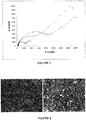
- the morphology of the prepared electrodes was investigated by SEM measurements (see Figure 4 ).
- the SEM image of a gelatin assembled gold electrode is shown in Figure 4(a) , a regular and porous structure being observed.
- the gelatin film was compact, smooth and homogenous without grainy and porous structure, showing that an ordered matrix was formed.
- a rough, sponge-like and irregular surface appeared when aptamers were added to the matrix, indicating a clear morphology change due to the interactions.
- the high stability could be attributed to the high chemical stability of gelatin and aptamers, both improving the stability of the aptasensor.
- Au can be ascribed to excellent biocompatibility and the stabilizing microenvironment around the aptamers provided by the modified gelatin sensors.
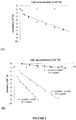
- the detection limit was found to be 1.6 x 10 -9 and the linear range was between 1.6 x 10 -9 and 4.2 x 10 -7 mol L -1 which demonstrated the improved performances of the Gel B
- the enhanced sensitivity and broader dynamic range could be due to the ability of gelatin B to make diffusion of analytes easier and prevent aptamers from leaking and most important, prevent the electrode surface from undesired adsorption.
- a comparison of the calibration curves for the two electrodes [see Figure 5(B) ] shows that the sensitivity (slope) of the Gel B
- the assay of this target in real samples was investigated by detecting CAP in a sample of skimmed cow's milk.
- the standard addition method was employed to evaluate the applicability of the developed aptasensor.
- the increased reduction peak of CAP compared with the reduction current obtained at an aptamer immobilized electrode without gelatin as protective matrix occurred at a Gel B
- Recovery values between 87% and 94% were obtained, indicating the applicability of the developed aptasensor for CAP detection in real biological samples.
- the electrodes were placed in a FIA potentiometric setup.
- the voltage output varies with time, due to the kinetics of complex formation between DA and the anti-DA aptamer.
- a positively charged analyte molecule such as DA has the tendency to adsorb to the sensor coating, if a DA binding aptamer is present in this material. This provokes a surface potential change, which is our analytical signal.
- the eluent/gelatin B interface is expected to have a Boltzmann type distribution of positive charges as the gelatin B behaves as a cation exchange-like material in the given conditions.
- the target molecules were injected as square concentration pulses, comparable with the block pulses in SPR.
- the sensorgrams (mV responses as a function of time) obtained are shown in Fig. 7 .
- Using a hydrodynamic method and square concentration pulses has the advantage that both adsorption as desorption curves can be obtained and the adsorption/desorption kinetics calculated.
- Figure 7 shows the potentiometric response of DA on the sensor which contains the DA specific aptamer.
- the response heights (mV obtained at the plateau values after 80 s of injection) are concentration dependent: see Figures 7 and 9 .
- the transformed R max values (equation 1) of the potentiometric sensors with coupled aptamer were compared with the values obtained with electrodes which did not have an aptamer coupled to the hydrogel: see Figure 9 .
- Four electrodes were tested, each with 3 injections. From five to ten times higher signals were measured with the aptamer-containing electrodes. Not only the height, but also the shape of the sensorgram was different when comparing gelatin B membranes with and without coupled aptamer (see Figure 9 ).
- the gelatin B electrodes containing aptamer always yielded slowly falling curves. This is additional evidence for the recognition by the aptamer of the target molecule. Slowly falling curves mean slow desorption kinetics. This yields small k off values, resulting in high K association values: see equation. 2.
- K association k on k off
- Figures 9, 10 and 11 clearly show that the aptamer-based sensors are very sensitive, the responses being are at least a factor of 800 higher (on a mV basis) than those of the classical PVC-based electrodes.
- Table 1 gives the R max values (in mV) of 10 -5 M injections of different analyte molecules for different potentiometric electrodes. TABLE 1 Coating Dopamine response in mV Ritodrine response in mV Lidocaine response in mV Promazine response in mV Gelatin B 9.46 1.83 2.88 3.66 Gelatin B + DA-specific aptamer 92.86 1.57 1.57 2.44
- Electrochemical measurements were recorded by a Autolab potentiostat controlled by NOVA 1.10 software package (Metrohm, The Netherlands). Morphological investigation of the electrode surface was done on a Fei Quanta 250 FEG Scanning Electron Microscope (SEM).
- SEM Fei Quanta 250 FEG Scanning Electron Microscope
- Figure 13 schematically shows the construction of the electrochemical gelatin type B-based CAP-aptasensor.
- the thiolated aptamer encapsulated in gelatin B is partially un-folded but linked to the gold surface by an Au-S bonding.
- the aptamer switches its structure to bind CAP bringing the redox active molecules proximate to the electrode surface resulting in an enhanced electron transfer.
- the first step is the electrochemical pre-treatment and biomodification of the gold screen printed electrode (SPE).
- SPE gold screen printed electrode
- a multiple-pulse amperometric pre-treatment of the gold surface is carried out in a stirred 0.5 mol L -1 H 2 SO 4 , 10 mmol L -1 KCl solution.
- the following triple-potential pulse sequence - 0.3 V for 3.0 s; 0.0 V for 3.0 s and + 1.0 V for 1.5 s (15 cycles) was applied.
- the gold working electrode surface of SPE was then exposed to the mixture of aptamer (5 ⁇ M) and the solution of gelatin type B (5 w/v%) in tris buffer (pH 7.6).
- the percentage of the incorporation was 70 : 30 v/v% from the aptamer : gel mixture. Chemisorption is allowed to proceed (about 4 hours) while the electrodes are stored in a wet chamber to protect the solution from evaporation. The immobilization step is followed by addition of CAP solution (a 100 ⁇ L drop) on top of the modified-gold SPE for 25 minutes. Prior to the electrochemical measurement, the electrode was gently washed with 100 ⁇ L of tris buffer. Then, the differential pulse voltammetry is performed in tris buffer solution (pH 7.6).
- EIS measured data show that the electron transfer resistance increases in the following order: bare SPE ( Fig. 14a ), aptamer modified SPE ( Fig. 14b ) and aptamer/Gelatin B modified SPE ( Fig. 14c ).
- the increase in electron transfer resistance indicates that the aptamers are successfully immobilized on the electrode surface.
- an additional barrier of negatively charged gelatin has increased the electron transfer resistance which results in a larger semi-circle. This demonstrates the successful immobilization of the aptamer on the SPE electrode and the blocking effect of the gelatin B layer against unspecific redox active molecules.
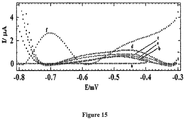
- FIG. 15 displays the differential pulse voltammograms of accumulated CAP (10 -9 M) at the surface of bare gold SPE (curve a: 0.00 ⁇ A), Gelatin A modified SPE (curve b: 0.67 ⁇ A ⁇ 0.02), Gelatin B modified SPE (curve c: 0.801 ⁇ 0.015 ⁇ A), aptamer modified SPE (curve d: 1.22 ⁇ 0.06 ⁇ A), aptamer/Gelatin A modified SPE (curve e: 0.86 ⁇ 0.04 ⁇ A) and aptamer/Gelatin B modified SPE (curve f: 2.71 ⁇ 0.09 ⁇ A) in tris buffer solution.
- the indicated currents reflect the peak current obtained in the voltammogram and can be explained as the irreversible reduction of the nitro group (NO 2 ) present in CAP molecules, with formation of hydroxylamine (NHOH).
- NO 2 nitro group
- NHOH hydroxylamine
- Gelatin B modified SPE shows a higher current signal than Gelatin A.
- the current of DPV signal increased (curve d), confirming the ability of the synthesized aptamer to capture the target molecule.
- the combination of aptamer and Gelatin A had no positive effect on the sensor efficiency (curve e) while the incorporation of aptamer and Gelatin B showed a very good response toward the target molecule (curve f) at the potential at which we expect the reduction of the nitro group, i.e. - 0.7 V.
- parameters such as the kind ( fig. 16A ) and time ( fig. 16B ) of the CAP accumulation step were optimized for the electrochemical detection of CAP.
- Three approaches were investigated to accumulate CAP on the surface of the aptamer/GelB electrodes.
- the modified SPE was immersed in the CAP solution while the solution was stirred very fast (i).
- the CAP solution was stirred slowly (ii).
- the modified SPE was kept horizontally with a 100 ⁇ L of the CAP solution on top of it (wet drop, iii). The latter was proven to be the best to accumulate CAP because of the better interaction opportunity between CAP, aptamer, GelB and the electrode surface ( Fig.16A ).
- Figure 17A depicts the diagnostic performance of the aptasensor.
- the CAP reduction signal was investigated on the aptamer/gelatin B modified SPE. It can be seen that the peak current increases with an increase of the concentration of CAP ( Fig. 17B ).
- the peak current shows a linear relationship with the Log of concentration of CAP in the range from 0.10 to 10.0 pico mol L -1 (insert of Fig. 17B ).
- the calculated detection limit is 2.09 ⁇ 10 -14 mol L -1 based on the interpolation to the point where the current differs from the background current for three standard deviations calculated from the currents obtained for three different electrodes.
Landscapes
- Health & Medical Sciences (AREA)
- Life Sciences & Earth Sciences (AREA)
- Engineering & Computer Science (AREA)
- Immunology (AREA)
- Molecular Biology (AREA)
- Chemical & Material Sciences (AREA)
- Urology & Nephrology (AREA)
- Biomedical Technology (AREA)
- Hematology (AREA)
- Physics & Mathematics (AREA)
- General Health & Medical Sciences (AREA)
- General Physics & Mathematics (AREA)
- Biochemistry (AREA)
- Pathology (AREA)
- Analytical Chemistry (AREA)
- Microbiology (AREA)
- Food Science & Technology (AREA)
- Biotechnology (AREA)
- Cell Biology (AREA)
- Medicinal Chemistry (AREA)
- Bioinformatics & Cheminformatics (AREA)
- Pharmacology & Pharmacy (AREA)
- Tropical Medicine & Parasitology (AREA)
- Spectroscopy & Molecular Physics (AREA)
- Chemical Kinetics & Catalysis (AREA)
- Electrochemistry (AREA)
- Measuring Or Testing Involving Enzymes Or Micro-Organisms (AREA)
- Apparatus Associated With Microorganisms And Enzymes (AREA)
- Investigating Or Analyzing Materials By The Use Of Electric Means (AREA)
- Investigating Or Analysing Biological Materials (AREA)
- Immobilizing And Processing Of Enzymes And Microorganisms (AREA)
Abstract
- an aptamer-based electrochemical sensor, wherein said aptamer is covalently bonded to or chemisorbed on an electrode, said aptamer forming a complex with a target molecule and is encapsulated by a gelatin B matrix;
- a method of manufacturing said aptamer-based electrochemical sensor;
- the use of the aptamer-based electrochemical sensor for the electrochemical determination of a concentration of a target molecule; and
- a composite electrode combining a polymeric material and electrically conducting particles for selective analyte detection, wherein said electrode is coated with gelatin type B.
Description
- The present invention relates to electrochemical aptasensors with a gelatin B matrix, a method of manufacturing the same and their use for determining target molecule concentrations. The present invention further relates to a composite electrode combining a polymeric material and electrically conducting particles for selective analyte detection.
- Electrochemical techniques are recognized as very important candidates for the development of biosensors to be used in non-specialized environments. Although there has been intensive research into amperometric biosensors and some of them have successfully reached the commercialization stage, there have been few reports of the use of biomolecules in potentiometric sensors except for the use of antibodies for the detection of bacteria, viruses and marker proteins via potentiometric principles.
- De Wael et al. in Analytical Chemistry (2012) 84:4921-4927, reported the first use of potentiometric sensors to study molecular interactions in liquid environments with sensorgram methodology.
- Aptamers have shown enormous potential in selectively detecting drugs, toxins, proteins etc. Sassolas et al., Electroanalysis 21(11) (2009) 1237-1250 reported the use of aptamers as the bio-recognition element in potentiometic sensors. When combined with Ion Sensitive Field Effect Transistors (ISFETS) as readout systems in poten-tiometric sensors, aptamers appear better than antibodies, due to their smaller size.
- Pilehvar et al. in Anal. Chem. (2012) 84:6753-6758, reported a novel, label-free folding induced aptamer-based electrochemical biosensor for the detection of chloramphenicol (CAP) in the presence of its analogues.
- Despite the fact that aptamers are chemically more stable than proteins, they have to be protected from nucleases. Moreover, in respect of electrochemical biosensors, the electrode surface also needs to be protected from unspecific adsorption and oxidation/reduction reactions occurring while analyzing real samples.
-
WO 2005/103664 discloses composite potentiometric electrodes for selective analyte detection in a sample comprising a sensing body made from a polymeric material, preferably plastified polyvinyl chloride, comprising: - electrically conducting particles, preferably graphite powder, which increase in concentration away from a sample contact surface,
- ionophore molecules, which increase in concentration towards the sample contact surface, and
- an electrical connection, preferably made of copper, which passes proximal to said electrically conducting particles.
- Selecting an appropriate host matrix for aptamers is one of the main challenges for the immobilization of aptamers in order to improve the analytical characteristics of aptasensors. There is also a need for more sensitive and more specific potentiometric sensors, in particular electrodes, to study molecular interactions in liquid environments with a sensorgram methodology.
- It is an object of the present invention to provide more sensitive and more specific potentiometric sensors to determine the concentration of a variety of molecules such as vitamins, toxins, antibiotics, therapeutic drugs, diagnostic agents, recreational drugs, catecholamines, metabolites, proteins, cells etc. in liquid environments with sensorgram methodology and methods for using same.
- Surprisingly it has been found that aptamers selected to form complexes, usually robust complexes, with target molecules such as vitamins, toxins, antibiotics, therapeutic drugs, diagnostic agents, recreational drugs, catecholamines, metabolites, proteins and cells, e.g. with dopamine and chloramphenicol, encapsulated in a hydrophilic gelatin B matrix can be used in electrochemical sensors to determine the concentrations of such target molecules in liquid environments using amperometric measurements or potentiometric measurements and exhibit higher sensitivity and selectivity to the target analyte than in the absence of the gelatin B matrix. Exemplary proteins include, but are not limited to, interferon y. Exemplary therapeutic drugs include, but are not limited to, cell growth factors such as vascular endothelial growth factor, antigens (e.g. the prostate-specific antigen), promazine, lidocaine, ritodrine, bromhexine, clenbuterol, drofenine, atropine, salbutamol, trimipramine, fluphenazine, chlorpheniramine and catecholamines such as adrenaline, dopamine and noradrenaline. Exemplary toxins include, but are not limited to, cadaverine and dioxine, Exemplary recreational drugs include, but are not limited to, cocaine and functional equivalents thereof, and heroine.
- Moreover, it has been surprisingly found that the use of type B gelatin encapsulation does not hinder the use of aptamers in such amperometric and potentiometric sensors, but also significantly increases the sensitivity of such sensors, whereas type A gelatin does not exhibit these advantageous properties. This cannot be explained by the difference in alkaline earth and alkali ion concentrations, since spiking of gelatin A with comparable alkaline earth and alkali ion concentrations had no effect on its behaviour. Without wishing to be bound by theory this difference might be explainable by the difference in overall charge on the gelatin, since the negatively charged aptamer ions, being repelled by the overall negative charge of the gelatin B, would be more mobile and hence diffuse more rapidly to the electrode in a gelatin B matrix than in a gelatin A matrix in which the overall positive charge of the gelatin would result in attraction, and hence reduced diffusion, of the negatively charged aptamer molecules. This increased diffusion also reduces the effect of impurities in the gelatin.
- Just as an example, in the case of an amperometric CAP-aptasensor with an aptamer linked to a gold surface by Au-S bonding, for example, see
Figure 1 , in the absence of CAP thiolated aptamers encapsulated in gelatin B are partially un-folded and upon CAP introduction the aptamer switches its structure to bind CAP surprisingly bringing the redox active molecules proximate to the gold surface as characterised by their electrochemical behavior towards the target molecule CAP, scanning electron microscopy (SEM), cyclic voltammetry (CV) and electrochemical impedance spectroscopy (EIS) measurements, seeFigure 2 . - A novel method of immobilizing aptamers on electrodes using, e.g. coated with, ionically conductive hydrophilic matrices, preferably negatively charged hydrophilic protein matrices like gelatin B, is provided. A preferred example of ionically conductive matrices is gelatin B providing a suitable micro-environment for aptamer immobilization, which facilitates the electron exchange between the target molecules and the electrode. The gelatin B film can be easily prepared and is stable over a long period. It has been found that Aptamers can be effectively immobilized on gold electrode surface by incorporation within the porous network of gelatin B. The three dimensional and hydrated environment of gelatin B helps to increase the sensitivity of the developed sensor by holding the aptamer onto the electrode surface and preventing the electrode surface from blocking. Sensors which are modified with gelatin B and aptamers show higher sensitivity toward CAP compared to the sensors without gelatin B as protective matrix. Moreover, the developed sensor is highly stable which makes it a promising technology for the fabrication of electrochemical aptasensors.
- In a first aspect of the present invention, the above objective is realised by an aptamer-based electrochemical sensor, wherein said aptamer is covalently bonded to or chemisorbed on an electrode, said aptamer to form a complex, usually a robust complex with a target molecule and is encapsulated by a gelatin B matrix.
- In a second aspect of the present invention, the above objective is realised by a method of manufacturing an aptamer-based electrochemical sensor for determining a concentration of a target molecule comprising the steps of: selecting an aptamer to form a complex, preferably a robust complex with a target molecule, e.g. using the SELEX procedure; synthesizing said aptamer; adsorbing said aptamer on or covalently coupling said aptamer with an electrode; and providing a gelatin B matrix for said aptamer on said electrode thereby realising said aptamer-based potentiometric sensor.
- In a third aspect of the present invention, the above objective is realised by the use of the aptamer-based electrochemical sensor produced according to the second aspect of the present invention for the quantitative electrochemical determination of a concentration of said target molecule.
- A specific embodiment of the present invention is the electrochemical determination of a concentration of chloramphenicol by an electrochemical sensor of the first aspect of the present invention, wherein said aptamer is AGC-AGC-ACA-GAG-GTC-AGA-TGA-CTG-AGG-GCA-CGG-ACA-GGA-GGG-CAT-GGA-GAG-ATG-GCG.
- A specific embodiment of the present invention is the electrochemical determination of a concentration of chloramphenicol by an electrochemical sensor of the first aspect of the present invention, wherein said aptamer is AGC-AGC-ACA-GAG-GTC-AGA-TGA-CTG-AGG-GCA-CGG-ACA-GGA-GGG-GGA-GAG-ATG-GCG-TGA-GGT-CCT-ATG-CGT-GCT-ACC-GTG-AA.
- Another specific embodiment of the present invention, the above objective is realised by the use for the electrochemical determination of a concentration of dopamine by an electrochemical sensor of the first aspect of the present invention, wherein said aptamer is GTC-TCT-GTG-TGC-GCC-AGA-GAA-CAC-TGG-GGC-AGA-TAT-GGG-CCA-GCA-CAG-AAT-GAG-GCC-C.
- A fourth aspect of the present invention relates to a composite electrode combining a polymeric material and electrically conducting particles for selective analyte detection, wherein said electrode is coated with gelatin type B. Such gelatin-coated composite electrode may be a part of a three-electrode potentiometric cell for selective analyte detection, further comprising a reference electrode and a counter-electrode. This composite electrode and potentiometric cell may be for an in vivo analyte sensor or an in vitro analyte sensor.
- Particular and preferred aspects of the invention are set out in the accompanying independent and dependent claims. Features from the dependent claims may be combined with features of the independent claims and with features of other dependent claims as appropriate and not merely as explicitly set out in the claims.
- The above and other characteristics, features and advantages of the present invention will become apparent from the following detailed description, taken in conjunction with the accompanying drawings, which illustrate, by way of example, the principles of the invention.
- The term "electrochemical biosensor", as used herein, means an analytical device that consist of a sensitive biological recognition material targeting an analyte of interest and a transduction element for converting the recognition process into an amperometric or potentiometric signal.
- The term "sensorgram", as used herein, means a plot of the potentiometric signal vs. time, when a square concentration (block) pulse passes the sensor.
- The term "sensorgram methodology", as used herein, means the use of the sensorgram to calculate Kd values for the interaction between molecules, e.g. using the adsorption/desorption model described in K. De Wael et al., Anal. Chemistry 84 (2012) 4921-4927.
- The term electrochemical aptasensor, as used herein, means an Electrochemical sensor with at least one immobilized aptamer as a sensing element.
- The term aptamer, as used herein, means a synthetic oligonucleic acid sequence [single strand DNA or RNA]which can bind to a molecular target with high affinity and specificity, for instance due to its structural flexibility.
- The term DNA-aptamer, as used herein disclosing the present invention, means a single strand synthetic DNA sequence which has been designed specifically to recognise and bind a particular molecular target such as a small molecule, a protein, a nucleic acid, a cell, tissue or an organism with high affinity and specificity, for instance due to their flexibility that results in binding to their ligands via adaptive recognition involving conformational alteration. DNA aptamers are advantageous over RNA aptamers due to the greater intrinsic chemical stability of DNA.
- The term ionically conductive, as used in disclosing the present invention, means having an ionic conductivity greater than 10-5 S cm-1, with ionic conductivities greater than 10-4 S cm-1 being preferred and with ionic conductivities greater than 10-3 S cm-1 being particularly preferred.
- The term hydrophilic, as used herein, means having an affinity for attracting, adsorbing or absorbing water.
- The term hydrogel, as used herein disclosing the present invention, is a colloid in which the disperse phase (colloid) has combined with the continuous phase (water) to produce a viscous jellylike product.
- Gelatin, as used herein, refers to a product obtained by hot water extraction (hydrolysis) from the collagen protein from skin, bone and connective tissues of vertebrate animals (beef, pig, horse, fish). There are two main types of gelatin, referred to as A- (or acid) type and B- (or limed/alkaline) type. This categorization essentially goes back to the pre-treatment of the raw material (collagen) which will affect the characteristics of the gelatin extracted. Gelatin gel strength is characterized by the Bloom number; the higher the Bloom number, the stronger the gel.
- Gelatin normally slowly swells in cold water (18°C) and more rapidly dissolves in aqueous solutions at 40°C and above.
- The term type B gelatin or gelatin B, as used herein, means a gelatin resulting from alkaline pretreatment of collagen. Type B gelatin typically has higher calcium, potassium and sodium ion concentrations than gelatin A, usually in the range of 900 ± 100 ppm, 330 ± 50 and 3600 ± 1400 ppm respectively. Another typical difference of gelatin B is the iso-electric point (IEP) of 4.8 to 5.2 which is almost constant and independent of the Bloom number. This is in contrast with gelatin A, where the IEP is linked to the Bloom number and ranges from about 7 (low Bloom number i.e. 50-125) to about 9 (high Bloom number i.e. 225-325).
- The following abbreviations are used throughout the detailed description of the present invention with the following meanings.
- CV: Cyclic Voltammetry.
- SWV: Square Wave Voltammetry.
- CAP: chloramphenicol.
- DA: dopamine.
- SELEX: "selection evolution of ligands by exponential enrichment".
- MRL: Maximum residue limit.
- FTIR: Fourier Transform Infrared Spectroscopy.
- EIS: Electrochemical impedance spectroscopy.
- SCE: Standard Calomel Electrode.
- SPR: Surface Plasmon Resonance.
- MES: 2-(N-morpholino)ethanesulfonic acid (a buffer).
- IEP: isoelectric point.
- FIA: flow injection analysis.
- EDC: 1-ethyl-3(3-dimethylaminopropyl) carbodiimide.
- NHS: N-hydroxysuccinimide.
- SPE: screen printed electrode.
- The present invention will be described with respect to particular embodiments and with reference to certain drawings but the invention is not limited thereto but only by the claims.
- It is to be understood that although preferred embodiments, specific constructions and configurations, as well as materials, are discussed herein for devices and methods according to the present invention, various changes or modifications in form and detail may be made, e.g. method steps or device components may be added, without departing from the scope and spirit of this invention.
-
- Fig. 1
- is a representation of a gelatin-containing aptasensor for CAP detection on a gold (Au) electrode.
- Fig. 2
- shows cyclic voltammograms of Au (1), Gel B|APT| Au electrode (2) in blank solution and Au (3), APT | Au (4)and Gel B | APT | Au (5) electrode in1 x 10-6 mol L-1 of CAP solution.
- Fig. 3
- shows the electrochemical impedance spectra of Au (1), APT | Au (2) and Gel B | APT | Au(3) electrode in 10 x 10-3 mol L-1 [Fe(CN)6]4-/3- in the frequency range 0.1 to 100,000 Hz.
- Fig. 4
- shows SEM images of the working surface area of a gold electrode after gelatin B immobilization (a), and after aptamer incorporation (b).
- Fig. 5
- shows in (A) the dependence of the redox peak current on the concentration of CAP at a Gel B | APT | Au electrode, and in (B) calibration curves obtained at APT | Au (1) and Gel B | APT | Au (2) electrodes.
- Fig. 6
- shows in confocal images of hydrogels. (A): pure Gelatin B; (B): Gelatin B + coupling agents (EDC and NHS); and (C): Gelatin B + coupling agents + fluorescent aptamer. Confocal features: pixels 7.92; red value 5.58; the scale bar (white) = 100 µm.
- Fig. 7
- shows sensorgram recordings for DA on a biosensor with a Gelatin B membrane with covalently linked aptamer. Square concentration pulses were injected for 80 s. The concentration varied from 5 x 10⁻⁷ M (lower curve) to 10-6 M, 5 x 10⁻⁶ M, 10-5 M, 5 x 10⁻⁵ M, and 10-4 M (upper curve).
- Fig. 8
- shows normalisation of the curves in
Figure 7 fromtime 0 to the time corresponding to maximum response Rmax to a 10-4 M DA injection, to show the variation with concentration. - Fig. 9
- shows a Nicolskii-Eisenmann-type calibration graph. The smooth curve is obtained from a non-linear least-squares fit to a Nicolskii-Eisenmann function of the type E = E° + S. log (cDA + Cst). E° = 387 mV, S = 60.4 mV and Cst = 3.9 x 10⁻⁷ M.
- Fig. 10
- shows the differences between the aptamer-based potentiometric biosensor (lighter upper trend line) and the negative control (darker lower trend line, only containing a Gelatin B membrane) in respect of the potentiometric responses of 5 x 10⁻⁵ M to 10-7 M DA injections in FIA after transformation to a concentration-related signal.
- Fig. 11
- shows the differences between the aptamer based potentiometric biosensor (lighter), and the negative control (darker) for injections of DA 10-6 M on a sensor which contains an aptamer (upper curve: lighter) and on a sensor which does not contain an aptamer (lower curve: darker).
- Fig. 12
- shows the slope of

- Fig. 13
- shows the manufacture of a gelatin B-containing aptasensor based on a gold screen printed electrode (SPE) for the detection of CAP by means of differential pulse voltammetry.
- Fig. 14
- shows electrochemical impedance spectra obtained with the bare SPE of
fig. 13 (Fig. 14a ), the aptamer modified SPE (Fig. 14b ) and the aptamer/gelatin B modified SPE (Fig. 14c ). - Fig. 15
- shows the differential pulse voltammograms of accumulated CAP (10-9 M) at the surface of the bare gold SPE of
fig. 13 (curve a), a gelatin A modified SPE (curve b), a gelatin B modified SPE (curve c), an aptamer modified SPE (curve d), an aptamer/gelatin A modified SPE (curve e) and an aptamer/gelatin B modified SPE (curve f) in tris buffer solution. - Fig. 16
- shows the influence of the kind (
fig. 16A ) and time (fig. 16B ) of accumulation of CAP on the electrochemical detection signal. - Fig. 17
- shows shows in (A) the dependence of the redox peak current on the concentration of CAP at a Gel B | APT | Au SPE electrode, and in (B) calibration curves obtained at APT | Au SPE (1) and Gel B | APT | Au SPE (2) electrodes.
- The electrochemical aptasensor according to the present invention requires at least a detecting electrode, also named a working electrode. A conventional electrochemical device is a three-electrode cell configuration comprising a reference electrode (such as, but not limited to, a calomel electrode or a silver electrode) and a counter-electrode. Suitable detecting electrodes include gold electrodes, glassy carbon electrodes, an inert metal in an ionically conducting composite, and composite electrodes combining a polymeric material and electrically conducting particles. The electrode may be obtained by any manufacturing process known in the art, including the screen printing technique for making a SPE.
-
WO 2005/103664 , the content of which is incorporated herein by reference, discloses suitable composite potentiometric electrodes for selective analyte detection=according to the present invention, provided that said electrodes are coated with an ionically conductive hydrophilic, preferably negatively charged, matrix such as gelatin type B or an equivalent thereof, for instance in the form of a thin (µm scale) or ultrathin (nm scale) layer. Gelatin B for performing this aspect of the invention may have any Bloom number, including the low range 50-125, the medium range 125-225 and the high range 225-325. - This composite electrode, and a potentiometric cell including it, may be for an in vivo analyte sensor or an in vitro analyte sensor.
- In a first aspect of the present invention, the above objective is realised by an aptamer-based electrochemical sensor, wherein said aptamer is covalently bonded to or chemisorbed on an electrode, said aptamer is selected to form a complex, usually a robust complex with a target molecule and is encapsulated by an ionically conductive hydrophilic, preferably negatively charged, matrix such as gelatin B or an equivalent thereof. Gelatin B for performing this aspect of the invention may have any Bloom number, including the low range 50-125, the medium range 125-225 and the high range 225-325.
- According to a preferred embodiment of the first aspect of the present invention, said aptamer is selected with the SELEX procedure, or it may be known from the literature.
- According to another preferred embodiment of the first aspect of the present invention, said target molecule is selected from the group consisting of vitamins, antibiotics, toxins, therapeutic drugs, diagnostic agents, recreational drugs (e.g. cocaine), catecholamines, metabolites, proteins and cells.
- According to another preferred embodiment of the first aspect of the present invention, said aptamer is 5'-SH-(CH2)6-AGC-AGC-ACA-GAG-GTC-AGA-TGA-CTG-AGG-GCA-CGG-ACA-GGA-GGG-CAT-GGA-GAG-ATG-GCG-3' and is intended for CAP detection.
- According to another preferred embodiment of the first aspect of the present invention, said aptamer is 5'-GTC-TCT-GTG-TGC-GCC-AGA-GAA-CAC-TGG-GGC-AGA-TAT-GGG-CCA-GCA-CAG-AAT-GAG-GCC-C-spacer-NH2-3' and is intended for dopamine detection.
- In a second aspect of the present invention, the above objective is realised by a method of manufacturing an aptamer-based electrochemical sensor for determining a concentration of a target molecule comprising the steps of:
- selecting an aptamer to form a complex, preferably a robust complex, with a target molecule, e.g. using the SELEX procedure;
- synthesizing said aptamer;
- adsorbing said aptamer on or covalently coupling said aptamer with an electrode; and
- providing an ionically conductive hydrophilic, preferably negatively charged, matrix, preferably gelatin type B or an equivalent thereof, for said aptamer on said electrode.
- According to a preferred embodiment of the second aspect of the present invention, said target molecule is selected from the group consisting of vitamins, antibiotics, toxins, therapeutic drugs, diagnostic agents, recreational drugs, catecholamines, metabolites, proteins and cells.
- In a third aspect of the present invention, the above objective is realised by the use of the aptamer-based electrochemical sensor according to the first aspect of the present invention or produced according to the second aspect of the present invention for the electrochemical determination of a concentration of a target molecule.
- According to a preferred embodiment of the third aspect of the present invention, said electrochemical determination is a potentiometric determination.
- According to another preferred embodiment of the third aspect of the present invention, said electrochemical determination is an amperometric determination.
- Promazine, lidocaine, ritodrine and chloramphenicol (CAP) were obtained from Sigma-Aldrich (Bornem, Belgium) and dopamine (DA) was obtained from Fluka. To dissolve these drugs, small amounts of ethanol (Fluka, analytical grade) were used.
- MES was obtained from Acros Organics (Eupen, Belgium).
- The coupling agents EDC and NHS were obtained from Sigma-Aldrich.
- All chemicals were of analytical reagent grade.
- Type B gelatin (Gel, IEP = 5, Bloom strength = 257), isolated from bovine skin by the alkaline process, was provided by Tessenderlo Chemie (Belgium).
-
Tris buffer containing: NaCl 100 ×10-3 mol L-1 Tris HCl 20 ×10-3 mol L-1 MgCl2 2 ×10⁻³ mol L-1 KCl 5 ×10⁻³ mol L-1 CaCl2 1 ×10⁻³ mol L-1 -
binding aptamer sequence (5'-SH-(CH2)6-AGC-AGC-ACA-GAG-GTC-AGA-TGA-CTG-AGG-GCA-CGG-ACA-GGA-GGG-CAT-GGA-GAG-ATG-GCG-3') from Eurogentec. A 58 mer aptamer selected specifically to detect DA (Zheng et al., 2011) (5'-GTC-TCT-GTG-TGC-GCC-AGA-GAA-CAC-TGG-GGC-AGA-TAT-GGG-CCA-GCA-CAG-AAT-GAG-GCC-C-spacer-NH2-3') aptamer synthesized by Integrated DNA Technologies (Leuven, Belgium) - Voltammetric measurements were recorded by a µ-AutolabII potentiostat controlled by NOVA 1.7 software package (Metrohm, The Netherlands). Electrochemical impedance spectroscopy (EIS) measurements were performed by using a frequency response analyzer module. A gold electrode inlaid disk (Φ = 1.6 mm) was used as working electrode. A saturated calomel electrode (SCE) and graphite were used as the reference and the auxiliary electrode, respectively.
- Morphological investigation of the electrode surface was performed using a JEOL JSM-6300 Scanning Electron Microscope (SEM) and confocal microscopy was performed by localizing Cy3 dyes with a Nikon C1 laser scanning confocal unit (D-eclipse-C1, Nikon, Melville, NY) equipped with an argon and a helium/neon laser line fitted onto an upright microscope (Eclipse E600, Nikon, Melville, NY) in combination with a 10x planfluor (NA: 0.50) objective manufactured by Nikon (Melville, NY).
- The FIA recordings were performed using a LC-10ADvp pump (Shimadzu Liquid Chromatography) and a Rheodyne 7125 six port external sample injector (VICI, US). A 1.00mL sample loop was used to generate square concentration pulses for sensorgram recording in FIA conditions. The PEEK tubing (Alltech, USA) of the injection loop and the injector-detector connections had an internal diameter of 0.18mm. The flow rate was 1.00mL min-1. Poiseuille peak broadening effects were kept to a minimum using short injector-detector connections (150mm). To avoid such effects at the end of the square concentration pulse, the injector was switched from inject to load after 80s (well before the sample loop volume was totally emptied).
- This results in a sharp pulse with negligible broadening as well at the start as at the end of the pulse. The eluent was 10.0 mM MES, pH 7.0.
- The column outlet was directed perpendicularly towards the sensitive membrane of the coated wire electrode in a "wall-jet" flow cell. The distance from the LC tubing outlet to the electrode was 0.10 mm.
- Prior to surface modification, the gold electrode was mechanically polished with 1.0 and 0.05 µm alumina slurry separately, followed by rinsing thoroughly with double distilled water. Then it was washed ultrasonically in double distilled water then ethanol for 15 minutes. The electrode was rinsed with distilled water and dried at room temperature. Subsequently, electrodes were electrochemically cleaned by potential scanning between - 1.2 and 1.2 V until a reproducible cyclic voltammetric scan was obtained.
- To immobilize the CAP-binding thiolated aptamer on the gold surface, 3×10⁻⁶ L of a 2.5 x 10⁻⁶ mol L-1 aptamer and 5% (w/w) gelatin type B solution was dropped onto a freshly smoothed gold surface, and the solvent was then evaporated at 4°C for 6 hours. The final sensing interface was ready after rinsing with buffer solution.
- The indicator electrode is made of a PVC cylinder. It contains a cylindrical substrate electrode (3.0 mm diameter x 1.0 mm length), which is an electronically conducting graphite/PVC composite material. The composite substrate electrode was polished with Carbimet grid 600 (Buehler Ltd, USA).
- To coat the gelatinous hydrogel on the electrode, 10.0 µL of a mixture, which consists of 25.0 mg gelatin B dissolved in 0.50 mL 10.0 mM MES (5% w/v) pH 7.0 at 40°C, was brought onto the electrode surface with a micropipette and exposed to air for 2 hours at 4°C (drop drying).
- The EDC-NHS coupling procedure was used to bind the DA-binding aminated aptamer covalently to the gelatin B hydrogel (which contains carboxyl groups). After adding 20 µL of the coupling agents (15.32 mg of EDC and 2.32 mg of NHS dissolved in 100 µl of 10.0 mM MES buffer at pH 7.0) to the coated hydrogel for 2 hours, 2 x 4 µL of the aptamer (10-4M) was applied for 1 hour. After evaporation for 2 hours at 4°C the electrodes were kept in 10.0 mM MES running buffer, pH 7.0 for at least 3 hours until a stable baseline was obtained. The sensorgrams of each analyte were measured on 3 electrodes, and used when the inter-electrode reproducibility was better than 10%. At least 3 sensorgrams (injections) were recorded on each electrode after conditioning and stabilization in the running buffer.
- The membrane potential was measured against an Orion 800500Ross® reference electrode (Ag/AgCl) using a high impedance (1013Ω) homemade amplifier. The detection signals were recorded on a data station composed of a computer equipped with a 6013 NI DA converter and LabVIEW 7 (National Instruments, US) based software. The overall RC time constant of the high impedance amplifier plus data station was set to 0.2 s.
- The morphology of the prepared electrodes was investigated by SEM measurements (see
Figure 4 ). The SEM image of a gelatin assembled gold electrode is shown inFigure 4(a) , a regular and porous structure being observed. The gelatin film was compact, smooth and homogenous without grainy and porous structure, showing that an ordered matrix was formed. However, a rough, sponge-like and irregular surface appeared when aptamers were added to the matrix, indicating a clear morphology change due to the interactions. - Cyclic voltammetry (CV) and electrochemical impedance spectroscopy (EIS) measurements were performed to characterize an APT | Au electrode and a Gel B | APT | Au electrode as shown in
Figures 2 and3 respectively. - Whereas at a bare gold electrode no obvious redox peak was observed in the CV-characteristic (indicated by 3 in
Figure 2 ), a large reduction peak was observed in the CV-characteristic (indicated by 4 inFigure 2 ) at APT | Au. With gelatin type B encapsulation the response (indicated by 5 inFigure 2 ) increased due to the increased electron transfer capability of the modified electrode. A gelatin type B film acts as both a supporting polymer for aptamers and as a reaction medium. Therefore, substrate mass transport occurred in and out of the hydrogel layer while the aptamers were retained in the matrix and on the electrode surface. - The EIS characteristics shown in
Figure 3 demonstrate that the electron transfer resistance increased in the following order: Au electrode (indicated by 1 inFigure 3 ), APT | Au electrode (indicated by 2 inFigure 3 ) and Gel B | APT | Au electrode (indicated by 3 inFigure 3 ). This is attributed to the fact that ssDNA with negative charges on its phosphate backbone makes an electrostatic repulsive force to the [Fe-(CN)6]3-/4- anions and prevents electrons from reaching the electrode surface. The increase in electron transfer resistance indicates that the aptamers are successfully immobilized on the electrode surface. In the case of a Gel B | APT | Au electrode, an additional barrier of negatively charged gelatin has increased the electron transfer resistance which results in a larger semi-circle. This demonstrates the successful immobilization of APT on the electrode and the blocking effect of the gelatin layer to unspecific redox active molecules. The CV-characteristics of the resulting aptasensor at different scan rates were also studied. In the presence of CAP molecules, a linear dependence of peak current upon scan rate implied that the electrochemical process was a surface confined process. The short-term stability of the aptasensor was investigated over successive cyclic voltammograms. The response current of the electrode with immobilized aptamer and gelatin encapsulation decreased by about 3.2% of its initial response and the relative standard deviation (R.S.D.) was 1.8%, whereas the electrode only with immobilized aptamer showed a 20.2% decrease and an R.S.D. of 3.5%. The high stability could be attributed to the high chemical stability of gelatin and aptamers, both improving the stability of the aptasensor. The good stability of the Gel B | APT | Au can be ascribed to excellent biocompatibility and the stabilizing microenvironment around the aptamers provided by the modified gelatin sensors. - From
Fig.5 (A) , it can be seen that the peak current increases with increasing CAP concentration. There was a linear relationship between peak current and CAP concen-tration in the range from 2.1 x 10⁻⁹ to 5.2 x 10⁻⁷ mol L-1. The linear regression equation was I = - 1.6 C + 2.7, (units for C and I are x 10-9 M and x 10-7 A respectively) and the correlation coefficient is 0.9684. The detection limit was 1.2 x 10⁻⁹ mol L-1 based on interpolation to the point where the current differs from the background current for three standard deviations calculated from the currents obtained for three different electrodes. In the case of APT | Au electrodes (without gelatin as a protective matrix), the detection limit was found to be 1.6 x 10⁻⁹ and the linear range was between 1.6 x 10⁻⁹ and 4.2 x 10⁻⁷ mol L-1 which demonstrated the improved performances of the Gel B | APT | Au electrode over the APT | Au electrode. The enhanced sensitivity and broader dynamic range could be due to the ability of gelatin B to make diffusion of analytes easier and prevent aptamers from leaking and most important, prevent the electrode surface from undesired adsorption. A comparison of the calibration curves for the two electrodes [seeFigure 5(B) ] shows that the sensitivity (slope) of the Gel B | APT | Au electrode was higher than that of the APT | Au electrode. - The assay of this target in real samples was investigated by detecting CAP in a sample of skimmed cow's milk. The standard addition method was employed to evaluate the applicability of the developed aptasensor. The increased reduction peak of CAP compared with the reduction current obtained at an aptamer immobilized electrode without gelatin as protective matrix occurred at a Gel B | APT | Au electrode in the expected potential range, which indicated an enhanced sensitivity of the developed Gel B | APT | Au electrode. Recovery values between 87% and 94% were obtained, indicating the applicability of the developed aptasensor for CAP detection in real biological samples.
- The covalent binding of the aminated oligonucleotides to the gelatin B, which contains carboxyl groups, was examined by confocal microscopy. To exclude the background signal, pure Gelatin B and Gelatin B treated with coupling agents (EDC and NHS), were checked as blanks. No signal was observed in the latter cases (
Fig. 6A and 6B ). This is in contrast with the bright fluorescent signal observed for a hydrogel treated with a fluorescent labeled (Cy3) aminated aptamer (Fig. 6C ). Even after three hours of use in the FIA potentiometric set-up, the intense fluorescence persisted. This experiment confirmed the covalent coupling of the aminated oligonucleotides to the gelatin B. - After checking the coupling of the aptamer to the biopolymer as described above, the electrodes were placed in a FIA potentiometric setup. After injection of an analyte in the FIA system, the voltage output varies with time, due to the kinetics of complex formation between DA and the anti-DA aptamer. A positively charged analyte molecule such as DA has the tendency to adsorb to the sensor coating, if a DA binding aptamer is present in this material. This provokes a surface potential change, which is our analytical signal. In its most simple representation, the eluent/gelatin B interface is expected to have a Boltzmann type distribution of positive charges as the gelatin B behaves as a cation exchange-like material in the given conditions.
- The target molecules were injected as square concentration pulses, comparable with the block pulses in SPR. The sensorgrams (mV responses as a function of time) obtained are shown in
Fig. 7 . Using a hydrodynamic method and square concentration pulses has the advantage that both adsorption as desorption curves can be obtained and the adsorption/desorption kinetics calculated. -
Figure 7 shows the potentiometric response of DA on the sensor which contains the DA specific aptamer. The response heights (mV obtained at the plateau values after 80 s of injection) are concentration dependent: seeFigures 7 and9 . After normalization of the curves from time zero to Rmax (seeFig. 8 ), it is clear that higher concentrations of DA show faster "on" kinetics than lower concentrations. This concentration dependent difference in adsorption kinetics (rising part of the curve) is typical for SPR experiments. - If the maximum responses (in mV) are plotted against the logarithm of the concentration, the typical Nicolskii-Eisenmann curve is obtained (see
Figure 9 ). At higher concentration values (results not shown), saturation of the signal (reaching a plateau value) starts to occur. This is ascribed to the fact that a relatively low aptamer concentration (10-4M) was used to bind to the hydrogel. DA concentrations below 5 x 10⁻⁵M were therefore used in these experiments. - The Nicolskii-Eisenmann equation (see
Figure 9 ) was transformed toequation 1, to obtain a concentration dependent output signal ("Transformed Response", tR) of the sensor.
- The transformed Rmax values (equation 1) of the potentiometric sensors with coupled aptamer were compared with the values obtained with electrodes which did not have an aptamer coupled to the hydrogel: see
Figure 9 . Four electrodes were tested, each with 3 injections. From five to ten times higher signals were measured with the aptamer-containing electrodes. Not only the height, but also the shape of the sensorgram was different when comparing gelatin B membranes with and without coupled aptamer (seeFigure 9 ). The gelatin B electrodes containing aptamer always yielded slowly falling curves. This is additional evidence for the recognition by the aptamer of the target molecule. Slowly falling curves mean slow desorption kinetics. This yields small koff values, resulting in high Kassociation values: see equation. 2.
-
Figures 9, 10 and11 clearly show that the aptamer-based sensors are very sensitive, the responses being are at least a factor of 800 higher (on a mV basis) than those of the classical PVC-based electrodes. - The above-defined "sensorgram methodology" was used. Sensorgrams were recorded at different analyte concentrations. The rising parts of the sensorgrams are shown in mV in
Figure 8 . The mV y-axis in these sensorgrams was first converted to a concentration dependent response, called transformed Response (see equation. 1). The transformed Response (tR) of the sensor was linearly related to the number of occupied adsorption sites, Roccupied. i.e.: transformed Response (tR) ∼ Roccupied. - The rate of adsorption of DA, von, can be regarded as a reaction rate which is first order in the DA concentration in the bulk of the solution (canalyte) and in the concentration of free adsorption sites (or aptamers) on the sensor surface: Rmax - Roccupied. It can be described by a rate equation of the form of equation 3:

- This equation can be rewritten by substituting the concentration of DA molecules, which adsorbed onto (or "occupied") the aptamer derivatized surface, Roccupied, by the sensor's transformed Response, tR, and by replacing Rmax by tRmax. This yields equation 4:


Figure 12 , which confirms that the model used for the sensorgram methodology is applicable. For the first time reliable molecular interaction data were obtained for the interaction of a biomolecule (the aptamer) with its target molecule, via a potentiometric sensor principle. - To check the specificity of the DA-specific aptamer, Dopamine and three other basic drugs (ritodrine, lidocaine and promazine) were tested on the gelatin B-coated electrodes with and without the aptamer. These lipophilic cationic drugs have much better responses on PVC-based potentiometric sensors than DA. Sensors based on gelatin B were quite insensitive towards these three other drugs, there being no improvement in sensitivity for these compounds when the aptamer biorecognition element was coupled to the gelatin B, whereas DA showed a very clear increase in Rmax, as disclosed above. Table 1 gives the Rmax values (in mV) of 10-5M injections of different analyte molecules for different potentiometric electrodes.
TABLE 1 Coating Dopamine response in mV Ritodrine response in mV Lidocaine response in mV Promazine response in mV Gelatin B 9.46 1.83 2.88 3.66 Gelatin B + DA-specific aptamer 92.86 1.57 1.57 2.44 - Electrochemical measurements were recorded by a Autolab potentiostat controlled by NOVA 1.10 software package (Metrohm, The Netherlands). Morphological investigation of the electrode surface was done on a
Fei Quanta 250 FEG Scanning Electron Microscope (SEM). The SPE was purchased from Metrohm and made of a gold working electrode, a carbon counter electrode and a silver reference electrode. - Unless specified otherwise, the chemicals and materials are the same as in the previous examples.
-
Figure 13 schematically shows the construction of the electrochemical gelatin type B-based CAP-aptasensor. In the absence of CAP, the thiolated aptamer encapsulated in gelatin B is partially un-folded but linked to the gold surface by an Au-S bonding. When CAP is introduced to the modified SPE, the aptamer switches its structure to bind CAP bringing the redox active molecules proximate to the electrode surface resulting in an enhanced electron transfer. - The first step is the electrochemical pre-treatment and biomodification of the gold screen printed electrode (SPE). Prior to immobilization of the thiolated DNA aptamer, a multiple-pulse amperometric pre-treatment of the gold surface is carried out in a stirred 0.5 mol L-1 H2SO4, 10 mmol L-1 KCl solution. The following triple-potential pulse sequence: - 0.3 V for 3.0 s; 0.0 V for 3.0 s and + 1.0 V for 1.5 s (15 cycles) was applied. The gold working electrode surface of SPE was then exposed to the mixture of aptamer (5 µM) and the solution of gelatin type B (5 w/v%) in tris buffer (pH 7.6). The percentage of the incorporation was 70 : 30 v/v% from the aptamer : gel mixture. Chemisorption is allowed to proceed (about 4 hours) while the electrodes are stored in a wet chamber to protect the solution from evaporation. The immobilization step is followed by addition of CAP solution (a 100 µL drop) on top of the modified-gold SPE for 25 minutes. Prior to the electrochemical measurement, the electrode was gently washed with 100 µL of tris buffer. Then, the differential pulse voltammetry is performed in tris buffer solution (pH 7.6).
- EIS measured data (
Fig. 14 ) show that the electron transfer resistance increases in the following order: bare SPE (Fig. 14a ), aptamer modified SPE (Fig. 14b ) and aptamer/Gelatin B modified SPE (Fig. 14c ). The increase in electron transfer resistance indicates that the aptamers are successfully immobilized on the electrode surface. In the case of a aptamer/GelB SPE, an additional barrier of negatively charged gelatin has increased the electron transfer resistance which results in a larger semi-circle. This demonstrates the successful immobilization of the aptamer on the SPE electrode and the blocking effect of the gelatin B layer against unspecific redox active molecules. - In order to investigate the role of the gelatin B matrix in the efficiency of the aptasensor, differential pulse voltammetry (DPV) was selected as sensitive technique.
Figure 15 displays the differential pulse voltammograms of accumulated CAP (10-9 M) at the surface of bare gold SPE (curve a: 0.00 µA), Gelatin A modified SPE (curve b: 0.67 µA ± 0.02), Gelatin B modified SPE (curve c: 0.801 ± 0.015µA), aptamer modified SPE (curve d: 1.22 ± 0.06 µA), aptamer/Gelatin A modified SPE (curve e: 0.86 ± 0.04 µA) and aptamer/Gelatin B modified SPE (curve f: 2.71 ± 0.09 µA) in tris buffer solution. The indicated currents reflect the peak current obtained in the voltammogram and can be explained as the irreversible reduction of the nitro group (NO2) present in CAP molecules, with formation of hydroxylamine (NHOH). As can be seen, there is no signal for CAP at a bare gold electrode. It means that no chemisorption takes place after 25 minutes accumulation of CAP at the surface of bare gold SPE (curve a). After immobilization of gel at SPE, the DPV signal appears for accumulated CAP (curve b and c). However, Gelatin B modified SPE shows a higher current signal than Gelatin A. Following the modification of the SPE by the aptamer, the current of DPV signal increased (curve d), confirming the ability of the synthesized aptamer to capture the target molecule. The combination of aptamer and Gelatin A had no positive effect on the sensor efficiency (curve e) while the incorporation of aptamer and Gelatin B showed a very good response toward the target molecule (curve f) at the potential at which we expect the reduction of the nitro group, i.e. - 0.7 V. Also, there is a pre oxidation wave around - 0.45V that shows the presence of intermediates in redox reactions of CAP. - Dramatic increase in DPV height after mixing aptamer and Gelatin B is likely due to an increase in charge transfer kinetics resulting from the better reactivity of the aptamer towards the target. Due to the incorporation of the aptamer in the gelatin B matrix and its biocompatibility, most sites of the aptamer will remain active during the formation of the self-assembled monolayer from the thiolated aptamer. As the mixture of aptamer/gelatin B shows a significantly higher DPV signal than aptamer/gelatin A, the biocompatibility of gelatin B towards aptamers is expected to be better. Because of the physical interactions between the aptamer chains and gelatin (e.g. van der Waals forces and hydrogen bonds between amino acids), GelB is a good example of a physically cross-linked hydrogel. Therefore, the hydrophilic groups or domains which are hydrated make GelB a suitable matrix for the entrapment of the aptamer.
- To obtain the most sensitive results, parameters such as the kind (
fig. 16A ) and time (fig. 16B ) of the CAP accumulation step were optimized for the electrochemical detection of CAP. Three approaches were investigated to accumulate CAP on the surface of the aptamer/GelB electrodes. First, the modified SPE was immersed in the CAP solution while the solution was stirred very fast (i). Secondly, the CAP solution was stirred slowly (ii). Thirdly the modified SPE was kept horizontally with a 100 µL of the CAP solution on top of it (wet drop, iii). The latter was proven to be the best to accumulate CAP because of the better interaction opportunity between CAP, aptamer, GelB and the electrode surface (Fig.16A ). Also, the time of accumulation for CAP on the surface of the aptamer/GelB modified SPE was investigated during 10, 15, 20, 25, 30 and 35 minutes. When accumulation time increased from 10 to 25 minutes, the signal of the accumulated CAP enhanced. After that, no obvious changes in the DPV reduction current of CAP were observed. Therefore, 25 minutes was selected as optimized time (Fig.16B ). -
Figure 17A depicts the diagnostic performance of the aptasensor. To study the role of gelatin B as matrix in function of the biosensor, the CAP reduction signal was investigated on the aptamer/gelatin B modified SPE. It can be seen that the peak current increases with an increase of the concentration of CAP (Fig. 17B ). The peak current shows a linear relationship with the Log of concentration of CAP in the range from 0.10 to 10.0 pico mol L-1 (insert ofFig. 17B ). The calculated detection limit is 2.09 × 10⁻¹⁴ mol L-1 based on the interpolation to the point where the current differs from the background current for three standard deviations calculated from the currents obtained for three different electrodes. - The assay of the target in a real sample was investigated by detecting CAP in a skimmed cow's milk sample with the SPE electrode of example 3. The standard addition method was employed to evaluate the applicability of the developed aptasensor. The increased reduction peak of CAP occurred in the expected potential range at aptamer/gelatin B modified SPE compared to the reduction current obtained at an aptamer immobilized electrode without a gelatin protective matrix, suggesting an enhanced sensitivity of the developed sensor. Recovery values shown in table 2, ranging between 82% and 95%, indicate the applicability of the developed aptasensor for CAP detection in real samples.
TABLE 2 Sample Added (M) Detected (M) Recovery (%) R.S.D. (%) 1 10-9 9.50 ± (0.36) × 10-10 95 3.78 2 10-10 8.60 ± (0.30) × 10-11 86 3.48 3 10-11 8.23 ± (0.26) × 10-12 82 3.15 - For selectivity study, thiamphenicol and florfenicol antibiotics with a structure similar to CAP were used. Results showed that they did not influence the performance of the aptasensor, suggesting a good selectivity of this aptasensor. Also for stability study, the impedance measurement was done after a CAP electrochemical detection. The same value was obtained, indicating that the self-assembled aptamer is quite stable.


Claims (14)
- A composite electrode combining a polymeric material, and electrically conducting particles, characterized in that said electrode is coated with gelatin type B.
- A composite electrode according to claim 1, wherein the polymeric material is plasticized polyvinyl chloride.
- A composite electrode according to claim 1 or claim 2, wherein the electrically conducting particles are graphite powder.
- A composite electrode according to any one of claims 1 to 3, wherein an aptamer is covalently bonded to, or chemisorbed on, said electrode.
- A composite electrode according to claim 4, wherein the aptamer is selected to form a robust complex with a target molecule.
- A composite electrode according to claim 5, wherein the target molecule is selected from the group consisting of vitamins, toxins, antibiotics, therapeutic drugs, diagnostic agents, recreational drugs, catecholamines, metabolites, proteins and cells.
- A composite electrode according to claim 6, wherein the target molecule is dopamine and the aptamer is GTC-TCT-GTG-TGC-GCC-AGA-GAA-CAC-TGG-GGC-AGA-TAT-GGG-CCA-GCA-CAG-AAT-GAG-GCC-C.
- A composite electrode according to claim 6, wherein the target molecule is chloramphenicol and the aptamer is AGC-AGC-ACA-GAG-GTC-AGA-TGA-CTG-AGG-GCA-CGG-ACA-GGA-GGG-CAT-GGA-GAG-ATG-GCG or the aptamer is AGC-AGC-ACA-GAG-GTC-AGA-TGA-CTG-AGG-GCA-CGG-ACA-GGA-GGG-GGA-GAG-ATG-GCG-TGA-GGT-CCT-ATG-CGT-GCT-ACC-GTG-AA.
- A composite electrode according to claim 6, wherein the target molecule is cocaine or heroine.
- A composite electrode according to any one of claims 1 to 9, wherein said composite electrode is for the selective detection of a target molecule.
- A composite electrode according to any one of claims 1 to 9, wherein said composite electrode is for the quantitative electrochemical determination of a concentration of a target molecule.
- A three-electrode potentiometric cell comprising a reference electrode, a counter-electrode and a detecting electrode, characterized in that the detecting electrode is a composite electrode according to any one of claims 1 to 11.
- A three-electrode potentiometric cell according to claim 12, wherein said potentiometric cell is for the selective detection of a target molecule.
- A three-electrode potentiometric cell according to claim 12, wherein said potentiometric cell is for the quantitative electrochemical determination of a concentration of a target molecule.
Applications Claiming Priority (2)
| Application Number | Priority Date | Filing Date | Title |
|---|---|---|---|
| EP13175128 | 2013-07-04 | ||
| EP14737196.7A EP3017304B1 (en) | 2013-07-04 | 2014-07-03 | Electrochemical aptasensors with a gelatin b matrix |
Related Parent Applications (3)
| Application Number | Title | Priority Date | Filing Date |
|---|---|---|---|
| EP14064249 Previously-Filed-Application | 2014-07-03 | ||
| EP14737196.7A Division-Into EP3017304B1 (en) | 2013-07-04 | 2014-07-03 | Electrochemical aptasensors with a gelatin b matrix |
| EP14737196.7A Division EP3017304B1 (en) | 2013-07-04 | 2014-07-03 | Electrochemical aptasensors with a gelatin b matrix |
Publications (1)
| Publication Number | Publication Date |
|---|---|
| EP3287784A1 true EP3287784A1 (en) | 2018-02-28 |
Family
ID=48703351
Family Applications (2)
| Application Number | Title | Priority Date | Filing Date |
|---|---|---|---|
| EP17184772.6A Withdrawn EP3287784A1 (en) | 2013-07-04 | 2014-07-03 | Electrochemical sensors with a gelatin b matrix |
| EP14737196.7A Not-in-force EP3017304B1 (en) | 2013-07-04 | 2014-07-03 | Electrochemical aptasensors with a gelatin b matrix |
Family Applications After (1)
| Application Number | Title | Priority Date | Filing Date |
|---|---|---|---|
| EP14737196.7A Not-in-force EP3017304B1 (en) | 2013-07-04 | 2014-07-03 | Electrochemical aptasensors with a gelatin b matrix |
Country Status (4)
| Country | Link |
|---|---|
| US (2) | US9791438B2 (en) |
| EP (2) | EP3287784A1 (en) |
| ES (1) | ES2645283T3 (en) |
| WO (1) | WO2015001050A2 (en) |
Cited By (1)
| Publication number | Priority date | Publication date | Assignee | Title |
|---|---|---|---|---|
| WO2023167644A1 (en) * | 2022-03-01 | 2023-09-07 | Erciyes Universitesi Strateji Gelistirme Daire Baskanligi | Impedimetric electrochemical sensor and electrode production method |
Families Citing this family (14)
| Publication number | Priority date | Publication date | Assignee | Title |
|---|---|---|---|---|
| ES2645283T3 (en) | 2013-07-04 | 2017-12-04 | Universiteit Antwerpen | Electrochemical aptasensors with a matrix of gelatin B |
| JP2016217914A (en) * | 2015-05-21 | 2016-12-22 | セイコーエプソン株式会社 | Sensor gel and sensor |
| JP2016217929A (en) * | 2015-05-22 | 2016-12-22 | セイコーエプソン株式会社 | Sensor gel and sensor |
| CN105699645B (en) * | 2016-02-25 | 2017-06-27 | 济南大学 | A kind of preparation method and application of electrochemical albuterol sensor |
| RU167544U1 (en) * | 2016-08-12 | 2017-01-10 | федеральное государственное автономное образовательное учреждение высшего образования "Казанский (Приволжский) федеральный университет" (ФГАОУ ВО КФУ) | ELECTROCHEMICAL SENSOR FOR DOPAMINE DETERMINATION |
| US12085576B2 (en) | 2017-12-22 | 2024-09-10 | University Of Cincinnati | Hybrid enzymatic aptamer sensors |
| CN108267441B (en) * | 2017-12-29 | 2021-01-01 | 南昌大学 | A gold-silver alloy nanoparticle colorimetric sensor based on p-aminobenzenesulfonic acid modification and its application |
| WO2019204485A1 (en) * | 2018-04-19 | 2019-10-24 | The Regents Of The University Of California | Wearable device for in-situ analysis of hormones |
| US20220018799A1 (en) * | 2018-11-19 | 2022-01-20 | Zio Health Ltd. | System and methods for measuring analyte concentration |
| CN113395934B (en) * | 2019-02-04 | 2025-06-10 | 辛辛那提大学 | Calibration-free and basal level sensing electrochemical waveforms for using aptamer sensors |
| US10788488B1 (en) * | 2019-11-12 | 2020-09-29 | Alfaisal University | Full-length and truncated anti-coagulant Dabigatran etexilate specific DNA aptamers for electrochemical and fluorescence sensing applications |
| JP2024062422A (en) * | 2021-03-17 | 2024-05-10 | デンカ株式会社 | Electrochemical impedance measurement electrode and electrochemical impedance measurement device |
| CN115389581B (en) * | 2022-04-17 | 2024-05-28 | 北京化工大学 | A method for establishing a tetrahedral electrochemical aptamer sensor targeting chloramphenicol |
| WO2025094760A1 (en) * | 2023-10-31 | 2025-05-08 | 国立大学法人静岡大学 | Ion sensor and ion concentration measuring device |
Citations (2)
| Publication number | Priority date | Publication date | Assignee | Title |
|---|---|---|---|---|
| WO1996024956A1 (en) * | 1995-02-07 | 1996-08-15 | Polystor Corporation | Nonaqueous electrolyte secondary battery |
| WO2005103664A2 (en) * | 2004-04-27 | 2005-11-03 | Aic | Potentiometric electrode with a gradient polymer comprising conductive particles and ionophore molecules |
Family Cites Families (1)
| Publication number | Priority date | Publication date | Assignee | Title |
|---|---|---|---|---|
| ES2645283T3 (en) | 2013-07-04 | 2017-12-04 | Universiteit Antwerpen | Electrochemical aptasensors with a matrix of gelatin B |
-
2014
- 2014-07-03 ES ES14737196.7T patent/ES2645283T3/en active Active
- 2014-07-03 EP EP17184772.6A patent/EP3287784A1/en not_active Withdrawn
- 2014-07-03 WO PCT/EP2014/064249 patent/WO2015001050A2/en not_active Ceased
- 2014-07-03 US US14/901,760 patent/US9791438B2/en not_active Expired - Fee Related
- 2014-07-03 EP EP14737196.7A patent/EP3017304B1/en not_active Not-in-force
-
2017
- 2017-09-13 US US15/702,938 patent/US10330677B2/en not_active Expired - Fee Related
Patent Citations (2)
| Publication number | Priority date | Publication date | Assignee | Title |
|---|---|---|---|---|
| WO1996024956A1 (en) * | 1995-02-07 | 1996-08-15 | Polystor Corporation | Nonaqueous electrolyte secondary battery |
| WO2005103664A2 (en) * | 2004-04-27 | 2005-11-03 | Aic | Potentiometric electrode with a gradient polymer comprising conductive particles and ionophore molecules |
Non-Patent Citations (1)
| Title |
|---|
| KAROLIEN DE WAEL ET AL: "The Electrochemistry of a Gelatin Modified Gold Electrode", INT. J. ELECTROCHEM. SCI. INTERNATIONAL JOURNAL, 1 January 2011 (2011-01-01), pages 1810 - 1819, XP055085536, Retrieved from the Internet <URL:http://www.electrochemsci.org/papers/vol6/6061810.pdf> [retrieved on 20131028] * |
Cited By (1)
| Publication number | Priority date | Publication date | Assignee | Title |
|---|---|---|---|---|
| WO2023167644A1 (en) * | 2022-03-01 | 2023-09-07 | Erciyes Universitesi Strateji Gelistirme Daire Baskanligi | Impedimetric electrochemical sensor and electrode production method |
Also Published As
| Publication number | Publication date |
|---|---|
| ES2645283T3 (en) | 2017-12-04 |
| US20180067108A1 (en) | 2018-03-08 |
| WO2015001050A3 (en) | 2015-04-09 |
| US9791438B2 (en) | 2017-10-17 |
| US20160377606A1 (en) | 2016-12-29 |
| EP3017304B1 (en) | 2017-09-13 |
| EP3017304A2 (en) | 2016-05-11 |
| WO2015001050A2 (en) | 2015-01-08 |
| US10330677B2 (en) | 2019-06-25 |
Similar Documents
| Publication | Publication Date | Title |
|---|---|---|
| US10330677B2 (en) | Electrochemical aptasensors with a gelatin B matrix | |
| Garg et al. | Strategies to remove templates from molecularly imprinted polymer (MIP) for biosensors | |
| Wu et al. | Rapid recognition and determination of tryptophan by carbon nanotubes and molecularly imprinted polymer-modified glassy carbon electrode | |
| Sinha et al. | Polymer hydrogel interfaces in electrochemical sensing strategies: A review | |
| Kausaite-Minkstimiene et al. | Reagent-less amperometric glucose biosensor based on nanobiocomposite consisting of poly (1, 10-phenanthroline-5, 6-dione), poly (pyrrole-2-carboxylic acid), gold nanoparticles and glucose oxidase | |
| Moreira et al. | Electrochemical biosensor based on biomimetic material for myoglobin detection | |
| Chowdhury et al. | Highly sensitive electrochemical biosensor for glucose, DNA and protein using gold-polyaniline nanocomposites as a common matrix | |
| Abbasy et al. | Development of a reliable bioanalytical method based on prostate specific antigen trapping on the cavity of molecular imprinted polymer towards sensing of PSA using binding affinity of PSA-MIP receptor: A novel biosensor | |
| Chun et al. | Electrochemical detection of HER2 using single stranded DNA aptamer modified gold nanoparticles electrode | |
| Ensafi et al. | Aptamer@ Au-o-phenylenediamine modified pencil graphite electrode: A new selective electrochemical impedance biosensor for the determination of insulin | |
| Lee et al. | Functional magnetic nanoparticles–assisted electrochemical biosensor for eosinophil cationic protein in cell culture | |
| Labib et al. | A novel competitive capacitive glucose biosensor based on concanavalin A-labeled nanogold colloids assembled on a polytyramine-modified gold electrode | |
| Cui et al. | An antifouling electrochemical biosensor based on a protein imprinted hydrogel for human immunoglobulin G recognition in complex biological media | |
| Haq et al. | Determination of sitagliptin in human plasma using a smart electrochemical sensor based on electroactive molecularly imprinted nanoparticles | |
| Yang et al. | Denatured bovine serum albumin hydrogel–based electrochemical biosensors for detection of IgG | |
| Chai et al. | Sensitive and selective detection of glycoprotein based on dual-signal and dual-recognition electrochemical sensing platform | |
| Bahadır et al. | Label-free, ITO-based immunosensor for the detection of a cancer biomarker: Receptor for Activated C Kinase 1 | |
| Ting et al. | Polyaniline-based bovine serum albumin imprinted electrochemical sensor for ultra-trace-level detection in clinical and food safety applications | |
| Choosang et al. | AuNPs/PpPD/PEDOT: PSS-Fc modified screen-printed carbon electrode label-free immunosensor for sensitive and selective determination of human serum albumin | |
| Gupta et al. | Real-time intracellular analysis of kanamycin using microaptasensors | |
| Laza et al. | Electrochemical determination of progesterone in calf serum samples using a molecularly imprinted polymer sensor | |
| Xia et al. | Immunoassay for serum amyloid A using a glassy carbon electrode modified with carboxy-polypyrrole, multiwalled carbon nanotubes, ionic liquid and chitosan | |
| Wang et al. | A pendulum-type electrochemical aptamer-based sensor for continuous, real-time and stable detection of proteins | |
| Ma et al. | Facile fabrication of liquid metal enabled conductive zwitterionic hydrogel for robust electrochemical sensing in complex serum | |
| Farahani et al. | Development of novel aptasensor for ultra-sensitive detection of myoglobin via electrochemical signal amplification of methylene blue using poly (styrene)-block-poly (acrylic acid) amphiphilic copolymer |
Legal Events
| Date | Code | Title | Description |
|---|---|---|---|
| PUAI | Public reference made under article 153(3) epc to a published international application that has entered the european phase |
Free format text: ORIGINAL CODE: 0009012 |
|
| STAA | Information on the status of an ep patent application or granted ep patent |
Free format text: STATUS: THE APPLICATION HAS BEEN PUBLISHED |
|
| AC | Divisional application: reference to earlier application |
Ref document number: 3017304 Country of ref document: EP Kind code of ref document: P |
|
| AK | Designated contracting states |
Kind code of ref document: A1 Designated state(s): AL AT BE BG CH CY CZ DE DK EE ES FI FR GB GR HR HU IE IS IT LI LT LU LV MC MK MT NL NO PL PT RO RS SE SI SK SM TR |
|
| STAA | Information on the status of an ep patent application or granted ep patent |
Free format text: STATUS: REQUEST FOR EXAMINATION WAS MADE |
|
| 17P | Request for examination filed |
Effective date: 20180814 |
|
| RBV | Designated contracting states (corrected) |
Designated state(s): AL AT BE BG CH CY CZ DE DK EE ES FI FR GB GR HR HU IE IS IT LI LT LU LV MC MK MT NL NO PL PT RO RS SE SI SK SM TR |
|
| STAA | Information on the status of an ep patent application or granted ep patent |
Free format text: STATUS: EXAMINATION IS IN PROGRESS |
|
| 17Q | First examination report despatched |
Effective date: 20181031 |
|
| STAA | Information on the status of an ep patent application or granted ep patent |
Free format text: STATUS: THE APPLICATION HAS BEEN WITHDRAWN |
|
| 18W | Application withdrawn |
Effective date: 20190116 |