EP3284010B1 - Verfahren zum klassifizieren eines fahrzeugs - Google Patents
Verfahren zum klassifizieren eines fahrzeugs Download PDFInfo
- Publication number
- EP3284010B1 EP3284010B1 EP16715238.8A EP16715238A EP3284010B1 EP 3284010 B1 EP3284010 B1 EP 3284010B1 EP 16715238 A EP16715238 A EP 16715238A EP 3284010 B1 EP3284010 B1 EP 3284010B1
- Authority
- EP
- European Patent Office
- Prior art keywords
- vehicle
- database
- image
- descriptors
- class
- Prior art date
- Legal status (The legal status is an assumption and is not a legal conclusion. Google has not performed a legal analysis and makes no representation as to the accuracy of the status listed.)
- Active
Links
Images

Classifications
-
- G—PHYSICS
- G06—COMPUTING OR CALCULATING; COUNTING
- G06V—IMAGE OR VIDEO RECOGNITION OR UNDERSTANDING
- G06V20/00—Scenes; Scene-specific elements
- G06V20/50—Context or environment of the image
- G06V20/52—Surveillance or monitoring of activities, e.g. for recognising suspicious objects
- G06V20/54—Surveillance or monitoring of activities, e.g. for recognising suspicious objects of traffic, e.g. cars on the road, trains or boats
-
- G—PHYSICS
- G06—COMPUTING OR CALCULATING; COUNTING
- G06F—ELECTRIC DIGITAL DATA PROCESSING
- G06F18/00—Pattern recognition
- G06F18/20—Analysing
- G06F18/25—Fusion techniques
- G06F18/251—Fusion techniques of input or preprocessed data
-
- G—PHYSICS
- G06—COMPUTING OR CALCULATING; COUNTING
- G06V—IMAGE OR VIDEO RECOGNITION OR UNDERSTANDING
- G06V10/00—Arrangements for image or video recognition or understanding
- G06V10/40—Extraction of image or video features
- G06V10/46—Descriptors for shape, contour or point-related descriptors, e.g. scale invariant feature transform [SIFT] or bags of words [BoW]; Salient regional features
- G06V10/462—Salient features, e.g. scale invariant feature transforms [SIFT]
Definitions
- the invention relates to a method for classifying a vehicle, in which an image of the vehicle is recorded, characteristic image features are determined from the image, the characteristic image features are compared with features from a vehicle database which contains a plurality of descriptions of different vehicle classes containing characteristic features, and the recorded vehicle is assigned to a vehicle class described in the vehicle database.
- a method for identifying a manufacturer of a motor vehicle and the model of the motor vehicle based on frontal photographs of the same is described in Psyllos et al.: Vehicle model recognition from frontal view measurements; Computer standards and interfaces, Elsevier Sequoia, Lausanne, CH, vol. 33, no. 2, February 1, 2011, pages 142 - 151
- a method for creating an annotated image database is known from Yao et al.: Introduction to a large-scale general purpose ground truth database: Methodology, annotation tool and benchmarks; August 27, 2007, Energy minimization methods in computer vision and pattern recognition, Lecture notes in computer science, Springer Berlin Heidelberg, pages 169 - 183 .
- the assessment of a possible threat potential can be made considerably easier if the surrounding vehicles are quickly identified not only as such, but also by type and class.
- a classification using electro-optical data KEOD
- An essential component of this The offline system is a database of views and characteristics of known vessels. The vessels within sight of the own vessel are compared with the views in the database by an operator entering vehicle characteristics and/or a vehicle outline based on a captured image of the other vessel in sight. His input is compared with the database's inventory and a classification is made based on this comparison.
- Such a classification can be too slow to effectively counter a threat, especially in complex threat situations involving multiple vehicles. It is therefore an object of the present invention to provide a rapid method for classifying a vehicle.
- the tedious input of features by an operator can be dispensed with.
- the key points can be determined automatically and therefore very quickly in the image of the vehicle, so that the key points are available as comparison features after a very short time.
- the vehicle database in turn contains key points and/or the multidimensional database descriptors determined for each key point, so that key points can be compared with key points or vehicle descriptors with database descriptors. If the comparison result is above a predetermined comparison limit, the recorded vehicle is considered classified and can thus be identified as a vehicle class to which the key points or multidimensional database descriptors are assigned.
- the key points or descriptors must be compared with key points or descriptors in the vehicle database.
- the vehicle database therefore expediently contains a large number of descriptions of different vehicles, expediently a classification of these descriptions into different classes.
- Each description and/or class hereinafter referred to simply as a vehicle class, contains a large number of characteristic image features that are assigned to one or more vehicles.
- the characteristic image features are key points and/or multi-dimensional vehicle descriptors for key points of images of a vehicle.
- the vehicle descriptors stored in the database are referred to below as database descriptors.
- Key points are determined from one or more images using a feature detector.
- a feature detector is able to find points in an image that characterize the image.
- a good feature detector is also able to detect scaling, rotation, geometric transformation and illumination changes of the image.
- recorded vehicle is able to find the same key points in the re-recorded image of this modified vehicle.
- SIFT feature detector Scale-Invariant Feature Transform
- SURF feature detector Speeded Up Robust Features
- ORB feature detector Oriented Fast and Rotated Brief
- the SIFT method and the SIFT feature detector are described, for example, in Lowe, David G.: Object recognition from local scale-invariant features; Computer vision, 1999; The proceedings of the seventh IEEE international conference on Vol. 2 leee, 1999, pp. 1150-1157 , and in Lowe, David G.: Distinctive image features from scale-invariant keypoints; International journal of computer vision 60 (2004), No. 2, pp. 91-110 .
- the SURF method with the SURF feature detector is described, for example, in Bay, Herbert; Tuytelaars, Tinne; Van Gool, Luc: Surf: Speeded up robust features; Computer Vision-ECCV 2006. Springer, 2006, pp. 404-417 .
- the ORB method with the ORB feature detector is described, for example, in Rublee, Ethan; Rabaud, Vincent; Konolige, Kurt; Bradski, Gary: ORB: an efficient alternative to SIFT or SURF.
- ICCV Computer Vision
- the image from which the key points are to be obtained can be smoothed with a Gaussian filter to remove image noise.
- the key points After the key points have been determined, they can be examined for their robustness in a further process step, whereby ultimately only those that meet the specified stability requirements are selected.
- Robust key points are, for example, those that are insensitive to perspective distortion and/or rotation. Key points whose image properties differ from their background are suitable for this.
- Rotational stability can be achieved if one or more orientations are assigned to a key point based on the orientations of the surrounding image gradients. Future calculations or comparisons can now be carried out on the basis of image data that are relative to the assigned orientations, and in particular also scaling and positioning. transformed to ensure invariance for these transformations.
- the descriptors can now be determined from the key points found in this way. To do this, the image gradients surrounding the key point are determined, which can be summarized in a multidimensional feature vector. This feature vector is also advantageously robust against changes in lighting, distortion, rotation and the like. In addition to its image features at the key point, a descriptor advantageously also contains the coordinates of its key point, so that the key point is contained in the descriptor.
- a subsequent comparison of the descriptors i.e. the vehicle descriptors with the database descriptors
- a suitable algorithm for example the Random Sample Consensus Algorithm (RANSAC) or the FLANN matcher.
- RANSAC Random Sample Consensus Algorithm
- the distance function that determines the vector distance i.e. the difference in direction between two vectors, can be used to compare descriptors.
- a distance quotient can therefore be used, whereby the best match, i.e. the smallest distance, is divided by the second best match. Very similar results can now be assigned a smaller probability that the match found is correct.
- k-d trees or other search trees can be used in the SIFT method.
- the Hamming distance of the bit strings of the descriptors can be used for the letter feature detector from the ORB method.
- locality sensitive harrowing can also be used, so that similar bit strings are harrowed in such a way that they are very likely to end up in the same baskets.
- the SIFT feature detector is described in more detail below as an example.
- Blurred copies of the image to be analyzed are created by applying a Gaussian filter to the image several times with increasing strength, or by repeatedly applying the same Gaussian filter to the last filtered image. Images that are next to each other in the blurring scale are then subtracted from each other, which is called the Difference of Gaussian (DoG).
- DoG Difference of Gaussian
- the blurred copies of the image with different degrees of blurring and the DoG images together form an octave. Since the Gaussian filter greatly changes high-contrast regions in the image, subtracting the images to find places where the images have changed significantly, i.e. high-contrast regions such as edges and corners.
- a next higher octave is now formed - or even before the key points are calculated - by, for example, using only every second pixel of the blurriest image or by pixelating the original image.
- the image on which the descriptors are based has a lower resolution than the image of the lower octave.
- the lower resolution can be created by, for example, combining a group of pixels, in particular 2 pixels or n x n pixels, for example 2 x 2 pixels, into one pixel, e.g. by adding, averaging or removing just one pixel from the group.
- the key points are again determined.
- the key points also include a scale factor, i.e. the octave from which they originate. In this way, a large number of key points are assigned to the image of the target object.
- the descriptors assigned to the key points or containing the key points therefore also conveniently contain the indication of the octave, i.e. the scale factor.
- the vehicle database can contain, each assigned to the various vehicle classes, vehicle images, key points and/or the descriptors associated with the key points. If a vehicle is to be classified, the vehicle descriptors are determined from the captured image of the vehicle. These can be compared with the database descriptors, which were conveniently determined using the same method from previous images of the same or the same vehicle.
- the decisive factor here is not the similarity of a single vehicle descriptor with a single database descriptor, but the similarity of all or many vehicle descriptors with a large number of database descriptors of a class.
- the comparison result can therefore be described as the sum of the similarities of the vehicle descriptors with database descriptors of a vehicle class. If this comparison result exceeds a predetermined limit, the classification is successful and the vehicle is classified accordingly. If the vehicle class contains only a single vehicle, the classification leads to the identification of the vehicle. Otherwise, the identification of the vehicle is limited to the identification of a vehicle type, for example a ship class.
- the vehicle descriptors determined from the image of the vehicle are compared with database descriptors of several vehicle classes stored in the vehicle database.
- the appropriate vehicle class is recognized and the vehicle can be assigned to this class.
- the database contains several images of a vehicle from different perspectives in several vehicle classes.
- the descriptors of the key points are rotationally invariant to a certain degree, perspective changes of more than 45° often lead to significant changes in the key points and the associated descriptors. For example, if a ship is photographed from the front, diagonally from the front, from the side, diagonally from the back and from the rear, the vehicle class of this ship contains at least five images or the key points calculated from them or the descriptors calculated from them as database descriptors. If the same ship or a sister ship is to be classified and an image of the ship from an oblique front is available, the comparison will find the corresponding image or the corresponding descriptors from an oblique front, so that classification is easy.
- the image of the vehicle is expediently recorded in the visible spectral range and/or in the infrared spectral range. Accordingly, it is advantageous if the database descriptors were determined from vehicle images recorded in the visible spectral range and/or in the infrared spectral range. In this way, a reliable classification can be achieved, which is also possible in poor visibility or darkness, for example. Furthermore, for example, Water reflections, so-called glints, can be reduced or eliminated by using an infrared image, thus avoiding the formation of supposedly strong reflection key points.
- the detector can be an optic, for example for more detailed examination of the vehicle.
- An effector unit can be a weapon for combatting the vehicle and/or a threat emanating from the vehicle, such as a missile.
- the classification distinguishes between at least two states of the vehicle, for example friend/foe, threat/no threat, to be investigated/not to be investigated, etc., with control steps being derived from at least one of the states, such as pointing the detector or an effector unit at the previously imaged vehicle.
- a direction of the vehicle is determined and, if the classification result is positive, a corresponding unit is pointed at the vehicle.
- database descriptors for a vehicle class are stored in the vehicle database for several image octaves.
- the image octaves are expediently assigned to different image resolutions of vehicles in this vehicle class.
- a comparison of vehicle descriptors with database descriptors that come from a higher octave, i.e. that describe soft structures, for example leads to an adequate comparison result.
- photographing the same vehicle from a much shorter distance leads to vehicle descriptors and these lead to an adequate comparison result with database descriptors of a lower octave.
- the octave of a database descriptor initially plays no role here, since a vehicle descriptor is compared with database descriptors from, for example, all octaves. After a successful comparison, the scale factor of the database descriptor can be used to determine the structure described by it and thus the resolution of the vehicle image. If the scale factor is assigned to a high octave, it can be concluded that the resolution of the vehicle image is significantly lower than that of the image from which the database descriptor was obtained.
- vehicle descriptors should also be assigned a scale factor, and vehicle descriptors of several octaves should be created for a vehicle image. If the descriptor comparison is successful, also referred to as a match below, the octaves can be compared and the ratio of the resolution of the vehicle image to the underlying images can be deduced from this. In addition to the classification, the descriptor comparison therefore conveniently provides an octave ratio from which a ratio of the resolution of the vehicle in the images underlying the descriptors can be deduced.
- the distance of the vehicle is deduced from an octave ratio, in particular from known visibility conditions.
- visibility conditions can be deduced if the distance of the vehicle is known.
- the octaves in the vehicle database are expediently stored in a standardized manner so that distance information is assigned to the octaves. If, for example, for a certain optics, an object on a ship can only be resolved below a distance D in such a way that the vehicle image for this object leads to a key point with the associated vehicle descriptor, the presence of this key point in the vehicle image can be used to conclude that the vehicle is closer than the distance D.
- the database contains optics information on which a distance information is based.
- the vehicle class is a ship class and the image is taken from a vehicle other than the vehicle being taken.
- a ship is taken from another ship or from a missile.
- a missile is taken from a ship.
- the image of the vehicle is taken from a missile and a friend/foe distinction is made based on the vehicle's classification, especially in the missile. It can happen that a missile is fired at a vehicle that is too far away from the missile for reliable classification. The friend/foe distinction is only made during the missile's flight. The missile approaches the vehicle and takes pictures of the vehicle. These are treated as described above and the vehicle approached is classified. If the vehicle is recognized as a friend, the missile can abort its flight or fly to an alternative target.
- the vehicle descriptors are generated from several superimposed images of the vehicle. For example, pixels can be averaged over several images. The superimposition can reduce the contrast of the glints to such an extent that they do not lead to disturbing vehicle descriptors in the image, or only to an insignificant extent. It is also expedient to determine the database descriptors from images that were generated from several superimposed images of the vehicle.
- At least one target point be assigned to a vehicle class in the vehicle database, which indicates a predetermined point on a vehicle assigned to the vehicle class.
- the target point can be stored with an effector class for which the target point is suitable.
- the target point is expediently specified in the vehicle database in its position relative to the position of several key points. In this way, the position of the target point on the recorded vehicle can be deduced from the known position of several key points in the vehicle image.
- Such key points, to which a target point is specified in its relative position, are expediently specified as such in the database. They are referred to below as target key points. If there is a sufficiently good comparison result and thus a vehicle classification, the database descriptors, which have also individually achieved a sufficiently high comparison result, and the target key points are assigned or contain them, can be used to find a target point. If at least three target key points are identified, the associated vehicle key points can also be marked as target key points.
- the position of the target point can be calculated from at least three such target key points.
- the position of a point can be absolute or relative, for example to an alignment of an observing or recording optics, as coordinates of the point, a local position in the recorded vehicle image and/or a direction of the point.
- various key points for several image octaves are stored in the vehicle database.
- a first key point is stored for one octave and another key point for another octave.
- the image octaves are expediently specified as such, for example as described above.
- the positions of several different target points relative to several key points in several image octaves are stored.
- a first target point is stored for a first image octave or group of image octaves and a second target point is stored for a second image octave or group of image octaves that is different from the first.
- the target points are therefore expediently each assigned to at least one image octave.
- different target points can be assigned to different image octaves.
- Different effector classes or effector types can in turn be assigned to the different target points. This is expediently stored in the vehicle database.
- one of several effector classes can advantageously be selected. For example, if a vehicle is recorded and a corresponding classification leads to database descriptors of the first image octave, a different effector class can be selected than if the classification leads to database descriptors of a different image octave. This can result in automated effector selection, particularly if the image octave can be linked to the distance to the vehicle. For example, based on the range of an effector, an effector of an effector class effective for the distance can be selected according to the distance of the recorded vehicle.
- target points are stored in the vehicle database for a vehicle class and an effector class for each target point.
- target points of different effector classes can be stored for a vehicle class.
- softer targets can be attacked with a smaller effector class, whereas harder targets must be attacked with a larger effector class, which, however, has a greater range, for example, and can therefore be used earlier.
- a first target point is assigned to a first effector class and a second target point to a second effector class, but not to the first effector class.
- the target point is a communication point of the vehicle, a soft point and/or a weapon point of the vehicle.
- the vehicle image has a higher or lower resolution of the vehicle.
- Smaller elements of the vehicle are not resolved from a large distance, so that database descriptors describing such elements can be assigned to a smaller distance than, for example, descriptors for larger structures of the vehicle.
- the resolution of a vehicle image also depends on the technical data of the recording unit, but it is also limited by physical conditions such as air refraction and the like. It is therefore useful to assign database descriptors to distance ranges so that a distance range to the recorded vehicle can be estimated from the database descriptors used for classification.
- the suitable effector class can be selected depending on the estimated distance of the vehicle.
- an effector class is advantageously determined or selected depending on the vehicle descriptors assigned to the database descriptors.
- Certain target points of a vehicle can be hidden depending on the perspective. These are then difficult to reach for some effectors, especially ballistic effectors. Such a target point cannot then be flown to - at least from the current perspective. If key points are assigned to the area surrounding such a target point that only become visible when the target point can be flown to, it can also be noted for the database descriptors belonging to these key points that a certain effector class only makes sense if these database descriptors have been used for a classification. In this respect, too, it is advantageous if different effector classes are assigned to the database descriptors in the vehicle database. If the direction of view of the vehicle changes, for example because it turns towards the observer or the observer moves around the vehicle and new database descriptors appear in the classification, a new effector class can be selected.
- an effector method can be a combat method, a pickup method, an approach method or the like.
- combat modes depend on the distance to the vehicle and/or a direction of view of the vehicle.
- a vehicle should be combated differently from the front than from the side.
- An effector method is advantageously determined or selected depending on the database descriptors used in the classification.
- the invention is directed to a data carrier according to the features of patent claim 13 containing a vehicle database with a plurality of descriptions of different vehicles, each of which contains a plurality of characteristic image features of a vehicle.
- the characteristic image features according to the invention are multidimensional vehicle descriptors for key points of images of the vehicles.
- FIG 1 shows on its right side a vehicle 2 in the form of an ocean-going vessel, which was photographed, for example, from another vessel.
- an optical unit was aimed at the vehicle 2 and ten images of the vehicle 2 were taken at intervals of, for example, 0.5 seconds. The images were added together and the brightness of the combined image was reduced to the brightness of a single image.
- individual reflections 4 of sun rays on the water were reduced to such an extent that only a few prominent and thus characteristic image elements resulted from the water reflections 4.
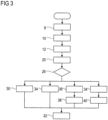
- This step of image acquisition is shown in the flow chart of FIG 3 shown in step 6.
- a section 14 is selected from the overall image 8 by, for example, an operator, in which the vehicle 2 is shown. This is done, for example, by the operator placing a frame around the vehicle 2 and thereby marks the section 14 for further processing. The remaining image areas are not used for this further processing.
- the corresponding process step 10 is also shown in FIG 3 reproduced.
- 2 key points and the descriptors associated with them are determined from image 8 of the vehicle. This is done, for example, using the SIFT method or the SURF method.
- the SURF method essentially works like the SIFT method, but slightly different algorithms are used in the individual calculation steps to determine the key points and descriptors.
- the vehicle database 16 contains a large number of sections 22, each of which stores the data for a vehicle class.
- the vehicle classes refer to different ship classes, with each vehicle class containing exactly one ship class.
- a ship class includes all essentially identical ships that are part of a sister series of several ships and that - as is usual with sister ships - look essentially the same. In some vehicle classes or sections 22, the data for only a single ship is stored.
- Each database section 22 contains a plurality of segments 24.
- Each segment 24 comprises image data of an image of a vehicle of the corresponding vehicle class.
- a segment 24 can contain the vehicle image itself and/or characteristic image features obtained from this image, such as key points and descriptors.
- a segment 24 with several sections is shown and another segment with a plurality of sections, as indicated by the three dots. This representation is for clarity only and does not necessarily reflect the database structure.
- Each segment 24 comprises a set of database descriptors obtained in a similar manner to the vehicle descriptors in Figure 8.
- a segment 24 is a representation of the vehicle from a single perspective.
- the next segment 24 is assigned to a representation of the vehicle from a different perspective.
- a database section 22 comprises nine segments with images of a ship from the ship class from the front, diagonally from the front, from the side, diagonally from the back, from the back, diagonally from above, from the front, diagonally from above from the side, diagonally from the back and vertically from above.
- the vehicle of the relevant class is shown in the upper segment 24, in this example obliquely from the front.
- the image does not have to be part of the segment 24, as it is sufficient if the database descriptors obtained from the image obliquely from the front are stored in the segment 24.
- the real image can also be stored in the segment.
- a segment 24 contains the characteristic features of the image 8 as a set of descriptors that were obtained from several image octaves of an image.
- the scale factor is stored for each database descriptor so that it is known from which octave the descriptor originates.
- FIG 1 In the chosen representation, the set of descriptors obtained from an image was divided into four areas, each showing an image octave. In the first (top) octave O1, the image is shown in full resolution.
- the second octave O2 consists of 1/4 of the original pixels, the third octave O3 of 1/16 of the original pixels and the fourth octave O4 of 1/64 of the original pixels.
- octaves 05, O6, etc. are also conceivable.
- the different resolutions are shown in FIG 1 shown by reduced image representations of the vehicle, whereby the equivalent is a constant image size with increasingly blurred image contours.
- the number of pixels in each segment 24 can therefore also be the same, so that the images have the same mathematical resolution, but the vehicle in the image is shown increasingly blurred from the first to the next octave.
- the higher octaves can be created from the previous or the first octave using mathematical methods, such as a Gaussian filter.
- mathematical methods such as a Gaussian filter.
- a Gaussian filter To approximate realistic conditions, however, not only is the resolution or image sharpness reduced, but an increasingly strong gray veil is placed over the image for the next lower octave in order to better simulate air turbidity, particularly in hazy weather, with increasing distance from the observed vehicle 2.
- a mathematical filter is expediently used, which simulates real viewing conditions with increasing distance.
- descriptors D ii were determined from these individual octaves, where the descriptors D 1i are the descriptors of the first octave O1, the descriptors D 2i are the descriptors of the second octave O2, etc. However, all descriptors D ii can be stored together in the data set of a segment 24 without separation according to octaves.
- the data set of vehicle descriptors is now compared with the data sets of the database descriptors of the individual segments 24 of all or only individual database sections 22.
- a so-called FLANN matcher Fest Approximate Nearest Neighbour Search
- FIG 1 is shown by way of example by straight lines how individual vehicle descriptors from Figure 8 correlate with individual database descriptors from a segment 24.
- the correlation is divided into the image octaves, which is not actually the case and is only used for better clarity. It can be seen that the highest correlation, i.e. the best comparison result, is achieved in the second octave, whose descriptors D 2i correlate best with the vehicle descriptors. This is where the most matches are found, i.e. comparison results above a predetermined limit.
- step 26 from FIG 3 checked whether the overall comparison result, i.e. of all vehicle descriptors, is above a specified limit above which a classification is considered successful.
- FIG 1 the comparison result is above the limit value, so that the classification is affirmed. If, however, no classification is successful, i.e. the comparison result of the set of characteristic vehicle features for each of the database sections 22 with the characteristic database features is below the limit value, the method jumps back to method step 6 and a new image 8 of the vehicle 2 is taken. This loop is run through until the method is either aborted by an operator or an automatic system or a successful classification is achieved.
- the classification is now output to the operator and the image of vehicle 2 is displayed from the perspective, i.e. segment 24, in which the classification was made, in the first octave, i.e. in high resolution.
- the operator can now confirm or reject the classification. This step of the operator verification is optional.
- the image of the vehicle 2 is assigned the content of the vehicle class, i.e. the database section 22.
- this also includes several target points 28.
- a target point 28 is a point on a vehicle that serves, for example, as the approach point of a missile.
- the missile can be a powered or unpowered, controlled or purely ballistic missile.
- the target point 28 was, for example, set manually and specified in the database 16 in its relative position to some or all of the target key points of a segment 24.
- a target key point is here a key point that is in a described position to a target point 28.
- a vehicle 2 can have a large number of target points 28, which are not visible in all segments 24 of the corresponding vehicle class, for example because they are hidden.
- the target points 28 in the individual segments 24 of a vehicle class are partially different.
- the target points 28 in the vehicle database 16 are assigned to individual image octaves.
- the target point shown in FIG 1 The target point shown is assigned to the first octave O1 and the second octave O2.
- the other octaves O3, O4, ... are assigned either other target points or no target points.
- the target point(s) 28 of the correlation octave are used to control a missile or an effector.
- a number of alternative process variants can be pursued, which are exemplified in FIG 3 Accordingly, the process line branches out from the flow chart FIG 3 into different branches, each of which represents a possible process variant and is either preselected, automatically selected or selected by the operator.
- step 30 there is the possibility of friend/foe recognition in method step 30.
- the vehicle 2 recorded is a friend or a foe.
- an effector for example a missile such as a guided missile or a projectile
- the effector or an effector unit is aimed at the vehicle 2 or its target point 28.
- the direction of the vehicle 2 or the target point 28 to the effector or the effector unit is determined.
- the effector is controlled in method step 32 based on the database data, namely based on the classification and the position of the target point 28 relative to target key points.
- a further variation of the method consists in determining the target point 28 or several target points 28 in the image 8 of the vehicle 2 using the database information in step 34. An effector is then controlled to the target point 28.
- Another method provides for determining the correlation octave in method step 36, i.e. the second octave O2 in the present embodiment.
- an effector type or effector is assigned to the octave so that the selection of the effector can be automated. Accordingly, the effector is selected in step 38 and controlled in step 32.
- an effector can be selected in step 40 that is to be controlled to the target point 28.
- the effector or the effector class is stored for each target point 28.
- the same target points 28 in different octaves can be linked to different effectors or effector classes, depending on the range of the corresponding effector or effector class.
- the corresponding data is stored, for example, in the correlation octave of segment 24. If several different target points 28 are assigned to this correlation octave, which should be combated with different effectors, this variation of the procedure is not effective and the effector selection should take place in step 40.
Landscapes
- Engineering & Computer Science (AREA)
- Theoretical Computer Science (AREA)
- General Physics & Mathematics (AREA)
- Physics & Mathematics (AREA)
- Multimedia (AREA)
- Computer Vision & Pattern Recognition (AREA)
- Data Mining & Analysis (AREA)
- Life Sciences & Earth Sciences (AREA)
- Bioinformatics & Cheminformatics (AREA)
- Bioinformatics & Computational Biology (AREA)
- Artificial Intelligence (AREA)
- Evolutionary Biology (AREA)
- Evolutionary Computation (AREA)
- General Engineering & Computer Science (AREA)
- Image Analysis (AREA)
Applications Claiming Priority (2)
| Application Number | Priority Date | Filing Date | Title |
|---|---|---|---|
| DE102015004938.0A DE102015004938A1 (de) | 2015-04-17 | 2015-04-17 | Verfahren zum Klassifizieren eines Fahrzeuges |
| PCT/EP2016/000558 WO2016165814A1 (de) | 2015-04-17 | 2016-04-06 | Verfahren zum klassifizieren eines fahrzeugs |
Publications (2)
| Publication Number | Publication Date |
|---|---|
| EP3284010A1 EP3284010A1 (de) | 2018-02-21 |
| EP3284010B1 true EP3284010B1 (de) | 2024-05-29 |
Family
ID=55699600
Family Applications (1)
| Application Number | Title | Priority Date | Filing Date |
|---|---|---|---|
| EP16715238.8A Active EP3284010B1 (de) | 2015-04-17 | 2016-04-06 | Verfahren zum klassifizieren eines fahrzeugs |
Country Status (6)
| Country | Link |
|---|---|
| EP (1) | EP3284010B1 (pl) |
| DE (1) | DE102015004938A1 (pl) |
| ES (1) | ES2985821T3 (pl) |
| IL (1) | IL254359B (pl) |
| PL (1) | PL3284010T3 (pl) |
| WO (1) | WO2016165814A1 (pl) |
Families Citing this family (1)
| Publication number | Priority date | Publication date | Assignee | Title |
|---|---|---|---|---|
| CN108416061A (zh) * | 2018-03-26 | 2018-08-17 | 福州大学 | 适用电力巡检的无人机航拍影像库建立、分类及检索方法 |
Citations (1)
| Publication number | Priority date | Publication date | Assignee | Title |
|---|---|---|---|---|
| DE102010020798A1 (de) * | 2010-05-17 | 2011-11-17 | Ralf Holger Behrens | Zielsuchende Munition |
Family Cites Families (1)
| Publication number | Priority date | Publication date | Assignee | Title |
|---|---|---|---|---|
| DE102012113009A1 (de) * | 2012-12-21 | 2014-06-26 | Jenoptik Robot Gmbh | Verfahren zum automatischen Klassifizieren von sich bewegenden Fahrzeugen |
-
2015
- 2015-04-17 DE DE102015004938.0A patent/DE102015004938A1/de not_active Withdrawn
-
2016
- 2016-04-06 ES ES16715238T patent/ES2985821T3/es active Active
- 2016-04-06 WO PCT/EP2016/000558 patent/WO2016165814A1/de not_active Ceased
- 2016-04-06 PL PL16715238.8T patent/PL3284010T3/pl unknown
- 2016-04-06 EP EP16715238.8A patent/EP3284010B1/de active Active
-
2017
- 2017-09-06 IL IL254359A patent/IL254359B/en active IP Right Grant
Patent Citations (1)
| Publication number | Priority date | Publication date | Assignee | Title |
|---|---|---|---|---|
| DE102010020798A1 (de) * | 2010-05-17 | 2011-11-17 | Ralf Holger Behrens | Zielsuchende Munition |
Also Published As
| Publication number | Publication date |
|---|---|
| IL254359A0 (en) | 2017-11-30 |
| EP3284010A1 (de) | 2018-02-21 |
| IL254359B (en) | 2021-06-30 |
| PL3284010T3 (pl) | 2024-10-28 |
| ES2985821T3 (es) | 2024-11-07 |
| DE102015004938A1 (de) | 2016-10-20 |
| WO2016165814A1 (de) | 2016-10-20 |
Similar Documents
| Publication | Publication Date | Title |
|---|---|---|
| DE69511620T2 (de) | Videoverarbeitungssystem | |
| DE102016120775B4 (de) | System und Verfahren zum Erkennen von Linien in einem Bild mit einem Sichtsystem | |
| DE102011106050B4 (de) | Schattenentfernung in einem durch eine fahrzeugbasierte Kamera erfassten Bild zur Detektion eines freien Pfads | |
| DE102012002321B4 (de) | Verfahren zur Erkennung eines vorgegebenen Musters in einem Bilddatensatz | |
| DE102013005489A1 (de) | Verfahren und Vorrichtung zur automatischen Fehlerstellenerkennung bei biegeschlaffen Körpern | |
| DE102019210580A1 (de) | Verfahren zum Ermitteln einer Position eines ersten Bildbereichs in einem Korrespondenz-Bild, SoC und Steuervorrichtung und System zur Durchführung des Verfahrens, sowie Computerprogramm | |
| AT511460B1 (de) | Verfahren zur bestimmung der position eines luftfahrzeugs | |
| DE112004002416T5 (de) | Toboggan-basierte Formcharakterisierung | |
| DE102015004939A1 (de) | Verfahren zum Lenken eines Flugkörpers | |
| DE112016006415B4 (de) | Verfahren und systeme zum hervorheben von kistenoberflächen und -kanten bei der dimensioning mobiler kisten | |
| DE102010018144A1 (de) | Verfahren zur automatischen Erzeugung eines dreidimensionalen Referenzmodells als Geländeinformation für eine bildgebende Einrichtung | |
| EP3284010B1 (de) | Verfahren zum klassifizieren eines fahrzeugs | |
| EP3158543B1 (de) | Verfahren zum detektieren eines blickwinkelabhängigen merkmals eines dokumentes | |
| DE102019129029A1 (de) | System und verfahren zur objektdetektion | |
| DE102015004943B4 (de) | Verfahren zur Richtungskalibration von Kameras eines Kamerasystems | |
| EP3089076B1 (de) | Verfahren zum ausrichten einer wirkmitteleinheit auf ein zielobjekt | |
| WO2013182313A1 (de) | Blob-encoding | |
| DE102020129164A1 (de) | Verfahren und vorrichtung zur unterscheidung von verschiedenen konfigurationszuständen eines objekts auf der grundlage einer bildlichen darstellung des objekts | |
| EP3200154B1 (de) | Verfahren zum bestimmen einer position eines objekts | |
| DE102015102369A1 (de) | Mobilgerät zum Erfassen eines Textbereiches auf einem Identifikationsdokument | |
| DE102017215051A1 (de) | Vorrichtung und Verfahren zum Reduzieren des Einflusses von Streulicht und Reflexionen auf optische Bilderkennung | |
| DE112016003300T5 (de) | Erkennung von Wassertröpfchen auf einer Linse einer Fahrzeugkamera | |
| DE102017107335A1 (de) | Verfahren zur Identifikation von korrespondierenden Bildbereichen in einer Folge von Bildern | |
| DE102006036345A1 (de) | Verfahren zur Lagebestimmung von Objekten im dreidimensionalen Raum | |
| DE102017218405A1 (de) | Verfahren zum Verarbeiten von Bildern |
Legal Events
| Date | Code | Title | Description |
|---|---|---|---|
| STAA | Information on the status of an ep patent application or granted ep patent |
Free format text: STATUS: THE INTERNATIONAL PUBLICATION HAS BEEN MADE |
|
| PUAI | Public reference made under article 153(3) epc to a published international application that has entered the european phase |
Free format text: ORIGINAL CODE: 0009012 |
|
| STAA | Information on the status of an ep patent application or granted ep patent |
Free format text: STATUS: REQUEST FOR EXAMINATION WAS MADE |
|
| 17P | Request for examination filed |
Effective date: 20170904 |
|
| AK | Designated contracting states |
Kind code of ref document: A1 Designated state(s): AL AT BE BG CH CY CZ DE DK EE ES FI FR GB GR HR HU IE IS IT LI LT LU LV MC MK MT NL NO PL PT RO RS SE SI SK SM TR |
|
| AX | Request for extension of the european patent |
Extension state: BA ME |
|
| DAV | Request for validation of the european patent (deleted) | ||
| DAX | Request for extension of the european patent (deleted) | ||
| STAA | Information on the status of an ep patent application or granted ep patent |
Free format text: STATUS: EXAMINATION IS IN PROGRESS |
|
| 17Q | First examination report despatched |
Effective date: 20180814 |
|
| REG | Reference to a national code |
Ref country code: DE Ref legal event code: R079 Free format text: PREVIOUS MAIN CLASS: G06K0009000000 Ipc: G06V0020540000 Ref country code: DE Ref legal event code: R079 Ref document number: 502016016566 Country of ref document: DE Free format text: PREVIOUS MAIN CLASS: G06K0009000000 Ipc: G06V0020540000 |
|
| RIC1 | Information provided on ipc code assigned before grant |
Ipc: G06V 10/46 20220101ALI20231109BHEP Ipc: G06V 20/54 20220101AFI20231109BHEP |
|
| GRAP | Despatch of communication of intention to grant a patent |
Free format text: ORIGINAL CODE: EPIDOSNIGR1 |
|
| STAA | Information on the status of an ep patent application or granted ep patent |
Free format text: STATUS: GRANT OF PATENT IS INTENDED |
|
| INTG | Intention to grant announced |
Effective date: 20231218 |
|
| GRAS | Grant fee paid |
Free format text: ORIGINAL CODE: EPIDOSNIGR3 |
|
| GRAA | (expected) grant |
Free format text: ORIGINAL CODE: 0009210 |
|
| STAA | Information on the status of an ep patent application or granted ep patent |
Free format text: STATUS: THE PATENT HAS BEEN GRANTED |
|
| AK | Designated contracting states |
Kind code of ref document: B1 Designated state(s): AL AT BE BG CH CY CZ DE DK EE ES FI FR GB GR HR HU IE IS IT LI LT LU LV MC MK MT NL NO PL PT RO RS SE SI SK SM TR |
|
| REG | Reference to a national code |
Ref country code: GB Ref legal event code: FG4D Free format text: NOT ENGLISH |
|
| REG | Reference to a national code |
Ref country code: CH Ref legal event code: EP |
|
| REG | Reference to a national code |
Ref country code: IE Ref legal event code: FG4D Free format text: LANGUAGE OF EP DOCUMENT: GERMAN |
|
| REG | Reference to a national code |
Ref country code: DE Ref legal event code: R096 Ref document number: 502016016566 Country of ref document: DE |
|
| REG | Reference to a national code |
Ref country code: SE Ref legal event code: TRGR |
|
| REG | Reference to a national code |
Ref country code: LT Ref legal event code: MG9D |
|
| REG | Reference to a national code |
Ref country code: NL Ref legal event code: MP Effective date: 20240529 |
|
| PG25 | Lapsed in a contracting state [announced via postgrant information from national office to epo] |
Ref country code: IS Free format text: LAPSE BECAUSE OF FAILURE TO SUBMIT A TRANSLATION OF THE DESCRIPTION OR TO PAY THE FEE WITHIN THE PRESCRIBED TIME-LIMIT Effective date: 20240929 |
|
| PG25 | Lapsed in a contracting state [announced via postgrant information from national office to epo] |
Ref country code: BG Free format text: LAPSE BECAUSE OF FAILURE TO SUBMIT A TRANSLATION OF THE DESCRIPTION OR TO PAY THE FEE WITHIN THE PRESCRIBED TIME-LIMIT Effective date: 20240529 |
|
| PG25 | Lapsed in a contracting state [announced via postgrant information from national office to epo] |
Ref country code: FI Free format text: LAPSE BECAUSE OF FAILURE TO SUBMIT A TRANSLATION OF THE DESCRIPTION OR TO PAY THE FEE WITHIN THE PRESCRIBED TIME-LIMIT Effective date: 20240529 Ref country code: HR Free format text: LAPSE BECAUSE OF FAILURE TO SUBMIT A TRANSLATION OF THE DESCRIPTION OR TO PAY THE FEE WITHIN THE PRESCRIBED TIME-LIMIT Effective date: 20240529 |
|
| REG | Reference to a national code |
Ref country code: GR Ref legal event code: EP Ref document number: 20240401994 Country of ref document: GR Effective date: 20241007 |
|
| PG25 | Lapsed in a contracting state [announced via postgrant information from national office to epo] |
Ref country code: LV Free format text: LAPSE BECAUSE OF FAILURE TO SUBMIT A TRANSLATION OF THE DESCRIPTION OR TO PAY THE FEE WITHIN THE PRESCRIBED TIME-LIMIT Effective date: 20240529 |
|
| PG25 | Lapsed in a contracting state [announced via postgrant information from national office to epo] |
Ref country code: LV Free format text: LAPSE BECAUSE OF FAILURE TO SUBMIT A TRANSLATION OF THE DESCRIPTION OR TO PAY THE FEE WITHIN THE PRESCRIBED TIME-LIMIT Effective date: 20240529 Ref country code: IS Free format text: LAPSE BECAUSE OF FAILURE TO SUBMIT A TRANSLATION OF THE DESCRIPTION OR TO PAY THE FEE WITHIN THE PRESCRIBED TIME-LIMIT Effective date: 20240929 Ref country code: HR Free format text: LAPSE BECAUSE OF FAILURE TO SUBMIT A TRANSLATION OF THE DESCRIPTION OR TO PAY THE FEE WITHIN THE PRESCRIBED TIME-LIMIT Effective date: 20240529 Ref country code: FI Free format text: LAPSE BECAUSE OF FAILURE TO SUBMIT A TRANSLATION OF THE DESCRIPTION OR TO PAY THE FEE WITHIN THE PRESCRIBED TIME-LIMIT Effective date: 20240529 Ref country code: BG Free format text: LAPSE BECAUSE OF FAILURE TO SUBMIT A TRANSLATION OF THE DESCRIPTION OR TO PAY THE FEE WITHIN THE PRESCRIBED TIME-LIMIT Effective date: 20240529 Ref country code: RS Free format text: LAPSE BECAUSE OF FAILURE TO SUBMIT A TRANSLATION OF THE DESCRIPTION OR TO PAY THE FEE WITHIN THE PRESCRIBED TIME-LIMIT Effective date: 20240829 |
|
| REG | Reference to a national code |
Ref country code: ES Ref legal event code: FG2A Ref document number: 2985821 Country of ref document: ES Kind code of ref document: T3 Effective date: 20241107 |
|
| P01 | Opt-out of the competence of the unified patent court (upc) registered |
Free format text: CASE NUMBER: APP_53819/2024 Effective date: 20240927 |
|
| PG25 | Lapsed in a contracting state [announced via postgrant information from national office to epo] |
Ref country code: NL Free format text: LAPSE BECAUSE OF FAILURE TO SUBMIT A TRANSLATION OF THE DESCRIPTION OR TO PAY THE FEE WITHIN THE PRESCRIBED TIME-LIMIT Effective date: 20240529 |
|
| PG25 | Lapsed in a contracting state [announced via postgrant information from national office to epo] |
Ref country code: NL Free format text: LAPSE BECAUSE OF FAILURE TO SUBMIT A TRANSLATION OF THE DESCRIPTION OR TO PAY THE FEE WITHIN THE PRESCRIBED TIME-LIMIT Effective date: 20240529 |
|
| PG25 | Lapsed in a contracting state [announced via postgrant information from national office to epo] |
Ref country code: DK Free format text: LAPSE BECAUSE OF FAILURE TO SUBMIT A TRANSLATION OF THE DESCRIPTION OR TO PAY THE FEE WITHIN THE PRESCRIBED TIME-LIMIT Effective date: 20240529 |
|
| PG25 | Lapsed in a contracting state [announced via postgrant information from national office to epo] |
Ref country code: EE Free format text: LAPSE BECAUSE OF FAILURE TO SUBMIT A TRANSLATION OF THE DESCRIPTION OR TO PAY THE FEE WITHIN THE PRESCRIBED TIME-LIMIT Effective date: 20240529 |
|
| PG25 | Lapsed in a contracting state [announced via postgrant information from national office to epo] |
Ref country code: CZ Free format text: LAPSE BECAUSE OF FAILURE TO SUBMIT A TRANSLATION OF THE DESCRIPTION OR TO PAY THE FEE WITHIN THE PRESCRIBED TIME-LIMIT Effective date: 20240529 |
|
| PG25 | Lapsed in a contracting state [announced via postgrant information from national office to epo] |
Ref country code: SK Free format text: LAPSE BECAUSE OF FAILURE TO SUBMIT A TRANSLATION OF THE DESCRIPTION OR TO PAY THE FEE WITHIN THE PRESCRIBED TIME-LIMIT Effective date: 20240529 Ref country code: RO Free format text: LAPSE BECAUSE OF FAILURE TO SUBMIT A TRANSLATION OF THE DESCRIPTION OR TO PAY THE FEE WITHIN THE PRESCRIBED TIME-LIMIT Effective date: 20240529 |
|
| PG25 | Lapsed in a contracting state [announced via postgrant information from national office to epo] |
Ref country code: SM Free format text: LAPSE BECAUSE OF FAILURE TO SUBMIT A TRANSLATION OF THE DESCRIPTION OR TO PAY THE FEE WITHIN THE PRESCRIBED TIME-LIMIT Effective date: 20240529 |
|
| PG25 | Lapsed in a contracting state [announced via postgrant information from national office to epo] |
Ref country code: SM Free format text: LAPSE BECAUSE OF FAILURE TO SUBMIT A TRANSLATION OF THE DESCRIPTION OR TO PAY THE FEE WITHIN THE PRESCRIBED TIME-LIMIT Effective date: 20240529 Ref country code: SK Free format text: LAPSE BECAUSE OF FAILURE TO SUBMIT A TRANSLATION OF THE DESCRIPTION OR TO PAY THE FEE WITHIN THE PRESCRIBED TIME-LIMIT Effective date: 20240529 Ref country code: RO Free format text: LAPSE BECAUSE OF FAILURE TO SUBMIT A TRANSLATION OF THE DESCRIPTION OR TO PAY THE FEE WITHIN THE PRESCRIBED TIME-LIMIT Effective date: 20240529 Ref country code: EE Free format text: LAPSE BECAUSE OF FAILURE TO SUBMIT A TRANSLATION OF THE DESCRIPTION OR TO PAY THE FEE WITHIN THE PRESCRIBED TIME-LIMIT Effective date: 20240529 Ref country code: DK Free format text: LAPSE BECAUSE OF FAILURE TO SUBMIT A TRANSLATION OF THE DESCRIPTION OR TO PAY THE FEE WITHIN THE PRESCRIBED TIME-LIMIT Effective date: 20240529 Ref country code: CZ Free format text: LAPSE BECAUSE OF FAILURE TO SUBMIT A TRANSLATION OF THE DESCRIPTION OR TO PAY THE FEE WITHIN THE PRESCRIBED TIME-LIMIT Effective date: 20240529 |
|
| REG | Reference to a national code |
Ref country code: DE Ref legal event code: R097 Ref document number: 502016016566 Country of ref document: DE |
|
| PLBE | No opposition filed within time limit |
Free format text: ORIGINAL CODE: 0009261 |
|
| STAA | Information on the status of an ep patent application or granted ep patent |
Free format text: STATUS: NO OPPOSITION FILED WITHIN TIME LIMIT |
|
| PG25 | Lapsed in a contracting state [announced via postgrant information from national office to epo] |
Ref country code: SI Free format text: LAPSE BECAUSE OF FAILURE TO SUBMIT A TRANSLATION OF THE DESCRIPTION OR TO PAY THE FEE WITHIN THE PRESCRIBED TIME-LIMIT Effective date: 20240529 |
|
| PGFP | Annual fee paid to national office [announced via postgrant information from national office to epo] |
Ref country code: PL Payment date: 20250328 Year of fee payment: 10 |
|
| 26N | No opposition filed |
Effective date: 20250303 |
|
| PGFP | Annual fee paid to national office [announced via postgrant information from national office to epo] |
Ref country code: DE Payment date: 20250612 Year of fee payment: 10 |
|
| PGFP | Annual fee paid to national office [announced via postgrant information from national office to epo] |
Ref country code: ES Payment date: 20250530 Year of fee payment: 10 Ref country code: GB Payment date: 20250423 Year of fee payment: 10 |
|
| PGFP | Annual fee paid to national office [announced via postgrant information from national office to epo] |
Ref country code: NO Payment date: 20250424 Year of fee payment: 10 |
|
| PGFP | Annual fee paid to national office [announced via postgrant information from national office to epo] |
Ref country code: IT Payment date: 20250424 Year of fee payment: 10 |
|
| PGFP | Annual fee paid to national office [announced via postgrant information from national office to epo] |
Ref country code: FR Payment date: 20250425 Year of fee payment: 10 |
|
| PGFP | Annual fee paid to national office [announced via postgrant information from national office to epo] |
Ref country code: GR Payment date: 20250423 Year of fee payment: 10 |
|
| PGFP | Annual fee paid to national office [announced via postgrant information from national office to epo] |
Ref country code: TR Payment date: 20250402 Year of fee payment: 10 |
|
| PGFP | Annual fee paid to national office [announced via postgrant information from national office to epo] |
Ref country code: SE Payment date: 20250429 Year of fee payment: 10 |
|
| REG | Reference to a national code |
Ref country code: CH Ref legal event code: H13 Free format text: ST27 STATUS EVENT CODE: U-0-0-H10-H13 (AS PROVIDED BY THE NATIONAL OFFICE) Effective date: 20251125 |
|
| PG25 | Lapsed in a contracting state [announced via postgrant information from national office to epo] |
Ref country code: LU Free format text: LAPSE BECAUSE OF NON-PAYMENT OF DUE FEES Effective date: 20250406 |
|
| PG25 | Lapsed in a contracting state [announced via postgrant information from national office to epo] |
Ref country code: MC Free format text: LAPSE BECAUSE OF FAILURE TO SUBMIT A TRANSLATION OF THE DESCRIPTION OR TO PAY THE FEE WITHIN THE PRESCRIBED TIME-LIMIT Effective date: 20240529 |
|
| REG | Reference to a national code |
Ref country code: BE Ref legal event code: MM Effective date: 20250430 |
|
| PG25 | Lapsed in a contracting state [announced via postgrant information from national office to epo] |
Ref country code: BE Free format text: LAPSE BECAUSE OF NON-PAYMENT OF DUE FEES Effective date: 20250430 |
|
| PG25 | Lapsed in a contracting state [announced via postgrant information from national office to epo] |
Ref country code: CH Free format text: LAPSE BECAUSE OF NON-PAYMENT OF DUE FEES Effective date: 20250430 |