EP3282356A1 - Container monitoring configuration deployment - Google Patents
Container monitoring configuration deployment Download PDFInfo
- Publication number
- EP3282356A1 EP3282356A1 EP17186042.2A EP17186042A EP3282356A1 EP 3282356 A1 EP3282356 A1 EP 3282356A1 EP 17186042 A EP17186042 A EP 17186042A EP 3282356 A1 EP3282356 A1 EP 3282356A1
- Authority
- EP
- European Patent Office
- Prior art keywords
- container
- new
- cluster
- configuration
- monitor
- Prior art date
- Legal status (The legal status is an assumption and is not a legal conclusion. Google has not performed a legal analysis and makes no representation as to the accuracy of the status listed.)
- Withdrawn
Links
Images


Classifications
-
- G—PHYSICS
- G06—COMPUTING OR CALCULATING; COUNTING
- G06F—ELECTRIC DIGITAL DATA PROCESSING
- G06F8/00—Arrangements for software engineering
- G06F8/70—Software maintenance or management
- G06F8/71—Version control; Configuration management
-
- G—PHYSICS
- G06—COMPUTING OR CALCULATING; COUNTING
- G06F—ELECTRIC DIGITAL DATA PROCESSING
- G06F11/00—Error detection; Error correction; Monitoring
- G06F11/30—Monitoring
- G06F11/3003—Monitoring arrangements specially adapted to the computing system or computing system component being monitored
- G06F11/302—Monitoring arrangements specially adapted to the computing system or computing system component being monitored where the computing system component is a software system
-
- G—PHYSICS
- G06—COMPUTING OR CALCULATING; COUNTING
- G06F—ELECTRIC DIGITAL DATA PROCESSING
- G06F11/00—Error detection; Error correction; Monitoring
- G06F11/30—Monitoring
- G06F11/3051—Monitoring arrangements for monitoring the configuration of the computing system or of the computing system component, e.g. monitoring the presence of processing resources, peripherals, I/O links, software programs
-
- G—PHYSICS
- G06—COMPUTING OR CALCULATING; COUNTING
- G06F—ELECTRIC DIGITAL DATA PROCESSING
- G06F11/00—Error detection; Error correction; Monitoring
- G06F11/30—Monitoring
- G06F11/3055—Monitoring arrangements for monitoring the status of the computing system or of the computing system component, e.g. monitoring if the computing system is on, off, available, not available
-
- G—PHYSICS
- G06—COMPUTING OR CALCULATING; COUNTING
- G06F—ELECTRIC DIGITAL DATA PROCESSING
- G06F11/00—Error detection; Error correction; Monitoring
- G06F11/30—Monitoring
- G06F11/3065—Monitoring arrangements determined by the means or processing involved in reporting the monitored data
- G06F11/3072—Monitoring arrangements determined by the means or processing involved in reporting the monitored data where the reporting involves data filtering, e.g. pattern matching, time or event triggered, adaptive or policy-based reporting
- G06F11/3075—Monitoring arrangements determined by the means or processing involved in reporting the monitored data where the reporting involves data filtering, e.g. pattern matching, time or event triggered, adaptive or policy-based reporting the data filtering being achieved in order to maintain consistency among the monitored data, e.g. ensuring that the monitored data belong to the same timeframe, to the same system or component
-
- G—PHYSICS
- G06—COMPUTING OR CALCULATING; COUNTING
- G06F—ELECTRIC DIGITAL DATA PROCESSING
- G06F11/00—Error detection; Error correction; Monitoring
- G06F11/30—Monitoring
- G06F11/34—Recording or statistical evaluation of computer activity, e.g. of down time, of input/output operation ; Recording or statistical evaluation of user activity, e.g. usability assessment
- G06F11/3409—Recording or statistical evaluation of computer activity, e.g. of down time, of input/output operation ; Recording or statistical evaluation of user activity, e.g. usability assessment for performance assessment
-
- G—PHYSICS
- G06—COMPUTING OR CALCULATING; COUNTING
- G06F—ELECTRIC DIGITAL DATA PROCESSING
- G06F11/00—Error detection; Error correction; Monitoring
- G06F11/30—Monitoring
- G06F11/34—Recording or statistical evaluation of computer activity, e.g. of down time, of input/output operation ; Recording or statistical evaluation of user activity, e.g. usability assessment
- G06F11/3466—Performance evaluation by tracing or monitoring
-
- G—PHYSICS
- G06—COMPUTING OR CALCULATING; COUNTING
- G06F—ELECTRIC DIGITAL DATA PROCESSING
- G06F16/00—Information retrieval; Database structures therefor; File system structures therefor
- G06F16/20—Information retrieval; Database structures therefor; File system structures therefor of structured data, e.g. relational data
- G06F16/28—Databases characterised by their database models, e.g. relational or object models
- G06F16/284—Relational databases
- G06F16/285—Clustering or classification
-
- G—PHYSICS
- G06—COMPUTING OR CALCULATING; COUNTING
- G06F—ELECTRIC DIGITAL DATA PROCESSING
- G06F16/00—Information retrieval; Database structures therefor; File system structures therefor
- G06F16/90—Details of database functions independent of the retrieved data types
- G06F16/95—Retrieval from the web
- G06F16/951—Indexing; Web crawling techniques
-
- G—PHYSICS
- G06—COMPUTING OR CALCULATING; COUNTING
- G06F—ELECTRIC DIGITAL DATA PROCESSING
- G06F9/00—Arrangements for program control, e.g. control units
- G06F9/06—Arrangements for program control, e.g. control units using stored programs, i.e. using an internal store of processing equipment to receive or retain programs
- G06F9/44—Arrangements for executing specific programs
- G06F9/455—Emulation; Interpretation; Software simulation, e.g. virtualisation or emulation of application or operating system execution engines
- G06F9/45533—Hypervisors; Virtual machine monitors
-
- G—PHYSICS
- G06—COMPUTING OR CALCULATING; COUNTING
- G06F—ELECTRIC DIGITAL DATA PROCESSING
- G06F9/00—Arrangements for program control, e.g. control units
- G06F9/06—Arrangements for program control, e.g. control units using stored programs, i.e. using an internal store of processing equipment to receive or retain programs
- G06F9/44—Arrangements for executing specific programs
- G06F9/455—Emulation; Interpretation; Software simulation, e.g. virtualisation or emulation of application or operating system execution engines
- G06F9/45533—Hypervisors; Virtual machine monitors
- G06F9/45558—Hypervisor-specific management and integration aspects
-
- H—ELECTRICITY
- H04—ELECTRIC COMMUNICATION TECHNIQUE
- H04L—TRANSMISSION OF DIGITAL INFORMATION, e.g. TELEGRAPHIC COMMUNICATION
- H04L43/00—Arrangements for monitoring or testing data switching networks
- H04L43/08—Monitoring or testing based on specific metrics, e.g. QoS, energy consumption or environmental parameters
-
- G—PHYSICS
- G06—COMPUTING OR CALCULATING; COUNTING
- G06F—ELECTRIC DIGITAL DATA PROCESSING
- G06F9/00—Arrangements for program control, e.g. control units
- G06F9/06—Arrangements for program control, e.g. control units using stored programs, i.e. using an internal store of processing equipment to receive or retain programs
- G06F9/44—Arrangements for executing specific programs
- G06F9/455—Emulation; Interpretation; Software simulation, e.g. virtualisation or emulation of application or operating system execution engines
- G06F9/45533—Hypervisors; Virtual machine monitors
- G06F9/45558—Hypervisor-specific management and integration aspects
- G06F2009/45591—Monitoring or debugging support
-
- G—PHYSICS
- G06—COMPUTING OR CALCULATING; COUNTING
- G06F—ELECTRIC DIGITAL DATA PROCESSING
- G06F2201/00—Indexing scheme relating to error detection, to error correction, and to monitoring
- G06F2201/865—Monitoring of software
Definitions
- a container is a virtualization method where numerous isolated instances exist within one kernel of an operation system.
- a container allows virtualization of a particular instance without virtualization of the entire operating system kernel.
- the container has emerged as a way to deliver application and service workloads across the continuous integration and continuous delivery (CI/CD) development pipeline and well into production environments virtually unchanged.
- CI/CD continuous integration and continuous delivery
- Some monitoring tools for containers may be used as agents that usually run on the host either as another container or as an internal application inside the container, which is an addition to an already complicated deployment. Moreover, these tools may involve complex configuration to enable monitoring.
- Systems and methods for container monitoring configuration deployment discussed herein leverage built-in configuration templates that can be deployed easily on applications running as containers. When a new container starts, the availability of a pre-defined template is detected for the container and then deployed to fetch internal metrics for the application executing within the container.
- the systems and methods described herein may allow automatic and dynamic configuration for monitor containers by different (and sometimes incompatible) container deployment tools.
- An example method for container monitoring configuration deployment may include determining, by a monitoring server external to a container cluster environment, that a new container has been added to the container cluster environment.
- the method may include receiving, by the monitoring server, cluster data from the new container and comparing, by the monitoring server, the cluster data to a plurality of configuration templates on the monitoring server.
- the method may also include determining, by the monitoring server, a configuration template from the plurality appropriate for the new container based on the comparison and deploying the configuration template to monitor the new container.
- FIG. 1 is a block diagram of an example environment 100 in which container monitoring configuration deployment may be useful.
- Environment 100 may include a container environment 102.
- a container is a virtualization method where numerous isolated instances exist within one kernel of an operation system.
- Container environment 102 may include nodes 104. Although Fig. 1 depicts 2 nodes 104, environment 100 can have more or less nodes than two.
- Each node may be used for executing a container 108.
- Multiple containers 108 may be executed on each node.
- Each container 108 may execute a workload, such as an application, scheduled task or perform some other functionality.
- Some of the containers 108 may be deployed by different container deployment tools.
- the container environment may include a first container deployed by a first container deployment tool and a second container deployed by a second container deployment tool.
- containers 108 may be deployed by the Docker Swarm ® deployment tool, Kubernetes ® deployment tool, etc.
- the nodes 104 may be managed by a cluster manager 111 which may be a server, management software tool, etc. for managing and deploying containers. Although one cluster manager 111 is depicted in Fig. 1 , multiple cluster managers 111 may be present in environment 100.
- the stack for each container 108 in container environment 102 may contain five major layers: cluster Manager layer, node (or host) layer in the cluster, container daemon layer that runs on each node, containers layer created by the container daemon, and applications layer that contain applications and/or workloads that runs on each container.
- Monitor 112 may not execute within cluster environment 102, but rather may be external to cluster environment 102 and/or cluster manager 111.
- monitor 112 may be executed by a monitoring server 113.
- Monitor 112 may include agentless monitoring software for monitoring the availability and performance of distributed IT infrastructures, including servers, network devices and services, applications and application components, operating systems and various IT enterprise components.
- an agent is a piece of software that usually runs on the host either as another container or as an internal application inside the container.
- a monitor may be "agentless" if the monitor does not use one of these agents, but rather retrieves information directly from the container, cluster, application, etc. The information may be collected, by example, through the use of standardized Application Programing Interfaces (APIs).
- APIs Application Programing Interfaces
- Monitor 112 may include a processor 114 and a memory 116 that may be coupled to each other through a communication link (e.g., a bus).
- Processor 114 may include a Central Processing Unit (CPU) or another suitable hardware processor.
- memory 116 stores machine readable instructions executed by processor 114 for monitor 112.
- Memory 116 may include any suitable combination of volatile and/or non-volatile memory, such as combinations of Random Access Memory (RAM), Read-Only Memory (ROM), flash memory, and/or other suitable memory.
- Memory 116 may also include a random access non-volatile memory that can retain content when the power is off.
- Memory 116 may store instructions to be executed by processor 114 including instructions for and/or other components. According to various implementations, monitor 112 may be implemented in hardware and/or a combination of hardware and programming that configures hardware. Furthermore, in FIG. 1 and other Figures described herein, different numbers of components or entities than depicted may be used. Memory 116 may store instructions for monitoring software, including new container determiner 118, cluster data receiver 120, cluster data comparer 122, configuration template determiner 124 and configuration template deplorer 126.
- Processor 114 may execute instructions of new container determiner 118 to determine, by an agentless monitor, that a new container has been added to the container environment.
- New container determiner 118 may be run as a scheduled task of monitor 112 and may run periodically, at a configurable frequency, etc.
- New container determiner 118 may also determine when a new cluster has been added to the container environment.
- Processor 114 may execute instructions of cluster data receiver 120 to receive, by the monitor, cluster data from the new container.
- the cluster data may include container inside data, such as image name of the new container and/or cluster image, running state, container metadata, etc.
- Cluster data receiver 120 may receive cluster data using an API, such as the Docker inspect API.
- cluster data received from the new container may be metadata of the new container retrieved using a standardized application programming interface.
- the container metadata may provide information about the container and/or cluster and may include information about the container, such as name and/or other identifier, type, location, description, version number, license, operating system, memory used, etc.
- the cluster data may identify a deployment manager of the container.
- containers 108 may be deployed by different container managers. That may be structured in different forms. For example on Docker Swarm ® the containers may be part of its structure, but on Kubernetes ® there may be a Pod which represents a set of containers.
- monitor 112 may ignore the added layers of the container cluster managers and use a container standardized application programming interface (API), such as the cluster remote API, to directly access the container directly. In this manner, monitor 112 can unify data corresponding to the containers of different cluster managers.
- API application programming interface
- Processor 114 may execute instructions of cluster data matcher 122 to match, by the monitor 112, the cluster data to a plurality of configuration files 123 of monitor 112 to determine a configuration file for the new container.
- the configuration files 123 may include templates 125 for different types of container images.
- Cluster data matcher 122 may further map a container image name of the retrieved meta-data to a plurality of container image names included in the plurality of configuration templates and map a container name of the retrieved meta-data to a plurality of container image names included in the plurality of configuration templates
- the configuration files 123 may be used to automatically deploy a monitor or set of monitors for each container 108 on the nodes 104.
- Cluster data matcher 122 may determine the appropriate configuration file by comparing particular cluster data to the data contained in the configuration files 123 and/or templates 125. For example, cluster data matcher 122 may use a regular expression to identify the configuration file that is appropriate for the container data. Parameters that may be used by cluster data matcher 122 may include container image name and container name. In some aspects, the container name may not be specified and a general regular expression that includes all container names may be used as the container name value.
- Processor 114 may execute instructions of template determiner 124 to determine by the monitor, a template for the new container corresponding to the configuration file.
- Template determiner 124 may identify a configuration file in the plurality and receive the path to the corresponding template 125. This is the template that will be deployed to monitor the new container.
- the monitor 112 may have built-in solution templates 125 that can be deployed easily on applications running as containers.
- template determiner 124 may determine the availability of a pre-defined template for the image name. Template determiner 124 may determine the availably using a standardized API, such as for example, the Docker ® inspect API.
- the templates may correspond to a monitoring policy 127 that may define how to monitor a specific container and/or application executing within that container.
- Template determiner 124 may further modify the template path with keys derived from the container data, so that the template 125 can be customized for the new container.
- the keys may include, cluster server name, image name, container deployment manager name, image name, container name, container ID, port numbers, etc.
- the following keys may be used for the template path: ⁇ CLUSTER_SERVER_NAME>, ⁇ DOCKER_SERVER_NAME>, ⁇ IMAGE_NAME>, ⁇ CON TAINER_NAME>, ⁇ CONTAINER_ID>, ⁇ APP_EXPOSED_PORT>.
- Template determiner 124 may also identify the internal port for the container application. This internal port may be used by monitor 112 to extract the exposed port of the container and use it as part of the monitoring template configuration.
- Processor 114 may execute instructions of template deployer 126 to deploy the configuration template to monitor the new container.
- Deploying the configuration template may include generating a new group of monitors for the new container using monitoring policies defined in the configuration template.
- Monitor 112 may include at least one group for monitoring containers and/or clusters in environment 100. The number of groups may vary. In some aspects, each container may have its own group. For example, a group may be used to apply monitoring policies to application / workload running inside container. In some aspects, multiple containers may be included in the same group. In some aspects each cluster may have its own group. For example, monitor 112 may include one group per cluster with multiple hierarchical metrics that access the health and performance of containers in the cluster.
- Template deployer 126 may deploy the template to fetch internal metrics of the application.
- Metrics may be data that provides information about the operation, performance, etc. of some part of environment 100. Metrics may include response time, memory usage, CPU usage, data throughout, bandwidth usage, latency, throughput, benchmarks, etc.
- Monitor 112 may monitor the entire container stack.
- Monitor 122 may collect metrics from any number of the layers of the containers. For example, monitor 122 may collect metrics from the cluster manager layer, node layer, container service layer, container layer and application layer. The monitor 122 may access the cluster API as well as a single node instance API, check its availability, and retrieve Linux host metrics for every registered engine, and fetch the general system metrics and specific metrics on the Docker Daemon. For example, PostgreSQL container can be monitored to get database connection details, Tomcat can be monitored using JMX, and NGINX can be monitored using URL.
- Monitor 112 may automatically retrieve metrics for new containers that are created in the cluster environment 102. If a container stops running, a group corresponding to the container may be disabled and may be reenabled once the container continues to run again. If a container is deleted, the group corresponding to the container may also deleted. For example, in environment 100 including a plurality of containers 108, each container may have a corresponding group of monitors on the monitor 112. Monitor 112 may determine that a first container belonging to the plurality is no longer running on the container cluster environment and disable a first group, on the monitoring server, corresponding to the container. As described above, in some aspects, multiple containers may be monitored by the same group. In these aspects, monitor 112 may remove the first container from a group of the monitoring server upon determining that the container has stopped running. The container may be added back to the group if monitor 112 determines that the container is running again.
- determining that a new container has been added may include determining, whether a group corresponding to the new container exists and enabling the group for the new container, if it is determined that a group corresponding to the new container exists. This may be done instead of and/or in addition to the elements described above performed by new container determiner 118.
- the monitoring data received from the container may be displayed on an output device, such as a monitor.
- an output device such as a monitor.
- the templates may be unified and consolidated into a single view for display to an output device.
- Monitor 112 may receive monitoring metrics from a first container and a second container belonging to the container environment using a standardized API and combine the monitoring metrics from the first container and the second container into a unified view for display on an output device.
- the monitor 112 may use the standard API to directly access the first container and second container and ignore added management layers of the first and second container deployment tools.
- the monitor 112 may receive monitoring metrics from a cluster manager layer, node layer, container daemon layer, containers layer, and application layer of the new container.
- FIG. 2 is a flowchart of an example method 200 for container monitoring configuration deployment.
- Method 200 may be described below as being executed or performed by a system, for example, monitor 112 of FIG. 1 or system 300 of FIG. 3 .
- Other suitable systems and/or computing devices may be used as well.
- Method 200 may be implemented in the form of executable instructions stored on at least one machine-readable storage medium of the system and executed by at least one processor of the system.
- the processor may include a Central Processing Unit (CPU) or another suitable hardware processor.
- the machine-readable storage medium may be non-transitory.
- Method 200 may be implemented in the form of electronic circuitry (e.g., hardware). At least one block of method 200 may be executed substantially concurrently or in a different order than shown in FIG. 2 .
- Method 200 may include more or less blocks than are shown in FIG. 2 . Some of the blocks of method 200 may, at certain times, be ongoing and/or may repeat.
- Method 200 may start at block 202 and continue to block 204, where the method may include determining, by a monitoring server external to a container cluster environment, that a new container has been added to the container cluster environment.
- the cluster data received from the new container may be metadata of the new cluster retrieved using a standardized application programming interface.
- the cluster data may include metadata of the cluster image.
- the cluster data may include an image name of the cluster image.
- the container environment may include a first container deployed by a first container deployment tool and a second container deployed by a second container deployment tool.
- Method 200 may continue to block 206, where the method may include receiving, by the monitoring server, cluster data from the new container.
- the method may include comparing, by the monitoring server, the cluster data to a plurality of configuration templates on the monitoring server. Comparing the cluster data to the plurality of configuration temples may include mapping a container image name of received metadata to a plurality of container image names included in the plurality of configuration templates and mapping a container name of the received metadata to a plurality of container image names included in the plurality of configuration templates.
- the method may include determining, by the monitoring server, a configuration template from the plurality appropriate for the new container based on the comparison.
- FIG. 3 is a block diagram of an example system 300 for container monitoring configuration deployment.
- System 300 may be similar to monitor 112 of FIG. 1 , for example.
- system 300 includes a processor 302 and a machine-readable storage medium 304.
- the following descriptions refer to a single processor and a single machine-readable storage medium, the descriptions may also apply to a system with multiple processors and multiple machine-readable storage mediums.
- the instructions may be distributed (e.g., stored) across multiple machine-readable storage mediums and the instructions may be distributed (e.g., executed by) across multiple processors.
- Processor 302 may be at least one central processing unit (CPU), microprocessor, and/or other hardware devices suitable for retrieval and execution of instructions stored in machine-readable storage medium 304.
- processor 302 may fetch, decode, and execute instructions 306, 308, 310, 312 and 314 to perform container monitoring configuration deployment.
- Processor 302 may include at least one electronic circuit comprising a number of electronic components for performing the functionality of at least one of the instructions in machine-readable storage medium 304.
- executable instruction representations e.g., boxes
- executable instructions and/or electronic circuits included within one box may be included in a different box shown in the figures or in a different box not shown.
- Machine-readable storage medium 304 may be any electronic, magnetic, optical, or other physical storage device that stores executable instructions.
- machine-readable storage medium 304 may be, for example, Random Access Memory (RAM), an Electrically-Erasable Programmable Read-Only Memory (EEPROM), a storage drive, an optical disc, and the like.
- Machine-readable storage medium 304 may be disposed within system 300, as shown in FIG. 3 . In this situation, the executable instructions may be "installed" on the system 300.
- Machine-readable storage medium 304 may be a portable, external or remote storage medium, for example, that allows system 300 to download the instructions from the portable/external/remote storage medium. In this situation, the executable instructions may be part of an "installation package".
- machine-readable storage medium 304 may be encoded with executable instructions for context aware data backup.
- the machine-readable storage medium may be non-transitory.
- new container determine instructions 306 when executed by a processor (e.g., 302), may cause system 300 to determine, by an agentless monitoring service external to a container environment, that a new container has been added to the container environment.
- Metadata receive instructions 308 when executed by a processor (e.g., 302), may cause system 300 to receive, by the monitoring service, cluster metadata from the new container.
- Metadata compare instructions 310 when executed by a processor (e.g., 302), may cause system 300 to compare, by the monitoring service, the cluster metadata to a plurality of configuration templates external to the container environment, wherein each configuration template includes corresponding container monitoring policy information.
- the foregoing disclosure describes a number of examples for container monitoring configuration deployment.
- the disclosed examples may include systems, devices, computer-readable storage media, and methods for container monitoring configuration deployment.
- certain examples are described with reference to the components illustrated in FIGS. 1-3 .
- the functionality of the illustrated components may overlap, however, and may be present in a fewer or greater number of elements and components. Further, all or part of the functionality of illustrated elements may co-exist or be distributed among several geographically dispersed locations. Further, the disclosed examples may be implemented in various environments and are not limited to the illustrated examples.
- sequence of operations described in connection with FIGS. 1-3 are examples and are not intended to be limiting. Additional orfewer operations or combinations of operations may be used or may vary without departing from the scope of the disclosed examples. Furthermore, implementations consistent with the disclosed examples need not perform the sequence of operations in any particular order. Thus, the present disclosure merely sets forth possible examples of implementations, and many variations and modifications may be made to the described examples.
Landscapes
- Engineering & Computer Science (AREA)
- Theoretical Computer Science (AREA)
- General Engineering & Computer Science (AREA)
- Physics & Mathematics (AREA)
- Software Systems (AREA)
- General Physics & Mathematics (AREA)
- Databases & Information Systems (AREA)
- Quality & Reliability (AREA)
- Data Mining & Analysis (AREA)
- Computing Systems (AREA)
- Computer Networks & Wireless Communication (AREA)
- Signal Processing (AREA)
- Environmental & Geological Engineering (AREA)
- Computer Security & Cryptography (AREA)
- Computer Hardware Design (AREA)
- Computer Vision & Pattern Recognition (AREA)
- Mathematical Physics (AREA)
- Debugging And Monitoring (AREA)
Abstract
In one example in accordance with the present disclosure, a method may include determining, by a monitoring server external to a container cluster environment, that a new container has been added to the container cluster environment. The method may include receiving, by the monitoring server, cluster data from the new container and comparing, by the monitoring server, the cluster data to a plurality of configuration templates on the monitoring server. The method may also include determining, by the monitoring server, a configuration template from the plurality appropriate for the new container based on the comparison and deploying the configuration template to monitor the new container.
Description
- A container is a virtualization method where numerous isolated instances exist within one kernel of an operation system. In other words, a container allows virtualization of a particular instance without virtualization of the entire operating system kernel. The container has emerged as a way to deliver application and service workloads across the continuous integration and continuous delivery (CI/CD) development pipeline and well into production environments virtually unchanged. By allowing application to be decomposed into micro services with distinct functions, the container paradigm has effectively enabled the network to become the application fabric.
- The following detailed description references the drawings, wherein:
-
FIG. 1 is a block diagram of an example system for container monitoring configuration deployment; -
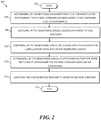
FIG. 2 is a flowchart of an example method for container monitoring configuration deployment; and -
FIG. 3 is a block diagram of an example system for container monitoring configuration deployment. - During workload development and operation of containers, many aspects are considered, such as quality, security, monitoring etc. Those aspects and more are handled by many tools that have their configuration in proprietary and private format and repositories, often apart from the workload code and binaries. This separation may create several severe challenges that impact pace of innovation. For example, testing or monitoring definitions may become out of sync with the workload version and workload operations knowledge may not be properly passed on to operations team as they manage the workload.
- Some monitoring tools for containers may be used as agents that usually run on the host either as another container or as an internal application inside the container, which is an addition to an already complicated deployment. Moreover, these tools may involve complex configuration to enable monitoring.
- Systems and methods for container monitoring configuration deployment discussed herein leverage built-in configuration templates that can be deployed easily on applications running as containers. When a new container starts, the availability of a pre-defined template is detected for the container and then deployed to fetch internal metrics for the application executing within the container. The systems and methods described herein may allow automatic and dynamic configuration for monitor containers by different (and sometimes incompatible) container deployment tools.
- An example method for container monitoring configuration deployment may include determining, by a monitoring server external to a container cluster environment, that a new container has been added to the container cluster environment. The method may include receiving, by the monitoring server, cluster data from the new container and comparing, by the monitoring server, the cluster data to a plurality of configuration templates on the monitoring server. The method may also include determining, by the monitoring server, a configuration template from the plurality appropriate for the new container based on the comparison and deploying the configuration template to monitor the new container.
-
FIG. 1 is a block diagram of anexample environment 100 in which container monitoring configuration deployment may be useful.Environment 100 may include acontainer environment 102. As described above, a container is a virtualization method where numerous isolated instances exist within one kernel of an operation system.Container environment 102 may includenodes 104. AlthoughFig. 1 depicts 2nodes 104,environment 100 can have more or less nodes than two. Each node may be used for executing acontainer 108.Multiple containers 108 may be executed on each node. Eachcontainer 108 may execute a workload, such as an application, scheduled task or perform some other functionality. Some of thecontainers 108 may be deployed by different container deployment tools. The container environment may include a first container deployed by a first container deployment tool and a second container deployed by a second container deployment tool. For example,containers 108 may be deployed by the Docker Swarm® deployment tool, Kubernetes® deployment tool, etc. Thenodes 104 may be managed by a cluster manager 111 which may be a server, management software tool, etc. for managing and deploying containers. Although one cluster manager 111 is depicted inFig. 1 , multiple cluster managers 111 may be present inenvironment 100. - The stack for each
container 108 incontainer environment 102 may contain five major layers: cluster Manager layer, node (or host) layer in the cluster, container daemon layer that runs on each node, containers layer created by the container daemon, and applications layer that contain applications and/or workloads that runs on each container. - Cluster manager 111 and
container environment 102 may also be accessed bymonitor 112.Monitor 112 may not execute withincluster environment 102, but rather may be external tocluster environment 102 and/or cluster manager 111. For example,monitor 112 may be executed by amonitoring server 113. Monitor 112 may include agentless monitoring software for monitoring the availability and performance of distributed IT infrastructures, including servers, network devices and services, applications and application components, operating systems and various IT enterprise components. As described above, an agent is a piece of software that usually runs on the host either as another container or as an internal application inside the container. A monitor may be "agentless" if the monitor does not use one of these agents, but rather retrieves information directly from the container, cluster, application, etc. The information may be collected, by example, through the use of standardized Application Programing Interfaces (APIs). - Monitor 112 may include a
processor 114 and amemory 116 that may be coupled to each other through a communication link (e.g., a bus).Processor 114 may include a Central Processing Unit (CPU) or another suitable hardware processor. In some examples,memory 116 stores machine readable instructions executed byprocessor 114 formonitor 112.Memory 116 may include any suitable combination of volatile and/or non-volatile memory, such as combinations of Random Access Memory (RAM), Read-Only Memory (ROM), flash memory, and/or other suitable memory.Memory 116 may also include a random access non-volatile memory that can retain content when the power is off. -
Memory 116 may store instructions to be executed byprocessor 114 including instructions for and/or other components. According to various implementations,monitor 112 may be implemented in hardware and/or a combination of hardware and programming that configures hardware. Furthermore, inFIG. 1 and other Figures described herein, different numbers of components or entities than depicted may be used.Memory 116 may store instructions for monitoring software, includingnew container determiner 118, cluster data receiver 120, cluster data comparer 122, configuration template determiner 124 and configuration template deplorer 126. -
Processor 114 may execute instructions of new container determiner 118 to determine, by an agentless monitor, that a new container has been added to the container environment.New container determiner 118 may be run as a scheduled task ofmonitor 112 and may run periodically, at a configurable frequency, etc.New container determiner 118 may also determine when a new cluster has been added to the container environment. -
Processor 114 may execute instructions of cluster data receiver 120 to receive, by the monitor, cluster data from the new container. The cluster data may include container inside data, such as image name of the new container and/or cluster image, running state, container metadata, etc. Cluster data receiver 120 may receive cluster data using an API, such as the Docker inspect API. For example, cluster data received from the new container may be metadata of the new container retrieved using a standardized application programming interface. The container metadata may provide information about the container and/or cluster and may include information about the container, such as name and/or other identifier, type, location, description, version number, license, operating system, memory used, etc. The cluster data may identify a deployment manager of the container. - In some aspects,
containers 108 may be deployed by different container managers. That may be structured in different forms. For example on Docker Swarm® the containers may be part of its structure, but on Kubernetes® there may be a Pod which represents a set of containers. In these aspects, monitor 112 may ignore the added layers of the container cluster managers and use a container standardized application programming interface (API), such as the cluster remote API, to directly access the container directly. In this manner, monitor 112 can unify data corresponding to the containers of different cluster managers. -
Processor 114 may execute instructions of cluster data matcher 122 to match, by themonitor 112, the cluster data to a plurality of configuration files 123 ofmonitor 112 to determine a configuration file for the new container. The configuration files 123 may include templates 125 for different types of container images. Cluster data matcher 122 may further map a container image name of the retrieved meta-data to a plurality of container image names included in the plurality of configuration templates and map a container name of the retrieved meta-data to a plurality of container image names included in the plurality of configuration templates - The configuration files 123 may be used to automatically deploy a monitor or set of monitors for each
container 108 on thenodes 104. Cluster data matcher 122 may determine the appropriate configuration file by comparing particular cluster data to the data contained in the configuration files 123 and/or templates 125. For example, cluster data matcher 122 may use a regular expression to identify the configuration file that is appropriate for the container data. Parameters that may be used by cluster data matcher 122 may include container image name and container name. In some aspects, the container name may not be specified and a general regular expression that includes all container names may be used as the container name value. -
Processor 114 may execute instructions of template determiner 124 to determine by the monitor, a template for the new container corresponding to the configuration file. Template determiner 124 may identify a configuration file in the plurality and receive the path to the corresponding template 125. This is the template that will be deployed to monitor the new container. - The
monitor 112 may have built-in solution templates 125 that can be deployed easily on applications running as containers. When a new container starts, template determiner 124 may determine the availability of a pre-defined template for the image name. Template determiner 124 may determine the availably using a standardized API, such as for example, the Docker® inspect API. The templates may correspond to amonitoring policy 127 that may define how to monitor a specific container and/or application executing within that container. - Template determiner 124 may further modify the template path with keys derived from the container data, so that the template 125 can be customized for the new container. The keys may include, cluster server name, image name, container deployment manager name, image name, container name, container ID, port numbers, etc. For example, for a Docker Swarm® container, the following keys may be used for the template path: <CLUSTER_SERVER_NAME>,<DOCKER_SERVER_NAME>,<IMAGE_NAME>,<CON TAINER_NAME>,<CONTAINER_ID>,<APP_EXPOSED_PORT>. For a Kubernetes ® cluster, you the following keys may be used for the template path: <CLUSTER_KUBERNETES_POD_NAME>,<CLUSTER_KUBERNETES_POD_ID>,<C LUSTER_KUBERNETES_NAMESPACE_NAME>
- Template determiner 124 may also identify the internal port for the container application. This internal port may be used by
monitor 112 to extract the exposed port of the container and use it as part of the monitoring template configuration. -
Processor 114 may execute instructions of template deployer 126 to deploy the configuration template to monitor the new container. Deploying the configuration template may include generating a new group of monitors for the new container using monitoring policies defined in the configuration template.Monitor 112 may include at least one group for monitoring containers and/or clusters inenvironment 100. The number of groups may vary. In some aspects, each container may have its own group. For example, a group may be used to apply monitoring policies to application / workload running inside container. In some aspects, multiple containers may be included in the same group. In some aspects each cluster may have its own group. For example, monitor 112 may include one group per cluster with multiple hierarchical metrics that access the health and performance of containers in the cluster. - Template deployer 126 may deploy the template to fetch internal metrics of the application. Metrics may be data that provides information about the operation, performance, etc. of some part of
environment 100. Metrics may include response time, memory usage, CPU usage, data throughout, bandwidth usage, latency, throughput, benchmarks, etc.Monitor 112 may monitor the entire container stack. Monitor 122 may collect metrics from any number of the layers of the containers. For example, monitor 122 may collect metrics from the cluster manager layer, node layer, container service layer, container layer and application layer. The monitor 122 may access the cluster API as well as a single node instance API, check its availability, and retrieve Linux host metrics for every registered engine, and fetch the general system metrics and specific metrics on the Docker Daemon. For example, PostgreSQL container can be monitored to get database connection details, Tomcat can be monitored using JMX, and NGINX can be monitored using URL. -
Monitor 112 may automatically retrieve metrics for new containers that are created in thecluster environment 102. If a container stops running, a group corresponding to the container may be disabled and may be reenabled once the container continues to run again. If a container is deleted, the group corresponding to the container may also deleted. For example, inenvironment 100 including a plurality ofcontainers 108, each container may have a corresponding group of monitors on themonitor 112.Monitor 112 may determine that a first container belonging to the plurality is no longer running on the container cluster environment and disable a first group, on the monitoring server, corresponding to the container. As described above, in some aspects, multiple containers may be monitored by the same group. In these aspects, monitor 112 may remove the first container from a group of the monitoring server upon determining that the container has stopped running. The container may be added back to the group ifmonitor 112 determines that the container is running again. - In some aspects, determining that a new container has been added may include determining, whether a group corresponding to the new container exists and enabling the group for the new container, if it is determined that a group corresponding to the new container exists. This may be done instead of and/or in addition to the elements described above performed by
new container determiner 118. - The monitoring data received from the container may be displayed on an output device, such as a monitor. For example, after the templates have been deployed may be unified and consolidated into a single view for display to an output device.
-
Monitor 112 may receive monitoring metrics from a first container and a second container belonging to the container environment using a standardized API and combine the monitoring metrics from the first container and the second container into a unified view for display on an output device. Themonitor 112 may use the standard API to directly access the first container and second container and ignore added management layers of the first and second container deployment tools. Themonitor 112 may receive monitoring metrics from a cluster manager layer, node layer, container daemon layer, containers layer, and application layer of the new container. -
FIG. 2 is a flowchart of anexample method 200 for container monitoring configuration deployment.Method 200 may be described below as being executed or performed by a system, for example, monitor 112 ofFIG. 1 orsystem 300 ofFIG. 3 . Other suitable systems and/or computing devices may be used as well.Method 200 may be implemented in the form of executable instructions stored on at least one machine-readable storage medium of the system and executed by at least one processor of the system. The processor may include a Central Processing Unit (CPU) or another suitable hardware processor. The machine-readable storage medium may be non-transitory.Method 200 may be implemented in the form of electronic circuitry (e.g., hardware). At least one block ofmethod 200 may be executed substantially concurrently or in a different order than shown inFIG. 2 .Method 200 may include more or less blocks than are shown inFIG. 2 . Some of the blocks ofmethod 200 may, at certain times, be ongoing and/or may repeat. -
Method 200 may start atblock 202 and continue to block 204, where the method may include determining, by a monitoring server external to a container cluster environment, that a new container has been added to the container cluster environment. The cluster data received from the new container may be metadata of the new cluster retrieved using a standardized application programming interface. The cluster data may include metadata of the cluster image. The cluster data may include an image name of the cluster image. The container environment may include a first container deployed by a first container deployment tool and a second container deployed by a second container deployment tool. -
Method 200 may continue to block 206, where the method may include receiving, by the monitoring server, cluster data from the new container. Atblock 208, the method may include comparing, by the monitoring server, the cluster data to a plurality of configuration templates on the monitoring server. Comparing the cluster data to the plurality of configuration temples may include mapping a container image name of received metadata to a plurality of container image names included in the plurality of configuration templates and mapping a container name of the received metadata to a plurality of container image names included in the plurality of configuration templates. Atblock 210, the method may include determining, by the monitoring server, a configuration template from the plurality appropriate for the new container based on the comparison. Atblock 212, the method may include deploying the configuration template to monitor the new container.Method 200 may eventually continue to block 214, wheremethod 200 may stop. -
FIG. 3 is a block diagram of anexample system 300 for container monitoring configuration deployment.System 300 may be similar to monitor 112 ofFIG. 1 , for example. In the example illustrated inFIG. 3 ,system 300 includes aprocessor 302 and a machine-readable storage medium 304. Although the following descriptions refer to a single processor and a single machine-readable storage medium, the descriptions may also apply to a system with multiple processors and multiple machine-readable storage mediums. In such examples, the instructions may be distributed (e.g., stored) across multiple machine-readable storage mediums and the instructions may be distributed (e.g., executed by) across multiple processors. -
Processor 302 may be at least one central processing unit (CPU), microprocessor, and/or other hardware devices suitable for retrieval and execution of instructions stored in machine-readable storage medium 304. In the example illustrated inFIG. 3 ,processor 302 may fetch, decode, and executeinstructions Processor 302 may include at least one electronic circuit comprising a number of electronic components for performing the functionality of at least one of the instructions in machine-readable storage medium 304. With respect to the executable instruction representations (e.g., boxes) described and shown herein, it should be understood that part or all of the executable instructions and/or electronic circuits included within one box may be included in a different box shown in the figures or in a different box not shown. - Machine-
readable storage medium 304 may be any electronic, magnetic, optical, or other physical storage device that stores executable instructions. Thus, machine-readable storage medium 304 may be, for example, Random Access Memory (RAM), an Electrically-Erasable Programmable Read-Only Memory (EEPROM), a storage drive, an optical disc, and the like. Machine-readable storage medium 304 may be disposed withinsystem 300, as shown inFIG. 3 . In this situation, the executable instructions may be "installed" on thesystem 300. Machine-readable storage medium 304 may be a portable, external or remote storage medium, for example, that allowssystem 300 to download the instructions from the portable/external/remote storage medium. In this situation, the executable instructions may be part of an "installation package". As described herein, machine-readable storage medium 304 may be encoded with executable instructions for context aware data backup. The machine-readable storage medium may be non-transitory. - Referring to
FIG. 3 , new container determineinstructions 306, when executed by a processor (e.g., 302), may causesystem 300 to determine, by an agentless monitoring service external to a container environment, that a new container has been added to the container environment. Metadata receiveinstructions 308, when executed by a processor (e.g., 302), may causesystem 300 to receive, by the monitoring service, cluster metadata from the new container. Metadata compareinstructions 310, when executed by a processor (e.g., 302), may causesystem 300 to compare, by the monitoring service, the cluster metadata to a plurality of configuration templates external to the container environment, wherein each configuration template includes corresponding container monitoring policy information. Configuration template determineinstructions 312, when executed by a processor (e.g., 302), may causesystem 300 to determine, by the monitoring service, a configuration template from the plurality appropriate for the new container based on the comparison. Configuration template deployinstructions 314, when executed by a processor (e.g., 302), may causesystem 300 to deploying the configuration template to monitor the new container using container policy information corresponding to the determined configuration template. - The foregoing disclosure describes a number of examples for container monitoring configuration deployment. The disclosed examples may include systems, devices, computer-readable storage media, and methods for container monitoring configuration deployment. For purposes of explanation, certain examples are described with reference to the components illustrated in
FIGS. 1-3 . The functionality of the illustrated components may overlap, however, and may be present in a fewer or greater number of elements and components. Further, all or part of the functionality of illustrated elements may co-exist or be distributed among several geographically dispersed locations. Further, the disclosed examples may be implemented in various environments and are not limited to the illustrated examples. - Further, the sequence of operations described in connection with
FIGS. 1-3 are examples and are not intended to be limiting. Additional orfewer operations or combinations of operations may be used or may vary without departing from the scope of the disclosed examples. Furthermore, implementations consistent with the disclosed examples need not perform the sequence of operations in any particular order. Thus, the present disclosure merely sets forth possible examples of implementations, and many variations and modifications may be made to the described examples. -
- Example 1. Machine-readable instructions, the instructions executable by a processor of a system to cause the system to: determine, by an agentless monitoring service external to a container environment, that a new container has been added to the container environment; receive, by the monitoring service, cluster metadata from the new container; compare, by the monitoring service, the cluster metadata to a plurality of configuration templates external to the container environment, wherein each configuration template includes corresponding container monitoring policy information; determine, by the monitoring service, a configuration template from the plurality of configuration templates appropriate for the new container based on the comparison; and deploy the configuration template to monitor the new container using container policy information corresponding to the determined configuration template.
- Example 2. The machine-readable instructions of example 2, wherein the instructions executable by the processor of the system further cause the system to: determine, by the monitoring service, that a first container is no longer running on the container cluster environment, wherein the container environment includes a plurality of containers, each container having a corresponding group on the monitoring service; and disable a first group of the monitoring service corresponding to the first container.
- Example 3. The machine-readable instructions of either of examples 1 and 2, wherein the instructions executable by the processor of the system further cause the system to: determine, whether a group of monitors corresponding to the new container exists; and enable the group for the new container, if it is determined that the group corresponding to the new container exists.
- Example 4. The machine-readable instructions of any of examples 1 to 3, wherein the instructions executable by the processor of the system further cause the system to: map a container image name of the metadata to a plurality of container image names included in the plurality of configuration templates; and map a container name of the metadata to a plurality of container image names included in the plurality of configuration templates.
- Example 5. The machine-readable instructions of any of examples 1 to 4, wherein the instructions executable by the processor of the system further cause the system to: receive, by the monitoring service, monitoring metrics from a first container and a second container belonging to the container environment using a standardized API, wherein the container environment includes a first container deployed by a first container deployment tool and a second container deployed by a second container deployment tool; and combine the monitoring metrics from the first container and the second container into a unified view for display on an output device, wherein the monitoring service uses the standardized API to directly access the first container and second container and ignore added management layers of the first and second container deployment tools.
- Example 6. A machine-readable storage medium storing machine-readable instructions of any of examples 1 to 5.
- Example 7. A non-transitory machine-readable storage medium storing machine readable instructions of any of examples 1 to 5.
Claims (15)
- A method comprising:determining, by a monitoring server external to a container cluster environment, that a new container has been added to the container cluster environment;receiving, by the monitoring server, cluster data from the new container;comparing, by the monitoring server, the cluster data to a plurality of configuration templates on the monitoring server;determining, by the monitoring server, a configuration template from the plurality of configuration templates appropriate for the new container based on the comparison; anddeploying the configuration template to monitor the new container.
- The method of claim 1 wherein deploying the configuration template comprises:generating a new group of monitors for the new container using monitoring policies defined in the configuration template.
- The method of either of claims 1 and 2 comprising:determining, by the monitoring server, that a first container is no longer running on the container cluster environment; andremoving the first container from a group of the monitoring server.
- The method of any of claims 1 to 3 wherein determining that the new container has been added comprises:determining, whether a group of monitors belonging to a plurality of groups corresponding to the new container exists; andenabling the group for the new container, if it is determined that the group corresponding to the new container exists.
- The method of any of claims 1 to 4 wherein the cluster data received from the new container is metadata of the new cluster retrieved using a standardized application programming interface.
- The method of claim 5 wherein comparing the cluster data to the plurality of configuration temples comprises:mapping a container image name of the received metadata to a plurality of container image names included in the plurality of configuration templates; andmapping a container name of the received metadata to a plurality of container image names included in the plurality of configuration templates.
- The method of any of claims 1 to 6 wherein the container environment includes a first container deployed by a first container deployment tool and a second container deployed by a second container deployment tool.
- The method of claim 7 comprising:retrieving, by the monitoring server, monitoring metrics from a first container and a second container belonging to the container environment using a standardized API; andcombining the monitoring metrics from the first container and the second container into a unified view for display on an output device, wherein the monitoring server uses the standardized API to directly access the first container and second container and ignore added management layers of the first and second container deployment tools.
- The method of any of claims 1 to 8 wherein the cluster data includes at least one or metadata of the new container or an image name of the new container.
- The method of any of claims 1 to 9 further comprising:receiving metrics from a cluster manager layer, node layer, container daemon layer, containers layer, and application layer of the new container.
- A system comprising:a new container determiner to determine, by an agentless monitor, that a new container has been added to a container environment;a cluster data receiver to receive, by the monitor, cluster data from the new container;a cluster data matcher to match, by the agentless monitor, the cluster data to a plurality of configuration files to determine a configuration file for the new container;a template determiner to determine, by the agentless monitor, a template for the new container corresponding to the configuration file; anda template deployer to deploy the configuration template to monitor the new container.
- The system of claim 11 wherein the cluster data identifies a deployment manager of the container.
- The system of any of claims 11 to 12 wherein the cluster data matcher is further to:map a container image name of the cluster data to a plurality of container image names included in the plurality of configuration templates; andmap a container name of the cluster data to a plurality of container image names included in the plurality of configuration templates.
- The system of any of claims 11 to 13 wherein the template deployer is further to:receive, by the agentless monitor, monitoring metrics from a first container and a second container belonging to the container environment using a standardized API; andcombine the monitoring metrics from the first container and the second container into a unified view for display on an output device, wherein the monitor uses the standardized API to directly access the first container and second container and ignore added management layers of first and second container deployment tools used to deploy the first and second container, respectively.
- A machine-readable storage medium encoded with instructions, the instructions being executable by a processor of a system to implement a method of any of claims 1 to 10 or to realise a system of any of claims 11 to 14.
Applications Claiming Priority (1)
| Application Number | Priority Date | Filing Date | Title |
|---|---|---|---|
| US15/234,662 US10505830B2 (en) | 2016-08-11 | 2016-08-11 | Container monitoring configuration deployment |
Publications (1)
| Publication Number | Publication Date |
|---|---|
| EP3282356A1 true EP3282356A1 (en) | 2018-02-14 |
Family
ID=59677030
Family Applications (1)
| Application Number | Title | Priority Date | Filing Date |
|---|---|---|---|
| EP17186042.2A Withdrawn EP3282356A1 (en) | 2016-08-11 | 2017-08-11 | Container monitoring configuration deployment |
Country Status (2)
| Country | Link |
|---|---|
| US (1) | US10505830B2 (en) |
| EP (1) | EP3282356A1 (en) |
Cited By (9)
| Publication number | Priority date | Publication date | Assignee | Title |
|---|---|---|---|---|
| CN108924193A (en) * | 2018-06-15 | 2018-11-30 | 广东小天才科技有限公司 | Service deployment method and device based on server |
| CN109067827A (en) * | 2018-06-22 | 2018-12-21 | 杭州才云科技有限公司 | Based on Kubernetes and OpenStack container cloud platform multi-tenant construction method, medium, equipment |
| CN109062592A (en) * | 2018-07-16 | 2018-12-21 | 福建省天奕网络科技有限公司 | A kind of method and system that game numerical value is synchronous |
| CN110198231A (en) * | 2018-05-08 | 2019-09-03 | 腾讯科技(深圳)有限公司 | Capacitor network management method and system and middleware for multi-tenant |
| CN110515696A (en) * | 2019-08-09 | 2019-11-29 | 济南浪潮数据技术有限公司 | Information monitoring method and device |
| CN111277431A (en) * | 2020-01-08 | 2020-06-12 | 国网内蒙古东部电力有限公司检修分公司 | Server Architecture Method for Online Monitoring of Ultra-UHV Transmission Lines |
| CN111506320A (en) * | 2019-01-31 | 2020-08-07 | 阿里巴巴集团控股有限公司 | Installation method, installation configuration method, device and equipment |
| CN113419818A (en) * | 2021-06-23 | 2021-09-21 | 北京达佳互联信息技术有限公司 | Basic component deployment method, device, server and storage medium |
| CN116389324A (en) * | 2023-06-07 | 2023-07-04 | 深圳市东信时代信息技术有限公司 | A cloud server management method, device, equipment and storage medium |
Families Citing this family (33)
| Publication number | Priority date | Publication date | Assignee | Title |
|---|---|---|---|---|
| KR102460416B1 (en) * | 2016-10-24 | 2022-10-28 | 삼성에스디에스 주식회사 | System and method for managing container-based distributed application |
| US10592380B2 (en) * | 2018-04-20 | 2020-03-17 | Sysdig, Inc. | Programmatic container monitoring |
| CN110618821A (en) * | 2018-06-19 | 2019-12-27 | 普天信息技术有限公司 | Container cluster system based on Docker and rapid building method |
| US11329885B2 (en) * | 2018-06-21 | 2022-05-10 | International Business Machines Corporation | Cluster creation using self-aware, self-joining cluster nodes |
| US11055127B2 (en) * | 2018-07-25 | 2021-07-06 | International Business Machines Corporation | Performance of containers |
| US10664265B2 (en) | 2018-08-30 | 2020-05-26 | International Business Machines Corporation | Generating target configuration containers providing computer environments based on a configuration container |
| CN110896404B (en) * | 2018-09-12 | 2021-09-14 | 华为技术有限公司 | Data processing method and device and computing node |
| US11424984B2 (en) * | 2018-10-30 | 2022-08-23 | Elasticsearch B.V. | Autodiscovery with dynamic configuration launching |
| CN109542605A (en) * | 2018-11-27 | 2019-03-29 | 长沙智擎信息技术有限公司 | A kind of container group life cycle management method based on Kubernetes system architecture |
| CN111355622A (en) * | 2018-12-21 | 2020-06-30 | 中兴通讯股份有限公司 | Service monitoring method, system and computer-readable storage medium for container |
| CN109981396B (en) * | 2019-01-22 | 2022-07-08 | 平安普惠企业管理有限公司 | Monitoring method and device for cluster of docker service containers, medium and electronic equipment |
| CN109960634B (en) * | 2019-03-29 | 2023-10-31 | 新华三技术有限公司 | Application program monitoring method, device and system |
| US12260239B2 (en) | 2019-03-29 | 2025-03-25 | Micro Focus Llc | Monitoring containerized VM application running within software container |
| US11526386B2 (en) * | 2019-04-03 | 2022-12-13 | Oracle International Corporation | System and method for automatically scaling a cluster based on metrics being monitored |
| CN110287079A (en) * | 2019-05-14 | 2019-09-27 | 中山大学 | A cluster automatic monitoring system and method |
| CN110377489A (en) * | 2019-07-17 | 2019-10-25 | 国家电网有限公司 | The method and apparatus of log information processing |
| CN110413288B (en) * | 2019-07-31 | 2023-05-09 | 新华三大数据技术有限公司 | Application deployment method, device, server and storage medium |
| CN111209076A (en) * | 2019-12-20 | 2020-05-29 | 珠海金山网络游戏科技有限公司 | Method and device for monitoring processes in docker container and readable medium |
| CN111241540A (en) * | 2020-01-16 | 2020-06-05 | 南京领行科技股份有限公司 | Service processing method and device |
| US11144362B1 (en) * | 2020-05-05 | 2021-10-12 | International Business Machines Corporation | Container scheduling in a container orchestration system |
| CN111767178B (en) * | 2020-05-20 | 2023-09-01 | 北京奇艺世纪科技有限公司 | Physical machine performance test method and device |
| CN112152874A (en) * | 2020-09-07 | 2020-12-29 | 成都精灵云科技有限公司 | System and method for acquiring and analyzing application monitoring data in distributed system |
| CN112596741B (en) * | 2020-11-16 | 2022-08-30 | 新华三大数据技术有限公司 | Video monitoring service deployment method and device |
| CN112698914B (en) * | 2020-12-30 | 2022-12-27 | 北京理工大学 | Workflow task container generation system and method |
| US11429465B1 (en) | 2021-04-28 | 2022-08-30 | Microsoft Technology Licensing, Llc | Controller for off-cluster operations |
| US11778514B2 (en) | 2021-09-20 | 2023-10-03 | T-Mobile Innovations Llc | Data router connectivity to wireless communication slices |
| US11507672B1 (en) | 2022-01-12 | 2022-11-22 | Sysdig, Inc. | Runtime filtering of computer system vulnerabilities |
| CN118827833B (en) * | 2024-07-29 | 2025-12-02 | 上海网达软件股份有限公司 | A method for dynamically obtaining Nginx streaming media status information |
| US12423089B1 (en) | 2024-11-15 | 2025-09-23 | Minimus Ltd | Software image update management platform |
| US12585436B1 (en) | 2024-11-15 | 2026-03-24 | Minimus Ltd | Techniques for securing computing environments via software images containing embedded secrets |
| US12511404B1 (en) | 2024-11-15 | 2025-12-30 | Minimus Ltd | Remediating vulnerabilities using software update management platform with integrated threat intelligence |
| US12423069B1 (en) | 2025-06-03 | 2025-09-23 | Minimus Ltd | Artificial intelligence-based software image recipe creation and uses thereof |
| US12536276B1 (en) | 2025-06-10 | 2026-01-27 | Minimus Ltd | Techniques for securing software components through security packages defined in software image recipes |
Citations (2)
| Publication number | Priority date | Publication date | Assignee | Title |
|---|---|---|---|---|
| US20160162312A1 (en) * | 2014-12-05 | 2016-06-09 | International Business Machines Corporation | Configuring monitoring for virtualized servers |
| US9396251B1 (en) * | 2016-01-07 | 2016-07-19 | International Business Machines Corporation | Detecting and tracking virtual containers |
Family Cites Families (13)
| Publication number | Priority date | Publication date | Assignee | Title |
|---|---|---|---|---|
| US6868539B1 (en) * | 2000-06-28 | 2005-03-15 | Microsoft Corp. | System and method providing single application image |
| US8141090B1 (en) * | 2007-04-24 | 2012-03-20 | Hewlett-Packard Development Company, L.P. | Automated model-based provisioning of resources |
| US8065676B1 (en) * | 2007-04-24 | 2011-11-22 | Hewlett-Packard Development Company, L.P. | Automated provisioning of virtual machines for a virtual machine buffer pool and production pool |
| US8347263B1 (en) * | 2007-05-09 | 2013-01-01 | Vmware, Inc. | Repository including installation metadata for executable applications |
| US8353012B2 (en) * | 2008-02-26 | 2013-01-08 | Alejandro Emilio Del Real | Internet-based group website technology for content management and exchange (system and methods) |
| US20140181817A1 (en) * | 2012-12-12 | 2014-06-26 | Vmware, Inc. | Methods and apparatus to manage execution of virtual machine workflows |
| US9864528B2 (en) * | 2014-10-16 | 2018-01-09 | Microsoft Technology Licensing, Llc | Data object observation among domain-restricted containers |
| US9775008B2 (en) * | 2015-01-14 | 2017-09-26 | Kodiak Networks, Inc. | System and method for elastic scaling in a push to talk (PTT) platform using user affinity groups |
| US9426030B1 (en) * | 2015-12-11 | 2016-08-23 | International Business Machines Coporation | Automatically generating configuration images and deploying computer components in a computing environment that comprises a shared pool of configurable computing resources |
| US10482108B2 (en) * | 2016-02-26 | 2019-11-19 | Red Hat, Inc. | Container clustering in a container-based architecture |
| US20170322824A1 (en) * | 2016-05-05 | 2017-11-09 | Microsoft Technology Licensing, Llc | Cloning Computing Device Containers |
| US10855725B2 (en) * | 2016-06-02 | 2020-12-01 | Microsoft Technology Licensing, Llc | Hardware-based virtualized security isolation |
| US10353756B2 (en) * | 2016-10-11 | 2019-07-16 | Oracle International Corporation | Cluster-based processing of unstructured log messages |
-
2016
- 2016-08-11 US US15/234,662 patent/US10505830B2/en active Active
-
2017
- 2017-08-11 EP EP17186042.2A patent/EP3282356A1/en not_active Withdrawn
Patent Citations (2)
| Publication number | Priority date | Publication date | Assignee | Title |
|---|---|---|---|---|
| US20160162312A1 (en) * | 2014-12-05 | 2016-06-09 | International Business Machines Corporation | Configuring monitoring for virtualized servers |
| US9396251B1 (en) * | 2016-01-07 | 2016-07-19 | International Business Machines Corporation | Detecting and tracking virtual containers |
Non-Patent Citations (3)
| Title |
|---|
| ANONYMOUS: "Axibase | Google cAdvisor", 30 June 2016 (2016-06-30), XP055416455, Retrieved from the Internet <URL:https://web.archive.org/web/20160630050416/https://axibase.com/products/axibase-time-series-database/writing-data/docker-cadvisor/> [retrieved on 20171017] * |
| BRIAN COOKSEY: "Chapter 1: Introduction - An Introduction to APIs - Zapier", 25 June 2016 (2016-06-25), pages 1 - 6, XP055416354, Retrieved from the Internet <URL:https://web.archive.org/web/20160625163602/https://zapier.com/learn/apis/chapter-1-introduction-to-apis/> [retrieved on 20171017] * |
| ISMAIL USMAN: "Rancher Labs | Comparing Seven Monitoring Options for Docker | Rancher Labs", 13 April 2016 (2016-04-13), XP055416393, Retrieved from the Internet <URL:https://web.archive.org/web/20160413001220/http://rancher.com/comparing-monitoring-options-for-docker-deployments/> [retrieved on 20171017] * |
Cited By (12)
| Publication number | Priority date | Publication date | Assignee | Title |
|---|---|---|---|---|
| CN110198231A (en) * | 2018-05-08 | 2019-09-03 | 腾讯科技(深圳)有限公司 | Capacitor network management method and system and middleware for multi-tenant |
| CN108924193A (en) * | 2018-06-15 | 2018-11-30 | 广东小天才科技有限公司 | Service deployment method and device based on server |
| CN109067827A (en) * | 2018-06-22 | 2018-12-21 | 杭州才云科技有限公司 | Based on Kubernetes and OpenStack container cloud platform multi-tenant construction method, medium, equipment |
| CN109062592A (en) * | 2018-07-16 | 2018-12-21 | 福建省天奕网络科技有限公司 | A kind of method and system that game numerical value is synchronous |
| CN109062592B (en) * | 2018-07-16 | 2021-12-28 | 福建省天奕网络科技有限公司 | Game numerical value synchronization method and system |
| CN111506320A (en) * | 2019-01-31 | 2020-08-07 | 阿里巴巴集团控股有限公司 | Installation method, installation configuration method, device and equipment |
| CN110515696A (en) * | 2019-08-09 | 2019-11-29 | 济南浪潮数据技术有限公司 | Information monitoring method and device |
| CN111277431A (en) * | 2020-01-08 | 2020-06-12 | 国网内蒙古东部电力有限公司检修分公司 | Server Architecture Method for Online Monitoring of Ultra-UHV Transmission Lines |
| CN113419818A (en) * | 2021-06-23 | 2021-09-21 | 北京达佳互联信息技术有限公司 | Basic component deployment method, device, server and storage medium |
| CN113419818B (en) * | 2021-06-23 | 2022-06-10 | 北京达佳互联信息技术有限公司 | Basic component deployment method, device, server and storage medium |
| CN116389324A (en) * | 2023-06-07 | 2023-07-04 | 深圳市东信时代信息技术有限公司 | A cloud server management method, device, equipment and storage medium |
| CN116389324B (en) * | 2023-06-07 | 2023-09-29 | 深圳市东信时代信息技术有限公司 | A cloud server management method, device, equipment and storage medium |
Also Published As
| Publication number | Publication date |
|---|---|
| US20180048545A1 (en) | 2018-02-15 |
| US10505830B2 (en) | 2019-12-10 |
Similar Documents
| Publication | Publication Date | Title |
|---|---|---|
| US10505830B2 (en) | Container monitoring configuration deployment | |
| US12079091B2 (en) | Application consistent snapshots as a sidecar of a containerized application | |
| US9851989B2 (en) | Methods and apparatus to manage virtual machines | |
| US11573867B2 (en) | Smart dynamic restore for Kubernetes based applications | |
| US11188561B2 (en) | Prioritizing microservices on a container platform for a restore operation | |
| US10922205B2 (en) | Monitoring applications running on containers | |
| WO2020029995A1 (en) | Application upgrading through sharing dependencies | |
| US9971671B2 (en) | System and method for dynamic debugging in a multitenant application server environment | |
| US9977681B2 (en) | System and method for partition startup/shutdown in a multitenant application server environment | |
| US10402090B1 (en) | Data service protection for cloud management platforms | |
| US20220103580A1 (en) | Preventing scheduling or executing a resource on an inconsistent host node | |
| US9535754B1 (en) | Dynamic provisioning of computing resources | |
| US9229758B2 (en) | Passive monitoring of virtual systems using extensible indexing | |
| CN106886434B (en) | Distributed application installation method and device | |
| US9930112B2 (en) | Maintaining system firmware images remotely using a distribute file system protocol | |
| US20110055544A1 (en) | Systems and methods for tracking a history of changes associated with software packages and configuration management in a computing system | |
| US20170123777A1 (en) | Deploying applications on application platforms | |
| US10466991B1 (en) | Computing instance software package installation | |
| US20150347115A1 (en) | System and method for managing multi-cloud deployment | |
| US20200310899A1 (en) | Method for retrieving metadata from clusters of computing nodes with containers based on application dependencies | |
| US20210006472A1 (en) | Method For Managing Resources On One Or More Cloud Platforms | |
| US12248822B2 (en) | Lifecycle management for workloads on heterogeneous infrastructure | |
| US11095501B2 (en) | Provisioning and activating hardware resources | |
| US20170322852A1 (en) | Versioning and recovery of workloads | |
| US10303553B2 (en) | Providing data backup |
Legal Events
| Date | Code | Title | Description |
|---|---|---|---|
| PUAI | Public reference made under article 153(3) epc to a published international application that has entered the european phase |
Free format text: ORIGINAL CODE: 0009012 |
|
| STAA | Information on the status of an ep patent application or granted ep patent |
Free format text: STATUS: REQUEST FOR EXAMINATION WAS MADE |
|
| 17P | Request for examination filed |
Effective date: 20170811 |
|
| AK | Designated contracting states |
Kind code of ref document: A1 Designated state(s): AL AT BE BG CH CY CZ DE DK EE ES FI FR GB GR HR HU IE IS IT LI LT LU LV MC MK MT NL NO PL PT RO RS SE SI SK SM TR |
|
| AX | Request for extension of the european patent |
Extension state: BA ME |
|
| STAA | Information on the status of an ep patent application or granted ep patent |
Free format text: STATUS: THE APPLICATION IS DEEMED TO BE WITHDRAWN |
|
| 18D | Application deemed to be withdrawn |
Effective date: 20180815 |