EP3280722B1 - Antimicrobial peptides and their use for the treatment of topical infections - Google Patents
Antimicrobial peptides and their use for the treatment of topical infections Download PDFInfo
- Publication number
- EP3280722B1 EP3280722B1 EP16721001.2A EP16721001A EP3280722B1 EP 3280722 B1 EP3280722 B1 EP 3280722B1 EP 16721001 A EP16721001 A EP 16721001A EP 3280722 B1 EP3280722 B1 EP 3280722B1
- Authority
- EP
- European Patent Office
- Prior art keywords
- lys
- leu
- ile
- ser
- ala
- Prior art date
- Legal status (The legal status is an assumption and is not a legal conclusion. Google has not performed a legal analysis and makes no representation as to the accuracy of the status listed.)
- Active
Links
Images
Classifications
-
- C—CHEMISTRY; METALLURGY
- C07—ORGANIC CHEMISTRY
- C07K—PEPTIDES
- C07K7/00—Peptides having 5 to 20 amino acids in a fully defined sequence; Derivatives thereof
- C07K7/04—Linear peptides containing only normal peptide links
- C07K7/08—Linear peptides containing only normal peptide links having 12 to 20 amino acids
-
- A—HUMAN NECESSITIES
- A61—MEDICAL OR VETERINARY SCIENCE; HYGIENE
- A61K—PREPARATIONS FOR MEDICAL, DENTAL OR TOILETRY PURPOSES
- A61K38/00—Medicinal preparations containing peptides
- A61K38/04—Peptides having up to 20 amino acids in a fully defined sequence; Derivatives thereof
-
- A—HUMAN NECESSITIES
- A61—MEDICAL OR VETERINARY SCIENCE; HYGIENE
- A61P—SPECIFIC THERAPEUTIC ACTIVITY OF CHEMICAL COMPOUNDS OR MEDICINAL PREPARATIONS
- A61P17/00—Drugs for dermatological disorders
-
- A—HUMAN NECESSITIES
- A61—MEDICAL OR VETERINARY SCIENCE; HYGIENE
- A61P—SPECIFIC THERAPEUTIC ACTIVITY OF CHEMICAL COMPOUNDS OR MEDICINAL PREPARATIONS
- A61P19/00—Drugs for skeletal disorders
-
- A—HUMAN NECESSITIES
- A61—MEDICAL OR VETERINARY SCIENCE; HYGIENE
- A61P—SPECIFIC THERAPEUTIC ACTIVITY OF CHEMICAL COMPOUNDS OR MEDICINAL PREPARATIONS
- A61P29/00—Non-central analgesic, antipyretic or antiinflammatory agents, e.g. antirheumatic agents; Non-steroidal antiinflammatory drugs [NSAID]
-
- A—HUMAN NECESSITIES
- A61—MEDICAL OR VETERINARY SCIENCE; HYGIENE
- A61P—SPECIFIC THERAPEUTIC ACTIVITY OF CHEMICAL COMPOUNDS OR MEDICINAL PREPARATIONS
- A61P31/00—Antiinfectives, i.e. antibiotics, antiseptics, chemotherapeutics
-
- A—HUMAN NECESSITIES
- A61—MEDICAL OR VETERINARY SCIENCE; HYGIENE
- A61P—SPECIFIC THERAPEUTIC ACTIVITY OF CHEMICAL COMPOUNDS OR MEDICINAL PREPARATIONS
- A61P31/00—Antiinfectives, i.e. antibiotics, antiseptics, chemotherapeutics
- A61P31/10—Antimycotics
-
- A—HUMAN NECESSITIES
- A61—MEDICAL OR VETERINARY SCIENCE; HYGIENE
- A61K—PREPARATIONS FOR MEDICAL, DENTAL OR TOILETRY PURPOSES
- A61K38/00—Medicinal preparations containing peptides
-
- A—HUMAN NECESSITIES
- A61—MEDICAL OR VETERINARY SCIENCE; HYGIENE
- A61K—PREPARATIONS FOR MEDICAL, DENTAL OR TOILETRY PURPOSES
- A61K38/00—Medicinal preparations containing peptides
- A61K38/04—Peptides having up to 20 amino acids in a fully defined sequence; Derivatives thereof
- A61K38/10—Peptides having 12 to 20 amino acids
Definitions
- aeruginosa (Liberec) Peptide concentration Peptide concentration 8 ⁇ mol.l -1 16 ⁇ mol.l -1 32 ⁇ mol.l -1 64 ⁇ mol.l -1 128 ⁇ mol.l -1 8 ⁇ mol.l -1 16 ⁇ mol.l -1 32 ⁇ mol.l -1 64 ⁇ mol.l -1 128 ⁇ mol.l -1 I 111.6 103.3 111.2 101.9 11.4 86.4 87.7 89.6 62.9 43.4 II 143.1 138.8 107.5 29.9 7.7 94.2 100.5 79.1 33.0 26.7 III 87.8 89.6 78.4 15.9 2.4 n.t. n.t. n.t. n.t. n.t.
- the paste for filling the holes was prepared by successive mixing the powder component (200 mg) with the peptides nos. XII (8 mg) and XIII (4 mg) and the liquid component (70 ⁇ l).
- the paste without peptides used for comparison was prepared by the same manner.
Landscapes
- Health & Medical Sciences (AREA)
- Chemical & Material Sciences (AREA)
- Life Sciences & Earth Sciences (AREA)
- Organic Chemistry (AREA)
- General Health & Medical Sciences (AREA)
- Medicinal Chemistry (AREA)
- Veterinary Medicine (AREA)
- Public Health (AREA)
- Animal Behavior & Ethology (AREA)
- Pharmacology & Pharmacy (AREA)
- Proteomics, Peptides & Aminoacids (AREA)
- General Chemical & Material Sciences (AREA)
- Chemical Kinetics & Catalysis (AREA)
- Nuclear Medicine, Radiotherapy & Molecular Imaging (AREA)
- Bioinformatics & Cheminformatics (AREA)
- Engineering & Computer Science (AREA)
- Biochemistry (AREA)
- Biophysics (AREA)
- Genetics & Genomics (AREA)
- Molecular Biology (AREA)
- Epidemiology (AREA)
- Immunology (AREA)
- Gastroenterology & Hepatology (AREA)
- Oncology (AREA)
- Communicable Diseases (AREA)
- Physical Education & Sports Medicine (AREA)
- Pain & Pain Management (AREA)
- Rheumatology (AREA)
- Dermatology (AREA)
- Peptides Or Proteins (AREA)
- Medicines That Contain Protein Lipid Enzymes And Other Medicines (AREA)
Description
- The invention involves peptides of the general formula (I-A) and their application for the treatment of infection diseases caused by various pathogenic bacteria and by the yeasts of Candida strains. These are mostly topical infections such as difficult-to-heal wounds, skin disorders, mucosal infections, as well as infections of catheters, artificial joints and implanted materials. They are commonly accompanied by the occurrence of microbial biofilms.
- Infection causes serious complications during the healing process of acute and chronic wounds. Formation of biofilm contributes to the chronicity of early infections [Rulík et al., 2011] which leads to the chronic inflammation of the wound scum thus preventing the wound healing and promoting the dissemination of the infection [Bjarnsholt, 2013]. Biofilms are agglomerates of microorganisms adhered to a wound scum or to the surfaces of the artificial implants such as joint implants, osteosynthesis materials, cement fixations or catheters inserted into the body of patient. Biofilm is also formed in connection with dental plaque, urinary tract infections, eye infections and infections of ear canal or middle ear. It is estimated that biofilm-related infections account for at least 80% of all human infections. Microorganisms living in biofilms are embedded in a matrix of extracellular polymer substances made of polysaccharides, alginates and other compounds [Bjarnsholt et al., 2013]. This matrix acts as protection against the effect of antibiotics, antiseptics and immunity system of organism. In the stage of mature biofilm, when the nutrients are depleted, the matrix of biofilm begins to fall apart under control in clusters, microorganisms detach and spread to new infection sites thus causing serious complications.
- Treatment of topical infections, including chronic wounds and infections caused by biofilms adhering to artificial materials, is very difficult and the subsequences are alarming. Protection of our immunity against microorganisms in biofilms is not sufficient and impropriate applications of topical antibiotics or antiseptics may result to the occurrence of resistant strains of microorganisms which prevail over those sensitive. For an effective local therapy of infection caused by microbes in a biofilm, it is advisable to use combination of mechanical debridement with broad-spectrum antimicrobial agent and other compounds that penetrate inside the biofilm to kill bacteria or inhibit formation of biofilm. One of these possibilities is the application of commercially available wound dressings based on the local action of silver ions (Aquacel Ag+Extra). Action of powdered polymeric materials such Altrazeal is based on the providing ideal wound moisture which supports optimal cell function and regeneration of afflicted tissue.
- One of the ways of increasing the therapeutic potential of local therapy of infected wound or preventing the infection adherence on the surface of artificial material is the application of antimicrobial peptides (AMP) [Zasloff, 2002]. It is well known that AMPs kill bacteria with mechanism of action which is markedly different from that of conventional antibiotics and does not develop bacterial resistance. Therefore AMPs are considered a promising supplement to, or substitute for, conventional antibiotics [Hancock and Sahl, 2006; Toke, 2005; Giuliani et al., 2007, Zaiou, 2007; Oyston et al., 2009; Baltzer and Brown, 2011; Yeung et al., 2011; Čeřovský, 2014].
Recently discovered and newly presented very effective AMPs represent convenient, synthetically available group of compounds aimed for the eradication of the infection or for the prevention of the emergence of the focus of infection. They can be applied in the combination with commercially available materials used as wound dressings, or as mixtures with carriers used in orthopedics for treatment of osteomyelitis, or as mixtures with synthetic polymeric materials used in orthopedics as the cements (polymethylmethacrylate) for endoprostheses fixation. - Antimicrobial peptides have been identified almost everywhere across the spectrum of animal and plant kingdoms. In the class of insects, AMPs represent a remarkable group which represent the main means of defense against microorganisms [Čeřovský, 2014; Otvos, 2000]. They kill bacteria and other microorganisms such as fungi with mechanism of action which is markedly different from that of conventional antibiotics and is assumed not to develop bacterial resistance. Although the precise mechanism of the broad spectrum of antimicrobial activity of these peptides is not yet fully understood, they appear to act via a specific, but not receptor-mediated, formation of trans-membrane pores or ion channels in cellular membrane. This causes leakage of essential metabolites that results in the disruption of microbial cell structure and leads to cell death [Oren and Shai, 1998; Yeaman and Yount, 2003; Nguyen at al., 2011]. Quite peculiar groups of peptides with antimicrobial properties were identified in the venom of stinging insects such as hymenopterans [Kuhn-Nentwig, 2003].
- Antimicrobial effect of peptides isolated from the venoms of wasps, bees, bumblebees and ants is mostly secondary in the nature. Their main function consists of the toxicity, causing pain and inflammation, as it is in the case of peptides belonging to the group of mastoparans [Čeřovský et al. 2008]. Nevertheless, antimicrobial effect of peptides isolated for example from the venom of wild bees is quite significant. With regard to their synthetic availability, these peptides may find application in practical medicine. The growing resistance of bacterial pathogens and yeasts to conventional antibiotics or commonly used antifungals has become serious global health problem which requires a persistent search for novel alternatives to traditional antibiotics. In such alarming situation, AMPs appear to be very promising compounds for developing drugs to fight resistant pathogens.
- Natural peptide called hylanine was originally isolated from the venom reservoirs of solitary wild bees Hylaeus signatus, and its sequence was determined as follows:
H-Gly-Ile-Met-Ser-Ser-Leu-Met-Lys-Lys-Leu-Ala-Ala-His-Ile-Ala-Lys-NH2 (SEQ ID NO. 1) - Based on this sequence, hylanine was prepared by the method of solid phase peptide synthesis followed by testing of its antimicrobial activity.
- Synthetically prepared hylanine exhibited high antimicrobial activity against Micrococcus luteus and Bacillus subtilis and moderate activity against the yeast Candida albicans. However, its activity against all strains of pathogenic Staphylococcus aureus and Pseudomonas aeruginosa was weak. Nevertheless, its toxicity against eukaryotic cells measured as hemolytic activity was very low.
- Even though the primary role of hylanine in the nature is not known, we deal with novel unique peptide with significant biological properties. However, it is generally known, that the peptides isolated from the venom of the insect of the Hymenoptera order exhibit antimicrobial and antifungal effect, eventually kill the cells of protozoal parasites or some cancer cells.
- It has surprisingly been found that a targeted replacement of several amino acids in the hylanine sequence resulted in hylanine analogs with strong antimicrobial effect against both pathogenic staphylococci and Gram-negative bacteria Pseudomonas aeruginosa, but also against the yeast Candida albicans. Some of these analogs exhibit also high efficacy against other pathogenic strains of Candidas.
- Considerable antimicrobial effect of presented analogs was also shown in the course of their action on microbial biofilms in vitro formed by C. albicans, P. aeruginosa or S. aureus.
- In these cases, the effect of the analogs was followed as the decrement of the metabolic activity of the microbial cells embedded inside the biofilms utilizing 2,3-bis-(2-methoxy-4-nitro-5-sulphophenyl)-2H-tetrazolium-5-carboxanilide (XTT) or 3-(4,5-dimethylthiazol-2-yl)-2,5-diphenyl-2H-tetrazolium bromide (MTT). The decrement of metabolic activity of microbial cells in the case of some analogs was comparable to those observed for commonly used antifungals or antibiotics or, in some cases, it was higher.
- The present invention provides antimicrobial peptides of the general formula
a-Ile-b-c-d-e-f-Lys-Lys-g-h-i-j-Ile-k-Lys-NH2 (I-A) (SEQ ID NO. 2),
where - a is Gly, Lys or β-Ala,
- b is Met, Leu, Nle, lie, Trp, Val or Phe,
- c is Ser, Lys, Arg or Orn,
- d is Ser, Lys, Arg or Orn,
- e is Leu, Nle, Ile, Trp, Val or Phe,
- f is Met, Leu, Nle, Ile, Trp, Val or Phe,
- g is Leu, Nle, Ile or Trp,
- h is Lys, Arg, Orn or Ala,
- i is Lys, Arg, Orn or Ala,
- j is Ile, Leu, Nle or His,
- k is Lys, Arg, Orn or Ala,
- Subject matter of the invention involves also peptides of particular formulae from I to XIX
- H-Gly-Ile-Met-Ser-Ser-Leu-Met-Lys-Lys-Leu-Lys-Lys-Ile-Ile-Ala-Lys-NH2 (I) (SEQ ID NO. 3),
- H-Gly-Ile-Met-Ser-Ser-Leu-Met-Lys-Lys-Leu-Lys-Lys-Ile-Ile-Ala-Lys-NH 2 (II), (SEQ ID NO.4),
- H-Gly-Ile-Leu-Ser-Ser-Leu-Leu-Lys-Lys-Leu-Lys-Lys-Ile-Ile-Ala-Lys-NH2 (III), (SEQ ID NO.5),
- H-Gly-Ile-Leu-Ser-Ser-Leu-Leu-Lys-Lys-Leu-Lys-Lys-Ile-Ile-Ala-Lys-NH2 (IV), (SEQ ID NO. 6),
- H-Gly-Ile-Nle-Ser-Ser-Leu-Nle-Lys-Lys-Leu-Lys-Lys-Ile-Ile-Ala-Lys-NH2 (V), (SEQ ID NO. 7),
- H-Lys-Ile-Leu-Ser-Ser-Leu-Leu-Lys-Lys-Leu-Lys-Lys-Ile-Ile-Ala-Lys-NH2 (VI), (SEQ ID NO. 8),
- H-Gly-Ile-Met-Ser-Ser-Leu-Met-Lys-Lys-Leu-Lys-Lys-Ile-Ile-Lys-Lys-NH2 (VII), (SEQ ID NO. 9),
- H-Gly-Ile-Met-Ser-Ser-Leu-Met-Lys-Lys-Leu-Ala-Ala-His-Ile-Lys-Lys-NH2 (VIII), (SEQ ID NO. 10),
- H-Gly-Ile-Met-Ser-Ser-Leu-Met-Lys-Lys-Leu-Ala-Ala-Ile-Ile-Lys-Lys-NH2 (IX), (SEQ ID NO. 11),
- H-Gly-Ile-Leu-Lys-Ser-Leu-Leu-Lys-Lys-Leu-Lys-Lys-Ile-Ile-Ala-Lys-NH2 (X), (SEQ ID NO. 12),
- H-Gly-Ile-Leu-Ser-Lys-Leu-Leu-Lys-Lys-Leu-Lys-Lys-Ile-Ile-Ala-Lys-NH2 (XI), (SEQ ID NO. 13),
- H-Gly-Ile-Leu-Ser-Ser-Leu-Trp-Lys-Lys-Leu-Lys-Lys-Ile-Ile-Ala-Lys-NH2 (XII), (SEQ ID NO. 14),
- H-Gly-Ile-Leu-Ser-Ser-Leu-Trp-Lys-Lys-Leu-Lys-Lys-Ile-Ile-Ala-Lys-NH2 (XIII), (SEQ ID NO. 15),
- H-Gly-Ile-Trp-Ser-Ser-Leu-Leu-Lys-Lys-Leu-Lys-Lys-Ile-Ile-Ala-Lys-NH2 (XIV), (SEQ ID NO. 16),
- H-Gly-Ile-Leu-Ser-Ser-Trp-Leu-Lys-Lys-Leu-Lys-Lys-Ile-Ile-Ala-Lys-NH2 (XV), (SEQ ID NO. 17),
- H-Gly-Ile-Leu-Ser-Ser-Leu-Leu-Lys-Lys-Trp-Lys-Lys-Ile-Ile-Ala-Lys-NH2 (XVI), (SEQ ID NO. 18),
- H-Gly-Ile-Leu-Ser-Ser-Leu-Trp-Lys-Lys-Leu-Lys-Lys-Trp-Ile-Ala-Lys-NH2 (XVII), (SEQ ID NO. 19),
- H-Gly-Ile-Leu-Ser-Ser-Leu-Leu-Lys-Lys-Leu-Lys-Lys-Trp-Ile-Ala-Lys-NH2 (XVIII), (SEQ ID NO. 20),
- H-Gly-Ile-Leu-Ser-Ser-Leu-Trp-Lys-Lys-Leu-Lys-Lys-Ile-Ile-Ala-Lys-NH2 (XIX), (SEQ ID NO. 21),
- Subject matter of the invention also involves peptides of the general formula I-A and peptides of formulae from I to XIX for use in the treatment or prevention of topical infections selected from a group which comprises chronic or difficult-to-heal wounds and skin disorders, mucosal infections and infectious bone and surrounding tissues diseases, including those which are caused by the formation of microbial biofilms.
- Subject matter of the invention also involves peptides of the general formula I-A and peptides of formulae from I to XIX for use in prevention or elimination the infectious agent from catheters, joint and bone replacement and cement materials and for preventing intermediary for the infection of orthopedic implants.
- Subject matter of the invention further involves peptides of the general formula I-A and peptides of formulae from I to XIX for use in the augmentation the effect of locally acting antibacterial medicaments and wound dressings used for the treatment of topical infections.
- Subject matter of the invention also involves peptides of the general formula I-A and peptides of formulae from I to XIX for use in the incorporation into local carriers used in orthopedics, selected from the group comprising calcium phosphate, calcium sulphate, bioactive glass, apatite/wollastomte bioactive glass-ceramics, hydrogels, collagen, bone grafts, bone cement or synthetic polymers made from polymethylmethacrylate, copolymer of polymethylmethacrylate and hydroxypolymethylmethacrylate, polyanhydride, polylactide, polyglycolide, copolymers of hydroxybutyrate, hydroxyvalerate, polyhydroxyalkanoate, polycaprolactone or glycerol gelatin sponge, or composites made of polymers and inorganic carriers.
- Subject matter of the invention also involves peptides of the general formula I-A and peptides of formulae from I to XIX for the production of the medicament for the treatment or prevention of topical infections chosen from a group, comprising difficult-to-heal wounds and skin disorders, mucosal infections and infectious diseases of bone and surrounding tissues.
- Subject matter of the invention also involves a pharmaceutical composition which contains therapeutically effective amount of at least one peptide of the general formula I-A and/or peptide of the formula from I to XIX, optionally second active ingredient which can be antibiotic, antifungal agent and/or disinfection reagent, optionally also at least one pharmaceutically acceptable wound dressing, carrier, filling material and/or diluent.
- Subject matter of the invention also involves a pharmaceutical composition for use in the treatment or prevention of topical infections chosen from a group comprising difficult-to-heal wounds and skin disorders, mucosal infections and infectious diseases of bone and surrounding tissues, for the prevention of infectious complications after implantation of joint replacements and after osteosynthesis, including those infections that are caused by the formation of microbial biofilms.
- Subject matter of the invention also involves disinfection product which contains at least one peptide of the general formula I-A or peptide of the formula from I to XIX.
- Presented invention thus involves peptides of the general formula I-A or peptides of particular formulae from I to XIX applicable for the treatment of chronic wounds infections, namely venous leg ulcers, diabetic foot syndrome and treatment of bone infection (osteomyelitis), where the local application of antimicrobial peptides also involves their incorporation into the local carriers used in orthopedics, hereafter for the prevention or eradication of infectious agent from joint replacements and cement fixations and for the prevention of postoperative infectious complications arising after implantation of joint replacements and osteosynthesis.
- Furthermore, these peptides can be utilized for the treatment of the external ear canal infection (otitis externa), inflammation of eye conjunctiva (conjunctivitis acuta, conjunctivitis chronica), in gynecology as a formulation against vaginal infection caused by yeast, further at the treatment of burn wound infections or combat wound infections, namely in the cases when the commonly used disinfectant or antibiotics fail owing to antimicrobial resistance. Such infections are hardly curable as they are in the majority of cases complicated by the occurrence of biofilms in which the microorganisms may be thousand times more resistant to antimicrobial compounds compared to their planktonic cells.
- Application of presented peptides added to sanitary and disinfection products seems to be also profitable.
- Another aspect of the invention is also that the above mentioned pharmaceutical composition is designated for the treatment or prevention of the infections which are caused by the formation of microbial biofilms.
- Synthetic peptides of the formulae from (I) to (XIX) may be included in the group of hylanines named according to the natural peptide hylanine. Proper replacement of amino acids in the hylanine sequence, for that exchange of more than one amino acid residues in proper combination had to be surprisingly made, resulted unexpectedly not only in the substantial enhancement of antimicrobial effect against pathogenic bacteria and yeasts, but also in the minimization of hemolytic activity. This approach made these presented peptides also suitable for the applications in the presence of eukaryotic cells. This facilitates their application as active components of human and veterinary medications. Sequences of analogs obtained by this approach and their molecular masses are shown in Table 1. Their antimicrobial activities against a series of bacteria expressed as MIC values (minimum inhibitory concentration) resulting from performed changes are shown in Table 2. Table 2 also shows values of antifungal activity against the yeast Candida albicans and the values of hemolytic activity.
- Activities against a series of the yeasts of other strains of Candida are shown in Table 3.
- Presented antimicrobial peptides may be used as components which enhance the efficacy of locally acting antimicrobial medicaments and wound dressings used for the treatment of topical infections. Their incorporation into the local carriers used in orthopedics is also proposed.
- Another utilization of new antimicrobial peptides according to this invention includes, in addition to surface wounds and skin defects, treatment of bone infections (osteomyelitis), optionally a prevention or eradication of the infectious complications of endoprostheses and osteosyntheses and also their utilization in sanitary and disinfection products.
- Antimicrobial effects of presented peptides were tested both against a series of microorganisms in planktonic form and against microbial biofilms. The effect of peptides against planktonic microorganisms is described hereafter in the examples 2 and 4; obtained results are summarized in Tables 2 and 3. Effects of the peptides against bacterial and yeast biofilms are described in examples 5 and 6, and the obtained results are summarized in Tables 4 and 5.
- Selected peptides were also tested in the combination with antibiotics in order to verify their synergistic effect against P. aeruginosa and S. aureus in their planktonic forms. This is described in example 7 and summarized in Table 6.
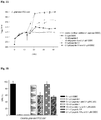
- Selected peptides were further tested in the models of induced osteomyelitis as described in example 8. Study of the antifungal action of peptides is described in example 9 and the result of these experiments is documented in
figures 1A , B. -
-
Fig. 1 (A) represents the effect of sub-inhibitory concentrations of octenidine dihydrochloride (ODDC), of peptides II and VII alone, and of the peptides in the combinations with ODDC on the yeast C. glabrataATCC 2001, measured using a fluorescent probe diS-C3(3). Arrow indicates the addition of the compounds to the cell suspensions. -
Fig. 1 (B) represents the effect of fifteen minutes lasting action of ODDC, peptides II and VII alone, and in their combination on the survival of the yeast C. glabrataATCC 2001. -
- Fmoc
- 9-fluorenylmethyloxycarbonyl
- MBHA resin
- 4-methylbenzhydrylamine resin
- TFA
- trifluoroacetic acid
- TIS
- triisopropylsilane
- HPLC
- high performance liquid chromatography
- BHI medium
- brain-heart infusion medium
- YPD medium
- yeast extract peptone dextrose medium
- LB medium
- Luria-Bertani medium
- CFU
- colony forming units
- ODDC
- octenidine dyhrochloride
- Antimicrobial peptides of the formulae from I to XIX were prepared manually in 5 ml polypropylene syringes with a polypropylene filter on the bottom using the methodology of solid phase peptide synthesis (SPPS). Syntheses were done according to Nα-Fmoc chemistry protocol [Fields and Noble, 1990] on a Rink Amide MBHA resin (IRIS Biotech GmBH, Germany) (110 mg) with 0.7 mmol/g substitution. Protected amino acids were coupled in fourfold excess in dimethylformamide as solvent and N,N'-diisopropylcarbodiimide (7 equivalents)/1-hydroxybenzotriazole (5 equivalents) as coupling reagents. De-protection of the α-amino groups was performed with 20% piperidine in N,N-dimethylformamide. Crude peptides were de-protected and cleaved from the resin with a mixture of trifluoroacetic acid/1,2-ethanedithiol/water/thioanisol/triisopropylsilane (90 : 2.5 : 2.5 : 3 : 2) for 3.5 h and precipitated with tert-butyl methyl ether. The mixture of trifluoroacetic acid/water/ triisopropylsilane (95 : 2.5 : 2.5) was used for the deprotection and cleavage of the peptides which did not contain methionine in their sequences. Usually, crude peptides were obtained in the amount of 100 - 120 mg. Part of this material (30 mg) of each peptide was in all cases purified by preparative RP-HPLC using a Vydac C-18 column (250 x 10 mm) at a flow rate 3.0 ml/min and using the gradient of solvents from 5% to 70% acetonitrile/water/0.1% TFA over 60 min yielding 10 - 15 mg of HPLC pure peptides. Their identities were verified by mass spectrometry as shown in Table 1.
Table 1. Amino acid sequences and molecular masses of the analogs of hylanine Peptide sequence Molecular mass (Da) Calculated Found I Gly-Ile-Met-Ser-Ser-Leu-Met-Lys-Lys-Leu-Lys-Lys-Ile-Ile-Ala-Lys-NH2 1787.13 1786.8 II Gly-Ile-Met-Ser-Ser-Leu-Met-Lys-Lys-Leu-Lys-Lys-Ile-Ile-Ala-Lys-NH2 1787.13 1787.1 III Gly-Ile-Leu-Ser-Ser-Leu-Leu-Lys-Lys-Leu-Lys-Lys-Ile-Ile-Ala-Lys-NH2 1751.21 1751.6 IV Gly-Ile-Leu-Ser-Ser-Leu-Leu-Lys-Lys-Leu-Lys-Lys-Ile-Ile-Ala-Lys-NH2 1751.21 1751.2 V Gly-Ile-Nle-Ser-Ser-Leu-Nle-Lys-Lys-Leu-Lys-Lys-Ile-Ile-Ala-Lys-NH2 1751.21 1751.6 VI Lys-Ile-Leu-Ser-Ser-Leu-Leu-Lys-Lys-Leu-Lys-Lys-Ile-Ile-Ala-Lys-NH2 1822.29 1822.2 VII Gly-Ile-Met-Ser-Ser-Leu-Met-Lys-Lys-Leu-Lys-Lys-Ile-Ile-Lys-Lys-NH2 1844.18 1843.9 VIII Gly-Ile-Met-Ser-Ser-Leu-Met-Lys-Lys-Leu-Ala-Ala-His-Ile-Lys-Lys-NH2 1754.04 1754.0 IX Gly-Ile-Met-Ser-Ser-Leu-Met-Lys-Lys-Leu-Ala-Ala-Ile-Ile-Lys-Lys-NH2 1787.13 1787.2 X Gly-Ile-Leu-Lys-Ser-Leu-Leu-Lys-Lys-Leu-Lys-Lys-Ile-Ile-Ala-Lys-NH2 1792.28 1792.3 XI Gly-Ile-Leu-Ser-Lys-Leu-Leu-Lys-Lys-Leu-Lys-Lys-Ile-Ile-Ala-Lys-NH2 1792.28 1792.3 XII Gly-Ile-Leu-Ser-Ser--Leu-Trp-Lys-Lys-Leu-Lys-Lys-Ile-Ile-Ala-Lys-NH2 1824.21 1824.2 XIII Gly-Ile-Leu-Ser-Ser-Leu-Trp-Lys-Lys-Leu-Lys-Lys-Ile-Ile-Ala-Lys-NH2 1824.21 1824.2 XIV Gly-Ile-Trp-Ser-Ser-Leu-Leu-Lys-Lys-Leu-Lys-Lys-Ile-Ile-Ala-Lys-NH2 1824.21 1824.2 XV Gly-Ile-Leu-Ser-Ser-Trp-Leu-Lys-Lys-Leu-Lys-Lys-Ile-Ile-Ala-Lys-NH2 1824.21 1824.2 XVI Gly-Ile-Leu-Ser-Ser-Leu-Leu-Lys-Lys-Trp-Lys-Lys-Ile-Ile-Ala-Lys-NH2 1824.21 1824.2 XVII Gly-Ile-Leu-Ser-Ser-Leu-Trp-Lys-Lys-Leu-Lys-Lys-Trp-Ile-Ala-Lys-NH2 1897.20 1897.2 XVIII Gly-Ile-Leu-Ser-Ser-Leu-Leu-Lys-Lys-Leu-Lys-Lys-Trp-Ile-Ala-Lys-NH2 1824.21 1824.2 XIX Gly-Ile-Leu-Ser-Ser-Leu-Trp-Lys-Lys-Leu-Lys-Lys-Ile-Ile-Ala-Lys-NH2 1824.21 1824.2 - Gram-positive bacteria (Micrococcus luteus, Bacillus subtilis, Staphylococcus aureus, Staphylococcus epidermidis and Enterococcus faecalis), Gram-negative bacteria (Escherichia coli and Pseudomonas aeruginosa) and the yeast (Candida albicans) were grown to exponential phase and then were diluted with fresh medium. BHI medium (Oxoid, Great Britain) was used for Enterococcus faecalis; YPD medium containing yeast extract peptone and glucose was used for Candida albicans and LB medium (Sigma, Czech Republic) was used for the remaining microorganisms. Then the microorganisms were added to the solutions of the tested antimicrobial peptides in LB medium in multi-well plates. The final peptide concentration it the wells was in the range of 0.1 to 100 µmol.l-1. That was made by twofold serial dilution from the peptide stock solution (1 mmol.l-1). The plates were incubated at 37° C for 20 h while being continuously shaken in a Bioscreen C (Oy Growth Curves AB Ltd., Helsinki, Finland). Absorbance was measured at 540 nm every 15 min. Antimicrobial activity (Table 2) was determined as a quantitative minimum inhibitory concentration (MIC) by observing bacterial growth in the presence of different concentrations of tested peptides. In the experiments ca 105 CFU of bacteria or candida per well were routinely used. Tetracycline in a concentration range of 0.1 - 100 µ mol.l-1 was used as a standard.
- Multiresistant clinical isolates of bacteria were obtained from University Hospital in Motol, Prague, Czech Republic and from Liberec Regional Hospital, Czech Republic. Methicillin resistant Staphylococcus aureus (MRSA) 6271 and Pseudomonas aeruginosa 5482 were from the Czech National Collection of Type Cultures, the National Institute of Public Health, Prague, Czech Republic. Other bacteria were from the Czech Collection of Microorganisms, Brno, Czech Republic. Candida albicans came from the Faculty of Medicine, Palacky University, Olomouc, Czech Republic.
- The peptides in the concentrations 2-200 µmol.l-1 were incubated with the suspension of human red blood cells (5% v/v) for 1 h at 37 °C in a physiological solution at a final volume of 0.2 ml. The samples were then centrifuged for 5 min at 250 g, and the absorbance of the supernatant was determined at 540 nm. Supernatants of red blood cells suspended in physiological solution and in 0.2% (v/v) TRITON X100 in physiological solution served as controls for zero hemolysis (blank) and 100% hemolysis, respectively. Hemolytic activity is expressed as the peptide concentration required for lysis of 50% of human erythrocytes in the assay (LC50). The results of tests are shown in Table 2.
Table 2. Antimicrobial and hemolytic activity of (I) up to (XIX) peptides and tetracycline. Peptid Antimicrobial activity MIC (µmol.l-1) Hemolytic activity LC50 (µmol.l-1 M.l. B.s. S.a. Liberec S.a. 6271 S.a. Motol S.e. Motol E.f. Motol E.c. P.a. Liberec P.a. 5482 C.a. Olomouc I 1.9 5.7 7.6 32.0 23.0 1.9 100.0 9.0 7.4 5.0 5.2 >400 II 1.3 2.2 7.5 12.7 16.2 2.2 44.3 6.3 8.5 3.2 8.0 >400 III 1.6 2.0 3.8 16.0 5.0 1.8 59.3 8.0 7.5 5.0 10.0 284.2 IV 1.8 1.8 2.6 5.7 6.3 3.2 6.7 4.5 9.7 4.5 9.0 332.9 V 1.6 3.5 4.0 12.7 6.7 2.5 54.0 10.0 7.9 4.0 10.0 373.4 VI 1.0 1.3 5.5 32.0 10.0 1.4 32.5 16.0 16.0 5.0 25.3 363.7 VII 1.9 2.5 18.0 54.0 64.7 1.7 >100 22.0 9.9 7.1 6.3 >400 VIII 1.6 2.8 76.7 85.3 90.0 11.3 >100 20.0 46.0 23.0 5.0 >400 IX 1.3 2.5 8.8 35.0 18.3 3.1 98.0 16.0 10.6 5.4 8.0 >400 X 1.4 1.5 4.3 16.5 10.0 2.2 76.7 10.0 8.9 5.0 24.0 >400 XI 1.6 1.4 5.9 22.7 10.0 1.8 72.7 17.5 8.5 4.5 45.3 >400 XII 0.8 1.1 2.1 5.3 5.0 2.0 25.3 3.4 8.8 5.3 10.7 196.6 XIII 1.6 1.6 3.1 6.3 3.2 1.7 3.4 5.0 8.8 6.7 8.0 190.7 XIV 0.8 0.8 4.6 20.0 5.3 1.5 46.0 1.6 21.0 6.3 16.0 165.4 XV 1.6 1.6 6.6 16.0 16.2 2.0 73.3 11.0 5.9 4.0 16.7 >400 XVI 2.0 1.6 8.8 20.0 20.3 2.7 100.0 7.5 7.1 5.0 10.5 >400 XVII n.t. 1.3 1.6 2.5 2.0 1.6 10.0 2.5 24.1 12.7 12.7 57.2 XVIII n.t. 1.3 2.5 8.0 4.0 1.6 25.3 4.0 20.7 8.0 16.0 159.6 XIX n.t. 2.0 3.2 6.3 3.2 1.6 6.5 13.0 8.5 6.3 26.0 >200 Tetracyklin 0.8 16.0 1.1 0.9 2.0 >100 40.0 2.7 70.4 28.7 n.t. >200 M.l., Micrococcus luteus; B.s., Bacillus subtilis; S.a., Staphylococcus aureus; S.e., Staphylococcus epidermidis; E.f., Enterococcus faecalis; E.c., Escherichia coli; P.a., Pseudomonas aeruginosa; C.a., Candida albicans; n.t. = not tested - All yeasts Candida albicans (Olomouc) and ATCC MYA-2876, Candida glabrata
ATCC 2001 and DSY 565, Candida dubliniensis ATCC MYA-646, Candida krusei ATCC 6258 and Candida tropicalis ATCC 750 were sub-cultured from sterile vials onto Sabouraud dextrose agar, which was composed of 40 g dextrose (Penta, Czech Republic), 10 g peptone (OXOID, Great Britain) and 17 g agar (OXOID), dissolved in 11 of distilled water, and cultivated for 24 hours at 35 °C. - All strains were stored in a way that minimizes the possibility of mutation. Candida spp. were grown overnight in liquid YPD medium which is composed of 10 g yeast extract (DIFCO, USA), 20 g peptone (OXOID), and 20 g dextrose (Penta) dissolved in 11 distilled water. Then the overnight culture was cryogenically preserved by suspending in 50% glycerol solution (1 : 1) in small vials and stored at -80 °C.
- The inoculum was prepared by picking five colonies from 24-hour-old cultures of Candida spp. The colonies were suspended in 1 ml of sterile saline solution and vortexed for 15 seconds. Optical density of the suspension was adjusted spectrophotometrically by adding sterile saline solution to produce optical density of 0.18 at 600 nm. A working suspension was made by a 1:50 dilution followed by a 1:20 dilution of the stock suspension with RPMI 1640 broth medium which was composed of L-glutamine without NaHCO3 (BioSera, France), and with 0.165 mol.1-1 MOPS (Duchefa, Netherland) - further as RPMI broth medium.
- The broth microdilution test was performed by using sterile, disposable, multi-well microdilution plates (96-well). The peptides in the concentrations 0.625 - 160 µmol.l-1 were pipetted into the wells in 100 µl volumes. Each well of the plate was inoculated with 100 µl of the diluted inoculum suspension. Final yeast density in each well was 5×10² up to 2.5×10³ CFU/ml. The microdilution plates were incubated without shaking at 35 °C and observed for the presence or absence of visible growth for 48 hours.
- Drug-free medium without inoculation served as negative control; the growth positive control contained inoculated drug-free medium. Amphotericin B was used as control drug to ensure quality of Candida strains.
- The minimal inhibition concentrations (MICs) were visually determined 48 hours after inoculation. The MIC values were defined as the lowest concentration in which no observable growth is noticeable.
- All yeast isolates were obtained from the Institute of Physiology of the Academy of Sciences of the Czech Republic. Candida albicans (Olomouc) came from the Faculty of Medicine and Dentistry, Palacký University Olomouc.
Table 3. Antifungal activity of (I) up to (XVIII) peptides and antifungal compounds Peptide Antifungal activity MIC (gmol.l-1) C. albicans Olomouc C. albicans ATCC MYA-2876 C. krusei ATCC 6258 C. tropicalis ATCC 750 C. dubliniensis ATCC MYA-646 C. glabrata ATCC 2001C. glabrata DSY 565 I 17.0 22.0 10.0 0.8 40.0 40.0 88.9 II 15.5 15.5 7.8 0.7 34.0 15.5 32.2 III 13.0 18.0 5.0 0.9 20.0 24.0 44.0 IV 11.0 11.0 4.3 0.6 12.0 10.0 20.0 V 12.0 19.0 5.0 1.0 26.0 24.0 44.0 VI 12.0 20.0 4.8 0.9 12.0 28.0 71.1 VII 17.0 22.0 10.0 1.1 20.0 40.0 97.8 VIII 17.0 20.0 10.0 1.1 36.0 26.0 66.7 IX 16.0 18.0 12.0 1.1 42.0 20.0 44.4 X 10.5 17.0 5.0 1.0 14.0 34.0 71.1 XI 12.0 20.0 5.0 1.0 10.5 26.0 40.0 XII 8.5 10.0 4.3 1.0 9.5 10.0 21.0 XIII 10.0 11.0 5.0 1.1 9.5 6.0 18.0 XIV 8.2 10.0 5.2 1.2 9.0 19.1 48.0 XV 21.0 17.0 8.0 1.2 22.0 40.0 88.9 XVI 18.0 26.0 10.0 1.0 40.0 40.0 231.1 XVII 4.5 5.5 3.3 0.8 5.0 5.5 11.0 XVIII 8.5 10.0 7.8 1.2 10.0 8.5 24.0 Fluconazole 2.0 2.2 515.6 49.3 1.8 266.7 950 Clotrimazole 0.4 0.3 1.0 4.6 1.4 14.2 35.0 - Inoculum of S. aureus (Liberec) or P. aeruginosa (Liberec) cultivated overnight in BHI medium was diluted with fresh BHI medium containing 1% glucose to a final concentration to be ca. 108 CFU/ml. Then this was pipetted (100 µl) to 96-multiwell polystyrene plate which was incubated at 37 °C under rotary shaking (300 RPM) for 24 h. Medium without bacteria in the wells was used as a negative control. Supernatant from each well was drained and the biofilm formed on the bottom and on the walls of the wells was cautiously washed three times by sterile physiological solution (300 µl). The peptides tested in the concentrations of 1 - 128 µmol.l-1 were prepared by twofold serial dilution of their stock solution (1 mmol.l-1) in fresh BHI medium and then pipetted (100 µl) to the wells with formed biofilms. The biofilms covered by BHI medium without peptide were used as a positive control. The plates were then incubated for 20 h as described above. After that the liquid was drained out and wells were washed twice with sterile physiological solution.
- The metabolic activity of surviving bacterial cells in the biofilm was determined by staining with MTT (3-(4,5-dimethylthiazol-2-yl)-2,5-diphenyl-2H-tetrazolium bromide) as follows: The mixture of BHI medium (100 µl and 10 µl of the stock solution of MTT (5 mg/ml in physiological solution) was added to each well and the plate was incubated 40 min at 37 °C. The liquid was drained out and the insoluble formazan crystals formed by reduction inside the biofilm were dissolved with dimethyl sulphoxide (100 µl). The intensity of staining in each well was measured as absorbance at 540 nm on a Tecan Infinite M200 Pro reader (Tecan GmbH, Austria). Remaining activity of surviving cells inside the biofilm was expressed for each well in percentage according to the following equation:

Table 4. Effect of selected peptides on the bacterial biofilms formed by Staphylococcus aureus and Pseudomonas aeruginosa expressed as remaining metabolic activity of microbial cells (in percentages) at given peptide concentration (n.t., not tested) Peptide Metabolic activity (%) S. aureus (Liberec) Metabolic activity (%) P. aeruginosa (Liberec) Peptide concentration Peptide concentration 8 µmol.l-1 16 µmol.l-1 32 µmol.l-1 64 µmol.l-1 128 µmol.l-1 8 µmol.l-1 16 µmol.l-1 32 µmol.l-1 64 µmol.l-1 128 µmol.l-1 I 111.6 103.3 111.2 101.9 11.4 86.4 87.7 89.6 62.9 43.4 II 143.1 138.8 107.5 29.9 7.7 94.2 100.5 79.1 33.0 26.7 III 87.8 89.6 78.4 15.9 2.4 n.t. n.t. n.t. n.t. n.t. IV 65.5 34.2 7.1 3.0 0.0 56.5 69.5 56.0 59.6 21.7 V 83.0 71.0 49.5 26.0 0.0 65.5 59.8 64.9 61.4 49.3 VI 55.6 34.0 15.1 4.4 0.1 79.0 74.1 75.7 89.2 56.8 VII n.t. n.t. n.t. n.t. n.t. 77.3 76.5 71.3 53.3 33.8 IX 79.1 53.6 54.0 30.5 23.6 73.6 76.8 85.3 83.8 34.2 X 66.7 59.1 30.0 22.3 2.3 78.9 67.3 67.8 93.9 45.9 XI 75.2 68.4 51.0 24.0 0.0 79.4 60.9 82.9 83.1 49.1 XII 52.2 31.5 18.9 14.7 1.0 77.3 69.3 66.9 44.4 57.9 XIII 71.6 33.8 21.5 20.4 5.3 71.2 65.8 61.2 73.6 23.0 XIV 55.1 52.2 16.3 14.5 4.4 67.2 54.9 54.8 65.6 31.1 XV 71.5 60.5 40.6 38.0 6.9 64.1 70.3 57.6 63.2 32.2 XVI 58.0 60.6 64.6 18.4 8.7 74.1 66.2 57.6 47.5 31.9 XVII 72.1 12.3 2.6 5.4 7.7 n.t. n.t. n.t. n.t. n.t. XVIII 68.7 46.7 19.5 10.5 3.6 n.t. n.t. n.t. n.t. n.t. XIX 72.8 2.8 2.3 2.3 1.7 n.t. n.t. n.t. n.t. n.t. Vancomycin 52.8 15.9 9.7 8.5 6.3 n.t. n.t. n.t. n.t. n.t. Amikacin 95.4 102.4 108.7 82.4 104.0 80.0 62.9 40.4 20.3 11.8 - Candida albicans (Olomouc) was sub-cultured overnight in YPD medium (10 g yeast extract (DIFCO, USA), 20 g peptone (OXOID), 20 g glucose (Penta) dissolved in 1 L of distilled water) at constant shaking (100 RPM) at 37 °C. Next day, the overnight culture was diluted 1:100 into fresh YPD medium and incubated at constant shaking (200 RPM) at 37 °C until the mid-exponential growth phase was reached. Then the cells were harvested and washed twice by centrifugation in physiological solution (5000 RPM; 5 min). Cells were suspended in sterile salt solution and their optical density was determined at 600 nm.
- A final yeast suspension was prepared at a cell density of 1×10⁶ CFU (corresponding to optical density of 0.17 at 600 nm) in RPMI 1640 medium with L-glutamine (BioSera), NaHCO3 (2 g/l; Penta) and 0.165 mol.l-1 MOPS (Duchefa) - further as RPMI broth medium 1.
- Biofilms were formed on commercially available sterile, polystyrene, flat-bottomed, 96-well microtiter plates (TPP, SW). Cell suspension (100 µl) was pipetted into selected wells of a microtiter plate and incubated without shaking for 2 hours at 37 °C. Afterwards, the wells were washed twice with sterile PBS buffer (1.44 g Na2HPO4, 0.24 g KH2PO4, 0.2 g KCl and 8 g NaCl in 11 distilled water, pH = 7; Penta). Fresh RPMI broth medium 1 (100 µl) was added to each well and the plate was sealed with parafilm and incubated without shaking for 48 hours at 37 °C.
- Planktonic and non-adherent cells were removed by threefold washing of the biofilm with sterile PBS buffer (200 µl). A twofold serial dilution was used to reach required peptide concentration (in RPMI broth medium 1) in each well. Peptide concentrations range was between 0.39 - 200 µmol.l-1. Plates were then sealed with parafilm and incubated for 20 hours at 37 °C.
- The metabolic activity of surviving Candida cells in the treated biofilm was determined by staining with XTT (2,3-Bis(2-methoxy-4-nitro-5-sulphophenyl)-2H-tetrazolium-5-carboxanilide). Stock solution of PMS (phenazine methosulfate; 7.5 g/l; SIGMA, Czech Republic) stored at -20 °C was diluted in PBS buffer 1:100. Diluted PMS was further mixed (2 : 25) with stock solution of XTT (0,5 g/l; Alchimica, Slovakia) dissolved in PBS/RPMI broth medium (1:1). Mixture (100 µl) of PMS and XTT was added into treated biofilm in the wells and incubated for 90 min at 37 °C. Then the intensity of staining in each well was measured as absorbance at 540 nm on a Tecan Infinite M200 Pro reader (Tecan GmbH, Austria). Remaining metabolic activity of the cells in the biofilm was expressed for each well in percentage and calculated as follows:

Table 5. Effect of selected peptides on the microbial biofilms formed by Candida albicans (Olomouc) expressed as remaining metabolic activity of microbial cells (in percentages) at given peptide concentration. Peptide Metabolic activity of C. albicans (%) Peptide concentration 6,25 µmol.l-1 12,5 µmol.l-1 25 µmol.l-1 50 µmol.l -1100 µmol.l-1 200 µmol.l-1 I 100.4 108.0 130.7 57.5 28.2 8.1 II 105.3 114.2 35.2 1.0 0.0 0.0 III 104.7 113.6 87.2 31.1 28.4 0.0 IV 106.9 37.2 6.0 2.3 2.1 0.5 V 106.4 89.5 45.0 6.9 2.4 0.4 VI 98.8 111.2 110.5 28.3 0.4 0.0 VII 104.6 116.0 120.7 31.5 22.0 0.0 VIII 99.4 99.1 105.6 112.2 106.8 53.0 IX 93.2 54.3 2.3 1.5 1.3 0.8 X 100.8 109.3 65.3 16.8 7.0 3.3 XI 97.7 70.3 79.3 32.8 7.6 6.1 XII 86.8 80.3 94.8 63.6 6.2 3.2 XIII 78.3 56.9 37.2 10.9 5.8 4.9 XIV 84.6 80.9 91.1 14.2 7.4 4.2 XV 94.9 92.8 73.8 65.2 9.4 3.4 XVI 97.3 103.2 68.5 68.1 44.9 11.4 XVII 2.4 1.0 0.9 1.3 2.3 1.5 XVIII 11.5 2.5 3.2 3.2 3.1 2.6 Fluconazole 33.5 30.8 31.7 30.7 32.4 29.2 Clotrimazole 39.7 37.6 34.2 28.4 21.8 22.2 - MICs values of various combinations of two fold serial dilutions of peptides and antibiotics were determined using the same methodology as in the case of antimicrobial activity determination (Example 2). To consider the type of the final effect, FIC indexes (fractional inhibitory concentration) were used and calculated as follows:

Table 6. FIC indexes for the combination of selected peptides with antibiotics against S. aureus (Liberec) and P. aeruginosa (Liberec). Peptide FIC indexes (fractional inhibitory concentration) Combination with TET against P. aeruginosa Combination with RIF against P. aeruginosa Combination with AMX against S. aureus I 0.646 0.427 0.333 II 0.667 0.323 n.t. III 0.542 0.385 0.688 IV 0.750 0.302 n.t. VI 0.708 0.260 0.292 VII 0.625 0.365 0.167 IX 0.542 0.417 n.t. X 0.521 0.333 0.542 XI 0.646 0.344 0.333 XII 0.646 0.438 n.t. XIII 0.583 0.292 n.t. XIV 0.354 0.271 0.396 XV 0.646 0.396 0.375 XVI 0.583 0.417 n.t. XVII 0.417 0.292 n.t. XVIII 0.625 0.271 n.t. n.t. - not tested; FIC<0.5 = synergism, 0,5 ≤ FIC ≤ 2 = additive effect, FIC>2 = antagonism. The values shown are averages of three independent experiments. - Three bored holes of the size ca. 5 mm in diameter and 10 mm in deep were drilled by surgical spoon in the place of the resection into the spongy part of two defrosted heads of human hip joints. These two graft bones were then placed into beakers, and they were cushioned with sterile gauze which was moisturized with physiological solution to prevent bone drying. The suspension of Staphylococcus aureus (Motol) in LB medium (50 - 100 µl) in the
concentration 109 was pipetted into all holes in one bone graft and the suspension of Staphylococcus epidermidis in the same concentration was pipetted into the holes of the second bone. The beakers were covered by Petri dish and kept at room temperature in dark for 24 h. - After that one of these holes was wiped out with sterile wet swab. The swab was extracted with physiological solution (400 µl), the extract was tenfold serially diluted and plated onto LB agar in Petri dishes and incubated for one day in order to evaluate the bacterial growth. The second hole was filled with the local carrier blended with a mixture of the peptides nos. XII and XIII. For the comparison, the remaining third hole was filled with the carrier alone. The carrier named ChronOS Inject was used as two components product supplied by the company Synthes GmbH, Switzerland. The powder component contains calcium phosphate blended with additives and the liquid component is 0.5% hyaluronic acid. The paste for filling the holes was prepared by successive mixing the powder component (200 mg) with the peptides nos. XII (8 mg) and XIII (4 mg) and the liquid component (70 µl). The paste without peptides used for comparison was prepared by the same manner.
- After two days, the fillings were thoroughly removed with surgical spoon and the empty holes were expansively wiped out by wet swabs, the swabs were extracted with physiological solution (400 µl), and the extracts were plated on the agar in Petri dishes in tenfold serial dilution. Following an overnight incubation, the number of bacterial colonies was counted.
- The experiments were evaluated by the comparison of the number of bacterial colonies (CFU/ml) related to the infected hole in which the peptides nos. XII and XII were released from the carrier and acted against the infection, against the number of the colonies related to the infected hole which was filled only with the carrier alone.
- In the hole in which the peptides were acting against S. aureus (Motol), the CFU/ml was 1.7 x 10³, while in the hole filled with the carrier alone, the CFU/ml was 7.2 x 10⁷. I the case of second graft bone infected with S. epidermidis, these values were 1 x 10² CFU/ml for the hole with the peptides and 3.7 x 10⁷ CFU/ml for the hole without peptides.
- The used infected heads of the human hip joints were deactivated by autoclaving and then disposed as a biological waste in the Department of Pathology, University Hospital in Motol, Prague.
- C. glabrata
ATCC 2001 cells were aerobically cultivated at 30 °C on YPD medium (Formedium) overnight. A small volume of inoculum was added to fresh YPD medium to final concentration of cells 5 × 10⁶ CFU/ml (corresponding value OD600 = 0.2). Yeast cells were cultivated at 30 °C (190 rpm) until they reach early exponential growth phase, usually further 4 - 5 h. Cells were harvested, washed twice with distilled water (1.5 min, 3000 g) and resuspended in MES-TEA buffer (10 mM 4-morpholineethanesulphonic acid, pH 6.0 adjusted with triethanolamine, both chemicals from Sigma-Aldrich) to OD600 = 0.2. - The fluorescence probe diS-C3(3) (3,3'-dipropylthiacarbocyanine iodide; Sigma-Aldrich) was added to a final concentration of 4 × 10⁻⁸ mol.l-1 to cell suspensions (3 ml). Fluorescence emission spectra of the cell suspensions were measured in spectroscopic cuvettes (Kartell) in an ISS PC1 spectrofluorimeter. Fluorescence emission spectra were recorded in the range λem = 560 - 590 nm, the excitation wavelength was λex = 531 nm. Scattered light was eliminated with an orange glass filter with a cutoff wavelength at 540 nm. Antimicrobial peptides and ODDC (octenidine dihydrochloride; Schülke & Mayr GmbH) were added to yeast suspensions after 10 - 20 min of staining. Optimization of this fluorescence method suitable for measurement of large amount of samples simultaneously in 96 well plates will be published soon.
- Rate and extent of probe accumulation in cells, so called staining curve, records the dependence of the diS-C3(3) fluorescence emission maximum wavelength λmax or intensity Imax on the time of cell staining [Gášková et al., 1998].
- The determination of the antifungal effect of tested compounds was based on comparison of staining curves of control cells (without addition of any compound) and cells affected by tested compound (peptide or ODDC or both), see
Fig. 1A . Increased staining of cells exposed to the drug corresponded to their higher damage in short time. - Cells from the early exponential growth phase were washed twice with sterile distilled water (1.5 min, 3000 g) and resuspended in MES-TEA buffer to OD600 = 0.2. The cell suspension was divided into 1 ml aliquots in Eppendorf tubes. One sample served as a control, the tested compounds (peptides, ODDC) were added in selected concentrations to the rest of samples. Cells were incubated with drugs with occasional gentle stirring for 15 minutes, then 10 µl of cells were diluted 100-fold in distilled water and 15 µl aliquots were spread on 2% YPD agar (Formedium) plates (diameter of Petri plate 9 cm). The samples were always plated in triplicates. The number of colonies was determined after 24-h incubation of the plates at 30 °C. The ratio of survived cells exposed to the tested compound in comparison to control sample (CFU) expressed in % gave evidence about lethal effect of tested compound on cells (inability to form colonies). The result of the plating test, which is shown in
Fig. 1B , demonstrates high antifungal effect of peptide II, which is further amplified in combination with ODDC. - Practical application of antimicrobial peptides related to the hylanin will be profitable above all for the treatment of topical infections, both bacterial and yeast. Their use is for example expected in podiatry for the treatment of the wounds such as diabetic foot syndrome and/or leg ulcers, in orthopedics for the treatment of osteomyelitis (bone infection) where the topical use of antimicrobial peptides also involves their incorporation into local carriers used in orthopedics and prevention of the infection caused by bacterial biofilms formed on orthopedic implants. Furthermore, these peptides may be used in gynecology as a prescription against vaginal infection caused by yeast, for the treatment of the external ear canal infections (otitis externa), inflammation of eye conjunctiva (conjunctivitis acuta, conjunctivitis chronica), further for the treatment of chronic burn wound infections or combat wound infections, namely in the cases when the commonly used disinfectant or antibiotics fail owing to antimicrobial resistance. Such infections are hard to cure as they are in the majority of cases complicated by the occurrence of biofilms in which the microorganisms may be thousand times more resistant to antimicrobial compounds compared to their planktonic cells.
-
- 1. Rulík M., Holá V., Růžička F., Votava M. a kolektiv: Mikrobiální biofilmy. Univerzita Palackého v Olomouci, Přírodovědecká fakulta, Olomouc 2011
- 2. Bjarnsholt T.: The role of bacterial biofilms in chronic infections.APMIS 121: 1-51 (2013)
- 3. Bjamsholt T., Alhede M., Alhede M., Eickhardt-Sørensen S.R., Moser C., Kühl M., Jensen P. Ø., Høiby N.: The in vivo biofilm. Trends Microb. 21: 466-474 (2013)
- 4. Zasloff M.: Antimicrobial peptides of multicellular organisms. Nature 415, 389-395 (2002)
- 5. Hancock R.E.W., Sahl H.-G.: Antimicrobial and host-defense peptides as new anti-infective therapeutic strategies. Natur. Bitech. 24, 1551-1557 (2006)
- 6. Toke O.; Antimicrobial peptides: New candidates in the fight against bacterial infection. Biopolymers (Peptide Science) 80, 717-.735 (2005)
- 7. Giuliani A., Pirri G., Nicoletto S.F.: Antimicrobial peptides: An overview of a promising class of therapeutics. Centr. Eur. J. Biol. 2, 1-33 (2007)
- 8. Zaiou M.: Multifunctional antimicrobial peptides: therapeutic targets in several human diseases. J. Mol. Med. 85, 317-329 (2007)
- 9. Oyston P.C.F, Fox M.A., Richards S.J., Clark G.C.: Novel peptide therapeutics for treatment of infections. J. Med. Microb. 58, 977-987 (2009)
- 10. Baltzer S.A, Brown M.H.: Antimicrobial peptides - promising alternatives to conventional antibiotics. J. Mol. Microbiol. Biotechnol. 20, 228-235 (2011)
- 11. Yeung A.T.Y., Gellatly S.L., Hancock R.E.W.: Multifunctional cationic host defence peptides and their clinical applications. Cell. Mol. Life. Sci. 68, 2161-2176 (2011)
- 12. eřovský V.: Antimikrobiální peptidy izolované z hmyzu. Chem. Listy 108, 344-353 (2014)

- 13. Otvos L. Jr.: Antimicrobial peptides isolated from insects. J. Peptide Sci. 6, 497-511 (2000)
- 14. Oren Z., Shai Y.: Mode of action of linear amphipathic α-helical antimicrobial peptides. Biopolymers 47, 451-463 (1998)
- 15. Yeaman M.R., Yount N.Y.: Mechanisms of antimicrobial peptide action and resistance. Pharm. Rev. 55, 27-55 (2003)
- 16. Nguyen L.T., Haney E.F., Vogel H.J.: The expanding scope of antimicrobial peptide structures and their modes of action. Trends Biotech. 29, 464-471 (2011)
- 17. Kuhn-Nentwig L.: Antimicrobial and cytolytic peptides of venomous arthropods. Cell. Mol. Life Sci. 60, 2651-2668 (2003)
- 18. Čeřovský V., Slaninová J., Fučík V., Hulačová H., Borovičková L., Ježek R., Bednárová L.: New potent antimicrobial peptides from the venom of Polistinae wasps and their analogs. Peptides 29, 992-1003 (2008)
- 19. Fields G.B, Noble R.L.: Solid phase peptide synthesis utilizing 9-fluorenylmethoxycarbonyl amino acid. Int. J. Pept. Protein Res. 35, 161-214 (1990)
- 20. Gášková D., Brodská B., Heřman P., Večeř J., Malínský J., Sigler K., Benada O., Plášek J.: Fluorescent probing of membrane potential in walled cells: diS-C3(3) assay in Saccharomyces cerevisiae. Yeast 14, 1189-1197 (1998)
-
- <110> Ustav organicke chemie a biochemie AV CR, v.v.i., et al.
- <120> Antimicrobial peptides and their use for topical infections treatment
- <130> P1485PC00
- <160> 21
- <170> PatentIn version 3.5
- <210> 1
<211> 16
<212> PRT
<213> Hylaeus signatus - <400> 1

- <210> 2
<211> 16
<212> PRT
<213> Artificial - <220>
<223> Artificial antimicrobial peptide - <220>
<221> VARIANT
<222> (1)..(1)
<223> Gly or Lys or bAla - <220>
<221> VARIANT
<222> (3)..(3)
<223> Met or Leu or Nle or Ile or Trp or Val or Phe - <220>
<221> VARIANT
<222> (4)..(4)
<223> Ser or Lys or Arg or Orn - <220>
<221> VARIANT
<222> (5)..(5)
<223> Ser or Lys or Arg or Orn - <220>
<221> VARIANT
<222> (6)..(6)
<223> Leu or Nle or Ile or Trp or Val or Phe - <220>
<221> VARIANT
<222> (7)..(7)
<223> Met or Leu or Nle or Ile or Trp or Val or Phe - <220>
<221> VARIANT
<222> (10)..(10)
<223> Leu or Nle or I1e or Trp - <220>
<221> VARIANT
<222> (11)..(11)
<223> Lys or Arg or Orn or Ala - <220>
<221> VARIANT
<222> (12)..(12)
<223> Lys or Arg or Orn or Ala - <220>
<221> VARIANT
<222> (13)..(13)
<223> I1e or Leu or Nle or His - <220>
<221> VARIANT
<222> (15)..(15)
<223> Lys or Arg or Orn or Ala - <400> 2

- <210> 3
<211> 16
<212> PRT
<213> Artificial - <220>
<223> Peptide of formula I - <400> 3

- <210> 4
<211> 16
<212> PRT
<213> Artificial - <220>
<223> Peptide of formula II - <400> 4

- <210> 5
<211> 16
<212> PRT
<213> Artificial - <220>
<223> Peptide of formula III - <400> 5

- <210> 6
<211> 16
<212> PRT
<213> Artificial - <220>
<223> Peptide of formula IV - <400> 6

- <210> 7
<211> 16
<212> PRT
<213> Artificial - <220>
<223> Peptide of formula V - <220>
<221> VARIANT
<222> (3)..(3)
<223> Nle - <220>
<221> VARIANT
<222> (7)..(7)
<223> Nle - <400> 7

- <210> 8
<211> 16
<212> PRT
<213> Artificial - <220>
<223> Peptide of formula VI - <400> 8

- <210> 9
<211> 16
<212> PRT
<213> Artificial - <220>
<223> Peptide of formula - <400> 9

- <210> 10
<211> 16
<212> PRT
<213> Artificial - <220>
<223> Peptide of formula VIII - <400> 10

- <210> 11
<211> 16
<212> PRT
<213> Artificial - <220>
<223> Peptide of formula IX - <400> 11

- <210> 12
<211> 16
<212> PRT
<213> Artificial - <220>
<223> Peptide of formula X - <400> 12

- <210> 13
<211> 16
<212> PRT
<213> Artificial - <220>
<223> Peptide of formula XI - <400> 13

- <210> 14
<211> 16
<212> PRT
<213> Artificial - <220>
<223> Peptide of formula XII - <400> 14

- <210> 15
<211> 16
<212> PRT
<213> Artificial - <220>
<223> Peptide of formula XIII - <400> 15

- <210> 16
<211> 16
<212> PRT
<213> Artificial - <220>
<223> Peptide of formula XIV - <400> 16

- <210> 17
<211> 16
<212> PRT
<213> Artificial - <220>
<223> Peptide of formula XV - <400> 17

- <210> 18
<211> 16
<212> PRT
<213> Artificial - <220>
<223> Peptide of formula XVI - <400> 18

- <210> 19
<211> 16
<212> PRT
<213> Artificial - <220>
<223> Peptide of formula XVII - <400> 19

- <210> 20
<211> 16
<212> PRT
<213> Artificial - <220>
<223> Peptide of formula XVIII - <400> 20

- <210> 21
<211> 16
<212> PRT
<213> Artificial - <220>
<223> Peptide of formula XIX - <400> 21

Claims (11)
- Antimicrobial peptides of the general formula
a-Ile-b-c-d-e-f-Lys-Lys-g-h-i-j-Ile-k-Lys-NH2 (I-A)
, wherea is Gly, Lys or β-Ala,b is Met, Leu, Nle, Ile, Trp, Val or Phe,c is Ser, Lys, Arg or Orn,d is Ser, Lys, Arg or Orn,e is Leu, Nle, Ile, Trp, Val or Phe,f is Met, Leu, Nle, Ile, Trp, Val or Phe,g is Leu, Nle, Ile or Trp,h is Lys, Arg, Orn or Ala,i is Lys, Arg, Orn or Ala,j is Ile, Leu, Nle or His,k is Lys, Arg, Orn or Ala,where amino acid in any single position, or in several positions, or in all positions may be in D-configuration. - Antimicrobial peptides of the general formula I-A according to claim 1, having following formulae:
H-Gly-Ile-Met-Ser-Ser-Leu-Met-Lys-Lys-Leu-Lys-Lys-Ile-Ile-Ala-Lys-NH2 (I)
,
H-Gly-Ile -Met-Ser-Ser-Leu -Met-Lys -Lys-Leu -Lys -Lys-Ile -Ile -Ala -Lys-NH2 (II)
,
H-Gly-Ile-Leu-Ser-Ser-Leu-Leu-Lys-Lys-Leu-Lys-Lys-Ile-He-Ala-Lys-NH2 (III)
,
H-Gly-Ile-Leu-Ser-Ser-Leu -Leu -Lys -Lys -Leu -Lys -Lys-Ile -Ile -Ala -Lys-NH2 (IV)
,
H-Gly-Ile-Nle-Ser-Ser-Leu-Nle-Lys-Lys-Leu-Lys-Lys-Ile-He-Ala-Lys-NH2 (V)
,
H-Lys-Ile-Leu-Ser-Ser-Leu-Leu-Lys-Lys-Leu-Lys-Lys-Ile-Ile-Ala-Lys-NH2 (VI)
,
H-Gly-Ile-Met-Ser-Ser-Leu-Met-Lys-Lys-Leu-Lys-Lys-Ile-Ile-Lys-Lys-NH2 (VII)
,
H-Gly-Ile-Met-Ser-Ser-Leu-Met-Lys-Lys-Leu-Ala-Ala-His-Ile-Lys-Lys-NH2 (VIII)
,
H-Gly-Ile-Met-Ser-Ser-Leu-Met-Lys-Lys-Leu-Ala-Ala-Ile-Ile-Lys-Lys-NH2 (IX)
,
H-Gly-Ile-Leu-Lys-Ser-Leu-Leu-Lys-Lys-Leu-Lys-Lys-Ile-Ile-Ala-Lys-NH2 (X)
,
H-Gly-Ile-Leu-Ser-Lys-Leu-Leu-Lys-Lys-Leu-Lys-Lys-Ile-Ile-Ala-Lys-NH2 (XI)
,
H-Gly-Ile-Leu-Ser-Ser-Leu-Trp-Lys-Lys-Leu-Lys-Lys-Ile-Ile-Ala-Lys-NH2(XII)
,
H-Gly-Ile-Leu-Ser-Ser-Leu-Trp-Lys-Lys-Leu-Lys-Lys-Ile-Ile-Ala-Lys-NH2 (XIII)
,
H-Gly-Ile-Trp-Ser-Ser-Leu-Leu-Lys-Lys-Leu-Lys-Lys-Ile-Ile-Ala-Lys-NH2 (XIV)
,
H-Gly-Ile-Leu-Ser-Ser-Trp-Leu-Lys-Lys-Leu-Lys-Lys-Ile-Ile-Ala-Lys-NH2 (XV)
,
H-Gly-Ile-Leu-Ser-Ser-Leu-Leu-Lys-Lys-Trp-Lys-Lys-Ile-Ile-Ala-Lys-NH2 (XVI)
,
H-Gly-Ile-Leu-Ser-Ser-Leu-Trp-Lys-Lys-Leu-Lys-Lys-Trp-Ile-Ala-Lys-NH2 (XVII)
,
H-Gly-Ile-Leu-Ser-Ser-Leu-Leu-Lys-Lys-Leu-Lys-Lys-Trp-Ile-Ala-Lys-NH2 (XVIII)
,
H-Gly-Ile-Leu-Ser-Ser-Leu-Trp-Lys-Lys-Leu-Lys-Lys-Ile-Ile-Ala-Lys-NH2 (XIX)
, where amino acids in the D configuration are shown in italics. - Peptides of general formulae I-A and from I to XIX according to claims 1 and 2, for use in the treatment or prevention of topic infections chosen from a group, comprising difficult-to-heal wounds and skin disorders, mucosal infections and infectious diseases of bone and surrounding tissues, including those infections that are caused by the formation of microbial biofilms.
- Peptides of general formulae I-A and from I to XIX according to claims 1 and 2, for use in prevention or elimination the infectious agent from catheters, joint and bone replacement and cements and for preventing intermediary for the infection of orthopedic implants.
- Peptides of general formulae I-A and from I to XIX according to claims 1 and 2, for use in the augmentation of the effect of locally acting antibacterial drugs and wound dressings used for the treatment of topical infections.
- Peptides of general formulae I-A and from I to XIX according to claims 1 and 2, for use in incorporation into local carriers used in orthopedics, selected from the group containing calcium phosphate, calcium sulphate, bioactive glass, apatite/wollastonite bioactive glass-ceramics, hydrogels, collagen, bone grafts, bone cement or synthetic polymers made from polymethylmethacrylate, copolymer of polymethylmethacrylate and hydroxypolymethylmethacrylate, polyanhydride, polylactide, polyglycolide, copolymers of hydroxybutyrate, hydroxyvalerate, polyhydroxyalkanoate, polycaprolactone or glycerol gelatin sponge, or composites made of polymers and inorganic carriers.
- Peptides of general formulae I-A and from I to XIX according to claims 1 and 2, for the production of a medicament for the treatment or prevention of topic infections chosen from a group, comprising difficult-to-heal wounds and skin disorders, mucosal infections and infectious diseases of the bone and surrounding tissues, including those infections that are caused by the formation of microbial biofilms.
- Pharmaceutical composition characterized in that it comprises a therapeutically effective amount of at least one peptide of general formulae IA and/or from I to XIX according to claims 1 and 2, a second active ingredient, which is an antibiotic or antifungal agent and/or a disinfecting agent, optionally also at least one pharmaceutically acceptable wound dressing, carrier, filling material and/or diluent.
- Pharmaceutical composition according to claim 8 for use in the treatment or prevention of infections that are caused by the formation of microbial biofilms.
- Pharmaceutical composition according to claim 9 for use in the treatment or prevention of topic infections chosen from a group, comprising difficult-to-heal wounds and skin disorders, mucosal infection and infectious diseases of the bone and surrounding tissues, and for prevention of infectious complications after implantation of joint replacements and after osteosynthesis, including those infections that are caused by the formation of microbial biofilms.
- A disinfectant characterized in that it comprises at least one peptide of general formula I-A according to claim 1 or the peptide of formula from I to XIX according to claim 2.
Applications Claiming Priority (2)
| Application Number | Priority Date | Filing Date | Title |
|---|---|---|---|
| CZ2015-244A CZ307755B6 (en) | 2015-04-10 | 2015-04-10 | Antimicrobial peptides and their use in the treatment of topical infections |
| PCT/CZ2016/050009 WO2016161997A1 (en) | 2015-04-10 | 2016-04-08 | Antimicrobial peptides and their use for the treatment of topical infections |
Publications (3)
| Publication Number | Publication Date |
|---|---|
| EP3280722A1 EP3280722A1 (en) | 2018-02-14 |
| EP3280722B1 true EP3280722B1 (en) | 2019-05-15 |
| EP3280722B8 EP3280722B8 (en) | 2019-06-26 |
Family
ID=66096740
Family Applications (1)
| Application Number | Title | Priority Date | Filing Date |
|---|---|---|---|
| EP16721001.2A Active EP3280722B8 (en) | 2015-04-10 | 2016-04-08 | Antimicrobial peptides and their use for the treatment of topical infections |
Country Status (4)
| Country | Link |
|---|---|
| US (1) | US10160785B2 (en) |
| EP (1) | EP3280722B8 (en) |
| CZ (1) | CZ307755B6 (en) |
| WO (1) | WO2016161997A1 (en) |
Cited By (1)
| Publication number | Priority date | Publication date | Assignee | Title |
|---|---|---|---|---|
| CN111228223A (en) * | 2020-03-06 | 2020-06-05 | 同济大学 | A kind of polymer vesicle for promoting wound healing and its preparation method and application |
Families Citing this family (8)
| Publication number | Priority date | Publication date | Assignee | Title |
|---|---|---|---|---|
| US11103547B2 (en) * | 2016-02-04 | 2021-08-31 | Yissum Research Development Company Of The Hebrew University Of Jerusalem Ltd. | Methods for disrupting biofilms |
| US11524051B2 (en) | 2017-03-02 | 2022-12-13 | The United States Of America As Represented By The Secretary Of The Navy | Methods of treating fungal infections |
| US10548948B2 (en) | 2017-03-02 | 2020-02-04 | The United States Of America As Represented By The Secretary Of The Navy | Methods of treating fungal infections |
| CN107583095A (en) * | 2017-08-08 | 2018-01-16 | 上海纳米技术及应用国家工程研究中心有限公司 | Preparation method of antimicrobial form fracture anchor stone cream bandage and products thereof and application |
| US11090412B2 (en) | 2018-12-21 | 2021-08-17 | Zavation Medical Products Llc | Bone repair composition and kit |
| CN112263708B (en) * | 2020-11-02 | 2021-09-28 | 上海交通大学 | Multifunctional aerogel dressing for promoting wound healing and preparation method thereof |
| CN114181279B (en) * | 2020-12-30 | 2024-04-16 | 广州图微科创生物科技有限公司 | Antimicrobial polypeptide compounds, medical devices, hydrogels and their applications |
| CN115869459B (en) * | 2021-09-27 | 2024-06-21 | 广州图微科创生物科技有限公司 | Polypeptide hydrogel for promoting wound healing as well as preparation method and application thereof |
-
2015
- 2015-04-10 CZ CZ2015-244A patent/CZ307755B6/en not_active IP Right Cessation
-
2016
- 2016-04-08 WO PCT/CZ2016/050009 patent/WO2016161997A1/en not_active Ceased
- 2016-04-08 US US15/564,035 patent/US10160785B2/en not_active Expired - Fee Related
- 2016-04-08 EP EP16721001.2A patent/EP3280722B8/en active Active
Non-Patent Citations (1)
| Title |
|---|
| None * |
Cited By (2)
| Publication number | Priority date | Publication date | Assignee | Title |
|---|---|---|---|---|
| CN111228223A (en) * | 2020-03-06 | 2020-06-05 | 同济大学 | A kind of polymer vesicle for promoting wound healing and its preparation method and application |
| CN111228223B (en) * | 2020-03-06 | 2021-06-18 | 同济大学 | Polymer vesicle for promoting wound healing and preparation method and application thereof |
Also Published As
| Publication number | Publication date |
|---|---|
| WO2016161997A1 (en) | 2016-10-13 |
| CZ2015244A3 (en) | 2016-11-09 |
| EP3280722A1 (en) | 2018-02-14 |
| EP3280722B8 (en) | 2019-06-26 |
| US20180086792A1 (en) | 2018-03-29 |
| US10160785B2 (en) | 2018-12-25 |
| CZ307755B6 (en) | 2019-04-17 |
Similar Documents
| Publication | Publication Date | Title |
|---|---|---|
| US10160785B2 (en) | Antimicrobial peptides and their use for the treatment of topical infections | |
| JP4484941B2 (en) | Short peptides having biological activity and methods of using the peptides | |
| EP2176420B1 (en) | Virus derived antimicrobial peptides | |
| US9181290B2 (en) | Inhibition of biofilm formation by 1,2,3,4,6-penta-O-galloyl-D-glucopyranose | |
| Pizzo et al. | Novel bioactive peptides from PD-L1/2, a type 1 ribosome inactivating protein from Phytolacca dioica L. Evaluation of their antimicrobial properties and anti-biofilm activities | |
| JP2018512454A (en) | Antibacterial peptide and method of using the same | |
| EP3755363B1 (en) | Plantaricin nc8alphabeta variants | |
| WO2014028011A1 (en) | Anti-microbial activity of synthetic peptides | |
| EP2905288B1 (en) | Synthetic artificial peptides having an anti-microbial effect | |
| CN111171159A (en) | Antibacterial peptide TAT-KR-12 against planktonic and intracellular bacteria infection and its preparation method and application | |
| US10548948B2 (en) | Methods of treating fungal infections | |
| EP3570868B1 (en) | Synthetic antimicrobial peptides and their applications for the treatment and prevention of musculoskeletal infections | |
| WO2019162302A1 (en) | TRUNCATED PLANTARICIN NC8β FOR USE IN THE TREATMENT OR PROPHYLAXIS OF A BACTERIAL INFECTION | |
| Cirioni et al. | In-vitro activity of lytic peptides alone and in combination with macrolides and inhibitors of dihydrofolate reductase against Pneumocystis carinii. | |
| Ostrowska et al. | Synthetic amphibian peptides and short amino-acids derivatives against planktonic cells and mature biofilm of Providencia stuartii clinical strains | |
| EP1368050B1 (en) | Virus derived antimicrobial peptides | |
| Sezer et al. | Development of Antimicrobial Peptide Conjugated β-TCP Discs For Prevention and Treatment Of Bone Infections | |
| JP6669656B2 (en) | Temporin SHA analogs and uses thereof | |
| EP4678651A2 (en) | Branched peptides with antibacterial and anti-inflammatory activity | |
| Maslak et al. | Antibiofilm effect of collagen-based material developed for wound dressing | |
| Fitzgerald-Hughes¹ et al. | aureus and Pseudomonas | |
| US20240270792A1 (en) | Short antimicrobial peptides | |
| WO2010063250A1 (en) | Antimicrobial peptides made of hydra | |
| JP2023542830A (en) | Antibacterial peptides or peptide derivatives, substitutes and compositions thereof, production methods and applications |
Legal Events
| Date | Code | Title | Description |
|---|---|---|---|
| STAA | Information on the status of an ep patent application or granted ep patent |
Free format text: STATUS: THE INTERNATIONAL PUBLICATION HAS BEEN MADE |
|
| PUAI | Public reference made under article 153(3) epc to a published international application that has entered the european phase |
Free format text: ORIGINAL CODE: 0009012 |
|
| STAA | Information on the status of an ep patent application or granted ep patent |
Free format text: STATUS: REQUEST FOR EXAMINATION WAS MADE |
|
| 17P | Request for examination filed |
Effective date: 20170926 |
|
| AK | Designated contracting states |
Kind code of ref document: A1 Designated state(s): AL AT BE BG CH CY CZ DE DK EE ES FI FR GB GR HR HU IE IS IT LI LT LU LV MC MK MT NL NO PL PT RO RS SE SI SK SM TR |
|
| AX | Request for extension of the european patent |
Extension state: BA ME |
|
| DAV | Request for validation of the european patent (deleted) | ||
| DAX | Request for extension of the european patent (deleted) | ||
| GRAP | Despatch of communication of intention to grant a patent |
Free format text: ORIGINAL CODE: EPIDOSNIGR1 |
|
| STAA | Information on the status of an ep patent application or granted ep patent |
Free format text: STATUS: GRANT OF PATENT IS INTENDED |
|
| INTG | Intention to grant announced |
Effective date: 20181211 |
|
| GRAS | Grant fee paid |
Free format text: ORIGINAL CODE: EPIDOSNIGR3 |
|
| GRAA | (expected) grant |
Free format text: ORIGINAL CODE: 0009210 |
|
| STAA | Information on the status of an ep patent application or granted ep patent |
Free format text: STATUS: THE PATENT HAS BEEN GRANTED |
|
| GRAT | Correction requested after decision to grant or after decision to maintain patent in amended form |
Free format text: ORIGINAL CODE: EPIDOSNCDEC |
|
| AK | Designated contracting states |
Kind code of ref document: B1 Designated state(s): AL AT BE BG CH CY CZ DE DK EE ES FI FR GB GR HR HU IE IS IT LI LT LU LV MC MK MT NL NO PL PT RO RS SE SI SK SM TR |
|
| REG | Reference to a national code |
Ref country code: CH Ref legal event code: EP |
|
| REG | Reference to a national code |
Ref country code: CH Ref legal event code: PK Free format text: BERICHTIGUNG B8 |
|
| REG | Reference to a national code |
Ref country code: DE Ref legal event code: R096 Ref document number: 602016014021 Country of ref document: DE |
|
| RAP2 | Party data changed (patent owner data changed or rights of a patent transferred) |
Owner name: FYZIOLOGICKY USTAV AV CR, V.V.I. Owner name: USTAV ORGANICKE CHEMIE A BIOCHEMIE AV CR, V.V.I. |
|
| REG | Reference to a national code |
Ref country code: IE Ref legal event code: FG4D |
|
| REG | Reference to a national code |
Ref country code: DE Ref legal event code: R082 Ref document number: 602016014021 Country of ref document: DE Representative=s name: GODEMEYER BLUM LENZE PATENTANWAELTE, PARTNERSC, DE |
|
| REG | Reference to a national code |
Ref country code: NL Ref legal event code: MP Effective date: 20190515 |
|
| REG | Reference to a national code |
Ref country code: LT Ref legal event code: MG4D |
|
| PG25 | Lapsed in a contracting state [announced via postgrant information from national office to epo] |
Ref country code: AL Free format text: LAPSE BECAUSE OF FAILURE TO SUBMIT A TRANSLATION OF THE DESCRIPTION OR TO PAY THE FEE WITHIN THE PRESCRIBED TIME-LIMIT Effective date: 20190515 Ref country code: FI Free format text: LAPSE BECAUSE OF FAILURE TO SUBMIT A TRANSLATION OF THE DESCRIPTION OR TO PAY THE FEE WITHIN THE PRESCRIBED TIME-LIMIT Effective date: 20190515 Ref country code: HR Free format text: LAPSE BECAUSE OF FAILURE TO SUBMIT A TRANSLATION OF THE DESCRIPTION OR TO PAY THE FEE WITHIN THE PRESCRIBED TIME-LIMIT Effective date: 20190515 Ref country code: LT Free format text: LAPSE BECAUSE OF FAILURE TO SUBMIT A TRANSLATION OF THE DESCRIPTION OR TO PAY THE FEE WITHIN THE PRESCRIBED TIME-LIMIT Effective date: 20190515 Ref country code: SE Free format text: LAPSE BECAUSE OF FAILURE TO SUBMIT A TRANSLATION OF THE DESCRIPTION OR TO PAY THE FEE WITHIN THE PRESCRIBED TIME-LIMIT Effective date: 20190515 Ref country code: NL Free format text: LAPSE BECAUSE OF FAILURE TO SUBMIT A TRANSLATION OF THE DESCRIPTION OR TO PAY THE FEE WITHIN THE PRESCRIBED TIME-LIMIT Effective date: 20190515 Ref country code: ES Free format text: LAPSE BECAUSE OF FAILURE TO SUBMIT A TRANSLATION OF THE DESCRIPTION OR TO PAY THE FEE WITHIN THE PRESCRIBED TIME-LIMIT Effective date: 20190515 Ref country code: PT Free format text: LAPSE BECAUSE OF FAILURE TO SUBMIT A TRANSLATION OF THE DESCRIPTION OR TO PAY THE FEE WITHIN THE PRESCRIBED TIME-LIMIT Effective date: 20190915 Ref country code: NO Free format text: LAPSE BECAUSE OF FAILURE TO SUBMIT A TRANSLATION OF THE DESCRIPTION OR TO PAY THE FEE WITHIN THE PRESCRIBED TIME-LIMIT Effective date: 20190815 |
|
| PG25 | Lapsed in a contracting state [announced via postgrant information from national office to epo] |
Ref country code: LV Free format text: LAPSE BECAUSE OF FAILURE TO SUBMIT A TRANSLATION OF THE DESCRIPTION OR TO PAY THE FEE WITHIN THE PRESCRIBED TIME-LIMIT Effective date: 20190515 Ref country code: BG Free format text: LAPSE BECAUSE OF FAILURE TO SUBMIT A TRANSLATION OF THE DESCRIPTION OR TO PAY THE FEE WITHIN THE PRESCRIBED TIME-LIMIT Effective date: 20190815 Ref country code: GR Free format text: LAPSE BECAUSE OF FAILURE TO SUBMIT A TRANSLATION OF THE DESCRIPTION OR TO PAY THE FEE WITHIN THE PRESCRIBED TIME-LIMIT Effective date: 20190816 Ref country code: RS Free format text: LAPSE BECAUSE OF FAILURE TO SUBMIT A TRANSLATION OF THE DESCRIPTION OR TO PAY THE FEE WITHIN THE PRESCRIBED TIME-LIMIT Effective date: 20190515 |
|
| REG | Reference to a national code |
Ref country code: AT Ref legal event code: MK05 Ref document number: 1133305 Country of ref document: AT Kind code of ref document: T Effective date: 20190515 |
|
| PG25 | Lapsed in a contracting state [announced via postgrant information from national office to epo] |
Ref country code: AT Free format text: LAPSE BECAUSE OF FAILURE TO SUBMIT A TRANSLATION OF THE DESCRIPTION OR TO PAY THE FEE WITHIN THE PRESCRIBED TIME-LIMIT Effective date: 20190515 Ref country code: CZ Free format text: LAPSE BECAUSE OF FAILURE TO SUBMIT A TRANSLATION OF THE DESCRIPTION OR TO PAY THE FEE WITHIN THE PRESCRIBED TIME-LIMIT Effective date: 20190515 Ref country code: EE Free format text: LAPSE BECAUSE OF FAILURE TO SUBMIT A TRANSLATION OF THE DESCRIPTION OR TO PAY THE FEE WITHIN THE PRESCRIBED TIME-LIMIT Effective date: 20190515 Ref country code: DK Free format text: LAPSE BECAUSE OF FAILURE TO SUBMIT A TRANSLATION OF THE DESCRIPTION OR TO PAY THE FEE WITHIN THE PRESCRIBED TIME-LIMIT Effective date: 20190515 Ref country code: SK Free format text: LAPSE BECAUSE OF FAILURE TO SUBMIT A TRANSLATION OF THE DESCRIPTION OR TO PAY THE FEE WITHIN THE PRESCRIBED TIME-LIMIT Effective date: 20190515 |
|
| REG | Reference to a national code |
Ref country code: DE Ref legal event code: R097 Ref document number: 602016014021 Country of ref document: DE |
|
| PG25 | Lapsed in a contracting state [announced via postgrant information from national office to epo] |
Ref country code: SM Free format text: LAPSE BECAUSE OF FAILURE TO SUBMIT A TRANSLATION OF THE DESCRIPTION OR TO PAY THE FEE WITHIN THE PRESCRIBED TIME-LIMIT Effective date: 20190515 Ref country code: IT Free format text: LAPSE BECAUSE OF FAILURE TO SUBMIT A TRANSLATION OF THE DESCRIPTION OR TO PAY THE FEE WITHIN THE PRESCRIBED TIME-LIMIT Effective date: 20190515 |
|
| PLBE | No opposition filed within time limit |
Free format text: ORIGINAL CODE: 0009261 |
|
| STAA | Information on the status of an ep patent application or granted ep patent |
Free format text: STATUS: NO OPPOSITION FILED WITHIN TIME LIMIT |
|
| PG25 | Lapsed in a contracting state [announced via postgrant information from national office to epo] |
Ref country code: TR Free format text: LAPSE BECAUSE OF FAILURE TO SUBMIT A TRANSLATION OF THE DESCRIPTION OR TO PAY THE FEE WITHIN THE PRESCRIBED TIME-LIMIT Effective date: 20190515 |
|
| 26N | No opposition filed |
Effective date: 20200218 |
|
| PG25 | Lapsed in a contracting state [announced via postgrant information from national office to epo] |
Ref country code: PL Free format text: LAPSE BECAUSE OF FAILURE TO SUBMIT A TRANSLATION OF THE DESCRIPTION OR TO PAY THE FEE WITHIN THE PRESCRIBED TIME-LIMIT Effective date: 20190515 |
|
| PG25 | Lapsed in a contracting state [announced via postgrant information from national office to epo] |
Ref country code: SI Free format text: LAPSE BECAUSE OF FAILURE TO SUBMIT A TRANSLATION OF THE DESCRIPTION OR TO PAY THE FEE WITHIN THE PRESCRIBED TIME-LIMIT Effective date: 20190515 |
|
| PG25 | Lapsed in a contracting state [announced via postgrant information from national office to epo] |
Ref country code: MC Free format text: LAPSE BECAUSE OF FAILURE TO SUBMIT A TRANSLATION OF THE DESCRIPTION OR TO PAY THE FEE WITHIN THE PRESCRIBED TIME-LIMIT Effective date: 20190515 |
|
| REG | Reference to a national code |
Ref country code: CH Ref legal event code: PL |
|
| PG25 | Lapsed in a contracting state [announced via postgrant information from national office to epo] |
Ref country code: LU Free format text: LAPSE BECAUSE OF NON-PAYMENT OF DUE FEES Effective date: 20200408 Ref country code: LI Free format text: LAPSE BECAUSE OF NON-PAYMENT OF DUE FEES Effective date: 20200430 Ref country code: CH Free format text: LAPSE BECAUSE OF NON-PAYMENT OF DUE FEES Effective date: 20200430 |
|
| REG | Reference to a national code |
Ref country code: BE Ref legal event code: MM Effective date: 20200430 |
|
| PG25 | Lapsed in a contracting state [announced via postgrant information from national office to epo] |
Ref country code: BE Free format text: LAPSE BECAUSE OF NON-PAYMENT OF DUE FEES Effective date: 20200430 |
|
| PG25 | Lapsed in a contracting state [announced via postgrant information from national office to epo] |
Ref country code: IE Free format text: LAPSE BECAUSE OF NON-PAYMENT OF DUE FEES Effective date: 20200408 |
|
| PGFP | Annual fee paid to national office [announced via postgrant information from national office to epo] |
Ref country code: DE Payment date: 20210420 Year of fee payment: 6 Ref country code: FR Payment date: 20210419 Year of fee payment: 6 |
|
| PGFP | Annual fee paid to national office [announced via postgrant information from national office to epo] |
Ref country code: GB Payment date: 20210419 Year of fee payment: 6 |
|
| PG25 | Lapsed in a contracting state [announced via postgrant information from national office to epo] |
Ref country code: MT Free format text: LAPSE BECAUSE OF FAILURE TO SUBMIT A TRANSLATION OF THE DESCRIPTION OR TO PAY THE FEE WITHIN THE PRESCRIBED TIME-LIMIT Effective date: 20190515 Ref country code: CY Free format text: LAPSE BECAUSE OF FAILURE TO SUBMIT A TRANSLATION OF THE DESCRIPTION OR TO PAY THE FEE WITHIN THE PRESCRIBED TIME-LIMIT Effective date: 20190515 |
|
| PG25 | Lapsed in a contracting state [announced via postgrant information from national office to epo] |
Ref country code: RO Free format text: LAPSE BECAUSE OF FAILURE TO SUBMIT A TRANSLATION OF THE DESCRIPTION OR TO PAY THE FEE WITHIN THE PRESCRIBED TIME-LIMIT Effective date: 20190515 Ref country code: MK Free format text: LAPSE BECAUSE OF FAILURE TO SUBMIT A TRANSLATION OF THE DESCRIPTION OR TO PAY THE FEE WITHIN THE PRESCRIBED TIME-LIMIT Effective date: 20190515 Ref country code: IS Free format text: LAPSE BECAUSE OF FAILURE TO SUBMIT A TRANSLATION OF THE DESCRIPTION OR TO PAY THE FEE WITHIN THE PRESCRIBED TIME-LIMIT Effective date: 20190915 |
|
| REG | Reference to a national code |
Ref country code: DE Ref legal event code: R119 Ref document number: 602016014021 Country of ref document: DE |
|
| GBPC | Gb: european patent ceased through non-payment of renewal fee |
Effective date: 20220408 |
|
| PG25 | Lapsed in a contracting state [announced via postgrant information from national office to epo] |
Ref country code: GB Free format text: LAPSE BECAUSE OF NON-PAYMENT OF DUE FEES Effective date: 20220408 Ref country code: FR Free format text: LAPSE BECAUSE OF NON-PAYMENT OF DUE FEES Effective date: 20220430 Ref country code: DE Free format text: LAPSE BECAUSE OF NON-PAYMENT OF DUE FEES Effective date: 20221103 |