EP3276509B1 - Automatische detektion und übertragung von relevanten bilddaten auf inhaltssammlungen - Google Patents
Automatische detektion und übertragung von relevanten bilddaten auf inhaltssammlungen Download PDFInfo
- Publication number
- EP3276509B1 EP3276509B1 EP17183036.7A EP17183036A EP3276509B1 EP 3276509 B1 EP3276509 B1 EP 3276509B1 EP 17183036 A EP17183036 A EP 17183036A EP 3276509 B1 EP3276509 B1 EP 3276509B1
- Authority
- EP
- European Patent Office
- Prior art keywords
- images
- image
- content
- unclassified
- user
- Prior art date
- Legal status (The legal status is an assumption and is not a legal conclusion. Google has not performed a legal analysis and makes no representation as to the accuracy of the status listed.)
- Active
Links
Images




Classifications
-
- G—PHYSICS
- G06—COMPUTING OR CALCULATING; COUNTING
- G06F—ELECTRIC DIGITAL DATA PROCESSING
- G06F16/00—Information retrieval; Database structures therefor; File system structures therefor
- G06F16/50—Information retrieval; Database structures therefor; File system structures therefor of still image data
- G06F16/51—Indexing; Data structures therefor; Storage structures
-
- G—PHYSICS
- G06—COMPUTING OR CALCULATING; COUNTING
- G06F—ELECTRIC DIGITAL DATA PROCESSING
- G06F16/00—Information retrieval; Database structures therefor; File system structures therefor
- G06F16/20—Information retrieval; Database structures therefor; File system structures therefor of structured data, e.g. relational data
- G06F16/24—Querying
- G06F16/245—Query processing
- G06F16/2455—Query execution
- G06F16/24564—Applying rules; Deductive queries
- G06F16/24565—Triggers; Constraints
-
- G—PHYSICS
- G06—COMPUTING OR CALCULATING; COUNTING
- G06F—ELECTRIC DIGITAL DATA PROCESSING
- G06F16/00—Information retrieval; Database structures therefor; File system structures therefor
- G06F16/20—Information retrieval; Database structures therefor; File system structures therefor of structured data, e.g. relational data
- G06F16/24—Querying
- G06F16/245—Query processing
- G06F16/2457—Query processing with adaptation to user needs
- G06F16/24578—Query processing with adaptation to user needs using ranking
-
- G—PHYSICS
- G06—COMPUTING OR CALCULATING; COUNTING
- G06F—ELECTRIC DIGITAL DATA PROCESSING
- G06F16/00—Information retrieval; Database structures therefor; File system structures therefor
- G06F16/40—Information retrieval; Database structures therefor; File system structures therefor of multimedia data, e.g. slideshows comprising image and additional audio data
-
- G—PHYSICS
- G06—COMPUTING OR CALCULATING; COUNTING
- G06F—ELECTRIC DIGITAL DATA PROCESSING
- G06F16/00—Information retrieval; Database structures therefor; File system structures therefor
- G06F16/40—Information retrieval; Database structures therefor; File system structures therefor of multimedia data, e.g. slideshows comprising image and additional audio data
- G06F16/43—Querying
- G06F16/432—Query formulation
- G06F16/434—Query formulation using image data, e.g. images, photos, pictures taken by a user
-
- G—PHYSICS
- G06—COMPUTING OR CALCULATING; COUNTING
- G06F—ELECTRIC DIGITAL DATA PROCESSING
- G06F16/00—Information retrieval; Database structures therefor; File system structures therefor
- G06F16/50—Information retrieval; Database structures therefor; File system structures therefor of still image data
- G06F16/55—Clustering; Classification
-
- G—PHYSICS
- G06—COMPUTING OR CALCULATING; COUNTING
- G06F—ELECTRIC DIGITAL DATA PROCESSING
- G06F16/00—Information retrieval; Database structures therefor; File system structures therefor
- G06F16/50—Information retrieval; Database structures therefor; File system structures therefor of still image data
- G06F16/58—Retrieval characterised by using metadata, e.g. metadata not derived from the content or metadata generated manually
- G06F16/583—Retrieval characterised by using metadata, e.g. metadata not derived from the content or metadata generated manually using metadata automatically derived from the content
- G06F16/5846—Retrieval characterised by using metadata, e.g. metadata not derived from the content or metadata generated manually using metadata automatically derived from the content using extracted text
-
- G—PHYSICS
- G06—COMPUTING OR CALCULATING; COUNTING
- G06F—ELECTRIC DIGITAL DATA PROCESSING
- G06F16/00—Information retrieval; Database structures therefor; File system structures therefor
- G06F16/50—Information retrieval; Database structures therefor; File system structures therefor of still image data
- G06F16/58—Retrieval characterised by using metadata, e.g. metadata not derived from the content or metadata generated manually
- G06F16/5866—Retrieval characterised by using metadata, e.g. metadata not derived from the content or metadata generated manually using information manually generated, e.g. tags, keywords, comments, manually generated location and time information
-
- G—PHYSICS
- G06—COMPUTING OR CALCULATING; COUNTING
- G06Q—INFORMATION AND COMMUNICATION TECHNOLOGY [ICT] SPECIALLY ADAPTED FOR ADMINISTRATIVE, COMMERCIAL, FINANCIAL, MANAGERIAL OR SUPERVISORY PURPOSES; SYSTEMS OR METHODS SPECIALLY ADAPTED FOR ADMINISTRATIVE, COMMERCIAL, FINANCIAL, MANAGERIAL OR SUPERVISORY PURPOSES, NOT OTHERWISE PROVIDED FOR
- G06Q30/00—Commerce
- G06Q30/02—Marketing; Price estimation or determination; Fundraising
Definitions
- EP 2 704 028 A1 discloses a method, performed on an electronic device for migrating tags across entities.
- the migration of the tags is performed following an analysis of one or more personal electronically encoded items associated with a previously created perspective or album associated with the previously created perspective, responsive to a user decision the creation of a new perspective, a new album associated with one of the previously created perspectives, or a new perspective and a new album associated with the new perspective, responsive to a user decision to treat the previously created perspective or album as an individual entity, and association of the previously created perspective or album with the new perspective or new album.
- the tags are respectively migrated from the new perspective or the new album to the associated previously created perspective or the previously created album and to associated ones of the one or more personal electronically encoded items.
- US 2008/0162602 A1 discloses s system that generates a text document from a received document image.
- Searchable metadata elements may be assigned to all or part of the text document by a user or by a template used to generate the text document.
- the text document and the associated metadata elements may be stored to facilitate subsequent searching and retrieval of the text document based on contents of the text document and/or its associated metadata elements.
- a method for automatically identifying and transferring relevant image data as further defined by claim 1 is implemented at a server with a processor and memory including one or more programs executable by the processor.
- the method includes dynamically analyzing features and organization of image data and accompanying text data in a personal or shared content collection and building and/or generating a set of image categories, conditions and rules under which a new image is considered relevant to the content collection.
- the method further includes scanning or analyzing a set of captured images, such as a gallery of photographs captured by a smartphone camera and residing in the smartphone memory that have not yet been classified, recognizing and categorizing images from the gallery, and checking their relevance to the content collection based on the generated image categories, conditions and rules.
- a server includes a processor and memory.
- the memory includes one or programs executable by the processor to perform the above-described method.
- a non-transitory computer readable storage medium stores one or more programs configured for execution by a computer.
- the one or more programs include instructions for implementing the above-described method.
- an average iPhone image gallery has been estimated to have 630 photographs (the average user in Japan is estimated to have an image gallery of 1500 photographs). The average user adds an average of 182 photographs to their image gallery each month. Accordingly, it is increasingly important to develop methods and systems for automatic identification and transfer of relevant image data from image galleries on a user electronic device (e.g. smartphone) to content collections maintained by the user.
- a user electronic device e.g. smartphone
- Phase A Building Relevance Conditions and Rules.
- the method builds or generates relevance conditions and rules by analyzing image data present in a content collection.
- the method assesses user preferences and organization of images at the start of system functioning by analyzing the content collection for the presence and organization of image data.
- Images within the content collection are processed and categorized.
- images containing text such as photographs of document pages, forms, receipts, whiteboards, banners, signs, etc. are processed separately.
- text within respective images is recognized fully or partially, where possible, and image search indexes are built using the recognized text.
- the image analysis of the content collection may result in several image categories -for example, receipts, [paper] handwritten notes, portrait photos, cars, etc. Each category may be initially assigned a weight, reflecting the quantity of photographs in each category, their time distribution (more recent images may carry higher weights), distribution by locations, etc.
- the method analyzes texts present in content items (e.g., content items saved in one or more user content collections) side-by-side with images to identify additional semantic ties wherever possible. For example, if a content item contains an image representing a web page clip, wherein the web page clip is recognized using image analysis processing as a table, and the site address associated with the web page belongs to the domain furniture.com, the word "furniture" may be added as a keyword in associated with the web page clip and may be included in a subsequently built or generated relevance rule.
- content items e.g., content items saved in one or more user content collections
- Another aspect of this implementation includes analyzing user organization of image data in the content collections. For example, if a user has tags or notebooks (e.g., sub-collections of content items) dedicated to certain types of images, such as receipts, invoices, tax forms, field photos, book covers, handwritten Post-it stickers, wine labels, restaurant menus, Moleskine pages, as well as activities or events - business or personal trips, conferences, etc., then some or all of the organizational units may be used to generate corresponding image relevance rules.
- tags or notebooks e.g., sub-collections of content items
- an image relevance rule is demonstrated by a general receipt collection rule that is represented by a significant number of images identified as receipts (e.g., photos taken by a user of business and/or personal receipts and then saved in the user's content collection) grouped within a content item and/or spread between multiple content items. Additional user defined groupings of such content items by tags (grocery, sports) or notebooks (finance, expense), as well as a noticeable presence of recent images (i.e. recent image capture date) may increase the relevance weight of the rule.
- receipts e.g., photos taken by a user of business and/or personal receipts and then saved in the user's content collection
- Additional user defined groupings of such content items by tags (grocery, sports) or notebooks (finance, expense), as well as a noticeable presence of recent images (i.e. recent image capture date) may increase the relevance weight of the rule.
- a recent clip e.g., saved in the user content collection
- furniture images and additional photos or clips with similar images may hint at a furniture collection rule showing user interest in home furnishing. Additional tags or user entered text referring to furnishing, remodeling, home improvements, and similar topics may further increase the relevance weight of the rule.
- a receipt posted within a content item belonging to a notebook "Business Trip NNN" and including multiple data points about a particular business trip may represent an alternative receipt collection rule than the first example.
- This alternate receipt collection rule may indicate that a user is collecting receipts during a business trip for reporting and reimbursement purposes.
- images of receipts filed into a corresponding notebook would be taken throughout the duration of a business trip and have associated location information corresponding to one of the business trip destinations.
- the rule is controlled by the image type (receipt), date range, and location range.
- building or generating image relevance rules may be adequate for extensive content collections with many images.
- small content collections small image presence, and for new users the system may use pre-built rules.
- images of paper documents within image galleries may be categorized in various ways based on textual content or an explicit user choice of desired categories.
- Phase B Processing Image Gallery and Transferring Relevant Images.
- the method includes processing an image gallery or other unclassified images and transferring (copying, moving, or storing) relevant images.
- An image gallery can be any collection of unclassified images (e.g. photo gallery captured by a user on a smartphone or individual video frames).
- the method scans an image gallery (i.e. applies the generated rule sets to an image gallery), identifies relevant images, assesses relevance scores and may file or store the most relevant images directly to the content collection.
- Image relevance rules are updated simultaneously as relevant images are stored directly to the content collections.
- the method may designate items with moderate relevance scores as candidates for transfer to the content collection and continue to track the candidates for some time, periodically recalculating their respective relevance scores.
- portions of an image gallery may automatically be transferred (copied, moved, or stored) to the content collection saving the user the time and effort of manual filing.
- Semantic searches may be used as a two-way relevance identification method between image descriptions received at the gallery image recognition phase and objects in the content collection, including individual components of relevance rules.
- the method may run the same image recognition, categorization, text extraction, indexing and processing that had been performed in the first phase against one or more unclassified images.
- the analysis performed on one or more galleries that include one or more unclassified images may be easier and more efficient in this phase because the system already generated a list of categories, conditions and rules corresponding to the content collection in Phase A.
- Images determined to not be relevant are left in the gallery untouched.
- the system will attempt to apply the image relevance rules and calculate relevance scores according to various rules, whether the rules are complimentary or conflicting.
- An aggregate relevance score of an unclassified image in a gallery may be defined as the highest score for a group of complementary rules satisfied by the image.
- an aggregate relevance score for an unclassified gallery image is above a predefined threshold
- the unclassified image may be immediately transferred into the content collection; its destination is defined by the group of image relevance rules applied to determine the aggregate score.
- the corresponding image relevance rules may simultaneously be updated and the respective image relevance rule weight(s) increased.
- an image gallery contains an unclassified photo of a receipt taken (a) at a time a user is verifiably traveling for business; (b) at a location corresponding to one of the user's business destinations; and (c) the user has a pattern of collecting receipts during business trips in notebooks dedicated to each business trip
- the business trip rule defined in Phase A above applies (i.e. "Business Trip NNN").
- the business trip rule would set the destination of the newly classified image (i.e. The photo of the receipt) as a new content item in the content collection notebook created for the current business trip.
- Image relevance rules with respective weights below the relevance threshold do not justify immediate transferring of unclassified images into the content collection. But image relevance rules with weights below the relevance threshold can be used to determine one or more candidate images from the one or more unclassified images.
- the content collection may have a small number of photographs of handwritten notes scattered across the collection. The scattered photographs of handwritten notes may have been stored for a long period of time without any explicit effort by the user to organize the images. A photograph of a new unclassified handwritten note in an image gallery may not necessarily satisfy the requirement for immediate storage to the content collection.
- the system may add the unclassified photograph of the handwritten note to a list of candidates and continue monitoring the situation and periodically re-assessing the note's relevance score.
- the image relevance rules may be updated and their respective weights increased to indicate a desired destination for the candidate note.
- the candidate note satisfies the relevance criterion it may subsequently be added to the content collection.
- the method may also work in a semi-automatic mode informing the user about the possibility of transferring images to the content collection and optionally receiving user approval for some the actions performed by the method.
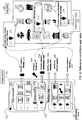
- FIG. 1 is a visual representation of interactions between a user interface of a mobile application 100 showing a view of a content collection 124 and an image gallery 106 that includes a collection of unclassified images 126 that are candidates for classification and inclusion in the content collection.
- Fig. 1 shows a user interface 100 with a personal content collection 124 of a user.
- the user interface includes a field 122 for a user entry of a search query.
- the content collection 124 contains content items 120 that include one or more images and associated image information 128.
- the images are organized in categories that can be defined by a user.
- a client device 102 with a built in camera 104 stores an image gallery 106 (e.g., of images captured by the camera 104 and/or downloaded and/or transferred from other sources of images).
- the image gallery 106 contains one or more captured images 112.
- the captured images 112 are analyzed by one or more processing modules (e.g., a content collection analyzing module 418 ( FIG. 4 ) and assigned one or more of a content category 108, keyword or text 110, and time and/or location 116 based on the analysis.
- Captured images 112 or one or more unclassified images in the collection of unclassified images 126 satisfying a predefined relevance criterion are automatically transferred or stored in the content collection 124. For example, in FIG.
- an unclassified image of a receipt is auto-transferred 118 to the personal content collection of a user 124 following a determination by one or more processing modules (e.g., one or more of the server-side modules 414) that the image has a high degree of relevance to other items in the content collection based on application of the generated relevance rules.
- Captured images 112 or one or more unclassified images in the collection of unclassified images 126 falling below the predefined relevance criterion are listed as transfer candidates. For example, in FIG. 1 a photograph of class notes that has not been classified is listed as a transfer candidate 114. Transfer candidates are periodically monitored and re-evaluated for an updated relevance score.
- FIG. 2 is another visual representation of interaction between a user interface of a mobile application 100 showing a view of a content collection 124 and an image gallery 106 that includes a collection of unclassified images 126 that are candidates for classification and inclusion in the content collection.
- Fig. 2 shows a user interface 100 with a personal content collection 124 of a user.
- the content collection 124 contains content items 120 that include one or more images and associated image information. Further, the content collection contains organizational categories, such as "Business trip" 218.
- the associated image information includes one or more of a content category 202, a keyword 204, activity or event 206, attributes 208.
- the image gallery 106 contains a plurality of unclassified images 216 that are associated with the relevance conditions and rules.
- receipt image 210 in the image gallery 106 is associated with a content category 202, content category 220, a time and location attribute, and a sub-category, grocery.
- the handwritten note image 212 similarly is associated with content category handwritten note 218 and a time and location attribute.
- the armchair image 214 is associated with a content category for furniture, a sub-category for armchair, a keyword 204, and a time and location attribute.
- FIG. 3 is a flow diagram (300) of an implementation for automatically identifying and transferring relevant image data.
- the method begins by retrieving images from a content collection (310).
- the content collection (310) can be stored on a server or on an electronic device and includes content items, wherein the content items include images and associated image information.
- the content items can be analyzed to identify attributes associated with the images, wherein the attributes include one or more of image data, image categories, and image groupings.
- the method includes analyzing the content collection to recognize and categorize the images or content items (315). Text from the images or the content items can be extracted and used for building search indexes (320). Relevant keywords can be extracted from the accompanying textual content (322).
- the method assesses user image groupings (tags, notebooks, keywords) (325).
- the method further builds weights for image categories (330), and orders image categories by weight (332).
- Images and content items are assessed for additional content attributes (time, location%) (335).
- a full set of image related rules is built or generated (340).
- the method scans the one or more image galleries, in other words, applies the generated image related rules to one or more image galleries or a collection of one or more unclassified images (342) skipping images previously copied to content collection (345).
- the one or more unclassified images are recognized and categorized (350).
- the method retrieves applicable image related rules (355). If no rules are present (360), then the method looks for more non-transferred images in the one or more galleries (385). If there are no more non-transferred images in the one or more galleries (385), then the operation ends. If there are more non-transferred images in the one or more galleries (385) the method returns to retrieving applicable image related rules (355). If there are rules present (360), then the method calculates aggregate rule weight (362). The method determines if the aggregate weight is above transfer threshold (365).
- the method looks for conflicting rules (370). If there are conflicting rules (370), the method chooses the best rule(s) (372) before applying the rules. If there are no conflicting rules (370), then the method bypasses choosing a best rule(s) (372).
- the method applies the rules or determined best rules to the unclassified image selected for transfer to the content collection (375). After the unclassified image selected for transfer is in the content collection (375), the method updates image related rules and weights (380). The method looks for more non-transferred images in gallery (385). If there are no more non-transferred images in the one or more galleries (385), then the method ends. If there are more non-transferred images in the one or more galleries (385) the method returns to retrieving applicable image related rules (355). The process continues until there are no more non-transferred images in the one or more galleries (385).
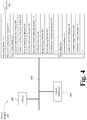
- FIG. 4 is block diagram of a server system 400 in accordance with some implementations.
- the server system 400 includes one or more processing units (CPUs) 402, one or more network interfaces 404, Memory 406, and one or more communication buses 408 for interconnecting these components (sometimes called a chipset).
- Memory 406 includes high-speed random access memory, such as DRAM, SRAM, DDR RAM, or other random access solid state memory devices; and, optionally, includes non-volatile memory, such as one or more magnetic disk storage devices, one or more optical disk storage devices, one or more flash memory devices, or one or more other non-volatile solid state storage devices.
- Memory 406, optionally, includes one or more storage devices remotely located from one or more processing units 402.
- Memory 406, or alternatively the non-volatile memory within memory 406, includes a non-transitory computer readable storage medium.
- memory 406, or the non-transitory computer readable storage medium of memory 406, stores the following programs, modules, and data structures, or a subset or superset thereof:
- the server-side module 414 includes one or more of the following: an account administration module 416 and a content collection analyzing module 420 to analyze content items within the content collection data 436.
- the content items within the content collection are analyzed to identify attributes associated with the images, wherein the attributes include one or more of image data, image categories, and image groupings.
- the server-side module 414 further includes one or more of a rule set generating module 420 for building or generating relevance conditions and rules from the content item analysis, and a rule set application module 422 for applying the rule sets to a plurality of unclassified images to determine one or more of a category, grouping, and image relevance scores specific to the user.
- One or more of a relevance score comparing module 424 is included in the server-side Module 414 to identify one or more of the unclassified images with determined relevance scores satisfying a predetermined relevance criterion (i.e. a first set) or falling below a predetermined relevance criterion (i.e. a second set).
- a predetermined relevance criterion i.e. a first set
- a predetermined relevance criterion i.e. a second set
- the server-side module 414 also includes one or more candidate list monitoring module 432 to periodically monitor the second set, periodically update respective image relevance scores of the second set, and identify a third set of one or more of the second set with determined relevance scores satisfying the predetermined relevance criterion.
- the second set is stored in the candidate image database 440 on the server system 400.
- One or more of an image storing module 428 is included in the server-side module 414 to associate each image of the first set, or alternatively a third set, with the content items in accordance with the one or more determined category and/or grouping and to store the first set, or third set, in the personal content collection.
- server-side module 414 includes one or more notification module 426 to notify a user of the potential storage of the unclassified image and to optionally prompt the user for approval, and a rule updating module 430 to update the generated rule sets after associating one or more unclassified images set with the content items and storing the one or more unclassified images.
- notification module 426 to notify a user of the potential storage of the unclassified image and to optionally prompt the user for approval
- a rule updating module 430 to update the generated rule sets after associating one or more unclassified images set with the content items and storing the one or more unclassified images.
- Each of the above identified elements may be stored in one or more of the previously mentioned memory devices, and corresponds to a set of instructions for performing a function described above.
- the above identified modules or programs i.e., sets of instructions
- memory 406, optionally, stores a subset of the modules and data structures identified above.
- memory 406, optionally, stores additional modules and data structures not described above.
- one or more operations performed by the service modules 414 are performed on a client device (e.g., client device 102 FIG. 1 or client device 02 ( FIG.
- server system 400 may include more or fewer components than those shown. One or more modules may be divided into sub-modules, and/or one or more functions may be provided by different modules than those shown.
- an individual one of server system 400 implements or performs one or more methods described herein with respect to Figures 3 and 5 .
- a plurality of machines e.g., a local computer and one or more remote servers
- together implement or perform one or more methods described with respect to Figures 3 and 5 .
- a first computer system obtains an image gallery containing a plurality of unclassified images from a second computer system (e.g., a local computer) via one or more wired or wireless communication networks.
- the first computer system analyzes content items from a personal content collection associated to the second computer, generates rule sets, applies the generated rule sets to a plurality of unclassified images.
- the first computer identifies a first set of one or more of the unclassified images with determined relevance scores satisfying a predetermined relevance criterion, associates each image of the first set with the content items in accordance with the one or more determined category and grouping, and stores the first set in the personal content collection associated to the second computer. More details on the automatically identifying and transferring relevant image data with reference to Figures 1-8 .
- FIG. 5 is a functional block diagram of a system 500 (e.g., depicting stored data, processing modules, interconnections, processing/messaging flow, etc), in accordance with some implementations.
- the system 500 includes a client device 502 (e.g., phone, smart phone, computer, or other electronic devices with access to a network, a collection of images and/or a built in camera and) with a client application 504, a stored image gallery 508A (e.g., stored, unclassified images), and optionally, a content collection 506 (e.g., a subset of the content collection 512 stored on the server 526) stored on the client device.
- a client device 502 e.g., phone, smart phone, computer, or other electronic devices with access to a network, a collection of images and/or a built in camera and
- client application 504 e.g., a stored image gallery 508A (e.g., stored, unclassified images)
- a content collection 506
- N client devices 528-N (where N denotes an indeterminate number of devices) with their own respective personalized content collections and stored/unclassified images can be a part of the system 500 at any given time.
- a communication network 510 interconnects the client device 502 and any number of N client devices 528-N with the server system 526, which includes/manages in some implementations locally stored user accounts 530 and a personal content collection of a user 512 (and users of any number of N other client devices 528).
- the personal content collection of a user 512 stores content items that include images and associated image information.
- the images are classified and organized in accordance with keywords/organization provided by a user and/or generated automatically, without user intervention, (e.g., through application of content collection analysis and generation of rule sets performed by respective server system modules 514, 516).
- the personal content collection 512 includes a variety of digital content items collected through a variety of collection operations, including user web clipping, automated content collection performed by the server system 526 and/or a client application 504, and/or uploading (e.g., by a user or a user organization) of items of interest to the content collection 512.
- the images are classified and organized in accordance with keywords/organization provided by a user and/or generated automatically without user intervention
- the personal content collection of a user 512 provides content items for content collection analysis performed by a content collection analysis processing module 514.
- the content collection analysis module 514 identifies attributes associated with the images (e.g., images from the content collection 512), wherein the attributes include one or more of image data, image categories, and image groupings.
- identified attributes 515 generated by content collection analysis 514 are employed by a generation of rules module 516 to generate image classification rules 517.
- the generation of rules module 516 builds and/or generates relevance conditions and rules 517 based on the identified attributes 515 associated with images from the content collection, wherein the generated rules 517 can be applied to unclassified image content to determine a degree of relevance of that image content to the content collection 512 (both overall and to specific groups/keywords within the content collection 512).
- the generated rule sets 517 along with a plurality of unclassified images within the image gallery 508A/B are provided for application of generated rules to the image gallery 518 to determine for each of the unclassified images one or more of a category, grouping, and image relevance scores associated that image.
- the application of generated rules to the image gallery module/operation 518 also identifies a first set of one or more of the unclassified images with determined relevance scores satisfying a predetermined relevance criterion 520 and a second set of one or more of the unclassified images with determined relevance scores below a predetermined relevance criterion 522.
- Each image of the first set is associated with the content items in accordance with the one or more determined category and grouping and stored in the personal content collection 512.
- the second set is placed in a Candidate List 524 to be continuously monitored and periodically updated for new respective image relevance scores.
- a third set of one or more of the second set is identified with determined relevance scores satisfying the predetermined relevance criterion.
- Each image of the third set is associated with the content items in accordance with the one or more determined category and grouping and stored in the personal content collection 512.
- FIG. 6 is a flow chart in accordance with some implementations of a method 600 for automatically identifying and transferring relevant image data.
- the method is performed by a one or more processing modules of a server system 526, a client device 502/528-N system and/or a combination of the preceding.
- the data operated on by the modules including but not limited to unclassified images and content collection for a user, are stored at the server system 526, at the client device 502/528-N system and/or a combination of the preceding.
- the method obtains content items from a personal content collection of a user (602), which includes images and associated image information (such as keywords and classification information).
- the method analyzes the content items to identify attributes associated with the images (604), which include one or more of image data, image categories, and image groupings.
- the method detects text within the images (606), recognizes fully or partially the text within the respective images (608), and generates image search indexes with the fully or partially recognized text (610).
- the method generates rule sets based on the identified attributes to be used in determining one or more of a category, grouping, and image relevance scores specific to the user (612).
- the method includes the search indexes in the generated rule sets (614), which enables the generated search indexes to be application to an image classification operation in conjunction with the rules sets.
- the method applies the generated rule sets to a plurality of unclassified images to determine for each of the unclassified images one or more of a category, grouping, and image relevance scores (616).
- the method further identifies a first set of one or more of the unclassified images with determined relevance scores satisfying a predetermined relevance criterion (618).
- the method identifies a second set of one or more of the unclassified images with determined image relevance scores below the predetermined relevance criterion (620).
- the second set is placed in a candidate list (622) for possible reclassification in view of updated generated rule sets (e.g., rule sets updated in view of subsequent user images/content items classified and included in the content collection maintained by the server system).
- the second set in the candidate list is periodically, without user intervention, monitored for classification (624).
- respective images of the second set in the candidate list are periodically, without user intervention, updated with new image relevance scores (626).
- the method further identifies a third set of one or more of the second set with determined relevance scores satisfying the predetermined relevance criterion 628.
- each image of the first set is associated with the content items in accordance with the one or more determined category and grouping (630) and stored in the personal content collection (634).
- each image of the third set is associated with the content items in accordance with the one or more determined category and grouping (632) and stored in the personal content collection (636).
- the method updates the generated rule sets 638 after the first set is stored in the personal content collection 634.
- the operations described above and depicted in FIG. 6 can be performed in different order from the described order, and different subsets or supersets of the operations can be performed to provide at least some benefits described herein related to automated classification and inclusion in a digital content collection of unclassified image and/or text content items.
- FIG. 7 is a functional block diagram of a system implemented at a client device 700 in accordance with some implementations.
- FIG. 7 is a client device implementation of FIG. 5 , the functions performed by the implementation in FIG. 5 can be performed by the implementations in FIG. 7 .
- the overall system includes a client device system 700 (phone, smart phone, computer, or other electronic devices with a built in camera and access to a network), a stored image gallery 708, a content collection 702 stored on the client device.
- the content collection 702 stores content items that includes images and associated image information.
- the content collection 702 sends the content items for content collection analysis 704.
- Content collection analysis 704 identifies attributes associated with the images, wherein the attributes include one or more of image data, image categories, and image groupings.
- identified attributes associated with the images are sent for generation of rules 706.
- the generation of rules 706 builds relevance conditions and rules by using the identified attributes associated with the images.
- the generated rule Sets 706 along with a plurality of unclassified images within the image gallery 708 are provided for application of generated rules to the image gallery 710 to determine for each of the unclassified images one or more of a category, grouping, and image relevance scores.
- application of generated rules to the image gallery 710 also identifies a first set of one or more of the unclassified images with determined relevance scores satisfying a predetermined relevance criterion 712 and a second set of one or more of the unclassified images with determined relevance scores below a predetermined relevance criterion 714.
- Each image of the first set is associated with the content items in accordance with the one or more determined category and grouping and stored in the personal content collection 702.
- the second set is placed in a candidate list 716 to be continuously monitored and periodically updated for new respective image relevance scores.
- a third set of one or more of the second set is identified with determined relevance scores satisfying the predetermined relevance criterion.
- Each image of the third set is associated with the content items in accordance with the one or more determined category and grouping and stored in the personal content collection 702.
- FIG. 8 is block diagram of a client system 800 in accordance with some implementations.
- the client system 800 includes one or more processing units (CPUs) 802, one or more network interfaces 804, a user interface 810 with one or more input devices 812 and one or more output devices 814, an optional location detection device 806, memory 816, and one or more communication buses 808 for interconnecting these components (sometimes called a chipset).
- Memory 816 includes high-speed random access memory, such as DRAM, SRAM, DDR RAM, or other random access solid state memory devices; and, optionally, includes non-volatile memory, such as one or more magnetic disk storage devices, one or more optical disk storage devices, one or more flash memory devices, or one or more other non-volatile solid state storage devices.
- Memory 816 optionally, includes one or more storage devices remotely located from one or more processing units 802.
- Memory 816, or alternatively the non-volatile memory within memory 816 includes a non-transitory computer readable storage medium.
- memory 816, or the non-transitory computer readable storage medium of memory 416 stores the following programs, modules, and data structures, or a subset or superset thereof:
- the client-side module 832 includes one or more of the following: a content collection analyzing module 834 to analyze content items within the content collection over the network or the content collection data 854 stored locally on the client system 800.
- the content items within the content collection are analyzed to identify attributes associated with the images, wherein the attributes include one or more of image data, image categories, and image groupings.
- the client-side module 832 further includes one or more of a rule set generating module 836 for building or generating relevance conditions and rules from the content item analysis, and a rule set application module 838 for applying the rule sets to a plurality of unclassified images to determine one or more of a category, grouping, and image relevance scores specific to the user.
- One or more of a relevance Score comparing module 840 is included in the client-side module 832 to identify one or more of the unclassified images with determined relevance scores satisfying a predetermined relevance criterion (i.e. a first set) or falling below a predetermined relevance criterion (i.e. a second set).
- a predetermined relevance criterion i.e. a first set
- a predetermined relevance criterion i.e. a second set
- the client-side module 832 also includes one or more candidate list monitoring module 848 to periodically monitor the second set, periodically update respective image relevance scores of the second set, and identify a third set of one or more of the second set with determined relevance scores satisfying the predetermined relevance criterion.
- the second set is stored in a candidate list on the network or can be stored locally on the client system 800 within candidate image data 858.
- One or more of an image storing module 844 is included in the client-side module 832 to associate each image of the first set, or alternatively a third set, with the content items in accordance with the one or more determined category and/or grouping and to store the first set, or third set, in the personal content collection.
- the client-side module 832 includes one or more notification module 842 to notify a user of the potential storage of the unclassified image and to optionally prompt the user for approval, and a rule updating module 846 to update the generated rule sets after associating one or more unclassified images set with the content items and storing the one or more unclassified images.
- notification module 842 to notify a user of the potential storage of the unclassified image and to optionally prompt the user for approval
- a rule updating module 846 to update the generated rule sets after associating one or more unclassified images set with the content items and storing the one or more unclassified images.
- Each of the above identified elements may be stored in one or more of the previously mentioned memory devices, and corresponds to a set of instructions for performing a function described above.
- the above identified modules or programs i.e., sets of instructions
- memory 406 optionally, stores a subset of the modules and data structures identified above.
- memory 406, optionally, stores additional modules and data structures not described above.
- server system 400 may include more or fewer components than those shown. One or more modules may be divided into sub-modules, and/or one or more functions may be provided by different modules than those shown.
- an individual one of server system 400 implements or performs one or more methods described herein with respect to Figures 3 and 5 .
- a plurality of machines e.g., a local computer and one or more remote servers
- together implement or perform one or more methods described with respect to Figures 3 and 5 .
- a first computer system obtains an image gallery containing a plurality of unclassified images from a second computer system (e.g., a local computer) via one or more wired or wireless communication networks.
- the first computer system analyzes content items from a personal content collection associated to the second computer, generates rule sets, applies the generated rule sets to a plurality of unclassified images.
- the first computer identifies a first set of one or more of the unclassified images with determined relevance scores satisfying a predetermined relevance criterion, associates each image of the first set with the content items in accordance with the one or more determined category and grouping, and stores the first set in the personal content collection associated to the second computer. More details on the automatically identifying and transferring relevant image data with reference to Figures 1-8 .
- first, second, etc. are, in some instances, used herein to describe various elements, these elements should not be limited by these terms. These terms are only used to distinguish one element from another. For example, a first answer term could be termed a second answer term, and, similarly, a second answer term could be termed a first answer term, without departing from the scope of the various described implementations. The first answer term and the second answer term are both answer terms, but they are not the same answer terms.
- the term “if' is, optionally, construed to mean “when” or “upon” or “in response to determining” or “in response to detecting” or “in accordance with a determination that,” depending on the context.
- the phrase “if it is determined” or “if [a stated condition or event] is detected” is, optionally, construed to mean “upon determining” or “in response to determining” or “upon detecting [the stated condition or event]” or “in response to detecting [the stated condition or event]” or “in accordance with a determination that [a stated condition or event] is detected," depending on the context.
- stages that are not order dependent may be reordered and other stages may be combined or broken out. While some reordering or other groupings are specifically mentioned, others will be obvious to those of ordinary skill in the art, so the ordering and groupings presented herein are not an exhaustive list of alternatives. Moreover, it should be recognized that the stages could be implemented in hardware, firmware, software or any combination thereof.
Landscapes
- Engineering & Computer Science (AREA)
- Theoretical Computer Science (AREA)
- Physics & Mathematics (AREA)
- General Physics & Mathematics (AREA)
- Data Mining & Analysis (AREA)
- Databases & Information Systems (AREA)
- General Engineering & Computer Science (AREA)
- Library & Information Science (AREA)
- Business, Economics & Management (AREA)
- Accounting & Taxation (AREA)
- Multimedia (AREA)
- Development Economics (AREA)
- Computational Linguistics (AREA)
- Finance (AREA)
- Strategic Management (AREA)
- Software Systems (AREA)
- Game Theory and Decision Science (AREA)
- Economics (AREA)
- Marketing (AREA)
- General Business, Economics & Management (AREA)
- Mathematical Physics (AREA)
- Entrepreneurship & Innovation (AREA)
- Information Retrieval, Db Structures And Fs Structures Therefor (AREA)
Claims (13)
- Verfahren zum automatischen Identifizieren und Übertragen relevanter Bilddaten, umfassend:bei einem Server (400, 526) mit einem oder mehreren Prozessoren (402) und einem Speicher (406), Speichern von Programmen, die von dem einen oder den mehreren Prozessoren ausgeführt werden,Erhalten von Inhaltselementen (120, 315) aus einer persönlichen Inhaltssammlung (124, 512, 602, 634, 636, 702) eines Benutzers, wobei die Inhaltselemente (120, 315) Bilder (112) und dazugehörige Bildinformationen (128) umfassen, wobei die persönliche Inhaltssammlung (512) auf dem Server (400, 526) bereitgestellt wird;Analysieren der Inhaltselemente (120, 315), um Attribute (208, 315) zu identifizieren, die den Bildern (112) zugeordnet sind, wobei die Attribute (208) eines oder mehrere von Bilddaten, Bildkategorien (330) und Bildgruppierungen (325) umfassen;Erzeugen von Regelsätzen (517, 614, 638, 706) auf der Grundlage der identifizierten Attribute (208, 315, 515), die bei dem Bestimmen von einer oder mehreren von einer Kategorie (108, 202) und/oder einer Gruppierung und bei dem Bestimmen von für den Benutzer spezifischen Bildrelevanz-Bewertungen aus Bildern (112) verwendet werden sollen;Anwenden der erzeugten Regelsätze (517, 614, 638, 706) auf eine Mehrzahl von unklassifizierten Bildern (126, 206, 342), um für jedes der unklassifizierten Bilder eine oder mehrere von einer Kategorie (108, 202) und/oder einer Gruppierung und eine jeweilige Bildrelevanzbewertung zu bestimmen, wobei die Mehrzahl von unklassifizierten Bildern auf einem oder mehreren Client-Geräten (502, ... 528N) gespeichert werden;Identifizieren eines ersten Satzes von einem oder mehreren der unklassifizierten Bilder (126, 206, 342) mit bestimmten Relevanzbewertungen, die ein vorbestimmtes Relevanzkriterium (520, 522, 618, 620, 628, 712, 714) erfüllen;Zuordnen jedes Bildes (112) des ersten Satzes zu den Inhaltselementen (120, 315) in Übereinstimmung mit der einen oder den mehreren bestimmten Kategorie(n) (108, 202) und/oder der Gruppierung; undSpeichern des ersten Satzes in der persönlichen Inhaltssammlung (124, 512, 602, 634, 636, 702) durch Übertragen des ersten Satzes von dem einem oder den mehreren Client-Geräten (502, ... 528N) auf den Server (400, 526);Aktualisieren der Regelsätze (517, 614, 638, 706) auf der Grundlage des gespeicherten ersten Satzes in der persönlichen Inhaltssammlung (124, 512, 602, 634, 636, 702);Identifizieren eines zweiten Satzes von einem oder mehreren der unklassifizierten Bilder (126, 206, 342), wobei der zweite Satz ein Teilsatz der Mehrzahl von unklassifizierten Bildern ist, die Relevanzbewertungen aufweisen, die mäßig unter dem vorbestimmten Relevanzkriterium (520, 522, 618, 620, 628, 712, 714) liegen;Speichern des zweiten Satzes in einer Kandidatenliste (382, 440, 524) der persönlichen Inhaltssammlung (124, 512, 602, 634, 636, 702) durch Übertragen des zweiten Satzes von dem einen oder den mehreren Geräten (502, ... 528N) auf den Server (400, 526);Anwenden der aktualisierten Regelsätze (517, 614, 638, 706) auf die Kandidatenliste (382, 440, 524) der persönlichen Inhaltssammlung (124, 512, 602, 634, 636, 702), um für jedes der unklassifizierten Bilder in der Kandidatenliste (382, 440, 524) eine entsprechende Bildrelevanzbewertung zu ermitteln;Identifizieren eines dritten Satzes von einem oder mehreren der unklassifizierten Bilder (126, 206, 342) in der Kandidatenliste (382, 440, 524) mit bestimmten Relevanzbewertungen, die das vorbestimmte Relevanzkriterium (520, 522, 618, 620, 628, 712, 714) erfüllen;Zuordnen jedes Bildes (112) des dritten Satzes zu den Inhaltselementen (120, 315) in Übereinstimmung mit der einen oder den mehreren bestimmten Kategorie(n) (108, 202) und/oder der Gruppierung; undSpeichern des dritten Satzes in der persönlichen Inhaltssammlung (124, 512.602, 634, 636, 702).
- Verfahren nach Anspruch 1, ferner umfassend das Benachrichtigen des Benutzers über das Speichern des ersten Satzes.
- Verfahren nach Anspruch 2, ferner umfassend die Aufforderung an den Benutzer zur Zustimmung vor dem Speichern des ersten Satzes.
- Verfahren nach einem der Ansprüche 1 bis 3, ferner umfassend das Analysieren der Inhaltselemente (120, 315), um Text (110) innerhalb der Bilder (112) zu erkennen.
- Verfahren nach Anspruch 4, ferner umfassend:vollständiges oder teilweises Erkennen des Textes (110) in den jeweiligen Bildern (112);Erzeugen von Bildsuchindizes mit dem vollständig oder teilweise erkannten Text (610); undAufnehmen der Suchindizes in die erzeugten Regelsätze (517, 614, 638, 706).
- Verfahren nach einem der Ansprüche 4 bis 5, ferner umfassend das Analysieren der Mehrzahl von unklassifizierten Bildern (126, 206, 342), um Text (110) innerhalb der unklassifizierten Bilder (126, 206, 342) zu erkennen.
- Verfahren nach Anspruch 6, ferner umfassend:vollständiges oder teilweises Erkennen des Textes (110) innerhalb der unklassifizierten Bilder (126, 206, 342);Anwenden der erzeugten Regelsätze (517, 614, 638, 706) auf die Mehrzahl von unklassifizierten Bildern (126, 206, 342), um für jedes der Mehrzahl von unklassifizierten Bildern (126, 206, 342) eines oder mehrere von einer Kategorie (108, 202) und/oder Gruppierung sowie entsprechende Bildrelevanzbewertungen zu bestimmen.
- Verfahren nach Anspruch 1, ferner umfassend:periodisches Überwachen des zweiten Satzes in der Kandidatenliste (382, 524, 622) ohne Benutzereingriff;periodisches Aktualisieren der jeweiligen Bildrelevanzbewertungen des zweiten Satzes, ohne Benutzereingriff.
- Verfahren nach Anspruch 1, ferner umfassend das Aktualisieren der erzeugten Regelsätze (517, 614, 638, 706) nach dem Zuordnen jedes Bildes des dritten Satzes zu den Inhaltselementen (120, 315) und Speichern des dritten Satzes.
- Verfahren nach einem der Ansprüche 1 bis 9, wobei die zugeordneten Bildinformationen Text (110), Schlüsselwörter (204), Benutzerpräferenzen, Bildinhalt, URLs, Ort, Zeit, Formulare, Quittungen und handgeschriebene Notizen umfassen.
- Verfahren nach einem der Ansprüche 1 bis 10, ferner umfassend das Anzeigen einer Benutzerschnittstelle auf einem Client-Gerät (102, 502, 528, 700), das mit dem Server (400) verbunden ist, wobei die Benutzerschnittstelle einen Texteingabebereich zum Eingeben von Kurzinformationen oder einer Suchanfrage umfasst, eine Inhaltssammlung (124, 512, 602, 634, 636, 702), die eine oder mehrere Kategorien (108, 202) anzeigt, und/oder eine Gruppierung von Bildern, wobei die eine oder die mehreren Kategorien (108, 202) und/oder die Gruppierung von Bildern eines oder mehrere von Inhaltselementen (120, 315), Inhaltselementnotizen oder Inhaltsattributen (335) anzeigen.
- Serversystem (400, 526), umfassend:einen oder mehrere Prozessoren (402);eine Netzwerkschnittstelle (404), die so konfiguriert ist, dass sie über ein Netzwerk mit einem oder mehreren Client-Geräten (502, ... 508N) kommuniziert; undeinen Speicher (406), der mit dem einen oder den mehreren Prozessoren (402) gekoppelt ist, wobei der Speicher (406) ein oder mehrere Programme speichert, die so konfiguriert sind, dass sie von dem einen oder den mehreren Prozessoren (402) ausgeführt werden, wobei das eine oder die mehreren Programme Anweisungen zum Durchführen einer der Verfahren nach den Ansprüchen 1 bis 11 einschließen.
- Computerlesbares Speichermedium, das ein oder mehrere Programme speichert, wobei das eine oder die mehreren Programme Anweisungen umfassen, die, wenn sie von einem Serversystem (400, 526) ausgeführt werden, das Serversystem (400, 526) veranlassen, eines der Verfahren nach den Ansprüchen 1 bis 11 auszuführen.
Applications Claiming Priority (1)
| Application Number | Priority Date | Filing Date | Title |
|---|---|---|---|
| US201662366222P | 2016-07-25 | 2016-07-25 |
Publications (2)
| Publication Number | Publication Date |
|---|---|
| EP3276509A1 EP3276509A1 (de) | 2018-01-31 |
| EP3276509B1 true EP3276509B1 (de) | 2020-12-02 |
Family
ID=59501201
Family Applications (1)
| Application Number | Title | Priority Date | Filing Date |
|---|---|---|---|
| EP17183036.7A Active EP3276509B1 (de) | 2016-07-25 | 2017-07-25 | Automatische detektion und übertragung von relevanten bilddaten auf inhaltssammlungen |
Country Status (2)
| Country | Link |
|---|---|
| US (3) | US10929461B2 (de) |
| EP (1) | EP3276509B1 (de) |
Families Citing this family (13)
| Publication number | Priority date | Publication date | Assignee | Title |
|---|---|---|---|---|
| CN108701194B (zh) | 2016-01-19 | 2022-06-24 | 雷韦兹公司 | 掩蔽限制访问控制系统 |
| US10929461B2 (en) | 2016-07-25 | 2021-02-23 | Evernote Corporation | Automatic detection and transfer of relevant image data to content collections |
| US10891526B2 (en) * | 2017-12-22 | 2021-01-12 | Google Llc | Functional image archiving |
| GB2570447A (en) * | 2018-01-23 | 2019-07-31 | Canon Kk | Method and system for improving construction of regions of interest |
| US11100160B2 (en) | 2018-07-31 | 2021-08-24 | International Business Machines Corporation | Intelligent image note processing |
| US10740400B2 (en) * | 2018-08-28 | 2020-08-11 | Google Llc | Image analysis for results of textual image queries |
| JP7195430B2 (ja) * | 2019-06-21 | 2022-12-23 | 株式会社ソニー・インタラクティブエンタテインメント | 撮影データ生成装置、撮影データ生成方法及びプログラム |
| WO2021061652A1 (en) * | 2019-09-23 | 2021-04-01 | Aquent Llc | Methods and apparatus for assessing candidates for visual roles |
| US11638052B2 (en) * | 2021-05-28 | 2023-04-25 | The Nielsen Company (Us), Llc | Methods, apparatus, and articles of manufacture to identify candidates for media asset qualification |
| US11615139B2 (en) | 2021-07-06 | 2023-03-28 | Rovi Guides, Inc. | Generating verified content profiles for user generated content |
| KR20230062251A (ko) * | 2021-10-29 | 2023-05-09 | 삼성에스디에스 주식회사 | 텍스트 기반의 문서분류 방법 및 문서분류 장치 |
| US11921812B2 (en) * | 2022-05-19 | 2024-03-05 | Dropbox, Inc. | Content creative web browser |
| US12488050B2 (en) | 2023-10-20 | 2025-12-02 | Dropbox, Inc. | Using generative AI models for content searching and generation of confabulated search results |
Family Cites Families (41)
| Publication number | Priority date | Publication date | Assignee | Title |
|---|---|---|---|---|
| US6785421B1 (en) * | 2000-05-22 | 2004-08-31 | Eastman Kodak Company | Analyzing images to determine if one or more sets of materials correspond to the analyzed images |
| US7130466B2 (en) * | 2000-12-21 | 2006-10-31 | Cobion Ag | System and method for compiling images from a database and comparing the compiled images with known images |
| US7194134B2 (en) * | 2001-01-02 | 2007-03-20 | Microsoft Corporation | Hierarchical, probabilistic, localized, semantic image classifier |
| US20030128389A1 (en) * | 2001-12-26 | 2003-07-10 | Eastman Kodak Company | Method for creating and using affective information in a digital imaging system cross reference to related applications |
| US20040181604A1 (en) * | 2003-03-13 | 2004-09-16 | Immonen Pekka S. | System and method for enhancing the relevance of push-based content |
| JP2007520934A (ja) * | 2003-12-24 | 2007-07-26 | ウオーカー ディジタル、エルエルシー | 画像を自動的に捕捉し、管理する方法および装置 |
| US8131674B2 (en) * | 2004-06-25 | 2012-03-06 | Apple Inc. | Methods and systems for managing data |
| WO2006081547A1 (en) * | 2005-01-27 | 2006-08-03 | Cambridge Research And Instrumentation, Inc. | Classifying image features |
| US7809722B2 (en) * | 2005-05-09 | 2010-10-05 | Like.Com | System and method for enabling search and retrieval from image files based on recognized information |
| US7660468B2 (en) * | 2005-05-09 | 2010-02-09 | Like.Com | System and method for enabling image searching using manual enrichment, classification, and/or segmentation |
| US20080162602A1 (en) | 2006-12-28 | 2008-07-03 | Google Inc. | Document archiving system |
| US9015301B2 (en) * | 2007-01-05 | 2015-04-21 | Digital Doors, Inc. | Information infrastructure management tools with extractor, secure storage, content analysis and classification and method therefor |
| US20090083237A1 (en) * | 2007-09-20 | 2009-03-26 | Nokia Corporation | Method, Apparatus and Computer Program Product for Providing a Visual Search Interface |
| US10152721B2 (en) * | 2007-11-29 | 2018-12-11 | International Business Machines Corporation | Aggregate scoring of tagged content across social bookmarking systems |
| US7979369B2 (en) * | 2008-01-09 | 2011-07-12 | Keibi Technologies, Inc. | Classification of digital content by using aggregate scoring |
| US8311344B2 (en) * | 2008-02-15 | 2012-11-13 | Digitalsmiths, Inc. | Systems and methods for semantically classifying shots in video |
| US20090259622A1 (en) * | 2008-04-11 | 2009-10-15 | Kolz Daniel P | Classification of Data Based on Previously Classified Data |
| US9002120B2 (en) * | 2008-10-03 | 2015-04-07 | Intellectual Ventures Fund 83 Llc | Interactive image selection method |
| US9639780B2 (en) * | 2008-12-22 | 2017-05-02 | Excalibur Ip, Llc | System and method for improved classification |
| WO2010116333A1 (en) * | 2009-04-07 | 2010-10-14 | Alon Atsmon | System and process for builiding a catalog using visual objects |
| US8185544B2 (en) * | 2009-04-08 | 2012-05-22 | Google Inc. | Generating improved document classification data using historical search results |
| AU2009347535B2 (en) * | 2009-06-03 | 2015-05-28 | Google Llc | Co-selected image classification |
| US9336241B2 (en) | 2009-08-06 | 2016-05-10 | A.L.D Software Ltd | Method and system for image search |
| US8566746B2 (en) * | 2010-08-30 | 2013-10-22 | Xerox Corporation | Parameterization of a categorizer for adjusting image categorization and retrieval |
| WO2012145912A1 (en) * | 2011-04-28 | 2012-11-01 | Google Inc. | Presenting search results for gallery web pages |
| US8793254B2 (en) * | 2011-08-18 | 2014-07-29 | Nicholas H. Evancich | Methods and apparatus for classifying content |
| US8625904B2 (en) | 2011-08-30 | 2014-01-07 | Intellectual Ventures Fund 83 Llc | Detecting recurring themes in consumer image collections |
| US8934722B2 (en) * | 2011-09-19 | 2015-01-13 | Given Imaging Ltd. | System and method for classification of image data items based on indirect user input |
| US20130073335A1 (en) * | 2011-09-20 | 2013-03-21 | Ebay Inc. | System and method for linking keywords with user profiling and item categories |
| EP2783304B1 (de) * | 2011-11-24 | 2017-12-20 | Microsoft Technology Licensing, LLC | Neuordnung mithilfe zuverlässiger bildproben |
| US9411876B2 (en) * | 2012-08-10 | 2016-08-09 | Blackberry Limited | Methods and devices for storing content based on classification options |
| EP2704028A1 (de) | 2012-08-31 | 2014-03-05 | BlackBerry Limited | Migration von Etiketten zwischen Entitäten bei der Verwaltung persönlicher elektronisch codierter Elemente |
| US10169686B2 (en) * | 2013-08-05 | 2019-01-01 | Facebook, Inc. | Systems and methods for image classification by correlating contextual cues with images |
| WO2015032670A1 (en) * | 2013-09-06 | 2015-03-12 | Thomson Licensing | Method of classification of images and corresponding device |
| US9773269B1 (en) * | 2013-09-19 | 2017-09-26 | Amazon Technologies, Inc. | Image-selection item classification |
| US10552994B2 (en) * | 2014-12-22 | 2020-02-04 | Palantir Technologies Inc. | Systems and interactive user interfaces for dynamic retrieval, analysis, and triage of data items |
| WO2016160629A1 (en) * | 2015-03-27 | 2016-10-06 | Google Inc. | Providing selected images from a set of images |
| US9971953B2 (en) * | 2015-12-10 | 2018-05-15 | Intel Corporation | Visual recognition using deep learning attributes |
| US10127945B2 (en) * | 2016-03-15 | 2018-11-13 | Google Llc | Visualization of image themes based on image content |
| US20180011854A1 (en) * | 2016-07-07 | 2018-01-11 | Yahoo Holdings, Inc. | Method and system for ranking content items based on user engagement signals |
| US10929461B2 (en) | 2016-07-25 | 2021-02-23 | Evernote Corporation | Automatic detection and transfer of relevant image data to content collections |
-
2017
- 2017-07-24 US US15/658,361 patent/US10929461B2/en active Active
- 2017-07-25 EP EP17183036.7A patent/EP3276509B1/de active Active
-
2021
- 2021-02-08 US US17/170,697 patent/US12008032B2/en active Active
-
2024
- 2024-06-05 US US18/735,005 patent/US20250165521A1/en active Pending
Non-Patent Citations (1)
| Title |
|---|
| X. (XIN) LI ET AL: "Active learning with multi-label SVM classification", 1 December 2013 (2013-12-01), XP055622994, Retrieved from the Internet <URL:https://www.aaai.org/ocs/index.php/IJCAI/IJCAI13/paper/viewFile/6509/6922> [retrieved on 20190917] * |
Also Published As
| Publication number | Publication date |
|---|---|
| US20250165521A1 (en) | 2025-05-22 |
| US20210240757A1 (en) | 2021-08-05 |
| US12008032B2 (en) | 2024-06-11 |
| US10929461B2 (en) | 2021-02-23 |
| US20180025003A1 (en) | 2018-01-25 |
| EP3276509A1 (de) | 2018-01-31 |
Similar Documents
| Publication | Publication Date | Title |
|---|---|---|
| US20250165521A1 (en) | Automatic Detection and Transfer of Relevant Image Data to Content Collections | |
| US11989244B2 (en) | Shared user driven clipping of multiple web pages | |
| US10515114B2 (en) | Facial recognition with social network aiding | |
| KR101122869B1 (ko) | 펜-기반 컴퓨팅 시스템에서의 주석 관리 | |
| CN105706080B (zh) | 扩增并呈现捕获的数据 | |
| US12061643B2 (en) | Image query analysis | |
| WO2019127832A1 (zh) | 智能搜索方法、装置、终端及服务器、存储介质 | |
| CN108959586A (zh) | 响应于可视化查询标识文本词汇 | |
| US9030502B2 (en) | System and method for organizing documents | |
| US20170329859A1 (en) | Categorizing and Clipping Recently Browsed Web Pages | |
| EP2462518A1 (de) | Benutzerschnittstelle zur darstellung von suchergebnissen für mehrere regionen einer visuellen abfrage | |
| CN107291949A (zh) | 信息搜索方法及装置 | |
| WO2012174971A1 (zh) | 信息摘录方法及基于云计算的摘录信息网络存储管理系统 | |
| CN104090875A (zh) | 信息检索系统及方法 | |
| CN109033145A (zh) | 文件夹的标签显示方法、系统、计算设备及存储介质 | |
| CN107391613B (zh) | 一种工业安全主题多文档自动消歧方法及装置 | |
| JP7081155B2 (ja) | 選択プログラム、選択方法、及び選択装置 | |
| AU2016201546B2 (en) | Facial recognition with social network aiding | |
| CN121858015A (zh) | 图片处理方法、装置、电子设备及可读存储介质 | |
| CN116958987A (zh) | 作品识别方法、装置、设备、存储介质及程序产品 | |
| AU2013245488A1 (en) | Facial recognition with social network aiding |
Legal Events
| Date | Code | Title | Description |
|---|---|---|---|
| PUAI | Public reference made under article 153(3) epc to a published international application that has entered the european phase |
Free format text: ORIGINAL CODE: 0009012 |
|
| STAA | Information on the status of an ep patent application or granted ep patent |
Free format text: STATUS: THE APPLICATION HAS BEEN PUBLISHED |
|
| AK | Designated contracting states |
Kind code of ref document: A1 Designated state(s): AL AT BE BG CH CY CZ DE DK EE ES FI FR GB GR HR HU IE IS IT LI LT LU LV MC MK MT NL NO PL PT RO RS SE SI SK SM TR |
|
| AX | Request for extension of the european patent |
Extension state: BA ME |
|
| STAA | Information on the status of an ep patent application or granted ep patent |
Free format text: STATUS: REQUEST FOR EXAMINATION WAS MADE |
|
| 17P | Request for examination filed |
Effective date: 20180731 |
|
| RBV | Designated contracting states (corrected) |
Designated state(s): AL AT BE BG CH CY CZ DE DK EE ES FI FR GB GR HR HU IE IS IT LI LT LU LV MC MK MT NL NO PL PT RO RS SE SI SK SM TR |
|
| STAA | Information on the status of an ep patent application or granted ep patent |
Free format text: STATUS: EXAMINATION IS IN PROGRESS |
|
| 17Q | First examination report despatched |
Effective date: 20190128 |
|
| REG | Reference to a national code |
Ref country code: DE Ref legal event code: R079 Ref document number: 602017028654 Country of ref document: DE Free format text: PREVIOUS MAIN CLASS: G06F0017300000 Ipc: G06F0016550000 |
|
| GRAP | Despatch of communication of intention to grant a patent |
Free format text: ORIGINAL CODE: EPIDOSNIGR1 |
|
| STAA | Information on the status of an ep patent application or granted ep patent |
Free format text: STATUS: GRANT OF PATENT IS INTENDED |
|
| RIC1 | Information provided on ipc code assigned before grant |
Ipc: G06F 16/55 20190101AFI20200602BHEP |
|
| INTG | Intention to grant announced |
Effective date: 20200618 |
|
| GRAS | Grant fee paid |
Free format text: ORIGINAL CODE: EPIDOSNIGR3 |
|
| GRAA | (expected) grant |
Free format text: ORIGINAL CODE: 0009210 |
|
| STAA | Information on the status of an ep patent application or granted ep patent |
Free format text: STATUS: THE PATENT HAS BEEN GRANTED |
|
| AK | Designated contracting states |
Kind code of ref document: B1 Designated state(s): AL AT BE BG CH CY CZ DE DK EE ES FI FR GB GR HR HU IE IS IT LI LT LU LV MC MK MT NL NO PL PT RO RS SE SI SK SM TR |
|
| REG | Reference to a national code |
Ref country code: GB Ref legal event code: FG4D |
|
| REG | Reference to a national code |
Ref country code: AT Ref legal event code: REF Ref document number: 1341707 Country of ref document: AT Kind code of ref document: T Effective date: 20201215 Ref country code: CH Ref legal event code: EP |
|
| REG | Reference to a national code |
Ref country code: IE Ref legal event code: FG4D |
|
| REG | Reference to a national code |
Ref country code: DE Ref legal event code: R096 Ref document number: 602017028654 Country of ref document: DE |
|
| PG25 | Lapsed in a contracting state [announced via postgrant information from national office to epo] |
Ref country code: RS Free format text: LAPSE BECAUSE OF FAILURE TO SUBMIT A TRANSLATION OF THE DESCRIPTION OR TO PAY THE FEE WITHIN THE PRESCRIBED TIME-LIMIT Effective date: 20201202 Ref country code: NO Free format text: LAPSE BECAUSE OF FAILURE TO SUBMIT A TRANSLATION OF THE DESCRIPTION OR TO PAY THE FEE WITHIN THE PRESCRIBED TIME-LIMIT Effective date: 20210302 Ref country code: GR Free format text: LAPSE BECAUSE OF FAILURE TO SUBMIT A TRANSLATION OF THE DESCRIPTION OR TO PAY THE FEE WITHIN THE PRESCRIBED TIME-LIMIT Effective date: 20210303 Ref country code: FI Free format text: LAPSE BECAUSE OF FAILURE TO SUBMIT A TRANSLATION OF THE DESCRIPTION OR TO PAY THE FEE WITHIN THE PRESCRIBED TIME-LIMIT Effective date: 20201202 |
|
| REG | Reference to a national code |
Ref country code: NL Ref legal event code: MP Effective date: 20201202 |
|
| REG | Reference to a national code |
Ref country code: AT Ref legal event code: MK05 Ref document number: 1341707 Country of ref document: AT Kind code of ref document: T Effective date: 20201202 |
|
| PG25 | Lapsed in a contracting state [announced via postgrant information from national office to epo] |
Ref country code: BG Free format text: LAPSE BECAUSE OF FAILURE TO SUBMIT A TRANSLATION OF THE DESCRIPTION OR TO PAY THE FEE WITHIN THE PRESCRIBED TIME-LIMIT Effective date: 20210302 Ref country code: PL Free format text: LAPSE BECAUSE OF FAILURE TO SUBMIT A TRANSLATION OF THE DESCRIPTION OR TO PAY THE FEE WITHIN THE PRESCRIBED TIME-LIMIT Effective date: 20201202 Ref country code: LV Free format text: LAPSE BECAUSE OF FAILURE TO SUBMIT A TRANSLATION OF THE DESCRIPTION OR TO PAY THE FEE WITHIN THE PRESCRIBED TIME-LIMIT Effective date: 20201202 Ref country code: SE Free format text: LAPSE BECAUSE OF FAILURE TO SUBMIT A TRANSLATION OF THE DESCRIPTION OR TO PAY THE FEE WITHIN THE PRESCRIBED TIME-LIMIT Effective date: 20201202 |
|
| PG25 | Lapsed in a contracting state [announced via postgrant information from national office to epo] |
Ref country code: NL Free format text: LAPSE BECAUSE OF FAILURE TO SUBMIT A TRANSLATION OF THE DESCRIPTION OR TO PAY THE FEE WITHIN THE PRESCRIBED TIME-LIMIT Effective date: 20201202 Ref country code: HR Free format text: LAPSE BECAUSE OF FAILURE TO SUBMIT A TRANSLATION OF THE DESCRIPTION OR TO PAY THE FEE WITHIN THE PRESCRIBED TIME-LIMIT Effective date: 20201202 |
|
| REG | Reference to a national code |
Ref country code: LT Ref legal event code: MG9D |
|
| PG25 | Lapsed in a contracting state [announced via postgrant information from national office to epo] |
Ref country code: SK Free format text: LAPSE BECAUSE OF FAILURE TO SUBMIT A TRANSLATION OF THE DESCRIPTION OR TO PAY THE FEE WITHIN THE PRESCRIBED TIME-LIMIT Effective date: 20201202 Ref country code: RO Free format text: LAPSE BECAUSE OF FAILURE TO SUBMIT A TRANSLATION OF THE DESCRIPTION OR TO PAY THE FEE WITHIN THE PRESCRIBED TIME-LIMIT Effective date: 20201202 Ref country code: PT Free format text: LAPSE BECAUSE OF FAILURE TO SUBMIT A TRANSLATION OF THE DESCRIPTION OR TO PAY THE FEE WITHIN THE PRESCRIBED TIME-LIMIT Effective date: 20210405 Ref country code: SM Free format text: LAPSE BECAUSE OF FAILURE TO SUBMIT A TRANSLATION OF THE DESCRIPTION OR TO PAY THE FEE WITHIN THE PRESCRIBED TIME-LIMIT Effective date: 20201202 Ref country code: LT Free format text: LAPSE BECAUSE OF FAILURE TO SUBMIT A TRANSLATION OF THE DESCRIPTION OR TO PAY THE FEE WITHIN THE PRESCRIBED TIME-LIMIT Effective date: 20201202 Ref country code: EE Free format text: LAPSE BECAUSE OF FAILURE TO SUBMIT A TRANSLATION OF THE DESCRIPTION OR TO PAY THE FEE WITHIN THE PRESCRIBED TIME-LIMIT Effective date: 20201202 Ref country code: CZ Free format text: LAPSE BECAUSE OF FAILURE TO SUBMIT A TRANSLATION OF THE DESCRIPTION OR TO PAY THE FEE WITHIN THE PRESCRIBED TIME-LIMIT Effective date: 20201202 |
|
| PG25 | Lapsed in a contracting state [announced via postgrant information from national office to epo] |
Ref country code: AT Free format text: LAPSE BECAUSE OF FAILURE TO SUBMIT A TRANSLATION OF THE DESCRIPTION OR TO PAY THE FEE WITHIN THE PRESCRIBED TIME-LIMIT Effective date: 20201202 |
|
| REG | Reference to a national code |
Ref country code: DE Ref legal event code: R097 Ref document number: 602017028654 Country of ref document: DE |
|
| PG25 | Lapsed in a contracting state [announced via postgrant information from national office to epo] |
Ref country code: IS Free format text: LAPSE BECAUSE OF FAILURE TO SUBMIT A TRANSLATION OF THE DESCRIPTION OR TO PAY THE FEE WITHIN THE PRESCRIBED TIME-LIMIT Effective date: 20210402 |
|
| PLBE | No opposition filed within time limit |
Free format text: ORIGINAL CODE: 0009261 |
|
| STAA | Information on the status of an ep patent application or granted ep patent |
Free format text: STATUS: NO OPPOSITION FILED WITHIN TIME LIMIT |
|
| PG25 | Lapsed in a contracting state [announced via postgrant information from national office to epo] |
Ref country code: AL Free format text: LAPSE BECAUSE OF FAILURE TO SUBMIT A TRANSLATION OF THE DESCRIPTION OR TO PAY THE FEE WITHIN THE PRESCRIBED TIME-LIMIT Effective date: 20201202 Ref country code: IT Free format text: LAPSE BECAUSE OF FAILURE TO SUBMIT A TRANSLATION OF THE DESCRIPTION OR TO PAY THE FEE WITHIN THE PRESCRIBED TIME-LIMIT Effective date: 20201202 |
|
| 26N | No opposition filed |
Effective date: 20210903 |
|
| PG25 | Lapsed in a contracting state [announced via postgrant information from national office to epo] |
Ref country code: DK Free format text: LAPSE BECAUSE OF FAILURE TO SUBMIT A TRANSLATION OF THE DESCRIPTION OR TO PAY THE FEE WITHIN THE PRESCRIBED TIME-LIMIT Effective date: 20201202 Ref country code: SI Free format text: LAPSE BECAUSE OF FAILURE TO SUBMIT A TRANSLATION OF THE DESCRIPTION OR TO PAY THE FEE WITHIN THE PRESCRIBED TIME-LIMIT Effective date: 20201202 |
|
| PG25 | Lapsed in a contracting state [announced via postgrant information from national office to epo] |
Ref country code: ES Free format text: LAPSE BECAUSE OF FAILURE TO SUBMIT A TRANSLATION OF THE DESCRIPTION OR TO PAY THE FEE WITHIN THE PRESCRIBED TIME-LIMIT Effective date: 20201202 |
|
| REG | Reference to a national code |
Ref country code: CH Ref legal event code: PL |
|
| PG25 | Lapsed in a contracting state [announced via postgrant information from national office to epo] |
Ref country code: MC Free format text: LAPSE BECAUSE OF FAILURE TO SUBMIT A TRANSLATION OF THE DESCRIPTION OR TO PAY THE FEE WITHIN THE PRESCRIBED TIME-LIMIT Effective date: 20201202 |
|
| REG | Reference to a national code |
Ref country code: BE Ref legal event code: MM Effective date: 20210731 |
|
| PG25 | Lapsed in a contracting state [announced via postgrant information from national office to epo] |
Ref country code: LI Free format text: LAPSE BECAUSE OF NON-PAYMENT OF DUE FEES Effective date: 20210731 Ref country code: CH Free format text: LAPSE BECAUSE OF NON-PAYMENT OF DUE FEES Effective date: 20210731 |
|
| PG25 | Lapsed in a contracting state [announced via postgrant information from national office to epo] |
Ref country code: IS Free format text: LAPSE BECAUSE OF FAILURE TO SUBMIT A TRANSLATION OF THE DESCRIPTION OR TO PAY THE FEE WITHIN THE PRESCRIBED TIME-LIMIT Effective date: 20210402 Ref country code: LU Free format text: LAPSE BECAUSE OF NON-PAYMENT OF DUE FEES Effective date: 20210725 |
|
| PG25 | Lapsed in a contracting state [announced via postgrant information from national office to epo] |
Ref country code: IE Free format text: LAPSE BECAUSE OF NON-PAYMENT OF DUE FEES Effective date: 20210725 Ref country code: BE Free format text: LAPSE BECAUSE OF NON-PAYMENT OF DUE FEES Effective date: 20210731 |
|
| PG25 | Lapsed in a contracting state [announced via postgrant information from national office to epo] |
Ref country code: HU Free format text: LAPSE BECAUSE OF FAILURE TO SUBMIT A TRANSLATION OF THE DESCRIPTION OR TO PAY THE FEE WITHIN THE PRESCRIBED TIME-LIMIT; INVALID AB INITIO Effective date: 20170725 |
|
| PG25 | Lapsed in a contracting state [announced via postgrant information from national office to epo] |
Ref country code: CY Free format text: LAPSE BECAUSE OF FAILURE TO SUBMIT A TRANSLATION OF THE DESCRIPTION OR TO PAY THE FEE WITHIN THE PRESCRIBED TIME-LIMIT Effective date: 20201202 |
|
| P01 | Opt-out of the competence of the unified patent court (upc) registered |
Effective date: 20230525 |
|
| REG | Reference to a national code |
Ref country code: DE Ref legal event code: R081 Ref document number: 602017028654 Country of ref document: DE Owner name: BENDING SPOONS S.P.A., IT Free format text: FORMER OWNER: EVERNOTE CORP., REDWOOD CITY, CA, US Ref country code: DE Ref legal event code: R081 Ref document number: 602017028654 Country of ref document: DE Owner name: BENDING SPOONS OPERATIONS S.P.A., IT Free format text: FORMER OWNER: EVERNOTE CORP., REDWOOD CITY, CA, US |
|
| PG25 | Lapsed in a contracting state [announced via postgrant information from national office to epo] |
Ref country code: MK Free format text: LAPSE BECAUSE OF FAILURE TO SUBMIT A TRANSLATION OF THE DESCRIPTION OR TO PAY THE FEE WITHIN THE PRESCRIBED TIME-LIMIT Effective date: 20201202 |
|
| PG25 | Lapsed in a contracting state [announced via postgrant information from national office to epo] |
Ref country code: MT Free format text: LAPSE BECAUSE OF FAILURE TO SUBMIT A TRANSLATION OF THE DESCRIPTION OR TO PAY THE FEE WITHIN THE PRESCRIBED TIME-LIMIT Effective date: 20201202 |
|
| REG | Reference to a national code |
Ref country code: GB Ref legal event code: 732E Free format text: REGISTERED BETWEEN 20250213 AND 20250219 |
|
| PGFP | Annual fee paid to national office [announced via postgrant information from national office to epo] |
Ref country code: DE Payment date: 20250811 Year of fee payment: 9 |
|
| PGFP | Annual fee paid to national office [announced via postgrant information from national office to epo] |
Ref country code: GB Payment date: 20250724 Year of fee payment: 9 |
|
| PGFP | Annual fee paid to national office [announced via postgrant information from national office to epo] |
Ref country code: FR Payment date: 20250723 Year of fee payment: 9 |
|
| PG25 | Lapsed in a contracting state [announced via postgrant information from national office to epo] |
Ref country code: TR Free format text: LAPSE BECAUSE OF FAILURE TO SUBMIT A TRANSLATION OF THE DESCRIPTION OR TO PAY THE FEE WITHIN THE PRESCRIBED TIME-LIMIT Effective date: 20201202 |
|
| REG | Reference to a national code |
Ref country code: DE Ref legal event code: R081 Ref document number: 602017028654 Country of ref document: DE Owner name: BENDING SPOONS OPERATIONS S.P.A., IT Free format text: FORMER OWNER: BENDING SPOONS S.P.A., MAILAND, IT |
|
| REG | Reference to a national code |
Ref country code: GB Ref legal event code: 732E Free format text: REGISTERED BETWEEN 20260326 AND 20260401 |