EP3274892B1 - Drm-additionsauthentifizierung - Google Patents
Drm-additionsauthentifizierung Download PDFInfo
- Publication number
- EP3274892B1 EP3274892B1 EP16713370.1A EP16713370A EP3274892B1 EP 3274892 B1 EP3274892 B1 EP 3274892B1 EP 16713370 A EP16713370 A EP 16713370A EP 3274892 B1 EP3274892 B1 EP 3274892B1
- Authority
- EP
- European Patent Office
- Prior art keywords
- standard
- widevine
- license
- header
- licence
- Prior art date
- Legal status (The legal status is an assumption and is not a legal conclusion. Google has not performed a legal analysis and makes no representation as to the accuracy of the status listed.)
- Not-in-force
Links
Images



Classifications
-
- G—PHYSICS
- G06—COMPUTING OR CALCULATING; COUNTING
- G06F—ELECTRIC DIGITAL DATA PROCESSING
- G06F21/00—Security arrangements for protecting computers, components thereof, programs or data against unauthorised activity
- G06F21/10—Protecting distributed programs or content, e.g. vending or licensing of copyrighted material ; Digital rights management [DRM]
-
- H—ELECTRICITY
- H04—ELECTRIC COMMUNICATION TECHNIQUE
- H04N—PICTORIAL COMMUNICATION, e.g. TELEVISION
- H04N21/00—Selective content distribution, e.g. interactive television or video on demand [VOD]
- H04N21/40—Client devices specifically adapted for the reception of or interaction with content, e.g. set-top-box [STB]; Operations thereof
- H04N21/45—Management operations performed by the client for facilitating the reception of or the interaction with the content or administrating data related to the end-user or to the client device itself, e.g. learning user preferences for recommending movies, resolving scheduling conflicts
- H04N21/462—Content or additional data management e.g. creating a master electronic programme guide from data received from the Internet and a Head-end or controlling the complexity of a video stream by scaling the resolution or bit-rate based on the client capabilities
- H04N21/4627—Rights management associated to the content
-
- G—PHYSICS
- G06—COMPUTING OR CALCULATING; COUNTING
- G06F—ELECTRIC DIGITAL DATA PROCESSING
- G06F21/00—Security arrangements for protecting computers, components thereof, programs or data against unauthorised activity
- G06F21/10—Protecting distributed programs or content, e.g. vending or licensing of copyrighted material ; Digital rights management [DRM]
- G06F21/105—Arrangements for software license management or administration, e.g. for managing licenses at corporate level
-
- G—PHYSICS
- G06—COMPUTING OR CALCULATING; COUNTING
- G06F—ELECTRIC DIGITAL DATA PROCESSING
- G06F21/00—Security arrangements for protecting computers, components thereof, programs or data against unauthorised activity
- G06F21/10—Protecting distributed programs or content, e.g. vending or licensing of copyrighted material ; Digital rights management [DRM]
- G06F21/107—License processing; Key processing
- G06F21/1073—Conversion
-
- H—ELECTRICITY
- H04—ELECTRIC COMMUNICATION TECHNIQUE
- H04L—TRANSMISSION OF DIGITAL INFORMATION, e.g. TELEGRAPHIC COMMUNICATION
- H04L9/00—Cryptographic mechanisms or cryptographic arrangements for secret or secure communications; Network security protocols
- H04L9/08—Key distribution or management, e.g. generation, sharing or updating, of cryptographic keys or passwords
-
- H—ELECTRICITY
- H04—ELECTRIC COMMUNICATION TECHNIQUE
- H04N—PICTORIAL COMMUNICATION, e.g. TELEVISION
- H04N21/00—Selective content distribution, e.g. interactive television or video on demand [VOD]
- H04N21/20—Servers specifically adapted for the distribution of content, e.g. VOD servers; Operations thereof
- H04N21/25—Management operations performed by the server for facilitating the content distribution or administrating data related to end-users or client devices, e.g. end-user or client device authentication, learning user preferences for recommending movies
- H04N21/254—Management at additional data server, e.g. shopping server, rights management server
- H04N21/2541—Rights Management
Definitions
- the invention relates to the provision of information in handling the decrypting of an asset having content protection associated therewith in order to authenticate access to the asset.
- the common encryption (CENC) protection scheme specifies standard encryption and key mapping methods that can be utilized by one or more digital-rights management (DRM) systems to enable decryption of an asset, such as a video file, using different DRM systems such as PlayReady, Marlin, Widevine or other encryption protocols supporting the CENC scheme.
- DRM digital-rights management
- the scheme operates by defining a common format for the encryption-related metadata necessary to decrypt the protected streams, yet leaves the details of rights mappings, key acquisition and storage, DRM compliance rules, etc., up to the specific DRM system or systems supporting the CENC scheme.
- the CENC standard specifies three core elements:
- the encryption related metadata necessary to decrypt the protected files or streams consists in turn of at least the following elements:
- KeyID key identifier
- initialization vector size initialization vector size
- encryption flag encryption flag
- An asset encrypted according to the CENC scheme may contain more than one PSSH header, e.g. one for each DRM system that is planned to be used for decrypting the asset.
- PSSH header for PlayReady
- PSSH header for Widevine in this way the same asset can be equally decrypted when it is received either by a PlayReady or by a Widevine DRM system.
- This flexibility can be, for instance, exploited by a video player running in a client device such as a tablet, a laptop or a SmartTV for deciding at the time of decryption which DRM system to use based on criteria such as availability of DRM systems on the specific client device (e.g., a client device could support only a well-defined DRM system such as PlayReady) or, in the case more than one DRM system is available, on DRM costs (e.g., one DRM system being cheaper than another DRM system).
- a client device such as a tablet, a laptop or a SmartTV for deciding at the time of decryption which DRM system to use based on criteria such as availability of DRM systems on the specific client device (e.g., a client device could support only a well-defined DRM system such as PlayReady) or, in the case more than one DRM system is available, on DRM costs (e.g., one DRM system being cheaper than another DRM system).
- a video player must send a license request to a license server which includes information about which video the license request refers to.
- the PSSH header is the data structure that is included in the license request and that will be used by the license server to extract the information it requires to process the request.
- the two may differ, for instance, in the case different segments of the same video asset have been encrypted using different encryptions keys.
- Different DRM systems use either one or the other or both to extract from an encryption keys store a secret part of an encryption key that is then included in the DRM license that is eventually sent back to the video player.
- PlayReady uses the KeyID value to extract from the key store the secret part of an encryption key.
- Widevine uses the ContentID for the same purpose.
- the PSSH header for different DRM technologies only include the piece of information they need.
- a PlayReady PSSH header contains the KeyID but not the ContentID
- a Widevine PSSH header contains both the KeyID and the ContentID.
- HSS/PR SmoothStreaming with PlayReady content protection
- Chrome does not provide support for PlayReady.
- Chrome only supports assets which are in the MPEG-DASH format protected with Widevine (according to the common encryption scheme).
- existing OTT (over-the-top) content services have a large catalogue of on-demand assets based on SmoothStreaming with PlayReady content protection.
- the encrypted video received in a video player contains PSSH headers for DRM systems that are not supported in the client device. For instance, it may contain the PSSH header for PlayReady but not for Widevine whilst the client device only supports Widevine. In this case, a basic implementation of a video player will not play the video because the client device does not have the necessary information required to engage the correct DRM system.
- the authentication procedure refers to the procedure by which a user device obtains a license to allow content to be accessed (e.g. for a video to be played). In some situations the authentication procedure may be adjusted if additional information can be taken into account in the authentication procedure, than just the information which is associated with a given content protection format used by a received asset.
- a client device comprising a content protection decoder according to a first standard as defined in claim 1.
- license server configured to according to claim 8.
- a video player is able to translate the assets on-the-fly, for example from HSS/PR to DASH/WV (CENC).
- a video player which generates on-the-fly, additional information to be included in a license request.
- a license server is able to detect a request containing the additional information and operate accordingly.
- FIG. 1 there is illustrated an example architecture comprising a video player 2, a license server 4, a streaming server 6, a cloud 8, a key management server 22, and a key store 10.
- the streaming server 6 delivers assets comprising videos on a communication line 12 to the video player.
- the video player communicates on communication lines 4 with the license server 4 to obtain decryption information for decrypted video content.
- the license server 4 communicates on communications lines 16 with the cloud 8, and on communication lines 18 with the key management server 22.
- the key management server 22 communicated with the key store 10 on communication lines 24.
- the video player 2 is further illustrated with reference to FIG. 2 , and includes: an encrypted media enhancement module 26 including an interface block for receiving asset and asset manifest data 32, a search engine 34, and a data addition block 36; a content decryption module 28; and a content visualization module 30.
- the encrypted media enhancement module receives the signal on communication lines 12, and generates a license on line 38 and encrypted video on line 40 the module 28.
- the module 28 delivers clean video on line 42 to the module 30.
- the module 26 generated signals on lines 14a of communication lines 14, and receives signals on line 14b of communication interface 14.
- the license server 4 is, in this example, a Widevine license server.
- Widevine is a digital rights management (DRM) standard.
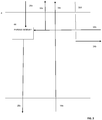
- the Widevine license server 4 is further illustrated with reference to FIG. 3 , and includes a parsing module 44.
- the signals received on line 14a on communication interface 14 are received by the parsing module 44 and also transferred to lines 16a for transmission to the cloud.
- Signals received from the cloud on line 16b are received by the parsing module 44.
- the parsing module 44 generates signals on line 18a to the key management server 22.
- Signals received from the key management server 22 on lines 18b are passed to the cloud on lines 16c.
- Signals received from the cloud on lines 16c are passed to the video player on lines 14b.
- the streaming server 6 provides a video asset on communication lines 12 which is formatted in accordance with the MPEG-DASH (moving picture expert group - dynamic adaptive streaming over hypertext transfer protocol) video format.
- An MPEG-DASH manifest for the video asset is also provided.
- the video asset may be formatted with any content protection standard, such as PlayReady or Widevine.
- the video player generates on-the-fly a Widevine header to be included in a request to the Widevine license server 4, following receipt of a video asset which is provided with or without Widevine content protection.
- the Widevine header in the request is created with information extracted from the available content protection information in the video player for the received video asset, and additional information.
- the Widevine header generated in this way may be only partially complete because not all the necessary information may be available from the content protection information in the video player if the video asset does not have Widevine content protection.
- the Widevine license server is able to detect a request containing an incomplete Widevine header, and operate accordingly to provide for the video asset to be decrypted.
- the video player 2 in this example runs in a browser implementing an encrypted media extension (EME) interface as illustrated by module 32 in FIG. 2 , which may be an application program interface (API) that is part of the hypertext markup language version 5 (HTML5) standard, which is provided to manage encrypted content.
- EME encrypted media extension
- This interface permits a query to be made to an underlying browser implementation for verifying which digital rights management (DRM) technology is supported.
- Standard APIs are available to determine on which browser the video player 2 is running.
- the provision of such an EME interface is known.
- the manifest for an encrypted MPEG-DASH asset contains a content protection tag for each of the DRM technologies it supports. This content protection tag defines the DRM technologies with which the asset is encrypted.
- the manifest may also contain a generic content protection tag not associated with any specific DRM technology, but defining an encryption applied to the MPEG-DASH asset.
- Each content protection tag may define any DRM technology used, and also may contain additional fields with respect to the identifier of the specific technology the tag refers to, such as the asset key field- known as the KeyID field - used for encrypting that asset.
- the KeyID field is the access key field associated with the content protection technology, and all content protection technology is provided with a KeylD field.
- the access key is used to retrieve an encryption key which is used to decrypt the encrypted content in the license server.
- the video player 2 is running in the Chrome browser.
- the Chrome browser only supports Widevine DRM technology.
- the MPEG-DASH manifest may not include a content protection tag for Widevine.
- the video player is not able to obtain the KeyID to access the encrypted key for decrypting the encrypted asset, as the Widevine decryption technology provided by the video player cannot decrypt the asset which is not encrypted with Widevine.
- the video player 2 is adapted such that a Widevine header is generated for the asset, and the thus generated Widevine header is used to access the Widevine license server to allow the asset to be decrypted.
- a Widevine header is required to include both a KeyID field and a ContentID field.
- a Widevine header must include these two mandatory fields: (i) the KeyID field which is the public part of the encryption secret; and (ii) the ContentID field which identifies the asset.
- the ContentID field is used to transmit additional information from the video player to the license server. Where the video player receives an asset which is associated with Widevine protection technology, there is no requirement to generate a Widevine header. However the existing Widevine header may be modified to include the additional information in the ContentID field.
- the additional information may be, for example, a user identification or a device identification.
- a Widevine header is generated starting from information available in the video player.
- the essential information that the video player 2 needs in order to generate a Widevine header is the KeyID, and thus the KeyID is retrieved from the received asset manifest.
- the video player 2 is, in this example, adapted to search in a number of places to locate the KeyID.
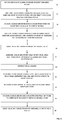
- FIGS. 4 and 5 illustrate the process steps carried out in the video player 2 and the Widevine license server 4 respectively.
- step 50 of FIG. 4 the video player receives the video asset on line 12, together with the associated manifest.
- the search engine 34 of the video player uses the asset manifest to search for the KeyID.
- the video player 2 determines whether the KeyID is available in the generic content tag of a manifest file of the received asset, if this generic content protection tag is available. This is denoted by step 52 in FIG. 4 .
- step 54 a search is conducted for a content protection tag for each of the supported technologies identified in the manifest file of the received asset. This is denoted by step 54 in FIG. 4 .
- PlayReady is a known DRM format. If there is a PlayReady content protection tag, it is searched in the PlayReadyObject Attribute of the PlayReady content protection tag containing the PlayReady header.
- the PlayReadyObject attribute is mandatory in a content protection attribute for PlayReady. This is denoted by step 56 in FIG. 4 .
- Marlin is a known DRM format. This is denoted by step 58 in FIG. 4 .
- the search for the KeyID may be extended to those content protection tags as well. This is denoted by step 60 in FIG. 4 .
- the KeyID field in the manifest file associated with the received asset is located. This is denoted by step 62 in FIG. 4 .
- a Widevine header can be created utilizing the Widevine header creation block 36 of FIG. 2 , with the two fields KeyID and ContentID both populated.
- the creation of the Widevine header involves transferring the located KeyID field to a KeyID field of the created Widevine header as denoted by step 64 of FIG. 4 , and a creating a ContentID field using the KeyID field as denoted by step 66 of FIG. 4 .
- the syntax format of the created ContentID field will indicate that it is not a 'proper' ContentID field when it is subsequently parsed (as described below).
- the actual content of the KeyID field and the ContentID field of the created Widevine header will be the same, but the syntax of the two fields is different.
- the syntax used to create the ContentID field will be implementation dependent.
- the video player 2 is thus modified in order to allow the Widevine header to be created based on the KeyID in the manifest file associated with the incoming asset, where the incoming asset is not associated with Widevine content protection.
- the video player 2 then transmits on communication lines 14 a message to the Widevine license server 4.
- the ContentID field is further modified to include additional data.
- This additional data may be any other information, such as a device identity or a user identity.
- This additional data can, for instance, be data that can be used by the licence server for verifying if the end-user has the rights to receive the license.
- the additional data may be used in order to permit the license server to perform all the verification checks necessary to determine if a license to access content should be provided. This allows all the verification checks to be performed by the license server, and the video player does not have to perform any checks.
- the license server may perform additional checks than it would otherwise do. Thus, for example, all the verification checks for an end-user to watch a given video may be performed by the license server, with any additional information needed to perform such checks being additionally included in the header sent to the license server. The license server only returns a license to the video player if all the checks it performs are successful.
- the license server must receive all the information that is needed to perform such checks, and where the information is not ordinarily included in the header sent to the license server, it may be included as this additional information.
- This additional information may be user identity, device identity, time of day, user location, and anything necessary to verify those rights.
- the additional information included is the information that is needed to support further verification checks which will be performed at the license server. The information that is necessary will depend on the business model of the over-the-top service - which for example may sell subscriptions at a discounted price for off-peak access, and therefore verification of the time day will be necessary.
- a verification check which may have previously been performed by the video player can be performed by the license server, or a verification check that may not have previously been able to be performed may be now performed.
- this additional data may be part of the PlayReady protocol.
- PlayReady additional data is referred to as custom data.
- Widevine content protection does not natively support a similar concept. This exchange of information is normally implemented outside of the DRM exchange where Widevine content protection is used.
- the additional data/information entered into the ContentID field of the created Widevine header can include additional encryption data which is in the original header (such as the PlayReady header) and which cannot otherwise be incorporated into a Widevine header.
- This modification of the Widevine header is denoted by step 67 in FIG. 4 .
- the completed message is transmitted to a URL determined by the video player 2.
- the PlayReady header also contains the URL of a PlayReady license server.
- This URL can be used to derive the Widevine license server URL in the case the latter can be automatically derived from the former. For instance, assuming the URL of the PlayReady licenser server is http://Guard.piksel.com/playready and the URL of the Widevine licenser is http://Guard.piksel.com/widevine/, it is clear that the transformation can be easily achieved. When this is not the case, it is assumed that the video player knows the necessary URL.
- the Widevine header is thus transmitted to the licence server in accordance with the URL.
- the license server URL is needed to engage the correct License Server, but it does not need to be included as part of the Widevine PSSH header.
- the message to the Widevine license server is a Widevine license request consisting of an opaque binary object.
- the generation of this message from the video player to the Widevine license server, using the created Widevine header as denoted by step 68 in FIG. 4 is in accordance with the Widevine standard.
- This message may include the Widevine header plus additional information. However this message is in accordance with Widevine standard, and no modification is made to its format.
- the receipt of this message by the Widevine license server is indicated by step 72 of FIG. 5 .
- the Widevine license server 4 cannot use it directly. Rather, the Widevine license server 4 has to call-up a further service provided by the Widevine cloud, which services are termed 'ParseOnly'.
- the Widevine license server 4 communicates with the cloud 8 on communication lines 16, and transmits the message from the video player 2 on communication lines 14a to the cloud on communication lines 16a as shown in FIG. 3 , to an appropriate address in the cloud for parsing.
- the address in the cloud 8 which the message is sent to may be associated with Widevine cloud services, and in general is an address which provides parsing functionality associated with Widevine services and the Widevine protocol. This is illustrated by step 74 in FIG. 5 .
- the address in the cloud has the specific purpose to provide processing functionality to interpret the opaque object in accordance with the Widevine protocol, and return it - or part of it - back to the Widevine license server 4.
- the KeyID is not returned by the cloud to the Widevine license server 4.
- a Widevine DRM server could also be implemented in a way that does not require Widevine cloud services.
- it could be implemented using a specific SDK (software development kit) provided by Widevine permitting local implementation of the functions that are provided by the Widevine cloud service at the Widevine license server 4.
- SDK software development kit
- the Widevine cloud services are not engaged.
- the parsing of the opaque object part of the Widevine license request received from the video player is still done by software provided by a Widevine service, and the information returned to the Widevine license server is the same.
- the Widevine license server 4 receives in the message on line 14 from the video player 2 an opaque binary object that includes the Widevine header plus additional data, which is sent to the cloud services for interpretation.
- the dialog between the Widevine license server and the Widevine cloud services are based on a standard protocol defined by Widevine.
- the Widevine cloud returns a message on line 16b to the Widevine license server, as denoted by step 76 in FIG. 5 .
- This returned message includes the ContentID field to the Widevine license server 4, but not the KeyID field.
- the ContentID field has been modified by the video server, as described above, to include additional information.
- This message is received by the parsing module 44 of the Widevine license server, and as denoted by step 78 the Widevine license server 4 parses the value of the ContentID field.
- the parser module 44 recovers the additional data included in the ContentID field, with knowledge of any syntax used to include the additional data. This is denoted in FIG. 5 by step 79.
- the additional data may be used in order to perform additional verification (authentication) checks before the standard process for accessing encryption keys to obtain a license is performed.
- the license server may be configured to perform the verification checks on the additional information, or the license server may be configured to communicate with an additional server. Such as an entertainment server, to provide the additional information for the additional verification to be carried out.
- the license server thus performs additional verification checks using the additional data, which may involve communication with an additional resource (such as the entertainment server).
- the verification checks will be implementation dependent, and may relate for example to limiting the license to only be provided for access to content at a certain time of day or in a certain location. In general the verification can be anything that is necessary to watch the video associated with the license request on that device, in a particular location (home, outdoors etc.), at a particular time of day etc.
- step 83 it is assumed that the verification is successful. If the verification is not successful, then the process terminated here: a license will not be granted.
- the parser module 44 recognizes this owing to its value being formatted according to a known syntax, meaning that it represents a KeyID instead of a 'proper' ContentlD. Based on this, the Widevine license server extracts from the ContentID field the value of the KeyID that is embedded in it. This is denoted by step 80 in FIG. 5 . This KeyID is then used to extract an encryption key.
- the authentication process to obtain a license continues in accordance with a standard process.
- the implementation of a Widevine license server 4 in this example separates two functions: the key management server (KMS) 22 and the license server itself.
- KMS 22 is in charge to negotiate the encryption keys with the scramblers and to store those keys (actually a triplet ⁇ contentlD, keylD, keySeed>) in the database of the key store 10.
- the Widevine license server is in charge to receive a license request from a video player, evaluate the requests and possibly return a DRM license back to the video player. As part of this process, the Widevine license server 4 gets from the KMS the KeySeed corresponding to the KeyID field or ContentID field of interest.
- the KMS 22 and the Widevine license server 4 are separate services that can be located in different network locations. As shown in FIG. 1 the license server and the KMS 22 are connected by communication lines 10.
- the Widevine license server 4 thus uses the encryption key extracted from the KeyID to extract key secrets from the key store 10 via the KMS 22, as denoted by the transmission of the message on line 18a in FIG. 3 and the receipt of a message on line 18b. This is also denoted by step 82 in FIG. 5 .
- the encryption secrets extracted from the key store 10 are then sent, together with default license properties, by the Widevine license server to a Widevine service (either locally available or offered by the Widevine Cloud Service via communication lines 16) in charge to create the actual Widevine license on line 16c.
- the latter is returned to the Widevine license server on communication lines 16d. This is denoted by step 84 in FIG. 5 .
- the Widevine license server 4 then returns the license on communication lines 14b to the video player, as denoted by step 86 of Fig. 5 .
- the Widevine license is received by the video player, and used by the content decryption module 28 to provide a clean video signal on line 42 to the content visualisation module.
- a specific example is the case of an asset being provided which comprises video content, which content is protected by PlayReady content protection technology. Only a PSSH header for PlayReady is available with the asset.
- a client device (video player 2) receiving this asset is only provided with a Widevine encryption decoder, and therefore only supports the decryption of any asset which is protect with Widevine content protection technology.
- the video player is adapted to generate, on receipt of the asset, a Widevine PSSH header on-the-fly from the PlayReady PSSH header.
- the translation is on-the-fly in the sense that it is performed by the video player as and when it receives an HSS/PlayReady asset.
- the PlayReady header contains, among other fields, the KeyID field.
- the PlayReady header does not contain a ContentID field.
- a Widevine PSSH header is required to include both a KeyID field and a ContentID field.
- the generation of the Widevine header must take into account that a Widevine header must include these two mandatory fields: (i) the KeyID field which is the public part of the encryption secret; and (ii) the ContentID field which identifies the asset.
- the Widevine header is created starting from information available in the PlayReady header.
- the KeyID field in the Widevine PSSH header is created by filling it with the value of a homonymous KeyID field extracted from the PlayReady PSSH header.
- the ContentID field is filled with the value of the KeyID field, but following a specific syntax.
- the PlayReady PSSH header includes other information fields, which additional information fields are not relevant for the described translation.
- ContentID field is adapted/configured to include additional information.
- the video player After the Widevine header is created, the video player transmits a message to a licence server requesting the licence for the video asset as described above.
- the PlayReady PSSH header is translated into a Widevine PSSH header (according to the common encryption scheme); (ii) additional information is included in the Widevine ContentID field; and (ii) the Widevine header that is required in the CENC file for triggering a request to a Widevine licence server is generated by the video player using the information available in the PlayReady header.
- This example has the benefits that: (i) there is no need to change anything in the streaming server side; and (ii) there is no need to re-encode/re-encrypt any asset.
- the technique is advantageously utilized to translate from HSS/PR to Dash/PR (CENC), but is not limited to this.
- the ContentID is returned by the cloud services to the licence server, after the WideVine header is parsed. Because the WideVine header is encrypted according to the Widevine protocol, it is completely opaque to the Widevine licence server in accordanance with standard techniques. Therefore, the licence server sends the header to the Widevine services in the cloud for interpretation. At this stage, the Widevine license server has not identified the header.
- the Widevine cloud services only return the ContentID field to the DRM server after parsing.
- the Widevine license server parses the string representing the ContentID returned from the cloud services and, if it represents a KeyID instead of the ContentID, this is recognised by the Widevine license server.
- the Widevine license server also recovers from the ContentID filed any additional data/information which has been added therein by the video player.
- the keySeed is then extracted from the encryption secrets database using the KeyID instead of the ContentID based on the identification.
- the normal behavior of a Widevine license server would be to extract the encryption secrets by ContentID. However based on the returned parsed ContentID field, the Widevine license server recognizes that the format of this data in not in accordance with the standard format of a ContentID field, and further processes accordingly.
- This example describes how to interpret CENC/PlayReady encrypted content using Widevine.
- the same technique could be used to do the opposite, i.e. to interpret Widevine encrypted content using PlayReady.
- other combinations based on the same principle, could be developed.
- the header of other technologies may contain additional fields that cannot be readily derived from the Widevine header (e.g., PlayReady headers contains a field SystemID - an identifier identifying the content owner/OTT service known to Microsoft). In this case, the missing information must be available in the video player in advance.
- PlayReady headers contains a field SystemID - an identifier identifying the content owner/OTT service known to Microsoft. In this case, the missing information must be available in the video player in advance.
Landscapes
- Engineering & Computer Science (AREA)
- Software Systems (AREA)
- Theoretical Computer Science (AREA)
- Computer Security & Cryptography (AREA)
- Multimedia (AREA)
- Technology Law (AREA)
- Computer Hardware Design (AREA)
- Physics & Mathematics (AREA)
- General Engineering & Computer Science (AREA)
- General Physics & Mathematics (AREA)
- Signal Processing (AREA)
- Databases & Information Systems (AREA)
- Computer Networks & Wireless Communication (AREA)
- Two-Way Televisions, Distribution Of Moving Picture Or The Like (AREA)
Claims (15)
- Client-Gerät, das einen Inhaltsschutz-Decoder gemäß einem ersten Standard umfasst, das Folgendes umfasst:einen Empfänger zum Empfangen eines mit Inhaltsschutz eines zweiten Standards assoziierten Assets (50);ein Erzeugungsmodul zum Erzeugen eines Headers (64, 66, 67) für das Asset gemäß dem ersten Standard, und mit einem Parameter des ersten Standards, umfassend Informationen zusätzlich zu den mit dem genannten ersten Standard assoziierten Informationen, und mit einem Format, das dem Format des genannten Parameters gemäß dem ersten Standard nicht entspricht, wobei die zusätzlichen Informationen von einem Lizenzserver zum Verifizieren benutzt werden, ob ein Endbenutzer des Client-Geräts Rechte zum Empfangen der Lizenz hat;eine Schnittstelle zum Senden einer Anforderung für eine Lizenz (68) einschließlich des erzeugten Headers zu einem Lizenzserver auf der Basis des genannten ersten Standards, wobei die Anforderung diesen Parameter enthält, und zum Empfangen einer Lizenz (70) als Reaktion darauf, wobei die zusätzlichen Informationen in dem erzeugten Header zum Einholen der Lizenz benutzt werden; undeine Steuerung zum Zugreifen auf mit dem Asset assoziierten Inhalt mittels der Lizenz.
- Client-Gerät nach Anspruch 1, wobei der erste Standard Widevine ist, das Erzeugungsmodul einen Widevine-Header erzeugt und der Parameter das ContentID-Feld des Widevine-Headers ist.
- Client-Gerät nach Anspruch 2, wobei das ContentID-Feld mit dem Inhaltsschutzstandard des empfangenen Assets assoziierte Informationen umfasst, wobei sich solche Informationen gewöhnlich nicht in einem Widevine-Header befinden.
- Client-Gerät nach einem der Ansprüche 1 bis 3, wobei die Informationen für eine vom Lizenzserver durchzuführende Verifikationsprüfung sind.
- Client-Gerät nach einem der Ansprüche 1 bis 4, wobei die zusätzlichen Informationen alles beinhalten, was zum Verifizieren von Rechten des Endbenutzers zum Zugreifen auf das Asset nötig ist.
- Client-Gerät nach einem der Ansprüche 1 bis 5, wobei die zusätzlichen Informationen eine Benutzeridentifikation, eine Geräteidentifikation, eine Tageszeit oder einen Standort beinhalten.
- Client-Gerät nach einem der Ansprüche 1 bis 6, wobei der zweite Standard Widevine, PlayReady oder Marlin ist.
- Lizenzserver, konfiguriert zum:Empfangen einer Lizenzschlüsselanforderung (72) gemäß einem Standard von einem Client-Gerät, wobei die Lizenzschlüsselanforderung einen mit dem Standard assoziierten Parameter umfasst;Senden der Lizenzschlüsselanforderung (74, 76) zu einer mit dem Standard assoziierten Verarbeitungsfunktion;Empfangen des mit dem Standard assoziierten Parameters von der Verarbeitungsfunktion;Parsen des Parameters (78, 79) zum Abrufen zusätzlicher Informationen, wobei die zusätzlichen Informationen anzeigen, ob ein Endbenutzer des Client-Geräts Rechte zum Empfangen der Lizenz hat;in Abhängigkeit von der Erkennung, dass das Format des genannten Parameters kein Format des Standards ist:Verarbeiten der zusätzlichen Informationen (81) durch Durchführen einer Verifikation auf der Basis der zusätzlichen Informationen;Zugreifen auf eine Lizenz (84) gemäß dem Standard auf der Basis einer erfolgreichen Verifikation der zusätzlichen Informationen, wobei das Abrufen einer Lizenz von der Verifikation abhängig ist; undSenden der Lizenz (86), auf die zugegriffen wurde, gemäß dem Standard zu dem Client-Gerät.
- Lizenzserver nach Anspruch 8, wobei die Verifikation eine Verifikation ist, die mit der Identifikation des Benutzers, der Identifikation des Benutzergeräts, der Identifikation einer Tageszeit oder der Identifikation eines Standorts assoziiert ist.
- Lizenzserver nach Anspruch 8, wobei der Prozess zum Abrufen der Lizenz in Abhängigkeit davon freigegeben wird, dass die Verifikation auf der Basis der zusätzlichen Informationen erfolgreich ist.
- Lizenzserver nach einem der Ansprüche 8 bis 10, wobei der Standard der Widevine-Standard ist und der Parameter das ContentID-Feld eines Widevine-Headers ist.
- Verfahren zum Erzeugen einer Lizenzanforderung in einem Client-Gerät mit einem Inhaltsschutz-Decoder gemäß einem ersten Standard, das Folgendes beinhaltet:Empfangen eines mit Inhaltsschutz eines zweiten Standards assoziierten Assets (50);Erzeugen eines Headers (64, 66, 67) für das Asset gemäß dem ersten Standard, und mit einem Parameter des ersten Standards, der Informationen zusätzlich zu den mit dem genannten ersten Standard assoziierten Informationen umfasst, und mit einem Format, das dem Format des genannten Parameters gemäß dem ersten Standard nicht entspricht, wobei die zusätzlichen Informationen von einem Lizenzserver zum Verifizieren benutzt werden, ob ein Endbenutzer des Client-Geräts Rechte zum Empfangen der Lizenz hat;Senden einer Anforderung für eine Lizenz (68) zu einem Lizenzserver auf der Basis des genannten ersten Standards, wobei die Anforderung diesen Parameter und den erzeugten Header enthält, und zum Empfangen einer Lizenz (70) als Reaktion darauf; undZugreifen auf mit dem Asset assoziierten Inhalt mittels der Lizenz.
- Verfahren zum Erzeugen einer Lizenz in einem Lizenzserver, das Folgendes beinhaltet:Empfangen einer Lizenzschlüsselanforderung (72) gemäß einem Standard von einem Client-Gerät, wobei die Lizenzschlüsselanforderung einen mit dem Standard assoziierten Parameter umfasst;Senden der Lizenzschlüsselanforderung (74, 76) zu einer mit dem Standard assoziierten Verarbeitungsfunktion;Empfangen eines mit dem Standard assoziierten Parameters von der Verarbeitungsfunktion;Parsen des Parameters (78, 79) zum Abrufen von zusätzlichen Informationen, wobei die zusätzlichen Informationen anzeigen, ob ein Endbenutzer des Client-Geräts Rechte zum Empfangen der Lizenz hat;in Abhängigkeit von der Erkennung, dass das Format des genannten Parameters kein Format des Standards ist:Verarbeiten der zusätzlichen Informationen (81) durch Durchführen einer Verifikation auf der Basis der zusätzlichen Informationen;Zugreifen auf eine Lizenz (84) gemäß dem Standard auf der Basis einer erfolgreichen Verifikation der zusätzlichen Informationen, wobei das Abrufen einer Lizenz von der Verifikation abhängig ist; undSenden der Lizenz (86), auf die zugegriffen wurde, gemäß dem Standard zu dem Client-Gerät.
- Computerprogrammprodukt zum Speichern von Computerprogrammcode, der bei Ausführung auf einem Computergerät das Verfahren nach Anspruch 12 oder 13 durchführt.
- System, das das Client-Gerät nach Anspruch 1 und den Lizenzserver nach Anspruch 8 umfasst.
Applications Claiming Priority (2)
| Application Number | Priority Date | Filing Date | Title |
|---|---|---|---|
| GB1505329.1A GB2537812A (en) | 2015-03-27 | 2015-03-27 | DRM Addition Authentication |
| PCT/EP2016/056563 WO2016156206A1 (en) | 2015-03-27 | 2016-03-24 | Drm addition authentication |
Publications (2)
| Publication Number | Publication Date |
|---|---|
| EP3274892A1 EP3274892A1 (de) | 2018-01-31 |
| EP3274892B1 true EP3274892B1 (de) | 2020-04-22 |
Family
ID=53178268
Family Applications (1)
| Application Number | Title | Priority Date | Filing Date |
|---|---|---|---|
| EP16713370.1A Not-in-force EP3274892B1 (de) | 2015-03-27 | 2016-03-24 | Drm-additionsauthentifizierung |
Country Status (4)
| Country | Link |
|---|---|
| US (1) | US10506288B2 (de) |
| EP (1) | EP3274892B1 (de) |
| GB (1) | GB2537812A (de) |
| WO (1) | WO2016156206A1 (de) |
Families Citing this family (5)
| Publication number | Priority date | Publication date | Assignee | Title |
|---|---|---|---|---|
| US10515194B2 (en) * | 2016-08-29 | 2019-12-24 | Electronics And Telecommunications Research Institute | Key rotation scheme for DRM system in dash-based media service |
| CN111683103B (zh) * | 2016-12-21 | 2022-08-30 | 创新先进技术有限公司 | 信息交互方法及装置 |
| US12314370B2 (en) * | 2018-08-20 | 2025-05-27 | Comcast Cable Communications, Llc | Digital rights management data conversion in a content delivery network |
| US11093586B2 (en) * | 2018-10-12 | 2021-08-17 | Microsoft Technology Licensing, Llc | Presenting content protected by multiple DRMS |
| CN114902216A (zh) * | 2020-02-29 | 2022-08-12 | 华为技术有限公司 | 数字版权管理drm的方法、装置和系统 |
Citations (3)
| Publication number | Priority date | Publication date | Assignee | Title |
|---|---|---|---|---|
| US20100185854A1 (en) * | 2009-01-21 | 2010-07-22 | Microsoft Corporation | Multiple content protection systems in a file |
| US20140075582A1 (en) * | 2011-05-02 | 2014-03-13 | Inside Secure | Method for playing digital contents protected with a drm (digital rights management) scheme and corresponding system |
| US20150013014A1 (en) * | 2013-07-03 | 2015-01-08 | Adobe Systems Incorporated | Method and apparatus for providing digital rights management service in the cloud |
Family Cites Families (6)
| Publication number | Priority date | Publication date | Assignee | Title |
|---|---|---|---|---|
| US7149722B1 (en) * | 2000-09-28 | 2006-12-12 | Microsoft Corporation | Retail transactions involving distributed and super-distributed digital content in a digital rights management (DRM) system |
| US20080114693A1 (en) * | 2006-11-14 | 2008-05-15 | Fabrice Jogand-Coulomb | Method for allowing content protected by a first DRM system to be accessed by a second DRM system |
| KR20120010164A (ko) * | 2010-07-19 | 2012-02-02 | 삼성전자주식회사 | Drm 서비스 제공 방법 및 장치 |
| KR20120122616A (ko) * | 2011-04-29 | 2012-11-07 | 삼성전자주식회사 | Drm 서비스 제공 방법 및 장치 |
| KR101983048B1 (ko) * | 2011-12-21 | 2019-05-29 | 삼성전자주식회사 | 클라우드 기반의 디지털 저작권 관리 서비스를 제공하는 방법 및 장치와 그 시스템 |
| WO2014012073A1 (en) * | 2012-07-13 | 2014-01-16 | Huawei Technologies Co., Ltd. | Signaling and handling content encryption and rights management in content transport and delivery |
-
2015
- 2015-03-27 GB GB1505329.1A patent/GB2537812A/en not_active Withdrawn
-
2016
- 2016-03-24 WO PCT/EP2016/056563 patent/WO2016156206A1/en not_active Ceased
- 2016-03-24 EP EP16713370.1A patent/EP3274892B1/de not_active Not-in-force
- 2016-03-24 US US15/561,751 patent/US10506288B2/en active Active
Patent Citations (3)
| Publication number | Priority date | Publication date | Assignee | Title |
|---|---|---|---|---|
| US20100185854A1 (en) * | 2009-01-21 | 2010-07-22 | Microsoft Corporation | Multiple content protection systems in a file |
| US20140075582A1 (en) * | 2011-05-02 | 2014-03-13 | Inside Secure | Method for playing digital contents protected with a drm (digital rights management) scheme and corresponding system |
| US20150013014A1 (en) * | 2013-07-03 | 2015-01-08 | Adobe Systems Incorporated | Method and apparatus for providing digital rights management service in the cloud |
Also Published As
| Publication number | Publication date |
|---|---|
| WO2016156206A1 (en) | 2016-10-06 |
| EP3274892A1 (de) | 2018-01-31 |
| US10506288B2 (en) | 2019-12-10 |
| GB201505329D0 (en) | 2015-05-13 |
| US20180091857A1 (en) | 2018-03-29 |
| GB2537812A (en) | 2016-11-02 |
Similar Documents
| Publication | Publication Date | Title |
|---|---|---|
| US8712041B2 (en) | Content protection apparatus and content encryption and decryption apparatus using white-box encryption table | |
| EP2859707B1 (de) | Signalisierung und verwaltung von verschüsselung und zugriffsrechten bei transport und ablieferung von digitalen inhalten | |
| US8473740B2 (en) | Method and system for secured management of online XML document services through structure-preserving asymmetric encryption | |
| US10506288B2 (en) | DRM addition authentication | |
| US20080209231A1 (en) | Contents Encryption Method, System and Method for Providing Contents Through Network Using the Encryption Method | |
| US8607041B2 (en) | Perimeter encryption method and system | |
| US20140351583A1 (en) | Method of implementing a right over a content | |
| EP1817687B1 (de) | Vorrichtung und verfahren zur unterstützung des inhaltsaustauschs zwischen verschiedenen drm-domänen | |
| CN104255010A (zh) | 用于在模板模式下有效支持短加密区间的系统和方法 | |
| US20120311318A1 (en) | Information processing system, information processing device, information processing method and program | |
| CN107306254B (zh) | 基于双层加密的数字版权保护方法及系统 | |
| US20230071489A1 (en) | Method of and system for providing access to access restricted content to a user | |
| CN109039997B (zh) | 密钥获得方法、装置及系统 | |
| CN113645226A (zh) | 一种基于网关层的数据处理方法、装置、设备及存储介质 | |
| EP3274891B1 (de) | Header-übersetzungsänderung | |
| CN102968726A (zh) | 一种具有二次加密特征的二维码网络防伪方法 | |
| CN103237010A (zh) | 以加密方式提供数字内容的服务器端 | |
| US8737622B2 (en) | Method for importing rights object and rights issuer | |
| AU2019100227A4 (en) | Improved video content distribution on a retail card through online offline integration on a single platform | |
| CN117997519A (zh) | 数据处理方法、装置、程序产品、计算机设备和介质 | |
| EP3827572B1 (de) | Systeme und verfahren zum schutz von daten | |
| CN120342613B (zh) | 动态密钥的生成和应用方法、装置、电子设备及计算机程序产品 | |
| AU2019271954B2 (en) | A method of and system for providing access to access restricted content to a user | |
| CN110336772A (zh) | 基于加密验证服务器的网页数据自动取证方法以及设备 | |
| KR101831161B1 (ko) | 공통 암호화 환경에서 콘텐츠 보호 정보 교환 시스템 및 방법 |
Legal Events
| Date | Code | Title | Description |
|---|---|---|---|
| STAA | Information on the status of an ep patent application or granted ep patent |
Free format text: STATUS: THE INTERNATIONAL PUBLICATION HAS BEEN MADE |
|
| PUAI | Public reference made under article 153(3) epc to a published international application that has entered the european phase |
Free format text: ORIGINAL CODE: 0009012 |
|
| STAA | Information on the status of an ep patent application or granted ep patent |
Free format text: STATUS: REQUEST FOR EXAMINATION WAS MADE |
|
| 17P | Request for examination filed |
Effective date: 20171025 |
|
| AK | Designated contracting states |
Kind code of ref document: A1 Designated state(s): AL AT BE BG CH CY CZ DE DK EE ES FI FR GB GR HR HU IE IS IT LI LT LU LV MC MK MT NL NO PL PT RO RS SE SI SK SM TR |
|
| AX | Request for extension of the european patent |
Extension state: BA ME |
|
| DAV | Request for validation of the european patent (deleted) | ||
| DAX | Request for extension of the european patent (deleted) | ||
| STAA | Information on the status of an ep patent application or granted ep patent |
Free format text: STATUS: EXAMINATION IS IN PROGRESS |
|
| 17Q | First examination report despatched |
Effective date: 20180730 |
|
| GRAP | Despatch of communication of intention to grant a patent |
Free format text: ORIGINAL CODE: EPIDOSNIGR1 |
|
| STAA | Information on the status of an ep patent application or granted ep patent |
Free format text: STATUS: GRANT OF PATENT IS INTENDED |
|
| INTG | Intention to grant announced |
Effective date: 20191108 |
|
| GRAS | Grant fee paid |
Free format text: ORIGINAL CODE: EPIDOSNIGR3 |
|
| GRAA | (expected) grant |
Free format text: ORIGINAL CODE: 0009210 |
|
| STAA | Information on the status of an ep patent application or granted ep patent |
Free format text: STATUS: THE PATENT HAS BEEN GRANTED |
|
| AK | Designated contracting states |
Kind code of ref document: B1 Designated state(s): AL AT BE BG CH CY CZ DE DK EE ES FI FR GB GR HR HU IE IS IT LI LT LU LV MC MK MT NL NO PL PT RO RS SE SI SK SM TR |
|
| REG | Reference to a national code |
Ref country code: CH Ref legal event code: EP |
|
| REG | Reference to a national code |
Ref country code: IE Ref legal event code: FG4D |
|
| REG | Reference to a national code |
Ref country code: DE Ref legal event code: R096 Ref document number: 602016034502 Country of ref document: DE |
|
| REG | Reference to a national code |
Ref country code: AT Ref legal event code: REF Ref document number: 1261056 Country of ref document: AT Kind code of ref document: T Effective date: 20200515 |
|
| REG | Reference to a national code |
Ref country code: LT Ref legal event code: MG4D |
|
| REG | Reference to a national code |
Ref country code: NL Ref legal event code: MP Effective date: 20200422 |
|
| PG25 | Lapsed in a contracting state [announced via postgrant information from national office to epo] |
Ref country code: IS Free format text: LAPSE BECAUSE OF FAILURE TO SUBMIT A TRANSLATION OF THE DESCRIPTION OR TO PAY THE FEE WITHIN THE PRESCRIBED TIME-LIMIT Effective date: 20200822 Ref country code: SE Free format text: LAPSE BECAUSE OF FAILURE TO SUBMIT A TRANSLATION OF THE DESCRIPTION OR TO PAY THE FEE WITHIN THE PRESCRIBED TIME-LIMIT Effective date: 20200422 Ref country code: NO Free format text: LAPSE BECAUSE OF FAILURE TO SUBMIT A TRANSLATION OF THE DESCRIPTION OR TO PAY THE FEE WITHIN THE PRESCRIBED TIME-LIMIT Effective date: 20200722 Ref country code: GR Free format text: LAPSE BECAUSE OF FAILURE TO SUBMIT A TRANSLATION OF THE DESCRIPTION OR TO PAY THE FEE WITHIN THE PRESCRIBED TIME-LIMIT Effective date: 20200723 Ref country code: FI Free format text: LAPSE BECAUSE OF FAILURE TO SUBMIT A TRANSLATION OF THE DESCRIPTION OR TO PAY THE FEE WITHIN THE PRESCRIBED TIME-LIMIT Effective date: 20200422 Ref country code: PT Free format text: LAPSE BECAUSE OF FAILURE TO SUBMIT A TRANSLATION OF THE DESCRIPTION OR TO PAY THE FEE WITHIN THE PRESCRIBED TIME-LIMIT Effective date: 20200824 Ref country code: LT Free format text: LAPSE BECAUSE OF FAILURE TO SUBMIT A TRANSLATION OF THE DESCRIPTION OR TO PAY THE FEE WITHIN THE PRESCRIBED TIME-LIMIT Effective date: 20200422 Ref country code: NL Free format text: LAPSE BECAUSE OF FAILURE TO SUBMIT A TRANSLATION OF THE DESCRIPTION OR TO PAY THE FEE WITHIN THE PRESCRIBED TIME-LIMIT Effective date: 20200422 |
|
| REG | Reference to a national code |
Ref country code: AT Ref legal event code: MK05 Ref document number: 1261056 Country of ref document: AT Kind code of ref document: T Effective date: 20200422 |
|
| PG25 | Lapsed in a contracting state [announced via postgrant information from national office to epo] |
Ref country code: BG Free format text: LAPSE BECAUSE OF FAILURE TO SUBMIT A TRANSLATION OF THE DESCRIPTION OR TO PAY THE FEE WITHIN THE PRESCRIBED TIME-LIMIT Effective date: 20200722 Ref country code: LV Free format text: LAPSE BECAUSE OF FAILURE TO SUBMIT A TRANSLATION OF THE DESCRIPTION OR TO PAY THE FEE WITHIN THE PRESCRIBED TIME-LIMIT Effective date: 20200422 Ref country code: RS Free format text: LAPSE BECAUSE OF FAILURE TO SUBMIT A TRANSLATION OF THE DESCRIPTION OR TO PAY THE FEE WITHIN THE PRESCRIBED TIME-LIMIT Effective date: 20200422 Ref country code: HR Free format text: LAPSE BECAUSE OF FAILURE TO SUBMIT A TRANSLATION OF THE DESCRIPTION OR TO PAY THE FEE WITHIN THE PRESCRIBED TIME-LIMIT Effective date: 20200422 |
|
| PG25 | Lapsed in a contracting state [announced via postgrant information from national office to epo] |
Ref country code: AL Free format text: LAPSE BECAUSE OF FAILURE TO SUBMIT A TRANSLATION OF THE DESCRIPTION OR TO PAY THE FEE WITHIN THE PRESCRIBED TIME-LIMIT Effective date: 20200422 |
|
| REG | Reference to a national code |
Ref country code: DE Ref legal event code: R097 Ref document number: 602016034502 Country of ref document: DE |
|
| PG25 | Lapsed in a contracting state [announced via postgrant information from national office to epo] |
Ref country code: SM Free format text: LAPSE BECAUSE OF FAILURE TO SUBMIT A TRANSLATION OF THE DESCRIPTION OR TO PAY THE FEE WITHIN THE PRESCRIBED TIME-LIMIT Effective date: 20200422 Ref country code: EE Free format text: LAPSE BECAUSE OF FAILURE TO SUBMIT A TRANSLATION OF THE DESCRIPTION OR TO PAY THE FEE WITHIN THE PRESCRIBED TIME-LIMIT Effective date: 20200422 Ref country code: DK Free format text: LAPSE BECAUSE OF FAILURE TO SUBMIT A TRANSLATION OF THE DESCRIPTION OR TO PAY THE FEE WITHIN THE PRESCRIBED TIME-LIMIT Effective date: 20200422 Ref country code: IT Free format text: LAPSE BECAUSE OF FAILURE TO SUBMIT A TRANSLATION OF THE DESCRIPTION OR TO PAY THE FEE WITHIN THE PRESCRIBED TIME-LIMIT Effective date: 20200422 Ref country code: AT Free format text: LAPSE BECAUSE OF FAILURE TO SUBMIT A TRANSLATION OF THE DESCRIPTION OR TO PAY THE FEE WITHIN THE PRESCRIBED TIME-LIMIT Effective date: 20200422 Ref country code: CZ Free format text: LAPSE BECAUSE OF FAILURE TO SUBMIT A TRANSLATION OF THE DESCRIPTION OR TO PAY THE FEE WITHIN THE PRESCRIBED TIME-LIMIT Effective date: 20200422 Ref country code: RO Free format text: LAPSE BECAUSE OF FAILURE TO SUBMIT A TRANSLATION OF THE DESCRIPTION OR TO PAY THE FEE WITHIN THE PRESCRIBED TIME-LIMIT Effective date: 20200422 Ref country code: ES Free format text: LAPSE BECAUSE OF FAILURE TO SUBMIT A TRANSLATION OF THE DESCRIPTION OR TO PAY THE FEE WITHIN THE PRESCRIBED TIME-LIMIT Effective date: 20200422 |
|
| PG25 | Lapsed in a contracting state [announced via postgrant information from national office to epo] |
Ref country code: SK Free format text: LAPSE BECAUSE OF FAILURE TO SUBMIT A TRANSLATION OF THE DESCRIPTION OR TO PAY THE FEE WITHIN THE PRESCRIBED TIME-LIMIT Effective date: 20200422 Ref country code: PL Free format text: LAPSE BECAUSE OF FAILURE TO SUBMIT A TRANSLATION OF THE DESCRIPTION OR TO PAY THE FEE WITHIN THE PRESCRIBED TIME-LIMIT Effective date: 20200422 |
|
| PLBE | No opposition filed within time limit |
Free format text: ORIGINAL CODE: 0009261 |
|
| STAA | Information on the status of an ep patent application or granted ep patent |
Free format text: STATUS: NO OPPOSITION FILED WITHIN TIME LIMIT |
|
| 26N | No opposition filed |
Effective date: 20210125 |
|
| PG25 | Lapsed in a contracting state [announced via postgrant information from national office to epo] |
Ref country code: SI Free format text: LAPSE BECAUSE OF FAILURE TO SUBMIT A TRANSLATION OF THE DESCRIPTION OR TO PAY THE FEE WITHIN THE PRESCRIBED TIME-LIMIT Effective date: 20200422 |
|
| PG25 | Lapsed in a contracting state [announced via postgrant information from national office to epo] |
Ref country code: MC Free format text: LAPSE BECAUSE OF FAILURE TO SUBMIT A TRANSLATION OF THE DESCRIPTION OR TO PAY THE FEE WITHIN THE PRESCRIBED TIME-LIMIT Effective date: 20200422 |
|
| REG | Reference to a national code |
Ref country code: CH Ref legal event code: PL |
|
| REG | Reference to a national code |
Ref country code: BE Ref legal event code: MM Effective date: 20210331 |
|
| PG25 | Lapsed in a contracting state [announced via postgrant information from national office to epo] |
Ref country code: CH Free format text: LAPSE BECAUSE OF NON-PAYMENT OF DUE FEES Effective date: 20210331 Ref country code: LU Free format text: LAPSE BECAUSE OF NON-PAYMENT OF DUE FEES Effective date: 20210324 Ref country code: LI Free format text: LAPSE BECAUSE OF NON-PAYMENT OF DUE FEES Effective date: 20210331 Ref country code: IE Free format text: LAPSE BECAUSE OF NON-PAYMENT OF DUE FEES Effective date: 20210324 |
|
| REG | Reference to a national code |
Ref country code: DE Ref legal event code: R081 Ref document number: 602016034502 Country of ref document: DE Owner name: PRJ HOLDING COMPANY, LLC, WILMINGTON, US Free format text: FORMER OWNER: PIKSEL, INC., WILMINGTON, DE, US |
|
| REG | Reference to a national code |
Ref country code: GB Ref legal event code: 732E Free format text: REGISTERED BETWEEN 20220609 AND 20220615 |
|
| PG25 | Lapsed in a contracting state [announced via postgrant information from national office to epo] |
Ref country code: BE Free format text: LAPSE BECAUSE OF NON-PAYMENT OF DUE FEES Effective date: 20210331 |
|
| PG25 | Lapsed in a contracting state [announced via postgrant information from national office to epo] |
Ref country code: CY Free format text: LAPSE BECAUSE OF FAILURE TO SUBMIT A TRANSLATION OF THE DESCRIPTION OR TO PAY THE FEE WITHIN THE PRESCRIBED TIME-LIMIT Effective date: 20200422 |
|
| PG25 | Lapsed in a contracting state [announced via postgrant information from national office to epo] |
Ref country code: HU Free format text: LAPSE BECAUSE OF FAILURE TO SUBMIT A TRANSLATION OF THE DESCRIPTION OR TO PAY THE FEE WITHIN THE PRESCRIBED TIME-LIMIT; INVALID AB INITIO Effective date: 20160324 |
|
| PG25 | Lapsed in a contracting state [announced via postgrant information from national office to epo] |
Ref country code: MK Free format text: LAPSE BECAUSE OF FAILURE TO SUBMIT A TRANSLATION OF THE DESCRIPTION OR TO PAY THE FEE WITHIN THE PRESCRIBED TIME-LIMIT Effective date: 20200422 |
|
| PGFP | Annual fee paid to national office [announced via postgrant information from national office to epo] |
Ref country code: DE Payment date: 20240307 Year of fee payment: 9 Ref country code: GB Payment date: 20240305 Year of fee payment: 9 |
|
| PGFP | Annual fee paid to national office [announced via postgrant information from national office to epo] |
Ref country code: FR Payment date: 20240328 Year of fee payment: 9 |
|
| PG25 | Lapsed in a contracting state [announced via postgrant information from national office to epo] |
Ref country code: MT Free format text: LAPSE BECAUSE OF FAILURE TO SUBMIT A TRANSLATION OF THE DESCRIPTION OR TO PAY THE FEE WITHIN THE PRESCRIBED TIME-LIMIT Effective date: 20200422 |
|
| REG | Reference to a national code |
Ref country code: DE Ref legal event code: R119 Ref document number: 602016034502 Country of ref document: DE |
|
| GBPC | Gb: european patent ceased through non-payment of renewal fee |
Effective date: 20250324 |
|
| PG25 | Lapsed in a contracting state [announced via postgrant information from national office to epo] |
Ref country code: TR Free format text: LAPSE BECAUSE OF FAILURE TO SUBMIT A TRANSLATION OF THE DESCRIPTION OR TO PAY THE FEE WITHIN THE PRESCRIBED TIME-LIMIT Effective date: 20200422 |
|
| PG25 | Lapsed in a contracting state [announced via postgrant information from national office to epo] |
Ref country code: DE Free format text: LAPSE BECAUSE OF NON-PAYMENT OF DUE FEES Effective date: 20251001 |
|
| PG25 | Lapsed in a contracting state [announced via postgrant information from national office to epo] |
Ref country code: GB Free format text: LAPSE BECAUSE OF NON-PAYMENT OF DUE FEES Effective date: 20250324 |
|
| PG25 | Lapsed in a contracting state [announced via postgrant information from national office to epo] |
Ref country code: FR Free format text: LAPSE BECAUSE OF NON-PAYMENT OF DUE FEES Effective date: 20250331 |