EP3272835A1 - Oxidation inhibitor, and food and drink containing fats and oils using same - Google Patents
Oxidation inhibitor, and food and drink containing fats and oils using same Download PDFInfo
- Publication number
- EP3272835A1 EP3272835A1 EP16765067.0A EP16765067A EP3272835A1 EP 3272835 A1 EP3272835 A1 EP 3272835A1 EP 16765067 A EP16765067 A EP 16765067A EP 3272835 A1 EP3272835 A1 EP 3272835A1
- Authority
- EP
- European Patent Office
- Prior art keywords
- methyl
- compound
- oxidation inhibitor
- oxidation
- group
- Prior art date
- Legal status (The legal status is an assumption and is not a legal conclusion. Google has not performed a legal analysis and makes no representation as to the accuracy of the status listed.)
- Withdrawn
Links
Images



Classifications
-
- A—HUMAN NECESSITIES
- A23—FOODS OR FOODSTUFFS; TREATMENT THEREOF, NOT COVERED BY OTHER CLASSES
- A23D—EDIBLE OILS OR FATS, e.g. MARGARINES, SHORTENINGS OR COOKING OILS
- A23D9/00—Other edible oils or fats, e.g. shortenings or cooking oils
-
- A—HUMAN NECESSITIES
- A23—FOODS OR FOODSTUFFS; TREATMENT THEREOF, NOT COVERED BY OTHER CLASSES
- A23B—PRESERVATION OF FOODS, FOODSTUFFS OR NON-ALCOHOLIC BEVERAGES; CHEMICAL RIPENING OF FRUIT OR VEGETABLES
- A23B2/00—Preservation of foods or foodstuffs, in general
- A23B2/70—Preservation of foods or foodstuffs, in general by treatment with chemicals
- A23B2/725—Preservation of foods or foodstuffs, in general by treatment with chemicals in the form of liquids or solids
- A23B2/729—Organic compounds; Microorganisms; Enzymes
- A23B2/762—Organic compounds containing nitrogen
-
- A—HUMAN NECESSITIES
- A23—FOODS OR FOODSTUFFS; TREATMENT THEREOF, NOT COVERED BY OTHER CLASSES
- A23D—EDIBLE OILS OR FATS, e.g. MARGARINES, SHORTENINGS OR COOKING OILS
- A23D9/00—Other edible oils or fats, e.g. shortenings or cooking oils
- A23D9/007—Other edible oils or fats, e.g. shortenings or cooking oils characterised by ingredients other than fatty acid triglycerides
-
- A—HUMAN NECESSITIES
- A23—FOODS OR FOODSTUFFS; TREATMENT THEREOF, NOT COVERED BY OTHER CLASSES
- A23L—FOODS, FOODSTUFFS OR NON-ALCOHOLIC BEVERAGES, NOT OTHERWISE PROVIDED FOR; PREPARATION OR TREATMENT THEREOF
- A23L2/00—Non-alcoholic beverages; Dry compositions or concentrates therefor; Preparation or treatment thereof
- A23L2/52—Adding ingredients
-
- A—HUMAN NECESSITIES
- A23—FOODS OR FOODSTUFFS; TREATMENT THEREOF, NOT COVERED BY OTHER CLASSES
- A23L—FOODS, FOODSTUFFS OR NON-ALCOHOLIC BEVERAGES, NOT OTHERWISE PROVIDED FOR; PREPARATION OR TREATMENT THEREOF
- A23L33/00—Modifying nutritive qualities of foods; Dietetic products; Preparation or treatment thereof
- A23L33/10—Modifying nutritive qualities of foods; Dietetic products; Preparation or treatment thereof using additives
- A23L33/115—Fatty acids or derivatives thereof; Fats or oils
-
- C—CHEMISTRY; METALLURGY
- C09—DYES; PAINTS; POLISHES; NATURAL RESINS; ADHESIVES; COMPOSITIONS NOT OTHERWISE PROVIDED FOR; APPLICATIONS OF MATERIALS NOT OTHERWISE PROVIDED FOR
- C09K—MATERIALS FOR MISCELLANEOUS APPLICATIONS, NOT PROVIDED FOR ELSEWHERE
- C09K15/00—Anti-oxidant compositions; Compositions inhibiting chemical change
- C09K15/04—Anti-oxidant compositions; Compositions inhibiting chemical change containing organic compounds
- C09K15/20—Anti-oxidant compositions; Compositions inhibiting chemical change containing organic compounds containing nitrogen and oxygen
-
- C—CHEMISTRY; METALLURGY
- C09—DYES; PAINTS; POLISHES; NATURAL RESINS; ADHESIVES; COMPOSITIONS NOT OTHERWISE PROVIDED FOR; APPLICATIONS OF MATERIALS NOT OTHERWISE PROVIDED FOR
- C09K—MATERIALS FOR MISCELLANEOUS APPLICATIONS, NOT PROVIDED FOR ELSEWHERE
- C09K15/00—Anti-oxidant compositions; Compositions inhibiting chemical change
- C09K15/04—Anti-oxidant compositions; Compositions inhibiting chemical change containing organic compounds
- C09K15/20—Anti-oxidant compositions; Compositions inhibiting chemical change containing organic compounds containing nitrogen and oxygen
- C09K15/22—Anti-oxidant compositions; Compositions inhibiting chemical change containing organic compounds containing nitrogen and oxygen containing an amide or imide moiety
-
- C—CHEMISTRY; METALLURGY
- C11—ANIMAL OR VEGETABLE OILS, FATS, FATTY SUBSTANCES OR WAXES; FATTY ACIDS THEREFROM; DETERGENTS; CANDLES
- C11B—PRODUCING, e.g. BY PRESSING RAW MATERIALS OR BY EXTRACTION FROM WASTE MATERIALS, REFINING OR PRESERVING FATS, FATTY SUBSTANCES, e.g. LANOLIN, FATTY OILS OR WAXES; ESSENTIAL OILS; PERFUMES
- C11B5/00—Preserving by using additives, e.g. anti-oxidants
-
- C—CHEMISTRY; METALLURGY
- C11—ANIMAL OR VEGETABLE OILS, FATS, FATTY SUBSTANCES OR WAXES; FATTY ACIDS THEREFROM; DETERGENTS; CANDLES
- C11B—PRODUCING, e.g. BY PRESSING RAW MATERIALS OR BY EXTRACTION FROM WASTE MATERIALS, REFINING OR PRESERVING FATS, FATTY SUBSTANCES, e.g. LANOLIN, FATTY OILS OR WAXES; ESSENTIAL OILS; PERFUMES
- C11B5/00—Preserving by using additives, e.g. anti-oxidants
- C11B5/0021—Preserving by using additives, e.g. anti-oxidants containing oxygen
- C11B5/0028—Carboxylic acids; Their derivates
-
- C—CHEMISTRY; METALLURGY
- C11—ANIMAL OR VEGETABLE OILS, FATS, FATTY SUBSTANCES OR WAXES; FATTY ACIDS THEREFROM; DETERGENTS; CANDLES
- C11B—PRODUCING, e.g. BY PRESSING RAW MATERIALS OR BY EXTRACTION FROM WASTE MATERIALS, REFINING OR PRESERVING FATS, FATTY SUBSTANCES, e.g. LANOLIN, FATTY OILS OR WAXES; ESSENTIAL OILS; PERFUMES
- C11B5/00—Preserving by using additives, e.g. anti-oxidants
- C11B5/0042—Preserving by using additives, e.g. anti-oxidants containing nitrogen
-
- C—CHEMISTRY; METALLURGY
- C11—ANIMAL OR VEGETABLE OILS, FATS, FATTY SUBSTANCES OR WAXES; FATTY ACIDS THEREFROM; DETERGENTS; CANDLES
- C11B—PRODUCING, e.g. BY PRESSING RAW MATERIALS OR BY EXTRACTION FROM WASTE MATERIALS, REFINING OR PRESERVING FATS, FATTY SUBSTANCES, e.g. LANOLIN, FATTY OILS OR WAXES; ESSENTIAL OILS; PERFUMES
- C11B5/00—Preserving by using additives, e.g. anti-oxidants
- C11B5/0042—Preserving by using additives, e.g. anti-oxidants containing nitrogen
- C11B5/005—Amines or imines
-
- A—HUMAN NECESSITIES
- A23—FOODS OR FOODSTUFFS; TREATMENT THEREOF, NOT COVERED BY OTHER CLASSES
- A23V—INDEXING SCHEME RELATING TO FOODS, FOODSTUFFS OR NON-ALCOHOLIC BEVERAGES AND LACTIC OR PROPIONIC ACID BACTERIA USED IN FOODSTUFFS OR FOOD PREPARATION
- A23V2002/00—Food compositions, function of food ingredients or processes for food or foodstuffs
Definitions
- the present invention relates to an oxidation inhibitor, in particular, an oxidation inhibitor containing, as an active ingredient, a compound resulting from binding of a sphingoid and a carbonyl compound, for example, aldehyde, fat and oil containing the oxidation inhibitor, and a food product containing the fat and oil.
- an oxidation inhibitor in particular, an oxidation inhibitor containing, as an active ingredient, a compound resulting from binding of a sphingoid and a carbonyl compound, for example, aldehyde, fat and oil containing the oxidation inhibitor, and a food product containing the fat and oil.
- Natural fats and oils such as animal fats (e.g. lard or beef tallow), marine oil and vegetable oils, have been widely used in the food product field.
- Essential fatty acids are the fatty acids being component of fats and oils and are unsaturated fatty acids having a double bond or double bonds. Essential fatty acids are metabolized in organisms, and converted to compounds, such as prostaglandin, to play important roles in homeostasis and maintenance of function of organism.
- n-3 or n-6 essential fatty acids such as linoleic acid, ⁇ -linolenic acid, ⁇ -linolenic acid, arachidonic acid, eicosapentaenoic acid, and docosahexaenoic acid.
- linoleic acid such as linoleic acid, ⁇ -linolenic acid, ⁇ -linolenic acid, arachidonic acid, eicosapentaenoic acid, and docosahexaenoic acid.
- a large number of and a large amount of fats and oils have been provided that contain these unsaturated fatty acids, for example, vegetable oils such as soybean oil or safflower oil, marine oil, or food products containing these oils.
- unsaturated fatty acids are oxidized by oxygen in air or oxygen dissolved in solution to generate undesirable peroxide.
- trace amounts of metal e.g., iron or copper
- ascorbic acid containing in fats and oils or food products or photochemical reaction accelerate oxidation reaction.
- quality loss for example, decay, coloring and reduction of flavor such as reversion flavor resulting from oxidation of fats and oils or food products containing fats and oils even by replacement with nitrogen gas.
- Oxidation of food components are generally prevented by addition of oxidation inhibitors, for example, tocopherol, sorbic acid, soybean phosphatide (phospholipid), dibutylhydroxytoluene (BHT), butylhydroxyanisol (BHA).
- oxidation inhibitors for example, tocopherol, sorbic acid, soybean phosphatide (phospholipid), dibutylhydroxytoluene (BHT), butylhydroxyanisol (BHA).
- BHT dibutylhydroxytoluene
- BHA butylhydroxyanisol
- Aminocarbonyl compounds prepared by aminocarbonyl reaction of an amino acid with a carbohydrate are known to be effective to inhibit oxidation, such as autoxidation and thermal oxidation.
- oxidation such as autoxidation and thermal oxidation.
- aminocarbonyl compounds are generally highly polar and hydrophilic, thus are inadequate for oxidation inhibitors of fats and oils.
- Patent Literature 1 discloses an oxidation inhibitor containing dihydroxy sphingosine as an active ingredient. However, coexistence of dihydroxy sphingosine and ⁇ -tocopherol is required to achieve full potential of such oxidation inhibitor.
- Patent Document 1 Japanese Unexamined Patent Application Publication No. 2013-147636
- an aminocarbonyl compound resulting from binding of an amino group of a sphingoid and a carbonyl group of a carbonyl compound has significantly high activity of oxidation inhibitory to achieve above mentioned objective and have accomplished the present invention based on the following aspects:
- Oxidation inhibitors of the present invention have high oxidation inhibitory effects, and inhibit oxidation of fats and oils, in particular, fats and oils containing a large proportion of polyunsaturated fatty acids to prevent deterioration due to oxidation of fats and oils. Furthermore, the oxidation inhibitors of the present invention are also applicable to food components other than fats and oils.
- the present invention relates to an oxidation inhibitor containing, as an active ingredient, an aminocarbonyl compound having a structure resulting from binding of an amino group of a compound having sphingoid base structure and a carbonyl group of a carbonyl compound.
- Typical compounds having sphingoid base in the present invention may be a sphingoid, a type of long chain aminoalcohol.
- the sphingoids applicable to the present invention include dihydrosphingosine, sphingosine, N,N-dimethylsphingosine, phytosphingosine, 4-sphingenine, 8-sphingenine, 4-hydroxy-8-sphingenine, 4,8-sphingadienine, 9-methyl-4,8-sphingadienine, 4,8,10-sphingatrienine and 9-methyl-4,8,10-sphingatrienine.
- the sphingoid base structure may have any number of double bonds at any position.
- Figs. 1A and 1B illustrate chemical structures of typical compounds having sphingoid bases.
- Figs. 1A and 1B illustrate the structures of sphingosine and dihydrosphingosine, respectively.
- Sphingoids can be prepared by hydrolysis of sphingolipid containing a sphingoid base.
- Sphingolipids occur widely in animals or plants and have a common structure of ceramide resulting from acid-amide binding of a sphingoid base as a long chain base component and fatty acid, and also have a structure wherein sugar or phosphoric acid and base is bound to.
- the compound bound with a sugar in glycosidic bond is referred to as glycosphingolipid, and the compound bound with phosphoric acid and base is referred to as sphingophospholipid.
- the compound having a sphingoid base structure in the present invention is prepared from sphingolipid obtained from plants, such as grain and beans, milk, cattle brains, and microorganisms.
- dihydro sphingosine can be prepared by hydrolysis of sphingomyelin (sphingophospholipid in milk), or lactosylceramide or glucosilceramide (glycosphingolipid in milk).
- the carbonyl compound of the present invention has a carbonyl group reactable with an amino group of a compound having a sphingoid base structure.
- Examples of the carbonyl compound include aldehydes, ketones, esters, and fatty acids.
- aldehydes examples include propanal, propenal (acrolein), 2-hexenal, 3-hexenal, 2-pentenal, 2,4,7-decatrienal, 2-butenal, acetaldehyde, 4,5-epoxy-2-heptanal, butanal, 3,6-nonadienal, 2,4-heptadienal, hexanal, 2-heptenal, heptanal, nonanal, pentanal, and octanal.
- ketones examples include 2-propanone, 2-butanone, 2-pentanone, 2-hexanone, 2-heptanone, 2-octanone, 2-nonanone, 3-octene-2-one, and 2,4-octadiene-2-one.
- esters include methyl 10-oxo-8-decenoate, methyl heptanoate, methyl 10-oxodecanoate, methyl nonanoate, methyl 8-oxooctanoate, methyl octanoate, methyl 9-oxo nonanoate, methyl furanoctanoate, and methyl 13-oxo-9,11-tridecanedienoate.
- fatty acids examples include hexanoic acid, heptanoic acid, octanoic acid, and nonanoic acid.
- Particularly preferred carbonyl compound in the present invention are propanal and propenal (acrolein).
- the oxidation inhibitor of the present invention can be prepared by aminocarbonyl reaction of one of the above mentioned compounds having a sphingoid base structure with a compound having a carbonyl group reactable with the amino group in the base.
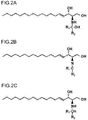
- Figs. 2A to 2C illustrate chemical structures of aminocarbonyl compounds resulting from binding of a sphingosine (compound having a sphingoid base structure) and a carbonyl compound (R 1 -CO-R 2 ) as an exemplary chemical structure of the oxidation inhibitor of the present invention.
- the aminocarbonyl reaction in the present invention can be carried out under general conditions.
- a compound having a sphingoid base structure and a compound having a carbonyl group are mixed in a suitable solvent in an approximately equivalent molar ratio, followed by allowing to stand at normal pressure and a temperature of 60°C to 120°C for 10 min. to 2 hr.
- Reaction products can be separated and purified by column chromatography or any other general method.
- Oxidation inhibitors of the present invention categorized into aminocarbonyl compounds have inhibitory effects for oxidation reaction, such as autoxidation or thermal oxidation, which aminocarbonyl compounds have. Furthermore, oxidation inhibitors of the present invention have long chains that are oil-soluble, and thus are useful for anti-oxidation for fats and oils, unlike conventional aminocarbonyl compounds.
- oxidation inhibitors of the present invention can inhibit oxidation thereof. It is particularly preferred that oxidation inhibitors of the present invention be added to liquefied fats and oils at normal temperature or at or above the melting point and be dispersed in the fats and oils.
- an oxidation inhibitor of the present invention can be appropriately modified depending on a food containing fats and oils, an oxidation inhibitor is preferably contained in an amount of 1ppt or more of the fats and oils.
- the amount of less than 1ppt may reduce the oxidation inhibitory effect.
- An increased amount of addition results in higher oxidation inhibitory effect if oxidation inhibitory effect was intended.
- the oxidation inhibitors of the present invention can be also added to drink and food other than fats and oils. Any methods for addition to drink and food can be used.
- the oxidation inhibitors of the present invention may be dissolved or suspended in deionized water and then the solution or suspension may be added to drink and food. The mixture is agitated and then formulated into an appropriate form. Any mixing condition can be used for homogeneous mixing of the oxidation inhibitors of the present invention.
- Ultra Disperser available from IKA Japan
- TK Homomixer available from PRIMIX Corporation
- the solution containing the oxidation inhibitors of the present invention may be optionally concentrated with a reverse osmosis membrane (RO membrane) or freeze-dried for convenience of usage as drink and food feedstock.
- RO membrane reverse osmosis membrane
- the oxidation inhibitors of the present invention can be sterilized by any treating process generally used for production of drug, drink and food, and forage. Dry heat sterilization can also be used for powdery oxidation inhibitor.
- the oxidation inhibitors of the present invention can be applied to production of drug, drink and food or forage in various forms, such as liquid, gel, powder, and granules.
- oxidation inhibitors of the present invention Addition of the oxidation inhibitors of the present invention to fats and oil, in particular, fats and oil containing polyunsaturated fatty acids, or food products containing these fats and oil can inhibit reversion flavor or maintain taste of food product. Long-term suppression of taste reduction may result in extension of the expiration dates of fats and oils and food products containing the oxidation inhibitor.
- the oxidation inhibitors of the present invention can be used in combination with a conventional oil-soluble oxidation inhibitor (e.g., ⁇ -carotene) to achieve synergistic effect.
- Fat and oil containing the oxidation inhibitors of the present invention can be used alone as edible fats and oils, and also be used as feedstocks of food products, for example, oily food products such as margarine and spread, salad dressing, cookie, butter cake, formula milk such as nursing powder milk or coffee cream, and cream such as whipped cream.
- Food products containing fats and oils containing the oxidation inhibitors of the present invention as a feedstock can inhibit oxidation during storage, and prevent an increase in peroxide value (hereinafter also referred to as POV), incidence of oxidation odor and the like.
- POV peroxide value
- Fats and oils containing the oxidation inhibitors of the present invention as oil for flying, for example, tempura, potato chips, donuts, Kakiage and fly causes less degradation even for long-term use.
- Fats and oils containing the oxidation inhibitors of the present invention is suitable for commercial use for production of a large amount of flying food products.
- Oils containing a relatively small amount of polyunsaturated fatty acid such as palm oil are usually used as oils for flying to avoid oxidation of the oils.
- Use of the oxidation inhibitors of the present invention enables oils containing a large amount of polyunsaturated fatty acid, for example, soybean oil and canola oil to be used for flying.
- the oxidation of fried food prepared using fats and oils containing the oxidation inhibitors of the present invention is also inhibited.
- Example compound 1 Sphingosine and propanal were dissolved in a phosphate buffer and heated at 100°C for one hour.
- the product was purified by silica gel column chromatography to give an oxidation inhibitor of Example 1 (Example compound 1) at a purity of 95%.
- Butter serum powder was immersed in ethanol overnight, and then the mixture was filtrated with suction to collect the filtrate. Extraction was repeated by immersion of the residue in ethanol overnight. The filtrate was concentrated, was added to chloroform/methanol/water (10:5:3, v/v/v), and was subjected to liquid-liquid distribution overnight. The lower chloroform phase was collected and concentrated. The solvent was completely evaporated to give butter serum lipid.
- SPM sphingomyelin
- Dihydrosphingosine and 2-pentenal were dissolved in phosphate buffer and the solution was heated at 100°C for one hour.
- the compound resulting from binding the amino group of dihydrosphingosine and the carbonyl group of 2-pentenal was confirmed by liquid chromatography/mass spectrometry (hereinafter also referred to as LC/MS).
- the product was purified by silica gel column chromatography to give an oxidation inhibitor of Example 2 (Example compound 2) at a purity of 90%.
- Example compound 1 Example compound 2
- ⁇ -tocopherol as a comparative oxidation inhibitor (1 mg for each) were each mixed with marine oil triglyceride (hereinafter also referred to as marine oil TG) (99mg) for analytical sample.
- Marine oil TG 100mg was also used as a comparative sample without oxidation inhibitor.
- Marine oil TG contains a large amount of polyunsaturated fatty acid such as 20:5n-3(EPA) and 22:6n-3(DHA) (Table 1) and may be easily oxidized. Thus, most of the oxygen in the vial was consumed after 50 hr from the start of the measurement. Marine oil TG containing Example product 1 or Example product 2 showed an obviously slower oxygen absorption rate than that of oil TG without inhibitor (only marine oil TG). In this case, most of the oxygen remained even after 300 hr. In contrast, the oxygen absorption of marine oil TG containing ⁇ -tocopherol was slower than that of marine oil TG without inhibitor, but faster than that of marine oil TG containing Example product 1 or Example product 2. These results show that marine oil TG in Example product 1 or Example product 2 has high oxidation inhibitory effect.
- Aqueous whey protein concentrate (WPC) solution (10%) was treated with protease.
- the resulting solution was extracted with chloroform-methanol (2:1) solution.
- the extract was concentrated and then extracted with acetone to give a phosphatide (phospholipid) fraction.
- the phosphatide (phospholipid) fraction was extracted stepwise with chloroform-methanol solution by silica gel chromatography.
- the extract was freeze-dried to give purified sphingomyelin.
- the purified sample was fractionated with thin layer chromatography, and the content was determined with a densitometer after color developing with Dittmer's reagent. The content of sphingomyelin was 95.2%.
- Sphingomyelin was hydrolyzed with hydrochloric acid.
- the hydrolyzate was purified by silica gel column chromatography to give dihydrosphingosine at a high purity of 99%.
- Dihydrosphingosine and propenal were dissolved in phosphate buffer and heated at 100°C for one hour.
- the compound resulting from binding the amino group of dihydrosphingosine and the carbonyl group of propenal was confirmed by LC/MS.
- the product was purified by silica gel column chromatography to give the oxidation inhibitor of Example 3 (Example compound 3) at a purity of 92%.
- the ceramide mixture (4 mg) was hydrolyzed by refluxing with 2 ml of 1 M KOH/methanol at 70°C for 18 hours. Diethylether (4 ml) and distilled water (2 ml) were then added to distribute the long chain base into the ether phase. The long chain base was collected and concentrated to dryness. The long chain base was purified by silica gel column chromatography to give dihydrosphingosine at a high purity of 99%.
- Dihydrosphingosine and propanal were dissolved in phosphate buffer and heated at 100°C for one hour.
- the compound ( Fig. 4A to 4C ) resulting from binding the amino group of dihydrosphingosine and the carbonyl group of propanal was confirmed by LC/MS.
- the product was purified by silica gel column chromatography to give the oxidation inhibitor of Example 4 (Example compound 4) at a purity of 92%.
- Example compound 5 Phytosphingosine and 2-pentanone were dissolved in phosphate buffer and heated at 100°C for one hour. The compound resulting from binding the amino group of phytosphingosine and the carbonyl group of 2-pentanone was confirmed by LC/MS. The product was purified by silica gel column chromatography to give the oxidation inhibitor of Example 5 (Example compound 5) at a purity of 89%.
- Dihydrosphingosine and methyl octanoate were dissolved in phosphate buffer and heated at 100°C for one hour.
- the compound resulting from binding the amino group of dihydrosphingosine and the carbonyl group of methyl octanoate was confirmed by LC/MS.
- the product was purified by silica gel column chromatography to give the oxidation inhibitor of Example 6 (Example compound 6) at a purity of 86%.
- Example compound 7 Sphingosine and hexanoic acid were dissolved in phosphate buffer and heated at 100°C for one hour. The compound resulting from binding the amino group of sphingosine and the carbonyl group of hexanoic acid was confirmed by LC/MS. The product was purified by silica gel column chromatography to give the oxidation inhibitor of Example 7 (Example compound 7) at a purity of 92%.
- Example compounds 3 to 7 The oxidation inhibitory effect of the oxidation inhibitors prepared in Examples 3 to 7 was evaluated by measurement of the peroxide value (POV) and organoleptic evaluation.
- Each of Example compounds 3 to 7 (1 mg) was mixed with marine oil TG (99 mg) for analytical use. Marine oil TG (100 mg) was also used as a comparative sample without oxidation inhibitor.
- Each analytical sample was weighed precisely into an analytical vial (5 ml) and capped with a butyl septum rubber and an aluminum vail seal. The samples were incubated at 40°C in the dark for two months. The incubated samples were evaluated by measurement of peroxide value (POV) and taste evaluation by eight panelists.
- POV peroxide value
- Example 1 to 4 The oxidation inhibitory effect of the oxidation inhibitor prepared in Example 1 to 4 was evaluated for photodegradation of soybean oil by organoleptic evaluation.
- Each of Example compounds 1 to 4 (1 mg) was mixed with soybean oil (99 mg) for analytical samples.
- Soybean oil (100 mg) was also used as a comparative sample without oxidation inhibitor.
- the analytical sample was weighed precisely into an analytical vial (5ml) and capped with a butyl septum rubber and an aluminum vial seal. The samples were incubated at 5°C in a showcase (3500 lux) for seven days. The incubated samples were evaluated by taste evaluation by eight panelists.
- Example compounds 1 to 4 As show in Table 4, reversion flavor of the soybean oil containing Example compounds 1 to 4 was more significantly prevented compared to the soybean oil without oxidation inhibitor.
- the present invention is applicable to oxidation inhibitor.
- the oxidation inhibitors have high oxidation inhibitory effects, and inhibit oxidation of fats and oils, in particular, fats and oils containing a lot of polyunsaturated fatty acid to prevent deterioration resulting from oxidation of fats and oils.
- the oxidation inhibitors of the present invention are also applicable to food product components other than oxidized fats and oils.
Landscapes
- Chemical & Material Sciences (AREA)
- Engineering & Computer Science (AREA)
- Life Sciences & Earth Sciences (AREA)
- Oil, Petroleum & Natural Gas (AREA)
- Food Science & Technology (AREA)
- Polymers & Plastics (AREA)
- Organic Chemistry (AREA)
- Wood Science & Technology (AREA)
- Health & Medical Sciences (AREA)
- Chemical Kinetics & Catalysis (AREA)
- Nutrition Science (AREA)
- Materials Engineering (AREA)
- Zoology (AREA)
- Mycology (AREA)
- Emergency Medicine (AREA)
- Fats And Perfumes (AREA)
- Food Preservation Except Freezing, Refrigeration, And Drying (AREA)
- Edible Oils And Fats (AREA)
- Anti-Oxidant Or Stabilizer Compositions (AREA)
- Organic Low-Molecular-Weight Compounds And Preparation Thereof (AREA)
- Acyclic And Carbocyclic Compounds In Medicinal Compositions (AREA)
Abstract


Description
- The present invention relates to an oxidation inhibitor, in particular, an oxidation inhibitor containing, as an active ingredient, a compound resulting from binding of a sphingoid and a carbonyl compound, for example, aldehyde, fat and oil containing the oxidation inhibitor, and a food product containing the fat and oil.
- Natural fats and oils, such as animal fats (e.g. lard or beef tallow), marine oil and vegetable oils, have been widely used in the food product field.
- Essential fatty acids (e.g., linoleic acid, linolenic acid, arachidonic acid, eicosapentaenoic acid and docosahexaenoic acid) are the fatty acids being component of fats and oils and are unsaturated fatty acids having a double bond or double bonds. Essential fatty acids are metabolized in organisms, and converted to compounds, such as prostaglandin, to play important roles in homeostasis and maintenance of function of organism.
- In recent years, studies on unsaturated fatty acids, in particular, polyunsaturated fatty acids having two or more double bonds have revealed the effectiveness of n-3 or n-6 essential fatty acids, such as linoleic acid, α-linolenic acid, γ-linolenic acid, arachidonic acid, eicosapentaenoic acid, and docosahexaenoic acid. A large number of and a large amount of fats and oils have been provided that contain these unsaturated fatty acids, for example, vegetable oils such as soybean oil or safflower oil, marine oil, or food products containing these oils.
- It has been indicated that unsaturated fatty acids are oxidized by oxygen in air or oxygen dissolved in solution to generate undesirable peroxide. In particular, trace amounts of metal (e.g., iron or copper) or ascorbic acid containing in fats and oils or food products or photochemical reaction accelerate oxidation reaction. Thus, it may be difficult to inhibit quality loss, for example, decay, coloring and reduction of flavor such as reversion flavor resulting from oxidation of fats and oils or food products containing fats and oils even by replacement with nitrogen gas.
- Oxidation of food components are generally prevented by addition of oxidation inhibitors, for example, tocopherol, sorbic acid, soybean phosphatide (phospholipid), dibutylhydroxytoluene (BHT), butylhydroxyanisol (BHA). Unfortunately, a large amount of oxidation inhibitor is required to prevent oxidation of unsaturated fatty acid.
- Aminocarbonyl compounds prepared by aminocarbonyl reaction of an amino acid with a carbohydrate are known to be effective to inhibit oxidation, such as autoxidation and thermal oxidation. Unfortunately, such aminocarbonyl compounds are generally highly polar and hydrophilic, thus are inadequate for oxidation inhibitors of fats and oils.
- Patent Literature 1 discloses an oxidation inhibitor containing dihydroxy sphingosine as an active ingredient. However, coexistence of dihydroxy sphingosine and α-tocopherol is required to achieve full potential of such oxidation inhibitor.
- Patent Document 1: Japanese Unexamined Patent Application Publication No.
2013-147636 - It is an object of the present invention to provide a novel oxidation inhibitor having high activity of oxidation inhibitory and preventing oxidation of unsaturated fatty acids, in particular polyunsaturated fatty acids.
- The present inventors have found that an aminocarbonyl compound resulting from binding of an amino group of a sphingoid and a carbonyl group of a carbonyl compound has significantly high activity of oxidation inhibitory to achieve above mentioned objective and have accomplished the present invention based on the following aspects:
-
- (1) An oxidation inhibitor containing, as an active ingredient, an aminocarbonyl compound having a structure resulting from binding of an amino group of a compound having sphingoid base structure and a carbonyl group of a carbonyl compound.
- (2) The oxidation inhibitor of Aspect (1), wherein the carbonyl compound is at least one compound selected from the group consisting of aldehydes, ketones, esters, and fatty acids.
- (3) The oxidation inhibitor of Aspect (1), wherein the carbonyl compound is at least one compound selected from group consisting of propanal, propenal (acrolein), 2-hexenal, 3-hexenal, 2-pentenal, 2,4,7-decatrienal, 2-butenal, 2-butylfuran, acetaldehyde, 4,5-epoxy-2-heptanal, butanal, methyl octanoate, methyl 9-oxononanoate, 3,6-nonadienal, 2,4-heptadienal, hexanal, 2-heptenal, heptanal, nonanal, pentanal, and octanal.
- (4) The oxidation inhibitor of Aspect (1), wherein the carbonyl compound is at least one compound selected from group consisting of 2-propanone, 2-butanone, 2-pentanone, 2-hexanone, 2-heptanone, 2-octanone, 2-nonanone, and 3-octene-2-one.
- (5) The oxidation inhibitor of (1), wherein the carbonyl compound is at least one compound selected from the group consisting of methyl 10-oxo-8-decenoate, methyl heptanoate, methyl 10-oxodecanoate, methyl nonanoate, methyl 8-oxooctanoate, methyl octanoate, methyl 9-oxo nonanoate, methyl furanoctanoate, 2,4-octadiene-2-one, methyl 13-oxo-9,11-tridecanedienoate, heptanoic acid, octanoic acid, and nonanoic acid.
- (6) The oxidation inhibitor of any one of Aspects (1) to (5), wherein the compound having sphingoid base structure is at least one compound selected from the group consisting of dihydrosphingosine, sphingosine, N,N-dimethylsphingosine, phytosphingosine, 4-sphingenine, 8-sphingenine, 4-hydroxy-8-sphingenine, 4,8-sphingadienine, 9-methyl-4,8-sphingadienine, 4,8,10-sphingatrienine, and 9-methyl-4,8,10- sphingatrienine.
- (7) Fat and oil containing the oxidation inhibitor of any one of Aspects (1) to (6).
- (8) Fat and oil of Aspect (7), wherein the oxidation inhibitor is compounded in an amount of 1 ppt or more.
- (9) Drink and food containing the fat and oil of Aspects (7) or (8).
- Oxidation inhibitors of the present invention have high oxidation inhibitory effects, and inhibit oxidation of fats and oils, in particular, fats and oils containing a large proportion of polyunsaturated fatty acids to prevent deterioration due to oxidation of fats and oils. Furthermore, the oxidation inhibitors of the present invention are also applicable to food components other than fats and oils.
-
- [
Fig.1] Fig. 1A and 1B illustrate chemical structures of sphingosine and dihydrosphingosine, respectively. - [
Fig. 2] Fig. 2A illustrates a compound resulting from a covalently binding amino group of a sphingoid base and carbonyl carbon of a carbonyl compound and reduction of the carbonyl oxygen to a hydroxyl group;Fig. 2B illustrates a compound resulting from elimination of the hydroxyl group in the form of water from carbonyl oxygen together with hydrogen from the amino group ofFig. 2A; and Fig. 2C illustrates a compound resulting from reduction of the double bond ofFig. 2B . - [
Fig. 3] Fig. 3 is a graph of time-dependent oxygen absorption with an oxidation inhibitor of the present invention. - [
Fig. 4] Fig. 4A illustrates a compound resulting from a covalently binding amino group of dihydrosphingoid base and carbonyl carbon of propanal and reduction of the carbonyl oxygen to hydroxyl group;Fig. 4B illustrates a compound resulting from elimination of a hydroxyl group in the form of water from carbonyl oxygen together with hydrogen from amino group ofFig. 4A; and Fig. 4C illustrates a compound resulting from reduction of the double bond ofFig. 4B . - The present invention relates to an oxidation inhibitor containing, as an active ingredient, an aminocarbonyl compound having a structure resulting from binding of an amino group of a compound having sphingoid base structure and a carbonyl group of a carbonyl compound.
- Typical compounds having sphingoid base in the present invention may be a sphingoid, a type of long chain aminoalcohol. Examples of the sphingoids applicable to the present invention include dihydrosphingosine, sphingosine, N,N-dimethylsphingosine, phytosphingosine, 4-sphingenine, 8-sphingenine, 4-hydroxy-8-sphingenine, 4,8-sphingadienine, 9-methyl-4,8-sphingadienine, 4,8,10-sphingatrienine and 9-methyl-4,8,10-sphingatrienine. The sphingoid base structure may have any number of double bonds at any position.
Figs. 1A and 1B illustrate chemical structures of typical compounds having sphingoid bases.Figs. 1A and 1B illustrate the structures of sphingosine and dihydrosphingosine, respectively. - Sphingoids can be prepared by hydrolysis of sphingolipid containing a sphingoid base. Sphingolipids occur widely in animals or plants and have a common structure of ceramide resulting from acid-amide binding of a sphingoid base as a long chain base component and fatty acid, and also have a structure wherein sugar or phosphoric acid and base is bound to. The compound bound with a sugar in glycosidic bond is referred to as glycosphingolipid, and the compound bound with phosphoric acid and base is referred to as sphingophospholipid.
- The compound having a sphingoid base structure in the present invention is prepared from sphingolipid obtained from plants, such as grain and beans, milk, cattle brains, and microorganisms. For example, dihydro sphingosine can be prepared by hydrolysis of sphingomyelin (sphingophospholipid in milk), or lactosylceramide or glucosilceramide (glycosphingolipid in milk).
- The carbonyl compound of the present invention has a carbonyl group reactable with an amino group of a compound having a sphingoid base structure. Examples of the carbonyl compound include aldehydes, ketones, esters, and fatty acids.
- Examples of aldehydes include propanal, propenal (acrolein), 2-hexenal, 3-hexenal, 2-pentenal, 2,4,7-decatrienal, 2-butenal, acetaldehyde, 4,5-epoxy-2-heptanal, butanal, 3,6-nonadienal, 2,4-heptadienal, hexanal, 2-heptenal, heptanal, nonanal, pentanal, and octanal.
- Examples of ketones include 2-propanone, 2-butanone, 2-pentanone, 2-hexanone, 2-heptanone, 2-octanone, 2-nonanone, 3-octene-2-one, and 2,4-octadiene-2-one.
- Examples of esters include methyl 10-oxo-8-decenoate, methyl heptanoate, methyl 10-oxodecanoate, methyl nonanoate, methyl 8-oxooctanoate, methyl octanoate, methyl 9-oxo nonanoate, methyl furanoctanoate, and methyl 13-oxo-9,11-tridecanedienoate.
- Examples of fatty acids include hexanoic acid, heptanoic acid, octanoic acid, and nonanoic acid.
- Particularly preferred carbonyl compound in the present invention are propanal and propenal (acrolein).
- The oxidation inhibitor of the present invention can be prepared by aminocarbonyl reaction of one of the above mentioned compounds having a sphingoid base structure with a compound having a carbonyl group reactable with the amino group in the base.
-
Figs. 2A to 2C illustrate chemical structures of aminocarbonyl compounds resulting from binding of a sphingosine (compound having a sphingoid base structure) and a carbonyl compound (R1-CO-R2) as an exemplary chemical structure of the oxidation inhibitor of the present invention. - The aminocarbonyl reaction in the present invention can be carried out under general conditions. For example, a compound having a sphingoid base structure and a compound having a carbonyl group are mixed in a suitable solvent in an approximately equivalent molar ratio, followed by allowing to stand at normal pressure and a temperature of 60°C to 120°C for 10 min. to 2 hr. Reaction products can be separated and purified by column chromatography or any other general method.
- Oxidation inhibitors of the present invention categorized into aminocarbonyl compounds have inhibitory effects for oxidation reaction, such as autoxidation or thermal oxidation, which aminocarbonyl compounds have. Furthermore, oxidation inhibitors of the present invention have long chains that are oil-soluble, and thus are useful for anti-oxidation for fats and oils, unlike conventional aminocarbonyl compounds.
- Addition of oxidation inhibitors of the present invention to fats and oils can inhibit oxidation thereof. It is particularly preferred that oxidation inhibitors of the present invention be added to liquefied fats and oils at normal temperature or at or above the melting point and be dispersed in the fats and oils.
- Although the amount of oxidation inhibitor of the present invention can be appropriately modified depending on a food containing fats and oils, an oxidation inhibitor is preferably contained in an amount of 1ppt or more of the fats and oils. The amount of less than 1ppt may reduce the oxidation inhibitory effect. An increased amount of addition results in higher oxidation inhibitory effect if oxidation inhibitory effect was intended.
- The oxidation inhibitors of the present invention can be also added to drink and food other than fats and oils. Any methods for addition to drink and food can be used. For example, the oxidation inhibitors of the present invention may be dissolved or suspended in deionized water and then the solution or suspension may be added to drink and food. The mixture is agitated and then formulated into an appropriate form. Any mixing condition can be used for homogeneous mixing of the oxidation inhibitors of the present invention. For example, Ultra Disperser (available from IKA Japan) or TK Homomixer (available from PRIMIX Corporation) can be used. The solution containing the oxidation inhibitors of the present invention may be optionally concentrated with a reverse osmosis membrane (RO membrane) or freeze-dried for convenience of usage as drink and food feedstock. The oxidation inhibitors of the present invention can be sterilized by any treating process generally used for production of drug, drink and food, and forage. Dry heat sterilization can also be used for powdery oxidation inhibitor. Thus, the oxidation inhibitors of the present invention can be applied to production of drug, drink and food or forage in various forms, such as liquid, gel, powder, and granules.
- Addition of the oxidation inhibitors of the present invention to fats and oil, in particular, fats and oil containing polyunsaturated fatty acids, or food products containing these fats and oil can inhibit reversion flavor or maintain taste of food product. Long-term suppression of taste reduction may result in extension of the expiration dates of fats and oils and food products containing the oxidation inhibitor. The oxidation inhibitors of the present invention can be used in combination with a conventional oil-soluble oxidation inhibitor (e.g., β-carotene) to achieve synergistic effect.
- Fat and oil containing the oxidation inhibitors of the present invention can be used alone as edible fats and oils, and also be used as feedstocks of food products, for example, oily food products such as margarine and spread, salad dressing, cookie, butter cake, formula milk such as nursing powder milk or coffee cream, and cream such as whipped cream. Food products containing fats and oils containing the oxidation inhibitors of the present invention as a feedstock can inhibit oxidation during storage, and prevent an increase in peroxide value (hereinafter also referred to as POV), incidence of oxidation odor and the like.
- Use of fats and oils containing the oxidation inhibitors of the present invention as oil for flying, for example, tempura, potato chips, donuts, Kakiage and fly causes less degradation even for long-term use. Fats and oils containing the oxidation inhibitors of the present invention is suitable for commercial use for production of a large amount of flying food products. Oils containing a relatively small amount of polyunsaturated fatty acid such as palm oil are usually used as oils for flying to avoid oxidation of the oils. Use of the oxidation inhibitors of the present invention enables oils containing a large amount of polyunsaturated fatty acid, for example, soybean oil and canola oil to be used for flying. Furthermore, the oxidation of fried food prepared using fats and oils containing the oxidation inhibitors of the present invention is also inhibited.
- The following examples and experiments further describe the invention, but should not be construed to limit the scope of the invention in any way.
- Sphingosine and propanal were dissolved in a phosphate buffer and heated at 100°C for one hour. The compound resulting from binding the amino group of sphingosine and the carbonyl group of propanal was confirmed by liquid chromatography/mass spectrometry (hereinafter also referred to as LC/MS). The product was purified by silica gel column chromatography to give an oxidation inhibitor of Example 1 (Example compound 1) at a purity of 95%.
- Butter serum powder was immersed in ethanol overnight, and then the mixture was filtrated with suction to collect the filtrate. Extraction was repeated by immersion of the residue in ethanol overnight. The filtrate was concentrated, was added to chloroform/methanol/water (10:5:3, v/v/v), and was subjected to liquid-liquid distribution overnight. The lower chloroform phase was collected and concentrated. The solvent was completely evaporated to give butter serum lipid.
- Then, neutral lipid was removed and polar lipid was isolated from the butter serum lipid by liquid-liquid distribution and solvent extraction. A large amount of diethyl ether was added to the polar lipid fraction, and allow to stand at -20°C overnight. The mixture was filtrated to collect the filtrate. The filtrate was concentrated and the solvent was completely evaporated to give sphingolipid fraction.
- A large amount of pyridine was added to the sphingolipid fraction, and the mixture was allowed to stand at-20°C overnight. The mixture was then filtrated to collect the filtrate. The filtrate was concentrated and the solvent was completely evaporated to give sphingomyelin (SPM) fraction. The resulting SPM was hydrolyzed with hydrochloric acid. The hydrolyzate was purified by silica gel column chromatography to give dihydrosphingosine at a high purity of 99%.
- Dihydrosphingosine and 2-pentenal were dissolved in phosphate buffer and the solution was heated at 100°C for one hour. The compound resulting from binding the amino group of dihydrosphingosine and the carbonyl group of 2-pentenal was confirmed by liquid chromatography/mass spectrometry (hereinafter also referred to as LC/MS). The product was purified by silica gel column chromatography to give an oxidation inhibitor of Example 2 (Example compound 2) at a purity of 90%.
- The oxidation inhibitory effect of the oxidation inhibitor prepared in Examples 1 and 2 was evaluated by an oxidation test. Example compound 1, Example compound 2, and α-tocopherol as a comparative oxidation inhibitor (1 mg for each) were each mixed with marine oil triglyceride (hereinafter also referred to as marine oil TG) (99mg) for analytical sample. Marine oil TG (100mg) was also used as a comparative sample without oxidation inhibitor.
- An analytical sample was weighed precisely into an analytical vial (5 mL) and capped with a butyl septum rubber and aluminum vial seal. The sample was incubated at 40°C in the dark. The head space air (40 µL) in the vial was sampled at every regular interval and injected to a gas chromatograph (GC) equipped with a thermal conductivity detector (TCD). The peak of oxygen decreased with oxidation. The oxygen absorption due to oxidation of lipid was calculated from the change of peak ratio of oxygen to nitrogen.
Fig. 3 illustrates a change in the averaged observed value. The longitudinal and horizontal axes represent the residual oxygen (%) and the oxidation time (hour), respectively. The fatty acid composition of marine oil TG used in the experiment and analytical conditions were as follows.[Table 1] Composition of fatty acid of glyceride in marine oil (wt%) 14:0 6.7 16:0 7.9 16:1n-7 12.3 18:2n-6 1.4 20:0 3.8 20:5n-3 25.1 22:5n-3 2.2 22:6n-3 9.2 -
- Apparatus: Shimazu GC-14B gas chromatograph [Shimadzu Corporation]
- Integrator: Shimazu C-R8A chromatography workstation
- [Shimadzu Corporation]
- Preamplifier: AMP-7B [Shimadzu Corporation]
- Detector: TCD
- Column: Molecular sieves-5A (60/80mesh; 3m)
- Column temperature: 50°C
- Injection port temperature: 100°C
- Detector temperature: 100°C
- Carrier gas: helium gas
- Helium gas pressure: 50kPa
- Marine oil TG contains a large amount of polyunsaturated fatty acid such as 20:5n-3(EPA) and 22:6n-3(DHA) (Table 1) and may be easily oxidized. Thus, most of the oxygen in the vial was consumed after 50 hr from the start of the measurement. Marine oil TG containing Example product 1 or Example product 2 showed an obviously slower oxygen absorption rate than that of oil TG without inhibitor (only marine oil TG). In this case, most of the oxygen remained even after 300 hr. In contrast, the oxygen absorption of marine oil TG containing α-tocopherol was slower than that of marine oil TG without inhibitor, but faster than that of marine oil TG containing Example product 1 or Example product 2. These results show that marine oil TG in Example product 1 or Example product 2 has high oxidation inhibitory effect.
- Aqueous whey protein concentrate (WPC) solution (10%) was treated with protease. The resulting solution was extracted with chloroform-methanol (2:1) solution. The extract was concentrated and then extracted with acetone to give a phosphatide (phospholipid) fraction. The phosphatide (phospholipid) fraction was extracted stepwise with chloroform-methanol solution by silica gel chromatography. The extract was freeze-dried to give purified sphingomyelin. The purified sample was fractionated with thin layer chromatography, and the content was determined with a densitometer after color developing with Dittmer's reagent. The content of sphingomyelin was 95.2%.
- Sphingomyelin was hydrolyzed with hydrochloric acid. The hydrolyzate was purified by silica gel column chromatography to give dihydrosphingosine at a high purity of 99%.
- Dihydrosphingosine and propenal were dissolved in phosphate buffer and heated at 100°C for one hour. The compound resulting from binding the amino group of dihydrosphingosine and the carbonyl group of propenal was confirmed by LC/MS. The product was purified by silica gel column chromatography to give the oxidation inhibitor of Example 3 (Example compound 3) at a purity of 92%.
- The mixture of 5 to 6mg of sphingomyelin and 1.5ml of 0.1 M tris buffer solution (pH7.4) containing 0.03 M CaCl2 was treated with sonic waves for 10 sec. Phospholipase C (3 mg) derived from C. perfringens and diethylether (1.5 ml) were added. The mixture was shaken vigorously, and incubated at room temperature for three hours with shaking frequently. Ether (3 ml) was added, and the mixture was shaken, and centrifuged to separate the ether phase. The mixture was extracted again with ether (3 ml). The combined ether extract solution was washed with distilled water and centrifuged. The ether solution was concentrated to dryness under a nitrogen gas stream to remove a small amount of water to give ceramide mixture.
- The ceramide mixture (4 mg) was hydrolyzed by refluxing with 2 ml of 1 M KOH/methanol at 70°C for 18 hours. Diethylether (4 ml) and distilled water (2 ml) were then added to distribute the long chain base into the ether phase. The long chain base was collected and concentrated to dryness. The long chain base was purified by silica gel column chromatography to give dihydrosphingosine at a high purity of 99%.
- Dihydrosphingosine and propanal were dissolved in phosphate buffer and heated at 100°C for one hour. The compound (
Fig. 4A to 4C ) resulting from binding the amino group of dihydrosphingosine and the carbonyl group of propanal was confirmed by LC/MS. The product was purified by silica gel column chromatography to give the oxidation inhibitor of Example 4 (Example compound 4) at a purity of 92%. - Phytosphingosine and 2-pentanone were dissolved in phosphate buffer and heated at 100°C for one hour. The compound resulting from binding the amino group of phytosphingosine and the carbonyl group of 2-pentanone was confirmed by LC/MS. The product was purified by silica gel column chromatography to give the oxidation inhibitor of Example 5 (Example compound 5) at a purity of 89%.
- Dihydrosphingosine and methyl octanoate were dissolved in phosphate buffer and heated at 100°C for one hour. The compound resulting from binding the amino group of dihydrosphingosine and the carbonyl group of methyl octanoate was confirmed by LC/MS. The product was purified by silica gel column chromatography to give the oxidation inhibitor of Example 6 (Example compound 6) at a purity of 86%.
- Sphingosine and hexanoic acid were dissolved in phosphate buffer and heated at 100°C for one hour. The compound resulting from binding the amino group of sphingosine and the carbonyl group of hexanoic acid was confirmed by LC/MS. The product was purified by silica gel column chromatography to give the oxidation inhibitor of Example 7 (Example compound 7) at a purity of 92%.
- The oxidation inhibitory effect of the oxidation inhibitors prepared in Examples 3 to 7 was evaluated by measurement of the peroxide value (POV) and organoleptic evaluation. Each of Example compounds 3 to 7 (1 mg) was mixed with marine oil TG (99 mg) for analytical use. Marine oil TG (100 mg) was also used as a comparative sample without oxidation inhibitor. Each analytical sample was weighed precisely into an analytical vial (5 ml) and capped with a butyl septum rubber and an aluminum vail seal. The samples were incubated at 40°C in the dark for two months. The incubated samples were evaluated by measurement of peroxide value (POV) and taste evaluation by eight panelists. In the organoleptic evaluation, reversion flavor was rated, in which the reversion flavor of the marine oil TG without oxidation inhibitor (used for comparison) was assigned to score 5. A lower score represents lower reversion flavor and better taste. The results were summarized in Table 2.
[Table 2] POV(kg/meq) organoleptic evaluation marine oil 1.5 5 marine oil + Example compound 3 0.4 1 marine oil + Example compound 4 0.4 1 marine oil + Example compound 5 0.5 1 marine oil + Example compound 6 0.5 1 marine oil + Example compound 7 0.5 1 - As shown in Table 2, after two months storage, POV of the marine oil TG without oxidation inhibitor was 1.5 kg/meq, and POV of the marine oil TG containing each Example compound was 0.4 or 0.5 kg/meq. The reversion flavor of the marine oil TG containing each Example compound was prevented, compared to the marine oil TG without oxidation inhibitor. From the above mentioned, addition of each Example compound as an oxidation inhibitor to marine oil TG obviously improved oxidative stability and inhibited the reversion flavor and taste reduction due to the oxidation of the unsaturated fatty acid in the marine oil.
- An effective amount of oxidation inhibitor was evaluated by the oxidative stability test as in Experiment 1 using four samples containing 0 ppt (level 1), 0.1 ppt (level 2), 0.5 ppt (level 3), and 1 ppt (level 4) of each oxidation inhibitor. The results were summarized in Table 3.
[Table 3] level 1 level 2 level 3 level 4 residual oxygen (%) after 100 hr Example compound 1 48 50 51 92 Example compound 2 47 48 52 90 Example compound 3 44 45 50 93 Example compound 4 45 48 50 90 - As show in Table 3, the residual oxygen after 100 hr for levels 1 to 3 containing less than 1 ppt of Example product in the marine oil was substantially equal to that for the marine oil without oxidation inhibitor. Thus, the oxidation inhibitory effect of each Example compound was recognized in the addition of 1 ppt or more. The addition of less than 1 ppt did not show sufficient effect
- The oxidation inhibitory effect of the oxidation inhibitor prepared in Example 1 to 4 was evaluated for photodegradation of soybean oil by organoleptic evaluation. Each of Example compounds 1 to 4 (1 mg) was mixed with soybean oil (99 mg) for analytical samples. Soybean oil (100 mg) was also used as a comparative sample without oxidation inhibitor. The analytical sample was weighed precisely into an analytical vial (5ml) and capped with a butyl septum rubber and an aluminum vial seal. The samples were incubated at 5°C in a showcase (3500 lux) for seven days. The incubated samples were evaluated by taste evaluation by eight panelists. In the organoleptic evaluation, reversion flavor was rated with assignment to score 5 for the reversion flavor of soybean oil without inhibitor (used as the comparative). A lower score represents lower reversion flavor and better taste. The results were summarized in Table 4.
[Table 4] organoleptic evaluation soybean oil 5 soybean oil + Example compound 1 1 soybean oil + Example compound 2 1 soybean oil + Example compound 3 1 soybean oil + Example compound 4 1 - As show in Table 4, reversion flavor of the soybean oil containing Example compounds 1 to 4 was more significantly prevented compared to the soybean oil without oxidation inhibitor. These results demonstrate that the addition of each of Example compounds 1 to 4 as an oxidation inhibitor to soybean oil obviously improve the oxidative stability and inhibit the reversion flavor and taste reduction due to the oxidation of the unsaturated fatty acid in the soybean oil.
- The present invention is applicable to oxidation inhibitor. The oxidation inhibitors have high oxidation inhibitory effects, and inhibit oxidation of fats and oils, in particular, fats and oils containing a lot of polyunsaturated fatty acid to prevent deterioration resulting from oxidation of fats and oils. Furthermore, the oxidation inhibitors of the present invention are also applicable to food product components other than oxidized fats and oils.
Claims (9)
- An oxidation inhibitor comprising, as an active ingredient: an aminocarbonyl compound having a structure resulting from binding of an amino group of a compound having sphingoid base structure and a carbonyl group of a carbonyl compound.
- The oxidation inhibitor of claim 1, wherein the carbonyl compound is at least one compound selected from the group consisting of aldehydes, ketones, esters, and fatty acids.
- The oxidation inhibitor of claim 1, wherein the carbonyl compound is at least one compound selected from the group consisting of propanal, propenal (acrolein), 2-hexenal, 3-hexenal, 2-pentenal, 2,4,7-decatrienal, 2-butenal, 2-butylfuran, acetaldehyde, 4,5-epoxy-2-heptanal, butanal, methyl octanoate, methyl 9-oxononanoate, 3,6-nonadienal, 2,4-heptadienal, hexanal, 2-heptenal, heptanal, nonanal, pentanal, and octanal.
- The oxidation inhibitor of claim 1, wherein the carbonyl compound is at least one compound selected from the group consisting of 2-propanone, 2-butanone, 2-pentanone, 2-hexanone, 2-heptanone, 2-octanone, 2-nonanone, and 3-octene-2-one.
- The oxidation inhibitor of claim 1, wherein the carbonyl compound is at least one compound selected from the group consisting of methyl 10-oxo-8-decenoate, methyl heptanoate, methyl 10-oxodecanoate, methyl nonanoate, methyl 8-oxooctanoate, methyl octanoate, methyl 9-oxo nonanoate, methyl furanoctanoate, 2,4-octadiene-2-one, methyl 13-oxo-9,11-tridecanedienoate, heptanoic acid, octanoic acid, and nonanoic acid.
- The oxidation inhibitor of any one of claim 1 to claim 5, wherein the compound having sphingoid base structure is at least one compound selected from the group consisting of dihydrosphingosine, sphingosine, N,N-dimethylsphingosine, phytosphingosine, 4-sphingenine, 8-sphingenine, 4-hydroxy-8-sphingenine, 4,8-sphingadienine, 9-methyl-4,8-sphingadienine, 4,8,10- sphingatrienine and 9-methyl-4,8,10-sphingatrienine.
- Fat and oil containing the oxidation inhibitor of any one of claim 1 to claim 6.
- Fat and oil of claim 7, wherein the oxidation inhibitor is compounded in an amount of 1 ppt or more.
- Drink and food containing the fat and oil of claim7 or claim 8.
Applications Claiming Priority (2)
| Application Number | Priority Date | Filing Date | Title |
|---|---|---|---|
| JP2015056511A JP6232008B2 (en) | 2015-03-19 | 2015-03-19 | Oxidation inhibitor and oil-containing food and drink using the same |
| PCT/JP2016/058502 WO2016148238A1 (en) | 2015-03-19 | 2016-03-17 | Oxidation inhibitor, and food and drink containing fats and oils using same |
Publications (2)
| Publication Number | Publication Date |
|---|---|
| EP3272835A1 true EP3272835A1 (en) | 2018-01-24 |
| EP3272835A4 EP3272835A4 (en) | 2018-08-29 |
Family
ID=56919066
Family Applications (1)
| Application Number | Title | Priority Date | Filing Date |
|---|---|---|---|
| EP16765067.0A Withdrawn EP3272835A4 (en) | 2015-03-19 | 2016-03-17 | Oxidation inhibitor, and food and drink containing fats and oils using same |
Country Status (5)
| Country | Link |
|---|---|
| US (1) | US11252974B2 (en) |
| EP (1) | EP3272835A4 (en) |
| JP (1) | JP6232008B2 (en) |
| TW (1) | TWI711600B (en) |
| WO (1) | WO2016148238A1 (en) |
Family Cites Families (10)
| Publication number | Priority date | Publication date | Assignee | Title |
|---|---|---|---|---|
| US2343273A (en) * | 1938-07-20 | 1944-03-07 | Marchant Calculating Machine | Calculating machine |
| JPH05320048A (en) * | 1992-05-19 | 1993-12-03 | Shiseido Co Ltd | Antioxidant |
| JP3813197B2 (en) * | 1995-03-23 | 2006-08-23 | 雪印乳業株式会社 | Antioxidant and method for preventing oxidation of fats and oils using the same |
| WO2001042390A1 (en) * | 1999-12-06 | 2001-06-14 | Akihiko Niina | Stabilizer for unsaturated compounds or stuff containing the compounds and method of stabilization |
| ES2325260T3 (en) * | 2003-01-20 | 2009-08-31 | Nederlandse Organisatie Voor Toegepast-Natuurwetenschappelijk Onderzoek Tno | USE OF SPHINGOLIPIDS TO REDUCE THE LEVELS OF TRIACILGLYCEROL AND CHOLESTEROL IN PLASMA. |
| AU2005259501A1 (en) * | 2004-06-29 | 2006-01-12 | Jado Technologies Gmbh | Sphingolipids against pathological processes in lipid rafts |
| US8436196B2 (en) * | 2008-09-30 | 2013-05-07 | Kaneka Corporation | Type I natural ceramide derivative and method for producing same |
| US8853452B2 (en) * | 2009-02-10 | 2014-10-07 | The Administrators Of The Tulane Educational Fund | Compounds, their syntheses, compositions, and methods to treat cancer |
| JP5825672B2 (en) * | 2011-12-22 | 2015-12-02 | 高砂香料工業株式会社 | Method for producing high purity ceramides |
| JP2013147636A (en) * | 2011-12-22 | 2013-08-01 | Snow Brand Milk Products Co Ltd | Oxidation inhibitor and fat-containing food and drink using the same |
-
2015
- 2015-03-19 JP JP2015056511A patent/JP6232008B2/en active Active
-
2016
- 2016-03-17 EP EP16765067.0A patent/EP3272835A4/en not_active Withdrawn
- 2016-03-17 WO PCT/JP2016/058502 patent/WO2016148238A1/en not_active Ceased
- 2016-03-17 US US15/558,826 patent/US11252974B2/en not_active Expired - Fee Related
- 2016-03-18 TW TW105108389A patent/TWI711600B/en not_active IP Right Cessation
Also Published As
| Publication number | Publication date |
|---|---|
| EP3272835A4 (en) | 2018-08-29 |
| US11252974B2 (en) | 2022-02-22 |
| JP6232008B2 (en) | 2017-11-15 |
| WO2016148238A1 (en) | 2016-09-22 |
| US20180077946A1 (en) | 2018-03-22 |
| TW201643131A (en) | 2016-12-16 |
| TWI711600B (en) | 2020-12-01 |
| JP2016175983A (en) | 2016-10-06 |
Similar Documents
| Publication | Publication Date | Title |
|---|---|---|
| Jacobsen et al. | Lipid oxidation in fish oil enriched mayonnaise: calcium disodium ethylenediaminetetraacetate, but not gallic acid, strongly inhibited oxidative deterioration | |
| US20110027443A1 (en) | Fat or oil composition containing oleic acid, linoleic acid, linolenic acid, and long-chain highly unsaturated fatty acid | |
| JP6891032B2 (en) | Separate liquid seasoning | |
| KR101275406B1 (en) | Method for rejuvenating aged food oils | |
| JP2013147636A (en) | Oxidation inhibitor and fat-containing food and drink using the same | |
| US9591861B2 (en) | Oil or fat composition | |
| JP2008069184A (en) | Oil composition | |
| EP3561030B1 (en) | Fat composition | |
| US11252974B2 (en) | Oxidation inhibitor, and food and drink containing fats and oils using same | |
| JP3813197B2 (en) | Antioxidant and method for preventing oxidation of fats and oils using the same | |
| US9332783B2 (en) | Metal-complexing aroma compounds for use in aroma stabilization | |
| EP4256967B1 (en) | Fat and oil composition | |
| JP4463586B2 (en) | Soybean oil purification method | |
| JPWO2007086397A1 (en) | Oil composition for improving lipid metabolism | |
| JP7652535B2 (en) | Oxidation inhibitors | |
| JP7821597B2 (en) | Oil-in-water emulsion composition | |
| JP7671138B2 (en) | Oil and fat composition | |
| JP3474301B2 (en) | Stabilizers for docosahexaenoic acids | |
| JP2005264077A (en) | Conjugated trienoic acid-containing fat-and-oil composition and manufacturing method therefor |
Legal Events
| Date | Code | Title | Description |
|---|---|---|---|
| STAA | Information on the status of an ep patent application or granted ep patent |
Free format text: STATUS: THE INTERNATIONAL PUBLICATION HAS BEEN MADE |
|
| PUAI | Public reference made under article 153(3) epc to a published international application that has entered the european phase |
Free format text: ORIGINAL CODE: 0009012 |
|
| STAA | Information on the status of an ep patent application or granted ep patent |
Free format text: STATUS: REQUEST FOR EXAMINATION WAS MADE |
|
| 17P | Request for examination filed |
Effective date: 20171019 |
|
| AK | Designated contracting states |
Kind code of ref document: A1 Designated state(s): AL AT BE BG CH CY CZ DE DK EE ES FI FR GB GR HR HU IE IS IT LI LT LU LV MC MK MT NL NO PL PT RO RS SE SI SK SM TR |
|
| AX | Request for extension of the european patent |
Extension state: BA ME |
|
| DAV | Request for validation of the european patent (deleted) | ||
| DAX | Request for extension of the european patent (deleted) | ||
| A4 | Supplementary search report drawn up and despatched |
Effective date: 20180801 |
|
| RIC1 | Information provided on ipc code assigned before grant |
Ipc: C11B 5/00 20060101ALI20180725BHEP Ipc: C09K 15/22 20060101AFI20180725BHEP Ipc: A23L 3/3526 20060101ALI20180725BHEP Ipc: A23D 9/00 20060101ALI20180725BHEP |
|
| STAA | Information on the status of an ep patent application or granted ep patent |
Free format text: STATUS: EXAMINATION IS IN PROGRESS |
|
| 17Q | First examination report despatched |
Effective date: 20190523 |
|
| STAA | Information on the status of an ep patent application or granted ep patent |
Free format text: STATUS: THE APPLICATION IS DEEMED TO BE WITHDRAWN |
|
| 18D | Application deemed to be withdrawn |
Effective date: 20231003 |