EP3270928B1 - Use of ginsenoside m1 for preventing or treating gout - Google Patents
Use of ginsenoside m1 for preventing or treating gout Download PDFInfo
- Publication number
- EP3270928B1 EP3270928B1 EP16764255.2A EP16764255A EP3270928B1 EP 3270928 B1 EP3270928 B1 EP 3270928B1 EP 16764255 A EP16764255 A EP 16764255A EP 3270928 B1 EP3270928 B1 EP 3270928B1
- Authority
- EP
- European Patent Office
- Prior art keywords
- ginsenoside
- msu
- gout
- induced
- cppd
- Prior art date
- Legal status (The legal status is an assumption and is not a legal conclusion. Google has not performed a legal analysis and makes no representation as to the accuracy of the status listed.)
- Active
Links
Images





Classifications
-
- A—HUMAN NECESSITIES
- A61—MEDICAL OR VETERINARY SCIENCE; HYGIENE
- A61K—PREPARATIONS FOR MEDICAL, DENTAL OR TOILETRY PURPOSES
- A61K31/00—Medicinal preparations containing organic active ingredients
- A61K31/70—Carbohydrates; Sugars; Derivatives thereof
- A61K31/7028—Compounds having saccharide radicals attached to non-saccharide compounds by glycosidic linkages
- A61K31/7034—Compounds having saccharide radicals attached to non-saccharide compounds by glycosidic linkages attached to a carbocyclic compound, e.g. phloridzin
- A61K31/704—Compounds having saccharide radicals attached to non-saccharide compounds by glycosidic linkages attached to a carbocyclic compound, e.g. phloridzin attached to a condensed carbocyclic ring system, e.g. sennosides, thiocolchicosides, escin, daunorubicin
-
- A—HUMAN NECESSITIES
- A61—MEDICAL OR VETERINARY SCIENCE; HYGIENE
- A61K—PREPARATIONS FOR MEDICAL, DENTAL OR TOILETRY PURPOSES
- A61K31/00—Medicinal preparations containing organic active ingredients
- A61K31/70—Carbohydrates; Sugars; Derivatives thereof
- A61K31/7028—Compounds having saccharide radicals attached to non-saccharide compounds by glycosidic linkages
- A61K31/7032—Compounds having saccharide radicals attached to non-saccharide compounds by glycosidic linkages attached to a polyol, i.e. compounds having two or more free or esterified hydroxy groups, including the hydroxy group involved in the glycosidic linkage, e.g. monoglucosyldiacylglycerides, lactobionic acid, gangliosides
-
- A—HUMAN NECESSITIES
- A61—MEDICAL OR VETERINARY SCIENCE; HYGIENE
- A61P—SPECIFIC THERAPEUTIC ACTIVITY OF CHEMICAL COMPOUNDS OR MEDICINAL PREPARATIONS
- A61P19/00—Drugs for skeletal disorders
- A61P19/06—Antigout agents, e.g. antihyperuricemic or uricosuric agents
Definitions
- the present invention relates to a new use of ginsenoside M1 for treating or preventing gout.
- Gout is a kind of arthritis caused by a buildup of uric acid crystals in the joints. Symptoms include pain, swelling and shiny redness over the affected joints.
- Ginsenosides the main active ingredients of ginseng, are known to have a variety of pharmacological activities, e.g. antitumor, antifatique, antiallergic and antioxidant activities. Ginsenosides share a basic structure, composed of gonane steroid nucleus having 17 carbon atoms arranged in four rings. Ginsenosides are metalized in the body, and a number of recent studies suggest that ginsenoside metabolites, rather than naturally occurring ginsenosides, are readily absorbed in the body and act as the active components.
- ginsenoside M1 is known as one metabolite of protopanaxadiol-type ginsenosides via the gypenoside pathway by human gut bacteria.
- ginsenoside M1 is known as one metabolite of protopanaxadiol-type ginsenosides via the gypenoside pathway by human gut bacteria.
- no prior art references report the effect of ginsenoside M1 in treatment of gout.
- Shao XIAOTONG ET AL describes metobolic product of protopanaxadiol saponin and its pharmacological activities ( NATURAL PRODUCT COMMUNICATIONS, NATURAL PRODUCT INC., US, vol. 10, no.2, 1 February 2015, page 243 ). In this study, the proparation of CK, and its protective effect on kidneys of diabetic rats are discussed.
- a composition for increasing metabolic energy capacity may be in a palatable liquid formulation or a solid dosage form and typically includes an anti-oxidant containing phytonectar and an energy catalyst.
- An anti-oxidant may include a polyphenol, anthrocyanin, bioflavonoid, proanthocyanidin, and a xanthone.
- An energy catalyst may include a mineral, vitamin, co-vitamin, carbohydrate and a lipid.
- a composition includes phytonectar extracts from grape, aloe vera, apple, morinda citrifolia, scullcap, blueberry, prune, cranberry, elderberry, bilberry, and gentain and a mineral blend containing calcium, magnesium, manganese, zinc, chromium, selenium, iron, copper, molybdenum, vanadium, potassium, iodine, and cobalt.
- a method for increasing metabolic energy capacity in a mammal may include consuming a chemical component having the ability to undergo oxidation, producing free radicals and administering a composition having an anti-oxidant containing phytonectar and an energy catalyst.
- KR 2015 0019337 relates to a pharmaceutical composition for anti-inflammation, containing ginsenoside enriched materials including ginsenoside Rh4 as an active ingredient.
- a method for manufacturing ginsenoside enriched materials including ginsenoside Rh4 includes a step of treating a ginseng or red ginseng extract with acid, adsorbing the treated ginseng or red ginseng extract on a column and extracting. The method can manufacture a fraction enriched with a specific component and meet the commercial aspect due to a simple manufacturing method and relatively low costs compared to the known ginseng extract manufacturing method or the method for solely manufacturing a specific ginsenoside included in ginseng.
- the ginsenoside enriched material according to the present invention shows excellent antioxidation and anti-inflammation activies, and, therefore, the ginsenoside enriched material according to the present invention can be widely used in relevant industries.
- WO 2011/077800 discloses a neutral fat level control agent, a cholesterol level control agent, a free fatty acid level control agent and an anti-obesity agent, each characterized by comprising at least one of protopanaxatriol, panaxatriol, protopanaxadiol and panaxadiol which are aglycons of dammrane-type saponins; and a hyperlipemia-ameliorating agent characterized by comprising at least one of the neutral fat level control agent, the cholesterol level control agent, the free fatty acid level control agent and the anti-obesity agent.
- ginsenoside M1 is effective in alleviating or delaying onset or progression of gout. Therefore, the present invention provides a new approach for treatment or prevention of gout in a subject.
- the present invention provides ginsenoside M1 for use in the treatment and/or prevention of gout, wherein the ginsenoside M1 is effective in inhibiting monosodium urate crystals (MSU) or calcium pyrophosphate dehydrate (CPPD)-induced activation of NLRP3 inflammasome.
- MSU monosodium urate crystals
- CPPD calcium pyrophosphate dehydrate
- ginsenoside M1 of the present invention is effective in inhibiting MSU or CPPD induced interleukin (IL) 1 ⁇ production through NLRP3 inflammasome.
- ginsenoside M1 is administered by parenteral or enteral route.
- the present invention also describes use of ginsenoside M1 in manufacturing a medicament for treatment of gout in a subject in need.
- an element means one element or more than one element.
- IL-1 ⁇ is one of the important cytokines rapidly synthesized in an inactive immature form (precursor of IL-1 ⁇ , proIL-1 ⁇ ) via transcriptional activation in lipopolysaccharide (LPS)-activated macrophages (Hsu and Wen, 2002). Unlike that of other cytokines, secretion of mature IL-1 ⁇ requires processing of its precursor form proIL-1 ⁇ by caspase-1, a cysteine protease (Miller et al., 1997).
- IL-1 ⁇ release is controlled by caspase-1-containing multi-protein complexes called NLRP3 inflammasome, which controls caspase-1 activity and IL-1 ⁇ release (Cassel et al., 2011; Jin and Flavell, 2010).
- Full activation of the NLRP3 inflammasome requires both a priming signal from LPS-stimulated TLR4 and an activation signal from a second stimulus, e.g.
- MSU monosodium urate crystals
- proIL-1 ⁇ the latter controlling the expression of NLRP3 and proIL-1 ⁇ and the latter controlling caspase-1 activation
- Gout and pseudogout are inflammatory arthritis characterized by abrupt self-limiting attacks of inflammation caused by precipitation of MSU and calcium pyrophosphate dehydrate (CPPD) crystals respectively in the joint.
- CPPD calcium pyrophosphate dehydrate
- interleukin-1 ⁇ is a key regulatory proinflammatory cytokine in gout gout pathogenesis (Martin et al., 2009; Torres et al., 2009; Terkeltaub et al., 2009; McGonagle et al., 2007; So et al., 2007). It has been demonstrated that MSU activates NLRP3 inflammasome-dependent IL-1 ⁇ secretion from macrophages (Martinon et al., 2006). Clinically, gout is associated with oedema and erythema of the joints, with consequent severe pain, conditions that are associated with strong infiltration of neutrophils in the intra-articular and peri-articular spaces.
- IL-1 ⁇ interleukin-1 ⁇
- ginsenoside M1 has anti-gout effects, at least including that ginsenoside M1 can reduce MSU-induced IL-1 ⁇ production ( Fig. 1 ) and CPPD-induced IL-1 ⁇ production ( Fig. 2 ) and also LPS-induced NLRP3 and proIL-1 ⁇ expression ( Fig. 3 ) in macrophages. These results indicate that LCHK168 can prevent and mitigate gout.
- the present invention provides ginsenoside M1 for use in the treatment and/or prevention of gout, wherein the ginsenoside M1 is effective in inhibiting monosodium urate crystals (MSU) or calcium pyrophosphate dehydrate (CPPD)-induced activation of NLRP3 inflammasome.
- MSU monosodium urate crystals
- CPPD calcium pyrophosphate dehydrate
- Ginsenoside M1 20-O- ⁇ -D-glucopyranosyl-20(S)-protopanaxadiol, is one of saponin metabolites known in the art.
- the chemical structure of ginsenoside M1 is as follows:
- Ginsenoside M1 is known as one metabolite of protopanaxadiol-type ginsenosides via the gypenoside pathway by human gut bacteria. Ginsenoside M1 can be found in blood or urine after intake. Ginsenoside M1 may be prepared from ginseng plants through fungi fermentation by methods known in the art, such as Taiwan Patent Application No. 094116005 ( 1280982 ) and U.S. Patent No. 7,932 057 . In certain embodiments, the ginseng plants for preparing the ginsenoside M1 include Araliaceae family, Panax genus, e.g. P. ginseng and P. pseudo-ginseng (also named Sanqi).
- the method of preparation of ginsenoside M1 includes the steps of (a) providing powder of ginseng plant materials (e.g. leaves or stems); (b) providing a fungus for fermenting the ginseng plant materials, wherein the fermentation temperature is ranged from 20-50° C., the fermentation humidity is ranged from 70-100%, the pH value is ranged from 4.0-6.0, and the fermentation period is ranged from 5-15 days; (c) extracting and collecting the fermentation products; and (d) isolating 20-O- ⁇ -D-glucopyranosyl-20(S)-protopanaxadiol from the fermentation products.
- ginseng plant materials e.g. leaves or stems
- ginsenoside M1 When ginsenoside M1 is described as “isolated” or “purified” in the present invention, it should be understood as not absolutely isolated or purified, but relatively isolated or purified.
- purified ginsenoside M1 refers to one that is more purified compared to its naturally existing form.
- a preparation comprising purified ginsenoside M1 may comprise ginsenoside M1 in an amount of more than 50%, more than 60%, more than 70%, more than 80%, more than 90%, or 100% (w/w) of the total preparation. It should be understood that when a certain number was used herein to show a ratio or dosage, said number generally includes that within the range of 10% more and less, or more specifically, the scope of 5% more and less than the number.
- subject includes human and non-human animals such as companion animals (such as dogs, cats and the like), farm animals (such as cows, sheep, pigs, horses and the like), or laboratory animals (such as rats, mice, guinea pigs and the like).
- companion animals such as dogs, cats and the like
- farm animals such as cows, sheep, pigs, horses and the like
- laboratory animals such as rats, mice, guinea pigs and the like.
- treating refers to the application or administration of a composition including one or more active agents to a subject afflicted with a disorder, a symptom or conditions of the disorder, a progression of the disorder or at risk of developing the disorder, with the purpose to cure, heal, alleviate, relieve, alter, remedy, ameliorate, improve, or affect the disorder, the symptoms or conditions of the disorder, the disabilities induced by the disorder, or the onset or progression of the disorder.
- an effective amount for treating gout refers to the amount of an active ingredient to confer a therapeutic effect in a treated subject.
- an effective amount for treating gout is an amount that can inhibit MSU or CPPD-induced activation of NLRP3 inflammasome, more particularly, an amount that can inhibit MSU or CPPD-induced interleukin 1 ⁇ production through NLRP3 inflammasome.
- the oral dosage of ginsenoside M1 used in the present invention is 10 to 1,000 mg/kg daily.
- the oral the oral dosage of ginsenoside M1 used in the present invention is 100 to 300 mg/kg daily, 50 to 150 mg/kg daily, 25 to 100 mg/kg daily, 10 to 50 mg/kg daily, or 5 to 30 mg/kg daily.
- ginsenoside M1 is administered periodically for a certain period of time, for example, daily administration for at least 15 days, one month or two months or longer.
- ginsenoside M1 may be used as an active ingredient for treating gout.
- a therapeutically effective amount of the active ingredient may be formulated with a pharmaceutically acceptable carrier into a pharmaceutical composition of an appropriate form for the purpose of delivery and absorption.
- the pharmaceutical composition of the present invention preferably comprises about 0.1% by weight to about 100% by weight of the active ingredient, wherein the percentage by weight is calculated based on the weight of the whole composition.
- pharmaceutically acceptable means that the carrier is compatible with the active ingredient in the composition, and preferably can stabilize said active ingredient and is safe to the individual receiving the treatment.
- Said carrier may be a diluent, vehicle, excipient, or matrix to the active ingredient.
- excipients include lactose, dextrose, sucrose, sorbose, mannose, starch, Arabic gum, calcium phosphate, alginates, tragacanth gum, gelatin, calcium silicate, microcrystalline cellulose, polyvinyl pyrrolidone, cellulose, sterilized water, syrup, and methylcellulose.
- the composition may additionally comprise lubricants, such as talc, magnesium stearate, and mineral oil; wetting agents; emulsifying and suspending agents; preservatives, such as methyl and propyl hydroxybenzoates; sweeteners; and flavoring agents.
- lubricants such as talc, magnesium stearate, and mineral oil
- wetting agents such as talc, magnesium stearate, and mineral oil
- emulsifying and suspending agents such as methyl and propyl hydroxybenzoates
- preservatives such as methyl and propyl hydroxybenzoates
- sweeteners such as methyl and propyl hydroxybenzoates
- the form of said composition may be tablets, pills, powder, lozenges, packets, troches, elixers, suspensions, lotions, solutions, syrups, soft and hard gelatin capsules, suppositories, sterilized injection fluid, and packaged powder.
- composition of the present invention may be delivered via any physiologically acceptable route, such as oral, parenteral (such as intramuscular, intravenous, subcutaneous, and intraperitoneal), transdermal, suppository, and intranasal methods.
- parenteral administration it is preferably used in the form of a sterile water solution, which may comprise other substances, such as salts or glucose sufficient to make the solution isotonic to blood.
- the water solution may be appropriately buffered (preferably with a pH value of 3 to 9) as needed.
- Preparation of an appropriate parenteral composition under sterile conditions may be accomplished with standard pharmacological techniques well known to persons skilled in the art, and no extra creative labor is required.
- ginsenoside M1 or compositions comprising ginsenoside M1 as the active ingredient may be used in treating individuals with gout or at risk of gout.
- ginsenoside M1 or compositions comprising ginsenoside M1 as the active ingredient may be administered to individuals with gout or individuals at the risk of acquiring gout, by inhibiting MSU or CPPD-induced activation of NLRP3 inflammasome, so as to prevent occurrence of the disease or improve the symptoms or delay deterioration of the symptoms.
- Ginsenoside M1 20-O- ⁇ -D-glucopyranosyl-20(S)-protopanaxadiol (named LCHK168 below), was prepared by methods known in the art, such as those described in Taiwan Patent Application No. 094116005 ( 1280982 ) and U.S. Patent No. 7,932,057 .
- MSU were prepared by crystallization of a supersaturated solution of uric acid under mildly basic conditions. Briefly, 250 mg uric acid (Sigma; cat. No. U2875) was added to 45 ml of double-distilled water containing 300 ⁇ l of 5M NaOH, and the solution was boiled until the uric acid was dissolved. The solution was passed through a 0.2- ⁇ M filter, and 1 ml of 5M NaCl was added to the hot solution, which was then stored at 26°C. After 7 days the resulting MSU crystals were washed with ethanol and acetone. The resulting triclinic, needle-shaped MSU crystals were 5-25 ⁇ m in length and were birefringent to polarized light. All MSU crystals were determined to be endotoxin free ( ⁇ 0.01 EU/10 mg) by Limulus amebocyte cell lysate assay.
- the mouse macrophages cell line J774A.1 and human monocytic leukemia cell line THP-1 was obtained from the American Type Culture Collection (Rockville, MD) and cultured in RPMI 1640 medium supplemented with 10% heat-inactivated fetal bovine serum (FBS) and 2 mM L-glutamine (all from Life Technologies, Carlsbad, CA) at 37°C in a 5% CO 2 incubator.
- FBS heat-inactivated fetal bovine serum
- 2 mM L-glutamine all from Life Technologies, Carlsbad, CA
- THP-1 cells were cultured for 48 h in RPMI-1640 medium supplemented with 100 nM phorbol 12-myristate 13-acetate (Sigma-Aldrich).
- J774A.1 macrophages (1 ⁇ 10 5 cells/500 ⁇ l medium/well) were incubated for 30 min with or without Ginsenoside M1, then for 30 min with or without 1 ⁇ g/ml LPS (from Escherichia coli 011 1:B4, purchased from Sigma, St. Louis, MO) in the continued presence or absence of Ginsenoside M1, and then for 24 h with or without 100 ⁇ g/ml MSU or 100 ⁇ g/ml CPPD (all purchased from InvivoGen, San Diego, CA).
- the levels of IL-1 ⁇ in the culture medium were measured by ELISA.
- J774A.1 macrophages (2 ⁇ 10 6 cells/2 ml medium/dish) were incubated for 30 min with or without Ginsenoside M1, then for 6 h with or without 1 ⁇ g/ml LPS (from Escherichia coli 0111:B4, purchased from Sigma, St. Louis, MO) in the continued presence or absence of Ginsenoside M1.
- the levels of NLRP3 and proIL-1 ⁇ in the cell lysates were measured by Western blot.
- the cells were collected and lysed at 4°C in lysis buffer (25 mM Tris-HCl, pH 7.5, 100 mM NaCl, 2.5 mM EDTA, 2.5 mM EGTA, 20 mM NaF, 1 mM Na 3 VO 4 , 20 mM sodium ⁇ -glycerophosphate, 10 mM sodium pyrophosphate, 0.5% Triton X-100) containing protease inhibitor cocktail (Sigma, St. Louis, MO), then the whole cell lysate was separated by SDS-PAGE and electrotransferred to a PVDF membrane.
- lysis buffer 25 mM Tris-HCl, pH 7.5, 100 mM NaCl, 2.5 mM EDTA, 2.5 mM EGTA, 20 mM NaF, 1 mM Na 3 VO 4 , 20 mM sodium ⁇ -glycerophosphate, 10 mM sodium pyrophosphate, 0.5% Triton X-100
- the membranes were incubated for 1 h at room temperature in blocking solution (5% nonfat milk in phosphate buffered saline with 0.1% Tween 20), then were incubated for 2 h at room temperature with NLRP3 or proIL-1 ⁇ antibody in blocking solution. After three washes in PBS with 0.1% Tween 20, the membrane was incubated for 1 h at room temperature with HRP-conjugated secondary antibody in blocking buffer and developed using an enhanced chemiluminescence Western blot detection system.
- blocking solution 5% nonfat milk in phosphate buffered saline with 0.1% Tween 20
- NLRP3 or proIL-1 ⁇ antibody in blocking solution.
- HRP-conjugated secondary antibody in blocking buffer and developed using an enhanced chemiluminescence Western blot detection system.
- THP-1 macrophages (1 ⁇ 10 5 cells/500 ⁇ l medium/well) were incubated for 6 h with or without 1 ⁇ g/ml LPS, then for 30 min with or without Ginsenoside M1, in the continued presence or absence of LPS, and then for 24 h with or without 100 ⁇ g/ml MSU.
- the levels of IL-1 ⁇ in the culture medium were measured by ELISA.
- Fig. 7-9 the animal experiments were conducted in accordance with the guidelines of the National Institutes of Health and approved by the Institutional Animal Care and Use Committee of National Ilan University.
- Male C57BL/6 mice were purchased from the National Laboratory Animal Center (Taipei, Taiwan). The animals were provided a chow diet and water ad libitum under conditions of 22-24 °C, 40-70% relative humidity, and a 12 h light-dark cycle.
- Ginsenoside M1 60 mg/kg body weight was oral administered daily by gavage at day 0, 1 and 2.
- Acute gout inflammation was induced by intraperitoneal injection each mice with 3 mg of MSU in 0.5 mL of phosphate-buffered saline (PBS) at day 0 and day 2 1h after Ginsenoside M1 administration.
- PBS phosphate-buffered saline
- the cells were stained with fluorescent antibodies against the neutrophils specific surface markers Ly-6G and CD45 (eBioscience, San Diego, CA, USA) for 20 min at 37 °C in the dark, and the cell populations were sorted using a FACScan flow cytometer (Becton-Dickinson, San Jose, CA). The levels of IL-1 ⁇ and IL-6 in the peritoneal fluid were measured by ELISA.
- ELISA assay 50 ⁇ l of biotinylated antibody reagent and 50 ⁇ l of culture medium were added to an anti-mouse IL-1 ⁇ or IL-6 precoated stripwell plate, and incubated at room temperature for 2 h. After washing the plate three times with washing buffer, 100 ⁇ l of diluted streptavidin-HRP (horseradish peroxidase) concentrate was added to each well and incubated at room temperature for 30 min. The washing process was repeated; then 100 ⁇ l of a premixed tetramethylbenzidine substrate solution was added to each well and developed at room temperature in the dark for 30 min. Following the addition of 100 ⁇ l of provided stop solution to each well to stop the reaction, the absorbance of the plate was measured by a microplate reader at a 450 nm wavelength.
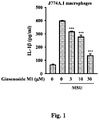
- Ginsenoside M1 reduces MSU-induced IL-1 ⁇ production in J774A.1 macrophages.
- Mouse J774A.1 macrophages were incubated for 30 min with or without Ginsenoside M1, then for 30 min with or without 1 ⁇ g/ml LPS in the continued presence or absence of Ginsenoside M1, and then for 24 h with or without 100 ⁇ g/ml MSU.
- the levels of IL-1 ⁇ in the culture medium were measured by ELISA.
- Fig. 1 the results showed that Ginsenoside M1 reduced IL-1 ⁇ secretion, indicating that Ginsenoside M1 reduces gout-associated inflammation.
- ⁇ indicates a significant difference at the level of p ⁇ 0.001 compared to MSU alone.
- Ginsenoside M1 reduces CPPD-induced IL-1 ⁇ production in J774A.1 macrophages.
- Mouse J774A.1 macrophages were incubated for 30 min with or without Ginsenoside M1, then for 30 min with or without 1 ⁇ g/ml LPS in the continued presence or absence of Ginsenoside M1, and then for 24 h with or without 100 ⁇ g/ml CPPD.
- the levels of IL-1 ⁇ in the culture medium were measured by ELISA.
- the results showed that Ginsenoside M1 reduced IL-1 ⁇ secretion, indicating that Ginsenoside M1 reduces gout-associated inflammation.
- ⁇ indicates a significant difference at the level of p ⁇ 0.001 compared to CPPD alone.
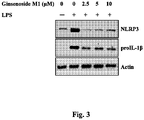
- Ginsenoside M1 reduces LPS-induced NLRP3 and proIL-1 ⁇ expression.
- J774A.1 macrophages were incubated for 30 min with or without Ginsenoside M1, then for 6 h with or without 1 ⁇ g/ml LPS in the continued presence or absence of Ginsenoside M1.
- the levels of NLRP3 and proIL-1 ⁇ in the cell lysates were measured by Western blot. As shown in Fig. 3 , the results showed that Ginsenoside M1 reduced the levels of NLRP3 and proIL-1 ⁇ in LPS-activated J774A.1 macrophages.
- Ginsenoside M1 is effective in reducing MSU-induced IL-1 ⁇ production ( Fig. 1 ) and CPPD-induced IL-1 ⁇ production ( Fig. 2 ) and also LPS-induced NLRP3 and proIL-1 ⁇ expression ( Fig. 3 ) in macrophages.
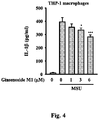
- Ginsenoside M1 reduces MSU-induced IL-1 ⁇ , TNF- ⁇ and IL-6 production in THP-1 macrophages.
- Ginsenoside M1 human THP-1 macrophages were incubated for 6 h with or without 1 ⁇ g/ml LPS, then for 30 min with or without Ginsenoside M1, in the continued presence or absence of LPS, and then for 24 h with or without 100 ⁇ g/ml MSU.
- the levels of IL-1 ⁇ in the culture medium were measured by ELISA.
- the results showed that Ginsenoside M1 reduced IL-1 ⁇ production ( Fig. 4 ), TNF- ⁇ production ( Fig. 5 ) and IL-6 production ( Fig. 6 ), indicating that Ginsenoside M1 reduces gout-associated inflammation in human macrophages.
- ⁇ and ⁇ indicates a significant difference at the level of p ⁇ 0.05 and p ⁇ 0.001, respectively compared to MSU alone.
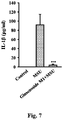
- Ginsenoside M1 reduces MSU-induced peritonitis in vivo.
- Intraperitoneal injection of MSU significantly increased IL-1 ⁇ ( Fig. 7 ) and IL-6 ( Fig. 8 ) production in the murine peritoneal fluid compared with the control mice.
- the oral administration of Ginsenoside M1 significantly reduced MSU-induced IL-1 ⁇ ( Fig. 7 ) and IL-6 ( Fig. 8 ) production in the murine peritoneal fluid.
- MSU also significantly stimulated the population of Ly-6G+ neutrophils, and Ginsenoside M1 significantly reduces the levels of MSU-induced Ly-6G+ neutrophils ( Fig. 9 ).
Landscapes
- Health & Medical Sciences (AREA)
- Life Sciences & Earth Sciences (AREA)
- Pharmacology & Pharmacy (AREA)
- Veterinary Medicine (AREA)
- Public Health (AREA)
- Chemical & Material Sciences (AREA)
- General Health & Medical Sciences (AREA)
- Animal Behavior & Ethology (AREA)
- Medicinal Chemistry (AREA)
- Epidemiology (AREA)
- Molecular Biology (AREA)
- Physical Education & Sports Medicine (AREA)
- Organic Chemistry (AREA)
- Nuclear Medicine, Radiotherapy & Molecular Imaging (AREA)
- General Chemical & Material Sciences (AREA)
- Chemical Kinetics & Catalysis (AREA)
- Bioinformatics & Cheminformatics (AREA)
- Engineering & Computer Science (AREA)
- Rheumatology (AREA)
- Pain & Pain Management (AREA)
- Pharmaceuticals Containing Other Organic And Inorganic Compounds (AREA)
- Steroid Compounds (AREA)
Description
- The present invention relates to a new use of ginsenoside M1 for treating or preventing gout.
- Gout is a kind of arthritis caused by a buildup of uric acid crystals in the joints. Symptoms include pain, swelling and shiny redness over the affected joints.
- Ginsenosides, the main active ingredients of ginseng, are known to have a variety of pharmacological activities, e.g. antitumor, antifatique, antiallergic and antioxidant activities. Ginsenosides share a basic structure, composed of gonane steroid nucleus having 17 carbon atoms arranged in four rings. Ginsenosides are metalized in the body, and a number of recent studies suggest that ginsenoside metabolites, rather than naturally occurring ginsenosides, are readily absorbed in the body and act as the active components. Among them, ginsenoside M1 is known as one metabolite of protopanaxadiol-type ginsenosides via the gypenoside pathway by human gut bacteria. Until now, no prior art references report the effect of ginsenoside M1 in treatment of gout.
- Shao XIAOTONG ET AL describes metobolic product of protopanaxadiol saponin and its pharmacological activities (NATURAL PRODUCT COMMUNICATIONS, NATURAL PRODUCT INC., US, vol. 10, no.2, 1 February 2015, page 243). In this study, the proparation of CK, and its protective effect on kidneys of diabetic rats are discussed.
-
US 2006/024385 discloses metabolic energy capacity enhancing compositions and methods for reducing oxidative stress and improving vitality in a mammal are disclosed. A composition for increasing metabolic energy capacity may be in a palatable liquid formulation or a solid dosage form and typically includes an anti-oxidant containing phytonectar and an energy catalyst. An anti-oxidant may include a polyphenol, anthrocyanin, bioflavonoid, proanthocyanidin, and a xanthone. An energy catalyst may include a mineral, vitamin, co-vitamin, carbohydrate and a lipid. In a presently preferred embodiment a composition includes phytonectar extracts from grape, aloe vera, apple, morinda citrifolia, scullcap, blueberry, prune, cranberry, elderberry, bilberry, and gentain and a mineral blend containing calcium, magnesium, manganese, zinc, chromium, selenium, iron, copper, molybdenum, vanadium, potassium, iodine, and cobalt. A method for increasing metabolic energy capacity in a mammal may include consuming a chemical component having the ability to undergo oxidation, producing free radicals and administering a composition having an anti-oxidant containing phytonectar and an energy catalyst. -
KR 2015 0019337 -
WO 2011/077800 discloses a neutral fat level control agent, a cholesterol level control agent, a free fatty acid level control agent and an anti-obesity agent, each characterized by comprising at least one of protopanaxatriol, panaxatriol, protopanaxadiol and panaxadiol which are aglycons of dammrane-type saponins; and a hyperlipemia-ameliorating agent characterized by comprising at least one of the neutral fat level control agent, the cholesterol level control agent, the free fatty acid level control agent and the anti-obesity agent. - In the present invention, it is unexpected found that ginsenoside M1 is effective in alleviating or delaying onset or progression of gout. Therefore, the present invention provides a new approach for treatment or prevention of gout in a subject.
- In particular, the present invention provides ginsenoside M1 for use in the treatment and/or prevention of gout, wherein the ginsenoside M1 is effective in inhibiting monosodium urate crystals (MSU) or calcium pyrophosphate dehydrate (CPPD)-induced activation of NLRP3 inflammasome.
- Specifically, the use of ginsenoside M1 of the present invention is effective in inhibiting MSU or CPPD induced interleukin (IL) 1β production through NLRP3 inflammasome.
- In some embodiments, ginsenoside M1 is administered by parenteral or enteral route.
- The present invention also describes use of ginsenoside M1 in manufacturing a medicament for treatment of gout in a subject in need.
- The details of one or more embodiments of the invention are set forth in the description below. Other features or advantages of the present invention will be apparent from the following detailed description of several embodiments, and also from the appending claims.
- For the purpose of illustrating the invention, there are shown in the drawings embodiments. It should be understood, however, that the invention is not limited to the preferred embodiments shown. In the drawings:
-
Fig. 1 shows that mouse J774A.1 macrophages were incubated for 30 min with or without Ginsenoside M1, then for 30 min with or without 1 µg/ml LPS in the continued presence or absence of Ginsenoside M1, and then for 24 h with or without 100 µg/ml MSU. The levels of IL-1β in the culture medium were measured by ELISA. ∗∗∗ indicates a significant difference at the level ofp < 0.001 compared to MSU alone. -
Fig. 2 shows that mouse J774A.1 macrophages were incubated for 30 min with or without Ginsenoside M1, then for 30 min with or without 1 µg/ml LPS in the continued presence or absence of Ginsenoside M1, and then for 24 h with or without 100 µg/ml CPPD. The levels of IL-1β in the culture medium were measured by ELISA. ∗∗∗ indicates a significant difference at the level ofp < 0.001 compared to CPPD alone. -
Fig. 3 shows that mouse J774A.1 macrophages were incubated for 30 min with or without Ginsenoside M1, then for 6 h with or without 1 µg/ml LPS in the continued presence or absence of Ginsenoside M1. The levels of NLRP3 and proIL-1β in the cell lysates were measured by Western blot. -
Fig. 4 shows that human THP-1 macrophages were incubated for 6 h with or without 1 µg/ml LPS, then for 30 min with or without Ginsenoside M1, in the continued presence or absence of LPS, and then for 24 h with or without 100 µg/ml MSU. The levels of IL-1β in the culture medium were measured by ELISA. ∗ and ∗∗∗ indicates a significant difference at the level of p < 0.05 and p < 0.001, respectively compared to MSU alone. -
Fig. 5 shows that human THP-1 macrophages were incubated for 6 h with or without 1 µg/ml LPS, then for 30 min with or without Ginsenoside M1, in the continued presence or absence of LPS, and then for 24 h with or without 100 µg/ml MSU. The levels of TNF-α in the culture medium were measured by ELISA. ∗ and ∗∗∗ indicates a significant difference at the level of p < 0.05 and p < 0.001, respectively compared to MSU alone. -
Fig. 6 shows that human THP-1 macrophages were incubated for 6 h with or without 1 µg/ml LPS, then for 30 min with or without Ginsenoside M1, in the continued presence or absence of LPS, and then for 24 h with or without 100 µg/ml MSU. The levels of IL-6 in the culture medium were measured by ELISA. ∗∗∗ indicates a significant difference at the level of p < 0.001 compared to MSU alone. -
Fig. 7 shows that the levels of IL-1β in the peritoneal fluids isolated from control mice, MSU-injected mice and Ginsenoside M1 oral administered plus MSU-injected mice were measured by ELISA. ∗∗∗ indicates a significant difference at the level of p < 0.001 compared to MSU-injection group. -
Fig. 8 shows that the levels of IL-6 in the peritoneal fluids isolated from control mice, MSU-injected mice and Ginsenoside M1 oral administered plus MSU-injected mice were measured by ELISA. ∗∗∗ indicates a significant difference at the level of p < 0.001 compared to MSU-injection group. -
Fig. 9 shows that the levels of neutrophil in the peritoneal fluids isolated from control mice, MSU-injected mice and Ginsenoside M1 oral administered plus MSU-injected mice were measured by flow cytometry. ∗∗∗ indicates a significant difference at the level of p < 0.001 compared to MSU-injection group. - Unless defined otherwise, all technical and scientific terms used herein have the meaning commonly understood by a person skilled in the art to which this invention belongs. As used herein, the following terms have the meanings ascribed to them unless specified otherwise.
- The articles "a" and "an" are used herein to refer to one or more than one (i.e., at least one) of the grammatical object of the article. By way of example, "an element" means one element or more than one element.
- IL-1β is one of the important cytokines rapidly synthesized in an inactive immature form (precursor of IL-1β, proIL-1β) via transcriptional activation in lipopolysaccharide (LPS)-activated macrophages (Hsu and Wen, 2002). Unlike that of other cytokines, secretion of mature IL-1β requires processing of its precursor form proIL-1β by caspase-1, a cysteine protease (Miller et al., 1997). IL-1β release is controlled by caspase-1-containing multi-protein complexes called NLRP3 inflammasome, which controls caspase-1 activity and IL-1β release (Cassel et al., 2011; Jin and Flavell, 2010). Full activation of the NLRP3 inflammasome requires both a priming signal from LPS-stimulated TLR4 and an activation signal from a second stimulus, e.g. monosodium urate crystals (MSU), the former controlling the expression of NLRP3 and proIL-1β and the latter controlling caspase-1 activation (Martinon et al., 2009; Schroder and Tschopp, 2010; Davis et al., 2011; Cassel et al., 2011; Jin and Flavell, 2010). Gout and pseudogout are inflammatory arthritis characterized by abrupt self-limiting attacks of inflammation caused by precipitation of MSU and calcium pyrophosphate dehydrate (CPPD) crystals respectively in the joint. A strong link between the NLRP3 inflammasome and the development of inflammatory disease is becoming increasingly evident. Recent studies indicate that interleukin-1β (IL-1β) is a key regulatory proinflammatory cytokine in gout gout pathogenesis (Martin et al., 2009; Torres et al., 2009; Terkeltaub et al., 2009; McGonagle et al., 2007; So et al., 2007). It has been demonstrated that MSU activates NLRP3 inflammasome-dependent IL-1β secretion from macrophages (Martinon et al., 2006). Clinically, gout is associated with oedema and erythema of the joints, with consequent severe pain, conditions that are associated with strong infiltration of neutrophils in the intra-articular and peri-articular spaces. An impaired neutrophil influx is found in an in vivo model of crystal-induced peritonitis in NLRP3 inflammasome-deficient mice or mice deficient in the IL-1β receptor (Martinon et al., 2006). A working model in which MSU activates NLRP3 inflammasome-dependent IL-1β secretion from macrophages has been established to study gout pathogenesis (Martinon et al., 2006). Inhibition of MSU-induced NLRP3 inflammsome activation and IL-1β production prevents and mitigates gout.
- In the present invention, it is unexpectedly found that ginsenoside M1 has anti-gout effects, at least including that ginsenoside M1 can reduce MSU-induced IL-1β production (
Fig. 1 ) and CPPD-induced IL-1β production (Fig. 2 ) and also LPS-induced NLRP3 and proIL-1β expression (Fig. 3 ) in macrophages. These results indicate that LCHK168 can prevent and mitigate gout. - Therefore, the present invention provides ginsenoside M1 for use in the treatment and/or prevention of gout, wherein the ginsenoside M1 is effective in inhibiting monosodium urate crystals (MSU) or calcium pyrophosphate dehydrate (CPPD)-induced activation of NLRP3 inflammasome.
- Ginsenoside M1, 20-O-β-D-glucopyranosyl-20(S)-protopanaxadiol, is one of saponin metabolites known in the art. The chemical structure of ginsenoside M1 is as follows:

- Ginsenoside M1 is known as one metabolite of protopanaxadiol-type ginsenosides via the gypenoside pathway by human gut bacteria. Ginsenoside M1 can be found in blood or urine after intake. Ginsenoside M1 may be prepared from ginseng plants through fungi fermentation by methods known in the art, such as
Taiwan Patent Application No. 094116005 1280982 U.S. Patent No. 7,932 057 . In certain embodiments, the ginseng plants for preparing the ginsenoside M1 include Araliaceae family, Panax genus, e.g. P. ginseng and P. pseudo-ginseng (also named Sanqi). In general, the method of preparation of ginsenoside M1 includes the steps of (a) providing powder of ginseng plant materials (e.g. leaves or stems); (b) providing a fungus for fermenting the ginseng plant materials, wherein the fermentation temperature is ranged from 20-50° C., the fermentation humidity is ranged from 70-100%, the pH value is ranged from 4.0-6.0, and the fermentation period is ranged from 5-15 days; (c) extracting and collecting the fermentation products; and (d) isolating 20-O-β-D-glucopyranosyl-20(S)-protopanaxadiol from the fermentation products. - When ginsenoside M1 is described as "isolated" or "purified" in the present invention, it should be understood as not absolutely isolated or purified, but relatively isolated or purified. For example, purified ginsenoside M1 refers to one that is more purified compared to its naturally existing form. In one embodiment, a preparation comprising purified ginsenoside M1 may comprise ginsenoside M1 in an amount of more than 50%, more than 60%, more than 70%, more than 80%, more than 90%, or 100% (w/w) of the total preparation. It should be understood that when a certain number was used herein to show a ratio or dosage, said number generally includes that within the range of 10% more and less, or more specifically, the scope of 5% more and less than the number.
- The term "individual" or "subject" used herein includes human and non-human animals such as companion animals (such as dogs, cats and the like), farm animals (such as cows, sheep, pigs, horses and the like), or laboratory animals (such as rats, mice, guinea pigs and the like).
- The term "treating" as used herein refers to the application or administration of a composition including one or more active agents to a subject afflicted with a disorder, a symptom or conditions of the disorder, a progression of the disorder or at risk of developing the disorder, with the purpose to cure, heal, alleviate, relieve, alter, remedy, ameliorate, improve, or affect the disorder, the symptoms or conditions of the disorder, the disabilities induced by the disorder, or the onset or progression of the disorder.
- The term "therapeutically effective amount" used herein refers to the amount of an active ingredient to confer a therapeutic effect in a treated subject. For example, an effective amount for treating gout is an amount that can inhibit MSU or CPPD-induced activation of NLRP3 inflammasome, more particularly, an amount that can inhibit MSU or CPPD-induced interleukin 1β production through NLRP3 inflammasome.
- The therapeutically effective amount may change depending on various reasons, such as administration route and frequency, body weight and species of the individual receiving said pharmaceutical, and purpose of administration. Persons skilled in the art may determine the dosage in each case based on the disclosure herein, established methods, and their own experience. For example, in certain embodiments, the oral dosage of ginsenoside M1 used in the present invention is 10 to 1,000 mg/kg daily. In some examples, the oral the oral dosage of ginsenoside M1 used in the present invention is 100 to 300 mg/kg daily, 50 to 150 mg/kg daily, 25 to 100 mg/kg daily, 10 to 50 mg/kg daily, or 5 to 30 mg/kg daily. In addition, in some embodiments of the invention, ginsenoside M1 is administered periodically for a certain period of time, for example, daily administration for at least 15 days, one month or two months or longer.
- According to the present invention, ginsenoside M1 may be used as an active ingredient for treating gout. In one embodiment, a therapeutically effective amount of the active ingredient may be formulated with a pharmaceutically acceptable carrier into a pharmaceutical composition of an appropriate form for the purpose of delivery and absorption. Depending on the mode of administration, the pharmaceutical composition of the present invention preferably comprises about 0.1% by weight to about 100% by weight of the active ingredient, wherein the percentage by weight is calculated based on the weight of the whole composition.
- As used herein, "pharmaceutically acceptable" means that the carrier is compatible with the active ingredient in the composition, and preferably can stabilize said active ingredient and is safe to the individual receiving the treatment. Said carrier may be a diluent, vehicle, excipient, or matrix to the active ingredient. Some examples of appropriate excipients include lactose, dextrose, sucrose, sorbose, mannose, starch, Arabic gum, calcium phosphate, alginates, tragacanth gum, gelatin, calcium silicate, microcrystalline cellulose, polyvinyl pyrrolidone, cellulose, sterilized water, syrup, and methylcellulose. The composition may additionally comprise lubricants, such as talc, magnesium stearate, and mineral oil; wetting agents; emulsifying and suspending agents; preservatives, such as methyl and propyl hydroxybenzoates; sweeteners; and flavoring agents. The composition of the present invention can provide the effect of rapid, continued, or delayed release of the active ingredient after administration to the patient.
- According to the present invention, the form of said composition may be tablets, pills, powder, lozenges, packets, troches, elixers, suspensions, lotions, solutions, syrups, soft and hard gelatin capsules, suppositories, sterilized injection fluid, and packaged powder.
- The composition of the present invention may be delivered via any physiologically acceptable route, such as oral, parenteral (such as intramuscular, intravenous, subcutaneous, and intraperitoneal), transdermal, suppository, and intranasal methods. Regarding parenteral administration, it is preferably used in the form of a sterile water solution, which may comprise other substances, such as salts or glucose sufficient to make the solution isotonic to blood. The water solution may be appropriately buffered (preferably with a pH value of 3 to 9) as needed. Preparation of an appropriate parenteral composition under sterile conditions may be accomplished with standard pharmacological techniques well known to persons skilled in the art, and no extra creative labor is required.
- According to the present invention, ginsenoside M1 or compositions comprising ginsenoside M1 as the active ingredient may be used in treating individuals with gout or at risk of gout. Specifically, ginsenoside M1 or compositions comprising ginsenoside M1 as the active ingredient may be administered to individuals with gout or individuals at the risk of acquiring gout, by inhibiting MSU or CPPD-induced activation of NLRP3 inflammasome, so as to prevent occurrence of the disease or improve the symptoms or delay deterioration of the symptoms.
- The present invention is further illustrated by the following examples, which are provided for the purpose of demonstration rather than limitation.
- Ginsenoside M1, 20-O-β-D-glucopyranosyl-20(S)-protopanaxadiol (named LCHK168 below), was prepared by methods known in the art, such as those described in
Taiwan Patent Application No. 094116005 1280982 U.S. Patent No. 7,932,057 . - MSU were prepared by crystallization of a supersaturated solution of uric acid under mildly basic conditions. Briefly, 250 mg uric acid (Sigma; cat. No. U2875) was added to 45 ml of double-distilled water containing 300 µl of 5M NaOH, and the solution was boiled until the uric acid was dissolved. The solution was passed through a 0.2-µM filter, and 1 ml of 5M NaCl was added to the hot solution, which was then stored at 26°C. After 7 days the resulting MSU crystals were washed with ethanol and acetone. The resulting triclinic, needle-shaped MSU crystals were 5-25 µm in length and were birefringent to polarized light. All MSU crystals were determined to be endotoxin free (<0.01 EU/10 mg) by Limulus amebocyte cell lysate assay.
- The mouse macrophages cell line J774A.1 and human monocytic leukemia cell line THP-1 was obtained from the American Type Culture Collection (Rockville, MD) and cultured in RPMI 1640 medium supplemented with 10% heat-inactivated fetal bovine serum (FBS) and 2 mM L-glutamine (all from Life Technologies, Carlsbad, CA) at 37°C in a 5% CO2 incubator. To induce monocyte-to-macrophage differentiation, THP-1 cells were cultured for 48 h in RPMI-1640 medium supplemented with 100 nM phorbol 12-myristate 13-acetate (Sigma-Aldrich).
- In
Fig. 1 and2 , J774A.1 macrophages (1 × 10⁵ cells/500µl medium/well) were incubated for 30 min with or without Ginsenoside M1, then for 30 min with or without 1 µg/ml LPS (from Escherichia coli 011 1:B4, purchased from Sigma, St. Louis, MO) in the continued presence or absence of Ginsenoside M1, and then for 24 h with or without 100 µg/ml MSU or 100 µg/ml CPPD (all purchased from InvivoGen, San Diego, CA). The levels of IL-1β in the culture medium were measured by ELISA. - In
Fig. 3 , J774A.1 macrophages (2 × 10⁶ cells/2 ml medium/dish) were incubated for 30 min with or without Ginsenoside M1, then for 6 h with or without 1 µg/ml LPS (from Escherichia coli 0111:B4, purchased from Sigma, St. Louis, MO) in the continued presence or absence of Ginsenoside M1. The levels of NLRP3 and proIL-1β in the cell lysates were measured by Western blot. In brief, After treatment, the cells were collected and lysed at 4°C in lysis buffer (25 mM Tris-HCl, pH 7.5, 100 mM NaCl, 2.5 mM EDTA, 2.5 mM EGTA, 20 mM NaF, 1 mM Na3VO4, 20 mM sodium β-glycerophosphate, 10 mM sodium pyrophosphate, 0.5% Triton X-100) containing protease inhibitor cocktail (Sigma, St. Louis, MO), then the whole cell lysate was separated by SDS-PAGE and electrotransferred to a PVDF membrane. The membranes were incubated for 1 h at room temperature in blocking solution (5% nonfat milk in phosphate buffered saline with 0.1% Tween 20), then were incubated for 2 h at room temperature with NLRP3 or proIL-1β antibody in blocking solution. After three washes in PBS with 0.1% Tween 20, the membrane was incubated for 1 h at room temperature with HRP-conjugated secondary antibody in blocking buffer and developed using an enhanced chemiluminescence Western blot detection system. - In
Fig. 4-6 , THP-1 macrophages (1 × 10⁵ cells/500µl medium/well) were incubated for 6 h with or without 1 µg/ml LPS, then for 30 min with or without Ginsenoside M1, in the continued presence or absence of LPS, and then for 24 h with or without 100 µg/ml MSU. The levels of IL-1β in the culture medium were measured by ELISA. - In
Fig. 7-9 , the animal experiments were conducted in accordance with the guidelines of the National Institutes of Health and approved by the Institutional Animal Care and Use Committee of National Ilan University. Male C57BL/6 mice were purchased from the National Laboratory Animal Center (Taipei, Taiwan). The animals were provided a chow diet and water ad libitum under conditions of 22-24 °C, 40-70% relative humidity, and a 12 h light-dark cycle. Ginsenoside M1 (60 mg/kg body weight) was oral administered daily by gavage atday day 0 and day 2 1h after Ginsenoside M1 administration. Control mice received 0.5 mL PBS without MSU (n = 6). After 4h, all mice were sacrificed using neck breaking, and the mice were intraperitoneally injected with 5 mL of PBS. The peritoneal fluid was then collected, and the volume of peritoneal fluid was about 4 mL from each mouse. The collected peritoneal exudate cells were washed and resuspended in PBS. The cells were stained with fluorescent antibodies against the neutrophils specific surface markers Ly-6G and CD45 (eBioscience, San Diego, CA, USA) for 20 min at 37 °C in the dark, and the cell populations were sorted using a FACScan flow cytometer (Becton-Dickinson, San Jose, CA). The levels of IL-1β and IL-6 in the peritoneal fluid were measured by ELISA. - For ELISA assay, 50 µl of biotinylated antibody reagent and 50 µl of culture medium were added to an anti-mouse IL-1β or IL-6 precoated stripwell plate, and incubated at room temperature for 2 h. After washing the plate three times with washing buffer, 100 µl of diluted streptavidin-HRP (horseradish peroxidase) concentrate was added to each well and incubated at room temperature for 30 min. The washing process was repeated; then 100 µl of a premixed tetramethylbenzidine substrate solution was added to each well and developed at room temperature in the dark for 30 min. Following the addition of 100 µl of provided stop solution to each well to stop the reaction, the absorbance of the plate was measured by a microplate reader at a 450 nm wavelength.
- Mouse J774A.1 macrophages were incubated for 30 min with or without Ginsenoside M1, then for 30 min with or without 1 µg/ml LPS in the continued presence or absence of Ginsenoside M1, and then for 24 h with or without 100 µg/ml MSU. The levels of IL-1β in the culture medium were measured by ELISA. As shown in
Fig. 1 , the results showed that Ginsenoside M1 reduced IL-1β secretion, indicating that Ginsenoside M1 reduces gout-associated inflammation. ∗∗∗ indicates a significant difference at the level of p < 0.001 compared to MSU alone. - Mouse J774A.1 macrophages were incubated for 30 min with or without Ginsenoside M1, then for 30 min with or without 1 µg/ml LPS in the continued presence or absence of Ginsenoside M1, and then for 24 h with or without 100 µg/ml CPPD. The levels of IL-1β in the culture medium were measured by ELISA. As shown in
Fig. 2 , the results showed that Ginsenoside M1 reduced IL-1β secretion, indicating that Ginsenoside M1 reduces gout-associated inflammation. ∗∗∗ indicates a significant difference at the level of p < 0.001 compared to CPPD alone. - J774A.1 macrophages were incubated for 30 min with or without Ginsenoside M1, then for 6 h with or without 1 µg/ml LPS in the continued presence or absence of Ginsenoside M1. The levels of NLRP3 and proIL-1β in the cell lysates were measured by Western blot. As shown in
Fig. 3 , the results showed that Ginsenoside M1 reduced the levels of NLRP3 and proIL-1β in LPS-activated J774A.1 macrophages. - In summary, our study shows that Ginsenoside M1 is effective in reducing MSU-induced IL-1β production (
Fig. 1 ) and CPPD-induced IL-1β production (Fig. 2 ) and also LPS-induced NLRP3 and proIL-1β expression (Fig. 3 ) in macrophages. These findings indicate that Ginsenoside M1 is effective in preventing and mitigating gout. - To confirm the anti-inflammatory activities of Ginsenoside M1, human THP-1 macrophages were incubated for 6 h with or without 1 µg/ml LPS, then for 30 min with or without Ginsenoside M1, in the continued presence or absence of LPS, and then for 24 h with or without 100 µg/ml MSU. The levels of IL-1β in the culture medium were measured by ELISA. As shown in
Fig. 4-6 , the results showed that Ginsenoside M1 reduced IL-1β production (Fig. 4 ), TNF-α production (Fig. 5 ) and IL-6 production (Fig. 6 ), indicating that Ginsenoside M1 reduces gout-associated inflammation in human macrophages. ∗ and ∗∗∗ indicates a significant difference at the level of p < 0.05 and p < 0.001, respectively compared to MSU alone. - Intraperitoneal injection of MSU significantly increased IL-1β (
Fig. 7 ) and IL-6 (Fig. 8 ) production in the murine peritoneal fluid compared with the control mice. The oral administration of Ginsenoside M1 significantly reduced MSU-induced IL-1β (Fig. 7 ) and IL-6 (Fig. 8 ) production in the murine peritoneal fluid. MSU also significantly stimulated the population of Ly-6G+ neutrophils, and Ginsenoside M1 significantly reduces the levels of MSU-induced Ly-6G+ neutrophils (Fig. 9 ). -
- Cassel SL, Joly S, Sutterwala FS. 2009. The NLRP3 inflammasome: a sensor of immune danger signals. Semin Immunol 21(4): 194-198.
- Davis BK, Wen H, Ting JP. 2011. The inflammasome NLRs in immunity, inflammation, and associated diseases. Annu Rev Immunol 29: 707-735.
- Hsu HY, Wen MH. 2002. Lipopolysaccharide-mediated reactive oxygen species and signal transduction in the regulation of interleukin-1 gene expression. J Biol Chem 277(25): 22131-22139.
- Jin C, Flavell RA. 2010. Molecular mechanism of NLRP3 inflammasome activation. J Clin Immunol 30(5): 628-631.
- Martinon F, Pétrilli V, Mayor A, Tardivel A, Tschopp J. 2006. Gout-associated uric acid crystals activate the NALP3 inflammasome. Nature: 440(7081): 237-241.
- Martinon F, Mayor A, Tschopp J. 2009. The inflammasomes: guardians of the body. Annu Rev Immunol 27: 229-265.
- Martin WJ, Walton M, Harper J. 2009. Resident macrophages initiating and driving inflammation in a monosodium urate monohydrate crystal-induced murine peritoneal model of acute gout. Arthritis Rheum 60(1): 281-289.
- McGonagle D, Tan AL, Shankaranarayana S, Madden J, Emery P, McDermott MF. 2007. Management of treatment resistant inflammation of acute on chronic tophaceous gout with anakinra. Ann Rheum Dis 66(12): 1683-1684.
- Miller DK, Myerson J, Becker JW. 1997. The interleukin-1 beta converting enzyme family of cysteine proteases. J Cell Biochem 64(1): 2-10.
- Schroder K, Tschopp J. 2010. The inflammasomes. Cell 140(6): 821-832.
- So A, De Smedt T, Revaz S, Tschopp J. 2007. A pilot study of IL-1 inhibition by anakinra in acute gout. Arthritis Res Ther 9(2): R28.
- Terkeltaub R, Sundy JS, Schumacher HR, Murphy F, Bookbinder S, Biedermann S, Wu R, Mellis S, Radin A. 2009. The .
- Torres R, Macdonald L, Croll SD, Reinhardt J, Dore A, Stevens S, Hylton DM, Rudge JS, Liu-Bryan R, Terkeltaub RA, Yancopoulos GD, Murphy AJ. 2009. Hyperalgesia, synovitis and multiple biomarkers of inflammation are suppressed by .
Claims (7)
- Ginsenoside M1 for use in the treatment and/or prevention of gout, wherein the ginsenoside M1 is effective in inhibiting monosodium urate crystals (MSU) or calcium pyrophosphate dehydrate (CPPD)-induced activation of NLRP3 inflammasome.
- Ginsenoside M1 for use according to claim 1, wherein the ginsenoside is used in an amount of effective to treat a subject.
- Ginsenoside M1 for use according to claims 1 to 2, wherein the ginsenoside M1 is effective in inhibiting MSU or CPPD-induced interleukin 1β production through NLRP3 inflammasome.
- Ginsenoside M1 for use according to claims 1 to 3, wherein the ginsenoside M1 is administered by parenteral or enteral route.
- Ginsenoside M1 for use according to claims 1 to 4, wherein the ginsenoside M1 is used in a dosage of 10 to 1,000 mg/kg daily, preferably in a dosage of 100 to 300 mg/kg daily, more preferably in a dosage of 25-100 mg/kg daily.
- A composition comprising ginsenoside M1 and a pharmaceutical acceptable carrier for use in the treatment and/or prevention of gout, wherein the ginsenoside M1 is effective in inhibiting monosodium urate crystals (MSU) or calcium pyrophosphate dehydrate (CPPD)-induced activation of NLRP3 inflammasome.
- The composition of claim 6 for use according to claim 6 wherein the composition can be delivered oral, parenteral, transdermal, suppository and intranasal.
Applications Claiming Priority (2)
| Application Number | Priority Date | Filing Date | Title |
|---|---|---|---|
| US201562134227P | 2015-03-17 | 2015-03-17 | |
| PCT/CN2016/076626 WO2016146075A1 (en) | 2015-03-17 | 2016-03-17 | Use of ginsenoside m1 for preventing or treating gout |
Publications (3)
| Publication Number | Publication Date |
|---|---|
| EP3270928A1 EP3270928A1 (en) | 2018-01-24 |
| EP3270928A4 EP3270928A4 (en) | 2018-03-07 |
| EP3270928B1 true EP3270928B1 (en) | 2022-10-12 |
Family
ID=56918372
Family Applications (1)
| Application Number | Title | Priority Date | Filing Date |
|---|---|---|---|
| EP16764255.2A Active EP3270928B1 (en) | 2015-03-17 | 2016-03-17 | Use of ginsenoside m1 for preventing or treating gout |
Country Status (6)
| Country | Link |
|---|---|
| US (1) | US10124017B2 (en) |
| EP (1) | EP3270928B1 (en) |
| CN (1) | CN107613991B (en) |
| ES (1) | ES2935565T3 (en) |
| TW (1) | TWI663976B (en) |
| WO (1) | WO2016146075A1 (en) |
Cited By (1)
| Publication number | Priority date | Publication date | Assignee | Title |
|---|---|---|---|---|
| US12566174B2 (en) | 2017-05-11 | 2026-03-03 | The Research Foundation For The State University Of New York | Method and kit for determining the presence of monosodium urate crystals in joint synovial fluid |
Families Citing this family (1)
| Publication number | Priority date | Publication date | Assignee | Title |
|---|---|---|---|---|
| CN114432324B (en) * | 2021-12-13 | 2024-06-25 | 吉林省道地参茸有限公司 | Application of triterpenoid saponins compound in treating hyperuricemia and gout |
Citations (1)
| Publication number | Priority date | Publication date | Assignee | Title |
|---|---|---|---|---|
| EP2517711A1 (en) * | 2009-12-21 | 2012-10-31 | Lion Corporation | Hyperlipemia-ameliorating agent, anemia-ameliorating composition, uric-acid-level-reducing composition, and foods and beverages |
Family Cites Families (4)
| Publication number | Priority date | Publication date | Assignee | Title |
|---|---|---|---|---|
| JPS5849314A (en) * | 1981-09-18 | 1983-03-23 | Yamanouchi Pharmaceut Co Ltd | Remedy for hypoadrenocorticalism |
| US20060024385A1 (en) | 2004-07-27 | 2006-02-02 | Pedersen Mark A | Metabolic capacity enhancing compositions and methods for use in a mammal |
| US7932057B2 (en) | 2007-07-09 | 2011-04-26 | Sheau-Long Lee | Method for preparing 20-O-β-D-glucopyranosyl-20(S)-protopanaxadiol (ginsenoside M1) by using sanqi leaves and stems |
| KR101577111B1 (en) | 2013-08-13 | 2015-12-11 | 주식회사 한국인삼공사 | Pharmaceutical compositions for anti-inflammation or anti-oxidation containing ginsenoside rh4-enriched extraction |
-
2016
- 2016-03-17 TW TW105108351A patent/TWI663976B/en active
- 2016-03-17 CN CN201680016579.8A patent/CN107613991B/en active Active
- 2016-03-17 EP EP16764255.2A patent/EP3270928B1/en active Active
- 2016-03-17 ES ES16764255T patent/ES2935565T3/en active Active
- 2016-03-17 WO PCT/CN2016/076626 patent/WO2016146075A1/en not_active Ceased
- 2016-03-17 US US15/558,851 patent/US10124017B2/en active Active
Patent Citations (1)
| Publication number | Priority date | Publication date | Assignee | Title |
|---|---|---|---|---|
| EP2517711A1 (en) * | 2009-12-21 | 2012-10-31 | Lion Corporation | Hyperlipemia-ameliorating agent, anemia-ameliorating composition, uric-acid-level-reducing composition, and foods and beverages |
Non-Patent Citations (1)
| Title |
|---|
| GRASSI DAVIDE ET AL: "Therapeutic approaches to chronic hyperuricemia and gout.", HIGH BLOOD PRESSURE & CARDIOVASCULAR PREVENTION : THE OFFICIAL JOURNAL OF THE ITALIAN SOCIETY OF HYPERTENSION DEC 2014, vol. 21, no. 4, December 2014 (2014-12-01), pages 243 - 250, XP009518243, ISSN: 1179-1985 * |
Cited By (1)
| Publication number | Priority date | Publication date | Assignee | Title |
|---|---|---|---|---|
| US12566174B2 (en) | 2017-05-11 | 2026-03-03 | The Research Foundation For The State University Of New York | Method and kit for determining the presence of monosodium urate crystals in joint synovial fluid |
Also Published As
| Publication number | Publication date |
|---|---|
| TWI663976B (en) | 2019-07-01 |
| CN107613991B (en) | 2020-07-03 |
| EP3270928A4 (en) | 2018-03-07 |
| HK1244210A1 (en) | 2018-08-03 |
| US20180064740A1 (en) | 2018-03-08 |
| EP3270928A1 (en) | 2018-01-24 |
| CN107613991A (en) | 2018-01-19 |
| US10124017B2 (en) | 2018-11-13 |
| ES2935565T3 (en) | 2023-03-08 |
| TW201700102A (en) | 2017-01-01 |
| WO2016146075A1 (en) | 2016-09-22 |
Similar Documents
| Publication | Publication Date | Title |
|---|---|---|
| Wu et al. | Lupenone improves type 2 diabetic nephropathy by regulating NF-κB pathway-mediated inflammation and TGF-β1/Smad/CTGF-associated fibrosis | |
| EP3270929B1 (en) | Use of ginsenoside m1 for preventing or treating silicosis | |
| KR20170082456A (en) | Use of ginsenoside m1 for treating iga nephropathy | |
| US20110039796A1 (en) | Natural Composition for Anti-Angiogenesis and Anti-Obesity | |
| SK282308B6 (en) | Use of terpene compounds for production of pharmaceutical preparation | |
| JP2025069313A (en) | Maqui berry extracts for treatment of skin diseases | |
| JP6696972B2 (en) | Use of ginsenoside M1 to treat lupus nephritis | |
| KR100483539B1 (en) | Composition for preventing or treating atopic dermatitis and process for preparation thereof | |
| US10124017B2 (en) | Use of Ginsenoside M1 for preventing or treating gout | |
| CN107260750A (en) | Purposes and its pharmaceutical composition of the ginsenoside Rb1 in treatment immunity recurrent miscarriage medicine is prepared | |
| KR20130002552A (en) | Composition for preventing or treating arthritis comprising fermented red ginseng | |
| HK1244210B (en) | Use of ginsenoside m1 for preventing or treating gout | |
| US20060252708A1 (en) | Compositions of flavones and long chain fatty acid derivatives isolated from plants and methods related thereto for the control of prostate disorders | |
| JP6595196B2 (en) | Antiallergic agent | |
| US20240216458A1 (en) | Composition for the prevention, improvement or treatment of allergic diseases comprising an extract of Cassia mimosoides L. as an active ingredient | |
| US20250000924A1 (en) | Composition for the prevention, improvement or treatment of allergic disease comprising an extract of Taxus cuspidata as an active ingredient | |
| KR101231446B1 (en) | Pharmaceutical composition and health functional food for the prevention and treatment of allergic or non-allergic skin disease containing complex herbal extract as an active ingredient | |
| CN108888627A (en) | Apple polyphenol treats or prevents the application in Alzheimer disease drugs in preparation | |
| WO2016129802A2 (en) | Composition for prevention or treatment of bronchial asthma comprising pkr inhibitor as active ingredient | |
| HK1244451B (en) | Use of ginsenoside m1 for preventing or treating silicosis | |
| CN118416049A (en) | Application of luteolin in drugs for preventing and treating obesity-related polycystic ovary syndrome | |
| KR20220027819A (en) | Use of ginsenoside M1 to treat cancer | |
| CN108607008A (en) | Apple leaf or apple pomace crude extract are preparing the application in treating or preventing Alzheimer disease drugs |
Legal Events
| Date | Code | Title | Description |
|---|---|---|---|
| STAA | Information on the status of an ep patent application or granted ep patent |
Free format text: STATUS: THE INTERNATIONAL PUBLICATION HAS BEEN MADE |
|
| PUAI | Public reference made under article 153(3) epc to a published international application that has entered the european phase |
Free format text: ORIGINAL CODE: 0009012 |
|
| STAA | Information on the status of an ep patent application or granted ep patent |
Free format text: STATUS: REQUEST FOR EXAMINATION WAS MADE |
|
| 17P | Request for examination filed |
Effective date: 20171012 |
|
| AK | Designated contracting states |
Kind code of ref document: A1 Designated state(s): AL AT BE BG CH CY CZ DE DK EE ES FI FR GB GR HR HU IE IS IT LI LT LU LV MC MK MT NL NO PL PT RO RS SE SI SK SM TR |
|
| AX | Request for extension of the european patent |
Extension state: BA ME |
|
| STAA | Information on the status of an ep patent application or granted ep patent |
Free format text: STATUS: EXAMINATION IS IN PROGRESS |
|
| A4 | Supplementary search report drawn up and despatched |
Effective date: 20180207 |
|
| RIC1 | Information provided on ipc code assigned before grant |
Ipc: A61K 31/7032 20060101AFI20180201BHEP Ipc: A61K 31/704 20060101ALI20180201BHEP Ipc: A61P 19/06 20060101ALI20180201BHEP |
|
| 17Q | First examination report despatched |
Effective date: 20180226 |
|
| DAV | Request for validation of the european patent (deleted) | ||
| DAX | Request for extension of the european patent (deleted) | ||
| RIN1 | Information on inventor provided before grant (corrected) |
Inventor name: LEE, YU-CHIEH Inventor name: HSU, WAN-HAN Inventor name: HUA, KUO-FENG Inventor name: LEE, SHEAU-LONG |
|
| GRAP | Despatch of communication of intention to grant a patent |
Free format text: ORIGINAL CODE: EPIDOSNIGR1 |
|
| STAA | Information on the status of an ep patent application or granted ep patent |
Free format text: STATUS: GRANT OF PATENT IS INTENDED |
|
| INTG | Intention to grant announced |
Effective date: 20220608 |
|
| GRAS | Grant fee paid |
Free format text: ORIGINAL CODE: EPIDOSNIGR3 |
|
| GRAA | (expected) grant |
Free format text: ORIGINAL CODE: 0009210 |
|
| STAA | Information on the status of an ep patent application or granted ep patent |
Free format text: STATUS: THE PATENT HAS BEEN GRANTED |
|
| AK | Designated contracting states |
Kind code of ref document: B1 Designated state(s): AL AT BE BG CH CY CZ DE DK EE ES FI FR GB GR HR HU IE IS IT LI LT LU LV MC MK MT NL NO PL PT RO RS SE SI SK SM TR |
|
| REG | Reference to a national code |
Ref country code: GB Ref legal event code: FG4D |
|
| REG | Reference to a national code |
Ref country code: CH Ref legal event code: EP |
|
| REG | Reference to a national code |
Ref country code: DE Ref legal event code: R096 Ref document number: 602016075608 Country of ref document: DE |
|
| REG | Reference to a national code |
Ref country code: IE Ref legal event code: FG4D |
|
| REG | Reference to a national code |
Ref country code: AT Ref legal event code: REF Ref document number: 1523745 Country of ref document: AT Kind code of ref document: T Effective date: 20221115 |
|
| REG | Reference to a national code |
Ref country code: DK Ref legal event code: T3 Effective date: 20221222 |
|
| REG | Reference to a national code |
Ref country code: NL Ref legal event code: FP |
|
| REG | Reference to a national code |
Ref country code: SE Ref legal event code: TRGR |
|
| REG | Reference to a national code |
Ref country code: LT Ref legal event code: MG9D |
|
| REG | Reference to a national code |
Ref country code: ES Ref legal event code: FG2A Ref document number: 2935565 Country of ref document: ES Kind code of ref document: T3 Effective date: 20230308 |
|
| REG | Reference to a national code |
Ref country code: AT Ref legal event code: MK05 Ref document number: 1523745 Country of ref document: AT Kind code of ref document: T Effective date: 20221012 |
|
| PG25 | Lapsed in a contracting state [announced via postgrant information from national office to epo] |
Ref country code: PT Free format text: LAPSE BECAUSE OF FAILURE TO SUBMIT A TRANSLATION OF THE DESCRIPTION OR TO PAY THE FEE WITHIN THE PRESCRIBED TIME-LIMIT Effective date: 20230213 Ref country code: NO Free format text: LAPSE BECAUSE OF FAILURE TO SUBMIT A TRANSLATION OF THE DESCRIPTION OR TO PAY THE FEE WITHIN THE PRESCRIBED TIME-LIMIT Effective date: 20230112 Ref country code: LT Free format text: LAPSE BECAUSE OF FAILURE TO SUBMIT A TRANSLATION OF THE DESCRIPTION OR TO PAY THE FEE WITHIN THE PRESCRIBED TIME-LIMIT Effective date: 20221012 Ref country code: FI Free format text: LAPSE BECAUSE OF FAILURE TO SUBMIT A TRANSLATION OF THE DESCRIPTION OR TO PAY THE FEE WITHIN THE PRESCRIBED TIME-LIMIT Effective date: 20221012 Ref country code: AT Free format text: LAPSE BECAUSE OF FAILURE TO SUBMIT A TRANSLATION OF THE DESCRIPTION OR TO PAY THE FEE WITHIN THE PRESCRIBED TIME-LIMIT Effective date: 20221012 |
|
| PG25 | Lapsed in a contracting state [announced via postgrant information from national office to epo] |
Ref country code: RS Free format text: LAPSE BECAUSE OF FAILURE TO SUBMIT A TRANSLATION OF THE DESCRIPTION OR TO PAY THE FEE WITHIN THE PRESCRIBED TIME-LIMIT Effective date: 20221012 Ref country code: PL Free format text: LAPSE BECAUSE OF FAILURE TO SUBMIT A TRANSLATION OF THE DESCRIPTION OR TO PAY THE FEE WITHIN THE PRESCRIBED TIME-LIMIT Effective date: 20221012 Ref country code: LV Free format text: LAPSE BECAUSE OF FAILURE TO SUBMIT A TRANSLATION OF THE DESCRIPTION OR TO PAY THE FEE WITHIN THE PRESCRIBED TIME-LIMIT Effective date: 20221012 Ref country code: IS Free format text: LAPSE BECAUSE OF FAILURE TO SUBMIT A TRANSLATION OF THE DESCRIPTION OR TO PAY THE FEE WITHIN THE PRESCRIBED TIME-LIMIT Effective date: 20230212 Ref country code: HR Free format text: LAPSE BECAUSE OF FAILURE TO SUBMIT A TRANSLATION OF THE DESCRIPTION OR TO PAY THE FEE WITHIN THE PRESCRIBED TIME-LIMIT Effective date: 20221012 Ref country code: GR Free format text: LAPSE BECAUSE OF FAILURE TO SUBMIT A TRANSLATION OF THE DESCRIPTION OR TO PAY THE FEE WITHIN THE PRESCRIBED TIME-LIMIT Effective date: 20230113 |
|
| REG | Reference to a national code |
Ref country code: DE Ref legal event code: R097 Ref document number: 602016075608 Country of ref document: DE |
|
| PG25 | Lapsed in a contracting state [announced via postgrant information from national office to epo] |
Ref country code: SM Free format text: LAPSE BECAUSE OF FAILURE TO SUBMIT A TRANSLATION OF THE DESCRIPTION OR TO PAY THE FEE WITHIN THE PRESCRIBED TIME-LIMIT Effective date: 20221012 Ref country code: RO Free format text: LAPSE BECAUSE OF FAILURE TO SUBMIT A TRANSLATION OF THE DESCRIPTION OR TO PAY THE FEE WITHIN THE PRESCRIBED TIME-LIMIT Effective date: 20221012 Ref country code: EE Free format text: LAPSE BECAUSE OF FAILURE TO SUBMIT A TRANSLATION OF THE DESCRIPTION OR TO PAY THE FEE WITHIN THE PRESCRIBED TIME-LIMIT Effective date: 20221012 Ref country code: CZ Free format text: LAPSE BECAUSE OF FAILURE TO SUBMIT A TRANSLATION OF THE DESCRIPTION OR TO PAY THE FEE WITHIN THE PRESCRIBED TIME-LIMIT Effective date: 20221012 |
|
| PLBE | No opposition filed within time limit |
Free format text: ORIGINAL CODE: 0009261 |
|
| STAA | Information on the status of an ep patent application or granted ep patent |
Free format text: STATUS: NO OPPOSITION FILED WITHIN TIME LIMIT |
|
| PG25 | Lapsed in a contracting state [announced via postgrant information from national office to epo] |
Ref country code: SK Free format text: LAPSE BECAUSE OF FAILURE TO SUBMIT A TRANSLATION OF THE DESCRIPTION OR TO PAY THE FEE WITHIN THE PRESCRIBED TIME-LIMIT Effective date: 20221012 Ref country code: AL Free format text: LAPSE BECAUSE OF FAILURE TO SUBMIT A TRANSLATION OF THE DESCRIPTION OR TO PAY THE FEE WITHIN THE PRESCRIBED TIME-LIMIT Effective date: 20221012 |
|
| 26N | No opposition filed |
Effective date: 20230713 |
|
| PG25 | Lapsed in a contracting state [announced via postgrant information from national office to epo] |
Ref country code: MC Free format text: LAPSE BECAUSE OF FAILURE TO SUBMIT A TRANSLATION OF THE DESCRIPTION OR TO PAY THE FEE WITHIN THE PRESCRIBED TIME-LIMIT Effective date: 20221012 |
|
| PG25 | Lapsed in a contracting state [announced via postgrant information from national office to epo] |
Ref country code: SI Free format text: LAPSE BECAUSE OF FAILURE TO SUBMIT A TRANSLATION OF THE DESCRIPTION OR TO PAY THE FEE WITHIN THE PRESCRIBED TIME-LIMIT Effective date: 20221012 |
|
| REG | Reference to a national code |
Ref country code: BE Ref legal event code: MM Effective date: 20230331 |
|
| PG25 | Lapsed in a contracting state [announced via postgrant information from national office to epo] |
Ref country code: LU Free format text: LAPSE BECAUSE OF NON-PAYMENT OF DUE FEES Effective date: 20230317 |
|
| PG25 | Lapsed in a contracting state [announced via postgrant information from national office to epo] |
Ref country code: BE Free format text: LAPSE BECAUSE OF NON-PAYMENT OF DUE FEES Effective date: 20230331 |
|
| PG25 | Lapsed in a contracting state [announced via postgrant information from national office to epo] |
Ref country code: BG Free format text: LAPSE BECAUSE OF FAILURE TO SUBMIT A TRANSLATION OF THE DESCRIPTION OR TO PAY THE FEE WITHIN THE PRESCRIBED TIME-LIMIT Effective date: 20221012 |
|
| PG25 | Lapsed in a contracting state [announced via postgrant information from national office to epo] |
Ref country code: BG Free format text: LAPSE BECAUSE OF FAILURE TO SUBMIT A TRANSLATION OF THE DESCRIPTION OR TO PAY THE FEE WITHIN THE PRESCRIBED TIME-LIMIT Effective date: 20221012 |
|
| PGFP | Annual fee paid to national office [announced via postgrant information from national office to epo] |
Ref country code: DE Payment date: 20250331 Year of fee payment: 10 |
|
| PGFP | Annual fee paid to national office [announced via postgrant information from national office to epo] |
Ref country code: ES Payment date: 20250401 Year of fee payment: 10 |
|
| PGFP | Annual fee paid to national office [announced via postgrant information from national office to epo] |
Ref country code: IT Payment date: 20250327 Year of fee payment: 10 |
|
| PGFP | Annual fee paid to national office [announced via postgrant information from national office to epo] |
Ref country code: CH Payment date: 20250401 Year of fee payment: 10 |
|
| PG25 | Lapsed in a contracting state [announced via postgrant information from national office to epo] |
Ref country code: CY Free format text: LAPSE BECAUSE OF FAILURE TO SUBMIT A TRANSLATION OF THE DESCRIPTION OR TO PAY THE FEE WITHIN THE PRESCRIBED TIME-LIMIT; INVALID AB INITIO Effective date: 20160317 |
|
| PG25 | Lapsed in a contracting state [announced via postgrant information from national office to epo] |
Ref country code: HU Free format text: LAPSE BECAUSE OF FAILURE TO SUBMIT A TRANSLATION OF THE DESCRIPTION OR TO PAY THE FEE WITHIN THE PRESCRIBED TIME-LIMIT; INVALID AB INITIO Effective date: 20160317 |
|
| PG25 | Lapsed in a contracting state [announced via postgrant information from national office to epo] |
Ref country code: TR Free format text: LAPSE BECAUSE OF FAILURE TO SUBMIT A TRANSLATION OF THE DESCRIPTION OR TO PAY THE FEE WITHIN THE PRESCRIBED TIME-LIMIT Effective date: 20221012 |
|
| REG | Reference to a national code |
Ref country code: CH Ref legal event code: U11 Free format text: ST27 STATUS EVENT CODE: U-0-0-U10-U11 (AS PROVIDED BY THE NATIONAL OFFICE) Effective date: 20260401 |
|
| PGFP | Annual fee paid to national office [announced via postgrant information from national office to epo] |
Ref country code: SE Payment date: 20260330 Year of fee payment: 11 |
|
| PGFP | Annual fee paid to national office [announced via postgrant information from national office to epo] |
Ref country code: GB Payment date: 20260330 Year of fee payment: 11 |
|
| PGFP | Annual fee paid to national office [announced via postgrant information from national office to epo] |
Ref country code: DK Payment date: 20260325 Year of fee payment: 11 Ref country code: IE Payment date: 20260326 Year of fee payment: 11 |
|
| PGFP | Annual fee paid to national office [announced via postgrant information from national office to epo] |
Ref country code: NL Payment date: 20260330 Year of fee payment: 11 |
|
| PGFP | Annual fee paid to national office [announced via postgrant information from national office to epo] |
Ref country code: FR Payment date: 20260330 Year of fee payment: 11 |