EP3269351A1 - Composite powder having surface of inorganic powder covered with pressue-sensitive adhesive polymer, cosmetic composition containing same, and method for preparing same - Google Patents
Composite powder having surface of inorganic powder covered with pressue-sensitive adhesive polymer, cosmetic composition containing same, and method for preparing same Download PDFInfo
- Publication number
- EP3269351A1 EP3269351A1 EP16765182.7A EP16765182A EP3269351A1 EP 3269351 A1 EP3269351 A1 EP 3269351A1 EP 16765182 A EP16765182 A EP 16765182A EP 3269351 A1 EP3269351 A1 EP 3269351A1
- Authority
- EP
- European Patent Office
- Prior art keywords
- sensitive adhesive
- composite powder
- pressure
- powder
- adhesive polymer
- Prior art date
- Legal status (The legal status is an assumption and is not a legal conclusion. Google has not performed a legal analysis and makes no representation as to the accuracy of the status listed.)
- Granted
Links
Images


Classifications
-
- A—HUMAN NECESSITIES
- A61—MEDICAL OR VETERINARY SCIENCE; HYGIENE
- A61K—PREPARATIONS FOR MEDICAL, DENTAL OR TOILETRY PURPOSES
- A61K8/00—Cosmetics or similar toiletry preparations
- A61K8/18—Cosmetics or similar toiletry preparations characterised by the composition
- A61K8/72—Cosmetics or similar toiletry preparations characterised by the composition containing organic macromolecular compounds
- A61K8/81—Cosmetics or similar toiletry preparations characterised by the composition containing organic macromolecular compounds obtained by reactions involving only carbon-to-carbon unsaturated bonds
- A61K8/817—Compositions of homopolymers or copolymers of compounds having one or more unsaturated aliphatic radicals, each having only one carbon-to-carbon double bond, and at least one being terminated by a single or double bond to nitrogen or by a heterocyclic ring containing nitrogen; Compositions or derivatives of such polymers, e.g. vinylimidazol, vinylcaprolactame, allylamines (Polyquaternium 6)
- A61K8/8182—Copolymers of vinyl-pyrrolidones. Compositions of derivatives of such polymers
-
- A—HUMAN NECESSITIES
- A61—MEDICAL OR VETERINARY SCIENCE; HYGIENE
- A61K—PREPARATIONS FOR MEDICAL, DENTAL OR TOILETRY PURPOSES
- A61K8/00—Cosmetics or similar toiletry preparations
- A61K8/18—Cosmetics or similar toiletry preparations characterised by the composition
- A61K8/72—Cosmetics or similar toiletry preparations characterised by the composition containing organic macromolecular compounds
- A61K8/81—Cosmetics or similar toiletry preparations characterised by the composition containing organic macromolecular compounds obtained by reactions involving only carbon-to-carbon unsaturated bonds
- A61K8/8141—Compositions of homopolymers or copolymers of compounds having one or more unsaturated aliphatic radicals, each having only one carbon-to-carbon double bond, and at least one being terminated by only one carboxyl radical, or of salts, anhydrides, esters, amides, imides or nitriles thereof; Compositions of derivatives of such polymers
- A61K8/8152—Homopolymers or copolymers of esters, e.g. (meth)acrylic acid esters; Compositions of derivatives of such polymers
-
- A—HUMAN NECESSITIES
- A61—MEDICAL OR VETERINARY SCIENCE; HYGIENE
- A61K—PREPARATIONS FOR MEDICAL, DENTAL OR TOILETRY PURPOSES
- A61K8/00—Cosmetics or similar toiletry preparations
- A61K8/02—Cosmetics or similar toiletry preparations characterised by special physical form
- A61K8/0216—Solid or semisolid forms
- A61K8/022—Powders; Compacted Powders
- A61K8/0225—Granulated powders
-
- A—HUMAN NECESSITIES
- A61—MEDICAL OR VETERINARY SCIENCE; HYGIENE
- A61K—PREPARATIONS FOR MEDICAL, DENTAL OR TOILETRY PURPOSES
- A61K8/00—Cosmetics or similar toiletry preparations
- A61K8/02—Cosmetics or similar toiletry preparations characterised by special physical form
- A61K8/0216—Solid or semisolid forms
- A61K8/022—Powders; Compacted Powders
-
- A—HUMAN NECESSITIES
- A61—MEDICAL OR VETERINARY SCIENCE; HYGIENE
- A61K—PREPARATIONS FOR MEDICAL, DENTAL OR TOILETRY PURPOSES
- A61K8/00—Cosmetics or similar toiletry preparations
- A61K8/02—Cosmetics or similar toiletry preparations characterised by special physical form
- A61K8/0241—Containing particulates characterized by their shape and/or structure
- A61K8/0283—Matrix particles
-
- A—HUMAN NECESSITIES
- A61—MEDICAL OR VETERINARY SCIENCE; HYGIENE
- A61K—PREPARATIONS FOR MEDICAL, DENTAL OR TOILETRY PURPOSES
- A61K8/00—Cosmetics or similar toiletry preparations
- A61K8/18—Cosmetics or similar toiletry preparations characterised by the composition
- A61K8/19—Cosmetics or similar toiletry preparations characterised by the composition containing inorganic ingredients
-
- A—HUMAN NECESSITIES
- A61—MEDICAL OR VETERINARY SCIENCE; HYGIENE
- A61K—PREPARATIONS FOR MEDICAL, DENTAL OR TOILETRY PURPOSES
- A61K8/00—Cosmetics or similar toiletry preparations
- A61K8/18—Cosmetics or similar toiletry preparations characterised by the composition
- A61K8/19—Cosmetics or similar toiletry preparations characterised by the composition containing inorganic ingredients
- A61K8/26—Aluminium; Compounds thereof
-
- A—HUMAN NECESSITIES
- A61—MEDICAL OR VETERINARY SCIENCE; HYGIENE
- A61K—PREPARATIONS FOR MEDICAL, DENTAL OR TOILETRY PURPOSES
- A61K8/00—Cosmetics or similar toiletry preparations
- A61K8/18—Cosmetics or similar toiletry preparations characterised by the composition
- A61K8/19—Cosmetics or similar toiletry preparations characterised by the composition containing inorganic ingredients
- A61K8/27—Zinc; Compounds thereof
-
- A—HUMAN NECESSITIES
- A61—MEDICAL OR VETERINARY SCIENCE; HYGIENE
- A61K—PREPARATIONS FOR MEDICAL, DENTAL OR TOILETRY PURPOSES
- A61K8/00—Cosmetics or similar toiletry preparations
- A61K8/18—Cosmetics or similar toiletry preparations characterised by the composition
- A61K8/19—Cosmetics or similar toiletry preparations characterised by the composition containing inorganic ingredients
- A61K8/29—Titanium; Compounds thereof
-
- A—HUMAN NECESSITIES
- A61—MEDICAL OR VETERINARY SCIENCE; HYGIENE
- A61K—PREPARATIONS FOR MEDICAL, DENTAL OR TOILETRY PURPOSES
- A61K8/00—Cosmetics or similar toiletry preparations
- A61K8/18—Cosmetics or similar toiletry preparations characterised by the composition
- A61K8/72—Cosmetics or similar toiletry preparations characterised by the composition containing organic macromolecular compounds
-
- A—HUMAN NECESSITIES
- A61—MEDICAL OR VETERINARY SCIENCE; HYGIENE
- A61K—PREPARATIONS FOR MEDICAL, DENTAL OR TOILETRY PURPOSES
- A61K8/00—Cosmetics or similar toiletry preparations
- A61K8/18—Cosmetics or similar toiletry preparations characterised by the composition
- A61K8/72—Cosmetics or similar toiletry preparations characterised by the composition containing organic macromolecular compounds
- A61K8/81—Cosmetics or similar toiletry preparations characterised by the composition containing organic macromolecular compounds obtained by reactions involving only carbon-to-carbon unsaturated bonds
- A61K8/817—Compositions of homopolymers or copolymers of compounds having one or more unsaturated aliphatic radicals, each having only one carbon-to-carbon double bond, and at least one being terminated by a single or double bond to nitrogen or by a heterocyclic ring containing nitrogen; Compositions or derivatives of such polymers, e.g. vinylimidazol, vinylcaprolactame, allylamines (Polyquaternium 6)
- A61K8/8176—Homopolymers of N-vinyl-pyrrolidones. Compositions of derivatives of such polymers
-
- A—HUMAN NECESSITIES
- A61—MEDICAL OR VETERINARY SCIENCE; HYGIENE
- A61Q—SPECIFIC USE OF COSMETICS OR SIMILAR TOILETRY PREPARATIONS
- A61Q1/00—Make-up preparations; Body powders; Preparations for removing make-up
- A61Q1/02—Preparations containing skin colorants, e.g. pigments
-
- A—HUMAN NECESSITIES
- A61—MEDICAL OR VETERINARY SCIENCE; HYGIENE
- A61Q—SPECIFIC USE OF COSMETICS OR SIMILAR TOILETRY PREPARATIONS
- A61Q1/00—Make-up preparations; Body powders; Preparations for removing make-up
- A61Q1/12—Face or body powders for grooming, adorning or absorbing
-
- A—HUMAN NECESSITIES
- A61—MEDICAL OR VETERINARY SCIENCE; HYGIENE
- A61Q—SPECIFIC USE OF COSMETICS OR SIMILAR TOILETRY PREPARATIONS
- A61Q19/00—Preparations for care of the skin
-
- A—HUMAN NECESSITIES
- A61—MEDICAL OR VETERINARY SCIENCE; HYGIENE
- A61K—PREPARATIONS FOR MEDICAL, DENTAL OR TOILETRY PURPOSES
- A61K2800/00—Properties of cosmetic compositions or active ingredients thereof or formulation aids used therein and process related aspects
- A61K2800/40—Chemical, physico-chemical or functional or structural properties of particular ingredients
- A61K2800/60—Particulates further characterized by their structure or composition
- A61K2800/61—Surface treated
- A61K2800/614—By macromolecular compounds
-
- A—HUMAN NECESSITIES
- A61—MEDICAL OR VETERINARY SCIENCE; HYGIENE
- A61K—PREPARATIONS FOR MEDICAL, DENTAL OR TOILETRY PURPOSES
- A61K2800/00—Properties of cosmetic compositions or active ingredients thereof or formulation aids used therein and process related aspects
- A61K2800/40—Chemical, physico-chemical or functional or structural properties of particular ingredients
- A61K2800/60—Particulates further characterized by their structure or composition
- A61K2800/61—Surface treated
- A61K2800/62—Coated
- A61K2800/624—Coated by macromolecular compounds
-
- A—HUMAN NECESSITIES
- A61—MEDICAL OR VETERINARY SCIENCE; HYGIENE
- A61K—PREPARATIONS FOR MEDICAL, DENTAL OR TOILETRY PURPOSES
- A61K2800/00—Properties of cosmetic compositions or active ingredients thereof or formulation aids used therein and process related aspects
- A61K2800/40—Chemical, physico-chemical or functional or structural properties of particular ingredients
- A61K2800/60—Particulates further characterized by their structure or composition
- A61K2800/65—Characterized by the composition of the particulate/core
- A61K2800/651—The particulate/core comprising inorganic material
Definitions
- the present invention relates to a composite powder containing an inorganic powder whose surface is coated with a pressure-sensitive adhesive (PSA) polymer, and more particularly, to a composite powder having improved skin adhesiveness because a surface of an inorganic powder contained in cosmetics is uniformly coated with a pressure-sensitive adhesive polymer, a cosmetic composition containing the same, and a method for preparing the same.
- PSA pressure-sensitive adhesive
- coloring materials are used to conceal stains or marks, allowing the skin to look healthy and be tinted with beautiful tones.
- the coloring materials used in these cosmetics are divided into organic synthetic coloring agents, natural colors, and inorganic pigments.
- the organic synthetic coloring agents are classified into a dye, lake, and an organic pigment.
- the dye is a compound which is dissolved in water, oil, and alcohol, and contains an azo group and the like as a chromophore group
- the lake is a type of an insoluble metal salt bound to a water-soluble dye.
- the natural colors are extracted from plants, animals, and microorganisms. In this case, such materials have been used as additive materials in foods for a long time because the materials produce poor colors, compared to the synthetic coloring agents. In recent years, the natural colors have again come into the spotlight since the natural colors are used for medicines requiring the safety.
- the inorganic pigments are classified into coloring pigments, white pigments, extender pigments, and pearlescent pigments.
- the coloring pigments give colors to cosmetics, and the white pigments serve to regulate skin coverage power.
- the extender pigments serve to adjust tones as diluents for coloring pigments and play a great role in senses of feeling in use, such as spreadability, adhesiveness, etc., of products, and formulation of the products.
- the pearlescent pigments are pigments that endow colors with pearly luster and have a special optical effect, which are used to give an iris color or a metallic luster.
- the extender pigments included in conventional cosmetics include talc, kaolin, silica, talc, sericite, calcium carbonate, magnesium carbonate, a silicic acid anhydride, etc., and serve to adjust the depth of color and control spreadability and feeling of formulations, etc.
- the white pigments include titanium dioxide, zinc oxide, etc.
- basic components of the cosmetics include kaolin, talc, silica, and titanium dioxide as powders having white color while maintaining applicability, adhesion and skin coverage power.
- the powders used in the makeup cosmetics require adhesion, hiding power, applicability, spreadability, moisture absorbency, oil absorbency, and skin friendliness, and may be obtained by mixing or applying two or more powders.
- the inorganic pigments such as titanium dioxide exhibit excellent adhesion, hiding power, etc., but have poor senses of feeling in use such as applicability, spreadability, etc.
- there are known techniques for preparing cosmetics using good hiding power and difference in optical refractive index by coating titanium dioxide with silica at a predetermined ratio to prepare an inorganic composite powder.
- the conventional coated inorganic composite powder as described above has a problem in that it do not exhibit satisfactory characteristics such as stability, adhesion, a sense of feeling in use, and sustainability under the skin and external conditions when actually applied onto the skin.
- the coated powder whose surface is treated with a fatty acid, a metallic soap, and a metal salt has good adhesion to the skin and a good moist sense of feeling in use on the skin, but has poorer water resistance than the powder surface-treated with the silicon compound and exhibits insufficient spreadability due to somewhat a rough sense of feeling when applied onto the skin. Also, because the metal salt is absorbed onto a surface of the powder in the form of fine particles, the metal salt may be detached due to poor stability in a surface-modified state. In addition, the coated powder still has problems regarding degraded color reproduction when used together with other silicon raw materials.
- makeup cosmetics are applied to the outermost layer of facial skin when someone wants to put on the makeup, and thus require skin adhesiveness at a level higher than a predetermined level.
- a method of improving adhesion a method of increasing a content of wax having high hardness among oily components, such as ozokerite, carnauba wax, beeswax, etc., or a method of increasing a content of an organic polymer serving as a thickening agent, an inorganic thickening agent or an organic/inorganic hybrid thickening agent has been known.
- the makeup cosmetics have a drawback in that they have a poor ease of use and a sense of thick feeling in use.
- the present invention provides a composite powder containing an inorganic powder whose surface is coated with a pressure-sensitive adhesive polymer, a method for preparing the same, and a cosmetic composition- including the same.
- the pressure-sensitive adhesive polymer may be a combination of two or more components, and is used by adjusting a difference in glass transition temperature (Tg) and a content ratio.
- the makeup cosmetics of the present invention which includes the composite powder containing the inorganic powder whose surface is coated with the pressure-sensitive adhesive polymer, has adhesiveness resulting from the pressure-sensitive adhesive polymer when pressed with an applying and absorbing means (for example, a hand or a puff), thereby exhibiting excellent skin adhesiveness, and thus improved coverage and lasting power.
- an applying and absorbing means for example, a hand or a puff
- the makeup cosmetics of the present invention which includes the composite powder containing the inorganic powder whose surface is coated with the pressure-sensitive adhesive polymer, has excellent oil dispersibility and superior applicability when applied on the skin, and has an effect of bringing a light and refreshing sense of feeling in use.
- the present invention relates to a composite powder containing an inorganic powder whose surface is coated with a pressure-sensitive adhesive (PSA) polymer, and more particularly, to a composite powder having improved skin adhesiveness because a surface of an inorganic powder contained in the cosmetics is uniformly coated with a pressure-sensitive adhesive polymer, a cosmetic composition containing the same, and a method for preparing the same.
- PSA pressure-sensitive adhesive
- the term "pressure-sensitive adhesive (PSA) polymer” refers to a polymer that exhibits adhesiveness as a pressure-sensitive polymer when a pressure is applied to attach it to an adhesive surface.
- PSA pressure-sensitive adhesive
- the present inventors have tried to enable cosmetics to exhibit skin adhesiveness due to the adhesiveness resulting from a pressure-sensitive adhesive (PSA) polymer when pressed during application and absorption of the makeup cosmetics, and found this technique of coating a surface of an inorganic powder applied to the makeup cosmetics with a pressure-sensitive adhesive polymer. Therefore, the present invention has been completed based on these facts.
- the pressure-sensitive adhesive polymer with which the surface of the inorganic powder is coated may include one selected from the group consisting of polyvinyl pyrrolidone (PVP), polymethyl methacrylate (PMMA), polystyrene (PS), polyaspartic acid (PAA), poly-2-hydroxy ethyl methacrylate (P2HEMA), polystearyl methacrylate (PSMA), poly-2-hydroxy propyl methacrylate (P2HPMA), poly-n-butyl methacrylate (PBMA), polyethyl acrylate (PEA), polybutyl acrylate (PBA), poly-2-ethyl hexyl acrylate (P2EHA), and a combination thereof, but the present invention is not limited thereto.
- PVP polyvinyl pyrrolidone
- PMMA polymethyl methacrylate
- PS polystyrene
- PAA polyaspartic acid
- P2HEMA poly-2-hydroxy ethyl me
- the inorganic powder may be selected from the group consisting of titanium dioxide, zinc oxide, sericite, iron oxide, and a combination thereof.
- titanium dioxide may be used.
- a combination of two or more pressure-sensitive adhesive polymers may be used as the composite powder according to the present invention, when necessary.
- the pressure-sensitive adhesive polymer has a low glass transition temperature (Tg)
- initial adhesiveness may be improved due to increased plasticity, resulting in enhanced adhesion.
- the pressure-sensitive adhesive polymer has a high glass transition temperature (Tg)
- applicability and a sense of feeling in use may be improved due to high fluidity. Therefore, when a combination of pressure-sensitive adhesive polymers having different glass transition temperatures is used, it is possible to obtain an effect of mutually complementing the adhesion caused due to the adhesiveness and the applicability and sense of feeling in use caused due to the fluidity.
- Tg glass transition temperatures
- PSA polymers Glass transition temperature (Tg) Polyvinyl pyrrolidone (PVP) 150°C Polymethyl methacrylate (PMMA) 105 °C Polystyrene (PS) 95 °C Polyaspartic acid (PAA) 87 °C Poly-2-hydroxy ethyl methacrylate (P2HEMA) 55 °C Polystearyl methacrylate (PSMA) 38 °C Poly-2-hydroxy propyl methacrylate (P2HPMA) 26 °C Poly-n-butyl methacrylate (PBMA) 15 °C Polyethyl acrylate (PEA) -23 °C Polybutyl acrylate (PBA) -50 °C Poly-2-ethyl hexyl acrylate (P2EHA) -70 °C
- the combinations of two polymers are prepared to include a combination (PBMA + PVP) of poly-n-butyl methacrylate (PBMA) and polyvinyl pyrrolidone (PVP), a combination (PBA + PMMA) of polybutyl acrylate (PBA) and polymethyl methacrylate (PMMA), and a combination (PBA + PVP) of polybutyl acrylate (PBA) and polyvinyl pyrrolidone (PVP).
- PBMA + PVP poly-n-butyl methacrylate
- PVP polyvinyl pyrrolidone
- PBA + PMMA polybutyl acrylate
- PMMA polymethyl methacrylate
- PBA + PVP polybutyl acrylate
- PVP polyvinyl pyrrolidone
- the composite powder of the present invention is preferably prepared through dispersion polymerization.
- the composite powder of the present invention may be prepared by a method including:
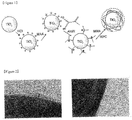
- FIG. 1 is an explanatory view for schematically explaining the method for the cases in which titanium dioxide, methacrylic acid (MAA), and azobisisobutyronitrile (AIBN) are used as the inorganic powder, the monomer for the pressure-sensitive adhesive polymer, and the polymerization initiator.
- titanium dioxide, methacrylic acid (MAA), and azobisisobutyronitrile (AIBN) are used as the inorganic powder, the monomer for the pressure-sensitive adhesive polymer, and the polymerization initiator.
- a formulation of the cosmetics which include the composite powder containing the inorganic powder whose surface is coated with the pressure-sensitive adhesive polymer, is prepared into liquid foundations.
- formulations may be suitably chosen according to a purpose, but the present invention is not particularly limited thereto.
- the cosmetic composition of the present invention may be formulated into, for example, powders, powder pacts, two-way cakes, powder foundations, liquid foundations, cream foundations, concealers, BB creams, CC creams, makeup bases, primers, eyeshadows, blushers, etc.
- the cosmetic composition of the present invention may further include a functional additive and components included in the conventional cosmetic compositions.
- the functional additive may include components selected from the group consisting of water-soluble vitamins, oil-soluble vitamins, polymeric peptides, polymeric polysaccharides, sphingolipids, and seaweed extracts.
- the components included in the conventional cosmetic composition may be mixed together with the functional additive, when necessary.
- blending components included in the cosmetic composition may include an oily component, a moisturizing agent, an emollient, a surfactant, organic and inorganic pigments, an organic powder, a UV absorbent, a preservative, a bactericide, an antioxidant, a plant extract, a pH regulator, an alcohol, a color, a fragrance, a blood flow stimulant, a cooling agent, a control agent, purified water, etc.
- a process of preparing a composite powder P8 was as follows, and the composite powders other than P8 were also obtained in the same manner, except that different monomers were used, respectively, in step 5).
- FIG. 2 is an enlarged image of a surface of the composite powder (P8) of titanium dioxide (TiO 2 ) whose surface is coated with the PVP and PBA while the PVP and PBA are polymerized at a weight ratio of 1:1. It was revealed that the pressure-sensitive adhesive polymers, PVP and PBA, were formed to have a thickness spanning from a minimum of 1.6 nm to a maximum of 5.5 nm.
- the foundations containing the composite powders P1 to P10 listed in Table 2 were prepared using the same components.
- P11 to P13 listed in the following Table 3 included titanium dioxide inorganic powders contained in the conventional foundations. Foundations containing P11 to P13 were prepared using the same components as in Example 2. In this case, OTS represents n-octyl triethoxy silane.
- OTS represents n-octyl triethoxy silane.
- Table 3 Inorganic powder Polymer Product name P11 TiO 2 2% OTS OTS-2 TiO 2 CR50 P12 TiO 2 2% lecithin LTS-TiO 2 R250 P13 TiO 2 5% disodium stearoyl glutamate NAI PFC-407
- Table 4 lists the results obtained by performing an adhesion test on the 13 foundation thus prepared. Adhesion evaluations were performed by an expert panel of 10 examiners, and an evaluation method was performed by drawing cells on the fore arm at a size of 0.4 ⁇ 1.5 cm and counting the rolling number until 40 ⁇ L of contents were completely adhered to the fore arm.
- a questionnaire survey including a residual touch item was performed on the expert panel after the adhesion evaluation.
- the formulation (P3) including PSMA was evaluated to have the highest feeling of residual touch
- the formulations (P1 and P2) including PBMA and PMMA were evaluated to have the next highest feeling of residual touch. Therefore, when the formulations were used alone, the formulations were unsuitable for prescription of products.
- the formulation (P4) including PVP was evaluated to feel light and refreshing.
- the formulation giving a light sense of feeling and having the highest adhesion was evaluated to be the formulation (P8) including PBA and PVP at a mass ratio of 1:1.
- a degree of stability was measured for a week in a temperature-controllable shaking incubator.
- One temperature cycle was as follows: Measurements were performed over a period of 8 hours at each of temperatures of-10 °C, 30 °C, and 45 °C, and performed for one cycle a day for 7 days to determine whether problems such as oil separation, emulsion separation, and the like occurred. The data were obtained a total of 5 times from the formulations including P1 to P13. As a result, it was revealed that all the formulations had good oil dispersibility.
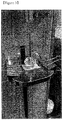
- FIGS. 3 and 4 are an image obtained by performing an adhesiveness test using a durometer, and a diagram showing the results of the adhesiveness test.
- the tests were performed on the formulation containing the conventional P11 powder and the formulation containing the P8 composite powder of the present invention under conditions of a distance of 4.720 mm, a force of 1,176.000 g and a time of 2.360 seconds.
- the test results showed that the adhesiveness of the formulation containing the P8 composite powder of the present invention increased by approximately 5 N, compared to that of the formulation containing the conventional P11 powder.
- FIGS. 5 and 6 are an image obtained by performing a viscoelasticity test using a rheometer, and a diagram showing the results of the viscoelasticity test.
- the tests were performed on the formulation containing the conventional P11 powder and the formulation containing the P8 composite powder of the present invention.
- the formulation containing the P8 composite powder of the present invention had more flowability than the formulation containing the conventional P11 powder because the storage modulus (G°) of the formulation containing the P8 composite powder of the present invention was measured to be lower than that of the formulation containing the conventional P11 powder. Therefore, the formulation containing the P8 composite powder of the present invention was evaluated to have superior applicability when the formulation was applied to the skin.
- the cosmetics formulation of the present invention which included the composite powder containing titanium dioxide whose surface was coated with PBA and PVP at a mass ratio of 1:1, had superior adhesion and applicability, compared to the cosmetics formulation including the conventional simple titanium dioxide inorganic powder.
Landscapes
- Health & Medical Sciences (AREA)
- Life Sciences & Earth Sciences (AREA)
- Public Health (AREA)
- Veterinary Medicine (AREA)
- General Health & Medical Sciences (AREA)
- Animal Behavior & Ethology (AREA)
- Epidemiology (AREA)
- Birds (AREA)
- Inorganic Chemistry (AREA)
- Chemical & Material Sciences (AREA)
- Dermatology (AREA)
- Physics & Mathematics (AREA)
- Mathematical Physics (AREA)
- Cosmetics (AREA)
- Polymerisation Methods In General (AREA)
- Graft Or Block Polymers (AREA)
Abstract
Description
- This application claims priority to and the benefit of Korean Patent Application No.
10-2015-0035098, filed on March 13, 2015 - The present invention relates to a composite powder containing an inorganic powder whose surface is coated with a pressure-sensitive adhesive (PSA) polymer, and more particularly, to a composite powder having improved skin adhesiveness because a surface of an inorganic powder contained in cosmetics is uniformly coated with a pressure-sensitive adhesive polymer, a cosmetic composition containing the same, and a method for preparing the same.
- Makeups play an important role in correction of skin blemishes and emphasis of eyes and lips, making the appearance look beautiful. Among the components mixed in makeup cosmetics, coloring materials are used to conceal stains or marks, allowing the skin to look healthy and be tinted with fascinating tones. The coloring materials used in these cosmetics are divided into organic synthetic coloring agents, natural colors, and inorganic pigments.
- The organic synthetic coloring agents are classified into a dye, lake, and an organic pigment. The dye is a compound which is dissolved in water, oil, and alcohol, and contains an azo group and the like as a chromophore group, and the lake is a type of an insoluble metal salt bound to a water-soluble dye. The natural colors are extracted from plants, animals, and microorganisms. In this case, such materials have been used as additive materials in foods for a long time because the materials produce poor colors, compared to the synthetic coloring agents. In recent years, the natural colors have again come into the spotlight since the natural colors are used for medicines requiring the safety.
- The inorganic pigments are classified into coloring pigments, white pigments, extender pigments, and pearlescent pigments. The coloring pigments give colors to cosmetics, and the white pigments serve to regulate skin coverage power. The extender pigments serve to adjust tones as diluents for coloring pigments and play a great role in senses of feeling in use, such as spreadability, adhesiveness, etc., of products, and formulation of the products. Also, the pearlescent pigments are pigments that endow colors with pearly luster and have a special optical effect, which are used to give an iris color or a metallic luster.
- The extender pigments included in conventional cosmetics include talc, kaolin, silica, talc, sericite, calcium carbonate, magnesium carbonate, a silicic acid anhydride, etc., and serve to adjust the depth of color and control spreadability and feeling of formulations, etc. The white pigments include titanium dioxide, zinc oxide, etc. In general, basic components of the cosmetics include kaolin, talc, silica, and titanium dioxide as powders having white color while maintaining applicability, adhesion and skin coverage power.
- The powders used in the makeup cosmetics require adhesion, hiding power, applicability, spreadability, moisture absorbency, oil absorbency, and skin friendliness, and may be obtained by mixing or applying two or more powders. For example, the inorganic pigments such as titanium dioxide exhibit excellent adhesion, hiding power, etc., but have poor senses of feeling in use such as applicability, spreadability, etc. To make up for these drawbacks, there are known techniques for preparing cosmetics using good hiding power and difference in optical refractive index by coating titanium dioxide with silica at a predetermined ratio to prepare an inorganic composite powder.
- However, the conventional coated inorganic composite powder as described above has a problem in that it do not exhibit satisfactory characteristics such as stability, adhesion, a sense of feeling in use, and sustainability under the skin and external conditions when actually applied onto the skin.
- As a conventional plan to solve these drawbacks, methods of performing water repellency treatment using surface treating agents such as silicon compounds, fluorine compounds, metallic soaps, higher alcohols, fatty acids, metal salts of amino acids, lecithin, and the like have been proposed in the related art. Among theses, a surface treatment method using silicon compounds or metal salts of amino acids is common. In recent years, a surface treatment method using a combination of the two methods has been proposed.
- Meanwhile, the coated powder whose surface is treated with a fatty acid, a metallic soap, and a metal salt has good adhesion to the skin and a good moist sense of feeling in use on the skin, but has poorer water resistance than the powder surface-treated with the silicon compound and exhibits insufficient spreadability due to somewhat a rough sense of feeling when applied onto the skin. Also, because the metal salt is absorbed onto a surface of the powder in the form of fine particles, the metal salt may be detached due to poor stability in a surface-modified state. In addition, the coated powder still has problems regarding degraded color reproduction when used together with other silicon raw materials.
- Registered Korean Patent No.
0795233 - In general, makeup cosmetics are applied to the outermost layer of facial skin when someone wants to put on the makeup, and thus require skin adhesiveness at a level higher than a predetermined level. As a method of improving adhesion, a method of increasing a content of wax having high hardness among oily components, such as ozokerite, carnauba wax, beeswax, etc., or a method of increasing a content of an organic polymer serving as a thickening agent, an inorganic thickening agent or an organic/inorganic hybrid thickening agent has been known. However, because an increase in content of the wax or thickening agent among the oily components results in increased density of a formulation forming crystals among the oily component with respect to the total volume of makeup cosmetics, a drop in fluidity may be caused, causing degradation of applicability and spreadability when the makeup cosmetics are applied to the skin. Therefore, the makeup cosmetics have a drawback in that they have a poor ease of use and a sense of thick feeling in use.
- To solve the above problems, the present invention provides a composite powder containing an inorganic powder whose surface is coated with a pressure-sensitive adhesive polymer, a method for preparing the same, and a cosmetic composition- including the same. In this case, the pressure-sensitive adhesive polymer may be a combination of two or more components, and is used by adjusting a difference in glass transition temperature (Tg) and a content ratio.
- The makeup cosmetics of the present invention, which includes the composite powder containing the inorganic powder whose surface is coated with the pressure-sensitive adhesive polymer, has adhesiveness resulting from the pressure-sensitive adhesive polymer when pressed with an applying and absorbing means (for example, a hand or a puff), thereby exhibiting excellent skin adhesiveness, and thus improved coverage and lasting power.
- Also, the makeup cosmetics of the present invention, which includes the composite powder containing the inorganic powder whose surface is coated with the pressure-sensitive adhesive polymer, has excellent oil dispersibility and superior applicability when applied on the skin, and has an effect of bringing a light and refreshing sense of feeling in use.
-
-
FIG. 1 is a schematic explanatory view of a method for preparing a composite powder according to the present invention. -
FIG. 2 is an enlarged image of a surface of a composite powder containing an inorganic powder whose surface is coated with a pressure-sensitive adhesive polymer according to the present invention. -
FIG. 3 is an image obtained by performing an adhesiveness test on the composite powder containing an inorganic powder whose surface is coated with a pressure-sensitive adhesive polymer according to the present invention, the adhesiveness test being performed using a durometer. -
FIG. 4 is a diagram showing results of the adhesiveness test on the composite powder containing an inorganic powder whose surface is coated with a pressure-sensitive adhesive polymer according to the present invention. -
FIG. 5 is an image obtained by performing a viscoelasticity test on the composite powder containing an inorganic powder whose surface is coated with a pressure-sensitive adhesive polymer according to the present invention, the viscoelasticity test being performed using a rheometer. -
FIG. 6 is a diagram showing results of the viscoelasticity test on the composite powder containing an inorganic powder whose surface is coated with a pressure-sensitive adhesive polymer according to the present invention. - The present invention relates to a composite powder containing an inorganic powder whose surface is coated with a pressure-sensitive adhesive (PSA) polymer, and more particularly, to a composite powder having improved skin adhesiveness because a surface of an inorganic powder contained in the cosmetics is uniformly coated with a pressure-sensitive adhesive polymer, a cosmetic composition containing the same, and a method for preparing the same.
- Hereinafter, the present invention will be described in further detail with reference to the specific embodiments thereof. However, it will be apparent to a person having ordinary skill in the art that the present invention is not limited to the following embodiments, and various modifications and changes can be made without departing from the scope of the invention. Unless otherwise defined in this specification, all the technical and scientific terms used herein also have the same meanings as what are generally understood by a person skilled in the related art to which the present invention belongs. Therefore, repeated descriptions of the same technical configurations and actions as in the prior art are omitted for clarity.
- In this specification, the term "pressure-sensitive adhesive (PSA) polymer" refers to a polymer that exhibits adhesiveness as a pressure-sensitive polymer when a pressure is applied to attach it to an adhesive surface. Based on this principle, the present inventors have tried to enable cosmetics to exhibit skin adhesiveness due to the adhesiveness resulting from a pressure-sensitive adhesive (PSA) polymer when pressed during application and absorption of the makeup cosmetics, and found this technique of coating a surface of an inorganic powder applied to the makeup cosmetics with a pressure-sensitive adhesive polymer. Therefore, the present invention has been completed based on these facts.
- In the present invention, the pressure-sensitive adhesive polymer with which the surface of the inorganic powder is coated may include one selected from the group consisting of polyvinyl pyrrolidone (PVP), polymethyl methacrylate (PMMA), polystyrene (PS), polyaspartic acid (PAA), poly-2-hydroxy ethyl methacrylate (P2HEMA), polystearyl methacrylate (PSMA), poly-2-hydroxy propyl methacrylate (P2HPMA), poly-n-butyl methacrylate (PBMA), polyethyl acrylate (PEA), polybutyl acrylate (PBA), poly-2-ethyl hexyl acrylate (P2EHA), and a combination thereof, but the present invention is not limited thereto.
- The inorganic powder may be selected from the group consisting of titanium dioxide, zinc oxide, sericite, iron oxide, and a combination thereof. Preferably, titanium dioxide may be used.
- A combination of two or more pressure-sensitive adhesive polymers may be used as the composite powder according to the present invention, when necessary. When the pressure-sensitive adhesive polymer has a low glass transition temperature (Tg), initial adhesiveness may be improved due to increased plasticity, resulting in enhanced adhesion. On the other hand, when the pressure-sensitive adhesive polymer has a high glass transition temperature (Tg), applicability and a sense of feeling in use may be improved due to high fluidity. Therefore, when a combination of pressure-sensitive adhesive polymers having different glass transition temperatures is used, it is possible to obtain an effect of mutually complementing the adhesion caused due to the adhesiveness and the applicability and sense of feeling in use caused due to the fluidity.
- The following Table 1 lists glass transition temperatures (Tg) of pressure-sensitive adhesive polymers applicable to coating a surface of an inorganic powder according to the present invention.
[Table 1] PSA polymers Glass transition temperature (Tg) Polyvinyl pyrrolidone (PVP) 150°C Polymethyl methacrylate (PMMA) 105 °C Polystyrene (PS) 95 °C Polyaspartic acid (PAA) 87 °C Poly-2-hydroxy ethyl methacrylate (P2HEMA) 55 °C Polystearyl methacrylate (PSMA) 38 °C Poly-2-hydroxy propyl methacrylate (P2HPMA) 26 °C Poly-n-butyl methacrylate (PBMA) 15 °C Polyethyl acrylate (PEA) -23 °C Polybutyl acrylate (PBA) -50 °C Poly-2-ethyl hexyl acrylate (P2EHA) -70 °C - Among the pressure-sensitive adhesive polymers listed in Table 1, a combination of two polymers whose glass transition temperatures (Tg) differ by 100 °C or higher is preferably used. According to one exemplary embodiment of the present invention, the combinations of two polymers are prepared to include a combination (PBMA + PVP) of poly-n-butyl methacrylate (PBMA) and polyvinyl pyrrolidone (PVP), a combination (PBA + PMMA) of polybutyl acrylate (PBA) and polymethyl methacrylate (PMMA), and a combination (PBA + PVP) of polybutyl acrylate (PBA) and polyvinyl pyrrolidone (PVP).
- To uniformly coat a surface of the inorganic powder with the pressure-sensitive adhesive polymer, the composite powder of the present invention is preferably prepared through dispersion polymerization. Specifically, the composite powder of the present invention may be prepared by a method including:
- 1) dispersing an inorganic powder in a solvent to prepare a solution;
- 2) adding hydrochloric acid and methacrylic acid (MAA) to the solution of step 1) to form an inorganic powder having a positive (+) dipole moment; and
- 3) adding a monomer for the pressure-sensitive adhesive polymer and a polymerization initiator to the solution of step 2) to polymerize a polymer on a surface of the inorganic powder so that the surface of the inorganic powder is coated with the polymer.
-
FIG. 1 is an explanatory view for schematically explaining the method for the cases in which titanium dioxide, methacrylic acid (MAA), and azobisisobutyronitrile (AIBN) are used as the inorganic powder, the monomer for the pressure-sensitive adhesive polymer, and the polymerization initiator. - According to one exemplary embodiment of the present invention, a formulation of the cosmetics, which include the composite powder containing the inorganic powder whose surface is coated with the pressure-sensitive adhesive polymer, is prepared into liquid foundations. For example, formulations may be suitably chosen according to a purpose, but the present invention is not particularly limited thereto. The cosmetic composition of the present invention may be formulated into, for example, powders, powder pacts, two-way cakes, powder foundations, liquid foundations, cream foundations, concealers, BB creams, CC creams, makeup bases, primers, eyeshadows, blushers, etc.
- In addition to the composite powder containing the inorganic powder whose surface is coated with the pressure-sensitive adhesive polymer, the cosmetic composition of the present invention may further include a functional additive and components included in the conventional cosmetic compositions. The functional additive may include components selected from the group consisting of water-soluble vitamins, oil-soluble vitamins, polymeric peptides, polymeric polysaccharides, sphingolipids, and seaweed extracts. Also, the components included in the conventional cosmetic composition may be mixed together with the functional additive, when necessary. In addition, blending components included in the cosmetic composition may include an oily component, a moisturizing agent, an emollient, a surfactant, organic and inorganic pigments, an organic powder, a UV absorbent, a preservative, a bactericide, an antioxidant, a plant extract, a pH regulator, an alcohol, a color, a fragrance, a blood flow stimulant, a cooling agent, a control agent, purified water, etc.
- Hereinafter, preferred embodiments of the present invention are provided to aid in understanding the present invention. However, it will be apparent to a person having ordinary skill in the art that the present invention is not limited to the preferred embodiments, and other applications and modifications are made to the present invention.
- Ten composite powders were prepared through dispersion polymerization to have configurations listed in the following Table 2 with the varying types and contents of the monomers for the pressure-sensitive adhesive polymer.
[Table 2] Inorganic powder Pressure-sensitive adhesive polymer P1 TiO 2 3% PMMA P2 TiO 2 3% PBMA P3 TiO 2 3% PSMA P4 TiO 2 3% PVP P5 TiO 2 3% PMAA P6 TiO 2 4 % PMMA 1% PVP P7 TiO 2 4 % PBMA 1% PVP P8 TiO 2 2 % PBA 2% PVP P9 TiO 2 2 % PBA 1% PMMA P10 TiO 2 2 % PBA 2% PMMA - Among the configurations listed in Table 2, a process of preparing a composite powder P8 was as follows, and the composite powders other than P8 were also obtained in the same manner, except that different monomers were used, respectively, in step 5).
- 1) A double jacket reactor was installed, and a circulating water bath was connected using an overhead stirrer. Thereafter, the temperature was set to 70 °C, cooling water was allowed to flow in a condenser, and a septum was mounted to shut off the air from the outside.
- 2) 157 g of methanol and 67 g of distilled water were added to the reactor to prepare a dispersion.
- 3) 24 g of titanium dioxide (TiO2; CR-50 commercially available from Sunjin Chemical Co., Ltd.) was dispersed in 100 g of methanol and 100 µL of HCl for 5 minutes using ultrasonic waves (5 seconds on/5seconds off), and the resulting dispersion was then kept in an iced water bath to prevent an increase in temperature.
- 4) The titanium dioxide dispersion prepared in step 3) was added to the reactor.
- 5) As a polymerization initiator, 0.024 g of azobisisobutyronitrile (AIBN) was added to monomers of 1.2 g of N-vinyl pyrrolidone and 1.2 g of butyl acrylate (BA), and then stirred until the AIBN was completely dissolved.
- 6) When the reactor was heated to a temperature of 70 °C, the monomer mixture of step 5) was added dropwise using a syringe to prevent the mixture from coming in contact with the walls of the reactor.
- 7) The resulting mixture was reacted for 6 hours, and the reaction product was then recovered.
-
FIG. 2 is an enlarged image of a surface of the composite powder (P8) of titanium dioxide (TiO2) whose surface is coated with the PVP and PBA while the PVP and PBA are polymerized at a weight ratio of 1:1. It was revealed that the pressure-sensitive adhesive polymers, PVP and PBA, were formed to have a thickness spanning from a minimum of 1.6 nm to a maximum of 5.5 nm. - The foundations containing the composite powders P1 to P10 listed in Table 2 were prepared using the same components.
- P11 to P13 listed in the following Table 3 included titanium dioxide inorganic powders contained in the conventional foundations. Foundations containing P11 to P13 were prepared using the same components as in Example 2. In this case, OTS represents n-octyl triethoxy silane.
[Table 3] Inorganic powder Polymer Product name P11 TiO 2 2% OTS OTS-2 TiO2 CR50 P12 TiO 2 2% lecithin LTS-TiO2 R250 P13 TiO 2 5% disodium stearoyl glutamate NAI PFC-407 - As a comparison table, the following Table 4 lists the results obtained by performing an adhesion test on the 13 foundation thus prepared. Adhesion evaluations were performed by an expert panel of 10 examiners, and an evaluation method was performed by drawing cells on the fore arm at a size of 0.4 × 1.5 cm and counting the rolling number until 40 µL of contents were completely adhered to the fore arm.
[Table 4] Inorganic powder Polymer Adhesion evaluation (Grade 10) Feeling characteristics in use P1 TiO 2 3 % PMMA 4 points Feeling thick/ residual P2 TiO 2 3% PBMA 7 points P3 TiO 2 3% PSMA 8 points P4 TiO 2 3% PVP 7 points Slightly adhered P5 TiO 2 3% PMMA - 5 points P6 TiO 2 4 % PMMA 1% PVP 7 points Feeling weighty P7 TiO 2 4 % PBMA 1 % PVP 4 points P8 TiO 2 2 % PBA 2% PVP 9 points Slightly adhered P9 TiO 2 3 % PBA 1 % PMMA 5 points Feeling thick P10 TiO 2 2 % PBA 2 % PMMA 5 points P11 TiO2 OTS 2% 2 points Slightly adhered/no feeling residual/insufficient adhesion P12 TiO 2 2 % lecithin 4 points P13 TiO 2 5% disodium stearoyl glutamate 3 points - From the results of Table 4, it was revealed that the foundations PI to P10 containing titanium dioxide whose surface was coated with the pressure-sensitive adhesive polymer prepared in the preparative examples of the present invention were generally evaluated to have superior adhesion, compared to the conventional foundations P11 to P13.
- Also, a questionnaire survey including a residual touch item was performed on the expert panel after the adhesion evaluation. As a result, the formulation (P3) including PSMA was evaluated to have the highest feeling of residual touch, and the formulations (P1 and P2) including PBMA and PMMA were evaluated to have the next highest feeling of residual touch. Therefore, when the formulations were used alone, the formulations were unsuitable for prescription of products. On the other hand, the formulation (P4) including PVP was evaluated to feel light and refreshing. As a result, the formulation giving a light sense of feeling and having the highest adhesion was evaluated to be the formulation (P8) including PBA and PVP at a mass ratio of 1:1.
- A degree of stability was measured for a week in a temperature-controllable shaking incubator. One temperature cycle was as follows: Measurements were performed over a period of 8 hours at each of temperatures of-10 °C, 30 °C, and 45 °C, and performed for one cycle a day for 7 days to determine whether problems such as oil separation, emulsion separation, and the like occurred. The data were obtained a total of 5 times from the formulations including P1 to P13. As a result, it was revealed that all the formulations had good oil dispersibility.
- For a more objective test, an adhesiveness test was performed.
FIGS. 3 and4 are an image obtained by performing an adhesiveness test using a durometer, and a diagram showing the results of the adhesiveness test. The tests were performed on the formulation containing the conventional P11 powder and the formulation containing the P8 composite powder of the present invention under conditions of a distance of 4.720 mm, a force of 1,176.000 g and a time of 2.360 seconds. The test results showed that the adhesiveness of the formulation containing the P8 composite powder of the present invention increased by approximately 5 N, compared to that of the formulation containing the conventional P11 powder. -
FIGS. 5 and6 are an image obtained by performing a viscoelasticity test using a rheometer, and a diagram showing the results of the viscoelasticity test. The tests were performed on the formulation containing the conventional P11 powder and the formulation containing the P8 composite powder of the present invention. As a result, it was revealed that the formulation containing the P8 composite powder of the present invention had more flowability than the formulation containing the conventional P11 powder because the storage modulus (G°) of the formulation containing the P8 composite powder of the present invention was measured to be lower than that of the formulation containing the conventional P11 powder. Therefore, the formulation containing the P8 composite powder of the present invention was evaluated to have superior applicability when the formulation was applied to the skin. - From the results of Test Examples 1 to 4, it can be seen that the cosmetics formulation of the present invention, which included the composite powder containing titanium dioxide whose surface was coated with PBA and PVP at a mass ratio of 1:1, had superior adhesion and applicability, compared to the cosmetics formulation including the conventional simple titanium dioxide inorganic powder.
Claims (9)
- A composite powder containing an inorganic powder whose surface is coated with a pressure-sensitive adhesive (PSA) polymer.
- The composite powder of claim 1, wherein the pressure-sensitive adhesive polymer comprises one selected from the group consisting of polyvinyl pyrrolidone (PVP), polymethyl methacrylate (PMMA), polystyrene (PS), polyaspartic acid (PAA), poly-2-hydroxy ethyl methacrylate (P2HEMA), polystearyl methacrylate (PSMA), poly-2-hydroxy propyl methacrylate (P2HPMA), poly-n-butyl methacrylate (PBMA), polyethyl acrylate (PEA), polybutyl acrylate (PBA), poly-2-ethyl hexyl acrylate (P2EHA), and a combination thereof.
- The composite powder of claim 1, wherein the inorganic powder comprises one selected from the group consisting of titanium dioxide, zinc oxide, sericite, iron oxide, and a combination thereof.
- The composite powder of claim 2, wherein the pressure-sensitive adhesive polymer is a combination of two polymers whose glass transition temperatures (Tg) differ by 100 °C or higher.
- The composite powder of claim 4, wherein the pressure-sensitive adhesive polymer is a combination of polybutyl acrylate and polyvinyl pyrrolidone.
- The composite powder of claim 5, wherein the polybutyl acrylate and the polyvinyl pyrrolidone are present at a weight ratio of 1:1.
- A cosmetic composition including the composite powder defined in any one of claims 1 to 6.
- A method for preparing a composite powder, comprising:preparing a composite powder containing an inorganic powder whose surface is coated with a pressure-sensitive adhesive polymer by means of dispersion polymerization.
- The method of claim 8, wherein the composite powder is prepared by:1) dispersing an inorganic powder in a solvent to prepare a solution;2) adding hydrochloric acid and methacrylic acid (MAA) to the solution of step 1) to form an inorganic powder having a positive (+) dipole moment; and3) adding a monomer for the pressure-sensitive adhesive polymer and a polymerization initiator to the solution of step 2) to polymerize a polymer on a surface of the inorganic powder so that the surface of the inorganic powder is coated with the polymer.
Applications Claiming Priority (2)
| Application Number | Priority Date | Filing Date | Title |
|---|---|---|---|
| KR1020150035098A KR102311285B1 (en) | 2015-03-13 | 2015-03-13 | Complex Powder of Inorganic Powder Coated with Pressure Sensitive Adhesive Polymer, Cosmetic Composition Comprising Thereof and the Manufacturing Method Thereof |
| PCT/KR2016/002302 WO2016148426A1 (en) | 2015-03-13 | 2016-03-08 | Composite powder having surface of inorganic powder covered with pressue-sensitive adhesive polymer, cosmetic composition containing same, and method for preparing same |
Publications (3)
| Publication Number | Publication Date |
|---|---|
| EP3269351A1 true EP3269351A1 (en) | 2018-01-17 |
| EP3269351A4 EP3269351A4 (en) | 2018-01-31 |
| EP3269351B1 EP3269351B1 (en) | 2020-11-18 |
Family
ID=56919053
Family Applications (1)
| Application Number | Title | Priority Date | Filing Date |
|---|---|---|---|
| EP16765182.7A Active EP3269351B1 (en) | 2015-03-13 | 2016-03-08 | Composite powder having surface of inorganic powder covered with pressure-sensitive adhesive polymer, cosmetic composition containing same, and method for preparing same |
Country Status (7)
| Country | Link |
|---|---|
| US (1) | US20180055742A1 (en) |
| EP (1) | EP3269351B1 (en) |
| JP (1) | JP6815328B2 (en) |
| KR (1) | KR102311285B1 (en) |
| CN (1) | CN107405290B (en) |
| TW (1) | TWI699334B (en) |
| WO (1) | WO2016148426A1 (en) |
Families Citing this family (3)
| Publication number | Priority date | Publication date | Assignee | Title |
|---|---|---|---|---|
| KR102658073B1 (en) * | 2018-11-29 | 2024-04-17 | 가톨릭대학교 산학협력단 | Pressure sensitive adhesive coated silica power |
| KR102855396B1 (en) * | 2020-07-22 | 2025-09-04 | (주)아모레퍼시픽 | Cosmetic Composition For Improving skin Adhesion |
| CN116437890B (en) * | 2020-09-15 | 2025-12-23 | 三井化学株式会社 | Powder cosmetic and cosmetic composition |
Family Cites Families (9)
| Publication number | Priority date | Publication date | Assignee | Title |
|---|---|---|---|---|
| US5876855A (en) * | 1995-12-22 | 1999-03-02 | Minnesota Mining And Manufacturing Company | Pressure-sensitive adhesive suitable for skin and method of preparing |
| JP3959205B2 (en) * | 1999-08-04 | 2007-08-15 | ポーラ化成工業株式会社 | Surface-treated powder and external preparation for skin containing the same |
| FR2832719B1 (en) * | 2001-11-29 | 2004-02-13 | Oreal | ADHESIVE SEQUENCE ETHYLENIC COPOLYMERS, COSMETIC COMPOSITIONS CONTAINING THEM, AND USE OF SUCH COPOLYMERS IN COSMETICS |
| US20050186165A1 (en) * | 2003-11-18 | 2005-08-25 | Estelle Mathonneau | Cosmetic composition based on a cosmetically active compound and a gel comprising at least one crosslinked network of crosslinked polymer particles |
| DE102004020767A1 (en) * | 2004-04-27 | 2005-11-24 | Basf Ag | Surface-modified metal oxides, process for their preparation and their use in cosmetic preparations |
| KR100795233B1 (en) | 2006-11-30 | 2008-01-17 | (주)아모레퍼시픽 | Makeup cosmetic composition containing complexed pigment with improved water repellency, oil repellency and uniformity of application and preparation method thereof |
| EP2110415A1 (en) * | 2008-04-18 | 2009-10-21 | Nanoresins AG | Anorganic nanoparticles and polymer composites created with same |
| WO2010027876A1 (en) * | 2008-08-26 | 2010-03-11 | Hauser Ray L | Substance delivery to skin and other tissues |
| JP5456388B2 (en) * | 2009-07-03 | 2014-03-26 | 株式会社日本触媒 | UV-cutting agent for cosmetics and cosmetics using the same |
-
2015
- 2015-03-13 KR KR1020150035098A patent/KR102311285B1/en active Active
-
2016
- 2016-03-08 JP JP2017548111A patent/JP6815328B2/en active Active
- 2016-03-08 EP EP16765182.7A patent/EP3269351B1/en active Active
- 2016-03-08 US US15/557,715 patent/US20180055742A1/en not_active Abandoned
- 2016-03-08 WO PCT/KR2016/002302 patent/WO2016148426A1/en not_active Ceased
- 2016-03-08 CN CN201680015651.5A patent/CN107405290B/en active Active
- 2016-03-11 TW TW105107444A patent/TWI699334B/en active
Also Published As
| Publication number | Publication date |
|---|---|
| EP3269351B1 (en) | 2020-11-18 |
| JP6815328B2 (en) | 2021-01-20 |
| TW201714831A (en) | 2017-05-01 |
| JP2018513844A (en) | 2018-05-31 |
| US20180055742A1 (en) | 2018-03-01 |
| EP3269351A4 (en) | 2018-01-31 |
| CN107405290A (en) | 2017-11-28 |
| CN107405290B (en) | 2020-12-22 |
| WO2016148426A1 (en) | 2016-09-22 |
| KR102311285B1 (en) | 2021-10-13 |
| KR20160109882A (en) | 2016-09-21 |
| TWI699334B (en) | 2020-07-21 |
Similar Documents
| Publication | Publication Date | Title |
|---|---|---|
| EP1977733B1 (en) | Liquid cosmetic | |
| EP3269350B1 (en) | Composite powder having inorganic powder impregnated with porous polymer, cosmetic composition containing same, and method for preparing same | |
| JP2012504570A (en) | Colored cosmetics containing random terpolymers | |
| KR19990029785A (en) | Complex Powder and Makeup Cosmetics Containing it | |
| EP2164447B1 (en) | Polymer-based pigment-bearing ink | |
| TW201219059A (en) | Solid powder cosmetic | |
| EP3269351B1 (en) | Composite powder having surface of inorganic powder covered with pressure-sensitive adhesive polymer, cosmetic composition containing same, and method for preparing same | |
| JP2003261421A (en) | Composite powder, makeup cosmetic with the same formulated therewith, and method for producing composite powder | |
| JP2001010929A (en) | Composite powder | |
| US9445982B2 (en) | Polymer-based pigment-bearing ink | |
| EP1867664B1 (en) | Cosmetic for eyelash | |
| JP5898417B2 (en) | Manufacturing method for sheet-like cosmetics | |
| EP1712596A2 (en) | Surface-treated pigment and process for producing the same | |
| KR20160001139A (en) | Makeup powder composition containing granules made with of sericite | |
| CN119301180A (en) | Cellulose-silicone composite particles, method for producing the same, and cosmetics | |
| KR102534672B1 (en) | Film-forming Polymer Having Excellent Water- and Oil-repellent Properties, and Long Wear Cosmetic Composition Comprising the Same | |
| KR101782616B1 (en) | Cosmetic powder coated with contact lens polymer or the mimetics thereof and the makeup composition containing the same | |
| JP2011136917A (en) | Solid powder cosmetic | |
| KR100795233B1 (en) | Makeup cosmetic composition containing complexed pigment with improved water repellency, oil repellency and uniformity of application and preparation method thereof | |
| CN121818421A (en) | Surface modification powder and preparation method and application thereof | |
| JP2004161612A (en) | Synthetic mica | |
| MXPA98003304A (en) | Cosmetic composition or dermatology that comprises a movie former movie, make-up process and non-therapeutic treatment process |
Legal Events
| Date | Code | Title | Description |
|---|---|---|---|
| STAA | Information on the status of an ep patent application or granted ep patent |
Free format text: STATUS: THE INTERNATIONAL PUBLICATION HAS BEEN MADE |
|
| PUAI | Public reference made under article 153(3) epc to a published international application that has entered the european phase |
Free format text: ORIGINAL CODE: 0009012 |
|
| STAA | Information on the status of an ep patent application or granted ep patent |
Free format text: STATUS: REQUEST FOR EXAMINATION WAS MADE |
|
| 17P | Request for examination filed |
Effective date: 20170908 |
|
| AK | Designated contracting states |
Kind code of ref document: A1 Designated state(s): AL AT BE BG CH CY CZ DE DK EE ES FI FR GB GR HR HU IE IS IT LI LT LU LV MC MK MT NL NO PL PT RO RS SE SI SK SM TR |
|
| AX | Request for extension of the european patent |
Extension state: BA ME |
|
| A4 | Supplementary search report drawn up and despatched |
Effective date: 20180105 |
|
| RIC1 | Information provided on ipc code assigned before grant |
Ipc: A61Q 1/12 20060101ALI20171222BHEP Ipc: A61K 8/29 20060101AFI20171222BHEP Ipc: A61Q 1/00 20060101ALI20171222BHEP Ipc: A61Q 19/00 20060101ALI20171222BHEP Ipc: A61K 8/72 20060101ALI20171222BHEP Ipc: A61K 8/27 20060101ALI20171222BHEP Ipc: A61K 8/19 20060101ALI20171222BHEP |
|
| DAV | Request for validation of the european patent (deleted) | ||
| DAX | Request for extension of the european patent (deleted) | ||
| STAA | Information on the status of an ep patent application or granted ep patent |
Free format text: STATUS: EXAMINATION IS IN PROGRESS |
|
| 17Q | First examination report despatched |
Effective date: 20181219 |
|
| REG | Reference to a national code |
Ref country code: DE Ref legal event code: R079 Ref document number: 602016048123 Country of ref document: DE Free format text: PREVIOUS MAIN CLASS: A61K0008290000 Ipc: C01G0023080000 |
|
| RIC1 | Information provided on ipc code assigned before grant |
Ipc: A61K 8/81 20060101ALI20200515BHEP Ipc: C01G 23/08 20060101AFI20200515BHEP Ipc: A61Q 1/00 20060101ALI20200515BHEP Ipc: A61K 8/29 20060101ALI20200515BHEP |
|
| GRAP | Despatch of communication of intention to grant a patent |
Free format text: ORIGINAL CODE: EPIDOSNIGR1 |
|
| STAA | Information on the status of an ep patent application or granted ep patent |
Free format text: STATUS: GRANT OF PATENT IS INTENDED |
|
| INTG | Intention to grant announced |
Effective date: 20200707 |
|
| GRAS | Grant fee paid |
Free format text: ORIGINAL CODE: EPIDOSNIGR3 |
|
| GRAA | (expected) grant |
Free format text: ORIGINAL CODE: 0009210 |
|
| STAA | Information on the status of an ep patent application or granted ep patent |
Free format text: STATUS: THE PATENT HAS BEEN GRANTED |
|
| AK | Designated contracting states |
Kind code of ref document: B1 Designated state(s): AL AT BE BG CH CY CZ DE DK EE ES FI FR GB GR HR HU IE IS IT LI LT LU LV MC MK MT NL NO PL PT RO RS SE SI SK SM TR |
|
| REG | Reference to a national code |
Ref country code: GB Ref legal event code: FG4D |
|
| REG | Reference to a national code |
Ref country code: CH Ref legal event code: EP |
|
| REG | Reference to a national code |
Ref country code: IE Ref legal event code: FG4D |
|
| REG | Reference to a national code |
Ref country code: DE Ref legal event code: R096 Ref document number: 602016048123 Country of ref document: DE |
|
| REG | Reference to a national code |
Ref country code: AT Ref legal event code: REF Ref document number: 1335565 Country of ref document: AT Kind code of ref document: T Effective date: 20201215 |
|
| REG | Reference to a national code |
Ref country code: AT Ref legal event code: MK05 Ref document number: 1335565 Country of ref document: AT Kind code of ref document: T Effective date: 20201118 |
|
| REG | Reference to a national code |
Ref country code: NL Ref legal event code: MP Effective date: 20201118 |
|
| PG25 | Lapsed in a contracting state [announced via postgrant information from national office to epo] |
Ref country code: NO Free format text: LAPSE BECAUSE OF FAILURE TO SUBMIT A TRANSLATION OF THE DESCRIPTION OR TO PAY THE FEE WITHIN THE PRESCRIBED TIME-LIMIT Effective date: 20210218 Ref country code: RS Free format text: LAPSE BECAUSE OF FAILURE TO SUBMIT A TRANSLATION OF THE DESCRIPTION OR TO PAY THE FEE WITHIN THE PRESCRIBED TIME-LIMIT Effective date: 20201118 Ref country code: PT Free format text: LAPSE BECAUSE OF FAILURE TO SUBMIT A TRANSLATION OF THE DESCRIPTION OR TO PAY THE FEE WITHIN THE PRESCRIBED TIME-LIMIT Effective date: 20210318 Ref country code: GR Free format text: LAPSE BECAUSE OF FAILURE TO SUBMIT A TRANSLATION OF THE DESCRIPTION OR TO PAY THE FEE WITHIN THE PRESCRIBED TIME-LIMIT Effective date: 20210219 Ref country code: FI Free format text: LAPSE BECAUSE OF FAILURE TO SUBMIT A TRANSLATION OF THE DESCRIPTION OR TO PAY THE FEE WITHIN THE PRESCRIBED TIME-LIMIT Effective date: 20201118 |
|
| PG25 | Lapsed in a contracting state [announced via postgrant information from national office to epo] |
Ref country code: BG Free format text: LAPSE BECAUSE OF FAILURE TO SUBMIT A TRANSLATION OF THE DESCRIPTION OR TO PAY THE FEE WITHIN THE PRESCRIBED TIME-LIMIT Effective date: 20210218 Ref country code: PL Free format text: LAPSE BECAUSE OF FAILURE TO SUBMIT A TRANSLATION OF THE DESCRIPTION OR TO PAY THE FEE WITHIN THE PRESCRIBED TIME-LIMIT Effective date: 20201118 Ref country code: LV Free format text: LAPSE BECAUSE OF FAILURE TO SUBMIT A TRANSLATION OF THE DESCRIPTION OR TO PAY THE FEE WITHIN THE PRESCRIBED TIME-LIMIT Effective date: 20201118 Ref country code: IS Free format text: LAPSE BECAUSE OF FAILURE TO SUBMIT A TRANSLATION OF THE DESCRIPTION OR TO PAY THE FEE WITHIN THE PRESCRIBED TIME-LIMIT Effective date: 20210318 Ref country code: AT Free format text: LAPSE BECAUSE OF FAILURE TO SUBMIT A TRANSLATION OF THE DESCRIPTION OR TO PAY THE FEE WITHIN THE PRESCRIBED TIME-LIMIT Effective date: 20201118 Ref country code: SE Free format text: LAPSE BECAUSE OF FAILURE TO SUBMIT A TRANSLATION OF THE DESCRIPTION OR TO PAY THE FEE WITHIN THE PRESCRIBED TIME-LIMIT Effective date: 20201118 |
|
| REG | Reference to a national code |
Ref country code: LT Ref legal event code: MG9D |
|
| PG25 | Lapsed in a contracting state [announced via postgrant information from national office to epo] |
Ref country code: HR Free format text: LAPSE BECAUSE OF FAILURE TO SUBMIT A TRANSLATION OF THE DESCRIPTION OR TO PAY THE FEE WITHIN THE PRESCRIBED TIME-LIMIT Effective date: 20201118 |
|
| PG25 | Lapsed in a contracting state [announced via postgrant information from national office to epo] |
Ref country code: RO Free format text: LAPSE BECAUSE OF FAILURE TO SUBMIT A TRANSLATION OF THE DESCRIPTION OR TO PAY THE FEE WITHIN THE PRESCRIBED TIME-LIMIT Effective date: 20201118 Ref country code: SK Free format text: LAPSE BECAUSE OF FAILURE TO SUBMIT A TRANSLATION OF THE DESCRIPTION OR TO PAY THE FEE WITHIN THE PRESCRIBED TIME-LIMIT Effective date: 20201118 Ref country code: SM Free format text: LAPSE BECAUSE OF FAILURE TO SUBMIT A TRANSLATION OF THE DESCRIPTION OR TO PAY THE FEE WITHIN THE PRESCRIBED TIME-LIMIT Effective date: 20201118 Ref country code: LT Free format text: LAPSE BECAUSE OF FAILURE TO SUBMIT A TRANSLATION OF THE DESCRIPTION OR TO PAY THE FEE WITHIN THE PRESCRIBED TIME-LIMIT Effective date: 20201118 Ref country code: EE Free format text: LAPSE BECAUSE OF FAILURE TO SUBMIT A TRANSLATION OF THE DESCRIPTION OR TO PAY THE FEE WITHIN THE PRESCRIBED TIME-LIMIT Effective date: 20201118 Ref country code: CZ Free format text: LAPSE BECAUSE OF FAILURE TO SUBMIT A TRANSLATION OF THE DESCRIPTION OR TO PAY THE FEE WITHIN THE PRESCRIBED TIME-LIMIT Effective date: 20201118 |
|
| REG | Reference to a national code |
Ref country code: DE Ref legal event code: R097 Ref document number: 602016048123 Country of ref document: DE |
|
| PG25 | Lapsed in a contracting state [announced via postgrant information from national office to epo] |
Ref country code: DK Free format text: LAPSE BECAUSE OF FAILURE TO SUBMIT A TRANSLATION OF THE DESCRIPTION OR TO PAY THE FEE WITHIN THE PRESCRIBED TIME-LIMIT Effective date: 20201118 |
|
| PLBE | No opposition filed within time limit |
Free format text: ORIGINAL CODE: 0009261 |
|
| STAA | Information on the status of an ep patent application or granted ep patent |
Free format text: STATUS: NO OPPOSITION FILED WITHIN TIME LIMIT |
|
| 26N | No opposition filed |
Effective date: 20210819 |
|
| PG25 | Lapsed in a contracting state [announced via postgrant information from national office to epo] |
Ref country code: AL Free format text: LAPSE BECAUSE OF FAILURE TO SUBMIT A TRANSLATION OF THE DESCRIPTION OR TO PAY THE FEE WITHIN THE PRESCRIBED TIME-LIMIT Effective date: 20201118 Ref country code: IT Free format text: LAPSE BECAUSE OF FAILURE TO SUBMIT A TRANSLATION OF THE DESCRIPTION OR TO PAY THE FEE WITHIN THE PRESCRIBED TIME-LIMIT Effective date: 20201118 Ref country code: MC Free format text: LAPSE BECAUSE OF FAILURE TO SUBMIT A TRANSLATION OF THE DESCRIPTION OR TO PAY THE FEE WITHIN THE PRESCRIBED TIME-LIMIT Effective date: 20201118 Ref country code: NL Free format text: LAPSE BECAUSE OF FAILURE TO SUBMIT A TRANSLATION OF THE DESCRIPTION OR TO PAY THE FEE WITHIN THE PRESCRIBED TIME-LIMIT Effective date: 20201118 |
|
| REG | Reference to a national code |
Ref country code: CH Ref legal event code: PL |
|
| PG25 | Lapsed in a contracting state [announced via postgrant information from national office to epo] |
Ref country code: SI Free format text: LAPSE BECAUSE OF FAILURE TO SUBMIT A TRANSLATION OF THE DESCRIPTION OR TO PAY THE FEE WITHIN THE PRESCRIBED TIME-LIMIT Effective date: 20201118 |
|
| REG | Reference to a national code |
Ref country code: BE Ref legal event code: MM Effective date: 20210331 |
|
| PG25 | Lapsed in a contracting state [announced via postgrant information from national office to epo] |
Ref country code: ES Free format text: LAPSE BECAUSE OF FAILURE TO SUBMIT A TRANSLATION OF THE DESCRIPTION OR TO PAY THE FEE WITHIN THE PRESCRIBED TIME-LIMIT Effective date: 20201118 Ref country code: IE Free format text: LAPSE BECAUSE OF NON-PAYMENT OF DUE FEES Effective date: 20210308 Ref country code: LU Free format text: LAPSE BECAUSE OF NON-PAYMENT OF DUE FEES Effective date: 20210308 Ref country code: LI Free format text: LAPSE BECAUSE OF NON-PAYMENT OF DUE FEES Effective date: 20210331 Ref country code: CH Free format text: LAPSE BECAUSE OF NON-PAYMENT OF DUE FEES Effective date: 20210331 |
|
| PG25 | Lapsed in a contracting state [announced via postgrant information from national office to epo] |
Ref country code: IS Free format text: LAPSE BECAUSE OF FAILURE TO SUBMIT A TRANSLATION OF THE DESCRIPTION OR TO PAY THE FEE WITHIN THE PRESCRIBED TIME-LIMIT Effective date: 20210318 |
|
| PG25 | Lapsed in a contracting state [announced via postgrant information from national office to epo] |
Ref country code: BE Free format text: LAPSE BECAUSE OF NON-PAYMENT OF DUE FEES Effective date: 20210331 |
|
| PG25 | Lapsed in a contracting state [announced via postgrant information from national office to epo] |
Ref country code: CY Free format text: LAPSE BECAUSE OF FAILURE TO SUBMIT A TRANSLATION OF THE DESCRIPTION OR TO PAY THE FEE WITHIN THE PRESCRIBED TIME-LIMIT Effective date: 20201118 |
|
| PG25 | Lapsed in a contracting state [announced via postgrant information from national office to epo] |
Ref country code: HU Free format text: LAPSE BECAUSE OF FAILURE TO SUBMIT A TRANSLATION OF THE DESCRIPTION OR TO PAY THE FEE WITHIN THE PRESCRIBED TIME-LIMIT; INVALID AB INITIO Effective date: 20160308 |
|
| PG25 | Lapsed in a contracting state [announced via postgrant information from national office to epo] |
Ref country code: MK Free format text: LAPSE BECAUSE OF FAILURE TO SUBMIT A TRANSLATION OF THE DESCRIPTION OR TO PAY THE FEE WITHIN THE PRESCRIBED TIME-LIMIT Effective date: 20201118 |
|
| PG25 | Lapsed in a contracting state [announced via postgrant information from national office to epo] |
Ref country code: MT Free format text: LAPSE BECAUSE OF FAILURE TO SUBMIT A TRANSLATION OF THE DESCRIPTION OR TO PAY THE FEE WITHIN THE PRESCRIBED TIME-LIMIT Effective date: 20201118 |
|
| PG25 | Lapsed in a contracting state [announced via postgrant information from national office to epo] |
Ref country code: TR Free format text: LAPSE BECAUSE OF FAILURE TO SUBMIT A TRANSLATION OF THE DESCRIPTION OR TO PAY THE FEE WITHIN THE PRESCRIBED TIME-LIMIT Effective date: 20201118 |
|
| PGFP | Annual fee paid to national office [announced via postgrant information from national office to epo] |
Ref country code: FR Payment date: 20251223 Year of fee payment: 11 |
|
| PGFP | Annual fee paid to national office [announced via postgrant information from national office to epo] |
Ref country code: GB Payment date: 20260108 Year of fee payment: 11 |
|
| PGFP | Annual fee paid to national office [announced via postgrant information from national office to epo] |
Ref country code: DE Payment date: 20251222 Year of fee payment: 11 |