EP3267150A2 - Scanning with frame averaging - Google Patents
Scanning with frame averaging Download PDFInfo
- Publication number
- EP3267150A2 EP3267150A2 EP17175910.3A EP17175910A EP3267150A2 EP 3267150 A2 EP3267150 A2 EP 3267150A2 EP 17175910 A EP17175910 A EP 17175910A EP 3267150 A2 EP3267150 A2 EP 3267150A2
- Authority
- EP
- European Patent Office
- Prior art keywords
- overlapping images
- image
- images
- imaging
- obtaining
- Prior art date
- Legal status (The legal status is an assumption and is not a legal conclusion. Google has not performed a legal analysis and makes no representation as to the accuracy of the status listed.)
- Granted
Links
Images


Classifications
-
- H—ELECTRICITY
- H04—ELECTRIC COMMUNICATION TECHNIQUE
- H04N—PICTORIAL COMMUNICATION, e.g. TELEVISION
- H04N23/00—Cameras or camera modules comprising electronic image sensors; Control thereof
- H04N23/95—Computational photography systems, e.g. light-field imaging systems
- H04N23/951—Computational photography systems, e.g. light-field imaging systems by using two or more images to influence resolution, frame rate or aspect ratio
-
- G—PHYSICS
- G01—MEASURING; TESTING
- G01C—MEASURING DISTANCES, LEVELS OR BEARINGS; SURVEYING; NAVIGATION; GYROSCOPIC INSTRUMENTS; PHOTOGRAMMETRY OR VIDEOGRAMMETRY
- G01C11/00—Photogrammetry or videogrammetry, e.g. stereogrammetry; Photographic surveying
- G01C11/02—Picture taking arrangements specially adapted for photogrammetry or photographic surveying, e.g. controlling overlapping of pictures
- G01C11/025—Picture taking arrangements specially adapted for photogrammetry or photographic surveying, e.g. controlling overlapping of pictures by scanning the object
-
- G—PHYSICS
- G06—COMPUTING OR CALCULATING; COUNTING
- G06T—IMAGE DATA PROCESSING OR GENERATION, IN GENERAL
- G06T5/00—Image enhancement or restoration
- G06T5/50—Image enhancement or restoration using two or more images, e.g. averaging or subtraction
-
- G—PHYSICS
- G06—COMPUTING OR CALCULATING; COUNTING
- G06T—IMAGE DATA PROCESSING OR GENERATION, IN GENERAL
- G06T5/00—Image enhancement or restoration
- G06T5/80—Geometric correction
-
- H—ELECTRICITY
- H04—ELECTRIC COMMUNICATION TECHNIQUE
- H04N—PICTORIAL COMMUNICATION, e.g. TELEVISION
- H04N23/00—Cameras or camera modules comprising electronic image sensors; Control thereof
- H04N23/50—Constructional details
- H04N23/54—Mounting of pick-up tubes, electronic image sensors, deviation or focusing coils
-
- H—ELECTRICITY
- H04—ELECTRIC COMMUNICATION TECHNIQUE
- H04N—PICTORIAL COMMUNICATION, e.g. TELEVISION
- H04N23/00—Cameras or camera modules comprising electronic image sensors; Control thereof
- H04N23/60—Control of cameras or camera modules
- H04N23/69—Control of means for changing angle of the field of view, e.g. optical zoom objectives or electronic zooming
-
- G—PHYSICS
- G06—COMPUTING OR CALCULATING; COUNTING
- G06T—IMAGE DATA PROCESSING OR GENERATION, IN GENERAL
- G06T2207/00—Indexing scheme for image analysis or image enhancement
- G06T2207/10—Image acquisition modality
- G06T2207/10032—Satellite or aerial image; Remote sensing
-
- G—PHYSICS
- G06—COMPUTING OR CALCULATING; COUNTING
- G06T—IMAGE DATA PROCESSING OR GENERATION, IN GENERAL
- G06T2207/00—Indexing scheme for image analysis or image enhancement
- G06T2207/20—Special algorithmic details
- G06T2207/20212—Image combination
- G06T2207/20216—Image averaging
Definitions
- the present disclosure relates to imaging, and more particularly to imaging such as used in obtaining long range oblique images of the ground from aircraft or spacecraft.
- a method of obtaining image data includes scanning an imaging area with an imaging device while obtaining multiple overlapping images of the imaging area. The method also includes transforming the overlapping images by performing frame averaging on the overlapping images to produce at least one enhanced image of the imaging area.
- Scanning an imaging area can include at least one of rotating the imaging device around a gimbal axis while obtaining the overlapping images or rotating a mirror that is optically coupled to the imaging device.
- Obtaining the overlapping images can include obtaining the overlapping images at a frame rate high enough to provide multiple overlapping images of a given area in the imaging area, e.g., a frame rate high enough to provide two or more overlapping images of a given area in the image area.
- Transforming the overlapping images by performing frame averaging can be performed automatically at a coarse level to produce the at least one enhanced image of the overall area.
- the method can include transforming the overlapping images by performing super resolution frame averaging on at least one portion of the at overlapping images to produce at least one super resolution image of the imaging area wherein the at least one super resolution image has a finer sampling than the at least one enhanced image.
- Automatic object detection can be used to select the at least one portion of the overlapping images for producing the at least one super resolution image of a detected object.
- Using automatic object detection can include detecting moving objects within the overlapping images for producing the at least one super resolution image of moving objects detected.
- Transforming the overlapping images can include identifying a region of interest, gathering images from the overlapping images that include the region of interest, performing compensation on the gathered images for optical distortion, compensating for orientation differences among the gathered images, selecting a master image, and registering the gathered images to the master image, wherein frame averaging is performed on the gathered images after they have been registered.
- Compensating for orientation differences can include using motion data and a motion model and/or sensor model.
- Selecting a master image can include at least one of choosing a master image from among the gathered images or selecting a virtual master image to use as the master image for registration.
- a system for obtaining image data includes an imaging sensor optically coupled to optics for forming an image on the imaging sensor.
- the imaging sensor is mounted to a platform configured for scanning the imaging sensor over an imaging area while obtaining overlapping images of the imaging area.
- a module is operatively connected to the imaging sensor to receive and the overlapping images from the imaging sensor and to transform the overlapping images by performing frame averaging on the overlapping images to produce at least one enhanced image of the imaging area.
- the platform can include a gimbal configured to rotate the imaging sensor while obtaining the overlapping images. It is also contemplated that the platform can include a stabilization mirror optically coupled to the imaging device, wherein the stabilization mirror is configured to counteract movement of the gimbal during each exposure while obtaining the overlapping images.
- the module can include machine readable instructions configured to perform any of the image transformation methods described herein.
- Fig. 1 a partial view of an exemplary embodiment of a system, and associated method, in accordance with the disclosure is shown in Fig. 1 and is designated generally by reference character 100.
- the systems and methods described herein can be used to improve imaging, such as long range oblique imaging for aircraft and spacecraft imaging the ground.
- System 100 is mounted to an aircraft 102.
- a method of obtaining image data using system 100 includes scanning an imaging area 104 with an imaging device 106 of system 100, shown in Fig. 2 , while obtaining multiple overlapping images of the imaging area 104.
- the scanning motion of imaging device 106 is indicated schematically in Fig. 1 with the large curved arrow crossing scan lines 108.
- Scan lines 108 schematically represent lines of sight to images obtained of area 104.
- system 100 for obtaining image data includes an imaging device 106, which includes imaging sensor 110 optically coupled to optics 112 for forming an image on the imaging sensor 110.
- Imaging sensor 110 can be a focal plane array, e.g. a two-dimensional array, or any other suitable type of imaging sensor.
- the imaging sensor 110 is mounted to a platform 114 configured for scanning the imaging sensor 110 over an imaging area while obtaining overlapping images of the imaging area.
- the platform 114 includes a gimbal 115 configured to rotate the imaging sensor 110 while obtaining the overlapping images.
- Scanning an imaging area includes rotating the imaging device 106 around a gimbal axis of gimbal 115, as indicated by the large double arrows in Fig.
- Obtaining the overlapping images can include obtaining the overlapping images at a frame rate high enough to provide multiple overlapping images of a given area in the imaging area, e.g., a frame rate high enough to provide two or more overlapping images of a given area in the image area.
- the method also includes transforming the overlapping images 118 by performing frame averaging on the overlapping images 118 to produce an enhanced image 120 of the imaging area.
- Transforming the overlapping images 118 by performing frame averaging can be performed automatically at a coarse level to produce the enhanced image 120.
- the coarse level frame averaging can include determining what pixels from each overlapping image or frame overlap at a sub-pixel sampling distance, and averaging the overlapping pixels. This averaging increases the signal to noise ratio while at the same time the sensor continues to scan a larger area to maintain large area coverage while not increasing requirements on stabilization relative to traditional systems.
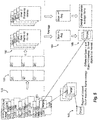
- Fig. 4 is a more detailed illustration of the relationship of frames within a scan and several scans.
- Fig. 4 shows how the frames from each scan overlap for three scans, wherein the ellipsis indicates any suitable number of scans can be used.
- This is an example where four frames overlap each ground point, e.g., frames 112, 113, 114, and the frame labeled Scan1Area1Frame1 all overlap a ground point; frames 121, 122, 123, and 124 all overlap another ground point and so forth. Then all of the first frames are pieced together at a course level, as indicated by the block 150 in Fig. 4 .
- course level images 152 are combined at a course level to form one average frame 154 of the entire area. This will have higher signal to noise ratio than any individual frame. Then the region of interest can be selected to further enhance with super resolution and frame averaging as indicated by reference character 156.
- the method can include transforming the overlapping images 118 by performing super resolution frame averaging on at least one portion 122 of the at overlapping images 118 to produce at least one super resolution image 124 of the imaging area wherein the at least one super resolution image 124 has a finer sampling than the at least one enhanced image 120.
- frame averaging to obtain super resolution image 124 includes increasing the sampling resolution or pixel count for area 122 to enhance detail or the like.
- Automatic object detection can be used to select the at least one portion 122 of the overlapping images 118 for producing the super resolution image 124 of a detected object 126.
- Using automatic object detection can include detecting moving objects within the overlapping images between scans for producing the super resolution image 124 of moving objects detected.
- user object detection can be used without departing from the scope of this disclosure.
- the moving object detection is shown schematically in greater detail.
- the time separation between frames within a scan maybe adequate as described above. However it may also be beneficial to overlap the scans, as indicated by reference character 158 in Fig. 5 , and use this larger time separation, i.e., the time separation from one scan to the next rather than from image to image within a single scan, to provide the moving target detection.
- the frames of each scan are pieced together at a course level as indicated by reference character 160.
- the combined course level images 162 are produced similar to those described with respect to Fig. 4 above. Combining these creates average frames 164. Since the object is moving, the registration includes additional steps beyond those shown in Fig.
- Transforming the overlapping images 118 can include identifying the region of interest, e.g., portion 122, gathering images from the overlapping images 118 that include the region of interest, performing compensation on the gathered images for optical distortion, compensating for orientation differences among the gathered images, selecting a master image, and registering the gathered images to the master image, wherein frame averaging is performed on the gathered images after they have been registered.
- This compensation and registration of images are indicated schematically in Fig. 3 by the double arrows indicating translations and rotation of images 118, and can also include warps or other transformations.
- Compensating for orientation differences can include using motion data and a motion model and/or a sensor model, e.g. from sensors on board aircraft 102 of Fig. 1 .
- a motion model can be useful, e.g., for estimating small movements like between the frames within a scan and can be adequate between scans as well.
- a sensor model could be used to project the pixel to the ground and ground back to the pixel in the other frames. This could be used when the time separation is more significant or the data is from another collection. Selecting a master image can include at least one of choosing a master image from among the gathered images or selecting a virtual master image to use as the master image for registration.
- a module 128 is operatively connected to the imaging sensor 110 to receive and the overlapping images 118 from the imaging sensor 110 and to transform the overlapping images 118 by performing frame averaging on the overlapping images 118 to produce at least one enhanced image of the imaging area as described above.
- the module 128 can include machine readable instructions configured to perform any of the image transformation methods described herein.
- frame averaging can be done while scanning, which provides increased coverage of a larger area and can simultaneously have a separate channel with a line array, for example, collecting imagery of the same area in one or more additional spectral bands.
- a beam splitter can be used to provide the separate channel for simultaneous collection of imagery from a second focal plane.
- aspects of the present embodiments may be embodied as a system, method or computer program product. Accordingly, aspects of the present embodiments may take the form of an entirely hardware embodiment, an entirely software embodiment (including firmware, resident software, micro-code, etc.) or an embodiment combining software and hardware aspects that may all generally be referred to herein as a "circuit,” “module” or “system.” Furthermore, aspects of the present disclosure may take the form of a computer program product embodied in one or more computer readable medium(s) having computer readable program code embodied thereon.
- the computer readable medium may be a computer readable signal medium or a computer readable storage medium.
- a computer readable storage medium may be, for example, but not limited to, an electronic, magnetic, optical, electromagnetic, infrared, or semiconductor system, apparatus, or device, or any suitable combination of the foregoing.
- a computer readable storage medium may be any tangible medium that can contain, or store a program for use by or in connection with an instruction execution system, apparatus, or device.
- a computer readable signal medium may include a propagated data signal with computer readable program code embodied therein, for example, in baseband or as part of a carrier wave. Such a propagated signal may take any of a variety of forms, including, but not limited to, electro-magnetic, optical, or any suitable combination thereof.
- a computer readable signal medium may be any computer readable medium that is not a computer readable storage medium and that can communicate, propagate, or transport a program for use by or in connection with an instruction execution system, apparatus, or device.
- Program code embodied on a computer readable medium may be transmitted using any appropriate medium, including but not limited to wireless, wireline, optical fiber cable, RF, etc., or any suitable combination of the foregoing.
- Computer program code for carrying out operations for aspects of the present disclosure may be written in any combination of one or more programming languages, including an object oriented programming language such as Java, Smalltalk, C++ or the like and conventional procedural programming languages, such as the "C" programming language or similar programming languages.
- the program code may execute entirely on the user's computer, partly on the user's computer, as a stand-alone software package, partly on the user's computer and partly on a remote computer or entirely on the remote computer or server.
- the remote computer may be connected to the user's computer through any type of network, including a local area network (LAN) or a wide area network (WAN), or the connection may be made to an external computer (for example, through the Internet using an Internet Service Provider).
- LAN local area network
- WAN wide area network
- Internet Service Provider for example, AT&T, MCI, Sprint, EarthLink, MSN, GTE, etc.
- These computer program instructions may also be stored in a computer readable medium that can direct a computer, other programmable data processing apparatus, or other devices to function in a particular manner, such that the instructions stored in the computer readable medium produce an article of manufacture including instructions which implement the function/act specified in the flowchart and/or block diagram block or blocks.
- the computer program instructions may also be loaded onto a computer, other programmable data processing apparatus, or other devices to cause a series of operational steps to be performed on the computer, other programmable apparatus or other devices to produce a computer implemented process such that the instructions which execute on the computer or other programmable apparatus provide processes for implementing the functions/acts specified in a flowchart and/or block diagram block or blocks.
Landscapes
- Engineering & Computer Science (AREA)
- Physics & Mathematics (AREA)
- General Physics & Mathematics (AREA)
- Multimedia (AREA)
- Theoretical Computer Science (AREA)
- Signal Processing (AREA)
- Remote Sensing (AREA)
- Radar, Positioning & Navigation (AREA)
- Computing Systems (AREA)
- Studio Devices (AREA)
- Geometry (AREA)
- Image Processing (AREA)
- Transforming Light Signals Into Electric Signals (AREA)
Abstract
Description
- The present disclosure relates to imaging, and more particularly to imaging such as used in obtaining long range oblique images of the ground from aircraft or spacecraft.
- Traditional long range oblique imaging has limitations imposed by the effects of atmosphere including low transmission which reduces the signal to noise ratio, and atmospheric turbulence which causes a wavefront error which in turn softens the image. Atmospheric transmission increases at longer wavelengths and the effects of atmospheric turbulence go down as wavelength increases; however, a longer wavelength requires a bigger aperture to achieve the same limiting spatial resolution. The atmospheric effects can be mitigated by using longer exposure times; however the longer the exposure time, the better must be the stabilization.
- Such conventional methods and systems have generally been considered satisfactory for their intended purpose. However, there is still a need in the art for improved imaging. The present disclosure provides a solution for this need.
- A method of obtaining image data includes scanning an imaging area with an imaging device while obtaining multiple overlapping images of the imaging area. The method also includes transforming the overlapping images by performing frame averaging on the overlapping images to produce at least one enhanced image of the imaging area.
- Scanning an imaging area can include at least one of rotating the imaging device around a gimbal axis while obtaining the overlapping images or rotating a mirror that is optically coupled to the imaging device. Obtaining the overlapping images can include obtaining the overlapping images at a frame rate high enough to provide multiple overlapping images of a given area in the imaging area, e.g., a frame rate high enough to provide two or more overlapping images of a given area in the image area.
- Transforming the overlapping images by performing frame averaging can be performed automatically at a coarse level to produce the at least one enhanced image of the overall area. The method can include transforming the overlapping images by performing super resolution frame averaging on at least one portion of the at overlapping images to produce at least one super resolution image of the imaging area wherein the at least one super resolution image has a finer sampling than the at least one enhanced image. Automatic object detection can be used to select the at least one portion of the overlapping images for producing the at least one super resolution image of a detected object. Using automatic object detection can include detecting moving objects within the overlapping images for producing the at least one super resolution image of moving objects detected.
- Transforming the overlapping images can include identifying a region of interest, gathering images from the overlapping images that include the region of interest, performing compensation on the gathered images for optical distortion, compensating for orientation differences among the gathered images, selecting a master image, and registering the gathered images to the master image, wherein frame averaging is performed on the gathered images after they have been registered. Compensating for orientation differences can include using motion data and a motion model and/or sensor model. Selecting a master image can include at least one of choosing a master image from among the gathered images or selecting a virtual master image to use as the master image for registration.
- A system for obtaining image data includes an imaging sensor optically coupled to optics for forming an image on the imaging sensor. The imaging sensor is mounted to a platform configured for scanning the imaging sensor over an imaging area while obtaining overlapping images of the imaging area. A module is operatively connected to the imaging sensor to receive and the overlapping images from the imaging sensor and to transform the overlapping images by performing frame averaging on the overlapping images to produce at least one enhanced image of the imaging area. The platform can include a gimbal configured to rotate the imaging sensor while obtaining the overlapping images. It is also contemplated that the platform can include a stabilization mirror optically coupled to the imaging device, wherein the stabilization mirror is configured to counteract movement of the gimbal during each exposure while obtaining the overlapping images. The module can include machine readable instructions configured to perform any of the image transformation methods described herein.
- These and other features of the systems and methods of the subject disclosure will become more readily apparent to those skilled in the art from the following detailed description of the preferred embodiments taken in conjunction with the drawings.
- So that those skilled in the art to which the subject disclosure appertains will readily understand how to make and use the devices and methods of the subject disclosure without undue experimentation, preferred embodiments thereof will be described in detail herein below with reference to certain figures, wherein:
-
Fig. 1 is a schematic view of an exemplary embodiment of a system and method in accordance with the present disclosure, showing an aircraft with an imaging system scanning and obtaining multiple overlapping images of an imaging area on the ground; -
Fig. 2 is a schematic view of the imaging system ofFig. 1 , showing the gimbal and stabilization mirror; -
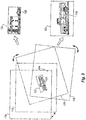
Fig. 3 is a schematic view of a set of overlapping images transformed using an exemplary embodiment of a method in accordance with the present disclosure, showing registration of the overlapping images to allow frame averaging of an area of interest, and showing frame averaging in the area of interest to obtain a super resolution image of the area of interest; -
Fig. 4 is a schematic view of the method ofFig. 3 , showing additional details; and -
Fig. 5 . is a schematic view of an exemplary embodiment of a method of moving object detection and image enhancement in accordance with the present disclosure, showing detection of a moving object by differencing two average frames from different scans. - Reference will now be made to the drawings wherein like reference numerals identify similar structural features or aspects of the subject disclosure. For purposes of explanation and illustration, and not limitation, a partial view of an exemplary embodiment of a system, and associated method, in accordance with the disclosure is shown in
Fig. 1 and is designated generally byreference character 100. Other embodiments of systems and methods in accordance with the disclosure, or aspects thereof, are provided inFigs. 2-3 , as will be described. The systems and methods described herein can be used to improve imaging, such as long range oblique imaging for aircraft and spacecraft imaging the ground. -
System 100 is mounted to anaircraft 102. A method of obtaining imagedata using system 100 includes scanning animaging area 104 with an imaging device 106 ofsystem 100, shown inFig. 2 , while obtaining multiple overlapping images of theimaging area 104. The scanning motion of imaging device 106 is indicated schematically inFig. 1 with the large curved arrow crossingscan lines 108.Scan lines 108 schematically represent lines of sight to images obtained ofarea 104. - With reference now to
Fig. 2 system 100 for obtaining image data includes an imaging device 106, which includesimaging sensor 110 optically coupled tooptics 112 for forming an image on theimaging sensor 110.Imaging sensor 110 can be a focal plane array, e.g. a two-dimensional array, or any other suitable type of imaging sensor. Theimaging sensor 110 is mounted to aplatform 114 configured for scanning theimaging sensor 110 over an imaging area while obtaining overlapping images of the imaging area. Theplatform 114 includes a gimbal 115 configured to rotate theimaging sensor 110 while obtaining the overlapping images. Scanning an imaging area includes rotating the imaging device 106 around a gimbal axis of gimbal 115, as indicated by the large double arrows inFig. 2 , while obtaining the overlapping images. This can optimally include rotating a back scan orstabilization mirror 116 mounted to theplatform 114 that is optically coupled to theimaging device 110. Rotation of the stabilization mirror is indicated inFig. 2 by the small double arrows. Thestabilization mirror 116 is configured to rotate to counteract movement of the gimbal during each exposure while obtaining the overlapping images. Obtaining the overlapping images can include obtaining the overlapping images at a frame rate high enough to provide multiple overlapping images of a given area in the imaging area, e.g., a frame rate high enough to provide two or more overlapping images of a given area in the image area. - With reference now to
Fig. 3 , the method also includes transforming the overlappingimages 118 by performing frame averaging on the overlappingimages 118 to produce anenhanced image 120 of the imaging area. Transforming the overlappingimages 118 by performing frame averaging can be performed automatically at a coarse level to produce theenhanced image 120. The coarse level frame averaging can include determining what pixels from each overlapping image or frame overlap at a sub-pixel sampling distance, and averaging the overlapping pixels. This averaging increases the signal to noise ratio while at the same time the sensor continues to scan a larger area to maintain large area coverage while not increasing requirements on stabilization relative to traditional systems. -
Fig. 4 is a more detailed illustration of the relationship of frames within a scan and several scans.Fig. 4 shows how the frames from each scan overlap for three scans, wherein the ellipsis indicates any suitable number of scans can be used. This is an example where four frames overlap each ground point, e.g., frames 112, 113, 114, and the frame labeled Scan1Area1Frame1 all overlap a ground point;frames block 150 inFig. 4 . The same is done for all of the second frames, third frames, fourth frames, and additional frames if any as indicated by the ellipsis on the right inFig. 4 . Then these combined,course level images 152 are combined at a course level to form oneaverage frame 154 of the entire area. This will have higher signal to noise ratio than any individual frame. Then the region of interest can be selected to further enhance with super resolution and frame averaging as indicated byreference character 156. - With reference again to
Fig. 3 , the method can include transforming the overlappingimages 118 by performing super resolution frame averaging on at least oneportion 122 of the at overlappingimages 118 to produce at least onesuper resolution image 124 of the imaging area wherein the at least onesuper resolution image 124 has a finer sampling than the at least oneenhanced image 120. In other words, frame averaging to obtainsuper resolution image 124 includes increasing the sampling resolution or pixel count forarea 122 to enhance detail or the like. - Automatic object detection can be used to select the at least one
portion 122 of the overlappingimages 118 for producing thesuper resolution image 124 of a detectedobject 126. Using automatic object detection can include detecting moving objects within the overlapping images between scans for producing thesuper resolution image 124 of moving objects detected. Those skilled in the art will readily appreciate that in addition to or in lieu of automatic object detection, user object detection can be used without departing from the scope of this disclosure. - With reference now to
Fig. 5 , the moving object detection is shown schematically in greater detail. The time separation between frames within a scan maybe adequate as described above. However it may also be beneficial to overlap the scans, as indicated byreference character 158 inFig. 5 , and use this larger time separation, i.e., the time separation from one scan to the next rather than from image to image within a single scan, to provide the moving target detection. Similar to the process described above with respect toFig. 4 , the frames of each scan are pieced together at a course level as indicated byreference character 160. The combinedcourse level images 162 are produced similar to those described with respect toFig. 4 above. Combining these creates average frames 164. Since the object is moving, the registration includes additional steps beyond those shown inFig. 4 . Initially one can register the background in order to detect what moved then one can register just what moved and ignore the background, e.g., by differencing the overlap area betweenaverage frames 164, as indicated byreference character 168. The frame averaging andsuper resolution enhancement 166 can then be performed using all the frames of just the moving target. - Transforming the overlapping
images 118 can include identifying the region of interest, e.g.,portion 122, gathering images from the overlappingimages 118 that include the region of interest, performing compensation on the gathered images for optical distortion, compensating for orientation differences among the gathered images, selecting a master image, and registering the gathered images to the master image, wherein frame averaging is performed on the gathered images after they have been registered. This compensation and registration of images are indicated schematically inFig. 3 by the double arrows indicating translations and rotation ofimages 118, and can also include warps or other transformations. Compensating for orientation differences can include using motion data and a motion model and/or a sensor model, e.g. from sensors onboard aircraft 102 ofFig. 1 . A motion model can be useful, e.g., for estimating small movements like between the frames within a scan and can be adequate between scans as well. A sensor model could be used to project the pixel to the ground and ground back to the pixel in the other frames. This could be used when the time separation is more significant or the data is from another collection. Selecting a master image can include at least one of choosing a master image from among the gathered images or selecting a virtual master image to use as the master image for registration. - With reference again to
Fig. 2 , amodule 128 is operatively connected to theimaging sensor 110 to receive and the overlappingimages 118 from theimaging sensor 110 and to transform the overlappingimages 118 by performing frame averaging on the overlappingimages 118 to produce at least one enhanced image of the imaging area as described above. Themodule 128 can include machine readable instructions configured to perform any of the image transformation methods described herein. - In accordance with embodiments in this disclosure, frame averaging can be done while scanning, which provides increased coverage of a larger area and can simultaneously have a separate channel with a line array, for example, collecting imagery of the same area in one or more additional spectral bands. A beam splitter can be used to provide the separate channel for simultaneous collection of imagery from a second focal plane. The improved signal to noise ratio relative to traditional systems allows for image sharpening that may not have been possible with a single frame. The sub pixel samples that can be attained as described above can provide additional detail relative to traditional systems.
- As will be appreciated by those skilled in the art, aspects of the present embodiments may be embodied as a system, method or computer program product. Accordingly, aspects of the present embodiments may take the form of an entirely hardware embodiment, an entirely software embodiment (including firmware, resident software, micro-code, etc.) or an embodiment combining software and hardware aspects that may all generally be referred to herein as a "circuit," "module" or "system." Furthermore, aspects of the present disclosure may take the form of a computer program product embodied in one or more computer readable medium(s) having computer readable program code embodied thereon.
- Any combination of one or more computer readable medium(s) may be utilized. The computer readable medium may be a computer readable signal medium or a computer readable storage medium. A computer readable storage medium may be, for example, but not limited to, an electronic, magnetic, optical, electromagnetic, infrared, or semiconductor system, apparatus, or device, or any suitable combination of the foregoing. More specific examples (a non-exhaustive list) of the computer readable storage medium would include the following: an electrical connection having one or more wires, a portable computer diskette, a hard disk, a random access memory (RAM), a read-only memory (ROM), an erasable programmable read-only memory (EPROM or Flash memory), an optical fiber, a portable compact disc read-only memory (CD-ROM), an optical storage device, a magnetic storage device, or any suitable combination of the foregoing. In the context of this document, a computer readable storage medium may be any tangible medium that can contain, or store a program for use by or in connection with an instruction execution system, apparatus, or device.
- A computer readable signal medium may include a propagated data signal with computer readable program code embodied therein, for example, in baseband or as part of a carrier wave. Such a propagated signal may take any of a variety of forms, including, but not limited to, electro-magnetic, optical, or any suitable combination thereof. A computer readable signal medium may be any computer readable medium that is not a computer readable storage medium and that can communicate, propagate, or transport a program for use by or in connection with an instruction execution system, apparatus, or device.
- Program code embodied on a computer readable medium may be transmitted using any appropriate medium, including but not limited to wireless, wireline, optical fiber cable, RF, etc., or any suitable combination of the foregoing.
- Computer program code for carrying out operations for aspects of the present disclosure may be written in any combination of one or more programming languages, including an object oriented programming language such as Java, Smalltalk, C++ or the like and conventional procedural programming languages, such as the "C" programming language or similar programming languages. The program code may execute entirely on the user's computer, partly on the user's computer, as a stand-alone software package, partly on the user's computer and partly on a remote computer or entirely on the remote computer or server. In the latter scenario, the remote computer may be connected to the user's computer through any type of network, including a local area network (LAN) or a wide area network (WAN), or the connection may be made to an external computer (for example, through the Internet using an Internet Service Provider).
- Aspects of the present disclosure are described above with reference to flowchart illustrations and/or block diagrams of methods, apparatus (systems) and computer program products according to embodiments of the embodiments. It will be understood that each block of the flowchart illustrations and/or block diagrams, and combinations of blocks in the flowchart illustrations and/or block diagrams, can be implemented by computer program instructions. These computer program instructions may be provided to a processor of a general purpose computer, special purpose computer, or other programmable data processing apparatus to produce a machine, such that the instructions, which execute via the processor of the computer or other programmable data processing apparatus, create means for implementing the functions/acts specified in the flowchart and/or block diagram block or blocks.
- These computer program instructions may also be stored in a computer readable medium that can direct a computer, other programmable data processing apparatus, or other devices to function in a particular manner, such that the instructions stored in the computer readable medium produce an article of manufacture including instructions which implement the function/act specified in the flowchart and/or block diagram block or blocks.
- The computer program instructions may also be loaded onto a computer, other programmable data processing apparatus, or other devices to cause a series of operational steps to be performed on the computer, other programmable apparatus or other devices to produce a computer implemented process such that the instructions which execute on the computer or other programmable apparatus provide processes for implementing the functions/acts specified in a flowchart and/or block diagram block or blocks.
- The methods and systems of the present disclosure, as described above and shown in the drawings, provide for imaging with superior properties including improved performance for systems doing long range oblique imaging. While the apparatus and methods of the subject disclosure have been shown and described with reference to preferred embodiments, those skilled in the art will readily appreciate that changes and/or modifications may be made thereto without departing from the scope of the subject disclosure.
Claims (15)
- A method of obtaining image data comprising:scanning an imaging area with an imaging device (106) while obtaining multiple overlapping images of the imaging area; andtransforming the overlapping images (118) by performing frame averaging on the overlapping images (118) to produce at least one enhanced image of the imaging area.
- A method as recited in claim 1, wherein scanning an imaging area includes at least one of rotating the imaging device around a gimbal axis while obtaining the overlapping images or rotating a mirror that is optically coupled to the imaging device.
- A method as recited in claim 1 or 2, wherein obtaining the overlapping images (118) includes obtaining the overlapping images (118) at a frame rate high enough to provide multiple overlapping images of a given area in the imaging area.
- A method as recited in claim 3, wherein obtaining the overlapping images includes obtaining the overlapping images (118) at a frame rate high enough to provide two or more overlapping images of a given area in the image area.
- A method as recited in any preceding claim, wherein transforming the overlapping images (118) by performing frame averaging is performed automatically at a coarse level to produce the at least one enhanced image, and further comprising:transfonning the overlapping images (118) by performing super resolution frame averaging on at least one portion of the at overlapping images to produce at least one super resolution image of the imaging area wherein the at least one super resolution image has a finer sampling than the at least one enhanced image.
- A method as recited in claim 5, further comprising: using automatic object detection to select the at least one portion of the overlapping images for producing the at least one super resolution image of a detected object.
- A method as recited in claim 6, wherein using automatic object detection includes detecting moving objects within the overlapping images for producing the at least one super resolution image of moving objects detected.
- A method as recited in any preceding claim, wherein transforming the overlapping images (118) includes identifying a region of interest, gathering images from the overlapping images (118) that include the region of interest, performing compensation on the gathered images for optical distortion, compensating for orientation differences among the gathered images, selecting a master image, and registering the gathered images to the master image, wherein frame averaging is performed on the gathered images after they have been registered.
- A method as recited in claim 8, wherein compensating for orientation differences includes using motion data and a motion model and/or sensor model.
- A method as recite in claim 8, wherein selecting a master image includes at least one of choosing a master image from among the gathered images or selecting a virtual master image to use as the master image for registration.
- A system (100) for obtaining image data comprising:an imaging sensor (110) optically coupled to optics (112) for forming an image on the imaging sensor (110);the imaging sensor (110) being mounted to a platform (114) configured for scanning the imaging sensor (110) over an imaging area while obtaining overlapping images of the imaging area; anda module (128) operatively connected to the imaging sensor to receive the overlapping images and to transform the overlapping images (118) by performing frame averaging on the overlapping images to produce at least one enhanced image of the imaging area.
- A system as recited in claim 11, wherein the platform (114) includes a gimbal configured to rotate the imaging sensor while obtaining the overlapping images (118).
- A system as recited in claim 12, wherein the platform (114) includes a stabilization mirror optically coupled to the imaging device, wherein the stabilization mirror is configured to counteract movement of the gimbal during each exposure while obtaining the overlapping images (118).
- A system as recited in claim 11, wherein the module (128) includes machine readable instructions configured to:transform the overlapping images (118) by performing frame averaging automatically at a coarse level to produce the at least one enhanced image; andtransform the overlapping images (118) by performing super resolution frame averaging on at least one portion of the at overlapping images to produce at least one super resolution image of the imaging area wherein the at least one super resolution image has a finer sampling than the at least one enhanced image.
- A system as recited in claim 14, wherein the module (128) includes machine readable instructions configured to use automatic object detection to select the at least one portion of the overlapping images for producing the at least one super resolution image of a detected object.
Applications Claiming Priority (1)
| Application Number | Priority Date | Filing Date | Title |
|---|---|---|---|
| US15/181,693 US10116863B2 (en) | 2016-06-14 | 2016-06-14 | Scanning with frame averaging |
Publications (3)
| Publication Number | Publication Date |
|---|---|
| EP3267150A2 true EP3267150A2 (en) | 2018-01-10 |
| EP3267150A3 EP3267150A3 (en) | 2018-04-18 |
| EP3267150B1 EP3267150B1 (en) | 2021-12-01 |
Family
ID=59294901
Family Applications (1)
| Application Number | Title | Priority Date | Filing Date |
|---|---|---|---|
| EP17175910.3A Active EP3267150B1 (en) | 2016-06-14 | 2017-06-14 | Scanning with frame averaging |
Country Status (2)
| Country | Link |
|---|---|
| US (2) | US10116863B2 (en) |
| EP (1) | EP3267150B1 (en) |
Cited By (1)
| Publication number | Priority date | Publication date | Assignee | Title |
|---|---|---|---|---|
| CN108955642A (en) * | 2018-05-07 | 2018-12-07 | 江苏师范大学 | A kind of large format equivalent center projection image seamless joint method |
Families Citing this family (6)
| Publication number | Priority date | Publication date | Assignee | Title |
|---|---|---|---|---|
| US11187909B2 (en) | 2017-01-31 | 2021-11-30 | Microsoft Technology Licensing, Llc | Text rendering by microshifting the display in a head mounted display |
| US10504397B2 (en) | 2017-01-31 | 2019-12-10 | Microsoft Technology Licensing, Llc | Curved narrowband illuminant display for head mounted display |
| US10354140B2 (en) * | 2017-01-31 | 2019-07-16 | Microsoft Technology Licensing, Llc | Video noise reduction for video augmented reality system |
| US10298840B2 (en) | 2017-01-31 | 2019-05-21 | Microsoft Technology Licensing, Llc | Foveated camera for video augmented reality and head mounted display |
| US11651474B2 (en) | 2020-11-04 | 2023-05-16 | Bae Systems Information And Electronic Systems Integration Inc. | Real-time super resolution at long standoff ranges |
| US12340598B2 (en) * | 2023-08-21 | 2025-06-24 | Telenav, Inc. | Compute system with visual front-end processing mechanism and method of operation thereof |
Family Cites Families (16)
| Publication number | Priority date | Publication date | Assignee | Title |
|---|---|---|---|---|
| DE19822249A1 (en) * | 1998-05-18 | 1999-11-25 | Honeywell Ag | Method for scanning images from the air |
| US6535650B1 (en) * | 1998-07-21 | 2003-03-18 | Intel Corporation | Creating high resolution images |
| US7103235B2 (en) | 2001-04-25 | 2006-09-05 | Lockheed Martin Corporation | Extended range image processing for electro-optical systems |
| US7308342B2 (en) * | 2004-01-23 | 2007-12-11 | Rafael Armament Development Authority Ltd. | Airborne reconnaissance system |
| JP2007206919A (en) * | 2006-02-01 | 2007-08-16 | Sony Corp | Display control apparatus and method, program, and recording medium |
| US20090146953A1 (en) * | 2006-10-30 | 2009-06-11 | Imu Solutions, Inc. | Methods for processing data from accelerometer in anticipating real-time cursor control movements |
| DE102007001116A1 (en) * | 2007-01-04 | 2008-07-10 | Siemens Ag | Method for registering three image datasets of object having anatomy, involves calculating overlapping grades between determined anatomical areas of image data set |
| US9974509B2 (en) * | 2008-11-18 | 2018-05-22 | Sync-Rx Ltd. | Image super enhancement |
| KR101016656B1 (en) * | 2009-05-19 | 2011-02-25 | 주식회사신도리코 | Image forming apparatus having scanning function and scanning method thereof |
| US8577518B2 (en) * | 2009-05-27 | 2013-11-05 | American Aerospace Advisors, Inc. | Airborne right of way autonomous imager |
| JP6043187B2 (en) * | 2010-03-12 | 2016-12-14 | コーニンクレッカ フィリップス エヌ ヴェKoninklijke Philips N.V. | Visualization of motion in angiographic images |
| US8970720B2 (en) * | 2010-07-26 | 2015-03-03 | Apple Inc. | Automatic digital camera photography mode selection |
| IL207590A (en) | 2010-08-12 | 2016-11-30 | Rafael Advanced Defense Systems Ltd | Method and system for increasing the size of the area scanned by an airborne electro-optic reconnaissance system in a given time |
| US8953012B2 (en) | 2012-02-13 | 2015-02-10 | Raytheon Company | Multi-plenoptic system with image stacking and method for wide field-of-regard high-resolution imaging |
| GB201313680D0 (en) * | 2013-07-31 | 2014-01-08 | Mbda Uk Ltd | Image processing |
| KR102251242B1 (en) * | 2014-11-26 | 2021-05-12 | 삼성전자주식회사 | Apparatus and Method for Computer Aided Diagnosis |
-
2016
- 2016-06-14 US US15/181,693 patent/US10116863B2/en active Active
-
2017
- 2017-06-14 EP EP17175910.3A patent/EP3267150B1/en active Active
-
2018
- 2018-10-11 US US16/157,690 patent/US10873700B2/en active Active
Non-Patent Citations (1)
| Title |
|---|
| None |
Cited By (2)
| Publication number | Priority date | Publication date | Assignee | Title |
|---|---|---|---|---|
| CN108955642A (en) * | 2018-05-07 | 2018-12-07 | 江苏师范大学 | A kind of large format equivalent center projection image seamless joint method |
| CN108955642B (en) * | 2018-05-07 | 2020-09-01 | 江苏师范大学 | A seamless stitching method for large-format equivalent central projection images |
Also Published As
| Publication number | Publication date |
|---|---|
| US20170359510A1 (en) | 2017-12-14 |
| US10873700B2 (en) | 2020-12-22 |
| EP3267150B1 (en) | 2021-12-01 |
| US20190098208A1 (en) | 2019-03-28 |
| US10116863B2 (en) | 2018-10-30 |
| EP3267150A3 (en) | 2018-04-18 |
Similar Documents
| Publication | Publication Date | Title |
|---|---|---|
| US10873700B2 (en) | Scanning with frame averaging | |
| CN111222395B (en) | Target detection method and device and electronic equipment | |
| Ayhan et al. | A novel utilization of image registration techniques to process mastcam images in mars rover with applications to image fusion, pixel clustering, and anomaly detection | |
| CN110427917B (en) | Method and device for detecting key points | |
| US10578735B2 (en) | Multilook coherent change detection | |
| US11290704B2 (en) | Three dimensional scanning system and framework | |
| US10911680B2 (en) | Method and system of geolocation and attitude correction for mobile rolling shutter cameras | |
| JP6467776B2 (en) | Ranging system, information processing apparatus, information processing method, and program | |
| JP2017117462A5 (en) | ||
| WO2012053521A1 (en) | Optical information processing device, optical information processing method, optical information processing system, and optical information processing program | |
| JP6233869B2 (en) | Image processing apparatus, image processing apparatus control method, and program | |
| CN113950820B (en) | Correction for pixel-to-pixel signal spread | |
| US8995793B1 (en) | Moving object super-resolution systems and methods | |
| EP3994516B1 (en) | System and method for generating an image | |
| US20170227642A1 (en) | Stereo range with lidar correction | |
| US10204405B2 (en) | Apparatus and method for parameterizing a plant | |
| Zhao et al. | Phenotyping of individual apple tree in modern orchard with novel smartphone-based heterogeneous binocular vision and YOLOv5s | |
| KR102235018B1 (en) | Apparatus for aligning multiple camera images having different resolutions and method thereof | |
| CN116883235A (en) | Distributed photoelectric oriented image stitching method and device | |
| CN115018709B (en) | A method for rock wall reconstruction using image stitching | |
| US20190166314A1 (en) | Ortho-selfie distortion correction using multiple sources | |
| KR20190136363A (en) | The Connection System for Remote Sensing data and Cloud-Based Platform | |
| CN119693991B (en) | Face recognition method and system based on light field camera | |
| EP4073754B1 (en) | Joint visual object detection and object mapping to a 3d model | |
| Rivera et al. | Real-time Processing Solution for Single-Photon Sensitive Geiger-mode APD Based Airborne Lidar Systems |
Legal Events
| Date | Code | Title | Description |
|---|---|---|---|
| PUAI | Public reference made under article 153(3) epc to a published international application that has entered the european phase |
Free format text: ORIGINAL CODE: 0009012 |
|
| STAA | Information on the status of an ep patent application or granted ep patent |
Free format text: STATUS: THE APPLICATION HAS BEEN PUBLISHED |
|
| AK | Designated contracting states |
Kind code of ref document: A2 Designated state(s): AL AT BE BG CH CY CZ DE DK EE ES FI FR GB GR HR HU IE IS IT LI LT LU LV MC MK MT NL NO PL PT RO RS SE SI SK SM TR |
|
| AX | Request for extension of the european patent |
Extension state: BA ME |
|
| PUAL | Search report despatched |
Free format text: ORIGINAL CODE: 0009013 |
|
| AK | Designated contracting states |
Kind code of ref document: A3 Designated state(s): AL AT BE BG CH CY CZ DE DK EE ES FI FR GB GR HR HU IE IS IT LI LT LU LV MC MK MT NL NO PL PT RO RS SE SI SK SM TR |
|
| AX | Request for extension of the european patent |
Extension state: BA ME |
|
| RIC1 | Information provided on ipc code assigned before grant |
Ipc: G01C 11/02 20060101AFI20180312BHEP Ipc: G06T 7/38 20170101ALI20180312BHEP |
|
| STAA | Information on the status of an ep patent application or granted ep patent |
Free format text: STATUS: REQUEST FOR EXAMINATION WAS MADE |
|
| 17P | Request for examination filed |
Effective date: 20181018 |
|
| RBV | Designated contracting states (corrected) |
Designated state(s): AL AT BE BG CH CY CZ DE DK EE ES FI FR GB GR HR HU IE IS IT LI LT LU LV MC MK MT NL NO PL PT RO RS SE SI SK SM TR |
|
| STAA | Information on the status of an ep patent application or granted ep patent |
Free format text: STATUS: EXAMINATION IS IN PROGRESS |
|
| 17Q | First examination report despatched |
Effective date: 20191031 |
|
| GRAP | Despatch of communication of intention to grant a patent |
Free format text: ORIGINAL CODE: EPIDOSNIGR1 |
|
| STAA | Information on the status of an ep patent application or granted ep patent |
Free format text: STATUS: GRANT OF PATENT IS INTENDED |
|
| INTG | Intention to grant announced |
Effective date: 20210616 |
|
| GRAS | Grant fee paid |
Free format text: ORIGINAL CODE: EPIDOSNIGR3 |
|
| GRAA | (expected) grant |
Free format text: ORIGINAL CODE: 0009210 |
|
| STAA | Information on the status of an ep patent application or granted ep patent |
Free format text: STATUS: THE PATENT HAS BEEN GRANTED |
|
| AK | Designated contracting states |
Kind code of ref document: B1 Designated state(s): AL AT BE BG CH CY CZ DE DK EE ES FI FR GB GR HR HU IE IS IT LI LT LU LV MC MK MT NL NO PL PT RO RS SE SI SK SM TR |
|
| REG | Reference to a national code |
Ref country code: GB Ref legal event code: FG4D |
|
| REG | Reference to a national code |
Ref country code: AT Ref legal event code: REF Ref document number: 1452164 Country of ref document: AT Kind code of ref document: T Effective date: 20211215 Ref country code: CH Ref legal event code: EP |
|
| REG | Reference to a national code |
Ref country code: IE Ref legal event code: FG4D |
|
| REG | Reference to a national code |
Ref country code: DE Ref legal event code: R096 Ref document number: 602017050054 Country of ref document: DE |
|
| REG | Reference to a national code |
Ref country code: LT Ref legal event code: MG9D |
|
| REG | Reference to a national code |
Ref country code: NL Ref legal event code: MP Effective date: 20211201 |
|
| REG | Reference to a national code |
Ref country code: AT Ref legal event code: MK05 Ref document number: 1452164 Country of ref document: AT Kind code of ref document: T Effective date: 20211201 |
|
| PG25 | Lapsed in a contracting state [announced via postgrant information from national office to epo] |
Ref country code: RS Free format text: LAPSE BECAUSE OF FAILURE TO SUBMIT A TRANSLATION OF THE DESCRIPTION OR TO PAY THE FEE WITHIN THE PRESCRIBED TIME-LIMIT Effective date: 20211201 Ref country code: LT Free format text: LAPSE BECAUSE OF FAILURE TO SUBMIT A TRANSLATION OF THE DESCRIPTION OR TO PAY THE FEE WITHIN THE PRESCRIBED TIME-LIMIT Effective date: 20211201 Ref country code: FI Free format text: LAPSE BECAUSE OF FAILURE TO SUBMIT A TRANSLATION OF THE DESCRIPTION OR TO PAY THE FEE WITHIN THE PRESCRIBED TIME-LIMIT Effective date: 20211201 Ref country code: BG Free format text: LAPSE BECAUSE OF FAILURE TO SUBMIT A TRANSLATION OF THE DESCRIPTION OR TO PAY THE FEE WITHIN THE PRESCRIBED TIME-LIMIT Effective date: 20220301 Ref country code: AT Free format text: LAPSE BECAUSE OF FAILURE TO SUBMIT A TRANSLATION OF THE DESCRIPTION OR TO PAY THE FEE WITHIN THE PRESCRIBED TIME-LIMIT Effective date: 20211201 |
|
| PG25 | Lapsed in a contracting state [announced via postgrant information from national office to epo] |
Ref country code: SE Free format text: LAPSE BECAUSE OF FAILURE TO SUBMIT A TRANSLATION OF THE DESCRIPTION OR TO PAY THE FEE WITHIN THE PRESCRIBED TIME-LIMIT Effective date: 20211201 Ref country code: PL Free format text: LAPSE BECAUSE OF FAILURE TO SUBMIT A TRANSLATION OF THE DESCRIPTION OR TO PAY THE FEE WITHIN THE PRESCRIBED TIME-LIMIT Effective date: 20211201 Ref country code: NO Free format text: LAPSE BECAUSE OF FAILURE TO SUBMIT A TRANSLATION OF THE DESCRIPTION OR TO PAY THE FEE WITHIN THE PRESCRIBED TIME-LIMIT Effective date: 20220301 Ref country code: LV Free format text: LAPSE BECAUSE OF FAILURE TO SUBMIT A TRANSLATION OF THE DESCRIPTION OR TO PAY THE FEE WITHIN THE PRESCRIBED TIME-LIMIT Effective date: 20211201 Ref country code: HR Free format text: LAPSE BECAUSE OF FAILURE TO SUBMIT A TRANSLATION OF THE DESCRIPTION OR TO PAY THE FEE WITHIN THE PRESCRIBED TIME-LIMIT Effective date: 20211201 Ref country code: GR Free format text: LAPSE BECAUSE OF FAILURE TO SUBMIT A TRANSLATION OF THE DESCRIPTION OR TO PAY THE FEE WITHIN THE PRESCRIBED TIME-LIMIT Effective date: 20220302 |
|
| PG25 | Lapsed in a contracting state [announced via postgrant information from national office to epo] |
Ref country code: NL Free format text: LAPSE BECAUSE OF FAILURE TO SUBMIT A TRANSLATION OF THE DESCRIPTION OR TO PAY THE FEE WITHIN THE PRESCRIBED TIME-LIMIT Effective date: 20211201 |
|
| PG25 | Lapsed in a contracting state [announced via postgrant information from national office to epo] |
Ref country code: SM Free format text: LAPSE BECAUSE OF FAILURE TO SUBMIT A TRANSLATION OF THE DESCRIPTION OR TO PAY THE FEE WITHIN THE PRESCRIBED TIME-LIMIT Effective date: 20211201 Ref country code: SK Free format text: LAPSE BECAUSE OF FAILURE TO SUBMIT A TRANSLATION OF THE DESCRIPTION OR TO PAY THE FEE WITHIN THE PRESCRIBED TIME-LIMIT Effective date: 20211201 Ref country code: RO Free format text: LAPSE BECAUSE OF FAILURE TO SUBMIT A TRANSLATION OF THE DESCRIPTION OR TO PAY THE FEE WITHIN THE PRESCRIBED TIME-LIMIT Effective date: 20211201 Ref country code: PT Free format text: LAPSE BECAUSE OF FAILURE TO SUBMIT A TRANSLATION OF THE DESCRIPTION OR TO PAY THE FEE WITHIN THE PRESCRIBED TIME-LIMIT Effective date: 20220401 Ref country code: ES Free format text: LAPSE BECAUSE OF FAILURE TO SUBMIT A TRANSLATION OF THE DESCRIPTION OR TO PAY THE FEE WITHIN THE PRESCRIBED TIME-LIMIT Effective date: 20211201 Ref country code: EE Free format text: LAPSE BECAUSE OF FAILURE TO SUBMIT A TRANSLATION OF THE DESCRIPTION OR TO PAY THE FEE WITHIN THE PRESCRIBED TIME-LIMIT Effective date: 20211201 Ref country code: CZ Free format text: LAPSE BECAUSE OF FAILURE TO SUBMIT A TRANSLATION OF THE DESCRIPTION OR TO PAY THE FEE WITHIN THE PRESCRIBED TIME-LIMIT Effective date: 20211201 |
|
| REG | Reference to a national code |
Ref country code: DE Ref legal event code: R097 Ref document number: 602017050054 Country of ref document: DE |
|
| PG25 | Lapsed in a contracting state [announced via postgrant information from national office to epo] |
Ref country code: IS Free format text: LAPSE BECAUSE OF FAILURE TO SUBMIT A TRANSLATION OF THE DESCRIPTION OR TO PAY THE FEE WITHIN THE PRESCRIBED TIME-LIMIT Effective date: 20220401 |
|
| PLBE | No opposition filed within time limit |
Free format text: ORIGINAL CODE: 0009261 |
|
| STAA | Information on the status of an ep patent application or granted ep patent |
Free format text: STATUS: NO OPPOSITION FILED WITHIN TIME LIMIT |
|
| PG25 | Lapsed in a contracting state [announced via postgrant information from national office to epo] |
Ref country code: DK Free format text: LAPSE BECAUSE OF FAILURE TO SUBMIT A TRANSLATION OF THE DESCRIPTION OR TO PAY THE FEE WITHIN THE PRESCRIBED TIME-LIMIT Effective date: 20211201 Ref country code: AL Free format text: LAPSE BECAUSE OF FAILURE TO SUBMIT A TRANSLATION OF THE DESCRIPTION OR TO PAY THE FEE WITHIN THE PRESCRIBED TIME-LIMIT Effective date: 20211201 |
|
| 26N | No opposition filed |
Effective date: 20220902 |
|
| PG25 | Lapsed in a contracting state [announced via postgrant information from national office to epo] |
Ref country code: SI Free format text: LAPSE BECAUSE OF FAILURE TO SUBMIT A TRANSLATION OF THE DESCRIPTION OR TO PAY THE FEE WITHIN THE PRESCRIBED TIME-LIMIT Effective date: 20211201 |
|
| REG | Reference to a national code |
Ref country code: DE Ref legal event code: R119 Ref document number: 602017050054 Country of ref document: DE |
|
| PG25 | Lapsed in a contracting state [announced via postgrant information from national office to epo] |
Ref country code: MC Free format text: LAPSE BECAUSE OF FAILURE TO SUBMIT A TRANSLATION OF THE DESCRIPTION OR TO PAY THE FEE WITHIN THE PRESCRIBED TIME-LIMIT Effective date: 20211201 |
|
| REG | Reference to a national code |
Ref country code: CH Ref legal event code: PL |
|
| REG | Reference to a national code |
Ref country code: BE Ref legal event code: MM Effective date: 20220630 |
|
| PG25 | Lapsed in a contracting state [announced via postgrant information from national office to epo] |
Ref country code: LU Free format text: LAPSE BECAUSE OF NON-PAYMENT OF DUE FEES Effective date: 20220614 Ref country code: LI Free format text: LAPSE BECAUSE OF NON-PAYMENT OF DUE FEES Effective date: 20220630 Ref country code: IE Free format text: LAPSE BECAUSE OF NON-PAYMENT OF DUE FEES Effective date: 20220614 Ref country code: CH Free format text: LAPSE BECAUSE OF NON-PAYMENT OF DUE FEES Effective date: 20220630 |
|
| PG25 | Lapsed in a contracting state [announced via postgrant information from national office to epo] |
Ref country code: IT Free format text: LAPSE BECAUSE OF FAILURE TO SUBMIT A TRANSLATION OF THE DESCRIPTION OR TO PAY THE FEE WITHIN THE PRESCRIBED TIME-LIMIT Effective date: 20211201 Ref country code: DE Free format text: LAPSE BECAUSE OF NON-PAYMENT OF DUE FEES Effective date: 20230103 Ref country code: BE Free format text: LAPSE BECAUSE OF NON-PAYMENT OF DUE FEES Effective date: 20220630 |
|
| P01 | Opt-out of the competence of the unified patent court (upc) registered |
Effective date: 20230522 |
|
| PG25 | Lapsed in a contracting state [announced via postgrant information from national office to epo] |
Ref country code: HU Free format text: LAPSE BECAUSE OF FAILURE TO SUBMIT A TRANSLATION OF THE DESCRIPTION OR TO PAY THE FEE WITHIN THE PRESCRIBED TIME-LIMIT; INVALID AB INITIO Effective date: 20170614 |
|
| PG25 | Lapsed in a contracting state [announced via postgrant information from national office to epo] |
Ref country code: MK Free format text: LAPSE BECAUSE OF FAILURE TO SUBMIT A TRANSLATION OF THE DESCRIPTION OR TO PAY THE FEE WITHIN THE PRESCRIBED TIME-LIMIT Effective date: 20211201 Ref country code: CY Free format text: LAPSE BECAUSE OF FAILURE TO SUBMIT A TRANSLATION OF THE DESCRIPTION OR TO PAY THE FEE WITHIN THE PRESCRIBED TIME-LIMIT Effective date: 20211201 |
|
| PG25 | Lapsed in a contracting state [announced via postgrant information from national office to epo] |
Ref country code: TR Free format text: LAPSE BECAUSE OF FAILURE TO SUBMIT A TRANSLATION OF THE DESCRIPTION OR TO PAY THE FEE WITHIN THE PRESCRIBED TIME-LIMIT Effective date: 20211201 |
|
| PG25 | Lapsed in a contracting state [announced via postgrant information from national office to epo] |
Ref country code: MT Free format text: LAPSE BECAUSE OF FAILURE TO SUBMIT A TRANSLATION OF THE DESCRIPTION OR TO PAY THE FEE WITHIN THE PRESCRIBED TIME-LIMIT Effective date: 20211201 |
|
| PGFP | Annual fee paid to national office [announced via postgrant information from national office to epo] |
Ref country code: GB Payment date: 20250520 Year of fee payment: 9 |
|
| PGFP | Annual fee paid to national office [announced via postgrant information from national office to epo] |
Ref country code: FR Payment date: 20250520 Year of fee payment: 9 |