EP3265947B1 - Verfahren und system zur verschlüsselung - Google Patents
Verfahren und system zur verschlüsselung Download PDFInfo
- Publication number
- EP3265947B1 EP3265947B1 EP16709501.7A EP16709501A EP3265947B1 EP 3265947 B1 EP3265947 B1 EP 3265947B1 EP 16709501 A EP16709501 A EP 16709501A EP 3265947 B1 EP3265947 B1 EP 3265947B1
- Authority
- EP
- European Patent Office
- Prior art keywords
- image
- user
- message
- validation
- imaging device
- Prior art date
- Legal status (The legal status is an assumption and is not a legal conclusion. Google has not performed a legal analysis and makes no representation as to the accuracy of the status listed.)
- Active
Links
Images





Classifications
-
- G—PHYSICS
- G06—COMPUTING OR CALCULATING; COUNTING
- G06F—ELECTRIC DIGITAL DATA PROCESSING
- G06F21/00—Security arrangements for protecting computers, components thereof, programs or data against unauthorised activity
- G06F21/30—Authentication, i.e. establishing the identity or authorisation of security principals
- G06F21/31—User authentication
- G06F21/42—User authentication using separate channels for security data
-
- G—PHYSICS
- G06—COMPUTING OR CALCULATING; COUNTING
- G06F—ELECTRIC DIGITAL DATA PROCESSING
- G06F21/00—Security arrangements for protecting computers, components thereof, programs or data against unauthorised activity
- G06F21/30—Authentication, i.e. establishing the identity or authorisation of security principals
- G06F21/31—User authentication
- G06F21/34—User authentication involving the use of external additional devices, e.g. dongles or smart cards
- G06F21/35—User authentication involving the use of external additional devices, e.g. dongles or smart cards communicating wirelessly
-
- G—PHYSICS
- G06—COMPUTING OR CALCULATING; COUNTING
- G06F—ELECTRIC DIGITAL DATA PROCESSING
- G06F21/00—Security arrangements for protecting computers, components thereof, programs or data against unauthorised activity
- G06F21/30—Authentication, i.e. establishing the identity or authorisation of security principals
- G06F21/31—User authentication
- G06F21/34—User authentication involving the use of external additional devices, e.g. dongles or smart cards
-
- G—PHYSICS
- G06—COMPUTING OR CALCULATING; COUNTING
- G06F—ELECTRIC DIGITAL DATA PROCESSING
- G06F21/00—Security arrangements for protecting computers, components thereof, programs or data against unauthorised activity
- G06F21/30—Authentication, i.e. establishing the identity or authorisation of security principals
- G06F21/31—User authentication
- G06F21/36—User authentication by graphic or iconic representation
-
- G—PHYSICS
- G06—COMPUTING OR CALCULATING; COUNTING
- G06F—ELECTRIC DIGITAL DATA PROCESSING
- G06F21/00—Security arrangements for protecting computers, components thereof, programs or data against unauthorised activity
- G06F21/30—Authentication, i.e. establishing the identity or authorisation of security principals
- G06F21/31—User authentication
- G06F21/42—User authentication using separate channels for security data
- G06F21/43—User authentication using separate channels for security data wireless channels
-
- G—PHYSICS
- G06—COMPUTING OR CALCULATING; COUNTING
- G06F—ELECTRIC DIGITAL DATA PROCESSING
- G06F21/00—Security arrangements for protecting computers, components thereof, programs or data against unauthorised activity
- G06F21/30—Authentication, i.e. establishing the identity or authorisation of security principals
- G06F21/44—Program or device authentication
-
- G—PHYSICS
- G06—COMPUTING OR CALCULATING; COUNTING
- G06F—ELECTRIC DIGITAL DATA PROCESSING
- G06F21/00—Security arrangements for protecting computers, components thereof, programs or data against unauthorised activity
- G06F21/60—Protecting data
- G06F21/602—Providing cryptographic facilities or services
-
- G—PHYSICS
- G06—COMPUTING OR CALCULATING; COUNTING
- G06F—ELECTRIC DIGITAL DATA PROCESSING
- G06F21/00—Security arrangements for protecting computers, components thereof, programs or data against unauthorised activity
- G06F21/60—Protecting data
- G06F21/64—Protecting data integrity, e.g. using checksums, certificates or signatures
-
- H—ELECTRICITY
- H04—ELECTRIC COMMUNICATION TECHNIQUE
- H04L—TRANSMISSION OF DIGITAL INFORMATION, e.g. TELEGRAPHIC COMMUNICATION
- H04L63/00—Network architectures or network communication protocols for network security
- H04L63/12—Applying verification of the received information
-
- H—ELECTRICITY
- H04—ELECTRIC COMMUNICATION TECHNIQUE
- H04L—TRANSMISSION OF DIGITAL INFORMATION, e.g. TELEGRAPHIC COMMUNICATION
- H04L9/00—Cryptographic mechanisms or cryptographic arrangements for secret or secure communications; Network security protocols
- H04L9/006—Cryptographic mechanisms or cryptographic arrangements for secret or secure communications; Network security protocols involving public key infrastructure [PKI] trust models
-
- H—ELECTRICITY
- H04—ELECTRIC COMMUNICATION TECHNIQUE
- H04L—TRANSMISSION OF DIGITAL INFORMATION, e.g. TELEGRAPHIC COMMUNICATION
- H04L9/00—Cryptographic mechanisms or cryptographic arrangements for secret or secure communications; Network security protocols
- H04L9/14—Cryptographic mechanisms or cryptographic arrangements for secret or secure communications; Network security protocols using a plurality of keys or algorithms
-
- H—ELECTRICITY
- H04—ELECTRIC COMMUNICATION TECHNIQUE
- H04L—TRANSMISSION OF DIGITAL INFORMATION, e.g. TELEGRAPHIC COMMUNICATION
- H04L9/00—Cryptographic mechanisms or cryptographic arrangements for secret or secure communications; Network security protocols
- H04L9/30—Public key, i.e. encryption algorithm being computationally infeasible to invert or user's encryption keys not requiring secrecy
-
- H—ELECTRICITY
- H04—ELECTRIC COMMUNICATION TECHNIQUE
- H04L—TRANSMISSION OF DIGITAL INFORMATION, e.g. TELEGRAPHIC COMMUNICATION
- H04L9/00—Cryptographic mechanisms or cryptographic arrangements for secret or secure communications; Network security protocols
- H04L9/32—Cryptographic mechanisms or cryptographic arrangements for secret or secure communications; Network security protocols including means for verifying the identity or authority of a user of the system or for message authentication, e.g. authorization, entity authentication, data integrity or data verification, non-repudiation, key authentication or verification of credentials
-
- H—ELECTRICITY
- H04—ELECTRIC COMMUNICATION TECHNIQUE
- H04L—TRANSMISSION OF DIGITAL INFORMATION, e.g. TELEGRAPHIC COMMUNICATION
- H04L9/00—Cryptographic mechanisms or cryptographic arrangements for secret or secure communications; Network security protocols
- H04L9/32—Cryptographic mechanisms or cryptographic arrangements for secret or secure communications; Network security protocols including means for verifying the identity or authority of a user of the system or for message authentication, e.g. authorization, entity authentication, data integrity or data verification, non-repudiation, key authentication or verification of credentials
- H04L9/3247—Cryptographic mechanisms or cryptographic arrangements for secret or secure communications; Network security protocols including means for verifying the identity or authority of a user of the system or for message authentication, e.g. authorization, entity authentication, data integrity or data verification, non-repudiation, key authentication or verification of credentials involving digital signatures
Definitions
- the invention relates to systems and methods for validating and authenticating messages or visually represented versions of electronic messages, for authenticating users and for providing digital signatures.
- e-commerce is used to describe a wide range of commercial transactions conducted on or through the Internet, including retail and direct marketing, purchasing goods and services
- e-government is used to describe the use of technologies to facilitate the operation of government and the dispersing of government information and services, including exchange of trustworthy documents.
- PKI Public-key infrastructure
- CAC Common Access Card
- a local signature creation device such as a smartcard or a signing stick featuring a microchip.
- This approach has some drawbacks since it requires the availability of a USB port and/or a smart card reader in order for the private key to be used.
- the unitary combined cost of the smart card reader and the smart card also impedes large deployments in retail.
- peripheral devices may not be suitable for web-based transactions, and there may be compatibility issues between old and modern devices, or different brands of devices.
- the user keeps the signature creation device in a secure location which impedes mobility and ease of use. Due to these drawbacks, this approach has not be implemented on a large scale, and is generally restricted to controlled environments with few users.
- EP1364508B1 An alternative approach for a signature scheme is described in EP1364508B1 .
- This scheme uses a central (secure) signature creation device which centrally stores private keys for the creation of a signature for a user, while ensuring that their owner retains sole control over them.
- This approach is now widely used in, for example, Denmark, Norway and Luxembourg, by almost all citizens, business and public services organisations.
- a user Once a user has provided the details of a payment on e.g. a workstation, he is asked to engage his debit or credit chipcard in the card reader by keying in his PIN and choosing the function "sign". He is then required to key in the amount to be paid and the account of the payee, and a message authorisation code (MAC) is generated by his debit or credit chipcard and displayed on the reader. He subsequently keys the MAC and his transaction into his workstation.
- the cryptography behind this is a symmetric encryption system with a key shared between the payment card and the bank backend. This appears to be an authentication scheme which falls with the definition given above. However, as the key on the payment chipcard and the bank backend is protected by tamper resistant hardware this is arguably in fact a signature scheme. Nevertheless, the CAP system is widely used to securely perform electronic banking transactions.
- WYSIWYS can be achieved using a combination of symmetric cryptographic techniques and tamper resistant hardware.
- signature schemes based on public key techniques are particularly useful if not indispensable in electronic commerce, where many independent parties communicate with other independent parties (e.g. multiple customers buying goods from multiple different vendors), as opposed to electronic banking, where the communication is many-to-one (i.e. multiple bank customers for a particular bank).
- WO2014/199128 In international patent application WO2014/199128 , which is incorporated herein by reference in its entirety, the applicant described a method and apparatus for requesting and providing a digital signature based on the WYSIWYS concept.
- the applicant described a method of generating a signature on behalf of a user having a first and second user device, where the method comprises receiving a request from the first user device to create a signature for a first message M; generating a validation challenge using a second message M' which is based on the first message M and a first secret shared with the user; sending the validation challenge to the user to enable the second user device to regenerate the second message M'; receiving a validation code from the second user device, the validation code confirming the request to create a signature; and generating the signature for the user for the first message M.
- Document US 2014/282961 A1 discloses authenticating a user by providing an image containing an identifier to the user, the user taking a picture of the image, deriving an identifier from said image and returning said identifier to the provider of the image.
- Document US 2012/144458 A1 discloses authenticating a user by providing an image to the user, the user taking a picture of the image and sending the picture to the provider of the image where the image is compared with the sent image.
- a validation and authentication system for validating and authenticating messages, the system comprising: a data store storing one or more digital traces associated with user imaging devices wherein the one or more digital fingerprints are each based on a photo response non uniformity (PRNU) associated with a corresponding one of the user imaging devices; a communication module configured to: receive a message M; receive a request for validation and authentication of the at least one of the message M and a user; and receive an image P M of the message M captured using a user imaging device; and an image validation module for analysing the received image P M using one or more image processing techniques to determine if the image is valid by determining whether the received image P M comprises a PRNU matching one of the one or more digital fingerprints stored in the data store and to determine if the received image P M is authentic by extracting data from the received image P M and comparing the extracted data with the message M, wherein, if the received image P M is determined to be valid and authentic, the image validation module generates a
- a method of validating and authenticating a message comprising: receiving a message M to be validated and authenticated; receiving a request for validation and authentication of at least one of the message M or a user; receiving an image P M of the message M captured using a user imaging device; analysing the received image P M to determine if the image is valid by determining whether the received image P M comprises a photo response non-uniformity (PRNU) matching one of one or more digital fingerprints stored in a data store, wherein said one or more digital fingerprints are each based on a PRNU associated with a user imaging device and to determine if the image is authentic by extracting data from the received image P M and comparing the extracted data with the message M; and generating, if the image is valid and authentic, a response to the request.
- PRNU photo response non-uniformity
- the digital traces may also be called (digital) fingerprints and the terms may be used interchangeably in the following.
- embodiments of the present invention provide methods and systems which use image processing techniques to securely perform electronic transactions and/or to authenticate and validate messages, based on the "what you see is what you sign" (WYSIWYS) concept.
- Electronic transactions may include the act of buying or selling goods or services, and transferring money electronically, particularly over in the internet.
- Messages may include documents or purchase orders relating to an electronic transaction, as well as any other documents which require some form of authentication/validation by a third party.
- the response which is generated is a positive response and may be a confirmation that the image is valid and authentic.
- a response may also be generated if the image is determined to be not valid and authentic; such a response will be a negative response indicating that the image cannot be confirmed as valid and authentic.
- a response is normally generated and the response indicates the results of the analysis.
- the validation and authentication system may be a central validation and authentication system which is remote from both the third party and the user imaging device, if security can be maintained.
- remote it is meant that the system is functionally and possibly also geographically separated from the user imaging device and the third party.
- local it is meant that the system is at least partially implemented on the same device.
- the request may be a request for validation and authentication of the message M and/or the user.
- the image validation module generates a response to the request which confirms that the message M and/or the user is authentic and valid, as appropriate.
- the response may state whether the message M and/or the user is authentic and valid.
- the response may provide information which allows the party receiving the response (e.g. the third party or the relying party) to confirm that the message M and/or the user is authentic and valid.
- the response may be a user identification (of the user or the device) which can be confirmed by the party receiving the response (e.g. the third party or the relying party)
- the third party is the entity that requires strong user authentication to perform some action such as authorising a transaction, signing a transaction, granting a privilege to the user or similar.
- the third party uses a web server to communicate with the user.
- the third party's system sends an authentication request to the validation and authentication system, and specifically to the image validation module.
- the authentication request may also feature a challenge to bind the authentication request to a particular session, or to some data that the user needs to authenticate.
- the authentication challenge also referred to as a transaction message or electronic message M herein
- the third party requires an authentication response from the user.
- the authentication response is provided to the third party by the image validation module upon receipt by the image validation module of the image P M captured by the user, and verification of the image by the image validation module.
- the image processing performed by the image validation module to validate and/or authenticate the received image P M comprises any one or more of the following steps:
- the received image P M may be validated (to ensure it originates from a registered imaging device), before it is authenticated (to check that the message captured in the image P M matches the original message M).
- the validation and authentication may be run simultaneously. Either or both of steps (a) and (b) above may be performed to validate the received image. Step (c) may be performed to authenticate the message within the image. The order of the steps is typically not important.
- the image validation module comprises a ballistics sub-module configured to determine using a matching algorithm that the received image P M comprises a digital fingerprint matching with reasonable certainty one of the digital fingerprints stored in the data store.
- the ballistics sub-module is configured to perform step (a) above.
- Image/camera ballistics is a field of image processing in which analysis of some artefacts of a digital image allows the imaging device to be identified.
- the image validation module comprises a forensics sub-module configured to determine that the received image P M has not been altered between the user imaging device and the validation and authentication system.
- the forensics sub-module is configured to perform step (b) above.
- Image forensics is a field of image processing in which analysis of a digital image allows for the detection of digital image manipulation.
- the image validation module comprises an optical character recognition (OCR) sub-module configured to extract the message M from the received image P M and compare the extracted message with the received message M.
- OCR optical character recognition
- the OCR sub-module is configured to perform step (c) above.
- Optical Character Recognition (OCR) is an image processing technique which is used to extract any text contained within an image with the greatest possible accuracy.
- the communication module is configured to receive the message M from a third party system, e.g. a bank or online vendor with whom a user is attempting to transact.
- a third party system e.g. a bank or online vendor with whom a user is attempting to transact.
- the validation and authentication system is configured to receive the original version of the message M directly, which is required to determine if the message within image P M matches the original message M.
- a user is required to use two different devices to perform a secure transaction using the validation and authentication system: a user imaging device and a user transaction device.
- the user transaction device is a computing device used to perform a transaction with a third party, and may be a workstation, PC, mobile computing device, laptop, smartphone, tablet PC, etc.
- the user imaging device is a separate computing device to the transaction device, and is able to capture images, and can communicate with other devices/systems.
- the imaging device may be a smartphone having an embedded digital camera, or a computing device coupled to an external digital camera (such as a webcam).
- the user imaging device is registered in the validation and authentication system, such that the system has determined and stored the digital fingerprint associated with the user imaging device.
- the user imaging device is configured to communicate with the validation and authentication system.
- the communication may be direct, e.g. via the internet, via an MMS, via a mobile network, etc.). Additionally or alternatively, the communication may be indirect.
- the user imaging device may transmit captured images to the user transaction device (e.g. via WiFi, Bluetooth (RTM) or other short range communication), which can forward the images itself to the image validation module (directly or indirectly via the third party).
- the user transaction device e.g. via WiFi, Bluetooth (RTM) or other short range communication
- the communication module is configured to receive a request for validation and authentication of the message M from a user or a third party system.
- the third party system may transmit the request for authentication together with the original message M to the validation and authentication system.
- the user imaging device may be configured to transmit the captured image P M together with a request for authentication.
- the user transaction device may be configured to transmit the captured image P M (where the image is captured by, and received from, the user transaction device) together with a request for authentication.
- the request may include data to identify the user imaging device so that the image validation module can find the appropriate data (e.g. the unique fingerprint data) stored within the module to help validate the image.
- the communication module is configured to receive image P M of the message M from the user.
- the user imaging device communicates with the communication module using a separate communication channel relative to that used by the third party system and communication module.
- the user transaction device may be configured to transmit the captured image P M (where the image is captured by, and received from, the user transaction device).
- analysing the received image P M comprises using a ballistics image processing algorithm to extract a digital fingerprint from the received image P M .
- the analysis comprises comparing the extracted digital fingerprint with a set of stored digital fingerprints, and determining if the extracted digital fingerprint corresponds to a stored digital fingerprint. If the image appears to originate from an imaging device which is registered in the system (i.e. it has a fingerprint which is stored in the data store of the system), the image validation module may then apply further image processing techniques to the received image of message M to authenticate the image.
- Each of the modules mentioned above may be apparatus, e.g. a server, operating a software application.
- the security sensitive operations of such image validation or authentication are processed within the tamper-resistant environment of a Hardware Security Module (HSM) to avoid any eavesdropping from an attacker and to prevent a response from being counterfeited by a rogue administrator.
- HSM Hardware Security Module
- one or more modules may be implemented on a different part of the system, e.g. on the imaging device itself.
- analysing the received image P M further comprises using a forensics image processing algorithm to determine that the received image P M has not been altered during transit, i.e. between being captured by the user imaging device and being received by the image processing module.
- analysing the received image P M further comprises using an optical character recognition algorithm to extract the message M from the received image P M and compare the extracted message with the received message M (received directly from the third party system).
- receiving an electronic message M to be authenticated and validated comprises receiving the message M from a third party system.
- receiving a request for validation and authentication of the electronic message M comprises receiving a request from a user imaging device or a third party system.
- receiving an image P M of the electronic message M comprises capturing an image P M of the message M using a user imaging device and receiving the image from the user imaging device.
- a user identifies a specific message M F on a computing device that he is prepared to commit to with a digital signature.
- the message may be a transaction, document or purchase order in electronic form.
- his computing device may be an insecure platform, the user typically cannot commit to signing the message on this device because an attacker on the device may replace the message with another one.
- a request for signature creation is sent from the user to a signature creation device.
- the signature creation device is where the digital signature generation is carried out.
- the signature creation device may be a central signature creation device such as a signing server, or a local signature creation device such as a smart card or a signing stick
- a system for generating a digital signature on behalf of a user comprising: a signature server; a data store storing one or more digital fingerprints associated with user imaging devices; a communication module configured to: receive a request to create a signature for an electronic message M F ; receive an electronic message M, which is based on message M F ; receive a request for validation and authentication of the electronic message M; and receive an image P M of the electronic message M from a user; and an image validation module for analysing the received image P M using one or more image processing techniques to determine if the image is authentic, wherein, if the received image P M is determined to be authentic and valid, the signature server generates a digital signature for electronic message M F .
- the SCD signature server
- the SCD will not create the signature until it has received evidence that the user has committed to signing this particular message, and that the message is authentic. In essence, this is achieved by requiring an authentication challenge to be completed by the user.
- a copy of the message, M is created in embodiments by the SCD, which then transmits the copy M to a validation and authentication module which may be the validation and authentication system described above.
- the above-described techniques to authenticate and validate message M apply equally here.
- the copy M is sent to the user and to complete the authentication challenge, the user is prompted to capture an image of M, and transmit it to the image validation module for validation.
- One or more of the above-described image processing techniques are applied to determine the authenticity of the capture image P M . If the captured image is determined to be authentic, the SCD generates the requested digital signature to sign the message M F . Thus, the image processing techniques ensure that the signature can only be generated if this image validation has been successful.
- a method of generating a digital signature comprising: receiving a request to create a signature for an electronic message M F ; generating a validation challenge comprising an electronic message M which is based on message M F ; authenticating and validating the electronic message M using any of the steps described above; and generating the signature for the electronic message M F .
- a method of generating a digital signature comprising: receiving a request to create a signature for an electronic message M F ; generating a validation challenge comprising the electronic message M which is based on message M F ; receiving the electronic message M to be authenticated and validated; receiving a request for validation and authentication of the electronic message M; receiving an image P M of the electronic message M from a user; analysing the received image P M using one or more image processing techniques to determine if the image is authentic and valid; receiving a validation response confirming that the received image P M is valid and authentic; and generating the signature for the electronic message M F .
- the signature for the electronic message M F may be generated using a signature creation device which is local or remote to the user imaging device. Authenticating and validating may be done at an authentication and validation system which is part of the signature creation device. Alternatively, authenticating and validating may be done at an authentication and validation system which is part of the user imaging device or part of a user transaction device. Alternatively, authenticating and validating may be done at an authentication and validation system which is remote.
- a non-transitory data carrier carrying processor control code which when running on a processor, causes the processor to implement any of the above-described methods.
- the invention further provides processor control code to implement the above-described systems and methods, for example on a general purpose computer system or on a digital signal processor (DSP).
- DSP digital signal processor
- the method is thus a computer-implemented method which runs on a processor and the system and/or each server may comprise a processor.
- the or each processor may be implemented in any known suitable hardware such as a microprocessor, a Digital Signal Processing (DSP) chip, an Application Specific Integrated Circuit (ASIC), Field Programmable Gate Arrays (FPGAs), etc.
- the or each processor may include one or more processing cores with each core configured to perform independently.
- the or each processor may have connectivity to a bus to execute instructions and process information stored in, for example, a memory.
- the invention also provides a carrier carrying processor control code to, when running, implement any of the above methods, in particular on a non-transitory data carrier - such as a disk, microprocessor, CD- or DVD-ROM, programmed memory such as read-only memory (Firmware), or on a data carrier such as an optical or electrical signal carrier.
- a non-transitory data carrier - such as a disk, microprocessor, CD- or DVD-ROM, programmed memory such as read-only memory (Firmware), or on a data carrier such as an optical or electrical signal carrier.
- the code may be provided on a carrier such as a disk, a microprocessor, CD- or DVD-ROM, programmed memory such as non-volatile memory (e.g. Flash) or read-only memory (Firmware).
- Code (and/or data) to implement embodiments of the invention may comprise source, object or executable code in a conventional programming language (interpreted or compiled) such as C, or assembly code, code for setting up or controlling an ASIC (Application Specific Integrated Circuit) or FPGA (Field Programmable Gate Array), or code for a hardware description language such as VerilogTM or VHDL (Very high speed integrated circuit Hardware Description Language).
- a controller which includes a microprocessor, working memory and program memory coupled to one or more of the components of the system.
- embodiments of the present invention provide methods and systems which use image processing techniques to securely perform electronic transactions and/or to perform authentication, based on the "what you see is what you sign" (WYSIWYS) concept.
- This authentication method can be used on its own or in combination with other methods to create strong authentication.
- Authentication of users is typically based on something a user has, something a user knows, or something about the user himself (e.g. biometric data).
- the authentication method is based on a digital camera in the possession of the user, where the digital camera is able to capture digital images and communicate electronically with other devices/systems.
- the method comprises a user capturing a picture of a screen displaying the transaction he wants to approve.
- This captured digital image is then processed by a separate, independent device using various image processing techniques to perform device validation, and optionally, to offer transaction data integrity authentication.
- the digital camera communicates with the separate, independent device directly or indirectly, as explained in more detail below.
- WYSIWYS-based systems a problem with known WYSIWYS-based systems is that a user must trust that he is signing/authorising a hashed version of the transaction message M that he has seen, and not a hashed version of a fraudulent message (that he has not seen).
- the WYSIWYS concept is implemented using image processing techniques to ensure that a transaction is not tampered with between the user initiating the transaction and the user authorising/completing the transaction.
- a transaction is displayed on the screen of a user's computing device. He is required to capture an image of the displayed transaction using a separate imaging device (e.g. a smartphone or second computing device coupled to a digital camera). The captured image is sent for validation to a remote trusted party.
- the validation process comprises the following general steps:
- Image/digital camera ballistics is a field of image processing in which analysis of some artefacts of a digital image allows the imaging device to be identified.
- a digital image is often corrupted by imperfections in the imaging sensor/digital camera in two ways: (1) each pixel value is modulated by a small amount that is independent of the pixel value (this is termed additive noise), and (2) each pixel value is modulated by a small amount that depends on the pixel value (this is termed multiplicative noise, or more formally, the photo response non-uniformity, PRNU).
- PRNU is the result of hardware imperfections in the pixel sensors of an imaging device.
- PRNU is unique, not dependent on temperature, and seems to be stable over time. Thus, PRNU can be used to provide a fingerprint for each imaging device which is unique to the device.
- Image forensics is another field of image processing in which analysis of a digital image allows for the detection of digital image manipulation.
- image forensics techniques rely on the observation that each phase of the image history, from the acquisition process, to its storing in a compressed format, to any post-processing operation leaves a distinctive trace on the data, as a sort of digital fingerprint. It is then possible to identify the source of the digital image or determine whether it is authentic or modified by detecting the presence, the absence, or the incongruence of such features intrinsically tied to the digital content itself.
- OCR Optical Character Recognition
- FIG. 1 shows a block diagram of a system 10 to authenticate and validate a transaction between a user and a relying party, in an embodiment of the invention.
- the user may be attempting to, for example, purchase goods or services online from a relying party (vendor/merchant), or perform an online banking transaction with the relying party (bank).
- the validation and authentication may be performed by a remote trusted party system (also termed to herein as a 'central validation and authentication system') which is located remote to, and is independent of, the user and user devices and any system 14 operated by the relying party.
- a remote trusted party system also termed to herein as a 'central validation and authentication system'
- the validation and authentication may be performed by a module which is located locally and may be integrated, at least in part, into the user devices.
- a user is required to register with the remote trusted party system before he can use the system to securely perform electronic transactions.
- the registration process is described in more detail below with respect to Figs. 3 and 4 .
- the user is required to use two different devices to perform a secure transaction using the system 10: a user imaging device 16 and a user transaction device 12.
- the user transaction device 12 is a computing device used to perform a transaction, such as a workstation, PC, mobile computing device, laptop, smartphone, tablet PC, etc.
- the transaction device 12 is a connected terminal featuring a web browser allowing for the communication with a remote web server 14a.
- the user transaction device comprises a processor couple to program memory storing computer program code to enable transactions to be performed on the device, to working memory and to interfaces such as a screen 12a, keyboard, mouse, touchscreen, and network interface to enable communication with the relying party system 14.
- the processor may be an ARM (RTM) device or a similar processor produced by another manufacturer such as Intel.
- the program memory stores processor control code to implement functions, including an operating system, various types of wireless and wired interface, storage and import and export from the device.
- the transaction device comprises a user interface to enable the user to perform transactions (e.g. buy goods or services or online banking) with the relying party.
- a wireless interface for example a Bluetooth (RTM), Wi-Fi or near field communication (NFC) interface may be provided for interfacing with other devices.
- the user imaging device 16 is a separate computing device to the transaction device, and is able to capture images.
- imaging device 16 may be a smartphone having an embedded digital camera, or a computing device coupled to an external digital camera (such as a webcam).
- the user imaging device 16 is also registered in the system 10. In embodiments, only the user imaging device 16 is registered in the system 10 as only it communicates with an image validation module 18. Registration of the user imaging device 16 involves determining a unique fingerprint associated with the user imaging device, and storing the unique fingerprint within the image validation module 18 (for example, in data store 18a). Thus, a unique fingerprint is associated with each user imaging device 16 registered in the system 10 to enable the device to be authenticated by the image validation module 18.
- each user imaging device 16 is linked with its user (who is also registered in the system), such that there is a relationship binding the user and user imaging device within the system. Each user may have multiple imaging devices each of which are registered to him.
- the user imaging device used to capture a digital image transmits the captured digital image to the remote image validation module 18 directly (e.g. via the internet, via an MMS, via a mobile network, etc.). Additionally or alternatively, the user imaging device transmits the captured digital image to the remote image validation module 18 indirectly, by, for example, transmitting the image to the user transaction device 12 (e.g. via Bluetooth (RTM) or short range communication), such that the user transaction device 12 forwards the image directly or indirectly to the remote image validation module 18 itself.
- the user imaging device(s) also communicate directly or indirectly as necessary with the relying party described below.
- the relying party system 14 in system 10 is the entity that requires strong user authentication to perform some action such as authorising a transaction, signing a transaction, granting a privilege to the user or similar.
- the relying party uses a web server to communicate with the user (via his transaction device 12) through an internet browser.
- the relying party system 14 sends an authentication request to the trusted party system, and specifically to the image validation module 18.
- the authentication request may also feature a challenge to bind the authentication request to a particular session, or to some data that the user needs to authenticate.
- the authentication challenge (also referred to as a transaction message M herein) is forwarded to the user transaction device 12 in plain text or embedded in a QR code or in other formats.
- the challenge/message M may be generated by the user transaction device 12 itself.
- the relying party in order to process the transaction, the relying party requires an authentication response from the user.
- the authentication response is provided to the relying party by the image validation module 18 upon receipt by the image validation module of the image P M captured by the user using the imaging device 16, and verification of the image by the image validation module.
- the user will initiate a transaction using the user transaction device 12.
- the transaction device 12 comprises a display 12a and an operating system 12b. Initiating the transaction causes the device 12 to either generate locally, or receive from the relying party system 14, an authentication challenge in the form of a transaction message M.
- the message M is a message, document or purchase order associated with the transaction. If the message is received from the relying party, it originates from the web server 14a used to perform the online transaction.
- the transaction message M is displayed on the display 12a of the transaction device 12 so that the user can inspect the message and ensure it corresponds to the transaction he is attempting to perform.
- the message M may, for example, be presented on a browser running on the transaction device 12, where the browser receives web HTML pages from the remote web server 14a controlled by the relying party. Since the communication channel between the transaction device 12 and the relying party system 14 may not be secure, the user typically cannot commit to the message on the transaction device (i.e. he cannot securely complete the transaction), because an attacker may replace the message M with a fraudulent message during communications between the transaction device 12 and the relying party 14. Separately, the relying party system 14 sends a copy of the transaction message M copy to a trusted party system, and specifically to an image validation module. I is necessary for the validation system to have the copy of the message M copy so that the validation can be performed.
- the user uses the imaging device 16 to capture an image of the message M that is displayed on the display 12a of the transaction device thereby provided actual WYSIWYS functionality.
- the imaging device 16 is a computing device (e.g. a PC, mobile computing device, laptop, smartphone, tablet PC, etc.) having a digital camera, and is used by the user to capture a digital image of M (referred to herein as P M ).
- the imaging device 16 is separate to the transaction device 12.
- the imaging device 16 comprises a digital camera module 16a and a communication stack 16g.
- the imaging device 16 further comprises a processor coupled to program memory storing computer program code to implement the image capture and image transmission functions of the device, to the digital camera module 16a, to working memory and to interfaces such as a screen, keyboard, mouse, touchscreen, the communication stack 16g, and network interface.
- a processor coupled to program memory storing computer program code to implement the image capture and image transmission functions of the device, to the digital camera module 16a, to working memory and to interfaces such as a screen, keyboard, mouse, touchscreen, the communication stack 16g, and network interface.
- the processor may be an ARM (RTM) device or other similar device by another manufacturer.
- the program memory stores processor control code to implement functions, including an operating system, various types of wireless and wired interface, storage and import and export from the device.
- the imaging device 16 comprises a user interface to enable the user to capture images and transmit them to the image validation module 18.
- a wireless interface for example a Bluetooth (RTM), Wi-Fi or near field communication (NFC) interface may be provided for interfacing with other devices.
- the digital camera module 16a of the user imaging device 16 comprises an optical system 16b, pixel sensors 16c, an analogue-to-digital convertor 16d and a post-processing and compression module 16e.
- the digital camera module 16a is coupled to the communication stack 16g so that images captured by the module 16a may be transmitted to the remote trusted party system, and specifically to the image validation module 18.
- the optical system 16b is the first subcomponent of the digital camera module 16a that light hits when capturing an image of message M.
- the optical system 16b typically comprises a lens, which may be variable to focus light.
- the pixel sensors 16c is the second subsystem of the digital camera module 16a and generally comprises a matrix of millions of pixel sensors which output a value dependent on the brightness of the image signal received at each sensor's specific location.
- the pixel sensors are typically behind a colour filter array which is used to separate the different primary colours (red, green, blue) of the full colour image of message M.
- the A/D converter 16d is used to sample the voltage values collected by the pixel sensors to provide a digital signal.
- the post-processing and compression module 16e may be part of the digital camera firmware, to process the digital signal output by the A/D converter 16d to apply correction techniques to the image (e.g. colour correction, filtering, adjustment, etc.), and to format a digital image output file such .gif or .jpg or .jpeg or similar.
- the imaging device 16 is able to connect to the remote trusted party system by a particular communication channel (e.g. via the internet or via a multimedia messaging service) to enable automated transmission of the captured image to the image validation module 18.
- a particular communication channel e.g. via the internet or via a multimedia messaging service
- the digital camera module 16a provides the captured image P M to the communication stack 16g for it to be transmitted to the image validation module 18 for validation.
- a software application is installed on the user imaging device 16 to help automate the capture and compression of the image P M , and to establish a communication channel with the remote image validation module 18 in order to send over a network a request to validate the captured digital image.
- this request may comprise additional information such as a serial number of the user imaging device 16 (to verify the image against a given device), where the serial number of the device is stored in image validation module 18 during the device registration process.
- the request may optionally comprise a cryptographic nonce (i.e. an arbitrary number) to avoid replay attacks, and other data to help strengthen the security design of the solution such as:
- the image validation module 18 provides a validation and authentication service and is part of the remote trusted party system.
- the image validation module 18 is a central component of system 10 as it comprises the image processing capability required to provide the validation functions of the invention.
- the image validation module 18 is, in embodiments, a server operating some software to perform the validation.
- the security sensitive operations of such image validation or authentication are processed within the tamper-resistant environment of a Hardware Security Module (HSM) to avoid any eavesdropping from an attacker and to prevent a response from being counterfeited by a rogue administrator.
- HSM Hardware Security Module
- image validation module only a breach of the image validation module can result in confidential information being made available outside the image validation module, which consequently must be prevented using tamper resistant hardware designed for the purpose (such as the IBM 4765, Thales nShield, SafeNet ProtectServer, Utimaco SafeGuard CryptoServer, Utimaco CryptoServer, Safenet Luna or Protect server products, HP Atalla, Bull TrustWay, Crypt2Pay or Crypt2Protect).
- the image validation module may be further protected both by a firewall and by physical security to prevent, reduce or deter unauthorised access.
- the image validation module 18 comprises a data store 18a, which stores images received from imaging devices, image device fingerprints and may include other data to help perform the validation and authentication processes.
- the image validation module 18 comprises an image processing module 18b which is used to perform any one or more of the three above-mentioned image processing techniques to analyse an image received from a user imaging device 16.
- the image processing module 18b comprises three sub-modules to perform the image processing techniques:
- the image validation module 18 may further comprise a barcode reading module 18g, which is able to read barcodes (e.g. a two-dimensional barcode, quick response (QR) code, or colour codes as described in EP1959374A1 ).
- barcodes e.g. a two-dimensional barcode, quick response (QR) code, or colour codes as described in EP1959374A1 .
- the image validation module 18 may be used in combination with other forms of authentication such as static and/or dynamic passwords, and/or challenge-response algorithms such as OATH OCRA, EMV CAP, Visa CodeSure or Vasco Vacman, and/or digital signatures.
- other forms of authentication such as static and/or dynamic passwords, and/or challenge-response algorithms such as OATH OCRA, EMV CAP, Visa CodeSure or Vasco Vacman, and/or digital signatures.
- the image validation module 18 further comprises an apparatus engine 18f, which is configured to receive images and requests for validation from user imaging devices 16.
- the apparatus engine 18f is configured to communicate with an engine 14b of a relying party's system 14 to, for example, obtain a copy of the transaction message M copy from the relying party directly, and to provide the relying party with the authentication response to the authentication challenge if P M is authentic.
- the image processing module 18b is configured to perform one or more of the above-described image processing techniques.
- the image validation module creates a response which states (a) if the imaging device which created P M has been recognised (i.e. is a registered device), (b) if the received image P M is believed to be unaltered, and optionally (c) if the textual content of P M matches the textual content of M copy . If all of (a) to (c) are affirmative, the image validation module 18 concludes without much doubt that the user of the recognised imaging device 16 has explicitly approved the genuine transaction message M.
- the image validation module 18 could store and/or timestamp the P M , or an encrypted version thereof, for cases of dispute.
- the response could also include either identification of the user registered for the identified user imaging device or a confirmation that the image originates from a device belonging to a particular user.
- the image validation module may return an identifier of the user imaging device and the relying party will then have to decide if this device belongs to the correct user.
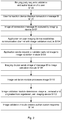
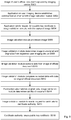
- Fig. 2 illustrates a flow chart of example steps to authenticate a user device and a transaction using the system of Fig. 1 .
- a user is required to register in the system.
- the user owns two devices: a user imaging device and a user transaction device.
- the user imaging device is also registered in the system.
- only the user imaging device is registered in the system as only it communicates with a validation module.
- the user transaction device may receive a captured digital image from the user imaging device and transmit it to the validation module itself.
- the validation and authentication of a digital image is based on the device used to capture the image, the user transaction device may not need to be registered.
- Registration of the user imaging device involves a unique fingerprint associated with the user imaging device to be stored within the image validation module.
- the unique fingerprint for the user imaging device is obtained via image processing techniques in which analysis of artefacts within digital images captured by the device enable the imaging device to be identified. This is described in more detail below.
- a unique fingerprint is associated with each user imaging device registered in the system to enable the device to be authenticated.
- each user imaging device is linked with its user (who is also registered in the system), such that there is a relationship binding user and user imaging device within the system.
- a relying party requests validation and authentication of a transaction to be performed between the user and the relying party (S100).
- An authentication challenge is generated which must be completed in order for the transaction to be processed and finalised.
- the challenge is in the form of transaction message M, and is either generated locally by the user transaction device, or is received by the user transaction device from a third party (e.g. the vendor, online banking service, etc.).
- the transaction message M is displayed on the transaction device for the user to view and check before completing the transaction (S101). If the user is satisfied that the message M corresponds to the transaction he was attempting to perform on his transaction device, he proceeds to the next stage of the transaction; otherwise he cancels the transaction.
- the user imaging device is used to capture an image of the transaction message M displayed on the transaction device (S102).
- a software application running on the user imaging device is initiated to establish a communication channel directly or indirectly between the imaging device and a remote image validation module of the system (S104).
- the application sends a request to the image validation module for the captured image to be validated (S106).
- the image validation module preferably determines that the image is received from a device which is already known to it (i.e. has been registered), and the image received from the device comprises the unique fingerprint associated with the device.
- the request may include data to identify the user imaging device so that the image validation module can find the appropriate data (e.g. the unique fingerprint data) stored within the module to help authenticate the device.
- the imaging device via the application sends the captured image of the message M to the image validation module (S108).
- the image validation module then applies image processing techniques to the received image of message M (S110) to determine if the artefacts in the digital image match the unique fingerprint associated with the device. If the fingerprint of the received image generated by the image processing techniques match the stored unique fingerprint associated with the device, then the image validation module determines that the image has not been altered and originates from the registered user imaging device (S112).
- the image validation process also involves checking if the content of the message M received in the image is the same as that expected by the relying party. As explained earlier, this may involve comparing the message M in the received image with a copy of the original message M copy received directly from the relying party. The message M is extracted from the received image using optical character recognition image processing techniques. If the image validation module determines that the extracted message M matches the copy of the original message M copy , then it is configured to send a response to the authentication challenge to the relying party in order to process and complete the transaction (S114).
- Fig. 3 shows a block diagram of the system of Fig. 1 which is adapted to register a user and a user imaging device.
- the user provides something he knows or owns, such as a static password, ID card or fingerprint, together with something he has, such as an imaging device, to enable the registration.
- something he knows or owns such as a static password, ID card or fingerprint
- something he has such as an imaging device
- the user's transaction device may be unsecure, and not linked to the user or the apparatus in any way, embodiments of the invention require that the imaging device, or more precisely the digital camera module (either embedded or attached to the imaging device), is recognised as something that the User has in order to meet the second requirement for strong authentication.
- the system 30 of Fig. 3 comprises many of the same features as that of Fig. 1 , as indicated by the use of the same reference numerals.
- Fig. 3 is merely an example of how the registration can be performed and is not limiting.
- the image validation module is configured to communicate with a registration authority 34.
- the registration authority 34 issues registration documents 32 which could be identification documents such as driving licences, national ID cards, passports, etc. but could just be a letter or similar document.
- the registration document 32 may have a plurality of pages and images can be captured for each page. Alternatively, multiple registration documents 32 may be used.
- the imaging device 16 captures a plurality of images, e.g. an image of each registration document 32 or each page thereof.
- the captured images 36 are then processed by the digital camera module 16a of the imaging device 16 as described earlier, and the compressed images are sent to the image validation module 16.
- the image validation module performs the above-described image processing techniques in order to generate a unique reference fingerprint for the imaging device 16, based on the received captured images 36. Textual data in the captured image 36 may also be extracted in order to compare the extracted text with the text of the registration document 32 (as received from the ID issuing authority 34).
- the image validation module determines that the image 36 is a genuine image of the registration document 32, i.e. that it has not been tampered with.
- the reference fingerprint is then stored in the image validation module and linked with the user. Additional information associated with the imaging device 16 may also have been transmitted with the captured images, such as a serial number or other identifier, and this may also be stored alongside the reference fingerprint and user information.
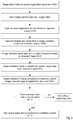
- Fig. 4 illustrates a flow chart of example steps to register a user imaging device.
- the issuing authority issues an official registration document (S400) for a particular user to the user and the image validation module.
- the user is prompted to use his imaging device to capture a plurality of images based on the registration document (S402).
- the captured images are used by the image validation module to generate a unique fingerprint for the imaging device.
- the user may be prompted by an application on the imaging device to send the captured images to the image validation module. Additionally or alternatively, the captured images may be transmitted automatically. In either case, the user requests registration of himself with a particular imaging device based on the captured images (S404).
- the captured images are transmitted to the validation system, specifically to the image validation module (S406).
- the image validation module processes the received images in order to generate the unique fingerprint (S408) and to extract text and/or image data from the received images (S410).
- the extracted text and/or image data is compared with the original document received by the image validation module from the registration authority (S412). Additionally or alternatively, the extracted data is sent to the registration authority to verify that the data matches the data on its system, and the registration authority generates a response confirming that the data matches the original data and sends this back to the image validation module.
- the data matches that within the original document (S414)
- the user is validated as a genuine, known user, and both the user and imaging device information (including the fingerprint) are stored within the validation system to enable future transactions performed by the user to be authenticated via the system (S416). Otherwise, the registration process terminates and the user is not registered in the validation system.
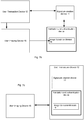
- FIG. 5 is a sketch of a system to process images captured by a user imaging device to generate a fingerprint for that device during the registration process.
- a user imaging device 52 comprises a digital camera sensor 52a and image acquisition software 52b, which are used to capture multiple images 52c of a particular 'enrolment scene'.
- a camera ballistics algorithm is executed on an image, or preferably several images, captured by the imaging device in order to extract a unique device reference fingerprint allowing for future device identification.
- the captured image(s) 52c of the enrolment scene are transmitted to the image validation module 50 for processing.
- the image validation module comprises the received captured images 50a, an image processing algorithm 50b (e.g. a ballistics algorithm) to extract a unique representation of the PRNU noise in the captured images, and a PRNU noise data file 50c for the imaging device 52 (or specifically, for the sensor 52a of the imaging device).
- an image processing algorithm 50b e.g. a ballistics algorithm
- the unique fingerprint will be computed using the captured images of an enrolment scene in order to obtain an approximation to the PRNU noise, by averaging the images to suppress random noise components and low frequency components to only retain the PRNU noise.
- the fingerprint computation process is performed by the image validation module 50 so that the imaging device fingerprint is never exposed. Consequently, the fingerprint computation processing is ideally performed inside tamper evident hardware such as a HSM, so that the fingerprint is not exposed to attacks.
- the fingerprint extraction algorithm may implement unique features, and could for instance be decorated in disjoint regions of the sensor to thwart potential brute force attacks.
- the ballistic algorithm may be updated days, months or years after the initial enrolment process (in which case the initial images would need to be stored in the image validation module 50 and re-processed to generate a new fingerprint using the updated algorithm).
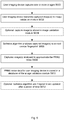
- Fig. 6 shows a flow chart of example steps to process images captured by a user imaging device to generate a fingerprint for the device.
- the user imaging device is used to capture one or more images of an enrolment scene (step S600).
- the enrolment scene may be the user ID document.
- the imaging device transmits the captured images to the image validation module for analysis (S602).
- the captured images are stored in the image validation module (S604), in case the image processing algorithms are updated in the future and the fingerprint needs to be regenerated.
- the image processing algorithm is a ballistics algorithm which analyses the captured image to extract a unique fingerprint for the imaging device (S606), as described earlier. The process is shown in more detail in steps S608 and S610.
- the captured images are analysed to approximate the PRNU noise (S608) and this noise data is stored in a data store within, or coupled to, the image validation module (S610).
- the stored noise data or reference fingerprint is used to determine if the captured images received by the image validation module as part of an authentication challenge are genuine and comprise a known fingerprint.
- the ballistics algorithm is updated after a period of time, and the stored captured images are used to update the fingerprint for the associated imaging device (S612).
- PKI public key infrastructure
- the user keeps full control over a private key used to sign a message, and a corresponding public key is used during verification of the signature.
- Examples of such systems are RSA, DSA and ECDSA.
- a public key infrastructure includes an arrangement for creating, managing, distributing, using, storing, and revoking digital certificates.
- the PKI binds public keys with respective user identities by means of a certificate authority (CA).
- a separate validation authority (VA) can provide this information on behalf of the CA.
- the binding is established through the registration process, which may be carried out by software at a CA.
- the PKI comprises a registration authority (RA), which ensures that the public key is bound to the individual to which it is assigned in a way that ensures non-repudiation.
- Fig. 7a to 7c shows how embodiments provide strong 'WYSIWYS' functionality using multiple devices.
- the system comprises four key devices: a signature creation device (SCD) 11, two devices held by a user, i.e. the transaction device 12 and the imaging device 16 described earlier, and a authentication and validation device (AVD) (which comprises the image validation module 18 described earlier).
- Figs. 7b and 7c are simplified versions of Fig 1 showing two arrangements of these devices.
- the signature creation device is where the digital signature generation is carried out.
- the signature creation device may be a central SCD such as a signing server as shown in Fig 7b , or a local signature creation device such as a smart card or a signing stick as shown in Fig 7c .
- the authentication and validation device may also be incorporated in the user transaction device or as an integral part of the SCD.
- this communication channel may be formed when connecting the imaging device to a user's local computer for synchronisation and recharging. This connection could be used to communicate the picture.
- Bluetooth or Bluetooth Low Energy (BLE) are alternatives. The advantage of this solution is that then the central server is avoided when making a signature locally.
- the user's transaction device may be any electronic device such as workstation, a laptop computer, a tablet or smart phone, while the user's imaging device may be any electronic device having a digital camera/image capture functionality as well as the ability to communicate with the AVD either directly or indirectly.
- the image validation module/device is part of a remote, centralised system to perform validation and authentication.
- GUI Graphical User Interface
- the user uses the transaction device to identify a specific message M F that he is prepared to commit to with a digital signature.
- the message may be a transaction, document or purchase order in electronic form.
- the transaction device may be an insecure platform, the user typically cannot commit to signing the message on this device because an attacker on the transaction device may replace the message with another one.
- a request for signature creation is sent from the transaction device to the signature creation device (S702).
- the SCD is part of the transaction device (although as indicated by the dashed lines, it may be removable part of the transaction device). Accordingly, step S702 and S704 are omitted in this arrangement.
- the SCD will not create the signature until it has received evidence that the user has committed to signing this particular message, and that the message is authentic. In essence, this is achieved by requiring an authentication challenge to be completed by the user.
- a copy of the message, M is created in embodiments by the SCD, which then passes the copy M to a authentication and validation device (AVD) (Step S706).
- the image validation module described earlier is part of the AVD.
- M is sent to the user's transaction device for display by the AVD (S708).
- the user is prompted to use his imaging device to capture an image of M (which is displayed on his transaction device (S710)), and transmit it to the image validation module of the AVD for validation.
- an image P M of the message M displayed on the transaction device is captured by the imaging device.
- the captured image is sent to the image validation module of the AVD server (S714).
- the captured image is a type of validation challenge. By analysing the captured image to determine that it is genuine and that it comprises the unique fingerprint associated with the imaging device, assurance can be provided to the SCD that this message has been approved by the user and comes from a trusted source, with acceptable reasons to believe that it has not been altered before being presented to image validation device.
- the image validation module extracts an image fingerprint from P M , compares the extracted fingerprint to a reference fingerprint associated with the imaging device and determines if P M has been obtained from a trusted, known imaging device (S716). The image validation module then extracts the original message M from P M and compares this with the message M received directly from the SCD (S718). If the messages match, the image validation module of the AVD outputs a validation response (S720).
- the response is sent securely to the SCD.
- the SCD and AVD are within the transaction device and thus validation takes places locally.
- the SCD is assured that the user is valid.
- the SCD therefore generates the requested signature to sign the message M F on the transaction device.
- the image processing techniques performed by the AVD ensure that the signature can only be generated if this image validation has been successful.
- the innovation allows for a number of realisations depending on whether the SCD is a central signing server as shown in Fig 7b or a local device (smart card, USB signing stick) as shown in Fig 7c . In the latter case various realisations for verifying the unique validation code are possible.
- Fig. 8 illustrates a detailed flow chart of example steps to authenticate a digital signature in a public key infrastructure using multiple devices.
- This arrangement comprises the user devices and the image validation module described above with respect to Figs. 1 and 7 .
- the user devices are independent of one another and provided as separate devices as part of the authentication functionality.
- the image validation module is part of the authentication and validation device.
- the image validation module may be located remotely from the user devices.
- the image validation module is able to communicate with the user imaging device and with the SCD. Accordingly, the imaging device and the SCD each have a separate independent communication channel with the AVD (and therefore, with the image validation module).
- the signature creation device (SCD) and the authentication and validation device (which comprises the image validation module) are shown as two separate entities which are connected to each other, preferably via a secure connection. This merely indicates that each entity has a different function or role in the process. It will be appreciated that the separate functions of the signature creation device and the authentication and validation device may also be provided by a single entity, e.g. a single signature server.
- the user agrees on the content of and accepts a message M F which is being displayed on his transaction device (S800). Acceptance means that he is prepared to commit to the message with a digital signature.
- the message M F may optionally be presented on a client browser of the transaction device which is receiving web HTML pages from a remote web server controlled by an application provider.
- M may be identical to M F , or may be a version based on M F having essentially the same content. M F may for instance be a purchase order and M would be a summary thereof with e.g. the PO reference, recipient, amount.
- M is computed by the transaction device, the SCD or the authentication and validation device (AVD). Regardless of where it is created, there is communication between the central SCD and the AVD to ensure that the AVD ultimately receives M (S806).
- the message M is displayed on the user transaction device.
- the user is required to capture an image of M using his separate imaging device.
- the message M may be a standardised quick response (QR) Code or similar barcode which can be imaged by the imaging device, and which can be read by the AVD to extract data from the message that allows the message to be authenticated.
- QR quick response
- M may comprise user-readable portions which enables the user to read message M on his transaction device and visually verify that it matches the message M F that he is committed to sign, before he takes the next steps to complete the validation challenge (i.e. capture an image of M).
- M F is a purchase order
- M could be a summary thereof with information in important fields e.g. PO reference, recipient, amount; the user would be presented with the information from the fields to identify M F .
- the user is satisfied that M relates to M F , he captures an image of M using his imaging device (S810).
- the capture image P M is sent to the AVD for authentication - specifically, it is sent to the image validation module of the AVD to apply image processing techniques to perform the validation/authentication (S812).
- step S814 if the AVD determines that P M has been received from a known imaging device (by comparing fingerprints, as explained earlier), and that the message extracted from P M matches the original message M received by the AVD (in step S806), then a validation response is generated and sent to the SCD. The SCD is then prompted to create the requested digital signature and the original message M F is signed (S816). If step S814 fails, the process ends without signing M F .
- the image processing techniques used to perform authentication and validation are coupled with a PKI infrastructure, to enable image processing technology to create a mobile trusted Registration Authority for self-enrolment against a centralised Certificate Authority provided the user is already enrolled in the central validation and authentication system.
- a PKI infrastructure to enable image processing technology to create a mobile trusted Registration Authority for self-enrolment against a centralised Certificate Authority provided the user is already enrolled in the central validation and authentication system.
- Currently one of the most difficult challenges for wide deployment of PKI is to ensure trustworthy user enrolment and registration so that the certificates issued can be granted trust and be recognised as effectively belonging to the person claiming its ownership.
- FIG. 9 shows a flow chart of example steps to request a public key certificate for a public key infrastructure using the system of Fig. 1 .
- the user simply captures a picture of his/her official document using his imaging device (S900).
- An application on the user imaging device establishes a channel with the image validation module of a RA service (S902).
- the application sends a request for the certificate to the image validation module with the captured image of the ID document (S904).
- the image is verified using image processing techniques (S906).
- Image forensics as described earlier are used to determine that the image is genuine (S908), and then the image is processed to extract, using OCR, the user's credentials featured in the image of the official document (S910).
- the image validation module preferably queries a central validation service to verify the validity of the official document presented by the user, e.g. by comparing the extracted data with that known by the central validation service (S912). If the extracted data matches the original data, the document is determined to be valid (S914).
- a certificate request containing some or all user's credentials contained in the captured image is sent to the certificate authority (S916), to enable the certificate authority to issue the requested certificate (S918).
- This process ensures that the user is proved to be in possession of a valid official identification document at time of registration. Furthermore, it ensures that the user is authenticated based on what he is (by extracting the information available from his official document) and based on what he knows (i.e. a password either agreed on earlier, or negotiated during registration, which will be used to later on control the usage of the key for which a certificate has been issued).
Landscapes
- Engineering & Computer Science (AREA)
- Computer Security & Cryptography (AREA)
- Theoretical Computer Science (AREA)
- General Engineering & Computer Science (AREA)
- Computer Hardware Design (AREA)
- Software Systems (AREA)
- Physics & Mathematics (AREA)
- General Physics & Mathematics (AREA)
- Computer Networks & Wireless Communication (AREA)
- Signal Processing (AREA)
- Bioethics (AREA)
- Health & Medical Sciences (AREA)
- General Health & Medical Sciences (AREA)
- Computing Systems (AREA)
- Collating Specific Patterns (AREA)
- Financial Or Insurance-Related Operations Such As Payment And Settlement (AREA)
- Absorbent Articles And Supports Therefor (AREA)
- Lock And Its Accessories (AREA)
- Two-Way Televisions, Distribution Of Moving Picture Or The Like (AREA)
Claims (12)
- Validierungs- und Authentifizierungssystem zum Authentifizieren und Validieren von Nachrichten und/oder eines Benutzers, wobei das System umfasst:einen Datenspeicher (18a), der einen oder mehrere digitale Fingerabdrücke speichert, die Benutzer-Bildgebungsvorrichtungen (16) zugeordnet sind, worin der eine oder die mehreren digitalen Fingerabdrücke jeweils auf einer Photo Response Non Uniformity, PRNU, beruhen, die einer entsprechenden der Benutzer-Bildgebungsvorrichtungen zugeordnet ist;ein Kommunikationsmodul (18f), das dafür konfiguriert ist:eine Nachricht M zu empfangen;eine Anforderung zur Validierung und Authentifizierung mindestens eines von der Nachricht M und einem Benutzer unter Verwendung der Benutzer-Bildgebungsvorrichtung zu empfangen (S106); undein Bild PM der Nachricht M zu empfangen (S108), das unter Verwendung einer dem Benutzer zugeordneten Benutzer-Bildgebungsvorrichtung aufgenommen wurde; undein Bildvalidierungsmodul (18) zum Analysieren (S110) des empfangenen Bildes PM, um zu bestimmen, ob das Bild gültig ist, und zwar durch Bestimmen (S112), ob das empfangene Bild PM eine PRNU umfasst, die mit einem der einen oder mehreren digitalen Fingerabdrücke übereinstimmt, die in dem Datenspeicher gespeichert sind, und um zu bestimmen, ob das empfangene Bild PM authentisch ist, und zwar durch Extrahieren von Daten aus dem empfangenen Bild PM und Vergleichen der extrahierten Daten mit der Nachricht M; undworin, wenn bestimmt wird, dass das empfangene Bild PM authentisch und gültig ist, das Bildvalidierungsmodul eine Antwort auf die Anfrage erzeugt (S114).
- Validierungs- und Authentifizierungssystem nach einem der vorhergehenden Ansprüche, worin das Bildvalidierungsmodul ein Ballistik-Teilmodul (18e) umfasst, das dafür konfiguriert ist, zu bestimmen, dass das empfangene Bild PM eine PRNU umfasst, die mit einem der im Datenspeicher gespeicherten digitalen Fingerabdrücke übereinstimmt.
- Validierungs- und Authentifizierungssystem nach einem der vorhergehenden Ansprüche, worin das Bildvalidierungsmodul ein Forensik-Teilmodul (18d) umfasst, das dafür konfiguriert ist, zu bestimmen, dass das empfangene Bild PM während des Transports zum Validierungs- und Authentifizierungssystem nicht verändert worden ist.
- Validierungs- und Authentifizierungssystem nach einem der vorhergehenden Ansprüche, worin das Bildvalidierungsmodul ferner ein Teilmodul zur optischen Zeichenerkennung (18c) umfasst, das dafür konfiguriert ist, die Daten aus dem empfangenen Bild PM zu extrahieren, die extrahierten Daten mit der empfangenen Nachricht M zu vergleichen und zu bestimmen, dass das Bild ferner authentisch ist, wenn die extrahierten Daten mit der empfangenen Nachricht M übereinstimmen.
- Validierungs- und Authentifizierungssystem nach einem der vorhergehenden Ansprüche, worin das Kommunikationsmodul dafür konfiguriert ist, mindestens eines von Folgendem zu empfangen:die Nachricht M von einem Drittsystem (34);die Anforderung zur Validierung und Authentifizierung von dem Benutzer oder einem Drittsystem (34); unddas Bild PM der Nachricht M von dem Benutzer.
- Validierungs- und Authentifizierungssystem nach einem der vorhergehenden Ansprüche, welches ein zentrales Validierungs- und Authentifizierungssystem ist, das von der Benutzer-Bildgebungsvorrichtung entfernt ist.
- Validierungs- und Authentifizierungsverfahren, umfassend:Empfangen einer Nachricht M;Empfangen (S106) einer Anforderung zur Validierung und Authentifizierung von mindestens einem von der Nachricht M oder einem Benutzer einer Benutzer-Bildgebungsvorrichtung;Empfangen (S108) eines Bildes PM der Nachricht M, das unter Verwendung der Benutzer-Bildgebungsvorrichtung aufgenommen wurde;Analysieren (S110) des empfangenen Bildes PM, um zu bestimmen, ob das Bild gültig ist, und zwar durch Bestimmen (S112), ob das empfangene Bild PM eine Photo Response Non Uniformity, PRNU, umfasst, die mit einem von einem oder mehreren digitalen Fingerabdrücken übereinstimmt, die in einem Datenspeicher (18a) gespeichert sind, worin der eine oder die mehreren digitalen Fingerabdrücke jeweils auf einer PRNU beruhen, die einer Benutzer-Bildgebungsvorrichtung (16) zugeordnet ist, und um zu bestimmen, ob das Bild authentisch ist, und zwar durch Extrahieren von Daten aus dem empfangenen Bild PM und Vergleichen der extrahierten Daten mit der Nachricht M; undErzeugen (S114) einer Antwort auf die Anfrage, wenn das Bild gültig und authentisch ist.
- Verfahren nach Anspruch 7, worin das Analysieren des empfangenen Bildes PM umfasst: Verwenden eines ballistischen Bildverarbeitungsalgorithmus (S606), um die PRNU aus dem empfangenen Bild PM zu extrahieren; und
worin optional das Analysieren des empfangenen Bildes PM ferner umfasst: Vergleichen der extrahierten PRNU mit dem einen der einen oder mehreren digitalen Fingerabdrücke, die in dem Datenspeicher gespeichert sind, und Bestimmen, ob die extrahierte PRNU einem gespeicherten digitalen Fingerabdruck entspricht. - Verfahren nach einem der Ansprüche 7 bis 8, worin das Analysieren des empfangenen Bildes PM ferner umfasst: Verwenden eines forensischen Bildverarbeitungsalgorithmus, um zu bestimmen, dass das empfangene Bild PM während des Transports nicht verändert worden ist.
- Verfahren nach einem der Ansprüche 7 bis 9, worin das Analysieren des empfangenen Bildes PM ferner umfasst: Verwenden eines Algorithmus zur optischen Zeichenerkennung, um die Daten aus dem empfangenen Bild PM zu extrahieren und die extrahierten Daten mit der empfangenen Nachricht M zu vergleichen.
- Verfahren nach einem der Ansprüche 7 bis 10, worin das Empfangen einer Nachricht M umfasst: Empfangen der Nachricht M von einem Drittsystem (34); und
worin das Empfangen eines Bildes PM der Nachricht M umfasst: Empfangen des Bildes von der Benutzer-Bildgebungsvorrichtung. - Verfahren nach einem der Ansprüche 7 bis 11, worin das Empfangen einer Anforderung zur Validierung und Authentifizierung umfasst: Empfangen einer Anforderung von einer Benutzer-Bildgebungsvorrichtung oder einem Drittsystem (34).
Priority Applications (1)
| Application Number | Priority Date | Filing Date | Title |
|---|---|---|---|
| PL16709501T PL3265947T3 (pl) | 2015-03-03 | 2016-03-01 | Sposób i system do szyfrowania |
Applications Claiming Priority (2)
| Application Number | Priority Date | Filing Date | Title |
|---|---|---|---|
| GB1503611.4A GB2536209A (en) | 2015-03-03 | 2015-03-03 | Method and system for encryption |
| PCT/GB2016/050536 WO2016139462A1 (en) | 2015-03-03 | 2016-03-01 | Method and system for encryption |
Publications (2)
| Publication Number | Publication Date |
|---|---|
| EP3265947A1 EP3265947A1 (de) | 2018-01-10 |
| EP3265947B1 true EP3265947B1 (de) | 2021-06-30 |
Family
ID=52876455
Family Applications (1)
| Application Number | Title | Priority Date | Filing Date |
|---|---|---|---|
| EP16709501.7A Active EP3265947B1 (de) | 2015-03-03 | 2016-03-01 | Verfahren und system zur verschlüsselung |
Country Status (14)
| Country | Link |
|---|---|
| US (1) | US10581612B2 (de) |
| EP (1) | EP3265947B1 (de) |
| KR (1) | KR102450025B1 (de) |
| AU (1) | AU2016227473B2 (de) |
| CA (1) | CA2978380C (de) |
| DK (1) | DK3265947T3 (de) |
| ES (1) | ES2891309T3 (de) |
| GB (1) | GB2536209A (de) |
| HU (1) | HUE056145T2 (de) |
| LT (1) | LT3265947T (de) |
| PL (1) | PL3265947T3 (de) |
| PT (1) | PT3265947T (de) |
| SG (1) | SG11201707149UA (de) |
| WO (1) | WO2016139462A1 (de) |
Families Citing this family (40)
| Publication number | Priority date | Publication date | Assignee | Title |
|---|---|---|---|---|
| US11456876B2 (en) * | 2015-03-26 | 2022-09-27 | Assa Abloy Ab | Virtual credentials and licenses |
| US9300678B1 (en) | 2015-08-03 | 2016-03-29 | Truepic Llc | Systems and methods for authenticating photographic image data |
| US20210279316A1 (en) * | 2016-07-29 | 2021-09-09 | Trusona, Inc. | Anti-replay authentication systems and methods |
| JP6986548B2 (ja) * | 2016-07-29 | 2021-12-22 | トゥルソナ,インコーポレイテッド | アンチリプレイ認証のシステムおよび方法 |
| EP3552347A4 (de) | 2016-12-12 | 2020-08-12 | Trusona, Inc. | Verfahren und systeme für netzwerkaktivierte kontenerstellung mithilfe von optischer erkennung |
| US10375050B2 (en) | 2017-10-10 | 2019-08-06 | Truepic Inc. | Methods for authenticating photographic image data |
| US10664811B2 (en) | 2018-03-22 | 2020-05-26 | Bank Of America Corporation | Automated check encoding error resolution |
| US11303632B1 (en) * | 2018-06-08 | 2022-04-12 | Wells Fargo Bank, N.A. | Two-way authentication system and method |
| US10740448B2 (en) * | 2018-06-26 | 2020-08-11 | Callsign Inc. | Verification request authentication machine |
| US10853459B2 (en) | 2018-06-26 | 2020-12-01 | Callsign Inc. | Verification request authentication machine |
| CN108923931B (zh) * | 2018-06-27 | 2021-06-22 | 努比亚技术有限公司 | 一种电子凭证处理方法、设备及计算机可读存储介质 |
| US11270403B2 (en) | 2018-07-30 | 2022-03-08 | Hewlett Packard Enterprise Development Lp | Systems and methods of obtaining verifiable image of entity by embedding secured representation of entity's distributed ledger address in image |
| US11403674B2 (en) * | 2018-07-30 | 2022-08-02 | Hewlett Packard Enterprise Development Lp | Systems and methods for capturing time series dataset over time that includes secured representations of distributed ledger addresses |
| US11488160B2 (en) | 2018-07-30 | 2022-11-01 | Hewlett Packard Enterprise Development Lp | Systems and methods for using captured time series of secured representations of distributed ledger addresses and smart contract deployed on distributed ledger network to prove compliance |
| US11250466B2 (en) | 2018-07-30 | 2022-02-15 | Hewlett Packard Enterprise Development Lp | Systems and methods for using secured representations of user, asset, and location distributed ledger addresses to prove user custody of assets at a location and time |
| US11356443B2 (en) | 2018-07-30 | 2022-06-07 | Hewlett Packard Enterprise Development Lp | Systems and methods for associating a user claim proven using a distributed ledger identity with a centralized identity of the user |
| US11184175B2 (en) | 2018-07-30 | 2021-11-23 | Hewlett Packard Enterprise Development Lp | Systems and methods for using secured representations of location and user distributed ledger addresses to prove user presence at a location and time |
| US11233641B2 (en) | 2018-07-31 | 2022-01-25 | Hewlett Packard Enterprise Development Lp | Systems and methods for using distributed attestation to verify claim of attestation holder |
| US11488161B2 (en) | 2018-07-31 | 2022-11-01 | Hewlett Packard Enterprise Development Lp | Systems and methods for providing transaction provenance of off-chain transactions using distributed ledger transactions with secured representations of distributed ledger addresses of transacting parties |
| US11271908B2 (en) | 2018-07-31 | 2022-03-08 | Hewlett Packard Enterprise Development Lp | Systems and methods for hiding identity of transacting party in distributed ledger transaction by hashing distributed ledger transaction ID using secured representation of distributed ledger address of transacting party as a key |
| US10360668B1 (en) | 2018-08-13 | 2019-07-23 | Truepic Inc. | Methods for requesting and authenticating photographic image data |
| US11574357B1 (en) * | 2019-01-02 | 2023-02-07 | Allstate Insurance Company | Onboarding platform for performing dynamic mitigation analysis |
| US11481732B1 (en) | 2019-01-02 | 2022-10-25 | Allstate Insurance Company | Onboarding platform for performing dynamic mitigation analysis |
| US12079851B2 (en) | 2019-01-02 | 2024-09-03 | Allstate Insurance Company | Onboarding platform for performing dynamic mitigation analysis |
| US11050571B2 (en) * | 2019-02-14 | 2021-06-29 | Carrott Richard F | Systems for producing and maintaining verified electronic signatures |
| IL267619A (en) | 2019-06-24 | 2019-08-29 | Michael Ratiner | Method and system for securing electronic devices |
| US11562349B2 (en) * | 2019-08-20 | 2023-01-24 | Anchor Labs, Inc. | Risk mitigation for a cryptoasset custodial system using data points from multiple mobile devices |
| JP7632294B2 (ja) * | 2019-10-17 | 2025-02-19 | ソニーグループ株式会社 | 情報処理システム、情報処理方法、プログラム、ユーザインタフェース |
| US11037284B1 (en) | 2020-01-14 | 2021-06-15 | Truepic Inc. | Systems and methods for detecting image recapture |
| US11290253B2 (en) * | 2020-02-14 | 2022-03-29 | Gideon Samid | Document management cryptography |
| US20230396605A1 (en) * | 2020-10-28 | 2023-12-07 | Nippon Telegraph And Telephone Corporation | Network authentication system and network authentication method |
| WO2022192070A1 (en) * | 2021-03-10 | 2022-09-15 | Truepic Inc. | System and method for capturing authenticatable digital media files on connected media-capture devices |
| CN121151365A (zh) * | 2021-03-24 | 2025-12-16 | 佳能株式会社 | 图像/信息处理设备、系统、方法、服务器设备和介质 |
| WO2022231971A2 (en) | 2021-04-27 | 2022-11-03 | Truepic Inc. | System and method for managing cryptographic keys for cryptographically sealing media files on connected media-capture devices to enhance end-user privacy and enable offline capture |
| US11967184B2 (en) | 2021-05-21 | 2024-04-23 | Ford Global Technologies, Llc | Counterfeit image detection |
| US12288413B2 (en) * | 2021-05-21 | 2025-04-29 | Ford Global Technologies, Llc | Camera tampering detection |
| US20240220984A1 (en) * | 2021-05-27 | 2024-07-04 | Onespan Nv | A method, system and apparatus for approving electronic transactions |
| US20240171605A1 (en) * | 2022-11-17 | 2024-05-23 | Qatar Foundation For Education, Science And Community Development | Scalable darkweb analytics |
| US12574407B2 (en) * | 2022-11-21 | 2026-03-10 | Microsoft Technology Licensing, Llc | Generating a content signature of a textual communication using optical character recognition and text processing |
| WO2025106395A1 (en) * | 2023-11-14 | 2025-05-22 | Via Science, Inc. | Certifying camera images |
Family Cites Families (10)
| Publication number | Priority date | Publication date | Assignee | Title |
|---|---|---|---|---|
| US7787030B2 (en) * | 2005-12-16 | 2010-08-31 | The Research Foundation Of State University Of New York | Method and apparatus for identifying an imaging device |
| US8160293B1 (en) * | 2006-05-19 | 2012-04-17 | The Research Foundation Of State University Of New York | Determining whether or not a digital image has been tampered with |
| GB2489332C2 (en) * | 2010-11-25 | 2021-08-11 | Ensygnia Ltd | Handling encoded information |
| US8464324B2 (en) * | 2010-12-06 | 2013-06-11 | Mobilesphere Holdings LLC | System and method for identity verification on a computer |
| US8374386B2 (en) * | 2011-01-27 | 2013-02-12 | Polytechnic Institute Of New York University | Sensor fingerprint matching in large image and video databases |
| US9141959B2 (en) * | 2011-11-29 | 2015-09-22 | Autography Llc | Method and system for replaying a voice message and displaying a signed digital photograph contemporaneously |
| US8862888B2 (en) * | 2012-01-11 | 2014-10-14 | King Saud University | Systems and methods for three-factor authentication |
| US9130929B2 (en) * | 2013-03-15 | 2015-09-08 | Aol Inc. | Systems and methods for using imaging to authenticate online users |
| GB2515057B (en) | 2013-06-12 | 2016-02-24 | Cryptomathic Ltd | System and Method for Obtaining a Digital Signature |
| US9686079B2 (en) * | 2013-07-16 | 2017-06-20 | Eingot Llc | Electronic document notarization |
-
2015
- 2015-03-03 GB GB1503611.4A patent/GB2536209A/en not_active Withdrawn
-
2016
- 2016-03-01 SG SG11201707149UA patent/SG11201707149UA/en unknown
- 2016-03-01 HU HUE16709501A patent/HUE056145T2/hu unknown
- 2016-03-01 EP EP16709501.7A patent/EP3265947B1/de active Active
- 2016-03-01 US US15/555,425 patent/US10581612B2/en active Active
- 2016-03-01 AU AU2016227473A patent/AU2016227473B2/en not_active Ceased
- 2016-03-01 DK DK16709501.7T patent/DK3265947T3/da active
- 2016-03-01 PT PT167095017T patent/PT3265947T/pt unknown
- 2016-03-01 CA CA2978380A patent/CA2978380C/en active Active
- 2016-03-01 ES ES16709501T patent/ES2891309T3/es active Active
- 2016-03-01 PL PL16709501T patent/PL3265947T3/pl unknown
- 2016-03-01 LT LTEPPCT/GB2016/050536T patent/LT3265947T/lt unknown
- 2016-03-01 WO PCT/GB2016/050536 patent/WO2016139462A1/en not_active Ceased
- 2016-03-01 KR KR1020177027626A patent/KR102450025B1/ko active Active
Also Published As
| Publication number | Publication date |
|---|---|
| LT3265947T (lt) | 2021-10-11 |
| CA2978380C (en) | 2023-05-16 |
| AU2016227473B2 (en) | 2019-08-01 |
| GB201503611D0 (en) | 2015-04-15 |
| HUE056145T2 (hu) | 2022-01-28 |
| PT3265947T (pt) | 2021-09-24 |
| KR102450025B1 (ko) | 2022-09-30 |
| ES2891309T3 (es) | 2022-01-27 |
| KR20170125380A (ko) | 2017-11-14 |
| WO2016139462A1 (en) | 2016-09-09 |
| SG11201707149UA (en) | 2017-09-28 |
| PL3265947T3 (pl) | 2021-12-13 |
| US20180048474A1 (en) | 2018-02-15 |
| GB2536209A (en) | 2016-09-14 |
| CA2978380A1 (en) | 2016-09-09 |
| AU2016227473A1 (en) | 2017-09-28 |
| DK3265947T3 (da) | 2021-10-04 |
| US10581612B2 (en) | 2020-03-03 |
| EP3265947A1 (de) | 2018-01-10 |
Similar Documents
| Publication | Publication Date | Title |
|---|---|---|
| CA2978380C (en) | Method and system for encryption | |
| CN112819475B (zh) | 信息处理方法、装置、电子设备、服务器及介质 | |
| US10127378B2 (en) | Systems and methods for registering and acquiring E-credentials using proof-of-existence and digital seals | |
| US9900309B2 (en) | Methods for using digital seals for non-repudiation of attestations | |
| US9673981B1 (en) | Verification of authenticity and responsiveness of biometric evidence and/or other evidence | |
| US10333706B2 (en) | Methods and systems of providing verification of information using a centralized or distributed ledger | |
| EP3138265B1 (de) | Verbesserte sicherheit zur registrierung von authentifizierungsvorrichtungen | |
| EP2567502A2 (de) | Verfahren zur authentifizierung eines benutzers bei der anfrage einer transaktion mit einem dienstanbieter | |
| JP2016520276A (ja) | デバイス証明を伴う生体認証に関するシステム及び方法 | |
| US10938808B2 (en) | Account access | |
| CN109039652B (zh) | 一种数字通证的生成及应用方法 | |
| CN106209730B (zh) | 一种管理应用标识的方法及装置 | |
| EP4199418B1 (de) | Lokale attributverifizierung mit einer rechnervorrichtung | |
| CN110535649A (zh) | 数据流通方法、系统及服务平台、第一终端设备 | |
| US20150379305A1 (en) | Digitised Handwritten Signature Authentication | |
| CN119515382B (zh) | 数据处理方法、系统、装置、设备、介质及计算机产品 | |
| US20240414541A1 (en) | Method in the system of securing sms message via authenticating the sms sender's identity and verifying the integrity of the sms message with displaying the results on to reader's gui at realtime | |
| HK40050130A (en) | Information processing method and device, electronic equipment, server and medium | |
| TW202319998A (zh) | 使用多安全層級驗證客戶身分與交易服務之系統及方法 | |
| Shin et al. | Biometric Handshake Protocol on Telebiometric System Mechanism for National Infrastructure | |
| WO2013066928A2 (en) | Verification of authenticity and responsiveness of biometric evidence and/or other evidence |
Legal Events
| Date | Code | Title | Description |
|---|---|---|---|
| STAA | Information on the status of an ep patent application or granted ep patent |
Free format text: STATUS: THE INTERNATIONAL PUBLICATION HAS BEEN MADE |
|
| PUAI | Public reference made under article 153(3) epc to a published international application that has entered the european phase |
Free format text: ORIGINAL CODE: 0009012 |
|
| STAA | Information on the status of an ep patent application or granted ep patent |
Free format text: STATUS: REQUEST FOR EXAMINATION WAS MADE |
|
| 17P | Request for examination filed |
Effective date: 20170831 |
|
| AK | Designated contracting states |
Kind code of ref document: A1 Designated state(s): AL AT BE BG CH CY CZ DE DK EE ES FI FR GB GR HR HU IE IS IT LI LT LU LV MC MK MT NL NO PL PT RO RS SE SI SK SM TR |
|
| AX | Request for extension of the european patent |
Extension state: BA ME |
|
| DAV | Request for validation of the european patent (deleted) | ||
| DAX | Request for extension of the european patent (deleted) | ||
| STAA | Information on the status of an ep patent application or granted ep patent |
Free format text: STATUS: EXAMINATION IS IN PROGRESS |
|
| 17Q | First examination report despatched |
Effective date: 20200504 |
|
| GRAP | Despatch of communication of intention to grant a patent |
Free format text: ORIGINAL CODE: EPIDOSNIGR1 |
|
| STAA | Information on the status of an ep patent application or granted ep patent |
Free format text: STATUS: GRANT OF PATENT IS INTENDED |
|
| INTG | Intention to grant announced |
Effective date: 20210104 |
|
| INTG | Intention to grant announced |
Effective date: 20210113 |
|
| GRAS | Grant fee paid |
Free format text: ORIGINAL CODE: EPIDOSNIGR3 |
|
| GRAA | (expected) grant |
Free format text: ORIGINAL CODE: 0009210 |
|
| STAA | Information on the status of an ep patent application or granted ep patent |
Free format text: STATUS: THE PATENT HAS BEEN GRANTED |
|
| AK | Designated contracting states |
Kind code of ref document: B1 Designated state(s): AL AT BE BG CH CY CZ DE DK EE ES FI FR GB GR HR HU IE IS IT LI LT LU LV MC MK MT NL NO PL PT RO RS SE SI SK SM TR |
|
| REG | Reference to a national code |
Ref country code: CH Ref legal event code: EP |
|
| REG | Reference to a national code |
Ref country code: AT Ref legal event code: REF Ref document number: 1406994 Country of ref document: AT Kind code of ref document: T Effective date: 20210715 |
|
| REG | Reference to a national code |
Ref country code: DE Ref legal event code: R096 Ref document number: 602016059939 Country of ref document: DE |
|
| REG | Reference to a national code |
Ref country code: IE Ref legal event code: FG4D |
|
| REG | Reference to a national code |
Ref country code: FI Ref legal event code: FGE |
|
| REG | Reference to a national code |
Ref country code: PT Ref legal event code: SC4A Ref document number: 3265947 Country of ref document: PT Date of ref document: 20210924 Kind code of ref document: T Free format text: AVAILABILITY OF NATIONAL TRANSLATION Effective date: 20210920 |
|
| REG | Reference to a national code |
Ref country code: DK Ref legal event code: T3 Effective date: 20210930 |
|
| REG | Reference to a national code |
Ref country code: NL Ref legal event code: FP |
|
| REG | Reference to a national code |
Ref country code: SE Ref legal event code: TRGR |
|
| PG25 | Lapsed in a contracting state [announced via postgrant information from national office to epo] |
Ref country code: HR Free format text: LAPSE BECAUSE OF FAILURE TO SUBMIT A TRANSLATION OF THE DESCRIPTION OR TO PAY THE FEE WITHIN THE PRESCRIBED TIME-LIMIT Effective date: 20210630 Ref country code: BG Free format text: LAPSE BECAUSE OF FAILURE TO SUBMIT A TRANSLATION OF THE DESCRIPTION OR TO PAY THE FEE WITHIN THE PRESCRIBED TIME-LIMIT Effective date: 20210930 |
|
| REG | Reference to a national code |
Ref country code: EE Ref legal event code: FG4A Ref document number: E021436 Country of ref document: EE Effective date: 20210922 |
|
| PG25 | Lapsed in a contracting state [announced via postgrant information from national office to epo] |
Ref country code: RS Free format text: LAPSE BECAUSE OF FAILURE TO SUBMIT A TRANSLATION OF THE DESCRIPTION OR TO PAY THE FEE WITHIN THE PRESCRIBED TIME-LIMIT Effective date: 20210630 |
|
| REG | Reference to a national code |
Ref country code: GR Ref legal event code: EP Ref document number: 20210402548 Country of ref document: GR Effective date: 20211111 |
|
| REG | Reference to a national code |
Ref country code: NO Ref legal event code: T2 Effective date: 20210630 |
|
| REG | Reference to a national code |
Ref country code: ES Ref legal event code: FG2A Ref document number: 2891309 Country of ref document: ES Kind code of ref document: T3 Effective date: 20220127 |
|
| REG | Reference to a national code |
Ref country code: HU Ref legal event code: AG4A Ref document number: E056145 Country of ref document: HU |
|
| PG25 | Lapsed in a contracting state [announced via postgrant information from national office to epo] |
Ref country code: SM Free format text: LAPSE BECAUSE OF FAILURE TO SUBMIT A TRANSLATION OF THE DESCRIPTION OR TO PAY THE FEE WITHIN THE PRESCRIBED TIME-LIMIT Effective date: 20210630 Ref country code: SK Free format text: LAPSE BECAUSE OF FAILURE TO SUBMIT A TRANSLATION OF THE DESCRIPTION OR TO PAY THE FEE WITHIN THE PRESCRIBED TIME-LIMIT Effective date: 20210630 Ref country code: RO Free format text: LAPSE BECAUSE OF FAILURE TO SUBMIT A TRANSLATION OF THE DESCRIPTION OR TO PAY THE FEE WITHIN THE PRESCRIBED TIME-LIMIT Effective date: 20210630 |
|
| REG | Reference to a national code |
Ref country code: DE Ref legal event code: R097 Ref document number: 602016059939 Country of ref document: DE |
|
| PLBE | No opposition filed within time limit |
Free format text: ORIGINAL CODE: 0009261 |
|
| STAA | Information on the status of an ep patent application or granted ep patent |
Free format text: STATUS: NO OPPOSITION FILED WITHIN TIME LIMIT |
|
| PG25 | Lapsed in a contracting state [announced via postgrant information from national office to epo] |
Ref country code: AL Free format text: LAPSE BECAUSE OF FAILURE TO SUBMIT A TRANSLATION OF THE DESCRIPTION OR TO PAY THE FEE WITHIN THE PRESCRIBED TIME-LIMIT Effective date: 20210630 |
|
| 26N | No opposition filed |
Effective date: 20220331 |
|
| REG | Reference to a national code |
Ref country code: EE Ref legal event code: HE1A Ref document number: E021436 Country of ref document: EE Ref country code: EE Ref legal event code: HC1A Ref document number: E021436 Country of ref document: EE |
|
| REG | Reference to a national code |
Ref country code: NO Ref legal event code: CHAD Owner name: CRYPTOMATHIC LTD, GB |
|
| REG | Reference to a national code |
Ref country code: LU Ref legal event code: HC Owner name: CRYPTOMATHIC LIMITED; GB Free format text: FORMER OWNER: CRYPTOMATHIC LTD Effective date: 20220711 |
|
| REG | Reference to a national code |
Ref country code: HU Ref legal event code: HC9C Owner name: CRYPTOMATHIC LTD, GB Free format text: FORMER OWNER(S): CRYPTOMATHIC LTD, GB |
|
| PGFP | Annual fee paid to national office [announced via postgrant information from national office to epo] |
Ref country code: NL Payment date: 20230224 Year of fee payment: 8 |
|
| PGFP | Annual fee paid to national office [announced via postgrant information from national office to epo] |
Ref country code: NO Payment date: 20230309 Year of fee payment: 8 Ref country code: MC Payment date: 20230228 Year of fee payment: 8 Ref country code: LU Payment date: 20230227 Year of fee payment: 8 Ref country code: LT Payment date: 20230223 Year of fee payment: 8 Ref country code: IE Payment date: 20230223 Year of fee payment: 8 Ref country code: FI Payment date: 20230315 Year of fee payment: 8 Ref country code: DK Payment date: 20230314 Year of fee payment: 8 Ref country code: CZ Payment date: 20230223 Year of fee payment: 8 Ref country code: AT Payment date: 20230227 Year of fee payment: 8 |
|
| PGFP | Annual fee paid to national office [announced via postgrant information from national office to epo] |
Ref country code: TR Payment date: 20230228 Year of fee payment: 8 Ref country code: SE Payment date: 20230227 Year of fee payment: 8 Ref country code: PT Payment date: 20230330 Year of fee payment: 8 Ref country code: LV Payment date: 20230221 Year of fee payment: 8 Ref country code: IT Payment date: 20230228 Year of fee payment: 8 Ref country code: IS Payment date: 20230226 Year of fee payment: 8 Ref country code: HU Payment date: 20230308 Year of fee payment: 8 Ref country code: GR Payment date: 20230301 Year of fee payment: 8 Ref country code: EE Payment date: 20230221 Year of fee payment: 8 Ref country code: BE Payment date: 20230224 Year of fee payment: 8 |
|
| P01 | Opt-out of the competence of the unified patent court (upc) registered |
Effective date: 20230525 |
|
| PGFP | Annual fee paid to national office [announced via postgrant information from national office to epo] |
Ref country code: ES Payment date: 20230405 Year of fee payment: 8 Ref country code: CH Payment date: 20230401 Year of fee payment: 8 |
|
| PG25 | Lapsed in a contracting state [announced via postgrant information from national office to epo] |
Ref country code: MK Free format text: LAPSE BECAUSE OF FAILURE TO SUBMIT A TRANSLATION OF THE DESCRIPTION OR TO PAY THE FEE WITHIN THE PRESCRIBED TIME-LIMIT Effective date: 20210630 Ref country code: CY Free format text: LAPSE BECAUSE OF FAILURE TO SUBMIT A TRANSLATION OF THE DESCRIPTION OR TO PAY THE FEE WITHIN THE PRESCRIBED TIME-LIMIT Effective date: 20210630 |
|
| REG | Reference to a national code |
Ref country code: LT Ref legal event code: MM4D Effective date: 20240301 |
|
| PG25 | Lapsed in a contracting state [announced via postgrant information from national office to epo] |
Ref country code: MT Free format text: LAPSE BECAUSE OF FAILURE TO SUBMIT A TRANSLATION OF THE DESCRIPTION OR TO PAY THE FEE WITHIN THE PRESCRIBED TIME-LIMIT Effective date: 20210630 |
|
| PG25 | Lapsed in a contracting state [announced via postgrant information from national office to epo] |
Ref country code: FI Free format text: LAPSE BECAUSE OF NON-PAYMENT OF DUE FEES Effective date: 20240301 Ref country code: LT Free format text: LAPSE BECAUSE OF NON-PAYMENT OF DUE FEES Effective date: 20240301 |
|
| PG25 | Lapsed in a contracting state [announced via postgrant information from national office to epo] |
Ref country code: PT Free format text: LAPSE BECAUSE OF NON-PAYMENT OF DUE FEES Effective date: 20240902 |
|
| REG | Reference to a national code |
Ref country code: EE Ref legal event code: MM4A Ref document number: E021436 Country of ref document: EE Effective date: 20240331 |
|
| PG25 | Lapsed in a contracting state [announced via postgrant information from national office to epo] |
Ref country code: CZ Free format text: LAPSE BECAUSE OF NON-PAYMENT OF DUE FEES Effective date: 20240301 |
|
| REG | Reference to a national code |
Ref country code: DK Ref legal event code: EBP Effective date: 20240331 |
|
| REG | Reference to a national code |
Ref country code: SE Ref legal event code: EUG |
|
| PG25 | Lapsed in a contracting state [announced via postgrant information from national office to epo] |
Ref country code: LV Free format text: LAPSE BECAUSE OF NON-PAYMENT OF DUE FEES Effective date: 20240301 |
|
| PG25 | Lapsed in a contracting state [announced via postgrant information from national office to epo] |
Ref country code: PT Free format text: LAPSE BECAUSE OF NON-PAYMENT OF DUE FEES Effective date: 20240902 Ref country code: LV Free format text: LAPSE BECAUSE OF NON-PAYMENT OF DUE FEES Effective date: 20240301 Ref country code: LT Free format text: LAPSE BECAUSE OF NON-PAYMENT OF DUE FEES Effective date: 20240301 Ref country code: FI Free format text: LAPSE BECAUSE OF NON-PAYMENT OF DUE FEES Effective date: 20240301 Ref country code: CZ Free format text: LAPSE BECAUSE OF NON-PAYMENT OF DUE FEES Effective date: 20240301 |
|
| REG | Reference to a national code |
Ref country code: CH Ref legal event code: PL |
|
| REG | Reference to a national code |
Ref country code: NL Ref legal event code: MM Effective date: 20240401 |
|
| REG | Reference to a national code |
Ref country code: AT Ref legal event code: MM01 Ref document number: 1406994 Country of ref document: AT Kind code of ref document: T Effective date: 20240301 |
|
| PG25 | Lapsed in a contracting state [announced via postgrant information from national office to epo] |
Ref country code: LU Free format text: LAPSE BECAUSE OF NON-PAYMENT OF DUE FEES Effective date: 20240301 |
|
| PG25 | Lapsed in a contracting state [announced via postgrant information from national office to epo] |
Ref country code: MC Free format text: LAPSE BECAUSE OF NON-PAYMENT OF DUE FEES Effective date: 20240402 |
|
| PG25 | Lapsed in a contracting state [announced via postgrant information from national office to epo] |
Ref country code: HU Free format text: LAPSE BECAUSE OF NON-PAYMENT OF DUE FEES Effective date: 20240302 |
|
| PG25 | Lapsed in a contracting state [announced via postgrant information from national office to epo] |
Ref country code: MC Free format text: LAPSE BECAUSE OF NON-PAYMENT OF DUE FEES Effective date: 20240402 Ref country code: LU Free format text: LAPSE BECAUSE OF NON-PAYMENT OF DUE FEES Effective date: 20240301 Ref country code: HU Free format text: LAPSE BECAUSE OF NON-PAYMENT OF DUE FEES Effective date: 20240302 |
|
| PG25 | Lapsed in a contracting state [announced via postgrant information from national office to epo] |
Ref country code: NL Free format text: LAPSE BECAUSE OF NON-PAYMENT OF DUE FEES Effective date: 20240401 |
|
| REG | Reference to a national code |
Ref country code: BE Ref legal event code: MM Effective date: 20240331 |
|
| PG25 | Lapsed in a contracting state [announced via postgrant information from national office to epo] |
Ref country code: NL Free format text: LAPSE BECAUSE OF NON-PAYMENT OF DUE FEES Effective date: 20240401 |
|
| PG25 | Lapsed in a contracting state [announced via postgrant information from national office to epo] |
Ref country code: NO Free format text: LAPSE BECAUSE OF NON-PAYMENT OF DUE FEES Effective date: 20240331 |
|
| PG25 | Lapsed in a contracting state [announced via postgrant information from national office to epo] |
Ref country code: BE Free format text: LAPSE BECAUSE OF NON-PAYMENT OF DUE FEES Effective date: 20240331 Ref country code: GR Free format text: LAPSE BECAUSE OF NON-PAYMENT OF DUE FEES Effective date: 20241004 |
|
| PG25 | Lapsed in a contracting state [announced via postgrant information from national office to epo] |
Ref country code: EE Free format text: LAPSE BECAUSE OF NON-PAYMENT OF DUE FEES Effective date: 20240331 |
|
| PG25 | Lapsed in a contracting state [announced via postgrant information from national office to epo] |
Ref country code: AT Free format text: LAPSE BECAUSE OF NON-PAYMENT OF DUE FEES Effective date: 20240301 |
|
| PG25 | Lapsed in a contracting state [announced via postgrant information from national office to epo] |
Ref country code: IE Free format text: LAPSE BECAUSE OF NON-PAYMENT OF DUE FEES Effective date: 20240301 |
|
| PG25 | Lapsed in a contracting state [announced via postgrant information from national office to epo] |
Ref country code: NO Free format text: LAPSE BECAUSE OF NON-PAYMENT OF DUE FEES Effective date: 20240331 Ref country code: IE Free format text: LAPSE BECAUSE OF NON-PAYMENT OF DUE FEES Effective date: 20240301 Ref country code: GR Free format text: LAPSE BECAUSE OF NON-PAYMENT OF DUE FEES Effective date: 20241004 Ref country code: EE Free format text: LAPSE BECAUSE OF NON-PAYMENT OF DUE FEES Effective date: 20240331 Ref country code: BE Free format text: LAPSE BECAUSE OF NON-PAYMENT OF DUE FEES Effective date: 20240331 Ref country code: AT Free format text: LAPSE BECAUSE OF NON-PAYMENT OF DUE FEES Effective date: 20240301 Ref country code: CH Free format text: LAPSE BECAUSE OF NON-PAYMENT OF DUE FEES Effective date: 20240331 |
|
| PG25 | Lapsed in a contracting state [announced via postgrant information from national office to epo] |
Ref country code: DK Free format text: LAPSE BECAUSE OF NON-PAYMENT OF DUE FEES Effective date: 20240331 |
|
| REG | Reference to a national code |
Ref country code: ES Ref legal event code: FD2A Effective date: 20250425 |
|
| PG25 | Lapsed in a contracting state [announced via postgrant information from national office to epo] |
Ref country code: IT Free format text: LAPSE BECAUSE OF NON-PAYMENT OF DUE FEES Effective date: 20240301 |
|
| REG | Reference to a national code |
Ref country code: AT Ref legal event code: UEP Ref document number: 1406994 Country of ref document: AT Kind code of ref document: T Effective date: 20210630 |
|
| PG25 | Lapsed in a contracting state [announced via postgrant information from national office to epo] |
Ref country code: ES Free format text: LAPSE BECAUSE OF NON-PAYMENT OF DUE FEES Effective date: 20240302 |
|
| PG25 | Lapsed in a contracting state [announced via postgrant information from national office to epo] |
Ref country code: SE Free format text: LAPSE BECAUSE OF NON-PAYMENT OF DUE FEES Effective date: 20240302 |
|
| PGFP | Annual fee paid to national office [announced via postgrant information from national office to epo] |
Ref country code: GB Payment date: 20260223 Year of fee payment: 11 |
|
| PGFP | Annual fee paid to national office [announced via postgrant information from national office to epo] |
Ref country code: DE Payment date: 20260218 Year of fee payment: 11 |
|
| PGFP | Annual fee paid to national office [announced via postgrant information from national office to epo] |
Ref country code: FR Payment date: 20260223 Year of fee payment: 11 |
|
| PGFP | Annual fee paid to national office [announced via postgrant information from national office to epo] |
Ref country code: PL Payment date: 20260227 Year of fee payment: 11 |