EP3264698A1 - Anpassungsfähige durchflusspriorisierung - Google Patents
Anpassungsfähige durchflusspriorisierung Download PDFInfo
- Publication number
- EP3264698A1 EP3264698A1 EP17178355.8A EP17178355A EP3264698A1 EP 3264698 A1 EP3264698 A1 EP 3264698A1 EP 17178355 A EP17178355 A EP 17178355A EP 3264698 A1 EP3264698 A1 EP 3264698A1
- Authority
- EP
- European Patent Office
- Prior art keywords
- flows
- packets
- group
- transmission
- queued
- Prior art date
- Legal status (The legal status is an assumption and is not a legal conclusion. Google has not performed a legal analysis and makes no representation as to the accuracy of the status listed.)
- Granted
Links
Images
Classifications
-
- H—ELECTRICITY
- H04—ELECTRIC COMMUNICATION TECHNIQUE
- H04L—TRANSMISSION OF DIGITAL INFORMATION, e.g. TELEGRAPHIC COMMUNICATION
- H04L49/00—Packet switching elements
- H04L49/25—Routing or path finding in a switch fabric
-
- H—ELECTRICITY
- H04—ELECTRIC COMMUNICATION TECHNIQUE
- H04L—TRANSMISSION OF DIGITAL INFORMATION, e.g. TELEGRAPHIC COMMUNICATION
- H04L47/00—Traffic control in data switching networks
- H04L47/10—Flow control; Congestion control
- H04L47/12—Avoiding congestion; Recovering from congestion
-
- H—ELECTRICITY
- H04—ELECTRIC COMMUNICATION TECHNIQUE
- H04L—TRANSMISSION OF DIGITAL INFORMATION, e.g. TELEGRAPHIC COMMUNICATION
- H04L47/00—Traffic control in data switching networks
- H04L47/10—Flow control; Congestion control
- H04L47/24—Traffic characterised by specific attributes, e.g. priority or QoS
-
- H—ELECTRICITY
- H04—ELECTRIC COMMUNICATION TECHNIQUE
- H04L—TRANSMISSION OF DIGITAL INFORMATION, e.g. TELEGRAPHIC COMMUNICATION
- H04L47/00—Traffic control in data switching networks
- H04L47/10—Flow control; Congestion control
- H04L47/24—Traffic characterised by specific attributes, e.g. priority or QoS
- H04L47/245—Traffic characterised by specific attributes, e.g. priority or QoS using preemption
-
- H—ELECTRICITY
- H04—ELECTRIC COMMUNICATION TECHNIQUE
- H04L—TRANSMISSION OF DIGITAL INFORMATION, e.g. TELEGRAPHIC COMMUNICATION
- H04L47/00—Traffic control in data switching networks
- H04L47/50—Queue scheduling
- H04L47/62—Queue scheduling characterised by scheduling criteria
- H04L47/6295—Queue scheduling characterised by scheduling criteria using multiple queues, one for each individual QoS, connection, flow or priority
-
- H—ELECTRICITY
- H04—ELECTRIC COMMUNICATION TECHNIQUE
- H04L—TRANSMISSION OF DIGITAL INFORMATION, e.g. TELEGRAPHIC COMMUNICATION
- H04L49/00—Packet switching elements
- H04L49/25—Routing or path finding in a switch fabric
- H04L49/253—Routing or path finding in a switch fabric using establishment or release of connections between ports
Definitions
- the present invention relates generally to data communication networks, and particularly to prioritized forwarding of data packets in such networks.
- Switching elements in modern packet communication networks commonly give priority to certain flows over others based on considerations such as differentiated quality of service (QoS) and congestion avoidance.
- QoS quality of service
- switching elements is used herein to refer to network elements having multiple interfaces to the network, such as network ports, through which packets are received and transmitted, and logic for directing each received packet from its ingress to its appropriate egress interface. Switches, bridges and routers are some examples of such switching elements.
- a "flow" is a sequence of packets transmitted through the network from a particular source to a particular destination.
- switching elements apply adaptive flow prioritization techniques, based on considerations such as the current queue lengths of different flows.
- FQ-CoDel The FlowQueue-CoDel Packet Scheduler and Active Queue Management Algorithm
- IETF Internet Engineering Task Force
- FQ-CoDel the algorithm that they describe
- FQ-CoDel mixes packets from multiple flows and reduces the impact of head of line blocking from bursty traffic, as well as providing isolation for low-rate traffic such as DNS, Web, and videoconferencing traffic.
- the algorithm is said to improve utilization across the networking fabric, especially for bidirectional traffic, by keeping queue lengths short.
- Cisco Nexus ® switches use packet prioritization to provide latency benefits for small flows under load by automatically giving priority to the first few packets from each flow.
- a threshold is used to determine the number of packets that have been seen from a flow. If the number of packets received from the flow is less than the prioritization threshold, the packets are prioritized; otherwise, they are not. This mechanism allows short flows to have priority in both the switch and the network to reduce the number of drops, which have significantly greater impact on short flows than on long-lived flows.
- a method for communication which includes receiving from a packet data network, via ingress interfaces of a switching element, packets belonging to multiple flows, and forwarding the packets to respective egress interfaces of the switching element for transmission to the network. For each egress interface of the switching element, the packets, belonging to a plurality of the flows, that have been forwarded for transmission through the egress interface are queued.
- a respective number of the packets in each of the plurality of the flows that are queued for transmission through the egress interface is assesses, and the flows for which the respective number is zero are assigned to a first group, while assigning the flows for which the respective number is non-zero to a second group.
- the received packets that have been forwarded to the egress interface and belong to the flows in the first group are transmitted to the network with a higher priority than the flows in the second group.
- assessing the respective number includes maintaining a respective counter for each flow among the plurality of the flows, incrementing the respective counter when a packet in the flow is queued for transmission, and decrementing the counter when the packet is transmitted to the network.
- the method includes initiating a new arbitration cycle in the succession in response to an arbitration event, wherein assessing the respective number includes reassessing the respective number of the packets in each of the plurality of the flows that are queued for transmission upon initiation of the new arbitration cycle, and wherein assigning the flows includes reassigning the flows to the first and second groups based on the reassessed number.
- the arbitration event is selected from a group of arbitration events consisting of selection of a predefined number of the queued packets for transmission and expiration of a predefined time period.
- transmitting the packets includes transmitting the packets that belong to the flows in the first group with a strict priority over the flows in the second group. Additionally or alternatively, transmitting the packets includes transmitting the packets within each of the first and second groups in an order in which the packets have been queued for transmission.
- the packets belong to multiple different traffic classes, which have different, respective levels of quality of service (QoS), and queuing the packets includes assigning the flows to different queues according to the traffic classes, and transmitting the packets includes arbitrating separately among the flows in each of one or more of the different traffic classes.
- QoS quality of service
- the method includes receiving in the switching element an indication of congestion in the network, and in response to the indication, applying a congestion control protocol to the flows in the second group but not to the flows in the first group.
- applying the congestion control protocol includes selecting the flows to which congestion control measures are to be applied responsively to the respective number of the packets in each of the flows in the second group that are queued for transmission.
- the method includes making an assessment of at least one of a transmission rate and an occurrence of transmission bursts in at least some of the flows, and applying the assessment in assigning the flows to the first and second groups.
- communication apparatus including multiple interfaces configured to serve as ingress and egress interfaces to a packet data network and to receive packets belonging to multiple flows for forwarding to respective egress interfaces for transmission to the network.
- Control circuitry is configured to queue the packets, belonging to a plurality of the flows, for transmission through each egress interface, and for each of one or more of the egress interfaces, in each of a succession of arbitration cycles to assess a respective number of the packets in each of the plurality of the flows that are queued for transmission through the egress interface, to assign the flows for which the respective number is zero to a first group, while assigning the flows for which the respective number is non-zero to a second group, and after assigning the flows, to transmit to the network the packets that have been forwarded to the egress interface and belong to the flows in the first group with a higher priority than the flows in the second group.
- control circuitry is configured to assess the respective number of the packets in each of the plurality of the flows that are queued for transmission by maintaining a respective counter for each flow among the plurality of the flows, incrementing the respective counter when a packet in the flow is queued for transmission, and decrementing the counter when the packet is transmitted to the network.
- the control circuitry may be configured to initiate a new arbitration cycle in the succession in response to an arbitration event, to reassess the respective number of the packets in each of the plurality of the flows that are queued for transmission upon initiation of the new arbitration cycle, and to reassign the flows to the first and second groups based on the reassessed number.
- the arbitration event may be selected from a group of arbitration events consisting of selection of a predefined number of the queued packets for transmission and expiration of a predefined time period.
- control circuitry is configured to transmit the packets that belong to the flows in the first group with a strict priority over the flows in the second group.
- control circuitry is configured to transmit the packets within each of the first and second groups in an order in which the packets have been queued for transmission.
- the packets may belong to multiple different traffic classes, which have different, respective levels of quality of service (QoS), and wherein the control circuitry is configured to assign the flows to different queues according to the traffic classes, and to arbitrate separately among the flows in each of one or more of the different traffic classes.
- QoS quality of service
- the control circuitry may be configured, upon receiving in the switching element an indication of congestion in the network, to apply a congestion avoidance protocol to the flows in the second group but not to the flows in the first group.
- the control circuitry may be configured to select the flows to which congestion control measures are to be applied responsively to the respective number of the packets in each of the flows in the second group that are queued for transmission.
- control circuitry is configured to make an assessment of at least one of a transmission rate and an occurrence of transmission bursts in at least some of the flows, and to apply the assessment in assigning the flows to the first and second groups.
- Embodiments of the present invention that are described herein provide a simple but effective solution that supports adaptive prioritization of small flows without requiring large numbers of flow queues and complex decision logic. Instead, each flow is classified as “old” or “new,” depending upon whether or not packets belonging to the particular flow are queued for transmission through a given egress interface at a given time. Packets belonging to the new flows are then transmitted with higher priority than those in the old flows. In other words, packets in the "new" flows are placed in one queue having high priority, while those in the "old” flows are placed in another queue with low priority.
- the disclosed embodiments are typically implemented in a switching element, which comprises multiple interfaces configured to serve as ingress and egress interfaces to a packet data network.
- Control circuitry in the switching element receives packets belonging to multiple flows and forwards the packets to respective egress interfaces for transmission to the network. For each egress interface, the control circuitry queues the packets that have been forwarded for transmission through that interface in a transmit queue. Multiple different flows are typically forwarded to each egress interface, and thus the transmit queue typically contains packets belonging to multiple flows. In some cases, the packets belong to multiple different traffic classes, which have different, respective levels of quality of service (QoS).
- QoS quality of service
- the flows are assigned to multiple different transmit queues according to the traffic classes, in which case the prioritization techniques described herein are applied separately to each of the transmit queues (or to a certain subset of the transmit queues), thus prioritizing the small flows in each of the corresponding traffic classes.
- the control circuitry assesses the respective number of packets belonging to each flow that are queued for transmission through the egress interface at a given time.
- the flows for which the respective number is zero - meaning that no packets are waiting in the queue - are assigned to the "new flow" group, while the flows for which the respective number is non-zero are assigned to the "old flow” group.
- the control circuit goes on to transmit the packets in the new flow group that are forwarded to the given egress interface with higher priority than the flows in the old flow group.
- prioritization is based on a simple binary criterion, which effectively creates exactly two transmit queues, one for new flows and the other for old.
- the group assignment for each flow can be based on a counter, which is incremented when a packet is received in the queue and decremented when it is transmitted to the network.
- the new flows are typically transmitted with strict priority over the old flows.
- the packets are simply transmitted in the order in which they were received and queued for transmission through the egress interface.
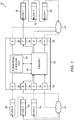
- Fig. 1 is a block diagram that schematically illustrates a network communication system 20 implementing adaptive flow prioritization, in accordance with an embodiment of the invention.
- the operation of system 20 is illustrated by a switch 22, which has multiple interfaces, in the form of ports 26, connected to a packet data network 24, such as an Ethernet or InfiniBand switch fabric.
- Ports 26, which are labeled with letters A-H for clarity in the description that follows, are configured to serve as ingress and egress ports (or equivalently, ingress and egress interfaces) to network 24.
- ports 26A-D serve in Fig. 1 as ingress ports
- ports 26E-H serve as egress ports
- all ports 26 are typically configured for bidirectional operation, as both ingress and egress ports.
- Ports 26 receive packets from network 24 belonging to multiple flows, for forwarding to respective egress interfaces for transmission to the network. For example, in the pictured embodiment, port 26A receives a packet 32, belonging to "flow X,” followed by a packet 36, belonging to "flow Y.” Port 26C meanwhile receives a packet 34, belonging to "flow Z.” Assuming network 24 to be an Internet Protocol (IP) network, packet flows can be identified by the packet 5-tuple (source and destination IP addresses and ports, along with the transport protocol). Alternatively, any other suitable flow identifier may be used.
- IP Internet Protocol
- Switch 22 comprises control circuitry, in the form of forwarding and queuing logic 30, which forwards incoming packets 32, 34, 36, ..., to the appropriate egress ports 26 for transmission to network 24.
- flows X, Y and Z are all forwarded to the same egress port 26F.
- Logic 30 queues the packets that are destined for each egress port in transmit queues in a memory 28, while the packets await their turn for transmission.
- Logic 30 does not necessarily transmit the packets through a given egress port in their order of arrival, however, but rather gives higher priority to "new flows," as explained above.
- flow Y is treated as a new flow, and packet 36 is therefore transmitted through port 26F to network 24 ahead of packets 32 and 34.
- This adaptive prioritization mechanism is described further hereinbelow with reference to Fig. 2 .
- switch 22 and network 24 that are shown in Fig. 1 are example configurations, which are chosen purely for the sake of conceptual clarity. In alternative embodiments, any other suitable network and/or switch configuration can be used.
- Logic 30 in switch 22 typically comprises hard-wired or programmable logic circuits, such as one or more Application-Specific Integrated Circuits (ASICs) or Field-Programmable Gate Arrays (FPGAs). Alternatively or additionally, at least some of the functions of logic 30 may be implemented in software or firmware running on a programmable processor.
- ASICs Application-Specific Integrated Circuits
- FPGAs Field-Programmable Gate Arrays
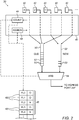
- Fig. 2 is a block diagram that schematically illustrates a method for adaptive flow prioritization carried out by forwarding and queuing logic 30 in switch 22, in accordance with an embodiment of the invention.
- Logic 30 comprises prioritization circuitry 40, which tracks and queues packets in multiple flows 42 that are to be forwarded to a given egress port, such as port 26F in the present example.
- Circuitry 40 comprises a counter 44, which counts the number of packets (or, alternatively, the number of bytes) in each of flows 42 that are queued for transmission through port 26F.
- the counts may be stored in a state table 46, in which each entry 48 corresponds to a different flow.
- Entries 48 can be keyed for example, by taking a hash over the packet 5-tuple (or over another set of fields in the packet header), with a hash function that is large enough so that the probability of hash collisions is very small.
- the count is initially set to zero.
- Counter 44 increments the respective count for a given flow when a packet in the flow is queued for transmission and decrements the count when the packet is transmitted to the network.
- an assignment circuit 49 assigns each flow 42 to either an "old flow” group or to a "new flow” group. Specifically, circuit 49 assigns the flows for which the respective entry 48 in table 46 contains a count value of zero - meaning that there are no packets in this flow that are currently queued for transmission - to the new flow group. The flows for which the respective count value is non-zero are assigned to the old flow group. Following these assignments, packets arriving in the old flow group (such as those in flows X and Z) are queued, in order of arrival, in an old flow queue 50, while those in the new flow group (such as those in flow Y) are queued in order of arrival in a new flow queue 52. Entries 53 in queues 50 and 52 may comprise, for example, descriptors that point to the locations of corresponding packets awaiting transmission in memory 28.
- circuitry 40 may make an assessment of the transmission rate and/or the occurrence of transmission bursts (referred to as "burstiness") in at least some of flows 42, and may then apply this assessment in assigning the flows to queue 50 or queue 52.
- burstiness the transmission rate and/or the occurrence of transmission bursts
- An arbiter 54 selects entries 53 from queues 50 and 52 and transmits the corresponding packets to network 24 via egress port 26F.
- Arbiter 54 assigns higher priority to queue 52 (the new flows) than to queue 50 (the old flows). Consequently, packets belonging to small, short-lived flows will generally be forwarded ahead of those in large, persistent flows.
- Arbiter 54 typically applies a strict priority scheme, in which all packets waiting in queue 52 are transmitted before servicing queue 50.
- the assignments of flows to the old and new flow groups, with their corresponding queues 50 and 52, is generally not static, but is rather updated in each of a succession of arbitration cycles.
- Assignment circuit 49 initiates each new arbitration cycle in response to a certain arbitration event or set of events. (Flows can be transferred from new flow queue 52 to old flow queue 50 at any time, but as noted earlier, transfer from old flow queue 50 to new flow queue 52 can occur only after a specified arbitration event has occurred.)
- One such arbitration event could be expiration of a timer, which determines the maximum lifetime of a given set of flow group assignments.
- arbitration events may be triggered by arbiter 54, for example in response to having transmitted a certain number of packets or a certain volume of data. Further additionally or alternatively, after a given flow in the new flow group has contributed a certain number of packets to queue 52, assignment circuit 49 may immediately transfer the flow to the old flow group and queue 50.
- switch 22 receives and forwards packets belonging to multiple different traffic classes, which have different, respective levels of quality of service (QoS).
- prioritization circuitry 40 assigns flows 42 to different queues not only according to whether they are "old" or "new,” but also according to the traffic classes.
- the methods of adaptive flow prioritization that are described herein may then be applied separately to one or more of the traffic classes, or to all of the traffic classes.
- logic 30 may maintain separate pairs of old and new queues for each traffic class to which adaptive flow prioritization is to be applied.
- Arbiter 54 arbitrates separately among the old and new flows in each of these different traffic classes.
- the separation of flows 42 into old and new groups can also be used in applying congestion avoidance protocols, such as dropping and/or marking of packets in case of congestion.
- congestion avoidance protocols such as dropping and/or marking of packets in case of congestion.
- switch 22 receives an indication of congestion in network 24
- logic 30 may apply the specified congestion avoidance protocol to the flows in the old flow group but not to the flows in the new flow group.
- This approach is advantageous in that it applies congestion control specifically to the larger, more persistent flows that are generally responsible for the congestion, while minimizing the effect of the congestion avoidance measures on the more sensitive, smaller flows.
- the count values in table 46 can be used in making congestion control decisions, thus enabling logic 30 to apply congestion avoidance measures selectively to the larger flows, based on the respective numbers of the packets that they have queued for transmission.
Landscapes
- Engineering & Computer Science (AREA)
- Computer Networks & Wireless Communication (AREA)
- Signal Processing (AREA)
- Data Exchanges In Wide-Area Networks (AREA)
Applications Claiming Priority (1)
| Application Number | Priority Date | Filing Date | Title |
|---|---|---|---|
| US15/194,585 US9985910B2 (en) | 2016-06-28 | 2016-06-28 | Adaptive flow prioritization |
Publications (2)
| Publication Number | Publication Date |
|---|---|
| EP3264698A1 true EP3264698A1 (de) | 2018-01-03 |
| EP3264698B1 EP3264698B1 (de) | 2020-10-28 |
Family
ID=59253368
Family Applications (1)
| Application Number | Title | Priority Date | Filing Date |
|---|---|---|---|
| EP17178355.8A Active EP3264698B1 (de) | 2016-06-28 | 2017-06-28 | Anpassungsfähige durchflusspriorisierung |
Country Status (2)
| Country | Link |
|---|---|
| US (1) | US9985910B2 (de) |
| EP (1) | EP3264698B1 (de) |
Families Citing this family (15)
| Publication number | Priority date | Publication date | Assignee | Title |
|---|---|---|---|---|
| US10645033B2 (en) | 2017-03-27 | 2020-05-05 | Mellanox Technologies Tlv Ltd. | Buffer optimization in modular switches |
| US10951550B2 (en) * | 2019-01-29 | 2021-03-16 | EMC IP Holding Company LLC | Logging infrastructure with time sustain requirements |
| US20220321499A1 (en) * | 2019-03-18 | 2022-10-06 | Brightways Corporation | Switch flow module on an integrated circuit for aggregation in data center network switching |
| US10970172B2 (en) | 2019-04-29 | 2021-04-06 | EMC IP Holding Company LLC | Method to recover metadata in a content aware storage system |
| US10999221B2 (en) * | 2019-07-02 | 2021-05-04 | Mellanox Technologies Tlv Ltd. | Transaction based scheduling |
| US11470010B2 (en) | 2020-02-06 | 2022-10-11 | Mellanox Technologies, Ltd. | Head-of-queue blocking for multiple lossless queues |
| US11870682B2 (en) | 2021-06-22 | 2024-01-09 | Mellanox Technologies, Ltd. | Deadlock-free local rerouting for handling multiple local link failures in hierarchical network topologies |
| US12474833B2 (en) | 2021-11-02 | 2025-11-18 | Mellanox Technologies, Ltd | Queue bandwidth estimation for management of shared buffers and allowing visibility of shared buffer status |
| US11765103B2 (en) | 2021-12-01 | 2023-09-19 | Mellanox Technologies, Ltd. | Large-scale network with high port utilization |
| US11973696B2 (en) | 2022-01-31 | 2024-04-30 | Mellanox Technologies, Ltd. | Allocation of shared reserve memory to queues in a network device |
| US12375404B2 (en) | 2022-08-25 | 2025-07-29 | Mellanox Technologies, Ltd | Flow-based congestion control |
| US12155563B2 (en) | 2022-09-05 | 2024-11-26 | Mellanox Technologies, Ltd. | Flexible per-flow multipath managed by sender-side network adapter |
| US12328251B2 (en) | 2022-09-08 | 2025-06-10 | Mellano Technologies, Ltd. | Marking of RDMA-over-converged-ethernet (RoCE) traffic eligible for adaptive routing |
| US12413520B2 (en) | 2023-03-24 | 2025-09-09 | Mellanox Technologies, Ltd | Real-time performance optimization of a packet network |
| TW202533555A (zh) * | 2024-02-02 | 2025-08-16 | 智邦科技股份有限公司 | 交換機及應用於交換機的排程方法 |
Citations (3)
| Publication number | Priority date | Publication date | Assignee | Title |
|---|---|---|---|---|
| US20070291644A1 (en) * | 2004-11-15 | 2007-12-20 | James Roberts | Method and Device for Scheduling Packets for Routing in a Network with Implicit Determination of Packets to be Treated as Priority |
| US20150124611A1 (en) * | 2013-11-05 | 2015-05-07 | Insieme Networks, Inc. | Dynamic flowlet prioritization |
| US20150127797A1 (en) * | 2013-11-05 | 2015-05-07 | Cisco Technology, Inc. | System and method for multi-path load balancing in network fabrics |
Family Cites Families (56)
| Publication number | Priority date | Publication date | Assignee | Title |
|---|---|---|---|---|
| US7321553B2 (en) | 2003-07-22 | 2008-01-22 | Intel Corporation | Methods and apparatus for asserting flow control at input ports of a shared-memory switch |
| SE506955C2 (sv) | 1995-07-06 | 1998-03-09 | Ericsson Telefon Ab L M | ATM-flödesstyrning |
| US6108713A (en) | 1997-02-11 | 2000-08-22 | Xaqti Corporation | Media access control architectures and network management systems |
| US6178448B1 (en) | 1997-06-18 | 2001-01-23 | International Business Machines Corporation | Optimal link scheduling for multiple links by obtaining and utilizing link quality information |
| US6590901B1 (en) | 1998-04-01 | 2003-07-08 | Mosaid Technologies, Inc. | Method and apparatus for providing a packet buffer random access memory |
| US7002980B1 (en) | 2000-12-19 | 2006-02-21 | Chiaro Networks, Ltd. | System and method for router queue and congestion management |
| JP3892682B2 (ja) | 2001-06-18 | 2007-03-14 | 株式会社エヌ・ティ・ティ・ドコモ | パケット伝送方法、基地局及び移動局 |
| KR100426535B1 (ko) | 2001-12-11 | 2004-04-08 | 삼성전자주식회사 | 무선통신기기 및 그 무선통신방법 |
| JP3925234B2 (ja) * | 2002-02-18 | 2007-06-06 | ソニー株式会社 | データ通信システム、データ通信管理装置、および方法、並びにコンピュータ・プログラム |
| US7430169B2 (en) | 2002-06-03 | 2008-09-30 | International Business Machines Corporation | Retro flow control for arriving traffic in computer networks |
| US7706394B2 (en) | 2003-07-23 | 2010-04-27 | International Business Machines Corporation | System and method for collapsing VOQ's of a packet switch fabric |
| US8473693B1 (en) | 2003-07-29 | 2013-06-25 | Netapp, Inc. | Managing ownership of memory buffers (mbufs) |
| US20080037420A1 (en) | 2003-10-08 | 2008-02-14 | Bob Tang | Immediate ready implementation of virtually congestion free guaranteed service capable network: external internet nextgentcp (square waveform) TCP friendly san |
| TWI241807B (en) | 2004-03-02 | 2005-10-11 | Hon Hai Prec Ind Co Ltd | System and method for network quality of service |
| US7499402B2 (en) | 2004-04-13 | 2009-03-03 | Radioframe Networks, Inc. | Network delay control |
| US20060056308A1 (en) | 2004-05-28 | 2006-03-16 | International Business Machines Corporation | Method of switching fabric for counteracting a saturation tree occurring in a network with nodes |
| US7724663B2 (en) * | 2004-09-08 | 2010-05-25 | Telefonaktiebolaget L M Ericsson (Publ) | Counter based quality of service (QoS) class upgrade |
| EP1650905A1 (de) | 2004-10-25 | 2006-04-26 | Siemens Aktiengesellschaft | Verfahren zur Verwaltung von Bandbreitenprofilen in einem Metro-Ethernet Netz |
| US7948880B2 (en) | 2004-10-29 | 2011-05-24 | Broadcom Corporation | Adaptive dynamic thresholding mechanism for link level flow control scheme |
| US7593329B2 (en) | 2004-10-29 | 2009-09-22 | Broadcom Corporation | Service aware flow control |
| US7802028B2 (en) | 2005-05-02 | 2010-09-21 | Broadcom Corporation | Total dynamic sharing of a transaction queue |
| US8218546B2 (en) | 2005-11-10 | 2012-07-10 | Broadcom Corporation | Interleaved processing of dropped packets in a network device |
| US7953002B2 (en) | 2005-11-10 | 2011-05-31 | Broadcom Corporation | Buffer management and flow control mechanism including packet-based dynamic thresholding |
| US8078743B2 (en) | 2006-02-17 | 2011-12-13 | Intel-Ne, Inc. | Pipelined processing of RDMA-type network transactions |
| US7724754B2 (en) | 2006-02-24 | 2010-05-25 | Texas Instruments Incorporated | Device, system and/or method for managing packet congestion in a packet switching network |
| EP1873977B1 (de) | 2006-06-30 | 2009-10-28 | Alcatel Lucent | Verfahren zur Bereitstellung von einer Ressourcenzulassungskontrolle |
| US7821939B2 (en) | 2007-09-26 | 2010-10-26 | International Business Machines Corporation | Method, system, and computer program product for adaptive congestion control on virtual lanes for data center ethernet architecture |
| US8532117B2 (en) | 2008-02-13 | 2013-09-10 | Broadcom Corporation | Flexible buffer allocation entities for traffic aggregate containment |
| WO2009107089A2 (en) | 2008-02-26 | 2009-09-03 | Nxp B.V. | Apparatus and method for shared buffering between switch ports |
| US8576715B2 (en) | 2009-10-26 | 2013-11-05 | Mellanox Technologies Ltd. | High-performance adaptive routing |
| US8498213B2 (en) | 2010-09-14 | 2013-07-30 | Brocade Communications Systems, Inc. | Manageability tools for lossless networks |
| US9008113B2 (en) | 2010-12-20 | 2015-04-14 | Solarflare Communications, Inc. | Mapped FIFO buffering |
| US8938598B2 (en) | 2011-07-06 | 2015-01-20 | Nvidia Corporation | Facilitating simultaneous submission to a multi-producer queue by multiple threads with inner and outer pointers |
| US8681616B2 (en) | 2011-08-12 | 2014-03-25 | Telefonaktiebolaget L M Ericsson (Publ) | Scheduling under congestion with traffic load-based scaling |
| EP2761482B1 (de) | 2011-09-30 | 2016-11-30 | Intel Corporation | Direkter e/a zugang für systemkoprozessoren |
| US8811183B1 (en) | 2011-10-04 | 2014-08-19 | Juniper Networks, Inc. | Methods and apparatus for multi-path flow control within a multi-stage switch fabric |
| US9325619B2 (en) | 2011-11-15 | 2016-04-26 | Oracle International Corporation | System and method for using virtual lanes to alleviate congestion in a fat-tree topology |
| US8879396B2 (en) | 2011-11-15 | 2014-11-04 | Oracle International Corporation | System and method for using dynamic allocation of virtual lanes to alleviate congestion in a fat-tree topology |
| US8995265B2 (en) | 2012-01-28 | 2015-03-31 | Lenovo Enterprise Solutions (Singapore) Pte. Ltd. | Monitoring endpoint buffer occupancy to determine congestion in an ethernet network |
| ITRM20120094A1 (it) | 2012-03-14 | 2013-09-14 | Istituto Naz Di Fisica Nuclea Re | Scheda di interfaccia di rete per nodo di rete di calcolo parallelo su gpu, e relativo metodo di comunicazione internodale |
| US8867360B2 (en) | 2012-03-22 | 2014-10-21 | Avaya Inc. | Method and apparatus for lossless behavior for multiple ports sharing a buffer pool |
| US9166919B2 (en) | 2012-03-23 | 2015-10-20 | Broadcom Corporation | Reducing headroom |
| KR20130126816A (ko) | 2012-04-26 | 2013-11-21 | 한국전자통신연구원 | 트래픽 혼잡을 제어하는 트래픽 관리장치 및 그 방법 |
| US9436504B2 (en) | 2012-05-09 | 2016-09-06 | Nvidia Corporation | Techniques for managing the execution order of multiple nested tasks executing on a parallel processor |
| US9749413B2 (en) | 2012-05-29 | 2017-08-29 | Intel Corporation | Peer-to-peer interrupt signaling between devices coupled via interconnects |
| US9282022B2 (en) | 2012-11-14 | 2016-03-08 | Broadcom Corporation | Forensics for network switching diagnosis |
| US8989017B2 (en) | 2012-12-14 | 2015-03-24 | Intel Corporation | Network congestion management by packet circulation |
| US9014006B2 (en) | 2013-01-31 | 2015-04-21 | Mellanox Technologies Ltd. | Adaptive routing using inter-switch notifications |
| US9237093B2 (en) | 2013-03-14 | 2016-01-12 | Silicon Graphics International Corp. | Bandwidth on-demand adaptive routing |
| US9467522B2 (en) | 2013-07-19 | 2016-10-11 | Broadcom Corporation | Ingress based headroom buffering for switch architectures |
| US9356868B2 (en) | 2013-08-23 | 2016-05-31 | Broadcom Corporation | Congestion detection and management at congestion-tree roots |
| US9648148B2 (en) | 2013-12-24 | 2017-05-09 | Intel Corporation | Method, apparatus, and system for QoS within high performance fabrics |
| US9621471B2 (en) | 2014-06-30 | 2017-04-11 | Vmware, Inc. | Framework for early congestion notification and recovery in a virtualized environment |
| WO2016041580A1 (en) | 2014-09-16 | 2016-03-24 | Huawei Technologies Co.,Ltd | Scheduler, sender, receiver, network node and methods thereof |
| US9794825B2 (en) | 2014-11-06 | 2017-10-17 | Alcatel-Lucent Usa Inc. | System and method for determining cell congestion level |
| US10425344B2 (en) | 2015-12-18 | 2019-09-24 | Avago Technologies International Sales Pte. Limited | Avoiding dropped data packets on a network transmission |
-
2016
- 2016-06-28 US US15/194,585 patent/US9985910B2/en active Active
-
2017
- 2017-06-28 EP EP17178355.8A patent/EP3264698B1/de active Active
Patent Citations (3)
| Publication number | Priority date | Publication date | Assignee | Title |
|---|---|---|---|---|
| US20070291644A1 (en) * | 2004-11-15 | 2007-12-20 | James Roberts | Method and Device for Scheduling Packets for Routing in a Network with Implicit Determination of Packets to be Treated as Priority |
| US20150124611A1 (en) * | 2013-11-05 | 2015-05-07 | Insieme Networks, Inc. | Dynamic flowlet prioritization |
| US20150127797A1 (en) * | 2013-11-05 | 2015-05-07 | Cisco Technology, Inc. | System and method for multi-path load balancing in network fabrics |
Non-Patent Citations (2)
| Title |
|---|
| "Advantage Series White Paper", 2016, CISCO SYSTEMS, INC., article "Smart Buffering" |
| HOEILAND-JOERGENSEN ET AL.: "The FlowQueue-CoDel Packet Scheduler and Active Queue Management Algorithm", 18 March 2016, INTERNET ENGINEERING TASK FORCE |
Also Published As
| Publication number | Publication date |
|---|---|
| EP3264698B1 (de) | 2020-10-28 |
| US9985910B2 (en) | 2018-05-29 |
| US20170373989A1 (en) | 2017-12-28 |
Similar Documents
| Publication | Publication Date | Title |
|---|---|---|
| EP3264698B1 (de) | Anpassungsfähige durchflusspriorisierung | |
| US10601714B2 (en) | Adaptive flow prioritization | |
| US12137047B2 (en) | Method and system for providing network egress fairness between applications | |
| US10999221B2 (en) | Transaction based scheduling | |
| JP7212441B2 (ja) | ネットワークにおけるフロー管理 | |
| US10084716B2 (en) | Flexible application of congestion control measures | |
| CN111526095B (zh) | 一种流量控制方法和装置 | |
| US6999416B2 (en) | Buffer management for support of quality-of-service guarantees and data flow control in data switching | |
| US10250530B2 (en) | Flexible buffer allocation in a network switch | |
| US7525911B2 (en) | Congestion controller for Ethernet switch | |
| US10938724B2 (en) | Flow rate based network load balancing | |
| US10069748B2 (en) | Congestion estimation for multi-priority traffic | |
| US20040179476A1 (en) | Apparatus and method for controlling a traffic switching operation based on a service class in an ethernet-based network | |
| US8144588B1 (en) | Scalable resource management in distributed environment | |
| US20050276221A1 (en) | Fair WRED for TCP and UDP traffic mix | |
| US20060053117A1 (en) | Directional and priority based flow control mechanism between nodes | |
| US7809007B2 (en) | Low cost implementation for a device utilizing look ahead congestion management | |
| US10728156B2 (en) | Scalable, low latency, deep buffered switch architecture | |
| US9197570B2 (en) | Congestion control in packet switches | |
| US7286552B1 (en) | Method and apparatus for providing quality of service across a switched backplane for multicast packets | |
| US7408876B1 (en) | Method and apparatus for providing quality of service across a switched backplane between egress queue managers | |
| US20190327173A1 (en) | Load balancing among network links using an efficient forwarding scheme | |
| US7599292B1 (en) | Method and apparatus for providing quality of service across a switched backplane between egress and ingress queue managers | |
| US7072352B2 (en) | Inverse multiplexing of unmanaged traffic flows over a multi-star network | |
| EP1476994B1 (de) | Verfahen zur multiplex-weiterleitung von kontrollierten und nicht kontrollierten datenströmen in einem multi-star netzwerk |
Legal Events
| Date | Code | Title | Description |
|---|---|---|---|
| PUAI | Public reference made under article 153(3) epc to a published international application that has entered the european phase |
Free format text: ORIGINAL CODE: 0009012 |
|
| STAA | Information on the status of an ep patent application or granted ep patent |
Free format text: STATUS: THE APPLICATION HAS BEEN PUBLISHED |
|
| AK | Designated contracting states |
Kind code of ref document: A1 Designated state(s): AL AT BE BG CH CY CZ DE DK EE ES FI FR GB GR HR HU IE IS IT LI LT LU LV MC MK MT NL NO PL PT RO RS SE SI SK SM TR |
|
| AX | Request for extension of the european patent |
Extension state: BA ME |
|
| STAA | Information on the status of an ep patent application or granted ep patent |
Free format text: STATUS: REQUEST FOR EXAMINATION WAS MADE |
|
| 17P | Request for examination filed |
Effective date: 20180703 |
|
| RBV | Designated contracting states (corrected) |
Designated state(s): AL AT BE BG CH CY CZ DE DK EE ES FI FR GB GR HR HU IE IS IT LI LT LU LV MC MK MT NL NO PL PT RO RS SE SI SK SM TR |
|
| STAA | Information on the status of an ep patent application or granted ep patent |
Free format text: STATUS: EXAMINATION IS IN PROGRESS |
|
| 17Q | First examination report despatched |
Effective date: 20181113 |
|
| GRAP | Despatch of communication of intention to grant a patent |
Free format text: ORIGINAL CODE: EPIDOSNIGR1 |
|
| STAA | Information on the status of an ep patent application or granted ep patent |
Free format text: STATUS: GRANT OF PATENT IS INTENDED |
|
| RIC1 | Information provided on ipc code assigned before grant |
Ipc: H04L 12/863 20130101ALI20200609BHEP Ipc: H04L 12/947 20130101ALI20200609BHEP Ipc: H04L 12/851 20130101AFI20200609BHEP Ipc: H04L 12/801 20130101ALI20200609BHEP Ipc: H04L 12/937 20130101ALI20200609BHEP |
|
| INTG | Intention to grant announced |
Effective date: 20200713 |
|
| GRAS | Grant fee paid |
Free format text: ORIGINAL CODE: EPIDOSNIGR3 |
|
| GRAA | (expected) grant |
Free format text: ORIGINAL CODE: 0009210 |
|
| STAA | Information on the status of an ep patent application or granted ep patent |
Free format text: STATUS: THE PATENT HAS BEEN GRANTED |
|
| AK | Designated contracting states |
Kind code of ref document: B1 Designated state(s): AL AT BE BG CH CY CZ DE DK EE ES FI FR GB GR HR HU IE IS IT LI LT LU LV MC MK MT NL NO PL PT RO RS SE SI SK SM TR |
|
| REG | Reference to a national code |
Ref country code: GB Ref legal event code: FG4D |
|
| REG | Reference to a national code |
Ref country code: CH Ref legal event code: EP |
|
| REG | Reference to a national code |
Ref country code: AT Ref legal event code: REF Ref document number: 1329372 Country of ref document: AT Kind code of ref document: T Effective date: 20201115 |
|
| REG | Reference to a national code |
Ref country code: DE Ref legal event code: R096 Ref document number: 602017026191 Country of ref document: DE |
|
| REG | Reference to a national code |
Ref country code: IE Ref legal event code: FG4D |
|
| REG | Reference to a national code |
Ref country code: AT Ref legal event code: MK05 Ref document number: 1329372 Country of ref document: AT Kind code of ref document: T Effective date: 20201028 |
|
| REG | Reference to a national code |
Ref country code: NL Ref legal event code: MP Effective date: 20201028 |
|
| PG25 | Lapsed in a contracting state [announced via postgrant information from national office to epo] |
Ref country code: RS Free format text: LAPSE BECAUSE OF FAILURE TO SUBMIT A TRANSLATION OF THE DESCRIPTION OR TO PAY THE FEE WITHIN THE PRESCRIBED TIME-LIMIT Effective date: 20201028 Ref country code: PT Free format text: LAPSE BECAUSE OF FAILURE TO SUBMIT A TRANSLATION OF THE DESCRIPTION OR TO PAY THE FEE WITHIN THE PRESCRIBED TIME-LIMIT Effective date: 20210301 Ref country code: NL Free format text: LAPSE BECAUSE OF FAILURE TO SUBMIT A TRANSLATION OF THE DESCRIPTION OR TO PAY THE FEE WITHIN THE PRESCRIBED TIME-LIMIT Effective date: 20201028 Ref country code: NO Free format text: LAPSE BECAUSE OF FAILURE TO SUBMIT A TRANSLATION OF THE DESCRIPTION OR TO PAY THE FEE WITHIN THE PRESCRIBED TIME-LIMIT Effective date: 20210128 Ref country code: FI Free format text: LAPSE BECAUSE OF FAILURE TO SUBMIT A TRANSLATION OF THE DESCRIPTION OR TO PAY THE FEE WITHIN THE PRESCRIBED TIME-LIMIT Effective date: 20201028 Ref country code: GR Free format text: LAPSE BECAUSE OF FAILURE TO SUBMIT A TRANSLATION OF THE DESCRIPTION OR TO PAY THE FEE WITHIN THE PRESCRIBED TIME-LIMIT Effective date: 20210129 |
|
| REG | Reference to a national code |
Ref country code: LT Ref legal event code: MG4D |
|
| PG25 | Lapsed in a contracting state [announced via postgrant information from national office to epo] |
Ref country code: ES Free format text: LAPSE BECAUSE OF FAILURE TO SUBMIT A TRANSLATION OF THE DESCRIPTION OR TO PAY THE FEE WITHIN THE PRESCRIBED TIME-LIMIT Effective date: 20201028 Ref country code: AT Free format text: LAPSE BECAUSE OF FAILURE TO SUBMIT A TRANSLATION OF THE DESCRIPTION OR TO PAY THE FEE WITHIN THE PRESCRIBED TIME-LIMIT Effective date: 20201028 Ref country code: LV Free format text: LAPSE BECAUSE OF FAILURE TO SUBMIT A TRANSLATION OF THE DESCRIPTION OR TO PAY THE FEE WITHIN THE PRESCRIBED TIME-LIMIT Effective date: 20201028 Ref country code: PL Free format text: LAPSE BECAUSE OF FAILURE TO SUBMIT A TRANSLATION OF THE DESCRIPTION OR TO PAY THE FEE WITHIN THE PRESCRIBED TIME-LIMIT Effective date: 20201028 Ref country code: IS Free format text: LAPSE BECAUSE OF FAILURE TO SUBMIT A TRANSLATION OF THE DESCRIPTION OR TO PAY THE FEE WITHIN THE PRESCRIBED TIME-LIMIT Effective date: 20210228 Ref country code: BG Free format text: LAPSE BECAUSE OF FAILURE TO SUBMIT A TRANSLATION OF THE DESCRIPTION OR TO PAY THE FEE WITHIN THE PRESCRIBED TIME-LIMIT Effective date: 20210128 Ref country code: SE Free format text: LAPSE BECAUSE OF FAILURE TO SUBMIT A TRANSLATION OF THE DESCRIPTION OR TO PAY THE FEE WITHIN THE PRESCRIBED TIME-LIMIT Effective date: 20201028 |
|
| PG25 | Lapsed in a contracting state [announced via postgrant information from national office to epo] |
Ref country code: HR Free format text: LAPSE BECAUSE OF FAILURE TO SUBMIT A TRANSLATION OF THE DESCRIPTION OR TO PAY THE FEE WITHIN THE PRESCRIBED TIME-LIMIT Effective date: 20201028 |
|
| REG | Reference to a national code |
Ref country code: DE Ref legal event code: R097 Ref document number: 602017026191 Country of ref document: DE |
|
| PG25 | Lapsed in a contracting state [announced via postgrant information from national office to epo] |
Ref country code: SK Free format text: LAPSE BECAUSE OF FAILURE TO SUBMIT A TRANSLATION OF THE DESCRIPTION OR TO PAY THE FEE WITHIN THE PRESCRIBED TIME-LIMIT Effective date: 20201028 Ref country code: RO Free format text: LAPSE BECAUSE OF FAILURE TO SUBMIT A TRANSLATION OF THE DESCRIPTION OR TO PAY THE FEE WITHIN THE PRESCRIBED TIME-LIMIT Effective date: 20201028 Ref country code: EE Free format text: LAPSE BECAUSE OF FAILURE TO SUBMIT A TRANSLATION OF THE DESCRIPTION OR TO PAY THE FEE WITHIN THE PRESCRIBED TIME-LIMIT Effective date: 20201028 Ref country code: CZ Free format text: LAPSE BECAUSE OF FAILURE TO SUBMIT A TRANSLATION OF THE DESCRIPTION OR TO PAY THE FEE WITHIN THE PRESCRIBED TIME-LIMIT Effective date: 20201028 Ref country code: LT Free format text: LAPSE BECAUSE OF FAILURE TO SUBMIT A TRANSLATION OF THE DESCRIPTION OR TO PAY THE FEE WITHIN THE PRESCRIBED TIME-LIMIT Effective date: 20201028 Ref country code: SM Free format text: LAPSE BECAUSE OF FAILURE TO SUBMIT A TRANSLATION OF THE DESCRIPTION OR TO PAY THE FEE WITHIN THE PRESCRIBED TIME-LIMIT Effective date: 20201028 |
|
| PG25 | Lapsed in a contracting state [announced via postgrant information from national office to epo] |
Ref country code: DK Free format text: LAPSE BECAUSE OF FAILURE TO SUBMIT A TRANSLATION OF THE DESCRIPTION OR TO PAY THE FEE WITHIN THE PRESCRIBED TIME-LIMIT Effective date: 20201028 |
|
| PLBE | No opposition filed within time limit |
Free format text: ORIGINAL CODE: 0009261 |
|
| STAA | Information on the status of an ep patent application or granted ep patent |
Free format text: STATUS: NO OPPOSITION FILED WITHIN TIME LIMIT |
|
| 26N | No opposition filed |
Effective date: 20210729 |
|
| PG25 | Lapsed in a contracting state [announced via postgrant information from national office to epo] |
Ref country code: AL Free format text: LAPSE BECAUSE OF FAILURE TO SUBMIT A TRANSLATION OF THE DESCRIPTION OR TO PAY THE FEE WITHIN THE PRESCRIBED TIME-LIMIT Effective date: 20201028 Ref country code: IT Free format text: LAPSE BECAUSE OF FAILURE TO SUBMIT A TRANSLATION OF THE DESCRIPTION OR TO PAY THE FEE WITHIN THE PRESCRIBED TIME-LIMIT Effective date: 20201028 |
|
| REG | Reference to a national code |
Ref country code: DE Ref legal event code: R079 Ref document number: 602017026191 Country of ref document: DE Free format text: PREVIOUS MAIN CLASS: H04L0012851000 Ipc: H04L0047240000 |
|
| PG25 | Lapsed in a contracting state [announced via postgrant information from national office to epo] |
Ref country code: SI Free format text: LAPSE BECAUSE OF FAILURE TO SUBMIT A TRANSLATION OF THE DESCRIPTION OR TO PAY THE FEE WITHIN THE PRESCRIBED TIME-LIMIT Effective date: 20201028 |
|
| REG | Reference to a national code |
Ref country code: DE Ref legal event code: R081 Ref document number: 602017026191 Country of ref document: DE Owner name: MELLANOX TECHNOLOGIES, LTD., IL Free format text: FORMER OWNER: MELLANOX TECHNOLOGIES TLV LTD., RA'ANANA, IL |
|
| REG | Reference to a national code |
Ref country code: GB Ref legal event code: 732E Free format text: REGISTERED BETWEEN 20211230 AND 20220105 |
|
| PG25 | Lapsed in a contracting state [announced via postgrant information from national office to epo] |
Ref country code: MC Free format text: LAPSE BECAUSE OF FAILURE TO SUBMIT A TRANSLATION OF THE DESCRIPTION OR TO PAY THE FEE WITHIN THE PRESCRIBED TIME-LIMIT Effective date: 20201028 |
|
| REG | Reference to a national code |
Ref country code: CH Ref legal event code: PL |
|
| REG | Reference to a national code |
Ref country code: BE Ref legal event code: MM Effective date: 20210630 |
|
| PG25 | Lapsed in a contracting state [announced via postgrant information from national office to epo] |
Ref country code: LU Free format text: LAPSE BECAUSE OF NON-PAYMENT OF DUE FEES Effective date: 20210628 |
|
| PG25 | Lapsed in a contracting state [announced via postgrant information from national office to epo] |
Ref country code: LI Free format text: LAPSE BECAUSE OF NON-PAYMENT OF DUE FEES Effective date: 20210630 Ref country code: IE Free format text: LAPSE BECAUSE OF NON-PAYMENT OF DUE FEES Effective date: 20210628 Ref country code: CH Free format text: LAPSE BECAUSE OF NON-PAYMENT OF DUE FEES Effective date: 20210630 |
|
| PG25 | Lapsed in a contracting state [announced via postgrant information from national office to epo] |
Ref country code: IS Free format text: LAPSE BECAUSE OF FAILURE TO SUBMIT A TRANSLATION OF THE DESCRIPTION OR TO PAY THE FEE WITHIN THE PRESCRIBED TIME-LIMIT Effective date: 20210228 |
|
| PG25 | Lapsed in a contracting state [announced via postgrant information from national office to epo] |
Ref country code: BE Free format text: LAPSE BECAUSE OF NON-PAYMENT OF DUE FEES Effective date: 20210630 |
|
| PG25 | Lapsed in a contracting state [announced via postgrant information from national office to epo] |
Ref country code: HU Free format text: LAPSE BECAUSE OF FAILURE TO SUBMIT A TRANSLATION OF THE DESCRIPTION OR TO PAY THE FEE WITHIN THE PRESCRIBED TIME-LIMIT; INVALID AB INITIO Effective date: 20170628 |
|
| P01 | Opt-out of the competence of the unified patent court (upc) registered |
Effective date: 20230518 |
|
| PG25 | Lapsed in a contracting state [announced via postgrant information from national office to epo] |
Ref country code: CY Free format text: LAPSE BECAUSE OF FAILURE TO SUBMIT A TRANSLATION OF THE DESCRIPTION OR TO PAY THE FEE WITHIN THE PRESCRIBED TIME-LIMIT Effective date: 20201028 |
|
| PG25 | Lapsed in a contracting state [announced via postgrant information from national office to epo] |
Ref country code: MK Free format text: LAPSE BECAUSE OF FAILURE TO SUBMIT A TRANSLATION OF THE DESCRIPTION OR TO PAY THE FEE WITHIN THE PRESCRIBED TIME-LIMIT Effective date: 20201028 |
|
| PG25 | Lapsed in a contracting state [announced via postgrant information from national office to epo] |
Ref country code: TR Free format text: LAPSE BECAUSE OF FAILURE TO SUBMIT A TRANSLATION OF THE DESCRIPTION OR TO PAY THE FEE WITHIN THE PRESCRIBED TIME-LIMIT Effective date: 20201028 |
|
| PG25 | Lapsed in a contracting state [announced via postgrant information from national office to epo] |
Ref country code: MT Free format text: LAPSE BECAUSE OF FAILURE TO SUBMIT A TRANSLATION OF THE DESCRIPTION OR TO PAY THE FEE WITHIN THE PRESCRIBED TIME-LIMIT Effective date: 20201028 |
|
| PGFP | Annual fee paid to national office [announced via postgrant information from national office to epo] |
Ref country code: DE Payment date: 20250520 Year of fee payment: 9 |
|
| PGFP | Annual fee paid to national office [announced via postgrant information from national office to epo] |
Ref country code: GB Payment date: 20250520 Year of fee payment: 9 |
|
| PGFP | Annual fee paid to national office [announced via postgrant information from national office to epo] |
Ref country code: FR Payment date: 20250520 Year of fee payment: 9 |