EP3264565A1 - Charging method, charging device and terminal - Google Patents
Charging method, charging device and terminal Download PDFInfo
- Publication number
- EP3264565A1 EP3264565A1 EP15892181.7A EP15892181A EP3264565A1 EP 3264565 A1 EP3264565 A1 EP 3264565A1 EP 15892181 A EP15892181 A EP 15892181A EP 3264565 A1 EP3264565 A1 EP 3264565A1
- Authority
- EP
- European Patent Office
- Prior art keywords
- charging
- voltage value
- cable
- charging current
- current
- Prior art date
- Legal status (The legal status is an assumption and is not a legal conclusion. Google has not performed a legal analysis and makes no representation as to the accuracy of the status listed.)
- Granted
Links
Images

Classifications
-
- H—ELECTRICITY
- H02—GENERATION; CONVERSION OR DISTRIBUTION OF ELECTRIC POWER
- H02J—ELECTRIC POWER NETWORKS; CIRCUIT ARRANGEMENTS OR SYSTEMS FOR SUPPLYING OR DISTRIBUTING ELECTRIC POWER; SYSTEMS FOR STORING ELECTRIC ENERGY
- H02J7/00—Circuit arrangements for charging or discharging batteries or for supplying loads from batteries
-
- H—ELECTRICITY
- H04—ELECTRIC COMMUNICATION TECHNIQUE
- H04M—TELEPHONIC COMMUNICATION
- H04M19/00—Current supply arrangements for telephone systems
- H04M19/08—Current supply arrangements for telephone systems with current supply sources at the substations
-
- H—ELECTRICITY
- H02—GENERATION; CONVERSION OR DISTRIBUTION OF ELECTRIC POWER
- H02J—ELECTRIC POWER NETWORKS; CIRCUIT ARRANGEMENTS OR SYSTEMS FOR SUPPLYING OR DISTRIBUTING ELECTRIC POWER; SYSTEMS FOR STORING ELECTRIC ENERGY
- H02J7/00—Circuit arrangements for charging or discharging batteries or for supplying loads from batteries
- H02J7/02—Circuit arrangements for charging or discharging batteries or for supplying loads from batteries for charging batteries from AC mains by converters
- H02J7/04—Regulation of charging current or voltage
Definitions
- Embodiments of the present invention relate to the field of information technologies, and in particular, to a charging method, a charging apparatus, and a terminal.
- the present invention provides a charging method, a charging apparatus, and a terminal, to enable a terminal to adapt to different charging apparatuses, improving charging experience of a user.
- a first aspect of the present invention provides a charging method, where the method includes: identifying, when it is detected that a charging apparatus is inserted into a charging port of a terminal by using a charging cable, a first voltage value of the charging port; setting a second charging current; identifying a second voltage value of the charging port at the second charging current; calculating a cable impedance of the charging cable according to the first voltage value, the second charging current, and the second voltage value; and adjusting a suitable charging current of the charging apparatus according to the cable impedance of the charging cable.
- the method further includes: prompting a user when the cable impedance of the charging cable is greater than a preset impedance value.
- the adjusting a suitable charging current of the charging apparatus according to the cable impedance of the charging cable includes: adjusting a third charging current to a fourth charging current; identifying a fourth voltage value of the charging port at the fourth charging current; calculating an output voltage value of the charging apparatus according to a rated voltage value of the charging apparatus, the fourth charging current and the cable impedance of the charging cable; and determining, if the fourth voltage value is less than the output voltage value of the charging apparatus, that the third charging current is the suitable charging current of the charging apparatus.
- a second aspect of the present invention provides a charging apparatus, where the apparatus includes: a first identification unit, configured to identify, when it is detected that a charging apparatus is inserted into a charging port of a terminal by using a charging cable, a first voltage value of the charging port; a setting unit, configured to set a second charging current; a second identification unit, configured to identify a second voltage value of the charging port at the second charging current; a first calculation unit, configured to calculate a cable impedance of the charging cable according to the first voltage value, the second charging current, and the second voltage value; and a first adjustment unit, configured to adjust a suitable charging current of the charging apparatus according to the cable impedance of the charging cable.
- the apparatus further includes a prompt unit, configured to prompt a user when the cable impedance of the charging cable is greater than a preset impedance value.
- the first adjustment unit includes: a second adjustment unit, configured to adjust a third charging current to a fourth charging current; a third identification unit, configured to identify a fourth voltage value of the charging port at the fourth charging current; a second calculation unit, configured to calculate an output voltage value of the charging apparatus according to a rated voltage value of the charging apparatus, the fourth charging current and the cable impedance of the charging cable; and a determining unit, configured to determine, if the fourth voltage value is less than the output voltage value of the charging apparatus, that the third charging current is the suitable charging current of the charging apparatus.
- a third aspect of the present invention provides a terminal, where the terminal includes: one or more processors; a memory; and one or more programs, where the one or more programs are stored in the memory, and are configured to be executed by the one or more processors, and the one or more programs include an instruction, where the instruction is used for: identifying, when it is detected that a charging apparatus is inserted into a charging port of a terminal by using a charging cable, a first voltage value of the charging port; setting a second charging current; identifying a second voltage value of the charging port at the second charging current; calculating a cable impedance of the charging cable according to the first voltage value, the second charging current, and the second voltage value; and adjusting a suitable charging current of the charging apparatus according to the cable impedance of the charging cable.
- the instruction is further used for prompting a user when the cable impedance of the charging cable is greater than a preset impedance value.
- the adjusting a suitable charging current of the charging apparatus according to the cable impedance of the charging cable includes: adjusting a third charging current to a fourth charging current; identifying a fourth voltage value of the charging port at the fourth charging current; calculating an output voltage value of the charging apparatus according to a rated voltage value of the charging apparatus, the fourth charging current and the cable impedance of the charging cable; and determining, if the fourth voltage value is less than the output voltage value of the charging apparatus, that the third charging current is the suitable charging current of the charging apparatus.
- a fourth aspect of the present invention provides a terminal, where the terminal includes: one or more processors, a memory and one or more programs, where the one or more programs are stored in the memory, and are configured to be executed by the one or more processors, and the one or more programs include an instruction for performing the method according to any one of the first aspect to the fourth possible implementation manner of the first aspect.
- a fifth aspect of the present invention provides a computer-readable storage medium for storing one or more programs, where the one or more programs include an instruction, and when executed by the terminal, the instruction enables the terminal to perform the method according to any one of the first aspect to the fourth possible implementation manner of the first aspect.
- the present invention provides a charging method, a charging apparatus, a terminal, and a computer-readable storage medium.
- identifying when it is detected that a charging apparatus is inserted into a charging port of a terminal by using a charging cable, a first voltage value of the charging port; setting a second charging current; identifying a second voltage value of the charging port at the second charging current; calculating a cable impedance of the charging cable according to the first voltage value, the second charging current, and the second voltage value; and adjusting a suitable charging current of the charging apparatus according to the cable impedance of the charging cable, the terminal can adapt to different charging apparatuses, improving charging experience of a user.
- a terminal in the embodiments of the present invention may include a mobile phone, a tablet computer, an MP3 player, a wearable device such as a smart watch, and the like.
- a charging apparatus such as a non-original adapter
- a charging current that is set by the terminal is relatively large and exceeds a rated current of the adapter
- overcurrent protection is generated by the charging apparatus, and charging cannot be performed.
- the user uses a charging cable of relatively poor quality, for example, a USB cable
- a voltage shunted to the cable is excessively large, and a voltage reaching a mobile phone end is relatively low due to an impedance problem of the USB cable. Consequently, there are problems that charging is slow, charging cannot even be performed, and the like.
- the cable impedance of the charging cable of relatively poor quality is relatively large, there is relatively much heat generated from the charging cable, and this situation is relatively dangerous.
- FIG. 1 is a schematic diagram of charging the terminal by the adapter.
- I IC Integrated Chip, integrated chip, IC for short
- the charging current is relatively small, and is less than a rated charging current of the adapter, it may be considered that the output voltage V of the adapter is equal to a voltage V bus of the charging port.
- the terminal may obtain the voltage V bus of the charging port by detecting the charging port by using the charging IC.
- I i is an improved charging current
- I 0 the preset initial charging current
- ⁇ I is an adjustment value of the charging current
- i is a nonnegative integer
- i 0, 1, 2, 3, ....
- ⁇ I 100 ma.
- V is basically equal to V bus .
- V bus gradually decreases and falls down to a value near a preset voltage value, the adapter stops charging the mobile phone because of existence of overcurrent protection.
- V bus is the voltage of the charging port of the terminal detected by the charging IC. V and V bus may be or may not be equal.
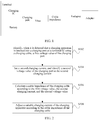
- FIG. 2 shows a charging method according to this embodiment of the present invention.
- the method may be performed by a terminal such as a mobile phone, or a tablet computer.
- the method includes the following steps.
- S102 Identify, when it is detected that a charging apparatus is inserted into a charging port of a terminal by using a charging cable, a first voltage value of the charging port.
- the charging apparatus may be an apparatus such as an adapter or a mobile power pack that can charge the terminal.
- the adapter is also referred to as a charger, and may be roughly divided into a travel charger, a docking charger, and a maintenance charger.
- the charging port of the terminal may be an port that can connect the terminal and the charging apparatus, such as a USB port, a mini USB port, a USB 3.0 port, a thunderbolt port, or a USB-C port.
- Commonly used charging cables include a USB charging cable, a thunderbolt (thunderbolt) charging cable from Apple Inc., and the like.
- the first voltage value of the charging port may be identified by means of detection of a charging IC of the terminal.
- S104 Set a second charging current, and identify a second voltage value of the charging port at the second charging current.
- the terminal may preset a second charging current when the charging apparatus is just inserted into the charging port of the terminal, to serve as an initial charging current.
- a charging current refers to an output current of the charging apparatus when the charging apparatus charges the terminal.
- the initial charging current is generally less than a rated current of the charging apparatus.
- the terminal may identify, by using the charging IC of the terminal, the second voltage value of the charging port at the second charging current.
- S106 Calculate a cable impedance of the charging cable according to the first voltage value, the second charging current, and the second voltage value.
- a cable impedance of a charging cable of good quality is approximately 300 m ⁇
- a cable impedance of a charging cable of poorer quality is approximately 700 m ⁇ .
- a cable impedance of a charging cable can be obtained through calculation in step S106. If the cable impedance obtained through calculation exceeds a preset impedance value, a user may be reminded to replace the charging cable because if the cable impedance is relatively large, a case in which charging is slow or charging cannot even be performed occurs; and if charging is forced, insecure factors such as heat generation of the charging cable are caused.
- a charging current of the charging apparatus obtained through adjustment in step S108 is within a range of a rated output current of the adapter, and is therefore the suitable charging current of the charging apparatus.
- the charging current output by the adapter is within a range of a rated current of the adapter, an output voltage of the adapter is stable, so that the terminal can be better charged, improving charging experience of the user.
- a cable impedance of a charging cable is calculated, and a charging current of a charging apparatus is adjusted to a suitable charging current, so that the terminal can adapt to different charging apparatuses, improving charging experience of a user.
- the preset impedance value may be set according to a requirement, for example, the preset impedance value may be 650 m ⁇ .
- the preset impedance value may be 650 m ⁇ .
- the user is prompted, and the user may be reminded to replace the charging cable because if the cable impedance is relatively large, a case in which charging is slow or charging cannot even be performed occurs; and if charging is forced, insecure factors such as heat generation of the charging cable are caused. There are various manners in which the user is reminded.
- the user may be reminded, on a UI (User Port, user port, UI for short) of the terminal, that the charging cable is not suitable to charge the terminal; and replace the charging cable.
- the user may be reminded to replace the charging cable in a manner in which an indicator light of the terminal blinks.
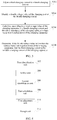
- the adjusting a suitable charging current of the charging apparatus according to the cable impedance of the charging cable in step S108 includes steps shown in FIG. 3 .
- the third charging current may be a preset charging current value, and may be set by the charging IC of the terminal.
- the third charging current may be adjusted to the fourth charging current in various manners.
- the third charging current is adjusted to the fourth charging current by directly adding one ⁇ I, or by gradually increasing the current by means of step improvement. Refer to the foregoing descriptions about the charging current I i for a specific method for gradually improving a current.
- the charging IC of the terminal identifies the fourth voltage value of the charging port.
- S206 Calculate an output voltage value of the charging apparatus according to a rated voltage value of the charging apparatus, the fourth charging current and the cable impedance of the charging cable.
- the rated voltage value of the charging apparatus is V adapter . Because there is the cable impedance, when the rated voltage of the charging apparatus reaches the charging port of the terminal through the charging cable, the output voltage value of the charging apparatus is not equal to the rated voltage of the charging apparatus, and the output voltage value of the charging apparatus may be calculated according to step S206.
- S208 Determine, if the fourth voltage value is less than the output voltage value of the charging apparatus, that the third charging current is the suitable charging current of the charging apparatus.
- the fourth voltage value is a voltage value of the charging port of the terminal that is detected by using the charging IC by the terminal.
- the output voltage value of the charging apparatus is a theoretical output voltage value of the charging apparatus that is obtained through calculation. If the fourth voltage value is less than the output voltage value of the charging apparatus, indicating that the output voltage of the charging apparatus is pulled down by an overcurrent, the fourth charging current may have exceeded a range of a rated current of the charging apparatus, and is not the suitable charging current of the charging apparatus, and the third charging current is the suitable charging current of the charging apparatus.
- the third charging current obtained in this manner is within the range of the rated current of the charging apparatus.
- the output voltage of the charging apparatus is stable when the output current of the charging apparatus is within the range of the rated current, so that the terminal can be better charged, improving charging experience.
- the terminal by identifying, when it is detected that a charging apparatus is inserted into a charging port of a terminal by using a charging cable, a first voltage value of the charging port; setting a second charging current; identifying a second voltage value of the charging port at the second charging current; calculating a cable impedance of the charging cable according to the first voltage value, the second charging current, and the second voltage value; and adjusting a suitable charging current of the charging apparatus according to the cable impedance of the charging cable, the terminal can adapt to different charging apparatuses, and can be better charged, improving charging experience of a user.
- FIG. 4 shows a charging apparatus according to this embodiment of the present invention.
- the charging apparatus includes:
- the charging apparatus further includes a prompt unit 312, configured to prompt a user when the cable impedance of the charging cable is greater than a preset impedance value.
- the first adjustment unit 310 includes:
- FIG. 6 shows a terminal according to this embodiment of the present invention.
- the terminal includes: one or more processors 402; a memory 404; and one or more programs.
- the one or more programs are stored in the memory, and are configured to be executed by the one or more processors.
- the one or more programs include an instruction, where the instruction is used for:
- the cable impedance of the charging cable is greater than a preset impedance value, a user is prompted.
- the adjusting a suitable charging current of the charging apparatus according to the cable impedance of the charging cable includes:
- This embodiment of the present invention further provides a computer-readable storage medium.
- One or more programs are stored in the computer-readable storage medium, and the one or more programs include an instruction. When executed by the terminal, the instruction enables the terminal to perform any method according to Embodiment 1.
Landscapes
- Engineering & Computer Science (AREA)
- Power Engineering (AREA)
- Signal Processing (AREA)
- Charge And Discharge Circuits For Batteries Or The Like (AREA)
- Physics & Mathematics (AREA)
- General Physics & Mathematics (AREA)
- Secondary Cells (AREA)
Abstract
Description
- Embodiments of the present invention relate to the field of information technologies, and in particular, to a charging method, a charging apparatus, and a terminal.
- With rapid development of mobile phones, there are more types of mobile phones in a market. Adapters and USB (Universal Serial Bus, Universal Serial Bus, USB for short) cables, as necessary accessories of the mobile phones, are also of a wide variety. Generally, there are multiple mobile phone chargers in each ordinary family. These chargers mostly have different power and electrical characteristics. In addition, according to a unified port standard set by Ministry of Industry and Information Technology, different mobile phones may be charged by using different USB cables. Currently, smartphones all have relatively large battery capacities, and charging currents set by the mobile phones are also relatively large, so that charging the mobile phones by using original chargers may have no problem. There are also many chargers that are non-original but conform to national standards in a family. However, when a mobile phone is charged by using a non-original adapter, overcurrent protection is generated by the adapter and charging cannot be performed, because a charging current set by the mobile phone is excessively large and exceeds a rated current of the adapter. When a user uses a USB cable of relatively poor quality, a voltage shunted to the cable is excessively large, and a voltage reaching a mobile phone end is excessively low due to an impedance problem of the USB cable. Consequently, there are problems that charging is slow, charging cannot even be performed, and the like.
- The present invention provides a charging method, a charging apparatus, and a terminal, to enable a terminal to adapt to different charging apparatuses, improving charging experience of a user.
- A first aspect of the present invention provides a charging method, where the method includes: identifying, when it is detected that a charging apparatus is inserted into a charging port of a terminal by using a charging cable, a first voltage value of the charging port; setting a second charging current; identifying a second voltage value of the charging port at the second charging current; calculating a cable impedance of the charging cable according to the first voltage value, the second charging current, and the second voltage value; and adjusting a suitable charging current of the charging apparatus according to the cable impedance of the charging cable.
- With reference to the first aspect, in a first possible implementation manner of the first aspect, the calculating a cable impedance of the charging cable according to the first voltage value, the second charging current, and the second voltage value is specifically: R = (V1 - V2)/I2, where R is the cable impedance of the charging cable, V1 is the first voltage value, V2 is the second voltage value, and I2 is the second charging current.
- With reference to the first possible implementation manner of the first aspect, in a second possible implementation manner of the first aspect, the method further includes: prompting a user when the cable impedance of the charging cable is greater than a preset impedance value.
- With reference to any one of the first aspect, the first possible implementation manner of the first aspect, or the second possible implementation manner of the first aspect, in a third possible implementation manner of the first aspect, the adjusting a suitable charging current of the charging apparatus according to the cable impedance of the charging cable includes: adjusting a third charging current to a fourth charging current; identifying a fourth voltage value of the charging port at the fourth charging current; calculating an output voltage value of the charging apparatus according to a rated voltage value of the charging apparatus, the fourth charging current and the cable impedance of the charging cable; and determining, if the fourth voltage value is less than the output voltage value of the charging apparatus, that the third charging current is the suitable charging current of the charging apparatus.
- With reference to the third possible implementation manner of the first aspect, in a fourth possible implementation manner of the first aspect, the calculating an output voltage value of the charging apparatus according to a rated voltage value of the charging apparatus, the fourth charging current and the cable impedance of the charging cable is specifically: V = Vadapter - I4×R, where V is the output voltage value of the charging apparatus, Vadapter is the rated voltage value of the charging apparatus, I4 is the fourth charging current, and R is the cable impedance of the charging cable.
- A second aspect of the present invention provides a charging apparatus, where the apparatus includes: a first identification unit, configured to identify, when it is detected that a charging apparatus is inserted into a charging port of a terminal by using a charging cable, a first voltage value of the charging port; a setting unit, configured to set a second charging current; a second identification unit, configured to identify a second voltage value of the charging port at the second charging current; a first calculation unit, configured to calculate a cable impedance of the charging cable according to the first voltage value, the second charging current, and the second voltage value; and a first adjustment unit, configured to adjust a suitable charging current of the charging apparatus according to the cable impedance of the charging cable.
- With reference to the second aspect, in a first possible implementation manner of the second aspect, the first calculation unit is specifically configured to: R = (V1 - V2)/I2, where R is the cable impedance of the charging cable, V1 is the first voltage value, V2 is the second voltage value, and I2 is the second charging current.
- With reference to the first possible implementation manner of the second aspect, in a second possible implementation manner of the second aspect, the apparatus further includes a prompt unit, configured to prompt a user when the cable impedance of the charging cable is greater than a preset impedance value.
- With reference to any one of the second aspect, the first possible implementation manner of the second aspect, or the second possible implementation manner of the second aspect, in a third possible implementation manner of the second aspect, the first adjustment unit includes: a second adjustment unit, configured to adjust a third charging current to a fourth charging current; a third identification unit, configured to identify a fourth voltage value of the charging port at the fourth charging current; a second calculation unit, configured to calculate an output voltage value of the charging apparatus according to a rated voltage value of the charging apparatus, the fourth charging current and the cable impedance of the charging cable; and a determining unit, configured to determine, if the fourth voltage value is less than the output voltage value of the charging apparatus, that the third charging current is the suitable charging current of the charging apparatus.
- With reference to the third possible implementation manner of the second aspect, in a fourth possible implementation manner of the second aspect, the second calculation unit is specifically configured to: V = Vadapter - I4×R, where V is the output voltage value of the charging apparatus, Vadapter is the rated voltage value of the charging apparatus, I4 is the fourth charging current, and R is the cable impedance of the charging cable.
- A third aspect of the present invention provides a terminal, where the terminal includes: one or more processors; a memory; and one or more programs, where the one or more programs are stored in the memory, and are configured to be executed by the one or more processors, and the one or more programs include an instruction, where the instruction is used for: identifying, when it is detected that a charging apparatus is inserted into a charging port of a terminal by using a charging cable, a first voltage value of the charging port; setting a second charging current; identifying a second voltage value of the charging port at the second charging current; calculating a cable impedance of the charging cable according to the first voltage value, the second charging current, and the second voltage value; and adjusting a suitable charging current of the charging apparatus according to the cable impedance of the charging cable.
- With reference to the third aspect, in a first possible implementation manner of the third aspect, the calculating a cable impedance of the charging cable according to the first voltage value, the second charging current, and the second voltage value is specifically: R = (V1 - V2)/I2, where R is the cable impedance of the charging cable, V1 is the first voltage value, V2 is the second voltage value, and I2 is the second charging current.
- With reference to the first possible implementation manner of the third aspect, in a second possible implementation manner of the third aspect, the instruction is further used for prompting a user when the cable impedance of the charging cable is greater than a preset impedance value.
- With reference to any one of the third aspect, the first possible implementation manner of the third aspect, or the second possible implementation manner of the third aspect, in a third possible implementation manner of the third aspect, the adjusting a suitable charging current of the charging apparatus according to the cable impedance of the charging cable includes: adjusting a third charging current to a fourth charging current; identifying a fourth voltage value of the charging port at the fourth charging current; calculating an output voltage value of the charging apparatus according to a rated voltage value of the charging apparatus, the fourth charging current and the cable impedance of the charging cable; and determining, if the fourth voltage value is less than the output voltage value of the charging apparatus, that the third charging current is the suitable charging current of the charging apparatus.
- With reference to the third possible implementation manner of the third aspect, in a fourth possible implementation manner of the third aspect, the calculating an output voltage value of the charging apparatus according to a rated voltage value of the charging apparatus, the fourth charging current and the cable impedance of the charging cable is specifically: V = Vadapter - I4×R, where V is the output voltage value of the charging apparatus, Vadapter is the rated voltage value of the charging apparatus, I4 is the fourth charging current, and R is the cable impedance of the charging cable.
- A fourth aspect of the present invention provides a terminal, where the terminal includes: one or more processors, a memory and one or more programs, where the one or more programs are stored in the memory, and are configured to be executed by the one or more processors, and the one or more programs include an instruction for performing the method according to any one of the first aspect to the fourth possible implementation manner of the first aspect.
- A fifth aspect of the present invention provides a computer-readable storage medium for storing one or more programs, where the one or more programs include an instruction, and when executed by the terminal, the instruction enables the terminal to perform the method according to any one of the first aspect to the fourth possible implementation manner of the first aspect.
- In the foregoing technical solutions, the present invention provides a charging method, a charging apparatus, a terminal, and a computer-readable storage medium. By identifying, when it is detected that a charging apparatus is inserted into a charging port of a terminal by using a charging cable, a first voltage value of the charging port; setting a second charging current; identifying a second voltage value of the charging port at the second charging current; calculating a cable impedance of the charging cable according to the first voltage value, the second charging current, and the second voltage value; and adjusting a suitable charging current of the charging apparatus according to the cable impedance of the charging cable, the terminal can adapt to different charging apparatuses, improving charging experience of a user.
- To describe the technical solutions in the embodiments of the present invention more clearly, the following briefly describes the accompanying drawings required for describing the embodiments. Apparently, the accompanying drawings in the following description show merely some embodiments of the present invention, and a person of ordinary skill in the art may still derive other drawings from these accompanying drawings without creative efforts.
-
FIG. 1 is a schematic diagram of charging a terminal by a charging apparatus; -
FIG. 2 is a schematic diagram of a charging method according to an embodiment of the present invention; -
FIG. 3 is a schematic diagram of a method for adjusting a charging current according to an embodiment of the present invention; -
FIG. 4 is a schematic diagram of a terminal according to an embodiment of the present invention; -
FIG. 5 is a schematic structural diagram of a first adjustment unit according to an embodiment of the present invention; and -
FIG. 6 is a schematic diagram of another terminal according to an embodiment of the present invention. - To make the objectives, technical solutions, and advantages of the embodiments of the present invention clearer, the following clearly describes the technical solutions in the embodiments of the present invention with reference to the accompanying drawings in the embodiments of the present invention. Apparently, the described embodiments are some rather than all of the embodiments of the present invention. All other embodiments obtained by a person of ordinary skill in the art based on the embodiments of the present invention without creative efforts shall fall within the protection scope of the present invention.
- Ordinals such as "first" and "second" mentioned in the embodiments of the present invention, unless indeed indicating orders according to the context, should be considered to be used merely for distinguishing.
- A terminal in the embodiments of the present invention may include a mobile phone, a tablet computer, an MP3 player, a wearable device such as a smart watch, and the like.
- When a user charges the terminal by using a charging apparatus such as a non-original adapter, because a charging current that is set by the terminal such as a mobile phone is relatively large and exceeds a rated current of the adapter, overcurrent protection is generated by the charging apparatus, and charging cannot be performed. When the user uses a charging cable of relatively poor quality, for example, a USB cable, a voltage shunted to the cable is excessively large, and a voltage reaching a mobile phone end is relatively low due to an impedance problem of the USB cable. Consequently, there are problems that charging is slow, charging cannot even be performed, and the like. In addition, because the cable impedance of the charging cable of relatively poor quality is relatively large, there is relatively much heat generated from the charging cable, and this situation is relatively dangerous.
- The following describes, by using an example in which the charging apparatus is an adapter and the terminal is a mobile phone, voltage changes of a charging port of the mobile phone when the mobile phone is charged by the adapter.
FIG. 1 is a schematic diagram of charging the terminal by the adapter. When the adapter is inserted into the terminal to charge the terminal, the terminal may identify whether the adapter is an original adapter by detecting whether an output voltage of the adapter is excessively low. If the adapter is not an original adapter of the terminal, after the adapter is connected to the charging port of the terminal by using a charging cable, a charging IC (Integrated Chip, integrated chip, IC for short) of the mobile phone may set an initial charging current I0, for example, I0 = 500 ma. In this case, because the charging current is relatively small, and is less than a rated charging current of the adapter, it may be considered that the output voltage V of the adapter is equal to a voltage Vbus of the charging port. The terminal may obtain the voltage Vbus of the charging port by detecting the charging port by using the charging IC. Then, the charging IC of the mobile phone gradually improves the charging current with a unit of ΔI, that is, Ii = I0 + ΔI×i. Ii is an improved charging current, I0 is the preset initial charging current, ΔI is an adjustment value of the charging current, i is a nonnegative integer, and i=0, 1, 2, 3, .... For example, ΔI = 100 ma. Because there is a cable impedance R on the charging cable, as the charging current Ii is constantly improved, the output voltage V of the adapter decreases gradually. The charging IC detects the voltage value Vbus of the charging port at any time, and Vbus also decreases gradually as the charging current Ii is improved. Before the output voltage of the adapter is pulled down by an overcurrent, it may be considered that V is basically equal to Vbus. When Vbus gradually decreases and falls down to a value near a preset voltage value, the adapter stops charging the mobile phone because of existence of overcurrent protection. - A rated voltage of the adapter is marked as Vadapter, the output voltage V of the adapter gradually decreases as the charging current Ii is improved, and there is the following relationship between the output voltage V of the adapter and the rated voltage Vadapter of the adapter: V = Vadapter - Ii × R. It can be seen that V is the output voltage of the adapter obtained through calculation in consideration of existence of the cable impedance R. Vbus is the voltage of the charging port of the terminal detected by the charging IC. V and Vbus may be or may not be equal.
-
FIG. 2 shows a charging method according to this embodiment of the present invention. The method may be performed by a terminal such as a mobile phone, or a tablet computer. The method includes the following steps. - S102: Identify, when it is detected that a charging apparatus is inserted into a charging port of a terminal by using a charging cable, a first voltage value of the charging port.
- The charging apparatus may be an apparatus such as an adapter or a mobile power pack that can charge the terminal. The adapter is also referred to as a charger, and may be roughly divided into a travel charger, a docking charger, and a maintenance charger. The charging port of the terminal may be an port that can connect the terminal and the charging apparatus, such as a USB port, a mini USB port, a USB 3.0 port, a thunderbolt port, or a USB-C port. Commonly used charging cables include a USB charging cable, a thunderbolt (thunderbolt) charging cable from Apple Inc., and the like. Specifically, the first voltage value of the charging port may be identified by means of detection of a charging IC of the terminal.
- S104: Set a second charging current, and identify a second voltage value of the charging port at the second charging current.
- If the charging apparatus is a non-original charging apparatus, the terminal may preset a second charging current when the charging apparatus is just inserted into the charging port of the terminal, to serve as an initial charging current. A charging current refers to an output current of the charging apparatus when the charging apparatus charges the terminal. The initial charging current is generally less than a rated current of the charging apparatus. The terminal may identify, by using the charging IC of the terminal, the second voltage value of the charging port at the second charging current.
- S106: Calculate a cable impedance of the charging cable according to the first voltage value, the second charging current, and the second voltage value.
- Different types of charging cables have different cable impedances. A cable impedance of a charging cable of good quality is approximately 300 mΩ, and a cable impedance of a charging cable of poorer quality is approximately 700 mΩ. A cable impedance of a charging cable can be obtained through calculation in step S106. If the cable impedance obtained through calculation exceeds a preset impedance value, a user may be reminded to replace the charging cable because if the cable impedance is relatively large, a case in which charging is slow or charging cannot even be performed occurs; and if charging is forced, insecure factors such as heat generation of the charging cable are caused.
- S108: Adjust a suitable charging current of the charging apparatus according to the cable impedance of the charging cable.
- A charging current of the charging apparatus obtained through adjustment in step S108 is within a range of a rated output current of the adapter, and is therefore the suitable charging current of the charging apparatus. When the charging current output by the adapter is within a range of a rated current of the adapter, an output voltage of the adapter is stable, so that the terminal can be better charged, improving charging experience of the user.
- In this embodiment of the present invention, a cable impedance of a charging cable is calculated, and a charging current of a charging apparatus is adjusted to a suitable charging current, so that the terminal can adapt to different charging apparatuses, improving charging experience of a user.
- Specifically, the calculating a cable impedance of the charging cable according to the first voltage value, the second charging current, and the second voltage value in step S106 may use the following formula:

- Optionally, when the cable impedance of the charging cable obtained through calculation is greater than a preset impedance value, a user is prompted. The preset impedance value may be set according to a requirement, for example, the preset impedance value may be 650 mΩ. When the cable impedance of the charging cable obtained through calculation is greater than 650 mΩ, the user is prompted, and the user may be reminded to replace the charging cable because if the cable impedance is relatively large, a case in which charging is slow or charging cannot even be performed occurs; and if charging is forced, insecure factors such as heat generation of the charging cable are caused. There are various manners in which the user is reminded. The user may be reminded, on a UI (User Port, user port, UI for short) of the terminal, that the charging cable is not suitable to charge the terminal; and replace the charging cable. Alternatively, the user may be reminded to replace the charging cable in a manner in which an indicator light of the terminal blinks.
- Specifically, the adjusting a suitable charging current of the charging apparatus according to the cable impedance of the charging cable in step S108 includes steps shown in
FIG. 3 . - S202: Adjust a third charging current to a fourth charging current.
- The third charging current may be a preset charging current value, and may be set by the charging IC of the terminal. The third charging current may be adjusted to the fourth charging current in various manners. For example, the third charging current is adjusted to the fourth charging current by directly adding one ΔI, or by gradually increasing the current by means of step improvement. Refer to the foregoing descriptions about the charging current Ii for a specific method for gradually improving a current.
- S204: Identify a fourth voltage value of the charging port at the fourth charging current.
- When the charging current is the fourth charging current, the charging IC of the terminal identifies the fourth voltage value of the charging port.
- S206: Calculate an output voltage value of the charging apparatus according to a rated voltage value of the charging apparatus, the fourth charging current and the cable impedance of the charging cable.
- The rated voltage value of the charging apparatus is Vadapter. Because there is the cable impedance, when the rated voltage of the charging apparatus reaches the charging port of the terminal through the charging cable, the output voltage value of the charging apparatus is not equal to the rated voltage of the charging apparatus, and the output voltage value of the charging apparatus may be calculated according to step S206.
- S208: Determine, if the fourth voltage value is less than the output voltage value of the charging apparatus, that the third charging current is the suitable charging current of the charging apparatus.
- The fourth voltage value is a voltage value of the charging port of the terminal that is detected by using the charging IC by the terminal. The output voltage value of the charging apparatus is a theoretical output voltage value of the charging apparatus that is obtained through calculation. If the fourth voltage value is less than the output voltage value of the charging apparatus, indicating that the output voltage of the charging apparatus is pulled down by an overcurrent, the fourth charging current may have exceeded a range of a rated current of the charging apparatus, and is not the suitable charging current of the charging apparatus, and the third charging current is the suitable charging current of the charging apparatus. The third charging current obtained in this manner is within the range of the rated current of the charging apparatus. The output voltage of the charging apparatus is stable when the output current of the charging apparatus is within the range of the rated current, so that the terminal can be better charged, improving charging experience.
- The calculating an output voltage value of the charging apparatus according to a rated voltage value of the charging apparatus, the fourth charging current and the cable impedance of the charging cable in step S206 may specifically use the following formula:

- According to the charging method provided in this embodiment of the present invention, by identifying, when it is detected that a charging apparatus is inserted into a charging port of a terminal by using a charging cable, a first voltage value of the charging port; setting a second charging current; identifying a second voltage value of the charging port at the second charging current; calculating a cable impedance of the charging cable according to the first voltage value, the second charging current, and the second voltage value; and adjusting a suitable charging current of the charging apparatus according to the cable impedance of the charging cable, the terminal can adapt to different charging apparatuses, and can be better charged, improving charging experience of a user.
-
FIG. 4 shows a charging apparatus according to this embodiment of the present invention. The charging apparatus includes: - a
first identification unit 302, configured to identify, when it is detected that a charging apparatus is inserted into a charging port of a terminal by using a charging cable, a first voltage value of the charging port; - a
setting unit 304, configured to set a second charging current; - a
second identification unit 306, configured to identify a second voltage value of the charging port at the second charging current; - a
first calculation unit 308, configured to calculate a cable impedance of the charging cable according to the first voltage value, the second charging current, and the second voltage value; and - a
first adjustment unit 310, configured to adjust a suitable charging current of the charging apparatus according to the cable impedance of the charging cable. - Specifically, the
first calculation unit 308 calculates the cable impedance of the charging cable by using the following formula: R = (V1 - V2)/I2, where R is the cable impedance of the charging cable, V1 is the first voltage value, V2 is the second voltage value, and I2 is the second charging current. - Optionally, the charging apparatus further includes a
prompt unit 312, configured to prompt a user when the cable impedance of the charging cable is greater than a preset impedance value. - Specifically, as shown in
FIG. 5 , thefirst adjustment unit 310 includes: - a
second adjustment unit 3101, configured to adjust a third charging current to a fourth charging current; - a
third identification unit 3102, configured to identify a fourth voltage value of the charging port at the fourth charging current; - a
second calculation unit 3103, configured to calculate an output voltage value of the charging apparatus according to a rated voltage value of the charging apparatus, the fourth charging current and the cable impedance of the charging cable; and - a determining
unit 3104, configured to determine, if the fourth voltage value is less than the output voltage value of the charging apparatus, that the third charging current is the suitable charging current of the charging apparatus. - Specifically, the
second calculation unit 3103 is specifically configured to: V = Vadapter - I4 × R, where V is the output voltage value of the charging apparatus, Vadapter is the rated voltage value of the charging apparatus, I4 is the fourth charging current, and R is the cable impedance of the charging cable. -
FIG. 6 shows a terminal according to this embodiment of the present invention. The terminal includes: one ormore processors 402; amemory 404; and one or more programs. The one or more programs are stored in the memory, and are configured to be executed by the one or more processors. The one or more programs include an instruction, where the instruction is used for: - identifying, when it is detected that a charging apparatus is inserted into a charging port of a terminal by using a charging cable, a first voltage value of the charging port;
- setting a second charging current;
- identifying a second voltage value of the charging port at the second charging current;
- calculating a cable impedance of the charging cable according to the first voltage value, the second charging current, and the second voltage value; and
- adjusting a suitable charging current of the charging apparatus according to the cable impedance of the charging cable.
- Specifically, the calculating a cable impedance of the charging cable according to the first voltage value, the second charging current, and the second voltage value is specifically:

- Optionally, when the cable impedance of the charging cable is greater than a preset impedance value, a user is prompted.
- Specifically, the adjusting a suitable charging current of the charging apparatus according to the cable impedance of the charging cable includes:
- adjusting a third charging current to a fourth charging current;
- identifying a fourth voltage value of the charging port at the fourth charging current;
- calculating an output voltage value of the charging apparatus according to a rated voltage value of the charging apparatus, the fourth charging current and the cable impedance of the charging cable; and
- determining, if the fourth voltage value is less than the output voltage value of the charging apparatus, that the third charging current is the suitable charging current of the charging apparatus.
- Specifically, the calculating an output voltage value of the charging apparatus according to a rated voltage value of the charging apparatus, the fourth charging current and the cable impedance of the charging cable is specifically: V = Vadapter - I4 × R, where V is the output voltage value of the charging apparatus, Vadapter is the rated voltage value of the charging apparatus, I4 is the fourth charging current, and R is the cable impedance of the charging cable.
- This embodiment of the present invention further provides a computer-readable storage medium. One or more programs are stored in the computer-readable storage medium, and the one or more programs include an instruction. When executed by the terminal, the instruction enables the terminal to perform any method according to Embodiment 1.
- Finally, it should be noted that the foregoing embodiments are merely examples for describing the technical solutions of the present invention other than limiting the present invention. Although the present invention and benefits of the present invention are described in detail with reference to the foregoing embodiments, a person of ordinary skill in the art should understand that they may still make modifications to the technical solutions described in the foregoing embodiments or make equivalent replacements to some technical features thereof, without departing from the scope of the claims of the present invention.
Claims (17)
- A charging method, wherein the method comprises:identifying, when it is detected that a charging apparatus is inserted into a charging port of a terminal by using a charging cable, a first voltage value of the charging port;setting a second charging current;identifying a second voltage value of the charging port at the second charging current;calculating a cable impedance of the charging cable according to the first voltage value, the second charging current, and the second voltage value; andadjusting a suitable charging current of the charging apparatus according to the cable impedance of the charging cable.
- The method according to claim 1, wherein the calculating a cable impedance of the charging cable according to the first voltage value, the second charging current, and the second voltage value is specifically:

- The method according to claim 2, further comprising: prompting a user when the cable impedance of the charging cable is greater than a preset impedance value.
- The method according to any one of claims 1 to 3, wherein the adjusting a suitable charging current of the charging apparatus according to the cable impedance of the charging cable comprises:adjusting a third charging current to a fourth charging current;identifying a fourth voltage value of the charging port at the fourth charging current;calculating an output voltage value of the charging apparatus according to a rated voltage value of the charging apparatus, the fourth charging current and the cable impedance of the charging cable; anddetermining, if the fourth voltage value is less than the output voltage value of the charging apparatus, that the third charging current is the suitable charging current of the charging apparatus.
- The method according to claim 4, wherein the calculating an output voltage value of the charging apparatus according to a rated voltage value of the charging apparatus, the fourth charging current and the cable impedance of the charging cable is specifically:

- A charging apparatus, wherein the apparatus comprises:a first identification unit, configured to identify, when it is detected that a charging apparatus is inserted into a charging port of a terminal by using a charging cable, a first voltage value of the charging port;a setting unit, configured to set a second charging current;a second identification unit, configured to identify a second voltage value of the charging port at the second charging current;a first calculation unit, configured to calculate a cable impedance of the charging cable according to the first voltage value, the second charging current, and the second voltage value; anda first adjustment unit, configured to adjust a suitable charging current of the charging apparatus according to the cable impedance of the charging cable.
- The apparatus according to claim 6, wherein the first calculation unit is specifically configured to:

- The apparatus according to claim 7, wherein the apparatus further comprises a prompt unit, configured to prompt a user when the cable impedance of the charging cable is greater than a preset impedance value.
- The apparatus according to any one of claims 6 to 8, wherein the first adjustment unit comprises:a second adjustment unit, configured to adjust a third charging current to a fourth charging current;a third identification unit, configured to identify a fourth voltage value of the charging port at the fourth charging current;a second calculation unit, configured to calculate an output voltage value of the charging apparatus according to a rated voltage value of the charging apparatus, the fourth charging current and the cable impedance of the charging cable; anda determining unit, configured to determine, if the fourth voltage value is less than the output voltage value of the charging apparatus, that the third charging current is the suitable charging current of the charging apparatus.
- The apparatus according to claim 9, wherein the second calculation unit is specifically configured to:

- A terminal, wherein the terminal comprises:one or more processors;a memory; andone or more programs, whereinthe one or more programs are stored in the memory, and are configured to be executed by the one or more processors, and the one or more programs comprise an instruction, wherein the instruction is used for:identifying, when it is detected that a charging apparatus is inserted into a charging port of a terminal by using a charging cable, a first voltage value of the charging port;setting a second charging current;identifying a second voltage value of the charging port at the second charging current;calculating a cable impedance of the charging cable according to the first voltage value, the second charging current, and the second voltage value; andadjusting a suitable charging current of the charging apparatus according to the cable impedance of the charging cable.
- The terminal according to claim 11, wherein the calculating a cable impedance of the charging cable according to the first voltage value, the second charging current, and the second voltage value is specifically:

- The terminal according to claim 12, wherein the instruction is further used for: prompting a user when the cable impedance of the charging cable is greater than a preset impedance value.
- The terminal according to any one of claims 11 to 13, wherein the adjusting a suitable charging current of the charging apparatus according to the cable impedance of the charging cable comprises:adjusting a third charging current to a fourth charging current;identifying a fourth voltage value of the charging port at the fourth charging current;calculating an output voltage value of the charging apparatus according to a rated voltage value of the charging apparatus, the fourth charging current and the cable impedance of the charging cable; anddetermining, if the fourth voltage value is less than the output voltage value of the charging apparatus, that the third charging current is the suitable charging current of the charging apparatus.
- The terminal according to claim 14, wherein the calculating an output voltage value of the charging apparatus according to a rated voltage value of the charging apparatus, the fourth charging current and the cable impedance of the charging cable is specifically:

- A terminal, wherein the terminal comprises:one or more processors, a memory and one or more programs, wherein the one or more programs are stored in the memory, and are configured to be executed by the one or more processors, and the one or more programs comprise an instruction for performing the method according to any one of claims 1 to 5.
- A computer-readable storage medium for storing one or more programs, wherein the one or more programs comprise an instruction, and when executed by the terminal, the instruction enables the terminal to perform the method according to any one of claims 1 to 5.
Applications Claiming Priority (1)
| Application Number | Priority Date | Filing Date | Title |
|---|---|---|---|
| PCT/CN2015/079281 WO2016183802A1 (en) | 2015-05-19 | 2015-05-19 | Charging method, charging device and terminal |
Publications (3)
| Publication Number | Publication Date |
|---|---|
| EP3264565A1 true EP3264565A1 (en) | 2018-01-03 |
| EP3264565A4 EP3264565A4 (en) | 2018-03-21 |
| EP3264565B1 EP3264565B1 (en) | 2024-01-10 |
Family
ID=57319067
Family Applications (1)
| Application Number | Title | Priority Date | Filing Date |
|---|---|---|---|
| EP15892181.7A Active EP3264565B1 (en) | 2015-05-19 | 2015-05-19 | Charging method and terminal |
Country Status (7)
| Country | Link |
|---|---|
| US (1) | US20180109118A1 (en) |
| EP (1) | EP3264565B1 (en) |
| JP (1) | JP6490833B2 (en) |
| KR (1) | KR102200981B1 (en) |
| CN (1) | CN106415983B (en) |
| RU (1) | RU2678776C1 (en) |
| WO (1) | WO2016183802A1 (en) |
Families Citing this family (13)
| Publication number | Priority date | Publication date | Assignee | Title |
|---|---|---|---|---|
| CN108370171B (en) * | 2016-09-21 | 2022-02-22 | 北京小米移动软件有限公司 | Mobile terminal, charging method and charging system |
| CN106712219A (en) * | 2017-03-06 | 2017-05-24 | 北京小米移动软件有限公司 | Charging protection method and device |
| TWI629488B (en) * | 2017-09-04 | 2018-07-11 | 芯籟半導體股份有限公司 | Recharging cable |
| CN111316523A (en) * | 2017-10-19 | 2020-06-19 | 深圳市柔宇科技有限公司 | Detection method and electronic equipment for cable current capacity |
| CN108318741B (en) * | 2018-03-14 | 2020-04-07 | 维沃移动通信有限公司 | Impedance detection circuit and detection method |
| CN110266082B (en) * | 2019-07-15 | 2024-11-05 | 上海爻火微电子有限公司 | Channel impedance detection method, charging interface detection circuit structure and electronic device |
| CN110824286B (en) * | 2019-11-29 | 2022-07-19 | 恒大恒驰新能源汽车研究院(上海)有限公司 | Charging abnormality detection method, charging device, computer device, and storage medium |
| CN111711238A (en) * | 2020-06-05 | 2020-09-25 | Oppo(重庆)智能科技有限公司 | Charging control method, electronic device, and computer-readable storage medium |
| CN114157947A (en) * | 2020-09-07 | 2022-03-08 | 华为技术有限公司 | Wireless earphone and abnormality detection method |
| CN114221400B (en) * | 2021-11-04 | 2022-11-04 | 荣耀终端有限公司 | Impedance detection method for charging cable, electronic device and power supply device |
| US12541236B2 (en) * | 2022-06-29 | 2026-02-03 | Dell Products L.P. | Systems and methods for determining electrical characteristics of power supply cable/s and taking one or more actions based on same |
| CN114977442A (en) * | 2022-07-13 | 2022-08-30 | 东莞市阿尔法电子科技有限公司 | Dynamic adjustment method and system of charging current, charging module and storage medium |
| WO2026034802A1 (en) * | 2024-08-07 | 2026-02-12 | 삼성전자 주식회사 | Electronic device and driving method therefor |
Family Cites Families (28)
| Publication number | Priority date | Publication date | Assignee | Title |
|---|---|---|---|---|
| RU2025862C1 (en) * | 1992-01-30 | 1994-12-30 | Юлий Иосифович Майзенберг | Gear for control over charging of storage battery of motor vehicle |
| US6479968B1 (en) * | 2000-09-27 | 2002-11-12 | Motorola, Inc. | Method of charging a battery utilizing dynamic cable compensation |
| BRPI0809518A2 (en) * | 2007-03-26 | 2016-03-15 | Gillette Co | adaptive charger device and method |
| JP5115093B2 (en) * | 2007-08-20 | 2013-01-09 | 日産自動車株式会社 | Pre-charging circuit and vehicle |
| JP2010154692A (en) * | 2008-12-25 | 2010-07-08 | Nikon Corp | Charger for electronic device, electronic device, and charging method |
| US8080978B2 (en) * | 2009-03-13 | 2011-12-20 | Via Technologies, Inc. | Battery charging system and method |
| KR101667707B1 (en) * | 2009-10-22 | 2016-10-19 | 엘지전자 주식회사 | Mobile terminal and usb dedicated charger determinating method thereof |
| KR101771452B1 (en) * | 2010-08-23 | 2017-08-25 | 엘지전자 주식회사 | Mobile terminal and usb dedicated charger determinating method thereof |
| US9209633B2 (en) * | 2011-01-18 | 2015-12-08 | Nissan Motor Co., Ltd. | Charging apparatus and method for determining conduction state |
| JP5728270B2 (en) * | 2011-03-31 | 2015-06-03 | 富士重工業株式会社 | Charging system |
| JP2012223077A (en) | 2011-04-14 | 2012-11-12 | Kyocera Corp | Charging system |
| JP5763455B2 (en) * | 2011-07-15 | 2015-08-12 | ルネサスエレクトロニクス株式会社 | Host apparatus, device and communication system |
| JP5378490B2 (en) | 2011-11-18 | 2013-12-25 | 富士重工業株式会社 | Charging system and charger |
| US20150015078A1 (en) * | 2012-03-27 | 2015-01-15 | Smartphy Inc. | Cable and compensation method for transmitting high speed signal and delivering power |
| JP2013223348A (en) * | 2012-04-17 | 2013-10-28 | Nec Casio Mobile Communications Ltd | Electronic apparatus and charge control method |
| JP5858860B2 (en) * | 2012-04-25 | 2016-02-10 | 京セラ株式会社 | Mobile phone |
| JP5697114B2 (en) * | 2013-06-28 | 2015-04-08 | パナソニック インテレクチュアル プロパティ コーポレーション オブアメリカPanasonic Intellectual Property Corporation of America | Electronic equipment and electronic equipment system |
| CN104253458B (en) * | 2013-06-28 | 2018-06-15 | 富泰华工业(深圳)有限公司 | Performance Test System, test method and the electronic device of USB charge cables |
| CN203537000U (en) * | 2013-09-25 | 2014-04-09 | 无锡中星微电子有限公司 | Mobile power supply |
| WO2015113463A1 (en) * | 2014-01-28 | 2015-08-06 | 广东欧珀移动通信有限公司 | Power adapter, terminal, and method for processing impedance exception of charging loop |
| CN105409087A (en) * | 2014-05-26 | 2016-03-16 | 华为技术有限公司 | Power adapters, cables and chargers |
| US20150362944A1 (en) * | 2014-06-13 | 2015-12-17 | Qualcomm Incorporated | Systems and methods for cable resistance compensation |
| KR102125925B1 (en) * | 2014-07-16 | 2020-06-23 | 후아웨이 테크놀러지 컴퍼니 리미티드 | Electronic device quick charging method, apparatus and device |
| US9705559B2 (en) * | 2014-11-10 | 2017-07-11 | Dialog Semiconductor (Uk) Limited | Method and apparatus for powering a portable device |
| CN104348238B (en) * | 2014-11-13 | 2017-05-10 | 惠州Tcl移动通信有限公司 | Charging voltage control device, mobile terminal and control method |
| CN204258366U (en) * | 2014-11-27 | 2015-04-08 | 上海芯导电子科技有限公司 | Adapter and comprise the charging system of this adapter |
| US9728983B2 (en) * | 2014-12-09 | 2017-08-08 | Verizon Patent And Licensing Inc. | Weak component detection for charging capacity control |
| US9997943B2 (en) * | 2014-12-11 | 2018-06-12 | Mediatek Inc. | Electronic device and power adapter capable of communicating with each other, and associated charging system |
-
2015
- 2015-05-19 CN CN201580029336.3A patent/CN106415983B/en not_active Expired - Fee Related
- 2015-05-19 JP JP2017548950A patent/JP6490833B2/en active Active
- 2015-05-19 US US15/568,426 patent/US20180109118A1/en not_active Abandoned
- 2015-05-19 RU RU2017135381A patent/RU2678776C1/en active
- 2015-05-19 KR KR1020177029515A patent/KR102200981B1/en active Active
- 2015-05-19 EP EP15892181.7A patent/EP3264565B1/en active Active
- 2015-05-19 WO PCT/CN2015/079281 patent/WO2016183802A1/en not_active Ceased
Also Published As
| Publication number | Publication date |
|---|---|
| KR102200981B1 (en) | 2021-01-08 |
| JP6490833B2 (en) | 2019-03-27 |
| US20180109118A1 (en) | 2018-04-19 |
| KR20170128502A (en) | 2017-11-22 |
| EP3264565B1 (en) | 2024-01-10 |
| CN106415983A (en) | 2017-02-15 |
| EP3264565A4 (en) | 2018-03-21 |
| JP2018514176A (en) | 2018-05-31 |
| RU2678776C1 (en) | 2019-02-01 |
| CN106415983B (en) | 2020-09-08 |
| WO2016183802A1 (en) | 2016-11-24 |
Similar Documents
| Publication | Publication Date | Title |
|---|---|---|
| EP3264565B1 (en) | Charging method and terminal | |
| US9906061B2 (en) | Quick charging mobile terminal, method and system | |
| US11290801B2 (en) | Headset charging system and headset charging method | |
| EP3534487B1 (en) | Charging method and system | |
| US10554060B2 (en) | Systems and methods for charging via USB port | |
| CN103269106B (en) | Charging method for setting charging current automatically and mobile terminal | |
| EP3413426A1 (en) | Hub | |
| CN104253458B (en) | Performance Test System, test method and the electronic device of USB charge cables | |
| CN104330638B (en) | A method and system for identifying an original charging cable | |
| US20150171647A1 (en) | Method and apparatus for high current charging of smart terminals | |
| CN106324508A (en) | Battery health state detection device and method | |
| US20180048166A1 (en) | Battery charging system and battery charging protection control method | |
| US9787121B2 (en) | Power supply control method and portable electronic device using the same | |
| US10594144B2 (en) | Electronic device and method of charging electronic device | |
| CN108599290A (en) | A kind of charge protection method, device, terminal device and storage medium | |
| US9438055B2 (en) | Method for charging a power device of a portable device using a current-adaptive process | |
| US20180261891A1 (en) | Charging method for adjusting charging current and mobile terminal | |
| CN105553050A (en) | Self-adaptive charging method and system | |
| US20160079775A1 (en) | Charging Current Setting Method and Charging Module | |
| WO2016074388A1 (en) | Charging method and apparatus | |
| CN104539026A (en) | Charging method and charging device. | |
| US20150194822A1 (en) | Integrated Power Bank | |
| US9478999B2 (en) | Mobile electronic system and charging accessory | |
| JP2012104039A (en) | Electronic apparatus, battery pack, communication system, and communication method | |
| TW201642544A (en) | Charging device, electronic system and charging setting method thereof |
Legal Events
| Date | Code | Title | Description |
|---|---|---|---|
| STAA | Information on the status of an ep patent application or granted ep patent |
Free format text: STATUS: THE INTERNATIONAL PUBLICATION HAS BEEN MADE |
|
| PUAI | Public reference made under article 153(3) epc to a published international application that has entered the european phase |
Free format text: ORIGINAL CODE: 0009012 |
|
| STAA | Information on the status of an ep patent application or granted ep patent |
Free format text: STATUS: REQUEST FOR EXAMINATION WAS MADE |
|
| 17P | Request for examination filed |
Effective date: 20170926 |
|
| AK | Designated contracting states |
Kind code of ref document: A1 Designated state(s): AL AT BE BG CH CY CZ DE DK EE ES FI FR GB GR HR HU IE IS IT LI LT LU LV MC MK MT NL NO PL PT RO RS SE SI SK SM TR |
|
| AX | Request for extension of the european patent |
Extension state: BA ME |
|
| RAP1 | Party data changed (applicant data changed or rights of an application transferred) |
Owner name: HUAWEI TECHNOLOGIES CO., LTD. |
|
| A4 | Supplementary search report drawn up and despatched |
Effective date: 20180215 |
|
| RIC1 | Information provided on ipc code assigned before grant |
Ipc: H04M 19/08 20060101ALI20180210BHEP Ipc: H02J 7/04 20060101AFI20180210BHEP |
|
| DAV | Request for validation of the european patent (deleted) | ||
| DAX | Request for extension of the european patent (deleted) | ||
| STAA | Information on the status of an ep patent application or granted ep patent |
Free format text: STATUS: EXAMINATION IS IN PROGRESS |
|
| 17Q | First examination report despatched |
Effective date: 20191205 |
|
| RAP1 | Party data changed (applicant data changed or rights of an application transferred) |
Owner name: HONOR DEVICE CO., LTD. |
|
| GRAP | Despatch of communication of intention to grant a patent |
Free format text: ORIGINAL CODE: EPIDOSNIGR1 |
|
| STAA | Information on the status of an ep patent application or granted ep patent |
Free format text: STATUS: GRANT OF PATENT IS INTENDED |
|
| INTG | Intention to grant announced |
Effective date: 20230906 |
|
| GRAS | Grant fee paid |
Free format text: ORIGINAL CODE: EPIDOSNIGR3 |
|
| GRAA | (expected) grant |
Free format text: ORIGINAL CODE: 0009210 |
|
| STAA | Information on the status of an ep patent application or granted ep patent |
Free format text: STATUS: THE PATENT HAS BEEN GRANTED |
|
| AK | Designated contracting states |
Kind code of ref document: B1 Designated state(s): AL AT BE BG CH CY CZ DE DK EE ES FI FR GB GR HR HU IE IS IT LI LT LU LV MC MK MT NL NO PL PT RO RS SE SI SK SM TR |
|
| REG | Reference to a national code |
Ref country code: GB Ref legal event code: FG4D |
|
| REG | Reference to a national code |
Ref country code: CH Ref legal event code: EP |
|
| REG | Reference to a national code |
Ref country code: DE Ref legal event code: R096 Ref document number: 602015087265 Country of ref document: DE |
|
| REG | Reference to a national code |
Ref country code: IE Ref legal event code: FG4D |
|
| REG | Reference to a national code |
Ref country code: NL Ref legal event code: FP |
|
| REG | Reference to a national code |
Ref country code: LT Ref legal event code: MG9D |
|
| REG | Reference to a national code |
Ref country code: AT Ref legal event code: MK05 Ref document number: 1649645 Country of ref document: AT Kind code of ref document: T Effective date: 20240110 |
|
| PG25 | Lapsed in a contracting state [announced via postgrant information from national office to epo] |
Ref country code: IS Free format text: LAPSE BECAUSE OF FAILURE TO SUBMIT A TRANSLATION OF THE DESCRIPTION OR TO PAY THE FEE WITHIN THE PRESCRIBED TIME-LIMIT Effective date: 20240510 |
|
| PG25 | Lapsed in a contracting state [announced via postgrant information from national office to epo] |
Ref country code: LT Free format text: LAPSE BECAUSE OF FAILURE TO SUBMIT A TRANSLATION OF THE DESCRIPTION OR TO PAY THE FEE WITHIN THE PRESCRIBED TIME-LIMIT Effective date: 20240110 |
|
| PG25 | Lapsed in a contracting state [announced via postgrant information from national office to epo] |
Ref country code: GR Free format text: LAPSE BECAUSE OF FAILURE TO SUBMIT A TRANSLATION OF THE DESCRIPTION OR TO PAY THE FEE WITHIN THE PRESCRIBED TIME-LIMIT Effective date: 20240411 |
|
| PG25 | Lapsed in a contracting state [announced via postgrant information from national office to epo] |
Ref country code: RS Free format text: LAPSE BECAUSE OF FAILURE TO SUBMIT A TRANSLATION OF THE DESCRIPTION OR TO PAY THE FEE WITHIN THE PRESCRIBED TIME-LIMIT Effective date: 20240410 Ref country code: HR Free format text: LAPSE BECAUSE OF FAILURE TO SUBMIT A TRANSLATION OF THE DESCRIPTION OR TO PAY THE FEE WITHIN THE PRESCRIBED TIME-LIMIT Effective date: 20240110 |
|
| PG25 | Lapsed in a contracting state [announced via postgrant information from national office to epo] |
Ref country code: ES Free format text: LAPSE BECAUSE OF FAILURE TO SUBMIT A TRANSLATION OF THE DESCRIPTION OR TO PAY THE FEE WITHIN THE PRESCRIBED TIME-LIMIT Effective date: 20240110 |
|
| PG25 | Lapsed in a contracting state [announced via postgrant information from national office to epo] |
Ref country code: AT Free format text: LAPSE BECAUSE OF FAILURE TO SUBMIT A TRANSLATION OF THE DESCRIPTION OR TO PAY THE FEE WITHIN THE PRESCRIBED TIME-LIMIT Effective date: 20240110 |
|
| PG25 | Lapsed in a contracting state [announced via postgrant information from national office to epo] |
Ref country code: RS Free format text: LAPSE BECAUSE OF FAILURE TO SUBMIT A TRANSLATION OF THE DESCRIPTION OR TO PAY THE FEE WITHIN THE PRESCRIBED TIME-LIMIT Effective date: 20240410 Ref country code: NO Free format text: LAPSE BECAUSE OF FAILURE TO SUBMIT A TRANSLATION OF THE DESCRIPTION OR TO PAY THE FEE WITHIN THE PRESCRIBED TIME-LIMIT Effective date: 20240410 Ref country code: LT Free format text: LAPSE BECAUSE OF FAILURE TO SUBMIT A TRANSLATION OF THE DESCRIPTION OR TO PAY THE FEE WITHIN THE PRESCRIBED TIME-LIMIT Effective date: 20240110 Ref country code: IS Free format text: LAPSE BECAUSE OF FAILURE TO SUBMIT A TRANSLATION OF THE DESCRIPTION OR TO PAY THE FEE WITHIN THE PRESCRIBED TIME-LIMIT Effective date: 20240510 Ref country code: HR Free format text: LAPSE BECAUSE OF FAILURE TO SUBMIT A TRANSLATION OF THE DESCRIPTION OR TO PAY THE FEE WITHIN THE PRESCRIBED TIME-LIMIT Effective date: 20240110 Ref country code: GR Free format text: LAPSE BECAUSE OF FAILURE TO SUBMIT A TRANSLATION OF THE DESCRIPTION OR TO PAY THE FEE WITHIN THE PRESCRIBED TIME-LIMIT Effective date: 20240411 Ref country code: ES Free format text: LAPSE BECAUSE OF FAILURE TO SUBMIT A TRANSLATION OF THE DESCRIPTION OR TO PAY THE FEE WITHIN THE PRESCRIBED TIME-LIMIT Effective date: 20240110 Ref country code: BG Free format text: LAPSE BECAUSE OF FAILURE TO SUBMIT A TRANSLATION OF THE DESCRIPTION OR TO PAY THE FEE WITHIN THE PRESCRIBED TIME-LIMIT Effective date: 20240110 Ref country code: AT Free format text: LAPSE BECAUSE OF FAILURE TO SUBMIT A TRANSLATION OF THE DESCRIPTION OR TO PAY THE FEE WITHIN THE PRESCRIBED TIME-LIMIT Effective date: 20240110 |
|
| PG25 | Lapsed in a contracting state [announced via postgrant information from national office to epo] |
Ref country code: PT Free format text: LAPSE BECAUSE OF FAILURE TO SUBMIT A TRANSLATION OF THE DESCRIPTION OR TO PAY THE FEE WITHIN THE PRESCRIBED TIME-LIMIT Effective date: 20240510 Ref country code: PL Free format text: LAPSE BECAUSE OF FAILURE TO SUBMIT A TRANSLATION OF THE DESCRIPTION OR TO PAY THE FEE WITHIN THE PRESCRIBED TIME-LIMIT Effective date: 20240110 |
|
| PG25 | Lapsed in a contracting state [announced via postgrant information from national office to epo] |
Ref country code: SE Free format text: LAPSE BECAUSE OF FAILURE TO SUBMIT A TRANSLATION OF THE DESCRIPTION OR TO PAY THE FEE WITHIN THE PRESCRIBED TIME-LIMIT Effective date: 20240110 Ref country code: PT Free format text: LAPSE BECAUSE OF FAILURE TO SUBMIT A TRANSLATION OF THE DESCRIPTION OR TO PAY THE FEE WITHIN THE PRESCRIBED TIME-LIMIT Effective date: 20240510 Ref country code: PL Free format text: LAPSE BECAUSE OF FAILURE TO SUBMIT A TRANSLATION OF THE DESCRIPTION OR TO PAY THE FEE WITHIN THE PRESCRIBED TIME-LIMIT Effective date: 20240110 Ref country code: LV Free format text: LAPSE BECAUSE OF FAILURE TO SUBMIT A TRANSLATION OF THE DESCRIPTION OR TO PAY THE FEE WITHIN THE PRESCRIBED TIME-LIMIT Effective date: 20240110 |
|
| PG25 | Lapsed in a contracting state [announced via postgrant information from national office to epo] |
Ref country code: DK Free format text: LAPSE BECAUSE OF FAILURE TO SUBMIT A TRANSLATION OF THE DESCRIPTION OR TO PAY THE FEE WITHIN THE PRESCRIBED TIME-LIMIT Effective date: 20240110 |
|
| REG | Reference to a national code |
Ref country code: DE Ref legal event code: R097 Ref document number: 602015087265 Country of ref document: DE |
|
| PG25 | Lapsed in a contracting state [announced via postgrant information from national office to epo] |
Ref country code: SM Free format text: LAPSE BECAUSE OF FAILURE TO SUBMIT A TRANSLATION OF THE DESCRIPTION OR TO PAY THE FEE WITHIN THE PRESCRIBED TIME-LIMIT Effective date: 20240110 |
|
| PG25 | Lapsed in a contracting state [announced via postgrant information from national office to epo] |
Ref country code: EE Free format text: LAPSE BECAUSE OF FAILURE TO SUBMIT A TRANSLATION OF THE DESCRIPTION OR TO PAY THE FEE WITHIN THE PRESCRIBED TIME-LIMIT Effective date: 20240110 Ref country code: CZ Free format text: LAPSE BECAUSE OF FAILURE TO SUBMIT A TRANSLATION OF THE DESCRIPTION OR TO PAY THE FEE WITHIN THE PRESCRIBED TIME-LIMIT Effective date: 20240110 |
|
| PG25 | Lapsed in a contracting state [announced via postgrant information from national office to epo] |
Ref country code: SK Free format text: LAPSE BECAUSE OF FAILURE TO SUBMIT A TRANSLATION OF THE DESCRIPTION OR TO PAY THE FEE WITHIN THE PRESCRIBED TIME-LIMIT Effective date: 20240110 |
|
| PG25 | Lapsed in a contracting state [announced via postgrant information from national office to epo] |
Ref country code: SM Free format text: LAPSE BECAUSE OF FAILURE TO SUBMIT A TRANSLATION OF THE DESCRIPTION OR TO PAY THE FEE WITHIN THE PRESCRIBED TIME-LIMIT Effective date: 20240110 Ref country code: SK Free format text: LAPSE BECAUSE OF FAILURE TO SUBMIT A TRANSLATION OF THE DESCRIPTION OR TO PAY THE FEE WITHIN THE PRESCRIBED TIME-LIMIT Effective date: 20240110 Ref country code: RO Free format text: LAPSE BECAUSE OF FAILURE TO SUBMIT A TRANSLATION OF THE DESCRIPTION OR TO PAY THE FEE WITHIN THE PRESCRIBED TIME-LIMIT Effective date: 20240110 Ref country code: EE Free format text: LAPSE BECAUSE OF FAILURE TO SUBMIT A TRANSLATION OF THE DESCRIPTION OR TO PAY THE FEE WITHIN THE PRESCRIBED TIME-LIMIT Effective date: 20240110 Ref country code: DK Free format text: LAPSE BECAUSE OF FAILURE TO SUBMIT A TRANSLATION OF THE DESCRIPTION OR TO PAY THE FEE WITHIN THE PRESCRIBED TIME-LIMIT Effective date: 20240110 Ref country code: CZ Free format text: LAPSE BECAUSE OF FAILURE TO SUBMIT A TRANSLATION OF THE DESCRIPTION OR TO PAY THE FEE WITHIN THE PRESCRIBED TIME-LIMIT Effective date: 20240110 |
|
| PLBE | No opposition filed within time limit |
Free format text: ORIGINAL CODE: 0009261 |
|
| STAA | Information on the status of an ep patent application or granted ep patent |
Free format text: STATUS: NO OPPOSITION FILED WITHIN TIME LIMIT |
|
| PG25 | Lapsed in a contracting state [announced via postgrant information from national office to epo] |
Ref country code: IT Free format text: LAPSE BECAUSE OF FAILURE TO SUBMIT A TRANSLATION OF THE DESCRIPTION OR TO PAY THE FEE WITHIN THE PRESCRIBED TIME-LIMIT Effective date: 20240110 |
|
| 26N | No opposition filed |
Effective date: 20241011 |
|
| REG | Reference to a national code |
Ref country code: CH Ref legal event code: PL |
|
| PG25 | Lapsed in a contracting state [announced via postgrant information from national office to epo] |
Ref country code: IT Free format text: LAPSE BECAUSE OF FAILURE TO SUBMIT A TRANSLATION OF THE DESCRIPTION OR TO PAY THE FEE WITHIN THE PRESCRIBED TIME-LIMIT Effective date: 20240110 |
|
| PG25 | Lapsed in a contracting state [announced via postgrant information from national office to epo] |
Ref country code: MC Free format text: LAPSE BECAUSE OF FAILURE TO SUBMIT A TRANSLATION OF THE DESCRIPTION OR TO PAY THE FEE WITHIN THE PRESCRIBED TIME-LIMIT Effective date: 20240110 |
|
| PG25 | Lapsed in a contracting state [announced via postgrant information from national office to epo] |
Ref country code: LU Free format text: LAPSE BECAUSE OF NON-PAYMENT OF DUE FEES Effective date: 20240519 |
|
| PG25 | Lapsed in a contracting state [announced via postgrant information from national office to epo] |
Ref country code: MC Free format text: LAPSE BECAUSE OF FAILURE TO SUBMIT A TRANSLATION OF THE DESCRIPTION OR TO PAY THE FEE WITHIN THE PRESCRIBED TIME-LIMIT Effective date: 20240110 Ref country code: LU Free format text: LAPSE BECAUSE OF NON-PAYMENT OF DUE FEES Effective date: 20240519 Ref country code: CH Free format text: LAPSE BECAUSE OF NON-PAYMENT OF DUE FEES Effective date: 20240531 |
|
| REG | Reference to a national code |
Ref country code: BE Ref legal event code: MM Effective date: 20240531 |
|
| PG25 | Lapsed in a contracting state [announced via postgrant information from national office to epo] |
Ref country code: IE Free format text: LAPSE BECAUSE OF NON-PAYMENT OF DUE FEES Effective date: 20240519 |
|
| PG25 | Lapsed in a contracting state [announced via postgrant information from national office to epo] |
Ref country code: SI Free format text: LAPSE BECAUSE OF FAILURE TO SUBMIT A TRANSLATION OF THE DESCRIPTION OR TO PAY THE FEE WITHIN THE PRESCRIBED TIME-LIMIT Effective date: 20240110 Ref country code: BE Free format text: LAPSE BECAUSE OF NON-PAYMENT OF DUE FEES Effective date: 20240531 |
|
| PG25 | Lapsed in a contracting state [announced via postgrant information from national office to epo] |
Ref country code: FR Free format text: LAPSE BECAUSE OF NON-PAYMENT OF DUE FEES Effective date: 20240531 |
|
| PGFP | Annual fee paid to national office [announced via postgrant information from national office to epo] |
Ref country code: NL Payment date: 20250409 Year of fee payment: 11 |
|
| PGFP | Annual fee paid to national office [announced via postgrant information from national office to epo] |
Ref country code: DE Payment date: 20250402 Year of fee payment: 11 |
|
| PGFP | Annual fee paid to national office [announced via postgrant information from national office to epo] |
Ref country code: GB Payment date: 20250401 Year of fee payment: 11 |
|
| PG25 | Lapsed in a contracting state [announced via postgrant information from national office to epo] |
Ref country code: CY Free format text: LAPSE BECAUSE OF FAILURE TO SUBMIT A TRANSLATION OF THE DESCRIPTION OR TO PAY THE FEE WITHIN THE PRESCRIBED TIME-LIMIT; INVALID AB INITIO Effective date: 20150519 |
|
| PG25 | Lapsed in a contracting state [announced via postgrant information from national office to epo] |
Ref country code: HU Free format text: LAPSE BECAUSE OF FAILURE TO SUBMIT A TRANSLATION OF THE DESCRIPTION OR TO PAY THE FEE WITHIN THE PRESCRIBED TIME-LIMIT; INVALID AB INITIO Effective date: 20150519 |
|
| PG25 | Lapsed in a contracting state [announced via postgrant information from national office to epo] |
Ref country code: FI Free format text: LAPSE BECAUSE OF FAILURE TO SUBMIT A TRANSLATION OF THE DESCRIPTION OR TO PAY THE FEE WITHIN THE PRESCRIBED TIME-LIMIT Effective date: 20240110 |