EP3264499A1 - Thin film reserve battery - Google Patents
Thin film reserve battery Download PDFInfo
- Publication number
- EP3264499A1 EP3264499A1 EP17176747.8A EP17176747A EP3264499A1 EP 3264499 A1 EP3264499 A1 EP 3264499A1 EP 17176747 A EP17176747 A EP 17176747A EP 3264499 A1 EP3264499 A1 EP 3264499A1
- Authority
- EP
- European Patent Office
- Prior art keywords
- separator
- electrode
- battery
- subassembly
- electrolyte
- Prior art date
- Legal status (The legal status is an assumption and is not a legal conclusion. Google has not performed a legal analysis and makes no representation as to the accuracy of the status listed.)
- Withdrawn
Links
Images

Classifications
-
- H—ELECTRICITY
- H01—ELECTRIC ELEMENTS
- H01M—PROCESSES OR MEANS, e.g. BATTERIES, FOR THE DIRECT CONVERSION OF CHEMICAL ENERGY INTO ELECTRICAL ENERGY
- H01M4/00—Electrodes
- H01M4/86—Inert electrodes with catalytic activity, e.g. for fuel cells
- H01M4/88—Processes of manufacture
- H01M4/8803—Supports for the deposition of the catalytic active composition
- H01M4/8814—Temporary supports, e.g. decal
-
- H—ELECTRICITY
- H01—ELECTRIC ELEMENTS
- H01M—PROCESSES OR MEANS, e.g. BATTERIES, FOR THE DIRECT CONVERSION OF CHEMICAL ENERGY INTO ELECTRICAL ENERGY
- H01M6/00—Primary cells; Manufacture thereof
- H01M6/40—Printed batteries, e.g. thin film batteries
-
- H—ELECTRICITY
- H01—ELECTRIC ELEMENTS
- H01M—PROCESSES OR MEANS, e.g. BATTERIES, FOR THE DIRECT CONVERSION OF CHEMICAL ENERGY INTO ELECTRICAL ENERGY
- H01M12/00—Hybrid cells; Manufacture thereof
- H01M12/08—Hybrid cells; Manufacture thereof composed of a half-cell of a fuel-cell type and a half-cell of the secondary-cell type
-
- H—ELECTRICITY
- H01—ELECTRIC ELEMENTS
- H01M—PROCESSES OR MEANS, e.g. BATTERIES, FOR THE DIRECT CONVERSION OF CHEMICAL ENERGY INTO ELECTRICAL ENERGY
- H01M4/00—Electrodes
- H01M4/02—Electrodes composed of, or comprising, active material
- H01M4/04—Processes of manufacture in general
-
- H—ELECTRICITY
- H01—ELECTRIC ELEMENTS
- H01M—PROCESSES OR MEANS, e.g. BATTERIES, FOR THE DIRECT CONVERSION OF CHEMICAL ENERGY INTO ELECTRICAL ENERGY
- H01M4/00—Electrodes
- H01M4/02—Electrodes composed of, or comprising, active material
- H01M4/36—Selection of substances as active materials, active masses, active liquids
- H01M4/48—Selection of substances as active materials, active masses, active liquids of inorganic oxides or hydroxides
- H01M4/50—Selection of substances as active materials, active masses, active liquids of inorganic oxides or hydroxides of manganese
-
- H—ELECTRICITY
- H01—ELECTRIC ELEMENTS
- H01M—PROCESSES OR MEANS, e.g. BATTERIES, FOR THE DIRECT CONVERSION OF CHEMICAL ENERGY INTO ELECTRICAL ENERGY
- H01M4/00—Electrodes
- H01M4/86—Inert electrodes with catalytic activity, e.g. for fuel cells
- H01M4/90—Selection of catalytic material
- H01M4/9016—Oxides, hydroxides or oxygenated metallic salts
-
- H—ELECTRICITY
- H01—ELECTRIC ELEMENTS
- H01M—PROCESSES OR MEANS, e.g. BATTERIES, FOR THE DIRECT CONVERSION OF CHEMICAL ENERGY INTO ELECTRICAL ENERGY
- H01M50/00—Constructional details or processes of manufacture of the non-active parts of electrochemical cells other than fuel cells, e.g. hybrid cells
- H01M50/40—Separators; Membranes; Diaphragms; Spacing elements inside cells
- H01M50/46—Separators, membranes or diaphragms characterised by their combination with electrodes
-
- H—ELECTRICITY
- H01—ELECTRIC ELEMENTS
- H01M—PROCESSES OR MEANS, e.g. BATTERIES, FOR THE DIRECT CONVERSION OF CHEMICAL ENERGY INTO ELECTRICAL ENERGY
- H01M6/00—Primary cells; Manufacture thereof
- H01M6/30—Deferred-action cells
- H01M6/36—Deferred-action cells containing electrolyte and made operational by physical means, e.g. thermal cells
- H01M6/38—Deferred-action cells containing electrolyte and made operational by physical means, e.g. thermal cells by mechanical means
- H01M6/385—Deferred-action cells containing electrolyte and made operational by physical means, e.g. thermal cells by mechanical means by insertion of electrodes
-
- H—ELECTRICITY
- H01—ELECTRIC ELEMENTS
- H01M—PROCESSES OR MEANS, e.g. BATTERIES, FOR THE DIRECT CONVERSION OF CHEMICAL ENERGY INTO ELECTRICAL ENERGY
- H01M12/00—Hybrid cells; Manufacture thereof
- H01M12/04—Hybrid cells; Manufacture thereof composed of a half-cell of the fuel-cell type and of a half-cell of the primary-cell type
- H01M12/06—Hybrid cells; Manufacture thereof composed of a half-cell of the fuel-cell type and of a half-cell of the primary-cell type with one metallic and one gaseous electrode
-
- H—ELECTRICITY
- H01—ELECTRIC ELEMENTS
- H01M—PROCESSES OR MEANS, e.g. BATTERIES, FOR THE DIRECT CONVERSION OF CHEMICAL ENERGY INTO ELECTRICAL ENERGY
- H01M4/00—Electrodes
- H01M4/02—Electrodes composed of, or comprising, active material
- H01M2004/026—Electrodes composed of, or comprising, active material characterised by the polarity
- H01M2004/028—Positive electrodes
-
- H—ELECTRICITY
- H01—ELECTRIC ELEMENTS
- H01M—PROCESSES OR MEANS, e.g. BATTERIES, FOR THE DIRECT CONVERSION OF CHEMICAL ENERGY INTO ELECTRICAL ENERGY
- H01M2220/00—Batteries for particular applications
- H01M2220/30—Batteries in portable systems, e.g. mobile phone, laptop
-
- H—ELECTRICITY
- H01—ELECTRIC ELEMENTS
- H01M—PROCESSES OR MEANS, e.g. BATTERIES, FOR THE DIRECT CONVERSION OF CHEMICAL ENERGY INTO ELECTRICAL ENERGY
- H01M2300/00—Electrolytes
- H01M2300/0085—Immobilising or gelification of electrolyte
-
- H—ELECTRICITY
- H01—ELECTRIC ELEMENTS
- H01M—PROCESSES OR MEANS, e.g. BATTERIES, FOR THE DIRECT CONVERSION OF CHEMICAL ENERGY INTO ELECTRICAL ENERGY
- H01M50/00—Constructional details or processes of manufacture of the non-active parts of electrochemical cells other than fuel cells, e.g. hybrid cells
- H01M50/40—Separators; Membranes; Diaphragms; Spacing elements inside cells
- H01M50/409—Separators, membranes or diaphragms characterised by the material
- H01M50/411—Organic material
- H01M50/429—Natural polymers
- H01M50/4295—Natural cotton, cellulose or wood
-
- H—ELECTRICITY
- H01—ELECTRIC ELEMENTS
- H01M—PROCESSES OR MEANS, e.g. BATTERIES, FOR THE DIRECT CONVERSION OF CHEMICAL ENERGY INTO ELECTRICAL ENERGY
- H01M50/00—Constructional details or processes of manufacture of the non-active parts of electrochemical cells other than fuel cells, e.g. hybrid cells
- H01M50/40—Separators; Membranes; Diaphragms; Spacing elements inside cells
- H01M50/409—Separators, membranes or diaphragms characterised by the material
- H01M50/44—Fibrous material
-
- H—ELECTRICITY
- H01—ELECTRIC ELEMENTS
- H01M—PROCESSES OR MEANS, e.g. BATTERIES, FOR THE DIRECT CONVERSION OF CHEMICAL ENERGY INTO ELECTRICAL ENERGY
- H01M6/00—Primary cells; Manufacture thereof
- H01M6/22—Immobilising of electrolyte
Definitions
- This disclosure relates generally to thin film batteries and to related subassemblies, systems, and methods.
- Thin-film batteries have uses in flexible and printed electronics, wearable devices, and other applications.
- Two broad categories of thin-film batteries are lithium-based and non-lithium based batteries.
- the former can have higher capacities, but require excellent encapsulation.
- the latter are generally lower performing and lower cost.
- Some embodiments are directed to a single-electrode battery subassembly that includes a separator comprising an electrolyte.
- the separator has a first surface and an opposing second surface.
- a single electrode is disposed over the first surface of the separator.
- a removable, electrically inert substrate disposed on the second surface of the separator.
- a method of making a battery includes forming a battery subassembly.
- a separator is formed comprising an electrolyte on a removable, non-electrically active substrate such that a first surface of the separator is adjacent the substrate.
- a first electrode is formed on a second surface of the separato. The substrate is removed from the first surface of the separator. The first surface of the separator is placed on a a second electrode.
- the thin film battery includes a separator comprising an electrolyte.
- the separator has a first surface and an opposing second surface.
- a support is adjacent to and mechanically attached to the separator.
- a first electrode is disposed over the first surface of the separator.
- a second electrode is disposed over the second surface of the separator and the support.
- a via extends through the support and makes electrical contact with the second electrode.
- Embodiments disclosed herein relate to thin film reserve batteries such as those having non-lithium active materials.
- thin film batteries especially printed batteries
- One means to address this challenge is to store the battery in an incomplete form and complete the battery when (or close to when) it is deployed. This can prevent or reduce parasitic reactions. Batteries that are stored in incomplete form are referred to herein as "reserve batteries.”
- Embodiments disclosed herein are directed to subassemblies for reserve batteries.
- the subassembly is a single electrode component that omits one electrode material, e.g., the anode material, needed to make the battery operate until the time of deployment.
- the battery comprises a separator containing electrolyte and a cathode.
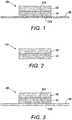
- FIG. 1 is a cross sectional diagram of a battery subassembly 100 according to some embodiments.
- the subassembly 100 includes a single electrode 102 and is not capable of functioning as a battery due to omission of a second electrode of the battery.
- the subassembly 100 includes a separator 101 that includes electrolyte, the separator 101 has a first surface 101a and an opposing second surface 101b.
- the separator includes only the electrolyte and in some embodiments, the separator includes the electrolyte along with additional materials.
- the electrolyte may comprise one or more of KOH, ZnCl 2 , an ionic liquid, and any other suitable materials.
- the electrolyte may be a solid, liquid or a gel.
- the separator comprises an electrolyte that may be supported by a mesh, such as a polymer mesh. Support for the electrolyte may be provided by paper wherein the electrode is soaked into the paper.
- the electrolyte may include one or more additives, such as ZnO 2 , that enhance battery performance.
- the single electrode 102 e.g. comprising a cathode material such as MnO 2 , is disposed over the first surface 101a of the separator 101.
- the electrode 102 includes a conductivity enhancer which may comprise carbon and/or other conductive materials.
- the single electrode 102 may be an air cathode that comprises a catalyst and a conductivity enhancer.
- the catalyst comprises MnO 2 and the conductivity enhancer comprises porous carbon that enhances conductivity and allows air to enter the air cathode.
- the second surface 101b of the separator 101 is disposed on a removable substrate 103 comprising a non-electrically active material such as a polymer, a plastic, or paper.
- the removable substrate 103 may be flexible and/or peelable so that it may be removed from the separator 101 by peeling the substrate 103 away from the separator 101.
- FIG. 2 is a cross sectional view showing a battery subassembly 110 after the substrate 103 of FIG. 1 has been removed.
- FIG. 3 is a cross sectional view showing a battery 120 formed by adding a second electrode 109 to the subassembly 100 shown in FIG. 1 after removal of the substrate 103.
- the second electrode 109 may be an anode electrode and can comprise a metal material, such as a metal foil, for example.
- the battery subassembly and battery includes a current collector support.
- the current collector support can also facilitate making contact between the second electrode (anode) of the battery and a current collector.
- electrical connection access to both the anode and cathode of the battery is available from one side of the battery. In alternative embodiments, one or both of the anode and the cathode are accessible from only one side of the completed battery.
- FIG. 4 illustrates a cross sectional diagram of a battery subassembly 200 according to some embodiments.
- the subassembly 200 comprises a separator 201 that includes electrolyte, the separator 201 has a first surface 201a and an opposing second surface 201b.
- the electrolyte may be one or more of KOH, ZnCl 2 , an ionic liquid, and any other material.
- the electrolyte may be a solid, liquid or a gel.
- the electrolyte may be supported by a mesh provided by a polymer or paper.
- the electrolyte may include an additive that enhances battery performance, e.g., ZnO 2 .
- a single electrode 202 e.g. comprising a cathode material such as MnO 2
- a current collector e.g., cathode current collector 204, may be disposed on the cathode 202 such that the cathode 202 is between the separator 201 and the cathode current collector 204.
- the electrode 202 includes a conductivity enhancer which may comprise carbon and/or other conductive materials.
- the single electrode 202 may be an air cathode comprising a catalyst and a conductivity enhancer.
- the catalyst comprises MnO 2
- the conductivity enhancer may compris a porous carbon that allows air to enter the air cathode.
- the second surface 201b of the separator 201 is disposed on a removable substrate 203 which may be made of a non-electrically conductive material such as a polymer, a plastic, or paper.
- the removable substrate 203 may be flexible and/or may be removable from the separator 201 by peeling and/or by other removal processes.
- the subassembly 200 may include a current collector support 205 disposed on the substrate 203 adjacent the separator 201.
- the current collector support 205 may be made of a non-electrically active material such as a polymer film.
- the current collector support 205 includes one or more electrically conductive vias 206 through the current collector support 205.
- the via 206 is electrically connected to a current collector 207 for a second electrode (not shown in FIG. 4 but shown in FIG. 6 ).
- FIG. 5 is a cross sectional view showing a battery subassembly 200 with the substrate 203 in the process of being removed by peeling the substrate 203 away from the separator 201.
- FIG. 6 is a cross sectional view showing a battery 250 formed by adding a second electrode 208, e.g., the anode electrode, to the subassembly 200 shown in FIG. 5 after the substrate 203 has been removed.
- the via 206 makes contact between the second electrode 208 and the current collector 207.
- a method of making a thin film battery includes forming a separator comprising an electrolyte on a removable, non-electrically active substrate wherein the separator has a first surface and an opposing second surface and the first surface is disposed adjacent to the substrate.
- a first electrode e.g., the cathode electrode, is formed on the second surface of the separator.
- the electrolyte can be of any known battery chemistry. The embodiments disclosed herein are not intended to be limited to any particular chemistry, but can apply to a wide range of thin film batteries.
- the electrolyte can be KOH, ZnCl2, an ionic liquid, or any other known ionically conductive material.
- the electrolyte can be supported in a mesh, such as a polymer mesh, or soaked into paper. It can be mixed with polymer so that it is a gel, or may be any other suitable form. It can contain additives to improve battery performance, such as ZnO 2 in some implementations.
- the first electrode e.g., cathode electrode
- the first electrode can be of any suitable material, for example MnO 2 .
- the cathode material can contain conductivity enhancers, for example, comprising carbon, and/or other additives.
- the subassembly may include a current collector, e.g., a conductive layer configured to conduct current, disposed on and electrically connected to the first electrode.
- the current collector for the first electrode may be added at the time of the battery deployment.
- the cathode can be an air-cathode, as in a Zn-air battery.
- a cathode may contain a catalyst, such as MnO 2 , and a conductive support, such as carbon.
- the conductive support may be porous allowing air to enter through the conductive support and react with the electrolyte.
- the battery described herein may be constructed using thin film processes to be a thin sheet.
- the anode is omitted and the separator is directly on a substrate, which can be plastic, paper, or some other flexible material.
- the substrate is removed from the separator, for example by peeling, and the separator is disposed on and/or attached to a second electrode, e.g., comprising anode material.
- a second electrode e.g., comprising anode material.
- One or more components of the battery, including the separator, the first electrode, the second electrode, the separator, and/or the first and second current collectors can be formed by printing.
- the second electrode e.g., anode
- the second electrode may be or comprise a metal foil, such as a zinc or aluminum foil.
- the second electrode may be an existing metal surface, such as a a metal surface of furniture, a wall, an appliance, and/or a metal surface of an electronic device for which the battery is used to provide power.
- the surface of the metal foil or other metal surface may be prepared before it contacts the surface of the separator. It may be necessary to prepare the foil or surface prior to activating the battery, for example to remove an oxide layer or other coating. Preparation can be physical (e.g., scratching or scraping), or chemical (e.g., etching with acid).
- the method includes forming a current collector support on the substrate adjacent to the separator.
- the current collector support is a non-electrically active material such as a polymer film.
- Forming the current collector comprises forming one or more vias through the current collector support. After the second electrode is applied to the separator and the current collector support, the vias contact the second electrode and electrically connect the second electrode with a current collector.
- the battery is activated by applying and/or attaching the separator to the metal foil or surface of the second electrode.
- applying the separator to the second electrode may comprise placing the separator on the second electrode or placing the second electrode on the separator.
- Electrical contact between the anode and cathode electrodes (and/or current collectors) of the battery and the electrical circuit that the battery will power must be made. How the electrical contact is implemented can depend on the application. In some embodiments, both the anode and the cathode are accessible from one side of the battery. As discussed above and shown in FIGS. 4 through 6 one option is to have an electrical path (one or more vias) through a battery support. Having the current path built in may simplify deployment of the battery in the electrical circuit.
Landscapes
- Chemical & Material Sciences (AREA)
- Chemical Kinetics & Catalysis (AREA)
- Electrochemistry (AREA)
- General Chemical & Material Sciences (AREA)
- Engineering & Computer Science (AREA)
- Manufacturing & Machinery (AREA)
- Inorganic Chemistry (AREA)
- Materials Engineering (AREA)
- Cell Separators (AREA)
- Hybrid Cells (AREA)
Abstract
Description
- This disclosure relates generally to thin film batteries and to related subassemblies, systems, and methods.
- Thin-film batteries have uses in flexible and printed electronics, wearable devices, and other applications. Two broad categories of thin-film batteries are lithium-based and non-lithium based batteries. The former can have higher capacities, but require excellent encapsulation. The latter are generally lower performing and lower cost.
- Some embodiments are directed to a single-electrode battery subassembly that includes a separator comprising an electrolyte. The separator has a first surface and an opposing second surface. A single electrode is disposed over the first surface of the separator. A removable, electrically inert substrate disposed on the second surface of the separator.
- According to some embodiments, a method of making a battery includes forming a battery subassembly. To form the battery subassembly, a separator is formed comprising an electrolyte on a removable, non-electrically active substrate such that a first surface of the separator is adjacent the substrate. A first electrode is formed on a second surface of the separato. The substrate is removed from the first surface of the separator. The first surface of the separator is placed on a a second electrode.
- Some embodiments involve a thin film battery. The thin film battery includes a separator comprising an electrolyte. The separator has a first surface and an opposing second surface. A support is adjacent to and mechanically attached to the separator. A first electrode is disposed over the first surface of the separator. A second electrode is disposed over the second surface of the separator and the support. A via extends through the support and makes electrical contact with the second electrode.
-
-
FIG. 1 shows a cross sectional view of a battery subassembly in accordance with some embodiments; -
FIG. 2 shows a cross sectional view of the battery subassembly ofFIG. 1 with the substrate removed; -
FIG. 3 is a cross sectional view of a battery that is formed from the battery subassembly ofFIG. 1 after the substrate is removed and the second electrode is attached; -
FIG. 4 shows a cross sectional view of a battery subassembly in accordance with some embodiments; -
FIG. 5 shows a cross sectional view of the battery subassembly ofFIG. 4 with the substrate in the process of being peeled off the separator; and -
FIG. 6 is a cross sectional view of a battery that is formed from the battery subassembly ofFIG. 4 after the substrate is removed and the second electrode is attached. - The figures are not necessarily to scale. Like numbers used in the figures refer to like components. However, it will be understood that the use of a number to refer to a component in a given figure is not intended to limit the component in another figure labeled with the same number.
- Embodiments disclosed herein relate to thin film reserve batteries such as those having non-lithium active materials. One challenge with thin film batteries, especially printed batteries, is limited shelf life. Parasitic reactions between the electrode materials and the electrolyte tend to degrade the battery over time during storage. One means to address this challenge is to store the battery in an incomplete form and complete the battery when (or close to when) it is deployed. This can prevent or reduce parasitic reactions. Batteries that are stored in incomplete form are referred to herein as "reserve batteries."
- Embodiments disclosed herein are directed to subassemblies for reserve batteries. According to various embodiments, the subassembly is a single electrode component that omits one electrode material, e.g., the anode material, needed to make the battery operate until the time of deployment. Without the anode, the battery comprises a separator containing electrolyte and a cathode.
-
FIG. 1 is a cross sectional diagram of abattery subassembly 100 according to some embodiments. Thesubassembly 100 includes asingle electrode 102 and is not capable of functioning as a battery due to omission of a second electrode of the battery. - The
subassembly 100 includes aseparator 101 that includes electrolyte, theseparator 101 has a first surface 101a and an opposing second surface 101b. In some embodiments, the separator includes only the electrolyte and in some embodiments, the separator includes the electrolyte along with additional materials. The electrolyte may comprise one or more of KOH, ZnCl2, an ionic liquid, and any other suitable materials. The electrolyte may be a solid, liquid or a gel. In some implementations, the separator comprises an electrolyte that may be supported by a mesh, such as a polymer mesh. Support for the electrolyte may be provided by paper wherein the electrode is soaked into the paper. The electrolyte may include one or more additives, such as ZnO2, that enhance battery performance. - The
single electrode 102, e.g. comprising a cathode material such as MnO2, is disposed over the first surface 101a of theseparator 101. In some embodiments, theelectrode 102 includes a conductivity enhancer which may comprise carbon and/or other conductive materials. In some embodiments, thesingle electrode 102 may be an air cathode that comprises a catalyst and a conductivity enhancer. According to some implementations, the catalyst comprises MnO2 and the conductivity enhancer comprises porous carbon that enhances conductivity and allows air to enter the air cathode. - The second surface 101b of the
separator 101 is disposed on aremovable substrate 103 comprising a non-electrically active material such as a polymer, a plastic, or paper. Theremovable substrate 103 may be flexible and/or peelable so that it may be removed from theseparator 101 by peeling thesubstrate 103 away from theseparator 101. -
FIG. 2 is a cross sectional view showing abattery subassembly 110 after thesubstrate 103 ofFIG. 1 has been removed.FIG. 3 is a cross sectional view showing abattery 120 formed by adding asecond electrode 109 to thesubassembly 100 shown inFIG. 1 after removal of thesubstrate 103. Thesecond electrode 109 may be an anode electrode and can comprise a metal material, such as a metal foil, for example. - In some embodiments, the battery subassembly and battery includes a current collector support. The current collector support can also facilitate making contact between the second electrode (anode) of the battery and a current collector. In some implementations, electrical connection access to both the anode and cathode of the battery is available from one side of the battery. In alternative embodiments, one or both of the anode and the cathode are accessible from only one side of the completed battery.
-
FIG. 4 illustrates a cross sectional diagram of abattery subassembly 200 according to some embodiments. Thesubassembly 200 comprises aseparator 201 that includes electrolyte, theseparator 201 has a first surface 201a and an opposing second surface 201b. The electrolyte may be one or more of KOH, ZnCl2, an ionic liquid, and any other material. The electrolyte may be a solid, liquid or a gel. In some implementations, the electrolyte may be supported by a mesh provided by a polymer or paper. The electrolyte may include an additive that enhances battery performance, e.g., ZnO2. - A
single electrode 202, e.g. comprising a cathode material such as MnO2, is disposed over the first surface 201a of theseparator 201. A current collector, e.g., cathodecurrent collector 204, may be disposed on thecathode 202 such that thecathode 202 is between theseparator 201 and the cathodecurrent collector 204. - In some embodiments, the
electrode 202 includes a conductivity enhancer which may comprise carbon and/or other conductive materials. As previously discussed, thesingle electrode 202 may be an air cathode comprising a catalyst and a conductivity enhancer. According to some implementations, the catalyst comprises MnO2, the conductivity enhancer may compris a porous carbon that allows air to enter the air cathode. - The second surface 201b of the
separator 201 is disposed on aremovable substrate 203 which may be made of a non-electrically conductive material such as a polymer, a plastic, or paper. Theremovable substrate 203 may be flexible and/or may be removable from theseparator 201 by peeling and/or by other removal processes. - As shown in the cross section of
FIG. 4 , thesubassembly 200 may include acurrent collector support 205 disposed on thesubstrate 203 adjacent theseparator 201. Thecurrent collector support 205 may be made of a non-electrically active material such as a polymer film. In some implementations, thecurrent collector support 205 includes one or more electricallyconductive vias 206 through thecurrent collector support 205. The via 206 is electrically connected to acurrent collector 207 for a second electrode (not shown inFIG. 4 but shown inFIG. 6 ). -
FIG. 5 is a cross sectional view showing abattery subassembly 200 with thesubstrate 203 in the process of being removed by peeling thesubstrate 203 away from theseparator 201.FIG. 6 is a cross sectional view showing abattery 250 formed by adding asecond electrode 208, e.g., the anode electrode, to thesubassembly 200 shown inFIG. 5 after thesubstrate 203 has been removed. The via 206 makes contact between thesecond electrode 208 and thecurrent collector 207. - A method of making a thin film battery includes forming a separator comprising an electrolyte on a removable, non-electrically active substrate wherein the separator has a first surface and an opposing second surface and the first surface is disposed adjacent to the substrate. A first electrode, e.g., the cathode electrode, is formed on the second surface of the separator. The electrolyte can be of any known battery chemistry. The embodiments disclosed herein are not intended to be limited to any particular chemistry, but can apply to a wide range of thin film batteries. For example, the electrolyte can be KOH, ZnCl2, an ionic liquid, or any other known ionically conductive material. The electrolyte can be supported in a mesh, such as a polymer mesh, or soaked into paper. It can be mixed with polymer so that it is a gel, or may be any other suitable form. It can contain additives to improve battery performance, such as ZnO2 in some implementations.
- Likewise the first electrode, e.g., cathode electrode, can be of any suitable material, for example MnO2. The cathode material can contain conductivity enhancers, for example, comprising carbon, and/or other additives. The subassembly may include a current collector, e.g., a conductive layer configured to conduct current, disposed on and electrically connected to the first electrode. Alternatively, the current collector for the first electrode may be added at the time of the battery deployment.
- According to some embodiments, the cathode can be an air-cathode, as in a Zn-air battery. Such a cathode may contain a catalyst, such as MnO2, and a conductive support, such as carbon. The conductive support may be porous allowing air to enter through the conductive support and react with the electrolyte.
- The battery described herein may be constructed using thin film processes to be a thin sheet. In a subassembly of the battery, the anode is omitted and the separator is directly on a substrate, which can be plastic, paper, or some other flexible material. Upon deployment of the battery, the substrate is removed from the separator, for example by peeling, and the separator is disposed on and/or attached to a second electrode, e.g., comprising anode material. One or more components of the battery, including the separator, the first electrode, the second electrode, the separator, and/or the first and second current collectors can be formed by printing.
- In some embodiments, the second electrode, e.g., anode, may be or comprise a metal foil, such as a zinc or aluminum foil. In some embodiments the second electrode may be an existing metal surface, such as a a metal surface of furniture, a wall, an appliance, and/or a metal surface of an electronic device for which the battery is used to provide power. The surface of the metal foil or other metal surface may be prepared before it contacts the surface of the separator. It may be necessary to prepare the foil or surface prior to activating the battery, for example to remove an oxide layer or other coating. Preparation can be physical (e.g., scratching or scraping), or chemical (e.g., etching with acid).
- In some embodiments, the method includes forming a current collector support on the substrate adjacent to the separator. In some implementations, the current collector support is a non-electrically active material such as a polymer film. Forming the current collector comprises forming one or more vias through the current collector support. After the second electrode is applied to the separator and the current collector support, the vias contact the second electrode and electrically connect the second electrode with a current collector.
- The battery is activated by applying and/or attaching the separator to the metal foil or surface of the second electrode. For example, applying the separator to the second electrode may comprise placing the separator on the second electrode or placing the second electrode on the separator. Electrical contact between the anode and cathode electrodes (and/or current collectors) of the battery and the electrical circuit that the battery will power must be made. How the electrical contact is implemented can depend on the application. In some embodiments, both the anode and the cathode are accessible from one side of the battery. As discussed above and shown in
FIGS. 4 through 6 one option is to have an electrical path (one or more vias) through a battery support. Having the current path built in may simplify deployment of the battery in the electrical circuit. - Unless otherwise indicated, all numbers expressing feature sizes, amounts, and physical properties used in the specification and claims are to be understood as being modified in all instances by the term "about." Accordingly, unless indicated to the contrary, the numerical parameters set forth in the foregoing specification and attached claims are approximations that can vary depending upon the desired properties sought to be obtained by those skilled in the art utilizing the teachings disclosed herein. The use of numerical ranges by endpoints includes all numbers within that range (e.g. 1 to 5 includes 1, 1.5, 2, 2.75, 3, 3.80, 4, and 5) and any range within that range.
- Various modifications and alterations of the embodiments discussed above will be apparent to those skilled in the art, and it should be understood that this disclosure is not limited to the illustrative embodiments set forth herein. The reader should assume that features of one disclosed embodiment can also be applied to all other disclosed embodiments unless otherwise indicated. It should also be understood that all U.S. patents, patent applications, patent application publications, and other patent and non-patent documents referred to herein are incorporated by reference, to the extent they do not contradict the foregoing disclosure.
Claims (10)
- A single-electrode battery subassembly, comprising:a separator comprising an electrolyte, the separator having a first surface and an opposing second surface;a single electrode disposed over the first surface of the separator; anda removable, electrically inert substrate disposed on the second surface of the separator.
- The subassembly of claim 1, wherein the single electrode comprises a cathode electrode.
- The subassembly of claim 1, wherein the subassembly is incapable of functioning as a battery due to omission of an anode of the battery.
- The subassembly of claim 1, wherein the removable substrate is a flexible, peelable substrate.
- The subassembly of claim 1, wherein the removable substrate comprises at least one of plastic and paper.
- The subassembly of claim 1, wherein the electrolyte comprises one or more of KOH, ZnC12, and an ionic liquid.
- The subassembly of claim 1, wherein the electrolyte comprises a gel.
- The subassembly of claim 1, wherein separator comprises an electrolyte supported by paper or a polymer mesh.
- A method of making a battery comprising:forming a battery subassembly comprising:forming a separator comprising an electrolyte on a removable, non-electrically active substrate such that a first surface of the separator is adjacent the substrateforming a first electrode on a second surface of the separator;
removing the substrate from the first surface of the separator; anddisposing the first surface of the separator on a second electrode. - A thin film battery comprising:a separator comprising an electrolyte, the separator having a first surface and an opposing second surface;a support adjacent to and mechanically attached to the separator;a first electrode disposed over the first surface of the separator;a second electrode disposed over the second surface of the separator and the support; and a via through the support that makes electrical contact with the second electrode.
Applications Claiming Priority (1)
| Application Number | Priority Date | Filing Date | Title |
|---|---|---|---|
| US15/197,230 US9985270B2 (en) | 2016-06-29 | 2016-06-29 | Thin film reserve battery |
Publications (1)
| Publication Number | Publication Date |
|---|---|
| EP3264499A1 true EP3264499A1 (en) | 2018-01-03 |
Family
ID=59091405
Family Applications (1)
| Application Number | Title | Priority Date | Filing Date |
|---|---|---|---|
| EP17176747.8A Withdrawn EP3264499A1 (en) | 2016-06-29 | 2017-06-19 | Thin film reserve battery |
Country Status (2)
| Country | Link |
|---|---|
| US (1) | US9985270B2 (en) |
| EP (1) | EP3264499A1 (en) |
Families Citing this family (1)
| Publication number | Priority date | Publication date | Assignee | Title |
|---|---|---|---|---|
| CH712996A1 (en) * | 2016-09-30 | 2018-04-13 | Hoffmann Neopac Ag | Tube and tube body with an electronic device. |
Citations (4)
| Publication number | Priority date | Publication date | Assignee | Title |
|---|---|---|---|---|
| US5563002A (en) * | 1995-02-21 | 1996-10-08 | Motorola, Inc. | Programmable battery |
| US6136468A (en) * | 1998-08-25 | 2000-10-24 | Timer Technologies, Llc | Electrochemical cell with deferred assembly |
| WO2001039294A2 (en) * | 1999-11-23 | 2001-05-31 | Moltech Corporation | Methods of preparing electrochemical cells |
| US20030219532A1 (en) * | 2002-05-27 | 2003-11-27 | Nagayuki Kanaoka | Method of manufacturing membrane electrode assembly |
Family Cites Families (10)
| Publication number | Priority date | Publication date | Assignee | Title |
|---|---|---|---|---|
| FR2616970B1 (en) * | 1987-06-18 | 1995-05-19 | Elf Aquitaine | MULTI-LAYERED ASSEMBLY FOR PRODUCING THE ASSEMBLY OF A GENERATOR, METHOD FOR PREPARING THE SAME AND PRODUCING THE COMPLETE GENERATOR, AND GENERATOR THUS PRODUCED |
| US5840087A (en) * | 1996-09-18 | 1998-11-24 | Bell Communications Research, Inc. | Method for making laminated rechargeable battery cells |
| DE69802134T2 (en) * | 1997-04-23 | 2002-03-07 | Hydro-Quebec, Montreal | Thin film solid lithium cells and method of manufacture |
| US6605391B2 (en) | 1999-02-26 | 2003-08-12 | Reveo, Inc. | Solid gel membrane |
| WO2002093667A2 (en) | 2001-05-14 | 2002-11-21 | Reveo, Inc. | Metal air cell incorporating ionic isolation systems |
| DE112005003198B4 (en) * | 2004-12-27 | 2014-02-06 | National Institute Of Advanced Industrial Science And Technology | Ionic liquid |
| KR100782162B1 (en) | 2006-06-13 | 2007-12-06 | (주)누리셀 | Reserve battery with all-solid-state thin film battery |
| KR101953399B1 (en) | 2010-09-13 | 2019-05-22 | 더 리전츠 오브 더 유니버시티 오브 캘리포니아 | Ionic gel electrolyte, energy storage devices, and methods of manufacture thereof |
| US9853270B2 (en) | 2012-04-18 | 2017-12-26 | King Abdullah University Of Science And Technology | Nanostructured metal organic material electrode separators and methods therefor |
| KR101987008B1 (en) * | 2012-06-15 | 2019-06-12 | 한국전자통신연구원 | Solid polymer electrolytes, methods for manufacturing the same, and lithum cell including thereof |
-
2016
- 2016-06-29 US US15/197,230 patent/US9985270B2/en active Active
-
2017
- 2017-06-19 EP EP17176747.8A patent/EP3264499A1/en not_active Withdrawn
Patent Citations (4)
| Publication number | Priority date | Publication date | Assignee | Title |
|---|---|---|---|---|
| US5563002A (en) * | 1995-02-21 | 1996-10-08 | Motorola, Inc. | Programmable battery |
| US6136468A (en) * | 1998-08-25 | 2000-10-24 | Timer Technologies, Llc | Electrochemical cell with deferred assembly |
| WO2001039294A2 (en) * | 1999-11-23 | 2001-05-31 | Moltech Corporation | Methods of preparing electrochemical cells |
| US20030219532A1 (en) * | 2002-05-27 | 2003-11-27 | Nagayuki Kanaoka | Method of manufacturing membrane electrode assembly |
Non-Patent Citations (1)
| Title |
|---|
| YANGUANG LI ET AL: "Recent advances in zinc-air batteries", CHEMICAL SOCIETY REVIEWS, vol. 43, no. 15, 15 November 2014 (2014-11-15), pages 5257 - 5275, XP055397558, ISSN: 0306-0012, DOI: 10.1039/C4CS00015C * |
Also Published As
| Publication number | Publication date |
|---|---|
| US9985270B2 (en) | 2018-05-29 |
| US20180006287A1 (en) | 2018-01-04 |
Similar Documents
| Publication | Publication Date | Title |
|---|---|---|
| JP5207256B2 (en) | Galvanic element | |
| TWI591875B (en) | Electric core for thin film battery | |
| US6379835B1 (en) | Method of making a thin film battery | |
| CN111868974B (en) | Lithium electrode and lithium secondary battery containing the same | |
| US8512888B2 (en) | Current collector and method for producing the same, battery and method for producing the same | |
| US11171328B2 (en) | Solvent-free electrochemical cells with conductive pressure sensitive adhesives attaching current collectors | |
| JP2011151029A (en) | Ultra thin solid state lithium battery and process of preparing same | |
| EP2850678B1 (en) | An apparatus and associated methods | |
| TW201145644A (en) | Cell module and assembled battery | |
| JP2003510768A (en) | Lithium secondary battery having individual cells connected to each other, and a clock, a computer, and a communication device equipped with such a battery | |
| CN102447095B (en) | Lithium ion storage device | |
| JP2011150974A (en) | Electrode body, and method for manufacturing the same | |
| KR920702036A (en) | Electrochemical cell including rechargeable nickel electrode and method for manufacturing same | |
| US20040185332A1 (en) | Tabs for electrochemical cells | |
| EP3264499A1 (en) | Thin film reserve battery | |
| JP7098189B2 (en) | Secondary battery and battery module | |
| Saidi et al. | The effect of ink formulation and electrode geometry design on the electrochemical performance of a printed alkaline battery | |
| JP2013206705A (en) | Power storage device, secondary battery and manufacturing method of power storage device | |
| EP3218953B1 (en) | Secondary battery with non-aqueous electrolyte | |
| EP3327823A1 (en) | Electrode assembly for a battery cell and battery cell | |
| US9912008B2 (en) | Electrical energy storage device with non-aqueous electrolyte | |
| EP4195330A1 (en) | Battery arrangements and methods for forming battery arrangements | |
| Braam | Development of an air-stable, high energy density printed silver oxide battery for printed electronics | |
| US11075390B2 (en) | Apparatus and associated methods for electrical storage | |
| CN105870492A (en) | Novel lithium ion battery and fabrication method thereof |
Legal Events
| Date | Code | Title | Description |
|---|---|---|---|
| PUAI | Public reference made under article 153(3) epc to a published international application that has entered the european phase |
Free format text: ORIGINAL CODE: 0009012 |
|
| STAA | Information on the status of an ep patent application or granted ep patent |
Free format text: STATUS: THE APPLICATION HAS BEEN PUBLISHED |
|
| AK | Designated contracting states |
Kind code of ref document: A1 Designated state(s): AL AT BE BG CH CY CZ DE DK EE ES FI FR GB GR HR HU IE IS IT LI LT LU LV MC MK MT NL NO PL PT RO RS SE SI SK SM TR |
|
| AX | Request for extension of the european patent |
Extension state: BA ME |
|
| STAA | Information on the status of an ep patent application or granted ep patent |
Free format text: STATUS: REQUEST FOR EXAMINATION WAS MADE |
|
| 17P | Request for examination filed |
Effective date: 20180703 |
|
| RBV | Designated contracting states (corrected) |
Designated state(s): AL AT BE BG CH CY CZ DE DK EE ES FI FR GB GR HR HU IE IS IT LI LT LU LV MC MK MT NL NO PL PT RO RS SE SI SK SM TR |
|
| STAA | Information on the status of an ep patent application or granted ep patent |
Free format text: STATUS: EXAMINATION IS IN PROGRESS |
|
| 17Q | First examination report despatched |
Effective date: 20190531 |
|
| STAA | Information on the status of an ep patent application or granted ep patent |
Free format text: STATUS: THE APPLICATION IS DEEMED TO BE WITHDRAWN |
|
| 18D | Application deemed to be withdrawn |
Effective date: 20230914 |