EP3258705B1 - Nfmi-basierte robustheit - Google Patents
Nfmi-basierte robustheit Download PDFInfo
- Publication number
- EP3258705B1 EP3258705B1 EP17174668.8A EP17174668A EP3258705B1 EP 3258705 B1 EP3258705 B1 EP 3258705B1 EP 17174668 A EP17174668 A EP 17174668A EP 3258705 B1 EP3258705 B1 EP 3258705B1
- Authority
- EP
- European Patent Office
- Prior art keywords
- data
- wireless
- wireless device
- nfmi
- data set
- Prior art date
- Legal status (The legal status is an assumption and is not a legal conclusion. Google has not performed a legal analysis and makes no representation as to the accuracy of the status listed.)
- Active
Links
Images




Classifications
-
- H—ELECTRICITY
- H04—ELECTRIC COMMUNICATION TECHNIQUE
- H04W—WIRELESS COMMUNICATION NETWORKS
- H04W4/00—Services specially adapted for wireless communication networks; Facilities therefor
- H04W4/80—Services using short range communication, e.g. near-field communication [NFC], radio-frequency identification [RFID] or low energy communication
-
- G—PHYSICS
- G06—COMPUTING OR CALCULATING; COUNTING
- G06F—ELECTRIC DIGITAL DATA PROCESSING
- G06F3/00—Input arrangements for transferring data to be processed into a form capable of being handled by the computer; Output arrangements for transferring data from processing unit to output unit, e.g. interface arrangements
- G06F3/01—Input arrangements or combined input and output arrangements for interaction between user and computer
- G06F3/03—Arrangements for converting the position or the displacement of a member into a coded form
- G06F3/033—Pointing devices displaced or positioned by the user, e.g. mice, trackballs, pens or joysticks; Accessories therefor
- G06F3/0346—Pointing devices displaced or positioned by the user, e.g. mice, trackballs, pens or joysticks; Accessories therefor with detection of the device orientation or free movement in a three-dimensional [3D] space, e.g. 3D mice, 6-DOF [six degrees of freedom] pointers using gyroscopes, accelerometers or tilt-sensors
-
- G—PHYSICS
- G06—COMPUTING OR CALCULATING; COUNTING
- G06T—IMAGE DATA PROCESSING OR GENERATION, IN GENERAL
- G06T13/00—Animation
- G06T13/80—Two-dimensional [2D] animation, e.g. using sprites
-
- H—ELECTRICITY
- H04—ELECTRIC COMMUNICATION TECHNIQUE
- H04B—TRANSMISSION
- H04B1/00—Details of transmission systems, not covered by a single one of groups H04B3/00 - H04B13/00; Details of transmission systems not characterised by the medium used for transmission
- H04B1/38—Transceivers, i.e. devices in which transmitter and receiver form a structural unit and in which at least one part is used for functions of transmitting and receiving
- H04B1/3827—Portable transceivers
- H04B1/385—Transceivers carried on the body, e.g. in helmets
-
- H—ELECTRICITY
- H04—ELECTRIC COMMUNICATION TECHNIQUE
- H04L—TRANSMISSION OF DIGITAL INFORMATION, e.g. TELEGRAPHIC COMMUNICATION
- H04L1/00—Arrangements for detecting or preventing errors in the information received
- H04L1/22—Arrangements for detecting or preventing errors in the information received using redundant apparatus to increase reliability
-
- H—ELECTRICITY
- H04—ELECTRIC COMMUNICATION TECHNIQUE
- H04L—TRANSMISSION OF DIGITAL INFORMATION, e.g. TELEGRAPHIC COMMUNICATION
- H04L1/00—Arrangements for detecting or preventing errors in the information received
- H04L1/24—Testing correct operation
- H04L1/245—Testing correct operation by using the properties of transmission codes
-
- H—ELECTRICITY
- H04—ELECTRIC COMMUNICATION TECHNIQUE
- H04M—TELEPHONIC COMMUNICATION
- H04M1/00—Substation equipment, e.g. for use by subscribers
- H04M1/60—Substation equipment, e.g. for use by subscribers including speech amplifiers
- H04M1/6033—Substation equipment, e.g. for use by subscribers including speech amplifiers for providing handsfree use or a loudspeaker mode in telephone sets
- H04M1/6041—Portable telephones adapted for handsfree use
- H04M1/6058—Portable telephones adapted for handsfree use involving the use of a headset accessory device connected to the portable telephone
- H04M1/6066—Portable telephones adapted for handsfree use involving the use of a headset accessory device connected to the portable telephone including a wireless connection
-
- H—ELECTRICITY
- H04—ELECTRIC COMMUNICATION TECHNIQUE
- H04M—TELEPHONIC COMMUNICATION
- H04M1/00—Substation equipment, e.g. for use by subscribers
- H04M1/72—Mobile telephones; Cordless telephones, i.e. devices for establishing wireless links to base stations without route selection
- H04M1/724—User interfaces specially adapted for cordless or mobile telephones
-
- H—ELECTRICITY
- H04—ELECTRIC COMMUNICATION TECHNIQUE
- H04M—TELEPHONIC COMMUNICATION
- H04M1/00—Substation equipment, e.g. for use by subscribers
- H04M1/72—Mobile telephones; Cordless telephones, i.e. devices for establishing wireless links to base stations without route selection
- H04M1/724—User interfaces specially adapted for cordless or mobile telephones
- H04M1/72403—User interfaces specially adapted for cordless or mobile telephones with means for local support of applications that increase the functionality
- H04M1/72409—User interfaces specially adapted for cordless or mobile telephones with means for local support of applications that increase the functionality by interfacing with external accessories
- H04M1/72412—User interfaces specially adapted for cordless or mobile telephones with means for local support of applications that increase the functionality by interfacing with external accessories using two-way short-range wireless interfaces
-
- H—ELECTRICITY
- H04—ELECTRIC COMMUNICATION TECHNIQUE
- H04M—TELEPHONIC COMMUNICATION
- H04M1/00—Substation equipment, e.g. for use by subscribers
- H04M1/72—Mobile telephones; Cordless telephones, i.e. devices for establishing wireless links to base stations without route selection
- H04M1/724—User interfaces specially adapted for cordless or mobile telephones
- H04M1/72448—User interfaces specially adapted for cordless or mobile telephones with means for adapting the functionality of the device according to specific conditions
-
- H—ELECTRICITY
- H04—ELECTRIC COMMUNICATION TECHNIQUE
- H04N—PICTORIAL COMMUNICATION, e.g. TELEVISION
- H04N7/00—Television systems
- H04N7/14—Systems for two-way working
- H04N7/141—Systems for two-way working between two video terminals, e.g. videophone
- H04N7/142—Constructional details of the terminal equipment, e.g. arrangements of the camera and the display
-
- H—ELECTRICITY
- H04—ELECTRIC COMMUNICATION TECHNIQUE
- H04N—PICTORIAL COMMUNICATION, e.g. TELEVISION
- H04N7/00—Television systems
- H04N7/14—Systems for two-way working
- H04N7/141—Systems for two-way working between two video terminals, e.g. videophone
- H04N7/142—Constructional details of the terminal equipment, e.g. arrangements of the camera and the display
- H04N7/144—Constructional details of the terminal equipment, e.g. arrangements of the camera and the display camera and display on the same optical axis, e.g. optically multiplexing the camera and display for eye to eye contact
-
- H—ELECTRICITY
- H04—ELECTRIC COMMUNICATION TECHNIQUE
- H04N—PICTORIAL COMMUNICATION, e.g. TELEVISION
- H04N7/00—Television systems
- H04N7/14—Systems for two-way working
- H04N7/141—Systems for two-way working between two video terminals, e.g. videophone
- H04N7/147—Communication arrangements, e.g. identifying the communication as a video-communication, intermediate storage of the signals
-
- H—ELECTRICITY
- H04—ELECTRIC COMMUNICATION TECHNIQUE
- H04N—PICTORIAL COMMUNICATION, e.g. TELEVISION
- H04N7/00—Television systems
- H04N7/14—Systems for two-way working
- H04N7/15—Conference systems
- H04N7/157—Conference systems defining a virtual conference space and using avatars or agents
-
- H—ELECTRICITY
- H04—ELECTRIC COMMUNICATION TECHNIQUE
- H04R—LOUDSPEAKERS, MICROPHONES, GRAMOPHONE PICK-UPS OR LIKE ACOUSTIC ELECTROMECHANICAL TRANSDUCERS; ELECTRIC HEARING AIDS; PUBLIC ADDRESS SYSTEMS
- H04R5/00—Stereophonic arrangements
- H04R5/033—Headphones for stereophonic communication
-
- H—ELECTRICITY
- H04—ELECTRIC COMMUNICATION TECHNIQUE
- H04S—STEREOPHONIC SYSTEMS
- H04S1/00—Two-channel systems
- H04S1/002—Non-adaptive circuits, e.g. manually adjustable or static, for enhancing the sound image or the spatial distribution
- H04S1/005—For headphones
-
- H—ELECTRICITY
- H04—ELECTRIC COMMUNICATION TECHNIQUE
- H04W—WIRELESS COMMUNICATION NETWORKS
- H04W4/00—Services specially adapted for wireless communication networks; Facilities therefor
- H04W4/02—Services making use of location information
- H04W4/023—Services making use of location information using mutual or relative location information between multiple location based services [LBS] targets or of distance thresholds
-
- H—ELECTRICITY
- H04—ELECTRIC COMMUNICATION TECHNIQUE
- H04W—WIRELESS COMMUNICATION NETWORKS
- H04W84/00—Network topologies
- H04W84/18—Self-organising networks, e.g. ad-hoc networks or sensor networks
- H04W84/20—Leader-follower arrangements
-
- H—ELECTRICITY
- H04—ELECTRIC COMMUNICATION TECHNIQUE
- H04L—TRANSMISSION OF DIGITAL INFORMATION, e.g. TELEGRAPHIC COMMUNICATION
- H04L1/00—Arrangements for detecting or preventing errors in the information received
- H04L2001/0092—Error control systems characterised by the topology of the transmission link
- H04L2001/0097—Relays
-
- H—ELECTRICITY
- H04—ELECTRIC COMMUNICATION TECHNIQUE
- H04M—TELEPHONIC COMMUNICATION
- H04M2250/00—Details of telephonic subscriber devices
- H04M2250/12—Details of telephonic subscriber devices including a sensor for measuring a physical value, e.g. temperature or motion
-
- H—ELECTRICITY
- H04—ELECTRIC COMMUNICATION TECHNIQUE
- H04M—TELEPHONIC COMMUNICATION
- H04M2250/00—Details of telephonic subscriber devices
- H04M2250/52—Details of telephonic subscriber devices including functional features of a camera
-
- H—ELECTRICITY
- H04—ELECTRIC COMMUNICATION TECHNIQUE
- H04N—PICTORIAL COMMUNICATION, e.g. TELEVISION
- H04N7/00—Television systems
- H04N7/14—Systems for two-way working
- H04N7/141—Systems for two-way working between two video terminals, e.g. videophone
- H04N7/142—Constructional details of the terminal equipment, e.g. arrangements of the camera and the display
- H04N2007/145—Handheld terminals
-
- H—ELECTRICITY
- H04—ELECTRIC COMMUNICATION TECHNIQUE
- H04N—PICTORIAL COMMUNICATION, e.g. TELEVISION
- H04N23/00—Cameras or camera modules comprising electronic image sensors; Control thereof
- H04N23/60—Control of cameras or camera modules
- H04N23/63—Control of cameras or camera modules by using electronic viewfinders
-
- H—ELECTRICITY
- H04—ELECTRIC COMMUNICATION TECHNIQUE
- H04R—LOUDSPEAKERS, MICROPHONES, GRAMOPHONE PICK-UPS OR LIKE ACOUSTIC ELECTROMECHANICAL TRANSDUCERS; ELECTRIC HEARING AIDS; PUBLIC ADDRESS SYSTEMS
- H04R2420/00—Details of connection covered by H04R, not provided for in its groups
- H04R2420/03—Connection circuits to selectively connect loudspeakers or headphones to amplifiers
-
- H—ELECTRICITY
- H04—ELECTRIC COMMUNICATION TECHNIQUE
- H04R—LOUDSPEAKERS, MICROPHONES, GRAMOPHONE PICK-UPS OR LIKE ACOUSTIC ELECTROMECHANICAL TRANSDUCERS; ELECTRIC HEARING AIDS; PUBLIC ADDRESS SYSTEMS
- H04R2420/00—Details of connection covered by H04R, not provided for in its groups
- H04R2420/05—Detection of connection of loudspeakers or headphones to amplifiers
-
- H—ELECTRICITY
- H04—ELECTRIC COMMUNICATION TECHNIQUE
- H04R—LOUDSPEAKERS, MICROPHONES, GRAMOPHONE PICK-UPS OR LIKE ACOUSTIC ELECTROMECHANICAL TRANSDUCERS; ELECTRIC HEARING AIDS; PUBLIC ADDRESS SYSTEMS
- H04R2499/00—Aspects covered by H04R or H04S not otherwise provided for in their subgroups
- H04R2499/10—General applications
- H04R2499/11—Transducers incorporated or for use in hand-held devices, e.g. mobile phones, PDA's, camera's
Definitions
- the present specification relates to systems, methods, apparatuses, devices, articles of manufacture and instructions for NFMI based robustness.
- WO2008113053 discloses a wireless audio headset comprising a first earpiece which comprises a first wireless interface that communicates with an audio source over a first wireless link and a second wireless interface which relays audio data for the second earpiece over a second wireless link.
- Document US2007223725 discloses a pair of wearable wireless loudspeaker devices (earbuds) mutually configured to communicate with each and, alternatively, with a third wireless device over a wireless link where the third wireless device is a data source for the first wireless device (dominant) which acts as a data relay for the second one. This ascendancy relationship is changed when the relative charge of the two battery levels relative to the first and second wireless devices is more than a predefined threshold.
- an apparatus for near-field magnetic induction (NFMI) based robustness comprising: a first wireless device including a first wireless signal interface and a first NFMI signal interface; wherein the first wireless signal interface is configured to receive a data set from a third wireless device; wherein the first NFMI signal interface is configured to communicate with a second wireless device through a second NFMI signal interface; and wherein the first wireless device is configured to detect an error in the data set received from the third wireless device and in response to detecting the error configure the first NFMI signal interface to receive the data set from the second wireless device through the second NFMI signal interface.
- NFMI near-field magnetic induction
- the first wireless signal interface is a primary interface for receiving the data set and the first NFMI signal interface is a backup interface for receiving the data set.
- the data set that the first wireless signal interface is configured to receive is a complete set of data and the data set that the first NFMI signal interface is configured to receive is a first subset of the complete set of data.
- the complete set of data includes stereo audio data having left audio data and right stereo data; and the first subset of data includes either the left audio data or the right stereo data.
- the complete set of data includes voice data having mono-audio data and microphone data; and the first subset of data includes either the mono-audio data or the microphone data.
- the first wireless device is configured to transmit a second subset of the complete data set over the first NFMI signal interface to the second wireless device.
- the data set received at the first wireless signal interface and the first NFMI signal interface is a complete set of data.
- the first wireless device is configured to not receive the data set from the second wireless device until the first wireless device requests transfer of the data set.
- the transfer request includes at least one of: a switch roles of the first and second wireless devices request; or a set-up a new wireless connection with the third wireless device request.
- the wireless signal interface includes at least one of: a Bluetooth Classic wireless interface, or a Bluetooth Low Energy wireless interface.
- robustness includes at least one of: providing an alternate data set path; a network reconfiguration; network switching; signal retransmission; or signal diversity.
- the data set is at least one of: media data; video playback data; audio (e.g. sound) playback data; sensor data; health status data; battery status; or device settings.
- the error is at least one of: an error caused by body shadowing; the data set is no longer being received; the data set is degraded; the data set has a signal strength below a threshold value; the data set contains digital or analog errors; a corrupted data set error; an incomplete data set error; or an erratic data set error.
- the first and second wireless devices are hearables; and the third wireless device is at least one of: a smartphone; or a wearable.
- the wireless devices include at least one of: a microphone; an earbud; a hearable; a smartphone; a smartwatch; a wearable device; a tablet; or a computer.
- an article of manufacture including at least one non-transitory, tangible machine readable storage medium containing executable machine instructions for robustness, comprising: wherein the article includes, a first wireless device including a first wireless signal interface and a first NFMI signal interface; and wherein the instructions include, configuring the first wireless signal interface to receive a data set from a third wireless device; configuring the first NFMI signal interface to communicate with a second wireless device through a second NFMI signal interface; and configuring the first wireless signal to detect an error in the data set from the third wireless device and in response to detecting the error request that the second wireless device send the data set to the first NFMI signal interface from the second NFMI signal interface.
- a method for NFMI based robustness comprising: receiving a data set at a first wireless device from a third wireless device through a wireless channel; communicating between the first wireless device and a second wireless device through an NFMI channel; and detecting an error in the data set that the first wireless device receives from the third wireless device; and requesting that the second wireless device send the data set to the first wireless device over the NFMI channel in response to detecting the error.
- Wireless devices such as wireless earbuds (also known as Hearables), in various embodiments include embedded voice, sound and sensor capabilities. Such wireless devices can be designed to support playback of stereo sound from an external device such as a cellphone, making phone calls, responding to voice commands, detecting sound events, and so on.
- Some example embodiments communicate with a smartphone or other devices, such as tablet, computers, etc., through Bluetooth Classic (BT) or through Bluetooth Low Energy (BLE), and communicate with each other using Near-Field Magnetic Induction (NFMI) signals that can pass through various structures, including the human body, and in the case of hearables, through the human head.
- BT Bluetooth Classic
- BLE Bluetooth Low Energy
- NFMI Near-Field Magnetic Induction
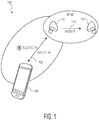
- Figure 1 is a first example protocol 100 for communication between wireless devices. Shown in the first example 100 is a first wireless device 102 (e.g. left earbud), a second wireless device 104 (e.g. right earbud), a third wireless device 106 (e.g. smartphone), a received signal 108 (e.g. left and right audio signal), and a forwarded signal 110 (e.g. right only audio signal).
- a first wireless device 102 e.g. left earbud
- a second wireless device 104 e.g. right earbud
- a third wireless device 106 e.g. smartphone
- a received signal 108 e.g. left and right audio signal
- a forwarded signal 110 e.g. right only audio signal
- This first protocol 100 shows example exchanges left (L) and right (R) audio channels for media (e.g. audio, video, etc.) playback.
- media e.g. audio, video, etc.
- the first wireless device 102 (e.g. left or perhaps called the master earbud) includes a data connection either through: a cloud network, a smartphone, or another device.
- the first wireless device 102 effects audio playback and communication using one or more input transducers (e.g. local microphones) and one or more output transducers (e.g. speakers).
- data e.g. audio
- the data includes a complete (e.g. L and R stereo audio) signal which is sent to just one of the wireless devices 102 (i.e. the L earbud).
- a complete (e.g. L and R stereo audio) signal which is sent to just one of the wireless devices 102 (i.e. the L earbud).
- NFMI Near-Field Magnetic Induction
- the forwarded signal 110 containing a relevant portion of the audio signal e.g. just the R audio track
- the other wireless device 104 e.g. R earbud.
- the NFMI signal travels through and/or around the user's body thereby creating a full stereo audio experience at the earbuds 102, 104.
- These wireless devices e.g. smartphones, hearable earbuds, etc.
- using the Bluetooth classic link i.e. channel
- this BT link can be blocked when the smartphone is worn close to a person's body. This is called a body shadowing effect.
- Such a shadowing effect occurs anytime the BT link is degraded or blocked in some way such that an acceptable BT link cannot be maintained.
- body shadowing can occur when the smartphone is worn in the right back pocket of a user's pants when trying to reach the left earbud.
- the body shadowing effect can be especially noticeable in outdoor situations where reflections and multipath propagation that might bolster the single link are absent. In this case, both earbuds will be unable to play any music.
- FIGS 2A, 2B, 2C, 2D depict a second example protocol 200 for NFMI based robustness between wireless devices using Bluetooth Classic (BT).
- Robustness is herein defined to include various protocols for providing an alternate data stream, including network reconfiguration, network switching, signal retransmission and/or signal diversity (e.g. use of multiple routes to transmit the same data simultaneously).
- This second protocol 200 also shows example exchanges for left (L) and right (R) audio channels for media playback.
- Shown in the second example 200 is a first wireless device 202 (e.g. a left earbud), a second wireless device 204 (e.g. a right earbud), and a third wireless device 206 (e.g. a smartphone).
- the third wireless device 206 communicates with the first and second devices 202, 204 through a primary wireless channel 208 and a backup wireless channel 210. All the wireless devices 202, 204, 206 include a wireless signal interface to transmit and/or receive data over the wireless channels 208, 210.
- the first and second wireless devices 202, 204 also communicate through an NFMI channel 212 (e.g. for ear-to-ear audio forwarding).
- the first and second wireless devices 202, 204 (e.g. the earbuds) both include an NFMI signal interface for exchanging data over the NFMI channel 212.
- the wireless devices 202, 204 need not be the same in all example embodiments.
- the wireless devices 202, 204 are two earbuds configured to be worn by a person.
- the wireless devices 202, 204 are a smartwatch and a smartphone configured to be carried or worn by a person.
- the wireless devices are two or more devices positioned at locations such that the NFMI channel 212 is still reliably operable.
- the wireless devices 202, 204 thus could be: an earbud, a hearable, a smartphone, a smartwatch, a wearable device, a tablet, a computer, a wireless microphone, etc.
- both wireless devices 202, 204 are substantially symmetric so that each can perform most, or perhaps all, of the NFMI and wireless communications functions of the other.
- Figure 2A shows the third wireless device 206, using BT, over the primary wireless channel 208 to communicate data (e.g. a stereo audio playback signal) with the first wireless device 202.
- the first wireless device 202 then communicates relevant portions of the data (e.g. Right Channel of the stereo signal) to the second wireless device 204 over the NFMI channel 212.
- Figure 2B shows an interruption in the primary wireless channel 208 (e.g. due to body shadowing) such that the data can no longer be communicated between the third wireless device 206 and the first wireless device 202. Recognizing this loss of data the first, second and third wireless devices 202, 204, 206 internally prepare and/or exchange signals (i.e. data) in preparation for reestablishing wireless data communication over the backup wireless channel 210.
- signals i.e. data
- first, second and third wireless devices 202, 204, 206 can prepare, including: waiting for communications to be reestablished over the primary wireless channel 208 if the devices 202, 204, 206 have buffering capacity; exchanging signals and/or data over the NFMI channel 212 (e.g. switch roles request); or sending test signals over the primary and/or backup wireless channels 208, 210.
- Figure 2C shows the third wireless device 206, setting up a new BT connection over the backup wireless channel 210 to communicate the data (e.g. a stereo audio playback signal) with the second wireless device 204.
- the data e.g. a stereo audio playback signal
- an additional "switching roles confirmation" signal is also sent to the first wireless device 202.
- Figure 2D shows that with the backup wireless channel 210 now in operation, the second wireless device 204 then communicates relevant portions of the data (e.g. Left Channel of the stereo signal) to the first wireless device 202 over the NFMI channel 212.
- relevant portions of the data e.g. Left Channel of the stereo signal
- FIG. 3 depicts a third example protocol 300 for communication between wireless devices, using Bluetooth Low Energy 5.1 (BLE).
- BLE 5.1 will allow a single audio source to stream audio to multiple audio sinks.
- This third protocol 300 shows example exchanges left (L) and right (R) audio channels for media playback.
- Shown in the third example 300 is a first wireless device 302 (e.g. left earbud), a second wireless device 304 (e.g. right earbud), a third wireless device 306 (e.g. smartphone), a first received signal 308 (e.g. left only audio signal), and a second received signal 310 (e.g. right only audio signal).
- a first wireless device 302 e.g. left earbud
- a second wireless device 304 e.g. right earbud
- a third wireless device 306 e.g. smartphone
- a first received signal 308 e.g. left only audio signal
- a second received signal 310 e.g. right only audio signal
- either a complete signal e.g. stereo audio signal
- just relevant portions of the data e.g. left and right audio tracks
- the third wireless device 306 e.g. a smartphone
- FIGS 4A, 4B, 4C, 4D depict a fourth example protocol 400 for NFMI based robustness between wireless devices using Bluetooth Low Energy 5.1 (BLE).
- This fourth protocol 400 shows example exchanges left (L) and right (R) audio channels for media playback.
- Shown in the fourth example 400 is a first wireless device 402 (e.g. a left earbud), a second wireless device 404 (e.g. a right earbud), and a third wireless device 406 (e.g. a smartphone).
- the third wireless device 406 communicates with the first and second devices 402, 404 through a first wireless channel 408 (e.g. audio L) and a second wireless channel 410 (e.g. audio R). All the wireless devices 402, 404, 406 include a wireless signal interface to transmit and/or receive data over the wireless channels 408, 410.
- the first and second wireless devices 402, 404 also communicate through an NFMI channel 412 (e.g. for ear-to-ear audio forwarding).
- the first and second wireless devices 402, 404 (e.g. the earbuds) both include an NFMI signal interface for exchanging data over the NFMI channel 412.
- both wireless devices 402, 404 need not be the same in all example embodiments. Also, in some example embodiments, both wireless devices 402, 404 (e.g. earbuds) are substantially symmetric so that each can perform most, or perhaps all, of the NFMI and wireless communications functions of the other.
- Figure 4A shows the third wireless device 406, using Bluetooth Low Energy 5.1 (BLE), over the first wireless channel 408 to communicate data (e.g. L stereo channel) with the first wireless device 402 and data (e.g. R stereo channel) to the second wireless device 404.
- the NFMI channel 412 in Figure 4A is not used to exchange the L and R audio playback data.
- Figure 4B shows an interruption (e.g. BLE connection breaks) in the first wireless channel 408 (e.g. perhaps due to body shadowing) such that the data can no longer be communicated between the third wireless device 406 and the first wireless device 402. Recognizing this loss of data the first, second and third wireless devices 402, 404, 406 internally prepare and/or exchange signals in preparation for communicating data the first wireless device's 402 data over the second wireless channel 410.
- interruption e.g. BLE connection breaks
- Figure 4B shows the first wireless device 402 sending an "audio request" to the second wireless device 404 over the NFMI channel 412.
- Figure 4C shows the second wireless device 404 sending a "request L audio" to the third wireless device 406 (e.g. smartphone) over the second wireless channel 410 and an "audio available confirmation" to the first wireless device 402 over the NFMI channel 412.
- the third wireless device 406 e.g. smartphone
- Figure 4D shows the third wireless device 406 transmitting both sets of data (e.g. audio L + R) over the second wireless channel 410 to the second wireless device 404.
- the second wireless device 404 With the second wireless channel 410 now receiving a complete set of stereo data, the second wireless device 404 then communicates relevant portions of the data (e.g. Left Channel of the stereo signal) to the first wireless device 402 over the NFMI channel 412.
- this channel set up may take a user noticeable amount of time leading to a drop in audio playback quality, unless sufficient data buffering is added to each earbud 402, 404.
- FIGS 5A, 5B depict a fifth example protocol 500 for NFMI based robustness between wireless devices using BLE.
- This fifth protocol 500 also shows example exchanges left (L) and right (R) audio channels for media playback.
- Shown in the fifth example 500 is a first wireless device 502 (e.g. a left earbud), a second wireless device 504 (e.g. a right earbud), and a third wireless device 506 (e.g. a smartphone).
- the third wireless device 506 communicates with the first and second devices 502, 504 through a first wireless channel 508 (e.g. audio L) and a second wireless channel 510 (e.g. audio R). All the wireless devices 502, 504, 506 include a wireless signal interface to transmit and/or receive data over the wireless channels 508, 510.
- the first and second wireless devices 502, 504 also communicate through an NFMI channel 512 (e.g. for ear-to-ear audio exchange).
- the first and second wireless devices 502, 504 (e.g. the earbuds) both include an NFMI signal interface for exchanging data over the NFMI channel 512.
- Figure 5A shows the third wireless device 506, using BLE, over the first wireless channel 508 to communicate a complete set of data (e.g. both L and R stereo channels) with both the first wireless device 502 and the second wireless device 504.
- a complete set of data e.g. both L and R stereo channels
- the NFMI channel 512 in Figure 5A is not yet used to exchange either L or R audio playback data.
- the NFMI channel 512 in Figure 5A is used to continuously exchange L and R audio playback data.
- Figure 5B shows an interruption (e.g. BLE connection breaks) in the first wireless channel 508 such that the data can no longer be communicated between the third wireless device 506 and the first wireless device 502. Recognizing this loss of data the first wireless device 502 immediately reconfigures to source its relevant data (e.g. the L audio channel) from the second wireless device 504 over the NFMI channel 512, instead of from the third wireless device 506 over the first wireless channel 508.
- the third wireless device 506 e.g. smartphone
- both of the wireless devices 502, 504 have dual sources for their required information, there is minimal latency in reconfiguring the devices 502, 504 and such reconfiguration is unlikely to be noticed by a user. This way, robustness is guaranteed with almost immediate switch-over such that audio drops can be avoided altogether.
- Figures 6 , 7 and 8 extend the protocols introduced above for audio playback to other use cases such as two way data exchanges (e.g. audio and microphone), such as for voice calls, voice recognition, sound recording, and sensor or other data exchange.
- two way data exchanges e.g. audio and microphone
- FIGS 6A, 6B, 6C, 6D depict a sixth example protocol 600 for NFMI based robustness between wireless devices using Bluetooth Classic (BT).
- This sixth protocol 600 shows example two way data exchanges (e.g. audio and microphone) for voice calls, voice recognition, sound recording, and data.
- Shown in the sixth example 600 is a first wireless device 602 (e.g. a left earbud), a second wireless device 604 (e.g. a right earbud), and a third wireless device 606 (e.g. a smartphone).
- the third wireless device 606 communicates with the first and second devices 602, 604 through a primary wireless channel 608 and a backup wireless channel 610.
- All the wireless devices 602, 604, 606 include a wireless signal interface to transmit and/or receive data over the wireless channels 608, 610.
- the first and second wireless devices 602, 604 also communicate through an NFMI channel 612 (e.g. for earbud-to-earbud audio and signal exchange).
- the first and second wireless devices 602, 604 (e.g. the earbuds) both include an NFMI signal interface for exchanging data over the NFMI channel 612.
- Figure 6A shows the third wireless device 606, using Bluetooth Classic (BT), over the primary wireless channel 608 to communicate data (e.g. a voice call with mono-audio and microphone signals) with the first wireless device 602.
- the first wireless device 602 then communicates relevant portions of the data (e.g. mono-audio signal) to the second wireless device 604 over the NFMI channel 612.
- BT Bluetooth Classic
- Figure 6B shows an interruption in the primary wireless channel 608 (e.g. perhaps due to body shadowing) such that the data can no longer be communicated between the third wireless device 606 and the first wireless device 602. Recognizing this loss of data the first, second and third wireless devices 602, 604, 606 internally prepare and/or exchange signals in preparation for reestablishing wireless data communication over the backup wireless channel 610. In this example, an additional "switching roles request" signal is also sent from the first wireless device 602 to the second wireless device 604 over the NFMI channel 612.
- Figure 6C shows the third wireless device 606, setting up a new BT connection over the backup wireless channel 610 to communicate the data (e.g. a voice call with audio and microphone signals) with the second wireless device 604.
- the data e.g. a voice call with audio and microphone signals
- an additional "switching roles confirmation" signal is also sent from the second wireless device 604 to the first wireless device 602 over the NFMI channel 612.
- Figure 6D shows that with the backup wireless channel 610 now in operation, the second wireless device 604 then communicates relevant portions of the data (e.g. mono-audio signal) to the first wireless device 602 over the NFMI channel 612.
- relevant portions of the data e.g. mono-audio signal
- Figures 7A, 7B, 7C, 7D depict a seventh example protocol 700 for NFMI based robustness between wireless devices using Bluetooth Low Energy 5.1 (BLE).
- This seventh protocol 700 also shows example two way data exchanges (e.g. mono-audio and microphone) for voice calls, voice recognition, sound recording, and data.
- Shown in the seventh example 700 is a first wireless device 702 (e.g. a left earbud), a second wireless device 704 (e.g. a right earbud), and a third wireless device 706 (e.g. a smartphone).
- the third wireless device 706 communicates with the first and second devices 702, 704 through a first wireless channel 708 (e.g. mono-audio and microphone) and a second wireless channel 710 (e.g. mono-audio only). All the wireless devices 702, 704, 706 include a wireless signal interface to transmit and/or receive data over the wireless channels 708, 710.
- the first and second wireless devices 702, 704 also communicate through an NFMI channel 712 (e.g. for earbud-to-earbud audio and signal exchange).
- the first and second wireless devices 702, 704 (e.g. the earbuds) both include an NFMI signal interface for exchanging data over the NFMI channel 712.
- Figure 7A shows the third wireless device 706, using Bluetooth Low Energy 5.1 (BLE), over the first wireless channel 708 to communicate data (e.g. mono-audio and microphone) with the first wireless device 702 and data (e.g. mono-audio only) to the second wireless device 704.
- the NFMI channel 712 in Figure 7A is not yet used to exchange the voice call data.
- Figure 7B shows an interruption (e.g. BLE connection breaks) in the first wireless channel 708 such that the data can no longer be communicated between the third wireless device 706 and the first wireless device 702. Recognizing this loss of data the first, second and third wireless devices 702, 704, 706 internally prepare and/or exchange signals in preparation for communicating data the first wireless device's 702 data over the second wireless channel 710. In this example, the first wireless device 702 also sends an "audio request" to the second wireless device 704 over the NFMI channel 712.
- an interruption e.g. BLE connection breaks
- Figure 7C shows the second wireless device 704 sending a "request microphone” message to the third wireless device 706 (e.g. smartphone) over the second wireless channel 710 and an "audio available confirmation" to the first wireless device 702 over the NFMI channel 712.
- the "request microphone” message configures the second wireless device 704 to send either its own microphone signal, or the microphone signal from the first wireless device 702 received over the NFMI channel 712, to the third wireless device 706.
- Figure 7D shows the third wireless device 706 transmitting both sets of data (e.g. mono-audio and microphone) over the second wireless channel 710 to the second wireless device 704.
- the second wireless device 704 With the second wireless channel 710 now exchanging a complete set of data, the second wireless device 704 then communicates relevant portions of the data (e.g. mono-audio) to the first wireless device 702 over the NFMI channel 712.
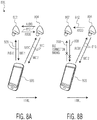
- FIGS 8A, 8B depict an eighth example protocol 800 for NFMI based robustness between wireless devices.
- This eighth protocol 800 also shows example two way data exchanges (e.g. mono-audio and microphone) for voice calls, voice recognition, sound recording, and data.
- example two way data exchanges e.g. mono-audio and microphone
- Shown in the eighth example 800 is a first wireless device 802 (e.g. a left earbud), a second wireless device 804 (e.g. a right earbud), and a third wireless device 806 (e.g. a smartphone).
- the third wireless device 806 communicates with the first and second devices 802, 804 through a first wireless channel 808 (e.g. mono-audio and first microphone) and a second wireless channel 810 (e.g. mono-audio and second microphone). All the wireless devices 802, 804, 806 include a wireless signal interface to transmit and/or receive data over the wireless channels 808, 810.
- the first and second wireless devices 802, 804 also communicate through an NFMI channel 812 (e.g. for earbud-to-earbud mono-audio and signal exchange).
- the first and second wireless devices 802, 804 (e.g. the earbuds) both include an NFMI signal interface for exchanging data over the NFMI channel 812.
- Figure 8A shows the third wireless device 806, using BLE, over the first wireless channel 808 to communicate a complete set of data (e.g. both mono-audio and microphone signal) with both the first wireless device 802 and the second wireless device 804.
- a complete set of data e.g. both mono-audio and microphone signal
- the NFMI channel 812 in Figure 8A is not yet used to exchange either the mono-audio or microphone data.
- the NFMI channel 812 in Figure 8A is used to continuously exchange the mono-audio and microphone data.
- Figure 8B shows an interruption (e.g. BLE connection breaks) in the first wireless channel 808 such that the data can no longer be communicated between the third wireless device 806 and the first wireless device 802. Recognizing this loss of data the first wireless device 802 immediately reconfigures to source its relevant data (e.g. the mono-audio) from the second wireless device 804 over the NFMI channel 812, instead of from the third wireless device 806 over the first wireless channel 808.
- the third wireless device 806 e.g. smartphone
- both of the wireless devices 802, 804 have dual sources for their required information, there is minimal latency in reconfiguring the devices 802, 804 and such reconfiguration is unlikely to be noticed by a user. This way, robustness is guaranteed with almost immediate switch-over such that audio drops can be avoided altogether.
- the near-field magnetic induction (NFMI) channel enables multiple wireless devices (e.g. both earbuds) to communicate reliably with each other, thereby substantially improving an overall communications robustness.
- NFMI enables data (e.g. audio) transfer even when there is various degrees of body shadowing.
- the low latency and ultra-low power aspects of NFMI further enhance a user's experience.
- Figure 9 is an example set of instructions for enabling NFMI based robustness between wireless devices.
- the order in which the instructions are discussed does not limit the order in which other example embodiments implement the instructions unless otherwise specifically stated. Additionally, in some embodiments the instructions are implemented concurrently.
- a first example instruction set begins in 902, by receiving a data set at a first wireless device from a third wireless device through a wireless channel.
- 904 communicating between the first wireless device and a second wireless device through an NFMI channel.
- 906 detecting an error in the data set that the first wireless device receives from the third wireless device.
- 908 requesting that the second wireless device send the data set to the first wireless device over the NFMI channel in response to detecting the error.
- the instructions can be augmented or replaced with one or more of the following additional instructions, presented in no particular order: 910 - Configuring the first wireless device to not receive the data set from the second wireless device until the first wireless device requests transfer of the data set. 912 - In response to the transfer request, at least one of: switching roles of the first and second wireless devices request; or setting-up a new wireless connection with the third wireless device request.
- Figure 10 is an example system 1000 for effecting one or more protocols for NFMI based robustness between wireless devices.
- the system 1000 shows an input/output data 1002 interface with an electronic apparatus 1004.
- the electronic apparatus 1004 includes a processor 1006, a storage device 1008, and a non-transient machine-readable storage medium 1010.
- the machine-readable storage medium 1010 includes instructions 1012 which control how the processor 1006 receives input data 1002 and transforms the input data into output data 1002, using data within the storage device 1008.
- Example instructions 1012 stored in the machine-readable storage medium 1010 are discussed elsewhere in this specification.
- the machine-readable storage medium in an alternate example embodiment is a non-transient computer-readable storage medium.
- NFMI near-field magnetic induction
- a first wireless device including a first wireless signal interface and a first NFMI signal interface; wherein the first wireless signal interface is configured to receive a data set from a third wireless device; wherein the first NFMI signal interface is configured to communicate with a second wireless device through a second NFMI signal interface; and wherein the first wireless device is configured to detect an error in the data set received from the third wireless device and in response to detecting the error configure the first NFMI signal interface to receive the data set from the second wireless device through the second NFMI signal interface.
- NFMI near-field magnetic induction
- the processor (such as a central processing unit, CPU, microprocessor, application-specific integrated circuit (ASIC), etc.) controls the overall operation of the storage device (such as random access memory (RAM) for temporary data storage, read only memory (ROM) for permanent data storage, firmware, flash memory, external and internal hard-disk drives, and the like).
- the processor device communicates with the storage device and non-transient machine-readable storage medium using a bus and performs operations and tasks that implement one or more instructions stored in the machine-readable storage medium.
- the machine-readable storage medium in an alternate example embodiment is a computer-readable storage medium.
- Example embodiments of the material discussed in this specification can be implemented in whole or in part through network, computer, or data based devices and/or services. These may include cloud, internet, intranet, mobile, desktop, processor, look-up table, microcontroller, consumer equipment, infrastructure, or other enabling devices and services. As may be used herein and in the claims, the following non-exclusive definitions are provided.
Landscapes
- Engineering & Computer Science (AREA)
- Signal Processing (AREA)
- Computer Networks & Wireless Communication (AREA)
- Human Computer Interaction (AREA)
- Multimedia (AREA)
- Physics & Mathematics (AREA)
- Theoretical Computer Science (AREA)
- Acoustics & Sound (AREA)
- General Engineering & Computer Science (AREA)
- General Physics & Mathematics (AREA)
- Telephone Function (AREA)
- Circuit For Audible Band Transducer (AREA)
- Mobile Radio Communication Systems (AREA)
Claims (15)
- Gerät für eine Nahfeldmagnetinduktions-(NFMI-)basierte Robustheit, mit:einer ersten drahtlosen Vorrichtung (202, 402, 502, 602, 702, 802) einschließlich einer ersten Drahtlossignalschnittstelle und einer ersten NFMI-Signalschnittstelle;wobei die erste Drahtlossignalschnittstelle dazu konfiguriert ist, einen Datensatz von einer dritten drahtlosen Vorrichtung (206, 406, 506, 606, 706, 806) zu empfangen;wobei die erste NFMI-Signalschnittstelle dazu konfiguriert ist, mit einer zweiten drahtlosen Vorrichtung (204, 404, 504, 604, 704, 804) über eine zweite NFMI-Signalschnittstelle zu kommunizieren; undwobei die erste drahtlose Vorrichtung dazu konfiguriert ist, einen Fehler in dem von der dritten drahtlosen Vorrichtung empfangenen Datensatz zu erfassen und als Reaktion auf ein Erfassen des Fehlers die erste NFMI-Signalschnittstelle so zu konfigurieren, dass der Datensatz von der zweiten drahtlosen Vorrichtung über die zweite NFMI-Signalschnittstelle empfangen wird.
- Gerät gemäß Anspruch 1:
wobei die erste Drahtlossignalschnittstelle eine primäre Schnittstelle zum Empfangen des Datensatzes ist und die erste NFMI-Signalschnittstelle eine Backup-Schnittstelle zum Empfangen des Datensatzes ist. - Gerät gemäß Anspruch 1 oder 2:
wobei der Datensatz, für dessen Empfang die erste Drahtlossignalschnittstelle konfiguriert ist, ein vollständiger Datensatz ist, und der Datensatz, für dessen Empfang die erste NFMI-Signalschnittstelle konfiguriert ist, ein erster Untersatz des vollständigen Datensatzes ist. - Gerät gemäß Anspruch 3:wobei der vollständige Datensatz Stereo-Audiodaten enthält, die linke Audiodaten und rechte Stereodaten haben; undwobei der erste Untersatz der Daten entweder die linken Audiodaten oder die rechten Stereodaten enthält.
- Gerät gemäß Anspruch 3 oder 4:wobei der vollständige Datensatz Sprachdaten enthält, die Mono-Audiodaten und Mikrofondaten haben; undwobei der erste Untersatz der Daten entweder die Mono-Audiodaten oder die Mikrofondaten enthält.
- Gerät gemäß einem der Ansprüche 3 bis 5:
wobei die erste drahtlose Vorrichtung (202, 402, 502, 602, 702, 802) dazu konfiguriert ist, einen zweiten Untersatz des vollständigen Datensatzes über die erste NFMI-Signalschnittstelle zu der zweiten drahtlosen Vorrichtung (204, 404, 504, 604, 704, 804) zu übertragen. - Gerät gemäß einem der vorherigen Ansprüche:
wobei der Datensatz, der an der ersten Drahtlossignalschnittstelle und der ersten NFMI-Signalschnittstelle empfangen ist, ein vollständiger Datensatz ist. - Gerät gemäß einem der vorherigen Ansprüche:
wobei die erste drahtlose Vorrichtung (202, 402, 502, 602, 702, 802) dazu konfiguriert ist, den Datensatz von der zweiten drahtlosen Vorrichtung (204, 404, 504, 604, 704, 804) nicht zu empfangen, bis die erste drahtlose Vorrichtung einen Transfer des Datensatzes anfordert. - Gerät gemäß Anspruch 8:
wobei die Transferanforderung zumindest eines von Folgendem aufweist: einen Rollentausch der Anforderung der ersten und der zweiten drahtlosen Vorrichtung; oder eine Konfiguration einer neuen Drahtlosverbindung mit der Anforderung der dritten drahtlosen Vorrichtung. - Gerät gemäß einem der vorherigen Ansprüche:des Weiteren mit der zweiten drahtlosen Vorrichtung (204, 404, 504, 604, 704, 804);wobei die zweite drahtlose Vorrichtung dazu konfiguriert ist, den Datensatz von der dritten drahtlosen Vorrichtung (206, 406, 506, 606, 706, 806) über eine zweite Drahtlossignalschnittstelle zu empfangen.
- Gerät gemäß einem der vorherigen Ansprüche:wobei die Drahtlossignalschnittstelle zumindest eines von Folgendem aufweist:eine klassische Bluetooth-Drahtlosschnittstelle oder eine Bluetooth-Drahtlosschnittstelle mit geringem Energieverbrauch.
- Gerät gemäß einem der vorherigen Ansprüche:
wobei die Robustheit zumindest eines von Folgendem aufweist: Bereitstellen eines abwechselnden Datensatzpfades; eine Netzwerkneukonfiguration; ein Netzwerkschalten; eine Signalneuübertragung; oder eine Signaldiversität. - Gerät gemäß einem der vorherigen Ansprüche, wobei der Datensatz zumindest einer von Folgendem ist: Mediendaten; Video-Playbackdaten; Audio-(zum Beispiel Geräusch-)Playbackdaten; Sensordaten; Gesundheitszustandsdaten; Batteriestatus; oder Vorrichtungseinstellungen.
- Gerät gemäß einem der vorherigen Ansprüche:
wobei der Fehler zumindest einer von Folgendem ist: ein Fehler, der durch eine Körperbeschattung verursacht wird; der Datensatz wird nicht länger empfangen; der Datensatz ist verschlechtert; der Datensatz hat eine Signalstärke unter einem Schwellwert; der Datensatz enthält digitale oder analoge Fehler; ein Fehler eines korrupten Datensatzes; ein Fehler eines unvollständigen Datensatzes; oder ein Fehler eines erratischen Datensatzes. - Gerät gemäß einem der vorherigen Ansprüche:wobei die erste (202, 402, 502, 602, 702, 802) und die zweite (204, 404, 504, 604, 704, 804) drahtlose Vorrichtung hörbar sind; undwobei die dritte drahtlose Vorrichtung (206, 406, 506, 606, 706, 806) zumindest eine von Folgendem ist:
ein Smartphone; oder eine tragbare Vorrichtung.
Applications Claiming Priority (1)
| Application Number | Priority Date | Filing Date | Title |
|---|---|---|---|
| US15/185,929 US10015623B2 (en) | 2016-06-17 | 2016-06-17 | NFMI based robustness |
Publications (2)
| Publication Number | Publication Date |
|---|---|
| EP3258705A1 EP3258705A1 (de) | 2017-12-20 |
| EP3258705B1 true EP3258705B1 (de) | 2019-02-27 |
Family
ID=60660589
Family Applications (1)
| Application Number | Title | Priority Date | Filing Date |
|---|---|---|---|
| EP17174668.8A Active EP3258705B1 (de) | 2016-06-17 | 2017-06-07 | Nfmi-basierte robustheit |
Country Status (3)
| Country | Link |
|---|---|
| US (1) | US10015623B2 (de) |
| EP (1) | EP3258705B1 (de) |
| CN (1) | CN107529126B (de) |
Families Citing this family (37)
| Publication number | Priority date | Publication date | Assignee | Title |
|---|---|---|---|---|
| US10460095B2 (en) * | 2016-09-30 | 2019-10-29 | Bragi GmbH | Earpiece with biometric identifiers |
| US10348370B2 (en) * | 2017-08-02 | 2019-07-09 | Nxp B.V. | Wireless device communication |
| CN107894881A (zh) | 2017-10-18 | 2018-04-10 | 恒玄科技(上海)有限公司 | 蓝牙耳机的主从连接切换、通话监听和麦克切换的方法 |
| US11064281B1 (en) * | 2017-11-15 | 2021-07-13 | Amazon Technologies, Inc. | Sending and receiving wireless data |
| US10728941B2 (en) * | 2017-11-15 | 2020-07-28 | Amazon Technologies, Inc. | Bidirectional sending and receiving of wireless data |
| CN109388364A (zh) * | 2018-01-10 | 2019-02-26 | 展讯通信(上海)有限公司 | 一种音频设备的语音信息采集上报控制方法及系统 |
| US10292031B1 (en) * | 2018-01-30 | 2019-05-14 | Nxp B.V. | Wireless network device |
| US10244307B1 (en) * | 2018-02-09 | 2019-03-26 | Bestechnic (Shanghai) Co., Ltd. | Communication of wireless headphones |
| US10917930B2 (en) * | 2018-04-19 | 2021-02-09 | Qualcomm Incorporated | Reliable wireless communication with a source using relayed communication |
| WO2019205157A1 (zh) * | 2018-04-28 | 2019-10-31 | 万魔声学科技有限公司 | 耳机无线通信方法、主耳机、从耳机及耳机系统 |
| DK180639B1 (en) | 2018-06-01 | 2021-11-04 | Apple Inc | DISABILITY OF ATTENTION-ATTENTIVE VIRTUAL ASSISTANT |
| CN108900939A (zh) * | 2018-06-07 | 2018-11-27 | 广东思派康电子科技有限公司 | 一种能实现主从切换的tws耳机及计算机可读存储介质 |
| US10536191B1 (en) * | 2018-08-17 | 2020-01-14 | Amazon Technologies, Inc. | Maintaining consistent audio setting(s) between wireless headphones |
| CN110913503A (zh) * | 2018-09-17 | 2020-03-24 | 泰凌微电子(上海)有限公司 | 一种无线耳机信号传输方法及无线耳机 |
| US11297670B2 (en) * | 2018-09-27 | 2022-04-05 | Apple Inc. | Coordinated transmission and control for audio output devices |
| CN109495869A (zh) * | 2018-11-30 | 2019-03-19 | 锐迪科微电子科技(上海)有限公司 | 蓝牙连接方法及装置 |
| CN112789867B (zh) * | 2018-11-30 | 2023-02-10 | 华为技术有限公司 | 一种蓝牙连接方法及设备 |
| WO2020117403A1 (en) * | 2018-12-06 | 2020-06-11 | Amazon Technologies, Inc. | Wireless device connection handover |
| US11271662B2 (en) * | 2019-06-11 | 2022-03-08 | Qualcomm Incorporated | Low power communication links between wireless devices |
| CN110191389B (zh) * | 2019-06-25 | 2021-02-12 | 歌尔股份有限公司 | 无线耳机的多点连接方法、装置、蓝牙耳机及tws耳机 |
| CN112449284A (zh) * | 2019-09-03 | 2021-03-05 | 博通集成电路(上海)股份有限公司 | 无线扬声器系统 |
| CN110944311B (zh) * | 2019-11-06 | 2023-07-28 | 泰凌微电子(上海)股份有限公司 | 一种分配无线耳机的时隙的方法及采用该方法的无线耳机 |
| CN111556476B (zh) * | 2020-04-17 | 2021-01-19 | 炬力(珠海)微电子有限公司 | 蓝牙tws设备间的数据传输方法及蓝牙tws设备 |
| US20210361969A1 (en) | 2020-05-22 | 2021-11-25 | NearField Atomics Inc. | Systems and methods for therapy delivery using near field magnetic induction devices |
| US11374623B2 (en) | 2020-05-27 | 2022-06-28 | Qualcomm Incorporated | Connected isochronous stream swapping |
| KR20210157131A (ko) * | 2020-06-19 | 2021-12-28 | 삼성전자주식회사 | 전자 디바이스로부터 무선으로 데이터를 수신하는 오디오 출력 장치 및 동작 방법 |
| EP4184938A4 (de) * | 2020-07-31 | 2023-08-23 | Huawei Technologies Co., Ltd. | Kommunikationsverfahren und -vorrichtung für drahtlose duale kopfhörer |
| TW202218438A (zh) * | 2020-10-20 | 2022-05-01 | 瑞昱半導體股份有限公司 | 音訊播放裝置及相關的控制方法 |
| WO2022154482A1 (ko) | 2021-01-12 | 2022-07-21 | 삼성전자 주식회사 | 오디오 데이터를 처리하는 전자 장치와 그 동작 방법 |
| WO2022154257A1 (ko) * | 2021-01-12 | 2022-07-21 | 삼성전자 주식회사 | 오디오 데이터를 처리하는 전자 장치와 이의 동작 방법 |
| KR102837916B1 (ko) | 2021-01-20 | 2025-07-24 | 삼성전자주식회사 | 오디오 데이터를 처리하는 전자 장치와 이의 동작 방법 |
| US12269484B2 (en) | 2021-02-26 | 2025-04-08 | NearField Atomics Inc. | Systems and methods to keep drivers, pilots, or others alert or focused by electromagnetic delivery of signals |
| EP4291911B1 (de) | 2021-03-22 | 2025-06-11 | Nearfield Atomics Inc. | Systeme und verfahren zur messung von magnetfeldern aus solvatierten zielmolekülen unter verwendung eines magnetoresistiven sensors |
| US12342363B2 (en) | 2021-10-08 | 2025-06-24 | Samsung Electronics Co., Ltd. | Electronic device for providing audio service and operating method thereof |
| EP4415384A4 (de) | 2022-01-27 | 2025-03-12 | Samsung Electronics Co., Ltd. | Verfahren zur steuerung einer vielzahl von elektronischen vorrichtungen und elektronische vorrichtung |
| EP4460982A1 (de) * | 2022-02-16 | 2024-11-13 | Shure Acquisition Holdings, Inc. | Drahtloses mikrofonsystem und verfahren zur synchronisierung eines drahtlosen senders und eines drahtlosen empfängers |
| WO2024233359A1 (en) * | 2023-05-09 | 2024-11-14 | Apple Inc. | Providing notifications with a digital assistant |
Citations (1)
| Publication number | Priority date | Publication date | Assignee | Title |
|---|---|---|---|---|
| US20070223725A1 (en) * | 2006-03-24 | 2007-09-27 | Neumann John C | Method and apparatus for wirelessly streaming multi-channel content |
Family Cites Families (14)
| Publication number | Priority date | Publication date | Assignee | Title |
|---|---|---|---|---|
| GB2382952B (en) * | 2001-11-28 | 2005-12-07 | Sendo Int Ltd | Wireless headset-based communication |
| US7627289B2 (en) * | 2005-12-23 | 2009-12-01 | Plantronics, Inc. | Wireless stereo headset |
| US20080076489A1 (en) | 2006-08-07 | 2008-03-27 | Plantronics, Inc. | Physically and electrically-separated, data-synchronized data sinks for wireless systems |
| US8155335B2 (en) | 2007-03-14 | 2012-04-10 | Phillip Rutschman | Headset having wirelessly linked earpieces |
| US8180078B2 (en) | 2007-12-13 | 2012-05-15 | At&T Intellectual Property I, Lp | Systems and methods employing multiple individual wireless earbuds for a common audio source |
| US8768252B2 (en) | 2010-09-02 | 2014-07-01 | Apple Inc. | Un-tethered wireless audio system |
| CN102164263B (zh) * | 2011-03-08 | 2012-09-05 | 华为终端有限公司 | 一种音视频信号传输接口的装置及方法 |
| WO2014124100A1 (en) | 2013-02-07 | 2014-08-14 | Earmonics, Llc | Media playback system having wireless earbuds |
| CN203135874U (zh) | 2013-03-23 | 2013-08-14 | 青岛歌尔声学科技有限公司 | 一种nfc蓝牙设备 |
| US9602909B2 (en) | 2013-06-20 | 2017-03-21 | Google Technology Holdings LLC | Wireless communication earpiece |
| US9980189B2 (en) * | 2015-10-20 | 2018-05-22 | Bragi GmbH | Diversity bluetooth system and method |
| US10708157B2 (en) * | 2015-12-15 | 2020-07-07 | Starkey Laboratories, Inc. | Link quality diagnostic application |
| CN205232420U (zh) * | 2015-12-28 | 2016-05-11 | 叶焱强 | 一种耳机、具有通话功能的设备和装置 |
| US9742471B1 (en) | 2016-06-17 | 2017-08-22 | Nxp B.V. | NFMI based synchronization |
-
2016
- 2016-06-17 US US15/185,929 patent/US10015623B2/en active Active
-
2017
- 2017-06-07 EP EP17174668.8A patent/EP3258705B1/de active Active
- 2017-06-08 CN CN201710430047.5A patent/CN107529126B/zh active Active
Patent Citations (1)
| Publication number | Priority date | Publication date | Assignee | Title |
|---|---|---|---|---|
| US20070223725A1 (en) * | 2006-03-24 | 2007-09-27 | Neumann John C | Method and apparatus for wirelessly streaming multi-channel content |
Also Published As
| Publication number | Publication date |
|---|---|
| CN107529126B (zh) | 2021-06-04 |
| CN107529126A (zh) | 2017-12-29 |
| EP3258705A1 (de) | 2017-12-20 |
| US20170366924A1 (en) | 2017-12-21 |
| US10015623B2 (en) | 2018-07-03 |
Similar Documents
| Publication | Publication Date | Title |
|---|---|---|
| US10015623B2 (en) | NFMI based robustness | |
| US10348370B2 (en) | Wireless device communication | |
| US12615469B2 (en) | Switching between multiple earbud architectures | |
| CN109391926B (zh) | 无线音频设备的数据处理方法及无线音频设备 | |
| CN106797518B (zh) | 助听系统和方法 | |
| US9742471B1 (en) | NFMI based synchronization | |
| CN104025559B (zh) | 在综合分布网络中传输音频路由 | |
| US20160219358A1 (en) | Wireless earbuds with reciprocating leader and follower configuration | |
| US8363844B2 (en) | Contextual audio switching for a USB controlled audio device | |
| CN111343526B (zh) | 音箱组件的无线通信方法和用于无线通信的音箱组件 | |
| WO2019205157A1 (zh) | 耳机无线通信方法、主耳机、从耳机及耳机系统 | |
| US9998827B2 (en) | Ring network of bluetooth speakers | |
| CN112055349B (zh) | 一种无线通信方法及蓝牙设备 | |
| KR20170052586A (ko) | 청각 디바이스들을 통해 다중 청취 환경을 생성하기 위한 기술들 | |
| US20160286323A1 (en) | Wireless stereo hearing assistance system | |
| KR102842005B1 (ko) | 청력 장치의 환경 오디오 신호를 향상시키기 위한 방법, 시스템 및 이러한 청력 장치 | |
| US20240179235A1 (en) | System and method for establishing call audio sharing using bluetooth low energy audio technology | |
| US10492002B1 (en) | Wireless communication device | |
| US20230139601A1 (en) | System for power consumption balancing in wireless earbuds | |
| KR20150144400A (ko) | 웨어러블 블루투스 스피커 | |
| WO2024211705A1 (en) | Earbuds - two microphone support over ble for binaural audio recording and stereo voice call |
Legal Events
| Date | Code | Title | Description |
|---|---|---|---|
| PUAI | Public reference made under article 153(3) epc to a published international application that has entered the european phase |
Free format text: ORIGINAL CODE: 0009012 |
|
| STAA | Information on the status of an ep patent application or granted ep patent |
Free format text: STATUS: THE APPLICATION HAS BEEN PUBLISHED |
|
| AK | Designated contracting states |
Kind code of ref document: A1 Designated state(s): AL AT BE BG CH CY CZ DE DK EE ES FI FR GB GR HR HU IE IS IT LI LT LU LV MC MK MT NL NO PL PT RO RS SE SI SK SM TR |
|
| AX | Request for extension of the european patent |
Extension state: BA ME |
|
| STAA | Information on the status of an ep patent application or granted ep patent |
Free format text: STATUS: REQUEST FOR EXAMINATION WAS MADE |
|
| 17P | Request for examination filed |
Effective date: 20180620 |
|
| RBV | Designated contracting states (corrected) |
Designated state(s): AL AT BE BG CH CY CZ DE DK EE ES FI FR GB GR HR HU IE IS IT LI LT LU LV MC MK MT NL NO PL PT RO RS SE SI SK SM TR |
|
| RIC1 | Information provided on ipc code assigned before grant |
Ipc: H04L 1/24 20060101ALI20180824BHEP Ipc: H04N 7/14 20060101ALI20180824BHEP Ipc: H04B 1/3827 20150101AFI20180824BHEP Ipc: H04W 4/02 20090101ALI20180824BHEP Ipc: H04M 1/725 20060101ALI20180824BHEP Ipc: H04R 5/033 20060101ALI20180824BHEP Ipc: H04W 4/80 20180101ALI20180824BHEP |
|
| REG | Reference to a national code |
Ref country code: DE Ref legal event code: R079 Ref document number: 602017002311 Country of ref document: DE Free format text: PREVIOUS MAIN CLASS: H04R0005033000 Ipc: H04L0001000000 |
|
| GRAP | Despatch of communication of intention to grant a patent |
Free format text: ORIGINAL CODE: EPIDOSNIGR1 |
|
| STAA | Information on the status of an ep patent application or granted ep patent |
Free format text: STATUS: GRANT OF PATENT IS INTENDED |
|
| INTG | Intention to grant announced |
Effective date: 20181012 |
|
| RIC1 | Information provided on ipc code assigned before grant |
Ipc: H04R 5/033 20060101ALI20181004BHEP Ipc: H04L 1/00 20060101AFI20181004BHEP Ipc: H04M 1/725 20060101ALI20181004BHEP Ipc: H04N 7/14 20060101ALI20181004BHEP Ipc: H04W 4/80 20180101ALI20181004BHEP Ipc: H04L 1/22 20060101ALI20181004BHEP Ipc: H04W 4/02 20180101ALI20181004BHEP Ipc: H04B 1/3827 20150101ALI20181004BHEP |
|
| GRAS | Grant fee paid |
Free format text: ORIGINAL CODE: EPIDOSNIGR3 |
|
| GRAA | (expected) grant |
Free format text: ORIGINAL CODE: 0009210 |
|
| STAA | Information on the status of an ep patent application or granted ep patent |
Free format text: STATUS: THE PATENT HAS BEEN GRANTED |
|
| AK | Designated contracting states |
Kind code of ref document: B1 Designated state(s): AL AT BE BG CH CY CZ DE DK EE ES FI FR GB GR HR HU IE IS IT LI LT LU LV MC MK MT NL NO PL PT RO RS SE SI SK SM TR |
|
| REG | Reference to a national code |
Ref country code: GB Ref legal event code: FG4D |
|
| REG | Reference to a national code |
Ref country code: CH Ref legal event code: EP |
|
| REG | Reference to a national code |
Ref country code: AT Ref legal event code: REF Ref document number: 1102883 Country of ref document: AT Kind code of ref document: T Effective date: 20190315 |
|
| REG | Reference to a national code |
Ref country code: IE Ref legal event code: FG4D |
|
| REG | Reference to a national code |
Ref country code: DE Ref legal event code: R096 Ref document number: 602017002311 Country of ref document: DE |
|
| REG | Reference to a national code |
Ref country code: NL Ref legal event code: MP Effective date: 20190227 |
|
| REG | Reference to a national code |
Ref country code: LT Ref legal event code: MG4D |
|
| PG25 | Lapsed in a contracting state [announced via postgrant information from national office to epo] |
Ref country code: PT Free format text: LAPSE BECAUSE OF FAILURE TO SUBMIT A TRANSLATION OF THE DESCRIPTION OR TO PAY THE FEE WITHIN THE PRESCRIBED TIME-LIMIT Effective date: 20190627 Ref country code: NL Free format text: LAPSE BECAUSE OF FAILURE TO SUBMIT A TRANSLATION OF THE DESCRIPTION OR TO PAY THE FEE WITHIN THE PRESCRIBED TIME-LIMIT Effective date: 20190227 Ref country code: NO Free format text: LAPSE BECAUSE OF FAILURE TO SUBMIT A TRANSLATION OF THE DESCRIPTION OR TO PAY THE FEE WITHIN THE PRESCRIBED TIME-LIMIT Effective date: 20190527 Ref country code: FI Free format text: LAPSE BECAUSE OF FAILURE TO SUBMIT A TRANSLATION OF THE DESCRIPTION OR TO PAY THE FEE WITHIN THE PRESCRIBED TIME-LIMIT Effective date: 20190227 Ref country code: LT Free format text: LAPSE BECAUSE OF FAILURE TO SUBMIT A TRANSLATION OF THE DESCRIPTION OR TO PAY THE FEE WITHIN THE PRESCRIBED TIME-LIMIT Effective date: 20190227 Ref country code: SE Free format text: LAPSE BECAUSE OF FAILURE TO SUBMIT A TRANSLATION OF THE DESCRIPTION OR TO PAY THE FEE WITHIN THE PRESCRIBED TIME-LIMIT Effective date: 20190227 |
|
| PG25 | Lapsed in a contracting state [announced via postgrant information from national office to epo] |
Ref country code: BG Free format text: LAPSE BECAUSE OF FAILURE TO SUBMIT A TRANSLATION OF THE DESCRIPTION OR TO PAY THE FEE WITHIN THE PRESCRIBED TIME-LIMIT Effective date: 20190527 Ref country code: GR Free format text: LAPSE BECAUSE OF FAILURE TO SUBMIT A TRANSLATION OF THE DESCRIPTION OR TO PAY THE FEE WITHIN THE PRESCRIBED TIME-LIMIT Effective date: 20190528 Ref country code: RS Free format text: LAPSE BECAUSE OF FAILURE TO SUBMIT A TRANSLATION OF THE DESCRIPTION OR TO PAY THE FEE WITHIN THE PRESCRIBED TIME-LIMIT Effective date: 20190227 Ref country code: HR Free format text: LAPSE BECAUSE OF FAILURE TO SUBMIT A TRANSLATION OF THE DESCRIPTION OR TO PAY THE FEE WITHIN THE PRESCRIBED TIME-LIMIT Effective date: 20190227 Ref country code: IS Free format text: LAPSE BECAUSE OF FAILURE TO SUBMIT A TRANSLATION OF THE DESCRIPTION OR TO PAY THE FEE WITHIN THE PRESCRIBED TIME-LIMIT Effective date: 20190627 Ref country code: LV Free format text: LAPSE BECAUSE OF FAILURE TO SUBMIT A TRANSLATION OF THE DESCRIPTION OR TO PAY THE FEE WITHIN THE PRESCRIBED TIME-LIMIT Effective date: 20190227 |
|
| REG | Reference to a national code |
Ref country code: AT Ref legal event code: MK05 Ref document number: 1102883 Country of ref document: AT Kind code of ref document: T Effective date: 20190227 |
|
| PG25 | Lapsed in a contracting state [announced via postgrant information from national office to epo] |
Ref country code: IT Free format text: LAPSE BECAUSE OF FAILURE TO SUBMIT A TRANSLATION OF THE DESCRIPTION OR TO PAY THE FEE WITHIN THE PRESCRIBED TIME-LIMIT Effective date: 20190227 Ref country code: RO Free format text: LAPSE BECAUSE OF FAILURE TO SUBMIT A TRANSLATION OF THE DESCRIPTION OR TO PAY THE FEE WITHIN THE PRESCRIBED TIME-LIMIT Effective date: 20190227 Ref country code: CZ Free format text: LAPSE BECAUSE OF FAILURE TO SUBMIT A TRANSLATION OF THE DESCRIPTION OR TO PAY THE FEE WITHIN THE PRESCRIBED TIME-LIMIT Effective date: 20190227 Ref country code: SK Free format text: LAPSE BECAUSE OF FAILURE TO SUBMIT A TRANSLATION OF THE DESCRIPTION OR TO PAY THE FEE WITHIN THE PRESCRIBED TIME-LIMIT Effective date: 20190227 Ref country code: ES Free format text: LAPSE BECAUSE OF FAILURE TO SUBMIT A TRANSLATION OF THE DESCRIPTION OR TO PAY THE FEE WITHIN THE PRESCRIBED TIME-LIMIT Effective date: 20190227 Ref country code: AL Free format text: LAPSE BECAUSE OF FAILURE TO SUBMIT A TRANSLATION OF THE DESCRIPTION OR TO PAY THE FEE WITHIN THE PRESCRIBED TIME-LIMIT Effective date: 20190227 Ref country code: EE Free format text: LAPSE BECAUSE OF FAILURE TO SUBMIT A TRANSLATION OF THE DESCRIPTION OR TO PAY THE FEE WITHIN THE PRESCRIBED TIME-LIMIT Effective date: 20190227 Ref country code: DK Free format text: LAPSE BECAUSE OF FAILURE TO SUBMIT A TRANSLATION OF THE DESCRIPTION OR TO PAY THE FEE WITHIN THE PRESCRIBED TIME-LIMIT Effective date: 20190227 |
|
| REG | Reference to a national code |
Ref country code: DE Ref legal event code: R097 Ref document number: 602017002311 Country of ref document: DE |
|
| PG25 | Lapsed in a contracting state [announced via postgrant information from national office to epo] |
Ref country code: PL Free format text: LAPSE BECAUSE OF FAILURE TO SUBMIT A TRANSLATION OF THE DESCRIPTION OR TO PAY THE FEE WITHIN THE PRESCRIBED TIME-LIMIT Effective date: 20190227 Ref country code: SM Free format text: LAPSE BECAUSE OF FAILURE TO SUBMIT A TRANSLATION OF THE DESCRIPTION OR TO PAY THE FEE WITHIN THE PRESCRIBED TIME-LIMIT Effective date: 20190227 |
|
| PG25 | Lapsed in a contracting state [announced via postgrant information from national office to epo] |
Ref country code: AT Free format text: LAPSE BECAUSE OF FAILURE TO SUBMIT A TRANSLATION OF THE DESCRIPTION OR TO PAY THE FEE WITHIN THE PRESCRIBED TIME-LIMIT Effective date: 20190227 |
|
| PLBE | No opposition filed within time limit |
Free format text: ORIGINAL CODE: 0009261 |
|
| STAA | Information on the status of an ep patent application or granted ep patent |
Free format text: STATUS: NO OPPOSITION FILED WITHIN TIME LIMIT |
|
| PG25 | Lapsed in a contracting state [announced via postgrant information from national office to epo] |
Ref country code: MC Free format text: LAPSE BECAUSE OF FAILURE TO SUBMIT A TRANSLATION OF THE DESCRIPTION OR TO PAY THE FEE WITHIN THE PRESCRIBED TIME-LIMIT Effective date: 20190227 |
|
| 26N | No opposition filed |
Effective date: 20191128 |
|
| PG25 | Lapsed in a contracting state [announced via postgrant information from national office to epo] |
Ref country code: SI Free format text: LAPSE BECAUSE OF FAILURE TO SUBMIT A TRANSLATION OF THE DESCRIPTION OR TO PAY THE FEE WITHIN THE PRESCRIBED TIME-LIMIT Effective date: 20190227 |
|
| REG | Reference to a national code |
Ref country code: BE Ref legal event code: MM Effective date: 20190630 |
|
| PG25 | Lapsed in a contracting state [announced via postgrant information from national office to epo] |
Ref country code: TR Free format text: LAPSE BECAUSE OF FAILURE TO SUBMIT A TRANSLATION OF THE DESCRIPTION OR TO PAY THE FEE WITHIN THE PRESCRIBED TIME-LIMIT Effective date: 20190227 |
|
| PG25 | Lapsed in a contracting state [announced via postgrant information from national office to epo] |
Ref country code: IE Free format text: LAPSE BECAUSE OF NON-PAYMENT OF DUE FEES Effective date: 20190607 |
|
| PG25 | Lapsed in a contracting state [announced via postgrant information from national office to epo] |
Ref country code: LU Free format text: LAPSE BECAUSE OF NON-PAYMENT OF DUE FEES Effective date: 20190607 Ref country code: BE Free format text: LAPSE BECAUSE OF NON-PAYMENT OF DUE FEES Effective date: 20190630 |
|
| REG | Reference to a national code |
Ref country code: CH Ref legal event code: PL |
|
| PG25 | Lapsed in a contracting state [announced via postgrant information from national office to epo] |
Ref country code: LI Free format text: LAPSE BECAUSE OF NON-PAYMENT OF DUE FEES Effective date: 20200630 Ref country code: CH Free format text: LAPSE BECAUSE OF NON-PAYMENT OF DUE FEES Effective date: 20200630 |
|
| PG25 | Lapsed in a contracting state [announced via postgrant information from national office to epo] |
Ref country code: CY Free format text: LAPSE BECAUSE OF FAILURE TO SUBMIT A TRANSLATION OF THE DESCRIPTION OR TO PAY THE FEE WITHIN THE PRESCRIBED TIME-LIMIT Effective date: 20190227 |
|
| PG25 | Lapsed in a contracting state [announced via postgrant information from national office to epo] |
Ref country code: MT Free format text: LAPSE BECAUSE OF FAILURE TO SUBMIT A TRANSLATION OF THE DESCRIPTION OR TO PAY THE FEE WITHIN THE PRESCRIBED TIME-LIMIT Effective date: 20190227 Ref country code: HU Free format text: LAPSE BECAUSE OF FAILURE TO SUBMIT A TRANSLATION OF THE DESCRIPTION OR TO PAY THE FEE WITHIN THE PRESCRIBED TIME-LIMIT; INVALID AB INITIO Effective date: 20170607 |
|
| GBPC | Gb: european patent ceased through non-payment of renewal fee |
Effective date: 20210607 |
|
| PG25 | Lapsed in a contracting state [announced via postgrant information from national office to epo] |
Ref country code: GB Free format text: LAPSE BECAUSE OF NON-PAYMENT OF DUE FEES Effective date: 20210607 |
|
| PG25 | Lapsed in a contracting state [announced via postgrant information from national office to epo] |
Ref country code: MK Free format text: LAPSE BECAUSE OF FAILURE TO SUBMIT A TRANSLATION OF THE DESCRIPTION OR TO PAY THE FEE WITHIN THE PRESCRIBED TIME-LIMIT Effective date: 20190227 |
|
| P01 | Opt-out of the competence of the unified patent court (upc) registered |
Effective date: 20230725 |
|
| PGFP | Annual fee paid to national office [announced via postgrant information from national office to epo] |
Ref country code: DE Payment date: 20250520 Year of fee payment: 9 |
|
| PGFP | Annual fee paid to national office [announced via postgrant information from national office to epo] |
Ref country code: FR Payment date: 20250520 Year of fee payment: 9 |