EP3258030A1 - Cool roof systems and methods - Google Patents
Cool roof systems and methods Download PDFInfo
- Publication number
- EP3258030A1 EP3258030A1 EP17176427.7A EP17176427A EP3258030A1 EP 3258030 A1 EP3258030 A1 EP 3258030A1 EP 17176427 A EP17176427 A EP 17176427A EP 3258030 A1 EP3258030 A1 EP 3258030A1
- Authority
- EP
- European Patent Office
- Prior art keywords
- waterproof layer
- granule
- aluminum silicate
- granules
- acrylic copolymer
- Prior art date
- Legal status (The legal status is an assumption and is not a legal conclusion. Google has not performed a legal analysis and makes no representation as to the accuracy of the status listed.)
- Granted
Links
Images

Classifications
-
- B—PERFORMING OPERATIONS; TRANSPORTING
- B32—LAYERED PRODUCTS
- B32B—LAYERED PRODUCTS, i.e. PRODUCTS BUILT-UP OF STRATA OF FLAT OR NON-FLAT, e.g. CELLULAR OR HONEYCOMB, FORM
- B32B37/00—Methods or apparatus for laminating, e.g. by curing or by ultrasonic bonding
- B32B37/14—Methods or apparatus for laminating, e.g. by curing or by ultrasonic bonding characterised by the properties of the layers
- B32B37/24—Methods or apparatus for laminating, e.g. by curing or by ultrasonic bonding characterised by the properties of the layers with at least one layer not being coherent before laminating, e.g. made up from granular material sprinkled onto a substrate
-
- E—FIXED CONSTRUCTIONS
- E04—BUILDING
- E04D—ROOF COVERINGS; SKY-LIGHTS; GUTTERS; ROOF-WORKING TOOLS
- E04D11/00—Roof covering, as far as not restricted to features covered by only one of groups E04D1/00 - E04D9/00; Roof covering in ways not provided for by groups E04D1/00 - E04D9/00, e.g. built-up roofs, elevated load-supporting roof coverings
- E04D11/02—Build-up roofs, i.e. consisting of two or more layers bonded together in situ, at least one of the layers being of watertight composition
-
- B—PERFORMING OPERATIONS; TRANSPORTING
- B32—LAYERED PRODUCTS
- B32B—LAYERED PRODUCTS, i.e. PRODUCTS BUILT-UP OF STRATA OF FLAT OR NON-FLAT, e.g. CELLULAR OR HONEYCOMB, FORM
- B32B11/00—Layered products comprising a layer of bituminous or tarry substances
- B32B11/04—Layered products comprising a layer of bituminous or tarry substances comprising such bituminous or tarry substance as the main or only constituent of a layer, which is next to another layer of the same or of a different material
- B32B11/046—Layered products comprising a layer of bituminous or tarry substances comprising such bituminous or tarry substance as the main or only constituent of a layer, which is next to another layer of the same or of a different material of synthetic resin
-
- B—PERFORMING OPERATIONS; TRANSPORTING
- B32—LAYERED PRODUCTS
- B32B—LAYERED PRODUCTS, i.e. PRODUCTS BUILT-UP OF STRATA OF FLAT OR NON-FLAT, e.g. CELLULAR OR HONEYCOMB, FORM
- B32B11/00—Layered products comprising a layer of bituminous or tarry substances
- B32B11/10—Layered products comprising a layer of bituminous or tarry substances next to a fibrous or filamentary layer
-
- B—PERFORMING OPERATIONS; TRANSPORTING
- B32—LAYERED PRODUCTS
- B32B—LAYERED PRODUCTS, i.e. PRODUCTS BUILT-UP OF STRATA OF FLAT OR NON-FLAT, e.g. CELLULAR OR HONEYCOMB, FORM
- B32B27/00—Layered products comprising a layer of synthetic resin
- B32B27/06—Layered products comprising a layer of synthetic resin as the main or only constituent of a layer, which is next to another layer of the same or of a different material
-
- B—PERFORMING OPERATIONS; TRANSPORTING
- B32—LAYERED PRODUCTS
- B32B—LAYERED PRODUCTS, i.e. PRODUCTS BUILT-UP OF STRATA OF FLAT OR NON-FLAT, e.g. CELLULAR OR HONEYCOMB, FORM
- B32B27/00—Layered products comprising a layer of synthetic resin
- B32B27/36—Layered products comprising a layer of synthetic resin comprising polyesters
-
- B—PERFORMING OPERATIONS; TRANSPORTING
- B32—LAYERED PRODUCTS
- B32B—LAYERED PRODUCTS, i.e. PRODUCTS BUILT-UP OF STRATA OF FLAT OR NON-FLAT, e.g. CELLULAR OR HONEYCOMB, FORM
- B32B7/00—Layered products characterised by the relation between layers; Layered products characterised by the relative orientation of features between layers, or by the relative values of a measurable parameter between layers, i.e. products comprising layers having different physical, chemical or physicochemical properties; Layered products characterised by the interconnection of layers
- B32B7/04—Interconnection of layers
- B32B7/12—Interconnection of layers using interposed adhesives or interposed materials with bonding properties
-
- C—CHEMISTRY; METALLURGY
- C04—CEMENTS; CONCRETE; ARTIFICIAL STONE; CERAMICS; REFRACTORIES
- C04B—LIME, MAGNESIA; SLAG; CEMENTS; COMPOSITIONS THEREOF, e.g. MORTARS, CONCRETE OR LIKE BUILDING MATERIALS; ARTIFICIAL STONE; CERAMICS; REFRACTORIES; TREATMENT OF NATURAL STONE
- C04B20/00—Use of materials as fillers for mortars, concrete or artificial stone according to more than one of groups C04B14/00 - C04B18/00 and characterised by shape or grain distribution; Treatment of materials according to more than one of the groups C04B14/00 - C04B18/00 specially adapted to enhance their filling properties in mortars, concrete or artificial stone; Expanding or defibrillating materials
- C04B20/10—Coating or impregnating
- C04B20/1018—Coating or impregnating with organic materials
- C04B20/1029—Macromolecular compounds
- C04B20/1033—Macromolecular compounds obtained by reactions only involving carbon-to-carbon unsaturated bonds
-
- D—TEXTILES; PAPER
- D06—TREATMENT OF TEXTILES OR THE LIKE; LAUNDERING; FLEXIBLE MATERIALS NOT OTHERWISE PROVIDED FOR
- D06N—WALL, FLOOR, OR LIKE COVERING MATERIALS, e.g. LINOLEUM, OILCLOTH, ARTIFICIAL LEATHER, ROOFING FELT, CONSISTING OF A FIBROUS WEB COATED WITH A LAYER OF MACROMOLECULAR MATERIAL; FLEXIBLE SHEET MATERIAL NOT OTHERWISE PROVIDED FOR
- D06N5/00—Roofing materials comprising a fibrous web coated with bitumen or another polymer, e.g. pitch
-
- D—TEXTILES; PAPER
- D06—TREATMENT OF TEXTILES OR THE LIKE; LAUNDERING; FLEXIBLE MATERIALS NOT OTHERWISE PROVIDED FOR
- D06N—WALL, FLOOR, OR LIKE COVERING MATERIALS, e.g. LINOLEUM, OILCLOTH, ARTIFICIAL LEATHER, ROOFING FELT, CONSISTING OF A FIBROUS WEB COATED WITH A LAYER OF MACROMOLECULAR MATERIAL; FLEXIBLE SHEET MATERIAL NOT OTHERWISE PROVIDED FOR
- D06N5/00—Roofing materials comprising a fibrous web coated with bitumen or another polymer, e.g. pitch
- D06N5/003—Roofing materials comprising a fibrous web coated with bitumen or another polymer, e.g. pitch coated with bitumen
-
- E—FIXED CONSTRUCTIONS
- E04—BUILDING
- E04D—ROOF COVERINGS; SKY-LIGHTS; GUTTERS; ROOF-WORKING TOOLS
- E04D5/00—Roof covering by making use of flexible material, e.g. supplied in roll form
- E04D5/10—Roof covering by making use of flexible material, e.g. supplied in roll form by making use of compounded or laminated materials, e.g. metal foils or plastic films coated with bitumen
-
- E—FIXED CONSTRUCTIONS
- E04—BUILDING
- E04D—ROOF COVERINGS; SKY-LIGHTS; GUTTERS; ROOF-WORKING TOOLS
- E04D5/00—Roof covering by making use of flexible material, e.g. supplied in roll form
- E04D5/12—Roof covering by making use of flexible material, e.g. supplied in roll form specially modified, e.g. perforated, with granulated surface, with attached pads
-
- E—FIXED CONSTRUCTIONS
- E04—BUILDING
- E04D—ROOF COVERINGS; SKY-LIGHTS; GUTTERS; ROOF-WORKING TOOLS
- E04D7/00—Roof covering exclusively consisting of sealing masses applied in situ; Gravelling of flat roofs
- E04D7/005—Roof covering exclusively consisting of sealing masses applied in situ; Gravelling of flat roofs characterised by loose or embedded gravel or granules as an outer protection of the roof covering
-
- B—PERFORMING OPERATIONS; TRANSPORTING
- B32—LAYERED PRODUCTS
- B32B—LAYERED PRODUCTS, i.e. PRODUCTS BUILT-UP OF STRATA OF FLAT OR NON-FLAT, e.g. CELLULAR OR HONEYCOMB, FORM
- B32B2255/00—Coating on the layer surface
- B32B2255/04—Coating on the layer surface on a particulate layer
-
- B—PERFORMING OPERATIONS; TRANSPORTING
- B32—LAYERED PRODUCTS
- B32B—LAYERED PRODUCTS, i.e. PRODUCTS BUILT-UP OF STRATA OF FLAT OR NON-FLAT, e.g. CELLULAR OR HONEYCOMB, FORM
- B32B2255/00—Coating on the layer surface
- B32B2255/26—Polymeric coating
-
- B—PERFORMING OPERATIONS; TRANSPORTING
- B32—LAYERED PRODUCTS
- B32B—LAYERED PRODUCTS, i.e. PRODUCTS BUILT-UP OF STRATA OF FLAT OR NON-FLAT, e.g. CELLULAR OR HONEYCOMB, FORM
- B32B2260/00—Layered product comprising an impregnated, embedded, or bonded layer wherein the layer comprises an impregnation, embedding, or binder material
- B32B2260/02—Composition of the impregnated, bonded or embedded layer
- B32B2260/021—Fibrous or filamentary layer
- B32B2260/023—Two or more layers
-
- B—PERFORMING OPERATIONS; TRANSPORTING
- B32—LAYERED PRODUCTS
- B32B—LAYERED PRODUCTS, i.e. PRODUCTS BUILT-UP OF STRATA OF FLAT OR NON-FLAT, e.g. CELLULAR OR HONEYCOMB, FORM
- B32B2260/00—Layered product comprising an impregnated, embedded, or bonded layer wherein the layer comprises an impregnation, embedding, or binder material
- B32B2260/04—Impregnation, embedding, or binder material
- B32B2260/046—Synthetic resin
-
- B—PERFORMING OPERATIONS; TRANSPORTING
- B32—LAYERED PRODUCTS
- B32B—LAYERED PRODUCTS, i.e. PRODUCTS BUILT-UP OF STRATA OF FLAT OR NON-FLAT, e.g. CELLULAR OR HONEYCOMB, FORM
- B32B2262/00—Composition or structural features of fibres which form a fibrous or filamentary layer or are present as additives
- B32B2262/10—Inorganic fibres
- B32B2262/101—Glass fibres
-
- B—PERFORMING OPERATIONS; TRANSPORTING
- B32—LAYERED PRODUCTS
- B32B—LAYERED PRODUCTS, i.e. PRODUCTS BUILT-UP OF STRATA OF FLAT OR NON-FLAT, e.g. CELLULAR OR HONEYCOMB, FORM
- B32B2264/00—Composition or properties of particles which form a particulate layer or are present as additives
- B32B2264/10—Inorganic particles
-
- B—PERFORMING OPERATIONS; TRANSPORTING
- B32—LAYERED PRODUCTS
- B32B—LAYERED PRODUCTS, i.e. PRODUCTS BUILT-UP OF STRATA OF FLAT OR NON-FLAT, e.g. CELLULAR OR HONEYCOMB, FORM
- B32B2264/00—Composition or properties of particles which form a particulate layer or are present as additives
- B32B2264/10—Inorganic particles
- B32B2264/101—Glass
-
- B—PERFORMING OPERATIONS; TRANSPORTING
- B32—LAYERED PRODUCTS
- B32B—LAYERED PRODUCTS, i.e. PRODUCTS BUILT-UP OF STRATA OF FLAT OR NON-FLAT, e.g. CELLULAR OR HONEYCOMB, FORM
- B32B2264/00—Composition or properties of particles which form a particulate layer or are present as additives
- B32B2264/10—Inorganic particles
- B32B2264/102—Oxide or hydroxide
-
- B—PERFORMING OPERATIONS; TRANSPORTING
- B32—LAYERED PRODUCTS
- B32B—LAYERED PRODUCTS, i.e. PRODUCTS BUILT-UP OF STRATA OF FLAT OR NON-FLAT, e.g. CELLULAR OR HONEYCOMB, FORM
- B32B2264/00—Composition or properties of particles which form a particulate layer or are present as additives
- B32B2264/10—Inorganic particles
- B32B2264/107—Ceramic
-
- B—PERFORMING OPERATIONS; TRANSPORTING
- B32—LAYERED PRODUCTS
- B32B—LAYERED PRODUCTS, i.e. PRODUCTS BUILT-UP OF STRATA OF FLAT OR NON-FLAT, e.g. CELLULAR OR HONEYCOMB, FORM
- B32B2307/00—Properties of the layers or laminate
- B32B2307/30—Properties of the layers or laminate having particular thermal properties
- B32B2307/304—Insulating
-
- B—PERFORMING OPERATIONS; TRANSPORTING
- B32—LAYERED PRODUCTS
- B32B—LAYERED PRODUCTS, i.e. PRODUCTS BUILT-UP OF STRATA OF FLAT OR NON-FLAT, e.g. CELLULAR OR HONEYCOMB, FORM
- B32B2307/00—Properties of the layers or laminate
- B32B2307/50—Properties of the layers or laminate having particular mechanical properties
- B32B2307/54—Yield strength; Tensile strength
-
- B—PERFORMING OPERATIONS; TRANSPORTING
- B32—LAYERED PRODUCTS
- B32B—LAYERED PRODUCTS, i.e. PRODUCTS BUILT-UP OF STRATA OF FLAT OR NON-FLAT, e.g. CELLULAR OR HONEYCOMB, FORM
- B32B2307/00—Properties of the layers or laminate
- B32B2307/50—Properties of the layers or laminate having particular mechanical properties
- B32B2307/582—Tearability
- B32B2307/5825—Tear resistant
-
- B—PERFORMING OPERATIONS; TRANSPORTING
- B32—LAYERED PRODUCTS
- B32B—LAYERED PRODUCTS, i.e. PRODUCTS BUILT-UP OF STRATA OF FLAT OR NON-FLAT, e.g. CELLULAR OR HONEYCOMB, FORM
- B32B2307/00—Properties of the layers or laminate
- B32B2307/70—Other properties
- B32B2307/726—Permeability to liquids, absorption
- B32B2307/7265—Non-permeable
-
- B—PERFORMING OPERATIONS; TRANSPORTING
- B32—LAYERED PRODUCTS
- B32B—LAYERED PRODUCTS, i.e. PRODUCTS BUILT-UP OF STRATA OF FLAT OR NON-FLAT, e.g. CELLULAR OR HONEYCOMB, FORM
- B32B2419/00—Buildings or parts thereof
- B32B2419/06—Roofs, roof membranes
-
- C—CHEMISTRY; METALLURGY
- C04—CEMENTS; CONCRETE; ARTIFICIAL STONE; CERAMICS; REFRACTORIES
- C04B—LIME, MAGNESIA; SLAG; CEMENTS; COMPOSITIONS THEREOF, e.g. MORTARS, CONCRETE OR LIKE BUILDING MATERIALS; ARTIFICIAL STONE; CERAMICS; REFRACTORIES; TREATMENT OF NATURAL STONE
- C04B2111/00—Mortars, concrete or artificial stone or mixtures to prepare them, characterised by specific function, property or use
- C04B2111/00474—Uses not provided for elsewhere in C04B2111/00
- C04B2111/00586—Roofing materials
-
- Y—GENERAL TAGGING OF NEW TECHNOLOGICAL DEVELOPMENTS; GENERAL TAGGING OF CROSS-SECTIONAL TECHNOLOGIES SPANNING OVER SEVERAL SECTIONS OF THE IPC; TECHNICAL SUBJECTS COVERED BY FORMER USPC CROSS-REFERENCE ART COLLECTIONS [XRACs] AND DIGESTS
- Y02—TECHNOLOGIES OR APPLICATIONS FOR MITIGATION OR ADAPTATION AGAINST CLIMATE CHANGE
- Y02A—TECHNOLOGIES FOR ADAPTATION TO CLIMATE CHANGE
- Y02A30/00—Adapting or protecting infrastructure or their operation
- Y02A30/24—Structural elements or technologies for improving thermal insulation
- Y02A30/254—Roof garden systems; Roof coverings with high solar reflectance
-
- Y—GENERAL TAGGING OF NEW TECHNOLOGICAL DEVELOPMENTS; GENERAL TAGGING OF CROSS-SECTIONAL TECHNOLOGIES SPANNING OVER SEVERAL SECTIONS OF THE IPC; TECHNICAL SUBJECTS COVERED BY FORMER USPC CROSS-REFERENCE ART COLLECTIONS [XRACs] AND DIGESTS
- Y02—TECHNOLOGIES OR APPLICATIONS FOR MITIGATION OR ADAPTATION AGAINST CLIMATE CHANGE
- Y02B—CLIMATE CHANGE MITIGATION TECHNOLOGIES RELATED TO BUILDINGS, e.g. HOUSING, HOUSE APPLIANCES OR RELATED END-USER APPLICATIONS
- Y02B80/00—Architectural or constructional elements improving the thermal performance of buildings
Definitions
- Another aspect of the disclosure includes a method of manufacturing a roofing system.
- the method begins by coating a granule.
- the coating includes a cationic fluorinated (meth) acrylic copolymer that resists adsorption and absorption of asphaltic chemicals by the granule from a waterproof layer. After coating the granule, the granule is dried and coupled to the waterproof layer.
- Ultraviolet light within the meaning of the invention means radiation having a wavelength range of about 100 nm to 400 nm.
- the waterproof layers 42 may be a polymer material such as an asphalt-based material (e.g., Styrene-Butadiene-Styrene (SBS) Modified Asphalt, Atactic Polypropylene (APP) Modified Asphalt, or Oxidized Asphalt Coating)
- SBS Styrene-Butadiene-Styrene
- APP Atactic Polypropylene
- the BUR system 40 structurally reinforces the waterproof layers 42 with fiberglass, polyester, or fiberglass/polyester combination reinforcement layers 44 (e.g., fiberglass, polyester, or fiberglass/polyester combination reinforcement) that increase the tensile strength and tear resistance of the waterproof layers 42.
- the fiberglass layers 44 are placed between the waterproof layers 42 in an alternating manner to strengthen the overall BUR system 40.
- the granules 12 may absorb and/or adsorb color-changing chemicals, oils, etc. from the waterproof layers 42.
- the high temperatures may cause asphaltic chemicals to leach out of the waterproof layers 42. If these substances are absorbed and/or adsorbed by the granules 12 they can change the color of the granules 12. A change in the granule 12 color changes the granule's reflectivity.
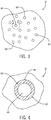
- FIG. 4 is a cross-sectional detail view of an embodiment of a pore 60 in a granule 12 coated with a cationic fluorinated (meth)acrylic copolymer.
- the cationic fluorinated (meth)acrylic copolymer does not fill the pore 60; but instead, coats the interior surface 64 of the pore 60.
- the fluorinated (meth)acrylic copolymer can form a monolayer on the substrate that protects at very low concentrations. This unique characteristic of fluorinated (meth)acrylic copolymer provides granule protection over a wide range of applied concentrations.
- the granules 12 are then dried, block 84.
- the granules 12 may be air-dried.
- the granules 12 may be dried in an oven (e.g., dried in an oven at about 100°C).
- the granules 12 may be dried using a combination of air-drying and an oven.
- the granules 12 may be recoated with cationic fluorinated (meth)acrylic copolymer and then dried again. This may be repeated multiple times (e.g., 1, 2, 3, 4, 5, or more times) to ensure adequate coating of the granules 12.
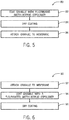
- FIG. 6 illustrates a process 90 for preparing and attaching the granules 12 to the waterproof layer 16, 42.
- the granules 12 are first attached to the waterproof layer 16, 42, block 92.
- the waterproof layer 16, 42 is in a molten state when the granules 12 are placed on the waterproof layer 16, 42. As the waterproof layer 16, 42 cools and hardens the granules 12 couple to the waterproof layer 16, 42.
- the granules 12 may couple to the waterproof layer 16, 42 with an adhesive.
- the granules 12 are coated with a cationic fluorinated (meth)acrylic copolymer, block 94.
- the granules 12 may be coated via direct spray with a dispersion solution containing between about 10% to about 80% cationic fluorinated (meth)acrylic copolymer.
- only a portion of the granules 12 may be dipped in a cationic fluorinated (meth)acrylic copolymer dispersion.
- the liquid pickup of the granules 12 may then facilitate coating and absorption of the cationic fluorinated (meth)acrylic copolymer.
Landscapes
- Engineering & Computer Science (AREA)
- Structural Engineering (AREA)
- Architecture (AREA)
- Civil Engineering (AREA)
- Textile Engineering (AREA)
- Chemical & Material Sciences (AREA)
- Ceramic Engineering (AREA)
- Materials Engineering (AREA)
- Organic Chemistry (AREA)
- Laminated Bodies (AREA)
- Building Environments (AREA)
Abstract
Description
- The disclosure generally relates to roofing systems.
- This section is intended to introduce the reader to various aspects of art that may be related to various aspects of the present invention, which are described and/or claimed below. This discussion is believed to be helpful in providing the reader with background information to facilitate a better understanding of the various aspects of the present invention. Accordingly, it should be understood that these statements are to be read in this light, and not as admissions of prior art.
- Commercial and industrial buildings typically have roofing systems with a metal deck, lightweight concrete, structural concrete, or wood deck (e.g., low-slope roof deck). These roofing systems usually have one or more layers of insulation on top of the roof deck and one or more waterproof layers that protect the insulation from moisture. However, without protection from the sun's ultraviolet light the waterproof layers may decompose or breakdown. For example, the ultraviolet light may break polymer chains in the water proofing material. As the polymer chains break the water proofing material becomes brittle and susceptible to cracking and/or breaking. To protect the waterproof layers, some roofing systems place granules on top of the waterproof layers. The granules protect the underlying waterproof layers by absorbing and/or reflecting ultraviolet light. However, granules are typically colored (e.g., have a low reflectivity) and therefore absorb significant amounts of energy during the day, which may increase cooling costs.
- The present disclosure is directed to a membrane roofing system. The membrane roofing system includes a waterproof layer that protects an insulation layer and a granule having a 65% or greater reflectivity coupled to the waterproof layer. The granule protects the waterproof layer by reducing transmission of ultraviolet light to the waterproof layer. The granule is coated in a fluorinated (meth)acrylic copolymer that resists adsorption and absorption of asphaltic chemicals by the granule from the waterproof layer.
- An aspect of the disclosure includes a built-up roofing system. The built-up roofing system includes a first waterproof layer that protects an insulation layer. A first fiberglass, polyester or combination fiberglass/polyester reinforced layer coupled to the first waterproof layer, and a granule having a 65% or greater reflectivity coupled to the first waterproof layer. The granule protects the first waterproof layer by reducing transmission of ultraviolet light to the first waterproof layer. The granule is coated in a cationic fluorinated (meth) acrylic copolymer that resists adsorption and absorption of asphaltic chemicals by the granule from the waterproof layer.
- Another aspect of the disclosure includes a method of manufacturing a roofing system. The method begins by coating a granule. The coating includes a cationic fluorinated (meth) acrylic copolymer that resists adsorption and absorption of asphaltic chemicals by the granule from a waterproof layer. After coating the granule, the granule is dried and coupled to the waterproof layer.
- Various features, aspects, and advantages of the present invention will be better understood when the following detailed description is read with reference to the accompanying figures in which like characters represent like parts throughout the figures, wherein:
-
FIG. 1 is a cross-sectional view of an embodiment of a membrane roofing system with granules; -
FIG. 2 is a cross-sectional view of an embodiment of a built-up roofing (BUR) system with granules; -
FIG. 3 is a side view of an embodiment of a granule coated with a cationic fluorinated (meth) acrylic copolymer; -
FIG. 4 is a cross-sectional detail view of an embodiment of a pore in a granule coated with a cationic fluorinated (meth) acrylic copolymer; -
FIG. 5 is a process for preparing and attaching granules to a waterproof layer; and -
FIG. 6 is a process for preparing and attaching granules to a waterproof layer. - One or more specific embodiments of the present invention will be described below. These embodiments are only exemplary of the present invention. Additionally, in an effort to provide a concise description of these exemplary embodiments, all features of an actual implementation may not be described in the specification. It should be appreciated that in the development of any such actual implementation, as in any engineering or design project, numerous implementation-specific decisions must be made to achieve the developers' specific goals, such as compliance with system-related and business-related constraints, which may vary from one implementation to another. Moreover, it should be appreciated that such a development effort might be complex and time consuming, but would nevertheless be a routine undertaking of design, fabrication, and manufacture for those of ordinary skill having the benefit of this disclosure.
- The embodiments discussed below include a roofing system with granules coated with cationic fluorinated (meth) acrylic copolymer. The cationic fluorinated (meth) acrylic copolymer enables the granules to resist and/or block absorption/adsorption of asphaltic chemicals that may leach out of the waterproof layer. Absorption and/or adsorption of asphaltic chemicals may change the color of the granules and thus their reflectivity. By resisting absorption/adsorption of color changing substances from the waterproof layer, the cationic fluorinated (meth) acrylic copolymer enables highly reflective granules to maintain their reflectivity. The greater the granule's reflectivity the less energy absorbed by the roof, which reduces power consumption by building climate control systems.
- The reflectivity of 65% or greater (e.g., 65%, 70%, 80%, 90%, 95% or greater) means the solar reflectivity measured using ASTM C1549 (ASTM C1549-16, Standard Test Method for Determination of Solar Reflectance Near Ambient Temperature Using a Portable Solar Reflectometer, ASTM International, West Conshohocken, PA, 2016, www.astm.org).
- Ultraviolet light within the meaning of the invention means radiation having a wavelength range of about 100 nm to 400 nm.
-
FIG. 1 is a cross-sectional view of an embodiment of amembrane roofing system 10 withgranules 12. Themembrane roofing system 10 includes one ormore insulation layers 14 that resist heat transfer through the roof of a building. To protect the insulation layer(s) 14 from the environment (e.g., rain, snow), themembrane roofing system 10 includes one or more waterproof layers ormembranes 16. In some embodiments, thewaterproof layer 16 may be reinforced with a matrix 18 (e.g., fiberglass, polyester, or fiberglass/polyester combination reinforcement) that increases the tensile strength and tear resistance of thewaterproof layer 16. - The
waterproof layers 16 may be an asphalt-based material (e.g., Styrene-Butadiene-Styrene (SBS) Modified Asphalt, Atactic Polypropylene (APP) Modified Asphalt, or Oxidized Asphalt Coating). Asphaltic chemicals are highly complex chemicals containing saturated and unsaturated aliphatic and aromatic compounds with up to 150 carbon atoms. Their composition varies depending on the source of crude oil. Many of the compounds contain oxygen, nitrogen, sulfur, and other heteroatoms. Asphalt typically contains about 80% by weight of carbon; around 10% by weight of hydrogen; up to 6% by weight of sulfur; small amounts of oxygen and nitrogen; and trace amounts of metals such as iron, nickel, and vanadium. The molecular weights of the constituent compounds range from several hundred to many thousands. Thus, modified asphalt is also called modified bitumen. - As explained above, ultraviolet light can break down the
waterproof layer 16 by breaking polymer chains. As polymer chains break, the waterproof material may become brittle and susceptible to cracking and/or breaking. To protect thewaterproof layer 16, themembrane roofing system 10 includes alayer 20 ofgranules 12 that block and/or reduce the amount of ultraviolet light that reaches thewaterproof layer 16. Thegranules 12 may be made out of stone, aluminum silicate, Barium Sulfate, sintered glass, ceramic, etc. and have a small particle size (e.g., 0.2 mm to 2.4 mm). Thegranules 12 have a greater surface area than regular masonry slab material, such as granite or limestone tile, which makes stain resistance a challenge, especially when thegranules 12 are partially embedded in asphaltic material (e.g., asphaltic chemicals). - In addition to protecting the
waterproof layer 16, thegranules 12 reduce energy absorption by themembrane roofing system 10. For example, thegranules 12 have a reflectivity of 65% or greater (e.g., 65%, 70%, 80%, 90%, 95% or greater). By reflecting light away from themembrane roofing system 10 thegranules 12 decrease power consumption by climate control systems that cool the building. In addition, the highly reflective cool roof may also reduce the urban heat island effect. Because thegranules 12 are embedded or otherwise in contact with thewaterproof layer 16, thegranules 12 may absorb and/or adsorb asphaltic chemicals from thewaterproof layer 16. For example, high temperatures may cause asphaltic chemicals to leach out of thewaterproof layer 16. If these substances are absorbed and/or adsorbed by thegranules 12 they may change the color of thegranules 12. A change ingranule 12 color changes the reflectivity of thegranule 12, which increases the energy absorbed by themembrane roofing system 10. To maintain the reflectivity of thegranules 12, thegranules 12 are coated with a cationic fluorinated (meth) acrylic copolymer (e.g., DuPont ® ST-100, DuPont ® ST-110, or a combination thereof). The cationic fluorinated (meth) acrylic copolymer coating may be about 0.001% to about 3.0% by weight of anuncoated granule 12. The cationic fluorinated (meth) acrylic copolymer blocks and/or reduces adsorption and/or absorption by thegranule 12 of asphaltic chemicals in thewaterproof layer 16. Accordingly, thegranules 12 are able to protect thewaterproof layer 16 as well as maintain their reflectivity. - The cationic fluorinated (meth)acrylic copolymer can be either acrylate or methylate copolymer that includes at least fluorinated alkyl containing acrylate/methacrylate monomer, such as 1H, 1H, 2H, 2H-perfluorooctyl acrylate/methacrylate, and amine containing acrylate or methacrylate monomer, such as 2-(dimethylamino) ethyl methacrylate. The amine functionality, in particular tertiary and quaternary, may provide cationic sites along the polymer chain, which enables the polymer to be dispersed in aqueous solution. In addition, the cationic characteristic of the polymer enables it to wet and adsorb to a cementatious substrate, such as an aluminum silicate based
granule 12. The fluorinated alkyl chain of the cationic fluorinated (meth) acrylic copolymer may provide both hydrophobic and lipophobic protection to thegranule 12. In some embodiments, the polymer may include a silane containing monomer, such as methacryloxypropyltrimethoxysilane, which may form a covalent bond with thegranule 12 increasing adhesion and durability of the coating. In contrast, anionic copolymers made with the same fluorinated alkyl acrylate/methylate co-monomer wet and coat the surface of thegranule 12 poorly and do not provide the same hydrophobic and lipophobic protection. -
FIG. 2 is a cross-sectional view of an embodiment of a built-up roof (BUR)system 40 withgranules 12. TheBUR system 40 includes one or more insulation layers 14 that resist heat transfer through the roof of a building. To protect the insulation layer(s) 14 from the environment (e.g., rain, snow), theBUR system 40 includes one or more waterproof layers ormembranes 42. The waterproof layers 42 may be a polymer material such as an asphalt-based material (e.g., Styrene-Butadiene-Styrene (SBS) Modified Asphalt, Atactic Polypropylene (APP) Modified Asphalt, or Oxidized Asphalt Coating) TheBUR system 40 structurally reinforces thewaterproof layers 42 with fiberglass, polyester, or fiberglass/polyester combination reinforcement layers 44 (e.g., fiberglass, polyester, or fiberglass/polyester combination reinforcement) that increase the tensile strength and tear resistance of the waterproof layers 42. As illustrated, the fiberglass layers 44 are placed between thewaterproof layers 42 in an alternating manner to strengthen theoverall BUR system 40. - As explained above, ultraviolet light may negatively affect the waterproof layer material. To protect the
waterproof layers 42, themembrane roofing system 10 includes alayer 20 ofgranules 12 that block and/or reduce the amount of ultraviolet light that reaches the exterior or outermostwaterproof layer 42. Thegranules 12 may be made out of stone, aluminum silicate, Barium Sulfate, sintered glass, ceramic, etc. In addition to protecting thewaterproof layers 42, thegranules 12 reduce energy absorption by theBUR system 40. For example, thegranules 12 have a reflectivity of 65% or greater (e.g., 65%, 70%, 80%, 90%, 95% or greater). By reflecting light away from theBUR system 40, thegranules 12 decrease the amount of energy needed to cool the building. In other words, thegranules 12 reduce power consumption by climate control units (e.g., air conditioning units). - Because the
granules 12 are embedded or otherwise in contact with thewaterproof layers 42 thegranules 12 may absorb and/or adsorb color-changing chemicals, oils, etc. from the waterproof layers 42. For example, the high temperatures may cause asphaltic chemicals to leach out of the waterproof layers 42. If these substances are absorbed and/or adsorbed by thegranules 12 they can change the color of thegranules 12. A change in thegranule 12 color changes the granule's reflectivity. To maintain the reflectivity of thegranules 12, thegranules 12 are coated with a fluorinated (meth)acrylic copolymer (e.g., DuPont ® ST-100, DuPont ® ST-110, or a combination thereof). The cationic fluorinated (meth)acrylic copolymer blocks and/or reduces adsorption and/or absorption by thegranule 12 of the chemicals, oils, etc. in the waterproof layers 42. Accordingly, thegranules 12 are able to protect thewaterproof layers 42 as well as maintain their reflectivity. -
FIG. 3 is a side view of an embodiment of agranule 12 coated with a fluorinated (meth)acrylic copolymer. The cationic fluorinated (meth)acrylic copolymer blocks and/or reduces absorption/adsorption of asphaltic chemicals in thewaterproof layers granules 12 may be made out of a porous material. By coating thegranules 12 with the cationic fluorinated (meth)acrylic copolymer, thegranules 12 resist absorbing asphaltic chemicals through thepores 60 and/or adsorbing the asphaltic chemicals In other words, the cationic fluorinated (meth)acrylic copolymer coating enables thegranules 12 to maintain their reflectance by resisting absorption/adsorption of asphaltic chemicals that leach out of thewaterproof layers uncoated granule 12. - Table 1 below illustrates the absorption/adsorption resistance of the
granules 12 coated with cationic fluorinated (meth)acrylic copolymer versus granules coated with silicone. In the example below, the reflectance of thegranule 12 remains unchanged when the cationic fluorinated (meth)acrylic copolymer coating amount is greater than 0.50% by weight of anuncoated granule 12, while agranule 12 with a fluorinated acrylic copolymer coating of 0.25% by weight changes only slightly. In contrast, the reflectance of a silicone coated granule changes significantly in the same testing procedures. The ability of the coating to provide stain resistance at low coating weight may be due to monolayer formation on the granule surface. As explained above, a reduction in reflectance increases energy absorption by the roof and thus energy consumption by climate control units.Table 1 Coating Amount (coating amount is shown in percent by weight of an uncoated granule) Granule Reflectance with Cationic fluorinated (meth)acrylic copolymer Coating (28 Days of Dark Oven Exposure at 80°C) Change in Cationic fluorinated (meth)acrylic copolymer Coated Granule Reflectance (original reflectance 73.9%) Granule Reflectance with Silicone Coating (28 Days of Dark Oven Exposure at 80°C) Change in Silicone Coated Granule Reflectance (original reflectance 73.9%) 0.25% 72.4% -1.5% 53.1% -19.3% 0.50% 73.9% 0% 60.1% -14.2% 0.75% 73.9% 0% 57.7% -16.1% 1.0% 73.9% 0% 58.7% -14.9% 2.0% 73.9% 0% 62.9% -11.0% -
FIG. 4 is a cross-sectional detail view of an embodiment of apore 60 in agranule 12 coated with a cationic fluorinated (meth)acrylic copolymer. As illustrated, the cationic fluorinated (meth)acrylic copolymer does not fill thepore 60; but instead, coats the interior surface 64 of thepore 60. In some instance, the fluorinated (meth)acrylic copolymer can form a monolayer on the substrate that protects at very low concentrations. This unique characteristic of fluorinated (meth)acrylic copolymer provides granule protection over a wide range of applied concentrations. Even though the interior surface 64 is covered, the lipophobicity of the cationic fluorinated (meth)acrylic copolymer blocks or reduces absorption of oils into thegranule 12 through theaperture 66. In some embodiments, the cationic fluorinated (meth)acrylic copolymer may completely fill thepore 60 blocking oil absorption by thegranule 12. -
FIG. 5 illustrates aprocess 80 for preparing and attaching thegranules 12 to thewaterproof layers process 80 begins by coating thegranules 12 in cationic fluorinated (meth) acrylic copolymer dispersion, block 82. In some embodiments, the cationic fluorinated (meth)acrylic copolymer dispersion may be applied to thegranules 12 via direct spray (e.g., quick spray) using a dispersion solution containing between about 10% to about 80% fluorinated acrylic copolymer. The concentration of the fluorinated acrylic copolymer in the solution may be determined by the liquid pickup of thegranule 12, so that the desired amount of cationic fluorinated (meth)acrylic copolymer coats the granule 12 (e.g., coating amount between about 0.001% to about 0.5% by weight of an uncoated granule 12). In another embodiment, the cationic fluorinated (meth)acrylic copolymer coating may be applied via dip coating. - The
granules 12 are then dried, block 84. In some embodiments, thegranules 12 may be air-dried. In another embodiment, thegranules 12 may be dried in an oven (e.g., dried in an oven at about 100°C). In still other embodiments, thegranules 12 may be dried using a combination of air-drying and an oven. In some embodiments, thegranules 12 may be recoated with cationic fluorinated (meth)acrylic copolymer and then dried again. This may be repeated multiple times (e.g., 1, 2, 3, 4, 5, or more times) to ensure adequate coating of thegranules 12. Once thegranules 12 are dried, thegranules 12 are attached to awaterproof layer block 86. For example, thewaterproof layer granules 12 are placed on thewaterproof layer block 86. As thewaterproof layer granules 12 couple to thewaterproof layer granules 12 may couple to thewaterproof layer -
FIG. 6 illustrates aprocess 90 for preparing and attaching thegranules 12 to thewaterproof layer granules 12 and then attaching thegranules 12 to thewaterproof layer granules 12 are first attached to thewaterproof layer block 92. In some embodiments, thewaterproof layer granules 12 are placed on thewaterproof layer waterproof layer granules 12 couple to thewaterproof layer granules 12 may couple to thewaterproof layer - Once the
granules 12 are coupled to thewaterproof layer granules 12 are coated with a cationic fluorinated (meth)acrylic copolymer, block 94. For example, thegranules 12 may be coated via direct spray with a dispersion solution containing between about 10% to about 80% cationic fluorinated (meth)acrylic copolymer. The concentration of the cationic fluorinated (meth)acrylic copolymer in the solution may be determined by the liquid pickup of thegranule 12, so that the desired amount of fluorinated acrylic copolymer coats the granule 12 (e.g., coating amount between about 0.001 % to about 0.5% by weight of an uncoated granule 12). In another embodiment, the fluorinated acrylic copolymer coating may be applied via dip coating. For example, thegranules 12 andwaterproof layer granules 12 may be dipped in a cationic fluorinated (meth)acrylic copolymer dispersion. The liquid pickup of thegranules 12 may then facilitate coating and absorption of the cationic fluorinated (meth)acrylic copolymer. - After coating the
granules 12, thegranules 12 are dried, block 96. In some embodiments, thegranules 12 may be air-dried. In another embodiment, thegranules 12 may be dried in an oven (e.g., dried in oven at temperatures around 100°C). In still other embodiments, thegranules 12 may be dried using a combination of air-drying and an oven. - While the invention may be susceptible to various modifications and alternative forms, specific embodiments have been shown by way of example in the drawings and have been described in detail herein. However, it should be understood that the invention is not intended to be limited to the particular forms disclosed. Rather, the invention is to cover all modifications, equivalents, and alternatives falling within the spirit and scope of the invention as defined by the following appended claims.
Claims (15)
- A membrane roofing system, comprising:a waterproof layer configured to protect an insulation layer; andan aluminum silicate granule having a particle size between 0.2 mm - 2.4 mm coupled to the waterproof layer,wherein the aluminum silicate granule has a 65% or greater reflectivity and is configured to reduce transmission of ultraviolet light to the waterproof layer, andwherein the aluminum silicate granule is coated in a cationic fluorinated (meth)acrylic copolymer that resists adsorption and absorption of asphaltic chemicals by the aluminum silicate granule from the waterproof layer.
- The system as claimed in claim 1, comprising the insulation layer and wherein the waterproof layer couples to the insulation layer.
- The system as claimed in claim 1 or 2, wherein the waterproof layer is an asphalt-based membrane.
- The system as claimed in one or more of claims 1 to 3, wherein the waterproof layer comprises a fiberglass, polyester or fiberglass/polyester matrix configured to reinforce the waterproof layer.
- A built-up roofing system, comprising:a first waterproof layer configured to protect an insulation layer;a first fiberglass layer configured to support the first waterproof layer; andan aluminum silicate granule having a particle size between 0.2 mm - 2.4 mm coupled to the first waterproof layer, wherein the aluminum silicate granule has a 60% or greater reflectivity and is configured to reduce transmission of ultraviolet light to the first waterproof layer, and wherein the aluminum silicate granule is coated in a fluorinated (meth)acrylic copolymer that resists adsorption and absorption of asphaltic chemicals by the aluminum silicate granule.
- The system as claimed in claim 5, comprising a second waterproof layer.
- The system as claimed in claim 5 or 6, comprising a second fiberglass, polyester, or fiberglass/polyester reinforced layer.
- The system as claimed in one or more of claims 5 to 7, comprising the insulation layer.
- The system as claimed in one or more of claims 5 to 8, wherein the first waterproof layer is an asphalt-based membrane.
- The system as claimed in one or more of claims 1 to 4 or as claimed in one or more of claims 5 to 9, wherein the aluminum silicate granule is porous.
- The system as claimed in one or more of claims 1 to 4 or as claimed in one or more of claims 5 to 10, wherein the reflectivity of the aluminum silicate granule is greater than 70%, preferably greater than 80%.
- The system as claimed in one or more of claims 1 to 4 or as claimed in one or more of claims 5 to 11, wherein the fluorinated acrylic copolymer coating is at least 0.001% by weight of an uncoated aluminum silicate granule.
- A method of manufacturing a roofing system, comprising:coating an aluminum silicate granule having a particle size between 0.2 mm - 2.4 mm and a reflectivity of 60%, wherein the coating comprises a fluorinated (meth) acrylic copolymer that resists adsorption and absorption of asphaltic chemicals by the aluminum silicate granule from a waterproof layer;drying the coating on the aluminum silicate granule; andcoupling the aluminum silicate granule to the waterproof layer.
- The method as claimed in claim 13, wherein the waterproof layer is an asphalt-based membrane.
- The method as claimed in claim 13 or 14, wherein the coating is at least 0.001% by weight of an uncoated aluminum silicate granule of the fluorinated acrylic copolymer.
Applications Claiming Priority (1)
| Application Number | Priority Date | Filing Date | Title |
|---|---|---|---|
| US15/184,513 US20170362831A1 (en) | 2016-06-16 | 2016-06-16 | Cool roof systems and methods |
Publications (2)
| Publication Number | Publication Date |
|---|---|
| EP3258030A1 true EP3258030A1 (en) | 2017-12-20 |
| EP3258030B1 EP3258030B1 (en) | 2020-09-02 |
Family
ID=59077905
Family Applications (1)
| Application Number | Title | Priority Date | Filing Date |
|---|---|---|---|
| EP17176427.7A Active EP3258030B1 (en) | 2016-06-16 | 2017-06-16 | Cool roof systems and methods |
Country Status (3)
| Country | Link |
|---|---|
| US (1) | US20170362831A1 (en) |
| EP (1) | EP3258030B1 (en) |
| CA (1) | CA2970690C (en) |
Families Citing this family (1)
| Publication number | Priority date | Publication date | Assignee | Title |
|---|---|---|---|---|
| CN112832392B (en) * | 2021-01-05 | 2021-11-09 | 北京华林瑞思科技发展有限公司 | Composite type isolation sand and preparation method thereof |
Citations (3)
| Publication number | Priority date | Publication date | Assignee | Title |
|---|---|---|---|---|
| US20070054129A1 (en) * | 2005-09-07 | 2007-03-08 | Kalkanoglu Husnu M | Solar Heat Reflective Roofing Membrane and Process For Making the Same |
| US20110081537A1 (en) * | 2009-10-02 | 2011-04-07 | National Coatings Corporation | Highly Reflective Roofing System |
| WO2016001303A1 (en) * | 2014-07-01 | 2016-01-07 | Amberger Kaolinwerke Eduard Kick Gmbh & Co. Kg | Roof coating system |
Family Cites Families (2)
| Publication number | Priority date | Publication date | Assignee | Title |
|---|---|---|---|---|
| JP4093179B2 (en) * | 2003-11-27 | 2008-06-04 | 東亞合成株式会社 | Rooftop exterior insulation waterproofing method |
| CA2688340C (en) * | 2007-05-24 | 2016-02-09 | Certainteed Corporation | Roofing granules with high solar reflectance, roofing products with high solar reflectance, and processes for preparing same |
-
2016
- 2016-06-16 US US15/184,513 patent/US20170362831A1/en not_active Abandoned
-
2017
- 2017-06-14 CA CA2970690A patent/CA2970690C/en active Active
- 2017-06-16 EP EP17176427.7A patent/EP3258030B1/en active Active
Patent Citations (3)
| Publication number | Priority date | Publication date | Assignee | Title |
|---|---|---|---|---|
| US20070054129A1 (en) * | 2005-09-07 | 2007-03-08 | Kalkanoglu Husnu M | Solar Heat Reflective Roofing Membrane and Process For Making the Same |
| US20110081537A1 (en) * | 2009-10-02 | 2011-04-07 | National Coatings Corporation | Highly Reflective Roofing System |
| WO2016001303A1 (en) * | 2014-07-01 | 2016-01-07 | Amberger Kaolinwerke Eduard Kick Gmbh & Co. Kg | Roof coating system |
Also Published As
| Publication number | Publication date |
|---|---|
| CA2970690A1 (en) | 2017-12-16 |
| CA2970690C (en) | 2025-01-07 |
| EP3258030B1 (en) | 2020-09-02 |
| US20170362831A1 (en) | 2017-12-21 |
Similar Documents
| Publication | Publication Date | Title |
|---|---|---|
| US9714512B2 (en) | Highly reflective roofing system | |
| US11884835B2 (en) | Hybrid coating for roof applications | |
| KR102200896B1 (en) | Construction Method of Complex Waterproof Sheet for Preventing Neutralization Using Water Solubility Acrylic Urethane Waterproof Agent | |
| US20020160151A1 (en) | Integrated granule product | |
| KR100908457B1 (en) | Construction method of composite waterproof layer using resistive insulating material and reflective protective coating | |
| KR101490150B1 (en) | High-strength composite waterproof sheet and construction method for manufacturing the same using inorganic layer and Urethan waterproof agent | |
| CA2541884A1 (en) | Non-white construction surface | |
| ES2591184T3 (en) | Insulation element for a flat roof or a flat sloping roof, roofing system for a flat roof or a flat sloping roof and method of producing an insulation element | |
| KR101148090B1 (en) | Heat shielding method for concrete structure | |
| EP3258030B1 (en) | Cool roof systems and methods | |
| KR100870192B1 (en) | Inorganic water-resistant fireproof coating composition and fireproof coating method using the same | |
| KR20050072727A (en) | The complex waterproof construction method using fabric sheet | |
| KR101892250B1 (en) | Eco-friendly polyurethane elastic packaging manufacturing method | |
| KR102213597B1 (en) | Waterproof Construction Method for Maintenance of Asphalt Shingle Roof Using Water-Soluble Acrylate Waterproof Agents with Superior Heat Resistance | |
| JP6762084B2 (en) | Exposed specification asphalt waterproofing method cap sheet and exposed specification asphalt waterproofing method | |
| KR20130004682A (en) | Complex water-proofing construction method for cold applications using aspalt waterproof sheets, a coating primer, an aspalt sealant and a coating material for a wall | |
| JP6204057B2 (en) | Architectural board and method for producing architectural board | |
| KR101714473B1 (en) | composition primer for waterproof and anti corrosion of concrete construct | |
| KR101725764B1 (en) | Water repellency protection mortar for surface preparation and construction method using that | |
| RU2637335C2 (en) | Construction material and method of its manufacture | |
| KR101280985B1 (en) | Waterproof Material for a wall and the method thereof. | |
| CN104675009B (en) | Building panel and method for manufacturing same | |
| KR102915739B1 (en) | Polyurethane heat shielding paint and leveling elastic mortar waterproofing method using the same | |
| KR102941139B1 (en) | Waterproofing Method for Slabs or Roofs with Bifacial Solar Panels Using an Acrylic Waterproofing Composition Containing Glass Beads | |
| KR100488626B1 (en) | Waterproof structure by synthetic resin and insulation film |
Legal Events
| Date | Code | Title | Description |
|---|---|---|---|
| PUAI | Public reference made under article 153(3) epc to a published international application that has entered the european phase |
Free format text: ORIGINAL CODE: 0009012 |
|
| STAA | Information on the status of an ep patent application or granted ep patent |
Free format text: STATUS: THE APPLICATION HAS BEEN PUBLISHED |
|
| AK | Designated contracting states |
Kind code of ref document: A1 Designated state(s): AL AT BE BG CH CY CZ DE DK EE ES FI FR GB GR HR HU IE IS IT LI LT LU LV MC MK MT NL NO PL PT RO RS SE SI SK SM TR |
|
| AX | Request for extension of the european patent |
Extension state: BA ME |
|
| STAA | Information on the status of an ep patent application or granted ep patent |
Free format text: STATUS: REQUEST FOR EXAMINATION WAS MADE |
|
| 17P | Request for examination filed |
Effective date: 20180615 |
|
| RBV | Designated contracting states (corrected) |
Designated state(s): AL AT BE BG CH CY CZ DE DK EE ES FI FR GB GR HR HU IE IS IT LI LT LU LV MC MK MT NL NO PL PT RO RS SE SI SK SM TR |
|
| STAA | Information on the status of an ep patent application or granted ep patent |
Free format text: STATUS: EXAMINATION IS IN PROGRESS |
|
| 17Q | First examination report despatched |
Effective date: 20190408 |
|
| GRAP | Despatch of communication of intention to grant a patent |
Free format text: ORIGINAL CODE: EPIDOSNIGR1 |
|
| STAA | Information on the status of an ep patent application or granted ep patent |
Free format text: STATUS: GRANT OF PATENT IS INTENDED |
|
| RIC1 | Information provided on ipc code assigned before grant |
Ipc: B32B 27/36 20060101ALI20200303BHEP Ipc: B32B 37/24 20060101ALI20200303BHEP Ipc: E04D 5/12 20060101ALI20200303BHEP Ipc: E04D 5/10 20060101AFI20200303BHEP Ipc: C04B 20/10 20060101ALI20200303BHEP Ipc: B32B 7/12 20060101ALI20200303BHEP Ipc: B32B 27/06 20060101ALI20200303BHEP Ipc: D06N 3/04 20060101ALI20200303BHEP Ipc: B32B 11/10 20060101ALI20200303BHEP Ipc: B32B 11/04 20060101ALI20200303BHEP Ipc: D06N 5/00 20060101ALI20200303BHEP |
|
| INTG | Intention to grant announced |
Effective date: 20200320 |
|
| GRAS | Grant fee paid |
Free format text: ORIGINAL CODE: EPIDOSNIGR3 |
|
| GRAA | (expected) grant |
Free format text: ORIGINAL CODE: 0009210 |
|
| STAA | Information on the status of an ep patent application or granted ep patent |
Free format text: STATUS: THE PATENT HAS BEEN GRANTED |
|
| AK | Designated contracting states |
Kind code of ref document: B1 Designated state(s): AL AT BE BG CH CY CZ DE DK EE ES FI FR GB GR HR HU IE IS IT LI LT LU LV MC MK MT NL NO PL PT RO RS SE SI SK SM TR |
|
| REG | Reference to a national code |
Ref country code: GB Ref legal event code: FG4D |
|
| REG | Reference to a national code |
Ref country code: AT Ref legal event code: REF Ref document number: 1308960 Country of ref document: AT Kind code of ref document: T Effective date: 20200915 Ref country code: CH Ref legal event code: EP |
|
| REG | Reference to a national code |
Ref country code: DE Ref legal event code: R096 Ref document number: 602017022633 Country of ref document: DE |
|
| REG | Reference to a national code |
Ref country code: IE Ref legal event code: FG4D |
|
| REG | Reference to a national code |
Ref country code: NL Ref legal event code: FP |
|
| REG | Reference to a national code |
Ref country code: LT Ref legal event code: MG4D |
|
| PG25 | Lapsed in a contracting state [announced via postgrant information from national office to epo] |
Ref country code: FI Free format text: LAPSE BECAUSE OF FAILURE TO SUBMIT A TRANSLATION OF THE DESCRIPTION OR TO PAY THE FEE WITHIN THE PRESCRIBED TIME-LIMIT Effective date: 20200902 Ref country code: LT Free format text: LAPSE BECAUSE OF FAILURE TO SUBMIT A TRANSLATION OF THE DESCRIPTION OR TO PAY THE FEE WITHIN THE PRESCRIBED TIME-LIMIT Effective date: 20200902 Ref country code: SE Free format text: LAPSE BECAUSE OF FAILURE TO SUBMIT A TRANSLATION OF THE DESCRIPTION OR TO PAY THE FEE WITHIN THE PRESCRIBED TIME-LIMIT Effective date: 20200902 Ref country code: HR Free format text: LAPSE BECAUSE OF FAILURE TO SUBMIT A TRANSLATION OF THE DESCRIPTION OR TO PAY THE FEE WITHIN THE PRESCRIBED TIME-LIMIT Effective date: 20200902 Ref country code: NO Free format text: LAPSE BECAUSE OF FAILURE TO SUBMIT A TRANSLATION OF THE DESCRIPTION OR TO PAY THE FEE WITHIN THE PRESCRIBED TIME-LIMIT Effective date: 20201202 Ref country code: GR Free format text: LAPSE BECAUSE OF FAILURE TO SUBMIT A TRANSLATION OF THE DESCRIPTION OR TO PAY THE FEE WITHIN THE PRESCRIBED TIME-LIMIT Effective date: 20201203 Ref country code: BG Free format text: LAPSE BECAUSE OF FAILURE TO SUBMIT A TRANSLATION OF THE DESCRIPTION OR TO PAY THE FEE WITHIN THE PRESCRIBED TIME-LIMIT Effective date: 20201202 |
|
| REG | Reference to a national code |
Ref country code: AT Ref legal event code: MK05 Ref document number: 1308960 Country of ref document: AT Kind code of ref document: T Effective date: 20200902 |
|
| PG25 | Lapsed in a contracting state [announced via postgrant information from national office to epo] |
Ref country code: PL Free format text: LAPSE BECAUSE OF FAILURE TO SUBMIT A TRANSLATION OF THE DESCRIPTION OR TO PAY THE FEE WITHIN THE PRESCRIBED TIME-LIMIT Effective date: 20200902 Ref country code: RS Free format text: LAPSE BECAUSE OF FAILURE TO SUBMIT A TRANSLATION OF THE DESCRIPTION OR TO PAY THE FEE WITHIN THE PRESCRIBED TIME-LIMIT Effective date: 20200902 Ref country code: LV Free format text: LAPSE BECAUSE OF FAILURE TO SUBMIT A TRANSLATION OF THE DESCRIPTION OR TO PAY THE FEE WITHIN THE PRESCRIBED TIME-LIMIT Effective date: 20200902 |
|
| PG25 | Lapsed in a contracting state [announced via postgrant information from national office to epo] |
Ref country code: CZ Free format text: LAPSE BECAUSE OF FAILURE TO SUBMIT A TRANSLATION OF THE DESCRIPTION OR TO PAY THE FEE WITHIN THE PRESCRIBED TIME-LIMIT Effective date: 20200902 Ref country code: PT Free format text: LAPSE BECAUSE OF FAILURE TO SUBMIT A TRANSLATION OF THE DESCRIPTION OR TO PAY THE FEE WITHIN THE PRESCRIBED TIME-LIMIT Effective date: 20210104 Ref country code: RO Free format text: LAPSE BECAUSE OF FAILURE TO SUBMIT A TRANSLATION OF THE DESCRIPTION OR TO PAY THE FEE WITHIN THE PRESCRIBED TIME-LIMIT Effective date: 20200902 Ref country code: EE Free format text: LAPSE BECAUSE OF FAILURE TO SUBMIT A TRANSLATION OF THE DESCRIPTION OR TO PAY THE FEE WITHIN THE PRESCRIBED TIME-LIMIT Effective date: 20200902 Ref country code: SM Free format text: LAPSE BECAUSE OF FAILURE TO SUBMIT A TRANSLATION OF THE DESCRIPTION OR TO PAY THE FEE WITHIN THE PRESCRIBED TIME-LIMIT Effective date: 20200902 |
|
| PG25 | Lapsed in a contracting state [announced via postgrant information from national office to epo] |
Ref country code: AT Free format text: LAPSE BECAUSE OF FAILURE TO SUBMIT A TRANSLATION OF THE DESCRIPTION OR TO PAY THE FEE WITHIN THE PRESCRIBED TIME-LIMIT Effective date: 20200902 Ref country code: AL Free format text: LAPSE BECAUSE OF FAILURE TO SUBMIT A TRANSLATION OF THE DESCRIPTION OR TO PAY THE FEE WITHIN THE PRESCRIBED TIME-LIMIT Effective date: 20200902 Ref country code: ES Free format text: LAPSE BECAUSE OF FAILURE TO SUBMIT A TRANSLATION OF THE DESCRIPTION OR TO PAY THE FEE WITHIN THE PRESCRIBED TIME-LIMIT Effective date: 20200902 Ref country code: IS Free format text: LAPSE BECAUSE OF FAILURE TO SUBMIT A TRANSLATION OF THE DESCRIPTION OR TO PAY THE FEE WITHIN THE PRESCRIBED TIME-LIMIT Effective date: 20210102 |
|
| REG | Reference to a national code |
Ref country code: DE Ref legal event code: R097 Ref document number: 602017022633 Country of ref document: DE |
|
| PG25 | Lapsed in a contracting state [announced via postgrant information from national office to epo] |
Ref country code: SK Free format text: LAPSE BECAUSE OF FAILURE TO SUBMIT A TRANSLATION OF THE DESCRIPTION OR TO PAY THE FEE WITHIN THE PRESCRIBED TIME-LIMIT Effective date: 20200902 |
|
| PLBE | No opposition filed within time limit |
Free format text: ORIGINAL CODE: 0009261 |
|
| STAA | Information on the status of an ep patent application or granted ep patent |
Free format text: STATUS: NO OPPOSITION FILED WITHIN TIME LIMIT |
|
| 26N | No opposition filed |
Effective date: 20210603 |
|
| PG25 | Lapsed in a contracting state [announced via postgrant information from national office to epo] |
Ref country code: DK Free format text: LAPSE BECAUSE OF FAILURE TO SUBMIT A TRANSLATION OF THE DESCRIPTION OR TO PAY THE FEE WITHIN THE PRESCRIBED TIME-LIMIT Effective date: 20200902 Ref country code: SI Free format text: LAPSE BECAUSE OF FAILURE TO SUBMIT A TRANSLATION OF THE DESCRIPTION OR TO PAY THE FEE WITHIN THE PRESCRIBED TIME-LIMIT Effective date: 20200902 |
|
| PG25 | Lapsed in a contracting state [announced via postgrant information from national office to epo] |
Ref country code: IT Free format text: LAPSE BECAUSE OF FAILURE TO SUBMIT A TRANSLATION OF THE DESCRIPTION OR TO PAY THE FEE WITHIN THE PRESCRIBED TIME-LIMIT Effective date: 20200902 |
|
| PG25 | Lapsed in a contracting state [announced via postgrant information from national office to epo] |
Ref country code: MC Free format text: LAPSE BECAUSE OF FAILURE TO SUBMIT A TRANSLATION OF THE DESCRIPTION OR TO PAY THE FEE WITHIN THE PRESCRIBED TIME-LIMIT Effective date: 20200902 |
|
| REG | Reference to a national code |
Ref country code: CH Ref legal event code: PL |
|
| PG25 | Lapsed in a contracting state [announced via postgrant information from national office to epo] |
Ref country code: LU Free format text: LAPSE BECAUSE OF NON-PAYMENT OF DUE FEES Effective date: 20210616 |
|
| PG25 | Lapsed in a contracting state [announced via postgrant information from national office to epo] |
Ref country code: LI Free format text: LAPSE BECAUSE OF NON-PAYMENT OF DUE FEES Effective date: 20210630 Ref country code: IE Free format text: LAPSE BECAUSE OF NON-PAYMENT OF DUE FEES Effective date: 20210616 Ref country code: CH Free format text: LAPSE BECAUSE OF NON-PAYMENT OF DUE FEES Effective date: 20210630 |
|
| PG25 | Lapsed in a contracting state [announced via postgrant information from national office to epo] |
Ref country code: HU Free format text: LAPSE BECAUSE OF FAILURE TO SUBMIT A TRANSLATION OF THE DESCRIPTION OR TO PAY THE FEE WITHIN THE PRESCRIBED TIME-LIMIT; INVALID AB INITIO Effective date: 20170616 |
|
| PG25 | Lapsed in a contracting state [announced via postgrant information from national office to epo] |
Ref country code: CY Free format text: LAPSE BECAUSE OF FAILURE TO SUBMIT A TRANSLATION OF THE DESCRIPTION OR TO PAY THE FEE WITHIN THE PRESCRIBED TIME-LIMIT Effective date: 20200902 |
|
| PG25 | Lapsed in a contracting state [announced via postgrant information from national office to epo] |
Ref country code: MK Free format text: LAPSE BECAUSE OF FAILURE TO SUBMIT A TRANSLATION OF THE DESCRIPTION OR TO PAY THE FEE WITHIN THE PRESCRIBED TIME-LIMIT Effective date: 20200902 |
|
| PG25 | Lapsed in a contracting state [announced via postgrant information from national office to epo] |
Ref country code: MT Free format text: LAPSE BECAUSE OF FAILURE TO SUBMIT A TRANSLATION OF THE DESCRIPTION OR TO PAY THE FEE WITHIN THE PRESCRIBED TIME-LIMIT Effective date: 20200902 |
|
| PGFP | Annual fee paid to national office [announced via postgrant information from national office to epo] |
Ref country code: DE Payment date: 20250627 Year of fee payment: 9 |
|
| PGFP | Annual fee paid to national office [announced via postgrant information from national office to epo] |
Ref country code: GB Payment date: 20250627 Year of fee payment: 9 |
|
| PGFP | Annual fee paid to national office [announced via postgrant information from national office to epo] |
Ref country code: NL Payment date: 20250626 Year of fee payment: 9 Ref country code: BE Payment date: 20250627 Year of fee payment: 9 |
|
| PGFP | Annual fee paid to national office [announced via postgrant information from national office to epo] |
Ref country code: FR Payment date: 20250625 Year of fee payment: 9 |
|
| PG25 | Lapsed in a contracting state [announced via postgrant information from national office to epo] |
Ref country code: TR Free format text: LAPSE BECAUSE OF FAILURE TO SUBMIT A TRANSLATION OF THE DESCRIPTION OR TO PAY THE FEE WITHIN THE PRESCRIBED TIME-LIMIT Effective date: 20200902 |