EP3257815A1 - Micron-scale cerium oxide particle having multi-core single-shell structure and preparation method therefor - Google Patents
Micron-scale cerium oxide particle having multi-core single-shell structure and preparation method therefor Download PDFInfo
- Publication number
- EP3257815A1 EP3257815A1 EP15881592.8A EP15881592A EP3257815A1 EP 3257815 A1 EP3257815 A1 EP 3257815A1 EP 15881592 A EP15881592 A EP 15881592A EP 3257815 A1 EP3257815 A1 EP 3257815A1
- Authority
- EP
- European Patent Office
- Prior art keywords
- cerium oxide
- scale
- cerium
- nano
- micro
- Prior art date
- Legal status (The legal status is an assumption and is not a legal conclusion. Google has not performed a legal analysis and makes no representation as to the accuracy of the status listed.)
- Granted
Links
Images




Classifications
-
- B—PERFORMING OPERATIONS; TRANSPORTING
- B01—PHYSICAL OR CHEMICAL PROCESSES OR APPARATUS IN GENERAL
- B01J—CHEMICAL OR PHYSICAL PROCESSES, e.g. CATALYSIS OR COLLOID CHEMISTRY; THEIR RELEVANT APPARATUS
- B01J23/00—Catalysts comprising metals or metal oxides or hydroxides, not provided for in group B01J21/00
- B01J23/10—Catalysts comprising metals or metal oxides or hydroxides, not provided for in group B01J21/00 of rare earths
-
- B—PERFORMING OPERATIONS; TRANSPORTING
- B01—PHYSICAL OR CHEMICAL PROCESSES OR APPARATUS IN GENERAL
- B01D—SEPARATION
- B01D53/00—Separation of gases or vapours; Recovering vapours of volatile solvents from gases; Chemical or biological purification of waste gases, e.g. engine exhaust gases, smoke, fumes, flue gases, aerosols
- B01D53/34—Chemical or biological purification of waste gases
- B01D53/92—Chemical or biological purification of waste gases of engine exhaust gases
- B01D53/94—Chemical or biological purification of waste gases of engine exhaust gases by catalytic processes
- B01D53/9445—Simultaneously removing carbon monoxide, hydrocarbons or nitrogen oxides making use of three-way catalysts [TWC] or four-way-catalysts [FWC]
- B01D53/945—Simultaneously removing carbon monoxide, hydrocarbons or nitrogen oxides making use of three-way catalysts [TWC] or four-way-catalysts [FWC] characterised by a specific catalyst
-
- B—PERFORMING OPERATIONS; TRANSPORTING
- B01—PHYSICAL OR CHEMICAL PROCESSES OR APPARATUS IN GENERAL
- B01J—CHEMICAL OR PHYSICAL PROCESSES, e.g. CATALYSIS OR COLLOID CHEMISTRY; THEIR RELEVANT APPARATUS
- B01J23/00—Catalysts comprising metals or metal oxides or hydroxides, not provided for in group B01J21/00
- B01J23/16—Catalysts comprising metals or metal oxides or hydroxides, not provided for in group B01J21/00 of arsenic, antimony, bismuth, vanadium, niobium, tantalum, polonium, chromium, molybdenum, tungsten, manganese, technetium or rhenium
- B01J23/32—Manganese, technetium or rhenium
- B01J23/34—Manganese
-
- B—PERFORMING OPERATIONS; TRANSPORTING
- B01—PHYSICAL OR CHEMICAL PROCESSES OR APPARATUS IN GENERAL
- B01J—CHEMICAL OR PHYSICAL PROCESSES, e.g. CATALYSIS OR COLLOID CHEMISTRY; THEIR RELEVANT APPARATUS
- B01J23/00—Catalysts comprising metals or metal oxides or hydroxides, not provided for in group B01J21/00
- B01J23/38—Catalysts comprising metals or metal oxides or hydroxides, not provided for in group B01J21/00 of noble metals
- B01J23/54—Catalysts comprising metals or metal oxides or hydroxides, not provided for in group B01J21/00 of noble metals combined with metals, oxides or hydroxides provided for in groups B01J23/02 - B01J23/36
- B01J23/56—Platinum group metals
- B01J23/63—Platinum group metals with rare earths or actinides
-
- B—PERFORMING OPERATIONS; TRANSPORTING
- B01—PHYSICAL OR CHEMICAL PROCESSES OR APPARATUS IN GENERAL
- B01J—CHEMICAL OR PHYSICAL PROCESSES, e.g. CATALYSIS OR COLLOID CHEMISTRY; THEIR RELEVANT APPARATUS
- B01J35/00—Catalysts, in general, characterised by their form or physical properties
- B01J35/19—Catalysts containing parts with different compositions
-
- B—PERFORMING OPERATIONS; TRANSPORTING
- B01—PHYSICAL OR CHEMICAL PROCESSES OR APPARATUS IN GENERAL
- B01J—CHEMICAL OR PHYSICAL PROCESSES, e.g. CATALYSIS OR COLLOID CHEMISTRY; THEIR RELEVANT APPARATUS
- B01J35/00—Catalysts, in general, characterised by their form or physical properties
- B01J35/30—Catalysts, in general, characterised by their form or physical properties characterised by their physical properties
- B01J35/396—Distribution of the active metal ingredient
- B01J35/397—Egg shell like
-
- B—PERFORMING OPERATIONS; TRANSPORTING
- B01—PHYSICAL OR CHEMICAL PROCESSES OR APPARATUS IN GENERAL
- B01J—CHEMICAL OR PHYSICAL PROCESSES, e.g. CATALYSIS OR COLLOID CHEMISTRY; THEIR RELEVANT APPARATUS
- B01J35/00—Catalysts, in general, characterised by their form or physical properties
- B01J35/40—Catalysts, in general, characterised by their form or physical properties characterised by dimensions, e.g. grain size
-
- B—PERFORMING OPERATIONS; TRANSPORTING
- B01—PHYSICAL OR CHEMICAL PROCESSES OR APPARATUS IN GENERAL
- B01J—CHEMICAL OR PHYSICAL PROCESSES, e.g. CATALYSIS OR COLLOID CHEMISTRY; THEIR RELEVANT APPARATUS
- B01J35/00—Catalysts, in general, characterised by their form or physical properties
- B01J35/40—Catalysts, in general, characterised by their form or physical properties characterised by dimensions, e.g. grain size
- B01J35/45—Nanoparticles
-
- B—PERFORMING OPERATIONS; TRANSPORTING
- B01—PHYSICAL OR CHEMICAL PROCESSES OR APPARATUS IN GENERAL
- B01J—CHEMICAL OR PHYSICAL PROCESSES, e.g. CATALYSIS OR COLLOID CHEMISTRY; THEIR RELEVANT APPARATUS
- B01J35/00—Catalysts, in general, characterised by their form or physical properties
- B01J35/50—Catalysts, in general, characterised by their form or physical properties characterised by their shape or configuration
- B01J35/51—Spheres
- B01J35/53—Spheres with a core-shell structure
-
- B—PERFORMING OPERATIONS; TRANSPORTING
- B01—PHYSICAL OR CHEMICAL PROCESSES OR APPARATUS IN GENERAL
- B01J—CHEMICAL OR PHYSICAL PROCESSES, e.g. CATALYSIS OR COLLOID CHEMISTRY; THEIR RELEVANT APPARATUS
- B01J35/00—Catalysts, in general, characterised by their form or physical properties
- B01J35/60—Catalysts, in general, characterised by their form or physical properties characterised by their surface properties or porosity
- B01J35/61—Surface area
- B01J35/613—10-100 m2/g
-
- B—PERFORMING OPERATIONS; TRANSPORTING
- B01—PHYSICAL OR CHEMICAL PROCESSES OR APPARATUS IN GENERAL
- B01J—CHEMICAL OR PHYSICAL PROCESSES, e.g. CATALYSIS OR COLLOID CHEMISTRY; THEIR RELEVANT APPARATUS
- B01J35/00—Catalysts, in general, characterised by their form or physical properties
- B01J35/60—Catalysts, in general, characterised by their form or physical properties characterised by their surface properties or porosity
- B01J35/61—Surface area
- B01J35/615—100-500 m2/g
-
- B—PERFORMING OPERATIONS; TRANSPORTING
- B01—PHYSICAL OR CHEMICAL PROCESSES OR APPARATUS IN GENERAL
- B01J—CHEMICAL OR PHYSICAL PROCESSES, e.g. CATALYSIS OR COLLOID CHEMISTRY; THEIR RELEVANT APPARATUS
- B01J35/00—Catalysts, in general, characterised by their form or physical properties
- B01J35/60—Catalysts, in general, characterised by their form or physical properties characterised by their surface properties or porosity
- B01J35/63—Pore volume
- B01J35/633—Pore volume less than 0.5 ml/g
-
- B—PERFORMING OPERATIONS; TRANSPORTING
- B01—PHYSICAL OR CHEMICAL PROCESSES OR APPARATUS IN GENERAL
- B01J—CHEMICAL OR PHYSICAL PROCESSES, e.g. CATALYSIS OR COLLOID CHEMISTRY; THEIR RELEVANT APPARATUS
- B01J35/00—Catalysts, in general, characterised by their form or physical properties
- B01J35/60—Catalysts, in general, characterised by their form or physical properties characterised by their surface properties or porosity
- B01J35/63—Pore volume
- B01J35/635—0.5-1.0 ml/g
-
- B—PERFORMING OPERATIONS; TRANSPORTING
- B01—PHYSICAL OR CHEMICAL PROCESSES OR APPARATUS IN GENERAL
- B01J—CHEMICAL OR PHYSICAL PROCESSES, e.g. CATALYSIS OR COLLOID CHEMISTRY; THEIR RELEVANT APPARATUS
- B01J35/00—Catalysts, in general, characterised by their form or physical properties
- B01J35/60—Catalysts, in general, characterised by their form or physical properties characterised by their surface properties or porosity
- B01J35/64—Pore diameter
- B01J35/647—2-50 nm
-
- B—PERFORMING OPERATIONS; TRANSPORTING
- B01—PHYSICAL OR CHEMICAL PROCESSES OR APPARATUS IN GENERAL
- B01J—CHEMICAL OR PHYSICAL PROCESSES, e.g. CATALYSIS OR COLLOID CHEMISTRY; THEIR RELEVANT APPARATUS
- B01J35/00—Catalysts, in general, characterised by their form or physical properties
- B01J35/70—Catalysts, in general, characterised by their form or physical properties characterised by their crystalline properties, e.g. semi-crystalline
-
- B—PERFORMING OPERATIONS; TRANSPORTING
- B01—PHYSICAL OR CHEMICAL PROCESSES OR APPARATUS IN GENERAL
- B01J—CHEMICAL OR PHYSICAL PROCESSES, e.g. CATALYSIS OR COLLOID CHEMISTRY; THEIR RELEVANT APPARATUS
- B01J37/00—Processes, in general, for preparing catalysts; Processes, in general, for activation of catalysts
- B01J37/0009—Use of binding agents; Moulding; Pressing; Powdering; Granulating; Addition of materials ameliorating the mechanical properties of the product catalyst
- B01J37/0018—Addition of a binding agent or of material, later completely removed among others as result of heat treatment, leaching or washing,(e.g. forming of pores; protective layer, desintegrating by heat)
-
- B—PERFORMING OPERATIONS; TRANSPORTING
- B01—PHYSICAL OR CHEMICAL PROCESSES OR APPARATUS IN GENERAL
- B01J—CHEMICAL OR PHYSICAL PROCESSES, e.g. CATALYSIS OR COLLOID CHEMISTRY; THEIR RELEVANT APPARATUS
- B01J37/00—Processes, in general, for preparing catalysts; Processes, in general, for activation of catalysts
- B01J37/0009—Use of binding agents; Moulding; Pressing; Powdering; Granulating; Addition of materials ameliorating the mechanical properties of the product catalyst
- B01J37/0027—Powdering
- B01J37/0045—Drying a slurry, e.g. spray drying
-
- B—PERFORMING OPERATIONS; TRANSPORTING
- B01—PHYSICAL OR CHEMICAL PROCESSES OR APPARATUS IN GENERAL
- B01J—CHEMICAL OR PHYSICAL PROCESSES, e.g. CATALYSIS OR COLLOID CHEMISTRY; THEIR RELEVANT APPARATUS
- B01J37/00—Processes, in general, for preparing catalysts; Processes, in general, for activation of catalysts
- B01J37/0072—Preparation of particles, e.g. dispersion of droplets in an oil bath
-
- B—PERFORMING OPERATIONS; TRANSPORTING
- B01—PHYSICAL OR CHEMICAL PROCESSES OR APPARATUS IN GENERAL
- B01J—CHEMICAL OR PHYSICAL PROCESSES, e.g. CATALYSIS OR COLLOID CHEMISTRY; THEIR RELEVANT APPARATUS
- B01J37/00—Processes, in general, for preparing catalysts; Processes, in general, for activation of catalysts
- B01J37/02—Impregnation, coating or precipitation
- B01J37/0215—Coating
- B01J37/0221—Coating of particles
-
- B—PERFORMING OPERATIONS; TRANSPORTING
- B01—PHYSICAL OR CHEMICAL PROCESSES OR APPARATUS IN GENERAL
- B01J—CHEMICAL OR PHYSICAL PROCESSES, e.g. CATALYSIS OR COLLOID CHEMISTRY; THEIR RELEVANT APPARATUS
- B01J37/00—Processes, in general, for preparing catalysts; Processes, in general, for activation of catalysts
- B01J37/02—Impregnation, coating or precipitation
- B01J37/0236—Drying, e.g. preparing a suspension, adding a soluble salt and drying
-
- B—PERFORMING OPERATIONS; TRANSPORTING
- B01—PHYSICAL OR CHEMICAL PROCESSES OR APPARATUS IN GENERAL
- B01J—CHEMICAL OR PHYSICAL PROCESSES, e.g. CATALYSIS OR COLLOID CHEMISTRY; THEIR RELEVANT APPARATUS
- B01J37/00—Processes, in general, for preparing catalysts; Processes, in general, for activation of catalysts
- B01J37/02—Impregnation, coating or precipitation
- B01J37/03—Precipitation; Co-precipitation
- B01J37/031—Precipitation
-
- B—PERFORMING OPERATIONS; TRANSPORTING
- B01—PHYSICAL OR CHEMICAL PROCESSES OR APPARATUS IN GENERAL
- B01J—CHEMICAL OR PHYSICAL PROCESSES, e.g. CATALYSIS OR COLLOID CHEMISTRY; THEIR RELEVANT APPARATUS
- B01J37/00—Processes, in general, for preparing catalysts; Processes, in general, for activation of catalysts
- B01J37/02—Impregnation, coating or precipitation
- B01J37/03—Precipitation; Co-precipitation
- B01J37/031—Precipitation
- B01J37/033—Using Hydrolysis
-
- B—PERFORMING OPERATIONS; TRANSPORTING
- B01—PHYSICAL OR CHEMICAL PROCESSES OR APPARATUS IN GENERAL
- B01J—CHEMICAL OR PHYSICAL PROCESSES, e.g. CATALYSIS OR COLLOID CHEMISTRY; THEIR RELEVANT APPARATUS
- B01J37/00—Processes, in general, for preparing catalysts; Processes, in general, for activation of catalysts
- B01J37/02—Impregnation, coating or precipitation
- B01J37/03—Precipitation; Co-precipitation
- B01J37/031—Precipitation
- B01J37/035—Precipitation on carriers
-
- B—PERFORMING OPERATIONS; TRANSPORTING
- B01—PHYSICAL OR CHEMICAL PROCESSES OR APPARATUS IN GENERAL
- B01J—CHEMICAL OR PHYSICAL PROCESSES, e.g. CATALYSIS OR COLLOID CHEMISTRY; THEIR RELEVANT APPARATUS
- B01J37/00—Processes, in general, for preparing catalysts; Processes, in general, for activation of catalysts
- B01J37/08—Heat treatment
-
- C—CHEMISTRY; METALLURGY
- C01—INORGANIC CHEMISTRY
- C01F—COMPOUNDS OF THE METALS BERYLLIUM, MAGNESIUM, ALUMINIUM, CALCIUM, STRONTIUM, BARIUM, RADIUM, THORIUM, OR OF THE RARE-EARTH METALS
- C01F17/00—Compounds of rare earth metals
- C01F17/20—Compounds containing only rare earth metals as the metal element
- C01F17/206—Compounds containing only rare earth metals as the metal element oxide or hydroxide being the only anion
- C01F17/224—Oxides or hydroxides of lanthanides
- C01F17/235—Cerium oxides or hydroxides
-
- B—PERFORMING OPERATIONS; TRANSPORTING
- B01—PHYSICAL OR CHEMICAL PROCESSES OR APPARATUS IN GENERAL
- B01J—CHEMICAL OR PHYSICAL PROCESSES, e.g. CATALYSIS OR COLLOID CHEMISTRY; THEIR RELEVANT APPARATUS
- B01J2235/00—Indexing scheme associated with group B01J35/00, related to the analysis techniques used to determine the catalysts form or properties
- B01J2235/15—X-ray diffraction
-
- B—PERFORMING OPERATIONS; TRANSPORTING
- B01—PHYSICAL OR CHEMICAL PROCESSES OR APPARATUS IN GENERAL
- B01J—CHEMICAL OR PHYSICAL PROCESSES, e.g. CATALYSIS OR COLLOID CHEMISTRY; THEIR RELEVANT APPARATUS
- B01J2235/00—Indexing scheme associated with group B01J35/00, related to the analysis techniques used to determine the catalysts form or properties
- B01J2235/30—Scanning electron microscopy; Transmission electron microscopy
-
- B—PERFORMING OPERATIONS; TRANSPORTING
- B01—PHYSICAL OR CHEMICAL PROCESSES OR APPARATUS IN GENERAL
- B01J—CHEMICAL OR PHYSICAL PROCESSES, e.g. CATALYSIS OR COLLOID CHEMISTRY; THEIR RELEVANT APPARATUS
- B01J2523/00—Constitutive chemical elements of heterogeneous catalysts
-
- B—PERFORMING OPERATIONS; TRANSPORTING
- B01—PHYSICAL OR CHEMICAL PROCESSES OR APPARATUS IN GENERAL
- B01J—CHEMICAL OR PHYSICAL PROCESSES, e.g. CATALYSIS OR COLLOID CHEMISTRY; THEIR RELEVANT APPARATUS
- B01J27/00—Catalysts comprising the elements or compounds of halogens, sulfur, selenium, tellurium, phosphorus or nitrogen; Catalysts comprising carbon compounds
- B01J27/02—Sulfur, selenium or tellurium; Compounds thereof
- B01J27/04—Sulfides
-
- B—PERFORMING OPERATIONS; TRANSPORTING
- B01—PHYSICAL OR CHEMICAL PROCESSES OR APPARATUS IN GENERAL
- B01J—CHEMICAL OR PHYSICAL PROCESSES, e.g. CATALYSIS OR COLLOID CHEMISTRY; THEIR RELEVANT APPARATUS
- B01J27/00—Catalysts comprising the elements or compounds of halogens, sulfur, selenium, tellurium, phosphorus or nitrogen; Catalysts comprising carbon compounds
- B01J27/02—Sulfur, selenium or tellurium; Compounds thereof
- B01J27/04—Sulfides
- B01J27/043—Sulfides with iron group metals or platinum group metals
- B01J27/045—Platinum group metals
-
- B—PERFORMING OPERATIONS; TRANSPORTING
- B01—PHYSICAL OR CHEMICAL PROCESSES OR APPARATUS IN GENERAL
- B01J—CHEMICAL OR PHYSICAL PROCESSES, e.g. CATALYSIS OR COLLOID CHEMISTRY; THEIR RELEVANT APPARATUS
- B01J37/00—Processes, in general, for preparing catalysts; Processes, in general, for activation of catalysts
- B01J37/20—Sulfiding
-
- C—CHEMISTRY; METALLURGY
- C01—INORGANIC CHEMISTRY
- C01P—INDEXING SCHEME RELATING TO STRUCTURAL AND PHYSICAL ASPECTS OF SOLID INORGANIC COMPOUNDS
- C01P2002/00—Crystal-structural characteristics
- C01P2002/60—Compounds characterised by their crystallite size
-
- C—CHEMISTRY; METALLURGY
- C01—INORGANIC CHEMISTRY
- C01P—INDEXING SCHEME RELATING TO STRUCTURAL AND PHYSICAL ASPECTS OF SOLID INORGANIC COMPOUNDS
- C01P2002/00—Crystal-structural characteristics
- C01P2002/70—Crystal-structural characteristics defined by measured X-ray, neutron or electron diffraction data
- C01P2002/72—Crystal-structural characteristics defined by measured X-ray, neutron or electron diffraction data by d-values or two theta-values, e.g. as X-ray diagram
-
- C—CHEMISTRY; METALLURGY
- C01—INORGANIC CHEMISTRY
- C01P—INDEXING SCHEME RELATING TO STRUCTURAL AND PHYSICAL ASPECTS OF SOLID INORGANIC COMPOUNDS
- C01P2004/00—Particle morphology
- C01P2004/01—Particle morphology depicted by an image
- C01P2004/03—Particle morphology depicted by an image obtained by SEM
-
- C—CHEMISTRY; METALLURGY
- C01—INORGANIC CHEMISTRY
- C01P—INDEXING SCHEME RELATING TO STRUCTURAL AND PHYSICAL ASPECTS OF SOLID INORGANIC COMPOUNDS
- C01P2004/00—Particle morphology
- C01P2004/30—Particle morphology extending in three dimensions
- C01P2004/32—Spheres
-
- C—CHEMISTRY; METALLURGY
- C01—INORGANIC CHEMISTRY
- C01P—INDEXING SCHEME RELATING TO STRUCTURAL AND PHYSICAL ASPECTS OF SOLID INORGANIC COMPOUNDS
- C01P2004/00—Particle morphology
- C01P2004/50—Agglomerated particles
-
- C—CHEMISTRY; METALLURGY
- C01—INORGANIC CHEMISTRY
- C01P—INDEXING SCHEME RELATING TO STRUCTURAL AND PHYSICAL ASPECTS OF SOLID INORGANIC COMPOUNDS
- C01P2004/00—Particle morphology
- C01P2004/60—Particles characterised by their size
- C01P2004/61—Micrometer sized, i.e. from 1-100 micrometer
-
- C—CHEMISTRY; METALLURGY
- C01—INORGANIC CHEMISTRY
- C01P—INDEXING SCHEME RELATING TO STRUCTURAL AND PHYSICAL ASPECTS OF SOLID INORGANIC COMPOUNDS
- C01P2004/00—Particle morphology
- C01P2004/60—Particles characterised by their size
- C01P2004/62—Submicrometer sized, i.e. from 0.1-1 micrometer
-
- C—CHEMISTRY; METALLURGY
- C01—INORGANIC CHEMISTRY
- C01P—INDEXING SCHEME RELATING TO STRUCTURAL AND PHYSICAL ASPECTS OF SOLID INORGANIC COMPOUNDS
- C01P2004/00—Particle morphology
- C01P2004/60—Particles characterised by their size
- C01P2004/64—Nanometer sized, i.e. from 1-100 nanometer
-
- C—CHEMISTRY; METALLURGY
- C01—INORGANIC CHEMISTRY
- C01P—INDEXING SCHEME RELATING TO STRUCTURAL AND PHYSICAL ASPECTS OF SOLID INORGANIC COMPOUNDS
- C01P2004/00—Particle morphology
- C01P2004/80—Particles consisting of a mixture of two or more inorganic phases
- C01P2004/82—Particles consisting of a mixture of two or more inorganic phases two phases having the same anion, e.g. both oxidic phases
- C01P2004/84—Particles consisting of a mixture of two or more inorganic phases two phases having the same anion, e.g. both oxidic phases one phase coated with the other
-
- C—CHEMISTRY; METALLURGY
- C01—INORGANIC CHEMISTRY
- C01P—INDEXING SCHEME RELATING TO STRUCTURAL AND PHYSICAL ASPECTS OF SOLID INORGANIC COMPOUNDS
- C01P2006/00—Physical properties of inorganic compounds
- C01P2006/12—Surface area
Definitions
- the present inventing relates to the technical field of advanced inorganic nano- and/or micro-scale materials, particularly to the technical field of catalyst support.
- Cerium oxide is an important oxide of rare earth elements, and it has many excellent properties as a catalyst support or an additive to supports, which have been confirmed in catalysis researches. In subsequent researches, it is reported that the cerium oxide can exhibit unique advantages as a catalyst support in oxidative reaction, methanol cleavage and reductive reaction of nitrogen oxides due to good performances in oxygen storage and release and strong redox behaviors between trivalent cerium ions and tetravalent cerium ions.
- cerium oxide materials having micro- and nano-scale porous structure not only can well satisfy requirements of highly effective absorbing materials on the microstructure thereof, but also can increase catalytic active sites of surface by increasing specific surface area, thereby to increase catalytic properties of the cerium oxide materials. Hence, researches for the preparation of such kind of materials have great realistic significance.
- nano- and/or micro-scale cerium oxide particles and cerium oxide aerogel having a large specific surface area as prepared according to existing methods known in the art, as catalyst supports, have poor mechanical strength and resistance to high temperature, and are easy to be sintered and collapse in hollow structure at a high temperature in use.
- supported catalysts as prepared by using cerium oxide having conventional structures as the catalyst support would involve the following defects:
- a first aspect of the invention is directed to a micro-scale cerium oxide particle having multi-cores single-shell structure, comprising:
- the shell is made of crystalline nano-scale cerium oxide particles.
- the shell therein may protect the nano-scale cerium oxide grain cores aggregates in the interior thereof, so as to increase the properties of the particles in each aspect.
- the nano-scale cerium oxide grain cores aggregates and the cerium oxide shell both are porous, i.e., have many microscopic channels or orifices, so as to facilitate inward and outward diffusions of reactants and reaction products.
- These microscopic channels or orifices are formed as follows: they are formed by gaps of microparticles when the numerous microparticles are agglomerated together; alternatively, as described below, when an organic adjuvant is used during the precipitation, the organic adjuvant will be entrained in solid particles, and after being calcined, the organic adjuvant is burnt out, then the channels and orifices are formed at the positions as initially occupied by the organic adjuvant.
- a second aspect of the invention is directed to a method for preparation of the micron-scale cerium oxide particles having multi-cores single-shell structure, comprising the following steps:
- an organic adjuvant is added to the liquid phase dispersion system of nano-scale cerium oxide precursor, wherein the organic adjuvant can act the functions of a co-dispersing agent and a pore-forming agent.
- the organic adjuvant includes one or more selected from the group consisting of methylcellulose, starch, aminoacetic acid, 6-aminohexanoic acid, oxalic acid, citric acid, polyethylene glycol having a polymerization degree between 400 and 20000.
- the cerium salt includes cerium(III) nitrate, cerium(III) acetate or cerium(III) sulfate; the cerium salt solution is in a concentration of 0.005 mol/L to 1 mol/L; the precipitant includes ammonia, urea, sodium hydroxide or potassium hydroxide; independently, in the step A, the pH of the suspension, before the oxidization, is adjusted to a range between 7 and 11.5; independently, in the step C, the solvent includes water, anhydrous ethanol, a water-ethanol mixed system or a water-ethylene glycol mixed system; independently, the calcination temperature in the step B and/or step D is from 450 to 750 °C.
- a third aspect of the invention is directed to a further method for preparation of micro-scale cerium oxide particles having multi-cores single-shell structure, comprising the following steps:
- the cerium salt includes cerium(III) nitrate, cerium(III) acetate or cerium(III) sulfate; the cerium salt solution is in a concentration of 0.005 mol/L to 1 mol/L; the precipitant includes ammonia, urea, sodium hydroxide or potassium hydroxide; independently, in the step A, the pH of the suspension, before the oxidization, is adjusted to a range between 7 and 11.5; the organic adjuvant includes one or more selected from the group consisting of methylcellulose, starch, aminoacetic acid, 6-aminohexanoic acid, oxalic acid, citric acid, polyethylene glycol having a polymerization degree between 400 and 20000; independently, the calcination temperature in the step C is from 450 to 750 °C.
- a fourth aspect of the invention is directed to a further method for preparation of micro-scale cerium oxide particles having multi-cores single-shell structure, comprising the following steps:
- cerium ions in the excessive cerium salts will bond to the organic adjuvant, to produce a cerium oxide shell during the spray drying and calcination.
- the cerium salt includes cerium(III) nitrate, cerium(III) acetate or cerium(III) sulfate; the cerium salt solution is in a concentration of 0.005 mol/L to 1 mol/L; the precipitant includes ammonia, urea, sodium hydroxide or potassium hydroxide; the organic adjuvant includes one or more selected from the group consisting of methylcellulose, starch, aminoacetic acid, 6-aminohexanoic acid, oxalic acid, citric acid, polyethylene glycol having a polymerization degree between 400 and 20000; independently, in the step A, the pH of the suspension, before the oxidization, is adjusted between 8 and 11.5; independently, the calcination temperature in the step B is from 450 to 750 °C
- a fifth aspect of the invention is directed to a supported catalyst that includes a support and an active component supported on the support, wherein:
- the noble metal may be Pt or Pd, wherein the noble metal is in an oxidative state or in an elemental state, and by calculations based on the mass of the noble metals, the loading quantity of the noble metal is 0.02 to 5% based on the mass of the micro-scale cerium oxide particles having multi-cores single-shell structure; independently, the transition metal is Mn, Fe, Co, Ni or Cu, wherein the transition metal is in an oxidative state, and by calculations based on the mass of the transition metals, the loading quantity of the transition metal is 0.1 to 20% based on the mass of the micro-scale cerium oxide particles having multi-cores single-shell structure
- a sixth aspect of the invention is directed to the use of the supported catalyst according to the fifth aspect of the invention, wherein the supported catalyst is used for catalysis of NO oxidation, CO oxidation, three-way catalytic reactions of vehicle off-gases or oxidative elimination reaction of organics.
- Nano-scale cerium oxide grain aggregates without multi-cores single-shell structure are papered according to the following steps:
- micron-scale cerium oxide particles C1 having multi-cores single-shell structure are prepared according to the following steps:
- Table 1 Preparation conditions for Examples 1-4 example 1 (C1-1) example 2 (C1-2) example 3 (C1-3) example 4 (C1-4) Cerium salt solution and concentration thereof in the step A 0.1 mol/L cerium(III) nitrate 0.05 mol/L cerium(III) sulfate 0.5 mol/L cerium(III) nitrate 1 mol/L cerium(III) acetate
- Precipitant in the step A Ammonia Ammonia 1 mol/L sodium hydroxide solution Ammonia pH of the suspension in the step A 9.8 8.5 11.5 10.2
- micron-scale cerium oxide particles C2 having multi-cores single-shell structure are prepared according to the following steps:
- Table 2 Preparation conditions for Examples 5-8 example 5 (C2-1) example 6 (C2-2) example 7 (C2-3) example 8 (C2-4) Cerium salt solution and concentration thereof in the step A 0.1 mol/L cerium(III) nitrate 0.05 mol/L cerium(III) sulfate 0.5 mol/L cerium(III) nitrate 1 mol/L cerium(III) acetate Precipitant in the step A 1 mol/L sodium hydroxide solution Ammonia Ammonia Ammonia pH of the suspension in the step A 11 8.5 9.6 10.2 Organic adjuvant and concentration thereof in the step B None Polyethylene glycol 4000 24 g/L, aminoacetic acid 0.014 mol/L Methyl cellulose Soluble starch 25 g/L, citric acid 0.01 mol/L Cerium salt solution and concentration thereof in the step B 0.02 mol/L cerium(III) nitrate 0.02 mol/L cerium(III) n
- micron-scale cerium oxide particles C3 having multi-cores single-shell structure are prepared according to the following steps:
- Table 3 Preparation conditions for Examples 9-12 example 9 (C3-1) example 10 (C3-2) example 11 (C3-3) example 12 (C3-4) Cerium salt solution and concentration thereof in the step A 0.5 mol/L cerium(III) nitrate 0.05 mol/L cerium(III) nitrate 0.1 mol/L cerium(III) acetate 1 mol/L cerium(III) nitrate Precipitant in the step A Ammonia Ammonia 1 mol/L hydroxide solution Ammonia pH of the suspension in the step A 11.2 8.5 9.6 10.2 Organic adjuvant and concentration thereof in the step A Polyethylene glycol 400 24 g/L, aminoacetic acid 0.014 mol/L Polyethylene glycol 400 24 g/L Methyl cellulose Soluble starch 25 g/L, citric acid 0.01 mol/L Calcination temperature in the step B/°C 600 600 600 600 600 600 600
- This example uses the materials as prepared in Examples C1-1, C2-1, C3-1 and Comparative Example C-0 as the sample, and tests them in the hydrothermal stability aspect.
- fresh represents newly-prepared samples
- aged represents samples after the hydrothermal reaction.
- the conditions for tests of hydrothermal stability are that the hydrothermal aging treatment is conducted at 750 °C and in an air atmosphere containing 10% H 2 O for 20 hours.
- Table 4 Test results of hydrothermal stability Sample C-0 C1-1 C2-1 C3-1 BET specific surface area Fresh (m 2 /g) 110 105 100 130 Aged (m 2 /g) 25 50 35 70 Reduction (%) 77 52 65 46 Pore volume Fresh (cm 3 /g) 0.337 0.352 0.321 0.412 Aged (cm 3 /g) 0.102 0.210 0.155 0.231 Reduction (%) 70 40 52 44 Average pore diameter Fresh (nm) 12.1 13.5 14.4 12.3 Aged (nm) 17.0 14.1 15.1 14.1 Increase (%) 40 4 5 15 Average grain diameter Fresh (nm) 8 8 7 Aged (nm) 22 13 14 13 Increase (%) 175 63 75 86 Note: the pore volume data selects corresponding adsorption volumes at the maximum pressure in nitrogen isothermal adsorption; the average pore diameter selects desorption values as calculated in BJH calculations; the average grain diameter is calculated based on the full width at half maximum of
- the BET specific surface areas, pore volumes, average pore diameters and average grain diameters of the samples C1-1, C2-1 and C3-1 having multi-cores single-shell structure differ from those of comparative sample C-0 by less than 20%, and this shows that the multi-cores single-shell structure per se will produce less impacts on the physical property parameters of the materials.
- the physical structural parameters of all the samples after the hydrothermal aging each vary, including the reduction in the BET specific surface area, the reduction in the pore volume, the increase in the average pore diameter and the increase in the average grain diameter.
- the variations of all the samples having multi-cores single-shell structure in the physical property parameters each are less than those of the sample C-0: the reduction in the BET specific surface area decreases from 70% to the range of 46% to 65%; the reduction in the pore volume decreases from 70% to the range of 40% to 52%; the increase in the average pore diameter decreases from 40% to the range of 4 to 15%; and the increase in the average grain diameter decreases from 175% to the range of 63% to 86%.
- micro-scale cerium oxide particles C3-1 having multi-cores single-shell structure as prepared in Example 9 and the nano-scale cerium oxide grain aggregates C-0 without multi-cores single-shell structure as prepared in Comparative Example support the elemental noble metal Pd in an amount of 2% by weight of the cerium oxide materials, respectively.
- the Pd-supported C3-1 and the Pd-supported C-0 are respectively subjected to hydrothermal treatment, in which the hydrothermal aging is carried out in an air atmosphere containing 10% H 2 O at 750 °C for 20 hours.
- the Pd-supported C3-1 (abbreviated as Pd/C3-1) and the Pd-supported C-0 (abbreviated as Pd/C-0) are used for catalyzing the oxidative reaction experiment of a mixed gas containing CO and C 3 H 6
- the corresponding experimental conditions include: the total reaction atmosphere comprising 1000 ppm CO, 150 ppm C 3 H 6 , 5% CO 2 , 5% O 2 , 5% H 2 O, and the balance being N 2 ; the amount of the catalyst of 0.2 g; the total gas flow of 1 L/min; and the programmed temperature rising rate of 10 °C/min.
- the experimental results are shown in FIG. 9 .
- the Pd/C3-1 catalyst exhibits CO conversion and C 3 H 6 conversion both higher than the Pd/C-0 catalyst.
- the reaction temperature as required by the Pd/C3-1 catalyst is lower than that as required by the Pd/C-0 catalyst, and the lower reaction temperature is advantageous for prolonging the lifetime of the catalysts.
- micro-scale cerium oxide particles C3-1 having multi-cores single-shell structure as prepared in Example 9 and the nano-scale cerium oxide grain aggregates C-0 without multi-cores single-shell structure as prepared in Comparative Example support the elemental noble metal Pd in an amount of 2% by weight of the cerium oxide materials, respectively.
- the Pd-supported C3-1 and the Pd-supported C-0 are respectively subjected to sulfurization treatment, in which the sulfurization treatment is carried out in an atmosphere containing 10% H 2 O and 40 ppm SO 2 at 300 °C for 20 hours.
- the Pd-supported C3-1 and the Pd-supported C-0 are used for catalyzing the oxidative reaction experiment of a mixed gas containing CO and C 3 H 6 , and the corresponding experimental conditions include: the total reaction atmosphere comprising 1000 ppm CO, 150 ppm C 3 H 6 , 5% CO 2 , 5% O 2 , 5% H 2 O, and the balance being N 2 ; the amount of the catalyst of 0.2 g; the total gas flow of 1 L/min; and the programmed temperature rising rate of 10 °C/min.
- the experimental results are shown in FIG. 10 .
- the Pd/C3-1 catalyst after being subjecting to the same sulfurization treatments and at the same temperature, the Pd/C3-1 catalyst exhibits CO conversion and C3H6 conversion both higher than the Pd/C-0 catalyst.
- the reaction temperature as required by the Pd/C3-1 catalyst is lower than that as required by the Pd/C-0 catalyst, and this demonstrates that the Pd/C3-1 catalyst has a stronger sulfur resistance.
- micro-scale cerium oxide particles C3-1 having multi-cores single-shell structure as prepared in Example 9 and the nano-scale cerium oxide grain aggregates C-0 without multi-cores single-shell structure as prepared in Comparative Example support the transition metal Mn in oxidative state in an amount of 2% by weight of the cerium oxide materials (based on the mass percentage of the metal), respectively.
- the Mn-supported C3-1 and the Mn-supported C-0 are respectively subjected to hydrothermal treatment, in which the hydrothermal aging is carried out in an air atmosphere containing 10% H 2 O at 750 °C for 20 hours.
- the Mn-supported C3-1 (abbreviated as Mn/C3-1) and the Mn-supported C-0 (abbreviated as Mn/C-0) are used for catalyzing the oxidative reaction experiment of a NO-containing gas, and the corresponding experimental conditions include: the total reaction atmosphere comprising 100 ppm NO, 5% CO 2 , 5% O 2 , and the balance being N 2 ; the amount of the catalyst of 0.2 g; the total gas flow of 1 L/min; and the programmed temperature rising rate of 10 °C/min.
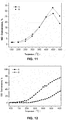
- the experimental results are shown in FIG. 11 .
- the Mn/C3-1 catalyst exhibits NO conversion higher than the Mn/C-0 catalyst.
- the reaction temperature as required by the Mn/C3-1 catalyst is lower than that as required by the Mn/C-0 catalyst, and the lower reaction temperature is advantageous for prolonging the lifetime of the catalysts.
- micro-scale cerium oxide particles C3-1 having multi-cores single-shell structure as prepared in Example 9 and the nano-scale cerium oxide grain aggregates C-0 without multi-cores single-shell structure as prepared in Comparative Example support the transition metal Mn in oxidative state in an amount of 2% by weight of the cerium oxide materials (based on the mass percentage of the metal), respectively.
- the Mn-supported C3-1 and the Mn-supported C-0 are respectively subjected to sulfurization treatment, in which the sulfurization treatment is carried out in an atmosphere containing 10% H 2 O and 40 ppm SO 2 at 300 °C for 20 hours.
- the Mn-supported C3-1 and the Mn-supported C-0 are used for catalyzing the oxidative reaction experiment of a CO containing gas, and the corresponding experimental conditions include: the total reaction atmosphere comprising 1000 ppm CO, 5% CO 2 , 5% O 2 , 5% H 2 O, and the balance being N 2 ; the amount of the catalyst of 0.2 g; the total gas flow of 1 L/min; and the programmed temperature rising rate of 10 °C/min.
- the experimental results are shown in FIG. 12 .
- the Mn/C3-1 catalyst exhibits CO conversion higher than the Mn/C-0 catalyst.
- the reaction temperature as required by the Mn/C3-1 catalyst is lower than that as required by the Pd/C-0 catalyst, and this can demonstrate that the Mn/C3-1 catalyst has a higher sulfur resistance.
- the micro-scale cerium oxide particles having multi-cores single-shell structure as prepared according to the invention as compared with conventional cerium oxide without shells, have obviously excellent ability to resist hydrothermal aging after they are prepared into functional catalysts by supporting noble metals or transition meals. After being subjected to the hydrothermal aging treatment in an air atmosphere containing 10% H 2 O at 750 °C for 20 hour, the activity of the catalyst as involved in the invention is obviously superior to that of conventional catalysts without shells.
- the micro-scale cerium oxide particles having multi-cores single-shell structure as prepared according to the invention as compared with conventional cerium oxide without shells, have obviously excellent ability to resist sulfur poisoning after they are prepared into functional catalysts by supporting noble metals or transition meals.
- the sulfurization treatment in an air atmosphere containing 40 ppm SO 2 and 10% H 2 O at 300 °C for 20 hour, the activity of the catalyst as involved in the invention is obviously superior to that of conventional catalysts without shells.
Landscapes
- Chemical & Material Sciences (AREA)
- Engineering & Computer Science (AREA)
- Organic Chemistry (AREA)
- Chemical Kinetics & Catalysis (AREA)
- Materials Engineering (AREA)
- Oil, Petroleum & Natural Gas (AREA)
- Thermal Sciences (AREA)
- Physics & Mathematics (AREA)
- Dispersion Chemistry (AREA)
- General Chemical & Material Sciences (AREA)
- Analytical Chemistry (AREA)
- Environmental & Geological Engineering (AREA)
- Biomedical Technology (AREA)
- Health & Medical Sciences (AREA)
- Combustion & Propulsion (AREA)
- Life Sciences & Earth Sciences (AREA)
- Geology (AREA)
- Inorganic Chemistry (AREA)
- Catalysts (AREA)
- Exhaust Gas Treatment By Means Of Catalyst (AREA)
Abstract
Description
- The present inventing relates to the technical field of advanced inorganic nano- and/or micro-scale materials, particularly to the technical field of catalyst support.
- Cerium oxide is an important oxide of rare earth elements, and it has many excellent properties as a catalyst support or an additive to supports, which have been confirmed in catalysis researches. In subsequent researches, it is reported that the cerium oxide can exhibit unique advantages as a catalyst support in oxidative reaction, methanol cleavage and reductive reaction of nitrogen oxides due to good performances in oxygen storage and release and strong redox behaviors between trivalent cerium ions and tetravalent cerium ions.
- The physical and chemical properties of cerium oxide greatly depend on the microstructure thereof, e.g., size, morphology, and specific surface area,etc. Cerium oxide materials having micro- and nano-scale porous structure not only can well satisfy requirements of highly effective absorbing materials on the microstructure thereof, but also can increase catalytic active sites of surface by increasing specific surface area, thereby to increase catalytic properties of the cerium oxide materials. Hence, researches for the preparation of such kind of materials have great realistic significance. However, it is found that nano- and/or micro-scale cerium oxide particles and cerium oxide aerogel having a large specific surface area as prepared according to existing methods known in the art, as catalyst supports, have poor mechanical strength and resistance to high temperature, and are easy to be sintered and collapse in hollow structure at a high temperature in use.
- When being applied in the field of catalytic after-treatment to exhaust emissions containing CO, NO or volatile organic compounds, supported catalysts as prepared by using cerium oxide having conventional structures as the catalyst support would involve the following defects:
- 1) Hydrothermal stability is poor. The support per se will easily take sintering and collapsing in hollow structure at a high temperature, which will decreases the surface area and porosity.
- 2) Active components, e.g., noble metals or transition metals, as supported by the support will be easily embedded during the hydrothermal aging at a high temperature.
- 3) Sulfur resistance is poor, and if the catalyst is exposed to a sulfur-containing atmosphere for a long period, the catalyst will be deactivated.
- The above defects seriously restrict the applications of cerium oxide materials in the field of catalytic after-treatment of exhaust emssions that includes a stationary source and a mobile source. Hence, at now, it is in interest that how to maintain a high specific surface area of a nano-scale cerium oxide support while assuring its mechanical strength and resistance to high temperature.
- In order to address the above problems, the invention is proposed.
- A first aspect of the invention is directed to a micro-scale cerium oxide particle having multi-cores single-shell structure, comprising:
- A cerium oxide shell, the shell being composed of crystalline and/or amorphous nano-scale cerium oxide particles; and
- A plurality of nano-scale cerium oxide grain cores aggregates located in the interior of the shell.
- Preferably, the shell is made of crystalline nano-scale cerium oxide particles. There are thousands, ten thousands and even millions of nano-scale cerium oxide grain cores. As for the micro-scale cerium oxide particles having multi-cores single-shell structure according to the invention, the shell therein may protect the nano-scale cerium oxide grain cores aggregates in the interior thereof, so as to increase the properties of the particles in each aspect.
- In a preferred embodiment, the micro-scale cerium oxide particles are spherical or sphere-like particles, having an average particle size of 0.5 µm to 50 µm, preferably 1 to 10 µm; a BET specific surface area of 50 to 200 m2/g, a pore volume of 0.1 to 0.8 cm3/g, and an average pore diameter of 2 to 40 nm; the mass of the plurality of nano-scale cerium oxide grain cores aggregates in the interior of the shell is from 85 to 99% based on the total mass of the micro-scale cerium oxide particles, and the mass of the cerium oxide shell is from 1 to 15% based on the total mass of the micro-scale cerium oxide particles, wherein the mass of the plurality of nano-scale cerium oxide grain cores aggregates in the interior of the shell and the mass of the cerium oxide shell may be controlled by controlling deposition conditions; the cerium oxide shell has a thickness ranging from 10 to 200 nm, preferably from 20 to 100 nm; the nano-scale cerium oxide grains have an average particle size of 2 to 50 nm, preferably from 2 to 40 nm, even preferably 2 to 30 nm, more preferably 2 to 20 nm, and most preferably 2 to 10 nm; the crystalline and/or amorphous nano-scale cerium oxide particles in the cerium oxide shell have an average particle size of 2 to 50 nm.
- The nano-scale cerium oxide grain cores aggregates and the cerium oxide shell both are porous, i.e., have many microscopic channels or orifices, so as to facilitate inward and outward diffusions of reactants and reaction products. These microscopic channels or orifices are formed as follows: they are formed by gaps of microparticles when the numerous microparticles are agglomerated together; alternatively, as described below, when an organic adjuvant is used during the precipitation, the organic adjuvant will be entrained in solid particles, and after being calcined, the organic adjuvant is burnt out, then the channels and orifices are formed at the positions as initially occupied by the organic adjuvant.
- A second aspect of the invention is directed to a method for preparation of the micron-scale cerium oxide particles having multi-cores single-shell structure, comprising the following steps:
- A. Reacting a cerium salt solution with a precipitant to produce a suspension, then air being bubbled into the produced suspension to carry out oxidization reaction to produce a liquid phase dispersion system of nano-scale cerium oxide precursor, wherein the nano-scale cerium oxide precursor comprises hydroxides of cerium and oxides of cerium;
- B. Subjecting the liquid phase dispersion system of the nano-scale cerium oxide precursor to spray drying and calcination, to produce an embryo body of nano-scale cerium oxide grain cores aggregates;
- C. Dispersing the embryo body of nano-scale cerium oxide grain cores aggregates into a solvent to produce a suspension, then the cerium salt solution and the precipitant being added to the suspension to carry out a deposition shell-forming reaction around the nano-scale cerium oxide grain cores aggregates, to produce a second suspension;
- D. Subjecting the second suspension to spray drying and calcination to produce the micro-scale cerium oxide particles having multi-cores single-shell structure, which is named as "C1".
- In a preferred embodiment, between the step A and the step B, the following step is added: an organic adjuvant is added to the liquid phase dispersion system of nano-scale cerium oxide precursor, wherein the organic adjuvant can act the functions of a co-dispersing agent and a pore-forming agent.
- In a preferred embodiment, the organic adjuvant includes one or more selected from the group consisting of methylcellulose, starch, aminoacetic acid, 6-aminohexanoic acid, oxalic acid, citric acid, polyethylene glycol having a polymerization degree between 400 and 20000.
- In a preferred embodiment, the cerium salt includes cerium(III) nitrate, cerium(III) acetate or cerium(III) sulfate; the cerium salt solution is in a concentration of 0.005 mol/L to 1 mol/L; the precipitant includes ammonia, urea, sodium hydroxide or potassium hydroxide; independently, in the step A, the pH of the suspension, before the oxidization, is adjusted to a range between 7 and 11.5; independently, in the step C, the solvent includes water, anhydrous ethanol, a water-ethanol mixed system or a water-ethylene glycol mixed system; independently, the calcination temperature in the step B and/or step D is from 450 to 750 °C.
- A third aspect of the invention is directed to a further method for preparation of micro-scale cerium oxide particles having multi-cores single-shell structure, comprising the following steps:
- A. Reacting a cerium salt solution with a precipitant to produce a suspension, then air being bubbled into the produced suspension to carry out oxidization reaction to produce a liquid phase dispersion system of nano-scale cerium oxide precursor;
- B. Adding an organic adjuvant and the cerium salt solution to the liquid phase dispersion system of nano-scale cerium oxide precursor, to produce a homogenously dispersed liquid phase dispersion system;
- C. Subjecting the homogenously dispersed liquid phase dispersion system to spray drying and calcination, to produce the micro-scale cerium oxide particles having multi-cores single-shell structure. Wherein the micro-scale cerium oxide particles having multi-cores single-shell structure as prepared according to this method is named as "C2".
- In a preferred embodiment, the cerium salt includes cerium(III) nitrate, cerium(III) acetate or cerium(III) sulfate; the cerium salt solution is in a concentration of 0.005 mol/L to 1 mol/L; the precipitant includes ammonia, urea, sodium hydroxide or potassium hydroxide; independently, in the step A, the pH of the suspension, before the oxidization, is adjusted to a range between 7 and 11.5; the organic adjuvant includes one or more selected from the group consisting of methylcellulose, starch, aminoacetic acid, 6-aminohexanoic acid, oxalic acid, citric acid, polyethylene glycol having a polymerization degree between 400 and 20000; independently, the calcination temperature in the step C is from 450 to 750 °C.
- A fourth aspect of the invention is directed to a further method for preparation of micro-scale cerium oxide particles having multi-cores single-shell structure, comprising the following steps:
- A. Reacting a cerium salt solution with a precipitant to produce a suspension, wherein the cerium salt solution and/or the precipitant contain an organic adjuvant, and the cerium salt is in the stoichiometric excess relative to the precipitant; then air being bubbled into the produced suspension to carry out oxidization reaction to produce a liquid phase dispersion system of nano-scale cerium oxide precursor;
- B. Subjecting the liquid phase dispersion system of nano-scale cerium oxide precursor to spray drying and calcination, to produce the micro-scale cerium oxide particles having multi-cores single-shell structure.Wherein the micro-scale cerium oxide particles having multi-cores single-shell structure as prepared according to this method is named as "C3".
- In the method, cerium ions in the excessive cerium salts will bond to the organic adjuvant, to produce a cerium oxide shell during the spray drying and calcination.
- In a preferred embodiment, the cerium salt includes cerium(III) nitrate, cerium(III) acetate or cerium(III) sulfate; the cerium salt solution is in a concentration of 0.005 mol/L to 1 mol/L; the precipitant includes ammonia, urea, sodium hydroxide or potassium hydroxide; the organic adjuvant includes one or more selected from the group consisting of methylcellulose, starch, aminoacetic acid, 6-aminohexanoic acid, oxalic acid, citric acid, polyethylene glycol having a polymerization degree between 400 and 20000; independently, in the step A, the pH of the suspension, before the oxidization, is adjusted between 8 and 11.5; independently, the calcination temperature in the step B is from 450 to 750 °C
- A fifth aspect of the invention is directed to a supported catalyst that includes a support and an active component supported on the support, wherein:
- The support is the micro-scale cerium oxide particle having multi-cores single-shell structure according to the first aspect of the invention;
- The active component is nanoparticles of noble metals or transition metals, dispersed on the plurality of nano-scale cerium oxide grain cores and/or on the cerium oxide shell.
- In a preferred embodiment, the noble metal may be Pt or Pd, wherein the noble metal is in an oxidative state or in an elemental state, and by calculations based on the mass of the noble metals, the loading quantity of the noble metal is 0.02 to 5% based on the mass of the micro-scale cerium oxide particles having multi-cores single-shell structure; independently, the transition metal is Mn, Fe, Co, Ni or Cu, wherein the transition metal is in an oxidative state, and by calculations based on the mass of the transition metals, the loading quantity of the transition metal is 0.1 to 20% based on the mass of the micro-scale cerium oxide particles having multi-cores single-shell structure
- A sixth aspect of the invention is directed to the use of the supported catalyst according to the fifth aspect of the invention, wherein the supported catalyst is used for catalysis of NO oxidation, CO oxidation, three-way catalytic reactions of vehicle off-gases or oxidative elimination reaction of organics.
- The present invention has the following beneficial effects:
- 1. The micro-scale cerium oxide particles having multi-cores single-shell structure according to the invention have large specific surface area, high mechanical strength and good hydrothermal stability.
- 2. Supported catalysts as prepared by using the micro-scale cerium oxide particles having multi-cores single-shell structure according to the invention have the advantages: good hydrothermal stability, good sulfur resistance, no easiness of supported active components, e.g., noble metals or transition metals, to be embedded during hydrothermal aging at a high temperature.
-
-
FIG. 1 is a structural schematic diagram of the micro-scale cerium oxide particles having multi-cores single-shell structure according to the invention. -
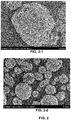
FIG. 2-1 and FIG. 2-2 inFIG. 2 each are a Scanning Electron Microscope (SEM) photograph for showing the nano-scale cerium oxide aggregate particles C-0 without multi-cores single-shell structure as prepared in the comparative example. As seen from the figures, the particles have rough surfaces and obviously exhibit a porous structure. Furthermore, the surfaces of the micro-scale cerium oxide aggregate particles are formed by compactly aggregating nano-scale cerium oxide particles having lower particle size. -
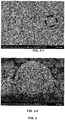
FIG. 3-1 and FIG. 3-2 inFIG. 3 each are a Scanning Electron Microscope (SEM) photograph for showing the micro-scale cerium oxide particles C1-1 having multi-cores single-shell structure as prepared in Example 1 according to the invention. As seen from the figures, the micro-scale cerium oxide particles according to the invention have spherical or sphere-like structure.FIG. 3-2 is an enlarged view for showing damaged micro-scale cerium oxide particles having multi-cores single-shell structure at the position circled by the dot line inFIG. 3-1, and FIG. 3-2 can demonstrate the presence of the shell. -
FIG. 4 is an X-ray diffraction (XRD) pattern for showing the micro-scale cerium oxide particles C1-1 having multi-cores single-shell structure as prepared in Example 1 according to the invention. As seen from the figure, the material is in the Cubic Fluorite structure, and all the diffraction peaks are attributed to the Cubic Fluorite structure of the CeO2; according to the broadening width of diffraction peak of the crystal plane (111), it can be calculated that the grain size of the CeO2 is about 8.6 nm; it is proved that the cores of micro-scale cerium oxide particles having multi-cores single-shell structure as prepared according to the method in the invention are crystalline. -
FIG. 5 is a Scanning Electron Microscope (SEM) photograph for showing the micro-scale cerium oxide particles C2-1 having multi-cores single-shell structure as prepared in Example 5 according to the invention. As seen fromFIG. 5 , the micro-scale cerium oxide particles having multi-cores single-shell structure as prepared according to the method in the invention have relatively smooth surfaces. -
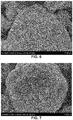
FIG. 6 is a Scanning Electron Microscope (SEM) photograph for showing the micro-scale cerium oxide particles C2-1 having multi-cores single-shell structure as prepared in Example 5 according to the invention after grinding. As seen fromFIG. 6 , after the grinding, the shells of the micro-scale cerium oxide particles having multi-cores single-shell structure are damaged, and thus the nano-scale cerium oxide grain cores aggregates in the interior of the shells are observed to be in a porous structure. -
FIG. 7 is a Scanning Electron Microscope (SEM) photograph for showing the micro-scale cerium oxide particles C3-1 having multi-cores single-shell structure as prepared in Example 9 according to the invention. As seen fromFIG. 7 , the micro-scale cerium oxide particles having a multi-cores single-shell structure as prepared according to the method in the invention have relatively smooth surfaces. -
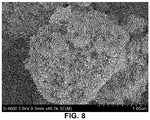
FIG. 8 is a Scanning Electron Microscope (SEM) photograph for showing the micro-scale cerium oxide particles C3-1 having multi-cores single-shell structure as prepared in Example 9 according to the invention after grinding. As seen fromFIG. 8 , after the grinding, the shells of the micro-scale cerium oxide particles having multi-cores single-shell structure are damaged, and thus the nano-scale cerium oxide grain cores aggregates in the interior of the shells are observed to be in a porous structure. -
FIG. 9 is a curve for showing the catalytic activities for catalyzing a mixed gas containing CO and C3H6 with the catalysts obtainable by respectively supporting Pd with the micro-scale cerium oxide particles C3-1 having multi-cores single-shell structure as prepared in Example 9 and with the cerium oxide aggregates C-0 as prepared in the comparative example and then subjecting the supported catalysts to hydrothermal treatments.FIG. 9-1 is a conversion curve of the CO in the mixed gas, andFIG. 9-2 is a conversion curve of the C3H6 in the mixed gas, wherein the symbol A represents the supported catalyst Pd/C3-1 after being subjected to the hydrothermal treatments, and the symbol B represents the supported catalyst Pd/C-0 after being subject to the hydrothermal treatments. -
FIG. 10 is a curve for showing the catalytic activities for catalyzing a mixed gas containing CO and C3H6 with the catalysts obtainable by respectively supporting Pd with the micro-scale cerium oxide particles C3-1 having multi-cores single-shell structure as prepared in Example 9 and with the cerium oxide aggregates C-0 as prepared in the comparative example, and then subjecting the supported catalysts to sulfurization treatments.FIG. 10-1 is a conversion curve of the CO in the mixed gas, andFIG. 10-2 is a conversion curve of the C3H6 in the mixed gas, wherein the symbol A represents the supported catalyst Pd/C3-1 after being subject to the sulfurization treatments, and the symbol B represents the supported catalyst Pd/C-0 after being subjected to the sulfurization treatments. -
FIG. 11 is a curve for showing the catalytic activities for catalyzing a NO-containing gas with the catalysts obtainable by respectively supporting Mn with the micro-scale cerium oxide particles C3-1 having multi-cores single-shell structure as prepared in Example 9 and with the cerium oxide aggregates C-0 as prepared in the comparative example, and then subjecting the supported catalysts to hydrothermal treatments, wherein the symbol A represents the supported catalyst Mn/C3-1 after being subjected to the hydrothermal treatments, and the symbol B represents the supported catalyst Mn/C-0 after being subjected to the hydrothermal treatments. -
FIG. 12 is a curve for showing the catalytic activities for catalyzing a CO-containing gas with the catalysts obtainable by respectively supporting Mn with the micro-scale cerium oxide particles C3-1 having multi-cores single-shell structure as prepared in Example 9 and with the cerium oxide aggregates C-0 as prepared in the comparative example, and then subjecting the supported catalysts to sulfurization treatments, wherein the symbol A represents the supported catalyst Mn/C3-1 after being subjected to the sulfurization treatments, and the symbol B represents the supported catalyst Mn/C-0 after being subjected to the sulfurization treatments. - The following examples are list out for illustrating the invention, while these examples are not limiting.
- Nano-scale cerium oxide grain aggregates without multi-cores single-shell structure are papered according to the following steps:
- A. A 0.005 mol/L cerium(III) nitrate solution was reacted with ammonia to produce a suspension, and the pH of the produced suspension was regulated to be 7; air was bubbled into the produced suspension to oxidize it, to produce a liquid phase dispersion system of nano-scale cerium oxide precursor;
- B. The produced liquid phase dispersion system of nano-scale cerium oxide precursor was subjected to spray drying, and then was calcined at 450 °C to produce nano-scale cerium oxide grain aggregates; the nano-scale cerium oxide grain aggregates without multi-cores single-shell structure as prepared according to the method was named as "C-0".
- As for the preparation process in the step A, please see the reference document: X.-D.Zhou, W.Huebner, H.U.Anderson, Processing of nanometer-scale CeO2 particles[J], Chemical Materials, 2003, 15:378-382, which is cited herein for the reference.
- The micron-scale cerium oxide particles C1 having multi-cores single-shell structure are prepared according to the following steps:
- A. Reacting a cerium salt solution with a precipitant to produce a suspension, while regulating the pH of the produced suspension, air being bubbled to carry out oxidization reaction to produce a liquid phase dispersion system of nano-scale cerium oxide precursor; wherein optionally, an organic adjuvant is added to the liquid phase dispersion system of nano-scale cerium oxide precursor;
- B. Subjecting the liquid phase dispersion system of the nano-scale cerium oxide precursor to spray drying and calcination, to produce an embryo body of nano-scale cerium oxide grain cores aggregates;
- C. Dispersing the embryo body of nano-scale cerium oxide grain cores aggregates into a solvent to produce a suspension, then the cerium salt solution and the precipitant being added to the suspension to carry out a deposition shell-forming reaction around the nano-scale cerium oxide grain cores aggregates, to produce a second suspension;
- D. Subjecting the second suspension to spray drying and calcination to produce the micro-scale cerium oxide particles having multi-cores single-shell structure, named as "C1".
- Specific experimental results are shown in Table 1.
Table 1: Preparation conditions for Examples 1-4 example 1 (C1-1) example 2 (C1-2) example 3 (C1-3) example 4 (C1-4) Cerium salt solution and concentration thereof in the step A 0.1 mol/L cerium(III) nitrate 0.05 mol/L cerium(III) sulfate 0.5 mol/L cerium(III) nitrate 1 mol/L cerium(III) acetate Precipitant in the step A Ammonia Ammonia 1 mol/L sodium hydroxide solution Ammonia pH of the suspension in the step A 9.8 8.5 11.5 10.2 Organic adjuvant and concentration thereof in the step A None Polyethylene glycol 400 24 g/L, 6-aminohexanoic acid 0.01 mol/L Polyethylene glycol 4000 30 g/L, aminoacetic acid 0.014 mol/L Soluble starch 25 g/L, citric acid 0.01 mol/L Calcination temperature in the step B /°C 500 450 600 700 Calcination temperature in the step D /°C 500 600 500 500 solvents in the step C Water Ethanol Water Water Cerium salt solution and concentration thereof in the step C 0.05 mol/L cerium(III) nitrate 0.05 mol/L cerium(III) sulfate 0.02 mol/L cerium(III) nitrate 0.01 mol/L cerium(III) nitrate Precipitant in the step Ammonia Ammonia 1 mol/L hydroxide solution Ammonia - The micron-scale cerium oxide particles C2 having multi-cores single-shell structure are prepared according to the following steps:
- A. Reacting a cerium salt solution with a precipitant to produce a suspension, whiling regulating the pH of the produced suspension, air being bubbled to carry out oxidization reaction to produce a liquid phase dispersion system of nano-scale cerium oxide precursor;
- B. Adding an organic adjuvant and the cerium salt solution to the liquid phase dispersion system of nano-scale cerium oxide precursor, to produce a homogenously dispersed liquid phase dispersion system;
- C. Subjecting the homogenously dispersed liquid phase dispersion system to spray drying and calcination, to produce micro-scale cerium oxide particles having multi-cores single-shell structure, wherein the micro-scale cerium oxide particles having multi-cores single-shell structure as prepared according to the method is named as "C2".
- Specific experimental results are shown in Table 2.
Table 2: Preparation conditions for Examples 5-8 example 5 (C2-1) example 6 (C2-2) example 7 (C2-3) example 8 (C2-4) Cerium salt solution and concentration thereof in the step A 0.1 mol/L cerium(III) nitrate 0.05 mol/L cerium(III) sulfate 0.5 mol/L cerium(III) nitrate 1 mol/L cerium(III) acetate Precipitant in the step A 1 mol/L sodium hydroxide solution Ammonia Ammonia Ammonia pH of the suspension in the step A 11 8.5 9.6 10.2 Organic adjuvant and concentration thereof in the step B None Polyethylene glycol 4000 24 g/L, aminoacetic acid 0.014 mol/L Methyl cellulose Soluble starch 25 g/L, citric acid 0.01 mol/L Cerium salt solution and concentration thereof in the step B 0.02 mol/L cerium(III) nitrate 0.02 mol/L cerium(III) nitrate 0.015 mol/L cerium(III) acetate 0.015 mol/L cerium(III) acetate Calcination temperature in the step C/° C 500 600 500 600 - The micron-scale cerium oxide particles C3 having multi-cores single-shell structure are prepared according to the following steps:
- A. Reacting a cerium salt solution with a precipitant to produce a suspension, wherein the cerium salt solution and/or the precipitant contain an organic adjuvant, and the cerium salt is in the stoichiometric excess relative to the precipitant; while regulating the pH of the produced suspension, air being bubbled to carry out oxidization reaction to produce a liquid phase dispersion system of nano-scale cerium oxide precursor;
- B. Subjecting the liquid phase dispersion system of nano-scale cerium oxide precursor to spray drying and calcination, to produce micro-scale cerium oxide particles having multi-cores single-shell structure, wherein the micro-scale cerium oxide particles having multi-cores single-shell structure as prepared according to the method is named as "C3".
- Specific experimental results are shown in Table 3.
Table 3: Preparation conditions for Examples 9-12 example 9 (C3-1) example 10 (C3-2) example 11 (C3-3) example 12 (C3-4) Cerium salt solution and concentration thereof in the step A 0.5 mol/L cerium(III) nitrate 0.05 mol/L cerium(III) nitrate 0.1 mol/L cerium(III) acetate 1 mol/L cerium(III) nitrate Precipitant in the step A Ammonia Ammonia 1 mol/L hydroxide solution Ammonia pH of the suspension in the step A 11.2 8.5 9.6 10.2 Organic adjuvant and concentration thereof in the step A Polyethylene glycol 400 24 g/L, aminoacetic acid 0.014 mol/ L Polyethylene glycol 400 24 g/L Methyl cellulose Soluble starch 25 g/L, citric acid 0.01 mol/L Calcination temperature in the step B/°C 600 600 600 600 - This example uses the materials as prepared in Examples C1-1, C2-1, C3-1 and Comparative Example C-0 as the sample, and tests them in the hydrothermal stability aspect. The term "fresh" represents newly-prepared samples, and the term "aged" represents samples after the hydrothermal reaction. The conditions for tests of hydrothermal stability are that the hydrothermal aging treatment is conducted at 750 °C and in an air atmosphere containing 10% H2O for 20 hours. The results are shown in Table 4:
Table 4: Test results of hydrothermal stability Sample C-0 C1-1 C2-1 C3-1 BET specific surface area Fresh (m2/g) 110 105 100 130 Aged (m2/g) 25 50 35 70 Reduction (%) 77 52 65 46 Pore volume Fresh (cm3/g) 0.337 0.352 0.321 0.412 Aged (cm3/g) 0.102 0.210 0.155 0.231 Reduction (%) 70 40 52 44 Average pore diameter Fresh (nm) 12.1 13.5 14.4 12.3 Aged (nm) 17.0 14.1 15.1 14.1 Increase (%) 40 4 5 15 Average grain diameter Fresh (nm) 8 8 8 7 Aged (nm) 22 13 14 13 Increase (%) 175 63 75 86 Note: the pore volume data selects corresponding adsorption volumes at the maximum pressure in nitrogen isothermal adsorption; the average pore diameter selects desorption values as calculated in BJH calculations; the average grain diameter is calculated based on the full width at half maximum of the diffraction peak of the crystal plane (111) of CeO2 having a Cubic Fluorite structure in the X-ray diffraction pattern (XRD), and in the XRD of a copper target, 2θ=28.5-28.9° (the range is caused due to systematic errors of associated apparatus). - As shown in Table 4, for a fresh sample, the BET specific surface areas, pore volumes, average pore diameters and average grain diameters of the samples C1-1, C2-1 and C3-1 having multi-cores single-shell structure differ from those of comparative sample C-0 by less than 20%, and this shows that the multi-cores single-shell structure per se will produce less impacts on the physical property parameters of the materials. The physical structural parameters of all the samples after the hydrothermal aging each vary, including the reduction in the BET specific surface area, the reduction in the pore volume, the increase in the average pore diameter and the increase in the average grain diameter. At this time, the variations of all the samples having multi-cores single-shell structure in the physical property parameters each are less than those of the sample C-0: the reduction in the BET specific surface area decreases from 70% to the range of 46% to 65%; the reduction in the pore volume decreases from 70% to the range of 40% to 52%; the increase in the average pore diameter decreases from 40% to the range of 4 to 15%; and the increase in the average grain diameter decreases from 175% to the range of 63% to 86%. The results confirms that the multi-cores single-shell structure of the samples as prepared according to the method of the invention can significantly increase the ability of the samples to resist the structural variations during the hydrothermal aging, and thus the samples have good hydrothermal stability.
- The micro-scale cerium oxide particles C3-1 having multi-cores single-shell structure as prepared in Example 9 and the nano-scale cerium oxide grain aggregates C-0 without multi-cores single-shell structure as prepared in Comparative Example, support the elemental noble metal Pd in an amount of 2% by weight of the cerium oxide materials, respectively. The Pd-supported C3-1 and the Pd-supported C-0 are respectively subjected to hydrothermal treatment, in which the hydrothermal aging is carried out in an air atmosphere containing 10% H2O at 750 °C for 20 hours.
- After the hydrothermal treatment, the Pd-supported C3-1 (abbreviated as Pd/C3-1) and the Pd-supported C-0 (abbreviated as Pd/C-0) are used for catalyzing the oxidative reaction experiment of a mixed gas containing CO and C3H6, and the corresponding experimental conditions include: the total reaction atmosphere comprising 1000 ppm CO, 150 ppm C3H6, 5% CO2, 5% O2, 5% H2O, and the balance being N2; the amount of the catalyst of 0.2 g; the total gas flow of 1 L/min; and the programmed temperature rising rate of 10 °C/min. The experimental results are shown in
FIG. 9 . Clearly, at the same temperature, the Pd/C3-1 catalyst exhibits CO conversion and C3H6 conversion both higher than the Pd/C-0 catalyst. Alternatively, in the same conversion level, the reaction temperature as required by the Pd/C3-1 catalyst is lower than that as required by the Pd/C-0 catalyst, and the lower reaction temperature is advantageous for prolonging the lifetime of the catalysts. The above experiments not only show that the Pd/C3-1 catalyst have a strong ability to resist hydrothermal aging, but also demonstrate that the active component in the catalyst is not easily embedded. - The micro-scale cerium oxide particles C3-1 having multi-cores single-shell structure as prepared in Example 9 and the nano-scale cerium oxide grain aggregates C-0 without multi-cores single-shell structure as prepared in Comparative Example, support the elemental noble metal Pd in an amount of 2% by weight of the cerium oxide materials, respectively. The Pd-supported C3-1 and the Pd-supported C-0 are respectively subjected to sulfurization treatment, in which the sulfurization treatment is carried out in an atmosphere containing 10% H2O and 40 ppm SO2 at 300 °C for 20 hours.
- After the sulfurization treatment, the Pd-supported C3-1 and the Pd-supported C-0 are used for catalyzing the oxidative reaction experiment of a mixed gas containing CO and C3H6, and the corresponding experimental conditions include: the total reaction atmosphere comprising 1000 ppm CO, 150 ppm C3H6, 5% CO2, 5% O2, 5% H2O, and the balance being N2; the amount of the catalyst of 0.2 g; the total gas flow of 1 L/min; and the programmed temperature rising rate of 10 °C/min. The experimental results are shown in
FIG. 10 . Clearly, after being subjecting to the same sulfurization treatments and at the same temperature, the Pd/C3-1 catalyst exhibits CO conversion and C3H6 conversion both higher than the Pd/C-0 catalyst. Alternatively, in the same conversion level, the reaction temperature as required by the Pd/C3-1 catalyst is lower than that as required by the Pd/C-0 catalyst, and this demonstrates that the Pd/C3-1 catalyst has a stronger sulfur resistance. - The micro-scale cerium oxide particles C3-1 having multi-cores single-shell structure as prepared in Example 9 and the nano-scale cerium oxide grain aggregates C-0 without multi-cores single-shell structure as prepared in Comparative Example support the transition metal Mn in oxidative state in an amount of 2% by weight of the cerium oxide materials (based on the mass percentage of the metal), respectively. The Mn-supported C3-1 and the Mn-supported C-0 are respectively subjected to hydrothermal treatment, in which the hydrothermal aging is carried out in an air atmosphere containing 10% H2O at 750 °C for 20 hours.
- After the hydrothermal treatment, the Mn-supported C3-1 (abbreviated as Mn/C3-1) and the Mn-supported C-0 (abbreviated as Mn/C-0) are used for catalyzing the oxidative reaction experiment of a NO-containing gas, and the corresponding experimental conditions include: the total reaction atmosphere comprising 100 ppm NO, 5% CO2, 5% O2, and the balance being N2; the amount of the catalyst of 0.2 g; the total gas flow of 1 L/min; and the programmed temperature rising rate of 10 °C/min. The experimental results are shown in
FIG. 11 . Clearly, at the same temperature, the Mn/C3-1 catalyst exhibits NO conversion higher than the Mn/C-0 catalyst. Alternatively, in the same conversion level, the reaction temperature as required by the Mn/C3-1 catalyst is lower than that as required by the Mn/C-0 catalyst, and the lower reaction temperature is advantageous for prolonging the lifetime of the catalysts. The above experiments not only show that the Mn/C3-1 catalyst have a strong ability to resist hydrothermal aging, but also demonstrate that the active component in the catalyst is not easily embedded. - The micro-scale cerium oxide particles C3-1 having multi-cores single-shell structure as prepared in Example 9 and the nano-scale cerium oxide grain aggregates C-0 without multi-cores single-shell structure as prepared in Comparative Example support the transition metal Mn in oxidative state in an amount of 2% by weight of the cerium oxide materials (based on the mass percentage of the metal), respectively. The Mn-supported C3-1 and the Mn-supported C-0 are respectively subjected to sulfurization treatment, in which the sulfurization treatment is carried out in an atmosphere containing 10% H2O and 40 ppm SO2 at 300 °C for 20 hours.
- After the sulfurization treatment, the Mn-supported C3-1 and the Mn-supported C-0 are used for catalyzing the oxidative reaction experiment of a CO containing gas, and the corresponding experimental conditions include: the total reaction atmosphere comprising 1000 ppm CO, 5% CO2, 5% O2, 5% H2O, and the balance being N2; the amount of the catalyst of 0.2 g; the total gas flow of 1 L/min; and the programmed temperature rising rate of 10 °C/min. The experimental results are shown in
FIG. 12 . Clearly, after being subjecting to the same sulfurization treatment and at the same temperature, the Mn/C3-1 catalyst exhibits CO conversion higher than the Mn/C-0 catalyst. Alternatively, in the same conversion level, the reaction temperature as required by the Mn/C3-1 catalyst is lower than that as required by the Pd/C-0 catalyst, and this can demonstrate that the Mn/C3-1 catalyst has a higher sulfur resistance. - As seen from Examples 14 and 16, the micro-scale cerium oxide particles having multi-cores single-shell structure as prepared according to the invention, as compared with conventional cerium oxide without shells, have obviously excellent ability to resist hydrothermal aging after they are prepared into functional catalysts by supporting noble metals or transition meals. After being subjected to the hydrothermal aging treatment in an air atmosphere containing 10% H2O at 750 °C for 20 hour, the activity of the catalyst as involved in the invention is obviously superior to that of conventional catalysts without shells.
- As seen from Examples 15 and 17, the micro-scale cerium oxide particles having multi-cores single-shell structure as prepared according to the invention, as compared with conventional cerium oxide without shells, have obviously excellent ability to resist sulfur poisoning after they are prepared into functional catalysts by supporting noble metals or transition meals. After being subjected to the sulfurization treatment in an air atmosphere containing 40 ppm SO2 and 10% H2O at 300 °C for 20 hour, the activity of the catalyst as involved in the invention is obviously superior to that of conventional catalysts without shells.
Claims (10)
- A micro-scale cerium oxide particle having multi-cores single-shell structure, characterized in that the micro-scale cerium oxide particle comprises:A cerium oxide shell, the shell being composed of crystalline and/or amorphous nano-scale cerium oxide particles; andA plurality of nano-scale cerium oxide grain cores aggregates located in the interior of the shell.
- The micro-scale cerium oxide particle having multi-cores single-shell structure according to claim 1, characterized in that the micro-scale cerium oxide particles are spherical or sphere-like particles, having an average particle size of 0.5 µm to 50 µm, and a BET specific surface area of 50 to 200m2/g; the mass of the plurality of nano-scale cerium oxide grain cores aggregates in the interior of the shell is from 85 to 99% based on the total mass of the micro-scale cerium oxide particles, and the mass of the cerium oxide shell is from 1 to 15% based on the total mass of the micro-scale cerium oxide particles; the cerium oxide shell has a thickness ranging from 10 to 200 nm; the nano-scale cerium oxide grains have an average particle size of 2 to 50 nm; the crystalline and/or amorphous nano-scale cerium oxide particles in the cerium oxide shell have an average particle size of 2 to 50 nm.
- A method for preparation of the micron-scale cerium oxide particles having multi-cores single-shell structure, comprising the following steps:A. Reacting a cerium salt solution with a precipitant to produce a suspension, then air being bubbled into the produced suspension to carry out oxidization reaction to produce a liquid phase dispersion system of nano-scale cerium oxide precursor;B. Subjecting the liquid phase dispersion system of the nano-scale cerium oxide precursor to spray drying and calcination, to produce an embryo body of nano-scale cerium oxide grain cores aggregates;C. Dispersing the embryo body of nano-scale cerium oxide grain cores aggregates into a solvent to produce a suspension, then the cerium salt solution and the precipitant being added to the suspension to carry out a deposition shell-forming reaction around the nano-scale cerium oxide grain cores aggregates, to produce a second suspension;D. Subjecting the second suspension to spray drying and calcination to produce the micro-scale cerium oxide particles having multi-cores single-shell structure.
- The method according to claim 3, characterized in that between the step A and the step B, the following step is added: adding an organic adjuvant to the liquid phase dispersion system of nano-scale cerium oxide precursor.
- The method according to claim 4, characterized in that the organic adjuvant includes one or more selected from the group consisting of methylcellulose, starch, aminoacetic acid, 6-aminohexanoic acid, oxalic acid, citric acid, polyethylene glycol having a polymerization degree between 400 and 20000.
- The method according to any one of claims 3 to 5, characterized in that the cerium salt includes cerium(III) nitrate, cerium(III) acetate or cerium(III) sulfate; the cerium salt solution is in a concentration of 0.005 mol/L to 1 mol/L; the precipitant includes ammonia, urea, sodium hydroxide or potassium hydroxide; independently, in the step A, the pH of the suspension, before the oxidization, is adjusted to a range between 7 and 11.5; independently, in the step C, the solvent includes water, anhydrous ethanol, a water-ethanol mixed system or a water-ethylene glycol mixed system; independently, the calcination temperature in the step B and/or step D is from 450 to 750 °C.
- A method for preparation of micro-scale cerium oxide particles having multi-cores single-shell structure, comprising the following steps:A. Reacting a cerium salt solution with a precipitant to produce a suspension, then air being bubbled into the produced suspension to carry out oxidization reaction to produce a liquid phase dispersion system of nano-scale cerium oxide precursor;B. Adding an organic adjuvant and the cerium salt solution to the liquid phase dispersion system of nano-scale cerium oxide precursor, to produce a homogenously dispersed liquid phase dispersion system;C. Subjecting the homogenously dispersed liquid phase dispersion system to spray drying and calcination, to produce the micro-scale cerium oxide particles having multi-cores single-shell structure.
- The method according to claim 7, characterized in that the cerium salt includes cerium(III) nitrate, cerium(III) acetate or cerium(III) sulfate; the cerium salt solution is in a concentration of 0.005 mol/L to 1 mol/L; the precipitant includes ammonia, urea, sodium hydroxide or potassium hydroxide; independently, in the step A, the pH of the suspension, before the oxidization, is adjusted to a range between 7 and 11.5; the organic adjuvant includes one or more selected from the group consisting of methylcellulose, starch, aminoacetic acid, 6-aminohexanoic acid, oxalic acid, citric acid, polyethylene glycol having a polymerization degree between 400 and 20000; independently, the calcination temperature in the step C is from 450 to 750 °C.
- A method for preparation of micro-scale cerium oxide particles having multi-cores single-shell structure, comprising the following steps:A. Reacting a cerium salt solution with a precipitant to produce a suspension, wherein the cerium salt solution and/or the precipitant contain an organic adjuvant, and the cerium salt is in the stoichiometric excess relative to the precipitant; then air being bubbled into the produced suspension to carry out oxidization reaction to produce a liquid phase dispersion system of nano-scale cerium oxide precursor;B. Subjecting the liquid phase dispersion system of nano-scale cerium oxide precursor to spray drying and calcination, to produce the micro-scale cerium oxide particles having multi-cores single-shell structure.
- The method according to claim 9, characterized in that the cerium salt includes cerium(III) nitrate, cerium(III) acetate or cerium(III) sulfate; the cerium salt solution is in a concentration of 0.005 mol/L to 1 mol/L; the precipitant includes ammonia, urea, sodium hydroxide or potassium hydroxide; independently, the organic adjuvant includes one or more selected from the group consisting of methylcellulose, starch, aminoacetic acid, 6-aminohexanoic acid, oxalic acid, citric acid, polyethylene glycol having a polymerization degree between 400 and 20000; independently, in the step A, the pH of the suspension, before the oxidization, is adjusted to a range between 7 and 11.5; independently, the calcination temperature in the step B is from 450 to 750 °C.
Applications Claiming Priority (1)
| Application Number | Priority Date | Filing Date | Title |
|---|---|---|---|
| PCT/CN2015/073103 WO2016127430A1 (en) | 2015-02-15 | 2015-02-15 | Micron-scale cerium oxide particle having multi-core single-shell structure and preparation method therefor |
Publications (3)
| Publication Number | Publication Date |
|---|---|
| EP3257815A1 true EP3257815A1 (en) | 2017-12-20 |
| EP3257815A4 EP3257815A4 (en) | 2018-03-21 |
| EP3257815B1 EP3257815B1 (en) | 2020-07-08 |
Family
ID=56614063
Family Applications (1)
| Application Number | Title | Priority Date | Filing Date |
|---|---|---|---|
| EP15881592.8A Active EP3257815B1 (en) | 2015-02-15 | 2015-02-15 | Micron-scale cerium oxide particle having multi-core single-shell structure and preparation method therefor |
Country Status (4)
| Country | Link |
|---|---|
| US (1) | US10512897B2 (en) |
| EP (1) | EP3257815B1 (en) |
| CN (1) | CN107207274B (en) |
| WO (1) | WO2016127430A1 (en) |
Cited By (2)
| Publication number | Priority date | Publication date | Assignee | Title |
|---|---|---|---|---|
| IT201700070360A1 (en) * | 2017-06-23 | 2018-12-23 | Univ Degli Studi Udine | Catalysts based on Pd / CeO2 and method for their preparation |
| CN114558566A (en) * | 2022-03-12 | 2022-05-31 | 福州大学 | Hydrogen sulfide selective oxidation catalyst and preparation method and application thereof |
Families Citing this family (12)
| Publication number | Priority date | Publication date | Assignee | Title |
|---|---|---|---|---|
| KR102367577B1 (en) * | 2013-12-16 | 2022-02-25 | 로디아 오퍼레이션스 | Liquid suspension of cerium oxide particles |
| CN108408756B (en) * | 2018-03-02 | 2020-07-07 | 复旦大学 | Ceria microspheres with multi-level core-shell structure and preparation method and application thereof |
| KR20210107055A (en) * | 2018-12-28 | 2021-08-31 | 로디아 오퍼레이션스 | Cerium oxide particles and method for producing the same |
| JP7498461B2 (en) * | 2019-02-06 | 2024-06-12 | 古河電気工業株式会社 | Nanocrystal Complex |
| CN111151280A (en) * | 2019-12-30 | 2020-05-15 | 同济大学 | Cerium-based ozone catalyst containing double active sites and preparation method and application thereof |
| CN112239223B (en) * | 2020-10-26 | 2023-01-10 | 赣州湛海新材料科技有限公司 | A preparation method of rare earth oxide powder with large specific surface area |
| CN112958113B (en) * | 2021-02-08 | 2022-04-08 | 中国科学院化学研究所 | Cerium-cobalt bimetallic oxide catalyst for VOCs catalytic combustion and preparation method thereof |
| EP4304984A1 (en) * | 2021-03-12 | 2024-01-17 | Rhodia Operations | Cerium oxide particles, making process thereof and use thereof in chemical mechanical polishing |
| CN115869966B (en) * | 2021-09-28 | 2024-09-06 | 中国石油化工股份有限公司 | Cerium oxide nanosphere and preparation method and application thereof |
| CN114181068A (en) * | 2021-11-25 | 2022-03-15 | 江西省科学院能源研究所 | Cerium-doped copper oxalate nano material and preparation method thereof |
| CN116251585B (en) * | 2023-02-27 | 2024-11-26 | 武汉科技大学 | A cerium-manganese catalyst for catalytic oxidation of toluene and a preparation method thereof |
| CN119175094A (en) * | 2024-11-26 | 2024-12-24 | 交通运输部天津水运工程科学研究所 | Vanadate catalyst and preparation method and application thereof |
Family Cites Families (6)
| Publication number | Priority date | Publication date | Assignee | Title |
|---|---|---|---|---|
| AU2003211127B2 (en) * | 2002-02-15 | 2006-06-15 | Nanophase Technologies Corporation | Composite nanoparticle materials and method of making the same |
| JP4165443B2 (en) * | 2004-04-27 | 2008-10-15 | トヨタ自動車株式会社 | Method for producing metal oxide particles and exhaust gas purification catalyst |
| CN101164889B (en) * | 2007-09-28 | 2010-09-15 | 上海师范大学 | A kind of nano cerium oxide with core-shell structure and preparation method thereof |
| CN101433831A (en) * | 2008-12-17 | 2009-05-20 | 天津大学 | Preparation of homogeneous mischcrystal cerium-zirconium-aluminum coating material by coprecipitation method and technique thereof |
| US20110311635A1 (en) * | 2009-02-12 | 2011-12-22 | The Regents Of The University Of California | Hollow metal oxide spheres and nanoparticles encapsulated therein |
| CN103387256A (en) * | 2013-07-19 | 2013-11-13 | 山东大学 | A method for preparing ceria mesoporous hollow spheres |
-
2015
- 2015-02-15 CN CN201580073404.6A patent/CN107207274B/en active Active
- 2015-02-15 WO PCT/CN2015/073103 patent/WO2016127430A1/en not_active Ceased
- 2015-02-15 EP EP15881592.8A patent/EP3257815B1/en active Active
- 2015-02-15 US US15/550,336 patent/US10512897B2/en active Active
Cited By (4)
| Publication number | Priority date | Publication date | Assignee | Title |
|---|---|---|---|---|
| IT201700070360A1 (en) * | 2017-06-23 | 2018-12-23 | Univ Degli Studi Udine | Catalysts based on Pd / CeO2 and method for their preparation |
| WO2018235032A1 (en) * | 2017-06-23 | 2018-12-27 | Universita' Degli Studi Di Udine | PD / CEO2 BASED CATALYSTS AND PROCESS FOR PREPARING THE SAME |
| CN114558566A (en) * | 2022-03-12 | 2022-05-31 | 福州大学 | Hydrogen sulfide selective oxidation catalyst and preparation method and application thereof |
| CN114558566B (en) * | 2022-03-12 | 2023-08-25 | 福州大学 | Hydrogen sulfide selective oxidation catalyst and preparation method and application thereof |
Also Published As
| Publication number | Publication date |
|---|---|
| EP3257815A4 (en) | 2018-03-21 |
| WO2016127430A1 (en) | 2016-08-18 |
| CN107207274A (en) | 2017-09-26 |
| CN107207274B (en) | 2019-05-14 |
| EP3257815B1 (en) | 2020-07-08 |
| US20180029012A1 (en) | 2018-02-01 |
| US10512897B2 (en) | 2019-12-24 |
Similar Documents
| Publication | Publication Date | Title |
|---|---|---|
| EP3257815B1 (en) | Micron-scale cerium oxide particle having multi-core single-shell structure and preparation method therefor | |
| US10183276B2 (en) | Rhodium-containing catalysts for automotive emissions treatment | |
| RU2731104C2 (en) | Catalysts based on platinum group metals (pgm) for automotive exhaust treatment | |
| JP5581314B2 (en) | Exhaust gas purification catalyst | |
| JP4913727B2 (en) | Oxygen removal catalyst and oxygen removal method using the catalyst | |
| CN105618032A (en) | Supported manganese based low-temperature denitration catalyst and preparation method thereof | |
| JP5880527B2 (en) | Exhaust gas purification catalyst | |
| CN109641200B (en) | Methane oxidation catalyst, preparation process and use method thereof | |
| CN105792929B (en) | Exhaust gas purifying catalyst and its manufacturing method | |
| JP4063807B2 (en) | Exhaust gas purification catalyst | |
| JP5652271B2 (en) | Exhaust gas purification catalyst carrier, exhaust gas purification catalyst using the same, and method for producing exhaust gas purification catalyst carrier | |
| CN1984712A (en) | Catalyst for cycloolefin production and process for production | |
| JP2006305406A (en) | NOx purification catalyst | |
| JP2006297348A (en) | Exhaust gas purification catalyst | |
| CN114950423B (en) | Indoor low-concentration formaldehyde purification catalyst product and preparation method thereof | |
| JP4712406B2 (en) | NOx purification catalyst | |
| JP6268601B2 (en) | Method for producing exhaust gas purification catalyst | |
| JP4753613B2 (en) | NOx purification catalyst | |
| JP2007209866A (en) | Honeycomb catalyst for exhaust gas purification | |
| CN121669269A (en) | Pt-Co bimetallic catalyst and preparation method and application thereof |
Legal Events
| Date | Code | Title | Description |
|---|---|---|---|
| STAA | Information on the status of an ep patent application or granted ep patent |
Free format text: STATUS: THE INTERNATIONAL PUBLICATION HAS BEEN MADE |
|
| PUAI | Public reference made under article 153(3) epc to a published international application that has entered the european phase |
Free format text: ORIGINAL CODE: 0009012 |
|
| STAA | Information on the status of an ep patent application or granted ep patent |
Free format text: STATUS: REQUEST FOR EXAMINATION WAS MADE |
|
| 17P | Request for examination filed |
Effective date: 20170907 |
|
| AK | Designated contracting states |
Kind code of ref document: A1 Designated state(s): AL AT BE BG CH CY CZ DE DK EE ES FI FR GB GR HR HU IE IS IT LI LT LU LV MC MK MT NL NO PL PT RO RS SE SI SK SM TR |
|
| AX | Request for extension of the european patent |
Extension state: BA ME |
|
| REG | Reference to a national code |
Ref country code: DE Ref legal event code: R079 Ref document number: 602015055607 Country of ref document: DE Free format text: PREVIOUS MAIN CLASS: C01F0017000000 Ipc: B01J0023100000 |
|
| A4 | Supplementary search report drawn up and despatched |
Effective date: 20180215 |
|
| RIC1 | Information provided on ipc code assigned before grant |
Ipc: B01J 23/63 20060101ALI20180210BHEP Ipc: B01J 35/10 20060101ALI20180210BHEP Ipc: B01J 27/04 20060101ALI20180210BHEP Ipc: B01J 37/03 20060101ALI20180210BHEP Ipc: B01J 37/20 20060101ALI20180210BHEP Ipc: B01J 35/02 20060101ALI20180210BHEP Ipc: B01J 27/045 20060101ALI20180210BHEP Ipc: B01J 23/34 20060101ALI20180210BHEP Ipc: B01J 23/10 20060101AFI20180210BHEP Ipc: C01F 17/00 20060101ALI20180210BHEP Ipc: B01D 53/94 20060101ALI20180210BHEP |
|
| DAX | Request for extension of the european patent (deleted) | ||
| STAA | Information on the status of an ep patent application or granted ep patent |
Free format text: STATUS: EXAMINATION IS IN PROGRESS |
|
| 17Q | First examination report despatched |
Effective date: 20190813 |
|
| GRAP | Despatch of communication of intention to grant a patent |
Free format text: ORIGINAL CODE: EPIDOSNIGR1 |
|
| STAA | Information on the status of an ep patent application or granted ep patent |
Free format text: STATUS: GRANT OF PATENT IS INTENDED |
|
| INTG | Intention to grant announced |
Effective date: 20200421 |
|
| GRAS | Grant fee paid |
Free format text: ORIGINAL CODE: EPIDOSNIGR3 |
|
| GRAA | (expected) grant |
Free format text: ORIGINAL CODE: 0009210 |
|
| STAA | Information on the status of an ep patent application or granted ep patent |
Free format text: STATUS: THE PATENT HAS BEEN GRANTED |
|
| AK | Designated contracting states |
Kind code of ref document: B1 Designated state(s): AL AT BE BG CH CY CZ DE DK EE ES FI FR GB GR HR HU IE IS IT LI LT LU LV MC MK MT NL NO PL PT RO RS SE SI SK SM TR |
|
| REG | Reference to a national code |
Ref country code: AT Ref legal event code: REF Ref document number: 1287858 Country of ref document: AT Kind code of ref document: T Effective date: 20200715 Ref country code: CH Ref legal event code: EP |
|
| REG | Reference to a national code |
Ref country code: DE Ref legal event code: R096 Ref document number: 602015055607 Country of ref document: DE |
|
| REG | Reference to a national code |
Ref country code: IE Ref legal event code: FG4D |
|
| REG | Reference to a national code |
Ref country code: LT Ref legal event code: MG4D |
|
| REG | Reference to a national code |
Ref country code: AT Ref legal event code: MK05 Ref document number: 1287858 Country of ref document: AT Kind code of ref document: T Effective date: 20200708 |
|
| REG | Reference to a national code |
Ref country code: NL Ref legal event code: MP Effective date: 20200708 |
|
| PG25 | Lapsed in a contracting state [announced via postgrant information from national office to epo] |
Ref country code: SE Free format text: LAPSE BECAUSE OF FAILURE TO SUBMIT A TRANSLATION OF THE DESCRIPTION OR TO PAY THE FEE WITHIN THE PRESCRIBED TIME-LIMIT Effective date: 20200708 Ref country code: HR Free format text: LAPSE BECAUSE OF FAILURE TO SUBMIT A TRANSLATION OF THE DESCRIPTION OR TO PAY THE FEE WITHIN THE PRESCRIBED TIME-LIMIT Effective date: 20200708 Ref country code: FI Free format text: LAPSE BECAUSE OF FAILURE TO SUBMIT A TRANSLATION OF THE DESCRIPTION OR TO PAY THE FEE WITHIN THE PRESCRIBED TIME-LIMIT Effective date: 20200708 Ref country code: BG Free format text: LAPSE BECAUSE OF FAILURE TO SUBMIT A TRANSLATION OF THE DESCRIPTION OR TO PAY THE FEE WITHIN THE PRESCRIBED TIME-LIMIT Effective date: 20201008 Ref country code: AT Free format text: LAPSE BECAUSE OF FAILURE TO SUBMIT A TRANSLATION OF THE DESCRIPTION OR TO PAY THE FEE WITHIN THE PRESCRIBED TIME-LIMIT Effective date: 20200708 Ref country code: LT Free format text: LAPSE BECAUSE OF FAILURE TO SUBMIT A TRANSLATION OF THE DESCRIPTION OR TO PAY THE FEE WITHIN THE PRESCRIBED TIME-LIMIT Effective date: 20200708 Ref country code: PT Free format text: LAPSE BECAUSE OF FAILURE TO SUBMIT A TRANSLATION OF THE DESCRIPTION OR TO PAY THE FEE WITHIN THE PRESCRIBED TIME-LIMIT Effective date: 20201109 Ref country code: GR Free format text: LAPSE BECAUSE OF FAILURE TO SUBMIT A TRANSLATION OF THE DESCRIPTION OR TO PAY THE FEE WITHIN THE PRESCRIBED TIME-LIMIT Effective date: 20201009 Ref country code: NO Free format text: LAPSE BECAUSE OF FAILURE TO SUBMIT A TRANSLATION OF THE DESCRIPTION OR TO PAY THE FEE WITHIN THE PRESCRIBED TIME-LIMIT Effective date: 20201008 Ref country code: ES Free format text: LAPSE BECAUSE OF FAILURE TO SUBMIT A TRANSLATION OF THE DESCRIPTION OR TO PAY THE FEE WITHIN THE PRESCRIBED TIME-LIMIT Effective date: 20200708 |
|
| PG25 | Lapsed in a contracting state [announced via postgrant information from national office to epo] |
Ref country code: IS Free format text: LAPSE BECAUSE OF FAILURE TO SUBMIT A TRANSLATION OF THE DESCRIPTION OR TO PAY THE FEE WITHIN THE PRESCRIBED TIME-LIMIT Effective date: 20201108 Ref country code: PL Free format text: LAPSE BECAUSE OF FAILURE TO SUBMIT A TRANSLATION OF THE DESCRIPTION OR TO PAY THE FEE WITHIN THE PRESCRIBED TIME-LIMIT Effective date: 20200708 Ref country code: LV Free format text: LAPSE BECAUSE OF FAILURE TO SUBMIT A TRANSLATION OF THE DESCRIPTION OR TO PAY THE FEE WITHIN THE PRESCRIBED TIME-LIMIT Effective date: 20200708 Ref country code: RS Free format text: LAPSE BECAUSE OF FAILURE TO SUBMIT A TRANSLATION OF THE DESCRIPTION OR TO PAY THE FEE WITHIN THE PRESCRIBED TIME-LIMIT Effective date: 20200708 |
|
| PG25 | Lapsed in a contracting state [announced via postgrant information from national office to epo] |
Ref country code: NL Free format text: LAPSE BECAUSE OF FAILURE TO SUBMIT A TRANSLATION OF THE DESCRIPTION OR TO PAY THE FEE WITHIN THE PRESCRIBED TIME-LIMIT Effective date: 20200708 |
|
| REG | Reference to a national code |
Ref country code: DE Ref legal event code: R097 Ref document number: 602015055607 Country of ref document: DE |
|
| PG25 | Lapsed in a contracting state [announced via postgrant information from national office to epo] |
Ref country code: IT Free format text: LAPSE BECAUSE OF FAILURE TO SUBMIT A TRANSLATION OF THE DESCRIPTION OR TO PAY THE FEE WITHIN THE PRESCRIBED TIME-LIMIT Effective date: 20200708 Ref country code: CZ Free format text: LAPSE BECAUSE OF FAILURE TO SUBMIT A TRANSLATION OF THE DESCRIPTION OR TO PAY THE FEE WITHIN THE PRESCRIBED TIME-LIMIT Effective date: 20200708 Ref country code: DK Free format text: LAPSE BECAUSE OF FAILURE TO SUBMIT A TRANSLATION OF THE DESCRIPTION OR TO PAY THE FEE WITHIN THE PRESCRIBED TIME-LIMIT Effective date: 20200708 Ref country code: SM Free format text: LAPSE BECAUSE OF FAILURE TO SUBMIT A TRANSLATION OF THE DESCRIPTION OR TO PAY THE FEE WITHIN THE PRESCRIBED TIME-LIMIT Effective date: 20200708 Ref country code: RO Free format text: LAPSE BECAUSE OF FAILURE TO SUBMIT A TRANSLATION OF THE DESCRIPTION OR TO PAY THE FEE WITHIN THE PRESCRIBED TIME-LIMIT Effective date: 20200708 Ref country code: EE Free format text: LAPSE BECAUSE OF FAILURE TO SUBMIT A TRANSLATION OF THE DESCRIPTION OR TO PAY THE FEE WITHIN THE PRESCRIBED TIME-LIMIT Effective date: 20200708 |
|
| PLBE | No opposition filed within time limit |
Free format text: ORIGINAL CODE: 0009261 |
|
| STAA | Information on the status of an ep patent application or granted ep patent |
Free format text: STATUS: NO OPPOSITION FILED WITHIN TIME LIMIT |
|
| PG25 | Lapsed in a contracting state [announced via postgrant information from national office to epo] |
Ref country code: AL Free format text: LAPSE BECAUSE OF FAILURE TO SUBMIT A TRANSLATION OF THE DESCRIPTION OR TO PAY THE FEE WITHIN THE PRESCRIBED TIME-LIMIT Effective date: 20200708 |
|
| 26N | No opposition filed |
Effective date: 20210409 |
|
| PG25 | Lapsed in a contracting state [announced via postgrant information from national office to epo] |
Ref country code: SK Free format text: LAPSE BECAUSE OF FAILURE TO SUBMIT A TRANSLATION OF THE DESCRIPTION OR TO PAY THE FEE WITHIN THE PRESCRIBED TIME-LIMIT Effective date: 20200708 |
|
| PG25 | Lapsed in a contracting state [announced via postgrant information from national office to epo] |
Ref country code: SI Free format text: LAPSE BECAUSE OF FAILURE TO SUBMIT A TRANSLATION OF THE DESCRIPTION OR TO PAY THE FEE WITHIN THE PRESCRIBED TIME-LIMIT Effective date: 20200708 |
|
| PG25 | Lapsed in a contracting state [announced via postgrant information from national office to epo] |
Ref country code: MC Free format text: LAPSE BECAUSE OF FAILURE TO SUBMIT A TRANSLATION OF THE DESCRIPTION OR TO PAY THE FEE WITHIN THE PRESCRIBED TIME-LIMIT Effective date: 20200708 |
|
| PG25 | Lapsed in a contracting state [announced via postgrant information from national office to epo] |
Ref country code: LU Free format text: LAPSE BECAUSE OF NON-PAYMENT OF DUE FEES Effective date: 20210215 Ref country code: LI Free format text: LAPSE BECAUSE OF NON-PAYMENT OF DUE FEES Effective date: 20210228 Ref country code: CH Free format text: LAPSE BECAUSE OF NON-PAYMENT OF DUE FEES Effective date: 20210228 |
|
| PG25 | Lapsed in a contracting state [announced via postgrant information from national office to epo] |
Ref country code: FR Free format text: LAPSE BECAUSE OF NON-PAYMENT OF DUE FEES Effective date: 20210228 Ref country code: IE Free format text: LAPSE BECAUSE OF NON-PAYMENT OF DUE FEES Effective date: 20210215 |
|
| PG25 | Lapsed in a contracting state [announced via postgrant information from national office to epo] |
Ref country code: CY Free format text: LAPSE BECAUSE OF FAILURE TO SUBMIT A TRANSLATION OF THE DESCRIPTION OR TO PAY THE FEE WITHIN THE PRESCRIBED TIME-LIMIT Effective date: 20200708 |
|
| PG25 | Lapsed in a contracting state [announced via postgrant information from national office to epo] |
Ref country code: HU Free format text: LAPSE BECAUSE OF FAILURE TO SUBMIT A TRANSLATION OF THE DESCRIPTION OR TO PAY THE FEE WITHIN THE PRESCRIBED TIME-LIMIT; INVALID AB INITIO Effective date: 20150215 |
|
| PG25 | Lapsed in a contracting state [announced via postgrant information from national office to epo] |
Ref country code: MK Free format text: LAPSE BECAUSE OF FAILURE TO SUBMIT A TRANSLATION OF THE DESCRIPTION OR TO PAY THE FEE WITHIN THE PRESCRIBED TIME-LIMIT Effective date: 20200708 |
|
| PG25 | Lapsed in a contracting state [announced via postgrant information from national office to epo] |
Ref country code: MT Free format text: LAPSE BECAUSE OF FAILURE TO SUBMIT A TRANSLATION OF THE DESCRIPTION OR TO PAY THE FEE WITHIN THE PRESCRIBED TIME-LIMIT Effective date: 20200708 |
|
| PGFP | Annual fee paid to national office [announced via postgrant information from national office to epo] |
Ref country code: DE Payment date: 20250224 Year of fee payment: 11 |
|
| PGFP | Annual fee paid to national office [announced via postgrant information from national office to epo] |
Ref country code: BE Payment date: 20250226 Year of fee payment: 11 |
|
| PGFP | Annual fee paid to national office [announced via postgrant information from national office to epo] |
Ref country code: GB Payment date: 20250224 Year of fee payment: 11 |
|
| PG25 | Lapsed in a contracting state [announced via postgrant information from national office to epo] |
Ref country code: TR Free format text: LAPSE BECAUSE OF FAILURE TO SUBMIT A TRANSLATION OF THE DESCRIPTION OR TO PAY THE FEE WITHIN THE PRESCRIBED TIME-LIMIT Effective date: 20200708 |