EP3257467A1 - Ion exchange dental device - Google Patents
Ion exchange dental device Download PDFInfo
- Publication number
- EP3257467A1 EP3257467A1 EP17180872.8A EP17180872A EP3257467A1 EP 3257467 A1 EP3257467 A1 EP 3257467A1 EP 17180872 A EP17180872 A EP 17180872A EP 3257467 A1 EP3257467 A1 EP 3257467A1
- Authority
- EP
- European Patent Office
- Prior art keywords
- fluoride
- applicator
- teeth
- tooth
- electrode
- Prior art date
- Legal status (The legal status is an assumption and is not a legal conclusion. Google has not performed a legal analysis and makes no representation as to the accuracy of the status listed.)
- Granted
Links
- 238000005342 ion exchange Methods 0.000 title description 5
- KRHYYFGTRYWZRS-UHFFFAOYSA-M Fluoride anion Chemical compound [F-] KRHYYFGTRYWZRS-UHFFFAOYSA-M 0.000 claims abstract description 64
- 229910052751 metal Inorganic materials 0.000 claims abstract description 39
- 239000002184 metal Substances 0.000 claims abstract description 39
- 239000000126 substance Substances 0.000 claims abstract description 25
- 238000011282 treatment Methods 0.000 claims abstract description 16
- 239000000463 material Substances 0.000 claims description 24
- PUZPDOWCWNUUKD-UHFFFAOYSA-M sodium fluoride Chemical compound [F-].[Na+] PUZPDOWCWNUUKD-UHFFFAOYSA-M 0.000 claims description 21
- 238000007789 sealing Methods 0.000 claims description 15
- PQXKHYXIUOZZFA-UHFFFAOYSA-M lithium fluoride Chemical compound [Li+].[F-] PQXKHYXIUOZZFA-UHFFFAOYSA-M 0.000 claims description 14
- 150000001875 compounds Chemical class 0.000 claims description 12
- 239000004033 plastic Substances 0.000 claims description 10
- 229920003023 plastic Polymers 0.000 claims description 10
- 239000011775 sodium fluoride Substances 0.000 claims description 10
- 235000013024 sodium fluoride Nutrition 0.000 claims description 10
- 125000006850 spacer group Chemical group 0.000 claims description 9
- MDQRDWAGHRLBPA-UHFFFAOYSA-N fluoroamine Chemical compound FN MDQRDWAGHRLBPA-UHFFFAOYSA-N 0.000 claims description 6
- YUOWTJMRMWQJDA-UHFFFAOYSA-J tin(iv) fluoride Chemical compound [F-].[F-].[F-].[F-].[Sn+4] YUOWTJMRMWQJDA-UHFFFAOYSA-J 0.000 claims description 6
- 230000007246 mechanism Effects 0.000 claims description 5
- 238000000034 method Methods 0.000 abstract description 32
- 239000012266 salt solution Substances 0.000 abstract description 20
- 230000002265 prevention Effects 0.000 abstract description 2
- 239000000243 solution Substances 0.000 description 41
- SQGYOTSLMSWVJD-UHFFFAOYSA-N silver(1+) nitrate Chemical compound [Ag+].[O-]N(=O)=O SQGYOTSLMSWVJD-UHFFFAOYSA-N 0.000 description 18
- 238000002203 pretreatment Methods 0.000 description 16
- 239000000499 gel Substances 0.000 description 15
- XLYOFNOQVPJJNP-UHFFFAOYSA-N water Chemical compound O XLYOFNOQVPJJNP-UHFFFAOYSA-N 0.000 description 14
- 239000012153 distilled water Substances 0.000 description 13
- 230000004913 activation Effects 0.000 description 11
- 208000002925 dental caries Diseases 0.000 description 11
- -1 fluoride ions Chemical class 0.000 description 10
- MHAJPDPJQMAIIY-UHFFFAOYSA-N Hydrogen peroxide Chemical compound OO MHAJPDPJQMAIIY-UHFFFAOYSA-N 0.000 description 9
- 229910001961 silver nitrate Inorganic materials 0.000 description 9
- 230000002745 absorbent Effects 0.000 description 7
- 239000002250 absorbent Substances 0.000 description 7
- ORTQZVOHEJQUHG-UHFFFAOYSA-L copper(II) chloride Chemical compound Cl[Cu]Cl ORTQZVOHEJQUHG-UHFFFAOYSA-L 0.000 description 7
- 241000894006 Bacteria Species 0.000 description 6
- 229910052586 apatite Inorganic materials 0.000 description 6
- NXJCBFBQEVOTOW-UHFFFAOYSA-L palladium(2+);dihydroxide Chemical compound O[Pd]O NXJCBFBQEVOTOW-UHFFFAOYSA-L 0.000 description 6
- PIBWKRNGBLPSSY-UHFFFAOYSA-L palladium(II) chloride Chemical compound Cl[Pd]Cl PIBWKRNGBLPSSY-UHFFFAOYSA-L 0.000 description 6
- VSIIXMUUUJUKCM-UHFFFAOYSA-D pentacalcium;fluoride;triphosphate Chemical compound [F-].[Ca+2].[Ca+2].[Ca+2].[Ca+2].[Ca+2].[O-]P([O-])([O-])=O.[O-]P([O-])([O-])=O.[O-]P([O-])([O-])=O VSIIXMUUUJUKCM-UHFFFAOYSA-D 0.000 description 6
- 230000003213 activating effect Effects 0.000 description 5
- 239000000853 adhesive Substances 0.000 description 5
- 230000001070 adhesive effect Effects 0.000 description 5
- BVKZGUZCCUSVTD-UHFFFAOYSA-L Carbonate Chemical compound [O-]C([O-])=O BVKZGUZCCUSVTD-UHFFFAOYSA-L 0.000 description 4
- FAPWRFPIFSIZLT-UHFFFAOYSA-M Sodium chloride Chemical compound [Na+].[Cl-] FAPWRFPIFSIZLT-UHFFFAOYSA-M 0.000 description 4
- 239000002253 acid Substances 0.000 description 4
- 235000005911 diet Nutrition 0.000 description 4
- 238000007654 immersion Methods 0.000 description 4
- JVTAAEKCZFNVCJ-UHFFFAOYSA-N lactic acid Chemical compound CC(O)C(O)=O JVTAAEKCZFNVCJ-UHFFFAOYSA-N 0.000 description 4
- BASFCYQUMIYNBI-UHFFFAOYSA-N platinum Chemical compound [Pt] BASFCYQUMIYNBI-UHFFFAOYSA-N 0.000 description 4
- 229930006000 Sucrose Natural products 0.000 description 3
- CZMRCDWAGMRECN-UGDNZRGBSA-N Sucrose Chemical compound O[C@H]1[C@H](O)[C@@H](CO)O[C@@]1(CO)O[C@@H]1[C@H](O)[C@@H](O)[C@H](O)[C@@H](CO)O1 CZMRCDWAGMRECN-UGDNZRGBSA-N 0.000 description 3
- 239000003054 catalyst Substances 0.000 description 3
- 239000004020 conductor Substances 0.000 description 3
- 230000007423 decrease Effects 0.000 description 3
- 230000037213 diet Effects 0.000 description 3
- 238000003682 fluorination reaction Methods 0.000 description 3
- 150000002500 ions Chemical class 0.000 description 3
- 239000005720 sucrose Substances 0.000 description 3
- 238000012360 testing method Methods 0.000 description 3
- KDLHZDBZIXYQEI-UHFFFAOYSA-N Palladium Chemical compound [Pd] KDLHZDBZIXYQEI-UHFFFAOYSA-N 0.000 description 2
- ZLMJMSJWJFRBEC-UHFFFAOYSA-N Potassium Chemical compound [K] ZLMJMSJWJFRBEC-UHFFFAOYSA-N 0.000 description 2
- BQCADISMDOOEFD-UHFFFAOYSA-N Silver Chemical compound [Ag] BQCADISMDOOEFD-UHFFFAOYSA-N 0.000 description 2
- 239000012190 activator Substances 0.000 description 2
- 230000015572 biosynthetic process Effects 0.000 description 2
- 239000008280 blood Substances 0.000 description 2
- 210000004369 blood Anatomy 0.000 description 2
- 210000000988 bone and bone Anatomy 0.000 description 2
- 210000003298 dental enamel Anatomy 0.000 description 2
- 210000004268 dentin Anatomy 0.000 description 2
- 239000003792 electrolyte Substances 0.000 description 2
- 230000002708 enhancing effect Effects 0.000 description 2
- 150000004676 glycans Chemical class 0.000 description 2
- PCHJSUWPFVWCPO-UHFFFAOYSA-N gold Chemical compound [Au] PCHJSUWPFVWCPO-UHFFFAOYSA-N 0.000 description 2
- 229910052737 gold Inorganic materials 0.000 description 2
- 239000010931 gold Substances 0.000 description 2
- 229910052500 inorganic mineral Inorganic materials 0.000 description 2
- 239000004310 lactic acid Substances 0.000 description 2
- 235000014655 lactic acid Nutrition 0.000 description 2
- 235000010755 mineral Nutrition 0.000 description 2
- 239000011707 mineral Substances 0.000 description 2
- 238000012986 modification Methods 0.000 description 2
- 230000004048 modification Effects 0.000 description 2
- 229910052697 platinum Inorganic materials 0.000 description 2
- 230000010287 polarization Effects 0.000 description 2
- 229920001282 polysaccharide Polymers 0.000 description 2
- 239000005017 polysaccharide Substances 0.000 description 2
- 229910052700 potassium Inorganic materials 0.000 description 2
- 239000011591 potassium Substances 0.000 description 2
- 230000008569 process Effects 0.000 description 2
- 150000003839 salts Chemical class 0.000 description 2
- 238000006748 scratching Methods 0.000 description 2
- 230000002393 scratching effect Effects 0.000 description 2
- 229910052709 silver Inorganic materials 0.000 description 2
- 239000004332 silver Substances 0.000 description 2
- 239000011780 sodium chloride Substances 0.000 description 2
- 229910001220 stainless steel Inorganic materials 0.000 description 2
- 239000010935 stainless steel Substances 0.000 description 2
- 238000012546 transfer Methods 0.000 description 2
- FHVDTGUDJYJELY-UHFFFAOYSA-N 6-{[2-carboxy-4,5-dihydroxy-6-(phosphanyloxy)oxan-3-yl]oxy}-4,5-dihydroxy-3-phosphanyloxane-2-carboxylic acid Chemical compound O1C(C(O)=O)C(P)C(O)C(O)C1OC1C(C(O)=O)OC(OP)C(O)C1O FHVDTGUDJYJELY-UHFFFAOYSA-N 0.000 description 1
- 241000186044 Actinomyces viscosus Species 0.000 description 1
- RYGMFSIKBFXOCR-UHFFFAOYSA-N Copper Chemical compound [Cu] RYGMFSIKBFXOCR-UHFFFAOYSA-N 0.000 description 1
- 208000002064 Dental Plaque Diseases 0.000 description 1
- 229930091371 Fructose Natural products 0.000 description 1
- 239000005715 Fructose Substances 0.000 description 1
- RFSUNEUAIZKAJO-ARQDHWQXSA-N Fructose Chemical compound OC[C@H]1O[C@](O)(CO)[C@@H](O)[C@@H]1O RFSUNEUAIZKAJO-ARQDHWQXSA-N 0.000 description 1
- WQZGKKKJIJFFOK-GASJEMHNSA-N Glucose Natural products OC[C@H]1OC(O)[C@H](O)[C@@H](O)[C@@H]1O WQZGKKKJIJFFOK-GASJEMHNSA-N 0.000 description 1
- 241000186660 Lactobacillus Species 0.000 description 1
- 208000005374 Poisoning Diseases 0.000 description 1
- 241000194019 Streptococcus mutans Species 0.000 description 1
- 230000002053 acidogenic effect Effects 0.000 description 1
- 229940072056 alginate Drugs 0.000 description 1
- 229920000615 alginic acid Polymers 0.000 description 1
- 235000010443 alginic acid Nutrition 0.000 description 1
- 230000001580 bacterial effect Effects 0.000 description 1
- 230000008952 bacterial invasion Effects 0.000 description 1
- 235000013871 bee wax Nutrition 0.000 description 1
- 239000012166 beeswax Substances 0.000 description 1
- 230000009286 beneficial effect Effects 0.000 description 1
- WQZGKKKJIJFFOK-VFUOTHLCSA-N beta-D-glucose Chemical compound OC[C@H]1O[C@@H](O)[C@H](O)[C@@H](O)[C@@H]1O WQZGKKKJIJFFOK-VFUOTHLCSA-N 0.000 description 1
- 238000004140 cleaning Methods 0.000 description 1
- 239000011248 coating agent Substances 0.000 description 1
- 238000000576 coating method Methods 0.000 description 1
- 238000010276 construction Methods 0.000 description 1
- 229910052802 copper Inorganic materials 0.000 description 1
- 239000010949 copper Substances 0.000 description 1
- 238000005202 decontamination Methods 0.000 description 1
- 230000003588 decontaminative effect Effects 0.000 description 1
- 230000003247 decreasing effect Effects 0.000 description 1
- 238000005115 demineralization Methods 0.000 description 1
- 230000002328 demineralizing effect Effects 0.000 description 1
- 239000000551 dentifrice Substances 0.000 description 1
- 230000000378 dietary effect Effects 0.000 description 1
- 235000013681 dietary sucrose Nutrition 0.000 description 1
- 201000010099 disease Diseases 0.000 description 1
- 208000037265 diseases, disorders, signs and symptoms Diseases 0.000 description 1
- 238000004090 dissolution Methods 0.000 description 1
- 230000000694 effects Effects 0.000 description 1
- 238000005868 electrolysis reaction Methods 0.000 description 1
- 238000002474 experimental method Methods 0.000 description 1
- 150000002222 fluorine compounds Chemical class 0.000 description 1
- 235000013305 food Nutrition 0.000 description 1
- 239000008103 glucose Substances 0.000 description 1
- 125000002887 hydroxy group Chemical group [H]O* 0.000 description 1
- 230000000977 initiatory effect Effects 0.000 description 1
- 238000002347 injection Methods 0.000 description 1
- 239000007924 injection Substances 0.000 description 1
- 239000011810 insulating material Substances 0.000 description 1
- 229940039696 lactobacillus Drugs 0.000 description 1
- 238000004519 manufacturing process Methods 0.000 description 1
- 239000011159 matrix material Substances 0.000 description 1
- 230000028161 membrane depolarization Effects 0.000 description 1
- 238000002156 mixing Methods 0.000 description 1
- 239000000203 mixture Substances 0.000 description 1
- 150000002772 monosaccharides Chemical class 0.000 description 1
- 239000002324 mouth wash Substances 0.000 description 1
- 229940051866 mouthwash Drugs 0.000 description 1
- 229910052763 palladium Inorganic materials 0.000 description 1
- 230000037361 pathway Effects 0.000 description 1
- 231100000572 poisoning Toxicity 0.000 description 1
- 230000000607 poisoning effect Effects 0.000 description 1
- 238000002360 preparation method Methods 0.000 description 1
- 230000000750 progressive effect Effects 0.000 description 1
- 230000001846 repelling effect Effects 0.000 description 1
- 230000004044 response Effects 0.000 description 1
- 241000894007 species Species 0.000 description 1
- 238000005728 strengthening Methods 0.000 description 1
- 238000006467 substitution reaction Methods 0.000 description 1
- 235000000346 sugar Nutrition 0.000 description 1
- 150000008163 sugars Chemical class 0.000 description 1
- 230000009747 swallowing Effects 0.000 description 1
- 208000024891 symptom Diseases 0.000 description 1
- 230000000699 topical effect Effects 0.000 description 1
- QORWJWZARLRLPR-UHFFFAOYSA-H tricalcium bis(phosphate) Chemical class [Ca+2].[Ca+2].[Ca+2].[O-]P([O-])([O-])=O.[O-]P([O-])([O-])=O QORWJWZARLRLPR-UHFFFAOYSA-H 0.000 description 1
- 230000002087 whitening effect Effects 0.000 description 1
Images




Classifications
-
- A—HUMAN NECESSITIES
- A61—MEDICAL OR VETERINARY SCIENCE; HYGIENE
- A61Q—SPECIFIC USE OF COSMETICS OR SIMILAR TOILETRY PREPARATIONS
- A61Q11/00—Preparations for care of the teeth, of the oral cavity or of dentures; Dentifrices, e.g. toothpastes; Mouth rinses
-
- A—HUMAN NECESSITIES
- A61—MEDICAL OR VETERINARY SCIENCE; HYGIENE
- A61C—DENTISTRY; APPARATUS OR METHODS FOR ORAL OR DENTAL HYGIENE
- A61C19/00—Dental auxiliary appliances
- A61C19/06—Implements for therapeutic treatment
- A61C19/063—Medicament applicators for teeth or gums, e.g. treatment with fluorides
-
- A—HUMAN NECESSITIES
- A61—MEDICAL OR VETERINARY SCIENCE; HYGIENE
- A61K—PREPARATIONS FOR MEDICAL, DENTAL OR TOILETRY PURPOSES
- A61K8/00—Cosmetics or similar toiletry preparations
- A61K8/18—Cosmetics or similar toiletry preparations characterised by the composition
- A61K8/19—Cosmetics or similar toiletry preparations characterised by the composition containing inorganic ingredients
- A61K8/20—Halogens; Compounds thereof
- A61K8/21—Fluorides; Derivatives thereof
-
- A—HUMAN NECESSITIES
- A61—MEDICAL OR VETERINARY SCIENCE; HYGIENE
- A61N—ELECTROTHERAPY; MAGNETOTHERAPY; RADIATION THERAPY; ULTRASOUND THERAPY
- A61N1/00—Electrotherapy; Circuits therefor
- A61N1/18—Applying electric currents by contact electrodes
- A61N1/20—Applying electric currents by contact electrodes continuous direct currents
- A61N1/30—Apparatus for iontophoresis, i.e. transfer of media in ionic state by an electromotoric force into the body, or cataphoresis
-
- A—HUMAN NECESSITIES
- A61—MEDICAL OR VETERINARY SCIENCE; HYGIENE
- A61K—PREPARATIONS FOR MEDICAL, DENTAL OR TOILETRY PURPOSES
- A61K2800/00—Properties of cosmetic compositions or active ingredients thereof or formulation aids used therein and process related aspects
- A61K2800/80—Process related aspects concerning the preparation of the cosmetic composition or the storage or application thereof
- A61K2800/83—Electrophoresis; Electrodes; Electrolytic phenomena
Definitions
- the present invention relates to an ion exchange dental device and method and more particularly, to a device and method for improved fluoride uptake by the teeth during treatment for prevention of dental caries.
- Dental caries or tooth decay, is the progressive loss of tooth mineral, followed by bacterial invasion into the de-mineralized tooth.
- Dental caries is a relatively complex disease. There is abundant evidence that the initiation of caries requires a relatively high proportion of mutans streptococci within dental plaque. These bacteria adhere well to the tooth surface, produce higher amounts of acid from sugars than other bacterial types, can survive better than other bacteria in an acid environment, and produce extra-cellular polysaccharides from sucrose. When the proportion of s. mutans in plaque is high (in the range of 2-10%), a patient is at high risk for caries. When the proportion is low (less than 0.1%), the patient is at low risk.
- Two other types of bacteria are also associated with the progression of caries through dentin. These are several species of lactobacillus, and actinomyces viscosus. These bacteria are highly acidogenic and survive well in acid conditions.
- the mineral of enamel, cementum and dentin is a highly-substituted calcium phosphate salt called apatite.
- the apatite of newly-formed teeth is rich in carbonate, has relatively little fluoride and is relatively soluble. Cycles of partial demineralization and then remineralization in a fluoride-rich environment creates apatite with less carbonate and more fluoride, and is less soluble. Fluoride-rich, low carbonate apatite can be up to ten times less soluble than apatite low in fluoride and high in carbonate. Topical fluoride also inhibits acid production by plaque bacteria.
- Fluoride in food and drinks, in dentifrices, oral rinses and gels and in filling materials can therefore all reduce the solubility of teeth, helping to reduce caries risk. These effects are very beneficial, but the amounts of fluoride that can be added to the diet or used topically are limited by safety considerations. High levels of dietary fluoride can cause mottling of tooth enamel during tooth formation, while swallowing high levels can cause symptoms of poisoning.
- a method for treating a tooth includes applying a metal salt solution to a tooth, applying an ionizable substance to the tooth, and applying a current flow to the tooth so as to ionize the ionizable substance.
- a device for pre-treatment of teeth includes a tray having an upper portion and a lower portion, a sealing lip on the upper portion for enabling close contact between the device and the gums (for sealing), and an absorbent material in the lower portion for receiving an activation solution.
- a device for dental treatment includes an applicator for applying a substance to a tooth, the applicator having a first end and a second end, a first electrode attached to a first end of the applicator, a second electrode attached to the second end of the applicator, wherein the first electrode and the second electrode are configured to produce a current flow through the applicator, and an ionizable substance for placement within the applicator, wherein the ionizable substance is configured to undergo ionization upon application of the current flow through the substance.
- the activation is achieved by using a metal salt solution such as silver nitrate, palladium hydroxide, palladium chloride, copper chloride, or any other suitable solution.
- a metal salt solution such as silver nitrate, palladium hydroxide, palladium chloride, copper chloride, or any other suitable solution.
- the step of applying a metal salt solution precedes the other steps.
- the tooth is rinsed with distilled water after the metal salt solution is applied.
- the applying of the metal salt solution is done using a pre-treatment tray which is designed to prevent leakage of the metal salt solution into the mouth.
- the ionizable substance includes a fluoride compound, preferably sodium fluoride, lithium fluoride, amino fluoride, tin fluoride, or any other suitable fluoride ion donor.
- the current flow is applied at a voltage within a range of 1-12 volts, and more preferably within 3 to 9 volts.
- the current may be applied via power supply, rechargeable battery, or
- the pre-treatment device further includes an adhesive material placed on the sealing lip for further enabling of close contact between the device and the gums.
- the tray itself may be comprised of heatable plastic material which can be formed onto the teeth and gums during application.
- the activation solution is a metal salt solution, preferably one of the following: silver nitrate, palladium hydroxide, palladium chloride or copper chloride, but may include any suitable metal salt solution.
- the applicator is a dental tray or a toothbrush.
- the ionizable substance is a fluoride compound, such as sodium fluoride, lithium fluoride, tin fluoride, amino fluoride, or a combination of fluoride compounds.
- the first end is a back curved wall and the first electrode is an anode, which is preferably a flat metal strip. Spacers made of biocompatible plastic are placed on the anode to separate the anode from the tooth.
- the second end is a front wall and the second electrode is a cathode having a spring mechanism.
- the device includes a power supply, which can be an external electrical power source, a rechargeable battery, or a disposable battery embedded in the device.
- the present invention is of a system and method for enhanced fluoride treatment of the teeth. Specifically, the present invention can be used to increase the uptake of fluoride and/or decrease the uptake of plaque by application of a preparatory solution followed by application of a treatment fluoride-enriched gel and the application of an electrical current directly to the teeth.
- a prior art system 10 for iontophoretic uptake of fluoride includes a metallic tray 12, which acts as a first (negative) electrode, connected with a first wire 13 to a power supply 16, and connected with a second wire 15 to a second (positive) electrode 14, which is further connected to power supply 16.
- Second electrode 14 is designed to be in contact with a location on a body of an individual undergoing the procedure provided herein.
- An ionizable form of fluoride, such as lithium fluoride is incorporated in a gel matrix and placed within metallic tray 12.
- Metallic tray 12 is coated with a non-conducting material, or alternatively, the tray itself comprises non-conducting material, and includes thereon the first electrode.
- the tray filled with the fluoride gel is placed in contact with the teeth of the individual.
- a current is applied via power supply 16, causing ionization of the fluoride and thereby providing fluoride ions in a form that can be assimilated into the tooth structure.
- the circuit for ionization to occur is completed through the body of the individual, thus classifying it as an iontophoretic device.
- ionic toothbrush 20 has a battery 22 located on a handle 24 of ionic toothbrush 20.
- a metal rod 26 runs through the body of ionic toothbrush 20 and into the area of bristles 28.
- bristles 28 take on a negative charge.
- positively charged ions are transferred to the teeth 29 via the conducting pathway through a moist hand holding the positively charged handle 24.
- the now positively charged teeth repel the positively charged plaque ions, which are furthermore attracted to the negatively charged toothbrush bristles 28.
- Moist finger contact is essential to maximize ionic transfer.
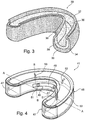
- Pre-treatment tray 30 is designed to hold an activation solution for immersion of the teeth prior to treatment with fluoride solution.
- the activation solution will be described in further detail hereinbelow.
- Pre-treatment tray 30 has an upper portion 32 and a lower portion 34.
- Upper portion 32 includes a sealing lip 36, which is designed to contact the gums, thus sealing the tray onto the gums and substantially preventing leaking out of activation solution.
- Lower portion 34 includes a space 35 preferably having an absorbent material 38 therein.
- absorbent material 38 is a high density sponge.
- Absorbent material 38 is designed to absorb the activating solution, and further prevent leakage.
- a pre-measured amount of activating solution is introduced directly into absorbent material 38 prior to placing pre-treatment tray 30 on the teeth, so as to ensure that a suitable amount of solution is used for full immersion of the teeth without excessive solution being present.
- space 35 is empty.
- pre-treatment tray 30 is comprised of a plastic material which can be heated and formed on the teeth and gums during application.
- an adhesive material which is biocompatible such as, for example, beeswax may be added to sealing lip 36 to further ensure sealing.
- the activating solution prepares the surface of the teeth to make them receptive to the ionic changes that are designed to occur during operation of the apparatus or device described herein.
- the activating solution includes a metal or metallic salt, such as silver nitrate, palladium hydroxide, palladium chloride, copper chloride or any other suitable activator.
- the activating solution is applied through teeth immersion in the application pre-treatment tray 30 of Fig. 3 .
- the solution is prepared as a rinse, similar to mouthwash.
- the metal or metal salts provide a preparatory surface on the teeth, wherein the tooth surface adsorbs the material, for example, silver or its ion, and thereby the electric conductivity of the tooth surface for the flowing current is increased (or the electric resistance of the treated tooth surface to the flowing current is decreased). This process facilitates substitution of the hydroxyl group bound to apatite with the fluoride present in the medium.
- a treatment device either tray or toothbrush
- FIG. 4 is an isometric view of a device 41 for ion exchange fluoride treatment in accordance with a preferred embodiment of the present invention.
- Device 41 is a tray designed to hold a fluoride solution for immersion of teeth therein.
- Device 41 is of a shape similar to typical dental trays, including a back curved wall 43 and a front curved wall 45 joined together at end sections 47.
- Back curved wall 43 includes an electrode 49, which is the negative electrode, or the anode.
- Electrode 49 comprises a thin, flexible metal strip attached to an inner portion of back curved wall 43.
- electrode 49 is comprised of stainless steel.
- electrode 49 is comprised of any inert material, such as, platinum, gold, or any other suitable conducting metal.
- Spacers 51 are positioned along electrode 49, and are designed to preclude contact between electrode 49 and teeth positioned within device 41, while providing contact between the fluoride solution within device 41 and electrode 49.
- Spacers 51 are comprised of insulating materials, such as plastics.
- Front curved wall 45 includes contact electrodes 53, which are positive electrodes, or cathodes, and are designed to be placed in direct contact with the front of teeth within device 41.
- Contact electrodes are attached to front curved wall 45 by a spring-like mechanism, ensuring contact between contact electrodes 53 and the teeth.
- at least three contact electrodes 53 are used, each one designed to contact a different tooth.
- device 41 further includes a sealing lip such as the one described with reference to pre-treatment tray 30 of Fig. 3 .
- device 41 is comprised of heatable plastics, which can be formed on the teeth and gums during placement. An adhesive or a repelling substance such as Vaseline TM may also be used to further ensure sealing.
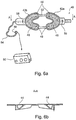
- Figs. 5a and 5b are cross sectional illustrations of device 41 along lines A-A and B-B, respectively.
- spacers 51 may contact the back of the teeth, while contact electrodes 53 are designed to contact the front of the teeth.
- spacers 51 are fixed, and contact electrodes are attached to front curved wall 45 by a spring-like mechanism.
- the spring-like nature is accomplished by placing contact electrode 53 at an angle. Alternatively, actual springs may used.
- three contact electrodes 53 contact three different teeth. The contact area of the electrodes is minimal so as to induce current into the teeth while avoiding an electrolysis response.
- Apparatus 40 includes a set of trays 42, including an upper tray 42a and a lower tray 42b, each of which has wells 44 for holding a fluoride gel composition.
- Trays 42 have plugs and electrodes 46 positioned therein, which are connected via conducting wires 48 to a power supply 50.
- Electrodes are comprised of inert material, such as stainless steel, platinum, gold, or any other suitable conducting metal.
- trays 42 are comprised of a non-conducting material, such as a biocompatible plastic material.
- Trays 42 and wells 44 are sized in accordance with standard sized dental trays.
- the upper and the lower trays 42 are connected to each other via a folding bridge 52, which allows both trays 42 to be placed on the teeth simultaneously by folding the trays back in the area of folding bridge 52.
- An electrical connector 54 connects electrodes 48 to power source 50 via a plug 56, or via any other suitable means. Plug 56 is designed to fit into power source 50.
- upper and lower trays 42 are connectable to one another via a socket 58 and socket connector 59.
- Socket 58 is located on an outer rim of one of trays 42, such that when trays 42 are folded at folding bridge 52, socket connector 59 connects the two trays 42 and completes the circuit. In another embodiment, the trays 42 are not connected to each other.
- device 41 is connected to a regular power supply, with a standard AC/DC transformer.
- rechargeable batteries (1-12 volt) are used.
- a disposable battery is embedded in the device, allowing it to be more easily transportable.
- the circuit runs through apparatus 40, and not through the body of the user. In this way, fluoride ionization can be increased, thus enhancing fluoride uptake by the teeth.
- different sized pre-treatment trays 30 and devices 41 are provided for different sized individuals.
- Toothbrush 70 includes a handle 72 having a battery 74 placed therein, and a head portion 75 at an opposite end thereof. Head portion 75 includes a bristle portion 76 on a lower end thereof, and further has two electrodes 78 - a cathode 78a on an upper end and an anode 78b, in an area of the bristles. A circuit is completed through cathode 78a, the tooth which is in contact with bristle portion 76, and anode 78b. Toothbrush 70 can be used with a fluoride gel as in the dental trays above to increase fluorination on the teeth. Alternatively, toothbrush 70 can be used to decrease the plaque on the tooth surface. The circuit of the toothbrush 70 of the present invention does not run through the body of an individual.
- the fluoride gel is provided in the form of a compound, and is suitable for donating fluoride ions.
- examples of such compounds include but are not limited to sodium fluoride, lithium fluoride, amino fluoride, tin fluoride, a combination of fluoride donor compounds, or any other suitable compound which is readily ionizable.
- a method of pre-treating teeth for fluoride uptake used in accordance with the apparatus described above is as follows, in accordance with one embodiment of the present invention. Initially, teeth are thoroughly cleaned, either by professional cleaning or using a regular toothbrush. Next, teeth are rinsed with distilled water, followed by a rinse with hydrogen peroxide, and another rinse with distilled water. Hydrogen peroxide rinse is preferably a diluted solution (18% hydrogen peroxide), obtained by mixing equal amounts of commercial hydrogen peroxide (36%) and distilled water.
- a metal catalyst solution is prepared by dissolving different amounts of metal or metal salt solutions such as silver, copper or palladium in an amount of distilled water such that the concentration of the metal is in the range of 0.01-3% by weight.
- the metal solutions include silver nitrate, palladium hydroxide, palladium chloride, copper chloride salts or any other suitable activator.
- 100 mg of silver nitrate is dissolved in 10 ml distilled water.
- 50 mg of copper chloride is dissolved in 10 ml of distilled water.
- Pre-treatment tray 30 is placed on the teeth, preferably in such a way that all of the teeth are in contact with the sponge. Sealing lip 36 is placed in contact with the gums to seal tray 30 and prevent leaking of solution into the mouth.
- a pre-measured amount of the metal catalyst solution is then introduced into tray 30 by injection or any other filling procedure such that full contact between the teeth and the solution is obtained, for approximately 1 minute.
- a known amount of metal catalyst solution is placed into pre-treatment tray 30 prior to placing tray 30 in the mouth. After pretreatment, tray 30 is removed from the mouth, taking care to avoid spilling into the mouth. Teeth are then rinsed with distilled water again.
- a fluoride donor solution is prepared as follows.
- the following description of the preparation of the fluoride donor solution includes sodium fluoride, but it should be readily apparent that this is merely exemplary, and that the fluoride solution is not limited to this compound.
- Sodium fluoride solution in a range of 1-5% is prepared by dissolving an appropriate amount of sodium fluoride salt in distilled water.
- Sodium fluoride solution is incorporated into a gel, such as alginate and added to an apparatus of the present invention, either by filling the trays of the dental tray embodiment, or by coating the bristles of a toothbrush such as the one described above.
- a commercial fluoride gel having a 2.5% concentration is combined with 0.5 grams of sodium chloride (used as electrolyte) dissolved in 25 ml of distilled water, providing a total percentage of fluoride ions as 1.25%.
- 25 grams of Ehnex TM Gel is mixed with a solution of 0.7 grams of sodium fluoride, followed by combination with 0.5 grams of sodium chloride and dissolution in 25 ml of distilled water.
- a power supply of 0-12 volts is used.
- the electric circuit is then activated with a voltage of 1-12 volts.
- the voltage is in the range of 3 to 9 volts, and most preferably is approximately 6 volts.
- the circuit remains open for a predetermined period of time, in the range of 5-20 minutes. The current does not exceed 30 mA.
- kits wherein a suitable sized pre-treatment tray 30, a suitable sized device 41, and a compatible amount of pre-measured activation solution and fluoride donor solution are provided.
- a suitable sized pre-treatment tray 30, a suitable sized device 41, and a compatible amount of pre-measured activation solution and fluoride donor solution are provided.
- Different kits may be provided for different sized and aged individuals.
- Teeth were split into five groups, as follows:
- All teeth were then rinsed with water and placed in 5% lactic acid solution, having a pH of 1.9, and left in lactic acid solution for different time periods, ranging from 15 to 4500 minutes.
- the tooth was rinsed with distilled water and tested by scratching with a sharp metal tool. If the scratching resulted in a scratch mark, the tooth was considered to have failed the test. If no scratch mark resulted, the tooth was considered to have passed the test.
- teeth from Group A failed after an average of 45 minutes of exposure.
- Teeth from Group II failed after 2-3 hours of exposure.
- Teeth from Group III failed after 4-5 hours of exposure.
- Teeth from Group IV failed after approximately 15 hours of exposure.
- Teeth from Group V lasted at least 75 hours.
- the present invention can be used to enhance other dental treatments as well.
- tooth whitening procedures may be enhanced using the proposed methods and devices.
- strengthening of the gums can be accomplished.
Landscapes
- Health & Medical Sciences (AREA)
- Life Sciences & Earth Sciences (AREA)
- Veterinary Medicine (AREA)
- Animal Behavior & Ethology (AREA)
- General Health & Medical Sciences (AREA)
- Public Health (AREA)
- Oral & Maxillofacial Surgery (AREA)
- Epidemiology (AREA)
- Nuclear Medicine, Radiotherapy & Molecular Imaging (AREA)
- Engineering & Computer Science (AREA)
- Biomedical Technology (AREA)
- Dentistry (AREA)
- Radiology & Medical Imaging (AREA)
- Chemical & Material Sciences (AREA)
- Inorganic Chemistry (AREA)
- Birds (AREA)
- Dental Tools And Instruments Or Auxiliary Dental Instruments (AREA)
- Brushes (AREA)
- Cosmetics (AREA)
Abstract
Description
- The present invention relates to an ion exchange dental device and method and more particularly, to a device and method for improved fluoride uptake by the teeth during treatment for prevention of dental caries.
- Dental caries, or tooth decay, is the progressive loss of tooth mineral, followed by bacterial invasion into the de-mineralized tooth. Dental caries is a relatively complex disease. There is abundant evidence that the initiation of caries requires a relatively high proportion of mutans streptococci within dental plaque. These bacteria adhere well to the tooth surface, produce higher amounts of acid from sugars than other bacterial types, can survive better than other bacteria in an acid environment, and produce extra-cellular polysaccharides from sucrose. When the proportion of s. mutans in plaque is high (in the range of 2-10%), a patient is at high risk for caries. When the proportion is low (less than 0.1%), the patient is at low risk. Two other types of bacteria are also associated with the progression of caries through dentin. These are several species of lactobacillus, and actinomyces viscosus. These bacteria are highly acidogenic and survive well in acid conditions.
- Moreover, diet greatly influences dental caries. Dietary sucrose changes both the thickness and the chemical nature of plaque. Mutans streptococci and some other plaque bacteria use the monosaccharide components (glucose and fructose) and the energy of the disaccharide bond of sucrose to assemble extra-cellular polysaccharides. A diet with a high proportion of sucrose therefore increases caries risk.
- The mineral of enamel, cementum and dentin is a highly-substituted calcium phosphate salt called apatite. The apatite of newly-formed teeth is rich in carbonate, has relatively little fluoride and is relatively soluble. Cycles of partial demineralization and then remineralization in a fluoride-rich environment creates apatite with less carbonate and more fluoride, and is less soluble. Fluoride-rich, low carbonate apatite can be up to ten times less soluble than apatite low in fluoride and high in carbonate. Topical fluoride also inhibits acid production by plaque bacteria. Fluoride in food and drinks, in dentifrices, oral rinses and gels and in filling materials can therefore all reduce the solubility of teeth, helping to reduce caries risk. These effects are very beneficial, but the amounts of fluoride that can be added to the diet or used topically are limited by safety considerations. High levels of dietary fluoride can cause mottling of tooth enamel during tooth formation, while swallowing high levels can cause symptoms of poisoning.
- Attempts at reducing the concentration of fluoride and/or the amount of time of exposure to fluoride have been made. For example, some prior art devices have used an electrical current to stimulate ion exchange, wherein fluoride ions can be incorporated into the teeth, thereby enhancing resistance to caries formation. However, the prior art devices have a circuit which runs through the body of the individual, and are thus classified as iontophoretic devices. The iontophoretic nature of such devices tends to result in insufficient fluoride uptake, largely due to electrochemical polarization that occurs in the body due to the presence of potassium in the blood and bones, which causes a high resistance to fluoride ion flow, thus hampering fluoride uptake.
- There is thus a widely recognized need for, and it would be highly advantageous to have, an ion exchange dental device and method devoid of the above limitations.
- According to one aspect of the invention, there is provided a method for treating a tooth. The method includes applying a metal salt solution to a tooth, applying an ionizable substance to the tooth, and applying a current flow to the tooth so as to ionize the ionizable substance.
- According to another aspect of the invention there is provided a device for pre-treatment of teeth. The device includes a tray having an upper portion and a lower portion, a sealing lip on the upper portion for enabling close contact between the device and the gums (for sealing), and an absorbent material in the lower portion for receiving an activation solution.
- According to another aspect of the present invention there is provided a device for dental treatment. The device includes an applicator for applying a substance to a tooth, the applicator having a first end and a second end, a first electrode attached to a first end of the applicator, a second electrode attached to the second end of the applicator, wherein the first electrode and the second electrode are configured to produce a current flow through the applicator, and an ionizable substance for placement within the applicator, wherein the ionizable substance is configured to undergo ionization upon application of the current flow through the substance.
- According to further features in preferred embodiments of the invention described below, the activation is achieved by using a metal salt solution such as silver nitrate, palladium hydroxide, palladium chloride, copper chloride, or any other suitable solution. In a preferred embodiment, the step of applying a metal salt solution precedes the other steps. In one embodiment, the tooth is rinsed with distilled water after the metal salt solution is applied. In a preferred embodiment, the applying of the metal salt solution is done using a pre-treatment tray which is designed to prevent leakage of the metal salt solution into the mouth. The ionizable substance includes a fluoride compound, preferably sodium fluoride, lithium fluoride, amino fluoride, tin fluoride, or any other suitable fluoride ion donor. The current flow is applied at a voltage within a range of 1-12 volts, and more preferably within 3 to 9 volts. The current may be applied via power supply, rechargeable battery, or a disposable battery embedded within a device.
- According to further features in preferred embodiments of the invention, the pre-treatment device further includes an adhesive material placed on the sealing lip for further enabling of close contact between the device and the gums. Alternatively or in addition to the adhesive material, the tray itself may be comprised of heatable plastic material which can be formed onto the teeth and gums during application. The activation solution is a metal salt solution, preferably one of the following: silver nitrate, palladium hydroxide, palladium chloride or copper chloride, but may include any suitable metal salt solution.
- According to further features in preferred embodiments of the invention described below, the applicator is a dental tray or a toothbrush. The ionizable substance is a fluoride compound, such as sodium fluoride, lithium fluoride, tin fluoride, amino fluoride, or a combination of fluoride compounds. In the case of a dental tray, the first end is a back curved wall and the first electrode is an anode, which is preferably a flat metal strip. Spacers made of biocompatible plastic are placed on the anode to separate the anode from the tooth. The second end is a front wall and the second electrode is a cathode having a spring mechanism. Preferably, three cathodes are present, each of which is configured to contact a separate tooth, wherein the contact area is minimized. The dental tray may include a sealing lip. In one embodiment, the device includes a power supply, which can be an external electrical power source, a rechargeable battery, or a disposable battery embedded in the device.
- Unless otherwise defined, all technical and scientific terms used herein have the same meaning as commonly understood by one of ordinary skill in the art to which this invention belongs. Although methods and materials similar or equivalent to those described herein can be used in the practice or testing of the present invention, suitable methods and materials are described below. In case of conflict, the patent specification, including definitions, will control. In addition, the materials, methods, and examples are illustrative only and not intended to be limiting.
- The invention is herein described, by way of example only, with reference to the accompanying drawings. With specific reference now to the drawings in detail, it is stressed that the particulars shown are by way of example and for purposes of illustrative discussion of the preferred embodiments of the present invention only, and are presented in the cause of providing what is believed to be the most useful and readily understood description of the principles and conceptual aspects of the invention. In this regard, no attempt is made to show structural details of the invention in more detail than is necessary for a fundamental understanding of the invention, the description taken with the drawings making apparent to those skilled in the art how the several forms of the invention may be embodied in practice.
- In the drawings:
-
Fig. 1 is a prior art iontophoretic dental device; -
Fig. 2 is a prior art iontophoretic toothbrush; -
Fig. 3 is an illustration of a pretreatment tray; -
Fig. 4 is an isometric view of a device in accordance with a preferred embodiment of the present invention; -
Figs. 5a and 5b are cross-sectional illustrations of the device ofFig. 4 ; -
Figs. 6a and 6b are diagrammatic and cross-sectional views of an electric dental device in accordance with another embodiment of the present invention; -
Figs. 7a and 7b are diagrammatic and cross-sectional views of an electric dental device in accordance with yet another embodiment of the present invention; -
Fig. 8 is a view of an electric toothbrush in accordance with another preferred embodiment of the present invention; and -
Fig. 9 is a bar graph illustration of results of using a method in accordance with a preferred embodiment of the present invention. - The present invention is of a system and method for enhanced fluoride treatment of the teeth. Specifically, the present invention can be used to increase the uptake of fluoride and/or decrease the uptake of plaque by application of a preparatory solution followed by application of a treatment fluoride-enriched gel and the application of an electrical current directly to the teeth.
- For purposes of better understanding the present invention, as illustrated in
Figures 3-8 of the drawings, reference is first made to the construction and operation of prior art iontophoretic dental devices as illustrated inFigs. 1 and 2 . - As shown in
Fig. 1 , aprior art system 10 for iontophoretic uptake of fluoride includes ametallic tray 12, which acts as a first (negative) electrode, connected with afirst wire 13 to apower supply 16, and connected with asecond wire 15 to a second (positive)electrode 14, which is further connected topower supply 16.Second electrode 14 is designed to be in contact with a location on a body of an individual undergoing the procedure provided herein. An ionizable form of fluoride, such as lithium fluoride is incorporated in a gel matrix and placed withinmetallic tray 12.Metallic tray 12 is coated with a non-conducting material, or alternatively, the tray itself comprises non-conducting material, and includes thereon the first electrode. In either case, the tray filled with the fluoride gel is placed in contact with the teeth of the individual. A current is applied viapower supply 16, causing ionization of the fluoride and thereby providing fluoride ions in a form that can be assimilated into the tooth structure. The circuit for ionization to occur is completed through the body of the individual, thus classifying it as an iontophoretic device. - It has been shown that in systems such as the one depicted in
Fig. 1 , in which the circuit runs through the body of the individual, fluoride uptake is insufficient. This result is likely due to electrochemical polarization that occurs in the body due to the presence of potassium in the blood and bones, which causes a high resistance to fluoride ion flow, thus hampering fluoride uptake. - Reference is now made to
Fig. 2 , which is an illustration of a prior artionic toothbrush 20. As shown inFig. 2 ,ionic toothbrush 20 has abattery 22 located on ahandle 24 ofionic toothbrush 20. Ametal rod 26 runs through the body ofionic toothbrush 20 and into the area of bristles 28. Whenbattery 22 is active, bristles 28 take on a negative charge. At the same time, positively charged ions are transferred to theteeth 29 via the conducting pathway through a moist hand holding the positively chargedhandle 24. Thus, the polarity of theteeth 29 are changed from negative to positive. The now positively charged teeth repel the positively charged plaque ions, which are furthermore attracted to the negatively charged toothbrush bristles 28. Moist finger contact is essential to maximize ionic transfer. - Similar to the prior art iontophoretic dental tray depicted in
Fig. 1 , the circuit is completed only through the body of the user, resulting in electrochemical depolarization, which decreases the ionization and thus the plaque transfer within the system. - There is thus provided an improved system for enhanced fluoride treatment of teeth, which is designed to increase ionization of fluoride by directing a circuit independently of the body, and by using preparatory enhancements, as will be described in further detail hereinbelow.
- Reference is now made to
Fig. 3 , which is an illustration of apre-treatment tray 30.Pre-treatment tray 30 is designed to hold an activation solution for immersion of the teeth prior to treatment with fluoride solution. The activation solution will be described in further detail hereinbelow.Pre-treatment tray 30 has anupper portion 32 and alower portion 34.Upper portion 32 includes a sealinglip 36, which is designed to contact the gums, thus sealing the tray onto the gums and substantially preventing leaking out of activation solution.Lower portion 34 includes aspace 35 preferably having anabsorbent material 38 therein. In a preferred embodiment,absorbent material 38 is a high density sponge.Absorbent material 38 is designed to absorb the activating solution, and further prevent leakage. In a preferred embodiment, a pre-measured amount of activating solution is introduced directly intoabsorbent material 38 prior to placingpre-treatment tray 30 on the teeth, so as to ensure that a suitable amount of solution is used for full immersion of the teeth without excessive solution being present. In an alternative embodiment,space 35 is empty. - In one embodiment,
pre-treatment tray 30 is comprised of a plastic material which can be heated and formed on the teeth and gums during application. Alternatively, an adhesive material which is biocompatible (such as, for example, beeswax) may be added to sealinglip 36 to further ensure sealing. - The activating solution prepares the surface of the teeth to make them receptive to the ionic changes that are designed to occur during operation of the apparatus or device described herein. The activating solution includes a metal or metallic salt, such as silver nitrate, palladium hydroxide, palladium chloride, copper chloride or any other suitable activator. In a preferred embodiment the activating solution is applied through teeth immersion in the application
pre-treatment tray 30 ofFig. 3 . In yet another less preferred embodiment, the solution is prepared as a rinse, similar to mouthwash. The metal or metal salts provide a preparatory surface on the teeth, wherein the tooth surface adsorbs the material, for example, silver or its ion, and thereby the electric conductivity of the tooth surface for the flowing current is increased (or the electric resistance of the treated tooth surface to the flowing current is decreased). This process facilitates substitution of the hydroxyl group bound to apatite with the fluoride present in the medium. Once the tooth surface is prepared, the metal is rinsed out, and subsequently, a treatment device (either tray or toothbrush) is applied to the teeth, as described below. - Reference is now made to
Fig. 4 , which is an isometric view of adevice 41 for ion exchange fluoride treatment in accordance with a preferred embodiment of the present invention.Device 41 is a tray designed to hold a fluoride solution for immersion of teeth therein.Device 41 is of a shape similar to typical dental trays, including a backcurved wall 43 and a frontcurved wall 45 joined together atend sections 47. Backcurved wall 43 includes anelectrode 49, which is the negative electrode, or the anode.Electrode 49 comprises a thin, flexible metal strip attached to an inner portion of backcurved wall 43. In a preferred embodiment,electrode 49 is comprised of stainless steel. In alternative embodiments,electrode 49 is comprised of any inert material, such as, platinum, gold, or any other suitable conducting metal.Spacers 51 are positioned alongelectrode 49, and are designed to preclude contact betweenelectrode 49 and teeth positioned withindevice 41, while providing contact between the fluoride solution withindevice 41 andelectrode 49.Spacers 51 are comprised of insulating materials, such as plastics. Frontcurved wall 45 includescontact electrodes 53, which are positive electrodes, or cathodes, and are designed to be placed in direct contact with the front of teeth withindevice 41. Contact electrodes are attached to frontcurved wall 45 by a spring-like mechanism, ensuring contact betweencontact electrodes 53 and the teeth. Preferably, at least threecontact electrodes 53 are used, each one designed to contact a different tooth. The contact area betweencontact electrodes 53 and the teeth is minimized. In a preferred embodiment,device 41 further includes a sealing lip such as the one described with reference topre-treatment tray 30 ofFig. 3 . In alternative embodiments,device 41 is comprised of heatable plastics, which can be formed on the teeth and gums during placement. An adhesive or a repelling substance such as Vaseline™ may also be used to further ensure sealing. - Reference is now made to
Figs. 5a and 5b , which are cross sectional illustrations ofdevice 41 along lines A-A and B-B, respectively. As shown inFig. 5a , spacers 51 may contact the back of the teeth, whilecontact electrodes 53 are designed to contact the front of the teeth. As shown inFig. 5b , spacers 51 are fixed, and contact electrodes are attached to frontcurved wall 45 by a spring-like mechanism. In the embodiment shown inFig. 5b , the spring-like nature is accomplished by placingcontact electrode 53 at an angle. Alternatively, actual springs may used. In a preferred embodiment, threecontact electrodes 53 contact three different teeth. The contact area of the electrodes is minimal so as to induce current into the teeth while avoiding an electrolysis response. - Reference is now made to
Figs. 6a and 6b , which are an illustration and a cross-sectional view, respectively, of anapparatus 40 for fluoride treatment in accordance with another embodiment of the present invention.Apparatus 40 includes a set oftrays 42, including anupper tray 42a and alower tray 42b, each of which haswells 44 for holding a fluoride gel composition.Trays 42 have plugs andelectrodes 46 positioned therein, which are connected via conductingwires 48 to apower supply 50. Electrodes are comprised of inert material, such as stainless steel, platinum, gold, or any other suitable conducting metal. In a preferred embodiment,trays 42 are comprised of a non-conducting material, such as a biocompatible plastic material. It should be noted that any biocompatible plastic material which does not react with fluoride may be used.Trays 42 andwells 44 are sized in accordance with standard sized dental trays. In one embodiment the upper and thelower trays 42 are connected to each other via afolding bridge 52, which allows bothtrays 42 to be placed on the teeth simultaneously by folding the trays back in the area of foldingbridge 52. Anelectrical connector 54 connectselectrodes 48 topower source 50 via aplug 56, or via any other suitable means.Plug 56 is designed to fit intopower source 50. Furthermore, upper andlower trays 42 are connectable to one another via asocket 58 andsocket connector 59.Socket 58 is located on an outer rim of one oftrays 42, such that whentrays 42 are folded at foldingbridge 52,socket connector 59 connects the twotrays 42 and completes the circuit. In another embodiment, thetrays 42 are not connected to each other. - In one embodiment, as shown in
Fig. 6a ,device 41 is connected to a regular power supply, with a standard AC/DC transformer. In another embodiment, rechargeable batteries (1-12 volt) are used. In yet another embodiment, shown inFigs. 7a and 7b , a disposable battery is embedded in the device, allowing it to be more easily transportable. - It should be readily apparent that in all of the described embodiments, the circuit runs through
apparatus 40, and not through the body of the user. In this way, fluoride ionization can be increased, thus enhancing fluoride uptake by the teeth. - In one embodiment, different sized
pre-treatment trays 30 anddevices 41 are provided for different sized individuals. - Reference is now made to
FIG. 8 , which is an illustration of anionic toothbrush 70, in accordance with an embodiment of the present invention.Toothbrush 70 includes ahandle 72 having abattery 74 placed therein, and ahead portion 75 at an opposite end thereof.Head portion 75 includes abristle portion 76 on a lower end thereof, and further has two electrodes 78 - acathode 78a on an upper end and ananode 78b, in an area of the bristles. A circuit is completed throughcathode 78a, the tooth which is in contact withbristle portion 76, andanode 78b.Toothbrush 70 can be used with a fluoride gel as in the dental trays above to increase fluorination on the teeth. Alternatively,toothbrush 70 can be used to decrease the plaque on the tooth surface. The circuit of thetoothbrush 70 of the present invention does not run through the body of an individual. - The fluoride gel is provided in the form of a compound, and is suitable for donating fluoride ions. Examples of such compounds include but are not limited to sodium fluoride, lithium fluoride, amino fluoride, tin fluoride, a combination of fluoride donor compounds, or any other suitable compound which is readily ionizable.
- A method of pre-treating teeth for fluoride uptake used in accordance with the apparatus described above is as follows, in accordance with one embodiment of the present invention. Initially, teeth are thoroughly cleaned, either by professional cleaning or using a regular toothbrush. Next, teeth are rinsed with distilled water, followed by a rinse with hydrogen peroxide, and another rinse with distilled water. Hydrogen peroxide rinse is preferably a diluted solution (18% hydrogen peroxide), obtained by mixing equal amounts of commercial hydrogen peroxide (36%) and distilled water. A metal catalyst solution is prepared by dissolving different amounts of metal or metal salt solutions such as silver, copper or palladium in an amount of distilled water such that the concentration of the metal is in the range of 0.01-3% by weight. In preferred embodiments, the metal solutions include silver nitrate, palladium hydroxide, palladium chloride, copper chloride salts or any other suitable activator. In one example, 100 mg of silver nitrate is dissolved in 10 ml distilled water. In yet another example 50 mg of copper chloride is dissolved in 10 ml of distilled water.
Pre-treatment tray 30 is placed on the teeth, preferably in such a way that all of the teeth are in contact with the sponge. Sealinglip 36 is placed in contact with the gums to sealtray 30 and prevent leaking of solution into the mouth. A pre-measured amount of the metal catalyst solution is then introduced intotray 30 by injection or any other filling procedure such that full contact between the teeth and the solution is obtained, for approximately 1 minute. Alternatively, a known amount of metal catalyst solution is placed intopre-treatment tray 30 prior to placingtray 30 in the mouth. After pretreatment,tray 30 is removed from the mouth, taking care to avoid spilling into the mouth. Teeth are then rinsed with distilled water again. - After, pretreatment, fluoride treatment is commenced. A fluoride donor solution is prepared as follows. The following description of the preparation of the fluoride donor solution includes sodium fluoride, but it should be readily apparent that this is merely exemplary, and that the fluoride solution is not limited to this compound. Sodium fluoride solution in a range of 1-5% is prepared by dissolving an appropriate amount of sodium fluoride salt in distilled water. Sodium fluoride solution is incorporated into a gel, such as alginate and added to an apparatus of the present invention, either by filling the trays of the dental tray embodiment, or by coating the bristles of a toothbrush such as the one described above. In a preferred embodiment, a commercial fluoride gel having a 2.5% concentration is combined with 0.5 grams of sodium chloride (used as electrolyte) dissolved in 25 ml of distilled water, providing a total percentage of fluoride ions as 1.25%. In an alternative embodiment, 25 grams of Ehnex™ Gel is mixed with a solution of 0.7 grams of sodium fluoride, followed by combination with 0.5 grams of sodium chloride and dissolution in 25 ml of distilled water. A power supply of 0-12 volts is used. The electric circuit is then activated with a voltage of 1-12 volts. In a preferred embodiment, the voltage is in the range of 3 to 9 volts, and most preferably is approximately 6 volts. The circuit remains open for a predetermined period of time, in the range of 5-20 minutes. The current does not exceed 30 mA.
- In one embodiment, a kit is provided, wherein a suitable sized
pre-treatment tray 30, a suitablesized device 41, and a compatible amount of pre-measured activation solution and fluoride donor solution are provided. Different kits may be provided for different sized and aged individuals. - Additional objects, advantages, and novel features of the present invention will become apparent to one ordinarily skilled in the art upon examination of the following examples, which are not intended to be limiting. Additionally, each of the various embodiments and aspects of the present invention as delineated hereinabove and as claimed in the claims section below finds experimental support in the following examples.
- Reference is now made to the following example, which together with the above description, illustrate the invention in a non limiting fashion.
- Fresh extracted teeth were washed with hydrogen peroxide solution (18%) for decontamination prior to use. Teeth were split into five groups, as follows:
- Group A (control, n=3): No pretreatment, No gel treatment
- Group B (n=3): No pretreatment, Teeth immersed for 10 minutes in prepared fluoride gel, no current.
- Group C (n=3): Yes pretreatment (immersed in 1% silver nitrate solution for 1 minute), Teeth immersed for 10 minutes in prepared fluoride gel, no current.
- Group D (n-3): No pretreatment, Teeth immersed for 10 minutes in prepared fluoride gel with electric current.
- Group E (n=3): Yes pretreatment (immersed in 1% silver nitrate solution for 1 minute), Teeth immersed for 10 minutes in prepared fluoride gel with electric current.
- All teeth were then rinsed with water and placed in 5% lactic acid solution, having a pH of 1.9, and left in lactic acid solution for different time periods, ranging from 15 to 4500 minutes. At each time period, the tooth was rinsed with distilled water and tested by scratching with a sharp metal tool. If the scratching resulted in a scratch mark, the tooth was considered to have failed the test. If no scratch mark resulted, the tooth was considered to have passed the test.
- Results for the above experiment are summarized in
Fig. 9 , in bar graph format. - To summarize, the teeth from Group A (control) failed after an average of 45 minutes of exposure. Teeth from Group II failed after 2-3 hours of exposure. Teeth from Group III failed after 4-5 hours of exposure. Teeth from Group IV failed after approximately 15 hours of exposure. Teeth from Group V lasted at least 75 hours.
- The above results show that teeth with pretreatment and current are significantly stronger than all other combinations.
- Based on the above results, it is clear that pretreatment of teeth with a metal or metal salt solution, followed by connection to a circuit in an electrolyte having fluoride or a fluoride releasing substance, enhances and accelerates fluorination of the teeth, which results in increased physical resistance of the teeth against decay. This procedure can be accomplished with either a dental device or a toothbrush, as described above, The treatment is relatively short, and low in cost. It may be performed by any clinician, such as a dentist or hygienist.
- In addition to the fluorination process described above, the present invention can be used to enhance other dental treatments as well. For example, tooth whitening procedures may be enhanced using the proposed methods and devices. Furthermore, strengthening of the gums can be accomplished.
- It is appreciated that certain features of the invention, which are, for clarity, described in the context of separate embodiments, may also be provided in combination in a single embodiment. Conversely, various features of the invention, which are, for brevity, described in the context of a single embodiment, may also be provided separately or in any suitable subcombination.
- Although the invention has been described in conjunction with specific embodiments thereof, it is evident that many alternatives, modifications and variations will be apparent to those skilled in the art. Accordingly, it is intended to embrace all such alternatives, modifications and variations that fall within the spirit and broad scope of the appended claims. All publications, patents and patent applications mentioned in this specification are herein incorporated in their entirety by reference into the specification, to the same extent as if each individual publication, patent or patent application was specifically and individually indicated to be incorporated herein by reference. In addition, citation or identification of any reference in this application shall not be construed as an admission that such reference is available as prior art to the present invention.
- Aspect 1: A method for treating a tooth, the method comprising:
- applying a metal salt solution to a tooth;
- applying an ionizable substance to said tooth; and
- applying a current flow to said tooth so as to ionize said ionizable substance.
- Aspect 2: The method of claim 1, wherein said metal salt solution is selected from the group consisting of silver nitrate, palladium hydroxide, palladium chloride, and copper chloride.
- Aspect 3: The method of claim 1, wherein the step of applying a metal salt solution precedes the steps of applying an ionizable substance and applying a current flow.
- Aspect 4: The method of claim 1, further comprising rinsing said tooth with distilled water following the step of applying a metal salt solution.
- Aspect 5: The method of claim 1, wherein said applying a metal salt solution is done using a pre-treatment tray, said pre-treatment tray designed to prevent of leakage of said metal salt solution into a mouth.
- Aspect 6: The method of claim 1, wherein said applying an ionizable substance includes applying a fluoride compound.
- Aspect 7: The method of claim 6, wherein said fluoride compound is selected from the group consisting of sodium fluoride, lithium fluoride, amino fluoride, tin fluoride, and a combination of fluoride donor compounds.
- Aspect 8: The method of claim 1, wherein said applying a current flow is done at a voltage in the range of 1-12 volts.
- Aspect 9: The method of claim 1, wherein said applying a current flow is done at a voltage in the range of 3-9 volts.
- Aspect 10: The method of claim 1, wherein said applying a current flow is done by a rechargeable battery.
- Aspect 11: The method of claim 1, wherein said applying a current flow is done by a disposable battery embedded into a device for applying said ionizable substance.
- Aspect 12: A device for pretreatment of teeth, the device positionable on gums, the device comprising:
- a tray having an upper portion and a lower portion;
- a sealing lip on said upper portion for enabling close contact between said device and said gums; and
- an absorbent material in said lower portion, said absorbent material for receiving an activation solution.
- Aspect 13: The device of
claim 12, further comprising an adhesive material placed on said sealing lip for further enabling of close contact between said device and said gums. - Aspect 14: The device of
claim 12, wherein said tray is comprised of heatable plastic which can be formed onto said gums during application. - Aspect 15: The device of
claim 12, wherein said activation solution is a metal salt solution. - Aspect 16: The device of
claim 15, wherein said metal salt solution is selected from the group consisting of silver nitrate, palladium hydroxide, palladium chloride and copper chloride. - Aspect 17: The device of
claim 12, wherein said activation solution is a pre-measured amount of activation solution. - Aspect 18: A device for dental treatment, the device comprising:
- an applicator for applying a substance to a tooth, said applicator having a first end and a second end;
- a first electrode attached to a first end of said applicator;
- a second electrode attached to said second end of said applicator, wherein said first electrode and said second electrode are configured to produce a current flow through said applicator; and
- an ionizable substance for placement within said applicator, wherein said ionizable substance is configured to undergo ionization upon application of said current flow.
- Aspect 19: The device of claim 18, wherein said applicator is a dental tray.
- Aspect 20: The device of claim 18, wherein said applicator is a toothbrush.
- Aspect 21: The device of claim 18, wherein said ionizable substance is a fluoride donor compound.
- Aspect 22: The device of claim 21, wherein said fluoride donor compound is enriched with sodium fluoride, lithium fluoride, amino fluoride, tin fluoride, or a combination of fluoride donor compounds.
- Aspect 23: The device of claim 19, wherein said first end is a back curved wall and said first electrode is an anode.
- Aspect 24: The device of claim 23, wherein said anode is a flat metal strip.
- Aspect 25: The device of
claim 24, further comprising spacers on said anode to separate said anode from said tooth. - Aspect 26: The device of claim 25, wherein said spacers are comprised of a biocompatible plastic material.
- Aspect 27: The device of claim 19, wherein said second end is a front wall and said second electrode is a cathode.
- Aspect 28: The device of claim 27, wherein said cathode further comprises a spring mechanism.
- Aspect 29: The device of claim 27, wherein said cathode includes three cathodes, and wherein each of said three cathodes is configured to contact a separate tooth at a contact area on said tooth.
- Aspect 30: The device of
claim 29, wherein said contact area is minimized. Aspect 31: The device of claim 19, wherein said dental tray further comprises a sealing lip. - Aspect 32: The device of claim 18, further comprising a power supply.
- Aspect 33: The device of
claim 32, wherein said power supply is an external power source. - Aspect 34: The device of
claim 32, wherein said power supply is a rechargeable battery. - Aspect 35: The device of
claim 32, wherein said power supply is a disposable battery embedded within said applicator.
Claims (14)
- A device for dental treatment, the device comprising:an applicator for applying a substance to a tooth, said applicator having a first end and a second end;a first electrode attached to a first end of said applicator;a second electrode attached to said second end of said applicator, wherein said first electrode and said second electrode are configured to produce a current flow through said applicator; andan ionizable substance for placement within said applicator, wherein said ionizable substance is configured to undergo ionization upon application of said current flow.
- The device of claim 1, wherein said applicator is a dental tray.
- The device of claim 1, wherein said applicator is a toothbrush.
- The device of claim 1, wherein said ionizable substance is a fluoride donor compound.
- The device of claim 4, wherein said fluoride donor compound is enriched with sodium fluoride, lithium fluoride, amino fluoride, tin fluoride, or a combination of fluoride donor compounds.
- The device of claim 2, wherein said first end is a back curved wall and said first electrode is an anode.
- The device of claim 6, wherein said anode is a flat metal strip.
- The device of claim 7, further comprising spacers on said anode to separate said anode from said tooth.
- The device of claim 8, wherein said spacers are comprised of a biocompatible plastic material.
- The device of claim 2, wherein said second end is a front wall and said second electrode is a cathode.
- The device of claim 10, wherein said cathode further comprises a spring mechanism.
- The device of claim 10, wherein said cathode includes three cathodes, and wherein each of said three cathodes is configured to contact a separate tooth at a contact area on said tooth, wherein said contact area is minimized.
- The device of claim 2, wherein said dental tray further comprises a sealing lip.
- The device of claim 1, further comprising a power supply, wherein said power supply is an external power source, a rechargeable battery, or a disposable battery embedded within said applicator.
Applications Claiming Priority (3)
| Application Number | Priority Date | Filing Date | Title |
|---|---|---|---|
| US53257003P | 2003-12-29 | 2003-12-29 | |
| PCT/IL2004/001174 WO2005062710A2 (en) | 2003-12-29 | 2004-12-29 | Ion exchange dental device and method |
| EP04806705.2A EP1703851B1 (en) | 2003-12-29 | 2004-12-29 | Ion exchange dental device and method |
Related Parent Applications (2)
| Application Number | Title | Priority Date | Filing Date |
|---|---|---|---|
| EP04806705.2A Division-Into EP1703851B1 (en) | 2003-12-29 | 2004-12-29 | Ion exchange dental device and method |
| EP04806705.2A Division EP1703851B1 (en) | 2003-12-29 | 2004-12-29 | Ion exchange dental device and method |
Publications (2)
| Publication Number | Publication Date |
|---|---|
| EP3257467A1 true EP3257467A1 (en) | 2017-12-20 |
| EP3257467B1 EP3257467B1 (en) | 2019-05-15 |
Family
ID=34738808
Family Applications (2)
| Application Number | Title | Priority Date | Filing Date |
|---|---|---|---|
| EP04806705.2A Expired - Lifetime EP1703851B1 (en) | 2003-12-29 | 2004-12-29 | Ion exchange dental device and method |
| EP17180872.8A Expired - Lifetime EP3257467B1 (en) | 2003-12-29 | 2004-12-29 | Ion exchange dental device |
Family Applications Before (1)
| Application Number | Title | Priority Date | Filing Date |
|---|---|---|---|
| EP04806705.2A Expired - Lifetime EP1703851B1 (en) | 2003-12-29 | 2004-12-29 | Ion exchange dental device and method |
Country Status (7)
| Country | Link |
|---|---|
| EP (2) | EP1703851B1 (en) |
| JP (1) | JP4950669B2 (en) |
| CN (1) | CN1921807B (en) |
| BR (2) | BRPI0417885B8 (en) |
| CA (1) | CA2550937C (en) |
| RU (1) | RU2363416C2 (en) |
| WO (1) | WO2005062710A2 (en) |
Families Citing this family (24)
| Publication number | Priority date | Publication date | Assignee | Title |
|---|---|---|---|---|
| US7775795B2 (en) * | 2003-12-29 | 2010-08-17 | Fluorinex Active Ltd. | Electrochemically treating teeth |
| US20070248930A1 (en) | 2005-02-17 | 2007-10-25 | Biolux Research Ltd. | Light therapy apparatus and methods |
| EP2120776A2 (en) * | 2007-02-16 | 2009-11-25 | Oroscience, Inc | Iontophoresis and active dental applicances |
| ES1068723Y (en) * | 2007-08-31 | 2009-03-01 | Ludi Etchevarren Viviana Cleli | MICROPERFORATED BUCKETS FOR BUCO-DENTAL TREATMENT WITH OXYGEN-OZONE |
| US8660669B2 (en) | 2007-09-05 | 2014-02-25 | Biolectrics Llc | Concurrent treatment of oral maladies using direct current electricity |
| US9168370B2 (en) | 2007-09-05 | 2015-10-27 | Biolectrics Llc | Concurrent treatment of oral and systemic maladies using direct current electricity |
| US9314321B2 (en) | 2007-09-05 | 2016-04-19 | Biolectrics Llc | Concurrent treatment of oral and systemic maladies in animals using electrical current |
| GB0807224D0 (en) | 2008-04-21 | 2008-05-28 | Univ Dundee | Remineralisation of calcified tissue |
| DE102008026067A1 (en) * | 2008-05-30 | 2010-01-14 | Schaffrath, Paul, Dr. | Device for improving oral hygiene |
| GB0815051D0 (en) * | 2008-08-18 | 2008-09-24 | Univ Dundee | Apparatus and method for mineralising biological materials |
| WO2012048423A1 (en) | 2010-10-13 | 2012-04-19 | Biolux Research Limited | Method and apparatus for tooth regulation with heavy forces |
| EP2648651B1 (en) | 2010-12-08 | 2016-11-23 | Biolux Research Limited | Apparatuses useful for regulating bone remodeling or tooth movement using light therapy and a functional appliance |
| US20130071807A1 (en) | 2011-09-20 | 2013-03-21 | Alexander Franz Doll | Iontophoretic oral care devices with automatic oral care implement detection and mode selection |
| US20130280671A1 (en) | 2012-04-19 | 2013-10-24 | Biolux Research Ltd. | Intra-oral light therapy apparatuses and methods for their use |
| KR101374255B1 (en) * | 2012-05-18 | 2014-03-14 | 주식회사 아롱엘텍 | whitening teeth |
| DE102013201883B4 (en) * | 2013-02-05 | 2025-11-20 | Zyfoma Gmbh | Use of an aqueous solution of an acid as a treatment fluid for cleaning an implant component |
| EP2919702B1 (en) | 2012-11-14 | 2019-02-06 | Zyfoma GmbH | Treatment element for use together with a dental implant part, treatment system and method for cleaning a dental implant part |
| JP5868310B2 (en) * | 2012-12-11 | 2016-02-24 | 合同会社地球環境・麦飯石研究所 | Plaque remover |
| JP6484235B2 (en) | 2013-10-22 | 2019-03-13 | バイオルックス リサーチ リミテッド | Intraoral phototherapy device and method of use thereof |
| AU2015204825A1 (en) | 2014-01-07 | 2016-07-28 | Animal Oralectrics Llc | Treatment of oral maladies using electrical current |
| KR101618280B1 (en) * | 2014-08-14 | 2016-05-18 | 김성열 | An improved mouthpiece for drug delivery system with Iontophoresis |
| JP2016073397A (en) * | 2014-10-03 | 2016-05-12 | パナソニックIpマネジメント株式会社 | Tooth surface stain removing apparatus and tooth surface stain removing method |
| US20210393385A1 (en) * | 2018-11-19 | 2021-12-23 | 3M Innovative Properties Company | Dental appliance with ion exchange coating |
| JP7843746B2 (en) | 2020-07-28 | 2026-04-10 | バイオレクトリクス エルエルシー | Systems and methods related to intraoral electrical stimulation |
Citations (6)
| Publication number | Priority date | Publication date | Assignee | Title |
|---|---|---|---|---|
| US3215139A (en) * | 1961-05-22 | 1965-11-02 | Dcd Res Corp | Ionization dental system |
| JPH1080324A (en) * | 1996-09-06 | 1998-03-31 | Sangi Co Ltd | Electronic toothbrush |
| WO2000029063A1 (en) * | 1998-11-13 | 2000-05-25 | Respironics, Inc. | Intraoral electromuscular stimulation device and method |
| US20020177107A1 (en) * | 2000-08-24 | 2002-11-28 | Moran Francis Xavier | Proton motive force toothbrush |
| US20030003421A1 (en) * | 2001-07-02 | 2003-01-02 | Thierry Bestenheider | Pre-impregnated disposable dental substance delivery mouthpiece |
| EP1525857A1 (en) * | 2003-10-23 | 2005-04-27 | McNEILL-PPC, INC. | Device for treating teeth and/or oral mucosal tissue |
Family Cites Families (9)
| Publication number | Priority date | Publication date | Assignee | Title |
|---|---|---|---|---|
| US3527219A (en) * | 1967-08-21 | 1970-09-08 | Samuel Greenberg | Medicament applicator for treatment of teeth and/or gums |
| JPS54492A (en) * | 1977-06-03 | 1979-01-05 | Lion Dentifrice Co Ltd | Dental energizing tray and method of producing same |
| NL8100383A (en) | 1981-01-27 | 1982-08-16 | Intradal Nv | DEVICE FOR TREATING TEETH. |
| US4556561A (en) * | 1983-03-25 | 1985-12-03 | American Dental Association Health Foundation | Compositions and methods for topically fluoridating and/or mineralizing dental tissue |
| JPS61244344A (en) * | 1985-04-22 | 1986-10-30 | 日本アビオニクス株式会社 | Oral cavity coating and cleaning apparatus |
| JP3157153B2 (en) * | 1989-12-28 | 2001-04-16 | 株式会社ジーシー | Dental treatment material |
| US5863202A (en) * | 1992-11-24 | 1999-01-26 | Fontenot; Mark G. | Device and method for treatment of dentition |
| US5562449A (en) * | 1995-04-18 | 1996-10-08 | Jacobs; Allison J. | Custom dental tray |
| US6280196B1 (en) * | 2000-10-16 | 2001-08-28 | Shield Mfg. Inc. | Disposable tooth bleaching tray |
-
2004
- 2004-12-29 RU RU2006127441/14A patent/RU2363416C2/en active
- 2004-12-29 BR BRPI0417885A patent/BRPI0417885B8/en not_active IP Right Cessation
- 2004-12-29 EP EP04806705.2A patent/EP1703851B1/en not_active Expired - Lifetime
- 2004-12-29 CN CN2004800421857A patent/CN1921807B/en not_active Expired - Fee Related
- 2004-12-29 WO PCT/IL2004/001174 patent/WO2005062710A2/en not_active Ceased
- 2004-12-29 CA CA2550937A patent/CA2550937C/en not_active Expired - Fee Related
- 2004-12-29 BR BR122018003740A patent/BR122018003740B8/en not_active IP Right Cessation
- 2004-12-29 EP EP17180872.8A patent/EP3257467B1/en not_active Expired - Lifetime
- 2004-12-29 JP JP2006546477A patent/JP4950669B2/en not_active Expired - Fee Related
Patent Citations (6)
| Publication number | Priority date | Publication date | Assignee | Title |
|---|---|---|---|---|
| US3215139A (en) * | 1961-05-22 | 1965-11-02 | Dcd Res Corp | Ionization dental system |
| JPH1080324A (en) * | 1996-09-06 | 1998-03-31 | Sangi Co Ltd | Electronic toothbrush |
| WO2000029063A1 (en) * | 1998-11-13 | 2000-05-25 | Respironics, Inc. | Intraoral electromuscular stimulation device and method |
| US20020177107A1 (en) * | 2000-08-24 | 2002-11-28 | Moran Francis Xavier | Proton motive force toothbrush |
| US20030003421A1 (en) * | 2001-07-02 | 2003-01-02 | Thierry Bestenheider | Pre-impregnated disposable dental substance delivery mouthpiece |
| EP1525857A1 (en) * | 2003-10-23 | 2005-04-27 | McNEILL-PPC, INC. | Device for treating teeth and/or oral mucosal tissue |
Also Published As
| Publication number | Publication date |
|---|---|
| BR122018003740B8 (en) | 2021-06-22 |
| EP1703851A4 (en) | 2009-06-24 |
| EP1703851A2 (en) | 2006-09-27 |
| RU2006127441A (en) | 2008-02-10 |
| WO2005062710A2 (en) | 2005-07-14 |
| JP4950669B2 (en) | 2012-06-13 |
| RU2363416C2 (en) | 2009-08-10 |
| JP2007516766A (en) | 2007-06-28 |
| BR122018003740B1 (en) | 2019-01-15 |
| WO2005062710A3 (en) | 2005-11-24 |
| CN1921807A (en) | 2007-02-28 |
| BRPI0417885A (en) | 2007-04-24 |
| EP1703851B1 (en) | 2017-08-23 |
| BRPI0417885B1 (en) | 2018-08-07 |
| EP3257467B1 (en) | 2019-05-15 |
| CA2550937A1 (en) | 2005-07-14 |
| BRPI0417885B8 (en) | 2021-06-22 |
| CN1921807B (en) | 2010-06-16 |
| CA2550937C (en) | 2013-11-19 |
Similar Documents
| Publication | Publication Date | Title |
|---|---|---|
| EP3257467B1 (en) | Ion exchange dental device | |
| US7775795B2 (en) | Electrochemically treating teeth | |
| US3520297A (en) | Iontophoretic toothbrush | |
| JP5659147B2 (en) | Remineralization of calcified tissue | |
| US20080199830A1 (en) | Iontophoresis and Active Dental Appliances | |
| JP2005131391A (en) | Device and method for treating mucosal tissue in teeth and / or mouth | |
| KR20140008362A (en) | Unit for oral cavity care | |
| AU2006202776B2 (en) | Electrochemically Treating Teeth | |
| JPH1080324A (en) | Electronic toothbrush | |
| KR100693791B1 (en) | Fluoride Ion Toothbrush | |
| RU2166274C1 (en) | Self-disinfecting toothbrush with silver ionizer | |
| KR20070001181U (en) | Metal ion implantation device for periodontal disease prevention and treatment. | |
| TWI614001B (en) | Device for fluoride iontophoresis | |
| CA2011061A1 (en) | Microelectronic ionized device for curing oral cavity diseases, method of making bristles, and toothpaste |
Legal Events
| Date | Code | Title | Description |
|---|---|---|---|
| PUAI | Public reference made under article 153(3) epc to a published international application that has entered the european phase |
Free format text: ORIGINAL CODE: 0009012 |
|
| STAA | Information on the status of an ep patent application or granted ep patent |
Free format text: STATUS: THE APPLICATION HAS BEEN PUBLISHED |
|
| AC | Divisional application: reference to earlier application |
Ref document number: 1703851 Country of ref document: EP Kind code of ref document: P |
|
| AK | Designated contracting states |
Kind code of ref document: A1 Designated state(s): AT BE BG CH CY CZ DE DK EE ES FI FR GB GR HU IE IS IT LI LT LU MC NL PL PT RO SE SI SK TR |
|
| AX | Request for extension of the european patent |
Extension state: AL BA HR LV MK YU |
|
| STAA | Information on the status of an ep patent application or granted ep patent |
Free format text: STATUS: REQUEST FOR EXAMINATION WAS MADE |
|
| 17P | Request for examination filed |
Effective date: 20180620 |
|
| RBV | Designated contracting states (corrected) |
Designated state(s): AT BE BG CH CY CZ DE DK EE ES FI FR GB GR HU IE IS IT LI LT LU MC NL PL PT RO SE SI SK TR |
|
| RIC1 | Information provided on ipc code assigned before grant |
Ipc: A61N 1/30 20060101ALI20180906BHEP Ipc: A61Q 11/00 20060101ALI20180906BHEP Ipc: A61C 3/00 20060101AFI20180906BHEP Ipc: A61C 5/00 20170101ALI20180906BHEP |
|
| GRAP | Despatch of communication of intention to grant a patent |
Free format text: ORIGINAL CODE: EPIDOSNIGR1 |
|
| STAA | Information on the status of an ep patent application or granted ep patent |
Free format text: STATUS: GRANT OF PATENT IS INTENDED |
|
| INTG | Intention to grant announced |
Effective date: 20181204 |
|
| GRAS | Grant fee paid |
Free format text: ORIGINAL CODE: EPIDOSNIGR3 |
|
| GRAA | (expected) grant |
Free format text: ORIGINAL CODE: 0009210 |
|
| STAA | Information on the status of an ep patent application or granted ep patent |
Free format text: STATUS: THE PATENT HAS BEEN GRANTED |
|
| AC | Divisional application: reference to earlier application |
Ref document number: 1703851 Country of ref document: EP Kind code of ref document: P |
|
| AK | Designated contracting states |
Kind code of ref document: B1 Designated state(s): AT BE BG CH CY CZ DE DK EE ES FI FR GB GR HU IE IS IT LI LT LU MC NL PL PT RO SE SI SK TR |
|
| REG | Reference to a national code |
Ref country code: CH Ref legal event code: EP |
|
| REG | Reference to a national code |
Ref country code: DE Ref legal event code: R096 Ref document number: 602004053981 Country of ref document: DE |
|
| REG | Reference to a national code |
Ref country code: IE Ref legal event code: FG4D |
|
| REG | Reference to a national code |
Ref country code: NL Ref legal event code: MP Effective date: 20190515 |
|
| REG | Reference to a national code |
Ref country code: LT Ref legal event code: MG4D |
|
| PG25 | Lapsed in a contracting state [announced via postgrant information from national office to epo] |
Ref country code: SE Free format text: LAPSE BECAUSE OF FAILURE TO SUBMIT A TRANSLATION OF THE DESCRIPTION OR TO PAY THE FEE WITHIN THE PRESCRIBED TIME-LIMIT Effective date: 20190515 Ref country code: NL Free format text: LAPSE BECAUSE OF FAILURE TO SUBMIT A TRANSLATION OF THE DESCRIPTION OR TO PAY THE FEE WITHIN THE PRESCRIBED TIME-LIMIT Effective date: 20190515 Ref country code: ES Free format text: LAPSE BECAUSE OF FAILURE TO SUBMIT A TRANSLATION OF THE DESCRIPTION OR TO PAY THE FEE WITHIN THE PRESCRIBED TIME-LIMIT Effective date: 20190515 Ref country code: LT Free format text: LAPSE BECAUSE OF FAILURE TO SUBMIT A TRANSLATION OF THE DESCRIPTION OR TO PAY THE FEE WITHIN THE PRESCRIBED TIME-LIMIT Effective date: 20190515 Ref country code: PT Free format text: LAPSE BECAUSE OF FAILURE TO SUBMIT A TRANSLATION OF THE DESCRIPTION OR TO PAY THE FEE WITHIN THE PRESCRIBED TIME-LIMIT Effective date: 20190915 Ref country code: FI Free format text: LAPSE BECAUSE OF FAILURE TO SUBMIT A TRANSLATION OF THE DESCRIPTION OR TO PAY THE FEE WITHIN THE PRESCRIBED TIME-LIMIT Effective date: 20190515 |
|
| PG25 | Lapsed in a contracting state [announced via postgrant information from national office to epo] |
Ref country code: GR Free format text: LAPSE BECAUSE OF FAILURE TO SUBMIT A TRANSLATION OF THE DESCRIPTION OR TO PAY THE FEE WITHIN THE PRESCRIBED TIME-LIMIT Effective date: 20190816 Ref country code: BG Free format text: LAPSE BECAUSE OF FAILURE TO SUBMIT A TRANSLATION OF THE DESCRIPTION OR TO PAY THE FEE WITHIN THE PRESCRIBED TIME-LIMIT Effective date: 20190815 |
|
| REG | Reference to a national code |
Ref country code: AT Ref legal event code: MK05 Ref document number: 1132524 Country of ref document: AT Kind code of ref document: T Effective date: 20190515 |
|
| PG25 | Lapsed in a contracting state [announced via postgrant information from national office to epo] |
Ref country code: DK Free format text: LAPSE BECAUSE OF FAILURE TO SUBMIT A TRANSLATION OF THE DESCRIPTION OR TO PAY THE FEE WITHIN THE PRESCRIBED TIME-LIMIT Effective date: 20190515 Ref country code: EE Free format text: LAPSE BECAUSE OF FAILURE TO SUBMIT A TRANSLATION OF THE DESCRIPTION OR TO PAY THE FEE WITHIN THE PRESCRIBED TIME-LIMIT Effective date: 20190515 Ref country code: AT Free format text: LAPSE BECAUSE OF FAILURE TO SUBMIT A TRANSLATION OF THE DESCRIPTION OR TO PAY THE FEE WITHIN THE PRESCRIBED TIME-LIMIT Effective date: 20190515 Ref country code: SK Free format text: LAPSE BECAUSE OF FAILURE TO SUBMIT A TRANSLATION OF THE DESCRIPTION OR TO PAY THE FEE WITHIN THE PRESCRIBED TIME-LIMIT Effective date: 20190515 Ref country code: CZ Free format text: LAPSE BECAUSE OF FAILURE TO SUBMIT A TRANSLATION OF THE DESCRIPTION OR TO PAY THE FEE WITHIN THE PRESCRIBED TIME-LIMIT Effective date: 20190515 |
|
| REG | Reference to a national code |
Ref country code: DE Ref legal event code: R097 Ref document number: 602004053981 Country of ref document: DE |
|
| PG25 | Lapsed in a contracting state [announced via postgrant information from national office to epo] |
Ref country code: IT Free format text: LAPSE BECAUSE OF FAILURE TO SUBMIT A TRANSLATION OF THE DESCRIPTION OR TO PAY THE FEE WITHIN THE PRESCRIBED TIME-LIMIT Effective date: 20190515 |
|
| PLBE | No opposition filed within time limit |
Free format text: ORIGINAL CODE: 0009261 |
|
| STAA | Information on the status of an ep patent application or granted ep patent |
Free format text: STATUS: NO OPPOSITION FILED WITHIN TIME LIMIT |
|
| 26N | No opposition filed |
Effective date: 20200218 |
|
| PG25 | Lapsed in a contracting state [announced via postgrant information from national office to epo] |
Ref country code: PL Free format text: LAPSE BECAUSE OF FAILURE TO SUBMIT A TRANSLATION OF THE DESCRIPTION OR TO PAY THE FEE WITHIN THE PRESCRIBED TIME-LIMIT Effective date: 20190515 |
|
| PG25 | Lapsed in a contracting state [announced via postgrant information from national office to epo] |
Ref country code: SI Free format text: LAPSE BECAUSE OF FAILURE TO SUBMIT A TRANSLATION OF THE DESCRIPTION OR TO PAY THE FEE WITHIN THE PRESCRIBED TIME-LIMIT Effective date: 20190515 |
|
| REG | Reference to a national code |
Ref country code: CH Ref legal event code: PL |
|
| REG | Reference to a national code |
Ref country code: BE Ref legal event code: MM Effective date: 20191231 |
|
| PG25 | Lapsed in a contracting state [announced via postgrant information from national office to epo] |
Ref country code: MC Free format text: LAPSE BECAUSE OF FAILURE TO SUBMIT A TRANSLATION OF THE DESCRIPTION OR TO PAY THE FEE WITHIN THE PRESCRIBED TIME-LIMIT Effective date: 20190515 |
|
| PG25 | Lapsed in a contracting state [announced via postgrant information from national office to epo] |
Ref country code: LU Free format text: LAPSE BECAUSE OF NON-PAYMENT OF DUE FEES Effective date: 20191229 Ref country code: IE Free format text: LAPSE BECAUSE OF NON-PAYMENT OF DUE FEES Effective date: 20191229 |
|
| PG25 | Lapsed in a contracting state [announced via postgrant information from national office to epo] |
Ref country code: BE Free format text: LAPSE BECAUSE OF NON-PAYMENT OF DUE FEES Effective date: 20191231 Ref country code: LI Free format text: LAPSE BECAUSE OF NON-PAYMENT OF DUE FEES Effective date: 20191231 Ref country code: CH Free format text: LAPSE BECAUSE OF NON-PAYMENT OF DUE FEES Effective date: 20191231 |
|
| PGFP | Annual fee paid to national office [announced via postgrant information from national office to epo] |
Ref country code: GB Payment date: 20201228 Year of fee payment: 17 Ref country code: FR Payment date: 20201227 Year of fee payment: 17 |
|
| PG25 | Lapsed in a contracting state [announced via postgrant information from national office to epo] |
Ref country code: RO Free format text: LAPSE BECAUSE OF FAILURE TO SUBMIT A TRANSLATION OF THE DESCRIPTION OR TO PAY THE FEE WITHIN THE PRESCRIBED TIME-LIMIT Effective date: 20190515 |
|
| PG25 | Lapsed in a contracting state [announced via postgrant information from national office to epo] |
Ref country code: CY Free format text: LAPSE BECAUSE OF FAILURE TO SUBMIT A TRANSLATION OF THE DESCRIPTION OR TO PAY THE FEE WITHIN THE PRESCRIBED TIME-LIMIT Effective date: 20190515 |
|
| PGFP | Annual fee paid to national office [announced via postgrant information from national office to epo] |
Ref country code: DE Payment date: 20201229 Year of fee payment: 17 |
|
| PG25 | Lapsed in a contracting state [announced via postgrant information from national office to epo] |
Ref country code: IS Free format text: LAPSE BECAUSE OF FAILURE TO SUBMIT A TRANSLATION OF THE DESCRIPTION OR TO PAY THE FEE WITHIN THE PRESCRIBED TIME-LIMIT Effective date: 20190915 |
|
| PG25 | Lapsed in a contracting state [announced via postgrant information from national office to epo] |
Ref country code: HU Free format text: LAPSE BECAUSE OF FAILURE TO SUBMIT A TRANSLATION OF THE DESCRIPTION OR TO PAY THE FEE WITHIN THE PRESCRIBED TIME-LIMIT; INVALID AB INITIO Effective date: 20041229 |
|
| PG25 | Lapsed in a contracting state [announced via postgrant information from national office to epo] |
Ref country code: TR Free format text: LAPSE BECAUSE OF NON-PAYMENT OF DUE FEES Effective date: 20201229 |
|
| REG | Reference to a national code |
Ref country code: DE Ref legal event code: R119 Ref document number: 602004053981 Country of ref document: DE |
|
| GBPC | Gb: european patent ceased through non-payment of renewal fee |
Effective date: 20211229 |
|
| PG25 | Lapsed in a contracting state [announced via postgrant information from national office to epo] |
Ref country code: GB Free format text: LAPSE BECAUSE OF NON-PAYMENT OF DUE FEES Effective date: 20211229 Ref country code: DE Free format text: LAPSE BECAUSE OF NON-PAYMENT OF DUE FEES Effective date: 20220701 |
|
| PG25 | Lapsed in a contracting state [announced via postgrant information from national office to epo] |
Ref country code: FR Free format text: LAPSE BECAUSE OF NON-PAYMENT OF DUE FEES Effective date: 20211231 |