EP3255542A1 - Service management method and the device - Google Patents
Service management method and the device Download PDFInfo
- Publication number
- EP3255542A1 EP3255542A1 EP16746097.1A EP16746097A EP3255542A1 EP 3255542 A1 EP3255542 A1 EP 3255542A1 EP 16746097 A EP16746097 A EP 16746097A EP 3255542 A1 EP3255542 A1 EP 3255542A1
- Authority
- EP
- European Patent Office
- Prior art keywords
- service
- application
- target service
- popularity
- locally
- Prior art date
- Legal status (The legal status is an assumption and is not a legal conclusion. Google has not performed a legal analysis and makes no representation as to the accuracy of the status listed.)
- Ceased
Links
Images

Classifications
-
- G—PHYSICS
- G06—COMPUTING OR CALCULATING; COUNTING
- G06F—ELECTRIC DIGITAL DATA PROCESSING
- G06F9/00—Arrangements for program control, e.g. control units
- G06F9/06—Arrangements for program control, e.g. control units using stored programs, i.e. using an internal store of processing equipment to receive or retain programs
- G06F9/44—Arrangements for executing specific programs
- G06F9/455—Emulation; Interpretation; Software simulation, e.g. virtualisation or emulation of application or operating system execution engines
- G06F9/45504—Abstract machines for programme code execution, e.g. Java virtual machine [JVM], interpreters, emulators
-
- G—PHYSICS
- G06—COMPUTING OR CALCULATING; COUNTING
- G06F—ELECTRIC DIGITAL DATA PROCESSING
- G06F9/00—Arrangements for program control, e.g. control units
- G06F9/06—Arrangements for program control, e.g. control units using stored programs, i.e. using an internal store of processing equipment to receive or retain programs
- G06F9/44—Arrangements for executing specific programs
- G06F9/445—Program loading or initiating
-
- G—PHYSICS
- G06—COMPUTING OR CALCULATING; COUNTING
- G06F—ELECTRIC DIGITAL DATA PROCESSING
- G06F9/00—Arrangements for program control, e.g. control units
- G06F9/06—Arrangements for program control, e.g. control units using stored programs, i.e. using an internal store of processing equipment to receive or retain programs
- G06F9/46—Multiprogramming arrangements
- G06F9/50—Allocation of resources, e.g. of the central processing unit [CPU]
- G06F9/5083—Techniques for rebalancing the load in a distributed system
- G06F9/5088—Techniques for rebalancing the load in a distributed system involving task migration
-
- H—ELECTRICITY
- H04—ELECTRIC COMMUNICATION TECHNIQUE
- H04L—TRANSMISSION OF DIGITAL INFORMATION, e.g. TELEGRAPHIC COMMUNICATION
- H04L67/00—Network arrangements or protocols for supporting network services or applications
- H04L67/50—Network services
- H04L67/51—Discovery or management thereof, e.g. service location protocol [SLP] or web services
Definitions
- the present invention relates to the field of network technologies, and in particular to a method and a device for service management.
- a distributed system is a computer system consisting of a plurality of interconnected processing resources, which implement the same task in a collaborative way as controlled by the entire system.
- the implementation of a task may involve different service units in a plurality of application systems, and information interaction is carried out among these small service units mostly through remote invocation.
- remote invocation will result in significant time consumption, and when a distributed system grows to a certain scale, this part of consumption will severely lower response efficiency of the system.
- an application analysis may be conducted and application systems having a relationship of service dependence can be deployed in a physically concentrated manner; however, such a way has relatively poor flexibility and adaptability, and analysis and deployment need to be performed again when there are changes to the applications, which increases the cost and affects the performance of services.
- the present invention provides a method and a device for service management, so as to improve the response efficiency and adaptive capability of a distributed system.
- the present invention is implemented through the following technical solutions:
- a device for service management comprising:
- the service when the popularity of a service reaches a preset threshold value, the service is downloaded to the application locally, which improves the response efficiency and adaptive capability of a distributed system relative to remote invocation.
- Fig. 1 illustrates an optional distributed system architecture.
- the system comprises a plurality of processing resources, which may be, for example, a data storage server, a JAVA virtual machine, etc.
- processing resources which may be, for example, a data storage server, a JAVA virtual machine, etc.
- Various application system services and data are distributed in the above processing resources.
- Service accessing a data source in the logic implementation process of a service, it typically involves data access; for example, the verifying I.D. information in the example above is assumed to use an I.D. database to query if the database stores the I.D. information to be verified, which involves the access to the data source, the "I.D. database", by the service, "verifying I.D. information".
- the service can be performed normally only when the data access is normal.
- the data source may be from a database "Data Source”, a file system "File System”, or a high-speed cache "Cache".
- Local service and remote service regarding local and remote, the two concepts may be interpreted in terms of their physical meanings, namely a service invoked by an application is a remote service when the service is not on the resource where the application is deployed, otherwise it is a local service; in the above example, if the application system of the bank is deployed on a processing resource A, while the application system of the public security agency is deployed on a processing resource B, then the service, "verifying I.D. information", will be a remote service for the application system of the bank, and the other two services are local services as they belong to the application system of the bank.
- the service logic is deployed on the processing resource A and can be directly invoked and executed on the resource A, making it a local service.
- the public security application system to which the invoked service, "verifying I.D. information” belongs is deployed on another processing resource B, and consequently the application system of the bank needs to send, via a network, a service invocation request to the application on the processing resource B and wait for the return of the execution result by the service, "verifying I.D. information", which is remote service invocation.
- remote service invocation will result in time consumption for network transmission and waiting.
- the execution efficiency of the application will be significantly affected; the method for service management in the present embodiment will be used to improve the response efficiency of a distributed system and reduce the time consumption of service invocation.
- the requirements for service analysis personnel are relatively high, and the complexity is increased for the deployment, operation, and maintenance of the entire system; when the critical service pathway changes or the dependence relationship changes, re-deployment is required, which will affect the service stability.
- the method for service management in the present embodiment will further improve the adaptive capability of a distributed system to flexibly adapt to service invocation by applications. Relative to physically nearby deployment, moreover, the present embodiment lowers the granularity of migration to "service", which will be favorable for lowering the equipment cost.
- the present embodiment adds a device for service management in the distributed system, the device comprising: a popularity detection module and a migration control module, wherein the device for service management can execute the flow of the method for service management shown in Fig. 2 , comprising:
- Table 1 The information in Table 1 above is explained as follows: application and service have been described above and will not be described in detail again.
- the execution of a service may be dependent on a plurality of services for assistance.
- the method for service management in the present embodiment involves service migration, but not every service can be migrated.
- the application Y1 on the processing resource A needs to use the service S3, while the logic of the service S3 is stored on the processing resource B. If the application Y1 invokes the service S3 on the processing resource B, it is a remote invocation of the service.
- the service S3 may be migrated from the processing resource B to the processing resource A, wherein the migration refers to the migration of the service logic.
- the execution of a service may probably involve the access to a data source. Then it can be considered that a complete execution of a service comprises two parts, "logic" and "data".
- the service migration in the present embodiment refers to the migration of the logic, and a copy of a segment of the logic of a target service is migrated.
- the logic of the service S3 is stored on the processing resource A at the same time, such that the processing resource A also stores a copy of the logic of the service S3. Consequently, the logic flow of the service S3 may be executed locally at the processing resource A.
- the service S3 belongs to Y2 and is merely used by Y1. Even if migration (migration is a process of copying the service logic, and a copy of the service logic is migrated) takes place, the service S3 still belongs to Y2, which does not change.
- Migratable service refers to the migration of logic only, i.e. the logic of the processing flow defined by the service. If the service is migrated to an application (migrated to the processing resource corresponding to the application), therefore, it is required that the application can access resources on which normal execution of the service is dependent. For example, the normal execution of the service S5 needs to access a data source (MySQL and Memcache), but the application Y1 cannot access that data source. Then, the service S5 cannot be executed normally after the service S5 is migrated to the application Y1, and the service S5 is not migratable with respect to the application Y1.
- MySQL and Memcache data source
- the service S5 cannot be executed normally after the service S5 is migrated to the application Y1, and the service S5 is not migratable with respect to the application Y1.
- a service to be a migratable service with respect to an application it is required that the application can access a data source needed by the service, and certainly, other conditions may be imposed.
- the service is an independent service with a clear logic boundary and does not have complex mutual dependence with other services, and moreover, the service is complete and small, such that it can be easily migrated. It may be further required that the service is a no-state service with no state of mutual dependence. All these are to make a service easy to be migrated. Furthermore, whether the accessibility of a service is affected after the service is migrated to an application could be taken into account.
- a service has high efficiency when accessing a data source before migration, but the execution efficiency of the service becomes lower, due to various reasons after the migration, to such a degree that the service requirement of the application is no longer met. As a result, the service would be deemed not suitable for migration.
- a migratable service is usually a remote service to an application, as migration is not necessary for local services.
- a distributed system may comprise many applications.
- the device for service management can globally manage what services are migratable to what applications, manage data sources that each application can access, and unify the names of the data sources to facilitate determining whether an application comprises a data source required by a service.
- the device for service management can further summarize information like the popularity of use of a migratable service by applications, whether the service has been loaded to an application, and whether the service has been updated.
- Popularity of use of a migratable service by applications is mainly used to indicate the frequency of use of the service by applications. For example, the service is invoked by applications 50 times within one hour; certainly, what type of metric is specifically used to indicate the popularity may be flexibly determined according to actual situation.
- a first threshold value and a second threshold value may be set for the popularity, the first threshold value is greater than the second threshold value, and the first threshold value is mainly used to indicate, when the popularity value reaches or is higher than the threshold value, that the use of the service by the application is very frequent and has reached the tolerance limit at which the execution efficiency of the application is affected.
- Service migration could be performed, namely, the service is loaded to the application; the second threshold value is mainly used to indicate, when the popularity value reaches or is lower than the threshold value, that the application currently rarely uses the service, and service unloading may be performed to save processing resources.
- an intermediate value may be set between the first threshold value and the second threshold value above.
- the first threshold value is 100 times
- the second threshold value is 20 times
- an intermediate value of 80 times is set between these two threshold values.
- Loading of a service to an application refers to that a remote service has been migrated to an application locally. For example, as shown in Fig. 1 , the service S3 in the processing resource B is migrated to the processing resource A where the application Y1 is located, which indicates that the service S3 has been loaded to the application Y1.
- Service update the logic of a service in a distributed system may produce, for example, different versions of the service; the device for service management in the present embodiment may monitor whether a service has been updated; furthermore, to reduce the resource consumption by the device for service management, it may only monitor remote services that have been loaded to applications. That is because the goal of monitor service update is as follows: if a service loaded to an application has been updated, then the current service on the application is an old service that cannot be used, and it is necessary to promptly unload the old service and re-load the new service. As a result, the device for service management may only monitor the state of services that have been loaded to applications.
- a state monitoring module may be added to the device for service management for monitoring whether a target service loaded to an application has been updated.
- the device for service management may comprise: a popularity detection module 31, a migration control module 32, and a state monitoring module 33.
- the popularity detection module of the device for service management will detect popularity of use of a remote target service by an application, and specifically, monitor popularity of use of a remote service by each application, and proceed to 202 according to the detected popularity.
- the migration control module loads the target service to the application locally.
- the popularity of use of the service S3 on the processing resource B by the application Y1 on the processing resource A has reached the first threshold value, and then the migration control module can migrate the service S3 from the processing resource B to the processing resource A.
- the migration control module may be located on the processing resource A, or may be a module dedicated to loading or unloading remote services.
- two modules may be provided on the processing resource A, one of which is a module dedicated to managing local services, and the other one is a module dedicated to loading or unloading remote services (e.g. the remote class loader on the JAVA virtual machine JVM).
- the migration control module just needs to be notified by the popularity detection module.
- the loading or unloading of services in the present embodiment may be performed asynchronously with the application.
- an application is currently in the process of remote invocation of a service, but it has been detected that the popularity of use of the service by the application reaches the first threshold value.
- the migration control module performs migration of the service, but the migration does not affect the current execution by the application.
- the application is still in the remote service invocation mode for this time, and will only use the service loaded locally in the next execution by the application.
- the popularity detection module continues detection of the popularity of use of the target service by the application after the target service has been loaded to the application locally. If it is detected that the popularity reaches the second threshold value, namely the application subsequently has a relatively low frequency of use of the target service, the migration control module may unload the target service from the application locally, so as to save the processing resources.
- the state monitoring module of the device for service management may notify the migration control module upon detection of an update to the target service, such that the migration control module unloads the target service on the application locally, and loads the updated target service.
- the device for service management may further comprise a service invocation module 34.
- the service invocation module 34 determines whether the application locally stores the loaded target service; if the determination result is that the target service is stored locally, it is preferable to use the local target service to execute the application to reduce time consumption by remote invocation; if the determination result is that the target service is not stored locally, regular remote invocation is used.
- the device can implement the method for service management in the embodiment above.
- the popularity of use of a remote target service by an application reaches a frequency threshold value
- the remote service is migrated to the application locally.
- Such arrangement allows the device for service management to automatically determine the use frequency of a service and perform automatic service migration, which saves the cost for manual analysis and deployment, and improves the service deployment efficiency.
- Such arrangement of automatic service determination and migration has better flexibility and can quickly adapt to the actual situation of application execution.
- the method in the present embodiment uses service as the granularity of analysis, which achieves more precise migration granularity and further improves the processing efficiency relative to the conventional centralized deployment with an application granularity.
Landscapes
- Engineering & Computer Science (AREA)
- Software Systems (AREA)
- Theoretical Computer Science (AREA)
- Physics & Mathematics (AREA)
- General Engineering & Computer Science (AREA)
- General Physics & Mathematics (AREA)
- Computer Networks & Wireless Communication (AREA)
- Signal Processing (AREA)
- Stored Programmes (AREA)
- Computer And Data Communications (AREA)
- Information Transfer Between Computers (AREA)
Abstract
Description
- The present invention relates to the field of network technologies, and in particular to a method and a device for service management.
- A distributed system is a computer system consisting of a plurality of interconnected processing resources, which implement the same task in a collaborative way as controlled by the entire system. The implementation of a task may involve different service units in a plurality of application systems, and information interaction is carried out among these small service units mostly through remote invocation. However, remote invocation will result in significant time consumption, and when a distributed system grows to a certain scale, this part of consumption will severely lower response efficiency of the system. According to relevant technologies, to save time consumed by remote invocation, an application analysis may be conducted and application systems having a relationship of service dependence can be deployed in a physically concentrated manner; however, such a way has relatively poor flexibility and adaptability, and analysis and deployment need to be performed again when there are changes to the applications, which increases the cost and affects the performance of services.
- In light of the above, the present invention provides a method and a device for service management, so as to improve the response efficiency and adaptive capability of a distributed system.
- Specifically, the present invention is implemented through the following technical solutions:
- According to a first aspect, a method for service management is provided, comprising:
- detecting popularity of use of a remote target service by an application;
- when the popularity reaches a preset first threshold value, loading the target service to the application locally.
- According to a second aspect, a device for service management is provided, comprising:
- a popularity detection module configured to detect popularity of use of a remote target service by an application;
- a migration control module configured to, when the popularity detection module detects that the popularity reaches a preset first threshold value, load the target service to the application locally.
- With the method and the device for service management according to the present invention, when the popularity of a service reaches a preset threshold value, the service is downloaded to the application locally, which improves the response efficiency and adaptive capability of a distributed system relative to remote invocation.
-
-
Fig. 1 illustrates a distributed system architecture according to an embodiment of the present invention; -
Fig. 2 is a flow chart of a method for service management according to an embodiment of the present invention; -
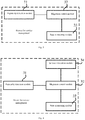
Fig. 3 illustrates a structural diagram of a device for service management according to an embodiment of the present invention; -
Fig. 4 illustrates a structural diagram of another device for service management according to an embodiment of the present invention. -
Fig. 1 illustrates an optional distributed system architecture. The system comprises a plurality of processing resources, which may be, for example, a data storage server, a JAVA virtual machine, etc. Various application system services and data are distributed in the above processing resources. Several concepts used in the method for service management according to the present embodiment will be briefly described as follows: - Service and application: using a user opening an account at a bank as an example (it should be noted that this application is only an example), it is assumed that three steps are required for the entire account-opening process: 1. Verifying the user's I.D. information; 2. Verifying whether there are records of bad credit; 3. Setting up new account information. Then, each of "verifying I.D. information", "verifying credit records" and "setting up new account information" may be referred to as a "service"; the service of "verifying I.D. information" may probably be provided by an "application" system of a public security agency, while the services of "verifying credit records" and "setting up new account information" are provided by an "application" system of the bank. With respect to the account opening request by the user, it can be simply described that an application system of the bank accepts the request and then invokes, remotely, the service provided by an application system of the public security agency to perform the first step of verification; subsequently, the second step and the third step are invoked locally to ultimately complete the entire account opening process. According to this solution, we can simply interpret "application" as a way to divide services and deployments of "services", one "application" may provide one or more "services" to a user or other "applications". In the process to implement a user request, the service dependence among application systems is referred to as "an application using service" or "an application invoking service" in the present embodiment.
- Service accessing a data source: in the logic implementation process of a service, it typically involves data access; for example, the verifying I.D. information in the example above is assumed to use an I.D. database to query if the database stores the I.D. information to be verified, which involves the access to the data source, the "I.D. database", by the service, "verifying I.D. information". The service can be performed normally only when the data access is normal. As shown in
Fig. 1 , the data source may be from a database "Data Source", a file system "File System", or a high-speed cache "Cache". - Local service and remote service: regarding local and remote, the two concepts may be interpreted in terms of their physical meanings, namely a service invoked by an application is a remote service when the service is not on the resource where the application is deployed, otherwise it is a local service; in the above example, if the application system of the bank is deployed on a processing resource A, while the application system of the public security agency is deployed on a processing resource B, then the service, "verifying I.D. information", will be a remote service for the application system of the bank, and the other two services are local services as they belong to the application system of the bank. In other words, when the application system of the bank invokes the service, "setting up new account information", the service logic is deployed on the processing resource A and can be directly invoked and executed on the resource A, making it a local service. On the other hand, the public security application system to which the invoked service, "verifying I.D. information", belongs is deployed on another processing resource B, and consequently the application system of the bank needs to send, via a network, a service invocation request to the application on the processing resource B and wait for the return of the execution result by the service, "verifying I.D. information", which is remote service invocation.
- Apparently, remote service invocation will result in time consumption for network transmission and waiting. When an application frequently invokes a remote service, in particular, the execution efficiency of the application will be significantly affected; the method for service management in the present embodiment will be used to improve the response efficiency of a distributed system and reduce the time consumption of service invocation. In a conventional way, moreover, it is necessary to manually analyze services on a critical service pathway and services to be depended on, to deploy the application systems, in which these services are located physically nearby. As a result, the requirements for service analysis personnel are relatively high, and the complexity is increased for the deployment, operation, and maintenance of the entire system; when the critical service pathway changes or the dependence relationship changes, re-deployment is required, which will affect the service stability. Moreover, it is very inflexible and has poor adaptability. The method for service management in the present embodiment will further improve the adaptive capability of a distributed system to flexibly adapt to service invocation by applications. Relative to physically nearby deployment, moreover, the present embodiment lowers the granularity of migration to "service", which will be favorable for lowering the equipment cost.
- As shown in
Fig. 1 , the present embodiment adds a device for service management in the distributed system, the device comprising: a popularity detection module and a migration control module, wherein the device for service management can execute the flow of the method for service management shown inFig. 2 , comprising: - 201. Detecting popularity of use of a remote target service by an application;
For example, in this step, it could be that the popularity detection module detects popularity of use of a remote target service by an application. It should be noted that the device for service management can be considered as a global management device, which can summarize and record a lot of information in actual implementation. Table 1 below illustratively lists some optional record information: - The information in Table 1 above is explained as follows: application and service have been described above and will not be described in detail again. The execution of a service may be dependent on a plurality of services for assistance. The method for service management in the present embodiment involves service migration, but not every service can be migrated.
- Migration of services: with reference to the example in
Fig. 1 , the application Y1 on the processing resource A needs to use the service S3, while the logic of the service S3 is stored on the processing resource B. If the application Y1 invokes the service S3 on the processing resource B, it is a remote invocation of the service. The service S3 may be migrated from the processing resource B to the processing resource A, wherein the migration refers to the migration of the service logic. As mentioned above, the execution of a service may probably involve the access to a data source. Then it can be considered that a complete execution of a service comprises two parts, "logic" and "data". The service migration in the present embodiment refers to the migration of the logic, and a copy of a segment of the logic of a target service is migrated. Namely, the logic of the service S3 is stored on the processing resource A at the same time, such that the processing resource A also stores a copy of the logic of the service S3. Consequently, the logic flow of the service S3 may be executed locally at the processing resource A. In addition, it should be noted that the service S3 belongs to Y2 and is merely used by Y1. Even if migration (migration is a process of copying the service logic, and a copy of the service logic is migrated) takes place, the service S3 still belongs to Y2, which does not change. - Migratable service: as mentioned above, the migration of a service refers to the migration of logic only, i.e. the logic of the processing flow defined by the service. If the service is migrated to an application (migrated to the processing resource corresponding to the application), therefore, it is required that the application can access resources on which normal execution of the service is dependent. For example, the normal execution of the service S5 needs to access a data source (MySQL and Memcache), but the application Y1 cannot access that data source. Then, the service S5 cannot be executed normally after the service S5 is migrated to the application Y1, and the service S5 is not migratable with respect to the application Y1.
- For a service to be a migratable service with respect to an application, it is required that the application can access a data source needed by the service, and certainly, other conditions may be imposed. For example, the service is an independent service with a clear logic boundary and does not have complex mutual dependence with other services, and moreover, the service is complete and small, such that it can be easily migrated. It may be further required that the service is a no-state service with no state of mutual dependence. All these are to make a service easy to be migrated. Furthermore, whether the accessibility of a service is affected after the service is migrated to an application could be taken into account. For example, a service has high efficiency when accessing a data source before migration, but the execution efficiency of the service becomes lower, due to various reasons after the migration, to such a degree that the service requirement of the application is no longer met. As a result, the service would be deemed not suitable for migration. Furthermore, it should be noted that a migratable service is usually a remote service to an application, as migration is not necessary for local services.
- A distributed system may comprise many applications. In this step, the device for service management can globally manage what services are migratable to what applications, manage data sources that each application can access, and unify the names of the data sources to facilitate determining whether an application comprises a data source required by a service. In addition, the device for service management can further summarize information like the popularity of use of a migratable service by applications, whether the service has been loaded to an application, and whether the service has been updated.
- Popularity of use of a migratable service by applications: the "popularity" is mainly used to indicate the frequency of use of the service by applications. For example, the service is invoked by applications 50 times within one hour; certainly, what type of metric is specifically used to indicate the popularity may be flexibly determined according to actual situation. In the present embodiment, a first threshold value and a second threshold value may be set for the popularity, the first threshold value is greater than the second threshold value, and the first threshold value is mainly used to indicate, when the popularity value reaches or is higher than the threshold value, that the use of the service by the application is very frequent and has reached the tolerance limit at which the execution efficiency of the application is affected. Service migration could be performed, namely, the service is loaded to the application; the second threshold value is mainly used to indicate, when the popularity value reaches or is lower than the threshold value, that the application currently rarely uses the service, and service unloading may be performed to save processing resources.
- Furthermore, to avoid frequent loading and unloading, an intermediate value may be set between the first threshold value and the second threshold value above. For example, the first threshold value is 100 times, the second threshold value is 20 times, and an intermediate value of 80 times is set between these two threshold values. Such a practice will prevent overly frequent loading or unloading of the service that causes the system unstable.
- Loading of a service to an application: the loading of a service to an application refers to that a remote service has been migrated to an application locally. For example, as shown in
Fig. 1 , the service S3 in the processing resource B is migrated to the processing resource A where the application Y1 is located, which indicates that the service S3 has been loaded to the application Y1. - Service update: the logic of a service in a distributed system may produce, for example, different versions of the service; the device for service management in the present embodiment may monitor whether a service has been updated; furthermore, to reduce the resource consumption by the device for service management, it may only monitor remote services that have been loaded to applications. That is because the goal of monitor service update is as follows: if a service loaded to an application has been updated, then the current service on the application is an old service that cannot be used, and it is necessary to promptly unload the old service and re-load the new service. As a result, the device for service management may only monitor the state of services that have been loaded to applications.
- In a specific implementation, a state monitoring module may be added to the device for service management for monitoring whether a target service loaded to an application has been updated. Referring to
Fig. 3 , in such a case, the device for service management may comprise: apopularity detection module 31, amigration control module 32, and astate monitoring module 33. - In this step, the popularity detection module of the device for service management will detect popularity of use of a remote target service by an application, and specifically, monitor popularity of use of a remote service by each application, and proceed to 202 according to the detected popularity.
- 202. When the popularity reaches a preset first threshold value, loading the target service to the application locally.
- For example, in this step, when the popularity detection module detects that the popularity of use of the target service by the application reaches a preset first threshold value, the migration control module loads the target service to the application locally. Optionally, it is assumed that the popularity of use of the service S3 on the processing resource B by the application Y1 on the processing resource A has reached the first threshold value, and then the migration control module can migrate the service S3 from the processing resource B to the processing resource A. Moreover, the migration control module may be located on the processing resource A, or may be a module dedicated to loading or unloading remote services. In other words, two modules may be provided on the processing resource A, one of which is a module dedicated to managing local services, and the other one is a module dedicated to loading or unloading remote services (e.g. the remote class loader on the JAVA virtual machine JVM). Such arrangement makes it easier to manage remote services. When there is a need to load or unload a remote service, the migration control module just needs to be notified by the popularity detection module.
- In addition, the loading or unloading of services in the present embodiment may be performed asynchronously with the application. For example, an application is currently in the process of remote invocation of a service, but it has been detected that the popularity of use of the service by the application reaches the first threshold value. Then, the migration control module performs migration of the service, but the migration does not affect the current execution by the application. The application is still in the remote service invocation mode for this time, and will only use the service loaded locally in the next execution by the application.
- Furthermore, as mentioned above, the popularity detection module continues detection of the popularity of use of the target service by the application after the target service has been loaded to the application locally. If it is detected that the popularity reaches the second threshold value, namely the application subsequently has a relatively low frequency of use of the target service, the migration control module may unload the target service from the application locally, so as to save the processing resources.
- Furthermore, after the target service has been loaded to the application locally, the state monitoring module of the device for service management may notify the migration control module upon detection of an update to the target service, such that the migration control module unloads the target service on the application locally, and loads the updated target service.
- After a remote service has been loaded to the application locally, the device for service management may further comprise a
service invocation module 34. As shown inFig. 4 , when used to execute an application, theservice invocation module 34 determines whether the application locally stores the loaded target service; if the determination result is that the target service is stored locally, it is preferable to use the local target service to execute the application to reduce time consumption by remote invocation; if the determination result is that the target service is not stored locally, regular remote invocation is used. - It can be seen from the embodiment above that, by adding a device for service management into a distributed system, the device can implement the method for service management in the embodiment above. When the popularity of use of a remote target service by an application reaches a frequency threshold value, the remote service is migrated to the application locally. Relative to conventional ways, such arrangement allows the device for service management to automatically determine the use frequency of a service and perform automatic service migration, which saves the cost for manual analysis and deployment, and improves the service deployment efficiency. Such arrangement of automatic service determination and migration has better flexibility and can quickly adapt to the actual situation of application execution. By migrating a remote service to an application locally, it also avoids the time consumption by remote invocation and improves the response efficiency of the distributed system. In addition, the method in the present embodiment uses service as the granularity of analysis, which achieves more precise migration granularity and further improves the processing efficiency relative to the conventional centralized deployment with an application granularity.
- The above description is only a preferred embodiment of the present invention, which is not used to limit the present invention. Any modification, equivalent substitution, or improvement made within the spirit and principle of the present invention shall be encompassed by the present invention.
| Application | Service used | Popularity of use | First (loading) threshold value | Second (unloading) threshold value | Can it be loaded | Loading version (loading situation of device in this application | Remarks |
| Y1 | S3 | 682 | 500 | 200 | Yes | {192.168.10.1: loaded 1.0; 192.168.10.2: not loaded} | |
| Y1 | S5 | 2315 | 2000 | 1000 | No | Local data source does not meet requirements | |
| Y2 | S1 | 282 | 100 | 10 | No | Service does not support migration | |
| Y2 | S2 | 150 | 200 | 100 | No | Invocation popularity is not enough |
| Service | Application to which it belongs | Can it be migrated | Dependence description (Dependence description of data sources, memory resources, CPU, etc.) | Current version |
| S1 | Y1 | No | None | 1.0 |
| S2 | Y1 | Yes | None | 1.1 |
| S3 | Y2 | Yes | None | 1.0 |
| S5 | Y2 | Yes | {MySQL: "192.168.12.1: 3306"; Memcache: "192.168.13.1: 12001"} | 1.6 |
Claims (10)
- A method for service management, wherein the method comprises:detecting popularity of use of a remote target service by an application;when the popularity reaches a preset first threshold value, loading the target service to the application locally.
- The method according to claim 1, wherein, before the loading the target service to the application locally, the method further comprises:determining that the target service meets migration conditions, the migration conditions comprising: the application comprises a data source required by the target service, and the target service is an independent service.
- The method according to claim 1, wherein, after the loading the target service to the application locally, the method further comprises:unloading the target service from the application locally when the popularity reaches a preset second threshold value.
- The method according to claim 1, wherein, after the loading the target service to the application locally, the method further comprises:unloading the target service from the application locally when it is determined that the target service is updated.
- The method according to claim 1, wherein, after the loading the target service to the application locally, the method further comprises:when executing the application, determining whether the application locally stores the loaded target service;if the determination result is that the target service is stored locally, using the target service to execute the application.
- A device for service management, wherein the device comprises:a popularity detection module configured to detect popularity of use of a remote target service by an application;a migration control module configured to, when the popularity detection module detects that the popularity reaches a preset first threshold value, load the target service to the application locally.
- The device according to claim 6, wherein the popularity detection module is further configured to determine that the target service meets migration conditions, the migration conditions comprising: the application comprises a data source required by the target service, and the target service is an independent service.
- The device according to claim 6, wherein
the migration control module is further configured to unload the target service from the application locally when the popularity detection module detects that the popularity reaches a preset second threshold value. - The device according to claim 6, wherein the device further comprises a state monitoring module;
the state monitoring module is further configured to monitor updates to the target service; and
the migration control module is further configured to unload the target service from the application locally when the state monitoring module determines that the target service is updated. - The device according to claim 6, wherein the device further comprises
a service invocation module configured to determine, when executing the application, whether the application locally stores the loaded target service; if the determination result is that the target service is stored locally, use the target service to execute the application.
Applications Claiming Priority (2)
| Application Number | Priority Date | Filing Date | Title |
|---|---|---|---|
| CN201510055949.6A CN105991687B (en) | 2015-02-03 | 2015-02-03 | A kind of service management and device |
| PCT/CN2016/072467 WO2016124102A1 (en) | 2015-02-03 | 2016-01-28 | Service management method and the device |
Publications (2)
| Publication Number | Publication Date |
|---|---|
| EP3255542A1 true EP3255542A1 (en) | 2017-12-13 |
| EP3255542A4 EP3255542A4 (en) | 2018-09-19 |
Family
ID=56563449
Family Applications (1)
| Application Number | Title | Priority Date | Filing Date |
|---|---|---|---|
| EP16746097.1A Ceased EP3255542A4 (en) | 2015-02-03 | 2016-01-28 | Service management method and the device |
Country Status (7)
| Country | Link |
|---|---|
| US (1) | US10635454B2 (en) |
| EP (1) | EP3255542A4 (en) |
| JP (1) | JP6564067B2 (en) |
| KR (1) | KR102004632B1 (en) |
| CN (1) | CN105991687B (en) |
| SG (1) | SG11201706256UA (en) |
| WO (1) | WO2016124102A1 (en) |
Families Citing this family (2)
| Publication number | Priority date | Publication date | Assignee | Title |
|---|---|---|---|---|
| CN111930315A (en) * | 2020-08-21 | 2020-11-13 | 北京天融信网络安全技术有限公司 | Data access method, data access device and storage medium |
| CN112559380A (en) * | 2021-02-19 | 2021-03-26 | 鹏城实验室 | Project testing method and device and computer readable storage medium |
Family Cites Families (60)
| Publication number | Priority date | Publication date | Assignee | Title |
|---|---|---|---|---|
| JPH09231148A (en) | 1996-02-28 | 1997-09-05 | Toshiba Corp | Distributed system |
| JP2001067325A (en) | 1998-09-30 | 2001-03-16 | Hitachi Software Eng Co Ltd | Method and system for managing distributed object |
| JP2000215180A (en) | 1999-01-26 | 2000-08-04 | Ando Electric Co Ltd | Data communication device, system and method |
| JP3687587B2 (en) * | 2001-03-27 | 2005-08-24 | ソニー株式会社 | Data processing system, data processing method, information processing apparatus, information processing method, and computer software |
| US7325047B2 (en) * | 2001-05-23 | 2008-01-29 | International Business Machines Corporation | Dynamic undeployment of services in a computing network |
| JP2003022189A (en) | 2001-07-06 | 2003-01-24 | Mitsubishi Electric Corp | Distributed network computing system |
| US20030192028A1 (en) * | 2002-04-04 | 2003-10-09 | International Business Machines Corporation | System and method for determining software object migration sequences |
| CN1474269A (en) * | 2002-08-08 | 2004-02-11 | 力捷电脑股份有限公司 | Method of program module loading system |
| US7299468B2 (en) | 2003-04-29 | 2007-11-20 | International Business Machines Corporation | Management of virtual machines to utilize shared resources |
| US7143170B2 (en) * | 2003-04-30 | 2006-11-28 | Akamai Technologies, Inc. | Automatic migration of data via a distributed computer network |
| JP2005141441A (en) | 2003-11-06 | 2005-06-02 | Hitachi Ltd | Load balancing system |
| US7424632B2 (en) | 2004-02-13 | 2008-09-09 | Microsoft Corporation | Systems and methods that facilitate state machine power and wake state management |
| US7607129B2 (en) | 2005-04-07 | 2009-10-20 | International Business Machines Corporation | Method and apparatus for using virtual machine technology for managing parallel communicating applications |
| US8627345B2 (en) * | 2007-06-13 | 2014-01-07 | International Business Machines Corporation | Apparatus, system, and method for soap access to data source procedures |
| IL185224A0 (en) | 2007-08-13 | 2008-01-06 | C S L Computing Solutions Lead | System and method for managing a virtual machine environment |
| JP2009169473A (en) * | 2008-01-10 | 2009-07-30 | Nec Corp | Module arrangement device, module arranging method and program |
| US8935692B2 (en) | 2008-05-22 | 2015-01-13 | Red Hat, Inc. | Self-management of virtual machines in cloud-based networks |
| US8112526B2 (en) * | 2008-06-24 | 2012-02-07 | International Business Machines Corporation | Process migration based on service availability in a multi-node environment |
| US20090326970A1 (en) * | 2008-06-30 | 2009-12-31 | Microsoft Corporation | Awarding users for discoveries of content based on future popularity in a social network |
| US8327349B2 (en) * | 2008-07-11 | 2012-12-04 | Internationanl Business Machines Corporation | Matching plug-ins to users |
| US8429650B2 (en) | 2008-11-14 | 2013-04-23 | Oracle International Corporation | System and method of security management for a virtual environment |
| US9542222B2 (en) | 2008-11-14 | 2017-01-10 | Oracle International Corporation | Resource broker system for dynamically deploying and managing software services in a virtual environment based on resource usage and service level agreement |
| US8627328B2 (en) | 2008-11-14 | 2014-01-07 | Oracle International Corporation | Operation control for deploying and managing software service in a virtual environment |
| US8239526B2 (en) | 2008-11-14 | 2012-08-07 | Oracle International Corporation | System and method for performance data collection in a virtual environment |
| US8397229B2 (en) * | 2009-01-25 | 2013-03-12 | Netspectrum Inc. | System and methods for migrating independently executing program into and out of an operating system |
| US7904540B2 (en) | 2009-03-24 | 2011-03-08 | International Business Machines Corporation | System and method for deploying virtual machines in a computing environment |
| CN101510167B (en) * | 2009-03-31 | 2016-04-20 | 阿里巴巴集团控股有限公司 | A kind of method of plug-in component operation, Apparatus and system |
| WO2010124291A1 (en) | 2009-04-24 | 2010-10-28 | Level 3 Communications, Llc | Media resource storage and management |
| US8316125B2 (en) | 2009-08-31 | 2012-11-20 | Red Hat, Inc. | Methods and systems for automated migration of cloud processes to external clouds |
| US8751844B2 (en) | 2009-09-24 | 2014-06-10 | Citrix Systems, Inc. | Systems and methods for attributing an amount of power consumption to a workload |
| US20110126192A1 (en) * | 2009-10-26 | 2011-05-26 | Simon Frost | Systems and methods for providing and updating a unified client |
| US20110153715A1 (en) * | 2009-12-17 | 2011-06-23 | Microsoft Corporation | Lightweight service migration |
| US8583945B2 (en) | 2010-01-14 | 2013-11-12 | Muse Green Investments LLC | Minimizing power consumption in computers |
| US8627123B2 (en) | 2010-03-25 | 2014-01-07 | Microsoft Corporation | Managing power provisioning in distributed computing |
| JP5449044B2 (en) | 2010-06-10 | 2014-03-19 | シャープ株式会社 | Server device, terminal device, and application control system |
| JP2012018657A (en) | 2010-06-11 | 2012-01-26 | Nintendo Co Ltd | Information processing terminal, information processing system, and information processing program |
| US8601129B2 (en) | 2010-06-30 | 2013-12-03 | International Business Machines Corporation | Hypervisor selection for hosting a virtual machine image |
| JP2012088797A (en) | 2010-10-15 | 2012-05-10 | Kddi Corp | Server load distribution system |
| US8745233B2 (en) * | 2010-12-14 | 2014-06-03 | International Business Machines Corporation | Management of service application migration in a networked computing environment |
| US8868749B2 (en) * | 2011-01-18 | 2014-10-21 | International Business Machines Corporation | Workload placement on an optimal platform in a networked computing environment |
| US8589557B1 (en) | 2011-02-22 | 2013-11-19 | Intuit Inc. | Automatic provisioning of resources to software offerings |
| US20120222037A1 (en) | 2011-02-24 | 2012-08-30 | Intuit Inc. | Dynamic reprovisioning of resources to software offerings |
| US9015710B2 (en) | 2011-04-12 | 2015-04-21 | Pivotal Software, Inc. | Deployment system for multi-node applications |
| US8904384B2 (en) * | 2011-06-14 | 2014-12-02 | Lenovo Enterprise Solutions (Singapore) Pte. Ltd. | Reducing data transfer overhead during live migration of a virtual machine |
| US20130019015A1 (en) * | 2011-07-12 | 2013-01-17 | International Business Machines Corporation | Application Resource Manager over a Cloud |
| US8874781B2 (en) | 2011-10-17 | 2014-10-28 | Qualcomm Incorporated | System and apparatus for power efficient delivery of social network updates to a receiver device in a broadcast network |
| CN102497428A (en) * | 2011-12-13 | 2012-06-13 | 方正国际软件有限公司 | Remote storage system and method for remote storage thereof |
| US8862744B2 (en) | 2012-02-14 | 2014-10-14 | Telefonaktiebolaget L M Ericsson (Publ) | Optimizing traffic load in a communications network |
| US8892779B2 (en) * | 2012-05-10 | 2014-11-18 | International Business Machines Corporation | Virtual machine allocation at physical resources |
| US20130311597A1 (en) * | 2012-05-16 | 2013-11-21 | Apple Inc. | Locally backed cloud-based storage |
| US8972969B2 (en) * | 2012-06-08 | 2015-03-03 | Adobe Systems Incorporated | Out of band services updates |
| US9104461B2 (en) * | 2012-06-15 | 2015-08-11 | Oracle International Corporation | Hypervisor-based management and migration of services executing within virtual environments based on service dependencies and hardware requirements |
| US9003395B2 (en) | 2012-08-10 | 2015-04-07 | Adobe Systems Incorporated | Directing plug-in updates for a software application to a target audience using manifest parameters |
| CN103870470B (en) | 2012-12-11 | 2016-05-11 | 腾讯科技(深圳)有限公司 | A kind of method of resource file of loading application programs and charger |
| CN104281621A (en) * | 2013-07-11 | 2015-01-14 | 腾讯科技(深圳)有限公司 | Method and device for browsing web page |
| EP2854028A4 (en) * | 2013-07-31 | 2015-06-24 | Huawei Tech Co Ltd | Associated plugin management method, device and system |
| CN103473085B (en) * | 2013-08-22 | 2017-02-01 | 卓易畅游(北京)科技有限公司 | Method and equipment for loading target application on mobile terminal |
| CN103795606A (en) * | 2014-02-26 | 2014-05-14 | 北京邮电大学 | Service transfer control method based on sdn in optical network |
| CN104239122B (en) * | 2014-09-04 | 2018-05-11 | 华为技术有限公司 | A kind of virtual machine migration method and device |
| JP2016110183A (en) * | 2014-12-02 | 2016-06-20 | 富士通株式会社 | Information processing system and control method thereof |
-
2015
- 2015-02-03 CN CN201510055949.6A patent/CN105991687B/en active Active
-
2016
- 2016-01-28 JP JP2017558606A patent/JP6564067B2/en active Active
- 2016-01-28 SG SG11201706256UA patent/SG11201706256UA/en unknown
- 2016-01-28 EP EP16746097.1A patent/EP3255542A4/en not_active Ceased
- 2016-01-28 WO PCT/CN2016/072467 patent/WO2016124102A1/en not_active Ceased
- 2016-01-28 KR KR1020177024551A patent/KR102004632B1/en active Active
-
2017
- 2017-07-27 US US15/661,099 patent/US10635454B2/en active Active
Also Published As
| Publication number | Publication date |
|---|---|
| EP3255542A4 (en) | 2018-09-19 |
| CN105991687A (en) | 2016-10-05 |
| KR20170110670A (en) | 2017-10-11 |
| SG11201706256UA (en) | 2017-08-30 |
| CN105991687B (en) | 2019-09-17 |
| JP6564067B2 (en) | 2019-08-21 |
| WO2016124102A1 (en) | 2016-08-11 |
| US10635454B2 (en) | 2020-04-28 |
| KR102004632B1 (en) | 2019-07-26 |
| US20170322814A1 (en) | 2017-11-09 |
| JP2018507499A (en) | 2018-03-15 |
Similar Documents
| Publication | Publication Date | Title |
|---|---|---|
| US11108859B2 (en) | Intelligent backup and recovery of cloud computing environment | |
| EP3200393B1 (en) | Method and device for virtual network function management | |
| US10797952B1 (en) | Intelligent rollback analysis of configuration changes | |
| US8984108B2 (en) | Dynamic CLI mapping for clustered software entities | |
| US8185624B2 (en) | Efficient on-demand provisioning of servers for specific software sets | |
| US8930906B2 (en) | Selectively allowing changes to a system | |
| CN112199193A (en) | Resource scheduling method and device, electronic equipment and storage medium | |
| CN112351051A (en) | Cloud service processing method and device, cloud server, cloud service processing system and storage medium | |
| US11321199B2 (en) | System and method for on-demand warm standby disaster recovery | |
| CN112650576A (en) | Resource scheduling method, device, equipment, storage medium and computer program product | |
| US7890952B2 (en) | Autonomic peer-to-peer computer software installation | |
| US8990608B1 (en) | Failover of applications between isolated user space instances on a single instance of an operating system | |
| US11126504B2 (en) | System and method for dynamic configuration of backup agents | |
| CN119621169B (en) | An application integration method based on micro front-end technology | |
| EP3591530B1 (en) | Intelligent backup and recovery of cloud computing environment | |
| CN107453932A (en) | A kind of distributed memory system management method and its device | |
| WO2019034095A1 (en) | Software processing method and apparatus, electronic device and computer-readable storage medium | |
| US20080155303A1 (en) | Distributed platform management for high availability systems | |
| EP3255542A1 (en) | Service management method and the device | |
| CN108733536B (en) | Monitoring management system and method | |
| US8677323B2 (en) | Recording medium storing monitoring program, monitoring method, and monitoring system | |
| US12008396B2 (en) | Application state control method apparatus, and terminal and computer-readable storage medium | |
| CN102662702B (en) | Equipment management system, device, substrate management devices and method | |
| CN114281882A (en) | Database connection processing method, device, device and storage medium | |
| CN120653280B (en) | A system update method, product, device, and medium |
Legal Events
| Date | Code | Title | Description |
|---|---|---|---|
| STAA | Information on the status of an ep patent application or granted ep patent |
Free format text: STATUS: THE INTERNATIONAL PUBLICATION HAS BEEN MADE |
|
| PUAI | Public reference made under article 153(3) epc to a published international application that has entered the european phase |
Free format text: ORIGINAL CODE: 0009012 |
|
| STAA | Information on the status of an ep patent application or granted ep patent |
Free format text: STATUS: REQUEST FOR EXAMINATION WAS MADE |
|
| 17P | Request for examination filed |
Effective date: 20170728 |
|
| AK | Designated contracting states |
Kind code of ref document: A1 Designated state(s): AL AT BE BG CH CY CZ DE DK EE ES FI FR GB GR HR HU IE IS IT LI LT LU LV MC MK MT NL NO PL PT RO RS SE SI SK SM TR |
|
| AX | Request for extension of the european patent |
Extension state: BA ME |
|
| DAV | Request for validation of the european patent (deleted) | ||
| DAX | Request for extension of the european patent (deleted) | ||
| A4 | Supplementary search report drawn up and despatched |
Effective date: 20180820 |
|
| RIC1 | Information provided on ipc code assigned before grant |
Ipc: G06F 9/455 20060101AFI20180813BHEP Ipc: G06F 9/50 20060101ALI20180813BHEP |
|
| STAA | Information on the status of an ep patent application or granted ep patent |
Free format text: STATUS: EXAMINATION IS IN PROGRESS |
|
| 17Q | First examination report despatched |
Effective date: 20191125 |
|
| RAP1 | Party data changed (applicant data changed or rights of an application transferred) |
Owner name: ADVANCED NEW TECHNOLOGIES CO., LTD. |
|
| P01 | Opt-out of the competence of the unified patent court (upc) registered |
Effective date: 20230511 |
|
| REG | Reference to a national code |
Ref country code: DE Ref legal event code: R003 |
|
| STAA | Information on the status of an ep patent application or granted ep patent |
Free format text: STATUS: THE APPLICATION HAS BEEN REFUSED |
|
| 18R | Application refused |
Effective date: 20231129 |