EP3253407B1 - Use of hla-b27 homodimers for cancer treatment - Google Patents
Use of hla-b27 homodimers for cancer treatment Download PDFInfo
- Publication number
- EP3253407B1 EP3253407B1 EP16703507.0A EP16703507A EP3253407B1 EP 3253407 B1 EP3253407 B1 EP 3253407B1 EP 16703507 A EP16703507 A EP 16703507A EP 3253407 B1 EP3253407 B1 EP 3253407B1
- Authority
- EP
- European Patent Office
- Prior art keywords
- domain
- alpha
- hla
- prt
- homo sapiens
- Prior art date
- Legal status (The legal status is an assumption and is not a legal conclusion. Google has not performed a legal analysis and makes no representation as to the accuracy of the status listed.)
- Active
Links
Images





Classifications
-
- A—HUMAN NECESSITIES
- A61—MEDICAL OR VETERINARY SCIENCE; HYGIENE
- A61K—PREPARATIONS FOR MEDICAL, DENTAL OR TOILETRY PURPOSES
- A61K38/00—Medicinal preparations containing peptides
- A61K38/16—Peptides having more than 20 amino acids; Gastrins; Somatostatins; Melanotropins; Derivatives thereof
- A61K38/17—Peptides having more than 20 amino acids; Gastrins; Somatostatins; Melanotropins; Derivatives thereof from animals; from humans
- A61K38/177—Receptors; Cell surface antigens; Cell surface determinants
- A61K38/1774—Immunoglobulin superfamily (e.g. CD2, CD4, CD8, ICAM molecules, B7 molecules, Fc-receptors, MHC-molecules)
-
- C—CHEMISTRY; METALLURGY
- C07—ORGANIC CHEMISTRY
- C07K—PEPTIDES
- C07K14/00—Peptides having more than 20 amino acids; Gastrins; Somatostatins; Melanotropins; Derivatives thereof
- C07K14/435—Peptides having more than 20 amino acids; Gastrins; Somatostatins; Melanotropins; Derivatives thereof from animals; from humans
- C07K14/705—Receptors; Cell surface antigens; Cell surface determinants
- C07K14/70503—Immunoglobulin superfamily
- C07K14/70539—MHC-molecules, e.g. HLA-molecules
-
- A—HUMAN NECESSITIES
- A61—MEDICAL OR VETERINARY SCIENCE; HYGIENE
- A61K—PREPARATIONS FOR MEDICAL, DENTAL OR TOILETRY PURPOSES
- A61K38/00—Medicinal preparations containing peptides
- A61K38/16—Peptides having more than 20 amino acids; Gastrins; Somatostatins; Melanotropins; Derivatives thereof
- A61K38/17—Peptides having more than 20 amino acids; Gastrins; Somatostatins; Melanotropins; Derivatives thereof from animals; from humans
- A61K38/177—Receptors; Cell surface antigens; Cell surface determinants
-
- A—HUMAN NECESSITIES
- A61—MEDICAL OR VETERINARY SCIENCE; HYGIENE
- A61K—PREPARATIONS FOR MEDICAL, DENTAL OR TOILETRY PURPOSES
- A61K39/00—Medicinal preparations containing antigens or antibodies
- A61K39/0005—Vertebrate antigens
- A61K39/0011—Cancer antigens
-
- A—HUMAN NECESSITIES
- A61—MEDICAL OR VETERINARY SCIENCE; HYGIENE
- A61K—PREPARATIONS FOR MEDICAL, DENTAL OR TOILETRY PURPOSES
- A61K39/00—Medicinal preparations containing antigens or antibodies
- A61K39/395—Antibodies; Immunoglobulins; Immune serum, e.g. antilymphocytic serum
-
- A—HUMAN NECESSITIES
- A61—MEDICAL OR VETERINARY SCIENCE; HYGIENE
- A61K—PREPARATIONS FOR MEDICAL, DENTAL OR TOILETRY PURPOSES
- A61K39/00—Medicinal preparations containing antigens or antibodies
- A61K39/395—Antibodies; Immunoglobulins; Immune serum, e.g. antilymphocytic serum
- A61K39/39533—Antibodies; Immunoglobulins; Immune serum, e.g. antilymphocytic serum against materials from animals
- A61K39/3955—Antibodies; Immunoglobulins; Immune serum, e.g. antilymphocytic serum against materials from animals against proteinaceous materials, e.g. enzymes, hormones, lymphokines
-
- A—HUMAN NECESSITIES
- A61—MEDICAL OR VETERINARY SCIENCE; HYGIENE
- A61K—PREPARATIONS FOR MEDICAL, DENTAL OR TOILETRY PURPOSES
- A61K45/00—Medicinal preparations containing active ingredients not provided for in groups A61K31/00 - A61K41/00
- A61K45/06—Mixtures of active ingredients without chemical characterisation, e.g. antiphlogistics and cardiaca
-
- A—HUMAN NECESSITIES
- A61—MEDICAL OR VETERINARY SCIENCE; HYGIENE
- A61K—PREPARATIONS FOR MEDICAL, DENTAL OR TOILETRY PURPOSES
- A61K48/00—Medicinal preparations containing genetic material which is inserted into cells of the living body to treat genetic diseases; Gene therapy
-
- A—HUMAN NECESSITIES
- A61—MEDICAL OR VETERINARY SCIENCE; HYGIENE
- A61P—SPECIFIC THERAPEUTIC ACTIVITY OF CHEMICAL COMPOUNDS OR MEDICINAL PREPARATIONS
- A61P35/00—Antineoplastic agents
-
- C—CHEMISTRY; METALLURGY
- C07—ORGANIC CHEMISTRY
- C07K—PEPTIDES
- C07K14/00—Peptides having more than 20 amino acids; Gastrins; Somatostatins; Melanotropins; Derivatives thereof
- C07K14/435—Peptides having more than 20 amino acids; Gastrins; Somatostatins; Melanotropins; Derivatives thereof from animals; from humans
- C07K14/705—Receptors; Cell surface antigens; Cell surface determinants
- C07K14/7056—Lectin superfamily, e.g. CD23, CD72
-
- C—CHEMISTRY; METALLURGY
- C07—ORGANIC CHEMISTRY
- C07K—PEPTIDES
- C07K16/00—Immunoglobulins [IG], e.g. monoclonal or polyclonal antibodies
-
- C—CHEMISTRY; METALLURGY
- C07—ORGANIC CHEMISTRY
- C07K—PEPTIDES
- C07K16/00—Immunoglobulins [IG], e.g. monoclonal or polyclonal antibodies
- C07K16/18—Immunoglobulins [IG], e.g. monoclonal or polyclonal antibodies against material from animals or humans
- C07K16/28—Immunoglobulins [IG], e.g. monoclonal or polyclonal antibodies against material from animals or humans against receptors, cell surface antigens or cell surface determinants
- C07K16/2803—Immunoglobulins [IG], e.g. monoclonal or polyclonal antibodies against material from animals or humans against receptors, cell surface antigens or cell surface determinants against the immunoglobulin superfamily
-
- C—CHEMISTRY; METALLURGY
- C07—ORGANIC CHEMISTRY
- C07K—PEPTIDES
- C07K16/00—Immunoglobulins [IG], e.g. monoclonal or polyclonal antibodies
- C07K16/18—Immunoglobulins [IG], e.g. monoclonal or polyclonal antibodies against material from animals or humans
- C07K16/28—Immunoglobulins [IG], e.g. monoclonal or polyclonal antibodies against material from animals or humans against receptors, cell surface antigens or cell surface determinants
- C07K16/2803—Immunoglobulins [IG], e.g. monoclonal or polyclonal antibodies against material from animals or humans against receptors, cell surface antigens or cell surface determinants against the immunoglobulin superfamily
- C07K16/2818—Immunoglobulins [IG], e.g. monoclonal or polyclonal antibodies against material from animals or humans against receptors, cell surface antigens or cell surface determinants against the immunoglobulin superfamily against CD28 or CD152
-
- C—CHEMISTRY; METALLURGY
- C07—ORGANIC CHEMISTRY
- C07K—PEPTIDES
- C07K16/00—Immunoglobulins [IG], e.g. monoclonal or polyclonal antibodies
- C07K16/18—Immunoglobulins [IG], e.g. monoclonal or polyclonal antibodies against material from animals or humans
- C07K16/28—Immunoglobulins [IG], e.g. monoclonal or polyclonal antibodies against material from animals or humans against receptors, cell surface antigens or cell surface determinants
- C07K16/2803—Immunoglobulins [IG], e.g. monoclonal or polyclonal antibodies against material from animals or humans against receptors, cell surface antigens or cell surface determinants against the immunoglobulin superfamily
- C07K16/2827—Immunoglobulins [IG], e.g. monoclonal or polyclonal antibodies against material from animals or humans against receptors, cell surface antigens or cell surface determinants against the immunoglobulin superfamily against B7 molecules, e.g. CD80, CD86
-
- C—CHEMISTRY; METALLURGY
- C12—BIOCHEMISTRY; BEER; SPIRITS; WINE; VINEGAR; MICROBIOLOGY; ENZYMOLOGY; MUTATION OR GENETIC ENGINEERING
- C12N—MICROORGANISMS OR ENZYMES; COMPOSITIONS THEREOF; PROPAGATING, PRESERVING, OR MAINTAINING MICROORGANISMS; MUTATION OR GENETIC ENGINEERING; CULTURE MEDIA
- C12N15/00—Mutation or genetic engineering; DNA or RNA concerning genetic engineering, vectors, e.g. plasmids, or their isolation, preparation or purification; Use of hosts therefor
- C12N15/09—Recombinant DNA-technology
- C12N15/63—Introduction of foreign genetic material using vectors; Vectors; Use of hosts therefor; Regulation of expression
- C12N15/79—Vectors or expression systems specially adapted for eukaryotic hosts
- C12N15/85—Vectors or expression systems specially adapted for eukaryotic hosts for animal cells
-
- C—CHEMISTRY; METALLURGY
- C12—BIOCHEMISTRY; BEER; SPIRITS; WINE; VINEGAR; MICROBIOLOGY; ENZYMOLOGY; MUTATION OR GENETIC ENGINEERING
- C12N—MICROORGANISMS OR ENZYMES; COMPOSITIONS THEREOF; PROPAGATING, PRESERVING, OR MAINTAINING MICROORGANISMS; MUTATION OR GENETIC ENGINEERING; CULTURE MEDIA
- C12N7/00—Viruses; Bacteriophages; Compositions thereof; Preparation or purification thereof
-
- A—HUMAN NECESSITIES
- A61—MEDICAL OR VETERINARY SCIENCE; HYGIENE
- A61K—PREPARATIONS FOR MEDICAL, DENTAL OR TOILETRY PURPOSES
- A61K38/00—Medicinal preparations containing peptides
-
- C—CHEMISTRY; METALLURGY
- C07—ORGANIC CHEMISTRY
- C07K—PEPTIDES
- C07K2317/00—Immunoglobulins specific features
- C07K2317/50—Immunoglobulins specific features characterized by immunoglobulin fragments
- C07K2317/52—Constant or Fc region; Isotype
- C07K2317/524—CH2 domain
-
- C—CHEMISTRY; METALLURGY
- C07—ORGANIC CHEMISTRY
- C07K—PEPTIDES
- C07K2317/00—Immunoglobulins specific features
- C07K2317/50—Immunoglobulins specific features characterized by immunoglobulin fragments
- C07K2317/52—Constant or Fc region; Isotype
- C07K2317/526—CH3 domain
-
- C—CHEMISTRY; METALLURGY
- C07—ORGANIC CHEMISTRY
- C07K—PEPTIDES
- C07K2319/00—Fusion polypeptide
-
- C—CHEMISTRY; METALLURGY
- C07—ORGANIC CHEMISTRY
- C07K—PEPTIDES
- C07K2319/00—Fusion polypeptide
- C07K2319/01—Fusion polypeptide containing a localisation/targetting motif
- C07K2319/03—Fusion polypeptide containing a localisation/targetting motif containing a transmembrane segment
-
- C—CHEMISTRY; METALLURGY
- C07—ORGANIC CHEMISTRY
- C07K—PEPTIDES
- C07K2319/00—Fusion polypeptide
- C07K2319/30—Non-immunoglobulin-derived peptide or protein having an immunoglobulin constant or Fc region, or a fragment thereof, attached thereto
-
- C—CHEMISTRY; METALLURGY
- C12—BIOCHEMISTRY; BEER; SPIRITS; WINE; VINEGAR; MICROBIOLOGY; ENZYMOLOGY; MUTATION OR GENETIC ENGINEERING
- C12N—MICROORGANISMS OR ENZYMES; COMPOSITIONS THEREOF; PROPAGATING, PRESERVING, OR MAINTAINING MICROORGANISMS; MUTATION OR GENETIC ENGINEERING; CULTURE MEDIA
- C12N2710/00—MICROORGANISMS OR ENZYMES; COMPOSITIONS THEREOF; PROPAGATING, PRESERVING, OR MAINTAINING MICROORGANISMS; MUTATION OR GENETIC ENGINEERING; CULTURE MEDIA dsDNA viruses
- C12N2710/00011—Details
- C12N2710/10011—Adenoviridae
- C12N2710/10021—Viruses as such, e.g. new isolates, mutants or their genomic sequences
-
- C—CHEMISTRY; METALLURGY
- C12—BIOCHEMISTRY; BEER; SPIRITS; WINE; VINEGAR; MICROBIOLOGY; ENZYMOLOGY; MUTATION OR GENETIC ENGINEERING
- C12N—MICROORGANISMS OR ENZYMES; COMPOSITIONS THEREOF; PROPAGATING, PRESERVING, OR MAINTAINING MICROORGANISMS; MUTATION OR GENETIC ENGINEERING; CULTURE MEDIA
- C12N2710/00—MICROORGANISMS OR ENZYMES; COMPOSITIONS THEREOF; PROPAGATING, PRESERVING, OR MAINTAINING MICROORGANISMS; MUTATION OR GENETIC ENGINEERING; CULTURE MEDIA dsDNA viruses
- C12N2710/00011—Details
- C12N2710/16011—Herpesviridae
- C12N2710/16021—Viruses as such, e.g. new isolates, mutants or their genomic sequences
-
- C—CHEMISTRY; METALLURGY
- C12—BIOCHEMISTRY; BEER; SPIRITS; WINE; VINEGAR; MICROBIOLOGY; ENZYMOLOGY; MUTATION OR GENETIC ENGINEERING
- C12N—MICROORGANISMS OR ENZYMES; COMPOSITIONS THEREOF; PROPAGATING, PRESERVING, OR MAINTAINING MICROORGANISMS; MUTATION OR GENETIC ENGINEERING; CULTURE MEDIA
- C12N2740/00—Reverse transcribing RNA viruses
- C12N2740/00011—Details
- C12N2740/10011—Retroviridae
- C12N2740/15011—Lentivirus, not HIV, e.g. FIV, SIV
- C12N2740/15021—Viruses as such, e.g. new isolates, mutants or their genomic sequences
-
- C—CHEMISTRY; METALLURGY
- C12—BIOCHEMISTRY; BEER; SPIRITS; WINE; VINEGAR; MICROBIOLOGY; ENZYMOLOGY; MUTATION OR GENETIC ENGINEERING
- C12N—MICROORGANISMS OR ENZYMES; COMPOSITIONS THEREOF; PROPAGATING, PRESERVING, OR MAINTAINING MICROORGANISMS; MUTATION OR GENETIC ENGINEERING; CULTURE MEDIA
- C12N2750/00—MICROORGANISMS OR ENZYMES; COMPOSITIONS THEREOF; PROPAGATING, PRESERVING, OR MAINTAINING MICROORGANISMS; MUTATION OR GENETIC ENGINEERING; CULTURE MEDIA ssDNA viruses
- C12N2750/00011—Details
- C12N2750/14011—Parvoviridae
- C12N2750/14111—Dependovirus, e.g. adenoassociated viruses
- C12N2750/14121—Viruses as such, e.g. new isolates, mutants or their genomic sequences
Definitions
- the present invention relates to the use of HLA-B27 heavy chain homodimers, for use in the prophylaxis or therapy of cancer.
- HLA Human leukocyte antigens
- MHC major histocompatibility complex
- HLA-A human leukocyte antigens
- HLA-B human leukocyte antigens
- HLA-C human leukocyte antigens
- HLA genes have many possible variations, allowing each person's immune system to react to a wide range of foreign invaders.
- Some HLA genes have hundreds of identified versions (alleles), each of which is given a particular number (such as HLA-B27). Closely related alleles are categorized together; for example, at least 40 very similar alleles are subtypes of HLA-B27. These subtypes are designated as HLA-B ⁇ 2701 to HLA-B ⁇ 2743.
- HLA-I molecules are trimeric structures comprising a membrane-bound heavy chain with three extracellular domains (a1, a2 and a3) that associates non-covalently with ⁇ 2-microglobulin ( ⁇ 2m) and a small peptide.
- HLA I heavy chains may exist in a form not associated to ⁇ 2-microglobulin or peptide. These forms are referred to as open conformers.
- HLA-B27 As all other HLA molecules, HLA-B27's principle function is to present cell-derived peptides to CD8 + cytotoxic T lymphocytes (CTLs), as part of the adaptive immune response. Under normal physiological conditions, HLA-B27 molecules form heterotrimeric complexes that consist of B27 heavy chains, ⁇ 2-microglobulin and peptides, which are derived from self-proteins, viruses or bacteria. In this respect, HLA-B27 resembles all other class I HLA alleles. However, HLA-B27 may also be present in cells as free-heavy chains lacking ⁇ 2m-microglobulin and peptide, also referred to as HLA-B27 open conformers.
- CTLs cytotoxic T lymphocytes
- HLA-B27 open conformer biochemical properties may also induce formation of ⁇ 2m-free heavy chain homodimers through a disulphide bond formation of cysteine at position 67 (Cys 67) and position 164 (Cys 164) ( Antoniou et al., JBC, 2003, 279, 8895-8902 ).
- B27 open conformers formation is not altered by the presence of peptide, therefore B27 open conformers molecules may exist bound to peptide, or without it.
- HLA-B27 open conformers have been associated with the development of spondyloarthritis (SpA) in + HLA-B27 patients.
- Possession of HLA-B27 is strongly associated with development of spondyloarthritides, a group of related diseases including ankylosing spondylitis (AS), psoriatic arthritis, enteropathic arthritis in patients with inflammatory bowel disease (IBD), reactive arthritis after specific gastrointestinal and urogenital infections and juvenile SpA, the most recognized being AS.
- AS ankylosing spondylitis
- IBD inflammatory bowel disease
- AS reactive arthritis after specific gastrointestinal and urogenital infections and juvenile SpA
- a variety of immunoregulatory receptors can recognize B27 open conformers (in addition to the T-cell receptor (TCR)). These include the killer immunoglobulin-like receptors (KIRs) and leucocyte immunoglobulin-like receptors (LILRs), which are expressed on many types of leucocytes, including NK cells, NKT cells, monocytes, macrophages, DCs and T cells.
- KIRs killer immunoglobulin-like receptors
- LILRs leucocyte immunoglobulin-like receptors
- Cancer is a group of diseases characterized by abnormal cells of the body undergoing uncontrolled and destructive growth. Cancer cells can spread around the body and metastasize to form tumors; this growth pattern is called malignant.
- Amino acid sequences are given from amino to carboxyl terminus.
- Capital letters for sequence positions refer to L-amino acids in the one-letter code ( Stryer, Biochemistry, 3rd ed. p. 21 ).
- sequence identity and percentage of sequence identity refer to the values determined by comparing two aligned sequences.
- Methods for alignment of sequences for comparison are well-known in the art. Alignment of sequences for comparison may be conducted by the local homology algorithm of Smith and Waterman, Adv. Appl. Math. 2:482 (1981 ), by the global alignment algorithm of Needleman and Wunsch, J. Mol. Biol. 48:443 (1970 ), by the search for similarity method of Pearson and Lipman, Proc. Nat. Acad. Sci. 85:2444 (1988 ) or by computerized implementations of these algorithms, including, but not limited to: CLUSTAL, GAP, BESTFIT, BLAST, FASTA and TFASTA.
- sequence identity values provided herein refer to the value obtained using the BLAST suite of programs using default parameters ( Altschul et al., J. Mol. Biol. 215:403-410 (1990 )).
- Software for performing BLAST analyses is publicly available, e.g., through the National Center for Biotechnology-Information (http://blast.ncbi.nlm.nih.gov/).
- One example for comparison of amino acid sequences is the BLASTP algorithm that uses default settings such as: Expect threshold: 10; Word size: 3; Max matches in a query range: 0; Matrix: BLOSUM62; Gap Costs: Existence 11, Extension 1; Compositional adjustments: Conditional compositional score matrix adjustment.
- One such example for comparison of nucleic acid sequences is the BLASTN algorithm that uses the default settings: Expect threshold: 10; Word size: 28; Max matches in a query range: 0; Match/Mismatch Scores: 1.-2; Gap costs: Linear
- MHC major histocompatibility complex
- MHC class I heavy chain molecules usually (i.e. when not in open conformer form) occur as an alpha chain linked to a unit of the non-MHC molecule ⁇ 2-microglobulin.
- the alpha chain comprises, in direction from the N-terminus to the C-terminus, a signal peptide, three extracellular domains ( ⁇ 1-3, with ⁇ 1 being at the N terminus), a transmembrane region and a C-terminal cytoplasmic tail.
- the peptide being displayed or presented is held by the peptide-binding groove, in the central region of the ⁇ 1/ ⁇ 2 domains.
- ⁇ 2-microglobulin domain is used in its meaning known in the art of cell biology and biochemistry; it refers to a non-MHC molecule that is part of the MHC class I heterodimer molecule. In other words, it constitutes the ⁇ chain of the MHC class I heterodimer.
- HLA human leukocyte antigen
- HLA-A human leukocyte antigen
- HLA-B human leukocyte antigen-C
- all of these genes have a varying number of alleles, for example HLA-B has 3590 known alleles. Closely related alleles are combined in subgroups of a certain allele.
- the allele HLA-B27 has more than 160 closely related alleles that are, according to the WHO Nomenclature Committee for Factors of the HLA System, labelled HLA-B ⁇ 27:01:00 to HLA-B ⁇ 27:99:00.
- the full or partial sequence of all known HLA genes and their respective alleles are available to the person skilled in the art in specialist databases such as IMGT/HLA (http://www.ebi.ac.uk/ipd/imgt/hla/).
- antibody in its meaning known in the art of cell biology and immunology; it refers to whole antibodies including but not limited to immunoglobulin type G (IgG), type A (IgA), type D (IgD), type E (IgE) or type M (IgM), any antigen binding fragment or single chains thereof and related or derived constructs.
- a whole antibody is a glycoprotein comprising at least two heavy (H) chains and two light (L) chains inter-connected by disulfide bonds.
- Each heavy chain is comprised of a heavy chain variable region (V H ) and a heavy chain constant region (C H ).
- the heavy chain constant region is comprised of three domains, C H 1, C H 2 and C H 3.
- Each light chain is comprised of a light chain variable region (abbreviated herein as V L ) and a light chain constant region (C L ).
- the light chain constant region is comprised of one domain, C L .
- the variable regions of the heavy and light chains contain a binding domain that interacts with an antigen.
- the constant regions of the antibodies may mediate the binding of the immunoglobulin to host tissues or factors, including various cells of the immune system (e.g., effector cells) and the first component of the classical complement system.
- fragment crystallizable (Fc) region is used in its meaning known in the art of cell biology and immunology; it refers to a fraction of an antibody comprising two identical heavy chain fragments comprised of a C H 2 and a C H 3 domain, covalently linked by disulfide bonds.
- dimer refers to a unit consisting of two subunits.
- homodimer refers to a dimer comprised of two subunits that are either identical or are highly similar members of the same class of subunits.
- a homodimer would be a dimer consisting of two subunits independently selected from the list of HLA-B27 alleles.
- homodimers consist of two identical HLA-B27 alleles.
- amino acid linker refers to a polypeptide of variable length that is used to connect two polypeptides in order to generate a single chain polypeptide.
- linkers useful for practicing the invention specified herein are oligopeptide chains consisting of 1, 2, 3, 4, 5, 10, 20, 30, 40 or 50 amino acids.
- a non-limiting example of an amino acid linker is the polypeptide GGGGSGGGGS (SEQ ID NO 173) that links an HLA-B27 polypeptide with an Fc domain.
- the present invention provides HLA-B27 heavy chain homodimers for use in a treatment of cancer.
- the HLA-B27 heavy chain homodimer comprises two identical HLA-B27 polypeptide chains. In certain embodiments, the HLA-B27 protein homodimer comprises two different HLA-B27 polypeptide chains.
- an HLA-B27 open conformer fusion protein homodimer for use in the treatment or prevention of cancer.
- the fusion protein homodimer comprises or consists of two monomers, and each monomer independently of any other monomer comprises an HLA-B27 chain, and a polypeptide domain known to metabolically stabilize a polypeptide in vivo.
- a stabilizing domain is an Fc (fragment crystallizable) domain of an immunoglobulin.
- the HLA-B27 chain and the stabilizing domain may optionally be joined by an amino acid linker.
- An open conformer fusion protein comprising the HLA-B27 chain and an immunoglobulin Fc fragment is henceforth termed HLA-B27 Fc open conformer or B27 2 -Fc herein.
- the Fc domain is present in the fusion protein for increasing solubility, stability, avidity, half-life, and from a technological point of view, cost-effective production and purification in mammalian systems (protein A or G purification).
- the HLA-B27 heavy chain homodimers are produced without Fc region and coupled to a biotinylation recognition sequence, leading to its biotinylation during synthesis in culture.
- the resulting product comprises a biotin moiety.
- a plurality of the HLA-B27 fusion protein homodimers are coupled to a substrate such as -but not limited to- streptavidin coated beads. This multimerization increases the stability of the HLA-B27 open conformers for in vitro tests.
- four HLA-B27 open conformer homodimers are assembled into a tetramer by binding to streptavidin coated beads (B27 2 -Tet).
- the HLA-B27 heavy chain homodimer additionally comprises a peptide epitope fragment.
- an HLA-B27 open conformer monomer i.e., the HLA-B27 unattached to a second HLA-B27 heavy chain polypeptide, and not bound by ⁇ 2-microglobulin
- the HLA-B27 monomer additionally comprises a peptide epitope fragment.
- the peptide epitope fragment is non-covalently attached to the polypeptide within the antigen presenting domain of the HLA-B27 peptide chain.
- the HLA-B27 chain comprises only the extracellular HLA-B27 alpha 1, 2 and 3 domains.
- the transmembrane and intracellular domains of the HLA-B27 chain are not included in order to allow for extracellular expression of the molecule in recombinant cells.
- the HLA-B27 chain of the homodimer is selected from HLA-B ⁇ 27:05, HLA-B ⁇ 27:02, HLA-B ⁇ 27:04, HLA-B ⁇ 27:01, HLA-B ⁇ 27:03, HLA-B ⁇ 27:07, HLA-B ⁇ 27:08, HLA-B ⁇ 27:10, HLA-B ⁇ 27:13, HLA-B ⁇ 27:14, HLA-B ⁇ 27:15, HLA-B ⁇ 27:19, HLA-B ⁇ 27:23, HLA-B ⁇ 27:24, HLA-B ⁇ 27:25 or HLA-B ⁇ 27:49.
- the HLA-B27 chain comprises only the HLA-B27 alpha 1, 2 and 3 domains, but not the transmembrane and intracellular domain of a sequence selected from the HLA-B ⁇ 27:05, HLA-B ⁇ 27:02, HLA-B ⁇ 27:04, HLA-B ⁇ 27:01, HLA-B ⁇ 27:03, HLA-B ⁇ 27:07, HLA-B ⁇ 27:08, HLA-B ⁇ 27:10, HLA-B ⁇ 27:13, HLA-B ⁇ 27:14, HLA-B ⁇ 27:15, HLA-B ⁇ 27:19, HLA-B ⁇ 27:23, HLA-B ⁇ 27:24, HLA-B ⁇ 27:25 or HLA-B ⁇ 27:49.
- HLA-B ⁇ 27:05 is the most widely distributed disease-associated allele.
- other common disease-associated subtypes include, but are not limited to, HLA-B ⁇ 27:02 (Mediterranean populations) and HLA-B ⁇ 27:04 (Chinese and other Asian populations), and further HLA-B ⁇ 27:01, HLA-B ⁇ 27:03, HLA-B ⁇ 27:07, HLA-B ⁇ 27:08, HLA-B ⁇ 27:10, HLA-B ⁇ 27:13, HLA-B ⁇ 27:14, HLA-B ⁇ 27:15, HLA-B ⁇ 27:19, HLA-B ⁇ 27:23, HLA-B ⁇ 27:24, HLA-B ⁇ 27:25 and HLA-B ⁇ 27:49 are contemplated for use with the present invention.
- These types are also known to be disease associated, as at least one or more spondyloarthritis patients possessing these subtypes have been observed
- the HLA-B27 chain has ⁇ 70%, ⁇ 80%, ⁇ 85%, ⁇ 90%, ⁇ 92%, ⁇ 93%, ⁇ 94%, ⁇ 95%, ⁇ 96%, ⁇ 97% or ⁇ 98%, or 100% sequence identity compared to any one of SEQ ID NOs 006 to 172.
- the HLA-B27 heavy chain homodimer or HLA-B27 fusion protein homodimer consists of two subunits independently selected from the above HLA-B27 alleles. In certain embodiments, homodimers consist of two identical HLA-B27 alleles.
- the HLA-B27 fusion protein homodimer comprises an Fc domain.
- the Fc domain comprises heavy chain constant regions C H 2 and C H 3 from immunoglobulin type G (IgG), type A (IgA), type D (IgD), type E (IgE) or type M (IgM).
- the HLA-B27 fusion protein homodimer comprises an amino acid linker joining a stabilizing domain, particularly an Fc domain, to the HLA polypeptide.
- the amino acid linker comprises 1 to 50 amino acids, particularly 5 to 40 amino acids, more particularly 10 to 30 amino acids, even more particularly 15 to 25 amino acids that link the HLA-B27 chain to the Fc domain as one single polypeptide chain.
- a nucleic acid molecule encoding a HLA-B27 open conformer monomer, or a fusion protein monomer according to the above aspects of the invention is provided for use in the treatment or the therapy of cancer.
- Expression of the fusion protein in vivo from the nucleic acid molecule will, after dimerization, lead to the fusion protein polypeptide of the invention.
- the concept of expressing pharmaceutically active polypeptides from nucleic acids encoding them in the patient's body is well known and may confer significant benefits to the patient.
- the nucleic acid molecule encodes a HLA-B27 fusion protein monomer comprising a peptide epitope fragment. In certain embodiments, the nucleic acid molecule encodes a HLA-B27 fusion protein monomer that comprises only the extracellular HLA-B27 alpha 1, 2 and 3 domains. In certain embodiments, the nucleic acid molecule encodes a HLA-B27 fusion protein monomer that comprises only the extracellular HLA-B27 alpha 1, 2 and 3 domains, and a peptide epitope fragment.
- the nucleic acid molecule encodes a HLA-B27 fusion protein monomer that comprises an amino acid linker and/or an Fc (fragment crystallizable) domain, and is used in the treatment or the therapy of cancer.
- a recombinant expression vector comprising the nucleic acid molecule according to the third aspect of the invention is provided for use in the treatment or the therapy of cancer.
- the recombinant expression vector is a plasmid comprising a promoter that is operable in a mammalian cell, particularly in a human cell.
- the promoter is operably linked to the nucleic acid molecule of the invention.
- a virus comprising the nucleic acid molecule according to the third aspect of the invention is provided for use in the treatment or the therapy of cancer.
- the nucleic acid molecule is under control of a promoter sequence operable in a mammalian cell, particularly in a human cell.
- the virus is an adenovirus, adeno-associated virus, a herpes virus or a lentivirus.
- an in vitro genetically modified host cell comprising the nucleic acid molecule according to the third aspect of the invention is provided.
- Another aspect of the invention provides for the use of the HLA-B27 heavy chain homodimer or fusion protein homodimer according to the first and second aspect of the invention in the manufacture of a medicament for the treatment or prevention of cancer.
- the invention provides a method of treatment for cancer, comprising administering an HLA-B27 heavy chain according to the first and second aspect of the invention to a patient in need thereof.
- a combination medicament comprising:
- the immune checkpoint inhibitor agent is an inhibitor of interaction of CTLA4 with CD80 or CD86.
- the immune checkpoint inhibitor agent is ipilimumab (Yervoy; CAS No. 477202-00-9 ).
- the HLA-B27 heavy chain homodimer or the fusion protein HLA-B27 homodimer is provided as parenteral dosage form, particularly confectioned for injection.
- the immune checkpoint inhibitor agent is provided as parenteral dosage form, particularly confectioned for injection.
- both the HLA-B27 homodimer and the immune checkpoint inhibitor agent are present in the same administration form.
- the invention discloses a method for producing recombinant HLA heavy chain polypeptides. This method is summarized in the following items:
- HLA-B27 open conformers particularly when present as fusion proteins comprising an Fc immunoglobulin fragment, could be useful in cancer therapy.
- B27 2 -Fc molecules may be used alone or in combinations with other cancer therapeutics.
- the B27 2 -Tet molecule is able to modulate immune responses in both human and rodents through influencing Tregs suppression, and activating T cells in vitro ( Fig. 1-3 )
- B27 2 -Tet blocks conversion of murine CD4 + T cells into iTregs
- Tregs were co-cultured with HLA- and BSA-tetramers and proliferation of CD8 + T cells was measured after 96 h.
- CD8 + T cells alone showed strong proliferation and, as expected, Treg cells suppressed the proliferation of CD8 + T cells when incubated with control tetramers (HLA-B27, HLA-B8 and BSA).
- HLA-B27, HLA-B8 and BSA control tetramers
- the suppressive function of Tregs was greatly impaired in the presence of B27 2 tetramers indicated by a strong proliferation of CD8 + T cells in both mice ( Fig. 2A ), and human ( Fig. 2B ) suppression assays.
- the effect of B27 2 -Tet was dose dependent in both mice ( Fig. 2C ) and human ( Fig. 2D ).
- B27 2 - ⁇ 2m-Fc complex was successfully produced by inserting the alpha 1, 2 and 3 domains of HLA-B27 into a human IgG4-Fc vector cassette ( Fig. 5A ), together with a human- ⁇ 2m vector, necessary for extracellular production of the B27 2 - ⁇ 2m-Fc protein ( Fig. 5A,B ).
- Toxicity studies were performed in 6 weeks old C57BL/6 wild type mice. Doses of B27 2 -Fc at 0, 0.1 mg/kg, 1 mg/kg, 10 mg/kg were injected i.p. into mice twice a week for three weeks. General health conditions showed no changes (paralysis, stress, anxiety, listlessness, signs of infection, abdominal breathing, hunched back or ruffled fur, weight and stool), when comparing PBS group with treated groups. Lymphocytes populations remain constant between groups, naive and effector CD4 + T cells, CD8 + T cells, NK, B cells and monocytes displayed no change in numbers between groups. Based on this data we pursued to test 10 mg/kg of B27 2 -Fc for in vivo tests in syngeneic cancer mouse models.
- Injections of the B27 2 -Fc molecule (10 mg/kg) were performed in a therapeutic scenario ( Fig. 7A ).
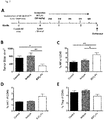
- MC38-OVA dim fragment tumours were subcutaneously injected in the flank of syngeneic mice. Once the tumour reached 100 mm3 (between 1-2 weeks after injection of tumours) B27 2 -Fc was injected i.p. twice a week for a period of three weeks ( Fig. 7A ) and tumours were sized and analysed for infiltration of lymphocytes ( Fig. 7BE ).
- Results demonstrated that B27 2 -Fc was capable of reducing significantly the tumor development in MC38-OVA dim mice when compared to controls ( Fig. 7B ).
- a mechanistic effect of B27 2 -Fc mode of action was observed by a significant infiltration of NK cells into tumors compared to controls ( Fig. 7C ), pointing out to a mechanism were NK cells are key players in the modulation of tumor growth.
- a decreased trend on the number of Tregs was observed when compared to isotype, but was not significant (p ⁇ 0.1) ( Fig. 7E ). Results are plotted from two separate experiments.
- Pan02 1x10 6 cells, EMT6 1x10 6 cells and EG.7 1x10 6 cells were subcutaneously injected in the flank of syngeneic mice groups respectively. Mice were distributed according to their tumor volume (Pan02 and EMT6) or weight (EG.7). B27 2 -Fc was injected i.p. seven times every 3 rd day (Q3Dx7), CTLA4 was injected 3 times at selected intervals (Q3Dx7) ( Fig. 8 ), and PD-1 injected 6 times twice a week (biwk x 3) ( Fig. 8 ).
- Results in combination approaches with PD-1 antibodies showed that B27 2 -Fc enhanced the therapeutic effects of PD-1 antibodies in the EG.7 lymphoma model when compared to isotype or vehicle (p ⁇ 0.01), but not to PD-1 monotherapy.
- PD-1 monotherapy was not significantly different when compared to isotype or vehicle.
- B27 2 -Fc emerges as a novel class of immunomodulating drug.
- In vitro and in vivo data points to a mechanism were B27 2 -Fc molecules act as a switch-on mechanism for the activation of anti-tumor immunity, most likely by altering mechanisms related to immune checkpoints, or break of tolerance of DC, NK and/or T cells.
- FoxP3 (eGFP) reporter mice (B6.Cg- Foxp3 tm2Tch /J) were obtained from The Jackson Laboratories for iTreg assay and bred at University Hospital Zurich animal facilities.
- HLA-B27 /h ⁇ 2m transgenic (33-3 line) (Tg), and wild-type (WT) Fischer F344 male rats were obtained from Taconic (Germantown, NY) and bred at the University Hospital Zurich animal facilities. Wild-type C57BI/6 mice were bred and maintained at the University Hospital Basel animal facilities.
- MC38-OVA dim is a mouse derived colon carcinoma tumor cell line.
- Each Tg rat received a weekly intraperitoneal (i.p.) injection of HD5 or anti-Her2neu (ctrl) (10 mg/kg) up to the age of 15 weeks or 23 weeks.
- WT-littermates received no treatment.
- Toxicity studies were performed in 6 weeks old C57BL/6 mice. Doses of B27 2 -Fc 0, 0.1 mg/kg, 1 mg/kg, 10 and 20 mg/kg were injected i.p. into mice twice a week for a period of three weeks.
- MC38-OVA dim tumour fragments were injected subcutaneously into the right flanks of syngeneic female C57BL/6 mice at week 6. Once the tumour reached ⁇ 50 mm 3 animals were distributed according to their individual tumour volume size and divided into groups displaying no statistical differences between them.
- 1 x 10 6 Pan02 cells were injected in the flank of syngeneic female C57BL/6 mice, and animals were distributed according to their tumour volume ⁇ 10 mm 3 and divided into groups displaying no statistically differences between them.
- EMT6 breast cancer mouse model 5 x 10 6 EMT6 cells were injected in the flank of syngeneic female BALB/c mice, and animals were distributed according to their tumour volume ⁇ 40 mm 3 and divided into groups displaying no statistically differences between them.
- EG.7 lymphoma mouse model 1 x 10 6 EG.7 cells were injected in the flank of syngeneic female C57BL/6 mice, and animals were distributed according to their body weight and divided into groups displaying no statistically differences between them. Tumour diameters were measured using a caliper, and volume was calculated according to the formula, D /2 ⁇ d 2 where D and d are the longest and shortest diameter of the tumour in mm, respectively.
- Lymphocytes mouse populations were stained with: CD4 (FITC-BD Bioscience), FoxP3+ (efluor 450- eBioscience), CD3 (PE-Cy7- eBioscience), CD45 (PerCP- eBioscience), CD3 (PE- eBioscience), Granzyme B (Alexa 647, GB11; Biol), NK1.1 (BV421-eBioscience), CD11b (FITC- eBioscience), CD11c (FITC-eBioscience), and Ter119 (FITC- eBioscience).
- CD4 FITC-BD Bioscience
- FoxP3+ efluor 450- eBioscience
- CD3 PE-Cy7- eBioscience
- CD45 PerCP- eBioscience
- CD3 PE- eBioscience
- Granzyme B Alexa 647, GB11; Biol
- NK1.1 BV421-eBioscience
- CD11b FITC- eBioscience
- CD11c FITC-eBioscience
- Lymphocyte rat populations were stained with: CD3 (APC-Cy7- BD-Pharmingen), CD4 (PE-Cy7- BD-Pharmingen), IL-17A (eBio17B7-APC, eBioscience), TNF (PE- Biolegend),
- Lymphocyte human populations were stained with: CD4 (PE- Biolegend), FoxP3 (eFluor 450-eBioscience), CD3 (APC-Cy7- Biolegend).
- HC10 mAb (IgG2a) binding to ⁇ 2m-free heavy chains of HLA-B and -C alleles and to B27 2 was a gift from Dr. Hidde Ploegh (MIT, MA).
- Mouse IgG1 ⁇ Isotype control Biolegend.
- Anti-Her2neu mAb (Trastuzumab, Roche).
- Intracellular cytokine staining for detection of FoxP3+ Treg cells was performed using 1% paraformaldehyde, permeabilized with 0.1% saponin in FACS buffer, and stained with primary antibodies (FoxP3, CD4 and CD3).
- Intracellular cytokine staining for stimulating leukocytes was performed with Phorbol myristate acetate (PMA) and ionomycin (both at 0.5 ⁇ g/mL), in the presence of GolgiPlugTM (BD bioscience) for 5 hours.
- PMA Phorbol myristate acetate
- ionomycin both at 0.5 ⁇ g/mL
- HLA-B ⁇ 2705 open conformer homodimer and heterotrimer complexes were refolded by limiting dilution with or without ⁇ 2m in the presence of influenza nucleoprotein NP383-391 peptide epitope SRYWAIRTR (SEQ ID NO 174) or EBV EBNA3C epitope RRIYDLIEL (SEQ ID NO 175).
- Control HLA-B8 heterotrimeric complex was refolded with hCMVpp65 (TPRTGGGAM; SEQ ID NO 176).
- Streptavidin or Streptavidin-PE (Life technologies) was used to build HLA-tetramers. Biotinylated BSA (Sigma) was used in control tetramers and in combinations with HLA complexes.
- PBMCs peripheral blood cells
- CD4 + CD25 + cells using the Regulatory T cell Dynabeads kit (Invitrogen), and further expanded them using the Human Treg Expander kit (Invitrogen) following instructions from the manual.
- Cells were cultured in complete RPMI for 8 days with the addition of 500 IU of IL-2 every second day.
- Murine naive CD4 + T cells in optimal culture conditions for iTreg conversion were incubated in the presence of 0.5 ⁇ g of B27 2 -Tet, HLA-B27-Tet and HLA-B8-Tet for 72 h. iTreg conversion was measured by flow cytometry.
- CD4 + or CD8 + T-effector cells were purified PBMCs from either mouse or human (Mouse Na ⁇ ve CD4 + T Cell Isolation Kit- Easy Sep; Dynabeads® FlowCompTM Mouse CD8- life technologies; Dynabeads® CD8 human- Life Technologies) and labelled with 10 ⁇ M cell trace violet proliferation stain (Molecular Probes).
- Tregs (2.5 x 10 4 ) cells and T-effector cells (2.5 x 10 4 ) were cultured in 96 wells U-bottomed plates with coated CD3 (eBioscience) (3 ⁇ g/mL) and soluble CD28 (eBioscience) (1 ⁇ g/mL) antibody for 96 hrs. Proliferation of T-effector cells was measured using a FACS canto II and data were analysed using proliferation analysis software from FlowJo version 7.6.4.
- B27 2 - ⁇ 2m-Fc Recombinant production of B27 2 - ⁇ 2m-Fc was achieved by inserting the alpha 1, 2 and 3 domains of HLA-B27 into a human IgG4-Fc vector (InvivoGen), and the human ⁇ 2-microglobulin ( ⁇ 2m) in a separate vector.
- Production of recombinant B27 2 - ⁇ 2m-Fc was performed by co-transfection of B27-Fc-vector and ⁇ 2m-vector into Chinese hamster ovary (CHO) cells. Production of B27 2 - ⁇ 2m-Fc was outsourced to Evitria AG.
- B27 2 - ⁇ 2m-Fc Purification of B27 2 - ⁇ 2m-Fc was performed using conventional protocols for antibody purification. Production of B27 2 -Fc was performed with the addition of a denaturing step to remove ⁇ 2m from the B27 2 - ⁇ 2m-Fc complex.
- the capture step of B27 2 - ⁇ 2m-Fc was performed after running supernatants (5 mL/min) through protein-G columns (Amersham Pharmacia). Intermediate purification steps were performed by eluting the B27 2 - ⁇ 2m-Fc from protein G-columns using elution buffer (100 mM glycine, pH 2.0), and recovering fractions in 8M Urea, 100 mM Tris-HCl pH 8.0, and 5 mM ⁇ -mercaptoethanol (BME).
- elution buffer 100 mM glycine, pH 2.0
- the 1 st Polishing step was to separate B27-Fc free-heavy chains fractions from ⁇ 2m by either size exclusion chromatography (SEC) using superdex 200 prep grade or Sephacryl S-100 HR (GE Lifescience) with an ⁇ KTA system (GE Lifescience), or by dialysis with membranes of 30 KDa or 50 KDa pore size (Millipore).
- SEC size exclusion chromatography
- GE Lifescience GE Lifescience
- ⁇ KTA system GE Lifescience
- the recovered B27 free-heavy chains from both protocols were re-folded by the dilution method after pulsation of the B27 free-heavy chains at 3 times with intervals of 8 hours each in 100 times volume of refolding buffer (50 mM Tris-HCl pH8.5, 500 mM L-Arginine, 1 mM EDTA, 0.15 mM NaCl, 1% Sucrose, 0.01% polysorbate-80, 1 mM GSH, and 0.1 mM GSSH).
- refolding buffer 50 mM Tris-HCl pH8.5, 500 mM L-Arginine, 1 mM EDTA, 0.15 mM NaCl, 1% Sucrose, 0.01% polysorbate-80, 1 mM GSH, and 0.1 mM GSSH.
- the 2 nd Polishing step by SEC was performed to remove further impurities and to buffer exchange newly recovered fractions of B27 2 -Fc molecules into dilution buffer (Tris 50 mM pH8.0, NaCl 150 mM, 1% Sucrose, and 0.01% polysorbate-80). Purified solutions of B27 2 -Fc were filter sterilized using 0.2 ⁇ m membranes (Millipore).
- CTLA4 clone 9H10 (tested in EG.7 and EMT6 syngeneic models), CTLA4 clone 9D9 (tested in Pan02 syngeneic model), and PD-1 clone RMP1-14 were obtained from Bio X Cell Co.
- Functional domains of the full length HLA-B27 alpha chain from N-terminus to C-terminus are: Signal peptide, alpha 1, alpha 2 , alpha 3 (alpha domains 1-3 are underlined; alpha 2 is set in bold), transmembrane domain and cytoplasmic tail.
- SEQ ID NO. 8 comprises:
Landscapes
- Health & Medical Sciences (AREA)
- Life Sciences & Earth Sciences (AREA)
- Chemical & Material Sciences (AREA)
- Immunology (AREA)
- Medicinal Chemistry (AREA)
- General Health & Medical Sciences (AREA)
- Organic Chemistry (AREA)
- Genetics & Genomics (AREA)
- Proteomics, Peptides & Aminoacids (AREA)
- Pharmacology & Pharmacy (AREA)
- Animal Behavior & Ethology (AREA)
- Veterinary Medicine (AREA)
- Public Health (AREA)
- Engineering & Computer Science (AREA)
- Epidemiology (AREA)
- Molecular Biology (AREA)
- Biochemistry (AREA)
- Biophysics (AREA)
- Bioinformatics & Cheminformatics (AREA)
- Zoology (AREA)
- Microbiology (AREA)
- Cell Biology (AREA)
- Gastroenterology & Hepatology (AREA)
- Mycology (AREA)
- Biotechnology (AREA)
- Wood Science & Technology (AREA)
- Toxicology (AREA)
- Oncology (AREA)
- Biomedical Technology (AREA)
- General Engineering & Computer Science (AREA)
- Endocrinology (AREA)
- Physics & Mathematics (AREA)
- Plant Pathology (AREA)
- Chemical Kinetics & Catalysis (AREA)
- General Chemical & Material Sciences (AREA)
- Nuclear Medicine, Radiotherapy & Molecular Imaging (AREA)
- Virology (AREA)
- Peptides Or Proteins (AREA)
- Medicines That Contain Protein Lipid Enzymes And Other Medicines (AREA)
- Micro-Organisms Or Cultivation Processes Thereof (AREA)
Description
- The present invention relates to the use of HLA-B27 heavy chain homodimers, for use in the prophylaxis or therapy of cancer.
- Human leukocyte antigens (HLA) belong to the classical major histocompatibility complex (MHC) protein family. The HLA complex helps the immune system distinguish the body's own proteins from proteins made by foreign invaders such as viruses and bacteria. Humans have three main MHC class I genes, known as HLA-A, HLA-B, and HLA-C. HLA genes have many possible variations, allowing each person's immune system to react to a wide range of foreign invaders. Some HLA genes have hundreds of identified versions (alleles), each of which is given a particular number (such as HLA-B27). Closely related alleles are categorized together; for example, at least 40 very similar alleles are subtypes of HLA-B27. These subtypes are designated as HLA-B∗2701 to HLA-B∗2743.
- Classical MHC-I molecules (designated HLA-I in humans) are trimeric structures comprising a membrane-bound heavy chain with three extracellular domains (a1, a2 and a3) that associates non-covalently with β2-microglobulin (β2m) and a small peptide. HLA I heavy chains may exist in a form not associated to β2-microglobulin or peptide. These forms are referred to as open conformers.
- As all other HLA molecules, HLA-B27's principle function is to present cell-derived peptides to CD8+ cytotoxic T lymphocytes (CTLs), as part of the adaptive immune response. Under normal physiological conditions, HLA-B27 molecules form heterotrimeric complexes that consist of B27 heavy chains, β2-microglobulin and peptides, which are derived from self-proteins, viruses or bacteria. In this respect, HLA-B27 resembles all other class I HLA alleles. However, HLA-B27 may also be present in cells as free-heavy chains lacking β2m-microglobulin and peptide, also referred to as HLA-B27 open conformers. Furthermore, HLA-B27 open conformer biochemical properties may also induce formation of β2m-free heavy chain homodimers through a disulphide bond formation of cysteine at position 67 (Cys 67) and position 164 (Cys 164) (Antoniou et al., JBC, 2003, 279, 8895-8902). B27 open conformers formation is not altered by the presence of peptide, therefore B27 open conformers molecules may exist bound to peptide, or without it.
- B27 open conformers have been associated with the development of spondyloarthritis (SpA) in +HLA-B27 patients. Possession of HLA-B27 is strongly associated with development of spondyloarthritides, a group of related diseases including ankylosing spondylitis (AS), psoriatic arthritis, enteropathic arthritis in patients with inflammatory bowel disease (IBD), reactive arthritis after specific gastrointestinal and urogenital infections and juvenile SpA, the most recognized being AS.
- The demonstration of cell surface expression of B27 open conformers led to the proposal that immunoregulatory leucocyte receptors might specifically interact with B27 open conformers. How the interaction of B27 open conformers with immunoregulatory receptors leads to AS remains undetermined.
- A variety of immunoregulatory receptors can recognize B27 open conformers (in addition to the T-cell receptor (TCR)). These include the killer immunoglobulin-like receptors (KIRs) and leucocyte immunoglobulin-like receptors (LILRs), which are expressed on many types of leucocytes, including NK cells, NKT cells, monocytes, macrophages, DCs and T cells.
- Cancer is a group of diseases characterized by abnormal cells of the body undergoing uncontrolled and destructive growth. Cancer cells can spread around the body and metastasize to form tumors; this growth pattern is called malignant.
- Tarazona et al., 2000, J. Immunology 165(12), 6776-6782 show that a dimeric 7-amino-acid peptide derived from HLA-B27 can block natural killer (NK) cell toxicity. The dimeric peptide binds to β-tubulin, induces tubulin polymerization and interferes with the normal assembly/disassembly dynamics of microtubules.
- Santos et al., 2008, Arthritis Research Therapy 10(4), R100 describe that HLA-B27 homodimers are implicated in the etiology of ankylosis spondylitis.
- Amino acid sequences are given from amino to carboxyl terminus. Capital letters for sequence positions refer to L-amino acids in the one-letter code (Stryer, Biochemistry, 3rd ed. p. 21).
- In the context of the present specifications the terms sequence identity and percentage of sequence identity refer to the values determined by comparing two aligned sequences. Methods for alignment of sequences for comparison are well-known in the art. Alignment of sequences for comparison may be conducted by the local homology algorithm of Smith and Waterman, Adv. Appl. Math. 2:482 (1981), by the global alignment algorithm of Needleman and Wunsch, J. Mol. Biol. 48:443 (1970), by the search for similarity method of Pearson and Lipman, Proc. Nat. Acad. Sci. 85:2444 (1988) or by computerized implementations of these algorithms, including, but not limited to: CLUSTAL, GAP, BESTFIT, BLAST, FASTA and TFASTA. Unless otherwise stated, sequence identity values provided herein refer to the value obtained using the BLAST suite of programs using default parameters (Altschul et al., J. Mol. Biol. 215:403-410 (1990)). Software for performing BLAST analyses is publicly available, e.g., through the National Center for Biotechnology-Information (http://blast.ncbi.nlm.nih.gov/). One example for comparison of amino acid sequences is the BLASTP algorithm that uses default settings such as: Expect threshold: 10; Word size: 3; Max matches in a query range: 0; Matrix: BLOSUM62; Gap Costs: Existence 11,
Extension 1; Compositional adjustments: Conditional compositional score matrix adjustment. One such example for comparison of nucleic acid sequences is the BLASTN algorithm that uses the default settings: Expect threshold: 10; Word size: 28; Max matches in a query range: 0; Match/Mismatch Scores: 1.-2; Gap costs: Linear - In the context of the present specification, the term major histocompatibility complex (MHC) is used in its meaning known in the art of cell biology and biochemistry; it refers to a cell surface molecule that displays a specific fraction (peptide), also referred to as an epitope, of a protein. There a two major classes of MHC molecules: class I and class II.
- MHC class I heavy chain molecules usually (i.e. when not in open conformer form) occur as an alpha chain linked to a unit of the non-MHC molecule β2-microglobulin. The alpha chain comprises, in direction from the N-terminus to the C-terminus, a signal peptide, three extracellular domains (α1-3, with α1 being at the N terminus), a transmembrane region and a C-terminal cytoplasmic tail. The peptide being displayed or presented is held by the peptide-binding groove, in the central region of the α1/α2 domains.
- In the context of the present specification, the term β2-microglobulin domain is used in its meaning known in the art of cell biology and biochemistry; it refers to a non-MHC molecule that is part of the MHC class I heterodimer molecule. In other words, it constitutes the β chain of the MHC class I heterodimer.
- In the context of the present specification, the term human leukocyte antigen (HLA) is used in its meaning known in the art of cell biology and biochemistry; it refers to gene loci encoding the human MHC class I proteins. The three major MHC class I genes in HLA are HLA-A, HLA-B and HLA-C and all of these genes have a varying number of alleles, for example HLA-B has 3590 known alleles. Closely related alleles are combined in subgroups of a certain allele. For example the allele HLA-B27 has more than 160 closely related alleles that are, according to the WHO Nomenclature Committee for Factors of the HLA System, labelled HLA-B∗27:01:00 to HLA-B∗27:99:00. The full or partial sequence of all known HLA genes and their respective alleles are available to the person skilled in the art in specialist databases such as IMGT/HLA (http://www.ebi.ac.uk/ipd/imgt/hla/).
- In the context of the present specification, the term antibody is used in its meaning known in the art of cell biology and immunology; it refers to whole antibodies including but not limited to immunoglobulin type G (IgG), type A (IgA), type D (IgD), type E (IgE) or type M (IgM), any antigen binding fragment or single chains thereof and related or derived constructs. A whole antibody is a glycoprotein comprising at least two heavy (H) chains and two light (L) chains inter-connected by disulfide bonds. Each heavy chain is comprised of a heavy chain variable region (VH) and a heavy chain constant region (CH). The heavy chain constant region is comprised of three domains,
C H1,C H2 andC H3. Each light chain is comprised of a light chain variable region (abbreviated herein as VL) and a light chain constant region (CL). The light chain constant region is comprised of one domain, CL. The variable regions of the heavy and light chains contain a binding domain that interacts with an antigen. The constant regions of the antibodies may mediate the binding of the immunoglobulin to host tissues or factors, including various cells of the immune system (e.g., effector cells) and the first component of the classical complement system. - In the context of the present specification, the term fragment crystallizable (Fc) region is used in its meaning known in the art of cell biology and immunology; it refers to a fraction of an antibody comprising two identical heavy chain fragments comprised of a
C H2 and aC H3 domain, covalently linked by disulfide bonds. - In the context of the present specification, the term dimer refers to a unit consisting of two subunits.
- In the context of the present specification, the term homodimer refers to a dimer comprised of two subunits that are either identical or are highly similar members of the same class of subunits. One example for a homodimer would be a dimer consisting of two subunits independently selected from the list of HLA-B27 alleles. In certain embodiments, homodimers consist of two identical HLA-B27 alleles.
- In the context of the present specification, the term amino acid linker refers to a polypeptide of variable length that is used to connect two polypeptides in order to generate a single chain polypeptide. Exemplary embodiments of linkers useful for practicing the invention specified herein are oligopeptide chains consisting of 1, 2, 3, 4, 5, 10, 20, 30, 40 or 50 amino acids. A non-limiting example of an amino acid linker is the polypeptide GGGGSGGGGS (SEQ ID NO 173) that links an HLA-B27 polypeptide with an Fc domain.
- The present invention provides HLA-B27 heavy chain homodimers for use in a treatment of cancer.
- In certain embodiments, the HLA-B27 heavy chain homodimer comprises two identical HLA-B27 polypeptide chains. In certain embodiments, the HLA-B27 protein homodimer comprises two different HLA-B27 polypeptide chains.
- According to a first aspect of the invention, an HLA-B27 open conformer fusion protein homodimer is provided for use in the treatment or prevention of cancer. The fusion protein homodimer comprises or consists of two monomers, and each monomer independently of any other monomer comprises an HLA-B27 chain, and a polypeptide domain known to metabolically stabilize a polypeptide in vivo. One example of such stabilizing domain is an Fc (fragment crystallizable) domain of an immunoglobulin. The HLA-B27 chain and the stabilizing domain may optionally be joined by an amino acid linker. An open conformer fusion protein comprising the HLA-B27 chain and an immunoglobulin Fc fragment is henceforth termed HLA-B27 Fc open conformer or B272-Fc herein.
- In certain embodiments the Fc domain is present in the fusion protein for increasing solubility, stability, avidity, half-life, and from a technological point of view, cost-effective production and purification in mammalian systems (protein A or G purification).
- In certain embodiments the HLA-B27 heavy chain homodimers are produced without Fc region and coupled to a biotinylation recognition sequence, leading to its biotinylation during synthesis in culture. The resulting product comprises a biotin moiety. In certain embodiments, a plurality of the HLA-B27 fusion protein homodimers are coupled to a substrate such as -but not limited to- streptavidin coated beads. This multimerization increases the stability of the HLA-B27 open conformers for in vitro tests. In certain embodiments four HLA-B27 open conformer homodimers are assembled into a tetramer by binding to streptavidin coated beads (B272-Tet).
- In certain embodiments the HLA-B27 heavy chain homodimer additionally comprises a peptide epitope fragment.
- Further disclosed herein is an HLA-B27 open conformer monomer (i.e., the HLA-B27 unattached to a second HLA-B27 heavy chain polypeptide, and not bound by β2-microglobulin) is provided for use in the treatment or prevention of cancer. In certain embodiments of this aspect, the HLA-B27 monomer additionally comprises a peptide epitope fragment.
- This aspect of the disclosure can be summarized in the following items:
- Item 1: An isolated single HLA-B27 heavy chain polypeptide monomer essentially free of associated β2-microglobulin for use in the treatment or prevention of cancer.
- Item 2: The isolated single HLA-B27 heavy chain polypeptide monomer for use in the treatment or prevention of cancer according to
item 1, wherein the monomer additionally comprises a peptide epitope fragment. - Item 3: The isolated single HLA-B27 heavy chain polypeptide monomer for use in the treatment or prevention of cancer according to
items B27 alpha - Item 4: The isolated single HLA-B27 heavy chain polypeptide monomer for use in the treatment or prevention of cancer according to any one of the preceding items, wherein the HLA-B27 chain comprises the transmembrane domain and does not comprise the intracellular domain (cytoplasmic tail).
- Item 5: The isolated single HLA-B27 heavy chain polypeptide monomer for use in the treatment or prevention of cancer according to any one of the preceding items, wherein the HLA-B27 chain has ≥ 70%, ≥ 80%, ≥ 85%, ≥ 90%, ≥ 92%, ≥ 93%, ≥ 94%, ≥ 95%, ≥ 96%, ≥ 97% or ≥ 98%, or 100%, sequence identity compared to any one of the sequences identified by SEQ ID NO consecutively numbered SEQ ID NO 006 to SEQ ID NO 172.
- Item 6: A combination medicament comprising
- a. an isolated single HLA-B27 heavy chain polypeptide monomer as specified in any one of
items 1 to 5, and - b. a checkpoint inhibitory agent.
- a. an isolated single HLA-B27 heavy chain polypeptide monomer as specified in any one of
- Item 7: The combination medicament according to
item 6, wherein said checkpoint inhibitory agent is selected from an inhibitor of CTLA4 interaction with CD80 or CD86, an inhibitor of the interaction of PD-1 with its ligand PD-L1, and a ligand TIM-3, particularly an antibody against any one of CTLA4, CD80, CD86, PD-1, PD-L1 or TIM-3, more particularly a monoclonal antibody against human CTLA4 or PD-1. - In certain embodiments of any one of the aspects of the invention laid out above, the peptide epitope fragment is non-covalently attached to the polypeptide within the antigen presenting domain of the HLA-B27 peptide chain.
- In certain embodiments of any one of the aspects of the invention laid out above, the HLA-B27 chain comprises only the extracellular HLA-
B27 alpha - In certain embodiments of any one of the aspects of the invention laid out above, the HLA-B27 chain of the homodimer is selected from HLA-B∗27:05, HLA-B∗27:02, HLA-B∗27:04, HLA-B∗27:01, HLA-B∗27:03, HLA-B∗27:07, HLA-B∗27:08, HLA-B∗27:10, HLA-B∗27:13, HLA-B∗27:14, HLA-B∗27:15, HLA-B∗27:19, HLA-B∗27:23, HLA-B∗27:24, HLA-B∗27:25 or HLA-B∗27:49.
- In certain embodiments of any one of the aspects of the invention laid out above, the HLA-B27 chain comprises only the HLA-
B27 alpha - HLA-B∗27:05 is the most widely distributed disease-associated allele. However, other common disease-associated subtypes include, but are not limited to, HLA-B∗27:02 (Mediterranean populations) and HLA-B∗27:04 (Chinese and other Asian populations), and further HLA-B∗27:01, HLA-B∗27:03, HLA-B∗27:07, HLA-B∗27:08, HLA-B∗27:10, HLA-B∗27:13, HLA-B∗27:14, HLA-B∗27:15, HLA-B∗27:19, HLA-B∗27:23, HLA-B∗27:24, HLA-B∗27:25 and HLA-B∗27:49 are contemplated for use with the present invention. These types are also known to be disease associated, as at least one or more spondyloarthritis patients possessing these subtypes have been observed.
- In certain embodiments of any one of the aspects of the invention laid out above, the HLA-B27 chain has ≥ 70%, ≥ 80%, ≥ 85%, ≥ 90%, ≥ 92%, ≥ 93%, ≥ 94%, ≥ 95%, ≥ 96%, ≥ 97% or ≥ 98%, or 100% sequence identity compared to any one of SEQ ID NOs 006 to 172.
- In certain embodiments, the HLA-B27 heavy chain homodimer or HLA-B27 fusion protein homodimer consists of two subunits independently selected from the above HLA-B27 alleles. In certain embodiments, homodimers consist of two identical HLA-B27 alleles.
- In certain embodiments the HLA-B27 fusion protein homodimer comprises an Fc domain. In certain particular embodiments the Fc domain comprises heavy chain
constant regions C H2 andC H3 from immunoglobulin type G (IgG), type A (IgA), type D (IgD), type E (IgE) or type M (IgM). - In certain embodiments the HLA-B27 fusion protein homodimer comprises an amino acid linker joining a stabilizing domain, particularly an Fc domain, to the HLA polypeptide. In certain particular embodiments, the amino acid linker comprises 1 to 50 amino acids, particularly 5 to 40 amino acids, more particularly 10 to 30 amino acids, even more particularly 15 to 25 amino acids that link the HLA-B27 chain to the Fc domain as one single polypeptide chain.
- According to a third aspect of the invention, a nucleic acid molecule encoding a HLA-B27 open conformer monomer, or a fusion protein monomer according to the above aspects of the invention is provided for use in the treatment or the therapy of cancer. Expression of the fusion protein in vivo from the nucleic acid molecule will, after dimerization, lead to the fusion protein polypeptide of the invention. The concept of expressing pharmaceutically active polypeptides from nucleic acids encoding them in the patient's body is well known and may confer significant benefits to the patient.
- In certain embodiments, the nucleic acid molecule encodes a HLA-B27 fusion protein monomer comprising a peptide epitope fragment. In certain embodiments, the nucleic acid molecule encodes a HLA-B27 fusion protein monomer that comprises only the extracellular HLA-
B27 alpha B27 alpha - In certain embodiments, the nucleic acid molecule encodes a HLA-B27 fusion protein monomer that comprises an amino acid linker and/or an Fc (fragment crystallizable) domain, and is used in the treatment or the therapy of cancer.
- According to a fourth aspect of the invention a recombinant expression vector comprising the nucleic acid molecule according to the third aspect of the invention is provided for use in the treatment or the therapy of cancer.
- In certain embodiments the recombinant expression vector is a plasmid comprising a promoter that is operable in a mammalian cell, particularly in a human cell. The promoter is operably linked to the nucleic acid molecule of the invention.
- According to another aspect of the invention a virus comprising the nucleic acid molecule according to the third aspect of the invention is provided for use in the treatment or the therapy of cancer. The nucleic acid molecule is under control of a promoter sequence operable in a mammalian cell, particularly in a human cell. In certain embodiments, the virus is an adenovirus, adeno-associated virus, a herpes virus or a lentivirus.
- According to yet another aspect of the invention an in vitro genetically modified host cell comprising the nucleic acid molecule according to the third aspect of the invention is provided.
- Another aspect of the invention provides for the use of the HLA-B27 heavy chain homodimer or fusion protein homodimer according to the first and second aspect of the invention in the manufacture of a medicament for the treatment or prevention of cancer.
- According to yet another aspect, the invention provides a method of treatment for cancer, comprising administering an HLA-B27 heavy chain according to the first and second aspect of the invention to a patient in need thereof.
- According to another aspect of the invention, a combination medicament is provided, wherein the combination medicament comprises:
- a HLA-B27 heavy chain homodimer or a fusion protein according to any one of the above aspects or embodiments of the invention,
and - an immune checkpoint inhibitor agent selected from an inhibitor of cytotoxic T-lymphocyte-associated protein 4 (CTLA4; also known as CD152) interaction with CD80 or CD86, an inhibitor of the interaction of programmed cell death protein 1 (PD-1; also known as CD279) with its ligand PD-L1, and a ligand of T cell immunoglobulin and mucin domain-containing 3 (TIM-3).
- In certain embodiments, the immune checkpoint inhibitor agent is an inhibitor of interaction of CTLA4 with CD80 or CD86.
- In certain embodiments, the immune checkpoint inhibitor agent is ipilimumab (Yervoy; CAS No. 477202-00-9).
- In certain embodiments, the HLA-B27 heavy chain homodimer or the fusion protein HLA-B27 homodimer is provided as parenteral dosage form, particularly confectioned for injection. In certain embodiments, the immune checkpoint inhibitor agent is provided as parenteral dosage form, particularly confectioned for injection. In certain embodiments, both the HLA-B27 homodimer and the immune checkpoint inhibitor agent are present in the same administration form.
- In yet another aspect, the invention discloses a method for producing recombinant HLA heavy chain polypeptides. This method is summarized in the following items:
- Item A: A method for producing, by methods of recombinant biotechnology, a human HLA heavy chain polypeptide, wherein said method comprises the following steps:
- a. Expression step:
- i. a HLA-encoding nucleic acid sequence encoding at least the
alpha 1 chain, thealpha 2 chain and thealpha 3 chain of a HLA heavy chain under control of a promoter sequence operable in a cell, particularly a eukaryotic cell, more particularly a mammalian cell, and - ii. a β2-microglobulin encoding nucleic acid sequence encoding the
human HLA beta 2 microglobulin (UniProt P61769) under control of a promoter sequence operable in said cell (the same cell as initem 1. a.) are co-expressed in a mammalian cell ("production cell line");
- i. a HLA-encoding nucleic acid sequence encoding at least the
- b. Purification step: the resulting HLA-heavy-chain /β2-microglobulin complex is purified from the mammalian cell (the production cell line);
- c. Dissociation step: the purified HLA-heavy-chain /β2-microglobulin complex is dissociated under suitable conditions and the HLA heavy chain polypeptides are separated from the β2-microglobulin polypeptides;
- d. Refolding step: the separated HLA heavy chain polypeptides are incubated under conditions leading to refolding (of their native tertiary protein structure found in physiologically active HLA open conformer molecules).
- a. Expression step:
- Item B: The method for producing a human HLA heavy chain polypeptide according to item A, wherein the HLA-encoding nucleic acid sequence comprises, from N to C terminus of the encoded polypeptide, the
alpha 1 chain, thealpha 2 chain, thealpha 3 chain and a stabilizing sequence. - Item C: The method for producing a human HLA heavy chain polypeptide according to item B, wherein the stabilizing sequence is selected from bovine serum albumin and an immunoglobulin constant fragment (Fc), particularly an immunoglobulin G constant fragment, more particularly an IgG4 Fc.
- Item D: The method for producing a human HLA heavy chain polypeptide according to any of the preceding items, wherein the HLA-encoding nucleic acid sequence and the β2-microglobulin encoding nucleic acid sequence are present on the same nucleic acid vector molecule (particularly, a DNA expression plasmid).
- Item E: The method for producing a human HLA heavy chain polypeptide according to any of the preceding items A to C, wherein the HLA-encoding nucleic acid sequence and the β2-microglobulin encoding nucleic acid sequence are present on different nucleic acid vector molecules (particularly, different DNA expression plasmids).
- Item F: The method of item E, wherein the nucleic acid vector comprising the HLA-encoding nucleic acid sequence is present in approximately 1- to 5-fold excess, particularly 1,5 to 5-fold excess with respect to the nucleic acid vector comprising the β2-microglobulin encoding nucleic acid sequence, particularly in approximately 3-fold excess.
- Item G: The method of any of the preceding items, wherein the HLA-encoding nucleic acid sequence comprises an immunoglobulin Fc fragment as a stabilizing sequence and the purification step is effected by adsorbing the recombinant HLA heavy chain polypeptides to a surface linked to protein A.
- Item H: The method of any of the preceding items, wherein the dissociation step is effected by treatment under acidic conditions, particularly at approximately
pH 2, and dialysis under reductive conditions. - Item I: The method of any of the preceding items, wherein the refolding step is effected by treatment under neutral conditions.
- Wherever alternatives for single separable features such as, for example, an allele or coding sequence are laid out herein as "embodiments", it is to be understood that such alternatives may be combined freely to form discrete embodiments of the invention disclosed herein.
- The invention is further illustrated by the following examples and figures, from which further embodiments and advantages can be drawn. These examples are meant to illustrate the invention but not to limit its scope.
-
-
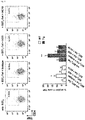
Fig. 1 shows that B272-Tet blocks CD4+ T cell conversion into iTreg. Incubation of B272-Tet with naive CD4+ T cells blocks the conversion to iTregs (FoxP3). Control tetramers demonstrate the specific influence of B272-Tet on iTreg induction. -
Fig. 2 shows that B272-Tet impairs the suppression of murine and human Tregs in a dose dependent matter. a) B272-Tet (2 µg / 200µL) blocks the suppression of mouse iTregs and allows the proliferation of CD8+ T cells. Control HLA-B27 and BSA do not alter the suppression function of iTregs. b) B272-Tet (2 µg / 200µL) block the suppression of human nTregs and allow the proliferation of human CD8+ T cells. Control HLA-B27-Tet and HLA-B8-Tet heterotrimers and BSA-Tet do not alter the suppression function of Tregs. c) % of iTreg suppression of murine CD8+ T cells at different concentrations of B272-Tet (µg / 200µL). d) % of nTreg suppression of human CD8+ T cells at different concentrations of B272-Tet (µg / 200µL). -
Fig. 3 shows B272 modulates activation of CD4+ T cells. HLA-B27 Tg and WT CD4+ T cells from rat produce TNF after incubation with B272-Tet. Pre-incubation of antibodies HD5 or HC10 that block B272 inhibited the interaction to CD4+ T cells and the production of TNF, demonstrating that B272-Tet is able to alone activate CD4+ T cells to produce cytokines. -
Fig. 4 shows reduced expansion of pro-inflammatory CD4+ T cells from spleen and MLN in treated rats with HD5 (anti-B272 antibody). A. Time points of the in vivo study with HLA-B27 rats and HD5 injections. Rats were administered intraperitoneally (i.p.) with 10 mg/kg of HD5 antibody per rat, every week during a period of 12-15 weeks. b-c. in vitro stimulated cells obtained from Tg-HD5, Tg-ctrl and WT-littermates were assessed by ICS for the presence of pro-inflammatory cells expressing TNF (B) and IL-17 (C). MLN and spleens cells were obtained at week 15 (n=5) and at week 23 (n=5). Results are plotted as the percentage of CD4+ T cells gated positive for TNF, IL-17 and IFN-γ. Values are expressed as mean±SEM. *p<0.05, **p<0.01, ***p<0.005 as determined by one-way ANOVA followed by Bonferroni post-hoc analysis. -
Fig. 5 shows schematic representation of B272-Fc and β2m DNA cassettes and expression of B272-Fc molecules from CHO cells. A. B272-β2m-Fc complex was produced by inserting thealpha -
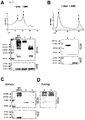
Fig. 6 shows the separation of β2m from the B272-β2m-Fc complex and purification and refolding of B272-Fc by SEC or dialysis. A) Chromatography histogram plot and western blot analysis of B272-β2m-Fc oligomers and B272-β2m-Fc products purified from Superdex 200 prep grade columns by SEC, show that non-denaturing conditions do not separate β2m from complex and B272-β2m-Fc oligomers are formed. B) Chromatography histogram plot and western blot of B272-β2m-Fc molecules in Urea-Tris-BME denaturing buffer show the dissociation of B27-Fc-free heavy chains from β2m using Sephacryl S-100 HR columns by SEC. C) Dialysis of B272-β2m-Fc molecules in Urea-Tris-BME buffer dissociate B27-Fc-free heavy chains from β2m using 30 KDa (5) or 50 KDa (6) dialyzing membranes. D) Re-folding of B27-Fc-free heavy chains into B272-Fc molecules is performed by the dilution method in refolding buffer and detected by HC10 (monoclonal antibody against HLA free-heavy chains). BME= β-mercaptoethanol. Approximate KDa size of B272-Fc = 125 KDa; B27-Fc free-heavy chains = 62.5 KDa. -
Fig. 7 shows B272-Fc injections reduce the size of tumors in the MC38 colon carcinoma mouse model. A) Experimental design of injection time points of colon carcinoma cells (MC38-OVAdim) and injection of B272-Fc. B) Tumor size of mice after euthanasia showing significant reduction of tumors in B272-Fc treated mice compared to controls. C) % of NK cells infiltrating the tumor was significantly higher in B272-Fc treated mice. D) % of NKT cells infiltrating the tumor, no significant change was observed. E) % of Treg cells infiltrating the tumor, no significant change was observed, but a tendency of reduced amount of Tregs is observed in B272-Fc mice when compared to isotype. Results are plotted from two identical experiments at different time points. Values are expressed as mean±SEM. *p<0.05, **p<0.01 as determined by one-way ANOVA followed by Bonferroni post-hoc analysis. -
Fig. 8 . Shows the combination of B272-Fc with CTLA4 or PD-1 antibodies using syngeneic models of: Pan02 murine pancreatic model, EMT6 murine breast model, and EG.7 murine lymphoma model. A) Mean average tumor volume in Pan02 mice (n=6). B) Mean average tumor volume in EMT6 (n=6) mice. C) Mean average tumor volume in EG.7 mice plotted from two separate experiments. The experimental design of injection time points of cells and injection of substances was as follows: isotype (10mg/Kg) Q3Dx7; B272-Fc (10 mg/Kg); anti-CTLA4 Q3Dx3 (1st injection 200 µg, 2nd and 3rdinjection 100 µg); PD-1 biwk x 3 (100 µg); B272-Fc + CTLA4 (Q3Dx7 and Q3Dx3, respectively), and B272-Fc + PD-1 (Q3Dx7 and biwk x 3, respectively). Tumor volumes are expressed as mean ± SEM and analysed by two-way ANOVA followed by Bonferroni post-hoc analysis, *p<0.05, **p<0.01. Q= days between injections; Dx= number of injections, biwk= twice a week. - The inventors surprisingly found that HLA-B27 open conformers, particularly when present as fusion proteins comprising an Fc immunoglobulin fragment, could be useful in cancer therapy. B272-Fc molecules may be used alone or in combinations with other cancer therapeutics.
- The B272-Tet molecule is able to modulate immune responses in both human and rodents through influencing Tregs suppression, and activating T cells in vitro (
Fig. 1-3 ) - The influence of HLA molecules with naive CD4+ T cells for iTreg conversion was analysed. 0.5 µg/mL of B272-, HLA-B27-, and HLA-B8-tetramers were incubated with naïve CD4+ T cells in optimal culture conditions for iTreg conversion. B272-Tet demonstrated to down modulate the induction of FoxP3 (
Fig. 1 ). - The suppressive function of murine and human Tregs using violet-labelled naïve CD8+ T cells as responder cells was determined (
Fig. 2 ). Tregs were co-cultured with HLA- and BSA-tetramers and proliferation of CD8+ T cells was measured after 96 h. CD8+ T cells alone showed strong proliferation and, as expected, Treg cells suppressed the proliferation of CD8+ T cells when incubated with control tetramers (HLA-B27, HLA-B8 and BSA). Strikingly, the suppressive function of Tregs was greatly impaired in the presence of B272 tetramers indicated by a strong proliferation of CD8+ T cells in both mice (Fig. 2A ), and human (Fig. 2B ) suppression assays. The effect of B272-Tet was dose dependent in both mice (Fig. 2C ) and human (Fig. 2D ). - To demonstrate the involvement of B27 open conformer homodimers in disease in vivo a specific antibody against B27 open conformer homodimers (HD5) was generated. As an in vivo model we used the HLA-B27 rat model of SpA that progresses to disease resembling human SpA pathology with elevated number of pro-inflammatory lymphocytes (Th1, Th17, TNF+ CD4+ T cells). Ex vivo data from HLA-B27 rats lymphocytes demonstrated that the sole presence of B272-Tet was capable of inducing expression of pro-inflammatory cytokines from CD4+ T cells (
Fig. 3 ). Furthermore in vivo results generated by injecting anti-B27 open conformer homodimers antibodies (HD5) (Fig. 4A-C ) demonstrated that by blocking B27 open conformer homodimers molecules in vivo, immune responses were modulated and the expansion of TNF CD4+ T cells (Fig. 4B ) and Th17 cells (Fig. 4C ) in different organs was significantly decreased. - To demonstrate the proof of concept of B272-Fc as a therapeutic molecule in cancer, experiments using a validated pre-clinical syngeneic murine colon carcinoma model were conducted.
- A valid strategy, from a therapeutic point of view, is to produce HLA-B27 open conformer molecules in stable format (Fc fusion), to increase solubility, stability, avidity, half-life, and from a technological point of view, cost-effective production and purification in mammalian systems. B272-β2m-Fc complex was successfully produced by inserting the
alpha Fig. 5A ), together with a human-β2m vector, necessary for extracellular production of the B272-β2m-Fc protein (Fig. 5A,B ). Transfections in Chinese hamster ovary cells (CHO) cells were performed using both the B27-Fc-vector + β2m-vector at a ratio of 1:3. Supernatants were collected and B272-β2m-Fc purified using standard antibody purification protocols (Recombinant Protein Purification Handbook, principles and methods. 2009. GE Healthcare, 18-1142-75) (Fig. 5B ). Separation of β2m from B27-Fc free-heavy chains was performed using denaturing conditions by SEC or dialysis methods (Fig. 6 ). Refolding of B272-Fc was assessed using the dilution method in refolding buffer and analysed by western blot (Fig. 6D ). - Toxicity studies were performed in 6 weeks old C57BL/6 wild type mice. Doses of B272-Fc at 0, 0.1 mg/kg, 1 mg/kg, 10 mg/kg were injected i.p. into mice twice a week for three weeks. General health conditions showed no changes (paralysis, stress, anxiety, listlessness, signs of infection, abdominal breathing, hunched back or ruffled fur, weight and stool), when comparing PBS group with treated groups. Lymphocytes populations remain constant between groups, naive and effector CD4+ T cells, CD8+ T cells, NK, B cells and monocytes displayed no change in numbers between groups. Based on this data we pursued to test 10 mg/kg of B272-Fc for in vivo tests in syngeneic cancer mouse models.
- Injections of the B272-Fc molecule (10 mg/kg) were performed in a therapeutic scenario (
Fig. 7A ). Following established protocols MC38-OVAdim fragment tumours were subcutaneously injected in the flank of syngeneic mice. Once the tumour reached 100 mm3 (between 1-2 weeks after injection of tumours) B272-Fc was injected i.p. twice a week for a period of three weeks (Fig. 7A ) and tumours were sized and analysed for infiltration of lymphocytes (Fig. 7BE ). - Results demonstrated that B272-Fc was capable of reducing significantly the tumor development in MC38-OVAdim mice when compared to controls (
Fig. 7B ). A mechanistic effect of B272-Fc mode of action was observed by a significant infiltration of NK cells into tumors compared to controls (Fig. 7C ), pointing out to a mechanism were NK cells are key players in the modulation of tumor growth. A decreased trend on the number of Tregs was observed when compared to isotype, but was not significant (p<0.1) (Fig. 7E ). Results are plotted from two separate experiments. - Following established protocols Pan02 1x10⁶cells, EMT6 1x10⁶cells and EG.7 1x10⁶ cells were subcutaneously injected in the flank of syngeneic mice groups respectively. Mice were distributed according to their tumor volume (Pan02 and EMT6) or weight (EG.7). B272-Fc was injected i.p. seven times every 3rd day (Q3Dx7), CTLA4 was injected 3 times at selected intervals (Q3Dx7) (
Fig. 8 ), and PD-1 injected 6 times twice a week (biwk x 3) (Fig. 8 ). - Results demonstrated that the combination with CTLA4 antibodies together with B272-Fc was capable of enhancing the therapeutic effects of the CTLA4 antibodies and reducing significantly the tumour development in Pan02 pancreas and EMT6 breast cancer models when compared to CTLA4 monotherapy and isotype control groups. Results in combination approaches with PD-1 antibodies showed that B272-Fc enhanced the therapeutic effects of PD-1 antibodies in the EG.7 lymphoma model when compared to isotype or vehicle (p<0.01), but not to PD-1 monotherapy. PD-1 monotherapy was not significantly different when compared to isotype or vehicle.
- The proof of principle for using B272-Fc molecules to fight cancer was demonstrated in pre-clinical experiments in different syngeneic cancer mouse models, either as monotherapy or combo therapy with CTLA4 or PD-1 antibodies.
- Toxicity studies demonstrated that B272-Fc therapy did not induced any signs of toxicity, and during in vivo experiments the survival of mice was not compromised in the treated groups at any time point of the therapy.
- In the MC38-OVAdim we found that infiltration of NK cells into the tumour microenvironment was elevated in B272-Fc treated mice. This data points to a mechanism were NK cells are actively participating in anti-tumour responses through activation of B272. Henceforth B272-Fc will be developed and further tested as a novel class of drug in the management of cancer therapeutics.
- B272-Fc emerges as a novel class of immunomodulating drug. In vitro and in vivo data points to a mechanism were B272-Fc molecules act as a switch-on mechanism for the activation of anti-tumor immunity, most likely by altering mechanisms related to immune checkpoints, or break of tolerance of DC, NK and/or T cells.
- Without wishing to be bound by theory, the inventors hypothesize that the interaction of B27 open conformers with DCs, T cells and NK cells results in altered cell signalling to promote the survival/expansion of cells that participate in and exacerbate the immune response.
- FoxP3 (eGFP) reporter mice (B6.Cg-Foxp3tm2Tch /J) were obtained from The Jackson Laboratories for iTreg assay and bred at University Hospital Zurich animal facilities. HLA-B27/hβ2m transgenic (33-3 line) (Tg), and wild-type (WT) Fischer F344 male rats were obtained from Taconic (Germantown, NY) and bred at the University Hospital Zurich animal facilities. Wild-type C57BI/6 mice were bred and maintained at the University Hospital Basel animal facilities. MC38-OVAdim is a mouse derived colon carcinoma tumor cell line.
- HLA-B27/hβ2m transgenic (33-3 line) (Tg), and wild-type (WT) Fischer F344 male rats were divided into three groups and randomly assigned to treatment with HD5 mAb (anti-B272) or anti-Her2neu (control antibody) accordingly: a. WT-littermates (n=8), b. Tg-HD5 (n=10), c. Tg-ctrl (anti-Her2neu) control group (n=10). Each Tg rat received a weekly intraperitoneal (i.p.) injection of HD5 or anti-Her2neu (ctrl) (10 mg/kg) up to the age of 15 weeks or 23 weeks. WT-littermates received no treatment.
- Toxicity studies were performed in 6 weeks old C57BL/6 mice. Doses of B272-
Fc 0, 0.1 mg/kg, 1 mg/kg, 10 and 20 mg/kg were injected i.p. into mice twice a week for a period of three weeks. - MC38-OVAdim tumour fragments were injected subcutaneously into the right flanks of syngeneic female C57BL/6 mice at
week 6. Once the tumour reached ±50 mm3 animals were distributed according to their individual tumour volume size and divided into groups displaying no statistical differences between them. In the Pan02 pancreatic cancer mouse model, 1 x 10⁶ Pan02 cells were injected in the flank of syngeneic female C57BL/6 mice, and animals were distributed according to their tumour volume ±10 mm3 and divided into groups displaying no statistically differences between them. In the EMT6 breast cancer mouse model, 5 x 10⁶ EMT6 cells were injected in the flank of syngeneic female BALB/c mice, and animals were distributed according to their tumour volume ±40 mm3 and divided into groups displaying no statistically differences between them. In the EG.7 lymphoma mouse model, 1 x 10⁶ EG.7 cells were injected in the flank of syngeneic female C57BL/6 mice, and animals were distributed according to their body weight and divided into groups displaying no statistically differences between them. Tumour diameters were measured using a caliper, and volume was calculated according to the formula, D/2×d 2 where D and d are the longest and shortest diameter of the tumour in mm, respectively. - The Experimental design of injection time points of cells and injection of substances was established as follows: vehicle (PBS 200 µL); isotype (10mg/Kg) Q3Dx7; B272-Fc (10 mg/Kg); anti-CTLA4 Q3Dx3 (1st injection 200 µg, 2nd and 3rd
injection 100 µg); PD-1 biwk x 3 (100 µg); B272-Fc + CTLA4 (Q3Dx7 and Q3Dx3, respectively), and B272-Fc + PD-1 (Q3Dx7 and biwk x 3, respectively). Tumours were sized and analysed for infiltration of lymphocytes by flow cytometry analysis in the MC38-OVAdim model. - Animal experiments were performed according to Swiss federal and cantonal laws on animal protection.
- Lymphocytes mouse populations were stained with: CD4 (FITC-BD Bioscience), FoxP3+ (efluor 450- eBioscience), CD3 (PE-Cy7- eBioscience), CD45 (PerCP- eBioscience), CD3 (PE- eBioscience), Granzyme B (Alexa 647, GB11; Biol), NK1.1 (BV421-eBioscience), CD11b (FITC- eBioscience), CD11c (FITC-eBioscience), and Ter119 (FITC- eBioscience).
- Lymphocyte rat populations were stained with: CD3 (APC-Cy7- BD-Pharmingen), CD4 (PE-Cy7- BD-Pharmingen), IL-17A (eBio17B7-APC, eBioscience), TNF (PE- Biolegend),
- Lymphocyte human populations were stained with: CD4 (PE- Biolegend), FoxP3 (eFluor 450-eBioscience), CD3 (APC-Cy7- Biolegend).
- HC10 mAb (IgG2a) binding to β2m-free heavy chains of HLA-B and -C alleles and to B272 was a gift from Dr. Hidde Ploegh (MIT, MA). HD5 mAb (in-house) antibody against B27 open conformer homodimers. Mouse IgG1 κ Isotype control (Biolegend). Anti-Her2neu mAb (Trastuzumab, Roche). Anti-β2-microglobulin antibody (Abcam) to detect human β2m by western blot.
- Intracellular cytokine staining (ICS) for detection of FoxP3+ Treg cells was performed using 1% paraformaldehyde, permeabilized with 0.1% saponin in FACS buffer, and stained with primary antibodies (FoxP3, CD4 and CD3).
- Intracellular cytokine staining (ICS) for stimulating leukocytes was performed with Phorbol myristate acetate (PMA) and ionomycin (both at 0.5 µg/mL), in the presence of GolgiPlug™ (BD bioscience) for 5 hours.
- Flow cytometry analysis was performed using a FACS canto II (BD Bioscience) and data were analysed using FlowJo version 7.6.4.
- HLA-B∗2705 open conformer homodimer and heterotrimer complexes were refolded by limiting dilution with or without β2m in the presence of influenza nucleoprotein NP383-391 peptide epitope SRYWAIRTR (SEQ ID NO 174) or EBV EBNA3C epitope RRIYDLIEL (SEQ ID NO 175). Control HLA-B8 heterotrimeric complex was refolded with hCMVpp65 (TPRTGGGAM; SEQ ID NO 176). Streptavidin or Streptavidin-PE (Life technologies) was used to build HLA-tetramers. Biotinylated BSA (Sigma) was used in control tetramers and in combinations with HLA complexes.
- To induce expression of Foxp3 in murine CD4+ T cells, we harvested spleen cells from F344FoxP3 EGFP mice. Splenocytes were sorted to obtain CD4+ T naive cells. Cells were then cultured for 96 h at 105 cells/200 µL/well in 96-well plates with coated 5 µg/mL anti-CD3mAb (eBioscience), soluble 2 µg/mL anti-CD28 mAb (Biolegend), 10 µg/mL of TGF-β1 (R&D systems) and 100 IU/mL of IL-2 (R&D systems).
- To expand human nTregs, we first isolated PBMCs from a blood buffy coat by ficoll extraction. Then we isolated CD4+ CD25+ cells using the Regulatory T cell Dynabeads kit (Invitrogen), and further expanded them using the Human Treg Expander kit (Invitrogen) following instructions from the manual. Cells were cultured in complete RPMI for 8 days with the addition of 500 IU of IL-2 every second day.
- Murine naive CD4+ T cells in optimal culture conditions for iTreg conversion were incubated in the presence of 0.5 µg of B272-Tet, HLA-B27-Tet and HLA-B8-Tet for 72 h. iTreg conversion was measured by flow cytometry.
- CD4+ or CD8+ T-effector cells were purified PBMCs from either mouse or human (Mouse Naïve CD4+ T Cell Isolation Kit- Easy Sep; Dynabeads® FlowComp™ Mouse CD8- life technologies; Dynabeads® CD8 human- Life Technologies) and labelled with 10 µM cell trace violet proliferation stain (Molecular Probes). Tregs (2.5 x 10⁴) cells and T-effector cells (2.5 x 10⁴) were cultured in 96 wells U-bottomed plates with coated CD3 (eBioscience) (3 µg/mL) and soluble CD28 (eBioscience) (1 µg/mL) antibody for 96 hrs. Proliferation of T-effector cells was measured using a FACS canto II and data were analysed using proliferation analysis software from FlowJo version 7.6.4.
- Recombinant production of B272-β2m-Fc was achieved by inserting the
alpha - Purification of B272-β2m-Fc was performed using conventional protocols for antibody purification. Production of B272-Fc was performed with the addition of a denaturing step to remove β2m from the B272-β2m-Fc complex.
- Briefly, the capture step of B272-β2m-Fc was performed after running supernatants (5 mL/min) through protein-G columns (Amersham Pharmacia). Intermediate purification steps were performed by eluting the B272-β2m-Fc from protein G-columns using elution buffer (100 mM glycine, pH 2.0), and recovering fractions in 8M Urea, 100 mM Tris-HCl pH 8.0, and 5 mM β-mercaptoethanol (BME). The 1st Polishing step was to separate B27-Fc free-heavy chains fractions from β2m by either size exclusion chromatography (SEC) using superdex 200 prep grade or Sephacryl S-100 HR (GE Lifescience) with an ÄKTA system (GE Lifescience), or by dialysis with membranes of 30 KDa or 50 KDa pore size (Millipore). The recovered B27 free-heavy chains from both protocols were re-folded by the dilution method after pulsation of the B27 free-heavy chains at 3 times with intervals of 8 hours each in 100 times volume of refolding buffer (50 mM Tris-HCl pH8.5, 500 mM L-Arginine, 1 mM EDTA, 0.15 mM NaCl, 1% Sucrose, 0.01% polysorbate-80, 1 mM GSH, and 0.1 mM GSSH). The 2nd Polishing step by SEC was performed to remove further impurities and to buffer exchange newly recovered fractions of B272-Fc molecules into dilution buffer (
Tris 50 mM pH8.0,NaCl 150 mM, 1% Sucrose, and 0.01% polysorbate-80). Purified solutions of B272-Fc were filter sterilized using 0.2 µm membranes (Millipore). - Fractions B272-β2m-Fc complexes and B272-Fc were analysed by SDS polyacrylamide gel electrophoresis (SDS-PAGE) and western blot using HC10 (specific for HLA-free-heavy chains) antibodies. β2m western blots were performed in denaturing conditions (10 mM DTT).
- Checkpoint inhibitor antibodies CTLA4 clone 9H10 (tested in EG.7 and EMT6 syngeneic models), CTLA4 clone 9D9 (tested in Pan02 syngeneic model), and PD-1 clone RMP1-14 were obtained from Bio X Cell Co.
- Functional domains of the full length HLA-B27 alpha chain from N-terminus to C-terminus are: Signal peptide,
alpha 1,alpha 2, alpha 3 (alpha domains 1-3 are underlined;alpha 2 is set in bold), transmembrane domain and cytoplasmic tail. - For example SEQ ID NO. 8 comprises:
- a signal domain
SEQ ID NO. 1. MRVTAPRTLLLLLWGAVALTETWA, - an
alpha 1 domain
- an
alpha 2 domain
- an
alpha 3 domain
- and a transmembrane domain and a cytoplasmic tail




















- SEQ ID NO. 129. >HLA:HLA04164 B∗27:59N 71 aa
SHSMRYFHTSVSRPGRGEPRFITVGYVDDTLFVRFDSDAASPREEPRAPWIEQEGPEYWDRETQICKAKAX


- SEQ ID NO. 135. >HLA:HLA04771 B∗27:65N 53 aa
SHSMRYFHTSVSRPGRGEPRFITVGYVDDTLFVRFDSDAASPREEPRAPWIEX










- SEQ ID NO. 166. >HLA:HLA08330 B∗27:94N 58 aa
SHSMRYFHTSVSRPGRGEPRFITVGYVDDTLFVRFDSDAASPREEPRAPWIEQEGPEY


- Full and partial sequences SEQ ID No 001 to SEQ ID No 172 are provided in the accompanying sequence protocol.
-
- <110> Universitaet Zuerich Universitaet Basel
- <120> Use of HLA-B27 homodimers for cancer treatment
- <130> uz217wo
- <160> 176
- <170> PatentIn version 3.5
- <210> 1
<211> 24
<212> PRT
<213> Homo sapiens - <400> 1

- <210> 2
<211> 90
<212> PRT
<213> Homo sapiens - <400> 2

- <210> 3
<211> 92
<212> PRT
<213> Homo sapiens - <400> 3

- <210> 4
<211> 103
<212> PRT
<213> Homo sapiens - <400> 4

- <210> 5
<211> 53
<212> PRT
<213> Homo sapiens - <400> 5

- <210> 6
<211> 280
<212> PRT
<213> Homo sapiens - <220>
<221> DOMAIN
<222> (1)..(90)
<223>alpha 1 - <220>
<221> DOMAIN
<222> (91)..(182)
<223>alpha 2 - <220>
<221> DOMAIN
<222> (183)..(280)
<223>alpha 3 - <400> 6


- <210> 7
<211> 181
<212> PRT
<213> Homo sapiens - <220>
<221> DOMAIN
<222> (1)..(89)
<223>alpha 1 - <220>
<221> DOMAIN
<222> (90)..(181)
<223>alpha 2 - <400> 7

- <210> 8
<211> 362
<212> PRT
<213> Homo sapiens - <220>
<221> DOMAIN
<222> (1)..(24)
<223> signal peptide - <220>
<221> DOMAIN
<222> (25)..(114)
<223>alpha 1 - <220>
<221> DOMAIN
<222> (115)..(206)
<223>alpha 2 - <220>
<221> DOMAIN
<222> (207)..(309)
<223>alpha 3 - <220>
<221> DOMAIN
<222> (310)..(362)
<223> transmembrane and cytoplasmic tail - <400> 8


- <210> 9
<211> 181
<212> PRT
<213> Homo sapiens - <220>
<221> DOMAIN
<222> (1)..(89)
<223>alpha 1 - <220>
<221> DOMAIN
<222> (90)..(181)
<223>alpha 2 - <400> 9

- <210> 10
<211> 362
<212> PRT
<213> Homo sapiens - <220>
<221> DOMAIN
<222> (1)..(24)
<223> Signal peptide - <220>
<221> DOMAIN
<222> (25)..(119)
<223>alpha 1 - <220>
<221> DOMAIN
<222> (120)..(206)
<223>alpha 2 - <220>
<221> DOMAIN
<222> (207)..(309)
<223>alpha 3 - <220>
<221> DOMAIN
<222> (310)..(362)
<223> transmembrane and cytoplasmic tail - <400> 10


- <210> 11
<211> 362
<212> PRT
<213> Homo sapiens - <220>
<221> DOMAIN
<222> (1)..(24)
<223> signal peptide - <220>
<221> DOMAIN
<222> (25)..(119)
<223>alpha 1 - <220>
<221> DOMAIN
<222> (120)..(206)
<223>alpha 2 - <220>
<221> DOMAIN
<222> (207)..(309)
<223>alpha 3 - <220>
<221> DOMAIN
<222> (310)..(362)
<223> transmembrane and cytoplasmic tail - <400> 11


- <210> 12
<211> 181
<212> PRT
<213> Homo sapiens - <220>
<221> DOMAIN
<222> (1)..(89)
<223>alpha 1 - <220>
<221> DOMAIN
<222> (90)..(181)
<223>alpha 2 - <400> 12

- <210> 13
<211> 181
<212> PRT
<213> Homo sapiens - <220>
<221> DOMAIN
<222> (1)..(89)
<223>alpha 1 - <220>
<221> DOMAIN
<222> (90)..(181)
<223>alpha 2 - <400> 13
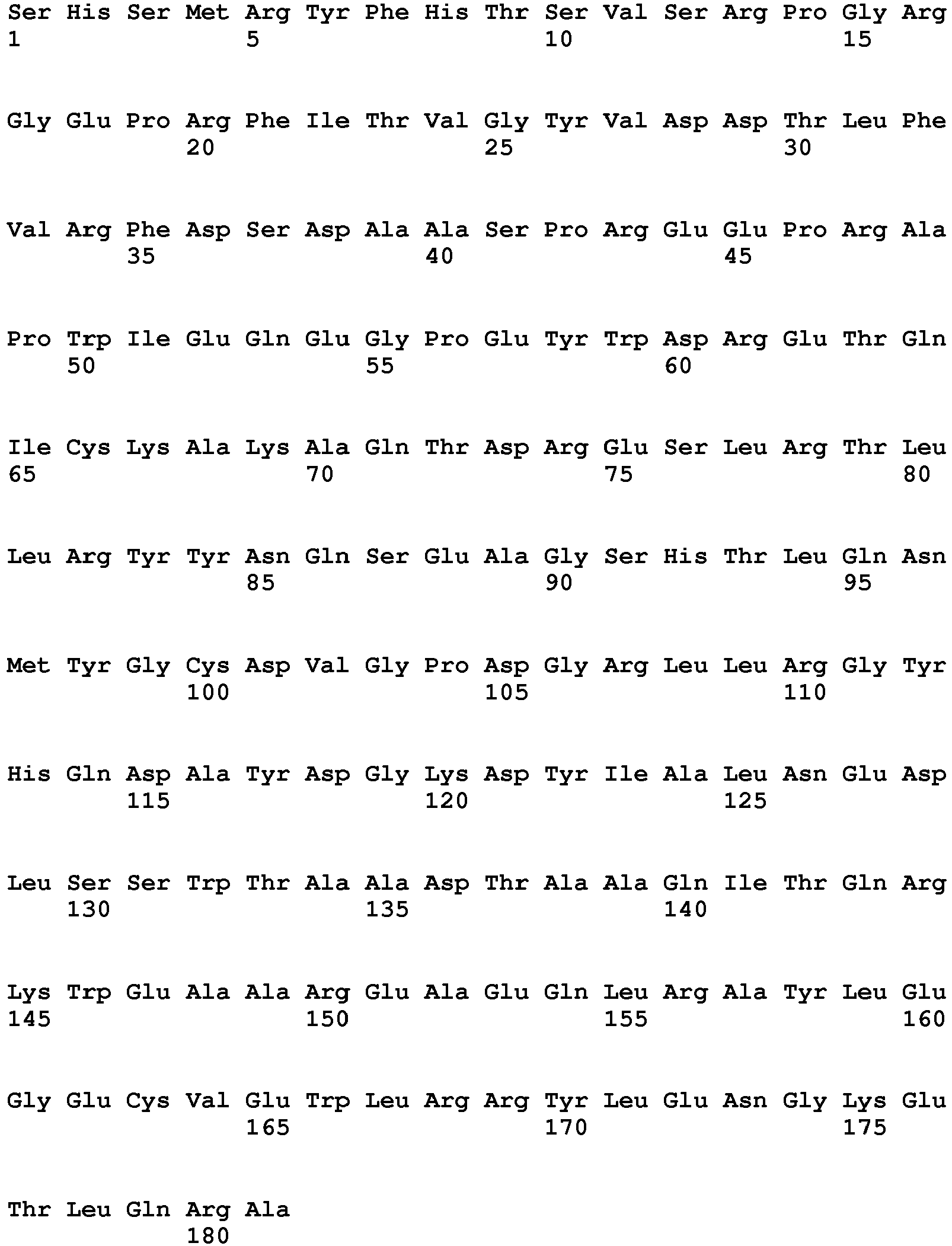
- <210> 14
<211> 337
<212> PRT
<213> Homo sapiens - <220>
<221> DOMAIN
<222> (1)..(24)
<223> signal peptide - <220>
<221> DOMAIN
<222> (25)..(114)
<223>alpha 1 - <220>
<221> DOMAIN
<222> (115)..(206)
<223>alpha 2 - <220>
<221> DOMAIN
<222> (207)..(309)
<223>alpha 3 - <220>
<221> DOMAIN
<222> (310)..(337)
<223> transmembrane and cytoplasmic tail - <400> 14
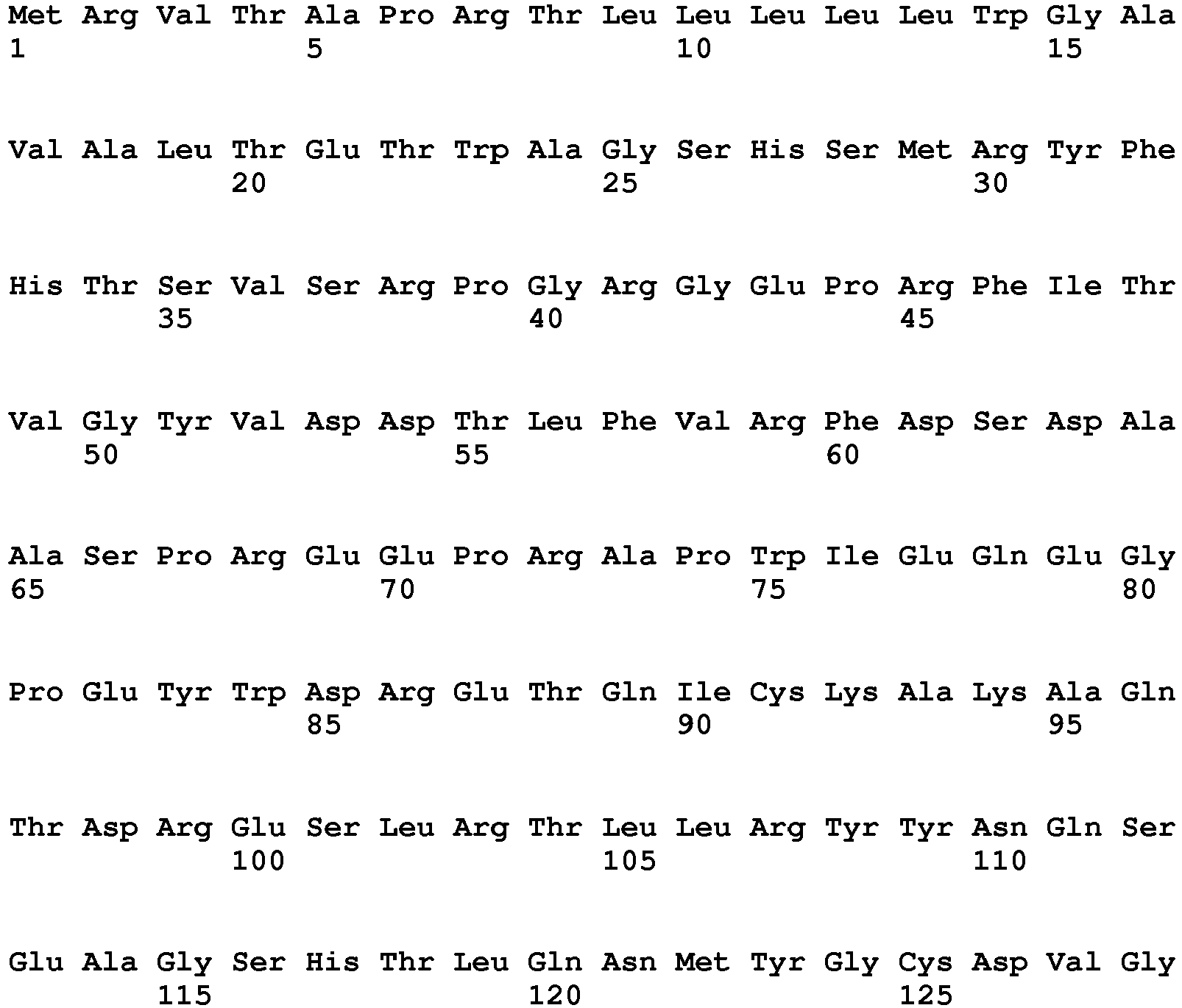
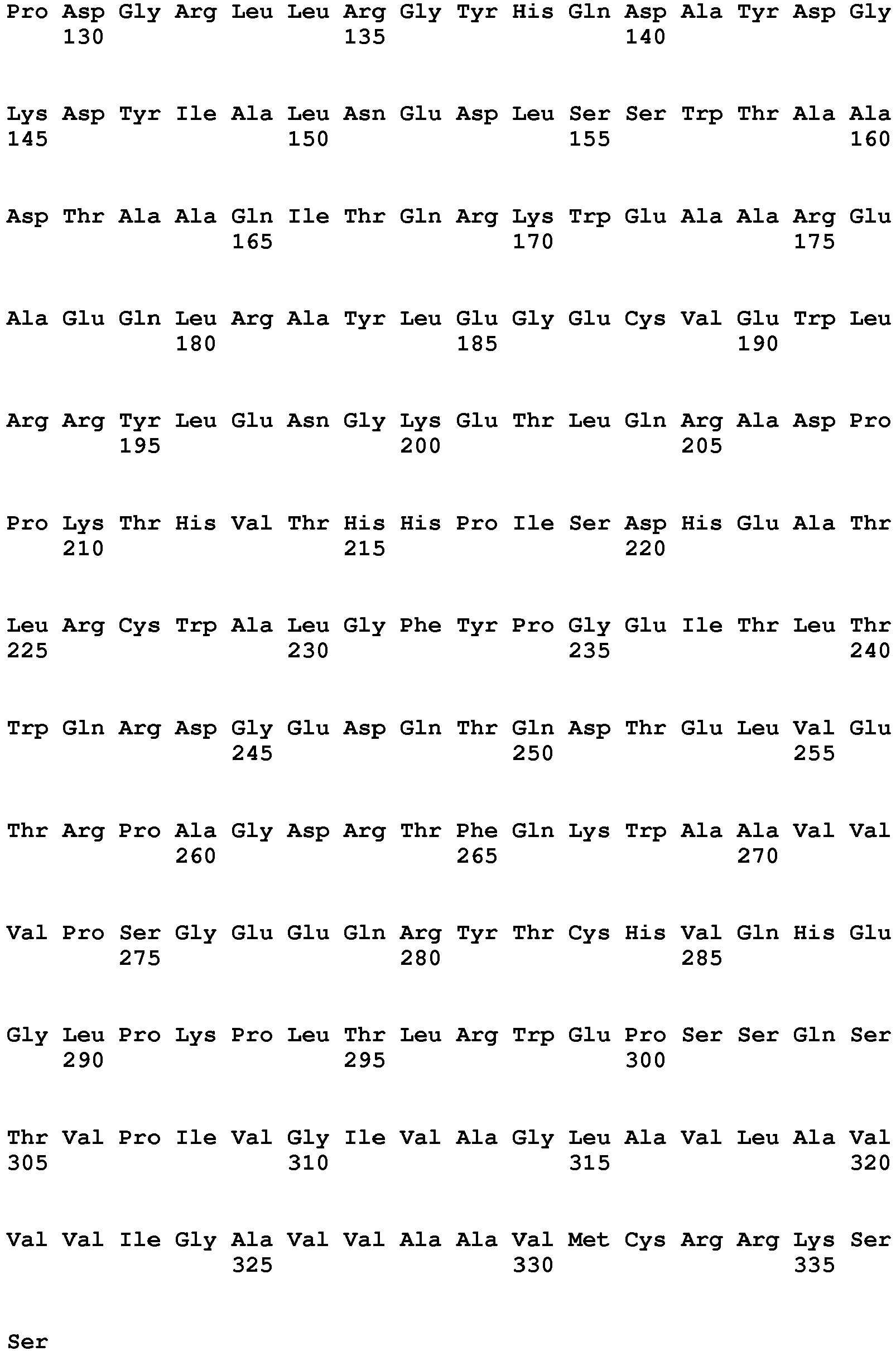
- <210> 15
<211> 362
<212> PRT
<213> Homo sapiens - <220>
<221> DOMAIN
<222> (1)..(24)
<223> signal peptide - <220>
<221> DOMAIN
<222> (25)..(114)
<223>alpha 1 - <220>
<221> DOMAIN
<222> (115)..(206)
<223>alpha 2 - <220>
<221> DOMAIN
<222> (207)..(309)
<223>alpha 3 - <220>
<221> DOMAIN
<222> (310)..(362)
<223> transmembrane and cytoplasmic tail - <400> 15


- <210> 16
<211> 181
<212> PRT
<213> Homo sapiens - <220>
<221> DOMAIN
<222> (1)..(89)
<223>alpha 1 - <220>
<221> DOMAIN
<222> (90)..(181)
<223>alpha 2 - <400> 16
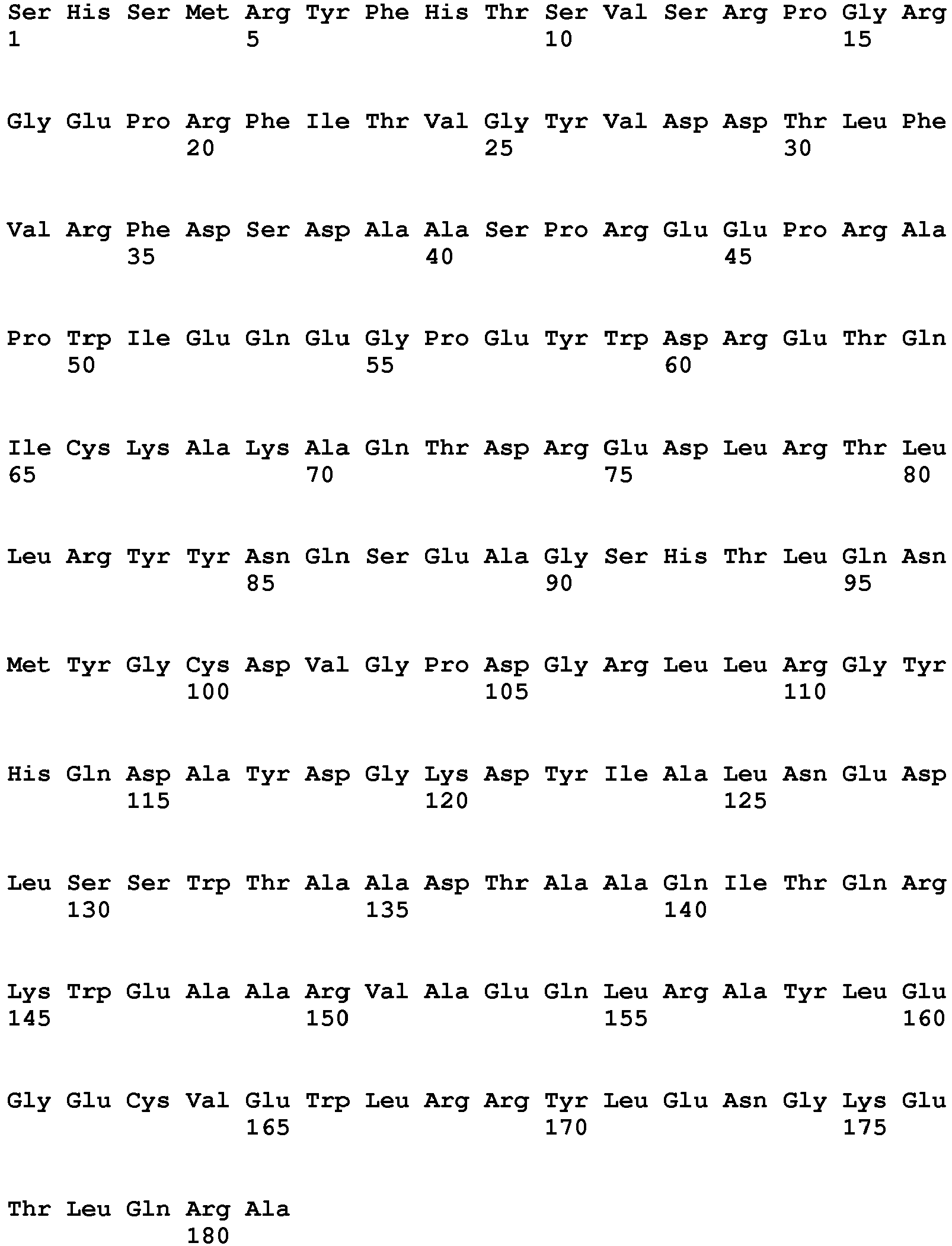
- <210> 17
<211> 206
<212> PRT
<213> Homo sapiens - <220>
<221> DOMAIN
<222> (1)..(24)
<223> signal peptide - <220>
<221> DOMAIN
<222> (25)..(114)
<223>alpha 1 - <220>
<221> DOMAIN
<222> (115)..(206)
<223>alpha 2 - <400> 17


- <210> 18
<211> 298
<212> PRT
<213> Homo sapiens - <220>
<221> DOMAIN
<222> (1)..(24)
<223> signal peptide - <220>
<221> DOMAIN
<222> (25)..(114)
<223>alpha 1 - <220>
<221> DOMAIN
<222> (115)..(206)
<223>alpha 2 - <220>
<221> DOMAIN
<222> (207)..(298)
<223>alpha 3 - <400> 18


- <210> 19
<211> 181
<212> PRT
<213> Homo sapiens - <220>
<221> DOMAIN
<222> (1)..(89)
<223>alpha 1 - <220>
<221> DOMAIN
<222> (90)..(181)
<223>alpha 2 - <400> 19

- <210> 20
<211> 337
<212> PRT
<213> Homo sapiens - <220>
<221> DOMAIN
<222> (1)..(24)
<223> signal peptide - <220>
<221> DOMAIN
<222> (25)..(114)
<223>alpha 1 - <220>
<221> DOMAIN
<222> (115)..(206)
<223>alpha 2 - <220>
<221> DOMAIN
<222> (207)..(309)
<223>alpha 3 - <220>
<221> DOMAIN
<222> (310)..(337)
<223> transmembrane and cytoplasmic tail - <400> 20


- <210> 21
<211> 181
<212> PRT
<213> Homo sapiens - <220>
<221> DOMAIN
<222> (1)..(89)
<223>alpha 1 - <220>
<221> DOMAIN
<222> (90)..(181)
<223>alpha 2 - <400> 21

- <210> 22
<211> 181
<212> PRT
<213> Homo sapiens - <220>
<221> DOMAIN
<222> (1)..(89)
<223>alpha 1 - <220>
<221> DOMAIN
<222> (90)..(181)
<223>alpha 2 - <400> 22

- <210> 23
<211> 296
<212> PRT
<213> Homo sapiens - <220>
<221> DOMAIN
<222> (1)..(10)
<223> signal peptide - <220>
<221> DOMAIN
<222> (11)..(100)
<223>alpha 1 - <220>
<221> DOMAIN
<222> (101)..(192)
<223>alpha 2 - <220>
<221> DOMAIN
<222> (193)..(295)
<223>alpha 3 - <220>
<221> DOMAIN
<222> (296)..(296)
<223> transmembrabe - <400> 23


- <210> 24
<211> 181
<212> PRT
<213> Homo sapiens - <220>
<221> DOMAIN
<222> (1)..(89)
<223>alpha 1 - <220>
<221> DOMAIN
<222> (90)..(181)
<223>alpha 2 - <400> 24


- <210> 25
<211> 181
<212> PRT
<213> Homo sapiens - <220>
<221> DOMAIN
<222> (1)..(89)
<223>alpha 1 - <220>
<221> DOMAIN
<222> (90)..(181)
<223>alpha 2 - <400> 25


- <210> 26
<211> 181
<212> PRT
<213> Homo sapiens - <220>
<221> DOMAIN
<222> (1)..(89)
<223>alpha 1 - <220>
<221> DOMAIN
<222> (90)..(181)
<223>alpha 2 - <400> 26


- <210> 27
<211> 181
<212> PRT
<213> Homo sapiens - <220>
<221> DOMAIN
<222> (1)..(89)
<223>alpha 1 - <220>
<221> DOMAIN
<222> (90)..(181)
<223>alpha 2 - <400> 27

- <210> 28
<211> 181
<212> PRT
<213> Homo sapiens - <220>
<221> DOMAIN
<222> (1)..(89)
<223>alpha 1 - <220>
<221> DOMAIN
<222> (90)..(181)
<223>alpha 2 - <400> 28

- <210> 29
<211> 181
<212> PRT
<213> Homo sapiens - <220>
<221> DOMAIN
<222> (1)..(89)
<223>alpha 1 - <220>
<221> DOMAIN
<222> (90)..(181)
<223>alpha 2 - <400> 29

- <210> 30
<211> 181
<212> PRT
<213> Homo sapiens - <220>
<221> DOMAIN
<222> (1)..(89)
<223>alpha 1 - <220>
<221> DOMAIN
<222> (90)..(181)
<223>alpha 2 - <400> 30

- <210> 31
<211> 362
<212> PRT
<213> Homo sapiens - <220>
<221> DOMAIN
<222> (1)..(24)
<223> signal peptide - <220>
<221> DOMAIN
<222> (25)..(114)
<223>alpha 1 - <220>
<221> DOMAIN
<222> (115)..(206)
<223>alpha 2 - <220>
<221> DOMAIN
<222> (207)..(309)
<223>alpha 3 - <220>
<221> DOMAIN
<222> (310)..(362)
<223> transmembrane and cytoplasmic tail - <400> 31


- <210> 32
<211> 181
<212> PRT
<213> Homo sapiens - <220>
<221> DOMAIN
<222> (1)..(89)
<223>alpha 1 - <220>
<221> DOMAIN
<222> (90)..(181)
<223>alpha 2 - <400> 32

- <210> 33
<211> 181
<212> PRT
<213> Homo sapiens - <220>
<221> DOMAIN
<222> (1)..(89)
<223>alpha 1 - <220>
<221> DOMAIN
<222> (90)..(181)
<223>alpha 2 - <400> 33

- <210> 34
<211> 181
<212> PRT
<213> Homo sapiens - <220>
<221> DOMAIN
<222> (1)..(89)
<223>alpha 1 - <220>
<221> DOMAIN
<222> (90)..(181)
<223>alpha 2 - <400> 34


- <210> 35
<211> 181
<212> PRT
<213> Homo sapiens - <220>
<221> DOMAIN
<222> (1)..(89)
<223>alpha 1 - <220>
<221> DOMAIN
<222> (90)..(181)
<223>alpha 2 - <400> 35


- <210> 36
<211> 325
<212> PRT
<213> Homo sapiens - <220>
<221> DOMAIN
<222> (1)..(24)
<223> signal peptide - <220>
<221> DOMAIN
<222> (25)..(114)
<223>alpha 1 - <220>
<221> DOMAIN
<222> (115)..(206)
<223>alpha 2 - <220>
<221> DOMAIN
<222> (207)..(309)
<223>alpha 3 - <220>
<221> DOMAIN
<222> (310)..(325)
<223> transmembrane and cytoplasmic tail - <400> 36


- <210> 37
<211> 181
<212> PRT
<213> Homo sapiens - <220>
<221> DOMAIN
<222> (1)..(89)
<223>alpha 1 - <220>
<221> DOMAIN
<222> (90)..(181)
<223>alpha 2 - <400> 37

- <210> 38
<211> 298
<212> PRT
<213> Homo sapiens - <220>
<221> DOMAIN
<222> (1)..(24)
<223> signal peptide - <220>
<221> DOMAIN
<222> (25)..(114)
<223>alpha 1 - <220>
<221> DOMAIN
<222> (115)..(206)
<223>alpha 2 - <220>
<221> DOMAIN
<222> (207)..(298)
<223>alpha 3 - <400> 38

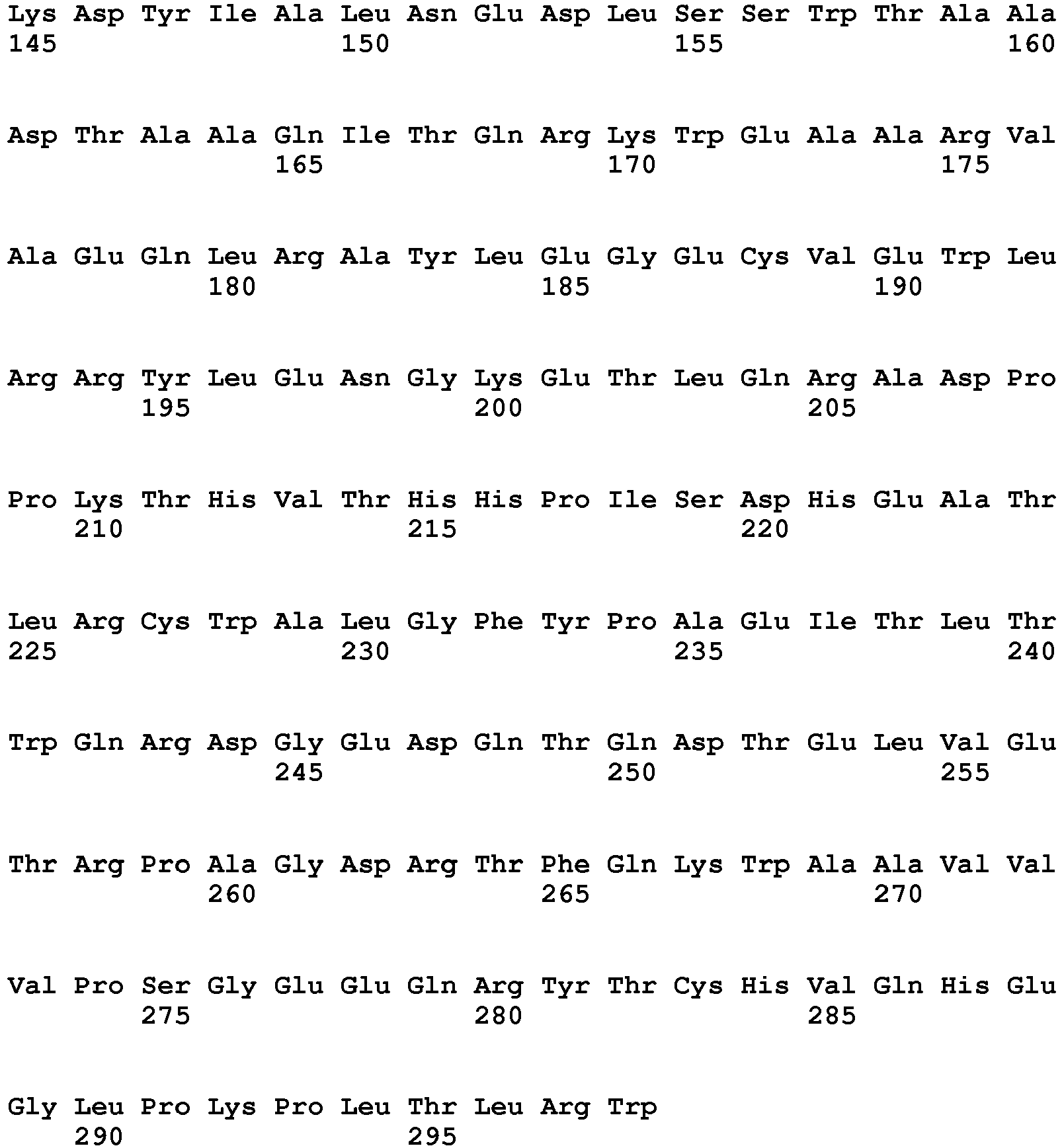
- <210> 39
<211> 273
<212> PRT
<213> Homo sapiens - <220>
<221> DOMAIN
<222> (1)..(89)
<223>alpha 1 - <220>
<221> DOMAIN
<222> (90)..(181)
<223>alpha 2 - <220>
<221> DOMAIN
<222> (182)..(273)
<223>alpha 3 - <400> 39


- <210> 40
<211> 181
<212> PRT
<213> Homo sapiens - <220>
<221> DOMAIN
<222> (1)..(89)
<223>alpha 1 - <220>
<221> DOMAIN
<222> (90)..(181)
<223>alpha 2 - <400> 40


- <210> 41
<211> 181
<212> PRT
<213> Homo sapiens - <220>
<221> DOMAIN
<222> (1)..(89)
<223>alpha 1 - <220>
<221> DOMAIN
<222> (90)..(181)
<223>alpha 2 - <400> 41


- <210> 42
<211> 362
<212> PRT
<213> Homo sapiens - <220>
<221> DOMAIN
<222> (1)..(24)
<223> signal peptide - <220>
<221> DOMAIN
<222> (25)..(114)
<223>alpha 1 - <220>
<221> DOMAIN
<222> (115)..(206)
<223>alpha 2 - <220>
<221> DOMAIN
<222> (207)..(309)
<223>alpha 3 - <220>
<221> DOMAIN
<222> (310)..(362)
<223> transmembrane and cytoplasmic tail - <400> 42


- <210> 43
<211> 362
<212> PRT
<213> Homo sapiens - <220>
<221> DOMAIN
<222> (1)..(24)
<223> signal peptide - <220>
<221> DOMAIN
<222> (25)..(114)
<223>alpha 1 - <220>
<221> DOMAIN
<222> (115)..(206)
<223>alpha 2 - <220>
<221> DOMAIN
<222> (207)..(309)
<223>alpha 3 - <220>
<221> DOMAIN
<222> (310)..(362)
<223> transmembrane and cytoplasmic tail - <400> 43
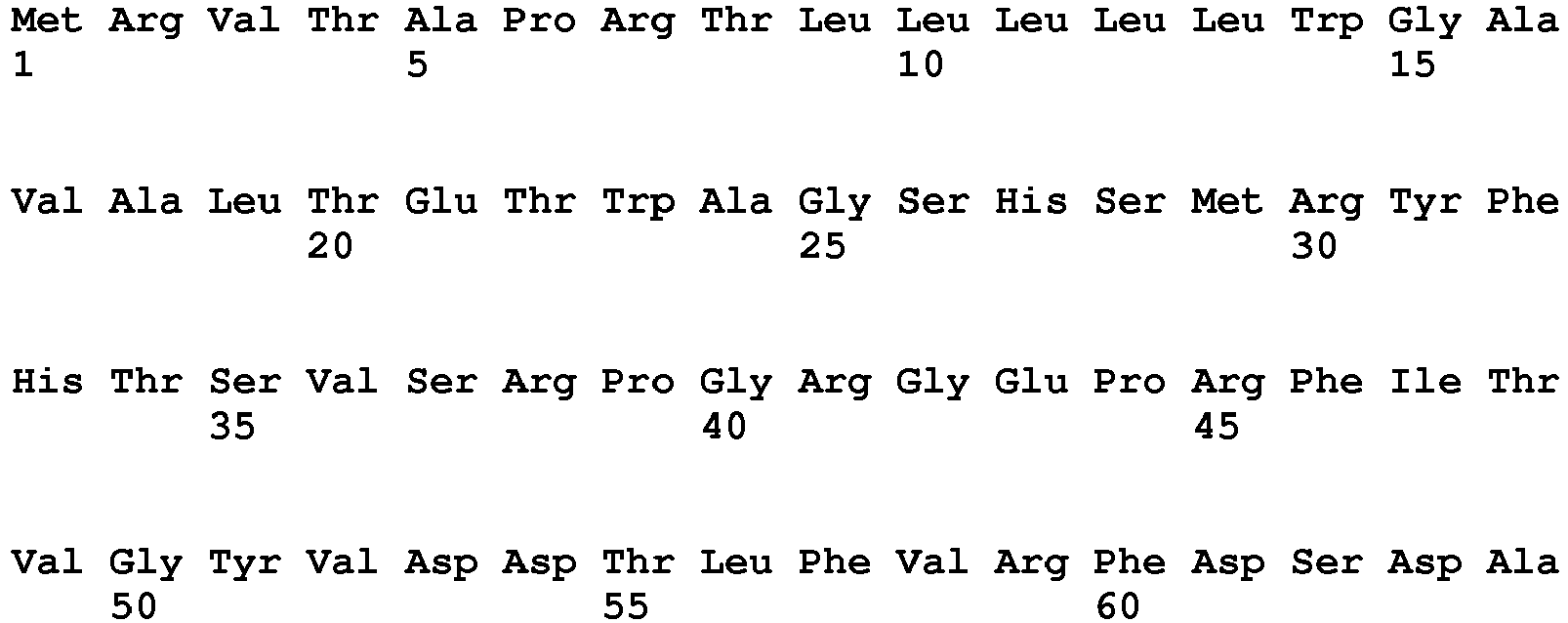


- <210> 44
<211> 273
<212> PRT
<213> Homo sapiens - <220>
<221> DOMAIN
<222> (1)..(89)
<223>alpha 1 - <220>
<221> DOMAIN
<222> (90)..(181)
<223>alpha 2 - <220>
<221> DOMAIN
<222> (182)..(273)
<223>alpha 3 - <400> 44


- <210> 45
<211> 181
<212> PRT
<213> Homo sapiens - <220>
<221> DOMAIN
<222> (1)..(89)
<223>alpha 1 - <220>
<221> DOMAIN
<222> (90)..(181)
<223>alpha 2 - <400> 45

- <210> 46
<211> 181
<212> PRT
<213> Homo sapiens - <220>
<221> DOMAIN
<222> (1)..(89)
<223>alpha 1 - <220>
<221> DOMAIN
<222> (90)..(181)
<223>alpha 2 - <400> 46

- <210> 47
<211> 362
<212> PRT
<213> Homo sapiens - <220>
<221> DOMAIN
<222> (1)..(24)
<223> signal peptide - <220>
<221> DOMAIN
<222> (25)..(114)
<223>alpha 1 - <220>
<221> DOMAIN
<222> (115)..(206)
<223>alpha 2 - <220>
<221> DOMAIN
<222> (207)..(309)
<223>alpha 3 - <220>
<221> DOMAIN
<222> (310)..(362)
<223> transmembrane and cytoplasmic tail - <400> 47
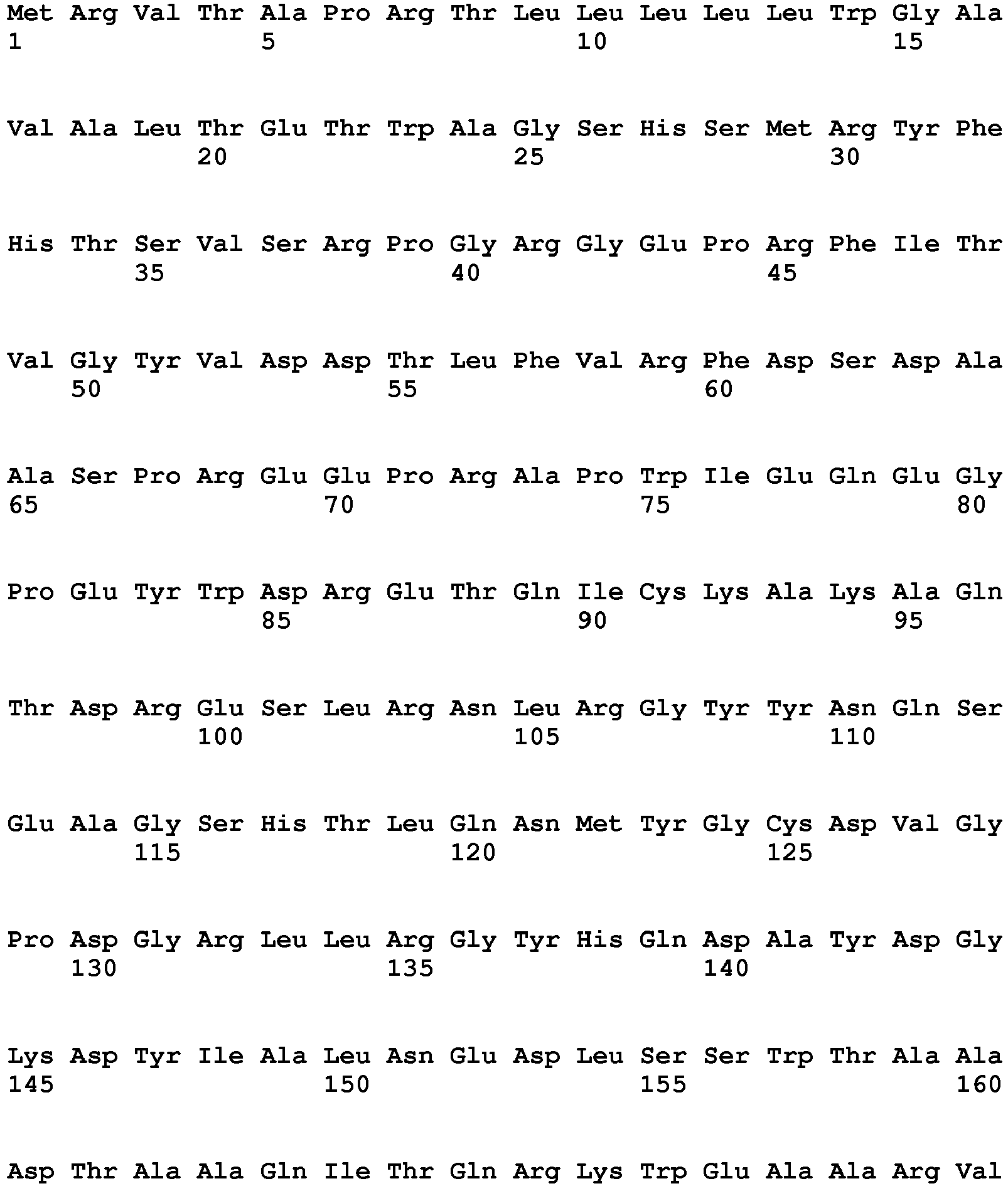

- <210> 48
<211> 362
<212> PRT
<213> Homo sapiens - <220>
<221> DOMAIN
<222> (1)..(24)
<223> signal peptide - <220>
<221> DOMAIN
<222> (25)..(114)
<223>alpha 1 - <220>
<221> DOMAIN
<222> (115)..(206)
<223>alpha 2 - <220>
<221> DOMAIN
<222> (207)..(309)
<223>alpha 3 - <220>
<221> DOMAIN
<222> (310)..(362)
<223> transmembrane and cytoplasmic tail - <400> 48


- <210> 49
<211> 362
<212> PRT
<213> Homo sapiens - <220>
<221> DOMAIN
<222> (1)..(24)
<223> signal peptide - <220>
<221> DOMAIN
<222> (25)..(114)
<223>alpha 1 - <220>
<221> DOMAIN
<222> (115)..(206)
<223>alpha 2 - <220>
<221> DOMAIN
<222> (207)..(309)
<223>alpha 3 - <220>
<221> DOMAIN
<222> (310)..(362)
<223> transmembrane and cytoplasmic tail - <400> 49


- <210> 50
<211> 273
<212> PRT
<213> Homo sapiens - <220>
<221> DOMAIN
<222> (1)..(89)
<223>alpha 1 - <220>
<221> DOMAIN
<222> (90)..(181)
<223>alpha 2 - <220>
<221> DOMAIN
<222> (182)..(273)
<223>alpha 3 - <400> 50


- <210> 51
<211> 181
<212> PRT
<213> Homo sapiens - <220>
<221> DOMAIN
<222> (1)..(89)
<223>alpha 1 - <220>
<221> DOMAIN
<222> (90)..(181)
<223>alpha 2 - <400> 51
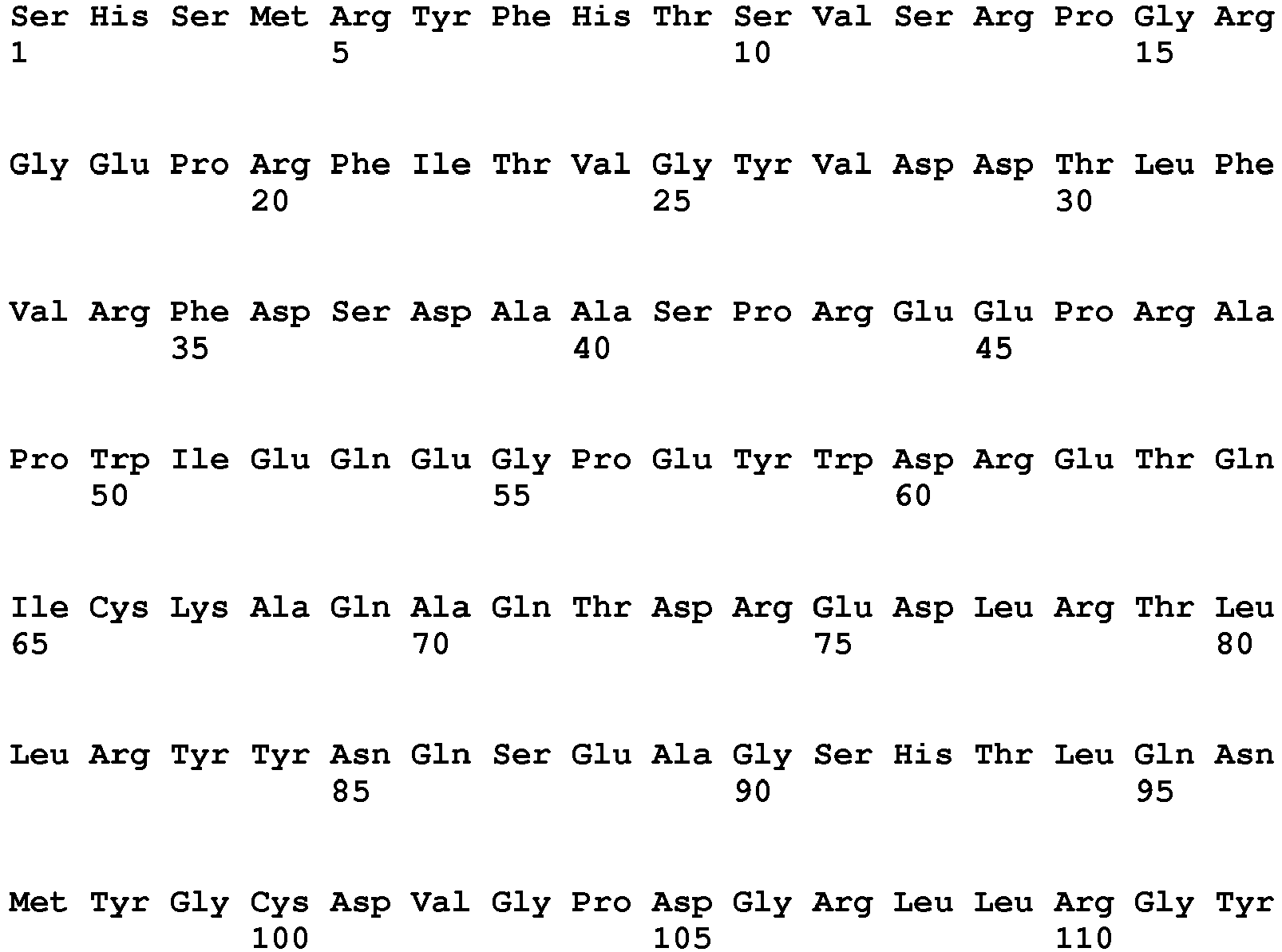

- <210> 52
<211> 181
<212> PRT
<213> Homo sapiens - <220>
<221> DOMAIN
<222> (1)..(89)
<223>alpha 1 - <220>
<221> DOMAIN
<222> (90)..(181)
<223>alpha 2 - <400> 52


- <210> 53
<211> 273
<212> PRT
<213> Homo sapiens - <220>
<221> DOMAIN
<222> (1)..(89)
<223>alpha 1 - <220>
<221> DOMAIN
<222> (90)..(181)
<223>alpha 2 - <220>
<221> DOMAIN
<222> (182)..(273)
<223>alpha 3 - <400> 53

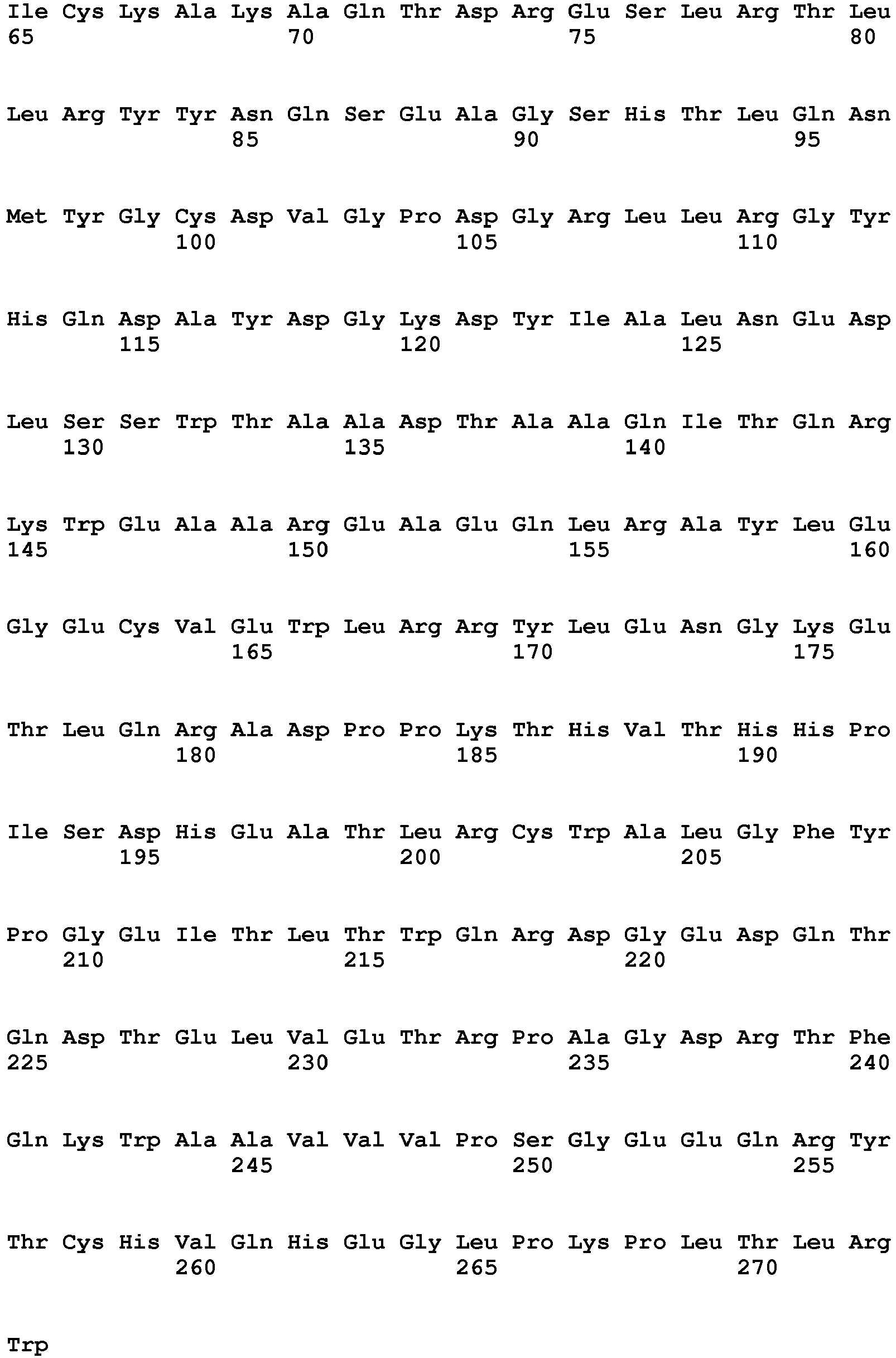
- <210> 54
<211> 181
<212> PRT
<213> Homo sapiens - <220>
<221> DOMAIN
<222> (1)..(89)
<223>alpha 1 - <220>
<221> DOMAIN
<222> (90)..(181)
<223>alpha 2 - <400> 54

- <210> 55
<211> 273
<212> PRT
<213> Homo sapiens - <220>
<221> DOMAIN
<222> (1)..(89)
<223>alpha 1 - <220>
<221> DOMAIN
<222> (90)..(181)
<223>alpha 2 - <220>
<221> DOMAIN
<222> (182)..(273)
<223>alpha 3 - <400> 55


- <210> 56
<211> 181
<212> PRT
<213> Homo sapiens - <220>
<221> DOMAIN
<222> (1)..(89)
<223>alpha 1 - <220>
<221> DOMAIN
<222> (90)..(181)
<223>alpha 2 - <400> 56


- <210> 57
<211> 181
<212> PRT
<213> Homo sapiens - <220>
<221> DOMAIN
<222> (1)..(89)
<223>alpha 1 - <220>
<221> DOMAIN
<222> (90)..(181)
<223>alpha 2 - <400> 57


- <210> 58
<211> 181
<212> PRT
<213> Homo sapiens - <220>
<221> DOMAIN
<222> (1)..(89)
<223>alpha 1 - <220>
<221> DOMAIN
<222> (90)..(181)
<223>alpha 2 - <400> 58


- <210> 59
<211> 337
<212> PRT
<213> Homo sapiens - <220>
<221> DOMAIN
<222> (1)..(24)
<223> signal peptide - <220>
<221> DOMAIN
<222> (25)..(114)
<223>alpha 1 - <220>
<221> DOMAIN
<222> (115)..(206)
<223>alpha 2 - <220>
<221> DOMAIN
<222> (207)..(309)
<223>alpha 3 - <220>
<221> DOMAIN
<222> (310)..(337)
<223> transmembrane and cytoplasmic tail - <400> 59


- <210> 60
<211> 362
<212> PRT
<213> Homo sapiens - <220>
<221> DOMAIN
<222> (1)..(24)
<223> signal peptide - <220>
<221> DOMAIN
<222> (25)..(114)
<223>alpha 1 - <220>
<221> DOMAIN
<222> (115)..(206)
<223>alpha 2 - <220>
<221> DOMAIN
<222> (207)..(309)
<223>alpha 3 - <220>
<221> DOMAIN
<222> (310)..(362)
<223> transmembrane and cytoplasmic tail - <400> 60


- <210> 61
<211> 337
<212> PRT
<213> Homo sapiens - <220>
<221> DOMAIN
<222> (1)..(24)
<223> signal peptide - <220>
<221> DOMAIN
<222> (25)..(114)
<223>alpha 1 - <220>
<221> DOMAIN
<222> (115)..(206)
<223>alpha 2 - <220>
<221> DOMAIN
<222> (207)..(309)
<223>alpha 3 - <220>
<221> DOMAIN
<222> (310)..(337)
<223> transmembrane and cytoplasmic tail - <400> 61


- <210> 62
<211> 337
<212> PRT
<213> Homo sapiens - <220>
<221> DOMAIN
<222> (1)..(24)
<223> signal peptide - <220>
<221> DOMAIN
<222> (25)..(114)
<223>alpha 1 - <220>
<221> DOMAIN
<222> (115)..(206)
<223>alpha 2 - <220>
<221> DOMAIN
<222> (207)..(309)
<223>alpha 3 - <220>
<221> DOMAIN
<222> (310)..(337)
<223> transmembrane and cytoplasmic tail - <400> 62


- <210> 63
<211> 337
<212> PRT
<213> Homo sapiens - <220>
<221> DOMAIN
<222> (1)..(24)
<223> signal peptide - <220>
<221> DOMAIN
<222> (25)..(114)
<223>alpha 1 - <220>
<221> DOMAIN
<222> (115)..(206)
<223>alpha 2 - <220>
<221> DOMAIN
<222> (207)..(309)
<223>alpha 3 - <220>
<221> DOMAIN
<222> (310)..(337)
<223> transmembrane and cytoplasmic tail - <400> 63
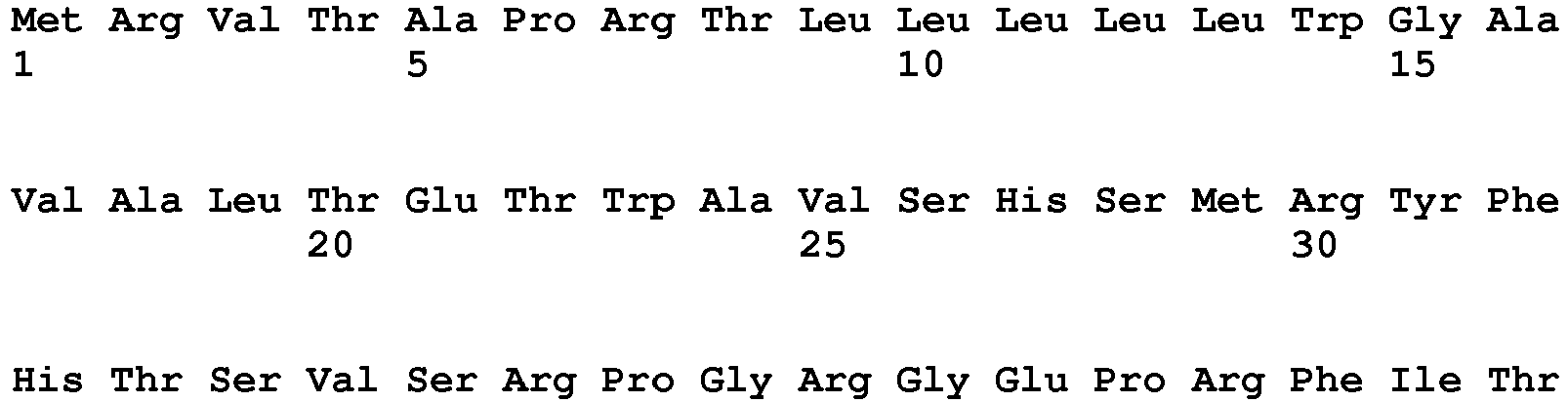


- <210> 64
<211> 337
<212> PRT
<213> Homo sapiens - <220>
<221> DOMAIN
<222> (1)..(24)
<223> signal peptide - <220>
<221> DOMAIN
<222> (25)..(114)
<223>alpha 1 - <220>
<221> DOMAIN
<222> (115)..(206)
<223>alpha 2 - <220>
<221> DOMAIN
<222> (207)..(309)
<223>alpha 3 - <220>
<221> DOMAIN
<222> (310)..(337)
<223> transmembrane and cytoplasmic tail - <400> 64


- <210> 65
<211> 337
<212> PRT
<213> Homo sapiens - <220>
<221> DOMAIN
<222> (1)..(24)
<223> signal peptide - <220>
<221> DOMAIN
<222> (25)..(114)
<223>alpha 1 - <220>
<221> DOMAIN
<222> (115)..(206)
<223>alpha 2 - <220>
<221> DOMAIN
<222> (207)..(309)
<223>alpha 3 - <220>
<221> DOMAIN
<222> (310)..(337)
<223> transmembrane and cytoplasmic tail - <400> 65


- <210> 66
<211> 337
<212> PRT
<213> Homo sapiens - <220>
<221> DOMAIN
<222> (1)..(24)
<223> signal peptide - <220>
<221> DOMAIN
<222> (25)..(114)
<223>alpha 1 - <220>
<221> DOMAIN
<222> (115)..(206)
<223>alpha 2 - <220>
<221> DOMAIN
<222> (207)..(309)
<223>alpha 3 - <220>
<221> DOMAIN
<222> (310)..(337)
<223> transmembrane and cytoplasmic tail - <400> 66


- <210> 67
<211> 337
<212> PRT
<213> Homo sapiens - <220>
<221> DOMAIN
<222> (1)..(24)
<223> signal peptide - <220>
<221> DOMAIN
<222> (25)..(114)
<223>alpha 1 - <220>
<221> DOMAIN
<222> (115)..(206)
<223>alpha 2 - <220>
<221> DOMAIN
<222> (207)..(309)
<223>alpha 3 - <220>
<221> DOMAIN
<222> (310)..(337)
<223> transmembrane and cytoplasmic tail - <400> 67


- <210> 68
<211> 337
<212> PRT
<213> Homo sapiens - <220>
<221> DOMAIN
<222> (1)..(24)
<223> signal peptide - <220>
<221> DOMAIN
<222> (25)..(114)
<223>alpha 1 - <220>
<221> DOMAIN
<222> (115)..(206)
<223>alpha 2 - <220>
<221> DOMAIN
<222> (207)..(309)
<223>alpha 3 - <220>
<221> DOMAIN
<222> (310)..(337)
<223> transmembrane and cytoplasmic tail - <400> 68


- <210> 69
<211> 181
<212> PRT
<213> Homo sapiens - <220>
<221> DOMAIN
<222> (1)..(89)
<223>alpha 1 - <220>
<221> DOMAIN
<222> (90)..(181)
<223>alpha 2 - <400> 69

- <210> 70
<211> 181
<212> PRT
<213> Homo sapiens - <220>
<221> DOMAIN
<222> (1)..(89)
<223>alpha 1 - <220>
<221> DOMAIN
<222> (90)..(181)
<223>alpha 2 - <400> 70

- <210> 71
<211> 341
<212> PRT
<213> Homo sapiens - <220>
<221> DOMAIN
<222> (1)..(24)
<223> signal peptide - <220>
<221> DOMAIN
<222> (25)..(114)
<223>alpha 1 - <220>
<221> DOMAIN
<222> (115)..(206)
<223>alpha 2 - <220>
<221> DOMAIN
<222> (207)..(309)
<223>alpha 3 - <220>
<221> DOMAIN
<222> (310)..(341)
<223> transmembrane and cytoplasmic tail - <400> 71

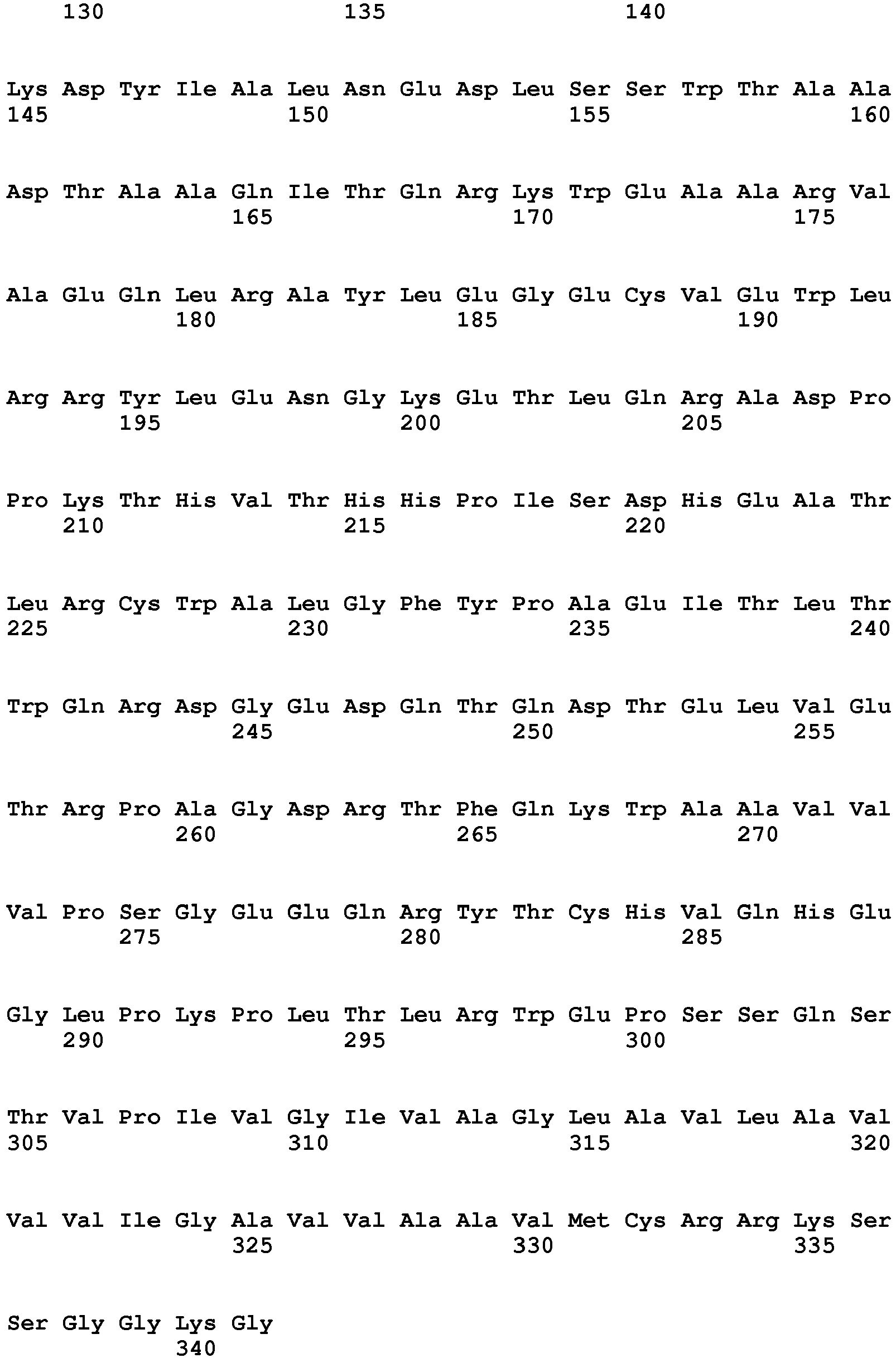
- <210> 72
<211> 181
<212> PRT
<213> Homo sapiens - <220>
<221> DOMAIN
<222> (1)..(89)
<223>alpha 1 - <220>
<221> DOMAIN
<222> (90)..(181)
<223>alpha 2 - <400> 72

- <210> 73
<211> 181
<212> PRT
<213> Homo sapiens - <220>
<221> DOMAIN
<222> (1)..(89)
<223>alpha 1 - <220>
<221> DOMAIN
<222> (90)..(181)
<223>alpha 2 - <400> 73

- <210> 74
<211> 181
<212> PRT
<213> Homo sapiens - <220>
<221> DOMAIN
<222> (1)..(89)
<223>alpha 1 - <220>
<221> DOMAIN
<222> (90)..(181)
<223>alpha 2 - <400> 74
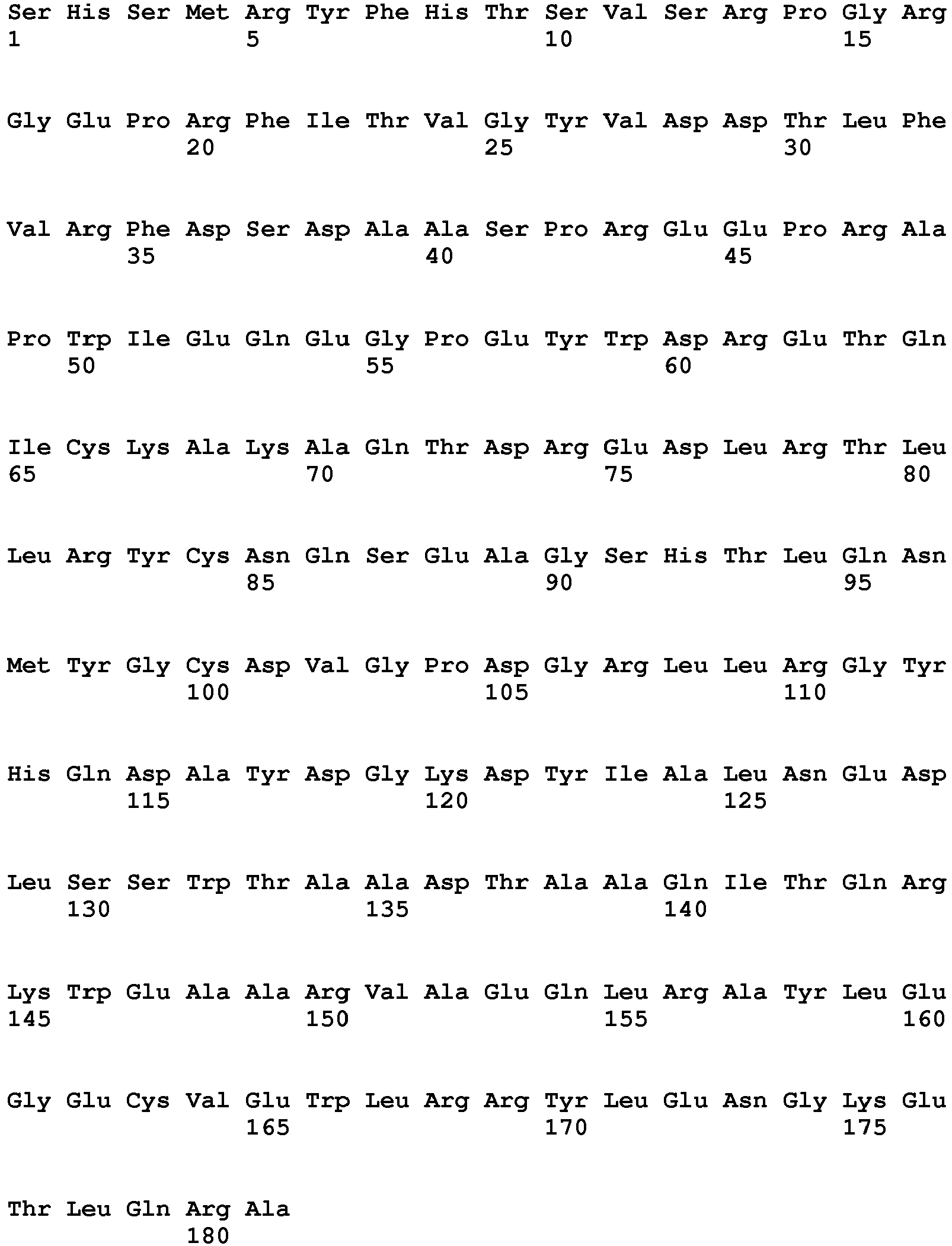
- <210> 75
<211> 181
<212> PRT
<213> Homo sapiens - <220>
<221> DOMAIN
<222> (1)..(89)
<223>alpha 1 - <220>
<221> DOMAIN
<222> (90)..(181)
<223>alpha 2 - <400> 75


- <210> 76
<211> 181
<212> PRT
<213> Homo sapiens - <220>
<221> DOMAIN
<222> (1)..(89)
<223>alpha 1 - <220>
<221> DOMAIN
<222> (90)..(181)
<223>alpha 2 - <400> 76


- <210> 77
<211> 337
<212> PRT
<213> Homo sapiens - <220>
<221> DOMAIN
<222> (1)..(24)
<223> signal peptide - <220>
<221> DOMAIN
<222> (25)..(114)
<223>alpha 1 - <220>
<221> DOMAIN
<222> (115)..(206)
<223>alpha 2 - <220>
<221> DOMAIN
<222> (207)..(309)
<223>alpha 3 - <220>
<221> DOMAIN
<222> (310)..(337)
<223> transmembrane and cytoplasmic tail - <400> 77


- <210> 78
<211> 181
<212> PRT
<213> Homo sapiens - <220>
<221> DOMAIN
<222> (1)..(89)
<223>alpha 1 - <220>
<221> DOMAIN
<222> (90)..(181)
<223>alpha 2 - <400> 78


- <210> 79
<211> 181
<212> PRT
<213> Homo sapiens - <220>
<221> DOMAIN
<222> (1)..(89)
<223>alpha 1 - <220>
<221> DOMAIN
<222> (90)..(181)
<223>alpha 2 - <400> 79


- <210> 80
<211> 206
<212> PRT
<213> Homo sapiens - <220>
<221> DOMAIN
<222> (1)..(24)
<223> signal peptide - <220>
<221> DOMAIN
<222> (25)..(114)
<223>alpha 1 - <220>
<221> DOMAIN
<222> (115)..(206)
<223>alpha 2 - <400> 80


- <210> 81
<211> 181
<212> PRT
<213> Homo sapiens - <220>
<221> DOMAIN
<222> (1)..(89)
<223>alpha 1 - <220>
<221> DOMAIN
<222> (90)..(181)
<223>alpha 2 - <400> 81


- <210> 82
<211> 362
<212> PRT
<213> Homo sapiens - <220>
<221> DOMAIN
<222> (1)..(24)
<223> signal peptide - <220>
<221> DOMAIN
<222> (25)..(114)
<223>alpha 1 - <220>
<221> DOMAIN
<222> (115)..(206)
<223>alpha 2 - <220>
<221> DOMAIN
<222> (207)..(309)
<223>alpha 3 - <220>
<221> DOMAIN
<222> (310)..(362)
<223> transmembrane and cytoplasmic tail - <400> 82


- <210> 83
<211> 181
<212> PRT
<213> Homo sapiens - <220>
<221> DOMAIN
<222> (1)..(89)
<223>alpha 1 - <220>
<221> DOMAIN
<222> (90)..(181)
<223>alpha 2 - <400> 83


- <210> 84
<211> 362
<212> PRT
<213> Homo sapiens - <220>
<221> DOMAIN
<222> (1)..(24)
<223> signal peptide - <220>
<221> DOMAIN
<222> (25)..(114)
<223>alpha 1 - <220>
<221> DOMAIN
<222> (115)..(206)
<223>alpha 2 - <220>
<221> DOMAIN
<222> (207)..(309)
<223>alpha 3 - <220>
<221> DOMAIN
<222> (310)..(362)
<223> transmembrane and cytoplasmic tail - <400> 84


- <210> 85
<211> 206
<212> PRT
<213> Homo sapiens - <220>
<221> DOMAIN
<222> (1)..(24)
<223> signal peptide - <220>
<221> DOMAIN
<222> (25)..(114)
<223>alpha 1 - <220>
<221> DOMAIN
<222> (115)..(206)
<223>alpha 2 - <400> 85


- <210> 86
<211> 181
<212> PRT
<213> Homo sapiens - <220>
<221> DOMAIN
<222> (1)..(89)
<223>alpha 1 - <220>
<221> DOMAIN
<222> (90)..(181)
<223>alpha 2 - <400> 86


- <210> 87
<211> 181
<212> PRT
<213> Homo sapiens - <220>
<221> DOMAIN
<222> (1)..(89)
<223>alpha 1 - <220>
<221> DOMAIN
<222> (90)..(181)
<223>alpha 2 - <400> 87

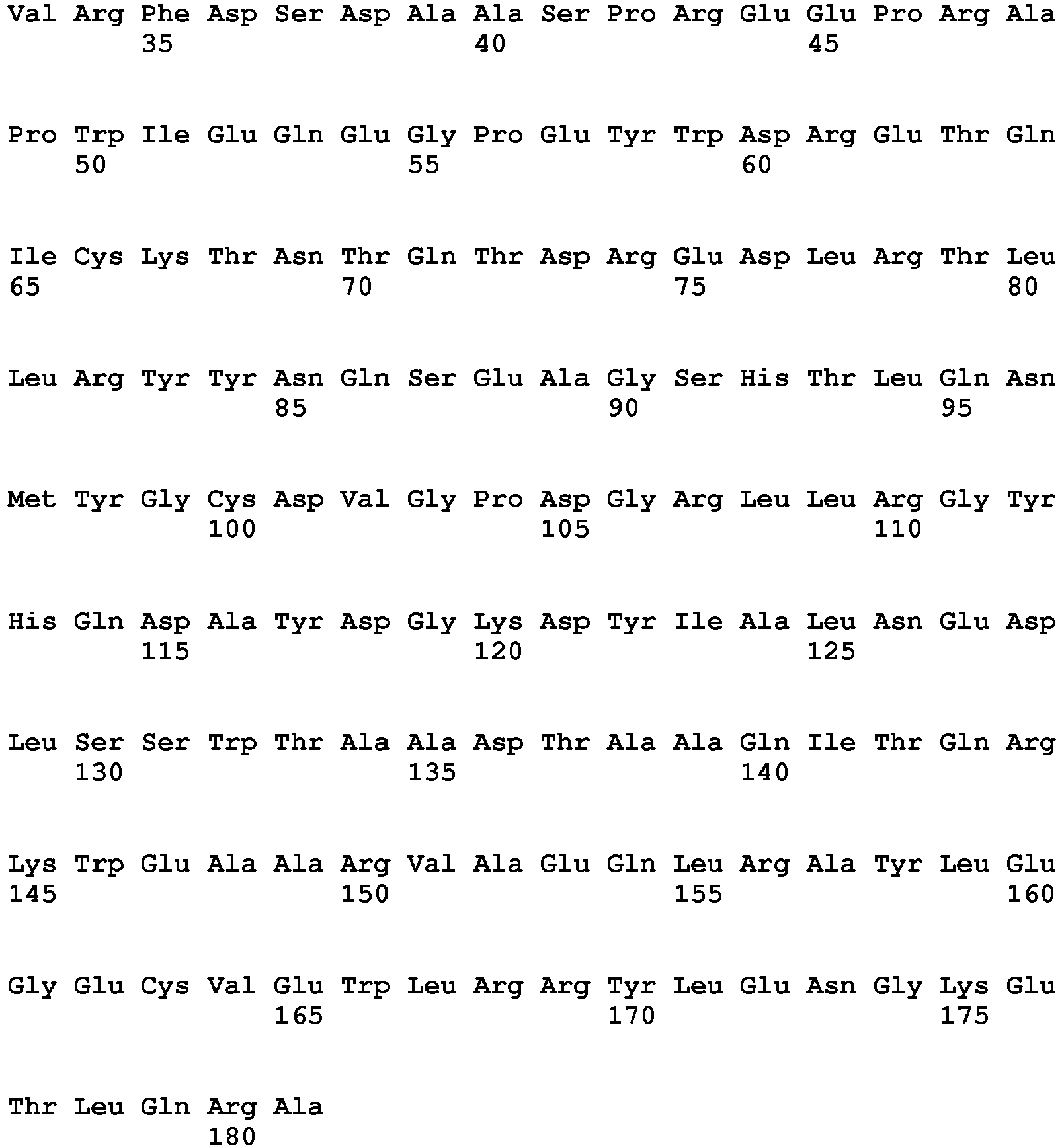
- <210> 88
<211> 362
<212> PRT
<213> Homo sapiens - <220>
<221> DOMAIN
<222> (1)..(24)
<223> signal peptide - <220>
<221> DOMAIN
<222> (25)..(114)
<223>alpha 1 - <220>
<221> DOMAIN
<222> (115)..(206)
<223>alpha 2 - <220>
<221> DOMAIN
<222> (207)..(309)
<223>alpha 3 - <220>
<221> DOMAIN
<222> (310)..(362)
<223> transmembrane and cytoplasmic tail - <400> 88


- <210> 89
<211> 206
<212> PRT
<213> Homo sapiens - <220>
<221> DOMAIN
<222> (1)..(24)
<223> signal peptide - <220>
<221> DOMAIN
<222> (25)..(114)
<223>alpha 1 - <220>
<221> DOMAIN
<222> (115)..(206)
<223>alpha 2 - <400> 89

- <210> 90
<211> 181
<212> PRT
<213> Homo sapiens - <220>
<221> DOMAIN
<222> (1)..(89)
<223>alpha 1 - <220>
<221> DOMAIN
<222> (90)..(181)
<223>alpha 2 - <400> 90

- <210> 91
<211> 273
<212> PRT
<213> Homo sapiens - <220>
<221> DOMAIN
<222> (1)..(89)
<223>alpha 1 - <220>
<221> DOMAIN
<222> (90)..(181)
<223>alpha 2 - <220>
<221> DOMAIN
<222> (182)..(273)
<223>alpha 3 - <400> 91


- <210> 92
<211> 181
<212> PRT
<213> Homo sapiens - <220>
<221> DOMAIN
<222> (1)..(89)
<223>alpha 1 - <220>
<221> DOMAIN
<222> (90)..(181)
<223>alpha 2 - <400> 92


- <210> 93
<211> 181
<212> PRT
<213> Homo sapiens - <220>
<221> DOMAIN
<222> (1)..(89)
<223>alpha 1 - <220>
<221> DOMAIN
<222> (90)..(181)
<223>alpha 2 - <400> 93


- <210> 94
<211> 362
<212> PRT
<213> Homo sapiens - <220>
<221> DOMAIN
<222> (1)..(24)
<223> signal peptide - <220>
<221> DOMAIN
<222> (25)..(114)
<223>alpha 1 - <220>
<221> DOMAIN
<222> (115)..(206)
<223>alpha 2 - <220>
<221> DOMAIN
<222> (207)..(309)
<223>alpha 3 - <220>
<221> DOMAIN
<222> (310)..(362)
<223> transmembrane and cytoplasmic tail - <400> 94


- <210> 95
<211> 362
<212> PRT
<213> Homo sapiens - <220>
<221> DOMAIN
<222> (1)..(24)
<223> signal peptide - <220>
<221> DOMAIN
<222> (25)..(114)
<223>alpha 1 - <220>
<221> DOMAIN
<222> (115)..(206)
<223>alpha 2 - <220>
<221> DOMAIN
<222> (207)..(309)
<223>alpha 3 - <220>
<221> DOMAIN
<222> (310)..(362)
<223> transmembrane and cytoplasmic tail - <400> 95


- <210> 96
<211> 181
<212> PRT
<213> Homo sapiens - <220>
<221> DOMAIN
<222> (1)..(89)
<223>alpha 1 - <220>
<221> DOMAIN
<222> (90)..(181)
<223>alpha 2 - <400> 96


- <210> 97
<211> 181
<212> PRT
<213> Homo sapiens - <220>
<221> DOMAIN
<222> (1)..(89)
<223>alpha 1 - <220>
<221> DOMAIN
<222> (90)..(181)
<223>alpha 2 - <400> 97


- <210> 98
<211> 181
<212> PRT
<213> Homo sapiens - <220>
<221> DOMAIN
<222> (1)..(89)
<223>alpha 1 - <220>
<221> DOMAIN
<222> (90)..(181)
<223>alpha 2 - <400> 98


- <210> 99
<211> 181
<212> PRT
<213> Homo sapiens - <220>
<221> DOMAIN
<222> (1)..(89)
<223>alpha 1 - <220>
<221> DOMAIN
<222> (90)..(181)
<223>alpha 2 - <400> 99

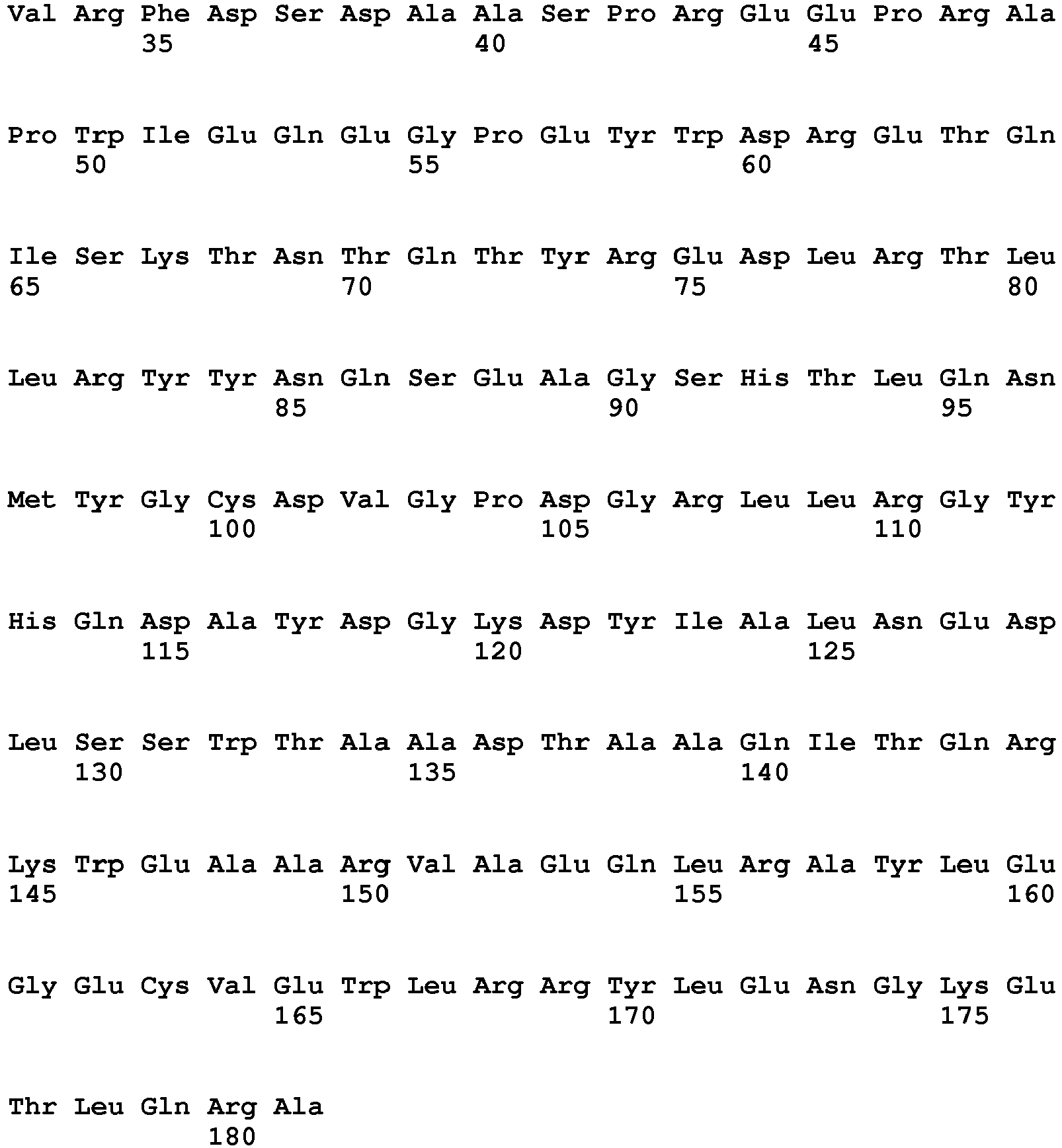
- <210> 100
<211> 181
<212> PRT
<213> Homo sapiens - <220>
<221> DOMAIN
<222> (1)..(89)
<223>alpha 1 - <220>
<221> DOMAIN
<222> (90)..(181)
<223>alpha 2 - <400> 100


- <210> 101
<211> 181
<212> PRT
<213> Homo sapiens - <220>
<221> DOMAIN
<222> (1)..(89)
<223>alpha 1 - <220>
<221> DOMAIN
<222> (90)..(181)
<223>alpha 2 - <400> 101


- <210> 102
<211> 362
<212> PRT
<213> Homo sapiens - <220>
<221> DOMAIN
<222> (1)..(24)
<223> signal peptide - <220>
<221> DOMAIN
<222> (25)..(114)
<223>alpha 1 - <220>
<221> DOMAIN
<222> (115)..(206)
<223>alpha 2 - <220>
<221> DOMAIN
<222> (207)..(309)
<223>alpha 3 - <220>
<221> DOMAIN
<222> (310)..(362)
<223> transmembrane and cytoplasmic tail - <400> 102


- <210> 103
<211> 181
<212> PRT
<213> Homo sapiens - <220>
<221> DOMAIN
<222> (1)..(89)
<223>alpha 1 - <220>
<221> DOMAIN
<222> (90)..(181)
<223>alpha 2 - <400> 103

- <210> 104
<211> 181
<212> PRT
<213> Homo sapiens - <220>
<221> DOMAIN
<222> (1)..(89)
<223>alpha 1 - <220>
<221> DOMAIN
<222> (90)..(181)
<223>alpha 2 - <400> 104

- <210> 105
<211> 337
<212> PRT
<213> Homo sapiens - <220>
<221> DOMAIN
<222> (1)..(24)
<223> signal peptide - <220>
<221> DOMAIN
<222> (25)..(114)
<223>alpha 1 - <220>
<221> DOMAIN
<222> (115)..(206)
<223>alpha 2 - <220>
<221> DOMAIN
<222> (207)..(309)
<223>alpha 3 - <220>
<221> DOMAIN
<222> (310)..(337)
<223> transmembrane and cytoplasmic tail - <400> 105

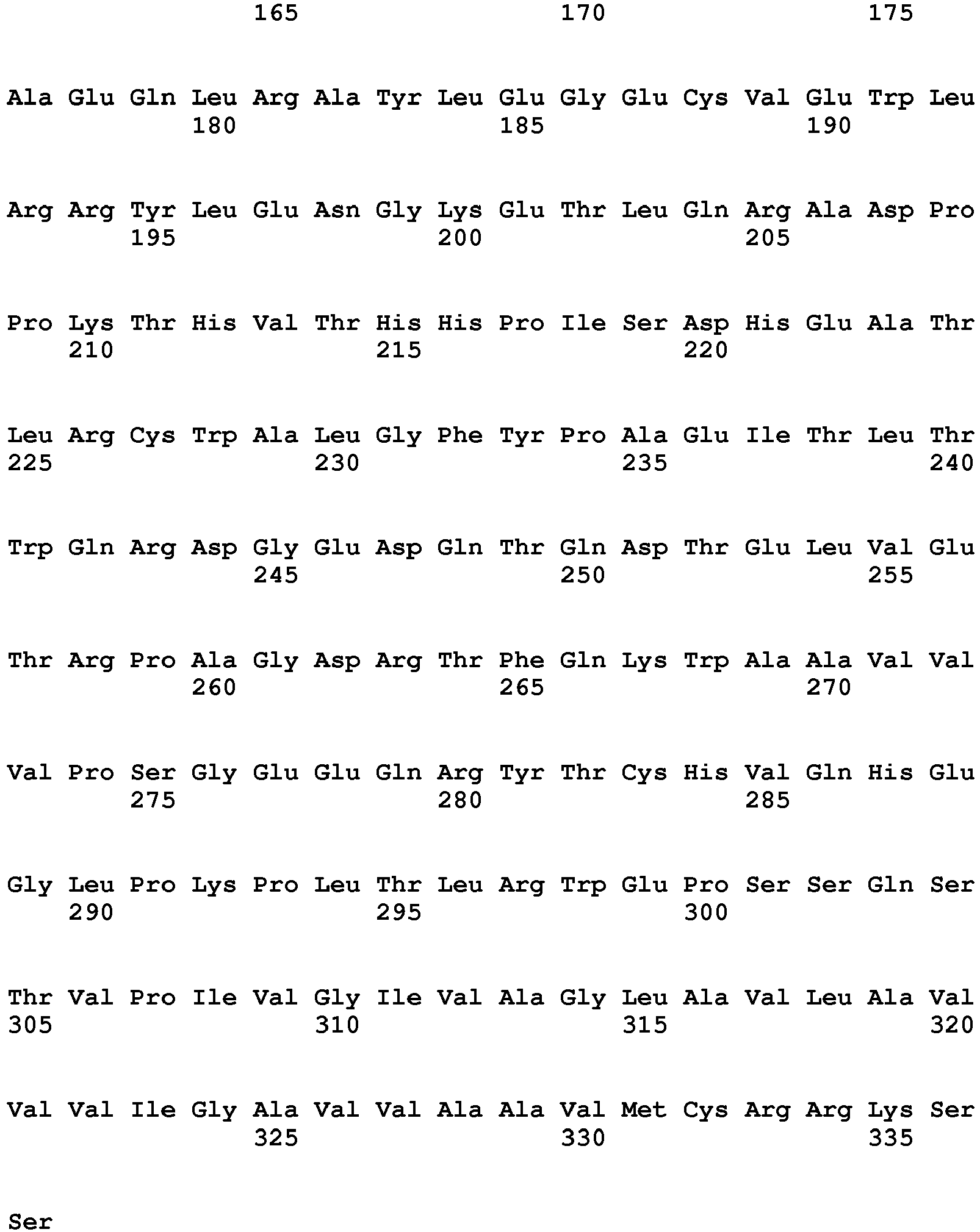
- <210> 106
<211> 302
<212> PRT
<213> Homo sapiens - <220>
<221> DOMAIN
<222> (1)..(89)
<223>alpha 1 - <220>
<221> DOMAIN
<222> (90)..(181)
<223>alpha 2 - <220>
<221> DOMAIN
<222> (182)..(284)
<223>alpha 3 - <220>
<221> DOMAIN
<222> (285)..(302)
<223> transmembrane and cytoplasmic tail - <400> 106


- <210> 107
<211> 181
<212> PRT
<213> Homo sapiens - <220>
<221> DOMAIN
<222> (1)..(89)
<223>alpha 1 - <220>
<221> DOMAIN
<222> (90)..(181)
<223>alpha 2 - <400> 107


- <210> 108
<211> 309
<212> PRT
<213> Homo sapiens - <220>
<221> DOMAIN
<222> (1)..(19)
<223> signal peptide - <220>
<221> DOMAIN
<222> (20)..(109)
<223>alpha 1 - <220>
<221> DOMAIN
<222> (110)..(201)
<223>alpha 2 - <220>
<221> DOMAIN
<222> (202)..(304)
<223>alpha 3 - <220>
<221> DOMAIN
<222> (305)..(309)
<223> transmembrane - <400> 108


- <210> 109
<211> 181
<212> PRT
<213> Homo sapiens - <220>
<221> DOMAIN
<222> (1)..(89)
<223>alpha 1 - <220>
<221> DOMAIN
<222> (90)..(181)
<223>alpha 2 - <400> 109


- <210> 110
<211> 181
<212> PRT
<213> Homo sapiens - <220>
<221> DOMAIN
<222> (1)..(89)
<223>alpha 1 - <220>
<221> DOMAIN
<222> (90)..(181)
<223>alpha 2 - <400> 110


- <210> 111
<211> 181
<212> PRT
<213> Homo sapiens - <220>
<221> DOMAIN
<222> (1)..(89)
<223>alpha 1 - <220>
<221> DOMAIN
<222> (90)..(181)
<223>alpha 2 - <400> 111


- <210> 112
<211> 181
<212> PRT
<213> Homo sapiens - <220>
<221> DOMAIN
<222> (1)..(89)
<223>alpha 1 - <220>
<221> DOMAIN
<222> (90)..(181)
<223>alpha 2 - <400> 112


- <210> 113
<211> 181
<212> PRT
<213> Homo sapiens - <220>
<221> DOMAIN
<222> (1)..(89)
<223>alpha 1 - <220>
<221> DOMAIN
<222> (90)..(181)
<223>alpha 2 - <400> 113


- <210> 114
<211> 181
<212> PRT
<213> Homo sapiens - <220>
<221> DOMAIN
<222> (1)..(89)
<223>alpha 1 - <220>
<221> DOMAIN
<222> (90)..(181)
<223>alpha 2 - <400> 114


- <210> 115
<211> 273
<212> PRT
<213> Homo sapiens - <220>
<221> DOMAIN
<222> (1)..(89)
<223>alpha 1 - <220>
<221> DOMAIN
<222> (90)..(181)
<223>alpha 2 - <220>
<221> DOMAIN
<222> (182)..(273)
<223>alpha 3 - <400> 115


- <210> 116
<211> 181
<212> PRT
<213> Homo sapiens - <220>
<221> DOMAIN
<222> (1)..(89)
<223>alpha 1 - <220>
<221> DOMAIN
<222> (90)..(181)
<223>alpha 2 - <400> 116


- <210> 117
<211> 362
<212> PRT
<213> Homo sapiens - <220>
<221> DOMAIN
<222> (1)..(24)
<223> signal peptide - <220>
<221> DOMAIN
<222> (25)..(114)
<223>alpha 1 - <220>
<221> DOMAIN
<222> (115)..(206)
<223>alpha 2 - <220>
<221> DOMAIN
<222> (207)..(309)
<223>alpha 3 - <220>
<221> DOMAIN
<222> (310)..(362)
<223> transmembrane and cytoplasmic tail - <400> 117


- <210> 118
<211> 181
<212> PRT
<213> Homo sapiens - <220>
<221> DOMAIN
<222> (1)..(89)
<223>alpha 1 - <220>
<221> DOMAIN
<222> (90)..(181)
<223>alpha 2 - <400> 118
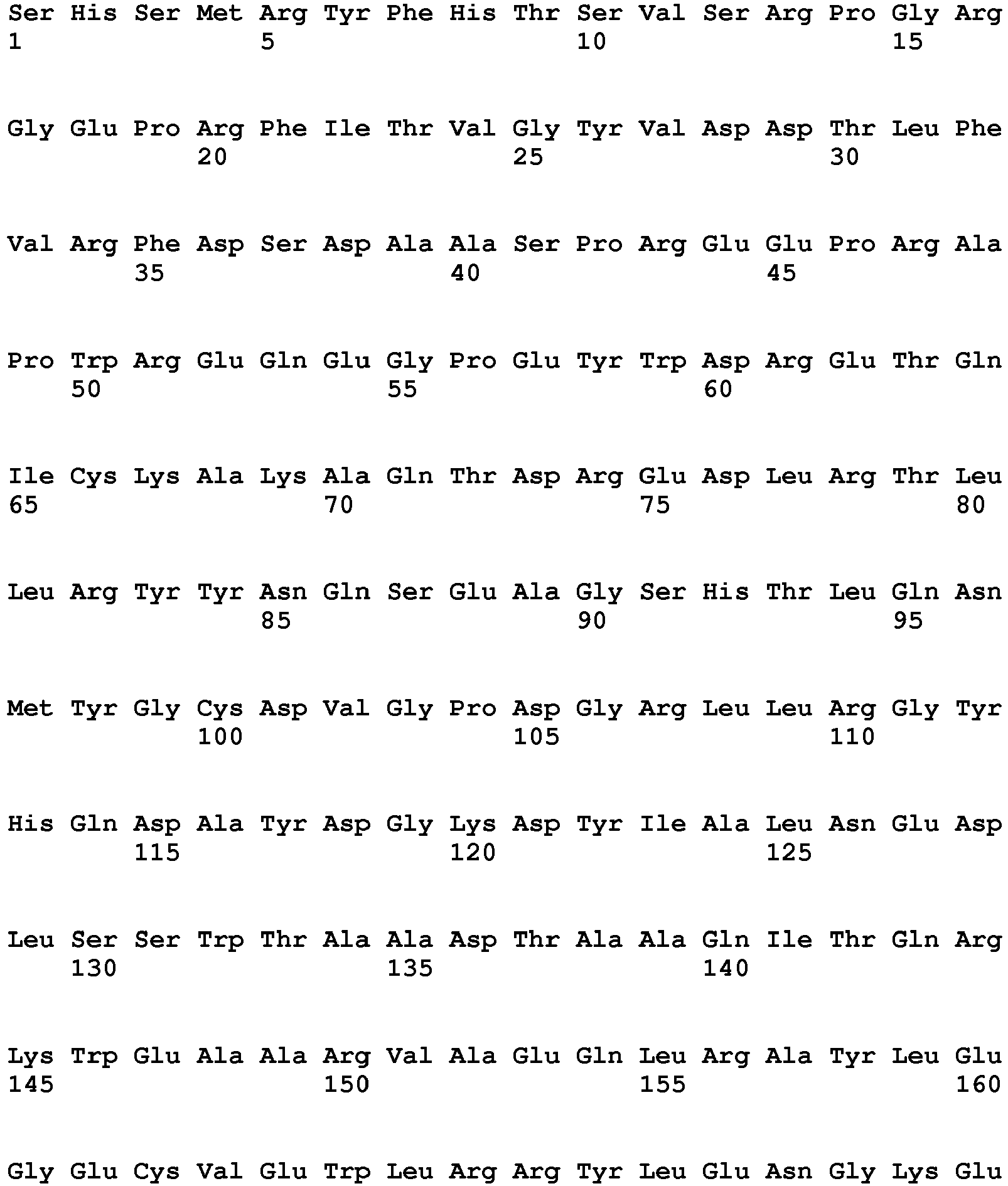

- <210> 119
<211> 181
<212> PRT
<213> Homo sapiens - <220>
<221> DOMAIN
<222> (1)..(89)
<223>alpha 1 - <220>
<221> DOMAIN
<222> (90)..(181)
<223>alpha 2 - <400> 119


- <210> 120
<211> 181
<212> PRT
<213> Homo sapiens - <220>
<221> DOMAIN
<222> (1)..(89)
<223>alpha 1 - <220>
<221> DOMAIN
<222> (90)..(181)
<223>alpha 2 - <400> 120


- <210> 121
<211> 273
<212> PRT
<213> Homo sapiens - <220>
<221> DOMAIN
<222> (1)..(89)
<223>alpha 1 - <220>
<221> DOMAIN
<222> (90)..(181)
<223>alpha 2 - <220>
<221> DOMAIN
<222> (182)..(273)
<223>alpha 3 - <400> 121


- <210> 122
<211> 362
<212> PRT
<213> Homo sapiens - <220>
<221> DOMAIN
<222> (1)..(24)
<223> signal peptide - <220>
<221> DOMAIN
<222> (25)..(114)
<223>alpha 1 - <220>
<221> DOMAIN
<222> (115)..(206)
<223>alpha 2 - <220>
<221> DOMAIN
<222> (207)..(309)
<223>alpha 3 - <220>
<221> DOMAIN
<222> (310)..(362)
<223> transmembrane and cytoplasmic tail - <400> 122


- <210> 123
<211> 181
<212> PRT
<213> Homo sapiens - <220>
<221> DOMAIN
<222> (1)..(89)
<223>alpha 1 - <220>
<221> DOMAIN
<222> (90)..(181)
<223>alpha 2 - <400> 123


- <210> 124
<211> 181
<212> PRT
<213> Homo sapiens - <220>
<221> DOMAIN
<222> (1)..(89)
<223>alpha 1 - <220>
<221> DOMAIN
<222> (90)..(181)
<223>alpha 2 - <400> 124

- <210> 125
<211> 181
<212> PRT
<213> Homo sapiens - <220>
<221> DOMAIN
<222> (1)..(89)
<223>alpha 1 - <220>
<221> DOMAIN
<222> (90)..(181)
<223>alpha 2 - <400> 125

- <210> 126
<211> 181
<212> PRT
<213> Homo sapiens - <220>
<221> DOMAIN
<222> (1)..(89)
<223>alpha 1 - <220>
<221> DOMAIN
<222> (90)..(181)
<223>alpha 2 - <400> 126

- <210> 127
<211> 181
<212> PRT
<213> Homo sapiens - <220>
<221> DOMAIN
<222> (1)..(89)
<223>alpha 1 - <220>
<221> DOMAIN
<222> (90)..(181)
<223>alpha 2 - <400> 127

- <210> 128
<211> 181
<212> PRT
<213> Homo sapiens - <220>
<221> DOMAIN
<222> (1)..(89)
<223>alpha 1 - <220>
<221> DOMAIN
<222> (90)..(181)
<223>alpha 2 - <400> 128

- <210> 129
<211> 71
<212> PRT
<213> Homo sapiens - <220>
<221> DOMAIN
<222> (1)..(71)
<223>alpha 1 - <400> 129

- <210> 130
<211> 181
<212> PRT
<213> Homo sapiens - <220>
<221> DOMAIN
<222> (1)..(89)
<223>alpha 1 - <220>
<221> DOMAIN
<222> (90)..(181)
<223>alpha 2 - <400> 130


- <210> 131
<211> 181
<212> PRT
<213> Homo sapiens - <220>
<221> DOMAIN
<222> (1)..(89)
<223>alpha 1 - <220>
<221> DOMAIN
<222> (90)..(181)
<223>alpha 2 - <400> 131


- <210> 132
<211> 181
<212> PRT
<213> Homo sapiens - <220>
<221> DOMAIN
<222> (1)..(89)
<223>alpha 1 - <220>
<221> DOMAIN
<222> (90)..(181)
<223>alpha 2 - <400> 132


- <210> 133
<211> 181
<212> PRT
<213> Homo sapiens - <220>
<221> DOMAIN
<222> (1)..(89)
<223>alpha 1 - <220>
<221> DOMAIN
<222> (90)..(181)
<223>alpha 2 - <400> 133


- <210> 134
<211> 127
<212> PRT
<213> Homo sapiens - <220>
<221> DOMAIN
<222> (1)..(89)
<223>alpha 1 - <220>
<221> DOMAIN
<222> (90)..(127)
<223>alpha 2 - <400> 134

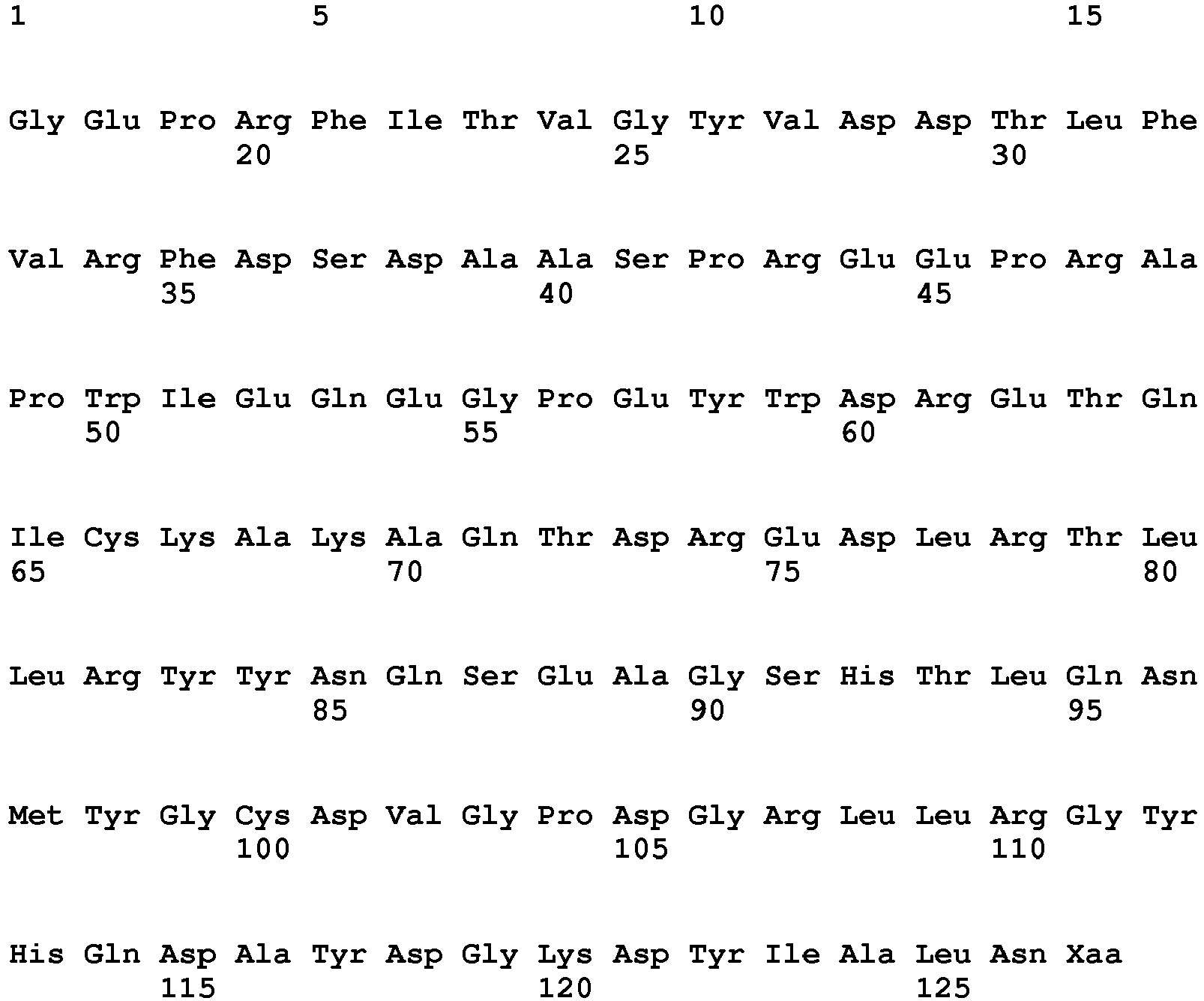
- <210> 135
<211> 53
<212> PRT
<213> Homo sapiens - <220>
<221> DOMAIN
<222> (1)..(53)
<223>alpha 1 - <400> 135

- <210> 136
<211> 213
<212> PRT
<213> Homo sapiens - <220>
<221> DOMAIN
<222> (1)..(24)
<223> signal peptide - <220>
<221> DOMAIN
<222> (25)..(114)
<223>alpha 1 - <220>
<221> DOMAIN
<222> (115)..(206)
<223>alpha 2 - <220>
<221> DOMAIN
<222> (207)..(213)
<223>alpha 3 - <400> 136


- <210> 137
<211> 273
<212> PRT
<213> Homo sapiens - <220>
<221> DOMAIN
<222> (1)..(89)
<223>alpha 1 - <220>
<221> DOMAIN
<222> (90)..(181)
<223>alpha 2 - <220>
<221> DOMAIN
<222> (182)..(273)
<223>alpha 3 - <400> 137


- <210> 138
<211> 298
<212> PRT
<213> Homo sapiens - <220>
<221> DOMAIN
<222> (1)..(24)
<223> signal peptide - <220>
<221> DOMAIN
<222> (25)..(114)
<223>alpha 1 - <220>
<221> DOMAIN
<222> (115)..(206)
<223>alpha 2 - <220>
<221> DOMAIN
<222> (207)..(298)
<223>alpha 3 - <400> 138


- <210> 139
<211> 337
<212> PRT
<213> Homo sapiens - <220>
<221> DOMAIN
<222> (1)..(24)
<223> signal peptide - <220>
<221> DOMAIN
<222> (25)..(114)
<223>alpha 1 - <220>
<221> DOMAIN
<222> (115)..(206)
<223>alpha 2 - <220>
<221> DOMAIN
<222> (207)..(309)
<223>alpha 3 - <220>
<221> DOMAIN
<222> (310)..(337)
<223> transmembrane and cytoplasmic tail - <400> 139


- <210> 140
<211> 181
<212> PRT
<213> Homo sapiens - <220>
<221> DOMAIN
<222> (1)..(89)
<223>alpha 1 - <220>
<221> DOMAIN
<222> (90)..(181)
<223>alpha 2 - <400> 140


- <210> 141
<211> 181
<212> PRT
<213> Homo sapiens - <220>
<221> DOMAIN
<222> (1)..(89)
<223>alpha 1 - <220>
<221> DOMAIN
<222> (90)..(181)
<223>alpha 2 - <400> 141


- <210> 142
<211> 181
<212> PRT
<213> Homo sapiens - <220>
<221> DOMAIN
<222> (1)..(89)
<223>alpha 1 - <220>
<221> DOMAIN
<222> (90)..(181)
<223>alpha 2 - <400> 142


- <210> 143
<211> 181
<212> PRT
<213> Homo sapiens - <220>
<221> DOMAIN
<222> (1)..(89)
<223>alpha 1 - <220>
<221> DOMAIN
<222> (90)..(181)
<223>alpha 2 - <400> 143


- <210> 144
<211> 181
<212> PRT
<213> Homo sapiens - <220>
<221> DOMAIN
<222> (1)..(89)
<223>alpha 1 - <220>
<221> DOMAIN
<222> (90)..(181)
<223>alpha 2 - <400> 144


- <210> 145
<211> 181
<212> PRT
<213> Homo sapiens - <220>
<221> DOMAIN
<222> (1)..(89)
<223>alpha 1 - <220>
<221> DOMAIN
<222> (90)..(181)
<223>alpha 2 - <400> 145


- <210> 146
<211> 181
<212> PRT
<213> Homo sapiens - <220>
<221> DOMAIN
<222> (1)..(89)
<223>alpha 1 - <220>
<221> DOMAIN
<222> (90)..(181)
<223>alpha 2 - <400> 146


- <210> 147
<211> 181
<212> PRT
<213> Homo sapiens - <220>
<221> DOMAIN
<222> (1)..(89)
<223>alpha 1 - <220>
<221> DOMAIN
<222> (90)..(181)
<223>alpha 2 - <400> 147


- <210> 148
<211> 181
<212> PRT
<213> Homo sapiens - <220>
<221> DOMAIN
<222> (1)..(89)
<223>alpha 1 - <220>
<221> DOMAIN
<222> (90)..(181)
<223>alpha 2 - <400> 148

- <210> 149
<211> 181
<212> PRT
<213> Homo sapiens - <220>
<221> DOMAIN
<222> (1)..(89)
<223>alpha 1 - <220>
<221> DOMAIN
<222> (90)..(181)
<223>alpha 2 - <400> 149

- <210> 150
<211> 181
<212> PRT
<213> Homo sapiens - <220>
<221> DOMAIN
<222> (1)..(89)
<223>alpha 1 - <220>
<221> DOMAIN
<222> (90)..(181)
<223>alpha 2 - <400> 150

- <210> 151
<211> 181
<212> PRT
<213> Homo sapiens - <220>
<221> DOMAIN
<222> (1)..(89)
<223>alpha 1 - <220>
<221> DOMAIN
<222> (90)..(181)
<223>alpha 2 - <400> 151

- <210> 152
<211> 181
<212> PRT
<213> Homo sapiens - <220>
<221> DOMAIN
<222> (1)..(89)
<223>alpha 1 - <220>
<221> DOMAIN
<222> (90)..(181)
<223>alpha 2 - <400> 152

- <210> 153
<211> 181
<212> PRT
<213> Homo sapiens - <220>
<221> DOMAIN
<222> (1)..(89)
<223>alpha 1 - <220>
<221> DOMAIN
<222> (90)..(181)
<223>alpha 2 - <400> 153

- <210> 154
<211> 181
<212> PRT
<213> Homo sapiens - <220>
<221> DOMAIN
<222> (1)..(89)
<223>alpha 1 - <220>
<221> DOMAIN
<222> (90)..(181)
<223>alpha 2 - <400> 154


- <210> 155
<211> 181
<212> PRT
<213> Homo sapiens - <220>
<221> DOMAIN
<222> (1)..(89)
<223>alpha 1 - <220>
<221> DOMAIN
<222> (90)..(181)
<223>alpha 2 - <400> 155
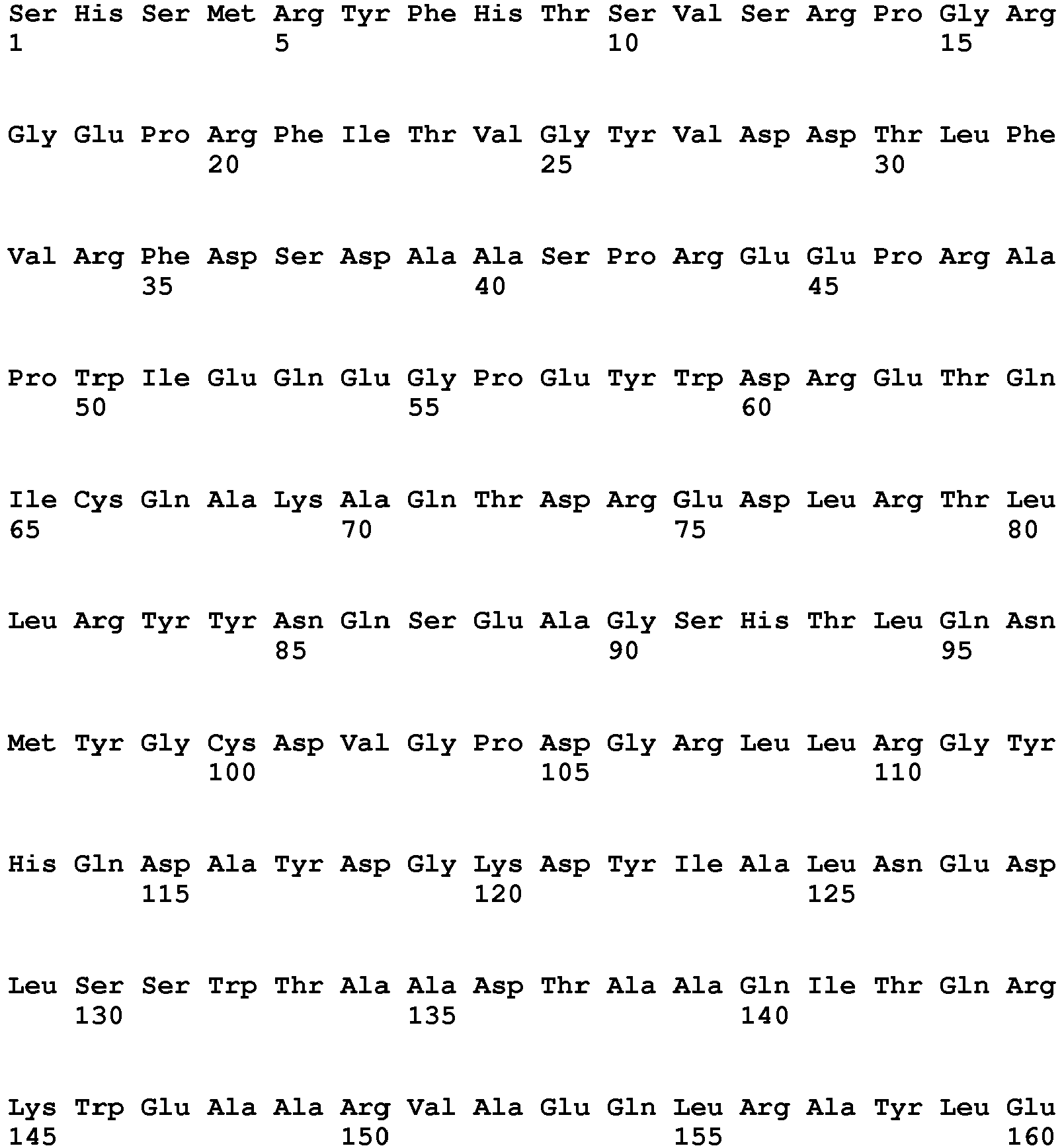

- <210> 156
<211> 181
<212> PRT
<213> Homo sapiens - <220>
<221> DOMAIN
<222> (1)..(89)
<223>alpha 1 - <220>
<221> DOMAIN
<222> (90)..(181)
<223>alpha 2 - <400> 156


- <210> 157
<211> 181
<212> PRT
<213> Homo sapiens - <220>
<221> DOMAIN
<222> (1)..(89)
<223>alpha 1 - <220>
<221> DOMAIN
<222> (90)..(181)
<223>alpha 2 - <400> 157


- <210> 158
<211> 181
<212> PRT
<213> Homo sapiens - <220>
<221> DOMAIN
<222> (1)..(89)
<223>alpha 1 - <220>
<221> DOMAIN
<222> (90)..(181)
<223>alpha 2 - <400> 158


- <210> 159
<211> 181
<212> PRT
<213> Homo sapiens - <220>
<221> DOMAIN
<222> (1)..(89)
<223>alpha 1 - <220>
<221> DOMAIN
<222> (90)..(181)
<223>alpha 2 - <400> 159


- <210> 160
<211> 181
<212> PRT
<213> Homo sapiens - <220>
<221> DOMAIN
<222> (1)..(89)
<223>alpha 1 - <220>
<221> DOMAIN
<222> (90)..(181)
<223>alpha 2 - <400> 160


- <210> 161
<211> 181
<212> PRT
<213> Homo sapiens - <220>
<221> DOMAIN
<222> (1)..(89)
<223>alpha 1 - <220>
<221> DOMAIN
<222> (90)..(181)
<223>alpha 2 - <400> 161


- <210> 162
<211> 181
<212> PRT
<213> Homo sapiens - <220>
<221> DOMAIN
<222> (1)..(89)
<223>alpha 1 - <220>
<221> DOMAIN
<222> (90)..(181)
<223>alpha 2 - <400> 162


- <210> 163
<211> 181
<212> PRT
<213> Homo sapiens - <220>
<221> DOMAIN
<222> (1)..(89)
<223>alpha 1 - <220>
<221> DOMAIN
<222> (90)..(181)
<223>alpha 2 - <400> 163


- <210> 164
<211> 181
<212> PRT
<213> Homo sapiens - <220>
<221> DOMAIN
<222> (1)..(89)
<223>alpha 1 - <220>
<221> DOMAIN
<222> (90)..(181)
<223>alpha 2 - <400> 164


- <210> 165
<211> 181
<212> PRT
<213> Homo sapiens - <220>
<221> DOMAIN
<222> (1)..(89)
<223>alpha 1 - <220>
<221> DOMAIN
<222> (90)..(181)
<223>alpha 2 - <400> 165
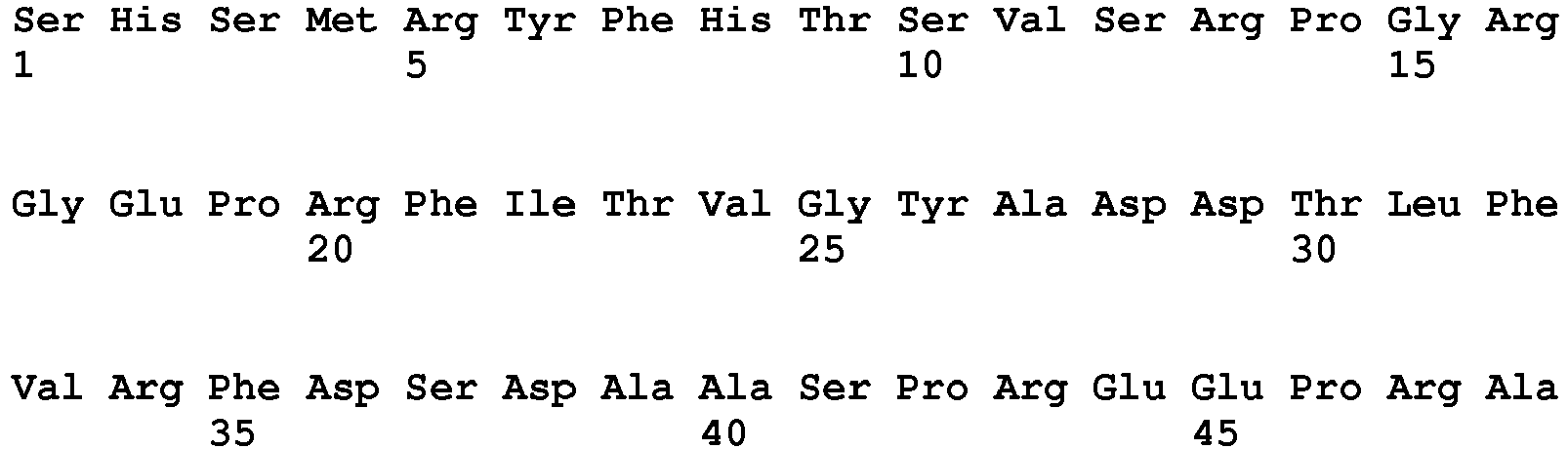

- <210> 166
<211> 58
<212> PRT
<213> Homo sapiens - <220>
<221> DOMAIN
<222> (1)..(58)
<223>alpha 1 - <400> 166


- <210> 167
<211> 181
<212> PRT
<213> Homo sapiens - <220>
<221> DOMAIN
<222> (1)..(89)
<223>alpha 1 - <220>
<221> DOMAIN
<222> (90)..(181)
<223>alpha 2 - <400> 167


- <210> 168
<211> 181
<212> PRT
<213> Homo sapiens - <220>
<221> DOMAIN
<222> (1)..(89)
<223>alpha 1 - <220>
<221> DOMAIN
<222> (90)..(181)
<223>alpha 2 - <400> 168


- <210> 169
<211> 337
<212> PRT
<213> Homo sapiens - <220>
<221> DOMAIN
<222> (1)..(24)
<223> signal peptide - <220>
<221> DOMAIN
<222> (25)..(114)
<223>alpha 1 - <220>
<221> DOMAIN
<222> (115)..(206)
<223>alpha 2 - <220>
<221> DOMAIN
<222> (207)..(309)
<223>alpha 3 - <220>
<221> DOMAIN
<222> (310)..(337)
<223> transmembrane and cytoplasmic tail - <400> 169


- <210> 170
<211> 181
<212> PRT
<213> Homo sapiens - <220>
<221> DOMAIN
<222> (1)..(89)
<223>alpha 1 - <220>
<221> DOMAIN
<222> (90)..(181)
<223>alpha 2 - <400> 170


- <210> 171
<211> 181
<212> PRT
<213> Homo sapiens - <220>
<221> DOMAIN
<222> (1)..(89)
<223>alpha 1 - <220>
<221> DOMAIN
<222> (90)..(181)
<223>alpha 2 - <400> 171


- <210> 172
<211> 181
<212> PRT
<213> Homo sapiens - <220>
<221> DOMAIN
<222> (1)..(89)
<223>alpha 1 - <220>
<221> DOMAIN
<222> (90)..(181)
<223>alpha 2 - <400> 172

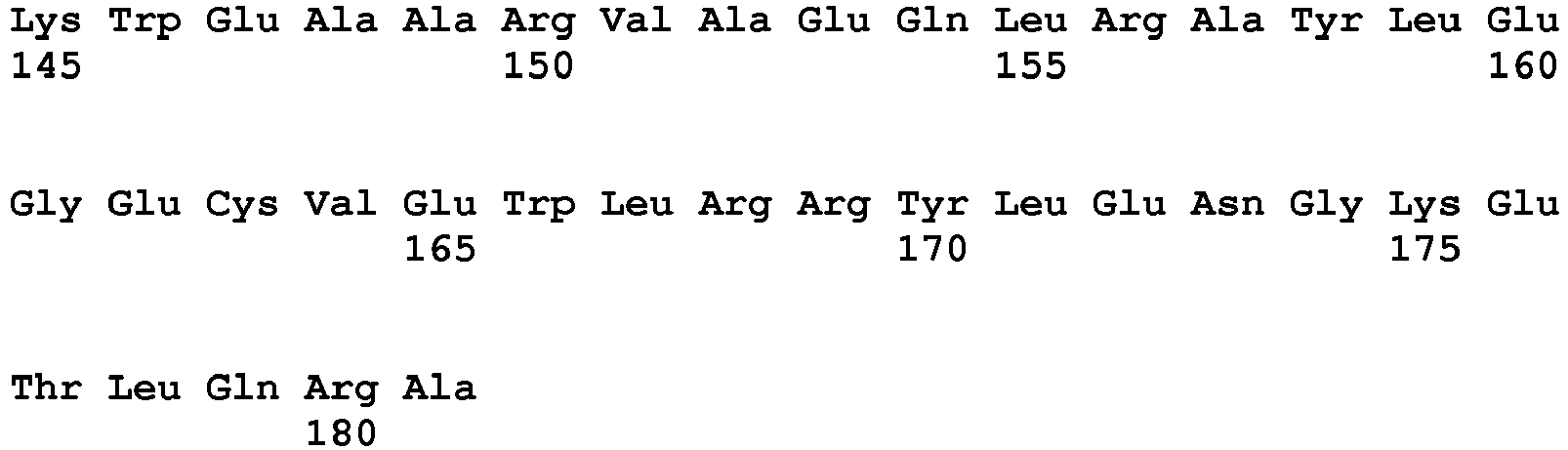
- <210> 173
<211> 10
<212> PRT
<213> Artificial Sequence - <220>
<223> Linker sequence - <400> 173

- <210> 174
<211> 9
<212> PRT
<213> Artificial Sequence - <220>
<223> influenza nucleoprotein NP383-391 - <400> 174

- <210> 175
<211> 9
<212> PRT
<213> Artificial Sequence - <220>
<223> EBV EBNA3C epitope - <400> 175

- <210> 176
<211> 9
<212> PRT
<213> Artificial Sequence - <220>
<223> EBV EBNA3C epitope - <400> 176

Claims (13)
- A HLA-B27 fusion protein homodimer for use in the treatment or prevention of cancer, wherein said homodimer comprises, or consists of, a first and a second monomer, and each monomer comprises independently of the other monomer:i. a HLA-B27 heavy chain, andii. an Fc fragment.
- The HLA-B27 fusion protein homodimer for use in the treatment or prevention of cancer according to claim 1, wherein the first and the second monomer are the same.
- The HLA-B27 fusion protein homodimer for use in the treatment or prevention of cancer according to any one of claims 1 or 2, wherein the monomer additionally comprises a peptide epitope fragment.
- The HLA-B27 fusion protein homodimer for use in the treatment or prevention of cancer according to any one of the preceding claims, wherein the HLA-B27 chain only consists of the HLA-B27 alpha 1, 2 and 3 domains.
- The HLA-B27 fusion protein homodimer for use in the treatment or prevention of cancer according to any one of the preceding claims, wherein the HLA-B27 chain comprises the transmembrane domain and does not comprise the intracellular domain.
- The HLA-B27 fusion protein homodimer for use in the treatment or prevention of cancer according to any one of the preceding claims, wherein the HLA-B27 chain has ≥ 70%, ≥ 80%, ≥ 85%, ≥ 90%, ≥ 92%, ≥ 93%, ≥ 94%, ≥ 95%, ≥ 96%, ≥ 97% or ≥ 98%, or 100%, sequence identity compared to any one of the sequences identified by SEQ ID NO consecutively numbered SEQ ID NO 006 to SEQ ID NO 172.
- The HLA-B27 fusion protein homodimer for use in the treatment or prevention of cancer according to claims 1 to 6, wherein the amino acid linker comprises 1 to 50, particularly 5 to 40, more particularly 10 to 30, even more particularly 15 to 25 amino acids, linking the HLA-B27 chain to the Fc domain as one single polypeptide chain.
- A combination medicament comprisinga. a HLA-B27 fusion protein homodimer as specified in any one of claims 1 to 7, andb. a checkpoint inhibitory agent.
- The combination medicament according to claim 8, wherein said checkpoint inhibitory agent is selected from an inhibitor of CTLA4 interaction with CD80 or CD86, an inhibitor of the interaction of PD-1 with its ligand PD-L1, and a ligand TIM-3, particularly an antibody against any one of CTLA4, CD80, CD86, PD-1, PD-L1 or TIM-3, more particularly a monoclonal antibody against human CTLA4 or PD-1.
- A nucleic acid molecule for use in the treatment or prevention of cancer, wherein said nucleic acid molecule encodes a a HLA-B27 fusion protein homodimer according to any one of claims 1 to 7.
- A recombinant expression vector comprising the nucleic acid molecule of claim 10, particularly a plasmid comprising a promoter that is operable in a mammalian cell, particularly in a human cell, for use in the treatment or prevention of cancer.
- A virus comprising the nucleic acid molecule of claim 10 under control of a promoter sequence operable in a mammalian cell, particularly in a human cell, particularly an adenovirus, adeno-associated virus, a herpes virus or a lentivirus, for use in the treatment or prevention of cancer.
- An in vitro genetically modified host cell comprising a nucleic acid molecule encoding a HLA-B27 fusion protein homodimer according to any one of claims 1 to 7.
Applications Claiming Priority (2)
| Application Number | Priority Date | Filing Date | Title |
|---|---|---|---|
| EP15153863 | 2015-02-04 | ||
| PCT/EP2016/052317 WO2016124661A1 (en) | 2015-02-04 | 2016-02-03 | Use of hla-b27 homodimers for cancer treatment |
Publications (2)
| Publication Number | Publication Date |
|---|---|
| EP3253407A1 EP3253407A1 (en) | 2017-12-13 |
| EP3253407B1 true EP3253407B1 (en) | 2020-04-22 |
Family
ID=52544276
Family Applications (1)
| Application Number | Title | Priority Date | Filing Date |
|---|---|---|---|
| EP16703507.0A Active EP3253407B1 (en) | 2015-02-04 | 2016-02-03 | Use of hla-b27 homodimers for cancer treatment |
Country Status (9)
| Country | Link |
|---|---|
| US (1) | US11484572B2 (en) |
| EP (1) | EP3253407B1 (en) |
| JP (1) | JP6792559B2 (en) |
| CN (1) | CN107207622B (en) |
| AU (1) | AU2016214439B2 (en) |
| CA (1) | CA2973641A1 (en) |
| DK (1) | DK3253407T3 (en) |
| ES (1) | ES2807424T3 (en) |
| WO (1) | WO2016124661A1 (en) |
Families Citing this family (7)
| Publication number | Priority date | Publication date | Assignee | Title |
|---|---|---|---|---|
| EP3426681B1 (en) | 2016-03-08 | 2020-08-26 | Universität Zürich | Hla-b57 open conformers |
| EP3496749B9 (en) | 2016-08-10 | 2023-10-04 | Universität Zürich | Mhc class ia open conformers |
| CN109721657B (en) * | 2017-10-27 | 2021-11-02 | 北京比洋生物技术有限公司 | Fusion protein for blocking PD-1/PD-L1 signal transduction pathway and activating T cells and application thereof |
| BR112024002196A2 (en) | 2021-08-05 | 2024-04-30 | Immunos Therapeutics Ag | HLA-B57 MODIFIED WITH INCREASED EXPRESSION LEVELS |
| IL310617A (en) | 2021-08-05 | 2024-04-01 | Immunos Therapeutics Ag | Combination medicaments comprising hla fusion proteins |
| EP4130029A1 (en) * | 2021-08-05 | 2023-02-08 | ImmunOs Therapeutics AG | Pharmaceutical compositions comprising hla fusion proteins |
| AU2024217729A1 (en) | 2023-02-08 | 2025-08-21 | Immunos Therapeutics Ag | FUSION PROTEINS OF ß2 MICROGLOBULIN, HLA HEAVY CHAIN POLYPEPTIDES, AND INHIBITOR OF CD47-SIRPA |
Family Cites Families (9)
| Publication number | Priority date | Publication date | Assignee | Title |
|---|---|---|---|---|
| GB9810099D0 (en) * | 1998-05-11 | 1998-07-08 | Isis Innovation | Novel molecule and diagnostic method |
| WO2005005631A1 (en) * | 2003-07-11 | 2005-01-20 | Dainippon Sumitomo Pharma Co., Ltd. | Hla-a24 binding cancer antigen peptide derived from ribin |
| WO2007011044A1 (en) * | 2005-07-15 | 2007-01-25 | Kyushu University, National University Corporation | Pharmaceutical composition comprising disulfide-linked hla-g dimer and process for production of disulfide-linked hla-g dimer |
| JP4113567B2 (en) * | 2005-12-14 | 2008-07-09 | 株式会社Jclバイオアッセイ | Treatment for high-grade breast cancer |
| US8168586B1 (en) * | 2007-11-21 | 2012-05-01 | Celera Corporation | Cancer targets and uses thereof |
| GB0821806D0 (en) * | 2008-11-28 | 2009-01-07 | Circassia Ltd | Compositions with reduced dimer formation |
| SI2519543T1 (en) * | 2009-12-29 | 2016-08-31 | Emergent Product Development Seattle, Llc | Heterodimer binding proteins and uses thereof |
| US20130315933A1 (en) * | 2010-10-06 | 2013-11-28 | Christoph Renner | Antibodies Directed Against HLA-B27 Homodimers and Methods and Uses Thereof in Diagnosis and Therapy |
| TWI619729B (en) * | 2012-04-02 | 2018-04-01 | 再生元醫藥公司 | Anti-hla-b*27 antibodies and uses thereof |
-
2016
- 2016-02-03 CA CA2973641A patent/CA2973641A1/en active Pending
- 2016-02-03 CN CN201680007657.8A patent/CN107207622B/en active Active
- 2016-02-03 EP EP16703507.0A patent/EP3253407B1/en active Active
- 2016-02-03 WO PCT/EP2016/052317 patent/WO2016124661A1/en not_active Ceased
- 2016-02-03 JP JP2017540566A patent/JP6792559B2/en active Active
- 2016-02-03 AU AU2016214439A patent/AU2016214439B2/en active Active
- 2016-02-03 ES ES16703507T patent/ES2807424T3/en active Active
- 2016-02-03 DK DK16703507.0T patent/DK3253407T3/en active
-
2017
- 2017-08-04 US US15/668,705 patent/US11484572B2/en active Active
Non-Patent Citations (1)
| Title |
|---|
| None * |
Also Published As
| Publication number | Publication date |
|---|---|
| US11484572B2 (en) | 2022-11-01 |
| EP3253407A1 (en) | 2017-12-13 |
| CN107207622A (en) | 2017-09-26 |
| AU2016214439A1 (en) | 2017-08-17 |
| ES2807424T3 (en) | 2021-02-23 |
| CA2973641A1 (en) | 2016-08-11 |
| JP2018512113A (en) | 2018-05-17 |
| JP6792559B2 (en) | 2020-11-25 |
| US20180028606A1 (en) | 2018-02-01 |
| WO2016124661A1 (en) | 2016-08-11 |
| DK3253407T3 (en) | 2020-06-29 |
| AU2016214439B2 (en) | 2019-05-02 |
| CN107207622B (en) | 2021-09-28 |
Similar Documents
| Publication | Publication Date | Title |
|---|---|---|
| US11484572B2 (en) | Use of HLA-B27 homodimers for cancer treatment | |
| US12383602B2 (en) | HLA-B57 open conformers | |
| US11807676B2 (en) | MHC class Ia open conformers | |
| KR102079480B1 (en) | Method for activating helper t cell |
Legal Events
| Date | Code | Title | Description |
|---|---|---|---|
| STAA | Information on the status of an ep patent application or granted ep patent |
Free format text: STATUS: THE INTERNATIONAL PUBLICATION HAS BEEN MADE |
|
| PUAI | Public reference made under article 153(3) epc to a published international application that has entered the european phase |
Free format text: ORIGINAL CODE: 0009012 |
|
| STAA | Information on the status of an ep patent application or granted ep patent |
Free format text: STATUS: REQUEST FOR EXAMINATION WAS MADE |
|
| 17P | Request for examination filed |
Effective date: 20170817 |
|
| AK | Designated contracting states |
Kind code of ref document: A1 Designated state(s): AL AT BE BG CH CY CZ DE DK EE ES FI FR GB GR HR HU IE IS IT LI LT LU LV MC MK MT NL NO PL PT RO RS SE SI SK SM TR |
|
| AX | Request for extension of the european patent |
Extension state: BA ME |
|
| RIN1 | Information on inventor provided before grant (corrected) |
Inventor name: PETRAUSCH, ULF Inventor name: RENNER, CHRISTOPH Inventor name: MARROQUIN BELAUNZARAN, OSIRIS |
|
| DAV | Request for validation of the european patent (deleted) | ||
| DAX | Request for extension of the european patent (deleted) | ||
| STAA | Information on the status of an ep patent application or granted ep patent |
Free format text: STATUS: EXAMINATION IS IN PROGRESS |
|
| 17Q | First examination report despatched |
Effective date: 20180914 |
|
| GRAP | Despatch of communication of intention to grant a patent |
Free format text: ORIGINAL CODE: EPIDOSNIGR1 |
|
| STAA | Information on the status of an ep patent application or granted ep patent |
Free format text: STATUS: GRANT OF PATENT IS INTENDED |
|
| RAP1 | Party data changed (applicant data changed or rights of an application transferred) |
Owner name: UNIVERSITAET ZUERICH Owner name: UNIVERSITAET BASEL |
|
| INTG | Intention to grant announced |
Effective date: 20191021 |
|
| GRAS | Grant fee paid |
Free format text: ORIGINAL CODE: EPIDOSNIGR3 |
|
| GRAJ | Information related to disapproval of communication of intention to grant by the applicant or resumption of examination proceedings by the epo deleted |
Free format text: ORIGINAL CODE: EPIDOSDIGR1 |
|
| GRAL | Information related to payment of fee for publishing/printing deleted |
Free format text: ORIGINAL CODE: EPIDOSDIGR3 |
|
| STAA | Information on the status of an ep patent application or granted ep patent |
Free format text: STATUS: EXAMINATION IS IN PROGRESS |
|
| GRAR | Information related to intention to grant a patent recorded |
Free format text: ORIGINAL CODE: EPIDOSNIGR71 |
|
| STAA | Information on the status of an ep patent application or granted ep patent |
Free format text: STATUS: GRANT OF PATENT IS INTENDED |
|
| GRAA | (expected) grant |
Free format text: ORIGINAL CODE: 0009210 |
|
| STAA | Information on the status of an ep patent application or granted ep patent |
Free format text: STATUS: THE PATENT HAS BEEN GRANTED |
|
| INTC | Intention to grant announced (deleted) | ||
| INTG | Intention to grant announced |
Effective date: 20200311 |
|
| AK | Designated contracting states |
Kind code of ref document: B1 Designated state(s): AL AT BE BG CH CY CZ DE DK EE ES FI FR GB GR HR HU IE IS IT LI LT LU LV MC MK MT NL NO PL PT RO RS SE SI SK SM TR |
|
| REG | Reference to a national code |
Ref country code: CH Ref legal event code: EP |
|
| REG | Reference to a national code |
Ref country code: IE Ref legal event code: FG4D |
|
| REG | Reference to a national code |
Ref country code: DE Ref legal event code: R096 Ref document number: 602016034464 Country of ref document: DE |
|
| REG | Reference to a national code |
Ref country code: AT Ref legal event code: REF Ref document number: 1259200 Country of ref document: AT Kind code of ref document: T Effective date: 20200515 |
|
| REG | Reference to a national code |
Ref country code: DK Ref legal event code: T3 Effective date: 20200625 |
|
| REG | Reference to a national code |
Ref country code: SE Ref legal event code: TRGR |
|
| REG | Reference to a national code |
Ref country code: NL Ref legal event code: FP |
|
| REG | Reference to a national code |
Ref country code: LT Ref legal event code: MG4D |
|
| PG25 | Lapsed in a contracting state [announced via postgrant information from national office to epo] |
Ref country code: NO Free format text: LAPSE BECAUSE OF FAILURE TO SUBMIT A TRANSLATION OF THE DESCRIPTION OR TO PAY THE FEE WITHIN THE PRESCRIBED TIME-LIMIT Effective date: 20200722 Ref country code: FI Free format text: LAPSE BECAUSE OF FAILURE TO SUBMIT A TRANSLATION OF THE DESCRIPTION OR TO PAY THE FEE WITHIN THE PRESCRIBED TIME-LIMIT Effective date: 20200422 Ref country code: GR Free format text: LAPSE BECAUSE OF FAILURE TO SUBMIT A TRANSLATION OF THE DESCRIPTION OR TO PAY THE FEE WITHIN THE PRESCRIBED TIME-LIMIT Effective date: 20200723 Ref country code: LT Free format text: LAPSE BECAUSE OF FAILURE TO SUBMIT A TRANSLATION OF THE DESCRIPTION OR TO PAY THE FEE WITHIN THE PRESCRIBED TIME-LIMIT Effective date: 20200422 Ref country code: PT Free format text: LAPSE BECAUSE OF FAILURE TO SUBMIT A TRANSLATION OF THE DESCRIPTION OR TO PAY THE FEE WITHIN THE PRESCRIBED TIME-LIMIT Effective date: 20200824 Ref country code: IS Free format text: LAPSE BECAUSE OF FAILURE TO SUBMIT A TRANSLATION OF THE DESCRIPTION OR TO PAY THE FEE WITHIN THE PRESCRIBED TIME-LIMIT Effective date: 20200822 |
|
| PG25 | Lapsed in a contracting state [announced via postgrant information from national office to epo] |
Ref country code: BG Free format text: LAPSE BECAUSE OF FAILURE TO SUBMIT A TRANSLATION OF THE DESCRIPTION OR TO PAY THE FEE WITHIN THE PRESCRIBED TIME-LIMIT Effective date: 20200722 Ref country code: LV Free format text: LAPSE BECAUSE OF FAILURE TO SUBMIT A TRANSLATION OF THE DESCRIPTION OR TO PAY THE FEE WITHIN THE PRESCRIBED TIME-LIMIT Effective date: 20200422 Ref country code: RS Free format text: LAPSE BECAUSE OF FAILURE TO SUBMIT A TRANSLATION OF THE DESCRIPTION OR TO PAY THE FEE WITHIN THE PRESCRIBED TIME-LIMIT Effective date: 20200422 Ref country code: HR Free format text: LAPSE BECAUSE OF FAILURE TO SUBMIT A TRANSLATION OF THE DESCRIPTION OR TO PAY THE FEE WITHIN THE PRESCRIBED TIME-LIMIT Effective date: 20200422 |
|
| PG25 | Lapsed in a contracting state [announced via postgrant information from national office to epo] |
Ref country code: AL Free format text: LAPSE BECAUSE OF FAILURE TO SUBMIT A TRANSLATION OF THE DESCRIPTION OR TO PAY THE FEE WITHIN THE PRESCRIBED TIME-LIMIT Effective date: 20200422 |
|
| REG | Reference to a national code |
Ref country code: DE Ref legal event code: R097 Ref document number: 602016034464 Country of ref document: DE |
|
| PG25 | Lapsed in a contracting state [announced via postgrant information from national office to epo] |
Ref country code: EE Free format text: LAPSE BECAUSE OF FAILURE TO SUBMIT A TRANSLATION OF THE DESCRIPTION OR TO PAY THE FEE WITHIN THE PRESCRIBED TIME-LIMIT Effective date: 20200422 Ref country code: RO Free format text: LAPSE BECAUSE OF FAILURE TO SUBMIT A TRANSLATION OF THE DESCRIPTION OR TO PAY THE FEE WITHIN THE PRESCRIBED TIME-LIMIT Effective date: 20200422 Ref country code: CZ Free format text: LAPSE BECAUSE OF FAILURE TO SUBMIT A TRANSLATION OF THE DESCRIPTION OR TO PAY THE FEE WITHIN THE PRESCRIBED TIME-LIMIT Effective date: 20200422 Ref country code: SM Free format text: LAPSE BECAUSE OF FAILURE TO SUBMIT A TRANSLATION OF THE DESCRIPTION OR TO PAY THE FEE WITHIN THE PRESCRIBED TIME-LIMIT Effective date: 20200422 |
|
| REG | Reference to a national code |
Ref country code: ES Ref legal event code: FG2A Ref document number: 2807424 Country of ref document: ES Kind code of ref document: T3 Effective date: 20210223 |
|
| PG25 | Lapsed in a contracting state [announced via postgrant information from national office to epo] |
Ref country code: SK Free format text: LAPSE BECAUSE OF FAILURE TO SUBMIT A TRANSLATION OF THE DESCRIPTION OR TO PAY THE FEE WITHIN THE PRESCRIBED TIME-LIMIT Effective date: 20200422 Ref country code: PL Free format text: LAPSE BECAUSE OF FAILURE TO SUBMIT A TRANSLATION OF THE DESCRIPTION OR TO PAY THE FEE WITHIN THE PRESCRIBED TIME-LIMIT Effective date: 20200422 |
|
| PLBE | No opposition filed within time limit |
Free format text: ORIGINAL CODE: 0009261 |
|
| STAA | Information on the status of an ep patent application or granted ep patent |
Free format text: STATUS: NO OPPOSITION FILED WITHIN TIME LIMIT |
|
| 26N | No opposition filed |
Effective date: 20210125 |
|
| PG25 | Lapsed in a contracting state [announced via postgrant information from national office to epo] |
Ref country code: SI Free format text: LAPSE BECAUSE OF FAILURE TO SUBMIT A TRANSLATION OF THE DESCRIPTION OR TO PAY THE FEE WITHIN THE PRESCRIBED TIME-LIMIT Effective date: 20200422 |
|
| PG25 | Lapsed in a contracting state [announced via postgrant information from national office to epo] |
Ref country code: MC Free format text: LAPSE BECAUSE OF FAILURE TO SUBMIT A TRANSLATION OF THE DESCRIPTION OR TO PAY THE FEE WITHIN THE PRESCRIBED TIME-LIMIT Effective date: 20200422 |
|
| REG | Reference to a national code |
Ref country code: AT Ref legal event code: UEP Ref document number: 1259200 Country of ref document: AT Kind code of ref document: T Effective date: 20200422 |
|
| PG25 | Lapsed in a contracting state [announced via postgrant information from national office to epo] |
Ref country code: CY Free format text: LAPSE BECAUSE OF FAILURE TO SUBMIT A TRANSLATION OF THE DESCRIPTION OR TO PAY THE FEE WITHIN THE PRESCRIBED TIME-LIMIT Effective date: 20200422 |
|
| PG25 | Lapsed in a contracting state [announced via postgrant information from national office to epo] |
Ref country code: HU Free format text: LAPSE BECAUSE OF FAILURE TO SUBMIT A TRANSLATION OF THE DESCRIPTION OR TO PAY THE FEE WITHIN THE PRESCRIBED TIME-LIMIT; INVALID AB INITIO Effective date: 20160203 |
|
| PG25 | Lapsed in a contracting state [announced via postgrant information from national office to epo] |
Ref country code: MK Free format text: LAPSE BECAUSE OF FAILURE TO SUBMIT A TRANSLATION OF THE DESCRIPTION OR TO PAY THE FEE WITHIN THE PRESCRIBED TIME-LIMIT Effective date: 20200422 |
|
| PG25 | Lapsed in a contracting state [announced via postgrant information from national office to epo] |
Ref country code: TR Free format text: LAPSE BECAUSE OF FAILURE TO SUBMIT A TRANSLATION OF THE DESCRIPTION OR TO PAY THE FEE WITHIN THE PRESCRIBED TIME-LIMIT Effective date: 20200422 |
|
| PG25 | Lapsed in a contracting state [announced via postgrant information from national office to epo] |
Ref country code: MT Free format text: LAPSE BECAUSE OF FAILURE TO SUBMIT A TRANSLATION OF THE DESCRIPTION OR TO PAY THE FEE WITHIN THE PRESCRIBED TIME-LIMIT Effective date: 20200422 |
|
| PGFP | Annual fee paid to national office [announced via postgrant information from national office to epo] |
Ref country code: NL Payment date: 20250220 Year of fee payment: 10 Ref country code: LU Payment date: 20250218 Year of fee payment: 10 |
|
| PGFP | Annual fee paid to national office [announced via postgrant information from national office to epo] |
Ref country code: DE Payment date: 20250218 Year of fee payment: 10 |
|
| PGFP | Annual fee paid to national office [announced via postgrant information from national office to epo] |
Ref country code: DK Payment date: 20250219 Year of fee payment: 10 |
|
| PGFP | Annual fee paid to national office [announced via postgrant information from national office to epo] |
Ref country code: ES Payment date: 20250318 Year of fee payment: 10 |
|
| PGFP | Annual fee paid to national office [announced via postgrant information from national office to epo] |
Ref country code: IE Payment date: 20250218 Year of fee payment: 10 Ref country code: SE Payment date: 20250219 Year of fee payment: 10 |
|
| PGFP | Annual fee paid to national office [announced via postgrant information from national office to epo] |
Ref country code: BE Payment date: 20250218 Year of fee payment: 10 Ref country code: CH Payment date: 20250301 Year of fee payment: 10 Ref country code: AT Payment date: 20250217 Year of fee payment: 10 |
|
| PGFP | Annual fee paid to national office [announced via postgrant information from national office to epo] |
Ref country code: FR Payment date: 20250220 Year of fee payment: 10 |
|
| PGFP | Annual fee paid to national office [announced via postgrant information from national office to epo] |
Ref country code: GB Payment date: 20250220 Year of fee payment: 10 Ref country code: IT Payment date: 20250228 Year of fee payment: 10 |