EP3253144B1 - Pucch methods and apparatuses of enhanced ca in ue and base station - Google Patents
Pucch methods and apparatuses of enhanced ca in ue and base station Download PDFInfo
- Publication number
- EP3253144B1 EP3253144B1 EP15879750.6A EP15879750A EP3253144B1 EP 3253144 B1 EP3253144 B1 EP 3253144B1 EP 15879750 A EP15879750 A EP 15879750A EP 3253144 B1 EP3253144 B1 EP 3253144B1
- Authority
- EP
- European Patent Office
- Prior art keywords
- serving cell
- target
- pucch
- indication information
- format
- Prior art date
- Legal status (The legal status is an assumption and is not a legal conclusion. Google has not performed a legal analysis and makes no representation as to the accuracy of the status listed.)
- Active
Links
Images


Classifications
-
- H—ELECTRICITY
- H04—ELECTRIC COMMUNICATION TECHNIQUE
- H04W—WIRELESS COMMUNICATION NETWORKS
- H04W72/00—Local resource management
- H04W72/20—Control channels or signalling for resource management
- H04W72/21—Control channels or signalling for resource management in the uplink direction of a wireless link, i.e. towards the network
-
- H—ELECTRICITY
- H04—ELECTRIC COMMUNICATION TECHNIQUE
- H04B—TRANSMISSION
- H04B7/00—Radio transmission systems, i.e. using radiation field
- H04B7/02—Diversity systems; Multi-antenna system, i.e. transmission or reception using multiple antennas
- H04B7/04—Diversity systems; Multi-antenna system, i.e. transmission or reception using multiple antennas using two or more spaced independent antennas
- H04B7/06—Diversity systems; Multi-antenna system, i.e. transmission or reception using multiple antennas using two or more spaced independent antennas at the transmitting station
- H04B7/0613—Diversity systems; Multi-antenna system, i.e. transmission or reception using multiple antennas using two or more spaced independent antennas at the transmitting station using simultaneous transmission
- H04B7/0615—Diversity systems; Multi-antenna system, i.e. transmission or reception using multiple antennas using two or more spaced independent antennas at the transmitting station using simultaneous transmission of weighted versions of same signal
- H04B7/0619—Diversity systems; Multi-antenna system, i.e. transmission or reception using multiple antennas using two or more spaced independent antennas at the transmitting station using simultaneous transmission of weighted versions of same signal using feedback from receiving side
- H04B7/0621—Feedback content
- H04B7/0626—Channel coefficients, e.g. channel state information [CSI]
-
- H—ELECTRICITY
- H04—ELECTRIC COMMUNICATION TECHNIQUE
- H04L—TRANSMISSION OF DIGITAL INFORMATION, e.g. TELEGRAPHIC COMMUNICATION
- H04L1/00—Arrangements for detecting or preventing errors in the information received
- H04L1/0001—Systems modifying transmission characteristics according to link quality, e.g. power backoff
- H04L1/0023—Systems modifying transmission characteristics according to link quality, e.g. power backoff characterised by the signalling
- H04L1/0026—Transmission of channel quality indication
-
- H—ELECTRICITY
- H04—ELECTRIC COMMUNICATION TECHNIQUE
- H04L—TRANSMISSION OF DIGITAL INFORMATION, e.g. TELEGRAPHIC COMMUNICATION
- H04L1/00—Arrangements for detecting or preventing errors in the information received
- H04L1/12—Arrangements for detecting or preventing errors in the information received by using return channel
- H04L1/16—Arrangements for detecting or preventing errors in the information received by using return channel in which the return channel carries supervisory signals, e.g. repetition request signals
- H04L1/1607—Details of the supervisory signal
- H04L1/1671—Details of the supervisory signal the supervisory signal being transmitted together with control information
-
- H—ELECTRICITY
- H04—ELECTRIC COMMUNICATION TECHNIQUE
- H04L—TRANSMISSION OF DIGITAL INFORMATION, e.g. TELEGRAPHIC COMMUNICATION
- H04L1/00—Arrangements for detecting or preventing errors in the information received
- H04L1/12—Arrangements for detecting or preventing errors in the information received by using return channel
- H04L1/16—Arrangements for detecting or preventing errors in the information received by using return channel in which the return channel carries supervisory signals, e.g. repetition request signals
- H04L1/18—Automatic repetition systems, e.g. Van Duuren systems
- H04L1/1812—Hybrid protocols; Hybrid automatic repeat request [HARQ]
-
- H—ELECTRICITY
- H04—ELECTRIC COMMUNICATION TECHNIQUE
- H04L—TRANSMISSION OF DIGITAL INFORMATION, e.g. TELEGRAPHIC COMMUNICATION
- H04L1/00—Arrangements for detecting or preventing errors in the information received
- H04L1/12—Arrangements for detecting or preventing errors in the information received by using return channel
- H04L1/16—Arrangements for detecting or preventing errors in the information received by using return channel in which the return channel carries supervisory signals, e.g. repetition request signals
- H04L1/18—Automatic repetition systems, e.g. Van Duuren systems
- H04L1/1829—Arrangements specially adapted for the receiver end
- H04L1/1861—Physical mapping arrangements
-
- H—ELECTRICITY
- H04—ELECTRIC COMMUNICATION TECHNIQUE
- H04L—TRANSMISSION OF DIGITAL INFORMATION, e.g. TELEGRAPHIC COMMUNICATION
- H04L5/00—Arrangements affording multiple use of the transmission path
- H04L5/0001—Arrangements for dividing the transmission path
- H04L5/0003—Two-dimensional division
- H04L5/0005—Time-frequency
- H04L5/0007—Time-frequency the frequencies being orthogonal, e.g. OFDM(A) or DMT
- H04L5/001—Time-frequency the frequencies being orthogonal, e.g. OFDM(A) or DMT the frequencies being arranged in component carriers
-
- H—ELECTRICITY
- H04—ELECTRIC COMMUNICATION TECHNIQUE
- H04L—TRANSMISSION OF DIGITAL INFORMATION, e.g. TELEGRAPHIC COMMUNICATION
- H04L5/00—Arrangements affording multiple use of the transmission path
- H04L5/003—Arrangements for allocating sub-channels of the transmission path
- H04L5/0053—Allocation of signalling, i.e. of overhead other than pilot signals
-
- H—ELECTRICITY
- H04—ELECTRIC COMMUNICATION TECHNIQUE
- H04L—TRANSMISSION OF DIGITAL INFORMATION, e.g. TELEGRAPHIC COMMUNICATION
- H04L5/00—Arrangements affording multiple use of the transmission path
- H04L5/003—Arrangements for allocating sub-channels of the transmission path
- H04L5/0078—Timing of allocation
- H04L5/0082—Timing of allocation at predetermined intervals
-
- H—ELECTRICITY
- H04—ELECTRIC COMMUNICATION TECHNIQUE
- H04L—TRANSMISSION OF DIGITAL INFORMATION, e.g. TELEGRAPHIC COMMUNICATION
- H04L5/00—Arrangements affording multiple use of the transmission path
- H04L5/0091—Signalling for the administration of the divided path, e.g. signalling of configuration information
- H04L5/0094—Indication of how sub-channels of the path are allocated
-
- H—ELECTRICITY
- H04—ELECTRIC COMMUNICATION TECHNIQUE
- H04W—WIRELESS COMMUNICATION NETWORKS
- H04W72/00—Local resource management
- H04W72/12—Wireless traffic scheduling
-
- H—ELECTRICITY
- H04—ELECTRIC COMMUNICATION TECHNIQUE
- H04B—TRANSMISSION
- H04B7/00—Radio transmission systems, i.e. using radiation field
- H04B7/02—Diversity systems; Multi-antenna system, i.e. transmission or reception using multiple antennas
- H04B7/04—Diversity systems; Multi-antenna system, i.e. transmission or reception using multiple antennas using two or more spaced independent antennas
- H04B7/06—Diversity systems; Multi-antenna system, i.e. transmission or reception using multiple antennas using two or more spaced independent antennas at the transmitting station
- H04B7/0613—Diversity systems; Multi-antenna system, i.e. transmission or reception using multiple antennas using two or more spaced independent antennas at the transmitting station using simultaneous transmission
- H04B7/0615—Diversity systems; Multi-antenna system, i.e. transmission or reception using multiple antennas using two or more spaced independent antennas at the transmitting station using simultaneous transmission of weighted versions of same signal
- H04B7/0619—Diversity systems; Multi-antenna system, i.e. transmission or reception using multiple antennas using two or more spaced independent antennas at the transmitting station using simultaneous transmission of weighted versions of same signal using feedback from receiving side
- H04B7/0636—Feedback format
- H04B7/0639—Using selective indices, e.g. of a codebook, e.g. pre-distortion matrix index [PMI] or for beam selection
-
- H—ELECTRICITY
- H04—ELECTRIC COMMUNICATION TECHNIQUE
- H04W—WIRELESS COMMUNICATION NETWORKS
- H04W88/00—Devices specially adapted for wireless communication networks, e.g. terminals, base stations or access point devices
- H04W88/02—Terminal devices
-
- H—ELECTRICITY
- H04—ELECTRIC COMMUNICATION TECHNIQUE
- H04W—WIRELESS COMMUNICATION NETWORKS
- H04W88/00—Devices specially adapted for wireless communication networks, e.g. terminals, base stations or access point devices
- H04W88/08—Access point devices
Definitions
- the present invention is related to methods and corresponding User Equipment and Base Station of an uplink power control for dual connection communication in mobile communication technical field, and more particular to a scheme for an uplink power control in a scenario of Carrier Aggregation (CA) enhancement in Long Term Evolution (LTE) system.
- CA Carrier Aggregation
- LTE Long Term Evolution
- the CA is introduced as one of the key techniques.
- the main idea is that user equipment (UE) may work on a plurality of carriers at the same time, and the CA may improve peak value rate of a single UE.
- the UE is configured with one Pcell (primary cell) and one or more Scells (secondary cell).
- Pcell primary cell
- Scells secondary cell.
- one serving cell includes at least one downlink carrier of ⁇ one downlink carrier, one uplink carrier ⁇ .
- TDD time duplex division
- one serving cell includes one carrier.
- the UE supporting the CA may maximally be configured with five serving cells, and the UE may only transmit the PUCCH information on the Pcell.
- the CA supports a cross carrier scheduling, i.e. the base station transmits a downlink signaling on a first carrier to schedule a wireless signal transmission on the second carrier.
- the base station uses a CIF (carrier indicator field) in the DCI (downlink control information) to indicate a target carrier to be scheduled.
- the CIF is indicated by three bits located on the header of the DCI.
- a new research topic (RP-142286) is adopted in the 66th plenary of 3GPP RAN (radio access network), i.e. CA enhancement greater than five carriers - the topic is abbreviated as eCA in the present invention.
- CA enhancement greater than five carriers - the topic is abbreviated as eCA in the present invention.
- eCA a maximum number of the supported serving cells is raised to 32.
- the user equipment may only transmit PUCCH (Physical Uplink Control Channel) on the Pcell.
- PUCCH Physical Uplink Control Channel
- SR Service Request
- HARQ Hybrid Automatic Repeat Request
- CSI includes one or more of ⁇ RI (Rank Indicator), PTI (Precoding Type Indicator), PMI (Precoding Matrix Indicator), CQI (Channel Quality Indicator) ⁇ .
- WO2013/178187 discloses a method and an apparatus for processing information.
- a UE receives upper-level signaling from a base station, wherein the upper-level signaling carries an uplink channel resource configured by the base station for the UE, and the uplink channel resource is used for simultaneously transmitting periodic channel state information P-CSI of a plurality of serving cells corresponding to the UE, or is used for simultaneously transmitting hybrid automatic repeat request acknowledgments HARQ-ACKs of the plurality of serving cells corresponding to the UE and the P-CSI of the plurality of serving cells; and the UE simultaneously transmits the P-CSI of the plurality of serving cells in a preset uplink sub-frame on the uplink channel resource according to the high-level signaling, or simultaneously transmits the HARQ-ACKs of the plurality of serving cells and the P-CSI of the plurality of serving cells.
- the technical solution provided by the invention of WO 2013/178187 implements simultaneous transmission of acknowledgments of a plurality of downlink component carriers and channel state information of a plurality of serving cells.
- the document by Ericsson, "CSI reporting for TDD-FDD CA", 3GPP DRAFT, Rl-135652, vol. RAN WG1 defines a format, PUCCH format 3, to allow simultaneous feedback of multi-cell HARQ-ACK, scheduling request (if applicable) and periodic CSI report.
- said format enables multiplexing multiple-cell HARQ-ACK with SR, Primary Cell (PCell) HARQ-ACK and SR or P-CSI and SR.
- SR is fixedly transmitted on a primary serving cell
- the base station configures PUCCH resource for transmitting SR through a high layer signaling.
- the inventor researches and discovers that the above intuitive solution may result in the following problem.
- SR conflicts with CSI on the primary serving cell
- the UE may only drop CSI transmission on the primary serving cell.
- the base station pre-reserves PUCCH for transmitting SR on multiple serving cells.
- the above improved solution may incur the waste of air interface resource (the air interface of multiple bits is pre-reserved for SR information of one bit).
- the inventor further researches and discovers that if the UE is configured with PUCCH of a target format on a given sub frame of the secondary serving cell, the UE transmits SR on the secondary serving cell, so as to avoid dropping the CSI transmission, wherein SR conflicts with CSI on the given sub frame, and the target format may simultaneously accommodate PUCCH format of HARQ ACK and SR.
- the present invention discloses a method in a UE, a method in a base station and the corresponding UE and base station, as defined in the appended independent claims 1, 5, 8 and 12.
- Non-claimed Embodiment I illustrates a flowchart of transmitting SR indication, as shown in FIG.1 .
- a base station N1 is a maintaining base station of a serving cell of a UE U2.
- the method involves transmitting a first high layer signaling, wherein the first high layer signaling indicates a reserved SR resource of the UE U2 on a first serving cell.
- the method involves determining a target serving cell of the UE U2 for transmitting SR indication information on a first sub frame, wherein the target serving cell is one of K candidate serving cells.
- the method involves receiving the SR indication information transmitted by the UE U2 on the first sub frame of the target serving cell.
- step S21 the method involves receiving a first high layer signaling.
- step S22 the method involves determining a target serving cell for transmitting SR indication information on a first sub frame.
- step S23 the method involves transmitting the SR indication information on the first sub frame of the target serving cell.
- the first serving cell is one of K candidate serving cells
- the reserved SR resource is PUCCH resource
- K is a positive integer
- the SR indication information indicates a positive SR or a negative SR.
- the first high layer signaling is RRC signaling.
- the first high layer signal is SchedulingRequestConfigIE
- the first serving cell is fixed as a primary serving cell.
- the reserved SR resource is configured by sr-PUCCH-ResourceIndex in the first high layer signaling or by ⁇ sr-PUCCH-Resourcelndex, sr-PUCCH-ResourceIndexP1 (if it exists) ⁇ in the first high layer signaling.
- the first high layer signaling indicates the first serving cell
- the first high layer signaling is an improved SchedulingRequestConfigIE, i.e. one cell index IE is added based on SchedulingRequestConfigIE, and a value of the cell index IE is equal to a cell index value of the first serving cell.
- the target serving cell is the first serving cell.
- the target serving cell is the first serving cell, and the scheduled CSI is dropped.
- the target format may simultaneously transmit SR bit and PUCCH format of HARQ ACK.
- the UE U2 transmits PUCCH of target format on other serving cells except for the first serving cell in K candidate serving cells.
- the target format may simultaneously transmit SR bit and PUCCH format of HARQ ACK.
- Non-claimed Embodiment II illustrates a flowchart of determining a target serving cell, as shown in FIG. 2 .
- Embodiment II may be executed in the UE and a base station - separately correspond to the step S22 and the step S12 in Embodiment.
- step Sill the method involves determining whether the SR indication information is compatible with the scheduled CSI, i.e. determining whether the transmission of the SR indication information on the first sub frame of the first serving cell does not cause that the transmission UE of the SR indication information drops CSI transmission on the first sub frame of the first serving cell. If yes, in step S113, the method involves determining that the target serving cell for transmitting the SR indication information in the first sub frame is the first serving cell; if no, in step S112, the method involves determining whether the UE transmits PUCCH of the target format on the serving cell other than the first serving cell.
- step S113 the method involves determining the target serving cell as the first serving cell; if the determination result in the step S112 is yes, in step S114, the method involves determining the target serving cell is a serving cell other than the first serving cell.
- the first serving cell is a serving cell stayed by the reserved SR resource configured for the SR indication information.
- the target format may simultaneously transmit SR bit and PUCCH format of HARQ ACK, and the SR indication information indicates the positive SR.
- the UE transmits PUCCH of the target format on the multiple serving cells other than the first serving cell, and in the step S114, the method involves determining that the target serving cell is a serving cell corresponding to minimum serving cell index in the multiple serving cells.
- FIG. 3 is a schematic view of the SR indication information transmitted on a serving cell except a first serving cell, as shown in FIG. 3 .
- a base station N3 is a maintaining base station of a serving cell of a UE U4.
- step S41 the UE U4 transmits SR bit and HARQ ACK on PUCCH of a target format of a first sub frame of a target serving cell and transmits CSI on PUCCH of a first sub frame of a first serving cell.
- step S31 the base station N3 receives SR bit and HARQ ACK on PUCCH of a target format of a first sub frame of a target serving cell and receives CSI on PUCCH of a first sub frame of a first serving cell.
- the target serving cell is a serving cell other than the first serving cell.
- the first serving cell is a serving cell stayed by the pre- reserved SR resource configured by the base station N3 for the UE U4.
- the target format may simultaneously transmit SR bit and PUCCH format of HARQ ACK.
- the target format is PUCCH format 3.
- the target format is a new PUCCH format
- the new PUCCH format supports up to X HARQ_ACK bits and one SR bit
- X is a positive integer greater than 20.
- the base station N3 configures the target format (configured on the first serving cell or is not configured with the target format) on K-1 serving cells other than the first serving cell, and the target serving cell is a serving cell with minimum serving cell index in K-1 serving cells.
- the serving cell index is a non-negative integer less than 33.
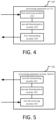
- Embodiment IV is a structure diagram illustrating a processing apparatus used in a UE, as shown in FIG. 4 .
- the processing apparatus 200 in the UE includes a first receiving module 201, a first determination module 202, and a first transmitting module 203.
- the first receiving module 201 is used for receiving a first high layer signaling, wherein the first high layer signaling indicates a reserved SR resource on a first serving cell.
- the first determination module 202 is used for determining a target serving cell for transmitting SR indication information on a first sub frame, wherein the target serving cell is one of K candidate serving cells.
- the first transmitting module 203 is used for transmitting the SR indication information on the first sub frame of the target serving cell.
- the first serving cell is one of K candidate serving cells
- the reserved SR resource is PUCCH resource
- K is a positive integer
- the SR indication information indicates a positive SR or a negative SR.
- the UE is configured with PUCCH of target format on other serving cells except for the first serving cell in K candidate serving cells.
- the target format may simultaneously transmit SR bit and PUCCH format of HARQ ACK.
- Embodiment V is a structure diagram illustrating a processing apparatus used in a base station, as shown in FIG. 5 .
- the processing apparatus 300 in the base station includes a second transmitting module 301, a second determination module 302 and a second receiving module 303.
- the second transmitting module 301 is used for transmitting a first high layer signaling, wherein the first high layer signaling indicates a reserved SR resource of a target UE on a first serving cell.
- the second determination module 302 is used for determining a target serving cell of the target UE for transmitting SR indication information on a first sub frame, wherein the target serving cell is one of K candidate serving cells.
- the second receiving module 303 is used for receiving the SR indication information transmitted by the target UE on the first sub frame of the target serving cell.
- the first serving cell is one of K candidate serving cells
- the reserved SR resource is PUCCH resource
- K is a positive integer
- the SR indication information indicates a positive SR or a negative SR.
- the first high layer signaling is RRC signaling.
- K is 3
- K candidate serving cells are separately a first serving cell, a second serving cell and a third serving cell
- the target UE is configured with PUCCH format 2 and PUCCH format 1b on the first serving cell
- the target UE transmits PUCCH format 3 on the second serving cell
- the target UE transmits a new PUCCH format on the third serving cell. If the SR indication information is compatible with a scheduled CSI, the target serving cell is one of ⁇ the second serving cell, the third serving cell ⁇ with smaller serving cell index.
- the target UE transmits HARQ ACK bit on a first sub frame of the first serving cell resulted in dropping a transmission of PUCCH format 2, the SR indication information is compatible with a scheduled CSI, and the SR indication information and the HARQ ACK bit are indicated by the PUCCH format 1b selected by channel (i.e. if it is the positive SR, the HARQ ACK is transmitted on the reserved SR resource, and if it is the negative SR, the HARQ ACK is transmitted on HARQ_ACK pre-reserved for PUCCH format 1b).
Landscapes
- Engineering & Computer Science (AREA)
- Signal Processing (AREA)
- Computer Networks & Wireless Communication (AREA)
- Quality & Reliability (AREA)
- Mobile Radio Communication Systems (AREA)
Description
- The present invention is related to methods and corresponding User Equipment and Base Station of an uplink power control for dual connection communication in mobile communication technical field, and more particular to a scheme for an uplink power control in a scenario of Carrier Aggregation (CA) enhancement in Long Term Evolution (LTE) system.
- In the traditional LTE system R (release) 10 developed by 3GPP (3rd Generation Partner Project), the CA is introduced as one of the key techniques. The main idea is that user equipment (UE) may work on a plurality of carriers at the same time, and the CA may improve peak value rate of a single UE. In LTE CA, the UE is configured with one Pcell (primary cell) and one or more Scells (secondary cell). For FDD (frequency duplex division) LTE, one serving cell includes at least one downlink carrier of {one downlink carrier, one uplink carrier}. For TDD (time duplex division) LTE, one serving cell includes one carrier. In LTE R10, the UE supporting the CA may maximally be configured with five serving cells, and the UE may only transmit the PUCCH information on the Pcell. In 3GPP R10, the CA supports a cross carrier scheduling, i.e. the base station transmits a downlink signaling on a first carrier to schedule a wireless signal transmission on the second carrier. The base station uses a CIF (carrier indicator field) in the DCI (downlink control information) to indicate a target carrier to be scheduled. The CIF is indicated by three bits located on the header of the DCI.
- A new research topic (RP-142286) is adopted in the 66th plenary of 3GPP RAN (radio access network), i.e. CA enhancement greater than five carriers - the topic is abbreviated as eCA in the present invention. In eCA, a maximum number of the supported serving cells is raised to 32.
- In the traditional CA, the user equipment may only transmit PUCCH (Physical Uplink Control Channel) on the Pcell. One key technique of eCA is that the UE may transmit PUCCH on multiple serving cells. In the traditional LTE, PUCCH may be used for transmitting three kinds of UCI (Uplink Control Information), namely SR (Scheduling Request), HARQ (Hybrid Automatic Repeat Request) _ACK, and CSI Channel State Information) Wherein CSI includes one or more of {RI (Rank Indicator), PTI (Precoding Type Indicator), PMI (Precoding Matrix Indicator), CQI (Channel Quality Indicator)}.
- In eCA, air interface resources required by HARQ_ACK and CSI may be significantly increased, and air interface resources required by SR does not increase with the number of aggregated serving cells. It is required to research feedback on PUCCH.
WO2013/178187 discloses a method and an apparatus for processing information. In the method, a UE receives upper-level signaling from a base station, wherein the upper-level signaling carries an uplink channel resource configured by the base station for the UE, and the uplink channel resource is used for simultaneously transmitting periodic channel state information P-CSI of a plurality of serving cells corresponding to the UE, or is used for simultaneously transmitting hybrid automatic repeat request acknowledgments HARQ-ACKs of the plurality of serving cells corresponding to the UE and the P-CSI of the plurality of serving cells; and the UE simultaneously transmits the P-CSI of the plurality of serving cells in a preset uplink sub-frame on the uplink channel resource according to the high-level signaling, or simultaneously transmits the HARQ-ACKs of the plurality of serving cells and the P-CSI of the plurality of serving cells. The technical solution provided by the invention ofWO 2013/178187 implements simultaneous transmission of acknowledgments of a plurality of downlink component carriers and channel state information of a plurality of serving cells. The document by Ericsson, "CSI reporting for TDD-FDD CA", 3GPP DRAFT, Rl-135652, vol. RAN WG1, defines a format, PUCCH format 3, to allow simultaneous feedback of multi-cell HARQ-ACK, scheduling request (if applicable) and periodic CSI report. Specifically, said format enables multiplexing multiple-cell HARQ-ACK with SR, Primary Cell (PCell) HARQ-ACK and SR or P-CSI and SR. - An intuitive solution reuses existing LTE scheme, i.e. SR is fixedly transmitted on a primary serving cell, and the base station configures PUCCH resource for transmitting SR through a high layer signaling. However, the inventor researches and discovers that the above intuitive solution may result in the following problem. When SR conflicts with CSI on the primary serving cell, even if the UE is configured with PUCCH on a secondary serving cell, the UE may only drop CSI transmission on the primary serving cell.
- For the above problem, one possible improved solution is that the base station pre-reserves PUCCH for transmitting SR on multiple serving cells. However, the above improved solution may incur the waste of air interface resource (the air interface of multiple bits is pre-reserved for SR information of one bit). The inventor further researches and discovers that if the UE is configured with PUCCH of a target format on a given sub frame of the secondary serving cell, the UE transmits SR on the secondary serving cell, so as to avoid dropping the CSI transmission, wherein SR conflicts with CSI on the given sub frame, and the target format may simultaneously accommodate PUCCH format of HARQ ACK and SR.
- According to the above analysis, the present invention discloses a method in a UE, a method in a base station and the corresponding UE and base station, as defined in the appended independent claims 1, 5, 8 and 12.
- The exemplary aspects, features and advantages of certain exemplary embodiments of the present invention will be more apparent from the following description taken in conjunction with the accompanying drawings, in which:
-
FIG. 1 is a flowchart of transmitting SR indication information according to the present invention; -
FIG. 2 is a flowchart of determining a target serving cell according to the present invention; -
FIG. 3 is a schematic view of the SR indication information transmitted on a serving cell except a first serving cell according to one embodiment of the present invention; -
FIG. 4 is a structure diagram illustrating a processing apparatus used in a UE according to the present invention; -
FIG. 5 is a structure diagram illustrating a processing apparatus used in a base station according to the present invention. - The following description with reference to the accompanying drawings is provided to explain the exemplary embodiments of the invention. Note that in the case of no conflict, the embodiments of the present invention and the features of the embodiments may be arbitrarily combined with each other.
- Non-claimed Embodiment I illustrates a flowchart of transmitting SR indication, as shown in
FIG.1 . InFIG. 1 , a base station N1 is a maintaining base station of a serving cell of a UE U2. - For the base station N1, in step S11, the method involves transmitting a first high layer signaling, wherein the first high layer signaling indicates a reserved SR resource of the UE U2 on a first serving cell. In step S12, the method involves determining a target serving cell of the UE U2 for transmitting SR indication information on a first sub frame, wherein the target serving cell is one of K candidate serving cells. In step S13, the method involves receiving the SR indication information transmitted by the UE U2 on the first sub frame of the target serving cell.
- For the UE U2, in step S21, the method involves receiving a first high layer signaling. In step S22, the method involves determining a target serving cell for transmitting SR indication information on a first sub frame. In step S23, the method involves transmitting the SR indication information on the first sub frame of the target serving cell.
- In Embodiment I, the first serving cell is one of K candidate serving cells, the reserved SR resource is PUCCH resource, K is a positive integer, and the SR indication information indicates a positive SR or a negative SR. The first high layer signaling is RRC signaling.
- In a first exemplary embodiment of Embodiment I, the first high layer signal is SchedulingRequestConfigIE, and the first serving cell is fixed as a primary serving cell. The reserved SR resource is configured by sr-PUCCH-ResourceIndex in the first high layer signaling or by {sr-PUCCH-Resourcelndex, sr-PUCCH-ResourceIndexP1 (if it exists)} in the first high layer signaling.
- In a second exemplary embodiment of Embodiment I, the first high layer signaling indicates the first serving cell, and the first high layer signaling is an improved SchedulingRequestConfigIE, i.e. one cell index IE is added based on SchedulingRequestConfigIE, and a value of the cell index IE is equal to a cell index value of the first serving cell.
- In a third exemplary embodiment of Embodiment I, if the SR indication information is compatible with a scheduled CSI, the target serving cell is the first serving cell.
- In a fourth exemplary embodiment of Embodiment I, if the SR indication information conflicts with the scheduled CSI and if the UE U2 is not configured with PUCCH of a target format on a serving cell other than the first serving cell, the target serving cell is the first serving cell, and the scheduled CSI is dropped. The target format may simultaneously transmit SR bit and PUCCH format of HARQ ACK.
- In a fifth exemplary embodiment of Embodiment I, the UE U2 transmits PUCCH of target format on other serving cells except for the first serving cell in K candidate serving cells. The target format may simultaneously transmit SR bit and PUCCH format of HARQ ACK.
- Non-claimed Embodiment II illustrates a flowchart of determining a target serving cell, as shown in
FIG. 2 . Embodiment II may be executed in the UE and a base station - separately correspond to the step S22 and the step S12 in Embodiment. - In step Sill, the method involves determining whether the SR indication information is compatible with the scheduled CSI, i.e. determining whether the transmission of the SR indication information on the first sub frame of the first serving cell does not cause that the transmission UE of the SR indication information drops CSI transmission on the first sub frame of the first serving cell. If yes, in step S113, the method involves determining that the target serving cell for transmitting the SR indication information in the first sub frame is the first serving cell; if no, in step S112, the method involves determining whether the UE transmits PUCCH of the target format on the serving cell other than the first serving cell. If the determination result in the step S112 is no, in the step S113, the method involves determining the target serving cell as the first serving cell; if the determination result in the step S112 is yes, in step S114, the method involves determining the target serving cell is a serving cell other than the first serving cell.
- In Embodiment II, the first serving cell is a serving cell stayed by the reserved SR resource configured for the SR indication information. The target format may simultaneously transmit SR bit and PUCCH format of HARQ ACK, and the SR indication information indicates the positive SR.
- In a first exemplary embodiment of Embodiment II, in the step S112, the UE transmits PUCCH of the target format on the multiple serving cells other than the first serving cell, and in the step S114, the method involves determining that the target serving cell is a serving cell corresponding to minimum serving cell index in the multiple serving cells.
-
FIG. 3 is a schematic view of the SR indication information transmitted on a serving cell except a first serving cell, as shown inFIG. 3 . InFIG. 3 , a base station N3 is a maintaining base station of a serving cell of a UE U4. - In step S41, the UE U4 transmits SR bit and HARQ ACK on PUCCH of a target format of a first sub frame of a target serving cell and transmits CSI on PUCCH of a first sub frame of a first serving cell. In step S31, the base station N3 receives SR bit and HARQ ACK on PUCCH of a target format of a first sub frame of a target serving cell and receives CSI on PUCCH of a first sub frame of a first serving cell.
- In claimed Embodiment III, the target serving cell is a serving cell other than the first serving cell. The first serving cell is a serving cell stayed by the pre- reserved SR resource configured by the base station N3 for the UE U4. The target format may simultaneously transmit SR bit and PUCCH format of HARQ ACK.
- In a first exemplary embodiment of Embodiment III, the target format is PUCCH format 3.
- In a second exemplary embodiment of Embodiment III, the target format is a new PUCCH format, the new PUCCH format supports up to X HARQ_ACK bits and one SR bit, and X is a positive integer greater than 20.
- In a third exemplary embodiment of Embodiment III, the base station N3 configures the target format (configured on the first serving cell or is not configured with the target format) on K-1 serving cells other than the first serving cell, and the target serving cell is a serving cell with minimum serving cell index in K-1 serving cells. The serving cell index is a non-negative integer less than 33.
- Embodiment IV is a structure diagram illustrating a processing apparatus used in a UE, as shown in
FIG. 4 . InFIG. 4 , theprocessing apparatus 200 in the UE includes afirst receiving module 201, afirst determination module 202, and afirst transmitting module 203. - The
first receiving module 201 is used for receiving a first high layer signaling, wherein the first high layer signaling indicates a reserved SR resource on a first serving cell. Thefirst determination module 202 is used for determining a target serving cell for transmitting SR indication information on a first sub frame, wherein the target serving cell is one of K candidate serving cells. Thefirst transmitting module 203 is used for transmitting the SR indication information on the first sub frame of the target serving cell. - In Embodiment IV, the first serving cell is one of K candidate serving cells, the reserved SR resource is PUCCH resource, K is a positive integer, and the SR indication information indicates a positive SR or a negative SR. The UE is configured with PUCCH of target format on other serving cells except for the first serving cell in K candidate serving cells. The target format may simultaneously transmit SR bit and PUCCH format of HARQ ACK.
- In a first exemplary embodiment of Embodiment IV, K is 3, K candidate serving cells are separately a first serving cell, a second serving cell and a third serving cell, the UE is configured with one of PUCCH formats 2a on the first serving cell, the UE is configured with PUCCH format 3 on the second serving cell, and the UE is configured with the new PUCCH format in the present invention on the third serving cell. If the SR indication information is compatible with a scheduled CSI, the target serving cell is the first serving cell. Otherwise, the target serving cell is one of {the second serving cell, the third serving cell}.
- Embodiment V is a structure diagram illustrating a processing apparatus used in a base station, as shown in
FIG. 5 . InFIG. 5 , theprocessing apparatus 300 in the base station includes a second transmitting module 301, a second determination module 302 and asecond receiving module 303. - The second transmitting module 301 is used for transmitting a first high layer signaling, wherein the first high layer signaling indicates a reserved SR resource of a target UE on a first serving cell. The second determination module 302 is used for determining a target serving cell of the target UE for transmitting SR indication information on a first sub frame, wherein the target serving cell is one of K candidate serving cells. The
second receiving module 303 is used for receiving the SR indication information transmitted by the target UE on the first sub frame of the target serving cell. - In Embodiment V, the first serving cell is one of K candidate serving cells, the reserved SR resource is PUCCH resource, K is a positive integer, and the SR indication information indicates a positive SR or a negative SR. The first high layer signaling is RRC signaling.
- In a first exemplary embodiment of Embodiment V, K is 3, K candidate serving cells are separately a first serving cell, a second serving cell and a third serving cell, the target UE is configured with PUCCH format 2 and PUCCH format 1b on the first serving cell, the target UE transmits PUCCH format 3 on the second serving cell, and the target UE transmits a new PUCCH format on the third serving cell. If the SR indication information is compatible with a scheduled CSI, the target serving cell is one of {the second serving cell, the third serving cell} with smaller serving cell index.
- In a second exemplary embodiment of Embodiment V, the target UE transmits HARQ ACK bit on a first sub frame of the first serving cell resulted in dropping a transmission of PUCCH format 2, the SR indication information is compatible with a scheduled CSI, and the SR indication information and the HARQ ACK bit are indicated by the PUCCH format 1b selected by channel (i.e. if it is the positive SR, the HARQ ACK is transmitted on the reserved SR resource, and if it is the negative SR, the HARQ ACK is transmitted on HARQ_ACK pre-reserved for PUCCH format 1b).
- Those of ordinary skill will be appreciated that all or part of the above method may be accomplished by a program instructing related hardware. The program may be stored in a computer-readable storage medium, such as read-only memory, a hard disk or CD-ROM. Alternatively, all or part of the steps of the above-described embodiments may be accomplished by one or more integrated circuits. Accordingly, each module in the above-described embodiments may be accomplished by hardware implementation, or may also be realized by the form of software modules. The present invention is not limited to any particular form of combination of software and hardware.
- Although the present invention is illustrated and described with reference to specific embodiments, those skilled in the art will understand that many variations and modifications are readily attainable without departing from the scope thereof as defined by the appended claims.
Claims (14)
- An enhanced Carrier Aggregation, CA, Physical Uplink Control Channel, PUCCH, method in a User Equipment, UE, comprising:Step A: receiving a first high layer signaling (S21), wherein the first high layer signaling indicates a reserved Scheduling Request, SR, resource on a first serving cell;Step B: determining, by the UE and among a plurality of candidate serving cells, a target serving cell for transmitting SR indication information on a first sub frame (S22);Step C: transmitting the SR indication information on the first sub frame of the determined target serving cell (S23);said method being characterized in that the UE is configured with PUCCH of a target format on other serving cells except for the first serving cell in said plurality of candidate serving cells; wherein said target format simultaneously transmits SR indication information and PUCCH format of Hybrid Automatic Repeat Request, HARQ, Acknowledgement, ACK,the first serving cell is one of the plurality of candidate serving cells, the reserved SR resource is PUCCH resource, and the SR indication information indicates a positive SR or a negative SR.
- The enhanced CA PUCCH method in the UE according to claim 1, characterized in that, if the SR indication information is compatible with a scheduled CSI, Channel State Information, (S111), the Step B further comprises the step of determining that the target serving cell is the first serving cell (S113).
- The enhanced CA PUCCH method in the UE according to claim 1, which is characterized in that, if the SR indication information conflicts with a scheduled CSI, Channel State Information, (S111), the step C further comprises the following steps (S41):Step C2: transmitting CSI on PUCCH of the first sub frame of the first serving cell;Step C3: transmitting HARQ_ACK on PUCCH of the first sub frame of the target serving cell;wherein the target serving cell is a serving cell other than the first serving cell (S114); the SR indication information and the HARQ_ACK are jointly transmitted on PUCCH of one target format, the SR indication information indicates the positive SR; the target format simultaneously transmits SR bit and PUCCH format of HARQ_ACK.
- The enhanced CA PUCCH method in the UE according to Claim 1 or 3, wherein how to determine the target serving cell is UE implementation related.
- An enhanced Carrier Aggregation, CA, Physical Uplink Control Channel, PUCCH, method in a base station comprising the following steps:Step A: transmitting a first high layer signaling (S11), wherein the first high layer signaling indicates a reserved Scheduling Request, SR, resource of a target User Equipment, UE, on a first serving cell;Step B: determining, via blind detection and among a plurality of candidate serving cells, a target serving cell of the target UE for transmitting SR indication information on a first sub frame (S12);Step C: receiving the SR indication information transmitted by the target UE on the first sub frame of the determined target serving cell (S13);said method being characterized in that said base station is configured to receive PUCCH of a target format on other serving cells except for the first serving cell in said plurality of candidate serving cells;wherein said target format simultaneously transmits SR indication information and PUCCH format of Hybrid Automatic Repeat Request, HARQ, Acknowledgement, ACK, the first serving cell is one of the plurality of candidate serving cells, the reserved SR resource is PUCCH resource, and the SR indication information indicates a positive SR or a negative SR.
- The enhanced CA PUCCH method in the base station according to claim 5, characterized in that, if the SR indication information is compatible with a scheduled CSI, Channel State Information, (S111), the step B further comprises the step of determining that the target serving cell is the first serving cell (S113).
- The enhanced CA PUCCH method in the base station according to claim 5, characterized in that, if the SR indication information conflicts with a scheduled CSI, Channel State Information, the step C further comprises the following steps (S31):Step C2: receiving CSI transmitted by the target UE on PUCCH of the first sub frame of the first serving cell;Step C3: receiving HARQ_ACK transmitted by the target UE on PUCCH of the first sub frame of the target serving cell;wherein the target serving cell is a serving cell except the first serving cell (S114); the SR indication information and the HARQ_ACK are associatively transmitted on PUCCH of one target format, the SR indication information indicates the positive SR; the target format simultaneously transmits SR indication information and PUCCH format of HARQ_ACK.
- A user equipment, UE, for enhanced Carrier Aggregation, CA, comprising:a first module (201) configured to receive a first high layer signaling, wherein the first high layer signaling indicates a reserved Scheduling Request, SR, resource on a first serving cell;a second module (202) configured to determine, by the UE and among a plurality of candidate serving cells, a target serving cell for transmitting SR indication information on a first sub frame;a third module (203) configured to transmit the SR indication information on the first sub frame of the determined target serving cell;said UE being characterized in that it is further configured to transmit Physical Uplink Control Channel, PUCCH, of a target format on other serving cells except for the first serving cell in said plurality of candidate serving cells; wherein said target format simultaneously transmits SR indication information and PUCCH format of Hybrid Automatic Repeat Request, HARQ, Acknowledgement, ACK,the first serving cell is one of the plurality of candidate serving cells, the reserved SR resource is PUCCH resource, and the SR indication information indicates a positive SR or a negative SR.
- The UE according to claim 8, characterized in that, if the SR indication information is compatible with a scheduled Channel State Information, CSI, (S111), the target serving cell determined by said second module (202) is the first serving cell.
- The UE according to claim 8, characterized in that, if the SR indication information conflicts with a scheduled CSI, Channel State Information, said UE is further configured:to transmit CSI on PUCCH of the first sub frame of the first serving cell; andto transmit HARQ_ACK on PUCCH of the first sub frame of the target serving cell (S41);wherein the target serving cell is a serving cell other than the first serving cell (S114); the SR indication information and the HARQ_ACK are jointly transmitted on PUCCH of one target format, the SR indication information indicates the positive SR; the target format simultaneously transmits SR indication information and PUCCH format of HARQ_ACK.
- The UE according to claim 8 or 10, characterized in that how the target serving cell is determined by said second module (202) is UE implementation related.
- A base station equipment for enhanced Carrier Aggregation, CA, the base station equipment comprising:a first module (301) configured to transmit a first high layer signaling, wherein the first high layer signaling indicates a reserved Scheduling Request, SR, resource of a target User Equipment, UE, on a first serving cell;a second module (302) configured to determine, via blind detection and from among a plurality of candidate serving cells, a target serving cell of the target UE for receiving from the target UE SR indication information on a first sub frame;a third module (303) configured to receive the SR indication information transmitted by the target UE on the first sub frame of the determined target serving cell;said base station equipment being characterized in that said third module (303) is further configured to receive Physical Uplink Control Channel, PUCCH, of a target format on other serving cells except for the first serving cell in said plurality of candidate serving cells; wherein said target format simultaneously transmits SR bit and PUCCH format of Hybrid Automatic Repeat Request, HARQ, Acknowledgement, ACK, the first serving cell is one of the plurality of candidate serving cells, the reserved SR resource is PUCCH resource, and the SR indication information indicates a positive SR or a negative SR.
- The base station equipment according to claim 12, characterized in that, if the SR indication information is compatible with a scheduled Channel State Information, CSI, (S111), the target serving cell determined by said second module (302) is the first serving cell.
- The base station equipment according to claim 12, characterized in that, if the SR indication information conflicts with a scheduled Channel State Information, CSI, said base station equipment is further configured:to receive CSI from the target UE on PUCCH of the first sub frame of the first serving cell (S31); andto receive HARQ_ACK from the target UE on PUCCH of the first sub frame of the target serving cell (S31);wherein the target serving cell is a serving cell except the first serving cell (S114); the SR indication information and the HARQ_ACK are associatively received by said base station equipment on PUCCH of one target format, the SR indication information indicates the positive SR; the target format simultaneously transmits SR indication information and PUCCH format of HARQ_ACK.
Applications Claiming Priority (2)
| Application Number | Priority Date | Filing Date | Title |
|---|---|---|---|
| CN201510040667.9A CN105991209B (en) | 2015-01-27 | 2015-01-27 | A kind of PUCCH method and apparatus in the CA of enhancing |
| PCT/CN2015/099254 WO2016119552A1 (en) | 2015-01-27 | 2015-12-28 | Pucch methods and apparatuses of enhanced ca in ue and base station |
Publications (3)
| Publication Number | Publication Date |
|---|---|
| EP3253144A1 EP3253144A1 (en) | 2017-12-06 |
| EP3253144A4 EP3253144A4 (en) | 2018-09-05 |
| EP3253144B1 true EP3253144B1 (en) | 2023-05-31 |
Family
ID=56542361
Family Applications (1)
| Application Number | Title | Priority Date | Filing Date |
|---|---|---|---|
| EP15879750.6A Active EP3253144B1 (en) | 2015-01-27 | 2015-12-28 | Pucch methods and apparatuses of enhanced ca in ue and base station |
Country Status (6)
| Country | Link |
|---|---|
| US (2) | US10362566B2 (en) |
| EP (1) | EP3253144B1 (en) |
| CN (1) | CN105991209B (en) |
| ES (1) | ES2953476T3 (en) |
| PL (1) | PL3253144T3 (en) |
| WO (1) | WO2016119552A1 (en) |
Families Citing this family (7)
| Publication number | Priority date | Publication date | Assignee | Title |
|---|---|---|---|---|
| AU2018239358B2 (en) * | 2017-03-24 | 2022-07-14 | Sharp Kabushiki Kaisha | Radio resource control (RRC) messages for enhanced scheduling request |
| MX2019013076A (en) * | 2017-05-04 | 2019-12-16 | Guangdong Oppo Mobile Telecommunications Corp Ltd | Scheduling request transmission control method and related product. |
| CN109495927B (en) * | 2017-09-11 | 2022-01-28 | 维沃移动通信有限公司 | Information transmission method, terminal and network side equipment |
| CN110022190B (en) * | 2018-01-08 | 2021-03-05 | 电信科学技术研究院 | Method and device for transmitting uplink control information |
| CN110366247B (en) * | 2018-03-26 | 2021-07-27 | 上海朗帛通信技术有限公司 | A kind of user equipment used for wireless communication, method and apparatus in base station |
| CN111800869B (en) * | 2019-08-22 | 2023-07-18 | 维沃移动通信有限公司 | Physical uplink control channel PUCCH transmission method, terminal equipment and network equipment |
| WO2024031499A1 (en) * | 2022-08-11 | 2024-02-15 | Qualcomm Incorporated | Cross-carrier random access channel transmission triggering |
Citations (1)
| Publication number | Priority date | Publication date | Assignee | Title |
|---|---|---|---|---|
| WO2013178187A2 (en) * | 2012-08-06 | 2013-12-05 | 中兴通讯股份有限公司 | Method and apparatus for processing information |
Family Cites Families (10)
| Publication number | Priority date | Publication date | Assignee | Title |
|---|---|---|---|---|
| WO2011019795A1 (en) * | 2009-08-13 | 2011-02-17 | Interdigital Patent Holdings, Inc. | Multiplexing uplink l1/l2 control and data |
| US9877290B2 (en) * | 2010-04-22 | 2018-01-23 | Sharp Kabushiki Kaisha | Communication method and system for physical uplink control channel resource assignment, and base station, user equipment and integrated circuit therein |
| US9060360B2 (en) | 2010-07-26 | 2015-06-16 | Lg Electronics Inc. | Method and device for transmitting control information |
| CN102026208B (en) * | 2010-12-14 | 2014-12-24 | 大唐移动通信设备有限公司 | Method and device for processing frequency spectrum resources |
| CN103444118B (en) * | 2011-03-14 | 2016-05-18 | Lg电子株式会社 | In wireless communication system, launch the method and apparatus of ACK/NACK |
| CN102355733B (en) * | 2011-09-30 | 2017-09-26 | 中兴通讯股份有限公司 | The sending method and user equipment of a kind of Physical Uplink Control Channel |
| EP2912885A1 (en) * | 2012-10-25 | 2015-09-02 | Nokia Solutions and Networks Oy | Mechanism for controlling a communication by terminal device |
| US9276726B2 (en) * | 2012-12-11 | 2016-03-01 | Samsung Electronics Co., Ltd. | Transmissions/receptions of uplink acknowledgement signals in wireless networks |
| CN103716891B (en) * | 2013-12-31 | 2017-07-28 | 大唐移动通信设备有限公司 | The method and system that PUCCH resource position is distributed in LTE A systems |
| US20150200751A1 (en) * | 2014-01-10 | 2015-07-16 | Sharp Laboratories Of America, Inc. | Enhanced pucch reporting for carrier aggregation |
-
2015
- 2015-01-27 CN CN201510040667.9A patent/CN105991209B/en active Active
- 2015-12-28 PL PL15879750.6T patent/PL3253144T3/en unknown
- 2015-12-28 EP EP15879750.6A patent/EP3253144B1/en active Active
- 2015-12-28 ES ES15879750T patent/ES2953476T3/en active Active
- 2015-12-28 WO PCT/CN2015/099254 patent/WO2016119552A1/en not_active Ceased
-
2017
- 2017-07-25 US US15/658,657 patent/US10362566B2/en active Active
-
2019
- 2019-06-04 US US16/431,456 patent/US10798690B2/en active Active
Patent Citations (2)
| Publication number | Priority date | Publication date | Assignee | Title |
|---|---|---|---|---|
| WO2013178187A2 (en) * | 2012-08-06 | 2013-12-05 | 中兴通讯股份有限公司 | Method and apparatus for processing information |
| US20150223230A1 (en) * | 2012-08-06 | 2015-08-06 | Zte Corporation | Method and Device for Processing Information |
Non-Patent Citations (2)
| Title |
|---|
| ERICSSON: "CSI reporting for TDD-FDD CA", vol. RAN WG1, no. San Francisco, USA; 20131111 - 20131115, 1 November 2013 (2013-11-01), XP050750721, Retrieved from the Internet <URL:http://www.3gpp.org/ftp/tsg_ran/WG1_RL1/TSGR1_75/Docs/> [retrieved on 20131101] * |
| NOKIA SIEMENS NETWORKS ET AL: "Remaining details for PUCCH A/N (FDD)", 3GPP DRAFT; R1-106193, 3RD GENERATION PARTNERSHIP PROJECT (3GPP), MOBILE COMPETENCE CENTRE ; 650, ROUTE DES LUCIOLES ; F-06921 SOPHIA-ANTIPOLIS CEDEX ; FRANCE, vol. RAN WG1, no. Jacksonville, USA; 20101115, 9 November 2010 (2010-11-09), XP050489639 * |
Also Published As
| Publication number | Publication date |
|---|---|
| US20190289596A1 (en) | 2019-09-19 |
| PL3253144T3 (en) | 2023-11-06 |
| CN105991209B (en) | 2018-04-13 |
| EP3253144A4 (en) | 2018-09-05 |
| CN105991209A (en) | 2016-10-05 |
| US10798690B2 (en) | 2020-10-06 |
| US10362566B2 (en) | 2019-07-23 |
| WO2016119552A1 (en) | 2016-08-04 |
| US20170325219A1 (en) | 2017-11-09 |
| ES2953476T3 (en) | 2023-11-13 |
| EP3253144A1 (en) | 2017-12-06 |
Similar Documents
| Publication | Publication Date | Title |
|---|---|---|
| US11251910B2 (en) | Method, apparatus, UE, and base station for transmitting hybrid automatic repeat request-acknowledgement information | |
| US10412748B2 (en) | Enhanced carrier aggregation scheduling method and device in user equipment and base station | |
| JP6333349B2 (en) | Carrier aggregation feedback method, apparatus and system | |
| US9992005B2 (en) | Method, base station, and user equipment for feeding back ACK/NACK information for carrier aggregation | |
| KR101814437B1 (en) | Method and apparatus | |
| US8953635B2 (en) | Devices for sending and receiving feedback information | |
| US8594037B2 (en) | Method and apparatus for assigning response channel resources | |
| CN103384183B (en) | A kind of uplink control information transmission method and device | |
| US9743389B2 (en) | Physical uplink control channel resource allocation for multiple channel state indicators colliding in same subframe | |
| US20180026756A1 (en) | Method and apparatus for allocating harq-ack channel resources supporting transmit diversity and channel selection | |
| US20150305016A1 (en) | Transmission Method and User Equipment for Physical Uplink Control Channel | |
| US10129856B2 (en) | Uplink control information transmission method, base station, and user equipment | |
| US12232117B2 (en) | Method for indicating time difference between PUCCH and PDSCH, base station, and readable medium | |
| EP3253144A1 (en) | Pucch methods and apparatuses of enhanced ca in ue and base station | |
| AU2014202372B2 (en) | Method, base station and user equipment for providing feedback on ack/nack message during carrier aggregation |
Legal Events
| Date | Code | Title | Description |
|---|---|---|---|
| STAA | Information on the status of an ep patent application or granted ep patent |
Free format text: STATUS: THE INTERNATIONAL PUBLICATION HAS BEEN MADE |
|
| PUAI | Public reference made under article 153(3) epc to a published international application that has entered the european phase |
Free format text: ORIGINAL CODE: 0009012 |
|
| STAA | Information on the status of an ep patent application or granted ep patent |
Free format text: STATUS: REQUEST FOR EXAMINATION WAS MADE |
|
| 17P | Request for examination filed |
Effective date: 20170828 |
|
| AK | Designated contracting states |
Kind code of ref document: A1 Designated state(s): AL AT BE BG CH CY CZ DE DK EE ES FI FR GB GR HR HU IE IS IT LI LT LU LV MC MK MT NL NO PL PT RO RS SE SI SK SM TR |
|
| AX | Request for extension of the european patent |
Extension state: BA ME |
|
| RIN1 | Information on inventor provided before grant (corrected) |
Inventor name: ZHANG, XIAOBO |
|
| DAV | Request for validation of the european patent (deleted) | ||
| DAX | Request for extension of the european patent (deleted) | ||
| A4 | Supplementary search report drawn up and despatched |
Effective date: 20180803 |
|
| RIC1 | Information provided on ipc code assigned before grant |
Ipc: H04L 1/00 20060101ALI20180730BHEP Ipc: H04W 72/12 20090101AFI20180730BHEP Ipc: H04L 5/00 20060101ALI20180730BHEP |
|
| STAA | Information on the status of an ep patent application or granted ep patent |
Free format text: STATUS: EXAMINATION IS IN PROGRESS |
|
| 17Q | First examination report despatched |
Effective date: 20200423 |
|
| RAP1 | Party data changed (applicant data changed or rights of an application transferred) |
Owner name: SISVEL INTERNATIONAL S.A. |
|
| REG | Reference to a national code |
Ref country code: DE Ref legal event code: R079 Ref document number: 602015083775 Country of ref document: DE Free format text: PREVIOUS MAIN CLASS: H04W0072040000 Ipc: H04W0072120000 |
|
| GRAP | Despatch of communication of intention to grant a patent |
Free format text: ORIGINAL CODE: EPIDOSNIGR1 |
|
| STAA | Information on the status of an ep patent application or granted ep patent |
Free format text: STATUS: GRANT OF PATENT IS INTENDED |
|
| RIC1 | Information provided on ipc code assigned before grant |
Ipc: H04L 1/16 20060101ALI20220531BHEP Ipc: H04L 1/00 20060101ALI20220531BHEP Ipc: H04L 5/00 20060101ALI20220531BHEP Ipc: H04W 72/12 20090101AFI20220531BHEP |
|
| INTG | Intention to grant announced |
Effective date: 20220627 |
|
| GRAJ | Information related to disapproval of communication of intention to grant by the applicant or resumption of examination proceedings by the epo deleted |
Free format text: ORIGINAL CODE: EPIDOSDIGR1 |
|
| STAA | Information on the status of an ep patent application or granted ep patent |
Free format text: STATUS: EXAMINATION IS IN PROGRESS |
|
| INTC | Intention to grant announced (deleted) | ||
| GRAP | Despatch of communication of intention to grant a patent |
Free format text: ORIGINAL CODE: EPIDOSNIGR1 |
|
| STAA | Information on the status of an ep patent application or granted ep patent |
Free format text: STATUS: GRANT OF PATENT IS INTENDED |
|
| INTG | Intention to grant announced |
Effective date: 20221213 |
|
| GRAS | Grant fee paid |
Free format text: ORIGINAL CODE: EPIDOSNIGR3 |
|
| GRAA | (expected) grant |
Free format text: ORIGINAL CODE: 0009210 |
|
| STAA | Information on the status of an ep patent application or granted ep patent |
Free format text: STATUS: THE PATENT HAS BEEN GRANTED |
|
| AK | Designated contracting states |
Kind code of ref document: B1 Designated state(s): AL AT BE BG CH CY CZ DE DK EE ES FI FR GB GR HR HU IE IS IT LI LT LU LV MC MK MT NL NO PL PT RO RS SE SI SK SM TR |
|
| REG | Reference to a national code |
Ref country code: GB Ref legal event code: FG4D Ref country code: CH Ref legal event code: EP |
|
| P01 | Opt-out of the competence of the unified patent court (upc) registered |
Effective date: 20230510 |
|
| REG | Reference to a national code |
Ref country code: AT Ref legal event code: REF Ref document number: 1571791 Country of ref document: AT Kind code of ref document: T Effective date: 20230615 Ref country code: DE Ref legal event code: R096 Ref document number: 602015083775 Country of ref document: DE |
|
| REG | Reference to a national code |
Ref country code: IE Ref legal event code: FG4D |
|
| REG | Reference to a national code |
Ref country code: NL Ref legal event code: FP |
|
| REG | Reference to a national code |
Ref country code: LT Ref legal event code: MG9D |
|
| REG | Reference to a national code |
Ref country code: AT Ref legal event code: MK05 Ref document number: 1571791 Country of ref document: AT Kind code of ref document: T Effective date: 20230531 |
|
| PG25 | Lapsed in a contracting state [announced via postgrant information from national office to epo] |
Ref country code: SE Free format text: LAPSE BECAUSE OF FAILURE TO SUBMIT A TRANSLATION OF THE DESCRIPTION OR TO PAY THE FEE WITHIN THE PRESCRIBED TIME-LIMIT Effective date: 20230531 Ref country code: NO Free format text: LAPSE BECAUSE OF FAILURE TO SUBMIT A TRANSLATION OF THE DESCRIPTION OR TO PAY THE FEE WITHIN THE PRESCRIBED TIME-LIMIT Effective date: 20230831 Ref country code: AT Free format text: LAPSE BECAUSE OF FAILURE TO SUBMIT A TRANSLATION OF THE DESCRIPTION OR TO PAY THE FEE WITHIN THE PRESCRIBED TIME-LIMIT Effective date: 20230531 |
|
| REG | Reference to a national code |
Ref country code: ES Ref legal event code: FG2A Ref document number: 2953476 Country of ref document: ES Kind code of ref document: T3 Effective date: 20231113 |
|
| PG25 | Lapsed in a contracting state [announced via postgrant information from national office to epo] |
Ref country code: RS Free format text: LAPSE BECAUSE OF FAILURE TO SUBMIT A TRANSLATION OF THE DESCRIPTION OR TO PAY THE FEE WITHIN THE PRESCRIBED TIME-LIMIT Effective date: 20230531 Ref country code: LV Free format text: LAPSE BECAUSE OF FAILURE TO SUBMIT A TRANSLATION OF THE DESCRIPTION OR TO PAY THE FEE WITHIN THE PRESCRIBED TIME-LIMIT Effective date: 20230531 Ref country code: LT Free format text: LAPSE BECAUSE OF FAILURE TO SUBMIT A TRANSLATION OF THE DESCRIPTION OR TO PAY THE FEE WITHIN THE PRESCRIBED TIME-LIMIT Effective date: 20230531 Ref country code: IS Free format text: LAPSE BECAUSE OF FAILURE TO SUBMIT A TRANSLATION OF THE DESCRIPTION OR TO PAY THE FEE WITHIN THE PRESCRIBED TIME-LIMIT Effective date: 20230930 Ref country code: HR Free format text: LAPSE BECAUSE OF FAILURE TO SUBMIT A TRANSLATION OF THE DESCRIPTION OR TO PAY THE FEE WITHIN THE PRESCRIBED TIME-LIMIT Effective date: 20230531 Ref country code: GR Free format text: LAPSE BECAUSE OF FAILURE TO SUBMIT A TRANSLATION OF THE DESCRIPTION OR TO PAY THE FEE WITHIN THE PRESCRIBED TIME-LIMIT Effective date: 20230901 |
|
| PG25 | Lapsed in a contracting state [announced via postgrant information from national office to epo] |
Ref country code: FI Free format text: LAPSE BECAUSE OF FAILURE TO SUBMIT A TRANSLATION OF THE DESCRIPTION OR TO PAY THE FEE WITHIN THE PRESCRIBED TIME-LIMIT Effective date: 20230531 |
|
| PG25 | Lapsed in a contracting state [announced via postgrant information from national office to epo] |
Ref country code: SK Free format text: LAPSE BECAUSE OF FAILURE TO SUBMIT A TRANSLATION OF THE DESCRIPTION OR TO PAY THE FEE WITHIN THE PRESCRIBED TIME-LIMIT Effective date: 20230531 |
|
| PG25 | Lapsed in a contracting state [announced via postgrant information from national office to epo] |
Ref country code: SM Free format text: LAPSE BECAUSE OF FAILURE TO SUBMIT A TRANSLATION OF THE DESCRIPTION OR TO PAY THE FEE WITHIN THE PRESCRIBED TIME-LIMIT Effective date: 20230531 Ref country code: SK Free format text: LAPSE BECAUSE OF FAILURE TO SUBMIT A TRANSLATION OF THE DESCRIPTION OR TO PAY THE FEE WITHIN THE PRESCRIBED TIME-LIMIT Effective date: 20230531 Ref country code: RO Free format text: LAPSE BECAUSE OF FAILURE TO SUBMIT A TRANSLATION OF THE DESCRIPTION OR TO PAY THE FEE WITHIN THE PRESCRIBED TIME-LIMIT Effective date: 20230531 Ref country code: PT Free format text: LAPSE BECAUSE OF FAILURE TO SUBMIT A TRANSLATION OF THE DESCRIPTION OR TO PAY THE FEE WITHIN THE PRESCRIBED TIME-LIMIT Effective date: 20231002 Ref country code: EE Free format text: LAPSE BECAUSE OF FAILURE TO SUBMIT A TRANSLATION OF THE DESCRIPTION OR TO PAY THE FEE WITHIN THE PRESCRIBED TIME-LIMIT Effective date: 20230531 Ref country code: DK Free format text: LAPSE BECAUSE OF FAILURE TO SUBMIT A TRANSLATION OF THE DESCRIPTION OR TO PAY THE FEE WITHIN THE PRESCRIBED TIME-LIMIT Effective date: 20230531 Ref country code: CZ Free format text: LAPSE BECAUSE OF FAILURE TO SUBMIT A TRANSLATION OF THE DESCRIPTION OR TO PAY THE FEE WITHIN THE PRESCRIBED TIME-LIMIT Effective date: 20230531 |
|
| REG | Reference to a national code |
Ref country code: DE Ref legal event code: R097 Ref document number: 602015083775 Country of ref document: DE |
|
| PLBE | No opposition filed within time limit |
Free format text: ORIGINAL CODE: 0009261 |
|
| STAA | Information on the status of an ep patent application or granted ep patent |
Free format text: STATUS: NO OPPOSITION FILED WITHIN TIME LIMIT |
|
| PG25 | Lapsed in a contracting state [announced via postgrant information from national office to epo] |
Ref country code: SI Free format text: LAPSE BECAUSE OF FAILURE TO SUBMIT A TRANSLATION OF THE DESCRIPTION OR TO PAY THE FEE WITHIN THE PRESCRIBED TIME-LIMIT Effective date: 20230531 |
|
| 26N | No opposition filed |
Effective date: 20240301 |
|
| PG25 | Lapsed in a contracting state [announced via postgrant information from national office to epo] |
Ref country code: SI Free format text: LAPSE BECAUSE OF FAILURE TO SUBMIT A TRANSLATION OF THE DESCRIPTION OR TO PAY THE FEE WITHIN THE PRESCRIBED TIME-LIMIT Effective date: 20230531 |
|
| REG | Reference to a national code |
Ref country code: CH Ref legal event code: PL |
|
| PG25 | Lapsed in a contracting state [announced via postgrant information from national office to epo] |
Ref country code: LU Free format text: LAPSE BECAUSE OF NON-PAYMENT OF DUE FEES Effective date: 20231228 |
|
| PG25 | Lapsed in a contracting state [announced via postgrant information from national office to epo] |
Ref country code: MC Free format text: LAPSE BECAUSE OF FAILURE TO SUBMIT A TRANSLATION OF THE DESCRIPTION OR TO PAY THE FEE WITHIN THE PRESCRIBED TIME-LIMIT Effective date: 20230531 |
|
| REG | Reference to a national code |
Ref country code: BE Ref legal event code: MM Effective date: 20231231 |
|
| PG25 | Lapsed in a contracting state [announced via postgrant information from national office to epo] |
Ref country code: MC Free format text: LAPSE BECAUSE OF FAILURE TO SUBMIT A TRANSLATION OF THE DESCRIPTION OR TO PAY THE FEE WITHIN THE PRESCRIBED TIME-LIMIT Effective date: 20230531 Ref country code: LU Free format text: LAPSE BECAUSE OF NON-PAYMENT OF DUE FEES Effective date: 20231228 |
|
| REG | Reference to a national code |
Ref country code: IE Ref legal event code: MM4A |
|
| PG25 | Lapsed in a contracting state [announced via postgrant information from national office to epo] |
Ref country code: IE Free format text: LAPSE BECAUSE OF NON-PAYMENT OF DUE FEES Effective date: 20231228 |
|
| PG25 | Lapsed in a contracting state [announced via postgrant information from national office to epo] |
Ref country code: BE Free format text: LAPSE BECAUSE OF NON-PAYMENT OF DUE FEES Effective date: 20231231 |
|
| PG25 | Lapsed in a contracting state [announced via postgrant information from national office to epo] |
Ref country code: CH Free format text: LAPSE BECAUSE OF NON-PAYMENT OF DUE FEES Effective date: 20231231 |
|
| PG25 | Lapsed in a contracting state [announced via postgrant information from national office to epo] |
Ref country code: IE Free format text: LAPSE BECAUSE OF NON-PAYMENT OF DUE FEES Effective date: 20231228 Ref country code: CH Free format text: LAPSE BECAUSE OF NON-PAYMENT OF DUE FEES Effective date: 20231231 Ref country code: BE Free format text: LAPSE BECAUSE OF NON-PAYMENT OF DUE FEES Effective date: 20231231 |
|
| PG25 | Lapsed in a contracting state [announced via postgrant information from national office to epo] |
Ref country code: BG Free format text: LAPSE BECAUSE OF FAILURE TO SUBMIT A TRANSLATION OF THE DESCRIPTION OR TO PAY THE FEE WITHIN THE PRESCRIBED TIME-LIMIT Effective date: 20230531 |
|
| PG25 | Lapsed in a contracting state [announced via postgrant information from national office to epo] |
Ref country code: BG Free format text: LAPSE BECAUSE OF FAILURE TO SUBMIT A TRANSLATION OF THE DESCRIPTION OR TO PAY THE FEE WITHIN THE PRESCRIBED TIME-LIMIT Effective date: 20230531 |
|
| PG25 | Lapsed in a contracting state [announced via postgrant information from national office to epo] |
Ref country code: CY Free format text: LAPSE BECAUSE OF FAILURE TO SUBMIT A TRANSLATION OF THE DESCRIPTION OR TO PAY THE FEE WITHIN THE PRESCRIBED TIME-LIMIT; INVALID AB INITIO Effective date: 20151228 |
|
| PG25 | Lapsed in a contracting state [announced via postgrant information from national office to epo] |
Ref country code: HU Free format text: LAPSE BECAUSE OF FAILURE TO SUBMIT A TRANSLATION OF THE DESCRIPTION OR TO PAY THE FEE WITHIN THE PRESCRIBED TIME-LIMIT; INVALID AB INITIO Effective date: 20151228 |
|
| PG25 | Lapsed in a contracting state [announced via postgrant information from national office to epo] |
Ref country code: TR Free format text: LAPSE BECAUSE OF FAILURE TO SUBMIT A TRANSLATION OF THE DESCRIPTION OR TO PAY THE FEE WITHIN THE PRESCRIBED TIME-LIMIT Effective date: 20230531 |
|
| PGFP | Annual fee paid to national office [announced via postgrant information from national office to epo] |
Ref country code: GB Payment date: 20251229 Year of fee payment: 11 |
|
| PGFP | Annual fee paid to national office [announced via postgrant information from national office to epo] |
Ref country code: NL Payment date: 20251223 Year of fee payment: 11 Ref country code: FR Payment date: 20251223 Year of fee payment: 11 |
|
| PGFP | Annual fee paid to national office [announced via postgrant information from national office to epo] |
Ref country code: PL Payment date: 20251205 Year of fee payment: 11 |
|
| PGFP | Annual fee paid to national office [announced via postgrant information from national office to epo] |
Ref country code: ES Payment date: 20260102 Year of fee payment: 11 |
|
| PGFP | Annual fee paid to national office [announced via postgrant information from national office to epo] |
Ref country code: DE Payment date: 20251230 Year of fee payment: 11 |
|
| PGFP | Annual fee paid to national office [announced via postgrant information from national office to epo] |
Ref country code: IT Payment date: 20251229 Year of fee payment: 11 |