EP3247124B1 - Client, streaming-mediendatenempfangsverfahren und streaming-mediendatenübertragungssystem - Google Patents
Client, streaming-mediendatenempfangsverfahren und streaming-mediendatenübertragungssystem Download PDFInfo
- Publication number
- EP3247124B1 EP3247124B1 EP15877556.9A EP15877556A EP3247124B1 EP 3247124 B1 EP3247124 B1 EP 3247124B1 EP 15877556 A EP15877556 A EP 15877556A EP 3247124 B1 EP3247124 B1 EP 3247124B1
- Authority
- EP
- European Patent Office
- Prior art keywords
- segment
- server
- bit rate
- request
- client device
- Prior art date
- Legal status (The legal status is an assumption and is not a legal conclusion. Google has not performed a legal analysis and makes no representation as to the accuracy of the status listed.)
- Active
Links
Images


Classifications
-
- H—ELECTRICITY
- H04—ELECTRIC COMMUNICATION TECHNIQUE
- H04N—PICTORIAL COMMUNICATION, e.g. TELEVISION
- H04N21/00—Selective content distribution, e.g. interactive television or video on demand [VOD]
- H04N21/40—Client devices specifically adapted for the reception of or interaction with content, e.g. set-top-box [STB]; Operations thereof
- H04N21/43—Processing of content or additional data, e.g. demultiplexing additional data from a digital video stream; Elementary client operations, e.g. monitoring of home network or synchronising decoder's clock; Client middleware
-
- H—ELECTRICITY
- H04—ELECTRIC COMMUNICATION TECHNIQUE
- H04N—PICTORIAL COMMUNICATION, e.g. TELEVISION
- H04N21/00—Selective content distribution, e.g. interactive television or video on demand [VOD]
- H04N21/20—Servers specifically adapted for the distribution of content, e.g. VOD servers; Operations thereof
- H04N21/23—Processing of content or additional data; Elementary server operations; Server middleware
- H04N21/234—Processing of video elementary streams, e.g. splicing of video streams or manipulating encoded video stream scene graphs
- H04N21/2343—Processing of video elementary streams, e.g. splicing of video streams or manipulating encoded video stream scene graphs involving reformatting operations of video signals for distribution or compliance with end-user requests or end-user device requirements
- H04N21/23439—Processing of video elementary streams, e.g. splicing of video streams or manipulating encoded video stream scene graphs involving reformatting operations of video signals for distribution or compliance with end-user requests or end-user device requirements for generating different versions
-
- H—ELECTRICITY
- H04—ELECTRIC COMMUNICATION TECHNIQUE
- H04L—TRANSMISSION OF DIGITAL INFORMATION, e.g. TELEGRAPHIC COMMUNICATION
- H04L65/00—Network arrangements, protocols or services for supporting real-time applications in data packet communication
- H04L65/60—Network streaming of media packets
- H04L65/61—Network streaming of media packets for supporting one-way streaming services, e.g. Internet radio
- H04L65/613—Network streaming of media packets for supporting one-way streaming services, e.g. Internet radio for the control of the source by the destination
-
- H—ELECTRICITY
- H04—ELECTRIC COMMUNICATION TECHNIQUE
- H04L—TRANSMISSION OF DIGITAL INFORMATION, e.g. TELEGRAPHIC COMMUNICATION
- H04L65/00—Network arrangements, protocols or services for supporting real-time applications in data packet communication
- H04L65/60—Network streaming of media packets
- H04L65/75—Media network packet handling
- H04L65/764—Media network packet handling at the destination
-
- H—ELECTRICITY
- H04—ELECTRIC COMMUNICATION TECHNIQUE
- H04N—PICTORIAL COMMUNICATION, e.g. TELEVISION
- H04N21/00—Selective content distribution, e.g. interactive television or video on demand [VOD]
- H04N21/20—Servers specifically adapted for the distribution of content, e.g. VOD servers; Operations thereof
- H04N21/25—Management operations performed by the server for facilitating the content distribution or administrating data related to end-users or client devices, e.g. end-user or client device authentication, learning user preferences for recommending movies
- H04N21/262—Content or additional data distribution scheduling, e.g. sending additional data at off-peak times, updating software modules, calculating the carousel transmission frequency, delaying a video stream transmission, generating play-lists
- H04N21/26258—Content or additional data distribution scheduling, e.g. sending additional data at off-peak times, updating software modules, calculating the carousel transmission frequency, delaying a video stream transmission, generating play-lists for generating a list of items to be played back in a given order, e.g. playlist, or scheduling item distribution according to such list
-
- H—ELECTRICITY
- H04—ELECTRIC COMMUNICATION TECHNIQUE
- H04N—PICTORIAL COMMUNICATION, e.g. TELEVISION
- H04N21/00—Selective content distribution, e.g. interactive television or video on demand [VOD]
- H04N21/20—Servers specifically adapted for the distribution of content, e.g. VOD servers; Operations thereof
- H04N21/25—Management operations performed by the server for facilitating the content distribution or administrating data related to end-users or client devices, e.g. end-user or client device authentication, learning user preferences for recommending movies
- H04N21/266—Channel or content management, e.g. generation and management of keys and entitlement messages in a conditional access system, merging a VOD unicast channel into a multicast channel
- H04N21/2662—Controlling the complexity of the video stream, e.g. by scaling the resolution or bitrate of the video stream based on the client capabilities
-
- H—ELECTRICITY
- H04—ELECTRIC COMMUNICATION TECHNIQUE
- H04N—PICTORIAL COMMUNICATION, e.g. TELEVISION
- H04N21/00—Selective content distribution, e.g. interactive television or video on demand [VOD]
- H04N21/40—Client devices specifically adapted for the reception of or interaction with content, e.g. set-top-box [STB]; Operations thereof
- H04N21/43—Processing of content or additional data, e.g. demultiplexing additional data from a digital video stream; Elementary client operations, e.g. monitoring of home network or synchronising decoder's clock; Client middleware
- H04N21/435—Processing of additional data, e.g. decrypting of additional data, reconstructing software from modules extracted from the transport stream
-
- H—ELECTRICITY
- H04—ELECTRIC COMMUNICATION TECHNIQUE
- H04N—PICTORIAL COMMUNICATION, e.g. TELEVISION
- H04N21/00—Selective content distribution, e.g. interactive television or video on demand [VOD]
- H04N21/40—Client devices specifically adapted for the reception of or interaction with content, e.g. set-top-box [STB]; Operations thereof
- H04N21/43—Processing of content or additional data, e.g. demultiplexing additional data from a digital video stream; Elementary client operations, e.g. monitoring of home network or synchronising decoder's clock; Client middleware
- H04N21/44—Processing of video elementary streams, e.g. splicing a video clip retrieved from local storage with an incoming video stream or rendering scenes according to encoded video stream scene graphs
- H04N21/4405—Processing of video elementary streams, e.g. splicing a video clip retrieved from local storage with an incoming video stream or rendering scenes according to encoded video stream scene graphs involving video stream decryption
-
- H—ELECTRICITY
- H04—ELECTRIC COMMUNICATION TECHNIQUE
- H04N—PICTORIAL COMMUNICATION, e.g. TELEVISION
- H04N21/00—Selective content distribution, e.g. interactive television or video on demand [VOD]
- H04N21/40—Client devices specifically adapted for the reception of or interaction with content, e.g. set-top-box [STB]; Operations thereof
- H04N21/43—Processing of content or additional data, e.g. demultiplexing additional data from a digital video stream; Elementary client operations, e.g. monitoring of home network or synchronising decoder's clock; Client middleware
- H04N21/442—Monitoring of processes or resources, e.g. detecting the failure of a recording device, monitoring the downstream bandwidth, the number of times a movie has been viewed, the storage space available from the internal hard disk
- H04N21/44209—Monitoring of downstream path of the transmission network originating from a server, e.g. bandwidth variations of a wireless network
-
- H—ELECTRICITY
- H04—ELECTRIC COMMUNICATION TECHNIQUE
- H04N—PICTORIAL COMMUNICATION, e.g. TELEVISION
- H04N21/00—Selective content distribution, e.g. interactive television or video on demand [VOD]
- H04N21/60—Network structure or processes for video distribution between server and client or between remote clients; Control signalling between clients, server and network components; Transmission of management data between server and client, e.g. sending from server to client commands for recording incoming content stream; Communication details between server and client
- H04N21/63—Control signaling related to video distribution between client, server and network components; Network processes for video distribution between server and clients or between remote clients, e.g. transmitting basic layer and enhancement layers over different transmission paths, setting up a peer-to-peer communication via Internet between remote STB's; Communication protocols; Addressing
- H04N21/637—Control signals issued by the client directed to the server or network components
- H04N21/6377—Control signals issued by the client directed to the server or network components directed to server
-
- H—ELECTRICITY
- H04—ELECTRIC COMMUNICATION TECHNIQUE
- H04N—PICTORIAL COMMUNICATION, e.g. TELEVISION
- H04N21/00—Selective content distribution, e.g. interactive television or video on demand [VOD]
- H04N21/80—Generation or processing of content or additional data by content creator independently of the distribution process; Content per se
- H04N21/83—Generation or processing of protective or descriptive data associated with content; Content structuring
- H04N21/845—Structuring of content, e.g. decomposing content into time segments
-
- H—ELECTRICITY
- H04—ELECTRIC COMMUNICATION TECHNIQUE
- H04N—PICTORIAL COMMUNICATION, e.g. TELEVISION
- H04N21/00—Selective content distribution, e.g. interactive television or video on demand [VOD]
- H04N21/80—Generation or processing of content or additional data by content creator independently of the distribution process; Content per se
- H04N21/83—Generation or processing of protective or descriptive data associated with content; Content structuring
- H04N21/845—Structuring of content, e.g. decomposing content into time segments
- H04N21/8456—Structuring of content, e.g. decomposing content into time segments by decomposing the content in the time domain, e.g. in time segments
-
- H—ELECTRICITY
- H04—ELECTRIC COMMUNICATION TECHNIQUE
- H04L—TRANSMISSION OF DIGITAL INFORMATION, e.g. TELEGRAPHIC COMMUNICATION
- H04L67/00—Network arrangements or protocols for supporting network services or applications
- H04L67/01—Protocols
- H04L67/02—Protocols based on web technology, e.g. hypertext transfer protocol [HTTP]
Definitions
- the present disclosure relates to a field of streaming media technology, and in particular, to a client device, a method for receiving a streaming media data and a streaming media data transmission system.
- a transmitted streaming media data is required to pass through a firewall and be supported by a specific media sever, which is hard to be implemented. Therefore, internet streaming media technology which may transmit the streaming media data via Internet has been proposed.
- the internet streaming media technology has no additional requirement on an existing internet architecture, and can transmit the streaming media data via an existing HTTP protocol by modifying a manner for storing and describing information of the media file.
- Dynamic Adaptive Streaming (DASH) standard specified by Moving Pictures Experts Group (MPEG), also referred as MPEG DASH standard, is a standardized scheme for transmitting the streaming media data with an internet streaming media technology.
- MPEG Moving Pictures Experts Group
- FIG. 1 A hierarchical structure model of Media Presentation Description (MPD) defined by the MEPG DASH standard is shown in Fig. 1 .
- Period is used to describe a media content which can be played for a while.
- Media contents described with periods which are closed to each other are continuous in time.
- One period may comprise a plurality of adaptation sets, each of which may describe media contents having various bit rates, and each bit rate corresponds to one presentation.
- the presentation may describe information on the media content, such as a specific package format, a bit rate and a coding/decoding parameter and the like.
- One presentation may comprise uniform resource locators (URL) of the plurality of segments, which are used for indicating storage locations of corresponding segments.
- the segment may contain a specific media content, i.e. an audio, a video, a subtitle, a multiplexed audio and video, and the like.
- Fig. 2 a flow chart for acquiring and presenting the media content in a conventional is shown in Fig. 2 , which may comprise:
- a network condition between the client device and the server varies a lot.
- the client device may collect information such as a time duration for acquiring a content, a time duration for decoding, a playable duration of the media content buffered in the client device and the like; determine the network condition with the server according to these factors; and determine whether to send a request for the segment having a high bit rate, a low bit rate or a same bit rate dynamically in combination with information contained in the MPD.
- the client device may not adjust the bit rate in time, which will cause the time duration for acquiring the media content by the client device being too long and even lead to an interruption of the playing of the media content. At present, there is no method for solving the problem.
- CN 103747283 A discloses a video fragment download method comprising a predict interrupt mechanism and a step-by-step lowering method.
- a client device may at least solve the problem that the client device cannot adjust the bit rate in time when the network condition between the client device and the server suddenly degrades, which may cause the time duration for acquiring the media content, and even may lead to an interruption of the playing of the media content.
- Embodiments of the present disclosure provide a client device, a method for receiving a streaming media data and a streaming media data transmission system, which can solve the problem that the client device cannot adjust the bit rate in time when the network condition between the client device and the server suddenly degrades, which may cause the time duration for acquiring the media content, and even may lead to an interruption of the playing of the media content.
- the client device If the client device according to the embodiments of the present disclosure does not receive the segment transmitted from the sever in a preset threshold time, the client device will send another request for a segment having the same media content but a lower bit rate to the server.
- the client device can adjust the bite rate in time, so as to acquire the media content as quickly as possible, thereby ensuring a continuity of playing of the media content.
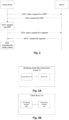
- Fig. 3A shows a structural diagram illustrating a streaming media data transmission system 10 according to the embodiments of the present disclosure.
- the streaming media data transmission system 10 may comprise a client device 30 and a server 20, wherein the server 20 is configured to transmit a segment to a client device 30 according to a request of the client device 30.
- Fig. 3B shows a structural diagram illustrating the client device 30 according to the embodiments of the present disclosure.
- the client device 30 may comprise a transceiver module 301 and a processing module 302.
- the transceiver module 301 may be configured to transmit a request for a segment to the server 20 and receive the segment transmitted from the server 20.
- the processing module 302 may be configured to determine whether or not the transceiver module 301 receives a first segment from the server 20 within a preset threshold time from transmitting the request for the first segment to the server 20. If the first segment is not received within the preset threshold time, the processing module may control the transceiver module 301 to transmit a request for a second segment to the server 20.
- media contents contained in the first segment is the same as the media contents contained in the second segment, and a bit rate of the first segment is higher than the bit rate of the second segment.
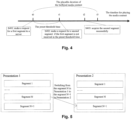
- Fig. 4 is a timing diagram of playing the media content by the client device 30. As shown in Fig. 4 , the media content buffered in the client device 20 at a time t0 would be completed at a time t3, i.e. the playable duration of the buffered media content is t3-t0.
- Fig. 4 also shows steps operated by the client device at respective times.
- the client device 20 may perform step S401, in which a request for a first segment is send to the server and a timer is triggered to start working, and the timing duration of the timer is set as the preset threshold time.
- the client device 30 may perform step S402, i.e. requesting for a second segment, At a time t2, the client device 30 may perform step S403, i.e. acquiring a second segment successfully.
- the client device 30 Since the time t2 is a time previous the time t3, the client device 30 has already acquired the second segment before completing the playing of the buffered media content, which may avoid an interrupt of playing of the media content, thereby ensuring a continuity of playing of the media content.
- the client device 30 may abandon the request for the first segment after the time t1.
- the expiration of receiving a segment only occurs under a network congestion condition.
- the abandoning of the request for the first segment by the client device 30 may relief the network congestion condition effectively, and thus the network can go back to normal as soon as possible.
- the client device 30 may give up receiving the first segment. For example, at the time t1, the client device 30 may send a request for a second segment to the server, and meanwhile may transmit a message informing the abandoning of the request for the first segment to the server. When the server receives the message informing the abandoning of the request for the first segment, it will stop attempting to transmit the first segment to the client device.
- the client device 30 may set the preset threshold time in advance according to following factors:
- the bit rate of the segment acquired previous the first segment by the client device 30 is BWs, i.e. the value for the bandwidth properties of the presentation to which the segment belongs, in particular, referred to table 1 for details;
- bit rate of the 3 segments acquired previous the first segment by the client device 30 are BW1, BW2 and BW3 respectively;
- the preset threshold time can be a long term variable factor reflecting the network condition between the client device 30 and the server 20.
- the minimum time duration can be selected as the preset threshold time, which can reduce the time delay caused by failing in acquiring the first segment more effectively.
- the client device 30 can also take a consideration of the playable duration of the buffered media content (i.e. t3-t0 in Fig. 4 ) in setting the preset threshold time.
- the time duration required for acquiring the second segment is generally longer than the time duration required for acquiring the first segment. In this manner, it is ensured that the client device 30 may have enough time to acquire the second segment when the timer expires, so as to avoid the interruption of playing of the media content.
- Table 1 the properties of the presentation to which the segment described in the MPD belongs Names of the element/property Description Presentation a presentation element @bandwidth a network bandwidth required for transmitting the segments contained in the presentation; a higher bit rate of the content contained in the segments comes with a wider network bandwidth required for transmitting the segments @frameRate a frame rate of the content contained in the segments; a higher bit rate of the content contained in the segments comes with a higher frame rate SegmentList a segment list @duration a playable duration for each segment; the playable durations of segments contained in one presentation are the same and counted in seconds.
- @startNumber an index for the first segment contained in the presentation SegmentURL a real address to acquire the segment; each segment corresponds to one SegmentURL.
- the client device 30 may select the second segment among one or more segments having different bit rates, according to a network congestion condition occurred between the client device 30 and the server 20; and the media contents contained in the one or more segments are the same as the media contents contained in the first segment, and the bit rate of the one or more specific segments is lower than the bit rate of the first segment.
- the client device 30 may determine the presentation which the first segment belongs to as R1, and the request for the first segment has been abandoned; read the value of the bandwidth properties of the presentation R1, as BW1; determine other presentations which are in the same adaptation set as R1; read the values of the bandwidth properties of these presentations; find the presentation R2 having a bit rate lower than R1; and send a request for a segment described by R2 to the server, i.e. the second segment.
- the client device 30 may further select one segment from the plurality of presentations according to the network congestion condition occurred between the client device 30 and the server 20.
- the segment having a lower bit rate may be selected from the plurality of segments, otherwise the segment having a higher bit rate may be selected.
- the client device 30 may determine the network congestion condition according to parameters, such as, a round trip time from making a request for a segment to the server 20 to receiving a response from the server 20 and a playable duration of the buffered media content.
- parameters such as, a round trip time from making a request for a segment to the server 20 to receiving a response from the server 20 and a playable duration of the buffered media content.
- the client device 230 may switch bit rates in a manner shown in Fig. 5 .
- the client device 30 may find the presentation which a being played segment belongs to, in a MPD (for clarity, represented by "presentation 1"); calculate a sequence number for the being played segment as startNumber+N, according to a value of startNumber properties in the "presentation 1" and the sequence number of the SegmentURL element corresponding to the being played segment (represented by N); then, find other presentations having the same media content but different bit rate, being in the same adaptation set as the "presentation 1" and going to be switched to (represented by "presentation 2"); find the segment having the sequence number being startNumber+N+1 in the "presentation 2"; and sequentially, send a request for the segment N+1 in the "presentation 2" to the server 20.
- the embodiments of the present disclosure further provide a method for receiving a streaming media data.
- a specific implementation thereof can be known with reference to the description of the client device and the streaming media data transmission system discussed above, since the principle of the method is similar with the client device and the streaming media data transmission system. Thus, the same content will no longer be repeated.
- Fig. 6 is a flow chart illustrating the method for receiving the streaming media data according to the embodiments of the present disclosure. As shown in Fig. 6 , the method may comprise:
- the method may further comprise:
- the determining the preset threshold time may comprise: determining the preset threshold time, according to the bit rate of each of N segments acquired previous the first segment, a time duration required for acquiring each of the N segments, the bit rate of the first segment and a playable duration of the buffered media content.
- the method may further comprise:
- the method may further comprise: transmitting a message informing abandoning of the request for the first segment to the server.
- the client device if the client device does not receive the segment transmitted from the sever in a preset threshold time, the client device will send another request for a segment having the same media content but a lower bit rate to the server.
- the client device can adjust the bite rate in time, so as to acquire the media content as quickly as possible, thereby ensuring a continuity of playing of the media content.
- the embodiments of the present disclosure may be provided as a method, a system or a computer programming product. Therefore, the present disclosure can be implemented with a purely hardware implementation, a purely software implementation or an implementation combining the hardware and the software. Furthermore, the present disclosure can also be implemented with a computer programming product performed on one or more computer available storage medium on which a computer available program code can be recorded (including but not limited to, a disc storage, a CD-ROM, an optical storage and the like).
- These computer program instructions can be stored in a computer readable memory which can guide the computer or the processors of the programmable data processing device to operate in a certain manner, such that the instructions stored in the computer readable memory can generate a manufacture comprising the instruction device.
- the instruction device can implement the functions defined by each operation and/or block and a combination thereof within such block diagrams and/or flowcharts.
Landscapes
- Engineering & Computer Science (AREA)
- Multimedia (AREA)
- Signal Processing (AREA)
- Computer Networks & Wireless Communication (AREA)
- Databases & Information Systems (AREA)
- Two-Way Televisions, Distribution Of Moving Picture Or The Like (AREA)
- Data Exchanges In Wide-Area Networks (AREA)
- Information Transfer Between Computers (AREA)
Claims (7)
- Client-Gerät (30), umfassend:ein Sendeempfängermodul (301), das ausgelegt ist, um eine Anfrage bezüglich eines Medieninhalt enthaltenden Segments an einen Server (20) zu übermitteln und das vom Server (20) übermittelte Segment zu empfangen;ein Verarbeitungsmodul (302), das ausgelegt ist, um zu bestimmen, ob das Sendeempfängermodul (301) ein erstes Segment vom Server (20) innerhalb einer vorbestimmten Schwellenzeit nach dem Übermitteln der Anfrage bezüglich des ersten Segments an den Server (20) empfängt oder nicht; und wenn das erste Segment nicht innerhalb der vorbestimmten Schwellenzeit empfangen wird, das Sendeempfängermodul (301) so zu steuern, dass es eine Anfrage bezüglich eines zweiten Segments an den Server (20) übermittelt,wobei die im ersten Segment enthaltenen Medieninhalte die gleichen sind wie die im zweiten Segment enthaltenen Medieninhalte und die Übertragungsbitrate des ersten Segment höher ist als die Übertragungsbitrate des zweiten Segments;wobei das Verarbeitungsmodul (302) außerdem ausgelegt ist, um:vor dem Bestimmen, ob das Sendeempfängermodul (301) das erste Segment vom Server innerhalb der vorbestimmten Schwellenzeit nach dem Übermitteln der Anfrage bezüglich des ersten Segment an den Server (20) empfängt oder nicht, Bestimmen der vorbestimmten Schwellenzeit gemäß der Übertragungsbitrate von jedem von N Segmenten, die vor dem ersten Segment vom Sendeempfänger (301) erfasst wurden, einer Zeitdauer, die für das Erfassen jedes der N Segmente erforderlich ist, die Übertragungsbitrate des ersten Segments und/oder die abspielbare Dauer des Medieninhalts, der im Client-Gerät (30) gepuffert wird, wobei N eine ganze Zahl größer als oder gleich 1 ist;dadurch gekennzeichnet, dass das Verarbeitungsmodul (302) außerdem ausgelegt ist, um die vorbestimmte Schwellenzeit gemäß einer der folgenden Gleichungen zu bestimmen:


 worin Tx für die vorbestimmte Schwellenzeit steht; BWi für die Übertragungsbitrate eines i. Segments vor dem ersten Segment steht; BWx für die Übertragungsbitrate des ersten Segments steht; Ti für die Zeitdauer steht, die für das Erfassen des i. Segments erforderlich ist, das vor dem ersten Segment vom Sendeempfängermodul (301) erfasst wird, wobei i und N beide positive ganze Zahlen sind und 1:Si:SN gilt; Ts für die Zeitdauer steht, die zum Erfassen des Segments vor dem ersten Segment durch das Sendeempfängermodul (301) erforderlich ist; BWs für die Übertragungsbitrate des Segments vor dem ersten Segment steht, das vom Sendeempfängermodul (301) erfasst wird; t0 ein Zeitpunkt ist, zu dem das Sendeempfängermodul (301) die Anfrage bezüglich des ersten Segments an den Server übermittelt; t3 ein Zeitpunkt ist, zu dem eine Wiedergabe des Medieninhalts, der bei t0 im Client-Gerät (30) gepuffert wird, abgeschlossen ist; und min(.) für eine Operation zur Berechnung eines Minimums steht.
 - Client-Gerät (30) nach Anspruch 1, wobei, wenn bestimmt wird, dass das Sendeempfängermodul (301) das vom Server (20) übermittelte erste Segment nicht innerhalb der vorbestimmten Schwellenzeit nach der Übermittlung der Anfrage bezüglich des ersten Segments an den Server (20) empfängt, das Verarbeitungsmodul (302) außerdem ausgelegt ist, um vor dem Übermitteln der Anfrage bezüglich des zweiten Segments an den Server (20):das zweite Segment aus einem oder mehreren Segmenten mit unterschiedlichen Übertragungsbitraten gemäß einem Netzüberlastungszustand auszuwählen, der zwischen dem Client-Gerät (30) und dem Server (20) aufgetreten ist,wobei die in dem einem oder den mehreren Segmenten enthaltenen Medieninhalte gleich sind wie die im ersten Segment enthaltenen Medieninhalte und die Übertragungsbitrate des einen oder der mehreren spezifischen Segmente niedriger ist als die Bitrate des ersten Segments.
- Client-Gerät (30) nach einem der Ansprüche 1-2, wobei das Verarbeitungsmodul (302) außerdem ausgelegt ist, um:
wenn bestimmt wird, dass das Sendeempfängermodul (301) das erste vom Server (20) übermittelte Segment nicht innerhalb der vorbestimmten Schwellenzeit nach dem Übermitteln der Anfrage bezüglich des ersten Segments an den Server (20) empfängt, Steuern des Sendeempfängermoduls (301) so, dass eine Nachricht übermittelt wird, die über den Abbruch der Anfrage bezüglich des ersten Segments an den Server (20) informiert. - Verfahren zum Empfangen von Streaming-Mediendaten, umfassend:Stellen (S601) einer Anfrage bezüglich eines ersten Medieninhalt enthaltenden Segments an einen Server (20);Bestimmen einer vorbestimmten Schwellenzeit gemäß der Übertragungsbitrate von jedem von N Segmenten, die vor dem ersten Segment durch einen Sendeempfänger (301) erfasst wurden, einer Zeitdauer, die zum Erfassen von jedem der N Segmente erforderlich ist, einer Übertragungsbitrate des ersten Segments und/oder einer abspielbaren Dauer des gepufferten Medieninhalts, wobei N eine ganze Zahl größer als oder gleich 1 ist;Bestimmen (S602), ob das vom Server (20) übermittelte erste Segment innerhalb der vorbestimmten Schwellenzeit nach dem Stellen der Anfrage bezüglich des ersten Segments an den Server (20) empfangen wird; undwenn das erste Segment nicht innerhalb der vorbestimmten Schwellenzeit empfangen wird, Stellen (S603) einer Anfrage bezüglich eines zweiten Segments an den Server (20),wobei im ersten Segment enthaltene Medieninhalte gleich sind wie im zweiten Segment enthaltene Medieninhalte und die Übertragungsbitrate des ersten Segments höher ist als die Übertragungsbitrate des zweiten Segments;dadurch gekennzeichnet, dass das Bestimmen der vorbestimmten Schwellenzeit das Bestimmen der vorbestimmten Schwellenzeit gemäß einer der folgenden Gleichungen umfasst:


 worin Tx für die vorbestimmte Schwellenzeit steht; BWi für die Übertragungsbitrate eines i. Segments vor dem ersten Segment steht; BWx für die Übertragungsbitrate des ersten Segments steht; Ti für die Zeitdauer steht, die für das Erfassen des i. Segments erforderlich ist, das vor dem ersten Segment vom Sendeempfängermodul (301) erfasst wird, wobei i und N beide positive ganze Zahlen sind und 1≤i≤N gilt; Ts für die Zeitdauer steht, die zum Erfassen des Segments vor dem ersten Segment durch das Sendeempfängermodul (301) erforderlich ist; BWs für die Übertragungsbitrate des Segments vor dem ersten Segment steht, das vom Sendeempfängermodul (301) erfasst wird; t0 ein Zeitpunkt ist, zu dem das Sendeempfängermodul (301) die Anfrage bezüglich des ersten Segments an den Server (20) übermittelt; t3 ein Zeitpunkt ist, zu dem eine Wiedergabe des Medieninhalts, der bei t0 im Client-Gerät (30) gepuffert wird, abgeschlossen ist; und min(.) für eine Operation zur Berechnung eines Minimums steht.
 - Verfahren nach Anspruch 4, wobei, wenn bestimmt wird, dass das vom Server (20) übermittelte erste Segment nicht innerhalb der vorbestimmten Schwellenzeit nach dem Stellen der Anfrage bezüglich des ersten Segments an den Server (20) empfangen wird, das Verfahren vor dem Stellen der Anfrage bezüglich des zweiten Segments an den Server (20) außerdem umfasst:Auswählen des zweiten Segments aus einem oder mehreren Segmenten mit unterschiedlichen Übertragungsbitraten gemäß einem Netzüberlastungszustand, der zwischen dem Client-Gerät (30) und dem Server (20) aufgetreten ist,wobei die in dem einem oder den mehreren Segmenten enthaltenen Medieninhalte gleich sind wie die im ersten Segment enthaltenen Medieninhalte und die Übertragungsbitrate des einen oder der mehreren spezifischen Segmente niedriger ist als die Bitrate des ersten Segments.
- Verfahren nach einem der Ansprüche 4-5, wobei, wenn bestimmt wird, dass das vom Server (20) übermittelte erste Segment nicht innerhalb der vorbestimmten Schwellenzeit nach dem Stellen der Anfrage bezüglich des ersten Segments an den Server (20) empfangen wird, das Verfahren außerdem umfasst:
Übermitteln einer Nachricht, die über den Abbruch der Anfrage bezüglich des ersten Segments an den Server (20) informiert. - Streaming-Mediendaten-Übertragungssystem (10), umfassend:ein Client-Gerät (30) nach einem der Ansprüche 1-3;einen Server (20), der ausgelegt ist, um ein Medieninhalt enthaltendes Segment gemäß einer Anfrage vom Client-Gerät (30) an das Client-Gerät (30) zu übermitteln.
Applications Claiming Priority (2)
| Application Number | Priority Date | Filing Date | Title |
|---|---|---|---|
| CN201510024471.0A CN104581340B (zh) | 2015-01-16 | 2015-01-16 | 客户端、流媒体数据接收方法和流媒体数据传输系统 |
| PCT/CN2015/081931 WO2016112641A1 (zh) | 2015-01-16 | 2015-06-19 | 客户端、流媒体数据接收方法和流媒体数据传输系统 |
Publications (3)
| Publication Number | Publication Date |
|---|---|
| EP3247124A1 EP3247124A1 (de) | 2017-11-22 |
| EP3247124A4 EP3247124A4 (de) | 2018-07-25 |
| EP3247124B1 true EP3247124B1 (de) | 2024-10-09 |
Family
ID=53096388
Family Applications (1)
| Application Number | Title | Priority Date | Filing Date |
|---|---|---|---|
| EP15877556.9A Active EP3247124B1 (de) | 2015-01-16 | 2015-06-19 | Client, streaming-mediendatenempfangsverfahren und streaming-mediendatenübertragungssystem |
Country Status (4)
| Country | Link |
|---|---|
| US (1) | US10200433B2 (de) |
| EP (1) | EP3247124B1 (de) |
| CN (1) | CN104581340B (de) |
| WO (1) | WO2016112641A1 (de) |
Families Citing this family (5)
| Publication number | Priority date | Publication date | Assignee | Title |
|---|---|---|---|---|
| CN104581340B (zh) * | 2015-01-16 | 2018-02-16 | 京东方科技集团股份有限公司 | 客户端、流媒体数据接收方法和流媒体数据传输系统 |
| CN106657143A (zh) * | 2017-01-20 | 2017-05-10 | 中兴通讯股份有限公司 | 一种流媒体传输方法、装置、服务器及终端 |
| CN111669665B (zh) * | 2019-03-05 | 2021-12-21 | 北京开广信息技术有限公司 | 媒体流的实时推送方法及服务器 |
| CN111757313A (zh) * | 2019-03-29 | 2020-10-09 | 华为技术有限公司 | 一种通信方法及装置 |
| CN114222194A (zh) * | 2021-12-17 | 2022-03-22 | 浙江大华技术股份有限公司 | 一种视频码流调整方法、装置及系统 |
Family Cites Families (9)
| Publication number | Priority date | Publication date | Assignee | Title |
|---|---|---|---|---|
| US7596179B2 (en) * | 2002-02-27 | 2009-09-29 | Hewlett-Packard Development Company, L.P. | Reducing the resolution of media data |
| WO2011150657A1 (zh) | 2010-12-31 | 2011-12-08 | 华为技术有限公司 | 流媒体中播放时间点跳转后的处理方法及装置 |
| US9374406B2 (en) * | 2012-02-27 | 2016-06-21 | Qualcomm Incorporated | Dash client and receiver with a download rate estimator |
| WO2014011848A2 (en) * | 2012-07-12 | 2014-01-16 | Huawei Technologies Co., Ltd. | Signaling and processing content with variable bitrates for adaptive streaming |
| KR102066707B1 (ko) * | 2013-06-10 | 2020-01-15 | 삼성전자주식회사 | 비디오 스트리밍 서비스를 제공하기 위한 방법 및 그 모바일 장치 |
| CN103747283B (zh) * | 2013-12-24 | 2017-02-01 | 中国科学院声学研究所 | 视频分片的下载方法 |
| US9509742B2 (en) * | 2014-10-29 | 2016-11-29 | DLVR, Inc. | Configuring manifest files referencing infrastructure service providers for adaptive streaming video |
| US10749918B2 (en) * | 2014-11-10 | 2020-08-18 | Avago Technologies International Sales Pte. Limited | Adaptive streaming with early client indication |
| CN104581340B (zh) * | 2015-01-16 | 2018-02-16 | 京东方科技集团股份有限公司 | 客户端、流媒体数据接收方法和流媒体数据传输系统 |
-
2015
- 2015-01-16 CN CN201510024471.0A patent/CN104581340B/zh active Active
- 2015-06-19 WO PCT/CN2015/081931 patent/WO2016112641A1/zh not_active Ceased
- 2015-06-19 EP EP15877556.9A patent/EP3247124B1/de active Active
- 2015-06-19 US US15/124,059 patent/US10200433B2/en active Active
Also Published As
| Publication number | Publication date |
|---|---|
| US10200433B2 (en) | 2019-02-05 |
| CN104581340A (zh) | 2015-04-29 |
| CN104581340B (zh) | 2018-02-16 |
| WO2016112641A1 (zh) | 2016-07-21 |
| EP3247124A1 (de) | 2017-11-22 |
| US20170019447A1 (en) | 2017-01-19 |
| EP3247124A4 (de) | 2018-07-25 |
Similar Documents
| Publication | Publication Date | Title |
|---|---|---|
| US9521179B2 (en) | Validation of live media stream based on predetermined standards | |
| CN105100961B (zh) | 视频缩略图生成方法及生成装置 | |
| US8321905B1 (en) | Fast switching of media streams | |
| US20150271242A1 (en) | Method and Apparatus for Acquiring Streaming Media Buffer Parameter | |
| US10749918B2 (en) | Adaptive streaming with early client indication | |
| US20150271231A1 (en) | Transport accelerator implementing enhanced signaling | |
| US10200433B2 (en) | Client device, a method for receiving a streaming media data and a streaming media data transmission system | |
| JP7753449B2 (ja) | クライアント、サーバ、受信方法及び送信方法 | |
| JP6314252B2 (ja) | ネットワークビデオ再生方法及び装置 | |
| US9680904B2 (en) | Adaptive buffers for media players | |
| CN107690093B (zh) | 一种视频播放方法及装置 | |
| CN111327956A (zh) | 一种视频播放方法、装置及电子设备 | |
| CN106303754A (zh) | 一种音频数据播放方法及装置 | |
| US10924786B2 (en) | Method for shaping video streams and set-up box using the method | |
| CN109698961B (zh) | 一种监控方法、装置及电子设备 | |
| US9692831B1 (en) | Pausing interactive sessions | |
| CN106792030A (zh) | 一种音频数据处理方法及电视 | |
| US12015834B2 (en) | Methods, systems, and media for streaming video content using adaptive buffers | |
| EP2860733A1 (de) | Multimediadateiwiedergabeverfahren, Wiedergabegerät und Wiedergabesystem | |
| US20170329831A1 (en) | System and method for analyzing content usage events | |
| TWI523511B (zh) | Variable bit rate video panning method | |
| US20160173551A1 (en) | System and method for session mobility for adaptive bitrate streaming | |
| CN111314779B (zh) | 一种确定流媒体传输质量的方法及装置 | |
| JP2014135728A (ja) | 映像伝送システム及び映像伝送方法 | |
| CN107835180A (zh) | 一种视频倍数播放的方法和系统 |
Legal Events
| Date | Code | Title | Description |
|---|---|---|---|
| STAA | Information on the status of an ep patent application or granted ep patent |
Free format text: STATUS: THE INTERNATIONAL PUBLICATION HAS BEEN MADE |
|
| PUAI | Public reference made under article 153(3) epc to a published international application that has entered the european phase |
Free format text: ORIGINAL CODE: 0009012 |
|
| STAA | Information on the status of an ep patent application or granted ep patent |
Free format text: STATUS: REQUEST FOR EXAMINATION WAS MADE |
|
| 17P | Request for examination filed |
Effective date: 20160907 |
|
| AK | Designated contracting states |
Kind code of ref document: A1 Designated state(s): AL AT BE BG CH CY CZ DE DK EE ES FI FR GB GR HR HU IE IS IT LI LT LU LV MC MK MT NL NO PL PT RO RS SE SI SK SM TR |
|
| AX | Request for extension of the european patent |
Extension state: BA ME |
|
| DAV | Request for validation of the european patent (deleted) | ||
| DAX | Request for extension of the european patent (deleted) | ||
| A4 | Supplementary search report drawn up and despatched |
Effective date: 20180626 |
|
| RIC1 | Information provided on ipc code assigned before grant |
Ipc: H04N 21/6377 20110101ALI20180620BHEP Ipc: H04N 21/442 20110101ALI20180620BHEP Ipc: H04N 21/845 20110101AFI20180620BHEP Ipc: H04N 21/2343 20110101ALI20180620BHEP Ipc: H04N 21/262 20110101ALI20180620BHEP |
|
| STAA | Information on the status of an ep patent application or granted ep patent |
Free format text: STATUS: EXAMINATION IS IN PROGRESS |
|
| 17Q | First examination report despatched |
Effective date: 20210322 |
|
| R17C | First examination report despatched (corrected) |
Effective date: 20210322 |
|
| GRAP | Despatch of communication of intention to grant a patent |
Free format text: ORIGINAL CODE: EPIDOSNIGR1 |
|
| STAA | Information on the status of an ep patent application or granted ep patent |
Free format text: STATUS: GRANT OF PATENT IS INTENDED |
|
| RIC1 | Information provided on ipc code assigned before grant |
Ipc: H04L 65/75 20220101ALI20240501BHEP Ipc: H04L 65/613 20220101ALI20240501BHEP Ipc: H04N 21/442 20110101ALI20240501BHEP Ipc: H04N 21/6377 20110101ALI20240501BHEP Ipc: H04N 21/262 20110101ALI20240501BHEP Ipc: H04N 21/2343 20110101ALI20240501BHEP Ipc: H04N 21/845 20110101AFI20240501BHEP |
|
| INTG | Intention to grant announced |
Effective date: 20240523 |
|
| GRAS | Grant fee paid |
Free format text: ORIGINAL CODE: EPIDOSNIGR3 |
|
| GRAA | (expected) grant |
Free format text: ORIGINAL CODE: 0009210 |
|
| STAA | Information on the status of an ep patent application or granted ep patent |
Free format text: STATUS: THE PATENT HAS BEEN GRANTED |
|
| AK | Designated contracting states |
Kind code of ref document: B1 Designated state(s): AL AT BE BG CH CY CZ DE DK EE ES FI FR GB GR HR HU IE IS IT LI LT LU LV MC MK MT NL NO PL PT RO RS SE SI SK SM TR |
|
| REG | Reference to a national code |
Ref country code: CH Ref legal event code: EP |
|
| REG | Reference to a national code |
Ref country code: DE Ref legal event code: R096 Ref document number: 602015090115 Country of ref document: DE |
|
| REG | Reference to a national code |
Ref country code: IE Ref legal event code: FG4D |
|
| REG | Reference to a national code |
Ref country code: LT Ref legal event code: MG9D |
|
| REG | Reference to a national code |
Ref country code: NL Ref legal event code: MP Effective date: 20241009 |
|
| REG | Reference to a national code |
Ref country code: AT Ref legal event code: MK05 Ref document number: 1731911 Country of ref document: AT Kind code of ref document: T Effective date: 20241009 |
|
| PG25 | Lapsed in a contracting state [announced via postgrant information from national office to epo] |
Ref country code: NL Free format text: LAPSE BECAUSE OF FAILURE TO SUBMIT A TRANSLATION OF THE DESCRIPTION OR TO PAY THE FEE WITHIN THE PRESCRIBED TIME-LIMIT Effective date: 20241009 |
|
| PG25 | Lapsed in a contracting state [announced via postgrant information from national office to epo] |
Ref country code: NL Free format text: LAPSE BECAUSE OF FAILURE TO SUBMIT A TRANSLATION OF THE DESCRIPTION OR TO PAY THE FEE WITHIN THE PRESCRIBED TIME-LIMIT Effective date: 20241009 |
|
| PG25 | Lapsed in a contracting state [announced via postgrant information from national office to epo] |
Ref country code: PT Free format text: LAPSE BECAUSE OF FAILURE TO SUBMIT A TRANSLATION OF THE DESCRIPTION OR TO PAY THE FEE WITHIN THE PRESCRIBED TIME-LIMIT Effective date: 20250210 Ref country code: IS Free format text: LAPSE BECAUSE OF FAILURE TO SUBMIT A TRANSLATION OF THE DESCRIPTION OR TO PAY THE FEE WITHIN THE PRESCRIBED TIME-LIMIT Effective date: 20250209 Ref country code: HR Free format text: LAPSE BECAUSE OF FAILURE TO SUBMIT A TRANSLATION OF THE DESCRIPTION OR TO PAY THE FEE WITHIN THE PRESCRIBED TIME-LIMIT Effective date: 20241009 |
|
| PG25 | Lapsed in a contracting state [announced via postgrant information from national office to epo] |
Ref country code: FI Free format text: LAPSE BECAUSE OF FAILURE TO SUBMIT A TRANSLATION OF THE DESCRIPTION OR TO PAY THE FEE WITHIN THE PRESCRIBED TIME-LIMIT Effective date: 20241009 |
|
| PG25 | Lapsed in a contracting state [announced via postgrant information from national office to epo] |
Ref country code: BG Free format text: LAPSE BECAUSE OF FAILURE TO SUBMIT A TRANSLATION OF THE DESCRIPTION OR TO PAY THE FEE WITHIN THE PRESCRIBED TIME-LIMIT Effective date: 20241009 |
|
| PG25 | Lapsed in a contracting state [announced via postgrant information from national office to epo] |
Ref country code: ES Free format text: LAPSE BECAUSE OF FAILURE TO SUBMIT A TRANSLATION OF THE DESCRIPTION OR TO PAY THE FEE WITHIN THE PRESCRIBED TIME-LIMIT Effective date: 20241009 |
|
| PG25 | Lapsed in a contracting state [announced via postgrant information from national office to epo] |
Ref country code: NO Free format text: LAPSE BECAUSE OF FAILURE TO SUBMIT A TRANSLATION OF THE DESCRIPTION OR TO PAY THE FEE WITHIN THE PRESCRIBED TIME-LIMIT Effective date: 20250109 |
|
| PG25 | Lapsed in a contracting state [announced via postgrant information from national office to epo] |
Ref country code: LV Free format text: LAPSE BECAUSE OF FAILURE TO SUBMIT A TRANSLATION OF THE DESCRIPTION OR TO PAY THE FEE WITHIN THE PRESCRIBED TIME-LIMIT Effective date: 20241009 Ref country code: GR Free format text: LAPSE BECAUSE OF FAILURE TO SUBMIT A TRANSLATION OF THE DESCRIPTION OR TO PAY THE FEE WITHIN THE PRESCRIBED TIME-LIMIT Effective date: 20250110 Ref country code: AT Free format text: LAPSE BECAUSE OF FAILURE TO SUBMIT A TRANSLATION OF THE DESCRIPTION OR TO PAY THE FEE WITHIN THE PRESCRIBED TIME-LIMIT Effective date: 20241009 |
|
| PG25 | Lapsed in a contracting state [announced via postgrant information from national office to epo] |
Ref country code: PL Free format text: LAPSE BECAUSE OF FAILURE TO SUBMIT A TRANSLATION OF THE DESCRIPTION OR TO PAY THE FEE WITHIN THE PRESCRIBED TIME-LIMIT Effective date: 20241009 |
|
| PG25 | Lapsed in a contracting state [announced via postgrant information from national office to epo] |
Ref country code: RS Free format text: LAPSE BECAUSE OF FAILURE TO SUBMIT A TRANSLATION OF THE DESCRIPTION OR TO PAY THE FEE WITHIN THE PRESCRIBED TIME-LIMIT Effective date: 20250109 |
|
| PG25 | Lapsed in a contracting state [announced via postgrant information from national office to epo] |
Ref country code: SM Free format text: LAPSE BECAUSE OF FAILURE TO SUBMIT A TRANSLATION OF THE DESCRIPTION OR TO PAY THE FEE WITHIN THE PRESCRIBED TIME-LIMIT Effective date: 20241009 |
|
| PGFP | Annual fee paid to national office [announced via postgrant information from national office to epo] |
Ref country code: DE Payment date: 20250618 Year of fee payment: 11 |
|
| PG25 | Lapsed in a contracting state [announced via postgrant information from national office to epo] |
Ref country code: DK Free format text: LAPSE BECAUSE OF FAILURE TO SUBMIT A TRANSLATION OF THE DESCRIPTION OR TO PAY THE FEE WITHIN THE PRESCRIBED TIME-LIMIT Effective date: 20241009 |
|
| REG | Reference to a national code |
Ref country code: DE Ref legal event code: R097 Ref document number: 602015090115 Country of ref document: DE |
|
| PG25 | Lapsed in a contracting state [announced via postgrant information from national office to epo] |
Ref country code: EE Free format text: LAPSE BECAUSE OF FAILURE TO SUBMIT A TRANSLATION OF THE DESCRIPTION OR TO PAY THE FEE WITHIN THE PRESCRIBED TIME-LIMIT Effective date: 20241009 |
|
| PG25 | Lapsed in a contracting state [announced via postgrant information from national office to epo] |
Ref country code: RO Free format text: LAPSE BECAUSE OF FAILURE TO SUBMIT A TRANSLATION OF THE DESCRIPTION OR TO PAY THE FEE WITHIN THE PRESCRIBED TIME-LIMIT Effective date: 20241009 |
|
| PG25 | Lapsed in a contracting state [announced via postgrant information from national office to epo] |
Ref country code: SK Free format text: LAPSE BECAUSE OF FAILURE TO SUBMIT A TRANSLATION OF THE DESCRIPTION OR TO PAY THE FEE WITHIN THE PRESCRIBED TIME-LIMIT Effective date: 20241009 |
|
| PG25 | Lapsed in a contracting state [announced via postgrant information from national office to epo] |
Ref country code: CZ Free format text: LAPSE BECAUSE OF FAILURE TO SUBMIT A TRANSLATION OF THE DESCRIPTION OR TO PAY THE FEE WITHIN THE PRESCRIBED TIME-LIMIT Effective date: 20241009 |
|
| PG25 | Lapsed in a contracting state [announced via postgrant information from national office to epo] |
Ref country code: IT Free format text: LAPSE BECAUSE OF FAILURE TO SUBMIT A TRANSLATION OF THE DESCRIPTION OR TO PAY THE FEE WITHIN THE PRESCRIBED TIME-LIMIT Effective date: 20241009 |
|
| PLBE | No opposition filed within time limit |
Free format text: ORIGINAL CODE: 0009261 |
|
| STAA | Information on the status of an ep patent application or granted ep patent |
Free format text: STATUS: NO OPPOSITION FILED WITHIN TIME LIMIT |
|
| PG25 | Lapsed in a contracting state [announced via postgrant information from national office to epo] |
Ref country code: SE Free format text: LAPSE BECAUSE OF FAILURE TO SUBMIT A TRANSLATION OF THE DESCRIPTION OR TO PAY THE FEE WITHIN THE PRESCRIBED TIME-LIMIT Effective date: 20241009 |
|
| 26N | No opposition filed |
Effective date: 20250710 |
|
| REG | Reference to a national code |
Ref country code: CH Ref legal event code: H13 Free format text: ST27 STATUS EVENT CODE: U-0-0-H10-H13 (AS PROVIDED BY THE NATIONAL OFFICE) Effective date: 20260127 |
|
| PG25 | Lapsed in a contracting state [announced via postgrant information from national office to epo] |
Ref country code: MC Free format text: LAPSE BECAUSE OF FAILURE TO SUBMIT A TRANSLATION OF THE DESCRIPTION OR TO PAY THE FEE WITHIN THE PRESCRIBED TIME-LIMIT Effective date: 20241009 |
|
| PG25 | Lapsed in a contracting state [announced via postgrant information from national office to epo] |
Ref country code: LU Free format text: LAPSE BECAUSE OF NON-PAYMENT OF DUE FEES Effective date: 20250619 |
|
| GBPC | Gb: european patent ceased through non-payment of renewal fee |
Effective date: 20250619 |
|
| REG | Reference to a national code |
Ref country code: BE Ref legal event code: MM Effective date: 20250630 |
|
| PG25 | Lapsed in a contracting state [announced via postgrant information from national office to epo] |
Ref country code: GB Free format text: LAPSE BECAUSE OF NON-PAYMENT OF DUE FEES Effective date: 20250619 |
|
| PG25 | Lapsed in a contracting state [announced via postgrant information from national office to epo] |
Ref country code: IE Free format text: LAPSE BECAUSE OF NON-PAYMENT OF DUE FEES Effective date: 20250619 |
|
| PG25 | Lapsed in a contracting state [announced via postgrant information from national office to epo] |
Ref country code: BE Free format text: LAPSE BECAUSE OF NON-PAYMENT OF DUE FEES Effective date: 20250630 |
|
| PG25 | Lapsed in a contracting state [announced via postgrant information from national office to epo] |
Ref country code: FR Free format text: LAPSE BECAUSE OF NON-PAYMENT OF DUE FEES Effective date: 20250630 |
|
| PG25 | Lapsed in a contracting state [announced via postgrant information from national office to epo] |
Ref country code: CH Free format text: LAPSE BECAUSE OF NON-PAYMENT OF DUE FEES Effective date: 20250630 |