EP3246599A1 - Vehicle shifter with offset cable actuator - Google Patents
Vehicle shifter with offset cable actuator Download PDFInfo
- Publication number
- EP3246599A1 EP3246599A1 EP17166932.8A EP17166932A EP3246599A1 EP 3246599 A1 EP3246599 A1 EP 3246599A1 EP 17166932 A EP17166932 A EP 17166932A EP 3246599 A1 EP3246599 A1 EP 3246599A1
- Authority
- EP
- European Patent Office
- Prior art keywords
- pivot
- cable
- shift
- shifter
- shift member
- Prior art date
- Legal status (The legal status is an assumption and is not a legal conclusion. Google has not performed a legal analysis and makes no representation as to the accuracy of the status listed.)
- Withdrawn
Links
Images



Classifications
-
- F—MECHANICAL ENGINEERING; LIGHTING; HEATING; WEAPONS; BLASTING
- F16—ENGINEERING ELEMENTS AND UNITS; GENERAL MEASURES FOR PRODUCING AND MAINTAINING EFFECTIVE FUNCTIONING OF MACHINES OR INSTALLATIONS; THERMAL INSULATION IN GENERAL
- F16H—GEARING
- F16H59/00—Control inputs to control units of change-speed- or reversing-gearings for conveying rotary motion
- F16H59/02—Selector apparatus
- F16H59/08—Range selector apparatus
- F16H59/10—Range selector apparatus comprising levers
-
- F—MECHANICAL ENGINEERING; LIGHTING; HEATING; WEAPONS; BLASTING
- F16—ENGINEERING ELEMENTS AND UNITS; GENERAL MEASURES FOR PRODUCING AND MAINTAINING EFFECTIVE FUNCTIONING OF MACHINES OR INSTALLATIONS; THERMAL INSULATION IN GENERAL
- F16C—SHAFTS; FLEXIBLE SHAFTS; ELEMENTS OR CRANKSHAFT MECHANISMS; ROTARY BODIES OTHER THAN GEARING ELEMENTS; BEARINGS
- F16C1/00—Flexible shafts; Mechanical means for transmitting movement in a flexible sheathing
- F16C1/10—Means for transmitting linear movement in a flexible sheathing, e.g. "Bowden-mechanisms"
- F16C1/12—Arrangements for transmitting movement to or from the flexible member
- F16C1/14—Construction of the end-piece of the flexible member; Attachment thereof to the flexible member
-
- B—PERFORMING OPERATIONS; TRANSPORTING
- B60—VEHICLES IN GENERAL
- B60K—ARRANGEMENT OR MOUNTING OF PROPULSION UNITS OR OF TRANSMISSIONS IN VEHICLES; ARRANGEMENT OR MOUNTING OF PLURAL DIVERSE PRIME-MOVERS IN VEHICLES; AUXILIARY DRIVES FOR VEHICLES; INSTRUMENTATION OR DASHBOARDS FOR VEHICLES; ARRANGEMENTS IN CONNECTION WITH COOLING, AIR INTAKE, GAS EXHAUST OR FUEL SUPPLY OF PROPULSION UNITS IN VEHICLES
- B60K20/00—Arrangement or mounting of change-speed gearing control devices in vehicles
- B60K20/02—Arrangement or mounting of change-speed gearing control devices in vehicles of initiating means
- B60K20/06—Arrangement or mounting of change-speed gearing control devices in vehicles of initiating means mounted on steering column or the like
-
- F—MECHANICAL ENGINEERING; LIGHTING; HEATING; WEAPONS; BLASTING
- F16—ENGINEERING ELEMENTS AND UNITS; GENERAL MEASURES FOR PRODUCING AND MAINTAINING EFFECTIVE FUNCTIONING OF MACHINES OR INSTALLATIONS; THERMAL INSULATION IN GENERAL
- F16H—GEARING
- F16H59/00—Control inputs to control units of change-speed- or reversing-gearings for conveying rotary motion
- F16H59/02—Selector apparatus
- F16H59/0204—Selector apparatus for automatic transmissions with means for range selection and manual shifting, e.g. range selector with tiptronic
-
- F—MECHANICAL ENGINEERING; LIGHTING; HEATING; WEAPONS; BLASTING
- F16—ENGINEERING ELEMENTS AND UNITS; GENERAL MEASURES FOR PRODUCING AND MAINTAINING EFFECTIVE FUNCTIONING OF MACHINES OR INSTALLATIONS; THERMAL INSULATION IN GENERAL
- F16H—GEARING
- F16H59/00—Control inputs to control units of change-speed- or reversing-gearings for conveying rotary motion
- F16H59/02—Selector apparatus
- F16H59/08—Range selector apparatus
-
- F—MECHANICAL ENGINEERING; LIGHTING; HEATING; WEAPONS; BLASTING
- F16—ENGINEERING ELEMENTS AND UNITS; GENERAL MEASURES FOR PRODUCING AND MAINTAINING EFFECTIVE FUNCTIONING OF MACHINES OR INSTALLATIONS; THERMAL INSULATION IN GENERAL
- F16H—GEARING
- F16H61/00—Control functions within control units of change-speed- or reversing-gearings for conveying rotary motion ; Control of exclusively fluid gearing, friction gearing, gearings with endless flexible members or other particular types of gearing
- F16H61/26—Generation or transmission of movements for final actuating mechanisms
- F16H61/36—Generation or transmission of movements for final actuating mechanisms with at least one movement being transmitted by a cable
-
- F—MECHANICAL ENGINEERING; LIGHTING; HEATING; WEAPONS; BLASTING
- F16—ENGINEERING ELEMENTS AND UNITS; GENERAL MEASURES FOR PRODUCING AND MAINTAINING EFFECTIVE FUNCTIONING OF MACHINES OR INSTALLATIONS; THERMAL INSULATION IN GENERAL
- F16H—GEARING
- F16H59/00—Control inputs to control units of change-speed- or reversing-gearings for conveying rotary motion
- F16H59/02—Selector apparatus
- F16H2059/0239—Up- and down-shift or range or mode selection by repeated movement
- F16H2059/0247—Up- and down-shift or range or mode selection by repeated movement with lever or paddle behind steering wheel
-
- F—MECHANICAL ENGINEERING; LIGHTING; HEATING; WEAPONS; BLASTING
- F16—ENGINEERING ELEMENTS AND UNITS; GENERAL MEASURES FOR PRODUCING AND MAINTAINING EFFECTIVE FUNCTIONING OF MACHINES OR INSTALLATIONS; THERMAL INSULATION IN GENERAL
- F16H—GEARING
- F16H59/00—Control inputs to control units of change-speed- or reversing-gearings for conveying rotary motion
- F16H59/02—Selector apparatus
- F16H2059/026—Details or special features of the selector casing or lever support
- F16H2059/0265—Selector lever support with pivot axis offset, e.g. support by four bar linkage to create pivoting centre outside the mechanism
Definitions
- the present disclosure relates to a vehicle transmission shifter with a cable actuator offset relative to an axis of the shifter.
- a gear shift lever in a passenger compartment of the vehicle can be moved by an operator of the vehicle to shift the vehicle transmission between its park gear and other gears, such as reverse, neutral and forward drive gears.
- the shift lever is mechanically coupled to the transmission through a cable that transmits the shift lever movement to a transmission shift mechanism.
- a shifter for a vehicle transmission includes a shift member and a cable actuator.
- the shift member is pivoted at a first pivot for movement between multiple positions corresponding to multiple transmission gears.
- the cable actuator pivoted at a second pivot, driven for movement about the second pivot by movement of the shift member about the first pivot and has a cable connector adapted to be connected to a shift cable that is associated with the vehicle transmission, wherein the first pivot is arranged about a first axis and the second pivot is arranged about a second axis that is not parallel to the first axis.
- This disclosure also relates to a shifter for a vehicle transmission that may include a shift member, a cable actuator and a shift cable.
- the shift member is pivoted at a first pivot for movement between multiple positions corresponding to multiple transmission gears.
- the cable actuator is pivoted at a second pivot, driven for movement about the second pivot by movement of the shift member about the first pivot and has a cable connector.
- the first pivot is arranged about a first axis and the second pivot is arranged about a second axis that is not parallel to the first axis.
- the shift cable has a core received within a conduit and movable relative to the conduit.
- the core is connected to the cable connector and movement of the cable actuator about the second pivot moves the core relative to the conduit.
- the shift cable is adapted to be connected to a transmission shift mechanism so that movement of the core causes a transmission shift when the shifter is installed on the vehicle.
- FIG. 1 illustrates a portion of a vehicle dashboard or instrument panel 10 with the interior trim removed to show components mounted behind the trim.
- a vehicle transmission shifter assembly 12 is mounted to the instrument panel 10 adjacent to a steering assembly 14 including a main shaft 16 an end 18 of which would receive a steering wheel when the vehicle is assembled.
- the shifter assembly 12 could also be mounted to the steering assembly 14 (e.g. column mounted) or at a location spaced from the instrument panel or dashboard (e.g. in a center console between two vehicle seats).
- the shifter assembly 12 includes a shift member or lever 20 that may be moved by a driver to, through a cable 21 associated with the transmission, cause a vehicle transmission to shift among various gears, often including park, neutral, reverse and one or more forward or drive gears.
- the shifter assembly 12 includes a housing 22 or mounting bracket with a base 24 adapted to be fixed to the vehicle such as by suitable fasteners, and one or more wall or supports 26 extending outwardly from the base.
- the shift member 20 is coupled to one or more supports 26 at a first pivot 28 so that the shift member may rotate or pivot about a first axis 30 relative to the housing 22 between multiple positions that correspond to the various transmission gears or positions.
- the pivot 28 may include or be defined by a pin or shaft coupled to a support 26.
- the shift member 20 may have a first end 32 spaced from the housing 22 and adapted to receive or carry a handle 34 that, in use, is manually gripped to facilitate pivoting changing the position of the shift member.
- the shift member 20 may have a second end 36 ( FIG. 3 ), where the second end is on the opposite side of the pivot 28 from the first end 32. That is, the shift member 20 is pivoted between its ends 32, 36.
- the first end is outside of and not received within the housing and the second end 36 is received within the housing 22 and, in assembly of the vehicle, is hidden behind an interior trim piece, such as a dashboard or instrument panel covering.
- the shift member 20 may be formed in one piece, or multiple pieces, as desired.
- the shift member 20 includes an elongated rod 38 coupled to a base 40, where the base is coupled to the pivot 28 and extends beyond the pivot to define the second end 36 of the shift member.
- the base 40 may include or be coupled to other features of the shifter assembly 12.
- the base 40 may include or carry a follower 42 on an opposite side of the pivot axis 30 from the handle.
- the follower 42 is shown at an end of a projection 44 extending away from the pivot 28 so that the follower is moved along an arc as the shift member 20 is pivoted.
- the follower 42 moves along a surface 46 that includes one or more detents 48. Movement of the shift member 20 relative to the housing 22 moves the follower 42 among the detents 48, and when the follower is in a detent, the transmission is in a corresponding one of its gears.
- moving the shift member 20 to move the follower 42 from one detent 48 to the next detent causes the transmission to shift from one gear to the next.
- the interaction of the follower 42 with the detents 48 provides tactile feedback to a driver indicating when a vehicle transmission shift is complete, for example, so that the driver does not stop moving the shift member 20 midway between two positions which might not cause the desired transmission shift.
- the follower 42 when received in a detent 48, may also help hold or retain the position of the shift member 20 until the shift member is acted upon by someone intended to cause a transmission shift.
- the shift member base 40 may include a coupler 50 that, in assembly, is connected to a cable actuator 52.
- the coupler 50 is located at or adjacent to the second end 36 of the base 40, and may be located within the housing, if desired.
- the coupler 50 includes a peg 53 extending outwardly from the base 40, at a desired angle, and is shown as being parallel or generally parallel to the pivot axis 30, although that is just one of many possibilities.
- the peg 53 in the implementation shown, is carried by a link 54 that is coupled to the base 40 at a coupler pivot 56 so that the link 54 may rotate relative to the base 40 about an axis 58 of the coupler pivot.
- the coupler pivot axis 58 ( FIG. 5 ) is parallel to the first pivot axis 30 although that angle may be different in different embodiments.
- the peg 53 is not constrained to move along an arc that is a fixed distance from the first pivot axis 30; the peg 53 may also move relative to the first pivot axis 30 about the coupler pivot axis 58.
- the cable actuator 52 includes a coupler 60 that is adapted to mate with the shift member coupler 50 so that the cable actuator is actively driven by movement of the shift member 20.
- the cable actuator coupler 60 includes a socket 62 or void in which the peg 53 is received. Because the peg 53 moves as the shift member 20 moves, the cable actuator 52 is moved as the shift member moves. Arrangements other than the peg 53 and socket 62 may be used to couple the base 40 and cable actuator 52.
- the cable actuator 52 further includes a cable connector 64 that is adapted to connect to the transmission shift cable 21 so that the shift cable is driven as the cable actuator 52 moves.
- the shift cable 21 may be a bowden-style cable having a tubular conduit 66 surrounding an inner core 68 that may be pushed and pulled for movement relative to the conduit.
- the conduit 66 may be held in place at each of its ends, and the core 68 may be coupled at one end to the cable actuator 52 and at its other end to a shifting mechanism of the transmission.
- the conduit 66 may be coupled to a bracket 70 extending from the housing 22, and the core 68 may be coupled to a connector 72 ( FIG. 2 ) that is coupled to the cable connector 64 of the cable actuator 52.
- movement of the shift member 20 moves the cable actuator 52 which moves the shift cable core 68 relative to the conduit 66 to move the transmission shifting mechanism and cause a transmission shift.
- the cable actuator 52 is coupled to the housing 22 (or an adjacent structure) at a second pivot 74, spaced from the coupler 60 and the first pivot 28, and preferably also spaced from the cable connector 64.
- the cable actuator 52 may include a body 76 that extends between the coupler 60, second pivot 74 and cable connector 64.
- the body may be rigid so that all parts of the body move in unison and without movement relative to each other.
- the body 76 is formed from molded plastic so that all features of the body are defined in one continuous body.
- the continuous body 76 may include overmolded inserts that may be used for strength and to define or reinforce the coupler 60 or the cable connector 64 as desired.
- the body 76 need not be an entirely homogenous piece of plastic but may nevertheless be a single piece rather than multiple pieces connected together by fasteners, welding or some process done after formation of the body.
- the second pivot 74 defines a second axis 78 that is offset from and not parallel to the first axis 30.
- the cable connector 64 may be oriented to drive the shift cable 21 in a direction that is not parallel to the second axis 78. In this way, the direction in which the shift cable 21 is driven may be altered to enable a desired routing of the shift cable within the vehicle. The routing of the shift cable 21 may be constrained by other components, a desired overall size of the shifter assembly, or other factors.
- the shift cable is connected to and driven by the shift lever in a direction perpendicular to an axis about which the shift lever pivots (called the first axis in this disclosure).
- the first axis 30 extends in a cross-car direction, where the cross-car direction is between a driver side and a passenger side of the vehicle, perpendicular to a fore-aft direction which is between the front and rear of the vehicle. Therefore, in a conventional shifter assembly, the shift cable is driven in the fore-aft direction, perpendicular to the cross-car direction.
- the shift cable 21 may be driven in a direction at least 20 degrees offset or inclined (in either direction) relative to the fore-aft direction, and can be driven in the cross-car direction, 90 degrees offset from the fore-aft direction, if desired.
- this enables the shift cable 21 to extend from the shifter assembly 12 generally parallel to the instrument panel which may reduce the fore-aft dimension of the shifter assembly 12 which may reduce the amount that the shifter (i.e. adjacent portion of dashboard trim) extends into a passenger compartment of the vehicle or otherwise meet customer location and dimension criteria.
- FIGS. 2-5 drives the shift cable 21 parallel to the first pivot axis 30 and perpendicular to the second pivot axis 78.
- the first and second pivot axes 30, 78 are perpendicular to each other, and the cable connector 64 extends perpendicular to the second pivot axis 78 so that the point of connection between the cable connector 64 and the shift cable 21 sweeps a path that is perpendicular to the second pivot axis 78.
- the second pivot axis 78 could be inclined relative to the first pivot axis 30 at an angle other than 90 degrees to achieve a different drive direction for the shift cable 21.
- the path of movement of the cable connector is arcuate and within an imaginary plane 92 that is parallel to the first pivot axis 30 and perpendicular to an imaginary plane 94 perpendicular to the first pivot axis 30 (and in this example, plane 94 is parallel to the second pivot axis 78).
- the plane 92 may be oriented at other angles to the plane 94 and/or the first pivot axis 30 to facilitate routing the shift cable in a desired direction relative to the shifter assembly 12 and vehicle in which the shifter assembly is received.
- the plane 92 may be at an angle of, or off-set by, at least 10 degrees relative to the plane 94, and plane 92 may be oriented in any direction relative to the plane 94 so long as it is not parallel to and is offset by at least 10 degrees relative to plane 94.
- the interface between these components permits relative motion between the components.
- the socket 62 is moved along an arc that is spaced a fixed radius from the second pivot axis 78
- the coupler pivot axis 58 is moved along an arc that is spaced a fixed radius from the first pivot axis 30.
- the link 54 accommodates the divergence between the paths of the base 40 (e.g. at coupler pivot 56) and the socket 62 in the direction of movement of the cable connector 64.
- the link 54 permits the peg 53 to move toward or away from the first pivot axis 30, in a plane perpendicular to the first pivot axis 30 (in the implementation shown), and in a plane parallel to the second pivot axis 78.
- the arcuate paths are not in the same plane and are not in planes that are parallel to each other. Accordingly, some relative movement in a direction parallel to the first pivot axis 30 also occurs as the base 40 and cable actuator 52 move, and this may be accommodated by the peg and socket, or in other ways, as desired.
- the cable actuator 52 is pivoted clockwise about the second pivot axis 78. This moves the cable connector so that it pulls the associated end of the core 68 of the shift cable 21 toward the housing 22 and away from the conduit 66.
- the cable actuator 52 is pivoted counterclockwise about the second pivot axis 78. This moves the cable connector 64 so that it pushes the associated end of the core 66 of the shift cable 21 toward the conduit 66.
- At least two degrees of freedom or modes of relative movement are provided between the shift member 20 and the cable actuator 52.
- there are at least 2 degrees of freedom or modes of relative movement namely: 1) the link 54 permits the peg 53 to move relative to the first pivot axis 30 in a plane parallel to the second pivot axis 78; and 2) the peg 53 may rotate or otherwise move within the socket 62.
- Such movements accommodate movement of the base 40 about the first pivot axis 30 and the cable actuator 52 about the second pivot axis 78, where the first and second pivot axes are not parallel.
- Other arrangements to accommodate the various directions of movement may be utilized, as desired.
- the base 40 includes a first portion 80 coupled to the shift member and the pivot via a boss 82 and a second portion 84 that is pivoted relative to the first portion about a secondary pivot 86 having a pivot axis 88.
- a biasing member such as a spring 90, may be provided to yieldably bias the second portion 84 against the first portion 80.
- FIG. 6 One alternate arrangement of a shifter assembly 100 is shown in FIG. 6 .
- the shifter assembly 100 may be arranged and may function in much the same manner as the shifter assembly 12.
- the description of FIG. 6 will be directed to the coupling of the shift member to the cable actuator.
- some components that are the same in the shifter assembly 100 as in the shifter assembly 12 are labeled in FIG. 6 with the reference numeral used with regard to the shifter assembly 12.
- a coupler 101 of a cable actuator 103 may include a ball 102 carried by an extension 104 of the cable actuator 103.
- the shift member base 108 may include a socket or pocket 110.
- the base 108 engages the ball 102 and drives the cable actuator 103 for movement about the second pivot axis 78.
- the ball 102 may move within the pocket 110 and relative to the base 108 as the path of the ball diverges from the path of the pocket.
- the base 108 may include a second portion 112 that may pivot about a cross-car or secondary pivot 86, if desired, and a biasing member 90 may also be provided if desired.
- the remainder of the components and the operation of this embodiment shifter assembly 100 may be the same as set forth above with regard to FIGS. 1-5 .
- the divergence of the paths of the coupler 56 and the socket 62 in this direction may be accommodated at least partially by permitting a corresponding movement of a portion of the base 40 to which the coupler pivot 56 is connected.
- the base 40 may be formed in more than one piece with a first portion coupled to the rod 30 and the first pivot 28, and a second portion coupled to the first portion at a secondary pivot.
- the secondary pivot may have an axis at an angle greater than zero relative to the first pivot axis to permit the second portion of the base 40 to pivot relative to the first pivot axis 30 and provide an additional component of motion for the coupler or socket.
- a biasing member such as a spring, may act on and yieldably bias the second portion of the base 40 in a direction tending to keep the peg 53 received within the socket 62. While described with reference to the embodiment shown in FIGS. 1-5 , the same concept may be used with the embodiment of FIG. 6 wherein a portion of the base that includes the pocket may pivot relative to another portion of the base coupled to the first pivot.
Landscapes
- Engineering & Computer Science (AREA)
- General Engineering & Computer Science (AREA)
- Mechanical Engineering (AREA)
- Chemical & Material Sciences (AREA)
- Combustion & Propulsion (AREA)
- Transportation (AREA)
- Health & Medical Sciences (AREA)
- Oral & Maxillofacial Surgery (AREA)
- Gear-Shifting Mechanisms (AREA)
- Arrangement Or Mounting Of Control Devices For Change-Speed Gearing (AREA)
Abstract
Description
- The present disclosure relates to a vehicle transmission shifter with a cable actuator offset relative to an axis of the shifter.
- In some vehicles, a gear shift lever in a passenger compartment of the vehicle can be moved by an operator of the vehicle to shift the vehicle transmission between its park gear and other gears, such as reverse, neutral and forward drive gears. The shift lever is mechanically coupled to the transmission through a cable that transmits the shift lever movement to a transmission shift mechanism.
- In at least some implementations, a shifter for a vehicle transmission includes a shift member and a cable actuator. The shift member is pivoted at a first pivot for movement between multiple positions corresponding to multiple transmission gears. The cable actuator pivoted at a second pivot, driven for movement about the second pivot by movement of the shift member about the first pivot and has a cable connector adapted to be connected to a shift cable that is associated with the vehicle transmission, wherein the first pivot is arranged about a first axis and the second pivot is arranged about a second axis that is not parallel to the first axis.
- This disclosure also relates to a shifter for a vehicle transmission that may include a shift member, a cable actuator and a shift cable. The shift member is pivoted at a first pivot for movement between multiple positions corresponding to multiple transmission gears. The cable actuator is pivoted at a second pivot, driven for movement about the second pivot by movement of the shift member about the first pivot and has a cable connector. The first pivot is arranged about a first axis and the second pivot is arranged about a second axis that is not parallel to the first axis. The shift cable has a core received within a conduit and movable relative to the conduit. The core is connected to the cable connector and movement of the cable actuator about the second pivot moves the core relative to the conduit. The shift cable is adapted to be connected to a transmission shift mechanism so that movement of the core causes a transmission shift when the shifter is installed on the vehicle.
- Other embodiments can be derived from combinations of the above and those from the embodiments shown in the drawings and the descriptions that follow.
- The following detailed description of preferred implementations and best mode will be set forth with regard to the accompanying drawings, in which:
-
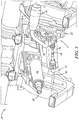
FIG. 1 is a fragmentary perspective view of a portion of a vehicle illustrating a steering assembly and a dashboard mounted transmission shifter; -
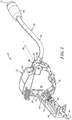
FIG. 2 is a perspective side view of the shifter including a shift lever and shift cable driven the by shifter; -
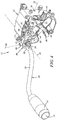
FIG. 3 is a perspective view of an opposite side of the shifter with the shifter shown in a first position; -
FIG. 4 is a view similar toFIG. 3 with the shifter shown in a second position; -
FIG. 5 is an enlarged, fragmentary, perspective view of the shifter; and -
FIG. 6 is an enlarged, fragmentary, perspective view of a shifter including a modified cable actuator interface. - Referring in more detail to the drawings,
FIG. 1 illustrates a portion of a vehicle dashboard orinstrument panel 10 with the interior trim removed to show components mounted behind the trim. In the implementations shown, a vehicletransmission shifter assembly 12 is mounted to theinstrument panel 10 adjacent to asteering assembly 14 including amain shaft 16 anend 18 of which would receive a steering wheel when the vehicle is assembled. Theshifter assembly 12 could also be mounted to the steering assembly 14 (e.g. column mounted) or at a location spaced from the instrument panel or dashboard (e.g. in a center console between two vehicle seats). Theshifter assembly 12 includes a shift member orlever 20 that may be moved by a driver to, through acable 21 associated with the transmission, cause a vehicle transmission to shift among various gears, often including park, neutral, reverse and one or more forward or drive gears. - In more detail, as shown in
FIGS. 2-5 , theshifter assembly 12 includes ahousing 22 or mounting bracket with abase 24 adapted to be fixed to the vehicle such as by suitable fasteners, and one or more wall or supports 26 extending outwardly from the base. Theshift member 20 is coupled to one or more supports 26 at afirst pivot 28 so that the shift member may rotate or pivot about afirst axis 30 relative to thehousing 22 between multiple positions that correspond to the various transmission gears or positions. Thepivot 28 may include or be defined by a pin or shaft coupled to asupport 26. Theshift member 20 may have afirst end 32 spaced from thehousing 22 and adapted to receive or carry ahandle 34 that, in use, is manually gripped to facilitate pivoting changing the position of the shift member. And theshift member 20 may have a second end 36 (FIG. 3 ), where the second end is on the opposite side of thepivot 28 from thefirst end 32. That is, theshift member 20 is pivoted between itsends second end 36 is received within thehousing 22 and, in assembly of the vehicle, is hidden behind an interior trim piece, such as a dashboard or instrument panel covering. - The
shift member 20 may be formed in one piece, or multiple pieces, as desired. In the implementation shown, theshift member 20 includes anelongated rod 38 coupled to abase 40, where the base is coupled to thepivot 28 and extends beyond the pivot to define thesecond end 36 of the shift member. - As best shown in
FIGS. 3-5 , thebase 40 may include or be coupled to other features of theshifter assembly 12. For example, thebase 40 may include or carry afollower 42 on an opposite side of thepivot axis 30 from the handle. Thefollower 42 is shown at an end of aprojection 44 extending away from thepivot 28 so that the follower is moved along an arc as theshift member 20 is pivoted. Thefollower 42 moves along asurface 46 that includes one ormore detents 48. Movement of theshift member 20 relative to thehousing 22 moves thefollower 42 among thedetents 48, and when the follower is in a detent, the transmission is in a corresponding one of its gears. Hence, moving theshift member 20 to move thefollower 42 from one detent 48 to the next detent causes the transmission to shift from one gear to the next. The interaction of thefollower 42 with thedetents 48 provides tactile feedback to a driver indicating when a vehicle transmission shift is complete, for example, so that the driver does not stop moving theshift member 20 midway between two positions which might not cause the desired transmission shift. Thefollower 42, when received in a detent 48, may also help hold or retain the position of theshift member 20 until the shift member is acted upon by someone intended to cause a transmission shift. - In addition to the
follower 42, theshift member base 40 may include acoupler 50 that, in assembly, is connected to acable actuator 52. Thecoupler 50 is located at or adjacent to thesecond end 36 of thebase 40, and may be located within the housing, if desired. In the implementation shown, thecoupler 50 includes apeg 53 extending outwardly from thebase 40, at a desired angle, and is shown as being parallel or generally parallel to thepivot axis 30, although that is just one of many possibilities. Thepeg 53, in the implementation shown, is carried by alink 54 that is coupled to thebase 40 at acoupler pivot 56 so that thelink 54 may rotate relative to thebase 40 about anaxis 58 of the coupler pivot. In the example shown, the coupler pivot axis 58 (FIG. 5 ) is parallel to thefirst pivot axis 30 although that angle may be different in different embodiments. Hence, in at least some implementations, thepeg 53 is not constrained to move along an arc that is a fixed distance from thefirst pivot axis 30; thepeg 53 may also move relative to thefirst pivot axis 30 about thecoupler pivot axis 58. - The
cable actuator 52 includes acoupler 60 that is adapted to mate with theshift member coupler 50 so that the cable actuator is actively driven by movement of theshift member 20. In the example shown, thecable actuator coupler 60 includes asocket 62 or void in which thepeg 53 is received. Because thepeg 53 moves as theshift member 20 moves, thecable actuator 52 is moved as the shift member moves. Arrangements other than thepeg 53 andsocket 62 may be used to couple thebase 40 andcable actuator 52. - The
cable actuator 52 further includes acable connector 64 that is adapted to connect to thetransmission shift cable 21 so that the shift cable is driven as thecable actuator 52 moves. As shown inFIGS. 1 ,2 and5 , theshift cable 21 may be a bowden-style cable having atubular conduit 66 surrounding aninner core 68 that may be pushed and pulled for movement relative to the conduit. Theconduit 66 may be held in place at each of its ends, and thecore 68 may be coupled at one end to thecable actuator 52 and at its other end to a shifting mechanism of the transmission. In the example shown, theconduit 66 may be coupled to abracket 70 extending from thehousing 22, and thecore 68 may be coupled to a connector 72 (FIG. 2 ) that is coupled to thecable connector 64 of thecable actuator 52. In use, movement of theshift member 20 moves thecable actuator 52 which moves theshift cable core 68 relative to theconduit 66 to move the transmission shifting mechanism and cause a transmission shift. - The
cable actuator 52 is coupled to the housing 22 (or an adjacent structure) at asecond pivot 74, spaced from thecoupler 60 and thefirst pivot 28, and preferably also spaced from thecable connector 64. Thecable actuator 52 may include abody 76 that extends between thecoupler 60,second pivot 74 andcable connector 64. The body may be rigid so that all parts of the body move in unison and without movement relative to each other. In one example, thebody 76 is formed from molded plastic so that all features of the body are defined in one continuous body. Thecontinuous body 76 may include overmolded inserts that may be used for strength and to define or reinforce thecoupler 60 or thecable connector 64 as desired. Thebody 76 need not be an entirely homogenous piece of plastic but may nevertheless be a single piece rather than multiple pieces connected together by fasteners, welding or some process done after formation of the body. - In at least some implementations, the
second pivot 74 defines asecond axis 78 that is offset from and not parallel to thefirst axis 30. Also, thecable connector 64 may be oriented to drive theshift cable 21 in a direction that is not parallel to thesecond axis 78. In this way, the direction in which theshift cable 21 is driven may be altered to enable a desired routing of the shift cable within the vehicle. The routing of theshift cable 21 may be constrained by other components, a desired overall size of the shifter assembly, or other factors. - In a conventional transmission shifter assembly, the shift cable is connected to and driven by the shift lever in a direction perpendicular to an axis about which the shift lever pivots (called the first axis in this disclosure). In a typical configuration, the
first axis 30 extends in a cross-car direction, where the cross-car direction is between a driver side and a passenger side of the vehicle, perpendicular to a fore-aft direction which is between the front and rear of the vehicle. Therefore, in a conventional shifter assembly, the shift cable is driven in the fore-aft direction, perpendicular to the cross-car direction. - As will be described in more detail later, in the
shifter assembly 12 disclosed herein, with thecable actuator 52 driven about thesecond pivot 74, theshift cable 21 may be driven in a direction at least 20 degrees offset or inclined (in either direction) relative to the fore-aft direction, and can be driven in the cross-car direction, 90 degrees offset from the fore-aft direction, if desired. When theshifter assembly 12 is mounted to a dashboard orinstrument panel 10, this enables theshift cable 21 to extend from theshifter assembly 12 generally parallel to the instrument panel which may reduce the fore-aft dimension of theshifter assembly 12 which may reduce the amount that the shifter (i.e. adjacent portion of dashboard trim) extends into a passenger compartment of the vehicle or otherwise meet customer location and dimension criteria. - The specific implementation shown in
FIGS. 2-5 drives theshift cable 21 parallel to thefirst pivot axis 30 and perpendicular to thesecond pivot axis 78. To do this, the first and second pivot axes 30, 78 are perpendicular to each other, and thecable connector 64 extends perpendicular to thesecond pivot axis 78 so that the point of connection between thecable connector 64 and theshift cable 21 sweeps a path that is perpendicular to thesecond pivot axis 78. Thesecond pivot axis 78 could be inclined relative to thefirst pivot axis 30 at an angle other than 90 degrees to achieve a different drive direction for theshift cable 21. - As shown in
FIG. 3 , in the implementation shown, the path of movement of the cable connector is arcuate and within animaginary plane 92 that is parallel to thefirst pivot axis 30 and perpendicular to animaginary plane 94 perpendicular to the first pivot axis 30 (and in this example,plane 94 is parallel to the second pivot axis 78). However, theplane 92 may be oriented at other angles to theplane 94 and/or thefirst pivot axis 30 to facilitate routing the shift cable in a desired direction relative to theshifter assembly 12 and vehicle in which the shifter assembly is received. In at least some implementations, theplane 92 may be at an angle of, or off-set by, at least 10 degrees relative to theplane 94, andplane 92 may be oriented in any direction relative to theplane 94 so long as it is not parallel to and is offset by at least 10 degrees relative toplane 94. - To accommodate the multi-pivot motion described above for the
shift member 20 and the cable actuator 52 (e.g. motion ofbase 40 aboutfirst pivot axis 30 and motion ofcable actuator 52 about second pivot axis 78), the interface between these components permits relative motion between the components. In more detail, thesocket 62 is moved along an arc that is spaced a fixed radius from thesecond pivot axis 78, and the coupler pivot axis 58 (at or near thesecond end 38 of the shift member 20) is moved along an arc that is spaced a fixed radius from thefirst pivot axis 30. While the arcuate paths of thecoupler pivot 56 andsocket 62 may intersect at one or two points, the paths are not in the same plane and diverge during some portion of the movement of theshift member 20 andcable actuator 52 move during a transmission shift. Thelink 54 accommodates the divergence between the paths of the base 40 (e.g. at coupler pivot 56) and thesocket 62 in the direction of movement of thecable connector 64. In other words, thelink 54 permits thepeg 53 to move toward or away from thefirst pivot axis 30, in a plane perpendicular to the first pivot axis 30 (in the implementation shown), and in a plane parallel to thesecond pivot axis 78. - Further, with the first and second pivot axes 30, 78 not parallel to each other, the arcuate paths are not in the same plane and are not in planes that are parallel to each other. Accordingly, some relative movement in a direction parallel to the
first pivot axis 30 also occurs as thebase 40 andcable actuator 52 move, and this may be accommodated by the peg and socket, or in other ways, as desired. - In the orientation shown in
FIG. 5 , as theshift member 20 is pivoted counter-clockwise about thefirst pivot axis 30, thecable actuator 52 is pivoted clockwise about thesecond pivot axis 78. This moves the cable connector so that it pulls the associated end of thecore 68 of theshift cable 21 toward thehousing 22 and away from theconduit 66. When theshift member 20 is pivoted in the opposite direction, clockwise about thefirst pivot axis 30, thecable actuator 52 is pivoted counterclockwise about thesecond pivot axis 78. This moves thecable connector 64 so that it pushes the associated end of thecore 66 of theshift cable 21 toward theconduit 66. - In at least some implementations, as the
shift member 20 is moved to cause a transmission shift, at least two degrees of freedom or modes of relative movement are provided between theshift member 20 and thecable actuator 52. In the example shown, there are at least 2 degrees of freedom or modes of relative movement, namely: 1) thelink 54 permits thepeg 53 to move relative to thefirst pivot axis 30 in a plane parallel to thesecond pivot axis 78; and 2) thepeg 53 may rotate or otherwise move within thesocket 62. Such movements accommodate movement of the base 40 about thefirst pivot axis 30 and thecable actuator 52 about thesecond pivot axis 78, where the first and second pivot axes are not parallel. Other arrangements to accommodate the various directions of movement may be utilized, as desired. - Cross-car movement of a portion of the shift member may be permitted, if desired in certain implementations (e.g. to permit some cross-car movement through a gate requiring such movement). In the example shown, the
base 40 includes afirst portion 80 coupled to the shift member and the pivot via aboss 82 and asecond portion 84 that is pivoted relative to the first portion about asecondary pivot 86 having apivot axis 88. A biasing member, such as aspring 90, may be provided to yieldably bias thesecond portion 84 against thefirst portion 80. - One alternate arrangement of a
shifter assembly 100 is shown inFIG. 6 . Theshifter assembly 100 may be arranged and may function in much the same manner as theshifter assembly 12. The description ofFIG. 6 will be directed to the coupling of the shift member to the cable actuator. For ease of understanding and description, some components that are the same in theshifter assembly 100 as in theshifter assembly 12 are labeled inFIG. 6 with the reference numeral used with regard to theshifter assembly 12. - In this example, a
coupler 101 of acable actuator 103 may include aball 102 carried by anextension 104 of thecable actuator 103. To receive and couple with theball 102, theshift member base 108 may include a socket orpocket 110. As theshift member 120 is moved to cause a transmission shift, thebase 108 engages theball 102 and drives thecable actuator 103 for movement about thesecond pivot axis 78. Theball 102 may move within thepocket 110 and relative to the base 108 as the path of the ball diverges from the path of the pocket. The base 108 may include asecond portion 112 that may pivot about a cross-car orsecondary pivot 86, if desired, and a biasingmember 90 may also be provided if desired. The remainder of the components and the operation of thisembodiment shifter assembly 100 may be the same as set forth above with regard toFIGS. 1-5 . - In some implementations, the divergence of the paths of the
coupler 56 and thesocket 62 in this direction may be accommodated at least partially by permitting a corresponding movement of a portion of the base 40 to which thecoupler pivot 56 is connected. For example, thebase 40 may be formed in more than one piece with a first portion coupled to therod 30 and thefirst pivot 28, and a second portion coupled to the first portion at a secondary pivot. The secondary pivot may have an axis at an angle greater than zero relative to the first pivot axis to permit the second portion of the base 40 to pivot relative to thefirst pivot axis 30 and provide an additional component of motion for the coupler or socket. A biasing member, such as a spring, may act on and yieldably bias the second portion of the base 40 in a direction tending to keep thepeg 53 received within thesocket 62. While described with reference to the embodiment shown inFIGS. 1-5 , the same concept may be used with the embodiment ofFIG. 6 wherein a portion of the base that includes the pocket may pivot relative to another portion of the base coupled to the first pivot. - While the forms of the invention herein disclosed constitute presently preferred embodiments, many others are possible. For example, while shown and described with regard to embodiments wherein the second pivot axis is perpendicular to the first pivot axis, other angles may be provided between the pivot axes to enable different routing of the shift cable relative to the housing and vehicle. It is not intended herein to mention all the possible equivalent forms or ramifications of the invention. It is understood that the terms used herein are merely descriptive, rather than limiting, and that various changes may be made without departing from the spirit or scope of the invention.
Claims (15)
- A shifter for a vehicle transmission, comprising:a shift member (20) pivoted at a first pivot (28) for movement between multiple positions corresponding to multiple transmission gears; anda cable actuator (52, 103) pivoted at a second pivot (56), driven for movement about the second pivot (56) by movement of the shift member (20) about the first pivot (28) and having a cable connector (64) adapted to be connected to a shift cable (21) associated with the vehicle transmission, wherein the first pivot (28) is arranged about a first axis (30) and the second pivot (52) is arranged about a second axis (78) that is not parallel to the first axis (30).
- The shifter of claim 1 wherein the cable actuator (52) includes a cable connector (64) adapted to be connected to the shift cable (21), and wherein in particular the path of travel of the cable connector (64) is at an angle of at least 10 degrees relative to a plane perpendicular to the first axis (30).
- The shifter of claim 1 or 2 which also comprises a shift (21) cable having a core (68) slidably received within a conduit (66) and wherein the core (68) is connected to the cable connector (64) and movement of the cable actuator (52) about the second pivot (78) moves the core (68) relative to the conduit (66).
- The shifter of any preceding claim wherein the cable actuator (52) includes a coupler (60) that is engaged by the shift member (20) to move the cable actuator (52) as the shift member (20) moves during a transmission shift.
- The shifter of claim 4 wherein the connection between the coupler and the shift member (20) accommodates movement of the coupler (60) relative to the shift member (20) as the shift member (20) moves.
- The shifter of any preceding claim wherein the shift member (20) includes a coupling element that is movable relative to the cable actuator (52) to permit the cable actuator (52) to pivot about the second axis (78) while the shift member pivots about the first axis (30).
- The shifter of any preceding claim wherein one of the shift member (20) and the cable actuator includes a peg (53) and the other of the shift member and the cable actuator (52) includes a socket (62) in which the peg (53) is received.
- The shifter of claim 7 wherein one of the shift member (20) and the cable actuator (103) includes a ball (102) and the other of the shift member (20) and the cable actuator includes a pocket (110) in which the ball (102) is received so that the ball (102) may slide within the pocket (110).
- The shifter of any preceding claim wherein the second axis (78) is perpendicular to the first axis (30).
- The shifter of any preceding claim wherein a path of movement of the cable connector (64) is within an imaginary plane (92) that is at an angle to an imaginary plane (94) that is perpendicular to the first axis (30).
- The shifter of claim 10 wherein the angle is at least 10 degrees.
- A shifter for a vehicle transmission, comprising:a shift member (20) pivoted at a first pivot (28) for movement between multiple positions corresponding to multiple transmission gears;a cable actuator (52, 103) pivoted at a second pivot (56), driven for movement about the second pivot (56) by movement of the shift member (20) about the first pivot (28) and having a cable connector (64), wherein the first pivot (28) is arranged about a first axis (30) and the second pivot (52) is arranged about a second axis (78) that is not parallel to the first axis (30); anda shift cable (21) having a core (68) received within a conduit (66) and movable relative to the conduit (66), wherein the core (68) is connected to the cable connector (64) and movement of the cable actuator (64) about the second pivot (58) moves the core (68) relative to the conduit (66) and wherein the shift cable (21) is adapted to be connected to a transmission shift mechanism so that movement of the core (68) causes a transmission shift when the shifter is installed on the vehicle.
- The shifter of claim 12 wherein the cable actuator (52, 103) includes a coupler that is engaged by the shift member (20) to move the cable actuator (52, 103) as the shift member (20) moves during a transmission shift.
- The shifter of claim 13 wherein the connection between the coupler and the shift member (20) accommodates movement of the coupler relative to the shift member as the shift member (20) moves.
- The shifter of claim 12 wherein a path of movement of the cable actuator (52) is arcuate and within an imaginary plane (92) that is at an angle to an imaginary plane (94) that is perpendicular to the first axis (30).
Applications Claiming Priority (1)
| Application Number | Priority Date | Filing Date | Title |
|---|---|---|---|
| US15/156,840 US10072751B2 (en) | 2016-05-17 | 2016-05-17 | Vehicle shifter with offset cable actuator |
Publications (1)
| Publication Number | Publication Date |
|---|---|
| EP3246599A1 true EP3246599A1 (en) | 2017-11-22 |
Family
ID=58549094
Family Applications (1)
| Application Number | Title | Priority Date | Filing Date |
|---|---|---|---|
| EP17166932.8A Withdrawn EP3246599A1 (en) | 2016-05-17 | 2017-04-18 | Vehicle shifter with offset cable actuator |
Country Status (3)
| Country | Link |
|---|---|
| US (1) | US10072751B2 (en) |
| EP (1) | EP3246599A1 (en) |
| CN (1) | CN107387534A (en) |
Citations (4)
| Publication number | Priority date | Publication date | Assignee | Title |
|---|---|---|---|---|
| EP0084751A1 (en) * | 1982-01-20 | 1983-08-03 | Automobiles Peugeot | Gear change hand control with locking of the reverse |
| US4934208A (en) * | 1988-11-09 | 1990-06-19 | Chrysler Corporation | Vehicle transmission shifter |
| FR2856961A1 (en) * | 2003-07-04 | 2005-01-07 | Renault Sa | EXTERNAL GEARBOX CONTROL DEVICE FOR A VEHICLE EDGE BOARD |
| WO2006097648A1 (en) * | 2005-03-17 | 2006-09-21 | Renault S.A.S. | Device for offset control of an automatic gearbox allowing manual control |
Family Cites Families (20)
| Publication number | Priority date | Publication date | Assignee | Title |
|---|---|---|---|---|
| US4733573A (en) * | 1986-05-23 | 1988-03-29 | General Motors Corporation | Transmission shift control mechanism |
| JP3358984B2 (en) * | 1997-12-26 | 2002-12-24 | 株式会社アツミテック | Column shift device for automatic transmission |
| US6327928B1 (en) * | 1998-10-23 | 2001-12-11 | Brian C. Bowerman | Steering column shifter assembly |
| KR20030015035A (en) | 2001-08-14 | 2003-02-20 | 현대자동차주식회사 | noise reduction structure of column type shifting apparatus for an automatic transmission |
| EP1355088B1 (en) * | 2002-04-20 | 2008-12-10 | Kia Motors Corporation | Column-type shift lever structure for automatic transmission with manual shifting mode |
| CN2635429Y (en) | 2003-07-08 | 2004-08-25 | 钱国耀 | Motor vehicle speed changing operator |
| JP2005104378A (en) * | 2003-09-30 | 2005-04-21 | Fuji Kiko Co Ltd | Shock absorption structure of column shift device |
| KR100505720B1 (en) | 2003-12-17 | 2005-08-03 | 현대모비스 주식회사 | column shift type shift linkage to choose between auto and manual mode for a transmission |
| CN100443780C (en) * | 2005-12-28 | 2008-12-17 | 雅马哈发动机株式会社 | Shift actuator, vehicle with shift actuator and method of installing shift actuator |
| JP4733590B2 (en) | 2006-08-08 | 2011-07-27 | 株式会社東海理化電機製作所 | Column shift device |
| US9043100B2 (en) * | 2007-08-17 | 2015-05-26 | Steering Solutions Ip Holding Corporation | Transmission shift assembly for a vehicle and a method of monitoring the same |
| US20090211388A1 (en) * | 2008-02-21 | 2009-08-27 | Patrick Eugene Meysenburg | Pull-pull type shifter control cable |
| US7909731B2 (en) | 2008-08-06 | 2011-03-22 | Admiral Tool & Manufacturing Of Michigan | Vehicle shift module assembly |
| US20100275715A1 (en) * | 2009-05-01 | 2010-11-04 | Dura Global Technologies, Inc. | Shift cable assembly and connector therefor |
| DE102010030808A1 (en) * | 2010-06-04 | 2011-12-08 | Zf Friedrichshafen Ag | Actuating device for e.g. mechanical actuation of parking brake of motor vehicle, has gear rods and step-up gear wheel with reverse direction arranged between transmission end of gear selector lever and transmission unit |
| KR101271797B1 (en) | 2010-09-02 | 2013-06-07 | 대성전기공업 주식회사 | Column Type Transmission Lever Assembly |
| DE102012221525A1 (en) * | 2011-11-29 | 2013-05-29 | Steering Solutions IP Holding Corp. | Transmission shift assembly for vehicle, has controller which is provided to control actuator to move shift position element to predetermined gear position |
| KR101393985B1 (en) * | 2012-12-06 | 2014-05-12 | 현대자동차주식회사 | Shift lever operating force transferring device of manual transmission |
| US9476500B2 (en) * | 2013-09-30 | 2016-10-25 | Kongsberg Driveline Systems I, Inc | Manual gear shifter assembly |
| CN204567299U (en) | 2014-11-28 | 2015-08-19 | 中国第一汽车股份有限公司 | A kind of normal control vehicle cane type shift steering unit |
-
2016
- 2016-05-17 US US15/156,840 patent/US10072751B2/en active Active
-
2017
- 2017-04-18 EP EP17166932.8A patent/EP3246599A1/en not_active Withdrawn
- 2017-05-16 CN CN201710343039.7A patent/CN107387534A/en active Pending
Patent Citations (4)
| Publication number | Priority date | Publication date | Assignee | Title |
|---|---|---|---|---|
| EP0084751A1 (en) * | 1982-01-20 | 1983-08-03 | Automobiles Peugeot | Gear change hand control with locking of the reverse |
| US4934208A (en) * | 1988-11-09 | 1990-06-19 | Chrysler Corporation | Vehicle transmission shifter |
| FR2856961A1 (en) * | 2003-07-04 | 2005-01-07 | Renault Sa | EXTERNAL GEARBOX CONTROL DEVICE FOR A VEHICLE EDGE BOARD |
| WO2006097648A1 (en) * | 2005-03-17 | 2006-09-21 | Renault S.A.S. | Device for offset control of an automatic gearbox allowing manual control |
Also Published As
| Publication number | Publication date |
|---|---|
| US20170335950A1 (en) | 2017-11-23 |
| CN107387534A (en) | 2017-11-24 |
| US10072751B2 (en) | 2018-09-11 |
Similar Documents
| Publication | Publication Date | Title |
|---|---|---|
| EP1918615B1 (en) | Modular automatic transmission shifter | |
| US7640823B2 (en) | Integrated automatic manual transmission lever-type shift selector | |
| CN101905653B (en) | Shifter for automatic transmission | |
| US20110237176A1 (en) | Air conditioner register | |
| EP2525120A2 (en) | Vehicle shifter | |
| US20150219207A1 (en) | Transmission shift selector assembly | |
| US10247299B2 (en) | Shift device | |
| JP2009101914A (en) | Shift lever device | |
| US11285925B2 (en) | Foldable brake pedal apparatus for autonomous driving vehicle | |
| US10072751B2 (en) | Vehicle shifter with offset cable actuator | |
| US20170328464A1 (en) | Shift device | |
| US6272944B1 (en) | Shift lever system of automatic transmission for vehicle | |
| JP4388342B2 (en) | Shift lever device for automatic transmission | |
| JP4313642B2 (en) | Shift lever device and shift lever device mounting structure | |
| US8250943B2 (en) | Actuating device for motor vehicle transmissions | |
| US20050217404A1 (en) | Selector apparatus of an automatic transmission of vehicle | |
| JP7070734B1 (en) | Transmission actuator of automatic vehicle driving device | |
| US20240035561A1 (en) | Shift device | |
| US11226036B2 (en) | Shift device | |
| JP6708977B2 (en) | Vehicle shift device | |
| EP3124310B1 (en) | Lever device | |
| JP2006248479A (en) | Shift lever device for automatic transmission | |
| JP2021020553A (en) | Automatic transmission operating device | |
| JP2017206156A (en) | Shift device | |
| EP1640641A2 (en) | Vehicular automatic transmission |
Legal Events
| Date | Code | Title | Description |
|---|---|---|---|
| PUAI | Public reference made under article 153(3) epc to a published international application that has entered the european phase |
Free format text: ORIGINAL CODE: 0009012 |
|
| STAA | Information on the status of an ep patent application or granted ep patent |
Free format text: STATUS: THE APPLICATION HAS BEEN PUBLISHED |
|
| AK | Designated contracting states |
Kind code of ref document: A1 Designated state(s): AL AT BE BG CH CY CZ DE DK EE ES FI FR GB GR HR HU IE IS IT LI LT LU LV MC MK MT NL NO PL PT RO RS SE SI SK SM TR |
|
| AX | Request for extension of the european patent |
Extension state: BA ME |
|
| STAA | Information on the status of an ep patent application or granted ep patent |
Free format text: STATUS: REQUEST FOR EXAMINATION WAS MADE |
|
| 17P | Request for examination filed |
Effective date: 20180403 |
|
| RBV | Designated contracting states (corrected) |
Designated state(s): AL AT BE BG CH CY CZ DE DK EE ES FI FR GB GR HR HU IE IS IT LI LT LU LV MC MK MT NL NO PL PT RO RS SE SI SK SM TR |
|
| GRAP | Despatch of communication of intention to grant a patent |
Free format text: ORIGINAL CODE: EPIDOSNIGR1 |
|
| STAA | Information on the status of an ep patent application or granted ep patent |
Free format text: STATUS: GRANT OF PATENT IS INTENDED |
|
| RIC1 | Information provided on ipc code assigned before grant |
Ipc: F16H 59/02 20060101ALN20200205BHEP Ipc: F16H 59/08 20060101AFI20200205BHEP |
|
| INTG | Intention to grant announced |
Effective date: 20200309 |
|
| STAA | Information on the status of an ep patent application or granted ep patent |
Free format text: STATUS: THE APPLICATION IS DEEMED TO BE WITHDRAWN |
|
| 18D | Application deemed to be withdrawn |
Effective date: 20200721 |