EP3245597B1 - End-to-end-spracherkennung - Google Patents
End-to-end-spracherkennung Download PDFInfo
- Publication number
- EP3245597B1 EP3245597B1 EP16869302.6A EP16869302A EP3245597B1 EP 3245597 B1 EP3245597 B1 EP 3245597B1 EP 16869302 A EP16869302 A EP 16869302A EP 3245597 B1 EP3245597 B1 EP 3245597B1
- Authority
- EP
- European Patent Office
- Prior art keywords
- training
- utterance
- model
- speech
- layers
- Prior art date
- Legal status (The legal status is an assumption and is not a legal conclusion. Google has not performed a legal analysis and makes no representation as to the accuracy of the status listed.)
- Active
Links
Images




Classifications
-
- G—PHYSICS
- G10—MUSICAL INSTRUMENTS; ACOUSTICS
- G10L—SPEECH ANALYSIS TECHNIQUES OR SPEECH SYNTHESIS; SPEECH RECOGNITION; SPEECH OR VOICE PROCESSING TECHNIQUES; SPEECH OR AUDIO CODING OR DECODING
- G10L15/00—Speech recognition
- G10L15/08—Speech classification or search
- G10L15/16—Speech classification or search using artificial neural networks
-
- G—PHYSICS
- G06—COMPUTING OR CALCULATING; COUNTING
- G06N—COMPUTING ARRANGEMENTS BASED ON SPECIFIC COMPUTATIONAL MODELS
- G06N3/00—Computing arrangements based on biological models
- G06N3/02—Neural networks
- G06N3/04—Architecture, e.g. interconnection topology
- G06N3/044—Recurrent networks, e.g. Hopfield networks
-
- G—PHYSICS
- G06—COMPUTING OR CALCULATING; COUNTING
- G06N—COMPUTING ARRANGEMENTS BASED ON SPECIFIC COMPUTATIONAL MODELS
- G06N3/00—Computing arrangements based on biological models
- G06N3/02—Neural networks
- G06N3/04—Architecture, e.g. interconnection topology
- G06N3/044—Recurrent networks, e.g. Hopfield networks
- G06N3/0442—Recurrent networks, e.g. Hopfield networks characterised by memory or gating, e.g. long short-term memory [LSTM] or gated recurrent units [GRU]
-
- G—PHYSICS
- G06—COMPUTING OR CALCULATING; COUNTING
- G06N—COMPUTING ARRANGEMENTS BASED ON SPECIFIC COMPUTATIONAL MODELS
- G06N3/00—Computing arrangements based on biological models
- G06N3/02—Neural networks
- G06N3/04—Architecture, e.g. interconnection topology
- G06N3/0464—Convolutional networks [CNN, ConvNet]
-
- G—PHYSICS
- G06—COMPUTING OR CALCULATING; COUNTING
- G06N—COMPUTING ARRANGEMENTS BASED ON SPECIFIC COMPUTATIONAL MODELS
- G06N3/00—Computing arrangements based on biological models
- G06N3/02—Neural networks
- G06N3/08—Learning methods
- G06N3/084—Backpropagation, e.g. using gradient descent
-
- G—PHYSICS
- G06—COMPUTING OR CALCULATING; COUNTING
- G06N—COMPUTING ARRANGEMENTS BASED ON SPECIFIC COMPUTATIONAL MODELS
- G06N3/00—Computing arrangements based on biological models
- G06N3/02—Neural networks
- G06N3/08—Learning methods
- G06N3/09—Supervised learning
-
- G—PHYSICS
- G10—MUSICAL INSTRUMENTS; ACOUSTICS
- G10L—SPEECH ANALYSIS TECHNIQUES OR SPEECH SYNTHESIS; SPEECH RECOGNITION; SPEECH OR VOICE PROCESSING TECHNIQUES; SPEECH OR AUDIO CODING OR DECODING
- G10L15/00—Speech recognition
- G10L15/02—Feature extraction for speech recognition; Selection of recognition unit
-
- G—PHYSICS
- G10—MUSICAL INSTRUMENTS; ACOUSTICS
- G10L—SPEECH ANALYSIS TECHNIQUES OR SPEECH SYNTHESIS; SPEECH RECOGNITION; SPEECH OR VOICE PROCESSING TECHNIQUES; SPEECH OR AUDIO CODING OR DECODING
- G10L15/00—Speech recognition
- G10L15/06—Creation of reference templates; Training of speech recognition systems, e.g. adaptation to the characteristics of the speaker's voice
- G10L15/063—Training
-
- G—PHYSICS
- G10—MUSICAL INSTRUMENTS; ACOUSTICS
- G10L—SPEECH ANALYSIS TECHNIQUES OR SPEECH SYNTHESIS; SPEECH RECOGNITION; SPEECH OR VOICE PROCESSING TECHNIQUES; SPEECH OR AUDIO CODING OR DECODING
- G10L15/00—Speech recognition
- G10L15/08—Speech classification or search
- G10L15/14—Speech classification or search using statistical models, e.g. Hidden Markov Models [HMMs]
-
- G—PHYSICS
- G10—MUSICAL INSTRUMENTS; ACOUSTICS
- G10L—SPEECH ANALYSIS TECHNIQUES OR SPEECH SYNTHESIS; SPEECH RECOGNITION; SPEECH OR VOICE PROCESSING TECHNIQUES; SPEECH OR AUDIO CODING OR DECODING
- G10L15/00—Speech recognition
- G10L15/08—Speech classification or search
- G10L15/18—Speech classification or search using natural language modelling
- G10L15/183—Speech classification or search using natural language modelling using context dependencies, e.g. language models
-
- G—PHYSICS
- G10—MUSICAL INSTRUMENTS; ACOUSTICS
- G10L—SPEECH ANALYSIS TECHNIQUES OR SPEECH SYNTHESIS; SPEECH RECOGNITION; SPEECH OR VOICE PROCESSING TECHNIQUES; SPEECH OR AUDIO CODING OR DECODING
- G10L15/00—Speech recognition
- G10L15/08—Speech classification or search
- G10L15/18—Speech classification or search using natural language modelling
- G10L15/183—Speech classification or search using natural language modelling using context dependencies, e.g. language models
- G10L15/19—Grammatical context, e.g. disambiguation of the recognition hypotheses based on word sequence rules
- G10L15/197—Probabilistic grammars, e.g. word n-grams
-
- G—PHYSICS
- G10—MUSICAL INSTRUMENTS; ACOUSTICS
- G10L—SPEECH ANALYSIS TECHNIQUES OR SPEECH SYNTHESIS; SPEECH RECOGNITION; SPEECH OR VOICE PROCESSING TECHNIQUES; SPEECH OR AUDIO CODING OR DECODING
- G10L25/00—Speech or voice analysis techniques not restricted to a single one of groups G10L15/00 - G10L21/00
- G10L25/03—Speech or voice analysis techniques not restricted to a single one of groups G10L15/00 - G10L21/00 characterised by the type of extracted parameters
- G10L25/18—Speech or voice analysis techniques not restricted to a single one of groups G10L15/00 - G10L21/00 characterised by the type of extracted parameters the extracted parameters being spectral information of each sub-band
-
- G—PHYSICS
- G10—MUSICAL INSTRUMENTS; ACOUSTICS
- G10L—SPEECH ANALYSIS TECHNIQUES OR SPEECH SYNTHESIS; SPEECH RECOGNITION; SPEECH OR VOICE PROCESSING TECHNIQUES; SPEECH OR AUDIO CODING OR DECODING
- G10L25/00—Speech or voice analysis techniques not restricted to a single one of groups G10L15/00 - G10L21/00
- G10L25/03—Speech or voice analysis techniques not restricted to a single one of groups G10L15/00 - G10L21/00 characterised by the type of extracted parameters
- G10L25/21—Speech or voice analysis techniques not restricted to a single one of groups G10L15/00 - G10L21/00 characterised by the type of extracted parameters the extracted parameters being power information
-
- G—PHYSICS
- G10—MUSICAL INSTRUMENTS; ACOUSTICS
- G10L—SPEECH ANALYSIS TECHNIQUES OR SPEECH SYNTHESIS; SPEECH RECOGNITION; SPEECH OR VOICE PROCESSING TECHNIQUES; SPEECH OR AUDIO CODING OR DECODING
- G10L15/00—Speech recognition
- G10L15/06—Creation of reference templates; Training of speech recognition systems, e.g. adaptation to the characteristics of the speaker's voice
- G10L15/063—Training
- G10L2015/0635—Training updating or merging of old and new templates; Mean values; Weighting
Definitions
- the present disclosure relates to speech recognition. More particularly, the present disclosure relates to systems and methods for end-to-end speech recognition and may be used for vastly different languages.
- ASR Automatic Speech Recognition
- Neural networks emerged as an attractive acoustic modeling approach in ASR in the late 1980s. Since then, neural networks have been used in many aspects of speech recognition such as phoneme classification, isolated word recognition, and speaker adaptation. Many aspects of speech recognition have been taken over by a deep learning method involving long short term memory (LSTM) and recurrent neural network (RNN).
- LSTM long short term memory
- RNN recurrent neural network
- Awni Hannun et al “Deep Speech: Scaling up end-to-end speech recognition", 19 December 2014, retrieved from the Internet: URL:https://arxiv.org/pdf/1412.5567.pdf describes a speech recognition system having a recurrent neural network (RNN) trained to ingest speech spectrograms and generate text transcriptions.
- RNN recurrent neural network
- Sergey Ioffe et al “Batch Normalization: Accelerating Deep Network Training by Reducing Internal Covariate Shift", 2 March 2015, pages 1-11, retrieved from the Internet URL:http://arixv.org/pdf/1502.03167v3.pdf describes that the batch normalization comprises computing mean and variance of a minibatch.
- CNN Convolutional Neural Networks
- LSTM Long Short-term Memories
- DNN Deep Neural Networks
- Embodiments of the present disclosure provide a computer-implemented method for training a transcription model for speech transcription according to claim 1 and a non-transitory computer-readable medium or media according to claim 10.
- Preferred embodiments of the invention are defined in the appended dependent claims.
- connections between components or systems within the figures are not intended to be limited to direct connections. Rather, data between these components may be modified, re-formatted, or otherwise changed by intermediary components. Also, additional or fewer connections may be used. It shall also be noted that the terms “coupled,” “connected,” or “communicatively coupled” shall be understood to include direct connections, indirect connections through one or more intermediary devices, and wireless connections.
- Embodiments of the systems (which may be referred to generally as Deep Speech 2, Deep Speech 2 ASR, Deep Speech 2 ASR pipeline, or DS2) approach or exceed the accuracy of Amazon Mechanical Turk human workers on several benchmarks, work in multiple languages with little modification, and are deployable in a production setting.
- embodiments represent a significant step towards a single ASR system that addresses the entire range of speech recognition contexts handled by humans. Since embodiments are built on end-to-end deep learning, a spectrum of deep learning techniques can be deployed.
- the deep learning techniques may include capturing large training sets, training larger models with high performance computing, and methodically exploring the space of neural network architectures. It is shown that through these techniques, error rates of some previous end-to-end system may be reduced for English by up to 43%, and can also recognize Mandarin speech with high accuracy.
- Networks comprising many layers of recurrent connections, convolutional filters, and nonlinearities were considered, as well as the impact of a specific instances of Batch Normalization (which may be referred to generally as BatchNorm) applied to RNNs. Not only were embodiments of networks found that produced much better predictions than those previously, but also embodiments of recurrent models were found that can be deployed in a production setting with little or no significant loss in accuracy.
- BatchNorm Batch Normalization
- Embodiments of a data capturing pipeline are described herein, which have enabled creating larger datasets than what has typically been used to train speech recognition systems.
- an English speech system was trained on 11,940 hours of speech, while a Mandarin system was trained on 9,400 hours.
- data synthesis was used to further augment the data during training.
- SGD stochastic gradient descent
- optimization are described herein for a single GPU as well as improvements to scalability for multiple GPUs, which were used, in embodiments, to make the entire system more efficient.
- optimization techniques typically found in High Performance Computing were employed to improve scalability. These optimizations include a fast implementation of the CTC loss function on the GPU and a custom memory allocator. Carefully integrated compute nodes and a custom implementation of all-reduce were also used to accelerate inter-GPU communication.
- Overall the system sustained approximately 50 teraFLOP/second when trained on 16 GPUs. This amounts to 3 teraFLOP/second per GPU which is about 50% of peak theoretical performance. This scalability and efficiency cuts training times down to 3 to 5 days, allowing iterating more quickly on models and datasets.
- Embodiments of the system were benchmarked on several publicly-available test sets and the results are compared to a previous end-to-end system.
- a goal is to eventually reach human-level performance not only on specific benchmarks, where it is possible to improve through dataset-specific tuning, but on a range of benchmarks that reflects a diverse set of scenarios.
- the performance of human workers was also measured on each benchmark for comparison. It was found that embodiments of the Deep Speech 2 system outperformed humans in some commonly-studied benchmarks and has significantly closed the gap in much harder cases.
- the performance of a Mandarin embodiment of the system on internal datasets that reflect real-world product scenarios is also shown.
- Deep learning systems can be challenging to deploy at scale. Large neural networks are computationally expensive to evaluate for each user utterance, and some network architectures are more easily deployed than others.
- a batching scheme suitable for GPU hardware (which may be generally referred to as Batch Dispatch) was also developed and employed that leads to an efficient, real-time implementation of an embodiment of the Mandarin engine on production servers.
- the implementation embodiment achieved a 98th percentile compute latency of 67 milliseconds, while the server was loaded with 10 simultaneous audio streams.
- Section 2 describes embodiments of the architectural and algorithmic improvements to embodiments of the model, and Section 4 explains examples of how to efficiently compute them. Also discussed herein in Section 5 is the training data and steps taken to further augment the training set. An analysis of results for embodiments of the DS2 system in English and Mandarin is presented in Section 6. Section 7 provides a description of the steps to deploy an embodiment of DS2 to real users.
- Feed-forward neural network acoustic models were explored more than 20 years ago. Recurrent neural networks and networks with convolution were also used in speech recognition around the same time. More recently, deep neural networks (DNNs) have become a fixture in the ASR pipeline with almost all state-of-the-art speech work containing some form of deep neural network. Convolutional networks have also been found beneficial for acoustic models. Recurrent neural networks, typically LSTMs, are just beginning to be deployed in state-of-the art recognizers and work well together with convolutional layers for the feature extraction. Models with both bidirectional and unidirectional recurrence have been explored as well.
- End-to-end speech recognition is an active area of research, showing compelling results when used to re-score the outputs of a deep neural network (DNN)-hidden Markov model (HMM) (DNN-HMM) and standalone.
- DNN deep neural network
- HMM hidden Markov model
- Two methods are currently typically used to map variable length audio sequences directly to variable length transcriptions.
- the RNN encoder-decoder paradigm uses an encoder RNN to map the input to a fixed-length vector and a decoder network to expand the fixed-length vector into a sequence of output predictions. Adding an attentional mechanism to the decoder greatly improves performance of the system, particularly with long inputs or outputs.
- the RNN encoder-decoder with attention performs well both in predicting phonemes or graphemes.
- the other commonly used technique for mapping variable-length audio input to variable-length output is the CTC loss function coupled with an RNN to model temporal information.
- the CTC-RNN model performs well in end-to-end speech recognition with grapheme outputs.
- the CTC-RNN model has also been shown to work well in predicting phonemes, though a lexicon is still needed in this case.
- GMM Gaussian Mixture Model
- HMM hiddenden Markov model
- Data augmentation has been highly effective in improving the performance of deep learning in computer vision. This has also been shown to improve speech systems.
- Techniques used for data augmentation in speech range from simple noise addition to complex perturbations such as simulating changes to the vocal tract length and rate of speech of the speaker.
- existing speech systems can also be used to bootstrap new data collection.
- one speech engine was used to align and filter a thousand hours of read speech.
- a heavy-weight offline speech recognizer was used to generate transcriptions for tens of thousands of hours of speech. This is then passed through a filter and used to re-train the recognizer, resulting in significant performance gains. Inspiration is draw from these approaches in bootstrapping larger datasets and data augmentation to increase the effective amount of labeled data for the system.
- a simple multi-layer model with a single recurrent layer cannot exploit thousands of hours of labelled speech. In order to learn from datasets this large, the model capacity is increased via depth.
- architectures with up to 11 layers, including many bidirectional recurrent layers and convolutional layers, were explored. These models have nearly 8 times the amount of computation per data example as the models in prior approaches making fast optimization and computation critical.
- Figure 1 shows an exemplary architecture for an end-to-end deep learning system according to embodiments of the present disclosure.
- the architecture 100 comprises a recurrent neural network (RNN) model trained to ingest speech spectrograms 105 and generate text transcriptions.
- the model 100 comprises several layers including one or more convolutional layers 110, followed by one or more recurrent layers (which may be gated recurrent unit (GRU) layers) 115, followed by one or more fully connected layers 120.
- the convolutional layers may be invariance convolution layers. For example, convolution layers may both in the time and frequency domain (2D invariance) and in the time (or frequency) only domain (1D invariance).
- the architecture of the DS2 system depicted in Figure 1 was used to train on both English and Mandarin speech. In embodiments, variants of this architecture may be used. For example, in embodiments, the number of convolutional layers was varied from 1 to 3 and the number of recurrent or GRU layers was varied from 1 to 7.
- the RNN model may be trained using one or more Connectionist Temporal Classification (CTC) layers 125.
- the CTC layer may include a softmax layer.
- Batch Normalization is used for one or more minibatches of utterances in the convolutional layer(s) 110, the recurrent layers 115, and/or the fully connected layer(s) 120 to accelerate training for such networks since they often suffer from optimization issues.
- a minibatch is a collection of utterances that may be grouped together according to one or more criteria and are processed together as a group or batch.
- the input audio may be normalized to make the total power consistent among the one or more minibatches to accelerate training the model or set of models. The details of Batch Normalization are described in section 3.2.
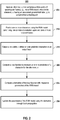
- Figure 2 depicts a method for training an RNN model according to embodiments of the present disclosure.
- a spectrogram of power normalized audio clips is used as the features to the system, so x ( i ) t,p denotes the power of the p 'th frequency bin in the audio frame at time t .
- a goal of the RNN is to convert an input sequence x ( i ) into a final transcription y ( i ) .
- the superscripts are dropped and x is used to denote a chosen utterance and y the corresponding label.
- the utterance, x comprising a time-series of spectrogram frames, x ( t ) , is inputted (205) into a recurrent neural network (RNN) model, wherein the utterance, x , and an associated label, y , are sampled from a training set.
- RNN recurrent neural network
- the RNN model outputs of graphemes of each language.
- the RNN makes a prediction (210) over characters, p(l t
- l t is either a character in the alphabet or the blank symbol.
- l t is either a character in the alphabet or the blank symbol.
- l t is either a character in the alphabet or the blank symbol.
- l t is either a character in the alphabet or the blank symbol.
- l t is either a character in the alphabet or the blank symbol.
- l t is either a character in the alphabet or the blank symbol.
- l t is either a character in the alphabet or the blank symbol.
- l t is either a character in the alphabet or the blank symbol.
- l t is either a character in the alphabet or the blank symbol.
- l t is either a character in the alphabet or the blank symbol.
- l t is
- the hidden representation at layer l is given by h l with the convention that h o represents the input x .
- the bottom of the network is one or more convolutions over the time dimension of the input.
- a clipped rectified-linear (ReLU) function ⁇ ( x ) min ⁇ max ⁇ x , 0 ⁇ , 20 ⁇ is used as the nonlinearity.
- the first are sub-sampled by striding the convolution by s frames. The goal is to shorten the number of time-steps for the recurrent layers above.
- bidirectional recurrent layers 115 which may be directional recurrent layers or gated recurrent units (GTUs).
- GTUs gated recurrent units
- the input-hidden weights are shared for both directions of the recurrence.
- the function g ( ⁇ ) can also represent more complex recurrence operations, such as Long Short-Term Memory (LSTM) units and gated recurrent units (GRUs).
- LSTM Long Short-Term Memory
- GRUs gated recurrent units
- x exp w k L ⁇ h t L ⁇ 1 ⁇ j exp w j L ⁇ h t L ⁇ 1 where k represents one character in the alphabet (which includes the blank symbol).
- the model is trained using a CTC loss function (125). Given an input-output pair ( x, y ) and the current parameters of the network ⁇ , the loss function y; ⁇ ) and its derivative with respect to the parameters of the network ⁇ ⁇ L x , y ; ⁇ are computed (220). This derivative is then used to update (230) the network parameters through the backpropagation through time algorithm.
- Batch Normalization (which may be referred to generally as BatchNorm) was explored as a technique to accelerate training for such networks since they often suffer from optimization issues.
- the bias b of the layer is dropped since its effect is cancelled by mean removal.
- the learnable parameters ⁇ and ⁇ allow the layer to scale and shift each hidden unit as desired.
- the constant ⁇ is small and positive, and is included for numerical stability.
- the mean and variance are estimated over all the temporal output units for a given convolutional filter on a minibatch.
- the BatchNorm transformation reduces internal covariate shift by insulating a given layer from potentially uninteresting changes in the mean and variance of the layer's input.
- the mean and variance statistics are accumulated over a single time-step of a minibatch.
- the sequential dependence between time-steps prevents averaging over all time-steps. It is found that in embodiments this technique does not lead to improvements in optimization.
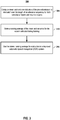
- FIG. 3 depicts a method of sequence-wise batch normalization, which overcomes these issues of the above-explored methods, according to embodiments of the present invention.
- the mean and variance statistics of the pre-activations in the minibatch over the length of an utterance sequence are computed (305).
- the batch normalization comprises normalizing pre-activations at each layer of the set of layers to be batch normalized in the RNN.
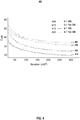
- Figure 4 shows that deep networks converge faster with sequence-wise normalization according to embodiments of the present disclosure.
- Table 1 shows that the performance improvement from sequence-wise normalization increases with the depth of the network, with a 12% performance difference for the deepest network.
- Table 1 shows that the performance improvement from sequence-wise normalization increases with the depth of the network, with a 12% performance difference for the deepest network.
- M RNN, N total implies 1 layer of 1D convolution at the input, M consecutive bidirectional RNN layers, and the rest as fully-connected layers with N total layers in the network.
- Architecture Hidden Units Train Dev Baseline BatchNorm Baseline BatchNorm 1 RNN, 5 total 2400 10.55 11.99 13.55 14.40 3 RNN, 5 total 1880 9.55 8.29 11.61 10.56 5 RNN, 7 total 1510 8.59 7.61 10.77 9.78 7 RNN, 9 total 1280 8.76 7.68 10.83 9.52
- Embodiments of the BatchNorm approach works well in training, but may be more difficult to implement for a deployed ASR (automatic speech recognition) system, since it is often necessary to evaluate a single utterance in deployment rather than a batch. Normalizing each neuron to its mean and variance over just the sequence may degrade performance. Thus, in embodiments, a running average of the mean and variance for the neuron collected during training are stored (310), and used for evaluation (315) in deployment. Using this technique, a single utterance can be evaluated at a time with better results than evaluating with a large batch.
- Training on examples of varying length poses some algorithmic challenges.
- One possible solution is truncating backpropagation through time, so that all examples have the same sequence length during training. However, this can inhibit the ability to learn longer term dependencies.
- One approach found that presenting examples in order of difficulty can accelerate online learning.
- a common theme in many sequence learning problems, including machine translation and speech recognition, is that longer examples tend to be more challenging.
- the CTC cost function used implicitly depends on the length of the utterance, L x y ⁇ ⁇ log ⁇ l ⁇ Align x y ⁇ t T p ctc l t
- the inner term is a product over time-steps of the sequence, which shrinks with the length of the sequence since P ctc (l t
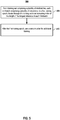
- FIG. 5 depicts a method of training a RNN model using a curriculum learning strategy according to embodiments of the present invention.
- the training set is iterated through (505), in a first training epoch, in an increasing order of the length of the longest utterance in each minibatch.
- training may revert back (510) to a random order over minibatches (e.g., using stochastic training for one or more subsequent epochs).
- the abovementioned curriculum learning strategy may be implemented in combination with one or more other strategies for speech recognition.
- Table 2 Comparison of WER on a training and development set with and without SortaGrad, and with and without batch normalization. Train Dev Baseline BatchNorm Baseline BatchNorm Not Sorted 10.71 8.04 11.96 9.78 Sorted 8.76 7.68 10.83 9.52
- Table 2 shows a comparison of training cost with and without SortaGrad on the 9 layer model with 7 recurrent layers. This effect is particularly pronounced for embodiments of networks without BatchNorm, since they are numerically less stable. In some sense the two techniques substitute for one another, though gains are still found when applying SortaGrad and BatchNorm together. Even with BatchNorm it is found that this curriculum improves numerical stability and sensitivity to small changes in training. Numerical instability can arise from different transcendental function implementations in the CPU and the GPU, especially when computing the CTC cost. The SortaGrad curriculum embodiments give comparable results for both implementations.
- ⁇ ( ⁇ ) is the sigmoid function
- z and r represent the update and reset gates respectively
- the layer superscripts are dropped for simplicity.
- Embodiments of this GRU differ from a standard GRU in that the hidden state h t- 1 is multiplied by U h prior to scaling by the reset gate. This allows for all operations on h t-1 to be computed in a single matrix multiplication.
- the output nonlinearity ⁇ ( ⁇ ) is typically the hyperbolic tangent function tanh. However, in embodiments, similar performance is found for tanh and clipped-ReLU nonlinearities. In embodiments, the clipped-ReLU is chosen to use for simplicity and uniformity with the rest of the network.
- Table 3 shows comparison of development set WER for networks with either simple RNN or GRU, for various depths. All models have batch normalization, one layer of 1D-invariant convolution, and approximately 38 million parameters. Table 3: Comparison of development set WER for networks with simple RNN or GRU Architecture Simple RNN GRU 5 layers, 1 Recurrent 14.40 10.53 5 layers, 3 Recurrent 10.56 8.00 7 layers, 5 Recurrent 9.78 7.79 9 layers, 7 Recurrent 9.52 8.19
- the GRU network embodiments outperformed the simple RNN embodiments in Table 3. However, in later results (Section 6), it is found that as the model size is scaled up, for a fixed computational budget the simple RNN networks perform slightly better. Given this, most of the remaining experiments use the simple RNN layer embodiments rather than the GRU layer embodiments.
- Temporal convolution is commonly used in speech recognition to efficiently model temporal translation invariance for variable length utterances. This type of convolution was first proposed for neural networks in speech more than 25 years ago. Many neural network speech models have a first layer that processes input frames with some context window. This may be viewed as a temporal convolution with a stride of one.
- Deep Speech 1 or DS1 Deep Speech 1 or DS1.
- Convolutions in frequency and time domains when applied to the spectral input features prior to any other processing, can slightly improve ASR performance.
- Convolution in frequency attempts to model spectral variance due to speaker variability more concisely than what is possible with large fully connected networks.
- frequency convolutions work better as the first layers of the network.
- Embodiments with between one and three layers of convolution were explored. These convolution layers may be in the time-and-frequency domain (2D invariance) and in the time-only domain (1D invariance). In all cases, a same convolution was used, preserving the number of input features in both frequency and time. In some embodiments, a stride across either dimension was specified to reduce the size of the output. In embodiments the number of parameters was not explicitly controlled, since convolutional layers add a small fraction of parameters to the networks. All networks shown in Table 4 have about 35 million parameters. Table 4: Comparison of WER for various arrangements of convolutional layers. In all cases, the convolutions are followed by 7 recurrent layers and 1 fully connected layer.
- the first dimension is frequency and the second dimension is time. All models have BatchNorm, SortaGrad, and 35 million parameters.
- Architecture Channels Filter dimension Stride Regular Dev noisysy Dev 1-layer 1D 1280 11 2 9.52 19.36 2-layer 1D 640, 640 5, 5 1, 2 9.67 19.21 3-layer 1D 512, 512, 512 5, 5, 5 1, 1, 2 9.20 20.22 1-layer 2D 32 41 ⁇ 11 2 ⁇ 2 8.94 16.22 2-layer 2D 32, 32 41 ⁇ 11, 21 ⁇ 11 2 ⁇ 2, 2 ⁇ 1 9.06 15.71 3-layer 2D 32, 32, 96 41 ⁇ 11, 21 ⁇ 11, 21 ⁇ 11 2 ⁇ 2, 2 ⁇ 1, 2 ⁇ 1 8.61 14.74
- Results of the various embodiments are reported on two datasets-a development set of 2048 utterances ("Regular Dev”) and a much noisier dataset of 2048 utterances (“Noisy Dev”) randomly sampled from the CHiME 2015 development datasets. It was found that multiple layers of 1D-invariant convolutions provide a very small benefit. Embodiments with 2D-invariant convolutions improve results substantially on noisy data, while providing a small benefit on clean data. The change from one layer of 1D-invariant convolution to three layers of 2D-invariant convolution improves WER by 23.9% on the noisy development set.
- a longer stride and wider context are applied to speed up training as fewer time-steps are required to model a given utterance.
- Downsampling the input sound reduces the number of time-steps and computation required in the following layers, but at the expense of reduced performance.
- FIG. 6 depicts a method for striding data according to embodiments of the present invention.
- processing time may be shorten for the recurrent layers by taking strides of a step size of q time slices (e.g., step size of 2) in the original input so that the unrolled RNN has fewer steps.
- a step size of q time slices e.g., step size of 2
- striding is employed in a straightforward way.
- striding may reduce accuracy simply because the output of the network requires at least one time-step per output character, and the number of characters in English speech per time-step is high enough to cause problems when striding.
- Chinese characters are more similar to English syllables than English characters. This is reflected in the training data, where there are on average 14.1 characters/s in English, while only 3.3 characters/s in Mandarin.
- the Shannon entropy per character as calculated from occurrence in the training set is less in English due to the smaller character set - 4.9 bits/char compared to 12.6 bits/char in Mandarin.
- spoken Mandarin has a lower temporal entropy density, ⁇ 41 bits/s compared to ⁇ 58 bits/s, and can thus more easily be temporally compressed without losing character information.
- the English alphabet may be enriched in step 610 with symbols representing alternate labellings, such as whole words, syllables, or non-overlapping n-grams.
- non-overlapping bi-graphemes or bigrams are used, since these are simple to construct, unlike syllables, and there are few of them compared to alternatives such as whole words.
- unigram labels are transformed into bigram labels through a simple isomorphism.
- Non-overlapping bigrams shorten the length of the output transcription and thus allow for a decrease in the length of the unrolled RNN.
- an isomorphism may be, for example, as follows-the sentence "the cat sat" with non-overlapping bigrams is segmented as [ th, e, space, ca, t, space, sa, t ] . Notice that, in embodiments, for words with odd number of characters, the last character becomes a unigram and space is treated as a unigram as well. This isomorphism ensures that the same words are always composed of the same bigram and unigram tokens.
- the output set of bigrams consists of all bigrams that occur in the training set.
- Table 5 shows results for embodiments of both bigram and unigram systems for various levels of striding, with or without a language model. It is observed that bigrams allow for larger strides without any sacrifice in the word error rate. This allows embodiments with reduced number of time-steps of the unrolled RNN, benefiting both computation and memory usage.
- Table 5 Comparison of World Error Rate (WER) with different amounts of striding for unigram and bigram outputs on a model with 1 layer of 1D-invariant convolution, 7 recurrent layers, and 1 fully connected layer. All models have BatchNorm, SortaGrad, and 35 million parameters.
- WER World Error Rate
- Bidirectional RNN models are challenging to deploy in an online, low-latency setting, because they are built to operate on an entire sample, and so it is not possible to perform the transcription process as the utterance streams from the user.
- Presented herein are embodiments of a unidirectional architecture that perform as well as bidirectional models. This allows unidirectional, forward-only RNN layers to be used in a deployment system embodiment.
- a special layer (row convolution) is employed, as shown in Figure 7 , which depicts a row convolution architecture with future context size of 2 according to embodiments of the present disclosure.
- the row convolution layer 710 is placed above all recurrent layers (e.g., 720).
- recurrent layers e.g., 720.
- This layer is that a small portion of future information is only needed to make an accurate prediction at the current time-step.
- a parameter matrix W of the same size as h t:t + ⁇ is defined.
- FIG. 8 depicts a method for audio transcription with a unidirectional RNN model according to embodiments of the present invention.
- a row convolution layer is placed above all recurrent layers of the RNN model. This has two advantages. First, this allows streaming of all computation below the row convolution layer on a finer granularity given little future context is needed. Second, this results in better Character Error Rate compared to the best bidirectional model for Mandarin.
- an activation of the row convolution layer is obtained using information of the recurrent layers at current time step and at least one future time step. It appears that the recurrent layers have learned good feature representations, so the row convolution layer simply gathers the appropriate information to feed to the classifier in step 815. Results for a unidirectional Mandarin speech system embodiment with row convolution and a comparison to a bidirectional model are given in Section 7 on deployment.
- Embodiments of the RNN models are trained over millions of unique utterances, which enable the network to learn a powerful implicit language model. Some of the best models are quite adept at spelling, without any external language constraints. Further, in the development datasets, many cases are found where embodiments could implicitly disambiguate homophones -for example, "he expects the Japanese agent to sell it for two hundred seventy-five thousand dollars". Nevertheless, the labeled training data is small compared to the size of unlabeled text corpora that are available. Thus, it was found that WER improves when embodiments of the system are supplemented with a language model trained from external text.
- FIG. 9 depicts a method for constraining output of model using a language model according to embodiments of the present invention.
- step 905 predicted character(s) output for an utterance, x, is obtained from the RNN model.
- step 910 given the output of the RNN model or models, a search is performed to find the transcription y that is most probable according to both the RNN output and a language model which interprets the transcription as words.
- the language model is an external language model.
- the external language model may be an n-gram language model since they scale well to large amounts of unlabeled text.
- the language model is a Kneser-Ney smoothed 5-gram model with pruning that is trained using the KenLM toolkit on cleaned text from the Common Crawl Repository.
- the vocabulary is the most frequently used 400,000 words from 250 million lines of text, which produces a language model with about 850 million n-grams.
- the language model is a Kneser-Ney smoothed character level 5-gram model with pruning that is trained on an internal text corpus of 8 billion lines of text. This produces a language model with about 2 billion n-grams.
- a character level language model may be needed in Mandarin as words are not usually segmented in text, as shown in details in section 3.9.
- the search for transcription y is to maximize Q ( y ) shown in Equation 12, which is a linear combination of logarithm probabilities from the CTC trained network and language model, along with a word insertion term:
- Q y log p ctc y
- the weight ⁇ controls the relative contributions of the language model and the CTC network.
- the weight ⁇ encourages more words in the transcription. These parameters are tuned on a development set.
- a beam search is used to find the optimal transcription.
- Table 6 shows that an external language model helps both English and Mandarin speech systems.
- the relative improvement given by the language model drops from 48% to 36% in English and 27% to 23% in Mandarin, from a model with 5 layers and 1 recurrent layer to a model with 9 layers and 7 recurrent layers. It is hypothesized that the network builds a stronger implicit language model with more recurrent layers.
- Table 6 Comparison of WER for English and CER for Mandarin with and without a language model. These are simple RNN models with only one layer of 1D invariant convolution.
- Language Architecture Dev no LM Dev LM English 5-layer, 1 RNN 27.79 14.39 English 9-layer, 7 RNN 14.93 9.52 Mandarin 5-layer, 1 RNN 9.80 7.13 Mandarin 9-layer, 7 RNN 7.55 5.81
- the relative performance improvement from a language model is higher in English than in Mandarin. This is attributed to the fact that a Chinese character represents a larger block of information than an English character. For example, if syllables or words in English are output directly, the model would make fewer spelling mistakes and the language model would likely helpless.
- the techniques described herein can be used to build an end-to-end Mandarin speech recognition system that outputs Chinese characters directly. This precludes the need to construct a pronunciation model, which is often a fairly involved component for porting speech systems to other languages. Direct output to characters also precludes the need to explicitly model-language specific pronunciation features. For example, Mandarin tones do not need to be modeled explicitly, as some speech systems must do.
- the only architectural changes made to the networks are due to the characteristics of the Chinese character set.
- the output layer of the network outputs about 6000 characters, which includes the Roman alphabet, since hybrid Chinese-English transcripts are common.
- the system may indicate an out-of-vocabulary error at evaluation time if a character is not contained in this set. This is not a major concern, as the test set has only 0.74% out of vocab characters.
- a character that produces and out-of-vocabulary error may be added to the vocabulary and retraining may be done to the model.
- a character-level language model is used in Mandarin as words are not usually segmented in text.
- the word insertion term of Equation 12 becomes a character insertion term.
- a beam size of 200 may be used with a negligible degradation in CER.
- Section 6.2 it is shown that embodiments of the Mandarin speech models show roughly the same improvements to architectural changes as embodiments of the English speech models.
- Embodiments of the networks have tens of millions of parameters, and embodiments of the training algorithm take tens of single-precision exaFLOPs to converge. Since the ability to evaluate hypotheses about data and models depends on the ability to train models quickly, a highly optimized training system was built. Embodiments of this system have two main components-a deep learning library (written in C++), along with a high-performance linear algebra library (written in both CUDA and C++).
- the optimized software running on dense compute nodes with 8 Titan X GPUs per node, allows sustaining 24 single-precision teraFLOP/second when training a single model on one node. This is 45% of the theoretical peak computational throughput of each node. Multiple nodes can also be scaled to, as outlined in the next subsection.
- a standard technique of data-parallelism was used to train on multiple GPUs using synchronous Stochastic Gradient Descent (SGD).
- SGD synchronous Stochastic Gradient Descent
- a common configuration used a minibatch of 512 on 8 GPUs.
- Embodiments of a training pipeline used herein binds one process to each GPU. These processes then exchange gradient matrices during the back-propagation by using all-reduce, which exchanges a matrix between multiple processes and sums the result so that at the end, each process has a copy of the sum of all matrices from all processes.
- Synchronous SGD was found useful because it is reproducible and deterministic. It has been found that the appearance of non-determinism in a system often signals a serious bug, and so having reproducibility as a goal has greatly facilitated debugging. In contrast, asynchronous methods such as asynchronous SGD with certain parameter servers typically do not provide reproducibility and are therefore more difficult to debug. Synchronous SGD is simple to understand and implement. It scales well as multiple nodes are added to the training process.
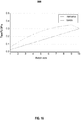
- Fig. 10 shows scaling comparison of two networks-a 5 layer model (1005) with 3 recurrent layers containing 2560 hidden units in each layer and a 9 layer model (1010) with 7 recurrent layers containing 1760 hidden units in each layer. The times shown are to train 1 epoch.
- the 5 layer model trains faster because it uses larger matrices and is more computationally efficient.
- the time taken to train one epoch halves as the number of GPUs being trained on are doubled, thus achieving near-linear weak scaling.
- the minibatch per GPU is kept constant at 64 during this experiment, effectively doubling the minibatch as the number of GPUs is doubled.
- 8 or 16 GPUs were typically used during training with a minibatch of 512 or 1024, in order to converge to the best result.
- a ring algorithm was implemented for higher performance and better stability, since all-reduce is important to the scalability of training.
- This implementation avoids extraneous copies between CPU and GPU, and is fundamental to scalability.
- OpenMPI is configured with the smcuda transport that can send and receive buffers residing in the memory of two different GPUs by using GPUDirect. When two GPUs are in the same PCI root complex, any unnecessary copies to CPU memory are avoided. This also takes advantage of tree-structured interconnects by running multiple segments of the ring concurrently between neighboring devices.
- this implementation is built using MPI send and receive, along with CUDA kernels for the element-wise operations.
- Table 7 compares the performance of the all-reduce implementation with that provided by OpenMPI version 1.8.5. The time spent in all-reduce for a full training run that ran for one epoch on an English dataset using a 5 layer, 3 recurrent layer architecture with 2560 hidden units for all layers is reported. In this table, a minibatch of 64 per GPU is used, expanding the algorithmic minibatch when scaled to more GPUs. It is seen that this implementation is considerably faster than OpenMPI's when the communication is within a node (8 GPUs or less). As the number of GPUs and the amount of inter-node communication are increased, the gap shrinks, although the implementation is still 2-4X faster. Table 7: Comparison of two different all-reduce implementations. All times are in seconds.
- Performance gain is the ratio of OpenMPI all-reduce time to all-reduce time.
- GPU OpenMPI all-reduce Embodiment of Our all-reduce Performance Gain 4 55359.1 2587.4 21.4 8 48881.6 2470.9 19.8 16 21562.6 1393.7 15.5 32 8191.8 1339.6 6.1 64 1395.2 611.0 2.3 128 1602.1 422.6 3.8
- the CTC loss function used to train the models has two passes: forward and backward, and the gradient computation involves element-wise addition of two matrices, ⁇ and ⁇ , generated during the forward and backward passes respectively. Finally, the gradients are summed using the character in the utterance label as the key, to generate one gradient per character. These gradients are then back-propagated through the network.
- the inputs to the CTC loss function are probabilities calculated by the softmax function which can be very small, so it is computed in log probability space for better numerical stability.
- the variable L is the number of characters in the label and T is the number of time-steps in the utterance.
- a CPU-based implementation of the CTC algorithm assigns one thread to each utterance label in a minibatch, performing the CTC calculation for the utterances in parallel. Each thread calculates the relevant entries of the matrix sequentially. This is inefficient for two reasons.
- the output of the softmax function is copied to the CPU for CTC calculation.
- the gradient matrices from the CTC function then is copied back to the GPU for backpropagation.
- these matrices have hundreds of millions of entries, making this copy expensive.
- interconnect bandwidth is needed as possible for synchronizing the gradient updates with data parallelism, so this copy incurs a substantial opportunity cost.
- Figure 11 depicts forward and backward pass for GPU implementation of CTC.
- Gray circles 1105 contain valid values
- circle 1110 with I contain - ⁇
- circle 1115 with G contain garbage values that are finite.
- B stands for the blank character that the CTC algorithm adds to the input utterance label.
- Column labels on top show different time-steps going from 1 to T.
- Invalid elements in Figure 11 either contain a finite garbage value (G), or - ⁇ (I), when a special summation function is used that adds probabilities in log space that discards inputs of - ⁇ . This summation is shown in Figure 11 where arrows incident on a circle are inputs and the result is stored in the circle.
- G finite garbage value
- I - ⁇
- FIG. 12 depicts a method of GPU implementation of the CTC loss function for RNN model training according to embodiments of the present invention.
- step 1205 the RNN model outputs a probability distribution over predicted characters corresponding to input utterances to a Connectionist Temporal Classification (CTC) layer.
- CTC Connectionist Temporal Classification
- a graphics processing unit (GPU) based CTC loss function algorithm is implemented.
- the CTC loss function has a forward pass and a backward pass.
- the gradient computation involves element-wise addition of two matrices, ⁇ (forward matrix) and ⁇ (backward matrix), generated during the forward and backward passes respectively.
- the algorithm comprising parallel computation to process of the two matrices.
- the parallel computation comprises one or more of the following approaches:
- Table 8 compares the performance of two CTC implementations.
- the GPU implementation saves 95 minutes per epoch in English, and 25 minutes in Mandarin. This reduces overall training time by 10-20%, which is also an important productivity benefit for experiments.
- Table 8 Comparison of time spent in seconds in computing the CTC loss function and gradient in one epoch for two different implementations.
- Speedup is the ratio of CPU CTC time to GPU CTC time.
- Language Architecture CPU CTC Time GPU CTC Time Speedup English 5-layer, 3 RNN 5888.12 203.56 28.9 Mandarin 5-layer, 3 RNN 1688.01 135.05 12.5
- Embodiments of the system makes frequent use of dynamic memory allocations to GPU and CPU memory, mainly to store activation data for variable length utterances, and for intermediate results.
- Individual allocations can be very large; over 1 GB for the longest utterances.
- CUDA's memory allocator and even std::malloc introduced significant overhead into application-over a 2x slowdown from using std::malloc in some cases. This is because both cudaMalloc and std::malloc forward very large allocations to the operating system or GPU driver to update the system page tables.
- TitanX GPUs include 12GB of GDDR5 RAM, and sometimes very deep networks can exceed the GPU memory capacity when processing long utterances. This can happen unpredictably, especially when the distribution of utterance lengths includes outliers, and it is desirable to avoid a catastrophic failure when this occurs.
- the Mandarin speech data comprises internal Baidu corpora, representing a mix of read speech and spontaneous speech, in both standard Mandarin and accented Mandarin.
- Table 9 Summary of the datasets used to train embodiments of DS2 in English.
- the Wall Street Journal (WSJ), Switchboard and Fisher corpora are all published by the Linguistic Data Consortium.
- the LibriSpeech dataset is available free on-line.
- the other datasets are internal Baidu corpora. Dataset Speech Type Hours WSJ read 80 Switchboard conversational 300 Fisher conversational 2000 LibriSpeech read 960 Baidu read 5000 Baidu mixed 3600 Total 11940
- FIG. 13 depicts a method of data acquisition for speech transcription training according to embodiments of the present disclosure.
- the first step 1305 in the pipeline is to use an existing bidirectional RNN model trained with CTC to align the transcription to the frames of audio.
- Equation 9 This is essentially a Viterbi alignment found using a RNN model trained with CTC. Since Equation 9 integrates over the alignment, the CTC loss function is never explicitly asked to produce an accurate alignment. In principle, CTC could choose to emit all the characters of the transcription after some fixed delay, and this can happen with unidirectional RNNs. However, it is found that CTC produces an accurate alignment when trained with a bidirectional RNN.
- a segmentation step 1310 that splices the audio and the corresponding aligned transcription whenever it encounters a long series of consecutive blank labels, since this usually denotes a stretch of silence.
- the length of the utterances generated can be tuned.
- a space token is required to be within the stretch of blanks in order to segment on word boundaries.
- the segmentation is tuned to generate utterances that are on average 7 seconds long.
- the next step 1315 in the pipeline removes erroneous examples that arise from a failed alignment to obtain training data.
- the ground truth transcriptions for several thousand examples are crowd sourced.
- the word level edit distance between the ground truth and the aligned transcription is used to produce a good or bad label.
- a threshold for the word level edit distance is chosen such that the resulting WER of the good portion of the development set is less than 5%.
- a linear classifier is trained to accurately predict bad examples given the input features generated from the speech recognizer.
- the filtering pipeline reduces the WER from 17% to 5% while retaining more than 50% of the examples.
- the training data may be augmented by adding noise to increase the effective size of the training data and to improve its robustness to noisy speech.
- the training data contains some intrinsic noise, the quantity and variety of noise can be increased through augmentation. Too much noise augmentation tends to make optimization difficult and can lead to worse results, and too little noise augmentation makes the system less robust to low signal-to-noise speech.
- a good balance is to add noise to 40% of the utterances that are chosen at random.
- the noise sources comprise several thousand hours of randomly selected audio clips combined to produce hundreds of hours of noise.
- Table 10 shows the effect of increasing the amount of labeled training data on WER. This is done by randomly sampling the full dataset before training. For each dataset, the model was trained for up to 20 epochs though usually early-stopped based on the error on a held-out development set. It is noted that the WER decreases with a power law for both the regular and noisy development sets. The WER decreases by ⁇ 40% relative for each factor of 10 increase in training set size. A consistent gap is also observed in WER ( ⁇ 60% relative) between the regular and noisy datasets, implying that more data benefits both cases equally.
- test sets were evaluated. Several publicly available benchmarks and several test sets collected internally were used. Together these test sets represent a wide range of challenging speech environments, including low signal-to-noise ratios (noisy and far-field), accented, read, spontaneous, and conversational speech.
- the language models used were those described in Section 3.8.
- the decoding parameters from Equation 12 were tuned on a held-out development set. In embodiments, a beam size of 500 was used for the English decoder and a beam size of 200 was used for the Mandarin decoder.
- One of the best DS2 model embodiments had 11 layers with 3 layers of 2D convolution, 7 bidirectional recurrent layers, a fully-connected output layer along with Batch Normalization.
- the first layer outputs to bigrams with a temporal stride of 3.
- an embodiment of the prior Deep Speech model had 5 layers with a single bidirectional recurrent layer and it outputs to unigrams with a temporal stride of 2 in the first layer. Results are reported on several test sets for both the DS2 and DS1 model. Neither model was tuned or adapted to any of the speech conditions in the test sets. Language model decoding parameters were set once on a held-out development set.
- the English speech training set is substantially larger than the size of commonly used speech datasets. Furthermore, the data is augmented with noise synthesis. To get the best generalization error, it is expected that the model size must increase to fully exploit the patterns in the data.
- Section 3.2 the effect of model depth is explored while fixing the number of parameters. In contrast, the effect of varying model size is shown on the performance of the speech system. The size of each layer is only varied, while the depth and other architectural parameters are kept constant. The models are evaluated on the same Regular and noisy development sets used in Section 3.5.
- the models in Table 11 differ from those in Table 3 in that the stride is increased to 3 and output to bigrams. Because the model size is increased to as many as 100 million parameters, it is found that an increase in stride is necessary for fast computation and memory constraints. However, in this regime it is noted that the performance advantage of the GRU networks appears to diminish over the simple RNN. In fact, for the 100 million parameter networks the simple RNN performs better than the GRU network and is faster to train despite the 2 extra layers of convolution. Table 11: Comparing the effect of model size on the WER of the English speech system on both the regular and noisy development sets. the number of hidden units are varied in all but the convolutional layers. The GRU model has 3 layers of bidirectional GRUs with 1 layer of 2D-invariant convolution.
- the RNN model has 7 layers of bidirectional simple recurrence with 3 layers of 2D-invariant convolution. Both models output bigrams with a temporal stride of 3. All models contain approximately 35 million parameters and are trained with BatchNorm and SortaGrad. Model size Model type Regular Dev noisysy Dev 18 ⁇ 10 6 GRU 10.59 21.38 38 ⁇ 10 6 GRU 9.06 17.07 70 ⁇ 10 6 GRU 8.54 15.98 70 ⁇ 10 6 RNN 8.44 15.09 100 ⁇ 10 6 GRU 7.78 14.17 100 ⁇ 10 6 RNN 7.73 13.06
- Table 11 shows that the performance of the system improves consistently up to 100 million parameters. All further English DS2 results are reported with this same 100 million parameter RNN model since it achieves the lowest generalization errors.
- Table 12 Comparison of DS1 and DS2 WER on an internal test set of 3,300 examples. The test set contains a wide variety of speech including accents, low signal-to-noise speech, spontaneous and conversational speech: Test set DS1 DS2 Baidu Test 24.01 13.59
- Table 12 shows that the 100 million parameter RNN model (DS2) gives a 43.4% relative improvement over the 5-layer model with 1 recurrent layer (DS1) on an internal Baidu dataset of 3,300 utterances that contains a wide variety of speech including challenging accents, low signal-to-noise ratios from far-field or background noise, spontaneous and conversational speech.
- Read speech with high signal-to-noise ratio is arguably the easiest large vocabulary for a continuous speech recognition task.
- the system is benchmarked on two test sets from the Wall Street Journal (WSJ) corpus of read news articles. These are available in the LDC catalog as LDC94S13B and LDC93S6B.
- LDC94S13B and LDC93S6B are available in the LDC catalog as LDC94S13B and LDC93S6B.
- the recently developed LibriSpeech corpus constructed using audio books from the LibriVox project are also been take advantage.
- Table 13 shows that the DS2 system outperforms humans in 3 out of the 4 test sets and is competitive on the fourth. Given this result, it is suspected that there is little room for a generic speech system to further improve on clean read speech without further domain adaptation.
- Table 13 Comparison of WER for two speech systems and human level performance on read speech: Read Speech Test set DS1 DS2 Human WSJ eval'92 4.94 3.60 5.03 WSJ eval'93 6.94 4.98 8.08 LibriSpeech test-clean 7.89 5.33 5.83 LibriSpeech test-other 21.74 13.25 12.69
- Table 14 Comparing WER of the DS1 system to the DS2 system on accented speech Accented Speech Test set DS1 DS2 Human VoxForge American-Canadian 15.01 7.55 4.85 VoxForge Commonwealth 28.46 13.56 8.15 VoxForge European 31.20 17.55 12.76 VoxForge Indian 45.35 22.44 22.15
- Table 15 Comparison of DS1 and DS2 system on noisy
- “CHiME eval clean” is a noise-free baseline.
- the "CHiME eval real” dataset is collected in real noisy environments and the “CHiME eval sim” dataset has similar noise synthetically added to clean speech. Note that only one of the six channels is used to test each utterance: noisy Speech Test set DS1 DS2 Human VoxForge American-Canadian 15.01 7.55 4.85 VoxForge Commonwealth 28.46 13.56 8.15 VoxForge Indian 45.35 22.44 22.15
- the source for accented speech is the publicly available VoxForge dataset, which has clean speech read from speakers with many different accents. These accents are grouped into four categories.
- the American-Canadian and Indian groups are self-explanatory.
- the Commonwealth accent denotes speakers with British, Irish, South African, Australian and New Zealand accents.
- the European group contains speakers with accents from countries in Europe that do not have English as a first language.
- a test set is constructed from the VoxForge data with 1024 examples from each accent group for a total of 4096 examples.
- Performance on these test sets is to some extent a measure of the breadth and quality of training data.
- Table 14 shows that the performance improved on all the accents when more accented training data are included and used an architecture that can effectively train on that data.
- human level performance is still notably better than that of DS2 for all but the Indian accent.
- the performance is tested on noisy speech using the publicly available test sets from the recently completed third CHiME challenge.
- This dataset has 1320 utterances from the WSJ test set read in various noisy environments, including a bus, a cafe, a street and a pedestrian area.
- the CHiME set also includes 1320 utterances with simulated noise from the same environments as well as the control set containing the same utterances delivered by the same speakers in a noise-free environment. Differences between results on the control set and the noisy sets provide a measure of the network's ability to handle a variety of real and synthetic noise conditions.
- the CHiME audio has 6 channels and using all of them can provide substantial performance improvements. A single channel is used for all the results, since multi-channel audio is not pervasive on most devices. Table 15 shows that DS2 substantially improves upon DS1, however DS2 is worse than human level performance on noisy data. The relative gap between DS2 and human level performance is larger when the data comes from a real noisy environment instead of synthetically adding noise to clean speech
- Table 16 compares several architectures trained on the Mandarin Chinese speech, on a development set of 2000 utterances as well as a test set of 1882 examples of noisy speech. This development set was also used to tune the decoding parameters. It can be seen from Table 16 that the deepest model with 2D-invariant convolution and BatchNorm outperforms the shallow RNN by 48% relative, thus continuing the trend seen with the English system-multiple layers of bidirectional recurrence improves performance substantially.
- Real-world applications usually require a speech system to transcribe in real time or with relatively low latency.
- the system used in Section 6.1 is not well-designed for this task, for several reasons.
- the power normalization problem is solved by using some statistics from training set to perform an adaptive normalization of speech inputs during online transcription.
- the other problems can be solved by modifying the network and decoding procedure to produce a model that performs almost as well while having much lower latency.
- the Mandarin system is focused since some aspects of that system are more challenging to deploy (e.g. the large character set), but the same techniques could also be applied in English.
- latency refers to the computational latency of the speech system as measured from the end of an utterance until the transcription is produced. This latency does not include data transmission over the internet, and does not measure latency from the beginning of an utterance until the first transcription is produced. Latency from end of utterance to transcription is focused because it is important to applications using speech recognition.
- Batch Dispatch a batching scheduler called Batch Dispatch is built that assembles streams of data from user requests into batches before performing forward propagation on these batches.
- batch size there is a tradeoff between increased batch size, and consequently improved efficiency, and increased latency.
- the more user requests buffered to assemble a large batch the longer users must wait for their results. This places constraints on the amount of batching that can be performed.
- Figure 14 shows the probability that a request is processed in a batch of given size for production system running on a single NVIDIA Quadro K1200 GPU, with 10-30 concurrent user requests.
- batching works best when the server is heavily loaded: as load increases, the distribution shifts to favor processing requests in larger batches.
- the system performs more than half the work in batches with at least 2 samples.
- FIG. 15 depicts median and 98 percentile latencies as a function of server load according to embodiments of the present disclosure. It can be seen from Figure 15 that the system achieves a median latency of 44 ms, and a 98 percentile latency of 70 ms when loaded with 10 concurrent streams. As the load increases on the server, the batching scheduler shifts work to more efficient batches, which keeps latency low. This shows that Batch Dispatch makes it possible to deploy these large models at high throughput and low latency.
- non-streaming inputs may be handled in a similar same manner by designating each packet as the last packet of a (trivial) stream.
- the terms “request,” “user request,” “data processing request,” “stream,” “streaming input,” and “stream of data” are used interchangeably.
- the term “user” is associated with a “stream” in that each stream is associated with a single user.
- the term “chunk” refers to a size of data related to a neural network input size.
- the terms “packet” shall be understood to mean a group of data that can be transported across a network.
- the term “packet” shall not be interpreted as limiting embodiments of the present invention to Ethernet or Layer 3 networks.
- the terms “packet,” “frame,” “data,” “datagram,” “cell,” or “data traffic” may be used interchangeably and may be replaced by other terminologies referring to a set of data.
- each packet may represent a few milliseconds (e.g., 80ms) of audio.
- each packet may represent the difference between a current image and a previous image.
- each packet may represent a tile of a complete image.
- a latency constraint may state that a complete stream be processed in a fixed amount of time after the arrival of the last packet in the stream. This may be expressed as: T whole stream processed ⁇ T arrival of last packet + ⁇ acceptable delay , where T whole stream processed denotes the time at which processing of the whole stream should be completed, T arrivat of last packet denotes the arrival time of the last packet, and ⁇ acceptable delay denotes the application-dependent acceptable delay. In an online setting, where latency is typically quite critical, ⁇ acceptable delay is likely to be less than 1 second.
- one goal may be to process as many streams concurrently as possible, while satisfying a latency constraint (e.g., maintain high throughput).
- a latency constraint e.g., maintain high throughput.
- existing approaches handle each stream individually and independently in order to ensure low latency and maintain flexibility.
- a model/architecture is employed in which a plurality of requests is simultaneously piped through to a compute engine that implements the neural network.
- a batching method is used to allow a neural network to process data for multiple simultaneous users in a similar fashion as processing data for a single user.
- a batching method commences with a batch producer accepting (e.g., in an asynchronous manner) data processing requests comprising packets that are associated with a plurality of users.
- the packets may arrive in streams that each are associated with a user.
- the packets may arrive, for example, via a load-balancer that load-balances streams of data from a plurality of users.
- the arrival times of the packets may be unknown and subject to application-level constraints, such as latency constraints, performance characteristics of the compute engine, and the like.
- a batch producer dynamically assembles the data from requests, within the application-level constraints, into a batch that comprises data from one or more requests, e.g., stateful requests.
- the batch is processed using a common neural network (e.g., to perform classification on an audio stream) that is loaded to and/or from memory only once to reduce the computational latency requirement, thereby, increasing the throughput of the streams of data.
- a common neural network e.g., to perform classification on an audio stream
- results such as the results of a classification
- results are output.
- memory bandwidth is conserved and computational efficiency is increased.
- the batch producer runs in a single thread, and has the task of:
- the batch producer maintains three types of data structures:
- the batching method commences when a packet for a particular user arrives at the batch producer.
- the data is copied to an input buffer for that user, and the packet may then be discarded.
- the input buffer is pre-processed. Examples of pre-processing are converting audio signals to spectrograms and other processing. In embodiments, pre-processing may not be performed.
- the results are placed in a pre-processed buffer for that user.
- the pre-processing may take place in chunks of data. For example, speech systems frequently use spectrograms that require fixed-sized input windows of speech. As a result, in embodiments, it may not be guaranteed that the packet for a user can be pre-processed without data from future packets.
- a chunk (whose size may be determined by the neural network input size) is transferred from the pre-processed buffer to the next eligible batch in the batch list.
- a chunk to be eligible it should not already contain any data being processed for the current user.
- the size of the batch is limited such that full batches are also not be eligible.
- a chunk may represent a full image
- a chunk may represent a fixed length of the input spectrogram.
- the batch producer may loop over all active users to fill up the batch.
- the batch producer may then decide whether to send one or more batches to the compute engine. In embodiments, there may be several ways to make a decision:
- the batch producer may assemble both latency-sensitive batches, which may run at a higher priority but lower computational efficiency in order to satisfy latency constraints, and larger but more efficient throughput-oriented batches that handle the majority of the computational work. In embodiments, the batch producer continues looping until the process is terminated.
- Figure 14 shows that the deployment kernel sustains a higher computational throughput than those from Nervana Systems on the K1200 GPU, across the entire range of batch sizes being used in deployment.
- Performing the beam search involves repeated lookups in the n-gram language model, most of which translate to uncached reads from memory.
- the direct implementation of beam search means that each time-step dispatches one lookup per character for each beam. In Mandarin, this results in over 1M lookups per 40ms stride of speech data, which is too slow for deployment.
- the system can be deployed at low latency and high throughput without sacrificing much accuracy.
- the research system achieves 5.81 character error rate whereas the deployed system achieves 6.10 character error rate. This is only a 5% relative degradation for the deployed system.
- a neural network architecture with low deployment latency is employed, the precision of the network is reduced to 16-bit, a batching scheduler is built to more efficiently evaluate RNNs, and a simple heuristic is found to reduce beam search cost.
- the software stack runs on a compute dense node built from 2 Intel CPUs and 8 NVIDIA Titan X GPUs, with peak single-precision computational throughput of 53 teraFLOP/second.
- Each node also has 384 GB of CPU memory and an 8 TB storage volume built from two 4 TB hard disks in RAID-o configuration.
- the CPU memory is used to cache the input data so that it is not directly exposed to the low bandwidth and high latency of spinning disks.
- the English and Mandarin datasets are replicated on each node's local hard disk. This allows using the network only for weight updates and avoids having to rely on centralized file servers.
- Figure 17 shows a schematic diagram of one of the nodes, where all devices connected by the same PCI root complex are encapsulated in a dotted box.
- GPUDirect has been tried to maximize the number of GPUs within the root complex for faster communication between GPUs. This allows using an efficient communication mechanism to transfer gradient matrices between GPUs.
- FDR Data Rate
- one of the scalability improvements included embodiments of GPU implementation of CTC loss function. These embodiments were discussed in Section 4.2, above.
- End-to-end deep learning presents the exciting opportunity to improve speech recognition systems continually with increases in data and computation.
- results show that, Deep Speech 2 embodiments have significantly closed the gap in transcription performance with human workers by leveraging more data and larger models.
- the approach since the approach is highly generic, it has been shown that it can quickly be applied to new languages. Creating high-performing recognizers for two very different languages, English and Mandarin, required essentially no expert knowledge of the languages.
- this approach can be efficiently deployed by batching user requests together on a GPU server, paving the way to deliver end-to-end Deep Learning technologies to users.
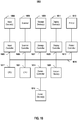
- FIG. 18 depicts a block diagram of a computing system 1800 according to embodiments of the present invention. It will be understood that the functionalities shown for system 1800 may operate to support various embodiments of a computing system-although it shall be understood that a computing system may be differently configured and include different components.
- system 1800 includes one or more central processing units (CPU) 1801 that provides computing resources and controls the computer.
- CPU 1801 may be implemented with a microprocessor or the like, and may also include one or more graphics processing units (GPU) 1817 and/or a floating point coprocessor for mathematical computations.
- System 1800 may also include a system memory 1802, which may be in the form of random-access memory (RAM), read-only memory (ROM), or both.
- RAM random-access memory
- ROM read-only memory
- An input controller 1803 represents an interface to various input device(s) 1804, such as a keyboard, mouse, or stylus.
- a scanner controller 1805 which communicates with a scanner 1806.
- System 1800 may also include a storage controller 1807 for interfacing with one or more storage devices 1808 each of which includes a storage medium such as magnetic tape or disk, or an optical medium that might be used to record programs of instructions for operating systems, utilities, and applications, which may include embodiments of programs that implement various aspects of the present invention.
- Storage device(s) 1808 may also be used to store processed data or data to be processed in accordance with the invention.
- System 1800 may also include a display controller 1809 for providing an interface to a display device 1811, which may be a cathode ray tube (CRT), a thin film transistor (TFT) display, or other type of display.
- the computing system 1800 may also include a printer controller 1812 for communicating with a printer 1813.
- a communications controller 1814 may interface with one or more communication devices 1815, which enables system 1800 to connect to remote devices through any of a variety of networks including the Internet, an Ethernet cloud, an Fibre Channel over Ethernet (FCoE)/Data Center Bridging (DCB) cloud, a local area network (LAN), a wide area network (WAN), a storage area network (SAN) or through any suitable electromagnetic carrier signals including infrared signals.
- FCoE Fibre Channel over Ethernet
- DCB Data Center Bridging
- bus 1816 which may represent more than one physical bus.
- various system components may or may not be in physical proximity to one another.
- input data and/or output data may be remotely transmitted from one physical location to another.
- programs that implement various aspects of this invention may be accessed from a remote location (e.g., a server) over a network.
- Such data and/or programs may be conveyed through any of a variety of machine-readable medium including, but are not limited to: magnetic media such as hard disks, floppy disks, and magnetic tape; optical media such as CD-ROMs and holographic devices; magneto-optical media; and hardware devices that are specially configured to store or to store and execute program code, such as application specific integrated circuits (ASICs), programmable logic devices (PLDs), flash memory devices, and ROM and RAM devices.
- ASICs application specific integrated circuits
- PLDs programmable logic devices
- flash memory devices ROM and RAM devices.
- Embodiments of the present invention may be encoded upon one or more non-transitory computer-readable media with instructions for one or more processors or processing units to cause steps to be performed.
- the one or more non-transitory computer-readable media shall include volatile and non-volatile memory.
- alternative implementations are possible, including a hardware implementation or a software/hardware implementation.
- Hardware-implemented functions may be realized using ASIC(s), programmable arrays, digital signal processing circuitry, or the like. Accordingly, the "means” terms in any claims are intended to cover both software and hardware implementations.
- the term "computer-readable medium or media” as used herein includes software and/or hardware having a program of instructions embodied thereon, or a combination thereof.
- embodiments of the present invention may further relate to computer products with a non-transitory, tangible computer-readable medium that have computer code thereon for performing various computer-implemented operations.
- the media and computer code may be those specially designed and constructed for the purposes of the present invention, or they may be of the kind known or available to those having skill in the relevant arts.
- Examples of tangible computer-readable media include, but are not limited to: magnetic media such as hard disks, floppy disks, and magnetic tape; optical media such as CD-ROMs and holographic devices; magneto-optical media; and hardware devices that are specially configured to store or to store and execute program code, such as application specific integrated circuits (ASICs), programmable logic devices (PLDs), flash memory devices, and ROM and RAM devices.
- ASICs application specific integrated circuits
- PLDs programmable logic devices
- flash memory devices and ROM and RAM devices.
- Examples of computer code include machine code, such as produced by a compiler, and files containing higher level code that are executed by a computer using an interpreter.
- Embodiments of the present invention may be implemented in whole or in part as machine-executable instructions that may be in program modules that are executed by a processing device.
- Examples of program modules include libraries, programs, routines, objects, components, and data structures. In distributed computing environments, program modules may be physically located in settings that are local, remote, or both.
Landscapes
- Engineering & Computer Science (AREA)
- Physics & Mathematics (AREA)
- Health & Medical Sciences (AREA)
- Computational Linguistics (AREA)
- Multimedia (AREA)
- Acoustics & Sound (AREA)
- Human Computer Interaction (AREA)
- Audiology, Speech & Language Pathology (AREA)
- Artificial Intelligence (AREA)
- Theoretical Computer Science (AREA)
- Evolutionary Computation (AREA)
- Biophysics (AREA)
- General Health & Medical Sciences (AREA)
- General Engineering & Computer Science (AREA)
- General Physics & Mathematics (AREA)
- Mathematical Physics (AREA)
- Software Systems (AREA)
- Molecular Biology (AREA)
- Computing Systems (AREA)
- Data Mining & Analysis (AREA)
- Biomedical Technology (AREA)
- Life Sciences & Earth Sciences (AREA)
- Probability & Statistics with Applications (AREA)
- Signal Processing (AREA)
- Computer Vision & Pattern Recognition (AREA)
- Spectroscopy & Molecular Physics (AREA)
- Machine Translation (AREA)
Claims (10)
- Computer-implementiertes Verfahren zum Trainieren eines Transkriptionsmodells für Sprachtranskription, wobei das Verfahren Folgendes umfasst:
für jede Sprachäußerung einer Anzahl von Sprachausdrucken:Erhalten einer Anzahl von Spektrogrammrahmen aus jedem Sprachausdruck, wobei dem Sprachausdruck eine Grund-Wahrheits-Kennzeichnung zugeordnet ist, wobei der Sprachausdruck und die zugeordnete Grund-Wahrheits-Kennzeichnung aus einem Trainingssatz entnommen werden, der eine Vielzahl von Minibatches umfasst, wobei jeder Minibatch der Vielzahl von Minibatches eine Vielzahl von Sprachausdrücken umfasst;in einer ersten Trainingsphase, Iterieren (505) durch den Trainingssatz in einer aufsteigenden Reihenfolge der Länge der längsten Äußerung in jedem Minibatch;nach der ersten Trainingsphase, Zurückstellen (510) der Vielzahl von Minibatches in eine zufällige Reihenfolge für zusätzliches Transkriptionsausgabetraining;Ausgeben, durch das Transkriptionsmodell, eines vorhergesagten Zeichens oder von Zeichenwahrscheinlichkeiten für den Sprachausdruck, wobei das Transkriptionsmodell eine oder mehrere Faltungsschichten und eine oder mehrere Rekurrenzschichten umfasst, wobei eine Batch-Normalisierung für einen oder mehrere Minibatches der Vielzahl von Minibatches angewendet wird, um Voraktivierungen in mindestens einer der einen oder mehreren Rekurrenzschichten zu normalisieren;Berechnen (220) eines Verlusts, um einen Fehler bei der Vorhersage eines Zeichens für den Sprachausdruck bei dem zugehörigen Grund-Wahrheits-Kennzeichnung zu messen;Berechnen (225) einer Ableitung des Verlustes in Bezug auf Parameter des Transkriptionsmodells; undAktualisieren (230) des Transkriptionsmodells unter Verwendung der Ableitung durch Rückpropagation. - Computer-implementiertes Verfahren nach Anspruch 1, wobei die Batch-Normalisierung ebenfalls in einer oder mehreren Faltungsschichten implementiert ist.
- Computer-implementiertes Verfahren nach Anspruch 2, wobei die Batch-Normalisierung das Berechnen (305) von Mittelwert und Varianz der Voraktivierungen über die Länge einer Reihe von Sprachaussdrucken in einem Minibatch für jede versteckte Einheit und für jede Schicht, die batchweise normalisiert werden soll, umfasst.
- Computer-implementiertes Verfahren nach Anspruch 1, wobei eine Unterabtastung des Sprachausdrucks dadurch implementiert wird, dass der Satz von Spektrogrammrahmen erhalten wird, indem Schritte einer Schrittgröße einer vorbestimmten Anzahl von Zeitschnitten genommen werden.
- Computer-implementiertes Verfahren nach Anspruch 4, wobei das vorhergesagte Zeichen aus dem Transkriptionsmodell alternative Beschriftungen umfasst, die aus dem englischen Alphabet angereichert sind.
- Computer-implementiertes Verfahren nach Anspruch 5, wobei die alternativen Bezeichnungen aus ganzen Wörtern, Silben und nicht überlappenden n-Grammen ausgewählt werden.
- Computer-implementiertes Verfahren nach Anspruch 6, wobei die nicht überlappenden n-Gramme nicht überlappende Bigramme auf Wortebene sind.
- Computer-implementiertes Verfahren nach Anspruch 1, wobei der Trainingssatz aus rohen Audioclips und rohen Transkriptionen über eine Datenerfassungspipeline generiert wird;
wobei das Generieren des Trainingssatzes die folgenden Schritte umfasst:Ausrichten der rohen Audioclips und der rohen Transkriptionen;Segmentieren der ausgerichteten Audioclips und der entsprechenden Transkriptionen, wann immer das Audio auf eine Reihe von aufeinanderfolgenden leeren Kennzeichnungen trifft; undFiltern der segmentierten Audioclips und der entsprechenden Transkriptionen durch Entfernen fehlerhafter Beispiele. - Computer-implementiertes Verfahren nach Anspruch 1, wobei das Transkriptionsmodell ein Modell eines rekursiven neuronalen Netzes (RNN, "recurrent neural network") ist.
- Nicht-transitorisches computerlesbares Medium oder Medien, das/die eine oder mehrere Befehlssequenzen umfasst/umfassen, die bei Ausführung durch einen oder mehrere Mikroprozessoren die Ausführung folgender Schritte bewirken:
für jede Sprachäußerung einer Anzahl von Sprachausdrucken:Erhalten einer Anzahl von Spektrogrammrahmen aus jedem Sprachausdruck, wobei dem Sprachausdruck eine Grund-Wahrheits-Kennzeichnung zugeordnet ist, wobei der Sprachausdruck und die zugeordnete Grund-Wahrheits-Kennzeichnung aus einem Trainingssatz entnommen werden, der eine Vielzahl von Minibatches umfasst, wobei jeder Minibatch der Vielzahl von Minibatches eine Vielzahl von Sprachausdrücken umfasst;in einer ersten Trainingsphase, Iterieren (505) durch den Trainingssatz in einer aufsteigenden Reihenfolge der Länge der längsten Äußerung in jedem Minibatch;nach der ersten Trainingsphase, Zurückstellen (510) der Vielzahl von Minibatches in eine zufällige Reihenfolge für zusätzliches Transkriptionsausgabetraining;Ausgeben, durch das Transkriptionsmodell, eines vorhergesagten Zeichens oder von Zeichenwahrscheinlichkeiten für den Sprachausdruck, wobei das Transkriptionsmodell eine oder mehrere Faltungsschichten und eine oder mehrere Rekurrenzschichten umfasst, wobei eine Batch-Normalisierung für einen oder mehrere Minibatches der Vielzahl von Minibatches angewendet wird, um Voraktivierungen in mindestens einer der einen oder mehreren Rekurrenzschichten zu normalisieren;Berechnen (220) eines Verlusts, um einen Fehler bei der Vorhersage eines Zeichens für den Sprachausdruck bei dem zugehörigen Grund-Wahrheits-Kennzeichnung zu messen;Berechnen (225) einer Ableitung des Verlustes in Bezug auf Parameter des Transkriptionsmodells; undAktualisieren (230) des Transkriptionsmodells unter Verwendung der Ableitung durch Rückpropagation.
Applications Claiming Priority (4)
| Application Number | Priority Date | Filing Date | Title |
|---|---|---|---|
| US201562260206P | 2015-11-25 | 2015-11-25 | |
| US15/358,083 US10319374B2 (en) | 2015-11-25 | 2016-11-21 | Deployed end-to-end speech recognition |
| US15/358,102 US10332509B2 (en) | 2015-11-25 | 2016-11-21 | End-to-end speech recognition |
| PCT/US2016/063661 WO2017091763A1 (en) | 2015-11-25 | 2016-11-23 | End-to-end speech recognition |
Publications (3)
| Publication Number | Publication Date |
|---|---|
| EP3245597A1 EP3245597A1 (de) | 2017-11-22 |
| EP3245597A4 EP3245597A4 (de) | 2018-05-30 |
| EP3245597B1 true EP3245597B1 (de) | 2020-08-26 |
Family
ID=58721011
Family Applications (2)
| Application Number | Title | Priority Date | Filing Date |
|---|---|---|---|
| EP16869302.6A Active EP3245597B1 (de) | 2015-11-25 | 2016-11-23 | End-to-end-spracherkennung |
| EP16869294.5A Active EP3245652B1 (de) | 2015-11-25 | 2016-11-23 | Angewandte ende-zu-ende-spracherkennung |
Family Applications After (1)
| Application Number | Title | Priority Date | Filing Date |
|---|---|---|---|
| EP16869294.5A Active EP3245652B1 (de) | 2015-11-25 | 2016-11-23 | Angewandte ende-zu-ende-spracherkennung |
Country Status (6)
| Country | Link |
|---|---|
| US (2) | US10319374B2 (de) |
| EP (2) | EP3245597B1 (de) |
| JP (2) | JP6629872B2 (de) |
| KR (2) | KR102033230B1 (de) |
| CN (2) | CN107408111B (de) |
| WO (2) | WO2017091751A1 (de) |
Families Citing this family (322)
| Publication number | Priority date | Publication date | Assignee | Title |
|---|---|---|---|---|
| US9318108B2 (en) | 2010-01-18 | 2016-04-19 | Apple Inc. | Intelligent automated assistant |
| US8977255B2 (en) | 2007-04-03 | 2015-03-10 | Apple Inc. | Method and system for operating a multi-function portable electronic device using voice-activation |
| US8515052B2 (en) | 2007-12-17 | 2013-08-20 | Wai Wu | Parallel signal processing system and method |
| US8676904B2 (en) | 2008-10-02 | 2014-03-18 | Apple Inc. | Electronic devices with voice command and contextual data processing capabilities |
| US9634855B2 (en) | 2010-05-13 | 2017-04-25 | Alexander Poltorak | Electronic personal interactive device that determines topics of interest using a conversational agent |
| US12450631B2 (en) * | 2010-08-02 | 2025-10-21 | Voicemonk Inc | Advanced techniques to improve content presentation experiences for businesses and users |
| US10057736B2 (en) | 2011-06-03 | 2018-08-21 | Apple Inc. | Active transport based notifications |
| US10417037B2 (en) | 2012-05-15 | 2019-09-17 | Apple Inc. | Systems and methods for integrating third party services with a digital assistant |
| EP4560630A3 (de) | 2013-02-07 | 2025-08-06 | Apple Inc. | Sprachauslöser für einen digitalen assistenten |
| US10170123B2 (en) | 2014-05-30 | 2019-01-01 | Apple Inc. | Intelligent assistant for home automation |
| US9715875B2 (en) | 2014-05-30 | 2017-07-25 | Apple Inc. | Reducing the need for manual start/end-pointing and trigger phrases |
| US9338493B2 (en) | 2014-06-30 | 2016-05-10 | Apple Inc. | Intelligent automated assistant for TV user interactions |
| US9886953B2 (en) | 2015-03-08 | 2018-02-06 | Apple Inc. | Virtual assistant activation |
| US10460227B2 (en) | 2015-05-15 | 2019-10-29 | Apple Inc. | Virtual assistant in a communication session |
| US10331312B2 (en) | 2015-09-08 | 2019-06-25 | Apple Inc. | Intelligent automated assistant in a media environment |
| US10747498B2 (en) | 2015-09-08 | 2020-08-18 | Apple Inc. | Zero latency digital assistant |
| US10671428B2 (en) | 2015-09-08 | 2020-06-02 | Apple Inc. | Distributed personal assistant |
| US11587559B2 (en) | 2015-09-30 | 2023-02-21 | Apple Inc. | Intelligent device identification |
| US10691473B2 (en) | 2015-11-06 | 2020-06-23 | Apple Inc. | Intelligent automated assistant in a messaging environment |
| US10229672B1 (en) | 2015-12-31 | 2019-03-12 | Google Llc | Training acoustic models using connectionist temporal classification |
| EP3374932B1 (de) * | 2016-02-03 | 2022-03-16 | Google LLC | Komprimierte rekurrente neuronale netzmodelle |
| US10586535B2 (en) | 2016-06-10 | 2020-03-10 | Apple Inc. | Intelligent digital assistant in a multi-tasking environment |
| DK201670540A1 (en) | 2016-06-11 | 2018-01-08 | Apple Inc | Application integration with a digital assistant |
| US12197817B2 (en) | 2016-06-11 | 2025-01-14 | Apple Inc. | Intelligent device arbitration and control |
| US9984683B2 (en) * | 2016-07-22 | 2018-05-29 | Google Llc | Automatic speech recognition using multi-dimensional models |
| CN106251859B (zh) * | 2016-07-22 | 2019-05-31 | 百度在线网络技术(北京)有限公司 | 语音识别处理方法和装置 |
| KR102353284B1 (ko) | 2016-09-06 | 2022-01-19 | 딥마인드 테크놀로지스 리미티드 | 신경망을 사용하여 오디오 생성 |
| EP3497630B1 (de) * | 2016-09-06 | 2020-11-04 | Deepmind Technologies Limited | Verarbeitungssequenzen mit verwendung von neuronalen konvolutionsnetzwerken |
| US11080591B2 (en) * | 2016-09-06 | 2021-08-03 | Deepmind Technologies Limited | Processing sequences using convolutional neural networks |
| US10224058B2 (en) | 2016-09-07 | 2019-03-05 | Google Llc | Enhanced multi-channel acoustic models |
| US11182566B2 (en) * | 2016-10-03 | 2021-11-23 | Google Llc | Processing text sequences using neural networks |
| KR102359216B1 (ko) | 2016-10-26 | 2022-02-07 | 딥마인드 테크놀로지스 리미티드 | 신경망을 이용한 텍스트 시퀀스 처리 |
| US10529320B2 (en) * | 2016-12-21 | 2020-01-07 | Google Llc | Complex evolution recurrent neural networks |
| US10140980B2 (en) * | 2016-12-21 | 2018-11-27 | Google LCC | Complex linear projection for acoustic modeling |
| US11204787B2 (en) | 2017-01-09 | 2021-12-21 | Apple Inc. | Application integration with a digital assistant |
| KR101882906B1 (ko) * | 2017-01-17 | 2018-07-27 | 경북대학교 산학협력단 | 복수 문단 텍스트의 추상적 요약문 생성 장치 및 방법, 그 방법을 수행하기 위한 기록 매체 |
| US10049106B2 (en) * | 2017-01-18 | 2018-08-14 | Xerox Corporation | Natural language generation through character-based recurrent neural networks with finite-state prior knowledge |
| US11907858B2 (en) * | 2017-02-06 | 2024-02-20 | Yahoo Assets Llc | Entity disambiguation |
| US11087213B2 (en) * | 2017-02-10 | 2021-08-10 | Synaptics Incorporated | Binary and multi-class classification systems and methods using one spike connectionist temporal classification |
| US11853884B2 (en) * | 2017-02-10 | 2023-12-26 | Synaptics Incorporated | Many or one detection classification systems and methods |
| US11080600B2 (en) * | 2017-02-10 | 2021-08-03 | Synaptics Incorporated | Recurrent neural network based acoustic event classification using complement rule |
| US10762891B2 (en) * | 2017-02-10 | 2020-09-01 | Synaptics Incorporated | Binary and multi-class classification systems and methods using connectionist temporal classification |
| US10762417B2 (en) * | 2017-02-10 | 2020-09-01 | Synaptics Incorporated | Efficient connectionist temporal classification for binary classification |
| US11100932B2 (en) * | 2017-02-10 | 2021-08-24 | Synaptics Incorporated | Robust start-end point detection algorithm using neural network |
| US10373610B2 (en) * | 2017-02-24 | 2019-08-06 | Baidu Usa Llc | Systems and methods for automatic unit selection and target decomposition for sequence labelling |
| US10657955B2 (en) * | 2017-02-24 | 2020-05-19 | Baidu Usa Llc | Systems and methods for principled bias reduction in production speech models |
| US10872598B2 (en) * | 2017-02-24 | 2020-12-22 | Baidu Usa Llc | Systems and methods for real-time neural text-to-speech |
| US10762427B2 (en) * | 2017-03-01 | 2020-09-01 | Synaptics Incorporated | Connectionist temporal classification using segmented labeled sequence data |
| US10878837B1 (en) * | 2017-03-01 | 2020-12-29 | Snap Inc. | Acoustic neural network scene detection |
| US10540961B2 (en) * | 2017-03-13 | 2020-01-21 | Baidu Usa Llc | Convolutional recurrent neural networks for small-footprint keyword spotting |
| US11410024B2 (en) * | 2017-04-28 | 2022-08-09 | Intel Corporation | Tool for facilitating efficiency in machine learning |
| US11017291B2 (en) * | 2017-04-28 | 2021-05-25 | Intel Corporation | Training with adaptive runtime and precision profiling |
| US10467052B2 (en) * | 2017-05-01 | 2019-11-05 | Red Hat, Inc. | Cluster topology aware container scheduling for efficient data transfer |
| US20180330718A1 (en) * | 2017-05-11 | 2018-11-15 | Mitsubishi Electric Research Laboratories, Inc. | System and Method for End-to-End speech recognition |
| KR20180124381A (ko) * | 2017-05-11 | 2018-11-21 | 현대자동차주식회사 | 운전자의 상태 판단 시스템 및 그 방법 |
| DK180048B1 (en) | 2017-05-11 | 2020-02-04 | Apple Inc. | MAINTAINING THE DATA PROTECTION OF PERSONAL INFORMATION |
| DK201770428A1 (en) | 2017-05-12 | 2019-02-18 | Apple Inc. | LOW-LATENCY INTELLIGENT AUTOMATED ASSISTANT |
| DK179496B1 (en) | 2017-05-12 | 2019-01-15 | Apple Inc. | USER-SPECIFIC Acoustic Models |
| DK201770411A1 (en) | 2017-05-15 | 2018-12-20 | Apple Inc. | Multi-modal interfaces |
| DK179549B1 (en) | 2017-05-16 | 2019-02-12 | Apple Inc. | FAR-FIELD EXTENSION FOR DIGITAL ASSISTANT SERVICES |
| US10303715B2 (en) | 2017-05-16 | 2019-05-28 | Apple Inc. | Intelligent automated assistant for media exploration |
| US10896669B2 (en) | 2017-05-19 | 2021-01-19 | Baidu Usa Llc | Systems and methods for multi-speaker neural text-to-speech |
| CN107240396B (zh) * | 2017-06-16 | 2023-01-17 | 百度在线网络技术(北京)有限公司 | 说话人自适应方法、装置、设备及存储介质 |
| EP3422518B1 (de) * | 2017-06-28 | 2020-06-17 | Siemens Aktiengesellschaft | Verfahren zur erkennung von eventualitäten in einem stromversorgungsnetz |
| CN107368476B (zh) * | 2017-07-25 | 2020-11-03 | 深圳市腾讯计算机系统有限公司 | 一种翻译的方法、目标信息确定的方法及相关装置 |
| KR102410820B1 (ko) * | 2017-08-14 | 2022-06-20 | 삼성전자주식회사 | 뉴럴 네트워크를 이용한 인식 방법 및 장치 및 상기 뉴럴 네트워크를 트레이닝하는 방법 및 장치 |
| KR102483643B1 (ko) * | 2017-08-14 | 2023-01-02 | 삼성전자주식회사 | 모델을 학습하는 방법 및 장치 및 상기 뉴럴 네트워크를 이용한 인식 방법 및 장치 |
| US10706840B2 (en) * | 2017-08-18 | 2020-07-07 | Google Llc | Encoder-decoder models for sequence to sequence mapping |
| US11694066B2 (en) * | 2017-10-17 | 2023-07-04 | Xilinx, Inc. | Machine learning runtime library for neural network acceleration |
| US11017761B2 (en) | 2017-10-19 | 2021-05-25 | Baidu Usa Llc | Parallel neural text-to-speech |
| US10796686B2 (en) | 2017-10-19 | 2020-10-06 | Baidu Usa Llc | Systems and methods for neural text-to-speech using convolutional sequence learning |
| US10872596B2 (en) | 2017-10-19 | 2020-12-22 | Baidu Usa Llc | Systems and methods for parallel wave generation in end-to-end text-to-speech |
| CN107680597B (zh) * | 2017-10-23 | 2019-07-09 | 平安科技(深圳)有限公司 | 语音识别方法、装置、设备以及计算机可读存储介质 |
| US11556775B2 (en) | 2017-10-24 | 2023-01-17 | Baidu Usa Llc | Systems and methods for trace norm regularization and faster inference for embedded models |
| US20190130896A1 (en) * | 2017-10-26 | 2019-05-02 | Salesforce.Com, Inc. | Regularization Techniques for End-To-End Speech Recognition |
| US10573295B2 (en) | 2017-10-27 | 2020-02-25 | Salesforce.Com, Inc. | End-to-end speech recognition with policy learning |
| US11250314B2 (en) * | 2017-10-27 | 2022-02-15 | Cognizant Technology Solutions U.S. Corporation | Beyond shared hierarchies: deep multitask learning through soft layer ordering |
| US11562287B2 (en) | 2017-10-27 | 2023-01-24 | Salesforce.Com, Inc. | Hierarchical and interpretable skill acquisition in multi-task reinforcement learning |
| US10535001B2 (en) * | 2017-11-06 | 2020-01-14 | International Business Machines Corporation | Reducing problem complexity when analyzing 3-D images |
| IL274424B2 (en) * | 2017-11-14 | 2024-07-01 | Magic Leap Inc | Meta-learning for multi-task learning for neural networks |
| US11537439B1 (en) * | 2017-11-22 | 2022-12-27 | Amazon Technologies, Inc. | Intelligent compute resource selection for machine learning training jobs |
| US11977958B2 (en) | 2017-11-22 | 2024-05-07 | Amazon Technologies, Inc. | Network-accessible machine learning model training and hosting system |
| CN110598779B (zh) * | 2017-11-30 | 2022-04-08 | 腾讯科技(深圳)有限公司 | 摘要描述生成方法、装置、计算机设备和存储介质 |
| CN107945791B (zh) * | 2017-12-05 | 2021-07-20 | 华南理工大学 | 一种基于深度学习目标检测的语音识别方法 |
| CN108171117B (zh) * | 2017-12-05 | 2019-05-21 | 南京南瑞信息通信科技有限公司 | 基于多核异构并行计算的电力人工智能视觉分析系统 |
| US10847137B1 (en) * | 2017-12-12 | 2020-11-24 | Amazon Technologies, Inc. | Trigger word detection using neural network waveform processing |
| KR102462426B1 (ko) * | 2017-12-14 | 2022-11-03 | 삼성전자주식회사 | 발화의 의미를 분석하기 위한 전자 장치 및 그의 동작 방법 |
| US11443178B2 (en) | 2017-12-15 | 2022-09-13 | Interntional Business Machines Corporation | Deep neural network hardening framework |
| US10593321B2 (en) * | 2017-12-15 | 2020-03-17 | Mitsubishi Electric Research Laboratories, Inc. | Method and apparatus for multi-lingual end-to-end speech recognition |
| US10672388B2 (en) * | 2017-12-15 | 2020-06-02 | Mitsubishi Electric Research Laboratories, Inc. | Method and apparatus for open-vocabulary end-to-end speech recognition |
| CN108229659A (zh) * | 2017-12-29 | 2018-06-29 | 陕西科技大学 | 基于深度学习的钢琴单键音识别方法 |
| FR3076378B1 (fr) * | 2017-12-29 | 2020-05-29 | Bull Sas | Procede de formation d'un reseau de neurones pour la reconnaissance d'une sequence de caracteres et procede de reconnaissance associe |
| CN108089958B (zh) * | 2017-12-29 | 2021-06-08 | 珠海市君天电子科技有限公司 | Gpu测试方法、终端设备和计算机可读存储介质 |
| CN108364662B (zh) * | 2017-12-29 | 2021-01-05 | 中国科学院自动化研究所 | 基于成对鉴别任务的语音情感识别方法与系统 |
| KR102089076B1 (ko) * | 2018-01-11 | 2020-03-13 | 중앙대학교 산학협력단 | Bcsc를 이용한 딥러닝 방법 및 그 장치 |
| CN108256474A (zh) * | 2018-01-17 | 2018-07-06 | 百度在线网络技术(北京)有限公司 | 用于识别菜品的方法和装置 |
| CN108417201B (zh) * | 2018-01-19 | 2020-11-06 | 苏州思必驰信息科技有限公司 | 单信道多说话人身份识别方法及系统 |
| CN108417202B (zh) * | 2018-01-19 | 2020-09-01 | 苏州思必驰信息科技有限公司 | 语音识别方法及系统 |
| US10657426B2 (en) * | 2018-01-25 | 2020-05-19 | Samsung Electronics Co., Ltd. | Accelerating long short-term memory networks via selective pruning |
| CN108491836B (zh) * | 2018-01-25 | 2020-11-24 | 华南理工大学 | 一种自然场景图像中中文文本整体识别方法 |
| US11182694B2 (en) | 2018-02-02 | 2021-11-23 | Samsung Electronics Co., Ltd. | Data path for GPU machine learning training with key value SSD |
| US11527308B2 (en) | 2018-02-06 | 2022-12-13 | Cognizant Technology Solutions U.S. Corporation | Enhanced optimization with composite objectives and novelty-diversity selection |
| WO2019157257A1 (en) | 2018-02-08 | 2019-08-15 | Cognizant Technology Solutions U.S. Corporation | System and method for pseudo-task augmentation in deep multitask learning |
| US11501076B2 (en) * | 2018-02-09 | 2022-11-15 | Salesforce.Com, Inc. | Multitask learning as question answering |
| TWI659411B (zh) * | 2018-03-01 | 2019-05-11 | 大陸商芋頭科技(杭州)有限公司 | 一種多語言混合語音識別方法 |
| CN108564954B (zh) * | 2018-03-19 | 2020-01-10 | 平安科技(深圳)有限公司 | 深度神经网络模型、电子装置、身份验证方法和存储介质 |
| KR102473447B1 (ko) * | 2018-03-22 | 2022-12-05 | 삼성전자주식회사 | 인공지능 모델을 이용하여 사용자 음성을 변조하기 위한 전자 장치 및 이의 제어 방법 |
| US10818288B2 (en) | 2018-03-26 | 2020-10-27 | Apple Inc. | Natural assistant interaction |
| US20190318229A1 (en) * | 2018-04-12 | 2019-10-17 | Advanced Micro Devices, Inc. | Method and system for hardware mapping inference pipelines |
| CN108538311B (zh) * | 2018-04-13 | 2020-09-15 | 腾讯音乐娱乐科技(深圳)有限公司 | 音频分类方法、装置及计算机可读存储介质 |
| US10672414B2 (en) * | 2018-04-13 | 2020-06-02 | Microsoft Technology Licensing, Llc | Systems, methods, and computer-readable media for improved real-time audio processing |
| WO2019209569A1 (en) * | 2018-04-23 | 2019-10-31 | Google Llc | Speaker diarization using an end-to-end model |
| US10928918B2 (en) | 2018-05-07 | 2021-02-23 | Apple Inc. | Raise to speak |
| US12026615B2 (en) * | 2018-05-10 | 2024-07-02 | The Board Of Trustees Of The Leland Stanford Junior University | Training of photonic neural networks through in situ backpropagation |
| US11460753B2 (en) | 2018-05-10 | 2022-10-04 | The Board Of Trustees Of The Leland Stanford Junior University | Systems and methods for activation functions for photonic neural networks |
| KR102018346B1 (ko) * | 2018-05-11 | 2019-10-14 | 국방과학연구소 | 음향 신호를 분류하는 방법 및 시스템 |
| US11086937B2 (en) * | 2018-05-11 | 2021-08-10 | The Regents Of The University Of California | Speech based structured querying |
| US11462209B2 (en) * | 2018-05-18 | 2022-10-04 | Baidu Usa Llc | Spectrogram to waveform synthesis using convolutional networks |
| US11138471B2 (en) * | 2018-05-18 | 2021-10-05 | Google Llc | Augmentation of audiographic images for improved machine learning |
| DK180639B1 (en) | 2018-06-01 | 2021-11-04 | Apple Inc | DISABILITY OF ATTENTION-ATTENTIVE VIRTUAL ASSISTANT |
| DK201870355A1 (en) | 2018-06-01 | 2019-12-16 | Apple Inc. | VIRTUAL ASSISTANT OPERATION IN MULTI-DEVICE ENVIRONMENTS |
| GB2589478B (en) * | 2018-06-21 | 2022-05-25 | Ibm | Segmenting irregular shapes in images using deep region growing |
| CN108984535B (zh) * | 2018-06-25 | 2022-04-05 | 腾讯科技(深圳)有限公司 | 语句翻译的方法、翻译模型训练的方法、设备及存储介质 |
| US11361456B2 (en) * | 2018-06-29 | 2022-06-14 | Baidu Usa Llc | Systems and methods for depth estimation via affinity learned with convolutional spatial propagation networks |
| CN109147766B (zh) * | 2018-07-06 | 2020-08-18 | 北京爱医声科技有限公司 | 基于端到端深度学习模型的语音识别方法及系统 |
| CN118737132A (zh) | 2018-07-13 | 2024-10-01 | 谷歌有限责任公司 | 端到端流关键词检出 |
| US11335333B2 (en) | 2018-07-20 | 2022-05-17 | Google Llc | Speech recognition with sequence-to-sequence models |
| CN110752973B (zh) * | 2018-07-24 | 2020-12-25 | Tcl科技集团股份有限公司 | 一种终端设备的控制方法、装置和终端设备 |
| US10380997B1 (en) * | 2018-07-27 | 2019-08-13 | Deepgram, Inc. | Deep learning internal state index-based search and classification |
| CN108962230B (zh) * | 2018-07-27 | 2019-04-23 | 重庆因普乐科技有限公司 | 基于忆阻器的语音识别方法 |
| JP7209330B2 (ja) * | 2018-07-30 | 2023-01-20 | 国立研究開発法人情報通信研究機構 | 識別器、学習済モデル、学習方法 |
| US11107463B2 (en) | 2018-08-01 | 2021-08-31 | Google Llc | Minimum word error rate training for attention-based sequence-to-sequence models |
| CN110825665B (zh) * | 2018-08-10 | 2021-11-05 | 昆仑芯(北京)科技有限公司 | 数据获取单元和应用于控制器的数据获取方法 |
| US10650812B2 (en) * | 2018-08-13 | 2020-05-12 | Bank Of America Corporation | Deterministic multi-length sliding window protocol for contiguous string entity |
| CN109003601A (zh) * | 2018-08-31 | 2018-12-14 | 北京工商大学 | 一种针对低资源土家语的跨语言端到端语音识别方法 |
| WO2020048358A1 (en) * | 2018-09-04 | 2020-03-12 | Guangdong Oppo Mobile Telecommunications Corp., Ltd. | Method, system, and computer-readable medium for recognizing speech using depth information |
| US10963721B2 (en) | 2018-09-10 | 2021-03-30 | Sony Corporation | License plate number recognition based on three dimensional beam search |
| CN109271926B (zh) * | 2018-09-14 | 2021-09-10 | 西安电子科技大学 | 基于gru深度卷积网络的智能辐射源识别方法 |
| JP7043373B2 (ja) * | 2018-09-18 | 2022-03-29 | ヤフー株式会社 | 情報処理装置、情報処理方法、およびプログラム |
| CN109215662B (zh) * | 2018-09-18 | 2023-06-20 | 平安科技(深圳)有限公司 | 端对端语音识别方法、电子装置及计算机可读存储介质 |
| US11462215B2 (en) | 2018-09-28 | 2022-10-04 | Apple Inc. | Multi-modal inputs for voice commands |
| US10672382B2 (en) * | 2018-10-15 | 2020-06-02 | Tencent America LLC | Input-feeding architecture for attention based end-to-end speech recognition |
| US10891951B2 (en) * | 2018-10-17 | 2021-01-12 | Ford Global Technologies, Llc | Vehicle language processing |
| EP3640856A1 (de) * | 2018-10-19 | 2020-04-22 | Fujitsu Limited | Verfahren, vorrichtung und computerprogramm zur durchführung eines trainingsverfahrens in einem neuronalen faltungsnetzwerk |
| KR102850048B1 (ko) * | 2018-10-22 | 2025-08-26 | 삼성전자주식회사 | 모델 학습 방법 및 장치, 및 데이터 인식 방법 |
| CN109447253B (zh) * | 2018-10-26 | 2021-04-27 | 杭州比智科技有限公司 | 显存分配的方法、装置、计算设备及计算机存储介质 |
| JP7167335B2 (ja) | 2018-10-29 | 2022-11-08 | ドルビー・インターナショナル・アーベー | 生成モデルを用いたレート品質スケーラブル符号化のための方法及び装置 |
| US11640519B2 (en) * | 2018-10-31 | 2023-05-02 | Sony Interactive Entertainment Inc. | Systems and methods for domain adaptation in neural networks using cross-domain batch normalization |
| US11494612B2 (en) * | 2018-10-31 | 2022-11-08 | Sony Interactive Entertainment Inc. | Systems and methods for domain adaptation in neural networks using domain classifier |
| US12282845B2 (en) | 2018-11-01 | 2025-04-22 | Cognizant Technology Solutions US Corp. | Multiobjective coevolution of deep neural network architectures |
| US11526759B2 (en) * | 2018-11-05 | 2022-12-13 | International Business Machines Corporation | Large model support in deep learning |
| CN109523994A (zh) * | 2018-11-13 | 2019-03-26 | 四川大学 | 一种基于胶囊神经网络的多任务语音分类方法 |
| CN109492233B (zh) * | 2018-11-14 | 2023-10-17 | 北京捷通华声科技股份有限公司 | 一种机器翻译方法和装置 |
| US11250838B2 (en) * | 2018-11-16 | 2022-02-15 | Deepmind Technologies Limited | Cross-modal sequence distillation |
| US11238845B2 (en) * | 2018-11-21 | 2022-02-01 | Google Llc | Multi-dialect and multilingual speech recognition |
| US11736363B2 (en) * | 2018-11-30 | 2023-08-22 | Disney Enterprises, Inc. | Techniques for analyzing a network and increasing network availability |
| US11170761B2 (en) | 2018-12-04 | 2021-11-09 | Sorenson Ip Holdings, Llc | Training of speech recognition systems |
| US10573312B1 (en) * | 2018-12-04 | 2020-02-25 | Sorenson Ip Holdings, Llc | Transcription generation from multiple speech recognition systems |
| US11017778B1 (en) | 2018-12-04 | 2021-05-25 | Sorenson Ip Holdings, Llc | Switching between speech recognition systems |
| US10388272B1 (en) | 2018-12-04 | 2019-08-20 | Sorenson Ip Holdings, Llc | Training speech recognition systems using word sequences |
| KR102681637B1 (ko) | 2018-12-13 | 2024-07-05 | 현대자동차주식회사 | 문제소음 발음원 식별을 위한 소음데이터의 인공지능 장치 및 전처리 방법 |
| WO2020139588A1 (en) | 2018-12-24 | 2020-07-02 | Dts, Inc. | Room acoustics simulation using deep learning image analysis |
| JP7206898B2 (ja) * | 2018-12-25 | 2023-01-18 | 富士通株式会社 | 学習装置、学習方法および学習プログラム |
| CN111369978B (zh) * | 2018-12-26 | 2024-05-17 | 北京搜狗科技发展有限公司 | 一种数据处理方法、装置和用于数据处理的装置 |
| KR102744417B1 (ko) | 2018-12-28 | 2024-12-19 | 한국전자통신연구원 | 오디오 신호를 위한 손실 함수 결정 방법 및 손실 함수 결정 장치 |
| CN111429889B (zh) * | 2019-01-08 | 2023-04-28 | 百度在线网络技术(北京)有限公司 | 基于截断注意力的实时语音识别的方法、装置、设备以及计算机可读存储介质 |
| US11322136B2 (en) * | 2019-01-09 | 2022-05-03 | Samsung Electronics Co., Ltd. | System and method for multi-spoken language detection |
| CN113330457A (zh) * | 2019-01-23 | 2021-08-31 | 谷歌有限责任公司 | 使用插入操作生成神经网络输出 |
| CN109783822B (zh) * | 2019-01-24 | 2023-04-18 | 中国—东盟信息港股份有限公司 | 一种基于验证码的数据样本识别系统及其方法 |
| CN111489742B (zh) * | 2019-01-28 | 2023-06-27 | 北京猎户星空科技有限公司 | 声学模型训练方法、语音识别方法、装置及电子设备 |
| KR102691895B1 (ko) | 2019-01-29 | 2024-08-06 | 삼성전자주식회사 | 가속 컴퓨팅 환경을 제공하는 서버 및 제어 방법 |
| CN109859743B (zh) * | 2019-01-29 | 2023-12-08 | 腾讯科技(深圳)有限公司 | 音频识别方法、系统和机器设备 |
| KR102592585B1 (ko) * | 2019-02-01 | 2023-10-23 | 한국전자통신연구원 | 번역 모델 구축 방법 및 장치 |
| JP7028203B2 (ja) * | 2019-02-07 | 2022-03-02 | 日本電信電話株式会社 | 音声認識装置、音声認識方法、プログラム |
| JP7218601B2 (ja) * | 2019-02-12 | 2023-02-07 | 日本電信電話株式会社 | 学習データ取得装置、モデル学習装置、それらの方法、およびプログラム |
| CN110059813B (zh) | 2019-02-13 | 2021-04-06 | 创新先进技术有限公司 | 利用gpu集群更新卷积神经网络的方法、装置及设备 |
| US10861441B2 (en) * | 2019-02-14 | 2020-12-08 | Tencent America LLC | Large margin training for attention-based end-to-end speech recognition |
| US11037547B2 (en) * | 2019-02-14 | 2021-06-15 | Tencent America LLC | Token-wise training for attention based end-to-end speech recognition |
| US11481639B2 (en) | 2019-02-26 | 2022-10-25 | Cognizant Technology Solutions U.S. Corporation | Enhanced optimization with composite objectives and novelty pulsation |
| WO2020186061A1 (en) * | 2019-03-13 | 2020-09-17 | Cognizant Technology Solutions U.S. Corporation | System and method for implementing modular universal reparameterization for deep multi-task learning across diverse domains |
| US11348573B2 (en) | 2019-03-18 | 2022-05-31 | Apple Inc. | Multimodality in digital assistant systems |
| CN111709513B (zh) * | 2019-03-18 | 2023-06-09 | 百度在线网络技术(北京)有限公司 | 长短期记忆网络lstm的训练系统、方法及电子设备 |
| CA3131688A1 (en) | 2019-03-27 | 2020-10-01 | Olivier Francon | Process and system including an optimization engine with evolutionary surrogate-assisted prescriptions |
| US11182457B2 (en) | 2019-03-28 | 2021-11-23 | International Business Machines Corporation | Matrix-factorization based gradient compression |
| US11011156B2 (en) * | 2019-04-11 | 2021-05-18 | International Business Machines Corporation | Training data modification for training model |
| CN109887497B (zh) * | 2019-04-12 | 2021-01-29 | 北京百度网讯科技有限公司 | 语音识别的建模方法、装置及设备 |
| CN110033760B (zh) * | 2019-04-15 | 2021-01-29 | 北京百度网讯科技有限公司 | 语音识别的建模方法、装置及设备 |
| US11475880B2 (en) * | 2019-04-16 | 2022-10-18 | Google Llc | Joint endpointing and automatic speech recognition |
| US11676006B2 (en) * | 2019-04-16 | 2023-06-13 | Microsoft Technology Licensing, Llc | Universal acoustic modeling using neural mixture models |
| US10997967B2 (en) | 2019-04-18 | 2021-05-04 | Honeywell International Inc. | Methods and systems for cockpit speech recognition acoustic model training with multi-level corpus data augmentation |
| US11468879B2 (en) * | 2019-04-29 | 2022-10-11 | Tencent America LLC | Duration informed attention network for text-to-speech analysis |
| US20200349425A1 (en) * | 2019-04-30 | 2020-11-05 | Fujitsu Limited | Training time reduction in automatic data augmentation |
| WO2020226777A1 (en) * | 2019-05-03 | 2020-11-12 | Google Llc | End-to-end automated speech recognition on numeric sequences |
| US11307752B2 (en) | 2019-05-06 | 2022-04-19 | Apple Inc. | User configurable task triggers |
| DK201970509A1 (en) | 2019-05-06 | 2021-01-15 | Apple Inc | Spoken notifications |
| JP7234415B2 (ja) * | 2019-05-06 | 2023-03-07 | グーグル エルエルシー | 音声認識のためのコンテキストバイアス |
| CN110211565B (zh) * | 2019-05-06 | 2023-04-04 | 平安科技(深圳)有限公司 | 方言识别方法、装置及计算机可读存储介质 |
| WO2020225772A1 (en) * | 2019-05-07 | 2020-11-12 | Imagia Cybernetics Inc. | Method and system for initializing a neural network |
| KR102460676B1 (ko) | 2019-05-07 | 2022-10-31 | 한국전자통신연구원 | 밀집 연결된 하이브리드 뉴럴 네트워크를 이용한 음성 처리 장치 및 방법 |
| CN110222578B (zh) * | 2019-05-08 | 2022-12-27 | 腾讯科技(深圳)有限公司 | 对抗测试看图说话系统的方法和装置 |
| CN110085249B (zh) * | 2019-05-09 | 2021-03-16 | 南京工程学院 | 基于注意力门控的循环神经网络的单通道语音增强方法 |
| JP7229847B2 (ja) * | 2019-05-13 | 2023-02-28 | 株式会社日立製作所 | 対話装置、対話方法、及び対話コンピュータプログラム |
| CN111832699A (zh) * | 2019-05-13 | 2020-10-27 | 谷歌有限责任公司 | 用于神经网络的计算高效富于表达的输出层 |
| JP7343615B2 (ja) * | 2019-05-28 | 2023-09-12 | グーグル エルエルシー | ストリーミングエンドツーエンドモデルを用いる大規模多言語音声認識 |
| US11289073B2 (en) * | 2019-05-31 | 2022-03-29 | Apple Inc. | Device text to speech |
| CN112017676B (zh) * | 2019-05-31 | 2024-07-16 | 京东科技控股股份有限公司 | 音频处理方法、装置和计算机可读存储介质 |
| US11227599B2 (en) | 2019-06-01 | 2022-01-18 | Apple Inc. | Methods and user interfaces for voice-based control of electronic devices |
| US10716089B1 (en) * | 2019-06-03 | 2020-07-14 | Mapsted Corp. | Deployment of trained neural network based RSS fingerprint dataset |
| EP4047596B1 (de) * | 2019-06-04 | 2025-02-19 | Google LLC | Zweigängige end-to-end-spracherkennung |
| CN110189766B (zh) * | 2019-06-14 | 2021-04-06 | 西南科技大学 | 一种基于神经网络的语音风格转移方法 |
| EP3966810B1 (de) * | 2019-06-19 | 2026-03-18 | Google LLC | Kontextuelle beeinflussung für spracherkennung |
| CN110299132B (zh) * | 2019-06-26 | 2021-11-02 | 京东数字科技控股有限公司 | 一种语音数字识别方法和装置 |
| CN110288682B (zh) | 2019-06-28 | 2023-09-26 | 北京百度网讯科技有限公司 | 用于控制三维虚拟人像口型变化的方法和装置 |
| KR102863773B1 (ko) | 2019-07-15 | 2025-09-24 | 삼성전자주식회사 | 전자 장치 및 그 제어 방법 |
| WO2021010562A1 (en) | 2019-07-15 | 2021-01-21 | Samsung Electronics Co., Ltd. | Electronic apparatus and controlling method thereof |
| KR102885234B1 (ko) * | 2019-07-19 | 2025-11-12 | 삼성전자주식회사 | 음성 인식 방법, 음성 인식을 위한 학습 방법 및 그 장치들 |
| US11244673B2 (en) | 2019-07-19 | 2022-02-08 | Microsoft Technologly Licensing, LLC | Streaming contextual unidirectional models |
| KR102824645B1 (ko) | 2019-07-31 | 2025-06-24 | 삼성전자주식회사 | 음성 인식을 위한 인공신경망에서의 디코딩 방법 및 장치 |
| CN110473554B (zh) * | 2019-08-08 | 2022-01-25 | Oppo广东移动通信有限公司 | 音频校验方法、装置、存储介质及电子设备 |
| WO2021029643A1 (en) | 2019-08-13 | 2021-02-18 | Samsung Electronics Co., Ltd. | System and method for modifying speech recognition result |
| WO2021029642A1 (en) * | 2019-08-13 | 2021-02-18 | Samsung Electronics Co., Ltd. | System and method for recognizing user's speech |
| CN114223029B (zh) | 2019-08-13 | 2025-09-16 | 三星电子株式会社 | 支持装置进行语音识别的服务器及服务器的操作方法 |
| CN110459209B (zh) * | 2019-08-20 | 2021-05-28 | 深圳追一科技有限公司 | 语音识别方法、装置、设备及存储介质 |
| US11151979B2 (en) | 2019-08-23 | 2021-10-19 | Tencent America LLC | Duration informed attention network (DURIAN) for audio-visual synthesis |
| US11158303B2 (en) * | 2019-08-27 | 2021-10-26 | International Business Machines Corporation | Soft-forgetting for connectionist temporal classification based automatic speech recognition |
| US11551675B2 (en) | 2019-09-03 | 2023-01-10 | Samsung Electronics Co., Ltd. | Electronic device and method for controlling the electronic device thereof |
| CN110459208B (zh) * | 2019-09-09 | 2022-01-11 | 中科极限元(杭州)智能科技股份有限公司 | 一种基于知识迁移的序列到序列语音识别模型训练方法 |
| CN110600020B (zh) * | 2019-09-12 | 2022-05-17 | 上海依图信息技术有限公司 | 一种梯度传输方法及装置 |
| US11302309B2 (en) * | 2019-09-13 | 2022-04-12 | International Business Machines Corporation | Aligning spike timing of models for maching learning |
| CN110807365B (zh) * | 2019-09-29 | 2022-02-11 | 浙江大学 | 一种基于gru与一维cnn神经网络融合的水下目标识别方法 |
| CN112738634B (zh) * | 2019-10-14 | 2022-08-02 | 北京字节跳动网络技术有限公司 | 视频文件的生成方法、装置、终端及存储介质 |
| US11681911B2 (en) * | 2019-10-15 | 2023-06-20 | Naver Corporation | Method and system for training neural sequence-to-sequence models by incorporating global features |
| CN110704197B (zh) * | 2019-10-17 | 2022-12-09 | 北京小米移动软件有限公司 | 处理内存访问开销的方法、装置及介质 |
| CN110875035A (zh) * | 2019-10-24 | 2020-03-10 | 广州多益网络股份有限公司 | 新型多任务联合的语音识别训练架构和方法 |
| KR102203786B1 (ko) * | 2019-11-14 | 2021-01-15 | 오로라월드 주식회사 | 스마트 토이를 이용한 인터렉션 서비스 제공방법 및 시스템 |
| CN110930979B (zh) * | 2019-11-29 | 2020-10-30 | 百度在线网络技术(北京)有限公司 | 一种语音识别模型训练方法、装置以及电子设备 |
| CN111312228A (zh) * | 2019-12-09 | 2020-06-19 | 中国南方电网有限责任公司 | 一种基于端到端的应用于电力企业客服的语音导航方法 |
| CN111048082B (zh) * | 2019-12-12 | 2022-09-06 | 中国电子科技集团公司第二十八研究所 | 一种改进的端到端语音识别方法 |
| CN113077785B (zh) * | 2019-12-17 | 2022-07-12 | 中国科学院声学研究所 | 一种端到端的多语言连续语音流语音内容识别方法及系统 |
| CN111079945B (zh) | 2019-12-18 | 2021-02-05 | 北京百度网讯科技有限公司 | 端到端模型的训练方法及装置 |
| CN111145729B (zh) * | 2019-12-23 | 2022-10-28 | 厦门快商通科技股份有限公司 | 语音识别模型训练方法、系统、移动终端及存储介质 |
| CN111063336A (zh) * | 2019-12-30 | 2020-04-24 | 天津中科智能识别产业技术研究院有限公司 | 一种基于深度学习的端对端语音识别系统 |
| US11183178B2 (en) | 2020-01-13 | 2021-11-23 | Microsoft Technology Licensing, Llc | Adaptive batching to reduce recognition latency |
| CN111382581B (zh) * | 2020-01-21 | 2023-05-19 | 沈阳雅译网络技术有限公司 | 一种机器翻译中的一次剪枝压缩方法 |
| US11615779B2 (en) * | 2020-01-28 | 2023-03-28 | Google Llc | Language-agnostic multilingual modeling using effective script normalization |
| CN111292727B (zh) * | 2020-02-03 | 2023-03-24 | 北京声智科技有限公司 | 一种语音识别方法及电子设备 |
| CN111428750A (zh) * | 2020-02-20 | 2020-07-17 | 商汤国际私人有限公司 | 一种文本识别模型训练及文本识别方法、装置及介质 |
| CN111210807B (zh) * | 2020-02-21 | 2023-03-31 | 厦门快商通科技股份有限公司 | 语音识别模型训练方法、系统、移动终端及存储介质 |
| CN111397870B (zh) * | 2020-03-08 | 2021-05-14 | 中国地质大学(武汉) | 一种基于多样化集成卷积神经网络的机械故障预测方法 |
| US11747902B2 (en) | 2020-03-11 | 2023-09-05 | Apple Inc. | Machine learning configurations modeled using contextual categorical labels for biosignals |
| CN111246026A (zh) * | 2020-03-11 | 2020-06-05 | 兰州飞天网景信息产业有限公司 | 一种基于卷积神经网络和连接性时序分类的录音处理方法 |
| CN111415667B (zh) * | 2020-03-25 | 2024-04-23 | 中科极限元(杭州)智能科技股份有限公司 | 一种流式端到端语音识别模型训练和解码方法 |
| US12217156B2 (en) * | 2020-04-01 | 2025-02-04 | Sony Group Corporation | Computing temporal convolution networks in real time |
| US12136411B2 (en) | 2020-04-03 | 2024-11-05 | International Business Machines Corporation | Training of model for processing sequence data |
| US12099934B2 (en) * | 2020-04-07 | 2024-09-24 | Cognizant Technology Solutions U.S. Corporation | Framework for interactive exploration, evaluation, and improvement of AI-generated solutions |
| US12020693B2 (en) | 2020-04-29 | 2024-06-25 | Samsung Electronics Co., Ltd. | System and method for out-of-vocabulary phrase support in automatic speech recognition |
| US11061543B1 (en) | 2020-05-11 | 2021-07-13 | Apple Inc. | Providing relevant data items based on context |
| US12301635B2 (en) | 2020-05-11 | 2025-05-13 | Apple Inc. | Digital assistant hardware abstraction |
| US11796794B2 (en) | 2020-05-12 | 2023-10-24 | The Board Of Trustees Of The Leland Stanford Junior University | Multi-objective, robust constraints enforced global topology optimizer for optical devices |
| US20210358490A1 (en) * | 2020-05-18 | 2021-11-18 | Nvidia Corporation | End of speech detection using one or more neural networks |
| CN111798828B (zh) * | 2020-05-29 | 2023-02-14 | 厦门快商通科技股份有限公司 | 合成音频检测方法、系统、移动终端及存储介质 |
| US11775841B2 (en) | 2020-06-15 | 2023-10-03 | Cognizant Technology Solutions U.S. Corporation | Process and system including explainable prescriptions through surrogate-assisted evolution |
| US11646009B1 (en) * | 2020-06-16 | 2023-05-09 | Amazon Technologies, Inc. | Autonomously motile device with noise suppression |
| US11429903B2 (en) * | 2020-06-24 | 2022-08-30 | Jingdong Digits Technology Holding Co., Ltd. | Privacy-preserving asynchronous federated learning for vertical partitioned data |
| US12424335B2 (en) | 2020-07-08 | 2025-09-23 | Cognizant Technology Solutions U.S. Corporation | AI based optimized decision making for epidemiological modeling |
| US11490204B2 (en) | 2020-07-20 | 2022-11-01 | Apple Inc. | Multi-device audio adjustment coordination |
| US11438683B2 (en) | 2020-07-21 | 2022-09-06 | Apple Inc. | User identification using headphones |
| US11875797B2 (en) | 2020-07-23 | 2024-01-16 | Pozotron Inc. | Systems and methods for scripted audio production |
| CN111816169B (zh) * | 2020-07-23 | 2022-05-13 | 思必驰科技股份有限公司 | 中英语种混杂语音识别模型训练方法和装置 |
| KR102462932B1 (ko) * | 2020-08-03 | 2022-11-04 | 주식회사 딥브레인에이아이 | 텍스트 전처리 장치 및 방법 |
| US20220059077A1 (en) | 2020-08-19 | 2022-02-24 | Sorenson Ip Holdings, Llc | Training speech recognition systems using word sequences |
| US11488604B2 (en) | 2020-08-19 | 2022-11-01 | Sorenson Ip Holdings, Llc | Transcription of audio |
| KR102409873B1 (ko) * | 2020-09-02 | 2022-06-16 | 네이버 주식회사 | 증강된 일관성 정규화를 이용한 음성 인식 모델 학습 방법 및 시스템 |
| US20220101112A1 (en) * | 2020-09-25 | 2022-03-31 | Nvidia Corporation | Neural network training using robust temporal ensembling |
| CN112233655B (zh) * | 2020-09-28 | 2024-07-16 | 上海声瀚信息科技有限公司 | 一种提高语音命令词识别性能的神经网络训练方法 |
| CN112188004B (zh) * | 2020-09-28 | 2022-04-05 | 精灵科技有限公司 | 基于机器学习的障碍呼叫检测系统及其控制方法 |
| US20220100676A1 (en) * | 2020-09-29 | 2022-03-31 | Microsoft Technology Licensing, Llc | Dynamic cache management in beam search |
| US11380307B2 (en) * | 2020-09-30 | 2022-07-05 | Tencent America LLC | All deep learning minimum variance distortionless response beamformer for speech separation and enhancement |
| US11798534B2 (en) * | 2020-10-02 | 2023-10-24 | Salesforce.Com, Inc. | Systems and methods for a multilingual speech recognition framework |
| CN116250038A (zh) | 2020-10-05 | 2023-06-09 | 谷歌有限责任公司 | 变换器换能器:一种统一流式和非流式语音识别的模型 |
| KR102429656B1 (ko) * | 2020-10-08 | 2022-08-08 | 서울대학교산학협력단 | 화자 인식을 위한 음성인식기 기반 풀링 기법의 화자 임베딩 추출 방법 및 시스템, 그리고 이를 위한 기록매체 |
| JP2023544878A (ja) * | 2020-10-12 | 2023-10-25 | エバーシーン リミテッド | 商品受取管理システムおよび方法 |
| CN116368563B (zh) | 2020-10-15 | 2024-07-12 | 杜比国际公司 | 使用深度生成网络的实时数据包丢失隐藏 |
| US12093802B2 (en) * | 2020-10-20 | 2024-09-17 | International Business Machines Corporation | Gated unit for a gated recurrent neural network |
| CN112259080B (zh) * | 2020-10-20 | 2021-06-22 | 北京讯众通信技术股份有限公司 | 一种基于神经网络模型的语音识别方法 |
| US11593560B2 (en) * | 2020-10-21 | 2023-02-28 | Beijing Wodong Tianjun Information Technology Co., Ltd. | System and method for relation extraction with adaptive thresholding and localized context pooling |
| CN112466282B (zh) * | 2020-10-22 | 2023-11-28 | 北京仿真中心 | 一种面向航天专业领域的语音识别系统和方法 |
| CN112420024B (zh) * | 2020-10-23 | 2022-09-09 | 四川大学 | 一种全端到端的中英文混合空管语音识别方法及装置 |
| CN112329836B (zh) * | 2020-11-02 | 2024-12-27 | 成都网安科技发展有限公司 | 基于深度学习的文本分类方法、装置、服务器及存储介质 |
| CN112614484B (zh) | 2020-11-23 | 2022-05-20 | 北京百度网讯科技有限公司 | 特征信息挖掘方法、装置及电子设备 |
| CN112669852B (zh) * | 2020-12-15 | 2023-01-31 | 北京百度网讯科技有限公司 | 内存分配方法、装置及电子设备 |
| CN112786017B (zh) * | 2020-12-25 | 2024-04-09 | 北京猿力未来科技有限公司 | 语速检测模型的训练方法及装置、语速检测方法及装置 |
| KR20220102476A (ko) | 2021-01-13 | 2022-07-20 | 한양대학교 산학협력단 | 음성 합성 시스템의 동작방법 |
| US11790906B2 (en) * | 2021-01-25 | 2023-10-17 | Google Llc | Resolving unique personal identifiers during corresponding conversations between a voice bot and a human |
| US11817117B2 (en) * | 2021-01-29 | 2023-11-14 | Nvidia Corporation | Speaker adaptive end of speech detection for conversational AI applications |
| EP4272126A1 (de) * | 2021-02-04 | 2023-11-08 | DeepMind Technologies Limited | Neuronale netzwerke mit adaptivem gradienten-clipping |
| CN115188389B (zh) * | 2021-04-06 | 2024-04-05 | 京东科技控股股份有限公司 | 基于神经网络的端到端语音增强方法、装置 |
| WO2022261194A2 (en) | 2021-06-08 | 2022-12-15 | Cognizant Technology Solutions U.S. Corporation | System and method for generating improved prescriptors |
| CN113421574B (zh) * | 2021-06-18 | 2024-05-24 | 腾讯音乐娱乐科技(深圳)有限公司 | 音频特征提取模型的训练方法、音频识别方法及相关设备 |
| CN113535510B (zh) * | 2021-06-24 | 2024-01-26 | 北京理工大学 | 一种大规模数据中心数据采集的自适应抽样模型优化方法 |
| CN113327600B (zh) * | 2021-06-30 | 2024-07-23 | 北京有竹居网络技术有限公司 | 一种语音识别模型的训练方法、装置及设备 |
| CN115691475B (zh) * | 2021-07-23 | 2025-12-12 | 澜至电子科技(成都)有限公司 | 用于训练语音识别模型的方法以及语音识别方法 |
| US12112200B2 (en) | 2021-09-13 | 2024-10-08 | International Business Machines Corporation | Pipeline parallel computing using extended memory |
| EP4409568B1 (de) | 2021-09-30 | 2025-08-27 | Google Llc | Kontrastierendes siamesisches netzwerk für halbüberwachte spracherkennung |
| US12437749B2 (en) * | 2021-11-03 | 2025-10-07 | International Business Machines Corporation | Training data sequence for RNN-T based global English model |
| KR102894795B1 (ko) * | 2021-11-22 | 2025-12-03 | 포항공과대학교 산학협력단 | 인공지능모델 기반 다국어 음성인식 방법 및 장치 |
| US12469487B2 (en) | 2021-11-22 | 2025-11-11 | POSTECH Research and Business Development Foundation | Method and apparatus for multilingual speech recognition based on artificial intelligence models |
| US12347149B2 (en) * | 2021-12-13 | 2025-07-01 | Tencent America LLC | System, method, and computer program for content adaptive online training for multiple blocks in neural image compression |
| CN114548501B (zh) * | 2022-01-14 | 2024-06-18 | 北京全路通信信号研究设计院集团有限公司 | 一种均衡性检查方法、系统及设备 |
| US12451119B2 (en) * | 2022-03-28 | 2025-10-21 | Rev.com, Inc. | Systems and methods for employing alternate spellings for improving the recognition of rare words |
| CN114842829B (zh) * | 2022-03-29 | 2025-03-28 | 北京理工大学 | 一种抑制语音要素异常点的文本驱动语音合成方法 |
| US12136413B1 (en) * | 2022-03-31 | 2024-11-05 | Amazon Technologies, Inc. | Domain-specific parameter pre-fixes for tuning automatic speech recognition |
| US11978436B2 (en) | 2022-06-03 | 2024-05-07 | Apple Inc. | Application vocabulary integration with a digital assistant |
| CN114743554A (zh) * | 2022-06-09 | 2022-07-12 | 武汉工商学院 | 基于物联网的智能家居交互方法及装置 |
| KR102547001B1 (ko) * | 2022-06-28 | 2023-06-23 | 주식회사 액션파워 | 하향식 방식을 이용한 오류 검출 방법 |
| CN117649842B (zh) * | 2022-08-12 | 2026-05-05 | 南方电网电算科技数字工程(广东)有限公司 | 一种针对特定内容语音片段的声纹特征提取方法 |
| WO2024182319A1 (en) * | 2023-02-28 | 2024-09-06 | Google Llc | Clustering and mining accented speech for inclusive and fair speech recognition |
| US12562178B2 (en) | 2023-04-06 | 2026-02-24 | Samsung Electronics Co., Ltd. | System and method for keyword spotting in noisy environments |
| KR102951853B1 (ko) | 2023-08-09 | 2026-04-15 | 주식회사 엔디소프트 | 음성 인식을 통한 실시간 통번역 및 대화 방법 |
| CN117035120A (zh) * | 2023-08-30 | 2023-11-10 | 广东工业大学 | 一种基于线性规划优化的分布式深度学习训练方法及系统 |
| KR20250100095A (ko) | 2023-12-26 | 2025-07-03 | 서울대학교산학협력단 | 다중 가설 기반 커리큘럼 학습을 활용한 반지도 자동 음성 인식 방법 및 장치 |
| US20260011327A1 (en) * | 2024-07-02 | 2026-01-08 | Google Llc | Accurate response for noisy user speech by cross-attention stitching encoded audio features into large language models |
Family Cites Families (29)
| Publication number | Priority date | Publication date | Assignee | Title |
|---|---|---|---|---|
| US5790754A (en) | 1994-10-21 | 1998-08-04 | Sensory Circuits, Inc. | Speech recognition apparatus for consumer electronic applications |
| US5749066A (en) | 1995-04-24 | 1998-05-05 | Ericsson Messaging Systems Inc. | Method and apparatus for developing a neural network for phoneme recognition |
| JP2996926B2 (ja) | 1997-03-11 | 2000-01-11 | 株式会社エイ・ティ・アール音声翻訳通信研究所 | 音素シンボルの事後確率演算装置及び音声認識装置 |
| US6292772B1 (en) * | 1998-12-01 | 2001-09-18 | Justsystem Corporation | Method for identifying the language of individual words |
| AUPQ439299A0 (en) * | 1999-12-01 | 1999-12-23 | Silverbrook Research Pty Ltd | Interface system |
| US7035802B1 (en) * | 2000-07-31 | 2006-04-25 | Matsushita Electric Industrial Co., Ltd. | Recognition system using lexical trees |
| US7219085B2 (en) * | 2003-12-09 | 2007-05-15 | Microsoft Corporation | System and method for accelerating and optimizing the processing of machine learning techniques using a graphics processing unit |
| US20060031069A1 (en) * | 2004-08-03 | 2006-02-09 | Sony Corporation | System and method for performing a grapheme-to-phoneme conversion |
| GB0507036D0 (en) | 2005-04-07 | 2005-05-11 | Ibm | Method and system for language identification |
| WO2009027980A1 (en) * | 2007-08-28 | 2009-03-05 | Yissum Research Development Company Of The Hebrew University Of Jerusalem | Method, device and system for speech recognition |
| JP4869268B2 (ja) * | 2008-03-04 | 2012-02-08 | 日本放送協会 | 音響モデル学習装置およびプログラム |
| US8332212B2 (en) * | 2008-06-18 | 2012-12-11 | Cogi, Inc. | Method and system for efficient pacing of speech for transcription |
| US8781833B2 (en) | 2008-07-17 | 2014-07-15 | Nuance Communications, Inc. | Speech recognition semantic classification training |
| US8886531B2 (en) | 2010-01-13 | 2014-11-11 | Rovi Technologies Corporation | Apparatus and method for generating an audio fingerprint and using a two-stage query |
| US20130317755A1 (en) * | 2012-05-04 | 2013-11-28 | New York University | Methods, computer-accessible medium, and systems for score-driven whole-genome shotgun sequence assembly |
| US10354650B2 (en) * | 2012-06-26 | 2019-07-16 | Google Llc | Recognizing speech with mixed speech recognition models to generate transcriptions |
| US8831957B2 (en) * | 2012-08-01 | 2014-09-09 | Google Inc. | Speech recognition models based on location indicia |
| CN102760436B (zh) * | 2012-08-09 | 2014-06-11 | 河南省烟草公司开封市公司 | 一种语音词库筛选方法 |
| US9177550B2 (en) | 2013-03-06 | 2015-11-03 | Microsoft Technology Licensing, Llc | Conservatively adapting a deep neural network in a recognition system |
| US9153231B1 (en) * | 2013-03-15 | 2015-10-06 | Amazon Technologies, Inc. | Adaptive neural network speech recognition models |
| US9418650B2 (en) | 2013-09-25 | 2016-08-16 | Verizon Patent And Licensing Inc. | Training speech recognition using captions |
| CN103591637B (zh) | 2013-11-19 | 2015-12-02 | 长春工业大学 | 一种集中供热二次网运行调节方法 |
| US9189708B2 (en) | 2013-12-31 | 2015-11-17 | Google Inc. | Pruning and label selection in hidden markov model-based OCR |
| CN103870863B (zh) * | 2014-03-14 | 2016-08-31 | 华中科技大学 | 制备隐藏二维码图像全息防伪标签的方法及其识别装置 |
| US9390712B2 (en) * | 2014-03-24 | 2016-07-12 | Microsoft Technology Licensing, Llc. | Mixed speech recognition |
| US20150309987A1 (en) | 2014-04-29 | 2015-10-29 | Google Inc. | Classification of Offensive Words |
| CN104035751B (zh) * | 2014-06-20 | 2016-10-12 | 深圳市腾讯计算机系统有限公司 | 基于多图形处理器的数据并行处理方法及装置 |
| US10540957B2 (en) * | 2014-12-15 | 2020-01-21 | Baidu Usa Llc | Systems and methods for speech transcription |
| US10733979B2 (en) * | 2015-10-09 | 2020-08-04 | Google Llc | Latency constraints for acoustic modeling |
-
2016
- 2016-11-21 US US15/358,083 patent/US10319374B2/en active Active
- 2016-11-21 US US15/358,102 patent/US10332509B2/en active Active
- 2016-11-23 CN CN201680010873.8A patent/CN107408111B/zh active Active
- 2016-11-23 JP JP2017544352A patent/JP6629872B2/ja active Active
- 2016-11-23 JP JP2017544340A patent/JP6661654B2/ja active Active
- 2016-11-23 EP EP16869302.6A patent/EP3245597B1/de active Active
- 2016-11-23 KR KR1020177023177A patent/KR102033230B1/ko active Active
- 2016-11-23 EP EP16869294.5A patent/EP3245652B1/de active Active
- 2016-11-23 WO PCT/US2016/063641 patent/WO2017091751A1/en not_active Ceased
- 2016-11-23 WO PCT/US2016/063661 patent/WO2017091763A1/en not_active Ceased
- 2016-11-23 CN CN201680010871.9A patent/CN107408384B/zh active Active
- 2016-11-23 KR KR1020177023173A patent/KR102008077B1/ko active Active
Non-Patent Citations (1)
| Title |
|---|
| None * |
Also Published As
| Publication number | Publication date |
|---|---|
| US10332509B2 (en) | 2019-06-25 |
| KR20170106445A (ko) | 2017-09-20 |
| EP3245652A1 (de) | 2017-11-22 |
| CN107408111A (zh) | 2017-11-28 |
| US20170148431A1 (en) | 2017-05-25 |
| KR102008077B1 (ko) | 2019-08-06 |
| CN107408384B (zh) | 2020-11-27 |
| EP3245597A1 (de) | 2017-11-22 |
| KR102033230B1 (ko) | 2019-10-16 |
| US20170148433A1 (en) | 2017-05-25 |
| CN107408384A (zh) | 2017-11-28 |
| EP3245597A4 (de) | 2018-05-30 |
| KR20170107015A (ko) | 2017-09-22 |
| JP2018513399A (ja) | 2018-05-24 |
| WO2017091751A1 (en) | 2017-06-01 |
| CN107408111B (zh) | 2021-03-30 |
| JP6629872B2 (ja) | 2020-01-15 |
| JP6661654B2 (ja) | 2020-03-11 |
| US10319374B2 (en) | 2019-06-11 |
| EP3245652A4 (de) | 2018-05-30 |
| WO2017091763A1 (en) | 2017-06-01 |
| EP3245652B1 (de) | 2019-07-10 |
| JP2018513398A (ja) | 2018-05-24 |
Similar Documents
| Publication | Publication Date | Title |
|---|---|---|
| EP3245652B1 (de) | Angewandte ende-zu-ende-spracherkennung | |
| US11620986B2 (en) | Cold fusing sequence-to-sequence models with language models | |
| Li et al. | Improving RNN transducer modeling for end-to-end speech recognition | |
| Prabhavalkar et al. | End-to-end speech recognition: A survey | |
| Maas et al. | Building DNN acoustic models for large vocabulary speech recognition | |
| Dahl et al. | Context-dependent pre-trained deep neural networks for large-vocabulary speech recognition | |
| Song et al. | End-to-end deep neural network for automatic speech recognition | |
| US12136411B2 (en) | Training of model for processing sequence data | |
| CN110556100A (zh) | 端到端语音识别模型的训练方法及系统 | |
| Higuchi et al. | Hierarchical conditional end-to-end ASR with CTC and multi-granular subword units | |
| Mohamed et al. | Deep bi-directional recurrent networks over spectral windows | |
| Enarvi et al. | Automatic speech recognition with very large conversational finnish and estonian vocabularies | |
| Li et al. | End-to-end speech recognition with adaptive computation steps | |
| Ahmed et al. | End-to-end lexicon free Arabic speech recognition using recurrent neural networks | |
| EP4060657A1 (de) | Verfahren und vorrichtung mit decodierung in einem neuronalen netz zur spracherkennung | |
| CN118489136A (zh) | 多语种asr的联合无监督和监督训练 | |
| Emami et al. | Empirical study of neural network language models for Arabic speech recognition | |
| US11646017B1 (en) | Efficient memory transformer based acoustic model for low latency streaming speech recognition | |
| Cai et al. | Compact and efficient WFST-based decoders for handwriting recognition | |
| Zhang et al. | An exploration of directly using word as acoustic modeling unit for speech recognition | |
| Savitha | Deep recurrent neural network based audio speech recognition system | |
| Hwang et al. | Online sequence training of recurrent neural networks with connectionist temporal classification | |
| Vaněk et al. | Recurrent DNNs and its ensembles on the TIMIT phone recognition task | |
| Zenkel | Character Based Language Modeling and Applications in Speech Recognition | |
| Hwang | End-to-End Online Speech Recognition with Recurrent Neural Networks |
Legal Events
| Date | Code | Title | Description |
|---|---|---|---|
| STAA | Information on the status of an ep patent application or granted ep patent |
Free format text: STATUS: THE INTERNATIONAL PUBLICATION HAS BEEN MADE |
|
| PUAI | Public reference made under article 153(3) epc to a published international application that has entered the european phase |
Free format text: ORIGINAL CODE: 0009012 |
|
| STAA | Information on the status of an ep patent application or granted ep patent |
Free format text: STATUS: REQUEST FOR EXAMINATION WAS MADE |
|
| 17P | Request for examination filed |
Effective date: 20170818 |
|
| AK | Designated contracting states |
Kind code of ref document: A1 Designated state(s): AL AT BE BG CH CY CZ DE DK EE ES FI FR GB GR HR HU IE IS IT LI LT LU LV MC MK MT NL NO PL PT RO RS SE SI SK SM TR |
|
| AX | Request for extension of the european patent |
Extension state: BA ME |
|
| A4 | Supplementary search report drawn up and despatched |
Effective date: 20180430 |
|
| RIC1 | Information provided on ipc code assigned before grant |
Ipc: G10L 15/08 20060101ALI20180423BHEP Ipc: G10L 15/04 20130101ALI20180423BHEP Ipc: G06F 17/28 20060101AFI20180423BHEP Ipc: G10L 15/06 20130101ALI20180423BHEP Ipc: G10L 15/28 20130101ALI20180423BHEP Ipc: G10L 15/183 20130101ALI20180423BHEP |
|
| STAA | Information on the status of an ep patent application or granted ep patent |
Free format text: STATUS: EXAMINATION IS IN PROGRESS |
|
| DAV | Request for validation of the european patent (deleted) | ||
| DAX | Request for extension of the european patent (deleted) | ||
| 17Q | First examination report despatched |
Effective date: 20190304 |
|
| REG | Reference to a national code |
Ref country code: DE Ref legal event code: R079 Ref document number: 602016042955 Country of ref document: DE Free format text: PREVIOUS MAIN CLASS: G06F0017280000 Ipc: G10L0015140000 |
|
| GRAP | Despatch of communication of intention to grant a patent |
Free format text: ORIGINAL CODE: EPIDOSNIGR1 |
|
| STAA | Information on the status of an ep patent application or granted ep patent |
Free format text: STATUS: GRANT OF PATENT IS INTENDED |
|
| RIC1 | Information provided on ipc code assigned before grant |
Ipc: G06F 40/40 20200101ALI20200224BHEP Ipc: G10L 15/16 20060101ALI20200224BHEP Ipc: G10L 15/14 20060101AFI20200224BHEP Ipc: G10L 15/183 20130101ALI20200224BHEP |
|
| INTG | Intention to grant announced |
Effective date: 20200325 |
|
| GRAS | Grant fee paid |
Free format text: ORIGINAL CODE: EPIDOSNIGR3 |
|
| GRAA | (expected) grant |
Free format text: ORIGINAL CODE: 0009210 |
|
| STAA | Information on the status of an ep patent application or granted ep patent |
Free format text: STATUS: THE PATENT HAS BEEN GRANTED |
|
| AK | Designated contracting states |
Kind code of ref document: B1 Designated state(s): AL AT BE BG CH CY CZ DE DK EE ES FI FR GB GR HR HU IE IS IT LI LT LU LV MC MK MT NL NO PL PT RO RS SE SI SK SM TR |
|
| REG | Reference to a national code |
Ref country code: GB Ref legal event code: FG4D |
|
| REG | Reference to a national code |
Ref country code: CH Ref legal event code: EP |
|
| REG | Reference to a national code |
Ref country code: AT Ref legal event code: REF Ref document number: 1307121 Country of ref document: AT Kind code of ref document: T Effective date: 20200915 |
|
| REG | Reference to a national code |
Ref country code: IE Ref legal event code: FG4D |
|
| REG | Reference to a national code |
Ref country code: DE Ref legal event code: R096 Ref document number: 602016042955 Country of ref document: DE |
|
| REG | Reference to a national code |
Ref country code: LT Ref legal event code: MG4D |
|
| PG25 | Lapsed in a contracting state [announced via postgrant information from national office to epo] |
Ref country code: LT Free format text: LAPSE BECAUSE OF FAILURE TO SUBMIT A TRANSLATION OF THE DESCRIPTION OR TO PAY THE FEE WITHIN THE PRESCRIBED TIME-LIMIT Effective date: 20200826 Ref country code: HR Free format text: LAPSE BECAUSE OF FAILURE TO SUBMIT A TRANSLATION OF THE DESCRIPTION OR TO PAY THE FEE WITHIN THE PRESCRIBED TIME-LIMIT Effective date: 20200826 Ref country code: BG Free format text: LAPSE BECAUSE OF FAILURE TO SUBMIT A TRANSLATION OF THE DESCRIPTION OR TO PAY THE FEE WITHIN THE PRESCRIBED TIME-LIMIT Effective date: 20201126 Ref country code: PT Free format text: LAPSE BECAUSE OF FAILURE TO SUBMIT A TRANSLATION OF THE DESCRIPTION OR TO PAY THE FEE WITHIN THE PRESCRIBED TIME-LIMIT Effective date: 20201228 Ref country code: GR Free format text: LAPSE BECAUSE OF FAILURE TO SUBMIT A TRANSLATION OF THE DESCRIPTION OR TO PAY THE FEE WITHIN THE PRESCRIBED TIME-LIMIT Effective date: 20201127 Ref country code: NO Free format text: LAPSE BECAUSE OF FAILURE TO SUBMIT A TRANSLATION OF THE DESCRIPTION OR TO PAY THE FEE WITHIN THE PRESCRIBED TIME-LIMIT Effective date: 20201126 Ref country code: SE Free format text: LAPSE BECAUSE OF FAILURE TO SUBMIT A TRANSLATION OF THE DESCRIPTION OR TO PAY THE FEE WITHIN THE PRESCRIBED TIME-LIMIT Effective date: 20200826 Ref country code: FI Free format text: LAPSE BECAUSE OF FAILURE TO SUBMIT A TRANSLATION OF THE DESCRIPTION OR TO PAY THE FEE WITHIN THE PRESCRIBED TIME-LIMIT Effective date: 20200826 |
|
| REG | Reference to a national code |
Ref country code: NL Ref legal event code: MP Effective date: 20200826 |
|
| REG | Reference to a national code |
Ref country code: AT Ref legal event code: MK05 Ref document number: 1307121 Country of ref document: AT Kind code of ref document: T Effective date: 20200826 |
|
| PG25 | Lapsed in a contracting state [announced via postgrant information from national office to epo] |
Ref country code: NL Free format text: LAPSE BECAUSE OF FAILURE TO SUBMIT A TRANSLATION OF THE DESCRIPTION OR TO PAY THE FEE WITHIN THE PRESCRIBED TIME-LIMIT Effective date: 20200826 Ref country code: LV Free format text: LAPSE BECAUSE OF FAILURE TO SUBMIT A TRANSLATION OF THE DESCRIPTION OR TO PAY THE FEE WITHIN THE PRESCRIBED TIME-LIMIT Effective date: 20200826 Ref country code: RS Free format text: LAPSE BECAUSE OF FAILURE TO SUBMIT A TRANSLATION OF THE DESCRIPTION OR TO PAY THE FEE WITHIN THE PRESCRIBED TIME-LIMIT Effective date: 20200826 Ref country code: PL Free format text: LAPSE BECAUSE OF FAILURE TO SUBMIT A TRANSLATION OF THE DESCRIPTION OR TO PAY THE FEE WITHIN THE PRESCRIBED TIME-LIMIT Effective date: 20200826 Ref country code: IS Free format text: LAPSE BECAUSE OF FAILURE TO SUBMIT A TRANSLATION OF THE DESCRIPTION OR TO PAY THE FEE WITHIN THE PRESCRIBED TIME-LIMIT Effective date: 20201226 |
|
| PG25 | Lapsed in a contracting state [announced via postgrant information from national office to epo] |
Ref country code: RO Free format text: LAPSE BECAUSE OF FAILURE TO SUBMIT A TRANSLATION OF THE DESCRIPTION OR TO PAY THE FEE WITHIN THE PRESCRIBED TIME-LIMIT Effective date: 20200826 Ref country code: DK Free format text: LAPSE BECAUSE OF FAILURE TO SUBMIT A TRANSLATION OF THE DESCRIPTION OR TO PAY THE FEE WITHIN THE PRESCRIBED TIME-LIMIT Effective date: 20200826 Ref country code: CZ Free format text: LAPSE BECAUSE OF FAILURE TO SUBMIT A TRANSLATION OF THE DESCRIPTION OR TO PAY THE FEE WITHIN THE PRESCRIBED TIME-LIMIT Effective date: 20200826 Ref country code: EE Free format text: LAPSE BECAUSE OF FAILURE TO SUBMIT A TRANSLATION OF THE DESCRIPTION OR TO PAY THE FEE WITHIN THE PRESCRIBED TIME-LIMIT Effective date: 20200826 Ref country code: SM Free format text: LAPSE BECAUSE OF FAILURE TO SUBMIT A TRANSLATION OF THE DESCRIPTION OR TO PAY THE FEE WITHIN THE PRESCRIBED TIME-LIMIT Effective date: 20200826 |
|
| REG | Reference to a national code |
Ref country code: DE Ref legal event code: R097 Ref document number: 602016042955 Country of ref document: DE |
|
| PG25 | Lapsed in a contracting state [announced via postgrant information from national office to epo] |
Ref country code: ES Free format text: LAPSE BECAUSE OF FAILURE TO SUBMIT A TRANSLATION OF THE DESCRIPTION OR TO PAY THE FEE WITHIN THE PRESCRIBED TIME-LIMIT Effective date: 20200826 Ref country code: AT Free format text: LAPSE BECAUSE OF FAILURE TO SUBMIT A TRANSLATION OF THE DESCRIPTION OR TO PAY THE FEE WITHIN THE PRESCRIBED TIME-LIMIT Effective date: 20200826 Ref country code: AL Free format text: LAPSE BECAUSE OF FAILURE TO SUBMIT A TRANSLATION OF THE DESCRIPTION OR TO PAY THE FEE WITHIN THE PRESCRIBED TIME-LIMIT Effective date: 20200826 |
|
| PG25 | Lapsed in a contracting state [announced via postgrant information from national office to epo] |
Ref country code: SK Free format text: LAPSE BECAUSE OF FAILURE TO SUBMIT A TRANSLATION OF THE DESCRIPTION OR TO PAY THE FEE WITHIN THE PRESCRIBED TIME-LIMIT Effective date: 20200826 Ref country code: MC Free format text: LAPSE BECAUSE OF FAILURE TO SUBMIT A TRANSLATION OF THE DESCRIPTION OR TO PAY THE FEE WITHIN THE PRESCRIBED TIME-LIMIT Effective date: 20200826 |
|
| REG | Reference to a national code |
Ref country code: CH Ref legal event code: PL |
|
| PLBE | No opposition filed within time limit |
Free format text: ORIGINAL CODE: 0009261 |
|
| STAA | Information on the status of an ep patent application or granted ep patent |
Free format text: STATUS: NO OPPOSITION FILED WITHIN TIME LIMIT |
|
| PG25 | Lapsed in a contracting state [announced via postgrant information from national office to epo] |
Ref country code: LU Free format text: LAPSE BECAUSE OF NON-PAYMENT OF DUE FEES Effective date: 20201123 Ref country code: IT Free format text: LAPSE BECAUSE OF FAILURE TO SUBMIT A TRANSLATION OF THE DESCRIPTION OR TO PAY THE FEE WITHIN THE PRESCRIBED TIME-LIMIT Effective date: 20200826 |
|
| 26N | No opposition filed |
Effective date: 20210527 |
|
| REG | Reference to a national code |
Ref country code: BE Ref legal event code: MM Effective date: 20201130 |
|
| PG25 | Lapsed in a contracting state [announced via postgrant information from national office to epo] |
Ref country code: LI Free format text: LAPSE BECAUSE OF NON-PAYMENT OF DUE FEES Effective date: 20201130 Ref country code: SI Free format text: LAPSE BECAUSE OF FAILURE TO SUBMIT A TRANSLATION OF THE DESCRIPTION OR TO PAY THE FEE WITHIN THE PRESCRIBED TIME-LIMIT Effective date: 20200826 Ref country code: CH Free format text: LAPSE BECAUSE OF NON-PAYMENT OF DUE FEES Effective date: 20201130 |
|
| PG25 | Lapsed in a contracting state [announced via postgrant information from national office to epo] |
Ref country code: IE Free format text: LAPSE BECAUSE OF NON-PAYMENT OF DUE FEES Effective date: 20201123 |
|
| PG25 | Lapsed in a contracting state [announced via postgrant information from national office to epo] |
Ref country code: TR Free format text: LAPSE BECAUSE OF FAILURE TO SUBMIT A TRANSLATION OF THE DESCRIPTION OR TO PAY THE FEE WITHIN THE PRESCRIBED TIME-LIMIT Effective date: 20200826 Ref country code: MT Free format text: LAPSE BECAUSE OF FAILURE TO SUBMIT A TRANSLATION OF THE DESCRIPTION OR TO PAY THE FEE WITHIN THE PRESCRIBED TIME-LIMIT Effective date: 20200826 Ref country code: CY Free format text: LAPSE BECAUSE OF FAILURE TO SUBMIT A TRANSLATION OF THE DESCRIPTION OR TO PAY THE FEE WITHIN THE PRESCRIBED TIME-LIMIT Effective date: 20200826 |
|
| PG25 | Lapsed in a contracting state [announced via postgrant information from national office to epo] |
Ref country code: MK Free format text: LAPSE BECAUSE OF FAILURE TO SUBMIT A TRANSLATION OF THE DESCRIPTION OR TO PAY THE FEE WITHIN THE PRESCRIBED TIME-LIMIT Effective date: 20200826 |
|
| PG25 | Lapsed in a contracting state [announced via postgrant information from national office to epo] |
Ref country code: BE Free format text: LAPSE BECAUSE OF NON-PAYMENT OF DUE FEES Effective date: 20201130 |
|
| P01 | Opt-out of the competence of the unified patent court (upc) registered |
Effective date: 20230526 |
|
| PGFP | Annual fee paid to national office [announced via postgrant information from national office to epo] |
Ref country code: DE Payment date: 20251118 Year of fee payment: 10 |
|
| PGFP | Annual fee paid to national office [announced via postgrant information from national office to epo] |
Ref country code: GB Payment date: 20251020 Year of fee payment: 10 |
|
| PGFP | Annual fee paid to national office [announced via postgrant information from national office to epo] |
Ref country code: FR Payment date: 20251020 Year of fee payment: 10 |