EP3243891B1 - Method for directly synthesizing monocyclic aromatic compound and long-chain olefin compound from carbon dioxide-rich synthetic gas - Google Patents
Method for directly synthesizing monocyclic aromatic compound and long-chain olefin compound from carbon dioxide-rich synthetic gas Download PDFInfo
- Publication number
- EP3243891B1 EP3243891B1 EP15877183.2A EP15877183A EP3243891B1 EP 3243891 B1 EP3243891 B1 EP 3243891B1 EP 15877183 A EP15877183 A EP 15877183A EP 3243891 B1 EP3243891 B1 EP 3243891B1
- Authority
- EP
- European Patent Office
- Prior art keywords
- monocyclic aromatic
- long
- hydrocarbon
- chain
- molar ratio
- Prior art date
- Legal status (The legal status is an assumption and is not a legal conclusion. Google has not performed a legal analysis and makes no representation as to the accuracy of the status listed.)
- Active
Links
Images
Classifications
-
- C—CHEMISTRY; METALLURGY
- C10—PETROLEUM, GAS OR COKE INDUSTRIES; TECHNICAL GASES CONTAINING CARBON MONOXIDE; FUELS; LUBRICANTS; PEAT
- C10G—CRACKING HYDROCARBON OILS; PRODUCTION OF LIQUID HYDROCARBON MIXTURES, e.g. BY DESTRUCTIVE HYDROGENATION, OLIGOMERISATION, POLYMERISATION; RECOVERY OF HYDROCARBON OILS FROM OIL-SHALE, OIL-SAND, OR GASES; REFINING MIXTURES MAINLY CONSISTING OF HYDROCARBONS; REFORMING OF NAPHTHA; MINERAL WAXES
- C10G69/00—Treatment of hydrocarbon oils by at least one hydrotreatment process and at least one other conversion process
- C10G69/02—Treatment of hydrocarbon oils by at least one hydrotreatment process and at least one other conversion process plural serial stages only
- C10G69/04—Treatment of hydrocarbon oils by at least one hydrotreatment process and at least one other conversion process plural serial stages only including at least one step of catalytic cracking in the absence of hydrogen
-
- C—CHEMISTRY; METALLURGY
- C10—PETROLEUM, GAS OR COKE INDUSTRIES; TECHNICAL GASES CONTAINING CARBON MONOXIDE; FUELS; LUBRICANTS; PEAT
- C10G—CRACKING HYDROCARBON OILS; PRODUCTION OF LIQUID HYDROCARBON MIXTURES, e.g. BY DESTRUCTIVE HYDROGENATION, OLIGOMERISATION, POLYMERISATION; RECOVERY OF HYDROCARBON OILS FROM OIL-SHALE, OIL-SAND, OR GASES; REFINING MIXTURES MAINLY CONSISTING OF HYDROCARBONS; REFORMING OF NAPHTHA; MINERAL WAXES
- C10G2/00—Production of liquid hydrocarbon mixtures of undefined composition from oxides of carbon
- C10G2/30—Production of liquid hydrocarbon mixtures of undefined composition from oxides of carbon from carbon monoxide with hydrogen
- C10G2/32—Production of liquid hydrocarbon mixtures of undefined composition from oxides of carbon from carbon monoxide with hydrogen with the use of catalysts
- C10G2/33—Production of liquid hydrocarbon mixtures of undefined composition from oxides of carbon from carbon monoxide with hydrogen with the use of catalysts characterised by the catalyst used
- C10G2/331—Production of liquid hydrocarbon mixtures of undefined composition from oxides of carbon from carbon monoxide with hydrogen with the use of catalysts characterised by the catalyst used containing group VIII-metals
- C10G2/332—Production of liquid hydrocarbon mixtures of undefined composition from oxides of carbon from carbon monoxide with hydrogen with the use of catalysts characterised by the catalyst used containing group VIII-metals of the iron-group
-
- C—CHEMISTRY; METALLURGY
- C07—ORGANIC CHEMISTRY
- C07C—ACYCLIC OR CARBOCYCLIC COMPOUNDS
- C07C1/00—Preparation of hydrocarbons from one or more compounds, none of them being a hydrocarbon
- C07C1/02—Preparation of hydrocarbons from one or more compounds, none of them being a hydrocarbon from oxides of a carbon
- C07C1/04—Preparation of hydrocarbons from one or more compounds, none of them being a hydrocarbon from oxides of a carbon from carbon monoxide with hydrogen
- C07C1/0425—Catalysts; their physical properties
- C07C1/043—Catalysts; their physical properties characterised by the composition
- C07C1/0435—Catalysts; their physical properties characterised by the composition containing a metal of group 8 or a compound thereof
-
- C—CHEMISTRY; METALLURGY
- C07—ORGANIC CHEMISTRY
- C07C—ACYCLIC OR CARBOCYCLIC COMPOUNDS
- C07C1/00—Preparation of hydrocarbons from one or more compounds, none of them being a hydrocarbon
- C07C1/02—Preparation of hydrocarbons from one or more compounds, none of them being a hydrocarbon from oxides of a carbon
- C07C1/12—Preparation of hydrocarbons from one or more compounds, none of them being a hydrocarbon from oxides of a carbon from carbon dioxide with hydrogen
-
- C—CHEMISTRY; METALLURGY
- C10—PETROLEUM, GAS OR COKE INDUSTRIES; TECHNICAL GASES CONTAINING CARBON MONOXIDE; FUELS; LUBRICANTS; PEAT
- C10G—CRACKING HYDROCARBON OILS; PRODUCTION OF LIQUID HYDROCARBON MIXTURES, e.g. BY DESTRUCTIVE HYDROGENATION, OLIGOMERISATION, POLYMERISATION; RECOVERY OF HYDROCARBON OILS FROM OIL-SHALE, OIL-SAND, OR GASES; REFINING MIXTURES MAINLY CONSISTING OF HYDROCARBONS; REFORMING OF NAPHTHA; MINERAL WAXES
- C10G11/00—Catalytic cracking, in the absence of hydrogen, of hydrocarbon oils
- C10G11/02—Catalytic cracking, in the absence of hydrogen, of hydrocarbon oils characterised by the catalyst used
- C10G11/04—Oxides
- C10G11/05—Crystalline alumino-silicates, e.g. molecular sieves
-
- C—CHEMISTRY; METALLURGY
- C10—PETROLEUM, GAS OR COKE INDUSTRIES; TECHNICAL GASES CONTAINING CARBON MONOXIDE; FUELS; LUBRICANTS; PEAT
- C10G—CRACKING HYDROCARBON OILS; PRODUCTION OF LIQUID HYDROCARBON MIXTURES, e.g. BY DESTRUCTIVE HYDROGENATION, OLIGOMERISATION, POLYMERISATION; RECOVERY OF HYDROCARBON OILS FROM OIL-SHALE, OIL-SAND, OR GASES; REFINING MIXTURES MAINLY CONSISTING OF HYDROCARBONS; REFORMING OF NAPHTHA; MINERAL WAXES
- C10G2/00—Production of liquid hydrocarbon mixtures of undefined composition from oxides of carbon
-
- C—CHEMISTRY; METALLURGY
- C10—PETROLEUM, GAS OR COKE INDUSTRIES; TECHNICAL GASES CONTAINING CARBON MONOXIDE; FUELS; LUBRICANTS; PEAT
- C10G—CRACKING HYDROCARBON OILS; PRODUCTION OF LIQUID HYDROCARBON MIXTURES, e.g. BY DESTRUCTIVE HYDROGENATION, OLIGOMERISATION, POLYMERISATION; RECOVERY OF HYDROCARBON OILS FROM OIL-SHALE, OIL-SAND, OR GASES; REFINING MIXTURES MAINLY CONSISTING OF HYDROCARBONS; REFORMING OF NAPHTHA; MINERAL WAXES
- C10G2/00—Production of liquid hydrocarbon mixtures of undefined composition from oxides of carbon
- C10G2/50—Production of liquid hydrocarbon mixtures of undefined composition from oxides of carbon from carbon dioxide with hydrogen
-
- C—CHEMISTRY; METALLURGY
- C10—PETROLEUM, GAS OR COKE INDUSTRIES; TECHNICAL GASES CONTAINING CARBON MONOXIDE; FUELS; LUBRICANTS; PEAT
- C10G—CRACKING HYDROCARBON OILS; PRODUCTION OF LIQUID HYDROCARBON MIXTURES, e.g. BY DESTRUCTIVE HYDROGENATION, OLIGOMERISATION, POLYMERISATION; RECOVERY OF HYDROCARBON OILS FROM OIL-SHALE, OIL-SAND, OR GASES; REFINING MIXTURES MAINLY CONSISTING OF HYDROCARBONS; REFORMING OF NAPHTHA; MINERAL WAXES
- C10G45/00—Refining of hydrocarbon oils using hydrogen or hydrogen-generating compounds
- C10G45/58—Refining of hydrocarbon oils using hydrogen or hydrogen-generating compounds to change the structural skeleton of some of the hydrocarbon content without cracking the other hydrocarbons present, e.g. lowering pour point; Selective hydrocracking of normal paraffins
- C10G45/68—Aromatisation of hydrocarbon oil fractions
-
- C—CHEMISTRY; METALLURGY
- C10—PETROLEUM, GAS OR COKE INDUSTRIES; TECHNICAL GASES CONTAINING CARBON MONOXIDE; FUELS; LUBRICANTS; PEAT
- C10G—CRACKING HYDROCARBON OILS; PRODUCTION OF LIQUID HYDROCARBON MIXTURES, e.g. BY DESTRUCTIVE HYDROGENATION, OLIGOMERISATION, POLYMERISATION; RECOVERY OF HYDROCARBON OILS FROM OIL-SHALE, OIL-SAND, OR GASES; REFINING MIXTURES MAINLY CONSISTING OF HYDROCARBONS; REFORMING OF NAPHTHA; MINERAL WAXES
- C10G2300/00—Aspects relating to hydrocarbon processing covered by groups C10G1/00 - C10G99/00
- C10G2300/10—Feedstock materials
- C10G2300/1022—Fischer-Tropsch products
-
- C—CHEMISTRY; METALLURGY
- C10—PETROLEUM, GAS OR COKE INDUSTRIES; TECHNICAL GASES CONTAINING CARBON MONOXIDE; FUELS; LUBRICANTS; PEAT
- C10G—CRACKING HYDROCARBON OILS; PRODUCTION OF LIQUID HYDROCARBON MIXTURES, e.g. BY DESTRUCTIVE HYDROGENATION, OLIGOMERISATION, POLYMERISATION; RECOVERY OF HYDROCARBON OILS FROM OIL-SHALE, OIL-SAND, OR GASES; REFINING MIXTURES MAINLY CONSISTING OF HYDROCARBONS; REFORMING OF NAPHTHA; MINERAL WAXES
- C10G2400/00—Products obtained by processes covered by groups C10G9/00 - C10G69/14
- C10G2400/22—Higher olefins
-
- C—CHEMISTRY; METALLURGY
- C10—PETROLEUM, GAS OR COKE INDUSTRIES; TECHNICAL GASES CONTAINING CARBON MONOXIDE; FUELS; LUBRICANTS; PEAT
- C10G—CRACKING HYDROCARBON OILS; PRODUCTION OF LIQUID HYDROCARBON MIXTURES, e.g. BY DESTRUCTIVE HYDROGENATION, OLIGOMERISATION, POLYMERISATION; RECOVERY OF HYDROCARBON OILS FROM OIL-SHALE, OIL-SAND, OR GASES; REFINING MIXTURES MAINLY CONSISTING OF HYDROCARBONS; REFORMING OF NAPHTHA; MINERAL WAXES
- C10G2400/00—Products obtained by processes covered by groups C10G9/00 - C10G69/14
- C10G2400/30—Aromatics
Definitions
- the present invention relates to a method for directly synthesizing monocyclic aromatic compounds and long-chain olefin compounds from a carbon dioxide-rich synthesis gas, more particularly to a process of preparing a hydrocarbon through a Fischer-Tropsch (FT) synthesis process and a process of preparing monocyclic aromatic compounds and long-chain olefin compounds through a hydrocarbon dehydrogenation process, wherein a carbon dioxide-rich synthesis gas with the molar ratio of hydrogen, carbon monoxide and carbon dioxide limited to a particular range is used as a synthesis gas used for the Fischer-Tropsch (FT) synthesis process to maximize the yield of C 1 -C 15 short-chain hydrocarbons and the composition of a catalyst used in the dehydrogenation process as well as the temperature and pressure conditions thereof are specified to maximize the yield of monocyclic aromatic compounds or long-chain olefin compounds.
- FT Fischer-Tropsch
- the Fischer-Tropsch (FT) synthesis process is a process whereby hydrocarbons are produced from a synthesis gas produced through reforming of natural gas.
- FT Fischer-Tropsch
- additional separation and upgrading processes are necessary because the hydrocarbons produced through the FT synthesis process are various in the number of carbon atoms. Therefore, for simplification of the GTL process and effective hydrocarbon production, studies are actively being conducted on the synthesis of hydrocarbons with a relatively narrow carbon number range by controlling the condition of the FT synthesis process.
- iron-based catalysts and cobalt-based catalysts are mainly used. Although iron-based catalysts were used mainly in the early stage of development, cobalt-based catalysts are mainly used recently. However, because the synthesis gas which is used as a source material in the FT synthesis process using cobalt-based catalysts should have a H 2 /CO molar ratio close to 2, it is difficult to satisfy the operating condition. In addition, because the use of carbon dioxide contained in the synthesis gas is not considered, both thermal and carbon efficiency for the overall process are relatively low and secondary environmental problems may occur. In contrast, the FT synthesis process using iron-based catalysts is an environment-friendly process with relatively high thermal efficiency and carbon efficiency because carbon dioxide can be converted to hydrocarbons by water gas shift reaction [see patent document 1].
- Monocyclic aromatic compounds such as benzene, toluene, xylene, ethylbenzene, etc. or olefin compounds are used as source materials for petrochemicals such as synthetic fibers, plastics, gasoline additives, etc.
- monocyclic aromatic compounds or olefin compounds are produced mainly from mixed fuel oil.
- patent documents 2-5 propose preparation from polycyclic aromatic compounds contained in light cycle oil (LCO), etc. using zeolite catalysts.
- LCO light cycle oil
- the methods proposed in the patent documents 2-5 have the problems that the yield of monocyclic aromatic compounds is not high and the catalyst is easily deactivated during the reaction due to carbon deposition.
- patent documents 6-8 propose preparation of light olefins such as ethylene, propylene, etc. from naphtha or heavy hydrocarbons using zeolite catalysts. However, the preparation of long-chain olefin compounds with 6-17 carbon atoms is not described at all in the patent documents 6-8.
- US 2003/0181325 A1 discloses a process comprising contacting a paraffinic hydrocarbon feed stream with an oxydehydrogenation/cracking catalyst under suitable catalytic reaction conditions and catalytically oxydehydrogenating and cracking paraffins to produce olefins, wherein said paraffinic hydrocarbon feedstream is fed in an anaerobic manner to said oxydehydrogenation/cracking catalyst comprising at least one molecular sieve cracking component selected from ZSM-5, SAPO-34, and SAPO-11 and at least one oxydehydrogenation component to oxydehydrogenate and crack the paraffinic hydrocarbon to produce olefins.
- the present invention is directed to providing a method for directly synthesizing monocyclic aromatic compounds and long-chain olefin compounds using a synthesis gas as a source material.
- the present invention provides a method for synthesizing monocyclic aromatic compounds and long-chain olefin compounds from a carbon dioxide-rich synthesis gas as specified in the attached claims.
- the inventive method includes:
- the present invention provides an effect of synthesizing highly value-added monocyclic aromatic compounds and long-chain olefin compounds with high yield by using a synthesis gas as a source material.
- the present invention also provides an effect of maximizing carbon efficiency because the carbon dioxide contained in the synthesis gas with high content is converted to carbon monoxide by reverse water gas shift reaction in an FT synthesis process.
- the present invention also provides an effect of simplifying the FT synthesis process because the selectivity of a C 1 -C 15 short-chain hydrocarbon is maintained high in the process and the hydrocarbon products can be used for dehydrogenation without an additional upgrading process.
- the preparation method of the present invention can reduce the carbon dioxide greenhouse gas and, at the same time, provide highly value-added monocyclic aromatic compounds and long-chain olefin compounds.
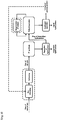
- Fig. 1 schematically describes a method for synthesizing monocyclic aromatic compounds and long-chain olefin compounds from a carbon dioxide-rich synthesis gas according to the present invention.
- a hydrocarbon is produced by conducting a Fischer-Tropsch (FT) synthesis process using a synthesis gas as a source material.
- FT Fischer-Tropsch
- a general FT synthesis process is conducted by hydrogenation of carbon monoxide.
- carbon efficiency is maximized by an FT synthesis process in which carbon monoxide and carbon dioxide are hydrogenated at the same time.
- a synthesis gas with a controlled molar ratio of hydrogen, carbon monoxide and carbon dioxide is used as a source material in the presence of an iron-based catalyst.
- the iron-based catalyst is a catalyst commonly used in the FT synthesis process.
- the iron-based catalyst may further contain one or more cocatalyst selected from a group consisting of copper (Cu), manganese (Mn), cobalt (Co), nickel (Ni), zinc (Zn), aluminum (Al) and potassium (K), if necessary.
- the synthesis gas used as the source material in the present invention is a carbon dioxide-rich synthesis gas which contains hydrogen, carbon monoxide and carbon dioxide and has a CO 2 /(CO + CO 2 ) molar ratio of 0.4-0.65 and a H 2 /(2CO + 3CO 2 ) molar ratio of 0.85-1.1.
- the synthesis gas may be produced through a reforming process of natural gas. Methods for reforming the natural gas may include steam reforming, carbon dioxide reforming, combined reforming, partial oxidation, etc. In particular, a synthesis gas produced by the combined reforming method which allows control of the composition of the synthesis gas may be used.
- the maximum carbon efficiency desired by the present invention cannot be achieved because the reverse water gas shift reaction whereby carbon dioxide is converted to carbon monoxide does not occur sufficiently.
- the catalyst lifetime may decrease due to increased carbon deposition.
- productivity may decrease because both CO and CO 2 conversion decreased.
- the H 2 /(2CO + 3CO 2 ) molar ratio in the synthesis gas is smaller than 0.85, the maximum carbon efficiency desired by the present invention cannot be achieved because the reverse water gas shift reaction whereby carbon dioxide is converted to carbon monoxide does not occur sufficiently.
- the catalyst life time may decrease due to increased carbon deposition.
- the H 2 /(2CO + 3CO 2 ) molar ratio exceeds 1.1, the yield of the long-chain olefin compounds may decrease because the selectivity of methane (C 1 ) is increased unnecessarily and, as a result, the selectivity of the short-chain olefin is increased during the following dehydrogenation of the hydrocarbon.
- the FT synthesis process of the present invention is performed under the condition of a reaction temperature of 250-350 °C and a reaction pressure of 10-30 bar, specifically under the condition of a reaction temperature of 300-350 °C and a reaction pressure of 15-25 bar.
- the reaction temperature in the FT synthesis process is below 250 °C, the maximum carbon efficiency desired by the present invention cannot be achieved because the reverse water gas shift reaction whereby carbon dioxide is converted to carbon monoxide does not occur sufficiently.
- the yield of the long-chain olefin compounds may decrease because the selectivity of methane (C 1 ) is increased unnecessarily.
- the catalyst life time may decrease due to increased carbon deposition and the yield of the long-chain olefin compounds may decrease because the selectivity of methane (C 1 ) is increased.
- reaction pressure in the FT synthesis process is below 10 bar, the maximum carbon efficiency desired by the present invention cannot be achieved because the reverse water gas shift reaction does not occur sufficiently.
- the yield of the long-chain olefin compounds may decrease because the selectivity of methane (C 1 ) is increased and the catalyst life time may decrease due to increased carbon deposition.
- the reaction pressure exceeds 30 bar, the productivity of the monocyclic aromatic compounds and the long-chain olefin compounds decreases due to decreased selectivity of the short-chain hydrocarbon which is a reactant in the following dehydrogenation of the hydrocarbon.
- the operation of the process for maintaining the high pressure is complicated.
- a C 1 -C 15 short-chain hydrocarbon is separated from the hydrocarbon produced in the FT synthesis process.
- the reaction condition of the FT synthesis process of the present invention is controlled to improve the selectivity of the short-chain hydrocarbon, the selectivity of the C 1 -C 15 short-chain hydrocarbon can be increased to 80-100%. Accordingly, the preparation method of the present invention achieves the effect of simplifying the process because an additional process for upgrading the hydrocarbon produced from the FT synthesis process is not necessary.
- the C 1 -C 15 short-chain hydrocarbon is separated and purified through simple distillation in order to further increase the selectivity of the monocyclic aromatic compounds and the long-chain olefin compounds produced in the following dehydrogenation process.
- the separation of the short-chain hydrocarbon is achieved through a distillation process. Assuming that the pressure inside a reactor is 20 bar, the distillation temperature may be maintained at 0-200 °C, specifically 120-160 °C.
- the selectivity of the monocyclic aromatic compounds and the long-chain olefin compounds may decrease and the separator may be damaged due to freezing of water which is a reaction byproduct.
- the catalyst life time may decrease due to deposition of the long-chain hydrocarbon on the catalyst in the following dehydrogenation process.
- the monocyclic aromatic compounds and the long-chain olefin compounds are produced by dehydrogenating the short-chain hydrocarbon.
- the dehydrogenation reaction consists of a step of reacting the short-chain hydrocarbon with hydrogen (H 2 ) and water (H 2 O) in the presence of a crystalline aluminosilicate-based catalyst.
- the hydrogen (H2) is used with a molar ratio of 0.1-10, specifically 1-8, and the water (H 2 O) is used with a molar ratio of 0.1-1.3, specifically 0.1-0.8.
- the selectivity of the monocyclic aromatic compounds and the long-chain olefin compounds may decrease because the dehydrogenation reaction does not occur sufficiently.
- the aluminosilicate-based catalyst may be deactivated quickly because it is difficult to remove carbon deposition with the water. And, if the water/short-chain hydrocarbon molar ratio exceeds 1.3, the catalyst may be deactivated quickly because an excess amount of water is adsorbed to the aluminosilicate-based catalyst.
- a crystalline aluminosilicate-based catalyst with a Si/Al molar ratio of 10-50 is used as the catalyst used in the dehydrogenation reaction. If the Si/Al molar ratio is below 10, the productivity of the polycyclic aromatic compounds is high because the dehydrogenation reaction proceeds vigorously. On the contrary, if the Si/Al molar ratio exceeds 50, the productivity of the monocyclic aromatic compounds decreases because the chain growth reaction becomes dominant.
- the crystalline aluminosilicate-based catalyst one with a Br ⁇ nsted acid site/Lewis acid site ratio controlled to 0.1-3.2 is used. If the acid site ratio is below 0.1, the productivity of the polycyclic aromatic compounds is high because the dehydrogenation reaction proceeds vigorously. On the contrary, if the acid site ratio exceeds 3.2, the productivity of the monocyclic aromatic compounds decreases because the chain growth reaction becomes dominant.
- a crystalline porous catalyst containing mesopores with a size of 10 nm or smaller and micropores with a size of 1-8 ⁇ . If the pore size of the crystalline catalyst does not satisfy the above range, the productivity of the monocyclic aromatic compounds decreases.
- the crystalline aluminosilicate-based catalyst may be used alone, the crystalline aluminosilicate-based catalyst may further contain one or more cocatalyst selected from a group consisting of iron (Fe), copper (Cu), zinc (Zn), tin (Sn), nickel (Ni), molybdenum (Mo), potassium (K), lanthanum (La), platinum (Pt), gold (Au), palladium (Pd), rhodium (Rd), ruthenium (Ru) and silver (Ag), if necessary.
- cocatalyst selected from a group consisting of iron (Fe), copper (Cu), zinc (Zn), tin (Sn), nickel (Ni), molybdenum (Mo), potassium (K), lanthanum (La), platinum (Pt), gold (Au), palladium (Pd), rhodium (Rd), ruthenium (Ru) and silver (Ag), if necessary.
- the content of the metal element (A) contained as the cocatalyst may be maintained such that the A/Al molar ratio based on the aluminum (Al) atom of the crystalline aluminosilicate-based catalyst is 0.01-2.5.
- the molar ratio of the cocatalyst metal element (A) based on the aluminum atom i.e., A/Al molar ratio
- the dehydrogenation process of the present invention is performed under the condition of a reaction temperature of 100-450 °C and a reaction pressure of 1-30 bar.
- a reaction temperature 100-450 °C
- a reaction pressure 1-30 bar.
- the reaction temperature high and maintain the reaction pressure low within the above-described ranges of the reaction temperature and the reaction pressure.
- the selectivity of the monocyclic aromatic compounds may be maximized by maintaining the reaction temperature at 300-350 °C and the reaction pressure at 5-20 bar.
- the selectivity of the C 6 -C 18 long-chain olefin compounds may be maximized by maintaining the reaction temperature at 200-270 °C and the reaction pressure at 10-20 bar or by maintaining the reaction temperature at 300-350 °C and the reaction pressure at 1-2 bar.
- the yield of the monocyclic aromatic compounds or the C 6 -C 18 long-chain olefin compounds may be maximized by controlling the composition of the catalyst, the reaction temperature and the reaction pressure.
- light hydrocarbons (C 1 -C 4 ) are included as byproducts in addition to the monocyclic aromatic compounds and the long-chain olefin compounds.
- the light hydrocarbons (C 1 -C 4 ) in gas state and the monocyclic aromatic compounds and the long-chain olefin compounds in liquid state can be separated through a simple distillation process.
- the distillation temperature for the gas/liquid separation may be -5 to 5 °C. If the temperature is below -5 °C, the separator may be damaged due to freezing of water which is a reaction byproduct. And, if the temperature exceeds 5 °C, the light hydrocarbon (C 1 -C 4 ) may not be easily separated from the liquid hydrocarbon (C 5+ ).
- the C 1 -C 4 light hydrocarbon separated through the gas/liquid separation may be recycled to a reforming reactor for preparing the synthesis gas.
- Hydrocarbons were produced by performing a Fischer-Tropsch synthesis process under the condition of a reaction temperature of 300 °C and a reaction pressure of 10 bar by loading 1 g of an iron-based catalyst with a composition of 100Fe-6Cu-16Al-4K in a 1.27 cm (1/2-inch) stainless steel fixed-bed reactor and supplying a synthesis gas at a flow rate of 1,800 mL/g cat ⁇ h.
- the hydrocarbon products were analyzed by on-line GC (TCD, FID).
- the Fischer-Tropsch (FT) process and the reverse water gas shift reaction proceeded well, the conversion of CO and CO 2 and the C 2 -C 4 hydrocarbon selectivity were high and the carbon deposition ratio was low when the CO 2 /(CO + CO 2 ) molar ratio was 0.4-0.65 and the H 2 /(2CO + 3CO 2 ) molar ratio was 1.
- Fischer-Tropsch synthesis was conducted under the same condition as in Example 1 by fixing the CO 2 /(CO + CO 2 ) value to 0.5 and varying the H 2 /(2CO + 3CO 2 ) value.
- monocyclic aromatic compounds and long-chain olefin compounds were produced under the condition of a reaction temperature of 300 °C and a reaction pressure of 10 bar by loading 0.6 g of a crystalline aluminosilicate-based catalyst in a 1.27 cm (1/2-inch) stainless steel fixed-bed reactor.
- the composition of the products was analyzed by on-line GC (TCD, FID) and GC/MS.
- Hydrocarbon produced by performing a Fischer-Tropsch synthesis process was dehydrogenated in the same manner as in Example 3. Before performing the dehydrogenation process, C 1 -C 15 short-chain hydrocarbons were separated through a distillation process.
- monocyclic aromatic compounds and long-chain olefin compounds were produced by loading 0.6 g of a crystalline aluminosilicate-based catalyst in a fixed-bed reactor.
- the composition of the products was analyzed by on-line GC (TCD, FID) and GC/MS.
- the selectivity of monocyclic aromatic compounds and long-chain olefin compounds in the products was changed by the reaction temperature and reaction pressure conditions of the dehydrogenation process. That is to say, when the reaction temperature was 300 °C, the selectivity of monocyclic aromatic compounds was increased as the reaction pressure decreased below 10 bar. And, the selectivity of long-chain olefin compounds was the highest when the reaction condition was 250 °C and 20 bar.
Landscapes
- Chemical & Material Sciences (AREA)
- Oil, Petroleum & Natural Gas (AREA)
- Organic Chemistry (AREA)
- Chemical Kinetics & Catalysis (AREA)
- Engineering & Computer Science (AREA)
- General Chemical & Material Sciences (AREA)
- Crystallography & Structural Chemistry (AREA)
- Organic Low-Molecular-Weight Compounds And Preparation Thereof (AREA)
- Catalysts (AREA)
Description
- The present invention relates to a method for directly synthesizing monocyclic aromatic compounds and long-chain olefin compounds from a carbon dioxide-rich synthesis gas, more particularly to a process of preparing a hydrocarbon through a Fischer-Tropsch (FT) synthesis process and a process of preparing monocyclic aromatic compounds and long-chain olefin compounds through a hydrocarbon dehydrogenation process, wherein a carbon dioxide-rich synthesis gas with the molar ratio of hydrogen, carbon monoxide and carbon dioxide limited to a particular range is used as a synthesis gas used for the Fischer-Tropsch (FT) synthesis process to maximize the yield of C1-C15 short-chain hydrocarbons and the composition of a catalyst used in the dehydrogenation process as well as the temperature and pressure conditions thereof are specified to maximize the yield of monocyclic aromatic compounds or long-chain olefin compounds.
- Because carbon dioxide (CO2) is the most significant greenhouse gas, technologies for sequestration and reducing carbon dioxide through capture, storage, conversion, etc. are actively being proposed. Among them, the GTL (gas to liquids) process is drawing attentions as an important technology for providing hydrocarbons obtained from petroleum resources with the recent development of shale gas.
- The Fischer-Tropsch (FT) synthesis process, a critical process in the GTL technology, is a process whereby hydrocarbons are produced from a synthesis gas produced through reforming of natural gas. However, additional separation and upgrading processes are necessary because the hydrocarbons produced through the FT synthesis process are various in the number of carbon atoms. Therefore, for simplification of the GTL process and effective hydrocarbon production, studies are actively being conducted on the synthesis of hydrocarbons with a relatively narrow carbon number range by controlling the condition of the FT synthesis process.
- In the FT synthesis process, iron-based catalysts and cobalt-based catalysts are mainly used. Although iron-based catalysts were used mainly in the early stage of development, cobalt-based catalysts are mainly used recently. However, because the synthesis gas which is used as a source material in the FT synthesis process using cobalt-based catalysts should have a H2/CO molar ratio close to 2, it is difficult to satisfy the operating condition. In addition, because the use of carbon dioxide contained in the synthesis gas is not considered, both thermal and carbon efficiency for the overall process are relatively low and secondary environmental problems may occur. In contrast, the FT synthesis process using iron-based catalysts is an environment-friendly process with relatively high thermal efficiency and carbon efficiency because carbon dioxide can be converted to hydrocarbons by water gas shift reaction [see patent document 1].
- Monocyclic aromatic compounds such as benzene, toluene, xylene, ethylbenzene, etc. or olefin compounds are used as source materials for petrochemicals such as synthetic fibers, plastics, gasoline additives, etc. In the existing methods, monocyclic aromatic compounds or olefin compounds are produced mainly from mixed fuel oil.
- As the methods for preparing monocyclic aromatic compounds, patent documents 2-5 propose preparation from polycyclic aromatic compounds contained in light cycle oil (LCO), etc. using zeolite catalysts. However, the methods proposed in the patent documents 2-5 have the problems that the yield of monocyclic aromatic compounds is not high and the catalyst is easily deactivated during the reaction due to carbon deposition.
- As the methods for preparing olefin compounds, patent documents 6-8 propose preparation of light olefins such as ethylene, propylene, etc. from naphtha or heavy hydrocarbons using zeolite catalysts. However, the preparation of long-chain olefin compounds with 6-17 carbon atoms is not described at all in the patent documents 6-8.
-
- (Patent document 1) Korean Patent Registration No.
10-01418911 - (Patent document 2) Japanese Patent Publication No.
1991-002128 - (Patent document 3) Japanese Patent Publication No.
1991-052993 - (Patent document 4) Japanese Patent Publication No.
1991-26791 - (Patent document 5) Korean Patent Publication No.
10-2014-0027082 - (Patent document 6) International Patent Publication No.
WO2000-18853 - (Patent document 7) International Patent Publication No.
WO2005-94992 - (Patent document 8) Japanese Patent Publication No.
2007-190520 - M.K. Gnanamani, et al. disclose in "Fischer Tropsch synthesis: Effect of CO2 containing syngas over Pt promoted Co/gamma-Al2O3 and K-promoted Fe catalysts" (CATALYSIS COMMUNICATIONS, (2011), vol. 12, pages 936 - 939) that in Fischer-Tropsch (FT) synthesis CO2 behaves differently in the presence of CO over cobalt and iron catalysts in terms of hydrogenation.
- D.H. Chun, et al. disclose in "Negative effects of CO2 in the feed stream on the catalytic performance of precipitated iron-based catalysts for Fischer-Tropsch synthesis" (CATAL. LETT, (2012), vol. 142, pages 452 - 459) that CO2 in the feed stream decreases the rate of hydrocarbon formation, and that also suppresses CO2 formation, decreasing both CO conversion and CO2 selectivity.
- Y. LIU, et al. disclose in "Effect of co-feeding carbon dioxide on Fischer-Tropsch synthesis over an iron-manganese catalyst in a spinning basket reactor" (FUEL PROCESSING TECHNOLOGY, (2008), vol. 89, pages 234 - 241) that co-feeding CO2 to syngas did not decrease the activity of the catalyst but increases the activity and methane selectivity after removal of CO2 from the feed gas.
-
US 2003/0181325 A1 discloses a process comprising contacting a paraffinic hydrocarbon feed stream with an oxydehydrogenation/cracking catalyst under suitable catalytic reaction conditions and catalytically oxydehydrogenating and cracking paraffins to produce olefins, wherein said paraffinic hydrocarbon feedstream is fed in an anaerobic manner to said oxydehydrogenation/cracking catalyst comprising at least one molecular sieve cracking component selected from ZSM-5, SAPO-34, and SAPO-11 and at least one oxydehydrogenation component to oxydehydrogenate and crack the paraffinic hydrocarbon to produce olefins. - The present invention is directed to providing a method for directly synthesizing monocyclic aromatic compounds and long-chain olefin compounds using a synthesis gas as a source material.
- The present invention provides a method for synthesizing monocyclic aromatic compounds and long-chain olefin compounds from a carbon dioxide-rich synthesis gas as specified in the attached claims. The inventive method includes:
- i) a step of preparing a hydrocarbon by conducting a Fischer-Tropsch (FT) synthesis process in the presence of an iron-based catalyst using a carbon dioxide-rich synthesis gas with a CO2/(CO + CO2) molar ratio controlled within a range from 0.4 to 0.65 as a source material;
- ii) a step of separating a C1-C15 short-chain hydrocarbon from the hydrocarbon products; and
- iii) a step of preparing C6-C12 monocyclic aromatic compounds and C6-C18 long-chain olefin compounds by dehydrogenating the C1-C15 short-chain hydrocarbon in the presence of a crystalline aluminosilicate-based catalyst, hydrogen and water.
- The present invention provides an effect of synthesizing highly value-added monocyclic aromatic compounds and long-chain olefin compounds with high yield by using a synthesis gas as a source material.
- The present invention also provides an effect of maximizing carbon efficiency because the carbon dioxide contained in the synthesis gas with high content is converted to carbon monoxide by reverse water gas shift reaction in an FT synthesis process.
- The present invention also provides an effect of simplifying the FT synthesis process because the selectivity of a C1-C15 short-chain hydrocarbon is maintained high in the process and the hydrocarbon products can be used for dehydrogenation without an additional upgrading process.
- Accordingly, the preparation method of the present invention can reduce the carbon dioxide greenhouse gas and, at the same time, provide highly value-added monocyclic aromatic compounds and long-chain olefin compounds.
-
Fig. 1 schematically describes a method for synthesizing monocyclic aromatic compounds and long-chain olefin compounds from a carbon dioxide-rich synthesis gas according to the present invention. - Hereinafter, a synthesis method according to the present invention is described in detail referring to
Fig. 1 . - In the first step, a hydrocarbon is produced by conducting a Fischer-Tropsch (FT) synthesis process using a synthesis gas as a source material.
- A general FT synthesis process is conducted by hydrogenation of carbon monoxide. However, in the present invention, carbon efficiency is maximized by an FT synthesis process in which carbon monoxide and carbon dioxide are hydrogenated at the same time.
- (1) Hydrogenation of carbon monoxide: nCO + 2nH2 → -(CH2)n- + nH2O
- (2) Reverse water gas shift reaction: CO2 + H2 → CO + H2O
- In the FT synthesis process of the present invention, a synthesis gas with a controlled molar ratio of hydrogen, carbon monoxide and carbon dioxide is used as a source material in the presence of an iron-based catalyst.
- The iron-based catalyst is a catalyst commonly used in the FT synthesis process. The iron-based catalyst may further contain one or more cocatalyst selected from a group consisting of copper (Cu), manganese (Mn), cobalt (Co), nickel (Ni), zinc (Zn), aluminum (Al) and potassium (K), if necessary.
- The synthesis gas used as the source material in the present invention is a carbon dioxide-rich synthesis gas which contains hydrogen, carbon monoxide and carbon dioxide and has a CO2/(CO + CO2) molar ratio of 0.4-0.65 and a H2/(2CO + 3CO2) molar ratio of 0.85-1.1. The synthesis gas may be produced through a reforming process of natural gas. Methods for reforming the natural gas may include steam reforming, carbon dioxide reforming, combined reforming, partial oxidation, etc. In particular, a synthesis gas produced by the combined reforming method which allows control of the composition of the synthesis gas may be used.
- In the synthesis gas used in the present invention, if the CO2/(CO + CO2) molar ratio is smaller than 0.4, the maximum carbon efficiency desired by the present invention cannot be achieved because the reverse water gas shift reaction whereby carbon dioxide is converted to carbon monoxide does not occur sufficiently. In addition, the catalyst lifetime may decrease due to increased carbon deposition. On the contrary, if the CO2/(CO + CO2) molar ratio exceeds 0.65, productivity may decrease because both CO and CO2 conversion decreased.
- And, if the H2/(2CO + 3CO2) molar ratio in the synthesis gas is smaller than 0.85, the maximum carbon efficiency desired by the present invention cannot be achieved because the reverse water gas shift reaction whereby carbon dioxide is converted to carbon monoxide does not occur sufficiently. In addition, the catalyst life time may decrease due to increased carbon deposition. On the contrary, if the H2/(2CO + 3CO2) molar ratio exceeds 1.1, the yield of the long-chain olefin compounds may decrease because the selectivity of methane (C1) is increased unnecessarily and, as a result, the selectivity of the short-chain olefin is increased during the following dehydrogenation of the hydrocarbon.
- The FT synthesis process of the present invention is performed under the condition of a reaction temperature of 250-350 °C and a reaction pressure of 10-30 bar, specifically under the condition of a reaction temperature of 300-350 °C and a reaction pressure of 15-25 bar.
- If the reaction temperature in the FT synthesis process is below 250 °C, the maximum carbon efficiency desired by the present invention cannot be achieved because the reverse water gas shift reaction whereby carbon dioxide is converted to carbon monoxide does not occur sufficiently. In addition, the yield of the long-chain olefin compounds may decrease because the selectivity of methane (C1) is increased unnecessarily. On the contrary, if the reaction temperature exceeds 350 °C, the catalyst life time may decrease due to increased carbon deposition and the yield of the long-chain olefin compounds may decrease because the selectivity of methane (C1) is increased.
- If the reaction pressure in the FT synthesis process is below 10 bar, the maximum carbon efficiency desired by the present invention cannot be achieved because the reverse water gas shift reaction does not occur sufficiently. In addition, the yield of the long-chain olefin compounds may decrease because the selectivity of methane (C1) is increased and the catalyst life time may decrease due to increased carbon deposition. On the contrary, if the reaction pressure exceeds 30 bar, the productivity of the monocyclic aromatic compounds and the long-chain olefin compounds decreases due to decreased selectivity of the short-chain hydrocarbon which is a reactant in the following dehydrogenation of the hydrocarbon. In addition, the operation of the process for maintaining the high pressure is complicated.
- In the second step, a C1-C15 short-chain hydrocarbon is separated from the hydrocarbon produced in the FT synthesis process.
- Because the reaction condition of the FT synthesis process of the present invention is controlled to improve the selectivity of the short-chain hydrocarbon, the selectivity of the C1-C15 short-chain hydrocarbon can be increased to 80-100%. Accordingly, the preparation method of the present invention achieves the effect of simplifying the process because an additional process for upgrading the hydrocarbon produced from the FT synthesis process is not necessary.
- In the second step of the present invention, the C1-C15 short-chain hydrocarbon is separated and purified through simple distillation in order to further increase the selectivity of the monocyclic aromatic compounds and the long-chain olefin compounds produced in the following dehydrogenation process.
- The separation of the short-chain hydrocarbon is achieved through a distillation process. Assuming that the pressure inside a reactor is 20 bar, the distillation temperature may be maintained at 0-200 °C, specifically 120-160 °C.
- If the distillation temperature is below 0 °C, the selectivity of the monocyclic aromatic compounds and the long-chain olefin compounds may decrease and the separator may be damaged due to freezing of water which is a reaction byproduct. On the contrary, if the distillation temperature exceeds 200 °C, the catalyst life time may decrease due to deposition of the long-chain hydrocarbon on the catalyst in the following dehydrogenation process.
- In the third step, the monocyclic aromatic compounds and the long-chain olefin compounds are produced by dehydrogenating the short-chain hydrocarbon.
- The dehydrogenation reaction consists of a step of reacting the short-chain hydrocarbon with hydrogen (H2) and water (H2O) in the presence of a crystalline aluminosilicate-based catalyst.
- Based on the short-chain hydrocarbon used as the reactant, the hydrogen (H2) is used with a molar ratio of 0.1-10, specifically 1-8, and the water (H2O) is used with a molar ratio of 0.1-1.3, specifically 0.1-0.8.
- If the hydrogen/ short-chain hydrocarbon molar ratio during the dehydrogenation reaction is below 0.1 or exceeds 10, the selectivity of the monocyclic aromatic compounds and the long-chain olefin compounds may decrease because the dehydrogenation reaction does not occur sufficiently.
- If the water/short-chain hydrocarbon molar ratio is below 0.1, the aluminosilicate-based catalyst may be deactivated quickly because it is difficult to remove carbon deposition with the water. And, if the water/short-chain hydrocarbon molar ratio exceeds 1.3, the catalyst may be deactivated quickly because an excess amount of water is adsorbed to the aluminosilicate-based catalyst.
- As the catalyst used in the dehydrogenation reaction, a crystalline aluminosilicate-based catalyst with a Si/Al molar ratio of 10-50 is used. If the Si/Al molar ratio is below 10, the productivity of the polycyclic aromatic compounds is high because the dehydrogenation reaction proceeds vigorously. On the contrary, if the Si/Al molar ratio exceeds 50, the productivity of the monocyclic aromatic compounds decreases because the chain growth reaction becomes dominant.
- Also, as the crystalline aluminosilicate-based catalyst, one with a Brønsted acid site/Lewis acid site ratio controlled to 0.1-3.2 is used. If the acid site ratio is below 0.1, the productivity of the polycyclic aromatic compounds is high because the dehydrogenation reaction proceeds vigorously. On the contrary, if the acid site ratio exceeds 3.2, the productivity of the monocyclic aromatic compounds decreases because the chain growth reaction becomes dominant.
- Also, as the crystalline aluminosilicate-based catalyst, a crystalline porous catalyst containing mesopores with a size of 10 nm or smaller and micropores with a size of 1-8 Å. If the pore size of the crystalline catalyst does not satisfy the above range, the productivity of the monocyclic aromatic compounds decreases.
- Although the crystalline aluminosilicate-based catalyst may be used alone, the crystalline aluminosilicate-based catalyst may further contain one or more cocatalyst selected from a group consisting of iron (Fe), copper (Cu), zinc (Zn), tin (Sn), nickel (Ni), molybdenum (Mo), potassium (K), lanthanum (La), platinum (Pt), gold (Au), palladium (Pd), rhodium (Rd), ruthenium (Ru) and silver (Ag), if necessary. Specifically, the content of the metal element (A) contained as the cocatalyst may be maintained such that the A/Al molar ratio based on the aluminum (Al) atom of the crystalline aluminosilicate-based catalyst is 0.01-2.5. Specifically, the molar ratio of the cocatalyst metal element (A) based on the aluminum atom (i.e., A/Al molar ratio) may be 0.1-1.
- The dehydrogenation process of the present invention is performed under the condition of a reaction temperature of 100-450 °C and a reaction pressure of 1-30 bar. By controlling the reaction temperature and the reaction pressure of the dehydrogenation process, the selectivity of the monocyclic aromatic compounds or the long-chain olefin compounds can be controlled.
- That is to say, in order to increase the selectivity of the monocyclic aromatic compounds, it is recommended to maintain the reaction temperature high and maintain the reaction pressure low within the above-described ranges of the reaction temperature and the reaction pressure. Specifically, the selectivity of the monocyclic aromatic compounds may be maximized by maintaining the reaction temperature at 300-350 °C and the reaction pressure at 5-20 bar.
- And, in order to increase the selectivity of the long-chain olefin compounds, it is recommended to maintain the reaction temperature low and maintain the reaction pressure high within the above-described ranges of the reaction temperature and the reaction pressure. Specifically, the selectivity of the C6-C18 long-chain olefin compounds may be maximized by maintaining the reaction temperature at 200-270 °C and the reaction pressure at 10-20 bar or by maintaining the reaction temperature at 300-350 °C and the reaction pressure at 1-2 bar.
- Accordingly, in the dehydrogenation process of the present invention, the yield of the monocyclic aromatic compounds or the C6-C18 long-chain olefin compounds may be maximized by controlling the composition of the catalyst, the reaction temperature and the reaction pressure.
- Among the hydrocarbons produced from the dehydrogenation process, light hydrocarbons (C1-C4) are included as byproducts in addition to the monocyclic aromatic compounds and the long-chain olefin compounds. In the present invention, the light hydrocarbons (C1-C4) in gas state and the monocyclic aromatic compounds and the long-chain olefin compounds in liquid state can be separated through a simple distillation process.
- Specifically, the distillation temperature for the gas/liquid separation may be -5 to 5 °C. If the temperature is below -5 °C, the separator may be damaged due to freezing of water which is a reaction byproduct. And, if the temperature exceeds 5 °C, the light hydrocarbon (C1-C4) may not be easily separated from the liquid hydrocarbon (C5+).
- The C1-C4 light hydrocarbon separated through the gas/liquid separation may be recycled to a reforming reactor for preparing the synthesis gas.
- The synthesis method of the present invention described above will be described in more detail referring to the following examples. However, the present invention is not limited by them.
- Hydrocarbons were produced by performing a Fischer-Tropsch synthesis process under the condition of a reaction temperature of 300 °C and a reaction pressure of 10 bar by loading 1 g of an iron-based catalyst with a composition of 100Fe-6Cu-16Al-4K in a 1.27 cm (1/2-inch) stainless steel fixed-bed reactor and supplying a synthesis gas at a flow rate of 1,800 mL/g cat·h. The hydrocarbon products were analyzed by on-line GC (TCD, FID).
- The result of analyzing the selectivity of the hydrocarbon products depending on the composition of the synthesis gas used as a source material is shown in Table 1.
[Table 1] Molar ratio in synthesis gas Conversion (%) Carbon deposition ratio (%) C2-C4 hydrocarbon distribution (mol%) CO2/(CO + CO2) H2/(2CO + 3CO2) CO → HC CO → CO2 CO2 → HC C2-C4 C2-C4 olefin Example 1-1 0.25 1 96.8 19.7 - 5.9 32.3 72.7 Example 1-2 0.4 1 95.5 - 8.7 5.4 31.2 73.1 Example 1-3 0.5 1 95.0 - 12.6 4.7 30.1 73.7 Example 1-4 0.6 1 94.1 - 17.6 4 29.4 74.2 Example 1-5 0.75 1 88.4 - 29.7 3.1 28.0 75.1 - According to the present invention, the Fischer-Tropsch (FT) process and the reverse water gas shift reaction proceeded well, the conversion of CO and CO2 and the C2-C4 hydrocarbon selectivity were high and the carbon deposition ratio was low when the CO2/(CO + CO2) molar ratio was 0.4-0.65 and the H2/(2CO + 3CO2) molar ratio was 1.
- In contrast, when the CO2/(CO + CO2) molar ratio was low as 0.25, the reverse water gas shift reaction did not occur although the carbon monoxide (CO) was converted to the C2-C4 hydrocarbon with a high conversion. And, when the CO2/(CO + CO2) molar ratio was 0.75, the C2-C4 hydrocarbon selectivity was low because the CO conversion was decreased in the Fischer-Tropsch (FT) process.
- Fischer-Tropsch synthesis was conducted under the same condition as in Example 1 by fixing the CO2/(CO + CO2) value to 0.5 and varying the H2/(2CO + 3CO2) value.
- The result of analyzing the selectivity of the hydrocarbon products depending on the composition of the synthesis gas used as a source material is shown in Table 2.
[Table 2] Molar ratio in synthesis gas CO → HC conversion (%) Selectivity (%) CO2/(CO + CO2) H2/(2CO + 3CO2) Hydrocarbon CO2 Example 2-1 0.5 0.4 86.2 64.7 29.4 Example 2-2 0.5 1 94.5 100.0 -10.7 - As seen from Table 2, when the H2/(2CO + 3CO2) molar ratio was 1, the hydrocarbon selectivity was 100%, the CO conversion was high and CO2 was consumed. In contrast, when the H2/(2CO + 3CO2) molar ratio was low as 0.4, the CO conversion and the hydrocarbon selectivity were low and CO2 was produced.
- Hydrocarbons produced by performing a Fischer-Tropsch synthesis process under the condition of a reaction temperature of 320 °C and a reaction pressure of 20 bar by loading 1 g of an iron-based catalyst with a composition of 100Fe-6Cu-16Al-4K in a 1.27 cm (1/2-inch) stainless steel fixed-bed reactor and supplying a synthesis gas with CO2/(CO + CO2) = 0.5 and H2/(2CO + 3CO2) = 1 at a flow rate of 1,800 mL/g cat·h were dehydrogenated. Before dehydrogenating the hydrocarbon products, C1-C15 short-chain hydrocarbons were separated through a distillation process. The temperature and pressure inside the separator were maintained at 136 °C and 20 bar.
- For the dehydrogenation, monocyclic aromatic compounds and long-chain olefin compounds were produced under the condition of a reaction temperature of 300 °C and a reaction pressure of 10 bar by loading 0.6 g of a crystalline aluminosilicate-based catalyst in a 1.27 cm (1/2-inch) stainless steel fixed-bed reactor. The composition of the products was analyzed by on-line GC (TCD, FID) and GC/MS.
- The result of analyzing the composition of the hydrocarbon products depending on the composition of the catalyst used in the dehydrogenation process is shown in Table 3.
[Table 3] Dehydrogenation condition Product distribution (mol%) Main catalyst Cocatalyst (A) BTEX1) C6-C18 long-chain olefins C6-C18 paraffin isomers Other byproducts Co catalyst A/Al molar ratio Example 3-1 H-ZSM52) - - 10.2 28.7 19.5 41.6 Example 3-2 H-ZSM53) - - 19.9 22.3 13.1 44.7 Example 3-3 H-ZSM54) - - 22.4 1.5 9.7 66.4 Example 3-4 H-ZSM54) Zn 0.3 14.8 4.2 19.2 61.8 Example 3-5 H-ZSM54) Zn 0.5 16.3 3.0 23.8 56.9 1) BTEX: benzene, toluene, ethylbenzene and xylene 2) H-ZSM5: Si/Al = 40, specific surface area = 454.6 m2/g, Ratio of Brønsted to Lewis acid site = 1.21 3) H-ZSM5: Si/Al = 25, specific surface area = 421.3 m2/g, Ratio of Brønsted to Lewis acid site= 1.35 4) H-ZSM5: Si/Al = 15, specific surface area = 402.1 m2/g, Ratio of Brønsted to Lewis acid site = 0.81 - As seen from Table 3, when only the crystalline aluminosilicate-based catalyst was used, the selectivity of monocyclic aromatic compounds was higher as the Si/Al ratio was smaller and the selectivity of long-chain olefin compounds was higher as the Si/Al ratio was larger.
- And, when zinc (Zn) was included as a cocatalyst while using the crystalline aluminosilicate-based catalyst as a main catalyst, the selectivity of paraffin isomers was increased in addition to those of the monocyclic aromatic compounds and the long-chain olefin compounds. This effect was enhanced as the Zn/Al ratio was increased.
- Hydrocarbon produced by performing a Fischer-Tropsch synthesis process was dehydrogenated in the same manner as in Example 3. Before performing the dehydrogenation process, C1-C15 short-chain hydrocarbons were separated through a distillation process.
- For the dehydrogenation, monocyclic aromatic compounds and long-chain olefin compounds were produced by loading 0.6 g of a crystalline aluminosilicate-based catalyst in a fixed-bed reactor. The composition of the products was analyzed by on-line GC (TCD, FID) and GC/MS.
- The result of analyzing the composition of the hydrocarbon products depending on the reaction temperature and reaction pressure conditions of the dehydrogenation process is shown in Table 4.
[Table 4] Dehydrogenation condition Catalyst Product distribution (mol%) Reaction temperature (°C) Reaction pressure (bar) BTEX1) C6-C18 long-chain olefins Other byproducts Example 4-1 300 1 H-ZSM52) 3 6.5 90.5 Example 4-2 300 5 H-ZSM52) 22.0 1.9 76.1 Example 4-3 300 10 H-ZSM52) 22.4 0.0 77.6 Example 4-4 300 20 H-ZSM52) 18.4 0.6 81.0 Example 250 20 H-ZSM52) 1.8 8.7 89.5 4-5 Example 4-6 300 10 Zn/H-ZSM53) 16.3 1.5 82.2 Example 4-7 350 10 Zn/H-ZSM53) 18.5 0.0 81.5 Example 4-8 400 10 Zn/H-ZSM53) 13.9 1.6 84.5 Example 4-9 450 10 Zn/H-ZSM53) 11.6 2.1 86.3 1) BTEX: benzene, toluene, ethylbenzene and xylene 2) H-ZSM5: Si/Al = 15, specific surface area = 402.1 m2/g, Brønsted acid point = 0.81 3) Zn/H-ZSM5: Si/Al = 15, Zn/Al = 0.5 - As seen from Table 4, the selectivity of monocyclic aromatic compounds and long-chain olefin compounds in the products was changed by the reaction temperature and reaction pressure conditions of the dehydrogenation process. That is to say, when the reaction temperature was 300 °C, the selectivity of monocyclic aromatic compounds was increased as the reaction pressure decreased below 10 bar. And, the selectivity of long-chain olefin compounds was the highest when the reaction condition was 250 °C and 20 bar.
Claims (6)
- A method for synthesizing monocyclic aromatic compounds and long-chain olefin compounds from a carbon dioxide-rich synthesis gas, which comprises: i) a step of preparing a hydrocarbon by conducting a Fischer-Tropsch (FT) synthesis process in the presence of an iron-based catalyst using a carbon dioxide-rich synthesis gas with a CO2/(CO + CO2) molar ratio controlled within a range from 0.4 to 0.65 as a source material; ii) a step of separating a C1-C15 short-chain hydrocarbon from the hydrocarbon products; and iii) a step of preparing C6-C12 monocyclic aromatic compounds and C6-C18 long-chain olefin compounds by dehydrogenating the C1-C15 short-chain hydrocarbon in the presence of a crystalline aluminosilicatebased catalyst, hydrogen and water, andwherein the step iii) is performed either- under the condition of a reaction temperature of 300 to 350 °C and a reaction pressure of 5 to 20 bar to maximize the selectivity of the monocyclic aromatic compound, or- under the condition of a reaction temperature of 200 to 270 °C and a reaction pressure of 10 to 20 bar or a reaction temperature of 300 to 350 °C and a reaction pressure of 0.5 to 2 bar to maximize the selectivity of the long-chain olefin compound,wherein the carbon dioxide-rich synthesis gas in the step i) has a H2/(2CO + 3CO2) molar ratio of 0.85-1.1,
wherein the step i) is performed under the condition of a reaction temperature of 250-350 ºC and a reaction pressure of 10-30 bar,
wherein the crystalline aluminosilicate-based catalyst in the step iii) has a Si/AI molar ratio of 10-50 and comprises mesopores with a size of 10 nm or smaller and micropores with a size of 1-8 Å,
wherein the crystalline aluminosilicate-based catalyst in the step iii) hasa Brønsted acid site/Lewis acid site ratio of 0.1-3.2,wherein, in the step iii), the molar ratio of hydrogen is 0.1-10 and the molar ratio of water is 0.1-1.3 based on the short-chain hydrocarbon. - The method for synthesizing monocyclic aromatic compounds and long-chain olefin compounds according to claim 1, wherein the iron-based catalyst in the step i) further comprises one or more cocatalyst selected from a group consisting of copper (Cu), manganese (Mn), cobalt (Co), nickel (Ni), zinc (Zn), aluminum (Al) and potassium (K).
- The method for synthesizing monocyclic aromatic compounds and long-chain olefin compounds according to claim 1, wherein, in the step ii), a C4-C15 short-chain hydrocarbon is distilled at a temperature of 0-200 ºC based on a pressure of 20 bar.
- The method for synthesizing monocyclic aromatic compounds and longchain olefin compounds according to claim 1, wherein the crystalline aluminosilicatebased catalyst in the step iii) further comprises one or more promoter metal element (A) selected from a group consisting of iron (Fe), copper (Cu), zinc (Zn), tin (Sn),nickel (Ni), molybdenum (Mo), potassium (K), lanthanum (La), platinum (Pt), gold (Au), palladium (Pd), rhodium (Rd), ruthenium (Ru) and silver (Ag).
- The method for synthesizing a monocyclic aromatic compound and a longchain olefin compound according to claim 4, wherein the A/AI molar ratio of the promoter metal element (A) based on the aluminum (Al) atom of the crystalline aluminosilicate-based catalyst is 0.01-2.5.
- The method for synthesizing monocyclic aromatic compounds and long-chain olefin compounds according to claim 1, wherein, in the step iii), a C1-C4 light hydrocarbon produced as a byproduct is recycled to a reforming process for preparing the synthesis gas.
Applications Claiming Priority (2)
| Application Number | Priority Date | Filing Date | Title |
|---|---|---|---|
| KR1020150002900A KR101600430B1 (en) | 2015-01-08 | 2015-01-08 | A direct method for preparing monocyclic aromatics and longer-chain olefin by using CO2-rich syngas |
| PCT/KR2015/012856 WO2016111463A1 (en) | 2015-01-08 | 2015-11-27 | Method for directly synthesizing monocyclic aromatic compound and long-chain olefin compound from carbon dioxide-rich synthetic gas |
Publications (3)
| Publication Number | Publication Date |
|---|---|
| EP3243891A1 EP3243891A1 (en) | 2017-11-15 |
| EP3243891A4 EP3243891A4 (en) | 2018-08-01 |
| EP3243891B1 true EP3243891B1 (en) | 2021-06-16 |
Family
ID=55540375
Family Applications (1)
| Application Number | Title | Priority Date | Filing Date |
|---|---|---|---|
| EP15877183.2A Active EP3243891B1 (en) | 2015-01-08 | 2015-11-27 | Method for directly synthesizing monocyclic aromatic compound and long-chain olefin compound from carbon dioxide-rich synthetic gas |
Country Status (4)
| Country | Link |
|---|---|
| US (1) | US10208256B2 (en) |
| EP (1) | EP3243891B1 (en) |
| KR (1) | KR101600430B1 (en) |
| WO (1) | WO2016111463A1 (en) |
Families Citing this family (14)
| Publication number | Priority date | Publication date | Assignee | Title |
|---|---|---|---|---|
| US10059639B2 (en) * | 2016-09-02 | 2018-08-28 | Chevron U.S.A. Inc. | Alkylation of refinery pentenes with isobutane |
| CN110496639B (en) * | 2018-05-17 | 2022-05-27 | 中国科学院大连化学物理研究所 | Catalyst for aromatic hydrocarbon synthesis and preparation method and application thereof |
| KR102186035B1 (en) | 2018-10-30 | 2020-12-07 | 한국화학연구원 | Direct Method for Preparing Monocyclic Aromatics by Using Syngas |
| KR102162250B1 (en) | 2018-10-30 | 2020-10-06 | 한국화학연구원 | Method for Preparing Monocyclic Aromatics by Using the Same and Catalyst for Preparing Monocyclic Aromatics |
| CA3141649C (en) * | 2019-05-24 | 2023-12-12 | Lummus Technology Llc | Flexible production of gasoline and jet fuel in alkylation reactor |
| KR102365335B1 (en) * | 2019-12-12 | 2022-02-18 | 한국화학연구원 | Direct Method for Preparing Liquid―phase Hydrocarbon Mixture of Gasoline Range by Using Syngas |
| KR102653716B1 (en) * | 2020-03-03 | 2024-04-03 | 한국화학연구원 | Catalysts for Preparing Linear Alpha Olefin by Using CO2―Rich Syngas and Method for Preparing Linear Alpha Olefin Using the Same |
| US20250368909A1 (en) * | 2022-05-19 | 2025-12-04 | Totalenergies Onetech | Method for producing sustainable fuel via carbon monoxide |
| KR102848114B1 (en) | 2022-08-30 | 2025-08-21 | 한국과학기술연구원 | Clean fuel production system without recycle process including reforming process |
| WO2025096891A1 (en) * | 2023-11-01 | 2025-05-08 | Air Company Holdings, Inc. | Systems, methods, and catalysts for the production of sustainable aviation fuel |
| WO2025096894A1 (en) * | 2023-11-01 | 2025-05-08 | Air Company Holdings, Inc. | Systems and methods for the production of paraffinic kerosene and sustainable aviation fuel using a reforming catalyst |
| WO2025259958A1 (en) * | 2024-06-13 | 2025-12-18 | Air Company Holdings, Inc. | Synthetic aviation fuel compositions, and systems and methods of making the same |
| WO2026044293A2 (en) * | 2024-08-23 | 2026-02-26 | Koloma, Inc. | Systems and methods for production of low carbon intensity hydrogen from geologic sources |
| KR20260073672A (en) | 2024-11-15 | 2026-05-22 | 한국화학연구원 | Catalyst for producing hydrocarbons by hydrogenation of carbon dioxide and method for producing hydrocarbons using the same |
Family Cites Families (16)
| Publication number | Priority date | Publication date | Assignee | Title |
|---|---|---|---|---|
| JPH032128A (en) | 1989-05-30 | 1991-01-08 | Idemitsu Kosan Co Ltd | Production of monocyclic aromatic-containing hydrocarbon |
| JPH0326791A (en) | 1989-06-23 | 1991-02-05 | Idemitsu Kosan Co Ltd | Production of hydrocarbon |
| JPH0352993A (en) | 1989-07-21 | 1991-03-07 | Idemitsu Kosan Co Ltd | Production of hydrocarbon rich in btx |
| JPH0543484A (en) * | 1991-08-16 | 1993-02-23 | Res Assoc Util Of Light Oil | Production of aromatic hydrocarbon |
| JPH06335006A (en) | 1993-05-19 | 1994-12-02 | Matsushita Electric Ind Co Ltd | Solid-state image pickup device |
| JPH06346062A (en) * | 1993-06-04 | 1994-12-20 | Asahi Chem Ind Co Ltd | Catalytic conversion of light hydrocarbon |
| ES2224702T3 (en) | 1998-09-28 | 2005-03-01 | Bp Corporation North America Inc. | PROCEDURE FOR THE PRODUCTION OF OLEFINS USING A PENTASIL ZAOLITA BASED CATALYST. |
| US7145051B2 (en) * | 2002-03-22 | 2006-12-05 | Exxonmobil Chemical Patents Inc. | Combined oxydehydrogenation and cracking catalyst for production of olefins |
| CA2563262C (en) | 2004-03-31 | 2012-07-10 | China Petroleum & Chemical Corporation | A zeolite-containing hydrocarbon-converting catalyst, the preparation process thereof, and a process for converting hydrocarbon oils with the catalyst |
| JP4714589B2 (en) | 2006-01-20 | 2011-06-29 | 石油コンビナート高度統合運営技術研究組合 | Heavy oil catalytic cracking catalyst and process for producing olefin and fuel oil |
| JP5479570B2 (en) * | 2009-03-16 | 2014-04-23 | サウディ ベーシック インダストリーズ コーポレイション | Process for producing a mixture of aliphatic and aromatic hydrocarbons |
| JP5485088B2 (en) * | 2010-09-14 | 2014-05-07 | Jx日鉱日石エネルギー株式会社 | Process for producing aromatic hydrocarbons |
| JP2012139640A (en) | 2010-12-28 | 2012-07-26 | Jx Nippon Oil & Energy Corp | Catalyst for producing monocyclic aromatic hydrocarbon and method of producing the monocyclic aromatic hydrocarbon |
| JP5868012B2 (en) * | 2011-03-25 | 2016-02-24 | Jx日鉱日石エネルギー株式会社 | Monocyclic aromatic hydrocarbon production method |
| US20130324772A1 (en) * | 2012-06-05 | 2013-12-05 | University Of Massachusetts | Method for converting a hydrocarbonaceous material to a fluid hydrocarbon product comprising p-xylene |
| KR101418911B1 (en) | 2014-04-17 | 2014-07-14 | 한국에너지기술연구원 | Hydrocarbons by Fischer-Tropsch synthesis and Method for preparing of hydrocarbons thereof |
-
2015
- 2015-01-08 KR KR1020150002900A patent/KR101600430B1/en active Active
- 2015-11-27 US US15/542,264 patent/US10208256B2/en active Active
- 2015-11-27 EP EP15877183.2A patent/EP3243891B1/en active Active
- 2015-11-27 WO PCT/KR2015/012856 patent/WO2016111463A1/en not_active Ceased
Non-Patent Citations (1)
| Title |
|---|
| None * |
Also Published As
| Publication number | Publication date |
|---|---|
| US20170355910A1 (en) | 2017-12-14 |
| US10208256B2 (en) | 2019-02-19 |
| WO2016111463A1 (en) | 2016-07-14 |
| KR101600430B1 (en) | 2016-03-07 |
| EP3243891A1 (en) | 2017-11-15 |
| EP3243891A4 (en) | 2018-08-01 |
Similar Documents
| Publication | Publication Date | Title |
|---|---|---|
| US10208256B2 (en) | Method for preparing monocyclic aromatic compounds and long-chain olefin compounds from carbon dioxide-rich synthesis gas | |
| EP2364342B1 (en) | Catalytic cracking process of a stream of hydrocarbons for maximization of light olefins | |
| CA3149654C (en) | Full conversion method and device for producing light aromatic hydrocarbons from light cycle oil | |
| CN101868518A (en) | hydrocarbon synthesis method | |
| US20030158272A1 (en) | Process for the production of highly branched Fischer-Tropsch products and potassium promoted iron catalyst | |
| KR20250095632A (en) | Method for catalytically converting C1-C5 alcohols into C2-C5 olefin mixtures | |
| CA2973638C (en) | Hydrogen rejection in methanol to hydrocarbon process | |
| WO2011133262A1 (en) | Regenerable composite catalysts for hydrocarbon aromatization | |
| CN103864561B (en) | Technical method for preparing aromatic hydrocarbon through methanol aromatization | |
| WO2004074411A1 (en) | Method for producing liquefied petroleum gas | |
| US8906971B2 (en) | Catalysts and process for liquid hydrocarbon fuel production | |
| KR102186035B1 (en) | Direct Method for Preparing Monocyclic Aromatics by Using Syngas | |
| KR102365335B1 (en) | Direct Method for Preparing Liquid―phase Hydrocarbon Mixture of Gasoline Range by Using Syngas | |
| KR20200058088A (en) | Dissimilar metal supported catalyst for preparation of aromatic compounds by dehydroaromatization of ethane, and Method for preparing aromatic compounds using the same | |
| EP0153780B1 (en) | Process for the preparation of hydrocarbons | |
| AU2013245422B2 (en) | Production of liquid hydrocarbons | |
| US9073804B2 (en) | Enhanced conversion of syngas to propylene | |
| EP3303269A1 (en) | Process for the selective hydrogenation of acetylene to ethylene | |
| CN117778051B (en) | Method for preparing aromatic hydrocarbons from feed gas containing carbon dioxide and hydrogen and logistics containing aromatic hydrocarbons | |
| Lapidus et al. | Catalytic performance of Co/zeolite in Fischer-Tropsch synthesis | |
| KR20250073317A (en) | Hydrogenation method and hydrogenation system of hydrocarbon oil | |
| CA1254585A (en) | Conversion of syngas to dimethyl ether | |
| JPH0234931B2 (en) | ||
| KR20200061119A (en) | Method for Preparing Alcohol in Aqueous Phase by Using the Same and Catalyst for Preparing Alcohol in Aqueous Phase | |
| Boymans et al. | Recent developments in the catalytic conversion of syngas to SAF |
Legal Events
| Date | Code | Title | Description |
|---|---|---|---|
| STAA | Information on the status of an ep patent application or granted ep patent |
Free format text: STATUS: THE INTERNATIONAL PUBLICATION HAS BEEN MADE |
|
| PUAI | Public reference made under article 153(3) epc to a published international application that has entered the european phase |
Free format text: ORIGINAL CODE: 0009012 |
|
| STAA | Information on the status of an ep patent application or granted ep patent |
Free format text: STATUS: REQUEST FOR EXAMINATION WAS MADE |
|
| 17P | Request for examination filed |
Effective date: 20170802 |
|
| AK | Designated contracting states |
Kind code of ref document: A1 Designated state(s): AL AT BE BG CH CY CZ DE DK EE ES FI FR GB GR HR HU IE IS IT LI LT LU LV MC MK MT NL NO PL PT RO RS SE SI SK SM TR |
|
| AX | Request for extension of the european patent |
Extension state: BA ME |
|
| RIN1 | Information on inventor provided before grant (corrected) |
Inventor name: JUN, KI WON Inventor name: KIM, YONG TAE Inventor name: KANG, SEOK CHANG Inventor name: PARK, HAE GU Inventor name: KWAK, GEUN JAE Inventor name: LEE, YUN JO |
|
| DAV | Request for validation of the european patent (deleted) | ||
| DAX | Request for extension of the european patent (deleted) | ||
| A4 | Supplementary search report drawn up and despatched |
Effective date: 20180703 |
|
| RIC1 | Information provided on ipc code assigned before grant |
Ipc: C10G 69/04 20060101AFI20180626BHEP Ipc: C10G 2/00 20060101ALI20180626BHEP Ipc: C10G 45/68 20060101ALI20180626BHEP Ipc: C10G 11/05 20060101ALI20180626BHEP |
|
| STAA | Information on the status of an ep patent application or granted ep patent |
Free format text: STATUS: EXAMINATION IS IN PROGRESS |
|
| 17Q | First examination report despatched |
Effective date: 20190329 |
|
| GRAP | Despatch of communication of intention to grant a patent |
Free format text: ORIGINAL CODE: EPIDOSNIGR1 |
|
| STAA | Information on the status of an ep patent application or granted ep patent |
Free format text: STATUS: GRANT OF PATENT IS INTENDED |
|
| INTG | Intention to grant announced |
Effective date: 20210324 |
|
| RIN1 | Information on inventor provided before grant (corrected) |
Inventor name: JUN, KI WON Inventor name: LEE, YUN JO Inventor name: KWAK, GEUN JAE Inventor name: PARK, HAE GU Inventor name: KIM, YONG TAE Inventor name: KANG, SEOK CHANG |
|
| GRAS | Grant fee paid |
Free format text: ORIGINAL CODE: EPIDOSNIGR3 |
|
| GRAA | (expected) grant |
Free format text: ORIGINAL CODE: 0009210 |
|
| STAA | Information on the status of an ep patent application or granted ep patent |
Free format text: STATUS: THE PATENT HAS BEEN GRANTED |
|
| AK | Designated contracting states |
Kind code of ref document: B1 Designated state(s): AL AT BE BG CH CY CZ DE DK EE ES FI FR GB GR HR HU IE IS IT LI LT LU LV MC MK MT NL NO PL PT RO RS SE SI SK SM TR |
|
| REG | Reference to a national code |
Ref country code: GB Ref legal event code: FG4D |
|
| REG | Reference to a national code |
Ref country code: CH Ref legal event code: EP |
|
| REG | Reference to a national code |
Ref country code: DE Ref legal event code: R096 Ref document number: 602015070546 Country of ref document: DE |
|
| REG | Reference to a national code |
Ref country code: AT Ref legal event code: REF Ref document number: 1402359 Country of ref document: AT Kind code of ref document: T Effective date: 20210715 |
|
| REG | Reference to a national code |
Ref country code: IE Ref legal event code: FG4D |
|
| REG | Reference to a national code |
Ref country code: LT Ref legal event code: MG9D |
|
| PG25 | Lapsed in a contracting state [announced via postgrant information from national office to epo] |
Ref country code: FI Free format text: LAPSE BECAUSE OF FAILURE TO SUBMIT A TRANSLATION OF THE DESCRIPTION OR TO PAY THE FEE WITHIN THE PRESCRIBED TIME-LIMIT Effective date: 20210616 Ref country code: LT Free format text: LAPSE BECAUSE OF FAILURE TO SUBMIT A TRANSLATION OF THE DESCRIPTION OR TO PAY THE FEE WITHIN THE PRESCRIBED TIME-LIMIT Effective date: 20210616 Ref country code: HR Free format text: LAPSE BECAUSE OF FAILURE TO SUBMIT A TRANSLATION OF THE DESCRIPTION OR TO PAY THE FEE WITHIN THE PRESCRIBED TIME-LIMIT Effective date: 20210616 Ref country code: BG Free format text: LAPSE BECAUSE OF FAILURE TO SUBMIT A TRANSLATION OF THE DESCRIPTION OR TO PAY THE FEE WITHIN THE PRESCRIBED TIME-LIMIT Effective date: 20210916 |
|
| REG | Reference to a national code |
Ref country code: AT Ref legal event code: MK05 Ref document number: 1402359 Country of ref document: AT Kind code of ref document: T Effective date: 20210616 |
|
| REG | Reference to a national code |
Ref country code: NL Ref legal event code: MP Effective date: 20210616 |
|
| PG25 | Lapsed in a contracting state [announced via postgrant information from national office to epo] |
Ref country code: GR Free format text: LAPSE BECAUSE OF FAILURE TO SUBMIT A TRANSLATION OF THE DESCRIPTION OR TO PAY THE FEE WITHIN THE PRESCRIBED TIME-LIMIT Effective date: 20210917 Ref country code: LV Free format text: LAPSE BECAUSE OF FAILURE TO SUBMIT A TRANSLATION OF THE DESCRIPTION OR TO PAY THE FEE WITHIN THE PRESCRIBED TIME-LIMIT Effective date: 20210616 Ref country code: NO Free format text: LAPSE BECAUSE OF FAILURE TO SUBMIT A TRANSLATION OF THE DESCRIPTION OR TO PAY THE FEE WITHIN THE PRESCRIBED TIME-LIMIT Effective date: 20210916 Ref country code: RS Free format text: LAPSE BECAUSE OF FAILURE TO SUBMIT A TRANSLATION OF THE DESCRIPTION OR TO PAY THE FEE WITHIN THE PRESCRIBED TIME-LIMIT Effective date: 20210616 Ref country code: SE Free format text: LAPSE BECAUSE OF FAILURE TO SUBMIT A TRANSLATION OF THE DESCRIPTION OR TO PAY THE FEE WITHIN THE PRESCRIBED TIME-LIMIT Effective date: 20210616 |
|
| PG25 | Lapsed in a contracting state [announced via postgrant information from national office to epo] |
Ref country code: CZ Free format text: LAPSE BECAUSE OF FAILURE TO SUBMIT A TRANSLATION OF THE DESCRIPTION OR TO PAY THE FEE WITHIN THE PRESCRIBED TIME-LIMIT Effective date: 20210616 Ref country code: EE Free format text: LAPSE BECAUSE OF FAILURE TO SUBMIT A TRANSLATION OF THE DESCRIPTION OR TO PAY THE FEE WITHIN THE PRESCRIBED TIME-LIMIT Effective date: 20210616 Ref country code: SK Free format text: LAPSE BECAUSE OF FAILURE TO SUBMIT A TRANSLATION OF THE DESCRIPTION OR TO PAY THE FEE WITHIN THE PRESCRIBED TIME-LIMIT Effective date: 20210616 Ref country code: SM Free format text: LAPSE BECAUSE OF FAILURE TO SUBMIT A TRANSLATION OF THE DESCRIPTION OR TO PAY THE FEE WITHIN THE PRESCRIBED TIME-LIMIT Effective date: 20210616 Ref country code: AT Free format text: LAPSE BECAUSE OF FAILURE TO SUBMIT A TRANSLATION OF THE DESCRIPTION OR TO PAY THE FEE WITHIN THE PRESCRIBED TIME-LIMIT Effective date: 20210616 Ref country code: RO Free format text: LAPSE BECAUSE OF FAILURE TO SUBMIT A TRANSLATION OF THE DESCRIPTION OR TO PAY THE FEE WITHIN THE PRESCRIBED TIME-LIMIT Effective date: 20210616 Ref country code: NL Free format text: LAPSE BECAUSE OF FAILURE TO SUBMIT A TRANSLATION OF THE DESCRIPTION OR TO PAY THE FEE WITHIN THE PRESCRIBED TIME-LIMIT Effective date: 20210616 Ref country code: PT Free format text: LAPSE BECAUSE OF FAILURE TO SUBMIT A TRANSLATION OF THE DESCRIPTION OR TO PAY THE FEE WITHIN THE PRESCRIBED TIME-LIMIT Effective date: 20211018 Ref country code: ES Free format text: LAPSE BECAUSE OF FAILURE TO SUBMIT A TRANSLATION OF THE DESCRIPTION OR TO PAY THE FEE WITHIN THE PRESCRIBED TIME-LIMIT Effective date: 20210616 |
|
| PG25 | Lapsed in a contracting state [announced via postgrant information from national office to epo] |
Ref country code: PL Free format text: LAPSE BECAUSE OF FAILURE TO SUBMIT A TRANSLATION OF THE DESCRIPTION OR TO PAY THE FEE WITHIN THE PRESCRIBED TIME-LIMIT Effective date: 20210616 |
|
| REG | Reference to a national code |
Ref country code: DE Ref legal event code: R097 Ref document number: 602015070546 Country of ref document: DE |
|
| PLBE | No opposition filed within time limit |
Free format text: ORIGINAL CODE: 0009261 |
|
| STAA | Information on the status of an ep patent application or granted ep patent |
Free format text: STATUS: NO OPPOSITION FILED WITHIN TIME LIMIT |
|
| PG25 | Lapsed in a contracting state [announced via postgrant information from national office to epo] |
Ref country code: DK Free format text: LAPSE BECAUSE OF FAILURE TO SUBMIT A TRANSLATION OF THE DESCRIPTION OR TO PAY THE FEE WITHIN THE PRESCRIBED TIME-LIMIT Effective date: 20210616 |
|
| 26N | No opposition filed |
Effective date: 20220317 |
|
| PG25 | Lapsed in a contracting state [announced via postgrant information from national office to epo] |
Ref country code: AL Free format text: LAPSE BECAUSE OF FAILURE TO SUBMIT A TRANSLATION OF THE DESCRIPTION OR TO PAY THE FEE WITHIN THE PRESCRIBED TIME-LIMIT Effective date: 20210616 |
|
| PG25 | Lapsed in a contracting state [announced via postgrant information from national office to epo] |
Ref country code: MC Free format text: LAPSE BECAUSE OF FAILURE TO SUBMIT A TRANSLATION OF THE DESCRIPTION OR TO PAY THE FEE WITHIN THE PRESCRIBED TIME-LIMIT Effective date: 20210616 |
|
| REG | Reference to a national code |
Ref country code: CH Ref legal event code: PL |
|
| PG25 | Lapsed in a contracting state [announced via postgrant information from national office to epo] |
Ref country code: LU Free format text: LAPSE BECAUSE OF NON-PAYMENT OF DUE FEES Effective date: 20211127 Ref country code: IT Free format text: LAPSE BECAUSE OF FAILURE TO SUBMIT A TRANSLATION OF THE DESCRIPTION OR TO PAY THE FEE WITHIN THE PRESCRIBED TIME-LIMIT Effective date: 20210616 Ref country code: BE Free format text: LAPSE BECAUSE OF NON-PAYMENT OF DUE FEES Effective date: 20211130 |
|
| REG | Reference to a national code |
Ref country code: BE Ref legal event code: MM Effective date: 20211130 |
|
| PG25 | Lapsed in a contracting state [announced via postgrant information from national office to epo] |
Ref country code: IE Free format text: LAPSE BECAUSE OF NON-PAYMENT OF DUE FEES Effective date: 20211127 |
|
| PG25 | Lapsed in a contracting state [announced via postgrant information from national office to epo] |
Ref country code: HU Free format text: LAPSE BECAUSE OF FAILURE TO SUBMIT A TRANSLATION OF THE DESCRIPTION OR TO PAY THE FEE WITHIN THE PRESCRIBED TIME-LIMIT; INVALID AB INITIO Effective date: 20151127 |
|
| PG25 | Lapsed in a contracting state [announced via postgrant information from national office to epo] |
Ref country code: CY Free format text: LAPSE BECAUSE OF FAILURE TO SUBMIT A TRANSLATION OF THE DESCRIPTION OR TO PAY THE FEE WITHIN THE PRESCRIBED TIME-LIMIT Effective date: 20210616 |
|
| P01 | Opt-out of the competence of the unified patent court (upc) registered |
Effective date: 20230601 |
|
| PG25 | Lapsed in a contracting state [announced via postgrant information from national office to epo] |
Ref country code: LI Free format text: LAPSE BECAUSE OF NON-PAYMENT OF DUE FEES Effective date: 20220630 Ref country code: CH Free format text: LAPSE BECAUSE OF NON-PAYMENT OF DUE FEES Effective date: 20220630 |
|
| PG25 | Lapsed in a contracting state [announced via postgrant information from national office to epo] |
Ref country code: MK Free format text: LAPSE BECAUSE OF FAILURE TO SUBMIT A TRANSLATION OF THE DESCRIPTION OR TO PAY THE FEE WITHIN THE PRESCRIBED TIME-LIMIT Effective date: 20210616 |
|
| PG25 | Lapsed in a contracting state [announced via postgrant information from national office to epo] |
Ref country code: TR Free format text: LAPSE BECAUSE OF FAILURE TO SUBMIT A TRANSLATION OF THE DESCRIPTION OR TO PAY THE FEE WITHIN THE PRESCRIBED TIME-LIMIT Effective date: 20210616 |
|
| PG25 | Lapsed in a contracting state [announced via postgrant information from national office to epo] |
Ref country code: MT Free format text: LAPSE BECAUSE OF FAILURE TO SUBMIT A TRANSLATION OF THE DESCRIPTION OR TO PAY THE FEE WITHIN THE PRESCRIBED TIME-LIMIT Effective date: 20210616 |
|
| PGFP | Annual fee paid to national office [announced via postgrant information from national office to epo] |
Ref country code: GB Payment date: 20240920 Year of fee payment: 10 |
|
| PGFP | Annual fee paid to national office [announced via postgrant information from national office to epo] |
Ref country code: FR Payment date: 20240925 Year of fee payment: 10 |
|
| PGFP | Annual fee paid to national office [announced via postgrant information from national office to epo] |
Ref country code: DE Payment date: 20240920 Year of fee payment: 10 |
|
| REG | Reference to a national code |
Ref country code: DE Ref legal event code: R119 Ref document number: 602015070546 Country of ref document: DE |