EP3243144B1 - Datenpartitions- und transformationsverfahren und -vorrichtungen - Google Patents
Datenpartitions- und transformationsverfahren und -vorrichtungen Download PDFInfo
- Publication number
- EP3243144B1 EP3243144B1 EP15877296.2A EP15877296A EP3243144B1 EP 3243144 B1 EP3243144 B1 EP 3243144B1 EP 15877296 A EP15877296 A EP 15877296A EP 3243144 B1 EP3243144 B1 EP 3243144B1
- Authority
- EP
- European Patent Office
- Prior art keywords
- data
- address
- pairs
- bins
- matrix
- Prior art date
- Legal status (The legal status is an assumption and is not a legal conclusion. Google has not performed a legal analysis and makes no representation as to the accuracy of the status listed.)
- Active
Links
Images



Classifications
-
- G—PHYSICS
- G06—COMPUTING OR CALCULATING; COUNTING
- G06F—ELECTRIC DIGITAL DATA PROCESSING
- G06F16/00—Information retrieval; Database structures therefor; File system structures therefor
- G06F16/20—Information retrieval; Database structures therefor; File system structures therefor of structured data, e.g. relational data
- G06F16/22—Indexing; Data structures therefor; Storage structures
- G06F16/2228—Indexing structures
- G06F16/2237—Vectors, bitmaps or matrices
-
- G—PHYSICS
- G06—COMPUTING OR CALCULATING; COUNTING
- G06F—ELECTRIC DIGITAL DATA PROCESSING
- G06F16/00—Information retrieval; Database structures therefor; File system structures therefor
- G06F16/20—Information retrieval; Database structures therefor; File system structures therefor of structured data, e.g. relational data
- G06F16/28—Databases characterised by their database models, e.g. relational or object models
- G06F16/284—Relational databases
- G06F16/285—Clustering or classification
Definitions
- the present disclosure relates to the field of data processing. More particularly, the present disclosure relates to a data pre-processor for partitioning and/or transforming a large collection of data (such as netflow records).
- Big data refers to any collection of data sets so large and complex that it becomes difficult to process them using traditional data processing applications. "Big data” is often difficult to work with using traditional relational database management systems, desktop statistics, and/or visualization packages. Instead, massively parallel software running on tens, hundreds, or even thousands of servers are often required.
- Netflows For example, network flows (aka “netflows”, “s-flows”) have been a prevalent accounting record of network traffic for over a decade now. Netflow provides information about communications on a network via the following: source Internet Protocol (IP) address, destination IP address, protocol, start time, number of packets and byte count. They have historically been used in the enterprise for network capacity planning and application performance troubleshooting. Over time they've also been recognized as a reasonable method to identify information security threats and attacks. However, as the networks grow larger and larger with increasing number of IP addressable devices, the volume of enterprise or inter-enterprise data have become so large that is impractical to analyze them with traditional data systems/tools.
- IP Internet Protocol
- Giuseppe Aceto Et Al "Efficient Storage and Processing of High-Volume Network Monitoring Data" discusses monitoring modern networks involving storing and transferring huge amounts of data and a technique that allows to transform the measurement data in a representation format meeting two main objectives at the same time. Firstly, allowing to perform a number of operations directly on the transformed data with a controlled loss of accuracy and secondly, the new representation having a small memory footprint, allowing to reduce the space needed for data storage and the time needed for data transfer.
- an apparatus may include a data pre-processor to partition a collection of scalar data associated with unidirectional relationships of a plurality of two endpoint pairs (e.g., netflow data from a source IP address to a destination IP address) into a plurality of workloads of directional data associated with the plurality of two endpoint pairs (e.g., signed time series data of the two IP addresses, with the sign denoting direction).
- the partition operation may include partition of the two endpoint pairs into a plurality of bins, where each bin includes a plurality of quantiles of the two endpoint pairs.
- the apparatus may further include one or more analyzers coupled with the data pre-processor to analyze, in parallel, the workloads (or combinations) having the directional data of the two endpoint pairs.
- IP address covers both IPV4 and IPV6 addresses.
- a and/or B means (A), (B), or (A and B).
- phrase “A, B, and/or C” means (A), (B), (C), (A and B), (A and C), (B and C), or (A, B and C).
- module may refer to, be part of, or include an Application Specific Integrated Circuit (ASIC), an electronic circuit, a processor (shared, dedicated, or group) and/or memory (shared, dedicated, or group) that execute one or more software or firmware programs, a combinational logic circuit, and/or other suitable components that provide the described functionality.
- ASIC Application Specific Integrated Circuit
- processor shared, dedicated, or group
- memory shared, dedicated, or group
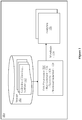
- computing arrangement 100 may include storage 102, data pre-processor 104 and one or more analyzers 106, coupled with each other as shown.
- storage 102, data pre-processor 104 and one or more analyzers 106 may be coupled with each other via a plurality of wired and/or wireless, local and or wide area networks (not shown).
- Storage 102 may be configured to store a large collection of data 112 to be analyzed, in particular, scalar data of a unidirectional relationship between two endpoints (e.g., netflow records of data (number of bytes or packets) transmitted from a source IP address to a destination IP address).
- Storage 102 may be one of a number of hierarchical and/or network storage arrangements known in the art, including any combinations of magnetic, optical, and/or solid state storage units.
- Data pre-processor 104 may be configured to partition collection of data 112 into a plurality of workloads 110 amendable to parallel processing and/or analysis.
- data pre-processor 104 may be configured to transform collection of data 112 that are scalar data associated with a unidirectional relationship of two endpoints, into directional data of the endpoint pairs, as part of the partitioning process.
- data pre-processor 104 may be configured to partition a collection 112 of netflow data from a source IP address to a destination IP address into a plurality of workloads 110 of signed time series data of IP address pairs, with the signs denoting direction of transmission.
- the data pre-processor 104 may partition and transform the collection 112 of netflow data using a plurality of bins, where each bin includes a plurality of quantiles of the directional data of the two endpoint pairs.
- data pre-processor 104 may include key generator 124, optimizer 126 and workload generator 128.
- key generator 124 may be configured to generate a matrix of index keys for the two endpoint pairs (e.g., netflow IP address pairs, aka channels), and a matrix of partition key tuples.
- the matrix of index keys for a pair of IPV4 addresses (channel) may comprise 64-bit index keys
- the matrix of partition key tuples may comprise 12-bit and 52-bit key pairs.
- the 64-bit index keys provide an index key space sufficiently large to accommodate the large range of possible IPV4 addresses.
- the matrix of partition key tuples may comprise 16-bit and 48-bit key pairs or other size combinations derived from the 64-bit index keys.
- the matrix of index keys for a pair of IPV6 addresses (channel) may comprise 256-bit index keys
- the matrix of partition key tuples may comprise various key tuples derived from the 256-bit index keys, e.g., a 48-bit, 52-bit, 52-bit, 52-bit and 52-bit partition key tuple, or a 16-bit, 32-bit, 52-bit, 52-bit, 52-bit, and 52-bit partition key tuple.
- Other combinations are also possible.
- optimizer 126 may be configured to determine the plurality of bins, and the plurality of quantiles of the bins.
- An example process for determining a number of bins, each having a number of quantiles, for use to partition the directional data into workloads that are amenable for parallel processing, according to various embodiments, will be described more fully below with references to Figure 4 .
- Workload generator 128 may be configured to transform and populate the plurality of quantiles of the plurality of bins with the directional data associated with the plurality of two endpoint pairs, using the matrix of index keys and the matrix of partition key tuples, and output the populated quantiles of the plurality of bins as workloads 110 amenable to parallel processing by analyzer(s) 106.
- An example process for generating the workloads that are amenable for parallel processing, using the determined bins with quantiles, according to various embodiments, will be described more fully below with references to Figure 5 .
- data pre-processor 104 may be implemented in hardware, software, or combination thereof.
- hardware implementations may include, but are not limited to, application specific integrated circuits (ASIC), or programmable circuits (such as field programmable gate arrays (FPGA)) programmed with the operating logic.
- software implementation may include, but are not limited to, implementation in assembler language of the operating processor(s) (not shown), or high level languages, such as C or python, compilable into the machine instructions of the operating processor(s) (not shown).
- analyzers 106 may be any number of analyzers known in the art, including, but are not limited to, graphical analyzers configured to provide graph analytics for signal and/or pattern analysis, parallelized machine learning engines for single value decomposition, fast fourier transform etc., distributed storage analyzers, and so forth. In embodiments, analyzers 106 may be disposed on tens, hundreds or thousands of servers (not shown).
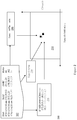
- process 200 for transforming scalar data of a unidirectional relationship of two endpoints into directional data of the two endpoint pair will be presented with example netflow records.
- the operations may be performed e.g., by earlier described workload generator 128 of Figure 1 .
- process 200 may be performed with some of the operations omitted, combined, in different order, or other operations added.
- example netflow records 202 may include a number of data transmission records from a number of source IP addresses (SrcIP) to a number of destination IP addresses (DstIP).
- SrcIP source IP addresses
- DstIP destination IP addresses
- each record may include the start transmission time, and the number of bytes transmitted.
- each record may include the number packets transmitted or other volume measures instead.
- the scalar data are processed with all two endpoint pairs (aka channels for SrcIP-DstIP pairs) 204 identified, forming the rows of the resulting directional data matrix 210, and the time of transmissions 206 processed to identify the corresponding column positions of the resulting directional data matrix 210.
- the amount of data transmitted (number of bytes or packets) 208 are placed into the corresponding row/column position of directional data matrix 210 accordingly.
- the data are signed (+ or -) to denote the direction of transmission between the two endpoints of the endpoint pairs (between the two IP addresses of the two IP address pairs).
- transformed data within data matrix 210 in addition to being directional, are time series data.
- workload generator 218 transforms scalar data of a unidirectional relationship of a SrcIP and a DstIP into time series directional data for the two IP address pair (channel).
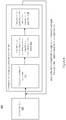
- process 300 for creating a matrix of index keys for the endpoint pairs and a matrix of partition key tuples for partitioning a collection of data into a plurality of workloads that are amenable for parallel processing may include operations performed at blocks 304-314. The operations may be performed e.g., by the earlier described key generator 124 of Figure 1 . In alternate embodiments, process 300 may be performed with some of the operations omitted, combined, in different order, or other operations added.
- process 300 may start at block 304.
- a subset of collection of data 302 may be selected and loaded as a training data set for the generation of the matrix of index keys 316 and the matrix of partition key tuples 318.
- the training data set may be selected through sampling of collection of data 302.
- the training data set may be selected through sampling of every other, 5 th or 10 th records of collection of data 302 (i.e., 50%, 20% or 10% sampling).
- the training data set may be generated from netflow records of a particular weekday, as representative of the other weekdays.
- the size of the training data set may vary by applications, depending on the desired trade-off between the efficiency of the training process and the effectiveness of the eventual workload parallelization. In general, smaller workloads may require higher sampling rates. Further, less frequent sampling may make approximately equal workloads less likely, but the skewing may be less with fewer workloads.
- the training data set may further be pre-processed to identify the endpoint pairs. For netflow records, the IP address pairs may be identified from the various transmission records, e.g. IP1-IP2 address pairs may be identified from transmission of IP1 to IP2 and transmission from IP2 to IP1.
- the unique endpoint pairs (IP address pairs) may be selected using parallel queries (e.g., a MapReduce program).
- the endpoint pairs may be ordered.
- the IP address pairs may be ordered in descending order, starting with the largest IP addresses.
- index keys for the endpoint pairs may be created.
- 64-bit index keys may be generated for the IPV4 address pairs (channels), to provide a sufficiently large index space to accommodate all possible IPV4 addresses.
- the 64-bit index keys may be generated by combining the two 4-byte IPV4 addresses as unsigned 32-bit integers. In embodiments, some of the least significant bits may be omitted, (e.g., the last 7 bits).
- 256-bit index keys may be generated for the IPV6 address pairs (channels), to provide a sufficiently large index space to accommodate all possible IPV6 addresses. In embodiments, the 256-bit index keys may be generated by combining the two 16-byte IPV6 addresses as unsigned 128-bit integers.
- the partition key tuples may be generated.
- the partition key tuples may be generated from the attributes (such as addresses/identifiers) of the endpoint pairs by splitting a most significant portion of the addresses/identifiers into two portions, first portion and second portion, at block 312.
- initial 12-bit and 52-bit partition key pairs may be generated by first splitting the highest part of the IP addresses (i.e., using the first octet and part of the second octet). Then, a least significant portion of the attributes (such as addresses/identifiers) of the endpoint pairs may be added to the second portion of the partition key pair, at block 314.
- IPV4 addresses 9 digits of the lowest part of the IP addresses may be added to the 52-bit portion of the partition key pair.
- 16-bit and 48-bit partition key pairs may be generated for IPV4 addresses instead.
- 256-bit index keys may be generated, and the partition key tuples may be a 48-bit, 52-bit, 52-bit, 52-bit and 52-bit partition key tuple, or a 16-bit, 32-bit, 52-bit, 52-bit, 52-bit and 52-bit partition key tuple, and so forth.
- a matrix of index keys 316 and a matrix of partition key tuples 318 may be generated.
- process 400 for determining a number of bins, each having a number of quantiles, for use to partition the entire collection of scalar data into workloads that are amenable for parallel processing may include operations performed at blocks 402-410. The operations may be performed e.g., by the earlier described optimizer 126 of Figure 1 . In alternate embodiments, process 400 may be performed with some of the operations omitted, combined, in different order, or other operations added.
- process 400 may start at block 402.
- the bins the entire collection scalar data to be partitioned into may be determined.
- the bins may be determined by partitioning the range of index values into a plurality of ranges.
- the range of index values may be partitioned into 2 ⁇ 8 or 2 ⁇ 16 ranges, providing 2 ⁇ 8 or 2 ⁇ 16 bins.
- the quantiles may be determined and created for each bin.
- the number of quantiles may be computed for the various bins.
- the bin lower bound value may be added to the quantile values to map back to the endpoint pair index space.
- the quantiles may be concatenated to the end of a master set of quantiles.
- the operations of block 406-410 may be repeated for each bin; in embodiments, that is when the left bin edge value is equal to lower bound right bin edge and equal to the upper bound of all bin edge values.
- process 500 for generating the workloads that are amenable for parallel processing, using the determined bins with quantiles may include operations performed at blocks 502-506. The operations may be performed e.g., by the earlier described workload generator 128 of Figure 1 . In alternate embodiments, process 500 may be performed with some of the operations omitted, combined, in different order, or other operations added.
- process 500 may start at block 502.
- the endpoint pairs may be ordered.
- the IP address pairs may be ordered in descending order.
- index keys may be created for the endpoint pairs, as earlier described.
- the master quantile array may be searched to identify the corresponding quantiles to store the data records, using the index keys of the endpoint pairs.
- the search may be performed employing the binary search method.
- a workload may be accessed using index k and k+1 returned from the search performed at block 506, as upper and lower bounds.
- the accessed workload may be searched for the data record.
- a determination may be made whether the index of the data record is less than or equal to (LE) 1 ⁇ 2 of index k+1. If the index of the data record is LE 1 ⁇ 2 of index k+1, at block 514, a forward search for the data record from the beginning of the workload may be performed. On the other hand, if the index of the data record is greater than (GT) 1 ⁇ 2 of index k+1, a backward search for the data record from the end of the workload may be performed. Next at block 518, a determination may be made as to whether a match of the data record was found.
- a repeat determination may be made on whether the index of the data record is LE 1 ⁇ 2 of index k+1 in the master quantile array. If the index of the data record is LE 1 ⁇ 2 of index k+1 in the master quantile array, at block 522, the data record may be added to the beginning of the workload. On the other hand, if the index of the data record is GT 1 ⁇ 2 of index k+1 in the master quantile array, the data record may be added to the end of the workload.
- the result of the determination at block 512 may be stored (e.g., via a flag), and the repeat determination at block 520 may be made through examination of the stored information (e.g., the flag setting).
- the data of the added data record may be updated including directional indication.
- the amount of data transmitted may be multiplied with +1 or -1 to denote the direction.
- process 500 may proceed directly to block 526 with the data record updated, including the directional indication.
- computer system 600 may include one or more processors 602 and system memory 604. Each processor 602 may include one or more processor cores.
- System memory 604 may include non-persistent copies of the operating system and various applications, including in particular, data pre-processor 104 (or aspects thereof) and/or analyzers 106 of Figure 1 , collectively denoted as computational logic 622.
- computer system 600 may include one or more mass storage devices 606, input/output devices 608, and communication interfaces 610.
- the elements 602-610 may be coupled to each other via system bus 612, which may represent one or more buses. In the case of multiple buses, they may be bridged by one or more bus bridges (not shown).
- Mass storage devices 606 may include persistent copies of computational logic 622. Mass storage devices 606 may also be employed to store collection of data 112. Examples of mass storage devices 606 may include, but are not limited to, diskettes, hard drives, compact disc read only memory (CD-ROM) and so forth. Examples of communication interfaces 610 may include, but are not limited to, wired and/or wireless network interface cards, modems and so forth. Communication interfaces 610 may support a variety of wired or wireless communications including, but are not limited, 3G/4G/6G, WiFi, Bluetooth®, Ethernet, and so forth. Examples of input/output devices 608 may include keyboard, cursor control, touch-sensitive displays, and so forth.
- each of these elements 602-618 may perform its conventional functions known in the art.
- the number, capability and/or capacity of these elements 602 - 618 may vary, depending on the size of data 112 to be transformed, partitioned, and analyzed. Otherwise, the constitutions of elements 602 - 618 are known, and accordingly will not be further described.
- the present disclosure may be embodied as methods or computer program products. Accordingly, the present disclosure, in addition to being embodied in hardware as earlier described, may take the form of an entirely software embodiment (including firmware, resident software, micro-code, etc.) or an embodiment combining software and hardware aspects that may all generally be referred to as a "circuit," "module” or “system.” Furthermore, the present disclosure may take the form of a computer program product embodied in any tangible or non-transitory medium of expression having computer-usable program code embodied in the medium.
- Non-transitory computer-readable storage medium 702 may include a number of programming instructions 704.
- Programming instructions 704 may be configured to enable a device, e.g., computer system 600, in response to execution of the programming instructions, to perform, e.g., various operations associated with data pre-processor 104.
- programming instructions 704 may be disposed on multiple computer-readable non-transitory storage media 702 instead.
- programming instructions 704 may be disposed on computer-readable transitory storage media 702, such as, signals.
- the computer-usable or computer-readable medium may be, for example but not limited to, an electronic, magnetic, optical, electromagnetic, infrared, or semiconductor system, apparatus, device, or propagation medium. More specific examples (a non- exhaustive list) of the computer-readable medium would include the following: an electrical connection having one or more wires, a portable computer diskette, a hard disk, a random access memory (RAM), a read-only memory (ROM), an erasable programmable read-only memory (EPROM or Flash memory), an optical fiber, a portable compact disc read-only memory (CD-ROM), an optical storage device, a transmission media such as those supporting the Internet or an intranet, or a magnetic storage device.
- the computer- usable or computer-readable medium could even be paper or another suitable medium upon which the program is printed, as the program can be electronically captured, via, for instance, optical scanning of the paper or other medium, then compiled, interpreted, or otherwise processed in a suitable manner, if necessary, and then stored in a computer memory.
- a computer-usable or computer-readable medium may be any medium that can contain, store, communicate, propagate, or transport the program for use by or in connection with the instruction execution system, apparatus, or device.
- the computer- usable medium may include a propagated data signal with the computer-usable program code embodied therewith, either in baseband or as part of a carrier wave.
- the computer usable program code may be transmitted using any appropriate medium, including but not limited to wireless, wireline, optical fiber cable, RF, etc.
- Computer program code for carrying out operations of the present disclosure may be written in any combination of one or more programming languages, including an object oriented programming language such as Java, Smalltalk, C++ or the like and conventional procedural programming languages, such as the "C" programming language or similar programming languages.
- the program code may execute entirely on the user's computer, partly on the user's computer, as a stand-alone software package, partly on the user's computer and partly on a remote computer or entirely on the remote computer or server.
- the remote computer may be connected to the user's computer through any type of network, including a local area network (LAN) or a wide area network (WAN), or the connection may be made to an external computer (for example, through the Internet using an Internet Service Provider).
- LAN local area network
- WAN wide area network
- Internet Service Provider for example, AT&T, MCI, Sprint, EarthLink, MSN, GTE, etc.
- These computer program instructions may also be stored in a computer-readable medium that can direct a computer or other programmable data processing apparatus to function in a particular manner, such that the instructions stored in the computer-readable medium produce an article of manufacture including instruction means which implement the function/act specified in the flowchart and/or block diagram block or blocks.
- the computer program instructions may also be loaded onto a computer or other programmable data processing apparatus to cause a series of operational steps to be performed on the computer or other programmable apparatus to produce a computer implemented process such that the instructions which execute on the computer or other programmable apparatus provide processes for implementing the functions/acts specified in the flowchart and/or block diagram block or blocks.
- each block in the flowchart or block diagrams may represent a module, segment, or portion of code, which comprises one or more executable instructions for implementing the specified logical function(s).
- the functions noted in the block may occur out of the order noted in the figures. For example, two blocks shown in succession may, in fact, be executed substantially concurrently, or the blocks may sometimes be executed in the reverse order, depending upon the functionality involved.
- Embodiments may be implemented as a computer process, a computing system or as an article of manufacture such as a computer program product of computer readable media.
- the computer program product may be a computer storage medium readable by a computer system and encoding a computer program instructions for executing a computer process.
- processors 602 may be packaged together with memory having data pre-processor 104.
- processors 602 may be packaged together with memory having eye tracker 104 to form a System in Package (SiP).
- SiP System in Package
- processors 602 may be integrated on the same die with memory having data pre-processor 104.
- processors 602 may be packaged together with memory having data pre-processor 104 to form a System on Chip (SoC).
- SoC System on Chip
- means for populating may include means for transforming the time series amount of transmission data of the IP address pairs into directional time series amount of transmission data of the IP address pair.
- the apparatus of claim 53 further comprising means for analyzing, in parallel, the workloads having the directional data of the two endpoint pairs.
- a unidirectional relationship of a two endpoint pair may include a source and destination relationship of two Internet Protocol, IP, addresses; wherein scalar data associated with a unidirectional relationship of a two endpoint pair may include an amount of data transmitted from a source IP address to a destination IP address; wherein an endpoint pair may include a pair of IP addresses; and wherein the means for analyzing may include means for generating a plurality of graphics analytics for the IP address pairs, based at least in part on the time series amount of transmission data in the workloads, for signal or pattern analysis.
Landscapes
- Engineering & Computer Science (AREA)
- Theoretical Computer Science (AREA)
- Databases & Information Systems (AREA)
- Data Mining & Analysis (AREA)
- Physics & Mathematics (AREA)
- General Engineering & Computer Science (AREA)
- General Physics & Mathematics (AREA)
- Software Systems (AREA)
- Data Exchanges In Wide-Area Networks (AREA)
- Debugging And Monitoring (AREA)
Claims (15)
- Vorrichtung (100) zum Verwalten von Vernetzung, die aufweist:einen oder mehrere Prozessoren (602);einen Datenpräprozessor (104), der von dem einen oder den mehreren Prozessoren betrieben wird, um eine Sammlung von Netflow-Daten (112) von einer Quell-IP-Adresse an eine Ziel-IP-Adresse eines Netzwerks in eine Mehrzahl von Arbeitslasten vorzeichenbehafteter Zeitreihendaten von IP-Adresspaaren zu partitionieren, wobei Vorzeichen der Zeitreihendaten von IP-Adresspaaren eine Richtung der Übertragung in eine Mehrzahl von Arbeitslasten kennzeichnen, wobei Partitionieren das Partitionieren der Netflow-Daten in eine Mehrzahl von Bins umfasst, wobei jedes Bin eine Mehrzahl von Quantilen der IP-Adresspaare enthält;wobei ein oder mehrere Analysatoren (106) dafür vorgesehen sind, die Bins zu analysieren, um beim Verwalten des Netzwerks mitzuwirken, wobei mindestens eine Mehrzahl der Bins parallel analysiert wird;wobei der Datenpräprozessor einen Schlüsselgenerator (124) enthält, um eine Matrix von Indexschlüsseln für die IP-Adresspaare und eine Matrix von Partitionsschlüsselpaaren für die Indexschlüssel mindestens teilweise auf Grundlage eines Trainingsdatensatzes, der aus der Sammlung von Netflow-Daten abgeleitet ist, zu erzeugen.
- Vorrichtung nach Anspruch 1, wobei der Schlüsselgenerator dafür vorgesehen ist, die Indexschlüssel auf Grundlage von Attributen der IP-Adresspaare zu erzeugen und die Partitionsschlüsselpaare aus ausgewählten Abschnitten der Attribute der IP-Adresspaare zu erzeugen.
- Vorrichtung nach Anspruch 1, wobei Netflow-Daten eines IP-Adresspaares eine Menge von Daten umfassen, die von einer Quell-IP-Adresse an eine Ziel-IP-Adresse übertragen werden.
- Vorrichtung nach Anspruch 1, wobei die IP-Adressen IPV4-Adressen sind und der Schlüsselgenerator dafür vorgesehen ist, eine Matrix von 64-Bit-Indexschlüsseln aus den IPV4-Adressen des IPV4-Adresspaares unter Verwendung der IPV4-Adressen des IPV4-Adresspaares als vorzeichenlose 32-Bit-Ganzzahlen zu erzeugen; wobei eine IPV4-Adresse vier geordnete Teile aufweist und der Schlüsselgenerator ferner dafür vorgesehen ist, eine Matrix von 12-Bit- und 52-Bit-Partitionsschlüsselpaaren aus höchst- und niedrigstgeordneten Teilen der IPV4-Adressen des IPV4-Adresspaares zu erzeugen.
- Vorrichtung nach einem der Ansprüche 1-4, wobei der Datenpräprozessor einen Optimierer aufweist, um die Mehrzahl von Bins und die Mehrzahl von Quantilen der Bins zu bestimmen.
- Vorrichtung nach Anspruch 5, wobei der Optimierer dafür vorgesehen ist, einen Bereich von Indexschlüsseln der Endpunktpaare in eine Mehrzahl von Unterbereichen zu teilen, um die Mehrzahl von Bins zu bestimmen.
- Vorrichtung nach Anspruch 5, wobei der Optimierer dafür vorgesehen ist, Datensatzanzahlen eines Histogramms, die einem Bin entsprechen, durch eine gewünschte Anzahl von Satzanzahlen in jedem Quantil zu teilen, um die Mehrzahl von Quantilen der Bins zu bestimmen.
- Vorrichtung nach Anspruch 5, wobei der Datenpräprozessor ferner einen Arbeitslastgenerator aufweist, der mit dem Optimierer gekoppelt ist, um die Mehrzahl von Arbeitslasten auf Grundlage der bestimmten Bins und Quantile der Bins zu füllen.
- Vorrichtung nach Anspruch 8, wobei der Arbeitslastgenerator dafür vorgesehen ist, die Mehrzahl von Arbeitslasten mit einer Zeitreihenmenge von Übertragungsdaten der IP-Adresspaare zu füllen.
- Vorrichtung nach Anspruch 9, wobei der Arbeitslastgenerator ferner dafür vorgesehen ist, die Zeitreihenmenge von Übertragungsdaten der IP-Adresspaare in eine gerichtete Zeitreihenmenge von Übertragungsdaten der IP-Adresspaare zu transformieren.
- Vorrichtung nach Anspruch 8, die ferner den einen oder die mehreren Analysatoren aufweist.
- Vorrichtung nach Anspruch 11, wobei der eine oder die mehreren Analysatoren dafür vorgesehen sind, eine Mehrzahl von Grafikanalysen für die IP-Adresspaare mindestens teilweise auf Grundlage der Zeitreihenmenge von Übertragungsdaten in den Arbeitslasten zur Signal- oder Musteranalyse zu erzeugen.
- Verfahren zum Verwalten eines Netzwerks, das umfasst:Erhalten einer Sammlung von Netflow-Daten (112) von einer Quell-IP-Adresse an eine Ziel-IP-Adresse eines Netzwerks durch eine Rechenvorrichtung (600); undPartitionieren der Sammlung von Netflow-Daten in eine Mehrzahl von Arbeitslasten vorzeichenbehafteter Zeitreihendaten von IP-Adresspaaren durch die Rechenvorrichtung, wobei Vorzeichen der Zeitreihendaten von IP-Adresspaaren eine Richtung der Übertragung kennzeichnen;wobei Partitionieren das Partitionieren der Netflow-Daten in eine Mehrzahl von Bins umfasst, wobei jedes Bin eine Mehrzahl von Quantilen der IP-Adresspaare enthält, und das Erzeugen einer Matrix von Indexschlüsseln für die IP-Adresspaare und einer Matrix von Partitionsschlüsselpaaren für die Indexschlüssel mindestens teilweise auf Grundlage eines Trainingsdatensatzes, der aus der Sammlung von Netflow-Daten abgeleitet ist; undwobei die Bins analysiert werden, um beim Verwalten des Netzwerks mitzuwirken, wobei mindestens eine Mehrzahl der Bins parallel analysiert wird.
- Verfahren nach Anspruch 13, wobei das Partitionieren das Erzeugen einer Matrix von Indexschlüsseln für die zwei Endpunktpaare und einer Matrix von Partitionsschlüsselpaaren für die Indexschlüssel mindestens teilweise auf Grundlage eines Trainingsdatensatzes, der aus der Sammlung von Skalardaten abgeleitet ist, umfasst; und wobei das Erzeugen das Erzeugen der Indexschlüssel auf Grundlage von Attributen der Endpunktpaare und das Erzeugen der Partitionsschlüsselpaare aus ausgewählten Abschnitten der Attribute der Endpunktpaare umfasst.
- Ein oder mehrere computerlesbare Medien (604) mit einer darin gespeicherten Mehrzahl von Anweisungen, um zu bewirken, dass eine Rechenvorrichtung das Verfahren nach einem der Ansprüche 13 bis 14 durchführt.
Applications Claiming Priority (2)
| Application Number | Priority Date | Filing Date | Title |
|---|---|---|---|
| US14/593,907 US10162842B2 (en) | 2015-01-09 | 2015-01-09 | Data partition and transformation methods and apparatuses |
| PCT/US2015/060210 WO2016111748A1 (en) | 2015-01-09 | 2015-11-11 | Data partition and transformation methods and apparatuses |
Publications (3)
| Publication Number | Publication Date |
|---|---|
| EP3243144A1 EP3243144A1 (de) | 2017-11-15 |
| EP3243144A4 EP3243144A4 (de) | 2018-09-12 |
| EP3243144B1 true EP3243144B1 (de) | 2020-10-28 |
Family
ID=56356283
Family Applications (1)
| Application Number | Title | Priority Date | Filing Date |
|---|---|---|---|
| EP15877296.2A Active EP3243144B1 (de) | 2015-01-09 | 2015-11-11 | Datenpartitions- und transformationsverfahren und -vorrichtungen |
Country Status (5)
| Country | Link |
|---|---|
| US (1) | US10162842B2 (de) |
| EP (1) | EP3243144B1 (de) |
| JP (1) | JP6700277B2 (de) |
| CN (1) | CN107004022B (de) |
| WO (1) | WO2016111748A1 (de) |
Families Citing this family (5)
| Publication number | Priority date | Publication date | Assignee | Title |
|---|---|---|---|---|
| US10467191B1 (en) * | 2016-12-27 | 2019-11-05 | Amazon Technologies, Inc. | Large scale data join service within a service provider network |
| US11165694B2 (en) * | 2018-07-31 | 2021-11-02 | Mcafee, Llc | Methods, systems, articles of manufacture and apparatus to identify applications |
| US11675765B2 (en) * | 2021-05-25 | 2023-06-13 | Business Objects Software Ltd. | Top contributor recommendation for cloud analytics |
| CN113505297B (zh) * | 2021-07-13 | 2024-04-02 | 抖音视界有限公司 | 数据查询方法、装置、电子设备和计算机可读介质 |
| CN115934731B (zh) * | 2023-01-10 | 2026-06-02 | 厦门友微科技有限公司 | 基于大数据集群的数据分箱方法、装置、设备及存储介质 |
Family Cites Families (12)
| Publication number | Priority date | Publication date | Assignee | Title |
|---|---|---|---|---|
| CN1293478C (zh) * | 1999-06-30 | 2007-01-03 | 倾向探测公司 | 用于监控网络流量的方法和设备 |
| US6785240B1 (en) | 2000-06-02 | 2004-08-31 | Lucent Technologies Inc. | Method for estimating the traffic matrix of a communication network |
| US7233940B2 (en) * | 2000-11-06 | 2007-06-19 | Answers Corporation | System for processing at least partially structured data |
| US20080177994A1 (en) * | 2003-01-12 | 2008-07-24 | Yaron Mayer | System and method for improving the efficiency, comfort, and/or reliability in Operating Systems, such as for example Windows |
| US7925756B1 (en) * | 2005-09-30 | 2011-04-12 | Packeteer, Inc. | Partition configuration and creation mechanisms for network traffic management devices |
| CN101594247A (zh) * | 2008-05-29 | 2009-12-02 | 国际商业机器公司 | 识别应用拓扑的方法和系统 |
| US20100165859A1 (en) | 2008-12-31 | 2010-07-01 | Herve Marc Carruzzo | Sorting flow records into analysis buckets |
| JP2010177733A (ja) * | 2009-01-27 | 2010-08-12 | Mitsubishi Electric Corp | 通信監視装置、通信監視装置の通信監視方法および通信監視プログラム |
| CN101990003B (zh) * | 2010-10-22 | 2012-11-28 | 西安交通大学 | 一种基于ip地址属性的用户行为监控系统与方法 |
| US8645412B2 (en) * | 2011-10-21 | 2014-02-04 | International Business Machines Corporation | Computing correlated aggregates over a data stream |
| US9268796B2 (en) * | 2012-05-29 | 2016-02-23 | Sas Institute Inc. | Systems and methods for quantile estimation in a distributed data system |
| US9703852B2 (en) * | 2012-05-29 | 2017-07-11 | Sas Institute Inc. | Systems and methods for quantile determination in a distributed data system using sampling |
-
2015
- 2015-01-09 US US14/593,907 patent/US10162842B2/en active Active
- 2015-11-11 JP JP2017529007A patent/JP6700277B2/ja active Active
- 2015-11-11 WO PCT/US2015/060210 patent/WO2016111748A1/en not_active Ceased
- 2015-11-11 CN CN201580067112.1A patent/CN107004022B/zh active Active
- 2015-11-11 EP EP15877296.2A patent/EP3243144B1/de active Active
Non-Patent Citations (1)
| Title |
|---|
| None * |
Also Published As
| Publication number | Publication date |
|---|---|
| US20160203169A1 (en) | 2016-07-14 |
| EP3243144A4 (de) | 2018-09-12 |
| WO2016111748A1 (en) | 2016-07-14 |
| JP2018513428A (ja) | 2018-05-24 |
| CN107004022B (zh) | 2021-08-17 |
| JP6700277B2 (ja) | 2020-05-27 |
| CN107004022A (zh) | 2017-08-01 |
| US10162842B2 (en) | 2018-12-25 |
| EP3243144A1 (de) | 2017-11-15 |
Similar Documents
| Publication | Publication Date | Title |
|---|---|---|
| Rowe | When the levee breaks: a practical guide to sketching algorithms for processing the flood of genomic data | |
| US9953071B2 (en) | Distributed storage of data | |
| US10740328B2 (en) | Aggregate-query database system and processing | |
| US8521871B2 (en) | System and method for merging monitoring data streams from a server and a client of the server | |
| US20210152444A1 (en) | Aggregation of select network traffic statistics | |
| US10162842B2 (en) | Data partition and transformation methods and apparatuses | |
| US9740734B2 (en) | Group-by processing for data containing singleton groups | |
| US20250028740A1 (en) | Enriching Search Results with Provenance Information in an Observability Pipeline System | |
| EP3282643A1 (de) | Verfahren und vorrichtung zur schätzung eines gesprächs in einer verteilten netzflussumgebung | |
| US11221890B2 (en) | Systems and methods for dynamic partitioning in distributed environments | |
| US10162830B2 (en) | Systems and methods for dynamic partitioning in distributed environments | |
| CN115225308A (zh) | 大规模群体攻击流量的攻击团伙识别方法及相关设备 | |
| CN107180031A (zh) | 分布式存储方法及装置、数据处理方法及装置 | |
| Chrysos et al. | Data stream statistics over sliding windows: How to summarize 150 million updates per second on a single node | |
| Patel et al. | Raw data processing framework for IoT | |
| Wang et al. | Randomized error removal for online spread estimation in high-speed networks | |
| WO2020207410A1 (zh) | 一种数据压缩方法、电子设备及存储介质 | |
| Zhou et al. | Exploring Netfow data using hadoop | |
| CN116991893A (zh) | Fpga加速数据库查询方法、装置、设备及介质 | |
| Šišmiš et al. | PAMO: Pattern matching offload for intrusion detection systems | |
| US10445318B2 (en) | Efficient aggregation in a parallel system | |
| Elsen et al. | goProbe: a scalable distributed network monitoring solution | |
| Aslam et al. | Pre‐filtering based summarization for data partitioning in distributed stream processing | |
| Jeřábek et al. | Big data network flow processing using Apache Spark | |
| CN110022242B (zh) | 一种关键字确定方法及装置 |
Legal Events
| Date | Code | Title | Description |
|---|---|---|---|
| STAA | Information on the status of an ep patent application or granted ep patent |
Free format text: STATUS: THE INTERNATIONAL PUBLICATION HAS BEEN MADE |
|
| PUAI | Public reference made under article 153(3) epc to a published international application that has entered the european phase |
Free format text: ORIGINAL CODE: 0009012 |
|
| STAA | Information on the status of an ep patent application or granted ep patent |
Free format text: STATUS: REQUEST FOR EXAMINATION WAS MADE |
|
| 17P | Request for examination filed |
Effective date: 20170621 |
|
| AK | Designated contracting states |
Kind code of ref document: A1 Designated state(s): AL AT BE BG CH CY CZ DE DK EE ES FI FR GB GR HR HU IE IS IT LI LT LU LV MC MK MT NL NO PL PT RO RS SE SI SK SM TR |
|
| AX | Request for extension of the european patent |
Extension state: BA ME |
|
| DAV | Request for validation of the european patent (deleted) | ||
| DAX | Request for extension of the european patent (deleted) | ||
| A4 | Supplementary search report drawn up and despatched |
Effective date: 20180814 |
|
| RIC1 | Information provided on ipc code assigned before grant |
Ipc: G06F 17/40 20060101ALI20180808BHEP Ipc: G06F 17/30 20060101AFI20180808BHEP |
|
| REG | Reference to a national code |
Ref country code: DE Ref legal event code: R079 Ref document number: 602015061312 Country of ref document: DE Free format text: PREVIOUS MAIN CLASS: G06F0017300000 Ipc: G06F0016280000 |
|
| GRAP | Despatch of communication of intention to grant a patent |
Free format text: ORIGINAL CODE: EPIDOSNIGR1 |
|
| STAA | Information on the status of an ep patent application or granted ep patent |
Free format text: STATUS: GRANT OF PATENT IS INTENDED |
|
| RIC1 | Information provided on ipc code assigned before grant |
Ipc: G06F 16/22 20190101ALI20200429BHEP Ipc: G06F 16/28 20190101AFI20200429BHEP |
|
| INTG | Intention to grant announced |
Effective date: 20200514 |
|
| RIN1 | Information on inventor provided before grant (corrected) |
Inventor name: ROSS, ALAN D. Inventor name: BABB, GRANT |
|
| GRAS | Grant fee paid |
Free format text: ORIGINAL CODE: EPIDOSNIGR3 |
|
| GRAA | (expected) grant |
Free format text: ORIGINAL CODE: 0009210 |
|
| STAA | Information on the status of an ep patent application or granted ep patent |
Free format text: STATUS: THE PATENT HAS BEEN GRANTED |
|
| AK | Designated contracting states |
Kind code of ref document: B1 Designated state(s): AL AT BE BG CH CY CZ DE DK EE ES FI FR GB GR HR HU IE IS IT LI LT LU LV MC MK MT NL NO PL PT RO RS SE SI SK SM TR |
|
| REG | Reference to a national code |
Ref country code: GB Ref legal event code: FG4D |
|
| REG | Reference to a national code |
Ref country code: CH Ref legal event code: EP |
|
| REG | Reference to a national code |
Ref country code: AT Ref legal event code: REF Ref document number: 1328913 Country of ref document: AT Kind code of ref document: T Effective date: 20201115 |
|
| REG | Reference to a national code |
Ref country code: DE Ref legal event code: R096 Ref document number: 602015061312 Country of ref document: DE |
|
| REG | Reference to a national code |
Ref country code: IE Ref legal event code: FG4D |
|
| REG | Reference to a national code |
Ref country code: NL Ref legal event code: FP |
|
| PGFP | Annual fee paid to national office [announced via postgrant information from national office to epo] |
Ref country code: FR Payment date: 20201112 Year of fee payment: 6 Ref country code: GB Payment date: 20201104 Year of fee payment: 6 |
|
| REG | Reference to a national code |
Ref country code: AT Ref legal event code: MK05 Ref document number: 1328913 Country of ref document: AT Kind code of ref document: T Effective date: 20201028 |
|
| PG25 | Lapsed in a contracting state [announced via postgrant information from national office to epo] |
Ref country code: NO Free format text: LAPSE BECAUSE OF FAILURE TO SUBMIT A TRANSLATION OF THE DESCRIPTION OR TO PAY THE FEE WITHIN THE PRESCRIBED TIME-LIMIT Effective date: 20210128 Ref country code: RS Free format text: LAPSE BECAUSE OF FAILURE TO SUBMIT A TRANSLATION OF THE DESCRIPTION OR TO PAY THE FEE WITHIN THE PRESCRIBED TIME-LIMIT Effective date: 20201028 Ref country code: PT Free format text: LAPSE BECAUSE OF FAILURE TO SUBMIT A TRANSLATION OF THE DESCRIPTION OR TO PAY THE FEE WITHIN THE PRESCRIBED TIME-LIMIT Effective date: 20210301 Ref country code: FI Free format text: LAPSE BECAUSE OF FAILURE TO SUBMIT A TRANSLATION OF THE DESCRIPTION OR TO PAY THE FEE WITHIN THE PRESCRIBED TIME-LIMIT Effective date: 20201028 Ref country code: GR Free format text: LAPSE BECAUSE OF FAILURE TO SUBMIT A TRANSLATION OF THE DESCRIPTION OR TO PAY THE FEE WITHIN THE PRESCRIBED TIME-LIMIT Effective date: 20210129 |
|
| REG | Reference to a national code |
Ref country code: LT Ref legal event code: MG4D |
|
| PG25 | Lapsed in a contracting state [announced via postgrant information from national office to epo] |
Ref country code: ES Free format text: LAPSE BECAUSE OF FAILURE TO SUBMIT A TRANSLATION OF THE DESCRIPTION OR TO PAY THE FEE WITHIN THE PRESCRIBED TIME-LIMIT Effective date: 20201028 Ref country code: AT Free format text: LAPSE BECAUSE OF FAILURE TO SUBMIT A TRANSLATION OF THE DESCRIPTION OR TO PAY THE FEE WITHIN THE PRESCRIBED TIME-LIMIT Effective date: 20201028 Ref country code: IS Free format text: LAPSE BECAUSE OF FAILURE TO SUBMIT A TRANSLATION OF THE DESCRIPTION OR TO PAY THE FEE WITHIN THE PRESCRIBED TIME-LIMIT Effective date: 20210228 Ref country code: PL Free format text: LAPSE BECAUSE OF FAILURE TO SUBMIT A TRANSLATION OF THE DESCRIPTION OR TO PAY THE FEE WITHIN THE PRESCRIBED TIME-LIMIT Effective date: 20201028 Ref country code: SE Free format text: LAPSE BECAUSE OF FAILURE TO SUBMIT A TRANSLATION OF THE DESCRIPTION OR TO PAY THE FEE WITHIN THE PRESCRIBED TIME-LIMIT Effective date: 20201028 Ref country code: LV Free format text: LAPSE BECAUSE OF FAILURE TO SUBMIT A TRANSLATION OF THE DESCRIPTION OR TO PAY THE FEE WITHIN THE PRESCRIBED TIME-LIMIT Effective date: 20201028 Ref country code: BG Free format text: LAPSE BECAUSE OF FAILURE TO SUBMIT A TRANSLATION OF THE DESCRIPTION OR TO PAY THE FEE WITHIN THE PRESCRIBED TIME-LIMIT Effective date: 20210128 |
|
| PG25 | Lapsed in a contracting state [announced via postgrant information from national office to epo] |
Ref country code: HR Free format text: LAPSE BECAUSE OF FAILURE TO SUBMIT A TRANSLATION OF THE DESCRIPTION OR TO PAY THE FEE WITHIN THE PRESCRIBED TIME-LIMIT Effective date: 20201028 |
|
| REG | Reference to a national code |
Ref country code: CH Ref legal event code: PL |
|
| REG | Reference to a national code |
Ref country code: DE Ref legal event code: R097 Ref document number: 602015061312 Country of ref document: DE |
|
| PG25 | Lapsed in a contracting state [announced via postgrant information from national office to epo] |
Ref country code: RO Free format text: LAPSE BECAUSE OF FAILURE TO SUBMIT A TRANSLATION OF THE DESCRIPTION OR TO PAY THE FEE WITHIN THE PRESCRIBED TIME-LIMIT Effective date: 20201028 Ref country code: SK Free format text: LAPSE BECAUSE OF FAILURE TO SUBMIT A TRANSLATION OF THE DESCRIPTION OR TO PAY THE FEE WITHIN THE PRESCRIBED TIME-LIMIT Effective date: 20201028 Ref country code: LU Free format text: LAPSE BECAUSE OF NON-PAYMENT OF DUE FEES Effective date: 20201111 Ref country code: LT Free format text: LAPSE BECAUSE OF FAILURE TO SUBMIT A TRANSLATION OF THE DESCRIPTION OR TO PAY THE FEE WITHIN THE PRESCRIBED TIME-LIMIT Effective date: 20201028 Ref country code: MC Free format text: LAPSE BECAUSE OF FAILURE TO SUBMIT A TRANSLATION OF THE DESCRIPTION OR TO PAY THE FEE WITHIN THE PRESCRIBED TIME-LIMIT Effective date: 20201028 Ref country code: SM Free format text: LAPSE BECAUSE OF FAILURE TO SUBMIT A TRANSLATION OF THE DESCRIPTION OR TO PAY THE FEE WITHIN THE PRESCRIBED TIME-LIMIT Effective date: 20201028 Ref country code: EE Free format text: LAPSE BECAUSE OF FAILURE TO SUBMIT A TRANSLATION OF THE DESCRIPTION OR TO PAY THE FEE WITHIN THE PRESCRIBED TIME-LIMIT Effective date: 20201028 Ref country code: CZ Free format text: LAPSE BECAUSE OF FAILURE TO SUBMIT A TRANSLATION OF THE DESCRIPTION OR TO PAY THE FEE WITHIN THE PRESCRIBED TIME-LIMIT Effective date: 20201028 |
|
| REG | Reference to a national code |
Ref country code: BE Ref legal event code: MM Effective date: 20201130 |
|
| PG25 | Lapsed in a contracting state [announced via postgrant information from national office to epo] |
Ref country code: CH Free format text: LAPSE BECAUSE OF NON-PAYMENT OF DUE FEES Effective date: 20201130 Ref country code: DK Free format text: LAPSE BECAUSE OF FAILURE TO SUBMIT A TRANSLATION OF THE DESCRIPTION OR TO PAY THE FEE WITHIN THE PRESCRIBED TIME-LIMIT Effective date: 20201028 Ref country code: LI Free format text: LAPSE BECAUSE OF NON-PAYMENT OF DUE FEES Effective date: 20201130 |
|
| PLBE | No opposition filed within time limit |
Free format text: ORIGINAL CODE: 0009261 |
|
| STAA | Information on the status of an ep patent application or granted ep patent |
Free format text: STATUS: NO OPPOSITION FILED WITHIN TIME LIMIT |
|
| 26N | No opposition filed |
Effective date: 20210729 |
|
| PG25 | Lapsed in a contracting state [announced via postgrant information from national office to epo] |
Ref country code: AL Free format text: LAPSE BECAUSE OF FAILURE TO SUBMIT A TRANSLATION OF THE DESCRIPTION OR TO PAY THE FEE WITHIN THE PRESCRIBED TIME-LIMIT Effective date: 20201028 Ref country code: IE Free format text: LAPSE BECAUSE OF NON-PAYMENT OF DUE FEES Effective date: 20201111 Ref country code: IT Free format text: LAPSE BECAUSE OF FAILURE TO SUBMIT A TRANSLATION OF THE DESCRIPTION OR TO PAY THE FEE WITHIN THE PRESCRIBED TIME-LIMIT Effective date: 20201028 |
|
| PG25 | Lapsed in a contracting state [announced via postgrant information from national office to epo] |
Ref country code: SI Free format text: LAPSE BECAUSE OF FAILURE TO SUBMIT A TRANSLATION OF THE DESCRIPTION OR TO PAY THE FEE WITHIN THE PRESCRIBED TIME-LIMIT Effective date: 20201028 |
|
| PG25 | Lapsed in a contracting state [announced via postgrant information from national office to epo] |
Ref country code: IS Free format text: LAPSE BECAUSE OF FAILURE TO SUBMIT A TRANSLATION OF THE DESCRIPTION OR TO PAY THE FEE WITHIN THE PRESCRIBED TIME-LIMIT Effective date: 20210228 Ref country code: TR Free format text: LAPSE BECAUSE OF FAILURE TO SUBMIT A TRANSLATION OF THE DESCRIPTION OR TO PAY THE FEE WITHIN THE PRESCRIBED TIME-LIMIT Effective date: 20201028 Ref country code: MT Free format text: LAPSE BECAUSE OF FAILURE TO SUBMIT A TRANSLATION OF THE DESCRIPTION OR TO PAY THE FEE WITHIN THE PRESCRIBED TIME-LIMIT Effective date: 20201028 Ref country code: CY Free format text: LAPSE BECAUSE OF FAILURE TO SUBMIT A TRANSLATION OF THE DESCRIPTION OR TO PAY THE FEE WITHIN THE PRESCRIBED TIME-LIMIT Effective date: 20201028 |
|
| PG25 | Lapsed in a contracting state [announced via postgrant information from national office to epo] |
Ref country code: MK Free format text: LAPSE BECAUSE OF FAILURE TO SUBMIT A TRANSLATION OF THE DESCRIPTION OR TO PAY THE FEE WITHIN THE PRESCRIBED TIME-LIMIT Effective date: 20201028 |
|
| GBPC | Gb: european patent ceased through non-payment of renewal fee |
Effective date: 20211111 |
|
| PG25 | Lapsed in a contracting state [announced via postgrant information from national office to epo] |
Ref country code: BE Free format text: LAPSE BECAUSE OF NON-PAYMENT OF DUE FEES Effective date: 20201130 |
|
| PG25 | Lapsed in a contracting state [announced via postgrant information from national office to epo] |
Ref country code: GB Free format text: LAPSE BECAUSE OF NON-PAYMENT OF DUE FEES Effective date: 20211111 |
|
| PG25 | Lapsed in a contracting state [announced via postgrant information from national office to epo] |
Ref country code: FR Free format text: LAPSE BECAUSE OF NON-PAYMENT OF DUE FEES Effective date: 20211130 |
|
| P01 | Opt-out of the competence of the unified patent court (upc) registered |
Effective date: 20230518 |
|
| PGFP | Annual fee paid to national office [announced via postgrant information from national office to epo] |
Ref country code: NL Payment date: 20251024 Year of fee payment: 11 |
|
| PGFP | Annual fee paid to national office [announced via postgrant information from national office to epo] |
Ref country code: DE Payment date: 20250923 Year of fee payment: 11 |