EP3237884B1 - Verfahren zur diagnose, überwachung oder vorhersage eines zustands einer schaltvorrichtung - Google Patents
Verfahren zur diagnose, überwachung oder vorhersage eines zustands einer schaltvorrichtung Download PDFInfo
- Publication number
- EP3237884B1 EP3237884B1 EP14824481.7A EP14824481A EP3237884B1 EP 3237884 B1 EP3237884 B1 EP 3237884B1 EP 14824481 A EP14824481 A EP 14824481A EP 3237884 B1 EP3237884 B1 EP 3237884B1
- Authority
- EP
- European Patent Office
- Prior art keywords
- state
- organofluorine compound
- arc
- amount
- insulation
- Prior art date
- Legal status (The legal status is an assumption and is not a legal conclusion. Google has not performed a legal analysis and makes no representation as to the accuracy of the status listed.)
- Active
Links
Images

Classifications
-
- H—ELECTRICITY
- H01—ELECTRIC ELEMENTS
- H01H—ELECTRIC SWITCHES; RELAYS; SELECTORS; EMERGENCY PROTECTIVE DEVICES
- H01H33/00—High-tension or heavy-current switches with arc-extinguishing or arc-preventing means
- H01H33/02—Details
- H01H33/53—Cases; Reservoirs, tanks, piping or valves, for arc-extinguishing fluid; Accessories therefor, e.g. safety arrangements, pressure relief devices
- H01H33/56—Gas reservoirs
- H01H33/563—Gas reservoirs comprising means for monitoring the density of the insulating gas
-
- H—ELECTRICITY
- H01—ELECTRIC ELEMENTS
- H01B—CABLES; CONDUCTORS; INSULATORS; SELECTION OF MATERIALS FOR THEIR CONDUCTIVE, INSULATING OR DIELECTRIC PROPERTIES
- H01B3/00—Insulators or insulating bodies characterised by the insulating materials; Selection of materials for their insulating or dielectric properties
- H01B3/18—Insulators or insulating bodies characterised by the insulating materials; Selection of materials for their insulating or dielectric properties mainly consisting of organic substances
- H01B3/56—Insulators or insulating bodies characterised by the insulating materials; Selection of materials for their insulating or dielectric properties mainly consisting of organic substances gases
-
- H—ELECTRICITY
- H01—ELECTRIC ELEMENTS
- H01H—ELECTRIC SWITCHES; RELAYS; SELECTORS; EMERGENCY PROTECTIVE DEVICES
- H01H11/00—Apparatus or processes specially adapted for the manufacture of electric switches
- H01H11/0062—Testing or measuring non-electrical properties of switches, e.g. contact velocity
-
- G—PHYSICS
- G01—MEASURING; TESTING
- G01N—INVESTIGATING OR ANALYSING MATERIALS BY DETERMINING THEIR CHEMICAL OR PHYSICAL PROPERTIES
- G01N21/00—Investigating or analysing materials by the use of optical means, i.e. using sub-millimetre waves, infrared, visible or ultraviolet light
- G01N21/17—Systems in which incident light is modified in accordance with the properties of the material investigated
- G01N21/25—Colour; Spectral properties, i.e. comparison of effect of material on the light at two or more different wavelengths or wavelength bands
- G01N21/31—Investigating relative effect of material at wavelengths characteristic of specific elements or molecules, e.g. atomic absorption spectrometry
- G01N21/35—Investigating relative effect of material at wavelengths characteristic of specific elements or molecules, e.g. atomic absorption spectrometry using infrared light
- G01N2021/3595—Investigating relative effect of material at wavelengths characteristic of specific elements or molecules, e.g. atomic absorption spectrometry using infrared light using FTIR
-
- G—PHYSICS
- G01—MEASURING; TESTING
- G01N—INVESTIGATING OR ANALYSING MATERIALS BY DETERMINING THEIR CHEMICAL OR PHYSICAL PROPERTIES
- G01N30/00—Investigating or analysing materials by separation into components using adsorption, absorption or similar phenomena or using ion-exchange, e.g. chromatography or field flow fractionation
- G01N30/02—Column chromatography
- G01N30/88—Integrated analysis systems specially adapted therefor, not covered by a single one of the groups G01N30/04 - G01N30/86
- G01N2030/8809—Integrated analysis systems specially adapted therefor, not covered by a single one of the groups G01N30/04 - G01N30/86 analysis specially adapted for the sample
- G01N2030/884—Integrated analysis systems specially adapted therefor, not covered by a single one of the groups G01N30/04 - G01N30/86 analysis specially adapted for the sample organic compounds
- G01N2030/8845—Integrated analysis systems specially adapted therefor, not covered by a single one of the groups G01N30/04 - G01N30/86 analysis specially adapted for the sample organic compounds involving halogenated organic compounds
Definitions
- the present invention relates to a method for diagnosing, monitoring and/or predicting a condition, in particular the dielectric insulation and/or arc extinction capability, of a switching apparatus.
- the invention further relates to a device for diagnosing, monitoring and/or predicting a condition of a switching apparatus.
- Dielectric insulation media in liquid or gaseous state are conventionally applied for the insulation of an electrical component in a wide variety of switching apparatuses.
- the electrical component is arranged in a gas-tight housing, the interior of which defines an insulating space, said insulation space comprising an insulation gas electrically insulating the housing from the electrical component.
- the insulating gas further functions as an arc extinction gas.
- WO 2010/142346 discloses a dielectric insulation medium comprising a fluoroketone having from 4 to 12 carbon atoms.
- a dielectric insulation medium of particular relevance is further disclosed in WO 2012/080246 , relating to a medium comprising a dielectric insulation gas, which comprises a fluoroketone containing exactly 5 carbon atoms in a mixture with a dielectric insulation gas component different from said fluoroketone.
- Still further WO 2012/080222 discloses a dielectric insulation medium comprising a hydrofluoromonoether.
- Both groups of compounds i.e. fluoroketones and hydrofluoro monoethers have been shown to have high dielectric insulation capabilities, in particular a high dielectric strength, as well as high arc extinction capabilities. At the same time, they have a very low Global Warming Potential (GWP) and very low toxicity. The combination of these characteristics renders these organofluorine compounds highly suitable as a substitute for SF 6 (sulphur hexafluoride), which has commonly been used as a dielectric insulation medium, but which is known to have a high global warming potential (GWP).
- SF 6 sulfur hexafluoride
- organofluorine compounds can be subject to decomposition.
- This decomposition of organofluorine compounds is particularly pronounced in arc-interrupting apparatuses, such as circuit breakers or disconnectors.
- organofluorine compounds having a low GWP, and fluoroketones in specific do not recombine once decomposed.
- the composition of the insulation medium is of paramount importance, since together with the total pressure of the insulation medium it governs the insulation and arc-quenching capability.
- WO 2014/037030 discloses a method for operating a fluid-insulated electrical apparatus which comprises the method element of carrying out at least one optical measurement, such as optical absorption measurements, fluorescence measurements or photoacoustic measurements, and/or at least one gas chromatographic measurement.
- optical measurement such as optical absorption measurements, fluorescence measurements or photoacoustic measurements
- gas chromatographic measurement such as optical absorption measurements, fluorescence measurements or photoacoustic measurements
- the devices for performing the optical and/or the gas chromatographic measurements are relatively expensive and require a relatively complex maintenance.
- WO 2014/037395 A1 discloses a method for operating a fluid-insulated electrical apparatus, wherein the insulation fluid of the electrical apparatus comprises at least two fluid components which are not contaminants of the insulation fluid.
- the method according to WO 2014/037395 A1 comprises the step of carrying out at least one optical measurement and/or at least one gas chromatographic measurement for deriving a first concentration of a first fluid component and deriving a second concentration of a second fluid, wherein the operating state of the electrical apparatus is derived using the concentration of the first or second fluid.
- the object of the present invention is thus to provide a simple method for diagnosing, monitoring and/or predicting a condition, in particular the dielectric insulation capability and/or arc extinction capability, of a switching apparatus in which an insulation medium comprising an organofluorine compound is used.
- the method shall allow circumventing the direct measurement of the concentration of the organofluorine compound of the insulation medium, which as mentioned above is typically rather complex.
- the object is achieved according to the method defined in claim 1.
- Preferred embodiments of the invention are defined in the dependent claims.
- the method of the present invention relates to the diagnosing, monitoring and/or predicting of a condition of a switching apparatus, in particular its dielectric insulation and/or arc extinction capability, the switching apparatus containing an insulation medium comprising at least one organofluorine compound C1, wherein the method comprises the method elements of:
- a physical quantity other than the amount of the organofluorine compound C1 is selected for deriving the decomposition rate of the organofluorine compound C1.
- the decomposition rate is according to the present invention determined indirectly, circumventing the direct measurement of the amount of organofluorine compound C1.
- composition rate of the organofluorine compound as used in the context of the present invention specifically relates to the molar amount of consumption of the organofluorine compound C1 per energy input, i.e. per amount of energy introduced into the system.
- the difference in the amount of at least one decomposition product of the organofluorine compound C1 or a physical quantity dependent thereon is determined at least at two subsequent points in time.
- the pressure p of the insulation medium is determined as the physical quantity dependent on the amount of the at least one decomposition product C2, as will be discussed in further detail below.
- a decrease in the amount of the at least one organofluorine compound C1 can be derived. Since the initial composition of the insulation gas filled in the insulation space (i.e. the composition before performing any switching event) is typically known, also the total amount of the at least one organofluorine compound C1 present after the switching event(s) can be derived.
- diagnosing, monitoring and/or predicting the dielectric insulation and/or arc extinction capability can be performed in a relatively simple manner and by a relatively simple sensor.
- a relatively simple manometer can be used for deducing the decomposition rate of the at least one organofluorine compound C1.
- the manometer is relatively easy to handle and its maintenance is relative simple and straightforward.
- insulation medium as used in the context of the present invention is specifically to be understood as an insulation fluid. More specifically, the term “insulation medium” is to be understood as being or comprising an insulation gas. In other words, the insulation medium can be an insulation gas or a two-phase system comprising a liquid portion in addition to a gaseous portion of the insulation medium.
- the organofluorine compound C1 is selected from the group consisting of: fluoroethers, in particular hydrofluoromonoethers, fluoroketones, in particular perfluoroketones, fluoroolefins, in particular hydrofluoroolefins, and fluoronitriles, in particular perfluoronitriles, as well as mixtures thereof.
- the insulation medium comprises a hydrofluoromonoether containing at least three carbon atoms.
- a hydrofluoromonoether containing at least three carbon atoms is particularly preferred.
- the insulation medium comprises a fluoroketone containing from four to twelve carbon atoms, preferably containing exactly five carbon atoms or exactly six carbon atoms, or a mixture thereof.
- a fluoroketone containing from four to twelve carbon atoms preferably containing exactly five carbon atoms or exactly six carbon atoms, or a mixture thereof.
- a more detailed description of the respective fluoroketones is for example given in WO 2014/053661 or WO 2012/080246 .
- the fluoroketone is a perfluoroketone, and more particularly has the molecular formula C 5 F 10 O, i.e. it is fully saturated without any double or triple bonds between carbon atoms.
- the fluoroketone may more preferably be selected from the group consisting of 1,1,1,3,4,4,4-heptafluoro-3-(trifluoromethyl)butan-2-one (also named decafluoro-2-methylbutan-3-one), 1,1,1,3,3, 4,4, 5, 5, 5-decafluoropentan-2-one, 1,1,1,2,2,4,4,5,5,5-decafluoropentan-3-one and octafluorocylcopentanone, and most preferably is 1,1,1,3,4,4,4-heptafluoro-3-(trifluoromethyl)butan-2-one.
- 1,1,1,3,4,4,4-heptafluoro-3-(trifluoromethyl)butan-2-one can be represented by the following structural formula (I): 1,1,1,3,4,4,4-heptafluoro-3-(trifluoromethyl)butan-2-one, herein briefly referred to as "C5K", with molecular formula CF 3 C (O) CF (CF 3 ) 2 or C 5 F 10 O, has been found to be particularly preferred for high and medium voltage insulation applications, because it has the advantages of high dielectric insulation performance, in particular in mixtures with a dielectric carrier gas, has very low GWP and has a low boiling point. It has an Ozone Depletion Potential (ODP) of 0 and is practically non-toxic.
- ODP Ozone Depletion Potential
- the insulation medium can contain 1,1,1,2,4,4,5,5,5-nonafluoro-2-(trifluoromethyl) pentan-3-one (also named dodecafluoro-2-methylpentan-3-one), which can be represented by the following structural formula (II) : 1,1,1,2,4,4,5,5,5-Nonafluoro-4-(trifluoromethyl)pentan -3-one (here briefly referred to as "C6K”) with molecular formula C 2 F 5 C (O) CF (CF 3 ) 2 ) has been found to be particularly preferred for high voltage insulation applications because of its high insulating properties and its extremely low GWP.
- structural formula (II) 1,1,1,2,4,4,5,5,5-Nonafluoro-4-(trifluoromethyl)pentan -3-one
- C6K 1,1,1,2,4,4,5,5,5-Nonafluoro-4-(trifluoromethyl)pentan -3-one
- C6K 1,1,1,2,4,4,5
- the insulation medium can comprise a fluoronitrile as organofluorine compound C1, in particular a perfluoronitrile.
- the organofluorine compound C1 can be a fluoronitrile, specifically a perfluoronitrile, containing two carbon atoms, three carbon atoms or four carbon atoms.
- the fluoronitrile can be a perfluoroalkylnitrile, specifically perfluoroacetonitrile, perfluoropropionitrile (C 2 F 5 CN) and/or perfluorobutyronitrile (C 3 F 7 CN).
- the fluoronitrile can be perfluoroisobutyronitrile (according to the formula (CF 3 ) 2 CFCN) and/or perfluoro-2-methoxypropane-nitrile (according to the formula CF 3 CF (OCF 3 ) CN) .
- perfluoroisobutyronitrile is particularly preferred due to its low toxicity.
- the insulation medium can comprise a fluoroolefin, in particular a hydrofluoroolefin. More particularly, the fluoroolefin or hydrofluorolefin, respectively, contains exactly three carbon atoms.
- the hydrofluoroolefin is thus selected from the group consisting of: 1,1,1,2-tetrafluoropropene (HFO-1234yf), 1,2,3,3-tetrafluoro-2-propene (HFO-1234yc), 1,1,3,3-tetrafluoro-2-propene (HFO-1234zc), 1,1,1,3-tetrafluoro-2-propene (HFO-1234ze), 1,1,2,3-tetrafl-uoro-2-propene (HFO-1234ye), 1,1,1,2,3-pentafluoropropene (HFO-1225ye), 1,1,2,3,3-pentafluoropropene (HFO-1225yc), 1,1,1,3,3,3-pentaflu
- the insulation medium further comprises a background gas, in particular selected from the group consisting of: air, specifically synthetic air and/or technical air, an air component, specifically nitrogen and/or oxygen, carbon dioxide, a nitrogen oxide, and mixtures thereof.
- a background gas in particular selected from the group consisting of: air, specifically synthetic air and/or technical air, an air component, specifically nitrogen and/or oxygen, carbon dioxide, a nitrogen oxide, and mixtures thereof.
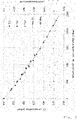
- At least one switching operation is performed between the initial state S0 and the second state S1. Due to the high impact of the switching conditions on the composition of the insulation gas, in particular in view of the high arc energy input and, therefore, the high temperature increase favouring decomposition reactions, the difference between value x S0 and value X S1 is substantial allowing for the use of a relatively simple sensor for determining the change in a physical "bulk property", such as the pressure of the insulation medium. In particular, a manometer of relatively low sensitivity can be used. As will be shown in further detail in connection with the attached figures, a resolution allowing the detection of a pressure change of about 100 mbar can be sufficient to allow to determine a change in the partial pressure of C5K of 10 mbar to 20 mbar.
- the pressure p of the insulation medium is thus preferably selected as physical quantity x.
- the difference between pressure p S0 at the initial state S0 and pressure p S1 at a second state S1 is determined.
- the difference between p S0 and p S1 can be correlated to a specific amount of organofluorine compound C1 present at the second state S1 and/or to a specific amount of organofluorine compound C1 decomposed by the transition from the initial state S0 to the second state S1 by means of pre-calibration data, according to a further preferred embodiment.
- Pre-calibration can for example be performed using an optical measurement of the organofluorine compound C1 before, during and after defined switching events and simultaneously determining the pressure over time.
- Possible methods for measurement which can be used for the pre-calibration, are described in WO 2014/037030 .
- optical absorption measurement, fluorescence measurement or photoacoustic measurement can be used as described in WO2014/037030 , most specifically optical absorption measurement.
- the difference in the initial pressure p S0 at the intial state S0 and the second pressure p S1 at a second state S1 can be correlated to a respective decrease in concentration of the organofluorine compound C1 and thus to a specific decomposition rate.
- the second state S1 relates to the state that is obtained starting from state S0 by at least one switching operation, whereby the change from S0 to S1 is adiabatic.
- adiabatic as used in this context is to be understood as not in thermal equilibrium with the solid elements of the switching apparatus. In other words, the gaseous insulation medium that is suddenly heated by the switching event is assumed to be surrounded by thermally isolating walls.
- the pressure p is the adiabatic pressure that is preferably determined, i.e. the difference from the pressure present before the switching event and the pressure present directly, i.e. instantaneously, after the switching event.
- the pressure increase caused by switching can be explained by the following mechanism: During switching, the fraction of arc energy dE which is transferred into the insulation gas leads to a temperature increase dT i of the insulation gas and results in the generation of additional gas particles dN i (t) , i.e. decomposition products from the organofluorine compound C1, specifically the fluoroketone, resulting in a pressure increase dp i .
- the additionally generated particles dN i (t) can be related to the decrease in the number of organofluorine compound particles, i.e. the decrease of the total amount of the organofluorine compound C1.
- the decrease in the number of organofluorine compound C1 particles can be put into correlation with a respective pressure increase of the insulation gas.
- organofluorine compound C1 particle decrease and adiabatic pressure increase are known for a specific switching apparatus, it is sufficient to determine merely the pressure increase to derive the organofluorine compound C1 decrease.
- the concept will be further illustrated by means of the attached figures.
- the amount of at least one decomposition product can be selected as physical quantity x in method element a), said at least one decomposition product being selected from the group consisting of: tetrafluoromethane, hexafluoropropene, heptafluoropropane, and combinations thereof.
- the amount of tetrafluoromethane can be determined, which is the most abundant decomposition product of the organofluorine compound C1, specifically the fluoroketone.
- the decomposition rate of the organofluorine compound C1 can be derived, irrespective whether only one fluoroketone, e.g. C5K in combination with CO 2 , or a mixture of fluoroketones, e.g. C5K and C6K in combination with CO 2 , are used as e torganofluorine compound C1.
- the amount of the at least one decomposition product is preferably determined by gas chromatography, Fourier transform infrared spectroscopy, and/or optical absorption measurement, specifically by tunable diode laser absorption spectroscopy.
- the method of the present invention relates to diagnosing, monitoring and/or predicting a condition of a switching apparatus, and more particular of a circuit breaker, a disconnector, an earthing switch, and/or a transformer.
- the decomposition rate r of the organofluorine compound C1 i.e. the molar amount of organofluorine compound C1 decomposed per amount of energy input, is determined. This determination can be performed empirically, as e.g. described below by way of the attached figures.
- T0 i.e. the steady state temperature of the electrical apparatus
- a specific temperature of 20°C (293 K) can be used for the calculation. Since more specifically, T is at least approximately identical to T0, the specific temperature of 20°C (293 K) can likewise be used for T.
- the method according to these preferred embodiments will be further exemplified by means of the attached example.
- n(tot.decomp.) can in particular be defined according to the following formula: n tot . decomp .
- a, b, c and d being defined by the chemical equation of the decomposition of the organofluorine compound C1 when reacting with oxygen O 2 into carbon dioxid CO 2 and tetrafluoromethane CF 4 : a ⁇ C1 + b ⁇ O 2 ⁇ > c ⁇ CO 2 + d ⁇ CF 4 .
- the organofluorine compound C1 is a perfluoroketone having exactly 5 carbon atoms (C 5 F 10 O), specifically 1,1,1,3,4,4,4-hepta-fluoro-3-(trifluoromethyl)butan-2-one (C5K).
- end of life of the functionality means the point in time after which the insulating and/or arc extinguising properties of the insulation medium fall below a value required for ensuring a safe operation of the apparatus.
- the method further allows a prediction as to when the insulation medium needs to be replenished at the latest. The possibility for predicting this condition further contributes to a safe operation of the switching apparatus.
- the correlation can be done by means of pre-calibration data.
- the amount of the decomposed organofluorine compound can be obtained by multiplying the decomposition rate normalized to the arc energy input by the total amount of arc energy.
- the decomposition rate can either be obtained empirically, as outlined by means of the figures, or according to the formulae given above.
- the total arc energy is determined by multiplying an average arc energy per switching event with the total number of switching events.
- the total arc energy is determined by adding the arc energy values of all switching events, whereby for each switching event the respective arc current interrupted is determined and correlated to the respective arc energy by means of respective pre-calibration data and/or by a respective function, as will be shown by means of the attached figures.
- the present invention also relates to a method for reconditioning the dielectric insulation and/or arc extinction capability of a switching apparatus, the method comprising the method elements a) to c) described above and comprising the further method element of: replenishing the insulation medium with the insulation medium or a component thereof, once the total amount of the organofluorine compound C1 present in the switching apparatus falls below a predetermined threshold value.
- the threshold value is higher than the value relating to the above mentioned end of life of functionality of the insulation medium.
- the present invention also relates to a device for diagnosing, monitoring and/or predicting a condition of a switching apparatus, in particular its dielectric insulation and/or arc extinction capability, the device being configured to perform the method for diagnosing, monitoring and/or predicting a condition of a switching apparatus according to any of the claims 1 to 17, the device comprising a pressure determining unit and a switching operation counting unit.
- the device further can be suitable for performing the method of reconditioning according to claim 18, the device comprising a replenishing unit for replenishing the insulation medium with the insulation medium or a component thereof, once the total amount of the organofluorine compound C1 present in the switching apparatus falls below a predetermined threshold value.
- the device allows to carry out the methods described above by very simple equipment, which emphasizes the advantages of both the device and the methods of the present invention also from an economic point of view.
- the invention is further illustrated by way of the attached figures of which
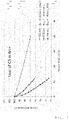
- the decrease in the concentration of C5K contained in the insulation gas has been determined as a function of the number of arc events for three different switching scenarios, namely T10 (shown by diamonds), T30 (shown by squares) and T60 (shown by circles).
- the typical arc energy input of a T10 arc is 10.5 kJ +/- 1.0 kJ, whereas it is about 40 kJ +/- 8 kJ for a T30 arc, and 88 kJ +/- 10 kJ for a T60 arc.
- T10, T30 and T60 mean terminal faults at 10%, 30% and 60%, respectively, of the rated short-circuit current.
- a value of about 0.3 mol/MJ +/- 0.05 mol/MJ can be derived with a standard deviation from the average ranging from 10% to 20%.
- the total amount of the decomposed organofluorine compound and, thus, also the total concentration of the remaining organofluorine compound C1 can be derived, irrespective of the actual switching event (here e.g. T10, T30 or T60) performed.
- Fig. 3 showing the partial pressure of C5K contained in the insulation gas as a function of the pressure increase for three different arcing experiments, namely T10 (shown by diamonds), T30 (shown by squares) and T60 (shown by circles).
- a switching operation is performed and the temperature is allowed to reach the initial temperature again (in the second state S1).
- a pressure of 7.21 bar is determined.
Landscapes
- Engineering & Computer Science (AREA)
- Manufacturing & Machinery (AREA)
- Physics & Mathematics (AREA)
- Spectroscopy & Molecular Physics (AREA)
- Gas-Insulated Switchgears (AREA)
Claims (20)
- Verfahren zur Diagnose, Überwachung und/oder Vorhersage eines Zustands einer Schaltvorrichtung, insbesondere ihrer dielektrischen Isolierfähigkeit und/oder Lichtbogenlöschfähigkeit, wobei die Schaltvorrichtung ein Isolationsmedium enthält, das mindestens eine Organofluorverbindung C1 umfasst, wobei das Verfahren die folgenden Verfahrenselemente umfasst:a) das Auswählen mindestens einer physikalischen Größe x des Isolationsmediums;b) das Bestimmen der Differenz zwischen einem Wert xso der physikalischen Größe x bei einem Anfangszustand S0 der Vorrichtung und einem Wert xS1 der physikalischen Größe x bei einem zweiten Zustand S1, wobei der zweite Zustand S1 später als der Anfangszustand S0 ist, undc) das Abziehen der Abnahme der Menge der mindestens einen Organofluorverbindung C1 und/oder der Gesamtmenge der mindestens einen Organofluorverbindung C1, die in der Schaltvorrichtung vorhanden ist, von der Differenz zwischen xS0 und xS1,dadurch gekennzeichnet, dass
die physikalische Größe x die Menge mindestens eines Zersetzungsprodukts C2 der mindestens einen Organofluorverbindung C1 ist oder eine physikalische Größe ist, die von der Menge mindestens eines Zersetzungsprodukts C2 der mindestens einen Organofluorverbindung C1 abhängt, und das Verfahren weiterhin die folgenden Verfahrenselemente umfasst:das Zählen einer Zahl von Schaltereignissen,daraus das Bestimmen der gesamten Lichtbogenenergie, die auf das Isolationsmedium eingewirkt hat, unddas Korrelieren der gesamten Lichtbogenenergie mit der Menge der Organofluorverbindung C1, die durch Zersetzung verloren gegangen ist. - Verfahren nach Anspruch 1, wobei die mindestens eine Organofluorverbindung C1 ausgewählt ist aus der Gruppe bestehend aus: Fluorethern, insbesondere Hydrofluormonoethern, Fluorketonen, insbesondere Perfluorketonen, Fluorolefinen, insbesondere Hydrofluorolefinen, Fluornitrilen, insbesondere Perfluornitrilen, und Mischungen davon.
- Verfahren nach Anspruch 1 oder 2, wobei das Isolationsmedium weiterhin ein Hintergrundgas umfasst, das insbesondere ausgewählt ist aus der Gruppe bestehend aus: Luft, insbesondere synthetischer Luft und/oder technischer Luft, einer Luftkomponente, insbesondere Stickstoff und/oder Sauerstoff, Kohlendioxid, einem Stickstoffoxid und Mischungen davon.
- Verfahren nach einem der vorhergehenden Ansprüche, wobei zwischen dem Anfangszustand S0 und dem zweiten Zustand S1 mindestens ein Schaltvorgang durchgeführt wird.
- Verfahren nach einem der vorhergehenden Ansprüche, wobei im Verfahrenselement a) der Druck p des Isolationsmediums als physikalische Größe x ausgewählt wird.
- Verfahren nach einem der vorhergehenden Ansprüche, wobei im Verfahrenselement b) die Differenz zwischen dem Druck pS0 im Anfangszustand S0 und dem Druck pS1 in einem zweiten Zustand S1 bestimmt wird.
- Verfahren nach einem der vorhergehenden Ansprüche, wobei im Verfahrenselement c) mittels Vorkalibrierungsdaten die Differenz zwischen dem Druck pS0 im Anfangszustand S0 und dem Druck psi in einem zweiten Zustand S1 mit einer im zweiten Zustand S1 vorhandenen spezifischen Menge der Organofluorverbindung C1 korreliert wird und/oder mit einer spezifischen Menge der Organofluorverbindung C1 korreliert wird, die durch den Übergang vom Anfangszustand S0 zum zweiten Zustand S1 zersetzt worden ist.
- Verfahren nach einem der vorhergehenden Ansprüche, wobei sich der zweite Zustand S1 auf denjenigen Zustand bezieht, der erhalten wird, indem ausgehend vom Anfangszustand S0 mindestens ein Schaltvorgang durchgeführt wird, wobei der Wechsel vom Anfangszustand S0 zum zweiten Zustand S1 adiabatisch ist.
- Verfahren nach einem der vorhergehenden Ansprüche, wobei im Verfahrenselement a) die Menge des mindestens einen Zersetzungsprodukts als physikalische Größe x ausgewählt wird, wobei das mindestens eine Zersetzungsprodukt ausgewählt ist aus der Gruppe bestehend aus: Tetrafluormethan, Hexafluorpropen, Heptafluorpropan und Mischungen davon.
- Verfahren nach einem der vorhergehenden Ansprüche, wobei die Menge des mindestens einen Zersetzungsprodukts durch ein Verfahren bestimmt wird, das ausgewählt ist aus der Gruppe bestehend aus: Gaschromatographie, Fourier-Transformations-Infrarotspektroskopie, Messung der optischen Absorption und Kombinationen davon.
- Verfahren nach einem der vorhergehenden Ansprüche, wobei es sich bei der Schaltvorrichtung um eine gasisolierte Schaltanlage oder eine Komponente davon handelt; wobei die Schaltvorrichtung insbesondere ausgewählt ist aus der Gruppe bestehend aus: einer Trennvorrichtung, einem Trennschalter, einem Erdungsschalter, einem Transformator oder Kombinationen davon.
- Verfahren nach einem der vorhergehenden Ansprüche, wobei die Zersetzungsgeschwindigkeit r(C1Zers.) der Organofluorverbindung C1, die durch die pro Menge der Energiezufuhr zersetzte Stoffmenge der Organofluorverbindung C1 gegeben ist, gemäß der folgenden Formel bestimmt wird:
 wobei n(C1;S0) die Menge der Organofluorverbindung C1 in Mol am Anfangszustand S0 ist und die durch die folgende Formel definiert ist:
 wobei p(C1) der Partialdruck der Organofluorverbindung C1 im Anfangszustand S0 ist, V das Volumen des Gasraums ist, in dem das Isolationsmedium enthalten ist, und T0 die Anfangstemperatur der elektrischen Vorrichtung im stationären Zustand ist;δn die Differenz der Gesamtmenge der im zweiten Zustand S1 vorhandenen Mole im Vergleich zur Gesamtmenge der im Anfangszustand S0 vorhandenen Mole ist, wobei δn durch die folgende Formel definiert ist:
 wobei δp(S1 - S0) die Druckzunahme aufgrund einer irreversiblen Zersetzung zwischen dem zweiten Zustand S1 und dem Anfangszustand S0 ist, wobei der zweite Zustand S1 aus dem Anfangszustand S0 erhalten wird, indem ein einzelner Schaltvorgang durchgeführt wird und nachdem die Temperatur T die Anfangstemperatur der Schaltvorrichtung im stationären Zustand T0 wieder erreicht hat; wobei R die Gaskonstante ist;n(ges.Zers.) sich auf die Menge der Moleküle bezieht, die durch die gesamte Zersetzung von C1 erzeugt werden und die gemäß der folgenden Formel definiert ist:
 wobei p(C1) der Partialdruck der Organofluorverbindung C1 im ersten Zustand S0 ist, c+d+... die stöchiometrischen Zahlen der Produktstoffe sind und a+b+... die stöchiometrischen Zahlen der Reaktandstoffe sind, wobei "a" die stöchiometrische Zahl der Organofluorverbindung C1 ist; undE(Zufuhr) die Menge der Energie ist, die dem System durch das mindestens eine Lichtbogenereignis zugeführt wurde, das durch den Schaltvorgang bewirkt wurde und durch die folgende Formel definiert ist:
 wobei t = Zeitvariable, t(arc) = Zeitdauer des mindestens einen Lichtbogenereignisses, i(arc) = Lichtbogenstromdichte des mindestens einen Lichtbogenereignisses und u(arc) = Lichtbogenspannung des mindestens einen Lichtbogenereignisses.
 - Verfahren nach Anspruch 12, wobei n(ges.Zers.) gemäß der folgenden Formel definiert ist:


- Verfahren nach Anspruch 13, wobei die Organofluorverbindung C1 ein Perfluorketon mit exakt 5 Kohlenstoffatomen (C5F10O), insbesondere 1, 1, 1, 3, 4, 4, 4-Heptafluor-3-(trifluormethyl)butan-2-on, ist, und n(ges.Zers.) wie folgt:


- Verfahren nach einem der Ansprüche 12 bis 14, wobei die Schaltvorrichtung eine Trennvorrichtung, ein Trennschalter und/oder ein Transformator ist und das Ende der Lebensdauer der Funktionalität des Isolationsmediums abgeleitet wird, indem die Zersetzungsgeschwindigkeit r(C1Zers.) mit dem Multiplikator

- Verfahren nach Anspruch 1, wobei die gesamte Lichtbogenenergie bestimmt wird, indem eine mittlere Lichtbogenenergie pro Schaltereignis mit der Gesamtzahl von Schaltereignissen multipliziert wird.
- Verfahren nach Anspruch 1, wobei die gesamte Lichtbogenenergie bestimmt wird, indem die Lichtbogenenergiewerte aller Schaltereignisse addiert werden, wobei für jedes Schaltereignis der jeweilige unterbrochene Lichtbogenstrom bestimmt und mit der jeweiligen Lichtbogenenergie mittels jeweiliger Vorkalibrierungsdaten und/oder mittels einer jeweiligen Funktion korreliert wird.
- Verfahren zur Wiederherstellung der dielektrischen Isolierfähigkeit und/oder Lichtbogenlöschfähigkeit einer Schaltvorrichtung, wobei es sich beim Verfahren um eines nach einem der vorhergehenden Ansprüche handelt und welches das folgende weitere Verfahrenselement umfasst:
das Wiederauffüllen des Isolationsmediums mit dem Isolationsmedium oder einer Komponente davon, sobald die Gesamtmenge der im der Schaltvorrichtung vorhandenen Organofluorverbindung C1 unter einen vorbestimmten Schwellenwert fällt. - Vorrichtung zur Diagnose, Überwachung und/oder Vorhersage eines Zustands einer Schaltvorrichtung, insbesondere ihrer dielektrischen Isolierfähigkeit und/oder Lichtbogenlöschfähigkeit, dadurch gekennzeichnet, dass die Vorrichtung so ausgebildet ist, dass sie das Verfahren zur Diagnose, Überwachung und/oder Vorhersage eines Zustands einer Schaltvorrichtung nach einem der vorhergehenden Ansprüche 1 bis 17 durchführt, wobei die Vorrichtung eine Druckbestimmungseinheit und eine Schaltvorgangzähleinheit umfasst.
- Vorrichtung nach Anspruch 19 zur Durchführung des Verfahrens zur Wiederherstellung nach Anspruch 18, wobei die Vorrichtung eine Wiederbefülleinheit zum Wiederauffüllen des Isolationsmediums mit dem Isolationsmedium oder einer Komponente davon, sobald die Gesamtmenge der in der Schaltvorrichtung vorhandenen Organofluorverbindung C1 unter einen vorbestimmten Schwellenwert fällt, umfasst.
Applications Claiming Priority (1)
| Application Number | Priority Date | Filing Date | Title |
|---|---|---|---|
| PCT/EP2014/079168 WO2016102002A1 (en) | 2014-12-23 | 2014-12-23 | Method for diagnosing, monitoring or predicting a condition of a switching apparatus |
Publications (2)
| Publication Number | Publication Date |
|---|---|
| EP3237884A1 EP3237884A1 (de) | 2017-11-01 |
| EP3237884B1 true EP3237884B1 (de) | 2022-05-04 |
Family
ID=52292925
Family Applications (1)
| Application Number | Title | Priority Date | Filing Date |
|---|---|---|---|
| EP14824481.7A Active EP3237884B1 (de) | 2014-12-23 | 2014-12-23 | Verfahren zur diagnose, überwachung oder vorhersage eines zustands einer schaltvorrichtung |
Country Status (2)
| Country | Link |
|---|---|
| EP (1) | EP3237884B1 (de) |
| WO (1) | WO2016102002A1 (de) |
Families Citing this family (4)
| Publication number | Priority date | Publication date | Assignee | Title |
|---|---|---|---|---|
| CN107787516B (zh) * | 2015-04-13 | 2020-06-19 | Abb瑞士股份有限公司 | 仅中断非短路电流的装置、尤其是隔离开关或接地开关 |
| CN108956810B (zh) * | 2018-06-05 | 2022-04-12 | 中国电力科学研究院有限公司 | 全氟异丁腈混合气体中全氟异丁腈纯度的检测方法 |
| CN110793932B (zh) * | 2019-11-18 | 2022-06-17 | 国网重庆市电力公司电力科学研究院 | Cf4气体浓度检测方法、装置、设备及准确度验证系统 |
| CN113376276A (zh) * | 2021-06-04 | 2021-09-10 | 云南电网有限责任公司丽江供电局 | 一种七氟异丁腈混合气体绝缘设备故障预判方法及系统 |
Family Cites Families (3)
| Publication number | Priority date | Publication date | Assignee | Title |
|---|---|---|---|---|
| RU2621900C2 (ru) * | 2010-12-14 | 2017-06-08 | Абб Текнолоджи Аг | Диэлектрическая изолирующая среда |
| WO2014037395A1 (en) * | 2012-09-04 | 2014-03-13 | Abb Technology Ag | Method for operating an electrical apparatus and electrical apparatus |
| DE102013103823B4 (de) * | 2013-04-16 | 2021-09-02 | R.Stahl Schaltgeräte GmbH | Explosionsgeschütztes Gehäuse und Verfahren zur Überwachung einer ausreichenden Dichtigkeit des explosionsgeschützten Gehäuses |
-
2014
- 2014-12-23 EP EP14824481.7A patent/EP3237884B1/de active Active
- 2014-12-23 WO PCT/EP2014/079168 patent/WO2016102002A1/en not_active Ceased
Also Published As
| Publication number | Publication date |
|---|---|
| EP3237884A1 (de) | 2017-11-01 |
| WO2016102002A1 (en) | 2016-06-30 |
Similar Documents
| Publication | Publication Date | Title |
|---|---|---|
| Zhang et al. | Fundamental physicochemical properties of SF6-alternative gases: a review of recent progress | |
| AU2009347600B2 (en) | Encapsulated switchgear | |
| US8269126B2 (en) | Gas insulated switchgear and method for detecting arc damage in a gas insulated switchgear part | |
| KR102242307B1 (ko) | 전기 에너지의 생성, 전송, 분배 및/또는 이용을 위한 co2 절연된 전기 장치용 물 및 오염 흡착제 | |
| EP2652753B1 (de) | Dielektrisches isoliermedium | |
| US9510493B2 (en) | Mixture of hydrofluoroolefin and fluoroketone for use as an insulation and/or ARC extinguishing medium and a gas insulated medium-voltage electrical device comprising same | |
| RU2013132216A (ru) | Диэлектрическая изолирующая среда | |
| US20140196932A1 (en) | Use of a mixture comprising a hydrofluoroolefin as a medium-voltage arc-extinguishing and/or insulating gas and medium-voltage electrical device comprising same | |
| WO2016102002A1 (en) | Method for diagnosing, monitoring or predicting a condition of a switching apparatus | |
| KR20130128433A (ko) | 유전성 절연 매질 | |
| Uchii et al. | Investigations on SF6-free gas circuit breaker adopting CO2 gas as an alternative arc-quenching and insulating medium | |
| Yedinak et al. | Eliminating SF6 from switchgear | |
| EP3987553B1 (de) | Fluid zur dielektrischen isolierung oder lichtbogenlöschung | |
| Stoller et al. | Behavior of eco-efficient insulation mixtures under internal-arc-like conditions | |
| Yang et al. | Influence of trace H2 O and O2 on SF6 decomposition products under arcing conditions in electric power equipment | |
| EP3069421B1 (de) | Wasser- und kontaminationsabsorber für eine co2-isolierte elektrische vorrichtung zur erzeugung, übertragung, verteilung und/oder verwendung elektrischer energie | |
| CN103988075A (zh) | 操作电设备的方法 | |
| Robin-Jouan et al. | Analysis of last development results for high voltage circuit-breakers using new g3 gas | |
| WO2016162572A1 (en) | Compounds for dielectrically insulating electric active parts | |
| Psotta et al. | Breaking Capacity of Disconnectors and Earthing Switches Operated in Alternative Gases | |
| EP2791668B1 (de) | Verfahren zum betreiben einer elektrischen anlage | |
| Rabie | A systematic approach to identify and quantify gases for electrical insulation | |
| EP3384508B1 (de) | Verfahren zur dielektrischen isolierung von aktiven elektrischen teilen | |
| Ranjan et al. | Interruption of weakly cooled arcs in air and airplus | |
| Miyashita et al. | Gaseous by-products generated by bus-transfer current switching in dry air and their impacts |
Legal Events
| Date | Code | Title | Description |
|---|---|---|---|
| STAA | Information on the status of an ep patent application or granted ep patent |
Free format text: STATUS: THE INTERNATIONAL PUBLICATION HAS BEEN MADE |
|
| PUAI | Public reference made under article 153(3) epc to a published international application that has entered the european phase |
Free format text: ORIGINAL CODE: 0009012 |
|
| STAA | Information on the status of an ep patent application or granted ep patent |
Free format text: STATUS: REQUEST FOR EXAMINATION WAS MADE |
|
| 17P | Request for examination filed |
Effective date: 20170713 |
|
| AK | Designated contracting states |
Kind code of ref document: A1 Designated state(s): AL AT BE BG CH CY CZ DE DK EE ES FI FR GB GR HR HU IE IS IT LI LT LU LV MC MK MT NL NO PL PT RO RS SE SI SK SM TR |
|
| AX | Request for extension of the european patent |
Extension state: BA ME |
|
| DAX | Request for extension of the european patent (deleted) | ||
| RIN1 | Information on inventor provided before grant (corrected) |
Inventor name: BERGSBLOM, MALENA Inventor name: PAUL, THOMAS, ALFRED Inventor name: STOLLER, PATRICK Inventor name: GROB, STEPHAN Inventor name: MANTILLA, JAVIER Inventor name: KRAMER, AXEL |
|
| RAP1 | Party data changed (applicant data changed or rights of an application transferred) |
Owner name: ABB POWER GRIDS SWITZERLAND AG |
|
| STAA | Information on the status of an ep patent application or granted ep patent |
Free format text: STATUS: EXAMINATION IS IN PROGRESS |
|
| 17Q | First examination report despatched |
Effective date: 20210430 |
|
| REG | Reference to a national code |
Ref country code: DE Ref legal event code: R079 Ref document number: 602014083581 Country of ref document: DE Free format text: PREVIOUS MAIN CLASS: G01N0021350400 Ipc: H01B0003560000 |
|
| GRAP | Despatch of communication of intention to grant a patent |
Free format text: ORIGINAL CODE: EPIDOSNIGR1 |
|
| STAA | Information on the status of an ep patent application or granted ep patent |
Free format text: STATUS: GRANT OF PATENT IS INTENDED |
|
| RIC1 | Information provided on ipc code assigned before grant |
Ipc: G01N 30/88 20060101ALN20211029BHEP Ipc: G01N 21/35 20140101ALN20211029BHEP Ipc: H01H 33/56 20060101ALI20211029BHEP Ipc: H01H 11/00 20060101ALI20211029BHEP Ipc: H01B 3/56 20060101AFI20211029BHEP |
|
| INTG | Intention to grant announced |
Effective date: 20211118 |
|
| RIC1 | Information provided on ipc code assigned before grant |
Ipc: G01N 30/88 20060101ALN20211108BHEP Ipc: G01N 21/35 20140101ALN20211108BHEP Ipc: H01H 33/56 20060101ALI20211108BHEP Ipc: H01H 11/00 20060101ALI20211108BHEP Ipc: H01B 3/56 20060101AFI20211108BHEP |
|
| RAP3 | Party data changed (applicant data changed or rights of an application transferred) |
Owner name: HITACHI ENERGY SWITZERLAND AG |
|
| GRAS | Grant fee paid |
Free format text: ORIGINAL CODE: EPIDOSNIGR3 |
|
| GRAA | (expected) grant |
Free format text: ORIGINAL CODE: 0009210 |
|
| STAA | Information on the status of an ep patent application or granted ep patent |
Free format text: STATUS: THE PATENT HAS BEEN GRANTED |
|
| AK | Designated contracting states |
Kind code of ref document: B1 Designated state(s): AL AT BE BG CH CY CZ DE DK EE ES FI FR GB GR HR HU IE IS IT LI LT LU LV MC MK MT NL NO PL PT RO RS SE SI SK SM TR |
|
| REG | Reference to a national code |
Ref country code: GB Ref legal event code: FG4D |
|
| REG | Reference to a national code |
Ref country code: CH Ref legal event code: EP |
|
| REG | Reference to a national code |
Ref country code: AT Ref legal event code: REF Ref document number: 1489999 Country of ref document: AT Kind code of ref document: T Effective date: 20220515 |
|
| REG | Reference to a national code |
Ref country code: IE Ref legal event code: FG4D Ref country code: DE Ref legal event code: R096 Ref document number: 602014083581 Country of ref document: DE |
|
| REG | Reference to a national code |
Ref country code: LT Ref legal event code: MG9D |
|
| REG | Reference to a national code |
Ref country code: NL Ref legal event code: MP Effective date: 20220504 |
|
| REG | Reference to a national code |
Ref country code: AT Ref legal event code: MK05 Ref document number: 1489999 Country of ref document: AT Kind code of ref document: T Effective date: 20220504 |
|
| PG25 | Lapsed in a contracting state [announced via postgrant information from national office to epo] |
Ref country code: SE Free format text: LAPSE BECAUSE OF FAILURE TO SUBMIT A TRANSLATION OF THE DESCRIPTION OR TO PAY THE FEE WITHIN THE PRESCRIBED TIME-LIMIT Effective date: 20220504 Ref country code: PT Free format text: LAPSE BECAUSE OF FAILURE TO SUBMIT A TRANSLATION OF THE DESCRIPTION OR TO PAY THE FEE WITHIN THE PRESCRIBED TIME-LIMIT Effective date: 20220905 Ref country code: NO Free format text: LAPSE BECAUSE OF FAILURE TO SUBMIT A TRANSLATION OF THE DESCRIPTION OR TO PAY THE FEE WITHIN THE PRESCRIBED TIME-LIMIT Effective date: 20220804 Ref country code: NL Free format text: LAPSE BECAUSE OF FAILURE TO SUBMIT A TRANSLATION OF THE DESCRIPTION OR TO PAY THE FEE WITHIN THE PRESCRIBED TIME-LIMIT Effective date: 20220504 Ref country code: LT Free format text: LAPSE BECAUSE OF FAILURE TO SUBMIT A TRANSLATION OF THE DESCRIPTION OR TO PAY THE FEE WITHIN THE PRESCRIBED TIME-LIMIT Effective date: 20220504 Ref country code: HR Free format text: LAPSE BECAUSE OF FAILURE TO SUBMIT A TRANSLATION OF THE DESCRIPTION OR TO PAY THE FEE WITHIN THE PRESCRIBED TIME-LIMIT Effective date: 20220504 Ref country code: GR Free format text: LAPSE BECAUSE OF FAILURE TO SUBMIT A TRANSLATION OF THE DESCRIPTION OR TO PAY THE FEE WITHIN THE PRESCRIBED TIME-LIMIT Effective date: 20220805 Ref country code: FI Free format text: LAPSE BECAUSE OF FAILURE TO SUBMIT A TRANSLATION OF THE DESCRIPTION OR TO PAY THE FEE WITHIN THE PRESCRIBED TIME-LIMIT Effective date: 20220504 Ref country code: BG Free format text: LAPSE BECAUSE OF FAILURE TO SUBMIT A TRANSLATION OF THE DESCRIPTION OR TO PAY THE FEE WITHIN THE PRESCRIBED TIME-LIMIT Effective date: 20220804 Ref country code: AT Free format text: LAPSE BECAUSE OF FAILURE TO SUBMIT A TRANSLATION OF THE DESCRIPTION OR TO PAY THE FEE WITHIN THE PRESCRIBED TIME-LIMIT Effective date: 20220504 |
|
| PG25 | Lapsed in a contracting state [announced via postgrant information from national office to epo] |
Ref country code: RS Free format text: LAPSE BECAUSE OF FAILURE TO SUBMIT A TRANSLATION OF THE DESCRIPTION OR TO PAY THE FEE WITHIN THE PRESCRIBED TIME-LIMIT Effective date: 20220504 Ref country code: PL Free format text: LAPSE BECAUSE OF FAILURE TO SUBMIT A TRANSLATION OF THE DESCRIPTION OR TO PAY THE FEE WITHIN THE PRESCRIBED TIME-LIMIT Effective date: 20220504 Ref country code: LV Free format text: LAPSE BECAUSE OF FAILURE TO SUBMIT A TRANSLATION OF THE DESCRIPTION OR TO PAY THE FEE WITHIN THE PRESCRIBED TIME-LIMIT Effective date: 20220504 Ref country code: IS Free format text: LAPSE BECAUSE OF FAILURE TO SUBMIT A TRANSLATION OF THE DESCRIPTION OR TO PAY THE FEE WITHIN THE PRESCRIBED TIME-LIMIT Effective date: 20220904 |
|
| PG25 | Lapsed in a contracting state [announced via postgrant information from national office to epo] |
Ref country code: SM Free format text: LAPSE BECAUSE OF FAILURE TO SUBMIT A TRANSLATION OF THE DESCRIPTION OR TO PAY THE FEE WITHIN THE PRESCRIBED TIME-LIMIT Effective date: 20220504 Ref country code: SK Free format text: LAPSE BECAUSE OF FAILURE TO SUBMIT A TRANSLATION OF THE DESCRIPTION OR TO PAY THE FEE WITHIN THE PRESCRIBED TIME-LIMIT Effective date: 20220504 Ref country code: RO Free format text: LAPSE BECAUSE OF FAILURE TO SUBMIT A TRANSLATION OF THE DESCRIPTION OR TO PAY THE FEE WITHIN THE PRESCRIBED TIME-LIMIT Effective date: 20220504 Ref country code: ES Free format text: LAPSE BECAUSE OF FAILURE TO SUBMIT A TRANSLATION OF THE DESCRIPTION OR TO PAY THE FEE WITHIN THE PRESCRIBED TIME-LIMIT Effective date: 20220504 Ref country code: EE Free format text: LAPSE BECAUSE OF FAILURE TO SUBMIT A TRANSLATION OF THE DESCRIPTION OR TO PAY THE FEE WITHIN THE PRESCRIBED TIME-LIMIT Effective date: 20220504 Ref country code: DK Free format text: LAPSE BECAUSE OF FAILURE TO SUBMIT A TRANSLATION OF THE DESCRIPTION OR TO PAY THE FEE WITHIN THE PRESCRIBED TIME-LIMIT Effective date: 20220504 Ref country code: CZ Free format text: LAPSE BECAUSE OF FAILURE TO SUBMIT A TRANSLATION OF THE DESCRIPTION OR TO PAY THE FEE WITHIN THE PRESCRIBED TIME-LIMIT Effective date: 20220504 |
|
| REG | Reference to a national code |
Ref country code: DE Ref legal event code: R097 Ref document number: 602014083581 Country of ref document: DE |
|
| PLBE | No opposition filed within time limit |
Free format text: ORIGINAL CODE: 0009261 |
|
| STAA | Information on the status of an ep patent application or granted ep patent |
Free format text: STATUS: NO OPPOSITION FILED WITHIN TIME LIMIT |
|
| PG25 | Lapsed in a contracting state [announced via postgrant information from national office to epo] |
Ref country code: AL Free format text: LAPSE BECAUSE OF FAILURE TO SUBMIT A TRANSLATION OF THE DESCRIPTION OR TO PAY THE FEE WITHIN THE PRESCRIBED TIME-LIMIT Effective date: 20220504 |
|
| 26N | No opposition filed |
Effective date: 20230207 |
|
| PG25 | Lapsed in a contracting state [announced via postgrant information from national office to epo] |
Ref country code: SI Free format text: LAPSE BECAUSE OF FAILURE TO SUBMIT A TRANSLATION OF THE DESCRIPTION OR TO PAY THE FEE WITHIN THE PRESCRIBED TIME-LIMIT Effective date: 20220504 |
|
| P01 | Opt-out of the competence of the unified patent court (upc) registered |
Effective date: 20230527 |
|
| REG | Reference to a national code |
Ref country code: CH Ref legal event code: PL |
|
| REG | Reference to a national code |
Ref country code: BE Ref legal event code: MM Effective date: 20221231 |
|
| PG25 | Lapsed in a contracting state [announced via postgrant information from national office to epo] |
Ref country code: LU Free format text: LAPSE BECAUSE OF NON-PAYMENT OF DUE FEES Effective date: 20221223 |
|
| PG25 | Lapsed in a contracting state [announced via postgrant information from national office to epo] |
Ref country code: LI Free format text: LAPSE BECAUSE OF NON-PAYMENT OF DUE FEES Effective date: 20221231 Ref country code: IE Free format text: LAPSE BECAUSE OF NON-PAYMENT OF DUE FEES Effective date: 20221223 Ref country code: CH Free format text: LAPSE BECAUSE OF NON-PAYMENT OF DUE FEES Effective date: 20221231 |
|
| PG25 | Lapsed in a contracting state [announced via postgrant information from national office to epo] |
Ref country code: BE Free format text: LAPSE BECAUSE OF NON-PAYMENT OF DUE FEES Effective date: 20221231 |
|
| PG25 | Lapsed in a contracting state [announced via postgrant information from national office to epo] |
Ref country code: IT Free format text: LAPSE BECAUSE OF FAILURE TO SUBMIT A TRANSLATION OF THE DESCRIPTION OR TO PAY THE FEE WITHIN THE PRESCRIBED TIME-LIMIT Effective date: 20220504 |
|
| PG25 | Lapsed in a contracting state [announced via postgrant information from national office to epo] |
Ref country code: HU Free format text: LAPSE BECAUSE OF FAILURE TO SUBMIT A TRANSLATION OF THE DESCRIPTION OR TO PAY THE FEE WITHIN THE PRESCRIBED TIME-LIMIT; INVALID AB INITIO Effective date: 20141223 |
|
| REG | Reference to a national code |
Ref country code: DE Ref legal event code: R081 Ref document number: 602014083581 Country of ref document: DE Owner name: HITACHI ENERGY LTD, CH Free format text: FORMER OWNER: HITACHI ENERGY SWITZERLAND AG, BADEN, CH |
|
| PG25 | Lapsed in a contracting state [announced via postgrant information from national office to epo] |
Ref country code: CY Free format text: LAPSE BECAUSE OF FAILURE TO SUBMIT A TRANSLATION OF THE DESCRIPTION OR TO PAY THE FEE WITHIN THE PRESCRIBED TIME-LIMIT Effective date: 20220504 |
|
| PG25 | Lapsed in a contracting state [announced via postgrant information from national office to epo] |
Ref country code: MK Free format text: LAPSE BECAUSE OF FAILURE TO SUBMIT A TRANSLATION OF THE DESCRIPTION OR TO PAY THE FEE WITHIN THE PRESCRIBED TIME-LIMIT Effective date: 20220504 |
|
| PG25 | Lapsed in a contracting state [announced via postgrant information from national office to epo] |
Ref country code: MC Free format text: LAPSE BECAUSE OF FAILURE TO SUBMIT A TRANSLATION OF THE DESCRIPTION OR TO PAY THE FEE WITHIN THE PRESCRIBED TIME-LIMIT Effective date: 20220504 |
|
| PG25 | Lapsed in a contracting state [announced via postgrant information from national office to epo] |
Ref country code: TR Free format text: LAPSE BECAUSE OF FAILURE TO SUBMIT A TRANSLATION OF THE DESCRIPTION OR TO PAY THE FEE WITHIN THE PRESCRIBED TIME-LIMIT Effective date: 20220504 Ref country code: MC Free format text: LAPSE BECAUSE OF FAILURE TO SUBMIT A TRANSLATION OF THE DESCRIPTION OR TO PAY THE FEE WITHIN THE PRESCRIBED TIME-LIMIT Effective date: 20220504 |
|
| REG | Reference to a national code |
Ref country code: GB Ref legal event code: 732E Free format text: REGISTERED BETWEEN 20240718 AND 20240724 |
|
| PG25 | Lapsed in a contracting state [announced via postgrant information from national office to epo] |
Ref country code: MT Free format text: LAPSE BECAUSE OF FAILURE TO SUBMIT A TRANSLATION OF THE DESCRIPTION OR TO PAY THE FEE WITHIN THE PRESCRIBED TIME-LIMIT Effective date: 20220504 |
|
| PG25 | Lapsed in a contracting state [announced via postgrant information from national office to epo] |
Ref country code: BG Free format text: LAPSE BECAUSE OF FAILURE TO SUBMIT A TRANSLATION OF THE DESCRIPTION OR TO PAY THE FEE WITHIN THE PRESCRIBED TIME-LIMIT Effective date: 20220504 |
|
| PG25 | Lapsed in a contracting state [announced via postgrant information from national office to epo] |
Ref country code: BG Free format text: LAPSE BECAUSE OF FAILURE TO SUBMIT A TRANSLATION OF THE DESCRIPTION OR TO PAY THE FEE WITHIN THE PRESCRIBED TIME-LIMIT Effective date: 20220504 |
|
| REG | Reference to a national code |
Ref country code: DE Ref legal event code: R082 Ref document number: 602014083581 Country of ref document: DE Representative=s name: DENNEMEYER & ASSOCIATES RECHTSANWALTSGESELLSCH, DE |
|
| PGFP | Annual fee paid to national office [announced via postgrant information from national office to epo] |
Ref country code: DE Payment date: 20251211 Year of fee payment: 12 |
|
| PGFP | Annual fee paid to national office [announced via postgrant information from national office to epo] |
Ref country code: GB Payment date: 20251219 Year of fee payment: 12 |
|
| PGFP | Annual fee paid to national office [announced via postgrant information from national office to epo] |
Ref country code: FR Payment date: 20251229 Year of fee payment: 12 |