EP3237547B1 - Direktfarbstoffe und zusammensetzung mit den farbstoffen - Google Patents
Direktfarbstoffe und zusammensetzung mit den farbstoffen Download PDFInfo
- Publication number
- EP3237547B1 EP3237547B1 EP15808574.6A EP15808574A EP3237547B1 EP 3237547 B1 EP3237547 B1 EP 3237547B1 EP 15808574 A EP15808574 A EP 15808574A EP 3237547 B1 EP3237547 B1 EP 3237547B1
- Authority
- EP
- European Patent Office
- Prior art keywords
- group
- alkyl
- acid
- hair
- atoms
- Prior art date
- Legal status (The legal status is an assumption and is not a legal conclusion. Google has not performed a legal analysis and makes no representation as to the accuracy of the status listed.)
- Active
Links
- 0 CCCC(*N=*=C(C(C)(C)C1CC1)F)OC Chemical compound CCCC(*N=*=C(C(C)(C)C1CC1)F)OC 0.000 description 7
- COAIPTCUDCYBGP-UHFFFAOYSA-N C1C2C(CCC3)C3CC12 Chemical compound C1C2C(CCC3)C3CC12 COAIPTCUDCYBGP-UHFFFAOYSA-N 0.000 description 1
- GHXZVAAXGMFOHA-UHFFFAOYSA-N C=NC1CCC1 Chemical compound C=NC1CCC1 GHXZVAAXGMFOHA-UHFFFAOYSA-N 0.000 description 1
- PUQZJYAQGCODOC-UHFFFAOYSA-N CC(C1)=CC[N](C)(C)C1NCS Chemical compound CC(C1)=CC[N](C)(C)C1NCS PUQZJYAQGCODOC-UHFFFAOYSA-N 0.000 description 1
- ROHAJWIUPFLJJM-UHFFFAOYSA-N CCCC[O-]=[NH+]C Chemical compound CCCC[O-]=[NH+]C ROHAJWIUPFLJJM-UHFFFAOYSA-N 0.000 description 1
Classifications
-
- C—CHEMISTRY; METALLURGY
- C09—DYES; PAINTS; POLISHES; NATURAL RESINS; ADHESIVES; COMPOSITIONS NOT OTHERWISE PROVIDED FOR; APPLICATIONS OF MATERIALS NOT OTHERWISE PROVIDED FOR
- C09B—ORGANIC DYES OR CLOSELY-RELATED COMPOUNDS FOR PRODUCING DYES, e.g. PIGMENTS; MORDANTS; LAKES
- C09B29/00—Monoazo dyes prepared by diazotising and coupling
- C09B29/0025—Monoazo dyes prepared by diazotising and coupling from diazotized amino heterocyclic compounds
- C09B29/0074—Monoazo dyes prepared by diazotising and coupling from diazotized amino heterocyclic compounds the heterocyclic ring containing nitrogen and sulfur as heteroatoms
- C09B29/0092—Monoazo dyes prepared by diazotising and coupling from diazotized amino heterocyclic compounds the heterocyclic ring containing nitrogen and sulfur as heteroatoms containing a five-membered heterocyclic ring with two nitrogen and one sulfur as heteroatoms
-
- C—CHEMISTRY; METALLURGY
- C09—DYES; PAINTS; POLISHES; NATURAL RESINS; ADHESIVES; COMPOSITIONS NOT OTHERWISE PROVIDED FOR; APPLICATIONS OF MATERIALS NOT OTHERWISE PROVIDED FOR
- C09B—ORGANIC DYES OR CLOSELY-RELATED COMPOUNDS FOR PRODUCING DYES, e.g. PIGMENTS; MORDANTS; LAKES
- C09B29/00—Monoazo dyes prepared by diazotising and coupling
- C09B29/0025—Monoazo dyes prepared by diazotising and coupling from diazotized amino heterocyclic compounds
- C09B29/0055—Monoazo dyes prepared by diazotising and coupling from diazotized amino heterocyclic compounds the heterocyclic ring containing only oxygen as heteroatom
-
- A—HUMAN NECESSITIES
- A61—MEDICAL OR VETERINARY SCIENCE; HYGIENE
- A61K—PREPARATIONS FOR MEDICAL, DENTAL OR TOILETRY PURPOSES
- A61K8/00—Cosmetics or similar toiletry preparations
- A61K8/18—Cosmetics or similar toiletry preparations characterised by the composition
- A61K8/30—Cosmetics or similar toiletry preparations characterised by the composition containing organic compounds
- A61K8/40—Cosmetics or similar toiletry preparations characterised by the composition containing organic compounds containing nitrogen
- A61K8/41—Amines
- A61K8/416—Quaternary ammonium compounds
-
- A—HUMAN NECESSITIES
- A61—MEDICAL OR VETERINARY SCIENCE; HYGIENE
- A61K—PREPARATIONS FOR MEDICAL, DENTAL OR TOILETRY PURPOSES
- A61K8/00—Cosmetics or similar toiletry preparations
- A61K8/18—Cosmetics or similar toiletry preparations characterised by the composition
- A61K8/30—Cosmetics or similar toiletry preparations characterised by the composition containing organic compounds
- A61K8/49—Cosmetics or similar toiletry preparations characterised by the composition containing organic compounds containing heterocyclic compounds
-
- A—HUMAN NECESSITIES
- A61—MEDICAL OR VETERINARY SCIENCE; HYGIENE
- A61K—PREPARATIONS FOR MEDICAL, DENTAL OR TOILETRY PURPOSES
- A61K8/00—Cosmetics or similar toiletry preparations
- A61K8/18—Cosmetics or similar toiletry preparations characterised by the composition
- A61K8/30—Cosmetics or similar toiletry preparations characterised by the composition containing organic compounds
- A61K8/49—Cosmetics or similar toiletry preparations characterised by the composition containing organic compounds containing heterocyclic compounds
- A61K8/4986—Cosmetics or similar toiletry preparations characterised by the composition containing organic compounds containing heterocyclic compounds with sulfur as the only hetero atom
-
- A—HUMAN NECESSITIES
- A61—MEDICAL OR VETERINARY SCIENCE; HYGIENE
- A61Q—SPECIFIC USE OF COSMETICS OR SIMILAR TOILETRY PREPARATIONS
- A61Q5/00—Preparations for care of the hair
- A61Q5/06—Preparations for styling the hair, e.g. by temporary shaping or colouring
- A61Q5/065—Preparations for temporary colouring the hair, e.g. direct dyes
-
- C—CHEMISTRY; METALLURGY
- C09—DYES; PAINTS; POLISHES; NATURAL RESINS; ADHESIVES; COMPOSITIONS NOT OTHERWISE PROVIDED FOR; APPLICATIONS OF MATERIALS NOT OTHERWISE PROVIDED FOR
- C09B—ORGANIC DYES OR CLOSELY-RELATED COMPOUNDS FOR PRODUCING DYES, e.g. PIGMENTS; MORDANTS; LAKES
- C09B29/00—Monoazo dyes prepared by diazotising and coupling
- C09B29/0025—Monoazo dyes prepared by diazotising and coupling from diazotized amino heterocyclic compounds
- C09B29/0059—Monoazo dyes prepared by diazotising and coupling from diazotized amino heterocyclic compounds the heterocyclic ring containing only sulfur as heteroatom
-
- C—CHEMISTRY; METALLURGY
- C09—DYES; PAINTS; POLISHES; NATURAL RESINS; ADHESIVES; COMPOSITIONS NOT OTHERWISE PROVIDED FOR; APPLICATIONS OF MATERIALS NOT OTHERWISE PROVIDED FOR
- C09B—ORGANIC DYES OR CLOSELY-RELATED COMPOUNDS FOR PRODUCING DYES, e.g. PIGMENTS; MORDANTS; LAKES
- C09B29/00—Monoazo dyes prepared by diazotising and coupling
- C09B29/0025—Monoazo dyes prepared by diazotising and coupling from diazotized amino heterocyclic compounds
- C09B29/0062—Monoazo dyes prepared by diazotising and coupling from diazotized amino heterocyclic compounds the heterocyclic ring containing nitrogen and oxygen as heteroatoms
- C09B29/0066—Monoazo dyes prepared by diazotising and coupling from diazotized amino heterocyclic compounds the heterocyclic ring containing nitrogen and oxygen as heteroatoms containing a five-membered heterocyclic ring with nitrogen and oxygen atoms
-
- C—CHEMISTRY; METALLURGY
- C09—DYES; PAINTS; POLISHES; NATURAL RESINS; ADHESIVES; COMPOSITIONS NOT OTHERWISE PROVIDED FOR; APPLICATIONS OF MATERIALS NOT OTHERWISE PROVIDED FOR
- C09B—ORGANIC DYES OR CLOSELY-RELATED COMPOUNDS FOR PRODUCING DYES, e.g. PIGMENTS; MORDANTS; LAKES
- C09B29/00—Monoazo dyes prepared by diazotising and coupling
- C09B29/0025—Monoazo dyes prepared by diazotising and coupling from diazotized amino heterocyclic compounds
- C09B29/0074—Monoazo dyes prepared by diazotising and coupling from diazotized amino heterocyclic compounds the heterocyclic ring containing nitrogen and sulfur as heteroatoms
-
- C—CHEMISTRY; METALLURGY
- C09—DYES; PAINTS; POLISHES; NATURAL RESINS; ADHESIVES; COMPOSITIONS NOT OTHERWISE PROVIDED FOR; APPLICATIONS OF MATERIALS NOT OTHERWISE PROVIDED FOR
- C09B—ORGANIC DYES OR CLOSELY-RELATED COMPOUNDS FOR PRODUCING DYES, e.g. PIGMENTS; MORDANTS; LAKES
- C09B29/00—Monoazo dyes prepared by diazotising and coupling
- C09B29/0025—Monoazo dyes prepared by diazotising and coupling from diazotized amino heterocyclic compounds
- C09B29/0074—Monoazo dyes prepared by diazotising and coupling from diazotized amino heterocyclic compounds the heterocyclic ring containing nitrogen and sulfur as heteroatoms
- C09B29/0077—Monoazo dyes prepared by diazotising and coupling from diazotized amino heterocyclic compounds the heterocyclic ring containing nitrogen and sulfur as heteroatoms containing a five-membered heterocyclic ring with one nitrogen and one sulfur as heteroatoms
- C09B29/0081—Isothiazoles or condensed isothiazoles
-
- C—CHEMISTRY; METALLURGY
- C09—DYES; PAINTS; POLISHES; NATURAL RESINS; ADHESIVES; COMPOSITIONS NOT OTHERWISE PROVIDED FOR; APPLICATIONS OF MATERIALS NOT OTHERWISE PROVIDED FOR
- C09B—ORGANIC DYES OR CLOSELY-RELATED COMPOUNDS FOR PRODUCING DYES, e.g. PIGMENTS; MORDANTS; LAKES
- C09B29/00—Monoazo dyes prepared by diazotising and coupling
- C09B29/0025—Monoazo dyes prepared by diazotising and coupling from diazotized amino heterocyclic compounds
- C09B29/0074—Monoazo dyes prepared by diazotising and coupling from diazotized amino heterocyclic compounds the heterocyclic ring containing nitrogen and sulfur as heteroatoms
- C09B29/0077—Monoazo dyes prepared by diazotising and coupling from diazotized amino heterocyclic compounds the heterocyclic ring containing nitrogen and sulfur as heteroatoms containing a five-membered heterocyclic ring with one nitrogen and one sulfur as heteroatoms
- C09B29/0085—Thiazoles or condensed thiazoles
-
- C—CHEMISTRY; METALLURGY
- C09—DYES; PAINTS; POLISHES; NATURAL RESINS; ADHESIVES; COMPOSITIONS NOT OTHERWISE PROVIDED FOR; APPLICATIONS OF MATERIALS NOT OTHERWISE PROVIDED FOR
- C09B—ORGANIC DYES OR CLOSELY-RELATED COMPOUNDS FOR PRODUCING DYES, e.g. PIGMENTS; MORDANTS; LAKES
- C09B29/00—Monoazo dyes prepared by diazotising and coupling
- C09B29/34—Monoazo dyes prepared by diazotising and coupling from other coupling components
- C09B29/36—Monoazo dyes prepared by diazotising and coupling from other coupling components from heterocyclic compounds
- C09B29/3682—Monoazo dyes prepared by diazotising and coupling from other coupling components from heterocyclic compounds containing only sulfur as heteroatom
Definitions
- the present invention relates to novel direct dyes and compositions comprising them for dyeing keratin fibers especially human hair.
- Direct dyes are usually used to achieve temporary colors on keratin fibers. They usually exhibit variable dyeing ability and also considerably changing durability on hair.
- homogeneity of the colors obtained on the keratin fibers is also very much variable and generally speaking, intensive but less durable on damaged hair, whereas colors on natural hair are less intensive but more durable.
- intensive and homogeneous coloring of keratin fibers, especially human hair, with direct dyes there are problem associated with intensive and homogeneous coloring of keratin fibers, especially human hair, with direct dyes.
- Direct dyes are also classified according to their ionic change such as cationic, anionic and neutral dyes.
- Cationic and nonionic dyes are mostly used for coloring keratin fibers and there are many commercialized products on the hair coloring market from various suppliers.
- hair dyeing composition is made commercially available comprising anionic dyes.
- EP1369105 discloses various novel direct dyes and the compositions comprising them for coloring human hair.
- the aim of the present invention is to provide novel dyes for coloring keratin fibers intensively and homogeneously.
- the aim of the present invention is to provide novel dyes for coloring keratin fibers, especially human hair, comprising damaged and undamaged parts intensively and homogeneously.
- the inventors of the present invention have found out that the special novel dyes having benzothiophene structure providing intensive and homogeneous dyeing on keratin fibers, especially human hair.
- the first object of the present invention is the compounds according to the general structure wherein R 1 is H, C 1 -C 4 alkyl, C 1 -C 4 hydroxyalkyl, COOH or COOR 5 wherein R 5 is C 1 -C 4 alkyl, R 2 is H or NR 6 R 7 wherein R 6 and R 7 are same or different H, C 1 -C 4 alkyl, C 1 -C 4 hydroxyalkyl or acetyl, R 3 is H, OH, NR 6 R or NHSO 2 R 8 wherein R 8 is NR 6 R alkyl or NR 6 R hydroxyalkyl, R 4 is H, COOH or COOR 5 and Hy is any heterocyclic group which is bound at a C atom to the diazo group and which may be substituted or unsubstituted, which is selected from the groups wherein R 9 is C 1 - C 4 alkyl or C 1 - C 4 hydroxyalkyl and "*" expresses position at which group binds to the
- the hetero-ring group is preferably (A-1), (A-5), (A-8), (A-9), (A-10), (A-11), (A-12), (A-13), (A-14), (A-15), (A-17), (A-19), (A-22), (A-23), (A-24), (A-25) and (A-26) more preferably (A-10), (A-11), (A-12), (A-14), (A-22), (A-23), (A-25) and (A-26), and particularly preferably (A-10), (A-23) and (A-26).
- the preferred are compounds D-1, D-2, D-3 and D4.
- the most referred ones are D-2 and D-3.
- the second object is the use of the above compounds for coloring keratin fibers, especially human hair.
- the third object is a composition comprising one or more of the above disclosed dye compounds.
- the fourth object is the use of a composition comprising one or more of the above dye compounds for colouring keratin fibers especially human hair.
- the above compounds are comprised in the compositions at a concentration in the range of 0.0001 to 10%, preferably 0.001 to 7.5%, more preferably 0.01 to 5% and most preferably 0.02 to 4% by weight, calculated to the total of the composition.
- compositions comprising the compounds may further comprise additional compounds such as surfactants, thickening polymers, conditioning agents, solvents, fatty substances such as fatty alcohols, and oils.
- the composition may be in the form of a solution, an emulsion or gel.
- the dye compounds may as well be comprised in a bleaching composition in powder form and comprise additionally hair bleaching powder compounds such as persalts for example persulfate salts of sodium, potassium and ammonium.
- Surfactants suitable for the purpose are anionic, nonionic, cationic and amphoteric ones.
- Suitable anionic surfactants are of the sulfate, sulfonate, carboxylate and alkyl phosphate type, for example, the known C 10 -C 18 -alkyl sulfates, and in particular the respective ether sulfates, for example, C 12 -C 14 -alkyl ether sulfate, lauryl ether sulfate, especially with 1 to 4 ethylene oxide groups in the molecule, monoglyceride (ether) sulfates, fatty acid amide sulfates obtained by ethoxylation and subsequent sulfatation of fatty acid alkanolamides, and the alkali salts thereof.
- ether monoglyceride
- Additional anionic surfactants useful are ⁇ -olefin sulfonates or the salts thereof, and in particular alkali salts of sulfosuccinic acid semiesters, for example, the disodium salt of monooctyl sulfosuccinate and alkali salts of long-chain monoalkyl ethoxysulfosuccinates.
- Suitable surfactants of the carboxylate type are alkyl polyether carboxylic acids and the salts thereof of the formula R 9 -O-(C 2 H 4 O) n -CH 2 COOX, wherein R 9 is a C 8 -C 20 -alkyl group, preferably a C 12 -C 14 -alkyl group, n is a number from 1 to 20, preferably 2 to 17, and X is H or preferably a cation of the group sodium, potassium, magnesium and ammonium, which can optionally be hydroxyalkyl-substituted.
- anionic surfactants are also C 8 -C 22 -acyl aminocarboxylic acids or the water-soluble salts thereof, such as N-lauroyl glutamate, in particular as sodium salt, as well as, for example, N-lauroyl sarcosinate, N-C 12 -C 18 -acyl asparaginic acid, N-myristoyl sarcosinate, N-oleoyl sarcosinate, N-lauroyl methylalanine, N-lauroyl lysine and N-lauroyl aminopropyl glycine, preferably in form of the water-soluble alkali or ammonium, in particular the sodium salts thereof, preferably in mixture with the above-named anionic surfactants.
- Suitable non-ionic surfactants are alkyl polyglucosides of the general formula R 10 -O-(R 11 O) n O-Z x wherein R 10 is an alkyl group with 8 to 18 carbon atoms, R 11 is an ethylene or propylene group, Z is a saccharide group with 5 to 6 carbon atoms, n is a number from 0 to 10 and x is a number between 1 and 5. Examples are decyl polyglucoside, cocoyl polyglucoside both are commercially available.
- nonionic surfactant components are, for example, long-chain fatty acid mono- and dialkanolamides, such as coco fatty acid monoethanolamide and myristic fatty acid monoethanolamide.
- nonionic surfactants are, for example, the various sorbitan esters, such as polyethylene glycol sorbitan stearic acid ester, fatty acid polyglycol esters or poly-condensates of ethyleneoxide and propyleneoxide, as they are on the market, for example, under the trade name "Pluronics R ".
- nonionic surfactants as emulsifiers useful in the compositions according to invention are C 10 -C 22 -fatty alcohol ethoxylates.
- C 10 -C 22 -fatty alcohol ethers the alkyl polyglycol ethers known by the generic terms "Laureth”, “Myristeth”, “Oleth”, “Ceteth”, “Deceth”, “Steareth” and “Ceteareth” according to the CTFA nomenclature, including addition of the number of ethylene oxide molecules, e.g., "Laureth-16":
- the average degree of ethoxylation thereby ranges between about 2.5 and about 50, preferably about 10 and about 30.
- non-ionic surfactants mentioned above fatty alcohol ethoxylates are the most preferred ones.
- non-ionic surfactants can also be used as mixture of one category such as several ethoxylated fatty alcohols or several categories such as mixture of alkyl polyglucoside and ethoxylated fatty alcohol.
- amphoteric or zwitterionic surfactants are amphoteric or zwitterionic surfactants.
- amphoteric or zwitterionic surfactants Useful as such are in particular the various known betaines such as alkyl betaines such as cocoyl betaine, fatty acid amidoalkyl betaines such as cocamidopropyl betaine and sulfobetaines, for example, lauryl hydroxysulfobetaine; long-chain alkyl amino acids, such as cocoaminoacetate, cocoaminopropionate and sodium cocoamphopropionate and -acetate.
- surfactants are cationic surfactants according to general formula where R 12 is saturated or unsaturated, branched or straight alkyl chain with 8-22 C atoms or R 16 CONH(CH 2 ) n where R 16 is saturated or unsaturated, branched or straight alkyl chain with 7-21 C atoms and n has typical value of 1 - 4 or R 16 COO(CH 2 ) n
- Suitable cationic surfactants are, for example, long-chain quaternary ammonium compounds which can be used alone or in mixture with each other, such as cetyl trimethyl ammonium chloride, myristoyl trimethyl ammonium chloride, behentrimonium chloride, trimethyl cetyl ammonium bromide, stearyl trimethyl ammonium chloride, dimethyl stearyl ammonium chloride, dimethyl dihydrogenated tallow ammonium chloride, stear trimonium chloride, stearamidopropyldimethylamoonium chloride, dipalmitoyl dimonium chloride, distearyl dimethyl ammonium chloride, stearamidopropyl trimonuim chloride.
- cetyl trimethyl ammonium chloride myristoyl trimethyl ammonium chloride, behentrimonium chloride, trimethyl cetyl ammonium bromide, stearyl trimethyl ammonium chloride, dimethyl stearyl ammonium chloride,
- cationic surfactants are so called esterquats available on the market, for example, under the trade names “Schercoquat®, "Dehyquart®L80” and “Tetranyl®”. Still further examples are so called amidoquats again available on the market, for example, under the trade name "INCROQUAT â HO" or "OCS”.
- Total surfactant concentration varies between 0.1 and 25%, preferably 0.2 and 20%, and more preferably 0.5 to 15% and most preferably 0.5 to 15% by weight calculated to total of the composition.
- compositions may comprise one or more hair conditioning compound.
- Conditioners may be comprised in the compositions at a concentration in the range of 0.01 to 15%, preferably 0.05 to 10%, and more preferably 0.1% to 5% by weight calculated to the total of the composition.
- conditioning component generally include cationic polymers, silicones, fatty alcohols, and conditioning oils (for example, hydrocarbon oil, polyolefin and fatty acid ester) and their mixtures.
- the composition may comprise a single type of conditioning component, or two or more in combination.
- Suitable cationic polymers are copolymer of a diallyl quaternary ammonium salt include dimethyldiallylammonium chloride polymer (polyquaternium-6, for example, MERQUAT 100; Nalco Company), dimethyldiallylammonium chloride/acrylic acid copolymer (polyquaternium-22, for example, MERQUAT 280, MERQUAT 295; Nalco Company), and dimethyldiallylammonium chloride/acrylic acid amide copolymer (polyquaternium-7, for example, MERQUAT 550; Nalco Company).
- dimethyldiallylammonium chloride polymer polyquaternium-6, for example, MERQUAT 100; Nalco Company
- dimethyldiallylammonium chloride/acrylic acid copolymer polyquaternium-22, for example, MERQUAT 280, MERQUAT 295; Nalco Company
- quaternized polyvinylpyrrolidone examples include quaternary ammonium salts synthesized from a copolymer of vinylpyrrolidone (VP) and dimethylaminoethyl methacrylate, and diethyl sulfate (polyquaternium 11, for example, GAFQUAT 734, GAFQUAT 755 and GAFQUAT 755N (all by ISP Japan, Ltd.)).
- the cationized cellulose include a polymer of a quaternary ammonium salt obtained by adding glycidyltrimethylammonium chloride to hydroxyethylcellulose (polyquaternium-10, for example, RHEOGUARD G and RHEOGUARD GP (all by Lion Corp.), POLYMER JR-125, POLYMER JR-400, POLYMER JR-30M, POLYMER LR-400 and POLYMER LR-30M (all by Amerchol Corp.)), and a hydroxyethylcellulose/dimethyldiallylammonium chloride copolymer (polyquaternium-4, for example, CELQUAT H-100, CELQUAT L-200 (all by National Starch and Chemical Company)).
- polyquaternium-10 for example, RHEOGUARD G and RHEOGUARD GP (all by Lion Corp.
- Cationic polymers may be comprised in the compositions at a concentration in the range of 0.01 to 5%, preferably 0.05 to 4%, and more preferably 0.1% to 2.5% by weight calculated to the total of the composition.
- compositions may comprises one or more silicone.
- silicone examples include dimethylpolysiloxane, and modified silicone (for example, amino-modified silicone, fluorine-modified silicone, alcohol-modified silicone, polyether-modified silicone, epoxy-modified silicone, or alkyl-modified silicone), but dimethylpolysiloxane, polyether-modified silicone and amino-modified silicone are preferred.
- the dimethylpolysiloxane may be any cyclic or non-cyclic dimethylsiloxane polymer, and examples thereof include SH200 series, BY22-019, BY22-020, BY11-026, B22-029, BY22-034, BY22-050A, BY22-055, BY22-060, BY22-083, FZ-4188 (all by Dow Corning Toray Co., Ltd.), KF-9008, KM-900 series, MK-15H, and MK-88 (all by Shin-Etsu Chemical Co., Ltd.).
- the polyether-modified silicone may be any silicone having a polyoxyalkylene group, and the group constituting the polyoxyalkylene group may be an oxyethylene group or an oxypropylene group. More specific examples include KF-6015, KF-945A, KF-6005, KF-6009, KF-6013, KF-6019, KF-6029, KF-6017, KF-6043, KF-353A, KF-354A, KF-355A (all by Shin-Etsu Chemical Co., Ltd.), FZ-2404, SS-2805, FZ-2411, FZ-2412, SH3771M, SH3772M, SH3773M, SH3775M, SH3749, SS-280X series, BY22-008 M, BY11-030, and BY25-337 (all by Dow Corning Toray Co., Ltd.).
- the amino-modified silicone may be any silicone having an amino group or an ammonium group, and examples thereof include an amino-modified silicone oil having all or a part of the terminal hydroxyl groups capped with a methyl group or the like, and an amodimethicone which does not have the terminals capped.
- a preferred example of the amino-modified silicone may be a compound represented by the following formula: wherein R' represents a hydroxyl group, a hydrogen atom or R x ; R x represents a substituted or unsubstituted monovalent hydrocarbon group having 1 to 20 carbon atoms; D represents R x , R"-(NHCH 2 CH 2 ) m NH 2 , OR x , or a hydroxyl group; R" represents a divalent hydrocarbon group having 1 to 8 carbon atoms; m represents a number from 0 to 3; p and q represent numbers, the sum of which is, as a number average, equal to or greater than 10 and less than 20,000, preferably equal to or greater than 20 and less than 3000, more preferably equal to or greater than 30 and less than 1000, and even more preferably equal to or greater than 40 and less than 800.
- amino-modified silicone oils such as SF8452C, SS-3551 (all by Dow Corning Toray Co., Ltd.), KF-8004, KF-867S, and KF-8015 (all by Shin-Etsu Chemical Co. , Ltd.); and amodimethicone emulsions such as SM8704C, SM8904, BY22-079, FZ-4671, and FZ-4672 (all by Dow corning Toray Co., Ltd.).
- the total content of these silicones in the treatment composition of the present invention is usually 0.1 to 10%, preferably 0.2% to 7.5% and more preferably 0.5 to 5%, by weight calculated to the total of the composition.
- compositions may also include an organic conditioning oil. Suitable ones are selected from a hydrocarbon oil having at least 10 carbon atoms, a polyolefin, a fatty acid ester, a fatty acid amide and mixtures thereof.
- hydrocarbon oil examples include a cyclic hydrocarbon, a linear aliphatic hydrocarbon (saturated or unsaturated), and a branched aliphatic hydrocarbon (saturated or unsaturated), and polymers or mixtures thereof are also included.
- the linear hydrocarbon oil preferably has 12 to 19 carbon atoms.
- the branched hydrocarbon oil includes hydrocarbon polymers, and preferably has more than 19 carbon atoms.
- the polyolefin is a liquid polyolefin, more preferably a liquid poly- ⁇ -olefin, and even more preferably a hydrogenated liquid poly- ⁇ -olefin.
- the polyolefin used herein is prepared by polymerizing an olefin monomer having 4 to 14 carbon atoms, and preferably 6 to 12 carbon atoms.
- the fatty acid ester may be, for example, a fatty acid ester having at least 10 carbon atoms.
- a fatty acid ester examples include esters having a hydrocarbon chain derived from a fatty acid and an alcohol (for example, monoesters, polyhydric alcohol esters, or di- and tricarboxylic acid esters).
- the hydrocarbon group of these fatty acid esters may have another compatible functional group such as an amide group or an alkoxy group as a substituent, or the hydrocarbon group may be covalently bonded to those functional groups.
- an alkyl and alkenyl ester of a fatty acid having a fatty acid chain having 10 to 22 carbon atoms a carboxylic acid ester of an aliphatic alcohol having an aliphatic chain derived from an alkyl and/or alkenyl alcohol having 10 to 22 carbon atoms, and a mixture thereof are suitably used.
- these preferred fatty acid esters include isopropyl isostearate, hexyl laurate, isohexyl laurate, isohexyl palmitate, isopropyl palmitate, decyl oleate, isodecyl oleate, hexadecyl stearate, decyl stearate, dihexadecyl adipate, lauryl lactate, myristyl lactate, cetyl lactate, oleyl stearate, oleyl oleate, oleyl myristate, lauryl acetate, cetyl propionate and dioleyl adipate.
- suitable oil components are natural oils such as paraffin oil and natural triglycerides.
- Suitable natural triglycerides are argan oil, shea butter oil, karite oil, olive oil, almond oil, avocado oil, ricinus oil, coconut oil, palm oil, sesame oil, peanut oil, sunflower oil, peach kernel oil, wheat germ oil, macadamia nut oil, macadamia oil, night primrose oil, jojoba oil, castor oil, soya oil, lanolin, passiflora oil, black cumin oil, borage oils, grapeseed oil, hempseed oil, kukui nut oil, and rosehip oil.
- the organic conditioning oil may be used in combination of two or more kinds, and the total concentration is typically in the range of 0.1 to 10%, preferably 0.2% to 7.5% and more preferably 0.5 to 5%, by weight calculated to the total of the composition.
- compositions may also contain a fatty alcohol having 8 carbon atoms or more.
- the higher alcohol has 8 to 22 carbon atoms, and preferably 16 to 22 carbon atoms.
- Specific examples thereof include cetyl alcohol, stearyl alcohol, behenyl alcohol, and mixtures thereof.
- the fatty alcohol may be used in combination of two or more kinds, and the content thereof is typically 0.1 to 10%, preferably 0.2% to 7.5% and more preferably 0.5 to 5%, by weight calculated to the total of the composition.
- the thickening agents include any polymer either natural or synthetic thickening cosmetic compositions, especially aqueous compositions.
- examples are cellulose and its derivatives such as hydroxyethylcellulose, guar and its derivatives such as hydroxypropyl guar.
- Additional examples are xanthan gum and its derivatives, acrylate polymers commercially available for example under the trade name Carbopol.
- compatibility with ayn other components of the composition should carefully be examiner.
- the thickening agents may be comprised in the range of 0.1 to 10%, preferably 0.2% to 7.5% and more preferably 0.25 to 5%, most preferably 0.5 to 2.5% by weight calculated to the total of the composition.
- compositions may contain one or more organic solvents such as ethanol.
- organic solvents such as ethanol.
- Concentration of organic solvent can be in the range of 1 to 40%, preferably 1 to 25% by weight, calculated to total of the composition.
- polyols may suitably be comprised in the compositions. Suitable ones are panthenol, glycerin, glycol and derivatives, polyethyleneglycoles known with trade names Carbowax PEG from Union Carbide and Polyox WSR range from Amerchol, polyglycerin, polyethyleneglycol mono or di fatty acid esters.
- compositions of the present invention can comprise UV filters for protection of hair from environmental influences such as loss of elasticity, loss of hair colour (bleaching effect of sun light).
- the UV-absorbing substance is preferably selected from the following compounds: 4-Aminobenzoic acid and the esters and salts thereof, 2-phenyl benzimidazole-5-sulfonic acid and the alkali and amine salts thereof, 4-dimethyl aminobenzoic acid and the esters and salts thereof, cinnamic acid and the esters and salts thereof, 4-methoxycinnamic acid and the esters and salts thereof, salicylic acid and the esters and salts thereof, 2.4-dihydroxybenzophenone, 2.2'.4.4'-tetrahydroxy- benzophenone, 2-hydroxy-4-methoxybenzophenone and its 5-sulfonic acid or the sodium salt thereof, 2,2'-dihydroxy-4,4'-dimethoxybenzophenone, 2-hydroxy-5-chlorobenzophenone, 2,2'-
- compositions comprising one or more of the above dye compounds may also comprise further dyes. They may be direct dyes or oxidative dye precursors and couplers.
- Suitable direct dyes are cationic, anionic, neutral dyes and mixtures thereof as available commercially from various suppliers and used mainly in semi-permanent hair coloration.
- One of the suitable direct dyes are cationic dyes.
- Non-limiting examples are Basic Blue 6, Basic Blue 7, Basic Blue 9, Basic Blue 26, Basic Blue 41, Basic Blue 99, Basic Brown 4, Basic Brown 16, Basic Brown 17, Basic Orange 31, Natural Brown 7, Basic Green 1, Basic Red 2, Basic Red 12 Basic Red 22, Basic Red 51, Basic Red 76, Basic Violet 1, Basic Violet 2, Basic Violet 3, Basic Violet 10, Basic Violet 14, Basic Yellow 57 and Basic Yellow 87, and their salts such as chloride, methosulfate, bromide etc. and mixtures thereof.
- Suitable direct dyes are anionic dyes. Suitable non-limiting examples are Acid Black 1, Acid Blue 1, Acid Blue 3, Food Blue 5, Acid Blue 7, Acid Blue 9, Acid Blue 74, Acid Orange 3, Acid Orange 6, Acid Orange 7, Acid Orange 10, Acid Red 1, Acid Red 14, Acid Red 18, Acid Red 27, Acid Red 50, Acid Red 52, Acid Red 73, Acid Red 87, Acid Red 88, Acid Red 92, Acid Red 155, Acid Red 180, Acid Violet 9, Acid Violet 43, Acid Violet 49, Acid Yellow 1, Acid Yellow 23, Acid Yellow 3, Food Yellow No. 8, D&C Brown No. 1, D&C Green No. 5, D&C Green No. 8, D&C Orange No. 4, D&C Orange No. 10, D&C Orange No. 11, D&C Red No. 21, D&C Red No. 27, D&C Red No.
- Suitable dyes for colouring hair within the meaning of the present invention are those of neutral nitro dyes.
- Suitable non-limiting examples are HC Blue No.2, HC Blue No.4, HC Blue No.5, HC Blue No.6, HC Blue No.7, HC Blue No.8, HC Blue No.9, HC Blue No.10, HC Blue No.11, HC Blue No.12, HC Blue No.13, HC Brown No.1, HC Brown No.2, HC Green No.1, HC Orange No.1, HC Orange No.2, HC Orange No.3, HC Orange No.5, HC Red BN, HC Red No.1, HC Red No.3, HC Red No.7, HC Red No.8, HC Red No.9, HC Red No.10, HC Red No.11, HC Red No.13, HC Red No.54, HC Red No.14, HC Violet BS, HC Violet No.1, HC Violet No.2, HC Yellow No.2, HC Yellow No.4, HC Yellow No
- Plant dyestuffs may also be used as hair colorant within the meaning of the present invention for example henna (red or black), alkanna root, laccaic acid, indigo, logwood powder, madder root and rhubarb powder, etc.
- dyestuffs are also suitable for use in mixture.
- cationic, anionic and nitro dyes are used in mixture within the meaning of the present invention.
- direct dyes of various categories their compatibility must be taken into account.
- Concentration of additional direct dyes in the compositions of the present invention is within the range of 0.001 to 5%, preferably 0.01 to 4% and more preferably 0.05 to 3%, and most preferably 0.1 to 2% by weight, calculated to total composition.
- the pH of the composition of the present invention is in the range of 2 to 11, preferably 5 to 11, more preferably 6 to 11 and most preferably 6.8 to 10.
- the pH of the compositions may be adjusted using any organic and/or inorganic acids and alkalizing agents such as ammonium hydroxide and alkanolamines such as monoethanolamine or their mixtures.
- compositions of the present invention may be used after mixing with an oxidizing agent.
- oxidizing agents suitable are hydrogen peroxide, urea peroxide, melamin peroxide and perborate salts. The most preferred is hydrogen peroxide.
- concentration of the oxidizing agent is usually 2 to 12% by weight calculated to the total of the composition.
- Composition of the present invention may comprise one or more oxidative dye precursor.
- oxidative dye precursors available for hair colouring purposes are suitable within the meaning of the present invention.
- any developing substances known in the art Special mention is made of p-phenylenediamine, p-aminophenol and substituted p-phenylenediamines such as 2,5-diamino-toluene, 2-n-propyl or 2-ethyl-p-phenylenediamine, 2,6-di-methyl-p-phenylene- diamine, 2-(2,5-diaminophenyl) ethanol, 1-amino-4-bis-(2'-hydroxy-ethyl)amino- benzene, 2-(2-hydroxyethyl amino)-5-aminotoluene, 4,4'-diaminodiphenylamine, 4-aminodiphenylamine, 2-amino-5-N,N-diethyl
- aminopyridines are 2,5-diaminopyridine, 2,3-diaminopyridine, 2,6-diaminopyridine, 3-amino-2-methyl amino-6-methoxypyridine, 2-dimethyl-5-aminopyridine, 2-dimethyl aminoethyl-3-hydroxypyridine, 2-amino-4,6-dimethyl pyridine, 2-amino-3-hydroxypyridine, 3-amino-2( ⁇ -hydroxyethyl amino)-6-methoxypyridine, 2,6-dimethyl amino-5-aminopyridine, 2-di(hydroxyethyl) amino-5-aminopyridine, 2-hydroxyethyl amino-5-aminopyridine, 4-hydroxy-2,5,6-triaminopyrimidine and/or the water-soluble salts thereof.
- the total concentration of the dye precursors (developing substances) customarily ranges between 0.001 to 5%, preferably 0.01 to 4% and more preferably 0.05 to 3%, and most preferably 0.1 to 2% by weight, calculated to the total of the composition.
- compositions comprise in addition to at least one oxidative dye precursor at least one coupling substance.
- any coupling substance customarily used in oxidative hair colouration area is suitable within the meaning of the present invention.
- Non-limiting coupling substances are 5-amino-2-methylphenol, 2-methyl-5-hydroxyethylaminophenol, 2,4,-diamnophenoxyehanol, 2-amino-4-hydroxyethylaminoanisol, 2-methyl-5-amino-6-chlorphenol, 1,3-bis(2,4-diaminophenoxy)propane, 2-bis(2-hydroxyethyl)aminotoluene, 2-amino-5-methylphenol, resorcinol, 2-methyl-resorcinol, 4-chlororesorcinol, 2-amino-4-chlorophenol, 5-amino-4-methoxy-2-methylphenol, 2-aminophenol, 3-amino-phenol, 1-methyl-2-hydroxy-4-aminobenzen
- the coupling substance(s) as reaction partners of the developing substance(s) are present in approximately the same molecular proportions as the developing substances, i.e. in amounts from 0.001 to 5%, preferably 0.01 to 4% and more preferably 0.05 to 3%, and most preferably 0.1 to 2% by weight, calculated to the total of the composition.
- compositions comprise mixtures of the hair dyes mentioned above.
- a ready to use hair dyeing composition comprises at least one direct dye and at least one oxidative dye precursor, optionally at least one coupling substance in addition to the novel dyes of the present invention.
- the composition comprising one or more novel dyes of the present invention and optionally one or more direct dyes is kept separate until the use from the composition comprising one or more oxidative dyes, and mixed immediately before use with each other and with a composition comprising one or more oxidizing agent.
- Another object of the present invention is a process for colouring hair wherein a composition comprising one or more dyes of the present invention and optionally one or more additional direct dye is mixed with a composition comprising one or more oxidative dye precursors and optionally one or more coupling substances and a composition comprising one or more oxidizing agent, and applied onto hair and rinsed off from hair after leaving 1 to 45 min on the hair, the hair is optionally shampooed and dried.
- the composition is an anhydrous powder composition and comprises one or more novel dyes of the present invention, one or more persalts at a total concentration of 5 to 60%, preferably 10 to 60% and more preferably 20 to 50% by weight, calculated to the total of the composition and a powder alkalizing agent such as sodium metalsilicate.
- a powder alkalizing agent such as sodium metalsilicate.
- UV/Vis (DMSO) ⁇ max (Ig ⁇ ) S: 476 nm (4.30); B: 528 nm (4.62).
- the solid material is washed with n-pentane and the water phase extracted 3x with 150 ml ethyl acetate.
- the organic phases are extracted 4x with 100 ml 10% Na2CO3 solution and the water phases 2x washed with 100 ml diethyl ether. With conc. HCI the pH is adjusted to 2 and further extraction with 4x 100 ml ethyl acetate is done.
- the organic extract is dried and evaporated to dryness.
- the intermediate product is suspended in 500 ml acetic anhydride and heated with 206.7g (2.52 mol) sodium acetate for 5h under reflux.
- the black product is extracted with a 1:1 mixture of n-pentane/n-heptane until no more educt is present. After keeping temperature overnight at 5°C a yellow solid and a brown oil are separating. The yellow solid is used without further purification, yield 65%.
- 1,3-Thiazol-2-amine (10 mmol) is dissolved in 26 ml glacial acetic acid and 14 ml propanoic acid followed by cooling to -10°C. 10 ml sulfuric acid is added dropwise to keep the temperature below -5°C. Then 8 ml of a 2 M nitrosyl sulfuric acid is added at -10°C dropwise. After stirring for 1h at -10°C the excess of nitrosating agent is destroyed by adding 0.5g urea.
- the pH of the compositions A to D was adjusted with HCl to 10.
- compositions A and B colour hair tresses under non-oxidative (Method 1) and oxidative conditions (Method 2) in the same intensity.
- the hair tress damaged by means of permanent shaping treatment (Method 3) is also colored in the same intensity.
- compositions based on the existing dyes do show variability in coloring hair under oxidative condition and also color intensity on damaged hair is much stronger the natural hair which clearly indicates that hair comprising damaged parts may not be colored homogeneously with the known dyes but colored homogeneously with the novel dyes of the present inventions.
Landscapes
- Chemical & Material Sciences (AREA)
- Organic Chemistry (AREA)
- Health & Medical Sciences (AREA)
- Life Sciences & Earth Sciences (AREA)
- Animal Behavior & Ethology (AREA)
- General Health & Medical Sciences (AREA)
- Public Health (AREA)
- Veterinary Medicine (AREA)
- Birds (AREA)
- Epidemiology (AREA)
- Cosmetics (AREA)
Claims (14)
- Verbindungen der allgemeinen Struktur


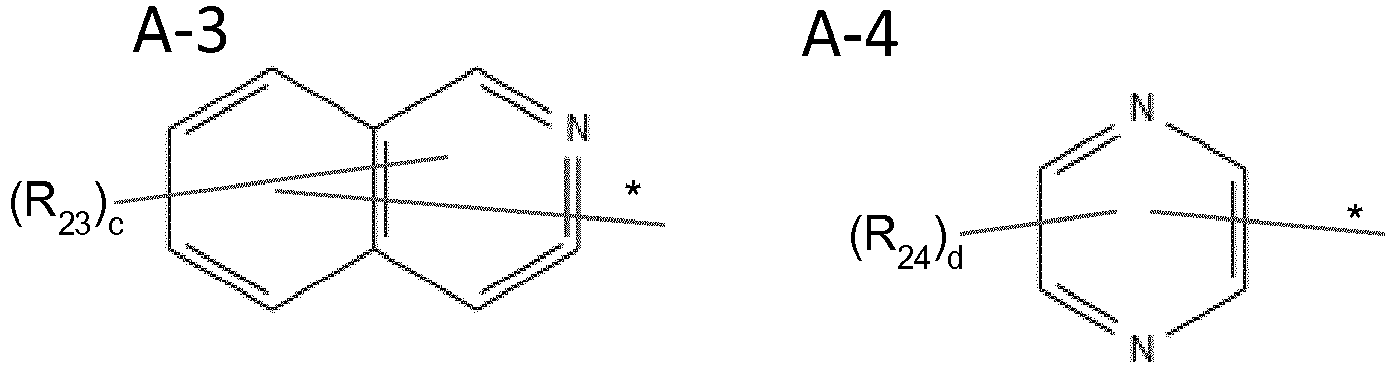


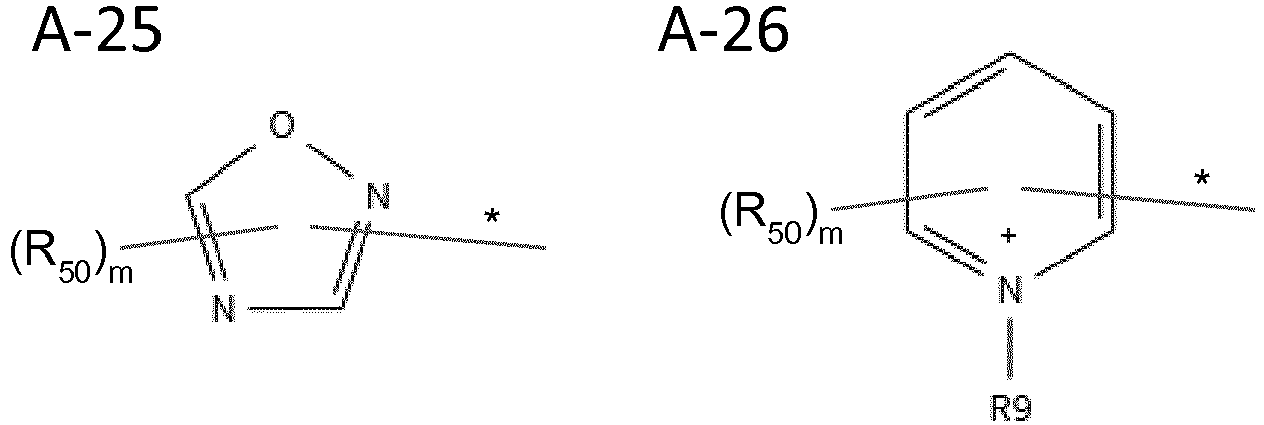
- Verbindungen nach Anspruch 1, wobei der Hy aus den Strukturen (A-1), (A-5), (A-8), (A-9), (A-10), (A-11), (A-12), (A-13), (A-14), (A-15), (A-17), (A-19), (A-22), (A-23), (A-24), (A-25) und (A-26), vorzugsweise (A-10), (A-11), (A-12), (A-14), (A-22), (A-23), (A-25) und (A-26) und insbesondere (A-10), (A-23) und (A-26) ausgewählt ist.
- Verbindungen nach Anspruch 1 und 2, wobei die Verbindungen die folgende Struktur aufweisen:


- Verbindungen nach Anspruch 1 bis 3, wobei die Verbindungen aus D-1, D-2, D-3 und D4, vorzugsweise D2 und D3, ausgewählt sind.
- Verwendung der Verbindungen nach Anspruch 1 bis 4 zum Färben von Keratinfasern, insbesondere menschlichen Haaren.
- Zusammensetzung, dadurch gekennzeichnet, dass sie eine oder mehrere der Verbindungen nach Anspruch 1 bis 4 aufweist.
- Zusammensetzung nach Anspruch 6, dadurch gekennzeichnet, dass sie ein oder mehrere Tenside aufweist, ausgewählt aus anionischen, nichtionischen, kationischen und amphoteren.
- Zusammensetzung nach Anspruch 6 oder 7, dadurch gekennzeichnet, dass sie ein oder mehrere kationische Tenside aufweist, ausgewählt aus den Verbindungen der allgemeinen Struktur

R16CONH(CH2)n,
wobei R16 für eine gesättigte oder ungesättigte, verzweigte oder lineare Alkylkette mit 7 bis 21 C-Atomen steht und n einen typischen Wert von 1 bis 4 aufweist, oder
R16COO(CH2)n,
steht, wobei R16 für eine gesättigte oder ungesättigte, verzweigte oder lineare Alkylkette mit 7 bis 21 C-Atomen steht und n einen typischen Wert von 1 bis 4 aufweist, undR13 für eine gesättigte oder ungesättigte, verzweigte oder lineare Alkylkette mit 1 bis 22 C-Atomen oder
R16CONH(CH2)n,
wobei R16 für eine gesättigte oder ungesättigte, verzweigte oder lineare Alkylkette mit 7 bis 21 C-Atomen steht und n einen typischen Wert von 1 bis 4 aufweist, oder
R16COO(CH2)n,
steht, wobei R16 für eine gesättigte oder ungesättigte, verzweigte oder lineare Alkylkette mit 7 bis 21 C-Atomen steht und n einen typischen Wert von 1 bis 4 aufweist,und R14 und R15 unabhängig voneinander für eine niedere Alkylkette mit 1 bis 4 Kohlenstoffatomen oder eine Ethoxy- oder Propoxygruppe stehen, wobei die Anzahl der Ethoxy- oder Propoxygruppen im Bereich von 0 bis 4 variiert, und X für Chlorid, Bromid oder Methosulfat steht. - Zusammensetzung nach Anspruch 6 bis 8, sie weist eine oder mehrere Haarkonditionierungsverbindungen auf, vorzugsweise ausgewählt aus kationischen Polymeren, Silikonen, Fettalkoholen und konditionierenden Ölen.
- Zusammensetzung nach Anspruch 6 bis 9, dadurch gekennzeichnet, dass sie ein oder mehrere organische Lösungsmittel aufweist.
- Zusammensetzung nach Anspruch 6 bis 10, dadurch gekennzeichnet, dass sie einen oder mehrere zusätzliche Direktfarbstoffe aufweist, vorzugsweise ausgewählt aus anionischen, kationischen und nichtionischen.
- Zusammensetzung nach Anspruch 6 bis 11, dadurch gekennzeichnet, dass sie ein oder mehrere Oxidationsmittel aufweist.
- Zusammensetzung nach Anspruch 6 bis 12, dadurch gekennzeichnet, dass sie eine oder mehrere Oxidativfarbstoff-Vorstufen und gegebenenfalls ein oder mehrere Bindemittel aufweist.
- Kit zum Färben von Keratinfasern, dadurch gekennzeichnet, dass es eine Zusammensetzung nach Anspruch 7 bis 13 aufweist.
Applications Claiming Priority (2)
| Application Number | Priority Date | Filing Date | Title |
|---|---|---|---|
| EP14199839.3A EP3037485A1 (de) | 2014-12-22 | 2014-12-22 | Direktfarbstoffe und Zusammensetzung mit den Farbstoffen |
| PCT/EP2015/079372 WO2016102207A1 (en) | 2014-12-22 | 2015-12-11 | Direct dyes and composition comprising the dyes |
Publications (2)
| Publication Number | Publication Date |
|---|---|
| EP3237547A1 EP3237547A1 (de) | 2017-11-01 |
| EP3237547B1 true EP3237547B1 (de) | 2019-03-20 |
Family
ID=52144551
Family Applications (2)
| Application Number | Title | Priority Date | Filing Date |
|---|---|---|---|
| EP14199839.3A Withdrawn EP3037485A1 (de) | 2014-12-22 | 2014-12-22 | Direktfarbstoffe und Zusammensetzung mit den Farbstoffen |
| EP15808574.6A Active EP3237547B1 (de) | 2014-12-22 | 2015-12-11 | Direktfarbstoffe und zusammensetzung mit den farbstoffen |
Family Applications Before (1)
| Application Number | Title | Priority Date | Filing Date |
|---|---|---|---|
| EP14199839.3A Withdrawn EP3037485A1 (de) | 2014-12-22 | 2014-12-22 | Direktfarbstoffe und Zusammensetzung mit den Farbstoffen |
Country Status (3)
| Country | Link |
|---|---|
| US (1) | US10196520B2 (de) |
| EP (2) | EP3037485A1 (de) |
| WO (1) | WO2016102207A1 (de) |
Families Citing this family (2)
| Publication number | Priority date | Publication date | Assignee | Title |
|---|---|---|---|---|
| DE102018127286A1 (de) * | 2018-10-31 | 2020-04-30 | Henkel Ag & Co. Kgaa | Wirkstoffzusammensetzung als Booster für UV-Filter |
| US11896709B2 (en) * | 2022-02-25 | 2024-02-13 | Godrej Consumer Products Ltd. | Natural vegetable source based hair colour |
Family Cites Families (5)
| Publication number | Priority date | Publication date | Assignee | Title |
|---|---|---|---|---|
| JPS5898142A (ja) | 1981-12-03 | 1983-06-10 | Asahi Chem Ind Co Ltd | 悪性物質吸着材 |
| JP3005821B2 (ja) * | 1991-03-20 | 2000-02-07 | コニカ株式会社 | 感熱転写記録材料及び感熱転写記録方法 |
| DE4215392A1 (de) * | 1992-05-11 | 1993-11-18 | Basf Ag | Benzisothiazol- und Benzthiophenazofarbstoffe mit einer Kupplungskomponente aus der Anilinreihe |
| EP1369105B1 (de) | 2002-05-28 | 2008-03-19 | Kao Corporation | Verwendung und Methode zur Haarfärbung |
| FR2954133B1 (fr) * | 2009-12-18 | 2012-04-27 | Oreal | Composition contenant au moins un precurseur de coloration derive de benzofuranone et/ou de benzothiophenone |
-
2014
- 2014-12-22 EP EP14199839.3A patent/EP3037485A1/de not_active Withdrawn
-
2015
- 2015-12-11 EP EP15808574.6A patent/EP3237547B1/de active Active
- 2015-12-11 US US15/538,095 patent/US10196520B2/en active Active
- 2015-12-11 WO PCT/EP2015/079372 patent/WO2016102207A1/en not_active Ceased
Non-Patent Citations (1)
| Title |
|---|
| None * |
Also Published As
| Publication number | Publication date |
|---|---|
| EP3037485A1 (de) | 2016-06-29 |
| US10196520B2 (en) | 2019-02-05 |
| WO2016102207A1 (en) | 2016-06-30 |
| EP3237547A1 (de) | 2017-11-01 |
| US20170362436A1 (en) | 2017-12-21 |
Similar Documents
| Publication | Publication Date | Title |
|---|---|---|
| US8845756B2 (en) | Oxidizing composition for hair | |
| EP2346483B1 (de) | Haarzusammensetzung und Behandlung | |
| EP1598052A1 (de) | Zusammensetzung zur Aufhellung und Färbung der Keratinfasern | |
| US20180340107A1 (en) | Process for treating hair | |
| EP2717848B1 (de) | Haarfärbezusammensetzung | |
| US20080072384A1 (en) | Hair Colouring Composition | |
| EP3237547B1 (de) | Direktfarbstoffe und zusammensetzung mit den farbstoffen | |
| EP2658507B1 (de) | Oxidative färbezusammensetzung | |
| EP2022490B1 (de) | Färbemittelzusammensetzung | |
| EP2022491B1 (de) | Färbemittelzusammensetzung | |
| EP2658506B1 (de) | Oxidierungszusammensetzung für haare | |
| EP1927340B2 (de) | Färbemittel | |
| EP1559403A1 (de) | Zusammensetzung zum färben von menschlichem haar | |
| EP2346482B1 (de) | Färbemittelzusammensetzung |
Legal Events
| Date | Code | Title | Description |
|---|---|---|---|
| STAA | Information on the status of an ep patent application or granted ep patent |
Free format text: STATUS: THE INTERNATIONAL PUBLICATION HAS BEEN MADE |
|
| PUAI | Public reference made under article 153(3) epc to a published international application that has entered the european phase |
Free format text: ORIGINAL CODE: 0009012 |
|
| STAA | Information on the status of an ep patent application or granted ep patent |
Free format text: STATUS: REQUEST FOR EXAMINATION WAS MADE |
|
| 17P | Request for examination filed |
Effective date: 20170531 |
|
| AK | Designated contracting states |
Kind code of ref document: A1 Designated state(s): AL AT BE BG CH CY CZ DE DK EE ES FI FR GB GR HR HU IE IS IT LI LT LU LV MC MK MT NL NO PL PT RO RS SE SI SK SM TR |
|
| AX | Request for extension of the european patent |
Extension state: BA ME |
|
| DAV | Request for validation of the european patent (deleted) | ||
| DAX | Request for extension of the european patent (deleted) | ||
| STAA | Information on the status of an ep patent application or granted ep patent |
Free format text: STATUS: EXAMINATION IS IN PROGRESS |
|
| 17Q | First examination report despatched |
Effective date: 20180530 |
|
| REG | Reference to a national code |
Ref country code: DE Ref legal event code: R079 Ref document number: 602015026873 Country of ref document: DE Free format text: PREVIOUS MAIN CLASS: C09B0029033000 Ipc: A61K0008410000 |
|
| GRAP | Despatch of communication of intention to grant a patent |
Free format text: ORIGINAL CODE: EPIDOSNIGR1 |
|
| STAA | Information on the status of an ep patent application or granted ep patent |
Free format text: STATUS: GRANT OF PATENT IS INTENDED |
|
| RIC1 | Information provided on ipc code assigned before grant |
Ipc: C09B 29/033 20060101ALI20180918BHEP Ipc: A61K 8/41 20060101AFI20180918BHEP Ipc: A61Q 5/06 20060101ALI20180918BHEP Ipc: C09B 29/36 20060101ALI20180918BHEP Ipc: A61K 8/49 20060101ALI20180918BHEP |
|
| INTG | Intention to grant announced |
Effective date: 20181012 |
|
| GRAS | Grant fee paid |
Free format text: ORIGINAL CODE: EPIDOSNIGR3 |
|
| GRAA | (expected) grant |
Free format text: ORIGINAL CODE: 0009210 |
|
| STAA | Information on the status of an ep patent application or granted ep patent |
Free format text: STATUS: THE PATENT HAS BEEN GRANTED |
|
| AK | Designated contracting states |
Kind code of ref document: B1 Designated state(s): AL AT BE BG CH CY CZ DE DK EE ES FI FR GB GR HR HU IE IS IT LI LT LU LV MC MK MT NL NO PL PT RO RS SE SI SK SM TR |
|
| REG | Reference to a national code |
Ref country code: GB Ref legal event code: FG4D |
|
| REG | Reference to a national code |
Ref country code: CH Ref legal event code: EP |
|
| REG | Reference to a national code |
Ref country code: DE Ref legal event code: R096 Ref document number: 602015026873 Country of ref document: DE |
|
| REG | Reference to a national code |
Ref country code: AT Ref legal event code: REF Ref document number: 1109763 Country of ref document: AT Kind code of ref document: T Effective date: 20190415 |
|
| REG | Reference to a national code |
Ref country code: IE Ref legal event code: FG4D |
|
| REG | Reference to a national code |
Ref country code: NL Ref legal event code: MP Effective date: 20190320 |
|
| PG25 | Lapsed in a contracting state [announced via postgrant information from national office to epo] |
Ref country code: SE Free format text: LAPSE BECAUSE OF FAILURE TO SUBMIT A TRANSLATION OF THE DESCRIPTION OR TO PAY THE FEE WITHIN THE PRESCRIBED TIME-LIMIT Effective date: 20190320 Ref country code: FI Free format text: LAPSE BECAUSE OF FAILURE TO SUBMIT A TRANSLATION OF THE DESCRIPTION OR TO PAY THE FEE WITHIN THE PRESCRIBED TIME-LIMIT Effective date: 20190320 Ref country code: NO Free format text: LAPSE BECAUSE OF FAILURE TO SUBMIT A TRANSLATION OF THE DESCRIPTION OR TO PAY THE FEE WITHIN THE PRESCRIBED TIME-LIMIT Effective date: 20190620 Ref country code: LT Free format text: LAPSE BECAUSE OF FAILURE TO SUBMIT A TRANSLATION OF THE DESCRIPTION OR TO PAY THE FEE WITHIN THE PRESCRIBED TIME-LIMIT Effective date: 20190320 |
|
| REG | Reference to a national code |
Ref country code: LT Ref legal event code: MG4D |
|
| PG25 | Lapsed in a contracting state [announced via postgrant information from national office to epo] |
Ref country code: BG Free format text: LAPSE BECAUSE OF FAILURE TO SUBMIT A TRANSLATION OF THE DESCRIPTION OR TO PAY THE FEE WITHIN THE PRESCRIBED TIME-LIMIT Effective date: 20190620 Ref country code: NL Free format text: LAPSE BECAUSE OF FAILURE TO SUBMIT A TRANSLATION OF THE DESCRIPTION OR TO PAY THE FEE WITHIN THE PRESCRIBED TIME-LIMIT Effective date: 20190320 Ref country code: RS Free format text: LAPSE BECAUSE OF FAILURE TO SUBMIT A TRANSLATION OF THE DESCRIPTION OR TO PAY THE FEE WITHIN THE PRESCRIBED TIME-LIMIT Effective date: 20190320 Ref country code: HR Free format text: LAPSE BECAUSE OF FAILURE TO SUBMIT A TRANSLATION OF THE DESCRIPTION OR TO PAY THE FEE WITHIN THE PRESCRIBED TIME-LIMIT Effective date: 20190320 Ref country code: GR Free format text: LAPSE BECAUSE OF FAILURE TO SUBMIT A TRANSLATION OF THE DESCRIPTION OR TO PAY THE FEE WITHIN THE PRESCRIBED TIME-LIMIT Effective date: 20190621 Ref country code: LV Free format text: LAPSE BECAUSE OF FAILURE TO SUBMIT A TRANSLATION OF THE DESCRIPTION OR TO PAY THE FEE WITHIN THE PRESCRIBED TIME-LIMIT Effective date: 20190320 |
|
| REG | Reference to a national code |
Ref country code: AT Ref legal event code: MK05 Ref document number: 1109763 Country of ref document: AT Kind code of ref document: T Effective date: 20190320 |
|
| PG25 | Lapsed in a contracting state [announced via postgrant information from national office to epo] |
Ref country code: RO Free format text: LAPSE BECAUSE OF FAILURE TO SUBMIT A TRANSLATION OF THE DESCRIPTION OR TO PAY THE FEE WITHIN THE PRESCRIBED TIME-LIMIT Effective date: 20190320 Ref country code: IT Free format text: LAPSE BECAUSE OF FAILURE TO SUBMIT A TRANSLATION OF THE DESCRIPTION OR TO PAY THE FEE WITHIN THE PRESCRIBED TIME-LIMIT Effective date: 20190320 Ref country code: CZ Free format text: LAPSE BECAUSE OF FAILURE TO SUBMIT A TRANSLATION OF THE DESCRIPTION OR TO PAY THE FEE WITHIN THE PRESCRIBED TIME-LIMIT Effective date: 20190320 Ref country code: SK Free format text: LAPSE BECAUSE OF FAILURE TO SUBMIT A TRANSLATION OF THE DESCRIPTION OR TO PAY THE FEE WITHIN THE PRESCRIBED TIME-LIMIT Effective date: 20190320 Ref country code: AL Free format text: LAPSE BECAUSE OF FAILURE TO SUBMIT A TRANSLATION OF THE DESCRIPTION OR TO PAY THE FEE WITHIN THE PRESCRIBED TIME-LIMIT Effective date: 20190320 Ref country code: EE Free format text: LAPSE BECAUSE OF FAILURE TO SUBMIT A TRANSLATION OF THE DESCRIPTION OR TO PAY THE FEE WITHIN THE PRESCRIBED TIME-LIMIT Effective date: 20190320 Ref country code: PT Free format text: LAPSE BECAUSE OF FAILURE TO SUBMIT A TRANSLATION OF THE DESCRIPTION OR TO PAY THE FEE WITHIN THE PRESCRIBED TIME-LIMIT Effective date: 20190720 Ref country code: ES Free format text: LAPSE BECAUSE OF FAILURE TO SUBMIT A TRANSLATION OF THE DESCRIPTION OR TO PAY THE FEE WITHIN THE PRESCRIBED TIME-LIMIT Effective date: 20190320 |
|
| PG25 | Lapsed in a contracting state [announced via postgrant information from national office to epo] |
Ref country code: SM Free format text: LAPSE BECAUSE OF FAILURE TO SUBMIT A TRANSLATION OF THE DESCRIPTION OR TO PAY THE FEE WITHIN THE PRESCRIBED TIME-LIMIT Effective date: 20190320 Ref country code: PL Free format text: LAPSE BECAUSE OF FAILURE TO SUBMIT A TRANSLATION OF THE DESCRIPTION OR TO PAY THE FEE WITHIN THE PRESCRIBED TIME-LIMIT Effective date: 20190320 |
|
| PG25 | Lapsed in a contracting state [announced via postgrant information from national office to epo] |
Ref country code: IS Free format text: LAPSE BECAUSE OF FAILURE TO SUBMIT A TRANSLATION OF THE DESCRIPTION OR TO PAY THE FEE WITHIN THE PRESCRIBED TIME-LIMIT Effective date: 20190720 Ref country code: AT Free format text: LAPSE BECAUSE OF FAILURE TO SUBMIT A TRANSLATION OF THE DESCRIPTION OR TO PAY THE FEE WITHIN THE PRESCRIBED TIME-LIMIT Effective date: 20190320 |
|
| REG | Reference to a national code |
Ref country code: DE Ref legal event code: R097 Ref document number: 602015026873 Country of ref document: DE |
|
| PLBE | No opposition filed within time limit |
Free format text: ORIGINAL CODE: 0009261 |
|
| STAA | Information on the status of an ep patent application or granted ep patent |
Free format text: STATUS: NO OPPOSITION FILED WITHIN TIME LIMIT |
|
| PG25 | Lapsed in a contracting state [announced via postgrant information from national office to epo] |
Ref country code: DK Free format text: LAPSE BECAUSE OF FAILURE TO SUBMIT A TRANSLATION OF THE DESCRIPTION OR TO PAY THE FEE WITHIN THE PRESCRIBED TIME-LIMIT Effective date: 20190320 |
|
| 26N | No opposition filed |
Effective date: 20200102 |
|
| PG25 | Lapsed in a contracting state [announced via postgrant information from national office to epo] |
Ref country code: SI Free format text: LAPSE BECAUSE OF FAILURE TO SUBMIT A TRANSLATION OF THE DESCRIPTION OR TO PAY THE FEE WITHIN THE PRESCRIBED TIME-LIMIT Effective date: 20190320 |
|
| PG25 | Lapsed in a contracting state [announced via postgrant information from national office to epo] |
Ref country code: TR Free format text: LAPSE BECAUSE OF FAILURE TO SUBMIT A TRANSLATION OF THE DESCRIPTION OR TO PAY THE FEE WITHIN THE PRESCRIBED TIME-LIMIT Effective date: 20190320 |
|
| PGFP | Annual fee paid to national office [announced via postgrant information from national office to epo] |
Ref country code: CH Payment date: 20200113 Year of fee payment: 5 |
|
| REG | Reference to a national code |
Ref country code: BE Ref legal event code: MM Effective date: 20191231 |
|
| PG25 | Lapsed in a contracting state [announced via postgrant information from national office to epo] |
Ref country code: MC Free format text: LAPSE BECAUSE OF FAILURE TO SUBMIT A TRANSLATION OF THE DESCRIPTION OR TO PAY THE FEE WITHIN THE PRESCRIBED TIME-LIMIT Effective date: 20190320 |
|
| PG25 | Lapsed in a contracting state [announced via postgrant information from national office to epo] |
Ref country code: LU Free format text: LAPSE BECAUSE OF NON-PAYMENT OF DUE FEES Effective date: 20191211 Ref country code: IE Free format text: LAPSE BECAUSE OF NON-PAYMENT OF DUE FEES Effective date: 20191211 |
|
| PG25 | Lapsed in a contracting state [announced via postgrant information from national office to epo] |
Ref country code: BE Free format text: LAPSE BECAUSE OF NON-PAYMENT OF DUE FEES Effective date: 20191231 |
|
| PG25 | Lapsed in a contracting state [announced via postgrant information from national office to epo] |
Ref country code: CY Free format text: LAPSE BECAUSE OF FAILURE TO SUBMIT A TRANSLATION OF THE DESCRIPTION OR TO PAY THE FEE WITHIN THE PRESCRIBED TIME-LIMIT Effective date: 20190320 |
|
| PG25 | Lapsed in a contracting state [announced via postgrant information from national office to epo] |
Ref country code: MT Free format text: LAPSE BECAUSE OF FAILURE TO SUBMIT A TRANSLATION OF THE DESCRIPTION OR TO PAY THE FEE WITHIN THE PRESCRIBED TIME-LIMIT Effective date: 20190320 Ref country code: HU Free format text: LAPSE BECAUSE OF FAILURE TO SUBMIT A TRANSLATION OF THE DESCRIPTION OR TO PAY THE FEE WITHIN THE PRESCRIBED TIME-LIMIT; INVALID AB INITIO Effective date: 20151211 |
|
| REG | Reference to a national code |
Ref country code: CH Ref legal event code: PL |
|
| PG25 | Lapsed in a contracting state [announced via postgrant information from national office to epo] |
Ref country code: LI Free format text: LAPSE BECAUSE OF NON-PAYMENT OF DUE FEES Effective date: 20201231 Ref country code: CH Free format text: LAPSE BECAUSE OF NON-PAYMENT OF DUE FEES Effective date: 20201231 |
|
| PG25 | Lapsed in a contracting state [announced via postgrant information from national office to epo] |
Ref country code: MK Free format text: LAPSE BECAUSE OF FAILURE TO SUBMIT A TRANSLATION OF THE DESCRIPTION OR TO PAY THE FEE WITHIN THE PRESCRIBED TIME-LIMIT Effective date: 20190320 |
|
| P01 | Opt-out of the competence of the unified patent court (upc) registered |
Effective date: 20230426 |
|
| PGFP | Annual fee paid to national office [announced via postgrant information from national office to epo] |
Ref country code: GB Payment date: 20251218 Year of fee payment: 11 |
|
| PGFP | Annual fee paid to national office [announced via postgrant information from national office to epo] |
Ref country code: FR Payment date: 20251218 Year of fee payment: 11 |
|
| PGFP | Annual fee paid to national office [announced via postgrant information from national office to epo] |
Ref country code: DE Payment date: 20251222 Year of fee payment: 11 |