EP3235227B1 - Replizierte datenbankverteilung für arbeitslastausgleich nach einer clusterrekonfiguration - Google Patents
Replizierte datenbankverteilung für arbeitslastausgleich nach einer clusterrekonfiguration Download PDFInfo
- Publication number
- EP3235227B1 EP3235227B1 EP15869298.8A EP15869298A EP3235227B1 EP 3235227 B1 EP3235227 B1 EP 3235227B1 EP 15869298 A EP15869298 A EP 15869298A EP 3235227 B1 EP3235227 B1 EP 3235227B1
- Authority
- EP
- European Patent Office
- Prior art keywords
- node
- partitions
- partition
- primary
- stored
- Prior art date
- Legal status (The legal status is an assumption and is not a legal conclusion. Google has not performed a legal analysis and makes no representation as to the accuracy of the status listed.)
- Active
Links
Images




Classifications
-
- G—PHYSICS
- G06—COMPUTING OR CALCULATING; COUNTING
- G06F—ELECTRIC DIGITAL DATA PROCESSING
- G06F11/00—Error detection; Error correction; Monitoring
- G06F11/07—Responding to the occurrence of a fault, e.g. fault tolerance
- G06F11/16—Error detection or correction of the data by redundancy in hardware
- G06F11/20—Error detection or correction of the data by redundancy in hardware using active fault-masking, e.g. by switching out faulty elements or by switching in spare elements
- G06F11/202—Error detection or correction of the data by redundancy in hardware using active fault-masking, e.g. by switching out faulty elements or by switching in spare elements where processing functionality is redundant
- G06F11/2023—Failover techniques
- G06F11/2033—Failover techniques switching over of hardware resources
-
- G—PHYSICS
- G06—COMPUTING OR CALCULATING; COUNTING
- G06F—ELECTRIC DIGITAL DATA PROCESSING
- G06F11/00—Error detection; Error correction; Monitoring
- G06F11/07—Responding to the occurrence of a fault, e.g. fault tolerance
- G06F11/16—Error detection or correction of the data by redundancy in hardware
- G06F11/20—Error detection or correction of the data by redundancy in hardware using active fault-masking, e.g. by switching out faulty elements or by switching in spare elements
- G06F11/202—Error detection or correction of the data by redundancy in hardware using active fault-masking, e.g. by switching out faulty elements or by switching in spare elements where processing functionality is redundant
- G06F11/2023—Failover techniques
-
- G—PHYSICS
- G06—COMPUTING OR CALCULATING; COUNTING
- G06F—ELECTRIC DIGITAL DATA PROCESSING
- G06F11/00—Error detection; Error correction; Monitoring
- G06F11/07—Responding to the occurrence of a fault, e.g. fault tolerance
- G06F11/16—Error detection or correction of the data by redundancy in hardware
- G06F11/20—Error detection or correction of the data by redundancy in hardware using active fault-masking, e.g. by switching out faulty elements or by switching in spare elements
- G06F11/202—Error detection or correction of the data by redundancy in hardware using active fault-masking, e.g. by switching out faulty elements or by switching in spare elements where processing functionality is redundant
- G06F11/2035—Error detection or correction of the data by redundancy in hardware using active fault-masking, e.g. by switching out faulty elements or by switching in spare elements where processing functionality is redundant without idle spare hardware
-
- G—PHYSICS
- G06—COMPUTING OR CALCULATING; COUNTING
- G06F—ELECTRIC DIGITAL DATA PROCESSING
- G06F11/00—Error detection; Error correction; Monitoring
- G06F11/07—Responding to the occurrence of a fault, e.g. fault tolerance
- G06F11/16—Error detection or correction of the data by redundancy in hardware
- G06F11/20—Error detection or correction of the data by redundancy in hardware using active fault-masking, e.g. by switching out faulty elements or by switching in spare elements
- G06F11/202—Error detection or correction of the data by redundancy in hardware using active fault-masking, e.g. by switching out faulty elements or by switching in spare elements where processing functionality is redundant
- G06F11/2048—Error detection or correction of the data by redundancy in hardware using active fault-masking, e.g. by switching out faulty elements or by switching in spare elements where processing functionality is redundant where the redundant components share neither address space nor persistent storage
-
- G—PHYSICS
- G06—COMPUTING OR CALCULATING; COUNTING
- G06F—ELECTRIC DIGITAL DATA PROCESSING
- G06F11/00—Error detection; Error correction; Monitoring
- G06F11/07—Responding to the occurrence of a fault, e.g. fault tolerance
- G06F11/16—Error detection or correction of the data by redundancy in hardware
- G06F11/20—Error detection or correction of the data by redundancy in hardware using active fault-masking, e.g. by switching out faulty elements or by switching in spare elements
- G06F11/2053—Error detection or correction of the data by redundancy in hardware using active fault-masking, e.g. by switching out faulty elements or by switching in spare elements where persistent mass storage functionality or persistent mass storage control functionality is redundant
- G06F11/2056—Error detection or correction of the data by redundancy in hardware using active fault-masking, e.g. by switching out faulty elements or by switching in spare elements where persistent mass storage functionality or persistent mass storage control functionality is redundant by mirroring
- G06F11/2058—Error detection or correction of the data by redundancy in hardware using active fault-masking, e.g. by switching out faulty elements or by switching in spare elements where persistent mass storage functionality or persistent mass storage control functionality is redundant by mirroring using more than 2 mirrored copies
-
- G—PHYSICS
- G06—COMPUTING OR CALCULATING; COUNTING
- G06F—ELECTRIC DIGITAL DATA PROCESSING
- G06F16/00—Information retrieval; Database structures therefor; File system structures therefor
- G06F16/20—Information retrieval; Database structures therefor; File system structures therefor of structured data, e.g. relational data
- G06F16/27—Replication, distribution or synchronisation of data between databases or within a distributed database system; Distributed database system architectures therefor
- G06F16/278—Data partitioning, e.g. horizontal or vertical partitioning
-
- G—PHYSICS
- G06—COMPUTING OR CALCULATING; COUNTING
- G06F—ELECTRIC DIGITAL DATA PROCESSING
- G06F9/00—Arrangements for program control, e.g. control units
- G06F9/06—Arrangements for program control, e.g. control units using stored programs, i.e. using an internal store of processing equipment to receive or retain programs
- G06F9/46—Multiprogramming arrangements
- G06F9/50—Allocation of resources, e.g. of the central processing unit [CPU]
- G06F9/5083—Techniques for rebalancing the load in a distributed system
-
- H—ELECTRICITY
- H04—ELECTRIC COMMUNICATION TECHNIQUE
- H04L—TRANSMISSION OF DIGITAL INFORMATION, e.g. TELEGRAPHIC COMMUNICATION
- H04L67/00—Network arrangements or protocols for supporting network services or applications
- H04L67/01—Protocols
- H04L67/10—Protocols in which an application is distributed across nodes in the network
- H04L67/1001—Protocols in which an application is distributed across nodes in the network for accessing one among a plurality of replicated servers
- H04L67/1004—Server selection for load balancing
- H04L67/1008—Server selection for load balancing based on parameters of servers, e.g. available memory or workload
-
- H—ELECTRICITY
- H04—ELECTRIC COMMUNICATION TECHNIQUE
- H04L—TRANSMISSION OF DIGITAL INFORMATION, e.g. TELEGRAPHIC COMMUNICATION
- H04L67/00—Network arrangements or protocols for supporting network services or applications
- H04L67/01—Protocols
- H04L67/10—Protocols in which an application is distributed across nodes in the network
- H04L67/1001—Protocols in which an application is distributed across nodes in the network for accessing one among a plurality of replicated servers
- H04L67/1034—Reaction to server failures by a load balancer
-
- H—ELECTRICITY
- H04—ELECTRIC COMMUNICATION TECHNIQUE
- H04L—TRANSMISSION OF DIGITAL INFORMATION, e.g. TELEGRAPHIC COMMUNICATION
- H04L67/00—Network arrangements or protocols for supporting network services or applications
- H04L67/01—Protocols
- H04L67/10—Protocols in which an application is distributed across nodes in the network
- H04L67/1095—Replication or mirroring of data, e.g. scheduling or transport for data synchronisation between network nodes
-
- H—ELECTRICITY
- H04—ELECTRIC COMMUNICATION TECHNIQUE
- H04L—TRANSMISSION OF DIGITAL INFORMATION, e.g. TELEGRAPHIC COMMUNICATION
- H04L67/00—Network arrangements or protocols for supporting network services or applications
- H04L67/01—Protocols
- H04L67/10—Protocols in which an application is distributed across nodes in the network
- H04L67/1097—Protocols in which an application is distributed across nodes in the network for distributed storage of data in networks, e.g. transport arrangements for network file system [NFS], storage area networks [SAN] or network attached storage [NAS]
-
- G—PHYSICS
- G06—COMPUTING OR CALCULATING; COUNTING
- G06F—ELECTRIC DIGITAL DATA PROCESSING
- G06F11/00—Error detection; Error correction; Monitoring
- G06F11/07—Responding to the occurrence of a fault, e.g. fault tolerance
- G06F11/16—Error detection or correction of the data by redundancy in hardware
- G06F11/20—Error detection or correction of the data by redundancy in hardware using active fault-masking, e.g. by switching out faulty elements or by switching in spare elements
- G06F11/2053—Error detection or correction of the data by redundancy in hardware using active fault-masking, e.g. by switching out faulty elements or by switching in spare elements where persistent mass storage functionality or persistent mass storage control functionality is redundant
- G06F11/2094—Redundant storage or storage space
-
- G—PHYSICS
- G06—COMPUTING OR CALCULATING; COUNTING
- G06F—ELECTRIC DIGITAL DATA PROCESSING
- G06F11/00—Error detection; Error correction; Monitoring
- G06F11/07—Responding to the occurrence of a fault, e.g. fault tolerance
- G06F11/16—Error detection or correction of the data by redundancy in hardware
- G06F11/20—Error detection or correction of the data by redundancy in hardware using active fault-masking, e.g. by switching out faulty elements or by switching in spare elements
- G06F11/2097—Error detection or correction of the data by redundancy in hardware using active fault-masking, e.g. by switching out faulty elements or by switching in spare elements maintaining the standby controller/processing unit updated
-
- G—PHYSICS
- G06—COMPUTING OR CALCULATING; COUNTING
- G06F—ELECTRIC DIGITAL DATA PROCESSING
- G06F2201/00—Indexing scheme relating to error detection, to error correction, and to monitoring
- G06F2201/805—Real-time
-
- G—PHYSICS
- G06—COMPUTING OR CALCULATING; COUNTING
- G06F—ELECTRIC DIGITAL DATA PROCESSING
- G06F2201/00—Indexing scheme relating to error detection, to error correction, and to monitoring
- G06F2201/86—Event-based monitoring
Definitions
- This description relates generally to distributed databases, and more particularly to placement of replicated partitions of a distributed relational database on networked computer nodes.
- Databases are used to store information and relations between pieces of information. Some databases are stored in a distributed file system on multiple computers connected by a network or multiple interconnected networks. Typically, the database is divided into partitions of equal, similar or dissimilar sizes and one or more partitions of informational data is stored in memory devices associated with multiple servers connected by a system of networks.
- HDFS Hadoop distributed file system
- P2P peer-to-peer
- individual database files are divided into data blocks, which are distributed to multiple computer nodes in order to maintain data redundancy and achieve workload balance.
- Some existing distributed file systems utilize a relatively high number of nodes, including thousands of nodes, which varies over time as additional nodes are dynamically added to and dropped from the cluster.
- the computing nodes in these systems typically consist of commodity hardware, such as personal computers (PCs), and may include individual user systems.
- PCs personal computers
- the existing approaches can achieve significant data redundancy and relatively high availability of data for throughput-oriented, large-scale, and loose-coupled distributed systems, such as HDFS and P2P distributed file systems.
- MPP database systems typically include fewer nodes than HDFS or P2P distributed file systems, and the number of nodes in an MPP database system generally is relatively stable compared to HDFS or P2P. Thus, at times MPP database performance is dominated by slower individual nodes in the cluster of parallel processing computers. As a result, workload balance sometimes becomes the key factor in achieving both high throughput and low latency.
- server-based distributed file systems even distribution of the data among the distributed server nodes generally can balance the workload, assuming the data on the individual nodes receives similar access to computing resources.
- a typical MPP database cluster uses a "shared-nothing" storage architecture, wherein storage hardware, such as disk drives, is not shared between individual nodes in the cluster.
- storage hardware such as disk drives
- data location information is unavailable at runtime.
- MPP database clusters increasingly utilize commodity hardware resources, such as PCs.
- PCs commodity hardware resources
- consistent hashing algorithms are often used to locate distributed and duplicated data in peer-to-peer distributed file systems.
- the output range of a hash function is treated as a fixed circular space or ring (for example, the largest hash value wraps around to the smallest hash value).
- Each system node is assigned a value within this space, representing the node's position on the ring.
- Each data item is assigned to one of the nodes in the ring by hashing the identification or key associated with the data item to yield unique position on the ring, and then "walking" or moving clockwise around the ring to find the first server with a position larger than that of the item.
- each node becomes responsible for the region of the ring between the node and its predecessor node on the ring. Then, when a node fails, the corresponding workload is forwarded to the next server on the ring. Similarly, when a new node is added to the ring the node shares only the workload of the neighboring server in the ring, resulting in an unbalanced workload. While this sort of unbalanced workload may be reasonably well tolerated in a cluster
- US 2012/0297056 relates to extensible centralized dynamic resource distribution in a clustered data grid.
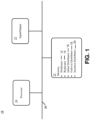
- FIG. 1 illustrates an apparatus 10 for partitioning, replicating and distributing information data associated with a database among multiple interconnected servers.
- the apparatus 10 can be implemented, for example, in one or more relational database management system coordinator nodes, data nodes, or any combination of these.
- the apparatus 10 includes an input/output device 23, a memory 22 and a processor 24, all of which are interconnected by a data link 26.
- the memory 22 contains a partitioner 12, a replicator 14, an initial distributor 16, a failover distributor 18 and an insertion distributor 20.
- Use of the apparatus 10 can result in improved workload balancing while maintaining data redundancy and providing high data availability with respect to existing file distribution systems.
- use of the apparatus 10 can result in improved workload balancing with respect to existing placement methods after an individual computer node failure or multiple node failures, or after another change in system capacity, such as the insertion of an additional node.
- the apparatus 10 can be used to significant advantage in massively parallel processing (MPP) database systems.
- MPP massively parallel processing
- the partitioner 12 may divide, or partition, information data associated with a database into various data groupings, or partitions, of equal, similar or dissimilar sizes.
- the partitioner 12 may utilize a hash function operating on a key value associated with each data item or segment of information in the database to create a unique identifier that further associates the data item or segment of information with an individual partition.
- the partitions are of relatively similar or nearly equal sizes.
- the replicator 14 may duplicate any or all of the partitions to create a backup copy, or replica, of one or more of the partitions.
- the replicator 14 may further replicate any or all of the partitions to create additional backup replicas of one or more of the partitions.
- the initial distributor 16 may effect placement of the data partitions on multiple computer nodes upon initialization of the distributed database. If a computer node fails, the failover distributor 18 may redistribute the data partitions among the surviving nodes to achieve workload balancing. Similarly, if a node is added to the cluster of computers, the insertion distributor 20 may redistribute data partitions from the existing nodes to the newly added node to maintain even workload balance.
- the input/output device 23, the memory 22 and the processor 24 may be part of a general computing device, such as a personal computer (PC), a server, or a mainframe computer.
- Peripheral components may include programming code, such as source code, object code or executable code, stored on a computer-readable medium that can be loaded into the memory 22 and executed by the processor 24 in order to perform the functions of the apparatus 10.
- the functions of the apparatus 10 can be executed on any suitable processor, such as a server, a mainframe computer, a PC, a PDA, a collection of networked servers or PCs, or the like.
- software associated with the processor may be updated.
- the apparatus 10 may be coupled to a communication network, which can include any viable combination of devices and systems capable of linking computer-based systems, such as the Internet; an intranet or extranet; a local area network (LAN); a wide area network (WAN); a direct cable connection; a private network; a public network; an Ethernet-based system; a token ring; a value-added network; a telephony-based system, including, for example, T1 or E1 devices; an Asynchronous Transfer Mode (ATM) network; a wired system; a wireless system; an optical system; a combination of any number of distributed processing networks or systems or the like.
- a communication network can include any viable combination of devices and systems capable of linking computer-based systems, such as the Internet; an intranet or extranet; a local area network (LAN); a wide area network (WAN); a direct cable connection; a private network; a public network; an Ethernet-based system; a token ring; a value-added network; a telephony-based system
- the address data collection system 10 can be coupled to the communication network by way of the local data link 26, which in various implementations can incorporate any combination of devices--as well as any associated software or firmware-configured to couple processor-based systems, such as modems, network interface cards, serial buses, parallel buses, LAN or WAN interfaces, wireless or optical interfaces and the like, along with any associated transmission protocols, as may be desired or required by the design.
- processor-based systems such as modems, network interface cards, serial buses, parallel buses, LAN or WAN interfaces, wireless or optical interfaces and the like, along with any associated transmission protocols, as may be desired or required by the design.
- An implementation of the present disclosure can communicate information to the user and request user input, for example, by way of an interactive, menu-driven, visual display-based user interface, or graphical user interface (GUI).
- GUI graphical user interface
- the user interface may be executed, for example, on a personal computer (PC) with a mouse and keyboard, with which the user may interactively input information using direct manipulation of the GUI.
- Direct manipulation can include the use of a pointing device, such as a mouse or a stylus, to select from a variety of selectable fields, including selectable menus, drop-down menus, tabs, buttons, bullets, checkboxes, text boxes, and the like.
- a pointing device such as a mouse or a stylus
- select from a variety of selectable fields including selectable menus, drop-down menus, tabs, buttons, bullets, checkboxes, text boxes, and the like.
- various implementations of the disclosure may incorporate any number of additional functional user interface schemes in place of this interface scheme, with or without the
- a database table 28 may be divided into various partitions 28 containing multiple rows 30 of fields from the database table 28, for example, by the partitioner 12 of FIG. 1 .
- the partitioner 12 may use a hash function operating on the identification number (ID) 34 associated with each of the rows 30 to create a unique identifier that further associates each of the rows 30 of the database table 28 with one of the partitions 28 in a hash bucket.
- ID identification number
- the approximately equally sized records of the database table 28 may be approximately evenly distributed among the various partitions 28 to create partitions 28 of approximately equal size.
- the partitions 28 may subsequently be placed, or distributed, among multiple nodes 28 of a computer cluster associated with the database.
- stored partitions that currently are serving the system workload at any given time, or that currently are available to serve the system workload may be designated “primary” partitions.
- Stored backup replicas that currently are not serving the workload, or that currently are not available to serve the workload may be designated “secondary" partitions.
- any individual primary partition may correspond to multiple secondary partitions, or replicas.
- partitions may be distributed to computer nodes under one of three conditions: 1) upon initialization of the database, 2) after the failure of one or more nodes, or 3) upon insertion of an additional node or nodes into the cluster.
- the partition placement, or distribution, algorithm distributes the partitions among the nodes in a manner that balances the workload among the nodes and provides a high level of data availability.
- both the primary partitions and the secondary partitions are approximately evenly distributed among the computer nodes. Even distribution of the primary partitions generally facilitates workload balancing, while even distribution of the secondary partitions facilitates workload balancing during a failover condition after one or more nodes has failed.
- the placement algorithm In order to promote workload balance and provide k-safe data availability (ability to tolerate k simultaneous node failures, based on k secondary partitions corresponding to each primary partition), the placement algorithm generally complies with the following four criteria:
- the first criterion generally avoids or minimizes data loss upon the failure of one or more nodes.
- the second and third criteria generally facilitate workload balancing.
- the fourth criterion promote workload balancing during a failover condition after the failure of one or more nodes.
- diversity refers to the extent to which the primary partitions corresponding to the secondary partitions on a particular node are evenly distributed among other nodes.
- the initial distributor 16 may store, or place, each of the partitions in one of the multiple computer nodes associated with the database according to the partition placement algorithm described in this disclosure. Subsequent queries requiring access to database records may be forwarded to the node where the partition containing the record has been stored.
- a table 40 depicts the placement of primary partitions 42 and secondary partitions 44 among the nodes 46 of a cluster of servers associated with a database. Records from a database table have been grouped into thirty-two partitions, numbered 1 through 32. Primary copies and secondary replicas of each of the partitions are distributed among a cluster of eight computer nodes, designated N1 through N8. In order to achieve workload balancing, each of the nodes 46 is assigned four primary partitions 42 and four secondary partitions 44.
- node N1 is assigned the four primary partitions numbered 1, 9, 17 and 25;
- node N2 is assigned the four primary partitions numbered 2, 10, 18 and 26;
- node N3 is assigned the four primary partitions numbered 3, 11, 19 and 27;
- node N4 is assigned the four primary partitions numbered 4, 12, 20 and 28;
- node N5 is assigned the four primary partitions numbered 5, 13, 21 and 29;
- node N6 is assigned the four primary partitions numbered 6, 14, 22 and 30;
- node N7 is assigned the four primary partitions numbered 7, 15, 23 and 31; and
- node N8 is assigned the four primary partitions numbered 8, 16, 24 and 32.
- the secondary partitions 44 are evenly distributed among the nodes 46 using a modified round-robin placement algorithm.
- Each of the secondary partitions 44 is assigned to a node other than the node where the corresponding primary partition is stored.
- the secondary partition corresponding to primary partition 1 stored on node N1 is stored on node N5.
- each of the secondary partitions 44 corresponding to the primary partitions 42 stored on an individual node preferably are stored on separate nodes 40.
- the secondary partitions corresponding to primary partitions 1, 9, 17 and 25 stored on node N1 are stored on four separate nodes: N5, N6, N7 and N8.
- secondary partitions 44 preferably are placed such that each of the primary partitions 42 corresponding to the secondary partitions 44 stored on an individual node are stored on separate nodes 46.
- the primary partitions 42 corresponding to secondary partitions 5, 12, 19 and 26 stored on N1 are stored on four separate nodes: N5, N4, N3 and N2.
- This placement algorithm generally ensures that at least of one of each corresponding pair of primary and secondary partitions 42, 44 remains on a surviving node after one node failure. If additional partition replicas are stored in compliance with the same criteria with respect to the corresponding primary partition and each of the corresponding secondary partitions, then the system can tolerate as many simultaneous node failures as the number of stored replicas of secondary partitions. Thus, if two secondary partition replicas are stored, the system can tolerate two simultaneous node failures with loss of data. That is to say, storage of k secondary partition replicas provides k-safe data availability.
- the redistribution procedure may potentially consume very significant network and storage bandwidth, which can temporarily affect query performance.
- minimizing the number of partitions in redistribution should be as important as workload balancing.
- the minimal number of partitions to be redistributed in order to restore data redundancy generally equals the total number of partitions that were stored in the failed or disconnected node.
- the primary partitions stored on the failed or disconnected node can no longer serve workload requests. For this reason, secondary partitions stored on other currently functioning nodes corresponding to the primary partitions stored on the failed or disconnected node are upgraded to primary status in response to detection of the node failure. This condition is referred to as failover.
- Subsequent requests for primary partitions corresponding to the failed node are forwarded to the nodes where the corresponding secondary partitions are stored.
- New replicas are created of the secondary partitions that have been promoted to primary status in order to restore data redundancy after failover.
- the workload remains properly balanced during a failover condition, because the affected secondary partitions are evenly distributed across the remaining nodes during redistribution.
- the placement algorithm described in this disclosure generally balances the workload in a failover condition after a node failure, when secondary partitions are upgraded to primary status and placed in surviving nodes.
- the redistribution workload should be evenly shared by all nodes.
- the placement algorithm described in this disclosure minimizes the number of partitions in redistribution, and achieves workload balancing both during and after redistribution while maintaining the level of data redundancy.
- a table 50 depicts the placement of primary partitions 52 and secondary partitions 54 among the nodes 56 of a cluster of servers associated with a database. Primary copies and secondary replicas of the thirty-two partitions from the configuration of FIG. 3 have been redistributed among the remaining seven computer nodes 56, designated N1 through N7, after node N8 of FIG. 3 has failed or left the cluster. In order to achieve workload balancing, each node 56 is assigned four or five primary partitions 52 and four or five secondary partitions 54.
- nodes N1, N2 and N3 continue to store the same four primary partitions each as in the configuration of FIG.
- node N1 continues to store the four primary partitions numbered 1, 9, 17 and 25; node N2 continues to store the four primary partitions numbered 2, 10, 18 and 26; node N3 continues to store the four primary partitions numbered 3, 11, 19 and 27; node N4 is assigned the five primary partitions numbered 4, 8, 12, 20 and 28; node N5 is assigned the five primary partitions numbered 5, 13, 16, 21 and 29; node N6 is assigned the five primary partitions numbered 6, 14, 22, 24 and 30; node N7 is assigned the four primary partitions numbered 7, 15, 23, 31 and 32.
- Node N8 is no longer included in the cluster and does not currently store any partitions, while queries directed to partitions numbered 8, 16, 24 and 32 are redirected, or failed over, from node N8 to nodes N4, N5, N6 and N7, respectively. As soon as the four partitions numbered 8, 16, 24 and 32 have been upgraded to primary status, all of the database data continue to be available to database users.
- each secondary partition preferably is assigned to a node other than the node where the corresponding primary partition is stored.
- the secondary partition corresponding to primary partition 8 now stored on node N4 is stored on node N6.
- the secondary partition numbered 8 preferably may not be placed on node N4, because the corresponding primary partition numbered 8 is located on node N4.
- each of the secondary partitions corresponding to the primary partitions stored on an individual node preferably are stored on separate nodes.
- the secondary partitions corresponding to primary partitions 4, 8, 12, 20 and 28 stored on node N4 are stored on five separate nodes: N5, N6, N1, N2 and N3, respectively.
- secondary partitions preferably are placed such that each of the primary partitions corresponding to the secondary partitions stored on an individual node are stored on separate nodes.
- the primary partitions corresponding to secondary partitions 3, 10, 16 and 17 stored on N7 are stored on four separate nodes: N3, N2, N5 and N1, respectively.
- the redistribution is primarily driven by enforcement of the fourth criterion regarding the placement algorithm, that is, to maximize diversity, or the extent to which the primary partitions corresponding to the secondary partitions on a particular node are evenly distributed among other nodes.
- the fourth criterion regarding the placement algorithm that is, to maximize diversity, or the extent to which the primary partitions corresponding to the secondary partitions on a particular node are evenly distributed among other nodes.
- the first node encountered with regard to which diversity exists may be chosen for placement of the secondary partition being considered.
- the newly created secondary partition numbered 8 is placed on node N6 since diversity exists with respect to that secondary partition on N6.
- This secondary partition preferably may not be placed on node N1, because diversity does not exist with respect to this secondary partition on node N1, since the secondary partition numbered 12 located on node N1 corresponds to a primary partition on node N4, where the primary partition numbered 8 is placed.
- the secondary partition numbered 8 preferably may not be placed on nodes N2, N3, or N5, because diversity does not exist with respect to this secondary partition on these nodes, since the secondary partitions numbered 20, 28 and 4 located on nodes N2, N3 and N5, respectively, correspond to primary partitions on node N4.
- This approach represents a greedy algorithm, since the placement of an individual secondary partition is solely based on diversity with respect to that secondary partition. Thus, the result may not be global optimal.
- an additional criteria may be applied regarding the partition placement algorithm based on the number of partitions transferred to or from an individual node during the redistribution, referred to as the degree of the node.
- an array may be created representing the current degree value associated with each of the nodes in a database cluster.
- the array may be modified to reflect each movement, or transfer, of partitions to or from each node in the cluster.
- the degree array records the number of partition transfers from the perspective of each node.
- each partition placement affects two nodes: that is, one node sends the partition and another node receives the partition.
- a total of eight partitions are sent and eight partitions are received. From the perspective of the individual nodes there are a total of sixteen send and receive operations, each of which results in the incrementation of the degree value associated with the affected node.
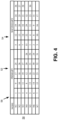
- an exemplary degree array 60 is illustrated over time 62 (progressing vertically) during the redistribution placement in this example. Initially, all the nodes have zero degree. Then, as the redistribution ensues, the degree array element corresponding to each affected node is incremented each time the node is selected for placement of a secondary partition, as is the element corresponding to the node where the replicated partition is located.
- data partitions When an additional server node is connected to the network, becomes newly associated with the cluster or the capacity of the cluster otherwise changes, data partitions generally require redistribution in order to restore workload balance among the current cluster of computer nodes.
- the minimal number of partitions to be redistributed in order to restore data redundancy can be calculated based on the total number of primary and secondary partitions and the number of nodes in the cluster.
- the minimum number of primary partitions to be transferred to the newly added node may be calculated as the truncated average number of primary partitions per node, and the same number of secondary partitions may also be transferred to the newly added node.
- the minimum total number of partitions to be transferred to the newly added node may be calculated as the truncated average total number of partitions per node, and these may be essentially evenly divided between primary and secondary partitions.
- the specific primary partitions and secondary partitions to be moved to the newly inserted node may preferably be determined using the diversity of each partition in the original distribution before the insertion of the additional node.
- diversity is considered to be the same as that of the corresponding secondary partition, or equivalently, the diversity of the corresponding secondary partition is used for corresponding primary partition, as well.
- the disclosed approach, or placement algorithm builds an array representing the diversity of each partition. Priority is given to partitions that lack diversity, or have diversity equal to zero, for transfer to the newly added node in order to increase the diversity of those partitions.
- a table 70 depicts the placement of primary partitions 72 and secondary partitions 74 among the nodes 76 of a cluster of servers associated with a database.
- Primary copies and secondary replicas of the thirty-two partitions from the configuration shown in FIG. 3 have been redistributed among the current nine computer nodes 76, designated N1 through N9, after node N9 has been added to the cluster.
- each node is assigned three or four primary partitions and three or four secondary partitions. The minimal number of six partitions, three primary and three secondary, are placed on node N9.
- the minimum number of three primary partitions are transferred to the newly added node N9 and the primary partitions are essentially evenly distributed among all the current cluster nodes using a modified round-robin placement algorithm.
- the last, or highest numbered, primary partition from each of the first three nodes from the configuration shown in FIG. 3 the primary partition numbered 25 from node N1, the primary partition numbered 26 from node N2 and the primary partition numbered 27 from node N3, are transferred to the newly added node N9 to populate the minimum number of primary partitions on the newly added server.
- the last, or highest numbered, secondary partition from each of the subsequent three nodes from the configuration shown in FIG. 3 the secondary partition numbered 29 from node N4, the secondary partition numbered 30 from node N5 and the secondary partition numbered 31 from node N6, are transferred to the newly added node N9 to populate the minimum number of secondary partitions on the newly added server.
- nodes N4, N5, N6 and N7 continue to store the same four primary partitions each as in the configuration of FIG. 3 before node N9 was added to the cluster, while after the redistribution nodes N1, N2, N3 and N8 each store three primary partitions: node N1 is assigned the three primary partitions numbered 1, 9 and 17; node N2 is assigned the three primary partitions numbered 2, 10 and 18; node N3 is assigned the three primary partitions numbered 3, 11 and 19; node N4 continues to store the four primary partitions numbered 4, 12, 20 and 28; node N5 continues to store the four primary partitions numbered 5, 13, 21 and 29; node N6 continues to store the four primary partitions numbered 6, 14, 22 and 30; node N7 continues to store the four primary partitions numbered 7, 15, 23 and 31; node N8 continues to store the four primary partitions numbered 8, 16, 24 and 32. Newly added node N9 is assigned the three primary partitions numbered 25, 26 and 27.
- each placement complies with the applicable criteria regarding the placement algorithm described in this disclosure.
- each of the primary partitions, numbered 25, 26 and 27, assigned to the newly added node N9 is distinct from each of the secondary partitions, numbered 39, 30 and 31, assigned to the newly added node N9.
- each of the nodes, N1 through N9 stores three or four primary partitions along with three or four secondary partitions.
- each of the primary partitions corresponding to the secondary partitions, numbered 29, 30 and 31, stored on the newly added node N9 are stored on separate nodes, N5, N6 and N7, respectively, which maintains diversity with regard to each of the secondary partitions.
- a process flow is illustrated that may be used by the apparatus 10 of FIG. 1 upon initialization of a database to implement the partition placement algorithm described in this disclosure.
- the process begins at block 70, "start partition placement.”
- a node number variable for example, "N” is set equal to the number of nodes in a cluster of servers associated with a database
- a partition number variable for example, "M” is set equal to the number of data partitions created from records in the database
- a primary/secondary variable for example, "IsPrimary--true” is set indicating that the partition currently under consideration is a primary partition.
- two counting variables the first indicating the node number currently under consideration (for example, "i") and the second indicating the partition number currently under consideration (for example, "/", are set equal to the value "1.”
- the primary/secondary variable is set indicting that the partition currently under consideration is not a primary partition, but rather, is a secondary partition, and the process continues at block 74, as explained above.
- the determination in block 82 is that the partition number currently under consideration is less than or equal to the number of partitions previously set in block 72, then in block 86 a further determination is made regarding whether or not the partition currently under consideration is a primary partition. If not, but instead, the partition currently under consideration is a secondary partition, then in block 88 an analysis is performed to determine whether or not the corresponding primary partition containing the same data is stored on the node currently under consideration. If not, but rather, the corresponding primary partition is stored on another node, then in block 90 an analysis is performed regarding the diversity with respect to the other secondary partitions stored on the node currently under consideration.
- Diversity refers to the extent to which the primary partitions that correspond to the secondary partitions on a particular node are stored on separate nodes. Complete, or maximum, diversity means that each of the primary partitions corresponding to the secondary partitions on a particular node are stored on separate individual nodes in the cluster. That is to say, no two primary partitions corresponding to the secondary partitions stored on a particular node are stored on any individual node in the cluster.
- This approach is a greedy algorithm, in that it determines the placement of a particular secondary partition based solely on the diversity of that particular partition. Thus, the result may not be globally optimal.
- the analysis performed at block 90 may, for example, further determine that diversity exists when no two primary partitions corresponding to secondary partitions on the node under consideration are stored on any individual node in the cluster.
- FIG. 8 a process flow is illustrated that may be used by the apparatus 10 of FIG. 1 after a node in a database cluster fails or becomes disconnected from the network in order to implement the partition placement algorithm described in this disclosure.
- the secondary partitions that correspond to the primary partitions that previously were stored on the failed or disconnected node should be upgraded to primary status on the same nodes where those secondary partitions are stored.
- the following procedure then is performed with regard to each of the newly upgraded primary partitions as well as with regard to each of the secondary partitions that previously were stored on the failed or disconnected node upon replication of these partitions.
- the secondary partition placement procedure begins at block 100, "start failover redistribution.”
- block 102 two counting variables, the first indicating the node number currently under consideration (for example, "i") and the second indicating the partition number currently under consideration (for example, "/”), are set equal to the value "1.”
- an analysis is performed to determine whether or not the corresponding primary partition containing the same data as the secondary node currently under consideration is stored on the node currently under consideration. If not, but rather, the corresponding primary partition is stored on another node, then in block 106 an analysis is performed regarding the diversity with respect to the other secondary partitions stored on the node currently under consideration as described above in association with block 90.
- an analysis is performed regarding the current degree associated with the node currently under consideration, as described above.
- the degree analysis may, for example, determine that the node is eligible for partition placement if the current value for its degree is less than a maximum acceptable value. If the analysis in block 108 determines that the degree of the node under consideration has not reached the maximum acceptable degree, then in block 110 the secondary partition under consideration is placed on the node under consideration. In block 112, the node number and partition number counting variables are augmented by an incremental value of one in block 114 and the procedure continues with the next replicated partition at block 104.
- the analysis in block 104 determines the corresponding primary partition is stored on the same node, or if diversity is determined to not exist in block 106, or if the degree of the node under consideration is determined to have reached the maximum acceptable value in block 108, then the node number counting variable (i) is augmented by an incremental value of one in block 112 and the procedure continues by considering placement of the secondary partition on the next node at block 104.
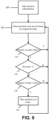
- FIG. 9 a process flow is illustrated that may be used by the apparatus 10 of FIG. 1 after an additional node has been inserted into a database cluster in order to implement the partition placement algorithm described in this disclosure.
- the following procedure is performed with regard to the minimum number of primary partitions to be transferred to the newly added node, as well as with regard to the minimum number of secondary partitions to be transferred to the newly added node.
- the process begins at block 120, "start insertion redistribution.”
- a secondary partition, "j” is selected to be moved to the newly added node, "i,” based on a lack of diversity with regard to the secondary partition in its original or current location.
- the specific primary partitions and secondary partitions to be moved to the newly inserted node may preferably be determined using the diversity of each node in the original distribution before the insertion of the additional node.
- diversity is considered to be the same as that of the corresponding secondary partition, or equivalently, the diversity of the corresponding secondary partition is used for corresponding primary partition, as well.
- an array may be created representing the diversity of each node, and priority may be given to partitions of nodes that lack diversity, or have diversity equal to zero, for transfer to the newly added node in order to increase the diversity of those nodes.
- a round-robin algorithm (not shown in FIG. 9 ) may be used to determine primary and secondary partitions for placement on the newly added node.
- a primary partition being considered for transfer to the newly added node a determination is made regarding whether or not the corresponding secondary partition containing the same data as the primary node currently under consideration is stored on the newly added node.
- an analysis is performed regarding whether or not diversity exists with regard to the selected partition and other partitions stored on the newly added node. If the analysis in block 126 determines that diversity exists with regard to the partition currently under consideration, then in block 128 an analysis is performed regarding the current degree associated with the newly added node, as described above. The degree analysis may, for example, determine that the newly added node is eligible for partition placement if the current value for its degree is less than a maximum acceptable value.
- the partition under consideration is placed on the newly added node, and the procedure continues by selecting another primary or secondary partition to be considered for transfer to the newly added node at block 122. Otherwise, if the analysis in block 124 determines the corresponding primary or secondary partition is stored on the newly added node, or if diversity is determined to not exist in block 126, or if the degree of the newly added node is determined to have reached the maximum acceptable value in block 128, then the procedure continues by selecting another primary or secondary partition to be considered for transfer to the newly added node at block 122.
- each block in the flowchart or block diagrams may correspond to a module, segment, or portion of code that including one or more executable instructions for implementing the specified logical function(s). It should also be noted that, in some alternative implementations, the functionality associated with any block may occur out of the order noted in the figures. For example, two blocks shown in succession may, in fact, be executed substantially concurrently, or blocks may sometimes be executed in reverse order.
- aspects of this disclosure may be embodied as a device, system, method or computer program product. Accordingly, aspects of this disclosure, generally referred to herein as circuits, modules, components or systems, may be embodied in hardware, in software (including firmware, resident software, micro-code, etc.), or in any combination of software and hardware, including computer program products embodied in a computer-readable medium having computer-readable program code embodied thereon.
- any combination of one or more computer readable media may be utilized, including, but not limited to, an electronic, magnetic, optical, electromagnetic, infrared, or semiconductor system, apparatus, or device, or any suitable combination of these. More specific examples of computer readable storage media would include the following non-exhaustive list: a portable computer diskette, a hard disk, a random access memory (RAM), a read-only memory (ROM), an erasable programmable read-only memory (EPROM), a Flash memory, a portable compact disc read-only memory (CD-ROM), an optical storage device, network-attached storage (NAS), a storage area network (SAN), magnetic tape, or any suitable combination of these.
- a computer readable storage medium may include any tangible medium that is capable of containing or storing program instructions for use by or in connection with a data processing system, apparatus, or device.
- Computer program code for carrying out operations regarding aspects of this disclosure may be written in any combination of one or more programming languages, including object oriented programming languages such as Java, Smalltalk, C++, or the like, as well as conventional procedural programming languages, such as the "C,” FORTRAN, COBOL, Pascal, or the like.
- the program code may execute entirely on an individual personal computer, as a stand-alone software package, partly on a client computer and partly on a remote server computer, entirely on a remote server or computer, or on a cluster of distributed computer nodes.
- a remote computer, server or cluster of distributed computer nodes may be connected to an individual (user) computer through any type of network, including a local area network (LAN), a wide area network (WAN), an Internet access point, or any combination of these.
- LAN local area network
- WAN wide area network
- Internet access point or any combination of these.
- a device is used for distributing a plurality of data partitions among a cluster of computer nodes.
- the device includes a division module dividing a database into a plurality of primary partitions, a primary storage module storing the primary partitions on a plurality of nodes associated with a computer network, wherein the primary partitions are substantially evenly distributed among the nodes and the primary partitions are available to serve a system workload, a duplication module duplicating the primary partitions to create a plurality of secondary partitions, and a secondary storage module storing the secondary partitions on the nodes, wherein the secondary partitions are substantially evenly distributed among the nodes, each secondary partition is stored on a different node than its corresponding primary partition, diversity exists with respect to each secondary partition and the node where it is stored, and one or more secondary partitions corresponding to one or more primary partitions of a failed node are available to be upgraded to primary status to maintain workload balancing and data availability after one of the computer nodes fails.
- the device may include other or
Landscapes
- Engineering & Computer Science (AREA)
- Theoretical Computer Science (AREA)
- General Engineering & Computer Science (AREA)
- General Physics & Mathematics (AREA)
- Physics & Mathematics (AREA)
- Quality & Reliability (AREA)
- Signal Processing (AREA)
- Computer Networks & Wireless Communication (AREA)
- Software Systems (AREA)
- Databases & Information Systems (AREA)
- Computing Systems (AREA)
- Data Mining & Analysis (AREA)
- Computer Hardware Design (AREA)
- Information Retrieval, Db Structures And Fs Structures Therefor (AREA)
- Hardware Redundancy (AREA)
Claims (9)
- Verfahren zum Verteilen einer Vielzahl von Datenpartitionen auf ein Cluster von Knoten in einem Computernetzwerk, umfassend:Aufteilen einer Datenbank in eine Vielzahl von primären Partitionen;Speichern der primären Partitionen auf dem Cluster von Knoten, wobei die primären Partitionen basierend auf einem Round-Robin-Platzierungsalgorithmus auf die Knoten verteilt werden, wobei die primären Partitionen dazu konfiguriert sind, eine Systemarbeitslast zu bedienen;Duplizieren der primären Partitionen, um eine Vielzahl von entsprechenden sekundären Partitionen zu erstellen; undSpeichern der sekundären Partitionen auf dem Cluster von Knoten, wobei die sekundären Partitionen basierend auf einem modifizierten Round-Robin-Algorithmus auf die Knoten verteilt werden;wobei der modifizierte Round-Robin-Algorithmus erfordert, dass ein Knoten, der zum Speichern einer zu speichernden sekundären Partition ausgewählt wird, ein anderer ist als ein Knoten, der eine entsprechende primäre Partition speichert, und Diversität in Bezug auf andere sekundäre Partitionen besteht, die in dem Knoten gespeichert sind, der zum Speichern der zu speichernden sekundären Partition ausgewählt wird, und wobei Diversität in dem Fall besteht, dass keine primäre Partition, die einer sekundären Partition entspricht, die auf dem Knoten gespeichert ist, der zum Speichern der zu speichernden sekundären Partition ausgewählt wurde, auf dem gleichen Knoten gespeichert ist wie die primäre Partition der zu speichernden sekundären Partition, wobei andernfalls keine Diversität besteht;wobei das Verfahren ferner Folgendes umfasst:als Reaktion auf eine Erkennung eines Knotenausfalls Hochstufen einer oder mehrerer sekundärer Partitionen, die einer oder mehreren primären Partitionen entsprechen, die zuvor auf dem ausgefallenen oder getrennten Knoten gespeichert waren, auf den primären Status auf den gleichen Knoten, auf denen diese sekundären Partitionen gespeichert sind; Replizieren jeder der neu hochgestuften primären Partitionen sowie jeder der sekundären Partitionen, die zuvor auf dem ausgefallenen oder getrennten Knoten gespeichert waren; und Neuverteilen der replizierten Partitionen gemäß dem modifizierten Round-Robin-Algorithmus;wobei das Neuverteilen der replizierten Partitionen als Reaktion auf eine Erkennung eines Knotenausfalls iterativ in Bezug auf jede der neu hochgestuften primären Partitionen sowie in Bezug auf jede der sekundären Partitionen durchgeführt wird, die zuvor auf dem ausgefallenen oder getrennten Knoten gespeichert waren.
- Verfahren nach Anspruch 1, wobei während einer anfänglichen Verteilung einer ersten sekundären Partition, die eine Replik einer ersten primären Partition ist, das Verfahren insbesondere Folgendes umfasst:Bestimmen, ob in Bezug auf die erste sekundäre Partition und einen ersten Knoten, der zum Speichern der ersten sekundären Partition in Betracht gezogen wird, Diversität besteht oder nicht;wobei ein Bestimmen, ob Diversität in Bezug auf die erste sekundäre Partition und den ersten Knoten besteht oder nicht, ein Bestimmen umfasst, ob die erste primäre Partition, die der ersten sekundären Partition entspricht, und eine zweite primäre Partition, die einer zweiten sekundären Partition entspricht, die auf dem ersten Knoten gespeichert wurde, beide auf einem gleichen Knoten gespeichert wurden oder nicht, wobei, wenn die erste sekundäre Partition und die zweite primäre Partition nicht auf einem gleichen Knoten gespeichert sind, Diversität besteht und, wenn die erste sekundäre Partition und die zweite primäre Partition auf einem gleichen Knoten gespeichert sind, keine Diversität besteht.
- Verfahren nach Anspruch 1, wobei das Verfahren während einer Neuverteilung von mindestens einer der Datenpartitionen als Reaktion auf eine Erkennung eines Knotenausfalls ferner Folgendes umfasst:Verifizieren einer Anzahl von Übertragungen von Datenpartitionen zu und von einem ersten Knoten während einer Neuverteilung von mindestens einer der Datenpartitionen; undein Speichern einer ersten sekundären Partition auf dem ersten Knoten ferner mindestens teilweise auf der Anzahl von Übertragungen basiert, die bei oder unter einem vorgegebenen Grenzwert verbleiben.
- Verfahren nach Anspruch 1, wobei das Verfahren während einer Neuverteilung von mindestens einer der Datenpartitionen als Reaktion auf eine Hinzufügung eines ersten Knotens zu dem Cluster ferner Folgendes umfasst:
Bestimmen, ob Diversität in Bezug auf eine erste sekundäre Partition, die auf einem zweiten Knoten gespeichert ist, besteht, wobei die erste sekundäre Partition ausgewählt wird, um von dem zweiten Knoten zu einem ersten Knoten bewegt zu werden, basierend darauf, dass in Bezug auf die erste sekundäre Partition und den zweiten Knoten keine Diversität besteht. - Vorrichtung zum Verteilen einer Vielzahl von Datenpartitionen auf ein Cluster von Knoten in einem Computernetzwerk, umfassend:einen Partitionierer (12), der dazu konfiguriert ist, eine Datenbank in eine Vielzahl von primären Partitionen aufzuteilen;einen Replikator (14), der dazu konfiguriert ist, die primären Partitionen zu duplizieren, um eine Vielzahl entsprechender sekundärer Partitionen zu erstellen; undeinen Anfangsverteiler (16), der zu Folgendem konfiguriert ist:Speichern der primären Partitionen auf dem Cluster von Knoten, wobei die primären Partitionen basierend auf einem Round-Robin-Platzierungsalgorithmus auf die Knoten verteilt werden, wobei die primären Partitionen dazu konfiguriert sind, eine Systemarbeitslast zu bedienen;Speichern der sekundären Partitionen auf dem Cluster von Knoten, wobei die sekundären Partitionen basierend auf einem modifizierten Round-Robin-Algorithmus auf die Knoten verteilt werden;wobei der modifizierte Round-Robin-Algorithmus erfordert, dass ein Knoten, der zum Speichern einer zu speichernden sekundären Partition ausgewählt wird, ein anderer ist als ein Knoten, der eine entsprechende primäre Partition speichert, und Diversität in Bezug auf andere sekundäre Partitionen besteht, die in dem Knoten gespeichert sind, der zum Speichern der zu speichernden sekundären Partition ausgewählt wird, und wobei Diversität in dem Fall besteht, dass keine primäre Partition, die einer sekundären Partition entspricht, die auf dem Knoten gespeichert ist, der zum Speichern der zu speichernden sekundären Partition ausgewählt wurde, auf dem gleichen Knoten gespeichert ist wie die primäre Partition der zu speichernden sekundären Partition, wobei andernfalls keine Diversität besteht;wobei die Vorrichtung ferner einen Failover-Verteiler (18) umfasst, der zu Folgendem konfiguriert ist:als Reaktion auf eine Erkennung eines Knotenausfalls Hochstufen einer oder mehrerer sekundärer Partitionen, die einer oder mehreren primären Partitionen entsprechen, die zuvor auf dem ausgefallenen oder getrennten Knoten gespeichert waren, auf den primären Status auf den gleichen Knoten, auf denen diese sekundären Partitionen gespeichert sind; Replizieren jeder der neu hochgestuften primären Partitionen sowie jeder der sekundären Partitionen, die zuvor auf dem ausgefallenen oder getrennten Knoten gespeichert waren; und Neuverteilen der replizierten Partitionen gemäß dem modifizierten Round-Robin-Algorithmus;wobei der Failover-Verteiler (18) insbesondere dazu konfiguriert ist, eine Neuverteilung der replizierten Partitionen als Reaktion auf eine Erkennung eines Knotenausfalls iterativ in Bezug auf jede der neu hochgestuften primären Partitionen sowie in Bezug auf jede der sekundären Partitionen durchzuführen, die zuvor auf dem ausgefallenen oder getrennten Knoten gespeichert waren.
- Vorrichtung nach Anspruch 5, wobei der Anfangsverteiler insbesondere zu Folgendem konfiguriert ist:während einer anfänglichen Verteilung einer ersten sekundären Partition, die eine Replik einer ersten primären Partition ist, Bestimmen, ob in Bezug auf die erste sekundäre Partition und einen ersten Knoten, der zum Speichern der ersten sekundären Partition in Betracht gezogen wird, Diversität besteht oder nicht;wobei der Anfangsverteiler insbesondere konfiguriert ist zum Bestimmen, ob die erste primäre Partition, die der ersten sekundären Partition entspricht, und eine zweite primäre Partition, die einer zweiten sekundären Partition entspricht, die auf dem ersten Knoten gespeichert wurde, beide auf einem gleichen Knoten gespeichert wurden oder nicht, wobei, wenn die erste sekundäre Partition und die zweite primäre Partition nicht auf einem gleichen Knoten gespeichert sind, Diversität besteht und, wenn die erste sekundäre Partition und die zweite primäre Partition auf einem gleichen Knoten gespeichert sind, keine Diversität besteht.
- Vorrichtung nach Anspruch 5, ferner einen Failover-Verteiler (18) umfassend, der zu Folgendem konfiguriert ist:während einer Neuverteilung von mindestens einer der Datenpartitionen als Reaktion auf eine Erkennung eines Knotenausfalls,Verifizieren einer Anzahl von Übertragungen von Datenpartitionen zu und von einem ersten Knoten während einer Neuverteilung von mindestens einer der Datenpartitionen; undSpeichern einer ersten sekundären Partition auf dem ersten Knoten ferner mindestens teilweise auf der Anzahl von Übertragungen basiert, die bei oder unter einem vorgegebenen Grenzwert verbleiben.
- Vorrichtung nach Anspruch 5, ferner einen Einfügungsverteiler (20) umfassend, der zu Folgendem konfiguriert ist:während einer Neuverteilung von mindestens einer der Datenpartitionen als Reaktion auf eine Hinzufügung eines ersten Knotens zu dem Cluster,Bestimmen, ob Diversität in Bezug auf eine erste sekundäre Partition, die auf einem zweiten Knoten gespeichert ist, besteht, wobei die erste sekundäre Partition ausgewählt wird, um von dem zweiten Knoten zu einem ersten Knoten bewegt zu werden, basierend darauf, dass in Bezug auf die erste sekundäre Partition und den zweiten Knoten keine Diversität besteht.
- Computerprogrammprodukt zum Verteilen einer Vielzahl von Datenpartitionen auf einen Cluster von Knoten, computerlesbare Anweisungen umfassend, um, wenn sie von einem Computer ausgeführt werden, das Verfahren nach einem der Ansprüche 1 bis 4 umzusetzen.
Priority Applications (1)
| Application Number | Priority Date | Filing Date | Title |
|---|---|---|---|
| EP24154425.3A EP4340331B1 (de) | 2014-12-19 | 2015-12-15 | Verteilung replizierter datenbanken zum arbeitslastausgleich nach einer cluster-rekonfiguration |
Applications Claiming Priority (2)
| Application Number | Priority Date | Filing Date | Title |
|---|---|---|---|
| US14/577,629 US10102086B2 (en) | 2014-12-19 | 2014-12-19 | Replicated database distribution for workload balancing after cluster reconfiguration |
| PCT/CN2015/097350 WO2016095791A1 (en) | 2014-12-19 | 2015-12-15 | Replicated database distribution for workload balancing after cluster reconfiguration |
Related Child Applications (2)
| Application Number | Title | Priority Date | Filing Date |
|---|---|---|---|
| EP24154425.3A Division-Into EP4340331B1 (de) | 2014-12-19 | 2015-12-15 | Verteilung replizierter datenbanken zum arbeitslastausgleich nach einer cluster-rekonfiguration |
| EP24154425.3A Division EP4340331B1 (de) | 2014-12-19 | 2015-12-15 | Verteilung replizierter datenbanken zum arbeitslastausgleich nach einer cluster-rekonfiguration |
Publications (3)
| Publication Number | Publication Date |
|---|---|
| EP3235227A1 EP3235227A1 (de) | 2017-10-25 |
| EP3235227A4 EP3235227A4 (de) | 2018-01-10 |
| EP3235227B1 true EP3235227B1 (de) | 2024-07-31 |
Family
ID=56125932
Family Applications (2)
| Application Number | Title | Priority Date | Filing Date |
|---|---|---|---|
| EP15869298.8A Active EP3235227B1 (de) | 2014-12-19 | 2015-12-15 | Replizierte datenbankverteilung für arbeitslastausgleich nach einer clusterrekonfiguration |
| EP24154425.3A Active EP4340331B1 (de) | 2014-12-19 | 2015-12-15 | Verteilung replizierter datenbanken zum arbeitslastausgleich nach einer cluster-rekonfiguration |
Family Applications After (1)
| Application Number | Title | Priority Date | Filing Date |
|---|---|---|---|
| EP24154425.3A Active EP4340331B1 (de) | 2014-12-19 | 2015-12-15 | Verteilung replizierter datenbanken zum arbeitslastausgleich nach einer cluster-rekonfiguration |
Country Status (4)
| Country | Link |
|---|---|
| US (1) | US10102086B2 (de) |
| EP (2) | EP3235227B1 (de) |
| CN (2) | CN107005596B (de) |
| WO (1) | WO2016095791A1 (de) |
Families Citing this family (46)
| Publication number | Priority date | Publication date | Assignee | Title |
|---|---|---|---|---|
| US9847918B2 (en) * | 2014-08-12 | 2017-12-19 | Microsoft Technology Licensing, Llc | Distributed workload reassignment following communication failure |
| US10425350B1 (en) | 2015-04-06 | 2019-09-24 | EMC IP Holding Company LLC | Distributed catalog service for data processing platform |
| US10511659B1 (en) | 2015-04-06 | 2019-12-17 | EMC IP Holding Company LLC | Global benchmarking and statistical analysis at scale |
| US10366111B1 (en) | 2015-04-06 | 2019-07-30 | EMC IP Holding Company LLC | Scalable distributed computations utilizing multiple distinct computational frameworks |
| US10791063B1 (en) | 2015-04-06 | 2020-09-29 | EMC IP Holding Company LLC | Scalable edge computing using devices with limited resources |
| US10509684B2 (en) | 2015-04-06 | 2019-12-17 | EMC IP Holding Company LLC | Blockchain integration for scalable distributed computations |
| US10706970B1 (en) | 2015-04-06 | 2020-07-07 | EMC IP Holding Company LLC | Distributed data analytics |
| US10776404B2 (en) | 2015-04-06 | 2020-09-15 | EMC IP Holding Company LLC | Scalable distributed computations utilizing multiple distinct computational frameworks |
| US10541936B1 (en) | 2015-04-06 | 2020-01-21 | EMC IP Holding Company LLC | Method and system for distributed analysis |
| US10277668B1 (en) | 2015-04-06 | 2019-04-30 | EMC IP Holding Company LLC | Beacon-based distributed data processing platform |
| US10404787B1 (en) | 2015-04-06 | 2019-09-03 | EMC IP Holding Company LLC | Scalable distributed data streaming computations across multiple data processing clusters |
| US10860622B1 (en) | 2015-04-06 | 2020-12-08 | EMC IP Holding Company LLC | Scalable recursive computation for pattern identification across distributed data processing nodes |
| US10348810B1 (en) | 2015-04-06 | 2019-07-09 | EMC IP Holding Company LLC | Scalable distributed computations utilizing multiple distinct clouds |
| US10515097B2 (en) | 2015-04-06 | 2019-12-24 | EMC IP Holding Company LLC | Analytics platform for scalable distributed computations |
| US10812341B1 (en) | 2015-04-06 | 2020-10-20 | EMC IP Holding Company LLC | Scalable recursive computation across distributed data processing nodes |
| US10331380B1 (en) * | 2015-04-06 | 2019-06-25 | EMC IP Holding Company LLC | Scalable distributed in-memory computation utilizing batch mode extensions |
| US10505863B1 (en) | 2015-04-06 | 2019-12-10 | EMC IP Holding Company LLC | Multi-framework distributed computation |
| US10541938B1 (en) | 2015-04-06 | 2020-01-21 | EMC IP Holding Company LLC | Integration of distributed data processing platform with one or more distinct supporting platforms |
| US10496926B2 (en) | 2015-04-06 | 2019-12-03 | EMC IP Holding Company LLC | Analytics platform for scalable distributed computations |
| US10528875B1 (en) | 2015-04-06 | 2020-01-07 | EMC IP Holding Company LLC | Methods and apparatus implementing data model for disease monitoring, characterization and investigation |
| US10019452B2 (en) * | 2015-05-19 | 2018-07-10 | Morgan Stanley | Topology aware distributed storage system |
| US10977276B2 (en) * | 2015-07-31 | 2021-04-13 | International Business Machines Corporation | Balanced partition placement in distributed databases |
| US10210220B2 (en) * | 2015-09-16 | 2019-02-19 | DataStax | System and method for fault tolerant queries |
| US10656861B1 (en) | 2015-12-29 | 2020-05-19 | EMC IP Holding Company LLC | Scalable distributed in-memory computation |
| JP6724436B2 (ja) * | 2016-03-11 | 2020-07-15 | オムロン株式会社 | ネットワークシステム、機能設定方法および機能設定プログラム |
| US20170262521A1 (en) * | 2016-03-11 | 2017-09-14 | Linkedin Corporation | Partitioning and replicating data in scalable distributed data stores |
| US10001983B2 (en) * | 2016-07-27 | 2018-06-19 | Salesforce.Com, Inc. | Rolling version update deployment utilizing dynamic node allocation |
| US10545815B2 (en) * | 2016-08-03 | 2020-01-28 | Futurewei Technologies, Inc. | System and method for data redistribution in a database |
| US10970305B2 (en) * | 2016-09-21 | 2021-04-06 | Venkatachary Srinivasan | Methods and systems of database cluster formation and management |
| US10872074B2 (en) | 2016-09-30 | 2020-12-22 | Microsoft Technology Licensing, Llc | Distributed availability groups of databases for data centers |
| JP6835553B2 (ja) | 2016-12-02 | 2021-02-24 | 株式会社日立製作所 | リッジフィルタおよびその製造方法 |
| US10374968B1 (en) | 2016-12-30 | 2019-08-06 | EMC IP Holding Company LLC | Data-driven automation mechanism for analytics workload distribution |
| US10180801B2 (en) * | 2017-05-16 | 2019-01-15 | Veritas Technologies Llc | Systems and methods for load balancing backup data |
| US11194630B2 (en) * | 2017-05-30 | 2021-12-07 | Microsoft Technology Licensing, Llc | Grouped shuffling of partition vertices |
| US11126608B2 (en) | 2018-01-31 | 2021-09-21 | Salesforce.Com, Inc. | Techniques and architectures for partition mapping in a multi-node computing environment |
| US10979488B2 (en) * | 2018-11-16 | 2021-04-13 | International Business Machines Corporation | Method for increasing file transmission speed |
| US10983714B2 (en) | 2019-08-06 | 2021-04-20 | International Business Machines Corporation | Distribution from multiple servers to multiple nodes |
| CN110543490B (zh) * | 2019-09-10 | 2026-03-13 | 北京百度网讯科技有限公司 | 数据处理方法和装置 |
| CN111400026B (zh) * | 2019-11-15 | 2023-02-28 | 河海大学 | 一种基于主从备份技术的分布式负载均衡方法 |
| US11385975B2 (en) * | 2019-11-27 | 2022-07-12 | Amazon Technologies, Inc. | Systems and methods for enabling a highly available managed failover service |
| CN111290710B (zh) * | 2020-01-20 | 2024-04-05 | 北京信息科技大学 | 一种基于动态调整复制因子的云副本存储方法及系统 |
| EP4118533A4 (de) * | 2020-03-09 | 2023-10-11 | Hitachi Vantara LLC | Kapazitäts- und leistungsoptimierung in nicht-homogenen speichern |
| CN113347038B (zh) * | 2021-06-08 | 2022-11-22 | 上海天旦网络科技发展有限公司 | 一种旁路流量处理的循环互备高可用系统 |
| US12423199B2 (en) * | 2022-06-06 | 2025-09-23 | Mongodb, Inc. | Systems and methods for synchronizing between a source database cluster and a destination database cluster |
| US20230409602A1 (en) * | 2022-06-21 | 2023-12-21 | International Business Machines Corporation | Data management |
| WO2024055153A1 (en) * | 2022-09-13 | 2024-03-21 | Paypal, Inc. | Dual write and dual read access to graph databases |
Family Cites Families (16)
| Publication number | Priority date | Publication date | Assignee | Title |
|---|---|---|---|---|
| US5678061A (en) * | 1995-07-19 | 1997-10-14 | Lucent Technologies Inc. | Method for employing doubly striped mirroring of data and reassigning data streams scheduled to be supplied by failed disk to respective ones of remaining disks |
| US7697525B2 (en) | 2006-12-21 | 2010-04-13 | Corrigent Systems Ltd. | Forwarding multicast traffic over link aggregation ports |
| US20080288563A1 (en) * | 2007-05-14 | 2008-11-20 | Hinshaw Foster D | Allocation and redistribution of data among storage devices |
| US8392482B1 (en) * | 2008-03-31 | 2013-03-05 | Amazon Technologies, Inc. | Versioning of database partition maps |
| US8078825B2 (en) * | 2009-03-11 | 2011-12-13 | Oracle America, Inc. | Composite hash and list partitioning of database tables |
| US8108612B2 (en) * | 2009-05-15 | 2012-01-31 | Microsoft Corporation | Location updates for a distributed data store |
| US9805108B2 (en) * | 2010-12-23 | 2017-10-31 | Mongodb, Inc. | Large distributed database clustering systems and methods |
| US8566636B2 (en) * | 2011-01-27 | 2013-10-22 | International Business Machines Corporation | Application recovery in a file system |
| US8326800B2 (en) * | 2011-03-18 | 2012-12-04 | Microsoft Corporation | Seamless upgrades in a distributed database system |
| US9703610B2 (en) * | 2011-05-16 | 2017-07-11 | Oracle International Corporation | Extensible centralized dynamic resource distribution in a clustered data grid |
| US9405589B2 (en) * | 2011-06-06 | 2016-08-02 | International Business Machines Corporation | System and method of optimization of in-memory data grid placement |
| CN102882981B (zh) | 2012-10-19 | 2015-01-28 | 南京邮电大学 | 一种对等结构云平台下节点任务的负载均衡方法 |
| US9483657B2 (en) | 2013-01-14 | 2016-11-01 | Accenture Global Services Limited | Secure online distributed data storage services |
| CN104123300B (zh) | 2013-04-26 | 2017-10-13 | 上海云人信息科技有限公司 | 数据分布式存储系统及方法 |
| CN103312825B (zh) | 2013-07-10 | 2016-08-10 | 中国人民解放军国防科学技术大学 | 一种数据分布存储方法和装置 |
| CN103530317B (zh) | 2013-09-12 | 2017-07-07 | 杭州电子科技大学 | 云存储系统中一种能耗自适应的副本管理方法 |
-
2014
- 2014-12-19 US US14/577,629 patent/US10102086B2/en active Active
-
2015
- 2015-12-15 EP EP15869298.8A patent/EP3235227B1/de active Active
- 2015-12-15 CN CN201580067419.1A patent/CN107005596B/zh active Active
- 2015-12-15 EP EP24154425.3A patent/EP4340331B1/de active Active
- 2015-12-15 WO PCT/CN2015/097350 patent/WO2016095791A1/en not_active Ceased
- 2015-12-15 CN CN202011354844.8A patent/CN112507023B/zh active Active
Also Published As
| Publication number | Publication date |
|---|---|
| US10102086B2 (en) | 2018-10-16 |
| EP4340331A2 (de) | 2024-03-20 |
| CN107005596A (zh) | 2017-08-01 |
| EP3235227A1 (de) | 2017-10-25 |
| CN112507023B (zh) | 2024-09-06 |
| CN107005596B (zh) | 2020-12-08 |
| CN112507023A (zh) | 2021-03-16 |
| WO2016095791A1 (en) | 2016-06-23 |
| EP3235227A4 (de) | 2018-01-10 |
| US20160179642A1 (en) | 2016-06-23 |
| EP4340331A3 (de) | 2024-05-22 |
| EP4340331B1 (de) | 2026-03-18 |
Similar Documents
| Publication | Publication Date | Title |
|---|---|---|
| EP3235227B1 (de) | Replizierte datenbankverteilung für arbeitslastausgleich nach einer clusterrekonfiguration | |
| US11163727B2 (en) | Scalable grid deduplication | |
| US10747714B2 (en) | Scalable distributed data store | |
| CN111480154B (zh) | 批量数据摄取的方法、系统和介质 | |
| US8122284B2 (en) | N+1 failover and resynchronization of data storage appliances | |
| US9959332B2 (en) | System and method for massively parallel processor database | |
| EP2419845B1 (de) | Richtlinienbasierte speicherstrukturverteilung | |
| WO2011115841A2 (en) | Reorganization of data under continuous workload | |
| US9330107B1 (en) | System and method for storing metadata for a file in a distributed storage system | |
| US10303656B2 (en) | Parallelizing and deduplicating backup data | |
| CN105518641A (zh) | 点对点数据复制方法、设备和系统以及主节点切换方法、设备和系统 | |
| US11461201B2 (en) | Cloud architecture for replicated data services | |
| US20160078065A1 (en) | Policy-based Storage Structure Distribution | |
| Malkhi et al. | From paxos to corfu: a flash-speed shared log | |
| CN105183531A (zh) | 分布式开发平台及其计算方法 | |
| US20050278279A1 (en) | Native libraries descriptor with reference counting | |
| US20250307081A1 (en) | Affinity-based load-balancing distribution of similarity groups | |
| AU2024204134A1 (en) | Cloud database storage system | |
| CN119271453A (zh) | 云数据库的增量恢复 | |
| Harrison | Distributed database patterns |
Legal Events
| Date | Code | Title | Description |
|---|---|---|---|
| STAA | Information on the status of an ep patent application or granted ep patent |
Free format text: STATUS: THE INTERNATIONAL PUBLICATION HAS BEEN MADE |
|
| PUAI | Public reference made under article 153(3) epc to a published international application that has entered the european phase |
Free format text: ORIGINAL CODE: 0009012 |
|
| STAA | Information on the status of an ep patent application or granted ep patent |
Free format text: STATUS: REQUEST FOR EXAMINATION WAS MADE |
|
| 17P | Request for examination filed |
Effective date: 20170717 |
|
| AK | Designated contracting states |
Kind code of ref document: A1 Designated state(s): AL AT BE BG CH CY CZ DE DK EE ES FI FR GB GR HR HU IE IS IT LI LT LU LV MC MK MT NL NO PL PT RO RS SE SI SK SM TR |
|
| AX | Request for extension of the european patent |
Extension state: BA ME |
|
| A4 | Supplementary search report drawn up and despatched |
Effective date: 20171211 |
|
| RIC1 | Information provided on ipc code assigned before grant |
Ipc: G06F 17/30 20060101ALI20171205BHEP Ipc: G06F 9/50 20060101AFI20171205BHEP Ipc: G06F 11/20 20060101ALI20171205BHEP |
|
| DAV | Request for validation of the european patent (deleted) | ||
| DAX | Request for extension of the european patent (deleted) | ||
| STAA | Information on the status of an ep patent application or granted ep patent |
Free format text: STATUS: EXAMINATION IS IN PROGRESS |
|
| 17Q | First examination report despatched |
Effective date: 20190524 |
|
| REG | Reference to a national code |
Ref country code: DE Ref legal event code: R079 Free format text: PREVIOUS MAIN CLASS: H04L0029080000 Ipc: G06F0009500000 Ref country code: DE Ref legal event code: R079 Ref document number: 602015089417 Country of ref document: DE Free format text: PREVIOUS MAIN CLASS: H04L0029080000 Ipc: G06F0009500000 |
|
| GRAP | Despatch of communication of intention to grant a patent |
Free format text: ORIGINAL CODE: EPIDOSNIGR1 |
|
| STAA | Information on the status of an ep patent application or granted ep patent |
Free format text: STATUS: GRANT OF PATENT IS INTENDED |
|
| RIC1 | Information provided on ipc code assigned before grant |
Ipc: H04L 67/1097 20220101ALI20231019BHEP Ipc: H04L 67/1095 20220101ALI20231019BHEP Ipc: H04L 67/1034 20220101ALI20231019BHEP Ipc: G06F 11/20 20060101ALI20231019BHEP Ipc: G06F 16/27 20190101ALI20231019BHEP Ipc: G06F 9/50 20060101AFI20231019BHEP |
|
| INTG | Intention to grant announced |
Effective date: 20231102 |
|
| GRAJ | Information related to disapproval of communication of intention to grant by the applicant or resumption of examination proceedings by the epo deleted |
Free format text: ORIGINAL CODE: EPIDOSDIGR1 |
|
| STAA | Information on the status of an ep patent application or granted ep patent |
Free format text: STATUS: EXAMINATION IS IN PROGRESS |
|
| P01 | Opt-out of the competence of the unified patent court (upc) registered |
Effective date: 20240206 |
|
| GRAP | Despatch of communication of intention to grant a patent |
Free format text: ORIGINAL CODE: EPIDOSNIGR1 |
|
| STAA | Information on the status of an ep patent application or granted ep patent |
Free format text: STATUS: GRANT OF PATENT IS INTENDED |
|
| INTG | Intention to grant announced |
Effective date: 20240318 |
|
| GRAS | Grant fee paid |
Free format text: ORIGINAL CODE: EPIDOSNIGR3 |
|
| GRAA | (expected) grant |
Free format text: ORIGINAL CODE: 0009210 |
|
| STAA | Information on the status of an ep patent application or granted ep patent |
Free format text: STATUS: THE PATENT HAS BEEN GRANTED |
|
| AK | Designated contracting states |
Kind code of ref document: B1 Designated state(s): AL AT BE BG CH CY CZ DE DK EE ES FI FR GB GR HR HU IE IS IT LI LT LU LV MC MK MT NL NO PL PT RO RS SE SI SK SM TR |
|
| REG | Reference to a national code |
Ref country code: CH Ref legal event code: EP Ref country code: GB Ref legal event code: FG4D |
|
| REG | Reference to a national code |
Ref country code: DE Ref legal event code: R096 Ref document number: 602015089417 Country of ref document: DE |
|
| REG | Reference to a national code |
Ref country code: IE Ref legal event code: FG4D |
|
| REG | Reference to a national code |
Ref country code: LT Ref legal event code: MG9D |
|
| REG | Reference to a national code |
Ref country code: NL Ref legal event code: MP Effective date: 20240731 |
|
| PG25 | Lapsed in a contracting state [announced via postgrant information from national office to epo] |
Ref country code: PT Free format text: LAPSE BECAUSE OF FAILURE TO SUBMIT A TRANSLATION OF THE DESCRIPTION OR TO PAY THE FEE WITHIN THE PRESCRIBED TIME-LIMIT Effective date: 20241202 |
|
| REG | Reference to a national code |
Ref country code: AT Ref legal event code: MK05 Ref document number: 1709117 Country of ref document: AT Kind code of ref document: T Effective date: 20240731 |
|
| PG25 | Lapsed in a contracting state [announced via postgrant information from national office to epo] |
Ref country code: PT Free format text: LAPSE BECAUSE OF FAILURE TO SUBMIT A TRANSLATION OF THE DESCRIPTION OR TO PAY THE FEE WITHIN THE PRESCRIBED TIME-LIMIT Effective date: 20241202 |
|
| PG25 | Lapsed in a contracting state [announced via postgrant information from national office to epo] |
Ref country code: NO Free format text: LAPSE BECAUSE OF FAILURE TO SUBMIT A TRANSLATION OF THE DESCRIPTION OR TO PAY THE FEE WITHIN THE PRESCRIBED TIME-LIMIT Effective date: 20241031 |
|
| PG25 | Lapsed in a contracting state [announced via postgrant information from national office to epo] |
Ref country code: FI Free format text: LAPSE BECAUSE OF FAILURE TO SUBMIT A TRANSLATION OF THE DESCRIPTION OR TO PAY THE FEE WITHIN THE PRESCRIBED TIME-LIMIT Effective date: 20240731 Ref country code: NL Free format text: LAPSE BECAUSE OF FAILURE TO SUBMIT A TRANSLATION OF THE DESCRIPTION OR TO PAY THE FEE WITHIN THE PRESCRIBED TIME-LIMIT Effective date: 20240731 Ref country code: GR Free format text: LAPSE BECAUSE OF FAILURE TO SUBMIT A TRANSLATION OF THE DESCRIPTION OR TO PAY THE FEE WITHIN THE PRESCRIBED TIME-LIMIT Effective date: 20241101 Ref country code: PL Free format text: LAPSE BECAUSE OF FAILURE TO SUBMIT A TRANSLATION OF THE DESCRIPTION OR TO PAY THE FEE WITHIN THE PRESCRIBED TIME-LIMIT Effective date: 20240731 |
|
| PG25 | Lapsed in a contracting state [announced via postgrant information from national office to epo] |
Ref country code: BG Free format text: LAPSE BECAUSE OF FAILURE TO SUBMIT A TRANSLATION OF THE DESCRIPTION OR TO PAY THE FEE WITHIN THE PRESCRIBED TIME-LIMIT Effective date: 20240731 |
|
| PG25 | Lapsed in a contracting state [announced via postgrant information from national office to epo] |
Ref country code: LV Free format text: LAPSE BECAUSE OF FAILURE TO SUBMIT A TRANSLATION OF THE DESCRIPTION OR TO PAY THE FEE WITHIN THE PRESCRIBED TIME-LIMIT Effective date: 20240731 |
|
| PG25 | Lapsed in a contracting state [announced via postgrant information from national office to epo] |
Ref country code: IS Free format text: LAPSE BECAUSE OF FAILURE TO SUBMIT A TRANSLATION OF THE DESCRIPTION OR TO PAY THE FEE WITHIN THE PRESCRIBED TIME-LIMIT Effective date: 20241130 Ref country code: AT Free format text: LAPSE BECAUSE OF FAILURE TO SUBMIT A TRANSLATION OF THE DESCRIPTION OR TO PAY THE FEE WITHIN THE PRESCRIBED TIME-LIMIT Effective date: 20240731 |
|
| PG25 | Lapsed in a contracting state [announced via postgrant information from national office to epo] |
Ref country code: HR Free format text: LAPSE BECAUSE OF FAILURE TO SUBMIT A TRANSLATION OF THE DESCRIPTION OR TO PAY THE FEE WITHIN THE PRESCRIBED TIME-LIMIT Effective date: 20240731 |
|
| PG25 | Lapsed in a contracting state [announced via postgrant information from national office to epo] |
Ref country code: ES Free format text: LAPSE BECAUSE OF FAILURE TO SUBMIT A TRANSLATION OF THE DESCRIPTION OR TO PAY THE FEE WITHIN THE PRESCRIBED TIME-LIMIT Effective date: 20240731 Ref country code: RS Free format text: LAPSE BECAUSE OF FAILURE TO SUBMIT A TRANSLATION OF THE DESCRIPTION OR TO PAY THE FEE WITHIN THE PRESCRIBED TIME-LIMIT Effective date: 20241031 |
|
| PG25 | Lapsed in a contracting state [announced via postgrant information from national office to epo] |
Ref country code: RS Free format text: LAPSE BECAUSE OF FAILURE TO SUBMIT A TRANSLATION OF THE DESCRIPTION OR TO PAY THE FEE WITHIN THE PRESCRIBED TIME-LIMIT Effective date: 20241031 Ref country code: PL Free format text: LAPSE BECAUSE OF FAILURE TO SUBMIT A TRANSLATION OF THE DESCRIPTION OR TO PAY THE FEE WITHIN THE PRESCRIBED TIME-LIMIT Effective date: 20240731 Ref country code: NO Free format text: LAPSE BECAUSE OF FAILURE TO SUBMIT A TRANSLATION OF THE DESCRIPTION OR TO PAY THE FEE WITHIN THE PRESCRIBED TIME-LIMIT Effective date: 20241031 Ref country code: NL Free format text: LAPSE BECAUSE OF FAILURE TO SUBMIT A TRANSLATION OF THE DESCRIPTION OR TO PAY THE FEE WITHIN THE PRESCRIBED TIME-LIMIT Effective date: 20240731 Ref country code: LV Free format text: LAPSE BECAUSE OF FAILURE TO SUBMIT A TRANSLATION OF THE DESCRIPTION OR TO PAY THE FEE WITHIN THE PRESCRIBED TIME-LIMIT Effective date: 20240731 Ref country code: IS Free format text: LAPSE BECAUSE OF FAILURE TO SUBMIT A TRANSLATION OF THE DESCRIPTION OR TO PAY THE FEE WITHIN THE PRESCRIBED TIME-LIMIT Effective date: 20241130 Ref country code: HR Free format text: LAPSE BECAUSE OF FAILURE TO SUBMIT A TRANSLATION OF THE DESCRIPTION OR TO PAY THE FEE WITHIN THE PRESCRIBED TIME-LIMIT Effective date: 20240731 Ref country code: GR Free format text: LAPSE BECAUSE OF FAILURE TO SUBMIT A TRANSLATION OF THE DESCRIPTION OR TO PAY THE FEE WITHIN THE PRESCRIBED TIME-LIMIT Effective date: 20241101 Ref country code: FI Free format text: LAPSE BECAUSE OF FAILURE TO SUBMIT A TRANSLATION OF THE DESCRIPTION OR TO PAY THE FEE WITHIN THE PRESCRIBED TIME-LIMIT Effective date: 20240731 Ref country code: ES Free format text: LAPSE BECAUSE OF FAILURE TO SUBMIT A TRANSLATION OF THE DESCRIPTION OR TO PAY THE FEE WITHIN THE PRESCRIBED TIME-LIMIT Effective date: 20240731 Ref country code: BG Free format text: LAPSE BECAUSE OF FAILURE TO SUBMIT A TRANSLATION OF THE DESCRIPTION OR TO PAY THE FEE WITHIN THE PRESCRIBED TIME-LIMIT Effective date: 20240731 Ref country code: AT Free format text: LAPSE BECAUSE OF FAILURE TO SUBMIT A TRANSLATION OF THE DESCRIPTION OR TO PAY THE FEE WITHIN THE PRESCRIBED TIME-LIMIT Effective date: 20240731 |
|
| PG25 | Lapsed in a contracting state [announced via postgrant information from national office to epo] |
Ref country code: DK Free format text: LAPSE BECAUSE OF FAILURE TO SUBMIT A TRANSLATION OF THE DESCRIPTION OR TO PAY THE FEE WITHIN THE PRESCRIBED TIME-LIMIT Effective date: 20240731 Ref country code: RO Free format text: LAPSE BECAUSE OF FAILURE TO SUBMIT A TRANSLATION OF THE DESCRIPTION OR TO PAY THE FEE WITHIN THE PRESCRIBED TIME-LIMIT Effective date: 20240731 Ref country code: SM Free format text: LAPSE BECAUSE OF FAILURE TO SUBMIT A TRANSLATION OF THE DESCRIPTION OR TO PAY THE FEE WITHIN THE PRESCRIBED TIME-LIMIT Effective date: 20240731 |
|
| PG25 | Lapsed in a contracting state [announced via postgrant information from national office to epo] |
Ref country code: EE Free format text: LAPSE BECAUSE OF FAILURE TO SUBMIT A TRANSLATION OF THE DESCRIPTION OR TO PAY THE FEE WITHIN THE PRESCRIBED TIME-LIMIT Effective date: 20240731 |
|
| PG25 | Lapsed in a contracting state [announced via postgrant information from national office to epo] |
Ref country code: CZ Free format text: LAPSE BECAUSE OF FAILURE TO SUBMIT A TRANSLATION OF THE DESCRIPTION OR TO PAY THE FEE WITHIN THE PRESCRIBED TIME-LIMIT Effective date: 20240731 |
|
| PG25 | Lapsed in a contracting state [announced via postgrant information from national office to epo] |
Ref country code: SK Free format text: LAPSE BECAUSE OF FAILURE TO SUBMIT A TRANSLATION OF THE DESCRIPTION OR TO PAY THE FEE WITHIN THE PRESCRIBED TIME-LIMIT Effective date: 20240731 Ref country code: IT Free format text: LAPSE BECAUSE OF FAILURE TO SUBMIT A TRANSLATION OF THE DESCRIPTION OR TO PAY THE FEE WITHIN THE PRESCRIBED TIME-LIMIT Effective date: 20240731 |
|
| REG | Reference to a national code |
Ref country code: DE Ref legal event code: R097 Ref document number: 602015089417 Country of ref document: DE |
|
| PLBE | No opposition filed within time limit |
Free format text: ORIGINAL CODE: 0009261 |
|
| STAA | Information on the status of an ep patent application or granted ep patent |
Free format text: STATUS: NO OPPOSITION FILED WITHIN TIME LIMIT |
|
| PG25 | Lapsed in a contracting state [announced via postgrant information from national office to epo] |
Ref country code: MC Free format text: LAPSE BECAUSE OF FAILURE TO SUBMIT A TRANSLATION OF THE DESCRIPTION OR TO PAY THE FEE WITHIN THE PRESCRIBED TIME-LIMIT Effective date: 20240731 |
|
| 26N | No opposition filed |
Effective date: 20250501 |
|
| REG | Reference to a national code |
Ref country code: CH Ref legal event code: PL |
|
| PG25 | Lapsed in a contracting state [announced via postgrant information from national office to epo] |
Ref country code: LU Free format text: LAPSE BECAUSE OF NON-PAYMENT OF DUE FEES Effective date: 20241215 |
|
| PG25 | Lapsed in a contracting state [announced via postgrant information from national office to epo] |
Ref country code: SE Free format text: LAPSE BECAUSE OF FAILURE TO SUBMIT A TRANSLATION OF THE DESCRIPTION OR TO PAY THE FEE WITHIN THE PRESCRIBED TIME-LIMIT Effective date: 20240731 |
|
| REG | Reference to a national code |
Ref country code: BE Ref legal event code: MM Effective date: 20241231 |
|
| PG25 | Lapsed in a contracting state [announced via postgrant information from national office to epo] |
Ref country code: BE Free format text: LAPSE BECAUSE OF NON-PAYMENT OF DUE FEES Effective date: 20241231 |
|
| PG25 | Lapsed in a contracting state [announced via postgrant information from national office to epo] |
Ref country code: CH Free format text: LAPSE BECAUSE OF NON-PAYMENT OF DUE FEES Effective date: 20241231 |
|
| PG25 | Lapsed in a contracting state [announced via postgrant information from national office to epo] |
Ref country code: IE Free format text: LAPSE BECAUSE OF NON-PAYMENT OF DUE FEES Effective date: 20241215 |
|
| PGFP | Annual fee paid to national office [announced via postgrant information from national office to epo] |
Ref country code: DE Payment date: 20251104 Year of fee payment: 11 |
|
| PGFP | Annual fee paid to national office [announced via postgrant information from national office to epo] |
Ref country code: GB Payment date: 20251030 Year of fee payment: 11 |
|
| PGFP | Annual fee paid to national office [announced via postgrant information from national office to epo] |
Ref country code: FR Payment date: 20251110 Year of fee payment: 11 |