EP3234845B1 - Modell-antikollusionswasserzeichen - Google Patents
Modell-antikollusionswasserzeichen Download PDFInfo
- Publication number
- EP3234845B1 EP3234845B1 EP16740864.0A EP16740864A EP3234845B1 EP 3234845 B1 EP3234845 B1 EP 3234845B1 EP 16740864 A EP16740864 A EP 16740864A EP 3234845 B1 EP3234845 B1 EP 3234845B1
- Authority
- EP
- European Patent Office
- Prior art keywords
- payload
- shuffled
- watermark
- video content
- counter
- Prior art date
- Legal status (The legal status is an assumption and is not a legal conclusion. Google has not performed a legal analysis and makes no representation as to the accuracy of the status listed.)
- Active
Links
Images



Classifications
-
- G—PHYSICS
- G06—COMPUTING OR CALCULATING; COUNTING
- G06T—IMAGE DATA PROCESSING OR GENERATION, IN GENERAL
- G06T1/00—General purpose image data processing
- G06T1/0021—Image watermarking
-
- G—PHYSICS
- G06—COMPUTING OR CALCULATING; COUNTING
- G06T—IMAGE DATA PROCESSING OR GENERATION, IN GENERAL
- G06T1/00—General purpose image data processing
- G06T1/0021—Image watermarking
- G06T1/005—Robust watermarking, e.g. average attack or collusion attack resistant
-
- G—PHYSICS
- G09—EDUCATION; CRYPTOGRAPHY; DISPLAY; ADVERTISING; SEALS
- G09C—CIPHERING OR DECIPHERING APPARATUS FOR CRYPTOGRAPHIC OR OTHER PURPOSES INVOLVING THE NEED FOR SECRECY
- G09C5/00—Ciphering apparatus or methods not provided for in the preceding groups, e.g. involving the concealment or deformation of graphic data such as designs, written or printed messages
-
- H—ELECTRICITY
- H04—ELECTRIC COMMUNICATION TECHNIQUE
- H04L—TRANSMISSION OF DIGITAL INFORMATION, e.g. TELEGRAPHIC COMMUNICATION
- H04L9/00—Cryptographic mechanisms or cryptographic arrangements for secret or secure communications; Network security protocols
- H04L9/32—Cryptographic mechanisms or cryptographic arrangements for secret or secure communications; Network security protocols including means for verifying the identity or authority of a user of the system or for message authentication, e.g. authorization, entity authentication, data integrity or data verification, non-repudiation, key authentication or verification of credentials
-
- G—PHYSICS
- G06—COMPUTING OR CALCULATING; COUNTING
- G06T—IMAGE DATA PROCESSING OR GENERATION, IN GENERAL
- G06T2201/00—General purpose image data processing
- G06T2201/005—Image watermarking
- G06T2201/0063—Image watermarking in relation to collusion attacks, e.g. collusion attack resistant
-
- H—ELECTRICITY
- H04—ELECTRIC COMMUNICATION TECHNIQUE
- H04L—TRANSMISSION OF DIGITAL INFORMATION, e.g. TELEGRAPHIC COMMUNICATION
- H04L2209/00—Additional information or applications relating to cryptographic mechanisms or cryptographic arrangements for secret or secure communication H04L9/00
- H04L2209/34—Encoding or coding, e.g. Huffman coding or error correction
-
- H—ELECTRICITY
- H04—ELECTRIC COMMUNICATION TECHNIQUE
- H04L—TRANSMISSION OF DIGITAL INFORMATION, e.g. TELEGRAPHIC COMMUNICATION
- H04L2209/00—Additional information or applications relating to cryptographic mechanisms or cryptographic arrangements for secret or secure communication H04L9/00
- H04L2209/60—Digital content management, e.g. content distribution
- H04L2209/606—Traitor tracing
Definitions
- the present disclosure relates to digital watermarking, and more specifically, to anti-collusion watermarking.
- the purpose of forensics marking is to facilitate the identification of leaking audio-visual sources. As such, the forensic marking may complement other investigation tools.
- the aim is to discover the compromised device or the set of compromised devices, or the infringing viewer.
- collusion Two or more, colluding principals mix in some way their individually watermarked pieces of content with the hope that the attack either erases the embedded information or points to another principal.
- Tardos codes allow detection with high probability of the collusion of two or more colluders.
- Tardos codes require a payload length of several hundreds or thousands of bits.
- Long payloads may be only practical with usual digital watermarking strategies using the full length of the piece of content to embed many successive occurrences of the payload.
- sequence key-like watermarking strategies which typically do not support long payloads.
- the present disclosure provides for anti-collusion and traitor tracing by shuffling watermark payload in content. Aspects of the present disclosure are defined by the appended claims.
- forensics marking facilitates the identification of a compromised device or set of compromised devices.
- principals can collude to either erase the embedded/watermarked information of content or point to another principal.
- Anti-collusion schemes such as Tardos codes allow detection of two or more colluders.
- the main problem with Tardos codes is that they require a payload length of several hundreds or thousands of bits, which may not be suitable for sequence key-like watermarking strategies.
- Certain implementations as disclosed herein teach techniques for an anti-collusion/traitor tracing system using a robust anti-collusion method.
- a group of potentially colluding principals is identified by the common model number in the payload of the content.
- the positions of individual bits of the payload are permutated.
- the system attempts to identify a group of potentially colluding principals.
- Each principal is classified within a group of principals that is more likely to collude together, for instance, using the same model of device to capture content.
- the anti-collusion system may include two parts, a watermark embedding system and a traitor detection system.
- playback devices perform the embedding of the payload.
- the objective of the anti-collusion system is to identify the manufacturer and model of device that a collusion attack used. The likelihood that colluders will use the same model is high.
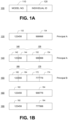
- FIG. 1A is an exemplary watermark payload 100 for each principal in accordance with one implementation of the present disclosure.
- the payload 100 includes two fields, which are the model number 110 (which may identify both the manufacturer and the model of the device) and the individual device identifier (individual ID) 120.
- the model number 110 is a number of the model of the devices belonging to the principals. That is, the model number 110 uniquely identifies the group of principals. This assumes that all members of this group share the same model number 110.
- the individual ID 120 uniquely identifies the principal within its group.
- Case 1 When extracting the watermark payloads from a potentially marked piece of content, there are two potential scenarios.
- One scenario is a case (Case 1) in which the attacker did not collude.
- Case 1 the extracted payload 100 is genuine and identifies the leaking principal using the model number 110 and the individual ID 120.
- Case 2 Another scenario is a case (Case 2) in which the attackers of the same group colluded.
- Case 2 the attackers can mount a collusion attack.
- the resultant payload of the collusion attack has an invariant in the model number, therefore, identifying the leaking model.
- FIG. 1B shows an exemplary anti-collusion method to identify the group of colluding principals in accordance with one implementation of the present disclosure.
- payload 130 shows one example of Case 1 in which the attacker did not collude.
- the principal with individual ID ⁇ 999998' and model ID '123456' is identified as an attacker.
- FIG. 1B also includes examples of Case 2 involving payloads 140, 160, 180, 190.
- payload 140 can be represented as a payload of principal A
- payload 160 can be represented as a payload of principal B.
- Payload 140 includes the model number 146 ( ⁇ 123456') and the individual ID 156 ( ⁇ 999998').
- Payload 160 includes the model number 166 ( ⁇ 123456') and the individual ID 176 ('777776'). Since the two payloads 140, 160 have the same model number 146, 166, the two principals, Principals A and B, are considered to be in a same group of principals (e.g., Group X). Further, Group X may include principals other than Principals A and B (e.g., Principals C, D, E, and so on).
- FIG. 1B it is assumed that Principals A and B have colluded by breaking up the contents owned by Principals A and B including the payloads 140, 160 and piecing together different parts of the contents.
- payload 140 is broken up into four pieces 142, 144, 152, 154. That is, the model number 146 is broken into pieces 142, 144, while the individual ID 156 is broken into pieces 152, 154.
- the same process is used to break up payload 160 into four pieces 162, 164, 172, 174. That is, the model number 166 is broken into pieces 162, 164, while the individual ID 176 is broken into pieces 172, 174.
- Principals A and B then selectively combines four pieces 142, 144, 152, 154 of payload 140 with four pieces 162, 164, 172, 174 of payload 160 to produce a different payload (e.g., payload 180 or 190). Since the payloads are embedded in the content, the selection must include four pieces sequentially selected from the eight pieces in payloads 140, 160. That is, four selections are made, wherein one selection is made from each of 142/162, 144/164, 152/172, 154/174.
- model number 182 of ⁇ 123456' is a combination of piece 142 of ⁇ 123' and piece 164 of ⁇ 456'
- individual ID 184 of ⁇ 999776' is a combination of piece 152 of ⁇ 999' and piece 174 of ⁇ 776'.
- model number 182 of ⁇ 123456' provides accurate information about the model number of the colluding principals.
- model number 192 of ⁇ 123456' is a combination of piece 162 of ⁇ 123' and piece 144 of ⁇ 456'
- individual ID 194 of '777998' is a combination of piece 172 of ⁇ 777' and piece 154 of '998'.
- model number 192 of ⁇ 123456' provides accurate information about the model number of the colluding principals.
- the payload since the payload has an invariant value in the model number, it may become an easy target for the colluding principals.
- the position of individual bits of the payload for each repetition of the payload within the watermarked content is permutated.
- FIG. 2A is a functional block diagram of a watermark embedding system 200 in accordance with one implementation of the present disclosure.
- the watermark embedding system 200 includes a counter 240, a pseudo-random permutation generator 230, and a watermark embedder 242.
- the pseudo-random permutation generator 230 may differ from a true random permutation generator in that the technique of the pseudo-random permutation generator 230 is designed to be sufficiently complicated so that its output appears to be random to someone who does not know the technique, and can pass various statistical tests of randomness. Thus, the output of the pseudo-random permutation generator 230 may not be random, but deterministic.
- the permutation generator 230 may use some other deterministic method to generate a shuffled value.
- the counter 240 holds the current random seed such that the pseudo-random permutation generator 230 receives the output of the counter 240, calculates the pseudo-random permutation, and the counter 240 is appropriately updated by the system 200.
- the payload 220 (e.g., equivalent to payload 100, 130, 140, or 160) and the output of the counter 240 are fed into the pseudo-random permutation generator 230.
- the output of the pseudo-random permutation generator 230 is a shuffled payload 232. All the bits of payload 220 are present in the shuffled payload 232 but in a random order.
- the watermark embedder 242 receives the content 210 and embeds one full shuffled payload 232. The outcome is the watermarked content 244. After each complete payload embedding, the watermark embedder 242 (e.g., an interface unit in the watermark embedder 242) requests the counter 240 to increment its value.
- the initial value (or random seed) of the counter 240 may depend on the content 210.
- the watermark embedder 242 includes a content evaluator (not shown) that evaluates certain predetermined properties (e.g., resolution, metadata, type, etc.) of the content to generate the initial value of the counter 240.
- the initial value is carried within the metadata of the piece of content or determined by some parameters of the piece of content itself. For example, it may be the result of the hash of the n first video segments.
- the playback device is the same device as the device that performed the embedding of the watermarked content 242.
- the playback device is a connected remote device that is different from the device that performed the embedding of the watermarked content 242.
- the output of the watermark embedding system 200 (i.e., the watermarked content 244) is received by a traitor detection system to detect the model number of the device used by a group of colluding principals. For example, for each shuffled payload 232 successfully extracted by the traitor detection system, the expected payload 220 is retrieved using the reverse pseudo-random permutation generator.
- the pseudo-random permutation generator 230 may use a technique such as used with the Yates-Fisher technique with a possible variant.
- the pseudo-random permutation generator 230 uses a seed that is defined by a combination counter 240 and the order in the sequence, for example, a Secure Hash Algorithm 1 (SHA-1) (counter + i) modulo i.
- the watermark embedder 242 is a typical sequence key-like embedder that selects the '0' or ⁇ 1' watermarked video segment depending on the corresponding value of the shuffled payload 232.
- FIG. 2B is a flow diagram illustrating a process for watermark embedding 250 in accordance with one implementation of the present disclosure.
- the initial value of the output of the counter is calculated, at block 252.
- the payload 220 (e.g., equivalent to payload 100, 130, 140, or 160) is then shuffled using the output of the counter, at block 260, to produce a shuffled payload. All the bits of the payload 220 are present in the shuffled payload but in a random order.
- One shuffled payload is embedded into the content, at block 270.
- the watermark embedding process 250 requests the counter to increment its value, at block 280.
- This increment in the counter generates a new value of the shuffled payload 232. If the end of the content is reached, at block 290, the process 250 is terminated. Otherwise, the process 250 reverts back to block 260 to shuffle more payloads.
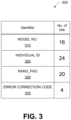
- FIG. 3 shows an exemplary layout of a payload 300 in a table format in accordance with one implementation of the present disclosure.
- the payload 300 includes 64 bits.
- the first w bits (e.g., 16 bits) include a model number 310, which uniquely identifies a manufacturer and one of its technical model.
- the next x bits (e.g., 24 bits) include an individual ID 320, which uniquely identifies a device within a given model.
- the next y bits (e.g., 20 bits) include a 'Rand_pad' identifier 330, which specifies a random number unique to the title. The value is not secret and is generated during authoring.
- the next z bits include an Error Correcting Code (ECC) 340, which is used to correct any errors occurring in extracting of the payload of the three previous fields 310, 320, 330.
- ECC Error Correcting Code
- FIG. 4 is a flow diagram illustrating a process for traitor detection 400 in accordance with one implementation of the present disclosure.
- the traitor detection process 400 includes extracting the successive shuffled payload 232, at block 410.
- successive shuffled payloads are embedded into a piece of content several times, wherein the shuffled payload is different each time as the counter is incremented.
- the expected payload 220 is retrieved, at block 420, using the reverse pseudo-random permutation generator.
- the retrieval of the expected payload 220 "unshuffles" the shuffled payload 232.
- the expected payload retrieval step 420 also uses the expected value of the counter.
- ECC error correction code
- a simple majority decision counts the number of times a bit was detected as '0' and the number of times it was detected as '1'. The value of the bit is determined to be the value with the most count.
- a more sophisticated majority decision may weigh the value of each extracted bit with a detection score.
- One implementation includes one or more programmable processors and corresponding computer system components to store and execute computer instructions. Combinations of hardware, software, and firmware can also be used. For example, in the provider system, distribution, and playback, the encryption of data, building and distribution of content files, conversion, and generating checksums can be performed by one or more computer systems executing appropriate computer instructions on one or more processors utilizing appropriate components and systems (such as memory, computational units, buses, etc.).
Landscapes
- Engineering & Computer Science (AREA)
- Physics & Mathematics (AREA)
- General Physics & Mathematics (AREA)
- Theoretical Computer Science (AREA)
- Computer Security & Cryptography (AREA)
- Computer Networks & Wireless Communication (AREA)
- Signal Processing (AREA)
- Editing Of Facsimile Originals (AREA)
- Two-Way Televisions, Distribution Of Moving Picture Or The Like (AREA)
Claims (12)
- System zum Einbetten einer digitalen Wasserzeichennutzlast (220) in einen Videoinhalt (210), das System umfassend:einen Wasserzeicheneinbetter (242), der einen Auswerter umfasst, der konfiguriert ist, um zuvor bestimmte Videoeigenschaften des Videoinhalts auszuwerten, wobei die zuvor bestimmten Videoeigenschaften Metadaten sind, und einen Anfangswert eines zufälligen Seeds basierend auf den zuvor bestimmten Videoeigenschaften zu generieren;einen Zähler (240), der konfiguriert ist, um den Anfangswert zu speichern;einen Permutationsgenerator (230), der konfiguriert ist, um die Wasserzeichennutzlast(220) und den Anfangswert zu empfangen und zu verarbeiten und eine erste gemischte Nutzlast basierend auf dem Anfangswert zu generieren; undwobei der Wasserzeicheneinbetter (242) konfiguriert ist, um die erste gemischte Nutzlast in den Videoinhalt (210) einzubetten;wobei der Wasserzeicheneinbetter (242) eine Schnittstelleneinheit umfasst, die konfiguriert ist, um den Zähler anzufordern, den Anfangswert zu inkrementieren, nachdem die gemischte Nutzlast in den Videoinhalt (210) eingebettet ist, um einen neuen Wert zu generieren; undder Permutationsgenerator (230) ferner konfiguriert ist, um die Wasserzeichennutzlast(220) und den neuen Wert zu empfangen und zu verarbeiten und eine zweite gemischte Nutzlast basierend auf dem neuen Wert zu generieren, und der Wasserzeicheneinbetter (242) ferner konfiguriert ist, um die zweite gemischte Nutzlast zu empfangen und in den Videoinhalt (210) einzubetten.
- System nach Anspruch 1, wobei der Permutationsgenerator ein Pseudozufallspermutationsgenerator ist.
- System nach Anspruch 1, wobei das System eine Wiedergabevorrichtung ist, die konfiguriert ist, um den Videoinhalt wiederzugeben.
- System nach Anspruch 1, wobei die Wasserzeichennutzlast eine Modellnummer und eine individuelle Vorrichtungskennung umfasst.
- Verfahren zum Einbetten einer digitalen Wasserzeichennutzlast (220) in den Videoinhalt (210), das Verfahren umfassend:Auswerten von zuvor bestimmten Videoeigenschaften des Videoinhalts, wobei die zuvor bestimmten Videoeigenschaften Metadaten sind;Generieren eines Anfangswerts eines zufälligen Seeds, der in einem Zähler (240) gespeichert ist, basierend auf den zuvor bestimmten Videoeigenschaften;Mischen der Wasserzeichennutzlast (220), um eine erste gemischte Nutzlast basierend auf dem Anfangswert zu generieren;Einbetten der ersten gemischten Nutzlast in den Videoinhalt (210);Inkrementieren des Anfangswerts, der in dem Zähler (240) gespeichert ist, um einen neuen Wert zu generieren;Mischen der Wasserzeichennutzlast(220), um eine zweite gemischte Nutzlast basierend auf dem neuen Wert zu generieren; undEinbetten der zweiten gemischten Nutzlast in den Videoinhalt (210).
- Verfahren nach Anspruch 5, wobei das Mischen der Wasserzeichennutzlast umfasst
zufälliges Neuanordnen einer Bitreihenfolge der Wasserzeichennutzlast unter Verwendung des zufälligen Seeds. - Verfahren nach Anspruch 5, ferner umfassend ein Anfordern des Zählers, den zufälligen Seed zu inkrementieren, nachdem die gemischte Nutzlast in den Videoinhalt eingebettet ist.
- Verfahren zum Erkennen einer Gruppe von Vorrichtungen, die durch Individuen verwendet werden, die kolludieren, um den Videoinhalt (210) zu erhalten, das Verfahren umfassend:Extrahieren eines Satzes aufeinanderfolgender gemischter digitaler Wasserzeichennutzlasten (232) aus dem Videoinhalt (210);Entmischen jeder Wasserzeichennutzlast(232) unter Verwendung eines Umkehrpermutationsgenerators und eines erwarteten Werts eines Zählers (240), um eine entmischte Nutzlast zu generieren;wobei der erwartete Wert des Zählers (240) der gleiche wie der Anfangswert des Zählers ist, der verwendet wird, um die anfängliche gemischte Wasserzeichennutzlast zu generieren, und wobei der Anfangswert des Zählers basierend auf einer Auswertung zuvor bestimmter Videoeigenschaften des Videoinhalts (210) generiert wurde, wobei die zuvor bestimmten Videoeigenschaften Metadaten sind, bevor die gemischte Wasserzeichennutzlast eingebettet wurde, undfür jede anschließende aufeinanderfolgende gemischte Wasserzeichennutzlast, die extrahiert wird, der erwartete Wert des Zählers (240) inkrementiert wird; undAnwenden einer Mehrheitsentscheidung auf einen Satz von entmischten Wasserzeichennutzlasten, um die Gruppe von Vorrichtungen zu erkennen.
- Verfahren nach Anspruch 8, wobei die Mehrheitsentscheidung Erkennungsbewertungen verwendet, die dem Satz von entmischten Wasserzeichennutzlasten entsprechen.
- Verfahren nach Anspruch 8, wobei die entmischte Wasserzeichennutzlast umfasst
eine Modellnummer und eine individuelle Vorrichtungskennung. - Verfahren nach Anspruch 8, wobei die entmischte Wasserzeichennutzlast einen Fehlerkorrekturcode umfasst.
- Einrichtung, umfassend:einen Prozessor; undeinen Speicher, der mit dem Prozessor verbunden ist, wobei der Speicher ein Computerprogramm speichert, um eine digitale Wasserzeichennutzlast (220) in den Videoinhalt (210) einzubetten, das Computerprogramm umfassend Anweisungen, die durch den Prozessor ausführbar sind, die die Einrichtung veranlassen zum:Auswerten von zuvor bestimmten Videoeigenschaften des Videoinhalts, wobei die zuvor bestimmten Videoeigenschaften Metadaten sind, und Generieren eines Anfangswerts eines zufälligen Seeds, der in einem Zähler (240) gespeichert ist, basierend auf den zuvor bestimmten Videoeigenschaften;Mischen der Wasserzeichennutzlast (220), um eine erste gemischte Nutzlast basierend auf dem Anfangswert zu generieren; undEinbetten der ersten gemischten Nutzlast in den Videoinhalt (210)Inkrementieren des Anfangswerts, der in dem Zähler (240) gespeichert ist, um einen neuen Wert zu generieren;Mischen der Wasserzeichennutzlast (220), um eine zweite gemischte Nutzlast basierend auf dem neuen Wert zu generieren; undEinbetten der zweiten gemischten Nutzlast in den Videoinhalt (210).
Applications Claiming Priority (3)
| Application Number | Priority Date | Filing Date | Title |
|---|---|---|---|
| US201562107230P | 2015-01-23 | 2015-01-23 | |
| US15/003,690 US9858633B2 (en) | 2015-01-23 | 2016-01-21 | Model anti-collusion watermark |
| PCT/US2016/014595 WO2016118904A1 (en) | 2015-01-23 | 2016-01-22 | Model anti-collusion watermark |
Publications (3)
| Publication Number | Publication Date |
|---|---|
| EP3234845A1 EP3234845A1 (de) | 2017-10-25 |
| EP3234845A4 EP3234845A4 (de) | 2018-08-29 |
| EP3234845B1 true EP3234845B1 (de) | 2024-04-03 |
Family
ID=56417836
Family Applications (1)
| Application Number | Title | Priority Date | Filing Date |
|---|---|---|---|
| EP16740864.0A Active EP3234845B1 (de) | 2015-01-23 | 2016-01-22 | Modell-antikollusionswasserzeichen |
Country Status (6)
| Country | Link |
|---|---|
| US (2) | US9858633B2 (de) |
| EP (1) | EP3234845B1 (de) |
| JP (1) | JP6533583B2 (de) |
| KR (1) | KR101968030B1 (de) |
| CN (1) | CN107111695B (de) |
| WO (1) | WO2016118904A1 (de) |
Families Citing this family (6)
| Publication number | Priority date | Publication date | Assignee | Title |
|---|---|---|---|---|
| US10834289B2 (en) * | 2015-03-27 | 2020-11-10 | International Business Machines Corporation | Detection of steganography on the perimeter |
| US10482569B2 (en) * | 2016-07-11 | 2019-11-19 | DISC Intellectual Properties, LLC | Image data encryption and rendering system |
| CN108572805A (zh) * | 2018-03-20 | 2018-09-25 | 北京明朝万达科技股份有限公司 | 文档打印方法和系统 |
| CN110610102B (zh) * | 2019-09-23 | 2021-06-25 | 郑州师范学院 | 一种数据访问方法、装置及系统 |
| US11803620B2 (en) * | 2020-05-15 | 2023-10-31 | Synamedia Limited | Systems and methods for identifying a content receiving device |
| US11681832B2 (en) * | 2020-10-14 | 2023-06-20 | Infineon Technologies Ag | Electronic circuit identification (ID) techniques using both a client-side ID and a supplier-side ID |
Family Cites Families (24)
| Publication number | Priority date | Publication date | Assignee | Title |
|---|---|---|---|---|
| JPH11237837A (ja) * | 1998-02-20 | 1999-08-31 | Fujitsu Ltd | 乱数の種の生成機能を備えた記憶装置 |
| TW451171B (en) * | 1999-07-16 | 2001-08-21 | Cyberlink Corp | A method to embed and extract hidden digital watermark |
| US7080257B1 (en) * | 2000-03-27 | 2006-07-18 | Microsoft Corporation | Protecting digital goods using oblivious checking |
| KR100493311B1 (ko) | 2001-02-21 | 2005-06-07 | 엘지전자 주식회사 | 디지털 미디어의 복제 제어를 위한 워터마크기반 복제관리 시스템 및 방법 |
| US7047413B2 (en) * | 2001-04-23 | 2006-05-16 | Microsoft Corporation | Collusion-resistant watermarking and fingerprinting |
| GB2376826A (en) * | 2001-06-19 | 2002-12-24 | Sony Uk Ltd | Detecting data by accumulating pixel values in several versions of a datablock |
| JP4491237B2 (ja) * | 2001-12-21 | 2010-06-30 | コーニンクレッカ フィリップス エレクトロニクス エヌ ヴィ | ロバストな特徴を使用するウォーターマークの保全性の改善 |
| US20060239501A1 (en) | 2005-04-26 | 2006-10-26 | Verance Corporation | Security enhancements of digital watermarks for multi-media content |
| US7369677B2 (en) * | 2005-04-26 | 2008-05-06 | Verance Corporation | System reactions to the detection of embedded watermarks in a digital host content |
| JP4025283B2 (ja) * | 2003-12-05 | 2007-12-19 | 株式会社東芝 | 符号埋込方法、識別情報復元方法及び装置 |
| US8140848B2 (en) * | 2004-07-01 | 2012-03-20 | Digimarc Corporation | Digital watermark key generation |
| WO2007067168A1 (en) * | 2005-12-05 | 2007-06-14 | Thomson Licensing | Watermarking encoded content |
| JP2007178857A (ja) * | 2005-12-28 | 2007-07-12 | Toshiba Corp | 符号化装置、追跡装置、符号化方法、追跡方法、および、プログラム |
| WO2007121035A2 (en) * | 2006-03-23 | 2007-10-25 | Exegy Incorporated | Method and system for high throughput blockwise independent encryption/decryption |
| GB2438904A (en) * | 2006-06-06 | 2007-12-12 | Sony Uk Ltd | Generation of code words for image watermarking |
| GB0611128D0 (en) * | 2006-06-06 | 2006-07-19 | Sony Uk Ltd | Encoding and detecting apparatus |
| TWM331219U (en) | 2007-10-11 | 2008-04-21 | Tai Sol Electronics Co Ltd | All-in-one card connecter for single-card-insertion |
| WO2009077944A1 (en) * | 2007-12-18 | 2009-06-25 | Civolution Bv | Method for embedding and detecting a watermark |
| CN102144237B (zh) * | 2008-07-03 | 2014-10-22 | 美国唯美安视国际有限公司 | 压缩媒体的有效水印方法 |
| US8913779B2 (en) * | 2010-02-02 | 2014-12-16 | Futurewei Technologies, Inc. | System and method for securing media content |
| JP5793865B2 (ja) * | 2010-12-28 | 2015-10-14 | 富士通株式会社 | 電子透かし埋め込み装置、電子透かし埋め込み用コンピュータプログラム及び電子透かし検出装置ならびに電子透かし検出用コンピュータプログラム |
| JP5974463B2 (ja) * | 2011-11-29 | 2016-08-23 | 富士通株式会社 | 電子透かし埋め込み装置、電子透かし埋め込み方法、電子透かし検出装置及び電子透かし検出方法 |
| EP2605536A1 (de) | 2011-12-13 | 2013-06-19 | Thomson Licensing | Vorrichtung zur Erzeugung von Wassermarken-Metadaten, zugehörige Vorrichtung zur Einbettung einer Wassermarke |
| CN103646195B (zh) * | 2013-11-27 | 2016-03-30 | 南京师范大学 | 一种面向版权保护的数据库水印方法 |
-
2016
- 2016-01-21 US US15/003,690 patent/US9858633B2/en active Active
- 2016-01-22 KR KR1020177019324A patent/KR101968030B1/ko active Active
- 2016-01-22 CN CN201680006140.7A patent/CN107111695B/zh active Active
- 2016-01-22 JP JP2017538981A patent/JP6533583B2/ja active Active
- 2016-01-22 WO PCT/US2016/014595 patent/WO2016118904A1/en not_active Ceased
- 2016-01-22 EP EP16740864.0A patent/EP3234845B1/de active Active
-
2017
- 2017-12-29 US US15/858,223 patent/US10229467B2/en active Active
Also Published As
| Publication number | Publication date |
|---|---|
| EP3234845A4 (de) | 2018-08-29 |
| EP3234845A1 (de) | 2017-10-25 |
| CN107111695B (zh) | 2021-05-07 |
| US20180144434A1 (en) | 2018-05-24 |
| JP2018506119A (ja) | 2018-03-01 |
| KR20170095959A (ko) | 2017-08-23 |
| CN107111695A (zh) | 2017-08-29 |
| US20160217545A1 (en) | 2016-07-28 |
| WO2016118904A1 (en) | 2016-07-28 |
| US10229467B2 (en) | 2019-03-12 |
| US9858633B2 (en) | 2018-01-02 |
| JP6533583B2 (ja) | 2019-06-19 |
| KR101968030B1 (ko) | 2019-04-10 |
Similar Documents
| Publication | Publication Date | Title |
|---|---|---|
| US20230360165A1 (en) | Method and apparatus for protecting digital photos from alteration | |
| US10229467B2 (en) | Model anti-collusion watermark | |
| Provos | Defending against statistical steganalysis | |
| JP3749884B2 (ja) | 電子透かし埋め込み装置、電子透かし解析装置、電子透かし埋め込み方法、電子透かし解析方法及びプログラム | |
| CN105591750B (zh) | 电子签名生成方法及系统 | |
| JP4037614B2 (ja) | 損失を伴い伝送される画像の保全性確認方法 | |
| CN114359011B (zh) | 一种神经网络水印嵌入方法、装置、电子设备及存储介质 | |
| CN110969207B (zh) | 电子证据处理方法、装置、设备以及存储介质 | |
| US12211116B2 (en) | System and method for encoding and authenticating a digital image | |
| JP2010158024A (ja) | データオブジェクトのフィンガープリンティング | |
| JP4889274B2 (ja) | 離散レベル改ざん位置同定による安全画像認証 | |
| JP4625841B2 (ja) | デジタルコンテンツセキュリティのためのシステムおよび方法 | |
| JP3917395B2 (ja) | コンテンツ配布方法、コンテンツ配布装置、コンテンツ違法コピー検査方法、コンテンツ違法コピー検査装置、コンテンツ配布プログラム、コンテンツ違法コピー検査プログラム及びそれらのプログラムを記録したコンピュータ読み取り可能な記録媒体 | |
| CN102301390A (zh) | 抗共谋的水印生成方法 | |
| JP2013115669A (ja) | 電子透かし埋め込み装置、電子透かし埋め込み方法、電子透かし検出装置及び電子透かし検出方法 | |
| WO2020057389A1 (zh) | 一种签名验证方法、装置、电子设备及可读存储介质 | |
| JP4169347B2 (ja) | 情報処理装置、情報処理方法及び情報処理プログラム | |
| JPWO2007069475A1 (ja) | 電子透かし埋め込み装置、電子透かし検出装置、および電子透かしシステム | |
| RU2847551C1 (ru) | Способ и система защиты подлинности изображений, генерируемых на основании текстового запроса моделью машинного обучения | |
| CN109963104B (zh) | 一种安全拍摄设备的回显限制实现方法及系统 | |
| JP2020144796A (ja) | 光学コード、光学コード生成方法とそのプログラム、並びに、光学コード読み取り方法とそのプログラム | |
| KR102578606B1 (ko) | 클라우드에서 데이터 저장 및 공유를 위한 핑거프린팅 장치 및 방법 | |
| JP5182975B2 (ja) | ディジタル・コンテンツに電子透かしを埋め込むために共謀行為に対抗するフォレンシック符号用の内部符号を構成する方法 | |
| WO2025254557A1 (ru) | Способ и система защиты подлинности изображений, генерируемых моделью машинного обучения | |
| CN120162759A (zh) | 基于区块链的数据处理方法以及相关设备 |
Legal Events
| Date | Code | Title | Description |
|---|---|---|---|
| STAA | Information on the status of an ep patent application or granted ep patent |
Free format text: STATUS: THE INTERNATIONAL PUBLICATION HAS BEEN MADE |
|
| PUAI | Public reference made under article 153(3) epc to a published international application that has entered the european phase |
Free format text: ORIGINAL CODE: 0009012 |
|
| STAA | Information on the status of an ep patent application or granted ep patent |
Free format text: STATUS: REQUEST FOR EXAMINATION WAS MADE |
|
| 17P | Request for examination filed |
Effective date: 20170718 |
|
| AK | Designated contracting states |
Kind code of ref document: A1 Designated state(s): AL AT BE BG CH CY CZ DE DK EE ES FI FR GB GR HR HU IE IS IT LI LT LU LV MC MK MT NL NO PL PT RO RS SE SI SK SM TR |
|
| AX | Request for extension of the european patent |
Extension state: BA ME |
|
| DAV | Request for validation of the european patent (deleted) | ||
| DAX | Request for extension of the european patent (deleted) | ||
| A4 | Supplementary search report drawn up and despatched |
Effective date: 20180730 |
|
| RIC1 | Information provided on ipc code assigned before grant |
Ipc: H04L 9/32 20060101ALI20180724BHEP Ipc: G06F 21/16 20130101AFI20180724BHEP Ipc: G09C 5/00 20060101ALI20180724BHEP Ipc: G06T 1/00 20060101ALI20180724BHEP |
|
| STAA | Information on the status of an ep patent application or granted ep patent |
Free format text: STATUS: EXAMINATION IS IN PROGRESS |
|
| 17Q | First examination report despatched |
Effective date: 20210122 |
|
| RAP3 | Party data changed (applicant data changed or rights of an application transferred) |
Owner name: SONY GROUP CORPORATION Owner name: SONY PICTURES ENTERTAINMENT, INC. |
|
| GRAP | Despatch of communication of intention to grant a patent |
Free format text: ORIGINAL CODE: EPIDOSNIGR1 |
|
| STAA | Information on the status of an ep patent application or granted ep patent |
Free format text: STATUS: GRANT OF PATENT IS INTENDED |
|
| INTG | Intention to grant announced |
Effective date: 20231103 |
|
| GRAS | Grant fee paid |
Free format text: ORIGINAL CODE: EPIDOSNIGR3 |
|
| GRAA | (expected) grant |
Free format text: ORIGINAL CODE: 0009210 |
|
| STAA | Information on the status of an ep patent application or granted ep patent |
Free format text: STATUS: THE PATENT HAS BEEN GRANTED |
|
| P01 | Opt-out of the competence of the unified patent court (upc) registered |
Effective date: 20240213 |
|
| AK | Designated contracting states |
Kind code of ref document: B1 Designated state(s): AL AT BE BG CH CY CZ DE DK EE ES FI FR GB GR HR HU IE IS IT LI LT LU LV MC MK MT NL NO PL PT RO RS SE SI SK SM TR |
|
| REG | Reference to a national code |
Ref country code: GB Ref legal event code: FG4D |
|
| REG | Reference to a national code |
Ref country code: CH Ref legal event code: EP |
|
| REG | Reference to a national code |
Ref country code: IE Ref legal event code: FG4D |
|
| REG | Reference to a national code |
Ref country code: DE Ref legal event code: R096 Ref document number: 602016086659 Country of ref document: DE |
|
| REG | Reference to a national code |
Ref country code: LT Ref legal event code: MG9D |
|
| REG | Reference to a national code |
Ref country code: NL Ref legal event code: MP Effective date: 20240403 |
|
| REG | Reference to a national code |
Ref country code: AT Ref legal event code: MK05 Ref document number: 1673136 Country of ref document: AT Kind code of ref document: T Effective date: 20240403 |
|
| PG25 | Lapsed in a contracting state [announced via postgrant information from national office to epo] |
Ref country code: NL Free format text: LAPSE BECAUSE OF FAILURE TO SUBMIT A TRANSLATION OF THE DESCRIPTION OR TO PAY THE FEE WITHIN THE PRESCRIBED TIME-LIMIT Effective date: 20240403 |
|
| PG25 | Lapsed in a contracting state [announced via postgrant information from national office to epo] |
Ref country code: NL Free format text: LAPSE BECAUSE OF FAILURE TO SUBMIT A TRANSLATION OF THE DESCRIPTION OR TO PAY THE FEE WITHIN THE PRESCRIBED TIME-LIMIT Effective date: 20240403 |
|
| PG25 | Lapsed in a contracting state [announced via postgrant information from national office to epo] |
Ref country code: IS Free format text: LAPSE BECAUSE OF FAILURE TO SUBMIT A TRANSLATION OF THE DESCRIPTION OR TO PAY THE FEE WITHIN THE PRESCRIBED TIME-LIMIT Effective date: 20240803 |
|
| PG25 | Lapsed in a contracting state [announced via postgrant information from national office to epo] |
Ref country code: BG Free format text: LAPSE BECAUSE OF FAILURE TO SUBMIT A TRANSLATION OF THE DESCRIPTION OR TO PAY THE FEE WITHIN THE PRESCRIBED TIME-LIMIT Effective date: 20240403 |
|
| PG25 | Lapsed in a contracting state [announced via postgrant information from national office to epo] |
Ref country code: FI Free format text: LAPSE BECAUSE OF FAILURE TO SUBMIT A TRANSLATION OF THE DESCRIPTION OR TO PAY THE FEE WITHIN THE PRESCRIBED TIME-LIMIT Effective date: 20240403 Ref country code: HR Free format text: LAPSE BECAUSE OF FAILURE TO SUBMIT A TRANSLATION OF THE DESCRIPTION OR TO PAY THE FEE WITHIN THE PRESCRIBED TIME-LIMIT Effective date: 20240403 |
|
| PG25 | Lapsed in a contracting state [announced via postgrant information from national office to epo] |
Ref country code: GR Free format text: LAPSE BECAUSE OF FAILURE TO SUBMIT A TRANSLATION OF THE DESCRIPTION OR TO PAY THE FEE WITHIN THE PRESCRIBED TIME-LIMIT Effective date: 20240704 |
|
| PG25 | Lapsed in a contracting state [announced via postgrant information from national office to epo] |
Ref country code: PT Free format text: LAPSE BECAUSE OF FAILURE TO SUBMIT A TRANSLATION OF THE DESCRIPTION OR TO PAY THE FEE WITHIN THE PRESCRIBED TIME-LIMIT Effective date: 20240805 |
|
| PG25 | Lapsed in a contracting state [announced via postgrant information from national office to epo] |
Ref country code: ES Free format text: LAPSE BECAUSE OF FAILURE TO SUBMIT A TRANSLATION OF THE DESCRIPTION OR TO PAY THE FEE WITHIN THE PRESCRIBED TIME-LIMIT Effective date: 20240403 |
|
| PG25 | Lapsed in a contracting state [announced via postgrant information from national office to epo] |
Ref country code: CZ Free format text: LAPSE BECAUSE OF FAILURE TO SUBMIT A TRANSLATION OF THE DESCRIPTION OR TO PAY THE FEE WITHIN THE PRESCRIBED TIME-LIMIT Effective date: 20240403 |
|
| PG25 | Lapsed in a contracting state [announced via postgrant information from national office to epo] |
Ref country code: AT Free format text: LAPSE BECAUSE OF FAILURE TO SUBMIT A TRANSLATION OF THE DESCRIPTION OR TO PAY THE FEE WITHIN THE PRESCRIBED TIME-LIMIT Effective date: 20240403 |
|
| PG25 | Lapsed in a contracting state [announced via postgrant information from national office to epo] |
Ref country code: PL Free format text: LAPSE BECAUSE OF FAILURE TO SUBMIT A TRANSLATION OF THE DESCRIPTION OR TO PAY THE FEE WITHIN THE PRESCRIBED TIME-LIMIT Effective date: 20240403 |
|
| PG25 | Lapsed in a contracting state [announced via postgrant information from national office to epo] |
Ref country code: LV Free format text: LAPSE BECAUSE OF FAILURE TO SUBMIT A TRANSLATION OF THE DESCRIPTION OR TO PAY THE FEE WITHIN THE PRESCRIBED TIME-LIMIT Effective date: 20240403 |
|
| PG25 | Lapsed in a contracting state [announced via postgrant information from national office to epo] |
Ref country code: PT Free format text: LAPSE BECAUSE OF FAILURE TO SUBMIT A TRANSLATION OF THE DESCRIPTION OR TO PAY THE FEE WITHIN THE PRESCRIBED TIME-LIMIT Effective date: 20240805 Ref country code: PL Free format text: LAPSE BECAUSE OF FAILURE TO SUBMIT A TRANSLATION OF THE DESCRIPTION OR TO PAY THE FEE WITHIN THE PRESCRIBED TIME-LIMIT Effective date: 20240403 Ref country code: NO Free format text: LAPSE BECAUSE OF FAILURE TO SUBMIT A TRANSLATION OF THE DESCRIPTION OR TO PAY THE FEE WITHIN THE PRESCRIBED TIME-LIMIT Effective date: 20240703 Ref country code: LV Free format text: LAPSE BECAUSE OF FAILURE TO SUBMIT A TRANSLATION OF THE DESCRIPTION OR TO PAY THE FEE WITHIN THE PRESCRIBED TIME-LIMIT Effective date: 20240403 Ref country code: IS Free format text: LAPSE BECAUSE OF FAILURE TO SUBMIT A TRANSLATION OF THE DESCRIPTION OR TO PAY THE FEE WITHIN THE PRESCRIBED TIME-LIMIT Effective date: 20240803 Ref country code: HR Free format text: LAPSE BECAUSE OF FAILURE TO SUBMIT A TRANSLATION OF THE DESCRIPTION OR TO PAY THE FEE WITHIN THE PRESCRIBED TIME-LIMIT Effective date: 20240403 Ref country code: GR Free format text: LAPSE BECAUSE OF FAILURE TO SUBMIT A TRANSLATION OF THE DESCRIPTION OR TO PAY THE FEE WITHIN THE PRESCRIBED TIME-LIMIT Effective date: 20240704 Ref country code: FI Free format text: LAPSE BECAUSE OF FAILURE TO SUBMIT A TRANSLATION OF THE DESCRIPTION OR TO PAY THE FEE WITHIN THE PRESCRIBED TIME-LIMIT Effective date: 20240403 Ref country code: ES Free format text: LAPSE BECAUSE OF FAILURE TO SUBMIT A TRANSLATION OF THE DESCRIPTION OR TO PAY THE FEE WITHIN THE PRESCRIBED TIME-LIMIT Effective date: 20240403 Ref country code: CZ Free format text: LAPSE BECAUSE OF FAILURE TO SUBMIT A TRANSLATION OF THE DESCRIPTION OR TO PAY THE FEE WITHIN THE PRESCRIBED TIME-LIMIT Effective date: 20240403 Ref country code: BG Free format text: LAPSE BECAUSE OF FAILURE TO SUBMIT A TRANSLATION OF THE DESCRIPTION OR TO PAY THE FEE WITHIN THE PRESCRIBED TIME-LIMIT Effective date: 20240403 Ref country code: AT Free format text: LAPSE BECAUSE OF FAILURE TO SUBMIT A TRANSLATION OF THE DESCRIPTION OR TO PAY THE FEE WITHIN THE PRESCRIBED TIME-LIMIT Effective date: 20240403 Ref country code: RS Free format text: LAPSE BECAUSE OF FAILURE TO SUBMIT A TRANSLATION OF THE DESCRIPTION OR TO PAY THE FEE WITHIN THE PRESCRIBED TIME-LIMIT Effective date: 20240703 |
|
| REG | Reference to a national code |
Ref country code: DE Ref legal event code: R097 Ref document number: 602016086659 Country of ref document: DE |
|
| PG25 | Lapsed in a contracting state [announced via postgrant information from national office to epo] |
Ref country code: DK Free format text: LAPSE BECAUSE OF FAILURE TO SUBMIT A TRANSLATION OF THE DESCRIPTION OR TO PAY THE FEE WITHIN THE PRESCRIBED TIME-LIMIT Effective date: 20240403 |
|
| PG25 | Lapsed in a contracting state [announced via postgrant information from national office to epo] |
Ref country code: EE Free format text: LAPSE BECAUSE OF FAILURE TO SUBMIT A TRANSLATION OF THE DESCRIPTION OR TO PAY THE FEE WITHIN THE PRESCRIBED TIME-LIMIT Effective date: 20240403 |
|
| PG25 | Lapsed in a contracting state [announced via postgrant information from national office to epo] |
Ref country code: SK Free format text: LAPSE BECAUSE OF FAILURE TO SUBMIT A TRANSLATION OF THE DESCRIPTION OR TO PAY THE FEE WITHIN THE PRESCRIBED TIME-LIMIT Effective date: 20240403 Ref country code: RO Free format text: LAPSE BECAUSE OF FAILURE TO SUBMIT A TRANSLATION OF THE DESCRIPTION OR TO PAY THE FEE WITHIN THE PRESCRIBED TIME-LIMIT Effective date: 20240403 |
|
| PG25 | Lapsed in a contracting state [announced via postgrant information from national office to epo] |
Ref country code: SM Free format text: LAPSE BECAUSE OF FAILURE TO SUBMIT A TRANSLATION OF THE DESCRIPTION OR TO PAY THE FEE WITHIN THE PRESCRIBED TIME-LIMIT Effective date: 20240403 |
|
| PG25 | Lapsed in a contracting state [announced via postgrant information from national office to epo] |
Ref country code: SM Free format text: LAPSE BECAUSE OF FAILURE TO SUBMIT A TRANSLATION OF THE DESCRIPTION OR TO PAY THE FEE WITHIN THE PRESCRIBED TIME-LIMIT Effective date: 20240403 Ref country code: SK Free format text: LAPSE BECAUSE OF FAILURE TO SUBMIT A TRANSLATION OF THE DESCRIPTION OR TO PAY THE FEE WITHIN THE PRESCRIBED TIME-LIMIT Effective date: 20240403 Ref country code: RO Free format text: LAPSE BECAUSE OF FAILURE TO SUBMIT A TRANSLATION OF THE DESCRIPTION OR TO PAY THE FEE WITHIN THE PRESCRIBED TIME-LIMIT Effective date: 20240403 Ref country code: EE Free format text: LAPSE BECAUSE OF FAILURE TO SUBMIT A TRANSLATION OF THE DESCRIPTION OR TO PAY THE FEE WITHIN THE PRESCRIBED TIME-LIMIT Effective date: 20240403 Ref country code: DK Free format text: LAPSE BECAUSE OF FAILURE TO SUBMIT A TRANSLATION OF THE DESCRIPTION OR TO PAY THE FEE WITHIN THE PRESCRIBED TIME-LIMIT Effective date: 20240403 |
|
| PLBE | No opposition filed within time limit |
Free format text: ORIGINAL CODE: 0009261 |
|
| STAA | Information on the status of an ep patent application or granted ep patent |
Free format text: STATUS: NO OPPOSITION FILED WITHIN TIME LIMIT |
|
| 26N | No opposition filed |
Effective date: 20250106 |
|
| PG25 | Lapsed in a contracting state [announced via postgrant information from national office to epo] |
Ref country code: SI Free format text: LAPSE BECAUSE OF FAILURE TO SUBMIT A TRANSLATION OF THE DESCRIPTION OR TO PAY THE FEE WITHIN THE PRESCRIBED TIME-LIMIT Effective date: 20240403 |
|
| REG | Reference to a national code |
Ref country code: CH Ref legal event code: PL |
|
| PG25 | Lapsed in a contracting state [announced via postgrant information from national office to epo] |
Ref country code: SE Free format text: LAPSE BECAUSE OF FAILURE TO SUBMIT A TRANSLATION OF THE DESCRIPTION OR TO PAY THE FEE WITHIN THE PRESCRIBED TIME-LIMIT Effective date: 20240403 |
|
| PG25 | Lapsed in a contracting state [announced via postgrant information from national office to epo] |
Ref country code: MC Free format text: LAPSE BECAUSE OF FAILURE TO SUBMIT A TRANSLATION OF THE DESCRIPTION OR TO PAY THE FEE WITHIN THE PRESCRIBED TIME-LIMIT Effective date: 20240403 Ref country code: LU Free format text: LAPSE BECAUSE OF NON-PAYMENT OF DUE FEES Effective date: 20250122 |
|
| PG25 | Lapsed in a contracting state [announced via postgrant information from national office to epo] |
Ref country code: BE Free format text: LAPSE BECAUSE OF NON-PAYMENT OF DUE FEES Effective date: 20250131 |
|
| PG25 | Lapsed in a contracting state [announced via postgrant information from national office to epo] |
Ref country code: CH Free format text: LAPSE BECAUSE OF NON-PAYMENT OF DUE FEES Effective date: 20250131 |
|
| REG | Reference to a national code |
Ref country code: BE Ref legal event code: MM Effective date: 20250131 |
|
| PGFP | Annual fee paid to national office [announced via postgrant information from national office to epo] |
Ref country code: GB Payment date: 20251220 Year of fee payment: 11 |
|
| PGFP | Annual fee paid to national office [announced via postgrant information from national office to epo] |
Ref country code: FR Payment date: 20251217 Year of fee payment: 11 |
|
| PG25 | Lapsed in a contracting state [announced via postgrant information from national office to epo] |
Ref country code: IE Free format text: LAPSE BECAUSE OF NON-PAYMENT OF DUE FEES Effective date: 20250122 |
|
| PG25 | Lapsed in a contracting state [announced via postgrant information from national office to epo] |
Ref country code: IT Free format text: LAPSE BECAUSE OF FAILURE TO SUBMIT A TRANSLATION OF THE DESCRIPTION OR TO PAY THE FEE WITHIN THE PRESCRIBED TIME-LIMIT Effective date: 20240403 |
|
| PGFP | Annual fee paid to national office [announced via postgrant information from national office to epo] |
Ref country code: DE Payment date: 20251217 Year of fee payment: 11 |