EP3229178A1 - Content categorization using facial expression recognition, with improved detection of moments of interest - Google Patents
Content categorization using facial expression recognition, with improved detection of moments of interest Download PDFInfo
- Publication number
- EP3229178A1 EP3229178A1 EP17165514.5A EP17165514A EP3229178A1 EP 3229178 A1 EP3229178 A1 EP 3229178A1 EP 17165514 A EP17165514 A EP 17165514A EP 3229178 A1 EP3229178 A1 EP 3229178A1
- Authority
- EP
- European Patent Office
- Prior art keywords
- content
- viewers
- moments
- interest
- threshold
- Prior art date
- Legal status (The legal status is an assumption and is not a legal conclusion. Google has not performed a legal analysis and makes no representation as to the accuracy of the status listed.)
- Withdrawn
Links
Images


Classifications
-
- H—ELECTRICITY
- H04—ELECTRIC COMMUNICATION TECHNIQUE
- H04N—PICTORIAL COMMUNICATION, e.g. TELEVISION
- H04N21/00—Selective content distribution, e.g. interactive television or video on demand [VOD]
- H04N21/40—Client devices specifically adapted for the reception of or interaction with content, e.g. set-top-box [STB]; Operations thereof
- H04N21/43—Processing of content or additional data, e.g. demultiplexing additional data from a digital video stream; Elementary client operations, e.g. monitoring of home network or synchronising decoder's clock; Client middleware
- H04N21/442—Monitoring of processes or resources, e.g. detecting the failure of a recording device, monitoring the downstream bandwidth, the number of times a movie has been viewed, the storage space available from the internal hard disk
- H04N21/44213—Monitoring of end-user related data
- H04N21/44218—Detecting physical presence or behaviour of the user, e.g. using sensors to detect if the user is leaving the room or changes his face expression during a TV programme
-
- G—PHYSICS
- G06—COMPUTING OR CALCULATING; COUNTING
- G06V—IMAGE OR VIDEO RECOGNITION OR UNDERSTANDING
- G06V20/00—Scenes; Scene-specific elements
- G06V20/40—Scenes; Scene-specific elements in video content
- G06V20/46—Extracting features or characteristics from the video content, e.g. video fingerprints, representative shots or key frames
-
- G—PHYSICS
- G06—COMPUTING OR CALCULATING; COUNTING
- G06V—IMAGE OR VIDEO RECOGNITION OR UNDERSTANDING
- G06V40/00—Recognition of biometric, human-related or animal-related patterns in image or video data
- G06V40/10—Human or animal bodies, e.g. vehicle occupants or pedestrians; Body parts, e.g. hands
- G06V40/16—Human faces, e.g. facial parts, sketches or expressions
- G06V40/174—Facial expression recognition
-
- H—ELECTRICITY
- H04—ELECTRIC COMMUNICATION TECHNIQUE
- H04N—PICTORIAL COMMUNICATION, e.g. TELEVISION
- H04N21/00—Selective content distribution, e.g. interactive television or video on demand [VOD]
- H04N21/20—Servers specifically adapted for the distribution of content, e.g. VOD servers; Operations thereof
- H04N21/25—Management operations performed by the server for facilitating the content distribution or administrating data related to end-users or client devices, e.g. end-user or client device authentication, learning user preferences for recommending movies
- H04N21/251—Learning process for intelligent management, e.g. learning user preferences for recommending movies
- H04N21/252—Processing of multiple end-users' preferences to derive collaborative data
-
- H—ELECTRICITY
- H04—ELECTRIC COMMUNICATION TECHNIQUE
- H04N—PICTORIAL COMMUNICATION, e.g. TELEVISION
- H04N21/00—Selective content distribution, e.g. interactive television or video on demand [VOD]
- H04N21/40—Client devices specifically adapted for the reception of or interaction with content, e.g. set-top-box [STB]; Operations thereof
- H04N21/43—Processing of content or additional data, e.g. demultiplexing additional data from a digital video stream; Elementary client operations, e.g. monitoring of home network or synchronising decoder's clock; Client middleware
- H04N21/442—Monitoring of processes or resources, e.g. detecting the failure of a recording device, monitoring the downstream bandwidth, the number of times a movie has been viewed, the storage space available from the internal hard disk
- H04N21/44204—Monitoring of content usage, e.g. the number of times a movie has been viewed, copied or the amount which has been watched
-
- H—ELECTRICITY
- H04—ELECTRIC COMMUNICATION TECHNIQUE
- H04N—PICTORIAL COMMUNICATION, e.g. TELEVISION
- H04N21/00—Selective content distribution, e.g. interactive television or video on demand [VOD]
- H04N21/40—Client devices specifically adapted for the reception of or interaction with content, e.g. set-top-box [STB]; Operations thereof
- H04N21/43—Processing of content or additional data, e.g. demultiplexing additional data from a digital video stream; Elementary client operations, e.g. monitoring of home network or synchronising decoder's clock; Client middleware
- H04N21/442—Monitoring of processes or resources, e.g. detecting the failure of a recording device, monitoring the downstream bandwidth, the number of times a movie has been viewed, the storage space available from the internal hard disk
- H04N21/44213—Monitoring of end-user related data
- H04N21/44222—Analytics of user selections, e.g. selection of programmes or purchase activity
-
- H—ELECTRICITY
- H04—ELECTRIC COMMUNICATION TECHNIQUE
- H04N—PICTORIAL COMMUNICATION, e.g. TELEVISION
- H04N21/00—Selective content distribution, e.g. interactive television or video on demand [VOD]
- H04N21/40—Client devices specifically adapted for the reception of or interaction with content, e.g. set-top-box [STB]; Operations thereof
- H04N21/45—Management operations performed by the client for facilitating the reception of or the interaction with the content or administrating data related to the end-user or to the client device itself, e.g. learning user preferences for recommending movies, resolving scheduling conflicts
- H04N21/4508—Management of client data or end-user data
- H04N21/4532—Management of client data or end-user data involving end-user characteristics, e.g. viewer profile, preferences
-
- H—ELECTRICITY
- H04—ELECTRIC COMMUNICATION TECHNIQUE
- H04N—PICTORIAL COMMUNICATION, e.g. TELEVISION
- H04N21/00—Selective content distribution, e.g. interactive television or video on demand [VOD]
- H04N21/40—Client devices specifically adapted for the reception of or interaction with content, e.g. set-top-box [STB]; Operations thereof
- H04N21/45—Management operations performed by the client for facilitating the reception of or the interaction with the content or administrating data related to the end-user or to the client device itself, e.g. learning user preferences for recommending movies, resolving scheduling conflicts
- H04N21/466—Learning process for intelligent management, e.g. learning user preferences for recommending movies
- H04N21/4668—Learning process for intelligent management, e.g. learning user preferences for recommending movies for recommending content, e.g. movies
-
- H—ELECTRICITY
- H04—ELECTRIC COMMUNICATION TECHNIQUE
- H04N—PICTORIAL COMMUNICATION, e.g. TELEVISION
- H04N21/00—Selective content distribution, e.g. interactive television or video on demand [VOD]
- H04N21/60—Network structure or processes for video distribution between server and client or between remote clients; Control signalling between clients, server and network components; Transmission of management data between server and client, e.g. sending from server to client commands for recording incoming content stream; Communication details between server and client
- H04N21/65—Transmission of management data between client and server
- H04N21/658—Transmission by the client directed to the server
- H04N21/6582—Data stored in the client, e.g. viewing habits, hardware capabilities, credit card number
-
- H—ELECTRICITY
- H04—ELECTRIC COMMUNICATION TECHNIQUE
- H04N—PICTORIAL COMMUNICATION, e.g. TELEVISION
- H04N21/00—Selective content distribution, e.g. interactive television or video on demand [VOD]
- H04N21/80—Generation or processing of content or additional data by content creator independently of the distribution process; Content per se
- H04N21/83—Generation or processing of protective or descriptive data associated with content; Content structuring
- H04N21/84—Generation or processing of descriptive data, e.g. content descriptors
-
- H—ELECTRICITY
- H04—ELECTRIC COMMUNICATION TECHNIQUE
- H04N—PICTORIAL COMMUNICATION, e.g. TELEVISION
- H04N21/00—Selective content distribution, e.g. interactive television or video on demand [VOD]
- H04N21/80—Generation or processing of content or additional data by content creator independently of the distribution process; Content per se
- H04N21/83—Generation or processing of protective or descriptive data associated with content; Content structuring
- H04N21/845—Structuring of content, e.g. decomposing content into time segments
- H04N21/8456—Structuring of content, e.g. decomposing content into time segments by decomposing the content in the time domain, e.g. in time segments
-
- H—ELECTRICITY
- H04—ELECTRIC COMMUNICATION TECHNIQUE
- H04N—PICTORIAL COMMUNICATION, e.g. TELEVISION
- H04N21/00—Selective content distribution, e.g. interactive television or video on demand [VOD]
- H04N21/80—Generation or processing of content or additional data by content creator independently of the distribution process; Content per se
- H04N21/85—Assembly of content; Generation of multimedia applications
- H04N21/854—Content authoring
-
- H—ELECTRICITY
- H04—ELECTRIC COMMUNICATION TECHNIQUE
- H04N—PICTORIAL COMMUNICATION, e.g. TELEVISION
- H04N21/00—Selective content distribution, e.g. interactive television or video on demand [VOD]
- H04N21/80—Generation or processing of content or additional data by content creator independently of the distribution process; Content per se
- H04N21/85—Assembly of content; Generation of multimedia applications
- H04N21/854—Content authoring
- H04N21/8547—Content authoring involving timestamps for synchronizing content
-
- G—PHYSICS
- G06—COMPUTING OR CALCULATING; COUNTING
- G06V—IMAGE OR VIDEO RECOGNITION OR UNDERSTANDING
- G06V2201/00—Indexing scheme relating to image or video recognition or understanding
- G06V2201/10—Recognition assisted with metadata
Definitions
- the present invention relates to content categorization.
- the content can be a multimedia content such as a movie, or a radio show, etc.
- the content can be deemed to belong to a particular category of content. For example, in a case where the content is a movie, it can belong to the category of comedies, or to the category of horror movies, or thrillers, etc.
- a quantitative score to give a quantitative score to a content (a movie in the examples given hereafter), such as a score of intensity of the emotion (laugh, fear, astonishment) felt by viewers when watching the movie. Therefore, testers can watch a movie and a score is given to the movie then.
- an emotion of a viewer of a comedy can be quantified by a degree of smile measured on his mouth, the opening of his eyes, etc.
- the quantification of his emotion can be therefore objective thanks to such measurements.
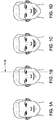
- a score can therefore be given to an emotion sensed on a viewer (for example between 1 to 4 in the examples of figures 1A to 1D , or more accurately between 1 and 10 as for another example).
- An average of the sensed emotions over a plurality of viewers and all over the movie duration can be then given. It can correspond thus to an objective score which can be given to the content.
- this method may not be accurate enough for detecting specific moments of the content where the sensed emotion was at a maximum.
- some viewers can react later than other viewers or some viewers can react and have an emotion at a moment of the content when the majority of the other viewers do not really react. Detection of true emotional moments in the content can then be altered owing to noise due to wrong interpretations of some viewers' reactions.
- the present method and system aim to improve the situation.
- the present system relates to a method of content categorization comprising acts of:
- the sensing of mood expressions of the viewers during the content rendering can simply help to identify the mood of a user ("neutral” or “smiling-laughing”). In examples of embodiment given below, it can quantify more precisely such emotions (neutral or smiling or laughing).
- the method of the present system can then be applied for preselecting moments of the content which can correspond in fact to true emotional moments. Further tests can be carried out then for determining whether a moment of interest of the content is indeed a true emotional moment or not.
- the aforesaid memory can be further arranged for storing timestamps along with corresponding intensities for each viewer, and the method can further comprise tallying acts of:
- Such collected emotional moments can therefore correspond typically to "true” emotional moments as explained above.
- moments of true emotion can be aggregated as one and a single emotional moment.
- Such moments can form extracts which can be, for example, recommended to users of contents.
- a number of moments of interest can be counted over the content fragments and data for these moments of interest are included in a data set of recommendation of the content.
- the simple moments of interest can be a first indication of the quality of the content (many funny moments of a comedy, for example).
- a cumulated duration of moments of interest can be counted over the whole content duration and data pertaining to that cumulated duration are included in a data set of recommendation of the content.
- a number of emotional moments can be counted over the content fragments and data for these emotional moments are included in a data set of recommendation of the content.
- the amount of true emotional moments can then be a score given to the content.
- At least a cumulated duration of emotional moments is counted over the whole content duration and data pertaining to that cumulated duration are included in a data set of recommendation of the content.
- that embodiment can give further, for example, an objective score having the value of a ratio between the cumulated duration of pure emotional moments (true funny moments for example in a comedy), compared to the whole duration of the movie.
- the method can further comprise a step of calculating a content recommendation for a user according to a profile of the user, and that content recommendation can be calculated on a basis of a weighted average, weights of the average depending on the user profile and being assigned to data of a data set of recommendation of the content, said data set comprising at least data of:
- a user may prefer a content having few moments of true emotion rather than a long duration of moments of interest (or the opposite, for instance). Therefore, that embodiment makes it possible to give appropriate recommendations which fit the usual preferences of each user.
- the first threshold is estimated on the basis of metadata related to the content.
- a plurality of types of facial expressions can be sensed and respective first thresholds are associated to each type of facial expression.
- the present systems also teaches a content categorization system for implementing the method above, and comprising to that end:
- processing circuit can comprise one single processor or several processors (PROC, PROC2) connected to each other through a telecommunication network (NET).
- PROC processors
- NET telecommunication network
- the present system further teaches a content categorization device, comprising:
- Such a content categorization device can be the processing device PD in the example of figure 2 .
- the present system is also related to a non-transitory computer-readable storage medium with an executable program stored thereon, wherein the program instructs a processor to perform the method of the invention.
- That processor can be the processor PROC2 of the processing device in the example of figure 2 .
- Figures 3 and 5 show flow charts which can correspond to an example of a main algorithm of the aforesaid executable program.
- a viewer VIE (such as a tester) is watching a multimedia content CONT through a human/machine interface.
- the viewer VIE is watching the content (for example a movie) displayed on a screen DIS.
- the face (or the body) for example of the viewer is filmed with a camera CAM during the rendering of the content on the screen DIS.
- the acquired images data are provided through an input interface INT of a first computer unit which is, in the example shown on figure 2 , an acquiring device AD.
- Successive images of the filmed viewer VIE are processed so as to recognize facial expressions of the viewer during the content rendering.
- Body motions may also be acquired. More particularly, in the example of figures 1A to 1D , a particular emotion (fun, in the presented example) can be sensed by measuring:
- facial expressions can be sensed (fear, fun, astonishment, etc.).
- the whole content's duration is cut into a plurality of time intervals, each time interval being designated by a timestamp TSi.
- the durations of the time intervals can be equal (for example every minute or two minutes of the content), or can be related to durations of scenes of the content.
- a corresponding acquiring device AD at each respective venue can output successive scores assigned to each timestamp TSi and for each sensed emotion EMO1, EMO2, EMO3, etc.
- the score of a smile ( figure 1B ) can be for example "3" in a scale between 0 and 9.
- the score of a laugh ( figure 1C ) can be "6", etc.
- a same AD may be used when different viewers from a same venue are view the content.
- score values SIGN[1], SIGN[2], etc. can be assigned to all successive timestamps TSi for each viewer and for each emotion, respectively EMO1, EMO2, etc.
- the acquiring device AD generally comprises a processing unit including:
- the AD may be a mobile device, a tablet, a computer and more generally any electronic device comprising the here above elements and units.
- a threshold THR can be set to a score above 3 for example (as shown on figure 1B ) if the content is a comedy and if fun is the sensed emotion (while for other emotions such as fear, the threshold can be upper, for example 7 or 8).
- the processing device PD can use informative data related to the content (such as metadata referenced "METAD” on figure 2 , indicating that the content is a comedy for example) which are given further to the scores data "DATA”, as supplementary data SDA about the content, and/or about profiles (PROF) of future users of the content as described below with reference to figure 5 .
- informative data related to the content such as metadata referenced "METAD” on figure 2 , indicating that the content is a comedy for example
- DATA supplementary data SDA about the content
- PROF profiles
- the graph shown on figure 4A can be obtained. It shows, for each timestamp TSi, the number of viewers V having an emotion greater than the threshold THR.
- Each viewer having a score above 3 for example (if the threshold THR is 3) at the timestamp TSi is counted, and the amount V resulting from that counting is compared to a so-called "first threshold" THR1.
- that first threshold THR1 can be chosen relatively low, for example 10%.
- the average can be computed over the V viewers who reacted to the content during that timestamp TSi.
- the corresponding timestamp TSi can be labelled as a moment of true emotion (referenced LAB2 on figure 4B ).
- the processing device PD can comprise:
- the processing device PD may receive the successive score data and other supplementary data SDA associated to an identifier for the content, when processing scores for several content in parallel.
- the identifier is associated to the content in a content database and known from the acquiring device so that the data collected by the acquiring device is associated to a specific content CONT.
- a first step S1 the same content CONT (associated to identifier CONT_ID) is being displayed to N viewers.
- the memory MEM storing the content's data, in the acquiring device AD can be read to that end.
- the content is fragmented into several successive pieces of durations, each piece being assigned with a timestamp TSi, at step S2. More particularly, that step is carried out S2 is preferably carried out during the rendering of the content and the clock CLK of the acquiring device AD ensures the synchronization between:
- step S3 It is thus possible to assign to each timestamp a level of reaction of each viewer, and more particularly to detect facial expressions corresponding to an emotion above a predetermined threshold THR in step S3.
- That threshold can depend on the type of emotion to detect in particular and can depend on the nature of the content (fun, for example, for a comedy).
- metadata related to the content can be used in step S4, so as to set a value for the threshold THR.
- Step S5 is related to loop over the whole number N of viewers for a given content, and more particularly step S5 sets, for the beginning of that loop, a value of "0" to a variable V counting the number (V) of viewers who react above the threshold THR at a timestamp TSi during the content's rendering. Therefore, the test S6 is carried out for each viewer so as to detect if he or she reacts to the content CONT above the threshold THR, at a timestamp TSi. If this is the case (arrow "OK” as output from test S6), then that occurrence for that viewer is counted in a memory and a counter (of variable V for the content referred by its identifier CONT_ID) is incremented accordingly in step S7.
- a counter of variable V for the content referred by its identifier CONT_ID
- the process of detection of emotion jumps to the next timestamp TSi in step S11 (until the end of the content in step S12). Furthermore, the score of the sensed emotions SIGN(V(TSi)) are stored for each viewer in correspondence with each timestamp TSi in step S8. In a possible alternative embodiment, the only scores to be stored are the ones related to viewers who reacted above the threshold THR (and in that case, the arrow from KO-S6 to S8 can be withdrawn). The process is performed for each viewer (step S9) and until the whole number of viewers N is reached (step S10).
- step S13 the number of viewers V for the content CONT who reacted at a given timestamp TSi is compared to a first threshold THR1, and if that number V is above that threshold THR1, then the moment corresponding to that given timestamp TSi is labelled as a moment of interest of the content (LAB 1 is step S14). Otherwise (arrow KO from box S13), data stored relatively to that given timestamp TSi can be deleted in step S15.
- the scores average of the N viewers is compared to a second threshold THR2, in step S16 (as shown on figure 4B commented previously). If that average is higher than the second threshold THR2 (arrow OK as output from test S16), then the moment corresponding to the given timestamp TSi is furthermore labelled as a moment of true emotion (LAB2 in step S17) for the content CONT.
- the process is performed for each timestamp TSi (back to step S11 and until the end of the content in step S12, in the example of figure 3 ).
- each labelled timestamp TSi (or successions of less than k timestamps) can be assigned, in a memory MEM2 of the processing device PD, with a data value (for example "01" for a moment of interest LAB1, and "11" for a moment of true emotion LAB2).
- a data value for example "01” for a moment of interest LAB1, and "11” for a moment of true emotion LAB2).
- steps S13 and S14 are carried out by the processing device PD and are of particular interest to define true emotional moments.
- Steps S16 and S17, as well as steps S18, S19 and step S4 (for carrying out steps S3 and S6) may be seen as related to optional embodiments.
- All labels, timestamps, scores ... calculated by the processing device PD may be stored in a memory in an entry associated to the content identifier CONT_ID.
- VIE-H having usual preferences, such as for example:
- the viewer VIE-H can wish to enjoy movie extracts only corresponding to the most funny passages in the content and, in that example, weights for estimating his recommendation RECO[VIE-H] can be set as follows:
- the present invention can be embedded in a computer program product (having for example an algorithm or a part of that algorithm, as described above with reference to figure 3 ), which comprises all the features enabling the implementation of the methods described herein, and which, when loaded in an information processing system (for example a user equipment or a network element), causes the information processing system to carry out the invention.
- Computer program means or computer program in the present context mean any expression, in any language, code or notation, of a set of instructions intended to cause a system having an information processing capability to perform a particular function either directly or after the conversion to another language.
- Such a computer program can be stored on a computer or machine readable medium allowing data, instructions, messages or message packets, and other machine readable information to be read from the medium.
- the computer or machine readable medium may include non-volatile memory, such as ROM, Flash memory, Disk drive memory, CD-ROM, and other permanent storage. Additionally, a computer or machine readable medium may include, for example, volatile storage such as RAM, buffers, cache memory, and network circuits. Furthermore, the computer or machine readable medium may comprise computer or machine readable information in a transitory state medium such as a network link and/or a network interface, including a wired network or a wireless network, that allow a device to read such computer or machine readable information.
- a transitory state medium such as a network link and/or a network interface, including a wired network or a wireless network, that allow a device to read such computer or machine readable information.
Landscapes
- Engineering & Computer Science (AREA)
- Multimedia (AREA)
- Signal Processing (AREA)
- Databases & Information Systems (AREA)
- Health & Medical Sciences (AREA)
- General Health & Medical Sciences (AREA)
- Social Psychology (AREA)
- Computer Networks & Wireless Communication (AREA)
- Theoretical Computer Science (AREA)
- Physics & Mathematics (AREA)
- General Physics & Mathematics (AREA)
- Computer Security & Cryptography (AREA)
- Human Computer Interaction (AREA)
- Oral & Maxillofacial Surgery (AREA)
- Computing Systems (AREA)
- Information Retrieval, Db Structures And Fs Structures Therefor (AREA)
Abstract
The invention relates to content categorization and a method to that end comprises acts of:
- rendering content within graphical user interfaces to a plurality of viewers ;
- receiving multiple signals related to feedbacks from the plurality of viewers relatively to the rendered content; and
- tallying the multiple received signals from the plurality of viewers to categorize the content.
More particularly:
- the content is fragmented into a plurality of fragments having a predetermined duration,
- each signal comprises data of a facial expression recognition of each viewer, to sense a mood expression of the viewer during the content rendering,
- a memory is provided for storing at least timestamps associated to fragments for which an intensity of the sensed mood expression of a viewer is above a first threshold, and
- a processing circuit is further provided for implementing tallying acts of:
For all the viewers and for each given timestamp, using the memory for counting a first number of viewers for which the intensity is above the first threshold during the fragment corresponding to the given timestamp, and
When the first number is above a second threshold, labelling the fragment corresponding to the given timestamp as a moment of interest of the content.
Description
- The present invention relates to content categorization.
- The content can be a multimedia content such as a movie, or a radio show, etc.
- The content can be deemed to belong to a particular category of content. For example, in a case where the content is a movie, it can belong to the category of comedies, or to the category of horror movies, or thrillers, etc.
- However, it can be more appropriate in some cases to give a quantitative score to a content (a movie in the examples given hereafter), such as a score of intensity of the emotion (laugh, fear, astonishment) felt by viewers when watching the movie. Therefore, testers can watch a movie and a score is given to the movie then.
- It has been found that an efficient way to get objective feedbacks from the viewers, was to sense directly the mood expressions of the viewers by filming their faces and analyzing particular features of their faces for characterizing quantitatively their emotion.
- In the example of
figures 1A to 1D , an emotion of a viewer of a comedy can be quantified by a degree of smile measured on his mouth, the opening of his eyes, etc. The quantification of his emotion can be therefore objective thanks to such measurements. A score can therefore be given to an emotion sensed on a viewer (for example between 1 to 4 in the examples offigures 1A to 1D , or more accurately between 1 and 10 as for another example). - An average of the sensed emotions over a plurality of viewers and all over the movie duration can be then given. It can correspond thus to an objective score which can be given to the content.
- However, this method may not be accurate enough for detecting specific moments of the content where the sensed emotion was at a maximum. In fact, some viewers can react later than other viewers or some viewers can react and have an emotion at a moment of the content when the majority of the other viewers do not really react. Detection of true emotional moments in the content can then be altered owing to noise due to wrong interpretations of some viewers' reactions.
- The present method and system aim to improve the situation.
- To that end, the present system relates to a method of content categorization comprising acts of:
- rendering content within graphical user interfaces to a plurality of viewers ;
- receiving multiple signals related to feedbacks from the plurality of viewers relatively to the rendered content; and
- tallying the multiple received signals from the plurality of viewers to categorize the content.
- More particularly,
- * the content is fragmented into a plurality of fragments having a predetermined duration,
- * each signal comprises data of a facial expression recognition of each viewer, to sense a mood expression of the viewer during the content rendering,
- * a memory is provided for storing at least timestamps associated to fragments for which an intensity of the sensed mood expression of a viewer is above a first threshold, and
- * a processing circuit is further provided for implementing tallying acts of:
- For all the viewers and for each given timestamp, using the memory for counting a first number of viewers for which the intensity is above the first threshold during the fragment corresponding to the given timestamp, and
- When the first number is above a second threshold, labelling the fragment corresponding to the given timestamp as a moment of interest of the content.
- The sensing of mood expressions of the viewers during the content rendering can simply help to identify the mood of a user ("neutral" or "smiling-laughing"). In examples of embodiment given below, it can quantify more precisely such emotions (neutral or smiling or laughing).
- The method of the present system can then be applied for preselecting moments of the content which can correspond in fact to true emotional moments. Further tests can be carried out then for determining whether a moment of interest of the content is indeed a true emotional moment or not.
- As for an example of embodiment, the aforesaid memory can be further arranged for storing timestamps along with corresponding intensities for each viewer, and the method can further comprise tallying acts of:
- for each moment labelled as a moment of interest of the content, calculating an average of the corresponding stored intensities,
- when said average is above a third threshold, the moment of interest is further labelled as an emotional moment.
- Such collected emotional moments can therefore correspond typically to "true" emotional moments as explained above.
- Moreover, in a particular embodiment:
- if at least a first emotional moment and a second emotional moment are separated by less than a predetermined number of fragments, then a whole part of the content extending from the first emotional moment to the second emotional moment, is labeled as one emotional moment.
- Therefore, moments of true emotion can be aggregated as one and a single emotional moment. Such moments can form extracts which can be, for example, recommended to users of contents.
- In an embodiment, a number of moments of interest can be counted over the content fragments and data for these moments of interest are included in a data set of recommendation of the content.
- In fact, the simple moments of interest can be a first indication of the quality of the content (many funny moments of a comedy, for example).
- In a complementary or alternative embodiment, a cumulated duration of moments of interest can be counted over the whole content duration and data pertaining to that cumulated duration are included in a data set of recommendation of the content.
- In a further complementary or alternative embodiment, a number of emotional moments can be counted over the content fragments and data for these emotional moments are included in a data set of recommendation of the content.
- The amount of true emotional moments can then be a score given to the content.
- In a further complementary or alternative embodiment, at least a cumulated duration of emotional moments is counted over the whole content duration and data pertaining to that cumulated duration are included in a data set of recommendation of the content.
- Advantageously, that embodiment can give further, for example, an objective score having the value of a ratio between the cumulated duration of pure emotional moments (true funny moments for example in a comedy), compared to the whole duration of the movie.
- More generally, in a possible embodiment, the method can further comprise a step of calculating a content recommendation for a user according to a profile of the user, and that content recommendation can be calculated on a basis of a weighted average, weights of the average depending on the user profile and being assigned to data of a data set of recommendation of the content, said data set comprising at least data of:
- number of moments of interest counted over the content fragments,
- cumulated duration of moments of interest counted over the whole content duration,
- number of emotional moments counted over the content fragments, and
- cumulated duration of emotional moments counted over the whole content duration.
- For example, a user may prefer a content having few moments of true emotion rather than a long duration of moments of interest (or the opposite, for instance). Therefore, that embodiment makes it possible to give appropriate recommendations which fit the usual preferences of each user.
- In a particular embodiment, the first threshold is estimated on the basis of metadata related to the content.
- In an application where different emotions can be sensed (fear, laugh, etc.), that embodiment makes it possible to raise thresholds related to non-relevant emotions (for example fear for a comedy). Of course, if several emotions are sensed, a full report on the content indicating all kinds of sensed emotions (laughs, tears, etc.) can advantageously be provided. However, if the content is deemed to be a comedy (that information being given by usual metadata associated to the content), fun or laughs can be sensed precisely with a low first threshold.
- Therefore, in an embodiment, a plurality of types of facial expressions can be sensed and respective first thresholds are associated to each type of facial expression.
- The present systems also teaches a content categorization system for implementing the method above, and comprising to that end:
- a processing circuit,
- an input interface connected to the processing circuit so as to receive signals related to feedbacks from a plurality of viewers relatively to a rendered content, each signal comprising data of a facial expression recognition of each viewer, each signal resulting from sensing a mood expression of the viewer during the content rendering,
- a clock connected to the processing circuit for associating a timestamp to a fragment of the content for which an intensity of the sensed mood expression of a viewer is above a first threshold, and a memory connected to the processing circuit for storing at least the timestamp,
- an output interface for delivering content recommendation data,
and wherein the processing circuit is arranged for performing, in cooperation with the input interface, the clock and the memory, tallying acts of:- For all the viewers and for each given timestamp, using the memory for counting a first number of viewers for which the intensity is above the first threshold during the fragment corresponding to the given timestamp, and
- When the first number is above a second threshold, labelling the fragment corresponding to the given timestamp as a moment of interest of the content,
- An example of the present system is shown in
figure 2 that is commented in details below. It is to be noticed that that processing circuit can comprise one single processor or several processors (PROC, PROC2) connected to each other through a telecommunication network (NET). - The present system further teaches a content categorization device, comprising:
- an input interface for receiving timestamps associated to fragments of the content for which an intensity of a sensed mood expression of one or several viewers during a rendering said fragments is above a first threshold,
- a memory for storing at least the received timestamps,
- an output interface for delivering content recommendation data,
- and a processing circuit arranged for performing, in cooperation with the input interface and the memory, tallying acts of:
- For all the viewers and for each given timestamp, using the memory for counting a first number of viewers for which the intensity is above the first threshold during the fragment corresponding to the given timestamp, and
- When the first number is above a second threshold, labelling the fragment corresponding to the given timestamp as a moment of interest of the content,
- Such a content categorization device can be the processing device PD in the example of
figure 2 . - The present system is also related to a non-transitory computer-readable storage medium with an executable program stored thereon, wherein the program instructs a processor to perform the method of the invention.
- That processor can be the processor PROC2 of the processing device in the example of
figure 2 . -
Figures 3 and5 show flow charts which can correspond to an example of a main algorithm of the aforesaid executable program. - More particularly, the present system is illustrated by way of example, and not by way of limitation, in the figures of the accompanying drawings, in which like reference numerals refer to similar elements and in which:
-
Figures 1A to 1D show several degrees of a same emotion sensed on a viewer and, hence, an emotion (laugh in the shown example) that can be quantified and compared to a threshold THR, -
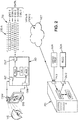
Figure 2 shows an example of system for implementing the method of the present system, -
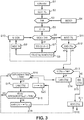
Figure 3 shows main steps of a method according to an example of embodiment of the present system, -
Figure 4A shows an example for selecting timestamps as moments of interest of the content, during which a number of viewers, above a first threshold THR1, has been sensed as having a same emotion, above the threshold THR (shown onfigure 1B ), -
Figure 4B shows an example for labelling timestamps as related to moments of true emotion of the content, during which the average intensity of emotion sensed over the number of viewers selected as shown infigure 4A (above the first threshold THR1) is higher than a second threshold THR2, -
Figure 5 shows other steps of the method for calculating recommendation data based on a predetermined profile of a user. - Referring to
figure 2 , at a venue, a viewer VIE (such as a tester) is watching a multimedia content CONT through a human/machine interface. In the shown example, the viewer VIE is watching the content (for example a movie) displayed on a screen DIS. The face (or the body) for example of the viewer is filmed with a camera CAM during the rendering of the content on the screen DIS. - The acquired images data are provided through an input interface INT of a first computer unit which is, in the example shown on
figure 2 , an acquiring device AD. Successive images of the filmed viewer VIE are processed so as to recognize facial expressions of the viewer during the content rendering. Body motions may also be acquired. More particularly, in the example offigures 1A to 1D , a particular emotion (fun, in the presented example) can be sensed by measuring: - width of the viewer's mouth for detecting a smile (
figure 1B ), - opening of the mouth for detecting laugh (
figure 1C ), - opening of the eyes for detecting a big laugh (
figure 1D ), etc. - Of course, several facial expressions can be sensed (fear, fun, astonishment, etc.).
- More particularly, the whole content's duration is cut into a plurality of time intervals, each time interval being designated by a timestamp TSi. The durations of the time intervals can be equal (for example every minute or two minutes of the content), or can be related to durations of scenes of the content.
- Then, for each viewer (VIE-A, then VIE-B, VIE-C, and so on), a corresponding acquiring device AD at each respective venue can output successive scores assigned to each timestamp TSi and for each sensed emotion EMO1, EMO2, EMO3, etc. In the example shown in
figure 2 , the score of a smile (figure 1B ) can be for example "3" in a scale between 0 and 9. The score of a laugh (figure 1C ) can be "6", etc. A same AD may be used when different viewers from a same venue are view the content. - Therefore, score values SIGN[1], SIGN[2], etc., can be assigned to all successive timestamps TSi for each viewer and for each emotion, respectively EMO1, EMO2, etc.
- To that end, the acquiring device AD generally comprises a processing unit including:
- a processor PROC receiving images data through the interface INT,
- a memory unit MEM storing instructions of a computer program which can be read by the processor PROC so as to run a program for recognizing facial expressions and quantifying related emotions,
- a clock CLK for assigning a score of emotion SIGN to the right timestamp TSi, during the rendering of the content on the display DIS.
- In order to synchronize correctly the scores and the timestamps, in an examplary embodiment, it is preferred to command the display DIS directly through an output graphic interface GIN provided in the acquiring device AD and controlled by the processor PROC. In the example shown in
figure 2 , data of the multimedia content to display are stored in the memory unit MEM (controlled by the processor PROC). - The AD may be a mobile device, a tablet, a computer and more generally any electronic device comprising the here above elements and units.
- Once data of scores corresponding to successive timestamps for each emotion and each viewer are computed (dataset referenced as "DATA" on the right part of
figure 2 ) for the same content CONT, they can be outputted through an output interface OUT and, for example, sent through a network NET to a distant processing device PD which performs the acts of tallying these scores data as described below. - As a first main step that performs the processing device PD (after reception of course of data through its input interface IN2), for each timestamp TSi (and each kind of emotion), all the scores having a value greater than a threshold THR are counted over all the viewers for the content CONT. That threshold THR can be set to a score above 3 for example (as shown on
figure 1B ) if the content is a comedy and if fun is the sensed emotion (while for other emotions such as fear, the threshold can be upper, for example 7 or 8). - Therefore, the processing device PD can use informative data related to the content (such as metadata referenced "METAD" on
figure 2 , indicating that the content is a comedy for example) which are given further to the scores data "DATA", as supplementary data SDA about the content, and/or about profiles (PROF) of future users of the content as described below with reference tofigure 5 . - Once the scores above the threshold THR are counted over the whole number N of viewers for each timestamp, the graph shown on
figure 4A can be obtained. It shows, for each timestamp TSi, the number of viewers V having an emotion greater than the threshold THR. Each viewer having a score above 3 for example (if the threshold THR is 3) at the timestamp TSi is counted, and the amount V resulting from that counting is compared to a so-called "first threshold" THR1. As for an example, that first threshold THR1 can be chosen relatively low, for example 10%. Therefore, when the number of viewers V who reacted to the content (having a score of emotion higher than THR=3 for example) at a moment TSi is above 10% (for example more than 100 people over one thousand viewers), then that moment TSi can be labelled as a moment of interest of the content (reference LAB1 offigure 4A ). - Then, referring now to
figure 4B , for each timestamp TSi labelled as a moment of interest LAB1, an average score over the whole number N of viewers (N=1000 for example) is computed and compared to a so-called "second threshold" THR2 (for example THR2=5). As an alternative embodiment, the average can be computed over the V viewers who reacted to the content during that timestamp TSi. - When the calculated average (referenced AVR[SIGN] on
figure 4B ) is higher than the second threshold THR2, then the corresponding timestamp TSi can be labelled as a moment of true emotion (referenced LAB2 onfigure 4B ). - As a further development, if two moments of true emotion are timely separated by less than k successive timestamps, then the whole duration between these two moments can be labelled as a moment of true emotion (as shown with the arrow "j<k" in the example of
figure 4B where finally a duration of 8 timestamps can be labelled as a moment of true emotion). - Referring back now to
figure 2 , in order to perform such a labelling and provide hence objective recommendations, the processing device PD can comprise: - a processor PROC2 receiving successive scores data and possibly other supplementary data SDA through the input interface IN2,
- a memory unit MEM2 storing instructions of a computer program according to the invention so as to perform the aforesaid tallying acts when such instructions are run by the processor PROC2,
- and an output interface OU2 controlled by the processor PROC2 so as to deliver recommendation data ODA.
- The processing device PD may receive the successive score data and other supplementary data SDA associated to an identifier for the content, when processing scores for several content in parallel. The identifier is associated to the content in a content database and known from the acquiring device so that the data collected by the acquiring device is associated to a specific content CONT.
- The whole steps of the method according to an embodiment of the present system are commented hereafter with reference to
figure 3 . - In a first step S1, the same content CONT (associated to identifier CONT_ID) is being displayed to N viewers. For example the memory MEM storing the content's data, in the acquiring device AD, can be read to that end. Furthermore, the content is fragmented into several successive pieces of durations, each piece being assigned with a timestamp TSi, at step S2. More particularly, that step is carried out S2 is preferably carried out during the rendering of the content and the clock CLK of the acquiring device AD ensures the synchronization between:
- the assumed timestamps during the content's rendering, and
- the assumed timestamps corresponding to moments when reactions of a viewer can be sensed.
- It is thus possible to assign to each timestamp a level of reaction of each viewer, and more particularly to detect facial expressions corresponding to an emotion above a predetermined threshold THR in step S3. That threshold can depend on the type of emotion to detect in particular and can depend on the nature of the content (fun, for example, for a comedy). To that end, metadata related to the content can be used in step S4, so as to set a value for the threshold THR.
- Step S5 is related to loop over the whole number N of viewers for a given content, and more particularly step S5 sets, for the beginning of that loop, a value of "0" to a variable V counting the number (V) of viewers who react above the threshold THR at a timestamp TSi during the content's rendering. Therefore, the test S6 is carried out for each viewer so as to detect if he or she reacts to the content CONT above the threshold THR, at a timestamp TSi. If this is the case (arrow "OK" as output from test S6), then that occurrence for that viewer is counted in a memory and a counter (of variable V for the content referred by its identifier CONT_ID) is incremented accordingly in step S7. Otherwise (arrow "KO" as output from test S6), the process of detection of emotion jumps to the next timestamp TSi in step S11 (until the end of the content in step S12). Furthermore, the score of the sensed emotions SIGN(V(TSi)) are stored for each viewer in correspondence with each timestamp TSi in step S8. In a possible alternative embodiment, the only scores to be stored are the ones related to viewers who reacted above the threshold THR (and in that case, the arrow from KO-S6 to S8 can be withdrawn). The process is performed for each viewer (step S9) and until the whole number of viewers N is reached (step S10).
- Once the process is carried out for all the viewers and all the timestamps, in step S13, the number of viewers V for the content CONT who reacted at a given timestamp TSi is compared to a first threshold THR1, and if that number V is above that threshold THR1, then the moment corresponding to that given timestamp TSi is labelled as a moment of interest of the content (
LAB 1 is step S14). Otherwise (arrow KO from box S13), data stored relatively to that given timestamp TSi can be deleted in step S15. - Furthermore, for that given timestamp TSi, when labelled as a moment of interest LAB1, the scores average of the N viewers (or possibly over only the V viewers reacting at TSi) is compared to a second threshold THR2, in step S16 (as shown on
figure 4B commented previously). If that average is higher than the second threshold THR2 (arrow OK as output from test S16), then the moment corresponding to the given timestamp TSi is furthermore labelled as a moment of true emotion (LAB2 in step S17) for the content CONT. - In step S18, a test can be performed so as to detect whether two timestamps TSi and TSj corresponding to two successive moments labelled as moments of true emotion LAB2 are separated by less than k timestamps (for example k=5), in order to label, in step S19, the whole passage of the content extending from timestamp TSi to timestamp TSj as a moment of true emotion LAB2.
- The process is performed for each timestamp TSi (back to step S11 and until the end of the content in step S12, in the example of
figure 3 ). - Therefore, in practice, each labelled timestamp TSi (or successions of less than k timestamps) can be assigned, in a memory MEM2 of the processing device PD, with a data value (for example "01" for a moment of interest LAB1, and "11" for a moment of true emotion LAB2). This makes it possible then to build extracts of the content, and/or count the number of timestamps having a particular value, or count the whole duration of those labelled moments, in order to provide recommendations.
- The particular steps S13 and S14 are carried out by the processing device PD and are of particular interest to define true emotional moments. Steps S16 and S17, as well as steps S18, S19 and step S4 (for carrying out steps S3 and S6) may be seen as related to optional embodiments. All labels, timestamps, scores ... calculated by the processing device PD may be stored in a memory in an entry associated to the content identifier CONT_ID.
- Then, referring now to
figure 5 , for a viewer VIE-H having usual preferences, such as for example: - enjoying comedies during which the spectator smiles during mainly the whole movie,
- but not appreciating that much comedies having very funny passages but only few passages of that kind (while the other passages are rather astonishing for example),
- 30% (=%P1) assigned to the number of moments of interest Numb[LAB1],
- 50% (=%P2) assigned to the whole cumulated duration of those moments of interest Dur[LAB1(TSi)],
- 10% (=%P3) assigned to the number of moments of true emotion Numb[LAB2],
- 10% (=%P4) assigned to the whole cumulated duration of those moments of true emotion Dur[LAB2(TSi)].
- In another example, the viewer VIE-H can wish to enjoy movie extracts only corresponding to the most funny passages in the content and, in that example, weights for estimating his recommendation RECO[VIE-H] can be set as follows:
- 10% (=%P1) assigned to the number of moments of interest Numb[LAB1],
- 10% (=%P2) assigned to the whole cumulated duration of those moments of interest Dur[LAB1(TSi)],
- 30% (=%P3) assigned to the number of moments of true emotion Numb[LAB2],
- 50% (=%P4) assigned to the whole cumulated duration of those moments of true emotion Dur[LAB2(TSi)].
- The present invention can be embedded in a computer program product (having for example an algorithm or a part of that algorithm, as described above with reference to
figure 3 ), which comprises all the features enabling the implementation of the methods described herein, and which, when loaded in an information processing system (for example a user equipment or a network element), causes the information processing system to carry out the invention. Computer program means or computer program in the present context mean any expression, in any language, code or notation, of a set of instructions intended to cause a system having an information processing capability to perform a particular function either directly or after the conversion to another language. Such a computer program can be stored on a computer or machine readable medium allowing data, instructions, messages or message packets, and other machine readable information to be read from the medium. The computer or machine readable medium may include non-volatile memory, such as ROM, Flash memory, Disk drive memory, CD-ROM, and other permanent storage. Additionally, a computer or machine readable medium may include, for example, volatile storage such as RAM, buffers, cache memory, and network circuits. Furthermore, the computer or machine readable medium may comprise computer or machine readable information in a transitory state medium such as a network link and/or a network interface, including a wired network or a wireless network, that allow a device to read such computer or machine readable information.
Claims (13)
- A method of content categorization comprising acts of:rendering content within graphical user interfaces to a plurality of viewers ;receiving multiple signals related to feedbacks from the plurality of viewers relatively to the rendered content; andtallying the multiple received signals from the plurality of viewers to categorize the content,wherein:* the content is fragmented into a plurality of fragments having a predetermined duration,* each signal comprises data of a facial expression recognition of each viewer, to sense a mood expression of the viewer during the content rendering,* a memory is provided for storing at least timestamps associated to fragments for which an intensity of the sensed mood expression of a viewer is above a first threshold, and* a processing circuit is further provided for implementing tallying acts of:- For all the viewers and for each given timestamp, using the memory for counting a first number of viewers for which the intensity is above the first threshold during the fragment corresponding to the given timestamp, and- When the first number is above a second threshold, labelling the fragment corresponding to the given timestamp as a moment of interest of the content.
- The method of claim 1, wherein the memory is further arranged for storing timestamps along with corresponding intensities for each viewer, and the method further comprises tallying acts of:- for each moment labelled as a moment of interest of the content, calculating an average of the corresponding stored intensities,- when said average is above a third threshold, the moment of interest is further labelled as an emotional moment.
- The method of claim 2, wherein:- if at least a first emotional moment and a second emotional moment are separated by less than a predetermined number of fragments, then a whole part of the content extending from the first emotional moment to the second emotional moment, is labeled as one emotional moment.
- The method according to claim 1, wherein a number of moments of interest is counted over the content fragments and data of said number are included in a data set of recommendation of the content.
- The method according to claim 1, wherein a cumulated duration of moments of interest is counted over the whole content duration and data of said cumulated duration are included in a data set of recommendation of the content.
- The method according to claim 3, wherein a number of emotional moments is counted over the content fragments and data of said number are included in a data set of recommendation of the content.
- The method according to claim 3, wherein at least a cumulated duration of emotional moments is counted over the whole content duration and data of said cumulated duration are included in a data set of recommendation of the content.
- The method according to claim 3, further comprising a step of calculating a content recommendation for a user according to a profile of the user, and wherein said content recommendation is calculated on a basis of a weighted average, weights of the average depending on the user profile and being assigned to data of a data set of recommendation of the content, said data set comprising at least data of:- number of moments of interest counted over the content fragments,- cumulated duration of moments of interest counted over the whole content duration,- number of emotional moments counted over the content fragments, and- cumulated duration of emotional moments counted over the whole content duration.
- The method according to claim 1, wherein the first threshold is estimated on the basis of metadata related to the content.
- The method of claim 1, wherein a plurality of types of facial expressions is sensed and respective first thresholds are associated to each type of facial expression.
- A content categorization system, comprising:- a processing circuit,- an input interface connected to the processing circuit so as to receive signals related to feedbacks from a plurality of viewers relatively to a rendered content, each signal comprising data of a facial expression recognition of each viewer, each signal resulting from sensing a mood expression of the viewer during the content rendering,- a clock connected to the processing circuit for associating a timestamp to a fragment of the content for which an intensity of the sensed mood expression of a viewer is above a first threshold, and a memory connected to the processing circuit for storing at least the timestamp,- an output interface for delivering content recommendation data,so as to feed the output interface with content recommendation data derived at least from moments of interest of the content.
and wherein the processing circuit is arranged for performing, in cooperation with the input interface, the clock and the memory, tallying acts of:- For all the viewers and for each given timestamp, using the memory for counting a first number of viewers for which the intensity is above the first threshold during the fragment corresponding to the given timestamp, and- When the first number is above a second threshold, labelling the fragment corresponding to the given timestamp as a moment of interest of the content, - A content categorization device, comprising:- an input interface for receiving timestamps associated to fragments of the content for which an intensity of a sensed mood expression of one or several viewers during a rendering said fragments is above a first threshold,- a memory for storing at least the received timestamps,- an output interface for delivering content recommendation data,- and a processing circuit arranged for performing, in cooperation with the input interface and the memory, tallying acts of:- For all the viewers and for each given timestamp, using the memory for counting a first number of viewers for which the intensity is above the first threshold during the fragment corresponding to the given timestamp, and- When the first number is above a second threshold, labelling the fragment corresponding to the given timestamp as a moment of interest of the content,so as to feed the output interface with content recommendation data derived at least from moments of interest of the content.
- A non-transitory computer-readable storage medium with an executable program stored thereon, wherein the program instructs a processor to perform the method of claim 1.
Applications Claiming Priority (1)
| Application Number | Priority Date | Filing Date | Title |
|---|---|---|---|
| US201662320344P | 2016-04-08 | 2016-04-08 |
Publications (1)
| Publication Number | Publication Date |
|---|---|
| EP3229178A1 true EP3229178A1 (en) | 2017-10-11 |
Family
ID=58536792
Family Applications (1)
| Application Number | Title | Priority Date | Filing Date |
|---|---|---|---|
| EP17165514.5A Withdrawn EP3229178A1 (en) | 2016-04-08 | 2017-04-07 | Content categorization using facial expression recognition, with improved detection of moments of interest |
Country Status (2)
| Country | Link |
|---|---|
| US (1) | US9918128B2 (en) |
| EP (1) | EP3229178A1 (en) |
Cited By (2)
| Publication number | Priority date | Publication date | Assignee | Title |
|---|---|---|---|---|
| CN112492389A (en) * | 2019-09-12 | 2021-03-12 | 上海哔哩哔哩科技有限公司 | Video pushing method, video playing method, computer device and storage medium |
| US20230290109A1 (en) * | 2022-03-14 | 2023-09-14 | Disney Enterprises, Inc. | Behavior-based computer vision model for content selection |
Families Citing this family (14)
| Publication number | Priority date | Publication date | Assignee | Title |
|---|---|---|---|---|
| US20180115802A1 (en) * | 2015-06-23 | 2018-04-26 | Gregory Knox | Methods and systems for generating media viewing behavioral data |
| US20180124458A1 (en) * | 2015-06-23 | 2018-05-03 | Gregory Knox | Methods and systems for generating media viewing experiential data |
| US11707216B2 (en) * | 2016-07-21 | 2023-07-25 | Comcast Cable Communications, Llc | Recommendations based on biometric feedback from wearable device |
| US10237615B1 (en) * | 2018-02-15 | 2019-03-19 | Teatime Games, Inc. | Generating highlight videos in an online game from user expressions |
| US10848792B2 (en) * | 2018-03-05 | 2020-11-24 | Maestro Interactive, Inc. | System and method for providing audience-targeted content triggered by events during program |
| CN109523290A (en) * | 2018-09-14 | 2019-03-26 | 平安科技(深圳)有限公司 | Evaluation method, device, equipment and medium are paid attention to the class based on the micro- expression of audience |
| CN110970113B (en) * | 2018-09-30 | 2023-04-14 | 宁波方太厨具有限公司 | Intelligent menu recommendation method based on user emotion |
| USD896254S1 (en) * | 2018-10-30 | 2020-09-15 | Perfect Mobile Corp. | Display screen with graphical user interface |
| US11785194B2 (en) | 2019-04-19 | 2023-10-10 | Microsoft Technology Licensing, Llc | Contextually-aware control of a user interface displaying a video and related user text |
| US11026000B2 (en) * | 2019-04-19 | 2021-06-01 | Microsoft Technology Licensing, Llc | Previewing video content referenced by typed hyperlinks in comments |
| US11678031B2 (en) | 2019-04-19 | 2023-06-13 | Microsoft Technology Licensing, Llc | Authoring comments including typed hyperlinks that reference video content |
| US20220174357A1 (en) * | 2020-11-30 | 2022-06-02 | At&T Intellectual Property I, L.P. | Simulating audience feedback in remote broadcast events |
| US11503090B2 (en) | 2020-11-30 | 2022-11-15 | At&T Intellectual Property I, L.P. | Remote audience feedback mechanism |
| WO2023197296A1 (en) | 2022-04-15 | 2023-10-19 | Orange | Hand-free method for operating a device with an operating interface |
Citations (3)
| Publication number | Priority date | Publication date | Assignee | Title |
|---|---|---|---|---|
| US20120222057A1 (en) * | 2011-02-27 | 2012-08-30 | Richard Scott Sadowsky | Visualization of affect responses to videos |
| US20150172770A1 (en) * | 2013-12-13 | 2015-06-18 | Tokyo Institute Of Technology | Display apparatus and control method thereof |
| US20150347903A1 (en) * | 2014-05-30 | 2015-12-03 | Adobe Systems Incorporated | Method and apparatus for performing sentiment analysis based on user reactions to displayable content |
Family Cites Families (85)
| Publication number | Priority date | Publication date | Assignee | Title |
|---|---|---|---|---|
| US7054547B1 (en) * | 1992-02-07 | 2006-05-30 | Max Abecassis | Disc having a segment code for prohibiting a play control function during a playing of a video segment |
| US5434678A (en) * | 1993-01-11 | 1995-07-18 | Abecassis; Max | Seamless transmission of non-sequential video segments |
| US6112186A (en) * | 1995-06-30 | 2000-08-29 | Microsoft Corporation | Distributed system for facilitating exchange of user information and opinion using automated collaborative filtering |
| GB9708061D0 (en) * | 1997-04-22 | 1997-06-11 | Two Way Tv Ltd | Interactive, predictive game control system |
| JP2001525706A (en) * | 1997-05-16 | 2001-12-11 | レスメッド・リミテッド | Respiratory analysis system |
| US7117518B1 (en) * | 1998-05-14 | 2006-10-03 | Sony Corporation | Information retrieval method and apparatus |
| TW463503B (en) * | 1998-08-26 | 2001-11-11 | United Video Properties Inc | Television chat system |
| ES2235296T3 (en) * | 1998-09-11 | 2005-07-01 | Two Way Media Limited | DISTRIBUTION OF INTERACTIVE APPLICATIONS. |
| US6408128B1 (en) * | 1998-11-12 | 2002-06-18 | Max Abecassis | Replaying with supplementary information a segment of a video |
| US7120880B1 (en) * | 1999-02-25 | 2006-10-10 | International Business Machines Corporation | Method and system for real-time determination of a subject's interest level to media content |
| AUPP974599A0 (en) * | 1999-04-14 | 1999-05-06 | Resmed Limited | Detection and classification of breathing patterns |
| US6413225B1 (en) * | 1999-06-18 | 2002-07-02 | Vivometrics, Inc. | Quantitative calibration of breathing monitors with transducers placed on both rib cage and abdomen |
| US6259486B1 (en) * | 1999-10-20 | 2001-07-10 | A. Pascal Mahvi | Sensor unit for controlling television set operation |
| JP2003517642A (en) * | 1999-12-17 | 2003-05-27 | プロモ・ヴィユー | Interactive sales promotion information communication system |
| CA2405848C (en) * | 2000-04-17 | 2010-11-09 | Vivometrics, Inc. | Systems and methods for ambulatory monitoring of physiological signs |
| WO2002015777A1 (en) * | 2000-08-18 | 2002-02-28 | Cygnus, Inc. | Methods and devices for prediction of hypoglycemic events |
| JP4765182B2 (en) * | 2001-01-19 | 2011-09-07 | ソニー株式会社 | Interactive television communication method and interactive television communication client device |
| US6341504B1 (en) * | 2001-01-31 | 2002-01-29 | Vivometrics, Inc. | Composite elastic and wire fabric for physiological monitoring apparel |
| US7113916B1 (en) * | 2001-09-07 | 2006-09-26 | Hill Daniel A | Method of facial coding monitoring for the purpose of gauging the impact and appeal of commercially-related stimuli |
| US20030063222A1 (en) * | 2001-10-03 | 2003-04-03 | Sony Corporation | System and method for establishing TV setting based on viewer mood |
| AU2002357929A1 (en) * | 2001-12-21 | 2003-07-30 | Cias, Inc. | Combination casino table game imaging system for automatically recognizing the faces of players -- as well as terrorists and other undesirables -- and for recognizing wagered gaming chips |
| US6783498B2 (en) * | 2002-03-26 | 2004-08-31 | Vivometrics, Inc. | Method and system for extracting cardiac parameters from plethysmographic signals |
| US7207948B2 (en) * | 2004-06-24 | 2007-04-24 | Vivometrics, Inc. | Systems and methods for monitoring cough |
| US7727161B2 (en) * | 2003-04-10 | 2010-06-01 | Vivometrics, Inc. | Systems and methods for monitoring cough |
| JP4832289B2 (en) * | 2003-04-10 | 2011-12-07 | アディダス アーゲー | Respiratory event detection system and method |
| US20050086069A1 (en) * | 2003-07-15 | 2005-04-21 | Kaleidescape, Inc. | Separable presentation control rules with distinct control effects |
| WO2005113099A2 (en) * | 2003-05-30 | 2005-12-01 | America Online, Inc. | Personalizing content |
| JP4238678B2 (en) * | 2003-09-08 | 2009-03-18 | ソニー株式会社 | Receiving apparatus and receiving method, recording medium, and program |
| EP2508124A3 (en) * | 2003-11-18 | 2014-01-01 | Adidas AG | System for processing data from ambulatory physiological monitoring |
| US8190907B2 (en) * | 2004-08-11 | 2012-05-29 | Sony Computer Entertainment Inc. | Process and apparatus for automatically identifying user of consumer electronics |
| US8033996B2 (en) * | 2005-07-26 | 2011-10-11 | Adidas Ag | Computer interfaces including physiologically guided avatars |
| US20060256133A1 (en) * | 2005-11-05 | 2006-11-16 | Outland Research | Gaze-responsive video advertisment display |
| US20100146536A1 (en) * | 2005-11-14 | 2010-06-10 | Michael Craner | Parental media palettes |
| US8094928B2 (en) * | 2005-11-14 | 2012-01-10 | Microsoft Corporation | Stereo video for gaming |
| US8442125B2 (en) * | 2005-11-29 | 2013-05-14 | Google Inc. | Determining popularity ratings using social and interactive applications for mass media |
| US8191098B2 (en) * | 2005-12-22 | 2012-05-29 | Verimatrix, Inc. | Multi-source bridge content distribution system and method |
| US20070150916A1 (en) * | 2005-12-28 | 2007-06-28 | James Begole | Using sensors to provide feedback on the access of digital content |
| KR101111913B1 (en) * | 2006-01-05 | 2012-02-15 | 삼성전자주식회사 | Display device and power control method |
| US20070203911A1 (en) * | 2006-02-07 | 2007-08-30 | Fu-Sheng Chiu | Video weblog |
| US20070270671A1 (en) * | 2006-04-10 | 2007-11-22 | Vivometrics, Inc. | Physiological signal processing devices and associated processing methods |
| US20070271580A1 (en) * | 2006-05-16 | 2007-11-22 | Bellsouth Intellectual Property Corporation | Methods, Apparatus and Computer Program Products for Audience-Adaptive Control of Content Presentation Based on Sensed Audience Demographics |
| JP2008054085A (en) * | 2006-08-25 | 2008-03-06 | Hitachi Ltd | Broadcast receiving apparatus and activation method thereof |
| US8932124B2 (en) * | 2006-08-31 | 2015-01-13 | Cfph, Llc | Game of chance systems and methods |
| US8758109B2 (en) * | 2008-08-20 | 2014-06-24 | Cfph, Llc | Game of chance systems and methods |
| WO2008055078A2 (en) * | 2006-10-27 | 2008-05-08 | Vivometrics, Inc. | Identification of emotional states using physiological responses |
| US20080169930A1 (en) * | 2007-01-17 | 2008-07-17 | Sony Computer Entertainment Inc. | Method and system for measuring a user's level of attention to content |
| US7706291B2 (en) * | 2007-08-01 | 2010-04-27 | Zeugma Systems Inc. | Monitoring quality of experience on a per subscriber, per session basis |
| CN101925915B (en) * | 2007-11-21 | 2016-06-22 | 高通股份有限公司 | Equipment accesses and controls |
| CN103369391B (en) * | 2007-11-21 | 2016-12-28 | 高通股份有限公司 | The method and system of electronic equipment is controlled based on media preferences |
| US20090158309A1 (en) * | 2007-12-12 | 2009-06-18 | Hankyu Moon | Method and system for media audience measurement and spatial extrapolation based on site, display, crowd, and viewership characterization |
| US8615479B2 (en) * | 2007-12-13 | 2013-12-24 | The Invention Science Fund I, Llc | Methods and systems for indicating behavior in a population cohort |
| US20090164917A1 (en) * | 2007-12-19 | 2009-06-25 | Kelly Kevin M | System and method for remote delivery of healthcare and treatment services |
| US8095680B2 (en) * | 2007-12-20 | 2012-01-10 | Telefonaktiebolaget Lm Ericsson (Publ) | Real-time network transport protocol interface method and apparatus |
| US9900557B2 (en) * | 2007-12-28 | 2018-02-20 | Verizon Patent And Licensing Inc. | Method and apparatus for remote set-top box management |
| US7889073B2 (en) * | 2008-01-31 | 2011-02-15 | Sony Computer Entertainment America Llc | Laugh detector and system and method for tracking an emotional response to a media presentation |
| US20090228397A1 (en) * | 2008-03-07 | 2009-09-10 | Blue Kai, Lnc. | Exchange for tagged user information with scarcity control |
| JP5089453B2 (en) * | 2008-03-24 | 2012-12-05 | 株式会社コナミデジタルエンタテインメント | Image processing apparatus, image processing apparatus control method, and program |
| US7984324B2 (en) * | 2008-03-27 | 2011-07-19 | Emc Corporation | Systems and methods for managing stalled storage devices |
| US8430750B2 (en) * | 2008-05-22 | 2013-04-30 | Broadcom Corporation | Video gaming device with image identification |
| US8213689B2 (en) * | 2008-07-14 | 2012-07-03 | Google Inc. | Method and system for automated annotation of persons in video content |
| US8949161B2 (en) * | 2008-09-12 | 2015-02-03 | Alcatel Lucent | Cache management system and method and content distribution system incorporating the same |
| US8176510B2 (en) * | 2008-11-12 | 2012-05-08 | United Video Properties, Inc. | Systems and methods for detecting inconsistent user actions and providing feedback |
| WO2010068497A2 (en) * | 2008-11-25 | 2010-06-17 | Jeffrey Harrang | Viral distribution of digital media content over social networks |
| US8631070B2 (en) * | 2009-03-27 | 2014-01-14 | T-Mobile Usa, Inc. | Providing event data to a group of contacts |
| US8388429B2 (en) * | 2009-05-29 | 2013-03-05 | Universal Entertainment Corporation | Player tracking apparatus and gaming machine and control method thereof |
| JP5432995B2 (en) * | 2009-05-29 | 2014-03-05 | 株式会社ユニバーサルエンターテインメント | Game system |
| US8875167B2 (en) * | 2009-09-21 | 2014-10-28 | Mobitv, Inc. | Implicit mechanism for determining user response to media |
| US8347325B2 (en) * | 2009-12-22 | 2013-01-01 | Vizio, Inc. | System, method and apparatus for viewer detection and action |
| US8712110B2 (en) * | 2009-12-23 | 2014-04-29 | The Invention Science Fund I, LC | Identifying a characteristic of an individual utilizing facial recognition and providing a display for the individual |
| US20110193971A1 (en) * | 2010-02-10 | 2011-08-11 | A-Tec Subsystem Inc. | Network camera |
| US20110283189A1 (en) * | 2010-05-12 | 2011-11-17 | Rovi Technologies Corporation | Systems and methods for adjusting media guide interaction modes |
| US8924993B1 (en) * | 2010-11-11 | 2014-12-30 | Google Inc. | Video content analysis for automatic demographics recognition of users and videos |
| JP2012174237A (en) * | 2011-02-24 | 2012-09-10 | Nintendo Co Ltd | Display control program, display control device, display control system and display control method |
| US8401343B2 (en) * | 2011-03-27 | 2013-03-19 | Edwin Braun | System and method for defining an augmented reality character in computer generated virtual reality using coded stickers |
| US8860805B2 (en) * | 2011-04-12 | 2014-10-14 | Lg Electronics Inc. | Electronic device and method of controlling the same |
| US9015746B2 (en) * | 2011-06-17 | 2015-04-21 | Microsoft Technology Licensing, Llc | Interest-based video streams |
| US20130018719A1 (en) * | 2011-07-13 | 2013-01-17 | Comscore, Inc. | Analyzing effects of advertising |
| US8769556B2 (en) * | 2011-10-28 | 2014-07-01 | Motorola Solutions, Inc. | Targeted advertisement based on face clustering for time-varying video |
| EP2788909A4 (en) * | 2011-12-06 | 2015-08-12 | Dianovator Ab | Medical arrangements and a method for prediction of a value related to a medical condition |
| US9043260B2 (en) * | 2012-03-16 | 2015-05-26 | Nokia Technologies Oy | Method and apparatus for contextual content suggestion |
| EP2642484A1 (en) * | 2012-03-23 | 2013-09-25 | Thomson Licensing | Method for setting a watching level for an audiovisual content |
| US8819738B2 (en) * | 2012-05-16 | 2014-08-26 | Yottio, Inc. | System and method for real-time composite broadcast with moderation mechanism for multiple media feeds |
| US8689250B2 (en) * | 2012-06-29 | 2014-04-01 | International Business Machines Corporation | Crowd sourced, content aware smarter television systems |
| US20150070516A1 (en) * | 2012-12-14 | 2015-03-12 | Biscotti Inc. | Automatic Content Filtering |
| US10660533B2 (en) * | 2014-09-30 | 2020-05-26 | Rapsodo Pte. Ltd. | Remote heart rate monitoring based on imaging for moving subjects |
-
2017
- 2017-04-05 US US15/479,542 patent/US9918128B2/en active Active
- 2017-04-07 EP EP17165514.5A patent/EP3229178A1/en not_active Withdrawn
Patent Citations (3)
| Publication number | Priority date | Publication date | Assignee | Title |
|---|---|---|---|---|
| US20120222057A1 (en) * | 2011-02-27 | 2012-08-30 | Richard Scott Sadowsky | Visualization of affect responses to videos |
| US20150172770A1 (en) * | 2013-12-13 | 2015-06-18 | Tokyo Institute Of Technology | Display apparatus and control method thereof |
| US20150347903A1 (en) * | 2014-05-30 | 2015-12-03 | Adobe Systems Incorporated | Method and apparatus for performing sentiment analysis based on user reactions to displayable content |
Cited By (4)
| Publication number | Priority date | Publication date | Assignee | Title |
|---|---|---|---|---|
| CN112492389A (en) * | 2019-09-12 | 2021-03-12 | 上海哔哩哔哩科技有限公司 | Video pushing method, video playing method, computer device and storage medium |
| CN112492389B (en) * | 2019-09-12 | 2022-07-19 | 上海哔哩哔哩科技有限公司 | Video pushing method, video playing method, computer device and storage medium |
| US20230290109A1 (en) * | 2022-03-14 | 2023-09-14 | Disney Enterprises, Inc. | Behavior-based computer vision model for content selection |
| US12165382B2 (en) * | 2022-03-14 | 2024-12-10 | Disney Enterprises, Inc. | Behavior-based computer vision model for content selection |
Also Published As
| Publication number | Publication date |
|---|---|
| US20170295402A1 (en) | 2017-10-12 |
| US9918128B2 (en) | 2018-03-13 |
Similar Documents
| Publication | Publication Date | Title |
|---|---|---|
| US9918128B2 (en) | Content categorization using facial expression recognition, with improved detection of moments of interest | |
| CN110248258B (en) | Recommendation method and device for video clips, storage medium and computer equipment | |
| CN104994425B (en) | A kind of video identifier method and apparatus | |
| CN103718166B (en) | Information processing device, information processing method | |
| KR20220026471A (en) | Video clip extraction method, video clip extraction apparatus and storage medium | |
| CN110225367A (en) | It has been shown that, recognition methods and the device of object information in a kind of video | |
| US10200765B2 (en) | Content identification apparatus and content identification method | |
| JP7442211B2 (en) | Synchronizing auxiliary data for content that includes audio | |
| CN114666636B (en) | Audio and video synchronization detection method and computer readable storage medium | |
| CN101365102B (en) | Audience rating statistical method and system based on video content recognition | |
| US10051307B2 (en) | Media selection based on content of broadcast information | |
| CN108509611B (en) | Method and device for pushing information | |
| CN115244939B (en) | System and method for data stream synchronization | |
| CN108737885A (en) | A kind of analysis Online Video plays the method and device of interim card | |
| CN114390351A (en) | Live data statistical method and device, computer equipment and readable storage medium | |
| CN108322827A (en) | Method, system, and computer-readable storage medium for measuring user's video preference | |
| CN112055258A (en) | Time delay testing method and device for loading live broadcast picture and electronic equipment | |
| CN111897466A (en) | Data processing method and device, electronic equipment and storage medium | |
| CN104254019B (en) | information push result detection method and system | |
| US20170351820A1 (en) | Scheduling interaction with a subject | |
| EP3772856A1 (en) | Identification of the intro part of a video content | |
| US11386175B2 (en) | Content recommendation apparatus, method of content recommendation, and content recommendation system | |
| CN113763027B (en) | Recommendation information processing method, recommendation information generation method and device | |
| CN105100825A (en) | Method and apparatus for sequencing metadata events | |
| CN111428806A (en) | Image tag determination method and device, electronic equipment and storage medium |
Legal Events
| Date | Code | Title | Description |
|---|---|---|---|
| PUAI | Public reference made under article 153(3) epc to a published international application that has entered the european phase |
Free format text: ORIGINAL CODE: 0009012 |
|
| AK | Designated contracting states |
Kind code of ref document: A1 Designated state(s): AL AT BE BG CH CY CZ DE DK EE ES FI FR GB GR HR HU IE IS IT LI LT LU LV MC MK MT NL NO PL PT RO RS SE SI SK SM TR |
|
| AX | Request for extension of the european patent |
Extension state: BA ME |
|
| STAA | Information on the status of an ep patent application or granted ep patent |
Free format text: STATUS: THE APPLICATION IS DEEMED TO BE WITHDRAWN |
|
| 18D | Application deemed to be withdrawn |
Effective date: 20180412 |