EP3229162B1 - Access management for digital content - Google Patents
Access management for digital content Download PDFInfo
- Publication number
- EP3229162B1 EP3229162B1 EP17164881.9A EP17164881A EP3229162B1 EP 3229162 B1 EP3229162 B1 EP 3229162B1 EP 17164881 A EP17164881 A EP 17164881A EP 3229162 B1 EP3229162 B1 EP 3229162B1
- Authority
- EP
- European Patent Office
- Prior art keywords
- digital content
- network address
- subscription
- information
- public network
- Prior art date
- Legal status (The legal status is an assumption and is not a legal conclusion. Google has not performed a legal analysis and makes no representation as to the accuracy of the status listed.)
- Active
Links
Images


Classifications
-
- H—ELECTRICITY
- H04—ELECTRIC COMMUNICATION TECHNIQUE
- H04W—WIRELESS COMMUNICATION NETWORKS
- H04W8/00—Network data management
- H04W8/26—Network addressing or numbering for mobility support
-
- H—ELECTRICITY
- H04—ELECTRIC COMMUNICATION TECHNIQUE
- H04W—WIRELESS COMMUNICATION NETWORKS
- H04W12/00—Security arrangements; Authentication; Protecting privacy or anonymity
- H04W12/06—Authentication
-
- H—ELECTRICITY
- H04—ELECTRIC COMMUNICATION TECHNIQUE
- H04L—TRANSMISSION OF DIGITAL INFORMATION, e.g. TELEGRAPHIC COMMUNICATION
- H04L63/00—Network architectures or network communication protocols for network security
- H04L63/08—Network architectures or network communication protocols for network security for authentication of entities
- H04L63/0876—Network architectures or network communication protocols for network security for authentication of entities based on the identity of the terminal or configuration, e.g. MAC address, hardware or software configuration or device fingerprint
-
- H—ELECTRICITY
- H04—ELECTRIC COMMUNICATION TECHNIQUE
- H04L—TRANSMISSION OF DIGITAL INFORMATION, e.g. TELEGRAPHIC COMMUNICATION
- H04L63/00—Network architectures or network communication protocols for network security
- H04L63/10—Network architectures or network communication protocols for network security for controlling access to devices or network resources
- H04L63/107—Network architectures or network communication protocols for network security for controlling access to devices or network resources wherein the security policies are location-dependent, e.g. entities privileges depend on current location or allowing specific operations only from locally connected terminals
-
- H—ELECTRICITY
- H04—ELECTRIC COMMUNICATION TECHNIQUE
- H04L—TRANSMISSION OF DIGITAL INFORMATION, e.g. TELEGRAPHIC COMMUNICATION
- H04L65/00—Network arrangements, protocols or services for supporting real-time applications in data packet communication
- H04L65/1066—Session management
- H04L65/1073—Registration or de-registration
-
- H—ELECTRICITY
- H04—ELECTRIC COMMUNICATION TECHNIQUE
- H04L—TRANSMISSION OF DIGITAL INFORMATION, e.g. TELEGRAPHIC COMMUNICATION
- H04L67/00—Network arrangements or protocols for supporting network services or applications
- H04L67/50—Network services
- H04L67/53—Network services using third party service providers
-
- H—ELECTRICITY
- H04—ELECTRIC COMMUNICATION TECHNIQUE
- H04L—TRANSMISSION OF DIGITAL INFORMATION, e.g. TELEGRAPHIC COMMUNICATION
- H04L67/00—Network arrangements or protocols for supporting network services or applications
- H04L67/50—Network services
- H04L67/60—Scheduling or organising the servicing of application requests, e.g. requests for application data transmissions using the analysis and optimisation of the required network resources
- H04L67/63—Routing a service request depending on the request content or context
-
- H—ELECTRICITY
- H04—ELECTRIC COMMUNICATION TECHNIQUE
- H04W—WIRELESS COMMUNICATION NETWORKS
- H04W12/00—Security arrangements; Authentication; Protecting privacy or anonymity
- H04W12/08—Access security
-
- H—ELECTRICITY
- H04—ELECTRIC COMMUNICATION TECHNIQUE
- H04W—WIRELESS COMMUNICATION NETWORKS
- H04W4/00—Services specially adapted for wireless communication networks; Facilities therefor
- H04W4/02—Services making use of location information
- H04W4/021—Services related to particular areas, e.g. point of interest [POI] services, venue services or geofences
-
- H—ELECTRICITY
- H04—ELECTRIC COMMUNICATION TECHNIQUE
- H04W—WIRELESS COMMUNICATION NETWORKS
- H04W8/00—Network data management
- H04W8/18—Processing of user or subscriber data, e.g. subscribed services, user preferences or user profiles; Transfer of user or subscriber data
-
- G—PHYSICS
- G06—COMPUTING OR CALCULATING; COUNTING
- G06F—ELECTRIC DIGITAL DATA PROCESSING
- G06F21/00—Security arrangements for protecting computers, components thereof, programs or data against unauthorised activity
- G06F21/10—Protecting distributed programs or content, e.g. vending or licensing of copyrighted material ; Digital rights management [DRM]
- G06F21/101—Protecting distributed programs or content, e.g. vending or licensing of copyrighted material ; Digital rights management [DRM] by binding digital rights to specific entities
- G06F21/1011—Protecting distributed programs or content, e.g. vending or licensing of copyrighted material ; Digital rights management [DRM] by binding digital rights to specific entities to devices
Definitions
- the invention concerns in general the technical field of telecommunications networks. More particularly, the invention concerns digital content management.
- Management of access to the digital content is an important area in order to provide easy-to-use services to the consumers.
- the access to the services shall be easy for consumers, but advantageously the access information provides information for the service providers for offering, or tailoring, the services, such as digital content, in a better way.
- the device used for accessing is recognized and the digital content to be provided is selected according to the device in use.
- Some other solutions suggest that a location of a user, i.e. the user terminal, is used for selecting the digital content for a consumer.
- the user device when accessing the digital content service indicates its location in one way or another to the service provider and the service provider's system provides an access to the digital content on that basis.
- Another document EP 2924944 A1 describes a solution for determining identification information on a user of a user terminal for accessing a network. From the service provider's point of view the existing solution do not offer simple, but at the same time reliable, solution for being confident of a location of a user device requesting access to a digital content. Especially, the service provider's may desire to differentiate their services so that a user may access to one type of digital content, or service, in a first location, but to another type of digital content, or service, in a second location.
- the claimed invention relates to a method, a server and a device as defined in independent claims 1, 2 and 3, respectively. Particular embodiments are defined in the dependent claims.
- FIG. 1 illustrates schematically an example of a network environment into which the present invention may be implemented.
- the environment comprises a local area network (LAN) 110 that is connected to a communication network 120, such as an Internet, through a modem device 112 advantageously residing in a facility wherein the LAN 110 is implemented to.
- the LAN may be either implemented wirelessly, with e.g. Wi-Fi technology, or in a wired manner.
- the modem device 112 comprises necessary units and functions to operate as a router for wired and wireless communication in the LAN 110.
- Within the operational area of the LAN one or more communication devices 114A, 114B may get access to the communication network 120 through the LAN 110.
- the network environment comprises also a digital content management system 130.
- the system may comprise a server 132 that has access to database 134 storing the digital content.
- the LAN 110 and the digital content management system 130 are communicatively coupled to a validation server 122 connected to the communication network 120.
- the operation of the validation server 122 will be described in more detail later.
- the communication device may e.g. be a user terminal used in the home LAN. Some non-limiting examples of the communication device are a personal computer, laptop computer, tablet computer, smart phone and so on.
- the communication network connection 120 is subscribed by a user from a service provider, such as a telecom network.
- the service provider maintains subscriber related information which may comprise, but is not limited to, an identifier that is typically unique for each subscriber on some basis.
- the service provider grants a public network address, such as public IP address, to the subscriber, or more specifically to the device that interfaces the communication network, such as the modem 112 in Figure 1 .
- the public network address may be static or dynamic depending on a network implementation by the service provider.
- Figure 1 illustrates also a user device 140 that is mobile in nature and carried by a user.
- the user device 140 may also communicate with the communication network 120 and utilize services provided therefrom. The communication may be performed over mobile communication network or over some local area network (not shown in Figure 1 ).
- the digital content service provider operating the digital content management system 130 may be willing to provide the user of the user device 140 different service, such as digital content, when the user accesses to the digital content management system from the LAN 110, called home LAN from now on, or when the user accesses to the digital content management system from some other location.
- the service provider of the digital service may determine, with an improved probability, if the user device 140 resides in the home LAN with the solution according to the present invention, as will now be described by referring to Figure 2 .
- the user device 140 may e.g. be a laptop computer, tablet computer, smart phone or any other similar device that may perform the operation as described.
- FIG. 2 illustrates schematically a method according to an embodiment of the invention.
- the method is described from the validation server 122 point of view.
- the validation server 122 may be managed by a service provider of the subscription to access the communication network 120 from the home LAN 110.
- the validation server 122 advantageously maintains, or is at least partly involved in the maintenance, of information on public network addresses from which public network address there exists data traffic.
- the solution according to the present invention is based on an idea that a device, such as a communication device 114A, 114B, residing in an operational area of a home LAN network 110 and using a communication service provided by the home LAN 110 is configured to transmit information, e.g. by generating a message, comprising a public network address of the home local area network 110 and an identifier of a subscription of the local area network.
- the device configured to transmit the information is equipped with necessary means and information, such as with the destination address, to perform the transmit of the information.
- the information is received 210 by the validation server 122 that is configured to store the received information, i.e. the identifier with the public network address, in a register.
- the register may be implemented in a memory of the validation server 122 or in a separate entity, such as a database implementation accessible by the validation server 122.
- the device configured to transmit said information to the validation server 122 may e.g. be the communication device being connected to the home LAN 110 or it may be the modem 112 coupling the home LAN 110 to the communication network 120. In both cases the device in question may be configured to operate as described by implementing instructions to cause the device to operate accordingly with a computer program code that is executed by a processing unit, such as with one or more processors, of the device.
- the device in question may store the identifier of the subscription in a memory. The identifier may be obtained from the memory when the information is transmitted.
- the device is configured to insert the public network address maintained in the modem and obtainable therefrom in the information to be transmitted.
- the information may be transmitted in a dedicated message collecting the pieces of information in the message.
- the transmit of said information may be performed only once or repetitively according to a predetermined schedule.
- the one-time transmit is applicable if the public network address is static and if the public network address changes dynamically the repetitive transmit of information is advantageous, and in some cases necessary.
- the identifier of a subscription of the local area network may refer to a client reference stored in a memory of the device transmitting it, or to an identifier assigned to the device transmitting the information or to an identifier assigned to a software agent transmitting the information.
- a term identifier of a subscription is used for covering at least the mentioned alternatives as well as any other by means of which a subscriber may either directly or indirectly recognized.
- the communication device 114A, 114B or the modem device 112 may be configured so that when it is detected that the service provider has assigned a new public network address for the subscription in the dynamic address allocation scheme, the communication device 114A, 114B or the modem device 112 is configured to generate and to transmit information comprising the new public network address of the home local area network 110 and an identifier of a subscription of the local area network.
- the triggering of the message generation and transmit is the detection of the new public network address by the communication device 114A, 114B and/or by the modem device 112.
- at least some of the mentioned devices may be configured to, e.g.
- the message generated and transmitted may also comprise additional information, such as a time stamp representing the time when the public network address is dynamically updated and/or some performance metrics, for example.
- additional information such as an identifier, of the device generating and transmitting the information to the validation server may be included in the message. This may be used, by the validation server, for monitoring that the "update" messages come always from the same device. In this manner it is possible to increase security at least partly.
- the triggering of the generation and transmit of the message may also be implemented so that it is performed according to a specific scheme, e.g. based on time.
- a user device 140 initiates, either automatically or in response to user action, an access right request towards a digital content management system 130 with an aim to use a service provided by the system 130.
- the access right request may carry, as is the case in TCP/IP protocol, a public network address of the requesting party to the digital content management system 130.
- the public network address is different to the one of the home LAN 110.
- the public network address is the public network address granted to the modem of the home LAN.
- the user device 140 itself is granted a private network address applicable in the home LAN, but which is not visible outside the home LAN 110.
- the digital content management system 130 and especially the server 132 is configured to obtain the public network address from the access right request and establish a validation request comprising the obtained public network address and deliver it towards the validation server 122 which piece of information is thus received in the validation server 220.
- the validation server 220 is configured to obtain the public network address from the validation request and inquire 250 if the public network address in the validation request exists in the register maintaining information received from the device 114A, 114B being communicatively coupled to the home LAN 110. If no such public network address is found, or detected 240, from the register, the inquiry 250 indicates that the user device 140 does not reside in the home LAN 110, and a negative response may be generated to the digital content management system 130. The negative response may cause the digital content management system 130 to cancel the service provision to the user terminal 140 or at least not allowing the user device 140 to access a certain digital content, or service. Alternatively, at least if the public network address is detected 240 in the register, i.e.
- the validation server 122 is configured to obtain the identifier of the subscriber maintained and stored in the register together with the public network address and to perform a further inquiry 250.
- the further inquiry 250 is performed by including the identifier of the subscription corresponding to the public network address in the inquiry and the inquiry is performed to a subscription management register.
- the subscription management register may be implemented in a memory of the validation server 122 or in a separate entity, such as a database implementation accessible by the validation server 122.
- the further inquiry 250 is performed to detect 260 if the subscription in question is valid from service provider's perspective or not.
- a negative response may be generated to the digital content management system 130 from the validation server 122.
- the negative response may cause the digital content management system 130 to cancel the service provision to the user terminal 140 or at least not allowing the user device 140 to access a certain digital content, or service.
- the validation server is configured to generate a signal 270, e.g. in a form of a message, to the digital content management system 130.
- the signal may comprise an indication that the user device is entitled to access the digital content. In other words, the access is granted to the digital content that caused the digital content management system to initiate the validation procedure as described here.
- the indication may e.g. be a pre-agreed piece of information stored in the data of the message.
- the transmitted pieces of information between the entities being involved in the method may be encrypted if needed.
- the subscription identifier may be such piece of information that is advantageously encrypted in order to improve a safety of the system.
- each party are advantageously arranged to be able to decrypt the encrypted data.
- the encryption and decryption may be based and implemented with digital certificates wherein in the corresponding entities have necessary keys and methods for performing the encryption and decryption.
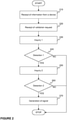
- Figure 3 illustrates schematically the method as described as a flow chart disclosing the signaling between the entities belonging to the system.
- the signaling and the data carried in the signal are examples and may also be implemented in another way within the limits of the present invention as defined in the independent claims.
- the entities shown in the flow chart are a device 114A, 114B residing in a home LAN, a user device 140 (that in this example resides in the home LAN), a modem device connecting the home LAN to a communication network through service provider systems (not shown in Figures), a validation server 122 and a digital content management system 130.
- the signals of the flow chart according to the example are the following: 310 and 320:
- a device 114A, 114B residing and being connected to the home LAN 110 is configured to initiate transmit of information to validation server 122.
- the device 114A, 114B inside the home LAN is assigned with a private network address and when the signal for transmitting the information to the validation server 122 reaches the modem device 112, the modem device removes the private network address from the signal and adds the public network address to the signal 320.
- the signal advantageously carries an identifier of a subscription by means of which the user may access to the communication network.
- the signal 325 in Figure 3 refers to an implementation where the modem device 112 is configured to deliver the mentioned pieces of information to the validation server 122.
- a user device 140 initiates, either automatically or in response to user action, an access right request towards a digital content management system 130 through the modem device 112 that inputs the public network address to the request.
- the validation server 220 obtains the public network address from the validation request and detects 240 by inquiring 250, from the validation server 122, if the public network address obtained from the validation request exists in the register maintaining information received from the home LAN. Further, the validation server 220 may also detect 260 by inquiring 250 with the identifier of the subscription corresponding to the public network address if the subscription in question is valid from service provider's perspective or not.
- the validation server may be configured to generate a signal 270 to the digital content management system 130 wherein the signal is configured to indicate that the user device, or the subscriber in question, is entitled to access the digital content.
- the digital content management system 130 advantageously indicates the right to access to the user device 140 e.g. through the modem device. It is worthwhile to note that the indication may also be performed through any other communication channel, because the digital content management system may maintain and store user related information disclosing one or more addresses for contacting the user device 140 or, more specifically, the user of the user device 140.
- FIG. 4 illustrates schematically a validation server 122 according to an example of the invention.
- the validation server 122 is configured to implement the method as described at least partly.
- the execution of the method may be achieved by arranging the processor 410 to execute at least some portion of computer program code 421a-421n stored in a memory 420 causing the processor 410, and thus the validation server 122, to implement one or more method steps as described.
- the processor 410 is thus arranged to access the memory 420 and retrieve and store any information therefrom and thereto.
- the processor 410 is configured to control the communication through the communication interface 430 with any external unit, such as with digital content management system 130, modem device 112, and so on.
- the processor 410 may also be configured to control the output of information, i.e. data.
- the processor 410 may also be configured to control overall operability of the validation server according to instructions stored in the memory 420 in a form of computer program code and parameters thereto.
- the processor herein refers to any unit suitable for processing information and control the operation of the apparatus, among other tasks.
- the mentioned operations may e.g. be implemented with a microcontroller solution with embedded software.
- the invention is not limited to a certain type of memory only, but any memory type suitable for storing the described pieces of information may be applied in the context of the present invention. Even if it is disclosed that the method may be implemented with one server, it may also be arranged that implementation of the method is performed in multiple servers operatively coupled to each other either directly or indirectly.
- Figure 5 illustrates schematically the modules with whom the processor 410 of the validation server 122 may be communicatively coupled to and with whom the processor 410 of the validation server 122 may perform inquiries as described in order to control, at least partly, an access to a digital content requested by the user.
- the first module may be a subscription management register maintaining and storing information on valid subscriptions of the service provider offering access to a communication network.
- the second module may be a network address register 520 that is configured to maintain and store information received from the device 114A, 114B, or in some implementation of the invention from the modem 112, being communicatively coupled to the home LAN 110.
- the information comprises at least an identifier of the subscription and the public network address associated to the identifier.
- the mentioned modules may be implemented in the validation server 122 internally e.g. as a database or any other implementation in the memory of the validation server. Alternatively or in addition, either one or both of the modules may be implemented as external unit(s) to the validation server 122 into which the validation server 122 may perform inquires in a predetermined manner and in that way to retrieve necessary information for operating as described.
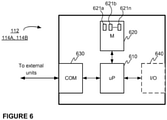
- Figure 6 illustrates schematically a device 112, 114A, 114B being communicatively coupled to a local area network through a communication interface 630 arranged in the device.
- the communication interface 630 may e.g. be implemented with one or more modems implementing communication technology used in the implementation.
- the device 112, 114A, 114B may further comprise at least one processor 610 and at least one memory 620 including computer program code 621a-621n, which may be executed by the processor 610.
- the execution of the computer program code cause the device 112, 114A, 114B to perform: at least transmitting information comprising a public network address of the local area network and an identifier of a subscription of the local area network.
- the identifier of the subscription may be stored in the at least on memory 620 of the device 112, 114A, 114B.
- a timer may be arranged in the device, either with hardware or software implementation, by means of which it is possible to establish a schedule to transmit the information repetitively to the validation server as described above.
- the device may also comprise a user interface 640 by means of which it is possible input and output of information.
- the input and output devices may be any known solutions thereto, such as keyboard, buttons, display, touch display and so on.
- the device may be the communication device or the modem as described in the present application.
- Some aspects of the present invention may also relate to a non-transitory computer-readable storage medium storing at least portions of computer program product comprising portions of computer program code that are executable by a computing device, such as at least one processor of a server, to implement the method steps in a validation server 122 as described.
- the computer-readable storage medium may include a storage medium or memory medium, such as magnetic or optical media e.g. disc, DVD/CD-ROM, volatile or non-volatile media, such as RAM.
- the computer program code may be written in any form of programming language, including compiled or interpreted languages, and the computer program may be deployed in any form, including as a stand-alone program or as a sub-routine, element or other unit suitable for use in a computing environment.
- a computer program code may be deployed to be executed on one server or on multiple servers at one site or distributed across multiple sites and interconnected by a communication network. This definition comprises also any solutions based on so called cloud computing.
- the computer program code comprises instructions for causing the server to perform one or more of the method steps as described above.
- an advantage of the present invention is that it provides a secure solution in the area as described because it is more or less impossible to abuse due to its nature in which the access is dependent on information, e.g. a network address that may be dynamic, that is managed by a service provider of the subscription to access the communication network.
- the implementation according to the invention may also enable new business opportunities and licensing models due to its nature between the service provider of the subscription and digital content owners/managers.
Landscapes
- Engineering & Computer Science (AREA)
- Computer Networks & Wireless Communication (AREA)
- Signal Processing (AREA)
- Computer Security & Cryptography (AREA)
- Computer Hardware Design (AREA)
- General Engineering & Computer Science (AREA)
- Databases & Information Systems (AREA)
- Computing Systems (AREA)
- Software Systems (AREA)
- Theoretical Computer Science (AREA)
- Multimedia (AREA)
- Power Engineering (AREA)
- Technology Law (AREA)
- Physics & Mathematics (AREA)
- General Physics & Mathematics (AREA)
- Business, Economics & Management (AREA)
- General Business, Economics & Management (AREA)
- Telephonic Communication Services (AREA)
- Data Exchanges In Wide-Area Networks (AREA)
Description
- The invention concerns in general the technical field of telecommunications networks. More particularly, the invention concerns digital content management.
- Currently a demand for digital content grows exponentially. Consumers are increasingly seeking and using digital services in which digital content is used over a communication network, such as Internet.
- Management of access to the digital content is an important area in order to provide easy-to-use services to the consumers. First of all, the access to the services shall be easy for consumers, but advantageously the access information provides information for the service providers for offering, or tailoring, the services, such as digital content, in a better way.
- There do exist some solutions in which the device used for accessing is recognized and the digital content to be provided is selected according to the device in use. Some other solutions suggest that a location of a user, i.e. the user terminal, is used for selecting the digital content for a consumer. In such an implementation the user device when accessing the digital content service indicates its location in one way or another to the service provider and the service provider's system provides an access to the digital content on that basis.
- In a document
US 2013/0227283 A1 it is described a solution for content distribution to an IP enabled device through a content distribution network. The content to be distributed is processed into a series of encrypted segments. By authenticating a content requesting device the segments are provided with a playlist to the content requesting device via the content distribution network. - Another document
EP 2924944 A1 describes a solution for determining identification information on a user of a user terminal for accessing a network. From the service provider's point of view the existing solution do not offer simple, but at the same time reliable, solution for being confident of a location of a user device requesting access to a digital content. Especially, the service provider's may desire to differentiate their services so that a user may access to one type of digital content, or service, in a first location, but to another type of digital content, or service, in a second location. - Thus, there is need to improve, or replace, the existing solutions and introduce novel approaches for accessing digital content.
- The claimed invention relates to a method, a server and a device as defined in
independent claims - Various exemplifying and non-limiting embodiments of the invention both as to constructions and to methods of operation, together with additional objects and advantages thereof, will be best understood from the following description of specific exemplifying and non-limiting embodiments when read in connection with the accompanying drawings.
- The verbs "to comprise" and "to include" are used in this document as open limitations that neither exclude nor require the existence of unrecited features.
- The features recited in dependent claims are mutually freely combinable unless otherwise explicitly stated. Furthermore, it is to be understood that the use of "a" or "an", i.e. a singular form, throughout this document does not exclude a plurality.
- The embodiments of the invention are illustrated by way of example, and not by way of limitation, in the figures of the accompanying drawings.
-
Figure 1 illustrates schematically an example of a network environment in which the present invention is implemented. -
Figure 2 illustrates schematically an example of a method according to an embodiment of the invention. -
Figure 3 illustrates schematically an example of a method according to an embodiment of the invention as a flow chart. -
Figure 4 illustrates schematically an example of a server according to an embodiment of the invention. -
Figure 5 illustrates schematically some modules being involved in an example of the invention. -
Figure 6 illustrates schematically a device according to an embodiment of the invention. - The specific examples provided in the description given below should not be construed as limiting the scope and/or the applicability of the appended claims. Lists and groups of examples provided in the description given below are not exhaustive unless otherwise explicitly stated.
-
Figure 1 illustrates schematically an example of a network environment into which the present invention may be implemented. The environment comprises a local area network (LAN) 110 that is connected to acommunication network 120, such as an Internet, through amodem device 112 advantageously residing in a facility wherein theLAN 110 is implemented to. The LAN may be either implemented wirelessly, with e.g. Wi-Fi technology, or in a wired manner. In the example ofFigure 1 themodem device 112 comprises necessary units and functions to operate as a router for wired and wireless communication in theLAN 110. Within the operational area of the LAN one ormore communication devices communication network 120 through theLAN 110. The network environment comprises also a digitalcontent management system 130. The system may comprise aserver 132 that has access todatabase 134 storing the digital content. TheLAN 110 and the digitalcontent management system 130 are communicatively coupled to avalidation server 122 connected to thecommunication network 120. The operation of thevalidation server 122 will be described in more detail later. The communication device may e.g. be a user terminal used in the home LAN. Some non-limiting examples of the communication device are a personal computer, laptop computer, tablet computer, smart phone and so on. - The
communication network connection 120 is subscribed by a user from a service provider, such as a telecom network. As a result, the service provider maintains subscriber related information which may comprise, but is not limited to, an identifier that is typically unique for each subscriber on some basis. Moreover, the service provider grants a public network address, such as public IP address, to the subscriber, or more specifically to the device that interfaces the communication network, such as themodem 112 inFigure 1 . The public network address may be static or dynamic depending on a network implementation by the service provider. -
Figure 1 illustrates also auser device 140 that is mobile in nature and carried by a user. Theuser device 140 may also communicate with thecommunication network 120 and utilize services provided therefrom. The communication may be performed over mobile communication network or over some local area network (not shown inFigure 1 ). Now, the digital content service provider operating the digitalcontent management system 130 may be willing to provide the user of theuser device 140 different service, such as digital content, when the user accesses to the digital content management system from the LAN 110, called home LAN from now on, or when the user accesses to the digital content management system from some other location. As an example of a different service one may consider an access to a music database from where the user may select any album to be played when the user resides in thehome LAN 110, but when he/she is traveling outside home LAN the service provider allows only playing some random list. In order to enabling to do this kind of differentiation the service provider of the digital service may determine, with an improved probability, if theuser device 140 resides in the home LAN with the solution according to the present invention, as will now be described by referring toFigure 2 . For sake of clarity, theuser device 140 may e.g. be a laptop computer, tablet computer, smart phone or any other similar device that may perform the operation as described. -
Figure 2 illustrates schematically a method according to an embodiment of the invention. The method is described from thevalidation server 122 point of view. As mentioned thevalidation server 122 may be managed by a service provider of the subscription to access thecommunication network 120 from thehome LAN 110. Thevalidation server 122 advantageously maintains, or is at least partly involved in the maintenance, of information on public network addresses from which public network address there exists data traffic. - The solution according to the present invention is based on an idea that a device, such as a
communication device home LAN network 110 and using a communication service provided by thehome LAN 110 is configured to transmit information, e.g. by generating a message, comprising a public network address of the homelocal area network 110 and an identifier of a subscription of the local area network. The device configured to transmit the information is equipped with necessary means and information, such as with the destination address, to perform the transmit of the information. The information is received 210 by thevalidation server 122 that is configured to store the received information, i.e. the identifier with the public network address, in a register. The register may be implemented in a memory of thevalidation server 122 or in a separate entity, such as a database implementation accessible by thevalidation server 122. The device configured to transmit said information to thevalidation server 122 may e.g. be the communication device being connected to thehome LAN 110 or it may be themodem 112 coupling thehome LAN 110 to thecommunication network 120. In both cases the device in question may be configured to operate as described by implementing instructions to cause the device to operate accordingly with a computer program code that is executed by a processing unit, such as with one or more processors, of the device. Moreover, the device in question may store the identifier of the subscription in a memory. The identifier may be obtained from the memory when the information is transmitted. Further, the device is configured to insert the public network address maintained in the modem and obtainable therefrom in the information to be transmitted. For example, the information may be transmitted in a dedicated message collecting the pieces of information in the message. The transmit of said information may be performed only once or repetitively according to a predetermined schedule. The one-time transmit is applicable if the public network address is static and if the public network address changes dynamically the repetitive transmit of information is advantageous, and in some cases necessary. - The identifier of a subscription of the local area network may refer to a client reference stored in a memory of the device transmitting it, or to an identifier assigned to the device transmitting the information or to an identifier assigned to a software agent transmitting the information. In this application a term identifier of a subscription is used for covering at least the mentioned alternatives as well as any other by means of which a subscriber may either directly or indirectly recognized.
- According to an example of the invention the
communication device modem device 112 may be configured so that when it is detected that the service provider has assigned a new public network address for the subscription in the dynamic address allocation scheme, thecommunication device modem device 112 is configured to generate and to transmit information comprising the new public network address of the homelocal area network 110 and an identifier of a subscription of the local area network. In other words, the triggering of the message generation and transmit is the detection of the new public network address by thecommunication device modem device 112. Hence, at least some of the mentioned devices may be configured to, e.g. with a portion of computer program code executed by a processor of the corresponding device, to detect the change of the public address and to initiate the procedure as described. Furthermore, the message generated and transmitted may also comprise additional information, such as a time stamp representing the time when the public network address is dynamically updated and/or some performance metrics, for example. Moreover, in some implementation information, such as an identifier, of the device generating and transmitting the information to the validation server may be included in the message. This may be used, by the validation server, for monitoring that the "update" messages come always from the same device. In this manner it is possible to increase security at least partly. The triggering of the generation and transmit of the message may also be implemented so that it is performed according to a specific scheme, e.g. based on time. - At some point of time a
user device 140 initiates, either automatically or in response to user action, an access right request towards a digitalcontent management system 130 with an aim to use a service provided by thesystem 130. The access right request may carry, as is the case in TCP/IP protocol, a public network address of the requesting party to the digitalcontent management system 130. Now, if the user device resides outside thehome LAN 110 the public network address is different to the one of thehome LAN 110. In other words, if theuser device 140 resides in the operational area of the home LAN and is connected thereto, the public network address is the public network address granted to the modem of the home LAN. Theuser device 140 itself is granted a private network address applicable in the home LAN, but which is not visible outside thehome LAN 110. The digitalcontent management system 130 and especially theserver 132 is configured to obtain the public network address from the access right request and establish a validation request comprising the obtained public network address and deliver it towards thevalidation server 122 which piece of information is thus received in thevalidation server 220. - Next, the
validation server 220 is configured to obtain the public network address from the validation request and inquire 250 if the public network address in the validation request exists in the register maintaining information received from thedevice home LAN 110. If no such public network address is found, or detected 240, from the register, theinquiry 250 indicates that theuser device 140 does not reside in thehome LAN 110, and a negative response may be generated to the digitalcontent management system 130. The negative response may cause the digitalcontent management system 130 to cancel the service provision to theuser terminal 140 or at least not allowing theuser device 140 to access a certain digital content, or service. Alternatively, at least if the public network address is detected 240 in the register, i.e. theuser device 140 resides in thesame home LAN 110 as thedevice validation server 122 is configured to obtain the identifier of the subscriber maintained and stored in the register together with the public network address and to perform afurther inquiry 250. Thefurther inquiry 250 is performed by including the identifier of the subscription corresponding to the public network address in the inquiry and the inquiry is performed to a subscription management register. The subscription management register may be implemented in a memory of thevalidation server 122 or in a separate entity, such as a database implementation accessible by thevalidation server 122. Thefurther inquiry 250 is performed to detect 260 if the subscription in question is valid from service provider's perspective or not. If it is detected 260, based on the information stored in the subscription management register, that the subscription is not valid a negative response may be generated to the digitalcontent management system 130 from thevalidation server 122. The negative response may cause the digitalcontent management system 130 to cancel the service provision to theuser terminal 140 or at least not allowing theuser device 140 to access a certain digital content, or service. On the other hand, if it is detected 260 that the subscription is valid, the validation server is configured to generate asignal 270, e.g. in a form of a message, to the digitalcontent management system 130. The signal may comprise an indication that the user device is entitled to access the digital content. In other words, the access is granted to the digital content that caused the digital content management system to initiate the validation procedure as described here. The indication may e.g. be a pre-agreed piece of information stored in the data of the message. - The transmitted pieces of information between the entities being involved in the method may be encrypted if needed. For example, the subscription identifier may be such piece of information that is advantageously encrypted in order to improve a safety of the system. In case some encryption method is used in the solution each party are advantageously arranged to be able to decrypt the encrypted data. The encryption and decryption may be based and implemented with digital certificates wherein in the corresponding entities have necessary keys and methods for performing the encryption and decryption.
-
Figure 3 illustrates schematically the method as described as a flow chart disclosing the signaling between the entities belonging to the system. The signaling and the data carried in the signal are examples and may also be implemented in another way within the limits of the present invention as defined in the independent claims. The entities shown in the flow chart are adevice validation server 122 and a digitalcontent management system 130. The signals of the flow chart according to the example are the following:
310 and 320: Adevice home LAN 110 is configured to initiate transmit of information tovalidation server 122. Thedevice validation server 122 reaches themodem device 112, the modem device removes the private network address from the signal and adds the public network address to thesignal 320. Moreover, the signal advantageously carries an identifier of a subscription by means of which the user may access to the communication network. - (325: The
signal 325 inFigure 3 refers to an implementation where themodem device 112 is configured to deliver the mentioned pieces of information to thevalidation server 122.) - 330 and 340: A
user device 140 initiates, either automatically or in response to user action, an access right request towards a digitalcontent management system 130 through themodem device 112 that inputs the public network address to the request. - 350: The
validation server 220 obtains the public network address from the validation request and detects 240 by inquiring 250, from thevalidation server 122, if the public network address obtained from the validation request exists in the register maintaining information received from the home LAN. Further, thevalidation server 220 may also detect 260 by inquiring 250 with the identifier of the subscription corresponding to the public network address if the subscription in question is valid from service provider's perspective or not. - 360: In response to detection that an outcome of the first inquiry (or the outcomes of the first inquiry and the second inquiry according to an implementation) is positive the validation server may be configured to generate a
signal 270 to the digitalcontent management system 130 wherein the signal is configured to indicate that the user device, or the subscriber in question, is entitled to access the digital content. - 370 & 380: The digital
content management system 130 advantageously indicates the right to access to theuser device 140 e.g. through the modem device. It is worthwhile to note that the indication may also be performed through any other communication channel, because the digital content management system may maintain and store user related information disclosing one or more addresses for contacting theuser device 140 or, more specifically, the user of theuser device 140. - 390: In response of the receipt of the user may access to the digital content residing in the digital
content management system 130. -
Figure 4 illustrates schematically avalidation server 122 according to an example of the invention. Thevalidation server 122 is configured to implement the method as described at least partly. The execution of the method may be achieved by arranging theprocessor 410 to execute at least some portion ofcomputer program code 421a-421n stored in amemory 420 causing theprocessor 410, and thus thevalidation server 122, to implement one or more method steps as described. Theprocessor 410 is thus arranged to access thememory 420 and retrieve and store any information therefrom and thereto. Moreover, theprocessor 410 is configured to control the communication through thecommunication interface 430 with any external unit, such as with digitalcontent management system 130,modem device 112, and so on. Theprocessor 410 may also be configured to control the output of information, i.e. data. Theprocessor 410 may also be configured to control overall operability of the validation server according to instructions stored in thememory 420 in a form of computer program code and parameters thereto. For sake of clarity, the processor herein refers to any unit suitable for processing information and control the operation of the apparatus, among other tasks. The mentioned operations may e.g. be implemented with a microcontroller solution with embedded software. Similarly, the invention is not limited to a certain type of memory only, but any memory type suitable for storing the described pieces of information may be applied in the context of the present invention. Even if it is disclosed that the method may be implemented with one server, it may also be arranged that implementation of the method is performed in multiple servers operatively coupled to each other either directly or indirectly. -
Figure 5 illustrates schematically the modules with whom theprocessor 410 of thevalidation server 122 may be communicatively coupled to and with whom theprocessor 410 of thevalidation server 122 may perform inquiries as described in order to control, at least partly, an access to a digital content requested by the user. The first module may be a subscription management register maintaining and storing information on valid subscriptions of the service provider offering access to a communication network. The second module may be a network address register 520 that is configured to maintain and store information received from thedevice modem 112, being communicatively coupled to thehome LAN 110. As described the information comprises at least an identifier of the subscription and the public network address associated to the identifier. The mentioned modules may be implemented in thevalidation server 122 internally e.g. as a database or any other implementation in the memory of the validation server. Alternatively or in addition, either one or both of the modules may be implemented as external unit(s) to thevalidation server 122 into which thevalidation server 122 may perform inquires in a predetermined manner and in that way to retrieve necessary information for operating as described. -
Figure 6 illustrates schematically adevice communication interface 630 arranged in the device. Thecommunication interface 630 may e.g. be implemented with one or more modems implementing communication technology used in the implementation. Thedevice processor 610 and at least onememory 620 includingcomputer program code 621a-621n, which may be executed by theprocessor 610. The execution of the computer program code cause thedevice memory 620 of thedevice user interface 640 by means of which it is possible input and output of information. The input and output devices may be any known solutions thereto, such as keyboard, buttons, display, touch display and so on. The device may be the communication device or the modem as described in the present application. - Some aspects of the present invention may also relate to a non-transitory computer-readable storage medium storing at least portions of computer program product comprising portions of computer program code that are executable by a computing device, such as at least one processor of a server, to implement the method steps in a
validation server 122 as described. In general, the computer-readable storage medium may include a storage medium or memory medium, such as magnetic or optical media e.g. disc, DVD/CD-ROM, volatile or non-volatile media, such as RAM. The computer program code may be written in any form of programming language, including compiled or interpreted languages, and the computer program may be deployed in any form, including as a stand-alone program or as a sub-routine, element or other unit suitable for use in a computing environment. A computer program code may be deployed to be executed on one server or on multiple servers at one site or distributed across multiple sites and interconnected by a communication network. This definition comprises also any solutions based on so called cloud computing. The computer program code comprises instructions for causing the server to perform one or more of the method steps as described above. - The described solution according to the invention solves at least partly drawbacks of prior art solutions. Moreover, an advantage of the present invention is that it provides a secure solution in the area as described because it is more or less impossible to abuse due to its nature in which the access is dependent on information, e.g. a network address that may be dynamic, that is managed by a service provider of the subscription to access the communication network. The implementation according to the invention may also enable new business opportunities and licensing models due to its nature between the service provider of the subscription and digital content owners/managers.
- The specific examples provided in the description given above should not be construed as limiting the applicability and/or the interpretation of the appended claims. Lists and groups of examples provided in the description given above are not exhaustive unless otherwise explicitly stated.
Claims (6)
- A method for providing access to a digital content for a user device (140), characterized in that the method comprising:receiving (210), from a device (114A, 114B; 112) being communicatively coupled to a local area network, information comprising a public network address of the local area network and an identifier of a subscription of the local area network, the information is received repetitively in response to a renewal of the public network address in accordance with a dynamic address allocation scheme, and storing the information in a register,receiving (220) a validation request from a digital content management system (130) wherein the validation request comprises information representing a public network address obtained from an access right request received by the digital content management system (130) from the user device (140),inquiring (240), from the register, if the public network address in the validation request exists in the register maintaining information received from the device (114A, 114B; 112) being communicatively coupled to the local area network,in response to a detection (240) that the public network address in the validation request exists in the register inquiring (250), by including the identifier of the subscription corresponding to the public network address in the inquiry, from a subscription management register if the subscription in question is valid, andin response to a detection (260) that the subscription is valid generating (270) a signal to the digital content management system (130) wherein the signal comprises an indication that the user device (140) is entitled to access the digital content.
- A server (122) for providing access to a digital content for a user device (140), the server (122) comprisingat least one processor (410);at least one memory (420) including computer program code;characterized in that the at least one memory (420) and the computer program code configured to, with the at least one processor (410), cause the server (122) to perform:receive (210), from a device (114A, 114B; 112) being communicatively coupled to a local area network, information comprising a public network address of the local area network and an identifier of a subscription of the local area network, the information is received repetitively in response to a renewal of the public network address in accordance with a dynamic address allocation scheme, and store the information in a register,receive (220) a validation request from a digital content management system (130) wherein the validation request comprises information representing a public network address obtained from an access right request received by the digital content management system (130) from the user device (140),inquire (240), from the register, if the public network address in the validation request exists in the register maintaining information received from the device (114A, 114B; 112) being communicatively coupled to the local area network,inquire (250), in response to a detection (240) that the public network address in the validation request exists in the register, by including the identifier of the subscription corresponding to the public network address in the inquiry from a subscription management register if the subscription in question is valid, andgenerate (270), in response to a detection (260) that the subscription is valid, a signal to the digital content management system (130) wherein the signal comprises an indication that the user device (140) is entitled to access the digital content.
- A device (114A, 114B; 112) for controlling an access of a user device (140) to digital content, the device (114A, 114B; 112) being communicatively coupled to a local area network, the device (114A, 114B; 112) comprising:at least one processor (610);at least one memory (620) including computer program code;characterized in that the at least one memory (620) and the computer program code configured to, with the at least one processor (610), cause the device (114A, 114B; 112) to perform:
transmitting information comprising a public network address of the local area network and a valid identifier of a subscription of the local area network for the user device (140) to access the digital content, the information is transmitted repetitively in response to a renewal of the public network address in accordance with a dynamic address allocation scheme. - The device (114A, 114B; 112) of claim 3, wherein the identifier of the subscription is stored in the at least on memory (620) of the device (114A, 114B; 112).
- A computer program product characterized in that the computer program product comprising program code portions for performing the steps of claim 1 when the computer program product is executed by at least processor of a computing device.
- The computer program product of claim 5, stored on a computer-readable recording medium.
Applications Claiming Priority (1)
| Application Number | Priority Date | Filing Date | Title |
|---|---|---|---|
| FI20165292A FI126829B (en) | 2016-04-05 | 2016-04-05 | Management of access to digital content |
Publications (2)
| Publication Number | Publication Date |
|---|---|
| EP3229162A1 EP3229162A1 (en) | 2017-10-11 |
| EP3229162B1 true EP3229162B1 (en) | 2022-01-19 |
Family
ID=58692283
Family Applications (1)
| Application Number | Title | Priority Date | Filing Date |
|---|---|---|---|
| EP17164881.9A Active EP3229162B1 (en) | 2016-04-05 | 2017-04-05 | Access management for digital content |
Country Status (4)
| Country | Link |
|---|---|
| US (1) | US10789336B2 (en) |
| EP (1) | EP3229162B1 (en) |
| DK (1) | DK3229162T3 (en) |
| FI (1) | FI126829B (en) |
Families Citing this family (1)
| Publication number | Priority date | Publication date | Assignee | Title |
|---|---|---|---|---|
| JP6495561B1 (en) * | 2017-10-30 | 2019-04-03 | 株式会社オプティム | Land use determination system, land use determination method and program |
Family Cites Families (18)
| Publication number | Priority date | Publication date | Assignee | Title |
|---|---|---|---|---|
| US6307837B1 (en) * | 1997-08-12 | 2001-10-23 | Nippon Telegraph And Telephone Corporation | Method and base station for packet transfer |
| US6757740B1 (en) | 1999-05-03 | 2004-06-29 | Digital Envoy, Inc. | Systems and methods for determining collecting and using geographic locations of internet users |
| US6845400B2 (en) | 2000-12-28 | 2005-01-18 | Nortel Networks Limited | Storing subscriber location indication at DNS, to enable location specific provision of internet content |
| US7080116B2 (en) * | 2001-08-21 | 2006-07-18 | The Boeing Company | Network blocking device for paid Internet services |
| US7325246B1 (en) * | 2002-01-07 | 2008-01-29 | Cisco Technology, Inc. | Enhanced trust relationship in an IEEE 802.1x network |
| US7673146B2 (en) * | 2003-06-05 | 2010-03-02 | Mcafee, Inc. | Methods and systems of remote authentication for computer networks |
| US7664096B2 (en) * | 2003-06-25 | 2010-02-16 | At&T Intellectual Property I, Lp | Remote location VOIP roaming behind firewalls |
| US8171541B2 (en) * | 2007-12-18 | 2012-05-01 | Nokia Corporation | Enabling provider network inter-working with mobile access |
| US20130023284A1 (en) | 2010-09-10 | 2013-01-24 | Wifarer Inc | Private networks and spectrum control with rf fingerprinting |
| WO2012067562A1 (en) * | 2010-11-19 | 2012-05-24 | Telefonaktiebolaget L M Ericsson (Publ) | Method and network node for distributing customized content |
| EP2721855B1 (en) * | 2011-06-16 | 2017-07-12 | Accuris Technologies Limited | A device authentication method and devices |
| AU2011101297B4 (en) * | 2011-08-15 | 2012-06-14 | Uniloc Usa, Inc. | Remote recognition of an association between remote devices |
| US20130053057A1 (en) | 2011-08-31 | 2013-02-28 | The Directv Group, Inc. | Method and system for determining a location of a mobile device and utilizing the location in content services |
| US20130227283A1 (en) | 2012-02-23 | 2013-08-29 | Louis Williamson | Apparatus and methods for providing content to an ip-enabled device in a content distribution network |
| US9549318B2 (en) * | 2013-10-10 | 2017-01-17 | Shaw Cablesystems G.P. | System and method for delayed device registration on a network |
| NO2924944T3 (en) | 2014-03-25 | 2018-08-11 | ||
| US11042878B2 (en) * | 2016-01-19 | 2021-06-22 | Priv8Pay, Inc. | Network node authentication |
| WO2018064120A1 (en) * | 2016-09-27 | 2018-04-05 | Eero Inc. | Method for network configuration sharing |
-
2016
- 2016-04-05 FI FI20165292A patent/FI126829B/en active IP Right Grant
-
2017
- 2017-04-05 DK DK17164881.9T patent/DK3229162T3/en active
- 2017-04-05 EP EP17164881.9A patent/EP3229162B1/en active Active
- 2017-04-05 US US15/479,599 patent/US10789336B2/en not_active Expired - Fee Related
Also Published As
| Publication number | Publication date |
|---|---|
| EP3229162A1 (en) | 2017-10-11 |
| US20170289308A1 (en) | 2017-10-05 |
| US10789336B2 (en) | 2020-09-29 |
| DK3229162T3 (en) | 2022-04-19 |
| FI20165292A7 (en) | 2017-06-15 |
| FI126829B (en) | 2017-06-15 |
Similar Documents
| Publication | Publication Date | Title |
|---|---|---|
| US10667131B2 (en) | Method for connecting network access device to wireless network access point, network access device, and application server | |
| Sinha et al. | Building an E Ective IoT Ecosystem for Your Business | |
| US10554406B1 (en) | Authorized data sharing using smart contracts | |
| US10104049B2 (en) | Secure distributed publish/subscribe system | |
| EP2779575B1 (en) | Systems and methods for providing secure services | |
| EP3123695B1 (en) | Network notifications | |
| US20130024686A1 (en) | Systems and methods for secure communication using a communication encryption bios based upon a message specific identifier | |
| CN111416822A (en) | Method for access control, electronic device and storage medium | |
| CN107920081B (en) | Login authentication method and device | |
| US20150095994A1 (en) | Systems and methods for profiling client devices | |
| CN112632521B (en) | Request response method and device, electronic equipment and storage medium | |
| JP2019510261A (en) | Computer-implemented method, server, user device, and computer program product for central data storage with enhanced privacy | |
| CN114629902B (en) | Sharing data between different service providers at the edge level through a collaboration channel | |
| US20150106517A1 (en) | System and method for delayed device registration on a network | |
| CN109617753B (en) | Network platform management method, system, electronic equipment and storage medium | |
| CN113645226A (en) | Data processing method, device, equipment and storage medium based on gateway layer | |
| US20190372882A1 (en) | Communication device and communication method | |
| US10887314B2 (en) | Access control for named domain networking | |
| US20200244647A1 (en) | Systems and Methods for Secure Management and Real-Time Diagnostics of Network Devices | |
| US11722295B2 (en) | Methods, apparatus, and articles of manufacture to securely audit communications | |
| US10789336B2 (en) | Access management for digital content | |
| CN116961966A (en) | Security authentication methods, devices, equipment and storage media | |
| JP2013507707A (en) | Communication device management via communication network | |
| JP2018041188A (en) | Address management device, data management system and program | |
| CN120342793B (en) | A login verification method and system based on dynamic passwords |
Legal Events
| Date | Code | Title | Description |
|---|---|---|---|
| PUAI | Public reference made under article 153(3) epc to a published international application that has entered the european phase |
Free format text: ORIGINAL CODE: 0009012 |
|
| STAA | Information on the status of an ep patent application or granted ep patent |
Free format text: STATUS: THE APPLICATION HAS BEEN PUBLISHED |
|
| AK | Designated contracting states |
Kind code of ref document: A1 Designated state(s): AL AT BE BG CH CY CZ DE DK EE ES FI FR GB GR HR HU IE IS IT LI LT LU LV MC MK MT NL NO PL PT RO RS SE SI SK SM TR |
|
| AX | Request for extension of the european patent |
Extension state: BA ME |
|
| STAA | Information on the status of an ep patent application or granted ep patent |
Free format text: STATUS: REQUEST FOR EXAMINATION WAS MADE |
|
| 17P | Request for examination filed |
Effective date: 20180405 |
|
| RBV | Designated contracting states (corrected) |
Designated state(s): AL AT BE BG CH CY CZ DE DK EE ES FI FR GB GR HR HU IE IS IT LI LT LU LV MC MK MT NL NO PL PT RO RS SE SI SK SM TR |
|
| STAA | Information on the status of an ep patent application or granted ep patent |
Free format text: STATUS: EXAMINATION IS IN PROGRESS |
|
| 17Q | First examination report despatched |
Effective date: 20200116 |
|
| RIC1 | Information provided on ipc code assigned before grant |
Ipc: H04W 12/08 20210101ALI20210414BHEP Ipc: H04L 29/06 20060101ALI20210414BHEP Ipc: G06F 21/10 20130101AFI20210414BHEP |
|
| GRAP | Despatch of communication of intention to grant a patent |
Free format text: ORIGINAL CODE: EPIDOSNIGR1 |
|
| STAA | Information on the status of an ep patent application or granted ep patent |
Free format text: STATUS: GRANT OF PATENT IS INTENDED |
|
| INTG | Intention to grant announced |
Effective date: 20210531 |
|
| GRAJ | Information related to disapproval of communication of intention to grant by the applicant or resumption of examination proceedings by the epo deleted |
Free format text: ORIGINAL CODE: EPIDOSDIGR1 |
|
| STAA | Information on the status of an ep patent application or granted ep patent |
Free format text: STATUS: EXAMINATION IS IN PROGRESS |
|
| INTC | Intention to grant announced (deleted) | ||
| GRAP | Despatch of communication of intention to grant a patent |
Free format text: ORIGINAL CODE: EPIDOSNIGR1 |
|
| STAA | Information on the status of an ep patent application or granted ep patent |
Free format text: STATUS: GRANT OF PATENT IS INTENDED |
|
| INTG | Intention to grant announced |
Effective date: 20211108 |
|
| GRAS | Grant fee paid |
Free format text: ORIGINAL CODE: EPIDOSNIGR3 |
|
| GRAA | (expected) grant |
Free format text: ORIGINAL CODE: 0009210 |
|
| STAA | Information on the status of an ep patent application or granted ep patent |
Free format text: STATUS: THE PATENT HAS BEEN GRANTED |
|
| AK | Designated contracting states |
Kind code of ref document: B1 Designated state(s): AL AT BE BG CH CY CZ DE DK EE ES FI FR GB GR HR HU IE IS IT LI LT LU LV MC MK MT NL NO PL PT RO RS SE SI SK SM TR |
|
| REG | Reference to a national code |
Ref country code: GB Ref legal event code: FG4D |
|
| REG | Reference to a national code |
Ref country code: CH Ref legal event code: EP |
|
| REG | Reference to a national code |
Ref country code: DE Ref legal event code: R096 Ref document number: 602017052434 Country of ref document: DE |
|
| REG | Reference to a national code |
Ref country code: AT Ref legal event code: REF Ref document number: 1464215 Country of ref document: AT Kind code of ref document: T Effective date: 20220215 |
|
| REG | Reference to a national code |
Ref country code: IE Ref legal event code: FG4D |
|
| REG | Reference to a national code |
Ref country code: SE Ref legal event code: TRGR Ref country code: DK Ref legal event code: T3 Effective date: 20220413 |
|
| REG | Reference to a national code |
Ref country code: NL Ref legal event code: FP |
|
| REG | Reference to a national code |
Ref country code: LT Ref legal event code: MG9D |
|
| REG | Reference to a national code |
Ref country code: NO Ref legal event code: T2 Effective date: 20220119 |
|
| REG | Reference to a national code |
Ref country code: AT Ref legal event code: MK05 Ref document number: 1464215 Country of ref document: AT Kind code of ref document: T Effective date: 20220119 |
|
| PG25 | Lapsed in a contracting state [announced via postgrant information from national office to epo] |
Ref country code: RS Free format text: LAPSE BECAUSE OF FAILURE TO SUBMIT A TRANSLATION OF THE DESCRIPTION OR TO PAY THE FEE WITHIN THE PRESCRIBED TIME-LIMIT Effective date: 20220119 Ref country code: PT Free format text: LAPSE BECAUSE OF FAILURE TO SUBMIT A TRANSLATION OF THE DESCRIPTION OR TO PAY THE FEE WITHIN THE PRESCRIBED TIME-LIMIT Effective date: 20220519 Ref country code: LT Free format text: LAPSE BECAUSE OF FAILURE TO SUBMIT A TRANSLATION OF THE DESCRIPTION OR TO PAY THE FEE WITHIN THE PRESCRIBED TIME-LIMIT Effective date: 20220119 Ref country code: HR Free format text: LAPSE BECAUSE OF FAILURE TO SUBMIT A TRANSLATION OF THE DESCRIPTION OR TO PAY THE FEE WITHIN THE PRESCRIBED TIME-LIMIT Effective date: 20220119 Ref country code: ES Free format text: LAPSE BECAUSE OF FAILURE TO SUBMIT A TRANSLATION OF THE DESCRIPTION OR TO PAY THE FEE WITHIN THE PRESCRIBED TIME-LIMIT Effective date: 20220119 Ref country code: BG Free format text: LAPSE BECAUSE OF FAILURE TO SUBMIT A TRANSLATION OF THE DESCRIPTION OR TO PAY THE FEE WITHIN THE PRESCRIBED TIME-LIMIT Effective date: 20220419 |
|
| PGFP | Annual fee paid to national office [announced via postgrant information from national office to epo] |
Ref country code: DK Payment date: 20220422 Year of fee payment: 6 |
|
| PG25 | Lapsed in a contracting state [announced via postgrant information from national office to epo] |
Ref country code: PL Free format text: LAPSE BECAUSE OF FAILURE TO SUBMIT A TRANSLATION OF THE DESCRIPTION OR TO PAY THE FEE WITHIN THE PRESCRIBED TIME-LIMIT Effective date: 20220119 Ref country code: LV Free format text: LAPSE BECAUSE OF FAILURE TO SUBMIT A TRANSLATION OF THE DESCRIPTION OR TO PAY THE FEE WITHIN THE PRESCRIBED TIME-LIMIT Effective date: 20220119 Ref country code: GR Free format text: LAPSE BECAUSE OF FAILURE TO SUBMIT A TRANSLATION OF THE DESCRIPTION OR TO PAY THE FEE WITHIN THE PRESCRIBED TIME-LIMIT Effective date: 20220420 Ref country code: FI Free format text: LAPSE BECAUSE OF FAILURE TO SUBMIT A TRANSLATION OF THE DESCRIPTION OR TO PAY THE FEE WITHIN THE PRESCRIBED TIME-LIMIT Effective date: 20220119 Ref country code: AT Free format text: LAPSE BECAUSE OF FAILURE TO SUBMIT A TRANSLATION OF THE DESCRIPTION OR TO PAY THE FEE WITHIN THE PRESCRIBED TIME-LIMIT Effective date: 20220119 |
|
| PG25 | Lapsed in a contracting state [announced via postgrant information from national office to epo] |
Ref country code: IS Free format text: LAPSE BECAUSE OF FAILURE TO SUBMIT A TRANSLATION OF THE DESCRIPTION OR TO PAY THE FEE WITHIN THE PRESCRIBED TIME-LIMIT Effective date: 20220519 |
|
| REG | Reference to a national code |
Ref country code: DE Ref legal event code: R097 Ref document number: 602017052434 Country of ref document: DE |
|
| PG25 | Lapsed in a contracting state [announced via postgrant information from national office to epo] |
Ref country code: SM Free format text: LAPSE BECAUSE OF FAILURE TO SUBMIT A TRANSLATION OF THE DESCRIPTION OR TO PAY THE FEE WITHIN THE PRESCRIBED TIME-LIMIT Effective date: 20220119 Ref country code: SK Free format text: LAPSE BECAUSE OF FAILURE TO SUBMIT A TRANSLATION OF THE DESCRIPTION OR TO PAY THE FEE WITHIN THE PRESCRIBED TIME-LIMIT Effective date: 20220119 Ref country code: RO Free format text: LAPSE BECAUSE OF FAILURE TO SUBMIT A TRANSLATION OF THE DESCRIPTION OR TO PAY THE FEE WITHIN THE PRESCRIBED TIME-LIMIT Effective date: 20220119 Ref country code: EE Free format text: LAPSE BECAUSE OF FAILURE TO SUBMIT A TRANSLATION OF THE DESCRIPTION OR TO PAY THE FEE WITHIN THE PRESCRIBED TIME-LIMIT Effective date: 20220119 Ref country code: CZ Free format text: LAPSE BECAUSE OF FAILURE TO SUBMIT A TRANSLATION OF THE DESCRIPTION OR TO PAY THE FEE WITHIN THE PRESCRIBED TIME-LIMIT Effective date: 20220119 |
|
| PLBE | No opposition filed within time limit |
Free format text: ORIGINAL CODE: 0009261 |
|
| STAA | Information on the status of an ep patent application or granted ep patent |
Free format text: STATUS: NO OPPOSITION FILED WITHIN TIME LIMIT |
|
| PG25 | Lapsed in a contracting state [announced via postgrant information from national office to epo] |
Ref country code: AL Free format text: LAPSE BECAUSE OF FAILURE TO SUBMIT A TRANSLATION OF THE DESCRIPTION OR TO PAY THE FEE WITHIN THE PRESCRIBED TIME-LIMIT Effective date: 20220119 |
|
| REG | Reference to a national code |
Ref country code: CH Ref legal event code: PL |
|
| 26N | No opposition filed |
Effective date: 20221020 |
|
| REG | Reference to a national code |
Ref country code: BE Ref legal event code: MM Effective date: 20220430 |
|
| PG25 | Lapsed in a contracting state [announced via postgrant information from national office to epo] |
Ref country code: MC Free format text: LAPSE BECAUSE OF FAILURE TO SUBMIT A TRANSLATION OF THE DESCRIPTION OR TO PAY THE FEE WITHIN THE PRESCRIBED TIME-LIMIT Effective date: 20220119 Ref country code: LU Free format text: LAPSE BECAUSE OF NON-PAYMENT OF DUE FEES Effective date: 20220405 Ref country code: LI Free format text: LAPSE BECAUSE OF NON-PAYMENT OF DUE FEES Effective date: 20220430 Ref country code: CH Free format text: LAPSE BECAUSE OF NON-PAYMENT OF DUE FEES Effective date: 20220430 |
|
| PG25 | Lapsed in a contracting state [announced via postgrant information from national office to epo] |
Ref country code: SI Free format text: LAPSE BECAUSE OF FAILURE TO SUBMIT A TRANSLATION OF THE DESCRIPTION OR TO PAY THE FEE WITHIN THE PRESCRIBED TIME-LIMIT Effective date: 20220119 Ref country code: BE Free format text: LAPSE BECAUSE OF NON-PAYMENT OF DUE FEES Effective date: 20220430 |
|
| PG25 | Lapsed in a contracting state [announced via postgrant information from national office to epo] |
Ref country code: IE Free format text: LAPSE BECAUSE OF NON-PAYMENT OF DUE FEES Effective date: 20220405 |
|
| P01 | Opt-out of the competence of the unified patent court (upc) registered |
Effective date: 20230529 |
|
| PG25 | Lapsed in a contracting state [announced via postgrant information from national office to epo] |
Ref country code: IT Free format text: LAPSE BECAUSE OF FAILURE TO SUBMIT A TRANSLATION OF THE DESCRIPTION OR TO PAY THE FEE WITHIN THE PRESCRIBED TIME-LIMIT Effective date: 20220119 |
|
| REG | Reference to a national code |
Ref country code: DK Ref legal event code: EBP Effective date: 20230430 |
|
| PG25 | Lapsed in a contracting state [announced via postgrant information from national office to epo] |
Ref country code: HU Free format text: LAPSE BECAUSE OF FAILURE TO SUBMIT A TRANSLATION OF THE DESCRIPTION OR TO PAY THE FEE WITHIN THE PRESCRIBED TIME-LIMIT; INVALID AB INITIO Effective date: 20170405 |
|
| PG25 | Lapsed in a contracting state [announced via postgrant information from national office to epo] |
Ref country code: MK Free format text: LAPSE BECAUSE OF FAILURE TO SUBMIT A TRANSLATION OF THE DESCRIPTION OR TO PAY THE FEE WITHIN THE PRESCRIBED TIME-LIMIT Effective date: 20220119 Ref country code: DK Free format text: LAPSE BECAUSE OF NON-PAYMENT OF DUE FEES Effective date: 20230430 Ref country code: CY Free format text: LAPSE BECAUSE OF FAILURE TO SUBMIT A TRANSLATION OF THE DESCRIPTION OR TO PAY THE FEE WITHIN THE PRESCRIBED TIME-LIMIT Effective date: 20220119 |
|
| PG25 | Lapsed in a contracting state [announced via postgrant information from national office to epo] |
Ref country code: MT Free format text: LAPSE BECAUSE OF FAILURE TO SUBMIT A TRANSLATION OF THE DESCRIPTION OR TO PAY THE FEE WITHIN THE PRESCRIBED TIME-LIMIT Effective date: 20220119 |
|
| PGFP | Annual fee paid to national office [announced via postgrant information from national office to epo] |
Ref country code: NL Payment date: 20250418 Year of fee payment: 9 |
|
| PGFP | Annual fee paid to national office [announced via postgrant information from national office to epo] |
Ref country code: DE Payment date: 20250422 Year of fee payment: 9 |
|
| PGFP | Annual fee paid to national office [announced via postgrant information from national office to epo] |
Ref country code: GB Payment date: 20250423 Year of fee payment: 9 |
|
| PGFP | Annual fee paid to national office [announced via postgrant information from national office to epo] |
Ref country code: NO Payment date: 20250424 Year of fee payment: 9 |
|
| PGFP | Annual fee paid to national office [announced via postgrant information from national office to epo] |
Ref country code: FR Payment date: 20250425 Year of fee payment: 9 |
|
| PGFP | Annual fee paid to national office [announced via postgrant information from national office to epo] |
Ref country code: SE Payment date: 20250429 Year of fee payment: 9 |
|
| PG25 | Lapsed in a contracting state [announced via postgrant information from national office to epo] |
Ref country code: TR Free format text: LAPSE BECAUSE OF FAILURE TO SUBMIT A TRANSLATION OF THE DESCRIPTION OR TO PAY THE FEE WITHIN THE PRESCRIBED TIME-LIMIT Effective date: 20220119 |