EP3223545B1 - Inhaltsübertragungsfunktionalität jenseits oder innerhalb von zellularen netzwerken - Google Patents
Inhaltsübertragungsfunktionalität jenseits oder innerhalb von zellularen netzwerken Download PDFInfo
- Publication number
- EP3223545B1 EP3223545B1 EP17161092.6A EP17161092A EP3223545B1 EP 3223545 B1 EP3223545 B1 EP 3223545B1 EP 17161092 A EP17161092 A EP 17161092A EP 3223545 B1 EP3223545 B1 EP 3223545B1
- Authority
- EP
- European Patent Office
- Prior art keywords
- communication unit
- wireless
- data content
- wireless communication
- remote communication
- Prior art date
- Legal status (The legal status is an assumption and is not a legal conclusion. Google has not performed a legal analysis and makes no representation as to the accuracy of the status listed.)
- Active
Links
Images


Classifications
-
- H—ELECTRICITY
- H04—ELECTRIC COMMUNICATION TECHNIQUE
- H04W—WIRELESS COMMUNICATION NETWORKS
- H04W76/00—Connection management
- H04W76/10—Connection setup
- H04W76/14—Direct-mode setup
-
- H—ELECTRICITY
- H04—ELECTRIC COMMUNICATION TECHNIQUE
- H04L—TRANSMISSION OF DIGITAL INFORMATION, e.g. TELEGRAPHIC COMMUNICATION
- H04L67/00—Network arrangements or protocols for supporting network services or applications
- H04L67/01—Protocols
- H04L67/10—Protocols in which an application is distributed across nodes in the network
- H04L67/104—Peer-to-peer [P2P] networks
-
- H—ELECTRICITY
- H04—ELECTRIC COMMUNICATION TECHNIQUE
- H04W—WIRELESS COMMUNICATION NETWORKS
- H04W84/00—Network topologies
- H04W84/18—Self-organising networks, e.g. ad-hoc networks or sensor networks
-
- H—ELECTRICITY
- H04—ELECTRIC COMMUNICATION TECHNIQUE
- H04L—TRANSMISSION OF DIGITAL INFORMATION, e.g. TELEGRAPHIC COMMUNICATION
- H04L67/00—Network arrangements or protocols for supporting network services or applications
- H04L67/50—Network services
- H04L67/56—Provisioning of proxy services
- H04L67/568—Storing data temporarily at an intermediate stage, e.g. caching
- H04L67/5683—Storage of data provided by user terminals, i.e. reverse caching
-
- H—ELECTRICITY
- H04—ELECTRIC COMMUNICATION TECHNIQUE
- H04W—WIRELESS COMMUNICATION NETWORKS
- H04W4/00—Services specially adapted for wireless communication networks; Facilities therefor
- H04W4/30—Services specially adapted for particular environments, situations or purposes
- H04W4/38—Services specially adapted for particular environments, situations or purposes for collecting sensor information
-
- H—ELECTRICITY
- H04—ELECTRIC COMMUNICATION TECHNIQUE
- H04W—WIRELESS COMMUNICATION NETWORKS
- H04W4/00—Services specially adapted for wireless communication networks; Facilities therefor
- H04W4/70—Services for machine-to-machine communication [M2M] or machine type communication [MTC]
-
- H—ELECTRICITY
- H04—ELECTRIC COMMUNICATION TECHNIQUE
- H04W—WIRELESS COMMUNICATION NETWORKS
- H04W4/00—Services specially adapted for wireless communication networks; Facilities therefor
- H04W4/80—Services using short range communication, e.g. near-field communication [NFC], radio-frequency identification [RFID] or low energy communication
-
- H—ELECTRICITY
- H04—ELECTRIC COMMUNICATION TECHNIQUE
- H04W—WIRELESS COMMUNICATION NETWORKS
- H04W48/00—Access restriction; Network selection; Access point selection
- H04W48/18—Selecting a network or a communication service
-
- H—ELECTRICITY
- H04—ELECTRIC COMMUNICATION TECHNIQUE
- H04W—WIRELESS COMMUNICATION NETWORKS
- H04W48/00—Access restriction; Network selection; Access point selection
- H04W48/08—Access restriction or access information delivery, e.g. discovery data delivery
- H04W48/10—Access restriction or access information delivery, e.g. discovery data delivery using broadcasted information
-
- H—ELECTRICITY
- H04—ELECTRIC COMMUNICATION TECHNIQUE
- H04W—WIRELESS COMMUNICATION NETWORKS
- H04W76/00—Connection management
- H04W76/30—Connection release
-
- H—ELECTRICITY
- H04—ELECTRIC COMMUNICATION TECHNIQUE
- H04W—WIRELESS COMMUNICATION NETWORKS
- H04W8/00—Network data management
- H04W8/005—Discovery of network devices, e.g. terminals
-
- H—ELECTRICITY
- H04—ELECTRIC COMMUNICATION TECHNIQUE
- H04W—WIRELESS COMMUNICATION NETWORKS
- H04W84/00—Network topologies
- H04W84/18—Self-organising networks, e.g. ad-hoc networks or sensor networks
- H04W84/22—Self-organising networks, e.g. ad-hoc networks or sensor networks with access to wired networks
-
- H—ELECTRICITY
- H04—ELECTRIC COMMUNICATION TECHNIQUE
- H04W—WIRELESS COMMUNICATION NETWORKS
- H04W88/00—Devices specially adapted for wireless communication networks, e.g. terminals, base stations or access point devices
- H04W88/02—Terminal devices
- H04W88/04—Terminal devices adapted for relaying to or from another terminal or user
-
- H—ELECTRICITY
- H04—ELECTRIC COMMUNICATION TECHNIQUE
- H04W—WIRELESS COMMUNICATION NETWORKS
- H04W88/00—Devices specially adapted for wireless communication networks, e.g. terminals, base stations or access point devices
- H04W88/02—Terminal devices
- H04W88/06—Terminal devices adapted for operation in multiple networks or having at least two operational modes, e.g. multi-mode terminals
Definitions
- the field of this invention relates generally to wireless communication units and methods for performing content transfer functionality beyond and within wireless cellular communication systems.
- LTE long term evolution
- 4G 4 th generation
- 3GPPTM third generation partnership project
- a conventional mobile cellular network is based on a star topology where the central node, referred to as an eNodeB in 3GPPTM parlance, is the cell site and the other nodes wirelessly connected to the central node are subscriber units, referred to as user equipment (UEs) in 3GPPTM parlance.
- UEs user equipment
- the connection to the cell site is made via a wireless interface and is possible if the mobile device (or UE in 3GPPTM) parlance are within wireless coverage of the cell.
- a mobile cellular network consists of multiple cell sites that have overlapping coverage areas enabling UEs to roam across coverage areas supported by multiple eNodeBs whilst maintaining network connectivity.
- a mobile cellular network is typically designed for 95% coverage; this means within the coverage area, 5% of locations are in outage with no service availability. These pockets of outage generally occur within buildings, where losses due to in-building penetration cause the mobile radio signal to be attenuated by tens of decibels. Outside the footprint there is no coverage provided by the mobile cellular network, and typically this would be in regions of low or sparse population density.
- a mesh network is a network topology in which each node may relay data for the network, where all nodes may cooperate in the data distribution of the network.
- the inventors of the present invention have identified a benefit for providing data content that is delay tolerant to communication units/end nodes when located outside of, say, a cellular network, and without real-time access to the cellular network or a wider IP network via the use of communication unit.
- a wireless communication unit for communicating with a wireless network node and one or more wireless remote communication units.
- the wireless communication unit comprises: at least one receiver configured to receive data content when connected to the wireless network node or a first wireless remote communication unit; at least one memory operably coupled to the at least one receiver and configured to store the received data content; at least one transmitter operably coupled to the at least one memory; and a processor operably coupled to the at least one memory and the at least one transmitter.
- the processor When no longer connected to the wireless network node or the first wireless remote communication unit, the processor is configured to access the data content from the at least one memory and the transmitter is configured to: broadcast or transmit a message to other wireless remote communication units that indicates that the wireless communication unit has downloaded the data content and is able to transmit the accessed data content to at least one second wireless remote communication unit using peer-to-peer communications.
- a wireless remote communication unit may be able to provide data content that is delay tolerant to remote communication units when located outside of, say, a wireless network (either cellular or short-range, such as WiFiTM), and without real-time access to the wireless network or a wider IP network via the use of communication unit.
- a wireless network either cellular or short-range, such as WiFiTM
- the at least one receiver may receive a request for the data content from the second wireless remote communication unit when the mobile wireless communication unit is no longer connected to the wireless network node or first wireless remote communication unit, and the transmitter transmits the accessed data content to the second wireless remote communication unit in response thereto.
- a wireless remote communication unit may be able to request data content irrespective of whether the wireless remote communication unit is within coverage of a wireless node, such as a cellular eNodeB or a WiFiTM access point.
- a wireless communication unit may be able to advertise data content that it has stored to wireless remote communication units, irrespective of whether the wireless communication unit is within coverage of a wireless node, such as a cellular eNodeB or a WiFiTM access point.
- a wireless node such as a cellular eNodeB or a WiFiTM access point.
- the transmitter may be configured to transmit the accessed data content to a plurality of other wireless remote communication units in a batch mode.
- a wireless communication unit may be able to transmit data content that it has stored to multiple wireless remote communication units in a batch mode of operation, irrespective of whether the wireless communication unit is within coverage of a wireless node, such as a cellular eNodeB or a WiFiTM access point.
- the at least one transmitter may be configured to transmit the data content for a limited period of time.
- a wireless communication unit may be able to transmit time-limited data content that it has stored to wireless remote communication units.
- the mobile wireless communication unit may be able to request data content from multiple wireless remote communication units.
- the data content may be delay tolerant.
- the data content is received using a first technology and transmitted using a second different technology.
- the first technology may be a 3 rd generation partnership project technology and the second different technology may be a short range wireless technology.
- the first technology may be a short range wireless technology and the second different technology may be a 3 rd generation partnership project technology.
- the processor may be arranged to configure the wireless remote communication unit as a peer-to-peer communication unit to support transfer of data packets to or from wireless remote communication units.
- the processor and transmitter may be configured to transmit a message to at least one wireless remote communication unit indicating one of the following: (i) the mobile wireless communication unit has data content available to be sent to the at least one wireless remote communication unit in a peer-to-peer manner; (ii) the mobile wireless communication unit wishes to receive data content from the at least one wireless remote communication unit in a peer-to-peer manner.
- the integrated circuit comprises: at least one receiver configured to receive data content when connected to the wireless network node or a first wireless remote communication unit; at least one memory operably coupled to the at least one receiver and configured to store the received data content; at least one transmitter operably coupled to the at least one memory; and a processor operably coupled to the at least one memory and the at least one transmitter.
- the processor is configured to access the data content from the at least one memory and the transmitter is configured to transmit the accessed data content to at least one second wireless remote communication unit.
- a method for sharing delay tolerant content between wireless communication units comprises, at a wireless communication unit: receiving data content when connected to a wireless network node or a first wireless remote communication unit; storing the received data content; and when the wireless communication unit is no longer connected to the wireless network node or the first wireless remote communication unit, accessing the data content from the at least one memory, broadcasting or transmitting a message to other wireless remote communication units that indicates that the wireless communication unit is available for communications outside of network coverage; and transmitting the accessed data content to at least one second wireless remote communication unit.
- a non-transitory tangible computer program product comprising executable code stored therein for sharing delay tolerant content between wireless communication units is described.
- the code is operable for, when executed at a wireless communication unit: performing the third aspect of the invention.
- a wireless communication system that comprises multiple wireless communication units, wherein at least one wireless communication unit communicates with a wireless network node and one or more wireless remote communication units.
- the wireless communication unit comprises: at least one receiver configured to receive data content when connected to the wireless network node or a first wireless remote communication unit; at least one memory operably coupled to the at least one receiver and configured to store the received data content; at least one transmitter operably coupled to the at least one memory; and a processor operably coupled to the at least one memory and the at least one transmitter.
- the processor When no longer connected to the wireless network node or the first wireless remote communication unit, the processor is configured to access the data content from the at least one memory and the at least one transmitter is configured to broadcast or transmit a message to other wireless remote communication units that indicates that the wireless communication unit is available for communications outside of network coverage, and transmit the accessed data content to at least one second wireless remote communication unit.
- Example embodiments of the present invention are described with respect to a mobile wireless communication unit performing any of a number of roles in a communication system, depending upon its capabilities, the prevailing communication conditions and its location.
- Example embodiments are described with reference to routing techniques within, say, a mesh network, whereas in some example embodiments flooding techniques may also be employed.
- Example embodiments describe, in general terms, a data ingress point for data content being provided to a wireless communication unit, within, or attached to, cellular coverage area. The wireless communication unit stores the data content and then transitions outside of the cellular coverage area for distribution of the data content to one or more other (remote) wireless communication units.
- a data ingress point for data content being provided to a wireless communication unit may be provided outside (and not attached to) a cellular coverage area.
- the wireless communication unit stores the data content and then transitions inside of the cellular coverage area (or into a mesh network within, or attached to the cellular coverage area) for distribution of the data content to one or more other wireless communication units or a base station supporting the coverage cell.
- the term data content may comprise any form of data, including delay tolerant data (that is not necessary to be used or read immediately) and data traffic and any other information, in whatever form.
- a remote wireless communication unit may be configured to receive data content, e.g. in a form of data packets, within or connected to a cellular or IP network, for storing and potentially re-distributing, transmitting or broadcasting when located or mobile outside of cellular coverage.
- the data content may be received using a first technology such as using a direct LTETM technology, and thereafter potentially re-distributing the data content using another short-range technology, e.g. using a WiFiTM or BluetoothTM technology (optionally encapsulated in a tunnel).
- the remote wireless communication unit may configure itself for peer-to-peer communication in order to access the data content from its memory and subsequently transmit the accessed data content to at least one other wireless remote communication unit.
- examples of the invention may be employed in a reverse direction, for example where a mobile wireless communication unit may receive data content from one or multiple wireless remote communication unit(s) that are not connected to the wireless network node or other wireless remote communication unit.
- the mobile wireless communication unit may receive the data content when roaming outside of cellular coverage, but scheduled to return to cellular coverage.
- the mobile wireless communication unit may configure itself for peer-to-peer communication in order to receive the data content and store the data content in memory for subsequent retrieval and transmitting to at least one other wireless remote communication unit or central node/base station connected to the cellular network.
- a mobile wireless communication unit such as a user equipment (UE), transitioning into and outside of mesh network and/or cellular coverage
- UE user equipment
- the concepts described herein may be employed by any communication unit with wireless capability that is capable of being configured for peer-to-peer communication.
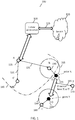
- Wireless communication units 130 ('B') and 140 ('C') are located within the cellular coverage area 145 of the communication cell, and thus supported by a base station, such as eNodeB 125 ('A').
- a base station such as eNodeB 125 ('A')
- the base station is described with reference to an eNodeB 125 ('A'), it is envisaged that in other examples the base station may be any other suitable wireless communication node, such as a WiFiTM access point.
- Wireless communication units 130 ('B') and 140 ('C') receive data content from eNodeB 125 ('A'), and store the data content locally.
- LTETM provides the wide area network coverage technology for the base station, such as eNodeB 125 ('A').
- wireless communication units 130 ('B') and 140 ('C') communicate on an LTETM bearer 121 with eNodeB 125 ('A') and thereafter into, or from, a cellular infrastructure 120, for example comprising a packet gateway (PGW) and service gateway (SGW) (not shown).
- PGW packet gateway
- SGW service gateway
- the cellular infrastructure 120 is connected 115 to a public network, such as the Internet 110, supporting Internet Protocol (IP) communication.
- IP Internet Protocol
- wireless communication units 155 ('D') and 160 ('E') are located outside of the cellular coverage area 145 of the communication cell.
- wireless communication units 130 ('B'), 140 ('C'), 155 ('D') and 160 ('E') may be any combination of cellular phones, smartphones, Wi-FiTM dongles or equivalent.
- wireless communication units 130 ('B'), 140 ('C'), 155 ('D') and 160 ('E') may support additional wireless connectivity in the form of Wi-FiTM or BluetoothTM, or an equivalent technology such as 802.15.4 that can establish a peer-to-peer communication link.
- wireless communication unit 130 ('B') uses WiFiTM for mesh connectivity between devices.
- Wireless communication unit 155 ('D') is located within the mesh network 105 provided by wireless communication unit 130 ('B').
- wireless communication unit 155 ('D') registers an interest to receive some or all data content received and stored locally by wireless communication unit 130 ('B').
- Wireless communication unit 130 ('B') then re-transmits the stored data content using the additional mesh wireless connectivity, i.e. Wi-FiTM.
- Wireless communication unit 155 ('D') receives the transmission from wireless communication unit 130 ('B'), and also stores the received data content locally.
- wireless communication unit 155 ('D') transitions from point 'X' to point 'Y'.
- wireless communication unit 155 ('D') may indicate in a flag that it is now out of cellular coverage.
- wireless communication unit 155 ('D') may switch on its peer-to-peer functionality by starting to transmit active beacons indicating that it has a stored version of the received data content.
- wireless communication unit 160 ('E') is also out of cellular coverage, but after wireless communication unit 155 ('D') moves from point 'X' to point 'Y' it comes within mesh coverage of wireless communication unit 155 ('D').
- wireless communication unit 155 ('D') may advertise that it has the data content.
- Wireless communication unit 160 ('E') may be in a steady-state mode of operation whereby it searches for, say, active beacons from another wireless communication unit.
- the beacon transmission may indicate that wireless communication unit 155 ('D') is functioning (or capable as functioning) in a peer-to-peer manner from which it is possible to receive or download particular data content.
- wireless communication unit 160 ('E') may receive active beacon transmissions from wireless communication unit 155 ('D'), and in response thereto requests a peer-to-peer communication link be set up with wireless communication unit 155 ('D').
- wireless communication unit 155 ('D') may re-transmit the data content to wireless communication unit 160 ('E') in an established peer-to-peer communication.
- wireless communication unit 155 may receive the transmission of data content direct from wireless communication unit 125 ('A'), and store the received data content locally, before transitioning outside of the cellular coverage area.
- wireless communication unit 155 ('D') if wireless communication unit 155 ('D') moved out of mesh coverage, it must stop forwarding data received on the mesh from the base station wireless communication unit 125 ('A') via the cellular connectivity, as it is no longer connected to wireless communication unit 125 ('A'). As such, wireless communication unit 155 ('D') must then transition its operational capabilities to function as an out of coverage device 245 that is able to offer peer-to-peer communications.
- wireless communication unit 155 ('D') is configured for peer-to-peer communications in order to transmit the data content to wireless communication unit 160 ('E').
- Wireless communication unit 160 receives the data content and either also stores it locally, consumes the data content or both.
- wireless communication unit 160 ('E') is able to receive data content without having a real-time network connection to wireless communication unit 125 ('A'), and thereafter an IP network.
- examples of the invention are able to deliver data content wireless communication units, device or end points using the natural movement of mobile devices and the local storing of content.
- wireless communication units 130 ('B'), 140 ('C'), 155 ('D') and 160 ('E') can physically move around the network and pass on the data content to other wireless communication units in the network that have yet to store this data content.
- wireless communication unit 125 ('A') is effectively a data content ingression point, whereas in other examples it will be understood that other wireless communication units or nodes may additionally or alternatively be data content ingression points.
- the data content may be relevant for a period of time, e.g. information provided before a concert or a sporting event commences.
- the transmitter may be configured to transmit the data content for a limited period of time, i.e. whilst the data content has value and is valid.
- the data content may be delay tolerant, i.e. it is not required urgently or in a time-critical sense.
- One example could be in a scenario where a shop voucher was validly for a future week or weekend.
- One example could also be the latest news of the day.
- a predefined algorithm may be employed for turning on beacons or broadcast messages using WiFiTM for wireless communication units that have downloaded data content and are able to further transmit the data content using peer-to-peer communication.
- Other nodes/ wireless communication units would then listen for the beacon(s) or broadcast messages and, if interested in the publicised data content, register an interest to receive the data content from the wireless communication unit using peer-to-peer communication.
- multi-hop peer-to-peer functionality of the data content is envisaged for wireless communication units that are outside of cellular coverage. For example, once wireless communication unit 160 ('E') has received the data content from wireless communication unit 155 ('D'), wireless communication unit 160 ('E') may then offer peer-to-peer communication to other nodes/wireless communication units to re-transmit the data content.
- FIG. 2 a block diagram of a wireless communication unit, adapted in accordance with some example embodiments of the invention, is shown.
- the wireless communication unit is described in terms of a wireless subscriber communication unit 155, such as a user equipment (UE).
- the wireless communication unit 155 contains an antenna 203, for receiving/transmitting LTETM cellular transmissions 221, and an antenna 202, for receiving/transmitting short range communications, such as WiFiTM 222.
- the antennae 202, 203 are coupled to an antenna switch or duplexer 204, which provides isolation between receive and transmit chains within the wireless communication unit 155, for example that may additionally provide isolation between LTETM and WiFiTM circuitry.
- receiver front-end circuitry 206 (effectively providing reception, filtering and intermediate or base-band frequency conversion).
- the receiver front-end circuitry 206 is coupled to a signal processor 228 (generally realized by a digital signal processor (DSP)).
- DSP digital signal processor
- a controller 214 maintains overall operational control of the wireless communication unit 155.
- the controller 214 is coupled to the receiver front-end circuitry 206 and the signal processor 228.
- the controller 214 is also coupled to a memory, such as random access memory, 217 configured to store data content and a memory device 216 that selectively stores operating regimes, such as decoding/encoding functions, synchronization patterns, code sequences, and the like.
- a timer 218 is operably coupled to the controller 214 to control the timing of operations (e.g. transmission or reception of time-dependent signals) within the wireless communication unit 155.
- this essentially includes an input module 220, coupled in series through signal processor 228 that may process and formulate input data for transmission to transmitter/modulation circuitry 222 and thereafter a power amplifier 224 to the antenna 202, 203 antenna array, or plurality of antennas.
- the transmitter/ modulation circuitry 222 and the power amplifier 224 are operationally responsive to the controller 214.
- signal processor 328 of wireless communication unit 155 has been configured to support both WiFiTM and LTETM operation.
- a signal processor 238 supporting WiFiTM may be implemented as distinct from the signal processor 239 supporting LTETM, as shown.
- a single processor may be used to support both WiFiTM and LTETM operation.
- the transmitter and/or receiver circuit may be duplicated, one dedicated for LTETM operation and one dedicated for WiFiTM operation.
- the various components within the wireless communication unit 155 can be realized in discrete or integrated component form, with an ultimate structure therefore being an application-specific or design selection.
- the receiver 206 of the wireless communication unit 155 may be configured to receive data content when connected to the at least one of: a wireless network node, such as wireless communication unit 125 ('A') in FIG. 1 , wireless remote communication units, e.g. from wireless communication unit 130 ('B') at antenna 202 over the WiFi (mesh) network 105.
- a wireless network node such as wireless communication unit 125 ('A') in FIG. 1
- wireless remote communication units e.g. from wireless communication unit 130 ('B') at antenna 202 over the WiFi (mesh) network 105.
- the at least one memory 216 operably coupled to the at least one receiver 206, is configured to store the received data content.
- the transmitter may also be configured to broadcast or transmit a message to other wireless remote communication units when no longer connected to the wireless network node, where the message indicates that the wireless remote communication unit contains the data content.
- the signal processor 228 is configured to access the data content from the at least one memory and the transmitter is configured to transmit the accessed data content to at least one wireless remote communication unit.
- the transmitter may be configured to transmit the accessed data content to a plurality of other wireless remote communication units, say in a batch mode of operation.
- the transmission of the accessed data content to at least one wireless remote communication unit may be made upon receipt of a request for such data content from the at least one wireless remote communication unit.
- the data content may be time limited, e.g. relating a news item for a particular day or relating to a time limited offer.
- the transmitter may be configured to transmit the data content for a limited period of time.
- the data content may be received using a first technology, e.g. which may be a short range wireless technology such as WiFiTM, and ultimately transmitted using a second different technology, e.g. which may be a 3 rd generation partnership project technology such as LTETM.
- a first technology e.g. which may be a short range wireless technology such as WiFiTM
- a second different technology e.g. which may be a 3 rd generation partnership project technology such as LTETM.
- the wireless communication unit 155 may re-configure itself for peer-to-peer communication to support transfer of data packets to or from wireless remote communication units.
- an example flowchart 300 illustrates a wireless communication unit, for example operating in FIG. 1 , and adapted in accordance with some example embodiments of the present invention.
- the example flowchart 300 comprises, in 302, a mobile wireless communication unit located within LTE coverage (or in a mesh network connected to an LTE or IP network).
- the mobile wireless communication unit downloads and stores data content from, say, a wireless communication node, such as an eNodeB.
- a wireless communication node such as an eNodeB
- the wireless communication node is described with reference to an eNodeB, it is envisaged that in other examples the wireless communication node may be any other suitable wireless device, such as a WiFiTM access point.
- the mobile wireless communication unit moves outside of LTETM coverage (and optionally transitions to peer-to-peer communications, if not already).
- mobile wireless communication unit may advertise, say, via a broadcast or beacon or one or more messages, that the mobile wireless communication unit has data content available for distribution.
- the mobile wireless communication unit receives a data content request from at least one other wireless unit.
- the mobile wireless communication unit accesses the data content from memory and transmits the data content to the requesting at least one other wireless unit using short range technology, e.g. WiFiTM.
- examples of the invention may be employed when all devices are within cellular coverage. In such examples, some benefits result from alleviating the congestion on cellular network, whilst simultaneously providing a better user experience as the data content does not have to traverse the mobile network.
- wireless communication unit 160 may transmit data content to wireless communication unit 155 ('D') at point 'Y'.
- Wireless communication unit 155 ('D') stores the received data content and may then move to point 'X'.
- wireless communication unit 155 ('D') may re-transmit its stored data content (received from wireless communication unit 160 ('E')) to wireless communication unit 135 ('B').
- Wireless communication unit 130 may receive and consume the data content, or store the data content locally and then subsequently send the data content to wireless communication unit 125 ('A').
- wireless communication unit 160 ('E') may be considered as the ingress point for the data content.
- wireless communication unit 155 ('D') may re-transmit its stored data content (received from wireless communication unit 160 ('E')) direct to wireless communication unit 125 ('A').
- wireless communication unit 160 ('E') may again be considered as the ingress point for the data content.
- wireless communication unit 160 may be connected to a utility meter. Thereafter, a meter reading technician or vehicle that includes wireless communication unit 155 ('D') may pass nearby. Upon recognizing the vicinity of the wireless communication unit 155 ('D') and the wireless communication unit 160 ('E'), a peer-to-peer communication link may be set up there between. The meter reading may then be communicated to the wireless communication unit 155 ('D').
- the meter reading technician or vehicle that includes wireless communication unit 155 may then move within coverage of a device that is in coverage of a cell site or access point, such as wireless communication unit 135 ('B'), e.g. when returning to the depot. Following a return to the depot, wireless communication unit 135 ('B') may transmit the data content to the cellular infrastructure network, which in some examples may be via base station wireless communication unit 125 ('A').
- wireless communication unit 155 ('D') may transmit all of the collected data content (e.g. multiple meter readings) direct to wireless communication unit 125 ('A'), rather than via wireless communication unit 135 ('B').
- the receiver 206 of the wireless communication unit 155 may be configured to receive data content from at least one wireless remote communication unit when not connected to the wireless network node, e.g. from wireless communication unit 160 ('E') at antenna 202 over the WiFi (mesh) network 105.
- the at least one memory 216 operably coupled to the at least one receiver 206, is configured to store the received data content.
- the signal processor 228 is configured to access the data content from the at least one memory and the transmitter is configured to transmit the accessed data content to at least one of: the wireless network node, the further wireless remote communication unit.
- the receiver may be configured to receive the accessed data content from a plurality of wireless remote communication units, say in a batch mode of operation, in order to collect data content therefrom.
- wireless communication unit 155 ('D') may be configured to obtain a batch of data content, e.g. multiple meter readings, from multiple wireless communication units 160 ('E').
- a meter reading may also be communicated from wireless communication unit 170 ('F') to the wireless communication unit 155 ('D'), whilst the wireless communication unit 155 ('D') is mobile and, say, returning to a location within, or coupled to, LTETM coverage.
- the meter readings may include an identifier to distinguish that specific meter reading from other meter readings collected by wireless communication unit 155 ('D').
- wireless communication unit 125 ('A') receives specific data content to be distributed to one or more of wireless communication units 130 ('B'), 140 ('C'), 155 ('D'), 160 ('E'), and 170 ('F').
- wireless communication unit 155 ('D') may be configured to transmit 165 the relevant data content to the wireless communication units 170 ('F'), and 160 ('E').
- batch peer-to-peer transmissions may be performed through some form of ciphering flooding technique.
- a packet is ciphered, and may be transmitted to lots of different nodes using flooding techniques.
- batch peer-to-peer transmissions may be performed by first identifying a particular wireless communication unit and then transmitting the relevant data content to the identified wireless communication unit, once identification and a peer-to-peer communication link has been established.
- the example flowchart 500 comprises, in 502, a mobile wireless communication unit located outside of LTE coverage (and not connected in a mesh network to an LTE or IP network) operating in a peer-to-peer communication and receiving data content from one or more wireless remote communication units.
- the mobile wireless communication unit stores the received data content.
- the mobile wireless communication unit moves inside of LTETM coverage, or within a mesh network that supports on-going cellular connectivity (and optionally transitions from peer-to-peer communications, if not already).
- mobile wireless communication unit may advertise or notify, say, via a broadcast or beacon or unicast transmissions, that the mobile wireless communication unit has data content available for distribution or delivery.
- the mobile wireless communication unit receives a data content request from at least one other wireless communication node, e.g. an eNodeB or WiFiTM access point.
- the mobile wireless communication unit accesses the data content from memory and transmits the data content to the eNodeB or WiFiTM access point using short range technology, e.g. WiFiTM.
- Computing system 600 may be employed to implement software controlled switching between a first mode of operation where a backhaul link may be available and a second mode of operation where a backhaul link may not be available in some example embodiments of the invention.
- Computing systems of this type may be used in wireless communication units.
- Computing system 600 may represent, for example, a desktop, laptop or notebook computer, hand-held computing device (PDA, cell phone, palmtop, etc.), mainframe, server, client, or any other type of special or general purpose computing device as may be desirable or appropriate for a given application or environment.
- PDA hand-held computing device
- mainframe server
- server client
- any other type of special or general purpose computing device as may be desirable or appropriate for a given application or environment.
- Computing system 600 can include one or more processors, such as a processor 604.
- processors such as a processor 604.
- Processor 604 can be implemented using a general or special-purpose processing engine such as, for example, a microprocessor, microcontroller or other control logic.
- processor 604 is connected to a bus 602 or other communications medium.
- Computing system 600 can also include a main memory 608, such as random access memory (RAM) or other dynamic memory, for storing information and instructions to be executed by processor 604.
- Main memory 608 also may be used for storing temporary variables or other intermediate information during execution of instructions to be executed by processor 604.
- Computing system 600 may likewise include a read only memory (ROM) or other static storage device coupled to bus 602 for storing static information and instructions for processor 604.
- ROM read only memory
- the computing system 600 may also include information storage system 610, which may include, for example, a media drive 612 and a removable storage interface 620.
- the media drive 612 may include a drive or other mechanism to support fixed or removable storage media, such as a hard disk drive, a floppy disk drive, a magnetic tape drive, an optical disk drive, a compact disc (CD) or digital video drive (DVD) read or write drive (R or RW), or other removable or fixed media drive.
- Storage media 618 may include, for example, a hard disk, floppy disk, magnetic tape, optical disk, CD or DVD, or other fixed or removable medium that is read by and written to by media drive 612. As these examples illustrate, the storage media 618 may include a computer-readable storage medium having particular computer software or data stored therein.
- information storage system 610 may include other similar components for allowing computer programs or other instructions or data to be loaded into computing system 600.
- Such components may include, for example, a removable storage unit 622 and an interface 620, such as a program cartridge and cartridge interface, a removable memory (for example, a flash memory or other removable memory module) and memory slot, and other removable storage units 622 and interfaces 620 that allow software and data to be transferred from the removable storage unit 618 to computing system 600.
- Computing system 600 can also include a communications interface 624.
- Communications interface 624 can be used to allow software and data to be transferred between computing system 600 and external devices.
- Examples of communications interface 624 can include a modem, a network interface (such as an Ethernet or other NIC card), a communications port (such as for example, a universal serial bus (USB) port), a PCMCIA slot and card, etc.
- Software and data transferred via communications interface 624 are in the form of signals which can be electronic, electromagnetic, and optical or other signals capable of being received by communications interface 624. These signals are provided to communications interface 624 via a channel 628.
- This channel 628 may carry signals and may be implemented using a wireless medium, wire or cable, fiber optics, or other communications medium.
- Some examples of a channel include a phone line, a cellular phone link, an RF link, a network interface, a local or wide area network, and other communications channels.
- 'computer program product' may be used generally to refer to media such as, for example, memory 608, storage device 618, or storage unit 622.
- These and other forms of computer-readable media may store one or more instructions for use by processor 604, to cause the processor to perform specified operations.
- Such instructions generally referred to as 'computer program code' (which may be grouped in the form of computer programs or other groupings), when executed, enable the computing system 600 to perform functions of embodiments of the present invention.
- the code may directly cause the processor to perform specified operations, be compiled to do so, and/or be combined with other software, hardware, and/or firmware elements (e.g., libraries for performing standard functions) to do so.
- the software may be stored in a computer-readable medium and loaded into computing system 600 using, for example, removable storage drive 622, drive 612 or communications interface 624.
- the control logic in this example, software instructions or computer program code
- the processor 604 when executed by the processor 604, causes the processor 604 to perform the functions of the invention as described herein.
- aspects of the invention may be implemented in any suitable form including hardware, software, firmware or any combination of these.
- the invention may optionally be implemented, at least partly, as computer software running on one or more data processors and/or digital signal processors.
- the software may reside on non-transitory computer program product comprising executable program code to increase coverage in a wireless communication system.
- non-transitory tangible computer program product comprising executable code stored therein may be used for sharing delay tolerant content between wireless communication units.
- the executable program code may be operable for, when executed at a wireless communication unit: receiving data content when connected to a wireless network node or a first wireless remote communication unit; storing the received data content; and when the wireless communication unit is no longer connected to the wireless network node or the first wireless remote communication unit, accessing the data content from the at least one memory, and transmitting the accessed data content to at least one second wireless remote communication unit.
- non-transitory tangible computer program product comprising executable code stored therein may be used for sharing delay tolerant content between wireless communication units.
- the executable program code may be operable for, when executed at amobile wireless communication unit: receiving data content from at least one wireless remote communication unit when not connected to a wireless network node; storing the received data content; and when the mobile wireless communication unit is subsequently connected to the wireless network node, either direct or via one or more wireless remote communication units; accessing the data content from the at least one memory, and transmitting the accessed data content to the wireless network node or the further wireless remote communication unit.
- the elements and components of an embodiment of the invention may be physically, functionally and logically implemented in any suitable way. Indeed, the functionality may be implemented in a single unit, in a plurality of units or as part of other functional units. Those skilled in the art will recognize that the functional blocks and/or logic elements herein described may be implemented in an integrated circuit for incorporation into one or more of the communication units.
- the integrated circuit may be suitable for a wireless communication unit for communicating with a wireless network node and one or more wireless remote communication units.
- the integrated circuit comprises: at least one receiver configured to receive data content when connected to the wireless network node or a first wireless remote communication unit; at least one memory operably coupled to the at least one receiver and configured to store the received data content; at least one transmitter operably coupled to the at least one memory; and a processor operably coupled to the at least one memory and the at least one transmitter.
- the processor is configured to access the data content from the at least one memory and the transmitter is configured to transmit the accessed data content to at least one second wireless remote communication unit.
- the integrated circuit may be suitable for a mobile wireless communication unit for communicating with a wireless network node and one or more wireless remote communication units is described.
- the integrated circuit comprises: at least one receiver configured to receive data content from at least one wireless remote communication unit when not connected to the wireless network node; at least one memory operably coupled to the at least one receiver and configured to store the received data content; at least one transmitter operably coupled to the at least one memory; and a processor operably coupled to the at least one memory and the at least one transmitter.
- the processor is configured to access the data content from the at least one memory and the transmitter is configured to transmit the accessed data content to the wireless network node or the further wireless remote communication unit.
- logic blocks are merely illustrative and that alternative embodiments may merge logic blocks or circuit elements or impose an alternate composition of functionality upon various logic blocks or circuit elements. It is further intended that the architectures depicted herein are merely exemplary, and that in fact many other architectures can be implemented that achieve the same functionality.
Landscapes
- Engineering & Computer Science (AREA)
- Computer Networks & Wireless Communication (AREA)
- Signal Processing (AREA)
- Computer Security & Cryptography (AREA)
- Mobile Radio Communication Systems (AREA)
Claims (6)
- Drahtlose Kommunikationseinheit (155) zum Kommunizieren mit einem drahtlosen Netzwerkknoten (125) und einer oder mehreren drahtlosen entfernten Kommunikationseinheiten, wobei die drahtlose Kommunikationseinheit (155) umfasst:wenigstens einen Empfänger (206) der eingerichtet ist zum Empfangen von einem Dateninhalt, wenn er mit dem drahtlosen Netzwerkknoten oder einer ersten drahtlosen entfernten Kommunikationseinheit verbunden ist;wenigstens einen Speicher (216), der funktionsfähig mit dem wenigstens einen Empfänger gekoppelt ist und eingerichtet ist zum Speichern des empfangenen Dateninhalts;wenigstens einen Sender (222), der funktionsfähig mit dem wenigstens einen Speicher (216) gekoppelt ist; undeinen Prozessor (228), der mit dem wenigstens einen Speicher (216) und dem wenigstens einen Sender (222) funktionsfähig gekoppelt ist;wobei die drahtlose Kommunikationseinheit (155) dadurch gekennzeichnet ist, dass, wenn sie nicht länger mit dem drahtlosen Netzwerkknoten oder der ersten drahtlosen entfernten Kommunikationseinheit verbunden ist, der Prozessor dazu eingerichtet ist, auf den Dateninhalt aus dem wenigstens einen Speicher (216) zuzugreifen und der wenigstens eine Sender (222) eingerichtet ist zum: Ausstrahlen oder Senden einer Nachricht an andere drahtlose entfernte Kommunikationseinheiten, die angibt, dass die drahtlose Kommunikationseinheit den Dateninhalt heruntergeladen hat und in der Lage ist den Dateninhalt an wenigstens eine zweite drahtlose entfernte Kommunikationseinheit unter Verwendung von Peer-to-Peer-Kommunikation zu übertragen.
- Drahtlose Kommunikationseinheit gemäß Anspruch 1, wobei der wenigstens eine Empfänger eine Anfrage für den Dateninhalt von der zweiten drahtlosen entfernten Kommunikationseinheit empfängt, wenn die mobile drahtlose Kommunikationseinheit nicht länger mit dem drahtlosen Netzwerkknoten oder der ersten drahtlosen entfernten Kommunikationseinheit verbunden ist, und der wenigstens eine Sender als Reaktion darauf den zugegriffenen Dateninhalt an die zweite drahtlose entfernte Kommunikationseinheit überträgt.
- Drahtlose Kommunikationseinheit gemäß einem der vorhergehenden Ansprüche, wobei der wenigstens eine Sender dazu eingerichtet ist, den zugegriffenen Dateninhalt an eine Vielzahl von anderen drahtlosen entfernten Kommunikationseinheiten in einem Batch-Modus zu übertragen.
- Drahtlose Kommunikationseinheit gemäß einem der vorhergehenden Ansprüche, wobei der wenigstens eine Sender dazu eingerichtet ist, den Dateninhalt für eine beschränkte Zeitspanne zu übertragen.
- Verfahren (300) zum Teilen von einem verzögerungstoleranten Inhalt zwischen drahtlosen Kommunikationseinheiten, das Verfahren umfasst, bei einer drahtlosen Kommunikationseinheit:das Empfangen (302) von einem Dateninhalt, wenn sie mit einem drahtlosen Netzwerkknoten oder einer ersten drahtlosen entfernten Kommunikationseinheit verbunden ist; unddas Speichern (304) des empfangenen Dateninhalts;wobei das Verfahren gekennzeichnet ist durch die Schritte, wenn die drahtlose Kommunikationseinheit nicht länger mit dem drahtlosen Netzwerkknoten oder der ersten drahtlosen entfernten Kommunikationseinheit verbunden ist,des Zugreifens (312) auf den Dateninhalt von dem wenigstens einen Speicher;des Ausstrahlens oder Sendens einer Nachricht an andere drahtlose entfernte Kommunikationseinheiten, die angibt, dass die drahtlose Kommunikationseinheit den Dateninhalt heruntergeladen hat und in der Lage ist, den Dateninhalt an wenigstens eine zweite drahtlose entfernte Kommunikationseinheit unter Verwendung von Peer-to-Peer-Kommunikation zu übertragen.
- Drahtloses Kommunikationssystem (100), das eine Vielzahl von drahtlosen Kommunikationseinheiten umfasst, wobei wenigstens eine drahtlose Kommunikationseinheit (155) mit einem drahtlosen Netzwerkknoten (125) und einer oder mehreren drahtlosen entfernten Kommunikationseinheiten kommuniziert, wobei die wenigstens eine drahtlose Kommunikationseinheit (155) umfasst:wenigstens einen Empfänger (206) eingerichtet zum Empfangen von einem Dateninhalt, wenn er mit dem drahtlosen Netzwerkknoten oder einer ersten drahtlosen entfernten Kommunikationseinheit verbunden ist;wenigstens einen Speicher (216), der funktionsfähig mit dem wenigstens einen Empfänger gekoppelt ist und eingerichtet ist zum Speichern des empfangenen Dateninhalts;wenigstens einem Sender (222), der funktionsfähig mit dem wenigstens einen Speicher (216) gekoppelt ist; undeinen Prozessor (228), der mit dem wenigstens einen Speicher (216) und dem wenigstens einen Sender (222) funktionsfähig gekoppelt ist;wobei das drahtlose Kommunikationssystem (100) dadurch gekennzeichnet ist, dass, wenn es nicht länger mit dem drahtlosen Netzwerkknoten oder der ersten drahtlosen entfernten Kommunikationseinheit verbunden ist, der Prozessor dazu eingerichtet ist, auf den Dateninhalt aus dem wenigstens einen Speicher zuzugreifen, und der wenigstens eine Sender eingerichtet ist zum: Ausstrahlen oder Senden einer Nachricht an andere drahtlose entfernte Kommunikationseinheiten, die angibt, dass die drahtlose Kommunikationseinheit den Dateninhalt heruntergeladen hat und in der Lage ist, den Dateninhalt an wenigstens eine zweite drahtlose entfernte Kommunikationseinheit unter Verwendung von Peer-to-Peer-Kommunikation zu übertragen.
Priority Applications (1)
| Application Number | Priority Date | Filing Date | Title |
|---|---|---|---|
| EP20209010.6A EP3813387A1 (de) | 2016-03-22 | 2017-03-15 | Inhaltsübertragungsfunktionalität jenseits oder innerhalb von zellularen netzwerken |
Applications Claiming Priority (1)
| Application Number | Priority Date | Filing Date | Title |
|---|---|---|---|
| GB1604878.7A GB2548806A (en) | 2016-03-22 | 2016-03-22 | Content transfer functionality beyond or within cellular networks |
Related Child Applications (2)
| Application Number | Title | Priority Date | Filing Date |
|---|---|---|---|
| EP20209010.6A Division-Into EP3813387A1 (de) | 2016-03-22 | 2017-03-15 | Inhaltsübertragungsfunktionalität jenseits oder innerhalb von zellularen netzwerken |
| EP20209010.6A Division EP3813387A1 (de) | 2016-03-22 | 2017-03-15 | Inhaltsübertragungsfunktionalität jenseits oder innerhalb von zellularen netzwerken |
Publications (2)
| Publication Number | Publication Date |
|---|---|
| EP3223545A1 EP3223545A1 (de) | 2017-09-27 |
| EP3223545B1 true EP3223545B1 (de) | 2021-01-06 |
Family
ID=55968723
Family Applications (2)
| Application Number | Title | Priority Date | Filing Date |
|---|---|---|---|
| EP20209010.6A Withdrawn EP3813387A1 (de) | 2016-03-22 | 2017-03-15 | Inhaltsübertragungsfunktionalität jenseits oder innerhalb von zellularen netzwerken |
| EP17161092.6A Active EP3223545B1 (de) | 2016-03-22 | 2017-03-15 | Inhaltsübertragungsfunktionalität jenseits oder innerhalb von zellularen netzwerken |
Family Applications Before (1)
| Application Number | Title | Priority Date | Filing Date |
|---|---|---|---|
| EP20209010.6A Withdrawn EP3813387A1 (de) | 2016-03-22 | 2017-03-15 | Inhaltsübertragungsfunktionalität jenseits oder innerhalb von zellularen netzwerken |
Country Status (4)
| Country | Link |
|---|---|
| US (2) | US10917928B2 (de) |
| EP (2) | EP3813387A1 (de) |
| ES (1) | ES2865385T3 (de) |
| GB (1) | GB2548806A (de) |
Families Citing this family (1)
| Publication number | Priority date | Publication date | Assignee | Title |
|---|---|---|---|---|
| CN111130610A (zh) * | 2018-11-01 | 2020-05-08 | 北京三星通信技术研究有限公司 | 信号传输方法、装置、电子设备及计算机可读存储介质 |
Family Cites Families (12)
| Publication number | Priority date | Publication date | Assignee | Title |
|---|---|---|---|---|
| AUPQ500900A0 (en) * | 2000-01-10 | 2000-02-03 | Aristocrat Leisure Industries Pty Ltd | Gaming machine with interactive scorecard |
| US7055165B2 (en) * | 2001-06-15 | 2006-05-30 | Intel Corporation | Method and apparatus for periodically delivering an optimal batch broadcast schedule based on distributed client feedback |
| WO2008012488A2 (en) * | 2006-07-24 | 2008-01-31 | Nds Limited | Peer-to-peer set-top box system |
| US8462691B2 (en) * | 2007-03-30 | 2013-06-11 | British Telecommunications Plc | Ad hoc communication system |
| US8787880B2 (en) * | 2007-06-14 | 2014-07-22 | Omnitracs, Llc | Wireless device caching data proxy |
| US20100094938A1 (en) * | 2008-10-10 | 2010-04-15 | Nicolas Le Scouarnec | Method of transmitting data between peerss by selecting a network according to at least one criterion and associated management device and communication equipment |
| US8406206B2 (en) | 2009-02-23 | 2013-03-26 | Empire Technology Development Llc | Mobile peer-to-peer content sharing method and system |
| US8521135B2 (en) * | 2010-12-20 | 2013-08-27 | Research In Motion Limited | Message relay host for delivering messages to out of coverage communications devices |
| US9185690B2 (en) * | 2012-02-29 | 2015-11-10 | Sharp Kabushiki Kaisha | Allocating and determining resources for a device-to-device link |
| US9319858B2 (en) * | 2013-07-01 | 2016-04-19 | Cellco Partnership | Managing information about content transmission |
| WO2015046155A1 (ja) * | 2013-09-27 | 2015-04-02 | 京セラ株式会社 | 通信制御方法 |
| EP3255950A1 (de) * | 2016-06-06 | 2017-12-13 | ASUSTek Computer Inc. | Verfahren und vorrichtung zur ressourcenzuweisung für ein d2d relais in einem drahtloskommunikationssystem |
-
2016
- 2016-03-22 GB GB1604878.7A patent/GB2548806A/en not_active Withdrawn
-
2017
- 2017-03-15 EP EP20209010.6A patent/EP3813387A1/de not_active Withdrawn
- 2017-03-15 EP EP17161092.6A patent/EP3223545B1/de active Active
- 2017-03-15 ES ES17161092T patent/ES2865385T3/es active Active
- 2017-03-15 US US15/459,908 patent/US10917928B2/en active Active
-
2020
- 2020-12-28 US US17/135,190 patent/US12207326B2/en active Active
Also Published As
| Publication number | Publication date |
|---|---|
| US20210120604A1 (en) | 2021-04-22 |
| ES2865385T3 (es) | 2021-10-15 |
| EP3223545A1 (de) | 2017-09-27 |
| EP3813387A1 (de) | 2021-04-28 |
| GB201604878D0 (en) | 2016-05-04 |
| US20180270870A1 (en) | 2018-09-20 |
| US20210045165A9 (en) | 2021-02-11 |
| US12207326B2 (en) | 2025-01-21 |
| US10917928B2 (en) | 2021-02-09 |
| GB2548806A (en) | 2017-10-04 |
Similar Documents
| Publication | Publication Date | Title |
|---|---|---|
| US9686369B2 (en) | System and method for multihop service discovery with member station proxy service advertisements | |
| TWI440383B (zh) | 多使用者、多模式基帶訊號方法、時間/頻率同步及接收器架構 | |
| CN102484844A (zh) | 用于提供对局域网的接入的装置和方法 | |
| EP2740317B1 (de) | Gemeinsame verbindungsnutzung in einem kommunikationssystem | |
| KR101239503B1 (ko) | 기지국을 지역 이동 에이전트로 동작하도록 구성 | |
| EP3220612A1 (de) | Drahtloskommunikationseinheit und verfahren zur gemeinsamen nutzung von verzögerungstoleranten inhalten | |
| CN110999445A (zh) | 网络资源的位置感知识别 | |
| CN109479233B (zh) | 用于容忍延迟消息的转发节点选择和路由 | |
| KR20210113562A (ko) | 복수의 가입 id를 가진 사용자 단말기의 통신 | |
| EP3334194B1 (de) | Verbindungsinformationen broadcast mit beacon technologie | |
| WO2023011292A1 (zh) | 一种移动性限制通信方法、装置及系统 | |
| CN111727586A (zh) | 数据传输处理方法、装置、通信设备及存储介质 | |
| US12207326B2 (en) | Content transfer functionality beyond or within cellular networks | |
| US11889580B2 (en) | Wireless communication units and wireless communication system and methods to support beacon technology | |
| CN117155720A (zh) | 通信方法及装置 | |
| JP2019075743A (ja) | 制御装置、端末、通信システムおよび通信方法 | |
| CN103380655B (zh) | 使用辅助连接联系目标移动台的方法、系统及装置 | |
| JP2019503132A (ja) | グループ通信システムにおけるページング | |
| US20180368190A1 (en) | Transmission of data over client probe frames | |
| EP4712571A1 (de) | Drahtloskommunikationsverfahren, benutzergerät und netzwerkvorrichtung | |
| WO2024145802A1 (en) | Systems and methods for notifying synchronization status | |
| CN102223705A (zh) | 家庭基站多小区网络及其实现方法 | |
| JP2026509546A (ja) | 車両インターネット通信方法、装置及びコンピュータプログラム | |
| CN108141761A (zh) | 无线资源确定方法、装置及业务服务器 | |
| Usha et al. | CAPACITY CRUNCH: CAN MoSoNets OFFLOAD DATA SOLVE THIS |
Legal Events
| Date | Code | Title | Description |
|---|---|---|---|
| PUAI | Public reference made under article 153(3) epc to a published international application that has entered the european phase |
Free format text: ORIGINAL CODE: 0009012 |
|
| STAA | Information on the status of an ep patent application or granted ep patent |
Free format text: STATUS: THE APPLICATION HAS BEEN PUBLISHED |
|
| AK | Designated contracting states |
Kind code of ref document: A1 Designated state(s): AL AT BE BG CH CY CZ DE DK EE ES FI FR GB GR HR HU IE IS IT LI LT LU LV MC MK MT NL NO PL PT RO RS SE SI SK SM TR |
|
| AX | Request for extension of the european patent |
Extension state: BA ME |
|
| STAA | Information on the status of an ep patent application or granted ep patent |
Free format text: STATUS: REQUEST FOR EXAMINATION WAS MADE |
|
| 17P | Request for examination filed |
Effective date: 20180327 |
|
| RBV | Designated contracting states (corrected) |
Designated state(s): AL AT BE BG CH CY CZ DE DK EE ES FI FR GB GR HR HU IE IS IT LI LT LU LV MC MK MT NL NO PL PT RO RS SE SI SK SM TR |
|
| STAA | Information on the status of an ep patent application or granted ep patent |
Free format text: STATUS: EXAMINATION IS IN PROGRESS |
|
| RAP1 | Party data changed (applicant data changed or rights of an application transferred) |
Owner name: VEEA SYSTEMS LTD |
|
| 17Q | First examination report despatched |
Effective date: 20190311 |
|
| GRAP | Despatch of communication of intention to grant a patent |
Free format text: ORIGINAL CODE: EPIDOSNIGR1 |
|
| STAA | Information on the status of an ep patent application or granted ep patent |
Free format text: STATUS: GRANT OF PATENT IS INTENDED |
|
| INTG | Intention to grant announced |
Effective date: 20200717 |
|
| GRAS | Grant fee paid |
Free format text: ORIGINAL CODE: EPIDOSNIGR3 |
|
| GRAA | (expected) grant |
Free format text: ORIGINAL CODE: 0009210 |
|
| STAA | Information on the status of an ep patent application or granted ep patent |
Free format text: STATUS: THE PATENT HAS BEEN GRANTED |
|
| AK | Designated contracting states |
Kind code of ref document: B1 Designated state(s): AL AT BE BG CH CY CZ DE DK EE ES FI FR GB GR HR HU IE IS IT LI LT LU LV MC MK MT NL NO PL PT RO RS SE SI SK SM TR |
|
| REG | Reference to a national code |
Ref country code: GB Ref legal event code: FG4D |
|
| REG | Reference to a national code |
Ref country code: AT Ref legal event code: REF Ref document number: 1353663 Country of ref document: AT Kind code of ref document: T Effective date: 20210115 Ref country code: CH Ref legal event code: EP |
|
| REG | Reference to a national code |
Ref country code: DE Ref legal event code: R096 Ref document number: 602017030763 Country of ref document: DE |
|
| REG | Reference to a national code |
Ref country code: IE Ref legal event code: FG4D |
|
| REG | Reference to a national code |
Ref country code: NL Ref legal event code: MP Effective date: 20210106 |
|
| REG | Reference to a national code |
Ref country code: AT Ref legal event code: MK05 Ref document number: 1353663 Country of ref document: AT Kind code of ref document: T Effective date: 20210106 |
|
| REG | Reference to a national code |
Ref country code: LT Ref legal event code: MG9D |
|
| PG25 | Lapsed in a contracting state [announced via postgrant information from national office to epo] |
Ref country code: NO Free format text: LAPSE BECAUSE OF FAILURE TO SUBMIT A TRANSLATION OF THE DESCRIPTION OR TO PAY THE FEE WITHIN THE PRESCRIBED TIME-LIMIT Effective date: 20210406 Ref country code: PT Free format text: LAPSE BECAUSE OF FAILURE TO SUBMIT A TRANSLATION OF THE DESCRIPTION OR TO PAY THE FEE WITHIN THE PRESCRIBED TIME-LIMIT Effective date: 20210506 Ref country code: HR Free format text: LAPSE BECAUSE OF FAILURE TO SUBMIT A TRANSLATION OF THE DESCRIPTION OR TO PAY THE FEE WITHIN THE PRESCRIBED TIME-LIMIT Effective date: 20210106 Ref country code: GR Free format text: LAPSE BECAUSE OF FAILURE TO SUBMIT A TRANSLATION OF THE DESCRIPTION OR TO PAY THE FEE WITHIN THE PRESCRIBED TIME-LIMIT Effective date: 20210407 Ref country code: FI Free format text: LAPSE BECAUSE OF FAILURE TO SUBMIT A TRANSLATION OF THE DESCRIPTION OR TO PAY THE FEE WITHIN THE PRESCRIBED TIME-LIMIT Effective date: 20210106 Ref country code: LT Free format text: LAPSE BECAUSE OF FAILURE TO SUBMIT A TRANSLATION OF THE DESCRIPTION OR TO PAY THE FEE WITHIN THE PRESCRIBED TIME-LIMIT Effective date: 20210106 Ref country code: BG Free format text: LAPSE BECAUSE OF FAILURE TO SUBMIT A TRANSLATION OF THE DESCRIPTION OR TO PAY THE FEE WITHIN THE PRESCRIBED TIME-LIMIT Effective date: 20210406 |
|
| PG25 | Lapsed in a contracting state [announced via postgrant information from national office to epo] |
Ref country code: AT Free format text: LAPSE BECAUSE OF FAILURE TO SUBMIT A TRANSLATION OF THE DESCRIPTION OR TO PAY THE FEE WITHIN THE PRESCRIBED TIME-LIMIT Effective date: 20210106 Ref country code: PL Free format text: LAPSE BECAUSE OF FAILURE TO SUBMIT A TRANSLATION OF THE DESCRIPTION OR TO PAY THE FEE WITHIN THE PRESCRIBED TIME-LIMIT Effective date: 20210106 Ref country code: LV Free format text: LAPSE BECAUSE OF FAILURE TO SUBMIT A TRANSLATION OF THE DESCRIPTION OR TO PAY THE FEE WITHIN THE PRESCRIBED TIME-LIMIT Effective date: 20210106 Ref country code: SE Free format text: LAPSE BECAUSE OF FAILURE TO SUBMIT A TRANSLATION OF THE DESCRIPTION OR TO PAY THE FEE WITHIN THE PRESCRIBED TIME-LIMIT Effective date: 20210106 |
|
| PG25 | Lapsed in a contracting state [announced via postgrant information from national office to epo] |
Ref country code: IS Free format text: LAPSE BECAUSE OF FAILURE TO SUBMIT A TRANSLATION OF THE DESCRIPTION OR TO PAY THE FEE WITHIN THE PRESCRIBED TIME-LIMIT Effective date: 20210506 |
|
| REG | Reference to a national code |
Ref country code: DE Ref legal event code: R097 Ref document number: 602017030763 Country of ref document: DE |
|
| REG | Reference to a national code |
Ref country code: ES Ref legal event code: FG2A Ref document number: 2865385 Country of ref document: ES Kind code of ref document: T3 Effective date: 20211015 |
|
| PG25 | Lapsed in a contracting state [announced via postgrant information from national office to epo] |
Ref country code: SM Free format text: LAPSE BECAUSE OF FAILURE TO SUBMIT A TRANSLATION OF THE DESCRIPTION OR TO PAY THE FEE WITHIN THE PRESCRIBED TIME-LIMIT Effective date: 20210106 Ref country code: CZ Free format text: LAPSE BECAUSE OF FAILURE TO SUBMIT A TRANSLATION OF THE DESCRIPTION OR TO PAY THE FEE WITHIN THE PRESCRIBED TIME-LIMIT Effective date: 20210106 Ref country code: EE Free format text: LAPSE BECAUSE OF FAILURE TO SUBMIT A TRANSLATION OF THE DESCRIPTION OR TO PAY THE FEE WITHIN THE PRESCRIBED TIME-LIMIT Effective date: 20210106 Ref country code: MC Free format text: LAPSE BECAUSE OF FAILURE TO SUBMIT A TRANSLATION OF THE DESCRIPTION OR TO PAY THE FEE WITHIN THE PRESCRIBED TIME-LIMIT Effective date: 20210106 |
|
| REG | Reference to a national code |
Ref country code: CH Ref legal event code: PL |
|
| PLBE | No opposition filed within time limit |
Free format text: ORIGINAL CODE: 0009261 |
|
| STAA | Information on the status of an ep patent application or granted ep patent |
Free format text: STATUS: NO OPPOSITION FILED WITHIN TIME LIMIT |
|
| PG25 | Lapsed in a contracting state [announced via postgrant information from national office to epo] |
Ref country code: SK Free format text: LAPSE BECAUSE OF FAILURE TO SUBMIT A TRANSLATION OF THE DESCRIPTION OR TO PAY THE FEE WITHIN THE PRESCRIBED TIME-LIMIT Effective date: 20210106 Ref country code: RO Free format text: LAPSE BECAUSE OF FAILURE TO SUBMIT A TRANSLATION OF THE DESCRIPTION OR TO PAY THE FEE WITHIN THE PRESCRIBED TIME-LIMIT Effective date: 20210106 Ref country code: DK Free format text: LAPSE BECAUSE OF FAILURE TO SUBMIT A TRANSLATION OF THE DESCRIPTION OR TO PAY THE FEE WITHIN THE PRESCRIBED TIME-LIMIT Effective date: 20210106 |
|
| 26N | No opposition filed |
Effective date: 20211007 |
|
| REG | Reference to a national code |
Ref country code: BE Ref legal event code: MM Effective date: 20210331 |
|
| PG25 | Lapsed in a contracting state [announced via postgrant information from national office to epo] |
Ref country code: IE Free format text: LAPSE BECAUSE OF NON-PAYMENT OF DUE FEES Effective date: 20210315 Ref country code: CH Free format text: LAPSE BECAUSE OF NON-PAYMENT OF DUE FEES Effective date: 20210331 Ref country code: AL Free format text: LAPSE BECAUSE OF FAILURE TO SUBMIT A TRANSLATION OF THE DESCRIPTION OR TO PAY THE FEE WITHIN THE PRESCRIBED TIME-LIMIT Effective date: 20210106 Ref country code: LU Free format text: LAPSE BECAUSE OF NON-PAYMENT OF DUE FEES Effective date: 20210315 Ref country code: LI Free format text: LAPSE BECAUSE OF NON-PAYMENT OF DUE FEES Effective date: 20210331 |
|
| PG25 | Lapsed in a contracting state [announced via postgrant information from national office to epo] |
Ref country code: SI Free format text: LAPSE BECAUSE OF FAILURE TO SUBMIT A TRANSLATION OF THE DESCRIPTION OR TO PAY THE FEE WITHIN THE PRESCRIBED TIME-LIMIT Effective date: 20210106 |
|
| PG25 | Lapsed in a contracting state [announced via postgrant information from national office to epo] |
Ref country code: IS Free format text: LAPSE BECAUSE OF FAILURE TO SUBMIT A TRANSLATION OF THE DESCRIPTION OR TO PAY THE FEE WITHIN THE PRESCRIBED TIME-LIMIT Effective date: 20210506 |
|
| PG25 | Lapsed in a contracting state [announced via postgrant information from national office to epo] |
Ref country code: BE Free format text: LAPSE BECAUSE OF NON-PAYMENT OF DUE FEES Effective date: 20210331 |
|
| PG25 | Lapsed in a contracting state [announced via postgrant information from national office to epo] |
Ref country code: RS Free format text: LAPSE BECAUSE OF FAILURE TO SUBMIT A TRANSLATION OF THE DESCRIPTION OR TO PAY THE FEE WITHIN THE PRESCRIBED TIME-LIMIT Effective date: 20210106 Ref country code: HU Free format text: LAPSE BECAUSE OF FAILURE TO SUBMIT A TRANSLATION OF THE DESCRIPTION OR TO PAY THE FEE WITHIN THE PRESCRIBED TIME-LIMIT; INVALID AB INITIO Effective date: 20170315 |
|
| PG25 | Lapsed in a contracting state [announced via postgrant information from national office to epo] |
Ref country code: NL Free format text: LAPSE BECAUSE OF NON-PAYMENT OF DUE FEES Effective date: 20210206 Ref country code: CY Free format text: LAPSE BECAUSE OF FAILURE TO SUBMIT A TRANSLATION OF THE DESCRIPTION OR TO PAY THE FEE WITHIN THE PRESCRIBED TIME-LIMIT Effective date: 20210106 |
|
| PG25 | Lapsed in a contracting state [announced via postgrant information from national office to epo] |
Ref country code: MK Free format text: LAPSE BECAUSE OF FAILURE TO SUBMIT A TRANSLATION OF THE DESCRIPTION OR TO PAY THE FEE WITHIN THE PRESCRIBED TIME-LIMIT Effective date: 20210106 |
|
| PG25 | Lapsed in a contracting state [announced via postgrant information from national office to epo] |
Ref country code: MT Free format text: LAPSE BECAUSE OF FAILURE TO SUBMIT A TRANSLATION OF THE DESCRIPTION OR TO PAY THE FEE WITHIN THE PRESCRIBED TIME-LIMIT Effective date: 20210106 |
|
| PGFP | Annual fee paid to national office [announced via postgrant information from national office to epo] |
Ref country code: DE Payment date: 20250327 Year of fee payment: 9 |
|
| PGFP | Annual fee paid to national office [announced via postgrant information from national office to epo] |
Ref country code: FR Payment date: 20250325 Year of fee payment: 9 |
|
| PGFP | Annual fee paid to national office [announced via postgrant information from national office to epo] |
Ref country code: IT Payment date: 20250319 Year of fee payment: 9 Ref country code: GB Payment date: 20250327 Year of fee payment: 9 |
|
| PGFP | Annual fee paid to national office [announced via postgrant information from national office to epo] |
Ref country code: ES Payment date: 20250401 Year of fee payment: 9 |
|
| PG25 | Lapsed in a contracting state [announced via postgrant information from national office to epo] |
Ref country code: TR Free format text: LAPSE BECAUSE OF FAILURE TO SUBMIT A TRANSLATION OF THE DESCRIPTION OR TO PAY THE FEE WITHIN THE PRESCRIBED TIME-LIMIT Effective date: 20210106 |