EP3214440A1 - DEVICE AND pH CALCULATION METHOD - Google Patents
DEVICE AND pH CALCULATION METHOD Download PDFInfo
- Publication number
- EP3214440A1 EP3214440A1 EP16764572.0A EP16764572A EP3214440A1 EP 3214440 A1 EP3214440 A1 EP 3214440A1 EP 16764572 A EP16764572 A EP 16764572A EP 3214440 A1 EP3214440 A1 EP 3214440A1
- Authority
- EP
- European Patent Office
- Prior art keywords
- value
- scrubber
- outboard
- washing water
- dilution ratio
- Prior art date
- Legal status (The legal status is an assumption and is not a legal conclusion. Google has not performed a legal analysis and makes no representation as to the accuracy of the status listed.)
- Granted
Links
Images


Classifications
-
- B—PERFORMING OPERATIONS; TRANSPORTING
- B01—PHYSICAL OR CHEMICAL PROCESSES OR APPARATUS IN GENERAL
- B01D—SEPARATION
- B01D53/00—Separation of gases or vapours; Recovering vapours of volatile solvents from gases; Chemical or biological purification of waste gases, e.g. engine exhaust gases, smoke, fumes, flue gases, aerosols
- B01D53/14—Separation of gases or vapours; Recovering vapours of volatile solvents from gases; Chemical or biological purification of waste gases, e.g. engine exhaust gases, smoke, fumes, flue gases, aerosols by absorption
- B01D53/1412—Controlling the absorption process
-
- B—PERFORMING OPERATIONS; TRANSPORTING
- B01—PHYSICAL OR CHEMICAL PROCESSES OR APPARATUS IN GENERAL
- B01D—SEPARATION
- B01D53/00—Separation of gases or vapours; Recovering vapours of volatile solvents from gases; Chemical or biological purification of waste gases, e.g. engine exhaust gases, smoke, fumes, flue gases, aerosols
- B01D53/14—Separation of gases or vapours; Recovering vapours of volatile solvents from gases; Chemical or biological purification of waste gases, e.g. engine exhaust gases, smoke, fumes, flue gases, aerosols by absorption
-
- B—PERFORMING OPERATIONS; TRANSPORTING
- B01—PHYSICAL OR CHEMICAL PROCESSES OR APPARATUS IN GENERAL
- B01D—SEPARATION
- B01D53/00—Separation of gases or vapours; Recovering vapours of volatile solvents from gases; Chemical or biological purification of waste gases, e.g. engine exhaust gases, smoke, fumes, flue gases, aerosols
- B01D53/14—Separation of gases or vapours; Recovering vapours of volatile solvents from gases; Chemical or biological purification of waste gases, e.g. engine exhaust gases, smoke, fumes, flue gases, aerosols by absorption
- B01D53/1456—Removing acid components
-
- B—PERFORMING OPERATIONS; TRANSPORTING
- B01—PHYSICAL OR CHEMICAL PROCESSES OR APPARATUS IN GENERAL
- B01D—SEPARATION
- B01D53/00—Separation of gases or vapours; Recovering vapours of volatile solvents from gases; Chemical or biological purification of waste gases, e.g. engine exhaust gases, smoke, fumes, flue gases, aerosols
- B01D53/14—Separation of gases or vapours; Recovering vapours of volatile solvents from gases; Chemical or biological purification of waste gases, e.g. engine exhaust gases, smoke, fumes, flue gases, aerosols by absorption
- B01D53/1493—Selection of liquid materials for use as absorbents
-
- B—PERFORMING OPERATIONS; TRANSPORTING
- B01—PHYSICAL OR CHEMICAL PROCESSES OR APPARATUS IN GENERAL
- B01D—SEPARATION
- B01D53/00—Separation of gases or vapours; Recovering vapours of volatile solvents from gases; Chemical or biological purification of waste gases, e.g. engine exhaust gases, smoke, fumes, flue gases, aerosols
- B01D53/34—Chemical or biological purification of waste gases
- B01D53/346—Controlling the process
-
- B—PERFORMING OPERATIONS; TRANSPORTING
- B01—PHYSICAL OR CHEMICAL PROCESSES OR APPARATUS IN GENERAL
- B01D—SEPARATION
- B01D53/00—Separation of gases or vapours; Recovering vapours of volatile solvents from gases; Chemical or biological purification of waste gases, e.g. engine exhaust gases, smoke, fumes, flue gases, aerosols
- B01D53/34—Chemical or biological purification of waste gases
- B01D53/46—Removing components of defined structure
- B01D53/48—Sulfur compounds
- B01D53/50—Sulfur oxides
-
- B—PERFORMING OPERATIONS; TRANSPORTING
- B01—PHYSICAL OR CHEMICAL PROCESSES OR APPARATUS IN GENERAL
- B01D—SEPARATION
- B01D53/00—Separation of gases or vapours; Recovering vapours of volatile solvents from gases; Chemical or biological purification of waste gases, e.g. engine exhaust gases, smoke, fumes, flue gases, aerosols
- B01D53/34—Chemical or biological purification of waste gases
- B01D53/46—Removing components of defined structure
- B01D53/48—Sulfur compounds
- B01D53/50—Sulfur oxides
- B01D53/501—Sulfur oxides by treating the gases with a solution or a suspension of an alkali or earth-alkali or ammonium compound
- B01D53/504—Sulfur oxides by treating the gases with a solution or a suspension of an alkali or earth-alkali or ammonium compound characterised by a specific device
-
- B—PERFORMING OPERATIONS; TRANSPORTING
- B01—PHYSICAL OR CHEMICAL PROCESSES OR APPARATUS IN GENERAL
- B01D—SEPARATION
- B01D53/00—Separation of gases or vapours; Recovering vapours of volatile solvents from gases; Chemical or biological purification of waste gases, e.g. engine exhaust gases, smoke, fumes, flue gases, aerosols
- B01D53/34—Chemical or biological purification of waste gases
- B01D53/92—Chemical or biological purification of waste gases of engine exhaust gases
-
- B—PERFORMING OPERATIONS; TRANSPORTING
- B63—SHIPS OR OTHER WATERBORNE VESSELS; RELATED EQUIPMENT
- B63H—MARINE PROPULSION OR STEERING
- B63H21/00—Use of propulsion power plant or units on vessels
- B63H21/32—Arrangements of propulsion power-unit exhaust uptakes; Funnels peculiar to vessels
-
- B—PERFORMING OPERATIONS; TRANSPORTING
- B63—SHIPS OR OTHER WATERBORNE VESSELS; RELATED EQUIPMENT
- B63H—MARINE PROPULSION OR STEERING
- B63H21/00—Use of propulsion power plant or units on vessels
- B63H21/38—Apparatus or methods specially adapted for use on marine vessels, for handling power plant or unit liquids, e.g. lubricants, coolants, fuels or the like
-
- B—PERFORMING OPERATIONS; TRANSPORTING
- B63—SHIPS OR OTHER WATERBORNE VESSELS; RELATED EQUIPMENT
- B63J—AUXILIARIES ON VESSELS
- B63J3/00—Driving of auxiliaries
- B63J3/04—Driving of auxiliaries from power plant other than propulsion power plant
-
- C—CHEMISTRY; METALLURGY
- C02—TREATMENT OF WATER, WASTE WATER, SEWAGE, OR SLUDGE
- C02F—TREATMENT OF WATER, WASTE WATER, SEWAGE, OR SLUDGE
- C02F1/00—Treatment of water, waste water, or sewage
- C02F1/66—Treatment of water, waste water, or sewage by neutralisation; pH adjustment
-
- F—MECHANICAL ENGINEERING; LIGHTING; HEATING; WEAPONS; BLASTING
- F01—MACHINES OR ENGINES IN GENERAL; ENGINE PLANTS IN GENERAL; STEAM ENGINES
- F01N—GAS-FLOW SILENCERS OR EXHAUST APPARATUS FOR MACHINES OR ENGINES IN GENERAL; GAS-FLOW SILENCERS OR EXHAUST APPARATUS FOR INTERNAL-COMBUSTION ENGINES
- F01N3/00—Exhaust or silencing apparatus having means for purifying, rendering innocuous, or otherwise treating exhaust
- F01N3/02—Exhaust or silencing apparatus having means for purifying, rendering innocuous, or otherwise treating exhaust for cooling, or for removing solid constituents of, exhaust
- F01N3/04—Exhaust or silencing apparatus having means for purifying, rendering innocuous, or otherwise treating exhaust for cooling, or for removing solid constituents of, exhaust using liquids
-
- G—PHYSICS
- G01—MEASURING; TESTING
- G01N—INVESTIGATING OR ANALYSING MATERIALS BY DETERMINING THEIR CHEMICAL OR PHYSICAL PROPERTIES
- G01N1/00—Sampling; Preparing specimens for investigation
- G01N1/28—Preparing specimens for investigation including physical details of (bio-)chemical methods covered elsewhere, e.g. G01N33/50, C12Q
-
- G—PHYSICS
- G01—MEASURING; TESTING
- G01N—INVESTIGATING OR ANALYSING MATERIALS BY DETERMINING THEIR CHEMICAL OR PHYSICAL PROPERTIES
- G01N27/00—Investigating or analysing materials by the use of electric, electrochemical, or magnetic means
- G01N27/26—Investigating or analysing materials by the use of electric, electrochemical, or magnetic means by investigating electrochemical variables; by using electrolysis or electrophoresis
- G01N27/416—Systems
- G01N27/4166—Systems measuring a particular property of an electrolyte
- G01N27/4167—Systems measuring a particular property of an electrolyte pH
-
- G—PHYSICS
- G01—MEASURING; TESTING
- G01N—INVESTIGATING OR ANALYSING MATERIALS BY DETERMINING THEIR CHEMICAL OR PHYSICAL PROPERTIES
- G01N33/00—Investigating or analysing materials by specific methods not covered by groups G01N1/00 - G01N31/00
- G01N33/18—Water
-
- B—PERFORMING OPERATIONS; TRANSPORTING
- B01—PHYSICAL OR CHEMICAL PROCESSES OR APPARATUS IN GENERAL
- B01D—SEPARATION
- B01D2252/00—Absorbents, i.e. solvents and liquid materials for gas absorption
- B01D2252/10—Inorganic absorbents
- B01D2252/103—Water
- B01D2252/1035—Sea water
-
- B—PERFORMING OPERATIONS; TRANSPORTING
- B01—PHYSICAL OR CHEMICAL PROCESSES OR APPARATUS IN GENERAL
- B01D—SEPARATION
- B01D2258/00—Sources of waste gases
- B01D2258/02—Other waste gases
- B01D2258/0283—Flue gases
-
- B—PERFORMING OPERATIONS; TRANSPORTING
- B01—PHYSICAL OR CHEMICAL PROCESSES OR APPARATUS IN GENERAL
- B01D—SEPARATION
- B01D2259/00—Type of treatment
- B01D2259/45—Gas separation or purification devices adapted for specific applications
- B01D2259/4566—Gas separation or purification devices adapted for specific applications for use in transportation means
Definitions
- the present invention relates to an apparatus and a calculating method of pH.
- a pH of a sulfur absorbing liquid which is sea water having absorbed sulfur is around 3.
- the pH In order to discharge the sulfur absorbing liquid to the sea, the pH must be raised.
- the pH value has been raised by exposing the sulfur absorbing liquid in the air in an aeration apparatus (for instance, refer to the Patent Document 1).
- Patent Document 1 WO No. 2006/018911
- a guideline related to environmental regulations when discharging the sea water having absorbed sulfur oxides to the sea is established.
- the guideline MEPC 59/24/Add.1 "During commissioning of the exhaust gas cleaning unit(s) after installation, the discharged washwater plume should be measured externally from the ship (while being at anchor) and the discharge pH at the ship's overboard pH monitoring point will be recorded when the plume at 4 metres from the discharge point equals or is above pH 6.5.”
- the commissioning at the time of installing the exhaust gas cleaning apparatus extends over several days. During the term of the commissioning, various tests such as changing the engine load and operating the exhaust gas cleaning apparatus are performed. During the term of the commissioning, it is thought that a person regularly measures a pH of the position 4 meters from the discharge point, but a human load of this measuring method is large.
- An apparatus provided inside a ship having a scrubber in a first aspect of the present invention includes a first pH measuring instrument, a second pH measuring instrument, and a calculating unit.
- the first pH measuring instrument may measure a pH value of washing water discharged from the scrubber to outboard.
- the second pH measuring instrument may measure a pH value of washing water supplied from outboard to the scrubber.
- the calculating unit may calculate a pH value of water at a predetermined position outboard, based on a dilution ratio which shows a ratio by which the washing water discharged to outboard is diluted at the predetermined position outboard, the pH value measured by the first pH measuring instrument, and the pH value measured by the second pH measuring instrument.
- the calculating unit may calculate a value of the dilution ratio in advance, based on a first pH value measured by the first pH measuring instrument, a second pH value measured by the second pH measuring instrument, and a third pH value of the water at the predetermined position outboard.
- the apparatus may further include a recording unit.
- the recording unit may be connected to the calculating unit.
- the recording unit may record the value of the dilution ratio.
- the calculating unit may calculate the pH value of the water at the predetermined position, based on a pH value measured by the first pH measuring instrument after measuring the first pH value, a pH value measured by the second pH measuring instrument after measuring the second pH value, and the value of the dilution ratio recorded in the recording unit.
- the calculating unit may calculate in advance a value of a first dilution ratio calculated based on the pH1, the pH2, and the pH3 when a flow rate of washing water discharged from the scrubber to outboard is a first flow rate, and a value of a second dilution ratio calculated based on the pH1, the pH2, and the pH3 when the flow rate of the washing water discharged from the scrubber to outboard is a second flow rate.
- the recording unit may record the value of the first dilution ratio and the value of the second dilution ratio.
- the calculating unit may calculate the pH value of the water at the predetermined position, using the value of the dilution ratio corresponding to the flow rate of the washing water discharged from the scrubber to outboard.
- the recording unit may record and associate the flow rate of the washing water and the value of the dilution ratio.
- the apparatus may further include a controlling unit.
- the controlling unit may control a flow rate of washing water supplied to the scrubber, depending on the pH value of the water at the predetermined position calculated by the calculating unit. If the flow rate of the washing water supplied to the scrubber is larger than or equal to a predetermined allowable amount, the controlling unit may control the flow rate of the washing water supplied to the scrubber to be smaller than or equal to the allowable amount, by decreasing an output of a motor which discharges exhaust gas to the scrubber. Provided that the ship is determined to be at anchor, the controlling unit may decrease the output of the motor which discharges the exhaust gas to the scrubber.
- a calculating method of pH of water at a predetermined position outside a ship having a scrubber in a second aspect of the present invention includes measuring a pH value of washing water discharged from the scrubber to outboard, measuring a pH value of washing water supplied from outboard to the scrubber, and calculating the pH value of the water at the predetermined position outboard, based on a dilution ratio which shows a ratio by which the washing water discharged to outboard is diluted at the predetermined position outboard, the pH value measured in the measuring of the pH value of the washing water discharged from the scrubber to outboard, and the pH value measured in the measuring of the pH value of the washing water supplied from outboard to the scrubber.
- the calculating method of pH may be performed at a time of commissioning of the ship having the scrubber.
- the calculating method of pH may further include, before the calculating of the pH value of the water at the predetermined position outboard, calculating a value of the dilution ratio in advance, based on a first pH value, a second pH value, and a third pH value, and recording the value of the dilution ratio.
- the first pH value may be measured in the measuring of the pH value of the washing water discharged from the scrubber to outboard.
- the second pH value may be measured in the measuring of the pH value of the washing water discharged from the scrubber to outboard.
- the third pH value may be the pH value of the water at the predetermined position outboard.
- the calculating of the pH value of the water at the predetermined position outboard may be calculating the pH value of the water at the predetermined position outboard, based on the pH value of the washing water discharged from the scrubber to outboard which is measured after measuring the first pH value, the pH value of the washing water supplied from outboard to the scrubber which is measured after measuring the second pH value, and the value of the dilution ratio recorded.
- the calculating of the value of the dilution ratio in advance may have calculating a value of a first dilution ratio, and a value of a second dilution ratio.
- the value of the first dilution ratio may be calculated based on the first pH value, the second pH value, and the third pH value when a flow rate of the washing water discharged from the scrubber to outboard is a first flow rate.
- the value of the second dilution ratio may be calculated based on the first pH value, the second pH value, and the third pH value when the flow rate of the washing water discharged from the scrubber to outboard is a second flow rate.
- the recording of the value of the dilution ratio may have recording the value of the first dilution ratio and the value of the second dilution ratio.
- the calculating method of pH may further include calculating the pH value of the water at the predetermined position outboard, using the value of the dilution ratio corresponding to the flow rate of the washing water discharged from the scrubber to outboard.
- the calculating method of pH may further include controlling a flow rate of the washing water supplied to the scrubber, depending on the pH value calculated in the calculating of the pH value of the water at the predetermined position outboard.
- the calculating method of pH may further include, if the flow rate of the washing water supplied to the scrubber is larger than or equal to a predetermined allowable amount, decreasing an output of a motor which discharges exhaust gas to the scrubber to control the flow rate of the washing water supplied to the scrubber to be smaller than or equal to the allowable amount.
- the calculating method of pH may further include, provided that the ship is determined to be at anchor, decreasing an output of a motor which discharges exhaust gas to the scrubber.
- Fig. 1 is a diagram showing a state of sampling sea water of a position 4 meters from a discharge point 86.
- a ship 100 of the present example has, at least, exhaust gas cleaning apparatus 50, a main engine 60, a chimney 78, an inlet opening 72, an intake pump 74, an outlet opening 82, and a discharge pump 84.
- the above-described members and portions are merely minimum members and portions necessary for describing the characteristics of the ship 100 of the present example.
- the ship 100 may have an element other than the above-described members and portions.
- an illustration of the part of the ship 100 between the bow and the stern is omitted due to limitations of space on the sheet of paper.
- the main engine 60 as a motor gives a power to a screw of the ship 100. Thereby, the ship 100 obtains a propulsive force. Because heavy oil is combusted in the main engine 60, exhaust gas is generated. The exhaust gas discharged from the main engine 60 enters a scrubber 10 of the exhaust gas cleaning apparatus 50.
- the motor may also have another engine other than the main engine 60. In this case, exhaust gas of another engine other than the main engine 60 may also be entered into the scrubber 10.
- the exhaust gas cleaning apparatus 50 of the present example is provided inside the ship 100.
- the exhaust gas cleaning apparatus 50 has, at least, a scrubber 10, a first pH measuring instrument 12, and a second pH measuring instrument 14.
- the scrubber 10 cleans the exhaust gas discharged from the main engine 60.
- the exhaust gas includes sulfur oxides (SO x ) and the like.
- the scrubber 10 decreases the concentration of the sulfur oxides in the exhaust gas, by gas-liquid reacting the exhaust gas including the sulfur oxides and the like and the sea water. Thereby, the scrubber 10 cleans the exhaust gas.
- the exhaust gas cleaned by the scrubber 10 is discharged outside the ship 100 through the chimney 78.
- the intake pump 74 supplies sea water as washing water to the scrubber 10 through the inlet opening 72 from outside the ship 100.
- the second pH measuring instrument 14 measures a pH value of the sea water. Note that, in the present example, the inlet opening 72 is provided at a ship bottom.
- the discharge pump 84 discharges sea water as washing water to outside the ship 100 through the outlet opening 82 from the scrubber 10.
- the first pH measuring instrument 12 measures a pH value of the sea water after cleaning the exhaust gas.
- the outlet opening 82 of the present example is provided at a position that the outlet opening 82 is immersed in sea water.
- a discharge direction of the outlet opening 82 may be a depth direction in sea water.
- An operator 92 boards a small ship 90.
- the operator 92 identifies a predetermined position outside the ship 100 by a surveying instrument 94.
- the operator 92 identifies a position at a radius 4 meters from a discharge point 86, by the surveying instrument 94.
- the operator 92 gathers around 500ml of sea water at the identified position by a sampling container 96.
- the operator 92 measures a pH value of the gathered sea water by means already known such as a pH meter. Thereby, a pH value of the sea water at the position 4 meters from a discharge point 86 is acquired.
- Fig. 2 is a diagram showing details of exhaust gas cleaning apparatus 50.
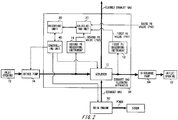
- the exhaust gas cleaning apparatus 50 has a scrubber 10, a first pH measuring instrument 12, a second pH measuring instrument 14, a calculating unit 20, a recording unit 30, and a controlling unit 40.
- the calculating unit 20, the recording unit 30, and the controlling unit 40 may be configured by a general purpose computer, or may also be configured by connecting a plurality of modules.
- the calculating unit 20 calculates a pH value of water at a predetermined position outboard, based on a dilution ratio ⁇ which shows a ratio by which washing water discharged to outboard is diluted at the predetermined position outboard, a pH value measured by the first pH measuring instrument 12, and a pH value measured by the second pH measuring instrument 14. Specifically, if the calculating unit 20 already has the information of the dilution ratio ⁇ , the calculating unit 20 calculates the pH of the sea water at the position 4 meters from the discharge point 86, which is the predetermined position outboard. Regarding this, the description will be specifically made below.
- a first pH value measured by the first pH measuring instrument 12 and a second pH value measured by the second pH measuring instrument 14 are inputted to the calculating unit 20.
- a third pH value of water at the position 4 meters from a discharge point 86, which is measured by the operator 92 by the pH meter and the like is inputted to the calculating unit 20.
- the calculating unit 20 calculates in advance a value of a dilution ratio, based on the first pH value, the second pH value, and the third pH value.
- the calculating unit 20 calculates a dilution ratio ⁇ , using a pH1 which is the first pH value, a pH2 which is the second pH value, and a pH3 which is the third pH value, by the following [Expression 1].
- ⁇ 10 ⁇ pH 1 ⁇ 10 ⁇ pH 2 / 10 ⁇ pH 3 ⁇ 10 ⁇ pH 2
- pHn ⁇ log 10 Cn
- a hydrogen ion concentration of the water which enters the first pH measuring instrument 12 is expressed by C1
- a hydrogen ion concentration of the water which enters the second pH measuring instrument 14 is expressed by C2
- a hydrogen ion concentration of the sea water of the position 4 meters from the discharge point 86 is expressed by C3.
- the recording unit 30 is connected to the calculating unit 20.
- the recording unit 30 records a value of the dilution ratio ⁇ calculated by the calculating unit 20.
- the calculating unit 20 can exchange data with the recording unit 30.
- the calculating unit 20 calculates a pH value of water at the predetermined position, based on a pH value measured by the first pH measuring instrument 12 after measuring the first pH value (pH1), a pH value measured by the second pH measuring instrument 14 after measuring the second pH value (pH2), and a value of the dilution ratio ⁇ recorded by the recording unit 30.
- the pH value measured by the first pH measuring instrument 12 and the pH value measured by the second pH measuring instrument 14 sometimes change.
- the pH value of the sea water of the predetermined position outboard can be calculated using the pH values newly measured by the first pH measuring instrument 12 and the second pH measuring instrument 14 and the already known dilution ratio ⁇ .
- the dilution ratio ⁇ is once measured, by sequentially updating the pH values of the first pH measuring instrument 12 and the second pH measuring instrument 14, pH of the point 4 meters from the discharge point 86 can be known.
- the calculating unit 20 may calculate in advance a plurality of dilution ratios ⁇ which respectively correspond to different washing water flow rates. That is, the calculating unit 20 may calculate in advance a value of a first dilution ratio ⁇ 1 calculated based on the pH1, the pH2, and the pH3, if a flow rate of washing water discharged from the scrubber 10 to outboard is a first flow rate.
- the calculating unit 20 may calculate in advance a value of a second dilution ratio ⁇ 2 calculated based on the pH1, the pH2, and the pH3, if a flow rate of washing water discharged from the scrubber 10 to outboard is a second flow rate. Also, the recording unit 30 may record the value of the first dilution ratio and the value of the second dilution ratio.
- the calculating unit 20 may calculate a pH value of water at the predetermined position, using values ⁇ 1 to ⁇ n of the dilution ratio corresponding to a flow rate of washing water discharged from the scrubber 10 to outboard.
- 'n' is a natural number.
- the recording unit 30 may record and associate the washing water flow rate and values ⁇ 1 to ⁇ n of the dilution ratio. Thereby, the recording unit 30 may have a table of dilution ratios ⁇ 1 to ⁇ n with respect to the washing water flow rate.
- the load of the main engine 60 increases, the amount of the exhaust gas increases. It is expected that, if the flow rate of the washing water supplied to the scrubber 10 is constant, the pH value measured by the first pH measuring instrument 12 decreases, and the pH value of water at the predetermined position outboard also lowers. Then, it is sometimes required to increase the flow rate of the washing water supplied to the scrubber 10, in order to make the pH value of the sea water of the position 4 meters from the discharge point 86 of the outlet opening 82 to be larger than or equal to 6.5.
- the controlling unit 40 of the present example is connected to the calculating unit 20 via the recording unit 30. Note that, the controlling unit 40 may also be directly connected to the calculating unit 20.
- the controlling unit 40 controls flow rate of washing water supplied to the scrubber 10, depending on a pH value of water at the predetermined position calculated by the calculating unit 20. For instance, if it is expected that, if the washing water flow rate is maintained constant as it is, the pH value of the sea water of the position 4 meters from the discharge point 86 falls below 6.5, the controlling unit 40 controls the intake pump 74, and increases a flow rate of washing water supplied to the scrubber 10. Note that, if the washing water flow rate increases, the dilution ratio ⁇ rises.
- the calculating unit 20 may calculate the smallest washing water flow rate required for the pH value of the sea water of the position 4 meters from the discharge point 86 becomes larger than or equal to 6.5, using the pH value of the first pH measuring instrument 12, the pH value of the second pH measuring instrument 14, and the table of the dilution ratios ⁇ 1 to ⁇ n with respect to the washing water flow rate which are measured at any time. Because if the washing water flow rate is increased, the load of the intake pump 74 increases, the amount of increase in the washing water flow rate is preferably the smallest.
- the controlling unit 40 may control the intake pump 74 so as to supply washing water from the intake pump 74 to the scrubber 10, at the smallest washing water flow rate calculated by the calculating unit 20. Also, the controlling unit 40 may control the scrubber 10 so that the scrubber 10 operates at the washing water flow rate. In this way, if the dilution ratio ⁇ is measured in advance every changed washing water flow rate, even if the washing water flow rate changes, the pH at the position 4 meters from a discharge point 86 can be known without measuring the dilution ratio ⁇ again.
- the controlling unit 40 may also control flow rate of washing water supplied to the scrubber 10 to smaller than or equal to the allowable amount, by decreasing an output of the main engine 60 as a motor which discharges exhaust gas to the scrubber 10.
- the scrubber 10 there is a limit pressure of washing water spray pressure in the scrubber 10, and an upper limit of washing water discharging capacity of the scrubber 10. If the washing water flow rate larger than or equal to the allowable amount of the scrubber 10, which exceeds the limit pressure and the upper limit of washing water discharging capacity of the scrubber 10, flows, there is a danger that the scrubber 10 is broken.
- the controlling unit 40 may control the main engine 60 and decrease the output of the main engine 60. Thereby, the amount of the exhaust gas from the main engine 60 to the scrubber 10 decreases. In other words, by making the washing water flow rate to be smaller than or equal to the allowable amount, while complying that the pH value of the sea water of the position 4 meters from the discharge point 86 is larger than or equal to 6.5, a breakage of the scrubber 10 can be avoided. Note that, the allowable amount of the washing water flow rate of the scrubber 10 is determined in advance at a time of designing the scrubber 10.
- the exhaust gas amount emitted from the main engine 60 is an amount that is in accordance with the load of the main engine 60.
- the main engine 60 is sometimes operated not only for generating a power of the ship 100, but also for generating the electric power necessary for the ship 100.
- the controlling unit 40 may decrease an output of the main engine 60 as a motor which discharges exhaust gas to the scrubber 10. Also, this matches that the pH value of the position 4 meters from the discharge point 86 is smaller than or equal to 6.5 is a condition required to the ship 100 at anchor.
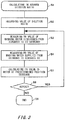
- Fig. 3 is a flow diagram of a first embodiment in which a pH value at a position 4 meters from a discharge point 86 is measured using a value of a single dilution ratio ⁇ . Note that, the flow may be performed at a time of commissioning of the ship 100 having the scrubber 10.
- Step S1 is a step of calculating in advance a value of a dilution ratio, based on the first pH value measured in a step of measuring the pH value of the washing water discharged from the scrubber 10 to outboard using the first pH measuring instrument 12, the second pH value measured in a step of measuring the pH value of the washing water discharged from the scrubber 10 to outboard using the second pH measuring instrument 14, and the third pH value of the water at the predetermined position outboard.
- the calculating unit 20 calculates in advance the dilution ratio ⁇ using the first to third pH values and the above-described [Expression 1] to [Expression 4].
- Step S2 is a step of recording a value of the dilution ratio ⁇ which is calculated in advance. Specifically, the recording unit 30 records the dilution ratio ⁇ calculated in advance by the calculating unit 20.
- Step S3 is a step of measuring a pH value of washing water discharged from the scrubber 10 to outboard, after measuring the first pH value.
- the first pH measuring instrument 12 measures a pH value of washing water discharged from the scrubber 10 to outboard.
- the first pH measuring instrument 12 may input the measured pH value to the calculating unit 20.
- Step S4 is a step of measuring a pH value of washing water supplied from outboard to the scrubber 10, after measuring the second pH value.
- the second pH measuring instrument 14 measures a pH value of washing water supplied from outboard to the scrubber 10.
- the second pH measuring instrument 14 may input the measured pH value to the calculating unit 20.
- Step S5 is a step of calculating a pH value of water at the predetermined position outboard, based on a pH value of washing water discharged from the scrubber 10 to outboard which is measured after measuring the first pH value, a pH value of washing water supplied from outboard to the scrubber 10 which is measured after measuring the second pH value, and a value of the dilution ratio ⁇ recorded.
- the calculating unit 20 calculates the pH value of the position 4 meters from the discharge point 86.
- Step S6 is a step of determining whether to repeat Step S3 to Step S5 again or not. Specifically, the controlling unit 40 may determine whether to repeat Step S3 to Step S5 again or not. If YES in Step S6, Step S3 to S5 may be repeated a plurality of times. If NO in Step S6, the flow ends (Step S9).
- Fig. 4 is a flow diagram of a second embodiment in which a pH value at a position 4 meters from a discharge point 86 is measured using values of a plurality of dilution ratios ⁇ 1 to ⁇ n.
- Step S1', Step S2', and Step S3' of the present example are different from Step S1, Step S2, and Step S3 of the first embodiment.
- the present example may arbitrarily have an additional Step S7.
- the present example differs from the first embodiment in this point. The points other than that are common to the first embodiment.
- Step S1' of the present example is a step of calculating in advance a value of the dilution ratio ⁇ .
- the calculating unit 20 calculates a value of a first dilution ratio calculated based on the first pH value, the second pH value, and the third pH value, if a flow rate of washing water discharged from the scrubber 10 to outboard is a first flow rate, and a value of a second dilution ratio calculated based on the first pH value, the second pH value, and the third pH value, if a flow rate of washing water discharged from the scrubber 10 to outboard is a second flow rate.
- the calculating unit 20 may also calculate two or more dilution ratios.
- the calculating unit 20 may calculate the dilution ratio corresponding to different washing water flow rates.
- the dilution ratios ⁇ 1 to ⁇ n ('n' is a natural number) may correspond to first to nth flow rates of washing water flow rates.
- Step S2' of the present example is a step in which the recording unit 30 records a plurality of dilution ratios ⁇ 1 to ⁇ n. That is, the recording unit 30 records a table of the dilution ratios ⁇ 1 to ⁇ n with respect to the washing water flow rate.
- Step S3' of the present example calculates a pH value of water at the predetermined position outboard, using a value of the dilution ratio corresponding to a flow rate of washing water discharged from the scrubber 10 to outboard.
- the calculating unit 20 calculates the pH value of water at the position 4 meters from a discharge point 86, using the value of the dilution ratio corresponding to a washing water flow rate, among the dilution ratios ⁇ 1 to ⁇ n.
- Step S7 is a step which may be arbitrarily performed. If YES in Step S6, the step advances to Step S7. If NO in Step S6, the step shifts to Step S3'.
- Step S7 has a step of controlling flow rate of washing water supplied to the scrubber 10, depending on a pH value calculated in a step of calculating a pH value of water at the predetermined position outboard. Specifically, if it is expected that, if the washing water flow rate is maintained constant as it is, the pH value of the sea water of the position 4 meters from the discharge point 86 falls below 6.5, the controlling unit 40 controls the intake pump 74, and increases a flow rate of washing water supplied to the scrubber 10.
- Step S7 may have a step of decreasing an output of the main engine 60 as a motor which discharges exhaust gas to the scrubber 10 and controlling flow rate of washing water supplied to the scrubber 10 to smaller than or equal to the allowable amount.
- the controlling unit 40 may control the main engine 60 and decrease the output of the main engine 60.
- Step S7 may also have a step of decreasing an output of the main engine 60 as a motor which discharges exhaust gas to the scrubber 10.
- Step S8 is a a step of determining whether to repeat Step S3', Step S4, and Step S5 and Step S7, or, only Step S7 again or not. Specifically, the controlling unit 40 may determine which step(s) to be repeated again or not. If YES in Step S8, the step returns to Step S6. Step S3', Step S4, and Step S5 may be repeated a plurality of times. After that, the step returns to Step S6 again. If NO in Step S8, the flow ends (Step S9).
Landscapes
- Chemical & Material Sciences (AREA)
- Engineering & Computer Science (AREA)
- Health & Medical Sciences (AREA)
- Analytical Chemistry (AREA)
- Chemical Kinetics & Catalysis (AREA)
- Life Sciences & Earth Sciences (AREA)
- General Chemical & Material Sciences (AREA)
- Oil, Petroleum & Natural Gas (AREA)
- Combustion & Propulsion (AREA)
- Environmental & Geological Engineering (AREA)
- Mechanical Engineering (AREA)
- Immunology (AREA)
- General Physics & Mathematics (AREA)
- Biochemistry (AREA)
- Pathology (AREA)
- Physics & Mathematics (AREA)
- General Health & Medical Sciences (AREA)
- Biomedical Technology (AREA)
- Ocean & Marine Engineering (AREA)
- Food Science & Technology (AREA)
- Medicinal Chemistry (AREA)
- Molecular Biology (AREA)
- Electrochemistry (AREA)
- General Engineering & Computer Science (AREA)
- Hydrology & Water Resources (AREA)
- Water Supply & Treatment (AREA)
- Organic Chemistry (AREA)
- Treating Waste Gases (AREA)
- Gas Separation By Absorption (AREA)
- Separation Using Semi-Permeable Membranes (AREA)
Abstract
Description
- The present invention relates to an apparatus and a calculating method of pH.
- A pH of a sulfur absorbing liquid which is sea water having absorbed sulfur is around 3. In order to discharge the sulfur absorbing liquid to the sea, the pH must be raised. Conventionally, the pH value has been raised by exposing the sulfur absorbing liquid in the air in an aeration apparatus (for instance, refer to the Patent Document 1).
- Patent Document 1:
WO No. 2006/018911 - A guideline related to environmental regulations when discharging the sea water having absorbed sulfur oxides to the sea is established. According to the guideline MEPC 59/24/Add.1, "During commissioning of the exhaust gas cleaning unit(s) after installation, the discharged washwater plume should be measured externally from the ship (while being at anchor) and the discharge pH at the ship's overboard pH monitoring point will be recorded when the plume at 4 metres from the discharge point equals or is above pH 6.5." The commissioning at the time of installing the exhaust gas cleaning apparatus extends over several days. During the term of the commissioning, various tests such as changing the engine load and operating the exhaust gas cleaning apparatus are performed. During the term of the commissioning, it is thought that a person regularly measures a pH of the
position 4 meters from the discharge point, but a human load of this measuring method is large. - An apparatus provided inside a ship having a scrubber in a first aspect of the present invention includes a first pH measuring instrument, a second pH measuring instrument, and a calculating unit. The first pH measuring instrument may measure a pH value of washing water discharged from the scrubber to outboard. The second pH measuring instrument may measure a pH value of washing water supplied from outboard to the scrubber. The calculating unit may calculate a pH value of water at a predetermined position outboard, based on a dilution ratio which shows a ratio by which the washing water discharged to outboard is diluted at the predetermined position outboard, the pH value measured by the first pH measuring instrument, and the pH value measured by the second pH measuring instrument.
- The calculating unit may calculate a value of the dilution ratio in advance, based on a first pH value measured by the first pH measuring instrument, a second pH value measured by the second pH measuring instrument, and a third pH value of the water at the predetermined position outboard. The apparatus may further include a recording unit. The recording unit may be connected to the calculating unit. The recording unit may record the value of the dilution ratio. The calculating unit may calculate the pH value of the water at the predetermined position, based on a pH value measured by the first pH measuring instrument after measuring the first pH value, a pH value measured by the second pH measuring instrument after measuring the second pH value, and the value of the dilution ratio recorded in the recording unit.
- The calculating unit may calculate the dilution ratio, using pH1 which is the first pH value, pH2 which is the second pH value, and pH3 which is the third pH value, by α=(10-pH1-10-pH2)/(10-pH3-10-pH2).
- The calculating unit may calculate in advance a value of a first dilution ratio calculated based on the pH1, the pH2, and the pH3 when a flow rate of washing water discharged from the scrubber to outboard is a first flow rate, and a value of a second dilution ratio calculated based on the pH1, the pH2, and the pH3 when the flow rate of the washing water discharged from the scrubber to outboard is a second flow rate. The recording unit may record the value of the first dilution ratio and the value of the second dilution ratio. The calculating unit may calculate the pH value of the water at the predetermined position, using the value of the dilution ratio corresponding to the flow rate of the washing water discharged from the scrubber to outboard. The recording unit may record and associate the flow rate of the washing water and the value of the dilution ratio.
- The apparatus may further include a controlling unit. The controlling unit may control a flow rate of washing water supplied to the scrubber, depending on the pH value of the water at the predetermined position calculated by the calculating unit. If the flow rate of the washing water supplied to the scrubber is larger than or equal to a predetermined allowable amount, the controlling unit may control the flow rate of the washing water supplied to the scrubber to be smaller than or equal to the allowable amount, by decreasing an output of a motor which discharges exhaust gas to the scrubber. Provided that the ship is determined to be at anchor, the controlling unit may decrease the output of the motor which discharges the exhaust gas to the scrubber.
- A calculating method of pH of water at a predetermined position outside a ship having a scrubber in a second aspect of the present invention includes measuring a pH value of washing water discharged from the scrubber to outboard, measuring a pH value of washing water supplied from outboard to the scrubber, and calculating the pH value of the water at the predetermined position outboard, based on a dilution ratio which shows a ratio by which the washing water discharged to outboard is diluted at the predetermined position outboard, the pH value measured in the measuring of the pH value of the washing water discharged from the scrubber to outboard, and the pH value measured in the measuring of the pH value of the washing water supplied from outboard to the scrubber.
- The calculating method of pH may be performed at a time of commissioning of the ship having the scrubber. The calculating method of pH may further include, before the calculating of the pH value of the water at the predetermined position outboard, calculating a value of the dilution ratio in advance, based on a first pH value, a second pH value, and a third pH value, and recording the value of the dilution ratio. The first pH value may be measured in the measuring of the pH value of the washing water discharged from the scrubber to outboard. The second pH value may be measured in the measuring of the pH value of the washing water discharged from the scrubber to outboard. The third pH value may be the pH value of the water at the predetermined position outboard. The calculating of the pH value of the water at the predetermined position outboard may be calculating the pH value of the water at the predetermined position outboard, based on the pH value of the washing water discharged from the scrubber to outboard which is measured after measuring the first pH value, the pH value of the washing water supplied from outboard to the scrubber which is measured after measuring the second pH value, and the value of the dilution ratio recorded.
- The calculating of the value of the dilution ratio in advance may have calculating a value of a first dilution ratio, and a value of a second dilution ratio. The value of the first dilution ratio may be calculated based on the first pH value, the second pH value, and the third pH value when a flow rate of the washing water discharged from the scrubber to outboard is a first flow rate. The value of the second dilution ratio may be calculated based on the first pH value, the second pH value, and the third pH value when the flow rate of the washing water discharged from the scrubber to outboard is a second flow rate. The recording of the value of the dilution ratio may have recording the value of the first dilution ratio and the value of the second dilution ratio. The calculating method of pH may further include calculating the pH value of the water at the predetermined position outboard, using the value of the dilution ratio corresponding to the flow rate of the washing water discharged from the scrubber to outboard.
- The calculating method of pH may further include controlling a flow rate of the washing water supplied to the scrubber, depending on the pH value calculated in the calculating of the pH value of the water at the predetermined position outboard. The calculating method of pH may further include, if the flow rate of the washing water supplied to the scrubber is larger than or equal to a predetermined allowable amount, decreasing an output of a motor which discharges exhaust gas to the scrubber to control the flow rate of the washing water supplied to the scrubber to be smaller than or equal to the allowable amount. The calculating method of pH may further include, provided that the ship is determined to be at anchor, decreasing an output of a motor which discharges exhaust gas to the scrubber.
- The summary clause does not necessarily describe all necessary features of the embodiments of the present invention. The present invention may also be a sub-combination of the features described above.
-
-
Fig. 1 is a diagram showing a state of sampling sea water of aposition 4 meters from adischarge point 86. -
Fig. 2 is a diagram showing details of exhaustgas cleaning apparatus 50. -
Fig. 3 is a flow diagram of a first embodiment in which a pH value at aposition 4 meters from adischarge point 86 is measured using a value of a single dilution ratio α.Fig. 4 is a flow diagram of a second embodiment in which a pH value at aposition 4 meters from adischarge point 86 is measured using values of a plurality of dilution ratios α1 to αn. - Hereinafter, the present invention is described through the embodiments of the invention. However, the following embodiments do not limit the invention according to the claims. Also, all the combinations of the features described in the embodiments are not necessarily essential for means provided by aspects of the invention.
-
Fig. 1 is a diagram showing a state of sampling sea water of aposition 4 meters from adischarge point 86. Aship 100 of the present example has, at least, exhaustgas cleaning apparatus 50, amain engine 60, achimney 78, an inlet opening 72, anintake pump 74, an outlet opening 82, and adischarge pump 84. Note that, the above-described members and portions are merely minimum members and portions necessary for describing the characteristics of theship 100 of the present example. Theship 100 may have an element other than the above-described members and portions. Also, inFig. 1 , an illustration of the part of theship 100 between the bow and the stern is omitted due to limitations of space on the sheet of paper. - The
main engine 60 as a motor gives a power to a screw of theship 100. Thereby, theship 100 obtains a propulsive force. Because heavy oil is combusted in themain engine 60, exhaust gas is generated. The exhaust gas discharged from themain engine 60 enters ascrubber 10 of the exhaustgas cleaning apparatus 50. Note that, the motor may also have another engine other than themain engine 60. In this case, exhaust gas of another engine other than themain engine 60 may also be entered into thescrubber 10. - The exhaust
gas cleaning apparatus 50 of the present example is provided inside theship 100. The exhaustgas cleaning apparatus 50 has, at least, ascrubber 10, a firstpH measuring instrument 12, and a secondpH measuring instrument 14. Thescrubber 10 cleans the exhaust gas discharged from themain engine 60. - The exhaust gas includes sulfur oxides (SOx) and the like. The
scrubber 10 decreases the concentration of the sulfur oxides in the exhaust gas, by gas-liquid reacting the exhaust gas including the sulfur oxides and the like and the sea water. Thereby, thescrubber 10 cleans the exhaust gas. The exhaust gas cleaned by thescrubber 10 is discharged outside theship 100 through thechimney 78. - The
intake pump 74 supplies sea water as washing water to thescrubber 10 through the inlet opening 72 from outside theship 100. The secondpH measuring instrument 14 measures a pH value of the sea water. Note that, in the present example, theinlet opening 72 is provided at a ship bottom. - The
discharge pump 84 discharges sea water as washing water to outside theship 100 through the outlet opening 82 from thescrubber 10. The firstpH measuring instrument 12 measures a pH value of the sea water after cleaning the exhaust gas. Note that, the outlet opening 82 of the present example is provided at a position that theoutlet opening 82 is immersed in sea water. A discharge direction of theoutlet opening 82 may be a depth direction in sea water. - An
operator 92 boards asmall ship 90. Theoperator 92 identifies a predetermined position outside theship 100 by a surveyinginstrument 94. In the present example, theoperator 92 identifies a position at aradius 4 meters from adischarge point 86, by the surveyinginstrument 94. Theoperator 92 gathers around 500ml of sea water at the identified position by asampling container 96. Theoperator 92 measures a pH value of the gathered sea water by means already known such as a pH meter. Thereby, a pH value of the sea water at theposition 4 meters from adischarge point 86 is acquired. -
Fig. 2 is a diagram showing details of exhaustgas cleaning apparatus 50. The exhaustgas cleaning apparatus 50 has ascrubber 10, a firstpH measuring instrument 12, a secondpH measuring instrument 14, a calculatingunit 20, arecording unit 30, and a controllingunit 40. The calculatingunit 20, therecording unit 30, and the controllingunit 40 may be configured by a general purpose computer, or may also be configured by connecting a plurality of modules. - The calculating
unit 20 calculates a pH value of water at a predetermined position outboard, based on a dilution ratio α which shows a ratio by which washing water discharged to outboard is diluted at the predetermined position outboard, a pH value measured by the firstpH measuring instrument 12, and a pH value measured by the secondpH measuring instrument 14. Specifically, if the calculatingunit 20 already has the information of the dilution ratio α, the calculatingunit 20 calculates the pH of the sea water at theposition 4 meters from thedischarge point 86, which is the predetermined position outboard. Regarding this, the description will be specifically made below. - A first pH value measured by the first
pH measuring instrument 12 and a second pH value measured by the secondpH measuring instrument 14 are inputted to the calculatingunit 20. Also, a third pH value of water at theposition 4 meters from adischarge point 86, which is measured by theoperator 92 by the pH meter and the like, is inputted to the calculatingunit 20. The calculatingunit 20 calculates in advance a value of a dilution ratio, based on the first pH value, the second pH value, and the third pH value. - Specifically, the calculating
unit 20 calculates a dilution ratio α, using a pH1 which is the first pH value, a pH2 which is the second pH value, and a pH3 which is the third pH value, by the following [Expression 1].
- If the raw water at the concentration C1 is diluted by the dilution water at the concentration C2, then, as a result, the raw water becomes at the concentration C3, the dilution ratio α becomes the following [Expression 2].

- In a case of a hydrogen ion concentration Cn, pHn as the pH value becomes the following [Expression 3].

- If an expression of the [Expression 3] is variated, it becomes the following [Expression 4].

- Regarding n=1,2,3, the [Expression 4] is respectively substituted into the [Expression 2]. Thereby, it can be understood that the dilution ratio α is expressed like the above [Expression 1].
- For instance, if the pH1 measured by the first
pH measuring instrument 12 is 6.60, the pH2 measured by the secondpH measuring instrument 14 is 9.00, and the pH3 of the sea water of theposition 4 meters from thedischarge point 86 is 8.35, from the [Expression 1], α=72.2. In the specification, a hydrogen ion concentration of the water which enters the firstpH measuring instrument 12 is expressed by C1, a hydrogen ion concentration of the water which enters the secondpH measuring instrument 14 is expressed by C2, and a hydrogen ion concentration of the sea water of theposition 4 meters from thedischarge point 86 is expressed by C3. - The
recording unit 30 is connected to the calculatingunit 20. Therecording unit 30 records a value of the dilution ratio α calculated by the calculatingunit 20. The calculatingunit 20 can exchange data with therecording unit 30. The calculatingunit 20 calculates a pH value of water at the predetermined position, based on a pH value measured by the firstpH measuring instrument 12 after measuring the first pH value (pH1), a pH value measured by the secondpH measuring instrument 14 after measuring the second pH value (pH2), and a value of the dilution ratio α recorded by therecording unit 30. - From the [Expression 2], C3 is expressed by the following [Expression 5].
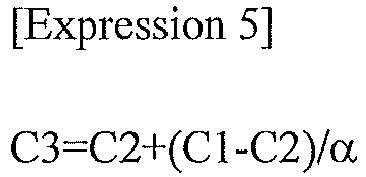
- For instance, an amount of the exhaust gas which enters the
scrubber 10 from themain engine 60 increases, and the pH value measured by the firstpH measuring instrument 12 and the pH value measured by the secondpH measuring instrument 14 sometimes change. Even in this case, the pH value of the sea water of theposition 4 meters from thedischarge point 86 can be calculated using the already known dilution ratio α. For instance, because if the pH value measured by the firstpH measuring instrument 12 is 5.60, the pH value measured by the secondpH measuring instrument 14 is 5.60, α=72.2, so, from [Expression 4] and [Expression 5], the pH value of the sea water of theposition 4 meters from thedischarge point 86 becomes 7.42. - Therefore, the pH value of the sea water of the predetermined position outboard can be calculated using the pH values newly measured by the first
pH measuring instrument 12 and the secondpH measuring instrument 14 and the already known dilution ratio α. Thereby, if the dilution ratio α is once measured, by sequentially updating the pH values of the firstpH measuring instrument 12 and the secondpH measuring instrument 14, pH of thepoint 4 meters from thedischarge point 86 can be known. - (Calculation of a plurality of dilution ratios α1 to αn) Note that, depending on a load of the
main engine 60, the flow rate of washing water discharged from thescrubber 10 to outboard sometimes changes. It is thought that if the washing water flow rate changes, the dilution ratios α also changes. Therefore, the calculatingunit 20 may calculate in advance a plurality of dilution ratios α which respectively correspond to different washing water flow rates. That is, the calculatingunit 20 may calculate in advance a value of a first dilution ratio α1 calculated based on the pH1, the pH2, and the pH3, if a flow rate of washing water discharged from thescrubber 10 to outboard is a first flow rate. Furthermore, the calculatingunit 20 may calculate in advance a value of a second dilution ratio α2 calculated based on the pH1, the pH2, and the pH3, if a flow rate of washing water discharged from thescrubber 10 to outboard is a second flow rate. Also, therecording unit 30 may record the value of the first dilution ratio and the value of the second dilution ratio. - The calculating
unit 20 may calculate a pH value of water at the predetermined position, using values α1 to αn of the dilution ratio corresponding to a flow rate of washing water discharged from thescrubber 10 to outboard. Note that, 'n' is a natural number. Furthermore, therecording unit 30 may record and associate the washing water flow rate and values α1 to αn of the dilution ratio. Thereby, therecording unit 30 may have a table of dilution ratios α1 to αn with respect to the washing water flow rate. - If the load of the
main engine 60 increases, the amount of the exhaust gas increases. It is expected that, if the flow rate of the washing water supplied to thescrubber 10 is constant, the pH value measured by the firstpH measuring instrument 12 decreases, and the pH value of water at the predetermined position outboard also lowers. Then, it is sometimes required to increase the flow rate of the washing water supplied to thescrubber 10, in order to make the pH value of the sea water of theposition 4 meters from thedischarge point 86 of the outlet opening 82 to be larger than or equal to 6.5. - The controlling
unit 40 of the present example is connected to the calculatingunit 20 via therecording unit 30. Note that, the controllingunit 40 may also be directly connected to the calculatingunit 20. The controllingunit 40 controls flow rate of washing water supplied to thescrubber 10, depending on a pH value of water at the predetermined position calculated by the calculatingunit 20. For instance, if it is expected that, if the washing water flow rate is maintained constant as it is, the pH value of the sea water of theposition 4 meters from thedischarge point 86 falls below 6.5, the controllingunit 40 controls theintake pump 74, and increases a flow rate of washing water supplied to thescrubber 10. Note that, if the washing water flow rate increases, the dilution ratio α rises. - The calculating
unit 20 may calculate the smallest washing water flow rate required for the pH value of the sea water of theposition 4 meters from thedischarge point 86 becomes larger than or equal to 6.5, using the pH value of the firstpH measuring instrument 12, the pH value of the secondpH measuring instrument 14, and the table of the dilution ratios α1 to αn with respect to the washing water flow rate which are measured at any time. Because if the washing water flow rate is increased, the load of theintake pump 74 increases, the amount of increase in the washing water flow rate is preferably the smallest. - In order that the pH value of the sea water of the
position 4 meters from thedischarge point 86 becomes larger than or equal to 6.5, from [Expression 3] and [Expression 5], it is only necessary to satisfy the following [Expression 6].
- From [Expression 4] and [Expression 6], it is only necessary that the dilution ratio α satisfies the following [Expression 7]. It is only necessary that the calculating
unit 20 finds the smallest α which satisfies [Expression 7] (that is, the smallest washing water flow rate) from the table of the dilution ratios α1 to αn with respect to the washing water flow rate.
- The controlling
unit 40 may control theintake pump 74 so as to supply washing water from theintake pump 74 to thescrubber 10, at the smallest washing water flow rate calculated by the calculatingunit 20. Also, the controllingunit 40 may control thescrubber 10 so that thescrubber 10 operates at the washing water flow rate. In this way, if the dilution ratio α is measured in advance every changed washing water flow rate, even if the washing water flow rate changes, the pH at theposition 4 meters from adischarge point 86 can be known without measuring the dilution ratio α again. - If flow rate of washing water supplied to the
scrubber 10 is larger than or equal to a predetermined allowable amount, the controllingunit 40 may also control flow rate of washing water supplied to thescrubber 10 to smaller than or equal to the allowable amount, by decreasing an output of themain engine 60 as a motor which discharges exhaust gas to thescrubber 10. In thescrubber 10, there is a limit pressure of washing water spray pressure in thescrubber 10, and an upper limit of washing water discharging capacity of thescrubber 10. If the washing water flow rate larger than or equal to the allowable amount of thescrubber 10, which exceeds the limit pressure and the upper limit of washing water discharging capacity of thescrubber 10, flows, there is a danger that thescrubber 10 is broken. - Therefore, the controlling
unit 40 may control themain engine 60 and decrease the output of themain engine 60. Thereby, the amount of the exhaust gas from themain engine 60 to thescrubber 10 decreases. In other words, by making the washing water flow rate to be smaller than or equal to the allowable amount, while complying that the pH value of the sea water of theposition 4 meters from thedischarge point 86 is larger than or equal to 6.5, a breakage of thescrubber 10 can be avoided. Note that, the allowable amount of the washing water flow rate of thescrubber 10 is determined in advance at a time of designing thescrubber 10. - The exhaust gas amount emitted from the
main engine 60 is an amount that is in accordance with the load of themain engine 60. Themain engine 60 is sometimes operated not only for generating a power of theship 100, but also for generating the electric power necessary for theship 100. During navigation of theship 100, it is inconvenient on using theship 100 to be forced to decrease the load of themain engine 60, due to the washing water flow rate being limited to the allowable amount the washing water flow rate of thescrubber 10. Therefore, provided that theship 100 is determined to be at anchor, the controllingunit 40 may decrease an output of themain engine 60 as a motor which discharges exhaust gas to thescrubber 10. Also, this matches that the pH value of theposition 4 meters from thedischarge point 86 is smaller than or equal to 6.5 is a condition required to theship 100 at anchor. -
Fig. 3 is a flow diagram of a first embodiment in which a pH value at aposition 4 meters from adischarge point 86 is measured using a value of a single dilution ratio α. Note that, the flow may be performed at a time of commissioning of theship 100 having thescrubber 10. - Step S1 is a step of calculating in advance a value of a dilution ratio, based on the first pH value measured in a step of measuring the pH value of the washing water discharged from the
scrubber 10 to outboard using the firstpH measuring instrument 12, the second pH value measured in a step of measuring the pH value of the washing water discharged from thescrubber 10 to outboard using the secondpH measuring instrument 14, and the third pH value of the water at the predetermined position outboard. Specifically, in Step S1, the calculatingunit 20 calculates in advance the dilution ratio α using the first to third pH values and the above-described [Expression 1] to [Expression 4]. - Step S2 is a step of recording a value of the dilution ratio α which is calculated in advance. Specifically, the
recording unit 30 records the dilution ratio α calculated in advance by the calculatingunit 20. - Step S3 is a step of measuring a pH value of washing water discharged from the
scrubber 10 to outboard, after measuring the first pH value. Specifically, the firstpH measuring instrument 12 measures a pH value of washing water discharged from thescrubber 10 to outboard. Furthermore, the firstpH measuring instrument 12 may input the measured pH value to the calculatingunit 20. - Step S4 is a step of measuring a pH value of washing water supplied from outboard to the
scrubber 10, after measuring the second pH value. Specifically, the secondpH measuring instrument 14 measures a pH value of washing water supplied from outboard to thescrubber 10. Furthermore, the secondpH measuring instrument 14 may input the measured pH value to the calculatingunit 20. - Step S5 is a step of calculating a pH value of water at the predetermined position outboard, based on a pH value of washing water discharged from the
scrubber 10 to outboard which is measured after measuring the first pH value, a pH value of washing water supplied from outboard to thescrubber 10 which is measured after measuring the second pH value, and a value of the dilution ratio α recorded. Specifically, by substituting values of the dilution ratio α calculated in advance in Step S2, the pH value measured by the firstpH measuring instrument 12 in Step S3, and the pH value measured by the secondpH measuring instrument 14 in Step S4 into [Expression 4] and [Expression 5], the calculatingunit 20 calculates the pH value of theposition 4 meters from thedischarge point 86. Thereby, if the dilution ratio α is once measured, by sequentially updating the pH values of the firstpH measuring instrument 12 and the secondpH measuring instrument 14, pH of theposition 4 meters from the discharge point can be known. - Step S6 is a step of determining whether to repeat Step S3 to Step S5 again or not. Specifically, the controlling
unit 40 may determine whether to repeat Step S3 to Step S5 again or not. If YES in Step S6, Step S3 to S5 may be repeated a plurality of times. If NO in Step S6, the flow ends (Step S9). -
Fig. 4 is a flow diagram of a second embodiment in which a pH value at aposition 4 meters from adischarge point 86 is measured using values of a plurality of dilution ratios α1 to αn. Note that, Step S1', Step S2', and Step S3' of the present example are different from Step S1, Step S2, and Step S3 of the first embodiment. Also, the present example may arbitrarily have an additional Step S7. The present example differs from the first embodiment in this point. The points other than that are common to the first embodiment. - Step S1' of the present example is a step of calculating in advance a value of the dilution ratio α. In Step S1', the calculating
unit 20 calculates a value of a first dilution ratio calculated based on the first pH value, the second pH value, and the third pH value, if a flow rate of washing water discharged from thescrubber 10 to outboard is a first flow rate, and a value of a second dilution ratio calculated based on the first pH value, the second pH value, and the third pH value, if a flow rate of washing water discharged from thescrubber 10 to outboard is a second flow rate. Note that, in Step S1' of the present example, the calculatingunit 20 may also calculate two or more dilution ratios. That is, the calculatingunit 20 may calculate the dilution ratio corresponding to different washing water flow rates. The dilution ratios α1 to αn ('n' is a natural number) may correspond to first to nth flow rates of washing water flow rates. - Step S2' of the present example is a step in which the
recording unit 30 records a plurality of dilution ratios α1 to αn. That is, therecording unit 30 records a table of the dilution ratios α1 to αn with respect to the washing water flow rate. - (Step S3') Step S3' of the present example calculates a pH value of water at the predetermined position outboard, using a value of the dilution ratio corresponding to a flow rate of washing water discharged from the
scrubber 10 to outboard. Specifically, the calculatingunit 20 calculates the pH value of water at theposition 4 meters from adischarge point 86, using the value of the dilution ratio corresponding to a washing water flow rate, among the dilution ratios α1 to αn. In this way, if the dilution ratios α are measured in advance for every changed washing water flow rate, even if the washing water flow rate changes, the pH at thepoint 4 meters from adischarge point 86 can be known without measuring the dilution ratio α again. - Step S7 is a step which may be arbitrarily performed. If YES in Step S6, the step advances to Step S7. If NO in Step S6, the step shifts to Step S3'.
- Step S7 has a step of controlling flow rate of washing water supplied to the
scrubber 10, depending on a pH value calculated in a step of calculating a pH value of water at the predetermined position outboard. Specifically, if it is expected that, if the washing water flow rate is maintained constant as it is, the pH value of the sea water of theposition 4 meters from thedischarge point 86 falls below 6.5, the controllingunit 40 controls theintake pump 74, and increases a flow rate of washing water supplied to thescrubber 10. - Also, if flow rate of washing water supplied to the
scrubber 10 is larger than or equal to a predetermined allowable amount, Step S7 may have a step of decreasing an output of themain engine 60 as a motor which discharges exhaust gas to thescrubber 10 and controlling flow rate of washing water supplied to thescrubber 10 to smaller than or equal to the allowable amount. Specifically, the controllingunit 40 may control themain engine 60 and decrease the output of themain engine 60. Thereby, by making the washing water flow rate to be smaller than or equal to the allowable amount, while complying that the pH value of the sea water of theposition 4 meters from thedischarge point 86 is larger than or equal to 6.5, a breakage of thescrubber 10 can be avoided. In addition, provided that theship 100 is determined to be at anchor, Step S7 may also have a step of decreasing an output of themain engine 60 as a motor which discharges exhaust gas to thescrubber 10. - Step S8 is a a step of determining whether to repeat Step S3', Step S4, and Step S5 and Step S7, or, only Step S7 again or not. Specifically, the controlling
unit 40 may determine which step(s) to be repeated again or not. If YES in Step S8, the step returns to Step S6. Step S3', Step S4, and Step S5 may be repeated a plurality of times. After that, the step returns to Step S6 again. If NO in Step S8, the flow ends (Step S9). - While the embodiments of the present invention have been described, the technical scope of the invention is not limited to the above-described embodiments. It is apparent to persons skilled in the art that various alterations and improvements can be added to the above-described embodiments. It is also apparent from the scope of the claims that the embodiments added with such alterations or improvements can be included in the technical scope of the invention.
- The operations, procedures, steps, and stages of each process performed by an apparatus, system, program, and method shown in the claims, embodiments, or diagrams can be performed in any order as long as the order is not indicated by "prior to," "before," or the like and as long as the output from a previous process is not used in a later process. Even if the process flow is described using phrases such as "first" or "next" in the claims, embodiments, or diagrams, it does not necessarily mean that the process must be performed in this order.
-
- 10: scrubber,
- 12: first pH measuring instrument,
- 14: second pH measuring instrument,
- 20: calculating unit,
- 30: recording unit,
- 40: controlling unit,
- 50: exhaust gas cleaning apparatus,
- 60: main engine,
- 72: inlet opening,
- 74: intake pump,
- 78: chimney,
- 82: outlet opening,
- 84: discharge pump,
- 86: discharge point,
- 90: small ship,
- 92: operator,
- 94: surveying instrument,
- 96: sampling container,
- 100: ship
Claims (14)
- An apparatus provided inside a ship having a scrubber, comprising:a first pH measuring instrument which measures a pH value of washing water discharged from the scrubber to outboard;a second pH measuring instrument which measures a pH value of washing water supplied from outboard to the scrubber; anda calculating unit which calculates a pH value of water at a predetermined position outboard, based on a dilution ratio which shows a ratio by which the washing water discharged to outboard is diluted at the predetermined position outboard, the pH value measured by the first pH measuring instrument, and the pH value measured by the second pH measuring instrument.
- The apparatus according to Claim 1, whereinthe calculating unit calculates a value of the dilution ratio in advance, based on a first pH value measured by the first pH measuring instrument, a second pH value measured by the second pH measuring instrument, and a third pH value of the water at the predetermined position outboard,the apparatus further comprises a recording unit which is connected to the calculating unit, and records the value of the dilution ratio, andthe calculating unit calculates the pH value of the water at the predetermined position, based on a pH value measured by the first pH measuring instrument after measuring the first pH value, a pH value measured by the second pH measuring instrument after measuring the second pH value, and the value of the dilution ratio recorded in the recording unit.
- The apparatus according to Claim 2, whereinthe calculating unit calculates the dilution ratio,using pH1 which is the first pH value, pH2 which is the second pH value, and pH3 which is the third pH value, by

- The apparatus according to Claim 3, whereinthe calculating unit calculates in advancea value of a first dilution ratio calculated based on the pH1, the pH2, and the pH3 when a flow rate of washing water discharged from the scrubber to outboard is a first flow rate, anda value of a second dilution ratio calculated based on the pH1, the pH2, and the pH3 when the flow rate of the washing water discharged from the scrubber to outboard is a second flow rate,the recording unit records the value of the first dilution ratio and the value of the second dilution ratio,the calculating unit calculates the pH value of the water at the predetermined position, using the value of the dilution ratio corresponding to the flow rate of the washing water discharged from the scrubber to outboard, andthe recording unit records and associates the flow rate of the washing water and the value of the dilution ratio.
- The apparatus according to Claim 4 further comprisinga controlling unit which controls a flow rate of washing water supplied to the scrubber, depending on the pH value of the water at the predetermined position calculated by the calculating unit.
- The apparatus according to Claim 5, whereinif the flow rate of the washing water supplied to the scrubber is larger than or equal to a predetermined allowable amount, the controlling unit controls the flow rate of the washing water supplied to the scrubber to be smaller than or equal to the allowable amount, by decreasing an output of a motor which discharges exhaust gas to the scrubber.
- The apparatus according to Claim 6, whereinprovided that the ship is determined to be at anchor, the controlling unit decreases the output of the motor which discharges the exhaust gas to the scrubber.
- A calculating method of pH of water at a predetermined position outside a ship having a scrubber, comprising:measuring a pH value of washing water discharged from the scrubber to outboard;measuring a pH value of washing water supplied from outboard to the scrubber; andcalculating the pH value of the water at the predetermined position outboard, based on a dilution ratio which shows a ratio by which the washing water discharged to outboard is diluted at the predetermined position outboard, the pH value measured in the measuring of the pH value of the washing water discharged from the scrubber to outboard, and the pH value measured in the measuring of the pH value of the washing water supplied from outboard to the scrubber.
- The calculating method of pH according to Claim 8 performed at a time of commissioning of the ship having the scrubber.
- The calculating method of pH according to Claim 8 or 9, further comprising:before the calculating of the pH value of the water at the predetermined position outboard,calculating a value of the dilution ratio in advance, based on a first pH value measured in the measuring of the pH value of the washing water discharged from the scrubber to outboard, a second pH value measured in the measuring of the pH value of the washing water discharged from the scrubber to outboard, and a third pH value of the water at the predetermined position outboard; andrecording the value of the dilution ratio, whereinthe calculating of the pH value of the water at the predetermined position outboard is calculating the pH value of the water at the predetermined position outboard, based on the pH value of the washing water discharged from the scrubber to outboard which is measured after measuring the first pH value, the pH value of the washing water supplied from outboard to the scrubber which is measured after measuring the second pH value, and the value of the dilution ratio recorded.
- The calculating method of pH according to Claim 10, whereinthe calculating of the value of the dilution ratio in advance has calculating:a value of a first dilution ratio calculated based on the first pH value, the second pH value, and the third pH value when a flow rate of the washing water discharged from the scrubber to outboard is a first flow rate, anda value of a second dilution ratio calculated based on the first pH value, the second pH value, and the third pH value when the flow rate of the washing water discharged from the scrubber to outboard is a second flow rate,the recording of the value of the dilution ratio has recording the value of the first dilution ratio and the value of the second dilution ratio,the calculating method of pH further comprises calculating the pH value of the water at the predetermined position outboard, using the value of the dilution ratio corresponding to the flow rate of the washing water discharged from the scrubber to outboard.
- The calculating method of pH according to any one of Claims 8 to 11, further comprisingcontrolling a flow rate of the washing water supplied to the scrubber, depending on the pH value calculated in the calculating of the pH value of the water at the predetermined position outboard.
- The calculating method of pH according to Claim 12, further comprising:if the flow rate of the washing water supplied to the scrubber is larger than or equal to a predetermined allowable amount, decreasing an output of a motor which discharges exhaust gas to the scrubber to control the flow rate of the washing water supplied to the scrubber to be smaller than or equal to the allowable amount.
- The calculating method of pH according to Claim 12 or 13, further comprisingprovided that the ship is determined to be at anchor, decreasing an output of a motor which discharges exhaust gas to the scrubber.
Applications Claiming Priority (2)
| Application Number | Priority Date | Filing Date | Title |
|---|---|---|---|
| JP2015052204 | 2015-03-16 | ||
| PCT/JP2016/053582 WO2016147741A1 (en) | 2015-03-16 | 2016-02-05 | DEVICE AND pH CALCULATION METHOD |
Publications (3)
| Publication Number | Publication Date |
|---|---|
| EP3214440A1 true EP3214440A1 (en) | 2017-09-06 |
| EP3214440A4 EP3214440A4 (en) | 2017-10-04 |
| EP3214440B1 EP3214440B1 (en) | 2019-12-25 |
Family
ID=56918764
Family Applications (1)
| Application Number | Title | Priority Date | Filing Date |
|---|---|---|---|
| EP16764572.0A Active EP3214440B1 (en) | 2015-03-16 | 2016-02-05 | Device and ph calculation method |
Country Status (7)
| Country | Link |
|---|---|
| US (2) | US10456733B2 (en) |
| EP (1) | EP3214440B1 (en) |
| JP (1) | JP6358387B2 (en) |
| KR (1) | KR102086398B1 (en) |
| CN (1) | CN107003292B (en) |
| DK (1) | DK3214440T3 (en) |
| WO (1) | WO2016147741A1 (en) |
Families Citing this family (2)
| Publication number | Priority date | Publication date | Assignee | Title |
|---|---|---|---|---|
| JPH0724315B2 (en) | 1988-07-25 | 1995-03-15 | 三菱電機株式会社 | Gas laser device |
| DK3550299T3 (en) * | 2016-12-15 | 2023-06-19 | Horiba Advanced Techno Co Ltd | SHIP-MOUNTED WATER QUALITY ANALYSIS APPARATUS AND SHIP-MOUNTED SKIMMING DEVICE |
Family Cites Families (12)
| Publication number | Priority date | Publication date | Assignee | Title |
|---|---|---|---|---|
| JPS61181593A (en) * | 1984-12-29 | 1986-08-14 | Kashiwa Kisen Sangyo Kk | Neutralizing method of seawater for washing inert gas in tanker |
| US7097762B1 (en) * | 2002-03-29 | 2006-08-29 | Icm, Inc. | Modular waste water treatment system |
| JP4460975B2 (en) | 2004-08-20 | 2010-05-12 | 三菱重工業株式会社 | Seawater treatment method and seawater treatment apparatus |
| JP2008029975A (en) * | 2006-07-31 | 2008-02-14 | Petroleum Energy Center | System for dissolving carbon dioxide and method for dissolving carbon dioxide |
| CN102112210B (en) * | 2008-06-13 | 2014-03-26 | 武汉晶源环境工程有限公司 | Method and device for desulfurization of smoke discharged from ship |
| JP4701310B1 (en) * | 2010-06-24 | 2011-06-15 | 北斗電工株式会社 | Monitoring method of residual oxidant (TRO) concentration in ballast water |
| KR101303289B1 (en) * | 2010-07-15 | 2013-09-03 | 주식회사 시뮬레이션테크 | Reduction system of exhaust gas pollution and its monitoring method |
| JP2013154330A (en) * | 2012-01-31 | 2013-08-15 | Mitsubishi Heavy Ind Ltd | Oxidation tank, seawater exhaust gas desulfurization system, and power generator system |
| FI123737B (en) * | 2012-02-13 | 2013-10-15 | Oy Langh Ship Ab | Method for treating ship-source contaminants with a scrubber |
| KR101740665B1 (en) * | 2013-01-29 | 2017-05-26 | 후지 덴키 가부시키가이샤 | Seawater quantity controller for scrubber, seawater quantity control method for scrubber, alkali quantity controller, and alkali quantity control method |
| KR101718420B1 (en) | 2013-01-30 | 2017-03-21 | 후지 덴키 가부시키가이샤 | System for treating exhaust gas from marine diesel engine |
| JP2017181593A (en) * | 2016-03-28 | 2017-10-05 | 旭化成エレクトロニクス株式会社 | Display device |
-
2016
- 2016-02-05 DK DK16764572.0T patent/DK3214440T3/en active
- 2016-02-05 WO PCT/JP2016/053582 patent/WO2016147741A1/en not_active Ceased
- 2016-02-05 EP EP16764572.0A patent/EP3214440B1/en active Active
- 2016-02-05 JP JP2017506139A patent/JP6358387B2/en active Active
- 2016-02-05 CN CN201680003881.XA patent/CN107003292B/en active Active
- 2016-02-05 KR KR1020177014461A patent/KR102086398B1/en active Active
-
2017
- 2017-05-31 US US15/609,046 patent/US10456733B2/en active Active
-
2019
- 2019-10-24 US US16/663,311 patent/US11117089B2/en not_active Expired - Fee Related
Also Published As
| Publication number | Publication date |
|---|---|
| EP3214440B1 (en) | 2019-12-25 |
| CN107003292A (en) | 2017-08-01 |
| US20170259203A1 (en) | 2017-09-14 |
| KR102086398B1 (en) | 2020-03-09 |
| JP6358387B2 (en) | 2018-07-18 |
| JPWO2016147741A1 (en) | 2017-09-14 |
| US11117089B2 (en) | 2021-09-14 |
| KR20170128207A (en) | 2017-11-22 |
| CN107003292B (en) | 2019-08-06 |
| US10456733B2 (en) | 2019-10-29 |
| EP3214440A4 (en) | 2017-10-04 |
| US20200054990A1 (en) | 2020-02-20 |
| DK3214440T3 (en) | 2020-03-16 |
| WO2016147741A1 (en) | 2016-09-22 |
Similar Documents
| Publication | Publication Date | Title |
|---|---|---|
| JP2008168185A (en) | Equipment update plan support system | |
| EP2325709B1 (en) | Anomalous data detection method | |
| KR101432437B1 (en) | System and method for providing waterquality information capable of diagnosis and prediction of watersystem waterquality state | |
| US11117089B2 (en) | Apparatus and calculating method of pH | |
| US10641633B2 (en) | Flowmeter measurement confidence determination devices and methods | |
| Li et al. | Model-free H∞ tracking control for de-oiling hydrocyclone systems via off-policy reinforcement learning | |
| EP2017686B1 (en) | Process controller having improved surge capacity control and related methodology | |
| EP3550299A1 (en) | Ship-mounted water quality analysis apparatus and ship-mounted defoaming device | |
| EP2434451A2 (en) | Apparatus and method for implementing a frequency analysis module of a quantitative risk assessment system | |
| Samstag et al. | Field and CFD analysis of jet aeration and mixing | |
| EP2687710A1 (en) | Method for determining correction amount for degree of opening of egr valve, method for controlling degree of opening of egr valve, and engine | |
| JP7161294B2 (en) | Operation support system and operation support method for desulfurization equipment | |
| WO2022210827A1 (en) | Control method for wet flue gas desulfurisation device, control device for wet flue gas desulfurisation device, remote monitoring system comprising said control device for wet flue gas desulfurisation device, information processing device, and information processing system | |
| CN107727789A (en) | A kind of apparatus for measuring concentration and its concentration factor automatic correcting method, Etaching device | |
| JP2006095440A (en) | Sewage treatment plant operation management system | |
| EP3469318B1 (en) | Fuel efficiency calculation of a fuel and water mixture | |
| US20120140226A1 (en) | Method and device for determining chemical and/or physical properties of working substances in a machine system | |
| CN118807371A (en) | Wet desulfurization mist eliminator flushing control method, device and computer equipment | |
| GB2562976A (en) | Diagnostic device, diagnostic system, diagnostic method, and computer-readable recording medium | |
| CN114093431B (en) | Operation performance evaluation method of limestone-gypsum wet desulfurization system based on gas-liquid mass transfer analysis | |
| JP2022017857A (en) | System, method and program for monitoring control | |
| CN113551708A (en) | Water balance evaluation and control method of wet flue gas desulfurization system in thermal power plant | |
| KR102215513B1 (en) | Plant Monitoring Method Using Exergy Efficiency Value | |
| Jespersen et al. | Hammerstein–Wiener Model Identification for Oil-in-Water Separation Dynamics in a De-Oiling Hydrocyclone System. Energies 2023, 16, 7095 | |
| JP4388934B2 (en) | Method for determining CaCO3 content in scrubber liquid and apparatus for determination |
Legal Events
| Date | Code | Title | Description |
|---|---|---|---|
| STAA | Information on the status of an ep patent application or granted ep patent |
Free format text: STATUS: THE INTERNATIONAL PUBLICATION HAS BEEN MADE |
|
| PUAI | Public reference made under article 153(3) epc to a published international application that has entered the european phase |
Free format text: ORIGINAL CODE: 0009012 |
|
| STAA | Information on the status of an ep patent application or granted ep patent |
Free format text: STATUS: REQUEST FOR EXAMINATION WAS MADE |
|
| REG | Reference to a national code |
Ref country code: DE Ref legal event code: R079 Ref document number: 602016026907 Country of ref document: DE Free format text: PREVIOUS MAIN CLASS: G01N0033180000 Ipc: B01D0053500000 |
|
| 17P | Request for examination filed |
Effective date: 20170531 |
|
| AK | Designated contracting states |
Kind code of ref document: A1 Designated state(s): AL AT BE BG CH CY CZ DE DK EE ES FI FR GB GR HR HU IE IS IT LI LT LU LV MC MK MT NL NO PL PT RO RS SE SI SK SM TR |
|
| AX | Request for extension of the european patent |
Extension state: BA ME |
|
| A4 | Supplementary search report drawn up and despatched |
Effective date: 20170906 |
|
| RIC1 | Information provided on ipc code assigned before grant |
Ipc: B01D 53/50 20060101AFI20170831BHEP Ipc: G01N 27/416 20060101ALI20170831BHEP |
|
| DAV | Request for validation of the european patent (deleted) | ||
| DAX | Request for extension of the european patent (deleted) | ||
| STAA | Information on the status of an ep patent application or granted ep patent |
Free format text: STATUS: EXAMINATION IS IN PROGRESS |
|
| 17Q | First examination report despatched |
Effective date: 20181127 |
|
| GRAP | Despatch of communication of intention to grant a patent |
Free format text: ORIGINAL CODE: EPIDOSNIGR1 |
|
| STAA | Information on the status of an ep patent application or granted ep patent |
Free format text: STATUS: GRANT OF PATENT IS INTENDED |
|
| INTG | Intention to grant announced |
Effective date: 20190717 |
|
| RAP1 | Party data changed (applicant data changed or rights of an application transferred) |
Owner name: FUJI ELECTRIC CO., LTD. |
|
| RIN1 | Information on inventor provided before grant (corrected) |
Inventor name: TAKAHASHI, KUNIYUKI Inventor name: TOYAMA, HIROYUKI |
|
| GRAS | Grant fee paid |
Free format text: ORIGINAL CODE: EPIDOSNIGR3 |
|
| GRAA | (expected) grant |
Free format text: ORIGINAL CODE: 0009210 |
|
| STAA | Information on the status of an ep patent application or granted ep patent |
Free format text: STATUS: THE PATENT HAS BEEN GRANTED |
|
| AK | Designated contracting states |
Kind code of ref document: B1 Designated state(s): AL AT BE BG CH CY CZ DE DK EE ES FI FR GB GR HR HU IE IS IT LI LT LU LV MC MK MT NL NO PL PT RO RS SE SI SK SM TR |
|
| REG | Reference to a national code |
Ref country code: GB Ref legal event code: FG4D |
|
| REG | Reference to a national code |
Ref country code: CH Ref legal event code: EP |
|
| REG | Reference to a national code |
Ref country code: AT Ref legal event code: REF Ref document number: 1216545 Country of ref document: AT Kind code of ref document: T Effective date: 20200115 |
|
| REG | Reference to a national code |
Ref country code: DE Ref legal event code: R096 Ref document number: 602016026907 Country of ref document: DE |
|
| REG | Reference to a national code |
Ref country code: IE Ref legal event code: FG4D |
|
| REG | Reference to a national code |
Ref country code: FI Ref legal event code: FGE |
|
| REG | Reference to a national code |
Ref country code: DK Ref legal event code: T3 Effective date: 20200309 |
|
| REG | Reference to a national code |
Ref country code: SE Ref legal event code: TRGR |
|
| REG | Reference to a national code |
Ref country code: NL Ref legal event code: MP Effective date: 20191225 |
|
| PG25 | Lapsed in a contracting state [announced via postgrant information from national office to epo] |
Ref country code: BG Free format text: LAPSE BECAUSE OF FAILURE TO SUBMIT A TRANSLATION OF THE DESCRIPTION OR TO PAY THE FEE WITHIN THE PRESCRIBED TIME-LIMIT Effective date: 20200325 Ref country code: LV Free format text: LAPSE BECAUSE OF FAILURE TO SUBMIT A TRANSLATION OF THE DESCRIPTION OR TO PAY THE FEE WITHIN THE PRESCRIBED TIME-LIMIT Effective date: 20191225 Ref country code: LT Free format text: LAPSE BECAUSE OF FAILURE TO SUBMIT A TRANSLATION OF THE DESCRIPTION OR TO PAY THE FEE WITHIN THE PRESCRIBED TIME-LIMIT Effective date: 20191225 |
|
| REG | Reference to a national code |
Ref country code: NO Ref legal event code: T2 Effective date: 20191225 |
|
| REG | Reference to a national code |
Ref country code: LT Ref legal event code: MG4D |
|
| REG | Reference to a national code |
Ref country code: GR Ref legal event code: EP Ref document number: 20200400440 Country of ref document: GR Effective date: 20200511 |
|
| PG25 | Lapsed in a contracting state [announced via postgrant information from national office to epo] |
Ref country code: HR Free format text: LAPSE BECAUSE OF FAILURE TO SUBMIT A TRANSLATION OF THE DESCRIPTION OR TO PAY THE FEE WITHIN THE PRESCRIBED TIME-LIMIT Effective date: 20191225 Ref country code: RS Free format text: LAPSE BECAUSE OF FAILURE TO SUBMIT A TRANSLATION OF THE DESCRIPTION OR TO PAY THE FEE WITHIN THE PRESCRIBED TIME-LIMIT Effective date: 20191225 |
|
| PG25 | Lapsed in a contracting state [announced via postgrant information from national office to epo] |
Ref country code: AL Free format text: LAPSE BECAUSE OF FAILURE TO SUBMIT A TRANSLATION OF THE DESCRIPTION OR TO PAY THE FEE WITHIN THE PRESCRIBED TIME-LIMIT Effective date: 20191225 |
|
| PG25 | Lapsed in a contracting state [announced via postgrant information from national office to epo] |
Ref country code: NL Free format text: LAPSE BECAUSE OF FAILURE TO SUBMIT A TRANSLATION OF THE DESCRIPTION OR TO PAY THE FEE WITHIN THE PRESCRIBED TIME-LIMIT Effective date: 20191225 Ref country code: PT Free format text: LAPSE BECAUSE OF FAILURE TO SUBMIT A TRANSLATION OF THE DESCRIPTION OR TO PAY THE FEE WITHIN THE PRESCRIBED TIME-LIMIT Effective date: 20200520 Ref country code: CZ Free format text: LAPSE BECAUSE OF FAILURE TO SUBMIT A TRANSLATION OF THE DESCRIPTION OR TO PAY THE FEE WITHIN THE PRESCRIBED TIME-LIMIT Effective date: 20191225 Ref country code: RO Free format text: LAPSE BECAUSE OF FAILURE TO SUBMIT A TRANSLATION OF THE DESCRIPTION OR TO PAY THE FEE WITHIN THE PRESCRIBED TIME-LIMIT Effective date: 20191225 Ref country code: EE Free format text: LAPSE BECAUSE OF FAILURE TO SUBMIT A TRANSLATION OF THE DESCRIPTION OR TO PAY THE FEE WITHIN THE PRESCRIBED TIME-LIMIT Effective date: 20191225 |
|
| PG25 | Lapsed in a contracting state [announced via postgrant information from national office to epo] |
Ref country code: SK Free format text: LAPSE BECAUSE OF FAILURE TO SUBMIT A TRANSLATION OF THE DESCRIPTION OR TO PAY THE FEE WITHIN THE PRESCRIBED TIME-LIMIT Effective date: 20191225 Ref country code: SM Free format text: LAPSE BECAUSE OF FAILURE TO SUBMIT A TRANSLATION OF THE DESCRIPTION OR TO PAY THE FEE WITHIN THE PRESCRIBED TIME-LIMIT Effective date: 20191225 Ref country code: IS Free format text: LAPSE BECAUSE OF FAILURE TO SUBMIT A TRANSLATION OF THE DESCRIPTION OR TO PAY THE FEE WITHIN THE PRESCRIBED TIME-LIMIT Effective date: 20200425 |
|
| REG | Reference to a national code |
Ref country code: DE Ref legal event code: R097 Ref document number: 602016026907 Country of ref document: DE |
|
| REG | Reference to a national code |
Ref country code: CH Ref legal event code: PL |
|
| REG | Reference to a national code |
Ref country code: BE Ref legal event code: MM Effective date: 20200229 |
|
| PG25 | Lapsed in a contracting state [announced via postgrant information from national office to epo] |
Ref country code: LU Free format text: LAPSE BECAUSE OF NON-PAYMENT OF DUE FEES Effective date: 20200205 Ref country code: ES Free format text: LAPSE BECAUSE OF FAILURE TO SUBMIT A TRANSLATION OF THE DESCRIPTION OR TO PAY THE FEE WITHIN THE PRESCRIBED TIME-LIMIT Effective date: 20191225 Ref country code: MC Free format text: LAPSE BECAUSE OF FAILURE TO SUBMIT A TRANSLATION OF THE DESCRIPTION OR TO PAY THE FEE WITHIN THE PRESCRIBED TIME-LIMIT Effective date: 20191225 |
|
| PLBE | No opposition filed within time limit |
Free format text: ORIGINAL CODE: 0009261 |
|
| STAA | Information on the status of an ep patent application or granted ep patent |
Free format text: STATUS: NO OPPOSITION FILED WITHIN TIME LIMIT |
|
| REG | Reference to a national code |
Ref country code: AT Ref legal event code: MK05 Ref document number: 1216545 Country of ref document: AT Kind code of ref document: T Effective date: 20191225 |
|
| PG25 | Lapsed in a contracting state [announced via postgrant information from national office to epo] |
Ref country code: CH Free format text: LAPSE BECAUSE OF NON-PAYMENT OF DUE FEES Effective date: 20200229 Ref country code: SI Free format text: LAPSE BECAUSE OF FAILURE TO SUBMIT A TRANSLATION OF THE DESCRIPTION OR TO PAY THE FEE WITHIN THE PRESCRIBED TIME-LIMIT Effective date: 20191225 Ref country code: LI Free format text: LAPSE BECAUSE OF NON-PAYMENT OF DUE FEES Effective date: 20200229 |
|
| 26N | No opposition filed |
Effective date: 20200928 |
|
| PG25 | Lapsed in a contracting state [announced via postgrant information from national office to epo] |
Ref country code: IE Free format text: LAPSE BECAUSE OF NON-PAYMENT OF DUE FEES Effective date: 20200205 Ref country code: AT Free format text: LAPSE BECAUSE OF FAILURE TO SUBMIT A TRANSLATION OF THE DESCRIPTION OR TO PAY THE FEE WITHIN THE PRESCRIBED TIME-LIMIT Effective date: 20191225 Ref country code: IT Free format text: LAPSE BECAUSE OF FAILURE TO SUBMIT A TRANSLATION OF THE DESCRIPTION OR TO PAY THE FEE WITHIN THE PRESCRIBED TIME-LIMIT Effective date: 20191225 |
|
| PG25 | Lapsed in a contracting state [announced via postgrant information from national office to epo] |
Ref country code: PL Free format text: LAPSE BECAUSE OF FAILURE TO SUBMIT A TRANSLATION OF THE DESCRIPTION OR TO PAY THE FEE WITHIN THE PRESCRIBED TIME-LIMIT Effective date: 20191225 Ref country code: BE Free format text: LAPSE BECAUSE OF NON-PAYMENT OF DUE FEES Effective date: 20200229 |
|
| PG25 | Lapsed in a contracting state [announced via postgrant information from national office to epo] |
Ref country code: TR Free format text: LAPSE BECAUSE OF FAILURE TO SUBMIT A TRANSLATION OF THE DESCRIPTION OR TO PAY THE FEE WITHIN THE PRESCRIBED TIME-LIMIT Effective date: 20191225 Ref country code: MT Free format text: LAPSE BECAUSE OF FAILURE TO SUBMIT A TRANSLATION OF THE DESCRIPTION OR TO PAY THE FEE WITHIN THE PRESCRIBED TIME-LIMIT Effective date: 20191225 Ref country code: CY Free format text: LAPSE BECAUSE OF FAILURE TO SUBMIT A TRANSLATION OF THE DESCRIPTION OR TO PAY THE FEE WITHIN THE PRESCRIBED TIME-LIMIT Effective date: 20191225 |
|
| PG25 | Lapsed in a contracting state [announced via postgrant information from national office to epo] |
Ref country code: MK Free format text: LAPSE BECAUSE OF FAILURE TO SUBMIT A TRANSLATION OF THE DESCRIPTION OR TO PAY THE FEE WITHIN THE PRESCRIBED TIME-LIMIT Effective date: 20191225 |
|
| PGFP | Annual fee paid to national office [announced via postgrant information from national office to epo] |
Ref country code: SE Payment date: 20231228 Year of fee payment: 9 |
|
| PGFP | Annual fee paid to national office [announced via postgrant information from national office to epo] |
Ref country code: GR Payment date: 20240110 Year of fee payment: 9 |
|
| PGFP | Annual fee paid to national office [announced via postgrant information from national office to epo] |
Ref country code: FI Payment date: 20240213 Year of fee payment: 9 Ref country code: DE Payment date: 20231228 Year of fee payment: 9 Ref country code: GB Payment date: 20240108 Year of fee payment: 9 |
|
| PGFP | Annual fee paid to national office [announced via postgrant information from national office to epo] |
Ref country code: NO Payment date: 20240208 Year of fee payment: 9 Ref country code: FR Payment date: 20240103 Year of fee payment: 9 Ref country code: DK Payment date: 20240214 Year of fee payment: 9 |
|
| REG | Reference to a national code |
Ref country code: DE Ref legal event code: R119 Ref document number: 602016026907 Country of ref document: DE |
|
| REG | Reference to a national code |
Ref country code: DK Ref legal event code: EBP Effective date: 20250228 |
|
| REG | Reference to a national code |
Ref country code: SE Ref legal event code: EUG |
|
| PG25 | Lapsed in a contracting state [announced via postgrant information from national office to epo] |
Ref country code: FI Free format text: LAPSE BECAUSE OF NON-PAYMENT OF DUE FEES Effective date: 20250205 |
|
| PG25 | Lapsed in a contracting state [announced via postgrant information from national office to epo] |
Ref country code: GR Free format text: LAPSE BECAUSE OF NON-PAYMENT OF DUE FEES Effective date: 20250903 Ref country code: NO Free format text: LAPSE BECAUSE OF NON-PAYMENT OF DUE FEES Effective date: 20250228 |
|
| GBPC | Gb: european patent ceased through non-payment of renewal fee |
Effective date: 20250205 |
|
| PG25 | Lapsed in a contracting state [announced via postgrant information from national office to epo] |
Ref country code: DE Free format text: LAPSE BECAUSE OF NON-PAYMENT OF DUE FEES Effective date: 20250902 |
|
| PG25 | Lapsed in a contracting state [announced via postgrant information from national office to epo] |
Ref country code: GB Free format text: LAPSE BECAUSE OF NON-PAYMENT OF DUE FEES Effective date: 20250205 |
|
| PG25 | Lapsed in a contracting state [announced via postgrant information from national office to epo] |
Ref country code: DK Free format text: LAPSE BECAUSE OF NON-PAYMENT OF DUE FEES Effective date: 20250228 |
|
| PG25 | Lapsed in a contracting state [announced via postgrant information from national office to epo] |
Ref country code: FR Free format text: LAPSE BECAUSE OF NON-PAYMENT OF DUE FEES Effective date: 20250228 |