EP3207685B1 - Systeme und verfahren zur bedrohungsanalysen von computerdaten - Google Patents
Systeme und verfahren zur bedrohungsanalysen von computerdaten Download PDFInfo
- Publication number
- EP3207685B1 EP3207685B1 EP15851075.0A EP15851075A EP3207685B1 EP 3207685 B1 EP3207685 B1 EP 3207685B1 EP 15851075 A EP15851075 A EP 15851075A EP 3207685 B1 EP3207685 B1 EP 3207685B1
- Authority
- EP
- European Patent Office
- Prior art keywords
- threat
- bit stream
- data
- stream data
- analyzing
- Prior art date
- Legal status (The legal status is an assumption and is not a legal conclusion. Google has not performed a legal analysis and makes no representation as to the accuracy of the status listed.)
- Active
Links
Images




Classifications
-
- H—ELECTRICITY
- H04—ELECTRIC COMMUNICATION TECHNIQUE
- H04L—TRANSMISSION OF DIGITAL INFORMATION, e.g. TELEGRAPHIC COMMUNICATION
- H04L63/00—Network architectures or network communication protocols for network security
- H04L63/14—Network architectures or network communication protocols for network security for detecting or protecting against malicious traffic
-
- H—ELECTRICITY
- H04—ELECTRIC COMMUNICATION TECHNIQUE
- H04L—TRANSMISSION OF DIGITAL INFORMATION, e.g. TELEGRAPHIC COMMUNICATION
- H04L63/00—Network architectures or network communication protocols for network security
- H04L63/02—Network architectures or network communication protocols for network security for separating internal from external traffic, e.g. firewalls
- H04L63/0227—Filtering policies
-
- G—PHYSICS
- G06—COMPUTING OR CALCULATING; COUNTING
- G06F—ELECTRIC DIGITAL DATA PROCESSING
- G06F21/00—Security arrangements for protecting computers, components thereof, programs or data against unauthorised activity
- G06F21/50—Monitoring users, programs or devices to maintain the integrity of platforms, e.g. of processors, firmware or operating systems
- G06F21/55—Detecting local intrusion or implementing counter-measures
- G06F21/56—Computer malware detection or handling, e.g. anti-virus arrangements
-
- H—ELECTRICITY
- H04—ELECTRIC COMMUNICATION TECHNIQUE
- H04L—TRANSMISSION OF DIGITAL INFORMATION, e.g. TELEGRAPHIC COMMUNICATION
- H04L63/00—Network architectures or network communication protocols for network security
- H04L63/02—Network architectures or network communication protocols for network security for separating internal from external traffic, e.g. firewalls
- H04L63/0281—Proxies
-
- H—ELECTRICITY
- H04—ELECTRIC COMMUNICATION TECHNIQUE
- H04L—TRANSMISSION OF DIGITAL INFORMATION, e.g. TELEGRAPHIC COMMUNICATION
- H04L63/00—Network architectures or network communication protocols for network security
- H04L63/14—Network architectures or network communication protocols for network security for detecting or protecting against malicious traffic
- H04L63/1408—Network architectures or network communication protocols for network security for detecting or protecting against malicious traffic by monitoring network traffic
- H04L63/1416—Event detection, e.g. attack signature detection
-
- H—ELECTRICITY
- H04—ELECTRIC COMMUNICATION TECHNIQUE
- H04L—TRANSMISSION OF DIGITAL INFORMATION, e.g. TELEGRAPHIC COMMUNICATION
- H04L63/00—Network architectures or network communication protocols for network security
- H04L63/14—Network architectures or network communication protocols for network security for detecting or protecting against malicious traffic
- H04L63/1441—Countermeasures against malicious traffic
Definitions
- inventions disclosed herein relate to data analysis and, more particularly, analyzing computer data flowing over a network.
- Detection of computer security threats is vital to maintaining modern infrastructure for personal, business, and national security purposes.
- computer security threat detection may be implemented on a network (e.g., at the perimeter of a private network), at individual client devices, or both.
- threat detection is often implemented using one or more network firewalls, deep packet inspection (DPI) appliances, and intrusion detection systems (IDSs), and the like.
- DPI deep packet inspection
- IDSs intrusion detection systems
- traditional implementations of network threat detection usually lack network throughput speed, require manual configuration maintenance (e.g., blacklist IP lists), utilize threat signatures from a single source, or provide a very discrete threat detection solution (e.g., solution unique to a particular vendor) that is fragmented with respect to other threat detection solutions.
- various government entities e.g., U.S. Federal Government
- infrastructure entities e.g., utility companies
- commercial entities can benefit from a threat detection that is in-line, and more robust and real time than those traditionally utilized.
- Various embodiments of the present disclosure can include systems, methods, and non-transitory computer readable media configured to aggregate a plurality of threat signatures from a plurality of threat signature data sources.
- the bit stream data is analyzed, based on the plurality of threat signatures, to detect a first threat in the bit stream data.
- a result of analyzing the bit stream data is logged as threat analysis log data.
- the threat analysis log (or stream) data is analyzed to detect a second threat in the bit stream data.
- the threat analysis log (or stream) data may be analyzed based on a heuristic. An action is triggered based on analysis of the bit stream data, or based on heuristic analysis of the threat analysis log data.
- bit stream data is received over a network connection from a network device.
- the analyzing the threat analysis stream or log data is based on at least one heuristic and typically a multitude of heuristics.
- the analyses of bit stream data based on the plurality of threat signatures and of threat analysis log (or stream) data based on heuristics can be performed in parallel or in sequence.
- the analyses can be included in a chain of independent or cooperative analyses, where the output of one analysis can be shared with the other analyses to improve specificity and security.
- a user is notified regarding the first threat or the second threat when identified.
- the first threat and the second threat are similar.
- bit stream data is outputted in response to the first threat and the second threat not being detected in the bit stream data.
- the action comprises configuring a network device to address the first threat in response to the first threat being detected in the bit stream data, or configuring the network device to address the second threat in response to the second threat being detected in the bit stream data.
- the network device may be configured by configuring a network traffic aggregation system, where the network traffic aggregation system configures the network device.
- the network device may be an edge network device or an internal network device.
- the analyzing the bit stream data based on the plurality of threat signatures comprises performing deep packet inspection based on the plurality of threat signatures
- the analyzing the bit stream data is performed by bit stream vector processing, or the analyzing the threat analysis log data is performed by bit stream vector processing.
- the (triggered) action comprises at least one of dropping a packet in the bit stream data, routing the packet to a filter for deeper packet inspection, tagging the packet with a meta risk indicator or a meta risk score, rerouting the packet to its destination, or rerouting the packet to a sandbox for quarantine.
- the triggering the action is performed by bit stream vector processing by a combination of parallel and/or sequential set of workers that are dynamically assigned.
- At least one threat signature data source in the plurality of threat signature data sources is commercial, proprietary, or open source.
- the plurality of threat signature data sources includes independent organizations.
- the threat analysis log data includes log data produced by an external deep packet inspection system.
- the external deep packet inspection system may perform deep packet inspection on the bit stream data before the analyzing the bit stream data based on the plurality of threat signatures, or before the analyzing the threat analysis log data.
- systems and methods described herein analyze for computer security threats (herein, also referred to as “threats”) in computer data and more particularly provide a signature-oriented and heuristic-oriented protection against threats in computer data.
- the systems and methods described herein may comprise signature-based and heuristic-based analyses to attempt to detect threats in a stream of data, such as a bit stream of data (bit stream data).
- systems and methods described herein may implement real-time, in-line cyber protection to network users.
- the protection may comprise a signature-based analysis based on threat signatures aggregated (e.g., in real-time) from multiple threat feeds, and may further comprise a (set of) heuristic-based analysis of threat analysis log or stream data produced from signature-based analyses (e.g., those based on the aggregated threat signatures and others).
- systems and methods described herein may perform in-line threat analysis (e.g., in-line with a network pipeline) and may perform such analysis at wire speed.
- systems and methods described herein may handle analysis of data communicated over a network (e.g., deep packet inspection), at carrier grade network speeds (e.g., 10Gbps and higher), with low latency, and at or near real-time.
- the systems and methods described herein may be implemented as a System as a Service.
- the systems and methods described herein may be implemented on a private network, such as a corporate network, and may be implemented at a network perimeter (e.g., edge of private network).
- threat detection in accordance with the systems and methods described herein may provide a multitude of in-line evaluators to introduce a variety of threat signatures/patterns from various sources, perform heuristic analytics against a variety of threat indicators, determine a protective action, and trigger a response in a more effective manner than conventional systems that tend to act singularly and non-cooperatively.
- signatures that facilitate identification of computer security threats in computer data are aggregated (e.g., ingested) from two or more threat signature sources (e.g., computer security vendors), which may be organizations that are separate and independent from one another.
- Threat signature sources may be proprietary (e.g., signatures derived from CSC Data Center operations or Cyber-Security activities), open source (e.g., Team Cymru or SANS Institute), or commercial (e.g., McAfee® or Symantec®) in nature, and may provide or make their set of threat signatures available through different means.
- a particular threat signature source may provide their set of threat signatures through a threat data feed or as a downloadable data file.
- Threat data feeds also can include, for example, commercial whitelist or blacklist global threat data feeds. Threat data feeds from these sources can be deployed to examine the in-line data stream using open source tools, like Snort or Suricata, to parse log data, and act upon threat data. Additionally other open source tools can be used to support the action of the packet inspection and the actions of the systems and methods described herein, such as Red Hat Linux, Barnyard, Bro, and SiLK, among others.
- Some threat signature sources exclusively provide their proprietary set of threat signatures to only one or more threat analysis software applications or systems, such as their own computer security products.
- the proprietary set of threat signatures may be aggregated by way of one or more of the threat analysis software applications or systems exclusively using the proprietary set of threat signatures.
- a system or method may aggregate the propriety set of threat signatures by analyzing (e.g., scraping) the log data generated by the threat analysis software applications or systems that are exclusively using the proprietary set of threat signatures.
- Computer data such as bit stream data, can be analyzed using signature matching based on the aggregated threat signatures obtained from the plurality of threat signature sources.
- Sets of threat signatures from different threat signature sources can differ in the number threat signatures, the threats covered, and the threat signatures available for a given threat.
- using the set of aggregated threat signatures to detect threats in computer data can increase the likelihood of detecting a threat over only using a single set of threat signatures from one threat signature source to detect threats.
- using a set of aggregated threat signatures to detect threats at the edge of a network can reduce the number of threat analysis software applications and systems that need to be utilized for a computer security implementation within that network.
- This signature aggregation can maintain a high throughput speed when analyzing computer data in-line (e.g., in-line threat detection between an internal and external network) using advanced high data throughput programmable appliances.
- the signature-based analysis for threats can be augmented by a heuristic-based analysis of log data to detect threats, some of which may have not been detected during the signature-based analysis.
- the heuristic-based analysis can reduce the number of threat false positives that may otherwise result from using one or more signature-based threat analyses alone.
- the log data analyzed may include log data produced by the signature-based threat analysis based on the aggregated threat signatures, and log data produced by a third-party signature oriented threat analysis (e.g., one performed by a commercial deep packet inspection appliance, such as McAfee M-8000 or HP TippingPoint).
- the heuristic-based analysis may detect threats using heuristics similar to those utilized by some intrusion detection systems, and may involve interpolating threat analysis log data to detect threats.
- the heuristic-based analysis may comprise using positive or negative correlation and learning correlation cluster behaviors over time.
- threats detected by signature-based threat analysis may be similar to, identical with, or different from threated detected by heuristic-based threat analysis.
- the heuristic-based analysis Based on a threat being detected by the signature-based analysis, the heuristic-based analysis, or both, an action may be triggered to address the detected threat. Additionally, based on a threat being detected by the signature-based analysis, the heuristic-based analysis, or both, in-line active defenses can be performed or a notification may be sent to one or more users or automated systems concerned about such threats (e.g., a network security operations engineer or a tuned router or network appliances spread across a local or wide area network).
- a network security operations engineer e.g., a tuned router or network appliances spread across a local or wide area network.
- the action triggered may include dropping one or more network packets relating to the threat, routing the network packets to a filter for deeper packet inspection, tagging the network packets with a meta risk indicator or a meta risk score, rerouting the network packets to their destination, or rerouting the network packets to a sandbox for quarantine (e.g., for later analysis).
- the action triggered may also include dynamic routing of network packets, which may involve configuring or reconfiguring a router (e.g., a downstream router), or configuring or reconfiguring a software defined network (SDN) or a network router included in the SDN.
- a router e.g., a downstream router
- SDN software defined network
- notifications regarding threats may be automatically sent to a user through electronic message (e.g., e-mail or text message) or by way of an action system, such as a security information and event management system (SIEM) (e.g., HP ArcSight®).
- SIEM security information and event management system
- a security issue detected by an action system can trigger an action to address the security issue detected.
- systems and methods are implemented using vectorized comparators, which may be organized in either a multiple instruction multiple data (MIMD), or a Multiple Instruction Single Data (MISD) orientation that enables in-line analysis of network packets.
- MIMD multiple instruction multiple data
- MISD Multiple Instruction Single Data
- network packets may be tagged with a unique identifier and processed according to a heuristically arranged set of operations (e.g., sequential or parallel), which may enable risk-based decisions on threat detection.
- FIGURE 1 illustrates an example environment 100 for a threat analysis system, according to an embodiment of the present disclosure.
- the example environment 100 includes one or more threat signature sources 102, an external network 104, an edge network device 106, a threat analysis system 108, and an internal network 110. It will be understood that for some embodiments the components or the arrangement of components in the example environment 100 may differ from what is depicted in FIG. 1 .
- the external network 104 or the internal network 110 may be implemented using one or more local or wide-area communications networks, such as the Internet, WiFi networks, WiMax networks, private networks, public networks, and the like.
- some or all of the communication connections with the external network 104 or the internal network 110 may utilize encryption (e.g., Secure Sockets Layer [SSL]) to secure information being transferred between the various entities shown in the example environment 100.
- SSL Secure Sockets Layer
- the threat analysis system 108 may communicate data with one or more of the threat signature sources 102 over a network, which may include the external network 104 or the internal network 110 of the example environment 100.
- the threat analysis system 108 may communicate with the external network 104 through the edge network device 106, which may represent network perimeter for the internal network 110.
- the internal network 110 may be a private network and may be associated with an organization, such as a corporation (e.g., private corporate network).
- the external network 104 may be a public network, such as the Internet. Data communicated between a network device on the external network 104 and a network device on the internal network 110 may be transmitted through the edge network device 106 and the threat analysis system 108 before reaching its destination.
- additional or different networked systems and devices may exist on the network communication path between the threat analysis system 108 and the external network 104, and on the network communication path between the threat analysis system 108 and the internal network 110, including additional threat analysis systems (e.g., deep packet inspection application by a third party).
- additional threat analysis systems e.g., deep packet inspection application by a third party.
- One or more of the threat signature sources 102, the edge network device 106, and the threat analysis system 108 may be implemented by, or utilize, one or more modules as described herein.
- one or more of the threat signature sources 102, the edge network device 106, and the threat analysis system 108 may be implemented using a computer system similar to the one discussed later with respect to FIG. 6 .
- computing devices may include a mobile phone, a tablet computing device, a laptop, a desktop computer, personal digital assistant, a portable gaming unit, a wired gaming unit, a thin client, a set-top box, a portable multi-media player, or any other type of touch-enabled computing device known to those of skill in the art.
- the threat analysis system 108 may comprise one or more servers, which may be operating on or implemented using one or more cloud-based resources (e.g., System-as-a-Service [SaaS], Platform-as-a-Service [PaaS], or Infrastructure-as-a-Service [laaS]).
- cloud-based resources e.g., System-as-a-Service [SaaS], Platform-as-a-Service [PaaS], or Infrastructure-as-a-Service [laaS]
- the threat analysis system 108 may be configured to aggregate threat signatures from two or more of the threat signature sources 102.
- the threat signature sources 102 may represent multiple threat feeds, provided by separate and independent threat signature sources.
- One or more of the threat signature sources 102 may be proprietary (e.g., HP TippingPoint DVLab data or McAfee® Global Threat data), open source (e.g., Team Cymru or SANS Institute), or commercial (e.g., Computer Sciences Corp, McAfee® or Symantec®) in nature.
- the threat analysis system 108 may parse the threat signatures being aggregated and may locally store the aggregated threat signatures. By parsing and locally storing the aggregated threat signatures, the threat analysis system 108 may provide a merged set of threat signatures for subsequent use by signature-based threat analysis processes.
- the threat analysis system 108 may be configured to receive network data being communicated from the external network 104 to the internal network 110 through the edge network device 106, or vice versa.
- the network data received may comprise one or more network packets that may analyzed for threats as the network data passes through the threat analysis system 108.
- the threat analysis system 108 can permit legitimate network traffic to be communicated between the external network 104 and the internal network 110, can detect threats contained in the network traffic based on signature-based or heuristic-based analysis, and can protect against (e.g., block) threats detected in the network traffic by triggering one or more actions.
- the threat analysis system 108 may analyze network data as a bit stream of data.
- the threat analysis system 108 may be configured to detect threats in the network traffic by first performing a signature-based threat analysis of the network traffic using the threat signatures aggregated from two or more of the threat signature sources 102. During the signature-based threat analysis, the threat analysis system 108 may match the data in the network traffic against the aggregated threat signatures to detect known threats. Depending on the embodiment, the threat analysis system 108 may utilize suitable deep packet inspection processes, such as those provided by Snort and similar software applications, to perform the signature-based threat analysis.
- Any results produced by the signature-based analysis may be logged as threat analysis log data, which may be subsequently used during the heuristic-based threat analysis.
- the threat analysis log data may also contain results produced by one or more third-party threat analysis systems (e.g., deep packet inspection appliance).
- third-party threat analysis systems may be analyzing the network traffic prior to, in parallel with, or subsequent to the signature-based threat analysis being performed by the threat analysis system 108.
- third-party threat analysis systems analyze the network traffic prior to the threat analysis system 108 performing the heuristic-based threat analysis.
- the threat analysis system 108 may be configured to perform heuristic-based threat analysis of the network traffic by analyzing the threat analysis log data, which may be generated during the signature-based threat analysis, and which may further be generated by one or more third-party threat analysis systems (e.g., such as one provided by McAfee®).
- the heuristic-based threat analysis may interpolate the threat analysis log data to detect threats.
- heuristic-based threat analysis may detect threats by using positive or negative correlation and learning correlation cluster behavior over time.
- the heuristic-based threat analysis may observe suspicious data patterns in the threat analysis log data, historical threat analysis log data, or by comparing threat analysis log data.
- threats detected by signature-based threat analysis may be similar to, identical with, or different from threated detected by heuristic-based threat analysis.
- the heuristic-based threat analysis may be replaced by, or augmented with, a non-heuristic threat analysis process that analyzes the threat analysis log data to detect threats in computer data.
- the threat analysis system 108 may be configured to trigger one or more actions based on the results of the signature-based threat analysis or the heuristic-based threat analysis. As described herein, the actions triggered by the threat analysis system 108 can address one or more threats detected by the signature-based threat analysis or the heuristic-based threat analysis. The action may be one that configures or reconfigures the threat analysis system 108, or that configures or reconfigures a system or device external to the threat analysis system 108.
- Examples of triggered action include, without limitation, dropping a network packet in the network traffic that contains some or all of a detect threat, routing the network packet to a filter for deeper packet inspection, tagging the network packet with a meta risk indicator or a meta risk score, rerouting the network packet to its network destination, or rerouting the network packet to a sandbox for quarantine (e.g., honeypot).
- An action may involve configuring a network device, such as a router, switch, or network traffic aggregation system, and the like, to address a detected threat or protect against future threats.
- the threat analysis system 108 may respond to a threat detected in the network traffic by configuring or reconfiguring the edge network device 106 (e.g., edge router) or a network device coupled on the internal network 110.
- the threat analysis system 108 may trigger an action based on network security issue detected by a SIEM. By triggering one or more actions, the threat analysis system 108 can tune the edge network device 106, the internal network 110, or related components to counter a threat.
- the threat analysis system 108 sends a notification to one or more individuals upon detection of one or more threats, upon detection of particular threats, or upon detection of particular types of threats.
- the notification may be an electronic message, such as an e-mail, text message, or other open/proprietary machine readable formats, transmitted by the threat analysis system 108, or by way of an action system, such as a SIEM.
- the threat analysis system 108 may allow the network traffic to pass through threat analysis system 108 without intervention.
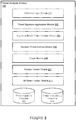
- FIGURE 2 illustrates the threat analysis system 108, according to an embodiment of the present disclosure.
- the threat analysis system 108 may comprise a bit stream input module 200, a threat signature aggregation module 202, a signature-based threat analysis module 204, a heuristic threat analysis module 206, a trigger module 208, a process control module 210, a bit stream output module 212, a threat signature datastore 222, and a threat analysis log datastore 224.
- the threat analysis system 108 may be configured to perform various aggregation, analysis, identification, logging, triggering, and process control operations described herein.
- the bit stream input module 200 may be configured to receive network data being communicated from a network source to a network destination through the threat analysis system 108.
- the threat signature aggregation module 202 may be configured to aggregate threat signatures from two or more of the threat signature sources, and may be further configured to store the aggregated threat signature locally on the threat signature datastore 222.
- the signature-based threat analysis module 204 may be configured to perform a signature-based threat analysis of the network traffic using the threat signatures aggregated by the threat signature aggregation module 202 from two or more of the threat signatures sources.
- the heuristic threat analysis module 206 may be configured to perform heuristic-based threat analysis of the network traffic by analyzing the threat analysis log data generated during the signature-based threat analysis performed by the signature-based threat analysis module 204, or generated during threat analysis performed by another (e.g., third-party) threat analysis systems (e.g., such as one provided by McAfee®).
- the trigger module 208 may be configured to trigger one or more actions based on the results of the signature-based threat analysis or the heuristic-based threat analysis.
- the process control module 210 may be configured to control the bit stream vector processing of network data as the signature-based threat analysis is performed on the network data by the signature-based threat analysis module 204.
- the process control module 210 may be also configured to control the bit stream vector processing of network data as the heuristic-based threat analysis is performed on the network data by the heuristic threat analysis module 206.
- the process control module 210 may be further configured to control the bit stream vector processing of network data as trigger actions are performed with respect to the network data by the trigger module 208.
- the bit stream output module 212 may be configured to permit the network data to pass through the threat analysis system 108, undeterred, when no threats are detected by either the signature-based threat analysis or the heuristic-based threat analysis.
- the threat signature datastore 222 may be configured to implement or facilitate data storage with respect to various components of the threat analysis system 108, including storage of threat signature aggregated from two or more threat signature sources. Depending on the embodiment, the threat signature datastore 222 may be implemented by a database or the like.
- the threat analysis log datastore 224 may be configured to implement or facilitate data storage with respect to various components of the threat analysis system 108, including storage of threat analysis log data generated during threat analysis performed by the signature-based threat analysis module 204 or the heuristic threat analysis module 206.
- the threat analysis log datastore 224 may also include threat analysis log data generated by third-party threat analysis systems or devices, which may be external to the threat analysis system 108.
- the threat analysis log datastore 224 may be implemented by a database or the like.
- FIGURE 3 illustrates an example threat analysis system 308b in an example environment 300, according to an embodiment of the present disclosure.
- the example environment 300 includes a plurality of threat signature sources 302, a perimeter edge router 304, a commercial packet inspection appliance 306, a programmable deep packet inspection appliance 308a including the example threat analysis system 308b, an internal network 310, a network device 312, a traffic aggregation system 314, and an action system 332.
- the threat analysis system 308b may include a packet inspection system 316, a signature matching system 318, an analytics system 320, and a trigger system 322.
- the perimeter edge router 304 receives bit stream data from a public network, such as the Internet, the perimeter edge router 304 routes the received bit stream data to the commercial packet inspection appliance 306, and the commercial packet inspection appliance 306 routes the bit stream data to the programmable deep packet inspection appliance 308a.
- the threat analysis system 308b included by and implemented on the programmable deep packet inspection appliance 308a, may use the packet inspection system 316 to analyze (e.g., inspect) one or more packets included in the bit stream data.
- the packet inspection system 316 may analyze the one or more packets for threats based on threat signatures aggregated by the programmable deep packet inspection appliance 308a.
- the programmable deep packet inspection appliance 308a aggregates the threat signatures from two or more of the threat signature sources 302, merges the aggregated threat signatures into merged threat data, and then provides the merged threat data to the signature matching system 318.
- the packet inspection system 316 may utilize the signature matching system 318 to facilitate matching data in a packet of the bit stream data with threat signatures contained in the merged threat data.
- the packet inspection system 316 may also analyze the one or more packets for threats based on threat analysis log data provided by the commercial packet inspection appliance 306. In this way, the packet inspection system 316 can analyze the one or more packets based on proprietary threat signatures that are otherwise not available for direct aggregation (e.g., threat signatures produced for exclusive use by certain commercial packet inspection appliances). Depending on the embodiment, the packet inspection system 316 may be implemented using an open source software application for packet inspection. The packet inspection system 316 may be implemented using one or more conventional programmable appliances, including but not limited to Bivio 7000® or 8000i® platform by Bivio Networks®.
- the threat analysis system 308b may send the packet to its destination at step 324 and the log event process can log the no-signature-match result using a log event process 326.
- a log event process 326 can log the signature match result.
- the log event process 326 can provide the log data to the action system 332, such as a SIEM, which may analyze the log data and take action accordingly.
- the action system 332 may notify a security operations officer, or automatically notify another system using machine readable electronic formats, that the log data indicates the detection of a threat in the bit stream data.
- the action system 332 may detect a security issue that may have not been detected by the packet inspection system 316 and in response the action system 332 may cause a trigger action process 330 to trigger an action.
- the analytics system 320 may use a heuristic analytics engine, or a comparative analytics engine, to analyze the log data produced by the log event process 326 to detect threats in the bit stream data.
- the analytics system 320 may further determine correlations based on the log data analyzed and learn correlation behavior over time.
- the trigger system 322 can trigger an action to address (e.g., protect against) a threat detected by the packet inspection system 316 or the analytics system 320.
- the particular action triggered by the trigger system 322 may be determined based on the results of the signature-based threat analysis performed by the packet inspection system 316 or the results of the heuristic-based threat analysis performed by the analytics system 320.
- the action may be triggered with respect to the internal network 310 or the traffic aggregation system 314.
- the internal network 310 may be used by one or more network devices 312 (e.g., switch, router, server, client device) to communicate with the public network (e.g., the Internet).
- the internal network 310 may comprise a physical network or a virtual network (e.g., SDN), and the trigger may reconfigure components of the physical or the virtual network included in the internal network 310, such as physical or virtual routers.
- the traffic aggregation system 314 may control the configuration of the perimeter edge router 304, which controls egress and ingress of bit stream data through the perimeter of an internal network.
- FIGURE 4 illustrates an example threat analysis system 402 in an example environment 400, according to an embodiment of the present disclosure.
- the example environment 400 includes the plurality of threat signature sources 302, the programmable deep packet inspection appliance 308a including the example threat analysis system 402, and the action system 332.
- the threat analysis system 402 may include a bit stream vector processing control 404, an application processing control 406, the signature matching system 318, one or more processors 408, the packet inspection system 316, the analytics system 320, the trigger system 322.
- one or more processors in the set of processors 408 processes (e.g., analyze) bit stream data in accordance with the components of the threat analysis system 402. Additionally, the one or more of the processors 408 may process the bit stream data using bit stream vector processing.
- the bit stream vector processing control 404 provides dynamic execution pathway control of one or more of the processors 408 as those processors operate on bit stream data using bit stream vector processing.
- the bit stream vector processing control 404 may permit the threat analysis system 402 to perform signature-based analysis on bit stream data using sequential or differential bit stream vector processing on one or more of the processors 408.
- bit stream vector processing control 404 may permit the threat analysis system 402 to dedicate a specific subset of the processors 408 for bit stream vector processing of certain bit stream data, or dedicate a specific subset of the processors 408 for performing particular processes of the threat analysis system 402. For instance, through the bit stream vector processing control 404, the threat analysis system 402 can dedicate a first subset of the processors 408 for performing signature-based threat analysis of bit stream data, and dedicate a second subset of the processors 408 for performing heuristic-based threat analysis of bit stream data.
- the level of processing control provided by the bit stream vector processing control 404 can ensure that programmable deep packet inspection appliance 308a, and the threat analysis system 402 in particular, can analyze bit stream data at or near wire speed.
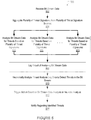
- FIGURE 5 illustrates an example process 500 for analyzing threats, according to an embodiment of the present disclosure.
- the threat analysis process 500 may be performed in whole or in part by the threat analysis system 108 described herein.
- the process for analyzing data flows may perform more or less operations than what is illustrated in FIG. 5 , and may perform the operations illustrated in FIG. 5 in an order different than the order shown.
- bit stream data is received.
- the bit stream data may be received from a network device, or some other source of bit stream data.
- the bit stream data may be received by a threat analysis system described herein, such as the threat analysis system 108.
- the bit stream data may comprise one or more data segments (e.g., network frames or network packets), which may be transmitted from a data source (e.g., source network device) and addressed to a data sink (e.g., destination network device).
- a plurality of threat signatures from a plurality of threat signature sources is aggregated.
- the bit stream data received at block 502 is analyzed for threats based on the plurality of threat signatures aggregated at block 504, and optionally in parallel across differential algorithm sets.
- a result of analyzing the bit stream data, at block 506, is logged as threat analysis log data.
- the threat analysis log data is heuristically analyzed for threats in the bit stream data.
- an action is triggered based on analysis of the bit stream data at block 506, or based on heuristic analysis of the threat analysis log data at block 510.
- a user is notified regarding one or more threats identified by analysis of the bit stream data at block 506, or identified by heuristic analysis of the threat analysis log data at block 510.
- computing module 600 may represent, for example, computing or processing capabilities found within desktop, laptop and notebook computers; hand-held computing devices (PDA's, smart phones, cell phones, palmtops, tablets, etc.); mainframes, supercomputers, workstations or servers; or any other type of special-purpose or general-purpose computing devices as may be desirable or appropriate for a given application or environment.
- Computing module 600 might also represent computing capabilities embedded within or otherwise available to a given device.
- a computing module might be found in other electronic devices such as, for example, digital cameras, navigation systems, cellular telephones, portable computing devices, modems, routers, WAPs, terminals and other electronic devices that might include some form of processing capability.
- some or all the elements of FIG. 6 may be emulated via "virtualization software," such as VMWare®, and others. Accordingly, various embodiments may utilize virtualization software that provides an execution environment using emulated hardware, such as a "virtual machine".
- the virtualized software may be implemented, and provided, as cloud-based services, such as Amazon Web Services Elastic Compute Cloud.
- Computing module 600 might include, for example, one or more processors, controllers, control modules, or other processing devices, such as a processor 604.
- Processor 604 might be implemented using a general-purpose or special-purpose processing engine such as, for example, a microprocessor, controller, or other control logic.
- processor 604 is connected to a bus 602, although any communication medium can be used to facilitate interaction with other components of computing module 600 or to communicate externally.
- Computing module 600 might also include one or more memory modules, simply referred to herein as main memory 608. For example, preferably random access memory (RAM) or other dynamic memory, might be used for storing information and instructions to be executed by processor 604. Main memory 608 might also be used for storing temporary variables or other intermediate information during execution of instructions to be executed by processor 604. Computing module 600 might likewise include a read only memory (“ROM”) or other static storage device coupled to bus 602 for storing static information and instructions for processor 604.
- ROM read only memory
- the computing module 600 might also include one or more various forms of information storage mechanism 610, which might include, for example, a media drive 612 and a storage unit interface 620.
- the media drive 612 might include a drive or other mechanism to support fixed or removable storage media 614.
- a hard disk drive, a floppy disk drive, a magnetic tape drive, an optical disk drive, a CD or DVD drive (R or RW), or other removable or fixed media drive might be provided.
- storage media 614 might include, for example, a hard disk, a floppy disk, magnetic tape, cartridge, optical disk, a CD or DVD, or other fixed or removable medium that is read by, written to or accessed by media drive 612.
- the storage media 614 can include a computer usable storage medium having stored therein computer software or data.
- information storage mechanism 610 might include other similar instrumentalities for allowing computer programs or other instructions or data to be loaded into computing module 600.
- Such instrumentalities might include, for example, a fixed or removable storage unit 622 and an interface 620.
- Examples of such storage units 622 and interfaces 620 can include a program cartridge and cartridge interface, a removable memory (for example, a flash memory or other removable memory module) and memory slot, a PCMCIA slot and card, and other fixed or removable storage units 622 and interfaces 620 that allow software and data to be transferred from the storage unit 622 to computing module 600.
- Computing module 600 might also include a communications interface 624.
- Communications interface 624 might be used to allow software and data to be transferred between computing module 600 and external devices.
- Examples of communications interface 624 might include a modem or softmodem, a network interface (such as an Ethernet, network interface card, WiMedia, IEEE 802.XX or other interface), a communications port (such as for example, a USB port, IR port, RS232 port, Bluetooth® interface, or other port), or other communications interface.
- Software and data transferred via communications interface 624 might typically be carried on signals, which can be electronic, electromagnetic (which includes optical) or other signals capable of being exchanged by a given communications interface 624. These signals might be provided to communications interface 624 via a channel 628.
- This channel 628 might carry signals and might be implemented using a wired or wireless communication medium.
- Some examples of a channel might include a phone line, a cellular link, an RF link, an optical link, a network interface, a local or wide area network, and other wired or wireless communications channels.
- computer program medium and “computer usable medium” are used to generally refer to media such as, for example, memory 608, storage unit 620, media 614, and channel 628.
- These and other various forms of computer program media or computer usable media may be involved in carrying one or more sequences of one or more instructions to a processing device for execution.
- Such instructions embodied on the medium are generally referred to as “computer program code” or a “computer program product” (which may be grouped in the form of computer programs or other groupings). When executed, such instructions might enable the computing module 600 to perform features or functions of the disclosed invention as discussed herein.
- references in this specification to "one embodiment”, “an embodiment”, “other embodiments”, “one series of embodiments”, “some embodiments”, “various embodiments”, “instance”, “instances”, “for example”, “examples”, or the like means that a particular feature, design, structure, or characteristic described in connection with the embodiment, instance, or example is included in at least one embodiment, instance, or example of the disclosure.
- the appearances of these terms in various places in the specification are not necessarily all referring to the same embodiment, instance, or example, nor are separate or alternative embodiments, instances, or examples mutually exclusive of other embodiments, instances, or examples.
- module does not imply that the components or functionality described or claimed as part of the module are all configured in a common package. Indeed, any or all of the various components of a module, whether control logic or other components, can be combined in a single package or separately maintained and can further be distributed in multiple groupings or packages or across multiple locations.
Landscapes
- Engineering & Computer Science (AREA)
- Computer Security & Cryptography (AREA)
- Computer Hardware Design (AREA)
- General Engineering & Computer Science (AREA)
- Computing Systems (AREA)
- Computer Networks & Wireless Communication (AREA)
- Signal Processing (AREA)
- Software Systems (AREA)
- Theoretical Computer Science (AREA)
- General Health & Medical Sciences (AREA)
- Virology (AREA)
- Physics & Mathematics (AREA)
- General Physics & Mathematics (AREA)
- Health & Medical Sciences (AREA)
- Data Exchanges In Wide-Area Networks (AREA)
- Computer And Data Communications (AREA)
Claims (13)
- Computerimplementiertes Verfahren, umfassend:durch ein Computersystem (108; 600) erfolgendes Aggregieren (504) einer Vielzahl von Bedrohungssignaturen aus einer Vielzahl von Bedrohungssignatur-Datenquellen (102);durch das Computersystem (108; 600) erfolgendes Analysieren (506) von Bitstromdaten auf der Grundlage der Vielzahl von Bedrohungssignaturen, um eine erste Bedrohung in den Bitstromdaten zu ermitteln, wobei die Bitstromdaten unter Verwendung einer signaturbasierten Bedrohungsanalyse analysiert werden;durch das Computersystem (108; 600) erfolgendes Protokollieren (508) eines Ergebnisses des Analysierens der Bitstromdaten als Bedrohungsanalyse-Protokolldaten, wobei:die Bedrohungsanalyse-Protokolldaten Protokolldaten einschließen, die durch ein externes Deep-Packet-Inspection-System erzeugt werden; unddas Ergebnis des Analysierens der Bitstromdaten eine Angabe darüber umfasst, ob ein Paket der Bitstromdaten mit mindestens einer Bedrohungssignatur in der Vielzahl von Bedrohungssignaturen übereinstimmt;durch das Computersystem (108; 600) erfolgendes Analysieren (510) der Bedrohungsanalyse-Protokolldaten, um eine zweite Bedrohung in den Bitstromdaten zu ermitteln, wobei das Analysieren der Bedrohungsanalyse-Protokolldaten auf mindestens einer Heuristik basiert; unddurch das Computersystem (108; 600) erfolgendes Auslösen (512) einer Aktion auf der Grundlage des Analysierens der Bitstromdaten oder auf der Grundlage des Analysierens der Bedrohungsanalyse-Protokolldaten.
- Computerimplementiertes Verfahren nach Anspruch 1, ferner umfassend:
Empfangen der Bitstromdaten über eine Netzwerkverbindung von einer Netzwerkvorrichtung (106). - Computerimplementiertes Verfahren nach Anspruch 1, wobei das Analysieren der Bitstromdaten und das Analysieren der Bedrohungsanalyse-Protokolldaten parallel oder der Reihe nach durchgeführt werden und in eine Kette von unabhängigen oder kooperativen Analysen mit Sicherheitsbezug einbezogen sind.
- Computerimplementiertes Verfahren nach Anspruch 1, wobei die erste Bedrohung und die zweite Bedrohung ähnlich sind.
- Computerimplementiertes Verfahren nach Anspruch 1, ferner umfassend:
Ausgeben der Bitstromdaten als Antwort darauf, dass die erste Bedrohung und die zweite Bedrohung nicht in den Bitstromdaten ermittelt wurden. - Computerimplementiertes Verfahren nach Anspruch 1, wobei die Aktion umfasst:
als Antwort darauf, dass die erste Bedrohung in den Bitstromdaten ermittelt wird, erfolgendes Konfigurieren einer Netzwerkvorrichtung (106), um sich mit der ersten Bedrohung zu befassen, oder als Antwort darauf, dass die zweite Bedrohung in den Bitstromdaten ermittelt wird, erfolgendes Konfigurieren der Netzwerkvorrichtung (106), um sich mit der zweiten Bedrohung zu befassen. - Computerimplementiertes Verfahren nach Anspruch 6, wobei die Netzwerkvorrichtung (106) durch Konfigurieren eines Netzwerkverkehr-Aggregationssystems konfiguriert wird, wobei das Netzwerkverkehr-Aggregationssystem die Netzwerkvorrichtung (106) konfiguriert, oder wobei die Netzwerkvorrichtung (106) eine Edge-Netzwerkvorrichtung (106) ist oder wobei die Netzwerkvorrichtung (106) eine interne Netzwerkvorrichtung ist.
- Computerimplementiertes Verfahren nach Anspruch 1, wobei das Analysieren der Bitstromdaten auf der Grundlage der Vielzahl von Bedrohungssignaturen das Durchführen von Deep Packet Inspection auf der Grundlage der Vielzahl von Bedrohungssignaturen umfasst oder wobei das Analysieren der Bitstromdaten durch Bitstrom-Vektorverarbeitung durchgeführt wird oder das Analysieren der Bedrohungsanalyse-Protokolldaten durch Bitstrom-Vektorverarbeitung durchgeführt wird.
- Computerimplementiertes Verfahren nach Anspruch 1, wobei die Aktion mindestens eines umfasst von: Verwerfen eines Pakets in den Bitstromdaten, Weiterleiten des Pakets zu einem Filter für eine tiefere Paketprüfung, Kennzeichnen des Pakets mit einem Meta-Risikoindikator oder einer Meta-Risikopunktzahl, Umleiten des Pakets zu seinem Ziel oder Umleiten des Pakets zu einer Sandbox zur Quarantäne.
- Computerimplementiertes Verfahren nach Anspruch 1, wobei das Auslösen der Aktion durch Bitstrom-Vektorverarbeitung durchgeführt wird, und zwar durch eine Kombination von parallelen und aufeinanderfolgenden Mengen von Workern, die dynamisch zugewiesen werden, oder wobei mindestens eine Bedrohungssignatur-Datenquelle in der Vielzahl von Bedrohungssignatur-Datenquellen kommerziell, proprietär oder quelloffen ist, oder wobei die Vielzahl von Bedrohungssignatur-Datenquellen unabhängige Organisationen einschließt.
- Computerimplementiertes Verfahren nach Anspruch 1, wobei das externe Deep-Packet-Inspection-System vor dem Analysieren der Bitstromdaten auf der Grundlage der Vielzahl von Bedrohungssignaturen oder vor dem Analysieren der Bedrohungsanalyse-Protokolldaten die Deep Packet Inspection an den Bitstromdaten durchführt.
- System, umfassend:mindestens einen Prozessor (604); undeinen Speicher (608), der Anweisungen speichert, die dafür konfiguriert sind, den mindestens einen Prozessor (604) anzuweisen, Folgendes durchzuführen:Aggregieren (504) einer Vielzahl von Bedrohungssignaturen aus einer Vielzahl von Bedrohungssignatur-Datenquellen;Analysieren (506) von Bitstromdaten auf der Grundlage der Vielzahl von Bedrohungssignaturen, um eine erste Bedrohung in den Bitstromdaten zu ermitteln, wobei die Bitstromdaten unter Verwendung einer signaturbasierten Bedrohungsanalyse analysiert werden;Protokollieren (508) eines Ergebnisses des Analysierens der Bitstromdaten als Bedrohungsanalyse-Protokolldaten, wobei:die Bedrohungsanalyse-Protokolldaten Protokolldaten einschließen, die durch ein externes Deep-Packet-Inspection-System erzeugt werden; unddas Ergebnis des Analysierens der Bitstromdaten eine Angabe darüber umfasst, ob ein Paket der Bitstromdaten mit mindestens einer Bedrohungssignatur in der Vielzahl von Bedrohungssignaturen übereinstimmt;Analysieren (510) der Bedrohungsanalyse-Protokolldaten, um eine zweite Bedrohung in den Bitstromdaten zu ermitteln, wobei das Analysieren der Bedrohungsanalyse-Protokolldaten auf mindestens einer Heuristik basiert; undAuslösen (512) einer Aktion auf der Grundlage des Analysierens der Bitstromdaten oder auf der Grundlage des Analysierens der Bedrohungsanalyse-Protokolldaten.
- Nichtflüchtiges Computerspeichermedium, das computerausführbare Anweisungen speichert, die, wenn sie ausgeführt werden, ein Computersystem veranlassen, ein computerimplementiertes Verfahren durchzuführen, welches umfasst:Aggregieren (504) einer Vielzahl von Bedrohungssignaturen aus einer Vielzahl von Bedrohungssignatur-Datenquellen;Analysieren (506) von Bitstromdaten auf der Grundlage der Vielzahl von Bedrohungssignaturen, um eine erste Bedrohung in den Bitstromdaten zu ermitteln, wobei die Bitstromdaten unter Verwendung einer signaturbasierten Bedrohungsanalyse analysiert werden;Protokollieren (508) eines Ergebnisses des Analysierens der Bitstromdaten als Bedrohungsanalyse-Protokolldaten, wobei:die Bedrohungsanalyse-Protokolldaten Protokolldaten einschließen, die durch ein externes Deep-Packet-Inspection-System erzeugt werden; unddas Ergebnis des Analysierens der Bitstromdaten eine Angabe darüber umfasst, ob ein Paket der Bitstromdaten mit mindestens einer Bedrohungssignatur in der Vielzahl von Bedrohungssignaturen übereinstimmt;Analysieren (510) der Bedrohungsanalyse-Protokolldaten, um eine zweite Bedrohung in den Bitstromdaten zu ermitteln, wobei das Analysieren der Bedrohungsanalyse-Protokolldaten auf mindestens einer Heuristik basiert; undAuslösen (512) einer Aktion auf der Grundlage des Analysierens der Bitstromdaten oder auf der Grundlage des Analysierens der Bedrohungsanalyse-Protokolldaten.
Applications Claiming Priority (2)
| Application Number | Priority Date | Filing Date | Title |
|---|---|---|---|
| US14/517,726 US20160164886A1 (en) | 2014-10-17 | 2014-10-17 | Systems and methods for threat analysis of computer data |
| PCT/US2015/056079 WO2016061546A1 (en) | 2014-10-17 | 2015-10-16 | Systems and methods for threat analysis of computer data |
Publications (3)
| Publication Number | Publication Date |
|---|---|
| EP3207685A1 EP3207685A1 (de) | 2017-08-23 |
| EP3207685A4 EP3207685A4 (de) | 2018-05-02 |
| EP3207685B1 true EP3207685B1 (de) | 2021-06-30 |
Family
ID=55747460
Family Applications (1)
| Application Number | Title | Priority Date | Filing Date |
|---|---|---|---|
| EP15851075.0A Active EP3207685B1 (de) | 2014-10-17 | 2015-10-16 | Systeme und verfahren zur bedrohungsanalysen von computerdaten |
Country Status (5)
| Country | Link |
|---|---|
| US (3) | US20160164886A1 (de) |
| EP (1) | EP3207685B1 (de) |
| AU (1) | AU2015331596B2 (de) |
| CA (1) | CA2962814C (de) |
| WO (1) | WO2016061546A1 (de) |
Families Citing this family (77)
| Publication number | Priority date | Publication date | Assignee | Title |
|---|---|---|---|---|
| US10749711B2 (en) | 2013-07-10 | 2020-08-18 | Nicira, Inc. | Network-link method useful for a last-mile connectivity in an edge-gateway multipath system |
| US10454714B2 (en) | 2013-07-10 | 2019-10-22 | Nicira, Inc. | Method and system of overlay flow control |
| US10498652B2 (en) | 2015-04-13 | 2019-12-03 | Nicira, Inc. | Method and system of application-aware routing with crowdsourcing |
| US10135789B2 (en) | 2015-04-13 | 2018-11-20 | Nicira, Inc. | Method and system of establishing a virtual private network in a cloud service for branch networking |
| US10320813B1 (en) | 2015-04-30 | 2019-06-11 | Amazon Technologies, Inc. | Threat detection and mitigation in a virtualized computing environment |
| EP3317797B1 (de) | 2015-07-02 | 2021-08-25 | Reliaquest Holdings, LLC | Intelligenzsystem und verfahren gegen bedrohungen |
| US10218731B2 (en) * | 2015-10-05 | 2019-02-26 | Efficient Protection Inc. | Method and system for data breach and malware detection |
| GB201603118D0 (en) * | 2016-02-23 | 2016-04-06 | Eitc Holdings Ltd | Reactive and pre-emptive security system based on choice theory |
| GB2553427B (en) | 2016-08-02 | 2021-09-15 | Sophos Ltd | Identifying and remediating phishing security weaknesses |
| US20180219765A1 (en) | 2017-01-31 | 2018-08-02 | Waltz Networks | Method and Apparatus for Network Traffic Control Optimization |
| US20200036624A1 (en) | 2017-01-31 | 2020-01-30 | The Mode Group | High performance software-defined core network |
| US11706127B2 (en) | 2017-01-31 | 2023-07-18 | Vmware, Inc. | High performance software-defined core network |
| US10992568B2 (en) | 2017-01-31 | 2021-04-27 | Vmware, Inc. | High performance software-defined core network |
| US10778528B2 (en) | 2017-02-11 | 2020-09-15 | Nicira, Inc. | Method and system of connecting to a multipath hub in a cluster |
| US10673816B1 (en) * | 2017-04-07 | 2020-06-02 | Perspecta Labs Inc. | Low delay network intrusion prevention |
| US10523539B2 (en) | 2017-06-22 | 2019-12-31 | Nicira, Inc. | Method and system of resiliency in cloud-delivered SD-WAN |
| US10999100B2 (en) | 2017-10-02 | 2021-05-04 | Vmware, Inc. | Identifying multiple nodes in a virtual network defined over a set of public clouds to connect to an external SAAS provider |
| US11115480B2 (en) | 2017-10-02 | 2021-09-07 | Vmware, Inc. | Layer four optimization for a virtual network defined over public cloud |
| US11516049B2 (en) | 2017-10-02 | 2022-11-29 | Vmware, Inc. | Overlay network encapsulation to forward data message flows through multiple public cloud datacenters |
| US10685115B1 (en) * | 2017-10-27 | 2020-06-16 | EMC IP Holding Company LLC | Method and system for implementing cloud native application threat detection |
| US11223514B2 (en) | 2017-11-09 | 2022-01-11 | Nicira, Inc. | Method and system of a dynamic high-availability mode based on current wide area network connectivity |
| WO2019118425A1 (en) * | 2017-12-11 | 2019-06-20 | Trillium Incorporated | Secure transmission module |
| US10924517B2 (en) * | 2018-02-07 | 2021-02-16 | Sophos Limited | Processing network traffic based on assessed security weaknesses |
| JP6783261B2 (ja) * | 2018-02-15 | 2020-11-11 | 日本電信電話株式会社 | 脅威情報抽出装置及び脅威情報抽出システム |
| EP3782038B1 (de) * | 2018-04-18 | 2023-07-26 | IBOSS, Inc. | Hybride cloud-rechnernetzwerkverwaltung |
| US10491613B1 (en) * | 2019-01-22 | 2019-11-26 | Capital One Services, Llc | Systems and methods for secure communication in cloud computing environments |
| US11171885B2 (en) | 2019-08-27 | 2021-11-09 | Vmware, Inc. | Providing recommendations for implementing virtual networks |
| US11611507B2 (en) | 2019-10-28 | 2023-03-21 | Vmware, Inc. | Managing forwarding elements at edge nodes connected to a virtual network |
| US11489783B2 (en) | 2019-12-12 | 2022-11-01 | Vmware, Inc. | Performing deep packet inspection in a software defined wide area network |
| US11394640B2 (en) | 2019-12-12 | 2022-07-19 | Vmware, Inc. | Collecting and analyzing data regarding flows associated with DPI parameters |
| US11418997B2 (en) | 2020-01-24 | 2022-08-16 | Vmware, Inc. | Using heart beats to monitor operational state of service classes of a QoS aware network link |
| CN113765843B (zh) * | 2020-06-01 | 2022-09-30 | 深信服科技股份有限公司 | 一种鉴定检出能力检测方法、装置、设备及可读存储介质 |
| US11245641B2 (en) | 2020-07-02 | 2022-02-08 | Vmware, Inc. | Methods and apparatus for application aware hub clustering techniques for a hyper scale SD-WAN |
| US11709710B2 (en) | 2020-07-30 | 2023-07-25 | Vmware, Inc. | Memory allocator for I/O operations |
| US11444865B2 (en) | 2020-11-17 | 2022-09-13 | Vmware, Inc. | Autonomous distributed forwarding plane traceability based anomaly detection in application traffic for hyper-scale SD-WAN |
| US11575600B2 (en) | 2020-11-24 | 2023-02-07 | Vmware, Inc. | Tunnel-less SD-WAN |
| US11929903B2 (en) | 2020-12-29 | 2024-03-12 | VMware LLC | Emulating packet flows to assess network links for SD-WAN |
| US11792127B2 (en) | 2021-01-18 | 2023-10-17 | Vmware, Inc. | Network-aware load balancing |
| US12218845B2 (en) | 2021-01-18 | 2025-02-04 | VMware LLC | Network-aware load balancing |
| US11979325B2 (en) | 2021-01-28 | 2024-05-07 | VMware LLC | Dynamic SD-WAN hub cluster scaling with machine learning |
| US12368676B2 (en) | 2021-04-29 | 2025-07-22 | VMware LLC | Methods for micro-segmentation in SD-WAN for virtual networks |
| US11637768B2 (en) | 2021-05-03 | 2023-04-25 | Vmware, Inc. | On demand routing mesh for routing packets through SD-WAN edge forwarding nodes in an SD-WAN |
| US12009987B2 (en) | 2021-05-03 | 2024-06-11 | VMware LLC | Methods to support dynamic transit paths through hub clustering across branches in SD-WAN |
| US11729065B2 (en) | 2021-05-06 | 2023-08-15 | Vmware, Inc. | Methods for application defined virtual network service among multiple transport in SD-WAN |
| US11489720B1 (en) | 2021-06-18 | 2022-11-01 | Vmware, Inc. | Method and apparatus to evaluate resource elements and public clouds for deploying tenant deployable elements based on harvested performance metrics |
| US12015536B2 (en) | 2021-06-18 | 2024-06-18 | VMware LLC | Method and apparatus for deploying tenant deployable elements across public clouds based on harvested performance metrics of types of resource elements in the public clouds |
| US12250114B2 (en) | 2021-06-18 | 2025-03-11 | VMware LLC | Method and apparatus for deploying tenant deployable elements across public clouds based on harvested performance metrics of sub-types of resource elements in the public clouds |
| US12047282B2 (en) | 2021-07-22 | 2024-07-23 | VMware LLC | Methods for smart bandwidth aggregation based dynamic overlay selection among preferred exits in SD-WAN |
| US11375005B1 (en) | 2021-07-24 | 2022-06-28 | Vmware, Inc. | High availability solutions for a secure access service edge application |
| US12267364B2 (en) | 2021-07-24 | 2025-04-01 | VMware LLC | Network management services in a virtual network |
| US11943146B2 (en) | 2021-10-01 | 2024-03-26 | VMware LLC | Traffic prioritization in SD-WAN |
| US12603848B2 (en) | 2022-01-04 | 2026-04-14 | VMware LLC | Efficient mechanism for the transmission of multipath duplicate packets |
| US12184557B2 (en) | 2022-01-04 | 2024-12-31 | VMware LLC | Explicit congestion notification in a virtual environment |
| US12507120B2 (en) | 2022-01-12 | 2025-12-23 | Velocloud Networks, Llc | Heterogeneous hub clustering and application policy based automatic node selection for network of clouds |
| US12425395B2 (en) | 2022-01-15 | 2025-09-23 | VMware LLC | Method and system of securely adding an edge device operating in a public network to an SD-WAN |
| US12506678B2 (en) | 2022-01-25 | 2025-12-23 | VMware LLC | Providing DNS service in an SD-WAN |
| US11909815B2 (en) | 2022-06-06 | 2024-02-20 | VMware LLC | Routing based on geolocation costs |
| US20240022626A1 (en) | 2022-07-18 | 2024-01-18 | Vmware, Inc. | Dns-based gslb-aware sd-wan for low latency saas applications |
| US12237990B2 (en) | 2022-07-20 | 2025-02-25 | VMware LLC | Method for modifying an SD-WAN using metric-based heat maps |
| US12489672B2 (en) | 2022-08-28 | 2025-12-02 | VMware LLC | Dynamic use of multiple wireless network links to connect a vehicle to an SD-WAN |
| US12057993B1 (en) | 2023-03-27 | 2024-08-06 | VMware LLC | Identifying and remediating anomalies in a self-healing network |
| US12425332B2 (en) | 2023-03-27 | 2025-09-23 | VMware LLC | Remediating anomalies in a self-healing network |
| US12034587B1 (en) | 2023-03-27 | 2024-07-09 | VMware LLC | Identifying and remediating anomalies in a self-healing network |
| US12621333B1 (en) * | 2023-04-27 | 2026-05-05 | Exabeam, Inc. | System, method, and computer program for context enrichment of logs in a cybersecurity system |
| US12506763B1 (en) | 2023-04-28 | 2025-12-23 | Exabeam, Inc. | System, method, and computer program for scoring and organizing evidence of cybersecurity threats from multiple data sources |
| US12399984B1 (en) | 2023-06-13 | 2025-08-26 | Exabeam, Inc. | System, method, and computer program for predictive autoscaling for faster searches of event logs in a cybersecurity system |
| US12507148B2 (en) | 2023-08-16 | 2025-12-23 | Velocloud Networks, Llc | Interconnecting clusters in multi-regional large scale deployments with distributed gateways |
| US12603827B2 (en) | 2023-08-16 | 2026-04-14 | Velocloud Networks, Llc | Asymmetric routing resolutions in multi-regional large scale deployments with distributed gateways |
| US12587468B2 (en) | 2023-08-16 | 2026-03-24 | Velocloud Networks, Llc | Route filtering for clusters in multi-regional large scale deployments with distributed gateways |
| US12355655B2 (en) | 2023-08-16 | 2025-07-08 | VMware LLC | Forwarding packets in multi-regional large scale deployments with distributed gateways |
| US12483968B2 (en) | 2023-08-16 | 2025-11-25 | Velocloud Networks, Llc | Distributed gateways for multi-regional large scale deployments |
| US12261777B2 (en) | 2023-08-16 | 2025-03-25 | VMware LLC | Forwarding packets in multi-regional large scale deployments with distributed gateways |
| US12507153B2 (en) | 2023-08-16 | 2025-12-23 | Velocloud Networks, Llc | Dynamic edge-to-edge across multiple hops in multi-regional large scale deployments with distributed gateways |
| US12563438B2 (en) | 2023-08-16 | 2026-02-24 | Velocloud Networks, Llc | Distributed gateways for multi-regional large scale deployments |
| US20250131087A1 (en) * | 2023-10-19 | 2025-04-24 | Quantum Star Technologies Inc. | Metadata processing techniques and architectures for data protection |
| US12574395B2 (en) | 2023-12-12 | 2026-03-10 | Cisco Technology, Inc. | Data unit capture management |
| CN119989365B (zh) * | 2025-01-23 | 2025-07-18 | 北京云科安信科技有限公司 | 一种基于大数据的漏洞利用分析方法、系统及存储介质 |
Family Cites Families (12)
| Publication number | Priority date | Publication date | Assignee | Title |
|---|---|---|---|---|
| US7359962B2 (en) * | 2002-04-30 | 2008-04-15 | 3Com Corporation | Network security system integration |
| EP1629651A1 (de) * | 2003-05-30 | 2006-03-01 | International Business Machines Corporation | Erkennung von netzwerkangriffen |
| US7624436B2 (en) * | 2005-06-30 | 2009-11-24 | Intel Corporation | Multi-pattern packet content inspection mechanisms employing tagged values |
| US8042184B1 (en) * | 2006-10-18 | 2011-10-18 | Kaspersky Lab, Zao | Rapid analysis of data stream for malware presence |
| US8997219B2 (en) * | 2008-11-03 | 2015-03-31 | Fireeye, Inc. | Systems and methods for detecting malicious PDF network content |
| US8701192B1 (en) * | 2009-06-30 | 2014-04-15 | Symantec Corporation | Behavior based signatures |
| US9047441B2 (en) * | 2011-05-24 | 2015-06-02 | Palo Alto Networks, Inc. | Malware analysis system |
| EP2610776B1 (de) * | 2011-09-16 | 2019-08-21 | Veracode, Inc. | Automatisierte verhaltens- und statische analyse unter verwendung eines instrumentierten sandkastens und maschinenlernklassifizierung für mobile sicherheit |
| US9088606B2 (en) * | 2012-07-05 | 2015-07-21 | Tenable Network Security, Inc. | System and method for strategic anti-malware monitoring |
| US9147073B2 (en) * | 2013-02-01 | 2015-09-29 | Kaspersky Lab, Zao | System and method for automatic generation of heuristic algorithms for malicious object identification |
| US10623424B2 (en) * | 2016-02-17 | 2020-04-14 | Ziften Technologies, Inc. | Supplementing network flow analysis with endpoint information |
| US20180191766A1 (en) * | 2017-01-04 | 2018-07-05 | Ziften Technologies, Inc. | Dynamic assessment and control of system activity |
-
2014
- 2014-10-17 US US14/517,726 patent/US20160164886A1/en not_active Abandoned
-
2015
- 2015-10-16 WO PCT/US2015/056079 patent/WO2016061546A1/en not_active Ceased
- 2015-10-16 EP EP15851075.0A patent/EP3207685B1/de active Active
- 2015-10-16 CA CA2962814A patent/CA2962814C/en active Active
- 2015-10-16 AU AU2015331596A patent/AU2015331596B2/en active Active
-
2017
- 2017-06-19 US US15/627,133 patent/US20180131704A1/en not_active Abandoned
-
2018
- 2018-06-06 US US16/001,253 patent/US10348740B2/en active Active
Non-Patent Citations (1)
| Title |
|---|
| None * |
Also Published As
| Publication number | Publication date |
|---|---|
| WO2016061546A9 (en) | 2016-05-26 |
| US20190081957A1 (en) | 2019-03-14 |
| US20160164886A1 (en) | 2016-06-09 |
| WO2016061546A1 (en) | 2016-04-21 |
| US10348740B2 (en) | 2019-07-09 |
| AU2015331596B2 (en) | 2019-11-14 |
| CA2962814A1 (en) | 2016-04-21 |
| CA2962814C (en) | 2021-04-06 |
| US20180131704A1 (en) | 2018-05-10 |
| AU2015331596A1 (en) | 2017-04-27 |
| EP3207685A1 (de) | 2017-08-23 |
| EP3207685A4 (de) | 2018-05-02 |
Similar Documents
| Publication | Publication Date | Title |
|---|---|---|
| US10348740B2 (en) | Systems and methods for threat analysis of computer data | |
| US11677644B2 (en) | Dynamically modifying a service chain based on network traffic information | |
| US10445502B1 (en) | Susceptible environment detection system | |
| US11936661B2 (en) | Detecting malicious beaconing communities using lockstep detection and co-occurrence graph | |
| US10997289B2 (en) | Identifying malicious executing code of an enclave | |
| AU2021221443A1 (en) | Malware host netflow analysis system and method | |
| US20110099631A1 (en) | Distributed Packet Flow Inspection and Processing | |
| US20140075557A1 (en) | Streaming Method and System for Processing Network Metadata | |
| US20250193249A1 (en) | Inventory monitoring for cloud resource protection in real time | |
| US20170019417A1 (en) | Inspection of Traffic via SDN | |
| US12580954B2 (en) | Distributed denial of service solution using a DPU | |
| CN106911637A (zh) | 网络威胁处理方法和装置 | |
| CN107612890B (zh) | 一种网络监测方法及系统 | |
| CA2897664A1 (en) | An improved streaming method and system for processing network metadata | |
| US20150244678A1 (en) | Network traffic filtering and routing for threat analysis | |
| US20180255074A1 (en) | Managing data encrypting applications | |
| CN106911640A (zh) | 网络威胁处理方法和装置 | |
| EP4525371A1 (de) | Auf verteilter dienstverweigerung (ddos) basierende, durch künstliche intelligenz (ai) beschleunigte lösung mit einem schalter | |
| WO2010031084A1 (en) | Distributed packet flow inspection and processing | |
| Smirnov et al. | Network traffic processing module for infrastructure attacks detection in cloud computing platforms | |
| US20260135879A1 (en) | Distributed denial of service solution using a dpu | |
| US20260143002A1 (en) | Distributed denial of service (ddos) based accelerated solution | |
| Li | ProSec: Enabling programmable security in Software-Defined infrastructure | |
| Ahmadi | Developing an intrusion detection model for distributed denial of service attacks in cloud computing |
Legal Events
| Date | Code | Title | Description |
|---|---|---|---|
| STAA | Information on the status of an ep patent application or granted ep patent |
Free format text: STATUS: THE INTERNATIONAL PUBLICATION HAS BEEN MADE |
|
| PUAI | Public reference made under article 153(3) epc to a published international application that has entered the european phase |
Free format text: ORIGINAL CODE: 0009012 |
|
| STAA | Information on the status of an ep patent application or granted ep patent |
Free format text: STATUS: REQUEST FOR EXAMINATION WAS MADE |
|
| 17P | Request for examination filed |
Effective date: 20170330 |
|
| AK | Designated contracting states |
Kind code of ref document: A1 Designated state(s): AL AT BE BG CH CY CZ DE DK EE ES FI FR GB GR HR HU IE IS IT LI LT LU LV MC MK MT NL NO PL PT RO RS SE SI SK SM TR |
|
| AX | Request for extension of the european patent |
Extension state: BA ME |
|
| DAV | Request for validation of the european patent (deleted) | ||
| DAX | Request for extension of the european patent (deleted) | ||
| A4 | Supplementary search report drawn up and despatched |
Effective date: 20180404 |
|
| RIC1 | Information provided on ipc code assigned before grant |
Ipc: H04L 12/22 20060101ALI20180327BHEP Ipc: G06F 21/56 20130101ALI20180327BHEP Ipc: H04L 29/06 20060101AFI20180327BHEP |
|
| STAA | Information on the status of an ep patent application or granted ep patent |
Free format text: STATUS: EXAMINATION IS IN PROGRESS |
|
| 17Q | First examination report despatched |
Effective date: 20200324 |
|
| GRAP | Despatch of communication of intention to grant a patent |
Free format text: ORIGINAL CODE: EPIDOSNIGR1 |
|
| STAA | Information on the status of an ep patent application or granted ep patent |
Free format text: STATUS: GRANT OF PATENT IS INTENDED |
|
| INTG | Intention to grant announced |
Effective date: 20210113 |
|
| GRAS | Grant fee paid |
Free format text: ORIGINAL CODE: EPIDOSNIGR3 |
|
| GRAA | (expected) grant |
Free format text: ORIGINAL CODE: 0009210 |
|
| STAA | Information on the status of an ep patent application or granted ep patent |
Free format text: STATUS: THE PATENT HAS BEEN GRANTED |
|
| AK | Designated contracting states |
Kind code of ref document: B1 Designated state(s): AL AT BE BG CH CY CZ DE DK EE ES FI FR GB GR HR HU IE IS IT LI LT LU LV MC MK MT NL NO PL PT RO RS SE SI SK SM TR |
|
| REG | Reference to a national code |
Ref country code: CH Ref legal event code: EP |
|
| REG | Reference to a national code |
Ref country code: AT Ref legal event code: REF Ref document number: 1407432 Country of ref document: AT Kind code of ref document: T Effective date: 20210715 |
|
| REG | Reference to a national code |
Ref country code: DE Ref legal event code: R096 Ref document number: 602015070955 Country of ref document: DE |
|
| REG | Reference to a national code |
Ref country code: IE Ref legal event code: FG4D |
|
| REG | Reference to a national code |
Ref country code: LT Ref legal event code: MG9D |
|
| PG25 | Lapsed in a contracting state [announced via postgrant information from national office to epo] |
Ref country code: BG Free format text: LAPSE BECAUSE OF FAILURE TO SUBMIT A TRANSLATION OF THE DESCRIPTION OR TO PAY THE FEE WITHIN THE PRESCRIBED TIME-LIMIT Effective date: 20210930 Ref country code: HR Free format text: LAPSE BECAUSE OF FAILURE TO SUBMIT A TRANSLATION OF THE DESCRIPTION OR TO PAY THE FEE WITHIN THE PRESCRIBED TIME-LIMIT Effective date: 20210630 Ref country code: FI Free format text: LAPSE BECAUSE OF FAILURE TO SUBMIT A TRANSLATION OF THE DESCRIPTION OR TO PAY THE FEE WITHIN THE PRESCRIBED TIME-LIMIT Effective date: 20210630 |
|
| REG | Reference to a national code |
Ref country code: NL Ref legal event code: MP Effective date: 20210630 |
|
| REG | Reference to a national code |
Ref country code: AT Ref legal event code: MK05 Ref document number: 1407432 Country of ref document: AT Kind code of ref document: T Effective date: 20210630 |
|
| REG | Reference to a national code |
Ref country code: DE Ref legal event code: R079 Ref document number: 602015070955 Country of ref document: DE Free format text: PREVIOUS MAIN CLASS: H04L0029060000 Ipc: H04L0065000000 |
|
| PG25 | Lapsed in a contracting state [announced via postgrant information from national office to epo] |
Ref country code: NO Free format text: LAPSE BECAUSE OF FAILURE TO SUBMIT A TRANSLATION OF THE DESCRIPTION OR TO PAY THE FEE WITHIN THE PRESCRIBED TIME-LIMIT Effective date: 20210930 Ref country code: RS Free format text: LAPSE BECAUSE OF FAILURE TO SUBMIT A TRANSLATION OF THE DESCRIPTION OR TO PAY THE FEE WITHIN THE PRESCRIBED TIME-LIMIT Effective date: 20210630 Ref country code: SE Free format text: LAPSE BECAUSE OF FAILURE TO SUBMIT A TRANSLATION OF THE DESCRIPTION OR TO PAY THE FEE WITHIN THE PRESCRIBED TIME-LIMIT Effective date: 20210630 Ref country code: GR Free format text: LAPSE BECAUSE OF FAILURE TO SUBMIT A TRANSLATION OF THE DESCRIPTION OR TO PAY THE FEE WITHIN THE PRESCRIBED TIME-LIMIT Effective date: 20211001 Ref country code: LV Free format text: LAPSE BECAUSE OF FAILURE TO SUBMIT A TRANSLATION OF THE DESCRIPTION OR TO PAY THE FEE WITHIN THE PRESCRIBED TIME-LIMIT Effective date: 20210630 |
|
| PG25 | Lapsed in a contracting state [announced via postgrant information from national office to epo] |
Ref country code: SM Free format text: LAPSE BECAUSE OF FAILURE TO SUBMIT A TRANSLATION OF THE DESCRIPTION OR TO PAY THE FEE WITHIN THE PRESCRIBED TIME-LIMIT Effective date: 20210630 Ref country code: SK Free format text: LAPSE BECAUSE OF FAILURE TO SUBMIT A TRANSLATION OF THE DESCRIPTION OR TO PAY THE FEE WITHIN THE PRESCRIBED TIME-LIMIT Effective date: 20210630 Ref country code: EE Free format text: LAPSE BECAUSE OF FAILURE TO SUBMIT A TRANSLATION OF THE DESCRIPTION OR TO PAY THE FEE WITHIN THE PRESCRIBED TIME-LIMIT Effective date: 20210630 Ref country code: CZ Free format text: LAPSE BECAUSE OF FAILURE TO SUBMIT A TRANSLATION OF THE DESCRIPTION OR TO PAY THE FEE WITHIN THE PRESCRIBED TIME-LIMIT Effective date: 20210630 Ref country code: ES Free format text: LAPSE BECAUSE OF FAILURE TO SUBMIT A TRANSLATION OF THE DESCRIPTION OR TO PAY THE FEE WITHIN THE PRESCRIBED TIME-LIMIT Effective date: 20210630 Ref country code: RO Free format text: LAPSE BECAUSE OF FAILURE TO SUBMIT A TRANSLATION OF THE DESCRIPTION OR TO PAY THE FEE WITHIN THE PRESCRIBED TIME-LIMIT Effective date: 20210630 Ref country code: NL Free format text: LAPSE BECAUSE OF FAILURE TO SUBMIT A TRANSLATION OF THE DESCRIPTION OR TO PAY THE FEE WITHIN THE PRESCRIBED TIME-LIMIT Effective date: 20210630 Ref country code: PT Free format text: LAPSE BECAUSE OF FAILURE TO SUBMIT A TRANSLATION OF THE DESCRIPTION OR TO PAY THE FEE WITHIN THE PRESCRIBED TIME-LIMIT Effective date: 20211102 Ref country code: AT Free format text: LAPSE BECAUSE OF FAILURE TO SUBMIT A TRANSLATION OF THE DESCRIPTION OR TO PAY THE FEE WITHIN THE PRESCRIBED TIME-LIMIT Effective date: 20210630 |
|
| PG25 | Lapsed in a contracting state [announced via postgrant information from national office to epo] |
Ref country code: PL Free format text: LAPSE BECAUSE OF FAILURE TO SUBMIT A TRANSLATION OF THE DESCRIPTION OR TO PAY THE FEE WITHIN THE PRESCRIBED TIME-LIMIT Effective date: 20210630 |
|
| REG | Reference to a national code |
Ref country code: DE Ref legal event code: R097 Ref document number: 602015070955 Country of ref document: DE |
|
| PG25 | Lapsed in a contracting state [announced via postgrant information from national office to epo] |
Ref country code: DK Free format text: LAPSE BECAUSE OF FAILURE TO SUBMIT A TRANSLATION OF THE DESCRIPTION OR TO PAY THE FEE WITHIN THE PRESCRIBED TIME-LIMIT Effective date: 20210630 |
|
| PLBE | No opposition filed within time limit |
Free format text: ORIGINAL CODE: 0009261 |
|
| STAA | Information on the status of an ep patent application or granted ep patent |
Free format text: STATUS: NO OPPOSITION FILED WITHIN TIME LIMIT |
|
| REG | Reference to a national code |
Ref country code: CH Ref legal event code: PL |
|
| PG25 | Lapsed in a contracting state [announced via postgrant information from national office to epo] |
Ref country code: AL Free format text: LAPSE BECAUSE OF FAILURE TO SUBMIT A TRANSLATION OF THE DESCRIPTION OR TO PAY THE FEE WITHIN THE PRESCRIBED TIME-LIMIT Effective date: 20210630 |
|
| 26N | No opposition filed |
Effective date: 20220331 |
|
| REG | Reference to a national code |
Ref country code: BE Ref legal event code: MM Effective date: 20211031 |
|
| PG25 | Lapsed in a contracting state [announced via postgrant information from national office to epo] |
Ref country code: MC Free format text: LAPSE BECAUSE OF FAILURE TO SUBMIT A TRANSLATION OF THE DESCRIPTION OR TO PAY THE FEE WITHIN THE PRESCRIBED TIME-LIMIT Effective date: 20210630 |
|
| PG25 | Lapsed in a contracting state [announced via postgrant information from national office to epo] |
Ref country code: LU Free format text: LAPSE BECAUSE OF NON-PAYMENT OF DUE FEES Effective date: 20211016 Ref country code: IT Free format text: LAPSE BECAUSE OF FAILURE TO SUBMIT A TRANSLATION OF THE DESCRIPTION OR TO PAY THE FEE WITHIN THE PRESCRIBED TIME-LIMIT Effective date: 20210630 Ref country code: BE Free format text: LAPSE BECAUSE OF NON-PAYMENT OF DUE FEES Effective date: 20211031 |
|
| PG25 | Lapsed in a contracting state [announced via postgrant information from national office to epo] |
Ref country code: LI Free format text: LAPSE BECAUSE OF NON-PAYMENT OF DUE FEES Effective date: 20211031 Ref country code: CH Free format text: LAPSE BECAUSE OF NON-PAYMENT OF DUE FEES Effective date: 20211031 |
|
| PG25 | Lapsed in a contracting state [announced via postgrant information from national office to epo] |
Ref country code: IE Free format text: LAPSE BECAUSE OF NON-PAYMENT OF DUE FEES Effective date: 20211016 |
|
| PG25 | Lapsed in a contracting state [announced via postgrant information from national office to epo] |
Ref country code: LT Free format text: LAPSE BECAUSE OF FAILURE TO SUBMIT A TRANSLATION OF THE DESCRIPTION OR TO PAY THE FEE WITHIN THE PRESCRIBED TIME-LIMIT Effective date: 20210630 |
|
| PG25 | Lapsed in a contracting state [announced via postgrant information from national office to epo] |
Ref country code: HU Free format text: LAPSE BECAUSE OF FAILURE TO SUBMIT A TRANSLATION OF THE DESCRIPTION OR TO PAY THE FEE WITHIN THE PRESCRIBED TIME-LIMIT; INVALID AB INITIO Effective date: 20151016 |
|
| PG25 | Lapsed in a contracting state [announced via postgrant information from national office to epo] |
Ref country code: CY Free format text: LAPSE BECAUSE OF FAILURE TO SUBMIT A TRANSLATION OF THE DESCRIPTION OR TO PAY THE FEE WITHIN THE PRESCRIBED TIME-LIMIT Effective date: 20210630 |
|
| PG25 | Lapsed in a contracting state [announced via postgrant information from national office to epo] |
Ref country code: MK Free format text: LAPSE BECAUSE OF FAILURE TO SUBMIT A TRANSLATION OF THE DESCRIPTION OR TO PAY THE FEE WITHIN THE PRESCRIBED TIME-LIMIT Effective date: 20210630 |
|
| PG25 | Lapsed in a contracting state [announced via postgrant information from national office to epo] |
Ref country code: MT Free format text: LAPSE BECAUSE OF FAILURE TO SUBMIT A TRANSLATION OF THE DESCRIPTION OR TO PAY THE FEE WITHIN THE PRESCRIBED TIME-LIMIT Effective date: 20210630 |
|
| PG25 | Lapsed in a contracting state [announced via postgrant information from national office to epo] |
Ref country code: TR Free format text: LAPSE BECAUSE OF FAILURE TO SUBMIT A TRANSLATION OF THE DESCRIPTION OR TO PAY THE FEE WITHIN THE PRESCRIBED TIME-LIMIT Effective date: 20210630 |
|
| PGFP | Annual fee paid to national office [announced via postgrant information from national office to epo] |
Ref country code: DE Payment date: 20251029 Year of fee payment: 11 |
|
| PGFP | Annual fee paid to national office [announced via postgrant information from national office to epo] |
Ref country code: GB Payment date: 20251027 Year of fee payment: 11 |
|
| PGFP | Annual fee paid to national office [announced via postgrant information from national office to epo] |
Ref country code: FR Payment date: 20251027 Year of fee payment: 11 |