EP3207680B1 - Verfahren und vorrichtung zur verwendung einer verhaltensanalyse gegenüber effizienter kontinuierlicher authentifizierung - Google Patents
Verfahren und vorrichtung zur verwendung einer verhaltensanalyse gegenüber effizienter kontinuierlicher authentifizierung Download PDFInfo
- Publication number
- EP3207680B1 EP3207680B1 EP15757108.4A EP15757108A EP3207680B1 EP 3207680 B1 EP3207680 B1 EP 3207680B1 EP 15757108 A EP15757108 A EP 15757108A EP 3207680 B1 EP3207680 B1 EP 3207680B1
- Authority
- EP
- European Patent Office
- Prior art keywords
- computing device
- user
- behavior
- value
- authentication
- Prior art date
- Legal status (The legal status is an assumption and is not a legal conclusion. Google has not performed a legal analysis and makes no representation as to the accuracy of the status listed.)
- Active
Links
Images


Classifications
-
- G—PHYSICS
- G06—COMPUTING OR CALCULATING; COUNTING
- G06F—ELECTRIC DIGITAL DATA PROCESSING
- G06F21/00—Security arrangements for protecting computers, components thereof, programs or data against unauthorised activity
- G06F21/30—Authentication, i.e. establishing the identity or authorisation of security principals
- G06F21/31—User authentication
-
- G—PHYSICS
- G06—COMPUTING OR CALCULATING; COUNTING
- G06F—ELECTRIC DIGITAL DATA PROCESSING
- G06F21/00—Security arrangements for protecting computers, components thereof, programs or data against unauthorised activity
- G06F21/30—Authentication, i.e. establishing the identity or authorisation of security principals
- G06F21/31—User authentication
- G06F21/316—User authentication by observing the pattern of computer usage, e.g. typical user behaviour
-
- G—PHYSICS
- G06—COMPUTING OR CALCULATING; COUNTING
- G06F—ELECTRIC DIGITAL DATA PROCESSING
- G06F21/00—Security arrangements for protecting computers, components thereof, programs or data against unauthorised activity
- G06F21/50—Monitoring users, programs or devices to maintain the integrity of platforms, e.g. of processors, firmware or operating systems
- G06F21/57—Certifying or maintaining trusted computer platforms, e.g. secure boots or power-downs, version controls, system software checks, secure updates or assessing vulnerabilities
- G06F21/577—Assessing vulnerabilities and evaluating computer system security
-
- H—ELECTRICITY
- H04—ELECTRIC COMMUNICATION TECHNIQUE
- H04L—TRANSMISSION OF DIGITAL INFORMATION, e.g. TELEGRAPHIC COMMUNICATION
- H04L63/00—Network architectures or network communication protocols for network security
- H04L63/08—Network architectures or network communication protocols for network security for authentication of entities
-
- H—ELECTRICITY
- H04—ELECTRIC COMMUNICATION TECHNIQUE
- H04L—TRANSMISSION OF DIGITAL INFORMATION, e.g. TELEGRAPHIC COMMUNICATION
- H04L63/00—Network architectures or network communication protocols for network security
- H04L63/10—Network architectures or network communication protocols for network security for controlling access to devices or network resources
- H04L63/105—Multiple levels of security
-
- H—ELECTRICITY
- H04—ELECTRIC COMMUNICATION TECHNIQUE
- H04L—TRANSMISSION OF DIGITAL INFORMATION, e.g. TELEGRAPHIC COMMUNICATION
- H04L63/00—Network architectures or network communication protocols for network security
- H04L63/14—Network architectures or network communication protocols for network security for detecting or protecting against malicious traffic
- H04L63/1433—Vulnerability analysis
-
- H—ELECTRICITY
- H04—ELECTRIC COMMUNICATION TECHNIQUE
- H04W—WIRELESS COMMUNICATION NETWORKS
- H04W12/00—Security arrangements; Authentication; Protecting privacy or anonymity
- H04W12/06—Authentication
-
- H—ELECTRICITY
- H04—ELECTRIC COMMUNICATION TECHNIQUE
- H04W—WIRELESS COMMUNICATION NETWORKS
- H04W12/00—Security arrangements; Authentication; Protecting privacy or anonymity
- H04W12/08—Access security
-
- G—PHYSICS
- G06—COMPUTING OR CALCULATING; COUNTING
- G06F—ELECTRIC DIGITAL DATA PROCESSING
- G06F2221/00—Indexing scheme relating to security arrangements for protecting computers, components thereof, programs or data against unauthorised activity
- G06F2221/03—Indexing scheme relating to G06F21/50, monitoring users, programs or devices to maintain the integrity of platforms
- G06F2221/034—Test or assess a computer or a system
-
- H—ELECTRICITY
- H04—ELECTRIC COMMUNICATION TECHNIQUE
- H04L—TRANSMISSION OF DIGITAL INFORMATION, e.g. TELEGRAPHIC COMMUNICATION
- H04L2463/00—Additional details relating to network architectures or network communication protocols for network security covered by H04L63/00
- H04L2463/082—Additional details relating to network architectures or network communication protocols for network security covered by H04L63/00 applying multi-factor authentication
-
- H—ELECTRICITY
- H04—ELECTRIC COMMUNICATION TECHNIQUE
- H04L—TRANSMISSION OF DIGITAL INFORMATION, e.g. TELEGRAPHIC COMMUNICATION
- H04L63/00—Network architectures or network communication protocols for network security
- H04L63/14—Network architectures or network communication protocols for network security for detecting or protecting against malicious traffic
- H04L63/1408—Network architectures or network communication protocols for network security for detecting or protecting against malicious traffic by monitoring network traffic
- H04L63/1425—Traffic logging, e.g. anomaly detection
-
- H—ELECTRICITY
- H04—ELECTRIC COMMUNICATION TECHNIQUE
- H04L—TRANSMISSION OF DIGITAL INFORMATION, e.g. TELEGRAPHIC COMMUNICATION
- H04L63/00—Network architectures or network communication protocols for network security
- H04L63/14—Network architectures or network communication protocols for network security for detecting or protecting against malicious traffic
- H04L63/1441—Countermeasures against malicious traffic
- H04L63/145—Countermeasures against malicious traffic the attack involving the propagation of malware through the network, e.g. viruses, trojans or worms
-
- H—ELECTRICITY
- H04—ELECTRIC COMMUNICATION TECHNIQUE
- H04W—WIRELESS COMMUNICATION NETWORKS
- H04W12/00—Security arrangements; Authentication; Protecting privacy or anonymity
- H04W12/60—Context-dependent security
- H04W12/67—Risk-dependent, e.g. selecting a security level depending on risk profiles
-
- H—ELECTRICITY
- H04—ELECTRIC COMMUNICATION TECHNIQUE
- H04W—WIRELESS COMMUNICATION NETWORKS
- H04W12/00—Security arrangements; Authentication; Protecting privacy or anonymity
- H04W12/60—Context-dependent security
- H04W12/68—Gesture-dependent or behaviour-dependent
Definitions
- the computing device may intelligently and continuously authenticate the user using levels of authentication necessary for current activities, behaviors, users, etc., without requiring more authentication factors than necessary, which could have a significant negative impact on the performance, usability, security, or power consumption characteristics of the device. Additional improvements to the functions, functionalities, and/or functioning of computing devices will be evident from the detailed descriptions of the aspects provided below.
- mobile computing device and “mobile device” are used interchangeably herein to refer to any one or all of cellular telephones, smartphones, personal or mobile multi-media players, personal data assistants (PDA's), laptop computers, tablet computers, smartbooks, ultrabooks, palm-top computers, wireless electronic mail receivers, multimedia Internet enabled cellular telephones, wireless gaming controllers, and similar personal electronic devices which include a memory, a programmable processor for which performance is important, and operate under battery power such that power conservation methods are of benefit. While the various aspects are particularly useful for mobile computing devices, such as smartphones, which have limited resources and run on battery, the aspects are generally useful in any electronic device that includes a processor and executes application programs.
- authentication techniques that may be used by a computing device to ensure that a user is authorized to access the computing device, its operating system, its software applications, and/or its stored content.
- Such techniques include active authentication, passive authentication, single-factor authentication (SFA), and multifactor authentication (MFA).
- a multifactor authentication solution tests two or more different types of independent authentication factors, such as two or more of a knowledge factor, a possession factor, and an inherence factor.
- a knowledge factor may be an authentication factor that tests the user's knowledge of a secret, such as by requiring that the user enter a PIN or password, draw a pattern, or select an image.
- a possession factor may be an authentication factor that tests the user's ownership/possession of an object, such as a key fob, SMS-based security token, USB token, random-number generating token, smartcard, etc.
- An inherence factor may be an authentication factor that tests a feature or characteristic that is intrinsic to the user, commonly a biometric such as a finger print, iris pattern, etc.
- Example operations for evaluating a random-number token may include generating a security token value (e.g., a number value based on the current time and/or cryptographic key, etc.), sending the security token value to the authorized user of the device via a separate medium (e.g., via email, to a key fob, etc.), displaying a prompt requesting that the user input the security token value, and comparing the user input to the original security token value.
- the computing device may perform both sets of operations to evaluate the two different types of authentication factors (i.e., a knowledge factor and a possession factor) each time the user is authenticated.
- the security of the computing device may be further improved by increasing the number of factors that are evaluated for each type of authentication factor.
- a computing device that is configured to test two knowledge factors e.g., a password and a pattern
- two possession factors e.g., a USB token and a key fob
- a similarly equipped computing device that is configured to test two knowledge factors and one possession factor.
- the security of a computing device may also be improved by repeatedly evaluating a large number of authentication factors. That is, the more authentication factors that the computing device evaluates and the more often those factors are evaluated, the stronger its security level.
- Computing devices that evaluate the authentication factors repeatedly, frequently, or continuously are more secure than similarly equipped devices that evaluate authentication factors once (e.g., at login, etc.), or in response to select events (e.g., a request to install software or access sensitive information, etc.).
- conventional solutions that repeatedly evaluate a large number of authentication factors often have a negative impact on the performance, usability, and power consumption characteristics of the computing device. Further, users may become annoyed by frequent prompts for authentication and disable such features in response, thereby rendering their devices more vulnerable to attack.
- conventional solutions are not suitable for inclusion or use in resource-constrained computing devices, such a smartphones, which have limited processing and battery resources, and for which a pleasant user experience is important.
- a computing device is required to perform multiple complex or power intensive operations (e.g., display a prompt, receive user input, compare user input to stored value, etc.) for each authentication factor that is evaluated.
- most conventional solutions require some form of user interaction with the device (e.g., to input a password, scan a finger, etc.) each time the user is authenticated. Requiring that a user repeatedly input authentication credentials and/or to perform multiple authentication operations (e.g., enter a password, then scan a finger) is annoying, distracting, and degrades the user experience.
- conventional multifactor solutions do not evaluate a sufficient number of authentication factors, do not authenticate the user continuously, do not provide adequate levels of protection/security, or have a significant negative impact on the performance, usability, or power consumption characteristics of the computing device.
- Conventional solutions also do not dynamically compute/determine the operations that are to be performed when evaluating the authentication factors, and do not continuously authenticate the user based on the current behavior of the device, the behaviors of the software applications operating on the device, the types of transactions that are underway, user confidence values, software integrity confidence values, and/or historical behavior information.
- conventional solutions do not intelligently and dynamically determine the number and types of authentication factors that are to be evaluated at runtime based on device's current behavior, current vulnerability to attacks, or the device's current security risk tolerance level.
- Conventional solutions also do not adequately balance tradeoffs between the performance, usability, security, and power consumption characteristics of the device. For all these reasons, conventional solutions are not suitable for inclusion or use in resource-constrained computing devices.
- the various aspects overcome the limitations of conventional user-authentication solutions by configuring a computing device to use machine learning and/or behavioral analysis techniques to intelligently, efficiently, and dynamically determine whether authentication is required, the number of authentication factors that are to be evaluated, the types of authentication factors that are to be evaluated, and the operations that to be performed when evaluating the authentication factors.
- the computing device may be configured to authenticate a user, application, or activity based on the current behaviors of the device, the types of transactions that are underway, user confidence values, user interactions, software integrity confidence values, and/or the historical behaviors of software applications operating on the device, etc.
- the computing device may continuously (or near continuously) monitor the hardware and/or software systems of the device and accurately determine the computing device's current vulnerability to unauthorized use (or attacks) without consuming an excessive amount of the device's processing or power resources under the circumstances.
- the computing device may also intelligently determine the number of authentication factors that should be evaluated based on computing device's current vulnerability to unauthorized use (or attacks), and continuously evaluate a focused number of authentication factors so as to intelligently balance tradeoffs between the security, performance, usability, and power consumption characteristics of the device.
- the computing device may identify and evaluate authentication factors that do not require explicit user interaction with the device (e.g., the entry of user credentials, etc.). This allows the computing device to continuously authenticate the user, application, or activity and/or to evaluate a large number of authentication factors without degrading the user experience.
- the computing device may be configured to compute a vulnerability value identifying the device's level of vulnerability to attacks/unauthorized use.
- the computing device may compute or select the authentication factors and/or determine the number of authentication factors based on the determined vulnerability value, and evaluate the authentication factors to authenticate a user, application, or activity.
- the computing device may be configured to compute the vulnerability value based on the current behaviors of the device, the types of transactions that are underway, user confidence values, software integrity confidence values, historical behaviors of the software applications currently operating on the device, and/or other behaviors, events, or conditions detected in the device.
- the computing device may be configured to perform on-device learning operations to compute or determine a user confidence value that identifies the device's confidence (e.g., via a probability value, etc.) that the user is an authorized/authenticated user based on the distinct way in which a user interacts with the device.
- the user confidence value may indicate whether, or the degree in which, the device's current usage pattern is consistent with normal usage patterns of the device by a specific user.
- the computing device may use the user confidence value to compute/select the authentication factors and/or to intelligently determine the number of authentication factors that should be evaluated by the device when authenticating the user.
- the computing device may evaluate a reduced number of authentication factors when the user confidence value is high, and evaluate a greater number of authentication factors when the user confidence value is low (i.e., when the detected usage patterns are not consistent with the normal usage patterns of the device or the user).
- the computing device may also use the user confidence value to compute a vulnerability value that identifies the device's level of vulnerability to attacks or unauthorized use, and use the vulnerability value to determine the number of authentication factors that should be evaluated by the device when authenticating the user.
- the computing device may be configured to continuously (or near-continuously) monitor the activities or behavior of processes, software applications, and hardware sensors of the device to collect behavior information, use the collected behavior information to identify the user's device usage patterns, and use the identified device usage patterns to determine the user confidence value.
- the computing device may be configured to determine the types of transactions that are underway and/or to compute the transaction type criticality value by determining whether any of the processes/software applications operating on the device have been labeled as vital/critical software applications (e.g., banking apps, applications that store credit card information, etc.) that are susceptible to abuse, expose the user to risk (e.g., identity theft or loss of money), or which otherwise require close scrutiny.
- vital/critical software applications e.g., banking apps, applications that store credit card information, etc.
- risk e.g., identity theft or loss of money
- the computing device may be configured to determine a software integrity confidence value that represents or quantifies a degree of suspicion or confidence (e.g., via a probability value, etc.) that a software application is authorized, authenticated, or non-benign.
- the computing device may use such software integrity confidence values to compute/select the authentication factors and/or determine the number of authentication factors that are to be evaluated under the current circumstances.
- the computing device may also compute the vulnerability value as a function of the software integrity confidence value, and use the vulnerability value to determine the number of authentication factors that should be evaluated by the device when authenticating the user.
- the computing device may be configured to collect and store historical behavior information for each process, software application, or device behavior that is evaluated by the device.
- the historical behavior information may include information suitable for identifying a previously observed behavior of a software application or process, the priority or relative importance of that behavior, whether the behavior was previously analyzed/classified as benign or non-benign, a classification confidence value for the previous classification of the behavior, a severity value identifying the degree of maliciousness or performance degradation (for behaviors classified as non-benign), timestamp values identifying when the behavior was last observed, analyzed or classified, and other similar information.
- the computing device may be configured compute the vulnerability value as a function of some or all of the transaction type criticality value, the user confidence value, the software integrity confidence value, and/or the historical behavior value.
- the computing device may use the vulnerability value to determine the number of authentication factors that should be evaluated by the device when authenticating the user.
- the computing device may also use the vulnerability value to intelligently select/compute authentication factors.
- the computing device may continuously (or near continuously) compute, select, and/or evaluate the authentication factors without consuming an excessive amount of its processing or power resources.
- the computing device may accomplish this stochastically or using probabilistic methods by determining risk level at all times, not just at critical times (e.g., login time).
- the computing device may be configured to perform passive authentication operations to authenticate the user without requiring express user interaction for the purpose of authentication.
- the computing device may be configured to determine a passive authentication confidence value that identifies the device level of confidence in the accuracy of the passive authentication, determine a criticality level value that identifies the importance or criticality of a process or software application operating on the device, compare the passive authentication confidence value to the criticality level value to determine whether the level of confidence in the passive authentication is adequate for the level of criticality, and determine (e.g., compute, or select) the authentication factors and/or the number of authentication factors to be used in passive authentication operations based on a result of the comparison.
- the behavioral monitoring and analysis system may be configured to quickly and efficiently identify non-benign software applications (e.g., applications that are malicious, poorly written, incompatible with the device, etc.), and prevent such applications from degrading the a computing device's performance, power utilization levels, network usage levels, security, and/or privacy over time.
- the behavioral monitoring and analysis system may be further configured to determine the number of authentication factors that are evaluated by the device, determine the types of authentication factors that are evaluated, and determine the operations that are to be performed when evaluating the authentication factors.
- Each behavior vector may be an information structure that includes or encapsulates one or more "behavior features.”
- a behavior feature may be an abstract number or symbol that represents all or a portion of an observed event, condition, activity, operation, relationship, interaction, or behavior in the mobile device.
- Each behavior feature may be associated with a data type that identifies a range of possible values, operations that may be performed on those values, the meanings of the values, and other similar information. The data type may be used by the mobile device to determine how the corresponding behavior feature (or feature value) should be measured, analyzed, weighted, or used.
- the computing device may be configured to generate a behavior vector of size "n" that maps the behavior the process/application into an n-dimensional space.
- Each number or symbol in the behavior vector i.e., each of the "n" values stored by the vector
- the computing device may analyze the behavior vector (e.g., by applying the behavior vector to a model of critical behavior, etc.) to determine whether the process/software application is anomalous.
- the computing device may also aggregate the behavior scores of all processes/applications in the system to identify the normal/anomalous behavior of the system.
- the computing device may be configured to store models of critical behaviors.
- a model of critical behavior may identify a common "critical" behavior in association with a criticality level (or priority or importance value). Examples of critical behaviors include operations for processing near-field communication (NFC) payments, banking transactions, taking of pictures, recording of audio of video information, accessing a password or PIN, sending or receiving secured or encrypted emails, etc. Models of these and other critical behaviors may be stored in a cloud server or network, shared across a large number of devices, sent to the computing device periodically or on demand, and customized in the device to account for critical behavior associated with an individual user.
- a model of critical behavior may be, or may be included, in a classifier model.
- a classifier model may be a behavior model that includes data, entries, decision nodes, decision criteria, and/or information structures that may be used by a device processor to quickly and efficiently test or evaluate specific features, factors, data points, entries, APIs, states, conditions, behaviors, software applications, processes, operations, components, etc. (herein collectively "features") or other aspects of the device's behavior.
- a classifier model may also include information that may be used by a device processor to determine the nature of the relationships between software applications and/or the behaviors that to be monitored in the mobile device.
- Each classifier model may be categorized as a full classifier model or a lean classifier model.
- a full classifier model may be a robust data model that is generated as a function of a large training dataset, which may include thousands of features and billions of entries.
- a lean classifier model may be a more focused data model that is generated from a reduced dataset that includes or prioritizes tests on the features/entries that are most relevant for determining whether a particular mobile device behavior is not benign.
- a local classifier model may be a lean classifier model that is generated in the mobile computing device.
- the various aspects allow the computing device to accurately identify the specific features that are most important in determining whether a behavior on that specific device is benign or contributing to that device degradation in performance. These aspects also allow the computing device to accurately prioritize the features in the classifier models in accordance with their relative importance to classifying behaviors in that specific device.
- FIG. 1 is an architectural diagram illustrating an example system-on-chip (SOC) 100 architecture that may be used in computing devices implementing the various aspects.
- the SOC 100 may include a number of heterogeneous processors, such as a digital signal processor (DSP) 101, a modem processor 104, a graphics processor 106, and an application processor 108.
- the SOC 100 may also include one or more coprocessors 110 (e.g., vector co-processor) connected to one or more of the heterogeneous processors 101, 104, 106, 108.
- the SOC 100 may also include analog circuitry and custom circuitry 114 for managing sensor data, analog-to-digital conversions, wireless data transmissions, and for performing other specialized operations, such as processing encoded audio signals for games and movies.
- the SOC 100 may further include system components and resources 116, such as voltage regulators, oscillators, phase-locked loops, peripheral bridges, data controllers, memory controllers, system controllers, access ports, timers, and other similar components used to support the processors and clients running on a computing device.
- the SOC 100 may further include an input/output module (not illustrated) for communicating with resources external to the SOC, such as a clock 118 and a voltage regulator 120.
- Resources external to the SOC e.g., clock 118, voltage regulator 120
- FIG. 2 illustrates example logical components and information flows in an aspect computing device that includes a behavior-based security system 200 configured to use behavioral analysis techniques to authenticate a user, application, or activity in accordance with the various aspects.
- the computing device is a mobile device 102 that includes a device processor (i.e., mobile device processor) configured with executable instruction modules that include a behavior observer module 202, a behavior extractor module 204, a behavior analyzer module 206, an actuator module 208, and an authentication module 210.
- a device processor i.e., mobile device processor
- executable instruction modules that include a behavior observer module 202, a behavior extractor module 204, a behavior analyzer module 206, an actuator module 208, and an authentication module 210.
- all or portions of the authentication module 210 may be implemented as part of the behavior observer module 202, the behavior extractor module 204, the behavior analyzer module 206, or the actuator module 208.
- Each of the modules 202-210 may be a thread, process, daemon, module, sub-system, or component that is implemented in software, hardware, or a combination thereof.
- the modules 202-210 may be implemented within parts of the operating system (e.g., within the kernel, in the kernel space, in the user space, etc.), within separate programs or applications, in specialized hardware buffers or processors, or any combination thereof.
- one or more of the modules 202-210 may be implemented as software instructions executing on one or more processors of the mobile device 102.
- the authentication module 210 may be configured to store the results of applying behavior vectors to classifier models by the behavior analyzer module 206 as historical behavior information, use the stored historical behavior information to compute the historical behavior value (i.e., a confidence or probability value), and use the historical behavior value to determine the device features that are to be monitored by the behavior observer module 202 and analyzed by the behavior analyzer module 206 to authenticate the user.
- the historical behavior value i.e., a confidence or probability value
- the authentication module 210 may be configured to select for testing two or more different types of independent authentication factors, including two or more of a knowledge factor type, a possession factor type, and an inherence factor type. In an aspect, the authentication module 210 may be configured to determine the operations for testing or evaluating an authentication factor. Such operations may include, or may be based on, any of the activities monitored by behavior observer module 202 or any of the behaviors analyzed by the behavior analyzer module 206.
- the behavior observer module 202 may be configured to instrument application programming interfaces (APIs), counters, hardware monitors, etc. at various levels/modules of the device, and monitor the activities, conditions, operations, and events (e.g., system events, state changes, etc.) at the various levels/modules over a period of time.
- the behavior observer module 202 may collect behavior information pertaining to the monitored activities, conditions, operations, or events, and store the collected information in a memory (e.g., in a log file, etc.).
- the behavior observer module 202 may also monitor the activities of the mobile computing device 102 by monitoring data network activity, which may include types of connections, protocols, port numbers, server/client that the device is connected to, the number of connections, volume or frequency of communications, etc.
- the behavior observer module 202 may monitor phone network activity, which may include monitoring the type and number of calls or messages (e.g., SMS, etc.) sent out, received, or intercepted (e.g., the number of premium calls placed).
- the behavior observer module 202 may also monitor the activities of the mobile computing device 102 by monitoring one or more hardware counters that denote the state or status of the mobile computing device 102 and/or computing device sub-systems.
- a hardware counter may include a special-purpose register of the processors/cores that is configured to store a count value or state of hardware-related activities or events occurring in the mobile computing device 102.
- the behavior observer module 202 may also monitor the activities of the mobile computing device 102 by monitoring transmissions or communications of the mobile computing device 102, including communications that include voicemail (VoiceMailComm), device identifiers (DeviceIDComm), user account information (UserAccountComm), calendar information (CalendarComm ), location information (LocationComm), recorded audio information (RecordAudioComm ), accelerometer information (AccelerometerComm), etc.
- the behavior observer module 202 may also monitor the activities of the mobile computing device 102 by monitoring the usage of, and updates/changes to, compass information, computing device settings, battery life, gyroscope information, pressure sensors, magnet sensors, screen activity, etc.
- the behavior observer module 202 may monitor notifications communicated to and from a software application (AppNotifications), application updates, etc.
- the behavior observer module 202 may monitor conditions or events pertaining to a first software application requesting the downloading and/or install of a second software application.
- the behavior observer module 202 may monitor conditions or events pertaining to user verification, such as the entry of a password, etc.
- the behavior observer module 202 may also monitor the activities of the mobile computing device 102 by monitoring conditions or events at multiple levels of the mobile computing device 102, including the application level, radio level, and sensor level.
- Application level observations may include observing the user via facial recognition software, observing social streams, observing notes entered by the user, observing events pertaining to the use of PassBook ® , Google ® Wallet, Paypal ® , and other similar applications or services.
- Application level observations may also include observing events relating to the use of virtual private networks (VPNs) and events pertaining to synchronization, voice searches, voice control (e.g., lock/unlock a phone by saying one word), language translators, the offloading of data for computations, video streaming, camera usage without user activity, microphone usage without user activity, etc.
- VPNs virtual private networks
- voice control e.g., lock/unlock a phone by saying one word
- language translators e.g., the offloading of data for computations, video streaming, camera usage without user activity, microphone usage without user activity, etc.
- Radio level observations may include determining the presence, existence or amount of any or more of user interaction with the mobile computing device 102 before establishing radio communication links or transmitting information, dual/multiple subscriber identification module (SIM) cards, Internet radio, mobile phone tethering, offloading data for computations, device state communications, the use as a game controller or home controller, vehicle communications, computing device synchronization, etc.
- Radio level observations may also include monitoring the use of radios (WiFi, WiMax, Bluetooth, etc.) for positioning, peer-to-peer (p2p) communications, synchronization, vehicle to vehicle communications, and/or machine-to-machine (m2m). Radio level observations may further include monitoring network traffic usage, statistics, or profiles.
- Sensor level observations may include monitoring a magnet sensor or other sensor to determine the usage and/or external environment of the mobile computing device 102.
- the computing device processor may be configured to determine whether the device is in a holster (e.g., via a magnet sensor configured to sense a magnet within the holster) or in the user's pocket (e.g., via the amount of light detected by a camera or light sensor).
- Detecting that the mobile computing device 102 is in a holster may be relevant to recognizing suspicious behaviors, for example, because activities and functions related to active usage by a user (e.g., taking photographs or videos, sending messages, conducting a voice call, recording sounds, etc.) occurring while the mobile computing device 102 is holstered could be signs of nefarious processes executing on the device (e.g., to track or spy on the user).
- activities and functions related to active usage by a user e.g., taking photographs or videos, sending messages, conducting a voice call, recording sounds, etc.
- the mobile computing device 102 is holstered could be signs of nefarious processes executing on the device (e.g., to track or spy on the user).
- the behavior extractor module 204 may communicate (e.g., via a memory write operation, function call, etc.) the generated behavior vectors to the behavior analyzer module 206.
- the behavior analyzer module 206 may be configured to apply the behavior vectors to classifier modules to determine whether a device behavior is a non-benign behavior that is contributing to (or is likely to contribute to) the device's degradation over time and/or which may otherwise cause problems on the device.
- the behavior analyzer module 206 may be configured to apply the behavior vectors to classifier modules to determine whether authentication is required, the number of authentication factors that are to be evaluated, the types of authentication factors that are to be evaluated, and the operations that are to be performed when evaluating the authentication factors.
- a device processor may be may be configured to receive a full classifier model from a network server, generate a lean classifier model in the mobile device based on the full classifier, and use the locally generated lean classifier model to classify a behavior of the device as vulnerable to attack or non-benign (e.g., malicious, performance degrading, etc.).
- a full classifier model from a network server
- generate a lean classifier model in the mobile device based on the full classifier
- use the locally generated lean classifier model to classify a behavior of the device as vulnerable to attack or non-benign (e.g., malicious, performance degrading, etc.).
- a device-specific classifier model is a classifier model that includes a focused data model that includes/tests only computing device-specific features/entries that are determined to be most relevant to classifying an activity or behavior in a specific computing device.
- An application-specific classifier model is a classifier model that includes a focused data model that includes/tests only the features/entries that are most relevant for evaluating a particular software application.
- the behavior analyzer module 206 may be configured to classify a behavior as "suspicious" when the results of its behavioral analysis operations do not provide sufficient information to classify a device behavior as either benign or non-benign.
- the behavior analyzer module 206 may be configured to notify the behavior observer module 202 in response to determining that a device behavior is suspicious.
- the behavior observer module 202 may adjust the granularity of its observations (i.e., the level of detail at which computing device features are monitored) and/or change the factors or behaviors that are monitored based on information received from the behavior analyzer module 206 (e.g., results of the real-time analysis operations), generate or collect new or additional behavior information, and send the new/additional information to the behavior analyzer module 206 for further analysis/classification.
- information received from the behavior analyzer module 206 e.g., results of the real-time analysis operations
- the device processor may compute a transaction type criticality value (or update a previously computed transaction type criticality value) based on the behavior vector. For example, the device processor may compare the behavior vector to a model of critical behavior to determine the criticality or importance of the behavior, and compute the transaction type criticality value based on the determined criticality or importance of the behavior. In an aspect, the device processor may set the transaction type criticality value to be equal to a value between zero and one, inclusive.
- the device processor may compute a user confidence value (or update a previously computed user confidence value) based on the behavior vector. For example, the device processor may apply the generated behavior vectors to classifier models to determine whether the detected behavior is consistent with user's normal usage patterns, and use the results of applying the behavior vector to the model to compute the user confidence value.
- the device processor may set the user confidence value to be equal to a value between zero and one, inclusive, so as to indicate the degree in which the device's current usage pattern is consistent with normal usage patterns of the device by that user. For example, the device processor may set the value to "1.0" when the behavior is highly consistent with the normal usage patterns, to "0.5" when the behavior is neutral, and to "0.1" when the behavior is highly abnormal.
- the device processor may compute a software integrity confidence value (or update a previously computed software integrity confidence value) based on the behavior vector.
- the device processor may set the software integrity confidence value to be equal to a value between zero and one, inclusive, so as to indicate the degree of confidence that a software application associated with the behavior is benign. For example, the device processor may set the value to "1.0" if the behavior is classified as benign by the behavior analyzer module, to "0.8” if the behavior is determined to be mildly suspicious, to "0.2” if the behavior is determined to be highly suspicious, and to "0.0" if the behavior is determined to be non-benign.
- the device processor may set the historical behavior value to be equal to a value between zero and one, inclusive, to indicate the degree in which the historical behavior information indicates that the detected activity, condition, event, or behavior is non-benign. For example, the device processor may set the value to "1.0" if the historical behavior information indicates that the behavior of a software application currently operating on the device was previously classified as benign, and to "0.8” if the behavior was determined to be suspicious last month, to "0.2” if the behavior was determined to be suspicious an hour ago and has a high priority or relative importance, and to "0.0" if the behavior was recently determined to be non-benign.
- the device processor detects that the user has opened/launch a mobile game application. As a result, the device processor sets the transaction type criticality value to "0.9,” the user confidence value to "1.0,” the software integrity confidence value to "1.0,” and the historical behavior value to "0.8.” Based on these values, the device processor may decrease the number of authentication factors appropriate for authenticating the user to two (2).
- the device processor detects that the second user (child) has begun playing the game application. As a result, the device processor sets the transaction type criticality value to "0.9,” the user confidence value to "1.0,” the software integrity confidence value to "1.0,” and the historical behavior value to "0.8.” Based on these values, the device processor may decrease the number of authentication factors to two (2).
- the device processor may define a third operation set for evaluating a first possession-type authentication factor and a fourth operation set for evaluating a second possession-type authentication factor, any or all of which may be determined based on the operations of the behavior observer and analyzer modules 202, 206.
- the device processor may define a fifth operation set for evaluating a first inherence-type authentication factor and a sixth operation set for evaluating a second inherence-type authentication factor, which may also be determined based on the operations of the behavior observer and analyzer modules 202, 206.
- the device processor may apply machine-learning and/or behavioral analysis techniques to the collected behavior information, such as device state information, sensor data, user interaction information, etc., to determine the number of authentication factors appropriate to authenticate the user under the current state/conditions. In an aspect, this may be accomplished by performing the operations of method 300 discussed above with reference to FIG. 3 .
- the device processor may use one or more of the criticality value, the user confidence value, the software integrity confidence value, and the historical behavior value to determine that three (3) of the six (6) authentication factors authentication factors should be evaluated when authenticating a user of the computing device.
- FIG. 6 illustrates a method 600 of determining authentication factors and/or the number of authentication factors in accordance with an aspect.
- Method 600 may be performed by a processing core or device processor of a mobile or resource constrained computing device.
- the device processor may perform passive authentication operations to authenticate the user without requiring express user interaction for the purpose of authentication.
- the device processor may determine a passive authentication confidence value that identifies the device level of confidence in the accuracy of the passive authentication.
- the device processor may determine criticality level value that identifies the importance or criticality of a process or software application operating on the device.
- the device processor may compare the passive authentication confidence value to the criticality level value to determine whether the level of confidence in the passive authentication outweighs (e.g., is greater than, etc.) the level of criticality.
- the device processor may determine, compute, or select the authentication factors and/or the number of authentication factors based on a result of the comparison.
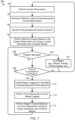
- FIG. 7 illustrates an example method 700 for performing dynamic and adaptive observations in accordance with an aspect.
- the device processor may perform coarse observations by monitoring/observing a subset of a large number of factors/behaviors that could contribute to the mobile device's degradation.
- the device processor may generate a behavior vector characterizing the coarse observations and/or the mobile device behavior based on the coarse observations.
- the device processor may identify subsystems, processes, and/or applications associated with the coarse observations that may potentially contribute to the mobile device's degradation. This may be achieved, for example, by comparing information received from multiple sources with contextual information received from sensors of the mobile device.
- the device processor may perform behavioral analysis operations based on the coarse observations.
- the processor may repeat the operations in blocks 710-714 until the level of detail is fine enough to identify the problem or until it is determined that the problem cannot be identified with additional detail or that no problem exists.
- the device processor may perform operations to correct the problem/behavior, and the processor may return to block 702 to perform additional operations.
- the device processor may perform real-time behavior analysis of the system's behaviors to identify suspicious behaviors from limited and coarse observations, to dynamically determine the behaviors to observe in greater detail, and to dynamically determine the precise level of detail required for the observations. This enables the device processor to efficiently identify and prevent problems from occurring, without requiring the use of a large amount of processor, memory, or battery resources on the device.
- behavior analysis and/or machine learning techniques as opposed to a permissions, policy, or rules-based approaches
- the use of behavior analysis or machine learning techniques is important because modern computing devices are highly configurable and complex systems, and the factors that are most important for determining whether software applications are colluding may be different in each device. Further, different combinations of device features/factors may require an analysis in each device in order for that device to determine whether software applications are colluding. Yet, the precise combination of features/factors that require monitoring and analysis often can only be determined using information obtained from the specific computing device in which the activity is performed and at the time the activity is underway.
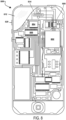
- a smartphone 800 may include a processor 802 coupled to internal memory 804, a display 812, and to a speaker 814. Additionally, the smartphone 800 may include an antenna for sending and receiving electromagnetic radiation that may be connected to a wireless data link and/or cellular telephone transceiver 808 coupled to the processor 802. Smartphones 800 typically also include menu selection buttons or rocker switches 820 for receiving user inputs.
- a component may be, but is not limited to, a process running on a processor, a processor, an object, an executable, a thread of execution, a program, and/or a computer.
- a component may be, but is not limited to, a process running on a processor, a processor, an object, an executable, a thread of execution, a program, and/or a computer.
- an application running on a computing device and the computing device may be referred to as a component.
- One or more components may reside within a process and/or thread of execution, and a component may be localized on one processor or core and/or distributed between two or more processors or cores.
- these components may execute from various non-transitory computer readable media having various instructions and/or data structures stored thereon.
- Components may communicate by way of local and/or remote processes, function or procedure calls, electronic signals, data packets, memory read/writes, and other known network, computer, processor, and/or process related communication methodologies.
- a processor may also be implemented as a combination of computing devices, e.g., a combination of a DSP and a multiprocessor, a plurality of multiprocessors, one or more multiprocessors in conjunction with a DSP core, or any other such configuration. Alternatively, some steps or methods may be performed by circuitry that is specific to a given function.
- the functions described may be implemented in hardware, software, firmware, or any combination thereof. If implemented in software, the functions may be stored as one or more processor-executable instructions or code on a non-transitory computer-readable storage medium or non-transitory processor-readable storage medium. The steps of a method or algorithm disclosed herein may be embodied in a processor-executable software module which may reside on a non-transitory computer-readable or processor-readable storage medium.
- Non-transitory computer-readable or processor-readable storage media may be any storage media that may be accessed by a computer or a processor.
- non-transitory computer-readable or processor-readable media may include RAM, ROM, EEPROM, FLASH memory, CD-ROM or other optical disk storage, magnetic disk storage or other magnetic storage devices, or any other medium that may be used to store desired program code in the form of instructions or data structures and that may be accessed by a computer.
- Disk and disc includes compact disc (CD), laser disc, optical disc, digital versatile disc (DVD), floppy disk, and blu-ray disc where disks usually reproduce data magnetically, while discs reproduce data optically with lasers. Combinations of the above are also included within the scope of non-transitory computer-readable and processor-readable media.
- the operations of a method or algorithm may reside as one or any combination or set of codes and/or instructions on a non-transitory processor-readable medium and/or computer-readable medium, which may be incorporated into a computer program product.
Landscapes
- Engineering & Computer Science (AREA)
- Computer Security & Cryptography (AREA)
- Computer Hardware Design (AREA)
- General Engineering & Computer Science (AREA)
- Computer Networks & Wireless Communication (AREA)
- Signal Processing (AREA)
- Theoretical Computer Science (AREA)
- Computing Systems (AREA)
- Software Systems (AREA)
- General Physics & Mathematics (AREA)
- Physics & Mathematics (AREA)
- Social Psychology (AREA)
- General Health & Medical Sciences (AREA)
- Health & Medical Sciences (AREA)
- Debugging And Monitoring (AREA)
- Management, Administration, Business Operations System, And Electronic Commerce (AREA)
Claims (13)
- Verfahren zum Durchführen einer Multifaktor-Benutzerauthentifizierung in einer Rechenvorrichtung, aufweisend:kontinuierliches Überwachen (301) einer Aktivität einer Softwareanwendung, die auf der Rechenvorrichtung arbeitet, um Verhaltensinformationen zu sammeln;Verwenden der gesammelten Verhaltensinformationen, um einen Verhaltensvektor zu erzeugen (302), der die überwachte Aktivität der Softwareanwendung charakterisiert;Anwenden des erzeugten Verhaltensvektors auf ein Klassifikatormodell, um ein Analyseergebnis zu erzeugen;Verwenden des erzeugten Analyseergebnisses, um mindestens einen Wert zu berechnen (304, 306, 308, 310), wobei der berechnete mindestens eine Wert einer oder mehrere von einem Transaktionstypkritikalitätswert, einem Benutzervertrauenswert, einem Softwareintegritätsvertrauenswert und einem historischen Verhaltenswert ist;Verwenden des berechneten mindestens einen Werts, um eine Anzahl von Authentifizierungsfaktoren zu bestimmen (312), die zu bewerten sind, wenn ein Benutzer der Rechenvorrichtung authentifiziert wird, wobei die Anzahl von Authentifizierungsfaktoren basierend auf maschinellem Lernen bestimmt wird;Verwenden des berechneten mindestens einen Werts, um die Authentifizierungsfaktoren zu bestimmen, die zu bewerten sind, wenn der Benutzer der Rechenvorrichtung authentifiziert wird, wobei die Authentifizierungsfaktoren basierend auf maschinellem Lernen bestimmt werden; undAuthentifizieren des Benutzers durch Bewerten der bestimmten Anzahl der bestimmten Authentifizierungsfaktoren.
- Verfahren nach Anspruch 1, weiter aufweisend:
Überwachen von Hardware- und Softwaresystemen der Rechenvorrichtung, um die aktuelle Anfälligkeit der Rechenvorrichtung für unautorisierte Verwendung zu bestimmen. - Verfahren nach Anspruch 1, wobei das Anwenden des Verhaltensvektors auf das Klassifikatormodell, um das Analyseergebnis zu erzeugen, das Anwenden des Verhaltensvektors auf ein Modell kritischer Aktivität aufweist, um das Analyseergebnis zu erzeugen.
- Verfahren nach Anspruch 3, wobei das Anwenden des Verhaltensvektors auf das Modell kritischer Aktivität, um das Analyseergebnis zu erzeugen, aufweist:
Anwenden einer mehrdimensionalen Vektordatenstruktur auf das Modell kritischer Aktivität, um das Analyseergebnis zu erzeugen. - Verfahren nach Anspruch 1, weiter aufweisend Überwachen von Hardware- und Softwaresystemen der Rechenvorrichtung, um im Laufe der Zeit eine bestimmte Art und Weise zu lernen, in der der Benutzer mit der Rechenvorrichtung interagiert, wobei das Authentifizieren des Benutzers durch Bewerten der bestimmten Anzahl der bestimmten Authentifizierungsfaktoren das Bestimmen aufweist, ob ein Verhalten der Softwareanwendung mit der bestimmten Art und Weise, in der der Benutzer mit der Rechenvorrichtung interagiert, konsistent ist.
- Verfahren nach Anspruch 1, wobei Verwenden des berechneten mindestens einen Werts, um die Anzahl von Authentifizierungsfaktoren zu bestimmen (312), die zu bewerten sind, wenn der Benutzer der Rechenvorrichtung authentifiziert wird, weiter aufweist:Durchführen von passiven Authentifizierungsoperationen, um den Benutzer zu authentifizieren, ohne eine ausdrückliche Benutzerinteraktion zu erfordern;Bestimmen eines Vertrauenswerts für die passive Authentifizierung, der das Vertrauensniveau der Rechenvorrichtung in eine Genauigkeit der passiven Authentifizierungsoperationen identifiziert;Bestimmen eines Kritikalitätsniveauwerts, der eine Wichtigkeit oder Kritikalität der Softwareanwendung, die auf der Rechenvorrichtung arbeitet, identifiziert;Vergleichen des Vertrauenswerts für die passive Authentifizierung mit dem Kritikalitätsniveauwert, um ein Vergleichsergebnis zu erzeugen, das identifiziert, ob ein Vertrauensniveau in die passive Authentifizierung ein Kritikalitätsniveau überwiegt; undVerwenden des erzeugten Vergleichsergebnisses, um die Anzahl von Authentifizierungsfaktoren zu bestimmen, die zu bewerten sind, wenn der Benutzer der Rechenvorrichtung authentifiziert wird.
- Computerlesbares Speichermedium, auf dem prozessorausführbare Softwareanweisungen gespeichert sind, die konfiguriert sind, um einen Prozessor einer Rechenvorrichtung zu veranlassen, Operationen eines Verfahrens nach einem der Ansprüche 1 bis 6 durchzuführen.
- Rechenvorrichtung, aufweisend:Mittel zum kontinuierlichen Überwachen einer Aktivität einer Softwareanwendung, die auf der Rechenvorrichtung arbeitet, um Verhaltensinformationen zu sammeln;Mittel zum Verwenden der gesammelten Verhaltensinformationen, um einen Verhaltensvektor zu erzeugen, der die überwachte Aktivität der Softwareanwendung charakterisiert;Mittel zum Anwenden des erzeugten Verhaltensvektors auf ein Klassifikatormodell, um ein Analyseergebnis zu erzeugen;Mittel zum Verwenden des erzeugten Analyseergebnisses, um mindestens einen Wert zu berechnen, wobei der berechnete mindestens eine Wert einer oder mehrere von einem Transaktionstypkritikalitätswert, einem Benutzervertrauenswert, einem Softwareintegritätsvertrauenswert und einem historischen Verhaltenswert ist;Mittel zum Verwenden des berechneten mindestens einen Werts, um eine Anzahl von Authentifizierungsfaktoren zu bestimmen, die zu bewerten sind, wenn ein Benutzer der Rechenvorrichtung authentifiziert wird, wobei die Anzahl von Authentifizierungsfaktoren basierend auf maschinellem Lernen bestimmt wird;Mittel zum Verwenden des berechneten mindestens einen Werts, um die Authentifizierungsfaktoren zu bestimmen, die zu bewerten sind, wenn der Benutzer der Rechenvorrichtung authentifiziert wird, wobei die Authentifizierungsfaktoren basierend auf maschinellem Lernen bestimmt werden; undMittel zum Authentifizieren des Benutzers durch Bewerten der bestimmten Anzahl der bestimmten Authentifizierungsfaktoren.
- Rechenvorrichtung nach Anspruch 8, weiter aufweisend Mittel zum Überwachen von Hardware- und Softwaresystemen, um die aktuelle Anfälligkeit der Rechenvorrichtung für unautorisierte Verwendung zu bestimmen.
- Rechenvorrichtung nach Anspruch 8, wobei das Mittel zum Anwenden des Verhaltensvektors auf das Klassifikatormodell, um das Analyseergebnis zu erzeugen, Mittel zum Anwenden des Verhaltensvektors auf ein Modell kritischer Aktivität aufweist, um das Analyseergebnis zu erzeugen.
- Rechenvorrichtung nach Anspruch 10, wobei Mittel zum Anwenden des Verhaltensvektors auf das Modell kritischer Aktivität, um das Analyseergebnis zu erzeugen, Mittel zum Anwenden einer mehrdimensionalen Vektordatenstruktur auf das Modell kritischer Aktivität aufweist, um das Analyseergebnis zu erzeugen.
- Rechenvorrichtung nach Anspruch 8, weiter aufweisend Mittel zum Überwachen von Hardware- und Softwaresystemen der Rechenvorrichtung, um im Laufe der Zeit eine bestimmte Art und Weise zu lernen, in der der Benutzer mit der Rechenvorrichtung interagiert, wobei Mittel zum Authentifizieren des Benutzers durch Bewerten der bestimmten Anzahl der bestimmten Authentifizierungsfaktoren Mittel zum Bestimmen aufweist, ob ein Verhalten der Softwareanwendung mit der bestimmten Art und Weise, in der der Benutzer mit der Rechenvorrichtung interagiert, konsistent ist.
- Rechenvorrichtung nach Anspruch 8, wobei Mittel zum Verwenden des berechneten mindestens einen Werts, um die Anzahl von Authentifizierungsfaktoren zu bestimmen, die zu bewerten sind, wenn der Benutzer der Rechenvorrichtung authentifiziert wird, weiter aufweist:Mittel zum Durchführen von passiven Authentifizierungsoperationen, um den Benutzer zu authentifizieren, ohne eine ausdrückliche Benutzerinteraktion zu erfordern;Mittel zum Bestimmen eines Vertrauenswerts für die passive Authentifizierung, der das Vertrauensniveau der Rechenvorrichtung in eine Genauigkeit der passiven Authentifizierungsoperationen identifiziert;Mittel zum Bestimmen eines Kritikalitätsniveauwerts, der eine Wichtigkeit oder Kritikalität der Softwareanwendung, die auf der Rechenvorrichtung arbeitet, identifiziert;Mittel zum Vergleichen des Vertrauenswerts für die passive Authentifizierung mit dem Kritikalitätsniveauwert, um ein Vergleichsergebnis zu erzeugen, das identifiziert, ob ein Vertrauensniveau in die passive Authentifizierung ein Kritikalitätsniveau überwiegt; undMittel zum Verwenden des erzeugten Vergleichsergebnisses, um die Anzahl von Authentifizierungsfaktoren zu bestimmen, die zu bewerten sind, wenn der Benutzer der Rechenvorrichtung authentifiziert wird.
Applications Claiming Priority (2)
| Application Number | Priority Date | Filing Date | Title |
|---|---|---|---|
| US14/514,662 US9684775B2 (en) | 2014-10-15 | 2014-10-15 | Methods and systems for using behavioral analysis towards efficient continuous authentication |
| PCT/US2015/046118 WO2016060738A1 (en) | 2014-10-15 | 2015-08-20 | Methods and systems for using behavioral analysis towards efficient continuous authentication |
Publications (2)
| Publication Number | Publication Date |
|---|---|
| EP3207680A1 EP3207680A1 (de) | 2017-08-23 |
| EP3207680B1 true EP3207680B1 (de) | 2025-04-09 |
Family
ID=54015249
Family Applications (1)
| Application Number | Title | Priority Date | Filing Date |
|---|---|---|---|
| EP15757108.4A Active EP3207680B1 (de) | 2014-10-15 | 2015-08-20 | Verfahren und vorrichtung zur verwendung einer verhaltensanalyse gegenüber effizienter kontinuierlicher authentifizierung |
Country Status (5)
| Country | Link |
|---|---|
| US (1) | US9684775B2 (de) |
| EP (1) | EP3207680B1 (de) |
| JP (1) | JP6239808B1 (de) |
| CN (1) | CN107077547B (de) |
| WO (1) | WO2016060738A1 (de) |
Families Citing this family (134)
| Publication number | Priority date | Publication date | Assignee | Title |
|---|---|---|---|---|
| US9529777B2 (en) | 2011-10-28 | 2016-12-27 | Electronic Arts Inc. | User behavior analyzer |
| US9754093B2 (en) * | 2014-08-28 | 2017-09-05 | Ncr Corporation | Methods and a system for automated authentication confidence |
| US9906954B2 (en) | 2014-10-20 | 2018-02-27 | Payfone, Inc. | Identity authentication |
| US10388270B2 (en) * | 2014-11-05 | 2019-08-20 | At&T Intellectual Property I, L.P. | System and method for text normalization using atomic tokens |
| US9628477B2 (en) * | 2014-12-23 | 2017-04-18 | Intel Corporation | User profile selection using contextual authentication |
| GB201423362D0 (en) * | 2014-12-30 | 2015-02-11 | Mastercard International Inc | Trusted execution enviroment (TEE) based payment application |
| US9680646B2 (en) * | 2015-02-05 | 2017-06-13 | Apple Inc. | Relay service for communication between controllers and accessories |
| US10108791B1 (en) * | 2015-03-19 | 2018-10-23 | Amazon Technologies, Inc. | Authentication and fraud detection based on user behavior |
| JP6515621B2 (ja) * | 2015-03-25 | 2019-05-22 | 富士通株式会社 | メール処理サーバ、メール処理方法、およびメール処理プログラム |
| US10427048B1 (en) | 2015-03-27 | 2019-10-01 | Electronic Arts Inc. | Secure anti-cheat system |
| US10057227B1 (en) * | 2015-03-27 | 2018-08-21 | Amazon Technologies, Inc. | Determination of authentication mechanism |
| US11179639B1 (en) | 2015-10-30 | 2021-11-23 | Electronic Arts Inc. | Fraud detection system |
| US10021120B1 (en) * | 2015-11-09 | 2018-07-10 | 8X8, Inc. | Delayed replication for protection of replicated databases |
| US20170227995A1 (en) * | 2016-02-09 | 2017-08-10 | The Trustees Of Princeton University | Method and system for implicit authentication |
| US10459827B1 (en) | 2016-03-22 | 2019-10-29 | Electronic Arts Inc. | Machine-learning based anomaly detection for heterogenous data sources |
| US9992018B1 (en) * | 2016-03-24 | 2018-06-05 | Electronic Arts Inc. | Generating cryptographic challenges to communication requests |
| WO2017173145A1 (en) * | 2016-03-30 | 2017-10-05 | The Privacy Factor, LLC | Systems and methods for analyzing, assessing and controlling trust and authentication in applications and devices |
| US20180097816A1 (en) * | 2016-04-12 | 2018-04-05 | Sensoriant, Inc | Access control mechanisms based on computational behavior |
| US11176231B2 (en) * | 2016-05-19 | 2021-11-16 | Payfone, Inc. | Identifying and authenticating users based on passive factors determined from sensor data |
| US11368454B2 (en) * | 2016-05-19 | 2022-06-21 | Prove Identity, Inc. | Implicit authentication for unattended devices that need to identify and authenticate users |
| US10867025B2 (en) * | 2016-05-19 | 2020-12-15 | UnifyID, Inc. | Opportunistically collecting sensor data from a mobile device to facilitate user identification |
| US9801066B1 (en) | 2016-06-02 | 2017-10-24 | Duo Security, Inc. | Method for automatic possession-factor authentication |
| CN106096923A (zh) * | 2016-06-27 | 2016-11-09 | 联想(北京)有限公司 | 一种安全支付防护方法及电子设备 |
| US10986609B2 (en) * | 2016-08-03 | 2021-04-20 | Lenovo Innovations Limited (Hong Kong) | Device-to-device transmission |
| US10460320B1 (en) | 2016-08-10 | 2019-10-29 | Electronic Arts Inc. | Fraud detection in heterogeneous information networks |
| US11030618B1 (en) | 2016-09-30 | 2021-06-08 | Winkk, Inc. | Authentication and personal data sharing for partner services using out-of-band optical mark recognition |
| US11256791B2 (en) * | 2016-10-03 | 2022-02-22 | Bioconnect Inc. | Biometric identification platform |
| US11074325B1 (en) * | 2016-11-09 | 2021-07-27 | Wells Fargo Bank, N.A. | Systems and methods for dynamic bio-behavioral authentication |
| EP3352109A1 (de) * | 2017-01-20 | 2018-07-25 | Tata Consultancy Services Limited | Systeme und verfahren zur erzeugung und verwaltung von zusammengesetzten digitalen identitäten |
| CN107045604A (zh) * | 2017-02-22 | 2017-08-15 | 北京小米移动软件有限公司 | 信息处理方法及装置 |
| US11023709B2 (en) * | 2017-04-28 | 2021-06-01 | ID R&D, Inc. | System, method and apparatus for multi-modal biometric authentication and liveness detection |
| US10917423B2 (en) | 2017-05-15 | 2021-02-09 | Forcepoint, LLC | Intelligently differentiating between different types of states and attributes when using an adaptive trust profile |
| US10447718B2 (en) | 2017-05-15 | 2019-10-15 | Forcepoint Llc | User profile definition and management |
| US9882918B1 (en) * | 2017-05-15 | 2018-01-30 | Forcepoint, LLC | User behavior profile in a blockchain |
| US10915644B2 (en) | 2017-05-15 | 2021-02-09 | Forcepoint, LLC | Collecting data for centralized use in an adaptive trust profile event via an endpoint |
| US10129269B1 (en) | 2017-05-15 | 2018-11-13 | Forcepoint, LLC | Managing blockchain access to user profile information |
| US10862927B2 (en) | 2017-05-15 | 2020-12-08 | Forcepoint, LLC | Dividing events into sessions during adaptive trust profile operations |
| US10999297B2 (en) | 2017-05-15 | 2021-05-04 | Forcepoint, LLC | Using expected behavior of an entity when prepopulating an adaptive trust profile |
| US10999296B2 (en) | 2017-05-15 | 2021-05-04 | Forcepoint, LLC | Generating adaptive trust profiles using information derived from similarly situated organizations |
| DE102017111933A1 (de) * | 2017-05-31 | 2018-12-06 | Krohne Messtechnik Gmbh | Verfahren zur sicheren Kommunikation mit einem Feldmessgerät der Prozesstechnik und entsprechendes Feldmessgerät |
| US10397209B2 (en) * | 2017-07-06 | 2019-08-27 | International Business Machines Corporation | Risk-aware multiple factor authentication based on pattern recognition and calendar |
| US10846387B2 (en) * | 2017-07-12 | 2020-11-24 | At&T Intellectual Property I, L.P. | Managing access based on activities of entities |
| CN107450708B (zh) * | 2017-07-28 | 2020-03-24 | Oppo广东移动通信有限公司 | 解锁控制方法及相关产品 |
| US10819698B2 (en) * | 2017-09-07 | 2020-10-27 | International Business Machines Corporation | Dynamic password generation |
| RU2673010C1 (ru) * | 2017-09-13 | 2018-11-21 | Дмитрий Владимирович Истомин | Способ мониторинга поведения пользователя при взаимодействии с контентом и система для его осуществления |
| CN107818251B (zh) * | 2017-09-27 | 2021-03-23 | 维沃移动通信有限公司 | 一种人脸识别方法及移动终端 |
| CN107819945B (zh) * | 2017-10-30 | 2020-11-03 | 同济大学 | 综合多种因素的手持设备浏览行为认证方法及系统 |
| US11574204B2 (en) | 2017-12-06 | 2023-02-07 | Accenture Global Solutions Limited | Integrity evaluation of unstructured processes using artificial intelligence (AI) techniques |
| US10404626B1 (en) | 2018-03-23 | 2019-09-03 | Juniper Networks, Inc. | Method for resetting a packet processing component to an operational state |
| US10853467B2 (en) * | 2018-03-28 | 2020-12-01 | Bank Of America Corporation | Data access control using multi-device multifactor authentication |
| US11238366B2 (en) | 2018-05-10 | 2022-02-01 | International Business Machines Corporation | Adaptive object modeling and differential data ingestion for machine learning |
| US10573273B2 (en) * | 2018-06-13 | 2020-02-25 | Mapsted Corp. | Method and system for device placement based optimization techniques |
| KR102291557B1 (ko) * | 2018-07-03 | 2021-08-19 | 네이버 주식회사 | 사용자 행동 분석 장치 및 사용자 행동 분석 방법 |
| US11637694B2 (en) | 2018-07-16 | 2023-04-25 | Winkk, Inc. | Secret material exchange and authentication cryptography operations |
| US11017100B2 (en) * | 2018-08-03 | 2021-05-25 | Verizon Patent And Licensing Inc. | Identity fraud risk engine platform |
| CN112508568B (zh) * | 2018-08-15 | 2024-08-30 | 创新先进技术有限公司 | 核身产品推送及核身方法和系统 |
| CN109063920B (zh) * | 2018-08-20 | 2022-05-27 | 创新先进技术有限公司 | 一种交易风险识别方法、装置、及计算机设备 |
| US10931659B2 (en) * | 2018-08-24 | 2021-02-23 | Bank Of America Corporation | Federated authentication for information sharing artificial intelligence systems |
| IL281410B2 (en) | 2018-09-15 | 2024-02-01 | Quantum Star Tech Inc | Bit-level data generation and artificial intelligence techniques and architectures for data protection |
| US11095642B2 (en) * | 2018-11-07 | 2021-08-17 | Cylance Inc. | Verifying user identity through human / computer interaction |
| EP3881169A1 (de) * | 2018-11-13 | 2021-09-22 | Prismade Labs GmbH | Verfahren und vorrichtung fur eine multi-faktor-authentifizierung auf einem kapazitiven flächensensor |
| EP3657364A1 (de) * | 2018-11-20 | 2020-05-27 | Nagravision SA | Autorisierung von vorgängen für vorrichtungen in einem netzwerk |
| KR20200078987A (ko) * | 2018-12-24 | 2020-07-02 | 라인플러스 주식회사 | 사용자 신뢰도 구축 방법 및 시스템 |
| EP3935528A1 (de) | 2019-03-07 | 2022-01-12 | British Telecommunications public limited company | Zugangskontrollklassifikatortraining |
| US11561983B2 (en) | 2019-03-07 | 2023-01-24 | Throughputer, Inc. | Online trained object property estimator |
| EP3935529B1 (de) * | 2019-03-07 | 2024-11-13 | British Telecommunications public limited company | Permissive zugriffskontrolle |
| US12039021B2 (en) | 2019-03-07 | 2024-07-16 | British Telecommunications Public Limited Company | Multi-level classifier based access control |
| WO2020178206A1 (en) * | 2019-03-07 | 2020-09-10 | British Telecommunications Public Limited Company | Access control |
| JP7303654B2 (ja) * | 2019-03-29 | 2023-07-05 | グローリー株式会社 | 認証システム及び認証方法 |
| US11604867B2 (en) * | 2019-04-01 | 2023-03-14 | Throughputer, Inc. | Graphic pattern-based authentication with adjustable challenge level |
| US10997295B2 (en) | 2019-04-26 | 2021-05-04 | Forcepoint, LLC | Adaptive trust profile reference architecture |
| WO2020225819A1 (en) * | 2019-05-07 | 2020-11-12 | B. G. Negev Technologies And Applications Ltd., At Ben-Gurion University | Methods and devices for detecting improper clinical programming of implantable medical devices |
| EP3980910B1 (de) | 2019-06-05 | 2024-09-18 | Throughputer, Inc. | Auf grafischem muster basierende zugangscodeerzeugung und authentifizierung |
| RU2746201C2 (ru) * | 2019-06-28 | 2021-04-08 | Акционерное общество "Лаборатория Касперского" | Система и способ невербальной активации сервиса на мобильном устройстве |
| US12314362B2 (en) | 2019-07-16 | 2025-05-27 | British Telecommunications Public Limited Company | User authentication based on behavioral biometrics |
| US12277648B2 (en) | 2019-07-30 | 2025-04-15 | British Telecommunications Public Limited Company | Duct blockage risk location prediction |
| US12425193B2 (en) | 2019-09-12 | 2025-09-23 | British Telecommunications Public Limited Company | Resource access control |
| US11820529B2 (en) | 2019-10-29 | 2023-11-21 | Ga Telesis, Llc | System and method for monitoring and certifying aircrafts and components of aircrafts |
| CN110719169A (zh) * | 2019-11-07 | 2020-01-21 | 北京小米移动软件有限公司 | 传输路由器安全信息的方法及装置 |
| US11553337B2 (en) | 2019-12-10 | 2023-01-10 | Winkk, Inc. | Method and apparatus for encryption key exchange with enhanced security through opti-encryption channel |
| US12132763B2 (en) * | 2019-12-10 | 2024-10-29 | Winkk, Inc. | Bus for aggregated trust framework |
| US12153678B2 (en) | 2019-12-10 | 2024-11-26 | Winkk, Inc. | Analytics with shared traits |
| US11657140B2 (en) * | 2019-12-10 | 2023-05-23 | Winkk, Inc. | Device handoff identification proofing using behavioral analytics |
| US12073378B2 (en) | 2019-12-10 | 2024-08-27 | Winkk, Inc. | Method and apparatus for electronic transactions using personal computing devices and proxy services |
| US11652815B2 (en) | 2019-12-10 | 2023-05-16 | Winkk, Inc. | Security platform architecture |
| US11588794B2 (en) | 2019-12-10 | 2023-02-21 | Winkk, Inc. | Method and apparatus for secure application framework and platform |
| US11928193B2 (en) | 2019-12-10 | 2024-03-12 | Winkk, Inc. | Multi-factor authentication using behavior and machine learning |
| US12143419B2 (en) * | 2019-12-10 | 2024-11-12 | Winkk, Inc. | Aggregated trust framework |
| US11936787B2 (en) | 2019-12-10 | 2024-03-19 | Winkk, Inc. | User identification proofing using a combination of user responses to system turing tests using biometric methods |
| US11574045B2 (en) | 2019-12-10 | 2023-02-07 | Winkk, Inc. | Automated ID proofing using a random multitude of real-time behavioral biometric samplings |
| US11328042B2 (en) | 2019-12-10 | 2022-05-10 | Winkk, Inc. | Automated transparent login without saved credentials or passwords |
| US12341790B2 (en) | 2019-12-10 | 2025-06-24 | Winkk, Inc. | Device behavior analytics |
| US12335399B2 (en) | 2019-12-10 | 2025-06-17 | Winkk, Inc. | User as a password |
| US12028366B2 (en) * | 2019-12-18 | 2024-07-02 | Cyberark Software Ltd. | Dynamically generating multi-factor entity risk assessments within virtualized environments |
| US11567847B2 (en) * | 2020-02-04 | 2023-01-31 | International Business Machines Corporation | Identifying anomolous device usage based on usage patterns |
| US12216791B2 (en) | 2020-02-24 | 2025-02-04 | Forcepoint Llc | Re-identifying pseudonymized or de-identified data utilizing distributed ledger technology |
| US12488074B2 (en) * | 2020-03-13 | 2025-12-02 | British Telecommunications Public Limited Company | Computer-implemented continuous control method, system and computer program |
| US11768945B2 (en) * | 2020-04-07 | 2023-09-26 | Allstate Insurance Company | Machine learning system for determining a security vulnerability in computer software |
| WO2021237688A1 (en) | 2020-05-29 | 2021-12-02 | British Telecommunications Public Limited Company | Ris-assisted wireless communications |
| CN113742184B (zh) * | 2020-06-05 | 2024-03-26 | 国家计算机网络与信息安全管理中心 | 构建用户历史行为表示向量、用户行为异常检测方法及装置 |
| US11956224B2 (en) * | 2020-06-11 | 2024-04-09 | Bank Of America Corporation | Using machine-learning models to authenticate users and protect enterprise-managed information and resources |
| US11637835B2 (en) * | 2020-06-17 | 2023-04-25 | Irdeto B.V. | System and method for context-sensitive access control |
| US11580211B2 (en) * | 2020-06-23 | 2023-02-14 | Synaptics Incorporated | Indication for multi-factor authentication |
| US11683325B2 (en) * | 2020-08-11 | 2023-06-20 | Capital One Services, Llc | Systems and methods for verified messaging via short-range transceiver |
| US11734402B2 (en) * | 2020-10-29 | 2023-08-22 | Blackberry Limited | System and method for user authentication based on passive biometrics |
| US11488178B2 (en) * | 2020-11-01 | 2022-11-01 | Beijing Didi Infinity Technology And Development Co., Ltd. | Systems and methods for verifying digital payments |
| US11558380B2 (en) * | 2020-11-19 | 2023-01-17 | Paypal, Inc. | Defending multi-factor authentication against phishing |
| US12126615B2 (en) * | 2020-12-30 | 2024-10-22 | Mastercard International Incorporated | Systems and methods for passive multi-factor authentication of device users |
| US12457486B2 (en) | 2021-01-07 | 2025-10-28 | Prove Identity, Inc. | Transmitting a complement of user parameters to a communications device |
| US20220269784A1 (en) | 2021-02-25 | 2022-08-25 | Quantum Star Technologies Inc. | N-dimensional model techniques and architectures for data protection |
| WO2022180157A1 (en) * | 2021-02-26 | 2022-09-01 | Policystore Gmbh | Method and system for influencing user interactions |
| US12113830B2 (en) * | 2021-03-30 | 2024-10-08 | Cisco Technology, Inc. | Frictionless supplementary multi-factor authentication for sensitive transactions within an application session |
| US11714893B2 (en) * | 2021-04-06 | 2023-08-01 | EMC IP Holding Company LLC | Escalated authentication system to perform an integrity-check based on behavior patterns |
| US12500770B2 (en) | 2021-04-23 | 2025-12-16 | Circle Internet Group, Inc. | User authentication techniques across applications on a user device |
| BR112023023990A2 (pt) | 2021-05-19 | 2024-01-30 | Prove Identity Inc | Dispositivo de comunicações, método de autenticação de um dispositivo e artigo |
| US11843943B2 (en) | 2021-06-04 | 2023-12-12 | Winkk, Inc. | Dynamic key exchange for moving target |
| CN117597684A (zh) * | 2021-06-04 | 2024-02-23 | 美商新思科技有限公司 | 在没有项目细节的先验知识的情况下在每个项目的基础上的故障安全软件访问许可控制 |
| US12095751B2 (en) | 2021-06-04 | 2024-09-17 | Winkk, Inc. | Encryption for one-way data stream |
| US11921842B2 (en) * | 2021-06-14 | 2024-03-05 | Kyndryl, Inc. | Multifactor authorization on accessing hardware resources |
| JP7655387B2 (ja) * | 2021-06-18 | 2025-04-02 | 日本電信電話株式会社 | 機能割当制御装置、機能割当制御方法およびプログラム |
| US12001528B2 (en) * | 2021-06-18 | 2024-06-04 | Lenovo (Singapore) Pte. Ltd. | Authentication policy for editing inputs to user-created content |
| US11831688B2 (en) * | 2021-06-18 | 2023-11-28 | Capital One Services, Llc | Systems and methods for network security |
| US12321428B2 (en) * | 2021-07-08 | 2025-06-03 | Nippon Telegraph And Telephone Corporation | User authentication device, user authentication method, and user authentication computer program |
| US11824999B2 (en) | 2021-08-13 | 2023-11-21 | Winkk, Inc. | Chosen-plaintext secure cryptosystem and authentication |
| US12314359B2 (en) * | 2021-12-02 | 2025-05-27 | Capital One Services, Llc | Dynamic user authentication |
| CN114119209A (zh) * | 2021-12-03 | 2022-03-01 | 湖南星汉数智科技有限公司 | 银行流水处理方法、装置、计算机设备和存储介质 |
| US12045327B2 (en) * | 2022-02-16 | 2024-07-23 | IsltMe LLC | Methods and systems for facilitating authenticating of users |
| CN115590482B (zh) * | 2022-07-20 | 2024-10-29 | 重庆长安汽车股份有限公司 | 一种驾驶员异常行为预测方法、装置、设备及存储介质 |
| CN115049395B (zh) * | 2022-08-15 | 2022-11-11 | 山东双仁信息技术有限公司 | 一种移动支付安全检测方法及系统 |
| US12425230B2 (en) | 2022-09-21 | 2025-09-23 | Winkk, Inc. | System for authentication, digital signatures and exposed and unregistered public certificate use |
| US12554626B2 (en) * | 2023-04-03 | 2026-02-17 | Microsoft Technology Licensing, Llc | Quality assurance for digital technologies using large language models |
| US20240419785A1 (en) * | 2023-06-19 | 2024-12-19 | Arm Limited | Behavior detection with detection refinement for determination of emerging threats |
| CN118965830B (zh) * | 2024-10-16 | 2025-01-28 | 北京航空航天大学 | 置信度评估模型构建方法、置信度评估方法及装置 |
| CN120957136B (zh) * | 2025-08-08 | 2026-02-13 | 北京众诚天麒科技有限公司 | 一种无线通信网络的设备接入认证方法及系统 |
Family Cites Families (17)
| Publication number | Priority date | Publication date | Assignee | Title |
|---|---|---|---|---|
| US9578022B2 (en) * | 2001-08-21 | 2017-02-21 | Bookit Oy Ajanvarauspalvelu | Multi-factor authentication techniques |
| US8751801B2 (en) * | 2003-05-09 | 2014-06-10 | Emc Corporation | System and method for authenticating users using two or more factors |
| JP2005208993A (ja) * | 2004-01-23 | 2005-08-04 | Hitachi Ltd | 利用者認証システム |
| US8079079B2 (en) * | 2005-06-29 | 2011-12-13 | Microsoft Corporation | Multimodal authentication |
| JP5096117B2 (ja) * | 2007-11-29 | 2012-12-12 | 京セラ株式会社 | 電子機器、電子機器の制御方法、及びプログラム |
| JP2010067184A (ja) * | 2008-09-12 | 2010-03-25 | Toshiba Corp | 個別二段階認証方法およびシステム |
| JP2010170314A (ja) * | 2009-01-22 | 2010-08-05 | Nec Corp | 携帯情報機器、ユーザー認証システム、およびユーザー認証方法 |
| US8683547B2 (en) * | 2009-10-28 | 2014-03-25 | Liveops, Inc. | System and method for implementing adaptive security zones |
| US9672335B2 (en) * | 2009-12-17 | 2017-06-06 | Laird H Shuart | Cognitive-based logon process for computing device |
| US9372979B2 (en) * | 2011-01-07 | 2016-06-21 | Geoff Klein | Methods, devices, and systems for unobtrusive mobile device user recognition |
| US8800056B2 (en) * | 2011-08-12 | 2014-08-05 | Palo Alto Research Center Incorporated | Guided implicit authentication |
| US8832798B2 (en) | 2011-09-08 | 2014-09-09 | International Business Machines Corporation | Transaction authentication management including authentication confidence testing |
| US9747440B2 (en) | 2012-08-15 | 2017-08-29 | Qualcomm Incorporated | On-line behavioral analysis engine in mobile device with multiple analyzer model providers |
| US8850589B2 (en) * | 2012-09-25 | 2014-09-30 | International Business Machines Corporation | Training classifiers for program analysis |
| US9374369B2 (en) | 2012-12-28 | 2016-06-21 | Lookout, Inc. | Multi-factor authentication and comprehensive login system for client-server networks |
| US20160063229A1 (en) * | 2014-09-02 | 2016-03-03 | Securemetric Technology Sdn Bhd | Hybrid adaptive authentication scoring system |
| US10114935B2 (en) * | 2014-12-23 | 2018-10-30 | Intel Corporation | Technologies for login pattern based multi-factor authentication |
-
2014
- 2014-10-15 US US14/514,662 patent/US9684775B2/en active Active
-
2015
- 2015-08-20 WO PCT/US2015/046118 patent/WO2016060738A1/en not_active Ceased
- 2015-08-20 EP EP15757108.4A patent/EP3207680B1/de active Active
- 2015-08-20 CN CN201580055507.XA patent/CN107077547B/zh active Active
- 2015-08-20 JP JP2017518304A patent/JP6239808B1/ja active Active
Also Published As
| Publication number | Publication date |
|---|---|
| CN107077547B (zh) | 2019-08-27 |
| JP6239808B1 (ja) | 2017-11-29 |
| EP3207680A1 (de) | 2017-08-23 |
| JP2017538186A (ja) | 2017-12-21 |
| WO2016060738A1 (en) | 2016-04-21 |
| US9684775B2 (en) | 2017-06-20 |
| US20160110528A1 (en) | 2016-04-21 |
| CN107077547A (zh) | 2017-08-18 |
Similar Documents
| Publication | Publication Date | Title |
|---|---|---|
| EP3207680B1 (de) | Verfahren und vorrichtung zur verwendung einer verhaltensanalyse gegenüber effizienter kontinuierlicher authentifizierung | |
| EP3161711B1 (de) | Verfahren und systeme zur vereitelung von seitenkanalangriffen | |
| US9774614B2 (en) | Methods and systems for side channel analysis detection and protection | |
| US9910984B2 (en) | Methods and systems for on-device high-granularity classification of device behaviors using multi-label models | |
| US10104107B2 (en) | Methods and systems for behavior-specific actuation for real-time whitelisting | |
| US9875357B2 (en) | Methods and systems for detecting fake user interactions with a mobile device for improved malware protection | |
| US9787695B2 (en) | Methods and systems for identifying malware through differences in cloud vs. client behavior | |
| US9578049B2 (en) | Methods and systems for using causal analysis for boosted decision stumps to identify and respond to non-benign behaviors | |
| CN105830081B (zh) | 生成用于有针对性地保护重要应用的特定于应用的模型的方法和系统 | |
| US20180039779A1 (en) | Predictive Behavioral Analysis for Malware Detection | |
| US20160379136A1 (en) | Methods and Systems for Automatic Extraction of Behavioral Features from Mobile Applications |
Legal Events
| Date | Code | Title | Description |
|---|---|---|---|
| STAA | Information on the status of an ep patent application or granted ep patent |
Free format text: STATUS: THE INTERNATIONAL PUBLICATION HAS BEEN MADE |
|
| PUAI | Public reference made under article 153(3) epc to a published international application that has entered the european phase |
Free format text: ORIGINAL CODE: 0009012 |
|
| STAA | Information on the status of an ep patent application or granted ep patent |
Free format text: STATUS: REQUEST FOR EXAMINATION WAS MADE |
|
| 17P | Request for examination filed |
Effective date: 20170308 |
|
| AK | Designated contracting states |
Kind code of ref document: A1 Designated state(s): AL AT BE BG CH CY CZ DE DK EE ES FI FR GB GR HR HU IE IS IT LI LT LU LV MC MK MT NL NO PL PT RO RS SE SI SK SM TR |
|
| AX | Request for extension of the european patent |
Extension state: BA ME |
|
| DAV | Request for validation of the european patent (deleted) | ||
| DAX | Request for extension of the european patent (deleted) | ||
| STAA | Information on the status of an ep patent application or granted ep patent |
Free format text: STATUS: EXAMINATION IS IN PROGRESS |
|
| 17Q | First examination report despatched |
Effective date: 20191114 |
|
| REG | Reference to a national code |
Ref country code: DE Ref legal event code: R079 Free format text: PREVIOUS MAIN CLASS: H04L0029060000 Ipc: H04L0009400000 Ref country code: DE Ref legal event code: R079 Ref document number: 602015091402 Country of ref document: DE Free format text: PREVIOUS MAIN CLASS: H04L0029060000 Ipc: H04L0009400000 |
|
| GRAP | Despatch of communication of intention to grant a patent |
Free format text: ORIGINAL CODE: EPIDOSNIGR1 |
|
| STAA | Information on the status of an ep patent application or granted ep patent |
Free format text: STATUS: GRANT OF PATENT IS INTENDED |
|
| RIC1 | Information provided on ipc code assigned before grant |
Ipc: H04W 12/08 20090101ALI20231207BHEP Ipc: H04W 12/06 20090101ALI20231207BHEP Ipc: H04L 9/40 20220101AFI20231207BHEP |
|
| INTG | Intention to grant announced |
Effective date: 20240109 |
|
| GRAJ | Information related to disapproval of communication of intention to grant by the applicant or resumption of examination proceedings by the epo deleted |
Free format text: ORIGINAL CODE: EPIDOSDIGR1 |
|
| STAA | Information on the status of an ep patent application or granted ep patent |
Free format text: STATUS: EXAMINATION IS IN PROGRESS |
|
| INTC | Intention to grant announced (deleted) | ||
| GRAP | Despatch of communication of intention to grant a patent |
Free format text: ORIGINAL CODE: EPIDOSNIGR1 |
|
| STAA | Information on the status of an ep patent application or granted ep patent |
Free format text: STATUS: GRANT OF PATENT IS INTENDED |
|
| INTG | Intention to grant announced |
Effective date: 20241113 |
|
| GRAS | Grant fee paid |
Free format text: ORIGINAL CODE: EPIDOSNIGR3 |
|
| GRAA | (expected) grant |
Free format text: ORIGINAL CODE: 0009210 |
|
| STAA | Information on the status of an ep patent application or granted ep patent |
Free format text: STATUS: THE PATENT HAS BEEN GRANTED |
|
| AK | Designated contracting states |
Kind code of ref document: B1 Designated state(s): AL AT BE BG CH CY CZ DE DK EE ES FI FR GB GR HR HU IE IS IT LI LT LU LV MC MK MT NL NO PL PT RO RS SE SI SK SM TR |
|
| REG | Reference to a national code |
Ref country code: GB Ref legal event code: FG4D |
|
| REG | Reference to a national code |
Ref country code: CH Ref legal event code: EP |
|
| REG | Reference to a national code |
Ref country code: DE Ref legal event code: R096 Ref document number: 602015091402 Country of ref document: DE |
|
| REG | Reference to a national code |
Ref country code: IE Ref legal event code: FG4D |
|
| REG | Reference to a national code |
Ref country code: NL Ref legal event code: MP Effective date: 20250409 |
|
| PG25 | Lapsed in a contracting state [announced via postgrant information from national office to epo] |
Ref country code: NL Free format text: LAPSE BECAUSE OF FAILURE TO SUBMIT A TRANSLATION OF THE DESCRIPTION OR TO PAY THE FEE WITHIN THE PRESCRIBED TIME-LIMIT Effective date: 20250409 |
|
| REG | Reference to a national code |
Ref country code: AT Ref legal event code: MK05 Ref document number: 1784566 Country of ref document: AT Kind code of ref document: T Effective date: 20250409 |
|
| PG25 | Lapsed in a contracting state [announced via postgrant information from national office to epo] |
Ref country code: PT Free format text: LAPSE BECAUSE OF FAILURE TO SUBMIT A TRANSLATION OF THE DESCRIPTION OR TO PAY THE FEE WITHIN THE PRESCRIBED TIME-LIMIT Effective date: 20250811 Ref country code: FI Free format text: LAPSE BECAUSE OF FAILURE TO SUBMIT A TRANSLATION OF THE DESCRIPTION OR TO PAY THE FEE WITHIN THE PRESCRIBED TIME-LIMIT Effective date: 20250409 Ref country code: ES Free format text: LAPSE BECAUSE OF FAILURE TO SUBMIT A TRANSLATION OF THE DESCRIPTION OR TO PAY THE FEE WITHIN THE PRESCRIBED TIME-LIMIT Effective date: 20250409 |
|
| PGFP | Annual fee paid to national office [announced via postgrant information from national office to epo] |
Ref country code: DE Payment date: 20250709 Year of fee payment: 11 |
|
| REG | Reference to a national code |
Ref country code: LT Ref legal event code: MG9D |
|
| PG25 | Lapsed in a contracting state [announced via postgrant information from national office to epo] |
Ref country code: NO Free format text: LAPSE BECAUSE OF FAILURE TO SUBMIT A TRANSLATION OF THE DESCRIPTION OR TO PAY THE FEE WITHIN THE PRESCRIBED TIME-LIMIT Effective date: 20250709 Ref country code: GR Free format text: LAPSE BECAUSE OF FAILURE TO SUBMIT A TRANSLATION OF THE DESCRIPTION OR TO PAY THE FEE WITHIN THE PRESCRIBED TIME-LIMIT Effective date: 20250710 |
|
| PG25 | Lapsed in a contracting state [announced via postgrant information from national office to epo] |
Ref country code: PL Free format text: LAPSE BECAUSE OF FAILURE TO SUBMIT A TRANSLATION OF THE DESCRIPTION OR TO PAY THE FEE WITHIN THE PRESCRIBED TIME-LIMIT Effective date: 20250409 |
|
| PG25 | Lapsed in a contracting state [announced via postgrant information from national office to epo] |
Ref country code: BG Free format text: LAPSE BECAUSE OF FAILURE TO SUBMIT A TRANSLATION OF THE DESCRIPTION OR TO PAY THE FEE WITHIN THE PRESCRIBED TIME-LIMIT Effective date: 20250409 |
|
| PGFP | Annual fee paid to national office [announced via postgrant information from national office to epo] |
Ref country code: GB Payment date: 20250710 Year of fee payment: 11 |
|
| PG25 | Lapsed in a contracting state [announced via postgrant information from national office to epo] |
Ref country code: HR Free format text: LAPSE BECAUSE OF FAILURE TO SUBMIT A TRANSLATION OF THE DESCRIPTION OR TO PAY THE FEE WITHIN THE PRESCRIBED TIME-LIMIT Effective date: 20250409 |
|
| PG25 | Lapsed in a contracting state [announced via postgrant information from national office to epo] |
Ref country code: AT Free format text: LAPSE BECAUSE OF FAILURE TO SUBMIT A TRANSLATION OF THE DESCRIPTION OR TO PAY THE FEE WITHIN THE PRESCRIBED TIME-LIMIT Effective date: 20250409 |
|
| PGFP | Annual fee paid to national office [announced via postgrant information from national office to epo] |
Ref country code: FR Payment date: 20250709 Year of fee payment: 11 |
|
| PG25 | Lapsed in a contracting state [announced via postgrant information from national office to epo] |
Ref country code: RS Free format text: LAPSE BECAUSE OF FAILURE TO SUBMIT A TRANSLATION OF THE DESCRIPTION OR TO PAY THE FEE WITHIN THE PRESCRIBED TIME-LIMIT Effective date: 20250709 |
|
| PG25 | Lapsed in a contracting state [announced via postgrant information from national office to epo] |
Ref country code: IS Free format text: LAPSE BECAUSE OF FAILURE TO SUBMIT A TRANSLATION OF THE DESCRIPTION OR TO PAY THE FEE WITHIN THE PRESCRIBED TIME-LIMIT Effective date: 20250809 |
|
| PG25 | Lapsed in a contracting state [announced via postgrant information from national office to epo] |
Ref country code: LV Free format text: LAPSE BECAUSE OF FAILURE TO SUBMIT A TRANSLATION OF THE DESCRIPTION OR TO PAY THE FEE WITHIN THE PRESCRIBED TIME-LIMIT Effective date: 20250409 |
|
| REG | Reference to a national code |
Ref country code: DE Ref legal event code: R097 Ref document number: 602015091402 Country of ref document: DE |
|
| PG25 | Lapsed in a contracting state [announced via postgrant information from national office to epo] |
Ref country code: DK Free format text: LAPSE BECAUSE OF FAILURE TO SUBMIT A TRANSLATION OF THE DESCRIPTION OR TO PAY THE FEE WITHIN THE PRESCRIBED TIME-LIMIT Effective date: 20250409 Ref country code: SM Free format text: LAPSE BECAUSE OF FAILURE TO SUBMIT A TRANSLATION OF THE DESCRIPTION OR TO PAY THE FEE WITHIN THE PRESCRIBED TIME-LIMIT Effective date: 20250409 |
|
| PG25 | Lapsed in a contracting state [announced via postgrant information from national office to epo] |
Ref country code: CZ Free format text: LAPSE BECAUSE OF FAILURE TO SUBMIT A TRANSLATION OF THE DESCRIPTION OR TO PAY THE FEE WITHIN THE PRESCRIBED TIME-LIMIT Effective date: 20250409 |
|
| PG25 | Lapsed in a contracting state [announced via postgrant information from national office to epo] |
Ref country code: EE Free format text: LAPSE BECAUSE OF FAILURE TO SUBMIT A TRANSLATION OF THE DESCRIPTION OR TO PAY THE FEE WITHIN THE PRESCRIBED TIME-LIMIT Effective date: 20250409 |
|
| PG25 | Lapsed in a contracting state [announced via postgrant information from national office to epo] |
Ref country code: RO Free format text: LAPSE BECAUSE OF FAILURE TO SUBMIT A TRANSLATION OF THE DESCRIPTION OR TO PAY THE FEE WITHIN THE PRESCRIBED TIME-LIMIT Effective date: 20250409 Ref country code: SK Free format text: LAPSE BECAUSE OF FAILURE TO SUBMIT A TRANSLATION OF THE DESCRIPTION OR TO PAY THE FEE WITHIN THE PRESCRIBED TIME-LIMIT Effective date: 20250409 |
|
| PG25 | Lapsed in a contracting state [announced via postgrant information from national office to epo] |
Ref country code: IT Free format text: LAPSE BECAUSE OF FAILURE TO SUBMIT A TRANSLATION OF THE DESCRIPTION OR TO PAY THE FEE WITHIN THE PRESCRIBED TIME-LIMIT Effective date: 20250409 |
|
| PLBE | No opposition filed within time limit |
Free format text: ORIGINAL CODE: 0009261 |
|
| STAA | Information on the status of an ep patent application or granted ep patent |
Free format text: STATUS: NO OPPOSITION FILED WITHIN TIME LIMIT |
|
| REG | Reference to a national code |
Ref country code: CH Ref legal event code: L10 Free format text: ST27 STATUS EVENT CODE: U-0-0-L10-L00 (AS PROVIDED BY THE NATIONAL OFFICE) Effective date: 20260218 |
|
| 26N | No opposition filed |
Effective date: 20260112 |
|
| REG | Reference to a national code |
Ref country code: CH Ref legal event code: H13 Free format text: ST27 STATUS EVENT CODE: U-0-0-H10-H13 (AS PROVIDED BY THE NATIONAL OFFICE) Effective date: 20260324 |
|
| PG25 | Lapsed in a contracting state [announced via postgrant information from national office to epo] |
Ref country code: MC Free format text: LAPSE BECAUSE OF FAILURE TO SUBMIT A TRANSLATION OF THE DESCRIPTION OR TO PAY THE FEE WITHIN THE PRESCRIBED TIME-LIMIT Effective date: 20250409 |
|
| PG25 | Lapsed in a contracting state [announced via postgrant information from national office to epo] |
Ref country code: LU Free format text: LAPSE BECAUSE OF NON-PAYMENT OF DUE FEES Effective date: 20250820 |
|
| PG25 | Lapsed in a contracting state [announced via postgrant information from national office to epo] |
Ref country code: CH Free format text: LAPSE BECAUSE OF NON-PAYMENT OF DUE FEES Effective date: 20250831 |