EP3205069B1 - Systeme und verfahren zur identifizierung von verdächtigen hostnamen - Google Patents
Systeme und verfahren zur identifizierung von verdächtigen hostnamen Download PDFInfo
- Publication number
- EP3205069B1 EP3205069B1 EP15787337.3A EP15787337A EP3205069B1 EP 3205069 B1 EP3205069 B1 EP 3205069B1 EP 15787337 A EP15787337 A EP 15787337A EP 3205069 B1 EP3205069 B1 EP 3205069B1
- Authority
- EP
- European Patent Office
- Prior art keywords
- string
- filter
- strings
- suspicious
- dns
- Prior art date
- Legal status (The legal status is an assumption and is not a legal conclusion. Google has not performed a legal analysis and makes no representation as to the accuracy of the status listed.)
- Active
Links
Images




Classifications
-
- H—ELECTRICITY
- H04—ELECTRIC COMMUNICATION TECHNIQUE
- H04L—TRANSMISSION OF DIGITAL INFORMATION, e.g. TELEGRAPHIC COMMUNICATION
- H04L63/00—Network architectures or network communication protocols for network security
- H04L63/14—Network architectures or network communication protocols for network security for detecting or protecting against malicious traffic
- H04L63/1441—Countermeasures against malicious traffic
- H04L63/1483—Countermeasures against malicious traffic service impersonation, e.g. phishing, pharming or web spoofing
-
- G—PHYSICS
- G06—COMPUTING OR CALCULATING; COUNTING
- G06F—ELECTRIC DIGITAL DATA PROCESSING
- G06F21/00—Security arrangements for protecting computers, components thereof, programs or data against unauthorised activity
- G06F21/50—Monitoring users, programs or devices to maintain the integrity of platforms, e.g. of processors, firmware or operating systems
- G06F21/55—Detecting local intrusion or implementing counter-measures
-
- G—PHYSICS
- G06—COMPUTING OR CALCULATING; COUNTING
- G06F—ELECTRIC DIGITAL DATA PROCESSING
- G06F16/00—Information retrieval; Database structures therefor; File system structures therefor
- G06F16/90—Details of database functions independent of the retrieved data types
- G06F16/903—Querying
- G06F16/90335—Query processing
- G06F16/90344—Query processing by using string matching techniques
-
- G—PHYSICS
- G06—COMPUTING OR CALCULATING; COUNTING
- G06F—ELECTRIC DIGITAL DATA PROCESSING
- G06F16/00—Information retrieval; Database structures therefor; File system structures therefor
- G06F16/90—Details of database functions independent of the retrieved data types
- G06F16/95—Retrieval from the web
- G06F16/951—Indexing; Web crawling techniques
-
- H—ELECTRICITY
- H04—ELECTRIC COMMUNICATION TECHNIQUE
- H04L—TRANSMISSION OF DIGITAL INFORMATION, e.g. TELEGRAPHIC COMMUNICATION
- H04L61/00—Network arrangements, protocols or services for addressing or naming
- H04L61/45—Network directories; Name-to-address mapping
- H04L61/4505—Network directories; Name-to-address mapping using standardised directories; using standardised directory access protocols
- H04L61/4511—Network directories; Name-to-address mapping using standardised directories; using standardised directory access protocols using domain name system [DNS]
-
- H—ELECTRICITY
- H04—ELECTRIC COMMUNICATION TECHNIQUE
- H04L—TRANSMISSION OF DIGITAL INFORMATION, e.g. TELEGRAPHIC COMMUNICATION
- H04L63/00—Network architectures or network communication protocols for network security
- H04L63/14—Network architectures or network communication protocols for network security for detecting or protecting against malicious traffic
- H04L63/1408—Network architectures or network communication protocols for network security for detecting or protecting against malicious traffic by monitoring network traffic
- H04L63/1416—Event detection, e.g. attack signature detection
-
- H—ELECTRICITY
- H04—ELECTRIC COMMUNICATION TECHNIQUE
- H04L—TRANSMISSION OF DIGITAL INFORMATION, e.g. TELEGRAPHIC COMMUNICATION
- H04L63/00—Network architectures or network communication protocols for network security
- H04L63/14—Network architectures or network communication protocols for network security for detecting or protecting against malicious traffic
- H04L63/1441—Countermeasures against malicious traffic
- H04L63/1458—Denial of Service
-
- H—ELECTRICITY
- H04—ELECTRIC COMMUNICATION TECHNIQUE
- H04L—TRANSMISSION OF DIGITAL INFORMATION, e.g. TELEGRAPHIC COMMUNICATION
- H04L2463/00—Additional details relating to network architectures or network communication protocols for network security covered by H04L63/00
- H04L2463/144—Detection or countermeasures against botnets
Definitions
- the Internet has become a preferred medium for many different types of communication. For example, popular websites may serve hundreds of millions of users a day. As Internet use has increased, so have the frequency and complexity of malicious uses of the Internet. For example, information technology (IT) administrators may require that an internet security application, an anti-malware application, an anti-spam filter, an anti-phishing filter, etc. be deployed at an enterprise to protect the computing assets of the enterprise from malicious attacks. Due to the large number of websites on the Internet, and the ease with which new websites can be registered, it may be difficult to determine whether a website (or an associated hostname or internet protocol (IP) address) is malicious.
- IP internet protocol
- DGA domain generation algorithm
- a system may receive strings from various sources, including but not limited to security feeds, DNS query feeds, etc.
- the strings may include IP addresses, hostnames, domains, name servers, and/or information associated with other Internet-accessible devices or locations.
- the system may implement a 2-phase process to identify "bad" strings in an input set of strings. In a first phase, the system may reduce the input set into a smaller subset of strings that are determined to be "of interest.” For example, the system may filter the input set of strings to identify the subset of strings that are of interest.
- the input set of strings may be filtered based on n-gram entropy.
- a string can be identified as being of interest if the string corresponds to a hostname that was registered or first encountered by the system within a threshold time period.
- the system may evaluate the strings of interest using a rule-based engine to identify "bad” (e.g., suspicious) strings, such as strings corresponding to hostnames that are topologically or algorithmically related to hostnames that are predicted as having been algorithmically generated.
- the rules used by the rule-based engine may include one or more "guilt by induction" rules.
- a hostname may be suspicious if a DNS record of the hostname maps to another hostname that has already been predicted to be algorithmically generated.
- the system may recursively examine DNS records to build a set of "bad” strings.
- the set of "bad” strings may be used by various applications to enhance security, including but not limited to mobile security applications, e-mail security applications, DDoS mitigation applications, and DNS security applications.
- the system 100 includes a computing device 110.
- the computing device 110 is a server.
- the computing device 110 may perform a 2-phase process to identify "bad” (e.g., suspicious) strings.
- the computing device 110 may generate and update a set of "bad" strings.
- Initial seeds of the set may be strings corresponding to hostnames that are predicted as being algorithmically generated.
- DNS information associated with the seeds may be examined to identify additional suspicious hostnames that are topologically or algorithmically related to the seeds.
- the first phase may include filtering an input set of strings to generate a subset of strings that are "of interest”
- the second phase may include evaluating the strings of interest based on execution of a rule-based engine.
- the computing device 110 may include one or more input interfaces 111, one or more output interfaces 112, one or more processors 113, and memory 120.
- the input interface(s) 111 and the output interface(s) 112 may include user input/output interfaces and/or network interface(s) that enable the computing device 110 to communicate data via a network, such as a local area network (LAN), the Internet, etc.
- Network interface(s) may include wired interfaces, such as Ethernet, as well as wireless interfaces, such as third generation (3G), fourth generation (4G), long term evolution (LTE), LTE-Advanced, and institute of electrical and electronics engineers (IEEE) 802.11.
- the processor(s) 113 may include central processing units (CPUs), digital signal processors (DSPs), network processing units (NPUs), etc.
- the processor(s) 113 may be single-threaded, multi-threaded, single-core, multi-core, or combinations thereof.
- the memory 120 may correspond to random access memory (RAM), disk-based memory, optical disc memory, solid-state memory, another type of memory, or a combination thereof.
- the computing device 110 may receive data from a plurality of sources.
- the computing device 110 may receive strings from a hostname registration feed 101 and a hostname encounter feed 102.
- the hostname registration feed 101 may provide strings corresponding to hostnames that have been registered with an Internet domain name registration entity.
- the hostname encounter feed 102 may provide strings corresponding to hostnames that are encountered by a particular device or group of devices (e.g., a mail server, a web server, a name server, an enterprise firewall, etc.) during sending, receiving, and/or processing of Internet traffic.
- a particular device or group of devices e.g., a mail server, a web server, a name server, an enterprise firewall, etc.
- the computing device 110 may also receive strings from a spam filtering feed 103, a mobile security feed 104, an e-mail security feed 105, and/or a DNS query feed 106.
- the spam filtering feed 103 may provide strings corresponding to hostnames that are detected in e-mails by a spam filtering application, such as a spam filtering application executing at a web mail server or at an enterprise mail server.
- the strings provided by the spam filtering feed 103 may correspond to hostnames that are identified based on e-mails sent to an "abuse box" at an enterprise. For example, employees of the enterprise may forward e-mails determined to be junk or malicious (e.g., phishing) to the abuse box.
- the mobile security feed 104 may provide strings corresponding to hostnames identified by a mobile security application, such as a mobile security application executing on one or more mobile devices (e.g., mobile phones, tablet computer, etc.) and/or at an enterprise server.
- the e-mail security feed 105 may provide strings corresponding to hostnames identified by an e-mail security application, such an application executing at individual computing devices, an enterprise server, and/or a mail server to perform anti-malware scanning and other e-mail security operations.
- the DNS query feed 106 may provide strings corresponding to hostnames that are processed by a DNS server (e.g., during processing of DNS queries).
- the strings provided by the DNS query feed 106 may also correspond to hostnames that are read from and/or written to DNS records stored at the DNS server (or at a database accessible to the DNS server).
- the computing device 110 may further receive strings from third party DGA lists 107.
- the computing device 110 or an entity associated therewith, may subscribe to a service that provides a list of hostnames that are suspected, or have been confirmed, as being output by a DGA.
- the computing device 110 may receive strings corresponding to potential hostnames from more, fewer, and/or different data sources than those illustrated in FIG. 1 . Regardless of the specific data sources available in the system 100, it will be appreciated that the computing device 110 may receive a large number of strings, which are illustrated in FIG. 1 as an input set of strings 121. For example, in the case of a popular DNS server during peak traffic periods, the DNS query feed 106 may provide the computing device 110 over a million strings per second.
- the computing device 110 may include components that are configured to process the received set of strings 121.
- the computing device 110 includes a filtering module 114, a DNS module 115, a rule-based engine 116, and a scanning/classification module 117.
- the filtering module 114, the DNS module 115, the rule-based engine 116, and the scanning/classification module 117 may be implemented using hardware, software (e.g., instructions executable by the processor(s) 113), or both.
- the filtering module 114 may be configured to filter the received set of strings 121 into a smaller subset 122 of strings that are determined to correspond to strings "of interest".
- the filtering module 114 is configured to apply a plurality of filters to the set of strings 121, including a filter based on n-gram entropy and a filter based on string length, as illustrative non-limiting examples. Examples of operations performed by the filtering module 114 are further described with reference to FIG. 2 .
- the DNS module 115 may be configured to retrieve DNS information associated with strings of the subset 122.
- the DNS module 115 may access DNS records 131 stored at a DNS database 130 to retrieve DNS information associated with a particular hostname. Examples of the DNS records 131 are further described with reference to FIG. 3 .
- the rule-based engine 116 may determine whether a string of the subset 122 is a "bad" string. For example, a string may be a "bad” string if the string corresponds to a hostname that is predicted as being algorithmically generated (e.g., output by a DGA), or a hostname that is related to a hostname that has been predicted to be algorithmically generated.
- the rule-based engine 116 may apply one or more rules to the DNS information associated with the string to determine if the string is a "bad” string.
- the rule-based engine 116 generates a set 123 of "bad” strings. Items included in the set 123 of "bad” strings may include hostnames, IP addresses, name servers, and other Internet-accessible entities. Examples of operations performed by the rule-based engine 116 are further described with reference to FIG. 4 .
- the computing device 110 may receive the set of strings 121 and the filtering module 114 may apply one or more filters to the set of strings 121 to generate the subset 122 of strings determined to correspond to hostnames of interest.
- the DNS module 115 may retrieve DNS information associated with string(s) of the subset 122, and the rule-based engine 116 may be executed to determine, based on application of one or more rules to the DNS information, whether to add the string(s) to the set 123 of "bad" strings. The process may be recursively performed to expand membership of the set 123 of "bad" strings.
- the computing device 110 may identify a second string (e.g., a hostname) based on DNS information associated with a first string (e.g.
- DNS information for the second string may be retrieved and provided to the rule-based engine 116 to determine whether to add the second string to the set 123 of "bad" strings.
- the recursive process may continue as additional strings (e.g., hostnames) are encountered.
- the set 123 of "bad" strings is initially formed by identifying "seeds" that are predicted as being algorithmically generated hostnames.
- the seeds may be identified using an n-gram entropy filter. Use of the n-gram entropy filter may result in including sufficiently "random" hostnames in the set 123 of "bad" strings.
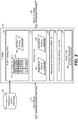
- An example of an n-gram entropy filter and other filters that may be applied by the filtering module 114 are further described with reference to FIG. 2 . In FIG.
- the filtering module 114 includes (e.g., is configured to apply) an n-gram entropy filter 210, a recency filter 220, an internationalized domain name (IDN) filter 230, a 2-port top level domain (TLD) filter 240, and a length filter 250.
- IDN internationalized domain name
- TLD 2-port top level domain
- the filtering module 114 is used to perform two filtering operations: filtering a database 202 (e.g., relational database) of "known" hostnames to identify seeds for initially building the set 123 of "bad" strings, and filtering the set of strings 121 to generate the subset 122 of strings.
- a database 202 e.g., relational database
- identifying seeds for the set 123 of "bad" strings may include applying the n-gram entropy filter 210, the IDN filter 230, the 2-part TLD filter 240, and the length filter 250 to the strings stored in the database 202.
- the n-gram entropy filter 210 may access the database 202, which may store some or all hostnames that have been processed to the computing device 110 (e.g., including both "bad” hostnames associated with malicious activity as well as "good” hostnames corresponding to legitimate Internet websites).
- the n-gram entropy filter 210 may evaluate only "bad" hostnames or only "good” hostnames.
- the n-gram entropy filter 210 may calculate a frequency of all n-grams across at least a domain portion of hostnames stored in the database 202.
- n 3 and the n-gram entropy filter 210 generates a frequency table 212 indicating the frequency of 3-grams (e.g., aaa, aab, aac, ... zzz).
- n may have a different value.
- Generating the frequency table 212 may be a one-time operation, and the frequency table 212 may be stored for subsequent use.
- the n-gram entropy filter 210 may determine whether an n-gram entropy of the particular hostname satisfies an n-gram entropy threshold 214.
- the n-gram entropy of the particular string may be a function (e.g., sum, weighted sum, average, weighted average, etc.) of the frequencies of occurrence of the n-grams included in the particular hostname.
- the n-gram entropy may be a function of the frequencies of occurrence (as indicated in the frequency table 212) of the n-grams: "exa", “xam”, “amp”, “mpl”, etc.
- the n-gram entropy threshold 214 may be determined programmatically or via user input.
- the n-gram entropy threshold 214 is generated by sorting the hostnames of the database 202 by n-gram entropy and identifying an n-gram entropy value such that at least a particular percentage (e.g., 95%, 99%, or some other value) of hostnames below the n-gram entropy threshold appear to be "bad" strings (e.g., randomly generated hostnames).
- n-gram entropy threshold is approximately 0.00035, although a different value may be used in other embodiments.
- the IDN filter 230 may determine whether a hostname is an IDN. In a particular embodiment, the IDN filter 230 checks if the hostname starts with an IDN prefix, such as "xn--".
- the 2-part TLD filter 240 may determine whether a hostname is a 2-part TLD, such as "example.com”.
- the length filter 250 may determine whether a hostname is longer than a length threshold, such as 10 characters long, although in other embodiments a different length threshold may be used.
- a hostname from the database 202 may be used as a seed for the set 123 of "bad" strings if the n-gram entropy of a hostname is less than the n-gram entropy threshold 214, the hostname is a 2-part TLD, the hostname is not an IDN, and the hostname is longer than the length threshold 252.
- a different combination of filters may be used to seed the set 123 of "bad" strings.
- the filtering module 114 may also be used to reduce the set of strings 121 into the subset 122 of strings corresponding to hostnames of interest. For example, a string of the set of strings 121 may be included in the subset 122 if the recency filter 220 determines that the string satisfies a registration recency threshold 222 or an encounter recency threshold 224. Thus, strings corresponding to hostnames that were registered (e.g., with an Internet domain name registration entity) within a threshold time period or first encountered by the computing device 110 within a threshold time period may be added to the subset 122.
- a string from the set of strings 121 may be added to the subset 122 if the string satisfies the aforementioned seeding conditions (e.g., the string satisfies the n-gram entropy threshold 214, the length threshold 252, is a 2-part TLD, and is not an IDN).
- the aforementioned seeding conditions e.g., the string satisfies the n-gram entropy threshold 214, the length threshold 252, is a 2-part TLD, and is not an IDN.
- a different combination of filters may be applied to reduce the set of strings 121 to the subset 122 of strings corresponding to hostnames of interest.
- FIG. 3 illustrates examples of mapping information (e.g., DNS records and other mapping information) that may be used in accordance with the present disclosure.
- first DNS information 310 corresponds to "examplehostname.com”
- second DNS information 320 corresponds to an IP address 23.243.160.95 (expressed as a hostname 95.160.243.23.in-addr-arpa).
- DNS information for a hostname may include a variety of DNS records.
- the DNS information 310 for "examplehostname.com” includes address (A) record(s) 311 that map the hostname to an internet protocol version 4 (IPv4) address, canonical name (CNAME) record(s) 312 that map the hostname to another (e.g., alias) hostname, and name server (NS) record(s) 313 that map the hostname to an authoritative name server. Additional examples of DNS records are further described herein.
- IPv4 internet protocol version 4
- CNAME canonical name
- NS name server
- DNS information for an IP address may include pointer (PTR) record(s) corresponding to reverse DNS mappings of the IP address to hostname(s).
- PTR pointer
- the DNS information 320 includes a PTR record 321 mapping the IP address 23.243.160.95, which is expressed as a hostname 95.160.243.23.in-addr.arpa, to the hostname residental-dns-cust-84848.socal.res.examplehost.com.
- Various types of records may be stored for an IP address, mapping the IP address (e.g., a.b.c.d) to a domain named (d.c.b.a.in-addr.arpa).
- the records may include PTR records, NS records, and/or zone information (e.g., start of authority (SOA)) records, as illustrative non-limiting examples.
- SOA start of authority
- CNAME records, A records, NS records, SOA records, text (TXT) records, mail exchange (MX) records, and/or PTR records may be retained, as illustrative non-limiting examples.
- domains and/or IP addresses included in the query results may be retained (e.g., added to a relationship database) to track connections between a queried domain/IP address and the resulting domains/IP addresses.
- a mapping from the IP address to a base domain portion of a hostname may also be retained, as the reverse DNS for an IP address may include IP address octets as a part of the hostname (e.g., the IP address a.b.c.d may map to d.c.b.a.example.com).
- IP address octets as a part of the hostname (e.g., the IP address a.b.c.d may map to d.c.b.a.example.com).
- a full hostname may not be of interest but a portion of the hostname may be of interest.
- "examplehost.com” may be known to be associated with a malicious entity, may be known to be used for spam or phishing, etc.
- a PTR record that maps to the full hostname may not be useful, because the base domain portion of the hostname, "examplehost.com", and not the full hostname, is associated with a malicious entity.
- a mapping 322 from "95.160.243.23.in-addr.arpa” to the base domain portion "examplehost.com” may be stored.
- DNS information and “DNS records” used to identify "bad” strings may include registered resource record (RR) types as well as unregistered records/mappings (e.g., the IP address to base domain mapping 322).
- the DNS records retrieved by the DNS module 115 may be provided to the rule-based engine 116.
- the rule-based engine 116 may apply one or more rules to the DNS records 131 retrieved by the DNS module 115 to determine whether a string should be added to the set 123 of "bad” strings.
- the rule-based engine 116 may thus be used to "grow” the membership of the set 123 of "bad” strings after the set 123 of "bad” strings has been seeded as described with reference to FIG. 2 .
- the rules applied by the rule-based engine 116 may include a rule indicating that a string is to be added to the set 123 of "bad” strings when a DNS record of the string maps to an item (e.g., a hostname or IP address) that is associated with another string that is already included in the set 123 of "bad” strings.
- a first rule 401 indicates that a string is to be added to the set 123 of "bad” strings if the string resolves to a "bad" IP address (e.g., an A record of the string resolves to an IP address included in the set 123 of "bad” strings).
- a second rule 402 indicates that a string is to be added to the set 123 of "bad” strings if the string resolves to a "bad" hostname (e.g., a CNAME record of the string resolves to a hostname included in the set 123 of "bad” strings).
- a third rule 403 indicates that a string is to be added to the set 123 of "bad” strings if a reverse DNS lookup of the string resolves to a "bad" hostname (e.g., a PTR or PTRD record of the string resolves to a hostname included in the set 123 of "bad” strings).
- a fourth rule 404 indicates that a string is to be added to the set 123 of "bad” strings if the string resolves to a "bad" name server (e.g., a NS record of the string resolves to a name server included in the set 123 of "bad” strings).
- a "bad" name server e.g., a NS record of the string resolves to a name server included in the set 123 of "bad” strings.
- the rules may also include a rule indicating that a string is to be added to the set 123 of "bad” strings when more than a threshold percentage of DNS records that map to the string are associated with "bad" strings that are already included in set 123.
- the threshold percentage is 80%, although a different value may be used in alternative embodiments.
- a fifth rule 405 indicates that a name server is to be added to the set 123 of "bad” strings if at least 80% of hostnames served by the name server are "bad” (e.g., 80% of NS records mapping to the name server correspond to items included in the set 123 of "bad” strings).
- a sixth rule 406 indicates that an IP address is to be added to the set 123 of "bad” strings if at least 80% of hostnames resolving to the IP address are "bad” (e.g., 80% of A records mapping to the IP address correspond to items included in the set 123 of "bad” strings).
- a seventh rule 407 indicates that a hostname is to be added to the set 123 of "bad” strings if at least 80% of other hostnames aliasing as the hostname are "bad” (e.g., 80% of CNAME records mapping to the hostname correspond to items included in set 123 of "bad” strings).
- the rules illustrated in FIG. 4 are for example only, and are not to be considered limiting.
- the rule-based engine 116 may use a different combination of rules in alternative embodiments. Based on application of the rules 401-407, the rule-based engine 116 may identify "bad” strings in the subset 122 of strings corresponding to hostnames of interest. The identified "bad” strings may be added to the set 123 of "bad” strings. In a particular embodiment, each time a "bad" string is identified and added to the set 123 of "bad” strings, DNS information for the "bad" string is retrieved and the rule-based engine 116 is iteratively executed to process the DNS information and identify additional "bad” strings to add to the set 123 of "bad” strings.
- the scanning/classification module 117 may determine additional information associated with the string. For example, the scanning/classification module 117 may access a website, access DNS information, etc. associated with the "bad" string to determine how to classify the "bad" string. To illustrate, a hostname, an IP address, a name server, etc. may be classified in a malware category, a spam category, a phishing category, etc.
- the memory 120 stores additional information associated with the set 123 of "bad" strings. For example, when an item is added to the set 123 of "bad” strings, the memory 120 may store a reason that the item was added to the set 123. To illustrate, the memory 120 may store data identifying the particular rule(s) executed by the rule-based engine 116 that were satisfied by the item. The memory 120 may also store data identifying a "breadcrumb" item (e.g., a hostname, an IP address, etc.) whose DNS information led to the item being added to the set 123. Thus, the memory 120 may store data that enables a user or administrator to subsequently determine why a particular item was added to the set 123 of "bad" strings.
- a "breadcrumb" item e.g., a hostname, an IP address, etc.
- the set 123 of "bad” strings may be used to improve computer security.
- the computing device 110 may provide the set 123 of "bad” strings to a mobile security application 141, an e-mail security application 142, a DDoS mitigation application 143, a DNS security application 144, and/or other applications/devices.
- the applications 141-144 may use the set 123 of "bad” strings to make security decisions regarding Internet traffic processed by the applications 141-144.
- the mobile security application 141 may restrict or place increased security measures on traffic that is determined to be associated with an item included in the set 123 of "bad” strings.
- the e-mail security application 142 may block incoming e-mails from sources included in the set 123 of "bad” strings.
- the DDoS mitigation application 143 may ignore or otherwise dispose of DNS queries associated with an item included in the set 123 of "bad" strings, which may enable mitigating a DDoS attack caused by receiving a large number of queries associated with "bad" hostnames or servers.
- the DNS security application 144 may disable access or modification of records (e.g., the DNS records 131) in a DNS database (e.g., the DNS database 130) based on queries/requests associated with items included in the set 123 of "bad" strings.
- the system 100 described with reference to FIGS. 1-4 may thus automatically identify clusters (e.g., sets) of suspicious items without classifying legitimate name servers and IP addresses as suspicious.
- the suspicious items such as hostnames
- the system 100 may identify suspicious hostnames based on input data received from various sources and may provide the identified hostnames to various computer security applications.
- FIG. 5 is a data flow diagram that illustrates a particular embodiment of a method 500 of identifying suspicious hostnames.
- the method 500 starts at 501.
- one or more hostname sources provide a candidate string 503 corresponding to a hostname that may or may not be algorithmically generated.
- a determination may be made as to whether the candidate string 503 is a hostname of interest. For example, whether or not the candidate string 503 is a hostname of interest may be determined based on n-gram entropy of the candidate string 503, as described with reference to the n-gram entropy filter 210 of FIG. 2 . If the candidate string 503 is not a hostname of interest, the method 500 stops, at 510.
- DNS information e.g., cached at a computing device, such as the computing device 110
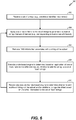
- FIG. 6 is a flowchart to illustrate another particular embodiment of a method 600 of identifying suspicious hostnames.
- the method 600 is performed by the computing device 110 of FIG. 1 .
- the method 600 may include receiving a set of strings, at 602.
- the strings may correspond to candidate and/or identified hostnames.
- the computing device 110 may receive the set of strings 121, which may include strings provided by the hostname registration feed 101, the hostname encounter feed 102, the spam filtering feed 103, the mobile security feed 104, the e-mail security feed 105, the DNS query feed 106, and/or the third party DGA lists 107.
- the method 600 may also include applying one or more filters to the set of strings to generate a subset of strings that are of interest, at 604.
- the filtering module 114 of FIG. 1 may filter the set of strings 121 to generate the subset 122 of strings, which may include hostnames that are determined to be of interest based on application of one or more of the filters 210, 220, 230, 240, 250 of FIG. 2 .
- the method 600 may further include retrieving DNS information associated with a string of the subset, at 606.
- the DNS module 115 of FIG. 1 may retrieve DNS information from the DNS database 130.
- the retrieved DNS information may include A record(s), CNAME record(s), NS record(s), PTR record(s), PTRD record(s), and/or other types of DNS records, as described with reference to FIG. 3 .
- the method 600 may include executing a rule-based engine to determine, based on application of one or more rules to the DNS information, whether to add the string to a set of "bad" strings, at 608.
- the rule-based engine 116 may apply one or more rules, such as one or more of the rules 401-407 of FIG. 4 , to determine whether to add a string to the set 123 of "bad" strings.
- the method 600 may also include recursively executing the rule-based engine to determine whether to add additional strings of the subset and/or additional strings identified based on the DNS information to the set of "bad" strings, at 610. For example, when a "bad" string is added to the set 123, the DNS module 115 may retrieve DNS information associated with the "bad” string and the rule-based engine may apply the rules 401-407 to determine whether any additional strings included in or related to the DNS information are also "bad” strings. The method 600 may thus enable automated identification of "bad" strings, such as suspicious hostnames, IP addresses associated with such hostnames, name servers associated with such hostnames, etc.
- FIG. 7 illustrates an embodiment of a computing device 701 that may be used in accordance with embodiments of the disclosure.
- the computing device 701 may be a computer, a server, or other device that includes a processor 703.
- a memory 705, storage 711, a display controller 709, a communications interface 713, and an input/output controller 715 are coupled to a bus 707.
- the computing device 701 may interface to external systems and devices through a communications interface 713.
- the communications interface 713 may include a wired and/or wireless networking interface, such as an Ethernet interface, an IEEE 802.11 interface, a 3G interface, a 4G interface, a LTE interface, a LTE-Advanced interface, etc.
- a communication signal 725 may be received/transmitted between the communications interface 713 and a cloud 730 (e.g., corresponding to a cloud computing environment).
- the communication signal 725 may be used to interface the computing device 701 with another computer system, a gateway, a server, a router, or the like.
- the processor 703 may be a microprocessor.
- the memory 705 may be a machine-readable (e.g., computer-readable or processor-readable) storage medium or storage device, such as dynamic random access memory (DRAM), static random access memory (SRAM), etc.
- DRAM dynamic random access memory
- SRAM static random access memory
- a machine-readable medium or device is not a signal.
- the display controller 709 may controls a display 719, which may be a liquid crystal display (LCD), a television monitor, or another type of display.
- An input/output device 717 coupled to the input/output controller 715 may include a keyboard, a disk drive, a printer, a scanner, a mouse, a trackball, a trackpad, or another input and/or output device.
- the storage 711 may include a machine-readable medium or device, which may include but is not limited to a magnetic hard disk, a floppy disk, an optical disk, a smart card, or another form of storage for data.
- the storage 711 includes removable media, read-only media, and/or readable/writable media. Some of the data may be written by a direct memory access process into the memory 705 during execution of software by the computing device 701. Software may reside in the storage 711, the memory 705, or may be transmitted or received via modem or the communications interface 713.
- the storage 711 may store instructions executable by the processor 703 to perform one or more operations or methods described herein, such as all or a portion of the method 500 of FIG. 5 and/or the method 600 of FIG. 6 . To illustrate, the storage 711 may store instructions corresponding to the filtering module 114, the DNS module 115, the rule-based engine 116, and the scanning/classification module 117.
- the methods, functions, and modules described herein may be implemented by software programs executable by a computer system.
- implementations can include distributed processing, component/object distributed processing, and parallel processing.
- the computing device 110 and/or the computing device 701 may correspond to a cloud computing environment that includes multiple individual computing devices that perform operations in distributed and parallel fashion.
- virtual computer system processing can be used to implement one or more of the methods or functionality as described herein.
- a computer system may include a laptop computer, a desktop computer, a mobile phone, a tablet computer, or any combination thereof.
- the computer system may be connected, e.g., using a network, to other computer systems or peripheral devices.
- the computer system or components thereof can include or be included within any one or more of the devices, systems, modules, and/or components illustrated in or described with reference to FIGS. 1-7 .
- the computer system may operate in the capacity of a server or as a client user computer in a server-client user network environment, or as a peer computer system in a peer-to-peer (or distributed) network environment.
- system can include any collection of systems or sub-systems that individually or jointly execute a set, or multiple sets, of instructions to perform one or more computer functions.
- the instructions can be embodied in one or more computer-readable or a processor-readable devices, such as a centralized or distributed database, and/or associated caches and servers.
- computer-readable device and “processor-readable device” also include device(s) capable of storing instructions for execution by a processor or causing a computer system to perform any one or more of the methods or operations disclosed herein.
- RAM random access memory
- ROM read-only memory
- PROM programmable read-only memory
- EPROM erasable programmable read-only memory
- EEPROM electrically erasable programmable read-only memory
- register-based memory solid-state memory, a hard disk, a removable disk, a disc-based memory (e.g., compact disc read-only memory (CD-ROM)), or any other form of storage device.
- a computer-readable or processor-readable device is not a signal.
Landscapes
- Engineering & Computer Science (AREA)
- Computer Security & Cryptography (AREA)
- Theoretical Computer Science (AREA)
- General Engineering & Computer Science (AREA)
- Databases & Information Systems (AREA)
- Computer Hardware Design (AREA)
- Signal Processing (AREA)
- Computer Networks & Wireless Communication (AREA)
- General Physics & Mathematics (AREA)
- Physics & Mathematics (AREA)
- Computing Systems (AREA)
- Software Systems (AREA)
- Data Mining & Analysis (AREA)
- Computational Linguistics (AREA)
- Computer And Data Communications (AREA)
Claims (15)
- Verfahren, umfassend:Empfangen (602), über eine Eingabeschnittstelle (111), einer Zeichenfolge (121), die einem Hostnamen entspricht;Identifizieren, an einer Rechenvorrichtung (110), einer Datenstruktur (212) die Häufigkeiten des Auftretens von jedem einer Vielzahl von n-Grammen in einem ersten Satz von Zeichenfolgen anzeigt;Anwenden (604), an der Rechenvorrichtung (110), eines Filters (114) um zu bestimmen, ob die Zeichenfolge als potentiell verdächtig zu klassifizieren ist,wobei der Filter (114) einen Entropiefilter (210) und einen Neuheitsfilter (220) enthält, wobei der Filter (114) so konfiguriert ist, dass er die Zeichenfolge (121) als Reaktion auf den Entropiefilter (210) und den Neuheitsfilter (220) als potenziell verdächtig klassifiziert, wobei jeder anzeigt, dass die Zeichenfolge (121) potenziell verdächtig ist, wobei der Entropiefilter (210) so konfiguriert ist, dass er anzeigt, dass die Zeichenfolge (121) auf Grundlage einer n-Gramm-Entropie der Zeichenfolge (121) potenziell verdächtig ist, und wobei die n-Gramm-Entropie der Zeichenfolge eine Funktion der Häufigkeit des Auftretens ist, die durch die Datenstruktur (121) für jedes n-Gramm in der Zeichenfolge (121) angezeigt wird, und wobei der Neuheitsfilter (220) so konfiguriert ist, dass er anzeigt, dass die Zeichenfolge (121) als Reaktion auf Bestimmen, dass die Zeichenfolge einem Hostnamen entspricht, der von der Rechenvorrichtung (110) innerhalb einer Schwellenzeitperiode (222, 224) registriert oder angetroffen wurde, potenziell verdächtig ist;als Reaktion auf, dass die Zeichenfolge (121) als potenziell verdächtig klassifiziert wurde,Abrufen (606), an der Rechenvorrichtung (110), mindestens eines domain name system-, DNS-, Eintrags (131) auf Grundlage der Zeichenfolge (121), wobei der mindestens eine DNS-Eintrag (131) eine netzwerkzugängliche Entität identifiziert, die dem Hostnamen zugeordnet ist;Ausführen (608) einer regelbasierten Funktionseinheit (116) an der Rechenvorrichtung (110), um auf Grundlage einer Anwendung einer oder mehrerer Regeln (401, 402, 403, 404, 405, 406, 407) auf die netzwerkzugängliche Entität, die durch den mindestens einen DNS-Eintrag (131) identifiziert wird, um zu bestimmen, ob die Zeichenfolge (121) zu einem Satz (123) verdächtiger Hostnamen hinzugefügt werden soll; undBereitstellen der Menge (123) verdächtiger Hostnamen an eine distributed denial of Service-, DDoS-, Angriffsminderungsanwendung (143) die so konfiguriert ist, dass sie DNS-Anfragen, die von Quellen empfangen werden, die in der Menge (123) verdächtiger Hostnamen enthalten sind, selektiv ignoriert.
- Verfahren nach Anspruch 1, wobei der Filter (114) ferner mindestens einen weiteren Filter (230, 240, 250) enthält, und wobei der mindestens eine weitere Filter (230, 240, 250) enthält:einen international domain name, IDN-, Filter (230) der so konfiguriert ist, dass er anzeigt, dass die Zeichenfolge (121) als Reaktion auf Bestimmen, dass die Zeichenfolge (121) mit einem IDN-Präfix beginnt, potenziell verdächtig ist;einen top level domain-, TLD-, Filter (240) der so konfiguriert ist, dass er anzeigt, dass die Zeichenfolge (121) als Reaktion auf Bestimmen, dass die Zeichenfolge (121) eine TLD ist, potenziell verdächtig ist;einen Längenfilter (250), der so konfiguriert ist, dass er anzeigt, dass die Zeichenfolge (121) als Reaktion auf Bestimmen, dass eine Länge der Zeichenfolge (121) einen Längenschwelle (252) erfüllt, potenziell verdächtig ist; oder eine Kombination davon.
- Verfahren nach Anspruch 1, ferner umfassend:Identifizieren einer zweiten Zeichenfolge auf Grundlage des mindestens einen DNS-Eintrags (131), wobei die zweite Zeichenfolge sich von der Zeichenfolge (121) unterscheidet;Abrufen mindestens eines zweiten DNS-Eintrags, der mit der zweiten Zeichenfolge verbunden ist; undAusführen der regelbasierten Funktionseinheit (116), um auf Grundlage der Anwendung einer oder mehrerer Regeln (401, 402, 403, 404, 405, 406, 407) auf den mindestens einen zweiten DNS-Eintrag zu bestimmen, ob die zweite Zeichenfolge zu der Menge (123) verdächtiger Hostnamen hinzugefügt werden soll.
- Verfahren nach Anspruch 3, ferner umfassend:Identifizieren einer dritten Zeichenfolge auf Grundlage des mindestens einen zweiten DNS-Eintrags, wobei sich die dritte Zeichenfolge von der Zeichenfolge (121) und der zweiten Zeichenfolge unterscheidet;Abrufen von mindestens einem dritten DNS-Eintrag, der mit der dritten Zeichenfolge verbunden ist; undAusführen der regelbasierten Funktionseinheit (116), um auf Grundlage der Anwendung einer oder mehrerer Regeln (401, 402, 403, 404, 405, 406, 407) auf den mindestens einen dritten DNS-Eintrag zu bestimmen, ob die dritte Zeichenfolge zu der Menge (123) verdächtiger Hostnamen hinzugefügt werden soll.
- Verfahren nach Anspruch 1, wobei der mindestens eine DNS-Eintrag (131) von einer externen DNS-Datenbank (130) abgerufen wird und mindestens einem von einem address-, A-, Eintrag (311), einen canonical name-, CNAME-, Eintrag (312) oder einen name Server-, NS-, Eintrag umfasst.
- Verfahren nach Anspruch 1, wobei der mindestens eine DNS-Eintrag (131) den Hostnamen auf die netzwerkzugängliche Entität abbildet, und ferner Hinzufügen, durch die regelbasierte Funktionseinheit (116), der Zeichenfolge (121) zu der Menge (123) verdächtiger Hostnamen als Reaktion auf Bestimmen, dass die netzwerkzugängliche Entität mit einer zweiten Zeichenfolge verbunden ist, die in der Menge (123) verdächtiger Hostnamen enthalten ist, umfasst.
- Verfahren nach Anspruch 1, wobei der mindestens eine DNS-Eintrag (131) die netzwerkzugängliche Entität auf den Hostnamen abbildet, und ferner Hinzufügen, durch die regelbasierte Funktionseinheit (116), der Zeichenfolge (121) zu der Menge (123) verdächtiger Hostnamen als Reaktion auf Bestimmen umfasst, dass mehr als ein Schwellenprozentsatz von DNS-Einträgen, die auf den Hostnamen abbilden, mit einer oder mehreren zweiten Zeichenfolgen zugeordnet sind, die in der Menge (123) verdächtiger Hostnamen enthalten sind.
- Verfahren nach Anspruch 1, wobei die erste Gruppe von Zeichenfolgen Hostnamen ausschließt, die als verdächtig bestimmt wurden, oder wobei die erste Gruppe von Zeichenfolgen Hostnamen ausschließt, die als unverdächtig bestimmt wurden.
- Verfahren nach Anspruch 1, wobei der Entropiefilter (210) so konfiguriert ist, dass er die Zeichenfolge (121) auf Grundlage eines Vergleichs der n-Gramm-Entropie der Zeichenfolge (121) mit einer n-Gramm-Entropie-Schwelle (214) klassifiziert.
- Verfahren nach Anspruch 9 ferner umfassend: Bestimmen der n-Gramm-Entropie-Schwelle (214) durch:
Sortieren des ersten Satzes von Zeichenfolgen nach der n-Gramm-Entropie; und Auswählen der n-Gramm-Entropie-Schwelle (214), so dass mindestens ein bestimmter Prozentsatz des ersten Satzes von Zeichenfolgen die n-Gramm-Entropie-Schwelle (214) nicht erfüllt. - Verfahren nach Anspruch 1, wobei die n-Gramm-Entropie eine Summe, eine gewichtete Summe, einen Durchschnitt oder einen gewichteten Durchschnitt von Einträgen der Datenstruktur (212) umfasst, die den in der Zeichenfolge (121) enthaltenen n-Grammen entsprechen.
- System umfassend:einen Speicher (705), der so konfiguriert ist, dass er einen Satz (122) potenziell verdächtiger Zeichenfolgen speichert;einen Prozessor (703); undein Filtermodul (114) das von dem Prozessor (703) ausgeführt werden kann zum:Empfangen (602) einer Zeichenfolge (121), die einem Hostnamen entspricht;identifizieren einer Datenstruktur (212), die Häufigkeiten des Auftretens von jedem einer Vielzahl von n-Grammen in einer ersten Menge von Zeichenfolgen anzeigt;Anwenden (604) eines Filters (114), zum Bestimmen, ob die Zeichenfolge (121) zu dem Satz (122) potentiell verdächtiger Zeichenfolgen hinzugefügt werden soll, wobei der Filter (114) einen Entropiefilter (210) und einen Neuheitsfilter (220) enthält, wobei der Filter (114) so konfiguriert ist, dass er die Zeichenfolge (121) zu dem Satz (122) potenziell verdächtiger Zeichenfolgen als Reaktion auf den Entropiefilter (210) und den Neuheitsfilter (220) hinzufügt, die jeweils anzeigen, dass die Zeichenfolge (121) potenziell verdächtig ist, wobei der Entropiefilter (210) so konfiguriert ist, dass er anzeigt, dass die Zeichenfolge (121) auf Grundlage einer n-Gramm-Entropie der Zeichenfolge (121) potenziell verdächtig ist, und wobei die n-Gramm-Entropie der Zeichenfolge (121) eine Funktion der Häufigkeit des Auftretens ist, die durch die Datenstruktur (212) für jedes n-Gramm in der Zeichenfolge (121) angezeigt wird, wobei der Neuheitsfilter (220) konfiguriert ist, um anzuzeigen, dass die Zeichenfolge (121) potenziell verdächtig ist als Reaktion auf Bestimmen, dass die Zeichenfolge einem Hostnamen entspricht, der von der Rechenvorrichtung (110) innerhalb einer Schwellenzeitperiode (222, 224) registriert oder angetroffen wurde;wobei der Speicher (705) ferner konfiguriert ist, um einen Satz (123) verdächtiger Hostnamen zu speichern, wobei das System ferner umfasst:Ein domain name system-, DNS-, Modul (115), das durch den Prozessor (703) ausführbar ist, welches regierend auf das Filtermodul (114) die Zeichenfolge (121) zu dem Satz (122) potentiell verdächtiger Zeichenfolgen hinzufügt, abrufen (606), aus einer externen Datenbank, mindestens eines DNS-Eintrags (131), der mit der Zeichenfolge (121) verbunden ist; undeine regelbasierte Funktionseinheit (116), die von dem Prozessor ausgeführt werden kann, um auf Grundlage der Anwendung einer oder mehrerer Regeln (401, 402, 403, 404, 405, 406, 407) auf den mindestens einen DNS-Eintrag (131) zu bestimmen (608), ob die Zeichenfolge (121) in die Menge (123) verdächtiger Hostnamen verschoben werden soll;wobei das System ferner eine Ausgabeschnittstelle (112) umfasst, die so konfiguriert ist, dass sie den Satz (123) verdächtiger Hostnamen an eine verteilte Denial-of-Service-,DDoS-, Minderungsanwendung (143) liefert, die so konfiguriert ist, dass sie DNS-Abfragen, die von Quellen empfangen werden, die in dem Satz (123) verdächtiger Hostnamen enthalten sind, selektiv ignoriert.
- System nach Anspruch 12, wobei der Entropiefilter (210) so konfiguriert ist, dass er die Zeichenfolge (121) auf Grundlage eines Vergleichs der n-Gramm-Entropie der Zeichenfolge (121) mit einer n-Gramm-Entropie-Schwelle (214) klassifiziert.
- Computerprogramm oder eine Folge von Computerprogrammen, das bzw. die Anweisungen umfasst/umfassen, die so angeordnet sind, dass wenn sie von einem oder mehreren Computern ausgeführt werden, bewirken, dass der eine oder die mehreren Computer das Verfahren nach einem der Ansprüche 1-11 ausführen.
- Ein computerlesbares Medium, das ein Computerprogramm oder mindestens eines aus der Folge von Computerprogrammen nach Anspruch 14 speichert.
Applications Claiming Priority (2)
| Application Number | Priority Date | Filing Date | Title |
|---|---|---|---|
| US14/508,400 US9560074B2 (en) | 2014-10-07 | 2014-10-07 | Systems and methods of identifying suspicious hostnames |
| PCT/US2015/054014 WO2016057401A1 (en) | 2014-10-07 | 2015-10-05 | Systems and methods of identifying suspicious hostnames |
Publications (2)
| Publication Number | Publication Date |
|---|---|
| EP3205069A1 EP3205069A1 (de) | 2017-08-16 |
| EP3205069B1 true EP3205069B1 (de) | 2020-12-02 |
Family
ID=54361155
Family Applications (1)
| Application Number | Title | Priority Date | Filing Date |
|---|---|---|---|
| EP15787337.3A Active EP3205069B1 (de) | 2014-10-07 | 2015-10-05 | Systeme und verfahren zur identifizierung von verdächtigen hostnamen |
Country Status (4)
| Country | Link |
|---|---|
| US (2) | US9560074B2 (de) |
| EP (1) | EP3205069B1 (de) |
| JP (1) | JP6510040B2 (de) |
| WO (1) | WO2016057401A1 (de) |
Families Citing this family (32)
| Publication number | Priority date | Publication date | Assignee | Title |
|---|---|---|---|---|
| US8713681B2 (en) * | 2009-10-27 | 2014-04-29 | Mandiant, Llc | System and method for detecting executable machine instructions in a data stream |
| FR2998127A1 (fr) * | 2012-11-12 | 2014-05-16 | France Telecom | Procede de resolution d'un numero de telephone porte en un identifiant de ressource reseau |
| US9479524B1 (en) * | 2015-04-06 | 2016-10-25 | Trend Micro Incorporated | Determining string similarity using syntactic edit distance |
| CN106209488B (zh) * | 2015-04-28 | 2021-01-29 | 北京瀚思安信科技有限公司 | 用于检测网站攻击的方法和设备 |
| US10200391B2 (en) * | 2015-09-23 | 2019-02-05 | AVAST Software s.r.o. | Detection of malware in derived pattern space |
| US20170111389A1 (en) * | 2015-10-18 | 2017-04-20 | NxLabs Limited | Method and system for protecting domain name system servers against distributed denial of service attacks |
| US10178195B2 (en) * | 2015-12-04 | 2019-01-08 | Cloudflare, Inc. | Origin server protection notification |
| US10484423B2 (en) * | 2016-02-19 | 2019-11-19 | Secureworks Corp. | System and method for detecting and monitoring thread creation |
| CN106060113B (zh) * | 2016-05-10 | 2019-07-02 | 腾讯科技(深圳)有限公司 | 账号推送方法及装置 |
| US9864956B1 (en) | 2017-05-01 | 2018-01-09 | SparkCognition, Inc. | Generation and use of trained file classifiers for malware detection |
| US10460101B2 (en) | 2017-06-06 | 2019-10-29 | Microsoft Technology Licensing, Llc | Enriching netflow data with passive DNS data for botnet detection |
| US10616252B2 (en) | 2017-06-30 | 2020-04-07 | SparkCognition, Inc. | Automated detection of malware using trained neural network-based file classifiers and machine learning |
| US10305923B2 (en) | 2017-06-30 | 2019-05-28 | SparkCognition, Inc. | Server-supported malware detection and protection |
| CN110069665B (zh) * | 2017-12-13 | 2021-09-17 | 阿里巴巴(中国)有限公司 | 一种筛选项的提供方法、客户端及服务器 |
| US11818151B2 (en) | 2018-01-26 | 2023-11-14 | Palo Alto Networks, Inc. | Identification of malicious domain campaigns using unsupervised clustering |
| US11108794B2 (en) * | 2018-01-31 | 2021-08-31 | Micro Focus Llc | Indicating malware generated domain names using n-grams |
| US10965697B2 (en) * | 2018-01-31 | 2021-03-30 | Micro Focus Llc | Indicating malware generated domain names using digits |
| WO2020060539A1 (en) * | 2018-09-18 | 2020-03-26 | Hewlett-Packard Development Company, L.P. | Adaptive domain name system |
| US11271963B2 (en) * | 2018-12-20 | 2022-03-08 | Micro Focus Llc | Defending against domain name system based attacks |
| CN109756510B (zh) * | 2019-01-25 | 2021-01-08 | 兰州理工大学 | 一种基于N-Gram的恶意域名检测方法 |
| CN110008383B (zh) * | 2019-04-11 | 2021-07-27 | 北京安护环宇科技有限公司 | 一种基于多索引的黑白名单检索方法及装置 |
| US11799904B2 (en) * | 2020-12-10 | 2023-10-24 | Cisco Technology, Inc. | Malware detection using inverse imbalance subspace searching |
| US12034768B2 (en) | 2021-04-14 | 2024-07-09 | Bank Of America Corporation | Information security system and method for phishing domain detection |
| US11164156B1 (en) * | 2021-04-30 | 2021-11-02 | Oracle International Corporation | Email message receiving system in a cloud infrastructure |
| US11882112B2 (en) | 2021-05-26 | 2024-01-23 | Bank Of America Corporation | Information security system and method for phishing threat prevention using tokens |
| US12476982B2 (en) * | 2021-06-23 | 2025-11-18 | Comcast Cable Communications, Llc | Methods, systems, and apparatuses for query analysis and classification |
| US11882152B2 (en) | 2021-07-30 | 2024-01-23 | Bank Of America Corporation | Information security system and method for phishing website identification based on image hashing |
| US12621265B2 (en) * | 2022-04-18 | 2026-05-05 | Palo Alto Networks, Inc. | System and method for detecting dictionary-based DGA traffic |
| US12309116B2 (en) * | 2022-08-01 | 2025-05-20 | Palo Alto Networks, Inc. | Detecting shadowed domains |
| US20250086393A1 (en) * | 2023-09-11 | 2025-03-13 | Paypal, Inc. | Augmenting Tokenizer Training Data |
| KR102773838B1 (ko) * | 2023-12-27 | 2025-02-26 | 한국인터넷진흥원 | 공격자 트래픽 필터링 기술을 이용한 공격지 추적 방법 및 그 시스템 |
| US20260122029A1 (en) * | 2024-10-28 | 2026-04-30 | Palo Alto Networks, Inc. | Advanced dns response cache |
Family Cites Families (32)
| Publication number | Priority date | Publication date | Assignee | Title |
|---|---|---|---|---|
| US7272853B2 (en) * | 2003-06-04 | 2007-09-18 | Microsoft Corporation | Origination/destination features and lists for spam prevention |
| US8533270B2 (en) * | 2003-06-23 | 2013-09-10 | Microsoft Corporation | Advanced spam detection techniques |
| JP4732042B2 (ja) * | 2005-07-12 | 2011-07-27 | 株式会社エヌ・ティ・ティ・データ | メールサーバ、プロキシサーバ、サーバシステム、誘導アドレス判定方法、アクセス先確認方法及びプログラム |
| US20080120720A1 (en) * | 2006-11-17 | 2008-05-22 | Jinhong Guo | Intrusion detection via high dimensional vector matching |
| JP2008250597A (ja) * | 2007-03-30 | 2008-10-16 | Kddi Corp | コンピュータシステム |
| US8955122B2 (en) * | 2007-04-04 | 2015-02-10 | Sri International | Method and apparatus for detecting malware infection |
| US8041662B2 (en) | 2007-08-10 | 2011-10-18 | Microsoft Corporation | Domain name geometrical classification using character-based n-grams |
| US8225402B1 (en) * | 2008-04-09 | 2012-07-17 | Amir Averbuch | Anomaly-based detection of SQL injection attacks |
| US8539577B1 (en) | 2008-06-20 | 2013-09-17 | Verisign, Inc. | System and method for fast flux detection |
| NL2002694C2 (en) * | 2009-04-01 | 2010-10-04 | Univ Twente | Method and system for alert classification in a computer network. |
| US9201863B2 (en) | 2009-12-24 | 2015-12-01 | Woodwire, Inc. | Sentiment analysis from social media content |
| US9053320B2 (en) | 2010-04-20 | 2015-06-09 | Verisign, Inc | Method of and apparatus for identifying requestors of machine-generated requests to resolve a textual identifier |
| US9058381B2 (en) * | 2010-04-20 | 2015-06-16 | Verisign, Inc. | Method of and apparatus for identifying machine-generated textual identifiers |
| US8260914B1 (en) | 2010-06-22 | 2012-09-04 | Narus, Inc. | Detecting DNS fast-flux anomalies |
| US9003518B2 (en) * | 2010-09-01 | 2015-04-07 | Raytheon Bbn Technologies Corp. | Systems and methods for detecting covert DNS tunnels |
| US8516585B2 (en) | 2010-10-01 | 2013-08-20 | Alcatel Lucent | System and method for detection of domain-flux botnets and the like |
| JP5588845B2 (ja) * | 2010-11-29 | 2014-09-10 | 有限会社アイ・アール・ディー | 不正ドメイン検知装置、不正ドメイン検知方法、およびプログラム |
| US8762298B1 (en) | 2011-01-05 | 2014-06-24 | Narus, Inc. | Machine learning based botnet detection using real-time connectivity graph based traffic features |
| US8631489B2 (en) | 2011-02-01 | 2014-01-14 | Damballa, Inc. | Method and system for detecting malicious domain names at an upper DNS hierarchy |
| US20130031625A1 (en) * | 2011-07-29 | 2013-01-31 | Electronics And Telecommunications Research Institute | Cyber threat prior prediction apparatus and method |
| US8504561B2 (en) * | 2011-09-02 | 2013-08-06 | Microsoft Corporation | Using domain intent to provide more search results that correspond to a domain |
| US8661146B2 (en) * | 2011-10-13 | 2014-02-25 | Cisco Technology, Inc. | Systems and methods for IP reachability in a communications network |
| RU2494453C2 (ru) * | 2011-11-24 | 2013-09-27 | Закрытое акционерное общество "Лаборатория Касперского" | Способ распределенного выполнения задач компьютерной безопасности |
| US8745737B2 (en) * | 2011-12-29 | 2014-06-03 | Verisign, Inc | Systems and methods for detecting similarities in network traffic |
| US8949982B2 (en) | 2011-12-30 | 2015-02-03 | Verisign, Inc. | Method for administering a top-level domain |
| US9922190B2 (en) | 2012-01-25 | 2018-03-20 | Damballa, Inc. | Method and system for detecting DGA-based malware |
| US8763117B2 (en) | 2012-03-02 | 2014-06-24 | Cox Communications, Inc. | Systems and methods of DNS grey listing |
| US9152692B2 (en) | 2012-06-28 | 2015-10-06 | Google Inc. | Generating n-gram clusters associated with events |
| US8813228B2 (en) * | 2012-06-29 | 2014-08-19 | Deloitte Development Llc | Collective threat intelligence gathering system |
| US9003529B2 (en) * | 2012-08-29 | 2015-04-07 | The Johns Hopkins University | Apparatus and method for identifying related code variants in binaries |
| US9419990B2 (en) * | 2013-01-30 | 2016-08-16 | Blue Coat Systems, Inc. | Apparatus and method for characterizing the risk of a user contracting malicious software |
| US8826434B2 (en) * | 2013-07-25 | 2014-09-02 | Splunk Inc. | Security threat detection based on indications in big data of access to newly registered domains |
-
2014
- 2014-10-07 US US14/508,400 patent/US9560074B2/en active Active
-
2015
- 2015-10-05 JP JP2017518999A patent/JP6510040B2/ja active Active
- 2015-10-05 WO PCT/US2015/054014 patent/WO2016057401A1/en not_active Ceased
- 2015-10-05 EP EP15787337.3A patent/EP3205069B1/de active Active
-
2016
- 2016-12-22 US US15/388,256 patent/US10264017B2/en active Active
Non-Patent Citations (1)
| Title |
|---|
| MANOS ANTONAKAKIS ET AL: "From Throw-Away Traffic to Bots: Detecting the Rise of DGA-Based Malware", USENIX,, 11 April 2013 (2013-04-11), pages 1 - 16, XP061014403 * |
Also Published As
| Publication number | Publication date |
|---|---|
| JP2017530481A (ja) | 2017-10-12 |
| EP3205069A1 (de) | 2017-08-16 |
| US20160099967A1 (en) | 2016-04-07 |
| US10264017B2 (en) | 2019-04-16 |
| JP6510040B2 (ja) | 2019-05-08 |
| US9560074B2 (en) | 2017-01-31 |
| US20170104784A1 (en) | 2017-04-13 |
| WO2016057401A1 (en) | 2016-04-14 |
Similar Documents
| Publication | Publication Date | Title |
|---|---|---|
| US10264017B2 (en) | Systems and methods of identifying suspicious hostnames | |
| US10740363B2 (en) | Domain classification based on domain name system (DNS) traffic | |
| Antonakakis et al. | Building a dynamic reputation system for {DNS} | |
| Liu et al. | All your dns records point to us: Understanding the security threats of dangling dns records | |
| US8856360B2 (en) | Automatically identifying dynamic internet protocol addresses | |
| US8260914B1 (en) | Detecting DNS fast-flux anomalies | |
| Passerini et al. | Fluxor: Detecting and monitoring fast-flux service networks | |
| US9191402B2 (en) | Domain classification based on client request behavior | |
| US10171318B2 (en) | System and method of identifying internet-facing assets | |
| US8347394B1 (en) | Detection of downloaded malware using DNS information | |
| US20140157414A1 (en) | Method and system for detecting malicious domain names at an upper dns hierarchy | |
| GB2575052A (en) | Phishing detection | |
| US20250202916A1 (en) | Real-time attribution of tools and campaigns for dns tunneling traffic | |
| Ichise et al. | Analysis of DNS TXT record usage and consideration of botnet communication detection | |
| WO2025058686A1 (en) | Dns automated intelligence | |
| US10432646B2 (en) | Protection against malicious attacks | |
| Wickramasinghe et al. | Uncovering ip address hosting types behind malicious websites | |
| US20260006074A1 (en) | Proactively discovering malicious domains through guided crawling of attack infrastructure | |
| Tatang et al. | Below the radar: Spotting dns tunnels in newly observed hostnames in the wild | |
| Pan et al. | Mitigating ddos attacks towards top level domain name service | |
| Takemori et al. | Detection of NS resource record DNS resolution traffic, host search, and SSH dictionary attack activities | |
| 一瀨光 | A study on detection and blocking of DNS-based botnet communication | |
| Suwa et al. | DNS resource record analysis of URLs in e-mail messages for improving spam filtering | |
| Kalafut et al. | Surveying dns wildcard usage among the good, the bad, and the ugly | |
| Musashi et al. | Detection of host search activity in PTR resource record based DNS query packet traffic |
Legal Events
| Date | Code | Title | Description |
|---|---|---|---|
| STAA | Information on the status of an ep patent application or granted ep patent |
Free format text: STATUS: THE INTERNATIONAL PUBLICATION HAS BEEN MADE |
|
| PUAI | Public reference made under article 153(3) epc to a published international application that has entered the european phase |
Free format text: ORIGINAL CODE: 0009012 |
|
| STAA | Information on the status of an ep patent application or granted ep patent |
Free format text: STATUS: REQUEST FOR EXAMINATION WAS MADE |
|
| 17P | Request for examination filed |
Effective date: 20170505 |
|
| AK | Designated contracting states |
Kind code of ref document: A1 Designated state(s): AL AT BE BG CH CY CZ DE DK EE ES FI FR GB GR HR HU IE IS IT LI LT LU LV MC MK MT NL NO PL PT RO RS SE SI SK SM TR |
|
| AX | Request for extension of the european patent |
Extension state: BA ME |
|
| DAV | Request for validation of the european patent (deleted) | ||
| DAX | Request for extension of the european patent (deleted) | ||
| STAA | Information on the status of an ep patent application or granted ep patent |
Free format text: STATUS: EXAMINATION IS IN PROGRESS |
|
| 17Q | First examination report despatched |
Effective date: 20190125 |
|
| RAP1 | Party data changed (applicant data changed or rights of an application transferred) |
Owner name: PROOFPOINT, INC. |
|
| GRAP | Despatch of communication of intention to grant a patent |
Free format text: ORIGINAL CODE: EPIDOSNIGR1 |
|
| STAA | Information on the status of an ep patent application or granted ep patent |
Free format text: STATUS: GRANT OF PATENT IS INTENDED |
|
| RIC1 | Information provided on ipc code assigned before grant |
Ipc: G06F 16/903 20190101ALI20200429BHEP Ipc: G06F 21/55 20130101ALI20200429BHEP Ipc: H04L 29/06 20060101AFI20200429BHEP Ipc: H04L 29/12 20060101ALI20200429BHEP Ipc: G06F 16/951 20190101ALI20200429BHEP |
|
| INTG | Intention to grant announced |
Effective date: 20200513 |
|
| GRAS | Grant fee paid |
Free format text: ORIGINAL CODE: EPIDOSNIGR3 |
|
| GRAA | (expected) grant |
Free format text: ORIGINAL CODE: 0009210 |
|
| STAA | Information on the status of an ep patent application or granted ep patent |
Free format text: STATUS: THE PATENT HAS BEEN GRANTED |
|
| AK | Designated contracting states |
Kind code of ref document: B1 Designated state(s): AL AT BE BG CH CY CZ DE DK EE ES FI FR GB GR HR HU IE IS IT LI LT LU LV MC MK MT NL NO PL PT RO RS SE SI SK SM TR |
|
| REG | Reference to a national code |
Ref country code: GB Ref legal event code: FG4D |
|
| REG | Reference to a national code |
Ref country code: AT Ref legal event code: REF Ref document number: 1342175 Country of ref document: AT Kind code of ref document: T Effective date: 20201215 Ref country code: CH Ref legal event code: EP |
|
| REG | Reference to a national code |
Ref country code: IE Ref legal event code: FG4D |
|
| REG | Reference to a national code |
Ref country code: DE Ref legal event code: R096 Ref document number: 602015062949 Country of ref document: DE |
|
| PG25 | Lapsed in a contracting state [announced via postgrant information from national office to epo] |
Ref country code: GR Free format text: LAPSE BECAUSE OF FAILURE TO SUBMIT A TRANSLATION OF THE DESCRIPTION OR TO PAY THE FEE WITHIN THE PRESCRIBED TIME-LIMIT Effective date: 20210303 Ref country code: FI Free format text: LAPSE BECAUSE OF FAILURE TO SUBMIT A TRANSLATION OF THE DESCRIPTION OR TO PAY THE FEE WITHIN THE PRESCRIBED TIME-LIMIT Effective date: 20201202 Ref country code: RS Free format text: LAPSE BECAUSE OF FAILURE TO SUBMIT A TRANSLATION OF THE DESCRIPTION OR TO PAY THE FEE WITHIN THE PRESCRIBED TIME-LIMIT Effective date: 20201202 Ref country code: NO Free format text: LAPSE BECAUSE OF FAILURE TO SUBMIT A TRANSLATION OF THE DESCRIPTION OR TO PAY THE FEE WITHIN THE PRESCRIBED TIME-LIMIT Effective date: 20210302 |
|
| REG | Reference to a national code |
Ref country code: NL Ref legal event code: MP Effective date: 20201202 |
|
| REG | Reference to a national code |
Ref country code: AT Ref legal event code: MK05 Ref document number: 1342175 Country of ref document: AT Kind code of ref document: T Effective date: 20201202 |
|
| PG25 | Lapsed in a contracting state [announced via postgrant information from national office to epo] |
Ref country code: PL Free format text: LAPSE BECAUSE OF FAILURE TO SUBMIT A TRANSLATION OF THE DESCRIPTION OR TO PAY THE FEE WITHIN THE PRESCRIBED TIME-LIMIT Effective date: 20201202 Ref country code: LV Free format text: LAPSE BECAUSE OF FAILURE TO SUBMIT A TRANSLATION OF THE DESCRIPTION OR TO PAY THE FEE WITHIN THE PRESCRIBED TIME-LIMIT Effective date: 20201202 Ref country code: SE Free format text: LAPSE BECAUSE OF FAILURE TO SUBMIT A TRANSLATION OF THE DESCRIPTION OR TO PAY THE FEE WITHIN THE PRESCRIBED TIME-LIMIT Effective date: 20201202 Ref country code: BG Free format text: LAPSE BECAUSE OF FAILURE TO SUBMIT A TRANSLATION OF THE DESCRIPTION OR TO PAY THE FEE WITHIN THE PRESCRIBED TIME-LIMIT Effective date: 20210302 |
|
| PG25 | Lapsed in a contracting state [announced via postgrant information from national office to epo] |
Ref country code: HR Free format text: LAPSE BECAUSE OF FAILURE TO SUBMIT A TRANSLATION OF THE DESCRIPTION OR TO PAY THE FEE WITHIN THE PRESCRIBED TIME-LIMIT Effective date: 20201202 Ref country code: NL Free format text: LAPSE BECAUSE OF FAILURE TO SUBMIT A TRANSLATION OF THE DESCRIPTION OR TO PAY THE FEE WITHIN THE PRESCRIBED TIME-LIMIT Effective date: 20201202 |
|
| REG | Reference to a national code |
Ref country code: LT Ref legal event code: MG9D |
|
| PG25 | Lapsed in a contracting state [announced via postgrant information from national office to epo] |
Ref country code: SK Free format text: LAPSE BECAUSE OF FAILURE TO SUBMIT A TRANSLATION OF THE DESCRIPTION OR TO PAY THE FEE WITHIN THE PRESCRIBED TIME-LIMIT Effective date: 20201202 Ref country code: PT Free format text: LAPSE BECAUSE OF FAILURE TO SUBMIT A TRANSLATION OF THE DESCRIPTION OR TO PAY THE FEE WITHIN THE PRESCRIBED TIME-LIMIT Effective date: 20210405 Ref country code: RO Free format text: LAPSE BECAUSE OF FAILURE TO SUBMIT A TRANSLATION OF THE DESCRIPTION OR TO PAY THE FEE WITHIN THE PRESCRIBED TIME-LIMIT Effective date: 20201202 Ref country code: LT Free format text: LAPSE BECAUSE OF FAILURE TO SUBMIT A TRANSLATION OF THE DESCRIPTION OR TO PAY THE FEE WITHIN THE PRESCRIBED TIME-LIMIT Effective date: 20201202 Ref country code: CZ Free format text: LAPSE BECAUSE OF FAILURE TO SUBMIT A TRANSLATION OF THE DESCRIPTION OR TO PAY THE FEE WITHIN THE PRESCRIBED TIME-LIMIT Effective date: 20201202 Ref country code: EE Free format text: LAPSE BECAUSE OF FAILURE TO SUBMIT A TRANSLATION OF THE DESCRIPTION OR TO PAY THE FEE WITHIN THE PRESCRIBED TIME-LIMIT Effective date: 20201202 Ref country code: SM Free format text: LAPSE BECAUSE OF FAILURE TO SUBMIT A TRANSLATION OF THE DESCRIPTION OR TO PAY THE FEE WITHIN THE PRESCRIBED TIME-LIMIT Effective date: 20201202 |
|
| PG25 | Lapsed in a contracting state [announced via postgrant information from national office to epo] |
Ref country code: AT Free format text: LAPSE BECAUSE OF FAILURE TO SUBMIT A TRANSLATION OF THE DESCRIPTION OR TO PAY THE FEE WITHIN THE PRESCRIBED TIME-LIMIT Effective date: 20201202 |
|
| REG | Reference to a national code |
Ref country code: DE Ref legal event code: R097 Ref document number: 602015062949 Country of ref document: DE |
|
| PG25 | Lapsed in a contracting state [announced via postgrant information from national office to epo] |
Ref country code: IS Free format text: LAPSE BECAUSE OF FAILURE TO SUBMIT A TRANSLATION OF THE DESCRIPTION OR TO PAY THE FEE WITHIN THE PRESCRIBED TIME-LIMIT Effective date: 20210402 |
|
| PLBE | No opposition filed within time limit |
Free format text: ORIGINAL CODE: 0009261 |
|
| STAA | Information on the status of an ep patent application or granted ep patent |
Free format text: STATUS: NO OPPOSITION FILED WITHIN TIME LIMIT |
|
| PG25 | Lapsed in a contracting state [announced via postgrant information from national office to epo] |
Ref country code: IT Free format text: LAPSE BECAUSE OF FAILURE TO SUBMIT A TRANSLATION OF THE DESCRIPTION OR TO PAY THE FEE WITHIN THE PRESCRIBED TIME-LIMIT Effective date: 20201202 Ref country code: AL Free format text: LAPSE BECAUSE OF FAILURE TO SUBMIT A TRANSLATION OF THE DESCRIPTION OR TO PAY THE FEE WITHIN THE PRESCRIBED TIME-LIMIT Effective date: 20201202 |
|
| 26N | No opposition filed |
Effective date: 20210903 |
|
| REG | Reference to a national code |
Ref country code: DE Ref legal event code: R079 Ref document number: 602015062949 Country of ref document: DE Free format text: PREVIOUS MAIN CLASS: H04L0029060000 Ipc: H04L0065000000 |
|
| PG25 | Lapsed in a contracting state [announced via postgrant information from national office to epo] |
Ref country code: DK Free format text: LAPSE BECAUSE OF FAILURE TO SUBMIT A TRANSLATION OF THE DESCRIPTION OR TO PAY THE FEE WITHIN THE PRESCRIBED TIME-LIMIT Effective date: 20201202 Ref country code: SI Free format text: LAPSE BECAUSE OF FAILURE TO SUBMIT A TRANSLATION OF THE DESCRIPTION OR TO PAY THE FEE WITHIN THE PRESCRIBED TIME-LIMIT Effective date: 20201202 |
|
| PG25 | Lapsed in a contracting state [announced via postgrant information from national office to epo] |
Ref country code: ES Free format text: LAPSE BECAUSE OF FAILURE TO SUBMIT A TRANSLATION OF THE DESCRIPTION OR TO PAY THE FEE WITHIN THE PRESCRIBED TIME-LIMIT Effective date: 20201202 |
|
| REG | Reference to a national code |
Ref country code: CH Ref legal event code: PL |
|
| PG25 | Lapsed in a contracting state [announced via postgrant information from national office to epo] |
Ref country code: IS Free format text: LAPSE BECAUSE OF FAILURE TO SUBMIT A TRANSLATION OF THE DESCRIPTION OR TO PAY THE FEE WITHIN THE PRESCRIBED TIME-LIMIT Effective date: 20210402 |
|
| REG | Reference to a national code |
Ref country code: BE Ref legal event code: MM Effective date: 20211031 |
|
| PG25 | Lapsed in a contracting state [announced via postgrant information from national office to epo] |
Ref country code: MC Free format text: LAPSE BECAUSE OF FAILURE TO SUBMIT A TRANSLATION OF THE DESCRIPTION OR TO PAY THE FEE WITHIN THE PRESCRIBED TIME-LIMIT Effective date: 20201202 |
|
| PG25 | Lapsed in a contracting state [announced via postgrant information from national office to epo] |
Ref country code: LU Free format text: LAPSE BECAUSE OF NON-PAYMENT OF DUE FEES Effective date: 20211005 Ref country code: BE Free format text: LAPSE BECAUSE OF NON-PAYMENT OF DUE FEES Effective date: 20211031 |
|
| PG25 | Lapsed in a contracting state [announced via postgrant information from national office to epo] |
Ref country code: LI Free format text: LAPSE BECAUSE OF NON-PAYMENT OF DUE FEES Effective date: 20211031 Ref country code: CH Free format text: LAPSE BECAUSE OF NON-PAYMENT OF DUE FEES Effective date: 20211031 |
|
| PG25 | Lapsed in a contracting state [announced via postgrant information from national office to epo] |
Ref country code: IE Free format text: LAPSE BECAUSE OF NON-PAYMENT OF DUE FEES Effective date: 20211005 |
|
| PG25 | Lapsed in a contracting state [announced via postgrant information from national office to epo] |
Ref country code: HU Free format text: LAPSE BECAUSE OF FAILURE TO SUBMIT A TRANSLATION OF THE DESCRIPTION OR TO PAY THE FEE WITHIN THE PRESCRIBED TIME-LIMIT; INVALID AB INITIO Effective date: 20151005 |
|
| PG25 | Lapsed in a contracting state [announced via postgrant information from national office to epo] |
Ref country code: CY Free format text: LAPSE BECAUSE OF FAILURE TO SUBMIT A TRANSLATION OF THE DESCRIPTION OR TO PAY THE FEE WITHIN THE PRESCRIBED TIME-LIMIT Effective date: 20201202 |
|
| PG25 | Lapsed in a contracting state [announced via postgrant information from national office to epo] |
Ref country code: MK Free format text: LAPSE BECAUSE OF FAILURE TO SUBMIT A TRANSLATION OF THE DESCRIPTION OR TO PAY THE FEE WITHIN THE PRESCRIBED TIME-LIMIT Effective date: 20201202 |
|
| PG25 | Lapsed in a contracting state [announced via postgrant information from national office to epo] |
Ref country code: TR Free format text: LAPSE BECAUSE OF FAILURE TO SUBMIT A TRANSLATION OF THE DESCRIPTION OR TO PAY THE FEE WITHIN THE PRESCRIBED TIME-LIMIT Effective date: 20201202 |
|
| PG25 | Lapsed in a contracting state [announced via postgrant information from national office to epo] |
Ref country code: MT Free format text: LAPSE BECAUSE OF FAILURE TO SUBMIT A TRANSLATION OF THE DESCRIPTION OR TO PAY THE FEE WITHIN THE PRESCRIBED TIME-LIMIT Effective date: 20201202 |
|
| PGFP | Annual fee paid to national office [announced via postgrant information from national office to epo] |
Ref country code: GB Payment date: 20250926 Year of fee payment: 11 |
|
| PGFP | Annual fee paid to national office [announced via postgrant information from national office to epo] |
Ref country code: FR Payment date: 20250924 Year of fee payment: 11 |
|
| PGFP | Annual fee paid to national office [announced via postgrant information from national office to epo] |
Ref country code: DE Payment date: 20250919 Year of fee payment: 11 |