EP3204357B1 - Fluorescent synthetic retinoids - Google Patents
Fluorescent synthetic retinoids Download PDFInfo
- Publication number
- EP3204357B1 EP3204357B1 EP15798539.1A EP15798539A EP3204357B1 EP 3204357 B1 EP3204357 B1 EP 3204357B1 EP 15798539 A EP15798539 A EP 15798539A EP 3204357 B1 EP3204357 B1 EP 3204357B1
- Authority
- EP
- European Patent Office
- Prior art keywords
- compound
- formula
- alkyl
- mmol
- atra
- Prior art date
- Legal status (The legal status is an assumption and is not a legal conclusion. Google has not performed a legal analysis and makes no representation as to the accuracy of the status listed.)
- Active
Links
- 0 CCCC[C@@](*)C=CC(C)*(CC)C(C)*CC(C(C)(C)CCC1(C)C)=C1C=C Chemical compound CCCC[C@@](*)C=CC(C)*(CC)C(C)*CC(C(C)(C)CCC1(C)C)=C1C=C 0.000 description 4
Images


Classifications
-
- C—CHEMISTRY; METALLURGY
- C07—ORGANIC CHEMISTRY
- C07D—HETEROCYCLIC COMPOUNDS
- C07D215/00—Heterocyclic compounds containing quinoline or hydrogenated quinoline ring systems
- C07D215/02—Heterocyclic compounds containing quinoline or hydrogenated quinoline ring systems having no bond between the ring nitrogen atom and a non-ring member or having only hydrogen atoms or carbon atoms directly attached to the ring nitrogen atom
- C07D215/16—Heterocyclic compounds containing quinoline or hydrogenated quinoline ring systems having no bond between the ring nitrogen atom and a non-ring member or having only hydrogen atoms or carbon atoms directly attached to the ring nitrogen atom with hetero atoms or with carbon atoms having three bonds to hetero atoms with at the most one bond to halogen, e.g. ester or nitrile radicals, directly attached to ring carbon atoms
- C07D215/18—Halogen atoms or nitro radicals
-
- C—CHEMISTRY; METALLURGY
- C07—ORGANIC CHEMISTRY
- C07D—HETEROCYCLIC COMPOUNDS
- C07D215/00—Heterocyclic compounds containing quinoline or hydrogenated quinoline ring systems
- C07D215/02—Heterocyclic compounds containing quinoline or hydrogenated quinoline ring systems having no bond between the ring nitrogen atom and a non-ring member or having only hydrogen atoms or carbon atoms directly attached to the ring nitrogen atom
- C07D215/04—Heterocyclic compounds containing quinoline or hydrogenated quinoline ring systems having no bond between the ring nitrogen atom and a non-ring member or having only hydrogen atoms or carbon atoms directly attached to the ring nitrogen atom with only hydrogen atoms or radicals containing only hydrogen and carbon atoms, directly attached to the ring carbon atoms
- C07D215/06—Heterocyclic compounds containing quinoline or hydrogenated quinoline ring systems having no bond between the ring nitrogen atom and a non-ring member or having only hydrogen atoms or carbon atoms directly attached to the ring nitrogen atom with only hydrogen atoms or radicals containing only hydrogen and carbon atoms, directly attached to the ring carbon atoms having only hydrogen atoms, hydrocarbon or substituted hydrocarbon radicals, attached to the ring nitrogen atom
-
- A—HUMAN NECESSITIES
- A61—MEDICAL OR VETERINARY SCIENCE; HYGIENE
- A61P—SPECIFIC THERAPEUTIC ACTIVITY OF CHEMICAL COMPOUNDS OR MEDICINAL PREPARATIONS
- A61P1/00—Drugs for disorders of the alimentary tract or the digestive system
-
- A—HUMAN NECESSITIES
- A61—MEDICAL OR VETERINARY SCIENCE; HYGIENE
- A61P—SPECIFIC THERAPEUTIC ACTIVITY OF CHEMICAL COMPOUNDS OR MEDICINAL PREPARATIONS
- A61P1/00—Drugs for disorders of the alimentary tract or the digestive system
- A61P1/02—Stomatological preparations, e.g. drugs for caries, aphtae, periodontitis
-
- A—HUMAN NECESSITIES
- A61—MEDICAL OR VETERINARY SCIENCE; HYGIENE
- A61P—SPECIFIC THERAPEUTIC ACTIVITY OF CHEMICAL COMPOUNDS OR MEDICINAL PREPARATIONS
- A61P11/00—Drugs for disorders of the respiratory system
-
- A—HUMAN NECESSITIES
- A61—MEDICAL OR VETERINARY SCIENCE; HYGIENE
- A61P—SPECIFIC THERAPEUTIC ACTIVITY OF CHEMICAL COMPOUNDS OR MEDICINAL PREPARATIONS
- A61P11/00—Drugs for disorders of the respiratory system
- A61P11/04—Drugs for disorders of the respiratory system for throat disorders
-
- A—HUMAN NECESSITIES
- A61—MEDICAL OR VETERINARY SCIENCE; HYGIENE
- A61P—SPECIFIC THERAPEUTIC ACTIVITY OF CHEMICAL COMPOUNDS OR MEDICINAL PREPARATIONS
- A61P13/00—Drugs for disorders of the urinary system
- A61P13/12—Drugs for disorders of the urinary system of the kidneys
-
- A—HUMAN NECESSITIES
- A61—MEDICAL OR VETERINARY SCIENCE; HYGIENE
- A61P—SPECIFIC THERAPEUTIC ACTIVITY OF CHEMICAL COMPOUNDS OR MEDICINAL PREPARATIONS
- A61P15/00—Drugs for genital or sexual disorders; Contraceptives
-
- A—HUMAN NECESSITIES
- A61—MEDICAL OR VETERINARY SCIENCE; HYGIENE
- A61P—SPECIFIC THERAPEUTIC ACTIVITY OF CHEMICAL COMPOUNDS OR MEDICINAL PREPARATIONS
- A61P17/00—Drugs for dermatological disorders
-
- A—HUMAN NECESSITIES
- A61—MEDICAL OR VETERINARY SCIENCE; HYGIENE
- A61P—SPECIFIC THERAPEUTIC ACTIVITY OF CHEMICAL COMPOUNDS OR MEDICINAL PREPARATIONS
- A61P17/00—Drugs for dermatological disorders
- A61P17/02—Drugs for dermatological disorders for treating wounds, ulcers, burns, scars, keloids, or the like
-
- A—HUMAN NECESSITIES
- A61—MEDICAL OR VETERINARY SCIENCE; HYGIENE
- A61P—SPECIFIC THERAPEUTIC ACTIVITY OF CHEMICAL COMPOUNDS OR MEDICINAL PREPARATIONS
- A61P17/00—Drugs for dermatological disorders
- A61P17/06—Antipsoriatics
-
- A—HUMAN NECESSITIES
- A61—MEDICAL OR VETERINARY SCIENCE; HYGIENE
- A61P—SPECIFIC THERAPEUTIC ACTIVITY OF CHEMICAL COMPOUNDS OR MEDICINAL PREPARATIONS
- A61P17/00—Drugs for dermatological disorders
- A61P17/10—Anti-acne agents
-
- A—HUMAN NECESSITIES
- A61—MEDICAL OR VETERINARY SCIENCE; HYGIENE
- A61P—SPECIFIC THERAPEUTIC ACTIVITY OF CHEMICAL COMPOUNDS OR MEDICINAL PREPARATIONS
- A61P17/00—Drugs for dermatological disorders
- A61P17/14—Drugs for dermatological disorders for baldness or alopecia
-
- A—HUMAN NECESSITIES
- A61—MEDICAL OR VETERINARY SCIENCE; HYGIENE
- A61P—SPECIFIC THERAPEUTIC ACTIVITY OF CHEMICAL COMPOUNDS OR MEDICINAL PREPARATIONS
- A61P19/00—Drugs for skeletal disorders
- A61P19/08—Drugs for skeletal disorders for bone diseases, e.g. rachitism, Paget's disease
-
- A—HUMAN NECESSITIES
- A61—MEDICAL OR VETERINARY SCIENCE; HYGIENE
- A61P—SPECIFIC THERAPEUTIC ACTIVITY OF CHEMICAL COMPOUNDS OR MEDICINAL PREPARATIONS
- A61P25/00—Drugs for disorders of the nervous system
-
- A—HUMAN NECESSITIES
- A61—MEDICAL OR VETERINARY SCIENCE; HYGIENE
- A61P—SPECIFIC THERAPEUTIC ACTIVITY OF CHEMICAL COMPOUNDS OR MEDICINAL PREPARATIONS
- A61P25/00—Drugs for disorders of the nervous system
- A61P25/28—Drugs for disorders of the nervous system for treating neurodegenerative disorders of the central nervous system, e.g. nootropic agents, cognition enhancers, drugs for treating Alzheimer's disease or other forms of dementia
-
- A—HUMAN NECESSITIES
- A61—MEDICAL OR VETERINARY SCIENCE; HYGIENE
- A61P—SPECIFIC THERAPEUTIC ACTIVITY OF CHEMICAL COMPOUNDS OR MEDICINAL PREPARATIONS
- A61P27/00—Drugs for disorders of the senses
- A61P27/02—Ophthalmic agents
- A61P27/10—Ophthalmic agents for accommodation disorders, e.g. myopia
-
- A—HUMAN NECESSITIES
- A61—MEDICAL OR VETERINARY SCIENCE; HYGIENE
- A61P—SPECIFIC THERAPEUTIC ACTIVITY OF CHEMICAL COMPOUNDS OR MEDICINAL PREPARATIONS
- A61P35/00—Antineoplastic agents
-
- A—HUMAN NECESSITIES
- A61—MEDICAL OR VETERINARY SCIENCE; HYGIENE
- A61P—SPECIFIC THERAPEUTIC ACTIVITY OF CHEMICAL COMPOUNDS OR MEDICINAL PREPARATIONS
- A61P35/00—Antineoplastic agents
- A61P35/02—Antineoplastic agents specific for leukemia
-
- A—HUMAN NECESSITIES
- A61—MEDICAL OR VETERINARY SCIENCE; HYGIENE
- A61P—SPECIFIC THERAPEUTIC ACTIVITY OF CHEMICAL COMPOUNDS OR MEDICINAL PREPARATIONS
- A61P39/00—General protective or antinoxious agents
- A61P39/06—Free radical scavengers or antioxidants
-
- A—HUMAN NECESSITIES
- A61—MEDICAL OR VETERINARY SCIENCE; HYGIENE
- A61P—SPECIFIC THERAPEUTIC ACTIVITY OF CHEMICAL COMPOUNDS OR MEDICINAL PREPARATIONS
- A61P43/00—Drugs for specific purposes, not provided for in groups A61P1/00-A61P41/00
-
- C—CHEMISTRY; METALLURGY
- C07—ORGANIC CHEMISTRY
- C07D—HETEROCYCLIC COMPOUNDS
- C07D215/00—Heterocyclic compounds containing quinoline or hydrogenated quinoline ring systems
- C07D215/02—Heterocyclic compounds containing quinoline or hydrogenated quinoline ring systems having no bond between the ring nitrogen atom and a non-ring member or having only hydrogen atoms or carbon atoms directly attached to the ring nitrogen atom
- C07D215/12—Heterocyclic compounds containing quinoline or hydrogenated quinoline ring systems having no bond between the ring nitrogen atom and a non-ring member or having only hydrogen atoms or carbon atoms directly attached to the ring nitrogen atom with substituted hydrocarbon radicals attached to ring carbon atoms
-
- C—CHEMISTRY; METALLURGY
- C09—DYES; PAINTS; POLISHES; NATURAL RESINS; ADHESIVES; COMPOSITIONS NOT OTHERWISE PROVIDED FOR; APPLICATIONS OF MATERIALS NOT OTHERWISE PROVIDED FOR
- C09K—MATERIALS FOR MISCELLANEOUS APPLICATIONS, NOT PROVIDED FOR ELSEWHERE
- C09K11/00—Luminescent materials, e.g. electroluminescent or chemiluminescent
- C09K11/06—Luminescent materials, e.g. electroluminescent or chemiluminescent containing organic luminescent materials
-
- C—CHEMISTRY; METALLURGY
- C12—BIOCHEMISTRY; BEER; SPIRITS; WINE; VINEGAR; MICROBIOLOGY; ENZYMOLOGY; MUTATION OR GENETIC ENGINEERING
- C12N—MICROORGANISMS OR ENZYMES; COMPOSITIONS THEREOF; PROPAGATING, PRESERVING, OR MAINTAINING MICROORGANISMS; MUTATION OR GENETIC ENGINEERING; CULTURE MEDIA
- C12N5/00—Undifferentiated human, animal or plant cells, e.g. cell lines; Tissues; Cultivation or maintenance thereof; Culture media therefor
- C12N5/06—Animal cells or tissues; Human cells or tissues
- C12N5/0602—Vertebrate cells
- C12N5/0618—Cells of the nervous system
- C12N5/0623—Stem cells
-
- C—CHEMISTRY; METALLURGY
- C12—BIOCHEMISTRY; BEER; SPIRITS; WINE; VINEGAR; MICROBIOLOGY; ENZYMOLOGY; MUTATION OR GENETIC ENGINEERING
- C12N—MICROORGANISMS OR ENZYMES; COMPOSITIONS THEREOF; PROPAGATING, PRESERVING, OR MAINTAINING MICROORGANISMS; MUTATION OR GENETIC ENGINEERING; CULTURE MEDIA
- C12N5/00—Undifferentiated human, animal or plant cells, e.g. cell lines; Tissues; Cultivation or maintenance thereof; Culture media therefor
- C12N5/06—Animal cells or tissues; Human cells or tissues
- C12N5/0602—Vertebrate cells
- C12N5/0693—Tumour cells; Cancer cells
- C12N5/0695—Stem cells; Progenitor cells; Precursor cells
-
- G—PHYSICS
- G01—MEASURING; TESTING
- G01N—INVESTIGATING OR ANALYSING MATERIALS BY DETERMINING THEIR CHEMICAL OR PHYSICAL PROPERTIES
- G01N21/00—Investigating or analysing materials by the use of optical means, i.e. using sub-millimetre waves, infrared, visible or ultraviolet light
- G01N21/62—Systems in which the material investigated is excited whereby it emits light or causes a change in wavelength of the incident light
- G01N21/63—Systems in which the material investigated is excited whereby it emits light or causes a change in wavelength of the incident light optically excited
- G01N21/64—Fluorescence; Phosphorescence
- G01N21/6428—Measuring fluorescence of fluorescent products of reactions or of fluorochrome labelled reactive substances, e.g. measuring quenching effects, using measuring "optrodes"
- G01N21/643—Measuring fluorescence of fluorescent products of reactions or of fluorochrome labelled reactive substances, e.g. measuring quenching effects, using measuring "optrodes" non-biological material
-
- G—PHYSICS
- G01—MEASURING; TESTING
- G01N—INVESTIGATING OR ANALYSING MATERIALS BY DETERMINING THEIR CHEMICAL OR PHYSICAL PROPERTIES
- G01N33/00—Investigating or analysing materials by specific methods not covered by groups G01N1/00 - G01N31/00
- G01N33/48—Biological material, e.g. blood, urine; Haemocytometers
- G01N33/50—Chemical analysis of biological material, e.g. blood, urine; Testing involving biospecific ligand binding methods; Immunological testing
- G01N33/5005—Chemical analysis of biological material, e.g. blood, urine; Testing involving biospecific ligand binding methods; Immunological testing involving human or animal cells
- G01N33/5008—Chemical analysis of biological material, e.g. blood, urine; Testing involving biospecific ligand binding methods; Immunological testing involving human or animal cells for testing or evaluating the effect of chemical or biological compounds, e.g. drugs, cosmetics
- G01N33/5011—Chemical analysis of biological material, e.g. blood, urine; Testing involving biospecific ligand binding methods; Immunological testing involving human or animal cells for testing or evaluating the effect of chemical or biological compounds, e.g. drugs, cosmetics for testing antineoplastic activity
-
- G—PHYSICS
- G01—MEASURING; TESTING
- G01N—INVESTIGATING OR ANALYSING MATERIALS BY DETERMINING THEIR CHEMICAL OR PHYSICAL PROPERTIES
- G01N33/00—Investigating or analysing materials by specific methods not covered by groups G01N1/00 - G01N31/00
- G01N33/48—Biological material, e.g. blood, urine; Haemocytometers
- G01N33/50—Chemical analysis of biological material, e.g. blood, urine; Testing involving biospecific ligand binding methods; Immunological testing
- G01N33/5005—Chemical analysis of biological material, e.g. blood, urine; Testing involving biospecific ligand binding methods; Immunological testing involving human or animal cells
- G01N33/5008—Chemical analysis of biological material, e.g. blood, urine; Testing involving biospecific ligand binding methods; Immunological testing involving human or animal cells for testing or evaluating the effect of chemical or biological compounds, e.g. drugs, cosmetics
- G01N33/5044—Chemical analysis of biological material, e.g. blood, urine; Testing involving biospecific ligand binding methods; Immunological testing involving human or animal cells for testing or evaluating the effect of chemical or biological compounds, e.g. drugs, cosmetics involving specific cell types
- G01N33/5073—Stem cells
-
- C—CHEMISTRY; METALLURGY
- C09—DYES; PAINTS; POLISHES; NATURAL RESINS; ADHESIVES; COMPOSITIONS NOT OTHERWISE PROVIDED FOR; APPLICATIONS OF MATERIALS NOT OTHERWISE PROVIDED FOR
- C09K—MATERIALS FOR MISCELLANEOUS APPLICATIONS, NOT PROVIDED FOR ELSEWHERE
- C09K2211/00—Chemical nature of organic luminescent or tenebrescent compounds
- C09K2211/10—Non-macromolecular compounds
- C09K2211/1003—Carbocyclic compounds
- C09K2211/1007—Non-condensed systems
-
- C—CHEMISTRY; METALLURGY
- C09—DYES; PAINTS; POLISHES; NATURAL RESINS; ADHESIVES; COMPOSITIONS NOT OTHERWISE PROVIDED FOR; APPLICATIONS OF MATERIALS NOT OTHERWISE PROVIDED FOR
- C09K—MATERIALS FOR MISCELLANEOUS APPLICATIONS, NOT PROVIDED FOR ELSEWHERE
- C09K2211/00—Chemical nature of organic luminescent or tenebrescent compounds
- C09K2211/10—Non-macromolecular compounds
- C09K2211/1003—Carbocyclic compounds
- C09K2211/1011—Condensed systems
-
- C—CHEMISTRY; METALLURGY
- C09—DYES; PAINTS; POLISHES; NATURAL RESINS; ADHESIVES; COMPOSITIONS NOT OTHERWISE PROVIDED FOR; APPLICATIONS OF MATERIALS NOT OTHERWISE PROVIDED FOR
- C09K—MATERIALS FOR MISCELLANEOUS APPLICATIONS, NOT PROVIDED FOR ELSEWHERE
- C09K2211/00—Chemical nature of organic luminescent or tenebrescent compounds
- C09K2211/10—Non-macromolecular compounds
- C09K2211/1018—Heterocyclic compounds
- C09K2211/1025—Heterocyclic compounds characterised by ligands
- C09K2211/1029—Heterocyclic compounds characterised by ligands containing one nitrogen atom as the heteroatom
-
- C—CHEMISTRY; METALLURGY
- C12—BIOCHEMISTRY; BEER; SPIRITS; WINE; VINEGAR; MICROBIOLOGY; ENZYMOLOGY; MUTATION OR GENETIC ENGINEERING
- C12N—MICROORGANISMS OR ENZYMES; COMPOSITIONS THEREOF; PROPAGATING, PRESERVING, OR MAINTAINING MICROORGANISMS; MUTATION OR GENETIC ENGINEERING; CULTURE MEDIA
- C12N2500/00—Specific components of cell culture medium
- C12N2500/30—Organic components
-
- C—CHEMISTRY; METALLURGY
- C12—BIOCHEMISTRY; BEER; SPIRITS; WINE; VINEGAR; MICROBIOLOGY; ENZYMOLOGY; MUTATION OR GENETIC ENGINEERING
- C12N—MICROORGANISMS OR ENZYMES; COMPOSITIONS THEREOF; PROPAGATING, PRESERVING, OR MAINTAINING MICROORGANISMS; MUTATION OR GENETIC ENGINEERING; CULTURE MEDIA
- C12N2501/00—Active agents used in cell culture processes, e.g. differentation
- C12N2501/999—Small molecules not provided for elsewhere
-
- G—PHYSICS
- G01—MEASURING; TESTING
- G01N—INVESTIGATING OR ANALYSING MATERIALS BY DETERMINING THEIR CHEMICAL OR PHYSICAL PROPERTIES
- G01N21/00—Investigating or analysing materials by the use of optical means, i.e. using sub-millimetre waves, infrared, visible or ultraviolet light
- G01N21/62—Systems in which the material investigated is excited whereby it emits light or causes a change in wavelength of the incident light
- G01N21/63—Systems in which the material investigated is excited whereby it emits light or causes a change in wavelength of the incident light optically excited
- G01N21/64—Fluorescence; Phosphorescence
- G01N21/6428—Measuring fluorescence of fluorescent products of reactions or of fluorochrome labelled reactive substances, e.g. measuring quenching effects, using measuring "optrodes"
- G01N2021/6432—Quenching
-
- G—PHYSICS
- G01—MEASURING; TESTING
- G01N—INVESTIGATING OR ANALYSING MATERIALS BY DETERMINING THEIR CHEMICAL OR PHYSICAL PROPERTIES
- G01N2500/00—Screening for compounds of potential therapeutic value
- G01N2500/04—Screening involving studying the effect of compounds C directly on molecule A (e.g. C are potential ligands for a receptor A, or potential substrates for an enzyme A)
-
- G—PHYSICS
- G01—MEASURING; TESTING
- G01N—INVESTIGATING OR ANALYSING MATERIALS BY DETERMINING THEIR CHEMICAL OR PHYSICAL PROPERTIES
- G01N2500/00—Screening for compounds of potential therapeutic value
- G01N2500/10—Screening for compounds of potential therapeutic value involving cells
Definitions
- the present invention relates to novel compounds.
- the present invention relates to novel fluorescent synthetic retinoid compounds and their use in methods of monitoring cell differentiation or apoptosis.
- Vitamin A and its derivatives belong to a class of compounds known as retinoids.
- Retinoids are an important class of signalling molecules that are involved in controlling many important biological pathways from embryogenesis through to adult homeostasis and many aspects of stem cell development, such as, stem cell proliferation, differentiation and apoptosis.
- Retinoids are structurally and/or functionally related to vitamin A; and many possess biological activity including all- trans -retinoic acid (ATRA).
- ATRA is the most abundant endogenous retinoid and has been widely studied for many years; ATRA isomerises under physiological and experimental conditions, with different isomers activating different receptors, thus accounting for the variety of biological effects observed with these small molecules.
- retinoids Due to the ability of retinoids to control differentiation and apoptosis in both normal and tumour cells, they have the potential to act as chemopreventative and chemotherapeutic agents, although toxicity has prevented widespread use.
- US6387951 B1 discloses compounds, some of which are derivatives of phenylacetic or heteroarylacetic acid, and which inhibit the enzyme cytochrome P450RAI.
- US2007/078160 A1 discloses dihydro-[1H]-quinolin-2-one derivatives as RXR agonists for the treatment of RXR-mediated disorders.
- Thacher et al., Current Pharma. Design, 2000, 6(1), 25-58 discloses structure-activity relationships of synthetic retinoids, along with potential therapeutic activities and side-effects.
- ATRA exhibits poor stability, in particular upon exposure to light.
- ATRA compounds isomerise and degrade upon exposure to light.
- efforts are made to store and work with ATRA in the dark, but such precautions increase the cost associated with working with ATRA, and do not entirely mitigate the problem.
- ATRA is liable to photoisomerisation and degradation upon storage, it is difficult to predict accurately the amount of active compound administered in a single dose.
- Efforts have been made to overcome the problems associated with ATRA by synthesising stable retinoid compounds. It is generally believed that ATRA is susceptible to photoisomerisation due to its conjugated linker group.
- International Patent application No. PCT/GB2007/003237 ( WO 2008/025965 ) disclosed new retinoid compounds which exhibited good stability and induced cell differentiation.
- EC23 ® generally exhibits good stability exposed to light, as well as exhibiting good stability upon storage. EC23 ® is also found to not be susceptible to metabolic degradation, and thus may have a relatively long associated half-life in the human or animal body. However, EC23 ® is only weakly fluorescent, and requires UV excitation, which may be damaging to biological samples.
- Fluorescence imaging has rapidly become a powerful tool for investigating biological processes, particularly in living cells where cellular events may be observed in their physiological contexts.
- the development of single-molecule visualisation techniques has greatly enhanced the usefulness of fluorescence microscopy for such applications, enabling the tracking of proteins and small molecules in their endogenous environments.
- Fluorescence is a form of luminescence in which a substance that has absorbed light or other electromagnetic radiation emits light from electronically excited states.
- the emitted light is usually of a longer wavelength (and lower energy) than the absorbed light.
- This phenomenon is known as Stokes shift, and is attributed to the loss of energy, usually via vibrational relaxation to the lowest energy level of the first excited state (S1), before an absorbed photon is emitted.
- Fluorescence decay is generally exponential and the fluorescence lifetime refers to the measure of the half-life of a molecule remaining in an excited state before undergoing relaxation back to the ground state. In phosphorescence, a longer excited state lifetime is observed, followed by radiative decay (i.e. photon emission) from an excited triplet state.
- Doxorubicin is a chemotherapeutic drug used in the treatment of a wide range of cancers, including leukaemia, Hodgkin's lymphoma, bladder, breast, stomach, lung, ovarian, and thyroid cancers.
- the amphiphilic and amphoteric nature of the molecule means that the drug is able to bind to both cell membranes and proteins.
- doxorubicin Due to the inherent fluorescence of the compound, doxorubicin has also become a popular research tool in the field of fluorescence imaging, and its distribution has accordingly been visualised in various cells and tissues. Since the fluorescence intensity of doxorubicin was found to be dependent on its concentration and microenvironment, the intracellular uptake and trafficking of the drug in ovarian carcinoma A2780 cells was able to be characterised by taking into account its interaction with cellular components such as DNA, histones, and phospholipids.
- doxorubicin is the only known small molecule possessing intrinsic fluorescence emission along with significant biological activity.
- fluorescence could be incorporated into a small molecule modulator of stem cell development, this would in itself constitute a powerful probe, and would negate the need for the use of fluorescent dyes, proteins, and quantum dots.
- live-cell tracking techniques would provide invaluable information concerning cellular uptake and localisation, thereby offering new insights into retinoid activity and metabolism.
- the latter may be followed in the physiological context of its natural environment.
- an object of the present invention is to provide a stable fluorescent retinoid.
- the present invention provides fluorescent versions of EC23 ® type molecules by the preparation of novel molecular systems with an electron donating nitrogen to provide a highly conjugated structure.
- alkyl refers to a fully saturated, branched, unbranched or cyclic hydrocarbon moiety, i.e. primary, secondary or tertiary alkyl or, where appropriate, cycloalkyl or alkyl substituted by cycloalkyl, they may also be saturated or unsaturated alkyl groups. Where not otherwise identified, preferably the alkyl comprises 1 to 10 carbon atoms, more preferably 1 to 7 carbon atoms, or 1 to 4 carbon atoms.
- alkyl include, but are not limited to, methyl, ethyl, n -propyl, iso -propyl, n -butyl, sec -butyl, iso -butyl, tert -butyl, n -pentyl, isopentyl, neopentyl, n-hexyl, 3-methylhexyl, 2,2- dimethylpentyl, 2,3-dimethylpentyl, n-heptyl, n-octyl, n-nonyl, n-decyl and the like.
- aryl refers to an aromatic monocyclic or multicyclic hydrocarbon ring system consisting only of hydrogen and carbon and containing from 6 to 19 carbon atoms, preferably 6 to 10 carbon atoms, where the ring system may be partially saturated.
- Aryl groups include, but are not limited to groups such as fluorenyl, phenyl, indenyl and naphthyl.
- aryl or the prefix “ar-” (such as in “aralkyl”) is meant to include aryl radicals optionally substituted by one or more substituents selected from the group consisting of alkyl, alkenyl, alkynyl, halo, haloalkyl, cyano, nitro, amino, amidine, aryl, aralkyl, cycloalkyl, cycloalkylalkyl, heterocyclyl, heterocyclylalkyl, heteroaryl or heteroarylalkyl.
- Preferred aryl groups are optionally substituted phenyl or naphthyl groups.
- An aryl group may be mono-, bi-, tri-, or polycyclic, preferably mono-, bi-, or tricyclic, more preferably mono- or bicyclic.
- R 10 is a group II, III or IV as herein defined.
- R 1 is alkyl C1-10, preferably alkyl C1-3.
- R 2 , R 3 , R 4 and R 5 are each hydrogen.
- R 2 and R 4 or R 3 and R 5 represent a bond.
- R 6 and R 7 are the same or different; R 6 and R 7 may each represent alkyl C1-4, e.g. methyl.
- halogen refers to fluoro, chloro, bromo, and iodo.
- R 10 is a group II, as herein defined.
- R 10 is a group III, as herein defined.
- R 10 is a group IV, as herein defined.
- R 10 is a group VII, as herein defined.
- R 10 is a group VIII, as herein defined.
- R 10 is a group IX, as herein defined.
- the moiety -CO 2 R 13 is preferably in the 4-position, i.e. in the para position to the ethynyl group.
- R 13 is hydrogen.
- Retinoid compounds such as ATRA are unstable upon storage. In particular, such compounds are susceptible to photoisomerisation and degradation upon exposure to light in the 300 to 400 nm region. Surprisingly, the compounds of formula I of the present invention are stable upon exposure to light and undergo far less photoisomerisation and degradation than ATRA. Generally the compounds of formula I have far better stability than retinoids such as ATRA, in particular the compounds of formula I are far less susceptible to photoisomerisation. Generally, following 3 days exposure to light having a wavelength of 300 to 400 nm, the compounds of the present invention undergo far less isomerisation and degradation than ATRA. Typically at least 60% by weight of the compounds of the present invention remain (compared to less than 40% by weight ATRA) following 3 days exposure to light of wavelength 300 to 400 nm.
- the compounds of the present invention induce the differentiation of stem cells, such as human neural stem cells into neural sub-types.
- stem cells such as human neural stem cells into neural sub-types.
- the compounds of the present invention induce differentiation of cells to an extent commensurate to or greater than known retinoids such as ATRA.
- the number of differentiated cells expressing neuronal markers may be substantially increased.
- the sample may be exposed to such media for around 7 days.
- Described herein is the use of a compound or composition as defined herein in the differentiation of a stem cell into at least one differentiated cell type.
- the stem cell may typically be a human or animal totipotent stem cell, in particular a non-human totipotent stem cell for example a totipotent cell of a mammal, for example a mouse, a rat or a rabbit.
- the stem cell may be a pluripotent stem cell of a human or animal, preferably a human pluripotent stem cell.
- Said stem cell may be a multipotent stem cell of a human or animal.
- Said multipotent stem cell may be selected from the group consisting of: haemopoietic stem cell, neural stem cell, bone stem cell, muscle stem cell, mesenchymal stem cell, epithelial stem cell (derived from organs such as the skin, gastrointestinal mucosa, kidney, bladder, mammary glands, uterus, prostate and endocrine glands such as the pituitary), ectodermal stem cell, mesodermal stem cell or endodermal stem cell (for example derived from organs such as the liver, pancreas, lung and blood vessels).
- Also described herein is a method of inducing the differentiation of a stem cell comprising the steps of:
- Said stem cell may be a multipotent or pluripotent stem cell.
- the stem cell may not be totipotent stem cell.
- said stem cell is of human origin.
- Said differentiated cell may be selected from the group consisting of a keratinocyte, a fibroblast (e.g. dermal, corneal, intestinal mucosa, oral mucosa, bladder, urethral, prostate, liver), an epithelial cell (e.g. dermal, corneal, intestinal mucosa, oral mucosa, bladder, urethral, prostate, liver), a neuronal glial cell or neural cell, a hepatocyte, a mesenchyma cell, a muscle cell (cardiomyocyte or myotube cell), a kidney cell, a blood cell (e.g. CD4+ lymphocyte, CD8+ lymphocyte), a pancreatic cell, or an endothelial cell.
- a keratinocyte e.g. dermal, corneal, intestinal mucosa, oral mucosa, bladder, urethral, prostate, liver
- an epithelial cell e.g. dermal, corneal, intestinal mucosa
- the medium has a concentration of 0.1 to 20 ⁇ M of the compound of the present invention; typically around 10 ⁇ M.
- the method may take place in the presence of visible and/or UV light, temperatures not exceeding 50°C and/or oxidative reagents for example air or DMSO.
- the method may take place ex vivo, in vivo or in vitro.
- the compounds of the invention exhibit good stability and can be used to control cell differentiation and cell apoptosis.
- the compounds of formula I exhibit good stability, and undergo photoisomerisation far less easily than ATRA, whilst controlling cell differentiation and apoptosis to an extent commensurate with or greater than ATRA.
- the compounds of the present invention are inherently fluorescent.
- Described herein is a probe comprising a compound of formula I as herein described.
- the invention further provides a method of monitoring cell differentiation or apoptosis comprising administering an effective amount of a compound of formula I and detecting the fluorescence emitted by the compound of formula I by fluorescence medical imaging.
- the invention also provides a method of monitoring cell differentiation or apoptosis by imaging the distribution of a compound of formula I by detecting the fluorescence emitted by the compound using techniques that include, but are not limited to, fluorescence lifetime mapping microscopy (FLIM).
- FLIM fluorescence lifetime mapping microscopy
- Also described herein is a method of monitoring cell differentiation or apoptosis by imaging the distribution of a compound of formula I by detecting the Raman scattering signal stimulated by techniques that include, but are not limited to coherent anti-Stokes Raman scattering (CARS) and stimulated Raman scattering (SRS).
- CARS coherent anti-Stokes Raman scattering
- SRS stimulated Raman scattering
- Described herein is a method of monitoring the intracellular or extracellular concentration and distribution of a compound of formula I by techniques that include, but are not limited to multivariate curve resolution (MCR) and least-squares analysis of Raman scattering signals to allow the creation of a concentration map of a compound of formula I ex vivo, in vivo or in vitro.
- MCR multivariate curve resolution
- Raman scattering signals to allow the creation of a concentration map of a compound of formula I ex vivo, in vivo or in vitro.
- Described herein is a method for superimposing fluorescence emitted by a compound of formula I with a Raman scattering signal stimulated from a compound of formula I.
- This method for superimposing emitted fluorescence may be be useful in the method of monitoring cell differentiation or apoptosis herein described.
- Compounds of formula I may also be advantageous in that the compounds may be used selectively for different cell types, i.e. that visible, fluorescence and/or Raman imaging may be used to identify cell types that are more responsive to the synthetic molecules of the invention. This may provide a cell identification method. Observing the fluorescent lifetime of the compound of the invention may provide information on the local environment and potentially on the ongoing action of the compound. Also, cells treated with the fluorescent compounds of the invention may then be treated with other molecules, for example, to "displace" the fluorescent compounds to give a measure of relative affinity, which may be useful for, inter alia, drug screening. Thus, the fluorescent compounds of the invention may be used in combination with other suitably known compounds.
- composition comprising one or more of the compounds of the present invention in combination with one or more pharmaceutically acceptable excipients.
- composition of the present invention also includes one or more pharmaceutically acceptable carriers, excipients, adjuvants or diluents.
- pharmaceutically acceptable is employed herein to refer to those compounds, materials, compositions, and/or dosage forms which are, within the scope of sound medical judgment, suitable for use in contact with the tissues of human beings or, as the case may be, an animal without excessive toxicity, irritation, allergic response, or other problem or complication, commensurate with a reasonable benefit/risk ratio.
- composition of the invention When the composition of the invention is prepared for oral administration, the compounds described above are generally combined with a pharmaceutically acceptable carrier, diluent or excipient to form a pharmaceutical formulation, or unit dosage form.
- the composition may be in the form of a powder, a granular formation, a solution, a suspension, an emulsion or in a natural or synthetic polymer or resin for ingestion of the active ingredients from a chewing gum.
- the composition may also be presented as a bolus, electuary or paste.
- Orally administered compositions of the invention can also be formulated for sustained release, e.g. the compounds described above can be coated, microencapsulated, or otherwise placed within a sustained delivery device.
- the total active ingredients in such formulations comprise from 0.1 to 99.9% by weight of the formulation.
- one or more suitable unit dosage forms comprising the compounds of the invention can be administered by a variety of routes including oral, parenteral (including subcutaneous, intravenous, intramuscular and intraperitoneal), rectal, dermal, transdermal, intrathoracic, intrapulmonary, mucosal, intraocular and intranasal (respiratory) routes.
- the composition may also be formulated in a lipid formulation or for sustained release, for example, using microencapsulation.
- the formulations may, where appropriate, be conveniently presented in discrete unit dosage forms and may be prepared by any of the methods well known to the pharmaceutical arts. Such methods may include the step of mixing the therapeutic agent with liquid carriers, solid matrices, semi-solid carriers, finely divided solid carriers or combinations thereof, and then, if necessary, introducing or shaping the product into the desired delivery system.
- compositions comprising the compounds of the invention can be prepared by procedures known in the art using well-known and readily available ingredients.
- the compound can be formulated with common excipients, diluents, or carriers, and formed into tablets, capsules, solutions, suspensions, powders, aerosols and the like.
- excipients, diluents, and carriers that are suitable for such formulations include buffers, as well as fillers and extenders such as starch, cellulose, sugars, mannitol, and silicic derivatives.
- Binding agents can also be included such as carboxymethyl cellulose, hydroxymethylcellulose, hydroxypropyl methylcellulose and other cellulose derivatives, alginates, gelatine, and polyvinylpyrrolidone.
- Moisturising agents can be included such as glycerol, disintegrating agents such as calcium carbonate and sodium bicarbonate.
- Agents for retarding dissolution can also be included such as paraffin.
- Resorption accelerators such as quaternary ammonium compounds can also be included.
- Surface active agents such as cetyl alcohol and glycerol monostearate can be included.
- Adsorptive carriers such as kaolin and bentonite can be added.
- Lubricants such as talc, calcium and magnesium stearate, and solid polyethyl glycols can also be included. Preservatives may also be added.
- the compositions of the invention can also contain thickening agents such as cellulose and/or cellulose derivatives. They may also contain gums such as xanthan, guar or carbo gum or gum arabic, or alternatively polyethylene glycols, bentones and montmorillonites, and the like.
- tablets or caplets containing the compounds of the invention can include buffering agents such as calcium carbonate, magnesium oxide and magnesium carbonate. Suitable buffering agents may also include acetic acid in a salt, citric acid in a salt, boric acid in a salt and phosphoric acid in a salt. Caplets and tablets can also include inactive ingredients such as cellulose, pregelatinised starch, silicon dioxide, hydroxyl propyl methyl cellulose, magnesium stearate, microcrystalline cellulose, starch, talc, titanium dioxide, benzoic acid, citric acid, corn starch, mineral oil, polypropylene glycol, sodium phosphate, zinc stearate, and the like.
- buffering agents such as calcium carbonate, magnesium oxide and magnesium carbonate.
- Suitable buffering agents may also include acetic acid in a salt, citric acid in a salt, boric acid in a salt and phosphoric acid in a salt.
- Caplets and tablets can also include inactive ingredients such as cellulose, pregelatinised starch, silicon dioxide
- Hard or soft gelatine capsules containing at least one compound of the invention can contain inactive ingredients such as gelatine, microcrystalline cellulose, sodium lauryl sulphate, starch, talc, and titanium dioxide, and the like, as well as liquid vehicles such as polyethylene glycols (PEGs) and vegetable oil.
- inactive ingredients such as gelatine, microcrystalline cellulose, sodium lauryl sulphate, starch, talc, and titanium dioxide, and the like
- liquid vehicles such as polyethylene glycols (PEGs) and vegetable oil.
- enteric-coated caplets or tablets containing one or more compounds of the invention are designed to resist disintegration in the stomach and dissolve in the more neutral to alkaline environment of the duodenum.
- the composition is in the form of a solvent or diluent comprising one or more of the compounds as described above.
- Solvents or diluents may include acid solutions, dimethylsulphone, N-(2-mercaptopropionyl) glycine, 2-n-nonyl-], 3-dioxolane and ethyl alcohol.
- the solvent/diluent is an acidic solvent, for example, acetic acid, citric acid, boric acid, lactic acid, propionic acid, phosphoric acid, benzoic acid, butyric acid, malic acid, malonic acid, oxalic acid, succinic acid or tartaric acid.
- Described herein is a process for the manufacture of a compound of formula I as herein described which comprises reacting a compound of formula XII: in which R 1 , R 2 , R 3 , R 4 , R 5 , R 6 , R 7 , R 8 and R 9 are each as herein defined; and Z is a leaving group, for example, halogen, pseudohalogen, boronic acid or boronate ester; with a compound of formula XIII; R 10 H XIII in which R 10 is as herein defined.
- a process for the manufacture of a compound of formula I as herein described may comprise reacting a compound of formula XV: in which R 1 , R 2 , R 3 , R 4 , R 5 , R 6 , R 7 , R 8 and R 9 are each as herein defined; with a compound of formula XIV: R 10 Z XIV in which Z is a leaving group, for example, halogen, pseudohalogen, boronic acid or boronate ester.
- Naphthalene esters (reference compound 11) and acrylic acid ester compounds (reference compound 13) may be prepared by coupling the appropriate arylboronate with the appropriate naphthalene moiety, e.g. 6-bromo-naphthalene-2-carboxylic acid methyl ester; and the appropriate cinnamic acid ester, e.g. 3-bromo-methylcinnamate respectively.
- the aryl boronates may be prepared by the Pd-catalysed borylation of iodide 14 with either B 2 pin 2 or B 2 neop 2 in the presence of 5 mol % Pd(dppf)Cl 2 catalyst and 2 equivalents of KOAc base in DMSO gave the arylboronates 12 and 10 in good yields, giving an effective method for the selective functionalisation of the para position, relative to the electron-donating amino group.
- Dihydroquinoline-derived compounds such as 17 can be prepared by an initial Grignard methylation of amide 3 , followed by Sonogashira coupling and saponification.
- any reference to DC271 is a reference to reference compound 9 of Example 3.
- Reagents were purchased from Sigma-Aldrich, Acros Organics, Alfa-Aesar and Fluorochem and used without further purification unless otherwise stated. Solvents were used as supplied, and dried before use with appropriate drying agents if stated. Reactions were monitored in situ by TLC, or NMR spectroscopy. Thin layer chromatography (TLC) was conducted using Merck Millipore silica gel 60G F254 25 glassplates with visualisation by UV lamp. Flash column chromatography was performed using SiO 2 from Sigma-Aldrich (230-400 mesh, 40-63 ⁇ m, 60 ⁇ ) and monitored using TLC.
- NMR spectra were recorded on Varian VNMRS-700, Varian VNMRS-600, Bruker Avance-400 or Varian Mercury-400 spectrometers operating at ambient probe temperature unless otherwise stated. NMR spectra were recorded in CDCl 3 or DMSO- d 6 purchased from Goss Scientific. NMR peaks are reported as singlet (s), doublet (d), triplet (t), quartet (q), broad (br), heptet (hept), combinations thereof, or as a multiplet (m).
- ES-MS was performed by the Durham University departmental service using a TQD (Waters UK) mass spectrometer and Acquity UPLC (Waters Ltd, UK), and accurate mass measurements were obtained using a QTOF Premier mass spectrometer and an Acquity UPLC (Waters Ltd, UK).
- GCMS was performed by the Durham University departmental service using a Shimadzu QP2010-Ultra. IR spectra were recorded on a Perkin Elmer FT-IR spectrometer. Melting points were obtained using a Gallenkamp melting point apparatus. Elemental analyses were obtained by the Durham University departmental service using an Starbucks Analytical CE-440 analyzer.
- reaction mixture was then evaporated to dryness, and eluted through a thin Celite/SiO 2 plug with hexane, and then hexane:EtOAc (9:1).
- the organics were then washed with sat. NH 4 Cl, 3% aq. EDTA, H 2 O and brine, dried (MgSO 4 ) and evaporated to give an orange solid (1.38g).
- This was dissolved in THF (30 mL) and aq. 20% NaOH (3 mL) was added. The resultant solution was stirred at reflux for 40 h, whereupon the mixture was cooled and H 2 O added.
- the solution was neutralised with 5% HCl, diluted with EtOAc, washed with sat.
- Compound 17 exhibits a similar emission profile to compound 9 ( Fig. 6 ), but also exhibits a longer maximal absorption wavelength ( Fig. 5 ). This absorption band peaks at around 379 nm, and trails into the indigo/blue (440 nm). This longer wavelength absorption band indicates that compound 17 will be more effectively excited than compound 9 with the 405 nm excitation source that is typical on fluorescence microscopes.
- a 1 H NMR spectrum of compound 9 in DMSO- d 6 was recorded after storage at ambient temperature in the absence of light ( Fig. 7 ). The same sample of compound 9 was then exposed to standard laboratory light at a distance of 30 cm for 72 hours, and the 1 H NMR spectrum recorded ( Fig. 8 ). Compound 9 is stable towards typical laboratory lighting over this time period, although a small proportion converts to a structurally similar enamine form. Compound 9 remains stable until around 16 day's exposure, where some indication of degradation becomes apparent. More significant degradation is observed after 22 day's exposure, although compound 9 still represents the major constituent of the sample (>60%).
- retinoids Defining properties of retinoids are their ability to induce differentiation of specific cell types and to induce the expression of genes which are directly responsive to retinoic acid by being linked to DNA of defined sequences (retinoic acid response elements, RAREs) which binds ligand-activated retinoic acid receptors (RARs), thus enabling recruitment of the gene transcription machinery to the gene regulatory sequences (promoter) necessary for messenger RNA transcripts of the gene to be expressed.
- RAREs retinoic acid response elements
- TERA-2 cells an embryonal carcinoma cell line
- TERA-2 cells an embryonal carcinoma cell line
- Table 1 shows the result of the treatment of TERA-2 cells with 1 and 10 ⁇ M ATRA, EC23 ® and compound 9 , and with the vehicle solvent, DMSO, on the presence of nestin, an intermediate filament that is typically expressed in neural stem cells. All conditions were positive for nestin with staining possibly to a lesser extent in 10 ⁇ M EC23 ® and compound 9 samples.
- Table 2 shows the result of the treatment of TERA-2 cells with 1 and 10 ⁇ M ATRA, EC23 ® and compound 9 , and with the vehicle solvent, DMSO, on the presence of cytokeratin 8 (CK8), a marker of non-neural differentiation.
- the staining appears less intense in 10 ⁇ M samples of both ATRA and EC23 ® , as is typical with a reduction in non-neural differentiation, but slightly brighter with compound 9 when compared with 1 ⁇ M samples.
- DMSO treatment shows very bright staining for CK8.
- Table 3 shows the result of the treatment of TERA-2 cells with 1 and 10 ⁇ M ATRA, EC23 ® and compound 9 , and with the vehicle solvent, DMSO, on the presence of TUJ-1, a pan neuronal marker.
- Samples treated with ATRA, EC23 ® and compound 9 show significant staining for TUJ-1, with increased staining evident with 10 ⁇ M treatment.
- DMSO treated cells show only limited TUJ-1 staining.
- Table 4 shows the result of the treatment of TERA-2 cells with 1 and 10 ⁇ M ATRA, EC23 ® and compound 9 , and with the vehicle solvent, DMSO, on the presence of Oct 4, a transcription factor that is a marker of pluripotency.
- DMSO treated cells show obvious positive staining for Oct 4, and staining is also evident in 1 ⁇ M ATRA treatment. All other conditions do not exhibit staining for Oct 4, indicating that EC23 ® and compound 9 readily downregulate markers of pluripotency through the promotion of differentiation.
- Table 5 shows the result of the treatment of TERA-2 cells with 1 and 10 ⁇ M ATRA, EC23 ® and compound 9 , and with the vehicle solvent, DMSO, on the presence of Sox 2, a transcription factor that is a marker of pluripotency.
- DMSO treated cells show obvious positive staining for Sox 2, with significantly reduced staining in cells treated with ATRA, EC23 ® and compound 9 . This observations suggests that ATRA, EC23 ® and compound 9 readily downregulate markers of pluripotency through the promotion of differentiation.
- Figure 9 shows flow cytometric analysis of TERA-2 cells treated with ATRA, EC23 ® and compound 9 , and DMSO.
- the expression of stem cell marker SSEA-3 is measured, which is generally reduced when cells are treated with retinoids.
- SSEA-3 flow cytometry shows that expression of SSEA-3 is significantly decreased in retinoid treated cells compared to DMSO treated cells.
- Compound 9 treated cells showed higher levels of SSEA-3 than ATRA and EC23 ® at both 1 and 10 ⁇ M treatments.
- Figure 10 shows flow cytometric analysis of TERA-2 cells treated with ATRA, EC23 ® and compound 9 , and DMSO.
- the expression of stem cell marker TRA160 is measured, which is generally reduced when cells are treated with retinoids.
- TRA160 flow cytometry shows that expression of TRA160 is significantly decreased in retinoid treated cells compared to DMSO treated cells.
- Compound 9 treated cells showed slightly higher levels of TRA160 than ATRA and EC23 ® at both 1 and 10 ⁇ M treatments.
- Figure 11 shows flow cytometric analysis of TERA-2 cells treated with ATRA, EC23 ® and compound 9 and DMSO.
- the expression of early neuronal marker A2B5 is measured, which is generally increased when cells are treated with retinoids.
- A2B5 flow cytometry shows that expression of A2B5 is significantly increased in retinoid treated cells compared to DMSO treated cells.
- ATRA treated cells express higher levels of A2B5 followed by EC23 ® and compound 9 .
- Table 6 shows phase contrast images of cell populations that have been treated with ATRA, EC23 ® and compound 9 , and DMSO.
- the cells are small, and densely packed together.
- cell populations treated with ATRA, EC23 ® and compound 9 are less dense, and cells are much more spread out.
- Figure 12 and Figure 13 shows an MTT cell viability analysis of 1 and 10 ⁇ M treatments of ATRA, EC23 ® and compound 9 , and DMSO. All treatments exhibit comparable viability to DMSO, suggesting cells treated with retinoids do not experience significant toxic effects.
- Figure 14 shows TERA-2 cells treated with compound 9 at 10, 1, 0.1, 0.01 ⁇ M concentrations, and imaged using a confocal fluorescence microscope after 7 days. Even at the lowest treatment concentration, the fluorescence of compound 9 is visible, with 0.1-10 ⁇ M treatments easily imaged.
- Compound 9 is mainly localised around the nuclear envelope, and appears also to be localised around other cellular structures.
- Figures 15 , 16 and 17 respectively show SHSY5Y cells (neuroblastoma) and fibroblast cells and TERA-2 cells treated with 10 ⁇ M compound 9 , and imaged using a confocal fluorescence microscope after 8 hours (SHSY5Y) and 24 hours (fibroblasts) and 7 days (TERA-2). Compound 9 is again clearly visible with obvious localisation around the nuclear envelope.
- Figure 18 shows HaCat keratinocyte skin cells that were treated with 10 ⁇ M compound 9 for 5 days, fixed and then imaged with a confocal fluorescence microscope.
- Figure 19 shows HaCat keratinocyte skin cells treated with compound 9 (10 ⁇ M) for 5 days.
- the fixed coverslips were then stained with Involucrin (green) and K14 (red) and imaged using a confocal microscope.
- the fluorescence of compound 9 is coloured in blue.
- Involucrin selectively stains Cellular Retinoic Acid Binding Protein (CRABP), which transports retinoids in and around the nucleus.
- CRABP Cellular Retinoic Acid Binding Protein
- K14 is a prototypic marker of dividing basal keratinocytes and helps in the maintenance of epidermal cell shape.
- Figure 21 shows HaCat keratinocyte skin cells treated with compound 17 (10 ⁇ M) for 5 days.
- the fixed coverslips were then stained with Involucrin (green) and K14 (red) and imaged using a confocal microscope.
- the fluorescence of compound 17 is coloured in blue.
- Involucrin selectively stains Cellular Retinoic Acid Binding Protein (CRABP), which transports retinoids in and around the nucleus.
- CRABP Cellular Retinoic Acid Binding Protein
- K14 is a prototypic marker of dividing basal keratinocytes and helps in the maintenance of epidermal cell shape.
- the fluorescence from compound 17 is significantly more intense than that exhibited by compound 9 under identical conditions ( Fig. 19 ).
- Figure 22 shows the Raman spectrum of compound 9.
- a high intensity acetylene band is observed at 2190 cm -1 .
- This spectral separation allows Raman bands in the cellular silent region to be more easily detected when imaging or analysing cellular samples using Raman microscopy/spectroscopy.
Landscapes
- Health & Medical Sciences (AREA)
- Chemical & Material Sciences (AREA)
- Life Sciences & Earth Sciences (AREA)
- Organic Chemistry (AREA)
- Engineering & Computer Science (AREA)
- General Health & Medical Sciences (AREA)
- Bioinformatics & Cheminformatics (AREA)
- Medicinal Chemistry (AREA)
- Nuclear Medicine, Radiotherapy & Molecular Imaging (AREA)
- Chemical Kinetics & Catalysis (AREA)
- General Chemical & Material Sciences (AREA)
- Pharmacology & Pharmacy (AREA)
- Animal Behavior & Ethology (AREA)
- Public Health (AREA)
- Veterinary Medicine (AREA)
- Biomedical Technology (AREA)
- Immunology (AREA)
- Biotechnology (AREA)
- Biochemistry (AREA)
- Molecular Biology (AREA)
- Cell Biology (AREA)
- Urology & Nephrology (AREA)
- Hematology (AREA)
- Dermatology (AREA)
- Microbiology (AREA)
- Physics & Mathematics (AREA)
- Genetics & Genomics (AREA)
- Zoology (AREA)
- Wood Science & Technology (AREA)
- Neurosurgery (AREA)
- Neurology (AREA)
- Pathology (AREA)
- General Physics & Mathematics (AREA)
- Analytical Chemistry (AREA)
- Developmental Biology & Embryology (AREA)
- Toxicology (AREA)
- Pulmonology (AREA)
- Tropical Medicine & Parasitology (AREA)
- Food Science & Technology (AREA)
- Oncology (AREA)
Description
- The present invention relates to novel compounds.
- More particularly, the present invention relates to novel fluorescent synthetic retinoid compounds and their use in methods of monitoring cell differentiation or apoptosis.
- Vitamin A (retinol) and its derivatives belong to a class of compounds known as retinoids. Retinoids are an important class of signalling molecules that are involved in controlling many important biological pathways from embryogenesis through to adult homeostasis and many aspects of stem cell development, such as, stem cell proliferation, differentiation and apoptosis.
- Retinoids are structurally and/or functionally related to vitamin A; and many possess biological activity including all-trans-retinoic acid (ATRA). ATRA is the most abundant endogenous retinoid and has been widely studied for many years; ATRA isomerises under physiological and experimental conditions, with different isomers activating different receptors, thus accounting for the variety of biological effects observed with these small molecules.
- Due to the ability of retinoids to control differentiation and apoptosis in both normal and tumour cells, they have the potential to act as chemopreventative and chemotherapeutic agents, although toxicity has prevented widespread use.
- Beard et al., Bioorg. Med. Chem. Lett., 1997, Vol. 7(18), 2373-2378 discloses the synthesis of 1,2,3,4-tetrahydroquinoline and 3,4-(1H)-dihydroquinolin-2-one analogs of retinoic acid and discusses their biological activity.
-
US6387951 B1 discloses compounds, some of which are derivatives of phenylacetic or heteroarylacetic acid, and which inhibit the enzyme cytochrome P450RAI. -
US2007/078160 A1 discloses dihydro-[1H]-quinolin-2-one derivatives as RXR agonists for the treatment of RXR-mediated disorders. - Thacher et al., Current Pharma. Design, 2000, 6(1), 25-58, discloses structure-activity relationships of synthetic retinoids, along with potential therapeutic activities and side-effects.
- However, ATRA exhibits poor stability, in particular upon exposure to light. ATRA compounds isomerise and degrade upon exposure to light. To overcome this, efforts are made to store and work with ATRA in the dark, but such precautions increase the cost associated with working with ATRA, and do not entirely mitigate the problem. Furthermore, as ATRA is liable to photoisomerisation and degradation upon storage, it is difficult to predict accurately the amount of active compound administered in a single dose. Efforts have been made to overcome the problems associated with ATRA by synthesising stable retinoid compounds. It is generally believed that ATRA is susceptible to photoisomerisation due to its conjugated linker group. International Patent application No.
PCT/GB2007/003237 WO 2008/025965 ) disclosed new retinoid compounds which exhibited good stability and induced cell differentiation. - One compound of particular interest was EC23®, which is/was marketed by Reinnervate:

- EC23® generally exhibits good stability exposed to light, as well as exhibiting good stability upon storage. EC23® is also found to not be susceptible to metabolic degradation, and thus may have a relatively long associated half-life in the human or animal body. However, EC23® is only weakly fluorescent, and requires UV excitation, which may be damaging to biological samples.
- Fluorescence imaging has rapidly become a powerful tool for investigating biological processes, particularly in living cells where cellular events may be observed in their physiological contexts. The development of single-molecule visualisation techniques has greatly enhanced the usefulness of fluorescence microscopy for such applications, enabling the tracking of proteins and small molecules in their endogenous environments.
- Fluorescence is a form of luminescence in which a substance that has absorbed light or other electromagnetic radiation emits light from electronically excited states. In fluorescence, the emitted light is usually of a longer wavelength (and lower energy) than the absorbed light. This phenomenon is known as Stokes shift, and is attributed to the loss of energy, usually via vibrational relaxation to the lowest energy level of the first excited state (S1), before an absorbed photon is emitted. The quantum yield gives the efficiency of the fluorescence process: it is defined as the ratio of the number of photons emitted to the number of photons absorbed (maximum value = 1, i.e. every absorbed photon results in an emitted photon). Fluorescence decay is generally exponential and the fluorescence lifetime refers to the measure of the half-life of a molecule remaining in an excited state before undergoing relaxation back to the ground state. In phosphorescence, a longer excited state lifetime is observed, followed by radiative decay (i.e. photon emission) from an excited triplet state.
- Doxorubicin is a chemotherapeutic drug used in the treatment of a wide range of cancers, including leukaemia, Hodgkin's lymphoma, bladder, breast, stomach, lung, ovarian, and thyroid cancers. The amphiphilic and amphoteric nature of the molecule means that the drug is able to bind to both cell membranes and proteins.

- Due to the inherent fluorescence of the compound, doxorubicin has also become a popular research tool in the field of fluorescence imaging, and its distribution has accordingly been visualised in various cells and tissues. Since the fluorescence intensity of doxorubicin was found to be dependent on its concentration and microenvironment, the intracellular uptake and trafficking of the drug in ovarian carcinoma A2780 cells was able to be characterised by taking into account its interaction with cellular components such as DNA, histones, and phospholipids.
- At present, doxorubicin is the only known small molecule possessing intrinsic fluorescence emission along with significant biological activity. Thus, if fluorescence could be incorporated into a small molecule modulator of stem cell development, this would in itself constitute a powerful probe, and would negate the need for the use of fluorescent dyes, proteins, and quantum dots. In particular, the use of live-cell tracking techniques would provide invaluable information concerning cellular uptake and localisation, thereby offering new insights into retinoid activity and metabolism. Furthermore, since it would no longer be necessary to attach a large fluorescent entity to the molecule of interest, the latter may be followed in the physiological context of its natural environment. In addition, it may also be advantageous to generate an inert fluorescent probe that may have useful fluorescent properties.
- Therefore, for improved fluorescence imaging, there is a need for a novel fluorophore that exhibits good storage stability, and is not susceptible to metabolic degradation, thus having a relatively long associated half-life in the body. Thus, an object of the present invention is to provide a stable fluorescent retinoid.
- The present invention provides fluorescent versions of EC23® type molecules by the preparation of novel molecular systems with an electron donating nitrogen to provide a highly conjugated structure.
- The invention is as defined in the appended claims.
- Thus, according to a first aspect of the invention there is provided a compound of formula I:

- R1 is hydrogen, alkyl C1-10 or acyl;
- R2, R3, R4 and R5, which may be the same or different, are each hydrogen or alkyl C1-4, or together one pair of R2 and R4 or R3 and R5 represent a bond;
- R6 and R7, which may be the same or different, are each hydrogen, alkyl C1-4, or R6 and R7 together form a group:
=CR11R12;
- R8 and R9 , which may be the same or different, are each hydrogen, alkyl C1-10, aryl, aralkyl, halogen, trifluoroalkyl, cyano, nitro, -NRaRb, -ORa, -C(O)Ra, -C(O)ORa,-OC(O)Ra, -S(O)RaRb, and -C(O)NRaRb;
- R11 and R12, which may be the same or different, are each hydrogen or alkyl C1-10; and
- Ra and Rb, which may be the same or different, are each hydrogen or alkyl C1-10;
- R10 is a group II, III, IV, VII, VIII or IX:


- in which R13 is hydrogen or alkyl C1-10; wherein one pair of R2 and R4 or R3 and R5 represent a bond;
- and isomers thereof;
- in free or in salt form.
- As used herein, the term "alkyl" refers to a fully saturated, branched, unbranched or cyclic hydrocarbon moiety, i.e. primary, secondary or tertiary alkyl or, where appropriate, cycloalkyl or alkyl substituted by cycloalkyl, they may also be saturated or unsaturated alkyl groups. Where not otherwise identified, preferably the alkyl comprises 1 to 10 carbon atoms, more preferably 1 to 7 carbon atoms, or 1 to 4 carbon atoms. Representative examples of alkyl include, but are not limited to, methyl, ethyl, n-propyl, iso-propyl, n-butyl, sec-butyl, iso-butyl, tert-butyl, n-pentyl, isopentyl, neopentyl, n-hexyl, 3-methylhexyl, 2,2- dimethylpentyl, 2,3-dimethylpentyl, n-heptyl, n-octyl, n-nonyl, n-decyl and the like.
- As used herein the term "aryl" refers to an aromatic monocyclic or multicyclic hydrocarbon ring system consisting only of hydrogen and carbon and containing from 6 to 19 carbon atoms, preferably 6 to 10 carbon atoms, where the ring system may be partially saturated. Aryl groups include, but are not limited to groups such as fluorenyl, phenyl, indenyl and naphthyl. Unless stated otherwise specifically in the specification, the term "aryl" or the prefix "ar-" (such as in "aralkyl") is meant to include aryl radicals optionally substituted by one or more substituents selected from the group consisting of alkyl, alkenyl, alkynyl, halo, haloalkyl, cyano, nitro, amino, amidine, aryl, aralkyl, cycloalkyl, cycloalkylalkyl, heterocyclyl, heterocyclylalkyl, heteroaryl or heteroarylalkyl. Preferred aryl groups are optionally substituted phenyl or naphthyl groups.
- An aryl group may be mono-, bi-, tri-, or polycyclic, preferably mono-, bi-, or tricyclic, more preferably mono- or bicyclic.
- In one embodiment of the invention R10 is a group II, III or IV as herein defined.
- In one embodiment of the invention R1 is alkyl C1-10, preferably alkyl C1-3.
- In one embodiment of the invention R2, R3, R4 and R5 are each hydrogen.
- In the compound of formula I, one pair of R2 and R4 or R3 and R5 represent a bond.
- In one embodiment of the invention R6 and R7 are the same or different; R6 and R7 may each represent alkyl C1-4, e.g. methyl.
- As used herein, the term "halogen" or "halo" refers to fluoro, chloro, bromo, and iodo.
- In another embodiment of the invention R10 is a group II, as herein defined.
- In another embodiment of the invention R10 is a group III, as herein defined.
- In another embodiment of the invention R10 is a group IV, as herein defined.
- In another embodiment of the invention R10 is a group VII, as herein defined.
- In another embodiment of the invention R10 is a group VIII, as herein defined.
- In another embodiment of the invention R10 is a group IX, as herein defined.
- The moiety -CO2R13 is preferably in the 4-position, i.e. in the para position to the ethynyl group. Preferably R13 is hydrogen.
- A specific compound of formula I which may be mentioned is:
- 4-2-[2,4,4-trimethyl-1-(propan-2-yl)-1,4-dihydroquinolin-6-yl]ethynylbenzoic acid, (17);
- and isomers thereof;
- in free or in salt form.
- Retinoid compounds such as ATRA are unstable upon storage. In particular, such compounds are susceptible to photoisomerisation and degradation upon exposure to light in the 300 to 400 nm region. Surprisingly, the compounds of formula I of the present invention are stable upon exposure to light and undergo far less photoisomerisation and degradation than ATRA. Generally the compounds of formula I have far better stability than retinoids such as ATRA, in particular the compounds of formula I are far less susceptible to photoisomerisation. Generally, following 3 days exposure to light having a wavelength of 300 to 400 nm, the compounds of the present invention undergo far less isomerisation and degradation than ATRA. Typically at least 60% by weight of the compounds of the present invention remain (compared to less than 40% by weight ATRA) following 3 days exposure to light of
wavelength 300 to 400 nm. - Typically, the compounds of the present invention induce the differentiation of stem cells, such as human neural stem cells into neural sub-types. Generally the compounds of the present invention induce differentiation of cells to an extent commensurate to or greater than known retinoids such as ATRA.
- Following exposure of a sample comprising stem cells, for instance a cell derived from the ventral mesencephalon of human foetal brain tissue, to media supplemented with the compounds of the present invention the number of differentiated cells expressing neuronal markers may be substantially increased. Typically the sample may be exposed to such media for around 7 days.
- Described herein is the use of a compound or composition as defined herein in the differentiation of a stem cell into at least one differentiated cell type.
- The stem cell may typically be a human or animal totipotent stem cell, in particular a non-human totipotent stem cell for example a totipotent cell of a mammal, for example a mouse, a rat or a rabbit.
- Alternatively, the stem cell may be a pluripotent stem cell of a human or animal, preferably a human pluripotent stem cell.
- Said stem cell may be a multipotent stem cell of a human or animal.
- Said multipotent stem cell may be selected from the group consisting of: haemopoietic stem cell, neural stem cell, bone stem cell, muscle stem cell, mesenchymal stem cell, epithelial stem cell (derived from organs such as the skin, gastrointestinal mucosa, kidney, bladder, mammary glands, uterus, prostate and endocrine glands such as the pituitary), ectodermal stem cell, mesodermal stem cell or endodermal stem cell (for example derived from organs such as the liver, pancreas, lung and blood vessels).
- Also described herein is a method of inducing the differentiation of a stem cell comprising the steps of:
- (i) forming a preparation of stem cells in a cell culture medium suitable for maintaining said stem cells wherein said culture medium comprises a compound according to formula I; and
- (ii) cultivating said stem cells in conditions that allow their differentiation into at least one differentiated cell type.
- Said stem cell may be a multipotent or pluripotent stem cell. Optionally, the stem cell may not be totipotent stem cell. Preferably said stem cell is of human origin.
- Said differentiated cell may be selected from the group consisting of a keratinocyte, a fibroblast (e.g. dermal, corneal, intestinal mucosa, oral mucosa, bladder, urethral, prostate, liver), an epithelial cell (e.g. dermal, corneal, intestinal mucosa, oral mucosa, bladder, urethral, prostate, liver), a neuronal glial cell or neural cell, a hepatocyte, a mesenchyma cell, a muscle cell (cardiomyocyte or myotube cell), a kidney cell, a blood cell (e.g. CD4+ lymphocyte, CD8+ lymphocyte), a pancreatic cell, or an endothelial cell.
- Generally the medium has a concentration of 0.1 to 20 µM of the compound of the present invention; typically around 10 µM.
- The method may take place in the presence of visible and/or UV light, temperatures not exceeding 50°C and/or oxidative reagents for example air or DMSO. The method may take place ex vivo, in vivo or in vitro.
- The compounds of the invention exhibit good stability and can be used to control cell differentiation and cell apoptosis.
- The compounds of formula I exhibit good stability, and undergo photoisomerisation far less easily than ATRA, whilst controlling cell differentiation and apoptosis to an extent commensurate with or greater than ATRA.
- As herein described, the compounds of the present invention are inherently fluorescent.
- Described herein is a probe comprising a compound of formula I as herein described.
- The invention further provides a method of monitoring cell differentiation or apoptosis comprising administering an effective amount of a compound of formula I and detecting the fluorescence emitted by the compound of formula I by fluorescence medical imaging.
- The invention also provides a method of monitoring cell differentiation or apoptosis by imaging the distribution of a compound of formula I by detecting the fluorescence emitted by the compound using techniques that include, but are not limited to, fluorescence lifetime mapping microscopy (FLIM).
- Also described herein is a method of monitoring cell differentiation or apoptosis by imaging the distribution of a compound of formula I by detecting the Raman scattering signal stimulated by techniques that include, but are not limited to coherent anti-Stokes Raman scattering (CARS) and stimulated Raman scattering (SRS).
- Described herein is a method of monitoring the intracellular or extracellular concentration and distribution of a compound of formula I by techniques that include, but are not limited to multivariate curve resolution (MCR) and least-squares analysis of Raman scattering signals to allow the creation of a concentration map of a compound of formula I ex vivo, in vivo or in vitro.
- Described herein is a method for superimposing fluorescence emitted by a compound of formula I with a Raman scattering signal stimulated from a compound of formula I. This method for superimposing emitted fluorescence may be be useful in the method of monitoring cell differentiation or apoptosis herein described.
- According to the invention there is provided a method of superimposing fluorescence emitted by a compound of formula I with a concentration map calculated from the Raman scattering signals stimulated from a compound of formula I to allow the creation of a concentration map of formula I ex vivo, in vivo or in vitro.
- Compounds of formula I may also be advantageous in that the compounds may be used selectively for different cell types, i.e. that visible, fluorescence and/or Raman imaging may be used to identify cell types that are more responsive to the synthetic molecules of the invention. This may provide a cell identification method. Observing the fluorescent lifetime of the compound of the invention may provide information on the local environment and potentially on the ongoing action of the compound. Also, cells treated with the fluorescent compounds of the invention may then be treated with other molecules, for example, to "displace" the fluorescent compounds to give a measure of relative affinity, which may be useful for, inter alia, drug screening. Thus, the fluorescent compounds of the invention may be used in combination with other suitably known compounds.
- According to a further aspect of the present invention there is provided a composition comprising one or more of the compounds of the present invention in combination with one or more pharmaceutically acceptable excipients.
- The composition of the present invention also includes one or more pharmaceutically acceptable carriers, excipients, adjuvants or diluents. The phrase "pharmaceutically acceptable" is employed herein to refer to those compounds, materials, compositions, and/or dosage forms which are, within the scope of sound medical judgment, suitable for use in contact with the tissues of human beings or, as the case may be, an animal without excessive toxicity, irritation, allergic response, or other problem or complication, commensurate with a reasonable benefit/risk ratio.
- When the composition of the invention is prepared for oral administration, the compounds described above are generally combined with a pharmaceutically acceptable carrier, diluent or excipient to form a pharmaceutical formulation, or unit dosage form.
- For oral administration, the composition may be in the form of a powder, a granular formation, a solution, a suspension, an emulsion or in a natural or synthetic polymer or resin for ingestion of the active ingredients from a chewing gum. The composition may also be presented as a bolus, electuary or paste. Orally administered compositions of the invention can also be formulated for sustained release, e.g. the compounds described above can be coated, microencapsulated, or otherwise placed within a sustained delivery device. The total active ingredients in such formulations comprise from 0.1 to 99.9% by weight of the formulation.
- Thus, one or more suitable unit dosage forms comprising the compounds of the invention can be administered by a variety of routes including oral, parenteral (including subcutaneous, intravenous, intramuscular and intraperitoneal), rectal, dermal, transdermal, intrathoracic, intrapulmonary, mucosal, intraocular and intranasal (respiratory) routes. The composition may also be formulated in a lipid formulation or for sustained release, for example, using microencapsulation. The formulations may, where appropriate, be conveniently presented in discrete unit dosage forms and may be prepared by any of the methods well known to the pharmaceutical arts. Such methods may include the step of mixing the therapeutic agent with liquid carriers, solid matrices, semi-solid carriers, finely divided solid carriers or combinations thereof, and then, if necessary, introducing or shaping the product into the desired delivery system.
- Pharmaceutical formulations comprising the compounds of the invention can be prepared by procedures known in the art using well-known and readily available ingredients. For example, the compound can be formulated with common excipients, diluents, or carriers, and formed into tablets, capsules, solutions, suspensions, powders, aerosols and the like. Examples of excipients, diluents, and carriers that are suitable for such formulations include buffers, as well as fillers and extenders such as starch, cellulose, sugars, mannitol, and silicic derivatives.
- Binding agents can also be included such as carboxymethyl cellulose, hydroxymethylcellulose, hydroxypropyl methylcellulose and other cellulose derivatives, alginates, gelatine, and polyvinylpyrrolidone. Moisturising agents can be included such as glycerol, disintegrating agents such as calcium carbonate and sodium bicarbonate. Agents for retarding dissolution can also be included such as paraffin. Resorption accelerators such as quaternary ammonium compounds can also be included. Surface active agents such as cetyl alcohol and glycerol monostearate can be included. Adsorptive carriers such as kaolin and bentonite can be added. Lubricants such as talc, calcium and magnesium stearate, and solid polyethyl glycols can also be included. Preservatives may also be added. The compositions of the invention can also contain thickening agents such as cellulose and/or cellulose derivatives. They may also contain gums such as xanthan, guar or carbo gum or gum arabic, or alternatively polyethylene glycols, bentones and montmorillonites, and the like.
- For example, tablets or caplets containing the compounds of the invention can include buffering agents such as calcium carbonate, magnesium oxide and magnesium carbonate. Suitable buffering agents may also include acetic acid in a salt, citric acid in a salt, boric acid in a salt and phosphoric acid in a salt. Caplets and tablets can also include inactive ingredients such as cellulose, pregelatinised starch, silicon dioxide, hydroxyl propyl methyl cellulose, magnesium stearate, microcrystalline cellulose, starch, talc, titanium dioxide, benzoic acid, citric acid, corn starch, mineral oil, polypropylene glycol, sodium phosphate, zinc stearate, and the like. Hard or soft gelatine capsules containing at least one compound of the invention can contain inactive ingredients such as gelatine, microcrystalline cellulose, sodium lauryl sulphate, starch, talc, and titanium dioxide, and the like, as well as liquid vehicles such as polyethylene glycols (PEGs) and vegetable oil. Moreover, enteric-coated caplets or tablets containing one or more compounds of the invention are designed to resist disintegration in the stomach and dissolve in the more neutral to alkaline environment of the duodenum.
- Preferably, the composition is in the form of a solvent or diluent comprising one or more of the compounds as described above. Solvents or diluents may include acid solutions, dimethylsulphone, N-(2-mercaptopropionyl) glycine, 2-n-nonyl-], 3-dioxolane and ethyl alcohol. Preferably the solvent/diluent is an acidic solvent, for example, acetic acid, citric acid, boric acid, lactic acid, propionic acid, phosphoric acid, benzoic acid, butyric acid, malic acid, malonic acid, oxalic acid, succinic acid or tartaric acid.
- Described herein is a process for the manufacture of a compound of formula I as herein described which comprises reacting a compound of formula XII:
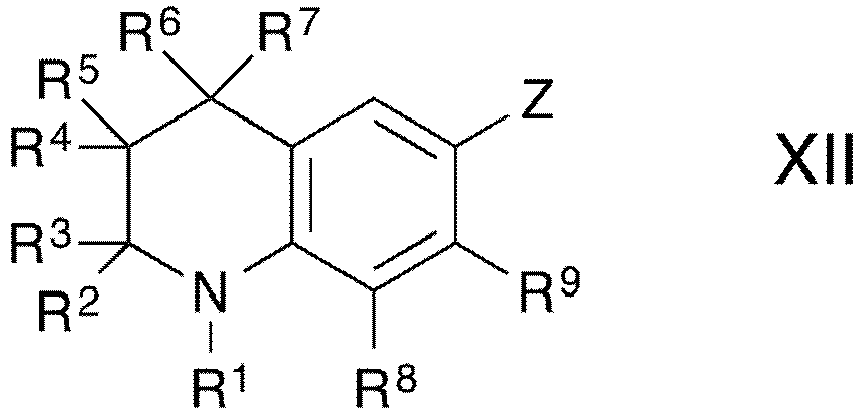
with a compound of formula XIII;
R10H XIII
in which R10 is as herein defined. - Alternatively, a process for the manufacture of a compound of formula I as herein described may comprise reacting a compound of formula XV:

with a compound of formula XIV:
R10Z XIV
in which Z is a leaving group, for example, halogen, pseudohalogen, boronic acid or boronate ester. - Compounds of formula I in which R10 is hydrogen (not according to the invention) may be prepared by dealkylation of a compound of formula I in which R10 is alkyl as herein described.
- Compounds of formula I may be prepared using methods known to the person skilled in the art or by methods described herein. Examples of such preparations are shown schematically:


- The aryl boronates may be prepared by the Pd-catalysed borylation of iodide 14 with either B2pin2 or B2neop2 in the presence of 5 mol % Pd(dppf)Cl2 catalyst and 2 equivalents of KOAc base in DMSO gave the
arylboronates 12 and 10 in good yields, giving an effective method for the selective functionalisation of the para position, relative to the electron-donating amino group.
- Dihydroquinoline-derived compounds such as 17 can be prepared by an initial Grignard methylation of
amide 3, followed by Sonogashira coupling and saponification.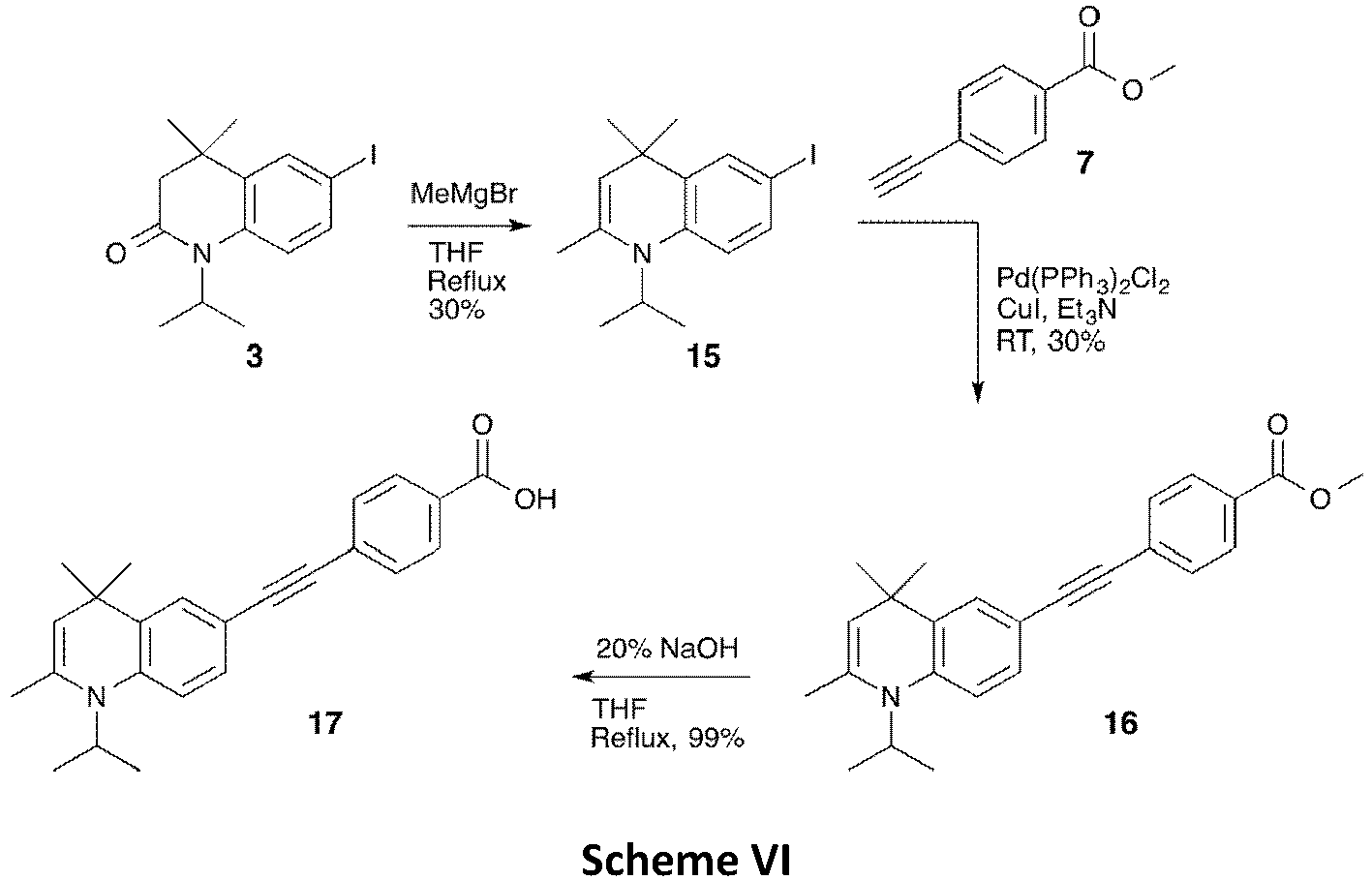
- The present invention will now be described by way of example only with reference to the accompanying figures in which:
-
Figure 1 illustrates normalised excitation spectra of EC23® in a range of solvents; -
Figure 2 illustrates normalised emission spectra of EC23® in a range of solvents, with excitation at 300 nm; -
Figure 3 illustrates normalised excitation spectra ofreference compound 9 of Example 3 in a range of solvents; -
Figure 4 illustrates normalised emission spectra ofreference compound 9 of Example 3 in a range of solvents, with excitation in the range of 275-300 nm; -
Figure 5 illustrates the normalised excitation spectrum of compound 17 of Example 6 in chloroform; -
Figure 6 illustrates the normalised emission spectrum of compound 17 of Example 6 in chloroform, with excitation at 378 nm; -
Figure 7 illustrates a 1H NMR spectrum ofreference compound 9 of Example 3 after storage at ambient temperature in the absence of light; -
Figure 8 illustrates a 1H NMR spectrum ofreference compound 9 of Example 3 after treatment with typical laboratory light for 72 hours at ambient temperature; - Table 1 illustrates
reference compound 9 of Example 3 activity in stem cells compared to ATRA, EC23® and DMSO - Nestin staining; - Table 2 illustrates
reference compound 9 of Example 3 activity in stem cells compared to ATRA, EC23® and DMSO - CK8 staining; - Table 3 illustrates
reference compound 9 of Example 3 activity in stem cells compared to ATRA, EC23® and DMSO - TUJ-1 staining; - Table 4 illustrates
reference compound 9 of Example 3 activity in stem cells compared to ATRA, EC23® and DMSO -Oct 4 staining; - Table 5 illustrates
reference compound 9 of Example 3 activity in stem cells compared to ATRA, EC23® and DMSO - Sox 2 staining; -
Figure 9 illustrates flow cytometry evaluation ofreference compound 9 of Example 3 compared to ATRA, EC23® and DMSO, the expression of stem cell marker SSEA-3 is measured; -
Figure 10 illustrates flow cytometry evaluation ofreference compound 9 of Example 3 compared to ATRA, EC23® and DMSO, the expression of stem cell marker TRA160 is measured; -
Figure 11 illustrates flow cytometry evaluation ofreference compound 9 of Example 3 compared to ATRA, EC23® and DMSO, the expression of stem cell marker A2B5 is measured; - Table 6 illustrates phase contrast images of cell populations treated with
reference compound 9 of Example 3, ATRA, EC23® and DMSO; -
Figure 12 illustrates MTT cell viability analysis ofreference compound 9 of Example 3 with comparison to ATRA, EC23® and DMSO at a treatment concentration of 1 µM; -
Figure 13 illustrates MTT cell viability analysis ofreference compound 9 of Example 3 with comparison to ATRA, EC23® and DMSO at a treatment concentration of 10 µM; -
Figure 14 illustrates TERA-2 stem cells treated withreference compound 9 over a range of concentrations, imaged using confocal microscopy after 7 days; -
Figure 15 illustrates SHSY5Y cells (neuroblastoma) treated withreference compound 9 of Example 3 (10 µM), and imaged using a confocal microscope after 8 hours; -
Figure 16 Fibroblast cells treated withreference compound 9 of Example 3 (10 µM), and imaged using a confocal microscope after 24 hours; -
Figure 17 illustrates TERA-2 stem cells treated withreference compound 9 of Example 3 (10 µM) for 7 days, fixed with 4% paraformaldehyde, and imaged using a confocal microscope; -
Figure 18 illustrates HaCat keratinocyte skin cells treated withreference compound 9 of Example 3 (10 µM) for 5 days; -
Figure 19 illustrates HaCat keratinocyte skin cells treated withreference compound 9 of Example 3 (10 µM) for 5 days, and stained with Involucrin and K14; -
Figure 20 illustrates HaCat keratinocyte skin cells treated with compound 17 of Example 6 (10 µM) for 5 days; -
Figure 21 illustrates HaCat keratinocyte skin cells treated with compound 17 of Example 6 (10 µM) for 5 days, and stained with Involucrin and K14; and -
Figure 22 illustrates the Raman spectrum ofreference compound 9 of Example 3. A high intensity acetylene band is observed at 2190 cm-1, this lies in the cellular silent region (1800-2800 cm-1), wherein signals of biological origin, such as amide bonds, are not observed. - In the figures, any reference to DC271 is a reference to
reference compound 9 of Example 3. - The following abbreviations are used in the Examples and other parts of the description:
- ATRA: All Trans-Retinoic Acid
- B2pin2: bis(pinacolato)diboron
- DCM: dichloromethane
- DMF: N,N-dimethylformamide
- DMSO: dimethylsulfoxide
- dppf: 1,1'-ferrocenediyl-bis(diphenylphosphine)
- EDTA: ethylenediaminetetraacetic acid
- EtOAc: ethyl acetate
- GCMS: gas chromatography-mass spectrometry
- h: hour(s)
- KOAc: potassium acetate
- RT: room temperature
- THF: tetrahydrofuran
- Reagents were purchased from Sigma-Aldrich, Acros Organics, Alfa-Aesar and Fluorochem and used without further purification unless otherwise stated. Solvents were used as supplied, and dried before use with appropriate drying agents if stated. Reactions were monitored in situ by TLC, or NMR spectroscopy. Thin layer chromatography (TLC) was conducted using Merck Millipore silica
gel 60G F254 25 glassplates with visualisation by UV lamp. Flash column chromatography was performed using SiO2 from Sigma-Aldrich (230-400 mesh, 40-63 µm, 60 Å) and monitored using TLC. NMR spectra were recorded on Varian VNMRS-700, Varian VNMRS-600, Bruker Avance-400 or Varian Mercury-400 spectrometers operating at ambient probe temperature unless otherwise stated. NMR spectra were recorded in CDCl3 or DMSO-d 6 purchased from Goss Scientific. NMR peaks are reported as singlet (s), doublet (d), triplet (t), quartet (q), broad (br), heptet (hept), combinations thereof, or as a multiplet (m). ES-MS was performed by the Durham University departmental service using a TQD (Waters UK) mass spectrometer and Acquity UPLC (Waters Ltd, UK), and accurate mass measurements were obtained using a QTOF Premier mass spectrometer and an Acquity UPLC (Waters Ltd, UK). GCMS was performed by the Durham University departmental service using a Shimadzu QP2010-Ultra. IR spectra were recorded on a Perkin Elmer FT-IR spectrometer. Melting points were obtained using a Gallenkamp melting point apparatus. Elemental analyses were obtained by the Durham University departmental service using an Exeter Analytical CE-440 analyzer. -

- To a solution of 4-iodoaniline, (25.0 g, 114.0 mmol) in DCM (400 mL) was added 3,3-dimethylacroloyl chloride (13.36 mL, 120.0 mmol) and the resultant white suspension was stirred for 0.5 h, after which pyridine (9.70 mL, 120 mmol) was added and the solution stirred at RT for 16 h. The solution was quenched with H2O, diluted with DCM, washed with sat. NH4Cl, H2O and brine, dried (MgSO4) and evaporated to give a crude light brown solid (33 g). This was recrystallised from EtOH to give 1 as a white crystalline solid (31.8 g, 93%): 1H NMR (700 MHz, CDCl3) δ 1.91 (s, 3H), 2.22 (s, 3H), 5.68 (s, 1H), 7.01 (s, 1H), 7.33 (m, 2H), 7.60 (d, J = 8.8 Hz, 2H); 13C NMR (101 MHz, CDCl3) δ 20.2, 27.7, 87.2, 118.5, 121.8, 138.0, 138.2, 154.5, 165.2; IR (neat) v max/cm-1 3294m, 3094, 2964w, 2890w, 1666m, 1586m, 1430m, 821s, 650m; MS (ES): m/z = 302.0 [M+H]+; HRMS (ES) calcd. for C11H13NOI [M+H]+: 302.0042, found: 302.0050; Found: C, 43.87; H, 4.02; N 4.64. Calc. for C11H12NOI: C, 43.88; H, 4.02; N 4.65%; m.p. = 136-138 °C.
- AlCl3 (7.66 g, 57.5 mmol) was added to anhydrous DCM (150 mL) and the resultant slurry stirred for 0.5 h. To this was added 1 (11.5 g, 38.3 mmol) and the solution stirred vigorously for 2.5 h at RT. The reaction was quenched slowly with H2O, diluted with DCM, washed with 5% NaOH until the solution turned off-white, then further washed with H2O and brine, dried (MgSO4) and evaporated to give a crude yellow solid. This was recrystallised from EtOH to give 2 as a white crystalline solid (10.2 g, 88%): 1H NMR (700 MHz, CDCl3) δ 1.32 (s, 6H), 2.47 (s, 2H), 6.62 (d, J = 8.3 Hz, 1H), 7.47 (dd, J = 8.3, 1.9 Hz, 1H), 7.56 (d, J = 1.8 Hz, 1H), 9.20 (s, 1H); 13C NMR (176 MHz, CDCl3) δ 27.7, 34.2, 45.2, 86.8, 118.1, 133.7, 135.1, 135.9, 136.6, 171.3; IR (neat) v max/cm-1 3164m, 3102, 3040w, 2953m, 1671s, 1596m, 1484m, 817s; MS (ES): m/z = 302.0 [M+H]+; HRMS (ES) calcd. for C11H13NOI [M+H]+: 302.0042, found: 302.0042; Found: C, 43.91; H, 4.02; N 4.63. Calc. for C11H12INO: C, 43.87; H, 4.02; N 4.65%; m.p. = 199-202 °C.
- To a solution of 2 (7.05 g, 23.4 mmol) in anhydrous DMF (200 mL) was added crushed KOH (4.08 g, 70.2 mmol) and the resultant slurry stirred for 1 h at 50 °C. To this was added 2-iodopropane (7.00 mL, 70.2 mmol) and the solution stirred at 50 °C for 40 h. The reaction was quenched with H2O, diluted with EtOAc, washed with sat. NH4Cl, H2O and brine, dried (MgSO4) and evaporated to give a crude clear oil (7.2 g). This was purified by SiO2 chromatography (hexane:EtOAc, 9:1, with 1% Et3N, as eluent) to give 3 as a colourless oil (3.93 g, 49%): 1H NMR (700 MHz, CDCl3) δ 1.25 (s, 6H), 1.49 (s, 3H), 1.50 (s, 3H), 2.38 (s, 2H), 4.66 (hept, J = 7.0 Hz, 1H), 6.87 (d, J = 8.6 Hz, 1H), 7.50 (dd, J = 8.6, 2.1 Hz, 1H), 7.52 (d, J = 2.1 Hz, 1H); 13C NMR (176 MHz, CDCl3) δ 20.3, 26.8, 33.1, 47.2, 48.8, 86.9, 118.9, 133.4, 135.7, 138.9, 139.1, 169.5; IR (neat) v max/cm-1 2961m, 2934w, 2870w, 1667s, 1582m, 1482m, 809s; MS (ES): m/z = 344.0 [M+H]+; HRMS (ES) calcd. for C11H13NOI [M+H]+: 344.0511, found: 344.0512.
- To a solution of 3 (1.25 g, 3.63 mmol) in anhydrous toluene (15 mL) at 0 °C was added borane dimethyl sulfide complex (2.0 M in THF, 1.91 mL, 3.81 mmol) dropwise and the resultant solution stirred at reflux for 16 h. The solution was cooled to RT, and 10% aq. Na2CO3 (25 ml) was added and the solution stirred for 0.5 h, diluted with EtOAc, washed with H2O and brine, dried (MgSO4) and evaporated to give a crude colourless oil (1.12 g). This was purified by SiO2 chromatography (hexane:EtOAc, 9:1, with 1% Et3N, as eluent) to give 4 as a colourless oil (1.08 g, 90%): 1H NMR (700 MHz, CDCl3) δ 1.19 (s, 3H), 1.19 (s, 3H), 1.24 (s, 6H), 1.65-1.67 (m, 2H), 3.14-3.17 (m, 2H), 4.06 (hept, J = 6.6 Hz, 1H), 6.46 (d, J = 8.8 Hz, 1H), 7.28 (dd, J = 8.9, 2.1 Hz, 1H), 7.39 (d, J = 2.2 Hz, 1H); 13C NMR (176 MHz, CDCl3) δ 18.9, 30.3, 32.4, 36.6, 36.8, 47.3, 76.1, 113.4, 134.5, 134.8, 135.6, 144.0; IR (neat) v max/cm-1 2957m, 2927w, 2863w, 1580m, 1489m, 792s, 684w; MS (ES): m/z = 330.1 [M+H]+; HRMS (ES) calcd. for C11H13NOI [M+H]+: 330.0719, found: 330.0717.
-

- 4-lodobenzoic acid (25 g, 100.8 mmol) was suspended in MeOH (250 mL), and conc. H2SO4 (5 mL) was added and the resultant solution was stirred at reflux overnight. The clear solution was then cooled slowly to RT, and then to 0 °C. The resultant solid was filtered, washed with cold MeOH and dried to give 5 as a colourless crystalline solid (23.7 g, 90%): 1H NMR (600 MHz, CDCl3) δ 3.90 (s, 3H), 7.73 (d, J = 8.6 Hz, 2H), 7.79 (d, J = 8.6 Hz, 2H); 13C NMR (176 MHz, CDCl3) δ 52.5, 100.9, 129.8, 131.2, 137.9, 166.7; IR (neat) v max/cm-1 3040w, 2996w, 2946w, 1709s, 1596m, 1436m, 1269s, 1114s, 843s, 683m; MS (GC): m/z = 261.9 [M]+; Found: C, 36.54; H, 2.71. Calc. for C8H7IO2: C, 36.67; H, 2.69%.
- An oven-dried 500 mL Schlenk flask was evacuated under reduced pressure and refilled with Ar, before Pd(PPh3)2Cl2 (1.18 g, 1.68 mmol), Cul (1.68 g, 1.68 mmol) and 5 (22.0 g, 83.98 mmol) were added and the flask sealed with a septum. Triethylamine (200 mL) and trimethylsilylacetylene (13.94 mL, 100.8 mmol) were added and the flask evacuated/filled with Ar again (3x). The mixture was stirred at RT overnight. The solution was diluted with hexane, passed through Celite/SiO2 under vacuum, and evaporated to give 6 as an off-white solid (19.8 g). This was carried to the next step without purification: MS (GC): m/z = 232.1 [M]+; Found: C, 66.90; H, 6.88. Calc. for C13H16O2Si: C, 67.2; H, 6.94%.
- To a MeOH:DCM solution (2:1, 300 mL) was added 6 (18.5 g, 79.5 mmol) and K2CO3 (22.0 g, 159 mmol). The mixture was stirred under Ar for 6 h. The solution was then evaporated to 1/3 volume, diluted with hexane, passed through Celite and evaporated to give a light brown solid, which was purified by sublimation under reduced pressure to give 7 as a white solid (11.1 g, 83% over two steps): 1H NMR (600 MHz, CDCl3) δ 3.23 (s, 1H), 3.91 (s, 3H), 7.54 (d, J = 8.4 Hz, 2H,), 7.98 (d, J = 8.6 Hz, 2H); 13C NMR (176 MHz, CDCl3) δ 52.5, 80.2, 83.0, 126.9, 129.6, 130.3, 132.3, 166.6; IR (neat) v max/cm-1 3035w, 3006w, 2950w, 2103w, 1699s, 1605m, 1433m, 1277s, 1107s, 859s; MS (GC): m/z = 160.1 [M]+; Found: C, 74.62; H, 5.01. Calc. for C10H8O2: C, 74.99; H, 5.03%.
-

- An oven-dried Schlenk flask was evacuated under reduced pressure and refilled with Ar, before Pd(PPh3)2Cl2 (0.0744 g, 0.106 mmol), Cul (0.0202 g, 0.106 mmol) and 7 (0.219 g, 1.37 mmol) were added and the flask sealed with a septum. A solution of 4 (0.349 g, 1.06 mmol) in triethylamine (6 mL) was added and the flask evacuated/filled with Ar again (3x). The mixture was stirred at RT for 72 h. The mixture was diluted with Et2O, passed through Celite/SiO2 under vacuum, and evaporated to give a crude orange solid (0.47 g). This was purified by SiO2 chromatography (hexane:EtOAc, 8:2, with 1% Et3N, as eluent) to give 8 as an orange solid (0.105 g, 27%): 1H NMR (700 MHz, CDCl3) δ 1.21/1.23 (s, 6H), 1.28 (s, 6H,), 1.66-1.71 (m, 2H), 3.19-3.24 (m, 2H), 3.92 (s, 3H), 4.15 (hept, J = 6.6 Hz, 1H), 6.64 (d, J = 8.7 Hz, 1H), 7.24-7.25 (m, 1H), 7.36 (d, J = 1.8 Hz, 1H), 7.54 (d, J = 8.3 Hz, 2H), 7.98 (d, J = 8.3 Hz, 2H); 13C NMR (151 MHz, CDCl3) δ 19.1, 30.1, 32.2, 36.7, 36.8, 47.4, 52.3, 86.8, 95.2, 108.0, 110.6, 128.5, 129.5, 129.6, 131.1, 131.2, 131.7, 145.0, 167.0; MS (ES):m/z = 362.2 [M + H]+; HRMS (ES) calcd. for C24H28NO2 [M + H]+: 362.2120, found: 362.2114.
-

- An oven-dried Schlenk flask was evacuated under reduced pressure and refilled with Ar, before Pd(PPh3)2Cl2 (0.253 g, 0.36 mmol), Cul (0.0686 g, 0.36 mmol) and 7 (0.634 g, 3.96 mmol) were added and the flask sealed with a septum. A solution of 4 (1.185 g, 1.06 mmol) in triethylamine (30 mL) was degassed by sonication under vacuum, and backfilling with Ar (3x). This solution was then added to the Schlenk flask, degassed under vacuum and backfilled with Ar once more, and the resultant mixture stirred at RT for 72 h. The reaction mixture was then evaporated to dryness, and eluted through a thin Celite/SiO2 plug with hexane, and then hexane:EtOAc (9:1). The organics were then washed with sat. NH4Cl, 3% aq. EDTA, H2O and brine, dried (MgSO4) and evaporated to give an orange solid (1.38g). This was dissolved in THF (30 mL) and aq. 20% NaOH (3 mL) was added. The resultant solution was stirred at reflux for 40 h, whereupon the mixture was cooled and H2O added. The solution was neutralised with 5% HCl, diluted with EtOAc, washed with sat. NaHCO3, H2O and brine, dried (MgSO4) and evaporated to give a crude yellow solid (1.0 g). This was recrystallised twice by solvent layering (DCM/hexane) to give 17 as bright yellow needles (0.73 g, 58% over two steps): 1H NMR (700 MHz; (CD3)2SO) δ 1.16 (s, 3H), 1.17 (s, 3H), 1.22 (s, 6H), 1.60-1.64 (m, 2H), 3.17-3.21 (m, 2H), 4.15 (hept, J = 7.0 Hz), 6.70 (d, J = 9.3 Hz, 1H), 7.19 (dd, J = 8.6, 2.1 Hz, 1H), 7.30 (d, J = 2.1 Hz, 1H), 7.56 (d, J = 8.5 Hz, 2H), 7.92 (d, J = 8.6 Hz, 2H), 13.02 (s, 1H); 13C NMR (700 MHz, (CD3)2SO) δ 18.6, 29.7, 31.6, 35.8, 36.1, 46.7, 86.5, 94.9, 106.5, 109.5, 110.5, 128.9, 129.4, 130.7, 130.7, 131.2, 144.7, 166.8; MS (ES):m/z = 348.2 [M+H]+; HRMS (ES) calcd. for C23H26NO2 [M + H]+: 348.1964, found: 348.1965.
-
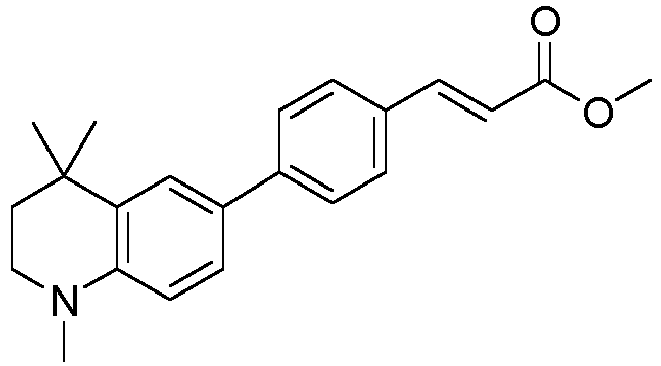
-

- In a 500 mL round bottomed flask a solution of N-methylanaline (3.24 g, 30.32 mmol), 1-bromo-3-methyl-but-2-ene (5.0 g, 33.56 mmol) and K2CO3 (4.63 g, 33.56 mmol) in 160 ml MeCN was heated at 85°C for 18 h at which time analysis via in situ ES+-MS showed the reaction to be complete. The mixture was diluted with Et20 (100 mL) and washed with H2O (3 x 100 mL). The organic layer was dried with MgSO4, filtered and evaporated in vacuo to give a crude oil which was filtered through a silica pad, eluting with hexane. The solvent was removed in vacuo to give the title compound as a clear oil (3.82 g, 72 %); m/z (ES+-MS) 176 (MH+); 1H NMR (499.76 MHz, CDCl3) δ 7.28 (2H, d, J = 7.0 Hz), 6.79 (2H, d, J =7.0 Hz), 6.75 (1H, tr, J = 7.0 Hz), 5.25 (1H, tr, J = 6.0 Hz), 3.93 (2H d, J = 6.0 Hz), 2.93 (3H, s) 1.76 (6H, s); 13C{1H} NMR (100.61 MHz, CDCl3) δ149.86, 134.54, 129.08, 120.91, 116.42, 112.97, 50.53, 37.91, 25.70. 17.92; HRMS calcd for C12H18N ([M + H]+)176.14338, found 176.14336.
- In a 500 mL round bottomed flask a mixture of methyl-(3-methyl-but-2-enyl)-phenyl-amine (18.0 g, 102.86 mmol) and polyphosphoric acid (75 mL) was heated at 120°C for 18 h, at which time analysis of purified aliquot of the mixture via 1H NMR spectroscopy showed the reaction to be complete. The mixture was diluted by the slow addition of H2O (100 mL) over 5 minutes. The solution was cautiously basified via the addition of aqueous KOH and then extracted with Et2O (1 L). The organic layer was washed with H2O (3 × 200 mL), dried with MgSO4, filtered and the solvent removed in vacuo to give a crude oil which was filtered through a silica pad, eluting with hexane. The solvent was removed in vacuo to give the title compound as a clear oil (14.93 g, 83 %); m/z (EI-MS) 175 (50%, M+), 160 (60%, M+ - Me); 1H NMR (499.76 MHz, CDCl3) δ 7.23 (1H, dd, J = 7.5, 1.5 Hz), 7.11 (1H, triplet of doublets, J = 7.5, 1.5 Hz), 6.63 (1H, triplet of doublets, J = 7.5, 1.5 Hz), 6.62 (1H, d, J = 7.5 Hz), 3.25 (2H, tr, J = 6.0 Hz), 2.92 (3H, s), 1.80 (2H, tr, J = 6.0 Hz); 13C{1H} NMR (125.67 MHz, CDCl3) δ145.74, 131.61, 126.94, 126.02, 116.25, 111.09, 47.88, 39.50, 37.50, 32.19, 31.21, HRMS calcd for C12H18N ([M + H]+)176.14338, found 176.14332.
- To a solution of 1,4,4-trimethyl-1,2,3,4-tetrahydro-quinoline (2.10 g, 12.0 mmol) and iodine (3.05 g, 12.0 mmol) in DCM (100 mL) was added red HgO (2.59 g, 12.0 mmol). The reaction was stirred at room temperature until analysis via 1H NMR showed the reaction to be complete (2 h). The mixture was filtered, washed with dilute aqueous Na2S2O3 (100 mL) and H2O (100 mL). The organic layer was dried with MgSO4 and the solvent removed in vacuo. The residue was filtered through an alumina plug, eluting with DCM and the solvent removed in vacuo to give the title compound as a pale yellow oil (2.50 g, 69 %); m/z (EI-MS) 301 (100%, M+), 286 (80%, M+ - Me); 1H NMR (499.67 MHz, CDCl3) δ7.40 (1H, d, J = 2.0 Hz), 7.32 (1H, dd, J = 8.5, 2.0 Hz), 6.35 (1H, d, J = 8.5 Hz), 3.24 (2H, tr, J = 6.0 Hz), 2.89 (3H, s), 1.74 (2H, tr, J = 6.0 Hz) 1.27 (6H, s); 13C{1H} NMR (125.67 MHz, CDCl3) δ144.92, 135.49, 134.34, 127.22, 126.52, 113.35, 47.58, 39.30, 36.87, 32.29, 30.79; HRMS calcd for C12H17NI ([M + H]+) 302.04003, found 302.04008.
- In a dry, N2 filled glovebox, Pd(dppf)Cl2 (0.126 g, 0.15 mmol), 6-iodo-1,4,4-trimethyl-1,2,3,4-tetrahydro-quinoline (0.93 g, 3.09 mmol), B2pin2 (0.78 g, 3.09 mmol) and KOAc (0.61 g, 6.18 mmol) were mixed in a thick walled glass tube fitted with a Young's tap. Degassed DMSO (10 mL) was added and the mixture heated at 80°C for 18 h, at which time GCMS analysis showed the reaction to be complete. The mixture was diluted with Et2O (100 mL) and washed with H2O (3 × 100 mL). The organic layer was dried with MgSO4, filtered and the solvent removed in vacuo to give a residue which was filtered through a silica pad, eluting with 1:1 DCM/hexane. Removal of the solvent in vacuo gave a crude product that was recrystallised from MeOH at-20°C to give 12 as white needles (0.66 g 70 %); mp 140-141°C; m/z (EI-MS) 301 (100%, M+), 286 (100%, M+ - Me); 1H NMR (699.73 MHz, CDCl3) δ7.63 (1H,s) 7.55 (1H, d, J = 8.0 Hz), 6.56 (1H, d, J = 8.0 Hz), 3.29 (2H, tr, J = 6.0 Hz), 2.94 (3H, s), 1.75 (2H, tr, J = 6.0 Hz), 1.33 (12H, s), 1.31 (6H, s);
13C{1H} NMR (175.73 MHz, CDCl3):
δ 147.8, 134.4, 132.3, 130.3, 110.1, 83.2, 47.7, 39.2, 37.2, 32.1, 30.7, 25.0, the resonance of the carbon attached to boron was not observed; 11B{1H} NMR (128.38 MHz, CDCl3) δ 31.01; elemental analysis calcd. (%) for C18H28BNO2: C 71.77, H 9.37, N 4.65; found: C 71.79, H 9.27, N 4.60. -

- In a dry, N2 filled glovebox, Pd(dppf)Cl2 (25 mg, 0.03 mmol), 1,4,4-trimethyl-6-(4,4,5,5-tetramethyl-[1,3,2]dioxaborolan-2-yl)-1,2,3,4-tetrahydroquinoline (0.49 g, 1.55 mmol), 3-(4-bromo-phenyl)-acrylic acid methyl ester (0.37 g, 0.83 mmol) and K3PO4·2H2O (0.77 g, 3.10 mmol) were mixed in a thick walled glass tube fitted with a Young's tap. Degassed i PrOH (10 mL) and H2O (1mL) were added and the mixture heated at 80 °C for 18 h, at which time GCMS analysis showed the reaction to be complete. The solvent was removed in vacuo and the residue dissolve in DCM (100 mL) and washed with H2O (3 × 20 mL). The organic layer was dried with MgSO4, filtered and the solvent removed in vacuo to give a residue which was filtered through a silica pad, eluting with DCM. Removal of the solvent in vacuo gave a yellow solid which was recrystallised from MeOH at -20°C to give yellow white needles of 13 (0.32 g, 62 %); mp 121-123 °C; UV-vis (CHCl3) λmax (ε) 380 nm (23900 L mol-1 cm-1); λem (CHCl3) 536 nm; m/z (ES+-MS) 336 ([M-H]+); 1H NMR (499.77 MHz, CDCl3) δ7.73 (1H, d, J = 16.0 Hz), 7.58 (2H, d, J = 8.5 Hz), 7.56 (2H, d, J = 8.5 Hz), 7.48 (1H, s), 7.37 (1H, d, J = 8.0 Hz), 6.66 (1H, d, J = 8.0 Hz), 6.45 (1H, d, J = 16.0 Hz), 3.83 (3H, s), 3.30 (2H, tr, J = 5.5 Hz), 2.97 (3H, s), 1.81 (2H, tr, J = 5.5 Hz), 1.35 (6H,s); 13C{1H} NMR (125.67 MHz, CDCl3) δ167.87. 145.49, 144.98, 143.89, 131.85 (2 peaks overlapped), 12.71, 127.45, 126.49, 125.63, 124.56, 116.56, 111.28, 51.79, 47.75, 39.40, 37.24, 32.34, 30.97; HRMS calcd for C22H26NO2 ([M-H]+) 336.19581, found 336.19577.
-

- In a dry, N2 filled glovebox, Pd(dppf)Cl2 (0.135 g, 0.17 mmol), 6-iodo-1,4,4-trimethyl-1,2,3,4-tetrahydro-quinoline (1.0 g, 3.32 mmol), B2pin2 (0.75 g, 3.32 mmol) and KOAc (0.65 g, 6.64 mmol) were mixed in a thick walled glass tube fitted with a Young's tap. Degassed DMSO (10 mL) was added and the mixture heated at 80°C for 18 h, at which time GCMS analysis showed the reaction to be complete. The mixture was diluted with Et2O (100 mL) and washed with H2O (3 x 100 mL). The organic layer was dried with MgSO4, filtered and the solvent removed in vacuo to give a residue which was filtered through a silica pad, eluting with 1:1 DCM/hexane. Removal of the solvent in vacuo gave a crude product that was recrystallised from MeOH at -20°C to give white needles of 10 (0.80 g, 88 %); mp 151-153°C; m/z (EI-MS) 287 (90%, M+), 272 (100%, M+ - Me); 1H NMR (499.77 MHz, CDCl3) δ7.64 (1H, d, J = 1.5 Hz), 7.54 (1H, dd, J = 8.5, 1.5 Hz), 7.27 (1H, s), 6.57 (1H, d, J = 8.5 Hz), 3.75 (4H, s), 3.28 (2H, tr, J = 6.0 Hz), 2.94 (3H, s), 1.76 (2H, tr, J = 6.0 Hz), 1.32 (6H, s), 1.02 (6H, s); 13C{1H} NMR (125.67 MHz, CDCl3) δ147.49, 133.29, 131.42, 130.19, 110.09, 72.33, 47.75, 39.24, 37.29, 32.05, 32.03, 30.83, 20.12, the resonance of the carbon attached to boron was not observed; 11B{1H} NMR (128.38 MHz, CDCl3) δ 27.02; elemental analysis calcd. (%) for C17H26BNO2: C 71.09, H 9.12, N 4.88; found: C 71.00, H 9.12, N 4.81.
-

- In a dry, N2 filled glovebox, Pd(dppf)Cl2 (13 mg, 0.02 mmol), 6-(5,5-dimethyl-[1,3,2]dioxaborinan-2-yl)-1,4,4-trimethyl-1,2,3,4-tetrahydro-quinoline (0.25 g, 0.87 mmol), 6-bromo-naphthalene-2-carboxylic acid methyl ester (0.22 g, 0.83 mmol) and K3PO4·2H2O (0.43 g, 1.74 mmol) were mixed in a thick walled glass tube fitted with a Young's tap. Degassed DMSO (15 mL) and H2O (3mL) were added and the mixture heated at 80°C for 18 h, at which time GCMS analysis showed the reaction to be complete. The mixture was diluted with Et2O (100 mL) and washed with H2O (3 x 100 mL). The organic layer was dried with MgSO4, filtered and the solvent removed in vacuo to give a residue which was filtered through a silica pad, eluting with DCM. Removal of the solvent in vacuo gave a yellow solid which was recrystallised from MeOH at -20°C to give yellow white needles of 11 (0.28 g, 94 %); mp 166-167 °C; UV-vis (CHCl3) λmax (ε) 243 nm (53200 L mol-1 cm-1); λem (CHCl3) 494 nm; m/z (EI-MS) 359 (100%, M+), 344 (60%, M+-Me); 1H NMR (699.73 MHz, CDCl3) δ8.60 (1H, s), 8.06 (1H, dd, J = 8.5, 1.5 Hz), 7.99 (1H, s), 1.97 (1H, d, J = 8.5 Hz), 7.90 (1H, d, J = 8.0 Hz), 7.81 (1H, dd, J = 8.5, 1.5 Hz), 7.60 (1H, d, J = 2.0 Hz), 7.49 (1H, dd, J = 8.5, 2.0 Hz), 6.71 (1H, d, J = 8.5 Hz), 3.99 (3H, s), 3.32 (2H, tr, J = 6.0 Hz), 2.99 (3H, s), 1.84 (2H, tr, J = 6.0 Hz), 1.39 (6H, s); 13C{1H} NMR (175.73 MHz, CDCl3) δ 167.55, 145.49, 141.72, 136.29, 131,99, 131.08, 129.74, 128.74, 128.18, 126.62, 126.31, 126.05, 125.62, 124.97, 123.74, 111.41, 52.29, 47.79, 39.43, 37.31, 32.40, 31.03; HRMS calcd for C24H25NO2-(M+) 359.18798, found 359.18789.
-

-
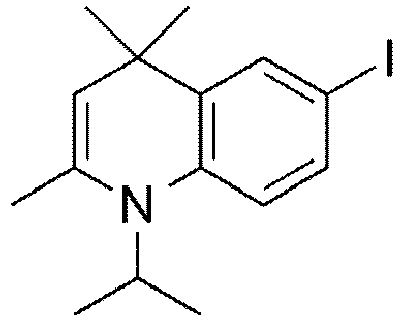
- To a solution of 3 (1.17 g, 3.42 mmol) in anhydrous THF (50 mL) was added MeMgBr (3.0 M in Et2O, 2.28 mL, 6.84 mmol) and the resultant solution stirred at reflux for 16 h. The solution was cooled, quenched with 20% HCI (1.14 mL) and H2O, diluted with EtOAc, washed with H2O and brine, dried (MgSO4) and evaporated to give a crude colourless oil (0.95 g). This was immediately purified by SiO2 chromatography (hexane:EtOAc, 97.5:2.5, with 1% Et3N, as eluent) to give 15 as a pink oil (0.35 g, 30 %) which was immediately used in the next reaction: 1H NMR (400 MHz, CDCl3) δ 1.20 (s, 6H), 1.45 (s, 3H), 1.46 (s, 3H), 1.98 (d, J = 0.9 Hz, 3H), 4.16 (hept, J = 7.1 Hz, 1H), 4.50 (q, J = 1.2 Hz, 1H), 6.73(d, J = 8.7 Hz, 1H,),7.34 (dd, J = 8.7, 2.2 Hz, 1H), 7.42(d, J = 2.1 Hz, 1H).
-

- Pd(PPh3)2Cl2 (0.073 g, 0.104 mmol), Cul (0.0198 g, 0.104 mmol) and 7 (0.176 g, 1.10 mmol) were added to a Schlenk flask under Ar. The flask was evacuated and refilled with Ar. 15 (0.356 g, 1.04 mmol), dissolved in triethylamine (12 mL), was added and the flask evacuated/filled with Ar again (3x). The mixture was stirred at RT for 72 h. The solution was diluted with Et2O, passed through Celite/SiO2 under vacuum, and evaporated to give a crude green solid (0.4 g). This was purified by SiO2 chromatography (hexane:EtOAc, 8:2, with 1% Et3N, as eluent) to give 16 (scheme IV) as a pale green solid (0.12 g, 30%). 16 (0.073 g, 0.195 mmol) was then dissolved in THF (10 mL), and to this was added aq. 20% NaOH (2 mL). The resultant solution was stirred at reflux for 40 h, whereupon the mixture was cooled and H2O and Et2O added. The solution was acidified to
pH 7 with 5% HCI, diluted with Et2O, washed with brine, dried (MgSO4) and evaporated to give 17 as a yellow solid (0.070 g, 99%): 1H NMR (400 MHz; CDCl3) δ 1.24 (s, 6H), 1.47 (s, 3H), 1.49 (s, 3H), 2.01 (d, J = 0.9 Hz, 3H), 4.23 (hept, J = 7.2 Hz, 1H), 4.53 (d, J = 1.1 Hz, 1H), 6.93 (d, J = 8.6 Hz, 1H), 7.27-7.29 (m, 1H), 7.37 (d, J = 2.0 Hz, 1H), 7.54 (d, J = 8.3 Hz, 2H), 8.03 (d, J = 8.4 Hz, 2H). - Absorption and emission spectra of 9 were obtained in a variety of solvents (
Fig. 3 and Fig. 4 ). Comparison of 9 with EC23® (Fig. 1 and Fig. 2 ) shows significant increases in the maximal absorption and emission wavelengths. The fluorescence from 9 was easily detected at concentrations as low as 1 nM, and solvent-dependent effects were observed, with high intensity fluorescence detected in non polar solvents, while significant fluorescence quenching was observed in water, in particular. The fluorescence emission wavelength is also highly dependent on solvent polarity, with a significant red shift occurring in polar solvents when compared to non polar solvents. This initial characterisation indicated that when applied to cells, the fluorescence of 9 could be expected to be discernable in discrete cellular locations, depending on the local polarity. - Compound 17 exhibits a similar emission profile to compound 9 (
Fig. 6 ), but also exhibits a longer maximal absorption wavelength (Fig. 5 ). This absorption band peaks at around 379 nm, and trails into the indigo/blue (440 nm). This longer wavelength absorption band indicates that compound 17 will be more effectively excited thancompound 9 with the 405 nm excitation source that is typical on fluorescence microscopes. - A 1H NMR spectrum of
compound 9 in DMSO-d 6 was recorded after storage at ambient temperature in the absence of light (Fig. 7 ). The same sample ofcompound 9 was then exposed to standard laboratory light at a distance of 30 cm for 72 hours, and the 1H NMR spectrum recorded (Fig. 8 ).Compound 9 is stable towards typical laboratory lighting over this time period, although a small proportion converts to a structurally similar enamine form.Compound 9 remains stable until around 16 day's exposure, where some indication of degradation becomes apparent. More significant degradation is observed after 22 day's exposure, althoughcompound 9 still represents the major constituent of the sample (>60%). - Defining properties of retinoids are their ability to induce differentiation of specific cell types and to induce the expression of genes which are directly responsive to retinoic acid by being linked to DNA of defined sequences (retinoic acid response elements, RAREs) which binds ligand-activated retinoic acid receptors (RARs), thus enabling recruitment of the gene transcription machinery to the gene regulatory sequences (promoter) necessary for messenger RNA transcripts of the gene to be expressed.
- To show that the fluorescent retinoids exhibit retinoid activity, TERA-2 cells (an embryonal carcinoma cell line) were treated with 1 and 10 µM ATRA, EC23® and
compound 9, and the resultant samples stained with a variety of immunocytochemical stains. Table 1 shows the result of the treatment of TERA-2 cells with 1 and 10 µM ATRA, EC23® andcompound 9, and with the vehicle solvent, DMSO, on the presence of nestin, an intermediate filament that is typically expressed in neural stem cells. All conditions were positive for nestin with staining possibly to a lesser extent in 10 µM EC23® andcompound 9 samples. - Table 2 shows the result of the treatment of TERA-2 cells with 1 and 10 µM ATRA, EC23® and
compound 9, and with the vehicle solvent, DMSO, on the presence of cytokeratin 8 (CK8), a marker of non-neural differentiation. The staining appears less intense in 10 µM samples of both ATRA and EC23®, as is typical with a reduction in non-neural differentiation, but slightly brighter withcompound 9 when compared with 1 µM samples. DMSO treatment shows very bright staining for CK8. - Table 3 shows the result of the treatment of TERA-2 cells with 1 and 10 µM ATRA, EC23® and
compound 9, and with the vehicle solvent, DMSO, on the presence of TUJ-1, a pan neuronal marker. Samples treated with ATRA, EC23® andcompound 9 show significant staining for TUJ-1, with increased staining evident with 10 µM treatment. DMSO treated cells show only limited TUJ-1 staining. - Table 4 shows the result of the treatment of TERA-2 cells with 1 and 10 µM ATRA, EC23® and
compound 9, and with the vehicle solvent, DMSO, on the presence ofOct 4, a transcription factor that is a marker of pluripotency. DMSO treated cells show obvious positive staining forOct 4, and staining is also evident in 1 µM ATRA treatment. All other conditions do not exhibit staining forOct 4, indicating that EC23® andcompound 9 readily downregulate markers of pluripotency through the promotion of differentiation. - Table 5 shows the result of the treatment of TERA-2 cells with 1 and 10 µM ATRA, EC23® and
compound 9, and with the vehicle solvent, DMSO, on the presence of Sox 2, a transcription factor that is a marker of pluripotency. DMSO treated cells show obvious positive staining for Sox 2, with significantly reduced staining in cells treated with ATRA, EC23® andcompound 9. This observations suggests that ATRA, EC23® andcompound 9 readily downregulate markers of pluripotency through the promotion of differentiation. -
Figure 9 shows flow cytometric analysis of TERA-2 cells treated with ATRA, EC23® andcompound 9, and DMSO. The expression of stem cell marker SSEA-3 is measured, which is generally reduced when cells are treated with retinoids. SSEA-3 flow cytometry shows that expression of SSEA-3 is significantly decreased in retinoid treated cells compared to DMSO treated cells.Compound 9 treated cells showed higher levels of SSEA-3 than ATRA and EC23® at both 1 and 10 µM treatments. -
Figure 10 shows flow cytometric analysis of TERA-2 cells treated with ATRA, EC23® andcompound 9, and DMSO. The expression of stem cell marker TRA160 is measured, which is generally reduced when cells are treated with retinoids. TRA160 flow cytometry shows that expression of TRA160 is significantly decreased in retinoid treated cells compared to DMSO treated cells.Compound 9 treated cells showed slightly higher levels of TRA160 than ATRA and EC23® at both 1 and 10 µM treatments. -
Figure 11 shows flow cytometric analysis of TERA-2 cells treated with ATRA, EC23® andcompound 9 and DMSO. The expression of early neuronal marker A2B5 is measured, which is generally increased when cells are treated with retinoids. A2B5 flow cytometry shows that expression of A2B5 is significantly increased in retinoid treated cells compared to DMSO treated cells. ATRA treated cells express higher levels of A2B5 followed by EC23® andcompound 9. - Table 6 shows phase contrast images of cell populations that have been treated with ATRA, EC23® and
compound 9, and DMSO. In cell populations treated with DMSO, the cells are small, and densely packed together. In contrast, cell populations treated with ATRA, EC23® andcompound 9 are less dense, and cells are much more spread out. -
Figure 12 and Figure 13 shows an MTT cell viability analysis of 1 and 10 µM treatments of ATRA, EC23® andcompound 9, and DMSO. All treatments exhibit comparable viability to DMSO, suggesting cells treated with retinoids do not experience significant toxic effects. -
Figure 14 shows TERA-2 cells treated withcompound 9 at 10, 1, 0.1, 0.01 µM concentrations, and imaged using a confocal fluorescence microscope after 7 days. Even at the lowest treatment concentration, the fluorescence ofcompound 9 is visible, with 0.1-10 µM treatments easily imaged.Compound 9 is mainly localised around the nuclear envelope, and appears also to be localised around other cellular structures. -
Figures 15 ,16 and 17 respectively show SHSY5Y cells (neuroblastoma) and fibroblast cells and TERA-2 cells treated with 10µM compound 9, and imaged using a confocal fluorescence microscope after 8 hours (SHSY5Y) and 24 hours (fibroblasts) and 7 days (TERA-2).Compound 9 is again clearly visible with obvious localisation around the nuclear envelope. -
Figure 18 shows HaCat keratinocyte skin cells that were treated with 10µM compound 9 for 5 days, fixed and then imaged with a confocal fluorescence microscope. -
Figure 19 shows HaCat keratinocyte skin cells treated with compound 9 (10 µM) for 5 days. The fixed coverslips were then stained with Involucrin (green) and K14 (red) and imaged using a confocal microscope. The fluorescence ofcompound 9 is coloured in blue. Involucrin selectively stains Cellular Retinoic Acid Binding Protein (CRABP), which transports retinoids in and around the nucleus. K14 is a prototypic marker of dividing basal keratinocytes and helps in the maintenance of epidermal cell shape. -
Figure 21 shows HaCat keratinocyte skin cells treated with compound 17 (10 µM) for 5 days. The fixed coverslips were then stained with Involucrin (green) and K14 (red) and imaged using a confocal microscope. The fluorescence of compound 17 is coloured in blue. Involucrin selectively stains Cellular Retinoic Acid Binding Protein (CRABP), which transports retinoids in and around the nucleus. K14 is a prototypic marker of dividing basal keratinocytes and helps in the maintenance of epidermal cell shape. As inFig. 20 , the fluorescence from compound 17 is significantly more intense than that exhibited bycompound 9 under identical conditions (Fig. 19 ). -
Figure 22 shows the Raman spectrum ofcompound 9. A high intensity acetylene band is observed at 2190 cm-1. This lies in the cellular silent region (1800-2800 cm-1), wherein signals of biological origin, such as amide bonds, are not observed. This spectral separation allows Raman bands in the cellular silent region to be more easily detected when imaging or analysing cellular samples using Raman microscopy/spectroscopy.
Claims (8)
- A compound of formula I:
 R1 is hydrogen, alkyl C1-10 or acyl;R2, R3, R4 and R5, which may be the same or different, are each hydrogen or alkyl C1-4, or together one pair of R2 and R4 or R3 and R5 represent a bond;R6 and R7, which may be the same or different, are each hydrogen, alkyl C1-4, or R6 and R7 together form a group:
=CR11R12;
R8 and R9, which may be the same or different, are each hydrogen, alkyl C1-10, aryl, aralkyl, halogen, trifluoroalkyl, cyano, nitro, -NRaRb, -ORa, -C(O)Ra, -C(O)ORa,-OC(O)Ra, -S(O)RaRb, and -C(O)NRaRb;R11 and R12, which may be the same or different, are each hydrogen or alkyl C1-10; andRa and Rb, which may be the same or different, are each hydrogen or alkyl C1-10;R10 is a group II, III, IV, VII, VIII or IX:

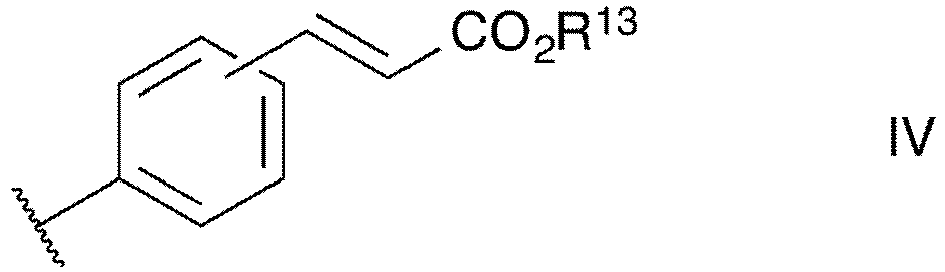


 in which R13 is hydrogen or alkyl C1-10; wherein one pair of R2 and R4 or R3 and R5 represent a bond;and isomers thereof;in free or in salt form.
 - A compound according to claim 1 in which the moiety -CO2R13 is in the 4-position.
- A compound according to claim 1 in which the moiety -CO2R13 is in the 3-position.
- A compound according to claim 1, which is selected from the group consisting of:4-2-[2,4,4-trimethyl-1-(propan-2-yl)-1,4-dihydroquinolin-6-yl]ethynylbenzoic acid, (17);and isomers thereof;in free or in salt form.
- A method of monitoring cell differentiation or apoptosis comprising administering an effective amount of a compound of formula I and detecting the fluorescence emitted by the compound by fluorescence medical imaging.
- A method of monitoring cell differentiation or apoptosis by imaging the distribution of a compound of formula I by detecting the fluorescence emitted by the compound.
- A method for superimposing fluorescence emitted by a compound of formula I according to claim 5 or 6, with a concentration map calculated from the Raman scattering signals stimulated from a compound of formula I to allow the creation of a concentration map of formula I ex vivo, in vivo or in vitro.
- A composition comprising a compound of formula I according to claim 1 in combination with one or more pharmaceutically acceptable excipients.
Priority Applications (2)
| Application Number | Priority Date | Filing Date | Title |
|---|---|---|---|
| PL15798539T PL3204357T3 (en) | 2014-10-10 | 2015-10-09 | Fluorescent synthetic retinoids |
| SI201531818T SI3204357T1 (en) | 2014-10-10 | 2015-10-09 | Fluorescent synthetic retinoids |
Applications Claiming Priority (3)
| Application Number | Priority Date | Filing Date | Title |
|---|---|---|---|
| GB201417957A GB201417957D0 (en) | 2014-10-10 | 2014-10-10 | Fluorescent synthetic retinoids |
| GB201419496A GB201419496D0 (en) | 2014-10-31 | 2014-10-31 | Fluorescent synthetic retinoids |
| PCT/GB2015/052956 WO2016055800A2 (en) | 2014-10-10 | 2015-10-09 | Fluorescent synthetic retinoids |
Publications (2)
| Publication Number | Publication Date |
|---|---|
| EP3204357A2 EP3204357A2 (en) | 2017-08-16 |
| EP3204357B1 true EP3204357B1 (en) | 2022-01-19 |
Family
ID=54697607
Family Applications (1)
| Application Number | Title | Priority Date | Filing Date |
|---|---|---|---|
| EP15798539.1A Active EP3204357B1 (en) | 2014-10-10 | 2015-10-09 | Fluorescent synthetic retinoids |
Country Status (12)
| Country | Link |
|---|---|
| US (1) | US10759762B2 (en) |
| EP (1) | EP3204357B1 (en) |
| JP (1) | JP7178781B2 (en) |
| CN (1) | CN107250112B (en) |
| AU (2) | AU2015329798C1 (en) |
| CA (1) | CA2962150C (en) |
| DK (1) | DK3204357T3 (en) |
| ES (1) | ES2909874T3 (en) |
| PL (1) | PL3204357T3 (en) |
| PT (1) | PT3204357T (en) |
| SI (1) | SI3204357T1 (en) |
| WO (1) | WO2016055800A2 (en) |
Families Citing this family (5)
| Publication number | Priority date | Publication date | Assignee | Title |
|---|---|---|---|---|
| CN107176945B (en) | 2016-03-11 | 2021-06-08 | 中国科学院上海有机化学研究所 | A kind of retinoic acid compound, its preparation method, intermediate and application |
| ES3066492T3 (en) | 2016-08-09 | 2026-05-13 | Univ Of Durham | Synthetic retinoids (in cell modulation) |
| GB201910239D0 (en) * | 2019-07-17 | 2019-08-28 | Lightox Ltd | Fluorescent systems for biological imaging and uses thereof |
| JP7657223B2 (en) | 2019-12-19 | 2025-04-04 | オルファゲン ファーマシューティカルズ,インク. | RAR Alpha Compounds for Inflammatory Diseases and Male Contraception |
| CN112479998B (en) * | 2020-11-16 | 2022-03-15 | 广州中医药大学(广州中医药研究院) | Dihydroquinoline fluorescent probe and preparation method and application thereof |
Citations (2)
| Publication number | Priority date | Publication date | Assignee | Title |
|---|---|---|---|---|
| US6387951B1 (en) * | 2000-08-29 | 2002-05-14 | Allergan Sales, Inc. | Compounds having activity as inhibitors of cytochrome P450RAI |
| US20070078160A1 (en) * | 2005-09-30 | 2007-04-05 | Bharat Lagu | Dihydro-[1h]-quinolin-2-one derivatives as rxr agonists for the treatment of dyslipidemia, hypercholesterolemia and diabetes |
Family Cites Families (26)
| Publication number | Priority date | Publication date | Assignee | Title |
|---|---|---|---|---|
| CH651034A5 (en) * | 1982-05-12 | 1985-08-30 | Hoffmann La Roche | CHROMAN, THIOCHROMAN OR 1,2,3,4-TETRAHYDROCHINOLIN DERIVATIVES AND THEIR USE AS MEDICINAL ACTIVE SUBSTANCES. |
| EP0130795B1 (en) * | 1983-07-05 | 1988-11-23 | Pfizer Inc. | Carboxylic acid derivatives useful for inhibiting the degradation of cartilage |
| US5264578A (en) | 1987-03-20 | 1993-11-23 | Allergan, Inc. | Disubstituted acetylenes bearing heterobicyclic groups and heteroaromatic or phenyl groups having retinoid like activity |
| US4810804A (en) | 1987-03-26 | 1989-03-07 | Allergan, Inc. | Acetylenes disubstituted with a phenyl group and a heterobicyclic group having retinoid-like activity |
| US4980369A (en) | 1989-09-19 | 1990-12-25 | Allergan, Inc. | Acetylenes disubstituted with a phenyl group and a 2-substituted chromanyl or thiochromanyl group having retinoid-like activity |
| US5023341A (en) | 1989-09-19 | 1991-06-11 | Allergan, Inc. | Compounds having a disubstituted acetylene moiety and retinoic acid-like biological activity |
| WO1994015902A1 (en) | 1993-01-11 | 1994-07-21 | Ligand Pharmaceuticals Inc. | Compounds having selectivity for retinoid x receptors |
| US5324840A (en) * | 1992-06-11 | 1994-06-28 | Allergan, Inc. | Method of treatment with compounds having retinoid-like activity and reduced skin toxicity and lacking teratogenic effects |
| BR9610875A (en) * | 1995-10-06 | 1999-07-13 | Ligand Pharm Inc | Selective rxr modules - dimers and processes for your use |
| AU4080597A (en) * | 1996-08-23 | 1998-03-06 | Board Of Regents For Oklahoma State University, The | Heteroarotinoids-anticancer agents with receptor specificity and tgase activity |
| WO2000059861A1 (en) | 1999-04-06 | 2000-10-12 | Bristol-Myers Squibb Company | Selective retinoic acid analogs |
| US6906057B1 (en) * | 1999-06-11 | 2005-06-14 | Allergan, Inc. | Methods for modulating FXR receptor activity |
| US6127382A (en) * | 1999-08-16 | 2000-10-03 | Allergan Sales, Inc. | Amines substituted with a tetrahydroquinolinyl group an aryl or heteroaryl group and an alkyl group, having retinoid-like biological activity |
| JP2004505519A (en) | 2000-07-13 | 2004-02-19 | コーニンクレッカ フィリップス エレクトロニクス エヌ ヴィ | MPEG-4 encoder and output coded signal of such an encoder |
| EP1366036B1 (en) | 2000-08-29 | 2006-01-11 | Allergan, Inc. | Compounds having activity as inhibitors of cytochrome p450rai |
| JP2005500379A (en) * | 2001-08-17 | 2005-01-06 | インサイト サンディエゴ インコーポレーテッド | Oxime derivatives to treat dyslipidemia and hypercholesterolemia |
| WO2005017185A2 (en) * | 2003-07-16 | 2005-02-24 | Ligand Pharmceuticals Incorporated | HEPATOCYTE NUCLEAR FACTOR 4α MODULATOR COMPOUNDS |
| CA2550010A1 (en) * | 2003-12-17 | 2005-06-30 | Allergan, Inc. | Methods for treating retinoid responsive disorders using selective inhibitors of cyp26a and cyp26b |
| JP2006063064A (en) * | 2004-07-27 | 2006-03-09 | Takeda Chem Ind Ltd | Receptor agonist |
| US20100247679A1 (en) * | 2006-04-24 | 2010-09-30 | Alltech, Inc. | Methods and compositions for altering cell function |
| WO2008025965A2 (en) | 2006-08-29 | 2008-03-06 | Reinnervate Limited | Retinoid compounds and their use |
| US8070989B2 (en) * | 2007-08-09 | 2011-12-06 | Hallstar Innovations Corp. | Photostabilization of retinoids with alkoxycrylene compounds |
| JP6063870B2 (en) * | 2010-11-08 | 2017-01-18 | ライセラ・コーポレイション | Treatment of N-sulfonylated tetrahydroquinolines and related bicyclic compounds and diseases for inhibition of RORγ activity |
| CA2825519A1 (en) * | 2011-02-03 | 2012-09-08 | Lupin Limited | Pyrrole derivatives used as modulators of alpha7 nachr |
| EP2910549A1 (en) | 2011-09-15 | 2015-08-26 | Arizona Board of Regents, a Body Corporate of the State of Arizona acting for and on behalf of Arizona State University | 1,2,3,4-tetrahydro-1,1,4,4-tetramethylnaphthalene derivatives useful as rxr modulators for treating alzheimer's disease and cancer |
| WO2014008214A1 (en) * | 2012-07-02 | 2014-01-09 | Biogen Idec Ma Inc. | Biaryl-containing compounds as inverse agonists of ror-gamma receptors |
-
2015
- 2015-10-09 US US15/514,923 patent/US10759762B2/en active Active
- 2015-10-09 CA CA2962150A patent/CA2962150C/en active Active
- 2015-10-09 SI SI201531818T patent/SI3204357T1/en unknown
- 2015-10-09 PL PL15798539T patent/PL3204357T3/en unknown
- 2015-10-09 AU AU2015329798A patent/AU2015329798C1/en active Active
- 2015-10-09 DK DK15798539.1T patent/DK3204357T3/en active
- 2015-10-09 WO PCT/GB2015/052956 patent/WO2016055800A2/en not_active Ceased
- 2015-10-09 EP EP15798539.1A patent/EP3204357B1/en active Active
- 2015-10-09 JP JP2017538469A patent/JP7178781B2/en active Active
- 2015-10-09 ES ES15798539T patent/ES2909874T3/en active Active
- 2015-10-09 PT PT157985391T patent/PT3204357T/en unknown
- 2015-10-09 CN CN201580067667.6A patent/CN107250112B/en active Active
-
2019
- 2019-05-28 AU AU2019203709A patent/AU2019203709B2/en active Active
Patent Citations (2)
| Publication number | Priority date | Publication date | Assignee | Title |
|---|---|---|---|---|
| US6387951B1 (en) * | 2000-08-29 | 2002-05-14 | Allergan Sales, Inc. | Compounds having activity as inhibitors of cytochrome P450RAI |
| US20070078160A1 (en) * | 2005-09-30 | 2007-04-05 | Bharat Lagu | Dihydro-[1h]-quinolin-2-one derivatives as rxr agonists for the treatment of dyslipidemia, hypercholesterolemia and diabetes |
Non-Patent Citations (2)
| Title |
|---|
| BEARD R L ET AL: "Synthesis and biological activity of 1,2,3,4-tetrahydroquinoline and 3,4-(1H)-dihydroquinolin-2-one analogs of retinoic acid", BIOORGANIC & MEDICINAL CHEMISTRY LETTERS, PERGAMON, AMSTERDAM, NL, vol. 7, no. 18, 23 September 1997 (1997-09-23), pages 2373 - 2378, XP004136447, ISSN: 0960-894X, DOI: 10.1016/S0960-894X(97)00435-6 * |
| THACHER S M ET AL: "THERAPEUTIC APPLICATIONS FOR LIGANDS OF RETINOID RECEPTORS", CURRENT PHARMACEUTICAL DESIGN, BENTHAM SCIENCE PUBLISHERS, NL, vol. 6, no. 1, 1 January 2000 (2000-01-01), pages 25 - 58, XP009035773, ISSN: 1381-6128, DOI: 10.2174/1381612003401415 * |
Also Published As
| Publication number | Publication date |
|---|---|
| ES2909874T3 (en) | 2022-05-10 |
| US20170217893A1 (en) | 2017-08-03 |
| EP3204357A2 (en) | 2017-08-16 |
| JP7178781B2 (en) | 2022-11-28 |
| CA2962150C (en) | 2023-07-04 |
| DK3204357T3 (en) | 2022-04-04 |
| AU2015329798C1 (en) | 2019-10-24 |
| SI3204357T1 (en) | 2022-05-31 |
| WO2016055800A3 (en) | 2016-06-16 |
| PT3204357T (en) | 2022-03-31 |
| AU2019203709A1 (en) | 2019-06-20 |
| AU2019203709B2 (en) | 2020-10-22 |
| CN107250112B (en) | 2021-04-23 |
| JP2017537140A (en) | 2017-12-14 |
| US10759762B2 (en) | 2020-09-01 |
| PL3204357T3 (en) | 2022-04-25 |
| CN107250112A (en) | 2017-10-13 |
| AU2015329798B2 (en) | 2019-07-11 |
| WO2016055800A2 (en) | 2016-04-14 |
| CA2962150A1 (en) | 2016-04-14 |
| AU2015329798A1 (en) | 2017-05-11 |
Similar Documents
| Publication | Publication Date | Title |
|---|---|---|
| AU2019203709B2 (en) | Fluorescent synthetic retinoids | |
| Le Trionnaire et al. | The synthesis and functional evaluation of a mitochondria-targeted hydrogen sulfide donor,(10-oxo-10-(4-(3-thioxo-3 H-1, 2-dithiol-5-yl) phenoxy) decyl) triphenylphosphonium bromide (AP39) | |
| PL207530B1 (en) | Retinoid derivatives with antiangiogenic, antitumor and proapoptotic activities | |
| WO2014055505A1 (en) | Bodipy dyes for biological imaging | |
| EP3630759A1 (en) | Ion channel inhibitor compounds for cancer treatment | |
| Zhang et al. | A profluorescent ratiometric probe for intracellular pH imaging | |
| Zhong et al. | H2O2-activated NIR fluorescent probe with tumor targeting for cell imaging and fluorescent-guided surgery | |
| JP6126197B2 (en) | Rifagain compound with boronic acid as an inhibitor of PI3K-α and / or β | |
| CA3045365C (en) | Compounds for treatment of senescence-related disorders | |
| Lindström et al. | Enantioselective synthesis and absolute configurations of the enantiomers of o-carboranylalanine | |
| JP6017565B2 (en) | Novel compounds that modulate hedgehog protein signaling pathways, their labels and applications | |
| CN1329400C (en) | Dicarba-closo-dodecaborane derivatives | |
| Cai et al. | Simplified bicyclic pyridinol analogues protect mitochondrial function | |
| KR20140004676A (en) | Imaging agents | |
| Zhao et al. | A BODIPY-based fluorescent chemosensor for Cu2+ and biological thiols, and its application as a Cu2+ probe in live cell imaging | |
| CN116239622A (en) | An ERβ targeting hydrogen peroxide responsive near-infrared fluorescent probe and its preparation method and application | |
| Bennett et al. | Synthesis and biological activity of analogues of batzelladine F | |
| Guo et al. | A cytoplasm-applicative aggregation-induced fluorescent probe for detecting hydrogen sulfide and imaging study | |
| Vasconcelos et al. | Evaluation of toxicity on epithelial and tumor cells of biaryl dipeptide tyrosines | |
| WO2017090631A1 (en) | Fluorescent probe for detecting extracellular metabolite and screening method employing said fluorescent probe | |
| Miller et al. | Synthesis and biological evaluation of fragmented derivatives of tetrahydroisoquinolines. 3. Trimetoquinol studies | |
| CN116969982A (en) | A mitochondria-targeted antioxidant based on BODIPY and its preparation method | |
| JP5877466B2 (en) | Terpenoid-derived retinoid compounds | |
| ITBO20090811A1 (en) | PROCEDURE FOR THE SYNTHESIS OF FLUORESCENT METAL PROBES | |
| WO2012076842A1 (en) | Synthetic retinoids for control of cell differentiation |
Legal Events
| Date | Code | Title | Description |
|---|---|---|---|
| STAA | Information on the status of an ep patent application or granted ep patent |
Free format text: STATUS: THE INTERNATIONAL PUBLICATION HAS BEEN MADE |
|
| PUAI | Public reference made under article 153(3) epc to a published international application that has entered the european phase |
Free format text: ORIGINAL CODE: 0009012 |
|
| STAA | Information on the status of an ep patent application or granted ep patent |
Free format text: STATUS: REQUEST FOR EXAMINATION WAS MADE |
|
| 17P | Request for examination filed |
Effective date: 20170504 |
|
| AK | Designated contracting states |
Kind code of ref document: A2 Designated state(s): AL AT BE BG CH CY CZ DE DK EE ES FI FR GB GR HR HU IE IS IT LI LT LU LV MC MK MT NL NO PL PT RO RS SE SI SK SM TR |
|
| AX | Request for extension of the european patent |
Extension state: BA ME |
|
| DAV | Request for validation of the european patent (deleted) | ||
| DAX | Request for extension of the european patent (deleted) | ||
| STAA | Information on the status of an ep patent application or granted ep patent |
Free format text: STATUS: EXAMINATION IS IN PROGRESS |
|
| STAA | Information on the status of an ep patent application or granted ep patent |
Free format text: STATUS: REQUEST FOR EXAMINATION WAS MADE |
|
| 17Q | First examination report despatched |
Effective date: 20190125 |
|
| STAA | Information on the status of an ep patent application or granted ep patent |
Free format text: STATUS: EXAMINATION IS IN PROGRESS |
|
| PUAG | Search results despatched under rule 164(2) epc together with communication from examining division |
Free format text: ORIGINAL CODE: 0009017 |
|
| 17Q | First examination report despatched |
Effective date: 20190423 |
|
| B565 | Issuance of search results under rule 164(2) epc |
Effective date: 20190423 |
|
| RIC1 | Information provided on ipc code assigned before grant |
Ipc: C07D 215/06 20060101AFI20190416BHEP |
|
| GRAP | Despatch of communication of intention to grant a patent |
Free format text: ORIGINAL CODE: EPIDOSNIGR1 |
|
| STAA | Information on the status of an ep patent application or granted ep patent |
Free format text: STATUS: GRANT OF PATENT IS INTENDED |
|
| RIC1 | Information provided on ipc code assigned before grant |
Ipc: A61P 11/00 20060101ALI20210901BHEP Ipc: A61P 43/00 20060101ALI20210901BHEP Ipc: A61P 39/06 20060101ALI20210901BHEP Ipc: A61P 35/02 20060101ALI20210901BHEP Ipc: A61P 35/00 20060101ALI20210901BHEP Ipc: A61P 27/10 20060101ALI20210901BHEP Ipc: A61P 25/28 20060101ALI20210901BHEP Ipc: A61P 25/00 20060101ALI20210901BHEP Ipc: A61P 19/08 20060101ALI20210901BHEP Ipc: A61P 17/14 20060101ALI20210901BHEP Ipc: A61P 17/10 20060101ALI20210901BHEP Ipc: A61P 17/06 20060101ALI20210901BHEP Ipc: A61P 17/02 20060101ALI20210901BHEP Ipc: A61P 17/00 20060101ALI20210901BHEP Ipc: A61P 15/00 20060101ALI20210901BHEP Ipc: A61P 13/12 20060101ALI20210901BHEP Ipc: A61P 11/04 20060101ALI20210901BHEP Ipc: A61P 1/02 20060101ALI20210901BHEP Ipc: A61P 1/00 20060101ALI20210901BHEP Ipc: C07D 215/06 20060101AFI20210901BHEP |
|
| INTG | Intention to grant announced |
Effective date: 20210917 |
|
| GRAS | Grant fee paid |
Free format text: ORIGINAL CODE: EPIDOSNIGR3 |
|
| GRAA | (expected) grant |
Free format text: ORIGINAL CODE: 0009210 |
|
| STAA | Information on the status of an ep patent application or granted ep patent |
Free format text: STATUS: THE PATENT HAS BEEN GRANTED |
|
| AK | Designated contracting states |
Kind code of ref document: B1 Designated state(s): AL AT BE BG CH CY CZ DE DK EE ES FI FR GB GR HR HU IE IS IT LI LT LU LV MC MK MT NL NO PL PT RO RS SE SI SK SM TR |
|
| REG | Reference to a national code |
Ref country code: GB Ref legal event code: FG4D |
|
| REG | Reference to a national code |
Ref country code: CH Ref legal event code: EP |
|
| REG | Reference to a national code |
Ref country code: DE Ref legal event code: R096 Ref document number: 602015076558 Country of ref document: DE |
|
| REG | Reference to a national code |
Ref country code: AT Ref legal event code: REF Ref document number: 1463722 Country of ref document: AT Kind code of ref document: T Effective date: 20220215 |
|
| REG | Reference to a national code |
Ref country code: IE Ref legal event code: FG4D |
|
| REG | Reference to a national code |
Ref country code: PT Ref legal event code: SC4A Ref document number: 3204357 Country of ref document: PT Date of ref document: 20220331 Kind code of ref document: T Free format text: AVAILABILITY OF NATIONAL TRANSLATION Effective date: 20220328 |
|
| REG | Reference to a national code |
Ref country code: DK Ref legal event code: T3 Effective date: 20220330 |
|
| REG | Reference to a national code |
Ref country code: NL Ref legal event code: FP |
|
| REG | Reference to a national code |
Ref country code: SE Ref legal event code: TRGR |
|
| REG | Reference to a national code |
Ref country code: LT Ref legal event code: MG9D Ref country code: ES Ref legal event code: FG2A Ref document number: 2909874 Country of ref document: ES Kind code of ref document: T3 Effective date: 20220510 |
|
| REG | Reference to a national code |
Ref country code: NO Ref legal event code: T2 Effective date: 20220119 |
|
| PG25 | Lapsed in a contracting state [announced via postgrant information from national office to epo] |
Ref country code: RS Free format text: LAPSE BECAUSE OF FAILURE TO SUBMIT A TRANSLATION OF THE DESCRIPTION OR TO PAY THE FEE WITHIN THE PRESCRIBED TIME-LIMIT Effective date: 20220119 Ref country code: LT Free format text: LAPSE BECAUSE OF FAILURE TO SUBMIT A TRANSLATION OF THE DESCRIPTION OR TO PAY THE FEE WITHIN THE PRESCRIBED TIME-LIMIT Effective date: 20220119 Ref country code: HR Free format text: LAPSE BECAUSE OF FAILURE TO SUBMIT A TRANSLATION OF THE DESCRIPTION OR TO PAY THE FEE WITHIN THE PRESCRIBED TIME-LIMIT Effective date: 20220119 Ref country code: BG Free format text: LAPSE BECAUSE OF FAILURE TO SUBMIT A TRANSLATION OF THE DESCRIPTION OR TO PAY THE FEE WITHIN THE PRESCRIBED TIME-LIMIT Effective date: 20220419 |
|
| PG25 | Lapsed in a contracting state [announced via postgrant information from national office to epo] |
Ref country code: LV Free format text: LAPSE BECAUSE OF FAILURE TO SUBMIT A TRANSLATION OF THE DESCRIPTION OR TO PAY THE FEE WITHIN THE PRESCRIBED TIME-LIMIT Effective date: 20220119 Ref country code: GR Free format text: LAPSE BECAUSE OF FAILURE TO SUBMIT A TRANSLATION OF THE DESCRIPTION OR TO PAY THE FEE WITHIN THE PRESCRIBED TIME-LIMIT Effective date: 20220420 Ref country code: FI Free format text: LAPSE BECAUSE OF FAILURE TO SUBMIT A TRANSLATION OF THE DESCRIPTION OR TO PAY THE FEE WITHIN THE PRESCRIBED TIME-LIMIT Effective date: 20220119 |
|
| PG25 | Lapsed in a contracting state [announced via postgrant information from national office to epo] |
Ref country code: IS Free format text: LAPSE BECAUSE OF FAILURE TO SUBMIT A TRANSLATION OF THE DESCRIPTION OR TO PAY THE FEE WITHIN THE PRESCRIBED TIME-LIMIT Effective date: 20220519 |
|
| REG | Reference to a national code |
Ref country code: DE Ref legal event code: R097 Ref document number: 602015076558 Country of ref document: DE |
|
| PG25 | Lapsed in a contracting state [announced via postgrant information from national office to epo] |
Ref country code: SM Free format text: LAPSE BECAUSE OF FAILURE TO SUBMIT A TRANSLATION OF THE DESCRIPTION OR TO PAY THE FEE WITHIN THE PRESCRIBED TIME-LIMIT Effective date: 20220119 Ref country code: SK Free format text: LAPSE BECAUSE OF FAILURE TO SUBMIT A TRANSLATION OF THE DESCRIPTION OR TO PAY THE FEE WITHIN THE PRESCRIBED TIME-LIMIT Effective date: 20220119 Ref country code: RO Free format text: LAPSE BECAUSE OF FAILURE TO SUBMIT A TRANSLATION OF THE DESCRIPTION OR TO PAY THE FEE WITHIN THE PRESCRIBED TIME-LIMIT Effective date: 20220119 Ref country code: EE Free format text: LAPSE BECAUSE OF FAILURE TO SUBMIT A TRANSLATION OF THE DESCRIPTION OR TO PAY THE FEE WITHIN THE PRESCRIBED TIME-LIMIT Effective date: 20220119 |
|
| PLBE | No opposition filed within time limit |
Free format text: ORIGINAL CODE: 0009261 |
|
| STAA | Information on the status of an ep patent application or granted ep patent |
Free format text: STATUS: NO OPPOSITION FILED WITHIN TIME LIMIT |
|
| PG25 | Lapsed in a contracting state [announced via postgrant information from national office to epo] |
Ref country code: AL Free format text: LAPSE BECAUSE OF FAILURE TO SUBMIT A TRANSLATION OF THE DESCRIPTION OR TO PAY THE FEE WITHIN THE PRESCRIBED TIME-LIMIT Effective date: 20220119 |
|
| 26N | No opposition filed |
Effective date: 20221020 |
|
| P01 | Opt-out of the competence of the unified patent court (upc) registered |
Effective date: 20230310 |
|
| P02 | Opt-out of the competence of the unified patent court (upc) changed |
Effective date: 20230529 |
|
| PG25 | Lapsed in a contracting state [announced via postgrant information from national office to epo] |
Ref country code: HU Free format text: LAPSE BECAUSE OF FAILURE TO SUBMIT A TRANSLATION OF THE DESCRIPTION OR TO PAY THE FEE WITHIN THE PRESCRIBED TIME-LIMIT; INVALID AB INITIO Effective date: 20151009 |
|
| PG25 | Lapsed in a contracting state [announced via postgrant information from national office to epo] |
Ref country code: CY Free format text: LAPSE BECAUSE OF FAILURE TO SUBMIT A TRANSLATION OF THE DESCRIPTION OR TO PAY THE FEE WITHIN THE PRESCRIBED TIME-LIMIT Effective date: 20220119 |
|
| PG25 | Lapsed in a contracting state [announced via postgrant information from national office to epo] |
Ref country code: MK Free format text: LAPSE BECAUSE OF FAILURE TO SUBMIT A TRANSLATION OF THE DESCRIPTION OR TO PAY THE FEE WITHIN THE PRESCRIBED TIME-LIMIT Effective date: 20220119 |
|
| PGFP | Annual fee paid to national office [announced via postgrant information from national office to epo] |
Ref country code: IE Payment date: 20240920 Year of fee payment: 10 |
|
| PGFP | Annual fee paid to national office [announced via postgrant information from national office to epo] |
Ref country code: PT Payment date: 20240907 Year of fee payment: 10 |
|
| PGFP | Annual fee paid to national office [announced via postgrant information from national office to epo] |
Ref country code: CZ Payment date: 20240902 Year of fee payment: 10 |
|
| PGFP | Annual fee paid to national office [announced via postgrant information from national office to epo] |
Ref country code: PL Payment date: 20240830 Year of fee payment: 10 |
|
| PGFP | Annual fee paid to national office [announced via postgrant information from national office to epo] |
Ref country code: LU Payment date: 20241016 Year of fee payment: 10 |
|
| PGFP | Annual fee paid to national office [announced via postgrant information from national office to epo] |
Ref country code: MT Payment date: 20240830 Year of fee payment: 10 |
|
| PGFP | Annual fee paid to national office [announced via postgrant information from national office to epo] |
Ref country code: NO Payment date: 20241011 Year of fee payment: 10 Ref country code: MC Payment date: 20241007 Year of fee payment: 10 |
|
| PGFP | Annual fee paid to national office [announced via postgrant information from national office to epo] |
Ref country code: DK Payment date: 20241004 Year of fee payment: 10 |
|
| PGFP | Annual fee paid to national office [announced via postgrant information from national office to epo] |
Ref country code: BE Payment date: 20241004 Year of fee payment: 10 |
|
| PGFP | Annual fee paid to national office [announced via postgrant information from national office to epo] |
Ref country code: AT Payment date: 20241015 Year of fee payment: 10 |
|
| PGFP | Annual fee paid to national office [announced via postgrant information from national office to epo] |
Ref country code: SE Payment date: 20241004 Year of fee payment: 10 |
|
| REG | Reference to a national code |
Ref country code: AT Ref legal event code: UEP Ref document number: 1463722 Country of ref document: AT Kind code of ref document: T Effective date: 20220119 |
|
| PGFP | Annual fee paid to national office [announced via postgrant information from national office to epo] |
Ref country code: SI Payment date: 20240830 Year of fee payment: 10 |
|
| PGFP | Annual fee paid to national office [announced via postgrant information from national office to epo] |
Ref country code: TR Payment date: 20250930 Year of fee payment: 11 |
|
| PGFP | Annual fee paid to national office [announced via postgrant information from national office to epo] |
Ref country code: GB Payment date: 20250926 Year of fee payment: 11 |
|
| REG | Reference to a national code |
Ref country code: CH Ref legal event code: U11 Free format text: ST27 STATUS EVENT CODE: U-0-0-U10-U11 (AS PROVIDED BY THE NATIONAL OFFICE) Effective date: 20251101 |
|
| PGFP | Annual fee paid to national office [announced via postgrant information from national office to epo] |
Ref country code: NL Payment date: 20251001 Year of fee payment: 11 |
|
| PGFP | Annual fee paid to national office [announced via postgrant information from national office to epo] |
Ref country code: DE Payment date: 20251024 Year of fee payment: 11 |
|
| PGFP | Annual fee paid to national office [announced via postgrant information from national office to epo] |
Ref country code: IT Payment date: 20251014 Year of fee payment: 11 |
|
| PGFP | Annual fee paid to national office [announced via postgrant information from national office to epo] |
Ref country code: FR Payment date: 20251003 Year of fee payment: 11 |
|
| PGFP | Annual fee paid to national office [announced via postgrant information from national office to epo] |
Ref country code: CH Payment date: 20251101 Year of fee payment: 11 |
|
| PGFP | Annual fee paid to national office [announced via postgrant information from national office to epo] |
Ref country code: ES Payment date: 20251104 Year of fee payment: 11 |