EP3204355B1 - Photostable compounds, absorbing compounds and uses thereof - Google Patents
Photostable compounds, absorbing compounds and uses thereof Download PDFInfo
- Publication number
- EP3204355B1 EP3204355B1 EP16847624.0A EP16847624A EP3204355B1 EP 3204355 B1 EP3204355 B1 EP 3204355B1 EP 16847624 A EP16847624 A EP 16847624A EP 3204355 B1 EP3204355 B1 EP 3204355B1
- Authority
- EP
- European Patent Office
- Prior art keywords
- compound
- compounds
- group
- alkyl
- aryl
- Prior art date
- Legal status (The legal status is an assumption and is not a legal conclusion. Google has not performed a legal analysis and makes no representation as to the accuracy of the status listed.)
- Active
Links
Images
Classifications
-
- C—CHEMISTRY; METALLURGY
- C07—ORGANIC CHEMISTRY
- C07D—HETEROCYCLIC COMPOUNDS
- C07D211/00—Heterocyclic compounds containing hydrogenated pyridine rings, not condensed with other rings
- C07D211/04—Heterocyclic compounds containing hydrogenated pyridine rings, not condensed with other rings with only hydrogen or carbon atoms directly attached to the ring nitrogen atom
- C07D211/68—Heterocyclic compounds containing hydrogenated pyridine rings, not condensed with other rings with only hydrogen or carbon atoms directly attached to the ring nitrogen atom having one double bond between ring members or between a ring member and a non-ring member
- C07D211/70—Heterocyclic compounds containing hydrogenated pyridine rings, not condensed with other rings with only hydrogen or carbon atoms directly attached to the ring nitrogen atom having one double bond between ring members or between a ring member and a non-ring member with only hydrogen atoms, hydrocarbon or substituted hydrocarbon radicals, directly attached to ring carbon atoms
-
- A—HUMAN NECESSITIES
- A61—MEDICAL OR VETERINARY SCIENCE; HYGIENE
- A61K—PREPARATIONS FOR MEDICAL, DENTAL OR TOILETRY PURPOSES
- A61K8/00—Cosmetics or similar toiletry preparations
- A61K8/18—Cosmetics or similar toiletry preparations characterised by the composition
- A61K8/30—Cosmetics or similar toiletry preparations characterised by the composition containing organic compounds
- A61K8/49—Cosmetics or similar toiletry preparations characterised by the composition containing organic compounds containing heterocyclic compounds
- A61K8/4906—Cosmetics or similar toiletry preparations characterised by the composition containing organic compounds containing heterocyclic compounds with one nitrogen as the only hetero atom
- A61K8/4926—Cosmetics or similar toiletry preparations characterised by the composition containing organic compounds containing heterocyclic compounds with one nitrogen as the only hetero atom having six membered rings
-
- A—HUMAN NECESSITIES
- A61—MEDICAL OR VETERINARY SCIENCE; HYGIENE
- A61P—SPECIFIC THERAPEUTIC ACTIVITY OF CHEMICAL COMPOUNDS OR MEDICINAL PREPARATIONS
- A61P17/00—Drugs for dermatological disorders
- A61P17/16—Emollients or protectives, e.g. against radiation
-
- A—HUMAN NECESSITIES
- A61—MEDICAL OR VETERINARY SCIENCE; HYGIENE
- A61Q—SPECIFIC USE OF COSMETICS OR SIMILAR TOILETRY PREPARATIONS
- A61Q17/00—Barrier preparations; Preparations brought into direct contact with the skin for affording protection against external influences, e.g. sunlight, X-rays or other harmful rays, corrosive materials, bacteria or insect stings
- A61Q17/04—Topical preparations for affording protection against sunlight or other radiation; Topical sun tanning preparations
-
- C—CHEMISTRY; METALLURGY
- C07—ORGANIC CHEMISTRY
- C07C—ACYCLIC OR CARBOCYCLIC COMPOUNDS
- C07C49/00—Ketones; Ketenes; Dimeric ketenes; Ketonic chelates
- C07C49/527—Unsaturated compounds containing keto groups bound to rings other than six-membered aromatic rings
- C07C49/543—Unsaturated compounds containing keto groups bound to rings other than six-membered aromatic rings to a six-membered ring
-
- C—CHEMISTRY; METALLURGY
- C07—ORGANIC CHEMISTRY
- C07C—ACYCLIC OR CARBOCYCLIC COMPOUNDS
- C07C49/00—Ketones; Ketenes; Dimeric ketenes; Ketonic chelates
- C07C49/76—Ketones containing a keto group bound to a six-membered aromatic ring
- C07C49/782—Ketones containing a keto group bound to a six-membered aromatic ring polycyclic
- C07C49/792—Ketones containing a keto group bound to a six-membered aromatic ring polycyclic containing rings other than six-membered aromatic rings
-
- C—CHEMISTRY; METALLURGY
- C07—ORGANIC CHEMISTRY
- C07C—ACYCLIC OR CARBOCYCLIC COMPOUNDS
- C07C49/00—Ketones; Ketenes; Dimeric ketenes; Ketonic chelates
- C07C49/76—Ketones containing a keto group bound to a six-membered aromatic ring
- C07C49/80—Ketones containing a keto group bound to a six-membered aromatic ring containing halogen
- C07C49/807—Ketones containing a keto group bound to a six-membered aromatic ring containing halogen all halogen atoms bound to the ring
-
- C—CHEMISTRY; METALLURGY
- C07—ORGANIC CHEMISTRY
- C07D—HETEROCYCLIC COMPOUNDS
- C07D211/00—Heterocyclic compounds containing hydrogenated pyridine rings, not condensed with other rings
- C07D211/04—Heterocyclic compounds containing hydrogenated pyridine rings, not condensed with other rings with only hydrogen or carbon atoms directly attached to the ring nitrogen atom
- C07D211/80—Heterocyclic compounds containing hydrogenated pyridine rings, not condensed with other rings with only hydrogen or carbon atoms directly attached to the ring nitrogen atom having two double bonds between ring members or between ring members and non-ring members
- C07D211/82—Heterocyclic compounds containing hydrogenated pyridine rings, not condensed with other rings with only hydrogen or carbon atoms directly attached to the ring nitrogen atom having two double bonds between ring members or between ring members and non-ring members with only hydrogen atoms, hydrocarbon or substituted hydrocarbon radicals, directly attached to ring carbon atoms
-
- C—CHEMISTRY; METALLURGY
- C07—ORGANIC CHEMISTRY
- C07D—HETEROCYCLIC COMPOUNDS
- C07D401/00—Heterocyclic compounds containing two or more hetero rings, having nitrogen atoms as the only ring hetero atoms, at least one ring being a six-membered ring with only one nitrogen atom
- C07D401/02—Heterocyclic compounds containing two or more hetero rings, having nitrogen atoms as the only ring hetero atoms, at least one ring being a six-membered ring with only one nitrogen atom containing two hetero rings
- C07D401/10—Heterocyclic compounds containing two or more hetero rings, having nitrogen atoms as the only ring hetero atoms, at least one ring being a six-membered ring with only one nitrogen atom containing two hetero rings linked by a carbon chain containing aromatic rings
-
- C—CHEMISTRY; METALLURGY
- C09—DYES; PAINTS; POLISHES; NATURAL RESINS; ADHESIVES; COMPOSITIONS NOT OTHERWISE PROVIDED FOR; APPLICATIONS OF MATERIALS NOT OTHERWISE PROVIDED FOR
- C09D—COATING COMPOSITIONS, e.g. PAINTS, VARNISHES OR LACQUERS; FILLING PASTES; CHEMICAL PAINT OR INK REMOVERS; INKS; CORRECTING FLUIDS; WOODSTAINS; PASTES OR SOLIDS FOR COLOURING OR PRINTING; USE OF MATERIALS THEREFOR
- C09D5/00—Coating compositions, e.g. paints, varnishes or lacquers, characterised by their physical nature or the effects produced; Filling pastes
- C09D5/32—Radiation-absorbing paints
-
- C—CHEMISTRY; METALLURGY
- C09—DYES; PAINTS; POLISHES; NATURAL RESINS; ADHESIVES; COMPOSITIONS NOT OTHERWISE PROVIDED FOR; APPLICATIONS OF MATERIALS NOT OTHERWISE PROVIDED FOR
- C09K—MATERIALS FOR MISCELLANEOUS APPLICATIONS, NOT PROVIDED FOR ELSEWHERE
- C09K15/00—Anti-oxidant compositions; Compositions inhibiting chemical change
- C09K15/04—Anti-oxidant compositions; Compositions inhibiting chemical change containing organic compounds
- C09K15/30—Anti-oxidant compositions; Compositions inhibiting chemical change containing organic compounds containing heterocyclic ring with at least one nitrogen atom as ring member
Definitions
- the invention relates to compounds capable of absorbing energy to thereby provide a protective effect. More particularly, this invention relates to compounds for absorbing electromagnetic radiation, approaches to improving their stability and compositions comprising said compounds.
- UV Ultraviolet light
- visible light absorbing or screening compounds have found use in a range of applications where protection from the sun's harmful UV rays is desirable. This includes their use in glass and lens coatings, paints, packaging, household cleaning formulations and materials including fabrics as well as, perhaps most notably, in sun screen formulations to protect the skin of the user from damage caused by UV radiation.
- Inorganic sunscreens such as zinc oxide, protect from UV primarily by light scattering.
- organic sunscreen agents such as those described in WO 2015/006803 , absorb the UV light and must then emit this energy in order to return to the ground state.
- energy loss can occur by any or all of a variety of pathways such as fluorescence, phosphorescence, transfer to another molecule, isomerisation, heat generation or fragmentation. If destructive pathways such as fragmentation, and some isomerisations, predominate then the ability of the molecule to continue to absorb UV or visible light is destroyed.
- protective compounds are not required to be indefinitely photostable it is important that they provide for a useful lifetime and so resist fast degradation.
- cyclic enamine compounds provided with at least one electron withdrawing group, for example, a trifluoroacetyl or perfluoro alkyl chain linked to the ring via a doubly bonded carbon atom, provide for greatly improved stability over their simple alkanoyl analogues.
- This advantage may be extended out to other double-bond containing compounds, both cyclic and aliphatic.
- the electron-withdrawing effect of the substituent, such as one or more fluorine atoms means that exposure of such compounds to electromagnetic radiation results in reduced degradation of the compound thereby providing for an increased operational lifespan when employed in electromagnetic radiation protective applications.
- the present invention provides for compounds which are absorbers of electromagnetic energy and which, due to variation in side chains, provide, in concert, for absorption over a wide range of the electromagnetic spectrum. Effective absorption, and so a useful protective effect, is achieved particularly over the UV-A, UV-B and visible regions of the spectrum.
- the present invention is predicated, at least in part, on the finding that double bond-containing cyclic compounds capable of absorbing electromagnetic radiation energy can have their stability, upon exposure to the electromagnetic radiation, greatly improved if the carbon atom adjacent a doubly bonded carbon, which is itself attached directly to the ring, has at least one halogen atom, preferably a fluorine, bonded thereto. In highly preferred embodiments, this carbon atom has at least two halogen, preferably fluorine atoms, bonded directly to it. Alternatively, the carbon atom adjacent the doubly bonded carbon, which is itself attached directly to the ring, may be part of or adjacent a ring system to which a halogen, preferably a fluorine, is attached.
- the inventors postulate that the improvement in stability over comparable compounds not having carbon-halogen bonds at the same position comes from two complimentary effects.
- the first is, in some embodiments displaying this arrangement, the removal of all protons ⁇ to the carbonyl carbon (as the carbon would be identified if W is oxygen in the below structure) prevents enolisation / hydrogen abstraction at this position which increases stability.
- the strong electron withdrawing effect of the halogen on this carbon likely reduces electron density within the cyclic ene system thereby greatly stabilising the ring system.
- the present invention is further predicated on the identification and synthesis of a number of cyclic enamine compounds which are effective absorbers of electromagnetic energy and which, when looked at holistically as a collection of compounds, have been found to provide for useful protective effects across an important region of the electromagnetic spectrum.
- composition comprising a compound described herein, or a salt thereof, and a suitable carrier.
- a compound described herein, or a salt thereof, or the composition described herein is also disclosed, as an electromagnetic energy absorbing compound.
- Also disclosed, is a method of protecting a surface or tissue from UV rays including the step of applying a compound described herein, or a salt thereof, or the composition described herein, to the surface or tissue.
- a method of improving the stability of a compound, or a salt thereof comprising the step of converting a compound of formula IIIa to one of formula II, as described herein: wherein the dotted line is not a bond and X, W, R 1 , R 2 , R 3 , R 4 , R 5 , R 6 , R 18 and R 19 are as previously defined for formula II.
- R a and R b are independently selected from hydrogen, C 1 to C 12 alkyl, C 1 to C 12 haloalkyl, fluorine, chlorine, bromine and iodine.
- At least one of R a and R b are fluorine.
- both R a and R b are fluorine.
- R 3 is selected from the group consisting of halo, C 1 to C 9 alkyl, C 2 to C 9 alkenyl, C 5 -C 6 aryl, C 5 -C 6 heteroaryl, C 2 to C 12 alkanone, C 5 -C 6 cycloalkyl, C 5 -C 6 cycloalkanone, C 5 -C 6 cycloalkenyl, C 2 to C 9 alkanoyl, C 2 to C 9 alkanoyloxy, C 2 to C 9 alkoxycarbonyl, C 2 to C 9 carbamoyl, C 2 to C 9 carboxyl, haloalkyl, N-alkyl, N-aryl, N-heterocyclyl and C 5 -C 6 heterocyclic, all of which groups may be substituted or unsubstituted.
- R 3 is selected from the group consisting of fluoro, chloro, C 1 to C 6 fluoroalkyl, C 2 to C 6 fluoroalkenyl, C 6 aryl, C 6 heteroaryl, C 2 to C 6 alkanone, C 6 cycloalkyl, C 6 cycloalkanone, C 6 cycloalkenyl, C 2 to C 6 alkanoyl, C 2 to C 6 alkanoyloxy, C 2 to C 6 alkoxycarbonyl, C 2 to C 6 carbamoyl, C 1 to C 9 perfluoroalkyl, and C 5 -C 6 heterocyclic, all of which groups may be substituted or unsubstituted.
- R 3 is fluoro or perfluoroalkyl.
- perfluoroalkyl may be selected from C 1 to C 12 perfluoroalkyl, C 1 to C 9 perfluoroalkyl, C 1 to C 6 perfluoroalkyl and C 1 to C 4 perfluoroalkyl.
- the compound may comprise two structures of formula II linked by a carbon chain forming both respective R 3 groups.
- the carbon chain comprises at least one carbon-fluorine bond.
- at least two carbons in the chain have at least one carbon-fluorine bond.
- the carbon chain is a chain of between 2 to 8 carbons, suitably 2 to 6 carbons and preferably 2 to 4 carbons. All carbons in the linking chain may have one or two fluorine atoms bonded thereto.
- the first carbon of the R 3 group has only carbon-halogen bonds, preferably only carbon-fluorine bonds.
- R a , R b and R 3 and the carbon to which they are attached form a moiety selected from the group consisting of: ⁇ CF 3 , ⁇ CCl 3 , ⁇ CBr 3 , ⁇ CH 2 F, ⁇ CHF 2 , and wherein, R 1 ' and R 2 ' are methyl and R 12 is selected from hydrogen, C 1 -C 6 alkyl and C 1 -C 6 alkoxy.
- the asterisk shows the carbon atom which is directly attached to the double bonded, preferably carbonyl, carbon.
- R 5 is selected from the group consisting of C 1 to C 12 alkyl, C 2 to C 12 alkenyl, phenyl, aryl, naphthyl, C 6 cycloalkyl, C 2 to C 6 alkanoyl and C 2 to C 6 alkanoyloxy all of which groups may be substituted or unsubstituted.
- R 5 is selected from the group consisting of C 1 to C 6 alkyl, C 2 to C 6 alkenyl, phenyl, C 6 aryl and C 6 cycloalkyl all of which groups may be substituted or unsubstituted.
- substitution of the aryl ring may be with a group selected from alkyl, amino, hydroxy, alkoxy, aryloxy, phenyl, benzyl, C 6 aryl, C 6 heterocycle, alkoxyaryl, each of which groups may be substituted or unsubstituted.
- any reference to a heterocycle is preferably a nitrogen heterocycle.
- the nitrogen heterocycle attached to the aryl group may be a 6-membered enamine ring which may be optionally substituted in manner set out for formula II.
- R 5 is directly attached to the nitrogen of the ring via a tertiary carbon.
- R 5 is selected from the group consisting of: wherein, a dotted line may be a bond, n is from 0 to 5, R 1 ', R 2 ', R a ', R b ' and R 3 ' may be selected from any group already described for R 1 , R 2 , R a , R b and R 3 , respectively, and each incidence of R 12 and R 13 is independently selected from hydrogen, C 1 -C 6 alkyl and C 1 -C 6 alkoxy.
- the compound may be two formula II structures linked by a linking group.
- the linking group may be as described for any of R a , R b and R 3 .
- Such a compound may be considered a dimer or a multivalent presentation of a compound of the first aspect.
- the linking group is selected from one or more incidences of aryl, alkylaryl and alkoxyaryl, each of which may themselves be substituted or unsubstituted.
- W is O
- X is one carbon
- the dotted line is not a bond
- R 4 , R 6 , R 18 and R 19 are hydrogen
- R 1 and R 2 are independently selected from methyl.
- the compound of formula II is selected from the group consisting of: and
- the compound of formula II is not a compound selected from the group consisting of: and
- the compounds of the first aspect may be effective absorbers in the UV-A, UV-B and visible regions of the spectrum.
- the benefits of protection from UV light for humans and various materials are well known.
- the dangers of exposure to visible light have received less attention but are of potentially equally serious consequence.
- Visible light sensitivity for example, is an important phenomenon in diseases such as porphyria, solar urticaria, and other idiopathic photodermatoses, such as polymorphous light eruption.
- Patients who undergo photodynamic therapy treatments also become sensitive to visible light for a few days because of the accompanying topical medications. Protection against visible light might also be important for darker skinned patients who have pigmentary disorders.
- visible light is thought to be a causative agent in age-related macular degeneration of the eye and so lenses and glasses offering protection in this range would be advantageous.
- Organic sunscreen agents typically offer no protection against visible light, as their absorption spectrum is limited to UVB and UVA wavebands.
- Inorganic sunscreen agents such as iron oxide, titanium dioxide, and zinc oxide can offer some visible light protection.
- the spectral protection of these agents varies according to their particle size. It is an advantage of the present invention that the variation in compound substitutions, particularly at the key R3 and R5 ring substitution positions, provides for a range of absorptions and so a number of compounds presented herein represent effective absorbers in the visible light region. It is expected that the perceived importance of such absorbing compounds in an effective sunscreen, or otherwise light protective formulation, will only increase with realisation by the general public of the risks. Compounds of the present invention, or combinations thereof, can provide an effective solution. The results described herein indicate compounds which can be effective in absorbing in one or more of the UV-A, UV-B and visible light regions.
- alkyl means a straight-chain or branched alkyl substituent containing from, for example, 1 to about 12 carbon atoms, preferably 1 to about 9 carbon atoms, more preferably 1 to about 6 carbon atoms, even more preferably from 1 to about 4 carbon atoms, still yet more preferably from 1 to 2 carbon atoms.
- substituents include methyl, ethyl, propyl, isopropyl, n-butyl, sec -butyl, isobutyl, tert -butyl, pentyl, isoamyl, hexyl, and the like.
- the number of carbons referred to relates to the carbon backbone and carbon branching but does not include carbon atoms belonging to any substituents, for example the carbon atoms of an alkoxy substituent branching off the main carbon chain.
- alkenyl means a linear alkenyl substituent containing at least one carbon-carbon double bond and from, for example, 2 to 6 carbon atoms (branched alkenyls are 3 to 6 carbons atoms), preferably from 2 to 5 carbon atoms (branched alkenyls are preferably from 3 to 5 carbon atoms), more preferably from 3 to 4 carbon atoms.
- substituents include vinyl, propenyl, isopropenyl, n -butenyl, sec -butenyl, isobutenyl, tert -butenyl, pentenyl, isopentenyl, hexenyl, and the like.
- alkynyl means a linear alkynyl substituent containing at least one carbon-carbon triple bond and from, for example, 2 to 6 carbon atoms (branched alkynyls are 3 to 6 carbons atoms), preferably from 2 to 5 carbon atoms (branched alkynyls are preferably from 3 to 5 carbon atoms), more preferably from 3 to 4 carbon atoms.
- substituents include ethynyl, propynyl, isopropynyl, n -butynyl, sec -butynyl, isobutynyl, tert- butynyl, pentynyl, isopentynyl, hexynyl, and the like.
- cycloalkyl refers to optionally substituted saturated monocyclic, bicyclic or tricyclic carbon groups.
- the cycloalkyl group may have a specified number of carbon atoms, for example, C 3 -C 6 cycloalkyl is a carbocyclic group having 3, 4, 5 or 6 carbon atoms.
- Non-limiting examples may include cyclopropyl, cyclobutyl, cyclopentyl, cyclopentenyl, cyclohexyl, cyclohexenyl, cyclohexadienyl and the like.
- aryl refers to an unsubstituted or substituted aromatic carbocyclic substituent, as commonly understood in the art. It is understood that the term aryl applies to cyclic substituents that are planar and comprise 4n+2 ⁇ electrons, according to Hückel's Rule.
- heteroaryl refers to an aryl group containing from one or more (particularly one to four) non-carbon atom(s) (particularly N, O or S) or a combination thereof, which heteroaryl group is optionally substituted at one or more carbon or nitrogen atom(s). Heteroaryl rings may also be fused with one or more cyclic hydrocarbon, heterocyclic, aryl, or heteroaryl rings.
- Heteroaryl includes, but is not limited to, 5-membered heteroaryls having one hetero atom (e.g., thiophenes, pyrroles, furans); 5 membered heteroaryls having two heteroatoms in 1,2 or 1,3 positions (e.g., oxazoles, pyrazoles, imidazoles, thiazoles, purines); 5-membered heteroaryls having three heteroatoms (e.g., triazoles, thiadiazoles); 5-membered heteroaryls having 3 heteroatoms; 6-membered heteroaryls with one heteroatom (e.g., pyridine, quinoline, isoquinoline, phenanthrine, 5,6-cycloheptenopyridine); 6-membered heteroaryls with two heteroatoms (e.g., pyridazines, cinnolines, phthalazines, pyrazines, pyrimidines, quinazolines); 6-membered heteroary
- Heterocyclic or “heterocycle” refers to a non-aromatic ring having 5 to 7 atoms in the ring and of those atoms 1 to 4 are heteroatoms, said ring being isolated or fused to a second ring wherein said heteroatoms are independently selected from O, N and S.
- Heterocyclic includes partially and fully saturated heterocyclic groups. Heterocyclic systems may be attached to another moiety via any number of carbon atoms or heteroatoms of the radical and may be both saturated and unsaturated.
- heterocyclic examples include pyrrolidinyl, pyrrolinyl, pyranyl, piperidinyl, piperazinyl, morpholinyl, tetrahydrofuranyl, tetrahydrothiophenyl, pyrazolinyl, dithiolyl, oxathiolyl, dioxanyl, dioxinyl, oxazinyl, azepinyl, diazepinyl, thiazepinyl, oxepinyl and thiapinyl, imidazolinyl, thiomorpholinyl, and the like.
- alkanoyl means alkanoyl groups of a straight or branched configuration and of the specified number of carbon atoms.
- alkanoyl may be selected from acetyl, propionoyl, butyryl, isobutyryl, pentanoyl and hexanoyl.
- a range of the number of atoms in a structure is indicated (e.g., a C 1 -C 20 , C 1 -C 12 , C 1 -C 10 , C 1 -C 9 , C 1 -C 6 , C 1 -C 4 , or C 2 -C 20 , C 2 -C 12 , C 2 -C 10 , C 2 -C 9 , C 2 -C 8 , C 2 -C 6 , C 2 -C 4 alkyl, alkenyl, alkynyl, etc.), it is specifically contemplated that any sub-range or individual number of carbon atoms falling within the indicated range also can be used.
- the recitation of a range of 1-20 carbon atoms e.g., C 1 -C 20 ), 1-12 carbon atoms (e.g., C 1 -C 12 ), 1-10 carbon atoms (e.g., C 1 -C 10 ), 1-9 carbon atoms (e.g., C 1 -C 9 ), 1-6 carbon atoms (e.g., C 1 -C 6 ), 1-4 carbon atoms (e.g., C 1 -C 4 ), 1-3 carbon atoms (e.g., C 1 -C 3 ), or 2-8 carbon atoms (e.g., C 2 -C 8 ) as used with respect to any chemical group (e.g., alkyl, alkanoyl, etc.) referenced herein encompasses and specifically describes 1, 2, 3, 4, 5, 6, 7, 8, 9, 10, 11, 12, 13, 14, 15, 16, 17, 18, 19 and/or 20 carbon atoms, as appropriate, as well as any sub-range thereof (e.g., alky
- substituted' may refer to substitution with a group selected from alkyl, alkenyl, alkylalkanoate, aryl, alkylaryl, heteroaryl, heterocyclyl, alkynyl, aroyl, alkanone, cycloalkyl, cycloalkanone, cycloalkenyl, alkanoyl, alkanoyloxy, alkoxycarbonyl, carbamoyl, carboxyl, haloalkyl, N-alkyl, N-aryl and N-heterocyclyl. Each of these groups may themselves be substituted with the same or different groups.
- the substitution referred to may be any of substitution with fluorine to form a perfluoro moiety; substitution with a substituted or unsubstituted phenyl ring; and substitution with a 6-membered nitrogen heterocycle which may contain a double bond within the ring and may itself be substituted or unsubstituted.
- the present invention also includes stereoisomers of the compounds described herein, where applicable, either individually or admixed in any proportions.
- Stereoisomers may include, but are not limited to, enantiomers, diastereomers, racemic mixtures, and combinations thereof. Such stereoisomers can be prepared and separated using conventional techniques, either by reacting enantiomeric starting materials, or by separating isomers of compounds and prodrugs of the present invention.
- Isomers may include geometric isomers. Examples of geometric isomers include, but are not limited to, cis isomers or trans isomers across a double bond. Other isomers are contemplated among the compounds of the present invention. The isomers may be used either in pure form or in admixture with other isomers of the compounds described herein.
- the cyclic enamine may be reacted with the appropriate halogenated alkyl acyl chloride, anhydride or like reactant suitable for reaction with the doubly bonded carbon of the ring.
- This provides access to a wide range of stabilised compounds.
- the desired acid chloride was not commercially available it could be prepared from the carboxylic acid as set out in the experimental section.
- the increase in physical stability seen with a halogen for example fluorine presented on at least one of the R a , R b or R 3 positions, may be sufficient to both chemically and photochemically stabilise compounds of the invention which are provided with a primary amine substituent i.e. extending from the R 5 ring nitrogen position, such that they can now be more useful.
- a primary amine substituent i.e. extending from the R 5 ring nitrogen position
- Trifluoroacetic anhydride (TFAA) was previously shown by the inventors to be effective for trifluoroacetylation of N-aryl enamines.
- One representative reaction is shown in Scheme 3 below.
- a wide range of reagents similar to and including heptafluorobutyryl chloride are readily available which would also increase the molecular weight of the synthesised compounds of formula II to be above 500, which is important for sunscreens as it is recognised that having a molecular weight greater than 500 reduces the risk of skin penetration and associated safety concerns.
- Diacid chlorides such as hexafluoroglutaryl chloride for example, are also commercially available and could be used in the synthesis of dimeric compounds.
- Di-functionalised perfluoroacids are readily available or can be made to order and allow for the formation of compounds comprising two cyclic enamine structures linked by the acid backbone. The person of skill in the art would be well aware of such reagents and the guidance provided herein would leave them with a wide variety of reactants at their fingertips to synthesise further compounds not explicitly disclosed herein with undue experimentation.
- composition comprising a compound of the first aspect, or a salt thereof, and a suitable carrier.
- the compounds may provide for improved solubility or stability in standard compositions, including sunscreen compositions.
- Reference compounds 152, 153, 154, 155, and 157 are readily soluble in standard commercial sunscreen formulations.
- solubility may be measured by generating, for example, a 3% solution of the relevant compound in 2:1:1 EtOH:capric/caprylic triglyceride:C 12 -C 15 alkyl benzoate.
- the composition is a sunscreen composition.
- the sunscreen composition may be suitable for protection from one or more of UV-A, UV-B and visible light.
- the sunscreen composition may contain dispersing agents, emulsifiers or thickening agents to assist in applying a uniform layer of the active compounds.
- Suitable dispersing agents for the sunscreen formulations include those useful for dispersing organic UV and visible light absorbing agents in a water phase, oil phase, or part of an emulsion, including, for example, chitosan.
- Emulsifiers may be used in the sunscreen composition to disperse one or more of the compounds or other components of the sunscreen composition.
- Suitable emulsifiers include conventional agents such as, for example, ethoxylated alcohols (oleth-2, oleth-20 etc.), glycerol stearate, stearyl alcohol, cetyl alcohol, dimethicone copolyol phosphate, hexadecyl-D-glucoside, octadecyl-D-glucoside, cetearyl alcohol and dicetyl phosphate and ceteth-10-phosphate (Crodafos TM CES), one or more ethoxylated esters of natural derivatives, e.g.
- polyethoxylated esters of hydrogenated castor oil or a silicone emulsifier such as silicone polyol; a free or ethoxylated fatty acid soap; an ethoxylated fatty alcohol; a free or ethoxylated sorbitan ester, an ethoxylated fatty acid; or an ethoxylated glyceride.
- Emolients may be used in the sunscreen composition including cetyl esters, such as cetyl ethylhexanoate, isostearyl neopentanoate, diisopropyl sebacate, coconut oil and silicones.
- cetyl esters such as cetyl ethylhexanoate, isostearyl neopentanoate, diisopropyl sebacate, coconut oil and silicones.
- Humectants may be used including glycols such as propylene glycol and butylene glycol as well as glycerine.
- Rheology modifiers such as various Carbopol ® acrylate polymeric compounds, alkyl acrylates as well as neutralisers and preservatives as are standard in the art.
- Thickening agents may be used to increase the viscosity of the sunscreen composition. Suitable thickening agents include glyceryl stearate, carbomers, acrylate/acrylonitrile copolymers, xanthan gum and combinations of these.
- the amount of thickener within the sunscreen composition, on a solids basis without water, may range from about 0.001 to about 5%, preferably from 0.01 to about 1% and optimally from about 0.1 to about 0.5% by weight.
- Minor optional adjunct ingredients for the sunscreen composition may include preservatives, waterproofing agents, fragrances, anti-foam agents, plant extracts (Aloe vera, witch hazel, cucumber, etc) opacifiers, skin conditioning agents and colorants, each in amounts effective to accomplish their respective functions.
- the sunscreen formulations may optionally contain an ingredient which enhances the waterproof properties such as, compounds that form a polymeric film, such as dimethicone copolyol phosphate, diisostearoyl trimethyolpropane siloxysilicate, chitosan, dimethicone, polyethylene, polyvinylpyrrolidone (PVP), polyvinylpyrrolidone/vinylacetate, PVP/Eicosene copolymer and adipic acids/diethylene glycol/glycerine crosspolymer etc.
- Waterproofing agents may be present at levels of from about 0.01 to about 10% by weight.
- Eusolex ® UV-Pearls ® may provide for the present absorbing compounds to be encapsulated in microcapsules allowing for alternative options in formulation. Such encapsulation may provide for a reduced dermal uptake, lower allergy potential, and further improved photostability.
- the micro-encapsulation technology employed entraps the compounds in a sol-gel silica glass.
- Merck supplies such products as aqueous dispersions containing approximately 37% (w/w) of the UV absorber.
- the white liquids contain Eusolex ® UV-Pearls ® of about 1.0 ⁇ m diameter on average which are transparent when applied to the skin.
- the compounds of the first aspect are present in a composition as encapsulated compounds.
- the encapsulation may be by any known method of encapsulation but preferably is by a sol gel encapsulation approach.
- the encapsulation is a silica-based sol gel encapsulation.
- encapsulation may improve the photostability into commercially acceptable territory.
- the sunscreen compositions can additionally contain one or more further UV-protective substances, e.g. triazines, 1,3-diketones, such as avobenzone, oxanilides, triazoles or amides containing vinyl groups or cinnamides.
- further UV-protective substances e.g. triazines, 1,3-diketones, such as avobenzone, oxanilides, triazoles or amides containing vinyl groups or cinnamides.
- Such protective substances are described, for example, in GB-A-2,286,774 or alternatively are known from Cosmetics & Toiletries (107), 50 et seq. (1992 ).
- any compatible auxiliary preferably contains 5 to 50% of an oil phase, 5 to 20% of an emulsifier and 30 to 90% of water.
- the oil phase can in this case contain any oil suitable for cosmetic formulations, e.g. one or more hydrocarbon oils, a wax, a natural oil, a silicone oil, a fatty acid ester or a fatty alcohol.
- Preferred mono- or polyols are ethanol, isopropanol, propylene glycol, hexylene glycol, glycerol and sorbitol.
- the sunscreen composition may comprise more than one compound of formula II or a compound of formula II and a known UV absorbing sunscreen agent or protective agent such as avobenzone, EHT, octinoxate and octocrylene.
- the protective agent may be an additive, such as octocrylene and like compounds, which have protective effects on the compounds of the invention. While showing modest UV absorption itself, octocrylene is primarily used in sunscreen formulations due to the stabilising and protective effect it has on other UV absorbing actives. Current understanding suggests that the energy levels of such stabilisers need to be matched with the UV/light absorbing active to allow efficient stabilisation and so it cannot be assumed that protective agents such as octocrylene would work with any particular class of absorbing compounds. Due to the lack of understanding of the protective relationship, and hence lack of reliable prediction, it is necessary to test the compounds with the protective additive and see if the benefit is obtained.
- an additive such as octocrylene and like compounds
- the composition is a coating composition, a plastics composition or a paint composition.
- UV protective paint or general coating compositions can be useful in external applications such as in automotive paints, masonry and timber paints and UV protective compositions for boats and other marine applications.
- the paint composition may contain a diluent or solvent such as water, petroleum distillate, an esters, a glycol ether, a binder or film forming component including include synthetic or natural resins such as alkyds, acrylics, vinyl-acrylics, vinyl acetate/ethylene (VAE), polyurethanes, polyesters, melamine resins, epoxy, or oils, and may comprise a pigment or dye to provide colouration and/or other optional additives such as catalysts, thickeners, stabilizers, emulsifiers, texturizers, adhesion promoters, UV stabilizers, flatteners (de-glossing agents), fungicides, flow control agents, surfactants, and rheology modifiers.
- a diluent or solvent such as water, petroleum distillate, an esters, a glycol ether, a binder or film forming component including include synthetic or natural resins such as alkyds, acrylics, vinyl-acrylics, vinyl acetate/ethylene (VA
- the composition may be a glass or plastic film-forming composition.
- Such compositions may be useful informing UV and/or visible light protective glass or plastic films useful to prevent UV and/or visible light damage to the enclosed material. They may be useful in forming or coating: automotive glass, architectural glass and platscis, such as PVC, used in similar applications.
- the compositions may, in one embodiment, result in UV and/or visible light protective ophthalmic lenses including corrective contact lenses and eyeglasses. Such compositions are known in the art but have not comprised the compounds of the present invention to this point.
- the composition comprising at least one compound of formula II, or a salt thereof may be an industrial formulation.
- Such formulations may form components of dishwashing liquids, gels or tablets, food packaging, coatings for signage and the like.
- Such formulations may comprise a range of emulsifiers, silicates, bleaches, activators, catalysts, metal care agents, alkalinity agents, polymeric dispersants, anti-redisposition agents, sulfonated or carboxylated polymers, enzymes, ionic surfactants and non-ionic surfactants, as are known in the art.
- Detergent active components which may be selected from bleach, bleach activator, bleach catalyst, surfactants, alkalinity sources, enzymes, polymeric dispersants, anti-corrosion agents (e.g. sodium silicate) and care agents.
- Highly preferred detergent components include a builder compound, an alkalinity source, an anti-redeposition agent, a sulfonated polymer, an enzyme and an additional bleaching agent.
- the bleach is preferably selected from inorganic peroxides inclusive of perborates and percarbonates, organic peracids inclusive of preformed monoperoxy carboxylic acids, such as phthaloyl amido peroxy hexanoic acid and di-acyl peroxides
- Builders suitable for use in such an industrial detergent composition include builders which form water-soluble hardness ion complexes (sequestering builders) such as citrates and polyphosphates e.g. sodium tripolyphosphate and sodium tripolyphosphate hexahydrate, potassium tripolyphosphate and mixed sodium and potassium tripolyphosphate salts and builders which form hardness precipitates (precipitating builders) such as carbonates e.g. sodium carbonate.
- Suitable builders include amino acid based compounds or a succinate based compound.
- suitable amino acid based compounds include MGDA (methyl-glycine-diacetic acid), and salts and derivatives thereof and GLDA (glutamic-N,N-diacetic acid) and salts and derivatives thereof.
- GLDA glycol-N,N-diacetic acid
- GLDA salts and derivatives thereof is especially preferred according to the invention, with the tetrasodium salt thereof being especially preferred.
- Particular suitable builders include; for example, aspartic acid-N-monoacetic acid (ASMA), aspartic acid-N,N-diacetic acid (ASDA), aspartic acid-N-monopropionic acid (ASMP), iminodisuccinic acid (IDA), N-(2-sulfomethyl)aspartic acid (SMAS), N-(2-sulfoethyl)aspartic acid (SEAS), N-(2-sulfomethyl)glutamic acid (SMGL), N-(2-sulfoethyl)glutamic acid (SEGL), N-methyliminodiacetic acid (MIDA), ⁇ -alanine-N,N-diacetic acid (a-ALDA), serine-N,N-diacetic acid (SEDA), isoserine- N,N-diacetic acid (ISDA), phenylalanine-N,N-diacetic acid (PHDA), anthranilic acid-N,N-di
- the detergent and cleaning compositions herein can comprise traditional detergency components and can also comprise organic solvents having a cleaning function and organic solvents having a carrier or diluent function or some other specialised function.
- the compositions will generally be built and comprise one or more detergent active components which may be selected from bleaching agents, surfactants, alkalinity sources, enzymes, thickeners (in the case of liquid, paste, cream or gel compositions), anti-corrosion agents (e.g. sodium silicate) and disrupting and binding agents (in the case of powder, granules or tablets).
- the composition may be a treatment for hair of a mammal, such as a human or companion animal.
- the hair care composition may be a colouring or other cosmetic composition or may be a UV protective composition specifically designed for hair application.
- the composition may directly protect the hair from UV damage or the compound(s) of the first aspect contained therein may also provide UV protection to dyes or other components of the hair treatment composition.
- Dyes and other components which may be included in the composition include anionic and/or cationic surfactants, fragrances, pest repellents, vitamins, sunscreens and cooling agents are well known in the art and it is envisaged that the composition would comprise one or more compounds of the first aspect along with one or more such components and a suitable carrier.
- a third aspect of the present invention resides in the use of a compound of the first aspect, or a salt thereof, as an electromagnetic radiation absorbing compound.
- a fourth aspect of the present invention resides in a method of protecting a surface or tissue from electromagnetic radiation including the step of applying a compound of the first aspect to the surface or tissue.
- the use of the third embodiment or the method of the fourth aspect has the compound as a component of a sunscreen composition.
- the compound of formula II may be present in the sunscreen composition with a range of standard formulation agents including water, various emulsifiers, stabilisers and surfactants.
- the use of the third embodiment or the method of the fourth aspect has the compound as a component of a coating composition.
- the compound of formula II may be present in the coating composition with a range of standard formulation agents including, one or more the agents described above.
- the coating composition may be a paint, staining, UV and/or visible light protective, tinting, marine protection or polymeric matrix formulation wherein the compound of formula II provides UV and/or visible light protective or additional UV and/or visible light protective properties to the formulation.
- the use of the third embodiment or the method of the fourth aspect may employ the compound of formula II as a component of a packaging and/or photobleachable and/or light exposure indicating material.
- the compounds of the invention may have their colour altered by exposure to UV and/or visible light. They may change from colourless to exhibit a colour or vice versa.
- One such non-limiting example is compound 94 disclosed herein which goes from bright yellow to colourless when exposed to irradiation. Prior art compounds typically become more coloured on UV exposure, not less, and so this photobleaching phenomenon could be exploited for indication/detection purposes.
- Plastic lenses may be tinted by dipping them in a heated soluble dye comprising the UV and/or visible light absorbing compounds. This dye penetrates a uniform distance into the lens surfaces, providing a tint of uniform colour and transmittance and incorporating the UV and/or visible light absorbing compound.
- Glass lenses may be tinted by the addition of a chemical compound to the molten glass. The UV and/or visible light absorbing compound, if stable under those conditions, may be added in this process.
- Some glass lenses are tinted by the application of a coating to one or both lens surfaces.
- These coatings consist of a thin layer of a coloured glass compound or a metal oxide that is applied using a vacuum deposition process.
- the UV and/or visible light absorbing compounds of the invention may be incorporated during this standard process.
- the UV and/or visible light absorbing compound may be copolymerised with a lens forming monomer.
- lens-forming monomers are known in the art and include both acrylic and silicone-containing monomers, among others.
- Non-limiting examples of preferred lens-forming monomers are 2-phenylethyl methacrylate; 4-phenylbutyl methacrylate; 5-phenylpentyl methacrylate; 2-benzyloxyethyl methacrylate; and 3-benzyloxypropyl methacrylate; and corresponding acrylates thereof.
- the present compounds may also be used in the formation of plastic materials whereby their presence within the plastics matrix, either in the sense of being captured therein or being chemically bonded to the plastics backbone, imparts UV and/or visible light protective properties.
- the present compounds may be electromagnetic radiation absorbing molecules for human and material photo protection applications, including as components of coating compositions, glass compositions, plastics compositions, film-forming compositions, paint compositions; components of or coatings for lenses and eyeglasses; surface coatings for automobiles, timber, masonry, metals, plastics and glass; and components of compositions for marine applications.
- a fifth aspect of the present invention resides in a method of improving the stability of a compound to electromagnetic radiation comprising the step of providing the compound with a photostability tag comprising a halogen or halogen-containing substituent.
- halogen or halogen-containing substituent may be any substituent as previously defined for R 3 of formula II.
- the compound being stabilised may be any compound known to absorb in the visible light and UV regions of the electromagnetic spectrum.
- the invention resides in a method of improving the stability of a compound, or a salt thereof, comprising the step of providing that the compound is converted from one of formula IIIa to one of formula II: wherein the dotted line may be a bond and X, W, R 1 , R 2 , R 3 , R 4 , R 5 , R 6 , R 18 and R 19 are all as previously defined for formula II.
- the conversion may not be a direct conversion of the compound of formula III but rather may be a step in the synthesis of the compound of formula II whereby the formation of the compound of formula III is effectively avoided.
- X, W, R a , R b , R 1 , R 2 , R 3 , R 4 , R 5 , R 6 , R 18 and R 19 are all as previously defined for any embodiment of the first aspect.
- Fluorinated (or otherwise halogenated) acid chlorides could be prepared using one of two alternative methods.
- table 1 provides a general synthetic guide for a number of specific compounds of the first aspect, of formula II.
- the general guide refers to synthetic approaches discussed previously and other functional group transformation reaction which are well known to persons skilled in the art of synthetic organic chemistry.
- Table 1 Compound data and synthetic approach for compounds.
- the header preceding the compound indicates the particular region of the electromagnetic spectrum in which the compound has been demonstrated to be a particularly effective absorber.
- Analogues of the above compound explicitly considered are those with longer chain (such as 7 to 12 carbon atoms) alkyl and branched alkanoyl groups and alkoxy groups (such as C2 to C12) extending from the carbonyl carbons.
- Variations at the length and nature of the chain extending from the central nitrogen linking the phenyl rings may be straight chain or branched C-7 to C-12 alkyl, acyl and alkoxy. Variation at the group attached to the ring nitrogen is also explicitly considered, as set out for such ring position earlier.
- Variation may be considered on the central phenyl ring, including C1 to C6 alkyl, acyl and alkoxy groups, as well as the group attached to the ring nitrogen (as per R5 groups described earlier) to improve solubility.
- Preferred substituents may lack an ⁇ hydrogen to maintain increased stability and may comprise substituted aryl and substituted alkyl.
- One particular substituent explicitly considered to be disclosed with the above compound is tert-octyl as shown below:
- the compounds of formula II demonstrate an improved stability upon exposure to electromagnetic radiation. The below approach was used to demonstrate this.
- the exposed slides were placed in a beaker and rinsed with 2 x 5 mL EtOH, 1X 5mL MeOH. The combined washings were then added to a 100 mL volumetric flask and made up to 100mL total volume with methanol. The UV absorbance was then measured in a 10mm cuvette. The percent stability is measured as the ratio of absorbance at ⁇ max for the irradiated sample compared to the unirradiated sample. As a further measure, a comparison of the sum of the absorbance in the 290-400nm range was calculated.
- the thin films are a good surrogate for testing the stability of a candidate in a sunscreen formulation as they use cosmetic emollients as solvent and are formed at cosmetically relevant concentrations.
- the trifluoroacetyl group in stabilisation of the excited state (triplet) of the compound or in increasing the rate at which the excited state relaxes back to the ground state.
- the CF 3 group stabilises one radical end of the triplet diradical of the excited state. It will be appreciated that the scope of the present invention is not limited by the mechanisms by which photostabilisation occurs or is achieved. This stabilisation is further seen with trifluoroacetyl compound 106 which is less than 5% decomposed.
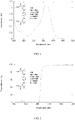
- FIG 1 and FIG 2 show the useful level and range of absorbance ( FIG 1 ) and transmission ( FIG 2 ) for compound 116 which, as seen from the structure provided on both graphs, has three fluorine atoms directly bonded to the carbonyl carbon attached to the ring. Data for this and compound 158 is also presented in table 2, below. Table 2: Data for compounds 116 and 158. Structure Mw ClogP ⁇ max (nm) ⁇ crit (nm) ⁇ E (1%, 1cm) 488 6.3 367 387 54658 1120 688 12.0 369 388 51600 750
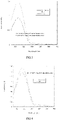
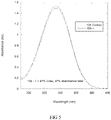
- FIGs 3 to 5 are graphical representations of the loss in absorbance of compounds Reference 54, 98 and 106, respectively, upon exposure to irradiation with a xenon arc lamp for one hour.
- Reference compound 54 is included as a non-fluorinated comparator compound, and one which demonstrates reasonable levels of stability.
- fluorinated compounds 98 and 106 can be clearly seen from the graph in terms of the minimal losses observed subsequent to irradiation. This reinforces the advantages provided by the compounds of formula II in terms of operational lifetime and improved protective capacity.
- Table 3 Summary of photostability results. Values denote % of original absorbance remaining.
- the benzoyl group also imparts some added photostability (similar to the COtBu group) to the molecule but not to the same degree. It is postulated that the effect here is predominantly due to the lack of protons ⁇ to the carbonyl group. Further, the use of a salt of Reference compound 1 (Reference compound 44 in the table) gave some degree of stabilisation with over twice the amount of compound remaining compared to the free base (56% vs. 21%). This could potentially provide more photostable versions of the lead compound of the first aspect. Such salt forms may therefore be useful to enhance photostability in addition to the effect of the halogen tag described herein.
- Salt forms such as those described above, can be prepared by reaction of the compound of the first aspect with an organic or inorganic acid, using standard methods detailed in the literature.
- Suitable acid addition salts according to the present invention include organic and inorganic acids and may include those formed from hydrochloric, hydrobromic, sulfuric, phosphoric, citric, tartaric, lactic, pyruvic, acetic, succinic, fumaric, maleic, oxaloacetic, methanesulfonic, ethanesulfonic, p-toluenesulfonic, benzenesulfonic, and isethionic acids.
- salts include propionic acid, glycolic acid, oxalic acid, malic acid, malonic acid, benzoic acid, cinnamic acid, mandelic acid, salicylic acid, and the like.
- Particular examples of salt forms include, but are not limited to, sulfates, pyrosulfates, bisulfates, sulfites, bisulfites, phosphates, monohydrogenphosphates, dihydrogenphosphates, metaphosphates, pyrophosphates, chlorides, bromides, iodides, acetates, propionates, decanoates, caprylates, acrylates, formates, isobutyrates, caproates, heptanoates, propiolates, oxalates, malonates, succinates, suberates, sebacates, fumarates, maleates, butyne-1,4-dioates, hexyne-1,6-dioates, benzoates,
- Reference compound 94 a potential visible light absorbing candidate for use in lenses, sunscreen formulations etc. resulted in less than 20% of the material remaining.
- the bright yellow film initially seen by film formation with Reference compound 94 became perfectly colourless during the course of the irradiation, an observation which could potentially be exploited in monitoring UV exposure for a range of applications including chemicals and food packaging where an indication of exposure is important for prediction of likely quality of the packaged material.
- Table 6 provides a convenient comparison of compounds Reference 54, 168, 98 and 169-170.
- Compound 168 was designed as a photostable analogue of previously identified lead Reference compound 54. It absorbs efficiently with a higher molar extinction coefficient than the parent compound but was not sufficiently soluble for determination of photostability by the methods employed. This may not preclude use in lenses or other applications where solubility is not at issue.
- Compounds 169 and 170 are chloro and bromo analogues of trifluoroacetyl derivative 98. These were synthesised to probe if the photostabilising effect of the trifluoroacetyl group was also observed with other halogens.
Landscapes
- Chemical & Material Sciences (AREA)
- Organic Chemistry (AREA)
- Health & Medical Sciences (AREA)
- Life Sciences & Earth Sciences (AREA)
- Veterinary Medicine (AREA)
- Animal Behavior & Ethology (AREA)
- General Health & Medical Sciences (AREA)
- Public Health (AREA)
- Engineering & Computer Science (AREA)
- Materials Engineering (AREA)
- Dermatology (AREA)
- Epidemiology (AREA)
- Birds (AREA)
- Wood Science & Technology (AREA)
- Chemical Kinetics & Catalysis (AREA)
- General Chemical & Material Sciences (AREA)
- Medicinal Chemistry (AREA)
- Nuclear Medicine, Radiotherapy & Molecular Imaging (AREA)
- Pharmacology & Pharmacy (AREA)
- Bioinformatics & Cheminformatics (AREA)
- Toxicology (AREA)
- Organic Low-Molecular-Weight Compounds And Preparation Thereof (AREA)
- Pharmaceuticals Containing Other Organic And Inorganic Compounds (AREA)
- Paints Or Removers (AREA)
- Addition Polymer Or Copolymer, Post-Treatments, Or Chemical Modifications (AREA)
- Plural Heterocyclic Compounds (AREA)
- Cosmetics (AREA)
- Hydrogenated Pyridines (AREA)
Applications Claiming Priority (2)
| Application Number | Priority Date | Filing Date | Title |
|---|---|---|---|
| AU2015904932A AU2015904932A0 (en) | 2015-11-27 | Photostable compounds, absorbing compounds and uses thereof | |
| PCT/AU2016/051162 WO2017088031A1 (en) | 2015-11-27 | 2016-11-28 | Photostable compounds, absorbing compounds and uses thereof |
Publications (3)
| Publication Number | Publication Date |
|---|---|
| EP3204355A1 EP3204355A1 (en) | 2017-08-16 |
| EP3204355A4 EP3204355A4 (en) | 2018-09-19 |
| EP3204355B1 true EP3204355B1 (en) | 2022-06-22 |
Family
ID=58762877
Family Applications (1)
| Application Number | Title | Priority Date | Filing Date |
|---|---|---|---|
| EP16847624.0A Active EP3204355B1 (en) | 2015-11-27 | 2016-11-28 | Photostable compounds, absorbing compounds and uses thereof |
Country Status (12)
| Country | Link |
|---|---|
| US (1) | US10315994B2 (OSRAM) |
| EP (1) | EP3204355B1 (OSRAM) |
| JP (1) | JP2019504818A (OSRAM) |
| KR (1) | KR102779069B1 (OSRAM) |
| CN (1) | CN107108503B (OSRAM) |
| AU (1) | AU2016329044B2 (OSRAM) |
| BR (1) | BR112017008359B1 (OSRAM) |
| CA (1) | CA2962542A1 (OSRAM) |
| SG (1) | SG11201702849UA (OSRAM) |
| TW (1) | TW201728572A (OSRAM) |
| WO (1) | WO2017088031A1 (OSRAM) |
| ZA (1) | ZA201702507B (OSRAM) |
Families Citing this family (4)
| Publication number | Priority date | Publication date | Assignee | Title |
|---|---|---|---|---|
| KR101907970B1 (ko) * | 2017-04-10 | 2018-10-16 | 주식회사 엘엠에스 | 광학물품 및 이를 포함하는 광학필터 |
| KR102007198B1 (ko) * | 2018-02-23 | 2019-08-05 | 금산진생협동조합 | 한약재 추출물을 포함하는 항산화 및 항염증용 조성물 |
| EP3814431B1 (en) * | 2018-06-26 | 2023-05-31 | Eastman Kodak Company | Light-blocking articles with functional composition |
| CN120491390A (zh) * | 2025-05-09 | 2025-08-15 | 湖南初源新材料股份有限公司 | 包含蒽基查尔酮光敏剂的感光树脂组合物及应用 |
Family Cites Families (8)
| Publication number | Priority date | Publication date | Assignee | Title |
|---|---|---|---|---|
| US4322537A (en) * | 1980-06-02 | 1982-03-30 | President And Fellows Of Harvard College | Tertiary amine oxidation and products thereof |
| WO1988002251A1 (en) * | 1986-09-26 | 1988-04-07 | Ici Australia Operations Proprietary Limited | Sunscreen compositions and compounds for use therein |
| GR900100129A (el) * | 1989-02-23 | 1991-06-28 | Ici Australia Operations | Συν?έσεις και ενώσεις που απορροφούν το υπεριώδες φως. |
| GB9403451D0 (en) | 1994-02-23 | 1994-04-13 | Ciba Geigy Ag | Sunscreen compositions |
| US20120040387A1 (en) * | 2009-01-19 | 2012-02-16 | Asahi Kasei Pharma Corporation | Method and reagent for measuring mevalonic acid, 3-hydroxymethylglutaryl coenzyme a, and coenzyme a |
| JPWO2012070509A1 (ja) * | 2010-11-24 | 2014-05-19 | 国立大学法人 長崎大学 | 含窒素複素環の製造方法 |
| BR112015011986A2 (pt) * | 2012-11-27 | 2017-07-11 | Coral Sunscreen Pty Ltd | síntese de compostos de absorção de uv |
| EP3022180B1 (en) * | 2013-07-15 | 2022-02-23 | Coral Sunscreen Pty Ltd | Uv absorbing compounds, compositions comprising same and uses thereof |
-
2016
- 2016-11-28 SG SG11201702849UA patent/SG11201702849UA/en unknown
- 2016-11-28 CA CA2962542A patent/CA2962542A1/en active Pending
- 2016-11-28 AU AU2016329044A patent/AU2016329044B2/en not_active Expired - Fee Related
- 2016-11-28 JP JP2017518235A patent/JP2019504818A/ja active Pending
- 2016-11-28 BR BR112017008359-0A patent/BR112017008359B1/pt not_active IP Right Cessation
- 2016-11-28 US US15/518,743 patent/US10315994B2/en active Active
- 2016-11-28 KR KR1020177010955A patent/KR102779069B1/ko active Active
- 2016-11-28 WO PCT/AU2016/051162 patent/WO2017088031A1/en not_active Ceased
- 2016-11-28 EP EP16847624.0A patent/EP3204355B1/en active Active
- 2016-11-28 CN CN201680004069.9A patent/CN107108503B/zh active Active
- 2016-11-28 TW TW105139104A patent/TW201728572A/zh unknown
-
2017
- 2017-04-10 ZA ZA2017/02507A patent/ZA201702507B/en unknown
Also Published As
| Publication number | Publication date |
|---|---|
| CA2962542A1 (en) | 2017-05-27 |
| KR20180087134A (ko) | 2018-08-01 |
| ZA201702507B (en) | 2020-10-28 |
| KR102779069B1 (ko) | 2025-03-07 |
| EP3204355A4 (en) | 2018-09-19 |
| AU2016329044B2 (en) | 2021-06-03 |
| SG11201702849UA (en) | 2017-07-28 |
| BR112017008359A2 (pt) | 2018-02-20 |
| WO2017088031A1 (en) | 2017-06-01 |
| AU2016329044A1 (en) | 2017-06-15 |
| CN107108503B (zh) | 2022-10-04 |
| US20180016233A1 (en) | 2018-01-18 |
| TW201728572A (zh) | 2017-08-16 |
| EP3204355A1 (en) | 2017-08-16 |
| BR112017008359B1 (pt) | 2022-01-04 |
| US10315994B2 (en) | 2019-06-11 |
| CN107108503A (zh) | 2017-08-29 |
| JP2019504818A (ja) | 2019-02-21 |
Similar Documents
| Publication | Publication Date | Title |
|---|---|---|
| EP2855441B1 (en) | Imino compounds as protecting agents against ultraviolet radiations | |
| ES2212020T3 (es) | Derivados de bezoxazol utiles como filtros para la radiacion uv. | |
| EP3204355B1 (en) | Photostable compounds, absorbing compounds and uses thereof | |
| EP1606270A2 (en) | Symmetrical triazine derivatives | |
| AU2022201601B2 (en) | Compounds | |
| EP3022180B1 (en) | Uv absorbing compounds, compositions comprising same and uses thereof | |
| US6399047B1 (en) | Benzoxazole derivatives for use in cosmetic compositions and for stabilizing synthetic polymers | |
| US10519111B2 (en) | UV absorbing compounds, compositions comprising same and uses thereof | |
| CA2962548C (en) | Non-cyclic enamine compounds for absorption of electromagnetic radiation | |
| JPH11255613A (ja) | 有機材料用安定剤としてのイソインドリノン誘導体の使用 | |
| HK1221146B (en) | Uv absorbing compounds, compositions comprising same and uses thereof |
Legal Events
| Date | Code | Title | Description |
|---|---|---|---|
| STAA | Information on the status of an ep patent application or granted ep patent |
Free format text: STATUS: UNKNOWN |
|
| STAA | Information on the status of an ep patent application or granted ep patent |
Free format text: STATUS: THE INTERNATIONAL PUBLICATION HAS BEEN MADE |
|
| PUAI | Public reference made under article 153(3) epc to a published international application that has entered the european phase |
Free format text: ORIGINAL CODE: 0009012 |
|
| STAA | Information on the status of an ep patent application or granted ep patent |
Free format text: STATUS: REQUEST FOR EXAMINATION WAS MADE |
|
| 17P | Request for examination filed |
Effective date: 20170331 |
|
| AK | Designated contracting states |
Kind code of ref document: A1 Designated state(s): AL AT BE BG CH CY CZ DE DK EE ES FI FR GB GR HR HU IE IS IT LI LT LU LV MC MK MT NL NO PL PT RO RS SE SI SK SM TR |
|
| AX | Request for extension of the european patent |
Extension state: BA ME |
|
| A4 | Supplementary search report drawn up and despatched |
Effective date: 20180822 |
|
| RIC1 | Information provided on ipc code assigned before grant |
Ipc: C07D 211/78 20060101ALI20180814BHEP Ipc: C07D 241/04 20060101ALI20180814BHEP Ipc: C09D 5/32 20060101ALI20180814BHEP Ipc: A61K 8/40 20060101ALI20180814BHEP Ipc: C07D 211/80 20060101ALI20180814BHEP Ipc: C07D 213/50 20060101ALI20180814BHEP Ipc: C07D 211/70 20060101AFI20180814BHEP Ipc: C07D 241/08 20060101ALI20180814BHEP |
|
| DAV | Request for validation of the european patent (deleted) | ||
| DAX | Request for extension of the european patent (deleted) | ||
| STAA | Information on the status of an ep patent application or granted ep patent |
Free format text: STATUS: EXAMINATION IS IN PROGRESS |
|
| 17Q | First examination report despatched |
Effective date: 20200224 |
|
| GRAP | Despatch of communication of intention to grant a patent |
Free format text: ORIGINAL CODE: EPIDOSNIGR1 |
|
| STAA | Information on the status of an ep patent application or granted ep patent |
Free format text: STATUS: GRANT OF PATENT IS INTENDED |
|
| INTG | Intention to grant announced |
Effective date: 20200729 |
|
| RAP1 | Party data changed (applicant data changed or rights of an application transferred) |
Owner name: COMMONWEALTH SCIENTIFIC AND INDUSTRIAL RESEARCH ORGANISATION |
|
| GRAJ | Information related to disapproval of communication of intention to grant by the applicant or resumption of examination proceedings by the epo deleted |
Free format text: ORIGINAL CODE: EPIDOSDIGR1 |
|
| STAA | Information on the status of an ep patent application or granted ep patent |
Free format text: STATUS: EXAMINATION IS IN PROGRESS |
|
| INTC | Intention to grant announced (deleted) | ||
| GRAP | Despatch of communication of intention to grant a patent |
Free format text: ORIGINAL CODE: EPIDOSNIGR1 |
|
| STAA | Information on the status of an ep patent application or granted ep patent |
Free format text: STATUS: GRANT OF PATENT IS INTENDED |
|
| INTG | Intention to grant announced |
Effective date: 20201202 |
|
| GRAJ | Information related to disapproval of communication of intention to grant by the applicant or resumption of examination proceedings by the epo deleted |
Free format text: ORIGINAL CODE: EPIDOSDIGR1 |
|
| STAA | Information on the status of an ep patent application or granted ep patent |
Free format text: STATUS: EXAMINATION IS IN PROGRESS |
|
| INTC | Intention to grant announced (deleted) | ||
| GRAP | Despatch of communication of intention to grant a patent |
Free format text: ORIGINAL CODE: EPIDOSNIGR1 |
|
| STAA | Information on the status of an ep patent application or granted ep patent |
Free format text: STATUS: GRANT OF PATENT IS INTENDED |
|
| INTG | Intention to grant announced |
Effective date: 20211130 |
|
| GRAS | Grant fee paid |
Free format text: ORIGINAL CODE: EPIDOSNIGR3 |
|
| GRAA | (expected) grant |
Free format text: ORIGINAL CODE: 0009210 |
|
| STAA | Information on the status of an ep patent application or granted ep patent |
Free format text: STATUS: THE PATENT HAS BEEN GRANTED |
|
| AK | Designated contracting states |
Kind code of ref document: B1 Designated state(s): AL AT BE BG CH CY CZ DE DK EE ES FI FR GB GR HR HU IE IS IT LI LT LU LV MC MK MT NL NO PL PT RO RS SE SI SK SM TR |
|
| REG | Reference to a national code |
Ref country code: GB Ref legal event code: FG4D |
|
| REG | Reference to a national code |
Ref country code: CH Ref legal event code: EP |
|
| REG | Reference to a national code |
Ref country code: DE Ref legal event code: R096 Ref document number: 602016073047 Country of ref document: DE |
|
| REG | Reference to a national code |
Ref country code: AT Ref legal event code: REF Ref document number: 1499698 Country of ref document: AT Kind code of ref document: T Effective date: 20220715 |
|
| REG | Reference to a national code |
Ref country code: IE Ref legal event code: FG4D |
|
| REG | Reference to a national code |
Ref country code: LT Ref legal event code: MG9D |
|
| REG | Reference to a national code |
Ref country code: NL Ref legal event code: MP Effective date: 20220622 |
|
| PG25 | Lapsed in a contracting state [announced via postgrant information from national office to epo] |
Ref country code: SE Free format text: LAPSE BECAUSE OF FAILURE TO SUBMIT A TRANSLATION OF THE DESCRIPTION OR TO PAY THE FEE WITHIN THE PRESCRIBED TIME-LIMIT Effective date: 20220622 Ref country code: NO Free format text: LAPSE BECAUSE OF FAILURE TO SUBMIT A TRANSLATION OF THE DESCRIPTION OR TO PAY THE FEE WITHIN THE PRESCRIBED TIME-LIMIT Effective date: 20220922 Ref country code: LT Free format text: LAPSE BECAUSE OF FAILURE TO SUBMIT A TRANSLATION OF THE DESCRIPTION OR TO PAY THE FEE WITHIN THE PRESCRIBED TIME-LIMIT Effective date: 20220622 Ref country code: HR Free format text: LAPSE BECAUSE OF FAILURE TO SUBMIT A TRANSLATION OF THE DESCRIPTION OR TO PAY THE FEE WITHIN THE PRESCRIBED TIME-LIMIT Effective date: 20220622 Ref country code: GR Free format text: LAPSE BECAUSE OF FAILURE TO SUBMIT A TRANSLATION OF THE DESCRIPTION OR TO PAY THE FEE WITHIN THE PRESCRIBED TIME-LIMIT Effective date: 20220923 Ref country code: FI Free format text: LAPSE BECAUSE OF FAILURE TO SUBMIT A TRANSLATION OF THE DESCRIPTION OR TO PAY THE FEE WITHIN THE PRESCRIBED TIME-LIMIT Effective date: 20220622 Ref country code: BG Free format text: LAPSE BECAUSE OF FAILURE TO SUBMIT A TRANSLATION OF THE DESCRIPTION OR TO PAY THE FEE WITHIN THE PRESCRIBED TIME-LIMIT Effective date: 20220922 |
|
| REG | Reference to a national code |
Ref country code: AT Ref legal event code: MK05 Ref document number: 1499698 Country of ref document: AT Kind code of ref document: T Effective date: 20220622 |
|
| PG25 | Lapsed in a contracting state [announced via postgrant information from national office to epo] |
Ref country code: RS Free format text: LAPSE BECAUSE OF FAILURE TO SUBMIT A TRANSLATION OF THE DESCRIPTION OR TO PAY THE FEE WITHIN THE PRESCRIBED TIME-LIMIT Effective date: 20220622 Ref country code: LV Free format text: LAPSE BECAUSE OF FAILURE TO SUBMIT A TRANSLATION OF THE DESCRIPTION OR TO PAY THE FEE WITHIN THE PRESCRIBED TIME-LIMIT Effective date: 20220622 |
|
| PG25 | Lapsed in a contracting state [announced via postgrant information from national office to epo] |
Ref country code: NL Free format text: LAPSE BECAUSE OF FAILURE TO SUBMIT A TRANSLATION OF THE DESCRIPTION OR TO PAY THE FEE WITHIN THE PRESCRIBED TIME-LIMIT Effective date: 20220622 |
|
| PG25 | Lapsed in a contracting state [announced via postgrant information from national office to epo] |
Ref country code: SM Free format text: LAPSE BECAUSE OF FAILURE TO SUBMIT A TRANSLATION OF THE DESCRIPTION OR TO PAY THE FEE WITHIN THE PRESCRIBED TIME-LIMIT Effective date: 20220622 Ref country code: SK Free format text: LAPSE BECAUSE OF FAILURE TO SUBMIT A TRANSLATION OF THE DESCRIPTION OR TO PAY THE FEE WITHIN THE PRESCRIBED TIME-LIMIT Effective date: 20220622 Ref country code: RO Free format text: LAPSE BECAUSE OF FAILURE TO SUBMIT A TRANSLATION OF THE DESCRIPTION OR TO PAY THE FEE WITHIN THE PRESCRIBED TIME-LIMIT Effective date: 20220622 Ref country code: PT Free format text: LAPSE BECAUSE OF FAILURE TO SUBMIT A TRANSLATION OF THE DESCRIPTION OR TO PAY THE FEE WITHIN THE PRESCRIBED TIME-LIMIT Effective date: 20221024 Ref country code: ES Free format text: LAPSE BECAUSE OF FAILURE TO SUBMIT A TRANSLATION OF THE DESCRIPTION OR TO PAY THE FEE WITHIN THE PRESCRIBED TIME-LIMIT Effective date: 20220622 Ref country code: EE Free format text: LAPSE BECAUSE OF FAILURE TO SUBMIT A TRANSLATION OF THE DESCRIPTION OR TO PAY THE FEE WITHIN THE PRESCRIBED TIME-LIMIT Effective date: 20220622 Ref country code: CZ Free format text: LAPSE BECAUSE OF FAILURE TO SUBMIT A TRANSLATION OF THE DESCRIPTION OR TO PAY THE FEE WITHIN THE PRESCRIBED TIME-LIMIT Effective date: 20220622 Ref country code: AT Free format text: LAPSE BECAUSE OF FAILURE TO SUBMIT A TRANSLATION OF THE DESCRIPTION OR TO PAY THE FEE WITHIN THE PRESCRIBED TIME-LIMIT Effective date: 20220622 |
|
| PG25 | Lapsed in a contracting state [announced via postgrant information from national office to epo] |
Ref country code: PL Free format text: LAPSE BECAUSE OF FAILURE TO SUBMIT A TRANSLATION OF THE DESCRIPTION OR TO PAY THE FEE WITHIN THE PRESCRIBED TIME-LIMIT Effective date: 20220622 Ref country code: IS Free format text: LAPSE BECAUSE OF FAILURE TO SUBMIT A TRANSLATION OF THE DESCRIPTION OR TO PAY THE FEE WITHIN THE PRESCRIBED TIME-LIMIT Effective date: 20221022 |
|
| REG | Reference to a national code |
Ref country code: DE Ref legal event code: R097 Ref document number: 602016073047 Country of ref document: DE |
|
| PG25 | Lapsed in a contracting state [announced via postgrant information from national office to epo] |
Ref country code: AL Free format text: LAPSE BECAUSE OF FAILURE TO SUBMIT A TRANSLATION OF THE DESCRIPTION OR TO PAY THE FEE WITHIN THE PRESCRIBED TIME-LIMIT Effective date: 20220622 |
|
| PG25 | Lapsed in a contracting state [announced via postgrant information from national office to epo] |
Ref country code: DK Free format text: LAPSE BECAUSE OF FAILURE TO SUBMIT A TRANSLATION OF THE DESCRIPTION OR TO PAY THE FEE WITHIN THE PRESCRIBED TIME-LIMIT Effective date: 20220622 |
|
| PLBE | No opposition filed within time limit |
Free format text: ORIGINAL CODE: 0009261 |
|
| STAA | Information on the status of an ep patent application or granted ep patent |
Free format text: STATUS: NO OPPOSITION FILED WITHIN TIME LIMIT |
|
| 26N | No opposition filed |
Effective date: 20230323 |
|
| PG25 | Lapsed in a contracting state [announced via postgrant information from national office to epo] |
Ref country code: MC Free format text: LAPSE BECAUSE OF FAILURE TO SUBMIT A TRANSLATION OF THE DESCRIPTION OR TO PAY THE FEE WITHIN THE PRESCRIBED TIME-LIMIT Effective date: 20220622 |
|
| REG | Reference to a national code |
Ref country code: CH Ref legal event code: PL |
|
| P01 | Opt-out of the competence of the unified patent court (upc) registered |
Effective date: 20230524 |
|
| GBPC | Gb: european patent ceased through non-payment of renewal fee |
Effective date: 20221128 |
|
| REG | Reference to a national code |
Ref country code: BE Ref legal event code: MM Effective date: 20221130 |
|
| PG25 | Lapsed in a contracting state [announced via postgrant information from national office to epo] |
Ref country code: LI Free format text: LAPSE BECAUSE OF NON-PAYMENT OF DUE FEES Effective date: 20221130 Ref country code: CH Free format text: LAPSE BECAUSE OF NON-PAYMENT OF DUE FEES Effective date: 20221130 |
|
| PG25 | Lapsed in a contracting state [announced via postgrant information from national office to epo] |
Ref country code: SI Free format text: LAPSE BECAUSE OF FAILURE TO SUBMIT A TRANSLATION OF THE DESCRIPTION OR TO PAY THE FEE WITHIN THE PRESCRIBED TIME-LIMIT Effective date: 20220622 Ref country code: LU Free format text: LAPSE BECAUSE OF NON-PAYMENT OF DUE FEES Effective date: 20221128 |
|
| PG25 | Lapsed in a contracting state [announced via postgrant information from national office to epo] |
Ref country code: IE Free format text: LAPSE BECAUSE OF NON-PAYMENT OF DUE FEES Effective date: 20221128 Ref country code: GB Free format text: LAPSE BECAUSE OF NON-PAYMENT OF DUE FEES Effective date: 20221128 |
|
| PG25 | Lapsed in a contracting state [announced via postgrant information from national office to epo] |
Ref country code: FR Free format text: LAPSE BECAUSE OF NON-PAYMENT OF DUE FEES Effective date: 20221130 Ref country code: BE Free format text: LAPSE BECAUSE OF NON-PAYMENT OF DUE FEES Effective date: 20221130 |
|
| PG25 | Lapsed in a contracting state [announced via postgrant information from national office to epo] |
Ref country code: IT Free format text: LAPSE BECAUSE OF FAILURE TO SUBMIT A TRANSLATION OF THE DESCRIPTION OR TO PAY THE FEE WITHIN THE PRESCRIBED TIME-LIMIT Effective date: 20220622 |
|
| PG25 | Lapsed in a contracting state [announced via postgrant information from national office to epo] |
Ref country code: HU Free format text: LAPSE BECAUSE OF FAILURE TO SUBMIT A TRANSLATION OF THE DESCRIPTION OR TO PAY THE FEE WITHIN THE PRESCRIBED TIME-LIMIT; INVALID AB INITIO Effective date: 20161128 |
|
| PG25 | Lapsed in a contracting state [announced via postgrant information from national office to epo] |
Ref country code: CY Free format text: LAPSE BECAUSE OF FAILURE TO SUBMIT A TRANSLATION OF THE DESCRIPTION OR TO PAY THE FEE WITHIN THE PRESCRIBED TIME-LIMIT Effective date: 20220622 |
|
| PG25 | Lapsed in a contracting state [announced via postgrant information from national office to epo] |
Ref country code: MK Free format text: LAPSE BECAUSE OF FAILURE TO SUBMIT A TRANSLATION OF THE DESCRIPTION OR TO PAY THE FEE WITHIN THE PRESCRIBED TIME-LIMIT Effective date: 20220622 |
|
| PG25 | Lapsed in a contracting state [announced via postgrant information from national office to epo] |
Ref country code: MT Free format text: LAPSE BECAUSE OF FAILURE TO SUBMIT A TRANSLATION OF THE DESCRIPTION OR TO PAY THE FEE WITHIN THE PRESCRIBED TIME-LIMIT Effective date: 20220622 |
|
| PG25 | Lapsed in a contracting state [announced via postgrant information from national office to epo] |
Ref country code: BG Free format text: LAPSE BECAUSE OF FAILURE TO SUBMIT A TRANSLATION OF THE DESCRIPTION OR TO PAY THE FEE WITHIN THE PRESCRIBED TIME-LIMIT Effective date: 20220622 |
|
| PG25 | Lapsed in a contracting state [announced via postgrant information from national office to epo] |
Ref country code: BG Free format text: LAPSE BECAUSE OF FAILURE TO SUBMIT A TRANSLATION OF THE DESCRIPTION OR TO PAY THE FEE WITHIN THE PRESCRIBED TIME-LIMIT Effective date: 20220622 |
|
| PGFP | Annual fee paid to national office [announced via postgrant information from national office to epo] |
Ref country code: DE Payment date: 20241203 Year of fee payment: 9 |
|
| PG25 | Lapsed in a contracting state [announced via postgrant information from national office to epo] |
Ref country code: TR Free format text: LAPSE BECAUSE OF FAILURE TO SUBMIT A TRANSLATION OF THE DESCRIPTION OR TO PAY THE FEE WITHIN THE PRESCRIBED TIME-LIMIT Effective date: 20220622 |