EP3203672A1 - Tm9-based carrier aggregation method and device - Google Patents
Tm9-based carrier aggregation method and device Download PDFInfo
- Publication number
- EP3203672A1 EP3203672A1 EP15847085.6A EP15847085A EP3203672A1 EP 3203672 A1 EP3203672 A1 EP 3203672A1 EP 15847085 A EP15847085 A EP 15847085A EP 3203672 A1 EP3203672 A1 EP 3203672A1
- Authority
- EP
- European Patent Office
- Prior art keywords
- codebook
- stream
- network side
- side device
- threshold
- Prior art date
- Legal status (The legal status is an assumption and is not a legal conclusion. Google has not performed a legal analysis and makes no representation as to the accuracy of the status listed.)
- Granted
Links
Images

Classifications
-
- H—ELECTRICITY
- H04—ELECTRIC COMMUNICATION TECHNIQUE
- H04L—TRANSMISSION OF DIGITAL INFORMATION, e.g. TELEGRAPHIC COMMUNICATION
- H04L5/00—Arrangements affording multiple use of the transmission path
- H04L5/0091—Signalling for the administration of the divided path, e.g. signalling of configuration information
-
- H—ELECTRICITY
- H04—ELECTRIC COMMUNICATION TECHNIQUE
- H04W—WIRELESS COMMUNICATION NETWORKS
- H04W72/00—Local resource management
- H04W72/50—Allocation or scheduling criteria for wireless resources
- H04W72/51—Allocation or scheduling criteria for wireless resources based on terminal or device properties
-
- H—ELECTRICITY
- H04—ELECTRIC COMMUNICATION TECHNIQUE
- H04L—TRANSMISSION OF DIGITAL INFORMATION, e.g. TELEGRAPHIC COMMUNICATION
- H04L5/00—Arrangements affording multiple use of the transmission path
- H04L5/0001—Arrangements for dividing the transmission path
- H04L5/0003—Two-dimensional division
- H04L5/0005—Time-frequency
- H04L5/0007—Time-frequency the frequencies being orthogonal, e.g. OFDM(A) or DMT
- H04L5/001—Time-frequency the frequencies being orthogonal, e.g. OFDM(A) or DMT the frequencies being arranged in component carriers
-
- H—ELECTRICITY
- H04—ELECTRIC COMMUNICATION TECHNIQUE
- H04L—TRANSMISSION OF DIGITAL INFORMATION, e.g. TELEGRAPHIC COMMUNICATION
- H04L5/00—Arrangements affording multiple use of the transmission path
- H04L5/0001—Arrangements for dividing the transmission path
- H04L5/0014—Three-dimensional division
- H04L5/0016—Time-frequency-code
-
- H—ELECTRICITY
- H04—ELECTRIC COMMUNICATION TECHNIQUE
- H04W—WIRELESS COMMUNICATION NETWORKS
- H04W72/00—Local resource management
- H04W72/50—Allocation or scheduling criteria for wireless resources
- H04W72/54—Allocation or scheduling criteria for wireless resources based on quality criteria
- H04W72/541—Allocation or scheduling criteria for wireless resources based on quality criteria using the level of interference
-
- H—ELECTRICITY
- H04—ELECTRIC COMMUNICATION TECHNIQUE
- H04L—TRANSMISSION OF DIGITAL INFORMATION, e.g. TELEGRAPHIC COMMUNICATION
- H04L5/00—Arrangements affording multiple use of the transmission path
- H04L5/0091—Signalling for the administration of the divided path, e.g. signalling of configuration information
- H04L5/0096—Indication of changes in allocation
- H04L5/0098—Signalling of the activation or deactivation of component carriers, subcarriers or frequency bands
-
- H—ELECTRICITY
- H04—ELECTRIC COMMUNICATION TECHNIQUE
- H04W—WIRELESS COMMUNICATION NETWORKS
- H04W88/00—Devices specially adapted for wireless communication networks, e.g. terminals, base stations or access point devices
- H04W88/02—Terminal devices
- H04W88/06—Terminal devices adapted for operation in multiple networks or having at least two operational modes, e.g. multi-mode terminals
Definitions
- the present invention relates to the field of communication technology, and more particularly to a TM-9 based carrier aggregation method and device.
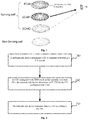
- Fig. 1 is a networking diagram of the carrier aggregation system, carrier aggregation (CA) of TD-LET (Time Division-Long Time Evolution) cells are mainly based on the bandwidth of 10 M and 20 M, and be conducted in the D, E, and F bands.
- CA carrier aggregation
- a CA system a plurality of component carriers (CC) simultaneously serving a User Equipment (UE) are classified into Primary Component Carrier (PCC) and Secondary Component Carrier (SCC).
- PCC Primary Component Carrier
- SCC Secondary Component Carrier
- the cell corresponding to PCC is called Primary Cell (PCell), PCell will inherit the full function of the service cell of Long Term Evolution (LTE); the cell corresponding to SCC is called Secondary Cell (SCell), and SCell will only bear the function of data transmission.
- PCell and SCell are viewed from the point of UE, PCell contains downlink (DL) CC and uplink (UL) CC, SCell can contain only DL CC, but it
- the LTE-A cell will support transmission mode 9 (TM9), a maximum of 8 ports can be configured for the DL of a cell, which can support up to 8 streams of data transmission for a single user, with transmission rate far exceeding the LTE cell.
- TM9 transmission mode 9
- the CA cell of the present stage mainly considers single/dual-stream transmission, the CA cell does not support CA of 8 DL ports for TD-LTE-A cell using TM9.
- An embodiment of the present invention provides a TM9-based CA method and device which enables a CA cell to support CA of 8 DL ports for TD-LTE-A cell using TM9, thus increasing user rate.
- An embodiment of the present invention provides a TM9-based CA method which comprises of:
- the network side device determines the TM of the CC, which specifically comprising:
- the above mentioned #2 determining module is specifically used to judge if the UE supports UL CA function when the CC configured with TM9 is a SCC; if the UE supports UL CA function, under codebook condition, the UE determines the TM of the CC as codebook TM9; or, under non-codebook condition, the UE determines the TM of the CC as non-codebook TM9; if the UE does not support UL CA function, under codebook condition, the UE determines the TM of the CC as codebook TM9; or, under non-codebook condition, the UE determines the TM of the CC as TM3.
- the #2 determining module is specifically used in that when the CC configured with TM9 is the PCC, under codebook condition, the TM of the CC is determined as codebook TM9; or, under non-codebook condition, the TM of the CC is determined as non-codebook TM9.
- the #2 determining module is further used to judge whether the number of ports configured on the network side device is greater than or equal to 4 during the process of determining the TM of the CC is codebook TM9; if the number of ports configured on the network side device is not greater than or equal to 4, the TM of the CC is determined to be codebook TM9 single-stream or codebook TM9 dual-stream; if the number of ports configured on the network side device is greater than or equal to 4, it is judged whether the maximum number of streams supported by the UE is greater than or equal to 4; if the maximum number of streams supported by the UE is not greater than or equal to 4, the TM of the CC is determined as codebook TM9 single-stream or codebook TM9 dual-stream; if the maximum number of streams supported by the UE is greater than or equal to 4, the TM of the CC is determined as codebook TM9 four-stream or codebook TM9 eight-stream.
- the transmission module is also used to transmit the TM of the CC to the UE after the TM of the CC is determined; when the TM of the CC is codebook TM9 single-stream or codebook TM9 dual-stream, and the SCC enables the adaptive function between modes, if RSRP is greater than the preset first threshold and SINR is greater than the preset second threshold, the TM is adapted to TM3; otherwise, the TM is adapted to TM9 single-stream or TM9 dual-stream; when the TM of the CC is codebook TM9 four-stream or codebook TM9 eight-stream, and the SCC enables the adaptive function between modes, if RSRP is greater than the preset third threshold and SINR is greater than the preset fourth threshold, the TM is adapted to TM9 four-stream or TM9 eight-stream; otherwise, the transmission mode is adapted to TM3.
- An embodiment of the present invention provides a user equipment (UE) which specifically comprises of:
- a network side device which specifically comprises of:
- a transceiver for receiving and transmitting data under the control of the processor.
- the processor is specifically used to:
- the processor is specifically used to:
- the processor is further used to:
- the processor is further used to:
- a UE which specifically comprises of:
- GSM Global System of Mobile communication
- CDMA Code Division Multiple Access
- WCDMA Wideband Code Division Multiple Access
- GPRS General Packet Radio Service
- LTE Long Term Evolution
- LTE-A Advanced Long Term Evolution
- UMTS Universal Mobile Telecommunication System
- a User Equipment includes, but is not limited to, Mobile Station (MS), Mobile Terminal, Mobile Telephone, handset, and portable device, etc., which may communicate with one or more core networks via a Radio Access Network (RAN).
- a UE may be a mobile phone (or "cellular" phone), a computer with wireless communication function, etc., and it may also be a portable, pocket-sized, hand-held, computer built-in or vehicle-mounted mobile device.
- a base station may refer to a device in an access network that communicates with a wireless terminal over an air interface over one or more sectors.
- the base station may be used to convert the received air frame to an IP packet, to function as a router between the wireless terminal and the rest of the access network, wherein the remainder of the access network may comprise an Internet Protocol (IP) network.
- IP Internet Protocol
- the base station may also coordinate the management of the air interface attributes.
- the base station may be a Base Transceiver Station (BTS) in GSM or CDMA, a NodeB in WCDMA, or an evolved base station in LTE (NodeB, eNB or e-NodeB (evolutional Node B)), the present invention is not limited thereto.
- BTS Base Transceiver Station
- NodeB eNodeB
- e-NodeB evolutional Node B
- the #1 embodiment of the present invention provides a TM9-based CA method.
- the TM9-based CA method comprises the following steps:
- the CA process specifically includes, but is not limited to, the configuration process of the CA cell and the activation/deactivation process of SCC.
- a CC is configured as PCC and the other CC(s) is(are) configured as SCC(s).
- a set of CA parameters can be configured, such as UL CA switch, DL CA switch, CA cross-carrier scheduling switch, CA activation/deactivation ratio threshold, CA activation data volume threshold, carrier aggregation deactivation data volume threshold, and so on.
- a set of default CA parameters may be configured to the CA relationship, which may be adjusted specifically.
- activation/deactivation of SCC may be conducted according to the activation/deactivation algorithm shown in Table 1.
- Table 1 Activation type Algorithm Algorithm description
- Downlink activation algorithm Activation based on user traffic rate requirements
- the data volume of the downlink PDCP Packet Data Converge Protocol
- N consecutive statistics results are greater than the activation threshold, the SCC is activated.
- the SCC is deactivated Deactivation based on MCS&QoS&RLC Congestion MCS (Modulation and Coding Style) is lower than the set deactivation threshold, QoS meets the requirement, and RLC is not congested, if these conditions are met for N consecutive times, the SCC is deactivated
- MCS&QoS&RLC Congestion MCS Modulation and Coding Style
- the network side device can determine the CC which is currently activated in the CA system and determine whether there is a CC configured with TM9 in the currently active CCs.
- Step 202 if there is a CC configured with TM9 in the currently active CAs, the network side device determines the TM of this CC.
- the scheduling of the PCC and the SCC is conducted separately, that is, according to the general strategy, the PCC and the SCC are independently scheduled, based on the condition of UE, they will determine their own TM and DCI (DownLink Control Information) format.
- TM9 DownLink Control Information
- CC configured with TM9 it will be processed according to the technical solution provided by the embodiment of the present invention; for CC which is not configured with TM9, it will be processed according to the prior art.
- TD-LTE cell A is PCC
- the TD-LTE cell A is configured with transmission mode TM3
- LTE-A cell B is the SCC
- LTE-A cell B is configured with transmission mode TM9
- CC configured with TM9 LTE-A cell B
- the network side device determines the TM of the CC, specifically including but not limited to: the network side device judges whether the UE supports UL CA function; if the UE supports UL CA function, under codebook condition, the network side device determines the TM of the CC as codebook TM9; or, under non-codebook condition, the network side device determines the TM of the CC is non-codebook TM9; if the UE does not support UL CA function, under codebook condition, the network side device determines the TM of the CC as codebook TM9; or, under non-codebook condition, the network side device determines the TM of the CC as TM3.
- the process that the network side device determines the TM of the CC as codebook TM9 specifically comprises of but not limited to: the network side device judges whether the number of ports configured on the network side device is greater than or equal to 4; if the number of ports configured on the network side device is not greater than or equal to 4, the network side device determines the TM of the CC as TM9 single-stream or codebook TM9 dual-stream; if the number of ports configured on the network side device is greater than or equal to 4, the network side device judges whether the maximum number of streams supported by the UE is greater than or equal to 4; if the maximum number of streams supported by the UE is not greater than or equal to 4, the network side device determines the TM of the CC as codebook TM9 single-stream or codebook TM9 dual-stream; if the number of streams supported by the UE is greater than or equal to 4, the network side device determines the TM of the CC as codebook TM9 four-stream or codebook TM9 eight-stream.
- the uplink data may be transmitted on the SCC, under codebook condition, the network side device determines the TM of the CC as codebook TM9; under non-codebook condition, the network side device determines the TM of the CC as non-codebook TM9. If the UE does not support UL CA function, the UE uplink supports only one CC, that is, the PCC. For the SCC, under codebook condition, the network side device determines the TM of the CC as codebook TM9. Or, under non-codebook condition, the network side device determines the TM of the CC as TM3, not non-codebook TM9.
- the process that the network side device determines the TM of the CC comprises of but not limited to: under codebook condition, the network side device determines the TM of the CC as codebook TM9; or, under non-codebook condition, the network side device determines the TM of the CC as non-codebook TM9.
- the process that the network side device determines the TM of the CC as codebook TM9 specifically comprises of but not limited to: the network side device judges whether the number of ports configured on the network side device is greater than or equal to 4; if the number of ports configured on the network side device is greater than or equal to 4, the network side device determines the TM of the CC as codebook TM9 single-stream or codebook TM9 dual-stream; if the number of ports configured on the network side device is greater than or equal to 4, the network side device judges whether the maximum number of streams supported by the UE is greater than or equal to 4; if the maximum number of streams supported by the UE is not greater than or equal to 4, the network side device determines the TM of the CC as codebook TM9 single-stream or codebook TM9 dual-stream; if the maximum number of streams supported by the UE is greater than or equal to 4, the network side device determines the TM of the CC as codebook TM9 four-stream or codebook TM9 eight-stream.
- the CC configured with TM9 may be used as SCC or PCC. Further, the PCC needs to be always activated regardless of whether the UE supports UL CA function.
- Step 203 the network side device transmits data to the UE in accordance with the TM (i.e., the TM of the CC configured with TM9 determined in step 202).
- the network side device can adjust the format of the data transmission according to channel environment, and then transmit data to the UE using this format after the TM of the CC (such as the PCC or the SCC) has been determined.
- the network side device may transmit the TM of the CC (such as the PCC or the SCC configured with TM9) to the UE, and the UE shall receive the TM of the CC.
- TM of the CC such as the PCC or the SCC configured with TM9
- the TM of the CC is codebook TM9 single-stream or codebook TM9 dual-stream
- the SCC enables the adaptive function between modes
- RSRP Reference Signal Received Power
- SINR Signal to Interference plus Noise Ratio
- the TM of the CC is codebook TM9 four-stream or codebook TM9 eight-stream
- the SCC enables the adaptive function between modes
- UE's RSRP is greater than the preset third threshold and SINR is greater than the preset fourth threshold
- the UE adapts the transmission mode to TM9 four-stream or TM9 eight-stream; otherwise, the UE adapts the transmission mode to TM3.
- the preset first threshold, second threshold, third threshold, and fourth threshold can be arbitrarily set according to practical experience.
- RSRP of the UE When RSRP of the UE is greater than the preset first threshold, it indicates that the RSRP value is fine, for example, the preset first threshold is -100 dBm.
- SINR of the UE When SINR of the UE is greater than the preset second threshold, it indicates that the SINR value is fine, for example, the preset second threshold is 18 dB.
- RSRP of the UE is greater than the preset third threshold, it indicates the RSRP value is fine, for example, the preset third threshold is -100 dBm.
- SINR of the UE When SINR of the UE is greater than the preset fourth threshold, it indicates the SINR value is fine, for example, the preset fourth threshold is 18 dB.
- the embodiment of the present invention has at least the following advantages.
- the CA cell can support CA of 8 DL ports for the TD-LTE-A cell using TM9, thus increases user rate and improves user experience.
- the above-described method increases check points such as maximum number of supported data streams, UE capabilities, etc., so as to increase user throughput.
- the TM9 cell is activated as the SCC and then determine the TM to be used for data transmission, more check points are added such as the maximum number of supported data streams, UE capability, etc., thus increasing user throughput and user rate for CA.
- a network side device is also provided in the embodiment of the present invention, as shown in Fig. 3 , which specifically comprises of:
- the #2 determining module (12) is specifically used to determine whether the UE supports UL CA function when the CC configured with TM9 is a SCC; if the UE supports UL CA function, under codebook condition, the TM of the CC is determined as codebook TM9; or, under non-codebook condition, the TM of the CC is determined as non-codebook TM9; if the UE does not support UL CA function, under codebook condition, the TM of the CC is determined as codebook TM9; or, under non-codebook condition, the TM of the CC is determined as TM3.
- the #2 determining module (12) is specifically used to conduct the following: when the component carrier configured with TM9 is the PCC, under codebook condition, the TM of the CC is determined as codebook TM9; or, under non-codebook condition, the TM of the CC is determined as non-codebook TM9.
- the #2 determining module (12) is further used to determine whether the number of ports configured on the network side device is greater than or equal to 4 during the process of determining the TM of the CC as codebook TM9; if the number of ports configured on the network side device is not greater than or equal to 4, the TM of the CC is determined to be codebook TM9 single-stream or codebook TM9 dual-stream; if the number of ports configured on the network side device is greater than or equal to 4, it is judged whether the maximum number of streams supported by the UE is greater than or equal to 4; if the maximum number of streams supported by the UE is not greater than or equal to 4, the TM of the CC is determined as codebook TM9 single-stream or codebook TM9 dual-stream; if the maximum number of streams supported by the UE is greater than or equal to 4, the TM of the CC is determined as codebook TM9 four-stream or codebook TM9 eight-stream.
- the transmission module (13) is further used to transmit the TM of the CC to the UE after determining the TM of the CC; when the TM of the CC is codebook TM9 single-stream or codebook TM9 dual-stream, and the SCC enables the adaptive function between modes, RSRP is greater than the preset first threshold, and SINR is greater than the preset second threshold, the transmission mode is adapted to TM3; otherwise, the transmission mode is adapted to TM9 single-stream or TM9 dual-stream; when the TM of the CC is codebook TM9 four-stream or codebook TM9 eight-stream, and the SCC enables the adaptive function between modes, if RSRP is greater than the preset third threshold and SINR is greater than the preset fourth threshold, the transmission mode is adapted to TM9 four-stream or TM9 eight-stream; otherwise, the transmission mode is adapted to TM3.
- modules of the device in the present invention may be integrated in one unit or deployed separately.
- the above modules can be combined into one module, or can be further divided into multiple sub-modules.
- a UE is also provided in the embodiment of the present invention. As shown in Fig. 4 , the UE specifically includes:
- Processing module (22) which is used to conduct the following: when the TM of the CC is codebook TM9 single-stream or codebook TM9 dual-stream, and the SCC enables the adaptive function between modes, if RSRP is greater the preset first threshold, and SINR is greater than the preset second threshold, the transmission mode is adapted to TM3; otherwise, the transmission mode is adapted to TM9 single-stream or TM9 dual-stream; or, when the TM of the CC is codebook TM9 four-stream or codebook TM9 eight-stream, and the SCC enables the adaptive function between modes, if RSRP is greater than the preset third threshold and SINR is greater than the preset fourth threshold, the transmission mode is adapted to TM9 four-stream or TM9 eight-stream; otherwise, the transmission mode is adapted to TM3.
- modules of the device in the present invention may be integrated in one unit or deployed separately.
- the above modules can be combined into one module, or can be further divided into multiple sub-modules.
- a network side device is also provided in the embodiment of the present invention. As shown in Fig. 4 , the network side device specifically includes:
- Transceiver 510 for receiving and transmitting data under the control of Processor 500
- Processor 500 is specifically used to determine whether the UE supports UL CA function when the CC configured with TM9 is a SCC; if the UE supports UL CA function, under codebook condition, the TM of the CC is determined as codebook TM9; or, under non-codebook condition, the TM of the CC is determined as non-codebook TM9; if the UE does not support UL CA function, under codebook condition, the TM of the CC is determined as codebook TM9; or, under non-codebook condition, the TM of the CC is determined as TM3.
- Processor 500 is specifically used to conduct the following: when the CC configured with TM9 is the PCC, under codebook condition, the TM of the CC is determined as codebook TM9; or, under non-codebook condition, the TM of the CC is determined as non-codebook TM9.
- Processor 500 is further used to determine whether the number of ports configured on the network side device is greater than or equal to 4 while determining the TM of the CC as codebook TM9; if the number of ports configured on the network side device is not greater than or equal to 4, the TM of the CC is determined as codebook TM9 single-stream or codebook TM9 dual-stream; if the number of ports configured on the network side device is greater than or equal to 4, it judges whether the maximum number of supported streams is greater than or equal to 4; if the number of streams supported by the UE is not greater than or equal to 4, the TM of the CC is determined as codebook TM9 single-stream or codebook TM9 dual-stream; if the maximum number of streams supported by the UE is greater than or equal to 4, the TM of the CC is determined as codebook TM9 four-stream or codebook TM9 eight-stream.
- Processor 500 is further used to send the TM of the CC to the UE via Transceiver 510 after determining the TM of the CC; when the TM of the CC is codebook TM9 single-stream or codebook TM9 dual-stream, and the SCC enables the adaptive function between modes, if RSRP is greater than the preset first threshold, and SINR is greater than the preset second threshold, the transmission mode is adapted to TM3; otherwise, the transmission mode is adapted to TM9 single-stream or TM9 dual-stream; when the TM of the CC is codebook TM9 four-stream or codebook TM9 eight-stream, and the SCC enables the adaptive function between modes, if RSRP is greater than the preset third threshold and SINR is greater than the preset fourth threshold, the transmission mode is adapted to TM9 four-stream or TM9 eight-stream; otherwise, the transmission mode is adapted to TM3.
- the bus architecture may include any number of interconnected busses and bridges, specifically the various circuits such as one or more processors or memories represented by Processor 500 and Memory 520 are linked together.
- the bus architecture may also link various other circuits, such as peripherals, voltage regulators and power management circuits, etc., which are well known in the art, and therefore will not be further described herein.
- the bus interface provides the needed interfaces.
- Transceiver 510 may include a plurality of elements, i.e., a transmitter and a transceiver, to provide units for communicating with various other devices over transmission medium.
- Processor 500 is responsible for managing the bus architecture and general processing, and Memory 520 can store data used by Processor 500 while performing operations.
- a UE is also provided in the embodiment of the present invention. As shown in Fig. 6 , the UE specifically includes:
- Processor 600 for receiving the TM of CC from the network side device through Transceiver 610, reading the programs in Memory 620, and conduct the following:
- the bus architecture may include any number of interconnected busses and bridges, specifically the various circuits such as one or more processors or memories represented by Processor 600 and Memory 620 are linked together.
- the bus architecture may also link various other circuits, such as peripherals, voltage regulators and power management circuits, etc., which are well known in the art, and therefore will not be further described herein.
- the bus interface provides the needed interfaces.
- Transceiver 610 may include a plurality of elements, i.e., a transmitter and a transceiver, to providing units for communicating with various other devices over transmission medium.
- the user interface may also be an interface capable of externally/internally connecting desired devices, including but not limited to keypad, display, speaker, microphone, joystick, and the like.
- Processor 600 is responsible for managing bus architecture and general processing, and Memory 620 can store data used by Processor 600 when it is performing operations.
- embodiments of the present invention may be provided as a method, system, or computer program product.
- the present invention may take the form of a fully hardware embodiment, a fully software embodiment, or an embodiment combining software and hardware.
- the invention may take the form of a computer program product implemented on one or more computer usable storage media (including but not limited to disk storage, CD-ROM, optical storage, etc.) containing computer usable program codes therein.
- the computer program instructions may also be stored in a computer readable memory capable of directing a computer or other programmable data processing apparatus to operate in a particular manner, such that the instructions stored in the computer readable memory produce an article comprising instructions, which can implement function(s) specified in one process or processes in the flowcharts or one block or blocks in the block diagrams.
- These computer program instructions may also be loaded onto a computer or other programmable data processing device, such that a series of operational steps are performed on a computer or other programmable device to produce computer-implemented processing, and to provide the steps for execution on a computer or other programmable device for implementing the function(s) specified in a process or processes in the flowchart and/or a block or blocks in the block diagrams.
Landscapes
- Engineering & Computer Science (AREA)
- Signal Processing (AREA)
- Computer Networks & Wireless Communication (AREA)
- Quality & Reliability (AREA)
- Mobile Radio Communication Systems (AREA)
- Arrangements For Transmission Of Measured Signals (AREA)
Abstract
Description
- This application claims the benefit of priority from Chinese Patent Application No.
201410521497.1, filed on September 30, 2014 - The present invention relates to the field of communication technology, and more particularly to a TM-9 based carrier aggregation method and device.
-
Fig. 1 is a networking diagram of the carrier aggregation system, carrier aggregation (CA) of TD-LET (Time Division-Long Time Evolution) cells are mainly based on the bandwidth of 10 M and 20 M, and be conducted in the D, E, and F bands. In a CA system, a plurality of component carriers (CC) simultaneously serving a User Equipment (UE) are classified into Primary Component Carrier (PCC) and Secondary Component Carrier (SCC). The cell corresponding to PCC is called Primary Cell (PCell), PCell will inherit the full function of the service cell of Long Term Evolution (LTE); the cell corresponding to SCC is called Secondary Cell (SCell), and SCell will only bear the function of data transmission. PCell and SCell are viewed from the point of UE, PCell contains downlink (DL) CC and uplink (UL) CC, SCell can contain only DL CC, but it can't contain only UL CC. - As the technology of Long Term Evolution-Advanced (LTE-A) and UE evolve, the LTE-A cell will support transmission mode 9 (TM9), a maximum of 8 ports can be configured for the DL of a cell, which can support up to 8 streams of data transmission for a single user, with transmission rate far exceeding the LTE cell. However, due to the limitation of the UE's transmitting antenna, the CA cell of the present stage mainly considers single/dual-stream transmission, the CA cell does not support CA of 8 DL ports for TD-LTE-A cell using TM9.
- An embodiment of the present invention provides a TM9-based CA method and device which enables a CA cell to support CA of 8 DL ports for TD-LTE-A cell using TM9, thus increasing user rate.
- An embodiment of the present invention provides a TM9-based CA method which comprises of:
- A network side device determines a CC is currently activated in a CA system;
- If a CC configured with TM9 exists in the currently activated CCs, the network side device determines a CC transmission mode (TM) for the CC configured with TM9;
- The network side device transmits data to a UE according to the TM.
- If the CA configured with TM9 is a SCC, the network side device determines the TM of the CC, which specifically comprising:
- The network side device judges whether the UE supports UL CA function;
- If the UE supports UL CA function, under codebook condition, the network side device determines the TM of the CC as TM9; or, under non-codebook condition, the network side device determines the TM of the CC as non-codebook TM9;
- If the UE does not support UL CA function, under codebook condition, the network side device determines the TM of the CC as codebook TM9; or, under non-codebook condition, the network side device determines the TM of the CC as TM3;
- When the CC configured with TM9 is a PCC, the network side device determines the TM of the CC, which specifically comprising:
- Under codebook condition, the network side device determines the TM of the CC as codebook TM9; or, under non-codebook condition, determines the TM of the CC as non-codebook TM9;
- The process of the network side device determining the TM of the CC as codebook TM9 specifically comprising: the network side device judges whether the number of ports configured on the network side device is greater than or equal to 4;
- If the number of ports configured on the network side device is not greater than or equal to 4, the network side device determines the TM of the CC as codebook TM9 single-stream or codebook TM9 dual-stream;
- If the number of ports configured on the network side device is greater than or equal to 4, the network side device judges whether the number of streams supported by the UE is greater than or equal to 4;
- If the maximum number of streams supported by the UE is not greater than or equal to 4, the network side device determines that the TM of the CC as codebook TM9 single-stream or codebook TM9 dual-stream;
- If the maximum number of streams supported by the UE is greater than or equal to 4, the network side device determines the TM of the CC as codebook TM9 four-stream or codebook TM9 eight-stream.
- After the network side device determines the TM of the CC, the method further comprises of: the network side device transmits the TM of the CC to the UE;
- When the TM of the CC is codebook TM9 single-stream or codebook TM9 dual-stream, and the SCC enables the adaptive function between modes, if RSRP (Reference Symbol Received Power) is greater than the preset first threshold, and SINR (Signal-to-Interference plus Noise Ratio) is greater than the preset second threshold, the TM is adapted to TM3 by the UE; otherwise, the TM is adapted to TM9 single-stream or TM9 dual-stream;
- When the TM of the CC is codebook TM9 four-stream or codebook TM9 eight-stream, and the SCC enables the adaptive function between modes, if RSRP is greater than the preset third threshold and SINR is greater than the fourth threshold, the TM is adapted to TM9 four-stream or TM9 eight-stream by the UE; otherwise, the TM is adapted to TM3.
- An embodiment of the present invention provides a TM9-based CA method, which comprises of:
- A user equipment (UE) receives the TM of a CC from a network side device;
- When the TM of the CC is codebook TM9 single-stream or codebook TM9 dual-stream, and the SCC enables the adaptive function between modes, if RSRP is greater than the preset first threshold and SINR is greater than the preset second threshold, the UE adapts the TM to TM3; otherwise, the UE adapts the TM to TM9 single-stream or TM9 dual-stream;
- When the TM of the CC is codebook TM9 four-stream or codebook TM9 eight-stream, and the SCC enables the adaptive function between modes, if RSRP is greater than the preset third threshold and SINR is greater than the preset fourth threshold, the UE adapts the TM to TM9 four-stream or TM9 eight-stream; otherwise, the UE adapts the TM to TM3.
- An embodiment of the present invention provides a network side device which comprises of:
- The #1 determining module for determining the CC currently activated in the CA system;
- The #2 determining module for determining the TM of CC configured with TM9 when there is CC configured with TM9 in the currently activated CCs;
- The transmission module for transmitting data to the UE according to the TM.
- The above mentioned #2 determining module is specifically used to judge if the UE supports UL CA function when the CC configured with TM9 is a SCC; if the UE supports UL CA function, under codebook condition, the UE determines the TM of the CC as codebook TM9; or, under non-codebook condition, the UE determines the TM of the CC as non-codebook TM9; if the UE does not support UL CA function, under codebook condition, the UE determines the TM of the CC as codebook TM9; or, under non-codebook condition, the UE determines the TM of the CC as TM3.
- The #2 determining module is specifically used in that when the CC configured with TM9 is the PCC, under codebook condition, the TM of the CC is determined as codebook TM9; or, under non-codebook condition, the TM of the CC is determined as non-codebook TM9.
- The #2 determining module is further used to judge whether the number of ports configured on the network side device is greater than or equal to 4 during the process of determining the TM of the CC is codebook TM9; if the number of ports configured on the network side device is not greater than or equal to 4, the TM of the CC is determined to be codebook TM9 single-stream or codebook TM9 dual-stream; if the number of ports configured on the network side device is greater than or equal to 4, it is judged whether the maximum number of streams supported by the UE is greater than or equal to 4; if the maximum number of streams supported by the UE is not greater than or equal to 4, the TM of the CC is determined as codebook TM9 single-stream or codebook TM9 dual-stream; if the maximum number of streams supported by the UE is greater than or equal to 4, the TM of the CC is determined as codebook TM9 four-stream or codebook TM9 eight-stream.
- The transmission module is also used to transmit the TM of the CC to the UE after the TM of the CC is determined; when the TM of the CC is codebook TM9 single-stream or codebook TM9 dual-stream, and the SCC enables the adaptive function between modes, if RSRP is greater than the preset first threshold and SINR is greater than the preset second threshold, the TM is adapted to TM3; otherwise, the TM is adapted to TM9 single-stream or TM9 dual-stream; when the TM of the CC is codebook TM9 four-stream or codebook TM9 eight-stream, and the SCC enables the adaptive function between modes, if RSRP is greater than the preset third threshold and SINR is greater than the preset fourth threshold, the TM is adapted to TM9 four-stream or TM9 eight-stream; otherwise, the transmission mode is adapted to TM3.
- An embodiment of the present invention provides a user equipment (UE) which specifically comprises of:
- A receiving module for receiving the TM of CC from a network side device;
- A processing module. When the TM of the CC is codebook TM9 single-stream or codebook TM9 dual-stream, and the SCC enables the adaptive function between modes, if RSRP is greater than the preset first threshold, and SINR is greater than the preset second threshold, the TM is adapted to TM3; otherwise, the TM is adapted to TM9 single-stream or TM9 dual-stream; or, when the TM of the CC is codebook TM9 four-stream or codebook TM9 eight-stream, and the SCC enables the adaptive function between modes, if RSRP is greater than the preset third threshold, and SINR is greater than the preset fourth threshold, the TM is adapted to TM9 four-stream or TM9 eight-stream; otherwise, the TM is adapted to TM3.
- A network side device which specifically comprises of:
- A processor for reading programs in the memory and performing the following processes:
- Determine the CC that is currently activated in the CA system, and determine the TM of the CC when there is CC configured with TM9 in the currently active CCs, and transmit data to the UE according to the TM.
- A transceiver for receiving and transmitting data under the control of the processor.
- Preferably, the processor is specifically used to:
- Determine whether the UE supports UL CA function when the CC configured with TM9 is SCC; if the UE supports UL CA function, under codebook condition, the TM of the CC is determined as codebook TM9; or, under non-codebook condition, the TM of the CC is determined as non-codebook TM9; if the UE does not support UL CA function, under codebook condition, the TM of the CC is determined as codebook TM9; or, under non-codebook condition, the TM of the CC is determined as TM3.
- Preferably, the processor is specifically used to:
- When the CC configured with TM9 is the PCC, under codebook condition, the TM of the CC is determined as codebook TM9; or, under non-codebook condition, the TM of the CC is determined as non- codebook TM9.
- Preferably, the processor is further used to:
- Determine whether the number of ports configured on the network side device is greater than or equal to 4 during the process of determining the TM of the CC as codebook TM9; if the number of ports configured on the network side device is not greater than or equal to 4, the TM of the CC is determined as codebook TM9 single-stream or codebook TM9 dual-stream; if the number of ports configured on the network side device is greater than or equal to 4, it is judged whether the number of streams supported by the UE is greater than or equal to 4; if the maximum number of streams supported by the UE is not greater than or equal to 4, the TM of the CC is determined as codebook TM9 single-stream or codebook TM9 dual-stream; if the maximum number of streams supported by the UE is greater than or equal to 4, the TM of the CC is determined as codebook TM9 four-stream or codebook TM9 eight-stream.
- Preferably, the processor is further used to:
- Transmit the TM of the CC to the UE through transceiver 410 after determining the TM of the CC; when the TM of the CC is codebook TM9 single-stream or codebook TM9 dual-stream, and the SCC enables the adaptive function between modes, if RSRP is greater than the preset first threshold and SINR is greater than the preset second threshold, the TM is adapted to TM3 by the UE; otherwise, the TM is adapted to TM9 single-stream or TM9 dual-stream; when the TM of the CC is codebook TM9 four-stream or codebook TM9 eight-stream, and the SCC enables the adaptive function between modes, if RSRP is greater than the preset third threshold and SINR is greater than the preset fourth threshold, the TM is adapted to TM9 four-stream or codebook TM9 eight-stream by the UE; otherwise, the TM is adapted to TM3.
- A UE, which specifically comprises of:
- A transceiver for receiving and transmitting data under the control of the processor.
- A processor for receiving the TM of a CC from a network side device through a transceiver, reading programs in the memory, and performing the following processes:
- When the TM of the CC is codebook TM9 single-stream or codebook TM9 dual-stream, and the SCC enables the adaptive function between modes, if RSRP is greater than the preset first threshold, and SINR is greater than the preset second threshold, the TM is adapted to TM3; otherwise, the TM is adapted to TM9 single-stream or TM9 dual-stream; or, when the TM of the CC is codebook TM9 four-stream or codebook TM9 eight-stream, and the SCC enables the adaptive function between modes, if RSRP is greater than the preset third threshold, and SINR is greater than the preset fourth threshold, the TM is adapted to TM9 four-stream or TM9 eight-stream; otherwise, the TM is adapted to TM3;
- Compared with the prior art, the embodiment of the present invention has at least the following advantages: In the embodiment of the present invention, the CA cell can support CA of 8 DL ports for TD-LTE-A cell using TM9, thus increasing user rate and improving user experience. Further, the above-described method increases check points such as maximum number of data streams supported, UE capabilities, etc., thus increasing user throughput.
-
- Fig. 1
- is the network diagram of the prior art CA system;
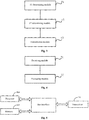
- Fig. 2
- is the flow chart of a TM9-based CA method according to an embodiment of the present invention;
- Fig. 3
- is a schematic diagram showing the configuration of a network side device according to the second embodiment of the present invention;
- Fig. 4
- is a schematic diagram of a UE according to the third embodiment of the present invention;
- Fig. 5
- is a schematic diagram of a network side device according to the fourth embodiment of the present invention;
- Fig. 6
- is a schematic diagram of a network side device according to the fifth embodiment of the present invention.
- In order to make the objects, technical solutions and advantages of the embodiments of the present invention clearer, technical solutions in the embodiments of the present invention will be clearly and completely described below with reference to the accompanying drawings in the embodiments of the present invention. It is obvious that the described embodiments are only some, not all the embodiments of the present invention. All other embodiments obtained by technical personnel in this field without any creative work and based on the embodiments of the present invention, are within the scope of protection of the present invention.
- It is to be understood that the technical solution of the present invention can be applied to various communication systems such as GSM (Global System of Mobile communication) system, CDMA (Code Division Multiple Access) system, WCDMA (Wideband Code Division Multiple Access) system, GPRS (General Packet Radio Service) system, LTE (Long Term Evolution) system, LTE-A (Advanced Long Term Evolution) system, UMTS (Universal Mobile Telecommunication System), and the like.
- It should also be understood that in the embodiment of the present invention, a User Equipment (UE) includes, but is not limited to, Mobile Station (MS), Mobile Terminal, Mobile Telephone, handset, and portable device, etc., which may communicate with one or more core networks via a Radio Access Network (RAN). For example, a UE may be a mobile phone (or "cellular" phone), a computer with wireless communication function, etc., and it may also be a portable, pocket-sized, hand-held, computer built-in or vehicle-mounted mobile device.
- In the embodiments of the present invention, a base station (e.g., an access point) may refer to a device in an access network that communicates with a wireless terminal over an air interface over one or more sectors. The base station may be used to convert the received air frame to an IP packet, to function as a router between the wireless terminal and the rest of the access network, wherein the remainder of the access network may comprise an Internet Protocol (IP) network. The base station may also coordinate the management of the air interface attributes. For example, the base station may be a Base Transceiver Station (BTS) in GSM or CDMA, a NodeB in WCDMA, or an evolved base station in LTE (NodeB, eNB or e-NodeB (evolutional Node B)), the present invention is not limited thereto.
- Targeting the problems of the prior art, the #1 embodiment of the present invention provides a TM9-based CA method. As shown in
Fig. 2 , the TM9-based CA method comprises the following steps: -
Step 201, the network side device determines the component carrier that is currently activated in the CA system. - In the embodiment of the present invention, in the CA system, the CA process specifically includes, but is not limited to, the configuration process of the CA cell and the activation/deactivation process of SCC.
- During the configuration process of a CA cell, a CC is configured as PCC and the other CC(s) is(are) configured as SCC(s). Further, when the CA relationship is added, a set of CA parameters can be configured, such as UL CA switch, DL CA switch, CA cross-carrier scheduling switch, CA activation/deactivation ratio threshold, CA activation data volume threshold, carrier aggregation deactivation data volume threshold, and so on. Further, a set of default CA parameters may be configured to the CA relationship, which may be adjusted specifically.
- During the process of activation/deactivation of SCC, activation/deactivation of SCC may be conducted according to the activation/deactivation algorithm shown in Table 1. For example, when the CA relationship is configured, if UE1 is attached to PCC, and the data volume on UE1 reaches the CA activation threshold, and the parameters meet CA condition, SCC will be activated.
Table 1 Activation type Algorithm Algorithm description Downlink activation algorithm Activation based on user traffic rate requirements The data volume of the downlink PDCP (Packet Data Converge Protocol) is monitored. By comparing the amount of data in the statistics period with the set threshold, if N consecutive statistics results are greater than the activation threshold, the SCC is activated. Activation based on QoS/RLC congestion/PRB (Physical Resource Block) Utilization When QoS (Quality of Service) doesn't meet requirements continuously or RLC (Radio Link Control) is congested, if the downlink PRB of Scell is lower than the configured activation threshold for Scell PRB Utilization, the SCC is activated Downlink deactivation algorithm Deactivation based on the amount of traffic data The downlink PDCP data volume is monitored. By comparing the amount of data in the statistics period with the set threshold, if N consecutive statistics results are smaller than the activation threshold, the SCC is deactivated Deactivation based on MCS&QoS&RLC Congestion MCS (Modulation and Coding Style) is lower than the set deactivation threshold, QoS meets the requirement, and RLC is not congested, if these conditions are met for N consecutive times, the SCC is deactivated - Based on the above processing, the network side device can determine the CC which is currently activated in the CA system and determine whether there is a CC configured with TM9 in the currently active CCs.
- Step 202, if there is a CC configured with TM9 in the currently active CAs, the network side device determines the TM of this CC.
- In the embodiment of the present invention, when the SCC is activated, the scheduling of the PCC and the SCC is conducted separately, that is, according to the general strategy, the PCC and the SCC are independently scheduled, based on the condition of UE, they will determine their own TM and DCI (DownLink Control Information) format. For CC configured with TM9, it will be processed according to the technical solution provided by the embodiment of the present invention; for CC which is not configured with TM9, it will be processed according to the prior art. For example, TD-LTE cell A is PCC, the TD-LTE cell A is configured with transmission mode TM3; LTE-A cell B is the SCC, and LTE-A cell B is configured with transmission mode TM9, then, for CC configured with TM9 (LTE-A cell B), it shall be processed according to the technical solutions provided in the present invention, which shall be explained in detail in the following sections; for CC configured with TM3 (TD-LTE cell A), it shall be processed according to the prior art, which will not be described in the embodiments of the present invention.
- In the embodiment of the present invention, when the CC configured with TM9 is the SCC, the network side device determines the TM of the CC, specifically including but not limited to: the network side device judges whether the UE supports UL CA function; if the UE supports UL CA function, under codebook condition, the network side device determines the TM of the CC as codebook TM9; or, under non-codebook condition, the network side device determines the TM of the CC is non-codebook TM9; if the UE does not support UL CA function, under codebook condition, the network side device determines the TM of the CC as codebook TM9; or, under non-codebook condition, the network side device determines the TM of the CC as TM3.
- Further, the process that the network side device determines the TM of the CC as codebook TM9 specifically comprises of but not limited to: the network side device judges whether the number of ports configured on the network side device is greater than or equal to 4; if the number of ports configured on the network side device is not greater than or equal to 4, the network side device determines the TM of the CC as TM9 single-stream or codebook TM9 dual-stream; if the number of ports configured on the network side device is greater than or equal to 4, the network side device judges whether the maximum number of streams supported by the UE is greater than or equal to 4; if the maximum number of streams supported by the UE is not greater than or equal to 4, the network side device determines the TM of the CC as codebook TM9 single-stream or codebook TM9 dual-stream; if the number of streams supported by the UE is greater than or equal to 4, the network side device determines the TM of the CC as codebook TM9 four-stream or codebook TM9 eight-stream.
- Wherein, since the UL CA function requires that UE has two transmitting antennas so that the PCC and the SCC can simultaneously transmit uplink data, therefore, if the UE supports UL CA function, the uplink data may be transmitted on the SCC, under codebook condition, the network side device determines the TM of the CC as codebook TM9; under non-codebook condition, the network side device determines the TM of the CC as non-codebook TM9. If the UE does not support UL CA function, the UE uplink supports only one CC, that is, the PCC. For the SCC, under codebook condition, the network side device determines the TM of the CC as codebook TM9. Or, under non-codebook condition, the network side device determines the TM of the CC as TM3, not non-codebook TM9.
- In the embodiment of the present invention, when the CC configured with TM9 is the PCC, the process that the network side device determines the TM of the CC comprises of but not limited to: under codebook condition, the network side device determines the TM of the CC as codebook TM9; or, under non-codebook condition, the network side device determines the TM of the CC as non-codebook TM9.
- Further, the process that the network side device determines the TM of the CC as codebook TM9 specifically comprises of but not limited to: the network side device judges whether the number of ports configured on the network side device is greater than or equal to 4; if the number of ports configured on the network side device is greater than or equal to 4, the network side device determines the TM of the CC as codebook TM9 single-stream or codebook TM9 dual-stream; if the number of ports configured on the network side device is greater than or equal to 4, the network side device judges whether the maximum number of streams supported by the UE is greater than or equal to 4; if the maximum number of streams supported by the UE is not greater than or equal to 4, the network side device determines the TM of the CC as codebook TM9 single-stream or codebook TM9 dual-stream; if the maximum number of streams supported by the UE is greater than or equal to 4, the network side device determines the TM of the CC as codebook TM9 four-stream or codebook TM9 eight-stream.
- In the embodiment of the present invention, the CC configured with TM9 may be used as SCC or PCC. Further, the PCC needs to be always activated regardless of whether the UE supports UL CA function.
-
Step 203, the network side device transmits data to the UE in accordance with the TM (i.e., the TM of the CC configured with TM9 determined in step 202). Wherein, the network side device can adjust the format of the data transmission according to channel environment, and then transmit data to the UE using this format after the TM of the CC (such as the PCC or the SCC) has been determined. - In the embodiment of the present invention, after determining the TM of the CC, the network side device may transmit the TM of the CC (such as the PCC or the SCC configured with TM9) to the UE, and the UE shall receive the TM of the CC.
- Further, when the TM of the CC is codebook TM9 single-stream or codebook TM9 dual-stream, and the SCC enables the adaptive function between modes, if the UE's RSRP (Reference Signal Received Power) is greater than the preset first threshold, and the UE's SINR (Signal to Interference plus Noise Ratio) is greater than the preset second threshold, the UE adapts the transmission mode to TM3; otherwise, the UE adapts the transmission mode to TM9 single-stream or TM9 dual-stream. Further, if the TM of the CC is codebook TM9 four-stream or codebook TM9 eight-stream, and the SCC enables the adaptive function between modes, if UE's RSRP is greater than the preset third threshold and SINR is greater than the preset fourth threshold, the UE adapts the transmission mode to TM9 four-stream or TM9 eight-stream; otherwise, the UE adapts the transmission mode to TM3.
- Wherein, the preset first threshold, second threshold, third threshold, and fourth threshold can be arbitrarily set according to practical experience. When RSRP of the UE is greater than the preset first threshold, it indicates that the RSRP value is fine, for example, the preset first threshold is -100 dBm. When SINR of the UE is greater than the preset second threshold, it indicates that the SINR value is fine, for example, the preset second threshold is 18 dB. When RSRP of the UE is greater than the preset third threshold, it indicates the RSRP value is fine, for example, the preset third threshold is -100 dBm. When SINR of the UE is greater than the preset fourth threshold, it indicates the SINR value is fine, for example, the preset fourth threshold is 18 dB.
- In summary, the embodiment of the present invention has at least the following advantages. In the embodiment of the present invention, the CA cell can support CA of 8 DL ports for the TD-LTE-A cell using TM9, thus increases user rate and improves user experience. Further, the above-described method increases check points such as maximum number of supported data streams, UE capabilities, etc., so as to increase user throughput. Further, on the basis of the existing TD-LTE cell CA, by considering the case where the TM9 cell is activated as the SCC and then determine the TM to be used for data transmission, more check points are added such as the maximum number of supported data streams, UE capability, etc., thus increasing user throughput and user rate for CA.
- Based on the same inventive concept as the above-described method, a network side device is also provided in the embodiment of the present invention, as shown in
Fig. 3 , which specifically comprises of: - #1 determining module (11) for determining the CC which is currently activated in the CA system;
- #2 determining module (12) for determining the TM of the CC for a CC configured with TM9 when it exists in the currently active CCs;
- Transmission module (13) for transmitting data to the user equipment (UE) according to the TM.
- The #2 determining module (12) is specifically used to determine whether the UE supports UL CA function when the CC configured with TM9 is a SCC; if the UE supports UL CA function, under codebook condition, the TM of the CC is determined as codebook TM9; or, under non-codebook condition, the TM of the CC is determined as non-codebook TM9; if the UE does not support UL CA function, under codebook condition, the TM of the CC is determined as codebook TM9; or, under non-codebook condition, the TM of the CC is determined as TM3.
- The #2 determining module (12) is specifically used to conduct the following: when the component carrier configured with TM9 is the PCC, under codebook condition, the TM of the CC is determined as codebook TM9; or, under non-codebook condition, the TM of the CC is determined as non-codebook TM9.
- The #2 determining module (12) is further used to determine whether the number of ports configured on the network side device is greater than or equal to 4 during the process of determining the TM of the CC as codebook TM9; if the number of ports configured on the network side device is not greater than or equal to 4, the TM of the CC is determined to be codebook TM9 single-stream or codebook TM9 dual-stream; if the number of ports configured on the network side device is greater than or equal to 4, it is judged whether the maximum number of streams supported by the UE is greater than or equal to 4; if the maximum number of streams supported by the UE is not greater than or equal to 4, the TM of the CC is determined as codebook TM9 single-stream or codebook TM9 dual-stream; if the maximum number of streams supported by the UE is greater than or equal to 4, the TM of the CC is determined as codebook TM9 four-stream or codebook TM9 eight-stream.
- The transmission module (13) is further used to transmit the TM of the CC to the UE after determining the TM of the CC; when the TM of the CC is codebook TM9 single-stream or codebook TM9 dual-stream, and the SCC enables the adaptive function between modes, RSRP is greater than the preset first threshold, and SINR is greater than the preset second threshold, the transmission mode is adapted to TM3; otherwise, the transmission mode is adapted to TM9 single-stream or TM9 dual-stream; when the TM of the CC is codebook TM9 four-stream or codebook TM9 eight-stream, and the SCC enables the adaptive function between modes, if RSRP is greater than the preset third threshold and SINR is greater than the preset fourth threshold, the transmission mode is adapted to TM9 four-stream or TM9 eight-stream; otherwise, the transmission mode is adapted to TM3.
- Wherein, the modules of the device in the present invention may be integrated in one unit or deployed separately. The above modules can be combined into one module, or can be further divided into multiple sub-modules.
- Based on the same inventive concept as the above-described method, a UE is also provided in the embodiment of the present invention. As shown in
Fig. 4 , the UE specifically includes: - Receiving module (21) for receiving the TM of a CC from the network side device;
- Processing module (22) which is used to conduct the following: when the TM of the CC is codebook TM9 single-stream or codebook TM9 dual-stream, and the SCC enables the adaptive function between modes, if RSRP is greater the preset first threshold, and SINR is greater than the preset second threshold, the transmission mode is adapted to TM3; otherwise, the transmission mode is adapted to TM9 single-stream or TM9 dual-stream; or, when the TM of the CC is codebook TM9 four-stream or codebook TM9 eight-stream, and the SCC enables the adaptive function between modes, if RSRP is greater than the preset third threshold and SINR is greater than the preset fourth threshold, the transmission mode is adapted to TM9 four-stream or TM9 eight-stream; otherwise, the transmission mode is adapted to TM3.
- Wherein, the modules of the device in the present invention may be integrated in one unit or deployed separately. The above modules can be combined into one module, or can be further divided into multiple sub-modules.
- Based on the same inventive concept as the above-described method, a network side device is also provided in the embodiment of the present invention. As shown in
Fig. 4 , the network side device specifically includes: -
Processor 500 for reading the programs inMemory 520 and conducts the following:- Determining the CC which is currently activated in the CA system. When CC configured with TM9 exists in the currently active component carriers, it determines the TM of the CC configured with TM9, and transmit data to the UE through Transceiver 510 according to the TM.
- Transceiver 510 for receiving and transmitting data under the control of
Processor 500 - Preferably,
Processor 500 is specifically used to determine whether the UE supports UL CA function when the CC configured with TM9 is a SCC; if the UE supports UL CA function, under codebook condition, the TM of the CC is determined as codebook TM9; or, under non-codebook condition, the TM of the CC is determined as non-codebook TM9; if the UE does not support UL CA function, under codebook condition, the TM of the CC is determined as codebook TM9; or, under non-codebook condition, the TM of the CC is determined as TM3. - Preferably,
Processor 500 is specifically used to conduct the following: when the CC configured with TM9 is the PCC, under codebook condition, the TM of the CC is determined as codebook TM9; or, under non-codebook condition, the TM of the CC is determined as non-codebook TM9. - Preferably,
Processor 500 is further used to determine whether the number of ports configured on the network side device is greater than or equal to 4 while determining the TM of the CC as codebook TM9; if the number of ports configured on the network side device is not greater than or equal to 4, the TM of the CC is determined as codebook TM9 single-stream or codebook TM9 dual-stream; if the number of ports configured on the network side device is greater than or equal to 4, it judges whether the maximum number of supported streams is greater than or equal to 4; if the number of streams supported by the UE is not greater than or equal to 4, the TM of the CC is determined as codebook TM9 single-stream or codebook TM9 dual-stream; if the maximum number of streams supported by the UE is greater than or equal to 4, the TM of the CC is determined as codebook TM9 four-stream or codebook TM9 eight-stream. - Preferably,
Processor 500 is further used to send the TM of the CC to the UE via Transceiver 510 after determining the TM of the CC; when the TM of the CC is codebook TM9 single-stream or codebook TM9 dual-stream, and the SCC enables the adaptive function between modes, if RSRP is greater than the preset first threshold, and SINR is greater than the preset second threshold, the transmission mode is adapted to TM3; otherwise, the transmission mode is adapted to TM9 single-stream or TM9 dual-stream; when the TM of the CC is codebook TM9 four-stream or codebook TM9 eight-stream, and the SCC enables the adaptive function between modes, if RSRP is greater than the preset third threshold and SINR is greater than the preset fourth threshold, the transmission mode is adapted to TM9 four-stream or TM9 eight-stream; otherwise, the transmission mode is adapted to TM3. - Wherein, in
Fig. 5 , the bus architecture may include any number of interconnected busses and bridges, specifically the various circuits such as one or more processors or memories represented byProcessor 500 andMemory 520 are linked together. The bus architecture may also link various other circuits, such as peripherals, voltage regulators and power management circuits, etc., which are well known in the art, and therefore will not be further described herein. The bus interface provides the needed interfaces. Transceiver 510 may include a plurality of elements, i.e., a transmitter and a transceiver, to provide units for communicating with various other devices over transmission medium.Processor 500 is responsible for managing the bus architecture and general processing, andMemory 520 can store data used byProcessor 500 while performing operations. - Based on the same inventive concept as the above-described method, a UE is also provided in the embodiment of the present invention. As shown in
Fig. 6 , the UE specifically includes: -
Transceiver 610 for receiving and transmitting data under the control ofProcessor 600. -
Processor 600 for receiving the TM of CC from the network side device throughTransceiver 610, reading the programs inMemory 620, and conduct the following: - When the TM of the CC is codebook TM9 single-stream or codebook TM9 dual-stream, and the SCC enables the adaptive function between modes, if RSRP is greater than the preset first threshold, and SINR is greater than the preset second threshold, the transmission mode is adapted to TM3; otherwise, the transmission mode is adapted to TM9 single-stream or TM9 dual-stream; or, when the TM of the CC is codebook TM9 four-stream or codebook TM9 eight-stream, and the SCC enables the adaptive function between modes, if RSRP is greater than the preset third threshold and SINR is greater than the preset fourth threshold, the transmission mode is adapted to TM9 four-stream or TM9 eight-stream; otherwise, the transmission mode is adapted to TM3.
- Wherein, in
Fig. 6 , the bus architecture may include any number of interconnected busses and bridges, specifically the various circuits such as one or more processors or memories represented byProcessor 600 andMemory 620 are linked together. The bus architecture may also link various other circuits, such as peripherals, voltage regulators and power management circuits, etc., which are well known in the art, and therefore will not be further described herein. The bus interface provides the needed interfaces.Transceiver 610 may include a plurality of elements, i.e., a transmitter and a transceiver, to providing units for communicating with various other devices over transmission medium. For different user devices, the user interface may also be an interface capable of externally/internally connecting desired devices, including but not limited to keypad, display, speaker, microphone, joystick, and the like. -
Processor 600 is responsible for managing bus architecture and general processing, andMemory 620 can store data used byProcessor 600 when it is performing operations. - It is to be understood by those skilled in the art that embodiments of the present invention may be provided as a method, system, or computer program product. Thus, the present invention may take the form of a fully hardware embodiment, a fully software embodiment, or an embodiment combining software and hardware. Moreover, the invention may take the form of a computer program product implemented on one or more computer usable storage media (including but not limited to disk storage, CD-ROM, optical storage, etc.) containing computer usable program codes therein.
- The present invention is described with reference to flowcharts and/or block diagrams of a method, a device (system), and computer program product according to the embodiment of the present invention. It is to be understood that each process and/or block in the flowcharts and/or block diagrams, as well as combinations of processes and/or blocks in the flowcharts and/or block diagrams, may be implemented by computer program instructions. These computer program instructions may be provided to a processor of a general purpose computer, a special purpose computer, an embedded processor, or other programmable data processing device to produce a machine, such that instructions generated by a processor of a computer or other programmable data processing device can generate an apparatus for implementing the functions specified in one process or processes of a flowchart or one block or blocks in the block diagrams.
- The computer program instructions may also be stored in a computer readable memory capable of directing a computer or other programmable data processing apparatus to operate in a particular manner, such that the instructions stored in the computer readable memory produce an article comprising instructions, which can implement function(s) specified in one process or processes in the flowcharts or one block or blocks in the block diagrams.
- These computer program instructions may also be loaded onto a computer or other programmable data processing device, such that a series of operational steps are performed on a computer or other programmable device to produce computer-implemented processing, and to provide the steps for execution on a computer or other programmable device for implementing the function(s) specified in a process or processes in the flowchart and/or a block or blocks in the block diagrams.
- While the preferred embodiments of the present invention have been described, those skilled in the art will be able to make other changes and modifications to the basic inventive concepts if they become aware of them. Therefore, the appended claims are to be interpreted as including preferred embodiments as well as all changes and modifications that fall within the scope of the invention.
- It will be apparent to those skilled in the art that various modifications and changes can be made to the embodiments of the present invention without departing from the spirit and scope of the embodiments of the present invention. Thus, it is intended that the present invention covers these modifications and changes if they fall within the scope of the appended claims or its equivalent technologies.
Claims (12)
- A TM9-based carrier aggregation method,
characterized in that
the method comprises of:- a network side device determines a component carrier (CC) is currently activated in a carrier aggregation (CA) system;- if a CC configured with TM9 exists in the currently activated CCs, the network side device determines a CC transmission mode (TM) for the CC configured with TM9;- the network side device transmits data to a UE according to the TM. - A method according to claim 1,
characterized in that- when the CC configured with TM9 is a secondary component carrier (SCC), the network side device determines the transmission mode (TM) of the CC, which specifically comprises of:- the network side device judges whether the UE supports uplink (UL) CA function;- if the UE supports UL CA function, under codebook condition, the network side device determines the TM of the CC as codebook TM9; or, under non-codebook condition, the network side device determines the TM of the CC as non-codebook TM9;- if the UE does not support UL CA function, under codebook condition, the network side device determines the TM of the CC as codebook TM9; or, under non-codebook condition, the network side device determines the TM of the CC as TM3. - A method according to claim 1,
characterized in that- when the CC configured with TM9 is a primary component carrier (PCC), the network side device determines the TM of the CC, which specifically comprises of:- under codebook condition, the network side device determines the TM of the CC as codebook TM9; or, under non-codebook condition, it determines the TM of the CC as non-codebook TM9. - A method according to claim 2 or 3,
characterized in that- the network side device determines the TM of the CC as codebook TM9, which specifically comprises of:- the network side device judges whether the number of ports configured on the network side device is greater than or equal to 4;- if the number of ports configured on the network side device is not greater than or equal to 4, the network side device determines the TM of the CC as codebook TM9 single-stream or codebook TM9 dual-stream;- if the number of ports configured on the network side device is greater than or equal to 4, the network side device judges whether the maximum number of streams supported by the UE is greater than or equal to 4;- if the maximum number of streams supported by the UE is not greater than or equal to 4, the network side device determines the TM of the CC as codebook TM9 single-stream or codebook TM9 dual-stream;- if the maximum number of streams supported by the UE is greater than or equal to 4, the network side device determines the TM of the CC as codebook TM9 four-stream or codebook TM9 eight-stream. - A method according to claim 4,
characterized in that- after the network side device determines the TM of the CC, the method further comprises of:- the network side device transmits the TM of the CC to the UE;- when the TM of the CC is codebook TM9 single-stream or codebook TM9 dual-stream, and the SCC enables the adaptive function between modes, if RSRP (Reference Symbol Reception Power) is greater than the preset first threshold, and SINR (Signal-to-Interference-plus-Noise Ratio) is greater than the preset second threshold, the transmission mode is adapted to TM3 by the UE; otherwise, the transmission mode is adapted to TM9 single-stream or TM9 dual-stream;- when the TM of the CC is codebook TM9 four-stream or codebook TM9 eight-stream, and the SCC enables the adaptive function between modes, if RSRP is greater than the preset third threshold, and SINR is greater than the preset fourth threshold, the transmission mode is adapted to TM9 four-stream or TM9 eight-stream by the UE; otherwise, the transmission mode is adapted to TM3. - A TM9-based carrier aggregation (CA) method,
characterized in that
the method comprises of:- the user equipment (UE) receives the TM of a CC from the network side device;- when the TM of the CC is codebook TM9 single-stream or codebook TM9 dual-stream, and the SCC enables the adaptive function between modes, if the RSRP is greater than the preset first threshold and SINR is greater than the preset second threshold, the UE adapts the transmission mode to TM3; otherwise, the UE adapts the transmission mode to TM9 single-stream or TM9 dual-stream;- when the TM of the CC is codebook TM9 four-stream or codebook TM9 eight-stream, and the SCC enables the adaptive function between modes, if RSRP is greater than the preset third threshold, and SINR is greater than the preset fourth threshold, the UE adapts the transmission mode to TM9 four-stream or TM9 eight-stream; otherwise, the UE adapts the transmission mode to TM3. - A network side device,
characterized in that
it comprises of:- the #1 determining module for determining the CC which is currently activated in the CA system;- the #2 determining module for determining the TM of the CC configured with TM9 when CC configured with TM9 exists in the currently active CCs;- transmission module for transmitting data to the user equipment (UE) according to the TM. - Network side device according to claim 7,
characterized in that,
the #2 determining module is specifically used in that, when the CC configured with TM9 is SCC, it judges whether the UE supports UL CA function; if the UE supports UL CA function, under codebook condition, the TM of the CC is determined as TM9; or, under non-codebook condition, the TM of the CC is determined as non-codebook TM9; if the UE does not support UL CA function, under codebook condition, the TM of the CC is determined as TM9; or, under non-codebook condition, the TM of the CC is determined as TM3. - Network side device according to claim 7,
characterized in that,
the #2 determining module is specifically used in that, when the CC configured with TM9 is PCC, under codebook condition, the TM of the CC is determined as codebook TM9; or, under non-codebook condition, the TM of the CC is determined as non-codebook TM9. - Network side device according to claim 8 or 9,
characterized in that,
the #2 determining module is further used to determine whether the number of ports configured on the network side device is greater than or equal to 4 while determining the TM of the CC as codebook TM9; if the number of ports configured on the network side device is not greater than or equal to 4, the TM of the CC is determined as codebook TM9 single-stream or codebook TM9 dual-stream; if the number of ports configured on the network side device is greater than or equal to 4, it judges whether the maximum number of streams supported by the UE is greater than or equal to 4; if the maximum number of streams supported by the UE is not greater than or equal to 4, the TM of the CC is determined as codebook TM9 single-stream or codebook TM9 dual-stream; if the maximum number of streams supported by the UE is greater than or equal to 4, the TM of the CC is determined as codebook TM9 four-stream or codebook TM9 eight-stream. - Network side device according to claim 10,
characterized in that,
the transmission module is also used in that after the TM of the CC is determined, the TM of the CC is transmitted to the UE; when the TM of the CC is codebook TM9 single-stream or codebook TM9 dual-stream, and the SCC enables the adaptive function between modes, if RSRP is greater than the preset first threshold, and SINR is greater than the preset second threshold, the transmission mode is adapted to TM3; otherwise, the transmission mode is adapted to TM9 single-stream or TM9 dual-stream; when the TM of the CC is codebook TM9 four-stream or codebook TM9 eight-stream, and the SCC enables the adaptive function between modes, if RSRP is greater than the preset third threshold, and SINR is greater than the preset fourth threshold, the transmission mode is adapted to TM9 four-stream or TM9 eight-stream; otherwise, the transmission mode is adapted to TM3. - A user equipment (UE),
characterized in that
it comprises of:- a receiving module, for receiving the TM of a CC from the network side device;- a processing module, which is used in that when the TM of the CC is codebook TM9 single-stream or codebook TM9 dual-stream, and the SCC enables the adaptive function between modes, if RSRP is greater than the preset first threshold, and SINR is greater than the preset second threshold, the transmission mode is adapted to TM3; otherwise, the transmission mode is adapted to TM9 single-stream or TM9 dual-stream; or, when the TM of the CC is codebook TM9 four-stream or codebook TM9 eight-stream, and the SCC enables the adaptive function between modes, if RSRP is greater than the preset third threshold, and SINR is greater than the preset fourth threshold, the transmission mode is adapted to TM9 four-stream or TM9 eight-stream; otherwise, the transmission mode is adapted to TM3.
Applications Claiming Priority (2)
| Application Number | Priority Date | Filing Date | Title |
|---|---|---|---|
| CN201410521497.1A CN104301083B (en) | 2014-09-30 | 2014-09-30 | A kind of carrier polymerizing method and equipment based on TM9 |
| PCT/CN2015/089380 WO2016050137A1 (en) | 2014-09-30 | 2015-09-10 | Tm9-based carrier aggregation method and device |
Publications (3)
| Publication Number | Publication Date |
|---|---|
| EP3203672A1 true EP3203672A1 (en) | 2017-08-09 |
| EP3203672A4 EP3203672A4 (en) | 2018-06-13 |
| EP3203672B1 EP3203672B1 (en) | 2020-01-01 |
Family
ID=52320664
Family Applications (1)
| Application Number | Title | Priority Date | Filing Date |
|---|---|---|---|
| EP15847085.6A Active EP3203672B1 (en) | 2014-09-30 | 2015-09-10 | Tm9-based carrier aggregation method and device |
Country Status (4)
| Country | Link |
|---|---|
| US (1) | US10362578B2 (en) |
| EP (1) | EP3203672B1 (en) |
| CN (1) | CN104301083B (en) |
| WO (1) | WO2016050137A1 (en) |
Families Citing this family (5)
| Publication number | Priority date | Publication date | Assignee | Title |
|---|---|---|---|---|
| GB201412265D0 (en) * | 2014-07-10 | 2014-08-27 | Vodafone Ip Licensing Ltd | Carrier aggregation activation |
| CN104301083B (en) * | 2014-09-30 | 2017-10-13 | 大唐移动通信设备有限公司 | A kind of carrier polymerizing method and equipment based on TM9 |
| US10177886B2 (en) * | 2015-11-30 | 2019-01-08 | Telefonaktiebolaget Lm Ericsson (Publ) | Method and apparatus for configuring a cluster |
| CN115883035A (en) * | 2021-09-26 | 2023-03-31 | 深圳市中兴微电子技术有限公司 | Carrier data processing method, carrier data processing device, network equipment and storage medium |
| CN114286038B (en) * | 2021-12-27 | 2024-03-22 | 中国联合网络通信集团有限公司 | Video data transmission method, airborne terminal, computer equipment and storage medium |
Family Cites Families (15)
| Publication number | Priority date | Publication date | Assignee | Title |
|---|---|---|---|---|
| JP5356339B2 (en) * | 2010-09-03 | 2013-12-04 | シャープ株式会社 | Terminal apparatus, base station apparatus, communication system, and communication method |
| US8670410B2 (en) * | 2010-09-17 | 2014-03-11 | Qualcomm Incorporated | Uplink control channel resource mapping for carrier aggregation |
| CN102026388B (en) * | 2011-01-07 | 2013-07-31 | 西安电子科技大学 | Method for allocating radio resources under coordinated multipoint transmission/reception (CoMP) in long term evolution-advanced (LTE-A) system |
| US8817647B2 (en) * | 2011-02-15 | 2014-08-26 | Mediatek Inc. | Priority rules of periodic CSI reporting in carrier aggregation |
| CN102104460B (en) * | 2011-03-18 | 2013-06-26 | 电信科学技术研究院 | Method and equipment for determining bit number of feedback information |
| CN102843209B (en) * | 2011-06-22 | 2015-09-30 | 华为技术有限公司 | The method and apparatus of control channel |
| EP2733875B1 (en) * | 2011-07-14 | 2018-09-05 | LG Electronics Inc. | Method and device for setting a control channel and a data channel in a wireless communication system |
| CN103326758B (en) * | 2012-03-19 | 2018-06-12 | 中兴通讯股份有限公司 | Downlink demodulation reference signal initial configuration parameter notice, method of reseptance and device |
| WO2013168958A1 (en) * | 2012-05-07 | 2013-11-14 | 엘지전자 주식회사 | Method and user device for receiving downlink data, and method and base station for transmitting downlink data |
| US9060361B2 (en) | 2012-09-27 | 2015-06-16 | Samsung Electronics Co., Ltd. | Method and apparatus for transmitting/receiving channel state information |
| US9420511B2 (en) * | 2012-11-01 | 2016-08-16 | Intel Corporation | Signaling QoS requirements and UE power preference in LTE-A networks |
| EP2984767B1 (en) * | 2013-04-09 | 2017-01-04 | Telefonaktiebolaget LM Ericsson (publ) | Selection of transmission mode based on radio conditions |
| CN103716891B (en) * | 2013-12-31 | 2017-07-28 | 大唐移动通信设备有限公司 | The method and system that PUCCH resource position is distributed in LTE A systems |
| WO2015169365A1 (en) * | 2014-05-08 | 2015-11-12 | Telefonaktiebolaget L M Ericsson (Publ) | Beam forming using a two-dimensional antenna arrangement |
| CN104301083B (en) | 2014-09-30 | 2017-10-13 | 大唐移动通信设备有限公司 | A kind of carrier polymerizing method and equipment based on TM9 |
-
2014
- 2014-09-30 CN CN201410521497.1A patent/CN104301083B/en active Active
-
2015
- 2015-09-10 WO PCT/CN2015/089380 patent/WO2016050137A1/en not_active Ceased
- 2015-09-10 US US15/515,894 patent/US10362578B2/en active Active
- 2015-09-10 EP EP15847085.6A patent/EP3203672B1/en active Active
Also Published As
| Publication number | Publication date |
|---|---|
| WO2016050137A1 (en) | 2016-04-07 |
| US20170325211A1 (en) | 2017-11-09 |
| CN104301083A (en) | 2015-01-21 |
| EP3203672A4 (en) | 2018-06-13 |
| US10362578B2 (en) | 2019-07-23 |
| EP3203672B1 (en) | 2020-01-01 |
| CN104301083B (en) | 2017-10-13 |
Similar Documents
| Publication | Publication Date | Title |
|---|---|---|
| US11997758B2 (en) | Command indication method and apparatus and information interaction method and apparatus | |
| US10993277B2 (en) | Enhanced PDCP duplication handling and RLC failure handling | |
| KR101764284B1 (en) | Communication method, base station and user equipment | |
| US9532319B2 (en) | Method and apparatus for power control | |
| US12452013B2 (en) | Uplink transmission control method and apparatus, and device thereof | |
| EP3843312B1 (en) | Method, base station, and user equipment for implementing carrier aggregation | |
| KR20220110867A (en) | Sounding reference signal power control for multiple input multiple output wireless system | |
| US12213067B2 (en) | Handling transmit and receive blanking for multi-RAT and DSDA capable wireless devices | |
| WO2018177549A1 (en) | Method, apparatus and computer program for use in power headroom reporting | |
| US11057905B2 (en) | Communication method, network device and terminal device | |
| EP3203672B1 (en) | Tm9-based carrier aggregation method and device | |
| CN107370590A (en) | SRS transmission processing method and processing device and sending method, apparatus and system | |
| EP3075195B1 (en) | A network node and method for determining downlink transmission power for a downlink shared channel | |
| CN113170441B (en) | Multiplexing of uplink control information for operation with multiple transmission reception points | |
| US20140119346A1 (en) | Apparatus and method for determining whether a transmitter is power limited | |
| US20130083738A1 (en) | Method and apparatus for modifying resource allocation | |
| CN119896004A (en) | Wireless communication method, device and storage medium | |
| US20250063434A1 (en) | Apparatus, system, and method of configuring a channel bandwidth for wireless communication | |
| CN102932093A (en) | Sending method of channel quality indication and user equipment |
Legal Events
| Date | Code | Title | Description |
|---|---|---|---|
| STAA | Information on the status of an ep patent application or granted ep patent |
Free format text: STATUS: THE INTERNATIONAL PUBLICATION HAS BEEN MADE |
|
| PUAI | Public reference made under article 153(3) epc to a published international application that has entered the european phase |
Free format text: ORIGINAL CODE: 0009012 |
|
| STAA | Information on the status of an ep patent application or granted ep patent |
Free format text: STATUS: REQUEST FOR EXAMINATION WAS MADE |
|
| 17P | Request for examination filed |
Effective date: 20170427 |
|
| AK | Designated contracting states |
Kind code of ref document: A1 Designated state(s): AL AT BE BG CH CY CZ DE DK EE ES FI FR GB GR HR HU IE IS IT LI LT LU LV MC MK MT NL NO PL PT RO RS SE SI SK SM TR |
|
| AX | Request for extension of the european patent |
Extension state: BA ME |
|
| DAV | Request for validation of the european patent (deleted) | ||
| DAX | Request for extension of the european patent (deleted) | ||
| RIC1 | Information provided on ipc code assigned before grant |
Ipc: H04L 5/00 20060101AFI20180201BHEP |
|
| A4 | Supplementary search report drawn up and despatched |
Effective date: 20180511 |
|
| RIC1 | Information provided on ipc code assigned before grant |
Ipc: H04L 5/00 20060101AFI20180504BHEP |
|
| GRAP | Despatch of communication of intention to grant a patent |
Free format text: ORIGINAL CODE: EPIDOSNIGR1 |
|
| STAA | Information on the status of an ep patent application or granted ep patent |
Free format text: STATUS: GRANT OF PATENT IS INTENDED |
|
| INTG | Intention to grant announced |
Effective date: 20190923 |
|
| GRAS | Grant fee paid |
Free format text: ORIGINAL CODE: EPIDOSNIGR3 |
|
| GRAA | (expected) grant |
Free format text: ORIGINAL CODE: 0009210 |
|
| STAA | Information on the status of an ep patent application or granted ep patent |
Free format text: STATUS: THE PATENT HAS BEEN GRANTED |
|
| AK | Designated contracting states |
Kind code of ref document: B1 Designated state(s): AL AT BE BG CH CY CZ DE DK EE ES FI FR GB GR HR HU IE IS IT LI LT LU LV MC MK MT NL NO PL PT RO RS SE SI SK SM TR |
|
| REG | Reference to a national code |
Ref country code: GB Ref legal event code: FG4D |
|
| REG | Reference to a national code |
Ref country code: CH Ref legal event code: EP Ref country code: AT Ref legal event code: REF Ref document number: 1221157 Country of ref document: AT Kind code of ref document: T Effective date: 20200115 |
|
| REG | Reference to a national code |
Ref country code: DE Ref legal event code: R096 Ref document number: 602015044886 Country of ref document: DE |
|
| REG | Reference to a national code |
Ref country code: IE Ref legal event code: FG4D |
|
| REG | Reference to a national code |
Ref country code: NL Ref legal event code: MP Effective date: 20200101 |
|
| REG | Reference to a national code |
Ref country code: LT Ref legal event code: MG4D |
|
| PG25 | Lapsed in a contracting state [announced via postgrant information from national office to epo] |
Ref country code: PT Free format text: LAPSE BECAUSE OF FAILURE TO SUBMIT A TRANSLATION OF THE DESCRIPTION OR TO PAY THE FEE WITHIN THE PRESCRIBED TIME-LIMIT Effective date: 20200527 Ref country code: FI Free format text: LAPSE BECAUSE OF FAILURE TO SUBMIT A TRANSLATION OF THE DESCRIPTION OR TO PAY THE FEE WITHIN THE PRESCRIBED TIME-LIMIT Effective date: 20200101 Ref country code: CZ Free format text: LAPSE BECAUSE OF FAILURE TO SUBMIT A TRANSLATION OF THE DESCRIPTION OR TO PAY THE FEE WITHIN THE PRESCRIBED TIME-LIMIT Effective date: 20200101 Ref country code: NL Free format text: LAPSE BECAUSE OF FAILURE TO SUBMIT A TRANSLATION OF THE DESCRIPTION OR TO PAY THE FEE WITHIN THE PRESCRIBED TIME-LIMIT Effective date: 20200101 Ref country code: RS Free format text: LAPSE BECAUSE OF FAILURE TO SUBMIT A TRANSLATION OF THE DESCRIPTION OR TO PAY THE FEE WITHIN THE PRESCRIBED TIME-LIMIT Effective date: 20200101 Ref country code: LT Free format text: LAPSE BECAUSE OF FAILURE TO SUBMIT A TRANSLATION OF THE DESCRIPTION OR TO PAY THE FEE WITHIN THE PRESCRIBED TIME-LIMIT Effective date: 20200101 Ref country code: NO Free format text: LAPSE BECAUSE OF FAILURE TO SUBMIT A TRANSLATION OF THE DESCRIPTION OR TO PAY THE FEE WITHIN THE PRESCRIBED TIME-LIMIT Effective date: 20200401 |
|
| PG25 | Lapsed in a contracting state [announced via postgrant information from national office to epo] |
Ref country code: BG Free format text: LAPSE BECAUSE OF FAILURE TO SUBMIT A TRANSLATION OF THE DESCRIPTION OR TO PAY THE FEE WITHIN THE PRESCRIBED TIME-LIMIT Effective date: 20200401 Ref country code: HR Free format text: LAPSE BECAUSE OF FAILURE TO SUBMIT A TRANSLATION OF THE DESCRIPTION OR TO PAY THE FEE WITHIN THE PRESCRIBED TIME-LIMIT Effective date: 20200101 Ref country code: SE Free format text: LAPSE BECAUSE OF FAILURE TO SUBMIT A TRANSLATION OF THE DESCRIPTION OR TO PAY THE FEE WITHIN THE PRESCRIBED TIME-LIMIT Effective date: 20200101 Ref country code: IS Free format text: LAPSE BECAUSE OF FAILURE TO SUBMIT A TRANSLATION OF THE DESCRIPTION OR TO PAY THE FEE WITHIN THE PRESCRIBED TIME-LIMIT Effective date: 20200501 Ref country code: LV Free format text: LAPSE BECAUSE OF FAILURE TO SUBMIT A TRANSLATION OF THE DESCRIPTION OR TO PAY THE FEE WITHIN THE PRESCRIBED TIME-LIMIT Effective date: 20200101 Ref country code: GR Free format text: LAPSE BECAUSE OF FAILURE TO SUBMIT A TRANSLATION OF THE DESCRIPTION OR TO PAY THE FEE WITHIN THE PRESCRIBED TIME-LIMIT Effective date: 20200402 |
|
| REG | Reference to a national code |
Ref country code: DE Ref legal event code: R097 Ref document number: 602015044886 Country of ref document: DE |
|
| PG25 | Lapsed in a contracting state [announced via postgrant information from national office to epo] |
Ref country code: ES Free format text: LAPSE BECAUSE OF FAILURE TO SUBMIT A TRANSLATION OF THE DESCRIPTION OR TO PAY THE FEE WITHIN THE PRESCRIBED TIME-LIMIT Effective date: 20200101 Ref country code: DK Free format text: LAPSE BECAUSE OF FAILURE TO SUBMIT A TRANSLATION OF THE DESCRIPTION OR TO PAY THE FEE WITHIN THE PRESCRIBED TIME-LIMIT Effective date: 20200101 Ref country code: SM Free format text: LAPSE BECAUSE OF FAILURE TO SUBMIT A TRANSLATION OF THE DESCRIPTION OR TO PAY THE FEE WITHIN THE PRESCRIBED TIME-LIMIT Effective date: 20200101 Ref country code: RO Free format text: LAPSE BECAUSE OF FAILURE TO SUBMIT A TRANSLATION OF THE DESCRIPTION OR TO PAY THE FEE WITHIN THE PRESCRIBED TIME-LIMIT Effective date: 20200101 Ref country code: EE Free format text: LAPSE BECAUSE OF FAILURE TO SUBMIT A TRANSLATION OF THE DESCRIPTION OR TO PAY THE FEE WITHIN THE PRESCRIBED TIME-LIMIT Effective date: 20200101 Ref country code: SK Free format text: LAPSE BECAUSE OF FAILURE TO SUBMIT A TRANSLATION OF THE DESCRIPTION OR TO PAY THE FEE WITHIN THE PRESCRIBED TIME-LIMIT Effective date: 20200101 |
|
| PLBE | No opposition filed within time limit |
Free format text: ORIGINAL CODE: 0009261 |
|
| STAA | Information on the status of an ep patent application or granted ep patent |
Free format text: STATUS: NO OPPOSITION FILED WITHIN TIME LIMIT |
|
| REG | Reference to a national code |
Ref country code: AT Ref legal event code: MK05 Ref document number: 1221157 Country of ref document: AT Kind code of ref document: T Effective date: 20200101 |
|
| 26N | No opposition filed |
Effective date: 20201002 |
|
| PG25 | Lapsed in a contracting state [announced via postgrant information from national office to epo] |
Ref country code: AT Free format text: LAPSE BECAUSE OF FAILURE TO SUBMIT A TRANSLATION OF THE DESCRIPTION OR TO PAY THE FEE WITHIN THE PRESCRIBED TIME-LIMIT Effective date: 20200101 Ref country code: IT Free format text: LAPSE BECAUSE OF FAILURE TO SUBMIT A TRANSLATION OF THE DESCRIPTION OR TO PAY THE FEE WITHIN THE PRESCRIBED TIME-LIMIT Effective date: 20200101 |
|
| PG25 | Lapsed in a contracting state [announced via postgrant information from national office to epo] |
Ref country code: PL Free format text: LAPSE BECAUSE OF FAILURE TO SUBMIT A TRANSLATION OF THE DESCRIPTION OR TO PAY THE FEE WITHIN THE PRESCRIBED TIME-LIMIT Effective date: 20200101 Ref country code: SI Free format text: LAPSE BECAUSE OF FAILURE TO SUBMIT A TRANSLATION OF THE DESCRIPTION OR TO PAY THE FEE WITHIN THE PRESCRIBED TIME-LIMIT Effective date: 20200101 |
|
| REG | Reference to a national code |
Ref country code: CH Ref legal event code: PL |
|
| REG | Reference to a national code |
Ref country code: BE Ref legal event code: MM Effective date: 20200930 |
|
| PG25 | Lapsed in a contracting state [announced via postgrant information from national office to epo] |
Ref country code: LU Free format text: LAPSE BECAUSE OF NON-PAYMENT OF DUE FEES Effective date: 20200910 |
|
| PG25 | Lapsed in a contracting state [announced via postgrant information from national office to epo] |
Ref country code: CH Free format text: LAPSE BECAUSE OF NON-PAYMENT OF DUE FEES Effective date: 20200930 Ref country code: BE Free format text: LAPSE BECAUSE OF NON-PAYMENT OF DUE FEES Effective date: 20200930 Ref country code: LI Free format text: LAPSE BECAUSE OF NON-PAYMENT OF DUE FEES Effective date: 20200930 Ref country code: IE Free format text: LAPSE BECAUSE OF NON-PAYMENT OF DUE FEES Effective date: 20200910 |
|
| PG25 | Lapsed in a contracting state [announced via postgrant information from national office to epo] |
Ref country code: TR Free format text: LAPSE BECAUSE OF FAILURE TO SUBMIT A TRANSLATION OF THE DESCRIPTION OR TO PAY THE FEE WITHIN THE PRESCRIBED TIME-LIMIT Effective date: 20200101 Ref country code: MT Free format text: LAPSE BECAUSE OF FAILURE TO SUBMIT A TRANSLATION OF THE DESCRIPTION OR TO PAY THE FEE WITHIN THE PRESCRIBED TIME-LIMIT Effective date: 20200101 Ref country code: CY Free format text: LAPSE BECAUSE OF FAILURE TO SUBMIT A TRANSLATION OF THE DESCRIPTION OR TO PAY THE FEE WITHIN THE PRESCRIBED TIME-LIMIT Effective date: 20200101 |
|
| PG25 | Lapsed in a contracting state [announced via postgrant information from national office to epo] |
Ref country code: MK Free format text: LAPSE BECAUSE OF FAILURE TO SUBMIT A TRANSLATION OF THE DESCRIPTION OR TO PAY THE FEE WITHIN THE PRESCRIBED TIME-LIMIT Effective date: 20200101 Ref country code: MC Free format text: LAPSE BECAUSE OF FAILURE TO SUBMIT A TRANSLATION OF THE DESCRIPTION OR TO PAY THE FEE WITHIN THE PRESCRIBED TIME-LIMIT Effective date: 20200101 Ref country code: AL Free format text: LAPSE BECAUSE OF FAILURE TO SUBMIT A TRANSLATION OF THE DESCRIPTION OR TO PAY THE FEE WITHIN THE PRESCRIBED TIME-LIMIT Effective date: 20200101 |
|
| PGFP | Annual fee paid to national office [announced via postgrant information from national office to epo] |
Ref country code: DE Payment date: 20250919 Year of fee payment: 11 |
|
| PGFP | Annual fee paid to national office [announced via postgrant information from national office to epo] |
Ref country code: GB Payment date: 20250919 Year of fee payment: 11 |
|
| PGFP | Annual fee paid to national office [announced via postgrant information from national office to epo] |
Ref country code: FR Payment date: 20250922 Year of fee payment: 11 |