EP3202492A1 - Molybdenum oxide composite and preparation method therefor - Google Patents
Molybdenum oxide composite and preparation method therefor Download PDFInfo
- Publication number
- EP3202492A1 EP3202492A1 EP15846970.0A EP15846970A EP3202492A1 EP 3202492 A1 EP3202492 A1 EP 3202492A1 EP 15846970 A EP15846970 A EP 15846970A EP 3202492 A1 EP3202492 A1 EP 3202492A1
- Authority
- EP
- European Patent Office
- Prior art keywords
- molybdenum oxide
- composite
- rod
- islands
- present
- Prior art date
- Legal status (The legal status is an assumption and is not a legal conclusion. Google has not performed a legal analysis and makes no representation as to the accuracy of the status listed.)
- Granted
Links
Images






Classifications
-
- B—PERFORMING OPERATIONS; TRANSPORTING
- B01—PHYSICAL OR CHEMICAL PROCESSES OR APPARATUS IN GENERAL
- B01J—CHEMICAL OR PHYSICAL PROCESSES, e.g. CATALYSIS OR COLLOID CHEMISTRY; THEIR RELEVANT APPARATUS
- B01J23/00—Catalysts comprising metals or metal oxides or hydroxides, not provided for in group B01J21/00
- B01J23/16—Catalysts comprising metals or metal oxides or hydroxides, not provided for in group B01J21/00 of arsenic, antimony, bismuth, vanadium, niobium, tantalum, polonium, chromium, molybdenum, tungsten, manganese, technetium or rhenium
- B01J23/24—Chromium, molybdenum or tungsten
- B01J23/28—Molybdenum
-
- B—PERFORMING OPERATIONS; TRANSPORTING
- B01—PHYSICAL OR CHEMICAL PROCESSES OR APPARATUS IN GENERAL
- B01J—CHEMICAL OR PHYSICAL PROCESSES, e.g. CATALYSIS OR COLLOID CHEMISTRY; THEIR RELEVANT APPARATUS
- B01J23/00—Catalysts comprising metals or metal oxides or hydroxides, not provided for in group B01J21/00
- B01J23/70—Catalysts comprising metals or metal oxides or hydroxides, not provided for in group B01J21/00 of the iron group metals or copper
- B01J23/76—Catalysts comprising metals or metal oxides or hydroxides, not provided for in group B01J21/00 of the iron group metals or copper combined with metals, oxides or hydroxides provided for in groups B01J23/02 - B01J23/36
- B01J23/84—Catalysts comprising metals or metal oxides or hydroxides, not provided for in group B01J21/00 of the iron group metals or copper combined with metals, oxides or hydroxides provided for in groups B01J23/02 - B01J23/36 with arsenic, antimony, bismuth, vanadium, niobium, tantalum, polonium, chromium, molybdenum, tungsten, manganese, technetium or rhenium
- B01J23/85—Chromium, molybdenum or tungsten
- B01J23/88—Molybdenum
- B01J23/881—Molybdenum and iron
-
- B—PERFORMING OPERATIONS; TRANSPORTING
- B01—PHYSICAL OR CHEMICAL PROCESSES OR APPARATUS IN GENERAL
- B01J—CHEMICAL OR PHYSICAL PROCESSES, e.g. CATALYSIS OR COLLOID CHEMISTRY; THEIR RELEVANT APPARATUS
- B01J35/00—Catalysts, in general, characterised by their form or physical properties
- B01J35/19—Catalysts containing parts with different compositions
-
- B—PERFORMING OPERATIONS; TRANSPORTING
- B01—PHYSICAL OR CHEMICAL PROCESSES OR APPARATUS IN GENERAL
- B01J—CHEMICAL OR PHYSICAL PROCESSES, e.g. CATALYSIS OR COLLOID CHEMISTRY; THEIR RELEVANT APPARATUS
- B01J35/00—Catalysts, in general, characterised by their form or physical properties
- B01J35/40—Catalysts, in general, characterised by their form or physical properties characterised by dimensions, e.g. grain size
- B01J35/45—Nanoparticles
-
- B—PERFORMING OPERATIONS; TRANSPORTING
- B01—PHYSICAL OR CHEMICAL PROCESSES OR APPARATUS IN GENERAL
- B01J—CHEMICAL OR PHYSICAL PROCESSES, e.g. CATALYSIS OR COLLOID CHEMISTRY; THEIR RELEVANT APPARATUS
- B01J35/00—Catalysts, in general, characterised by their form or physical properties
- B01J35/50—Catalysts, in general, characterised by their form or physical properties characterised by their shape or configuration
- B01J35/55—Cylinders or rings
-
- B—PERFORMING OPERATIONS; TRANSPORTING
- B01—PHYSICAL OR CHEMICAL PROCESSES OR APPARATUS IN GENERAL
- B01J—CHEMICAL OR PHYSICAL PROCESSES, e.g. CATALYSIS OR COLLOID CHEMISTRY; THEIR RELEVANT APPARATUS
- B01J35/00—Catalysts, in general, characterised by their form or physical properties
- B01J35/60—Catalysts, in general, characterised by their form or physical properties characterised by their surface properties or porosity
- B01J35/61—Surface area
- B01J35/612—Surface area less than 10 m2/g
-
- B—PERFORMING OPERATIONS; TRANSPORTING
- B01—PHYSICAL OR CHEMICAL PROCESSES OR APPARATUS IN GENERAL
- B01J—CHEMICAL OR PHYSICAL PROCESSES, e.g. CATALYSIS OR COLLOID CHEMISTRY; THEIR RELEVANT APPARATUS
- B01J35/00—Catalysts, in general, characterised by their form or physical properties
- B01J35/60—Catalysts, in general, characterised by their form or physical properties characterised by their surface properties or porosity
- B01J35/61—Surface area
- B01J35/613—10-100 m2/g
-
- B—PERFORMING OPERATIONS; TRANSPORTING
- B01—PHYSICAL OR CHEMICAL PROCESSES OR APPARATUS IN GENERAL
- B01J—CHEMICAL OR PHYSICAL PROCESSES, e.g. CATALYSIS OR COLLOID CHEMISTRY; THEIR RELEVANT APPARATUS
- B01J35/00—Catalysts, in general, characterised by their form or physical properties
- B01J35/80—Catalysts, in general, characterised by their form or physical properties characterised by their amorphous structures
-
- B—PERFORMING OPERATIONS; TRANSPORTING
- B01—PHYSICAL OR CHEMICAL PROCESSES OR APPARATUS IN GENERAL
- B01J—CHEMICAL OR PHYSICAL PROCESSES, e.g. CATALYSIS OR COLLOID CHEMISTRY; THEIR RELEVANT APPARATUS
- B01J37/00—Processes, in general, for preparing catalysts; Processes, in general, for activation of catalysts
- B01J37/009—Preparation by separation, e.g. by filtration, decantation, screening
-
- B—PERFORMING OPERATIONS; TRANSPORTING
- B01—PHYSICAL OR CHEMICAL PROCESSES OR APPARATUS IN GENERAL
- B01J—CHEMICAL OR PHYSICAL PROCESSES, e.g. CATALYSIS OR COLLOID CHEMISTRY; THEIR RELEVANT APPARATUS
- B01J37/00—Processes, in general, for preparing catalysts; Processes, in general, for activation of catalysts
- B01J37/02—Impregnation, coating or precipitation
- B01J37/0215—Coating
- B01J37/0221—Coating of particles
-
- B—PERFORMING OPERATIONS; TRANSPORTING
- B01—PHYSICAL OR CHEMICAL PROCESSES OR APPARATUS IN GENERAL
- B01J—CHEMICAL OR PHYSICAL PROCESSES, e.g. CATALYSIS OR COLLOID CHEMISTRY; THEIR RELEVANT APPARATUS
- B01J37/00—Processes, in general, for preparing catalysts; Processes, in general, for activation of catalysts
- B01J37/04—Mixing
-
- B—PERFORMING OPERATIONS; TRANSPORTING
- B01—PHYSICAL OR CHEMICAL PROCESSES OR APPARATUS IN GENERAL
- B01J—CHEMICAL OR PHYSICAL PROCESSES, e.g. CATALYSIS OR COLLOID CHEMISTRY; THEIR RELEVANT APPARATUS
- B01J37/00—Processes, in general, for preparing catalysts; Processes, in general, for activation of catalysts
- B01J37/08—Heat treatment
-
- C—CHEMISTRY; METALLURGY
- C01—INORGANIC CHEMISTRY
- C01G—COMPOUNDS CONTAINING METALS NOT COVERED BY SUBCLASSES C01D OR C01F
- C01G49/00—Compounds of iron
-
- C—CHEMISTRY; METALLURGY
- C01—INORGANIC CHEMISTRY
- C01G—COMPOUNDS CONTAINING METALS NOT COVERED BY SUBCLASSES C01D OR C01F
- C01G49/00—Compounds of iron
- C01G49/02—Oxides; Hydroxides
-
- C—CHEMISTRY; METALLURGY
- C07—ORGANIC CHEMISTRY
- C07C—ACYCLIC OR CARBOCYCLIC COMPOUNDS
- C07C5/00—Preparation of hydrocarbons from hydrocarbons containing the same number of carbon atoms
- C07C5/42—Preparation of hydrocarbons from hydrocarbons containing the same number of carbon atoms by dehydrogenation with a hydrogen acceptor
- C07C5/48—Preparation of hydrocarbons from hydrocarbons containing the same number of carbon atoms by dehydrogenation with a hydrogen acceptor with oxygen as an acceptor
-
- B—PERFORMING OPERATIONS; TRANSPORTING
- B01—PHYSICAL OR CHEMICAL PROCESSES OR APPARATUS IN GENERAL
- B01J—CHEMICAL OR PHYSICAL PROCESSES, e.g. CATALYSIS OR COLLOID CHEMISTRY; THEIR RELEVANT APPARATUS
- B01J2235/00—Indexing scheme associated with group B01J35/00, related to the analysis techniques used to determine the catalysts form or properties
-
- B—PERFORMING OPERATIONS; TRANSPORTING
- B01—PHYSICAL OR CHEMICAL PROCESSES OR APPARATUS IN GENERAL
- B01J—CHEMICAL OR PHYSICAL PROCESSES, e.g. CATALYSIS OR COLLOID CHEMISTRY; THEIR RELEVANT APPARATUS
- B01J2235/00—Indexing scheme associated with group B01J35/00, related to the analysis techniques used to determine the catalysts form or properties
- B01J2235/15—X-ray diffraction
-
- B—PERFORMING OPERATIONS; TRANSPORTING
- B01—PHYSICAL OR CHEMICAL PROCESSES OR APPARATUS IN GENERAL
- B01J—CHEMICAL OR PHYSICAL PROCESSES, e.g. CATALYSIS OR COLLOID CHEMISTRY; THEIR RELEVANT APPARATUS
- B01J2235/00—Indexing scheme associated with group B01J35/00, related to the analysis techniques used to determine the catalysts form or properties
- B01J2235/30—Scanning electron microscopy; Transmission electron microscopy
-
- C—CHEMISTRY; METALLURGY
- C01—INORGANIC CHEMISTRY
- C01P—INDEXING SCHEME RELATING TO STRUCTURAL AND PHYSICAL ASPECTS OF SOLID INORGANIC COMPOUNDS
- C01P2002/00—Crystal-structural characteristics
- C01P2002/02—Amorphous compounds
-
- C—CHEMISTRY; METALLURGY
- C01—INORGANIC CHEMISTRY
- C01P—INDEXING SCHEME RELATING TO STRUCTURAL AND PHYSICAL ASPECTS OF SOLID INORGANIC COMPOUNDS
- C01P2002/00—Crystal-structural characteristics
- C01P2002/70—Crystal-structural characteristics defined by measured X-ray, neutron or electron diffraction data
- C01P2002/72—Crystal-structural characteristics defined by measured X-ray, neutron or electron diffraction data by d-values or two theta-values, e.g. as X-ray diagram
-
- C—CHEMISTRY; METALLURGY
- C01—INORGANIC CHEMISTRY
- C01P—INDEXING SCHEME RELATING TO STRUCTURAL AND PHYSICAL ASPECTS OF SOLID INORGANIC COMPOUNDS
- C01P2002/00—Crystal-structural characteristics
- C01P2002/80—Crystal-structural characteristics defined by measured data other than those specified in group C01P2002/70
- C01P2002/85—Crystal-structural characteristics defined by measured data other than those specified in group C01P2002/70 by XPS, EDX or EDAX data
-
- C—CHEMISTRY; METALLURGY
- C01—INORGANIC CHEMISTRY
- C01P—INDEXING SCHEME RELATING TO STRUCTURAL AND PHYSICAL ASPECTS OF SOLID INORGANIC COMPOUNDS
- C01P2004/00—Particle morphology
- C01P2004/01—Particle morphology depicted by an image
- C01P2004/03—Particle morphology depicted by an image obtained by SEM
-
- C—CHEMISTRY; METALLURGY
- C01—INORGANIC CHEMISTRY
- C01P—INDEXING SCHEME RELATING TO STRUCTURAL AND PHYSICAL ASPECTS OF SOLID INORGANIC COMPOUNDS
- C01P2004/00—Particle morphology
- C01P2004/01—Particle morphology depicted by an image
- C01P2004/04—Particle morphology depicted by an image obtained by TEM, STEM, STM or AFM
-
- C—CHEMISTRY; METALLURGY
- C01—INORGANIC CHEMISTRY
- C01P—INDEXING SCHEME RELATING TO STRUCTURAL AND PHYSICAL ASPECTS OF SOLID INORGANIC COMPOUNDS
- C01P2006/00—Physical properties of inorganic compounds
- C01P2006/12—Surface area
-
- C—CHEMISTRY; METALLURGY
- C07—ORGANIC CHEMISTRY
- C07C—ACYCLIC OR CARBOCYCLIC COMPOUNDS
- C07C2523/00—Catalysts comprising metals or metal oxides or hydroxides, not provided for in group C07C2521/00
- C07C2523/16—Catalysts comprising metals or metal oxides or hydroxides, not provided for in group C07C2521/00 of arsenic, antimony, bismuth, vanadium, niobium, tantalum, polonium, chromium, molybdenum, tungsten, manganese, technetium or rhenium
- C07C2523/24—Chromium, molybdenum or tungsten
- C07C2523/28—Molybdenum
-
- C—CHEMISTRY; METALLURGY
- C07—ORGANIC CHEMISTRY
- C07C—ACYCLIC OR CARBOCYCLIC COMPOUNDS
- C07C2523/00—Catalysts comprising metals or metal oxides or hydroxides, not provided for in group C07C2521/00
- C07C2523/70—Catalysts comprising metals or metal oxides or hydroxides, not provided for in group C07C2521/00 of the iron group metals or copper
- C07C2523/74—Iron group metals
- C07C2523/745—Iron
Definitions
- the present invention relates to a molybdenum oxide composite and a preparation method thereof.
- Metal molybdenum as silver-white hard transition metal has characteristics of having specific gravity of 10.22, very high melting point and boiling point of 2,610°C and 5,560°C, respectively, good thermal conductivity, and low thermal expansion coefficient and thus has been frequently used as alloy elements for increasing hardness, strength, tensile strength, and wear resistance to high-temperature lightweight structural materials such as airplanes and missiles, high-temperature electrical materials such as filament supports and electrodes for electric furnaces, and special steel such as stainless steel, heat-resistant steel, and superalloy steel.
- molybdenum oxide MoO 3
- ferromolybdenum alloys to be used as alloy elements of steel
- a molybdenum compound such as ammonium molybdate, sodium molybdate or molybdenum oxide powder
- the molybdenum oxide may be used as a catalyst by forming a composite with metal molybdate and researches on the method of manufacturing the composite have been conducted and development of techniques to be performed in a better condition is required.
- the present invention has been made in an effort to provide a molybdenum oxide composition and a preparation method thereof.
- the present invention has been also made in an effort to provide a catalyst including the composite.
- An exemplary embodiment of the present invention provides a composite including rod-shaped molybdenum oxide and amorphous iron molybdate islands provided on the rod-shaped molybdenum oxide.
- Another exemplary embodiment of the present invention provides a preparation method of the composite, including:
- Yet another exemplary embodiment of the present invention provides a catalyst including the composite.
- a composite including amorphous iron molybdate islands shows a smaller island size and a uniform distribution of islands compared with a conventional composite including crystalline islands, and thus has a higher specific surface area, thereby exhibiting excellent activity as a catalyst.
- An exemplary embodiment of the present invention provides a composite including rod-shaped molybdenum oxide and amorphous iron molybdate islands provided on the rod-shaped molybdenum oxide.
- the molybdenum oxide has been used as catalysts of various reactions and particularly, has been frequently used as catalysts of partial oxidation reactions.
- a composite of metal and molybdenum oxide has excellent activity or selectivity as a catalyst of partial oxidation reaction compared with pure rod-shaped molybdenum oxide or pure metal molybdenum.
- amorphous is a solid material and has a uniform composition, but means a state where atomic arrangement is disordered like a liquid and is not in a regular lattice form.
- the iron molybdate islands need not to be 100% amorphous and the iron molybdate islands provided on the rod-shaped molybdenum oxide according to the exemplary embodiment of the present invention include 50% or more of an amorphous form and the rest of a crystalline form.
- the iron molybdate (Fe 2 Mo 3 O 12 ) islands provided on the rod-shaped molybdenum oxide are not crystalline but amorphous. That is, the composite is not a solid form having a regular atomic arrangement in the island like an existing crystalline form, but is a solid material and has a disordered form like a liquid without having a regularity of the atomic arrangement in one island.
- a size of the amorphous island according to the exemplary embodiment of the present invention has a smaller uniform distribution than the existing crystalline island. Accordingly, the amorphous island has a higher specific surface area than the existing composite and contributes to an activity increase of the catalyst.
- the molybdenum oxide is an oxidized form of molybdenum (Mo), has various structures, and includes MoO 3 .
- the rod shape may be used as a general geometric meaning and includes an elongated form in which a size of one axis is larger than that of the other axis.
- the longest particle diameter of the rod-shaped molybdenum oxide is referred to as a length and a shortest particle diameter is referred to as a line width.
- the length of the rod-shaped molybdenum oxide is in a range of 500 nm to 20 ⁇ m, preferably a range of 500 nm to 4 ⁇ m, and more preferably a range of 500 nm to 2.5 ⁇ m.
- the line width of the rod-shaped molybdenum oxide is in a range of 100 nm to 1.5 ⁇ m, preferably a range of 100 nm to 1 ⁇ m, and more preferably a range of 100 nm to 300 nm.
- the line width of the rod-shaped molybdenum oxide is 300 nm or less and the most of rod-shaped molybdenum oxide has a line width of 250 nm.
- the catalyst including the rod-shaped molybdenum oxide having the high specific surface area has an excellent activity by ensuring a higher contact area than that of an existing material having low specific surface area.
- a ratio of the line width to the length of the rod-shaped molybdenum oxide is in a range of 5:1 to 13:1 and more preferably 6:1 to 10:1.
- a greater number of molybdenum oxides than the same weight than a flat molybdenum oxide may be ensured to increase a specific surface area.
- the island is not particularly limited as a material containing iron and molybdenum, but may include a material represented by Fe 2 Mo 3 O 12 .
- the island according to an exemplary embodiment of the present invention may be a material represented by Fe 2 Mo 3 O 12 .
- the content of the island is 10 wt% or less, preferably 7 wt% or more and 10 wt% or less, and more preferably 7.32 wt% or more and 9.76 wt% or less based on the overall complex.
- the composite is a structure with 20 to 100 islands per one rod-shaped molybdenum oxide.
- the size of the island is in a range of 10 nm to 150 nm or 10 nm to 120 nm, and in the preparation process of the composite to be described below, the size of the island may vary according to a firing temperature and a firing time.
- the size of the island is preferably in a range of 10 nm to 50 nm and shows a smaller uniform distribution compared to the existing crystalline island.
- most of amorphous islands are present in a rectangular form, and the size of one island is measured based on the shortest length and the size of approximately 50 islands is measured based on an SEM image of FIG. 1 .
- a ratio of particle numbers configuring the molybdenum oxides and the islands in the composite is in a range of 30:1 to 60:1, preferably 38:1 to 52:1, and more preferably 50:1 to 52:1.
- a mass ratio of Fe to Mo in the composite is in a range of 1:30 to 1:60, preferably 1:30 to 1:50, and more preferably 1:35 to 1:47.
- a mass ratio of Mo to Fe in the composite of the iron molybdenum with the amorphous iron molybdenum islands on the rod-shaped molybdenum oxide and the rod-shaped molybdenum oxide is shown by an ICP analysis result and a theoretical calculation.
- the iron molybdate island having a size of 50 nm or more is prevented from being mainly formed and amorphous iron molybdate other than crystalline may be formed.
- the number of iron molybdate islands having a size of 20 nm to 50 nm on the rod-shaped molybdenum oxide is sufficiently formed and many islands having 10 nm or less are prevented from being distributed.
- the composite has a specific surface area in a range of 8 m 2 /g to 12 m 2 /g and more preferably in a range of 8.47 m 2 /g to 11.31 m 2 /g.
- the size of the island formed on the rod-shaped molybdenum oxide is increased to prevent the island from being formed as crystalline. That is, when the specific surface area of the composite is in a range of 8 m 2 /g to 12 m 2 /g, the island is amorphous and the size of the island may have 50 nm or less.
- the specific surface area of the composite including the amorphous iron molybdate islands provided on the rod-shaped molybdenum oxide is 11.31 m 2 /g and the experimental result is illustrated in FIG. 8(b) .
- the composite including the amorphous iron molybdate islands according to an exemplary embodiment of the present invention has a higher specific surface area than pure Fe 2 Mo 3 O 12 powder used as a catalyst of existing partial oxidation reaction.
- the composite including the amorphous islands has a higher specific surface area than 7.931 m 2 /g which is a specific surface area of the composite including the existing crystalline islands and the experimental result is illustrated in FIG. 8 .
- the composite has 8.47 to 11.31 m 2 /g which is a higher specific surface area than 7.06 m 2 /g which is a specific surface area of the existing pure iron molybdate (Fe 2 Mo 3 O 12 ) powder and the experimental result is illustrated in FIGS. 8 and 9 .
- Another exemplary embodiment of the present invention provides a preparation method of the composite, including:
- preparation methods of the iron molybdenum and the rod-shaped molybdenum oxide composite are performed by gram scales.
- the preparation method of the composite including the existing crystalline islands is performed by milligram scale and in the case of being performed by the milligram scale, only the crystalline islands are formed.
- the composite with the amorphous islands according to the present invention includes islands having smaller sizes and a uniform distribution. Accordingly, the composite according to the exemplary embodiment of the present invention has a higher specific surface area and an advantage of having high activity when being used as the catalyst of the partial oxidation reaction.
- an iron precursor in step (a) is various materials including iron and an unlimited example of the iron precursor is a material represented by Fe(NO 3 ) 3 9H 2 O, Fe(NO 3 ) 3 , Fe(OH) 3 or Fe 2 O 3 and more preferably Fe(NO 3 ) 3 9H 2 O.
- a material having an OH functional group such as alcohol and polyol may be used and preferably, water is used.
- a material having an OH functional group such as alcohol and polyol and a small amount of water may be used.
- the material having the OH functional group is a compound having one or more OH groups and as a preferable example, there is water, ethanol, or the like.
- step (a) includes adding a solvent to the iron precursor or adding the iron precursor to the solvent.
- step (a) includes stirring a mixed solution of the iron precursor and water.
- step (a) may be performed at room temperature and preferably, may be performed in a range of 20°C to 30°C.
- the rod-shaped molybdenum oxide used in step (b) may be prepared by reacting molybdenum oxide powder with a hydrogen peroxide solution.
- the hydrogen peroxide solution a solution at a concentration of 10 to 50 wt% of hydrogen peroxide may be used.
- the hydrogen peroxide solution may include a solvent and as the solvent, a generally used material may be used and as an example, water may be used.
- the molybdenum oxide powder includes various forms and may use commercial powder.
- the molybdenum oxide powder includes a plate-shaped form.
- the molybdenum oxide powder may be used to have sizes of length and width of several ⁇ m scales.
- the preparing of the rod-shaped molybdenum oxide includes mixing the hydrogen peroxide solution and the molybdenum oxide powder, and the mixing of the hydrogen peroxide solution and the molybdenum oxide powder includes adding the molybdenum oxide powder to the hydrogen peroxide solution or adding the hydrogen peroxide solution to the molybdenum oxide powder.
- the preparing of the rod-shaped molybdenum oxide includes preparing the rod-shaped molybdenum oxide through a hydrothermal synthesis method by mixing the hydrogen peroxide solution and the molybdenum oxide powder.
- the preparing of the rod-shaped molybdenum oxide includes stirring and heating the mixed solution of the hydrogen peroxide solution and the molybdenum oxide powder.
- the hydrothermal synthesis method is a method of synthesizing a material using water as one of liquid synthesis methods.
- the preparing of the rod-shaped molybdenum oxide may include 1) forming MoO 2 (OH)(OOH) by reacting the hydrogen peroxide solution and the molybdenum oxide powder and 2) forming the rod-shaped molybdenum oxide from the MoO 2 (OH)(OOH) through a hydrothermal synthesis method.
- step 1) is performed at a temperature of 95°C or less to form MoO 2 (OH)(OOH) under a low pressure condition.
- step 1) includes isolating MoO 2 (OH)(OOH) as a reaction product.
- the preparing of the rod-shaped molybdenum oxide includes drying while or after isolating MoO 2 (OH)(OOH).
- the drying may include drying in a vacuum oven and MoO 2 (OH)(OOH) powder may be obtained.
- step (b) includes adding a solvent to the rod-shape molybdenum oxide or adding the rod-shape molybdenum oxide to the solvent.
- step (b) includes heating a mixed solution of the rod-shape molybdenum oxide and water.
- the heating includes heating from room temperature to a range of 40°C to 50°C and the temperature means a temperature of the solution of the rod-shape molybdenum oxide.
- the dissociation rate of the surface of the rod-shaped molybdenum oxide is sufficiently ensured, so that the iron precursor has the effect of performing the reaction on the surface of the rod-shaped molybdenum oxide, and when the temperature is 50°C or less, the dissociation of the surface of the rod-shaped molybdenum oxide is accelerated to prevent the shape of the rod-shaped molybdenum oxide from being deformed.
- step (b) includes stirring while or after heating the mixed solution of the rod-shape molybdenum oxide and water.
- step (c) includes dropping the solution of (a) in the solution (b) at a constant speed.
- a speed of dropping the solution of (a) in the solution of (b) is in a range of 4 ml/min to 5 ml/min.
- the surface of the rod-shaped molybdenum oxide is appropriately dissociated to have an effect of activating uniform adsorption on the surface of the rod-shaped molybdenum oxide of Fe(OH) 3 formed from the iron precursor and water.
- step (c) includes stirring a mixed solution of the solution (a) and the solution of (b).
- step (c) isolating the composite generated through step (c) is included.
- the isolating may be performed through a centrifuge.
- drying is included.
- the drying may be performed through a vacuum oven.
- step (d) firing is included.
- the (d) firing step may be performed in a range of 500°C to 700°C or 500°C to 650°C, preferably 500°C to 600°C and preferably, the firing is performed in a temperature range of 500°C to 550°C and a range of 3 hrs to 5 hrs.
- the iron precursor solution forms a material represented by Fe(OH) 3 through hydrolysis in step (a). That is, the hydrolysis process of the iron precursor solution of (a) may be performed by Chemical Formula such as Fe(NO 3 ) 3 + 3H 2 O ⁇ Fe(OH) 3 + 3HNO 3 .
- step (c) includes accumulating a material containing iron (Fe) such as Fe(OH) 3 on the surface of the rod-shaped molybdenum oxide.
- step (d) includes (d-1) changing a material represented by Fe(OH) 3 accumulated on the surface of the rod-shaped molybdenum oxide into a material represented by Fe 2 O 3 and (d-2) changing the material represented by Fe 2 O 3 into a material represented by Fe 2 Mo 3 O 12 .
- step (d) includes forming the material represented by Fe 2 Mo 3 O 12 by reacting iron oxide with the surface the rod-shaped molybdenum oxide and the reaction may be performed by Chemical Formula such as Fe 2 O 3 + 3MoO 3 ⁇ Fe 2 Mo 3 O 12 .
- Fe 2 Mo 3 O 12 particles formed through step (d) are gradually accumulated to form amorphous islands having sizes of 10 nm to 120 nm and more preferably form amorphous iron molybdenum islands having sizes of 10 nm to 50 nm.
- Yet another exemplary embodiment of the present invention provides a catalyst including the composite of the iron molybdenum and the rod-shaped molybdenum oxide.
- the catalyst participates in the chemical reaction to change a reaction speed, but the catalyst itself is a material remaining as it is before and after the reaction.
- the reaction material needs to pass through an activated state, and since the activated state is a higher energy state than the reaction material or the generation material, the reaction material needs to have sufficient energy so that the reaction occurs.
- the catalyst allows the reaction of the reaction material to occur through a lower or higher path than the activated energy.
- the composite of the iron molybdenum and the rod-shaped molybdenum oxide is used as the catalyst to have an effect of improving reactivity by increasing a reaction area.
- the rod-shaped molybdenum oxide may be used as a catalyst of various partial oxidation reactions and as an example, may be used as a catalyst of partial oxidation reaction generating 1,3-butadiene from 1-butene.
- the islands of the prepared composite were formed on the rod-shaped molybdenum oxide to have a uniform distribution and have sizes of 10 nm to 50 nm. Further, the island was amorphous Fe 2 Mo 3 O 12 .
- the Fe 2 Mo 3 O 12 island particles and the rod-shaped molybdenum oxide particles had a particle number ratio of 1:38 to 1:52 and a mass distribution of the islands for the composite had 7.32 wt% to 9.76 wt%.
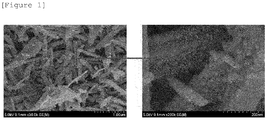
- Example 1 the SEM analysis result of the composite prepared in Example 1 was illustrated in FIGS. 1 and 2 and an XRD analysis result of the composite including a rod-shaped molybdenum oxide and amorphous Fe 2 Mo 3 O 12 islands provided on the rod-shaped molybdenum oxide was illustrated in FIG. 3 , and as the result, a crystalline phase of only MoO 3 was detected.
- FIG. 5 an XPS analysis result for determining a composition of the islands provided on the rod-shaped molybdenum oxide was shown.
- Fe and Mo oxidation numbers of the amorphous islands (Fe 2 Mo 3 O 12 ) according to the present invention were present as 3 + and 6 + , respectively, and the oxidation numbers were constituted by the same oxidation number as the crystalline islands (Fe 2 Mo 3 O 12 ).
- the oxidation number of some Fe was detected as 2 + , and it was determined that the reason was that irregularity of Fe structure due to amorphous was increased.
- the islands formed on the molybdenum oxide according to the present invention were amorphous.
- Example 1 Except for performing firing at 600°C for 4 hrs, a composite was prepared by the same method as Example 1 described above.
- the island provided on the rod-shaped molybdenum oxide had a size of 30 nm to 120 nm, the particle size of the island was increased compared to Example 1 described above, and it was found that uniform distribution of the islands was slightly deteriorated. However, in spite of the phenomenon, the island still showed an amorphous phase and was illustrated in FIG. 11 .
- Example 1 Except for performing firing at 500°C for 12 hrs, a composite was prepared by the same method as Example 1 described above.
- the island provided on the rod-shaped molybdenum oxide had a size of 25 nm to 110 nm, the particle size of the island was increased compared to Example 1 described above, and it was found that uniform distribution of the islands was slightly deteriorated. However, in spite of the phenomenon, the island still showed an amorphous phase and was illustrated in FIG. 13 .
- FIG. 6 XRD and SEM analyst results of a composite including a rod-shaped molybdenum oxide and crystalline Fe 2 Mo 3 O 12 islands provided on the rod-shaped molybdenum oxide were illustrated.
- FIG. 7 a TEM analyst result of a composite including a rod-shaped molybdenum oxide and crystalline Fe 2 Mo 3 O 12 islands provided on the rod-shaped molybdenum oxide was illustrated.
- Point 1 of FIG. 7 represented the rod-shaped molybdenum oxide and
- Point 2 represented the crystalline Fe 2 Mo 3 O 12 islands.
- the island provided on the rod-shaped molybdenum oxide had a size of 80 nm to 200 nm and the phase of the island was crystalline.
- a ratio of the particle number configuring the rod-shaped molybdenum oxide to the particle number configuring the islands was in a range of 1:7 to 1:9 and the content of the islands for the entire composite was in a range of 31.3 wt% to 37 wt%.
- a mass ratio of Fe and Mo was in a range of 1:9 to 3:31 and illustrated in FIGS. 6 , 7 , and 12 , and a specific surface area of the composite prepared in Comparative Example 1 was illustrated in FIG. 8 and was 7.931 m 2 /g.
- Fe(NO 3 ) 3 9H 2 O 0.4 g was added in 50 ml of water and stirred at room temperature. Meanwhile, 1.2 g of rod-shaped molybdenum oxide was added in 50 ml of water and stirred by heating to a temperature of 50°C. A iron precursor (Fe(NO 3 ) 3 9H 2 O) solution was dropped into the rod-shaped molybdenum oxide solution at a speed of 4 to 5 ml/min and then stirred and maintained for 2 hrs. Thereafter, an amount of the iron precursors input by removing water as the solvent by using a liquid evaporator was fully impregnated on the rod-shaped molybdenum oxide.
- the particles were distributed on another island as well as the rod-shaped molybdenum oxide and did not have a uniform distribution, and it was verified that in Comparative Example 2, the particle size of the island was in a range of 20 nm to 150 nm and in Comparative Example 3, the particle size of the island was slightly wide in a range of 50 nm to 200 nm.
- the islands on the rod-shaped molybdenum oxide were present on another island as well as the rod-shaped molybdenum oxide and were not distributed with a uniform size, and had sizes of 50 nm to 200 nm. Further, the island was crystalline Fe 2 Mo 3 O 12 and illustrated in FIG. 16 and the mass distribution of the composite islands was about 75.0 wt% to 80.0 wt%.
- the composite including a rod-shaped molybdenum oxide and the amorphous iron molybdate islands provided on the rod-shaped molybdenum oxide prepared according to the Examples described above was used in a reaction of preparing 1,3-butadiene from 1-butene as a catalyst of the partial oxidation reaction and the experimental process was as follows in detail.
- 3 g of composite powder including a rod-shaped molybdenum oxide and amorphous iron molybdate islands provided on the rod-shaped molybdenum oxide prepared in Examples described above made a pellet by using a hydraulic machine and a pelletizer and the pellet was cleaved in sieves having a size of 1,180 ⁇ m and a size of 600 ⁇ m to prepare a sample having a size of 600 ⁇ m to 1,180 ⁇ m.
- the composition of the amorphous iron molybdate islands on the rod-shaped molybdenum oxide had a conversion rate of 47.6%, BD (1,3-butadiene) selectivity of 9.16%, and BD yield of 4.36%, and it was shown that except for yield (a conversion rate of 39.1%, BD selectivity of 8.51%, and BD yield of 3.32 %) of the rod-shaped molybdenum oxide itself, the BD yield of the amorphous iron molybdate islands was 1.04%.
- reaction efficiency was higher than powder (crystalline Fe 2 Mo 3 O 12 powder and BD yield of 6.36 %) constituted by 100% crystalline iron molybdate in Comparative Experimental Example to be described below.
- Comparative Experimental Example was experimented by the same method as Experimental Example 1 described above.
- the powder constituted by the 100% crystalline iron molybdate had a conversion rate of 49.9%, BD selectivity of 12.74%, and BD yield of 6.36 %.
Landscapes
- Chemical & Material Sciences (AREA)
- Organic Chemistry (AREA)
- Engineering & Computer Science (AREA)
- Materials Engineering (AREA)
- Chemical Kinetics & Catalysis (AREA)
- Inorganic Chemistry (AREA)
- Physics & Mathematics (AREA)
- Thermal Sciences (AREA)
- Catalysts (AREA)
Abstract
Description
- This application claims priority to and the benefit of Korean Patent Application No.
10-2014-0132699 filed in the Korean Intellectual Property Office on October 1, 2014 - The present invention relates to a molybdenum oxide composite and a preparation method thereof.
- Metal molybdenum as silver-white hard transition metal has characteristics of having specific gravity of 10.22, very high melting point and boiling point of 2,610°C and 5,560°C, respectively, good thermal conductivity, and low thermal expansion coefficient and thus has been frequently used as alloy elements for increasing hardness, strength, tensile strength, and wear resistance to high-temperature lightweight structural materials such as airplanes and missiles, high-temperature electrical materials such as filament supports and electrodes for electric furnaces, and special steel such as stainless steel, heat-resistant steel, and superalloy steel.
- All around the world, about 70 to 80% of the used amount of the molybdenum metal is manufactured in a form of molybdenum oxide (MoO3) briquettes or ferromolybdenum alloys to be used as alloy elements of steel and further, in a form of a molybdenum compound such as ammonium molybdate, sodium molybdate or molybdenum oxide powder, a considerable amount is also used in many petrochemical products such as catalysts, lubricants and pigments.
- The molybdenum oxide may be used as a catalyst by forming a composite with metal molybdate and researches on the method of manufacturing the composite have been conducted and development of techniques to be performed in a better condition is required.
- The present invention has been made in an effort to provide a molybdenum oxide composition and a preparation method thereof.
- The present invention has been also made in an effort to provide a catalyst including the composite.
- An exemplary embodiment of the present invention provides a composite including rod-shaped molybdenum oxide and amorphous iron molybdate islands provided on the rod-shaped molybdenum oxide.
- Another exemplary embodiment of the present invention provides a preparation method of the composite, including:
- (a) preparing a mixed solution of an iron precursor and a solvent;
- (b) preparing a mixed solution of rod-shaped molybdenum oxide and a solvent; and
- (c) mixing the solution (a) and the solution (b).
- Yet another exemplary embodiment of the present invention provides a catalyst including the composite.
- According to the present invention, a composite including amorphous iron molybdate islands shows a smaller island size and a uniform distribution of islands compared with a conventional composite including crystalline islands, and thus has a higher specific surface area, thereby exhibiting excellent activity as a catalyst.
-
-
FIG. 1 is a diagram illustrating an SEM analysis result of a composite including amorphous iron molybdate (Fe2Mo3O12) islands provided on rod-shaped molybdenum oxide. -
FIG. 2 is a diagram illustrating an SEM analysis result of measuring sizes of the amorphous iron molybdate (Fe2Mo3O12) islands provided on rod-shaped molybdenum oxide. -
FIG. 3 is a diagram illustrating an XRD analysis result of a composite including amorphous iron molybdate (Fe2Mo3O12) islands provided on rod-shaped molybdenum oxide. -
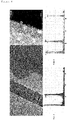
FIG. 4 is a diagram illustrating a TEM analysis result of a composite including amorphous iron molybdate (Fe2Mo3O12) islands provided on rod-shaped molybdenum oxide. -
FIG. 5 is a diagram illustrating an XPS analysis result of a composite including amorphous iron molybdate (Fe2Mo3O12) islands provided on rod-shaped molybdenum oxide. -
FIG. 6 is a diagram illustrating XRD and SEM analysis results of a composite including crystalline iron molybdate (Fe2Mo3O12) islands provided on rod-shaped molybdenum oxide. -
FIG. 7 is a diagram illustrating a TEM analysis result of a composite including crystalline iron molybdate (Fe2Mo3O12) islands provided on rod-shaped molybdenum oxide, in whichPoint 1 represents the rod-shaped molybdenum oxide andPoint 2 represents the crystalline iron molybdate (Fe2Mo3O12) island. -
FIGS. 8(a) and 8(b) are diagrams illustrating BET analysis results of a composite including amorphous iron molybdate islands provided on rod-shaped molybdenum oxide andFIG. 8(c) is a diagram illustrating a BET analysis result of a composite including crystalline iron molybdate islands provided on rod-shaped molybdenum oxide. -
FIG. 9 is a diagram illustrating SEM and BET analysis results of iron molybdate powder. -
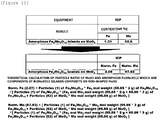
FIG. 10 is a diagram illustrating an ICP analysis result and theoretical calculation of a composite including amorphous iron molybdate (Fe2Mo3O12) islands provided on rod-shaped molybdenum oxide. -
FIG. 11 is a diagram illustrating XRD and SEM analysis results of a composite including amorphous iron molybdate islands provided on rod-shaped molybdenum oxide by firing at 600°C for 4 hrs. -
FIG. 12 is a diagram illustrating an ICP analysis result and theoretical calculation of a composite including crystalline iron molybdate (Fe2Mo3O12) islands provided on rod-shaped molybdenum oxide. -
FIG. 13 is a diagram illustrating XRD and SEM analysis results of a composite including amorphous iron molybdate islands provided on rod-shaped molybdenum oxide by firing at 500°C for 12 hrs. -
FIG. 14 is a diagram illustrating XRD and SEM analysis results of a composite prepared in Comparative Example 2 of the present invention. -
FIG. 15 is a diagram illustrating XRD and SEM analysis results of a composite prepared in Comparative Example 3 of the present invention. -
FIG. 16 is a diagram illustrating XRD and SEM analysis results of a composite prepared in Comparative Example 4 of the present invention. - The advantages and features of the present invention, and a method of accomplishing these will become obvious with reference to embodiments to be described below in detail along with the accompanying drawings. However, the present invention is not limited to the following exemplary embodiments but may be implemented in various different forms. The exemplary embodiments are provided only to complete disclosure of the application and to fully provide a person having ordinary skill in the art to which the present invention pertains with the category of the invention, and the present invention will be defined by the appended claims.
- Unless otherwise defined, all terms including technical and scientific terms used in the present specification may be used as the meaning which may be commonly understood by the person with ordinary skill in the art, to which this application pertains. It will be further understood that terms defined in commonly used dictionaries should not be interpreted in an idealized or excessive sense unless expressly and specifically defined.
- Hereinafter, the present invention will be described in detail.
- An exemplary embodiment of the present invention provides a composite including rod-shaped molybdenum oxide and amorphous iron molybdate islands provided on the rod-shaped molybdenum oxide.
- As described above, currently, the molybdenum oxide has been used as catalysts of various reactions and particularly, has been frequently used as catalysts of partial oxidation reactions.
- Currently, as the catalyst, researches for an activity increase of molybdenum oxide have been conducted, and researches such as preparing metal molybdenum by adding metal or preparing a composite of metal and molybdenum oxide have been conducted.
- Among them, a composite of metal and molybdenum oxide has excellent activity or selectivity as a catalyst of partial oxidation reaction compared with pure rod-shaped molybdenum oxide or pure metal molybdenum.
- Accordingly, there are a lot of researches for a composite of iron and molybdenum oxide among the composites, and a lot of researches for a structure capable of having a higher specific surface area have been conducted. However, even though the structures synthesized by the above researches ensure a high specific surface area, there is a problem in that the structures are easily brittle and there is a disadvantage that preservation and handling after preparation are difficult.
- To solve the problems, a composite in which metal islands are formed on the rod-shaped molybdenum oxide has been developed, but in the related art, the island provided on the composite is present only in the crystalline form.
- However, the inventors studied for the purpose to increase the activity of the catalyst and prepared a composite including rod-shaped molybdenum oxide and amorphous iron molybdate (Fe2Mo3O12) islands provided on the rod-shaped molybdenum oxide of the present invention.
- In this specification, amorphous is a solid material and has a uniform composition, but means a state where atomic arrangement is disordered like a liquid and is not in a regular lattice form.
- However, in this specification, in the amorphous, the iron molybdate islands need not to be 100% amorphous and the iron molybdate islands provided on the rod-shaped molybdenum oxide according to the exemplary embodiment of the present invention include 50% or more of an amorphous form and the rest of a crystalline form.
- In the composite according to the exemplary embodiment of the present invention, the iron molybdate (Fe2Mo3O12) islands provided on the rod-shaped molybdenum oxide are not crystalline but amorphous. That is, the composite is not a solid form having a regular atomic arrangement in the island like an existing crystalline form, but is a solid material and has a disordered form like a liquid without having a regularity of the atomic arrangement in one island.
- A size of the amorphous island according to the exemplary embodiment of the present invention has a smaller uniform distribution than the existing crystalline island. Accordingly, the amorphous island has a higher specific surface area than the existing composite and contributes to an activity increase of the catalyst.
- In this specification, the molybdenum oxide is an oxidized form of molybdenum (Mo), has various structures, and includes MoO3.
- In this specification, the rod shape may be used as a general geometric meaning and includes an elongated form in which a size of one axis is larger than that of the other axis.
- In this specification, hereinafter, the longest particle diameter of the rod-shaped molybdenum oxide is referred to as a length and a shortest particle diameter is referred to as a line width.
- According to an exemplary embodiment of the present invention, the length of the rod-shaped molybdenum oxide is in a range of 500 nm to 20 µm, preferably a range of 500 nm to 4 µm, and more preferably a range of 500 nm to 2.5 µm.
- According to an exemplary embodiment of the present invention, the line width of the rod-shaped molybdenum oxide is in a range of 100 nm to 1.5 µm, preferably a range of 100 nm to 1 µm, and more preferably a range of 100 nm to 300 nm.
- According to an exemplary embodiment of the present invention, the line width of the rod-shaped molybdenum oxide is 300 nm or less and the most of rod-shaped molybdenum oxide has a line width of 250 nm.
- According to an exemplary embodiment of the present invention, when the length and the line width of the rod-shaped molybdenum oxide are in the ranges, a high specific surface area may be ensured, and the catalyst including the rod-shaped molybdenum oxide having the high specific surface area has an excellent activity by ensuring a higher contact area than that of an existing material having low specific surface area.
- According to an exemplary embodiment of the present invention, a ratio of the line width to the length of the rod-shaped molybdenum oxide is in a range of 5:1 to 13:1 and more preferably 6:1 to 10:1. As such, in the case of the rod-shaped molybdenum oxide having the ratio range of the line width to the length, a greater number of molybdenum oxides than the same weight than a flat molybdenum oxide may be ensured to increase a specific surface area.
- According to an exemplary embodiment of the present invention, the island is not particularly limited as a material containing iron and molybdenum, but may include a material represented by Fe2Mo3O12. Alternatively, the island according to an exemplary embodiment of the present invention may be a material represented by Fe2Mo3O12.
- According to an exemplary embodiment of the present invention, in the composite, the content of the island is 10 wt% or less, preferably 7 wt% or more and 10 wt% or less, and more preferably 7.32 wt% or more and 9.76 wt% or less based on the overall complex.
- According to an exemplary embodiment of the present invention, the composite is a structure with 20 to 100 islands per one rod-shaped molybdenum oxide.
- According to an exemplary embodiment of the present invention, the size of the island is in a range of 10 nm to 150 nm or 10 nm to 120 nm, and in the preparation process of the composite to be described below, the size of the island may vary according to a firing temperature and a firing time.
- Further, according to an exemplary embodiment of the present invention, the size of the island is preferably in a range of 10 nm to 50 nm and shows a smaller uniform distribution compared to the existing crystalline island.
- According to an exemplary embodiment of the present invention, most of amorphous islands are present in a rectangular form, and the size of one island is measured based on the shortest length and the size of approximately 50 islands is measured based on an SEM image of
FIG. 1 . - In Experimental Example of the present invention, an additional SEM analysis result of measuring the size of the amorphous iron molybdate island is illustrated in
FIG. 2 and inFIG. 2(b) , it was verified that the size of the island is in a range of 10 nm to 50 nm like the SEM analysis result ofFIG. 1 . - According to an exemplary embodiment of the present invention, a ratio of particle numbers configuring the molybdenum oxides and the islands in the composite is in a range of 30:1 to 60:1, preferably 38:1 to 52:1, and more preferably 50:1 to 52:1.
- According to an exemplary embodiment of the present invention, a mass ratio of Fe to Mo in the composite is in a range of 1:30 to 1:60, preferably 1:30 to 1:50, and more preferably 1:35 to 1:47. In Experimental Example of the present invention, a mass ratio of Mo to Fe in the composite of the iron molybdenum with the amorphous iron molybdenum islands on the rod-shaped molybdenum oxide and the rod-shaped molybdenum oxide is shown by an ICP analysis result and a theoretical calculation.
- According to an exemplary embodiment of the present invention, at a point where a mass ratio of Mo to Fe in the composite is 1:35, in the case of increasing the mass of Mo, the iron molybdate island having a size of 50 nm or more is prevented from being mainly formed and amorphous iron molybdate other than crystalline may be formed.
- According to an exemplary embodiment of the present invention, at a point where a mass ratio of Mo to Fe in the composite is 1:47, in the case where the content of Mo is small, the number of iron molybdate islands having a size of 20 nm to 50 nm on the rod-shaped molybdenum oxide is sufficiently formed and many islands having 10 nm or less are prevented from being distributed.
- In Experimental Example of the present invention, it is verified that when the mass ratio of Mo to Fe in the composite is 3:31, the iron molybdate islands having a size of 80 nm to 200 nm are mainly distributed and the islands are crystalline. A result of showing the mass ratio of Mo to Fe in the composite through an ICP analysis result and theoretical calculation is illustrated in
FIG. 12 . - According to an exemplary embodiment of the present invention, the composite has a specific surface area in a range of 8 m2/g to 12 m2/g and more preferably in a range of 8.47 m2/g to 11.31 m2/g.
- According to an exemplary embodiment of the present invention, when the specific surface area is 8 m2/g or more, the size of the island formed on the rod-shaped molybdenum oxide is increased to prevent the island from being formed as crystalline. That is, when the specific surface area of the composite is in a range of 8 m2/g to 12 m2/g, the island is amorphous and the size of the island may have 50 nm or less.
- For example, in Experimental Example of the present invention, the specific surface area of the composite including the amorphous iron molybdate islands provided on the rod-shaped molybdenum oxide is 11.31 m2/g and the experimental result is illustrated in
FIG. 8(b) . - The composite including the amorphous iron molybdate islands according to an exemplary embodiment of the present invention has a higher specific surface area than pure Fe2Mo3O12 powder used as a catalyst of existing partial oxidation reaction.
- For example, in Experimental Example of the present invention, the composite including the amorphous islands has a higher specific surface area than 7.931 m2/g which is a specific surface area of the composite including the existing crystalline islands and the experimental result is illustrated in
FIG. 8 . - Further, in Experimental Example of the present invention, the composite has 8.47 to 11.31 m2/g which is a higher specific surface area than 7.06 m2/g which is a specific surface area of the existing pure iron molybdate (Fe2Mo3O12) powder and the experimental result is illustrated in
FIGS. 8 and9 . - Another exemplary embodiment of the present invention provides a preparation method of the composite, including:
- (a) preparing a mixed solution of an iron precursor and a solvent;
- (b) preparing a mixed solution of rod-shaped molybdenum oxide and a solvent; and
- (c) mixing the solution (a) and the solution (b).
- According to an exemplary embodiment of the present invention, preparation methods of the iron molybdenum and the rod-shaped molybdenum oxide composite are performed by gram scales.
- The preparation method of the composite including the existing crystalline islands is performed by milligram scale and in the case of being performed by the milligram scale, only the crystalline islands are formed.
- As described above, compared with the composite with the existing crystalline islands, the composite with the amorphous islands according to the present invention includes islands having smaller sizes and a uniform distribution. Accordingly, the composite according to the exemplary embodiment of the present invention has a higher specific surface area and an advantage of having high activity when being used as the catalyst of the partial oxidation reaction.
- According to an exemplary embodiment of the present invention, an iron precursor in step (a) is various materials including iron and an unlimited example of the iron precursor is a material represented by Fe(NO3)3 9H2O, Fe(NO3)3, Fe(OH)3 or Fe2O3 and more preferably Fe(NO3)3 9H2O.
- According to an exemplary embodiment of the present invention, as the solvent used in steps (a) and (b), a material having an OH functional group such as alcohol and polyol may be used and preferably, water is used.
- Further, according to an exemplary embodiment of the present invention, as the solvent used in steps (a) and (b), a material having an OH functional group such as alcohol and polyol and a small amount of water may be used.
- According to an exemplary embodiment of the present invention, the material having the OH functional group is a compound having one or more OH groups and as a preferable example, there is water, ethanol, or the like.
- According to an exemplary embodiment of the present invention, step (a) includes adding a solvent to the iron precursor or adding the iron precursor to the solvent.
- According to an exemplary embodiment of the present invention, step (a) includes stirring a mixed solution of the iron precursor and water.
- According to an exemplary embodiment of the present invention, step (a) may be performed at room temperature and preferably, may be performed in a range of 20°C to 30°C.
- According to an exemplary embodiment of the present invention, the rod-shaped molybdenum oxide used in step (b) may be prepared by reacting molybdenum oxide powder with a hydrogen peroxide solution.
- According to an exemplary embodiment of the present invention, as the hydrogen peroxide solution, a solution at a concentration of 10 to 50 wt% of hydrogen peroxide may be used. The hydrogen peroxide solution may include a solvent and as the solvent, a generally used material may be used and as an example, water may be used.
- According to an exemplary embodiment of the present invention, the molybdenum oxide powder includes various forms and may use commercial powder.
- According to an exemplary embodiment of the present invention, the molybdenum oxide powder includes a plate-shaped form.
- According to an exemplary embodiment of the present invention, the molybdenum oxide powder may be used to have sizes of length and width of several µm scales.
- According to an exemplary embodiment of the present invention, the preparing of the rod-shaped molybdenum oxide includes mixing the hydrogen peroxide solution and the molybdenum oxide powder, and the mixing of the hydrogen peroxide solution and the molybdenum oxide powder includes adding the molybdenum oxide powder to the hydrogen peroxide solution or adding the hydrogen peroxide solution to the molybdenum oxide powder.
- According to an exemplary embodiment of the present invention, the preparing of the rod-shaped molybdenum oxide includes preparing the rod-shaped molybdenum oxide through a hydrothermal synthesis method by mixing the hydrogen peroxide solution and the molybdenum oxide powder.
- According to an exemplary embodiment of the present invention, the preparing of the rod-shaped molybdenum oxide includes stirring and heating the mixed solution of the hydrogen peroxide solution and the molybdenum oxide powder.
- In this specification, the hydrothermal synthesis method is a method of synthesizing a material using water as one of liquid synthesis methods.
- According to yet another exemplary embodiment of the present invention, the preparing of the rod-shaped molybdenum oxide may include 1) forming MoO2(OH)(OOH) by reacting the hydrogen peroxide solution and the molybdenum oxide powder and 2) forming the rod-shaped molybdenum oxide from the MoO2(OH)(OOH) through a hydrothermal synthesis method.
- According to an exemplary embodiment of the present invention, step 1) is performed at a temperature of 95°C or less to form MoO2(OH)(OOH) under a low pressure condition. According to an exemplary embodiment of the present invention, step 1) includes isolating MoO2(OH)(OOH) as a reaction product.
- According to an exemplary embodiment of the present invention, the preparing of the rod-shaped molybdenum oxide includes drying while or after isolating MoO2(OH)(OOH).
- According to yet another exemplary embodiment of the present invention, the drying may include drying in a vacuum oven and MoO2(OH)(OOH) powder may be obtained.
- According to an exemplary embodiment of the present invention, step (b) includes adding a solvent to the rod-shape molybdenum oxide or adding the rod-shape molybdenum oxide to the solvent.
- According to an exemplary embodiment of the present invention, step (b) includes heating a mixed solution of the rod-shape molybdenum oxide and water.
- According to an exemplary embodiment of the present invention, in step (b), the heating includes heating from room temperature to a range of 40°C to 50°C and the temperature means a temperature of the solution of the rod-shape molybdenum oxide.
- According to an exemplary embodiment of the present invention, when the temperature is 40°C or more, the dissociation rate of the surface of the rod-shaped molybdenum oxide is sufficiently ensured, so that the iron precursor has the effect of performing the reaction on the surface of the rod-shaped molybdenum oxide, and when the temperature is 50°C or less, the dissociation of the surface of the rod-shaped molybdenum oxide is accelerated to prevent the shape of the rod-shaped molybdenum oxide from being deformed.
- According to an exemplary embodiment of the present invention, step (b) includes stirring while or after heating the mixed solution of the rod-shape molybdenum oxide and water.
- According to an exemplary embodiment of the present invention, step (c) includes dropping the solution of (a) in the solution (b) at a constant speed.
- According to an exemplary embodiment of the present invention, in step (c), a speed of dropping the solution of (a) in the solution of (b) is in a range of 4 ml/min to 5 ml/min.
- According to an exemplary embodiment of the present invention, when the dropping speed is in a range of 4 ml/min to 5 ml/min, the surface of the rod-shaped molybdenum oxide is appropriately dissociated to have an effect of activating uniform adsorption on the surface of the rod-shaped molybdenum oxide of Fe(OH)3 formed from the iron precursor and water.
- According to an exemplary embodiment of the present invention, step (c) includes stirring a mixed solution of the solution (a) and the solution of (b).
- According to an exemplary embodiment of the present invention, after step (c), isolating the composite generated through step (c) is included.
- According to an exemplary embodiment of the present invention, the isolating may be performed through a centrifuge.
- According to an exemplary embodiment of the present invention, while or after the isolating, drying is included.
- According to an exemplary embodiment of the present invention, the drying may be performed through a vacuum oven.
- According to an exemplary embodiment of the present invention, after step (c), (d) firing is included.
- According to an exemplary embodiment of the present invention, the (d) firing step may be performed in a range of 500°C to 700°C or 500°C to 650°C, preferably 500°C to 600°C and preferably, the firing is performed in a temperature range of 500°C to 550°C and a range of 3 hrs to 5 hrs.
- According to an exemplary embodiment of the present invention, the iron precursor solution forms a material represented by Fe(OH)3 through hydrolysis in step (a). That is, the hydrolysis process of the iron precursor solution of (a) may be performed by Chemical Formula such as Fe(NO3)3 + 3H2O → Fe(OH)3 + 3HNO3.
- According to an exemplary embodiment of the present invention, step (c) includes accumulating a material containing iron (Fe) such as Fe(OH)3 on the surface of the rod-shaped molybdenum oxide.
- According to an exemplary embodiment of the present invention, step (d) includes (d-1) changing a material represented by Fe(OH)3 accumulated on the surface of the rod-shaped molybdenum oxide into a material represented by Fe2O3 and (d-2) changing the material represented by Fe2O3 into a material represented by Fe2Mo3O12.
- According to an exemplary embodiment of the present invention, step (d) includes forming the material represented by Fe2Mo3O12 by reacting iron oxide with the surface the rod-shaped molybdenum oxide and the reaction may be performed by Chemical Formula such as Fe2O3 + 3MoO3 → Fe2Mo3O12.
- According to an exemplary embodiment of the present invention, Fe2Mo3O12 particles formed through step (d) are gradually accumulated to form amorphous islands having sizes of 10 nm to 120 nm and more preferably form amorphous iron molybdenum islands having sizes of 10 nm to 50 nm.
- Yet another exemplary embodiment of the present invention provides a catalyst including the composite of the iron molybdenum and the rod-shaped molybdenum oxide.
- According to an exemplary embodiment of the present invention, the catalyst participates in the chemical reaction to change a reaction speed, but the catalyst itself is a material remaining as it is before and after the reaction.
- That is, when the chemical reaction proceeds, the reaction material needs to pass through an activated state, and since the activated state is a higher energy state than the reaction material or the generation material, the reaction material needs to have sufficient energy so that the reaction occurs. The catalyst allows the reaction of the reaction material to occur through a lower or higher path than the activated energy.
- According to an exemplary embodiment of the present invention, the composite of the iron molybdenum and the rod-shaped molybdenum oxide is used as the catalyst to have an effect of improving reactivity by increasing a reaction area.
- According to an exemplary embodiment of the present invention, the rod-shaped molybdenum oxide may be used as a catalyst of various partial oxidation reactions and as an example, may be used as a catalyst of partial oxidation reaction generating 1,3-butadiene from 1-butene.
- Hereinafter, the present invention will be described in more detail through Examples. However, Examples according to the present invention may be modified in various different forms and the scope of the present invention is not limited to the following Examples. Examples of the present invention will be provided for more completely describing the present invention to those skilled in the art.
- 1.6 g of Fe(NO3)3 9H2O was added in 100 ml of water and stirred at room temperature. Meanwhile, 1.2 g of rod-shaped molybdenum oxide was added in 50 ml of water and stirred by heating to a temperature of 50°C. A iron precursor (Fe(NO3)3 9H2O) solution was dropped into the rod-shaped molybdenum oxide solution at a speed of 4 to 5 ml/min and then stirred and maintained for 2 hrs. Thereafter, a rod-shaped molybdenum oxide sample inserted with an iron precursor was isolated by using a centrifuge and dried in a vacuum oven of 80°C. The dried sample was fired at a temperature of 500°C for 4 hrs in the air.
- The islands of the prepared composite were formed on the rod-shaped molybdenum oxide to have a uniform distribution and have sizes of 10 nm to 50 nm. Further, the island was amorphous Fe2Mo3O12.
- The Fe2Mo3O12 island particles and the rod-shaped molybdenum oxide particles had a particle number ratio of 1:38 to 1:52 and a mass distribution of the islands for the composite had 7.32 wt% to 9.76 wt%.
- Further, it was verified that a mass ratio of Mo to Fe was constituted by 1:35 to 1:47 and a specific surface area of 8.47 m2/g to 11.31 m2/g of the composite prepared in Example 1 had a higher specific surface area than the composite (7.931 m2/g) formed with crystalline Fe2Mo3O12 islands on the Fe2Mo3O12 powder (7.06 m2/g) or the rod-shaped molybdenum oxide, and the result was illustrated in
FIGS. 8 and9 . - Particularly, the SEM analysis result of the composite prepared in Example 1 was illustrated in
FIGS. 1 and2 and an XRD analysis result of the composite including a rod-shaped molybdenum oxide and amorphous Fe2Mo3O12 islands provided on the rod-shaped molybdenum oxide was illustrated inFIG. 3 , and as the result, a crystalline phase of only MoO3 was detected. - In
FIG. 4 , in order to determine a composition of the islands provided on the rod-shaped molybdenum oxide, a TEM analysis result was shown and through the analysis result, Fe components were detected only in the islands. - Similarly, in
FIG. 5 , an XPS analysis result for determining a composition of the islands provided on the rod-shaped molybdenum oxide was shown. In the XPS analysis result, it was verified that Fe and Mo oxidation numbers of the amorphous islands (Fe2Mo3O12) according to the present invention were present as 3+ and 6+, respectively, and the oxidation numbers were constituted by the same oxidation number as the crystalline islands (Fe2Mo3O12). Further, in the case of the amorphous islands (Fe2Mo3O12) according to the present invention, the oxidation number of some Fe was detected as 2+, and it was determined that the reason was that irregularity of Fe structure due to amorphous was increased. As a result, it was established that the islands formed on the molybdenum oxide according to the present invention were amorphous. - Except for performing firing at 600°C for 4 hrs, a composite was prepared by the same method as Example 1 described above.
- In the prepared composite, the island provided on the rod-shaped molybdenum oxide had a size of 30 nm to 120 nm, the particle size of the island was increased compared to Example 1 described above, and it was found that uniform distribution of the islands was slightly deteriorated. However, in spite of the phenomenon, the island still showed an amorphous phase and was illustrated in
FIG. 11 . - Except for performing firing at 500°C for 12 hrs, a composite was prepared by the same method as Example 1 described above.
- In the prepared composite, the island provided on the rod-shaped molybdenum oxide had a size of 25 nm to 110 nm, the particle size of the island was increased compared to Example 1 described above, and it was found that uniform distribution of the islands was slightly deteriorated. However, in spite of the phenomenon, the island still showed an amorphous phase and was illustrated in
FIG. 13 . - As a result, even though a firing temperate and a firing time were increased, it was verified that the phases of the islands on the rod-shaped molybdenum oxide were maintained as amorphous and it was verified that the content of the islands for the entire composite through Examples 1 to 3 described above was in a range of 7.32 wt% to 9.76 wt%.
- 300 mg of Fe(NO3)3 9H2O was added in 50 ml of water and stirred at room temperature. Meanwhile, 225 mg of rod-shaped molybdenum oxide was added in 50 ml of water and stirred by heating to a temperature of 50°C. A iron precursor (Fe(NO3)3 9H2O) solution was dropped into the rod-shaped molybdenum oxide solution at a speed of 4 to 5 ml/min and then stirred and maintained for 2 hrs.
Thereafter, a rod-shaped molybdenum oxide sample inserted with an iron precursor was isolated by using a centrifuge and dried in a vacuum oven of 80°C. The dried sample was fired at a temperature of 500°C for 4 hrs in the air. - In
FIG. 6 , XRD and SEM analyst results of a composite including a rod-shaped molybdenum oxide and crystalline Fe2Mo3O12 islands provided on the rod-shaped molybdenum oxide were illustrated. - In
FIG. 7 , a TEM analyst result of a composite including a rod-shaped molybdenum oxide and crystalline Fe2Mo3O12 islands provided on the rod-shaped molybdenum oxide was illustrated.Point 1 ofFIG. 7 represented the rod-shaped molybdenum oxide andPoint 2 represented the crystalline Fe2Mo3O12 islands. - In the prepared composite, it was verified that the island provided on the rod-shaped molybdenum oxide had a size of 80 nm to 200 nm and the phase of the island was crystalline.
- Further, it was verified that a ratio of the particle number configuring the rod-shaped molybdenum oxide to the particle number configuring the islands was in a range of 1:7 to 1:9 and the content of the islands for the entire composite was in a range of 31.3 wt% to 37 wt%. Further, a mass ratio of Fe and Mo was in a range of 1:9 to 3:31 and illustrated in
FIGS. 6 ,7 , and12 , and a specific surface area of the composite prepared in Comparative Example 1 was illustrated inFIG. 8 and was 7.931 m2/g. - 0.4 g of Fe(NO3)3 9H2O was added in 50 ml of water and stirred at room temperature. Meanwhile, 1.2 g of rod-shaped molybdenum oxide was added in 50 ml of water and stirred by heating to a temperature of 50°C. A iron precursor (Fe(NO3)3 9H2O) solution was dropped into the rod-shaped molybdenum oxide solution at a speed of 4 to 5 ml/min and then stirred and maintained for 2 hrs. Thereafter, an amount of the iron precursors input by removing water as the solvent by using a liquid evaporator was fully impregnated on the rod-shaped molybdenum oxide. In a centrifuge method, only the amount of some iron precursors was accumulated on the rod-shaped molybdenum oxide and thus it was difficult to increase the amount of the iron precursors on the rod-shaped molybdenum oxide. As a result, a sample from which the solvent was removed was dried in a 80°C vacuum oven by using a liquid evaporator. The dried sample was fired at a temperature condition of 500°C for 4 hrs in the air.
- Except for performing firing at 550°C, a composite was prepared by the same method as Comparative Example 2 described above.
- In the composite prepared in Comparative Examples 2 and 3 described above, the islands were distributed on another island as well as the rod-shaped molybdenum oxide and did not have a uniform distribution, and it was verified that in Comparative Example 2, the particle size of the island was in a range of 20 nm to 150 nm and in Comparative Example 3, the particle size of the island was slightly wide in a range of 50 nm to 200 nm.
- It was verified that the phases of the islands were amorphous in Comparative Example 2 and crystalline in Comparative Example 3 and the phases were illustrated in
FIGS. 14 and15 , respectively. Further, the content of islands for the entire composite in Comparative Examples 2 and 3 was in a range of 20 wt% to 25 wt%. - As a result, it was verified that the phases of the islands was partially changed from amorphous to crystalline by increasing a firing temperature and a firing time and it was verified that the content of islands was only 10 wt% or less so that the phase of the island was maintained as amorphous regardless of a firing temperature and a firing time.
- 1.6 g of Fe(NO3)3 9H2O was added in 100 ml of water and stirred at room temperature. Meanwhile, 1.2 g of rod-shaped molybdenum oxide was added in 50 ml of water and stirred by heating to a temperature of 50°C. An iron precursor (Fe(NO3)3 9H2O) solution was dropped into the rod-shaped molybdenum oxide solution at a speed of 4 to 5 ml/min and then stirred and maintained for 2 hrs. Thereafter, an amount of the iron precursor input by removing a solvent (H2O) by using a liquid evaporator was fully impregnated on the rod-shaped molybdenum oxide. The sample from which the solvent was removed was dried in an 80°C vacuum oven and the dried sample was fired at a temperature of 500°C for 4 hrs in the air.
- In the prepared composite, the islands on the rod-shaped molybdenum oxide were present on another island as well as the rod-shaped molybdenum oxide and were not distributed with a uniform size, and had sizes of 50 nm to 200 nm. Further, the island was crystalline Fe2Mo3O12 and illustrated in
FIG. 16 and the mass distribution of the composite islands was about 75.0 wt% to 80.0 wt%. - Accordingly, through Comparative Example 4, it has been found that the content of Fe2Mo3O12 islands played an important role so that the island phase was amorphous.
- The composite including a rod-shaped molybdenum oxide and the amorphous iron molybdate islands provided on the rod-shaped molybdenum oxide prepared according to the Examples described above was used in a reaction of preparing 1,3-butadiene from 1-butene as a catalyst of the partial oxidation reaction and the experimental process was as follows in detail.
- 3 g of composite powder including a rod-shaped molybdenum oxide and amorphous iron molybdate islands provided on the rod-shaped molybdenum oxide prepared in Examples described above made a pellet by using a hydraulic machine and a pelletizer and the pellet was cleaved in sieves having a size of 1,180 µm and a size of 600 µm to prepare a sample having a size of 600 µm to 1,180 µm.
- 1.5 g of the sample was added in a high through-put system (HTS) reactor and heated to 400°C from room temperature under a gas condition of N2 : 28.6 sccm and O2 : 7.14 sccm and then pre-treated for 1 hr. The sample was cooled to 320°C and maintained for 30 minutes by turning on steam : 10 sccm. The sample was reacted for 30 minutes under a gas condition of N2 : 20 sccm, O2 : 2.5 sccm, steam: 6.67 sccm, and 1-butene: 1.67 sccm and then a detection reaction was performed through gas chromatography.
- It was shown that the composition of the amorphous iron molybdate islands on the rod-shaped molybdenum oxide had a conversion rate of 47.6%, BD (1,3-butadiene) selectivity of 9.16%, and BD yield of 4.36%, and it was shown that except for yield (a conversion rate of 39.1%, BD selectivity of 8.51%, and BD yield of 3.32 %) of the rod-shaped molybdenum oxide itself, the BD yield of the amorphous iron molybdate islands was 1.04%.
- Through ICP analysis illustrated in
FIG. 10 , it was shown that a ratio of the amorphous iron molybdate islands of the composite was constituted by 7.32 wt% and reaction efficiency of the amorphous iron molybdate islands was 1.04%/0.0732 = 14.2%. - It was shown that reaction efficiency was higher than powder (crystalline Fe2Mo3O12 powder and BD yield of 6.36 %) constituted by 100% crystalline iron molybdate in Comparative Experimental Example to be described below.
- Except for using powder constituted by 100% crystalline iron molybdate as a catalyst, Comparative Experimental Example was experimented by the same method as Experimental Example 1 described above.
- In this case, the powder constituted by the 100% crystalline iron molybdate had a conversion rate of 49.9%, BD selectivity of 12.74%, and BD yield of 6.36 %.
Claims (21)
- A composite including a rod-shaped molybdenum oxide and amorphous iron molybdate islands provided on the rod-shaped molybdenum oxide.
- The composite of claim 1, wherein the iron molybdate island includes a material represented by Fe2Mo3O12.
- The composite of claim 1, wherein the content of islands is 10 wt% or less with respect to the entire composite.
- The composite of claim 1, wherein 20 to 100 islands per one rod-shaped molybdenum oxide are included.
- The composite of claim 1, wherein the size of the island is in a range of 10 nm to 50 nm.
- The composite of claim 1, wherein a ratio of respective particle numbers constituting the rod-shaped molybdenum oxide and the islands in the composite is in a range of 30:1 to 60:1.
- The composite of claim 1, wherein a mass ratio of molybdenum (Mo) to iron (Fe) in the composite is in a range of 1:30 to 1:60.
- The composite of claim 1, wherein a specific surface area of the composite is in a range of 8 m2/g to 12 m2/g.
- A preparation method of the composite comprising:(a) preparing a mixed solution of an iron precursor and a solvent;(b) preparing a mixed solution of rod-shaped molybdenum oxide and a solvent; and(c) mixing the solution of (a) and the solution of (b).
- The preparation method of claim 9, wherein the preparation method of the composite is performed by a gram scale.
- The preparation method of claim 9, wherein the iron precursor is a material represented by Fe(NO3)3 9H2O, Fe(NO3)3, Fe(OH)3 or Fe2O3.
- The preparation method of claim 9, wherein step (a) includes stirring a mixed solution of the iron precursor and a solvent.
- The preparation method of claim 9, wherein step (a) is performed at room temperature.
- The preparation method of claim 9, wherein step (b) includes heating a mixed solution of the rod-shaped molybdenum oxide and a solvent.
- The preparation method of claim 14, wherein the heating is performed from room temperature to a range of 40°C to 50°C.
- The preparation method of claim 9, wherein step (b) includes stirring while or after heating the mixed solution of the rod-shaped molybdenum oxide and the solvent.
- The preparation method of claim 9, wherein step (c) includes dropping the solution of (a) in the solution of (b) at a constant speed.
- The preparation method of claim 9, further comprising:isolating the composite of the iron molybdenum and the rod-shaped molybdenum oxide generated in step (c) after step (c).
- The preparation method of claim 9, further comprising:(d) firing after step (c).
- The preparation method of claim 19, wherein the firing is performed at a temperature range of 500°C to 700°C.
- A catalyst including the composite of any one of claims 1 to 8.
Applications Claiming Priority (2)
| Application Number | Priority Date | Filing Date | Title |
|---|---|---|---|
| KR20140132699 | 2014-10-01 | ||
| PCT/KR2015/010326 WO2016053004A1 (en) | 2014-10-01 | 2015-09-30 | Molybdenum oxide composite and preparation method therefor |
Publications (3)
| Publication Number | Publication Date |
|---|---|
| EP3202492A1 true EP3202492A1 (en) | 2017-08-09 |
| EP3202492A4 EP3202492A4 (en) | 2018-01-10 |
| EP3202492B1 EP3202492B1 (en) | 2021-01-20 |
Family
ID=55630955
Family Applications (1)
| Application Number | Title | Priority Date | Filing Date |
|---|---|---|---|
| EP15846970.0A Active EP3202492B1 (en) | 2014-10-01 | 2015-09-30 | Molybdenum oxide composite and preparation method therefor |
Country Status (5)
| Country | Link |
|---|---|
| US (1) | US10675612B2 (en) |
| EP (1) | EP3202492B1 (en) |
| KR (1) | KR101795150B1 (en) |
| CN (1) | CN107073453B (en) |
| WO (1) | WO2016053004A1 (en) |
Families Citing this family (4)
| Publication number | Priority date | Publication date | Assignee | Title |
|---|---|---|---|---|
| CN112619657A (en) * | 2019-10-08 | 2021-04-09 | 中国石油化工股份有限公司 | Catalyst for preparing formaldehyde from methanol, preparation method and application |
| EP4259729A4 (en) * | 2020-12-09 | 2025-01-15 | DIC Corporation | IRON OXIDE PARTICLES AND METHOD FOR PRODUCING IRON OXIDE PARTICLES |
| CN115246656B (en) * | 2022-01-12 | 2023-07-25 | 青岛大学 | A kind of preparation method and application of molybdenum oxide/iron nanometer material |
| CN116273034B (en) * | 2023-02-28 | 2024-06-25 | 青岛大学 | Molybdenum oxide supported nickel-based catalyst and preparation method and application thereof |
Family Cites Families (12)
| Publication number | Priority date | Publication date | Assignee | Title |
|---|---|---|---|---|
| NL244661A (en) * | 1958-10-28 | |||
| IT1033419B (en) * | 1975-03-05 | 1979-07-10 | Sir Soc Italiana Resine Spa | CATALYSTS FOR OXIDATION OF METHANOL TO FORMALEDEID |
| US4912182A (en) | 1988-08-31 | 1990-03-27 | The Goodyear Tire & Rubber Company | Synthesis of high vinyl polybutadiene utilizing a molybdenum catalyst system |
| CN100413584C (en) | 2003-12-09 | 2008-08-27 | 南化集团研究院 | Fe-Mo catalyst for preparing formaldehyde through methanol oxidation and preparation process thereof |
| ITMI20042500A1 (en) * | 2004-12-23 | 2005-03-23 | Sued Chemie Mt Srl | PROCESS FOR THE PREPARATION OF A CATALYST FOR METHANOL OXIDATION IN FORMALDEHYDE |
| KR101086731B1 (en) | 2008-10-17 | 2011-11-25 | 금호석유화학 주식회사 | Bismuth molybdenum iron composite oxide catalyst and method for producing 1,3-butadiene in the oxidation / dehydrogenation of 1-butene |
| GB201014185D0 (en) | 2010-08-25 | 2010-10-06 | Univ Cardiff | Catalyst, method of manufacture and use thereof |
| KR101246338B1 (en) * | 2011-03-04 | 2013-03-21 | 서울대학교산학협력단 | Copper indium selenide nanoparticles and preparing method of the same |
| US9643842B2 (en) | 2011-03-14 | 2017-05-09 | Imra America, Inc. | Nanoarchitectured multi-component electrode materials and methods of making the same |
| JP5778770B2 (en) | 2011-06-28 | 2015-09-16 | 旭化成ケミカルズ株式会社 | Oxide catalyst |
| CN103663560A (en) | 2012-09-05 | 2014-03-26 | 中国石油化工股份有限公司 | Molybdate and preparation method thereof |
| US10130937B2 (en) * | 2014-08-29 | 2018-11-20 | Lg Chem, Ltd. | Preparation method for rod-shaped molybdenum oxide and preparation method for molybdenum oxide composite |
-
2015
- 2015-09-30 WO PCT/KR2015/010326 patent/WO2016053004A1/en not_active Ceased
- 2015-09-30 CN CN201580053292.8A patent/CN107073453B/en active Active
- 2015-09-30 US US15/510,170 patent/US10675612B2/en active Active
- 2015-09-30 KR KR1020150138032A patent/KR101795150B1/en active Active
- 2015-09-30 EP EP15846970.0A patent/EP3202492B1/en active Active
Also Published As
| Publication number | Publication date |
|---|---|
| WO2016053004A1 (en) | 2016-04-07 |
| US20170291166A1 (en) | 2017-10-12 |
| EP3202492B1 (en) | 2021-01-20 |
| KR20160039555A (en) | 2016-04-11 |
| EP3202492A4 (en) | 2018-01-10 |
| KR101795150B1 (en) | 2017-11-07 |
| CN107073453A (en) | 2017-08-18 |
| CN107073453B (en) | 2020-07-14 |
| US10675612B2 (en) | 2020-06-09 |
Similar Documents
| Publication | Publication Date | Title |
|---|---|---|
| EP2148754B1 (en) | Method of production of transition metal nanoparticles | |
| Siriwardane et al. | Synergetic effects of mixed copper–iron oxides oxygen carriers in chemical looping combustion | |
| US10130937B2 (en) | Preparation method for rod-shaped molybdenum oxide and preparation method for molybdenum oxide composite | |
| Jeong et al. | Comparative study on cubic and tetragonal Cu–CeO2–ZrO2 catalysts for water gas shift reaction | |
| US10675612B2 (en) | Molybdenum oxide composite and preparation method therefor | |
| EP2838837A1 (en) | Methods and structures for reducing carbon oxides with non-ferrous catalysts | |
| EP3113880A1 (en) | Carbon oxide reduction with intermetallic and carbide catalysts | |
| CN117563588B (en) | A ruthenium-based catalyst modified with rare earth metal oxides, its preparation method and application | |
| Sastre et al. | Effect of low-loading of Ni on the activity of La0. 9Sr0. 1FeO3 perovskites for chemical looping dry reforming of methane | |
| Pei et al. | Study on the effect of alkali promoters on the formation of cobalt carbide (Co2C) and on the performance of Co2C via CO hydrogenation reaction | |
| JP5811856B2 (en) | Steam reforming catalyst and reforming catalyst body | |
| JP2017029970A (en) | Method for producing hydrocarbon reforming catalyst, and method for reforming light hydrocarbon | |
| CN112705236A (en) | Carbon-coated nickel carbide nano composite material and preparation method and application thereof | |
| JP5270201B2 (en) | Methane-containing gas production method and methane-containing gas production catalyst | |
| JP6344052B2 (en) | Ammonia synthesis catalyst and ammonia synthesis method | |
| Deng et al. | Catalytic depolymerization of calcium lignosulfonate to high-value oxygenated aromatic compounds over the efficient Fe 2 O 3-La 0.8 Sr 0.2 FeO 3 | |
| JP6447996B2 (en) | Catalyst containing Ni-based intermetallic compound, method for producing the same, and method for producing hydrogen using the same | |
| RU2456235C2 (en) | Method of producing cellular graphite | |
| JP6167911B2 (en) | Catalyst and reforming method carried out using the same | |
| CN102343267B (en) | Method for preparing carbon-hybridized nickel lithium ferrite nano-catalyst | |
| JP2019522619A (en) | System and method for producing ceramic powders and ceramic products | |
| Ma et al. | Preparation of Pd-B/TiO 2 amorphous alloy and its catalytic performance on the thermal decomposition of ammonium perchlorate | |
| JP6395212B2 (en) | Method for producing exhaust gas purification catalyst | |
| Nhiem Dao et al. | Synthesis and investigations on CO catalytic oxidation activity of nanostructured Ce0. 5Zr0. 5O2 prepared by combustion method using polyvinyl alcohol | |
| JP2013166111A (en) | Catalyst for converting carbon monoxide into methane, and methods for manufacturing and using the same |
Legal Events
| Date | Code | Title | Description |
|---|---|---|---|
| STAA | Information on the status of an ep patent application or granted ep patent |
Free format text: STATUS: THE INTERNATIONAL PUBLICATION HAS BEEN MADE |
|
| PUAI | Public reference made under article 153(3) epc to a published international application that has entered the european phase |
Free format text: ORIGINAL CODE: 0009012 |
|
| STAA | Information on the status of an ep patent application or granted ep patent |
Free format text: STATUS: REQUEST FOR EXAMINATION WAS MADE |
|
| 17P | Request for examination filed |
Effective date: 20170302 |
|
| AK | Designated contracting states |
Kind code of ref document: A1 Designated state(s): AL AT BE BG CH CY CZ DE DK EE ES FI FR GB GR HR HU IE IS IT LI LT LU LV MC MK MT NL NO PL PT RO RS SE SI SK SM TR |
|
| AX | Request for extension of the european patent |
Extension state: BA ME |
|
| A4 | Supplementary search report drawn up and despatched |
Effective date: 20171213 |
|
| DAV | Request for validation of the european patent (deleted) | ||
| DAX | Request for extension of the european patent (deleted) | ||
| RIC1 | Information provided on ipc code assigned before grant |
Ipc: B01J 37/08 20060101ALI20171207BHEP Ipc: C01G 49/02 20060101ALI20171207BHEP Ipc: B01J 23/881 20060101AFI20171207BHEP Ipc: B01J 37/04 20060101ALI20171207BHEP |
|
| STAA | Information on the status of an ep patent application or granted ep patent |
Free format text: STATUS: EXAMINATION IS IN PROGRESS |
|
| 17Q | First examination report despatched |
Effective date: 20190808 |
|
| GRAP | Despatch of communication of intention to grant a patent |
Free format text: ORIGINAL CODE: EPIDOSNIGR1 |
|
| STAA | Information on the status of an ep patent application or granted ep patent |
Free format text: STATUS: GRANT OF PATENT IS INTENDED |
|
| INTG | Intention to grant announced |
Effective date: 20201111 |
|
| GRAS | Grant fee paid |
Free format text: ORIGINAL CODE: EPIDOSNIGR3 |
|
| GRAA | (expected) grant |
Free format text: ORIGINAL CODE: 0009210 |
|
| STAA | Information on the status of an ep patent application or granted ep patent |
Free format text: STATUS: THE PATENT HAS BEEN GRANTED |
|
| AK | Designated contracting states |
Kind code of ref document: B1 Designated state(s): AL AT BE BG CH CY CZ DE DK EE ES FI FR GB GR HR HU IE IS IT LI LT LU LV MC MK MT NL NO PL PT RO RS SE SI SK SM TR |
|
| REG | Reference to a national code |
Ref country code: GB Ref legal event code: FG4D |
|
| REG | Reference to a national code |
Ref country code: CH Ref legal event code: EP |
|
| REG | Reference to a national code |
Ref country code: DE Ref legal event code: R096 Ref document number: 602015065055 Country of ref document: DE |
|
| REG | Reference to a national code |
Ref country code: AT Ref legal event code: REF Ref document number: 1355902 Country of ref document: AT Kind code of ref document: T Effective date: 20210215 |
|
| REG | Reference to a national code |
Ref country code: IE Ref legal event code: FG4D |
|
| REG | Reference to a national code |
Ref country code: NL Ref legal event code: MP Effective date: 20210120 |
|
| REG | Reference to a national code |
Ref country code: LT Ref legal event code: MG9D |
|
| REG | Reference to a national code |
Ref country code: AT Ref legal event code: MK05 Ref document number: 1355902 Country of ref document: AT Kind code of ref document: T Effective date: 20210120 |
|
| PG25 | Lapsed in a contracting state [announced via postgrant information from national office to epo] |
Ref country code: PT Free format text: LAPSE BECAUSE OF FAILURE TO SUBMIT A TRANSLATION OF THE DESCRIPTION OR TO PAY THE FEE WITHIN THE PRESCRIBED TIME-LIMIT Effective date: 20210520 Ref country code: NO Free format text: LAPSE BECAUSE OF FAILURE TO SUBMIT A TRANSLATION OF THE DESCRIPTION OR TO PAY THE FEE WITHIN THE PRESCRIBED TIME-LIMIT Effective date: 20210420 Ref country code: LT Free format text: LAPSE BECAUSE OF FAILURE TO SUBMIT A TRANSLATION OF THE DESCRIPTION OR TO PAY THE FEE WITHIN THE PRESCRIBED TIME-LIMIT Effective date: 20210120 Ref country code: HR Free format text: LAPSE BECAUSE OF FAILURE TO SUBMIT A TRANSLATION OF THE DESCRIPTION OR TO PAY THE FEE WITHIN THE PRESCRIBED TIME-LIMIT Effective date: 20210120 Ref country code: FI Free format text: LAPSE BECAUSE OF FAILURE TO SUBMIT A TRANSLATION OF THE DESCRIPTION OR TO PAY THE FEE WITHIN THE PRESCRIBED TIME-LIMIT Effective date: 20210120 Ref country code: GR Free format text: LAPSE BECAUSE OF FAILURE TO SUBMIT A TRANSLATION OF THE DESCRIPTION OR TO PAY THE FEE WITHIN THE PRESCRIBED TIME-LIMIT Effective date: 20210421 Ref country code: BG Free format text: LAPSE BECAUSE OF FAILURE TO SUBMIT A TRANSLATION OF THE DESCRIPTION OR TO PAY THE FEE WITHIN THE PRESCRIBED TIME-LIMIT Effective date: 20210420 |
|
| PG25 | Lapsed in a contracting state [announced via postgrant information from national office to epo] |
Ref country code: SE Free format text: LAPSE BECAUSE OF FAILURE TO SUBMIT A TRANSLATION OF THE DESCRIPTION OR TO PAY THE FEE WITHIN THE PRESCRIBED TIME-LIMIT Effective date: 20210120 Ref country code: LV Free format text: LAPSE BECAUSE OF FAILURE TO SUBMIT A TRANSLATION OF THE DESCRIPTION OR TO PAY THE FEE WITHIN THE PRESCRIBED TIME-LIMIT Effective date: 20210120 Ref country code: PL Free format text: LAPSE BECAUSE OF FAILURE TO SUBMIT A TRANSLATION OF THE DESCRIPTION OR TO PAY THE FEE WITHIN THE PRESCRIBED TIME-LIMIT Effective date: 20210120 Ref country code: RS Free format text: LAPSE BECAUSE OF FAILURE TO SUBMIT A TRANSLATION OF THE DESCRIPTION OR TO PAY THE FEE WITHIN THE PRESCRIBED TIME-LIMIT Effective date: 20210120 Ref country code: AT Free format text: LAPSE BECAUSE OF FAILURE TO SUBMIT A TRANSLATION OF THE DESCRIPTION OR TO PAY THE FEE WITHIN THE PRESCRIBED TIME-LIMIT Effective date: 20210120 |
|
| PG25 | Lapsed in a contracting state [announced via postgrant information from national office to epo] |
Ref country code: IS Free format text: LAPSE BECAUSE OF FAILURE TO SUBMIT A TRANSLATION OF THE DESCRIPTION OR TO PAY THE FEE WITHIN THE PRESCRIBED TIME-LIMIT Effective date: 20210520 |
|
| REG | Reference to a national code |
Ref country code: DE Ref legal event code: R097 Ref document number: 602015065055 Country of ref document: DE |
|
| PG25 | Lapsed in a contracting state [announced via postgrant information from national office to epo] |
Ref country code: EE Free format text: LAPSE BECAUSE OF FAILURE TO SUBMIT A TRANSLATION OF THE DESCRIPTION OR TO PAY THE FEE WITHIN THE PRESCRIBED TIME-LIMIT Effective date: 20210120 Ref country code: CZ Free format text: LAPSE BECAUSE OF FAILURE TO SUBMIT A TRANSLATION OF THE DESCRIPTION OR TO PAY THE FEE WITHIN THE PRESCRIBED TIME-LIMIT Effective date: 20210120 Ref country code: SM Free format text: LAPSE BECAUSE OF FAILURE TO SUBMIT A TRANSLATION OF THE DESCRIPTION OR TO PAY THE FEE WITHIN THE PRESCRIBED TIME-LIMIT Effective date: 20210120 |
|
| PLBE | No opposition filed within time limit |
Free format text: ORIGINAL CODE: 0009261 |
|
| STAA | Information on the status of an ep patent application or granted ep patent |
Free format text: STATUS: NO OPPOSITION FILED WITHIN TIME LIMIT |
|
| PG25 | Lapsed in a contracting state [announced via postgrant information from national office to epo] |
Ref country code: DK Free format text: LAPSE BECAUSE OF FAILURE TO SUBMIT A TRANSLATION OF THE DESCRIPTION OR TO PAY THE FEE WITHIN THE PRESCRIBED TIME-LIMIT Effective date: 20210120 Ref country code: SK Free format text: LAPSE BECAUSE OF FAILURE TO SUBMIT A TRANSLATION OF THE DESCRIPTION OR TO PAY THE FEE WITHIN THE PRESCRIBED TIME-LIMIT Effective date: 20210120 Ref country code: RO Free format text: LAPSE BECAUSE OF FAILURE TO SUBMIT A TRANSLATION OF THE DESCRIPTION OR TO PAY THE FEE WITHIN THE PRESCRIBED TIME-LIMIT Effective date: 20210120 |
|
| 26N | No opposition filed |
Effective date: 20211021 |
|
| PG25 | Lapsed in a contracting state [announced via postgrant information from national office to epo] |
Ref country code: ES Free format text: LAPSE BECAUSE OF FAILURE TO SUBMIT A TRANSLATION OF THE DESCRIPTION OR TO PAY THE FEE WITHIN THE PRESCRIBED TIME-LIMIT Effective date: 20210120 Ref country code: AL Free format text: LAPSE BECAUSE OF FAILURE TO SUBMIT A TRANSLATION OF THE DESCRIPTION OR TO PAY THE FEE WITHIN THE PRESCRIBED TIME-LIMIT Effective date: 20210120 |
|
| PG25 | Lapsed in a contracting state [announced via postgrant information from national office to epo] |
Ref country code: SI Free format text: LAPSE BECAUSE OF FAILURE TO SUBMIT A TRANSLATION OF THE DESCRIPTION OR TO PAY THE FEE WITHIN THE PRESCRIBED TIME-LIMIT Effective date: 20210120 |
|
| PG25 | Lapsed in a contracting state [announced via postgrant information from national office to epo] |
Ref country code: IT Free format text: LAPSE BECAUSE OF FAILURE TO SUBMIT A TRANSLATION OF THE DESCRIPTION OR TO PAY THE FEE WITHIN THE PRESCRIBED TIME-LIMIT Effective date: 20210120 |
|
| REG | Reference to a national code |
Ref country code: CH Ref legal event code: PL |
|
| REG | Reference to a national code |
Ref country code: BE Ref legal event code: MM Effective date: 20210930 |
|
| PG25 | Lapsed in a contracting state [announced via postgrant information from national office to epo] |
Ref country code: IS Free format text: LAPSE BECAUSE OF FAILURE TO SUBMIT A TRANSLATION OF THE DESCRIPTION OR TO PAY THE FEE WITHIN THE PRESCRIBED TIME-LIMIT Effective date: 20210520 Ref country code: MC Free format text: LAPSE BECAUSE OF FAILURE TO SUBMIT A TRANSLATION OF THE DESCRIPTION OR TO PAY THE FEE WITHIN THE PRESCRIBED TIME-LIMIT Effective date: 20210120 |
|
| PG25 | Lapsed in a contracting state [announced via postgrant information from national office to epo] |
Ref country code: IE Free format text: LAPSE BECAUSE OF NON-PAYMENT OF DUE FEES Effective date: 20210930 Ref country code: LU Free format text: LAPSE BECAUSE OF NON-PAYMENT OF DUE FEES Effective date: 20210930 Ref country code: BE Free format text: LAPSE BECAUSE OF NON-PAYMENT OF DUE FEES Effective date: 20210930 |
|
| PG25 | Lapsed in a contracting state [announced via postgrant information from national office to epo] |
Ref country code: LI Free format text: LAPSE BECAUSE OF NON-PAYMENT OF DUE FEES Effective date: 20210930 Ref country code: CH Free format text: LAPSE BECAUSE OF NON-PAYMENT OF DUE FEES Effective date: 20210930 |
|
| PG25 | Lapsed in a contracting state [announced via postgrant information from national office to epo] |
Ref country code: HU Free format text: LAPSE BECAUSE OF FAILURE TO SUBMIT A TRANSLATION OF THE DESCRIPTION OR TO PAY THE FEE WITHIN THE PRESCRIBED TIME-LIMIT; INVALID AB INITIO Effective date: 20150930 |
|
| PG25 | Lapsed in a contracting state [announced via postgrant information from national office to epo] |
Ref country code: NL Free format text: LAPSE BECAUSE OF NON-PAYMENT OF DUE FEES Effective date: 20210120 Ref country code: CY Free format text: LAPSE BECAUSE OF FAILURE TO SUBMIT A TRANSLATION OF THE DESCRIPTION OR TO PAY THE FEE WITHIN THE PRESCRIBED TIME-LIMIT Effective date: 20210120 |
|
| PG25 | Lapsed in a contracting state [announced via postgrant information from national office to epo] |
Ref country code: MK Free format text: LAPSE BECAUSE OF FAILURE TO SUBMIT A TRANSLATION OF THE DESCRIPTION OR TO PAY THE FEE WITHIN THE PRESCRIBED TIME-LIMIT Effective date: 20210120 |
|
| PG25 | Lapsed in a contracting state [announced via postgrant information from national office to epo] |
Ref country code: MT Free format text: LAPSE BECAUSE OF FAILURE TO SUBMIT A TRANSLATION OF THE DESCRIPTION OR TO PAY THE FEE WITHIN THE PRESCRIBED TIME-LIMIT Effective date: 20210120 |
|
| PGFP | Annual fee paid to national office [announced via postgrant information from national office to epo] |
Ref country code: DE Payment date: 20250820 Year of fee payment: 11 |
|
| PGFP | Annual fee paid to national office [announced via postgrant information from national office to epo] |
Ref country code: GB Payment date: 20250820 Year of fee payment: 11 |
|
| PGFP | Annual fee paid to national office [announced via postgrant information from national office to epo] |
Ref country code: FR Payment date: 20250821 Year of fee payment: 11 |
|
| PG25 | Lapsed in a contracting state [announced via postgrant information from national office to epo] |
Ref country code: TR Free format text: LAPSE BECAUSE OF FAILURE TO SUBMIT A TRANSLATION OF THE DESCRIPTION OR TO PAY THE FEE WITHIN THE PRESCRIBED TIME-LIMIT Effective date: 20210120 |