EP3200380B1 - Method and device for data transmission on unlicensed frequency band - Google Patents
Method and device for data transmission on unlicensed frequency band Download PDFInfo
- Publication number
- EP3200380B1 EP3200380B1 EP15844481.0A EP15844481A EP3200380B1 EP 3200380 B1 EP3200380 B1 EP 3200380B1 EP 15844481 A EP15844481 A EP 15844481A EP 3200380 B1 EP3200380 B1 EP 3200380B1
- Authority
- EP
- European Patent Office
- Prior art keywords
- radio frame
- indication information
- frequency band
- pdsch
- terminal
- Prior art date
- Legal status (The legal status is an assumption and is not a legal conclusion. Google has not performed a legal analysis and makes no representation as to the accuracy of the status listed.)
- Active
Links
Images


Classifications
-
- H—ELECTRICITY
- H04—ELECTRIC COMMUNICATION TECHNIQUE
- H04L—TRANSMISSION OF DIGITAL INFORMATION, e.g. TELEGRAPHIC COMMUNICATION
- H04L5/00—Arrangements affording multiple use of the transmission path
- H04L5/003—Arrangements for allocating sub-channels of the transmission path
- H04L5/0053—Allocation of signalling, i.e. of overhead other than pilot signals
-
- H—ELECTRICITY
- H04—ELECTRIC COMMUNICATION TECHNIQUE
- H04W—WIRELESS COMMUNICATION NETWORKS
- H04W72/00—Local resource management
- H04W72/20—Control channels or signalling for resource management
- H04W72/23—Control channels or signalling for resource management in the downlink direction of a wireless link, i.e. towards a terminal
-
- H—ELECTRICITY
- H04—ELECTRIC COMMUNICATION TECHNIQUE
- H04L—TRANSMISSION OF DIGITAL INFORMATION, e.g. TELEGRAPHIC COMMUNICATION
- H04L5/00—Arrangements affording multiple use of the transmission path
- H04L5/0001—Arrangements for dividing the transmission path
- H04L5/0003—Two-dimensional division
- H04L5/0005—Time-frequency
- H04L5/0007—Time-frequency the frequencies being orthogonal, e.g. OFDM(A) or DMT
-
- H—ELECTRICITY
- H04—ELECTRIC COMMUNICATION TECHNIQUE
- H04L—TRANSMISSION OF DIGITAL INFORMATION, e.g. TELEGRAPHIC COMMUNICATION
- H04L5/00—Arrangements affording multiple use of the transmission path
- H04L5/003—Arrangements for allocating sub-channels of the transmission path
- H04L5/0044—Allocation of payload; Allocation of data channels, e.g. PDSCH or PUSCH
-
- H—ELECTRICITY
- H04—ELECTRIC COMMUNICATION TECHNIQUE
- H04L—TRANSMISSION OF DIGITAL INFORMATION, e.g. TELEGRAPHIC COMMUNICATION
- H04L5/00—Arrangements affording multiple use of the transmission path
- H04L5/0091—Signalling for the administration of the divided path, e.g. signalling of configuration information
-
- H—ELECTRICITY
- H04—ELECTRIC COMMUNICATION TECHNIQUE
- H04L—TRANSMISSION OF DIGITAL INFORMATION, e.g. TELEGRAPHIC COMMUNICATION
- H04L5/00—Arrangements affording multiple use of the transmission path
- H04L5/0091—Signalling for the administration of the divided path, e.g. signalling of configuration information
- H04L5/0092—Indication of how the channel is divided
-
- H—ELECTRICITY
- H04—ELECTRIC COMMUNICATION TECHNIQUE
- H04L—TRANSMISSION OF DIGITAL INFORMATION, e.g. TELEGRAPHIC COMMUNICATION
- H04L5/00—Arrangements affording multiple use of the transmission path
- H04L5/22—Arrangements affording multiple use of the transmission path using time-division multiplexing
-
- H—ELECTRICITY
- H04—ELECTRIC COMMUNICATION TECHNIQUE
- H04W—WIRELESS COMMUNICATION NETWORKS
- H04W16/00—Network planning, e.g. coverage or traffic planning tools; Network deployment, e.g. resource partitioning or cells structures
- H04W16/14—Spectrum sharing arrangements between different networks
Definitions
- the present disclosure relates to the field of mobile communications, and in particular, to a method and a device for transmitting data in an unauthorized frequency band.
- Frequency band resources are in shortage due to increase in mobile data services, and mobile data services in large quantities may not be achievable through network deployment and service transmissions using only authorized frequency band resources.
- it is optional to deploy transmissions of mobile data services using unauthorized frequency band resources, to enhance utilization ratio of frequency band resources and improve user experience.
- An unauthorized frequency band that serves as an auxiliary carrier assists an authorized frequency band that serves as a main carrier in achieving transmissions of mobile data services.
- the unauthorized frequency band can be shared by various wireless communications systems such as Bluetooth and Wi-Fi, and the various wireless communications systems uses the shared unauthorized frequency band resources through competing for the resources.
- U-LTEs or LTE-Us unlicensed long term evolutions
- LTE-Us long term evolutions
- An LTE system may support frequency division duplexing (FDD) and time division duplexing (TDD) that adopt different frame structures.
- FDD frequency division duplexing
- TDD time division duplexing
- each radio frame consists of ten subframes each last 1ms.
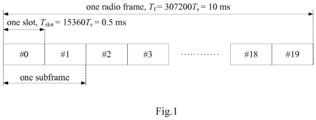
- the FDD system adopts a first frame structure as shown in Fig.1
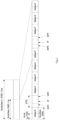
- the TDD system adopts a second frame structure as shown in Fig.2 .
- the data is transmitted in unit of subframe that lasts 1ms.
- a start time point for transmission of a LTE-U signal starts may be located at any position within one subframe, such that an incomplete subframe, i.e., a physical resource that lasts a period shorter than a length of one normal subframe, is transmitted. If no signal is sent using the incomplete subframe, the resource is of course to be taken by other nodes in situation of intense resource competition.
- the LTE-U may be designed with each transmission lasting 10ms, and each transmission is better not longer than 40ms.
- transmission efficiency of the LTE-U is greatly decreased.
- an incomplete subframe is transmitted on a resource that is not available for transmitting a complete subframe and the incomplete subframe is used in data transmission, the data transmission efficiency can be enhanced and resource is not wasted.
- a reference document discloses a method for a terminal to transceive a base station and a signal in a wireless communication system having a carrier aggregation technique applied thereto.
- a further reference document discloses a method for transmitting a signal to an unlicensed band of a base station in a wireless communication system.
- the present disclosure has solved the afore described problem as defined in the attached claims.
- Methods and devices for transmitting data in an unauthorized frequency band are provided according to embodiments of the present disclosure, to achieve transmitting data in an incomplete subframe in the unauthorized frequency band.
- a method for transmitting an incomplete subframe including: determining a starting position of to-be-transmitted data in a radio frame in the unauthorized frequency band; determining position indication information based on the starting position; and transmitting the position indication information, to enable a terminal to obtain the starting position of the to-be-transmitted data in the radio frame in the unauthorized frequency band based on the position indication information.
- the position indication information is a sequence agreed on by a network device and the terminal in advance.
- the position indication information is transmitted via a signaling, the signaling is carried on a specified symbol in the radio frame, and the specified symbol is agreed on by a network device and the terminal in advance.
- the signaling carried on the specified symbol occupies a partial bandwidth of the specified symbol.
- the signaling is carried on an auxiliary carrier in the unauthorized frequency band, or carried on a main carrier in an authorized frequency band.
- PDSCH physical downlink shared channel
- ePDCCH enhanced physical downlink control channel
- the PDSCH and the ePDCCH have an identical starting position and an identical ending position in time domain
- the starting position of the PDSCH and the ePDCCH in the time domain is located in an L1/L2 control channel region of a complete subframe corresponding to the radio frame, or may be located at any position outside the L1/L2 control channel region of the complete subframe corresponding to the radio frame.
- data is transmitted in a control channel and a PDSCH in the radio frame in a time division multiplexing manner, the control channel is located at a position after the PDSCH, and the control channel comprises at least a physical downlink control channel (PDCCH) and a physical control format indicator channel (PCFICH).
- PDCH physical downlink control channel
- PCFICH physical control format indicator channel
- the starting position of the to-be-transmitted data in the radio frame is a starting symbol of a PDSCH.
- a method for transmitting data on an unauthorized frequency band including: receiving, by a terminal, position indication information of a radio frame in an unauthorized frequency band; and determining, by the terminal, a starting position of to-be-transmitted data in the radio frame in the unauthorized frequency band based on the position indication information.
- the position indication information is a sequence agreed on by a network device and the terminal in advance.
- the position indication information is transmitted via a signaling, the signaling is carried on a specified symbol in the radio frame and the specified symbol is agreed on by a network device and the terminal in advance.
- Receiving Receiving by the terminal the position indication information of the radio frame in the unauthorized frequency band includes: determining, by the terminal, the signaling based on a partial bandwidth of the specified symbol.
- Receiving by the terminal the position indication information of the radio frame in the unauthorized frequency band includes: obtaining, by the terminal, the signaling from an auxiliary carrier in the unauthorized frequency band or from a main carrier in an authorized frequency band.
- data is transmitted in a PDSCH and an ePDCCH in the radio frame in a frequency division multiplexing manner
- the PDSCH and the ePDCCH have an identical starting position and an identical ending position in time domain
- the starting position of the PDSCH and the ePDCCH in the time domain is located in an L1/L2 control channel region of a complete subframe corresponding to the radio frame, or is located at any position outside the L1/L2 control channel region of the complete subframe corresponding to the radio frame.
- data is transmitted in a control channel and a PDSCH in the radio frame in a time division multiplexing manner, the control channel is located at a position after the PDSCH, and the control channel comprises at least a physical downlink control channel (PDCCH) and a physical control format indicator channel (PCFICH).
- PDCH physical downlink control channel
- PCFICH physical control format indicator channel
- the starting position of the to-be-transmitted data in the radio frame is a starting symbol of a PDSCH.
- a network device including: a starting position determining unit, configured to determine a starting position of to-be-transmitted data in a radio frame in an unauthorized frequency band; a position indication information determining unit, configured to determine position indication information based on the starting position; and a transmitting unit, configured to transmit the position indication information, to enable a terminal to determine the starting position of the to-be-transmitted data in the radio frame in the unauthorized frequency band based on the position indication information.
- the position indication information is a sequence agreed on by the network device and the terminal in advance.
- the position indication information is transmitted via a signaling, the signaling is carried on a specified symbol in the radio frame, and the specified symbol is agreed on by the network device and the terminal in advance.
- the signaling carried on the specified symbol occupies a portion of the bandwidth of the specified symbol.
- the signaling is carried on an auxiliary carrier in the unauthorized frequency band, or is carried on a main carrier in an authorized frequency band.
- data is transmitted in a PDSCH and an ePDCCH in the radio frame in a frequency division multiplexing manner
- the PDSCH and the ePDCCH have an identical starting position and an identical ending position in time domain
- the starting position of the PDSCH and the ePDCCH in the time domain is located in an L1/L2 control channel region of a complete subframe corresponding to the radio frame, or is located at any position outside the L1/L2 control channel region of the complete subframe corresponding to the radio frame.
- data is transmitted in a control channel and a PDSCH in the radio frame in a time division multiplexing manner, the control channel is located at a position after the PDSCH, and the control channel comprises at least a PDCCH and a PCFICH.
- the starting position of the to-be-transmitted data in the radio frame is a starting symbol of a PDSCH.
- a terminal including: a receiving unit, configured to receive position indication information of a radio frame in an unauthorized frequency band; and a determining unit, configured to determine a starting position of to-be-transmitted data in the radio frame in the unauthorized frequency band based on the position indication information.
- the position indication information is a sequence agreed on by a network device and the terminal in advance.
- the position indication information is transmitted via a signaling, the signaling is carried on a specified symbol in the radio frame and the specified symbol is agreed on by a network device and the terminal in advance.
- the receiving unit is configured to determine the signaling based on a partial bandwidth of the specified symbol.
- the receiving unit is configured to obtain the signaling from an auxiliary carrier in the unauthorized frequency band or from a main carrier in an authorized frequency band.
- data is transmitted in a PDSCH and an ePDCCH in the radio frame in a frequency division multiplexing manner
- the PDSCH and the ePDCCH have an identical starting position and an identical ending position in time domain
- the starting position of the PDSCH and the ePDCCH in the time domain is located in an L1/L2 control channel region of a complete subframe corresponding to the radio frame, or is located at any position outside the L1/L2 control channel region of the complete subframe corresponding to the radio frame.
- data is transmitted in a control channel and a PDSCH in the radio frame in a time division multiplexing manner, the control channel is located at a position after the PDSCH, and the control channel comprises at least a PDCCH and a PCFICH.
- the starting position of the to-be-transmitted data in the radio frame is a starting symbol of a PDSCH.
- the terminal can be informed of the starting position of the to-be-transmitted data in the radio frame in the unauthorized frequency band via the position indication information, such that the terminal can determine the starting position of the to-be-transmitted data in the radio frame based on the position indication information, so as to receive the data in an accurate manner.
- any technical or scientific term used herein shall have the common meaning understood by a person of ordinary skills.
- Such words as “first” and “second” used in the specification and claims are merely used to differentiate different components rather than to represent any order, number or importance.
- such words as “one” or “one of” are merely used to represent the existence of at least one member, rather than to limit the number thereof.
- a terminal In an LTE system, in the case that to-be-transmitted data is transmitted using an incomplete subframe in an unauthorized frequency band, a terminal cannot determine a starting position of the to-be-transmitted data in the received incomplete subframe.
- a network device competes for resources, due to factors such as LBT competitive access, data preparation time in the network device and radio frequency preparation time in the network device, it is frequently that the network device may not transmit a complete subframe, such that an incomplete subframe needs to be used for data transmission.
- the length of the incomplete subframe is shorter than that of an LTE subframe and may have at most 13 available orthogonal frequency division multiplexing (OFDM) symbols.
- the starting position of the transmitted data is uncertain or is changeable while an ending position of the transmitted data is known or predetermined, the terminal cannot obtain the transmitted data in the case that it cannot determine the starting position of the transmitted data in the incomplete subframe.
- a network device when transmitting a radio frame, informs a terminal of a starting position of to-be-transmitted data in the radio frame via a position indication information, such that the terminal can determine a starting position of the transmitted data in an incomplete subframe, and thus can obtain data in the incomplete subframe in an accurate manner.
- the present disclosure provides in some embodiments a method for transmitting data in an unauthorized frequency band at a network side and a method for transmitting data on an unauthorized frequency band at a terminal side. These methods at the network side and at the terminal side can be used separately or in combination. The methods at the network side and at the terminal side are described respectively hereinafter.
- any method according to embodiments of the present disclosure can be applied to various mobile communications system, and herein the application of the method in the LTE system is taken as an example, and applications of the method in other mobile communications system are not described. Since the LTE system is taken as the example, the term "symbol" in embodiments of the present disclosure is referred to OFDM symbol.
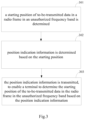
- Fig.3 is a flow chart of a method for transmitting data in an unauthorized frequency band according to some embodiments of the present disclosure.
- the method is executed by a network device.
- the network device has a network access function, such as a base station; however, the network device in the embodiments is not limited to the base station.
- the method may include steps 301-303.
- step 301 a starting position of to-be-transmitted data in a radio frame in an unauthorized frequency band is determined.
- step 302 position indication information is determined based on the starting position.
- step 303 the position indication information is transmitted, to enable a terminal to determine the starting position of the to-be-transmitted data in the radio frame in the unauthorized frequency band based on the position indication information.
- the to-be-transmitted data is mapped into a PDSCH for transmission.
- the starting position of the to-be-transmitted data may be referred to a starting OFDM symbol of the PDSCH for transmitting the data.
- the PDSCH and an ePDCCH can be frequency-division multiplexed; in such a case, the PDSCH and the ePDCCH may have an identical starting position in time domain, and the starting position of the to-be-transmitted data may be referred to as a starting OFDM symbol of the ePDCCH.
- the starting position of the to-be-transmitted data indicated by the position indication information refers to a sequence number of a starting symbol of the to-be-transmitted data in the radio frame, or refers to a relative position of the starting symbol in the radio frame.
- the relative position refers to the number of symbols from a starting point of the radio frame or a subframe carrying the to-be-transmitted data to the starting symbol of the to-be-transmitted data, or refers to the number of symbols from the starting symbol of the to-be-transmitted data to an ending point of the radio frame or the subframe, or may refer to other substantially equivalent information.
- the position indication information determined in step 302 may be a sequence agreed on by the network device and the terminal, or may be transmitted via a signaling.
- the sequence needs to be agreed on by the network device and the terminal in advance. That is, the sequence is already known by both the network device and the terminal.
- the sequence may be stored locally at the terminal or may be generated at the terminal.
- the sequence is constructed by taking a pseudo-noise (PN) sequence or a constant amplitude zero auto correlation (CAZAC) sequence as a basic sequence.
- PN pseudo-noise
- CAZAC constant amplitude zero auto correlation
- the sequence may be generated through other approaches, which are not detailed herein.
- step 303 in the case that the network device transmits the sequence, the sequence occupies all bandwidth or specified partial bandwidth in frequency domain.
- a symbol carrying the sequence is located at a position before the to-be-transmitted data in time domain and there are N symbols between the symbol carrying the sequence and symbols carrying the to-be-transmitted data, where N is an integer equal to or larger than 0.
- the value of N is agreed on by the network device and the terminal in advance. For example, the network device transmits the sequence on an OFDM symbol prior to the starting OFDM symbol in the PDSCH for transmitting the data.
- the symbol carrying the sequence may overlap the starting symbol of the to-be-transmitted data.
- the network device transmits the sequence on the starting OFDM symbol in the PDSCH for transmitting the data, and the sequence and the PDSCH occupy different bandwidths.
- the frequency band occupied by the sequence is at a center frequency point or is near the center frequency point.
- the signaling may be carried on a specified symbol in the radio frame.
- the specified symbol is agreed on by the network device and the terminal in advance.
- the position indication information is sent at a determined position and the terminal does not need to perform blind detection.
- the specified symbol is on the last symbol of the incomplete subframe.
- the signaling may be carried on an auxiliary carrier in an unauthorized frequency band, or may be carried on a main carrier in an authorized frequency band.
- the signaling occupies all bandwidth or specified partial bandwidth in frequency domain.
- the length of the position indication information is typically 4 bits.
- the position indication information is used to indicate the sequence number of the starting OFDM symbol of the PDSCH, or to indicate a relative position of the sequence number of the starting OFDM symbol of the PDSCH in the incomplete subframe.
- the signaling and other information such as a control channel or to-be-transmitted data may be carried on an identical symbol in a frequency division multiplexing manner.
- the signaling and a PCFICH in the control channel may be carried on an identical symbol in a frequency division multiplexing manner.
- the signaling may be transmitted on an ending OFDM symbol of the PDSCH, and the signaling and the PDSCH are transmitted in a frequency division multiplexing manner.
- an L1/L2 control channel is carried on the first P OFDM symbols of a complete subframe, where P is smaller than or equal to 4; through the L1/L2 control channel, data may not be completely transmitted in an incomplete subframe in an unauthorized frequency band, the terminal may fail in obtaining the L1/L2 control channel or may merely obtain a part of the L1/L2 control channel, thereby failing in obtaining the data transmitted in the radio frame through demodulation correctly.
- a solution in R8/R9 of transmitting a control channel in a conventional L1/L2 control channel region is not adopted; instead, one of the following two solutions is adopted.
- the ePDCCH and the PDSCH are frequency-division multiplexed.
- a control channel and the PDSCH are time-division multiplexed.
- the control channel at least includes a physical downlink control channel (PDCCH) and the PCFICH, and may include other kinds of control channels.
- PDCH physical downlink control channel
- PCFICH PCFICH
- the PDSCH and the ePDCCH have an identical starting position and an identical ending position in time domain.
- the starting position of the PDSCH and the ePDCCH may be located in the L1/L2 control channel region of a complete subframe corresponding to the incomplete subframe, or may be located at any position outside the L1/L2 control channel region of the complete subframe corresponding to the incomplete subframe.
- the partial L1/L2 control channel region may be used to transmit data or the position indication information.
- the position indication information needs to indicate the starting position of the ePDCCH and the PDSCH.
- control channel and the PDSCH are time-division multiplexed
- the control channel is carried on a symbol after symbols carrying the PDSCH, where the control channel carries the PDCCH, the PCFICH and other control information.
- the PCFICH carried on the control channel is carried on the last symbol of the incomplete subframe.
- the signaling and the PCFICH may be carried on an identical symbol in a frequency division multiplexing manner.
- the terminal is informed of the starting position of the transmitted data in the radio frame in the unauthorized frequency band through the position indication information, such that the terminal can determine the starting position of the transmitted data in the radio frame based on the position indication information, so as to receive the data in an accurate manner.
- Fig.4 is a flow chart of a method for transmitting data in an unauthorized frequency band according to some embodiments of the present disclosure.
- the flow is executed by a terminal.
- the terminal may be any terminal having a wireless communication function, such as a mobile phone.
- the terminal in reception of one subframe, may determine the head of an ideal complete LTE subframe by counting 14 OFDM symbols forwardly from the end of the subframe. Firstly, the terminal may demodulate the L1/L2 control channel region; if the demodulation is failed, the terminal determines that the received subframe is an incomplete subframe, and a mode for incomplete subframe is initiated.
- the method may include steps 401-402.
- step 401 position indication information of a radio frame in an unauthorized frequency band is received.
- step 402 a starting position of transmitted data in the radio frame in the unauthorized frequency band is determined based on the position indication information.
- the terminal can determine, based on a value of N being agreed on and a position of a symbol carrying the sequence, the starting position of transmitted data in the received radio frame, and thus can obtain the data through demodulation.
- the terminal may obtain the signaling and a subframe corresponding to the signaling from an auxiliary carrier in the unauthorized frequency band or from a main carrier in an authorized frequency band, such that the terminal may obtain the starting position of transmitted data in the subframe.
- the signaling indicating the position indication information is agreed on to be transmitted on K resource blocks (RBs) in the middle of the frequency band on the last OFDM symbol of an incomplete subframe, where K is an integer equal to or larger than 0.
- the terminal may determine an end of the incomplete subframe, and detect the signaling on the K RBs in the middle of the frequency band on the last OFDM symbol of the incomplete subframe, so as to obtain the starting position of transmitted data in the incomplete subframe based on the signaling.
- the network device may adopt a solution in which the ePDCCH and the PDSCH are frequency-division multiplexed or may adopt another solution in which a control channel and the PDSCH are time-division multiplexed.
- the control channel at least includes the PDCCH and the PCFICH, and may further include other control channels.
- the terminal in reception of the incomplete subframe, may determine a range of the control channel based on the PCFICH with a conventional approach in the LTE system, and may demodulate the PDSCH based on the position indication information.
- the starting position of the transmitted data in the radio frame can be determined based on the position indication information sent from the network device; accordingly, the terminal can determine the starting position of the transmitted data in the radio frame based on the position indication information, so as to receive the data in an accurate manner.
- the position indication information can be implemented in two ways, and the control channel and the PDSCH can be multiplexed in two ways.
- the control channel and the PDSCH can be multiplexed in two ways.
- the to-be-transmitted data is mapped to the PDSCH for transmission, and the PDSCH and the ePDCCH are frequency-division multiplexed.
- the PDSCH and the ePDCCH have an identical starting position in time domain, wherein the identical starting position is located in an L1/L2 control channel region of a complete subframe corresponding to the incomplete subframe.
- the position indication information is a sequence agreed on by the network device and the terminal in advance. An OFDM symbol carrying the sequence is located at a position previous to and adjacent to a starting OFDM symbol of the PDSCH. The sequence occupies all of the bandwidth.
- the terminal may determine the OFDM symbol next to the OFDM symbol carrying the sequence to be a starting symbol of the PDSCH. Therefore, the terminal may receive and demodulate the PDSCH based on the determined starting symbol of the PDSCH.
- the to-be-transmitted data is mapped to the PDSCH for transmission, and the control channel and the PDSCH are time-division multiplexed.
- a starting point of the PDSCH in time domain is located at a position outside an L1/L2 control channel region of a complete subframe corresponding to the incomplete subframe.
- the position indication information is transmitted via a signaling.
- the signaling occupies a portion of the bandwidth.
- the signaling and the PCFICH that is in the control channel occupy the last OFDM symbol of the incomplete subframe in a frequency division multiplexing manner.
- the control channel is located at a position after the PDSCH.
- the position indication information can be carried on the last OFDM symbol of the incomplete subframe, while the frequency band occupied by the position indication information is not limited.
- the terminal may determine a starting symbol of the PDSCH based on the signaling. Then, the terminal can receive and demodulate the PDSCH based on the determined starting symbol of the PDSCH.
- the to-be-transmitted data is mapped to the PDSCH for transmission, and the control channel and the PDSCH are time-division multiplexed.
- a starting point of the PDSCH in time domain is located within an L1/L2 control channel region of a complete subframe corresponding to the incomplete subframe.
- the position indication information is a sequence agreed on by the network device and the terminal in advance. The sequence occupies a portion of the bandwidth, and an OFDM symbol carrying the sequence overlaps a starting OFDM symbol of the PDSCH. Optionally, the sequence may occupy all of the bandwidth.
- the terminal may determine the OFDM symbol carrying the sequence to be the starting symbol of the PDSCH. Therefore, the terminal may receive and demodulate data in the PDSCH based on the determined starting symbol of the PDSCH.
- the to-be-transmitted data is mapped to the PDSCH for transmission, and the PDSCH and the ePDCCH are frequency-division multiplexed.
- the PDSCH and the ePDCCH have an identical starting position in time domain, the identical starting position is located in an L1/L2 control channel region of a complete subframe corresponding to the incomplete subframe.
- the position indication information is transmitted via a signaling.
- the signaling occupies a portion of the bandwidth, and is carried on an ending OFDM symbol of the PDSCH and/or the ePDCCH.
- the signaling and the PDSCH and/or the signaling and the ePDCCH are transmitted in a frequency division multiplexing manner.
- the position indication information and the PDSCH and/or the position indication information and the ePDCCH can be carried on the ending OFDM symbol of the PDSCH and/or the ePDCCH, where a frequency band occupied by the position indication information is not limited.
- the terminal may determine a starting symbol of the PDSCH based on the signaling. Then, the terminal may receive and demodulate the PDSCH based on the determined starting symbol of the PDSCH.
- a network device and a terminal are further provided according to some embodiments of the present disclosure. Details about the network device and the terminal can be know with reference to the described methods and are not given herein.
- Fig.9 is a schematic structural diagram of a network device according to some embodiments of the present disclosure.
- the network device includes: a starting position determining unit 901, used to determine a starting position of to-be-transmitted data in a radio frame in an unauthorized frequency band; a position indication information determining unit 902, used to determine position indication information based on the starting position; and a transmitting unit 903, used to transmit the position indication information, to enable a terminal to determine the starting position of the to-be-transmitted data in the radio frame in the unauthorized frequency band based on the position indication information.
- the position indication information is a sequence agreed on by the network device and the terminal in advance.
- a symbol carrying the sequence is located at a position before the to-be-transmitted data in time domain and there are N symbols between the symbol carrying the sequence and symbols carrying the to-be-transmitted data, where the sequence occupies all bandwidth or a specified partial bandwidth in frequency domain and N is an integer equal to or larger than 0. Or, the sequence occupies a specified partial bandwidth, and the symbol carrying the sequence may overlap a starting symbol of the to-be-transmitted data.
- the position indication information is transmitted via a signaling.
- the signaling is carried on a specified symbol in the radio frame.
- the specified symbol is agreed on by the network device and the terminal in advance.
- the signaling occupies a portion of the bandwidth of the specified symbol.
- the signaling is carried on an auxiliary carrier in an unauthorized frequency band, or is carried on a main carrier in an authorized frequency band.
- an ePDCCH and a PDSCH in the radio frame are transmitted in a frequency division multiplexing manner, the PDSCH and the ePDCCH have an identical starting position and an identical ending position in time domain.
- the starting position of the PDSCH and the ePDCCH in the time domain may be located in the L1/L2 control channel region of a complete subframe corresponding to the radio frame, or may be located at any position outside the L1/L2 control channel region of the complete subframe corresponding to the radio frame.
- a control channel and the PDSCH in the radio frame are transmitted in a time division multiplexing manner, the control channel is located at a position after the PDSCH, and the control channel includes at least a PDCCH and a PCFICH.
- a starting position of the to-be-transmitted data in the radio frame is a starting symbol of the PDSCH.
- Fig.10 illustrates a terminal according to some embodiments of the present disclosure.
- the terminal includes: a receiving unit 1001, used to receive position indication information of a radio frame in an unauthorized frequency band; and a determining unit 1002, used to determine a starting position of to-be-transmitted data in the radio frame in the unauthorized frequency band based on the position indication information.
- the position indication information is a sequence agreed on by a network device and the terminal in advance.
- the determining unit 1002 is used to: determine the sequence on a symbol in the radio frame that is located at a position before symbols carrying the to-be-transmitted data and is N symbol(s) away from the symbols carrying the to-be-transmitted data, where the sequence occupies all bandwidth or a specified partial bandwidth in frequency domain and N is an integer equal to or larger than 0; or determine the sequence on a starting symbol of the to-be-transmitted data, where the sequence occupies a specified partial bandwidth.
- the position indication information is transmitted via a signaling.
- the signaling is carried on a specified symbol in the radio frame and the specified symbol is agreed on by the network device and the terminal in advance.
- the receiving unit 1001 is used to determine the signaling based on a partial bandwidth of the specified symbol.
- the receiving unit 1001 is used to obtain the signaling from an auxiliary carrier in an unauthorized frequency band or from a main carrier in an authorized frequency band.
- an ePDCCH and a PDSCH in the radio frame are transmitted in a frequency division multiplexing manner, the PDSCH and the ePDCCH have an identical starting position and an identical ending position in time domain.
- the starting position of the PDSCH and the ePDCCH in the time domain may be located in the L1/L2 control channel region of a complete subframe corresponding to the radio frame, or may be located at any position outside the L1/L2 control channel region of the complete subframe corresponding to the radio frame.
- a control channel and the PDSCH in the radio frame are transmitted in a time division multiplexing manner, the control channel is located at a position after the PDSCH, and the control channel includes at least a PDCCH and a PCFICH.
- a starting position of the to-be-transmitted data in the radio frame is a starting symbol of the PDSCH.
- the terminal With the position indication information, the terminal is informed of the starting position of the to-be-transmitted data in the radio frame, such that the terminal may receive data in an accurate manner.
- the indicating approach in embodiments of the present disclosure is simple and efficient, obtained time-frequency resources can be sufficiently utilized and resources are not wasted.
- the present disclosure may be provided as a method, a system or a computer program product, so the present disclosure may be in the form of full hardware embodiments, full software embodiments, or combinations thereof.
- the present disclosure may be in the form of a computer program product implemented on one or more computer-readable storage mediums (including but not limited to disk memory and optical memory) including computer-readable program codes.
- These computer program instructions may also be stored in a computer readable storage that may guide the computer or the other programmable data process devices to function in a certain way, so that the instructions stored in the computer readable storage may create a product including an instruction unit which achieves the functions assigned in one or more flows in the flow chart and/or one or more blocks in the block diagram.
- These computer program instructions may also be loaded in the computer or the other programmable data process devices, so that a series of operation steps are executed on the computer or the other programmable devices to create processes achieved by the computer. Therefore, the instructions executed in the computer or the other programmable devices provide the steps for achieving the function assigned in one or more flows in the flow chart and/or one or more blocks in the block diagram.
Landscapes
- Engineering & Computer Science (AREA)
- Signal Processing (AREA)
- Computer Networks & Wireless Communication (AREA)
- Mobile Radio Communication Systems (AREA)
Description
- The present application claims a priority to
Chinese Patent Application No. 201410505035.0 filed on September 26, 2014 - The present disclosure relates to the field of mobile communications, and in particular, to a method and a device for transmitting data in an unauthorized frequency band.
- Frequency band resources are in shortage due to increase in mobile data services, and mobile data services in large quantities may not be achievable through network deployment and service transmissions using only authorized frequency band resources. In view of above, it is optional to deploy transmissions of mobile data services using unauthorized frequency band resources, to enhance utilization ratio of frequency band resources and improve user experience. An unauthorized frequency band that serves as an auxiliary carrier assists an authorized frequency band that serves as a main carrier in achieving transmissions of mobile data services.
- The unauthorized frequency band can be shared by various wireless communications systems such as Bluetooth and Wi-Fi, and the various wireless communications systems uses the shared unauthorized frequency band resources through competing for the resources. Hence, it is important and difficult in research how to ensure unlicensed long term evolutions (abbreviated as U-LTEs or LTE-Us) deployed by different service providers to co-exist or how to ensure different wireless communications systems such as LTE-U and Wi-Fi to co-exist.
- An LTE system may support frequency division duplexing (FDD) and time division duplexing (TDD) that adopt different frame structures. In the two different frame structures, each radio frame consists of ten subframes each last 1ms. The FDD system adopts a first frame structure as shown in
Fig.1 , and the TDD system adopts a second frame structure as shown inFig.2 . - It can be found from the LTE frame structure, the data is transmitted in unit of subframe that lasts 1ms. In the LTE-U, due to factors such as listen before talk (LBT) competitive access, data preparation time in a base station and radio frequency preparation time in a base station, a start time point for transmission of a LTE-U signal starts may be located at any position within one subframe, such that an incomplete subframe, i.e., a physical resource that lasts a period shorter than a length of one normal subframe, is transmitted. If no signal is sent using the incomplete subframe, the resource is of course to be taken by other nodes in situation of intense resource competition.
- To ensure fair competition between LTE-U and Wi-Fi, the LTE-U may be designed with each transmission lasting 10ms, and each transmission is better not longer than 40ms. In the case that the LTE-U is designed with each transmission lasting about 10ms and any incomplete subframe is not used for transmission, transmission efficiency of the LTE-U is greatly decreased. In the case that an incomplete subframe is transmitted on a resource that is not available for transmitting a complete subframe and the incomplete subframe is used in data transmission, the data transmission efficiency can be enhanced and resource is not wasted. However, there is no technical solution for performing data transmission using incomplete subframe in an LTE unauthorized frequency band.
- In sum, no solution is given in related art to achieve data transmission using incomplete subframe in the unauthorized frequency band.
- A reference document (
US 2014/003387 A1 ) discloses a method for a terminal to transceive a base station and a signal in a wireless communication system having a carrier aggregation technique applied thereto. - A further reference document (
US 2014/112289 A1 ) discloses a method for transmitting a signal to an unlicensed band of a base station in a wireless communication system. - The present disclosure has solved the afore described problem as defined in the attached claims. Methods and devices for transmitting data in an unauthorized frequency band are provided according to embodiments of the present disclosure, to achieve transmitting data in an incomplete subframe in the unauthorized frequency band.
- A method for transmitting an incomplete subframe is provided according to embodiments of the present disclosure, including: determining a starting position of to-be-transmitted data in a radio frame in the unauthorized frequency band; determining position indication information based on the starting position; and transmitting the position indication information, to enable a terminal to obtain the starting position of the to-be-transmitted data in the radio frame in the unauthorized frequency band based on the position indication information.
- The position indication information is a sequence agreed on by a network device and the terminal in advance.
- The position indication information is transmitted via a signaling, the signaling is carried on a specified symbol in the radio frame, and the specified symbol is agreed on by a network device and the terminal in advance.
- The signaling carried on the specified symbol occupies a partial bandwidth of the specified symbol.
- The signaling is carried on an auxiliary carrier in the unauthorized frequency band, or carried on a main carrier in an authorized frequency band.
- Data is transmitted in a physical downlink shared channel (PDSCH) and an enhanced physical downlink control channel (ePDCCH) in the radio frame in a frequency division multiplexing manner, the PDSCH and the ePDCCH have an identical starting position and an identical ending position in time domain, and the starting position of the PDSCH and the ePDCCH in the time domain is located in an L1/L2 control channel region of a complete subframe corresponding to the radio frame, or may be located at any position outside the L1/L2 control channel region of the complete subframe corresponding to the radio frame.
- Optionally, data is transmitted in a control channel and a PDSCH in the radio frame in a time division multiplexing manner, the control channel is located at a position after the PDSCH, and the control channel comprises at least a physical downlink control channel (PDCCH) and a physical control format indicator channel (PCFICH).
- Optionally, the starting position of the to-be-transmitted data in the radio frame is a starting symbol of a PDSCH.
- A method for transmitting data on an unauthorized frequency band is provided according to embodiments of the present disclosure, including: receiving, by a terminal, position indication information of a radio frame in an unauthorized frequency band; and determining, by the terminal, a starting position of to-be-transmitted data in the radio frame in the unauthorized frequency band based on the position indication information.
- The position indication information is a sequence agreed on by a network device and the terminal in advance.
- The position indication information is transmitted via a signaling, the signaling is carried on a specified symbol in the radio frame and the specified symbol is agreed on by a network device and the terminal in advance.
- Receiving Receiving by the terminal the position indication information of the radio frame in the unauthorized frequency band includes: determining, by the terminal, the signaling based on a partial bandwidth of the specified symbol.
- Receiving by the terminal the position indication information of the radio frame in the unauthorized frequency band includes: obtaining, by the terminal, the signaling from an auxiliary carrier in the unauthorized frequency band or from a main carrier in an authorized frequency band.
- Optionally, data is transmitted in a PDSCH and an ePDCCH in the radio frame in a frequency division multiplexing manner, the PDSCH and the ePDCCH have an identical starting position and an identical ending position in time domain, and the starting position of the PDSCH and the ePDCCH in the time domain is located in an L1/L2 control channel region of a complete subframe corresponding to the radio frame, or is located at any position outside the L1/L2 control channel region of the complete subframe corresponding to the radio frame.
- Optionally, data is transmitted in a control channel and a PDSCH in the radio frame in a time division multiplexing manner, the control channel is located at a position after the PDSCH, and the control channel comprises at least a physical downlink control channel (PDCCH) and a physical control format indicator channel (PCFICH).
- Optionally, the starting position of the to-be-transmitted data in the radio frame is a starting symbol of a PDSCH.
- A network device is provided according to embodiments of the present disclosure, including: a starting position determining unit, configured to determine a starting position of to-be-transmitted data in a radio frame in an unauthorized frequency band; a position indication information determining unit, configured to determine position indication information based on the starting position; and a transmitting unit, configured to transmit the position indication information, to enable a terminal to determine the starting position of the to-be-transmitted data in the radio frame in the unauthorized frequency band based on the position indication information.
- The position indication information is a sequence agreed on by the network device and the terminal in advance.
- The position indication information is transmitted via a signaling, the signaling is carried on a specified symbol in the radio frame, and the specified symbol is agreed on by the network device and the terminal in advance.
- The signaling carried on the specified symbol occupies a portion of the bandwidth of the specified symbol.
- Optionally, the signaling is carried on an auxiliary carrier in the unauthorized frequency band, or is carried on a main carrier in an authorized frequency band.
- Optionally, data is transmitted in a PDSCH and an ePDCCH in the radio frame in a frequency division multiplexing manner, the PDSCH and the ePDCCH have an identical starting position and an identical ending position in time domain, and the starting position of the PDSCH and the ePDCCH in the time domain is located in an L1/L2 control channel region of a complete subframe corresponding to the radio frame, or is located at any position outside the L1/L2 control channel region of the complete subframe corresponding to the radio frame.
- Optionally, data is transmitted in a control channel and a PDSCH in the radio frame in a time division multiplexing manner, the control channel is located at a position after the PDSCH, and the control channel comprises at least a PDCCH and a PCFICH.
- Optionally, the starting position of the to-be-transmitted data in the radio frame is a starting symbol of a PDSCH.
- A terminal is provided according to embodiments of the present disclosure, including: a receiving unit, configured to receive position indication information of a radio frame in an unauthorized frequency band; and a determining unit, configured to determine a starting position of to-be-transmitted data in the radio frame in the unauthorized frequency band based on the position indication information.
- The position indication information is a sequence agreed on by a network device and the terminal in advance.
- The position indication information is transmitted via a signaling, the signaling is carried on a specified symbol in the radio frame and the specified symbol is agreed on by a network device and the terminal in advance.
- The receiving unit is configured to determine the signaling based on a partial bandwidth of the specified symbol.
- The receiving unit is configured to obtain the signaling from an auxiliary carrier in the unauthorized frequency band or from a main carrier in an authorized frequency band.
- Optionally, data is transmitted in a PDSCH and an ePDCCH in the radio frame in a frequency division multiplexing manner, the PDSCH and the ePDCCH have an identical starting position and an identical ending position in time domain, and the starting position of the PDSCH and the ePDCCH in the time domain is located in an L1/L2 control channel region of a complete subframe corresponding to the radio frame, or is located at any position outside the L1/L2 control channel region of the complete subframe corresponding to the radio frame.
- Optionally, data is transmitted in a control channel and a PDSCH in the radio frame in a time division multiplexing manner, the control channel is located at a position after the PDSCH, and the control channel comprises at least a PDCCH and a PCFICH.
- Optionally, the starting position of the to-be-transmitted data in the radio frame is a starting symbol of a PDSCH.
- With the methods according to the embodiments of the present disclosure, the terminal can be informed of the starting position of the to-be-transmitted data in the radio frame in the unauthorized frequency band via the position indication information, such that the terminal can determine the starting position of the to-be-transmitted data in the radio frame based on the position indication information, so as to receive the data in an accurate manner.
- In order to illustrate the technical solutions of the present disclosure or the related art in a clearer manner, the drawings desired for the present disclosure or the related art will be described hereinafter briefly. Obviously, the following drawings merely relate to some embodiments of the present disclosure, and based on these drawings, a person skilled in the art may obtain the other drawings without any creative effort.
-
Fig.1 is a schematic diagram of a first frame structure adopted in an FDD system in related art; -
Fig.2 is a schematic diagram of a second frame structure adopted in a TDD system in related art; -
Fig.3 is a flow chart of a method for transmitting data in an unauthorized frequency band according to some embodiments of the present disclosure; -
Fig.4 is a flow chart of another method for transmitting data in an unauthorized frequency band according to some embodiments of the present disclosure; -
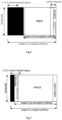
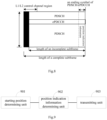
Fig.5 is a schematic structural diagram of a first incomplete subframe in an unauthorized frequency band according to some embodiments of the present disclosure; -
Fig.6 is a schematic structural diagram of an second incomplete subframe in an unauthorized frequency band according to some embodiments of the present disclosure; -
Fig.7 is a schematic structural diagram of a third incomplete subframe in an unauthorized frequency band according to some embodiments of the present disclosure; -
Fig.8 is a schematic structural diagram of a fourth incomplete subframe in an unauthorized frequency band according to some embodiments of the present disclosure; -
Fig.9 is a structural diagram of a network device according to some embodiments of the present disclosure; and -
Fig.10 is a structural diagram of a terminal according to some embodiments of the present disclosure. - In order to make the objects, the technical solutions and the advantages of the present disclosure more apparent, the present disclosure will be described hereinafter in a clear and complete manner in conjunction with the drawings and embodiments. Obviously, the following embodiments merely relate to a part of, rather than all of, the embodiments of the present disclosure, and based on these embodiments, a person skilled in the art may, without any creative effort, obtain the other embodiments, which also fall within the scope of the present disclosure.
- Unless otherwise defined, any technical or scientific term used herein shall have the common meaning understood by a person of ordinary skills. Such words as "first" and "second" used in the specification and claims are merely used to differentiate different components rather than to represent any order, number or importance. Similarly, such words as "one" or "one of" are merely used to represent the existence of at least one member, rather than to limit the number thereof.
- In an LTE system, in the case that to-be-transmitted data is transmitted using an incomplete subframe in an unauthorized frequency band, a terminal cannot determine a starting position of the to-be-transmitted data in the received incomplete subframe. In the case that a network device competes for resources, due to factors such as LBT competitive access, data preparation time in the network device and radio frequency preparation time in the network device, it is frequently that the network device may not transmit a complete subframe, such that an incomplete subframe needs to be used for data transmission. The length of the incomplete subframe is shorter than that of an LTE subframe and may have at most 13 available orthogonal frequency division multiplexing (OFDM) symbols. The starting position of the transmitted data is uncertain or is changeable while an ending position of the transmitted data is known or predetermined, the terminal cannot obtain the transmitted data in the case that it cannot determine the starting position of the transmitted data in the incomplete subframe.
- In view of the technical problem that the terminal cannot determine the starting position of the to-be-transmitted data in the received radio frame, according to some embodiments of the present disclosure, when transmitting a radio frame, a network device informs a terminal of a starting position of to-be-transmitted data in the radio frame via a position indication information, such that the terminal can determine a starting position of the transmitted data in an incomplete subframe, and thus can obtain data in the incomplete subframe in an accurate manner.
- The present disclosure provides in some embodiments a method for transmitting data in an unauthorized frequency band at a network side and a method for transmitting data on an unauthorized frequency band at a terminal side. These methods at the network side and at the terminal side can be used separately or in combination. The methods at the network side and at the terminal side are described respectively hereinafter.
- Any method according to embodiments of the present disclosure can be applied to various mobile communications system, and herein the application of the method in the LTE system is taken as an example, and applications of the method in other mobile communications system are not described. Since the LTE system is taken as the example, the term "symbol" in embodiments of the present disclosure is referred to OFDM symbol.
- In the following, detailed descriptions are given based on drawings and embodiments of the present disclosure.
-
Fig.3 is a flow chart of a method for transmitting data in an unauthorized frequency band according to some embodiments of the present disclosure. The method is executed by a network device. The network device has a network access function, such as a base station; however, the network device in the embodiments is not limited to the base station. As shown inFig.3 , the method may include steps 301-303. - In
step 301, a starting position of to-be-transmitted data in a radio frame in an unauthorized frequency band is determined. - In
step 302, position indication information is determined based on the starting position. - In
step 303, the position indication information is transmitted, to enable a terminal to determine the starting position of the to-be-transmitted data in the radio frame in the unauthorized frequency band based on the position indication information. - In the LTE system, the to-be-transmitted data is mapped into a PDSCH for transmission. Hence, the starting position of the to-be-transmitted data may be referred to a starting OFDM symbol of the PDSCH for transmitting the data. The PDSCH and an ePDCCH can be frequency-division multiplexed; in such a case, the PDSCH and the ePDCCH may have an identical starting position in time domain, and the starting position of the to-be-transmitted data may be referred to as a starting OFDM symbol of the ePDCCH.
- The starting position of the to-be-transmitted data indicated by the position indication information refers to a sequence number of a starting symbol of the to-be-transmitted data in the radio frame, or refers to a relative position of the starting symbol in the radio frame. The relative position refers to the number of symbols from a starting point of the radio frame or a subframe carrying the to-be-transmitted data to the starting symbol of the to-be-transmitted data, or refers to the number of symbols from the starting symbol of the to-be-transmitted data to an ending point of the radio frame or the subframe, or may refer to other substantially equivalent information.
- The position indication information determined in
step 302 may be a sequence agreed on by the network device and the terminal, or may be transmitted via a signaling. - On one hand, if the position indication information is a sequence, the sequence needs to be agreed on by the network device and the terminal in advance. That is, the sequence is already known by both the network device and the terminal. The sequence may be stored locally at the terminal or may be generated at the terminal. In one available approach, the sequence is constructed by taking a pseudo-noise (PN) sequence or a constant amplitude zero auto correlation (CAZAC) sequence as a basic sequence. The sequence may be generated through other approaches, which are not detailed herein.
- In
step 303, in the case that the network device transmits the sequence, the sequence occupies all bandwidth or specified partial bandwidth in frequency domain. - In the case that the sequence occupies all bandwidth or specified partial bandwidth in frequency domain, a symbol carrying the sequence is located at a position before the to-be-transmitted data in time domain and there are N symbols between the symbol carrying the sequence and symbols carrying the to-be-transmitted data, where N is an integer equal to or larger than 0. The value of N is agreed on by the network device and the terminal in advance. For example, the network device transmits the sequence on an OFDM symbol prior to the starting OFDM symbol in the PDSCH for transmitting the data.
- In the case that the sequence occupies the specified partial bandwidth, the symbol carrying the sequence may overlap the starting symbol of the to-be-transmitted data. For example, the network device transmits the sequence on the starting OFDM symbol in the PDSCH for transmitting the data, and the sequence and the PDSCH occupy different bandwidths. In this case, preferably, the frequency band occupied by the sequence is at a center frequency point or is near the center frequency point.
- On another hand, in the case that the position indication information is transmitted via a signaling, the signaling may be carried on a specified symbol in the radio frame. The specified symbol is agreed on by the network device and the terminal in advance. In this case, the position indication information is sent at a determined position and the terminal does not need to perform blind detection. Optionally, the specified symbol is on the last symbol of the incomplete subframe.
- The signaling may be carried on an auxiliary carrier in an unauthorized frequency band, or may be carried on a main carrier in an authorized frequency band.
- The signaling occupies all bandwidth or specified partial bandwidth in frequency domain. Optionally, the length of the position indication information is typically 4 bits. The position indication information is used to indicate the sequence number of the starting OFDM symbol of the PDSCH, or to indicate a relative position of the sequence number of the starting OFDM symbol of the PDSCH in the incomplete subframe. In the case that the signaling occupies the specified partial bandwidth, the signaling and other information such as a control channel or to-be-transmitted data may be carried on an identical symbol in a frequency division multiplexing manner. For example, the signaling and a PCFICH in the control channel may be carried on an identical symbol in a frequency division multiplexing manner. For another example, the signaling may be transmitted on an ending OFDM symbol of the PDSCH, and the signaling and the PDSCH are transmitted in a frequency division multiplexing manner.
- During data transmission in a subframe in the LTE system, an L1/L2 control channel is carried on the first P OFDM symbols of a complete subframe, where P is smaller than or equal to 4; through the L1/L2 control channel, data may not be completely transmitted in an incomplete subframe in an unauthorized frequency band, the terminal may fail in obtaining the L1/L2 control channel or may merely obtain a part of the L1/L2 control channel, thereby failing in obtaining the data transmitted in the radio frame through demodulation correctly. In embodiments of the present disclosure, a solution in R8/R9 of transmitting a control channel in a conventional L1/L2 control channel region is not adopted; instead, one of the following two solutions is adopted.
- In a first solution, the ePDCCH and the PDSCH are frequency-division multiplexed.
- In a second solution, a control channel and the PDSCH are time-division multiplexed. The control channel at least includes a physical downlink control channel (PDCCH) and the PCFICH, and may include other kinds of control channels.
- In the case that the cPDCCH and the PDSCH are frequency-division multiplexed, the PDSCH and the ePDCCH have an identical starting position and an identical ending position in time domain. The starting position of the PDSCH and the ePDCCH may be located in the L1/L2 control channel region of a complete subframe corresponding to the incomplete subframe, or may be located at any position outside the L1/L2 control channel region of the complete subframe corresponding to the incomplete subframe. In the case that there exists a part of the L1/L2 control channel region of the complete subframe corresponding to the incomplete subframe, the partial L1/L2 control channel region may be used to transmit data or the position indication information. The position indication information needs to indicate the starting position of the ePDCCH and the PDSCH.
- In the case that the control channel and the PDSCH are time-division multiplexed, the control channel is carried on a symbol after symbols carrying the PDSCH, where the control channel carries the PDCCH, the PCFICH and other control information. Optionally, the PCFICH carried on the control channel is carried on the last symbol of the incomplete subframe. In the case that the position indication information is sent via a signaling, the signaling and the PCFICH may be carried on an identical symbol in a frequency division multiplexing manner.
- With the method according to the above embodiments of the present disclosure, the terminal is informed of the starting position of the transmitted data in the radio frame in the unauthorized frequency band through the position indication information, such that the terminal can determine the starting position of the transmitted data in the radio frame based on the position indication information, so as to receive the data in an accurate manner.
-
Fig.4 is a flow chart of a method for transmitting data in an unauthorized frequency band according to some embodiments of the present disclosure. The flow is executed by a terminal. The terminal may be any terminal having a wireless communication function, such as a mobile phone. - In the LTE system, in the case that a subframe adopts a normal cyclic prefix, the terminal, in reception of one subframe, may determine the head of an ideal complete LTE subframe by counting 14 OFDM symbols forwardly from the end of the subframe. Firstly, the terminal may demodulate the L1/L2 control channel region; if the demodulation is failed, the terminal determines that the received subframe is an incomplete subframe, and a mode for incomplete subframe is initiated.
- The method may include steps 401-402.
- In
step 401, position indication information of a radio frame in an unauthorized frequency band is received. - In
step 402, a starting position of transmitted data in the radio frame in the unauthorized frequency band is determined based on the position indication information. - The meaning and transmitting approach of the position indication information herein are identical to those of the position indication information in
Fig.3 , which are not repeated herein. - In the case that the position indication information is a sequence agreed on by the network device, and the terminal detects the sequence in the radio frame in
step 401, instep 402, the terminal can determine, based on a value of N being agreed on and a position of a symbol carrying the sequence, the starting position of transmitted data in the received radio frame, and thus can obtain the data through demodulation. - In the case that the position indication information is transmitted via a signaling, in
step 401, the terminal may obtain the signaling and a subframe corresponding to the signaling from an auxiliary carrier in the unauthorized frequency band or from a main carrier in an authorized frequency band, such that the terminal may obtain the starting position of transmitted data in the subframe. - For example, in the LTE system, the signaling indicating the position indication information is agreed on to be transmitted on K resource blocks (RBs) in the middle of the frequency band on the last OFDM symbol of an incomplete subframe, where K is an integer equal to or larger than 0. In case of achieving time and frequency synchronization through approaches such as signal detection, the terminal may determine an end of the incomplete subframe, and detect the signaling on the K RBs in the middle of the frequency band on the last OFDM symbol of the incomplete subframe, so as to obtain the starting position of transmitted data in the incomplete subframe based on the signaling.
- As disclosed above, the network device may adopt a solution in which the ePDCCH and the PDSCH are frequency-division multiplexed or may adopt another solution in which a control channel and the PDSCH are time-division multiplexed. The control channel at least includes the PDCCH and the PCFICH, and may further include other control channels.
- In the case that the control channel and the PDSCH are time-division multiplexed, for example, the PCFICH may be transmitted on the last OFDM symbol of the incomplete subframe, =since the end of the incomplete subframe is known, the terminal, in reception of the incomplete subframe, may determine a range of the control channel based on the PCFICH with a conventional approach in the LTE system, and may demodulate the PDSCH based on the position indication information.
- With the above method according to the embodiments of the present disclosure, after the terminal receives the radio frame in the unauthorized frequency band, the starting position of the transmitted data in the radio frame can be determined based on the position indication information sent from the network device; accordingly, the terminal can determine the starting position of the transmitted data in the radio frame based on the position indication information, so as to receive the data in an accurate manner.
- As described above, the position indication information can be implemented in two ways, and the control channel and the PDSCH can be multiplexed in two ways. In the following, by taking the LTE system as an example, schematic structures of incomplete subframes under various combination solutions are described in conjunction with
Fig.5-Fig.8 . - As shown in
Fig.5 , the to-be-transmitted data is mapped to the PDSCH for transmission, and the PDSCH and the ePDCCH are frequency-division multiplexed. The PDSCH and the ePDCCH have an identical starting position in time domain, wherein the identical starting position is located in an L1/L2 control channel region of a complete subframe corresponding to the incomplete subframe. The position indication information is a sequence agreed on by the network device and the terminal in advance. An OFDM symbol carrying the sequence is located at a position previous to and adjacent to a starting OFDM symbol of the PDSCH. The sequence occupies all of the bandwidth. - In a process of receiving the incomplete subframe by the terminal in the unauthorized frequency band, in the case that the terminal obtains the sequence by demodulating the incomplete subframe, the terminal may determine the OFDM symbol next to the OFDM symbol carrying the sequence to be a starting symbol of the PDSCH. Therefore, the terminal may receive and demodulate the PDSCH based on the determined starting symbol of the PDSCH.
- As shown in
Fig.6 , the to-be-transmitted data is mapped to the PDSCH for transmission, and the control channel and the PDSCH are time-division multiplexed. A starting point of the PDSCH in time domain is located at a position outside an L1/L2 control channel region of a complete subframe corresponding to the incomplete subframe. The position indication information is transmitted via a signaling. The signaling occupies a portion of the bandwidth. The signaling and the PCFICH that is in the control channel occupy the last OFDM symbol of the incomplete subframe in a frequency division multiplexing manner. The control channel is located at a position after the PDSCH. InFig.6 , it is exemplarily illustrated that the position indication information can be carried on the last OFDM symbol of the incomplete subframe, while the frequency band occupied by the position indication information is not limited. - In reception of the signaling, the terminal may determine a starting symbol of the PDSCH based on the signaling. Then, the terminal can receive and demodulate the PDSCH based on the determined starting symbol of the PDSCH.
- As shown in
Fig.7 , the to-be-transmitted data is mapped to the PDSCH for transmission, and the control channel and the PDSCH are time-division multiplexed. A starting point of the PDSCH in time domain is located within an L1/L2 control channel region of a complete subframe corresponding to the incomplete subframe. The position indication information is a sequence agreed on by the network device and the terminal in advance. The sequence occupies a portion of the bandwidth, and an OFDM symbol carrying the sequence overlaps a starting OFDM symbol of the PDSCH. Optionally, the sequence may occupy all of the bandwidth. - In a process of the terminal receiving the incomplete subframe in the unauthorized frequency band, in the case that the terminal obtains the sequence by demodulating the incomplete subframe, the terminal may determine the OFDM symbol carrying the sequence to be the starting symbol of the PDSCH. Therefore, the terminal may receive and demodulate data in the PDSCH based on the determined starting symbol of the PDSCH.
- As shown in
Fig.8 , the to-be-transmitted data is mapped to the PDSCH for transmission, and the PDSCH and the ePDCCH are frequency-division multiplexed. The PDSCH and the ePDCCH have an identical starting position in time domain, the identical starting position is located in an L1/L2 control channel region of a complete subframe corresponding to the incomplete subframe. The position indication information is transmitted via a signaling. The signaling occupies a portion of the bandwidth, and is carried on an ending OFDM symbol of the PDSCH and/or the ePDCCH. The signaling and the PDSCH and/or the signaling and the ePDCCH are transmitted in a frequency division multiplexing manner. InFig.8 , it is exemplarily illustrated that the position indication information and the PDSCH and/or the position indication information and the ePDCCH can be carried on the ending OFDM symbol of the PDSCH and/or the ePDCCH, where a frequency band occupied by the position indication information is not limited. - In reception of the signaling, the terminal may determine a starting symbol of the PDSCH based on the signaling. Then, the terminal may receive and demodulate the PDSCH based on the determined starting symbol of the PDSCH.
- Corresponding to the above described methods, a network device and a terminal are further provided according to some embodiments of the present disclosure. Details about the network device and the terminal can be know with reference to the described methods and are not given herein.
-
Fig.9 is a schematic structural diagram of a network device according to some embodiments of the present disclosure. The network device includes: a startingposition determining unit 901, used to determine a starting position of to-be-transmitted data in a radio frame in an unauthorized frequency band; a position indicationinformation determining unit 902, used to determine position indication information based on the starting position; and a transmittingunit 903, used to transmit the position indication information, to enable a terminal to determine the starting position of the to-be-transmitted data in the radio frame in the unauthorized frequency band based on the position indication information. - Optionally, the position indication information is a sequence agreed on by the network device and the terminal in advance.
- Optionally, a symbol carrying the sequence is located at a position before the to-be-transmitted data in time domain and there are N symbols between the symbol carrying the sequence and symbols carrying the to-be-transmitted data, where the sequence occupies all bandwidth or a specified partial bandwidth in frequency domain and N is an integer equal to or larger than 0. Or, the sequence occupies a specified partial bandwidth, and the symbol carrying the sequence may overlap a starting symbol of the to-be-transmitted data.
- Optionally, the position indication information is transmitted via a signaling. The signaling is carried on a specified symbol in the radio frame. The specified symbol is agreed on by the network device and the terminal in advance.
- Optionally, the signaling occupies a portion of the bandwidth of the specified symbol.
- Optionally, the signaling is carried on an auxiliary carrier in an unauthorized frequency band, or is carried on a main carrier in an authorized frequency band.
- Optionally, an ePDCCH and a PDSCH in the radio frame are transmitted in a frequency division multiplexing manner, the PDSCH and the ePDCCH have an identical starting position and an identical ending position in time domain. The starting position of the PDSCH and the ePDCCH in the time domain may be located in the L1/L2 control channel region of a complete subframe corresponding to the radio frame, or may be located at any position outside the L1/L2 control channel region of the complete subframe corresponding to the radio frame.
- Optionally, a control channel and the PDSCH in the radio frame are transmitted in a time division multiplexing manner, the control channel is located at a position after the PDSCH, and the control channel includes at least a PDCCH and a PCFICH.
- Optionally, a starting position of the to-be-transmitted data in the radio frame is a starting symbol of the PDSCH.
-
Fig.10 illustrates a terminal according to some embodiments of the present disclosure. The terminal includes: a receivingunit 1001, used to receive position indication information of a radio frame in an unauthorized frequency band; and a determiningunit 1002, used to determine a starting position of to-be-transmitted data in the radio frame in the unauthorized frequency band based on the position indication information. - Optionally, the position indication information is a sequence agreed on by a network device and the terminal in advance.
- Optionally, the determining
unit 1002 is used to: determine the sequence on a symbol in the radio frame that is located at a position before symbols carrying the to-be-transmitted data and is N symbol(s) away from the symbols carrying the to-be-transmitted data, where the sequence occupies all bandwidth or a specified partial bandwidth in frequency domain and N is an integer equal to or larger than 0; or determine the sequence on a starting symbol of the to-be-transmitted data, where the sequence occupies a specified partial bandwidth. - Optionally, the position indication information is transmitted via a signaling. The signaling is carried on a specified symbol in the radio frame and the specified symbol is agreed on by the network device and the terminal in advance.
- Optionally, the receiving
unit 1001 is used to determine the signaling based on a partial bandwidth of the specified symbol. - Optionally, the receiving
unit 1001 is used to obtain the signaling from an auxiliary carrier in an unauthorized frequency band or from a main carrier in an authorized frequency band. - Optionally, an ePDCCH and a PDSCH in the radio frame are transmitted in a frequency division multiplexing manner, the PDSCH and the ePDCCH have an identical starting position and an identical ending position in time domain. The starting position of the PDSCH and the ePDCCH in the time domain may be located in the L1/L2 control channel region of a complete subframe corresponding to the radio frame, or may be located at any position outside the L1/L2 control channel region of the complete subframe corresponding to the radio frame.
- Optionally, a control channel and the PDSCH in the radio frame are transmitted in a time division multiplexing manner, the control channel is located at a position after the PDSCH, and the control channel includes at least a PDCCH and a PCFICH.
- Optionally, a starting position of the to-be-transmitted data in the radio frame is a starting symbol of the PDSCH.
- With the position indication information, the terminal is informed of the starting position of the to-be-transmitted data in the radio frame, such that the terminal may receive data in an accurate manner. The indicating approach in embodiments of the present disclosure is simple and efficient, obtained time-frequency resources can be sufficiently utilized and resources are not wasted.
- It should be appreciated that, the present disclosure may be provided as a method, a system or a computer program product, so the present disclosure may be in the form of full hardware embodiments, full software embodiments, or combinations thereof. In addition, the present disclosure may be in the form of a computer program product implemented on one or more computer-readable storage mediums (including but not limited to disk memory and optical memory) including computer-readable program codes.
- The present disclosure has been described with reference to the flow charts and/or block diagrams of the method, device (system) and computer program product according to the embodiments of the present disclosure. It should be understood that computer program instructions may be used to implement each of the work flows and/or blocks in the flow charts and/or the block diagrams, and the combination of the work flows and/or blocks in the flow charts and/or the block diagrams. These computer program instructions may be provided to a processor of a common computer, a dedicate computer, an embedded processor or any other programmable data processing devices to create a machine, so that instructions executable by the processor of the computer or the other programmable data processing devices may create a device to achieve the functions assigned in one or more flows in the flow chart and/or one or more blocks in the block diagram.
- These computer program instructions may also be stored in a computer readable storage that may guide the computer or the other programmable data process devices to function in a certain way, so that the instructions stored in the computer readable storage may create a product including an instruction unit which achieves the functions assigned in one or more flows in the flow chart and/or one or more blocks in the block diagram.
- These computer program instructions may also be loaded in the computer or the other programmable data process devices, so that a series of operation steps are executed on the computer or the other programmable devices to create processes achieved by the computer. Therefore, the instructions executed in the computer or the other programmable devices provide the steps for achieving the function assigned in one or more flows in the flow chart and/or one or more blocks in the block diagram.
Claims (12)
- A method for transmitting data in an unauthorized frequency band performed by a network node, comprising:determining a starting position of to-be-transmitted data in a radio frame in the unauthorized frequency band (301);determining position indication information based on the starting position (302); andtransmitting the position indication information, to enable a terminal to obtain the starting position of the to-be-transmitted data in an incomplete subframe in the unauthorized frequency band based on the position indication information (303),wherein the position indication information is transmitted via a signaling, the signaling is carried on a specified OFDM symbol in the radio frame, and the specified OFDM symbol is agreed on by a network device and the terminal in advance.
- A method for receiving data in an unauthorized frequency band, comprising:receiving, by a terminal, position indication information of a radio frame in an unauthorized frequency band (401); anddetermining, by the terminal, a starting position of to-be-transmitted data in an incomplete subframe in the unauthorized frequency band based on the position indication information (402),wherein the position indication information is transmitted via a signaling, the signaling is carried on a specified OFDM symbol in the radio frame, and the specified OFDM symbol is agreed on by a network device and the terminal in advance.
- The method according to claim 2, wherein receiving by the terminal the position indication information of the radio frame in the unauthorized frequency band comprises:determining, by the terminal, the signaling based on a portion of the bandwidth of the specified OFDM symbol; orobtaining, by the terminal, the signaling from an auxiliary carrier in the unauthorized frequency band or from a main carrier in an authorized frequency band.
- The method according to claim 2, wherein data is transmitted in a physical downlink shared channel, PDSCH, and an enhanced physical downlink control channel, ePDCCH, in the radio frame in a frequency division multiplexing manner, the PDSCH and the ePDCCH have an identical starting position and an identical ending position in time domain, and the starting position of the PDSCH and the ePDCCH in the time domain is located at any position in an L1/L2 control channel region of a complete subframe corresponding to the radio frame, or is located at any position outside the L1/L2 control channel region of the complete subframe corresponding to the radio frame.
- The method according to claim 2, wherein data is transmitted in a control channel and a PDSCH in the radio frame in a time division multiplexing manner, the control channel is located at a position after the PDSCH, and the control channel comprises at least a physical downlink control channel, PDCCH, and a physical control format indicator channel, PCFICH.
- The method according to any one of claims 2-5, wherein the starting position of the to-be-transmitted data in an incomplete subframe is a starting OFDM symbol of a PDSCH.
- A network device, comprising:a starting position determining unit (901), configured to determine a starting position of to-be-transmitted data in a radio frame in an unauthorized frequency band;a position indication information determining unit (902), configured to determine position indication information based on the starting position; anda transmitting unit (903), configured to transmit the position indication information, to enable a terminal to determine the starting position of the to-be-transmitted data in an incomplete subframe in the unauthorized frequency band based on the position indication information,wherein the position indication information is transmitted via a signaling, the signaling is carried on a specified OFDM symbol in the radio frame, and the specified OFDM symbol is agreed on by the network device and the terminal in advance.
- The network device according to claim 7, wherein the position indication information is transmitted via a signaling, the signaling is carried on a specified OFDM symbol in the radio frame, and the specified OFDM symbol is agreed on by the network device and the terminal in advance.
- The network device according to claim 8, whereinthe signaling occupies a portion of the bandwidth of the specified OFDM symbol; orthe signaling is carried on an auxiliary carrier in the unauthorized frequency band, or is carried on a main carrier in an authorized frequency band.
- The network device according to claim 7, wherein data is transmitted in a physical downlink shared channel, PDSCH, and an enhanced physical downlink control channel, ePDCCH, in the radio frame in a frequency division multiplexing manner, the PDSCH and the ePDCCH have an identical starting position and an identical ending position in time domain, and the starting position of the PDSCH and the ePDCCH in the time domain is located at any position in an L1/L2 control channel region of a complete subframe corresponding to the radio frame, or is located at any position outside the L1/L2 control channel region of the complete subframe corresponding to the radio frame.
- The network device according to claim 7, wherein data is transmitted in a control channel and a PDSCH in the radio frame in a time division multiplexing manner, the control channel is located at a position after the PDSCH, and the control channel comprises at least a physical downlink control channel, PDCCH, and a physical control format indicator channel, PCFICH.
- A terminal, comprising:a receiving unit (1001), configured to receive position indication information of a radio frame in an unauthorized frequency band; anda determining unit (1002), configured to determine a starting position of to-be-transmitted data in an incomplete subframe in the unauthorized frequency band based on the position indication information,the position indication information is transmitted via a signaling, the signaling is carried on a specified OFDM symbol in the radio frame, and the specified OFDM symbol is agreed on by a network device and the terminal in advance.
Applications Claiming Priority (2)
| Application Number | Priority Date | Filing Date | Title |
|---|---|---|---|
| CN201410505035.0A CN105515741B (en) | 2014-09-26 | 2014-09-26 | Data transmission method and device on unauthorized frequency band |
| PCT/CN2015/087677 WO2016045472A1 (en) | 2014-09-26 | 2015-08-20 | Method and device for data transmission on unlicensed frequency band |
Publications (4)
| Publication Number | Publication Date |
|---|---|
| EP3200380A1 EP3200380A1 (en) | 2017-08-02 |
| EP3200380A4 EP3200380A4 (en) | 2017-10-04 |
| EP3200380C0 EP3200380C0 (en) | 2025-06-18 |
| EP3200380B1 true EP3200380B1 (en) | 2025-06-18 |
Family
ID=55580267
Family Applications (1)
| Application Number | Title | Priority Date | Filing Date |
|---|---|---|---|
| EP15844481.0A Active EP3200380B1 (en) | 2014-09-26 | 2015-08-20 | Method and device for data transmission on unlicensed frequency band |
Country Status (7)
| Country | Link |
|---|---|
| US (1) | US10257820B2 (en) |
| EP (1) | EP3200380B1 (en) |
| JP (1) | JP6577577B2 (en) |
| KR (1) | KR101969746B1 (en) |
| CN (1) | CN105515741B (en) |
| TW (1) | TWI584623B (en) |
| WO (1) | WO2016045472A1 (en) |
Families Citing this family (16)
| Publication number | Priority date | Publication date | Assignee | Title |
|---|---|---|---|---|
| AU2015311664B2 (en) * | 2014-09-03 | 2020-05-14 | Detnet South Africa (Pty) Ltd | Electronic detonator leakage current restriction |
| CN107040938B (en) * | 2015-07-16 | 2021-08-03 | 北京三星通信技术研究有限公司 | A method of signal transmission and reception and user equipment |
| WO2017206056A1 (en) * | 2016-05-31 | 2017-12-07 | 华为技术有限公司 | Unlicensed band-based communication method, and related device and system |
| US10517021B2 (en) | 2016-06-30 | 2019-12-24 | Evolve Cellular Inc. | Long term evolution-primary WiFi (LTE-PW) |
| US10945263B2 (en) * | 2016-07-27 | 2021-03-09 | Guangdong Oppo Mobile Telecommunications Corp., Ltd. | Communication method and communication apparatus |
| WO2018137205A1 (en) * | 2017-01-25 | 2018-08-02 | 华为技术有限公司 | Method, device and system for transmitting control channel |
| US11323989B2 (en) | 2018-02-26 | 2022-05-03 | Huawei Technologies Co., Ltd. | Method and apparatus for bandwidth indication in unlicensed spectrum |
| CN112073950B (en) * | 2018-03-26 | 2025-03-18 | 上海朗帛通信技术有限公司 | A method and device for user equipment and base station used for wireless communication |
| CN108770064B (en) * | 2018-05-04 | 2023-01-10 | 宇龙计算机通信科技(深圳)有限公司 | Configuration method and determination method of time slot format, base station and user side equipment |
| ES3010061T3 (en) * | 2018-06-29 | 2025-04-01 | Beijing Xiaomi Mobile Software Co Ltd | Method and apparatus for transmitting information, base station, and user equipment |
| CN110784931B (en) * | 2018-07-31 | 2024-02-09 | 中国信息通信研究院 | Network equipment, terminal equipment and communication system and method composed of network equipment and terminal equipment |
| CN110784924B (en) * | 2018-07-31 | 2024-02-09 | 中国信息通信研究院 | A network device, a terminal device and a communication system and method thereof |
| CN111107628A (en) * | 2018-10-25 | 2020-05-05 | 普天信息技术有限公司 | Data transmission method and device |
| CN118119024A (en) * | 2018-12-21 | 2024-05-31 | 维沃移动通信有限公司 | Unlicensed frequency band information transmission method, terminal and network equipment |
| CN111315015B (en) * | 2018-12-21 | 2023-10-20 | 维沃移动通信有限公司 | Unlicensed frequency band information transmission method, terminal and network equipment |
| WO2020155125A1 (en) * | 2019-02-01 | 2020-08-06 | 北京小米移动软件有限公司 | Transmission format determination method and apparatus, base station, terminal, and storage medium |
Citations (1)
| Publication number | Priority date | Publication date | Assignee | Title |
|---|---|---|---|---|
| KR20120140618A (en) * | 2011-06-21 | 2012-12-31 | 한국전자통신연구원 | Methods for transmitting and receiving of control channel in wireless communication systems |
Family Cites Families (25)
| Publication number | Priority date | Publication date | Assignee | Title |
|---|---|---|---|---|
| JP4529281B2 (en) * | 2000-12-08 | 2010-08-25 | ソニー株式会社 | Transmitting apparatus, receiving apparatus, and communication system |
| US7460866B2 (en) * | 2005-08-18 | 2008-12-02 | Tecore, Inc. | Position location for airborne networks |
| CN101102506A (en) | 2007-08-01 | 2008-01-09 | 北京创毅视讯科技有限公司 | A multi-media broadcast data transmission method, device and system |
| CN101370165A (en) * | 2007-08-17 | 2009-02-18 | 中兴通讯股份有限公司 | Data packet transmission method for multimedia broadcasting service |
| US8233415B2 (en) * | 2008-06-04 | 2012-07-31 | Koninklijke Philips Electronics N.V. | Preamble structure for enabling multi-mode wireless communications |
| KR101717522B1 (en) | 2009-04-27 | 2017-03-17 | 엘지전자 주식회사 | Method for monitoring downlink control channel in a multi-carrier supported wireless communication system and appratus for the same |
| US8923126B2 (en) * | 2010-06-18 | 2014-12-30 | Mediatek | Method for coordinating transmissions between different communications apparatuses and communications apparatuses utilizing the same |
| CN103430467B (en) * | 2011-03-11 | 2016-05-11 | Lg电子株式会社 | Method and device for terminal to transmit/receive signal in wireless communication system applying carrier aggregation technology |
| US20140166815A1 (en) * | 2012-03-12 | 2014-06-19 | Arthur M. Dula | Tether for spacecraft reaction control system |
| KR101600487B1 (en) * | 2011-04-18 | 2016-03-21 | 엘지전자 주식회사 | Signal transmission method and device in a wireless communication system |
| US9456454B2 (en) * | 2011-06-02 | 2016-09-27 | Broadcom Corporation | Flexible disabling/enabling of cross-carrier scheduling in carrier-aggregated wireless data transmission |
| US9854446B2 (en) * | 2011-07-07 | 2017-12-26 | Lg Electronics Inc. | Method and apparatus for transmitting a signal in a wireless communication system |
| WO2013006988A1 (en) | 2011-07-14 | 2013-01-17 | Renesas Mobile Corporation | Methods and apparatuses for provision of a flexible time sharing scheme on an unlicensed band of a system |
| US9232520B2 (en) | 2011-11-16 | 2016-01-05 | Electronics And Telecommunications Research Institute | Machine type communication support method and apparatus |
| WO2013080582A1 (en) | 2011-12-02 | 2013-06-06 | Nec Corporation | Method of providing control information for user equipment in lte communication system |
| JP5873708B2 (en) | 2011-12-19 | 2016-03-01 | シャープ株式会社 | Mobile station apparatus, method and integrated circuit |
| US9178680B2 (en) | 2012-03-23 | 2015-11-03 | Alcatel Lucent | Control signaling for downlink coordinated multipoint wireless communication |
| JP5793131B2 (en) | 2012-11-02 | 2015-10-14 | 株式会社Nttドコモ | Wireless base station, user terminal, wireless communication system, and wireless communication method |
| CA2890712C (en) | 2012-11-09 | 2018-07-31 | Sharp Kabushiki Kaisha | Terminal device, communication method and integrated circuit |
| JP6060978B2 (en) | 2012-12-19 | 2017-01-18 | 富士通株式会社 | Wireless communication apparatus and wireless communication method |
| US8912932B2 (en) | 2013-03-14 | 2014-12-16 | Lsi Corporation | Lempel-Ziv data compression with shortened hash chains based on repetitive patterns |
| WO2015127616A1 (en) * | 2014-02-27 | 2015-09-03 | 华为技术有限公司 | Wireless local area network data transmission method and device |
| JP6438496B2 (en) | 2014-05-22 | 2018-12-12 | 京セラ株式会社 | Scheduling communication resources for inter-device (D2D) communication in unlicensed frequency bands |
| CN110730058B (en) | 2014-06-30 | 2021-10-01 | 华为技术有限公司 | Subframe processing method and device |
| CN104301273B (en) | 2014-08-25 | 2020-03-10 | 中兴通讯股份有限公司 | Method for transmitting and receiving signal by using unauthorized carrier, base station and user equipment |
-
2014
- 2014-09-26 CN CN201410505035.0A patent/CN105515741B/en active Active
-
2015
- 2015-08-20 KR KR1020177006741A patent/KR101969746B1/en active Active
- 2015-08-20 US US15/509,695 patent/US10257820B2/en active Active
- 2015-08-20 WO PCT/CN2015/087677 patent/WO2016045472A1/en not_active Ceased
- 2015-08-20 JP JP2017515894A patent/JP6577577B2/en active Active
- 2015-08-20 EP EP15844481.0A patent/EP3200380B1/en active Active
- 2015-09-15 TW TW104130375A patent/TWI584623B/en active
Patent Citations (1)
| Publication number | Priority date | Publication date | Assignee | Title |
|---|---|---|---|---|
| KR20120140618A (en) * | 2011-06-21 | 2012-12-31 | 한국전자통신연구원 | Methods for transmitting and receiving of control channel in wireless communication systems |
Also Published As
| Publication number | Publication date |
|---|---|
| WO2016045472A1 (en) | 2016-03-31 |
| TWI584623B (en) | 2017-05-21 |
| US10257820B2 (en) | 2019-04-09 |
| EP3200380A4 (en) | 2017-10-04 |
| JP2017535126A (en) | 2017-11-24 |
| JP6577577B2 (en) | 2019-09-18 |
| KR101969746B1 (en) | 2019-04-17 |
| KR20170041877A (en) | 2017-04-17 |
| EP3200380C0 (en) | 2025-06-18 |
| TW201613321A (en) | 2016-04-01 |
| CN105515741A (en) | 2016-04-20 |
| CN105515741B (en) | 2020-04-10 |
| EP3200380A1 (en) | 2017-08-02 |
| US20170303246A1 (en) | 2017-10-19 |
Similar Documents
| Publication | Publication Date | Title |
|---|---|---|
| EP3200380B1 (en) | Method and device for data transmission on unlicensed frequency band | |
| EP3217582B1 (en) | Data transmission method and device in unlicensed frequency band | |
| US11546889B2 (en) | Signal transmission method and apparatus | |
| EP3328150A1 (en) | Radio communication method, network side device and user equipment | |
| EP3595370A1 (en) | Method for transmitting signal, terminal device and network device | |
| JP6643457B2 (en) | Physical downlink control channel transmission method and apparatus | |
| JP7747763B2 (en) | Collision indication method, device and electronic device | |
| WO2015191347A1 (en) | Enhanced prach scheme for power savings, range improvement and improved detection | |
| EP3198767A1 (en) | Synchronous licensed assisted access | |
| JP6618125B2 (en) | Resource mapping method and apparatus | |
| CN104009827B (en) | A kind of transmission method and equipment of user equipment specific demodulated reference signal | |
| US11184788B2 (en) | Device and method of handling a measurement gap in a wireless communication system | |
| US11363631B2 (en) | Dynamic start for transmission on unlicensed spectrum | |
| CN107683624A (en) | Indicate method, base station and the terminal of resource | |
| KR20200018225A (en) | Apparatus and method for acquiring sidelink synchronization in wireless communication system | |
| US20180139733A1 (en) | Method for transmitting and receiving signal using wireless frame for low-delay communication, and apparatus for same | |
| CN107113780A (en) | A kind of data transmission method, device and system | |
| WO2017049988A1 (en) | Method and device for data transmission and receiving | |
| HK40002403A (en) | Signal transmission method and apparatus | |
| HK40002403B (en) | Signal transmission method and apparatus |
Legal Events
| Date | Code | Title | Description |
|---|---|---|---|
| STAA | Information on the status of an ep patent application or granted ep patent |
Free format text: STATUS: THE INTERNATIONAL PUBLICATION HAS BEEN MADE |
|
| PUAI | Public reference made under article 153(3) epc to a published international application that has entered the european phase |
Free format text: ORIGINAL CODE: 0009012 |
|
| STAA | Information on the status of an ep patent application or granted ep patent |
Free format text: STATUS: REQUEST FOR EXAMINATION WAS MADE |
|
| 17P | Request for examination filed |
Effective date: 20170308 |
|
| AK | Designated contracting states |
Kind code of ref document: A1 Designated state(s): AL AT BE BG CH CY CZ DE DK EE ES FI FR GB GR HR HU IE IS IT LI LT LU LV MC MK MT NL NO PL PT RO RS SE SI SK SM TR |
|
| AX | Request for extension of the european patent |
Extension state: BA ME |
|
| A4 | Supplementary search report drawn up and despatched |
Effective date: 20170904 |
|
| RIC1 | Information provided on ipc code assigned before grant |
Ipc: H04L 5/00 20060101AFI20170829BHEP |
|
| DAV | Request for validation of the european patent (deleted) | ||
| DAX | Request for extension of the european patent (deleted) | ||
| STAA | Information on the status of an ep patent application or granted ep patent |
Free format text: STATUS: EXAMINATION IS IN PROGRESS |
|
| 17Q | First examination report despatched |
Effective date: 20200309 |
|
| RAP1 | Party data changed (applicant data changed or rights of an application transferred) |
Owner name: DATANG MOBILE COMMUNICATIONS EQUIPMENT CO., LTD. |
|
| GRAP | Despatch of communication of intention to grant a patent |
Free format text: ORIGINAL CODE: EPIDOSNIGR1 |
|
| STAA | Information on the status of an ep patent application or granted ep patent |
Free format text: STATUS: GRANT OF PATENT IS INTENDED |
|
| INTG | Intention to grant announced |
Effective date: 20250114 |
|
| GRAS | Grant fee paid |
Free format text: ORIGINAL CODE: EPIDOSNIGR3 |
|
| GRAA | (expected) grant |
Free format text: ORIGINAL CODE: 0009210 |
|
| STAA | Information on the status of an ep patent application or granted ep patent |
Free format text: STATUS: THE PATENT HAS BEEN GRANTED |
|
| AK | Designated contracting states |
Kind code of ref document: B1 Designated state(s): AL AT BE BG CH CY CZ DE DK EE ES FI FR GB GR HR HU IE IS IT LI LT LU LV MC MK MT NL NO PL PT RO RS SE SI SK SM TR |
|
| REG | Reference to a national code |
Ref country code: GB Ref legal event code: FG4D |
|
| REG | Reference to a national code |
Ref country code: CH Ref legal event code: EP |
|
| REG | Reference to a national code |
Ref country code: DE Ref legal event code: R096 Ref document number: 602015091846 Country of ref document: DE |
|
| REG | Reference to a national code |
Ref country code: CH Ref legal event code: EP |
|
| REG | Reference to a national code |
Ref country code: IE Ref legal event code: FG4D |
|
| U01 | Request for unitary effect filed |
Effective date: 20250704 |
|
| U07 | Unitary effect registered |
Designated state(s): AT BE BG DE DK EE FI FR IT LT LU LV MT NL PT RO SE SI Effective date: 20250711 |
|
| U20 | Renewal fee for the european patent with unitary effect paid |
Year of fee payment: 11 Effective date: 20250827 |
|
| PG25 | Lapsed in a contracting state [announced via postgrant information from national office to epo] |
Ref country code: GR Free format text: LAPSE BECAUSE OF FAILURE TO SUBMIT A TRANSLATION OF THE DESCRIPTION OR TO PAY THE FEE WITHIN THE PRESCRIBED TIME-LIMIT Effective date: 20250919 Ref country code: NO Free format text: LAPSE BECAUSE OF FAILURE TO SUBMIT A TRANSLATION OF THE DESCRIPTION OR TO PAY THE FEE WITHIN THE PRESCRIBED TIME-LIMIT Effective date: 20250918 |
|
| PGFP | Annual fee paid to national office [announced via postgrant information from national office to epo] |
Ref country code: GB Payment date: 20250821 Year of fee payment: 11 |
|
| PG25 | Lapsed in a contracting state [announced via postgrant information from national office to epo] |
Ref country code: HR Free format text: LAPSE BECAUSE OF FAILURE TO SUBMIT A TRANSLATION OF THE DESCRIPTION OR TO PAY THE FEE WITHIN THE PRESCRIBED TIME-LIMIT Effective date: 20250618 |
|
| PG25 | Lapsed in a contracting state [announced via postgrant information from national office to epo] |
Ref country code: RS Free format text: LAPSE BECAUSE OF FAILURE TO SUBMIT A TRANSLATION OF THE DESCRIPTION OR TO PAY THE FEE WITHIN THE PRESCRIBED TIME-LIMIT Effective date: 20250918 |