EP3200124B1 - Verfahren und system zur verarbeitung eines aus einem dokument extrahierten bildes - Google Patents
Verfahren und system zur verarbeitung eines aus einem dokument extrahierten bildes Download PDFInfo
- Publication number
- EP3200124B1 EP3200124B1 EP16160239.6A EP16160239A EP3200124B1 EP 3200124 B1 EP3200124 B1 EP 3200124B1 EP 16160239 A EP16160239 A EP 16160239A EP 3200124 B1 EP3200124 B1 EP 3200124B1
- Authority
- EP
- European Patent Office
- Prior art keywords
- image
- corner points
- edge
- reconstructed
- quadratic
- Prior art date
- Legal status (The legal status is an assumption and is not a legal conclusion. Google has not performed a legal analysis and makes no representation as to the accuracy of the status listed.)
- Active
Links
Images


Classifications
-
- G—PHYSICS
- G06—COMPUTING OR CALCULATING; COUNTING
- G06T—IMAGE DATA PROCESSING OR GENERATION, IN GENERAL
- G06T5/00—Image enhancement or restoration
- G06T5/77—Retouching; Inpainting; Scratch removal
-
- G—PHYSICS
- G06—COMPUTING OR CALCULATING; COUNTING
- G06T—IMAGE DATA PROCESSING OR GENERATION, IN GENERAL
- G06T3/00—Geometric image transformations in the plane of the image
-
- G—PHYSICS
- G06—COMPUTING OR CALCULATING; COUNTING
- G06T—IMAGE DATA PROCESSING OR GENERATION, IN GENERAL
- G06T5/00—Image enhancement or restoration
- G06T5/20—Image enhancement or restoration using local operators
-
- G—PHYSICS
- G06—COMPUTING OR CALCULATING; COUNTING
- G06T—IMAGE DATA PROCESSING OR GENERATION, IN GENERAL
- G06T7/00—Image analysis
- G06T7/10—Segmentation; Edge detection
- G06T7/11—Region-based segmentation
-
- G—PHYSICS
- G06—COMPUTING OR CALCULATING; COUNTING
- G06T—IMAGE DATA PROCESSING OR GENERATION, IN GENERAL
- G06T7/00—Image analysis
- G06T7/10—Segmentation; Edge detection
- G06T7/13—Edge detection
-
- G—PHYSICS
- G06—COMPUTING OR CALCULATING; COUNTING
- G06T—IMAGE DATA PROCESSING OR GENERATION, IN GENERAL
- G06T7/00—Image analysis
- G06T7/10—Segmentation; Edge detection
- G06T7/181—Segmentation; Edge detection involving edge growing; involving edge linking
-
- G—PHYSICS
- G06—COMPUTING OR CALCULATING; COUNTING
- G06T—IMAGE DATA PROCESSING OR GENERATION, IN GENERAL
- G06T7/00—Image analysis
- G06T7/90—Determination of colour characteristics
-
- G—PHYSICS
- G06—COMPUTING OR CALCULATING; COUNTING
- G06V—IMAGE OR VIDEO RECOGNITION OR UNDERSTANDING
- G06V10/00—Arrangements for image or video recognition or understanding
- G06V10/20—Image preprocessing
- G06V10/24—Aligning, centring, orientation detection or correction of the image
-
- G—PHYSICS
- G06—COMPUTING OR CALCULATING; COUNTING
- G06V—IMAGE OR VIDEO RECOGNITION OR UNDERSTANDING
- G06V10/00—Arrangements for image or video recognition or understanding
- G06V10/40—Extraction of image or video features
- G06V10/44—Local feature extraction by analysis of parts of the pattern, e.g. by detecting edges, contours, loops, corners, strokes or intersections; Connectivity analysis, e.g. of connected components
-
- G—PHYSICS
- G06—COMPUTING OR CALCULATING; COUNTING
- G06V—IMAGE OR VIDEO RECOGNITION OR UNDERSTANDING
- G06V10/00—Arrangements for image or video recognition or understanding
- G06V10/40—Extraction of image or video features
- G06V10/56—Extraction of image or video features relating to colour
-
- G—PHYSICS
- G06—COMPUTING OR CALCULATING; COUNTING
- G06V—IMAGE OR VIDEO RECOGNITION OR UNDERSTANDING
- G06V30/00—Character recognition; Recognising digital ink; Document-oriented image-based pattern recognition
- G06V30/40—Document-oriented image-based pattern recognition
- G06V30/41—Analysis of document content
- G06V30/414—Extracting the geometrical structure, e.g. layout tree; Block segmentation, e.g. bounding boxes for graphics or text
-
- G—PHYSICS
- G06—COMPUTING OR CALCULATING; COUNTING
- G06T—IMAGE DATA PROCESSING OR GENERATION, IN GENERAL
- G06T2207/00—Indexing scheme for image analysis or image enhancement
- G06T2207/10—Image acquisition modality
- G06T2207/10024—Color image
-
- G—PHYSICS
- G06—COMPUTING OR CALCULATING; COUNTING
- G06T—IMAGE DATA PROCESSING OR GENERATION, IN GENERAL
- G06T2207/00—Indexing scheme for image analysis or image enhancement
- G06T2207/20—Special algorithmic details
- G06T2207/20172—Image enhancement details
- G06T2207/20192—Edge enhancement; Edge preservation
-
- G—PHYSICS
- G06—COMPUTING OR CALCULATING; COUNTING
- G06T—IMAGE DATA PROCESSING OR GENERATION, IN GENERAL
- G06T2207/00—Indexing scheme for image analysis or image enhancement
- G06T2207/30—Subject of image; Context of image processing
- G06T2207/30176—Document
Definitions
- the present subject matter is related, in general to image processing, and more particularly, but not exclusively to a method and system for processing an image extracted from a document.
- Image processing is a method of converting an image into digital form and performing some operations on it, in order to get an enhanced image or to extract some useful information from the image.
- Image processing is a type of signal dispensation in which, an input is an image or a photograph and an output may be an enhanced image or characteristics associated with the input image.
- an image processing system treats images as two dimensional objects while applying already set image processing methods onto them.
- servers and/or computing systems present in service domains such as banks, mobile service providers, and government agencies/authorities find it very difficult to detect and retrieve required information from a faulty image, such as a photograph of a government issued identification card, received from a user.
- a manual verification of the faulty images is performed to retrieve the required information and to input the information to the concerned servers and/or computing systems.
- the manual verification of the images is time consuming and the retrieved information is prone to human errors.
- the conventional techniques for correcting and processing a faulty image perform visual inspection of the faulty images for comparing the current images taken in real-time with a set of old images to assess change in the object.
- the conditions under which the current images are acquired affect the ability to obtain an accurate comparison.
- such methods of assessing an image do not take into consideration, the factors such as image alignment, missing areas/edges/corners in the image, and color and texture of the image and its background which may lead to inaccuracies.
- the issues typically faced in processing an image are detecting a boundary of the image when a background of the image and the captured image have similar color and texture, and identifying a missing edge and/or corners in the captured image.
- US 2014/0368891 A1 relates to a method of locating a document within a captured image.
- US 2009/0238485 A1 relates to a method of reducing distortion in a captured image.
- a method for processing an image extracted from a document as recited by claim 1; an image processing system for processing an image extracted from a document, as recited by claim 7; and a non-transitory computer readable medium, as recited by claim 13.
- Disclosed herein is a method and system for processing an image extracted from a document.
- the image processing system In order to process the image extracted from the document, it is required that the image processing system is able to identify and correct noisy, corrupt and unclear parts on the image.
- the image processing method used herein performs various techniques, such as, image preprocessing, missing edge detection and perspective image correction for processing the image extracted from the document.
- the present disclosure relates to a method for processing an image extracted from a document.
- the method comprises detecting, by an image processing system, one or more edges of the extracted image.
- the image processing system determines a missing edge in the image by comparing color gradients of the one or more edges of the image.
- the missing edge is reconstructed by cloning image pixels based on data pixels of an edge, opposite to the missing edge, amongst the one or more edges to obtain a reconstructed image.
- the image processing system identifies outer corner points in the reconstructed image based on quadratic corner points, wherein the quadratic corner points are determined based on the one or more edges and the reconstructed edge.
- An image perspective correction is performed on the reconstructed image, based on the outer corner points, to obtain a processed image.
- the present disclosure relates to an image processing system for processing an image extracted from a document.
- the image processing system detects one or more edges of the image. A missing edge is determined in the image by comparing colour gradients of the one or more edges.
- the determined missing edge is reconstructed by cloning image pixels based on data pixels of an edge, opposite to the missing edge, amongst the one or more edges to obtain a reconstructed image, wherein the reconstructed image includes a reconstructed edge.
- the image processing system further comprises identifying outer corner points in the reconstructed image based on quadratic corner points, wherein the quadratic corner points are determined based on the one or more edges and the reconstructed edge. An image perspective correction is performed on the reconstructed image, based on the outer corner points, to obtain a processed image.
- the present disclosure relates to a non-transitory computer readable medium including instructions stored thereon that when processed by at least one processor causes an image processing system to perform the acts of detecting one or more edges of the image.
- the instructions further cause the image processing system to determine a missing edge in the image by comparing colour gradients of the one or more edges.
- the missing edge of the image is reconstructed by cloning image pixels based on data pixels of an edge, opposite to the missing edge, amongst the one or more edges to obtain a reconstructed image, wherein the reconstructed image includes a reconstructed edge.
- the instructions further cause the image processing system to identify outer corner points in the reconstructed image based on quadratic corner points, wherein the quadratic corner points are determined based on the one or more edges and the reconstructed edge.
- An image perspective correction on the reconstructed image is performed based on the outer corner points, to obtain a processed image.
- the present disclosure relates to a method and system for processing an image extracted from a document.
- the image processing system detects one or more edges of the image and determines a missing edge in the image by comparing color gradients of the edges.
- the missing edges are recreated by cloning image pixels based on data pixels of an edge, opposite to the missing edge, amongst the one or more edges to obtain a reconstructed image.
- Outer corner points in the reconstructed image are identified based on quadratic corner points, wherein the quadratic corner points are determined based on the one or more edges and the reconstructed edge.
- the image processing system performs an image perspective correction on the reconstructed image, based on the outer corner points, to obtain a processed image.
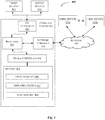
- Fig.1 shows an exemplary environment for processing an image extracted from a document in accordance with some embodiments of the present disclosure.
- the environment 100 comprises an image processing system 101 for processing an image extracted from a document 109.
- the image processing system 101 comprises a processor 105 to perform one or more image processing operations on the one or more images extracted from the document 109.
- the extracted image 203 is a two-dimensional entity, such as a photograph or a screen display.
- the document 109 may comprise one or more scanned copies of images, such as, a scanned identity card.
- the document 109 may be an optical document comprising one or more images captured from one or more optical devices such as cameras, mirrors, lenses, telescopes, microscopes, etc., and one or more digital images.
- the image processing system 101 contains various image processing modules 202 (Shown in Fig.2 ) to process the extracted image 203 , thereby enabling easy identification and retrieval of required information from the extracted image 203 .
- Fig. 2 shows a detailed block diagram illustrating an image processing system in accordance with some embodiments of the present disclosure.
- the image processing system 101 comprises an I/O interface 103 , a memory 107 and the processor 105.
- the I/O interface 103 is configured to extract one or more images from the document 109.
- the extracted image 203 may comprise one or more defects which need to be corrected by the image processing system 101.
- the memory 107 is communicatively coupled to the processor 105 and stores the extracted image 203.
- the processor 105 performs one or more image processing operations on the extracted image 203 using the one or more modules 202.
- the memory 107 may include one or more data 200 , including reconstructed image 205 , trained data image set 207 and other data 209 along with the extracted image 203.
- the data 200 may be stored in the memory 107 in the form of various data structures. Additionally, the aforementioned data 200 can be organized using data models, such as relational or hierarchical data models.
- the other data 209 may store data, including temporary data and temporary files, generated by modules 202 for performing the various functions of the image processing system 101.
- the extracted image 203 may include, without limitation, digital photographs, image of the captured identity card and the similar.
- the extracted image 203 is the image that needs to be corrected and processed by the image processing system 101.
- any one side of the identity card may be cropped in the captured image.
- the captured image may comprise skew, distortion and one or more other disorders which need to be corrected by the image processing system 101.
- the reconstructed image 205 is obtained by reconstructing the one or more missing edges of the extracted image 203 using one or more image reconstruction techniques.
- the term "missing edge” is preferably used herein to refer to an edge of an object (such as the document 109) that is absent from the image. The edge may be missing for various reasons including, but not limited to, a part of the image displaying the edge being incorrectly erased or cropped.
- one of the one or more image reconstruction techniques includes cloning one or more image pixels based on data pixels of an edge, opposite to the missing edge, amongst the one or more other edges of the image.
- the term "cloning” is preferably used herein to describe a process by which the properties of one pixel are copied to another pixel.
- the properties of the pixel may include color values, such as red, green, and blue (RGB), hue, saturation, and lightness (HSL), or hue, saturation, and value (HSV) values, for example.
- RGB red, green, and blue
- HSL hue, saturation, and lightness
- HSV hue, saturation, and value
- the trained data image set 207 of the reconstructed image 205 is generated by extracting at least one of one or more unique features from the reconstructed image 205 .
- the one or more unique features of an image may include, but not limited to, a unique identification number, position of the identification number and/or photographs in the captured image of the identity card.
- the extracted trained data image set 207 may be compared with one or more predefined trained data image sets 207 for validating the reconstructed image 205 .
- the one or more predefined trained data image sets 207 may include, but not limited to, one or more template images and their related features.
- the reconstructed images 205 may be stored in the memory 107 for future validation of other images.
- the data 200 stored in the memory 107 are processed by the modules 202 of the image processing system 101.
- the modules 202 may be stored within the memory 107 as shown in Fig. 2 .
- the modules 202 are communicatively coupled to the processor 105.
- the module 202 may also be present outside the memory 107.
- the modules 202 may include, for example, a receiving module 211 , pre-processing module 213 , reconstruction module 215 , correction module 217 and other modules 219 .
- the other modules 219 may be used to perform various miscellaneous functionalities of the image processing system 101. It will be appreciated that such aforementioned modules 202 may be represented as a single module or a combination of different modules.
- the receiving module 211 is configured to receive one or more extracted image 203 from the document 109.
- the receiving module 211 may also be configured to receive one or more inputs from the user through the I/O interface 103.
- the one or more inputs received from the user may include, the predefined trained image sets, and the threshold offset values and other configuration details.
- Fig. 3a to 3c show various steps involved in processing an image extracted from the document 109 in accordance with some embodiments of the present disclosure using one or more modules 202 of the image processing system 101.
- the pre-processing module 213 resizes the extracted image 203 to a predetermined standard size.
- the predetermined standard size for resizing may be 8" x 10", 300 ppi or 3000 x 2400 pixels.
- the pre-processing module 213 performs de-blurring of the image, at step 303 , to reduce noise in the extracted image 203.
- a line detection algorithm such as, Canny & Hough lines crossing algorithm may be used to detect and derive one or more lines and/or axes passing through the plane of the resized image as shown in step 305.
- the one or more lines detected by the lines crossing algorithm are sorted in the memory 107 and one or more duplicate lines are eliminated from the image.
- the reconstruction module 215 extends all the derived lines along one or more missing edges to detect one or more intersecting lines and corresponding points of intersections.
- the reconstruction module 215 filters each of the extended lines to detect and eliminate one or more duplicate lines in the extracted image 203. Further, the reconstruction module 215 captures the one or more intersecting points in an array stored in the memory 107 to determine the number of outer corner points in the image.
- the resized image is validated to check if there are only four outer corner points for an ideal case scenario i.e., a two-dimensional image having four outer corner points. If there are only four outer corner points in the resized image, then the image is passed to the image correction module 217 as shown in step 321.
- each of the one or more corner points is filtered to eliminate redundant quadratic corner points.
- the outer corner points of the image are detected based on coordinates along a vertical direction and a horizontal direction corresponding to each of the quadratic corner point present in the filtered set of quadratic corner points.
- the reconstruction module 215 validates each of the detected outer corner points. Upon failing to detect all the outer corner points of the image, a predetermined edge detection filter threshold offset associated with the filtering process is increased until all the outer corner points of the image are detected as shown in step 319.
- the predetermined edge detection filter threshold offset may comprise a maximum value of X and Y, minimum value of X and Y, top most right side X and Y, top most left side X and Y, bottom most right side X and Y, bottom most left side X and Y.
- X and Y represent the corresponding corner points on the X coordinate axis and Y coordinate axis respectively.
- the reconstruction module 215 detects and reconstructs the missing and/or cropped sides of the image.
- the reconstruction of the missing edges includes detecting the region of image over all four sides of the image as shown in step 341 of Fig. 3b . Further, at step 343 , the reconstruction module 215 computes an average color value on region of the image over all four edges.
- a missing and/or cropped edge is detected when the average color value at any one of the edge is not matching with the average color value at the other three edges of the image.
- a pixel transformation algorithm such as affine transformation, may be used to regenerate the missing part of the image.
- the pixel transformation moves all the pixels diagonally by half the size of the predetermined offset value on both X and Y coordinates, such that the image will be moved over an extended boundary diagonally. In other words, all the pixels are moved such that there is a diagonal shift in the image.
- one or more opposite sides of a missing and/or cropped edge is cloned until a predetermined offset threshold is reached.
- a variation in the color of the extended image and the background of the image is computed. This introduces a color edge intensity direction in the reconstructed image 205. This process is repeated on all four edges of the image, thereby forming a complete image.
- respective background boundary of the image may be cloned by the nearby pixels to form a refined image boundary.
- the reconstruction module 215 also computes a variation in the color between the background of the image and the body of the image to introduce a color edge intensity direction in the reconstructed image 205.
- the image correction module 217 detects an approximate polygon on the detected outer corner points and the reconstructed edges.
- the image correction module 217 also determines the center of mass of the reconstructed image 205 on the determined approximate polygon.
- a perspective transformation for the reconstructed image 205 is computed using the center of mass and the standard image size.
- the correction module 217 performs a wrap perspective transformation on the reconstructed image 205 using the predetermined threshold offset as discussed in the reconstruction module 215.
- Fig. 3d illustrates a flowchart showing method for processing an image extracted from a document in accordance with an exemplary embodiment of the present disclosure.
- the method 300 comprises one or more blocks for processing an image using the image processing system 101.
- the method 300 may be described in the general context of computer executable instructions.
- computer executable instructions can include routines, programs, objects, components, data structures, procedures, modules, and functions, which perform particular functions or implement particular abstract data types.
- the order in which the method 300 is described is not intended to be construed as a limitation, and any number of the described method blocks can be combined in any order to implement the method. Additionally, individual blocks may be deleted from the methods without departing from the scope of the subject matter described herein. Furthermore, the method can be implemented in any suitable hardware, software, firmware, or combination thereof.
- the image processing system 101 detects one or more edges of the image extracted from a document 109.
- the document 109 may comprise one or more scanned copies of images, such as, a scanned identity card.
- the extracted image 203 may comprise one or more distortions which need to be processed and eliminated by the image processing system 101.
- the image processing system 101 determines a missing edge in the image by comparing color gradients of the one or more edges.
- the missing edges are determined by computing a color gradient along each side of the image and comparing the color gradient of each side with remaining sides.
- the image processing system 101 reconstructs the missing edge by cloning image pixels based on data pixels of an edge, opposite to the missing edge, amongst the one or more edges to obtain a reconstructed image 205 , wherein the reconstructed image 205 includes a reconstructed edge.
- the size of the image is extended along the missing edge until a predetermined offset is reached to obtain an extended image.
- An empty region is determined in the extended image by moving data pixels based on the predetermined offset. Further, the determined empty region is cloned based on the data pixel of the edge opposite to the missing edge, to reconstruct the missing edge.
- the image processing system 101 identifies outer corner points in the reconstructed image 205 based on quadratic corner points, wherein the quadratic corner points are determined based on the one or more edges and the reconstructed edge.
- the quadratic corner points are derived by extending lines detected along the one or more missing edges and the reconstructed edge. For instance, the quadratic corner points may be obtained using a quadratic function to extrapolate the one or more missing edges and the reconstructed edge, where the points of inflection denote the respective quadratic corner points.
- the term "outer corner points" is preferably used herein to include the outermost quadratic corner points in a Cartesian reference frame.
- the redundant quadratic corner points amongst the quadratic corner points are filtered to obtain a filtered set of quadratic corner points.
- Outer corner points in the filtered set of quadratic corner points are detected based on coordinates, along a vertical direction and a horizontal direction, corresponding to each quadratic corner point present in the filtered set of quadratic corner points.
- An edge detection filter threshold value of the reconstructed image 205 may be increased upon unsuccessful detection of all the outer corner points. Further, the process of detecting the outer corner points is iterated with the increased edge detection filter threshold value till all the outer corner points are detected.
- the image processing system 101 performs an image perspective correction on the reconstructed image 205 , based on the outer corner points, to obtain a processed image.
- Performing the image perspective correction includes performing polygon approximation on the outer corner points.
- a mass center of the reconstructed image 205 is determined based on the polygon approximation.
- a perspective transformation for the reconstructed image 205 is computed based on the mass center and a predefined image size. Further, the computed perspective transformation is applied to the reconstructed image 205 to obtain the processed image.
- Fig. 4 illustrates a block diagram of an exemplary computer system 400 for implementing embodiments consistent with the present invention.
- the computer system 400 is used for processing an image extracted from a document 109 using an image processing system 101.
- the computer system 400 may comprise a central processing unit ("CPU” or "processor") 402.
- the processor 402 may comprise at least one data processor for executing program components for executing user- or system-generated business processes.
- a user may include a person, a person using a device such as such as those included in this invention, or such a device itself.
- the processor 402 may include specialized processing units such as integrated system (bus) controllers, memory management control units, floating point units, graphics processing units, digital signal processing units, etc.
- the processor 402 may be disposed in communication with one or more input/output (I/O) devices ( 411 and 412 ) via I/O interface 401.
- the I/O interface 401 may employ communication protocols/methods such as, without limitation, audio, analog, digital, stereo, IEEE-1394, serial bus, Universal Serial Bus (USB), infrared, PS/2, BNC, coaxial, component, composite, Digital Visual Interface (DVI), high-definition multimedia interface (HDMI), Radio Frequency (RF) antennas, S-Video, Video Graphics Array (VGA), IEEE 802.n /b/g/n/x, Bluetooth, cellular (e.g., Code-Division Multiple Access (CDMA), High-Speed Packet Access (HSPA+), Global System For Mobile Communications (GSM), Long-Term Evolution (LTE), WiMax, or the like), etc.
- CDMA Code-Division Multiple Access
- HSPA+ High-Speed Packet Access
- GSM Global System For Mobile Communications
- LTE Long-
- the computer system 400 may communicate with one or more I/O devices ( 411 and 412 ).
- the processor 402 may be disposed in communication with a communication network 409 via a network interface 403.
- the network interface 403 may communicate with the communication network 409.
- the network interface 403 may employ connection protocols including, without limitation, direct connect, Ethernet (e.g., twisted pair 10/100/1000 Base T), Transmission Control Protocol/Internet Protocol (TCP/IP), token ring, IEEE 802.11a/b/g/n/x, etc.
- TCP/IP Transmission Control Protocol/Internet Protocol
- the computer system 400 may communicate with one or more user devices 410 (a,..,n).
- the communication network 409 can be implemented as one of the different types of networks, such as intranet or Local Area Network (LAN) and such within the organization.
- LAN Local Area Network
- the communication network 409 may either be a dedicated network or a shared network, which represents an association of the different types of networks that use a variety of protocols, for example, Hypertext Transfer Protocol (HTTP), Transmission Control Protocol/Internet Protocol (TCP/IP), Wireless Application Protocol (WAP), etc., to communicate with each other. Further, the communication network 409 may include a variety of network devices, including routers, bridges, servers, computing devices, storage devices, etc.
- the one or more user devices 410 (a,...,n) may include, without limitation, personal computer(s), mobile devices such as cellular telephones, smartphones, tablet computers, eBook readers, laptop computers, notebooks, gaming consoles, or the like.
- the processor 402 may be disposed in communication with a memory 405 (e.g., RAM, ROM, etc. not shown in Fig.4 ) via a storage interface 404.
- the storage interface 404 may connect to memory 405 including, without limitation, memory drives, removable disc drives, etc., employing connection protocols such as Serial Advanced Technology Attachment (SATA), Integrated Drive Electronics (IDE), IEEE-1394, Universal Serial Bus (USB), fiber channel, Small Computer Systems Interface (SCSI), etc.
- the memory drives may further include a drum, magnetic disc drive, magnetooptical drive, optical drive, Redundant Array of Independent Discs (RAID), solid-state memory devices, solid-state drives, etc.
- the memory 405 may store a collection of program or database components, including, without limitation, user interface application 406, an operating system 407, web server 408 etc.
- computer system 400 may store user/application data 406, such as the data, variables, records, etc. as described in this invention.
- databases may be implemented as fault-tolerant, relational, scalable, secure databases such as Oracle or Sybase.
- the operating system 407 may facilitate resource management and operation of the computer system 400.
- Examples of operating systems include, without limitation, Apple Macintosh OS X, UNIX, Unix-like system distributions (e.g., Berkeley Software Distribution (BSD), FreeBSD, NetBSD, OpenBSD, etc.), Linux distributions (e.g., Red Hat, Ubuntu, Kubuntu, etc.), International Business Machines (IBM) OS/2, Microsoft Windows (XP, Vista/7/8, etc.), Apple iOS, Google Android, Blackberry Operating System (OS), or the like.
- User interface 406 may facilitate display, execution, interaction, manipulation, or operation of program components through textual or graphical facilities.
- GUIs may provide computer interaction interface elements on a display system operatively connected to the computer system 400 , such as cursors, icons, check boxes, menus, scrollers, windows, widgets, etc.
- Graphical User Interfaces may be employed, including, without limitation, Apple Macintosh operating systems' Aqua, IBM OS/2, Microsoft Windows (e.g., Aero, Metro, etc.), Unix X-Windows, web interface libraries (e.g., ActiveX, Java, Javascript, AJAX, HTML, Adobe Flash, etc.), or the like.
- the computer system 400 may implement a web browser 408 stored program component.
- the web browser may be a hypertext viewing application, such as Microsoft Internet Explorer, Google Chrome, Mozilla Firefox, Apple Safari, etc. Secure web browsing may be provided using Secure Hypertext Transport Protocol (HTTPS) secure sockets layer (SSL), Transport Layer Security (TLS), etc. Web browsers may utilize facilities such as AJAX, DHTML, Adobe Flash, JavaScript, Java, Application Programming Interfaces (APIs), etc.
- the computer system 400 may implement a mail server stored program component.
- the mail server may be an Internet mail server such as Microsoft Exchange, or the like.
- the mail server may utilize facilities such as Active Server Pages (ASP), ActiveX, American National Standards Institute (ANSI) C++/C#, Microsoft .NET, CGI scripts, Java, JavaScript, PERL, PHP, Python, WebObjects, etc.
- the mail server may utilize communication protocols such as Internet Message Access Protocol (IMAP), Messaging Application Programming Interface (MAPI), Microsoft Exchange, Post Office Protocol (POP), Simple Mail Transfer Protocol (SMTP), or the like.
- the computer system 400 may implement a mail client stored program component.
- the mail client may be a mail viewing application, such as Apple Mail, Microsoft Entourage, Microsoft Outlook, Mozilla Thunderbird, etc.
- a computer-readable storage medium refers to any type of physical memory on which information or data readable by a processor may be stored.
- a computer-readable storage medium may store instructions for execution by one or more processors, including instructions for causing the processor(s) to perform steps or stages consistent with the embodiments described herein.
- the term "computer-readable medium” should be understood to include tangible items and exclude carrier waves and transient signals, i.e., non-transitory. Examples include Random Access Memory (RAM), Read-Only Memory (ROM), volatile memory, nonvolatile memory, hard drives, Compact Disc (CD) ROMs, Digital Video Disc (DVDs), flash drives, disks, and any other known physical storage media.
- the present disclosure provides a method to automatically detect and correct skew, distortion and perspective errors in a faulty image.
- the present disclosure provides a method to detect and reconstruct the missing edges of an image, irrespective of background, texture and color of the image.
- the method of the present disclosure eliminates the need for manual verification of the faulty images for retrieving one or more essential information from the image, thereby reducing the man hours and/or efforts required for the same.
- an embodiment means “one or more (but not all) embodiments of the invention(s)" unless expressly specified otherwise.
Landscapes
- Engineering & Computer Science (AREA)
- Physics & Mathematics (AREA)
- General Physics & Mathematics (AREA)
- Theoretical Computer Science (AREA)
- Computer Vision & Pattern Recognition (AREA)
- Multimedia (AREA)
- Computer Graphics (AREA)
- Geometry (AREA)
- Artificial Intelligence (AREA)
- Image Analysis (AREA)
Claims (13)
- Verfahren (300) zum Verarbeiten eines aus einem Dokument extrahierten Bilds, wobei das Verfahren aufweist:ein Erkennen (381), durch ein Bildverarbeitungssystem (101), von einem oder mehreren Rändern des Bilds;dadurch gekennzeichnet, dass das Verfahren ferner aufweist:ein Bestimmen (383) eines fehlenden Rands in dem Bild durch das Bildverarbeitungssystem (101), wobei das Bestimmen (383) eines fehlenden Rands in dem Bildein Berechnen eines durchschnittlichen Farbwerts über alle vier Ränder des Bilds undein Bestimmen (383) des fehlenden Rands aufweist, wenn der durchschnittliche Farbwert an irgendeinem der Ränder nicht mit dem durchschnittlichen Farbwert an den anderen Rändern des Bilds übereinstimmt;ein Rekonstruieren (385) des fehlenden Rands durch das Bildverarbeitungssystem (101) mittels Clonen von Bildpixeln auf Grundlage von Datenpixeln eines Rands gegenüber dem fehlenden Rand von dem einen oder den mehreren Rändern, um ein rekonstruiertes Bild zu erhalten, wobei das rekonstruierte Bild einen rekonstruierten Rand enthält;ein Identifizieren (387) von äußeren Eckpunkten in dem rekonstruierten Bild durch das Bildverarbeitungssystem (101) auf Grundlage von quadratischen Eckpunkten, wobei die quadratischen Eckpunkte durch Extrapolieren des einen oder der mehreren Ränder und des rekonstruierten Rands bestimmt werden, wobei die äußeren Eckpunkte die äußersten quadratischen Eckpunkte in einem kartesischen Bezugsrahmen enthalten;und ein Ausführen (389) einer Bildperspektivenkorrektur an dem rekonstruierten Bild durch das Bildverarbeitungssystem (101) auf Grundlage der äußeren Eckpunkte, um ein verarbeitetes Bild (205) zu erhalten.
- Verfahren (300) nach Anspruch 1, das ferner aufweist:ein Extrahieren von mindestens einem eindeutigen Merkmal aus dem verarbeiteten Bild (205) durch das Bildverarbeitungssystem (101);ein Vergleichen, durch das Bildverarbeitungssysten (101), des mindestens einen eindeutigen Merkmals mit einem trainierten Datenset (207), um das verarbeitete Bild (205) zu validieren, wobei das trainierte Datenset (207) Vorlagenbilder und eine vordefinierte Merkmalsgruppe aufweist;und ein Speichern des verarbeiteten Bilds nach erfolgreicher Validierung durch das Bildverarbeitungssystem (101) für zukünftige Verwendung,wobei das mindestens eine eindeutige Merkmal eine eindeutige Identifikationsnummer, eine Position der Identifikationsnummer und/oder Fotografien in dem erfassten Bild der Ausweiskarte aufweist.
- Verfahren (300) nach einem der vorhergehenden Ansprüche, wobei das Rekonstruieren (385) des fehlenden Rands ferner aufweist:ein diagonales Verschieben des Bilds durch ein Bewegen (349) von Datenpixeln, bis ein vorbestimmter Versatzschwellenwert erreicht wird, um ein erweitertes Bild mit dem fehlenden Rand zu erhalten;und ein Clonen (351) des fehlenden Rands des erweiterten Bilds auf Grundlage von einem oder mehreren Datenpixeln des Rands gegenüber dem fehlenden Rand, bis ein vorbestimmter Schwellenwert erreicht wird, um den fehlenden Rand zu rekonstruieren.
- Verfahren (300) nach Anspruch 3, wobei das Clonen des fehlenden Rands ferner aufweist:ein Berechnen einer Farbvariation durch Vergleichen der Farbe des erweiterten Bilds und der Hintergrundfarbe des Dokuments;und ein Anwenden einer Randintensitätsrichtung in dem rekonstruierten Bild, wobei die Randintensitätsrichtung auf Grundlage der Farbvariation bestimmt wird.
- Verfahren (300) nach einem der vorhergehenden Ansprüche, wobei das Identifizieren (387) der äußeren Eckpunkte ferner aufweist:ein Ableiten der quadratischen Eckpunkte durch Erweitern von Linien, die entlang des einen oder der mehreren fehlenden Ränder und des rekonstruierten Rands erkannt werden;ein Filtern von redundanten quadratischen Eckpunkten aus den quadratischen Eckpunkten, um einen gefilterten Satz von quadratischen Eckpunkten zu erhalten;ein Erkennen von äußeren Eckpunkten in dem gefilterten Satz von quadratischen Eckpunkten auf Grundlage von Koordinaten entlang einer vertikalen Richtung und einer horizontalen Richtung, die jedem quadratischen Eckpunkt entsprechen, der in dem gefilterten Satz von quadratischen Eckpunkten vorhanden ist;ein Erhöhen eines Randerkennungs-Filterschwellenwerts des rekonstruierten Bilds bei nicht erfolgreichem Erkennen aller äußeren Eckpunkte;und ein Wiederholen der Erkennung der äußeren Eckpunkte mit dem erhöhten Randerkennungs-Filterschwellenwert, bis alle äußeren Eckpunkte erkannt worden sind.
- Verfahren (300) nach einem der vorhergehenden Ansprüche, wobei das Ausführen (389) der Bildperspektivenkorrektur an dem rekonstruierten Bild ferner aufweist:ein Ausführen einer Polygonapproximation an den äußeren Eckpunkten;ein Bestimmen eines Massenzentrums des rekonstruierten Bilds auf Grundlage der Polygonapproximation;ein Berechnen einer Perspektiventransformation für das rekonstruierte Bild auf Grundlage den Massenzentrums und einer vordefinierten Bildgröße;und ein Anwenden der Perspektiventransformation auf das rekonstruierte Bild, um das verarbeitete Bild zu erhalten.
- Bildverarbeitungssystem (101) zum Verarbeiten eines aus einem Dokument (109) extrahierten Bilds (203), wobei das Bildverarbeitungssystem aufweist:einen Prozessor (105);und einen Arbeitsspeicher (107), der kommunikativ mit dem Prozessor (105) verbunden ist, wobei der Arbeitsspeicher durch einen Prozessor ausführbare Anweisungen speichert, die bei Ausführung den Prozessor (105) veranlassen, Operationen auszuführen, die aufweisen:ein Erkennen (381) von einem oder mehreren Rändern des Bilds;dadurch gekennzeichnet, dass die Operationen ferner aufweisen:ein Bestimmen (383) eines fehlenden Rands in dem Bild, wobei das Bestimmen (383) eines fehlenden Rands in dem Bildein Berechnen eines durchschnittlichen Farbwerts über alle vier Ränder des Bildsund ein Bestimmen (383) des fehlenden Rands aufweist, wenn der durchschnittliche Farbwert an irgendeinem der Ränder nicht mit dem durchschnittlichen Farbwert an den anderen Rändern des Bilds übereinstimmt;ein Rekonstruieren (385) des fehlenden Rands mittels Clonen von Bildpixeln auf Grundlage von Datenpixeln eines Rands gegenüber dem fehlenden Rand von dem einen oder den mehreren Rändern, um ein rekonstruiertes Bild zu erhalten, wobei das rekonstruierte Bild einen rekonstruierten Rand enthält;ein Identifizieren (387) von äußeren Eckpunkten in dem rekonstruierten Bild auf Grundlage von quadratischen Eckpunkten, wobei die quadratischen Eckpunkte durch Extrapolieren des einen oder der mehreren Ränder und des rekonstruierten Rands bestimmt werden, wobei die äußeren Eckpunkte die äußersten quadratischen Eckpunkte in einem kartesischen Bezugsrahmen enthalten;und ein Ausführen (389) einer Bildperspektivenkorrektur an dem rekonstruierten Bild auf Grundlage der äußeren Eckpunkte, um ein verarbeitetes Bild zu erhalten.
- System (101) nach Anspruch 7, wobei die Anweisungen den Prozessor (105) ferner veranlassen, Operationen auszuführen, die aufweisen:ein Extrahieren von mindestens einem eindeutigen Merkmal aus dem verarbeiteten Bild; ein Vergleichen des mindestens einen eindeutigen Merkmals mit einem trainierten Datenset (207), um das verarbeitete Bild zu validieren, wobei das trainierte Datenset (207) Vorlagenbilder und einer vordefinierten Merkmalsgruppe aufweist;und ein Speichern des verarbeiteten Bilds nach erfolgreicher Validierung für zukünftige Verwendung,wobei das mindestens eine eindeutige Merkmal eine eindeutige Identifikationsnummer, eine Position der Identifikationsnummer und/oder Fotografien in dem erfassten Bild der Ausweiskarte aufweist.
- System (101) nach Anspruch 7 oder Anspruch 8, wobei die Operationen zum Rekonstruieren des fehlenden Rands ferner aufweisen:ein diagonales Verschieben des Bilds durch ein Bewegen (349) von Datenpixeln, bis ein vorbestimmter Versatzschwellenwert erreicht wird, um ein erweitertes Bild mit dem fehlenden Rand zu erhalten;und ein Clonen (351) des fehlenden Rands des erweiterten Bilds auf Grundlage von einem oder mehreren Datenpixeln des Rands gegenüber dem fehlenden Rand, bis ein vorbestimmter Schwellenwert erreicht wird, um den fehlenden Rand zu rekonstruieren.
- System (101) nach Anspruch 9, wobei die Operationen zum Clonen des fehlenden Rands ferner aufweisen:ein Berechnen einer Farbvariation durch Vergleichen der Farbe des erweiterten Bilds und der Hintergrundfarbe des Dokuments;und ein Anwenden einer Randintensitätsrichtung in dem rekonstruierten Bild, wobei die Randintensitätsrichtung auf Grundlage der Farbvariation bestimmt wird.
- System (101) nach einem der Ansprüche 7 bis 10, wobei Operationen zum Identifizieren (387) der äußeren Eckpunkte ferner aufweisen:ein Ableiten der quadratischen Eckpunkte durch Erweitern von Linien, die entlang des einen oder der mehreren fehlenden Ränder und des rekonstruierten Rands erkannt werden;ein Filtern von redundanten quadratischen Eckpunkten aus den quadratischen Eckpunkten, um einen gefilterten Satz von quadratischen Eckpunkten zu erhalten;ein Erkennen von äußeren Eckpunkten in dem gefilterten Satz von quadratischen Eckpunkten auf Grundlage von Koordinaten entlang einer vertikalen Richtung und einer horizontalen Richtung, die jedem quadratischen Eckpunkt entsprechen, der in dem gefilterten Satz von quadratischen Eckpunkten vorhanden ist;ein Erhöhen eines Randerkennungs-Filterschwellenwerts des rekonstruierten Bilds bei nicht erfolgreichem Erkennen aller äußeren Eckpunkte;und ein Wiederholen der Erkennung der äußeren Eckpunkte mit dem erhöhten Randerkennungs-Filterschwellenwert, bis alle äußeren Eckpunkte erkannt worden sind.
- System (101) nach einem der Ansprüche 7 bis 11, wobei Operationen zum Ausführen der Bildperspektivenkorrektur an dem rekonstruierten Bild ferner aufweisen:ein Ausführen einer Polygonapproximation an den äußeren Eckpunkten;ein Bestimmen eines Massenzentrums des rekonstruierten Bilds auf Grundlage der Polygonapproximation;ein Berechnen einer Perspektiventransformation für das rekonstruierte Bild auf Grundlage des Massenzentrums und einer vordefinierten Bildgröße;und ein Anwenden der Perspektiventransformation auf das rekonstruierte Bild, um das verarbeitete Bild zu erhalten.
- Nicht flüchtiges durch einen Computer lesbares Medium, das darauf gespeicherte Anweisungen enthält, die, wenn sie von mindestens einem Prozessor (105) ausgeführt werden, ein Bildverarbeitungssystem (101) veranlassen, das Verfahren nach einem der Ansprüche 1 bis 6 auszuführen.
Applications Claiming Priority (1)
| Application Number | Priority Date | Filing Date | Title |
|---|---|---|---|
| IN201641002817 | 2016-01-26 |
Publications (2)
| Publication Number | Publication Date |
|---|---|
| EP3200124A1 EP3200124A1 (de) | 2017-08-02 |
| EP3200124B1 true EP3200124B1 (de) | 2019-11-13 |
Family
ID=55646293
Family Applications (1)
| Application Number | Title | Priority Date | Filing Date |
|---|---|---|---|
| EP16160239.6A Active EP3200124B1 (de) | 2016-01-26 | 2016-03-14 | Verfahren und system zur verarbeitung eines aus einem dokument extrahierten bildes |
Country Status (2)
| Country | Link |
|---|---|
| US (1) | US9786039B2 (de) |
| EP (1) | EP3200124B1 (de) |
Families Citing this family (6)
| Publication number | Priority date | Publication date | Assignee | Title |
|---|---|---|---|---|
| TWI664605B (zh) * | 2018-08-16 | 2019-07-01 | 瑞昱半導體股份有限公司 | 色彩重建裝置與方法 |
| CN112396082A (zh) * | 2019-08-19 | 2021-02-23 | 北京中关村科金技术有限公司 | 图像认证的方法、装置以及存储介质 |
| CN111832558A (zh) * | 2020-06-15 | 2020-10-27 | 北京三快在线科技有限公司 | 文字图像矫正方法、装置、存储介质及电子设备 |
| CN114694162B (zh) * | 2022-05-31 | 2022-08-16 | 深圳航天信息有限公司 | 基于图像处理的发票图像识别方法及系统 |
| JP7626173B2 (ja) * | 2022-10-26 | 2025-02-04 | 株式会社リコー | 端末装置、情報処理方法、プログラム、および情報処理システム |
| CN119625010B (zh) * | 2025-02-13 | 2025-05-09 | 南京城铁信息技术有限公司 | 一种低功耗4g无缝线路钢轨视觉位移检测方法及装置 |
Family Cites Families (12)
| Publication number | Priority date | Publication date | Assignee | Title |
|---|---|---|---|---|
| AUPO799197A0 (en) * | 1997-07-15 | 1997-08-07 | Silverbrook Research Pty Ltd | Image processing method and apparatus (ART01) |
| US6996295B2 (en) * | 2002-01-10 | 2006-02-07 | Siemens Corporate Research, Inc. | Automatic document reading system for technical drawings |
| US7280696B2 (en) * | 2002-05-20 | 2007-10-09 | Simmonds Precision Products, Inc. | Video detection/verification system |
| US7505604B2 (en) * | 2002-05-20 | 2009-03-17 | Simmonds Precision Prodcuts, Inc. | Method for detection and recognition of fog presence within an aircraft compartment using video images |
| US7593595B2 (en) * | 2004-08-26 | 2009-09-22 | Compulink Management Center, Inc. | Photographic document imaging system |
| US7805011B2 (en) * | 2006-09-13 | 2010-09-28 | Warner Bros. Entertainment Inc. | Method and apparatus for providing lossless data compression and editing media content |
| US8385971B2 (en) | 2008-08-19 | 2013-02-26 | Digimarc Corporation | Methods and systems for content processing |
| US8929877B2 (en) | 2008-09-12 | 2015-01-06 | Digimarc Corporation | Methods and systems for content processing |
| US8861864B2 (en) | 2010-03-11 | 2014-10-14 | Qualcomm Incorporated | Image feature detection based on application of multiple feature detectors |
| US20120183182A1 (en) | 2011-01-14 | 2012-07-19 | Pramod Kumar | Integrated capture and analysis of documents |
| US8774465B2 (en) | 2012-06-12 | 2014-07-08 | State Farm Mutual Automobile Insurance Company | System and method for providing automotive purchase, insurance quote, and vehicle financing information using vehicle recognition |
| US9122921B2 (en) * | 2013-06-12 | 2015-09-01 | Kodak Alaris Inc. | Method for detecting a document boundary |
-
2016
- 2016-03-10 US US15/066,206 patent/US9786039B2/en active Active
- 2016-03-14 EP EP16160239.6A patent/EP3200124B1/de active Active
Non-Patent Citations (1)
| Title |
|---|
| None * |
Also Published As
| Publication number | Publication date |
|---|---|
| US20170213326A1 (en) | 2017-07-27 |
| EP3200124A1 (de) | 2017-08-02 |
| US9786039B2 (en) | 2017-10-10 |
Similar Documents
| Publication | Publication Date | Title |
|---|---|---|
| EP3200124B1 (de) | Verfahren und system zur verarbeitung eines aus einem dokument extrahierten bildes | |
| US10846525B2 (en) | Method and system for identifying cell region of table comprising cell borders from image document | |
| US9984287B2 (en) | Method and image processing apparatus for performing optical character recognition (OCR) of an article | |
| US10678848B2 (en) | Method and a system for recognition of data in one or more images | |
| US11069083B2 (en) | Method and a system for counting objects in an image | |
| US10803617B2 (en) | Method and system for detecting and correcting an orientation of an image | |
| EP3355201B1 (de) | Verfahren und system zur herstellung einer beziehung zwischen mehreren benutzeroberflächenelementen | |
| US10769472B2 (en) | Method and system counting plurality of objects placed in a region | |
| US20170103558A1 (en) | Method and system for generating panoramic images with real-time annotations | |
| WO2020079704A1 (en) | Method and system for performing semantic segmentation of plurality of entities in an image | |
| US10529075B2 (en) | Method and system for tracking objects within a video | |
| US20190355099A1 (en) | Method and device for de-noising images | |
| US10178358B2 (en) | Method for surveillance of an area of interest and a surveillance device thereof | |
| US20250274650A1 (en) | Method and system for context-aware crop in a camera preview | |
| US10410340B2 (en) | Method and system for marking content on the surface of an object using laser | |
| US10331978B2 (en) | Method and a system for generating a multi-level classifier for image processing | |
| US9373048B1 (en) | Method and system for recognizing characters | |
| US10929992B2 (en) | Method and system for rendering augmented reality (AR) content for textureless objects | |
| CN108182391B (zh) | 一种基于教育视频自动提取不重复的幻灯片方法 | |
| US20150085327A1 (en) | Method and apparatus for using an enlargement operation to reduce visually detected defects in an image | |
| US11386687B2 (en) | System and method for reconstructing an image | |
| US20230252768A1 (en) | Method and system for dynamically generating annotated content for ar-vr applications | |
| US10769430B2 (en) | Method and system for correcting fabrication in a document | |
| US12198115B2 (en) | System and computer-implemented method for character recognition in payment card | |
| WO2020079605A1 (en) | Device and method for enhancing readability of a low-resolution binary image |
Legal Events
| Date | Code | Title | Description |
|---|---|---|---|
| PUAI | Public reference made under article 153(3) epc to a published international application that has entered the european phase |
Free format text: ORIGINAL CODE: 0009012 |
|
| STAA | Information on the status of an ep patent application or granted ep patent |
Free format text: STATUS: THE APPLICATION HAS BEEN PUBLISHED |
|
| AK | Designated contracting states |
Kind code of ref document: A1 Designated state(s): AL AT BE BG CH CY CZ DE DK EE ES FI FR GB GR HR HU IE IS IT LI LT LU LV MC MK MT NL NO PL PT RO RS SE SI SK SM TR |
|
| AX | Request for extension of the european patent |
Extension state: BA ME |
|
| STAA | Information on the status of an ep patent application or granted ep patent |
Free format text: STATUS: REQUEST FOR EXAMINATION WAS MADE |
|
| 17P | Request for examination filed |
Effective date: 20180202 |
|
| RBV | Designated contracting states (corrected) |
Designated state(s): AL AT BE BG CH CY CZ DE DK EE ES FI FR GB GR HR HU IE IS IT LI LT LU LV MC MK MT NL NO PL PT RO RS SE SI SK SM TR |
|
| GRAP | Despatch of communication of intention to grant a patent |
Free format text: ORIGINAL CODE: EPIDOSNIGR1 |
|
| STAA | Information on the status of an ep patent application or granted ep patent |
Free format text: STATUS: GRANT OF PATENT IS INTENDED |
|
| RIC1 | Information provided on ipc code assigned before grant |
Ipc: G06T 7/13 20170101ALN20190509BHEP Ipc: G06K 9/46 20060101ALN20190509BHEP Ipc: G06K 9/00 20060101AFI20190509BHEP Ipc: G06K 9/32 20060101ALN20190509BHEP Ipc: H04N 1/00 20060101ALN20190509BHEP |
|
| INTG | Intention to grant announced |
Effective date: 20190604 |
|
| GRAS | Grant fee paid |
Free format text: ORIGINAL CODE: EPIDOSNIGR3 |
|
| GRAA | (expected) grant |
Free format text: ORIGINAL CODE: 0009210 |
|
| STAA | Information on the status of an ep patent application or granted ep patent |
Free format text: STATUS: THE PATENT HAS BEEN GRANTED |
|
| AK | Designated contracting states |
Kind code of ref document: B1 Designated state(s): AL AT BE BG CH CY CZ DE DK EE ES FI FR GB GR HR HU IE IS IT LI LT LU LV MC MK MT NL NO PL PT RO RS SE SI SK SM TR |
|
| REG | Reference to a national code |
Ref country code: CH Ref legal event code: EP Ref country code: AT Ref legal event code: REF Ref document number: 1202436 Country of ref document: AT Kind code of ref document: T Effective date: 20191115 |
|
| REG | Reference to a national code |
Ref country code: DE Ref legal event code: R096 Ref document number: 602016024127 Country of ref document: DE |
|
| REG | Reference to a national code |
Ref country code: IE Ref legal event code: FG4D |
|
| REG | Reference to a national code |
Ref country code: NL Ref legal event code: MP Effective date: 20191113 |
|
| REG | Reference to a national code |
Ref country code: LT Ref legal event code: MG4D |
|
| PG25 | Lapsed in a contracting state [announced via postgrant information from national office to epo] |
Ref country code: PT Free format text: LAPSE BECAUSE OF FAILURE TO SUBMIT A TRANSLATION OF THE DESCRIPTION OR TO PAY THE FEE WITHIN THE PRESCRIBED TIME-LIMIT Effective date: 20200313 Ref country code: NL Free format text: LAPSE BECAUSE OF FAILURE TO SUBMIT A TRANSLATION OF THE DESCRIPTION OR TO PAY THE FEE WITHIN THE PRESCRIBED TIME-LIMIT Effective date: 20191113 Ref country code: LT Free format text: LAPSE BECAUSE OF FAILURE TO SUBMIT A TRANSLATION OF THE DESCRIPTION OR TO PAY THE FEE WITHIN THE PRESCRIBED TIME-LIMIT Effective date: 20191113 Ref country code: NO Free format text: LAPSE BECAUSE OF FAILURE TO SUBMIT A TRANSLATION OF THE DESCRIPTION OR TO PAY THE FEE WITHIN THE PRESCRIBED TIME-LIMIT Effective date: 20200213 Ref country code: PL Free format text: LAPSE BECAUSE OF FAILURE TO SUBMIT A TRANSLATION OF THE DESCRIPTION OR TO PAY THE FEE WITHIN THE PRESCRIBED TIME-LIMIT Effective date: 20191113 Ref country code: GR Free format text: LAPSE BECAUSE OF FAILURE TO SUBMIT A TRANSLATION OF THE DESCRIPTION OR TO PAY THE FEE WITHIN THE PRESCRIBED TIME-LIMIT Effective date: 20200214 Ref country code: SE Free format text: LAPSE BECAUSE OF FAILURE TO SUBMIT A TRANSLATION OF THE DESCRIPTION OR TO PAY THE FEE WITHIN THE PRESCRIBED TIME-LIMIT Effective date: 20191113 Ref country code: LV Free format text: LAPSE BECAUSE OF FAILURE TO SUBMIT A TRANSLATION OF THE DESCRIPTION OR TO PAY THE FEE WITHIN THE PRESCRIBED TIME-LIMIT Effective date: 20191113 Ref country code: FI Free format text: LAPSE BECAUSE OF FAILURE TO SUBMIT A TRANSLATION OF THE DESCRIPTION OR TO PAY THE FEE WITHIN THE PRESCRIBED TIME-LIMIT Effective date: 20191113 Ref country code: BG Free format text: LAPSE BECAUSE OF FAILURE TO SUBMIT A TRANSLATION OF THE DESCRIPTION OR TO PAY THE FEE WITHIN THE PRESCRIBED TIME-LIMIT Effective date: 20200213 |
|
| PG25 | Lapsed in a contracting state [announced via postgrant information from national office to epo] |
Ref country code: RS Free format text: LAPSE BECAUSE OF FAILURE TO SUBMIT A TRANSLATION OF THE DESCRIPTION OR TO PAY THE FEE WITHIN THE PRESCRIBED TIME-LIMIT Effective date: 20191113 Ref country code: IS Free format text: LAPSE BECAUSE OF FAILURE TO SUBMIT A TRANSLATION OF THE DESCRIPTION OR TO PAY THE FEE WITHIN THE PRESCRIBED TIME-LIMIT Effective date: 20200313 Ref country code: HR Free format text: LAPSE BECAUSE OF FAILURE TO SUBMIT A TRANSLATION OF THE DESCRIPTION OR TO PAY THE FEE WITHIN THE PRESCRIBED TIME-LIMIT Effective date: 20191113 |
|
| PG25 | Lapsed in a contracting state [announced via postgrant information from national office to epo] |
Ref country code: AL Free format text: LAPSE BECAUSE OF FAILURE TO SUBMIT A TRANSLATION OF THE DESCRIPTION OR TO PAY THE FEE WITHIN THE PRESCRIBED TIME-LIMIT Effective date: 20191113 |
|
| PG25 | Lapsed in a contracting state [announced via postgrant information from national office to epo] |
Ref country code: EE Free format text: LAPSE BECAUSE OF FAILURE TO SUBMIT A TRANSLATION OF THE DESCRIPTION OR TO PAY THE FEE WITHIN THE PRESCRIBED TIME-LIMIT Effective date: 20191113 Ref country code: DK Free format text: LAPSE BECAUSE OF FAILURE TO SUBMIT A TRANSLATION OF THE DESCRIPTION OR TO PAY THE FEE WITHIN THE PRESCRIBED TIME-LIMIT Effective date: 20191113 Ref country code: ES Free format text: LAPSE BECAUSE OF FAILURE TO SUBMIT A TRANSLATION OF THE DESCRIPTION OR TO PAY THE FEE WITHIN THE PRESCRIBED TIME-LIMIT Effective date: 20191113 Ref country code: CZ Free format text: LAPSE BECAUSE OF FAILURE TO SUBMIT A TRANSLATION OF THE DESCRIPTION OR TO PAY THE FEE WITHIN THE PRESCRIBED TIME-LIMIT Effective date: 20191113 Ref country code: RO Free format text: LAPSE BECAUSE OF FAILURE TO SUBMIT A TRANSLATION OF THE DESCRIPTION OR TO PAY THE FEE WITHIN THE PRESCRIBED TIME-LIMIT Effective date: 20191113 |
|
| REG | Reference to a national code |
Ref country code: DE Ref legal event code: R097 Ref document number: 602016024127 Country of ref document: DE |
|
| REG | Reference to a national code |
Ref country code: AT Ref legal event code: MK05 Ref document number: 1202436 Country of ref document: AT Kind code of ref document: T Effective date: 20191113 |
|
| PG25 | Lapsed in a contracting state [announced via postgrant information from national office to epo] |
Ref country code: SM Free format text: LAPSE BECAUSE OF FAILURE TO SUBMIT A TRANSLATION OF THE DESCRIPTION OR TO PAY THE FEE WITHIN THE PRESCRIBED TIME-LIMIT Effective date: 20191113 Ref country code: SK Free format text: LAPSE BECAUSE OF FAILURE TO SUBMIT A TRANSLATION OF THE DESCRIPTION OR TO PAY THE FEE WITHIN THE PRESCRIBED TIME-LIMIT Effective date: 20191113 |
|
| PLBE | No opposition filed within time limit |
Free format text: ORIGINAL CODE: 0009261 |
|
| STAA | Information on the status of an ep patent application or granted ep patent |
Free format text: STATUS: NO OPPOSITION FILED WITHIN TIME LIMIT |
|
| 26N | No opposition filed |
Effective date: 20200814 |
|
| PG25 | Lapsed in a contracting state [announced via postgrant information from national office to epo] |
Ref country code: MC Free format text: LAPSE BECAUSE OF FAILURE TO SUBMIT A TRANSLATION OF THE DESCRIPTION OR TO PAY THE FEE WITHIN THE PRESCRIBED TIME-LIMIT Effective date: 20191113 |
|
| REG | Reference to a national code |
Ref country code: CH Ref legal event code: PL |
|
| PG25 | Lapsed in a contracting state [announced via postgrant information from national office to epo] |
Ref country code: SI Free format text: LAPSE BECAUSE OF FAILURE TO SUBMIT A TRANSLATION OF THE DESCRIPTION OR TO PAY THE FEE WITHIN THE PRESCRIBED TIME-LIMIT Effective date: 20191113 Ref country code: AT Free format text: LAPSE BECAUSE OF FAILURE TO SUBMIT A TRANSLATION OF THE DESCRIPTION OR TO PAY THE FEE WITHIN THE PRESCRIBED TIME-LIMIT Effective date: 20191113 |
|
| REG | Reference to a national code |
Ref country code: BE Ref legal event code: MM Effective date: 20200331 |
|
| PG25 | Lapsed in a contracting state [announced via postgrant information from national office to epo] |
Ref country code: LU Free format text: LAPSE BECAUSE OF NON-PAYMENT OF DUE FEES Effective date: 20200314 |
|
| PG25 | Lapsed in a contracting state [announced via postgrant information from national office to epo] |
Ref country code: IT Free format text: LAPSE BECAUSE OF FAILURE TO SUBMIT A TRANSLATION OF THE DESCRIPTION OR TO PAY THE FEE WITHIN THE PRESCRIBED TIME-LIMIT Effective date: 20191113 Ref country code: CH Free format text: LAPSE BECAUSE OF NON-PAYMENT OF DUE FEES Effective date: 20200331 Ref country code: IE Free format text: LAPSE BECAUSE OF NON-PAYMENT OF DUE FEES Effective date: 20200314 Ref country code: LI Free format text: LAPSE BECAUSE OF NON-PAYMENT OF DUE FEES Effective date: 20200331 |
|
| PG25 | Lapsed in a contracting state [announced via postgrant information from national office to epo] |
Ref country code: BE Free format text: LAPSE BECAUSE OF NON-PAYMENT OF DUE FEES Effective date: 20200331 |
|
| REG | Reference to a national code |
Ref country code: DE Ref legal event code: R079 Ref document number: 602016024127 Country of ref document: DE Free format text: PREVIOUS MAIN CLASS: G06K0009000000 Ipc: G06V0010000000 |
|
| PG25 | Lapsed in a contracting state [announced via postgrant information from national office to epo] |
Ref country code: TR Free format text: LAPSE BECAUSE OF FAILURE TO SUBMIT A TRANSLATION OF THE DESCRIPTION OR TO PAY THE FEE WITHIN THE PRESCRIBED TIME-LIMIT Effective date: 20191113 Ref country code: MT Free format text: LAPSE BECAUSE OF FAILURE TO SUBMIT A TRANSLATION OF THE DESCRIPTION OR TO PAY THE FEE WITHIN THE PRESCRIBED TIME-LIMIT Effective date: 20191113 Ref country code: CY Free format text: LAPSE BECAUSE OF FAILURE TO SUBMIT A TRANSLATION OF THE DESCRIPTION OR TO PAY THE FEE WITHIN THE PRESCRIBED TIME-LIMIT Effective date: 20191113 |
|
| PG25 | Lapsed in a contracting state [announced via postgrant information from national office to epo] |
Ref country code: MK Free format text: LAPSE BECAUSE OF FAILURE TO SUBMIT A TRANSLATION OF THE DESCRIPTION OR TO PAY THE FEE WITHIN THE PRESCRIBED TIME-LIMIT Effective date: 20191113 |
|
| P01 | Opt-out of the competence of the unified patent court (upc) registered |
Effective date: 20230605 |
|
| PGFP | Annual fee paid to national office [announced via postgrant information from national office to epo] |
Ref country code: GB Payment date: 20260209 Year of fee payment: 11 |
|
| PGFP | Annual fee paid to national office [announced via postgrant information from national office to epo] |
Ref country code: DE Payment date: 20260204 Year of fee payment: 11 |
|
| PGFP | Annual fee paid to national office [announced via postgrant information from national office to epo] |
Ref country code: FR Payment date: 20260209 Year of fee payment: 11 |