EP3199540A1 - Method for producing hydrophobic peptide - Google Patents
Method for producing hydrophobic peptide Download PDFInfo
- Publication number
- EP3199540A1 EP3199540A1 EP15844011.5A EP15844011A EP3199540A1 EP 3199540 A1 EP3199540 A1 EP 3199540A1 EP 15844011 A EP15844011 A EP 15844011A EP 3199540 A1 EP3199540 A1 EP 3199540A1
- Authority
- EP
- European Patent Office
- Prior art keywords
- peptide
- linker
- group
- support
- supported
- Prior art date
- Legal status (The legal status is an assumption and is not a legal conclusion. Google has not performed a legal analysis and makes no representation as to the accuracy of the status listed.)
- Withdrawn
Links
- 108090000765 processed proteins & peptides Proteins 0.000 title claims abstract description 558
- 238000004519 manufacturing process Methods 0.000 title claims abstract description 56
- 230000002209 hydrophobic effect Effects 0.000 title abstract description 108
- 238000003776 cleavage reaction Methods 0.000 claims abstract description 90
- 230000007017 scission Effects 0.000 claims abstract description 90
- 239000007790 solid phase Substances 0.000 claims abstract description 82
- 238000000034 method Methods 0.000 claims abstract description 68
- 238000010647 peptide synthesis reaction Methods 0.000 claims abstract description 63
- 238000011097 chromatography purification Methods 0.000 claims abstract description 34
- 125000003277 amino group Chemical group 0.000 claims abstract description 30
- 125000000539 amino acid group Chemical group 0.000 claims abstract description 19
- 239000000126 substance Substances 0.000 claims abstract description 17
- 238000004811 liquid chromatography Methods 0.000 claims abstract description 5
- 125000005647 linker group Chemical group 0.000 claims description 219
- 125000003088 (fluoren-9-ylmethoxy)carbonyl group Chemical group 0.000 claims description 133
- 150000001875 compounds Chemical class 0.000 claims description 101
- 239000002904 solvent Substances 0.000 claims description 87
- 229940024606 amino acid Drugs 0.000 claims description 65
- 235000001014 amino acid Nutrition 0.000 claims description 64
- -1 benzyloxycarbonylamino group Chemical group 0.000 claims description 58
- 150000001413 amino acids Chemical class 0.000 claims description 56
- XLYOFNOQVPJJNP-UHFFFAOYSA-N water Substances O XLYOFNOQVPJJNP-UHFFFAOYSA-N 0.000 claims description 45
- 239000011259 mixed solution Substances 0.000 claims description 38
- 238000005406 washing Methods 0.000 claims description 37
- 239000002253 acid Substances 0.000 claims description 28
- 125000002485 formyl group Chemical group [H]C(*)=O 0.000 claims description 22
- HNKJADCVZUBCPG-UHFFFAOYSA-N thioanisole Chemical compound CSC1=CC=CC=C1 HNKJADCVZUBCPG-UHFFFAOYSA-N 0.000 claims description 22
- 125000004432 carbon atom Chemical group C* 0.000 claims description 20
- FTVLMFQEYACZNP-UHFFFAOYSA-N trimethylsilyl trifluoromethanesulfonate Chemical compound C[Si](C)(C)OS(=O)(=O)C(F)(F)F FTVLMFQEYACZNP-UHFFFAOYSA-N 0.000 claims description 16
- 125000000623 heterocyclic group Chemical group 0.000 claims description 15
- 229920000768 polyamine Polymers 0.000 claims description 14
- 239000004721 Polyphenylene oxide Substances 0.000 claims description 13
- 125000002947 alkylene group Chemical group 0.000 claims description 13
- 125000006575 electron-withdrawing group Chemical group 0.000 claims description 13
- 229920000570 polyether Polymers 0.000 claims description 13
- 238000010531 catalytic reduction reaction Methods 0.000 claims description 11
- CKLJMWTZIZZHCS-REOHCLBHSA-N L-aspartic acid Chemical compound OC(=O)[C@@H](N)CC(O)=O CKLJMWTZIZZHCS-REOHCLBHSA-N 0.000 claims description 10
- 125000000440 benzylamino group Chemical group [H]N(*)C([H])([H])C1=C([H])C([H])=C([H])C([H])=C1[H] 0.000 claims description 9
- 125000002924 primary amino group Chemical group [H]N([H])* 0.000 claims description 9
- 239000002841 Lewis acid Substances 0.000 claims description 8
- 239000003054 catalyst Substances 0.000 claims description 8
- 150000007517 lewis acids Chemical class 0.000 claims description 8
- 229910052751 metal Inorganic materials 0.000 claims description 8
- 239000002184 metal Substances 0.000 claims description 8
- 125000000962 organic group Chemical group 0.000 claims description 8
- 125000001997 phenyl group Chemical group [H]C1=C([H])C([H])=C(*)C([H])=C1[H] 0.000 claims description 8
- 125000005587 carbonate group Chemical group 0.000 claims description 7
- 125000005843 halogen group Chemical group 0.000 claims description 7
- 125000005462 imide group Chemical group 0.000 claims description 7
- 238000005192 partition Methods 0.000 claims description 6
- 125000002496 methyl group Chemical group [H]C([H])([H])* 0.000 claims description 5
- 239000004475 Arginine Substances 0.000 claims description 4
- DCXYFEDJOCDNAF-UHFFFAOYSA-N Asparagine Natural products OC(=O)C(N)CC(N)=O DCXYFEDJOCDNAF-UHFFFAOYSA-N 0.000 claims description 4
- WHUUTDBJXJRKMK-UHFFFAOYSA-N Glutamic acid Natural products OC(=O)C(N)CCC(O)=O WHUUTDBJXJRKMK-UHFFFAOYSA-N 0.000 claims description 4
- ODKSFYDXXFIFQN-BYPYZUCNSA-P L-argininium(2+) Chemical compound NC(=[NH2+])NCCC[C@H]([NH3+])C(O)=O ODKSFYDXXFIFQN-BYPYZUCNSA-P 0.000 claims description 4
- DCXYFEDJOCDNAF-REOHCLBHSA-N L-asparagine Chemical compound OC(=O)[C@@H](N)CC(N)=O DCXYFEDJOCDNAF-REOHCLBHSA-N 0.000 claims description 4
- WHUUTDBJXJRKMK-VKHMYHEASA-N L-glutamic acid Chemical compound OC(=O)[C@@H](N)CCC(O)=O WHUUTDBJXJRKMK-VKHMYHEASA-N 0.000 claims description 4
- ZDXPYRJPNDTMRX-VKHMYHEASA-N L-glutamine Chemical compound OC(=O)[C@@H](N)CCC(N)=O ZDXPYRJPNDTMRX-VKHMYHEASA-N 0.000 claims description 4
- HNDVDQJCIGZPNO-YFKPBYRVSA-N L-histidine Chemical compound OC(=O)[C@@H](N)CC1=CN=CN1 HNDVDQJCIGZPNO-YFKPBYRVSA-N 0.000 claims description 4
- KDXKERNSBIXSRK-YFKPBYRVSA-N L-lysine Chemical compound NCCCC[C@H](N)C(O)=O KDXKERNSBIXSRK-YFKPBYRVSA-N 0.000 claims description 4
- KDXKERNSBIXSRK-UHFFFAOYSA-N Lysine Natural products NCCCCC(N)C(O)=O KDXKERNSBIXSRK-UHFFFAOYSA-N 0.000 claims description 4
- 239000004472 Lysine Substances 0.000 claims description 4
- ODKSFYDXXFIFQN-UHFFFAOYSA-N arginine Natural products OC(=O)C(N)CCCNC(N)=N ODKSFYDXXFIFQN-UHFFFAOYSA-N 0.000 claims description 4
- 235000009697 arginine Nutrition 0.000 claims description 4
- 235000009582 asparagine Nutrition 0.000 claims description 4
- 229960001230 asparagine Drugs 0.000 claims description 4
- 235000003704 aspartic acid Nutrition 0.000 claims description 4
- OQFSQFPPLPISGP-UHFFFAOYSA-N beta-carboxyaspartic acid Natural products OC(=O)C(N)C(C(O)=O)C(O)=O OQFSQFPPLPISGP-UHFFFAOYSA-N 0.000 claims description 4
- 235000013922 glutamic acid Nutrition 0.000 claims description 4
- 239000004220 glutamic acid Substances 0.000 claims description 4
- ZDXPYRJPNDTMRX-UHFFFAOYSA-N glutamine Natural products OC(=O)C(N)CCC(N)=O ZDXPYRJPNDTMRX-UHFFFAOYSA-N 0.000 claims description 4
- 235000004554 glutamine Nutrition 0.000 claims description 4
- HNDVDQJCIGZPNO-UHFFFAOYSA-N histidine Natural products OC(=O)C(N)CC1=CN=CN1 HNDVDQJCIGZPNO-UHFFFAOYSA-N 0.000 claims description 4
- 235000014304 histidine Nutrition 0.000 claims description 4
- HGASFNYMVGEKTF-UHFFFAOYSA-N octan-1-ol;hydrate Chemical compound O.CCCCCCCCO HGASFNYMVGEKTF-UHFFFAOYSA-N 0.000 claims description 4
- ZHGNHOOVYPHPNJ-UHFFFAOYSA-N Amigdalin Chemical compound FC(F)(F)C(=O)OCC1OC(OCC2OC(OC(C#N)C3=CC=CC=C3)C(OC(=O)C(F)(F)F)C(OC(=O)C(F)(F)F)C2OC(=O)C(F)(F)F)C(OC(=O)C(F)(F)F)C(OC(=O)C(F)(F)F)C1OC(=O)C(F)(F)F ZHGNHOOVYPHPNJ-UHFFFAOYSA-N 0.000 claims 1
- 125000000467 secondary amino group Chemical class [H]N([*:1])[*:2] 0.000 claims 1
- 238000004128 high performance liquid chromatography Methods 0.000 abstract description 26
- RTZKZFJDLAIYFH-UHFFFAOYSA-N Diethyl ether Chemical compound CCOCC RTZKZFJDLAIYFH-UHFFFAOYSA-N 0.000 description 187
- DTQVDTLACAAQTR-UHFFFAOYSA-N Trifluoroacetic acid Chemical compound OC(=O)C(F)(F)F DTQVDTLACAAQTR-UHFFFAOYSA-N 0.000 description 162
- ZMXDDKWLCZADIW-UHFFFAOYSA-N N,N-Dimethylformamide Chemical compound CN(C)C=O ZMXDDKWLCZADIW-UHFFFAOYSA-N 0.000 description 124
- YMWUJEATGCHHMB-UHFFFAOYSA-N Dichloromethane Chemical compound ClCCl YMWUJEATGCHHMB-UHFFFAOYSA-N 0.000 description 94
- 239000000203 mixture Substances 0.000 description 92
- VLKZOEOYAKHREP-UHFFFAOYSA-N n-Hexane Chemical compound CCCCCC VLKZOEOYAKHREP-UHFFFAOYSA-N 0.000 description 84
- 239000010410 layer Substances 0.000 description 64
- WEVYAHXRMPXWCK-UHFFFAOYSA-N Acetonitrile Chemical compound CC#N WEVYAHXRMPXWCK-UHFFFAOYSA-N 0.000 description 57
- 239000007787 solid Substances 0.000 description 57
- 238000006243 chemical reaction Methods 0.000 description 50
- BVKZGUZCCUSVTD-UHFFFAOYSA-L Carbonate Chemical compound [O-]C([O-])=O BVKZGUZCCUSVTD-UHFFFAOYSA-L 0.000 description 47
- 239000011347 resin Substances 0.000 description 46
- 229920005989 resin Polymers 0.000 description 46
- 239000000243 solution Substances 0.000 description 46
- XEKOWRVHYACXOJ-UHFFFAOYSA-N Ethyl acetate Chemical compound CCOC(C)=O XEKOWRVHYACXOJ-UHFFFAOYSA-N 0.000 description 40
- 238000010511 deprotection reaction Methods 0.000 description 36
- 150000004649 carbonic acid derivatives Chemical class 0.000 description 34
- VVQIIIAZJXTLRE-QMMMGPOBSA-N (2s)-2-amino-6-[(2-methylpropan-2-yl)oxycarbonylamino]hexanoic acid Chemical compound CC(C)(C)OC(=O)NCCCC[C@H](N)C(O)=O VVQIIIAZJXTLRE-QMMMGPOBSA-N 0.000 description 33
- 125000000999 tert-butyl group Chemical group [H]C([H])([H])C(*)(C([H])([H])[H])C([H])([H])[H] 0.000 description 31
- 239000012043 crude product Substances 0.000 description 28
- OKKJLVBELUTLKV-UHFFFAOYSA-N Methanol Chemical compound OC OKKJLVBELUTLKV-UHFFFAOYSA-N 0.000 description 27
- 238000001914 filtration Methods 0.000 description 27
- 239000007810 chemical reaction solvent Substances 0.000 description 26
- LFQSCWFLJHTTHZ-UHFFFAOYSA-N Ethanol Chemical compound CCO LFQSCWFLJHTTHZ-UHFFFAOYSA-N 0.000 description 23
- NQRYJNQNLNOLGT-UHFFFAOYSA-N Piperidine Chemical compound C1CCNCC1 NQRYJNQNLNOLGT-UHFFFAOYSA-N 0.000 description 23
- 150000001408 amides Chemical class 0.000 description 21
- 238000001840 matrix-assisted laser desorption--ionisation time-of-flight mass spectrometry Methods 0.000 description 21
- 238000000926 separation method Methods 0.000 description 21
- DHMQDGOQFOQNFH-UHFFFAOYSA-N Glycine Chemical compound NCC(O)=O DHMQDGOQFOQNFH-UHFFFAOYSA-N 0.000 description 20
- 239000006228 supernatant Substances 0.000 description 20
- QTBSBXVTEAMEQO-UHFFFAOYSA-N Acetic acid Chemical compound CC(O)=O QTBSBXVTEAMEQO-UHFFFAOYSA-N 0.000 description 18
- LYCAIKOWRPUZTN-UHFFFAOYSA-N Ethylene glycol Chemical compound OCCO LYCAIKOWRPUZTN-UHFFFAOYSA-N 0.000 description 18
- SJRJJKPEHAURKC-UHFFFAOYSA-N N-Methylmorpholine Chemical compound CN1CCOCC1 SJRJJKPEHAURKC-UHFFFAOYSA-N 0.000 description 18
- ISWSIDIOOBJBQZ-UHFFFAOYSA-N Phenol Chemical compound OC1=CC=CC=C1 ISWSIDIOOBJBQZ-UHFFFAOYSA-N 0.000 description 18
- JUJWROOIHBZHMG-UHFFFAOYSA-N Pyridine Chemical compound C1=CC=NC=C1 JUJWROOIHBZHMG-UHFFFAOYSA-N 0.000 description 18
- WYURNTSHIVDZCO-UHFFFAOYSA-N Tetrahydrofuran Chemical compound C1CCOC1 WYURNTSHIVDZCO-UHFFFAOYSA-N 0.000 description 18
- 125000006239 protecting group Chemical group 0.000 description 17
- 238000000746 purification Methods 0.000 description 17
- 235000019439 ethyl acetate Nutrition 0.000 description 16
- 235000013882 gravy Nutrition 0.000 description 16
- CSCPPACGZOOCGX-UHFFFAOYSA-N Acetone Chemical compound CC(C)=O CSCPPACGZOOCGX-UHFFFAOYSA-N 0.000 description 15
- YXFVVABEGXRONW-UHFFFAOYSA-N Toluene Chemical compound CC1=CC=CC=C1 YXFVVABEGXRONW-UHFFFAOYSA-N 0.000 description 15
- 230000015572 biosynthetic process Effects 0.000 description 15
- 230000008878 coupling Effects 0.000 description 15
- 238000010168 coupling process Methods 0.000 description 15
- 238000005859 coupling reaction Methods 0.000 description 15
- HEDRZPFGACZZDS-UHFFFAOYSA-N Chloroform Chemical compound ClC(Cl)Cl HEDRZPFGACZZDS-UHFFFAOYSA-N 0.000 description 14
- 230000002378 acidificating effect Effects 0.000 description 14
- 239000003153 chemical reaction reagent Substances 0.000 description 14
- 239000000706 filtrate Substances 0.000 description 13
- 238000004949 mass spectrometry Methods 0.000 description 13
- UHOVQNZJYSORNB-UHFFFAOYSA-N Benzene Chemical compound C1=CC=CC=C1 UHOVQNZJYSORNB-UHFFFAOYSA-N 0.000 description 12
- CSNNHWWHGAXBCP-UHFFFAOYSA-L Magnesium sulfate Chemical compound [Mg+2].[O-][S+2]([O-])([O-])[O-] CSNNHWWHGAXBCP-UHFFFAOYSA-L 0.000 description 12
- UIIMBOGNXHQVGW-UHFFFAOYSA-M Sodium bicarbonate Chemical compound [Na+].OC([O-])=O UIIMBOGNXHQVGW-UHFFFAOYSA-M 0.000 description 12
- HEDRZPFGACZZDS-MICDWDOJSA-N Trichloro(2H)methane Chemical compound [2H]C(Cl)(Cl)Cl HEDRZPFGACZZDS-MICDWDOJSA-N 0.000 description 12
- 239000002585 base Substances 0.000 description 11
- 229910052736 halogen Inorganic materials 0.000 description 11
- 150000002367 halogens Chemical class 0.000 description 11
- 239000007788 liquid Substances 0.000 description 11
- 125000001424 substituent group Chemical group 0.000 description 11
- 125000002723 alicyclic group Chemical group 0.000 description 10
- 125000001931 aliphatic group Chemical group 0.000 description 10
- 125000002029 aromatic hydrocarbon group Chemical group 0.000 description 10
- 239000003480 eluent Substances 0.000 description 10
- 150000002170 ethers Chemical class 0.000 description 10
- 239000003960 organic solvent Substances 0.000 description 10
- 239000000843 powder Substances 0.000 description 10
- 238000003786 synthesis reaction Methods 0.000 description 10
- HCZMHWVFVZAHCR-UHFFFAOYSA-N 2-[2-(2-sulfanylethoxy)ethoxy]ethanethiol Chemical compound SCCOCCOCCS HCZMHWVFVZAHCR-UHFFFAOYSA-N 0.000 description 9
- JGFZNNIVVJXRND-UHFFFAOYSA-N N,N-Diisopropylethylamine (DIPEA) Chemical compound CCN(C(C)C)C(C)C JGFZNNIVVJXRND-UHFFFAOYSA-N 0.000 description 9
- KWYUFKZDYYNOTN-UHFFFAOYSA-M Potassium hydroxide Chemical compound [OH-].[K+] KWYUFKZDYYNOTN-UHFFFAOYSA-M 0.000 description 9
- HEMHJVSKTPXQMS-UHFFFAOYSA-M Sodium hydroxide Chemical compound [OH-].[Na+] HEMHJVSKTPXQMS-UHFFFAOYSA-M 0.000 description 9
- ZMANZCXQSJIPKH-UHFFFAOYSA-N Triethylamine Chemical compound CCN(CC)CC ZMANZCXQSJIPKH-UHFFFAOYSA-N 0.000 description 9
- 150000002466 imines Chemical class 0.000 description 9
- 150000003053 piperidines Chemical class 0.000 description 9
- UMJSCPRVCHMLSP-UHFFFAOYSA-N pyridine Natural products COC1=CC=CN=C1 UMJSCPRVCHMLSP-UHFFFAOYSA-N 0.000 description 9
- YLQBMQCUIZJEEH-UHFFFAOYSA-N tetrahydrofuran Natural products C=1C=COC=1 YLQBMQCUIZJEEH-UHFFFAOYSA-N 0.000 description 9
- KBPLFHHGFOOTCA-UHFFFAOYSA-N 1-Octanol Chemical compound CCCCCCCCO KBPLFHHGFOOTCA-UHFFFAOYSA-N 0.000 description 8
- XTHFKEDIFFGKHM-UHFFFAOYSA-N Dimethoxyethane Chemical compound COCCOC XTHFKEDIFFGKHM-UHFFFAOYSA-N 0.000 description 8
- UFHFLCQGNIYNRP-UHFFFAOYSA-N Hydrogen Chemical compound [H][H] UFHFLCQGNIYNRP-UHFFFAOYSA-N 0.000 description 8
- FXHOOIRPVKKKFG-UHFFFAOYSA-N N,N-Dimethylacetamide Chemical compound CN(C)C(C)=O FXHOOIRPVKKKFG-UHFFFAOYSA-N 0.000 description 8
- 238000004458 analytical method Methods 0.000 description 8
- 239000007864 aqueous solution Substances 0.000 description 8
- 150000001732 carboxylic acid derivatives Chemical class 0.000 description 8
- NUJOXMJBOLGQSY-UHFFFAOYSA-N manganese dioxide Chemical compound O=[Mn]=O NUJOXMJBOLGQSY-UHFFFAOYSA-N 0.000 description 8
- 150000002825 nitriles Chemical class 0.000 description 8
- 239000008363 phosphate buffer Substances 0.000 description 8
- VZGDMQKNWNREIO-UHFFFAOYSA-N tetrachloromethane Chemical compound ClC(Cl)(Cl)Cl VZGDMQKNWNREIO-UHFFFAOYSA-N 0.000 description 8
- RYHBNJHYFVUHQT-UHFFFAOYSA-N 1,4-Dioxane Chemical compound C1COCCO1 RYHBNJHYFVUHQT-UHFFFAOYSA-N 0.000 description 7
- SECXISVLQFMRJM-UHFFFAOYSA-N N-Methylpyrrolidone Chemical compound CN1CCCC1=O SECXISVLQFMRJM-UHFFFAOYSA-N 0.000 description 7
- KDLHZDBZIXYQEI-UHFFFAOYSA-N Palladium Chemical compound [Pd] KDLHZDBZIXYQEI-UHFFFAOYSA-N 0.000 description 7
- 238000009835 boiling Methods 0.000 description 7
- 125000003178 carboxy group Chemical group [H]OC(*)=O 0.000 description 7
- 239000000047 product Substances 0.000 description 7
- GVIXTVCDNCXXSH-AWEZNQCLSA-N (2s)-2-amino-5-[[amino-[(2,2,4,6,7-pentamethyl-3h-1-benzofuran-5-yl)sulfonylamino]methylidene]amino]pentanoic acid Chemical compound OC(=O)[C@@H](N)CCCN=C(N)NS(=O)(=O)C1=C(C)C(C)=C2OC(C)(C)CC2=C1C GVIXTVCDNCXXSH-AWEZNQCLSA-N 0.000 description 6
- 238000005160 1H NMR spectroscopy Methods 0.000 description 6
- WVDDGKGOMKODPV-UHFFFAOYSA-N Benzyl alcohol Chemical class OCC1=CC=CC=C1 WVDDGKGOMKODPV-UHFFFAOYSA-N 0.000 description 6
- OKTJSMMVPCPJKN-UHFFFAOYSA-N Carbon Chemical compound [C] OKTJSMMVPCPJKN-UHFFFAOYSA-N 0.000 description 6
- WMFOQBRAJBCJND-UHFFFAOYSA-M Lithium hydroxide Chemical compound [Li+].[OH-] WMFOQBRAJBCJND-UHFFFAOYSA-M 0.000 description 6
- IMNFDUFMRHMDMM-UHFFFAOYSA-N N-Heptane Chemical compound CCCCCCC IMNFDUFMRHMDMM-UHFFFAOYSA-N 0.000 description 6
- OFBQJSOFQDEBGM-UHFFFAOYSA-N Pentane Chemical compound CCCCC OFBQJSOFQDEBGM-UHFFFAOYSA-N 0.000 description 6
- VYPSYNLAJGMNEJ-UHFFFAOYSA-N Silicium dioxide Chemical group O=[Si]=O VYPSYNLAJGMNEJ-UHFFFAOYSA-N 0.000 description 6
- 235000011054 acetic acid Nutrition 0.000 description 6
- 150000001298 alcohols Chemical class 0.000 description 6
- 239000003125 aqueous solvent Substances 0.000 description 6
- 229910052801 chlorine Inorganic materials 0.000 description 6
- MVPPADPHJFYWMZ-UHFFFAOYSA-N chlorobenzene Chemical compound ClC1=CC=CC=C1 MVPPADPHJFYWMZ-UHFFFAOYSA-N 0.000 description 6
- XBDQKXXYIPTUBI-UHFFFAOYSA-N dimethylselenoniopropionate Natural products CCC(O)=O XBDQKXXYIPTUBI-UHFFFAOYSA-N 0.000 description 6
- 239000003759 ester based solvent Substances 0.000 description 6
- 229910052943 magnesium sulfate Inorganic materials 0.000 description 6
- BDAGIHXWWSANSR-UHFFFAOYSA-N methanoic acid Natural products OC=O BDAGIHXWWSANSR-UHFFFAOYSA-N 0.000 description 6
- UAEPNZWRGJTJPN-UHFFFAOYSA-N methylcyclohexane Chemical compound CC1CCCCC1 UAEPNZWRGJTJPN-UHFFFAOYSA-N 0.000 description 6
- CMWYAOXYQATXSI-UHFFFAOYSA-N n,n-dimethylformamide;piperidine Chemical compound CN(C)C=O.C1CCNCC1 CMWYAOXYQATXSI-UHFFFAOYSA-N 0.000 description 6
- 230000008569 process Effects 0.000 description 6
- 230000035484 reaction time Effects 0.000 description 6
- DYHSDKLCOJIUFX-UHFFFAOYSA-N tert-butoxycarbonyl anhydride Chemical compound CC(C)(C)OC(=O)OC(=O)OC(C)(C)C DYHSDKLCOJIUFX-UHFFFAOYSA-N 0.000 description 6
- PYOKUURKVVELLB-UHFFFAOYSA-N trimethyl orthoformate Chemical compound COC(OC)OC PYOKUURKVVELLB-UHFFFAOYSA-N 0.000 description 6
- ZCYVEMRRCGMTRW-UHFFFAOYSA-N 7553-56-2 Chemical group [I] ZCYVEMRRCGMTRW-UHFFFAOYSA-N 0.000 description 5
- WKBOTKDWSSQWDR-UHFFFAOYSA-N Bromine atom Chemical group [Br] WKBOTKDWSSQWDR-UHFFFAOYSA-N 0.000 description 5
- DKPFZGUDAPQIHT-UHFFFAOYSA-N Butyl acetate Natural products CCCCOC(C)=O DKPFZGUDAPQIHT-UHFFFAOYSA-N 0.000 description 5
- BZLVMXJERCGZMT-UHFFFAOYSA-N Methyl tert-butyl ether Chemical compound COC(C)(C)C BZLVMXJERCGZMT-UHFFFAOYSA-N 0.000 description 5
- 125000002252 acyl group Chemical group 0.000 description 5
- 150000004945 aromatic hydrocarbons Chemical class 0.000 description 5
- PFYXSUNOLOJMDX-UHFFFAOYSA-N bis(2,5-dioxopyrrolidin-1-yl) carbonate Chemical compound O=C1CCC(=O)N1OC(=O)ON1C(=O)CCC1=O PFYXSUNOLOJMDX-UHFFFAOYSA-N 0.000 description 5
- 239000012267 brine Substances 0.000 description 5
- 239000012024 dehydrating agents Substances 0.000 description 5
- 239000004210 ether based solvent Substances 0.000 description 5
- 239000000945 filler Substances 0.000 description 5
- 229910052731 fluorine Inorganic materials 0.000 description 5
- 229910052740 iodine Inorganic materials 0.000 description 5
- RLSSMJSEOOYNOY-UHFFFAOYSA-N m-cresol Chemical compound CC1=CC=CC(O)=C1 RLSSMJSEOOYNOY-UHFFFAOYSA-N 0.000 description 5
- 230000014759 maintenance of location Effects 0.000 description 5
- 102000004196 processed proteins & peptides Human genes 0.000 description 5
- 229920006395 saturated elastomer Polymers 0.000 description 5
- 239000000741 silica gel Substances 0.000 description 5
- 229910002027 silica gel Inorganic materials 0.000 description 5
- HPALAKNZSZLMCH-UHFFFAOYSA-M sodium;chloride;hydrate Chemical compound O.[Na+].[Cl-] HPALAKNZSZLMCH-UHFFFAOYSA-M 0.000 description 5
- 150000003512 tertiary amines Chemical class 0.000 description 5
- ZGYICYBLPGRURT-UHFFFAOYSA-N tri(propan-2-yl)silicon Chemical compound CC(C)[Si](C(C)C)C(C)C ZGYICYBLPGRURT-UHFFFAOYSA-N 0.000 description 5
- DHKHKXVYLBGOIT-UHFFFAOYSA-N 1,1-Diethoxyethane Chemical compound CCOC(C)OCC DHKHKXVYLBGOIT-UHFFFAOYSA-N 0.000 description 4
- PAMIQIKDUOTOBW-UHFFFAOYSA-N 1-methylpiperidine Chemical compound CN1CCCCC1 PAMIQIKDUOTOBW-UHFFFAOYSA-N 0.000 description 4
- PAQZWJGSJMLPMG-UHFFFAOYSA-N 2,4,6-tripropyl-1,3,5,2$l^{5},4$l^{5},6$l^{5}-trioxatriphosphinane 2,4,6-trioxide Chemical compound CCCP1(=O)OP(=O)(CCC)OP(=O)(CCC)O1 PAQZWJGSJMLPMG-UHFFFAOYSA-N 0.000 description 4
- ZWEHNKRNPOVVGH-UHFFFAOYSA-N 2-Butanone Chemical compound CCC(C)=O ZWEHNKRNPOVVGH-UHFFFAOYSA-N 0.000 description 4
- IJGRMHOSHXDMSA-UHFFFAOYSA-N Atomic nitrogen Chemical compound N#N IJGRMHOSHXDMSA-UHFFFAOYSA-N 0.000 description 4
- KXDHJXZQYSOELW-UHFFFAOYSA-M Carbamate Chemical compound NC([O-])=O KXDHJXZQYSOELW-UHFFFAOYSA-M 0.000 description 4
- CDBYLPFSWZWCQE-UHFFFAOYSA-L Sodium Carbonate Chemical compound [Na+].[Na+].[O-]C([O-])=O CDBYLPFSWZWCQE-UHFFFAOYSA-L 0.000 description 4
- NINIDFKCEFEMDL-UHFFFAOYSA-N Sulfur Chemical compound [S] NINIDFKCEFEMDL-UHFFFAOYSA-N 0.000 description 4
- 150000007513 acids Chemical class 0.000 description 4
- 239000000654 additive Substances 0.000 description 4
- 125000000217 alkyl group Chemical group 0.000 description 4
- 125000001309 chloro group Chemical group Cl* 0.000 description 4
- 238000006482 condensation reaction Methods 0.000 description 4
- 125000000753 cycloalkyl group Chemical group 0.000 description 4
- 230000018044 dehydration Effects 0.000 description 4
- 238000006297 dehydration reaction Methods 0.000 description 4
- 238000001514 detection method Methods 0.000 description 4
- IIEWJVIFRVWJOD-UHFFFAOYSA-N ethylcyclohexane Chemical compound CCC1CCCCC1 IIEWJVIFRVWJOD-UHFFFAOYSA-N 0.000 description 4
- 125000001153 fluoro group Chemical group F* 0.000 description 4
- 150000002430 hydrocarbons Chemical group 0.000 description 4
- 239000001257 hydrogen Substances 0.000 description 4
- 229910052739 hydrogen Inorganic materials 0.000 description 4
- 125000004435 hydrogen atom Chemical group [H]* 0.000 description 4
- 239000012535 impurity Substances 0.000 description 4
- BWHMMNNQKKPAPP-UHFFFAOYSA-L potassium carbonate Chemical compound [K+].[K+].[O-]C([O-])=O BWHMMNNQKKPAPP-UHFFFAOYSA-L 0.000 description 4
- 238000006722 reduction reaction Methods 0.000 description 4
- 229910000030 sodium bicarbonate Inorganic materials 0.000 description 4
- 235000017557 sodium bicarbonate Nutrition 0.000 description 4
- 229910052717 sulfur Inorganic materials 0.000 description 4
- 239000011593 sulfur Substances 0.000 description 4
- CSRZQMIRAZTJOY-UHFFFAOYSA-N trimethylsilyl iodide Chemical compound C[Si](C)(C)I CSRZQMIRAZTJOY-UHFFFAOYSA-N 0.000 description 4
- WSLDOOZREJYCGB-UHFFFAOYSA-N 1,2-Dichloroethane Chemical compound ClCCCl WSLDOOZREJYCGB-UHFFFAOYSA-N 0.000 description 3
- DURPTKYDGMDSBL-UHFFFAOYSA-N 1-butoxybutane Chemical compound CCCCOCCCC DURPTKYDGMDSBL-UHFFFAOYSA-N 0.000 description 3
- OSWFIVFLDKOXQC-UHFFFAOYSA-N 4-(3-methoxyphenyl)aniline Chemical compound COC1=CC=CC(C=2C=CC(N)=CC=2)=C1 OSWFIVFLDKOXQC-UHFFFAOYSA-N 0.000 description 3
- BMYNFMYTOJXKLE-UHFFFAOYSA-N DL-isoserine Natural products NCC(O)C(O)=O BMYNFMYTOJXKLE-UHFFFAOYSA-N 0.000 description 3
- ZAFNJMIOTHYJRJ-UHFFFAOYSA-N Diisopropyl ether Chemical compound CC(C)OC(C)C ZAFNJMIOTHYJRJ-UHFFFAOYSA-N 0.000 description 3
- QMMFVYPAHWMCMS-UHFFFAOYSA-N Dimethyl sulfide Chemical compound CSC QMMFVYPAHWMCMS-UHFFFAOYSA-N 0.000 description 3
- XUJNEKJLAYXESH-REOHCLBHSA-N L-Cysteine Chemical group SC[C@H](N)C(O)=O XUJNEKJLAYXESH-REOHCLBHSA-N 0.000 description 3
- PMZXXNPJQYDFJX-UHFFFAOYSA-N acetonitrile;2,2,2-trifluoroacetic acid Chemical compound CC#N.OC(=O)C(F)(F)F PMZXXNPJQYDFJX-UHFFFAOYSA-N 0.000 description 3
- 239000005456 alcohol based solvent Substances 0.000 description 3
- 150000001338 aliphatic hydrocarbons Chemical class 0.000 description 3
- 150000001371 alpha-amino acids Chemical class 0.000 description 3
- 235000008206 alpha-amino acids Nutrition 0.000 description 3
- BTANRVKWQNVYAZ-UHFFFAOYSA-N butan-2-ol Chemical compound CCC(C)O BTANRVKWQNVYAZ-UHFFFAOYSA-N 0.000 description 3
- 239000003638 chemical reducing agent Substances 0.000 description 3
- 239000003795 chemical substances by application Substances 0.000 description 3
- WGLPBDUCMAPZCE-UHFFFAOYSA-N chromium trioxide Inorganic materials O=[Cr](=O)=O WGLPBDUCMAPZCE-UHFFFAOYSA-N 0.000 description 3
- 235000018417 cysteine Nutrition 0.000 description 3
- XUJNEKJLAYXESH-UHFFFAOYSA-N cysteine Natural products SCC(N)C(O)=O XUJNEKJLAYXESH-UHFFFAOYSA-N 0.000 description 3
- SBZXBUIDTXKZTM-UHFFFAOYSA-N diglyme Chemical compound COCCOCCOC SBZXBUIDTXKZTM-UHFFFAOYSA-N 0.000 description 3
- 230000000694 effects Effects 0.000 description 3
- 235000019253 formic acid Nutrition 0.000 description 3
- 239000012634 fragment Substances 0.000 description 3
- 239000000499 gel Substances 0.000 description 3
- FUZZWVXGSFPDMH-UHFFFAOYSA-N hexanoic acid Chemical compound CCCCCC(O)=O FUZZWVXGSFPDMH-UHFFFAOYSA-N 0.000 description 3
- 125000002887 hydroxy group Chemical group [H]O* 0.000 description 3
- 125000004029 hydroxymethyl group Chemical group [H]OC([H])([H])* 0.000 description 3
- 229910052500 inorganic mineral Inorganic materials 0.000 description 3
- JMMWKPVZQRWMSS-UHFFFAOYSA-N isopropanol acetate Natural products CC(C)OC(C)=O JMMWKPVZQRWMSS-UHFFFAOYSA-N 0.000 description 3
- 229940011051 isopropyl acetate Drugs 0.000 description 3
- GWYFCOCPABKNJV-UHFFFAOYSA-M isovalerate Chemical compound CC(C)CC([O-])=O GWYFCOCPABKNJV-UHFFFAOYSA-M 0.000 description 3
- 150000002576 ketones Chemical class 0.000 description 3
- 239000007791 liquid phase Substances 0.000 description 3
- 235000019341 magnesium sulphate Nutrition 0.000 description 3
- 229930182817 methionine Chemical group 0.000 description 3
- GYNNXHKOJHMOHS-UHFFFAOYSA-N methyl-cycloheptane Natural products CC1CCCCCC1 GYNNXHKOJHMOHS-UHFFFAOYSA-N 0.000 description 3
- 235000010755 mineral Nutrition 0.000 description 3
- 239000011707 mineral Substances 0.000 description 3
- PSHKMPUSSFXUIA-UHFFFAOYSA-N n,n-dimethylpyridin-2-amine Chemical compound CN(C)C1=CC=CC=N1 PSHKMPUSSFXUIA-UHFFFAOYSA-N 0.000 description 3
- 125000000449 nitro group Chemical group [O-][N+](*)=O 0.000 description 3
- 239000007800 oxidant agent Substances 0.000 description 3
- 230000001590 oxidative effect Effects 0.000 description 3
- 229910052763 palladium Inorganic materials 0.000 description 3
- VLTRZXGMWDSKGL-UHFFFAOYSA-N perchloric acid Chemical class OCl(=O)(=O)=O VLTRZXGMWDSKGL-UHFFFAOYSA-N 0.000 description 3
- 229920000642 polymer Polymers 0.000 description 3
- 235000011118 potassium hydroxide Nutrition 0.000 description 3
- 235000019260 propionic acid Nutrition 0.000 description 3
- LLHKCFNBLRBOGN-UHFFFAOYSA-N propylene glycol methyl ether acetate Chemical compound COCC(C)OC(C)=O LLHKCFNBLRBOGN-UHFFFAOYSA-N 0.000 description 3
- 239000003223 protective agent Substances 0.000 description 3
- 235000018102 proteins Nutrition 0.000 description 3
- 102000004169 proteins and genes Human genes 0.000 description 3
- 108090000623 proteins and genes Proteins 0.000 description 3
- IUVKMZGDUIUOCP-BTNSXGMBSA-N quinbolone Chemical compound O([C@H]1CC[C@H]2[C@H]3[C@@H]([C@]4(C=CC(=O)C=C4CC3)C)CC[C@@]21C)C1=CCCC1 IUVKMZGDUIUOCP-BTNSXGMBSA-N 0.000 description 3
- 235000011121 sodium hydroxide Nutrition 0.000 description 3
- WMOVHXAZOJBABW-UHFFFAOYSA-N tert-butyl acetate Chemical compound CC(=O)OC(C)(C)C WMOVHXAZOJBABW-UHFFFAOYSA-N 0.000 description 3
- 125000005931 tert-butyloxycarbonyl group Chemical group [H]C([H])([H])C(OC(*)=O)(C([H])([H])[H])C([H])([H])[H] 0.000 description 3
- 0 *c1ccccc1 Chemical compound *c1ccccc1 0.000 description 2
- SPEUIVXLLWOEMJ-UHFFFAOYSA-N 1,1-dimethoxyethane Chemical compound COC(C)OC SPEUIVXLLWOEMJ-UHFFFAOYSA-N 0.000 description 2
- BDNKZNFMNDZQMI-UHFFFAOYSA-N 1,3-diisopropylcarbodiimide Chemical compound CC(C)N=C=NC(C)C BDNKZNFMNDZQMI-UHFFFAOYSA-N 0.000 description 2
- ASOKPJOREAFHNY-UHFFFAOYSA-N 1-Hydroxybenzotriazole Chemical compound C1=CC=C2N(O)N=NC2=C1 ASOKPJOREAFHNY-UHFFFAOYSA-N 0.000 description 2
- FPIRBHDGWMWJEP-UHFFFAOYSA-N 1-hydroxy-7-azabenzotriazole Chemical compound C1=CN=C2N(O)N=NC2=C1 FPIRBHDGWMWJEP-UHFFFAOYSA-N 0.000 description 2
- PWYJJQYPSILKKB-UHFFFAOYSA-N 2-(diethylamino)ethyl 2-(1-hydroxycyclopentyl)-2-phenylacetate;hydrochloride Chemical compound Cl.C1CCCC1(O)C(C(=O)OCCN(CC)CC)C1=CC=CC=C1 PWYJJQYPSILKKB-UHFFFAOYSA-N 0.000 description 2
- QQZOPKMRPOGIEB-UHFFFAOYSA-N 2-Oxohexane Chemical compound CCCCC(C)=O QQZOPKMRPOGIEB-UHFFFAOYSA-N 0.000 description 2
- OYIFNHCXNCRBQI-UHFFFAOYSA-N 2-aminoadipic acid Chemical compound OC(=O)C(N)CCCC(O)=O OYIFNHCXNCRBQI-UHFFFAOYSA-N 0.000 description 2
- JWYOAMOZLZXDER-UHFFFAOYSA-N 2-azaniumylcyclopentane-1-carboxylate Chemical compound NC1CCCC1C(O)=O JWYOAMOZLZXDER-UHFFFAOYSA-N 0.000 description 2
- GTJOHISYCKPIMT-UHFFFAOYSA-N 2-methylundecane Chemical compound CCCCCCCCCC(C)C GTJOHISYCKPIMT-UHFFFAOYSA-N 0.000 description 2
- 125000003903 2-propenyl group Chemical group [H]C([*])([H])C([H])=C([H])[H] 0.000 description 2
- 125000001494 2-propynyl group Chemical group [H]C#CC([H])([H])* 0.000 description 2
- ZAXCZCOUDLENMH-UHFFFAOYSA-N 3,3,3-tetramine Chemical compound NCCCNCCCNCCCN ZAXCZCOUDLENMH-UHFFFAOYSA-N 0.000 description 2
- FPQQSJJWHUJYPU-UHFFFAOYSA-N 3-(dimethylamino)propyliminomethylidene-ethylazanium;chloride Chemical compound Cl.CCN=C=NCCCN(C)C FPQQSJJWHUJYPU-UHFFFAOYSA-N 0.000 description 2
- OQEBBZSWEGYTPG-UHFFFAOYSA-N 3-aminobutanoic acid Chemical compound CC(N)CC(O)=O OQEBBZSWEGYTPG-UHFFFAOYSA-N 0.000 description 2
- FZTIWOBQQYPTCJ-UHFFFAOYSA-N 4-[4-(4-carboxyphenyl)phenyl]benzoic acid Chemical compound C1=CC(C(=O)O)=CC=C1C1=CC=C(C=2C=CC(=CC=2)C(O)=O)C=C1 FZTIWOBQQYPTCJ-UHFFFAOYSA-N 0.000 description 2
- QGZKDVFQNNGYKY-UHFFFAOYSA-O Ammonium Chemical compound [NH4+] QGZKDVFQNNGYKY-UHFFFAOYSA-O 0.000 description 2
- 102000013455 Amyloid beta-Peptides Human genes 0.000 description 2
- 108010090849 Amyloid beta-Peptides Proteins 0.000 description 2
- VTYYLEPIZMXCLO-UHFFFAOYSA-L Calcium carbonate Chemical compound [Ca+2].[O-]C([O-])=O VTYYLEPIZMXCLO-UHFFFAOYSA-L 0.000 description 2
- 239000004215 Carbon black (E152) Substances 0.000 description 2
- ZAMOUSCENKQFHK-UHFFFAOYSA-N Chlorine atom Chemical compound [Cl] ZAMOUSCENKQFHK-UHFFFAOYSA-N 0.000 description 2
- XDTMQSROBMDMFD-UHFFFAOYSA-N Cyclohexane Chemical compound C1CCCCC1 XDTMQSROBMDMFD-UHFFFAOYSA-N 0.000 description 2
- QOSSAOTZNIDXMA-UHFFFAOYSA-N Dicylcohexylcarbodiimide Chemical compound C1CCCCC1N=C=NC1CCCCC1 QOSSAOTZNIDXMA-UHFFFAOYSA-N 0.000 description 2
- IAZDPXIOMUYVGZ-UHFFFAOYSA-N Dimethylsulphoxide Chemical compound CS(C)=O IAZDPXIOMUYVGZ-UHFFFAOYSA-N 0.000 description 2
- VEXZGXHMUGYJMC-UHFFFAOYSA-N Hydrochloric acid Chemical compound Cl VEXZGXHMUGYJMC-UHFFFAOYSA-N 0.000 description 2
- MHAJPDPJQMAIIY-UHFFFAOYSA-N Hydrogen peroxide Chemical compound OO MHAJPDPJQMAIIY-UHFFFAOYSA-N 0.000 description 2
- SGVYKUFIHHTIFL-UHFFFAOYSA-N Isobutylhexyl Natural products CCCCCCCC(C)C SGVYKUFIHHTIFL-UHFFFAOYSA-N 0.000 description 2
- NHTMVDHEPJAVLT-UHFFFAOYSA-N Isooctane Chemical compound CC(C)CC(C)(C)C NHTMVDHEPJAVLT-UHFFFAOYSA-N 0.000 description 2
- KFZMGEQAYNKOFK-UHFFFAOYSA-N Isopropanol Chemical compound CC(C)O KFZMGEQAYNKOFK-UHFFFAOYSA-N 0.000 description 2
- FFEARJCKVFRZRR-BYPYZUCNSA-N L-methionine Chemical compound CSCC[C@H](N)C(O)=O FFEARJCKVFRZRR-BYPYZUCNSA-N 0.000 description 2
- AFVFQIVMOAPDHO-UHFFFAOYSA-N Methanesulfonic acid Chemical compound CS(O)(=O)=O AFVFQIVMOAPDHO-UHFFFAOYSA-N 0.000 description 2
- LRHPLDYGYMQRHN-UHFFFAOYSA-N N-Butanol Chemical compound CCCCO LRHPLDYGYMQRHN-UHFFFAOYSA-N 0.000 description 2
- AMQJEAYHLZJPGS-UHFFFAOYSA-N N-Pentanol Chemical compound CCCCCO AMQJEAYHLZJPGS-UHFFFAOYSA-N 0.000 description 2
- CTQNGGLPUBDAKN-UHFFFAOYSA-N O-Xylene Chemical compound CC1=CC=CC=C1C CTQNGGLPUBDAKN-UHFFFAOYSA-N 0.000 description 2
- 239000004793 Polystyrene Substances 0.000 description 2
- ZLMJMSJWJFRBEC-UHFFFAOYSA-N Potassium Chemical compound [K] ZLMJMSJWJFRBEC-UHFFFAOYSA-N 0.000 description 2
- WQDUMFSSJAZKTM-UHFFFAOYSA-N Sodium methoxide Chemical compound [Na+].[O-]C WQDUMFSSJAZKTM-UHFFFAOYSA-N 0.000 description 2
- QAOWNCQODCNURD-UHFFFAOYSA-N Sulfuric acid Chemical compound OS(O)(=O)=O QAOWNCQODCNURD-UHFFFAOYSA-N 0.000 description 2
- MCMNRKCIXSYSNV-UHFFFAOYSA-N Zirconium dioxide Chemical compound O=[Zr]=O MCMNRKCIXSYSNV-UHFFFAOYSA-N 0.000 description 2
- GPDHNZNLPKYHCN-DZOOLQPHSA-N [[(z)-(1-cyano-2-ethoxy-2-oxoethylidene)amino]oxy-morpholin-4-ylmethylidene]-dimethylazanium;hexafluorophosphate Chemical compound F[P-](F)(F)(F)(F)F.CCOC(=O)C(\C#N)=N/OC(=[N+](C)C)N1CCOCC1 GPDHNZNLPKYHCN-DZOOLQPHSA-N 0.000 description 2
- 125000002777 acetyl group Chemical group [H]C([H])([H])C(*)=O 0.000 description 2
- 230000000996 additive effect Effects 0.000 description 2
- 125000003342 alkenyl group Chemical group 0.000 description 2
- 125000004453 alkoxycarbonyl group Chemical group 0.000 description 2
- 125000000304 alkynyl group Chemical group 0.000 description 2
- WNNNWFKQCKFSDK-UHFFFAOYSA-N allylglycine Chemical compound OC(=O)C(N)CC=C WNNNWFKQCKFSDK-UHFFFAOYSA-N 0.000 description 2
- QWCKQJZIFLGMSD-UHFFFAOYSA-N alpha-aminobutyric acid Chemical compound CCC(N)C(O)=O QWCKQJZIFLGMSD-UHFFFAOYSA-N 0.000 description 2
- ROOXNKNUYICQNP-UHFFFAOYSA-N ammonium persulfate Chemical compound [NH4+].[NH4+].[O-]S(=O)(=O)OOS([O-])(=O)=O ROOXNKNUYICQNP-UHFFFAOYSA-N 0.000 description 2
- RDOXTESZEPMUJZ-UHFFFAOYSA-N anisole Chemical compound COC1=CC=CC=C1 RDOXTESZEPMUJZ-UHFFFAOYSA-N 0.000 description 2
- 125000003710 aryl alkyl group Chemical group 0.000 description 2
- 125000003118 aryl group Chemical group 0.000 description 2
- 239000012298 atmosphere Substances 0.000 description 2
- 125000004429 atom Chemical group 0.000 description 2
- QVGXLLKOCUKJST-UHFFFAOYSA-N atomic oxygen Chemical compound [O] QVGXLLKOCUKJST-UHFFFAOYSA-N 0.000 description 2
- IWOUKMZUPDVPGQ-UHFFFAOYSA-N barium nitrate Chemical compound [Ba+2].[O-][N+]([O-])=O.[O-][N+]([O-])=O IWOUKMZUPDVPGQ-UHFFFAOYSA-N 0.000 description 2
- 125000001797 benzyl group Chemical group [H]C1=C([H])C([H])=C(C([H])=C1[H])C([H])([H])* 0.000 description 2
- 125000000051 benzyloxy group Chemical group [H]C1=C([H])C([H])=C(C([H])=C1[H])C([H])([H])O* 0.000 description 2
- 125000001584 benzyloxycarbonyl group Chemical group C(=O)(OCC1=CC=CC=C1)* 0.000 description 2
- UCMIRNVEIXFBKS-UHFFFAOYSA-N beta-alanine Chemical compound NCCC(O)=O UCMIRNVEIXFBKS-UHFFFAOYSA-N 0.000 description 2
- OTBHHUPVCYLGQO-UHFFFAOYSA-N bis(3-aminopropyl)amine Chemical compound NCCCNCCCN OTBHHUPVCYLGQO-UHFFFAOYSA-N 0.000 description 2
- UORVGPXVDQYIDP-UHFFFAOYSA-N borane Chemical compound B UORVGPXVDQYIDP-UHFFFAOYSA-N 0.000 description 2
- IYYIVELXUANFED-UHFFFAOYSA-N bromo(trimethyl)silane Chemical compound C[Si](C)(C)Br IYYIVELXUANFED-UHFFFAOYSA-N 0.000 description 2
- 239000000872 buffer Substances 0.000 description 2
- 229910052799 carbon Inorganic materials 0.000 description 2
- BVKZGUZCCUSVTD-UHFFFAOYSA-N carbonic acid Chemical class OC(O)=O BVKZGUZCCUSVTD-UHFFFAOYSA-N 0.000 description 2
- 238000010000 carbonizing Methods 0.000 description 2
- 125000002843 carboxylic acid group Chemical group 0.000 description 2
- 230000008859 change Effects 0.000 description 2
- 239000000460 chlorine Substances 0.000 description 2
- 238000009833 condensation Methods 0.000 description 2
- 230000005494 condensation Effects 0.000 description 2
- 229920001577 copolymer Polymers 0.000 description 2
- 125000001316 cycloalkyl alkyl group Chemical group 0.000 description 2
- 125000001995 cyclobutyl group Chemical group [H]C1([H])C([H])([H])C([H])(*)C1([H])[H] 0.000 description 2
- 125000000113 cyclohexyl group Chemical group [H]C1([H])C([H])([H])C([H])([H])C([H])(*)C([H])([H])C1([H])[H] 0.000 description 2
- 125000004210 cyclohexylmethyl group Chemical group [H]C([H])(*)C1([H])C([H])([H])C([H])([H])C([H])([H])C([H])([H])C1([H])[H] 0.000 description 2
- 125000000640 cyclooctyl group Chemical group [H]C1([H])C([H])([H])C([H])([H])C([H])([H])C([H])(*)C([H])([H])C([H])([H])C1([H])[H] 0.000 description 2
- 125000004851 cyclopentylmethyl group Chemical group C1(CCCC1)C* 0.000 description 2
- 125000001559 cyclopropyl group Chemical group [H]C1([H])C([H])([H])C1([H])* 0.000 description 2
- 238000013461 design Methods 0.000 description 2
- BGRWYRAHAFMIBJ-UHFFFAOYSA-N diisopropylcarbodiimide Natural products CC(C)NC(=O)NC(C)C BGRWYRAHAFMIBJ-UHFFFAOYSA-N 0.000 description 2
- JVSWJIKNEAIKJW-UHFFFAOYSA-N dimethyl-hexane Natural products CCCCCC(C)C JVSWJIKNEAIKJW-UHFFFAOYSA-N 0.000 description 2
- YADSGOSSYOOKMP-UHFFFAOYSA-N dioxolead Chemical compound O=[Pb]=O YADSGOSSYOOKMP-UHFFFAOYSA-N 0.000 description 2
- 150000002148 esters Chemical class 0.000 description 2
- 125000001495 ethyl group Chemical group [H]C([H])([H])C([H])([H])* 0.000 description 2
- 125000002534 ethynyl group Chemical group [H]C#C* 0.000 description 2
- BTCSSZJGUNDROE-UHFFFAOYSA-N gamma-aminobutyric acid Chemical compound NCCCC(O)=O BTCSSZJGUNDROE-UHFFFAOYSA-N 0.000 description 2
- 238000005227 gel permeation chromatography Methods 0.000 description 2
- 229930195733 hydrocarbon Natural products 0.000 description 2
- 238000002169 hydrotherapy Methods 0.000 description 2
- NPZTUJOABDZTLV-UHFFFAOYSA-N hydroxybenzotriazole Substances O=C1C=CC=C2NNN=C12 NPZTUJOABDZTLV-UHFFFAOYSA-N 0.000 description 2
- 150000003949 imides Chemical class 0.000 description 2
- 125000001841 imino group Chemical group [H]N=* 0.000 description 2
- 125000003454 indenyl group Chemical group C1(C=CC2=CC=CC=C12)* 0.000 description 2
- 125000000959 isobutyl group Chemical group [H]C([H])([H])C([H])(C([H])([H])[H])C([H])([H])* 0.000 description 2
- VKPSKYDESGTTFR-UHFFFAOYSA-N isododecane Natural products CC(C)(C)CC(C)CC(C)(C)C VKPSKYDESGTTFR-UHFFFAOYSA-N 0.000 description 2
- 125000001449 isopropyl group Chemical group [H]C([H])([H])C([H])(*)C([H])([H])[H] 0.000 description 2
- GCHPUFAZSONQIV-UHFFFAOYSA-N isovaline Chemical compound CCC(C)(N)C(O)=O GCHPUFAZSONQIV-UHFFFAOYSA-N 0.000 description 2
- 239000005453 ketone based solvent Substances 0.000 description 2
- XGZVUEUWXADBQD-UHFFFAOYSA-L lithium carbonate Chemical compound [Li+].[Li+].[O-]C([O-])=O XGZVUEUWXADBQD-UHFFFAOYSA-L 0.000 description 2
- 229910052808 lithium carbonate Inorganic materials 0.000 description 2
- 229910000032 lithium hydrogen carbonate Inorganic materials 0.000 description 2
- HQRPHMAXFVUBJX-UHFFFAOYSA-M lithium;hydrogen carbonate Chemical compound [Li+].OC([O-])=O HQRPHMAXFVUBJX-UHFFFAOYSA-M 0.000 description 2
- 125000005439 maleimidyl group Chemical group C1(C=CC(N1*)=O)=O 0.000 description 2
- 229910000000 metal hydroxide Inorganic materials 0.000 description 2
- 150000004692 metal hydroxides Chemical class 0.000 description 2
- 238000002156 mixing Methods 0.000 description 2
- 230000004048 modification Effects 0.000 description 2
- 238000012986 modification Methods 0.000 description 2
- 125000004108 n-butyl group Chemical group [H]C([H])([H])C([H])([H])C([H])([H])C([H])([H])* 0.000 description 2
- 125000001280 n-hexyl group Chemical group C(CCCCC)* 0.000 description 2
- 125000000740 n-pentyl group Chemical group [H]C([H])([H])C([H])([H])C([H])([H])C([H])([H])C([H])([H])* 0.000 description 2
- 125000004123 n-propyl group Chemical group [H]C([H])([H])C([H])([H])C([H])([H])* 0.000 description 2
- 125000001624 naphthyl group Chemical group 0.000 description 2
- 229910052757 nitrogen Inorganic materials 0.000 description 2
- QJGQUHMNIGDVPM-UHFFFAOYSA-N nitrogen group Chemical group [N] QJGQUHMNIGDVPM-UHFFFAOYSA-N 0.000 description 2
- 125000002868 norbornyl group Chemical group C12(CCC(CC1)C2)* 0.000 description 2
- TVMXDCGIABBOFY-UHFFFAOYSA-N octane Chemical compound CCCCCCCC TVMXDCGIABBOFY-UHFFFAOYSA-N 0.000 description 2
- 239000001301 oxygen Substances 0.000 description 2
- 229910052760 oxygen Inorganic materials 0.000 description 2
- IWDCLRJOBJJRNH-UHFFFAOYSA-N p-cresol Chemical compound CC1=CC=C(O)C=C1 IWDCLRJOBJJRNH-UHFFFAOYSA-N 0.000 description 2
- XNLICIUVMPYHGG-UHFFFAOYSA-N pentan-2-one Chemical compound CCCC(C)=O XNLICIUVMPYHGG-UHFFFAOYSA-N 0.000 description 2
- KHIWWQKSHDUIBK-UHFFFAOYSA-N periodic acid Chemical class OI(=O)(=O)=O KHIWWQKSHDUIBK-UHFFFAOYSA-N 0.000 description 2
- 125000000843 phenylene group Chemical group C1(=C(C=CC=C1)*)* 0.000 description 2
- 125000005545 phthalimidyl group Chemical group 0.000 description 2
- BASFCYQUMIYNBI-UHFFFAOYSA-N platinum Chemical compound [Pt] BASFCYQUMIYNBI-UHFFFAOYSA-N 0.000 description 2
- 229920002223 polystyrene Polymers 0.000 description 2
- 229910052700 potassium Inorganic materials 0.000 description 2
- 239000011591 potassium Substances 0.000 description 2
- 229960003975 potassium Drugs 0.000 description 2
- 235000015497 potassium bicarbonate Nutrition 0.000 description 2
- 229910000028 potassium bicarbonate Inorganic materials 0.000 description 2
- 239000011736 potassium bicarbonate Substances 0.000 description 2
- 229910000027 potassium carbonate Inorganic materials 0.000 description 2
- 235000011181 potassium carbonates Nutrition 0.000 description 2
- TYJJADVDDVDEDZ-UHFFFAOYSA-M potassium hydrogencarbonate Chemical compound [K+].OC([O-])=O TYJJADVDDVDEDZ-UHFFFAOYSA-M 0.000 description 2
- 229940086066 potassium hydrogencarbonate Drugs 0.000 description 2
- FGIUAXJPYTZDNR-UHFFFAOYSA-N potassium nitrate Chemical compound [K+].[O-][N+]([O-])=O FGIUAXJPYTZDNR-UHFFFAOYSA-N 0.000 description 2
- XXQBEVHPUKOQEO-UHFFFAOYSA-N potassium superoxide Chemical compound [K+].[K+].[O-][O-] XXQBEVHPUKOQEO-UHFFFAOYSA-N 0.000 description 2
- 238000004237 preparative chromatography Methods 0.000 description 2
- BDERNNFJNOPAEC-UHFFFAOYSA-N propan-1-ol Chemical compound CCCO BDERNNFJNOPAEC-UHFFFAOYSA-N 0.000 description 2
- YKYONYBAUNKHLG-UHFFFAOYSA-N propyl acetate Chemical compound CCCOC(C)=O YKYONYBAUNKHLG-UHFFFAOYSA-N 0.000 description 2
- 239000012264 purified product Substances 0.000 description 2
- 239000002994 raw material Substances 0.000 description 2
- 238000004007 reversed phase HPLC Methods 0.000 description 2
- FSYKKLYZXJSNPZ-UHFFFAOYSA-N sarcosine Chemical compound C[NH2+]CC([O-])=O FSYKKLYZXJSNPZ-UHFFFAOYSA-N 0.000 description 2
- 125000002914 sec-butyl group Chemical group [H]C([H])([H])C([H])([H])C([H])(*)C([H])([H])[H] 0.000 description 2
- 150000003335 secondary amines Chemical class 0.000 description 2
- 238000007086 side reaction Methods 0.000 description 2
- SQGYOTSLMSWVJD-UHFFFAOYSA-N silver(1+) nitrate Chemical compound [Ag+].[O-]N(=O)=O SQGYOTSLMSWVJD-UHFFFAOYSA-N 0.000 description 2
- 229910000029 sodium carbonate Inorganic materials 0.000 description 2
- BEOOHQFXGBMRKU-UHFFFAOYSA-N sodium cyanoborohydride Chemical compound [Na+].[B-]C#N BEOOHQFXGBMRKU-UHFFFAOYSA-N 0.000 description 2
- VWDWKYIASSYTQR-UHFFFAOYSA-N sodium nitrate Chemical compound [Na+].[O-][N+]([O-])=O VWDWKYIASSYTQR-UHFFFAOYSA-N 0.000 description 2
- LPXPTNMVRIOKMN-UHFFFAOYSA-M sodium nitrite Chemical compound [Na+].[O-]N=O LPXPTNMVRIOKMN-UHFFFAOYSA-M 0.000 description 2
- JQWHASGSAFIOCM-UHFFFAOYSA-M sodium periodate Chemical compound [Na+].[O-]I(=O)(=O)=O JQWHASGSAFIOCM-UHFFFAOYSA-M 0.000 description 2
- CHQMHPLRPQMAMX-UHFFFAOYSA-L sodium persulfate Chemical compound [Na+].[Na+].[O-]S(=O)(=O)OOS([O-])(=O)=O CHQMHPLRPQMAMX-UHFFFAOYSA-L 0.000 description 2
- ATHGHQPFGPMSJY-UHFFFAOYSA-N spermidine Chemical compound NCCCCNCCCN ATHGHQPFGPMSJY-UHFFFAOYSA-N 0.000 description 2
- PFNFFQXMRSDOHW-UHFFFAOYSA-N spermine Chemical compound NCCCNCCCCNCCCN PFNFFQXMRSDOHW-UHFFFAOYSA-N 0.000 description 2
- 229940124530 sulfonamide Drugs 0.000 description 2
- 150000003456 sulfonamides Chemical class 0.000 description 2
- JOXIMZWYDAKGHI-UHFFFAOYSA-N toluene-4-sulfonic acid Chemical compound CC1=CC=C(S(O)(=O)=O)C=C1 JOXIMZWYDAKGHI-UHFFFAOYSA-N 0.000 description 2
- IMFACGCPASFAPR-UHFFFAOYSA-N tributylamine Chemical compound CCCCN(CCCC)CCCC IMFACGCPASFAPR-UHFFFAOYSA-N 0.000 description 2
- YNJBWRMUSHSURL-UHFFFAOYSA-N trichloroacetic acid Chemical compound OC(=O)C(Cl)(Cl)Cl YNJBWRMUSHSURL-UHFFFAOYSA-N 0.000 description 2
- IMNIMPAHZVJRPE-UHFFFAOYSA-N triethylenediamine Chemical compound C1CN2CCN1CC2 IMNIMPAHZVJRPE-UHFFFAOYSA-N 0.000 description 2
- 125000000391 vinyl group Chemical group [H]C([*])=C([H])[H] 0.000 description 2
- 239000008096 xylene Substances 0.000 description 2
- RLHIWMRQDUCBDO-UJURSFKZSA-N (1R,2S)-1-amino-2-ethylcyclopropanecarboxylic acid Chemical compound CC[C@H]1C[C@]1(N)C(O)=O RLHIWMRQDUCBDO-UJURSFKZSA-N 0.000 description 1
- GALLMPFNVWUCGD-INEUFUBQSA-N (1r,2s)-1-azaniumyl-2-ethenylcyclopropane-1-carboxylate Chemical compound OC(=O)[C@@]1(N)C[C@H]1C=C GALLMPFNVWUCGD-INEUFUBQSA-N 0.000 description 1
- MTCFGRXMJLQNBG-REOHCLBHSA-N (2S)-2-Amino-3-hydroxypropansäure Chemical compound OC[C@H](N)C(O)=O MTCFGRXMJLQNBG-REOHCLBHSA-N 0.000 description 1
- NZBONMFLYFGTAC-BYPYZUCNSA-N (2r)-2-amino-2-methyl-3-sulfanylpropanoic acid Chemical compound SC[C@@](N)(C)C(O)=O NZBONMFLYFGTAC-BYPYZUCNSA-N 0.000 description 1
- PLTOASLATKFEBR-YFKPBYRVSA-N (2s)-2-amino-3-prop-2-enoxypropanoic acid Chemical compound OC(=O)[C@@H](N)COCC=C PLTOASLATKFEBR-YFKPBYRVSA-N 0.000 description 1
- XLWGHTVXGZCNKN-ZETCQYMHSA-N (2s)-2-ethylpyrrolidin-1-ium-2-carboxylate Chemical compound CC[C@@]1(C(O)=O)CCCN1 XLWGHTVXGZCNKN-ZETCQYMHSA-N 0.000 description 1
- LWHHAVWYGIBIEU-LURJTMIESA-N (2s)-2-methylpyrrolidin-1-ium-2-carboxylate Chemical compound [O-]C(=O)[C@]1(C)CCC[NH2+]1 LWHHAVWYGIBIEU-LURJTMIESA-N 0.000 description 1
- CNPSFBUUYIVHAP-AKGZTFGVSA-N (2s)-3-methylpyrrolidine-2-carboxylic acid Chemical compound CC1CCN[C@@H]1C(O)=O CNPSFBUUYIVHAP-AKGZTFGVSA-N 0.000 description 1
- ZIWHMENIDGOELV-BKLSDQPFSA-N (2s)-4-fluoropyrrolidine-2-carboxylic acid Chemical compound OC(=O)[C@@H]1CC(F)CN1 ZIWHMENIDGOELV-BKLSDQPFSA-N 0.000 description 1
- YNSYWEFVEIFJPZ-AKGZTFGVSA-N (2s)-5-methylpyrrolidine-2-carboxylic acid Chemical compound CC1CC[C@@H](C(O)=O)N1 YNSYWEFVEIFJPZ-AKGZTFGVSA-N 0.000 description 1
- LJRDOKAZOAKLDU-UDXJMMFXSA-N (2s,3s,4r,5r,6r)-5-amino-2-(aminomethyl)-6-[(2r,3s,4r,5s)-5-[(1r,2r,3s,5r,6s)-3,5-diamino-2-[(2s,3r,4r,5s,6r)-3-amino-4,5-dihydroxy-6-(hydroxymethyl)oxan-2-yl]oxy-6-hydroxycyclohexyl]oxy-4-hydroxy-2-(hydroxymethyl)oxolan-3-yl]oxyoxane-3,4-diol;sulfuric ac Chemical compound OS(O)(=O)=O.N[C@@H]1[C@@H](O)[C@H](O)[C@H](CN)O[C@@H]1O[C@H]1[C@@H](O)[C@H](O[C@H]2[C@@H]([C@@H](N)C[C@@H](N)[C@@H]2O)O[C@@H]2[C@@H]([C@@H](O)[C@H](O)[C@@H](CO)O2)N)O[C@@H]1CO LJRDOKAZOAKLDU-UDXJMMFXSA-N 0.000 description 1
- NXLNNXIXOYSCMB-UHFFFAOYSA-N (4-nitrophenyl) carbonochloridate Chemical compound [O-][N+](=O)C1=CC=C(OC(Cl)=O)C=C1 NXLNNXIXOYSCMB-UHFFFAOYSA-N 0.000 description 1
- XJLSEXAGTJCILF-RXMQYKEDSA-N (R)-nipecotic acid zwitterion Chemical compound OC(=O)[C@@H]1CCCNC1 XJLSEXAGTJCILF-RXMQYKEDSA-N 0.000 description 1
- IADUEWIQBXOCDZ-VKHMYHEASA-N (S)-azetidine-2-carboxylic acid Chemical compound OC(=O)[C@@H]1CCN1 IADUEWIQBXOCDZ-VKHMYHEASA-N 0.000 description 1
- UKAUYVFTDYCKQA-UHFFFAOYSA-N -2-Amino-4-hydroxybutanoic acid Natural products OC(=O)C(N)CCO UKAUYVFTDYCKQA-UHFFFAOYSA-N 0.000 description 1
- NDQXKKFRNOPRDW-UHFFFAOYSA-N 1,1,1-triethoxyethane Chemical compound CCOC(C)(OCC)OCC NDQXKKFRNOPRDW-UHFFFAOYSA-N 0.000 description 1
- FGWYWKIOMUZSQF-UHFFFAOYSA-N 1,1,1-triethoxypropane Chemical compound CCOC(CC)(OCC)OCC FGWYWKIOMUZSQF-UHFFFAOYSA-N 0.000 description 1
- HDPNBNXLBDFELL-UHFFFAOYSA-N 1,1,1-trimethoxyethane Chemical compound COC(C)(OC)OC HDPNBNXLBDFELL-UHFFFAOYSA-N 0.000 description 1
- ZGMNAIODRDOMEK-UHFFFAOYSA-N 1,1,1-trimethoxypropane Chemical compound CCC(OC)(OC)OC ZGMNAIODRDOMEK-UHFFFAOYSA-N 0.000 description 1
- BFUFJIQCXYWATP-UHFFFAOYSA-N 1,1,1-tripropoxypropane Chemical compound CCCOC(CC)(OCCC)OCCC BFUFJIQCXYWATP-UHFFFAOYSA-N 0.000 description 1
- MBNMGGKBGCIEGF-UHFFFAOYSA-N 1,1-diethoxypropane Chemical compound CCOC(CC)OCC MBNMGGKBGCIEGF-UHFFFAOYSA-N 0.000 description 1
- UIOXNNAWANDJCZ-UHFFFAOYSA-N 1,1-dimethoxypropane Chemical compound CCC(OC)OC UIOXNNAWANDJCZ-UHFFFAOYSA-N 0.000 description 1
- NWUYHJFMYQTDRP-UHFFFAOYSA-N 1,2-bis(ethenyl)benzene;1-ethenyl-2-ethylbenzene;styrene Chemical compound C=CC1=CC=CC=C1.CCC1=CC=CC=C1C=C.C=CC1=CC=CC=C1C=C NWUYHJFMYQTDRP-UHFFFAOYSA-N 0.000 description 1
- RVJABZUDCPZPPM-UHFFFAOYSA-N 1,4,7,10,13,16-hexazacyclooctadecane Chemical compound C1CNCCNCCNCCNCCNCCN1 RVJABZUDCPZPPM-UHFFFAOYSA-N 0.000 description 1
- QBPPRVHXOZRESW-UHFFFAOYSA-N 1,4,7,10-tetraazacyclododecane Chemical compound C1CNCCNCCNCCN1 QBPPRVHXOZRESW-UHFFFAOYSA-N 0.000 description 1
- ITWBWJFEJCHKSN-UHFFFAOYSA-N 1,4,7-triazonane Chemical compound C1CNCCNCCN1 ITWBWJFEJCHKSN-UHFFFAOYSA-N 0.000 description 1
- MDAXKAUIABOHTD-UHFFFAOYSA-N 1,4,8,11-tetraazacyclotetradecane Chemical compound C1CNCCNCCCNCCNC1 MDAXKAUIABOHTD-UHFFFAOYSA-N 0.000 description 1
- KUFDRRWNPNXBRF-UHFFFAOYSA-N 1,4,8,12-tetrazacyclopentadecane Chemical compound C1CNCCCNCCNCCCNC1 KUFDRRWNPNXBRF-UHFFFAOYSA-N 0.000 description 1
- VQFZKDXSJZVGDA-UHFFFAOYSA-N 1,5,9-triazacyclododecane Chemical compound C1CNCCCNCCCNC1 VQFZKDXSJZVGDA-UHFFFAOYSA-N 0.000 description 1
- JDQNNHFSSCEQPM-UHFFFAOYSA-N 1-(1,1-dipropoxyethoxy)propane Chemical compound CCCOC(C)(OCCC)OCCC JDQNNHFSSCEQPM-UHFFFAOYSA-N 0.000 description 1
- RWNXXQFJBALKAX-UHFFFAOYSA-N 1-(dipropoxymethoxy)propane Chemical compound CCCOC(OCCC)OCCC RWNXXQFJBALKAX-UHFFFAOYSA-N 0.000 description 1
- ZFPGARUNNKGOBB-UHFFFAOYSA-N 1-Ethyl-2-pyrrolidinone Chemical compound CCN1CCCC1=O ZFPGARUNNKGOBB-UHFFFAOYSA-N 0.000 description 1
- JFLSOKIMYBSASW-UHFFFAOYSA-N 1-chloro-2-[chloro(diphenyl)methyl]benzene Chemical compound ClC1=CC=CC=C1C(Cl)(C=1C=CC=CC=1)C1=CC=CC=C1 JFLSOKIMYBSASW-UHFFFAOYSA-N 0.000 description 1
- HMNZROFMBSUMAB-UHFFFAOYSA-N 1-ethoxybutan-1-ol Chemical compound CCCC(O)OCC HMNZROFMBSUMAB-UHFFFAOYSA-N 0.000 description 1
- CAFAOQIVXSSFSY-UHFFFAOYSA-N 1-ethoxyethanol Chemical compound CCOC(C)O CAFAOQIVXSSFSY-UHFFFAOYSA-N 0.000 description 1
- JLBXCKSMESLGTJ-UHFFFAOYSA-N 1-ethoxypropan-1-ol Chemical compound CCOC(O)CC JLBXCKSMESLGTJ-UHFFFAOYSA-N 0.000 description 1
- APFRUMUZEFOCFO-UHFFFAOYSA-N 1-methoxybutan-1-ol Chemical compound CCCC(O)OC APFRUMUZEFOCFO-UHFFFAOYSA-N 0.000 description 1
- GEGLCBTXYBXOJA-UHFFFAOYSA-N 1-methoxyethanol Chemical compound COC(C)O GEGLCBTXYBXOJA-UHFFFAOYSA-N 0.000 description 1
- LHENQXAPVKABON-UHFFFAOYSA-N 1-methoxypropan-1-ol Chemical compound CCC(O)OC LHENQXAPVKABON-UHFFFAOYSA-N 0.000 description 1
- 125000001088 1-naphthoyl group Chemical group C1(=CC=CC2=CC=CC=C12)C(=O)* 0.000 description 1
- VILCJCGEZXAXTO-UHFFFAOYSA-N 2,2,2-tetramine Chemical compound NCCNCCNCCN VILCJCGEZXAXTO-UHFFFAOYSA-N 0.000 description 1
- UWMHHZFHBCYGCV-UHFFFAOYSA-N 2,3,2-tetramine Chemical compound NCCNCCCNCCN UWMHHZFHBCYGCV-UHFFFAOYSA-N 0.000 description 1
- WXTMDXOMEHJXQO-UHFFFAOYSA-N 2,5-dihydroxybenzoic acid Chemical compound OC(=O)C1=CC(O)=CC=C1O WXTMDXOMEHJXQO-UHFFFAOYSA-N 0.000 description 1
- PAWQVTBBRAZDMG-UHFFFAOYSA-N 2-(3-bromo-2-fluorophenyl)acetic acid Chemical compound OC(=O)CC1=CC=CC(Br)=C1F PAWQVTBBRAZDMG-UHFFFAOYSA-N 0.000 description 1
- IUIZJMOGTAAWEC-UHFFFAOYSA-N 2-amino-2-methylpent-3-enoic acid Chemical compound CC=CC(C)(N)C(O)=O IUIZJMOGTAAWEC-UHFFFAOYSA-N 0.000 description 1
- UYFWXTAZASDCCA-UHFFFAOYSA-N 2-amino-4-fluoro-4-methylpentanoic acid Chemical compound CC(C)(F)CC(N)C(O)=O UYFWXTAZASDCCA-UHFFFAOYSA-N 0.000 description 1
- KTZZIDWVKLDWBF-UHFFFAOYSA-N 2-azaniumyl-5,5,5-trifluoropentanoate Chemical compound OC(=O)C(N)CCC(F)(F)F KTZZIDWVKLDWBF-UHFFFAOYSA-N 0.000 description 1
- JHWIEAWILPSRMU-UHFFFAOYSA-N 2-methyl-3-pyrimidin-4-ylpropanoic acid Chemical compound OC(=O)C(C)CC1=CC=NC=N1 JHWIEAWILPSRMU-UHFFFAOYSA-N 0.000 description 1
- BZSXEZOLBIJVQK-UHFFFAOYSA-N 2-methylsulfonylbenzoic acid Chemical compound CS(=O)(=O)C1=CC=CC=C1C(O)=O BZSXEZOLBIJVQK-UHFFFAOYSA-N 0.000 description 1
- 125000001216 2-naphthoyl group Chemical group C1=C(C=CC2=CC=CC=C12)C(=O)* 0.000 description 1
- RXFCIXRFAJRBSG-UHFFFAOYSA-N 3,2,3-tetramine Chemical compound NCCCNCCNCCCN RXFCIXRFAJRBSG-UHFFFAOYSA-N 0.000 description 1
- HSTOKWSFWGCZMH-UHFFFAOYSA-N 3,3'-diaminobenzidine Chemical compound C1=C(N)C(N)=CC=C1C1=CC=C(N)C(N)=C1 HSTOKWSFWGCZMH-UHFFFAOYSA-N 0.000 description 1
- OFCINXZTAMJWLA-UHFFFAOYSA-N 3-(azaniumylmethyl)-4-methylpentanoate Chemical compound CC(C)C(CN)CC(O)=O OFCINXZTAMJWLA-UHFFFAOYSA-N 0.000 description 1
- CSQXCIBCEWZDNV-UHFFFAOYSA-N 3-(azaniumylmethyl)hexanoate Chemical compound CCCC(CN)CC(O)=O CSQXCIBCEWZDNV-UHFFFAOYSA-N 0.000 description 1
- QFRURJKLPJVRQY-UHFFFAOYSA-N 3-Aminopentanoic acid Chemical compound CCC(N)CC(O)=O QFRURJKLPJVRQY-UHFFFAOYSA-N 0.000 description 1
- SYBYTAAJFKOIEJ-UHFFFAOYSA-N 3-Methylbutan-2-one Chemical compound CC(C)C(C)=O SYBYTAAJFKOIEJ-UHFFFAOYSA-N 0.000 description 1
- YDNMHDRXNOHCJH-UHFFFAOYSA-N 3-aminopyrrolidine-2,5-dione Chemical compound NC1CC(=O)NC1=O YDNMHDRXNOHCJH-UHFFFAOYSA-N 0.000 description 1
- GDDNTTHUKVNJRA-UHFFFAOYSA-N 3-bromo-3,3-difluoroprop-1-ene Chemical compound FC(F)(Br)C=C GDDNTTHUKVNJRA-UHFFFAOYSA-N 0.000 description 1
- BXRLWGXPSRYJDZ-UHFFFAOYSA-N 3-cyanoalanine Chemical compound OC(=O)C(N)CC#N BXRLWGXPSRYJDZ-UHFFFAOYSA-N 0.000 description 1
- HMJBXEZHJUYJQY-UHFFFAOYSA-N 4-(aminomethyl)octane-1,8-diamine Chemical compound NCCCCC(CN)CCCN HMJBXEZHJUYJQY-UHFFFAOYSA-N 0.000 description 1
- PEYQZZMUNYLHII-UHFFFAOYSA-N 4-Methyleneproline Chemical compound OC(=O)C1CC(=C)CN1 PEYQZZMUNYLHII-UHFFFAOYSA-N 0.000 description 1
- XWNSFEAWWGGSKJ-UHFFFAOYSA-N 4-acetyl-4-methylheptanedinitrile Chemical compound N#CCCC(C)(C(=O)C)CCC#N XWNSFEAWWGGSKJ-UHFFFAOYSA-N 0.000 description 1
- IVUOMFWNDGNLBJ-UHFFFAOYSA-N 4-azaniumyl-2-hydroxybutanoate Chemical compound NCCC(O)C(O)=O IVUOMFWNDGNLBJ-UHFFFAOYSA-N 0.000 description 1
- DRNGLYHKYPNTEA-UHFFFAOYSA-N 4-azaniumylcyclohexane-1-carboxylate Chemical compound NC1CCC(C(O)=O)CC1 DRNGLYHKYPNTEA-UHFFFAOYSA-N 0.000 description 1
- RWQUWTMOHXGTNN-UHFFFAOYSA-N 9-n,10-n-bis(4-butylphenyl)-9-n,10-n-bis(4-methylphenyl)phenanthrene-9,10-diamine Chemical compound C1=CC(CCCC)=CC=C1N(C=1C2=CC=CC=C2C2=CC=CC=C2C=1N(C=1C=CC(C)=CC=1)C=1C=CC(CCCC)=CC=1)C1=CC=C(C)C=C1 RWQUWTMOHXGTNN-UHFFFAOYSA-N 0.000 description 1
- JDDWRLPTKIOUOF-UHFFFAOYSA-N 9h-fluoren-9-ylmethyl n-[[4-[2-[bis(4-methylphenyl)methylamino]-2-oxoethoxy]phenyl]-(2,4-dimethoxyphenyl)methyl]carbamate Chemical compound COC1=CC(OC)=CC=C1C(C=1C=CC(OCC(=O)NC(C=2C=CC(C)=CC=2)C=2C=CC(C)=CC=2)=CC=1)NC(=O)OCC1C2=CC=CC=C2C2=CC=CC=C21 JDDWRLPTKIOUOF-UHFFFAOYSA-N 0.000 description 1
- RDRBIXSNGAYLPT-UHFFFAOYSA-N CC1=CC=C(COC2=CC3=C(C=C2)C(NC(=O)OCC2C4=C(C=CC=C4)C4=C2C=CC=C4)C2=C(O3)C=CC=C2)C=C1 Chemical compound CC1=CC=C(COC2=CC3=C(C=C2)C(NC(=O)OCC2C4=C(C=CC=C4)C4=C2C=CC=C4)C2=C(O3)C=CC=C2)C=C1 RDRBIXSNGAYLPT-UHFFFAOYSA-N 0.000 description 1
- OYPRJOBELJOOCE-UHFFFAOYSA-N Calcium Chemical compound [Ca] OYPRJOBELJOOCE-UHFFFAOYSA-N 0.000 description 1
- 239000004151 Calcium iodate Substances 0.000 description 1
- 239000004343 Calcium peroxide Substances 0.000 description 1
- XTEGARKTQYYJKE-UHFFFAOYSA-M Chlorate Chemical class [O-]Cl(=O)=O XTEGARKTQYYJKE-UHFFFAOYSA-M 0.000 description 1
- RPNUMPOLZDHAAY-UHFFFAOYSA-N Diethylenetriamine Chemical compound NCCNCCN RPNUMPOLZDHAAY-UHFFFAOYSA-N 0.000 description 1
- PXGOKWXKJXAPGV-UHFFFAOYSA-N Fluorine Chemical compound FF PXGOKWXKJXAPGV-UHFFFAOYSA-N 0.000 description 1
- 239000004471 Glycine Substances 0.000 description 1
- CPELXLSAUQHCOX-UHFFFAOYSA-N Hydrogen bromide Chemical compound Br CPELXLSAUQHCOX-UHFFFAOYSA-N 0.000 description 1
- PMMYEEVYMWASQN-DMTCNVIQSA-N Hydroxyproline Chemical compound O[C@H]1CN[C@H](C(O)=O)C1 PMMYEEVYMWASQN-DMTCNVIQSA-N 0.000 description 1
- SNDPXSYFESPGGJ-BYPYZUCNSA-N L-2-aminopentanoic acid Chemical compound CCC[C@H](N)C(O)=O SNDPXSYFESPGGJ-BYPYZUCNSA-N 0.000 description 1
- AHLPHDHHMVZTML-BYPYZUCNSA-N L-Ornithine Chemical compound NCCC[C@H](N)C(O)=O AHLPHDHHMVZTML-BYPYZUCNSA-N 0.000 description 1
- ONIBWKKTOPOVIA-BYPYZUCNSA-N L-Proline Chemical compound OC(=O)[C@@H]1CCCN1 ONIBWKKTOPOVIA-BYPYZUCNSA-N 0.000 description 1
- QNAYBMKLOCPYGJ-REOHCLBHSA-N L-alanine Chemical compound C[C@H](N)C(O)=O QNAYBMKLOCPYGJ-REOHCLBHSA-N 0.000 description 1
- UKAUYVFTDYCKQA-VKHMYHEASA-N L-homoserine Chemical compound OC(=O)[C@@H](N)CCO UKAUYVFTDYCKQA-VKHMYHEASA-N 0.000 description 1
- AGPKZVBTJJNPAG-WHFBIAKZSA-N L-isoleucine Chemical compound CC[C@H](C)[C@H](N)C(O)=O AGPKZVBTJJNPAG-WHFBIAKZSA-N 0.000 description 1
- ROHFNLRQFUQHCH-YFKPBYRVSA-N L-leucine Chemical compound CC(C)C[C@H](N)C(O)=O ROHFNLRQFUQHCH-YFKPBYRVSA-N 0.000 description 1
- SNDPXSYFESPGGJ-UHFFFAOYSA-N L-norVal-OH Natural products CCCC(N)C(O)=O SNDPXSYFESPGGJ-UHFFFAOYSA-N 0.000 description 1
- LRQKBLKVPFOOQJ-YFKPBYRVSA-N L-norleucine Chemical compound CCCC[C@H]([NH3+])C([O-])=O LRQKBLKVPFOOQJ-YFKPBYRVSA-N 0.000 description 1
- COLNVLDHVKWLRT-QMMMGPOBSA-N L-phenylalanine Chemical compound OC(=O)[C@@H](N)CC1=CC=CC=C1 COLNVLDHVKWLRT-QMMMGPOBSA-N 0.000 description 1
- HXEACLLIILLPRG-YFKPBYRVSA-N L-pipecolic acid Chemical compound [O-]C(=O)[C@@H]1CCCC[NH2+]1 HXEACLLIILLPRG-YFKPBYRVSA-N 0.000 description 1
- DGYHPLMPMRKMPD-UHFFFAOYSA-N L-propargyl glycine Natural products OC(=O)C(N)CC#C DGYHPLMPMRKMPD-UHFFFAOYSA-N 0.000 description 1
- AYFVYJQAPQTCCC-GBXIJSLDSA-N L-threonine Chemical compound C[C@@H](O)[C@H](N)C(O)=O AYFVYJQAPQTCCC-GBXIJSLDSA-N 0.000 description 1
- KKJQZEWNZXRJFG-UHFFFAOYSA-N L-trans-4-Methyl-2-pyrrolidinecarboxylic acid Chemical compound CC1CNC(C(O)=O)C1 KKJQZEWNZXRJFG-UHFFFAOYSA-N 0.000 description 1
- QIVBCDIJIAJPQS-VIFPVBQESA-N L-tryptophane Chemical compound C1=CC=C2C(C[C@H](N)C(O)=O)=CNC2=C1 QIVBCDIJIAJPQS-VIFPVBQESA-N 0.000 description 1
- KZSNJWFQEVHDMF-BYPYZUCNSA-N L-valine Chemical compound CC(C)[C@H](N)C(O)=O KZSNJWFQEVHDMF-BYPYZUCNSA-N 0.000 description 1
- ROHFNLRQFUQHCH-UHFFFAOYSA-N Leucine Natural products CC(C)CC(N)C(O)=O ROHFNLRQFUQHCH-UHFFFAOYSA-N 0.000 description 1
- 239000012448 Lithium borohydride Substances 0.000 description 1
- SPAGIJMPHSUYSE-UHFFFAOYSA-N Magnesium peroxide Chemical compound [Mg+2].[O-][O-] SPAGIJMPHSUYSE-UHFFFAOYSA-N 0.000 description 1
- NTIZESTWPVYFNL-UHFFFAOYSA-N Methyl isobutyl ketone Chemical compound CC(C)CC(C)=O NTIZESTWPVYFNL-UHFFFAOYSA-N 0.000 description 1
- UIHCLUNTQKBZGK-UHFFFAOYSA-N Methyl isobutyl ketone Natural products CCC(C)C(C)=O UIHCLUNTQKBZGK-UHFFFAOYSA-N 0.000 description 1
- KWYHDKDOAIKMQN-UHFFFAOYSA-N N,N,N',N'-tetramethylethylenediamine Chemical compound CN(C)CCN(C)C KWYHDKDOAIKMQN-UHFFFAOYSA-N 0.000 description 1
- QCYOIFVBYZNUNW-BYPYZUCNSA-N N,N-dimethyl-L-alanine Chemical compound CN(C)[C@@H](C)C(O)=O QCYOIFVBYZNUNW-BYPYZUCNSA-N 0.000 description 1
- GDFAOVXKHJXLEI-VKHMYHEASA-N N-methyl-L-alanine Chemical compound C[NH2+][C@@H](C)C([O-])=O GDFAOVXKHJXLEI-VKHMYHEASA-N 0.000 description 1
- CWLQUGTUXBXTLF-YFKPBYRVSA-N N-methylproline Chemical compound CN1CCC[C@H]1C(O)=O CWLQUGTUXBXTLF-YFKPBYRVSA-N 0.000 description 1
- 238000005481 NMR spectroscopy Methods 0.000 description 1
- 229910020889 NaBH3 Inorganic materials 0.000 description 1
- KNTFCRCCPLEUQZ-VKHMYHEASA-N O-methylserine Chemical compound COC[C@H](N)C(O)=O KNTFCRCCPLEUQZ-VKHMYHEASA-N 0.000 description 1
- AHLPHDHHMVZTML-UHFFFAOYSA-N Orn-delta-NH2 Natural products NCCCC(N)C(O)=O AHLPHDHHMVZTML-UHFFFAOYSA-N 0.000 description 1
- UTJLXEIPEHZYQJ-UHFFFAOYSA-N Ornithine Natural products OC(=O)C(C)CCCN UTJLXEIPEHZYQJ-UHFFFAOYSA-N 0.000 description 1
- CBENFWSGALASAD-UHFFFAOYSA-N Ozone Chemical compound [O-][O+]=O CBENFWSGALASAD-UHFFFAOYSA-N 0.000 description 1
- 229910019142 PO4 Inorganic materials 0.000 description 1
- 239000004372 Polyvinyl alcohol Substances 0.000 description 1
- 239000004153 Potassium bromate Substances 0.000 description 1
- ONIBWKKTOPOVIA-UHFFFAOYSA-N Proline Natural products OC(=O)C1CCCN1 ONIBWKKTOPOVIA-UHFFFAOYSA-N 0.000 description 1
- QQONPFPTGQHPMA-UHFFFAOYSA-N Propene Chemical group CC=C QQONPFPTGQHPMA-UHFFFAOYSA-N 0.000 description 1
- XBDQKXXYIPTUBI-UHFFFAOYSA-M Propionate Chemical compound CCC([O-])=O XBDQKXXYIPTUBI-UHFFFAOYSA-M 0.000 description 1
- 108010077895 Sarcosine Proteins 0.000 description 1
- MTCFGRXMJLQNBG-UHFFFAOYSA-N Serine Natural products OCC(N)C(O)=O MTCFGRXMJLQNBG-UHFFFAOYSA-N 0.000 description 1
- UIIMBOGNXHQVGW-DEQYMQKBSA-M Sodium bicarbonate-14C Chemical compound [Na+].O[14C]([O-])=O UIIMBOGNXHQVGW-DEQYMQKBSA-M 0.000 description 1
- 239000005708 Sodium hypochlorite Substances 0.000 description 1
- AYFVYJQAPQTCCC-UHFFFAOYSA-N Threonine Natural products CC(O)C(N)C(O)=O AYFVYJQAPQTCCC-UHFFFAOYSA-N 0.000 description 1
- 239000004473 Threonine Substances 0.000 description 1
- QIVBCDIJIAJPQS-UHFFFAOYSA-N Tryptophan Natural products C1=CC=C2C(CC(N)C(O)=O)=CNC2=C1 QIVBCDIJIAJPQS-UHFFFAOYSA-N 0.000 description 1
- KZSNJWFQEVHDMF-UHFFFAOYSA-N Valine Natural products CC(C)C(N)C(O)=O KZSNJWFQEVHDMF-UHFFFAOYSA-N 0.000 description 1
- 239000003875 Wang resin Substances 0.000 description 1
- NERFNHBZJXXFGY-UHFFFAOYSA-N [4-[(4-methylphenyl)methoxy]phenyl]methanol Chemical compound C1=CC(C)=CC=C1COC1=CC=C(CO)C=C1 NERFNHBZJXXFGY-UHFFFAOYSA-N 0.000 description 1
- NGMTUCFCIUGWAG-UHFFFAOYSA-L [Cu+2].[O-]Cl=O.[O-]Cl=O Chemical compound [Cu+2].[O-]Cl=O.[O-]Cl=O NGMTUCFCIUGWAG-UHFFFAOYSA-L 0.000 description 1
- JEDZLBFUGJTJGQ-UHFFFAOYSA-N [Na].COCCO[AlH]OCCOC Chemical compound [Na].COCCO[AlH]OCCOC JEDZLBFUGJTJGQ-UHFFFAOYSA-N 0.000 description 1
- 238000002835 absorbance Methods 0.000 description 1
- 150000001241 acetals Chemical class 0.000 description 1
- KXKVLQRXCPHEJC-UHFFFAOYSA-N acetic acid trimethyl ester Natural products COC(C)=O KXKVLQRXCPHEJC-UHFFFAOYSA-N 0.000 description 1
- 230000003213 activating effect Effects 0.000 description 1
- 235000004279 alanine Nutrition 0.000 description 1
- 229910052783 alkali metal Inorganic materials 0.000 description 1
- 150000001340 alkali metals Chemical class 0.000 description 1
- 150000004703 alkoxides Chemical class 0.000 description 1
- AZDRQVAHHNSJOQ-UHFFFAOYSA-N alumane Chemical class [AlH3] AZDRQVAHHNSJOQ-UHFFFAOYSA-N 0.000 description 1
- PNEYBMLMFCGWSK-UHFFFAOYSA-N aluminium oxide Inorganic materials [O-2].[O-2].[O-2].[Al+3].[Al+3] PNEYBMLMFCGWSK-UHFFFAOYSA-N 0.000 description 1
- 125000003368 amide group Chemical group 0.000 description 1
- 150000001412 amines Chemical class 0.000 description 1
- KHPLPBHMTCTCHA-UHFFFAOYSA-N ammonium chlorate Chemical compound N.OCl(=O)=O KHPLPBHMTCTCHA-UHFFFAOYSA-N 0.000 description 1
- JOSWYUNQBRPBDN-UHFFFAOYSA-P ammonium dichromate Chemical compound [NH4+].[NH4+].[O-][Cr](=O)(=O)O[Cr]([O-])(=O)=O JOSWYUNQBRPBDN-UHFFFAOYSA-P 0.000 description 1
- 229910001870 ammonium persulfate Inorganic materials 0.000 description 1
- 235000019395 ammonium persulphate Nutrition 0.000 description 1
- 150000008064 anhydrides Chemical class 0.000 description 1
- RLZXKARDPOFVNB-UHFFFAOYSA-N aziridine-1-carboxylic acid Chemical compound OC(=O)N1CC1 RLZXKARDPOFVNB-UHFFFAOYSA-N 0.000 description 1
- ISFLYIRWQDJPDR-UHFFFAOYSA-L barium chlorate Chemical compound [Ba+2].[O-]Cl(=O)=O.[O-]Cl(=O)=O ISFLYIRWQDJPDR-UHFFFAOYSA-L 0.000 description 1
- RQPZNWPYLFFXCP-UHFFFAOYSA-L barium dihydroxide Chemical compound [OH-].[OH-].[Ba+2] RQPZNWPYLFFXCP-UHFFFAOYSA-L 0.000 description 1
- 229910001863 barium hydroxide Inorganic materials 0.000 description 1
- ZJRXSAYFZMGQFP-UHFFFAOYSA-N barium peroxide Chemical compound [Ba+2].[O-][O-] ZJRXSAYFZMGQFP-UHFFFAOYSA-N 0.000 description 1
- 239000011324 bead Substances 0.000 description 1
- 230000008901 benefit Effects 0.000 description 1
- ANUAIBBBDSEVKN-UHFFFAOYSA-N benzene-1,2,4,5-tetramine Chemical compound NC1=CC(N)=C(N)C=C1N ANUAIBBBDSEVKN-UHFFFAOYSA-N 0.000 description 1
- 125000003236 benzoyl group Chemical group [H]C1=C([H])C([H])=C(C([H])=C1[H])C(*)=O 0.000 description 1
- HSDAJNMJOMSNEV-UHFFFAOYSA-N benzyl chloroformate Chemical compound ClC(=O)OCC1=CC=CC=C1 HSDAJNMJOMSNEV-UHFFFAOYSA-N 0.000 description 1
- 229940000635 beta-alanine Drugs 0.000 description 1
- AZWXAPCAJCYGIA-UHFFFAOYSA-N bis(2-methylpropyl)alumane Chemical compound CC(C)C[AlH]CC(C)C AZWXAPCAJCYGIA-UHFFFAOYSA-N 0.000 description 1
- MRNZSTMRDWRNNR-UHFFFAOYSA-N bis(hexamethylene)triamine Chemical compound NCCCCCCNCCCCCCN MRNZSTMRDWRNNR-UHFFFAOYSA-N 0.000 description 1
- 229910000085 borane Inorganic materials 0.000 description 1
- SXDBWCPKPHAZSM-UHFFFAOYSA-M bromate Chemical class [O-]Br(=O)=O SXDBWCPKPHAZSM-UHFFFAOYSA-M 0.000 description 1
- GDTBXPJZTBHREO-UHFFFAOYSA-N bromine Substances BrBr GDTBXPJZTBHREO-UHFFFAOYSA-N 0.000 description 1
- 229910052794 bromium Inorganic materials 0.000 description 1
- 125000000484 butyl group Chemical group [H]C([*])([H])C([H])([H])C([H])([H])C([H])([H])[H] 0.000 description 1
- 125000004744 butyloxycarbonyl group Chemical group 0.000 description 1
- 125000004063 butyryl group Chemical group O=C([*])C([H])([H])C([H])([H])C([H])([H])[H] 0.000 description 1
- 239000006227 byproduct Substances 0.000 description 1
- ZMCUDHNSHCRDBT-UHFFFAOYSA-M caesium bicarbonate Chemical compound [Cs+].OC([O-])=O ZMCUDHNSHCRDBT-UHFFFAOYSA-M 0.000 description 1
- 239000011575 calcium Substances 0.000 description 1
- 229910052791 calcium Inorganic materials 0.000 description 1
- 229910000019 calcium carbonate Inorganic materials 0.000 description 1
- YALMXYPQBUJUME-UHFFFAOYSA-L calcium chlorate Chemical compound [Ca+2].[O-]Cl(=O)=O.[O-]Cl(=O)=O YALMXYPQBUJUME-UHFFFAOYSA-L 0.000 description 1
- AXCZMVOFGPJBDE-UHFFFAOYSA-L calcium dihydroxide Chemical compound [OH-].[OH-].[Ca+2] AXCZMVOFGPJBDE-UHFFFAOYSA-L 0.000 description 1
- 239000000920 calcium hydroxide Substances 0.000 description 1
- 235000011116 calcium hydroxide Nutrition 0.000 description 1
- 229910001861 calcium hydroxide Inorganic materials 0.000 description 1
- UHWJJLGTKIWIJO-UHFFFAOYSA-L calcium iodate Chemical compound [Ca+2].[O-]I(=O)=O.[O-]I(=O)=O UHWJJLGTKIWIJO-UHFFFAOYSA-L 0.000 description 1
- 235000019390 calcium iodate Nutrition 0.000 description 1
- 235000019402 calcium peroxide Nutrition 0.000 description 1
- LHJQIRIGXXHNLA-UHFFFAOYSA-N calcium peroxide Chemical compound [Ca+2].[O-][O-] LHJQIRIGXXHNLA-UHFFFAOYSA-N 0.000 description 1
- 150000001718 carbodiimides Chemical class 0.000 description 1
- 238000003763 carbonization Methods 0.000 description 1
- 150000007942 carboxylates Chemical class 0.000 description 1
- 150000001735 carboxylic acids Chemical class 0.000 description 1
- BJDCWCLMFKKGEE-CMDXXVQNSA-N chembl252518 Chemical compound C([C@@](OO1)(C)O2)C[C@H]3[C@H](C)CC[C@@H]4[C@@]31[C@@H]2O[C@H](O)[C@@H]4C BJDCWCLMFKKGEE-CMDXXVQNSA-N 0.000 description 1
- 150000001805 chlorine compounds Chemical class 0.000 description 1
- AOGYCOYQMAVAFD-UHFFFAOYSA-N chlorocarbonic acid Chemical class OC(Cl)=O AOGYCOYQMAVAFD-UHFFFAOYSA-N 0.000 description 1
- QBWCMBCROVPCKQ-UHFFFAOYSA-N chlorous acid Chemical class OCl=O QBWCMBCROVPCKQ-UHFFFAOYSA-N 0.000 description 1
- ZCDOYSPFYFSLEW-UHFFFAOYSA-N chromate(2-) Chemical class [O-][Cr]([O-])(=O)=O ZCDOYSPFYFSLEW-UHFFFAOYSA-N 0.000 description 1
- KRVSOGSZCMJSLX-UHFFFAOYSA-L chromic acid Substances O[Cr](O)(=O)=O KRVSOGSZCMJSLX-UHFFFAOYSA-L 0.000 description 1
- 229940117975 chromium trioxide Drugs 0.000 description 1
- GAMDZJFZMJECOS-UHFFFAOYSA-N chromium(6+);oxygen(2-) Chemical compound [O-2].[O-2].[O-2].[Cr+6] GAMDZJFZMJECOS-UHFFFAOYSA-N 0.000 description 1
- 125000004093 cyano group Chemical group *C#N 0.000 description 1
- 125000004122 cyclic group Chemical group 0.000 description 1
- 125000003074 decanoyl group Chemical group [H]C([H])([H])C([H])([H])C([H])([H])C([H])([H])C([H])([H])C([H])([H])C([H])([H])C([H])([H])C([H])([H])C(*)=O 0.000 description 1
- 230000003247 decreasing effect Effects 0.000 description 1
- 230000008021 deposition Effects 0.000 description 1
- 238000000151 deposition Methods 0.000 description 1
- 238000011161 development Methods 0.000 description 1
- CMMUKUYEPRGBFB-UHFFFAOYSA-L dichromic acid Chemical compound O[Cr](=O)(=O)O[Cr](O)(=O)=O CMMUKUYEPRGBFB-UHFFFAOYSA-L 0.000 description 1
- SIPUZPBQZHNSDW-UHFFFAOYSA-N diisobutylaluminium hydride Substances CC(C)C[Al]CC(C)C SIPUZPBQZHNSDW-UHFFFAOYSA-N 0.000 description 1
- NKDDWNXOKDWJAK-UHFFFAOYSA-N dimethoxymethane Chemical compound COCOC NKDDWNXOKDWJAK-UHFFFAOYSA-N 0.000 description 1
- LTYMSROWYAPPGB-UHFFFAOYSA-N diphenyl sulfide Chemical compound C=1C=CC=CC=1SC1=CC=CC=C1 LTYMSROWYAPPGB-UHFFFAOYSA-N 0.000 description 1
- ZPWVASYFFYYZEW-UHFFFAOYSA-L dipotassium hydrogen phosphate Chemical compound [K+].[K+].OP([O-])([O-])=O ZPWVASYFFYYZEW-UHFFFAOYSA-L 0.000 description 1
- AXZAYXJCENRGIM-UHFFFAOYSA-J dipotassium;tetrabromoplatinum(2-) Chemical compound [K+].[K+].[Br-].[Br-].[Br-].[Br-].[Pt+2] AXZAYXJCENRGIM-UHFFFAOYSA-J 0.000 description 1
- BNIILDVGGAEEIG-UHFFFAOYSA-L disodium hydrogen phosphate Chemical compound [Na+].[Na+].OP([O-])([O-])=O BNIILDVGGAEEIG-UHFFFAOYSA-L 0.000 description 1
- 238000004090 dissolution Methods 0.000 description 1
- PMMYEEVYMWASQN-UHFFFAOYSA-N dl-hydroxyproline Natural products OC1C[NH2+]C(C([O-])=O)C1 PMMYEEVYMWASQN-UHFFFAOYSA-N 0.000 description 1
- GUVUOGQBMYCBQP-UHFFFAOYSA-N dmpu Chemical compound CN1CCCN(C)C1=O GUVUOGQBMYCBQP-UHFFFAOYSA-N 0.000 description 1
- 238000001035 drying Methods 0.000 description 1
- 238000005516 engineering process Methods 0.000 description 1
- 125000003754 ethoxycarbonyl group Chemical group C(=O)(OCC)* 0.000 description 1
- RIFGWPKJUGCATF-UHFFFAOYSA-N ethyl chloroformate Chemical compound CCOC(Cl)=O RIFGWPKJUGCATF-UHFFFAOYSA-N 0.000 description 1
- 125000000816 ethylene group Chemical group [H]C([H])([*:1])C([H])([H])[*:2] 0.000 description 1
- 239000011737 fluorine Substances 0.000 description 1
- UQSQSQZYBQSBJZ-UHFFFAOYSA-N fluorosulfonic acid Chemical compound OS(F)(=O)=O UQSQSQZYBQSBJZ-UHFFFAOYSA-N 0.000 description 1
- PTCGDEVVHUXTMP-UHFFFAOYSA-N flutolanil Chemical compound CC(C)OC1=CC=CC(NC(=O)C=2C(=CC=CC=2)C(F)(F)F)=C1 PTCGDEVVHUXTMP-UHFFFAOYSA-N 0.000 description 1
- AWJWCTOOIBYHON-UHFFFAOYSA-N furo[3,4-b]pyrazine-5,7-dione Chemical compound C1=CN=C2C(=O)OC(=O)C2=N1 AWJWCTOOIBYHON-UHFFFAOYSA-N 0.000 description 1
- 229960003692 gamma aminobutyric acid Drugs 0.000 description 1
- 238000007429 general method Methods 0.000 description 1
- 150000008282 halocarbons Chemical class 0.000 description 1
- 230000002140 halogenating effect Effects 0.000 description 1
- 231100001261 hazardous Toxicity 0.000 description 1
- 150000002373 hemiacetals Chemical class 0.000 description 1
- 125000000268 heptanoyl group Chemical group O=C([*])C([H])([H])C([H])([H])C([H])([H])C([H])([H])C([H])([H])C([H])([H])[H] 0.000 description 1
- 125000003104 hexanoyl group Chemical group O=C([*])C([H])([H])C([H])([H])C([H])([H])C([H])([H])C([H])([H])[H] 0.000 description 1
- 125000005935 hexyloxycarbonyl group Chemical group 0.000 description 1
- 229920001519 homopolymer Polymers 0.000 description 1
- 229910052588 hydroxylapatite Inorganic materials 0.000 description 1
- 229960002591 hydroxyproline Drugs 0.000 description 1
- 230000002401 inhibitory effect Effects 0.000 description 1
- ICIWUVCWSCSTAQ-UHFFFAOYSA-N iodic acid Chemical class OI(=O)=O ICIWUVCWSCSTAQ-UHFFFAOYSA-N 0.000 description 1
- 239000011630 iodine Substances 0.000 description 1
- 239000003456 ion exchange resin Substances 0.000 description 1
- 229920003303 ion-exchange polymer Polymers 0.000 description 1
- GJRQTCIYDGXPES-UHFFFAOYSA-N iso-butyl acetate Natural products CC(C)COC(C)=O GJRQTCIYDGXPES-UHFFFAOYSA-N 0.000 description 1
- FGKJLKRYENPLQH-UHFFFAOYSA-M isocaproate Chemical compound CC(C)CCC([O-])=O FGKJLKRYENPLQH-UHFFFAOYSA-M 0.000 description 1
- AGPKZVBTJJNPAG-UHFFFAOYSA-N isoleucine Natural products CCC(C)C(N)C(O)=O AGPKZVBTJJNPAG-UHFFFAOYSA-N 0.000 description 1
- 229960000310 isoleucine Drugs 0.000 description 1
- SRJOCJYGOFTFLH-UHFFFAOYSA-N isonipecotic acid Chemical compound OC(=O)C1CCNCC1 SRJOCJYGOFTFLH-UHFFFAOYSA-N 0.000 description 1
- OQAGVSWESNCJJT-UHFFFAOYSA-N isovaleric acid methyl ester Natural products COC(=O)CC(C)C OQAGVSWESNCJJT-UHFFFAOYSA-N 0.000 description 1
- HXEACLLIILLPRG-RXMQYKEDSA-N l-pipecolic acid Natural products OC(=O)[C@H]1CCCCN1 HXEACLLIILLPRG-RXMQYKEDSA-N 0.000 description 1
- 239000012280 lithium aluminium hydride Substances 0.000 description 1
- JILPJDVXYVTZDQ-UHFFFAOYSA-N lithium methoxide Chemical compound [Li+].[O-]C JILPJDVXYVTZDQ-UHFFFAOYSA-N 0.000 description 1
- AZVCGYPLLBEUNV-UHFFFAOYSA-N lithium;ethanolate Chemical compound [Li+].CC[O-] AZVCGYPLLBEUNV-UHFFFAOYSA-N 0.000 description 1
- ZLNQQNXFFQJAID-UHFFFAOYSA-L magnesium carbonate Chemical compound [Mg+2].[O-]C([O-])=O ZLNQQNXFFQJAID-UHFFFAOYSA-L 0.000 description 1
- 239000001095 magnesium carbonate Substances 0.000 description 1
- 229910000021 magnesium carbonate Inorganic materials 0.000 description 1
- VTHJTEIRLNZDEV-UHFFFAOYSA-L magnesium dihydroxide Chemical compound [OH-].[OH-].[Mg+2] VTHJTEIRLNZDEV-UHFFFAOYSA-L 0.000 description 1
- 239000000347 magnesium hydroxide Substances 0.000 description 1
- 229910001862 magnesium hydroxide Inorganic materials 0.000 description 1
- 229960004995 magnesium peroxide Drugs 0.000 description 1
- RNUHOKZSYYKPPI-UHFFFAOYSA-L magnesium;dibromate Chemical compound [Mg+2].[O-]Br(=O)=O.[O-]Br(=O)=O RNUHOKZSYYKPPI-UHFFFAOYSA-L 0.000 description 1
- 239000011159 matrix material Substances 0.000 description 1
- 229940100630 metacresol Drugs 0.000 description 1
- 229940098779 methanesulfonic acid Drugs 0.000 description 1
- 125000001360 methionine group Chemical group N[C@@H](CCSC)C(=O)* 0.000 description 1
- UZKWTJUDCOPSNM-UHFFFAOYSA-N methoxybenzene Substances CCCCOC=C UZKWTJUDCOPSNM-UHFFFAOYSA-N 0.000 description 1
- 125000001160 methoxycarbonyl group Chemical group [H]C([H])([H])OC(*)=O 0.000 description 1
- XMJHPCRAQCTCFT-UHFFFAOYSA-N methyl chloroformate Chemical compound COC(Cl)=O XMJHPCRAQCTCFT-UHFFFAOYSA-N 0.000 description 1
- 229910000402 monopotassium phosphate Inorganic materials 0.000 description 1
- 235000019796 monopotassium phosphate Nutrition 0.000 description 1
- 229910000403 monosodium phosphate Inorganic materials 0.000 description 1
- 235000019799 monosodium phosphate Nutrition 0.000 description 1
- DTSDBGVDESRKKD-UHFFFAOYSA-N n'-(2-aminoethyl)propane-1,3-diamine Chemical compound NCCCNCCN DTSDBGVDESRKKD-UHFFFAOYSA-N 0.000 description 1
- UFLJAVBLQHSCDD-UHFFFAOYSA-N n'-[2-(2-aminoethylamino)ethyl]propane-1,3-diamine Chemical compound NCCCNCCNCCN UFLJAVBLQHSCDD-UHFFFAOYSA-N 0.000 description 1
- LSHROXHEILXKHM-UHFFFAOYSA-N n'-[2-[2-[2-(2-aminoethylamino)ethylamino]ethylamino]ethyl]ethane-1,2-diamine Chemical compound NCCNCCNCCNCCNCCN LSHROXHEILXKHM-UHFFFAOYSA-N 0.000 description 1
- NALMPLUMOWIVJC-UHFFFAOYSA-N n,n,4-trimethylbenzeneamine oxide Chemical compound CC1=CC=C([N+](C)(C)[O-])C=C1 NALMPLUMOWIVJC-UHFFFAOYSA-N 0.000 description 1
- ORSCIKBWIBQCTR-UHFFFAOYSA-N n,n-dimethylacetamide;urea Chemical compound NC(N)=O.CN(C)C(C)=O ORSCIKBWIBQCTR-UHFFFAOYSA-N 0.000 description 1
- DTFDUIVYVHCCQG-UHFFFAOYSA-N n-benzyl-4-(4-formyl-3-methoxyphenoxy)butanamide Chemical compound C1=C(C=O)C(OC)=CC(OCCCC(=O)NCC=2C=CC=CC=2)=C1 DTFDUIVYVHCCQG-UHFFFAOYSA-N 0.000 description 1
- 230000003472 neutralizing effect Effects 0.000 description 1
- FEMOMIGRRWSMCU-UHFFFAOYSA-N ninhydrin Chemical compound C1=CC=C2C(=O)C(O)(O)C(=O)C2=C1 FEMOMIGRRWSMCU-UHFFFAOYSA-N 0.000 description 1
- 150000002823 nitrates Chemical class 0.000 description 1
- 125000004433 nitrogen atom Chemical group N* 0.000 description 1
- 125000001402 nonanoyl group Chemical group O=C([*])C([H])([H])C([H])([H])C([H])([H])C([H])([H])C([H])([H])C([H])([H])C([H])([H])C([H])([H])[H] 0.000 description 1
- 125000002801 octanoyl group Chemical group C(CCCCCCC)(=O)* 0.000 description 1
- 125000002347 octyl group Chemical group [H]C([*])([H])C([H])([H])C([H])([H])C([H])([H])C([H])([H])C([H])([H])C([H])([H])C([H])([H])[H] 0.000 description 1
- 239000012044 organic layer Substances 0.000 description 1
- 229960003104 ornithine Drugs 0.000 description 1
- 229960001639 penicillamine Drugs 0.000 description 1
- XYJRXVWERLGGKC-UHFFFAOYSA-D pentacalcium;hydroxide;triphosphate Chemical compound [OH-].[Ca+2].[Ca+2].[Ca+2].[Ca+2].[Ca+2].[O-]P([O-])([O-])=O.[O-]P([O-])([O-])=O.[O-]P([O-])([O-])=O XYJRXVWERLGGKC-UHFFFAOYSA-D 0.000 description 1
- 125000001148 pentyloxycarbonyl group Chemical group 0.000 description 1
- 150000002978 peroxides Chemical class 0.000 description 1
- AHWALFGBDFAJAI-UHFFFAOYSA-N phenyl carbonochloridate Chemical compound ClC(=O)OC1=CC=CC=C1 AHWALFGBDFAJAI-UHFFFAOYSA-N 0.000 description 1
- COLNVLDHVKWLRT-UHFFFAOYSA-N phenylalanine Natural products OC(=O)C(N)CC1=CC=CC=C1 COLNVLDHVKWLRT-UHFFFAOYSA-N 0.000 description 1
- 235000021317 phosphate Nutrition 0.000 description 1
- 150000003013 phosphoric acid derivatives Chemical class 0.000 description 1
- PJNZPQUBCPKICU-UHFFFAOYSA-N phosphoric acid;potassium Chemical compound [K].OP(O)(O)=O PJNZPQUBCPKICU-UHFFFAOYSA-N 0.000 description 1
- 229910052697 platinum Inorganic materials 0.000 description 1
- 229920000193 polymethacrylate Polymers 0.000 description 1
- 229920001184 polypeptide Polymers 0.000 description 1
- 229920002451 polyvinyl alcohol Polymers 0.000 description 1
- 235000019396 potassium bromate Nutrition 0.000 description 1
- 229940094037 potassium bromate Drugs 0.000 description 1
- VKJKEPKFPUWCAS-UHFFFAOYSA-M potassium chlorate Chemical compound [K+].[O-]Cl(=O)=O VKJKEPKFPUWCAS-UHFFFAOYSA-M 0.000 description 1
- RPDAUEIUDPHABB-UHFFFAOYSA-N potassium ethoxide Chemical compound [K+].CC[O-] RPDAUEIUDPHABB-UHFFFAOYSA-N 0.000 description 1
- SATVIFGJTRRDQU-UHFFFAOYSA-N potassium hypochlorite Chemical compound [K+].Cl[O-] SATVIFGJTRRDQU-UHFFFAOYSA-N 0.000 description 1
- JLKDVMWYMMLWTI-UHFFFAOYSA-M potassium iodate Chemical compound [K+].[O-]I(=O)=O JLKDVMWYMMLWTI-UHFFFAOYSA-M 0.000 description 1
- 239000001230 potassium iodate Substances 0.000 description 1
- 235000006666 potassium iodate Nutrition 0.000 description 1
- 229940093930 potassium iodate Drugs 0.000 description 1
- BDAWXSQJJCIFIK-UHFFFAOYSA-N potassium methoxide Chemical compound [K+].[O-]C BDAWXSQJJCIFIK-UHFFFAOYSA-N 0.000 description 1
- 239000004323 potassium nitrate Substances 0.000 description 1
- 235000010333 potassium nitrate Nutrition 0.000 description 1
- 229910001487 potassium perchlorate Inorganic materials 0.000 description 1
- 239000012286 potassium permanganate Substances 0.000 description 1
- USHAGKDGDHPEEY-UHFFFAOYSA-L potassium persulfate Chemical compound [K+].[K+].[O-]S(=O)(=O)OOS([O-])(=O)=O USHAGKDGDHPEEY-UHFFFAOYSA-L 0.000 description 1
- 235000019394 potassium persulphate Nutrition 0.000 description 1
- LPNYRYFBWFDTMA-UHFFFAOYSA-N potassium tert-butoxide Chemical compound [K+].CC(C)(C)[O-] LPNYRYFBWFDTMA-UHFFFAOYSA-N 0.000 description 1
- VISKNDGJUCDNMS-UHFFFAOYSA-M potassium;chlorite Chemical compound [K+].[O-]Cl=O VISKNDGJUCDNMS-UHFFFAOYSA-M 0.000 description 1
- 239000002244 precipitate Substances 0.000 description 1
- CAEWJEXPFKNBQL-UHFFFAOYSA-N prop-2-enyl carbonochloridate Chemical compound ClC(=O)OCC=C CAEWJEXPFKNBQL-UHFFFAOYSA-N 0.000 description 1
- IVRIRQXJSNCSPQ-UHFFFAOYSA-N propan-2-yl carbonochloridate Chemical compound CC(C)OC(Cl)=O IVRIRQXJSNCSPQ-UHFFFAOYSA-N 0.000 description 1
- 125000001325 propanoyl group Chemical group O=C([*])C([H])([H])C([H])([H])[H] 0.000 description 1
- FVSKHRXBFJPNKK-UHFFFAOYSA-N propionitrile Chemical compound CCC#N FVSKHRXBFJPNKK-UHFFFAOYSA-N 0.000 description 1
- 125000004742 propyloxycarbonyl group Chemical group 0.000 description 1
- 230000036632 reaction speed Effects 0.000 description 1
- 230000009257 reactivity Effects 0.000 description 1
- 238000011160 research Methods 0.000 description 1
- 238000012552 review Methods 0.000 description 1
- 150000003839 salts Chemical class 0.000 description 1
- 229940043230 sarcosine Drugs 0.000 description 1
- DCKVNWZUADLDEH-UHFFFAOYSA-N sec-butyl acetate Chemical compound CCC(C)OC(C)=O DCKVNWZUADLDEH-UHFFFAOYSA-N 0.000 description 1
- 238000010898 silica gel chromatography Methods 0.000 description 1
- 229910001961 silver nitrate Inorganic materials 0.000 description 1
- 239000012419 sodium bis(2-methoxyethoxy)aluminum hydride Substances 0.000 description 1
- 239000012279 sodium borohydride Substances 0.000 description 1
- 229910000033 sodium borohydride Inorganic materials 0.000 description 1
- XUXNAKZDHHEHPC-UHFFFAOYSA-M sodium bromate Chemical compound [Na+].[O-]Br(=O)=O XUXNAKZDHHEHPC-UHFFFAOYSA-M 0.000 description 1
- UKLNMMHNWFDKNT-UHFFFAOYSA-M sodium chlorite Chemical compound [Na+].[O-]Cl=O UKLNMMHNWFDKNT-UHFFFAOYSA-M 0.000 description 1
- 229960002218 sodium chlorite Drugs 0.000 description 1
- AJPJDKMHJJGVTQ-UHFFFAOYSA-M sodium dihydrogen phosphate Chemical compound [Na+].OP(O)([O-])=O AJPJDKMHJJGVTQ-UHFFFAOYSA-M 0.000 description 1
- QDRKDTQENPPHOJ-UHFFFAOYSA-N sodium ethoxide Chemical compound [Na+].CC[O-] QDRKDTQENPPHOJ-UHFFFAOYSA-N 0.000 description 1
- SUKJFIGYRHOWBL-UHFFFAOYSA-N sodium hypochlorite Chemical compound [Na+].Cl[O-] SUKJFIGYRHOWBL-UHFFFAOYSA-N 0.000 description 1
- 239000011697 sodium iodate Substances 0.000 description 1
- 235000015281 sodium iodate Nutrition 0.000 description 1
- 229940032753 sodium iodate Drugs 0.000 description 1
- 239000004317 sodium nitrate Substances 0.000 description 1
- 235000010344 sodium nitrate Nutrition 0.000 description 1
- 235000010288 sodium nitrite Nutrition 0.000 description 1
- BAZAXWOYCMUHIX-UHFFFAOYSA-M sodium perchlorate Chemical compound [Na+].[O-]Cl(=O)(=O)=O BAZAXWOYCMUHIX-UHFFFAOYSA-M 0.000 description 1
- 229910001488 sodium perchlorate Inorganic materials 0.000 description 1
- PFUVRDFDKPNGAV-UHFFFAOYSA-N sodium peroxide Chemical compound [Na+].[Na+].[O-][O-] PFUVRDFDKPNGAV-UHFFFAOYSA-N 0.000 description 1
- 239000012321 sodium triacetoxyborohydride Substances 0.000 description 1
- 229940063673 spermidine Drugs 0.000 description 1
- 229940063675 spermine Drugs 0.000 description 1
- 125000004079 stearyl group Chemical group [H]C([*])([H])C([H])([H])C([H])([H])C([H])([H])C([H])([H])C([H])([H])C([H])([H])C([H])([H])C([H])([H])C([H])([H])C([H])([H])C([H])([H])C([H])([H])C([H])([H])C([H])([H])C([H])([H])C([H])([H])C([H])([H])[H] 0.000 description 1
- 125000000020 sulfo group Chemical group O=S(=O)([*])O[H] 0.000 description 1
- 150000003460 sulfonic acids Chemical class 0.000 description 1
- 150000003462 sulfoxides Chemical class 0.000 description 1
- 125000004434 sulfur atom Chemical group 0.000 description 1
- 238000001308 synthesis method Methods 0.000 description 1
- 230000002194 synthesizing effect Effects 0.000 description 1
- FKHIFSZMMVMEQY-UHFFFAOYSA-N talc Chemical compound [Mg+2].[O-][Si]([O-])=O FKHIFSZMMVMEQY-UHFFFAOYSA-N 0.000 description 1
- 125000004213 tert-butoxy group Chemical group [H]C([H])([H])C(O*)(C([H])([H])[H])C([H])([H])[H] 0.000 description 1
- NPDBDJFLKKQMCM-UHFFFAOYSA-N tert-butylglycine Chemical compound CC(C)(C)C(N)C(O)=O NPDBDJFLKKQMCM-UHFFFAOYSA-N 0.000 description 1
- FAGUFWYHJQFNRV-UHFFFAOYSA-N tetraethylenepentamine Chemical compound NCCNCCNCCNCCN FAGUFWYHJQFNRV-UHFFFAOYSA-N 0.000 description 1
- 150000003852 triazoles Chemical class 0.000 description 1
- LHHPEAQVCCPLBC-UHFFFAOYSA-N tributyltin;hydrate Chemical compound O.CCCC[Sn](CCCC)CCCC LHHPEAQVCCPLBC-UHFFFAOYSA-N 0.000 description 1
- GKASDNZWUGIAMG-UHFFFAOYSA-N triethyl orthoformate Chemical compound CCOC(OCC)OCC GKASDNZWUGIAMG-UHFFFAOYSA-N 0.000 description 1
- ITMCEJHCFYSIIV-UHFFFAOYSA-N triflic acid Chemical compound OS(=O)(=O)C(F)(F)F ITMCEJHCFYSIIV-UHFFFAOYSA-N 0.000 description 1
- 125000004044 trifluoroacetyl group Chemical group FC(C(=O)*)(F)F 0.000 description 1
- HMJQKIDUCWWIBW-PVQJCKRUSA-N trifluoroalanine Chemical compound OC(=O)[C@@H](N)C(F)(F)F HMJQKIDUCWWIBW-PVQJCKRUSA-N 0.000 description 1
- 125000003258 trimethylene group Chemical group [H]C([H])([*:2])C([H])([H])C([H])([H])[*:1] 0.000 description 1
- 125000000026 trimethylsilyl group Chemical group [H]C([H])([H])[Si]([*])(C([H])([H])[H])C([H])([H])[H] 0.000 description 1
- MBYLVOKEDDQJDY-UHFFFAOYSA-N tris(2-aminoethyl)amine Chemical compound NCCN(CCN)CCN MBYLVOKEDDQJDY-UHFFFAOYSA-N 0.000 description 1
- ZNOKGRXACCSDPY-UHFFFAOYSA-N tungsten trioxide Chemical compound O=[W](=O)=O ZNOKGRXACCSDPY-UHFFFAOYSA-N 0.000 description 1
- 125000005500 uronium group Chemical group 0.000 description 1
- 125000003774 valeryl group Chemical group O=C([*])C([H])([H])C([H])([H])C([H])([H])C([H])([H])[H] 0.000 description 1
- 239000004474 valine Substances 0.000 description 1
Images


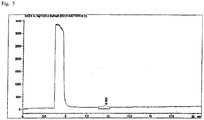
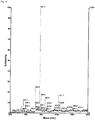


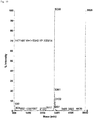

Classifications
-
- C—CHEMISTRY; METALLURGY
- C07—ORGANIC CHEMISTRY
- C07K—PEPTIDES
- C07K14/00—Peptides having more than 20 amino acids; Gastrins; Somatostatins; Melanotropins; Derivatives thereof
- C07K14/001—Peptides having more than 20 amino acids; Gastrins; Somatostatins; Melanotropins; Derivatives thereof by chemical synthesis
-
- B—PERFORMING OPERATIONS; TRANSPORTING
- B01—PHYSICAL OR CHEMICAL PROCESSES OR APPARATUS IN GENERAL
- B01D—SEPARATION
- B01D15/00—Separating processes involving the treatment of liquids with solid sorbents; Apparatus therefor
- B01D15/08—Selective adsorption, e.g. chromatography
-
- C—CHEMISTRY; METALLURGY
- C07—ORGANIC CHEMISTRY
- C07C—ACYCLIC OR CARBOCYCLIC COMPOUNDS
- C07C69/00—Esters of carboxylic acids; Esters of carbonic or haloformic acids
- C07C69/66—Esters of carboxylic acids having esterified carboxylic groups bound to acyclic carbon atoms and having any of the groups OH, O—metal, —CHO, keto, ether, acyloxy, groups, groups, or in the acid moiety
- C07C69/67—Esters of carboxylic acids having esterified carboxylic groups bound to acyclic carbon atoms and having any of the groups OH, O—metal, —CHO, keto, ether, acyloxy, groups, groups, or in the acid moiety of saturated acids
- C07C69/708—Ethers
- C07C69/712—Ethers the hydroxy group of the ester being etherified with a hydroxy compound having the hydroxy group bound to a carbon atom of a six-membered aromatic ring
-
- C—CHEMISTRY; METALLURGY
- C07—ORGANIC CHEMISTRY
- C07D—HETEROCYCLIC COMPOUNDS
- C07D207/00—Heterocyclic compounds containing five-membered rings not condensed with other rings, with one nitrogen atom as the only ring hetero atom
- C07D207/46—Heterocyclic compounds containing five-membered rings not condensed with other rings, with one nitrogen atom as the only ring hetero atom with hetero atoms directly attached to the ring nitrogen atom
-
- C—CHEMISTRY; METALLURGY
- C07—ORGANIC CHEMISTRY
- C07K—PEPTIDES
- C07K1/00—General methods for the preparation of peptides, i.e. processes for the organic chemical preparation of peptides or proteins of any length
- C07K1/04—General methods for the preparation of peptides, i.e. processes for the organic chemical preparation of peptides or proteins of any length on carriers
-
- C—CHEMISTRY; METALLURGY
- C07—ORGANIC CHEMISTRY
- C07K—PEPTIDES
- C07K1/00—General methods for the preparation of peptides, i.e. processes for the organic chemical preparation of peptides or proteins of any length
- C07K1/14—Extraction; Separation; Purification
-
- C—CHEMISTRY; METALLURGY
- C07—ORGANIC CHEMISTRY
- C07K—PEPTIDES
- C07K1/00—General methods for the preparation of peptides, i.e. processes for the organic chemical preparation of peptides or proteins of any length
- C07K1/14—Extraction; Separation; Purification
- C07K1/16—Extraction; Separation; Purification by chromatography
-
- C—CHEMISTRY; METALLURGY
- C07—ORGANIC CHEMISTRY
- C07K—PEPTIDES
- C07K7/00—Peptides having 5 to 20 amino acids in a fully defined sequence; Derivatives thereof
- C07K7/04—Linear peptides containing only normal peptide links
- C07K7/06—Linear peptides containing only normal peptide links having 5 to 11 amino acids
Definitions
- the present invention relates to a method for producing a purified peptide by simply purifying a crude peptide to which a support is bonded, and a linker suitable for the method for producing the purified peptide.
- Typical examples of known methods for chemically synthesizing peptides and proteins include: solid-phase peptide synthesis in which beads of polystyrene polymer gel or the like are used as a solid phase, and a condensation reaction of an amino acid and deprotection of a terminal protecting group are repeated in the solid phase thereby to sequentially extend a peptide chain; and liquid-phase peptide synthesis in which a condensation reaction of an amino acid and deprotection of a terminal protecting group are repeated in a liquid phase thereby to extend a peptide chain.
- polymer gel in solid-phase peptide synthesis, polymer gel is bonded to a produced peptide chain to be insolubilized, and thus crude purification or removal of soluble impurities such as a raw material reagent is easily performed by filtration or the like.
- a peptide obtained by detaching the polymer gel can be further purified by reversed-phase HPLC or the like if the peptide is hydrophilic.
- the produced peptide is hydrophobic, the peptide cannot be purified by reversed-phase HPLC, so that a problem arises that it is difficult to achieve a high purity.
- Patent Literature 1 describes a technique to bond a hydrophilic peptide to a hydrophobic peptide by applying biotechnology.
- biotechnology the production efficiency of a desired hydrophobic peptide greatly depends on the sequence of the desired hydrophobic peptide, and mass production is difficult in some cases, so that there is a problem that the versatility of the technique is poor.
- Examples of known techniques to continuously bond hydrophilic amino acids to a hydrophobic peptide to hydrophilize the hydrophobic peptide and perform HPLC purification include, in addition to the above-described peptide producing method using biotechnology, techniques using Boc solid-phase peptide synthesis (Non-Patent Literature 1) and techniques using Fmoc solid-phase peptide synthesis (Non-Patent Literatures 2 to 5, etc.).
- Non-Patent Literature 1 techniques using Boc solid-phase peptide synthesis
- Non-Patent Literatures 2 to 5, etc. techniques using Fmoc solid-phase peptide synthesis
- Boc solid-phase peptide synthesis a protecting group of an amino acid is deprotected by TFA, which is a strong acid, and thus a bond between a hydrophobic peptide and a solid phase support has resistance to a strong acid.
- HF is generally used for cleaving the bond between the hydrophobic peptide and the solid phase support.
- HF is dangerous and hazardous, and thus a special production apparatus is required.
- Non-Patent Literatures 2 or 3 discloses a method in which a hydrophilic peptide is synthesized on a solid phase support by Fmoc solid-phase peptide synthesis, 4-hydroxymethylbenzoic acid is then bonded as a linker to the N-terminus of the hydrophilic peptide, and a hydrophobic peptide is synthesized by Fmoc solid-phase peptide synthesis.
- Non-Patent Literatures 4 and 5 are superior to the methods of Non-Patent Literatures 2 and 3, since a hydrophobic peptide (desired peptide) can be previously synthesized by solid-phase peptide synthesis even though Fmoc solid-phase peptide synthesis is similarly employed. In these methods, it is necessary to complete the sequence of a hydrophobic peptide after a hydrophilic peptide and an amino acid having a phenylene type compound at the N-terminus thereof are synthesized. Thus, these methods can be said to be complicated processes, since a hydrophilic peptide and an amino acid having a phenylene type compound at the N-terminus thereof are required for each hydrophobic peptide.
- hydrophobic peptide cannot have cysteine or methionine at the N-terminus thereof, so that the versatility is poor. Furthermore, in these methods, it is difficult to change the hydrophilic peptide according to the amino acid sequence of a desired peptide (hydrophobic peptide) as appropriate, and the versatility of the methods is poor also in this respect.
- Patent Literature 1 JP H07-102000
- an object of the present invention is to provide a producing method: that allows any hydrophobic peptide to be used as an object to be purified, in hydrophilizing a hydrophobic peptide, synthesized by solid-phase peptide synthesis, with a hydrophilic unit and purifying the hydrophobic peptide by HPLC, regardless of the type of the amino acid residue at the N-terminus; that does not limit the form of the C-terminus of the hydrophobic peptide to a carboxylic acid; that allows the hydrophilic unit to be flexibly selected in accordance with the type of the hydrophobic peptide; and that is excellent in versatility.
- hydrophilic unit selectable flexibly, by later introducing a linker and the hydrophilic unit to a desired peptide synthesized by solid-phase peptide synthesis. Accordingly, hydrophilization has been enabled without the form of the C-terminus being limited to a carboxylic acid.
- the present inventors have found that, when it is made possible to cleavea bond between the desired peptide and the linker by chemical treatment in introducing the linker and the hydrophilic unit, the bond can be formed regardless of the type of the N-terminus amino acid of the desired peptide so that the type of the desired peptide can be expanded; and such a bond has resistance to an amino acid protecting group deprotection condition (a piperidine condition which is an Fmoc deprotection condition, etc.) and cleaving from a solid phase support (a TFA condition, etc.), it is possible to produce a support-free hydrophilized peptide (a bonded compound of the desired peptide, the linker, and the hydrophilic unit) for HPLC purification, and it is possible to simply cleave and remove the hydrophilic unit and the linker after the purification. Accordingly, the present inventors have completed the present invention.
- an amino acid protecting group deprotection condition a piperidine condition which is an Fmoc deprotect
- the present invention is characterized as follows.
- the linker and the hydrophilic unit are introduced to the desired peptide in this order later, and a bond between the desired peptide and the linker may be optimized to be cleaved by chemical treatment.
- the form and the sequence of the desired peptide are not limited. Therefore, the type of the desired peptide can be expanded, and cleavage of the hydrophilic unit after purification is also easy.
- the method for producing a purified peptide according to the present invention uses, as an object to be purified (target), a supported crude peptide including a support and a first peptide chain bonded to the support at a C-terminus.
- the method is intended to sequentially treat the object to be purified to finally obtain the purified free first peptide chain (purified peptide).
- the treatment procedure from the object to be purified (supported crude peptide) to the intended object (first peptide chain) includes:
- the first peptide chain (desired peptide chain) is previously formed on the support, and the hydrophilic unit is bonded later.
- the hydrophilic unit can be flexibly selected, and the flexibility in process design can be increased.
- the hydrophilic unit is bonded to the first peptide chain in the hydrophilization step A, and the support is removed in the cleavage steps B1 to B3.
- the first peptide chain can be hydrophilized, and chromatographic purification is enabled.
- the bond between the linker and the first peptide chain is a bond that can be cleaved by chemical treatment, and such a bond has durability against an amino acid protecting group removal condition.
- the hydrophilic unit by Fmoc synthesis.
- a bond has durability against a solid phase support cleavage removal condition (a TFA condition, etc.)
- the solid phase support can be removed even after the hydrophilic unit is introduced (as a matter of course, before introducing the hydrophilic unit), and thus the flexibility in design is very high.
- this bond can be formed regardless of the type of the N-terminus amino acid of the first peptide chain, and thus it is possible to increase the versatility of the first peptide chain (desired peptide).
- hydrophilic unit can be cleaved and removed by the chemical treatment for each linker after the chromatographic purification as described above, a special facility for the cleavage and removal is unnecessary, and the purified first peptide chain (purified peptide) can be simply produced.
- purified peptide purified peptide
- the "supported crude peptide” refers to a bonded compound including a support and a first peptide chain bonded to the support at a C-terminus.
- the "first peptide chain” refers to a compound polymerized by two or more amino acids forming peptide bonds between amino groups and carboxyl groups, and the present invention is intended to purify the first peptide chain.
- the "crude peptide” is merely a concept including both a supported crude peptide and a support-free crude peptide.
- the step of producing the supported crude peptide is not essential for the present invention, and the purification method of the present invention is also applicable to a crude peptide obtained through another process. It is easy to produce the supported crude peptide through the following step.
- solid-phase peptide synthesis is carried out in which a plurality of amino acids are sequentially bounded to the N-terminus of the support.
- Each of the amino acids is a compound having at least one or more basic amino groups (-NH2) and at least one or more acidic carboxyl groups (-COOH).
- the amino acid is not particularly limited in the present invention, but preferable examples of the amino acid include: ⁇ -amino acids such as glycine, alanine, 3,3,3-trifluoroalanine, 2-aminobutanoic acid, 2-amino-2-methylbutanoic acid, norvaline, 5,5,5-trifluoronorvaline, valine, 2-amino-4-pentenoic acid, 2-amino-2-methylpentenoic acid, propargylglycine, 2-amino-cyclopentanecarboxylic acid, norleucine, leucine, isoleucine, tert-leucine, 2-amino-4-fluoro-4-methylpentanoic acid, 4-aminocyclohexanecarboxylic acid, serine, O-methylserine, O
- Preferable amino acids are natural amino acids, ⁇ -amino acids, and the like, and natural ⁇ -amino acids.
- the numbers of amino groups and carboxyl groups in one molecule of the amino acid are not particularly limited, and, for example, each of the numbers may be one, or may be a plural number.
- the numbers of amino groups and carboxyl groups in one molecule of the amino acid may be equal to each other or may be different from each other.
- the solubility of the first peptide chain in water is evaluated on the basis of a GRAVY (grand average of hydropathy) score.
- the GRAVY score means an average hydropathy score for all the amino acids in a protein.
- the GRAVY score can be calculated according to the method reported by Kyte et al. ( J. Kyte, RF. Doolittle, J Mol. Biol 152 (1982) 105 ). Generally, a peptide having a positive score tends to be hydrophobic, and a peptide having a negative score tends to be hydrophilic. According to the present invention, it is possible to purify a hydrophobic peptide of which purification is conventionally difficult.
- the GRAVY score of such a hydrophobic peptide is preferably not less than -0.5, more preferably not less than 0, and further preferably not less than 0.5.
- the upper limit is not particularly limited, but the GRAVY score of such a hydrophobic peptide is generally not greater than 10 and may be not greater than 5.
- the present invention it is possible to purify even a first peptide chain containing a sulfur-containing amino acid, such as cysteine and methionine, of which synthesis is conventionally difficult.
- the present invention is also useful for purifying a peptide containing a sulfur-containing amino acid.
- the number of the amino acid residues of the first peptide chain is, for example, preferably not less than 2, more preferably not less than 4, and further preferably not less than 6.
- the upper limit is not particularly limited, but the number of the amino acid residues is preferably not greater than 200, more preferably not greater than 150, and further preferably not greater than 100.
- the first peptide chain is produced by solid-phase peptide synthesis.
- the solid-phase peptide synthesis is a method in which the C termini of amino acids are sequentially bonded to a water-insoluble solid phase support such as polystyrene via a linker bonded directly to the support, to sequentially extend a peptide.
- a desired peptide can be produced by cleaving the produced peptide chain from the support. According to this synthesis method, a wide range of peptides can be synthesized without depending on an amino acid sequence, and thus automation is also easy.
- Fmoc solid-phase peptide synthesis using a Fmoc group as a protecting group at an N-terminus is preferable.
- deprotection is performed under a basic condition such as an amide-based solvent (DMF, etc.) and an amine-based base (in particular, piperidine), and the produced peptide can be cleaved from the support under an acidic condition (TFA, etc.).
- amino acids to be used in Fmoc solid-phase peptide synthesis general amino acids of which the N-terminus is protected can be used.
- an amino acid having, as a protecting group, a group that can be deprotected under a condition in which piperidine and TFA are not used can also be used.
- a protecting group may be introduced to any amino acid residue after the first peptide chain is formed.
- the above water-insoluble solid phase support is not particularly limited, but the water-insoluble solid phase support which is widely used in solid-phase peptide synthesis, such as Rink amide resin, Rink Amide AM resin, Rink amide PEGA resin, Rink amide MBHA resin, Rink amide AM resin, Rink Amide NovaGel, NovaSyn TGR resin, NovaSyn TGA resin, TentaGel resin, Wang resin, HMPA-PEGA resin, HMP-NovaGel, HMPA-NovaGel, 2-Chlorotrityl resin, NovaSyn TGT alcohol resin, HMPB-AM, Sieber Amide resin, NovaSyn TG Sieber resin, 4-(4-Formyl-3-methoxyphenoxy)butyryl AM resin, 4-Sulfamylbutyryl AM resin, 4-Sulfamylbutyryl AM PEGA, 4-Fmoc-hydrozinobenzoyl AM resin, HMBA-AM resin, HM
- the solid phase support preferably has, on the surface thereof, an amino group that is a starting point of solid-phase peptide synthesis, and the amino group may be protected. If an amino group is present on the surface of the solid phase support, the first peptide chain and the support can be bonded to each other via an amide group.
- a peptide bond may be formed by activating the carboxyl group of an amino acid by various active ester methods or a coupling reagent, typified by: triazoles such as 1-hydroxybenzotriazole (HOBt) and 1-hydroxy-7-azabenzotriazole (HOAt); fluorophosphates such as O-(benzotriazol-1-yl)-N,N,N',N'-tetramethyluronium hexafluorophosphate (HBTU), O-(7-azabenzotriazol-1-yl)-N,N,N',N'-tetramethyluronium hexafluorophosphate (HATU), O-(6-chlorobenzotriazol-1-yl)-N,N,N',N'-tetramethyluronium hexafluorophosphate (HCTU), N,N,N',N'-tetramethyl-O-(N-succin
- the supported crude peptide may be filtered and washed with an appropriate organic solvent (e.g., DMF, methylene chloride, etc.) as necessary.
- an appropriate organic solvent e.g., DMF, methylene chloride, etc.
- soluble impurities raw materials, etc.
- this filtration and washing step can be performed as appropriate even in the step described below.
- the hydrophilization step is the initial step in the present invention, and is characterized by introducing the linker and the hydrophilic unit to the amino group of the crude peptide (either a supported crude peptide or a support-free crude peptide) in this order stepwise or at a single step to obtain a hydrophilized peptide (either a supported hydrophilized peptide or a support-free hydrophilized peptide).
- the method for introducing the linker and the hydrophilic unit to the supported crude peptide produced by the above step is not particularly limited, and may include a linker bonding step (A1a in Scheme I) of bonding the linker to the amino group of the supported crude peptide and a hydrophilic unit bonding step (A1b in Scheme I) of bonding the hydrophilic unit to the linker moiety of the obtained supported linker-bonded compound, or a hydrophilic unit-linker complex bonding step (A2-I in Scheme I) of bonding a complex obtained in advance by combining the hydrophilic unit and the linker, to the amino group of the supported crude peptide may be carried out.
- a support-free crude peptide in the hydrophilization step, can be used.
- a linker bonding step (A1c in Scheme I) of bonding the linker to the support-free crude peptide, a hydrophilic unit bonding step (A1d in Scheme I), and a hydrophilic unit-linker complex bonding step (A2-II in Scheme I) can be carried out similarly to A1a, A1b, and A2-I.
- the bonded position of the linker may either be a terminus or a side chain of the first peptide chain as long as the position is at an amino group in the crude peptide that is bonded to at least one or more hydrogen atoms.
- the "linker” refers to a compound that has a first bonding group capable of being bonded to the first peptide chain (e.g., an amino group) and also a second bonding group capable of being bonded to the hydrophilic unit described later and that can be present between the first peptide chain and the hydrophilic unit in a state where the compound is bonded to the first peptide chain and the hydrophilic unit after bonding.
- linker-bonded compound such a product to which the support is bonded is particularly referred to as a “supported linker-bonded compound”, and such a product from which the support is removed is particularly referred to as a “support-free linker-bonded compound”.
- an amino acid may be connected to the linker by peptide synthesis to prepare a hydrophilic unit.
- a bond between the linker and the first peptide chain is not cleaved under a peptide synthesis condition (in particular, an amino acid deprotection condition), and, for example, in the case with Fmoc synthesis, the bond between the linker and the first peptide chain is required to have durability against a basic condition that is an Fmoc deprotection condition.
- the bond between the linker and the first peptide chain is required to have resistance to an agent (e.g., an acidic condition such as TFA in the case of Fmoc solid-phase peptide synthesis) used when cleaving the first peptide chain from the support. This is for making it possible to bond the hydrophilic unit, by preventing the bond between the linker and the first peptide chain from being cleaved when the first peptide chain and the support are cleaved.
- the linker has, as the first group at the first peptide chain side thereof, a first group capable of forming a benzyloxycarbonylamino group or a benzylamino group together with a primary or secondary amine (e.g., the amino group of the first peptide chain) having at least one or more hydrogen atoms.
- a first group not only can bond the C-terminus or the like of the first peptide chain and the linker to each other but also has resistance to an acidic or basic condition.
- the second group at the hydrophilic unit side of the linker is a group capable of making a chemical bond to the hydrophilic unit.
- Examples of a preferable linker having such a first group and such a second group include a compound represented by the following formula (1):
- R 1 is an organic group having a protected primary amino group
- R 2 is an electron-withdrawing group
- n is an integer of 0 to 4
- Z is a halogenated methyl group, a formyl group, or a carbonate group represented by the following formula (a): wherein X is a leaving group and * indicates a site bonded to the benzene ring of the compound (1).
- the leaving group X in the formula (a) is not particularly limited, but examples of the leaving group X include halogen atoms such as a fluorine atom, a chlorine atom, a bromine atom, and an iodine atom; and an organic group represented by -OR x ... (9) (R x represents an aliphatic hydrocarbon group, an alicyclic hydrocarbon group, an aromatic hydrocarbon group, or a heterocyclic group, and these groups may each have a substituent).
- the aliphatic hydrocarbon group preferably has 1 to 20 carbon ato ms, and specific examples of the aliphatic hydrocarbon group include: alkyl gro ups such as a methyl group, an ethyl group, an n-propyl group, an isopropyl g roup, an n-butyl group, an isobutyl group, an s-butyl group, a t-butyl group, a n n-pentyl group, an n-hexyl group, an n-octyl group, an n-decyl group, an n-d odecyl group, and an n-octadecyl group; alkenyl groups such as a vinyl group and an allyl group; and alkynyl groups such as an ethynyl group and a propa rgyl group.
- alkyl gro ups such as a methyl group, an
- the alicyclic hydrocarbon group preferably has 3 to 20 carbon atoms
- specific examples of the alicyclic hydrocarbon group include: cycloalkyl groups such as a cyclopropyl group, a cyclobutyl group, a cyclopent yl group, a cyclohexyl group, a cyclooctyl group, a norbornyl group, and an ad amanthyl group; cycloalkylalkyl groups such as a cyclopentylmethyl group and a cyclohexylmethyl group; and the like.
- the aromatic hydrocarbon group preferably has 6 to 20 carbon atoms, and specific examples of the aromatic hydrocarbon group include: aryl groups such as a phenyl group, a naphthyl group, and an indenyl group; and aralkyl groups such as a benzyl group and a 4-phenylbutyl group; and the like.
- the heterocyclic group is obtained by substituting a part of the carbons forming the ring with an atom other than carbon, such as nitrogen, oxygen, and sulfur, in the alicyclic hydrocarbon group or aromatic hydrocarbon group, and preferably has 3 to 20 carbon atoms.
- the heterocyclic group is more preferably a nitrogen-containing heterocyclic imide group having at least one imide group in a nitrogen-containing heterocyclic group. Examples of such a nitrogen-containing heterocyclic imide group include saturated or unsaturated nitrogen-containing heterocyclic imide groups shown below.
- heterocyclic imide group examples include a succinimidyl group, a maleimidyl group, a phthalimidyl group, and the like.
- the aliphatic hydrocarbon group, the alicyclic hydrocarbon group, t he aromatic hydrocarbon group, or the heterocyclic group may have a substitu ent, and examples of the substituent include: alkyl groups; halogen atoms such as a fluorine atom, a chlorine atom, a bromine atom, and an iodine atom; an amino group; a hydroxy group; a nitro group; and the like.
- Examples of such -OR x include N-succinimidyloxy group, an N-mal eimidyloxy group, an N-phthalimidyloxy, a p-nitrophenyloxy group, a benzyloxy group, and the like. Among them, an N-succinimidyloxy group is preferable.
- the linker can be bonded to the first peptide chain by forming a benzyloxycarbonylamino group or a benzylamino group.
- these compounds are referred to as a carbonate type linker, an aldehyde type linker, or a halogen type linker, depending on the structure of the Z group.
- R 1 is an organic group having a protected primary amino group.
- a substituent is not particularly limited as long as a protected primary amino group is present at the terminal of the organic group, but such a substituent is preferably, for example, an organic group having a protected primary amino group represented by the following formula (b):
- R 3 is a bivalent hydrocarbon group
- A is one substituent selected from -CH 2 -, -O-, -S-, and -NH-
- Pro is an amino-protecting group
- * indicates a site bonded to the benzene ring of the compound (1).
- R 3 is a bivalent hydrocarbon group, is more pr eferably a bivalent aliphatic hydrocarbon group which may be saturated or un saturated, and is particularly preferably an alkylene group, and an alkylene gr oup having 1 to 10 carbon atoms is preferable, and an alkylene group having 2 to 5 carbon atoms is more preferable.
- Examples of preferable alkylene grou ps include -CH 2 -, -CH 2 CH 2 -, -CH 2 CH 2 CH 2 -, -CH 2 CH 2 CH 2 CH 2 -, -CH(CH 2 )CH 2 -, - CH(C 2 Hs)CH 2 -, -C(CH 2 ) 2 CH 2 -, -CH 2 CH 2 CH 2 CH 2 CH 2 -, -CH 2 CH 2 CH 2 CH 2 CH 2 CH 2 -, and the like.
- -CH 2 CH 2 - (ethylene group), -CH(CH 2 )CH 2 - (propyle ne group) or -CH 2 CH 2 CH 2 - (trimethylene group) is preferable, and -CH 2 CH 2 - (e thylene group) is the most preferable.
- A is one substituent selected from -CH 2 -, -O-, -S-, and -NH-. Among them, -O- or -S- is preferable, and -O- is more preferable.
- Pro is not particularly limited as long as Pro is an amino-protecting group, and examples of Pro include acyl-based groups, carbamate-based groups, imide-based groups, sulfonamide-based groups, and the like.
- carbamate-based protecting groups such as an acetyl group, a tert-butoxycarbonyl group (-Boc), a benzyloxycarbonyl group (-Z), a 9-fluorenylmethyloxycarbonyl group (-Fmoc), a 2,2,2-trichloroethoxycarbonyl group (-Troc), and an allyloxycarbonyl group (-Alloc), are preferable.
- the above Pro is preferably one that is the same as an amino-protecting group in the first peptide chain, and is more preferably a 9-fluorenylmethyloxycarbonyl group (-Fmoc).
- R 2 is an electron-withdrawing group and is more preferably at least one substituent selected from a halogen, a cyano group, a nitro group, a sulfo group, an alkyloxycarbonyl group, and an acyl group.
- halogen examples include fluorine, chlorine, bromine, and iodine. Among them, chlorine is particularly preferable.
- alkyloxycarbonyl group examples include a methoxycarbonyl group, an ethoxycarbonyl group, a propoxycarbonyl group, a butoxycarbonyl group, a pentyloxycarbonyl group, a hexyloxycarbonyl group, a heptyloxycarbonyl group, an octyloxycarbonyl group, a decyloxycarbonyl group, an octadecyloxycarbonyl group, a trifluoromethyloxycarbonyl group, and the like.
- acyl group examples include an acetyl group, a propanoyl group, a butanoyl group, a pentanoyl group, a hexanoyl group, a heptanoyl group, an octanoyl group, a nonanoyl group, a decanoyl group, a trifluoroacetyl group, a benzoyl group, a 1-naphthoyl group, a 2-naphthoyl group, and the like.
- an acyl group having 2 to 15 carbon atoms is preferable, and an acyl group having 2 to 10 carbon atoms is more preferable.
- n is an integer of 0 to 4, more preferably 1, 2, or 3, and further preferably 2.
- a plurality of R 2 s may be the same or different from each other.
- the bonded positions of R 1 and R 2 to the benzene ring are not particularly limited.
- the bonded position of R 1 may be any of the 2 to 6 positions as seen from the carbonate group, further preferably the 2 position, the 3 position, the 4 position, or the 5 position, more preferably the 2 position or the 4 position, and particularly preferably the 4 position.
- the bonded position of R 2 may be any of the 2 to 6 positions, and, in a more preferred embodiment, R 2 may be bonded to at least each of the 3 position and the 5 position of the benzene ring.
- the carbonate type linker is preferably, for example, a compound represented by the following formula (2): wherein R 2 is an electron-withdrawing group, n is an integer of 0 to 4, Pro is an amino-protecting group, X is -OR x (R x is a heterocyclic imide group), and R 3 is an alkylene group having 1 to 10 carbon atoms.
- X is preferably an N-succinimidyloxy group, and R 2 , n, Pro, and R 3 are preferably the same as those in formula (1).
- the most preferable carbonate type linkers are, for example, compounds represented by the following formulas (3a) to 3(e):
- the aldehyde type linker is preferably, for example, a compound represented by the following formula (4): wherein R 2 is an electron-withdrawing group, n is an integer of 0 to 4, Pro is an amino-protecting group, and R 3 is an alkylene group having 1 to 10 carbon atoms. R 2 , n, Pro, and R 3 are preferably the same as those in formula (1). Among them, the most preferable aldehyde type linker is a compound represented by the following formula (5):
- halogen type linker is, for example, the following formula (6): wherein R 2 is an electron-withdrawing group, n is an integer of 0 to 4, Pro is an amino-protecting group, R 3 is an alkylene group having 1 to 1 0 carbon atoms, and X 3 is a halogen atom.
- each of the methods for producing the carbonate type linker and the aldehyde type linker includes at least a step of carbonizing, oxidizing, or halogenating the hydroxymethyl group of a benzyl alcohol derivative represented by the following formula (7): wherein R 1 , R 2 , and n are the same as described above.
- the reaction of carbonizing the hydroxymethyl group of the benzyl alcohol derivative represented by the formula (7) is characterized by reacting, in the presence of a base, the benzyl alcohol derivative represented by the formula (7) and a compound represented by the following formula (8): wherein X 1 and X 2 are each a leaving group.
- the leaving groups that are X 1 and X 2 each represent, for example: a halogen atom such as a fluorine atom, a chlorine atom, a bromine atom, and an iodine atom; or an organic group represented by -OR x ... (9) (R x represents an aliphatic hydrocarbon group, an alicyclic hydrocarbon group, an aromatic hydrocarbon group, or a heterocyclic group, and these groups may each have a substituent).
- the aliphatic hydrocarbon group preferably has 1 to 20 carbon ato ms, and specific examples of the aliphatic hydrocarbon group include: alkyl gro ups such as a methyl group, an ethyl group, an n-propyl group, an isopropyl g roup, an n-butyl group, an isobutyl group, an s-butyl group, a t-butyl group, a n n-pentyl group, an n-hexyl group, an n-octyl group, an n-decyl group, an n-d odecyl group, and an n-octadecyl group; alkenyl groups such as a vinyl group and an allyl group; and alkynyl groups such as an ethynyl group and a propa rgyl group, and the like.
- alkyl gro ups such as a methyl
- the alicyclic hydrocarbon group preferably has 3 to 20 carbon atoms
- specific examples of the alicyclic hydrocarbon group include: cycloalkyl groups such as a cyclopropyl group, a cyclobutyl group, a cyclopent yl group, a cyclohexyl group, a cyclooctyl group, a norbornyl group, and an ad amanthyl group; and cycloalkylalkyl groups such as a cyclopentylmethyl group and a cyclohexylmethyl group; and the like.
- the aromatic hydrocarbon group preferably has 6 to 20 carbon atoms, and specific examples of the aromatic hydrocarbon group include: aryl groups such as a phenyl group, a naphthyl group, and an indenyl group; and aralkyl groups such as a benzyl group and a 4-phenylbutyl group; and the like.
- the heterocyclic group is obtained by substituting a part of the carbons forming the ring with an atom other than carbon, such as nitrogen, oxygen, and sulfur, in the alicyclic hydrocarbon group or aromatic hydrocarbon group, and preferably has 3 to 20 carbon atoms.
- the heterocyclic group is more preferably a nitrogen-containing heterocyclic imide group having at least one imide group in a nitrogen-containing heterocyclic group. Examples of such a nitrogen-containing heterocyclic imide group include saturated or unsaturated nitrogen-containing heterocyclic imide groups shown below.
- heterocyclic imide group examples include a succinimidyl group, a maleimidyl group, a phthalimidyl group, and the like.
- the aliphatic hydrocarbon group, the alicyclic hydrocarbon group, the aromatic hydrocarbon group, or the heterocyclic group may have a substituent, and examples of the substituent include: alkyl groups; halogen atoms such as a fluorine atom, a chlorine atom, a bromine atom, and an iodine atom; an amino group; a hydroxy group; a nitro group; and the like.
- Examples of such -OR x include N-succinimidyloxy group, an N-mal eimidyloxy group, an N-phthalimidyloxy group, a p-nitrophenyloxy group, a ben zyloxy group, and the like.
- X 1 and X 2 may be the same or different from each other.
- preferable compounds (8) include carbonic acid derivatives (e.g., di-N-succinimidyl carbonate, etc.), chloroformate compounds (e.g., N-succin imidyl chloroformate, p-nitrophenyl chloroformate), and the like.
- the use amount of the compound represented by the formula (8) and having a carbonate group in the carbonization reaction with respect to 1 mol of the benzyl alcohol derivative represented by the formula (7) is preferably not less than 0.5 times by mole, more preferably not less than 0.8 times by mole, and further preferably not less than 1 time by mole, and is preferably not greater than 3 times by mole, more preferably not greater than 2.5 times by mole, and further preferably not greater than 2 times by mole.
- the base is not particularly limited, but examples of the base include: tertiary amines such as triethylamine, tri-n-butylamine, N-methylmorpholine, N-methylpiperidine, diisopropylethylamine, pyridine, N,N-dimethylaminopyridine, and 1,4-diazabicyclo[2, 2, 2]octane; metal hydroxides such as lithium hydroxide, sodium hydroxide, potassium hydroxide, barium hydroxide, and magnesium hydroxide; metal carbonates such as lithium carbonate, sodium carbonate, and potassium carbonate; metal hydrogen carbonates such as lithium hydrogen carbonate, sodium hydrogen carbonate, and potassium hydrogen carbonate; and metal alkoxides such as lithium methoxide, lithium ethoxide, sodium methoxide, sodium ethoxide, potassium methoxide, potassium ethoxide, and potassium tert-butoxide. Among them, tertiary amines are preferable, and pyridine
- the reaction of oxidizing the hydroxymethyl group of the benzyl alcohol derivative represented by the formula (7) is characterized by oxidizing the benzyl alcohol derivative represented by the formula (7), by applying an oxidizer.
- the oxidizer is not particularly limited, but examples of the oxidizer include: chlorates such as potassium chlorate, sodium chlorate, ammonium chlorate, barium chlorate, and calcium chlorate; perchlorates such as potassium perchlorate, sodium perchlorate, and ammonium perchlorate; inorganic peroxides such as potassium peroxide, sodium peroxide, calcium peroxide, magnesium peroxide, and barium peroxide; chlorites such as potassium chlorite, sodium chlorite, and copper chlorite; bromates such as potassium bromate, sodium bromate, and magnesium bromate; nitrates such as ammonium nitrate, sodium nitrate, potassium nitrate, barium nitrate, and silver nitrate; iodates such as potassium iodate, sodium iodate, and calcium iodate; permanganates such as potassium permanganate and ammonium permanganate; dichromates such as sodium dichromate and ammonium dichromate; periodates such
- the linker bonding step when the carbonate type linker is used will be described.
- the linker-bonded compound is formed by bonding the linker to the amino group of the first peptide chain by: mixing the carbonate type linker and the crude peptide; and forming a benzyloxycarbonylamino group.
- the use amount of the carbonate type linker in this reaction with respect to 1 mol of the crude peptide is preferably not less than 0.5 times by mole, more preferably not less than 1 time by mole, and further preferably not less than 2 times by mole, and is preferably not greater than 20 times by mole and more preferably not greater than 10 times by mole.
- the reaction between the carbonate type linker and the crude peptide is preferably carried out in the presence of a solvent.
- organic solvents including: ether-based solvents such as diisopropyl ether, t-butyl methyl ether, dibutyl ether, dioxane, and diglyme; modified ethers such as propylene glycol monomethyl ether acetate; ester-based solvents such as ethyl acetate and butyl acetate; halogen-based solvents such as chloroform and dichloromethane; and the like, can be used as the reaction solvent.
- ether-based solvents such as diisopropyl ether, t-butyl methyl ether, dibutyl ether, dioxane, and diglyme
- modified ethers such as propylene glycol monomethyl ether acetate
- ester-based solvents such as ethyl acetate and butyl acetate
- aqueous solvents including: alcohols such as methanol and ethanol; ethers such as ethylene glycol, dimethoxyethane, and tetrahydrofuran; nitriles such as acetonitrile; amides such as dimethylformamide, N,N-dimethylacetamide, and N-methylpyrrolidone; and the like, can also be used as the reaction solvent. Only one of these reaction solvents may be used solely, or two or more of these reaction solvents may be used in combination. Among them, amides are preferable, and dimethylformamide is more preferable.
- the use amount of the reaction solvent with respect to the crude peptide is preferably not greater than 50 times by weight and further preferably not greater than 20 times by weight, and the lower limit is not particularly limited, but the amount of the reaction solvent is preferably not less than 2 times by weight.
- a tertiary amine such as triethylamine, tri-n-butylamine, N-methylmorpholine, N-methylpiperidine, diisopropylethylamine, pyridine, N,N-dimethylaminopyridine, and 1,4-diazabicyclo[2, 2, 2]octane, may be caused to coexist as a reaction accelerator.
- the reaction temperature is not particularly limited as long as the reaction temperature is not higher than the boiling point of the solvent to be used.
- the reaction temperature is preferably not lower than 0°C, more preferably not lower than 10°C, and further preferably not lower than 20°C, and is preferably not higher than 100°C and more preferably not higher than 80°C.
- the reaction time is also not particularly limited, and is preferably not shorter than 1 hour and more preferably not shorter than 2 hours and is preferably not longer than 100 hours and more preferably not longer than 50 hours.
- the obtained linker-bonded compound is preferably washed to remove unnecessary components.
- a solvent for washing various solvents described in detail in the section of the reaction solvent can be used.
- the linker-bonded compound can be produced by: performing dehydration condensation of the aldehyde type linker and the crude peptide to produce an imine resin in which the aldehyde type linker is bonded to the crude peptide via an imino group; applying a reducing agent to the obtained imine resin to reduce the imino group; and forming a benzylamino group to bond the linker to the amino group of the first peptide chain.
- the dehydration condensation reaction between the aldehyde type linker and the crude peptide is carried out by mixing the aldehyde type linker and the crude peptide.
- the use amount of the aldehyde type linker with respect to 1 mol of the crude peptide is preferably not less than 1 time by mole, more preferably not less than 3 times by mole, and further preferably not less than 5 times by mole, and is preferably not greater than 50 times by mole, more preferably not greater than 30 times by mole, and further preferably not greater than 20 times by mole.
- organic solvents including: aromatic hydrocarbon solvents, such as benzene, toluene, and xylene; ether-based solvents such as diisopropyl ether, t-butyl methyl ether, dibutyl ether, and diglyme; modified ethers such as propylene glycol monomethyl ether acetate; ester-based solvents such as ethyl acetate and butyl acetate; halogen-based solvents such as chloroform and dichloromethane; cyclic hydrocarbon solvents such as cyclohexane, methylcyclohexane, and ethylcyclohexane; chain hydrocarbon solvents such as pentane, hexane, heptane, octane, isooctane, and isododecane; and the
- aqueous solvents including: alcohols such as methanol and ethanol; ethers such as ethylene glycol, dimethoxyethane, and tetrahydrofuran; nitriles such as acetonitrile; amides such as dimethylformamide, N,N-dimethylacetamide, and N-methylpyrrolidone; and the like, can also be used as the reaction solvent. Only one of these reaction solvents may be used solely, or two or more of these reaction solvents may be used in combination. Among them, halogen-based solvents are preferable, and dichloromethane is more preferable.
- the use amount of the reaction solvent with respect to the crude peptide is preferably not greater than 100 times by weight and further preferably not greater than 50 times by weight, and the lower limit is not particularly limited, but the amount of the reaction solvent is preferably not less than 2 times by weight.
- a dehydrating agent is preferably used as appropriate.
- the dehydrating agent include: ortho acid esters typified by orthoformates such as trimethyl orthoformate, triethyl orthoformate, and tripropyl orthoformate, orthoacetates such as trimethyl orthoacetate, triethyl orthoacetate, and tripropyl orthoacetate, orthopropionates such as trimethyl orthopropionate, triethyl orthopropionate, and tripropyl orthopropionate, and the like; acetals typified by dimethoxymethane, 1,1-dimethoxyethane, 1,1-dimethoxypropane, diethoxyethane, 1,1-diethoxyethane, 1,1-diethoxypropane, and the like; and hemiacetals typified by 1-methoxy-1-ethanol, 1-methoxy-1-propanol, 1-methoxy-1-butanol, 1-eth
- the use amount of the dehydrating agent with respect to the crude peptide is preferably not greater than 100 times by weight and further preferably not greater than 50 times by weight, and the lower limit is not particularly limited, but the amount of the dehydrating agent is preferably not less than 1 time by weight.
- the reaction temperature is not particularly limited as long as the reaction temperature is not higher than the boiling point of the solvent to be used.
- the reaction temperature is preferably not lower than 0°C, more preferably not lower than 10°C, and further preferably not lower than 20°C, and is preferably not higher than 100°C, more preferably not higher than 80°C, and further preferably not higher than 60°C.
- the reaction time is also not particularly limited, and is preferably not shorter than 1 hour and more preferably not shorter than 12 hours and is preferably not longer than 20 days and more preferably not longer than 15 days.
- the obtained linker-bonded compound is preferably washed to remove unnecessary components.
- a solvent for washing various solvents described in detail in the section of the reaction solvent can be used.
- Examples of the reducing agent in the reduction reaction of the imine resin include: aluminium hydrides such as lithium aluminium hydride, diisobutylaluminium hydride, and sodium bis(2-methoxyethoxy)aluminium hydride; borohydride compounds such as alkali metal borohydrides, including lithium borohydride, sodium borohydride, and potassium borohydride, calcium borohydride, sodium cyanoborohydride, sodium triacetoxyborohydride, lithium triethylborohydride, lithium tri(sec-butyl)borohydride, and potassium tri(sec-butyl)borohydride; tributyltin hydroxide; and borane, etc. Among them, from the standpoint of chemoselectivity, borohydride compounds are preferable, and sodium cyanoborohydride is more preferable.
- the use amount of the reducing agent with respect to 1 part by mass of the imine resin is preferably not less than 0.1 parts by mass, more preferably not less than 0.3 parts by mass, and further preferably not less than 0.6 parts by mass, and is preferably not greater than 3 parts by mass, more preferably not greater than 2.5 parts by mass, and further preferably not greater than 2 parts by mass.
- organic solvents including: aromatic hydrocarbon solvents, such as benzene, toluene, and xylene; ether-based solvents such as diisopropyl ether, t-butyl methyl ether, dibutyl ether, and diglyme; modified ethers such as propylene glycol monomethyl ether acetate; ester-based solvents such as ethyl acetate and butyl acetate; carboxylic acid-based solvents such as acetic acid and propionic acid; halogen-based solvents such as chloroform and dichloromethane; cyclic hydrocarbon solvents such as cyclohexane, methylcyclohexane, and ethylcyclohexane; chain hydrocarbon solvents such as pentane, hexane, heptane, octane, isooctane, and
- aqueous solvents including: alcohols such as methanol and ethanol; ethers such as ethylene glycol, dimethoxyethane, and tetrahydrofuran; nitriles such as acetonitrile; amides such as dimethylformamide, N,N-dimethylacetamide, and N-methylpyrrolidone; and the like, can also be used as the reaction solvent. Only one of these reaction solvents may be used solely, or two or more of these reaction solvents may be used in combination. When an alcohol or a carboxylic acid-based solvent is used, an increase in the reaction speed can also be expected. In the present invention, among them, alcohol-based solvents, carboxylic acid-based solvents, and amides are preferable.
- the use amount of the reaction solvent with respect to the imine resin is preferably not greater than 100 times by weight and further preferably not greater than 50 times by weight, and the lower limit is not particularly limited, but the amount of the reaction solvent is preferably not less than 5 times by weight.
- the reaction temperature is not particularly limited as long as the reaction temperature is not higher than the boiling point of the solvent to be used.
- the reaction temperature is preferably not lower than 0°C, more preferably not lower than 10°C, and further preferably not lower than 20°C, and is preferably not higher than 100°C, more preferably not higher than 80°C, and further preferably not higher than 60°C.
- the reaction time is also not particularly limited, and is preferably not shorter than 1 hour and more preferably not shorter than 10 hours and is preferably not longer than 50 hours and more preferably not longer than 30 hours.
- the obtained linker-bonded compound is preferably washed to remove unnecessary components.
- a solvent for washing various solvents described in detail in the section of the reaction solvent can be used.
- the linker and the crude peptide are bonded to each other via -CH 2 -NH-.
- the hydrogen atom in NH- has high reactivity and may have an effect on a subsequent reaction.
- an N-protection reaction of the linker-bonded compound after the reduction reaction (referred to as a reduced form resin) is preferably carried out as necessary.
- a protecting group for an amino group include carbamate-based groups, imide-based groups, sulfonamide-based groups, and the like.
- carbamate-based protecting groups such as a tert-butoxycarbonyl group (-Boc), a benzyloxycarbonyl group (-Z), a 9-fluorenylmethyloxycarbonyl group (-Fmoc), a 2,2,2-trichloroethoxycarbonyl group (-Troc), and an allyloxycarbonyl group (-Alloc), are preferable.
- a tert-butoxycarbonyl group (-Boc) is preferably selected in order that influence of the deprotection condition for the Fmoc is prevented.
- protecting group can be carried out under a basic condition by adding a protecting agent corresponding to each protecting group, to the reaction solution after the reduction reaction.
- the protecting agent include carbamating agents including: chlorides such as methoxycarbonyl chloride, ethoxycarbonyl chloride, isopropoxycarbonyl chloride, allyloxycarbonyl chloride, benzyloxycarbonyl chloride, and phenyloxycarbonyl chloride; or anhydrides such as di-tert-butyldicarbonate, etc.
- the use amount of the protecting agent with respect to 1 mol of the reduced form resin is preferably 1 to 30 times by mole and more preferably 10 to 25 times by mole.
- a base may be further added for the purpose of neutralizing an acid, produced as a byproduct, to accelerate the reaction.
- the base include: metal carbonates such as lithium carbonate, sodium carbonate, potassium carbonate, magnesium carbonate, and calcium carbonate; metal hydrogen carbonates such as lithium hydrogen carbonate, sodium hydrogen carbonate, potassium hydrogen carbonate, and cesium hydrogen carbonate; metal hydroxides such as lithium hydroxide, sodium hydroxide, and potassium hydroxide; and tertiary amines such as triethylamine, N-methylmorpholine, ethyl diisopropylamine, and pyridine. Tertiary amines are preferable, and N-methylmorpholine is further preferable.
- the use amount of the base with respect to 1 mol of the reduced form resin is preferably 0.5 to 20 times by mole and more preferably 3 to 15 times by mole.
- the N-protection reaction may be carried out in the presence of a solvent.
- the reaction solvent is not particularly limited as long as the reaction solvent does not have an effect on the reaction.
- the reaction solvent for example: water; ether-based solvents such as tetrahydrofuran, diethyl ether, 1,4-dioxane, and ethylene glycol dimethyl ether; aromatic hydrocarbon-based solvents such as benzene and toluene; aliphatic hydrocarbon-based solvents such as pentane, hexane, heptane, and methylcyclohexane; halogen-based solvents such as carbon tetrachloride, chloroform, methylene chloride, 1,2-dichloroethane, and chlorobenzene; ester-based solvents such as ethyl acetate, isopropyl acetate, and tert-butyl acetate; sulfoxide-based solvents such as dimethyl s
- reaction solvent examples include: water; aromatic hydrocarbon-based solvents such as benzene and toluene; ether-based solvents such as tetrahydrofuran, 1,4-dioxane, and methyl tert-butyl ether; ester-based solvents such as ethyl acetate, isopropyl acetate, and tert-butyl acetate; halogen-based solvents such as carbon tetrachloride, chloroform, methylene chloride, 1,2-dichloroethane, and chlorobenzene; and amide-based solvents such as N,N-dimethylformamide and N,N-dimethylacetamide, and the reaction solvent is further preferably DMF.
- aromatic hydrocarbon-based solvents such as benzene and toluene
- ether-based solvents such as tetrahydrofuran, 1,4-dioxane, and methyl tert-butyl ether
- An excessive amount of the solvent is not preferable in terms of cost and post-treatment, and thus the use amount of the solvent with respect to the reduced form resin is preferably not greater than 50 times by weight and more preferably not greater than 30 times by weight.
- the reaction temperature is not particularly limited as long as the reaction temperature is not higher than the boiling point of the solvent to be used.
- the reaction temperature is preferably not lower than - 10°C and more preferably not lower than 0°C, and is preferably not higher than 90°C and more preferably not higher than 50°C.
- the reaction time is also not particularly limited, and is preferably not shorter than 1 hour and more preferably not shorter than 3 hours and is preferably not longer than 100 hours and more preferably not longer than 50 hours.
- the hydrophilic unit is bonded to the linker-bonded compound obtained as described above.
- the "hydrophilic unit” refers to a unit that can be bonded to the linker moiety of the linker-bonded compound (the bonded compound of the first peptide and the linker) and that can impart hydrophilicity to the linker-bonded compound, and, for example, the hydrophilic unit itself has hydrophilicity with a log P (P is an octanol-water partition coefficient) of not higher than -1.
- the first peptide chain can be hydrophilized when the support is cleaved and removed, so that chromatographic purification of the first peptide chain is enabled.
- a product obtained by this hydrophilic unit bonding step that is, a connected compound including three components, the first peptide, the linker, and the hydrophilic unit, is referred to as a "hydrophilized peptide", such a compound to which the support is bonded is particularly referred to as a "supported hydrophilized peptide", and such a compound from which the support is removed is particularly referred to as a "support-free hydrophilized peptide".
- a log P value is a parameter of the hydrophobicity of a compound, and a partition coefficient P in a typical octanol-water system is obtained as follows. First, a compound (the hydrophilic unit in the present invention) is dissolved in octanol (or water), water (or octanol) is added thereto in the same amount, and the solution is shaken for 30 minutes by a Griffin flask shaker manufactured by Griffin & George Ltd. Thereafter, centrifugal separation is performed at 2000 rpm for 1 to 2 hours, each of the concentrations of the compound in the octanol layer and the water layer is measured spectroscopically or by various methods such as GLC, and the partition coefficient P is obtained by the following formula.
- P Coct / Cw
- the log P value may be obtained by the above method, but, in the present invention, a value calculated at 25°C by ACD/Log P DB Release 100 Product Version 10.01 manufactured by Advanced Chemistry Development, Inc., is used in principle.
- the log P value of a hydrophilizing unit is, for example, not higher than -1, the hydrophilizing unit is effective for hydrophilizing the crude peptide. Further, if the log P value exceeds -1, sufficient hydrophilicity is not exerted, so that the purification efficiency of the support-free hydrophilized peptide may decrease.
- the log P value is more preferably not higher than -1.2 and further preferably not higher than -1.5.
- the lower limit of the log P is not particularly limited, but the log P value is, for example, preferably not less than -10.
- hydrophilic unit having such a log P value examples include a hydrophilic peptide chain, a hydrophilic polyether, or a hydrophilic polyamine, etc.
- the hydrophilic peptide chain may be prepared by sequentially connecting amino acids to the linker-bonded compound.
- the hydrophilic peptide chain is desirably prepared by Fmoc solid-phase peptide synthesis.
- a previously prepared hydrophilic peptide chain may separately be connected to the linker-bonded compound.
- the hydrophilic unit is preferably bonded to the linker moiety by the following steps:
- the hydrophilic peptide is obtained by sequentially forming a peptide at the amino group of the linker-bonded compound obtained by the above step, by Fmoc solid-phase peptide synthesis.
- a hydrophilic peptide is sequentially formed as in this method, the properties (e.g., hydrophilicity, etc.) of a hydrophilized peptide formed each time one cycle ends can be verified, so that no extra agent is consumed and thus this method is preferable.
- the specific procedure of the Fmoc solid-phase peptide synthesis is not particularly limited, and may be, for example, the same as that in the case of the above-described step of producing the supported crude peptide.
- a cycle in which deprotection of Fmoc is performed in the presence of a base and dehydration condensation of an amino acid or a peptide is performed to extend a main chain, is preferably continued until a desired hydrophilic peptide chain is obtained.
- the amino acids forming the hydrophilic peptide are not particularly limited, and various amino acids described in detail in the section of the first peptide chain can be used.
- the hydrophilic peptide different types of amino acids among these amino acids may be used in combination, or the same type of amino acids may be used solely.
- the hydrophilic peptide in order to increase the hydrophilicity of the hydrophilic peptide, preferably has, for example, a unit derived from an amino acid having a basic side chain.
- the hydrophilic peptide chain has preferably two or more residues, more preferably 4 or more residues, among all amino acid residues, as at least one or more types of amino acid residues selected from arginine, asparagine, glutamine, histidine, and lysine.
- the upper limit is not particularly limited, but the number of such amino acid residues is preferably not greater than 35, more preferably not greater than 20, and further preferably not greater than 10.
- the hydrophilic peptide preferably has, for example, a residue derived from an amino acid having an acidic side chain.
- the hydrophilic peptide chain has desirably two or more residues, more preferably 4 or more residues, among all amino acid residues, as at least one or more types of amino acid residues selected from aspartic acid and glutamic acid.
- the upper limit is not particularly limited, but the number of such amino acid residues is preferably not greater than 35, more preferably not greater than 20, and further preferably not greater than 10.
- the number of the amino acid residues of the hydrophilic peptide chain is not particularly limited, but is, for example, not less than 2, more preferably not less than 3, and further preferably not less than 4, is preferably not greater than 35, may be not greater than 20, and may be not greater than 10. If the number of the amino acid residues forming the hydrophilic peptide increases, the contribution ratio of the hydrophilic peptide chain to hydrophilization in the bonded compound of the linker-bonded compound and the hydrophilic peptide chain (the hydrophilized peptide) increases, so that it becomes easy to control the characteristics of the hydrophilized peptide.
- a desired hydrophilic peptide chain may be produced in advance by liquid-phase peptide synthesis or solid-phase peptide synthesis, and the obtained hydrophilic peptide chain may be bonded to the linker.
- the hydrophilic unit is not limited to the polypeptide, and may be a polyether or a polyamine.
- the hydrophilic polyether is not particularly limited, and is, for example, a compound having repeating units represented by -R y -O-, in a main chain backbone thereof.
- R y include -CH 2 CH 2 -, -CH(CH 3 )CH 2 -, - CH(C 2 H 5 )CH 2 -, -C(CH 3 ) 2 CH 2 -, -(CH 2 ) 4 -, and the like. Among them, -CH 2 CH 2 - and - CH(CH 3 )CH 2 - are preferable.
- the hydrophilic polyether may be a homopolymer having one type of repeating units among these repeating units, or may be a copolymer.
- the number of the repeating units represented by -R y -O- is, for example, preferably 1 to 200 and more preferably 50 to 150.
- the hydrophilic polyether contains preferably not less than 50% by weight, further preferably not less than 80% by weight, and more preferably not less than 95% by weight of the repeating units represented by -R y -O- in the hydrophilic polyether.
- the polystyrene-equivalent number average molecular weight of the hydrophilic polyether obtained by gel permeation chromatography is, for example, preferably about 1000 to 100,000.
- the polyamine is not particularly limited, examples of the polyamine include an aliphatic hydrocarbon to which at least two or more amino groups are bonded, and the aliphatic hydrocarbon may be saturated (chain or cyclic) or unsaturated.
- Each of the hydrogen atoms bonded to the nitrogen atoms of the polyamine may be substituted or unsubstituted, but is preferably unsubstituted, in order to increase the hydrophilicity.
- polyamines include chain aliphatic polyamines such as diethylenetriamine, N-(2-aminoethyl)-1,3-propanediamine, N-(3-aminopropyl)-1,3-propanediamine, spermidine, bis(hexamethylene)triamine, 4-(aminomethyl)-1,8-octanediamine, triethylenetetramine, 1,4,7,11-tetraazaundecane, N,N'-bis(3-aminopropyl)ethylenediamine, N,N'-bis(2-aminoethyl)-1,3-propanediamine, N,N'-bis(3-aminopropyl)-1,3-propanediamine, spermine, tris(2-aminoethyl)amine, tetraethylenepentamine, and pentaethylenehexamine; and cyclic aliphatic polyamines such as 1,4,7-triazacyclononane, 1,5,
- a hydrophilic unit-linker complex in which the hydrophilic unit and the linker are previously bonded as a single compound may be introduced to the amino group of the crude peptide.
- the same ones as those in the linker bonding step A1a or the hydrophilic unit bonding step A1b can be used.
- the method for preparing the complex the same method as that in the hydrophilic unit bonding step A1b can be adopted.
- the same method as that in the linker bonding step A1a can be adopted.
- the amino acid at the hydrophilic unit side may be further extended as necessary.
- limited types as the hydrophilic unit-linker complex are prepared as basic units, the basic unit is bonded to the crude peptide, and then, for example, the amino acid is extended in accordance with the characteristics of the crude peptide. This method allows the number of the types of the hydrophilic unit-linker complexes prepared as the basic units to be reduced, and thus is easy.
- A2-II is also preferably carried out by the same method as that for A2-I.
- the support cleavage step refers to a step of separating the support and the first peptide chain from each other. While the linker and the hydrophilic unit are bonded to the first peptide chain, the first peptide chain can be hydrophilized by cleavage the support.
- the first peptide chain to which the linker and the hydrophilic unit are bonded and from which the support is cleaved is referred to as a support-free hydrophilized peptide in the present specification.
- the support cleavage step may be carried at any stage before the chromatographic purification step described later.
- the bond between the first peptide chain and the support is preferably cleaved at any stage before bonding the linker to the supported crude peptide until the hydrophilized peptide is obtained, or after the supported hydrophilized peptide is obtained.
- the support may be cleaved from a supported crude peptide including the first peptide chain and the support (see the support cleavage step B1 in Scheme I), the support may be cleaved from a supported linker-bonded compound in which the linker is bonded to the supported crude peptide (see the support cleavage step B2 in Scheme I), or the support may be cleaved from a supported hydrophilized peptide in which the linker and the hydrophilic unit are bonded to the supported crude peptide (see the support cleavage step B3 in Scheme I).
- a support-free linker-bonded compound can be obtained from the obtained support-free crude peptide by carrying out the linker bonding step A1a similarly to the above (A1c in Scheme I).
- a support-free hydrophilized peptide can be obtained from the support-free crude peptide by carrying out the hydrophilic unit-linker complex bonding step A2.
- a support-free hydrophilized peptide can be obtained, from a support-free linker-bonded compound obtained by carrying out the support cleavage step B2 or treating the support-free crude peptide in the linker bonding step A1a, by carrying out the hydrophilic unit bonding step A1b similarly to the above (A1d in Scheme I).
- the support cleavage step i.e., the support cleavage step B3 in Scheme I
- the support cleavage step is preferably carried out after the hydrophilized peptide is obtained by the hydrophilization step.
- an amide bond or ester bond connecting the first peptide chain and the support is hydrolyzed.
- an operation that is widely used in solid-phase peptide synthesis is preferably carried out.
- the first peptide chain or the hydrophilic unit is formed by Fmoc solid-phase peptide synthesis
- the first peptide chain is preferably cleaved from the support by treatment with a cleaving reagent.
- the cleaving reagent As the cleaving reagent, a reagent that is used under a general condition for cleaving from the support can be used.
- the concentration of the cleaving reagent in 100% of this reagent is preferably not less than 40%, more preferably not less than 50% and is preferably not greater than 100%, but there is no problem if the concentration is not greater than 97%.
- the cleaving reagent may contain TIS (triisopropylsilane).
- concentration of TIS in 100% of the reagent, as a volume ratio, is preferably not less than 1% and more preferably not less than 1.5%, and is preferably not greater than 20% and more preferably not greater than 10%.
- the cleavage step may be carried out in the absence of a solvent (a solvent mixed from the above reagent is permitted), or may be carried out in the presence of a solvent as necessary.
- a solvent include water, an organic solvent, an aqueous solvent, etc.
- the organic solvent include halogen-based solvents such as carbon tetrachloride, chloroform, methylene chloride, 1,2-dichloroethane, chlorobenzene, etc.
- aqueous solvent examples include: alcohols such as methanol and ethanol; ethers such as ethylene glycol, dimethoxyethane, and tetrahydrofuran; ketones such as acetone and dioxane; nitriles such as acetonitrile; amides such as dimethylformamide, N,N-dimethylacetamide, and N-methylpyrrolidone; and the like. These solvents may be used solely, or two or more of these solvents may be used in combination.
- the treatment temperature is not particularly limited as long as the treatment temperature is not higher than the boiling point of the solvent to be used.
- the treatment temperature is preferably not lower than 0°C and more preferably not lower than 10°C, and is preferably not higher than 100°C, more preferably not higher than 80°C, and further preferably not higher than 60°C.
- the treatment time is, for example, preferably not shorter than 0.5 hour, more preferably not shorter than 1 hour, and further preferably not shorter than 1.5 hours, and is preferably not longer than 20 hours and more preferably not longer than 10 hours.
- a product from a reaction solution As post-treatment after the reaction, general treatment for obtaining a product from a reaction solution is preferably performed. Specifically, the cleaved support is separated by filtration or the like, and concentration and washing are performed as necessary. Then, the purity may be further increased by a general purification method such as an operation of adding an organic solvent to deposit and obtain a solid.
- the protecting group at the side chain of the first peptide may be deprotected or may not be deprotected, by treatment in the support cleavage step. If the protecting group bonded to the side chain of the first peptide can be deprotected by the treatment in the support cleavage step, a deprotection step for the side chain can be omitted, and thus the method is easy. In addition, in the case where the side chain of the first peptide is not deprotected in the support cleavage step, deprotection of the side chain of the first peptide chain may be separately carried out. The protecting group bonded to the side chain of the first peptide chain may be deprotected at any stage before or after the hydrophilic unit is introduced. In addition, deprotection of the side chain can be carried out by a general method, depending on the protecting group.
- the first peptide chain (support-free hydrophilized peptide) to which the linker and the hydrophilic unit are bonded and from which the support is cleaved as described above has hydrophilicity, and thus chromatographic purification can be performed thereon.
- the support-free hydrophilized peptide obtained by the hydrophilization step and the support cleavage step is treated by liquid chromatography.
- the hydrophilized peptide is preferably dissolved in water beforehand.
- a column and an eluent to be used in the chromatographic purification can be selected as appropriate in accordance with the type of the support-free hydrophilized peptide to be purified and impurities to be separated.
- the filler of the column is not particularly limited, and a wide range of publicly known fillers can be used, but typical examples of the filler preferably include silica gel, octadecyl group-bonded silica gel, octyl group-bonded silica gel, butyl group-bonded silica gel, trimethylsilyl group-bonded silica gel, Florisil, alumina, zirconia, hydroxyapatite, a styrene-vinylbenzene copolymer, polymethacrylate, polyhydroxymethacrylate, polyvinyl alcohol, an ion-exchange resin, activated carbon, etc. Columns packed with these fillers may be used solely, or two or more of these columns may be used in combination.
- the eluent can be prepared as appropriate in accordance with the column to be used, the object to be purified, and impurities to be removed.
- a mixed solution obtained by combining water and a hydrophilic organic solvent e.g., alcohols such as methanol and ethanol; ethers such as ethylene glycol, dimethoxyethane, and tetrahydrofuran; ketones such as acetone and dioxane; nitriles such as acetonitrile; amides such as dimethylformamide, N,N-dimethylacetamide, N-methylpyrrolidone; and the like
- An appropriate acid e.g., TFA, formic acid, acetic acid, etc.
- TFA formic acid, acetic acid, etc.
- the chromatographic purification step may be carried out two or more times as necessary, and the column (filler) and/or the eluent may be changed every time.
- the bond between the linker and the first peptide chain included in the chromatographically-purified support-free hydrophilized peptide is cleaved by chemical treatment.
- the chemical treatment include treatment by an acid or catalytic reduction, and the like.
- Cleavage of the linker by a catalytic reduction reaction is preferably carried out in the presence of a solvent.
- the solvent include: alcohol-based solvents such as methanol, ethanol, n-propanol, isopropanol, n-butanol, 2-butanol, and n-pentanol; carboxylic acid-based solvents such as acetic acid, formic acid, and propionic acid; ethers such as tetrahydrofuran, diethyl ether, and dioxane, ester-based solvents such as methyl acetate, ethyl acetate, n-propyl acetate, isopropyl acetate, n-butyl acetate, sec-butyl acetate, isobutyl acetate, and tert-butyl acetate; halogenated hydrocarbons such as dichloromethane, chloroform, and carbon tetrachloride; aromatic hydro
- an alcohol-based solvent having 3 to 8 carbon atoms is preferably contained in an amount of 10 to 100% by weight and more preferably 30 to 100% by weight in 100% by weight of the solvent.
- the use amount of the solvent to be used in the catalytic reduction reaction is not particularly limited, but, for example, the use amount of the solvent as a weight ratio with respect to the hydrophilized peptide is preferably not less than 2 times and more preferably not less than 5 times, and is preferably not greater than 500 times and more preferably not greater than 400 times.
- hydrogen gas for example, hydrogen gas, formic acid, or a salt thereof can be used, but hydrogen gas is preferably used from the standpoint of cost efficiency.
- hydrogen gas normally, the hydrogen pressure is preferably adjusted in the range of the atmospheric pressure (1.013 ⁇ 10 5 Pa) to 0.5 MPa.
- catalysts containing platinum, palladium, and the like can be used as a catalyst for the catalytic reduction reaction.
- catalysts containing palladium are preferable, and metal supported catalysts such as a palladium catalyst supported on activated carbon are particularly preferable.
- the catalytic reduction reaction is preferably carried out by reacting a mixture of the hydrophilized peptide and the catalyst in the presence of the solvent and the hydrogen source.
- the reaction temperature is not particularly limited as long as the reaction temperature is not higher than the boiling point of the solvent to be used.
- the reaction temperature is preferably not lower than 0°C, more preferably not lower than 15°C, and further preferably not lower than 30°C, and is preferably not higher than 70°C and more preferably not higher than 60°C.
- the reaction time is not limited, but is, for example, preferably not shorter than 1 hour, more preferably not shorter than 3 hours, and further preferably not shorter than 5 hours, and is preferably not longer than 50 hours and more preferably not longer than 30 hours.
- the first peptide chain from which the linker is removed can be isolated and purified by post-treatment that is normally performed, for example, operations such as concentration, dissolution in an organic solvent, filtration, washing, and deposition.
- Examples of the acid to be used in this step include: halogenated carboxylic acids such as TFA (trifluoroacetic acid) and TCA (trichloroacetic acid); mineral acids such as hydrobromic acid, hydrochloric acid, and sulfuric acid; sulfonic acids such as p-toluenesulfonic acid, methanesulfonic acid, trifluoromethanesulfonic acid, and fluorosulfonic acid, etc.
- An acid having pKa of not higher than 0 is preferable, an acid having pKa of not higher than -2 is further preferable, and the lower limit is not particularly limited, but the pKa is generally not lower than -20 and preferably not lower than -18.
- the use amount of the acid with respect to the hydrophilized peptide, as a weight ratio, is preferably not less than 10 times and more preferably not less than 20 times, and is preferably not greater than 100 times and more preferably not greater than 80 times.
- the reaction for cleaving the linker by the acid may be carried out in the presence of a solvent.
- the solvent include carboxylic acid-based solvents such as acetic acid and propionic acid, and water, etc. Only one of these solvents may be used solely, or two or more of these solvents may be used in combination.
- the use amount of the solvent with respect to the hydrophilized peptide, as a weight ratio, is preferably not less than 1 time and more preferably not less than 2 times, and is preferably not greater than 100 times and more preferably not greater than 50 times.
- a solvent containing TFA as an essential component is preferable, and a mixed solution containing both TFA and a mineral acid, which is not TFA, or a mixed solution containing TFA and a Lewis acid is more preferable.
- a mixed solution containing both TFA and a mineral acid, which is not TFA for example, a mixed solution containing HBr (its concentration is preferably 15 to 40%), acetic acid, thioanisole, and TFA is preferable.
- examples of the mixed solution containing TFA and a Lewis acid include a mixed solution containing TFA, trimethylsilyl trifluoromethanesulfonate (TMSOTf), and thioanisole, and a mixed solution containing TFA, TMSOTf, and meta-cresol, etc. From the standpoint of practicality, the mixed solution containing TFA and a Lewis acid is more preferably used.
- a mixed solution containing the acid and, as a reaction accelerator, a Lewis acid such as trimethylsilyl trifluoromethanesulfonate (TMSOTf), trimethylsilyl bromide (TMSBr), trimethylsilyl iodide (TMSI), a BF 3 -diethyl ether complex, and Cp 2 HfCl 2 -AgClO 4 can also be used.
- the use amount of the reaction accelerator with respect to the hydrophilized peptide, as a weight ratio is preferably not less than 1 time and more preferably not less than 5 times, and is preferably not greater than 100 times and more preferably not greater than 50 times.
- an additive may be added for the purpose of accelerating the reaction.
- the additive include phenol, m-cresol, p-cresol, anisole, thioanisole, diphenyl sulfide, and dimethyl sulfide. Only one of these additives may be used, or two or more of these additives may be used in combination.
- the reaction temperature is not particularly limited as long as the reaction temperature is not higher than the boiling point of the solvent to be used.
- the reaction temperature is preferably not lower than -35°C, more preferably not lower than -20°C, and further preferably not lower than -10°C, and is preferably not higher than 100°C, more preferably not higher than 80°C, and further preferably not higher than 60°C.
- the reaction time is also not particularly limited, and is preferably not shorter than 0.1 hour, more preferably not shorter than 1 hour, and further preferably not shorter than 2 hours, and is preferably not longer than 50 hours, more preferably not longer than 30 hours, and further preferably not longer than 20 hours.
- the first peptide chain from which the linker is removed can be isolated and purified by performing post-treatment that is normally performed, for example, an operation of adding a general organic solvent to deposit and obtain the peptide, etc.
- a washing step of removing the bonded compound of the hydrophilic unit and the linker by washing may be carried out.
- the support-free and linker-free first peptide chain obtained by the linker cleavage step is washed with water or a water-containing solvent which may contain an aid.
- the water-containing solvent is, for example, a mixture of water and a hydrophilic solvent
- examples of the hydrophilic solvent include: aqueous solvents including alcohols such as methanol and ethanol; ethers such as ethylene glycol, dimethoxyethane, and tetrahydrofuran; ketones such as acetone and dioxane; and nitriles such as acetonitrile; amides such as dimethylformamide, N,N-dimethylacetamide, and N-methylpyrrolidone; and the like.
- the water or the water-containing solvent may contain an aid such as a neutralizer and a buffer as necessary.
- examples of the neutralizer include inorganic base compounds such as sodium bicarbonate, sodium hydroxide, potassium hydroxide, and slaked lime.
- examples of the buffer include carboxylates or phosphates such as disodium hydrogen phosphate, sodium dihydrogen phosphate, dipotassium hydrogen phosphate, and potassium dihydrogen phosphate.
- the washing operation may be carried out two or more times as necessary, and the water or the water-containing solvent to be used for washing may be changed every time.
- the purified peptide after the washing operation is dried, and the residue is removed therefrom, to obtain a product.
- the present invention by treating the supported crude peptide by the hydrophilization step A and the support cleavage step B and then treating the obtained peptide by the chromatographic purification step and the linker cleavage step, it is made possible to highly and simply purify the peptide.
- the type of the peptide does not matter, so that the present invention is excellent in versatility and is suitable for application of simply purifying various peptides.
- the titled supported crude peptide was synthesized by Fmoc solid-phase peptide synthesis with the automatic peptide synthesizer, using 0.41 mmol/g of Rink Amide resin and O-(6-chlorobenzotriazol-1-yl)-N,N,N',N'-tetramethyluronium hexafluorophosphate (HCTU) as a coupling reagent.
- HCTU O-(6-chlorobenzotriazol-1-yl)-N,N,N',N'-tetramethyluronium hexafluorophosphate
- the activated carbonate type linker (3a) (73.7 mg, 0.123 mmol) dissolved in DMF (0.7 mL) was mixed with the Rink Amide resin-supported 9-residue hydrophobic peptide GILTVSVAV (0.41 mmol/g, 100 mg, 0.041 mmol), and the mixture was shaken at 25°C for 14 hours. Next, the mixture was filtered, and the obtained supported linker-bonded compound was washed with DMF (10 mL) and methylene chloride (10 mL) to obtain 122 mg of a supported linker-bonded compound to which the activated carbonate type linker (3a) is connected.
- the obtained linker-bonded compound was transformed into a high-purity hydrophobic peptide by the following scheme.
- the supported linker-bonded compound (616 mg) was washed with DMF (3 mL, twice) and further washed with CH 2 Cl 2 (3 mL, once), and then the excessive solvent was removed under reduced pressure.
- An Fmoc deprotection reaction was carried out by adding a 20% (v/v) piperidine/DMF solution (3 mL) to the supported linker-bonded compound, shaking the mixture at 25°C for 20 minutes, and then performing filtration. This piperidine treatment operation was repeated four times in total, and finally washed with DMF (3 mL).
- TFA trifluoroacetic acid
- TIS triisopropylsilane
- H 2 O 95:2.5:2.5 (volume ratio, 2 mL)
- TFA trifluoroacetic acid
- the support was separated by filtration, and the residue was washed with TFA (1 mL).
- the filtrate and the washing liquid were mixed, hexane (5 mL) was added to the mixture, and the mixture was vigorously shaken. Then, the mixture was allowed to stand to be separated into two layers.
- the support-free hydrophilized peptide was purified by high performance liquid chromatography (HPLC) under the following conditions. The execution conditions and the results are shown. In addition, the obtained charts are shown in FIGS. 3 and 4 .
- the support-free hydrophilized peptide (10 mg) was dissolved in methanol (3 mL), and 10% Pd/C (10% water wet, 30 mg) was added thereto.
- the atmosphere is replaced by introducing hydrogen gas into the vessel so that it became under a hydrogen atmosphere of 1 atm.
- the mixture was stirred at 50°C for 15 hours, and then the solvent was removed under reduced pressure.
- Trifluoroacetic acid (1.0 mL) was added to the obtained residue, and the mixture was filtered.
- the solid was washed with TFA (1 mL), the filtrate and the washing liquid were mixed, hexane (5 mL) was added to the mixture, and the mixture was vigorously shaken. Then, the mixture was allowed to stand to be separated into two layers.
- the HPLC analysis results and the mass spectrometry analysis results of the obtained hydrophobic peptide are shown in FIGS. 5 and 6 .
- the titled supported crude peptide was synthesized by solid-phase peptide synthesis with the automatic peptide synthesizer, using TentaGel resin of 0.41 mmol/g and O-(6-chlorobenzotriazol-1-yl)-N,N,N',N'-tetramethyluronium hexafluorophosphate (HCTU) as a coupling reagent.
- TentaGel resin 0.41 mmol/g
- O-(6-chlorobenzotriazol-1-yl)-N,N,N',N'-tetramethyluronium hexafluorophosphate (HCTU) as a coupling reagent.
- the activated carbonate type linker (3a) (144 mg, 0.24 mmol) dissolved in DMF (3 mL) was mixed with the TentaGel resin-supported amyloid 6 (17 to 40 fragment) (0.15 mmol/g, 800 mg, 0.12 mmol), and the mixture was shaken at 25°C for 2 hours. Next, the supported linker-bonded compound was washed with DMF (10 mL) and methylene chloride (10 mL) to obtain 846 mg of a supported linker-bonded compound to which the activated carbonate type linker (3a) is connected.
- the chromatographic purification step is preferably performed by the same method as in Example 1.
- the Rink Amide resin-supported 9-residue hydrophobic peptide GILTVSVAV (0.41 mmol/g; 150 mg, 0.063 mmol), the aldehyde type linker (5) (240 mg, 0.615 mmol), and a methylene chloride/trimethyl orthoformate mixed solution (volume ratio 2/1; 3.0 mL) were mixed, and the mixture was shaken at 25°C for 13 days. After filtration, the residue was washed with methylene chloride (5 mL) and dried under reduced pressure to obtain 155.9 mg of an imine resin.
- Di-tert-butyldicarbonate (164 mg, 0.75 mmol), N-methylmorpholine (83 ⁇ L, 0.75 mmol), and DMF (1 mL) were mixed into the obtained reduced form resin (183 mg, 0.075 mmol), and the mixture was shaken at 25°C for 19 hours.
- Di-tert-butyldicarbonate (164 mg, 0.75 mmol), N-methylmorpholine (83 ⁇ L, 0.75 mmol), and DMF (1 mL) were added to the resin again after filtration and washing with DMF (3 mL), and the mixture was shaken at 25°C for 23 hours. Filtration, washing with DMF (3 mL) and methylene chloride (3 mL), and drying under reduced pressure were performed to obtain 209 mg of a supported linker-bonded compound to which the aldehyde type linker (5) is connected.
- the obtained supported linker-bonded compound was transformed into a high-purity hydrophobic peptide by the following scheme.
- the chromatographic purification step is preferably performed by the same method as in Example 1.
- a solid phase resin supporting a 24 residue peptide composed of Leu-Val-Phe-Phe-Ala-Glu(tBu)-Asp(tBu)-Val-Gly-Ser(tBu)-Asn(Trt)-Lys(Boc)-Gly-Ala-Ile-Ile-Gly-Leu-Met-Val-Gly-Gly-Val-Val was obtained by Fmoc solid-phase peptide synthesis using the automatic peptide synthesizer.
- the activated carbonate type linker (3a) (144 mg, 0.24 mmol) dissolved in DMF (3 mL) was mixed with the TentaGel resin-supported 24-residue hydrophobic peptide LVFFAEDVGSNKGAIIGLMVGGVV (0.15 mmol/g, 800 mg, 0.12 mmol), and the mixture was shaken at 25°C for 2 hours. Next, the mixture was filtered, and the obtained supported linker-bonded compound was washed with DMF (10 mL) and methylene chloride (10 mL) to obtain 846 mg of a supported linker-bonded compound to which the activated carbonate type linker (3a) is connected.
- the supported linker-bonded compound (846 mg) was washed with DMF (3 mL, twice) and CH 2 Cl 2 (3 mL, once) in order, and the excessive solvent was removed under reduced pressure.
- Deprotection of an Fmoc group was performed by adding a 20% (v/v) piperidine/DMF solution (3 mL) to the supported linker-bonded compound, shaking the mixture at 25°C for 20 minutes, and then performing filtration. This piperidine treatment operation was repeated four times in total. After washing with DMF, deprotection of an Fmoc group and coupling of an Fmoc amino acid were repeated by the same Fmoc solid-phase peptide synthesis as in Example 1.
- the support-free hydrophilized peptide was purified by high performance liquid chromatography (HPLC) under the following conditions. The execution conditions and the results are shown. In addition, the obtained charts are shown in FIGS. 9 and 10 .
- the linker-cleaved hydrophobic peptide obtained by the previous step was washed with 1 mL of a phosphate buffer (pH 7.2) twice and further washed with 1 mL of water twice. The residue was vacuum-dried to obtain 12 mg of a hydrophobic peptide Leu-Val-Phe-Phe-Ala-Glu-Asp-Val-Gly-Ser-Asn-Lys-Gly-Ala-Ile-Ile-Gly-Leu-Met-Val-Gly-Gly-Val-Val as white powder.
- a solid phase resin supporting a 24 residue peptide composed of Leu-Val-Phe-Phe-Ala-Glu(tBu)-Asp(tBu)-Val-Gly-Ser(tBu)-Asn(Trt)-Lys(Boc)-Gly-Ala-Ile-Ile-Gly-Leu-Met-Val-Gly-Gly-Val-Val was obtained by Fmoc solid-phase peptide synthesis using the automatic peptide synthesizer.
- the activated carbonate type linker (3a) (144 mg, 0.24 mmol) dissolved in DMF (3 mL) was mixed with the TentaGel resin-supported 24-residue hydrophobic peptide LVFFAEDVGSNKGAIIGLMVGGVV (0.15 mmol/g, 800 mg, 0.12 mmol), and the mixture was shaken at 25°C for 2 hours. Next, the mixture was filtered, and the obtained supported linker-bonded compound was washed with DMF (10 mL) and methylene chloride (10 mL) to obtain 846 mg of a supported linker-bonded compound to which the activated carbonate type linker (3a) is connected.
- the supported linker-bonded compound (1.60 g) was washed with DMF (3 mL, twice) and CH 2 Cl 2 (3 mL, once) in order, and the excessive solvent was removed under reduced pressure.
- Deprotection of an Fmoc group was performed by adding a 20% (v/v) piperidine/DMF solution (3 mL) to the supported linker-bonded compound, shaking the mixture at 25°C for 20 minutes, and then performing filtration. This piperidine treatment operation was repeated four times in total. After washing with DMF, deprotection of an Fmoc group and coupling of an Fmoc amino acid were repeated by the same Fmoc solid-phase peptide synthesis as in Example 1.
- a 6-residue peptide chain composed of (Fmoc)Arg(Pbf), (Fmoc)Arg(Pbf), (Fmoc)Arg(Pbf), (Fmoc)Arg(Pbf), (Fmoc)Arg(Pbf), and (Fmoc)Arg(Pbf) in this order was connected to the linker molecule, and 2.11 g of a supported hydrophilized peptide 7 was obtained.
- the chromatographic purification step is preferably performed by the same method as in Example 1.
- MALDI-TOF MS: (M+H+) m/z 3590.686 (calculated value 3589.897)
- the linker-cleaved hydrophobic peptide obtained by the previous step was washed with 1 mL of a phosphate buffer (pH 7.2) twice and further washed with 1 mL of water twice. The residue was vacuum-dried to obtain 12.0 mg of a hydrophobic peptide Leu-Val-Phe-Phe-Ala-Glu-Asp-Val-Gly-Ser-Asn-Lys-Gly-Ala-Ile-Ile-Gly-Leu-Met-Val-Gly-Gly-Val-Val as white powder.
- a solid phase resin supporting a 24 residue peptide composed of Leu-Val-Phe-Phe-Ala-Glu(tBu)-Asp(tBu)-Val-Gly-Ser(tBu)-Asn(Trt)-Lys(Boc)-Gly-Ala-Ile-Ile-Gly-Leu-Met-Val-Gly-Gly-Val-Val was obtained by Fmoc solid-phase peptide synthesis using the automatic peptide synthesizer.
- the activated carbonate type linker (3a) (144 mg, 0.24 mmol) dissolved in DMF (3 mL) was mixed with the TentaGel resin-supported 24-residue hydrophobic peptide LVFFAEDVGSNKGAIIGLMVGGVV (0.15 mmol/g, 800 mg, 0.12 mmol), and the mixture was shaken at 25°C for 2 hours. Next, the mixture was filtered, and the obtained supported linker-bonded compound was washed with DMF (10 mL) and methylene chloride (10 mL) to obtain 846 mg of a supported linker-bonded compound to which the activated carbonate type linker (3a) is connected.
- the supported linker-bonded compound (1.60 g) was washed with DMF (3 mL, twice) and CH 2 Cl 2 (3 mL, once) in order, and the excessive solvent was removed under reduced pressure.
- Deprotection of an Fmoc group was performed by adding a 20% (v/v) piperidine/DMF solution (3 mL) to the supported linker-bonded compound, shaking the mixture at 25°C for 20 minutes, and then performing filtration. This piperidine treatment operation was repeated four times in total. After washing with DMF, deprotection of an Fmoc group and coupling of an Fmoc amino acid were repeated by the same Fmoc solid-phase peptide synthesis as in Example 1.
- a 6-residue peptide chain composed of (Fmoc)Asp(tBu), (Fmoc)Asp(tBu), (Fmoc)Asp(tBu), (Fmoc)Asp(tBu), (Fmoc)Asp(tBu), and (Fmoc)Asp(tBu) in this order was connected to the linker molecule, and 1.98 g of a supported hydrophilized peptide was obtained.
- the chromatographic purification step is preferably performed by the same method as in Example 1.
- MALDI-TOF MS: (M+H+) m/z 3343.304 (calculated value 3343.452)
- the linker-cleaved hydrophobic peptide obtained by the previous step was washed with 1 mL of a phosphate buffer (pH 7.2) twice and further washed with 1 mL of water twice. The residue was vacuum-dried to obtain 12.0 mg of a hydrophobic peptide Leu-Val-Phe-Phe-Ala-Glu-Asp-Val-Gly-Ser-Asn-Lys-Gly-Ala-Ile-Ile-Gly-Leu-Met-Val-Gly-Gly-Val-Val as white powder.
- a solid phase resin supporting a 24 residue peptide composed of Leu-Val-Phe-Phe-Ala-Glu(tBu)-Asp(tBu)-Val-Gly-Ser(tBu)-Asn(Trt)-Lys(Boc)-Gly-Ala-Ile-Ile-Gly-Leu-Met-Val-Gly-Gly-Val-Val was obtained by Fmoc solid-phase peptide synthesis using the automatic peptide synthesizer.
- the activated carbonate type linker (3d) (39 mg, 0.068 mmol) dissolved in DMF (1.5 mL) was mixed with the TentaGel resin-supported 24-residue hydrophobic peptide LVFFAEDVGSNKGAIIGLMVGGVV (0.15 mmol/g, 300 mg, 0.045 mmol), and the mixture was shaken at 25°C for 2 hours. Next, the mixture was filtered, and the obtained supported linker-bonded compound was washed with DMF (10 mL) and methylene chloride (10 mL) to obtain a supported linker-bonded compound to which the activated carbonate type linker (3d) is connected.
- Fmoc Deprotection of Fmoc was performed by adding a 20% piperidine/DMF solution (2 mL) to the supported linker-bonded compound and shaking the mixture for 20 minutes. This piperidine treatment operation was repeated four times in total. After washing with DMF, deprotection of an Fmoc group and coupling of an Fmoc amino acid were repeated by the same Fmoc solid-phase peptide synthesis as in Example 1. Accordingly, a 3-residue peptide chain composed of (Fmoc)Lys(Boc), (Fmoc)Lys(Boc), and (Fmoc)Lys(Boc) in this order was connected to the linker molecule, and a supported hydrophilized peptide was obtained.
- a mixed solution of TFA : phenol : water : thioanisole : 3,6-dioxa-1,8-octanedithiol 80:8:5:5:2 (volume ratio, 1 mL) was added to the well-dried supported hydrophilized peptide (50 mg, 0.000311 mmol), and the mixture was shaken for 2 hours. The support was separated by filtration, and the solid was washed with TFA. The filtrate and the washing liquid were mixed, hexane (5 mL) was added to the mixture, and the mixture was vigorously shaken. Then, the mixture was allowed to stand to be separated into two layers.
- the chromatographic purification step is preferably performed by the same method as in Example 1.
- MALDI-TOF MS: (M+H+) m/z 3037.812 (calculated value 3037.568)
- the linker-cleaved hydrophobic peptide (6.9 mg) obtained by the previous step was washed with 1 mL of a phosphate buffer (pH 7.2) twice and further washed with 1 mL of water twice. The residue was vacuum-dried to obtain 3.0 mg of a hydrophobic peptide Leu-Val-Phe-Phe-Ala-Glu-Asp-Val-Gly-Ser-Asn-Lys-Gly-Ala-Ile-Ile-Gly-Leu-Met-Val-Gly-Gly-Val-Val as white powder.
- a solid phase resin supporting a 24 residue peptide composed of Leu-Val-Phe-Phe-Ala-Glu(tBu)-Asp(tBu)-Val-Gly-Ser(tBu)-Asn(Trt)-Lys(Boc)-Gly-Ala-Ile-Ile-Gly-Leu-Met-Val-Gly-Gly-Val-Val was obtained by Fmoc solid-phase peptide synthesis using the automatic peptide synthesizer.
- the activated carbonate type linker (3b) (46 mg, 0.068 mmol) dissolved in DMF (1.5 mL) was mixed with the TentaGel resin-supported 24-residue hydrophobic peptide LVFFAEDVGSNKGAIIGLMVGGVV (0.15 mmol/g, 300 mg, 0.045 mmol), and the mixture was shaken at 25°C for 2 hours. Next, the mixture was filtered, and the obtained supported linker-bonded compound was washed with DMF (10 mL) and methylene chloride (10 mL) to obtain a supported linker-bonded compound to which the activated carbonate type linker (3b) is connected.
- Fmoc Deprotection of Fmoc was performed by adding a 20% piperidine/DMF solution (2 mL) to the supported linker-bonded compound and shaking the mixture for 20 minutes. This piperidine treatment operation was repeated four times in total. After washing with DMF, deprotection of an Fmoc group and coupling of an Fmoc amino acid were repeated by the same Fmoc solid-phase peptide synthesis as in Example 1. Accordingly, a 3-residue peptide chain composed of (Fmoc)Lys(Boc), (Fmoc)Lys(Boc), and (Fmoc)Lys(Boc) in this order was connected to the linker molecule.
- the support was separated by filtration, and the solid was washed with TFA.
- the filtrate and the washing liquid were mixed, hexane (5 mL) was added to the mixture, and the mixture was vigorously shaken. Then, the mixture was allowed to stand to be separated into two layers.
- the chromatographic purification step is preferably performed by the same method as in Example 1.
- MALDI-TOF MS: (M+H+) m/z 3125.946 (calculated value 3125.474)
- the linker-cleaved hydrophobic peptide obtained by the previous step was washed with 1 mL of a phosphate buffer (pH 7.2) twice and further washed with 1 mL of water twice. The residue was vacuum-dried to obtain 13.0 mg of a hydrophobic peptide Leu-Val-Phe-Phe-Ala-Glu-Asp-Val-Gly-Ser-Asn-Lys-Gly-Ala-Ile-Ile-Gly-Leu-Met-Val-Gly-Gly-Val-Val as white powder.
- a solid phase resin supporting a 24 residue peptide composed of Leu-Val-Phe-Phe-Ala-Glu(tBu)-Asp(tBu)-Val-Gly-Ser(tBu)-Asn(Trt)-Lys(Boc)-Gly-Ala-Ile-Ile-Gly-Leu-Met-Val-Gly-Gly-Val-Val was obtained by Fmoc solid-phase peptide synthesis using the automatic peptide synthesizer.
- the activated carbonate type linker (3c) (39 mg, 0.068 mmol) dissolved in DMF (1.5 mL) was mixed with the TentaGel resin-supported 24-residue hydrophobic peptide LVFFAEDVGSNKGAIIGLMVGGVV (0.15 mmol/g, 300 mg, 0.045 mmol), and the mixture was shaken at 25°C for 2 hours. Next, the mixture was filtered, and the obtained supported linker-bonded compound was washed with DMF (10 mL) and methylene chloride (10 mL) to obtain a supported linker-bonded compound to which the activated carbonate type linker (3c) is connected.
- Fmoc Deprotection of Fmoc was performed by adding a 20% piperidine/DMF solution (2 mL) to the supported linker-bonded compound and shaking the mixture for 20 minutes. This piperidine treatment operation was repeated four times in total. After washing with DMF, deprotection of an Fmoc group and coupling of an Fmoc amino acid were repeated by the same Fmoc solid-phase peptide synthesis as in Example 1. Accordingly, a 3-residue peptide chain composed of (Fmoc)Lys(Boc), (Fmoc)Lys(Boc), and (Fmoc)Lys(Boc) in this order was connected to the linker molecule.
- the support was separated by filtration, and the solid was washed with TFA.
- the filtrate and the washing liquid were mixed, hexane (5 mL) was added to the mixture, and the mixture was vigorously shaken. Then, the mixture was allowed to stand to be separated into two layers.
- the chromatographic purification step is preferably performed by the same method as in Example 1.
- MALDI-TOF MS: (M+H+) m/z 3014.550 (calculated value 3014.638)
- the linker-cleaved hydrophobic peptide obtained by the previous step was washed with 1 mL of a phosphate buffer (pH 7.2) twice and further washed with 1 mL of water twice. The residue was vacuum-dried to obtain 13.0 mg of a hydrophobic peptide Leu-Val-Phe-Phe-Ala-Glu-Asp-Val-Gly-Ser-Asn-Lys-Gly-Ala-Ile-Ile-Gly-Leu-Met-Val-Gly-Gly-Val-Val as white powder.
- a solid phase resin (HMP NovaGEL resin) supporting a 12-residue peptide composed of Ac-Cys(Trt)-Glu(OtBu)-Trp(Boc)-Asn(Trt)-Ser(tBu)-Ala-His(Trt)-Phe-Ile-Ala-Tyr(tBu)-Lys(Boc) was obtained by Fmoc solid-phase peptide synthesis using the automatic peptide synthesizer.
- the activated carbonate type linker (3a) (179 mg, 0.30 mmol) dissolved in DMF (3 mL) was mixed with the HMP NovaGEL resin-supported 12-residue hydrophobic peptide CEWNSAHFIAYK (0.27 mmol/g, 500 mg, 0.14 mmol), and the mixture was shaken at 25°C for 2 hours. Next, the mixture was filtered, and the obtained supported linker-bonded compound was washed with DMF (10 mL) and methylene chloride (10 mL) to obtain a supported linker-bonded compound to which the activated carbonate type linker (3a) is connected.
- Fmoc Deprotection of Fmoc was performed by adding a 20% piperidine/DMF solution (3 mL) to the supported linker-bonded compound and shaking the mixture for 20 minutes. This piperidine treatment operation was repeated four times in total. After washing with DMF, deprotection of an Fmoc group and coupling of an Fmoc amino acid were repeated by the same Fmoc solid-phase peptide synthesis as in Example 1. Accordingly, a 3-residue peptide chain composed of (Fmoc)Lys(Boc), (Fmoc)Lys(Boc), and (Fmoc)Lys(Boc) in this order was connected to the linker molecule.
- the chromatographic purification step is preferably performed by the same method as in Example 1.
- MALDI-TOF MS: (M+H+) m/z 2028.559 (calculated value 2027.864)
- the linker-cleaved hydrophobic peptide obtained by the previous step was washed with 1 mL of a phosphate buffer (pH 7.2) twice and further washed with 1 mL of water twice. The residue was vacuum-dried to obtain a hydrophobic peptide Ac-Cys-Glu-Trp-Asn-Ser-Ala-His-Phe-Ile-Ala-Tyr-Lys (3.0 mg) as white powder.
- a solid phase resin supporting a 24 residue peptide composed of Leu-Val-Phe-Phe-Ala-Glu(tBu)-Asp(tBu)-Val-Gly-Ser(tBu)-Asn(Trt)-Lys(Boc)-Gly-Ala-Ile-Ile-Gly-Leu-Met-Val-Gly-Gly-Val-Val was obtained by Fmoc solid-phase peptide synthesis using the automatic peptide synthesizer.
- the activated carbonate type linker (3e) (55 mg, 0.068 mmol) dissolved in DMF (1.5 mL) was mixed with the TentaGel resin-supported 24-residue hydrophobic peptide LVFFAEDVGSNKGAIIGLMVGGVV (0.15 mmol/g, 300 mg, 0.045 mmol), and the mixture was shaken at 25°C for 2 hours. Next, the mixture was filtered, and the obtained supported linker-bonded compound was washed with DMF (10 mL) and methylene chloride (10 mL) to obtain a supported linker-bonded compound to which the activated carbonate type linker (3e) is connected.
- Fmoc Deprotection of Fmoc was performed by adding a 20% piperidine/DMF solution (2 mL) to the supported linker-bonded compound and shaking the mixture for 20 minutes. This piperidine treatment operation was repeated four times in total. After washing with DMF, deprotection of an Fmoc group and coupling of an Fmoc amino acid were repeated by the same Fmoc solid-phase peptide synthesis as in Example 1. Accordingly, a 3-residue peptide chain composed of (Fmoc)Lys(Boc), (Fmoc)Lys(Boc), and (Fmoc)Lys(Boc) in this order was connected to the linker molecule.
- the chromatographic purification step is preferably performed by the same method as in Example 1.
- MALDI-TOF MS: (M+H+) m/z 3014.550 (calculated value 3014.638)
- the linker-cleaved hydrophobic peptide obtained by the previous step was washed with 1 mL of a phosphate buffer (pH 7.2) twice and further washed with 1 mL of water twice. The residue was vacuum-dried to obtain 13.0 mg of a hydrophobic peptide Leu-Val-Phe-Phe-Ala-Glu-Asp-Val-Gly-Ser-Asn-Lys-Gly-Ala-Ile-Ile-Gly-Leu-Met-Val-Gly-Gly-Val-Val as white powder.
Landscapes
- Chemical & Material Sciences (AREA)
- Organic Chemistry (AREA)
- Health & Medical Sciences (AREA)
- Medicinal Chemistry (AREA)
- Biochemistry (AREA)
- Biophysics (AREA)
- General Health & Medical Sciences (AREA)
- Genetics & Genomics (AREA)
- Life Sciences & Earth Sciences (AREA)
- Molecular Biology (AREA)
- Proteomics, Peptides & Aminoacids (AREA)
- Analytical Chemistry (AREA)
- Chemical Kinetics & Catalysis (AREA)
- General Chemical & Material Sciences (AREA)
- Gastroenterology & Hepatology (AREA)
- Peptides Or Proteins (AREA)
Abstract
a hydrophilization step A of introducing a linker and a hydrophilic unit to an amino group of the supported crude peptide in this order stepwise or at a single step to obtain a support-free hydrophilized peptide;
a support cleavage step B of cleaving a bond between the first peptide chain and the support at any stage before bonding the linker to the supported crude peptide until the hydrophilized peptide is obtained, or after a supported hydrophilized peptide is obtained;
a chromatographic purification step of treating the support-free hydrophilized peptide obtained by the hydrophilization step A and the support cleavage step B, by liquid chromatography; and
a linker cleavage step of cleaving a bond between the linker and the first peptide chain included in the chromatographically-purified support-free hydrophilized peptide, by chemical treatment.
Description
- The present invention relates to a method for producing a purified peptide by simply purifying a crude peptide to which a support is bonded, and a linker suitable for the method for producing the purified peptide.
- Typical examples of known methods for chemically synthesizing peptides and proteins include: solid-phase peptide synthesis in which beads of polystyrene polymer gel or the like are used as a solid phase, and a condensation reaction of an amino acid and deprotection of a terminal protecting group are repeated in the solid phase thereby to sequentially extend a peptide chain; and liquid-phase peptide synthesis in which a condensation reaction of an amino acid and deprotection of a terminal protecting group are repeated in a liquid phase thereby to extend a peptide chain. Among them, in solid-phase peptide synthesis, polymer gel is bonded to a produced peptide chain to be insolubilized, and thus crude purification or removal of soluble impurities such as a raw material reagent is easily performed by filtration or the like. A peptide obtained by detaching the polymer gel can be further purified by reversed-phase HPLC or the like if the peptide is hydrophilic. However, if the produced peptide is hydrophobic, the peptide cannot be purified by reversed-phase HPLC, so that a problem arises that it is difficult to achieve a high purity.
- As a technique to purify a hydrophobic peptide synthesized by solid-phase peptide synthesis, a method is known in which, while a solid phase support is cleaved and removed from the hydrophobic peptide, a hydrophilic peptide is bonded to hydrophilize the hydrophobic peptide once, HPLC purification is performed, and then the hydrophilic peptide is cleaved and removed to obtain a high-purity hydrophobic peptide. For example,
Patent Literature 1 describes a technique to bond a hydrophilic peptide to a hydrophobic peptide by applying biotechnology. However, in the case with biotechnology, the production efficiency of a desired hydrophobic peptide greatly depends on the sequence of the desired hydrophobic peptide, and mass production is difficult in some cases, so that there is a problem that the versatility of the technique is poor. - Examples of known techniques to continuously bond hydrophilic amino acids to a hydrophobic peptide to hydrophilize the hydrophobic peptide and perform HPLC purification include, in addition to the above-described peptide producing method using biotechnology, techniques using Boc solid-phase peptide synthesis (Non-Patent Literature 1) and techniques using Fmoc solid-phase peptide synthesis (Non-Patent
Literatures 2 to 5, etc.). In the case of forming a peptide by using these chemical methods, deprotection of a protecting group of an amino acid and peptide synthesis are continuously repeated, and thus it is necessary that a bond between a hydrophobic peptide and a solid phase support is not cleaved under an amino acid deprotection reaction condition. For example, in Boc solid-phase peptide synthesis, a protecting group of an amino acid is deprotected by TFA, which is a strong acid, and thus a bond between a hydrophobic peptide and a solid phase support has resistance to a strong acid. HF is generally used for cleaving the bond between the hydrophobic peptide and the solid phase support. However, HF is dangerous and hazardous, and thus a special production apparatus is required. - In Fmoc solid-phase peptide synthesis, deprotection is possible under a basic condition, and thus the flexibility in bonding means to a solid phase support is high. For example,
Non-Patent Literatures - The methods of
Non-Patent Literatures 4 and 5 are superior to the methods ofNon-Patent Literatures - Patent Literature 1:
JP H07-102000 -
- Non-Patent Literature 1: Englebretsen, D.R. et al., Tetrahedron 1999, 55, 6623.
- Non-Patent Literature 2: Hossain, M.A et al., Bioconjugate. Chem. 2009, 20, 1390.
- Non-Patent Literature 3: Choma, C.T. et al., Tetrahedron Letters 1998, 39, 2417.
- Non-Patent Literature 4: Vorherr, T., Chimica Oggi 2007, 25, 22.
- Non-Patent Literature 5: Dick, F et al., Eur. Pept. Symp. 29th, Gdansk 2006, Poster Th009.
- Therefore, an object of the present invention is to provide a producing method: that allows any hydrophobic peptide to be used as an object to be purified, in hydrophilizing a hydrophobic peptide, synthesized by solid-phase peptide synthesis, with a hydrophilic unit and purifying the hydrophobic peptide by HPLC, regardless of the type of the amino acid residue at the N-terminus; that does not limit the form of the C-terminus of the hydrophobic peptide to a carboxylic acid; that allows the hydrophilic unit to be flexibly selected in accordance with the type of the hydrophobic peptide; and that is excellent in versatility.
- As a result of thorough research for solving the above-described problems, the present inventors first have made a hydrophilic unit selectable flexibly, by later introducing a linker and the hydrophilic unit to a desired peptide synthesized by solid-phase peptide synthesis. Accordingly, hydrophilization has been enabled without the form of the C-terminus being limited to a carboxylic acid. Then, the present inventors have found that, when it is made possible to cleavea bond between the desired peptide and the linker by chemical treatment in introducing the linker and the hydrophilic unit, the bond can be formed regardless of the type of the N-terminus amino acid of the desired peptide so that the type of the desired peptide can be expanded; and such a bond has resistance to an amino acid protecting group deprotection condition (a piperidine condition which is an Fmoc deprotection condition, etc.) and cleaving from a solid phase support (a TFA condition, etc.), it is possible to produce a support-free hydrophilized peptide (a bonded compound of the desired peptide, the linker, and the hydrophilic unit) for HPLC purification, and it is possible to simply cleave and remove the hydrophilic unit and the linker after the purification. Accordingly, the present inventors have completed the present invention.
- That is, the present invention is characterized as follows.
- 1. A method for producing a purified peptide from a supported crude peptide including a support and a first peptide chain bonded to the support at a C-terminus, the method comprising:
- a hydrophilization step A of introducing a linker and a hydrophilic unit to an amino group of the supported crude peptide in this order stepwise or at a single step to obtain a support-free hydrophilized peptide;
- a support cleavage step B of cleaving a bond between the first peptide chain and the support at any stage before bonding the linker to the supported crude peptide until the hydrophilized peptide is obtained, or after a supported hydrophilized peptide is obtained;
- a chromatographic purification step of treating the support-free hydrophilized peptide obtained by the hydrophilization step A and the support cleavage step B, by liquid chromatography; and
- a linker cleavage step of cleaving a bond between the linker and the first peptide chain included in the chromatographically-purified support-free hydrophilized peptide, by chemical treatment.
- 2. The method for producing the purified peptide according to the above 1, wherein the linker cleavage step is performed by catalytic reduction or an acid.
- 3. The method for producing the purified peptide according to the above 2, wherein the linker cleavage step is performed by using a mixed solution containing an acid and a Lewis acid.
- 4. The method for producing the purified peptide according to the above 3, wherein the linker cleavage step is performed by using a mixed solution containing TFA and a Lewis acid.
- 5. The method for producing the purified peptide according to the above 4, wherein the linker cleavage step is performed by using a mixed solution containing TFA, TMSOTf, and thioanisole.
- 6. The method for producing the purified peptide according to the above 2, wherein the linker cleavage step is performed by using an acid having pKa of not higher than -2.
- 7. The method for producing the purified peptide according to the above 2, wherein the linker cleavage step is performed by using a metal supported catalyst.
- 8. The method for producing the purified peptide according to the above 1 to 7, wherein the hydrophilic unit is a hydrophilic peptide, a polyether, or a polyamine.
- 9. The method for producing the purified peptide according to the above 1 to 8, wherein
- the hydrophilization step A comprises a linker bonding step of bonding the linker to the amino group of the crude peptide to obtain a linker-bonded compound, and a hydrophilic unit bonding step of bonding the hydrophilic unit to a linker moiety of the obtained linker-bonded compound,
- wherein, the hydrophilic unit bonding step comprises
- bonding a plurality of amino acids to the linker moiety stepwise by Fmoc solid-phase peptide synthesis,
- bonding a previously prepared hydrophilic peptide chain to the linker moiety,
- bonding a previously prepared polyether to the linker moiety, or
- bonding a previously prepared polyamine to the linker moiety.
- 10. The method for producing the purified peptide according to the above 1 to 9, wherein the support cleavage step B is performed after the supported hydrophilized peptide is obtained by the hydrophilization step A.
- 11. The method for producing the purified peptide according to the above 1 to 10, wherein washing with water or a water-containing solvent is performed after the linker cleavage step.
- 12. The method for producing the purified peptide according to any one of the above 1 to 11, wherein a plurality of amino acids are sequentially bonded to the support by Fmoc solid-phase peptide synthesis to form the supported crude peptide.
- 13. The method for producing the purified peptide according to the above 1 to 12, wherein the linker is bonded to the first peptide chain by forming a benzyloxycarbonylamino group or a benzylamino group.
- 14. The method for producing the purified peptide according to the above 1 to 13, wherein the linker has a first group capable of forming a benzyloxycarbonylamino group or a benzylamino group together with the crude peptide and a second group capable of making a chemical bond to the hydrophilic unit.
- 15. The method for producing the purified peptide according to the above 1 to 14, wherein the hydrophilic unit has a log P (P is an octanol-water partition coefficient) value of not higher than -1.
- 16. The method for producing the purified peptide according to the above 1 to 15, wherein the hydrophilic unit is a hydrophilic peptide chain having two or more residues of at least one or more types of amino acid residues selected from the group of arginine, asparagine, glutamine, histidine, and lysine.
- 17. The method for producing the purified peptide according to the above 1 to 16, wherein the hydrophilic unit is a hydrophilic peptide chain having two or more residues of at least one or more types of amino acid residues selected from the group of aspartic acid and glutamic acid.
- 18. The method for producing the purified peptide according to the above 8 to 17, wherein the number of the amino acid residues of the hydrophilic peptide chain is not less than 2 and not greater than 35.
- 19. A linker, comprising:
- a first group capable of forming a benzyloxycarbonylamino group or a benzylamino group together with a primary or secondary amine, and
- a second group capable of making a chemical bond to a hydrophilic unit.
- 20. A linker represented by formula (1):


- 21. A linker represented by formula (2), (4), or (6):


- 22. A linker represented by formula (3a):

- According to the present invention, the linker and the hydrophilic unit are introduced to the desired peptide in this order later, and a bond between the desired peptide and the linker may be optimized to be cleaved by chemical treatment. Thus, the form and the sequence of the desired peptide are not limited. Therefore, the type of the desired peptide can be expanded, and cleavage of the hydrophilic unit after purification is also easy.
-
- [
FIG. 1] FIG. 1 shows HPLC analysis results of a hydrophilized peptide (crude product) obtained in Example 1. - [
FIG. 2] FIG. 2 shows mass spectrometry analysis results of the hydrophilized peptide (crude product) obtained in Example 1. - [
FIG. 3] FIG. 3 shows HPLC analysis results of the hydrophilized peptide after purification obtained Example 1. - [
FIG. 4] FIG. 4 shows mass spectrometry analysis results of the hydrophilized peptide after purification obtained in Example 1. - [
FIG. 5] FIG. 5 shows HPLC analysis results of a high-purity hydrophobic peptide GILTVSVAV obtained in Example 1. - [
FIG. 6] FIG. 6 shows mass spectrometry analysis results of the high-purity hydrophobic peptide GILTVSVAV obtained in Example 1. - [
FIG. 7] FIG. 7 shows HPLC analysis results of a hydrophilized peptide (crude product) obtained in Example 4. - [
FIG. 8] FIG. 8 shows mass spectrometry analysis results of the hydrophilized peptide (crude product) obtained in Example 4. - [
FIG. 9] FIG. 9 shows HPLC analysis results of the hydrophilized peptide after purification obtained in Example 4. - [
FIG. 10] FIG. 10 shows mass spectrometry analysis results of the hydrophilized peptide after purification obtained in Example 4. - [
FIG. 11] FIG. 11 shows HPLC analysis results of a high-purity hydrophobic peptide LVFFAEDVGSNKGAIIGLMVGGW obtained in Example 4. - [
FIG. 12] FIG. 12 shows mass spectrometry analysis results of the high-purity hydrophobic peptide LVFFAEDVGSNKGAIIGLMVGGVV obtained in Example 4. - Scheme I shown below indicates an outline of a production process of the present invention. Hereinafter, the present invention will be described in detail with reference to the scheme as appropriate.

- The method for producing a purified peptide according to the present invention uses, as an object to be purified (target), a supported crude peptide including a support and a first peptide chain bonded to the support at a C-terminus. The method is intended to sequentially treat the object to be purified to finally obtain the purified free first peptide chain (purified peptide).
- The treatment procedure from the object to be purified (supported crude peptide) to the intended object (first peptide chain) includes:
- a hydrophilization step A (a step A1a, A1b, or A2-I in Scheme I) of introducing a linker and a hydrophilic unit to an amino group of a crude peptide (either a supported crude peptide or a support-free crude peptide in Scheme I) in this order stepwise or at a single step to obtain a hydrophilized peptide (either a supported hydrophilized peptide or a support-free hydrophilized peptide in Scheme I);
- a support cleavage step B (any one of steps B1, B2, and B3 in Scheme I) of cleaving a bond between the first peptide chain and the support at any stage before bonding the linker to the supported crude peptide until the hydrophilized peptide is obtained, or after the supported hydrophilized peptide is obtained;
- a chromatographic purification step of dissolving the support-free hydrophilized peptide obtained by the hydrophilization step A and the support cleavage step B, in water and treating the support-free hydrophilized peptide by liquid chromatography; and
- a linker cleavage step of cleaving a bond between the linker and the first peptide chain included in the chromatographically-purified support-free hydrophilized peptide, by chemical treatment.
- In this method, the first peptide chain (desired peptide chain) is previously formed on the support, and the hydrophilic unit is bonded later. Thus, the hydrophilic unit can be flexibly selected, and the flexibility in process design can be increased. In addition, according to the present invention, the hydrophilic unit is bonded to the first peptide chain in the hydrophilization step A, and the support is removed in the cleavage steps B1 to B3. Thus, the first peptide chain can be hydrophilized, and chromatographic purification is enabled. In particular, in the method of the present invention, the bond between the linker and the first peptide chain is a bond that can be cleaved by chemical treatment, and such a bond has durability against an amino acid protecting group removal condition. Thus, for example, it is possible to form the hydrophilic unit by Fmoc synthesis. Additionally, since such a bond has durability against a solid phase support cleavage removal condition (a TFA condition, etc.), the solid phase support can be removed even after the hydrophilic unit is introduced (as a matter of course, before introducing the hydrophilic unit), and thus the flexibility in design is very high. Furthermore, this bond can be formed regardless of the type of the N-terminus amino acid of the first peptide chain, and thus it is possible to increase the versatility of the first peptide chain (desired peptide). Since the hydrophilic unit can be cleaved and removed by the chemical treatment for each linker after the chromatographic purification as described above, a special facility for the cleavage and removal is unnecessary, and the purified first peptide chain (purified peptide) can be simply produced. Hereinafter, the present invention will be described in detail sequentially for the steps.
- First, a step of producing the supported crude peptide, which is an object to be purified, will be described. The "supported crude peptide" refers to a bonded compound including a support and a first peptide chain bonded to the support at a C-terminus. The "first peptide chain" refers to a compound polymerized by two or more amino acids forming peptide bonds between amino groups and carboxyl groups, and the present invention is intended to purify the first peptide chain. In the present specification, the "crude peptide" is merely a concept including both a supported crude peptide and a support-free crude peptide. The step of producing the supported crude peptide is not essential for the present invention, and the purification method of the present invention is also applicable to a crude peptide obtained through another process. It is easy to produce the supported crude peptide through the following step. In the following step of producing the supported crude peptide, solid-phase peptide synthesis is carried out in which a plurality of amino acids are sequentially bounded to the N-terminus of the support.
- Each of the amino acids is a compound having at least one or more basic amino groups (-NH2) and at least one or more acidic carboxyl groups (-COOH). The amino acid is not particularly limited in the present invention, but preferable examples of the amino acid include: α-amino acids such as glycine, alanine, 3,3,3-trifluoroalanine, 2-aminobutanoic acid, 2-amino-2-methylbutanoic acid, norvaline, 5,5,5-trifluoronorvaline, valine, 2-amino-4-pentenoic acid, 2-amino-2-methylpentenoic acid, propargylglycine, 2-amino-cyclopentanecarboxylic acid, norleucine, leucine, isoleucine, tert-leucine, 2-amino-4-fluoro-4-methylpentanoic acid, 4-aminocyclohexanecarboxylic acid, serine, O-methylserine, O-allylserine, threonine, homoserine, cysteine, 2-methylcysteine, methionine, penicillamine, aspartic acid, asparagine, arginine, histidine, glutamic acid, glutamine, 2-aminoadipic acid, ornithine, thyrosin, tryptophan, lysine, (1R,2S)-1-amino-2-vinyl-cyclopropanoic acid, (1R,2S)-1-amino-2-ethyl-cyclopropanoic acid, sarcosine, phenylalanine, N-methylalanine, and N,N-dimethylalanine; cyclic amino acids such as aziridine carboxylic acid, azetidine carboxylic acid, proline, 1-methylproline, 2-methylproline, 2-ethylproline, 3-methylproline, 4-methylproline, 5-methylproline, 4-methyleneproline, 4-hydroxyproline, 4-fluoroproline, pipecolic acid, nipecotic acid, and isonipecotic acid; ßamino acids such as ß-alanine, isoserine, 3-aminobutanoic acid, 3-aminopentanoic acid, and B-leucine; and γ-amino acids such as 4-aminobutanoic acid, 4-amino-3-methylpropionic acid, 4-amino-3-propylbutanoic acid, 4-amino-3-isopropylbutanoic acid, and 4-amino-2-hydroxybutanoic acid. Preferable amino acids are natural amino acids, α-amino acids, and the like, and natural α-amino acids. In the present invention, the numbers of amino groups and carboxyl groups in one molecule of the amino acid are not particularly limited, and, for example, each of the numbers may be one, or may be a plural number. In addition, the numbers of amino groups and carboxyl groups in one molecule of the amino acid may be equal to each other or may be different from each other.
- The solubility of the first peptide chain in water is evaluated on the basis of a GRAVY (grand average of hydropathy) score. The GRAVY score means an average hydropathy score for all the amino acids in a protein. The GRAVY score can be calculated according to the method reported by Kyte et al. (J. Kyte, RF. Doolittle, J Mol. Biol 152 (1982) 105). Generally, a peptide having a positive score tends to be hydrophobic, and a peptide having a negative score tends to be hydrophilic. According to the present invention, it is possible to purify a hydrophobic peptide of which purification is conventionally difficult. The GRAVY score of such a hydrophobic peptide is preferably not less than -0.5, more preferably not less than 0, and further preferably not less than 0.5. The upper limit is not particularly limited, but the GRAVY score of such a hydrophobic peptide is generally not greater than 10 and may be not greater than 5.
- In addition, according to the present invention, it is possible to purify even a first peptide chain containing a sulfur-containing amino acid, such as cysteine and methionine, of which synthesis is conventionally difficult. Thus, the present invention is also useful for purifying a peptide containing a sulfur-containing amino acid.
- The number of the amino acid residues of the first peptide chain is, for example, preferably not less than 2, more preferably not less than 4, and further preferably not less than 6. The upper limit is not particularly limited, but the number of the amino acid residues is preferably not greater than 200, more preferably not greater than 150, and further preferably not greater than 100.
- In the step of producing the supported crude peptide, the first peptide chain is produced by solid-phase peptide synthesis. The solid-phase peptide synthesis is a method in which the C termini of amino acids are sequentially bonded to a water-insoluble solid phase support such as polystyrene via a linker bonded directly to the support, to sequentially extend a peptide. After a desired sequence is completed, a desired peptide can be produced by cleaving the produced peptide chain from the support. According to this synthesis method, a wide range of peptides can be synthesized without depending on an amino acid sequence, and thus automation is also easy.
- As a method for sequentially bonding a plurality of amino acids to the support to synthesize the supported crude peptide, Fmoc solid-phase peptide synthesis using a Fmoc group as a protecting group at an N-terminus is preferable. Generally, in Fmoc solid-phase peptide synthesis, deprotection is performed under a basic condition such as an amide-based solvent (DMF, etc.) and an amine-based base (in particular, piperidine), and the produced peptide can be cleaved from the support under an acidic condition (TFA, etc.).
- As amino acids to be used in Fmoc solid-phase peptide synthesis, general amino acids of which the N-terminus is protected can be used. In the case of bonding a linker to the main chain or side chain of a peptide, an amino acid having, as a protecting group, a group that can be deprotected under a condition in which piperidine and TFA are not used, can also be used. In addition, a protecting group may be introduced to any amino acid residue after the first peptide chain is formed.
- In the case of performing peptide synthesis by Fmoc solid-phase peptide synthesis, an amino acid of which the N-terminus is Fmoc-protected and of which the carboxylic acid group is activated is reacted with the N-terminus of a peptide to form a new peptide bond. Then the Fmoc protecting group is deprotected such that a new N-terminus appears, and the next amino acid of which the N-terminus is Fmoc-protected and of which the carboxylic acid group is activated by the above method is reacted with the new N-terminus. Subsequently, the same procedure is repeated thereby to synthesize a peptide chain.
- The above water-insoluble solid phase support is not particularly limited, but the water-insoluble solid phase support which is widely used in solid-phase peptide synthesis, such as Rink amide resin, Rink Amide AM resin, Rink amide PEGA resin, Rink amide MBHA resin, Rink amide AM resin, Rink Amide NovaGel, NovaSyn TGR resin, NovaSyn TGA resin, TentaGel resin, Wang resin, HMPA-PEGA resin, HMP-NovaGel, HMPA-NovaGel, 2-Chlorotrityl resin, NovaSyn TGT alcohol resin, HMPB-AM, Sieber Amide resin, NovaSyn TG Sieber resin, 4-(4-Formyl-3-methoxyphenoxy)butyryl AM resin, 4-Sulfamylbutyryl AM resin, 4-Sulfamylbutyryl AM PEGA, 4-Fmoc-hydrozinobenzoyl AM resin, HMBA-AM resin, HMBA-NovaGel, and DHP HM, is preferably used. The solid phase support preferably has, on the surface thereof, an amino group that is a starting point of solid-phase peptide synthesis, and the amino group may be protected. If an amino group is present on the surface of the solid phase support, the first peptide chain and the support can be bonded to each other via an amide group.
- In synthesis of a peptide, a peptide bond may be formed by activating the carboxyl group of an amino acid by various active ester methods or a coupling reagent, typified by: triazoles such as 1-hydroxybenzotriazole (HOBt) and 1-hydroxy-7-azabenzotriazole (HOAt); fluorophosphates such as O-(benzotriazol-1-yl)-N,N,N',N'-tetramethyluronium hexafluorophosphate (HBTU), O-(7-azabenzotriazol-1-yl)-N,N,N',N'-tetramethyluronium hexafluorophosphate (HATU), O-(6-chlorobenzotriazol-1-yl)-N,N,N',N'-tetramethyluronium hexafluorophosphate (HCTU), N,N,N',N'-tetramethyl-O-(N-succinimidyl)uronium hexafluoroborate (TSTU), (1-cyano-2-ethoxy-2-oxoethylideneaminooxy)dimethylaminomorpholinocarbenium hexafluorophosphate (COMU), and 1H-benzotriazol-1-yloxytripyrrolidinophosphonium hexafluorophosphate (PyBOP); carbodiimides such as 1-(3-dimethylaminopropyl)-3-ethylcarbodiimide hydrochloride (EDC-HCl), diisopropylcarbodiimide (DIC), and dicyclohexylcarbodiimide (DCC); propanephosphonic acid anhydride (T3P); and the like, and reacting the activated carboxyl group of the amino acid with the N-terminus amino group of the peptide.
- After the supported crude peptide is synthesized by the Fmoc solid-phase peptide synthesis, the supported crude peptide may be filtered and washed with an appropriate organic solvent (e.g., DMF, methylene chloride, etc.) as necessary. By performing such filtration and washing, soluble impurities (raw materials, etc.) can be simply removed, so that the purity of the supported crude peptide can be increased. Before the support is cleaved and removed, this filtration and washing step can be performed as appropriate even in the step described below.
- The hydrophilization step is the initial step in the present invention, and is characterized by introducing the linker and the hydrophilic unit to the amino group of the crude peptide (either a supported crude peptide or a support-free crude peptide) in this order stepwise or at a single step to obtain a hydrophilized peptide (either a supported hydrophilized peptide or a support-free hydrophilized peptide).
- As the crude peptide to be used in the hydrophilization step, peptides obtained through various processes can be used, but the supported crude peptide produced by the above step is preferably used since the above step is easy. The method for introducing the linker and the hydrophilic unit to the supported crude peptide produced by the above step is not particularly limited, and may include a linker bonding step (A1a in Scheme I) of bonding the linker to the amino group of the supported crude peptide and a hydrophilic unit bonding step (A1b in Scheme I) of bonding the hydrophilic unit to the linker moiety of the obtained supported linker-bonded compound, or a hydrophilic unit-linker complex bonding step (A2-I in Scheme I) of bonding a complex obtained in advance by combining the hydrophilic unit and the linker, to the amino group of the supported crude peptide may be carried out.
- In addition, in the hydrophilization step, a support-free crude peptide can be used. A linker bonding step (A1c in Scheme I) of bonding the linker to the support-free crude peptide, a hydrophilic unit bonding step (A1d in Scheme I), and a hydrophilic unit-linker complex bonding step (A2-II in Scheme I) can be carried out similarly to A1a, A1b, and A2-I.
- The bonded position of the linker may either be a terminus or a side chain of the first peptide chain as long as the position is at an amino group in the crude peptide that is bonded to at least one or more hydrogen atoms.
- In the present invention, the "linker" refers to a compound that has a first bonding group capable of being bonded to the first peptide chain (e.g., an amino group) and also a second bonding group capable of being bonded to the hydrophilic unit described later and that can be present between the first peptide chain and the hydrophilic unit in a state where the compound is bonded to the first peptide chain and the hydrophilic unit after bonding. In the present specification, a product obtained by the linker bonding step is referred to as a "linker-bonded compound", such a product to which the support is bonded is particularly referred to as a "supported linker-bonded compound", and such a product from which the support is removed is particularly referred to as a "support-free linker-bonded compound". In the present invention, as described later, after the linker is bonded to the supported crude peptide, an amino acid may be connected to the linker by peptide synthesis to prepare a hydrophilic unit. Thus, it is necessary that a bond between the linker and the first peptide chain is not cleaved under a peptide synthesis condition (in particular, an amino acid deprotection condition), and, for example, in the case with Fmoc synthesis, the bond between the linker and the first peptide chain is required to have durability against a basic condition that is an Fmoc deprotection condition. In addition, the bond between the linker and the first peptide chain is required to have resistance to an agent (e.g., an acidic condition such as TFA in the case of Fmoc solid-phase peptide synthesis) used when cleaving the first peptide chain from the support. This is for making it possible to bond the hydrophilic unit, by preventing the bond between the linker and the first peptide chain from being cleaved when the first peptide chain and the support are cleaved.
- In order to meet these requirement characteristics, the linker has, as the first group at the first peptide chain side thereof, a first group capable of forming a benzyloxycarbonylamino group or a benzylamino group together with a primary or secondary amine (e.g., the amino group of the first peptide chain) having at least one or more hydrogen atoms. Such a first group not only can bond the C-terminus or the like of the first peptide chain and the linker to each other but also has resistance to an acidic or basic condition. Meanwhile, the second group at the hydrophilic unit side of the linker is a group capable of making a chemical bond to the hydrophilic unit.
- Examples of a preferable linker having such a first group and such a second group include a compound represented by the following formula (1):

- wherein R1 is an organic group having a protected primary amino group, R2 is an electron-withdrawing group, n is an integer of 0 to 4, and Z is a halogenated methyl group, a formyl group, or a carbonate group represented by the following formula (a):

- The aliphatic hydrocarbon group preferably has 1 to 20 carbon ato ms, and specific examples of the aliphatic hydrocarbon group include: alkyl gro ups such as a methyl group, an ethyl group, an n-propyl group, an isopropyl g roup, an n-butyl group, an isobutyl group, an s-butyl group, a t-butyl group, a n n-pentyl group, an n-hexyl group, an n-octyl group, an n-decyl group, an n-d odecyl group, and an n-octadecyl group; alkenyl groups such as a vinyl group and an allyl group; and alkynyl groups such as an ethynyl group and a propa rgyl group.
- In addition, the alicyclic hydrocarbon group preferably has 3 to 20 carbon atoms, and specific examples of the alicyclic hydrocarbon group include: cycloalkyl groups such as a cyclopropyl group, a cyclobutyl group, a cyclopent yl group, a cyclohexyl group, a cyclooctyl group, a norbornyl group, and an ad amanthyl group; cycloalkylalkyl groups such as a cyclopentylmethyl group and a cyclohexylmethyl group; and the like.
- The aromatic hydrocarbon group preferably has 6 to 20 carbon atoms, and specific examples of the aromatic hydrocarbon group include: aryl groups such as a phenyl group, a naphthyl group, and an indenyl group; and aralkyl groups such as a benzyl group and a 4-phenylbutyl group; and the like.
- Furthermore, the heterocyclic group is obtained by substituting a part of the carbons forming the ring with an atom other than carbon, such as nitrogen, oxygen, and sulfur, in the alicyclic hydrocarbon group or aromatic hydrocarbon group, and preferably has 3 to 20 carbon atoms. The heterocyclic group is more preferably a nitrogen-containing heterocyclic imide group having at least one imide group in a nitrogen-containing heterocyclic group. Examples of such a nitrogen-containing heterocyclic imide group include saturated or unsaturated nitrogen-containing heterocyclic imide groups shown below.

- Particularly preferable examples of such a heterocyclic imide group include a succinimidyl group, a maleimidyl group, a phthalimidyl group, and the like.
- The aliphatic hydrocarbon group, the alicyclic hydrocarbon group, t he aromatic hydrocarbon group, or the heterocyclic group may have a substitu ent, and examples of the substituent include: alkyl groups; halogen atoms such as a fluorine atom, a chlorine atom, a bromine atom, and an iodine atom; an amino group; a hydroxy group; a nitro group; and the like.
- Examples of such -ORx include N-succinimidyloxy group, an N-mal eimidyloxy group, an N-phthalimidyloxy, a p-nitrophenyloxy group, a benzyloxy group, and the like. Among them, an N-succinimidyloxy group is preferable.
- Because of such a structure, the linker can be bonded to the first peptide chain by forming a benzyloxycarbonylamino group or a benzylamino group. Hereinafter, in the present specification, these compounds are referred to as a carbonate type linker, an aldehyde type linker, or a halogen type linker, depending on the structure of the Z group.
- In the formula (1), R1 is an organic group having a protected primary amino group. Such a substituent is not particularly limited as long as a protected primary amino group is present at the terminal of the organic group, but such a substituent is preferably, for example, an organic group having a protected primary amino group represented by the following formula (b):

- wherein R3 is a bivalent hydrocarbon group, A is one substituent selected from -CH2-, -O-, -S-, and -NH-, Pro is an amino-protecting group, and * indicates a site bonded to the benzene ring of the compound (1).
- In the formula (b), R3 is a bivalent hydrocarbon group, is more pr eferably a bivalent aliphatic hydrocarbon group which may be saturated or un saturated, and is particularly preferably an alkylene group, and an alkylene gr oup having 1 to 10 carbon atoms is preferable, and an alkylene group having 2 to 5 carbon atoms is more preferable. Examples of preferable alkylene grou ps include -CH2-, -CH2CH2-, -CH2CH2CH2-, -CH2CH2CH2CH2-, -CH(CH2)CH2-, - CH(C2Hs)CH2-, -C(CH2)2CH2-, -CH2CH2CH2CH2CH2-, -CH2CH2CH2CH2CH2CH2-, and the like. Among them, -CH2CH2- (ethylene group), -CH(CH2)CH2- (propyle ne group) or -CH2CH2CH2- (trimethylene group) is preferable, and -CH2CH2- (e thylene group) is the most preferable.
- In the formula (b), A is one substituent selected from -CH2-, -O-, -S-, and -NH-. Among them, -O- or -S- is preferable, and -O- is more preferable.
- In the formula (b), Pro is not particularly limited as long as Pro is an amino-protecting group, and examples of Pro include acyl-based groups, carbamate-based groups, imide-based groups, sulfonamide-based groups, and the like. Among them, carbamate-based protecting groups, such as an acetyl group, a tert-butoxycarbonyl group (-Boc), a benzyloxycarbonyl group (-Z), a 9-fluorenylmethyloxycarbonyl group (-Fmoc), a 2,2,2-trichloroethoxycarbonyl group (-Troc), and an allyloxycarbonyl group (-Alloc), are preferable. In particular, since a subsequent reaction can proceed with an amino group in the first peptide chain as a starting point, the above Pro is preferably one that is the same as an amino-protecting group in the first peptide chain, and is more preferably a 9-fluorenylmethyloxycarbonyl group (-Fmoc).
- In the formula (b), R2 is an electron-withdrawing group and is more preferably at least one substituent selected from a halogen, a cyano group, a nitro group, a sulfo group, an alkyloxycarbonyl group, and an acyl group.
- Examples of the halogen include fluorine, chlorine, bromine, and iodine. Among them, chlorine is particularly preferable.
- Examples of the alkyloxycarbonyl group include a methoxycarbonyl group, an ethoxycarbonyl group, a propoxycarbonyl group, a butoxycarbonyl group, a pentyloxycarbonyl group, a hexyloxycarbonyl group, a heptyloxycarbonyl group, an octyloxycarbonyl group, a decyloxycarbonyl group, an octadecyloxycarbonyl group, a trifluoromethyloxycarbonyl group, and the like.
- Examples of the acyl group include an acetyl group, a propanoyl group, a butanoyl group, a pentanoyl group, a hexanoyl group, a heptanoyl group, an octanoyl group, a nonanoyl group, a decanoyl group, a trifluoroacetyl group, a benzoyl group, a 1-naphthoyl group, a 2-naphthoyl group, and the like. Among them, an acyl group having 2 to 15 carbon atoms is preferable, and an acyl group having 2 to 10 carbon atoms is more preferable.
- In the formula (1), n is an integer of 0 to 4, more preferably 1, 2, or 3, and further preferably 2. When n is not less than 2, a plurality of R2s may be the same or different from each other.
- The bonded positions of R1 and R2 to the benzene ring are not particularly limited. The bonded position of R1 may be any of the 2 to 6 positions as seen from the carbonate group, further preferably the 2 position, the 3 position, the 4 position, or the 5 position, more preferably the 2 position or the 4 position, and particularly preferably the 4 position. In addition, in the case where R2 is bonded, the bonded position of R2 may be any of the 2 to 6 positions, and, in a more preferred embodiment, R2 may be bonded to at least each of the 3 position and the 5 position of the benzene ring.
- Regarding the above-described linker, the carbonate type linker is preferably, for example, a compound represented by the following formula (2):


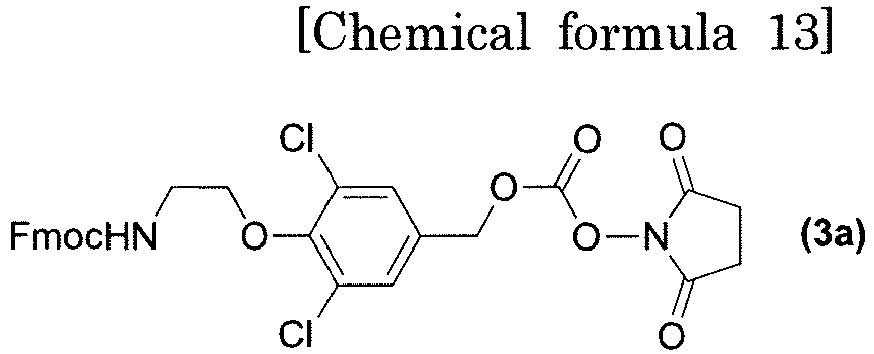


- In addition, the aldehyde type linker is preferably, for example, a compound represented by the following formula (4):


- Furthermore, the halogen type linker is, for example, the following formula (6):


- The methods for producing various linkers according to the present invention are not particularly limited, but each of the methods for producing the carbonate type linker and the aldehyde type linker includes at least a step of carbonizing, oxidizing, or halogenating the hydroxymethyl group of a benzyl alcohol derivative represented by the following formula (7):

- The reaction of carbonizing the hydroxymethyl group of the benzyl alcohol derivative represented by the formula (7) is characterized by reacting, in the presence of a base, the benzyl alcohol derivative represented by the formula (7) and a compound represented by the following formula (8):

- In formula (8), the leaving groups that are X1 and X2 each represent, for example: a halogen atom such as a fluorine atom, a chlorine atom, a bromine atom, and an iodine atom; or an organic group represented by -ORx ... (9) (Rx represents an aliphatic hydrocarbon group, an alicyclic hydrocarbon group, an aromatic hydrocarbon group, or a heterocyclic group, and these groups may each have a substituent).
- The aliphatic hydrocarbon group preferably has 1 to 20 carbon ato ms, and specific examples of the aliphatic hydrocarbon group include: alkyl gro ups such as a methyl group, an ethyl group, an n-propyl group, an isopropyl g roup, an n-butyl group, an isobutyl group, an s-butyl group, a t-butyl group, a n n-pentyl group, an n-hexyl group, an n-octyl group, an n-decyl group, an n-d odecyl group, and an n-octadecyl group; alkenyl groups such as a vinyl group and an allyl group; and alkynyl groups such as an ethynyl group and a propa rgyl group, and the like.
- In addition, the alicyclic hydrocarbon group preferably has 3 to 20 carbon atoms, and specific examples of the alicyclic hydrocarbon group include: cycloalkyl groups such as a cyclopropyl group, a cyclobutyl group, a cyclopent yl group, a cyclohexyl group, a cyclooctyl group, a norbornyl group, and an ad amanthyl group; and cycloalkylalkyl groups such as a cyclopentylmethyl group and a cyclohexylmethyl group; and the like.
- The aromatic hydrocarbon group preferably has 6 to 20 carbon atoms, and specific examples of the aromatic hydrocarbon group include: aryl groups such as a phenyl group, a naphthyl group, and an indenyl group; and aralkyl groups such as a benzyl group and a 4-phenylbutyl group; and the like.
- Furthermore, the heterocyclic group is obtained by substituting a part of the carbons forming the ring with an atom other than carbon, such as nitrogen, oxygen, and sulfur, in the alicyclic hydrocarbon group or aromatic hydrocarbon group, and preferably has 3 to 20 carbon atoms. The heterocyclic group is more preferably a nitrogen-containing heterocyclic imide group having at least one imide group in a nitrogen-containing heterocyclic group. Examples of such a nitrogen-containing heterocyclic imide group include saturated or unsaturated nitrogen-containing heterocyclic imide groups shown below.


- Particularly preferable examples of such a heterocyclic imide group include a succinimidyl group, a maleimidyl group, a phthalimidyl group, and the like.
- The aliphatic hydrocarbon group, the alicyclic hydrocarbon group, the aromatic hydrocarbon group, or the heterocyclic group may have a substituent, and examples of the substituent include: alkyl groups; halogen atoms such as a fluorine atom, a chlorine atom, a bromine atom, and an iodine atom; an amino group; a hydroxy group; a nitro group; and the like.
- Examples of such -ORx include N-succinimidyloxy group, an N-mal eimidyloxy group, an N-phthalimidyloxy group, a p-nitrophenyloxy group, a ben zyloxy group, and the like.
- In formula (8), X1 and X2 may be the same or different from each other. Examples of preferable compounds (8) include carbonic acid derivatives (e.g., di-N-succinimidyl carbonate, etc.), chloroformate compounds (e.g., N-succin imidyl chloroformate, p-nitrophenyl chloroformate), and the like.
- The use amount of the compound represented by the formula (8) and having a carbonate group in the carbonization reaction with respect to 1 mol of the benzyl alcohol derivative represented by the formula (7) is preferably not less than 0.5 times by mole, more preferably not less than 0.8 times by mole, and further preferably not less than 1 time by mole, and is preferably not greater than 3 times by mole, more preferably not greater than 2.5 times by mole, and further preferably not greater than 2 times by mole.
- The base is not particularly limited, but examples of the base include: tertiary amines such as triethylamine, tri-n-butylamine, N-methylmorpholine, N-methylpiperidine, diisopropylethylamine, pyridine, N,N-dimethylaminopyridine, and 1,4-diazabicyclo[2, 2, 2]octane; metal hydroxides such as lithium hydroxide, sodium hydroxide, potassium hydroxide, barium hydroxide, and magnesium hydroxide; metal carbonates such as lithium carbonate, sodium carbonate, and potassium carbonate; metal hydrogen carbonates such as lithium hydrogen carbonate, sodium hydrogen carbonate, and potassium hydrogen carbonate; and metal alkoxides such as lithium methoxide, lithium ethoxide, sodium methoxide, sodium ethoxide, potassium methoxide, potassium ethoxide, and potassium tert-butoxide. Among them, tertiary amines are preferable, and pyridine or N,N-dimethylaminopyridine is more preferable. Only one of these bases may be used solely, or two or more of these bases may be used in combination.
- The reaction of oxidizing the hydroxymethyl group of the benzyl alcohol derivative represented by the formula (7) is characterized by oxidizing the benzyl alcohol derivative represented by the formula (7), by applying an oxidizer.
- The oxidizer is not particularly limited, but examples of the oxidizer include: chlorates such as potassium chlorate, sodium chlorate, ammonium chlorate, barium chlorate, and calcium chlorate; perchlorates such as potassium perchlorate, sodium perchlorate, and ammonium perchlorate; inorganic peroxides such as potassium peroxide, sodium peroxide, calcium peroxide, magnesium peroxide, and barium peroxide; chlorites such as potassium chlorite, sodium chlorite, and copper chlorite; bromates such as potassium bromate, sodium bromate, and magnesium bromate; nitrates such as ammonium nitrate, sodium nitrate, potassium nitrate, barium nitrate, and silver nitrate; iodates such as potassium iodate, sodium iodate, and calcium iodate; permanganates such as potassium permanganate and ammonium permanganate; dichromates such as sodium dichromate and ammonium dichromate; periodates such as sodium periodate and metaperiodic acid; manganese dioxide; chromates such as chromium trioxide, chromic anhydride, chromic acid, and dichromic acid; lead dioxide, sodium nitrite, potassium hypochlorite, sodium hypochlorite, potassium peroxydisulfate, sodium peroxydisulfate, ammonium peroxydisulfate, potassium perborate, ammonium perborate, ozone, perchloric acid, tungstic oxide, or hydrogen peroxide, etc. Among them, manganese dioxide is preferable, since manganese dioxide is easily available. Only one of these oxidizers may be used solely, or two or more of these oxidizers may be used in combination.
- In the linker bonding step, it is necessary to adjust the reaction condition in accordance with the characteristics of each linker. Hereinafter, the reaction condition will be described individually for the carbonate type linker and the aldehyde type linker which are typically used in the present invention.
- The linker bonding step when the carbonate type linker is used will be described. When the carbonate type linker is used, the linker-bonded compound is formed by bonding the linker to the amino group of the first peptide chain by: mixing the carbonate type linker and the crude peptide; and forming a benzyloxycarbonylamino group.
- The use amount of the carbonate type linker in this reaction with respect to 1 mol of the crude peptide is preferably not less than 0.5 times by mole, more preferably not less than 1 time by mole, and further preferably not less than 2 times by mole, and is preferably not greater than 20 times by mole and more preferably not greater than 10 times by mole.
- The reaction between the carbonate type linker and the crude peptide is preferably carried out in the presence of a solvent. For example, organic solvents including: ether-based solvents such as diisopropyl ether, t-butyl methyl ether, dibutyl ether, dioxane, and diglyme; modified ethers such as propylene glycol monomethyl ether acetate; ester-based solvents such as ethyl acetate and butyl acetate; halogen-based solvents such as chloroform and dichloromethane; and the like, can be used as the reaction solvent. Moreover, aqueous solvents including: alcohols such as methanol and ethanol; ethers such as ethylene glycol, dimethoxyethane, and tetrahydrofuran; nitriles such as acetonitrile; amides such as dimethylformamide, N,N-dimethylacetamide, and N-methylpyrrolidone; and the like, can also be used as the reaction solvent. Only one of these reaction solvents may be used solely, or two or more of these reaction solvents may be used in combination. Among them, amides are preferable, and dimethylformamide is more preferable.
- The use amount of the reaction solvent with respect to the crude peptide is preferably not greater than 50 times by weight and further preferably not greater than 20 times by weight, and the lower limit is not particularly limited, but the amount of the reaction solvent is preferably not less than 2 times by weight.
- Furthermore, in this reaction, for the purpose of accelerating the reaction, a tertiary amine, such as triethylamine, tri-n-butylamine, N-methylmorpholine, N-methylpiperidine, diisopropylethylamine, pyridine, N,N-dimethylaminopyridine, and 1,4-diazabicyclo[2, 2, 2]octane, may be caused to coexist as a reaction accelerator.
- The reaction temperature is not particularly limited as long as the reaction temperature is not higher than the boiling point of the solvent to be used. For example, the reaction temperature is preferably not lower than 0°C, more preferably not lower than 10°C, and further preferably not lower than 20°C, and is preferably not higher than 100°C and more preferably not higher than 80°C.
- The reaction time is also not particularly limited, and is preferably not shorter than 1 hour and more preferably not shorter than 2 hours and is preferably not longer than 100 hours and more preferably not longer than 50 hours.
- After end of the reaction, the obtained linker-bonded compound is preferably washed to remove unnecessary components. As a solvent for washing, various solvents described in detail in the section of the reaction solvent can be used.
- The linker bonding step when the aldehyde type linker is used will be described. When the aldehyde type linker is used, the linker-bonded compound can be produced by: performing dehydration condensation of the aldehyde type linker and the crude peptide to produce an imine resin in which the aldehyde type linker is bonded to the crude peptide via an imino group; applying a reducing agent to the obtained imine resin to reduce the imino group; and forming a benzylamino group to bond the linker to the amino group of the first peptide chain.
- The dehydration condensation reaction between the aldehyde type linker and the crude peptide is carried out by mixing the aldehyde type linker and the crude peptide. In producing the imine resin, the use amount of the aldehyde type linker with respect to 1 mol of the crude peptide is preferably not less than 1 time by mole, more preferably not less than 3 times by mole, and further preferably not less than 5 times by mole, and is preferably not greater than 50 times by mole, more preferably not greater than 30 times by mole, and further preferably not greater than 20 times by mole.
- The reaction between the aldehyde type linker and the crude peptide is preferably carried out in the presence of a solvent. For example, organic solvents including: aromatic hydrocarbon solvents, such as benzene, toluene, and xylene; ether-based solvents such as diisopropyl ether, t-butyl methyl ether, dibutyl ether, and diglyme; modified ethers such as propylene glycol monomethyl ether acetate; ester-based solvents such as ethyl acetate and butyl acetate; halogen-based solvents such as chloroform and dichloromethane; cyclic hydrocarbon solvents such as cyclohexane, methylcyclohexane, and ethylcyclohexane; chain hydrocarbon solvents such as pentane, hexane, heptane, octane, isooctane, and isododecane; and the like, can be used as the reaction solvent. Moreover, aqueous solvents including: alcohols such as methanol and ethanol; ethers such as ethylene glycol, dimethoxyethane, and tetrahydrofuran; nitriles such as acetonitrile; amides such as dimethylformamide, N,N-dimethylacetamide, and N-methylpyrrolidone; and the like, can also be used as the reaction solvent. Only one of these reaction solvents may be used solely, or two or more of these reaction solvents may be used in combination. Among them, halogen-based solvents are preferable, and dichloromethane is more preferable.
- The use amount of the reaction solvent with respect to the crude peptide is preferably not greater than 100 times by weight and further preferably not greater than 50 times by weight, and the lower limit is not particularly limited, but the amount of the reaction solvent is preferably not less than 2 times by weight.
- In addition, in the dehydration condensation reaction, a dehydrating agent is preferably used as appropriate. Preferable examples of the dehydrating agent include: ortho acid esters typified by orthoformates such as trimethyl orthoformate, triethyl orthoformate, and tripropyl orthoformate, orthoacetates such as trimethyl orthoacetate, triethyl orthoacetate, and tripropyl orthoacetate, orthopropionates such as trimethyl orthopropionate, triethyl orthopropionate, and tripropyl orthopropionate, and the like; acetals typified by dimethoxymethane, 1,1-dimethoxyethane, 1,1-dimethoxypropane, diethoxyethane, 1,1-diethoxyethane, 1,1-diethoxypropane, and the like; and hemiacetals typified by 1-methoxy-1-ethanol, 1-methoxy-1-propanol, 1-methoxy-1-butanol, 1-ethoxy-1-ethanol, 1-ethoxy-1-propanol, 1-ethoxy-1-butanol, and the like. Among them, orthoformates are preferable, and trimethyl orthoformate is more preferable.
- When the dehydrating agent is used, the use amount of the dehydrating agent with respect to the crude peptide is preferably not greater than 100 times by weight and further preferably not greater than 50 times by weight, and the lower limit is not particularly limited, but the amount of the dehydrating agent is preferably not less than 1 time by weight.
- The reaction temperature is not particularly limited as long as the reaction temperature is not higher than the boiling point of the solvent to be used. For example, the reaction temperature is preferably not lower than 0°C, more preferably not lower than 10°C, and further preferably not lower than 20°C, and is preferably not higher than 100°C, more preferably not higher than 80°C, and further preferably not higher than 60°C.
- The reaction time is also not particularly limited, and is preferably not shorter than 1 hour and more preferably not shorter than 12 hours and is preferably not longer than 20 days and more preferably not longer than 15 days.
- After end of the reaction, the obtained linker-bonded compound is preferably washed to remove unnecessary components. As a solvent for washing, various solvents described in detail in the section of the reaction solvent can be used.
- Examples of the reducing agent in the reduction reaction of the imine resin include: aluminium hydrides such as lithium aluminium hydride, diisobutylaluminium hydride, and sodium bis(2-methoxyethoxy)aluminium hydride; borohydride compounds such as alkali metal borohydrides, including lithium borohydride, sodium borohydride, and potassium borohydride, calcium borohydride, sodium cyanoborohydride, sodium triacetoxyborohydride, lithium triethylborohydride, lithium tri(sec-butyl)borohydride, and potassium tri(sec-butyl)borohydride; tributyltin hydroxide; and borane, etc. Among them, from the standpoint of chemoselectivity, borohydride compounds are preferable, and sodium cyanoborohydride is more preferable.
- The use amount of the reducing agent with respect to 1 part by mass of the imine resin is preferably not less than 0.1 parts by mass, more preferably not less than 0.3 parts by mass, and further preferably not less than 0.6 parts by mass, and is preferably not greater than 3 parts by mass, more preferably not greater than 2.5 parts by mass, and further preferably not greater than 2 parts by mass.
- The reduction reaction of the imine resin is preferably carried out in the presence of a solvent. For example, organic solvents including: aromatic hydrocarbon solvents, such as benzene, toluene, and xylene; ether-based solvents such as diisopropyl ether, t-butyl methyl ether, dibutyl ether, and diglyme; modified ethers such as propylene glycol monomethyl ether acetate; ester-based solvents such as ethyl acetate and butyl acetate; carboxylic acid-based solvents such as acetic acid and propionic acid; halogen-based solvents such as chloroform and dichloromethane; cyclic hydrocarbon solvents such as cyclohexane, methylcyclohexane, and ethylcyclohexane; chain hydrocarbon solvents such as pentane, hexane, heptane, octane, isooctane, and isododecane; and the like, can be used as the reaction solvent. Moreover, aqueous solvents including: alcohols such as methanol and ethanol; ethers such as ethylene glycol, dimethoxyethane, and tetrahydrofuran; nitriles such as acetonitrile; amides such as dimethylformamide, N,N-dimethylacetamide, and N-methylpyrrolidone; and the like, can also be used as the reaction solvent. Only one of these reaction solvents may be used solely, or two or more of these reaction solvents may be used in combination. When an alcohol or a carboxylic acid-based solvent is used, an increase in the reaction speed can also be expected. In the present invention, among them, alcohol-based solvents, carboxylic acid-based solvents, and amides are preferable.
- The use amount of the reaction solvent with respect to the imine resin is preferably not greater than 100 times by weight and further preferably not greater than 50 times by weight, and the lower limit is not particularly limited, but the amount of the reaction solvent is preferably not less than 5 times by weight.
- The reaction temperature is not particularly limited as long as the reaction temperature is not higher than the boiling point of the solvent to be used. For example, the reaction temperature is preferably not lower than 0°C, more preferably not lower than 10°C, and further preferably not lower than 20°C, and is preferably not higher than 100°C, more preferably not higher than 80°C, and further preferably not higher than 60°C.
- The reaction time is also not particularly limited, and is preferably not shorter than 1 hour and more preferably not shorter than 10 hours and is preferably not longer than 50 hours and more preferably not longer than 30 hours.
- After end of the reaction, the obtained linker-bonded compound is preferably washed to remove unnecessary components. As a solvent for washing, various solvents described in detail in the section of the reaction solvent can be used.
- In the obtained linker-bonded compound, the linker and the crude peptide are bonded to each other via -CH2-NH-. However, the hydrogen atom in NH- has high reactivity and may have an effect on a subsequent reaction. Thus, an N-protection reaction of the linker-bonded compound after the reduction reaction (referred to as a reduced form resin) is preferably carried out as necessary. Examples of a protecting group for an amino group include carbamate-based groups, imide-based groups, sulfonamide-based groups, and the like. Among them, carbamate-based protecting groups, such as a tert-butoxycarbonyl group (-Boc), a benzyloxycarbonyl group (-Z), a 9-fluorenylmethyloxycarbonyl group (-Fmoc), a 2,2,2-trichloroethoxycarbonyl group (-Troc), and an allyloxycarbonyl group (-Alloc), are preferable. When the amino-protecting group in the aldehyde type linker is Fmoc, for example, a tert-butoxycarbonyl group (-Boc) is preferably selected in order that influence of the deprotection condition for the Fmoc is prevented.
- Introduction of the protecting group can be carried out under a basic condition by adding a protecting agent corresponding to each protecting group, to the reaction solution after the reduction reaction. Examples of the protecting agent include carbamating agents including: chlorides such as methoxycarbonyl chloride, ethoxycarbonyl chloride, isopropoxycarbonyl chloride, allyloxycarbonyl chloride, benzyloxycarbonyl chloride, and phenyloxycarbonyl chloride; or anhydrides such as di-tert-butyldicarbonate, etc.
- The use amount of the protecting agent with respect to 1 mol of the reduced form resin is preferably 1 to 30 times by mole and more preferably 10 to 25 times by mole.
- In addition, in the protection, a base may be further added for the purpose of neutralizing an acid, produced as a byproduct, to accelerate the reaction. Examples of the base include: metal carbonates such as lithium carbonate, sodium carbonate, potassium carbonate, magnesium carbonate, and calcium carbonate; metal hydrogen carbonates such as lithium hydrogen carbonate, sodium hydrogen carbonate, potassium hydrogen carbonate, and cesium hydrogen carbonate; metal hydroxides such as lithium hydroxide, sodium hydroxide, and potassium hydroxide; and tertiary amines such as triethylamine, N-methylmorpholine, ethyl diisopropylamine, and pyridine. Tertiary amines are preferable, and N-methylmorpholine is further preferable.
- The use amount of the base with respect to 1 mol of the reduced form resin is preferably 0.5 to 20 times by mole and more preferably 3 to 15 times by mole.
- The N-protection reaction may be carried out in the presence of a solvent. The reaction solvent is not particularly limited as long as the reaction solvent does not have an effect on the reaction. As the reaction solvent, for example: water; ether-based solvents such as tetrahydrofuran, diethyl ether, 1,4-dioxane, and ethylene glycol dimethyl ether; aromatic hydrocarbon-based solvents such as benzene and toluene; aliphatic hydrocarbon-based solvents such as pentane, hexane, heptane, and methylcyclohexane; halogen-based solvents such as carbon tetrachloride, chloroform, methylene chloride, 1,2-dichloroethane, and chlorobenzene; ester-based solvents such as ethyl acetate, isopropyl acetate, and tert-butyl acetate; sulfoxide-based solvents such as dimethyl sulfoxide; amide-based solvents such as N,N-dimethylformamide and N,N-dimethylacetamide; urea-based solvents such as dimethylpropyleneurea; phosphonic triamide-based solvents such as hexamethylphosphonic triamide; ketone-based solvents such as acetone and methyl ethyl ketone; and nitrile-based solvents such as acetonitrile and propionitrile, can be used. Preferable examples of the reaction solvent include: water; aromatic hydrocarbon-based solvents such as benzene and toluene; ether-based solvents such as tetrahydrofuran, 1,4-dioxane, and methyl tert-butyl ether; ester-based solvents such as ethyl acetate, isopropyl acetate, and tert-butyl acetate; halogen-based solvents such as carbon tetrachloride, chloroform, methylene chloride, 1,2-dichloroethane, and chlorobenzene; and amide-based solvents such as N,N-dimethylformamide and N,N-dimethylacetamide, and the reaction solvent is further preferably DMF. These solvents may be used solely, or two or more of these solvents may be used in combination.
- An excessive amount of the solvent is not preferable in terms of cost and post-treatment, and thus the use amount of the solvent with respect to the reduced form resin is preferably not greater than 50 times by weight and more preferably not greater than 30 times by weight.
- The reaction temperature is not particularly limited as long as the reaction temperature is not higher than the boiling point of the solvent to be used. For the purpose of being able to terminate the reaction in a short time and inhibiting a side reaction, the reaction temperature is preferably not lower than - 10°C and more preferably not lower than 0°C, and is preferably not higher than 90°C and more preferably not higher than 50°C.
- The reaction time is also not particularly limited, and is preferably not shorter than 1 hour and more preferably not shorter than 3 hours and is preferably not longer than 100 hours and more preferably not longer than 50 hours.
- In the hydrophilic unit bonding step, the hydrophilic unit is bonded to the linker-bonded compound obtained as described above. The "hydrophilic unit" refers to a unit that can be bonded to the linker moiety of the linker-bonded compound (the bonded compound of the first peptide and the linker) and that can impart hydrophilicity to the linker-bonded compound, and, for example, the hydrophilic unit itself has hydrophilicity with a log P (P is an octanol-water partition coefficient) of not higher than -1. As a result of bonding such a hydrophilic unit to the first peptide chain via the linker, the first peptide chain can be hydrophilized when the support is cleaved and removed, so that chromatographic purification of the first peptide chain is enabled. In the present specification, a product obtained by this hydrophilic unit bonding step, that is, a connected compound including three components, the first peptide, the linker, and the hydrophilic unit, is referred to as a "hydrophilized peptide", such a compound to which the support is bonded is particularly referred to as a "supported hydrophilized peptide", and such a compound from which the support is removed is particularly referred to as a "support-free hydrophilized peptide".
- A log P value is a parameter of the hydrophobicity of a compound, and a partition coefficient P in a typical octanol-water system is obtained as follows. First, a compound (the hydrophilic unit in the present invention) is dissolved in octanol (or water), water (or octanol) is added thereto in the same amount, and the solution is shaken for 30 minutes by a Griffin flask shaker manufactured by Griffin & George Ltd. Thereafter, centrifugal separation is performed at 2000 rpm for 1 to 2 hours, each of the concentrations of the compound in the octanol layer and the water layer is measured spectroscopically or by various methods such as GLC, and the partition coefficient P is obtained by the following formula.

- Coct: the concentration of the compound in the octanol layer
- Cw: the concentration of the compound in the water layer
- The log P values of various compounds have been actually measured by many researchers so far, and these actual measured values have been arranged by C. Hansch et al. (see PARTITION COEFFICIENTS AND THEIR USES; Chemical Reviews, vol. 71, P525, 1971).
- The log P value may be obtained by the above method, but, in the present invention, a value calculated at 25°C by ACD/Log
P DB Release 100 Product Version 10.01 manufactured by Advanced Chemistry Development, Inc., is used in principle. - As a result of considering compounds having various log P values when an effective structure is searched for as the hydrophilic unit, it has been found that if the log P value of a hydrophilizing unit is, for example, not higher than -1, the hydrophilizing unit is effective for hydrophilizing the crude peptide. Further, if the log P value exceeds -1, sufficient hydrophilicity is not exerted, so that the purification efficiency of the support-free hydrophilized peptide may decrease. The log P value is more preferably not higher than -1.2 and further preferably not higher than -1.5. In addition, the lower limit of the log P is not particularly limited, but the log P value is, for example, preferably not less than -10.
- Examples of the hydrophilic unit having such a log P value include a hydrophilic peptide chain, a hydrophilic polyether, or a hydrophilic polyamine, etc. The hydrophilic peptide chain may be prepared by sequentially connecting amino acids to the linker-bonded compound. In this case, the hydrophilic peptide chain is desirably prepared by Fmoc solid-phase peptide synthesis. In addition, regarding the hydrophilic peptide chain, a previously prepared hydrophilic peptide chain may separately be connected to the linker-bonded compound.
- Therefore, in a preferred embodiment of the hydrophilic unit bonding step, the hydrophilic unit is preferably bonded to the linker moiety by the following steps:
- (1) bonding a plurality of amino acids to the linker moiety stepwise by Fmoc solid-phase peptide synthesis;
- (2) bonding a previously prepared hydrophilic peptide chain to the linker moiety;
- (3) bonding a previously prepared polyether to the linker moiety; and
- (4) bonding a previously prepared polyamine to the linker moiety. Hereinafter, each of the above steps will be described.
- In this method, the hydrophilic peptide is obtained by sequentially forming a peptide at the amino group of the linker-bonded compound obtained by the above step, by Fmoc solid-phase peptide synthesis. When a hydrophilic peptide is sequentially formed as in this method, the properties (e.g., hydrophilicity, etc.) of a hydrophilized peptide formed each time one cycle ends can be verified, so that no extra agent is consumed and thus this method is preferable. The specific procedure of the Fmoc solid-phase peptide synthesis is not particularly limited, and may be, for example, the same as that in the case of the above-described step of producing the supported crude peptide. In any case, a cycle, in which deprotection of Fmoc is performed in the presence of a base and dehydration condensation of an amino acid or a peptide is performed to extend a main chain, is preferably continued until a desired hydrophilic peptide chain is obtained.
- The amino acids forming the hydrophilic peptide are not particularly limited, and various amino acids described in detail in the section of the first peptide chain can be used. For the hydrophilic peptide, different types of amino acids among these amino acids may be used in combination, or the same type of amino acids may be used solely. In the present invention, in order to increase the hydrophilicity of the hydrophilic peptide, the hydrophilic peptide preferably has, for example, a unit derived from an amino acid having a basic side chain. Specifically, the hydrophilic peptide chain has preferably two or more residues, more preferably 4 or more residues, among all amino acid residues, as at least one or more types of amino acid residues selected from arginine, asparagine, glutamine, histidine, and lysine. The upper limit is not particularly limited, but the number of such amino acid residues is preferably not greater than 35, more preferably not greater than 20, and further preferably not greater than 10. For the same reason, the hydrophilic peptide preferably has, for example, a residue derived from an amino acid having an acidic side chain. Specifically, the hydrophilic peptide chain has desirably two or more residues, more preferably 4 or more residues, among all amino acid residues, as at least one or more types of amino acid residues selected from aspartic acid and glutamic acid. The upper limit is not particularly limited, but the number of such amino acid residues is preferably not greater than 35, more preferably not greater than 20, and further preferably not greater than 10.
- The number of the amino acid residues of the hydrophilic peptide chain is not particularly limited, but is, for example, not less than 2, more preferably not less than 3, and further preferably not less than 4, is preferably not greater than 35, may be not greater than 20, and may be not greater than 10. If the number of the amino acid residues forming the hydrophilic peptide increases, the contribution ratio of the hydrophilic peptide chain to hydrophilization in the bonded compound of the linker-bonded compound and the hydrophilic peptide chain (the hydrophilized peptide) increases, so that it becomes easy to control the characteristics of the hydrophilized peptide.
- Before the hydrophilic peptide chain is bonded to the linker-bonded compound, a desired hydrophilic peptide chain may be produced in advance by liquid-phase peptide synthesis or solid-phase peptide synthesis, and the obtained hydrophilic peptide chain may be bonded to the linker.
- The hydrophilic unit is not limited to the polypeptide, and may be a polyether or a polyamine. The hydrophilic polyether is not particularly limited, and is, for example, a compound having repeating units represented by -Ry-O-, in a main chain backbone thereof. Examples of Ry include -CH2CH2-, -CH(CH3)CH2-, - CH(C2H5)CH2-, -C(CH3)2CH2-, -(CH2)4-, and the like. Among them, -CH2CH2- and - CH(CH3)CH2- are preferable. The hydrophilic polyether may be a homopolymer having one type of repeating units among these repeating units, or may be a copolymer.
- The number of the repeating units represented by -Ry-O- is, for example, preferably 1 to 200 and more preferably 50 to 150.
- The hydrophilic polyether contains preferably not less than 50% by weight, further preferably not less than 80% by weight, and more preferably not less than 95% by weight of the repeating units represented by -Ry-O- in the hydrophilic polyether.
- The polystyrene-equivalent number average molecular weight of the hydrophilic polyether obtained by gel permeation chromatography (GPC) is, for example, preferably about 1000 to 100,000.
- The polyamine is not particularly limited, examples of the polyamine include an aliphatic hydrocarbon to which at least two or more amino groups are bonded, and the aliphatic hydrocarbon may be saturated (chain or cyclic) or unsaturated. Each of the hydrogen atoms bonded to the nitrogen atoms of the polyamine may be substituted or unsubstituted, but is preferably unsubstituted, in order to increase the hydrophilicity.
- Specific examples of such a polyamine include chain aliphatic polyamines such as diethylenetriamine, N-(2-aminoethyl)-1,3-propanediamine, N-(3-aminopropyl)-1,3-propanediamine, spermidine, bis(hexamethylene)triamine, 4-(aminomethyl)-1,8-octanediamine, triethylenetetramine, 1,4,7,11-tetraazaundecane, N,N'-bis(3-aminopropyl)ethylenediamine, N,N'-bis(2-aminoethyl)-1,3-propanediamine, N,N'-bis(3-aminopropyl)-1,3-propanediamine, spermine, tris(2-aminoethyl)amine, tetraethylenepentamine, and pentaethylenehexamine; and cyclic aliphatic polyamines such as 1,4,7-triazacyclononane, 1,5,9-triazacyclododecane, cyclen, 1,4,8,11-tetraazacyclotetradecane, 1,4,8,12-tetraazacyclopentadecane, hexacyclen, 3,3'-diaminobenzidine, and 1,2,4,5-benzenetetramine.
- In order to bond the linker and the hydrophilic unit to the crude peptide to obtain a hydrophilized peptide, a hydrophilic unit-linker complex in which the hydrophilic unit and the linker are previously bonded as a single compound may be introduced to the amino group of the crude peptide. By previously preparing the complex, the process for producing the hydrophilic peptide from the crude peptide can be shortened, so that the efficiency of the entire process can be increased.
- As the hydrophilic unit and the linker in the complex, the same ones as those in the linker bonding step A1a or the hydrophilic unit bonding step A1b can be used. As the method for preparing the complex, the same method as that in the hydrophilic unit bonding step A1b can be adopted. In the case of bonding the complex to the crude peptide, the same method as that in the linker bonding step A1a can be adopted.
- After the hydrophilic unit-linker complex is bonded to the crude peptide, the amino acid at the hydrophilic unit side may be further extended as necessary. For example, limited types as the hydrophilic unit-linker complex are prepared as basic units, the basic unit is bonded to the crude peptide, and then, for example, the amino acid is extended in accordance with the characteristics of the crude peptide. This method allows the number of the types of the hydrophilic unit-linker complexes prepared as the basic units to be reduced, and thus is easy.
- In addition, A2-II is also preferably carried out by the same method as that for A2-I.
- The support cleavage step refers to a step of separating the support and the first peptide chain from each other. While the linker and the hydrophilic unit are bonded to the first peptide chain, the first peptide chain can be hydrophilized by cleavage the support. The first peptide chain to which the linker and the hydrophilic unit are bonded and from which the support is cleaved is referred to as a support-free hydrophilized peptide in the present specification.
- The support cleavage step may be carried at any stage before the chromatographic purification step described later. However, the bond between the first peptide chain and the support is preferably cleaved at any stage before bonding the linker to the supported crude peptide until the hydrophilized peptide is obtained, or after the supported hydrophilized peptide is obtained. Specifically, the support may be cleaved from a supported crude peptide including the first peptide chain and the support (see the support cleavage step B1 in Scheme I), the support may be cleaved from a supported linker-bonded compound in which the linker is bonded to the supported crude peptide (see the support cleavage step B2 in Scheme I), or the support may be cleaved from a supported hydrophilized peptide in which the linker and the hydrophilic unit are bonded to the supported crude peptide (see the support cleavage step B3 in Scheme I). Even when the support is cleaved from the supported crude peptide (the support cleavage step B1), a support-free linker-bonded compound can be obtained from the obtained support-free crude peptide by carrying out the linker bonding step A1a similarly to the above (A1c in Scheme I). In addition, a support-free hydrophilized peptide can be obtained from the support-free crude peptide by carrying out the hydrophilic unit-linker complex bonding step A2. Moreover, a support-free hydrophilized peptide can be obtained, from a support-free linker-bonded compound obtained by carrying out the support cleavage step B2 or treating the support-free crude peptide in the linker bonding step A1a, by carrying out the hydrophilic unit bonding step A1b similarly to the above (A1d in Scheme I). In the present invention, after the hydrophilized peptide is obtained by the hydrophilization step, the support cleavage step (i.e., the support cleavage step B3 in Scheme I) is preferably carried out.
- In these support cleavage steps B1, B2, and B3, an amide bond or ester bond connecting the first peptide chain and the support is hydrolyzed. In cleaving the first peptide chain from the support, an operation that is widely used in solid-phase peptide synthesis is preferably carried out. For example, in the case where the first peptide chain or the hydrophilic unit is formed by Fmoc solid-phase peptide synthesis, the first peptide chain is preferably cleaved from the support by treatment with a cleaving reagent.
- As the cleaving reagent, a reagent that is used under a general condition for cleaving from the support can be used. When the cleaving reagent is used as an aqueous solution, the concentration of the cleaving reagent in 100% of this reagent, as a volume ratio, is preferably not less than 40%, more preferably not less than 50% and is preferably not greater than 100%, but there is no problem if the concentration is not greater than 97%.
- In addition, the cleaving reagent may contain TIS (triisopropylsilane). The concentration of TIS in 100% of the reagent, as a volume ratio, is preferably not less than 1% and more preferably not less than 1.5%, and is preferably not greater than 20% and more preferably not greater than 10%.
- The cleavage step may be carried out in the absence of a solvent (a solvent mixed from the above reagent is permitted), or may be carried out in the presence of a solvent as necessary. Examples of the solvent include water, an organic solvent, an aqueous solvent, etc. Examples of the organic solvent include halogen-based solvents such as carbon tetrachloride, chloroform, methylene chloride, 1,2-dichloroethane, chlorobenzene, etc. Examples of the aqueous solvent include: alcohols such as methanol and ethanol; ethers such as ethylene glycol, dimethoxyethane, and tetrahydrofuran; ketones such as acetone and dioxane; nitriles such as acetonitrile; amides such as dimethylformamide, N,N-dimethylacetamide, and N-methylpyrrolidone; and the like. These solvents may be used solely, or two or more of these solvents may be used in combination.
- The treatment temperature is not particularly limited as long as the treatment temperature is not higher than the boiling point of the solvent to be used. For example, the treatment temperature is preferably not lower than 0°C and more preferably not lower than 10°C, and is preferably not higher than 100°C, more preferably not higher than 80°C, and further preferably not higher than 60°C.
- In addition, the treatment time is, for example, preferably not shorter than 0.5 hour, more preferably not shorter than 1 hour, and further preferably not shorter than 1.5 hours, and is preferably not longer than 20 hours and more preferably not longer than 10 hours.
- As post-treatment after the reaction, general treatment for obtaining a product from a reaction solution is preferably performed. Specifically, the cleaved support is separated by filtration or the like, and concentration and washing are performed as necessary. Then, the purity may be further increased by a general purification method such as an operation of adding an organic solvent to deposit and obtain a solid.
- The protecting group at the side chain of the first peptide may be deprotected or may not be deprotected, by treatment in the support cleavage step. If the protecting group bonded to the side chain of the first peptide can be deprotected by the treatment in the support cleavage step, a deprotection step for the side chain can be omitted, and thus the method is easy. In addition, in the case where the side chain of the first peptide is not deprotected in the support cleavage step, deprotection of the side chain of the first peptide chain may be separately carried out. The protecting group bonded to the side chain of the first peptide chain may be deprotected at any stage before or after the hydrophilic unit is introduced. In addition, deprotection of the side chain can be carried out by a general method, depending on the protecting group.
- The first peptide chain (support-free hydrophilized peptide) to which the linker and the hydrophilic unit are bonded and from which the support is cleaved as described above has hydrophilicity, and thus chromatographic purification can be performed thereon. Thus, in the chromatographic purification step, the support-free hydrophilized peptide obtained by the hydrophilization step and the support cleavage step is treated by liquid chromatography. At this time, the hydrophilized peptide is preferably dissolved in water beforehand.
- A column and an eluent to be used in the chromatographic purification can be selected as appropriate in accordance with the type of the support-free hydrophilized peptide to be purified and impurities to be separated. The filler of the column is not particularly limited, and a wide range of publicly known fillers can be used, but typical examples of the filler preferably include silica gel, octadecyl group-bonded silica gel, octyl group-bonded silica gel, butyl group-bonded silica gel, trimethylsilyl group-bonded silica gel, Florisil, alumina, zirconia, hydroxyapatite, a styrene-vinylbenzene copolymer, polymethacrylate, polyhydroxymethacrylate, polyvinyl alcohol, an ion-exchange resin, activated carbon, etc. Columns packed with these fillers may be used solely, or two or more of these columns may be used in combination.
- In addition, the eluent can be prepared as appropriate in accordance with the column to be used, the object to be purified, and impurities to be removed. For example, a mixed solution obtained by combining water and a hydrophilic organic solvent (e.g., alcohols such as methanol and ethanol; ethers such as ethylene glycol, dimethoxyethane, and tetrahydrofuran; ketones such as acetone and dioxane; nitriles such as acetonitrile; amides such as dimethylformamide, N,N-dimethylacetamide, N-methylpyrrolidone; and the like) as appropriate, is used. An appropriate acid (e.g., TFA, formic acid, acetic acid, etc.) may be dissolved in this mixed solution.
- The chromatographic purification step may be carried out two or more times as necessary, and the column (filler) and/or the eluent may be changed every time.
- In the linker cleavage step, the bond between the linker and the first peptide chain included in the chromatographically-purified support-free hydrophilized peptide is cleaved by chemical treatment. Examples of the chemical treatment include treatment by an acid or catalytic reduction, and the like.
- Cleavage of the linker by a catalytic reduction reaction is preferably carried out in the presence of a solvent. Examples of the solvent include: alcohol-based solvents such as methanol, ethanol, n-propanol, isopropanol, n-butanol, 2-butanol, and n-pentanol; carboxylic acid-based solvents such as acetic acid, formic acid, and propionic acid; ethers such as tetrahydrofuran, diethyl ether, and dioxane, ester-based solvents such as methyl acetate, ethyl acetate, n-propyl acetate, isopropyl acetate, n-butyl acetate, sec-butyl acetate, isobutyl acetate, and tert-butyl acetate; halogenated hydrocarbons such as dichloromethane, chloroform, and carbon tetrachloride; aromatic hydrocarbons such as toluene; ketone-based solvents such as acetone, 2-butanone, 3-methyl-2-butanone, 2-pentanone, 4-methyl-2-pentanone, and 2-hexanone; amides such as N,N-dimethylformamide, N,N-dimethylacetamide, N-methylpyrrolidone, N-ethylpyrrolidone; and nitriles such as acetonitrile. Only one of these solvents may be used solely, or two or more of these solvents may be used in combination. Among them, an alcohol-based solvent having 3 to 8 carbon atoms is preferably contained in an amount of 10 to 100% by weight and more preferably 30 to 100% by weight in 100% by weight of the solvent.
- The use amount of the solvent to be used in the catalytic reduction reaction is not particularly limited, but, for example, the use amount of the solvent as a weight ratio with respect to the hydrophilized peptide is preferably not less than 2 times and more preferably not less than 5 times, and is preferably not greater than 500 times and more preferably not greater than 400 times.
- As a hydrogen source for the catalytic reduction reaction, for example, hydrogen gas, formic acid, or a salt thereof can be used, but hydrogen gas is preferably used from the standpoint of cost efficiency. In the case of using hydrogen gas, normally, the hydrogen pressure is preferably adjusted in the range of the atmospheric pressure (1.013×10⁵ Pa) to 0.5 MPa.
- As a catalyst for the catalytic reduction reaction, for example, catalysts containing platinum, palladium, and the like can be used. Among them, catalysts containing palladium are preferable, and metal supported catalysts such as a palladium catalyst supported on activated carbon are particularly preferable.
- The catalytic reduction reaction is preferably carried out by reacting a mixture of the hydrophilized peptide and the catalyst in the presence of the solvent and the hydrogen source. The reaction temperature is not particularly limited as long as the reaction temperature is not higher than the boiling point of the solvent to be used. For example, the reaction temperature is preferably not lower than 0°C, more preferably not lower than 15°C, and further preferably not lower than 30°C, and is preferably not higher than 70°C and more preferably not higher than 60°C. In addition, the reaction time is not limited, but is, for example, preferably not shorter than 1 hour, more preferably not shorter than 3 hours, and further preferably not shorter than 5 hours, and is preferably not longer than 50 hours and more preferably not longer than 30 hours.
- After end of the catalytic reduction reaction, the first peptide chain from which the linker is removed can be isolated and purified by post-treatment that is normally performed, for example, operations such as concentration, dissolution in an organic solvent, filtration, washing, and deposition.
- Examples of the acid to be used in this step include: halogenated carboxylic acids such as TFA (trifluoroacetic acid) and TCA (trichloroacetic acid); mineral acids such as hydrobromic acid, hydrochloric acid, and sulfuric acid; sulfonic acids such as p-toluenesulfonic acid, methanesulfonic acid, trifluoromethanesulfonic acid, and fluorosulfonic acid, etc. An acid having pKa of not higher than 0 is preferable, an acid having pKa of not higher than -2 is further preferable, and the lower limit is not particularly limited, but the pKa is generally not lower than -20 and preferably not lower than -18. Only one of these acids may be used solely, or two or more of these acids may be used in combination. The use amount of the acid with respect to the hydrophilized peptide, as a weight ratio, is preferably not less than 10 times and more preferably not less than 20 times, and is preferably not greater than 100 times and more preferably not greater than 80 times.
- The reaction for cleaving the linker by the acid may be carried out in the presence of a solvent. Examples of the solvent include carboxylic acid-based solvents such as acetic acid and propionic acid, and water, etc. Only one of these solvents may be used solely, or two or more of these solvents may be used in combination. The use amount of the solvent with respect to the hydrophilized peptide, as a weight ratio, is preferably not less than 1 time and more preferably not less than 2 times, and is preferably not greater than 100 times and more preferably not greater than 50 times.
- As such a solvent, a solvent containing TFA as an essential component is preferable, and a mixed solution containing both TFA and a mineral acid, which is not TFA, or a mixed solution containing TFA and a Lewis acid is more preferable. As the mixed solution containing both TFA and a mineral acid, which is not TFA, for example, a mixed solution containing HBr (its concentration is preferably 15 to 40%), acetic acid, thioanisole, and TFA is preferable. In addition, examples of the mixed solution containing TFA and a Lewis acid include a mixed solution containing TFA, trimethylsilyl trifluoromethanesulfonate (TMSOTf), and thioanisole, and a mixed solution containing TFA, TMSOTf, and meta-cresol, etc. From the standpoint of practicality, the mixed solution containing TFA and a Lewis acid is more preferably used.
- Furthermore, in the reaction for cleaving the linker by the acid, a mixed solution containing the acid and, as a reaction accelerator, a Lewis acid such as trimethylsilyl trifluoromethanesulfonate (TMSOTf), trimethylsilyl bromide (TMSBr), trimethylsilyl iodide (TMSI), a BF3-diethyl ether complex, and Cp2HfCl2-AgClO4 can also be used. The use amount of the reaction accelerator with respect to the hydrophilized peptide, as a weight ratio, is preferably not less than 1 time and more preferably not less than 5 times, and is preferably not greater than 100 times and more preferably not greater than 50 times.
- In the reaction for cleaving the linker by the acid, an additive may be added for the purpose of accelerating the reaction. Examples of the additive include phenol, m-cresol, p-cresol, anisole, thioanisole, diphenyl sulfide, and dimethyl sulfide. Only one of these additives may be used, or two or more of these additives may be used in combination.
- The reaction temperature is not particularly limited as long as the reaction temperature is not higher than the boiling point of the solvent to be used. For example, the reaction temperature is preferably not lower than -35°C, more preferably not lower than -20°C, and further preferably not lower than -10°C, and is preferably not higher than 100°C, more preferably not higher than 80°C, and further preferably not higher than 60°C.
- The reaction time is also not particularly limited, and is preferably not shorter than 0.1 hour, more preferably not shorter than 1 hour, and further preferably not shorter than 2 hours, and is preferably not longer than 50 hours, more preferably not longer than 30 hours, and further preferably not longer than 20 hours.
- After end of the reaction by the acid, the first peptide chain from which the linker is removed can be isolated and purified by performing post-treatment that is normally performed, for example, an operation of adding a general organic solvent to deposit and obtain the peptide, etc.
- In order to further purify the hydrophobic peptide obtained by the above step, a washing step of removing the bonded compound of the hydrophilic unit and the linker by washing may be carried out. In this step, the support-free and linker-free first peptide chain obtained by the linker cleavage step is washed with water or a water-containing solvent which may contain an aid.
- The water-containing solvent is, for example, a mixture of water and a hydrophilic solvent, and examples of the hydrophilic solvent include: aqueous solvents including alcohols such as methanol and ethanol; ethers such as ethylene glycol, dimethoxyethane, and tetrahydrofuran; ketones such as acetone and dioxane; and nitriles such as acetonitrile; amides such as dimethylformamide, N,N-dimethylacetamide, and N-methylpyrrolidone; and the like. The water or the water-containing solvent may contain an aid such as a neutralizer and a buffer as necessary. Examples of the neutralizer include inorganic base compounds such as sodium bicarbonate, sodium hydroxide, potassium hydroxide, and slaked lime. In addition, examples of the buffer include carboxylates or phosphates such as disodium hydrogen phosphate, sodium dihydrogen phosphate, dipotassium hydrogen phosphate, and potassium dihydrogen phosphate.
- The washing operation may be carried out two or more times as necessary, and the water or the water-containing solvent to be used for washing may be changed every time. Preferably, the purified peptide after the washing operation is dried, and the residue is removed therefrom, to obtain a product.
- As described above, by treating the supported crude peptide by the hydrophilization step A and the support cleavage step B and then treating the obtained peptide by the chromatographic purification step and the linker cleavage step, it is made possible to highly and simply purify the peptide. In addition, in the present invention, the type of the peptide does not matter, so that the present invention is excellent in versatility and is suitable for application of simply purifying various peptides.
- The present application claims for benefit of priority based on
US Patent Application No. 62/055,991 filed on September 26, 2014 US Patent Application No. 62/055,991 filed on September 26, 2014 - Hereinafter, the present invention will be described more specifically by way of examples. The present invention is not limited to examples described below, and can also be carried out with appropriate modifications within the range adaptable to the gist described above and below, and such modifications are included in the technical scope of the present invention.
- The apparatuses used in the examples of the present application are as follows.
- Automatic peptide synthesizer: Symphony manufactured by Protein Technologies, Inc.
- NMR: "JMTC-500" manufactured by JEOL Ltd.
- Mass spectrometry analyzer: "microflex" manufactured by Bruker Dartonics K.K. was used, and dihydroxybenzoic acid was used as a matrix.
- HPLC analyzer: "SPD-10Avp", "LC-10ADvp", "SCL-10Avp", "DGU-12A", "CTO-10ASvp", and "C-R8A" manufactured by Shimadzu Corporation.
- HPLC purifying apparatus: "ProStar (preparative chromatography apparatus)" manufactured by Varian, Inc. and "DYNAMAX Absorbance Detector model uv-D II (UV detector/preparative chromatography apparatus)' manufactured by Rainin Instrument LLC.
-

- 4-(2-Fmoc-amino)ethoxy-3,5-dichlorobenzylalcohol (purity 98.3%, 200 mg, 0.429 mmol) was dissolved in methylene chloride (4 mL). An acetonitrile (8 mL) solution of di(N-succinimidyl)carbonate (165 mg, 0.643 mmol) and pyridine (51.8 µL, 0.643 mmol) were added to the solution in order. This solution was stirred at 25°C for 3 hours, and then was concentrated. Ethyl acetate (50 mL) was added to the residue to dissolve the residue therein, and washed with a 10% sodium bicarbonate solution (25 mL, three times), H2O (25 mL, twice), and a brine (25 mL, once) in order. The organic layer was dried over magnesium sulfate, and then filtration and concentration were performed to obtain a white solid of an activated carbonate type linker (3a) (276.7 mg, quantitative yield).
1H NMR (500 MHz, CDCl3): δ7.77 (d, 3JHH = 7.0 Hz, 2H), 7.62 (d, 3JHH = 7.5 Hz, 2H), 7.40 (dd, 3JHH = 15.0 and 7.5 Hz, 2H), 7.33 (t, 3JHH = 7.5 Hz, 2H), 5.51 (bs, 1H), 5.21 (s, 2H), 4.41 (d, 3JHH = 7.0 Hz, 2H), 4.25 (t, 3JHH = 7.0 Hz, 1H), 4.20-4.16 (m, 2H), 3.68-3.65 (m, 2H) -

- Manganese dioxide (4.47 g, 51.4 mmol) was added to a methylene chloride (30 mL) solution of 4-(2-Fmoc-amino)ethoxybenzylalcohol (1.00 g, 2.57 mmol), and this solution was stirred at 25°C for 35 hours. Celite filtration was performed, and the filtrate was concentrated. Then, silica gel column chromatography (ethyl acetate/hexane/methylene chloride = 1/1/1) purification was performed to obtain an aldehyde type linker (5) as 0.92 g of a white solid (2.37 mmol, 92% yield).
1H NMR (500 MHz, CDCl3): δ9.90 (s, 1H), 7.85 (d, 3JHH = 8.5 Hz, 2H), 7.75 (d, 3JHH = 7.5 Hz, 2H), 7.59-7.57 (m, 2H), 7.40-7.39 (m, 2H), 7.31-7.26 (m, 2H), 7.01 (d, 3JHH = 8.0 Hz, 2H), 5.19 (s, 1H), 4.45 (d, 3JHH = 7.0 Hz, 2H), 4.22 (t, 3JHH = 6.5 Hz, 1H), 4.14-4.10 (m, 2H), 3.66-3.63 (m, 2H) -


- An acetonitrile (28 mL) solution of di(N-succinimidyl)carbonate (384 mg, 1.5 mmol) was added to a CH2Cl2 (14 mL) solution of 2-(2-Fmoc-amino)ethoxy-3,5-dichlorobenzylalcohol (458 mg, 1.00 mmol) . Pyridine (0.121 mL, 1.5 mmol) was added dropwise to this solution for 1 minute, and then the solution was stirred at 25°C for 11 hours. The solvent was removed under reduced pressure, and EtOAc (100 mL) was added to the residue, thereafter washed with a saturated sodium bicarbonate solution (50 mL, three times), water (50 mL, four times), and a brine (50 mL, once) in order. The obtained EtOAc layer was dried over MgSO4, filtered, and concentrated under reduced pressure to obtain 2-(2-Fmoc-amino)ethoxy-3,5-dichlorobenzyl succinimizyl carbonate as a white solid (purity 94.7%; 615 mg, 0.972 mmol, 97% yield).
1H NMR (500 MHz, CDCl3): δ7.77 (d, 3JHH = 7.5 Hz, 2H), 7.63 (d, 3JHH = 7.5 Hz, 2H), 7.45 (d, 4JHH = 2.0 Hz, 1H), 7.40 (t, 3JHH = 7.5 Hz, 2H), 7.33-7.30 (m, 2H), 7.32 (d, 4JHH = 2.5 Hz, 1H), 5.57 (t, 3JHH = 6.0 Hz, 1H), 5.32 (s, 2H), 4.40 (d, 3JHH = 7.0 Hz, 2H), 4.25 (t, 3JHH = 7.0 Hz, 1H), 4.12(t, 3JHH = 5.0 Hz, 2H), 3.66 (dt, 3JHH = 5.5 Hz and 5.0 Hz, 2H), 2.79 (s, 4H) -

- An acetonitrile (28 mL) solution of di(N-succinimidyl)carbonate (384 mg, 1.5 mmol) was added to a CH2Cl2 (14 mL) solution of 4-(2-Fmoc-amino)ethoxy-3,5-dibromobenzylalcohol (547 mg, 1.00 mmol). Pyridine (0.121 mL, 1.5 mmol) was added dropwise to this solution for 1 minute, and then the solution was stirred at 25°C for 11 hours. The solvent was removed under reduced pressure, and EtOAc (100 mL) was added to the residue, thereafter washed with a saturated sodium bicarbonate solution (50 mL, three times), water (50 mL, four times), and a brine (50 mL, once) in order. The obtained EtOAc layer was dried over MgSO4, filtered, and concentrated under reduced pressure to obtain a white solid (purity 93.2%; 674 mg, 0.913 mmol, 91% yield).
1H NMR (500 MHz, CDCl3): δ7.77 (d, 3JHH = 7.5 Hz, 2H), 7.62 (d, 3JHH = 7.5 Hz, 2H), 7.57 (s, 2H), 7.41 (t, 3JHH = 7.5 Hz, 2H), 7.32 (t, 3JHH = 7.5 Hz, 2H), 5.52 (t, 3JHH = 6.0 Hz, 1H), 5.21 (s, 2H), 4.42 (d, 3JHH = 6.5 Hz, 2H), 4.25 (t, 3JHH = 6.5 Hz, 1H), 4.13 (t, 3JHH = 6.5 Hz, 2H), 3.69-3.66 (m, 2H), 2.85 (s, 4H) -

- An acetonitrile (28 mL) solution of di(N-succinimidyl)carbonate (530 mg, 2.07 mmol) was added to a CH2Cl2 (14 mL) solution of 4-(2-Fmoc-amino)ethoxy-3-nitrobenzylalcohol (purity 94.5%; 0.63 g, 1.37 mmol). Pyridine (0.167 mL, 2.07 mmol) was added dropwise to this solution for 1 minute, and then the solution was stirred at 25°C for 4 hours. The solvent was removed under reduced pressure, and EtOAc (100 mL) was added to the residue, thereafter washed with a saturated sodium bicarbonate solution (50 mL, three times), water (50 mL, four times), and a brine (50 mL, once) in order. The obtained EtOAc layer was dried over MgSO4, filtered, and concentrated under reduced pressure to obtain 4-(2-Fmoc-amino)ethoxy-3-nitrobenzyl succinimizyl carbonate (3c) as a white solid (purity 92.9%; 794 mg, 1.28 mmol, 93% yield).
1H NMR (500 MHz, CDCl3): δ7.97 (d, 4JHH = 1.5 Hz, 1H), 7.74 (d, 3JHH = 7.5 Hz, 2H), 7.62-7.59 (m, 1H), 7.60 (d, 3JHH = 7.0 Hz, 2H), 7.38 (t, 3JHH = 7.5 Hz, 2H), 7.29 (t, 3JHH = 7.5 Hz, 2H), 7.11 (d, 3JHH = 8.5 Hz, 1H), 5.48 (t, 3JHH = 5.5 Hz, 1H), 5.29 (s, 2H), 4.38 (d, 3JHH = 7.0 Hz, 2H), 4.23-4.19 (m, 3H), 3.69-3.66 (m, 2H), 2.84 (s, 4H) -

- An acetonitrile (10 mL) solution of di(N-succinimidyl)carbonate (269 mg, 1.05 mmol) was added to a CH2Cl2 (5 mL) solution of 4-(6-Fmoc-amino)hexoxy-3,5-dichlorobenzylalcohol (360 mg, 0.7 mmol), further an acetonitrile (1 mL) solution of pyridine (83mg, 1.05 mmol) was added dropwise to this solution, and then the solution was stirred at 25°C for 4 hours. The solvent was removed under reduced pressure, and EtOAc (20 mL) was added to the residue, thereafter washed with a saturated sodium bicarbonate solution (10 mL, three times), water (10 mL, once), and a brine (10, mL once) in order. The obtained EtOAc layer was dried over magnesium sulfate. Then, the magnesium sulfate was separated by filtration, and the filtrate was concentrated under reduced pressure to obtain 4-(6-Fmoc-amino)hexoxy-3,5-dichlorobenzyl succinimizyl carbonate (3e) as a white solid having a high viscosity (383 mg, 96% yield).
1H NMR (500 MHz, CDCl3): δ7.77 (d, J = 7.5 Hz, 2H), 7.60 (d, J = 7.5 Hz, 2H), 7.40 (t, J = 7.5 Hz, 2H), 7.34 (s, 2H), 7.32 (t, J = 7.0 Hz, 2H), 4.7 (d, J = 6 Hz, 2H), 4.40 (d, J = 7 Hz, 2H), 4.23-4.20 (m, 1H), 4.03 (t, J = 6.5 Hz, 2H), 3.25-3.18 (m, 2H), 2.85 (s, 4H), 1.88-1.80 (m, 2H), 1.60-1.51 (m, 4H), 1.47-1.38 (m, 2H) - The titled supported crude peptide was synthesized by Fmoc solid-phase peptide synthesis with the automatic peptide synthesizer, using 0.41 mmol/g of Rink Amide resin and O-(6-chlorobenzotriazol-1-yl)-N,N,N',N'-tetramethyluronium hexafluorophosphate (HCTU) as a coupling reagent.
- The activated carbonate type linker (3a) (73.7 mg, 0.123 mmol) dissolved in DMF (0.7 mL) was mixed with the Rink Amide resin-supported 9-residue hydrophobic peptide GILTVSVAV (0.41 mmol/g, 100 mg, 0.041 mmol), and the mixture was shaken at 25°C for 14 hours. Next, the mixture was filtered, and the obtained supported linker-bonded compound was washed with DMF (10 mL) and methylene chloride (10 mL) to obtain 122 mg of a supported linker-bonded compound to which the activated carbonate type linker (3a) is connected.
- The obtained linker-bonded compound was transformed into a high-purity hydrophobic peptide by the following scheme.

- The supported linker-bonded compound (616 mg) was washed with DMF (3 mL, twice) and further washed with CH2Cl2 (3 mL, once), and then the excessive solvent was removed under reduced pressure. An Fmoc deprotection reaction was carried out by adding a 20% (v/v) piperidine/DMF solution (3 mL) to the supported linker-bonded compound, shaking the mixture at 25°C for 20 minutes, and then performing filtration. This piperidine treatment operation was repeated four times in total, and finally washed with DMF (3 mL). An Fmoc amino acid was coupled by adding a DMF (3 mL) solution prepared in a ratio of Fmoc amino acid : HOBt : HBTU : DIPEA (diisopropylethylamine) = 3 mol: 3 mol: 6 mol with respect to 1 mol of the supported linker-bonded compound after the Fmoc deprotection, agitating the mixture at 25°C for 20 minutes, and then performing filtration. This coupling operation was repeated three times in total. After absence of any unreacted amino group was confirmed by a color reaction of a ninhydrin reagent, an Fmoc deprotection reaction by a 20% piperidine/DMF solution and a coupling operation were repeated until a desired sequence was obtained. Accordingly, 963 mg of a supported hydrophilized peptide was obtained in which a 11-residue peptide chain composed of (Fmoc)Gly, (Fmoc)Lys(Boc), (Fmoc)Gly, (Fmoc)Lys(Boc), (Fmoc)Gly, (Fmoc)Lys(Boc), (Fmoc)Gly, (Fmoc)Lys(Boc), (Fmoc)Gly, (Fmoc)Lys(Boc), and (Fmoc)Gly in this order is connected to the linker molecule.
- A mixed solution of TFA (trifluoroacetic acid) : TIS (triisopropylsilane) : H2O = 95:2.5:2.5 (volume ratio, 2 mL) was added to the supported hydrophilized peptide (200 mg), and the mixture was shaken at 25°C for 2 hours. The support was separated by filtration, and the residue was washed with TFA (1 mL). The filtrate and the washing liquid were mixed, hexane (5 mL) was added to the mixture, and the mixture was vigorously shaken. Then, the mixture was allowed to stand to be separated into two layers. After the hexane layer (upper layer) was removed, and diethyl ether (5 mL) was added to the remaining TFA layer, a solid precipitated. After centrifugal separation, the supernatant was removed, and the solid was further washed with diethyl ether three times. Diethyl ether was removed under reduced pressure to obtain 71 mg of a crude product of a support-free hydrophilized peptide as a white solid.
- HPLC analysis and mass spectrometry analysis were performed on the obtained hydrophilized peptide. The results are shown below, and the obtained charts are shown in
FIGS. 1 and2 . -
- HPLC column: SUPELCO Discovery BIO Wide Pore C18-5, 25 cm X 4.6 mm, 5 µm
- Flow rate: 1 mL/min
- Column temperature: 40°C
- Wavelength: 220 nm
- Eluent: 0.1% TFA acetonitrile/0.1% TFA aqueous solution = 0 → 100 (0-20 minutes), 100 (20-34.5 minutes), 100 → 0 (34.5-35 minutes), 0 (35-39.9 minutes)
- Retention time: 13.7 minutes
- MALDI-TOF MS: (M+H+) m/z = 2101.917 (calculated value: 2101.14)
- The support-free hydrophilized peptide was purified by high performance liquid chromatography (HPLC) under the following conditions. The execution conditions and the results are shown. In addition, the obtained charts are shown in
FIGS. 3 and4 . - HPLC purification conditions
- Column: SUPELCO C18 column
- Eluent: 0.1% TFA aqueous solution/0.1% acetonitrile solution = 85/15 → 50/50 (70 min)
- Flow rate: 20 mL/min
- Detection wavelength: 225 nm
-
- HPL Column: SUPELCO C18 column
- Flow rate: 1.0 mL/min
- Column temperature: 40°C
- Detection wavelength: 225 nm
- Eluent: 0.1% TFA aqueous solution/0.1% acetonitrile solution = 95/5 → 40/60 (8 min)
- Retention time: 4.8 min
- MALDI-TOF MS: (M+H+) m/z = 2103.6 (calculated value 2101.14)
- The support-free hydrophilized peptide (10 mg) was dissolved in methanol (3 mL), and 10% Pd/C (10% water wet, 30 mg) was added thereto. The atmosphere is replaced by introducing hydrogen gas into the vessel so that it became under a hydrogen atmosphere of 1 atm. The mixture was stirred at 50°C for 15 hours, and then the solvent was removed under reduced pressure. Trifluoroacetic acid (1.0 mL) was added to the obtained residue, and the mixture was filtered. The solid was washed with TFA (1 mL), the filtrate and the washing liquid were mixed, hexane (5 mL) was added to the mixture, and the mixture was vigorously shaken. Then, the mixture was allowed to stand to be separated into two layers. After the hexane layer (upper layer) was removed, and diethyl ether (5 mL) was added to the remaining TFA layer, a solid precipitated. After centrifugal separation, the supernatant was removed, and the solid was further washed with diethyl ether three times. Diethyl ether was removed under reduced pressure to obtain 11.8 mg of white powder.
- The linker-cleaved hydrophobic peptide obtained by the previous step was washed with 1.0 mL of 10% sodium hydrogencarbonate and 1.0 mL of acetonitrile/H2O = 1/1 (volume ratio) in order. The residue was vacuum-dried to obtain 5.0 mg of a hydrophobic peptide GILTVSVAV as white powder. The HPLC analysis results and the mass spectrometry analysis results of the obtained hydrophobic peptide are shown in
FIGS. 5 and6 . - The titled supported crude peptide was synthesized by solid-phase peptide synthesis with the automatic peptide synthesizer, using TentaGel resin of 0.41 mmol/g and O-(6-chlorobenzotriazol-1-yl)-N,N,N',N'-tetramethyluronium hexafluorophosphate (HCTU) as a coupling reagent.
- The activated carbonate type linker (3a) (144 mg, 0.24 mmol) dissolved in DMF (3 mL) was mixed with the TentaGel resin-supported amyloid 6 (17 to 40 fragment) (0.15 mmol/g, 800 mg, 0.12 mmol), and the mixture was shaken at 25°C for 2 hours. Next, the supported linker-bonded compound was washed with DMF (10 mL) and methylene chloride (10 mL) to obtain 846 mg of a supported linker-bonded compound to which the activated carbonate type linker (3a) is connected.
- Deprotection of an Fmoc group and a coupling operation of an Fmoc amino acid were repeated on the supported linker-bonded compound (846 mg) by the same Fmoc solid-phase peptide synthesis as in Example 1. Accordingly, a peptide chain composed of 11 amino acids in total including (Fmoc)Gly, (Fmoc)Lys(Boc), (Fmoc)Gly, (Fmoc)Lys(Boc), (Fmoc)Gly, (Fmoc)Lys(Boc), (Fmoc)Gly, (Fmoc)Lys(Boc), (Fmoc)Gly, (Fmoc)Lys(Boc), and (Fmoc)Gly in this order was connected to the linker molecule, and 992 mg of a supported
hydrophilized peptide 2 was obtained. - Three milliliters of a mixed solution of TFA : thioanisole : 3,6-dioxa-1,8-octanedithiol : H2O = 90:5:3:5 (volume ratio) was added to the supported hydrophilized peptide (400 mg), and the mixture was shaken at 25°C for 2 hours. The resin was separated by filtration, and the residue was washed with TFA. The filtrate and the washing liquid were mixed, hexane (5 mL) was added to the mixture, and the mixture was vigorously shaken. Then, the mixture was allowed to stand to be separated into two layers. After the hexane layer (upper layer) was removed, and diethyl ether (5 mL) was added to the remaining TFA layer, a solid precipitated. After centrifugal separation, the supernatant was removed, and the solid was further washed with diethyl ether three times. Diethyl ether was removed under reduced pressure to obtain 133 mg of a crude product of a support-free hydrophilized peptide.
- HPLC analysis and mass spectrometry analysis were performed on the obtained hydrophilized peptide. The results are shown below.
-
- HPLC column: SUPELCO Discovery BIO Wide Pore C18-5, 25 cm X 4.6 mm, 5 µm
- Flow rate: 1 mL/min
- Column temperature: 40°C
- Wavelength: 220 nm
- Eluent: 0.1% TFA acetonitrile/0.1% TFA aqueous solution = 0 → 100 (0-20 minutes), 100 (20-34.5 minutes), 100 → 0 (34.5-35 minutes), 0 (35-39.9 minutes)
- Retention time: 15.7 minutes
- MALDI-TOF MS: (M+H+) m/z = 3635.872 (calculated value: 3635.887)
- The chromatographic purification step is preferably performed by the same method as in Example 1.
- 1.0 mL of a mixed solution of TFA : m-cresol: TMSOTf = 68:12:20 (volume ratio) was added to the support-free hydrophilized peptide (5 mg), and the mixture was stirred at 0°C for 4 hours. Hexane (5 mL) was added to the mixture, and the mixture was vigorously shaken. Then, the mixture was allowed to stand to be separated into two layers. After the hexane layer (upper layer) was removed, diethyl ether (5 mL) was added to the remaining TFA layer to afford a solid precipitate. After centrifugal separation, the supernatant was removed, and the solid was further washed with diethyl ether three times. Diethyl ether was removed under reduced pressure to obtain 10.1 mg of a crude product.
- The Rink Amide resin-supported 9-residue hydrophobic peptide GILTVSVAV (0.41 mmol/g; 150 mg, 0.063 mmol), the aldehyde type linker (5) (240 mg, 0.615 mmol), and a methylene chloride/trimethyl orthoformate mixed solution (
volume ratio 2/1; 3.0 mL) were mixed, and the mixture was shaken at 25°C for 13 days. After filtration, the residue was washed with methylene chloride (5 mL) and dried under reduced pressure to obtain 155.9 mg of an imine resin. - NaBH3CN (32.0 mg, 0.51 mmol) and a DMF/acetic acid/methanol mixed solution (9/9/2. 6 mL) were added to 26 mg of the obtained imine resin, and the mixture was shaken at 25°C for 24 hours. 28 mg of a reduced form resin was obtained by filtration and washing with DMF (3 mL) and methylene chloride (3 mL).
- Di-tert-butyldicarbonate (164 mg, 0.75 mmol), N-methylmorpholine (83 µL, 0.75 mmol), and DMF (1 mL) were mixed into the obtained reduced form resin (183 mg, 0.075 mmol), and the mixture was shaken at 25°C for 19 hours. Di-tert-butyldicarbonate (164 mg, 0.75 mmol), N-methylmorpholine (83 µL, 0.75 mmol), and DMF (1 mL) were added to the resin again after filtration and washing with DMF (3 mL), and the mixture was shaken at 25°C for 23 hours. Filtration, washing with DMF (3 mL) and methylene chloride (3 mL), and drying under reduced pressure were performed to obtain 209 mg of a supported linker-bonded compound to which the aldehyde type linker (5) is connected.
- The obtained supported linker-bonded compound was transformed into a high-purity hydrophobic peptide by the following scheme.

- Deprotection of an Fmoc group and a coupling operation of an Fmoc amino acid were repeated on the supported linker-bonded compound (400 mg) by the same Fmoc solid-phase peptide synthesis as in Example 1. Accordingly, a peptide chain composed of 11 amino acids in total including (Fmoc)Gly, (Fmoc)Lys(Boc), (Fmoc)Gly, (Fmoc)Lys(Boc), (Fmoc)Gly, (Fmoc)Lys(Boc), (Fmoc)Gly, (Fmoc)Lys(Boc), (Fmoc)Gly, (Fmoc)Lys(Boc), and (Fmoc)Gly in this order was connected to the linker molecule, and 472 mg of a supported hydrophilized peptide was obtained.
- A crude product (78 mg) of a support-free hydrophilized peptide w as obtained from the hydrophilized peptide (200 mg) by the same method as i n Example 1. HPLC analysis and mass spectrometry analysis were performed on the obtained hydrophilized peptide.
- MALDI-TOF MS: (M+H+) m/z = 1989.330 (calculated value: 1989.230)
- The chromatographic purification step is preferably performed by the same method as in Example 1.
- A solid phase resin (TentaGel resin) supporting a 24 residue peptide composed of Leu-Val-Phe-Phe-Ala-Glu(tBu)-Asp(tBu)-Val-Gly-Ser(tBu)-Asn(Trt)-Lys(Boc)-Gly-Ala-Ile-Ile-Gly-Leu-Met-Val-Gly-Gly-Val-Val was obtained by Fmoc solid-phase peptide synthesis using the automatic peptide synthesizer.
- The activated carbonate type linker (3a) (144 mg, 0.24 mmol) dissolved in DMF (3 mL) was mixed with the TentaGel resin-supported 24-residue hydrophobic peptide LVFFAEDVGSNKGAIIGLMVGGVV (0.15 mmol/g, 800 mg, 0.12 mmol), and the mixture was shaken at 25°C for 2 hours. Next, the mixture was filtered, and the obtained supported linker-bonded compound was washed with DMF (10 mL) and methylene chloride (10 mL) to obtain 846 mg of a supported linker-bonded compound to which the activated carbonate type linker (3a) is connected.
- The supported linker-bonded compound (846 mg) was washed with DMF (3 mL, twice) and CH2Cl2 (3 mL, once) in order, and the excessive solvent was removed under reduced pressure. Deprotection of an Fmoc group was performed by adding a 20% (v/v) piperidine/DMF solution (3 mL) to the supported linker-bonded compound, shaking the mixture at 25°C for 20 minutes, and then performing filtration. This piperidine treatment operation was repeated four times in total. After washing with DMF, deprotection of an Fmoc group and coupling of an Fmoc amino acid were repeated by the same Fmoc solid-phase peptide synthesis as in Example 1. Accordingly, a 3-residue peptide chain composed of (Fmoc)Lys(Boc), (Fmoc)Lys(Boc), and (Fmoc)Lys(Boc) in this order was connected to the linker molecule, and 860 mg of a supported hydrophilized peptide was obtained.
- A mixed solution of TFA : phenol: water : thioanisole : 3,6-dioxa-1,8-octanedithiol = 80:8:5:5:2 (volume ratio, 5 mL) was added to the well-dried supported hydrophilized peptide (1.24 g, 0.0954 mmol), and the mixture was shaken at 25°C for 2 hours. The support was separated by filtration, and the solid was washed with TFA. The filtrate and the washing liquid were mixed, hexane (5 mL) was added to the mixture, and the mixture was vigorously shaken. Then, the mixture was allowed to stand to be separated into two layers. After the hexane layer (upper layer) was removed, and diethyl ether (5 mL) was added to the remaining TFA layer, a solid precipitated. After centrifugal separation, the supernatant was removed, and the solid was further washed with diethyl ether three times. Diethyl ether was removed under reduced pressure to obtain 196 mg of a crude product of a support-free hydrophilized peptide.
- HPLC analysis and mass spectrometry analysis were performed on the obtained hydrophilized peptide. The results are shown below, and the obtained charts are shown in
FIGS. 7 and8 . -
- HPLC column: SUPELCO Discovery BIO Wide Pore C18-5, 25 cm X 4.6 mm, 5 µm
- Flow rate: 1 mL/min
- Column temperature: 40°C
- Wavelength: 220 nm
- Eluent: 0.1% TFA acetonitrile/0.1% TFA aqueous solution = 0 → 100 (0-20 minutes), 100 (20-34.5 minutes), 100 → 0 (34.5-35 minutes), (35-39.9 minutes)
- Retention time: 13.7 minutes
- MALDI-TOF MS: (M+H+) m/z = 3038.027 (calculated value: 3037.568)
- The support-free hydrophilized peptide was purified by high performance liquid chromatography (HPLC) under the following conditions. The execution conditions and the results are shown. In addition, the obtained charts are shown in
FIGS. 9 and10 . - HPLC purification conditions
- Column: SUPELCO C18 column
- Eluent: 0.1% TFA aqueous solution/0.1% acetonitrile solution = 85/15 → 50/50 (70 min)
- Flow rate: 20 mL/min
- Detection wavelength: 225 nm
-
- HPL Column: SUPELCO C18 column
- Flow rate: 1.0 mL/min
- Column temperature: 40°C
- Detection wavelength: 225 nm
- Eluent: 0.1% TFA aqueous solution/0.1% acetonitrile solution = 85/15 → 25/75 (20 min)
- Retention time: 14.5 min
- MALDI-TOF MS: (M+H+) m/z = 3039 (calculated value 3037.568)
- 4.0 mL of a mixed solution of TFA : thioanisole : TMSOTf = 68:12:20 (volume ratio) was added to the support-free hydrophilized peptide (20 mg), and the mixture was stirred at 0°C for 4 hours. When diethyl ether (40 mL) was added to the TFA layer, a solid precipitated. After centrifugal separation, the supernatant was removed, and the solid was further washed with diethyl ether three times. Diethyl ether was removed under reduced pressure to obtain 22 mg of a crude product.
- The linker-cleaved hydrophobic peptide obtained by the previous step was washed with 1 mL of a phosphate buffer (pH 7.2) twice and further washed with 1 mL of water twice. The residue was vacuum-dried to obtain 12 mg of a hydrophobic peptide Leu-Val-Phe-Phe-Ala-Glu-Asp-Val-Gly-Ser-Asn-Lys-Gly-Ala-Ile-Ile-Gly-Leu-Met-Val-Gly-Gly-Val-Val as white powder.
- MALDI-TOF MS analysis of the above hydrophobic peptide was carried out. A measured value was 2395.1 (calculated value 2392.287). The HPLC analysis results and the mass spectrometry analysis results of the obtained hydrophobic peptide are shown in
FIGS. 11 and12 . - A solid phase resin (TentaGel resin) supporting a 24 residue peptide composed of Leu-Val-Phe-Phe-Ala-Glu(tBu)-Asp(tBu)-Val-Gly-Ser(tBu)-Asn(Trt)-Lys(Boc)-Gly-Ala-Ile-Ile-Gly-Leu-Met-Val-Gly-Gly-Val-Val was obtained by Fmoc solid-phase peptide synthesis using the automatic peptide synthesizer.
- The activated carbonate type linker (3a) (144 mg, 0.24 mmol) dissolved in DMF (3 mL) was mixed with the TentaGel resin-supported 24-residue hydrophobic peptide LVFFAEDVGSNKGAIIGLMVGGVV (0.15 mmol/g, 800 mg, 0.12 mmol), and the mixture was shaken at 25°C for 2 hours. Next, the mixture was filtered, and the obtained supported linker-bonded compound was washed with DMF (10 mL) and methylene chloride (10 mL) to obtain 846 mg of a supported linker-bonded compound to which the activated carbonate type linker (3a) is connected.
- The supported linker-bonded compound (1.60 g) was washed with DMF (3 mL, twice) and CH2Cl2 (3 mL, once) in order, and the excessive solvent was removed under reduced pressure. Deprotection of an Fmoc group was performed by adding a 20% (v/v) piperidine/DMF solution (3 mL) to the supported linker-bonded compound, shaking the mixture at 25°C for 20 minutes, and then performing filtration. This piperidine treatment operation was repeated four times in total. After washing with DMF, deprotection of an Fmoc group and coupling of an Fmoc amino acid were repeated by the same Fmoc solid-phase peptide synthesis as in Example 1. Accordingly, a 6-residue peptide chain composed of (Fmoc)Arg(Pbf), (Fmoc)Arg(Pbf), (Fmoc)Arg(Pbf), (Fmoc)Arg(Pbf), (Fmoc)Arg(Pbf), and (Fmoc)Arg(Pbf) in this order was connected to the linker molecule, and 2.11 g of a supported hydrophilized peptide 7 was obtained.
- A mixed solution of TFA : phenol : water : thioanisole : 3,6-dioxa-1,8-octanedithiol = 80:8:5:5:2 (volume ratio, 5 mL) was added to the well-dried supported hydrophilized peptide (1.24 g, 0.0954 mmol), and the mixture was shaken at 25°C for 2 hours. The support was separated by filtration, and the solid was washed with TFA. The filtrate and the washing liquid were mixed, hexane (5 mL) was added to the mixture, and the mixture was vigorously shaken. Then, the mixture was allowed to stand to be separated into two layers. After the hexane layer (upper layer) was removed, and diethyl ether (5 mL) was added to the remaining TFA layer, a solid precipitated. After centrifugal separation, the supernatant was removed, and the solid was further washed with diethyl ether three times. Diethyl ether was removed under reduced pressure to obtain 196 mg of a crude product of a support-free hydrophilized peptide.
- The chromatographic purification step is preferably performed by the same method as in Example 1.
MALDI-TOF MS: (M+H+) m/z = 3590.686 (calculated value 3589.897) - 4.0 mL of a mixed solution of TFA : thioanisole : TMSOTf = 68:12:20 (volume ratio) was added to the support-free hydrophilized peptide (20 mg), and the mixture was stirred at 0°C for 4 hours. When diethyl ether (40 mL) was added to the TFA layer, a solid precipitated. After centrifugal separation, the supernatant was removed, and the solid was further washed with diethyl ether three times. Diethyl ether was removed under reduced pressure to obtain 22 mg of a crude product.
- The linker-cleaved hydrophobic peptide obtained by the previous step was washed with 1 mL of a phosphate buffer (pH 7.2) twice and further washed with 1 mL of water twice. The residue was vacuum-dried to obtain 12.0 mg of a hydrophobic peptide Leu-Val-Phe-Phe-Ala-Glu-Asp-Val-Gly-Ser-Asn-Lys-Gly-Ala-Ile-Ile-Gly-Leu-Met-Val-Gly-Gly-Val-Val as white powder.
- MALDI-TOF MS analysis of the above hydrophobic peptide was carried out. A measured value was 2392.683 (calculated value 2392.287).
- A solid phase resin (TentaGel resin) supporting a 24 residue peptide composed of Leu-Val-Phe-Phe-Ala-Glu(tBu)-Asp(tBu)-Val-Gly-Ser(tBu)-Asn(Trt)-Lys(Boc)-Gly-Ala-Ile-Ile-Gly-Leu-Met-Val-Gly-Gly-Val-Val was obtained by Fmoc solid-phase peptide synthesis using the automatic peptide synthesizer.
- The activated carbonate type linker (3a) (144 mg, 0.24 mmol) dissolved in DMF (3 mL) was mixed with the TentaGel resin-supported 24-residue hydrophobic peptide LVFFAEDVGSNKGAIIGLMVGGVV (0.15 mmol/g, 800 mg, 0.12 mmol), and the mixture was shaken at 25°C for 2 hours. Next, the mixture was filtered, and the obtained supported linker-bonded compound was washed with DMF (10 mL) and methylene chloride (10 mL) to obtain 846 mg of a supported linker-bonded compound to which the activated carbonate type linker (3a) is connected.
- The supported linker-bonded compound (1.60 g) was washed with DMF (3 mL, twice) and CH2Cl2 (3 mL, once) in order, and the excessive solvent was removed under reduced pressure. Deprotection of an Fmoc group was performed by adding a 20% (v/v) piperidine/DMF solution (3 mL) to the supported linker-bonded compound, shaking the mixture at 25°C for 20 minutes, and then performing filtration. This piperidine treatment operation was repeated four times in total. After washing with DMF, deprotection of an Fmoc group and coupling of an Fmoc amino acid were repeated by the same Fmoc solid-phase peptide synthesis as in Example 1. Accordingly, a 6-residue peptide chain composed of (Fmoc)Asp(tBu), (Fmoc)Asp(tBu), (Fmoc)Asp(tBu), (Fmoc)Asp(tBu), (Fmoc)Asp(tBu), and (Fmoc)Asp(tBu) in this order was connected to the linker molecule, and 1.98 g of a supported hydrophilized peptide was obtained.
- A mixed solution of TFA : phenol : water : thioanisole : 3,6-dioxa-1,8-octanedithiol = 80:8:5:5:2 (volume ratio, 5 mL) was added to the well-dried supported hydrophilized peptide (1.24 g, 0.0954 mmol), and the mixture was shaken for 2 hours. The support was separated by filtration, and the solid was washed with TFA. The filtrate and the washing liquid were mixed, hexane (5 mL) was added to the mixture, and the mixture was vigorously shaken. Then, the mixture was allowed to stand to be separated into two layers. After the hexane layer (upper layer) was removed, and diethyl ether (5 mL) was added to the remaining TFA layer, a solid precipitated. After centrifugal separation, the supernatant was removed, and the solid was further washed with diethyl ether three times. Diethyl ether was removed under reduced pressure to obtain 196 mg of a crude product of a support-free hydrophilized peptide.
- The chromatographic purification step is preferably performed by the same method as in Example 1.
MALDI-TOF MS: (M+H+) m/z = 3343.304 (calculated value 3343.452) - 4.0 mL of a mixed solution of TFA : thioanisole : TMSOTf = 68:12:20 (volume ratio) was added to the support-free hydrophilized peptide (20 mg), and the mixture was stirred at 0°C for 4 hours. When diethyl ether (40 mL) was added to the TFA layer, a solid precipitated. After centrifugal separation, the supernatant was removed, and the solid was further washed with diethyl ether three times. Diethyl ether was removed under reduced pressure to obtain 22 mg of a crude product.
- The linker-cleaved hydrophobic peptide obtained by the previous step was washed with 1 mL of a phosphate buffer (pH 7.2) twice and further washed with 1 mL of water twice. The residue was vacuum-dried to obtain 12.0 mg of a hydrophobic peptide Leu-Val-Phe-Phe-Ala-Glu-Asp-Val-Gly-Ser-Asn-Lys-Gly-Ala-Ile-Ile-Gly-Leu-Met-Val-Gly-Gly-Val-Val as white powder.
- MALDI-TOF MS analysis of the above hydrophobic peptide was carried out. A measured value was 2393.210 (calculated value 2392.287).
- A solid phase resin (TentaGel resin) supporting a 24 residue peptide composed of Leu-Val-Phe-Phe-Ala-Glu(tBu)-Asp(tBu)-Val-Gly-Ser(tBu)-Asn(Trt)-Lys(Boc)-Gly-Ala-Ile-Ile-Gly-Leu-Met-Val-Gly-Gly-Val-Val was obtained by Fmoc solid-phase peptide synthesis using the automatic peptide synthesizer.
- The activated carbonate type linker (3d) (39 mg, 0.068 mmol) dissolved in DMF (1.5 mL) was mixed with the TentaGel resin-supported 24-residue hydrophobic peptide LVFFAEDVGSNKGAIIGLMVGGVV (0.15 mmol/g, 300 mg, 0.045 mmol), and the mixture was shaken at 25°C for 2 hours. Next, the mixture was filtered, and the obtained supported linker-bonded compound was washed with DMF (10 mL) and methylene chloride (10 mL) to obtain a supported linker-bonded compound to which the activated carbonate type linker (3d) is connected.
- Deprotection of Fmoc was performed by adding a 20% piperidine/DMF solution (2 mL) to the supported linker-bonded compound and shaking the mixture for 20 minutes. This piperidine treatment operation was repeated four times in total. After washing with DMF, deprotection of an Fmoc group and coupling of an Fmoc amino acid were repeated by the same Fmoc solid-phase peptide synthesis as in Example 1. Accordingly, a 3-residue peptide chain composed of (Fmoc)Lys(Boc), (Fmoc)Lys(Boc), and (Fmoc)Lys(Boc) in this order was connected to the linker molecule, and a supported hydrophilized peptide was obtained.
- A mixed solution of TFA : phenol : water : thioanisole : 3,6-dioxa-1,8-octanedithiol = 80:8:5:5:2 (volume ratio, 1 mL) was added to the well-dried supported hydrophilized peptide (50 mg, 0.000311 mmol), and the mixture was shaken for 2 hours. The support was separated by filtration, and the solid was washed with TFA. The filtrate and the washing liquid were mixed, hexane (5 mL) was added to the mixture, and the mixture was vigorously shaken. Then, the mixture was allowed to stand to be separated into two layers. After the hexane layer (upper layer) was removed, and diethyl ether (5 mL) was added to the remaining TFA layer, a solid precipitated. After centrifugal separation, the supernatant was removed, and the solid was further washed with diethyl ether three times. Diethyl ether was removed under reduced pressure to obtain 196 mg of a crude product of a support-free hydrophilized peptide.
- The chromatographic purification step is preferably performed by the same method as in Example 1.
MALDI-TOF MS: (M+H+) m/z = 3037.812 (calculated value 3037.568) - 1.0 mL of a mixed solution of TFA : thioanisole : TMSOTf = 68:12:20 (volume ratio) was added to the support-free hydrophilized peptide (5 mg), and the mixture was stirred at 0°C for 4 hours. When diethyl ether (40 mL) was added to the TFA layer, a solid precipitated. After centrifugal separation, the supernatant was removed, and the solid was further washed with diethyl ether three times. Diethyl ether was removed under reduced pressure to obtain 6.9 mg of a crude product.
- The linker-cleaved hydrophobic peptide (6.9 mg) obtained by the previous step was washed with 1 mL of a phosphate buffer (pH 7.2) twice and further washed with 1 mL of water twice. The residue was vacuum-dried to obtain 3.0 mg of a hydrophobic peptide Leu-Val-Phe-Phe-Ala-Glu-Asp-Val-Gly-Ser-Asn-Lys-Gly-Ala-Ile-Ile-Gly-Leu-Met-Val-Gly-Gly-Val-Val as white powder.
- MALDI-TOF MS analysis of the above hydrophobic peptide was carried out. A measured value was 2392.939 (calculated value 2392.287).
- A solid phase resin (TentaGel resin) supporting a 24 residue peptide composed of Leu-Val-Phe-Phe-Ala-Glu(tBu)-Asp(tBu)-Val-Gly-Ser(tBu)-Asn(Trt)-Lys(Boc)-Gly-Ala-Ile-Ile-Gly-Leu-Met-Val-Gly-Gly-Val-Val was obtained by Fmoc solid-phase peptide synthesis using the automatic peptide synthesizer.
- The activated carbonate type linker (3b) (46 mg, 0.068 mmol) dissolved in DMF (1.5 mL) was mixed with the TentaGel resin-supported 24-residue hydrophobic peptide LVFFAEDVGSNKGAIIGLMVGGVV (0.15 mmol/g, 300 mg, 0.045 mmol), and the mixture was shaken at 25°C for 2 hours. Next, the mixture was filtered, and the obtained supported linker-bonded compound was washed with DMF (10 mL) and methylene chloride (10 mL) to obtain a supported linker-bonded compound to which the activated carbonate type linker (3b) is connected.
- Deprotection of Fmoc was performed by adding a 20% piperidine/DMF solution (2 mL) to the supported linker-bonded compound and shaking the mixture for 20 minutes. This piperidine treatment operation was repeated four times in total. After washing with DMF, deprotection of an Fmoc group and coupling of an Fmoc amino acid were repeated by the same Fmoc solid-phase peptide synthesis as in Example 1. Accordingly, a 3-residue peptide chain composed of (Fmoc)Lys(Boc), (Fmoc)Lys(Boc), and (Fmoc)Lys(Boc) in this order was connected to the linker molecule.
- A mixed solution of TFA : phenol: water : thioanisole : 3,6-dioxa-1,8-octanedithiol = 80:8:5:5:2 (volume ratio, 1 mL) was added to the well-dried supported hydrophilized peptide (44 mg, 0.00410 mmol), and the mixture was shaken for 2 hours. The support was separated by filtration, and the solid was washed with TFA. The filtrate and the washing liquid were mixed, hexane (5 mL) was added to the mixture, and the mixture was vigorously shaken. Then, the mixture was allowed to stand to be separated into two layers. After the hexane layer (upper layer) was removed, and diethyl ether (5 mL) was added to the remaining TFA layer, a solid precipitated. After centrifugal separation, the supernatant was removed, and the solid was further washed with diethyl ether three times. Diethyl ether was removed under reduced pressure to obtain 6.0 mg of a crude product of a support-free hydrophilized peptide.
- The chromatographic purification step is preferably performed by the same method as in Example 1.
MALDI-TOF MS: (M+H+) m/z = 3125.946 (calculated value 3125.474) - 1.0 mL of a mixed solution of TFA : thioanisole : TMSOTf = 68:12:20 (volume ratio) was added to the support-free hydrophilized peptide (5 mg), and the mixture was stirred at 0°C for 4 hours. When diethyl ether (40 mL) was added to the TFA layer, a solid precipitated. After centrifugal separation, the supernatant was removed, and the solid was further washed with diethyl ether three times. Diethyl ether was removed under reduced pressure to obtain 7.5 mg of a crude product.
- The linker-cleaved hydrophobic peptide obtained by the previous step was washed with 1 mL of a phosphate buffer (pH 7.2) twice and further washed with 1 mL of water twice. The residue was vacuum-dried to obtain 13.0 mg of a hydrophobic peptide Leu-Val-Phe-Phe-Ala-Glu-Asp-Val-Gly-Ser-Asn-Lys-Gly-Ala-Ile-Ile-Gly-Leu-Met-Val-Gly-Gly-Val-Val as white powder.
- MALDI-TOF MS analysis of the above hydrophobic peptide was carried out. A measured value was 2392.168 (calculated value 2392.287).
- A solid phase resin (TentaGel resin) supporting a 24 residue peptide composed of Leu-Val-Phe-Phe-Ala-Glu(tBu)-Asp(tBu)-Val-Gly-Ser(tBu)-Asn(Trt)-Lys(Boc)-Gly-Ala-Ile-Ile-Gly-Leu-Met-Val-Gly-Gly-Val-Val was obtained by Fmoc solid-phase peptide synthesis using the automatic peptide synthesizer.
- The activated carbonate type linker (3c) (39 mg, 0.068 mmol) dissolved in DMF (1.5 mL) was mixed with the TentaGel resin-supported 24-residue hydrophobic peptide LVFFAEDVGSNKGAIIGLMVGGVV (0.15 mmol/g, 300 mg, 0.045 mmol), and the mixture was shaken at 25°C for 2 hours. Next, the mixture was filtered, and the obtained supported linker-bonded compound was washed with DMF (10 mL) and methylene chloride (10 mL) to obtain a supported linker-bonded compound to which the activated carbonate type linker (3c) is connected.
- Deprotection of Fmoc was performed by adding a 20% piperidine/DMF solution (2 mL) to the supported linker-bonded compound and shaking the mixture for 20 minutes. This piperidine treatment operation was repeated four times in total. After washing with DMF, deprotection of an Fmoc group and coupling of an Fmoc amino acid were repeated by the same Fmoc solid-phase peptide synthesis as in Example 1. Accordingly, a 3-residue peptide chain composed of (Fmoc)Lys(Boc), (Fmoc)Lys(Boc), and (Fmoc)Lys(Boc) in this order was connected to the linker molecule.
- A mixed solution of TFA : phenol: water : thioanisole : 3,6-dioxa-1,8-octanedithiol = 80:8:5:5:2 (volume ratio, 1 mL) was added to the well-dried supported hydrophilized peptide (44 mg, 0.00410 mmol), and the mixture was shaken for 2 hours. The support was separated by filtration, and the solid was washed with TFA. The filtrate and the washing liquid were mixed, hexane (5 mL) was added to the mixture, and the mixture was vigorously shaken. Then, the mixture was allowed to stand to be separated into two layers. After the hexane layer (upper layer) was removed, and diethyl ether (5 mL) was added to the remaining TFA layer, a solid precipitated. After centrifugal separation, the supernatant was removed, and the solid was further washed with diethyl ether three times. Diethyl ether was removed under reduced pressure to obtain 8.2 mg of a crude product of a support-free hydrophilized peptide.
- The chromatographic purification step is preferably performed by the same method as in Example 1.
MALDI-TOF MS: (M+H+) m/z = 3014.550 (calculated value 3014.638) - 1.0 mL a mixed solution of TFA : thioanisole : TMSOTf = 68:12:20 (volume ratio) was added to the support-free hydrophilized peptide (5 mg), and the mixture was stirred at 0°C for 4 hours. When diethyl ether (4 mL) was added to the TFA layer, a solid precipitated. After centrifugal separation, the supernatant was removed, and the solid was further washed with diethyl ether three times. Diethyl ether was removed under reduced pressure to obtain 7.0 mg of a crude product.
- The linker-cleaved hydrophobic peptide obtained by the previous step was washed with 1 mL of a phosphate buffer (pH 7.2) twice and further washed with 1 mL of water twice. The residue was vacuum-dried to obtain 13.0 mg of a hydrophobic peptide Leu-Val-Phe-Phe-Ala-Glu-Asp-Val-Gly-Ser-Asn-Lys-Gly-Ala-Ile-Ile-Gly-Leu-Met-Val-Gly-Gly-Val-Val as white powder.
- MALDI-TOF MS analysis of the above hydrophobic peptide was carried out. A measured value was 2396.099 (calculated value 2392.287).
- <Production of supported crude peptide: HMP NovaGEL resin-supported 12-residue hydrophobic peptide CEWNSAHFIAYK (GRAVY score: - 0.31)>
- A solid phase resin (HMP NovaGEL resin) supporting a 12-residue peptide composed of Ac-Cys(Trt)-Glu(OtBu)-Trp(Boc)-Asn(Trt)-Ser(tBu)-Ala-His(Trt)-Phe-Ile-Ala-Tyr(tBu)-Lys(Boc) was obtained by Fmoc solid-phase peptide synthesis using the automatic peptide synthesizer.
- The activated carbonate type linker (3a) (179 mg, 0.30 mmol) dissolved in DMF (3 mL) was mixed with the HMP NovaGEL resin-supported 12-residue hydrophobic peptide CEWNSAHFIAYK (0.27 mmol/g, 500 mg, 0.14 mmol), and the mixture was shaken at 25°C for 2 hours. Next, the mixture was filtered, and the obtained supported linker-bonded compound was washed with DMF (10 mL) and methylene chloride (10 mL) to obtain a supported linker-bonded compound to which the activated carbonate type linker (3a) is connected.
- Deprotection of Fmoc was performed by adding a 20% piperidine/DMF solution (3 mL) to the supported linker-bonded compound and shaking the mixture for 20 minutes. This piperidine treatment operation was repeated four times in total. After washing with DMF, deprotection of an Fmoc group and coupling of an Fmoc amino acid were repeated by the same Fmoc solid-phase peptide synthesis as in Example 1. Accordingly, a 3-residue peptide chain composed of (Fmoc)Lys(Boc), (Fmoc)Lys(Boc), and (Fmoc)Lys(Boc) in this order was connected to the linker molecule.
- A mixed solution of TFA : phenol : water : thioanisole : 3,6-dioxa-1,8-octanedithiol = 80:8:5:5:2 (volume ratio, 1 mL) was added to the well-dried supported hydrophilized peptide (50 mg, 0.0088 mmol), and the mixture was shaken for 2 hours. The support was separated by filtration, and the solid was washed with TFA. The filtrate and the washing liquid were mixed, hexane (5 mL) was added to the mixture, and the mixture was vigorously shaken. Then, the mixture was allowed to stand to be separated into two layers. After the hexane layer (upper layer) was removed, and diethyl ether (5 mL) was added to the remaining TFA layer, a solid precipitated. After centrifugal separation, the supernatant was removed, and the solid was further washed with diethyl ether three times. Diethyl ether was removed under reduced pressure to obtain 8.2 mg of a crude product of a support-free hydrophilized peptide.
- The chromatographic purification step is preferably performed by the same method as in Example 1.
MALDI-TOF MS: (M+H+) m/z = 2028.559 (calculated value 2027.864) - 1.0 mL of a mixed solution of TFA : thioanisole : TMSOTf = 68:12:20 (volume ratio) was added to the support-free hydrophilized peptide (5 mg), and the mixture was stirred at 0°C for 4 hours. When diethyl ether (4 mL) was added to the TFA layer, a solid precipitated. After centrifugal separation, the supernatant was removed, and the solid was further washed with diethyl ether three times. Diethyl ether was removed under reduced pressure to obtain 6.9 mg of a crude product.
- The linker-cleaved hydrophobic peptide obtained by the previous step was washed with 1 mL of a phosphate buffer (pH 7.2) twice and further washed with 1 mL of water twice. The residue was vacuum-dried to obtain a hydrophobic peptide Ac-Cys-Glu-Trp-Asn-Ser-Ala-His-Phe-Ile-Ala-Tyr-Lys (3.0 mg) as white powder.
- MALDI-TOF MS analysis of the above hydrophobic peptide was carried out. A measured value was 1510.951 (calculated value 1510.678).
- A solid phase resin (TentaGel resin) supporting a 24 residue peptide composed of Leu-Val-Phe-Phe-Ala-Glu(tBu)-Asp(tBu)-Val-Gly-Ser(tBu)-Asn(Trt)-Lys(Boc)-Gly-Ala-Ile-Ile-Gly-Leu-Met-Val-Gly-Gly-Val-Val was obtained by Fmoc solid-phase peptide synthesis using the automatic peptide synthesizer.
- The activated carbonate type linker (3e) (55 mg, 0.068 mmol) dissolved in DMF (1.5 mL) was mixed with the TentaGel resin-supported 24-residue hydrophobic peptide LVFFAEDVGSNKGAIIGLMVGGVV (0.15 mmol/g, 300 mg, 0.045 mmol), and the mixture was shaken at 25°C for 2 hours. Next, the mixture was filtered, and the obtained supported linker-bonded compound was washed with DMF (10 mL) and methylene chloride (10 mL) to obtain a supported linker-bonded compound to which the activated carbonate type linker (3e) is connected.
- Deprotection of Fmoc was performed by adding a 20% piperidine/DMF solution (2 mL) to the supported linker-bonded compound and shaking the mixture for 20 minutes. This piperidine treatment operation was repeated four times in total. After washing with DMF, deprotection of an Fmoc group and coupling of an Fmoc amino acid were repeated by the same Fmoc solid-phase peptide synthesis as in Example 1. Accordingly, a 3-residue peptide chain composed of (Fmoc)Lys(Boc), (Fmoc)Lys(Boc), and (Fmoc)Lys(Boc) in this order was connected to the linker molecule.
- A mixed solution of TFA : phenol : water : thioanisole : 3,6-dioxa-1,8-octanedithiol = 80:8:5:5:2 (volume ratio, 1 mL) was added to the well-dried supported hydrophilized peptide (44 mg, 0.00410 mmol), and the mixture was shaken for 2 hours. The support was separated by filtration, and the solid was washed with TFA. The filtrate and the washing liquid were mixed, hexane (5 mL) was added to the mixture, and the mixture was vigorously shaken. Then, the mixture was allowed to stand to be separated into two layers. After the hexane layer (upper layer) was removed, and diethyl ether (5 mL) was added to the remaining TFA layer, a solid precipitated. After centrifugal separation, the supernatant was removed, and the solid was further washed with diethyl ether three times. Diethyl ether was removed under reduced pressure to obtain 8.2 mg of a crude product of a support-free hydrophilized peptide.
- The chromatographic purification step is preferably performed by the same method as in Example 1.
MALDI-TOF MS: (M+H+) m/z = 3014.550 (calculated value 3014.638) - 1.0 mL of a mixed solution of TFA : thioanisole : TMSOTf = 68:12:20 (volume ratio) was added to the support-free hydrophilized peptide (5 mg), and the mixture was stirred at 0°C for 4 hours. When diethyl ether (4 mL) was added to the TFA layer, a solid precipitated. After centrifugal separation, the supernatant was removed, and the solid was further washed with diethyl ether three times. Diethyl ether was removed under reduced pressure to obtain 7.0 mg of a crude product.
- The linker-cleaved hydrophobic peptide obtained by the previous step was washed with 1 mL of a phosphate buffer (pH 7.2) twice and further washed with 1 mL of water twice. The residue was vacuum-dried to obtain 13.0 mg of a hydrophobic peptide Leu-Val-Phe-Phe-Ala-Glu-Asp-Val-Gly-Ser-Asn-Lys-Gly-Ala-Ile-Ile-Gly-Leu-Met-Val-Gly-Gly-Val-Val as white powder.
- MALDI-TOF MS analysis of the above hydrophobic peptide was carried out. A measured value was 2396.099 (calculated value 2392.287).


Claims (22)
- A method for producing a purified peptide from a supported crude peptide including a support and a first peptide chain bonded to the support at a C-terminus, the method comprising:a hydrophilization step A of introducing a linker and a hydrophilic unit to an amino group of the supported crude peptide in this order stepwise or at a single step to obtain a support-free hydrophilized peptide;a support cleavage step B of cleaving a bond between the first peptide chain and the support at any stage before bonding the linker to the supported crude peptide until the hydrophilized peptide is obtained, or after a supported hydrophilized peptide is obtained;a chromatographic purification step of treating the support-free hydrophilized peptide obtained by the hydrophilization step A and the support cleavage step B, by liquid chromatography; anda linker cleavage step of cleaving a bond between the linker and the first peptide chain included in the chromatographically-purified support-free hydrophilized peptide, by chemical treatment.
- The method for producing the purified peptide according to claim 1, wherein the linker cleavage step is performed by catalytic reduction or an acid.
- The method for producing the purified peptide according to claim 2, wherein the linker cleavage step is performed by using a mixed solution containing an acid and a Lewis acid.
- The method for producing the purified peptide according to claim 3, wherein the linker cleavage step is performed by using a mixed solution containing TFA and a Lewis acid.
- The method for producing the purified peptide according to claim 4, wherein the linker cleavage step is performed by using a mixed solution containing TFA, TMSOTf, and thioanisole.
- The method for producing the purified peptide according to claim 2, wherein the linker cleavage step is performed by using an acid having pKa of not higher than -2.
- The method for producing the purified peptide according to claim 2, wherein the linker cleavage step is performed by using a metal supported catalyst.
- The method for producing the purified peptide according to any one of claims 1 to 7, wherein the hydrophilic unit is a hydrophilic peptide, a polyether, or a polyamine.
- The method for producing the purified peptide according to any one of claims 1 to 8, wherein
the hydrophilization step A comprises a linker bonding step of bonding the linker to the amino group of the crude peptide to obtain a linker-bonded compound, and a hydrophilic unit bonding step of bonding the hydrophilic unit to a linker moiety of the obtained linker-bonded compound,
wherein, the hydrophilic unit bonding step comprises
bonding a plurality of amino acids to the linker moiety stepwise by Fmoc solid-phase peptide synthesis,
bonding a previously prepared hydrophilic peptide chain to the linker moiety,
bonding a previously prepared polyether to the linker moiety, or
bonding a previously prepared polyamine to the linker moiety. - The method for producing the purified peptide according to any one of claims 1 to 9, wherein the support cleavage step B is performed after the supported hydrophilized peptide is obtained by the hydrophilization step A.
- The method for producing the purified peptide according to any one of claims 1 to 10, wherein washing with water or a water-containing solvent is performed after the linker cleavage step.
- The method for producing the purified peptide according to any one of claims 1 to 11, wherein a plurality of amino acids are sequentially bonded to the support by Fmoc solid-phase peptide synthesis to form the supported crude peptide.
- The method for producing the purified peptide according to any one of claims 1 to 12, wherein the linker is bonded to the first peptide chain by forming a benzyloxycarbonylamino group or a benzylamino group.
- The method for producing the purified peptide according to any one of claims 1 to 13, wherein the linker has a first group capable of forming a benzyloxycarbonylamino group or a benzylamino group together with the crude peptide and a second group capable of making a chemical bond to the hydrophilic unit.
- The method for producing the purified peptide according to any one of claims 1 to 14, wherein the hydrophilic unit has a log P (P is an octanol-water partition coefficient) value of not higher than -1.
- The method for producing the purified peptide according to any one of claims 1 to 15, wherein the hydrophilic unit is a hydrophilic peptide chain having two or more residues of at least one or more types of amino acid residues selected from the group of arginine, asparagine, glutamine, histidine, and lysine.
- The method for producing the purified peptide according to any one of claims 1 to 16, wherein the hydrophilic unit is a hydrophilic peptide chain having two or more residues of at least one or more types of amino acid residues selected from the group of aspartic acid and glutamic acid.
- The method for producing the purified peptide according to any one of claims 8 to 17, wherein the number of the amino acid residues of the hydrophilic peptide chain is not less than 2 and not greater than 35.
- A linker, comprising:a first group capable of forming a benzyloxycarbonylamino group or a benzylamino group together with a primary or secondary amine, anda second group capable of making a chemical bond to a hydrophilic unit.
- A linker represented by formula (1):


- A linker represented by formula (2), (4), or (6):


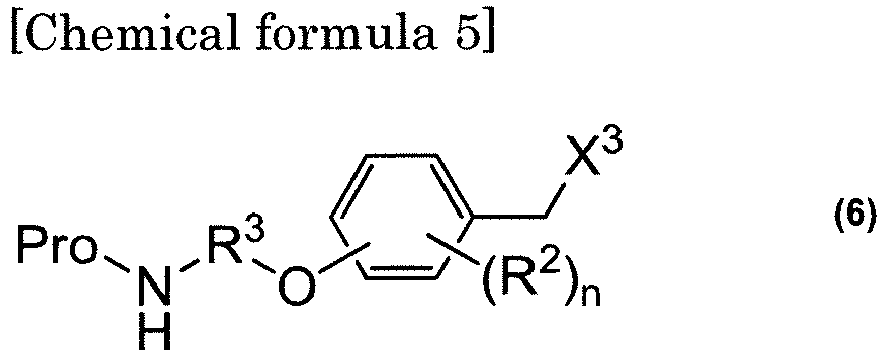
- A linker represented by formula (3a):

Applications Claiming Priority (2)
| Application Number | Priority Date | Filing Date | Title |
|---|---|---|---|
| US201462055991P | 2014-09-26 | 2014-09-26 | |
| PCT/JP2015/077220 WO2016047794A1 (en) | 2014-09-26 | 2015-09-25 | Method for producing hydrophobic peptide |
Publications (2)
| Publication Number | Publication Date |
|---|---|
| EP3199540A1 true EP3199540A1 (en) | 2017-08-02 |
| EP3199540A4 EP3199540A4 (en) | 2018-05-09 |
Family
ID=55581309
Family Applications (1)
| Application Number | Title | Priority Date | Filing Date |
|---|---|---|---|
| EP15844011.5A Withdrawn EP3199540A4 (en) | 2014-09-26 | 2015-09-25 | Method for producing hydrophobic peptide |
Country Status (5)
| Country | Link |
|---|---|
| US (1) | US20170226159A1 (en) |
| EP (1) | EP3199540A4 (en) |
| JP (1) | JPWO2016047794A1 (en) |
| CN (1) | CN107001409A (en) |
| WO (1) | WO2016047794A1 (en) |
Families Citing this family (7)
| Publication number | Priority date | Publication date | Assignee | Title |
|---|---|---|---|---|
| CN109053859B (en) * | 2018-08-09 | 2022-04-05 | 吉尔生化(上海)有限公司 | Purification method for neutral hydrophobic polypeptide |
| WO2020030663A1 (en) | 2018-08-09 | 2020-02-13 | F. Hoffmann-La Roche Ag | Cleavable linker for peptide synthesis |
| EP3666752A1 (en) * | 2018-12-13 | 2020-06-17 | Belyntic GmbH | Traceless reductively cleavable linker molecules for peptide purification |
| WO2020043747A1 (en) * | 2018-08-27 | 2020-03-05 | Belyntic GmbH | Traceless reductively cleavable linker molecules for peptide purification |
| CN110437306A (en) * | 2019-07-24 | 2019-11-12 | 西北工业大学 | Solvent-free mechanochemical N→C polypeptide synthesis method and recovery method based on Schiff base protection |
| CN113801239B (en) * | 2020-11-03 | 2023-10-20 | 浙江工业大学 | Polypeptide tag, highly soluble recombinant nitrilase and application thereof in synthesis of medicinal chemicals |
| SE2430342A1 (en) * | 2024-06-21 | 2025-12-22 | Polypeptide Laboratories Holding Ppl Ab | Method for cleaving protecting groups and linkers |
Family Cites Families (13)
| Publication number | Priority date | Publication date | Assignee | Title |
|---|---|---|---|---|
| EP0552368A4 (en) * | 1990-10-09 | 1994-07-06 | Nihon Millipore Kogyo Kk | Process for purifying synthetic peptide, and linker and linker-combining solid-phase carrier used in said process |
| US5955343A (en) * | 1992-12-28 | 1999-09-21 | Massachusetts Institute Of Technology | Stable macroscopic membranes formed by self-assembly of amphiphilic peptides and uses therefor |
| CA2125467C (en) * | 1993-07-06 | 2001-02-06 | Heinz Dobeli | Process for producing hydrophobic polypeptides, proteins or peptides |
| US5922840A (en) * | 1996-07-23 | 1999-07-13 | Kansas State University Research Foundation | Methods for purifying synthetic peptides |
| US20030232386A1 (en) * | 2002-06-17 | 2003-12-18 | Shah Dinesh O. | Assay conjugate and uses thereof |
| CN101094867B (en) * | 2004-10-19 | 2011-08-24 | 隆萨股份公司 | Method for solid phase peptide synthesis |
| US7750145B2 (en) * | 2004-11-18 | 2010-07-06 | Kissei Pharmaceutical Co., Ltd. | 1-substituted-3-β-D-glucopyranosylated nitrogenous hetero-cyclic compounds and medicines containing the same |
| JP2006176443A (en) * | 2004-12-22 | 2006-07-06 | Shionogi & Co Ltd | Melanin-concentrating hormone receptor antagonist |
| CA2600303A1 (en) * | 2005-05-04 | 2006-11-09 | Lonza Ag | Solid phase bound thymosin alpha-1 and its synthesis |
| DE102006039615A1 (en) * | 2006-08-24 | 2008-03-13 | Leibniz-Institut Für Pflanzenbiochemie | Ester Elongation Method for the Sequence-Driven Construction of Alternate Peptide Peptoid Polymers (Peptide Peptoid Polymers) |
| US9193763B2 (en) * | 2007-08-17 | 2015-11-24 | Purdue Research Foundation | PSMA binding ligand-linker conjugates and methods for using |
| EP2501711B1 (en) * | 2009-11-16 | 2014-01-08 | Centre National De La Recherche Scientifique CNRS | Compounds and methods for purifying peptides produced by solid phase peptide synthesis |
| US20150140573A1 (en) * | 2012-06-12 | 2015-05-21 | Megazme International Ireland | Assays for detecting glucosidase activity |
-
2015
- 2015-09-25 US US15/514,668 patent/US20170226159A1/en not_active Abandoned
- 2015-09-25 JP JP2016550425A patent/JPWO2016047794A1/en active Pending
- 2015-09-25 WO PCT/JP2015/077220 patent/WO2016047794A1/en not_active Ceased
- 2015-09-25 EP EP15844011.5A patent/EP3199540A4/en not_active Withdrawn
- 2015-09-25 CN CN201580052230.5A patent/CN107001409A/en active Pending
Also Published As
| Publication number | Publication date |
|---|---|
| CN107001409A (en) | 2017-08-01 |
| WO2016047794A1 (en) | 2016-03-31 |
| US20170226159A1 (en) | 2017-08-10 |
| EP3199540A4 (en) | 2018-05-09 |
| JPWO2016047794A1 (en) | 2017-09-28 |
Similar Documents
| Publication | Publication Date | Title |
|---|---|---|
| US20170226159A1 (en) | Method for producing hydrophobic peptide | |
| CA3017926C (en) | Methods for synthesizing .alpha.4.beta.7 peptide antagonists | |
| US20200277327A1 (en) | Method for synthesizing peptide containing n-substituted amino acid | |
| CN101918428B (en) | Process for the manufacture of persilylated peptides | |
| CA2673229A1 (en) | Methods for the synthesis of cyclic peptides | |
| JP2014517023A (en) | Peptide extraction method and its use in liquid phase peptide synthesis | |
| EP2794634B1 (en) | Process for the synthesis of ghrelin analogues | |
| TW200831527A (en) | Method of peptide synthesis | |
| Ruczyński et al. | Problem of aspartimide formation in Fmoc‐based solid‐phase peptide synthesis using Dmab group to protect side chain of aspartic acid | |
| CN111770930B (en) | Method for preparing peptides | |
| ES2954660T3 (en) | Method for preparation of liraglutide using a BAL linking group | |
| US8013117B2 (en) | Solution-phase synthesis of leuprolide and its intermediates | |
| KR102061382B1 (en) | Synthesis of beta-turn peptidomimetic cyclic compounds | |
| KR20090074316A (en) | Method for preparing somatostatin analog peptide using solid phase synthesis | |
| FI102380B (en) | Process for the preparation of peptides by solid phase synthesis | |
| KR20130127446A (en) | Diketopiperazine forming dipeptidyl linker | |
| JP2017203014A (en) | Method for producing peptide containing aspartic acid residue | |
| EP2607373A1 (en) | Liquid phase synthesis of self-assembling peptides to be linked to polymers or to other bioactive and/or self-assembling peptides | |
| WO2007059922A1 (en) | Synthesis of carbon acid amides | |
| KR20240046872A (en) | Method for producing PEGylated adrenomedullin, intermediates thereof and uses thereof | |
| TW201730203A (en) | Method for preparation of RADA-16 | |
| Maruyama et al. | A rapid and facile method for the preparation of peptide disulfides | |
| KR100991096B1 (en) | A Method for preparing octreotide using by solid phase synthesis | |
| CN114901670A (en) | Method for producing peptide | |
| US5942601A (en) | Peptide synthesis with sulfonyl protecting groups |
Legal Events
| Date | Code | Title | Description |
|---|---|---|---|
| PUAI | Public reference made under article 153(3) epc to a published international application that has entered the european phase |
Free format text: ORIGINAL CODE: 0009012 |
|
| 17P | Request for examination filed |
Effective date: 20170424 |
|
| AK | Designated contracting states |
Kind code of ref document: A1 Designated state(s): AL AT BE BG CH CY CZ DE DK EE ES FI FR GB GR HR HU IE IS IT LI LT LU LV MC MK MT NL NO PL PT RO RS SE SI SK SM TR |
|
| AX | Request for extension of the european patent |
Extension state: BA ME |
|
| DAV | Request for validation of the european patent (deleted) | ||
| DAX | Request for extension of the european patent (deleted) | ||
| A4 | Supplementary search report drawn up and despatched |
Effective date: 20180409 |
|
| RIC1 | Information provided on ipc code assigned before grant |
Ipc: C07K 1/04 20060101ALI20180403BHEP Ipc: C07K 1/14 20060101AFI20180403BHEP |
|
| STAA | Information on the status of an ep patent application or granted ep patent |
Free format text: STATUS: THE APPLICATION HAS BEEN WITHDRAWN |
|
| 18W | Application withdrawn |
Effective date: 20201202 |